Category: Medical Equipment

  • Cerebrospinal Fluid Management (CSF) Devices And Equipment Market Developments Shaping Growth Across The Forecast Period

    Cerebrospinal Fluid Management (CSF) Devices And Equipment Market Developments Shaping Growth Across The Forecast Period

    The Business Research Company’s 2026 market reports feature enhanced tools like market attractiveness analysis, TAM assessment, and company scoring matrices, along with interactive dashboards, deeper supply chain insights, and startup coverage strengthening the depth, usability, and strategic value of insights.

    What Changes In Market Value Are Expected For The Cerebrospinal Fluid Management (CSF) Devices And Equipment Market Over The 2026–2030 Period?

    The cerebrospinal fluid management (CSF) devices and equipment market size has experienced robust growth in recent years. It is anticipated to expand from $1.21 billion in 2025 to $1.28 billion in 2026, achieving a compound annual growth rate (CAGR) of 5.8%. This historical growth can be attributed to the rising diagnosis of hydrocephalus cases, the expansion of neurosurgical treatment centers, the increasing adoption of shunt-based therapies, the availability of advanced drainage systems, and the development of pediatric neurology care.

    The cerebrospinal fluid management (csf) devices and equipment market size is anticipated to undergo significant expansion in the coming years. This market is projected to reach $1.64 billion by 2030, demonstrating a compound annual growth rate (CAGR) of 6.3%. This projected growth can be attributed to several factors, including an escalating demand for smart and adjustable csf shunts, a heightened focus on infection-resistant materials, the broadening scope of geriatric neurosurgical care, increasing investments dedicated to neurological disorder management, and technological progress in intracranial pressure monitoring. Prominent trends expected during the forecast period encompass the wider adoption of programmable shunt systems, an increase in the use of minimally invasive csf drainage devices, the growing integration of pressure monitoring technologies, the expansion of treatments for pediatric hydrocephalus, and an amplified emphasis on long-term patient management.

    Access Your Free Sample Report For In-Depth Market Analysis:

    https://www.thebusinessresearchcompany.com/sample.aspx?id=2432&type=smp

    What Key Factors Are Affecting The Cerebrospinal Fluid Management (CSF) Devices And Equipment Market Demand?

    The growing occurrence of neurological conditions is projected to boost the cerebrospinal fluid (CSF) devices market in the future. Neurological disorders are medically understood as ailments impacting the brain, the spinal cord, and the nerves distributed across the human body. Cerebrospinal fluid (CSF) devices assist in the diagnosis, monitoring, and treatment of neurological conditions, enhancing patient quality of life. For example, the 2023 Alzheimer’s Disease Facts and Figures report from the Alzheimer’s Association, a US-based non-profit organization, estimates that Alzheimer’s and other forms of dementia will incur costs of $345 billion for the nation in 2023. These expenses are anticipated to increase to almost $1 trillion by 2050. Consequently, the rising incidence of neurological disorders is fueling the expansion of the cerebrospinal fluid (CSF) devices market.

    Which Segments Define The Cerebrospinal Fluid Management (CSF) Devices And Equipment Market Segment Structure?

    The cerebrospinal fluid management (csf) devices and equipment market covered in this report is segmented –

    1) By Type: CSF Shunts, CSF Drainage Systems

    2) By Age Group: Pediatric, Adult, Geriatric

    3) By End User: Hospitals, Ambulatory Surgical Centers

    Subsegments:

    1) By CSF Shunts: Ventriculoperitoneal (VP) Shunts, Ventriculoatrial (VA) Shunts, Lumboperitoneal (LP) Shunts

    2) By CSF Drainage Systems: External Ventricular Drainage (EVD) Systems, Lumbar Drainage Systems, Continuous Drainage Systems, Intermittent Drainage Systems

    What Trends Are Influencing Changes In The Cerebrospinal Fluid Management (CSF) Devices And Equipment Market?

    Leading firms in the cerebrospinal fluid (CSF) devices sector are creating novel products, like the ReFlow Mini Flusher device, to meet existing gaps in treatment. This ReFlow Mini Flusher device represents a second-generation solution specifically engineered to manage hydrocephalus, a condition characterized by an excessive buildup of CSF inside the brain. As an example, Anuncia Medical Inc., a US-based producer of medical equipment, introduced the ReFlow Mini Flusher device in July 2023. It functions as a compact, implantable system that includes both a flushing component and a ventricular catheter. Its distinctive design, smaller dimensions and profile, and straightforward operation position it as a significant advancement in treating hydrocephalus.

    Who Are The Established Players Within The Cerebrospinal Fluid Management (CSF) Devices And Equipment Market?

    Major companies operating in the cerebrospinal fluid management (csf) devices and equipment market are Medtronic plc, Johnson & Johnson Services Inc, B. Braun Melsungen AG, Integra LifeSciences Holdings Corporation, Sophysa S.A, Spiegelberg GmbH & Co. KG, Natus Medical Incorporated, Möller Medical GmbH, Dispomedica GmbH, Raumedic AG, Christoph Miethke GmbH & Co. KG, Flowonix Medical Inc, Phoenix Biomedical Corporation, Orsan Medical Technologies, Beckersmith Medical Inc, SOMATEX Medical Technologies, Neurosign, Medsit Medical, Delta Surgical Limited, G. Surgiwear Ltd, Tokibo Co. Ltd, Nikkiso Co. Ltd, Medtronic Neuro

    Get The Full Cerebrospinal Fluid Management (CSF) Devices And Equipment Market Report:

    https://www.thebusinessresearchcompany.com/report/cerebrospinal-fluid-management-csf-devices-and-equipment-global-market-report

    Where Is The Cerebrospinal Fluid Management (CSF) Devices And Equipment Market Most Concentrated Geographically?

    North America was the largest region in the global cerebrospinal fluid (CSF) management devices and equipment market in 2025. Asia-Pacific was the second-largest region in the cerebrospinal fluid (CSF) management devices and equipment market. The regions covered in the cerebrospinal fluid management (csf) devices and equipment market report are Asia-Pacific, South East Asia, Western Europe, Eastern Europe, North America, South America, Middle East, Africa.

    Request A Customized Cerebrospinal Fluid Management (CSF) Devices And Equipment Market Report For Competitive Insights:

    https://www.thebusinessresearchcompany.com/customise?id=2432&type=smp

    Browse Through More Reports Similar to the Global Cerebrospinal Fluid Management (CSF) Devices And Equipment Market 2026, By The Business Research Company

    Neurovascular Catheters Market Report 2026

    https://www.thebusinessresearchcompany.com/report/neurovascular-catheters-global-market-report

    Drug Eluting Balloons Catheters Market Report 2026

    https://www.thebusinessresearchcompany.com/report/drug-eluting-balloons-catheters-global-market-report

    Deflectable Catheters Market Report 2026

    https://www.thebusinessresearchcompany.com/report/deflectable-catheters-global-market-report

    Get in touch with us:

    The Business Research Company: https://www.thebusinessresearchcompany.com/

    Americas +1 310-496-7795

    Asia +44 7882 955267 & +91 8897263534

    Europe +44 7882 955267

    Email us at info@tbrc.info

    Follow us on:

    LinkedIn: https://in.linkedin.com/company/the-business-research-company

    YouTube: https://www.youtube.com/channel/UC24_fI0rV8cR5DxlCpgmyFQ

    Global Market Model: https://www.thebusinessresearchcompany.com/global-market-model
  • Centesis Catheters Market Forecast With Insights On Demand And Industry Growth

    Centesis Catheters Market Forecast With Insights On Demand And Industry Growth

    The Business Research Company’s 2026 market reports feature enhanced tools like market attractiveness analysis, TAM assessment, and company scoring matrices, along with interactive dashboards, deeper supply chain insights, and startup coverage strengthening the depth, usability, and strategic value of insights.

    By 2030, What Market Size Is The Centesis Catheters Market Expected To Reach Based On Its 2026 Value?

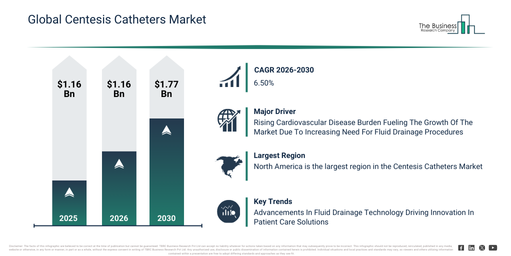
    The market for centesis catheters has experienced substantial expansion in recent times. This market is projected to expand from $0.52 billion in 2025 to $0.55 billion by 2026, demonstrating a compound annual growth rate (CAGR) of 6.9%. Factors contributing to this historical growth include restricted choices for catheter materials, a dependency on conventional large bore catheters, a rise in hospital and surgical interventions, heightened awareness regarding infection prevention, and the implementation of standardized diagnostic procedures.

    The centesis catheters market is projected to experience substantial expansion in the coming years, anticipated to reach a valuation of $0.71 billion by 2030, exhibiting a compound annual growth rate (CAGR) of 6.5%. Factors contributing to this growth during the forecast period include the advancement of pigtail and curved catheter designs, the increasing prevalence of minimally invasive procedures, heightened demand from ambulatory surgical centers, stricter regulatory compliance and quality assurance certifications, and the integration of imaging-guided catheter placement technologies. Key trends expected over the forecast horizon involve a growing preference for minimally invasive catheter interventions, the embrace of biocompatible and pliable materials, the expansion of applications in therapeutic and palliative care, increased utilization of both small bore and large bore catheters, and an intensified emphasis on sterility and patient safety protocols.

    Access Your Free Sample Report For In-Depth Market Analysis:

    https://www.thebusinessresearchcompany.com/sample.aspx?id=24499&type=smp

    Which Primary Drivers Are Impacting The Centesis Catheters Market Growth?

    The increasing occurrence of cardiovascular diseases is projected to stimulate the growth of the centesis catheters market in the coming years. These conditions involve the heart and blood vessels, interfering with their normal functioning and circulation. Cardiovascular diseases are on the rise, primarily due to increasingly sedentary lifestyles, which contribute to weight gain, reduced cardiovascular fitness, and an elevated risk of heart-related complications. Centesis catheters are employed in cardiovascular care to drain excess fluid from the pericardium, pleural space, or abdomen, thereby helping to relieve pressure on the heart or lungs. They are essential in managing conditions such as cardiac tamponade and heart failure, offering both symptom relief and diagnostic insights. For example, in January 2024, the American Heart Association, a US-based non-profit organization, reported that the age-adjusted death rate from cardiovascular disease escalated to 233.3 per 100,000 in 2024, marking a 4.0% increase from 224.4 per 100,000 in 2023. Consequently, the rising incidence of cardiovascular diseases will accelerate the expansion of the centesis catheters market.

    How Is The Centesis Catheters Market Segmented Across Different Segment Categories?

    The centesis catheters market covered in this report is segmented –

    1) By Type: Small Bore, Large Bore

    2) By Procedure: Paracentesis, Thoracentesis, Arthrocentesis, Amniocentesis, Other Procedures

    3) By Application: Diagnosis, Therapeutics, Palliative Care

    4) By End User: Hospitals, Ambulatory Surgical Centers, Other End Users

    Subsegments:

    1) By Small Bore: Pigtail Catheters, Straight Catheters, Curved Catheters

    2) By Large Bore: Thoracentesis Catheters, Paracentesis Catheters, Abscess Drainage Catheters

    Which Trends Are Shaping Growth In The Centesis Catheters Market?

    Leading firms within the centesis catheters market are concentrating on creating sophisticated solutions, including fluid drainage devices, designed for the ongoing oversight and regulation of fluid expulsion. These devices serve as medical instruments employed during procedures to remove built-up fluids from bodily tissues or cavities, thereby assisting in treatment and recuperation. An illustration of this trend is Laborie Medical Technologies Inc., a medical technology enterprise based in the US, which introduced the RenovaRP Centesis System, a fluid drainage device, in January 2024. This RenovaRP Centesis System enhances the functionalities of the original RenovaRP paracentesis pump by incorporating compatibility for thoracentesis procedures. Its design features refined elements in the handle and nest, improving usability and ease of handling for medical professionals. The system offers an approach that is minimally invasive, secure, and practical, contributing to enhanced patient comfort and faster recuperation.

    Which Organizations Play A Role In The Centesis Catheters Market Landscape?

    Major companies operating in the centesis catheters market are Cardinal Health Inc, Becton Dickinson and Company, Boston Scientific Corporation, Cook Medical LLC, Merit Medical Systems Inc, Argon Medical Devices Inc, AngioDynamics Inc, B Braun Melsungen AG, Polymedicure Ltd, Medical Components Inc, Galt Medical Corp, Mermaid Medical AS, PFM Medical Inc, REDAX Spa, Rocket Medical Inc, Axiom Medical Inc, Blue Neem Medical Devices Pvt Ltd, KM Medical Inc, Ningbo Honde Medical Instruments Co Ltd, Bassil Scientific Pvt Ltd, Teleflex Incorporated, Vygon SA

    Get The Full Centesis Catheters Market Report:

    https://www.thebusinessresearchcompany.com/report/centesis-catheters-global-market-report

    Which Region Dominates The Centesis Catheters Market By Market Share?

    North America was the largest region in the centesis catheters market in 2025. Asia-Pacific is expected to be the fastest-growing region in the forecast period. The regions covered in the centesis catheters market report are Asia-Pacific, South East Asia, Western Europe, Eastern Europe, North America, South America, Middle East, Africa.

    Request A Customized Centesis Catheters Market Report For Competitive Insights:

    https://www.thebusinessresearchcompany.com/customise?id=24499&type=smp

    Browse Through More Reports Similar to the Global Centesis Catheters Market 2026, By The Business Research Company

    Knee Implants Market Report 2026

    https://www.thebusinessresearchcompany.com/report/knee-implants-global-market-report

    Dental Cement Market Report 2026

    https://www.thebusinessresearchcompany.com/report/dental-cement-global-market-report

    Supplementary Cementitious Materials Market Report 2026

    https://www.thebusinessresearchcompany.com/report/supplementary-cementitious-materials-global-market-report

    Get in touch with us:

    The Business Research Company: https://www.thebusinessresearchcompany.com/

    Americas +1 310-496-7795

    Asia +44 7882 955267 & +91 8897263534

    Europe +44 7882 955267

    Email us at info@tbrc.info

    Follow us on:

    LinkedIn: https://in.linkedin.com/company/the-business-research-company

    YouTube: https://www.youtube.com/channel/UC24_fI0rV8cR5DxlCpgmyFQ

    Global Market Model: https://www.thebusinessresearchcompany.com/global-market-model
  • Cementless Total Knee Systems Market Outlook Highlighting Key Drivers And Market Evolution

    Cementless Total Knee Systems Market Outlook Highlighting Key Drivers And Market Evolution

    The Business Research Company’s 2026 market reports feature enhanced tools like market attractiveness analysis, TAM assessment, and company scoring matrices, along with interactive dashboards, deeper supply chain insights, and startup coverage strengthening the depth, usability, and strategic value of insights.

    What Is The Anticipated Rise In Market Value Of The Cementless Total Knee Systems Market During The Forecast Period?

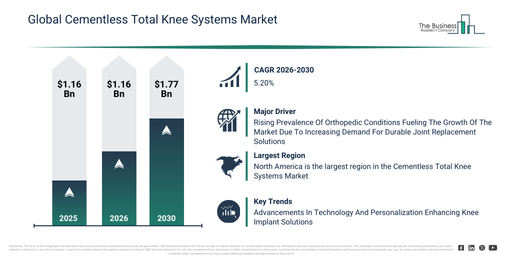
    The cementless total knee systems market size has experienced robust expansion in recent years. This market is projected to expand from $4.68 billion in 2025 to $4.94 billion in 2026, demonstrating a compound annual growth rate (CAGR) of 5.6%. The historical period’s growth can be attributed to factors such as limited availability of cementless implants, reliance on traditional cemented knee systems, a growing geriatric population with osteoarthritis, increasing hospital orthopedic surgeries, and rising awareness about knee replacement benefits.

    The cementless total knee systems market size is anticipated to experience robust expansion over the next few years. It is predicted to reach $6.06 billion by 2030, exhibiting a compound annual growth rate (CAGR) of 5.2%. This growth throughout the forecast period can be attributed to advancements in 3D-printing and porous coating technologies, a rising preference for minimally invasive surgeries, the expansion of orthopedic healthcare infrastructure, increasing adoption of robotic-assisted knee replacement, and greater investment in patient-specific knee implants. Prominent trends for the forecast period encompass a growing uptake of cementless knee implants, enhanced use of porous-coated and 3D-printed components, the expansion of orthopedic centers and specialized hospitals, a strong focus on minimally invasive knee replacement procedures, and improvements in post-operative recovery and patient outcomes.

    Access Your Free Sample Report For In-Depth Market Analysis:

    https://www.thebusinessresearchcompany.com/sample.aspx?id=25719&type=smp

    What Significant Factors Are Influencing The Cementless Total Knee Systems Market Expansion?

    The increasing occurrence of orthopedic conditions is anticipated to propel the growth of the cementless total knee systems market in the future. Orthopedic diseases are ailments affecting the musculoskeletal system, including bones, joints, muscles, ligaments, and tendons, which lead to discomfort, restricted movement, and functional impairments. The growing prevalence of orthopedic diseases is attributed to an aging population seeking lasting mobility solutions that can reduce joint pain, improve movement, and support an active lifestyle with minimal medical intervention. Cementless total knee systems present a durable and biologically integrated solution for orthopedic diseases by promoting natural bone growth, minimizing implant loosening, and restoring joint function without the application of bone cement. For example, in January 2024, data from the Office for Health Improvement & Disparities, a UK-based government department, showed that the percentage of individuals 16 and older who self-reported experiencing a long-term musculoskeletal (MSK) disease, a type of orthopedic disease, climbed from 17.6% in 2022 to 18.4% in 2023. Therefore, the rising prevalence of orthopedic diseases is driving the expansion of the cementless total knee systems market.

    What Are The Main Segments Within The Cementless Total Knee Systems Market Segment Structure?

    The cementless total knee systems market covered in this report is segmented –

    1) By Component: Tibial Component, Femoral Component

    2) By Fixation Method: Primary Fixation, Hybrid Fixation

    3) By End User: Hospitals, Orthopedic Centers, Other End Users

    Subsegments:

    1) By Tibial Component: Fixed-Bearing Tibial Baseplates, Mobile-Bearing Tibial Baseplates, Modular Tibial Components, Monoblock Tibial Components, Porous-Coated Tibial Components, 3D-Printed Tibial Components

    2) By Femoral Component: Posterior-Stabilized Femoral Components, Cruciate-Retaining Femoral Components, Ultra-Congruent Femoral Components, Asymmetric Femoral Components, Anatomical Femoral Components, Cementless Porous-Coated Femoral Components

    What Trends Are Affecting The Direction Of The Cementless Total Knee Systems Market?

    Leading companies in the cementless total knee systems market are prioritizing the development of sophisticated technologies, such as TIDAL technology, to produce advanced porous implants that improve bone integration and prolong implant durability. TIDAL technology, specifically, is an advanced 3D-printed porous implant design crafted to optimize bone integration by boosting mechanical strength, enhancing fatigue resistance, and ensuring effective load distribution for enduring implant stability. As an illustration, in April 2025, Restor3D Inc., a medical device company situated in the US, obtained Food and Drug Administration (FDA) 510(k) clearance for its iTotal Identity CR 3DP porous total knee system, representing its inaugural cementless patient-specific implant. This groundbreaking system utilizes advanced 3D printing and porous technology to deliver superior bone integration and stability, while its customized design, bespoke surgical instruments, and pre-navigated surgical methodology aid surgeons in achieving enhanced accuracy and operational efficiency.

    Who Are The Companies Participating In The Cementless Total Knee Systems Market?

    Major companies operating in the cementless total knee systems market are Johnson And Johnson Services Inc, Stryker Corporation, Zimmer Biomet Holdings Inc, Smith And Nephew plc, Enovis Corporation, MicroPort Scientific Corporation, Medacta International SA, B Braun Melsungen AG, Waldemar Link GmbH And Co KG, restor3d Inc, implantcast GmbH, United Orthopedic Corporation, Signature Orthopaedics Pty Ltd, Gruppo Bioimpianti Srl, Permedica SPA, Evolutis SAS, Euromed Implants GmbH, X NOV SAS, Beijing Chunli Zhongke Bio Tech Co Ltd, Exactech Inc, Corin Group, LimaCorporate SPA

    Get The Full Cementless Total Knee Systems Market Report:

    https://www.thebusinessresearchcompany.com/report/cementless-total-knee-systems-global-market-report

    Which Region Is The Largest In The Cementless Total Knee Systems Market?

    North America was the largest region in the cementless total knee systems market in 2025. Asia-Pacific is expected to be the fastest-growing region in the forecast period. The regions covered in the cementless total knee systems market report are Asia-Pacific, South East Asia, Western Europe, Eastern Europe, North America, South America, Middle East, Africa.

    Request A Customized Cementless Total Knee Systems Market Report For Competitive Insights:

    https://www.thebusinessresearchcompany.com/customise?id=25719&type=smp

    Browse Through More Reports Similar to the Global Cementless Total Knee Systems Market 2026, By The Business Research Company

    Insurance Market Report 2026

    https://www.thebusinessresearchcompany.com/report/insurance-global-market-report

    Critical Illness Insurance Market Report 2026

    https://www.thebusinessresearchcompany.com/report/critical-illness-insurance-global-market-report

    Embedded Insurance Market Report 2026

    https://www.thebusinessresearchcompany.com/report/embedded-insurance-global-market-report

    Get in touch with us:

    The Business Research Company: https://www.thebusinessresearchcompany.com/

    Americas +1 310-496-7795

    Asia +44 7882 955267 & +91 8897263534

    Europe +44 7882 955267

    Email us at info@tbrc.info

    Follow us on:

    LinkedIn: https://in.linkedin.com/company/the-business-research-company

    YouTube: https://www.youtube.com/channel/UC24_fI0rV8cR5DxlCpgmyFQ

    Global Market Model: https://www.thebusinessresearchcompany.com/global-market-model
  • Cementless Total Knee Arthroplasty Market Overview 2026–2030 Highlighting Industry Developments

    Cementless Total Knee Arthroplasty Market Overview 2026–2030 Highlighting Industry Developments

    The Business Research Company’s 2026 market reports feature enhanced tools like market attractiveness analysis, TAM assessment, and company scoring matrices, along with interactive dashboards, deeper supply chain insights, and startup coverage strengthening the depth, usability, and strategic value of insights.

    How Is The Market Size Of The Cementless Total Knee Arthroplasty Market Expected To Scale Between 2026 And 2030?

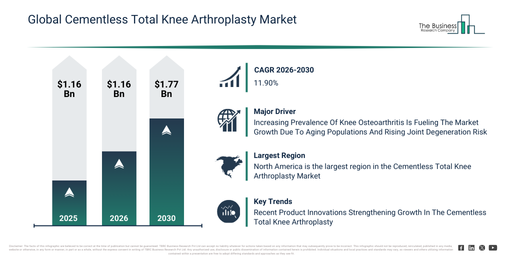
    The cementless total knee arthroplasty market has witnessed rapid growth in recent years. It is forecast to expand from $2.95 billion in 2025 to $3.31 billion in 2026, exhibiting a compound annual growth rate (CAGR) of 12.2%. This historical growth can be attributed to the rising prevalence of osteoarthritis, an increasing geriatric population, advancements in conventional knee arthroplasty techniques, a surge in orthopedic surgical procedures, and enhanced awareness regarding long-term implant durability.

    The market size for cementless total knee arthroplasty is projected to experience swift expansion over the coming years. This market is predicted to reach $5.19 billion by 2030, demonstrating a compound annual growth rate (CAGR) of 11.9%. Factors driving this growth during the projected period include advancements in cementless implant coatings, an increasing inclination towards minimally invasive surgical procedures, the expansion of orthopedic facilities, the uptake of patient-specific implants, and the incorporation of robotic-assisted knee arthroplasty techniques. Key trends anticipated for the forecast timeframe encompass the wider acceptance of cementless knee implants, a heightened demand for minimally invasive knee operations, improvements in porous and coated implant surfaces, the proliferation of orthopedic surgery centers, and an intensifying emphasis on patient-specific knee implants.

    Access Your Free Sample Report For In-Depth Market Analysis:

    https://www.thebusinessresearchcompany.com/sample.aspx?id=27248&type=smp

    Which Important Drivers Are Guiding The Cementless Total Knee Arthroplasty Market Growth?

    The growing incidence of knee osteoarthritis is anticipated to fuel the expansion of the cementless total knee arthroplasty market in the foreseeable future. This condition, characterized by degenerative joint changes, leads to discomfort, swelling, and rigidity in the knee, thereby hindering mobility. The surge in knee osteoarthritis cases is primarily attributed to rising obesity rates, as increased body weight exerts extra pressure on knee joints, accelerating cartilage degradation and joint deterioration. Cementless total knee arthroplasty offers a solution for knee osteoarthritis by substituting impaired joint surfaces with prosthetic elements designed to foster natural bone integration, ensuring enduring stability and enhanced joint performance. For example, data released in February 2024 by Arthritis Australia, an Australian non-profit body, predicts that in 2025, osteoarthritis (OA) will impact 2.35 million Australians, constituting 57% of the entire arthritis demographic and establishing it as the most common type of arthritis in Australia. Furthermore, by 2040, the count of Australians suffering from OA is expected to climb to 3.11 million, marking a 32% increment from 2025. This signifies an additional 762,515 individuals in Australia will be living with OA in 2040 compared to 2025. Consequently, the increasing occurrence of knee osteoarthritis is acting as a significant catalyst for the growth of the cementless total knee arthroplasty market.

    How Is Segmentation Applied In The Cementless Total Knee Arthroplasty Market Segment Analysis?

    The cementless total knee arthroplasty market covered in this report is segmented –

    1) By Product: Fixed-Bearing, Mobile-Bearing

    2) By Material: Titanium, Cobalt-Chromium, Polyethylene, Ceramic

    3) By Distribution Channels: Direct Sales, Distributors And Resellers

    4) By Application: Primary Total Knee Arthroplasty, Revision Total Knee Arthroplasty

    5) By End User: Hospitals, Specialty Clinics, Ambulatory Surgery Centers, Other End Users

    Subsegments:

    1) By Fixed-Bearing: Posterior Stabilized Fixed-Bearing, Cruciate Retaining Fixed-Bearing, Medial Pivot Fixed-Bearing

    2) By Mobile-Bearing: Rotating Platform Mobile-Bearing, Meniscal Bearing Mobile-Bearing, Dual Mobility Mobile-Bearing

    What Trends Are Influencing The Evolution Of The Cementless Total Knee Arthroplasty Market?

    Companies operating in the cementless total knee arthroplasty market are increasingly prioritizing the development of 3D-printed, patient-specific cementless implants. This focus addresses the growing demand for prostheses that offer biological integration, improved long-term stability, and better outcomes, especially for younger, more active patients. These implants are produced using additive-manufacturing (3D-printing) technology to form a porous lattice structure, which promotes bone in-growth and achieves osseointegration, a distinct approach from traditional cemented knee implants that rely on bone cement for immediate securement. For instance, in April 2025, restor3D Inc., a US-based medical technology company, obtained U.S. Food and Drug Administration (FDA) 510(k) clearance for its iTotal Identity CR 3DP Porous Total Knee Replacement System. This marked restor3D Inc.’s first cementless offering within its portfolio of patient-specific implants. The system utilizes restor3d’s proprietary TIDAL Technology, which features a high-strength porous lattice designed for optimal bone ingrowth, fatigue resistance, and effective load distribution. It comprises femoral, tibial, and patellar components custom-designed to each patient’s anatomy, along with personalized, pre-navigated surgical instruments provided in a sterile, single-use kit, which helps minimize intraoperative guesswork and enhances surgical efficiency. By combining a patient-matched design with advanced surface engineering, this implant offers a more natural feel and durable fixation compared to traditional cemented options.

    Who Are The Companies Participating In The Cementless Total Knee Arthroplasty Market Environment?

    Major companies operating in the cementless total knee arthroplasty market are Johnson & Johnson, Stryker Corporation, Zimmer Biomet Holdings Inc., Smith & Nephew Plc, Enovis Corporation, CONMED Corporation, Globus Medical Inc., MicroPort Scientific Corporation, Medacta Group SA, B. Braun Melsungen SE, TTK Healthcare Limited, Waldemar Link GmbH & Co. KG, United Orthopedic Corporation, Symbios Orthopédie SA, Gruppo Bioimpianti S.p.A., Permedica Orthopaedics S.p.A., Uteshiya Medicare Private Limited, LINK Orthopaedics GmbH, Plus Orthopaedics India Pvt. Ltd., XLO India Pvt. Ltd.

    Get The Full Cementless Total Knee Arthroplasty Market Report:

    https://www.thebusinessresearchcompany.com/report/cementless-total-knee-arthroplasty-global-market-report

    Which Region Leads The Cementless Total Knee Arthroplasty Market In Terms Of Market Share?

    North America was the largest region in the cementless total knee arthroplasty market in 2025. Asia-Pacific is expected to be the fastest-growing region in the forecast period. The regions covered in the cementless total knee arthroplasty market report are Asia-Pacific, South East Asia, Western Europe, Eastern Europe, North America, South America, Middle East, Africa.

    Request A Customized Cementless Total Knee Arthroplasty Market Report For Competitive Insights:

    https://www.thebusinessresearchcompany.com/customise?id=27248&type=smp

    Browse Through More Reports Similar to the Global Cementless Total Knee Arthroplasty Market 2026, By The Business Research Company

    Cell Free Dna Isolation And Extraction Market Report 2026

    https://www.thebusinessresearchcompany.com/report/cell-free-dna-isolation-and-extraction-global-market-report

    Dna Test Kits Market Report 2026

    https://www.thebusinessresearchcompany.com/report/dna-test-kits-global-market-report

    Plasmid Dna Manufacturing Market Report 2026

    https://www.thebusinessresearchcompany.com/report/plasmid-dna-manufacturing-global-market-report

    Get in touch with us:

    The Business Research Company: https://www.thebusinessresearchcompany.com/

    Americas +1 310-496-7795

    Asia +44 7882 955267 & +91 8897263534

    Europe +44 7882 955267

    Email us at info@tbrc.info

    Follow us on:

    LinkedIn: https://in.linkedin.com/company/the-business-research-company

    YouTube: https://www.youtube.com/channel/UC24_fI0rV8cR5DxlCpgmyFQ

    Global Market Model: https://www.thebusinessresearchcompany.com/global-market-model
  • Cell-Free DNA (cfDNA) Kits Market Forecast Highlighting Trends And Growth Potential

    Cell-Free DNA (cfDNA) Kits Market Forecast Highlighting Trends And Growth Potential

    The Business Research Company’s 2026 market reports feature enhanced tools like market attractiveness analysis, TAM assessment, and company scoring matrices, along with interactive dashboards, deeper supply chain insights, and startup coverage strengthening the depth, usability, and strategic value of insights.

    What Level Of Market Value Growth Is Predicted For The Cell-Free DNA (cfDNA) Kits Market From 2026 To 2030?

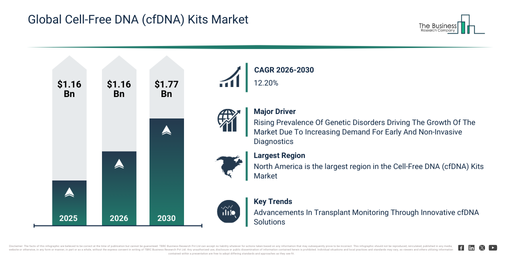
    The cell-free DNA (cfDNA) kits market has observed substantial expansion in recent years. This market is set to increase from $1.8 billion in 2025 to $2.02 billion in 2026, registering a compound annual growth rate (CAGR) of 12.4%. The historical growth of this market can be ascribed to factors such as the increasing embrace of liquid biopsy, the advancement in cancer diagnostics, a rise in prenatal testing, the evolution of PCR and NGS technologies, and the proliferation of research laboratories.

    The cell-free DNA (cfDNA) kits market is anticipated to experience significant expansion in the coming years. Its valuation is projected to reach $3.2 billion by 2030, demonstrating a compound annual growth rate (CAGR) of 12.2%. This anticipated growth during the forecast period is driven by advancements such as technological innovations in cfDNA kits, a rising emphasis on non-invasive diagnostic methods, the incorporation of AI into analysis, the broadening of molecular testing in developing markets, and enhanced research and development in cancer biomarkers. Key developments expected during this period involve high-sensitivity DNA isolation, automated sample preparation, integration with NGS platforms, accelerated DNA extraction, and the standardization of cfDNA kits.

    Access Your Free Sample Report For In-Depth Market Analysis:

    https://www.thebusinessresearchcompany.com/sample.aspx?id=28161&type=smp

    What Major Factors Are Driving The Cell-Free DNA (cfDNA) Kits Market Forward?

    The increasing incidence of genetic conditions is projected to boost the expansion of the cell-free DNA (cfDNA) kits market in the coming years. Genetic disorders are health ailments resulting from alterations in a person’s DNA, which can stem from mutations in a single gene, multiple genes, or chromosomal abnormalities. The escalating occurrence of genetic disorders is fueled by lifestyle modifications and environmental factors such as pollution and poor dietary choices, which can lead to genetic mutations or exacerbate existing inherited conditions. Cell-free DNA (cfDNA) kits enable the early and non-invasive detection of genetic anomalies by analyzing DNA fragments present in blood or other bodily fluids, thereby facilitating faster diagnoses and empowering healthcare providers to make timely and accurate treatment decisions. For instance, in November 2024, according to the Centers for Disease Control and Prevention (CDC), a US-based government agency, roughly 1 in every 33 newborns in the US is born with a birth defect, with many having genetic links. Consequently, the rising prevalence of genetic disorders is a significant driver for the growth of the cell-free DNA (cfDNA) kits market.

    What Segment Categories Shape The Cell-Free DNA (cfDNA) Kits Market Segment Landscape?

    The cell-free dna (cfdna) kits market covered in this report is segmented –

    1) By Product Type: Plasma Cell-Free DNA (Cfdna) Kits, Serum Cell-Free DNA (Cfdna) Kits, Urine Cell-Free DNA (Cfdna) Kits, Other Product Types

    2) By Technology: Next-Generation Sequencing (NGS), Polymerase Chain Reaction (PCR), Microarray Technology, Digital Polymerase Chain Reaction(PCR)

    3) By Application: Cancer Diagnostics, Prenatal Testing, Transplant Rejection Monitoring, Non-Invasive Disease Detection

    4) By Distribution Channel: Direct Sales, Retail Pharmacies, Online Sales, Distributors

    5) By End User: Hospitals, Research Laboratories, Diagnostic Laboratories, Academic Institutions

    Subsegments:

    1) By Plasma Cell-Free DNA Kits: Single-Stranded DNA Kits, Double-Stranded DNA Kits, High-Sensitivity DNA Kits, Rapid Extraction DNA Kits

    2) By Serum Cell-Free DNA Kits: Low-Volume DNA Kits, High-Yield DNA Kits, Automated DNA Kits, Manual Extraction DNA Kits

    3) By Urine Cell-Free DNA Kits: Early Detection DNA Kits, Concentration DNA Kits, High-Purity DNA Kits, Long-Term Stability DNA Kits

    4) By Other Product Types: Saliva DNA Kits, Cerebrospinal Fluid DNA Kits, Amniotic Fluid DNA Kits, Tissue-Derived DNA Kits

    Which Trends Are Impacting The Progress Of The Cell-Free DNA (cfDNA) Kits Market?

    Major companies engaged in the cell-free DNA (cfDNA) kits market are prioritizing the development of innovative products featuring digital polymerase chain reaction (PCR)-based absolute quantification to improve the sensitivity and precision of cfDNA analysis. Digital PCR-based absolute quantification facilitates the highly accurate detection of low-frequency genetic variants with enhanced consistency, thereby supporting vital applications in cancer diagnostics, prenatal screening, and the monitoring of transplant rejection. For example, in June 2024, Omixon, a Hungarian molecular diagnostics company, introduced HoloGRAFT ONE, a research-use-only kit designed for post-transplant surveillance of donor-derived cell-free DNA (dd-cfDNA). This kit employs proprietary genetic markers and digital PCR to distinguish donor DNA from the patient’s DNA, measuring both the absolute and relative quantities of dd-cfDNA through copy-number variants. The innovative test aims to enable early detection of transplant rejection, enhance patient supervision, and bolster personalized post-transplant care by providing clinicians with precise, actionable cfDNA measurements.

    Who Are The Companies Operating Across The Cell-Free DNA (cfDNA) Kits Market Value Chain?

    Major companies operating in the cell-free dna (cfdna) kits market are F. Hoffmann-La Roche Ltd, Thermo Fisher Scientific Inc., Agilent Technologies Inc., Illumina Inc., Bio-Rad Laboratories Inc., QIAGEN N.V, Natera Inc., Myriad Genetics Inc., Guardant Health Inc., Bioneer Corporation, Streck Inc., Freenome Holdings Inc., GRAIL Inc., Zymo Research Corporation, Geneseeq Technology Inc, Covaris LLC, Active Motif Inc., Norgen Biotek Corp, AMSBIO LLC, EpiGentek Group Inc., Paragon Genomics Inc., Suzhou Beaver Biomedical Engineering.

    Get The Full Cell-Free DNA (cfDNA) Kits Market Report:

    https://www.thebusinessresearchcompany.com/report/cell-free-dna-cfdna-kits-global-market-report

    Which Region Leads The Cell-Free DNA (cfDNA) Kits Market In Overall Market Size?

    North America was the largest region in the cell-free DNA (cfDNA) kits market in 2025. Asia-Pacific is expected to be the fastest-growing region in the forecast period. The regions covered in the cell-free dna (cfdna) kits market report are Asia-Pacific, South East Asia, Western Europe, Eastern Europe, North America, South America, Middle East, Africa.

    Request A Customized Cell-Free DNA (cfDNA) Kits Market Report For Competitive Insights:

    https://www.thebusinessresearchcompany.com/customise?id=28161&type=smp

    Browse Through More Reports Similar to the Global Cell-Free DNA (cfDNA) Kits Market 2026, By The Business Research Company

    Cell Free Dna Isolation And Extraction Market Report 2026

    https://www.thebusinessresearchcompany.com/report/cell-free-dna-isolation-and-extraction-global-market-report

    Blood Collection Tubes Market Report 2026

    https://www.thebusinessresearchcompany.com/report/blood-collection-tubes-global-market-report

    Dna Digital Data Storage Market Report 2026

    https://www.thebusinessresearchcompany.com/report/dna-digital-data-storage-global-market-report

    Get in touch with us:

    The Business Research Company: https://www.thebusinessresearchcompany.com/

    Americas +1 310-496-7795

    Asia +44 7882 955267 & +91 8897263534

    Europe +44 7882 955267

    Email us at info@tbrc.info

    Follow us on:

    LinkedIn: https://in.linkedin.com/company/the-business-research-company

    YouTube: https://www.youtube.com/channel/UC24_fI0rV8cR5DxlCpgmyFQ

    Global Market Model: https://www.thebusinessresearchcompany.com/global-market-model
  • Cell-Free DNA (cfDNA) Blood Collection Tube Market Analysis Highlighting Growth Drivers And Outlook

    Cell-Free DNA (cfDNA) Blood Collection Tube Market Analysis Highlighting Growth Drivers And Outlook

    The Business Research Company’s 2026 market reports feature enhanced tools like market attractiveness analysis, TAM assessment, and company scoring matrices, along with interactive dashboards, deeper supply chain insights, and startup coverage strengthening the depth, usability, and strategic value of insights.

    How Will The Market Value Of The Cell-Free DNA (cfDNA) Blood Collection Tube Market Progress Between 2026 And 2030?

    The cell-free DNA (cfDNA) blood collection tube market has seen rapid expansion in recent years. It is anticipated to increase from $1.33 billion in 2025 to $1.51 billion in 2026, exhibiting a compound annual growth rate (CAGR) of 13.6%. The historical growth of this market can be linked to factors such as a rising need for prenatal testing, the development of cancer diagnostics, the integration of cfDNA into research, advancements in laboratory automation, and the growth of diagnostic centers.

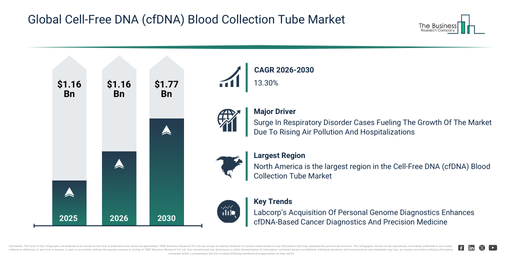
    The cell-free dna (cfdna) blood collection tube market size is projected to experience significant expansion in the coming years, with expectations to reach $2.49 billion by 2030, progressing at a compound annual growth rate (CAGR) of 13.3%. This projected growth throughout the forecast period stems from innovations in blood tube preservatives, the integration with AI diagnostics, the expanding liquid biopsy market, an increase in clinical trials, and growing demand in emerging markets. Noteworthy trends for this period include enhanced sample preservation, integration with liquid biopsy platforms, standardized blood collection protocols, automation in sample processing, and high-stability tube designs.

    Access Your Free Sample Report For In-Depth Market Analysis:

    https://www.thebusinessresearchcompany.com/sample.aspx?id=28160&type=smp

    Which Key Drivers Are Affecting The Cell-Free DNA (cfDNA) Blood Collection Tube Market Development?

    A future expansion of the cell-free DNA (cfDNA) blood collection tube market is anticipated, driven by the growing incidence of respiratory disorders. These disorders are health issues impacting the lungs and associated respiratory components, which compromise effective breathing, oxygen supply to the blood, or carbon dioxide expulsion. The rise in these conditions is substantially linked to air pollution, a factor that inflames airways, diminishes lung capacity, and elevates the likelihood of ailments such as asthma, bronchitis, and chronic obstructive pulmonary disease (COPD). In the context of respiratory disorder management, cell-free DNA (cfDNA) blood collection tubes facilitate the identification of genetic mutations, tracking of disease advancement, and evaluation of treatment outcomes via a straightforward blood examination, consequently diminishing the necessity for intrusive lung biopsies. As an illustration, the Centers for Disease Control and Prevention, a US-based government agency, reported in December 2024 that respiratory syncytial virus (RSV) led to an estimated 17,000 to 34,000 hospitalizations between October 1 and November 30, 2024. Consequently, the growing incidence of respiratory disorders is propelling the expansion of the cell-free DNA (cfDNA) blood collection tube market.

    Which Segment Types Are Examined In The Cell-Free DNA (cfDNA) Blood Collection Tube Market Segment Study?

    The cell-free dna (cfdna) blood collection tube market covered in this report is segmented –

    1) By Type: 5ml, 10ml

    2) By Sample Type: Plasma, Serum, Whole Blood

    3) By Application: In Vitro Diagnostics, Scientific Research

    4) By End-User: Diagnostic Laboratories, Hospitals Or Clinical Centers, Genetic Diagnostic Labs, Cancer Research Centers, Research And Development Institutions, Conventional Diagnostic Centers

    Subsegments:

    1) By 5 mL: Single Use Tube, Vacuum Blood Collection Tube, Gel Separator Tube

    2) By 10 mL: Double Draw Tube, High Volume Collection Tube, Anticoagulant Treated Tube

    What Trends Are Transforming The Cell-Free DNA (cfDNA) Blood Collection Tube Market?

    Major companies operating in the cell-free DNA (cfDNA) blood collection tube market are concentrating on automating cfDNA extraction to elevate workflow efficiency. The automation of cfDNA extraction refers to the deployment of advanced robotic instruments and standardized methods to isolate cell-free DNA from blood samples with minimal human involvement, thereby enhancing efficiency, accuracy, and consistency while decreasing processing time and minimizing human errors. For instance, in September 2023, Yourgene Health plc, a UK-based molecular diagnostics company, introduced the MagBench Automated DNA Extraction Instrument and Kit, providing a fast, straightforward, and cost-effective bench-top robotic solution tailored for cell-free DNA extraction in non-invasive prenatal testing (NIPT) workflows. This launch aims to strengthen automation in NIPT workflows by delivering superior throughput, reproducibility, and reliability in cfDNA extraction, concurrently reducing manual input and operational expenditures.

    Which Players Are Part Of The Competitive Landscape Of The Cell-Free DNA (cfDNA) Blood Collection Tube Market?

    Major companies operating in the cell-free dna (cfdna) blood collection tube market are Roche Holding AG, Thermo Fisher Scientific Inc., Becton Dickinson (BD), Qiagen N.V., SARSTEDT AG & Co. KG, Guangzhou Improve Medical Technology, Streck Inc., DiaCarta Inc., Zymo Research Corporation, Biomatrica Inc., PreAnalytiX GmbH, Beijing Cowin Bioscience Co.Ltd., Norgen Biotek Corporation, Nonacus Limited, Guangdong Ardent Biomed Co. Ltd, MagBio Genomics Inc., VanGenes, BEAVER, Hebei Xinle Science & Technology Co. Ltd., Nasmed Diagnostics Pvt. Ltd.

    Get The Full Cell-Free DNA (cfDNA) Blood Collection Tube Market Report:

    https://www.thebusinessresearchcompany.com/report/cell-free-dna-cfdna-blood-collection-tube-global-market-report

    Which Region Is The Top Contributor To The Cell-Free DNA (cfDNA) Blood Collection Tube Market By Share?

    North America was the largest region in the cell-free DNA (cfDNA) blood collection tube market in 2025. Asia-Pacific is expected to be the fastest-growing region in the forecast period. The regions covered in the cell-free dna (cfdna) blood collection tube market report are Asia-Pacific, South East Asia, Western Europe, Eastern Europe, North America, South America, Middle East, Africa.

    Request A Customized Cell-Free DNA (cfDNA) Blood Collection Tube Market Report For Competitive Insights:

    https://www.thebusinessresearchcompany.com/customise?id=28160&type=smp

    Browse Through More Reports Similar to the Global Cell-Free DNA (cfDNA) Blood Collection Tube Market 2026, By The Business Research Company

    Medical Skin Markers Market Report 2026

    https://www.thebusinessresearchcompany.com/report/medical-skin-markers-global-market-report

    Surface Vision And Inspection Market Report 2026

    https://www.thebusinessresearchcompany.com/report/surface-vision-and-inspection-global-market-report

    Biomarkers Market Report 2026

    https://www.thebusinessresearchcompany.com/report/biomarkers-global-market-report

    Get in touch with us:

    The Business Research Company: https://www.thebusinessresearchcompany.com/

    Americas +1 310-496-7795

    Asia +44 7882 955267 & +91 8897263534

    Europe +44 7882 955267

    Email us at info@tbrc.info

    Follow us on:

    LinkedIn: https://in.linkedin.com/company/the-business-research-company

    YouTube: https://www.youtube.com/channel/UC24_fI0rV8cR5DxlCpgmyFQ

    Global Market Model: https://www.thebusinessresearchcompany.com/global-market-model
  • Cell Surface Marker Detection Market Insights Highlighting Growth Opportunities To 2030

    Cell Surface Marker Detection Market Insights Highlighting Growth Opportunities To 2030

    The Business Research Company’s 2026 market reports feature enhanced tools like market attractiveness analysis, TAM assessment, and company scoring matrices, along with interactive dashboards, deeper supply chain insights, and startup coverage strengthening the depth, usability, and strategic value of insights.

    What Are The Market Size Estimates For The Cell Surface Marker Detection Market In 2026 And 2030?

    The cell surface marker detection market has experienced rapid expansion in recent years. It is anticipated to increase from $6.39 billion in 2025 to $7.11 billion in 2026, exhibiting a compound annual growth rate (CAGR) of 11.2%. The growth observed in the past can be attributed to heightened biomedical research activities, the broadening of pharmaceutical drug discovery programs, an increased application of flow cytometry in diagnostics, rising investments within life sciences research, and improved availability of laboratory automation.

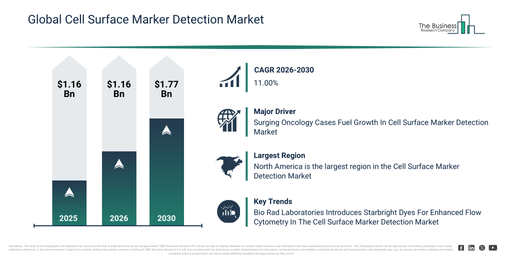
    The cell surface marker detection market is projected to experience rapid expansion in the coming years. It is expected to reach $10.81 billion by 2030, growing at a compound annual growth rate (CAGR) of 11.0%. This anticipated growth during the forecast period is fueled by the increasing adoption of precision medicine approaches, a rising demand for single-cell analysis, the expansion of translational research initiatives, the growing use of AI-assisted cell analysis, and increasing investments in advanced diagnostic laboratories. Prominent trends throughout this period involve the increasing adoption of high-throughput flow cytometry systems, a rising demand for advanced reagents and kits, the growing use of automated cell analysis platforms, the expansion of marker-based precision diagnostics, and an enhanced focus on multiparameter cell profiling.

    Access Your Free Sample Report For In-Depth Market Analysis:

    https://www.thebusinessresearchcompany.com/sample.aspx?id=8619&type=smp

    What Factors Are Contributing To The Growth Of The Cell Surface Marker Detection Market?

    The escalating prevalence of oncology diseases is projected to stimulate the expansion of the cell surface marker detection market moving forward. Cancer is defined as a condition where certain cells grow uncontrollably and disseminate to other parts of the body. Various factors, including the adoption of Western lifestyles, unhealthy dietary choices, frequent consumption of non-vegetarian diets, exposure to chemical pollution, and insufficient physical activity, have all contributed to the worldwide rise in cancer incidents. Cell surface marker detection aids cancer cells by providing point-of-care forecasting of how patients will respond to different cancer medications, thereby boosting its demand. As an illustration, in February 2024, the World Health Organization, an international organization based in Switzerland focusing on global health policy and public health initiatives, projected over 35 million new cancer cases by 2050, signifying a 77% increase compared to the estimated 20 million cases in 2022. Hence, the increasing occurrence of oncology diseases is a key driver for the growth of the cell surface marker detection market.

    How Are Different Segments Classified In The Cell Surface Marker Detection Market Segment Analysis?

    The cell surface marker detection market covered in this report is segmented –

    1) By Product: Flow Cytometry, Reagents And Kits

    2) By Application: Disease Diagnosis, Diseases Identification, Research For Drug Discovery, Cytological Academic Research

    3) By End-Users: Pharmaceutical And Biotechnology Companies, Hospitals And Clinical Testing Laboratories, Academic And Research Institutes, Other End Users

    Subsegments:

    1) By Flow Cytometry: Benchtop Flow Cytometers, Portable Flow Cytometers, High-Throughput Flow Cytometers

    2) By Reagents And Kits: Antibodies And Conjugates, Staining Kits, Calibration And Control Kits

    What Trends Are Shaping The Future Of The Cell Surface Marker Detection Market?

    Leading companies in the cell surface marker detection market are investing in advanced technologies, such as innovative fluorescent dyes and antibodies, to improve multicolour flow cytometry capabilities, thereby enhancing the accuracy and efficiency of immunological research and diagnostics. Bio-Rad has expanded its StarBright Violet Dye series, now including 29 highly validated antibodies conjugated to various StarBright Violet Dyes, which improves the detection and analysis of multiple cell surface markers in human and animal studies via multicolour flow cytometry. For instance, in May 2024, Bio-Rad Laboratories, Inc., a US-based company that develops and manufactures specialized technological products, introduced three new StarBright Red Dyes: StarBright Red 715, 775, and 815. This expansion strengthens their existing collection of fluorescent dyes, now offering 32 options compatible with multiple lasers, specifically designed for conventional and full-spectrum flow cytometry applications. Moreover, these dyes demonstrate minimal background interference compared to traditional cyanine tandem dyes and possess sufficient stability to be fixed in formalin or alcohol-based fixatives without compromising signal integrity.

    Who Are The Companies Driving Activity In The Cell Surface Marker Detection Market?

    Major companies operating in the cell surface marker detection market are Thermo Fisher Scientific Inc, Beckman Coulter Inc, Bio-Rad Laboratories Inc, Becton Dickinson and Company, BD Biosciences, Agilent Inc, Sigma-Aldrich, Qiagen NV, Abcam PLC, GenScript Biotech, BioLegend, Cell Signaling Technology Inc, Merck KGaA, Bio-Techne Corporation, Affymetrix, Danaher Corporation, Miltenyi Biotec, R&D Systems, Siemens Healthineers, F Hoffmann-La Roche Ltd, Sartorius, Sysmex Corporation, Nihon Kohden Corporation, Diasorin SpA, Janssen Diagnostics

    Get The Full Cell Surface Marker Detection Market Report:

    https://www.thebusinessresearchcompany.com/report/cell-surface-marker-detection-global-market-report

    Which Region Represents The Largest Share Of The Cell Surface Marker Detection Market?

    North America was the largest region in the cell surface marker detection market in 2025. Asia-Pacific is expected to be the fastest-growing region in the forecast period. The regions covered in the cell surface marker detection market report are Asia-Pacific, South East Asia, Western Europe, Eastern Europe, North America, South America, Middle East, Africa.

    Request A Customized Cell Surface Marker Detection Market Report For Competitive Insights:

    https://www.thebusinessresearchcompany.com/customise?id=8619&type=smp

    Browse Through More Reports Similar to the Global Cell Surface Marker Detection Market 2026, By The Business Research Company

    Individual And Family Services Market Report 2026

    https://www.thebusinessresearchcompany.com/report/individual-and-family-services-global-market-report

    Legal Services Market Report 2026

    https://www.thebusinessresearchcompany.com/report/legal-services-global-market-report

    Individual And Family Services Market Report 2026

    https://www.thebusinessresearchcompany.com/report/individual-and-family-services-global-market-report

    Get in touch with us:

    The Business Research Company: https://www.thebusinessresearchcompany.com/

    Americas +1 310-496-7795

    Asia +44 7882 955267 & +91 8897263534

    Europe +44 7882 955267

    Email us at info@tbrc.info

    Follow us on:

    LinkedIn: https://in.linkedin.com/company/the-business-research-company

    YouTube: https://www.youtube.com/channel/UC24_fI0rV8cR5DxlCpgmyFQ

    Global Market Model: https://www.thebusinessresearchcompany.com/global-market-model
  • Global Cell Processing Instruments Market Expected To Reach $10.1 Billion By 2030 At 7.7% CAGR

    Global Cell Processing Instruments Market Expected To Reach $10.1 Billion By 2030 At 7.7% CAGR

    The Business Research Company’s 2026 market reports feature enhanced tools like market attractiveness analysis, TAM assessment, and company scoring matrices, along with interactive dashboards, deeper supply chain insights, and startup coverage strengthening the depth, usability, and strategic value of insights.

    What Expansion In Market Value Is Forecasted For The Cell Processing Instruments Market Between 2026 And 2030?

    The cell processing instruments market size has demonstrated significant expansion in recent years. This market is anticipated to increase from $6.95 billion in 2025 to $7.51 billion in 2026, progressing at a compound annual growth rate (CAGR) of 8.1%. Historically, this growth can be ascribed to several factors, including the previous lack of automation in cell processing, a dependence on manual cell counting and separation techniques, an escalation in academic and research activities, a heightened requirement for precise cell analysis, and the emergence of flow cytometry technologies.

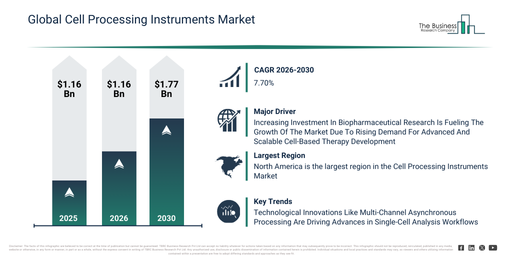
    The cell processing instruments market is anticipated to experience substantial expansion in the coming years, with projections indicating it will reach $10.1 billion by 2030, exhibiting a compound annual growth rate (CAGR) of 7.7%. This growth is primarily driven by the development of integrated cell processing platforms, increasing investment in cell therapy and regenerative medicine, the adoption of digital and automated imaging systems, a rise in contract research and manufacturing activities, and advancements in live cell analysis and high-content screening. Furthermore, significant trends for this period include a heightened demand for automated cell processing systems, the growing adoption of flow cytometry and high-content imaging, the expansion of cell therapy and regenerative medicine applications, an emphasis on standardization and regulatory compliance, and the integration of multi-functional cell analysis platforms.

    Access Your Free Sample Report For In-Depth Market Analysis:

    https://www.thebusinessresearchcompany.com/sample.aspx?id=27242&type=smp

    Which Strong Drivers Are Impacting The Cell Processing Instruments Market Growth?

    The increasing investment in biopharmaceutical research is expected to propel the growth of the cell processing instruments market going forward. Biopharmaceutical research refers to the scientific study and development of therapeutic products derived from biological sources or designed to mimic biological molecules for diagnosing, preventing, or treating diseases. The growing demand for innovative therapies to address rising chronic diseases and unmet medical needs is driving this increasing investment, prompting greater research and development efforts for targeted, effective treatments. Cell processing instruments support biopharmaceutical research by enabling efficient, standardized, and scalable cell handling, which accelerates the development and production of advanced cell-based therapies. For instance, in January 2025, according to the BioIndustry Association (BIA), a UK-based trade association, the UK biotech sector experienced substantial growth in 2024, securing £3.5 billion (approximately $ 4.4 billion) in investment, an impressive 94% increase from the previous year. Therefore, the increasing investment in biopharmaceutical research is driving the growth of the cell processing instruments market.

    How Is The Cell Processing Instruments Market Categorized Across Its Segment Groups?

    The cell processing instruments market covered in this report is segmented –

    1) By Type: Cell Counters, Cell Imaging Systems, Flow Cytometers, Cell Separator Systems, Automated Cell Processing Systems, Other Instruments

    2) By Application: Cell Isolation Or Separation, Cell Imaging And Counting, Cell Viability And Proliferation, Other Applications

    3) By End-Use: Pharmaceutical And Biotechnology Companies, Contract Research Organizations (CROs) And Contract Manufacturing Organizations (CMOs), Academic And Research Institutes, Other End-Uses

    Subsegments:

    1) By Cell Counters: Manual Cell Counters, Automated Cell Counters, Digital Cell Counters

    2) By Cell Imaging Systems: Brightfield Imaging Systems, Fluorescence Imaging Systems, High-Content Imaging Systems, Live Cell Imaging Systems

    3) By Flow Cytometers: Analog Flow Cytometers, Digital Flow Cytometers, Benchtop Flow Cytometers, Clinical Flow Cytometers

    4) By Cell Separator Systems: Magnetic-Activated Cell Sorting (MACS) Systems, Fluorescence-Activated Cell Sorting (FACS) Systems, Centrifugal Elutriation Systems

    5) By Automated Cell Processing Systems: Cell Expansion Systems, Cell Washing And Concentration Systems, Cell Harvesting Systems, Integrated Cell Processing Platforms

    6) By Other Instruments: Cell Disruption Systems, Cell Viability Analyzers, Centrifuges For Cell Processing, Cell Freezing And Thawing Systems

    Which Trends Are Contributing To Changes In The Cell Processing Instruments Market?

    Companies within the cell processing instruments market are prioritizing the creation of advanced methods, including multi-channel asynchronous processing, to elevate workflow effectiveness and flexibility in cell therapy development. Multi-channel asynchronous processing provides a system with the capacity to run multiple separate workflows simultaneously on distinct channels, allowing different operations to proceed in parallel without needing to wait for one another. As an illustration, in June 2023, Singleron Biotechnologies GmbH, a German biotechnology company, unveiled two new instruments, Python Junior and Matrix NEO, designed to refine and standardize the single-cell analysis workflow. Python Junior facilitates the dissociation of solid tissues into premium single-cell suspensions using dual independent channels through a blend of mechanical and enzymatic processing, whereas Matrix NEO allows for high-throughput, fully automated single-cell library preparation, covering chip priming, cell partitioning, lysis, and nucleic acid capture across four channels, thereby accommodating various applications and throughput requirements in both research and clinical settings.

    Which Firms Are Influencing Competition In The Cell Processing Instruments Market?

    Major companies operating in the cell processing instruments market are Thermo Fisher Scientific Inc., Danaher Corporation, Merck KGaA, Becton Dickinson and Company, Avantor Inc., Agilent Technologies Inc., Sartorius AG, Revvity Inc., Bio-Rad Laboratories Inc., Eppendorf SE, Tecan Group Ltd., Bio-Techne Corporation, STEMCELL Technologies Inc., Miltenyi Biotec B.V. & Co. KG, Takara Bio Inc., 10x Genomics Inc., Promega Corporation, Esco Lifesciences Group Ltd., NanoCellect Biomedical Inc., InGeneron Inc.

    Get The Full Cell Processing Instruments Market Report:

    https://www.thebusinessresearchcompany.com/report/cell-processing-instruments-global-market-report

    Which Geographic Region Dominates The Cell Processing Instruments Market?

    North America was the largest region in the cell processing instruments market in 2025. Asia-Pacific is expected to be the fastest-growing region in the forecast period. The regions covered in the cell processing instruments market report are Asia-Pacific, South East Asia, Western Europe, Eastern Europe, North America, South America, Middle East, Africa.

    Request A Customized Cell Processing Instruments Market Report For Competitive Insights:

    https://www.thebusinessresearchcompany.com/customise?id=27242&type=smp

    Browse Through More Reports Similar to the Global Cell Processing Instruments Market 2026, By The Business Research Company

    Cell Free Dna Isolation And Extraction Market Report 2026

    https://www.thebusinessresearchcompany.com/report/cell-free-dna-isolation-and-extraction-global-market-report

    Dna Diagnostics Market Report 2026

    https://www.thebusinessresearchcompany.com/report/dna-diagnostics-global-market-report

    Dna Testing Market Report 2026

    https://www.thebusinessresearchcompany.com/report/dna-testing-global-market-report

    Get in touch with us:

    The Business Research Company: https://www.thebusinessresearchcompany.com/

    Americas +1 310-496-7795

    Asia +44 7882 955267 & +91 8897263534

    Europe +44 7882 955267

    Email us at info@tbrc.info

    Follow us on:

    LinkedIn: https://in.linkedin.com/company/the-business-research-company

    YouTube: https://www.youtube.com/channel/UC24_fI0rV8cR5DxlCpgmyFQ

    Global Market Model: https://www.thebusinessresearchcompany.com/global-market-model
  • Cell Free Tumor Deoxyribonucleic Acid (DNA) Detection Market Outlook Indicating Growth To $5.63 Billion By 2030

    Cell Free Tumor Deoxyribonucleic Acid (DNA) Detection Market Outlook Indicating Growth To $5.63 Billion By 2030

    The Business Research Company’s 2026 market reports feature enhanced tools like market attractiveness analysis, TAM assessment, and company scoring matrices, along with interactive dashboards, deeper supply chain insights, and startup coverage strengthening the depth, usability, and strategic value of insights.

    How Large Will The Cell Free Tumor Deoxyribonucleic Acid (DNA) Detection Market Be By 2030 Compared To Its 2026 Market Size?

    The cell free tumor deoxyribonucleic acid (dna) detection market size has shown swift growth in recent years. It is projected to expand from $2.58 billion in 2025 to $3.02 billion in 2026, registering a compound annual growth rate (CAGR) of 17.2%. This historical growth can be attributed to the increasing prevalence of cancer, progress in molecular diagnostics, a growing demand for non-invasive testing, the implementation of PCR and NGS techniques, and a rise in clinical research studies.

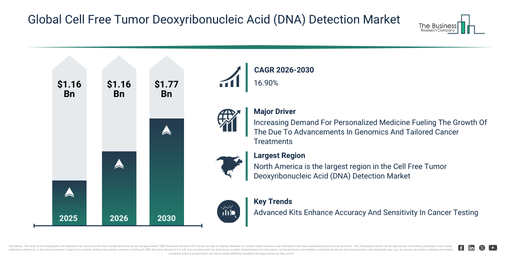
    The cell free tumor deoxyribonucleic acid (dna) detection market size is anticipated to experience substantial expansion in the coming years. It is forecast to grow to $5.64 billion by 2030, exhibiting a compound annual growth rate (CAGR) of 16.9%. This projected growth during the forecast period can be linked to the increasing reach of precision medicine, innovations in ctDNA analysis technology, its incorporation into AI-based diagnostics, increased healthcare investments in developing economies, and the rise of early cancer detection programs. Significant trends expected during this period include the wider embrace of liquid biopsy, integration with genomic data platforms, continuous real-time tumor monitoring, the adoption of non-invasive cancer diagnostics, and the development of advanced ctdna detection technologies.

    Access Your Free Sample Report For In-Depth Market Analysis:

    https://www.thebusinessresearchcompany.com/sample.aspx?id=28159&type=smp

    What Key Factors Are Shaping The Cell Free Tumor Deoxyribonucleic Acid (DNA) Detection Market Landscape?

    The cell free tumor deoxyribonucleic acid (DNA) detection market is anticipated to expand due to the rising need for personalized medicine. This medical approach involves customizing treatment and prevention strategies to align with an individual’s specific genetic profile, lifestyle, and environmental factors. The growing embrace of personalized medicine is largely driven by progress in genomics, which facilitates accurate identification of genetic variations and the development of customized treatments. Cell free tumor deoxyribonucleic acid (DNA) detection supports personalized medicine by providing non-invasive, real-time insights into a patient’s tumor genetics. This capability enables medical professionals to customize treatments according to individual mutation profiles, track the effectiveness of therapies, and identify disease recurrence at an early stage, thereby enhancing patient results and the precision of cancer care. For example, in February 2024, the U.S. Food and Drug Administration (FDA) approved 26 new personalized medicines in 2023, a notable increase from the 12 approved in 2022, as reported by the Personalized Medicine Coalition (PMC), a US-based nonprofit organization. Consequently, the escalating demand for personalized medicine is fueling the expansion of the cell free tumor deoxyribonucleic acid (DNA) detection market.

    How Are Segments Identified Within The Cell Free Tumor Deoxyribonucleic Acid (DNA) Detection Market Segment Framework?

    The cell free tumor deoxyribonucleic acid (dna) detection market covered in this report is segmented –

    1) By Technology: Polymerase Chain Reaction (PCR), Next-Generation Sequencing (NGS), Digital Polymerase Chain Reaction (dPCR)

    2) By Source: Plasma, Serum, Urine

    3) By Application: Oncology, Non-Invasive Prenatal Testing, Transplantation, Other Applications

    4) By End-User: Hospitals, Diagnostic Laboratories, Academic And Research Institutes, Other End-Users

    Subsegments:

    1) By Polymerase Chain Reaction (PCR): Real-Time Polymerase Chain Reaction (qPCR), Multiplex Polymerase Chain Reaction (PCR), Allele-Specific Polymerase Chain Reaction (PCR), High-Resolution Melting (HRM) Analysis, Beaming Polymerase Chain Reaction (PCR)

    2) By Next-Generation Sequencing (NGS): Whole Genome Sequencing (WGS), Whole Exome Sequencing (WES), Targeted Gene Panels, Ribonucleic Acid Sequencing (RNA-seq), Methylation Sequencing

    3) By Digital Polymerase Chain Reaction (dPCR): Droplet Digital Polymerase Chain Reaction (ddPCR), Chip-Based Digital Polymerase Chain Reaction (PCR), Nanofluidic Digital Polymerase Chain Reaction (PCR)

    What Market Trends Are Affecting The Cell Free Tumor Deoxyribonucleic Acid (DNA) Detection Market?

    Leading companies within the cell-free tumor deoxyribonucleic acid (DNA) detection market are concentrating on developing advanced products, such as library preparation kits, to improve the accuracy, sensitivity, and speed of cancer testing. Library preparation kits are reagent sets that prepare DNA or RNA samples for sequencing by fragmenting, tagging, and amplifying them for accurate analysis. For instance, in February 2024, Twist Bioscience Corporation, a US-based biotechnology company, launched the cfDNA Library Preparation Kit, designed to enhance the sensitivity and precision of liquid biopsy applications. This kit enables high-conversion cfDNA library generation for next-generation sequencing on Illumina platforms, effectively addressing challenges posed by low-input and degraded cfDNA samples. This innovation is intended to improve the reliability and efficiency of liquid biopsy testing, supporting earlier and more accurate cancer detection, as well as better monitoring of treatment response.

    Who Are The Companies Competing Within The Cell Free Tumor Deoxyribonucleic Acid (DNA) Detection Market?

    Major companies operating in the cell free tumor deoxyribonucleic acid (dna) detection market are F. Hoffmann-La Roche AG, Thermo Fisher Scientific Inc., Labcorp Holdings Inc., Illumina Inc., Sysmex Inostics Inc., Bio-Rad Laboratories Inc., QIAGEN N.V., Natera Inc., Guardant Health Inc., Invitae Corporation, Foundation Medicine Inc, Adaptive Biotechnologies Corporation, Freenome Holdings Inc., Grail Inc., Biodesix Inc, Personal Genome Diagnostics Inc., Agena Bioscience Inc., Menarini Silicon Biosystems SpA, Exosome Diagnostics Inc., Lucence Health Inc.

    Get The Full Cell Free Tumor Deoxyribonucleic Acid (DNA) Detection Market Report:

    https://www.thebusinessresearchcompany.com/report/cell-free-tumor-deoxyribonucleic-acid-dna-detection-global-market-report

    Which Region Is The Leading Market For The Cell Free Tumor Deoxyribonucleic Acid (DNA) Detection Market?

    North America was the largest region in the cell free tumor deoxyribonucleic acid (DNA) detection market in 2025. Asia-Pacific is expected to be the fastest-growing region in the forecast period. The regions covered in the cell free tumor deoxyribonucleic acid (dna) detection market report are Asia-Pacific, South East Asia, Western Europe, Eastern Europe, North America, South America, Middle East, Africa.

    Request A Customized Cell Free Tumor Deoxyribonucleic Acid (DNA) Detection Market Report For Competitive Insights:

    https://www.thebusinessresearchcompany.com/customise?id=28159&type=smp

    Browse Through More Reports Similar to the Global Cell Free Tumor Deoxyribonucleic Acid (DNA) Detection Market 2026, By The Business Research Company

    Cell Culture Media Market Report 2026

    https://www.thebusinessresearchcompany.com/report/cell-culture-media-global-market-report

    Cell Cultures Market Report 2026

    https://www.thebusinessresearchcompany.com/report/cell-cultures-global-market-report

    Cell Cultures Market Report 2026

    https://www.thebusinessresearchcompany.com/report/cell-cultures-global-market-report

    Get in touch with us:

    The Business Research Company: https://www.thebusinessresearchcompany.com/

    Americas +1 310-496-7795

    Asia +44 7882 955267 & +91 8897263534

    Europe +44 7882 955267

    Email us at info@tbrc.info

    Follow us on:

    LinkedIn: https://in.linkedin.com/company/the-business-research-company

    YouTube: https://www.youtube.com/channel/UC24_fI0rV8cR5DxlCpgmyFQ

    Global Market Model: https://www.thebusinessresearchcompany.com/global-market-model
  • Cell Culture Plates Market Forecast To Reach $3.08 Billion By 2030 At 6.1% CAGR

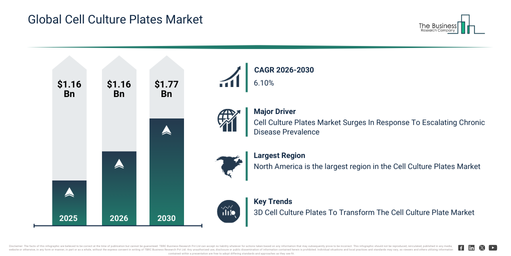
    Cell Culture Plates Market Forecast To Reach $3.08 Billion By 2030 At 6.1% CAGR

    The Business Research Company’s 2026 market reports feature enhanced tools like market attractiveness analysis, TAM assessment, and company scoring matrices, along with interactive dashboards, deeper supply chain insights, and startup coverage strengthening the depth, usability, and strategic value of insights.

    What Is The Projected Increase In Market Value Of The Cell Culture Plates Market During 2026–2030?

    The market size for cell culture plates has demonstrated substantial growth in recent years. Projections indicate an increase from $2.29 billion in 2025 to $2.44 billion by 2026, reflecting a compound annual growth rate (CAGR) of 6.2%. This market’s historical expansion is largely due to factors such as the broadening of biomedical research activities, the increased adoption of in vitro testing models, a rise in pharmaceutical R&D spending, the growing acceptance of cell-based assays, and the consistent availability of standardized laboratory consumables.

    The cell culture plates market size is anticipated to undergo significant expansion in the upcoming years. It is projected to reach $3.09 billion by 2030, driven by a compound annual growth rate (CAGR) of 6.1%. This expansion over the forecast period is primarily due to the escalating demand for advanced cell culture models, increasing investments in regenerative medicine research, the broadening scope of biopharmaceutical manufacturing, the growing integration of automated laboratory workflows, and a heightened emphasis on precision medicine research. Noteworthy trends during this period include the rising adoption of high-throughput cell culture plates, an increased reliance on 3D cell culture systems, a growing need for coated culture surfaces, the expansion of plates designed for organoid and stem cell research, and an intensified focus on reproducibility in cell-based assays.

    Access Your Free Sample Report For In-Depth Market Analysis:

    https://www.thebusinessresearchcompany.com/sample.aspx?id=12438&type=smp

    Which Factors Are Influencing The Growth Of The Cell Culture Plates Market?

    The increasing occurrence of chronic illnesses is anticipated to drive the expansion of the cell culture plates market in the future. These are conditions enduring for a year or more, requiring ongoing medical attention, limiting daily functions, or both. In research and development, cell culture plates are utilized to bring together various cell types within integrated, self-organizing systems. This enables understanding disease development, creating ideal environments for cell culture, evaluating novel therapies, and assessing drug efficacy. As an illustration, in June 2024, the National Health Service, a UK government body, reported that 3,615,330 people registered with a general practitioner (GP) were diagnosed with non-diabetic hyperglycemia or pre-diabetes (characterized by elevated blood sugar levels, but not meeting diabetes criteria) in 2023. This represented an 18% rise from the 3,065,825 cases recorded in 2022. Consequently, the growing incidence of chronic ailments is fueling the growth of the cell culture plate market.

    What Are The Key Segment Divisions In The Cell Culture Plates Market Segment Structure?

    The cell culture plates market covered in this report is segmented –

    1) By Type: Standard Cell Culture Plates, Coated Cell Culture Plates, Specialty Cell Culture Plates

    2) By Material: Polystyrene, Glass, Other Materials

    3) By Surface: Treated, Untreated

    4) By Application: Drug Discovery And Development, Biopharmaceutical Production, Tissue Engineering And Regenerative Medicine, Other Applications

    5) By End-User: Research Institutes, Pharmaceutical And Biotechnology, Diagnostic Laboratories

    Subsegments:

    1) By Standard Cell Culture Plates: 6-Well Plates, 12-Well Plates, 24-Well Plates, 48-Well Plates, 96-Well Plates, 384-Well Plates

    2) By Coated Cell Culture Plates: Collagen-Coated Plates, Poly-D-Lysine-Coated Plates, Fibronectin-Coated Plates

    3) By Specialty Cell Culture Plates: 3D Cell Culture Plates, Microplates For High-Throughput Screening, Plates For Stem Cell Culture, Plates For Organoid Culture

    Which Trends Are Influencing Demand In The Cell Culture Plates Market?

    Leading companies within the cell culture plate market are strategically focusing on developing advanced products, such as 3D Cell Culture Plates, to strengthen their market presence. These 3D cell culture plates effectively address the demand for sophisticated, physiologically relevant models, thereby significantly contributing to the cell culture plates market across diverse research and development applications. For instance, in May 2024, TheWell Bioscience, a US-based biotechnology research company, introduced its VitroPrime Spread-Attach Plates. These VitroPrime Spread-Attach Plates are specifically designed for hydrogel-based 3D and 2D cell culture, providing excellent hydrogel spreading and adherence to boost cell attachment. Such plates ensure homogenous gel distribution, minimize edge effects, and promote rapid cell growth for high-throughput applications.

    Which Organizations Are Engaged In The Cell Culture Plates Market?

    Major companies operating in the cell culture plates market are Thermo Fisher Scientific Inc., Corning Inc., Merck KGaA, Lonza Group AG, Sartorius AG, Eppendorf AG, Greiner Bio-One International GmbH, Sarstedt AG & Co., TPP Techno Plastic Products AG, Sumitomo Bakelite Co. Ltd., USA Scientific Inc., Himedia Laboratories Pvt. Ltd., Porvair PLC, Brand GmbH & Co. KG, Stemcell Technologies Inc., MatTek Corporation, Celltreat Scientific Products, Crystalgen Inc., Jet Bio-Filtration Co. Ltd., Zhejiang Sorfa Life Science Research Co. Ltd., Wuxi NEST Biotechnology Co. Ltd., Cellvis

    Get The Full Cell Culture Plates Market Report:

    https://www.thebusinessresearchcompany.com/report/cell-culture-plates-global-market-report

    Where Is The Cell Culture Plates Market Primarily Concentrated By Region?

    North America was the largest region in the cell culture plates market in 2025. The regions covered in the cell culture plates market report are Asia-Pacific, South East Asia, Western Europe, Eastern Europe, North America, South America, Middle East, Africa.

    Request A Customized Cell Culture Plates Market Report For Competitive Insights:

    https://www.thebusinessresearchcompany.com/customise?id=12438&type=smp

    Browse Through More Reports Similar to the Global Cell Culture Plates Market 2026, By The Business Research Company

    Cell Culture Media Market Report 2026

    https://www.thebusinessresearchcompany.com/report/cell-culture-media-global-market-report

    3D Cell Culture Technologies Market Report 2026

    https://www.thebusinessresearchcompany.com/report/3d-cell-culture-technologies-global-market-report

    Cell Cultures Market Report 2026

    https://www.thebusinessresearchcompany.com/report/cell-cultures-global-market-report

    Get in touch with us:

    The Business Research Company: https://www.thebusinessresearchcompany.com/

    Americas +1 310-496-7795

    Asia +44 7882 955267 & +91 8897263534

    Europe +44 7882 955267

    Email us at info@tbrc.info

    Follow us on:

    LinkedIn: https://in.linkedin.com/company/the-business-research-company

    YouTube: https://www.youtube.com/channel/UC24_fI0rV8cR5DxlCpgmyFQ

    Global Market Model: https://www.thebusinessresearchcompany.com/global-market-model