Category: Medical Equipment

  • Respiratory Endotherapy Devices Market Expected to Reach $4.66 Billion by 2030

    Respiratory Endotherapy Devices Market Expected to Reach $4.66 Billion by 2030

    The Business Research Company’s 2026 market reports include new capabilities such as market attractiveness scoring and analysis, total addressable market analysis, company scoring matrix, interactive excel data dashboard, improved supply chain analysis, upcoming startups in the market, and overview of key products, aimed at improving the depth, usability, and strategic value of the insights delivered.

    How Will The Market Size Of The Respiratory Endotherapy Devices Market Evolve From 2026 To 2030?

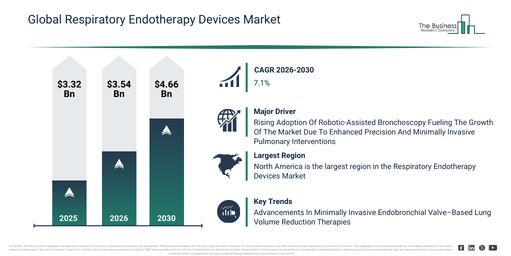
    The respiratory endotherapy devices market size has experienced significant expansion in recent years. It is anticipated to increase from $3.32 billion in 2025 to $3.54 billion in 2026, exhibiting a compound annual growth rate (CAGR) of 6.9%. Historically, this growth has been fueled by factors such as a rise in chronic respiratory diseases, improved lung cancer diagnosis, the expansion of interventional pulmonology, growth in hospital endoscopy units, and an elevated demand for minimally invasive procedures.

    The market size for respiratory endotherapy devices is projected to experience robust growth in the upcoming years. It is anticipated to expand to $4.66 billion in 2030, achieving a compound annual growth rate (CAGR) of 7.1%. This expansion during the forecast period is attributable to several factors, including an increase in early lung screening programs, the adoption of robotic bronchoscopy, a rise in outpatient pulmonary procedures, the integration of advanced imaging, and a growing demand for precision airway therapy. Prominent trends expected in this period involve minimally invasive airway intervention devices, the increasing use of disposable bronchoscopes, image guided bronchoscopic procedures, sophisticated endobronchial ablation systems, and intelligent navigation bronchoscopy tools.

    Download the Free Sample Report to Explore Key Market Insights:

    https://www.thebusinessresearchcompany.com/sample.aspx?id=33296&type=smp

    Which Major Factors Are Driving The Expansion Of The Respiratory Endotherapy Devices Market?

    The increasing integration of robotic-assisted bronchoscopy is anticipated to boost the expansion of the respiratory endotherapy devices market in the future. These systems represent sophisticated technologies facilitating accurate navigation within the airways, thereby enhancing diagnostic precision and treatment results. Growing demand for these systems stems from healthcare professionals’ pursuit of less invasive options that cut down procedure durations, bolster patient safety, and optimize clinical workflows. Respiratory endotherapy devices incorporating robotic aid assist in intricate procedures through the provision of real-time imaging, improved handling, and superior control. For example, data from September 2025 by the European Respiratory Society International Congress, a Switzerland-based membership organization, indicates that the adoption of robotic-assisted bronchoscopy combined with integrated cone beam CT for peripheral lung lesions reached 84.6% in 2025, a significant increase from only 23.1% using conventional bronchoscopy in 2024. Consequently, the expanding use of robotic-assisted bronchoscopy is fueling the expansion of the respiratory endotherapy devices market.

    Which Segment Areas Are Covered In The Respiratory Endotherapy Devices Market Analysis?

    The respiratory endotherapy devices market covered in this report is segmented –

    1) By Product Type: Bronchoscopes; Endobronchial Ultrasound Systems; Biopsy Forceps; Guidewires; Catheters; Airway Stents; Endobronchial Valves; Ablation Devices; Other Endotherapy Accessories

    2) By Diagnostic Devices: Trans Bronchial Aspiration; Biopsy Forceps; Cytology Brushes; Other Diagnostic Devices

    3) By Patient Type: Adult Patients; Pediatric Patients

    4) By Specialist: Hospitals; Diagnostic Centers; Ambulatory Surgical Centers

    5) By End User: Peripheral Vascular Intervention; Endovascular Interventions; Cardiac; Interventional Radiology; Venous; Other End Users

    Subsegments:

    1) By Bronchoscopes: Flexible Bronchoscopes; Rigid Bronchoscopes; Video Bronchoscopes; Disposable Bronchoscopes; Therapeutic Bronchoscopes

    2) By Endobronchial Ultrasound Systems: Radial Endobronchial Ultrasound Systems; Linear Endobronchial Ultrasound Systems; Portable Endobronchial Ultrasound Systems; Cart Based Endobronchial Ultrasound Systems; High Resolution Endobronchial Ultrasound Systems

    3) By Biopsy Forceps: Flexible Biopsy Forceps; Rigid Biopsy Forceps; Disposable Biopsy Forceps; Alligator Jaw Biopsy Forceps; Cup Biopsy Forceps

    4) By Guidewires: Hydrophilic Guidewires; Non Coated Guidewires; Steerable Guidewires; Flexible Tip Guidewires; High Strength Guidewires

    5) By Catheters: Balloon Catheters; Aspiration Catheters; Delivery Catheters; Diagnostic Catheters; Therapeutic Catheters

    6) By Airway Stents: Silicone Airway Stents; Metallic Airway Stents; Covered Airway Stents; Uncovered Airway Stents; Expandable Airway Stents

    7) By Endobronchial Valves: One Way Endobronchial Valves; Permanent Endobronchial Valves; Temporary Endobronchial Valves; Adjustable Endobronchial Valves; Implantable Endobronchial Valves

    8) By Ablation Devices: Radiofrequency Ablation Devices; Cryoablation Devices; Laser Ablation Devices; Thermal Ablation Devices; Microwave Ablation Devices

    9) By Other Endotherapy Accessories: Suction Tubes; Specimen Collection Traps; Bronchoscopy Brushes; Biopsy Needles; Airway Dilators

    What Key Developments And Trends Are Impacting The Respiratory Endotherapy Devices Market?

    Leading companies in the respiratory endotherapy devices market are concentrating on developing advanced solutions, such as endobronchial valves, to minimize treatment risks while achieving targeted lung volume reduction without permanent tissue removal. An endobronchial valve is a minimally invasive implant inserted via bronchoscopy into selected airways to block airflow to diseased lung regions, enabling healthier areas to function more effectively. For example, in February 2024, Olympus Canada Inc., a medical technology firm based in Canada, launched the Spiration Valve System for the treatment of severe emphysema. This umbrella-shaped device is designed to be placed in the most severely diseased lung regions using a minimally invasive bronchoscopic procedure. It uniquely redirects airflow away from hyperinflated lung areas toward healthier tissue, supporting improved respiratory mechanics. As the only endobronchial valve therapy currently accessible in Canada, it addresses an unmet need in the management of severe emphysema. Clinical evidence from the EMPROVE trial demonstrates sustained benefits over 24 months, including significant improvements in lung function, breathlessness, and patient quality of life.

    Which Leading Firms Are Contributing To The Growth Of The Respiratory Endotherapy Devices Market?

    Major companies operating in the respiratory endotherapy devices market are Johnson & Johnson, Medtronic plc, Siemens Healthineers, Stryker Corporation, GE Healthcare Technologies Inc., Boston Scientific Corporation, Intuitive Surgical Inc., Olympus Corporation, Hoya Corporation, Steris Healthcare, Teleflex Incorporated, Karl Storz SE & Co. KG, CookMedical, Merit Medical Systems Inc., Ambu A/S, Vygon, Richard Wolf GmbH, Vapotherm Inc, Scholly Fiberoptic GmbH, Clarus Medical LLC, ENDO-FLEX GmbH, The Lung Docs Inc., and Broncus Medical Inc.

    Read the full respiratory endotherapy devices market report here:

    https://www.thebusinessresearchcompany.com/report/respiratory-endotherapy-devices-market-report

    Which Regions Are Poised For Strategic Growth In The Respiratory Endotherapy Devices Market?

    North America was the largest region in the respiratory endotherapy devices market in 2025. Asia-Pacific is expected to be the fastest-growing region in the forecast period. The regions covered in the respiratory endotherapy devices market report are Asia-Pacific, South East Asia, Western Europe, Eastern Europe, North America, South America, Middle East, Africa.

    Request A Tailored Respiratory Endotherapy Devices Market Research Report For Competitive Advantage:

    https://www.thebusinessresearchcompany.com/customise?id=33296&type=smp

    Browse Through More Reports Similar to the Global Respiratory Endotherapy Devices Market 2026, By The Business Research Company

    Respiratory Devices And Equipment Therapeutic Market Report 2026

    https://www.thebusinessresearchcompany.com/report/respiratory-devices-and-equipment-therapeutic-global-market-report

    Endotherapy Devices Market Report 2026

    https://www.thebusinessresearchcompany.com/report/endotherapy-devices-global-market-report

    Respiratory Devices And Equipment Therapeutic And Diagnostic Market Report 2026

    https://www.thebusinessresearchcompany.com/report/respiratory-devices-and-equipment-therapeutic-and-diagnostic-global-market-report

    Get in touch with us:

    The Business Research Company: https://www.thebusinessresearchcompany.com/

    Americas +1 310-496-7795

    Asia +44 7882 955267 & +91 8897263534

    Europe +44 7882 955267

    Email us at info@tbrc.info

    Follow us on:

    LinkedIn: https://in.linkedin.com/company/the-business-research-company

    YouTube: https://www.youtube.com/channel/UC24_fI0rV8cR5DxlCpgmyFQ

    Global Market Model: https://www.thebusinessresearchcompany.com/global-market-model
  • Regenerative Artificial Skin Market Expanding Across Healthcare Applications Through 2035

    Regenerative Artificial Skin Market Expanding Across Healthcare Applications Through 2035

    The Business Research Company’s 2026 market reports include new capabilities such as market attractiveness scoring and analysis, total addressable market analysis, company scoring matrix, interactive excel data dashboard, improved supply chain analysis, upcoming startups in the market, and overview of key products, aimed at improving the depth, usability, and strategic value of the insights delivered.

    How Much Is The Regenerative Artificial Skin Market Expected To Grow In Terms Of Market Value Between 2026 And 2030?

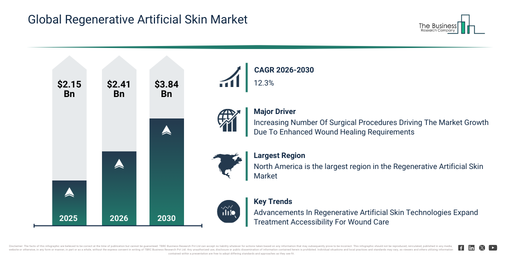
    The regenerative artificial skin market size has demonstrated rapid growth in recent years. It is anticipated to expand from $2.15 billion in 2025 to $2.41 billion in 2026, achieving a compound annual growth rate (CAGR) of 12.1%. The historical expansion of this market can be ascribed to a surge in burn injury cases, the increasing incidence of chronic wounds, a rise in diabetic ulcer patients, the broadening scope of reconstructive surgeries, and developments in tissue engineering research.

    The regenerative artificial skin market size is projected to experience swift expansion in the coming years. It is anticipated to reach $3.84 billion by 2030, demonstrating a compound annual growth rate (CAGR) of 12.3%. The market’s growth during the forecast period can be attributed to an increase in regenerative medicine adoption, rising demand for functional skin restoration, heightened clinical trial activity, the expansion of cell-based therapies, and greater healthcare spending on advanced wound care. Prominent trends for the forecast period include advanced bioengineered skin substitutes, cell-based dermal regeneration products, composite multilayer skin scaffolds, personalized graft design approaches, and wound platforms focused on rapid healing.

    Download the Free Sample Report to Explore Key Market Insights:

    https://www.thebusinessresearchcompany.com/sample.aspx?id=33290&type=smp

    Which Growth Drivers Are Contributing To The Progress Of The Regenerative Artificial Skin Market?

    The projected expansion of the regenerative artificial skin market is linked to an escalating volume of surgical interventions. These procedures are defined as medical treatments necessitating cuts or adjustments to bodily tissues to address injuries, illnesses, or physical abnormalities. A primary factor contributing to this rise in surgeries is the aging demographic, given that older individuals frequently need more operations because of age-associated health issues and persistent ailments. This increase in surgical activity, in turn, fuels the demand for regenerative artificial skin, which is crucial for efficient wound healing and tissue repair, ultimately speeding up patient recovery and minimizing complications after surgery. As an illustration, the American Society of Plastic Surgeons, a US-based professional medical organization, reported in June 2024 that liposuction remained the most popular plastic surgery in 2023, with approximately 350,000 procedures performed, representing a 7% rise from 2022. Consequently, the growing volume of surgical operations is a key driver for the expansion of the regenerative artificial skin market.

    What Major Segment Divisions Exist Within The Regenerative Artificial Skin Market?

    The regenerative artificial skin market covered in this report is segmented –

    1) By Product Type: Synthetic Skin; Biosynthetic Skin; Composite Skin

    2) By Material: Engineered Skin Material; Bi Layered Material; Permanent Skin Material; Single Layer Material; Temporary Skin Material; Temporary Skin Material

    3) By Application: Burn Treatment; Chronic Wound Care; Surgical Reconstruction; Other Applications

    4) By End User: Hospitals; Clinics; Ambulatory Surgical Centers; Other End Users

    Subsegments:

    1) By Synthetic Skin: Polymer Based Synthetic Skin; Silicone Based Synthetic Skin; Elastomer Based Synthetic Skin; Hydrogel Based Synthetic Skin; Nanofiber Based Synthetic Skin

    2) By Biosynthetic Skin: Collagen Based Biosynthetic Skin; Gelatin Based Biosynthetic Skin; Fibrin Based Biosynthetic Skin; Chitosan Based Biosynthetic Skin; Hyaluronic Acid Based Biosynthetic Skin

    3) By Composite Skin: Collagen Polymer Composite Skin; Hydrogel Polymer Composite Skin; Elastomer Fiber Composite Skin; Biopolymer Synthetic Composite Skin; Multilayer Composite Skin

    How Are Trends Shaping The Direction Of The Regenerative Artificial Skin Market?

    Companies active in the regenerative artificial skin market are focusing on developing advanced solutions, including fit-for-purpose autologous cell therapy cartridges, to enhance wound coverage, improve accessibility, and optimize resource use for smaller wounds. These fit-for-purpose autologous cell therapy cartridges are modified disposable units specifically engineered to efficiently deliver spray-on skin cells for wounds of varying sizes, helping clinicians treat smaller full-thickness wounds with minimal waste. For instance, in December 2024, AVITA Medical Inc., a US-based regenerative medicine company, launched RECELL GO mini, an extension of its RECELL GO system, which is FDA-approved for treating wounds up to 480 square centimeters. This innovation enhances the ability to provide tailored solutions, enabling clinicians to address the diverse needs of patients with full-thickness wounds. The RECELL GO mini utilizes the same multi-use processing device as the standard cartridge but features a smaller disposable cartridge, thereby broadening patient access while maintaining high-quality regenerative skin therapy outcomes.

    Who Are The Key Players Driving Competition In The Regenerative Artificial Skin Market?

    Major companies operating in the regenerative artificial skin market are Johnson & Johnson, Medtronic plc, 3M Company, Stryker Corporation, Baxter International Inc., Smith & Nephew plc, Zimmer Biomet Holdings Inc., Mölnlycke Health Care AB, Mallinckrodt plc, Integra LifeSciences Corporation, Gunze Limited, Organogenesis Holdings Inc., MiMedx Group Inc., Vericel Corporation, LifeNet Health Inc., AlloSource Inc., AVITA Medical Inc., Aroa Biosurgery Limited, Cook Biotech Incorporated, Tissue Regenix Group plc, CUTISS AG, and Tides Medical LLC.

    Read the full regenerative artificial skin market report here:

    https://www.thebusinessresearchcompany.com/report/regenerative-artificial-skin-market-report

    Which Geographic Areas Are Emerging As Strong Markets For The Regenerative Artificial Skin Market?

    North America was the largest region in the regenerative artificial skin market in 2025. Asia-Pacific is expected to be the fastest-growing region in the forecast period. The regions covered in the regenerative artificial skin market report are Asia-Pacific, South East Asia, Western Europe, Eastern Europe, North America, South America, Middle East, Africa.

    Request A Tailored Regenerative Artificial Skin Market Research Report For Competitive Advantage:

    https://www.thebusinessresearchcompany.com/customise?id=33290&type=smp

    Browse Through More Reports Similar to the Global Regenerative Artificial Skin Market 2026, By The Business Research Company

    Skin Grafting System Market Report 2026

    https://www.thebusinessresearchcompany.com/report/skin-grafting-system-global-market-report

    Skin Care Products Market Report 2026

    https://www.thebusinessresearchcompany.com/report/skin-care-products-global-market-report

    Natural Skin Care Products Market Report 2026

    https://www.thebusinessresearchcompany.com/report/natural-skin-care-products-global-market-report

    Get in touch with us:

    The Business Research Company: https://www.thebusinessresearchcompany.com/

    Americas +1 310-496-7795

    Asia +44 7882 955267 & +91 8897263534

    Europe +44 7882 955267

    Email us at info@tbrc.info

    Follow us on:

    LinkedIn: https://in.linkedin.com/company/the-business-research-company

    YouTube: https://www.youtube.com/channel/UC24_fI0rV8cR5DxlCpgmyFQ

    Global Market Model: https://www.thebusinessresearchcompany.com/global-market-model
  • Refurbished Cardiovascular Equipment Market Analysis and Strategic Outlook for 2026–2030

    Refurbished Cardiovascular Equipment Market Analysis and Strategic Outlook for 2026–2030

    The Business Research Company’s 2026 market reports include new capabilities such as market attractiveness scoring and analysis, total addressable market analysis, company scoring matrix, interactive excel data dashboard, improved supply chain analysis, upcoming startups in the market, and overview of key products, aimed at improving the depth, usability, and strategic value of the insights delivered.

    What Market Value Is Expected For The Refurbished Cardiovascular And Cardiology Equipment Market At The End Of The 2026–2030 Forecast Period?

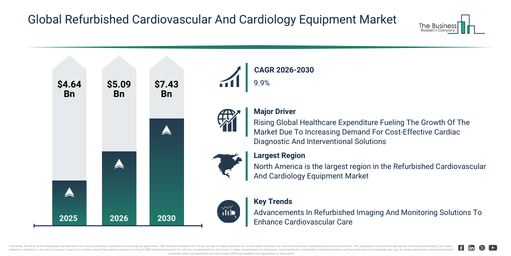
    The market for refurbished cardiovascular and cardiology equipment has demonstrated robust growth in recent years. This market is projected to expand from $4.64 billion in 2025 to $5.09 billion in 2026, exhibiting a compound annual growth rate (CAGR) of 9.7%. Historically, this expansion has been driven by several factors, including the elevated cost of new cardiology equipment, financial limitations faced by hospitals, the presence of well-established secondary equipment markets, accelerating device replacement cycles, and widening gaps in healthcare infrastructure.

    The refurbished cardiovascular and cardiology equipment market is anticipated to exhibit robust growth in the coming years, reaching $7.43 billion in 2030 with a compound annual growth rate (CAGR) of 9.9%. This projected expansion is driven by a heightened focus on cost-optimized care delivery, improved access to cardiac diagnostics, increased acceptance of certified refurbished devices, the growth of private cardiac clinics, and rising demand in emerging markets. Significant trends for the forecast period include a growing demand for certified refurbished systems, the rise of cost-effective cardiology equipment, the expansion of warranty-backed refurbished devices, greater adoption in mid-tier hospitals, and an increase in third-party refurbishment providers.

    Download the Free Sample Report to Explore Key Market Insights:

    https://www.thebusinessresearchcompany.com/sample.aspx?id=33289&type=smp

    What Primary Drivers Are Shaping The Development Of The Refurbished Cardiovascular And Cardiology Equipment Market?

    The rising global healthcare spending is projected to stimulate the expansion of the refurbished cardiovascular and cardiology equipment market. Global healthcare expenditure refers to the total financial investments made by governments, insurers, and individuals for healthcare services, medical technologies, and public health systems worldwide. This global increase in healthcare spending is driven by aging populations, which significantly raise the incidence of cardiovascular diseases and thus boost the demand for diagnostic imaging, interventional procedures, and prolonged cardiac care. Refurbished cardiovascular and cardiology equipment supports this trend by enabling healthcare systems to broaden their cardiovascular service capacity while managing capital expenses, thanks to lower acquisition costs compared to new equipment. For instance, in October 2024, Eurostat, a Luxembourg-based statistical office, reported that healthcare expenditure in 2023 reached $2,030 billion (€1,720 billion), making up 10.0% of GDP, an increase from $1960 billion (€1,660 billion) and 9.9% of GDP in 2022. Therefore, the growing global healthcare expenditure is a primary driver for the growth of the refurbished cardiovascular and cardiology equipment market.

    What Segment Types Make Up The Refurbished Cardiovascular And Cardiology Equipment Market?

    The refurbished cardiovascular and cardiology equipment market covered in this report is segmented –

    1) By Product Type: Electrocardiographs; Defibrillators; Cardiac Ultrasound Systems; Stress Testing Systems; Holter Monitors; Other Product Types

    2) By Equipment Condition: Certified Refurbished Equipment; Remanufactured Equipment; Used Equipment With Warranty; Pre-Owned Equipment

    3) By Distribution Channel: Direct Sales; Online Sales Platforms; Third-Party Distributors; Medical Equipment Trade Shows

    4) By End-User: Hospitals And Clinics; Diagnostic Centers; Ambulatory Surgical Centers; Research Institutions; Home Care Settings

    Subsegments:

    1) By Electrocardiographs: Resting Electrocardiographs; Portable Electrocardiographs; Wireless Electrocardiographs; Multichannel Electrocardiographs

    2) By Defibrillators: Automated External Defibrillators; Manual External Defibrillators; Implantable Cardiac Defibrillators; Wearable Cardiac Defibrillators

    3) By Cardiac Ultrasound Systems: Transthoracic Cardiac Ultrasound Systems; Transesophageal Cardiac Ultrasound Systems; Doppler Cardiac Ultrasound Systems; Stress Cardiac Ultrasound Systems

    4) By Stress Testing Systems: Treadmill Based Stress Testing Systems; Bicycle Based Stress Testing Systems; Pharmacological Stress Testing Systems; Integrated Cardiac Stress Testing Systems

    5) By Holter Monitors: Single Channel Holter Monitors; Multi Channel Holter Monitors; Wireless Holter Monitors; Extended Duration Holter Monitors

    6) By Other Product Types: Cardiac Patient Monitoring Systems; Cardiac Event Recorders; Cardiac Output Monitoring Devices; Cardiac Telemetry Systems

    Which Market Trends Are Creating New Opportunities In The Refurbished Cardiovascular And Cardiology Equipment Market?

    Companies active in the refurbished cardiovascular and cardiology equipment market are prioritizing the creation of advanced refurbishing ultrasound systems. This emphasis aims to improve diagnostic accuracy, elevate patient outcomes, reduce operational expenses, and prolong the service life of medical equipment for healthcare providers. Refurbishing ultrasound systems involves restoring used or pre-owned ultrasound machines to a fully operational and dependable state, enabling their safe re-employment in medical settings. For example, in April 2024, GE Healthcare, a US-based medical technology company, launched a new refurbishing unit in Bangladesh specifically for its A1 SURE ultrasound systems. This unit restores pre-owned ultrasound devices by replacing worn components, updating software, and guaranteeing full functional performance, while also providing a one-year warranty and adaptable financing arrangements to hospitals and clinics. These refurbished systems maintain the high-resolution imaging and sophisticated diagnostic features of new devices, simultaneously lowering costs and expanding access to essential cardiovascular and cardiology imaging in developing regions.

    Which Major Firms Influence Developments In The Refurbished Cardiovascular And Cardiology Equipment Market?

    Major companies operating in the refurbished cardiovascular and cardiology equipment market are Siemens Healthineers AG, Hitachi Ltd., Medtronic plc, Stryker Corporation, Koninklijke Philips N.V., GE HealthCare Technologies Inc., Sanrad Medical Systems, Neusoft Medical Systems Co. Ltd., Soma Technology Inc, Diamond Diagnostics, Amber Diagnostics, Radiology Oncology Systems Inc., Master Medical Equipment, Venture Medical ReQuip Inc, EverX Pty Ltd., Whittemore Enterprises Inc., Fair Medical Co. Ltd., Future Health Concepts Inc., Jaken Medical Inc., Mediproma B.V., and PrimedeQ India Private Limited.

    Read the full refurbished cardiovascular and cardiology equipment market report here:

    https://www.thebusinessresearchcompany.com/report/refurbished-cardiovascular-and-cardiology-equipment-market-report

    Which Region Is Projected To Lead The Refurbished Cardiovascular And Cardiology Equipment Market During The Forecast Period?

    North America was the largest region in the refurbished cardiovascular and cardiology equipment market in 2025. Asia-Pacific is expected to be the fastest-growing region in the forecast period. The regions covered in the refurbished cardiovascular and cardiology equipment market report are Asia-Pacific, South East Asia, Western Europe, Eastern Europe, North America, South America, Middle East, Africa.

    Request A Tailored Refurbished Cardiovascular And Cardiology Equipment Market Research Report For Competitive Advantage:

    https://www.thebusinessresearchcompany.com/customise?id=33289&type=smp

    Browse Through More Reports Similar to the Global Refurbished Cardiovascular And Cardiology Equipment Market 2026, By The Business Research Company

    Refurbished Medical Equipment Market Report 2026

    https://www.thebusinessresearchcompany.com/report/refurbished-medical-equipment-global-market-report

    Interventional Cardiology Devices And Equipment Market Report 2026

    https://www.thebusinessresearchcompany.com/report/interventional-cardiology-devices-and-equipment-global-market-report

    Cardiovascular Surgery Devices And Equipment Market Report 2026

    https://www.thebusinessresearchcompany.com/report/cardiovascular-surgery-devices-and-equipment-global-market-report

    Get in touch with us:

    The Business Research Company: https://www.thebusinessresearchcompany.com/

    Americas +1 310-496-7795

    Asia +44 7882 955267 & +91 8897263534

    Europe +44 7882 955267

    Email us at info@tbrc.info

    Follow us on:

    LinkedIn: https://in.linkedin.com/company/the-business-research-company

    YouTube: https://www.youtube.com/channel/UC24_fI0rV8cR5DxlCpgmyFQ

    Global Market Model: https://www.thebusinessresearchcompany.com/global-market-model
  • Wound Skin Substitutes Market Trends and Growth Outlook for 2026–2030

    Wound Skin Substitutes Market Trends and Growth Outlook for 2026–2030

    The Business Research Company’s 2026 market reports include new capabilities such as market attractiveness scoring and analysis, total addressable market analysis, company scoring matrix, interactive excel data dashboard, improved supply chain analysis, upcoming startups in the market, and overview of key products, aimed at improving the depth, usability, and strategic value of the insights delivered.

    How Much Is The Wound Skin Substitutes Market Expected To Grow In Terms Of Market Value Between 2026 And 2030?

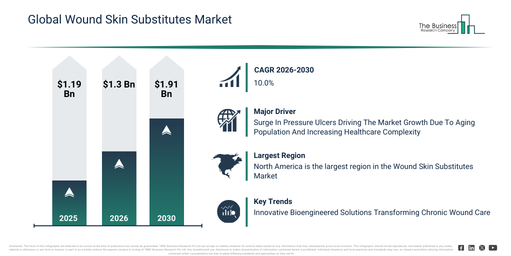
    The wound skin substitutes market has experienced strong growth in recent years. It is expected to grow from $1.19 billion in 2025 to $1.3 billion in 2026, registering a compound annual growth rate (CAGR) of 9.7%. This historical expansion has been supported by rising cases of burn injuries, an increasing prevalence of diabetic ulcers, a higher number of surgical procedures, continued use of collagen dressings, and the growth of wound care facilities.

    Looking ahead, the market is set to witness notable growth, reaching $1.91 billion by 2030 at a compound annual growth rate (CAGR) of 10.0%. This projected growth is driven by factors such as a growing aging population affected by chronic wounds, increasing diabetes incidence, advancements in regenerative medicine, higher spending on advanced wound care, and the expansion of outpatient wound clinics. Key trends during this period include the emergence of bioengineered regenerative skin matrices, cell-based advanced wound coverings, composite biosynthetic skin substitutes, dressings enriched with growth factors, and smart wound coverings designed to balance moisture.

    Download the Free Sample Report to Explore Key Market Insights:

    https://www.thebusinessresearchcompany.com/sample.aspx?id=33363&type=smp

    What Underlying Factors Are Accelerating The Growth Of The Wound Skin Substitutes Market?

    The growing incidence of pressure ulcers is expected to drive the expansion of the wound skin substitutes market in the coming years. Pressure ulcers are localized injuries to the skin and underlying tissue, usually caused by prolonged pressure, particularly over bony areas. Their prevalence is increasing mainly due to an aging population, as older individuals often experience reduced mobility, delicate skin, and chronic health conditions that increase their vulnerability to skin damage.

    Wound skin substitutes play a key role in preventing pressure ulcers by protecting the skin, supporting tissue regeneration, maintaining proper moisture levels, and enhancing skin integrity, thereby lowering the risk of breakdown in high-risk areas. For instance, in November 2023, the National Health Service (NHS) England, a UK-based government department, reported that between October 1, 2022, and October 1, 2023, a total of 193 inpatients developed bedsores, pressure sores, or pressure ulcers during their hospital stay. Therefore, the rising occurrence of pressure ulcers is contributing to the growth of the wound skin substitutes market.

    What Major Segment Divisions Exist Within The Wound Skin Substitutes Market?

    The wound skin substitutes market covered in this report is segmented –

    1) By Product Type: Biologic Skin Substitutes; Synthetic Skin Substitutes; Biosynthetic Skin Substitutes; Collagen Dressings; Acellular Dermal Matrices; Cultured Epithelial Autografts; Allograft Skin; Xenograft Skin; Hydrogel Dressings; Foam Dressings

    2) By Technology: Static Skin Substitutes; Dynamic; Smart

    3) By Application Or Indication: Diabetic Foot Ulcers; Pressure Ulcers; Burns; Surgical Wounds; Trauma Wounds; Chronic Wounds

    4) By Distribution Channel: Direct Sales Or Institutional Sales; Medical Device Distributors; Online Retail Or E-commerce

    5) By End User: Hospitals And Burn Centers; Ambulatory Surgical Centers (ASCs); Specialty Wound Care Clinics; Academic And Research Institute

    Subsegments:

    1) By Biologic Skin Substitutes: Human Derived Skin Substitutes; Animal Derived Skin Substitutes; Cellular Based Skin Substitutes; Growth Factor Enriched Skin Substitutes

    2) By Synthetic Skin Substitutes: Polymer Based Skin Substitutes; Silicone Based Skin Substitutes; Polyurethane Based Skin Substitutes; Synthetic Composite Skin Substitutes

    3) By Biosynthetic Skin Substitutes: Collagen And Silicone Based Skin Substitutes; Polymer And Collagen Composite Skin Substitutes; Semi Synthetic Skin Substitutes

    4) By Collagen Dressings: Native Collagen Dressings; Oxidized Regenerated Collagen Dressings; Collagen With Antimicrobial Agents; Collagen With Silver

    5) By Acellular Dermal Matrices: Human Acellular Dermal Matrices; Animal Acellular Dermal Matrices; Cross Linked Dermal Matrices; Non Cross Linked Dermal Matrices

    6) By Cultured Epithelial Autografts: Keratinocyte Based Autografts; Epidermal Sheet Autografts; Spray On Cultured Epithelial Cells

    7) By Allograft Skin: Fresh Allograft Skin; Cryopreserved Allograft Skin; Lyophilized Allograft Skin

    8) By Xenograft Skin: Porcine Derived Xenograft Skin; Bovine Derived Xenograft Skin; Processed Xenograft Skin

    9) By Hydrogel Dressings: Amorphous Hydrogel Dressings; Sheet Hydrogel Dressings; Impregnated Hydrogel Dressings

    10) By Foam Dressings: Polyurethane Foam Dressings; Silicone Foam Dressings; Adhesive Foam Dressings; Non Adhesive Foam Dressings

    What Key Developments And Trends Are Impacting The Wound Skin Substitutes Market?

    Leading companies in the wound skin substitutes market are concentrating on developing innovative products like advanced bioengineered skin grafts to speed up wound healing, lower infection risks, and enhance tissue regeneration. These advanced bioengineered skin grafts are laboratory-grown or tissue-engineered skin replacements that imitate natural skin structure, offering living cells and scaffolds that foster faster wound healing, support tissue regrowth, and decrease the likelihood of infection when compared to conventional dressings. For example, in May 2025, Tides Medical, a US-based medical device company, unveiled Artacent Wound, a next-generation wound skin substitute. This product utilizes an Arta-Pure Process to carefully preserve the complete structure of amniotic tissue, including its crucial spongy intermediate layer, thereby maximizing the graft’s natural integrity. Artacent Wound features a dual-layer design that can be applied on either side, remains securely in place without sutures, and aids clinicians in treating chronic wounds by maintaining a biologically active matrix that facilitates tissue repair and reduces inflammation, distinguishing it from traditional dehydrated or highly processed grafts.

    Who Are The Leading Companies Operating In The Wound Skin Substitutes Market?

    Major companies operating in the wound skin substitutes market are 3M Company, Stryker Corporation, Essity Aktiebolag, Smith & Nephew plc, B. Braun Melsungen AG, Coloplast A/S, ConvaTec Group plc, Mallinckrodt Pharmaceuticals, Integra LifeSciences Corporation, AVITA Medical Inc., MTF Biologics, Organogenesis Inc., MiMedx Group Inc., Vericel Corporation, LifeNet Health, Anika Therapeutics Inc., AlloSource, BioTissue Inc., Tissue Regenix Group plc, Gunze Medical Co. Ltd., and Molecular Biologicals Inc.

    Read the full wound skin substitutes market report here:

    https://www.thebusinessresearchcompany.com/report/wound-skin-substitutes-market-report

    Which Geographic Areas Are Emerging As Strong Markets For The Wound Skin Substitutes Market?

    North America was the largest region in the wound skin substitutes market in 2025. Asia-Pacific is expected to be the fastest-growing region in the forecast period. The regions covered in the wound skin substitutes market report are Asia-Pacific, South East Asia, Western Europe, Eastern Europe, North America, South America, Middle East, Africa.

    Request A Tailored Wound Skin Substitutes Market Research Report For Competitive Advantage:

    https://www.thebusinessresearchcompany.com/customise?id=33363&type=smp

    Browse Through More Reports Similar to the Global Wound Skin Substitutes Market 2026, By The Business Research Company

    Topical Wound Agents Market Report 2026

    https://www.thebusinessresearchcompany.com/report/topical-wound-agents-global-market-report

    Skin Care Products Market Report 2026

    https://www.thebusinessresearchcompany.com/report/skin-care-products-global-market-report

    Biomaterial Wound Dressing Market Report 2026

    https://www.thebusinessresearchcompany.com/report/biomaterial-wound-dressing-global-market-report

    Get in touch with us:

    The Business Research Company: https://www.thebusinessresearchcompany.com/

    Americas +1 310-496-7795

    Asia +44 7882 955267 & +91 8897263534

    Europe +44 7882 955267

    Email us at info@tbrc.info

    Follow us on:

    LinkedIn: https://in.linkedin.com/company/the-business-research-company

    YouTube: https://www.youtube.com/channel/UC24_fI0rV8cR5DxlCpgmyFQ

    Global Market Model: https://www.thebusinessresearchcompany.com/global-market-model
  • Increasing Neurological Disorders Fueling Expansion in Wearable Neurotechnology Market

    Increasing Neurological Disorders Fueling Expansion in Wearable Neurotechnology Market

    The Business Research Company’s 2026 market reports include new capabilities such as market attractiveness scoring and analysis, total addressable market analysis, company scoring matrix, interactive excel data dashboard, improved supply chain analysis, upcoming startups in the market, and overview of key products, aimed at improving the depth, usability, and strategic value of the insights delivered.

    What Market Value Is Expected For The Wearable Neurotech Market At The End Of The 2026–2030 Forecast Period?

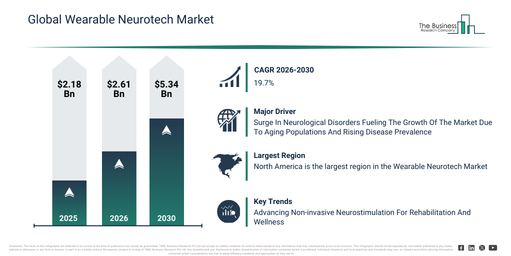
    The wearable neurotechnology market has experienced strong growth in recent years and is expected to continue expanding rapidly. It is projected to increase from $2.18 billion in 2025 to $2.61 billion in 2026, reflecting a compound annual growth rate (CAGR) of 19.4%. This growth has been driven by advancements in EEG miniaturization, the rising use of digital health devices, expanded research in brain-computer interfaces, increasing interest in mental wellness technologies, and wider adoption of wearable sensors.

    Looking ahead, the market is set for significant expansion. It is forecast to reach $5.34 billion by 2030, growing at a CAGR of 19.7%. This future growth is expected to be supported by the expansion of remote neurological monitoring, rising demand for cognitive enhancement solutions, the growth of neuro-based digital therapeutics, increased use of sports performance analytics, and the emergence of personalized brain health programs. Key trends during this period include the development of consumer-focused brain-computer interfaces, greater adoption of neurofeedback wearables, increased availability of portable EEG devices, integration of cognitive monitoring applications, and a rise in home-use neurostimulation devices.

    Download the Free Sample Report to Explore Key Market Insights:

    https://www.thebusinessresearchcompany.com/sample.aspx?id=33359&type=smp

    Which Growth Drivers Are Contributing To The Progress Of The Wearable Neurotech Market?

    The rising prevalence of neurological disorders is expected to drive the growth of the wearable neurotechnology market in the coming years. These conditions refer to disorders that impact the brain, spinal cord, or nerves, affecting movement, sensation, cognitive abilities, or behavior. An expanding global elderly population is a key factor contributing to the increase in neurological disorders, leading to a higher incidence of age-related conditions. Wearable neurotechnology supports the management of these disorders by enabling continuous monitoring of brain and nerve activity, allowing for early diagnosis, personalized treatment strategies, and ongoing symptom management. For instance, in March 2023, the Alzheimer’s Association, a US-based nonprofit voluntary health organization, reported that 6.7 million Americans aged 65+ are living with Alzheimer’s, a number projected to rise to 13.8 million by 2060. Therefore, the growing burden of neurological disorders is driving the expansion of the wearable neurotechnology market.

    What Segment Types Make Up The Wearable Neurotech Market?

    The wearable neurotech market covered in this report is segmented –

    1) By Product Type: Electroencephalography Headsets; Brain Computer Interface Devices; Neurostimulation Wearables; Neurofeedback Wearable Devices; Wearable Neural Sensors

    2) By Technology: Electroencephalography Technology; Functional Near Infrared Spectroscopy Technology; Magnetoencephalography Technology; Transcranial Direct Current Stimulation Technology; Other Neural Sensing and Stimulation Technologies

    3) By Distribution Channel: Online Stores; Specialty Retail Stores; Direct Sales; Other Distribution Channels

    4) By Application: Healthcare; Consumer Electronics; Sports and Fitness; Other Applications

    5) By End User: Hospitals and Clinics; Research Institutes and Laboratories; Consumer End Users; Sports and Fitness Centers; Academic and Educational Institutions

    Subsegments:

    1) By Electroencephalography Headsets: Portable Electroencephalography Headsets; Wireless Electroencephalography Headsets; Clinical Electroencephalography Headsets

    2) By Brain Computer Interface Devices: Non Invasive Brain Computer Interface Devices; Invasive Brain Computer Interface Devices; Hybrid Brain Computer Interface Devices

    3) By Neurostimulation Wearables: Transcranial Direct Current Stimulation Wearables; Transcranial Magnetic Stimulation Wearables; Vagus Nerve Stimulation Wearables

    4) By Neurofeedback Wearable Devices: Real Time Neurofeedback Wearable Devices; Home Use Neurofeedback Wearable Devices; Clinical Neurofeedback Wearable Devices

    5) By Wearable Neural Sensors: Electroencephalography Sensors; Functional Near-Infrared Spectroscopy Sensors; Magnetoencephalography Sensors; Electromyography Sensors; Cognitive Monitoring Sensors; Brain Computer Interface Sensors

    What Trends Are Projected To Affect The Wearable Neurotech Market?

    Leading companies within the wearable neurotech market are intensely focused on advancing non-invasive neurostimulation technologies, such as wearable vagus nerve and electrical muscle stimulation devices, with the goal of aiding rehabilitation, promoting wellness, or assisting neural recovery. Wearable vagus nerve devices themselves are non-invasive systems, worn on the body, that deliver electrical stimulation to the vagus nerve to support various health, wellness, or therapeutic outcomes. An illustrative instance occurred in February 2025, when Neuvotion Inc., a US medical device company, unveiled NeuStim, an FDA-cleared, non-invasive, wearable neurostimulation system designed for precise muscle stimulation to facilitate hand movement recovery after stroke or spinal cord injury. This particular device features a lightweight, wrist-worn design, a clinician-friendly touchscreen for targeting stimulation, and customizable programs accessible via a mobile interface. Similarly, in 2025, Lithuania-based Pulsetto introduced or expanded its wearable vagus nerve stimulation device, which aims to reduce stress and support sleep. This device, worn on the neck, provides low-frequency transcutaneous stimulation, offers several preset programs through a companion app, and is intended for daily, drug-free application. Both these innovations collectively underscore the increasing trend of noninvasive, wearable neurotechnologies being utilized for health and rehabilitation.

    Which Companies Are Expanding Their Footprint In The Wearable Neurotech Market?

    Major companies operating in the wearable neurotech market are Kernel Labs Inc., Nuro Corporation, NeuroSky Inc., BrainCo Inc., Emotiv Inc., Cognito Therapeutics Inc., Neuroelectrics Barcelona S.L.U, Q30 Innovations Inc., Halo Neuroscience, Thync, Neurable Inc., Neurovalens Ltd., Neurovalens Ltd., Bitbrain Technologies S.L., Muse (InteraXon), OpenBCI Inc., BrainBit, Nexstem Technologies Pvt. Ltd, Nalu Medical Inc., Alphabeats, Motif Neurotech.

    Read the full wearable neurotech market report here:

    https://www.thebusinessresearchcompany.com/report/wearable-neurotech-market-report

    Which Region Is Projected To Lead The Wearable Neurotech Market During The Forecast Period?

    North America was the largest region in the wearable neurotech market in 2025. Asia-Pacific is expected to be the fastest-growing region in the forecast period. The regions covered in the wearable neurotech market report are Asia-Pacific, South East Asia, Western Europe, Eastern Europe, North America, South America, Middle East, Africa.

    Request A Tailored Wearable Neurotech Market Research Report For Competitive Advantage:

    https://www.thebusinessresearchcompany.com/customise?id=33359&type=smp

    Browse Through More Reports Similar to the Global Wearable Neurotech Market 2026, By The Business Research Company

    Wearable Medical Devices Market 2026

    https://www.thebusinessresearchcompany.com/report/wearable-medical-devices-market

    Wearable Computing Market Report 2026

    https://www.thebusinessresearchcompany.com/report/wearable-computing-global-market-report

    Neurotechnology Market Report 2026

    https://www.thebusinessresearchcompany.com/report/neurotechnology-global-market-report

    Get in touch with us:

    The Business Research Company: https://www.thebusinessresearchcompany.com/

    Americas +1 310-496-7795

    Asia +44 7882 955267 & +91 8897263534

    Europe +44 7882 955267

    Email us at info@tbrc.info

    Follow us on:

    LinkedIn: https://in.linkedin.com/company/the-business-research-company

    YouTube: https://www.youtube.com/channel/UC24_fI0rV8cR5DxlCpgmyFQ

    Global Market Model: https://www.thebusinessresearchcompany.com/global-market-model
  • Vibrating Mesh Nebulizer Market Trends and Growth Outlook Through 2030

    Vibrating Mesh Nebulizer Market Trends and Growth Outlook Through 2030

    The Business Research Company’s 2026 market reports include new capabilities such as market attractiveness scoring and analysis, total addressable market analysis, company scoring matrix, interactive excel data dashboard, improved supply chain analysis, upcoming startups in the market, and overview of key products, aimed at improving the depth, usability, and strategic value of the insights delivered.

    What Market Valuation Is Forecasted For The Vibrating Mesh Nebulizer Market By 2030 Starting From Its 2026 Size?

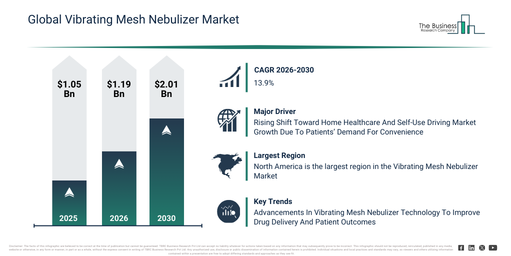
    The vibrating mesh nebulizer market size has seen substantial growth over recent years. It is anticipated to expand from $1.05 billion in 2025 to $1.19 billion in 2026, achieving a compound annual growth rate (CAGR) of 13.7%. This historical growth can be attributed to several factors, including an increase in asthma prevalence, the growing number of COPD patients, heightened demand for home respiratory care, innovations in portable devices, and the specific requirements for pediatric inhalation therapy.

    The vibrating mesh nebulizer market is projected to experience substantial expansion over the upcoming years. Its valuation is anticipated to reach $2.01 billion by 2030, demonstrating a compound annual growth rate (CAGR) of 13.9%. This expansion during the projection period is driven by factors such as the adoption of connected respiratory devices, the increase in home-based chronic care, advancements in wearable inhalation monitoring, the rising need for personalized drug delivery, and respiratory care for an aging population. Key developments expected in this period encompass portable handheld mesh nebulizers, exceptionally quiet nebulization devices, intelligent connected inhalation systems, highly efficient aerosol delivery, and rechargeable mesh nebulizer units.

    Download the Free Sample Report to Explore Key Market Insights:

    https://www.thebusinessresearchcompany.com/sample.aspx?id=33348&type=smp

    What Drivers Are Influencing The Vibrating Mesh Nebulizer Market?

    The increasing adoption of home healthcare and self-use is anticipated to fuel expansion within the vibrating mesh nebulizer market over the coming years. These terms denote medical interventions and equipment enabling individuals to autonomously manage their health in environments outside traditional clinics. This transition is primarily propelled by patient desire for accessible and economical care, given that at-home treatment minimizes hospital visits, decreases total healthcare expenditures, and enhances patient comfort and compliance with treatment plans. Vibrating mesh nebulizers are exceptionally suitable for home healthcare and self-administered use because of their small footprint, silent functioning, ease of transport, and capacity to effectively deliver accurate respiratory medication dosages. For example, data released in July 2025 by the Department of Health and Social Care (DHSC), a UK-based government organization, indicated that around 489,000 individuals in England accessed community-based support in 2024. This figure, equivalent to 1,070 per 100,000 adults, demonstrates a year-on-year increase in the uptake of home-based care. Consequently, the expanding trend towards home healthcare and self-use is a key factor propelling the expansion of the vibrating mesh nebulizer market.

    Which Segment Categories Define The Vibrating Mesh Nebulizer Market?

    The vibrating mesh nebulizer market covered in this report is segmented –

    1) By Product Type: Active Mesh Nebulizer; Passive Mesh Nebulizer

    2) By Age Group: Adults; Paediatrics

    3) By Distribution Channel: Online; Offline

    4) By Application: Chronic Obstructive Pulmonary Disease; Asthma; Cystic Fibrosis; Other Applications

    5) By End User: Hospitals; Clinics; Home Healthcare; Emergency Medical Centres; Other End Users

    Subsegments:

    1) By Active Mesh Nebulizer: Portable Active Mesh Nebulizers; Handheld Active Mesh Nebulizers; Battery Operated Active Mesh Nebulizers; Rechargeable Active Mesh Nebulizers; High Frequency Vibration Active Mesh Nebulizers

    2) By Passive Mesh Nebulizer: Compact Passive Mesh Nebulizers; Tabletop Passive Mesh Nebulizers; Low Noise Passive Mesh Nebulizers; Single Patient Use Passive Mesh Nebulizers; Continuous Use Passive Mesh Nebulizers

    What Major Market Trends Are Driving Changes In The Vibrating Mesh Nebulizer Market?

    Key companies operating within the vibrating mesh nebulizer market are emphasizing technological innovation, such as the vibrating mesh nebulizer itself, to improve the efficiency of drug delivery, patient adherence, and overall treatment outcomes. A vibrating mesh nebulizer functions as a medical device that administers medication in the form of a fine aerosol directly to the lungs. For instance, in March 2025, Loxim, a China-based medical technology company, introduced the LX8201-0B chip, a specialized drive solution for vibrating mesh nebulizers created to enhance device performance. The LX8201-0B chip precisely optimizes vibration frequency and amplitude to guarantee a uniform aerosol particle size, enables low power consumption for portable applications, and integrates seamlessly with current nebulizer systems. Its primary benefits encompass better medication delivery efficiency, a longer device lifespan, and adaptability for various therapeutic applications, including asthma, COPD, and other respiratory treatments. This product launch underscores the industry’s push towards miniaturized, energy-efficient, and high-precision nebulizer solutions.

    Who Are The Key Players Driving Competition In The Vibrating Mesh Nebulizer Market?

    Major companies operating in the vibrating mesh nebulizer market are McKesson Corporation, Medtronic plc, Koninklijke Philips N.V, Henry Schein Inc., OMRON Corporation, Jiangsu Yuyue Medical Equipment & Supply Co. Ltd., Beurer GmbH, Drive DeVilbiss Healthcare, AptarGroup Inc., Aerogen Ltd., PARI GmbH, BPL Medical Technologies Private Limited, GF Health Products Inc., Rossmax International Ltd., Shenzhen Feellife Health Technology Co. Ltd., Labtron Equipment Ltd., Honsun (Nantong) Co. Ltd., Well Lead Medical Co. Ltd., Medline Industries LP

    Read the full vibrating mesh nebulizer market report here:

    https://www.thebusinessresearchcompany.com/report/vibrating-mesh-nebulizer-market-report

    Which Regions Are Poised For Strategic Growth In The Vibrating Mesh Nebulizer Market?

    North America was the largest region in the vibrating mesh nebulizer market in 2025. Asia-Pacific is expected to be the fastest-growing region in the forecast period. The regions covered in the vibrating mesh nebulizer market report are Asia-Pacific, South East Asia, Western Europe, Eastern Europe, North America, South America, Middle East, Africa.

    Request A Tailored Vibrating Mesh Nebulizer Market Research Report For Competitive Advantage:

    https://www.thebusinessresearchcompany.com/customise?id=33348&type=smp

    Browse Through More Reports Similar to the Global Vibrating Mesh Nebulizer Market 2026, By The Business Research Company

    Nebulizers Market 2026

    https://www.thebusinessresearchcompany.com/report/nebulizers-market

    Noise Vibration Harshness Testing Market Report 2026

    https://www.thebusinessresearchcompany.com/report/noise-vibration-harshness-testing-global-market-report

    Vibration System Market Report 2026

    https://www.thebusinessresearchcompany.com/report/vibration-system-global-market-report

    Get in touch with us:

    The Business Research Company: https://www.thebusinessresearchcompany.com/

    Americas +1 310-496-7795

    Asia +44 7882 955267 & +91 8897263534

    Europe +44 7882 955267

    Email us at info@tbrc.info

    Follow us on:

    LinkedIn: https://in.linkedin.com/company/the-business-research-company

    YouTube: https://www.youtube.com/channel/UC24_fI0rV8cR5DxlCpgmyFQ

    Global Market Model: https://www.thebusinessresearchcompany.com/global-market-model
  • Thermal Cyclers Market Outlook Highlighting Demand Trends for 2026–2030

    Thermal Cyclers Market Outlook Highlighting Demand Trends for 2026–2030

    The Business Research Company’s 2026 market reports include new capabilities such as market attractiveness scoring and analysis, total addressable market analysis, company scoring matrix, interactive excel data dashboard, improved supply chain analysis, upcoming startups in the market, and overview of key products, aimed at improving the depth, usability, and strategic value of the insights delivered.

    How Is The Market Size Of The Thermal Cyclers Market Expected To Change Between 2026 And 2030?

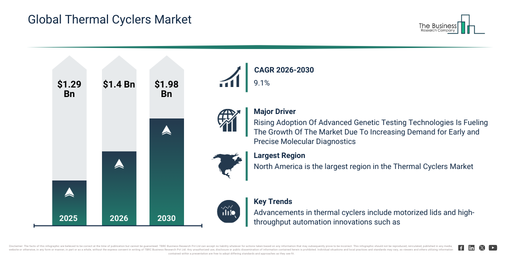
    The thermal cyclers market has shown robust expansion in recent years. It is projected to grow from $1.29 billion in 2025 to $1.4 billion in 2026, exhibiting a compound annual growth rate (CAGR) of 8.9%. This historical growth can be attributed to factors such as an increase in molecular diagnostics, the broadening of genomics research, a surge in infectious disease testing, greater forensic analysis, and the expansion of academic research laboratories.

    The thermal cyclers market size is projected to experience significant expansion over the next few years. It is forecast to achieve a valuation of $1.98 billion by 2030, demonstrating a compound annual growth rate (CAGR) of 9.1%. This anticipated growth during the forecast period is driven by factors such as the increasing prevalence of point of care testing, advancements in precision medicine, a rising need for rapid diagnostics, increased investment in biotech research, and the broader integration of digital PCR. Prominent trends identified for the forecast period include high throughput pcr cycler systems, portable field deployable cyclers, AI assisted temperature optimization, cloud connected pcr platforms, and rapid cycling thermal blocks.

    Download the Free Sample Report to Explore Key Market Insights:

    https://www.thebusinessresearchcompany.com/sample.aspx?id=33341&type=smp

    What Drivers Are Shaping The Future Growth Of The Thermal Cyclers Market?

    The increasing integration of sophisticated genetic testing methodologies is projected to drive expansion within the thermal cyclers market moving forward. Molecular diagnostics involves advanced laboratory procedures for accurately detecting and analyzing genetic material (DNA and RNA) to pinpoint diseases, infections, and inherited conditions. This surge in molecular diagnostics stems from a growing need for early and accurate disease identification, promoting the application of advanced genetic testing for quicker and more dependable clinical results. Thermal cyclers facilitate molecular diagnostics by allowing for precise DNA amplification via regulated temperature changes, thus guaranteeing accurate, swift, and dependable molecular tests. As an illustration, data from May 2025, supplied by Ellume, an Australia-based developer of rapid digital diagnostic tests, indicated that more than 96,215 molecular diagnostic tests were performed weekly in the US in 2023. This underscores the extensive clinical application and ongoing significance of molecular diagnostics in monitoring diseases and making clinical choices. Consequently, the expanding use of advanced genetic testing technologies is fueling the growth of the thermal cyclers market.

    How Is The Thermal Cyclers Market Structured Across Different Segments?

    The thermal cyclers market covered in this report is segmented –

    1) By Product Type: Standard Polymerase Chain Reaction (PCR) Thermal Cyclers; Real-Time Polymerase Chain Reaction (PCR) (qPCR) Systems; Digital Polymerase Chain Reaction (dPCR) Systems; High-Throughput Thermal Cyclers; Portable Or Compact Thermal Cyclers

    2) By Technology: Gradient Polymerase Chain Reaction (PCR); Touchdown Polymerase Chain Reaction (PCR); Fast Polymerase Chain Reaction (PCR); Reverse Transcription Polymerase Chain Reaction (RT-PCR); Other Technologies

    3) By Application: Clinical Diagnostics; Research And Academic Use; Forensic Applications; Agricultural Biotechnology; Environmental Testing

    4) By Distribution Channel: Direct Sales; Distributors Or Resellers; Online Sales

    5) By End User: Hospitals And Diagnostic Centers; Academic And Research Institutions; Biotechnology And Pharmaceutical Companies; Forensic Laboratories; Contract Research Organizations (CROs)

    Subsegments:

    1) By Standard Polymerase Chain Reaction (PCR) Thermal Cyclers: Conventional Block Thermal Cyclers; Gradient Thermal Cyclers; Touchscreen Controlled Thermal Cyclers; Multi Block Thermal Cyclers

    2) By Real-Time Polymerase Chain Reaction (PCR) (qPCR) Systems: Dye Based Detection Systems; Probe Based Detection Systems; Multiplex Real Time Systems; Fast Cycling Real Time Systems

    3) By Digital Polymerase Chain Reaction (dPCR) Systems: Droplet Based Digital Systems; Chip Based Digital Systems; Microfluidic Digital Systems; High Precision Quantification Systems

    4) By High-Throughput Thermal Cyclers: Ninety Six Well Thermal Cyclers; Three Hundred Eighty Four Well Thermal Cyclers; Automated High Capacity Thermal Cyclers; Parallel Processing Thermal Cyclers

    5) By Portable Or Compact Thermal Cyclers: Battery Operated Thermal Cyclers; Handheld Thermal Cyclers; Field Deployable Thermal Cyclers; Point Of Care Thermal Cyclers

    Which Trends Are Shaping The Future Of The Thermal Cyclers Market?

    Leading companies in the thermal cyclers market are concentrating on advanced innovations like deep-well thermal cyclers to gain a competitive edge. Deep-well thermal cyclers are specialized laboratory instruments employed for temperature-controlled reactions, such as PCR, on samples housed in deep-well plates, which accommodate larger volumes than standard PCR tubes or plates. For example, in March 2025, Bio-Rad Laboratories, a US-based research company, introduced the PTC Tempo 384 Thermal Cycler, the newest addition to its PTC Tempo series. This sophisticated instrument is specifically engineered for high-throughput PCR applications across basic research, translational studies, process development, and quality control. The PTC Tempo 384 features a 384-well reaction module equipped with a motorized lid, facilitating seamless automation and integration with robotics. It offers superior thermal uniformity (±0.3°C at 95°C), dynamic ramp rates of up to 5°C per second, and multizone gradient programming, making it more efficient than other models, such as the dual-block PTC Tempo 48/48, for demanding, scalable workflows. Built upon the trusted C1000 Touch platform, the PTC Tempo 384 comes with an updated intuitive user interface, flexible connectivity options including BR.io cloud monitoring, and the recent software update v3.0.0.8 that enhances API support. This makes the PTC Tempo 384 an excellent choice for academic, commercial, and biopharma laboratories, providing unmatched reproducibility and usability.

    Which Major Firms Influence Developments In The Thermal Cyclers Market?

    Major companies operating in the thermal cyclers market are Roche Diagnostics, Thermo Fisher Scientific Inc., Agilent Technologies, Bio-Rad Laboratories, QIAGEN, Eppendorf, Cepheid, Bio-Techne, Hamilton Company, Heal Force Bio-Meditech, Takara Bio, Hangzhou Bioer Technology, Analytik Jena, Esco Lifesciences, ELITechGroup, Benchmark Scientific, Cole-Parmer Instrument Company, Biomeme, GNA Biosolutions, Cleaver Scientific, Starlab International, and Scilogex.

    Read the full thermal cyclers market report here:

    https://www.thebusinessresearchcompany.com/report/thermal-cyclers-market-report

    Which Regions Are Projected To Dominate The Thermal Cyclers Market In The Coming Years?

    North America was the largest region in the thermal cyclers market in 2025. Asia-Pacific is expected to be the fastest-growing region in the forecast period. The regions covered in the thermal cyclers market report are Asia-Pacific, South East Asia, Western Europe, Eastern Europe, North America, South America, Middle East, Africa.

    Request A Tailored Thermal Cyclers Market Research Report For Competitive Advantage:

    https://www.thebusinessresearchcompany.com/customise?id=33341&type=smp

    Browse Through More Reports Similar to the Global Thermal Cyclers Market 2026, By The Business Research Company

    Automotive Heat Exchanger Market Report 2026

    https://www.thebusinessresearchcompany.com/report/automotive-heat-exchanger-global-market-report

    Automotive Thermal System Market Report 2026

    https://www.thebusinessresearchcompany.com/report/automotive-thermal-system-global-market-report

    Battery Cyclers Market Report 2026

    https://www.thebusinessresearchcompany.com/report/battery-cyclers-global-market-report

    Get in touch with us:

    The Business Research Company: https://www.thebusinessresearchcompany.com/

    Americas +1 310-496-7795

    Asia +44 7882 955267 & +91 8897263534

    Europe +44 7882 955267

    Email us at info@tbrc.info

    Follow us on:

    LinkedIn: https://in.linkedin.com/company/the-business-research-company

    YouTube: https://www.youtube.com/channel/UC24_fI0rV8cR5DxlCpgmyFQ

    Global Market Model: https://www.thebusinessresearchcompany.com/global-market-model
  • Teleultrasound Systems Market Trends, Drivers, and Opportunities Through 2030

    Teleultrasound Systems Market Trends, Drivers, and Opportunities Through 2030

    The Business Research Company’s 2026 market reports include new capabilities such as market attractiveness scoring and analysis, total addressable market analysis, company scoring matrix, interactive excel data dashboard, improved supply chain analysis, upcoming startups in the market, and overview of key products, aimed at improving the depth, usability, and strategic value of the insights delivered.

    What Is The Market Size Of The Teleultrasound System Market In 2026 And What Value Is Projected For 2030?

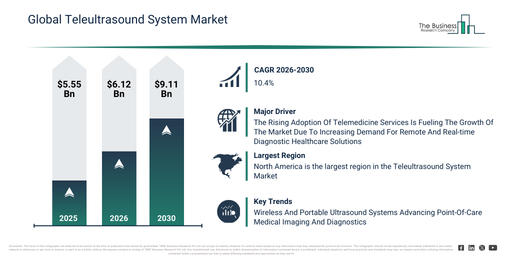
    The teleultrasound system market size has witnessed considerable expansion in recent years. It is projected to increase from $5.55 billion in 2025 to $6.12 billion in 2026, exhibiting a compound annual growth rate (CAGR) of 10.2%. Historically, this growth can be attributed to the rise in telemedicine adoption, a shortage of imaging specialists, the expansion of rural healthcare programs, an increase in portable ultrasound devices, and the demand for faster diagnosis.

    The teleultrasound system market is projected for substantial expansion in the coming years. Its valuation is forecast to reach $9.11 billion by 2030, exhibiting a compound annual growth rate (CAGR) of 10.4%. This anticipated growth during the forecast period is propelled by factors such as the increasing reach of remote diagnostics, the proliferation of connected medical devices, the escalating need for point-of-care imaging solutions, heightened healthcare digitization, and more extensive reimbursement policies for telehealth services. Prominent developments expected in the forecast timeframe encompass AI enabled remote ultrasound guidance, cloud based image transmission platforms, portable connected ultrasound devices, real time specialist collaboration tools, and secure tele imaging workflows.

    Download the Free Sample Report to Explore Key Market Insights:

    https://www.thebusinessresearchcompany.com/sample.aspx?id=33339&type=smp

    Which Economic Or Industry Drivers Are Impacting The Teleultrasound System Market?

    The increasing utilization of telemedicine services is projected to stimulate the expansion of the teleultrasound system market in the future. Telemedicine services involve the provision of healthcare consultations, diagnoses, and monitoring through digital communication technologies, negating the requirement for in-person appointments. The surge in telemedicine services is attributable to the escalating demand for accessible and remote healthcare options, especially in regions that are underserved or geographically isolated. The teleultrasound system plays a crucial role in broadening access to diagnostic imaging by facilitating real-time remote guidance, image capture, and interpretation by specialists, particularly within underserved or remote healthcare settings. For example, in June 2025, a report from Harmony Healthcare IT, a US-based data management firm, revealed that 62% of Americans had utilized telehealth services for their medical needs, and more than 77% believed telehealth represented the future of healthcare, underscoring strong consumer belief and ongoing usage growth. Consequently, the growing adoption of telemedicine services is a significant factor driving the growth of the teleultrasound system market.

    What Are The Key Segments Of The Teleultrasound System Market?

    The teleultrasound system market covered in this report is segmented –

    1) By Component: Hardware; Software; Services

    2) By Technology: Two-Dimensional (2D) Ultrasound; Three-Dimensional (3D) Or Four Dimensional (4D) Ultrasound; Artificial Intelligence-Enabled Ultrasound; Cloud-Based Imaging Platforms

    3) By Product Type: Portable Teleultrasound Systems; Handheld Teleultrasound Systems; Cart-Based Teleultrasound Systems

    4) By Application: Cardiology; Obstetrics Or Gynecology; Radiology; Vascular; Musculoskeletal; Other Applications

    5) By End-User: Hospitals; Diagnostic Centers; Ambulatory Surgical Centers; Other End-Users

    Subsegments:

    1) By Hardware: Ultrasound Imaging Devices; Ultrasound Probes And Transducers; Communication And Transmission Modules; Display And Control Units; Peripheral And Accessory Equipment

    2) By Software: Image Processing Software; Real Time Image Transmission Software; Remote Collaboration And Guidance Software; Data Storage And Management Software; Integration And Workflow Management Software

    3) By Services: Installation And System Integration Services; Maintenance And Technical Support Services; Training And Education Services; Calibration And Quality Assurance Services; Operational And Consulting Services

    What Key Trends Are Influencing The Development Of The Teleultrasound System Market?

    Major companies in the medical imaging and diagnostic ultrasound market are concentrating on developing innovative solutions, including wireless and portable ultrasound systems. These advancements aim to improve point-of-care diagnostics, enhance the efficiency of clinical workflows, and expand access to imaging across various care settings. Wireless ultrasound systems are characterized as compact, cable-free imaging devices that wirelessly send ultrasound data to smartphones, tablets, or workstations, thus offering greater mobility, ease of use, and rapid deployment in hospitals, clinics, emergency care, and remote areas. For instance, in November 2025, Mindray Bio-Medical Electronics Co. Ltd., a China-based medical device manufacturer, introduced a new wireless ultrasound system designed to deliver high-quality imaging with flexible, handheld operation. This system supports real-time imaging, seamless wireless connectivity, and compatibility with multiple clinical applications, enabling healthcare professionals to perform quick and accurate assessments at the bedside or in the field. This launch highlights the increasing emphasis on portable, user-friendly diagnostic technologies that improve clinical decision-making while enhancing efficiency and accessibility throughout healthcare environments.

    Who Are The Primary Competitors In The Teleultrasound System Market?

    Major companies operating in the teleultrasound system market are Siemens Healthineers AG, FUJIFILM Holdings Corporation, Koninklijke Philips N.V., GE HealthCare Technologies Inc., Mindray Medical International Limited, Canon Medical Systems Corporation, DeepEcho Inc., Esaote S.p.A., TELSONIC AG, Butterfly Network Inc., EchoNous Inc., Clarius Mobile Health Corp., Telemed Medical Systems S.r.l., Healcerion Co. Ltd., Interson Corporation, Remote Medical Technologies LLC, Pulsenmore Ltd., e-Medical Systems Pty Ltd, Alpinion Medical Systems Co. Ltd., TeleGuidance Systems Inc.

    Read the full teleultrasound system market report here:

    https://www.thebusinessresearchcompany.com/report/teleultrasound-system-market-report

    Which Region Is Expected To Experience The Fastest Growth In The Teleultrasound System Market?

    North America was the largest region in the teleultrasound system market in 2025. Asia-Pacific is expected to be the fastest-growing region in the forecast period. The regions covered in the teleultrasound system market report are Asia-Pacific, South East Asia, Western Europe, Eastern Europe, North America, South America, Middle East, Africa.

    Request A Tailored Teleultrasound System Market Research Report For Competitive Advantage:

    https://www.thebusinessresearchcompany.com/customise?id=33339&type=smp

    Browse Through More Reports Similar to the Global Teleultrasound System Market 2026, By The Business Research Company

    Consumer Telematics Market Report 2026

    https://www.thebusinessresearchcompany.com/report/consumer-telematics-global-market-report

    Commercial Telematics Market Report 2026

    https://www.thebusinessresearchcompany.com/report/commercial-telematics-global-market-report

    Commercial Vehicle Telematics Market Report 2026

    https://www.thebusinessresearchcompany.com/report/commercial-vehicle-telematics-global-market-report

    Get in touch with us:

    The Business Research Company: https://www.thebusinessresearchcompany.com/

    Americas +1 310-496-7795

    Asia +44 7882 955267 & +91 8897263534

    Europe +44 7882 955267

    Email us at info@tbrc.info

    Follow us on:

    LinkedIn: https://in.linkedin.com/company/the-business-research-company

    YouTube: https://www.youtube.com/channel/UC24_fI0rV8cR5DxlCpgmyFQ

    Global Market Model: https://www.thebusinessresearchcompany.com/global-market-model
  • Surgical Robotics in Gynecology Market to Reach $5.75 Billion by 2030

    Surgical Robotics in Gynecology Market to Reach $5.75 Billion by 2030

    The Business Research Company’s 2026 market reports include new capabilities such as market attractiveness scoring and analysis, total addressable market analysis, company scoring matrix, interactive excel data dashboard, improved supply chain analysis, upcoming startups in the market, and overview of key products, aimed at improving the depth, usability, and strategic value of the insights delivered.

    How Will The Market Size Of The Surgical Robotics for Gynecology Market Evolve From 2026 To 2030?

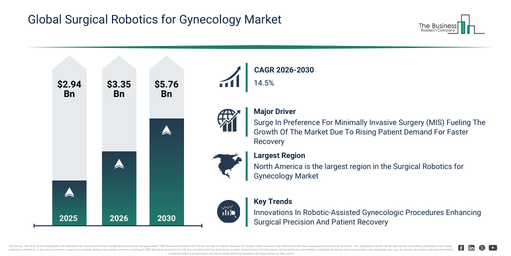
    The surgical robotics for gynecology market size has shown rapid expansion in recent years. It is anticipated to increase from $2.94 billion in 2025 to $3.35 billion in 2026, exhibiting a compound annual growth rate (CAGR) of 14.2%. The historical growth of this market can be linked to the rise in minimally invasive gynecology, increasing women’s health procedure volumes, the establishment of more robotic surgery centers, advancements in laparoscopic outcomes, and the demand for improved surgeon ergonomics.

    The market for surgical robotics in gynecology is projected to experience substantial expansion over the upcoming years. This market is forecast to reach a valuation of $5.76 billion by 2030, exhibiting a compound annual growth rate (CAGR) of 14.5%. Factors contributing to this growth during the projection period include increased hospital investments in robotic systems, an uptick in intricate gynecological procedures, a growing preference among patients for less invasive surgical options, the proliferation of robotic training initiatives, and enhanced reimbursement assistance. Key trends anticipated during the forecast period encompass a greater uptake of robotic hysterectomy systems, an increase in minimally invasive gynecological robotics, the broadening of robotic single-port procedures, a rise in the utilization of sophisticated surgical visualization technologies, and the incorporation of procedure planning software.

    Download the Free Sample Report to Explore Key Market Insights:

    https://www.thebusinessresearchcompany.com/sample.aspx?id=33332&type=smp

    What Underlying Factors Are Accelerating The Growth Of The Surgical Robotics for Gynecology Market?

    The increasing demand for minimally invasive surgery is projected to fuel the expansion of the surgical robotics for gynecology market moving forward. This surgical approach involves conducting gynecological operations, such as hysterectomies and myomectomies, through small incisions using laparoscopic or robotic-assisted techniques, which results in reduced tissue damage. Minimally invasive surgery is becoming more prevalent due to advancements in surgical tools and imaging technologies that offer enhanced precision, diminished patient trauma, and quicker recovery periods. Surgical robotics for gynecology further enhances these minimally invasive procedures by providing superior precision, three-dimensional visualization, improved dexterity, and tremor filtration, thereby enabling surgeons to execute complex operations more proficiently. For instance, in November 2025, according to Intuitive Surgical Inc., a US-based medical device company, in 2023, da Vinci robotic surgical systems were utilized in approximately 2,286,000 surgical procedures worldwide, representing an increase of about 22% compared with 2022, and the cumulative experience on da Vinci platforms exceeded 14 million procedures. Consequently, the expanding preference for minimally invasive surgery is a significant driver for the growth of the surgical robotics for gynecology market.

    Which Segment Areas Are Covered In The Surgical Robotics for Gynecology Market Analysis?

    The surgical robotics for gynecology market covered in this report is segmented –

    1) By Product Type: Robotic Systems; Instruments And Accessories; Services

    2) By Technology: Telerobotics; Minimally Invasive Robotics; Autonomous Robotics

    3) By Application: Hysterectomy; Myomectomy; Oophorectomy; Sacrocolpopexy; Other Applications

    4) By End-User: Hospitals; Ambulatory Surgical Centers; Specialty Clinics; Other End-Users

    Subsegments:

    1) By Robotic Systems: Robotic Surgical Platforms; Robotic Laparoscopy Systems; Robotic Hysterectomy Systems; Robotic Myomectomy Systems; Single Port Robotic Systems

    2) By Instruments And Accessories: Robotic Surgical Instruments; Endoscopic Staplers; Energy Devices; Needle Holders; Trocars And Cannulas

    3) By Services: Installation Services; Maintenance Services; Training And Education Services; Software Upgradation Services; Technical Support Services

    What Key Developments And Trends Are Impacting The Surgical Robotics for Gynecology Market?

    Leading companies in the surgical robotics for gynecology sector are concentrating on developing advanced solutions, such as minimally invasive gynecologic surgery platforms, to boost surgical accuracy, lessen patient trauma, and enhance clinical results. Minimally invasive gynecologic surgery platforms are robotic systems that empower surgeons to conduct intricate gynecological procedures through small incisions, offering superior precision, clearer visualization, and greater dexterity. This contributes to reduced blood loss, decreased postoperative pain, and quicker recovery times compared to traditional surgery. For instance, in September 2025, the Royal Free Hospital, a public healthcare provider based in the UK, launched a robotic gynaecology surgery program aimed at expanding access to advanced robotic-assisted procedures for women’s health. This program utilizes state-of-the-art surgical robotics to facilitate complex gynecological interventions like hysterectomies and cancer-related surgeries with improved precision and control. The robotic platform allows surgeons to execute delicate movements through small cuts, thereby enhancing visibility of anatomical structures and reducing blood loss relative to conventional techniques. Key benefits encompass shorter recovery periods, a diminished risk of infection, less post-surgery pain, and better patient health outcomes. This initiative also supports the training of surgeons and promotes the wider integration of robotic gynecology throughout the UK healthcare system.

    Which Key Industry Participants Are Active In The Surgical Robotics for Gynecology Market?

    Major companies operating in the surgical robotics for gynecology market are Johnson & Johnson, Medtronic plc, Intuitive Surgical Inc., Meere Company, Avateramedical GmbH, CMR Surgical Ltd., DistalMotion SA, Distalmotion SA, Ronovo Surgical Inc., OmniGuide Holdings, SS Innovations International Inc., Titan Medical Inc., MicroPort MedBot, Virtual Incision Corporation, Asensus Surgical, Moon Surgical SAS, Virtuoso Surgical Inc., Edge Medical Robotics Corporation, Momentis Surgical Ltd., Medicaroid Corporation.

    Read the full surgical robotics for gynecology market report here:

    https://www.thebusinessresearchcompany.com/report/surgical-robotics-for-gynecology-market-report

    Which Region Currently Holds The Largest Share Of The Surgical Robotics for Gynecology Market?

    North America was the largest region in the surgical robotics for gynecology market in 2025. Asia-Pacific is expected to be the fastest-growing region in the forecast period. The regions covered in the surgical robotics for gynecology market report are Asia-Pacific, South East Asia, Western Europe, Eastern Europe, North America, South America, Middle East, Africa.

    Request A Tailored Surgical Robotics for Gynecology Market Research Report For Competitive Advantage:

    https://www.thebusinessresearchcompany.com/customise?id=33332&type=smp

    Browse Through More Reports Similar to the Global Surgical Robotics for Gynecology Market 2026, By The Business Research Company

    Surgical Robots Market Report 2026

    https://www.thebusinessresearchcompany.com/report/surgical-robots-global-market-report

    Robotic Surgery Services Market Report 2026

    https://www.thebusinessresearchcompany.com/report/robotic-surgery-services-global-market-report

    Surgical Robot Accessories Market Report 2026

    https://www.thebusinessresearchcompany.com/report/surgical-robot-accessories-global-market-report

    Get in touch with us:

    The Business Research Company: https://www.thebusinessresearchcompany.com/

    Americas +1 310-496-7795

    Asia +44 7882 955267 & +91 8897263534

    Europe +44 7882 955267

    Email us at info@tbrc.info

    Follow us on:

    LinkedIn: https://in.linkedin.com/company/the-business-research-company

    YouTube: https://www.youtube.com/channel/UC24_fI0rV8cR5DxlCpgmyFQ

    Global Market Model: https://www.thebusinessresearchcompany.com/global-market-model
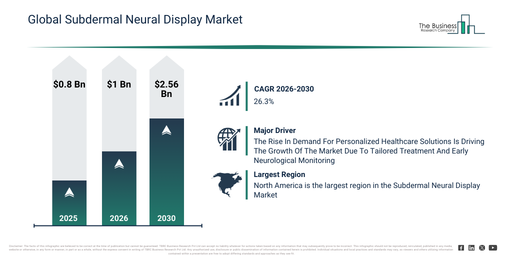
  • Subdermal Neural Display Market Set for Rapid Growth to $2.55 Billion by 2030

    Subdermal Neural Display Market Set for Rapid Growth to $2.55 Billion by 2030

    The Business Research Company’s 2026 market reports include new capabilities such as market attractiveness scoring and analysis, total addressable market analysis, company scoring matrix, interactive excel data dashboard, improved supply chain analysis, upcoming startups in the market, and overview of key products, aimed at improving the depth, usability, and strategic value of the insights delivered.

    What Market Size Increase Is Anticipated For The Subdermal Neural Display Market Over The 2026–2030 Period?

    The subdermal neural display market has experienced substantial growth in its overall size over recent years. It is projected to expand from $0.8 billion in 2025 to $1 billion in 2026, exhibiting a compound annual growth rate (CAGR) of 26.1%. This expansion during the historic period can be attributed to a rise in neural interface research, an increase in brain computer interface trials, the proliferation of implantable medical electronics, augmented neuroscience funding, and the initial embrace of EEG-based interfaces.

    The subdermal neural display market is projected to experience rapid expansion in the coming years. This market is predicted to reach $2.56 billion in 2030, exhibiting a compound annual growth rate (CAGR) of 26.3%. Key factors contributing to this growth during the projection period include a surge in neurotechnology investments, an increased need for cognitive augmentation tools, the broadening scope of clinical neural implants, the expansion of defense neurotech programs, and greater financial support for human-machine interface research. Significant trends anticipated over the forecast period encompass the escalating creation of implantable neural interfaces, a rise in wireless neural signal transmission applications, the proliferation of miniaturized neural electrode arrays, enhanced incorporation of brain-computer interface modules, and a stronger emphasis on closed-loop neural feedback systems.

    Download the Free Sample Report to Explore Key Market Insights:

    https://www.thebusinessresearchcompany.com/sample.aspx?id=33328&type=smp

    What Primary Drivers Are Shaping The Development Of The Subdermal Neural Display Market?

    The burgeoning need for personalized healthcare solutions is projected to fuel the expansion of the subdermal neural display market moving forward. These solutions encompass medical strategies and services tailored to each patient’s unique characteristics and conditions, aiming to enhance treatment efficacy and mitigate adverse reactions. This growing demand stems from the increasing incidence of chronic and lifestyle ailments, necessitating customized prevention, monitoring, and treatment plans for individual patients. Subdermal neural displays contribute to personalized healthcare by enabling direct observation and stimulation of neural activity, providing real-time health data for prompt identification of neurological conditions and individualized neurofeedback therapies adapted to each person’s brain and body signals. For example, in February 2024, the Personalized Medicine Coalition, a US-based non-profit organization, announced that the FDA had approved 16 new personalized treatments for rare disease patients in 2023, an increase from six in 2022. The 2023 approvals also featured seven cancer drugs and three for other diseases and conditions. Consequently, the heightened demand for personalized healthcare solutions is propelling the expansion of the subdermal neural display market. The increasing occurrence of neurological disorders is anticipated to drive the expansion of the subdermal neural display market in the future. A neurological disorder is defined as any ailment or state impacting the typical structure or operation of the central nervous system (brain and spinal cord) or the peripheral nervous system (nerves across the body). This rise in neurological disorder prevalence is mainly attributed to aging populations, given that conditions like Alzheimer’s, Parkinson’s, and stroke become more common with advancing age, resulting in a greater overall incidence among older demographics. Subdermal Neural Display technology assists in managing neurological disorders by facilitating real-time, customized monitoring and adjustment of neural activity directly within the brain, thereby aiding in earlier diagnosis, accurate therapy modifications, and enhanced long-term care for these conditions. For instance, the Alzheimer’s Association, a US-based nonprofit voluntary health organization, reported in March 2023 that an estimated 6.7 million Americans aged 65 and above were living with Alzheimer’s dementia in 2023, with projections indicating this figure could reach 13.8 million by 2060. Consequently, the increasing prevalence of neurological disorders is fostering the expansion of the subdermal neural display market.

    How Is The Subdermal Neural Display Market Segmented Across Key Categories?

    The subdermal neural display market covered in this report is segmented –

    1) By Component Type: Hardware; Software

    2) By Product Type: Implantable Neural Display Devices; Wearable Neural Interface Devices; Subdermal Electrode Arrays; Implantable Display Modules; Wireless Neural Transmitters; Neural Signal Amplifiers

    3) By Technology: Electroencephalography (EEG); Electrocorticography (ECoG); Optogenetics; Other Technologies

    4) By End-User: Hospitals And Clinics; Research Institutes; Consumer Electronics; Military And Defense; Other End-Users

    Subsegments:

    1) By Hardware: Electrode Arrays; Implantable Sensors; Microcontroller Units; Power Management Modules; Signal Amplification Units

    2) By Software: Neural Signal Processing Software; Data Visualization Software; Device Control Software; Algorithm Development Software; Simulation And Modeling Software

    Which Major Players Dominate The Subdermal Neural Display Market?

    Major companies operating in the subdermal neural display market are Synchron Inc., BrainCo Inc., MindMaze SA, INBRAIN Neuroelectronics SL, Axoft Inc., VisionCare Ophthalmic Technologies Inc., Blackrock Neurotech Inc., LambdaVision Inc., Advanced Brain Monitoring Inc., iBionics Inc., CorTec GmbH, Bionic Vision Technologies, Braingrade Inc., Nano Retina Inc., Neurable Inc., OpenBCI LLC, Optobionics Corporation, Pixium Vision SA, Precision Neuroscience Corporation, Cognixion Inc.

    Read the full subdermal neural display market report here:

    https://www.thebusinessresearchcompany.com/report/subdermal-neural-display-market-report

    Which Region Is Anticipated To See The Fastest Growth In The Subdermal Neural Display Market?

    North America was the largest region in the subdermal neural display market in 2025. Asia-Pacific is expected to be the fastest-growing region in the forecast period. The regions covered in the subdermal neural display market report are Asia-Pacific, South East Asia, Western Europe, Eastern Europe, North America, South America, Middle East, Africa.

    Request A Tailored Subdermal Neural Display Market Research Report For Competitive Advantage:

    https://www.thebusinessresearchcompany.com/customise?id=33328&type=smp

    Browse Through More Reports Similar to the Global Subdermal Neural Display Market 2026, By The Business Research Company

    Commercial Display Market Report 2026

    https://www.thebusinessresearchcompany.com/report/commercial-display-global-market-report

    Point Of Sale Display Market Report 2026

    https://www.thebusinessresearchcompany.com/report/point-of-sale-display-global-market-report

    Data Lake Market Report 2026

    https://www.thebusinessresearchcompany.com/report/data-lake-global-market-report

    Get in touch with us:

    The Business Research Company: https://www.thebusinessresearchcompany.com/

    Americas +1 310-496-7795

    Asia +44 7882 955267 & +91 8897263534

    Europe +44 7882 955267

    Email us at info@tbrc.info

    Follow us on:

    LinkedIn: https://in.linkedin.com/company/the-business-research-company

    YouTube: https://www.youtube.com/channel/UC24_fI0rV8cR5DxlCpgmyFQ

    Global Market Model: https://www.thebusinessresearchcompany.com/global-market-model