Category: Medical Equipment

  • Biomedical Refrigerator And Freezer Market Outlook From 2026 To 2030: Key Growth Factors And Future Opportunities

    Biomedical Refrigerator And Freezer Market Outlook From 2026 To 2030: Key Growth Factors And Future Opportunities

    Featuring market attractiveness scoring, total addressable market sizing, company benchmarking matrices, interactive Excel dashboards, deeper supply chain intelligence, emerging startup tracking, and granular product-level insights, The Business Research Company’s 2026 market reports are built to deliver research that is both more actionable and more strategically valuable.

    Biomedical Refrigerator And Freezer Market Growth Potential: How Will Market Size Shift Through 2030?

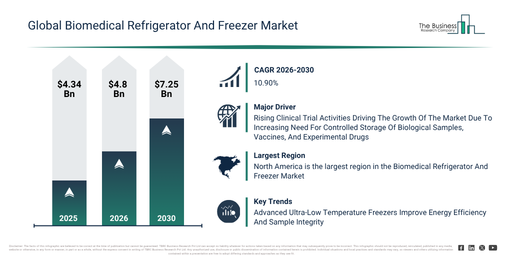
    The market for biomedical refrigerators and freezers has experienced rapid growth in recent years. It is projected to expand from $4.34 billion in 2025 to $4.8 billion in 2026, at a compound annual growth rate (CAGR) of 10.6%. The historical growth can be attributed to various factors, including the increasing demand for vaccine storage during global immunization programs, the rising necessity for reliable blood and plasma storage in hospitals, the growth of pharmaceutical research requiring controlled temperature storage, the expansion of clinical laboratories and diagnostic infrastructure, and the development of early cold chain logistics systems for healthcare supply chains.

    The biomedical refrigerator and freezer market is anticipated to experience substantial expansion in the coming years. This sector is projected to reach $7.25 billion by 2030, demonstrating a compound annual growth rate (CAGR) of 10.9%. The projected increase during this period can be attributed to the escalating requirement for biologics and cell-based therapies demanding ultra-low temperature storage, a heightened focus on vaccine distribution and the infrastructure for pandemic preparedness, the growing integration of smart monitoring and interconnected refrigeration systems, the expansion of biobanking and genomic research that requires long-term sample preservation, and increasingly stringent regulatory standards for temperature-sensitive medical storage. Key developments expected in the forecast period include IoMT-enabled biomedical refrigeration systems offering real-time temperature monitoring and proactive alerts, energy-efficient designs for ultra-low temperature freezers to minimize operational carbon footprint, cloud-based cold chain monitoring platforms for managing vaccine and biologics storage, the incorporation of automated inventory and sample tracking into biomedical storage systems, and advanced insulation and cryogenic cooling technologies for prolonged biological preservation.

    Get A Free Sample Report With In-Depth Market Insights:

    https://thebusinessresearchcompany.com/sample_request?id=70953802&type=smp&name=Biomedical%20Refrigerator%20And%20Freezer%20Market%20Report%202026&utm_source=Blogs&utm_medium=Paid&utm_campaign=Oct_PR

    Biomedical Refrigerator And Freezer Market Growth Catalysts And Demand Drivers

    Rising clinical trial activities are anticipated to boost the expansion of the biomedical refrigerator and freezer market in the future. These activities involve the planning, execution, oversight, and analysis of research studies aimed at assessing the safety, effectiveness, and results of medical interventions involving human subjects. The surge in clinical trials stems from the escalating demand for advanced therapies, with pharmaceutical and biotechnology firms increasingly undertaking studies to create novel drugs and treatments addressing global unmet medical requirements. This expansion of clinical trials elevates the requirement for biomedical refrigerators and freezers, given the need to store a greater volume of biological samples, vaccines, and experimental pharmaceuticals under controlled temperatures to maintain their safety and effectiveness. For example, in March 2026, the Association of the British Pharmaceutical Industry (ABPI), a UK trade association, reported that the UK experienced a 36% rise in commercial clinical trials initiated in 2024 compared to the prior year, advancing two places to achieve the sixth global ranking in competitiveness for all Phase III trials launched in that same year. Consequently, the escalating clinical trial activities are a key factor driving the growth of the biomedical refrigerator and freezer market.

    Biomedical Refrigerator And Freezer Market Breakdown By Product Type And Application

    The biomedical refrigerator and freezer market covered in this report is segmented –

    1) By Product Type: Laboratory Refrigerators, Blood Bank Refrigerators, Pharmacy Refrigerators, Ultra-Low Temperature Freezers, Plasma Freezers, Cryogenic Freezers, Vaccine Storage Refrigerators, Explosion-Proof Refrigerators, Chromatography Refrigerators, Undercounter And Benchtop Units

    2) By Mobility: Stationary Floor-Standing Units, Portable And Transportable Units, Mobile Cart-Mounted Systems, Benchtop And Countertop Models, Transport And Shipping Containers

    3) By Temperature Range: 2°C to 8°C Refrigerators, -20°C Freezers, -40°C Freezers, -80°C Ultra-Low Freezers, Cryogenic Freezers (-150°C And below)

    4) By Application: Vaccine Storage, Blood And Plasma Storage, Drug Storage, Sample Preservation, Biobanking

    5) By End User: Hospitals, Research Laboratories, Pharmacies, Diagnostic Centers, Other End Users

    Subsegments:

    1) By Laboratory Refrigerators: Standard Temperature Units, Low Temperature Units, Glass Door Refrigerators, Solid Door Refrigerators, Undercounter Refrigerators

    2) By Blood Bank Refrigerators: Platelet Storage Units, Red Blood Cell Storage Units, Plasma Storage Units, Dual Temperature Units

    3) By Pharmacy Refrigerators: Vaccine Storage Units, Medication Storage Units, Controlled Room Temperature Units, Compartmentalized Refrigerators

    4) By Ultra-Low Temperature Freezers: Vertical Ultra-Low Freezers, Horizontal Ultra-Low Freezers, Undercounter Ultra-Low Freezers, Stackable Ultra-Low Freezers

    5) By Plasma Freezers: Single Compartment Freezers, Multi Compartment Freezers, Portable Plasma Freezers

    6) By Cryogenic Freezers: Liquid Nitrogen Freezers, Mechanical Cryogenic Freezers, Rack Mounted Cryogenic Freezers

    7) By Vaccine Storage Refrigerators: Purpose Built Vaccine Refrigerators, Undercounter Vaccine Refrigerators, Pharmacy Vaccine Refrigerators

    8) By Explosion-Proof Refrigerators: Flammable Material Refrigerators, Corrosive Material Refrigerators, Hazardous Environment Refrigerators

    9) By Chromatography Refrigerators: Solvent Storage Refrigerators, Sample Storage Refrigerators, Column Storage Refrigerators

    10) By Undercounter And Benchtop Units: Compact Benchtop Refrigerators, Mini Undercounter Refrigerators, Portable Undercounter Units

    Biomedical Refrigerator And Freezer Market Trends Shaping Long-Term Demand

    Leading companies in the biomedical refrigerators and freezers market are focusing on creating advanced solutions, such as ultra-low temperature (ULT) freezers, to improve sample preservation, enhance workflow efficiency, and ensure regulatory compliance in laboratory and clinical environments. Ultra-low temperature (ULT) freezers are refrigeration systems designed to maintain extremely low temperatures (typically -40°C to -86°C) for the storage of biological materials, pharmaceuticals, and cell- and gene-therapy products. For instance, in April 2024, Thermo Fisher Scientific Inc., a US-based life sciences technology company, introduced the TSX Universal Series ULT Freezers. These freezers, engineered to assist scientists across various workflows, incorporate Universal V-Drive technology, provide tighter temperature control, offer faster recovery times, and support universal voltage, while achieving ISO Class 5.5 cleanroom compliance. Such improvements allow for reliable long-term storage of blood, blood products, and sensitive biological materials in academic, GMP, and research laboratories, simultaneously enhancing energy efficiency and contributing to sustainability goals.

    Biomedical Refrigerator And Freezer Market Key Participants And Competitive Landscape

    Major companies operating in the biomedical refrigerator and freezer market are Thermo Fisher Scientific Inc., Liebherr Group, Follett LLC, Dometic Group, PHC Holdings Corporation, Eppendorf AG, Telstar SA, Binder GmbH, B Medical Systems S. à r. l., Helmer Inc., Vestfrost Solutions, Arctiko A/S, Jeio Tech Inc., So-Low Environmental Equipment Co. Inc., Migali Industries Inc., Desmon S. p. A., Labcold Ltd., Philipp Kirsch GmbH, Gram Commercial A/S, Haier Biomedical International, Fiocchetti Scientific S. r. l., Evermed S. r. l., Accucold, Froilabo

    View The Full Biomedical Refrigerator And Freezer Market Report:

    https://thebusinessresearchcompany.com/report/biomedical-refrigerator-and-freezer-market-report?utm_source=Blogs&utm_medium=Paid&utm_campaign=Oct_PR

    Biomedical Refrigerator And Freezer Market Geographic Analysis: Where Is Demand Rising Fastest?

    North America was the largest region in the biomedical refrigerator and freezer market in 2025. Asia-Pacific is expected to be the fastest-growing region in the forecast period. The regions covered in the biomedical refrigerator and freezer market report are Asia-Pacific, South East Asia, Western Europe, Eastern Europe, North America, South America, Middle East and Africa.

    Reach Out To Our Team:

    The Business Research Company: https://www.thebusinessresearchcompany.com/

    Americas: +1 310-496-7795

    Asia: +44 7882 955267 & +91 8897263534

    Europe: +44 7882 955267

    Email us at: marketing@tbrc.info

    Follow us on:

    LinkedIn: https://in.linkedin.com/company/the-business-research-company

    YouTube: https://www.youtube.com/channel/UC24_fI0rV8cR5DxlCpgmyFQ

    Global Market Model: https://www.thebusinessresearchcompany.com/global-market-model

  • Bioabsorbable Orthopedic Implants Market To Witness 13.3% CAGR Growth Through 2030: Key Industry Drivers

    Bioabsorbable Orthopedic Implants Market To Witness 13.3% CAGR Growth Through 2030: Key Industry Drivers

    Featuring market attractiveness scoring, total addressable market sizing, company benchmarking matrices, interactive Excel dashboards, deeper supply chain intelligence, emerging startup tracking, and granular product-level insights, The Business Research Company’s 2026 market reports are built to deliver research that is both more actionable and more strategically valuable.

    Bioabsorbable Orthopedic Implants Market Revenue Outlook: What CAGR Lies Ahead Through 2030?

    The bioabsorbable orthopedic implants market has experienced significant growth in recent years. It is anticipated to increase from $1.29 billion in 2025 to $1.46 billion in 2026, demonstrating a compound annual growth rate (CAGR) of 13.1%. The market’s expansion historically can be ascribed to factors such as the greater adoption of metallic implants for fracture fixation, which necessitates removal surgeries, and the rising prevalence of sports injuries and trauma requiring orthopedic procedures. Additionally, the early development of biocompatible polymer materials for medical applications, a growing clinical preference for minimally invasive surgical techniques, and the enlargement of hospital infrastructure supporting orthopedic operations have all contributed to this growth.

    The bioabsorbable orthopedic implants market is projected to experience swift expansion over the coming years. Its valuation is set to reach $2.41 billion by 2030, exhibiting a compound annual growth rate (CAGR) of 13.3%. This anticipated growth is driven by several factors, including the increased use of biodegradable substances that minimize secondary implant removal procedures, a surge in the need for custom orthopedic solutions facilitated by 3D printing, a greater emphasis on quicker patient recovery and fewer post-operative complications, progress in biomaterial science allowing for tailored degradation speeds, and a growing elderly demographic necessitating more orthopedic interventions. Key trends foreseen for this period encompass breakthroughs in bioresorbable polymers for new orthopedic fixation devices, bespoke implant creation through patient-specific anatomical modeling, the evolution of advanced composite materials for superior mechanical strength and degradation management, minimally invasive orthopedic techniques boosting the adoption of absorbable fixation systems, and intelligent biodegradable implants offering regulated drug release for better bone healing.

    Get A Free Sample Report With In-Depth Market Insights:

    https://thebusinessresearchcompany.com/sample_request?id=29844801&type=smp&name=Bioabsorbable%20Orthopedic%20Implants%20Market%20Report%202026&utm_source=Blogs&utm_medium=Paid&utm_campaign=Oct_PR

    Bioabsorbable Orthopedic Implants Market Expansion Drivers: What’s Shaping Future Growth?

    An increase in the occurrence of orthopedic injuries is projected to propel the expansion of the bioabsorbable orthopedic implants market in the coming years. Orthopedic injuries represent damage to the musculoskeletal system, including bones, joints, ligaments, tendons, and muscles, frequently resulting from trauma, athletic activities, accidents, or age-related conditions. The rising incidence of these injuries is fueled by greater participation in sports and physical endeavors, a broadening aging population, and an elevated risk of road accidents and trauma cases. Bioabsorbable orthopedic implants support orthopedic patient care by providing temporary structural support for bone healing while naturally breaking down within the body, thereby eliminating the need for surgical removal, enhancing treatment efficiency, and improving patient outcomes. For instance, in 2024, as per the Consumer Product Safety Commission, sports and recreational injuries treated in emergency departments rose by 17% compared to 2023, indicating a continued upward trend following the pandemic-related decrease, with total cases reaching approximately 4.4 million in 2024. Therefore, the growing incidence of orthopedic injuries is a key factor driving the growth of the bioabsorbable orthopedic implants market.

    Bioabsorbable Orthopedic Implants Market Segment Outlook: Which Categories Are Growing Fastest?

    The bioabsorbable orthopedic implants market covered in this report is segmented –

    1) By Product Type: Screws, Pins, Plates, Rods, Sutures

    2) By Material Type: Polylactic Acid (PLA), Polyglycolic Acid (PGA), Polycaprolactone (PCL), Composite Materials

    3) By Application: Trauma, Spine, Sports Injury, Craniofacial, Other Applications

    4) By End User: Hospitals, Ambulatory Surgical Centers, Specialty Clinics

    Subsegments:

    1) By Screws: Cannulated Screws, Cortical Screws, Cancellous Screws, Headless Screws

    2) By Pins: Kirschner Pins, Steinmann Pins, Smooth Pins, Threaded Pins

    3) By Plates: Locking Plates, Compression Plates, Reconstruction Plates, Mini Plates

    4) By Rods: Intramedullary Rods, Elastic Rods, Locking Rods, Solid Rods

    5) By Sutures: Absorbable Sutures, Non-Absorbable Sutures, Braided Sutures, Monofilament Sutures

    Bioabsorbable Orthopedic Implants Market Strategic Trends: What Defines The Next Growth Phase?

    Companies operating within the bioabsorbable orthopedic implants market are increasingly concentrating on innovations in magnesium-based bioabsorbable implants, including magnesium alloy-based fixation devices. This focus aims to address the growing need for accelerated bone healing, less invasive procedures, and the avoidance of subsequent implant removal operations. These magnesium-based bioabsorbable implants represent sophisticated orthopedic tools crafted from biodegradable metal alloys, offering comparable mechanical strength to conventional titanium implants while progressively dissolving within the body. This process supports natural bone regeneration and mitigates long-term complications often linked with permanent implants. An illustrative example occurred in June 2024 when Bioretec Ltd., a medical device firm based in Finland, introduced the RemeOs trauma screw. This implant is manufactured from a distinct magnesium alloy formulated to deliver robust mechanical strength alongside regulated biodegradation. It facilitates secure fracture fixation while progressively resorbing in harmony with the natural bone healing sequence, thus negating the necessity for implant removal surgery. Furthermore, the screw encourages bone growth through its biological interaction with adjacent tissues and is appropriate for uses in areas like trauma surgery, osteotomies, and deformity correction.

    Bioabsorbable Orthopedic Implants Market Competitive Overview And Top Companies

    Major companies operating in the bioabsorbable orthopedic implants market are Johnson & Johnson Services Inc., Stryker Corporation, Evonik Industries AG, B. Braun SE, Zimmer Biomet Holdings Inc., Teijin Limited, Smith & Nephew plc, Arthrex Inc., Meril Life Sciences Pvt. Ltd., CONMED Corporation, Orthofix Medical Inc., Wright Medical Group N. V., KLS Martin Group (Gebrüder Martin GmbH & Co. KG), Cook Biotech Incorporated LLC, Anika Therapeutics Inc., Acumed LLC, OrthoPediatrics Corp., Xtant Medical Holdings Inc., Citieffe S. r. l., Biometrix Ltd., Bioretec Ltd., Orthomed S. A. S., Aziyo Biologics Inc.

    View The Full Bioabsorbable Orthopedic Implants Market Report:

    https://thebusinessresearchcompany.com/report/bioabsorbable-orthopedic-implants-market-report?utm_source=Blogs&utm_medium=Paid&utm_campaign=Oct_PR

    Bioabsorbable Orthopedic Implants Market Top Region: Where Does Most Revenue Come From?

    North America was the largest region in the bioabsorbable orthopedic implants market in 2025. Asia-Pacific is expected to be the fastest-growing region in the forecast period. The regions covered in the bioabsorbable orthopedic implants market report are Asia-Pacific, South East Asia, Western Europe, Eastern Europe, North America, South America, Middle East and Africa.

    Reach Out To Our Team:

    The Business Research Company: https://www.thebusinessresearchcompany.com/

    Americas: +1 310-496-7795

    Asia: +44 7882 955267 & +91 8897263534

    Europe: +44 7882 955267

    Email us at: marketing@tbrc.info

    Follow us on:

    LinkedIn: https://in.linkedin.com/company/the-business-research-company

    YouTube: https://www.youtube.com/channel/UC24_fI0rV8cR5DxlCpgmyFQ

    Global Market Model: https://www.thebusinessresearchcompany.com/global-market-model
  • Auto Disable Syringes Market Size And Forecast 2026–2030: Trends Driving Industry Expansion

    Auto Disable Syringes Market Size And Forecast 2026–2030: Trends Driving Industry Expansion

    Backed by market attractiveness analysis, total addressable market sizing, company benchmarking matrices, interactive Excel dashboards, wider supply chain intelligence, emerging startup coverage, and detailed product-level insights, The Business Research Company’s 2026 market reports are designed to offer research that is more actionable and strategically valuable than ever.

    Auto Disable Syringes Market Growth Potential: How Will Market Size Shift Through 2030?

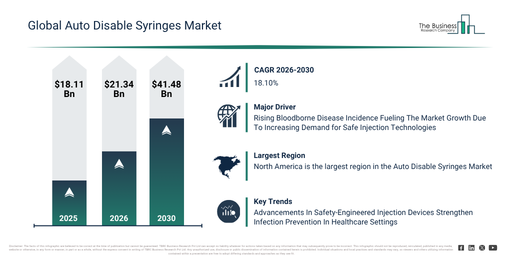
    The auto disable syringes market has experienced rapid expansion in recent years. It is projected to grow from $18. 11 billion in 2025 to $21. 34 billion in 2026, at a compound annual growth rate (CAGR) of 17. 8%. This historical growth can be attributed to the increasing prevalence of bloodborne infections caused by unsafe injection practices, the rise in global vaccination campaigns and immunization coverage, growing awareness regarding needle-stick injury prevention, expanding healthcare infrastructure in emerging economies, and increasing regulatory mandates for single-use medical devices.

    The auto disable syringes market size is set for substantial growth over the next few years, with projections indicating it will expand to $41.48 billion by 2030, achieving a compound annual growth rate (CAGR) of 18.1%. This expansion during the forecast period is driven by factors such as the increasing adoption of advanced safety-engineered syringe technologies, rising investments in automated medical device manufacturing facilities, a growing demand for infection control products in outpatient care settings, expanding public healthcare spending on vaccination programs, and a greater focus on sustainable and recyclable medical consumables. Notable trends expected in this period include the increasing adoption of single-use safety injection devices in immunization programs, a growing demand for low dead space auto-disable syringes for efficient drug delivery, rising implementation of infection prevention protocols in healthcare facilities, increasing government initiatives promoting safe injection practices in developing countries, and a growing preference for retractable and tamper-proof syringe mechanisms in clinical settings.

    Get A Free Sample Report With In-Depth Market Insights:

    https://thebusinessresearchcompany.com/sample_request?id=78700781&type=smp&name=Auto%20Disable%20Syringes%20Market%20Report%202026&utm_source=Blogs&utm_medium=Paid&utm_campaign=Oct_PR

    Auto Disable Syringes Market Industry Drivers: What’s Behind The Revenue Growth?

    The escalating occurrence of bloodborne diseases is projected to stimulate the expansion of the auto-disable syringes market in the future. These infections, caused by pathogens transmitted via exposure to infected blood or bodily fluids, are on the rise primarily due to continued spread among at-risk populations, often involving unscreened needle use and insufficient preventative measures within established healthcare environments. Auto-disable syringes play a vital role by locking after a single use, which prevents their reuse and consequently lowers the transmission of bloodborne diseases by guaranteeing that every injection is safe and sterile. For instance, in April 2025, the Centers for Disease Control and Prevention, a US-based government agency, indicated that acute hepatitis C cases climbed from 4,848 in 2022 to 4,966 in 2023, representing an increase of 118 cases. Thus, the increasing prevalence of bloodborne diseases is fueling the growth of the auto-disable syringe market.

    Auto Disable Syringes Market Segment Landscape: Which Areas Lead Development?

    The auto disable syringes market covered in this report is segmented –

    1) By Product Types: Plastic Auto Disable Syringes, Metal Auto Disable Syringes, Safety Auto Disable Syringes

    2) By Syringe Capacity: 1 Milliliter, 2 Milliliters, 5 Milliliters, 10 Milliliters

    3) By Mechanism: Retractable, Non-Retractable, Other Mechanisms

    4) By Application: Blood Collection, Vaccination, Drug Delivery, Other Applications

    5) By End User: Hospitals, Clinics, Diagnostic Laboratories, Ambulatory Surgical Centers, Other End Users

    Subsegments:

    1) By Plastic Auto Disable Syringes: Single Use Plastic Auto Disable Syringes, Pre-Filled Plastic Auto Disable Syringes, High Volume Plastic Auto Disable Syringes, Low Dead Space Plastic Auto Disable Syringes, Insulin Plastic Auto Disable Syringes

    2) By Metal Auto Disable Syringes: Stainless Steel Metal Auto Disable Syringes, Needle-Integrated Metal Auto Disable Syringes, High Precision Metal Auto Disable Syringes, Reusable Metal Auto Disable Syringes, Syringes With Metal Plungers Auto Disable

    3) By Safety Auto Disable Syringes: Safety Needle Auto Disable Syringes, Retractable Needle Auto Disable Syringes, Shielded Needle Auto Disable Syringes, Tamper-Proof Safety Auto Disable Syringes, Auto-Locking Safety Auto Disable Syringes

    #Auto Disable Syringes Market Growth Trends: What’s Shaping The Future Outlook?

    Companies operating in the auto-disable syringe market are primarily focused on obtaining global certifications and advancing the creation of safety-engineered injection devices. This emphasis is aimed at enhancing patient safety, preventing syringe reuse, and reducing the spread of bloodborne infections. Safety-engineered injection devices are defined as injection tools equipped with protective elements that decrease needlestick injuries and promote secure use and disposal. For instance, in September 2023, Revital Healthcare, a Kenya-based manufacturer of medical disposable products, successfully achieved World Health Organization (WHO) prequalification for its early activation auto-disable syringe. This accomplishment validates the syringe’s adherence to international quality, safety, and performance criteria, thereby ensuring effective prevention of reuse and supporting safe immunization practices across global healthcare systems.

    Auto Disable Syringes Market Company Landscape And Competitive Strategy

    Major companies operating in the auto disable syringes market are Becton Dickinson and Company, B Braun Melsungen SE, Terumo Corporation, Nipro Corporation, ICU Medical Inc, Sol Millennium Medical Group Inc, Vogt Medical Vertrieb GmbH, Weigao Group Co Ltd, Retractable Technologies Inc, Shandong Sinorgmed Co Ltd, Jiangsu Jichun Medical Devices Co Ltd, Hindustan Syringes and Medical Devices Limited, Roma Medical Aids Private Limited, HLL Lifecare Limited, Numedico Technologies Private Limited, Star Syringe Limited, JMI Syringes and Medical Devices Limited, Zhejiang KangKang Medical Devices Co Ltd, PT Oneject Indonesia, Anhui Tiankang Medical Technology Co Ltd, Shanghai Kindly Enterprise Development Group Co Ltd

    View The Full Auto Disable Syringes Market Report:

    https://thebusinessresearchcompany.com/report/auto-disable-syringes-market-report?utm_source=Blogs&utm_medium=Paid&utm_campaign=Oct_PR

    Auto Disable Syringes Market Largest Region: Which Geography Holds The Biggest Share?

    North America was the largest region in the auto-disable syringes market in 2025. Asia-Pacific is expected to be the fastest-growing region in the forecast period. The regions covered in the auto disable syringes market report are Asia-Pacific, South East Asia, Western Europe, Eastern Europe, North America, South America, Middle East and Africa.

    Reach Out To Our Team:

    The Business Research Company: https://www.thebusinessresearchcompany.com/

    Americas: +1 310-496-7795

    Asia: +44 7882 955267 & +91 8897263534

    Europe: +44 7882 955267

    Email us at: marketing@tbrc.info

    Follow us on:

    LinkedIn: https://in.linkedin.com/company/the-business-research-company

    YouTube: https://www.youtube.com/channel/UC24_fI0rV8cR5DxlCpgmyFQ

    Global Market Model: https://www.thebusinessresearchcompany.com/global-market-model

  • Artificial Intelligence (AI)-Powered Diagnostic Radiogenomics Devices Market Size In 2026 And Beyond: Understanding Future Growth Potential

    Artificial Intelligence (AI)-Powered Diagnostic Radiogenomics Devices Market Size In 2026 And Beyond: Understanding Future Growth Potential

    Built to provide research that’s more actionable and strategically valuable, The Business Research Company’s 2026 market reports include market attractiveness analysis, total addressable market sizing, company benchmarking matrices, interactive Excel dashboards, broader supply chain intelligence, emerging startup tracking, and in-depth product insights.

    Artificial Intelligence (AI)-Powered Diagnostic Radiogenomics Devices Market Forecast: What Value Will The Market Reach By 2030?

    The market for artificial intelligence (AI)-powered diagnostic radiogenomics devices has experienced swift expansion recently. This market is projected to expand from $0.62 billion in 2025 to $0.74 billion in 2026, exhibiting a compound annual growth rate (CAGR) of 19.2%. Historically, this expansion has been driven by factors such as the increasing occurrence of chronic and complex illnesses, the greater uptake of sophisticated diagnostic imaging techniques, increased funding for precision medicine research, the broadening scope of genomic sequencing and molecular profiling applications, and the rising need for data-driven solutions in clinical decision-making.

    The market for artificial intelligence (AI)-powered diagnostic radiogenomics devices is anticipated to experience substantial expansion in the coming years. This market is projected to reach $1.5 billion by 2030, demonstrating a compound annual growth rate (CAGR) of 19.5%. This growth during the forecast period can be attributed to several factors, including a heightened demand for AI-enabled personalized treatment planning, the increasing embrace of cloud-based radiogenomic data analytics platforms, the expanding integration of genomics into diagnostic imaging workflows, greater investment in precision diagnostics for oncology and neurology, and an elevated focus on early disease detection and predictive healthcare technologies. Key trends expected during this period involve the rising adoption of platforms that integrate multimodal imaging and genomics, a surging demand for customized and precise diagnostic solutions, the expanding application of predictive analytics for assessing disease prognosis and therapy response, the increasing deployment of automated tools for radiogenomic data interpretation, and an enhanced emphasis on real-time clinical decision support within diagnostic workflows.

    Get A Free Sample Report With In-Depth Market Insights:

    https://thebusinessresearchcompany.com/sample_request?id=96296890&type=smp&name=Artificial%20Intelligence%20%28AI%29-Powered%20Diagnostic%20Radiogenomics%20Devices%20Market%20Report%202026&utm_source=Blogs&utm_medium=Paid&utm_campaign=Oct_PR

    Artificial Intelligence (AI)-Powered Diagnostic Radiogenomics Devices Market Demand Drivers Opening New Revenue Streams

    The future expansion of the AI-powered diagnostic radiogenomics devices market is anticipated to be fueled by the growing embrace of precision medicine approaches. These approaches involve medical strategies customized for disease prevention, diagnosis, and treatment, considering unique individual genetic makeup, environmental factors, and lifestyle choices. The heightened adoption of precision medicine primarily stems from the greater incorporation of genomic data into clinical decision-making processes within advanced healthcare systems. AI-powered diagnostic radiogenomics devices facilitate this trend through their ability to merge medical imaging with genomic information, thereby allowing for precise disease profiling, prompt diagnosis, and tailored treatment strategies. A notable example is provided by a February 2024 report from the Personalized Medicine Coalition (PMC), a US-based nonprofit organization, which indicated that personalized therapies constituted more than one-third of new drug approvals by the U. S. Food and Drug Administration for four consecutive years up to and including 2023. Consequently, the expanding embrace of precision medicine approaches is a primary catalyst for the growth of the AI-powered diagnostic radiogenomics devices market.

    Artificial Intelligence (AI)-Powered Diagnostic Radiogenomics Devices Market Segment Trends And Revenue Contributors

    The artificial intelligence (ai)-powered diagnostic radiogenomics devices market covered in this report is segmented –

    1) By Component: Hardware, Software, Services

    2) By Imaging Modality: Magnetic Resonance Imaging, Computed Tomography, Positron Emission Tomography, Ultrasound, X-Ray Or Mammography, Multi-Modal Fusion

    3) By Application: Oncology, Neurology, Cardiology, Infectious Diseases

    4) By End User: Hospitals And Clinics, Diagnostic Imaging Centers, Academic And Research Institutes And Biobanks, Pharmaceutical And Biotechnology Companies And Contract Research Organizations, Government And Public Health Programs

    Subsegments:

    1) By Hardware: Imaging Sensors, Computational Processing Units, Data Storage Systems, Networking And Connectivity Modules, User Interface Devices

    2) By Software: Radiogenomic Analysis Software, Artificial Intelligence Diagnostic Algorithms, Image Processing And Enhancement Software, Data Visualization And Reporting Tools, Machine Learning Model Management Software

    3) By Services: Installation And Setup Services, Calibration And Maintenance Services, Training And Support Services, Data Management And Integration Services, Clinical Workflow Optimization Services

    Artificial Intelligence (AI)-Powered Diagnostic Radiogenomics Devices Market Trends Powering Strategic Industry Growth

    Leading companies in the AI-powered diagnostic radiogenomics devices market are increasingly concentrating on technological advancements like imaging quality assessment tools to improve diagnostic accuracy and consistency. An imaging quality assessment tool is a software system that employs advanced algorithms to evaluate, standardize, and ensure the dependability of medical imaging data. For instance, in June 2025, Quibim, a Spain-based medical imaging technology company, launched AI-QUAL, a solution that applies artificial intelligence to automatically assess prostate magnetic resonance imaging quality, assign standardized scores, and detect artifacts that could compromise diagnostic outcomes. The tool streamlines radiology workflows and supports more reliable clinical decision-making by guaranteeing high-quality imaging data, which is vital for subsequent applications such as radiogenomics.

    Artificial Intelligence (AI)-Powered Diagnostic Radiogenomics Devices Market Key Participants And Competitive Landscape

    Major companies operating in the artificial intelligence (ai)-powered diagnostic radiogenomics devices market are Thermo Fisher Scientific Inc., Siemens Healthineers AG, Philips Healthcare (Koninklijke Philips N. V. ), GE HealthCare Technologies Inc., Agilent Technologies Inc., Canon Medical Systems Corporation, Tempus AI Inc., Aidoc Medical Ltd., Owkin Inc., SOPHiA GENETICS SA, Lunit Inc., Synaptive Medical Inc., Median Technologies SA, Perspectum Ltd., Quibim S. L., Seno Medical Instruments Inc., Ultromics Limited, QMENTA Inc., Imbio LLC, Mirada Medical Limited, VUNO Inc., Radiomics. bio Inc., Qlucore AB, CureMetrix Inc.

    View The Full Artificial Intelligence (AI)-Powered Diagnostic Radiogenomics Devices Market Report:

    https://thebusinessresearchcompany.com/report/artificial-intelligence-ai-powered-diagnostic-radiogenomics-devices-market-report?utm_source=Blogs&utm_medium=Paid&utm_campaign=Oct_PR

    Artificial Intelligence (AI)-Powered Diagnostic Radiogenomics Devices Market Geographic Analysis: Where Is Demand Rising Fastest?

    North America was the largest region in the artificial intelligence (AI)-powered diagnostic radiogenomics devices market in 2025. Asia-Pacific is expected to be the fastest-growing region in the forecast period. The regions covered in the artificial intelligence (AI)-powered diagnostic radiogenomics devices market report are Asia-Pacific, South East Asia, Western Europe, Eastern Europe, North America, South America, Middle East and Africa.

    Reach Out To Our Team:

    The Business Research Company: https://www.thebusinessresearchcompany.com/

    Americas: +1 310-496-7795

    Asia: +44 7882 955267 & +91 8897263534

    Europe: +44 7882 955267

    Email us at: marketing@tbrc.info

    Follow us on:

    LinkedIn: https://in.linkedin.com/company/the-business-research-company

    YouTube: https://www.youtube.com/channel/UC24_fI0rV8cR5DxlCpgmyFQ

    Global Market Model: https://www.thebusinessresearchcompany.com/global-market-model

  • Allergy Point-Of-Care Testing Market Size In 2026: Growth Outlook And Forecast Through 2030

    Allergy Point-Of-Care Testing Market Size In 2026: Growth Outlook And Forecast Through 2030

    Backed by market attractiveness analysis, total addressable market sizing, company benchmarking matrices, interactive Excel dashboards, wider supply chain intelligence, emerging startup coverage, and detailed product-level insights, The Business Research Company’s 2026 market reports are designed to offer research that is more actionable and strategically valuable than ever.

    Allergy Point-Of-Care Testing Market Growth From $1.49 Billion In 2026 To $2.34 Billion By 2030 At A CAGR Of 12%

    The allergy point-of-care testing market size has experienced rapid expansion in recent years. It is projected to increase from $1.33 billion in 2025 to $1.49 billion in 2026, demonstrating a compound annual growth rate (CAGR) of 11.8%. The growth observed in preceding periods can be attributed to a global rise in the prevalence of allergic disorders, growing clinical recognition of early allergy diagnosis, the advancement of immunoassay technologies in diagnostics, an expanding infrastructure for hospital-based laboratory testing, and an escalation in pediatric allergy cases.

    The allergy point-of-care testing market is anticipated to experience significant expansion over the coming years. Its valuation is projected to reach $2.34 billion by 2030, demonstrating a compound annual growth rate (CAGR) of 12.0%. This projected increase during the forecast period stems from factors such as the wider uptake of point-of-care diagnostic methods, advancements in personalized medicine for allergy treatment, a growing need for quick home-based testing options, the incorporation of AI-powered diagnostic interpretation tools, and the ongoing trend of healthcare decentralization along with the expansion of outpatient services. Key trends anticipated in the same period encompass the growing acceptance of rapid immunoglobulin E-based allergy diagnostics, a heightened demand for portable point-of-care testing equipment, the broadening of decentralized allergy screening within primary care environments, the proliferation of immunoassay-based rapid allergy detection kits, and the greater integration of digital health platforms into allergy testing processes.

    Get A Free Sample Report With In-Depth Market Insights:

    https://thebusinessresearchcompany.com/sample_request?id=82188940&type=smp&name=Allergy%20Point-Of-Care%20Testing%20Market%20Report%202026&utm_source=Blogs&utm_medium=Paid&utm_campaign=Oct_PR

    Allergy Point-Of-Care Testing Market Growth Drivers: What’s Behind The Acceleration?

    The expanding occurrence of allergic conditions is projected to boost the allergy point of care testing market in the coming years. These conditions represent immune system dysfunctions where the body reacts excessively to innocuous substances, manifesting in symptoms like sneezing, skin irritations, and breathing difficulties. The escalation in allergic conditions is linked to greater exposure to environmental allergens, including pollen, dust, and pollution, which provoke immune system overreactions in prone individuals. Allergy point-of-care testing facilitates quick and accessible identification of specific allergens, empowering healthcare providers to promptly determine triggers, formulate tailored treatment strategies, and assist people in managing and mitigating the effects of allergic conditions efficiently. For instance, in November 2025, Asthma Australia, an Australia-based non-profit organization, reported that 322 women died from asthma last year compared with 156 men, a figure more than double. This trend has persisted since 2023, with half of the 478 total deaths affecting women aged 75 and over. Consequently, the growing incidence of allergic conditions is propelling the expansion of the allergy point of care testing market. The increasing outlay on healthcare is anticipated to stimulate the expansion of the allergy point-of-care testing market in the future. Healthcare expenditure encompasses the total financial resources allocated by governments, private entities, and individuals towards health services, medical goods, public health programs, and healthcare infrastructure. This expenditure is expanding owing to a heightened demand for medical services, as a greater number of patients seek consultations, treatments, and diagnostic evaluations, thereby increasing overall healthcare spending. Elevated healthcare spending fosters the growth of allergy point-of-care (POC) testing by facilitating investment in cutting-edge diagnostic tools, enabling swift testing at or close to patient care locations, lessening dependence on central laboratories, and enhancing overall healthcare efficiency and results. For instance, in January 2026, the Centers for Medicare & Medicaid Services, a US-based government agency, reported that in 2024, National Health Expenditure (NHE) rose by 7. 2% to attain $5. 3 trillion, averaging $15,474 per person, and constituted 18. 0% of the Gross Domestic Product (GDP). As a result, the upward trend in healthcare expenditure is fueling the growth of the allergy point-of-care testing market.

    Allergy Point-Of-Care Testing Market Segment Analysis: What Are The Core Market Categories?

    The allergy point-of-care testing market covered in this report is segmented –

    1) By Product Type: Rapid Specific Immunoglobulin E Kits, Skin Prick Testing Kits, Rapid Anaphylaxis Kits, Sample Collection Devices, Analyzers

    2) By Sample Type: Blood, Serum Or Plasma, Fingerstick Whole Blood

    3) By Allergen Type: Food Allergens, Environmental Allergens, Drug And Insect Venom Allergens

    4) By Application Focus: Primary Care Triage, Pediatric Clinic Workups, Emergency Care Support, Occupational Health Screening, Pharmacy Led Testing

    5) By End User: Specialty Clinics, Hospitals, Retail Pharmacies, Occupational Health Providers, Direct To Consumer

    Subsegments:

    1) By Rapid Specific Immunoglobulin E Kits: Food Allergy Kits, Inhalant Allergy Kits, Drug Allergy Kits, Environmental Allergy Kits

    2) By Skin Prick Testing Kits: Standard Allergen Panels, Custom Allergen Panels, Pediatric Testing Kits, Adult Testing Kits

    3) By Rapid Anaphylaxis Kits: Epinephrine Auto Injectors, Immediate Reaction Detection Kits, Allergic Response Monitoring Kits, Emergency Response Kits

    4) By Sample Collection Devices: Blood Collection Devices, Saliva Collection Devices, Skin Prick Sampling Devices, Capillary Sampling Devices

    5) By Analyzers: Immunoassay Analyzers, Chemiluminescence Analyzers, Integrated Analyzer Systems, Portable Point Of Care Analyzers

    Allergy Point-Of-Care Testing Market Trends: What’s Defining The Industry’s Next Phase?

    Companies operating in the allergy point-of-care testing market are prioritizing the creation of innovative products, such as semi-quantitative point-of-care diagnostic devices, to deliver swift and accurate allergy test results within clinical environments. These semi-quantitative point-of-care diagnostic devices are tools designed to measure approximate concentrations of specific biomarkers, including IgE, directly at the clinic, yielding rapid, dependable results that empower healthcare providers to quickly assess the severity of allergic responses and make immediate, informed treatment decisions without the delay of traditional laboratory tests. As an illustration, in June 2024, Kenota Health, a Canada-based medical technology company, obtained U. S. Food and Drug Administration (FDA) clearance and a CLIA waiver for its Kenota 1 Total IgE test system, allowing its deployment in point-of-care clinical settings. The Kenota 1 system functions as a semi-quantitative diagnostic device that measures total IgE levels from a minimal fingerstick blood sample, providing results in under 30 minutes through automated operation, which contrasts with traditional laboratory IgE tests that necessitate venous blood draws and several days for results. The system is engineered for rapid, in-office allergy assessment, offering features such as a small blood volume requirement of 4. 5 microliters per test, user-friendly operation, and the capacity to run 15–60 tests per session. Its applications include supporting the diagnosis of IgE-mediated allergic disorders and enabling clinicians to make immediate patient care decisions, thereby streamlining allergy management and improving patient outcomes.

    Allergy Point-Of-Care Testing Market Industry Leaders And Competitive Landscape

    Major companies operating in the allergy point-of-care testing market are Siemens Healthineers AG, F. Hoffmann-La Roche Ltd, Hitachi Chemical Diagnostic Inc., Thermo Fisher Scientific Inc., Abbott Laboratories, Eurofins Scientific SE, bioMérieux SA, Quidel Corporation, EUROIMMUN Medizinische Labordiagnostika AG, R-Biopharm AG, HOB Biotech Group Corp. Ltd., Hycor Biomedical Inc., Omega Diagnostics Ltd, Lincoln Diagnostics Inc., Alerchek Inc., Abionic SA, Kenota Health Inc.

    View The Full Allergy Point-Of-Care Testing Market Report:

    https://thebusinessresearchcompany.com/report/allergy-point-of-care-testing-market-report?utm_source=Blogs&utm_medium=Paid&utm_campaign=Oct_PR

    Allergy Point-Of-Care Testing Market Regional Analysis And Leading Geography

    North America was the largest region in the allergy point-of-care testing market in 2025. Asia-Pacific is expected to be the fastest-growing region in the forecast period. The regions covered in the allergy point-of-care testing market report are Asia-Pacific, South East Asia, Western Europe, Eastern Europe, North America, South America, Middle East and Africa.

    Reach Out To Our Team:

    The Business Research Company: https://www.thebusinessresearchcompany.com/

    Americas: +1 310-496-7795

    Asia: +44 7882 955267 & +91 8897263534

    Europe: +44 7882 955267

    Email us at: marketing@tbrc.info

    Follow us on:

    LinkedIn: https://in.linkedin.com/company/the-business-research-company

    YouTube: https://www.youtube.com/channel/UC24_fI0rV8cR5DxlCpgmyFQ

    Global Market Model: https://www.thebusinessresearchcompany.com/global-market-model

  • Adaptive Brain Pacemaker Devices Market Growth To $0.93 Billion Creates New Opportunities Across The Industry

    Adaptive Brain Pacemaker Devices Market Growth To $0.93 Billion Creates New Opportunities Across The Industry

    Featuring market attractiveness scoring, total addressable market sizing, company benchmarking matrices, interactive Excel dashboards, deeper supply chain intelligence, emerging startup tracking, and granular product-level insights, The Business Research Company’s 2026 market reports are built to deliver research that is both more actionable and more strategically valuable.

    Adaptive Brain Pacemaker Devices Market Revenue Growth On Track For A 19.8% CAGR Through 2030

    The adaptive brain pacemaker devices market size has seen rapid growth in recent years. This market is projected to expand from $0.38 billion in 2025 to $0.45 billion in 2026, demonstrating a compound annual growth rate (CAGR) of 19.6%. The expansion observed in the historic period can be ascribed to factors such as the rising prevalence of neurological disorders, the increasing adoption of deep brain stimulation therapies, advancements in implantable medical device technologies, growing healthcare expenditure for neurological care, and increasing awareness regarding personalized treatment solutions.

    The adaptive brain pacemaker devices market is set to experience substantial growth over the next few years, with its valuation expected to reach $0.93 billion by 2030, progressing at a compound annual growth rate (CAGR) of 19.8%. This expansion during the projection period can be attributed to the increasing integration of AI-based neurostimulation algorithms, heightened investments in precision neurology research, a growing demand for remote neurological monitoring systems, more approvals for adaptive neurostimulation devices, and the ongoing development of rechargeable implantable systems. Significant trends anticipated in this period include the rising adoption of closed-loop neurostimulation systems, an increasing need for personalized neurological disorder treatments, greater use of real-time neural signal monitoring technologies, a growing preference for minimally invasive implantable devices, and an enhanced focus on remote patient monitoring and therapy optimization.

    Get A Free Sample Report With In-Depth Market Insights:

    https://thebusinessresearchcompany.com/sample_request?id=75099037&type=smp&name=Adaptive%20Brain%20Pacemaker%20Devices%20Market%20Report%202026&utm_source=Blogs&utm_medium=Paid&utm_campaign=Oct_PR

    Adaptive Brain Pacemaker Devices Market Growth Factors Behind Sustained Expansion

    The increasing occurrence of neurological disorders is projected to stimulate the growth of the adaptive brain pacemaker devices market. These conditions affect the central and peripheral nervous system, resulting in impairments across movement, cognition, or sensory functions. The rising prevalence of these disorders is largely attributable to an aging population, as extended life expectancies contribute to a higher incidence of age-related conditions. Adaptive brain pacemaker devices facilitate the management of certain neurological disorders, especially movement-related conditions, by providing targeted electrical stimulation to specific brain regions, thereby modulating abnormal neural activity and improving patient outcomes. For instance, in March 2025, reports by the Office for Health Improvement and Disparities, a UK-based government department, indicated that 483,000 individuals aged 65 and above were living with a formal dementia diagnosis in England by December 2024, underscoring the broader increase in age-related neurological conditions. Therefore, the expanding prevalence of neurological disorders is a key driver for the adaptive brain pacemaker devices market.

    Adaptive Brain Pacemaker Devices Market Segment Analysis: What Are The Core Market Categories?

    The adaptive brain pacemaker devices market covered in this report is segmented –

    1) By Product Type: Implantable Pulse Generators, Leads And Electrodes, Extensions, Chargers And Accessories, Software Or Algorithms And Sensing Modules

    2) By Channel: Single-Channel Systems, Dual-Channel (Multi-Channel) Systems

    3) By Indication: Parkinson’s Disease, Essential Tremor, Epilepsy, Dystonia, Obsessive-Compulsive Disorder (OCD) Or Depression, Pain Management, Other Neurological Disorders

    4) By End User: Hospitals And Neurology Centers, Ambulatory Surgical Centers, Specialized Neurology Or Movement-Disorder Clinics, Home-Based Monitoring And Remote Follow-Up

    Subsegments:

    1) By Implantable Pulse Generators: Rechargeable Implantable Pulse Generators, Non Rechargeable Implantable Pulse Generators, Constant Current Implantable Pulse Generators, Constant Voltage Implantable Pulse Generators

    2) By Leads And Electrodes: Directional Leads, Non Directional Leads, Depth Electrodes, Surface Electrodes

    3) By Extensions: Standard Length Extensions, Custom Length Extensions, High Flexibility Extensions, Reinforced Extensions

    4) By Chargers And Accessories: Wireless Chargers, Portable Chargers, Charging Bases And Stations, Patient Controller Devices, Protective Cases And Kits

    5) By Software Or Algorithms And Sensing Modules: Closed Loop Control Algorithms, Open Loop Control Algorithms, Neural Signal Sensing Modules, Data Analysis And Monitoring Software, Remote Programming Software

    Adaptive Brain Pacemaker Devices Market Industry Trends Fueling Future Revenue Growth

    Major companies operating in the adaptive brain pacemaker devices market are focusing on developing innovative advancements such as closed-loop neurostimulators to enable real-time, personalized neuromodulation therapy. A closed-loop neurostimulator is a neurostimulation device that dynamically modifies electrical output based on real-time neural feedback signals. For instance, in February 2025, Medtronic plc, an Ireland-based healthcare technology company, announced a U. S. Food and Drug Administration (FDA) approval of BrainSense Adaptive Deep Brain Stimulation. This system leverages brain-computer interface technology to continuously monitor neural signals and automatically adjust stimulation parameters without manual intervention. This advancement improves symptom control, reduces therapy fluctuations, and represents a significant step toward scalable, precision-based neuromodulation for neurological disorders.

    Adaptive Brain Pacemaker Devices Market Top Companies Driving Competitive Growth

    Major companies operating in the adaptive brain pacemaker devices market are Abbott Laboratories, Medtronic plc, Boston Scientific Corporation, LivaNova PLC, Synchron Inc., Neuralink Corp., NeuroPace Inc., Cala Health Inc., Inbrain Neuroelectronics, Neuroelectrics Barcelona S. L., Paradromics Inc., Blackrock Neurotech, Soterix Medical Inc., Flow Neuroscience AB, Magstim Company Ltd., Newronika S. r. l., Rune Labs Inc., Aleva Neurotherapeutics SA, CorTec GmbH, NeuroSigma Inc.

    View The Full Adaptive Brain Pacemaker Devices Market Report:

    https://thebusinessresearchcompany.com/report/adaptive-brain-pacemaker-devices-market-report?utm_source=Blogs&utm_medium=Paid&utm_campaign=Oct_PR

    Adaptive Brain Pacemaker Devices Market Global Footprint: Which Region Leads The Market?

    North America was the largest region in the adaptive brain pacemaker devices market in 2025. Asia-Pacific is expected to be the fastest-growing region in the forecast period. The regions covered in the adaptive brain pacemaker devices market report are Asia-Pacific, South East Asia, Western Europe, Eastern Europe, North America, South America, Middle East and Africa.

    Reach Out To Our Team:

    The Business Research Company: https://www.thebusinessresearchcompany.com/

    Americas: +1 310-496-7795

    Asia: +44 7882 955267 & +91 8897263534

    Europe: +44 7882 955267

    Email us at: marketing@tbrc.info

    Follow us on:

    LinkedIn: https://in.linkedin.com/company/the-business-research-company

    YouTube: https://www.youtube.com/channel/UC24_fI0rV8cR5DxlCpgmyFQ

    Global Market Model: https://www.thebusinessresearchcompany.com/global-market-model

  • Regenerative Artificial Skin Market 2026 Market Size And Growth Forecast: Key Trends To Watch

    Built to provide research that’s more actionable and strategically valuable, The Business Research Company’s 2026 market reports include market attractiveness analysis, total addressable market sizing, company benchmarking matrices, interactive Excel dashboards, broader supply chain intelligence, emerging startup tracking, and in-depth product insights.

    Regenerative Artificial Skin Market Value Analysis: What Growth Lies Ahead Over The Forecast Period?

    The market for regenerative artificial skin has experienced swift expansion recently. Projections indicate it will increase from $2.15 billion in 2025 to $2.41 billion in 2026, achieving a compound annual growth rate (CAGR) of 12.1%. Historically, this expansion has been driven by factors such as a rise in burn injury incidents, the growing occurrence of chronic wounds, an increase in diabetic ulcer patients, the wider adoption of reconstructive surgeries, and breakthroughs in tissue engineering research.

    The regenerative artificial skin market is projected to experience substantial expansion in the coming years, reaching a valuation of $3.84 billion by 2030, driven by a compound annual growth rate (CAGR) of 12.3%. This anticipated growth during the forecast period is primarily due to factors such as increased adoption of regenerative medicine, a growing need for functional skin restoration, heightened clinical trial activities, the spread of cell-based therapies, and elevated healthcare expenditure on advanced wound care. Key trends expected within this period involve the emergence of advanced bioengineered skin substitutes, cell-based products for dermal regeneration, composite multilayer skin scaffolds, customized graft design methods, and wound platforms designed for accelerated healing.

    Get A Free Sample Report With In-Depth Market Insights:

    https://thebusinessresearchcompany.com/sample_request?id=92382125&type=smp&name=Regenerative%20Artificial%20Skin%20Market%20Report%202026&utm_source=Blogs&utm_medium=Paid&utm_campaign=Oct_PR

    Regenerative Artificial Skin Market Expansion Drivers: What’s Shaping Future Growth?

    The anticipated increase in surgical procedures is set to stimulate the expansion of the regenerative artificial skin market. Surgical procedures are medical interventions that involve making incisions or manipulating body tissues to address injuries, diseases, or deformities. This rise in surgical procedures is largely fueled by an aging population, as older individuals frequently require more operations due to health issues linked to age and chronic conditions. The growing frequency of surgical procedures elevates the demand for regenerative artificial skin, which is crucial for effective wound healing and tissue regeneration, thus speeding up patient recovery and minimizing complications after surgery. For instance, in June 2024, data from the American Society of Plastic Surgeons, a US-based professional medical organization, showed that liposuction remained the most popular plastic surgery in 2023, with approximately 350,000 procedures performed, representing a 7% increase over 2022. Therefore, the increasing volume of surgical procedures is a key driver for the growth of the regenerative artificial skin market.

    Regenerative Artificial Skin Market Segment Analysis Spotlighting Growth Areas

    The regenerative artificial skin market covered in this report is segmented –

    1) By Product Type: Synthetic Skin; Biosynthetic Skin; Composite Skin

    2) By Material: Engineered Skin Material; Bi Layered Material; Permanent Skin Material; Single Layer Material; Temporary Skin Material; Temporary Skin Material

    3) By Application: Burn Treatment; Chronic Wound Care; Surgical Reconstruction; Other Applications

    4) By End User: Hospitals; Clinics; Ambulatory Surgical Centers; Other End Users

    Subsegments:

    1) By Synthetic Skin: Polymer Based Synthetic Skin; Silicone Based Synthetic Skin; Elastomer Based Synthetic Skin; Hydrogel Based Synthetic Skin; Nanofiber Based Synthetic Skin

    2) By Biosynthetic Skin: Collagen Based Biosynthetic Skin; Gelatin Based Biosynthetic Skin; Fibrin Based Biosynthetic Skin; Chitosan Based Biosynthetic Skin; Hyaluronic Acid Based Biosynthetic Skin

    3) By Composite Skin: Collagen Polymer Composite Skin; Hydrogel Polymer Composite Skin; Elastomer Fiber Composite Skin; Biopolymer Synthetic Composite Skin; Multilayer Composite Skin

    Regenerative Artificial Skin Market Strategic Trends: What Defines The Next Growth Phase?

    Leading companies in the regenerative artificial skin market are concentrating on developing advanced solutions, such as bespoke autologous cell therapy cartridges, to enhance wound coverage, improve accessibility, and optimize resource utilization for smaller wounds. These fit-for-purpose autologous cell therapy cartridges are defined as modified disposable units designed to efficiently deliver spray-on skin cells for wounds of various dimensions, assisting clinicians in treating smaller full-thickness wounds with minimal waste. For instance, in December 2024, AVITA Medical Inc., a US-based regenerative medicine company, introduced RECELL GO mini, an expansion of its RECELL GO system, which is FDA-approved for managing wounds up to 480 square centimeters. This innovation enhances the capability to provide tailored solutions, enabling medical professionals to address the diverse needs of patients with full-thickness wounds. The RECELL GO mini employs the identical multi-use processing device as the standard cartridge but features a more compact disposable cartridge, thereby facilitating wider patient access while preserving high-quality regenerative skin therapy outcomes.

    Regenerative Artificial Skin Market Competitive Landscape: Who Leads The Industry?

    Major companies operating in the regenerative artificial skin market are Johnson & Johnson, Medtronic plc, 3M Company, Stryker Corporation, Baxter International Inc., Smith & Nephew plc, Zimmer Biomet Holdings Inc., Mölnlycke Health Care AB, Mallinckrodt plc, Integra LifeSciences Corporation, Gunze Limited, Organogenesis Holdings Inc., MiMedx Group Inc., Vericel Corporation, LifeNet Health Inc., AlloSource Inc., AVITA Medical Inc., Aroa Biosurgery Limited, Cook Biotech Incorporated, Tissue Regenix Group plc, CUTISS AG, and Tides Medical LLC.

    View The Full Regenerative Artificial Skin Market Report:

    https://thebusinessresearchcompany.com/report/regenerative-artificial-skin-market-report?utm_source=Blogs&utm_medium=Paid&utm_campaign=Oct_PR

    Regenerative Artificial Skin Market Geographic Landscape: Which Region Dominates Industry Growth?

    North America was the largest region in the regenerative artificial skin market in 2025. Asia-Pacific is expected to be the fastest-growing region in the forecast period. The regions covered in the regenerative artificial skin market report are Asia-Pacific, South East Asia, Western Europe, Eastern Europe, North America, South America, Middle East, Africa.

    Reach Out To Our Team:

    The Business Research Company: https://www.thebusinessresearchcompany.com/

    Americas: +1 310-496-7795

    Asia: +44 7882 955267 & +91 8897263534

    Europe: +44 7882 955267

    Email us at: marketing@tbrc.info

    Follow us on:

    LinkedIn: https://in.linkedin.com/company/the-business-research-company

    YouTube: https://www.youtube.com/channel/UC24_fI0rV8cR5DxlCpgmyFQ

    Global Market Model: https://www.thebusinessresearchcompany.com/global-market-model

  • Refurbished Cardiovascular And Cardiology Equipment Market Size Forecast: How The Industry Is Expected To Grow From 2026 To 2030

    Backed by market attractiveness analysis, total addressable market sizing, company benchmarking matrices, interactive Excel dashboards, wider supply chain intelligence, emerging startup coverage, and detailed product-level insights, The Business Research Company’s 2026 market reports are designed to offer research that is more actionable and strategically valuable than ever.

    Refurbished Cardiovascular And Cardiology Equipment Market Size Forecast: How Big Could The Market Get By 2030?

    The refurbished cardiovascular and cardiology equipment market has experienced robust expansion recently. It is forecast to rise from $4.64 billion in 2025 to $5.09 billion in 2026, exhibiting a compound annual growth rate (CAGR) of 9.7%. The market’s past growth can be attributed to several factors, including the significant cost of new cardiology equipment, financial limitations in hospitals, the presence of well-established secondary equipment markets, accelerating device replacement cycles, and widening gaps in healthcare infrastructure.

    The refurbished cardiovascular and cardiology equipment market size is expected to undergo substantial growth over the next few years. It is projected to expand to $7.43 billion in 2030, demonstrating a compound annual growth rate (CAGR) of 9.9%. This anticipated growth during the forecast period is driven by a heightened focus on delivering cost-optimized care, increased accessibility to cardiac diagnostics, a greater acceptance of certified refurbished devices, the expansion of private cardiac clinics, and rising demand in emerging markets. Significant trends for the forecast period include an escalating demand for certified refurbished systems, the availability of more cost-effective cardiology equipment, an increase in warranty-backed refurbished devices, higher adoption rates in mid-tier hospitals, and an increase in third-party refurbishment providers.

    Get A Free Sample Report With In-Depth Market Insights:

    https://thebusinessresearchcompany.com/sample_request?id=71077606&type=smp&name=Refurbished%20Cardiovascular%20And%20Cardiology%20Equipment%20Market%20Report%202026&utm_source=Blogs&utm_medium=Paid&utm_campaign=Oct_PR

    Refurbished Cardiovascular And Cardiology Equipment Market Development Factors: What’s Supporting Demand?

    The growing global healthcare expenditure is projected to advance the refurbished cardiovascular and cardiology equipment market. This worldwide spending covers all financial resources allocated by governments, insurers, and individuals towards healthcare services, medical technologies, and public health systems across nations. The uptick in global healthcare expenditure is primarily driven by aging populations, which significantly boost the incidence of cardiovascular diseases and, consequently, the demand for diagnostic imaging, interventional procedures, and continuous cardiac care. The use of refurbished cardiovascular and cardiology equipment supports this trend by allowing healthcare systems to expand their cardiovascular service capacity while managing capital expenses, thanks to lower acquisition costs compared to new equipment. For example, in October 2024, Eurostat, the Luxembourg-based statistical office, reported that healthcare expenditure in 2023 reached $2,030 billion (€1,720 billion), representing 10.0% of GDP. This marks an increase from $1960 billion (€1,660 billion) and 9.9% of GDP in 2022. Hence, the increasing global healthcare expenditure is a significant factor driving the expansion of the refurbished cardiovascular and cardiology equipment market.

    Refurbished Cardiovascular And Cardiology Equipment Market Segment Performance And Emerging Opportunities

    The refurbished cardiovascular and cardiology equipment market covered in this report is segmented –

    1) By Product Type: Electrocardiographs; Defibrillators; Cardiac Ultrasound Systems; Stress Testing Systems; Holter Monitors; Other Product Types

    2) By Equipment Condition: Certified Refurbished Equipment; Remanufactured Equipment; Used Equipment With Warranty; Pre-Owned Equipment

    3) By Distribution Channel: Direct Sales; Online Sales Platforms; Third-Party Distributors; Medical Equipment Trade Shows

    4) By End-User: Hospitals And Clinics; Diagnostic Centers; Ambulatory Surgical Centers; Research Institutions; Home Care Settings

    Subsegments:

    1) By Electrocardiographs: Resting Electrocardiographs; Portable Electrocardiographs; Wireless Electrocardiographs; Multichannel Electrocardiographs

    2) By Defibrillators: Automated External Defibrillators; Manual External Defibrillators; Implantable Cardiac Defibrillators; Wearable Cardiac Defibrillators

    3) By Cardiac Ultrasound Systems: Transthoracic Cardiac Ultrasound Systems; Transesophageal Cardiac Ultrasound Systems; Doppler Cardiac Ultrasound Systems; Stress Cardiac Ultrasound Systems

    4) By Stress Testing Systems: Treadmill Based Stress Testing Systems; Bicycle Based Stress Testing Systems; Pharmacological Stress Testing Systems; Integrated Cardiac Stress Testing Systems

    5) By Holter Monitors: Single Channel Holter Monitors; Multi Channel Holter Monitors; Wireless Holter Monitors; Extended Duration Holter Monitors

    6) By Other Product Types: Cardiac Patient Monitoring Systems; Cardiac Event Recorders; Cardiac Output Monitoring Devices; Cardiac Telemetry Systems

    Refurbished Cardiovascular And Cardiology Equipment Market Transformation Trends: What Innovations Are Driving Change?

    Key companies within the refurbished cardiovascular and cardiology equipment market are concentrating on creating sophisticated refurbishing ultrasound systems to boost diagnostic precision, improve patient results, decrease operational expenditures, and prolong the lifespan of medical equipment for healthcare providers. Refurbishing ultrasound systems involves the process of restoring used or previously owned ultrasound machines to a fully operational and dependable state, allowing their safe re-utilization in medical environments. For instance, in April 2024, GE Healthcare, a US-based medical technology company, inaugurated a new refurbishing facility in Bangladesh for its A1 SURE ultrasound systems. This unit rehabilitates pre-owned ultrasound devices by replacing worn components, updating software, and ensuring complete functional performance, while also providing a one-year warranty and adaptable financing solutions to hospitals and clinics. These revitalized systems maintain the high-resolution imaging and advanced diagnostic capabilities characteristic of new devices, simultaneously lowering costs and broadening access to crucial cardiovascular and cardiology imaging in developing regions.

    Refurbished Cardiovascular And Cardiology Equipment Market Company Landscape And Competitive Strategy

    Major companies operating in the refurbished cardiovascular and cardiology equipment market are Siemens Healthineers AG, Hitachi Ltd., Medtronic plc, Stryker Corporation, Koninklijke Philips N.V., GE HealthCare Technologies Inc., Sanrad Medical Systems, Neusoft Medical Systems Co. Ltd., Soma Technology Inc, Diamond Diagnostics, Amber Diagnostics, Radiology Oncology Systems Inc., Master Medical Equipment, Venture Medical ReQuip Inc, EverX Pty Ltd., Whittemore Enterprises Inc., Fair Medical Co. Ltd., Future Health Concepts Inc., Jaken Medical Inc., Mediproma B.V., and PrimedeQ India Private Limited.

    View The Full Refurbished Cardiovascular And Cardiology Equipment Market Report:

    https://thebusinessresearchcompany.com/report/refurbished-cardiovascular-and-cardiology-equipment-market-report?utm_source=Blogs&utm_medium=Paid&utm_campaign=Oct_PR

    Refurbished Cardiovascular And Cardiology Equipment Market Largest Region: Which Geography Holds The Highest Market Share?

    North America was the largest region in the refurbished cardiovascular and cardiology equipment market in 2025. Asia-Pacific is expected to be the fastest-growing region in the forecast period. The regions covered in the refurbished cardiovascular and cardiology equipment market report are Asia-Pacific, South East Asia, Western Europe, Eastern Europe, North America, South America, Middle East, Africa.

    Reach Out To Our Team:

    The Business Research Company: https://www.thebusinessresearchcompany.com/

    Americas: +1 310-496-7795

    Asia: +44 7882 955267 & +91 8897263534

    Europe: +44 7882 955267

    Email us at: marketing@tbrc.info

    Follow us on:

    LinkedIn: https://in.linkedin.com/company/the-business-research-company

    YouTube: https://www.youtube.com/channel/UC24_fI0rV8cR5DxlCpgmyFQ

    Global Market Model: https://www.thebusinessresearchcompany.com/global-market-model

  • Quantitative Brain Function Imaging Device Market Size In 2026 And Beyond: Understanding Future Growth Potential

    Built to provide research that’s more actionable and strategically valuable, The Business Research Company’s 2026 market reports include market attractiveness analysis, total addressable market sizing, company benchmarking matrices, interactive Excel dashboards, broader supply chain intelligence, emerging startup tracking, and in-depth product insights.

    Quantitative Brain Function Imaging Device Market Forecast: Value Set To Climb From $6.62 Billion To $9.3 Billion

    The quantitative brain function imaging device market size has shown substantial expansion in recent years. It is projected to increase from $6.09 billion in 2025 to $6.62 billion in 2026, at a compound annual growth rate (CAGR) of 8.7%. This historical growth is attributable to factors such as an uptick in neurological disorder prevalence, expanded funding for neuroscience research, improvements in hospital imaging infrastructure, wider adoption of EEG and PET systems, and advancements in brain mapping techniques.

    The quantitative brain function imaging device market is anticipated to show significant expansion in the coming years. This market is projected to reach $9.3 billion by 2030, driven by a compound annual growth rate (CAGR) of 8.9%. This upward trajectory is primarily due to the increasing need for quantitative diagnostics, the progression of precision neurology, the expansion of brain-computer interface research, a growing demand for mental health diagnostics, and elevated investment in neurotechnology platforms. Furthermore, key developments expected over the forecast period encompass the embrace of multimodal brain imaging, a rise in functional brain mapping, the integration of advanced neuro signal software, its increasing utilization in psychiatric diagnostics, and the wider deployment of portable brain monitoring systems.

    Get A Free Sample Report With In-Depth Market Insights:

    https://thebusinessresearchcompany.com/sample_request?id=71816736&type=smp&name=Quantitative%20Brain%20Function%20Imaging%20Device%20Market%20Report%202026&utm_source=Blogs&utm_medium=Paid&utm_campaign=Oct_PR

    Quantitative Brain Function Imaging Device Market Growth Catalysts And Demand Drivers

    The rising incidence of neurological disorders is anticipated to boost the expansion of the quantitative brain function imaging device market in the future. These disorders are health conditions impacting the brain, spinal cord, or nerves, causing issues with movement, sensation, thought processes, or other bodily functions. The growing occurrence of neurological disorders is fueled by an aging global population, which elevates the risk of diseases such as Alzheimer’s and Parkinson’s, thereby increasing the worldwide healthcare burden. A quantitative brain function imaging device aids in managing neurological disorders by offering objective, data-backed assessments of brain activity, facilitating prompt diagnosis, accurate disease tracking, and customized treatment strategies. For example, in March 2023, the Alzheimer’s Association, a US-based nonprofit voluntary health organization, stated that 6.7 million Americans aged 65 and above are living with Alzheimer’s, a number predicted to reach 13.8 million by 2060. Consequently, the increasing prevalence of neurological disorders is a key factor propelling the growth of the quantitative brain function imaging device market.

    Quantitative Brain Function Imaging Device Market Segment Analysis: What Are The Core Market Categories?

    The quantitative brain function imaging device market covered in this report is segmented –

    1) By Component: Imaging Hardware; Electrodes And Sensors; Data Acquisition Systems; Software Platforms; Accessories And Consumables; Maintenance And Service Kits

    2) By Device Type: Functional Magnetic Resonance Imaging (fMRI); Positron Emission Tomography (PET); Electroencephalography (EEG); Magnetoencephalography (MEG); Near Infrared Spectroscopy (NIRS)

    3) By Modality: Single Modal Imaging; Multi-Modal Imaging

    4) By Application: Neurological Research; Psychiatric Research; Clinical Diagnostics; Brain-Computer Interface (BCI); Cognitive Neuroscience

    5) By End-User: Hospitals; Research Laboratories; Academic Institutes; Diagnostic Centers; Pharmaceutical And Biotechnology Companies

    Subsegments:

    1) By Imaging Hardware: Functional Magnetic Resonance Imaging Systems; Quantitative Electroencephalography Systems; Magnetoencephalography Systems; Functional Near Infrared Spectroscopy Systems

    2) By Electrodes And Sensors: Electroencephalography Electrodes; Magnetoencephalography Sensors; Functional Near Infrared Spectroscopy Optodes; Multimodal Neural Sensors

    3) By Data Acquisition Systems: Signal Amplifiers; Analog To Digital Converters; Neural Signal Recorders; Synchronization And Timing Modules

    4) By Software Platforms: Brain Signal Processing Software; Quantitative Analysis And Visualization Software; Image Reconstruction Software; Data Management And Integration Software

    5) By Accessories And Consumables: Electrode Caps And Headgear; Conductive Gels And Pastes; Cables And Connectors; Disposable Sensors

    6) By Maintenance And Service Kits: Calibration Kits; System Diagnostics Tools; Replacement Parts And Spares; Software Updates And Technical Support Services

    Quantitative Brain Function Imaging Device Market Trends Shaping Long-Term Demand

    Leading enterprises within the quantitative brain function imaging device market are concentrating on technological innovations, including AI-based quantitative neuroimaging and imaging biomarkers. This focus aims to achieve enhanced diagnostic accuracy, refine clinical decision-making, and bolster precision neurology through the use of objective, reproducible brain measurements. Specifically, AI-based quantitative neuroimaging and imaging biomarkers involve employing artificial intelligence algorithms to autonomously extract, quantify, and scrutinize objective, numerical indicators derived from brain imaging information. An illustrative case is the December 2023 introduction of QP-Brain by Quibim, a healthtech firm based in Spain. This AI-based quantitative brain imaging software facilitates the automatic measurement of brain atrophy and lesion burden, assisting in the early identification and tracking of neurological conditions. The software allows for the prompt detection of subtle cerebral alterations linked to neurodegenerative and neurological ailments. Furthermore, it delivers objective, reproducible imaging biomarkers that contribute to a timelier and more precise diagnosis. Its direct integration into current PACS workflows optimizes radiological reporting processes and diminishes dependence on subjective visual evaluations.

    Quantitative Brain Function Imaging Device Market Competitive Overview And Top Companies

    Major companies operating in the quantitative brain function imaging device market are NeuroPace Inc., NeuroSky Inc, BrainsWay Ltd., Compumedics Limited, Brain Products GmbH, Emotiv Inc., Aspect Imaging Ltd., ANT Neuro/ANT North America Inc., Neuroelectrics Barcelona S.L.U., MR Solutions Ltd., Advanced Brain Monitoring Inc, Cerca Magnetics Limited, Cortech Solutions Inc., FieldLine Inc., Gowerlabs Ltd., Mitsar Co. Ltd, Mind Media B.V., Wearable Sensing LLC, Brain Vision LLC, CereHealth Corp.

    View The Full Quantitative Brain Function Imaging Device Market Report:

    https://thebusinessresearchcompany.com/report/quantitative-brain-function-imaging-device-market-report?utm_source=Blogs&utm_medium=Paid&utm_campaign=Oct_PR

    Quantitative Brain Function Imaging Device Market Leading Geography: Which Region Contributes The Most Revenue?

    North America was the largest region in the quantitative brain function dmaging device market in 2025. Asia-Pacific is expected to be the fastest-growing region in the forecast period. The regions covered in the quantitative brain function imaging device market report are Asia-Pacific, South East Asia, Western Europe, Eastern Europe, North America, South America, Middle East, Africa.

    Reach Out To Our Team:

    The Business Research Company: https://www.thebusinessresearchcompany.com/

    Americas: +1 310-496-7795

    Asia: +44 7882 955267 & +91 8897263534

    Europe: +44 7882 955267

    Email us at: marketing@tbrc.info

    Follow us on:

    LinkedIn: https://in.linkedin.com/company/the-business-research-company

    YouTube: https://www.youtube.com/channel/UC24_fI0rV8cR5DxlCpgmyFQ

    Global Market Model: https://www.thebusinessresearchcompany.com/global-market-model

  • Portable Biotoxicity Detectors Market Analysis: How The Industry Is Evolving Toward A $2.31 Billion Future

    Backed by market attractiveness analysis, total addressable market sizing, company benchmarking matrices, interactive Excel dashboards, wider supply chain intelligence, emerging startup coverage, and detailed product-level insights, The Business Research Company’s 2026 market reports are designed to offer research that is more actionable and strategically valuable than ever.

    Portable Biotoxicity Detectors Market Size Outlook: How Quickly Will Revenue Expand Through 2030?

    The market for portable biotoxicity detectors has experienced rapid expansion in recent years. It is projected to increase from $1.03 billion in 2025 to $1.21 billion in 2026, demonstrating a compound annual growth rate (CAGR) of 17.3%. Historically, this growth can be attributed to several factors including an increase in environmental pollution monitoring needs, previous biohazard and contamination incidents, the growth of industrial safety regulations, the expansion of water and air quality testing programs, and a rise in laboratory and field biosensor research.

    The portable biotoxicity detectors market size is projected to experience swift expansion over the coming years. It will grow to $2.31 billion in 2030 at a compound annual growth rate (CAGR) of 17.5%. This growth during the forecast period is driven by factors such as the increasing need for quick on-site diagnostics, the development of intelligent environmental monitoring systems, stricter food and water safety regulations, greater funding in portable analytical tools, and increased use in defense and homeland security sectors. Key developments expected during this period involve portable devices capable of detecting multiple parameters, efficient field screening for biohazards, compact biosensor technologies, continuous environmental toxicity tracking, and kits for emergency response detection.

    Get A Free Sample Report With In-Depth Market Insights:

    https://thebusinessresearchcompany.com/sample_request?id=85373013&type=smp&name=Portable%20Biotoxicity%20Detectors%20Market%20Report%202026&utm_source=Blogs&utm_medium=Paid&utm_campaign=Oct_PR

    Portable Biotoxicity Detectors Market Opportunity Drivers: What’s Unlocking New Revenue Potential?

    The market for portable biotoxicity detectors is anticipated to grow due to the increasing danger posed by biological hazards. These hazards encompass pathogens and toxins originating from bacteria, viruses, or other living entities, which present dangers to both human health and ecological systems. The escalation of biological hazards is attributed to a surge in zoonotic spillover incidents, which are themselves fueled by shifts in the environment and increased interactions between humans and animals. In response to mounting biological hazard threats, portable biotoxicity detectors facilitate swift on-site detection and containment, thereby averting extensive contamination. For example, data from the World Health Organization in April 2024 revealed that over 7.6 million dengue cases had been documented worldwide by 30 April 2024. This figure included 3.4 million confirmed cases, more than 16,000 severe instances, and over 3,000 fatalities, with the Region of the Americas alone registering more than seven million cases, which exceeded its 2023 annual total of 4.6 million cases. Consequently, the expanding peril from biological hazards is fueling the expansion of the portable biotoxicity detectors market.

    Portable Biotoxicity Detectors Market Segment Analysis: What Are The Core Market Categories?

    The portable biotoxicity detectors market covered in this report is segmented –

    1) By Product Type: Portable Biotoxicity Detectors; Stationary Biotoxicity Detectors; Handheld Detectors; Wearable Detectors

    2) By Deployment Mode: On-field; On-site; In-lab

    3) By Technology: Biosensors; Luminescent Microorganisms; Enzymatic Biosensors; Electrochemical Biosensors; Microfluidic Devices

    4) By Application: Water Quality Testing; Soil Monitoring; Air Quality Monitoring; Industrial Waste Monitoring; Food Safety Testing

    Subsegments:

    1) By Portable Biotoxicity Detectors: Battery Operated Portable Detectors; Smartphone Integrated Portable Detectors; Multi Parameter Portable Detectors; Field Deployable Rapid Detection Units

    2) By Stationary Biotoxicity Detectors: Bench Top Laboratory Detectors; Fixed Industrial Monitoring Systems; Continuous Monitoring Stationary Units; Automated High Throughput Detection Systems

    3) By Handheld Detectors: Single Use Handheld Detectors; Reusable Handheld Detection Devices; Real Time Handheld Detection Instruments; Compact Manual Sampling Detectors

    4) By Wearable Detectors: Clip On Wearable Detectors; Wrist Mounted Wearable Detectors; Body Mounted Continuous Monitoring Devices; Personal Safety Wearable Detection Systems

    Portable Biotoxicity Detectors Market Innovation Trends Shaping Future Development

    Major companies operating in the portable biotoxicity detectors market are concentrating on developing innovative field-deployable diagnostics, such as aptamer-integrated colorimetric detection, to enable ultra-sensitive, real-time, and cost-effective identification of hazardous substances through automated optical systems and nanomaterial-driven signal amplification. Aptamer-integrated colorimetric detection refers to a sensing mechanism that utilizes synthetic nucleic acid ligands, or aptamers, specifically engineered to bind to toxic targets, initiating a visible color change in gold nanoparticles which can be electronically measured without complex laboratory equipment. For instance, in November 2025, the Indian Institute of Technology Madras, an India-based public technical and research university, introduced the Smart Malathion Detection Device (Smart MDD). The smart malathion detection device facilitates rapid and accurate identification of malathion residues in air, water, and agricultural products. It incorporates real-time monitoring with high sensitivity, ensuring early detection and improved safety. The device is portable, user-friendly, and suitable for both field and laboratory applications. With IoT connectivity and data logging, it supports remote monitoring and instant alerts.

    Portable Biotoxicity Detectors Market Competitive Landscape: Who Leads The Industry?

    Major companies operating in the portable biotoxicity detectors market are Abbott Laboratories, Siemens Healthineers AG, Merck KGaA, Agilent Technologies, Mettler-Toledo International Inc., Bruker Corporation, QIAGEN N.V., DiaSorin S.p.A., Tecan Group Ltd., Neogen Corporation, Smiths Detection Group Ltd., Yokogawa Electric Corporation, Quanterix Corporation, Envirologix Inc., BlueSense Diagnostics A/S, Optosky Technologies, Eurofins Technologies, Alexeter Technologies LLC, Biosensing Instrument Inc., Changsha Langshuo Technology Co. Ltd.

    View The Full Portable Biotoxicity Detectors Market Report:

    https://thebusinessresearchcompany.com/report/portable-biotoxicity-detectors-market-report?utm_source=Blogs&utm_medium=Paid&utm_campaign=Oct_PR

    Portable Biotoxicity Detectors Market Geographic Landscape: Which Region Dominates Industry Growth?

    North America was the largest region in the portable biotoxicity detectors market in 2025. Asia-Pacific is expected to be the fastest-growing region in the forecast period. The regions covered in the portable biotoxicity detectors market report are Asia-Pacific, South East Asia, Western Europe, Eastern Europe, North America, South America, Middle East, Africa.

    Reach Out To Our Team:

    The Business Research Company: https://www.thebusinessresearchcompany.com/

    Americas: +1 310-496-7795

    Asia: +44 7882 955267 & +91 8897263534

    Europe: +44 7882 955267

    Email us at: marketing@tbrc.info

    Follow us on:

    LinkedIn: https://in.linkedin.com/company/the-business-research-company

    YouTube: https://www.youtube.com/channel/UC24_fI0rV8cR5DxlCpgmyFQ

    Global Market Model: https://www.thebusinessresearchcompany.com/global-market-model