Category: Medical Equipment

  • Digital Dose Inhalers Market Size Outlook and Demand Expansion Across 2026–2030

    Digital Dose Inhalers Market Size Outlook and Demand Expansion Across 2026–2030

    The Business Research Company’s 2026 market reports include new capabilities such as market attractiveness scoring and analysis, total addressable market analysis, company scoring matrix, interactive excel data dashboard, improved supply chain analysis, upcoming startups in the market, and overview of key products, aimed at improving the depth, usability, and strategic value of the insights delivered.

    What Market Size Growth Is Projected For The Digital Dose Inhalers Market During The Forecast Period 2026–2030?

    The market size for digital dose inhalers has seen substantial growth in recent years. It is projected to expand from $23.78 billion in 2025 to $28.97 billion by 2026, indicating a compound annual growth rate (CAGR) of 21.8%. Historically, this growth can be attributed to the increasing prevalence of asthma and COPD, the rising burden of chronic respiratory diseases, the growing use of inhalation therapy, the expansion of hospital respiratory care services, and improved access to inhaler medications.

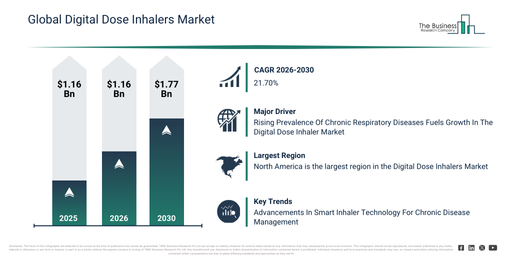
    The market size for digital dose inhalers is anticipated to undergo significant growth in the coming years. It is projected to expand to $63.58 billion in 2030, driven by a compound annual growth rate (CAGR) of 21.7%. This expansion during the forecast period can be attributed to factors such as the increasing demand for remote patient monitoring, a growing emphasis on personalized respiratory care, enhanced awareness regarding the benefits of medication adherence, the broadening of digital health ecosystems, and increased healthcare spending on managing chronic diseases. Throughout this period, major trends are expected to include the rising adoption of smart inhalation devices, a heightened focus on monitoring medication adherence, an expanding utilization of connected respiratory care solutions, a noticeable shift towards home-based management of respiratory diseases, and an increasing need for precise dose accuracy and usage tracking.

    Download the Free Sample Report to Explore Key Market Insights:

    https://www.thebusinessresearchcompany.com/sample.aspx?id=18807&type=smp

    What Drivers Are Expected To Influence The Digital Dose Inhalers Market During The Forecast Period?

    An anticipated increase in chronic respiratory illnesses is poised to boost the expansion of the digital dose inhalers market in the future. These conditions are persistent disorders impacting the respiratory system, specifically the lungs and airways, leading to ongoing challenges with breathing. The growing incidence of chronic respiratory diseases stems from various factors, such as higher levels of air pollution, an expanding elderly population, and an uptick in tobacco consumption. Digital dose inhalers are crucial for enhancing patient adherence to medication and facilitating monitoring for individuals suffering from ailments like asthma and chronic obstructive pulmonary disease (COPD). To illustrate, data from December 2023, provided by the National Center for Biotechnology Information, a US-based government agency, projected that COPD cases would increase by 112 million, summing up to 592 million by 2050, encompassing 9.5% of the qualifying populace. Consequently, the increasing occurrence of chronic respiratory diseases is fueling the development of the digital dose inhalers market.

    What Market Segments Are Evaluated Within The Digital Dose Inhalers Market?

    The digital dose inhalers market covered in this report is segmented –

    1) By Product: Metered Dose Inhaler (MDI), Dry Powder Inhaler (DPI)

    2) By Formulation Type: Branded Medication, Generic Medication

    3) By Indications: Asthma, Chronic Obstructive Pulmonary Disease (COPD), Other Indications

    4) By End User: Medical Device Industry, Hospital

    Subsegments:

    1) By Metered Dose Inhaler (MDI): Conventional MDI, Smart MDI

    2) By Dry Powder Inhaler (DPI): Single-Dose DPI, Multi-Dose DPI, Smart DPI

    What Industry Trends Are Redefining The Digital Dose Inhalers Market?

    Leading firms within the digital dose inhalers market are concentrating their efforts on creating groundbreaking products, including smart inhalers, with the aim of boosting patient results and refining medication oversight. These smart inhalers represent sophisticated instruments equipped with sensors and internet connectivity, which track drug consumption, method of inhalation, and compliance, simultaneously delivering immediate feedback through mobile applications. As an illustration, during June 2024, Aseptika Ltd., a healthcare enterprise situated in the UK, unveiled the PUFFClicker3 universal smart inhaler dose tracker at the Med-Tech Innovation Expo event. The PUFFClicker3 stands out as the globe’s inaugural inhaler dose tracker that works with both pressurized metered dose inhalers (pMDI) and dry powder inhalers (DPI), accommodating 101 SNOMED-coded inhaler varieties. This particular innovation streamlines the changeover for patients between various inhaler categories and provides integrated graphical guidance for operating every compatible inhaler.

    Who Are The Top Market Participants Influencing The Digital Dose Inhalers Market?

    Major companies operating in the digital dose inhalers market are Teva Pharmaceutical Industries Ltd., AstraZeneca plc, GlaxoSmithKline plc, Novartis AG, Propeller Health, Adherium Limited, Cohero Health, FindAir Sp z o o, Amiko Digital Health Limited, Sensirion AG, H&T Presspart Manufacturing Ltd., Philips Respironics, Boehringer Ingelheim GmbH, Cipla Limited, Glenmark Pharmaceuticals Limited, OPKO Health Inc., Mundipharma International Limited, Pneuma Respiratory Inc., Cognita Labs, AptarGroup Inc.

    Read the full digital dose inhalers market report here:

    https://www.thebusinessresearchcompany.com/report/digital-dose-inhalers-global-market-report

    Which Region Is Forecast To Lead The Digital Dose Inhalers Market In Terms Of Market Size?

    North America was the largest region in the digital dose inhalers market in 2025. Asia-Pacific is expected to be the fastest-growing region inthe forecast period. The regions covered in the digital dose inhalers market report are Asia-Pacific, South East Asia, Western Europe, Eastern Europe, North America, South America, Middle East, Africa.

    Request A Tailored Digital Dose Inhalers Market Research Report For Competitive Advantage:

    https://www.thebusinessresearchcompany.com/customise?id=18807&type=smp

    Browse Through More Reports Similar to the Global Digital Dose Inhalers Market 2026, By The Business Research Company

    Smart Inhalers Market Report 2026

    https://www.thebusinessresearchcompany.com/report/smart-inhalers-global-market-report

    Respiratory Inhaler Devices Market Report 2026

    https://www.thebusinessresearchcompany.com/report/respiratory-inhaler-devices-global-market-report

    Inhalable Drugs Market Report 2026

    https://www.thebusinessresearchcompany.com/report/inhalable-drugs-global-market-report

    Get in touch with us:

    The Business Research Company: https://www.thebusinessresearchcompany.com/

    Americas +1 310-496-7795

    Asia +44 7882 955267 & +91 8897263534

    Europe +44 7882 955267

    Email us at info@tbrc.info

    Follow us on:

    LinkedIn: https://in.linkedin.com/company/the-business-research-company

    YouTube: https://www.youtube.com/channel/UC24_fI0rV8cR5DxlCpgmyFQ

    Global Market Model: https://www.thebusinessresearchcompany.com/global-market-model
  • Digital Dentistry Market Insights Highlighting Opportunities and Drivers Supporting Growth to 2030

    Digital Dentistry Market Insights Highlighting Opportunities and Drivers Supporting Growth to 2030

    The Business Research Company’s 2026 market reports include new capabilities such as market attractiveness scoring and analysis, total addressable market analysis, company scoring matrix, interactive excel data dashboard, improved supply chain analysis, upcoming startups in the market, and overview of key products, aimed at improving the depth, usability, and strategic value of the insights delivered.

    How Will The Market Size Of The Digital Dentistry Market Evolve From 2026 To 2030?

    The digital dentistry market has expanded significantly in recent years. It is projected to increase from $6.79 billion in 2025 to $7.57 billion in 2026, reflecting a compound annual growth rate (CAGR) of 11.4%. Historically, this market’s growth has been fueled by factors such as the rise in dental care procedures, an increasing demand for accurate diagnostics, the expansion of private dental clinics, growing awareness of advanced dental treatments, and enhanced accessibility to dental technologies.

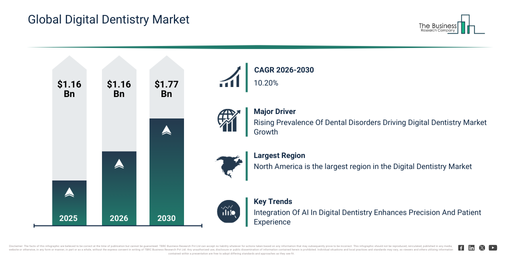
    The digital dentistry market size is set to experience substantial expansion over the next few years. It is forecast to achieve a valuation of $11.15 billion in 2030, exhibiting a compound annual growth rate (CAGR) of 10.2%. This growth during the prediction period stems from several factors, including the escalating demand for streamlined dental operations, patients’ rising expectations for accurate treatments, the growth of cosmetic and implant dentistry, increased financial input into digital healthcare infrastructure, and the wider adoption of technology-driven dental remedies. Significant trends anticipated during this timeframe encompass the growing implementation of intraoral scanners, the increased application of CAD/CAM-based restorations, a rising preference for digital workflows at the chairside, a move towards entirely digital treatment planning, and the expanding incorporation of 3D printing into dental practices.

    Download the Free Sample Report to Explore Key Market Insights:

    https://www.thebusinessresearchcompany.com/sample.aspx?id=15789&type=smp

    What Drivers Are Influencing The Digital Dentistry Market?

    The anticipated expansion of the digital dentistry market is attributed to the growing occurrence of dental disorders. These disorders encompass various conditions impacting teeth, gums, and other oral structures, such as cavities, gum disease, tooth decay, and oral infections. Contributing factors to dental disorders include inadequate oral hygiene, poor dietary choices, tobacco consumption, limited access to dental services, and an aging demographic. Digital dentistry is revolutionizing how dental disorders are diagnosed and treated, utilizing technologies like computer-aided design or computer-aided manufacturing (CAD or CAM) systems, digital imaging, and artificial intelligence (AI) diagnostics to improve accuracy and results. As an illustration, the Australian Institute of Health and Welfare, an Australia-based government agency, reported in October 2024 that approximately 87,400 hospitalizations occurred in 2022–23 due to dental conditions that were preventable with prompt intervention. The highest rate of these avoidable hospitalizations was observed in children aged 5–9 years, reaching 12.3 per 1,000 population. Consequently, the rising incidence of dental disorders is a key driver for the expansion of the digital dentistry market.

    Which Segment Areas Are Covered In The Digital Dentistry Market Analysis?

    The digital dentistry market covered in this report is segmented –

    1) By Type: Instruments, Consumables

    2) By Specialty Areas: Orthodontics, Prosthodontics, Implantology, Other Specialty Areas

    3) By Application: Diagnostics, Therapeutics, Other Applications

    4) By End User: Hospitals, Dental Clinics, Others End Users

    Subsegments:

    1) By Instruments: Digital X-ray Systems, Intraoral Scanners, CAD Or CAM Systems, 3D Printers

    2) By Consumables: Dental Imaging Software, Impression Materials, Digital Inks, 3D Printing Resins

    What Key Developments And Trends Are Impacting The Digital Dentistry Market?

    Leading companies in the digital dentistry market are actively integrating artificial intelligence and machine learning technologies into diagnostic products, such as AI-guided orthodontic scans, with the goal of enhancing treatment precision, efficiency, and capabilities for early detection. An AI-guided orthodontic scan employs artificial intelligence to assist in performing precise scans of a patient’s teeth, which supports effective treatment planning and customization. For example, in June 2023, DentalMonitoring, a medical equipment manufacturing company based in France, launched an AI-guided scan for orthodontics called ScanAssist. This device utilizes AI-driven instructions and provides real-time feedback to guide patients through their scans, aiming to improve patient engagement and overall experience. The in-app system generates a 3D mouth model that tracks patient scans, offering high-quality images and a detailed analysis of treatment progress and oral health. ScanAssist, a new feature within the DentalMonitoring app, uses software and AI to identify more than 130 intraoral observations relevant for braces and aligner treatments.

    Which Global Companies Are Actively Competing In The Digital Dentistry Market?

    Major companies operating in the digital dentistry market are 3M Company, Danaher Corporation, Zimmer Biomet Holdings Inc., DWS Systems, Dentsply Sirona Inc., Align Technology Inc., Institut Straumann AG, Planmeca Oy, Carestream Health Inc., Glidewell Dental, Ivoclar Vivadent, ZimVie Inc, Midmark Corporation, Stratasys, J. Morita Corporation, 3Shape A/S, Roland DG Corporation, Formlabs Inc., KaVo Dental GmbH, Implant Sciences Corporation, Biolase Inc, VITA North America, Medit, exocad GmbH, Kuraray Noritake Dental Inc, DOT GmBH, Apteryx Inc

    Read the full digital dentistry market report here:

    https://www.thebusinessresearchcompany.com/report/digital-dentistry-global-market-report

    Which Regions Are Expected To Experience Rapid Expansion In The Digital Dentistry Market?

    North America was the largest region in the digital dentistry market in 2025. Asia-Pacific is expected to be the fastest-growing region in the forecast period. The regions covered in the digital dentistry market report are Asia-Pacific, South East Asia, Western Europe, Eastern Europe, North America, South America, Middle East, Africa.

    Request A Tailored Digital Dentistry Market Research Report For Competitive Advantage:

    https://www.thebusinessresearchcompany.com/customise?id=15789&type=smp

    Browse Through More Reports Similar to the Global Digital Dentistry Market 2026, By The Business Research Company

    Digital Dentistry Market Report 2026

    https://www.thebusinessresearchcompany.com/report/digital-dentistry-global-market-report

    Cosmetic Dentistry Market Report 2026

    https://www.thebusinessresearchcompany.com/report/cosmetic-dentistry-global-market-report

    Therapeutic Dental Equipment Market Report 2026

    https://www.thebusinessresearchcompany.com/report/therapeutic-dental-equipment-global-market-report

    Get in touch with us:

    The Business Research Company: https://www.thebusinessresearchcompany.com/

    Americas +1 310-496-7795

    Asia +44 7882 955267 & +91 8897263534

    Europe +44 7882 955267

    Email us at info@tbrc.info

    Follow us on:

    LinkedIn: https://in.linkedin.com/company/the-business-research-company

    YouTube: https://www.youtube.com/channel/UC24_fI0rV8cR5DxlCpgmyFQ

    Global Market Model: https://www.thebusinessresearchcompany.com/global-market-model

  • Global Digital Cell Morphology System Market Forecast to Reach $3.49 Billion by 2030 with 10.6% CAGR

    Global Digital Cell Morphology System Market Forecast to Reach $3.49 Billion by 2030 with 10.6% CAGR

    The Business Research Company’s 2026 market reports include new capabilities such as market attractiveness scoring and analysis, total addressable market analysis, company scoring matrix, interactive excel data dashboard, improved supply chain analysis, upcoming startups in the market, and overview of key products, aimed at improving the depth, usability, and strategic value of the insights delivered.

    What Is The Forecasted Market Value Of The Digital Cell Morphology System Market Across 2026–2030?

    The digital cell morphology system market has experienced swift expansion in recent years. It is anticipated to increase from $2.1 billion in 2025 to $2.33 billion in 2026, exhibiting a compound annual growth rate (CAGR) of 11.0%. The growth observed in prior periods was influenced by factors such as the reliance on manual microscopic analysis, the escalating demand for accurate hematology diagnostics, initial limited adoption of digital imaging, the expansion of academic and research institutes, and the rising prevalence of hematological disorders.

    The digital cell morphology system market size is projected to experience rapid expansion over the next few years. It is expected to reach $3.49 billion in 2030, demonstrating a compound annual growth rate (CAGR) of 10.6%. This anticipated growth during the forecast period can be attributed to advancements in image processing software, an increasing embrace of flow cytometry and automated analyzers, rising investments in biotechnology and pharmaceutical research and development, the integration of AI-driven diagnostic tools, and the expansion of telemedicine and remote laboratory solutions. Prominent trends for the forecast duration encompass the growing adoption of automated cell imaging and analysis systems, an escalated utilization of high-content screening for hematology and oncology, an increase in laboratory efficiency and the standardization of results, the expansion of the consumables and reagents market specifically for digital morphology, and the integration of remote diagnostics and telepathology solutions.

    Download the Free Sample Report to Explore Key Market Insights:

    https://www.thebusinessresearchcompany.com/sample.aspx?id=27276&type=smp

    What Drivers Are Shaping The Future Growth Of The Digital Cell Morphology System Market?

    The digital cell morphology system market is anticipated to expand due to the rising occurrence of hematological disorders. These disorders encompass medical conditions impacting the blood, bone marrow, and lymphatic system, such as anemia, leukemia, and clotting disorders. The increase in hematological disorders stems from the growing incidence of chronic diseases, which directly influence blood health and necessitate continuous oversight. Digital cell morphology systems assist in diagnosing hematological disorders through precise and automated analysis of blood cell images, facilitating accurate classification. These systems boost laboratory efficiency by reducing manual review, enhancing consistency, and accelerating clinical decision-making. As an illustration, the Annual Global Survey 2024 by the World Federation of Hemophilia (WFH), a Canada-based non-profit, indicated in October 2025 a 6% increase in global identification of people with hemophilia, a 6% rise in identified von Willebrand disease cases, and a 9% increase in other inherited bleeding disorders, alongside a 9% increase in the number of women and girls with bleeding disorders. Consequently, the expanding occurrence of hematological disorders is propelling the growth of the digital cell morphology system market.

    What Segmentation Levels Are Considered In The Digital Cell Morphology System Market?

    The digital cell morphology system market covered in this report is segmented –

    1) By Product Type: Cell Imaging Systems, Cell Analysis Systems, Accessories And Consumables

    2) By Technology: Microscopy, Flow Cytometry, Image Processing Software

    3) By Distribution Channel: Direct Sales, Distributors, Online Sales

    4) By Application: Hematology, Oncology, Infectious Diseases, Other Applications

    5) By End-User: Academic And Research Institutes, Hospitals And Clinical Laboratories, Biotechnology And Pharmaceutical Companies

    Subsegments:

    1) By Cell Imaging Systems: Digital Microscopes, Fluorescence Microscopes, Full-Field Digital Imaging Systems, Automated Slide Scanners, High-Content Screening Systems

    2) By Cell Analysis Systems: Flow Cytometers, Hematology Analyzers, Morphology Analyzers, Spectrophotometers, Cell Counters

    3) By Accessories And Consumables: Reagents and Stains, Sample Preparation Kits, Slides and Cover Slips, Imaging Plates, Cell Fixatives

    What Trends Are Projected To Affect The Digital Cell Morphology System Market?

    Major companies operating in the digital cell morphology system market are prioritizing the development of technologically advanced solutions, such as AI-driven image analyzers, to boost diagnostic speed and accuracy. AI-driven image analyzers are sophisticated instruments that utilize artificial intelligence to automatically interpret digital images and extract valuable insights, thereby improving analysis speed, precision, and consistency. For instance, in July 2025, Scopio Labs Ltd., an Israel-based medical equipment manufacturing company, introduced its complete blood morphology (CBM) analyzer. This automated AI-driven image analyzer is designed for peripheral blood smear review, employing full-field imaging technology to independently process and evaluate up to 10 times more cells than traditional methods. It also presents opportunities for developing new morphology-based biomarkers and diagnostic panels, facilitating earlier disease detection and real-time patient monitoring. This innovation tackles significant challenges including the global shortage of trained laboratory technologists, the variability inherent in manual interpretations, and the increasing demand for diagnostic services.

    Which Leading Firms Are Contributing To The Growth Of The Digital Cell Morphology System Market?

    Major companies operating in the digital cell morphology system market are F. Hoffmann-La Roche AG, Thermo Fisher Scientific Inc., Abbott Laboratories, Danaher Corporation, Merck KGaA, Siemens Healthineers AG, Becton Dickinson and Company, Agilent Technologies Inc., Mindray Medical International Limited, Nikon Corporation, IDEXX Laboratories Inc., Sysmex Corporation, Bio-Rad Laboratories Inc., Horiba ABX SAS, Leica Microsystems GmbH, Medica Corporation, Scopio Labs Ltd., MetaSystems Hard & Software GmbH, West Medica Produktions- und Handels-GmbH, ZhiWei Information & Technology Co. Ltd.

    Read the full digital cell morphology system market report here:

    https://www.thebusinessresearchcompany.com/report/digital-cell-morphology-system-global-market-report

    Which Geographic Regions Are Influencing Demand In The Digital Cell Morphology System Market?

    North America was the largest region in the digital cell morphology system market in 2025. Asia-Pacific is expected to be the fastest-growing region in the forecast period. The regions covered in the digital cell morphology system market report are Asia-Pacific, South East Asia, Western Europe, Eastern Europe, North America, South America, Middle East, Africa.

    Request A Tailored Digital Cell Morphology System Market Research Report For Competitive Advantage:

    https://www.thebusinessresearchcompany.com/customise?id=27276&type=smp

    Browse Through More Reports Similar to the Global Digital Cell Morphology System Market 2026, By The Business Research Company

    Methyl Ester Sulfonate Market Report 2026

    https://www.thebusinessresearchcompany.com/report/methyl-ester-sulfonate-global-market-report

    Fatty Methyl Ester Sulfonate Market Report 2026

    https://www.thebusinessresearchcompany.com/report/fatty-methyl-ester-sulfonate-global-market-report

    Cyclohexylbenzene Market Report 2026

    https://www.thebusinessresearchcompany.com/report/cyclohexylbenzene-global-market-report

    Get in touch with us:

    The Business Research Company: https://www.thebusinessresearchcompany.com/

    Americas +1 310-496-7795

    Asia +44 7882 955267 & +91 8897263534

    Europe +44 7882 955267

    Email us at info@tbrc.info

    Follow us on:

    LinkedIn: https://in.linkedin.com/company/the-business-research-company

    YouTube: https://www.youtube.com/channel/UC24_fI0rV8cR5DxlCpgmyFQ

    Global Market Model: https://www.thebusinessresearchcompany.com/global-market-model
  • Digital Auscultation Market Future Outlook Indicating Expansion Toward $1.85 Billion by 2030

    Digital Auscultation Market Future Outlook Indicating Expansion Toward $1.85 Billion by 2030

    The Business Research Company’s 2026 market reports include new capabilities such as market attractiveness scoring and analysis, total addressable market analysis, company scoring matrix, interactive excel data dashboard, improved supply chain analysis, upcoming startups in the market, and overview of key products, aimed at improving the depth, usability, and strategic value of the insights delivered.

    What Market Size Increase Is Anticipated For The Digital Auscultation Market Over The 2026–2030 Period?

    The digital auscultation market has witnessed rapid expansion in recent years. It is anticipated to grow from $0.89 billion in 2025 to $1.03 billion in 2026, exhibiting a compound annual growth rate (CAGR) of 16.0%. Historically, the market’s development was influenced by reliance on manual stethoscopes, limited diagnostic accuracy, low adoption of digital auscultation, high device cost, and fragmented healthcare IT systems.

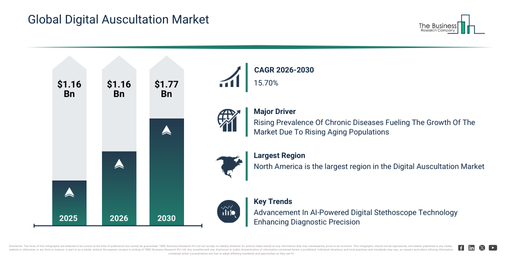
    The digital auscultation market is projected to experience substantial expansion over the upcoming years. By 2030, its valuation is anticipated to reach $1.85 billion, demonstrating a compound annual growth rate (CAGR) of 15.7%. This expansion during the forecast period is driven by increased implementation in healthcare facilities such as hospitals and clinics, the rise of telehealth services, the incorporation of AI and cloud technologies, a growing need for pediatric and cardiology surveillance, and the proliferation of home-based diagnostic instruments. Key developments anticipated in this period include advancements in heart and lung sound examination, the emergence of wireless auscultation devices, seamless integration with EHR systems, capabilities for real-time remote diagnoses, and AI-powered signal interpretation.

    Download the Free Sample Report to Explore Key Market Insights:

    https://www.thebusinessresearchcompany.com/sample.aspx?id=29017&type=smp

    Which Economic Or Industry Drivers Are Impacting The Digital Auscultation Market?

    The increasing occurrence of chronic illnesses is anticipated to fuel the expansion of the digital auscultation market in the future. These long-lasting health conditions, such as cardiovascular disorders, diabetes, respiratory ailments, and hypertension, are characterized by their gradual progression and persistence over time. The escalation of chronic diseases is largely attributable to an aging demographic, given that advancing age correlates with diminished cellular repair, compromised immune function, and an elevated susceptibility to metabolic and cardiovascular issues. Digital auscultation aids in managing chronic diseases by offering precise, real-time tracking of cardiac and pulmonary sounds, thus facilitating prompt identification of irregularities and swift intervention to enhance patient outcomes over time. For example, in February 2024, the World Health Organization, an intergovernmental body based in Switzerland, forecast more than 35 million new cancer cases by 2050, signifying a 77% rise from the estimated 20 million cases in 2022. Consequently, the growing incidence of chronic illnesses is boosting the expansion of the digital auscultation market.

    How Is The Digital Auscultation Market Segmented Across Key Categories?

    The digital auscultation market covered in this report is segmented –

    1) By Product Type: Stethoscopes, Heart Sound Analyzers, Accessories

    2) By Technology: Wireless, Wired

    3) By Application: Cardiology, Respiratory, Pediatrics, Other Applications

    4) By End-User: Hospitals, Clinics, Ambulatory Surgical Centers, Homecare Settings, Other End-Users

    Subsegments:

    1) By Stethoscopes: Electronic Stethoscopes, Wireless Stethoscopes, Bluetooth-Enabled Stethoscopes, Smart Stethoscopes, Amplified Stethoscopes

    2) By Heart Sound Analyzers: Portable Heart Sound Analyzers, Handheld Heart Sound Analyzers, Integrated Heart Sound Analyzers, Wearable Heart Sound Analyzers

    3) By Accessories: Chest Pieces, Earpieces, Tubing, Diaphragms, Power Adapters, Carrying Cases

    Which Upcoming Trends Are Expected To Influence The Digital Auscultation Market?

    Leading companies in the digital auscultation market are focusing on developing advanced products, such as AI-powered auscultation, to enhance diagnostic accuracy and improve the efficiency of clinical decision-making. AI-powered auscultation utilizes artificial intelligence to analyze heart and lung sounds captured by digital stethoscopes, thereby facilitating the automatic detection of issues and providing useful information for quicker and more precise diagnoses. An illustrative instance occurred in September 2025, when Sanolla, a US-based digital health company, unveiled the VoqX smart stethoscope. This device is recognized as the world’s first smart AI-powered stethoscope offering full-spectrum auscultation, notably including the capacity to identify low-frequency infrasound that conventional stethoscopes cannot perceive. The instrument integrates real-time AI analysis to aid clinicians in diagnosing cardiopulmonary conditions more effectively. Sanolla initiated direct sales of this FDA-certified device, signaling a considerable advancement in clinical diagnostic technology by making it accessible to frontline healthcare professionals.

    Who Are The Dominant Players Shaping The Digital Auscultation Market Landscape?

    Major companies operating in the digital auscultation market are 3M Company, Eko Health Inc., Thinklabs Medical Inc., StethoMe, Stemoscope, Strados Labs Inc., TytoCare Ltd., Rudolf Riester GmbH, American Diagnostic Corporation, Contec Medical Systems Co. Ltd., Sanolla Ltd., Ayu Devices Pvt. Ltd., M3DICINE Pty. Ltd., Ai Health Highway Pvt. Ltd., Dongjin Medical, Saintiant Technologies, GlobalMed Holdings LLC, AMD Global Telemedicine Inc., Halma Public Limited Company, Rijuven

    Read the full digital auscultation market report here:

    https://www.thebusinessresearchcompany.com/report/digital-auscultation-global-market-report

    What Are The Top-Performing Regions Within The Digital Auscultation Market?

    North America was the largest region in the digital auscultation market in 2025. Asia-Pacific is expected to be the fastest-growing region in the forecast period. The regions covered in the digital auscultation market report are Asia-Pacific, South East Asia, Western Europe, Eastern Europe, North America, South America, Middle East, Africa.

    Request A Tailored Digital Auscultation Market Research Report For Competitive Advantage:

    https://www.thebusinessresearchcompany.com/customise?id=29017&type=smp

    Browse Through More Reports Similar to the Global Digital Auscultation Market 2026, By The Business Research Company

    Digital Twin Technology Market Report 2026

    https://www.thebusinessresearchcompany.com/report/digital-twin-technology-global-market-report

    Digital Utility Market Report 2026

    https://www.thebusinessresearchcompany.com/report/digital-utility-global-market-report

    Digital Travel Market Report 2026

    https://www.thebusinessresearchcompany.com/report/digital-travel-global-market-report

    Get in touch with us:

    The Business Research Company: https://www.thebusinessresearchcompany.com/

    Americas +1 310-496-7795

    Asia +44 7882 955267 & +91 8897263534

    Europe +44 7882 955267

    Email us at info@tbrc.info

    Follow us on:

    LinkedIn: https://in.linkedin.com/company/the-business-research-company

    YouTube: https://www.youtube.com/channel/UC24_fI0rV8cR5DxlCpgmyFQ

    Global Market Model: https://www.thebusinessresearchcompany.com/global-market-model
  • Digestible Sensor Market Revenue Expected to Reach $2.6 Billion by 2030 with 13.7% CAGR

    Digestible Sensor Market Revenue Expected to Reach $2.6 Billion by 2030 with 13.7% CAGR

    The Business Research Company’s 2026 market reports include new capabilities such as market attractiveness scoring and analysis, total addressable market analysis, company scoring matrix, interactive excel data dashboard, improved supply chain analysis, upcoming startups in the market, and overview of key products, aimed at improving the depth, usability, and strategic value of the insights delivered.

    How Much Is The Digestible Sensor Market Expected To Grow In Terms Of Market Value Between 2026 And 2030?

    The digestible sensor market has seen rapid expansion recently. It is forecast to rise from $1.37 billion in 2025 to $1.56 billion in 2026, achieving a compound annual growth rate (CAGR) of 14.0%. The past growth in this market can be attributed to several factors, including the limited options for ingestible sensor technologies, the reliance on traditional diagnostic methods, increasing awareness regarding gastrointestinal health, the early adoption of capsule endoscopy, and a boost in research and development efforts in bioelectronic interfaces.

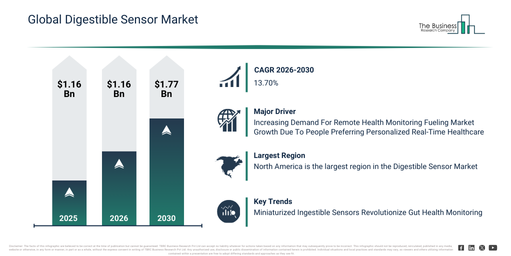
    The digestible sensor market is expected to experience substantial growth in the upcoming years. It is projected to expand to $2.6 billion by 2030, demonstrating a compound annual growth rate (CAGR) of 13.7%. This expansion during the forecast period can be attributed to advancements in wireless communication and MEMS technologies, the integration with digital health platforms, the broadening of personalized medicine initiatives, an increasing demand for real-time patient monitoring, and the rise in home healthcare and telemedicine. Significant trends for the forecast period include the increasing adoption of ingestible sensors for gastrointestinal health monitoring, the incorporation of sensors with drug adherence programs, the expansion of smart capsule endoscopy applications, the growing utilization of electrochemical and gas sensing technologies, and an increase in personalized patient monitoring solutions.

    Download the Free Sample Report to Explore Key Market Insights:

    https://www.thebusinessresearchcompany.com/sample.aspx?id=27275&type=smp

    What Major Drivers Are Influencing Demand In The Digestible Sensor Market?

    The growing need for remote health monitoring is anticipated to fuel the expansion of the digestible sensor market in the future. This involves employing technology to oversee and manage patient well-being beyond conventional medical facilities, typically remotely. Its surge is attributed to individuals favoring customized, real-time medical care within their own residences, along with economical options compared to traditional face-to-face appointments. Digestible sensors support remote health monitoring by facilitating the live tracking of internal health indicators, including gastrointestinal function, thereby supplying physicians with crucial information about a patient’s digestive system. This capability permits the early identification of problems like infections or illnesses without requiring invasive methods. For example, an August 2025 data-snapshot from the Office of Inspector General, U.S. Department of Health & Human Services (OIG), revealed that in 2024, Medicare expenditures for remote patient monitoring surpassed US $536 million (marking a 31 % rise from 2023). During the same period, close to 1 million individuals enrolled for RPM services (a 27 % increase from 2023), and approximately 4,600 medical practices consistently billed for RPM. Consequently, the escalating need for remote health monitoring is fueling the expansion of the digestible sensor market.

    What Major Segment Divisions Exist Within The Digestible Sensor Market?

    The digestible sensor market covered in this report is segmented –

    1) By Type: Capsule Sensors, Wearable Sensors, Ingestible Sensors, Implantable Sensors

    2) By Distribution Channel: Online Retail, Pharmacies, Hospitals And Clinics, Direct Sales

    3) By Technology: Microelectromechanical Systems (MEMS), Wireless Communication Technologies, Optical Sensors, Bioelectronic Interfaces

    4) By Application: Medical Diagnostics, Drug Delivery, Patient Monitoring, Sports And Fitness, Other Applications

    5) By End-User: Healthcare Providers, Research Institutions, Pharmaceutical Companies, Individual Consumers

    Subsegments:

    1) By Capsule Sensors: pH Monitoring Capsules, Temperature Monitoring Capsules, Pressure Sensing Capsules, Smart Capsule Endoscopy, Drug Delivery Capsules With Sensors

    2) By Wearable Sensors: Patch-Based External Receivers, Gastrointestinal Motility Trackers, Bio-Signal Monitoring Wearables, Wearable Adherence Trackers

    3) By Ingestible Sensors: Vital Sign Monitoring Sensors, Drug Adherence Monitoring Sensors, Imaging Sensors, Gas Sensing Sensors, Electrochemical Sensors

    4) By Implantable Sensors: GI Electrophysiology Sensors, pH And Enzyme Sensors, Neuromodulation Devices, Metabolic Sensors

    How Are Trends Shaping The Direction Of The Digestible Sensor Market?

    Leading companies in the digestible sensor market are prioritizing advanced solutions, such as multi-parameter sensors, to improve diagnostic accuracy, broaden application possibilities, and enhance real-time health monitoring capabilities. A multi-parameter sensor is defined as a device engineered to concurrently measure various physical or chemical parameters from its environment or a subject, by combining different sensing technologies into one compact unit. For example, in May 2025, the Interuniversity Microelectronics Centre, a non-profit research organization based in Belgium, unveiled a highly miniaturized ingestible sensor for monitoring gut health. This exceptionally small ingestible sensor measures just 2.1 cm in length and 0.75 cm in diameter. The capsule is approximately three times smaller than traditional endoscopic capsules, leading to easier swallowing and greater patient comfort. It integrates multiple sensors, including those for oxidation-reduction potential (ORP), pH, and temperature, to deliver real-time biochemical data from the gastrointestinal tract. The capsule records measurements every 20 seconds throughout the digestive journey, powered by low-energy electronics and a compact battery. Equipped with wireless data transmission and a biocompatible casing, the device facilitates continuous, noninvasive analysis of internal gut conditions, holding significant potential for the early diagnosis of inflammation, oxidative stress, and microbiome imbalances.

    Which Companies Are Leading Innovation In The Digestible Sensor Market?

    Major companies operating in the digestible sensor market are Medtronic plc, Koninklijke Philips N.V., Otsuka Pharmaceutical Co Ltd, Olympus Corporation, Sencure B.V., Millar Inc., Check-Cap Ltd, Proteus Digital Health Inc., CapsoVision Inc., Atmo Biosciences, IntroMedic Co Ltd, BodyCAP S.A.S., Capsule Technologies Inc., etectRx Inc., Motus GI Inc., SmartPill Corporation, JINSHAN Science & Technology Group Co Ltd, MC10, Medtronic GI Solutions, Proteus GI Technologies

    Read the full digestible sensor market report here:

    https://www.thebusinessresearchcompany.com/report/digestible-sensor-global-market-report

    Which Region Shows The Strongest Potential For Future Growth In The Digestible Sensor Market?

    North America was the largest region in the digestible sensor market in 2025. Asia-Pacific is expected to be the fastest-growing region in the forecast period. The regions covered in the digestible sensor market report are Asia-Pacific, South East Asia, Western Europe, Eastern Europe, North America, South America, Middle East, Africa.

    Request A Tailored Digestible Sensor Market Research Report For Competitive Advantage:

    https://www.thebusinessresearchcompany.com/customise?id=27275&type=smp

    Browse Through More Reports Similar to the Global Digestible Sensor Market 2026, By The Business Research Company

    Precast Construction Market Report 2026

    https://www.thebusinessresearchcompany.com/report/precast-construction-global-market-report

    Wood Based Panel Market Report 2026

    https://www.thebusinessresearchcompany.com/report/wood-based-panel-global-market-report

    Precast Concrete Market 2026

    https://www.thebusinessresearchcompany.com/report/precast-concrete-market

    Get in touch with us:

    The Business Research Company: https://www.thebusinessresearchcompany.com/

    Americas +1 310-496-7795

    Asia +44 7882 955267 & +91 8897263534

    Europe +44 7882 955267

    Email us at info@tbrc.info

    Follow us on:

    LinkedIn: https://in.linkedin.com/company/the-business-research-company

    YouTube: https://www.youtube.com/channel/UC24_fI0rV8cR5DxlCpgmyFQ

    Global Market Model: https://www.thebusinessresearchcompany.com/global-market-model

  • Dietary Supplements In An Age Of Personalized Nutrition Market Expected to Grow Steadily and Approach $160.25 Billion by 2030

    Dietary Supplements In An Age Of Personalized Nutrition Market Expected to Grow Steadily and Approach $160.25 Billion by 2030

    The Business Research Company’s 2026 market reports include new capabilities such as market attractiveness scoring and analysis, total addressable market analysis, company scoring matrix, interactive excel data dashboard, improved supply chain analysis, upcoming startups in the market, and overview of key products, aimed at improving the depth, usability, and strategic value of the insights delivered.

    What Market Value Is Expected For The Dietary Supplements In An Age Of Personalized Nutrition Market At The End Of The 2026–2030 Forecast Period?

    The market for dietary supplements in an age of personalized nutrition has experienced rapid expansion in recent years. This sector is expected to grow from $97.46 billion in 2025 to $107.7 billion in 2026, achieving a compound annual growth rate (CAGR) of 10.5%. The historical growth of this market can be linked to factors such as increased consumer focus on preventive healthcare, wider consumption of dietary supplements, enhanced awareness of nutritional deficiencies, the emergence of advanced nutrigenomic research, and the expansion of e-commerce for supplement distribution.

    The dietary supplements in an age of personalized nutrition market size is anticipated to undergo substantial growth in the upcoming years, with projections indicating it will expand to $160.25 billion by 2030, exhibiting a compound annual growth rate (CAGR) of 10.4%. This anticipated growth is largely driven by factors such as the increasing adoption of personalized healthcare solutions, the rising integration of AI-driven nutrition analytics, the expansion of subscription-based supplement models, the growing demand for precision wellness products, and increasing regulatory clarity for personalized nutrition. Throughout the forecast period, significant trends are expected to include a greater emphasis on genetic-based supplement formulations, the rising adoption of digital nutrition platforms, the growing integration of wearables with supplement programs, an expansion of personalized vitamin and mineral blends, and an enhanced focus on data-driven nutrition planning.

    Download the Free Sample Report to Explore Key Market Insights:

    https://www.thebusinessresearchcompany.com/sample.aspx?id=24207&type=smp

    Which Market Drivers Are Supporting The Expansion Of The Dietary Supplements In An Age Of Personalized Nutrition Market?

    The increasing incidence of long-term health conditions is anticipated to drive the expansion of the dietary supplements in an age of personalized nutrition market moving ahead. These are defined as prolonged health issues that generally develop gradually and necessitate continuous care, encompassing ailments such as diabetes, cardiovascular disease, high blood pressure, joint inflammation, persistent respiratory conditions, cancer, and excessive weight. The rising occurrence of these diseases stems from shifts in lifestyle, specifically inadequate nutrition and insufficient exercise, both of which lead to enduring health problems. The dietary supplements in an age of personalized nutrition assist in managing chronic conditions by providing customized nutritional options derived from unique health data. They target particular nutritional shortages and foster precise well-being, thereby improving general health results and diminishing complications linked to diseases. As an illustration, data from June 2024 from the National Health Service, a UK-based government healthcare system, indicated that pre-diabetes instances in England increased by 549,000 (18%), growing from 3,065,825 in 2022 to 3,615,330 in 2023. Furthermore, for individuals under the age of 40, such cases climbed by 25%, from 173,166 to 216,440. Consequently, the expanding occurrence of chronic illness is propelling the development of the dietary supplements in an age of personalized nutrition market.

    What Segment Types Make Up The Dietary Supplements In An Age Of Personalized Nutrition Market?

    The dietary supplements in an age of personalized nutrition market covered in this report is segmented –

    1) By Product Type: Vitamins, Minerals, Amino Acids, Herbal And Botanicals, Other Product Types

    2) By Technological: Mobile Applications, Wearable Devices, Health Monitoring Software

    3) By Dosage Form: Capsules, Powder, Liquids, Soft Gels, Other Dosage Forms

    4) By Application: General Wellness, Sports Nutrition, Immune Support, Skin Health, Other Applications

    5) By End-User: Children, Adults, Elderly

    Subsegments:

    1) By Vitamins: Vitamin A, Vitamin B-Complex, Vitamin C, Vitamin D, Vitamin E, Vitamin K

    2) By Minerals: Calcium, Magnesium, Zinc, Iron, Potassium, Selenium

    3) By Amino Acids: Essential Amino Acids, Non-Essential Amino Acids, Branched-Chain Amino Acids (BCAAs), Amino Acid Blends

    4) By Herbal and Botanicals: Ginseng, Turmeric, Ashwagandha, Ginkgo Biloba, Green Tea Extract, Milk Thistle

    5) By Other Product Types: Probiotics, Omega Fatty Acids, Enzymes, Fiber Supplements, Collagen Supplements

    Which Market Trends Are Creating New Opportunities In The Dietary Supplements In An Age Of Personalized Nutrition Market?

    Leading enterprises active in the dietary supplements market, specifically within personalized nutrition, are prioritizing the development of innovative solutions like customized vitamin assessments. This focus aims to provide consumers with individualized health solutions that address distinct nutritional needs, enhance well-being outcomes, and promote proactive health management. A customized vitamin assessment is a personalized evaluation designed to analyze an individual’s specific nutritional requirements, lifestyle, and health objectives, subsequently recommending the most appropriate vitamin and supplement regimen. For instance, in November 2024, Persona Nutrition, a US-based personalized nutrition firm, introduced a white label service to assist brands in offering tailored supplement solutions, boosting customer interaction, and simplifying subscription management. This inventive dietary supplement incorporates customized vitamin assessment, enabling businesses to provide personalized offerings, improve customer loyalty, and scale effectively in the personalized nutrition domain. The white label service is highly versatile, allowing for seamless personalization across diverse health needs by leveraging customized vitamin assessments to deliver precise supplement recommendations and enhance customer engagement.

    Who Are The Key Players Driving Competition In The Dietary Supplements In An Age Of Personalized Nutrition Market?

    Major companies operating in the dietary supplements in an age of personalized nutrition market are Amway Corporation, Athletic Greens, Niagen Bioscience, Darwin AG, Viome Life Sciences Inc., Harbin Pharmaceutical Group Co. Ltd., DNALYSIS Biotechnology, Panaceutics Nutrition, Segterra Inc., GenoPalate Inc., Bioniq Health-Tech Solutions Ltd., Vous Vitamin LLC, Nourished, NutriStyle Inc., Vitable, Quantbiome Inc., Elo Health, Cuure, Care/of, Persona Nutrition, Rootine, InsideTracker, HUM Nutrition, Thorne HealthTech, Nestlé Health Science

    Read the full dietary supplements in an age of personalized nutrition market report here:

    https://www.thebusinessresearchcompany.com/report/dietary-supplements-in-an-age-of-personalized-nutrition-global-market-report

    How Is The Dietary Supplements In An Age Of Personalized Nutrition Market Distributed Across Key Geographic Regions?

    North America was the largest region in the dietary supplements in an age of personalized nutrition market in 2025. Asia-Pacific is expected to be the fastest-growing region in the forecast period. The regions covered in the dietary supplements in an age of personalized nutrition market report are Asia-Pacific, South East Asia, Western Europe, Eastern Europe, North America, South America, Middle East, Africa.

    Request A Tailored Dietary Supplements In An Age Of Personalized Nutrition Market Research Report For Competitive Advantage:

    https://www.thebusinessresearchcompany.com/customise?id=24207&type=smp

    Browse Through More Reports Similar to the Global Dietary Supplements In An Age Of Personalized Nutrition Market 2026, By The Business Research Company

    Digestive Health Supplements Market Report 2026

    https://www.thebusinessresearchcompany.com/report/digestive-health-supplements-global-market-report

    Personalized Nutrition Market Report 2026

    https://www.thebusinessresearchcompany.com/report/personalized-nutrition-global-market-report

    Weight Loss Supplements Market Report 2026

    https://www.thebusinessresearchcompany.com/report/weight-loss-supplements-global-market-report

    Get in touch with us:

    The Business Research Company: https://www.thebusinessresearchcompany.com/

    Americas +1 310-496-7795

    Asia +44 7882 955267 & +91 8897263534

    Europe +44 7882 955267

    Email us at info@tbrc.info

    Follow us on:

    LinkedIn: https://in.linkedin.com/company/the-business-research-company

    YouTube: https://www.youtube.com/channel/UC24_fI0rV8cR5DxlCpgmyFQ

    Global Market Model: https://www.thebusinessresearchcompany.com/global-market-model
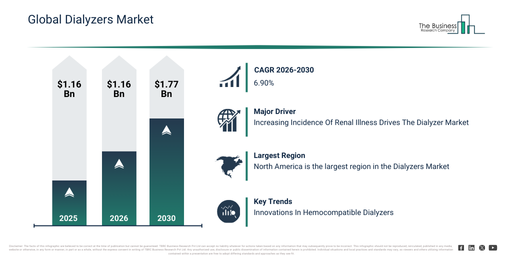
  • Dialyzers Market Expansion Forecast Showing Market Size of $3.26 Billion by 2030 at 6.9% CAGR

    Dialyzers Market Expansion Forecast Showing Market Size of $3.26 Billion by 2030 at 6.9% CAGR

    The Business Research Company’s 2026 market reports include new capabilities such as market attractiveness scoring and analysis, total addressable market analysis, company scoring matrix, interactive excel data dashboard, improved supply chain analysis, upcoming startups in the market, and overview of key products, aimed at improving the depth, usability, and strategic value of the insights delivered.

    What Is The Estimated Market Size Of The Dialyzers Market During 2026–2030?

    The dialyzers market has experienced robust expansion in its size over recent years. It is anticipated to expand from $2.34 billion in 2025 to $2.5 billion in 2026, achieving a compound annual growth rate (CAGR) of 7.1%. This historical expansion can be attributed to several factors, including the increasing prevalence of chronic kidney disease, the expansion of dialysis treatment centers, a rising demand for renal replacement therapy, advancements in membrane technology, and increased access to dialysis services.

    The dialyzers market is anticipated to experience robust expansion over the next few years. It is expected to grow to $3.27 billion in 2030, exhibiting a compound annual growth rate (CAGR) of 6.9%. The projected increase in the forecast period can be attributed to the rising adoption of home hemodialysis, an escalating demand for single-use dialyzers, the expansion of patient-centric dialysis care, advancements in membrane materials, and an increasing emphasis on infection control and safety. Key trends identified for the forecast period include the broader integration of high-flux dialyzers, a growing requirement for biocompatible dialyzer membranes, the proliferation of home dialysis solutions, a heightened focus on improving filtration efficiency, and enhanced utilization of synthetic membrane materials.

    Download the Free Sample Report to Explore Key Market Insights:

    https://www.thebusinessresearchcompany.com/sample.aspx?id=13080&type=smp

    What Underlying Factors Are Accelerating The Growth Of The Dialyzers Market?

    The growing occurrence of end-stage renal conditions is anticipated to stimulate the expansion of the dialyzer market in the coming future. End-stage renal failure (ESRF), also known as end-stage renal disease (ESRD), is the final, irreversible stage of chronic kidney disease where kidney function has declined to an extent that the kidneys cannot operate independently. A dialyzer is utilized during the dialysis process to remove waste and excess fluid from the bloodstream before reinjecting the filtered blood back into the bodies of end-stage renal disease patients. For instance, in 2024, the National Institute of Diabetes and Digestive and Kidney Diseases, a US-based government research organization dedicated to creating knowledge and treatments for diseases, reported that chronic kidney disease (CKD) affects more than 1 in 7 U.S. adults, an estimated 35.5 million Americans. Furthermore, in 2023, a total of 27,332 kidney transplants were completed, and as of November 2024, 90,323 people were on the waiting list for a kidney transplant in the United States. Thus, the escalating incidence of end-stage renal illness is propelling the dialyzer market.

    How Are The Various Segments Of The Dialyzers Market Categorized?

    The dialyzers market covered in this report is segmented –

    1) By Type: High-Flux Dialyzers, Low-Flux Dialyzer

    2) By Usage Type: Disposable, Reusable

    3) By End-Uses: In-Centre Dialysis, Home Dialysis

    Subsegments:

    1) By High-Flux Dialyzers: Polyethersulfone (PES) Dialyzers, Polysulfone (PS) Dialyzers, Polyacrylonitrile (PAN) Dialyzers

    2) By Low-Flux Dialyzers: Cellulose Dialyzers, Cellulose Acetate Dialyzers, Synthetic Low-Flux Dialyzers

    What Trends Are Affecting The Expansion Of The Dialyzers Market?

    Leading companies in the dialyzer market are concentrating on developing innovative products, such as hemocompatible dialyzers, to ensure reliable patient service. A hemocompatible dialyzer is designed to minimize the activation of the blood’s clotting system and the inflammatory response, thereby reducing the risk of complications during dialysis, including blood clots, bleeding, and infection. For instance, in February 2024, Fresenius Medical Care AG & Co. KGaA, a Germany-based manufacturer of dialyzers, introduced the 5008X Hemodialysis System. The 5008X Haemodialysis System and its companion FX CorAL dialyser underscore the company’s global innovation leadership in medical device and membrane engineering technologies. The 5008X Haemodialysis System integrates advanced device engineering and membrane technologies to enable high-volume hemodiafiltration.

    Which Major Firms Influence Developments In The Dialyzers Market?

    Major companies operating in the dialyzers market are Fresenius Medical Care AG & Co. KGaA, Baxter International Inc., B. Braun Melsungen AG, Nipro Corporation, Asahi Kasei Medical Co. Ltd., Toray Medical Co. Ltd., Terumo Corporation, WEGO Group, Allmed Medical Products Co. Ltd., Jiangxi Sanxin Medical Technology Co. Ltd., Farmasol S.A., DIA-MED GmbH, Medica S.p.A., Hemoclean Co. Ltd., Biosystems Dialysis Solutions Ltd., Exelint International Co. Ltd., SWS Hemodialysis Care Co. Ltd., Shandong Haidylena Medical Technology Co. Ltd., Chongqing Tianwai Tian Medical Equipment Co. Ltd., Dialife SA

    Read the full dialyzers market report here:

    https://www.thebusinessresearchcompany.com/report/dialyzers-global-market-report

    Which Region Is Projected To Dominate The Dialyzers Market During The Forecast Period?

    North America was the largest region in the dialyzers market in 2025. The regions covered in the dialyzers market report are Asia-Pacific, South East Asia, Western Europe, Eastern Europe, North America, South America, Middle East, Africa.

    Request A Tailored Dialyzers Market Research Report For Competitive Advantage:

    https://www.thebusinessresearchcompany.com/customise?id=13080&type=smp

    Browse Through More Reports Similar to the Global Dialyzers Market 2026, By The Business Research Company

    Membrane Filtration Market Report 2026

    https://www.thebusinessresearchcompany.com/report/membrane-filtration-global-market-report

    Dialysis Devices And Equipment Market 2026

    https://www.thebusinessresearchcompany.com/report/dialysis-devices-and-equipment-market

    Consumer Telematics Market Report 2026

    https://www.thebusinessresearchcompany.com/report/consumer-telematics-global-market-report

    Get in touch with us:

    The Business Research Company: https://www.thebusinessresearchcompany.com/

    Americas +1 310-496-7795

    Asia +44 7882 955267 & +91 8897263534

    Europe +44 7882 955267

    Email us at info@tbrc.info

    Follow us on:

    LinkedIn: https://in.linkedin.com/company/the-business-research-company

    YouTube: https://www.youtube.com/channel/UC24_fI0rV8cR5DxlCpgmyFQ

    Global Market Model: https://www.thebusinessresearchcompany.com/global-market-model

  • Dialysis Devices And Equipment Market Revenue Forecast to Reach $17.46 Billion by 2030 with 5.2% CAGR

    Dialysis Devices And Equipment Market Revenue Forecast to Reach $17.46 Billion by 2030 with 5.2% CAGR

    The Business Research Company’s 2026 market reports include new capabilities such as market attractiveness scoring and analysis, total addressable market analysis, company scoring matrix, interactive excel data dashboard, improved supply chain analysis, upcoming startups in the market, and overview of key products, aimed at improving the depth, usability, and strategic value of the insights delivered.

    What Market Size Expansion Is Predicted For The Dialysis Devices And Equipment Market Between 2026 And 2030?

    The market for dialysis devices and equipment has shown consistent growth over recent years. This market is projected to expand from $13.62 billion in 2025 to $14.28 billion in 2026, demonstrating a compound annual growth rate (CAGR) of 4.8%. Historically, this expansion has been driven by factors such as a greater prevalence of chronic kidney disease, the development of hospital dialysis facilities, enhanced access to hemodialysis machines, an increasing elderly population, and the proliferation of renal care clinics.

    The market size for dialysis devices and equipment is anticipated to demonstrate robust expansion over the coming years. This sector is projected to reach $17.47 billion by 2030, exhibiting a compound annual growth rate (CAGR) of 5.2%. This growth during the forecast period is propelled by factors such as the increasing demand for home-based dialysis therapies, escalating investments in next-generation dialysis technologies, the broadening of tele-nephrology services, a heightened focus on cost-effective renal care, and the rising adoption of wearable dialysis devices. Prominent trends within this period are expected to involve the wider uptake of home dialysis systems, an increase in the use of automated peritoneal dialysis devices, the expanding integration of remote patient monitoring, the development of portable dialysis equipment, and an enhanced emphasis on patient safety and treatment effectiveness.

    Download the Free Sample Report to Explore Key Market Insights:

    https://www.thebusinessresearchcompany.com/sample.aspx?id=3801&type=smp

    Which Growth Drivers Are Contributing To The Progress Of The Dialysis Devices And Equipment Market?

    The increasing incidence of hypertension is anticipated to propel the expansion of the dialysis devices and equipment market in the future. Hypertension is a medical condition defined by consistently elevated pressure within the blood vessels. During hemodialysis, blood is filtered outside the body using a machine, which assists in managing blood pressure and balancing vital minerals such as potassium, sodium, and calcium in the blood. Hemodialysis can substitute for some, but not all, kidney functions, potentially improving energy levels and reducing fluid accumulation in the body between treatments. For example, in September 2025, according to the World Health Organization (WHO), a Switzerland-based specialized agency of the United Nations, global estimates indicated that in 2024, approximately 1.4 billion adults aged 30–79 had hypertension. This number constituted about one-third of this population, with two-thirds of these individuals living in low- and middle-income countries, 600 million unaware of their condition, around 630 million receiving treatment, and only about 320 million achieving controlled blood pressure. Therefore, the growing prevalence of hypertension is a key factor driving the growth of the dialysis devices and equipment market.

    Which Market Segments Are Examined In The Dialysis Devices And Equipment Market Study?

    The dialysis devices and equipment market covered in this report is segmented –

    1) By Product: Hemodialysis Devices, Peritoneal Dialysis Devices, Continuous Renal Replacement Therapy (CRRT) Systems, Consumables

    2) By Application: Serum And Blood Treatment, Virus Purification, Drug Binding Studies

    3) By End-User: Hospitals, Clinics, Ambulatory Surgical Centers, Home Care Settings

    Subsegments:

    1) By Hemodialysis Devices: Hemodialysis Machines, Dialyzers (Artificial Kidneys), Blood Tubing Sets, Hemodialysis Catheters

    2) By Peritoneal Dialysis Devices: Automated Peritoneal Dialysis (APD) Machines, Continuous Ambulatory Peritoneal Dialysis (CAPD) Sets, Peritoneal Dialysis Catheters, Transfer Sets for Peritoneal Dialysis

    3) By Continuous Renal Replacement Therapy (CRRT) Systems: CRRT Machines, CRRT Filters, CRRT Blood Tubing Sets

    4) By Consumables: Dialysis Solutions, Renal Replacement Therapy Consumables, Heparin And Other Anticoagulants, Patient Monitoring Supplies

    Which Trends Are Influencing The Dialysis Devices And Equipment Market?

    Leading companies in the dialysis devices and equipment market are prioritizing the development of advanced solutions, such as AI-powered remote monitoring, to improve the accessibility and quality of patient care. AI-driven remote monitoring describes the integration of artificial intelligence with cloud-based platforms into dialysis machines, allowing them to transmit real-time data to clinicians for enhanced clinical decision-making, ongoing patient oversight, and prompt detection of complications. For example, in February 2025, Renalyx Health Systems, an India-based renal care technology provider, unveiled the RENALYX–RxT 21, recognized as India’s first entirely indigenous smart hemodialysis machine, featuring real-time cloud connectivity and tele-nephrology capabilities. This system delivers critical care standards for patients with cardiovascular or acute kidney injury issues and supports end-stage renal disease treatment, all while being significantly more cost-effective than imported options. Being manufactured in India, it helps address the supply shortage in semi-urban and rural regions and is supported by initiatives to expand production to thousands of machines in the next few years.

    Who Are The Primary Competitors In The Dialysis Devices And Equipment Market?

    Major companies operating in the dialysis devices and equipment market are Fresenius Medical Care AG & Co. KGaA, Baxter International Inc., Nipro Corporation, B. Braun Medical Inc., Nikkiso Co. Ltd., Asahi Kasei Corporation, Toray Medical Co. Ltd., JMS Co. Ltd., Kawasumi Laboratories Inc., Terumo Corporation, DaVita Inc., NxStage Medical Inc., Outset Medical Inc., Renalyx Health Systems, Medikit Co. Ltd., Otsuka Medical Devices Co. Ltd., Shanwaishan Medical Group, Bain Medical Equipment Co. Ltd., Jiangsu Lengthen Life Science and Technology Co. Ltd., Shenzhen Landwind Industry Co. Ltd.

    Read the full dialysis devices and equipment market report here:

    https://www.thebusinessresearchcompany.com/report/dialysis-devices-and-equipment-global-market-report

    What Are The Leading Geographic Regions In The Dialysis Devices And Equipment Market?

    Asia-Pacific was the largest region in the global dialysis devices and equipment market in 2025. North America was the second largest market in dialysis devices and equipment market. The regions covered in the dialysis devices and equipment market report are Asia-Pacific, South East Asia, Western Europe, Eastern Europe, North America, South America, Middle East, Africa.

    Request A Tailored Dialysis Devices And Equipment Market Research Report For Competitive Advantage:

    https://www.thebusinessresearchcompany.com/customise?id=3801&type=smp

    Browse Through More Reports Similar to the Global Dialysis Devices And Equipment Market 2026, By The Business Research Company

    Portable Dialysis Machines Market Report 2026

    https://www.thebusinessresearchcompany.com/report/portable-dialysis-machines-global-market-report

    Dialysis Catheters Market Report 2026

    https://www.thebusinessresearchcompany.com/report/dialysis-catheters-global-market-report

    Kidney Dialysis Market Report 2026

    https://www.thebusinessresearchcompany.com/report/kidney-dialysis-global-market-report

    Get in touch with us:

    The Business Research Company: https://www.thebusinessresearchcompany.com/

    Americas +1 310-496-7795

    Asia +44 7882 955267 & +91 8897263534

    Europe +44 7882 955267

    Email us at info@tbrc.info

    Follow us on:

    LinkedIn: https://in.linkedin.com/company/the-business-research-company

    YouTube: https://www.youtube.com/channel/UC24_fI0rV8cR5DxlCpgmyFQ

    Global Market Model: https://www.thebusinessresearchcompany.com/global-market-model
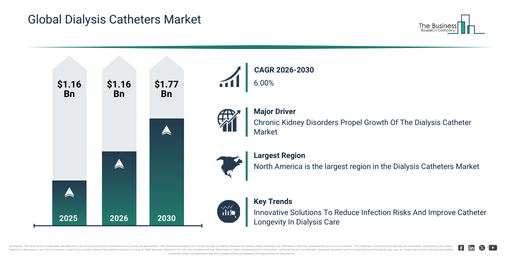
  • Global Dialysis Catheters Market Expected to Expand Strongly and Reach $1.22 Billion by 2030 at 6% CAGR

    Global Dialysis Catheters Market Expected to Expand Strongly and Reach $1.22 Billion by 2030 at 6% CAGR

    The Business Research Company’s 2026 market reports include new capabilities such as market attractiveness scoring and analysis, total addressable market analysis, company scoring matrix, interactive excel data dashboard, improved supply chain analysis, upcoming startups in the market, and overview of key products, aimed at improving the depth, usability, and strategic value of the insights delivered.

    How Large Is The Dialysis Catheters Market Projected To Become By 2030 Based On Its 2026 Valuation?

    The dialysis catheters market has demonstrated robust growth over recent years. It is projected to expand from $0.92 billion in 2025 to $0.97 billion in 2026, exhibiting a compound annual growth rate (CAGR) of 6.0%. Several factors have contributed to this historical growth, including a greater prevalence of chronic kidney disease, an increase in the number of hemodialysis patients, the establishment of more hospital dialysis centers, a higher incidence of diabetes and hypertension, and improved accessibility to renal care services.

    The dialysis catheters market is projected to experience substantial expansion over the coming years. It is anticipated to reach $1.23 billion in 2030, exhibiting a compound annual growth rate (CAGR) of 6.0%. This projected growth during the forecast period is fueled by factors such as an expanding aging demographic, the increasing uptake of home dialysis treatments, a heightened need for dependable long-term dialysis access, the broadening of ambulatory dialysis services, and greater healthcare spending on renal care. Key trends identified for the forecast timeframe encompass an escalating requirement for long-term vascular access solutions, a stronger inclination towards tunneled dialysis catheters, an intensified emphasis on preventing infections and ensuring patient safety, a movement towards home-based dialysis access, and a surge in the application of double-lumen and multi-lumen catheters.

    Download the Free Sample Report to Explore Key Market Insights:

    https://www.thebusinessresearchcompany.com/sample.aspx?id=18806&type=smp

    What Primary Drivers Are Shaping The Development Of The Dialysis Catheters Market?

    The expanding occurrence of chronic kidney conditions is anticipated to fuel the expansion of the dialysis catheter market in the future. These disorders are persistent health issues characterized by the gradual decline in kidney function, hindering their capacity to cleanse the blood of waste and surplus fluids. The surge in chronic kidney disorders stems from various factors such as obesity, unhealthy lifestyle decisions, genetic susceptibility, infections, and inflammatory illnesses. Dialysis catheters play a crucial role in managing chronic kidney disorders by allowing for the effective and consistent elimination of waste from the blood. For example, a report released in June 2023 by Kidney Research UK, a non-profit organization based in the UK, revealed that around 7.2 million individuals in the UK are affected by chronic kidney disease, which accounts for more than 10% of the population. Among them, 3.25 million are experiencing advanced stages of the condition, whereas another 3.9 million are in its initial phases. Projections indicate that by 2033, the count of people suffering from chronic kidney disease will increase to 7.61 million. Consequently, the growing prevalence of chronic kidney disorders is a primary force behind the expansion of the dialysis catheter market.

    What Segment Groups Are Identified Within The Dialysis Catheters Market?

    The dialysis catheters market covered in this report is segmented –

    1) By Product Type: Tunneled Catheters, Non-Tunneled Catheters, Step-Tip Catheters, Split-Tip Catheters, Symmetric Catheters

    2) By Material: Silicone, Polyurethane

    3) By Application: Hemodialysis, Peritoneal

    4) By End-Use: Hospitals, Ambulatory Surgical Centers, Homecare Settings, Other End-Users

    Subsegments:

    1) By Tunneled Catheters: Single-Lumen Tunneled Catheters, Double-Lumen Tunneled Catheters, Multi-Lumen Tunneled Catheters

    2) By Non-Tunneled Catheters: Single-Lumen Non-Tunneled Catheters, Double-Lumen Non-Tunneled Catheters, Multi-Lumen Non-Tunneled Catheters

    3) By Step-Tip Catheters: Single-Lumen Step-Tip Catheters, Double-Lumen Step-Tip Catheters

    4) By Split-Tip Catheters: Single-Lumen Split-Tip Catheters, Double-Lumen Split-Tip Catheters

    5) By Symmetric Catheters: Single-Lumen Symmetric Catheters, Double-Lumen Symmetric Catheters

    What Trends Are Advancing Progress In The Dialysis Catheters Market?

    Companies operating in the dialysis catheters market are prioritizing the development of innovative solutions, including antimicrobial catheter lock solutions, to mitigate infection risks, prolong catheter durability, and improve patient outcomes. An antimicrobial catheter lock solution is a specialized liquid employed to fill and maintain dialysis catheters when inactive, incorporating agents such as taurolidine or antibiotics that deter bacterial and fungal infections while ensuring the catheter remains open. For example, in November 2023, CorMedix Inc., a US-based biopharmaceutical company, secured FDA approval for DefenCath (taurolidine and heparin) catheter lock solution (CLS) intended to reduce catheter-related bloodstream infections (CRBSIs) in adult patients experiencing kidney failure who are undergoing chronic hemodialysis via a central venous catheter (CVC).

    Which Companies Hold Significant Positions In The Dialysis Catheters Market?

    Major companies operating in the dialysis catheters market are Medtronic plc, Becton Dickinson and Company, Baxter International Inc., B Braun Melsungen AG, Terumo Corporation, Teleflex Incorporated, Merit Medical Systems Inc., Vygon SA, Argon Medical Devices, Jiangxi Sanxin Medtec, Poly Medicure Ltd, Medical Components Inc., Kimal PLC, Guangdong Baihe Medical Technology, SCW Medicath Ltd, Angiplast Pvt. Ltd., PFM Medical Inc., Mozarc Medical, Joline GmbH & Co. KG, Shunmei Medical Co. Ltd

    Read the full dialysis catheters market report here:

    https://www.thebusinessresearchcompany.com/report/dialysis-catheters-global-market-report

    How Does The Dialysis Catheters Market Perform Across Major Global Regions?

    North America was the largest region in the dialysis catheters market in 2025. The regions covered in the dialysis catheters market report are Asia-Pacific, South East Asia, Western Europe, Eastern Europe, North America, South America, Middle East, Africa.

    Request A Tailored Dialysis Catheters Market Research Report For Competitive Advantage:

    https://www.thebusinessresearchcompany.com/customise?id=18806&type=smp

    Browse Through More Reports Similar to the Global Dialysis Catheters Market 2026, By The Business Research Company

    Kidney Dialysis Market Report 2026

    https://www.thebusinessresearchcompany.com/report/kidney-dialysis-global-market-report

    Dialysis Devices And Equipment Market 2026

    https://www.thebusinessresearchcompany.com/report/dialysis-devices-and-equipment-market

    Urinary Catheters Market Report 2026

    https://www.thebusinessresearchcompany.com/report/urinary-catheters-global-market-report

    Get in touch with us:

    The Business Research Company: https://www.thebusinessresearchcompany.com/

    Americas +1 310-496-7795

    Asia +44 7882 955267 & +91 8897263534

    Europe +44 7882 955267

    Email us at info@tbrc.info

    Follow us on:

    LinkedIn: https://in.linkedin.com/company/the-business-research-company

    YouTube: https://www.youtube.com/channel/UC24_fI0rV8cR5DxlCpgmyFQ

    Global Market Model: https://www.thebusinessresearchcompany.com/global-market-model
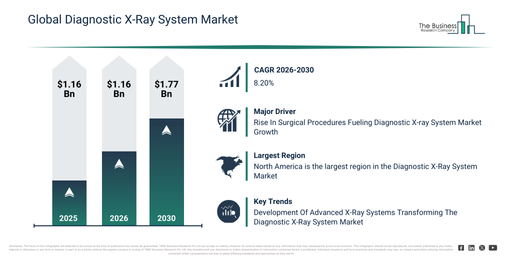
  • Diagnostic X-Ray System Market Expected to Reach $22.43 Billion by 2030 with 8.2% CAGR

    Diagnostic X-Ray System Market Expected to Reach $22.43 Billion by 2030 with 8.2% CAGR

    The Business Research Company’s 2026 market reports include new capabilities such as market attractiveness scoring and analysis, total addressable market analysis, company scoring matrix, interactive excel data dashboard, improved supply chain analysis, upcoming startups in the market, and overview of key products, aimed at improving the depth, usability, and strategic value of the insights delivered.

    What Market Value Is Anticipated For The Diagnostic X-Ray System Market Over The Period 2026–2030?

    The diagnostic x-ray system market size has demonstrated significant growth in recent years. It is anticipated to expand from $14.98 billion in 2025 to $16.39 billion in 2026, at a compound annual growth rate (CAGR) of 9.4%. The historical growth in this sector is attributable to various factors, including an increase in diagnostic imaging procedures, the growing prevalence of chronic diseases, the development of hospital imaging infrastructure, a heightened demand for early disease detection, and enhanced access to healthcare facilities.

    The diagnostic x-ray system market size is anticipated to undergo significant expansion over the next few years. It is projected to reach $22.43 billion by 2030, growing at a compound annual growth rate (CAGR) of 8.2%. This growth during the forecast period is primarily driven by an increasing aging population, a rising demand for point-of-care imaging, the expansion of diagnostic imaging centers, escalating investments in healthcare infrastructure, and a heightened focus on preventive healthcare. Prominent trends expected in this period include the increasing adoption of digital x-ray systems, a growing demand for portable and mobile x-ray units, a stronger emphasis on radiation dose reduction, a noticeable shift toward multi-functional imaging platforms, and the expanding use of x-ray systems in preventive diagnostics.

    Download the Free Sample Report to Explore Key Market Insights:

    https://www.thebusinessresearchcompany.com/sample.aspx?id=15348&type=smp

    Which Major Factors Are Driving The Expansion Of The Diagnostic X-Ray System Market?

    The anticipated increase in surgical interventions is projected to fuel the expansion of the diagnostic X-ray system market moving ahead. This uptick in surgical procedures stems from progress in medical technology, enhanced access to healthcare services, an aging global demographic, and the increasing occurrence of chronic illnesses necessitating surgery for both diagnosis and therapy. Diagnostic X-ray systems find application in surgical contexts for planning before operations, guiding during operations, and evaluating after operations, offering live imaging of body structures to assist surgeons with exact positioning and precise treatment. As an illustration, data from September 2023, provided by the National Library of Medicine, a US-based federal government, indicated that by 2023, 7,733 robotic surgical systems had been deployed globally, with over 10 million robotic surgeries performed. Consequently, the growing volume of surgical procedures is a key driver for the expansion of the diagnostic X-ray system market.

    How Is The Diagnostic X-Ray System Market Divided Into Its Major Segments?

    The diagnostic x-ray system market covered in this report is segmented –

    1) By Product: Medical X-ray Devices, X-Ray Diffraction (XRD), Security X-Ray Devices, X-Ray Fluorescence (XRF), SAXS Or WAXS

    2) By Application: Medical, Research And Development, Security

    3) By End User: Hospital, Diagnostic Imaging Centers, Airports, Malls, Railway And Metro Stations, Government Facilities And Homeland Security

    Subsegments:

    1) By Medical X-Ray Devices: Analog X-Ray Systems, Digital X-Ray Systems, Portable X-Ray Systems, Mobile X-Ray Units, Fluoroscopy Systems, Computed Tomography (Ct) Scanners, Mammography Systems

    2) By X-Ray Diffraction (Xrd): Laboratory Xrd Systems, Portable Xrd Systems, High-Resolution Xrd Systems, Xrd For Material Science, Xrd For Structural Analysis

    3) By Security X-Ray Devices: Baggage And Luggage X-Ray Scanners, Cargo And Freight X-Ray Scanners, Handheld X-Ray Inspection Devices, Security Screening Systems For Airports, Radiographic Inspection Systems For Security

    4) By X-Ray Fluorescence (Xrf): Portable Xrf Analyzers, Laboratory Xrf Systems, Xrf For Elemental Analysis, Xrf For Material Identification

    5) By Saxs Or Waxs (Small-Angle X-ray Scattering Or Wide-Angle X-Ray Scattering): Laboratory Saxs/Waxs Systems, Synchrotron Saxs/Waxs Systems, Saxs/waxs For Nanomaterials And Polymer Research, Saxs/waxs For Structural Characterization Of Biological Samples

    How Are Trends Transforming The Diagnostic X-Ray System Market Landscape?

    Leading companies in the diagnostic X-ray system market are developing new X-ray systems that integrate advanced technology such as artificial intelligence, aiming to enhance diagnostic capabilities, improve workflow efficiency, and optimize patient care. Artificial intelligence (AI) involves the application of machine learning algorithms and computer vision techniques for the analysis and interpretation of X-ray images in medical contexts. For instance, in December 2023, DeepTek.ai, an India-based medical imaging AI-focused startup, introduced the Augmento X-Ray, an FDA-cleared CADe chest X-ray solution powered by AI. This solution is intended to alleviate radiologist workload and elevate the quality of chest X-ray reporting. It reduces radiologist workload by 30–50%, streamlines workflow, and improves patient care by providing detailed analysis for various lung, pleura, and cardiac conditions, in addition to detecting foreign objects within the chest.

    Who Are The Prominent Organizations Shaping The Diagnostic X-Ray System Market?

    Major companies operating in the diagnostic x-ray system market are Hitachi Ltd., General Electric Company, Thermo Fisher Scientific Inc., Siemens Healthineers, FUJIFILM Holdings Corporation, Koninklijke Philips N.V., Hologic Inc., Shimadzu Corporation, Canon Medical Systems Corporation, Bruker Corporation, Carestream Health Inc., OSI Systems Inc., Anton Paar GmbH, Malvern Panalytical Ltd., Smiths Detection Group Limited, Rigaku Corporation, NUCTECH COMPANY LIMITED, Astrophysics Inc., Konica Minolta Healthcare Americas Inc., Toshiba Medical Systems Corporation

    Read the full diagnostic x-ray system market report here:

    https://www.thebusinessresearchcompany.com/report/diagnostic-x-ray-system-global-market-report

    Which Region Currently Holds The Largest Share Of The Diagnostic X-Ray System Market?

    North America was the largest region in the diagnostic X-ray system market in 2025. The regions covered in the diagnostic x-ray system market report are Asia-Pacific, South East Asia, Western Europe, Eastern Europe, North America, South America, Middle East, Africa.

    Request A Tailored Diagnostic X-Ray System Market Research Report For Competitive Advantage:

    https://www.thebusinessresearchcompany.com/customise?id=15348&type=smp

    Browse Through More Reports Similar to the Global Diagnostic X-Ray System Market 2026, By The Business Research Company

    X Ray Systems Devices And Equipment Market Report 2026

    https://www.thebusinessresearchcompany.com/report/x-ray-systems-devices-and-equipment-global-market-report

    Industrial X Ray Market Report 2026

    https://www.thebusinessresearchcompany.com/report/industrial-x-ray-global-market-report

    Medical X Ray Equipment And Imaging Software Market Report 2026

    https://www.thebusinessresearchcompany.com/report/medical-x-ray-equipment-and-imaging-software-global-market-report

    Get in touch with us:

    The Business Research Company: https://www.thebusinessresearchcompany.com/

    Americas +1 310-496-7795

    Asia +44 7882 955267 & +91 8897263534

    Europe +44 7882 955267

    Email us at info@tbrc.info

    Follow us on:

    LinkedIn: https://in.linkedin.com/company/the-business-research-company

    YouTube: https://www.youtube.com/channel/UC24_fI0rV8cR5DxlCpgmyFQ

    Global Market Model: https://www.thebusinessresearchcompany.com/global-market-model