Category: Medical Equipment

  • Smart Electrolyte Patch Market Analysis: Understanding The Drivers Behind 19.5% CAGR Through 2030 Growth

    Smart Electrolyte Patch Market Analysis: Understanding The Drivers Behind 19.5% CAGR Through 2030 Growth

    Featuring market attractiveness scoring, total addressable market sizing, company benchmarking matrices, interactive Excel dashboards, deeper supply chain intelligence, emerging startup tracking, and granular product-level insights, The Business Research Company’s 2026 market reports are built to deliver research that is both more actionable and more strategically valuable.

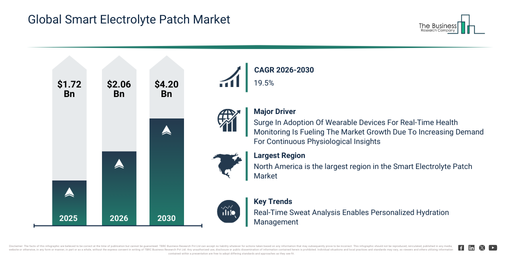
    Smart Electrolyte Patch Market Poised To Hit $4.2 Billion By 2030 With A 19.5% CAGR

    The smart electrolyte patch market has experienced rapid expansion in recent years. This market is projected to expand from $1.72 billion in 2025 to $2.06 billion in 2026, driven by a compound annual growth rate (CAGR) of 19.9%. Historically, this growth can be attributed to increased awareness of electrolyte imbalance, a rising demand for wearable health monitoring devices, the growing adoption of smart patches in sports and fitness sectors, an increasing prevalence of chronic diseases that require electrolyte monitoring, the rising trend of remote patient monitoring, growing consumer interest in personalized healthcare solutions, increased integration of biosensors in wearable technologies, rising investments in digital health devices, a growing demand for non-invasive monitoring solutions, and increasing awareness among healthcare professionals.

    The smart electrolyte patch market is poised for significant expansion in the coming years, with its size projected to reach $4.20 billion by 2030, demonstrating a robust compound annual growth rate (CAGR) of 19.5%. This growth trajectory is fueled by several factors including the increasing adoption of wearable health devices, a rising demand for continuous electrolyte monitoring, expanding applications in sports and fitness, growing investment in digital health technologies, the emerging trend of personalized healthcare, deeper integration with mobile applications, enhanced chronic disease management, greater telehealth adoption, heightened awareness of hydration management, and an increasing need for real-time monitoring. Major trends influencing this period encompass advancements in continuous real-time electrolyte monitoring technology, improvements in biocompatible and flexible sensor materials, the development of energy-efficient wearable devices, innovative integration with smartphones and health apps, the incorporation of AI-based predictive analytics for hydration and electrolyte balance, enhanced multi-parameter monitoring capabilities, integration with telehealth and remote patient monitoring systems, the use of cloud-based data storage and analytics, personalized health recommendations and alerts, and progress in cost-effective production techniques for mass adoption.

    Get A Free Sample Report With In-Depth Market Insights:

    https://thebusinessresearchcompany.com/sample_request?id=82741916&type=smp&name=Smart%20Electrolyte%20Patch%20Market%20Report%202026&utm_source=Blogs&utm_medium=Paid&utm_campaign=Oct_PR

    Smart Electrolyte Patch Market Growth Drivers: What’s Behind The Acceleration?

    The smart electrolyte patch market is anticipated to expand as the integration of wearable devices for continuous health metric monitoring increases. The uptake of wearable devices signifies the percentage of individuals employing health-tracking gadgets like smartwatches and fitness bands, which consistently gather and relay physiological information. This growing use of wearables for live health data tracking is driven by consumers’ enhanced access to connected health solutions that facilitate continuous personal health oversight and wellness maintenance. The smart electrolyte patch complements wearable devices for real-time monitoring by broadening their capacity to encompass hydration and electrolyte equilibrium, thereby fulfilling the rising consumer need for extensive, immediate health data. For example, data from Intuition Labs, a US-based healthcare technology firm, indicates that by December 2025, approximately 50 million Americans will already be utilizing a remote patient monitoring device. Furthermore, 80% of Americans view the inclusion of remote patient monitoring in medical care positively, and projections suggest that by 2025, more than 71 million Americans, making up 26% of the population, will be employing some form of remote patient monitoring service. Consequently, the expanding use of wearable technology for continuous health surveillance is propelling the smart electrolyte patch market forward.

    Smart Electrolyte Patch Market Breakdown By Product Type And Application

    The smart electrolyte patch market covered in this report is segmented –

    1) By Product Type: Single Electrolyte Patch, Multi-Electrolyte Patch

    2) By Connectivity: Bluetooth-Enabled Patches, NFC Or Passive Connected Patches, Standalone Data-Logging Patches

    3) By Distribution Channel: Online Retail, Pharmacies, Specialty Stores, Others Distribution Channel

    4) By Application: Sports And Fitness, Medical Monitoring, Military And Defense, Others Application

    5) By End-User: Athletes, Patients, Military Personnel, Others End-User

    Subsegments:

    1) By Single Electrolyte Patch: Sodium Electrolyte Patch, Potassium Electrolyte Patch, Chloride Electrolyte Patch, Magnesium Electrolyte Patch, Calcium Electrolyte Patch, Lithium Electrolyte Patch, Hydration-Level Single-Ion Patch, Sports Single-Ion Monitoring Patch

    2) By Multi-Electrolyte Patch: Dual-Ion Monitoring Patch, Triple-Ion Monitoring Patch, Comprehensive Multi-Ion Patch, Sweat Analysis Multi-Ion Patch, Fitness Multi-Electrolyte Patch, Point-Of-Care Multi-Ion Patch, Chronic Disease Multi-Ion Patch, ICU Multi-Electrolyte Patch, Sports Science Multi-Ion Patch

    Smart Electrolyte Patch Market Trends: What’s Defining The Industry’s Next Phase?

    Leading companies within the smart electrolyte patch market are prioritizing the development of analytical tools, such as wearable hydration tracking platforms, to offer continuous feedback on electrolyte concentrations and fluid balance. These wearable hydration tracking platforms are technologies employed to measure sweat biomarkers, evaluate hydration status, and assist in personalized fluid and electrolyte management during physical activity. For example, in June 2024, hDrop Technologies Inc., a US-based hydration wearable company, introduced hDrop Sweat Zones. This is a function of their primary reusable wearable device that delivers continuous, real-time observation of sweat composition. It creates a customized hydration profile for the user and monitors alterations during activity, allowing athletes to quickly ascertain if they require more water or electrolytes. The system tracks significant metrics including sweat loss, sodium loss, and potassium loss.

    Smart Electrolyte Patch Market Top Companies Driving Competitive Growth

    Major companies operating in the smart electrolyte patch market are The Gatorade Co., Nix Inc., Epicore Biosystems Inc., Eccrine Systems Inc., GraphWear Technologies Inc., Kenzen Inc., HydraPatch USA Corp.

    View The Full Smart Electrolyte Patch Market Report:

    https://thebusinessresearchcompany.com/report/smart-electrolyte-patch-market-report?utm_source=Blogs&utm_medium=Paid&utm_campaign=Oct_PR

    Smart Electrolyte Patch Market Global Footprint: Which Region Leads The Industry?

    North America was the largest region in the smart electrolyte patch market in 2025. Asia-Pacific is expected to be the fastest-growing region in the forecast period. The regions covered in the smart electrolyte patch market report are Asia-Pacific, South East Asia, Western Europe, Eastern Europe, North America, South America, Middle East, Africa.

    Reach Out To Our Team:

    The Business Research Company: https://www.thebusinessresearchcompany.com/

    Americas: +1 310-496-7795

    Asia: +44 7882 955267 & +91 8897263534

    Europe: +44 7882 955267

    Email us at: marketing@tbrc.info

    Follow us on:

    LinkedIn: https://in.linkedin.com/company/the-business-research-company

    YouTube: https://www.youtube.com/channel/UC24_fI0rV8cR5DxlCpgmyFQ

    Global Market Model: https://www.thebusinessresearchcompany.com/global-market-model
  • Single-Detector Gamma Camera Market Trends Reshaping Industry Growth Through 2030

    Single-Detector Gamma Camera Market Trends Reshaping Industry Growth Through 2030

    Backed by market attractiveness analysis, total addressable market sizing, company benchmarking matrices, interactive Excel dashboards, wider supply chain intelligence, emerging startup coverage, and detailed product-level insights, The Business Research Company’s 2026 market reports are designed to offer research that is more actionable and strategically valuable than ever.

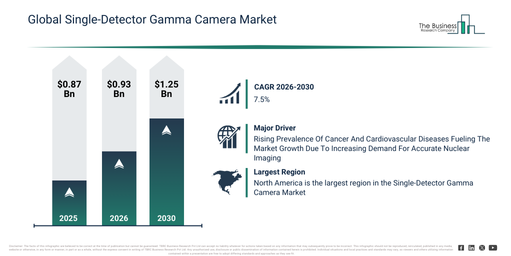
    Single-Detector Gamma Camera Market Growth From $0.93 Billion In 2026 To $1.25 Billion By 2030 At A CAGR Of 7.5%

    The single-detector gamma camera market has shown robust growth in recent years. This market is projected to expand from $0.87 billion in 2025 to $0.93 billion in 2026, demonstrating a compound annual growth rate (CAGR) of 7.8%. The growth observed in prior periods can be attributed to the increasing prevalence of chronic diseases, the rising adoption of nuclear medicine diagnostics, an expanding geriatric population, the development of healthcare infrastructure, and a heightened demand for early disease detection.

    The single-detector gamma camera market is projected to experience robust expansion over the coming years. Its valuation is anticipated to reach $1.25 billion by 2030, driven by a compound annual growth rate (CAGR) of 7.5%. This anticipated growth during the forecast period stems from several factors, including the escalating worldwide prevalence of cancer and cardiovascular ailments, increased capital expenditure in healthcare facilities (particularly in developing economies), the growing embrace of sophisticated gamma camera technologies, the broadening application of nuclear medicine in both diagnostic procedures and research, and an elevated need for non-invasive diagnostic imaging solutions. Key trends defining this period involve technological improvements in detection and imaging apparatuses, breakthroughs in hybrid imaging techniques, progress in digital and solid-state gamma camera designs, extensive research and development into new radiopharmaceuticals and imaging protocols, and the increasing incorporation of artificial intelligence (AI) and automated image processing.

    Get A Free Sample Report With In-Depth Market Insights:

    https://thebusinessresearchcompany.com/sample_request?id=25044623&type=smp&name=Single-Detector%20Gamma%20Camera%20Market%20Report%202026&utm_source=Blogs&utm_medium=Paid&utm_campaign=Oct_PR

    Single-Detector Gamma Camera Market Demand Drivers Opening New Revenue Streams

    The increasing occurrence of cancer and cardiovascular diseases is projected to boost the expansion of the single-detector gamma camera market. The prevalence of these conditions, defined as the number of individuals within a population suffering from cancer or heart and blood-vessel disorders at a given time, is growing due to an aging population and increased exposure to risk factors such as poor diets and lack of physical activity. Single-detector gamma cameras play a crucial role in diagnosing cancer and cardiovascular diseases by offering essential nuclear imaging, which allows medical professionals to identify, evaluate, and track functional changes in affected organs. For example, data from August 2025 by the Centers for Disease Control and Prevention, a Switzerland-based public health agency, indicated that 90% of the nation’s 4.9 trillion dollars in annual health care spending is linked to individuals with chronic and mental health issues, with over 84,000 Americans succumbing to heart disease or stroke each year. Furthermore, the expenses related to cardiovascular diseases are anticipated to reach approximately $2 trillion by 2050. Consequently, the rising prevalence of cancer and cardiovascular diseases is propelling the growth of the single-detector gamma camera market.

    Single-Detector Gamma Camera Market Segmentation And Category Overview

    The single-detector gamma camera market covered in this report is segmented –

    1) By Type Of Detector: High-Energy General-Purpose Gamma Cameras, Low-Energy High-Resolution Gamma Cameras, Specialized Gamma Cameras

    2) By Type Or Design: Stationary Type Single-Detector Gamma Camera, Mobile Type Single-Detector Gamma Camera Or Single-Head Mobile Gamma Cameras

    3) By Technology: Static Imaging, Dynamic Imaging, Tomographic Imaging (Single Photon Emission Computed Tomography (SPECT)), Quantitative Imaging

    4) By Application: Oncology, Cardiology, Neurology, Bone Scintigraphy, Pulmonary Scintigraphy

    5) By End-User: Hospitals, Diagnostic Imaging Centers, Research Institutions, Outpatient Clinics

    Subsegments:

    1) By High-Energy General-Purpose Gamma Cameras: Cardiac Imaging Gamma Cameras, Whole-Body Imaging Gamma Cameras, Multi-Purpose Imaging Gamma Cameras

    2) By Low-Energy High-Resolution Gamma Cameras: Thyroid Imaging Gamma Cameras, Bone Scintigraphy Gamma Cameras, Renal Imaging Gamma Cameras

    3) By Specialized Gamma Cameras: Cardiac SPECT Imaging Gamma Cameras, Brain SPECT Imaging Gamma Cameras, Liver SPECT Imaging Gamma Cameras

    Single-Detector Gamma Camera Market Competitive Overview And Top Companies

    Major companies operating in the single-detector gamma camera market are Siemens Healthineers AG, GE HealthCare Technologies Inc., Koninklijke Philips N.V., Canon Medical Systems Corporation, Digirad Corporation, Serac Life Sciences Limited, Biodex Medical Systems Inc., Beijing Huitai Medical Equipment Co. Ltd., Electronic & Engineering Co. Private Limited, DVS Medical Inc., NUVIATech Instruments, Dilon Technologies Inc., Serac Imaging Systems Limited, RadRays Medical Technology, AdvanScint Imaging Solutions, MedNova Imaging Ltd., GBT Medical Technologies, United Imaging Healthcare Co. Ltd.

    View The Full Single-Detector Gamma Camera Market Report:

    https://thebusinessresearchcompany.com/report/single-detector-gamma-camera-market-report?utm_source=Blogs&utm_medium=Paid&utm_campaign=Oct_PR

    Single-Detector Gamma Camera Market Leading Geography: Which Region Contributes The Most Revenue?

    North America was the largest region in the single-detector gamma camera market in 2025. Asia-Pacific is expected to be the fastest-growing region in the forecast period. The regions covered in the single-detector gamma camera market report are Asia-Pacific, South East Asia, Western Europe, Eastern Europe, North America, South America, Middle East, Africa.

    Reach Out To Our Team:

    The Business Research Company: https://www.thebusinessresearchcompany.com/

    Americas: +1 310-496-7795

    Asia: +44 7882 955267 & +91 8897263534

    Europe: +44 7882 955267

    Email us at: marketing@tbrc.info

    Follow us on:

    LinkedIn: https://in.linkedin.com/company/the-business-research-company

    YouTube: https://www.youtube.com/channel/UC24_fI0rV8cR5DxlCpgmyFQ

    Global Market Model: https://www.thebusinessresearchcompany.com/global-market-model
  • Single Use Medical Devices Market Growth To $42.43 Billion Creates New Opportunities Across The Industry

    Single Use Medical Devices Market Growth To $42.43 Billion Creates New Opportunities Across The Industry

    Featuring market attractiveness scoring, total addressable market sizing, company benchmarking matrices, interactive Excel dashboards, deeper supply chain intelligence, emerging startup tracking, and granular product-level insights, The Business Research Company’s 2026 market reports are built to deliver research that is both more actionable and more strategically valuable.

    Single Use Medical Devices Market Expansion Outlook: What Revenue Opportunities Are Ahead?

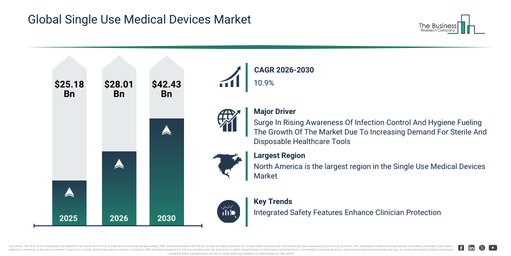
    The single-use medical devices market has experienced rapid expansion in recent years. This market is expected to expand from $25.18 billion in 2025 to $28.01 billion in 2026, achieving a compound annual growth rate (CAGR) of 11.2%. The historical growth of this market can be attributed to several factors, including an escalating demand for infection control measures, a global increase in surgical procedures, the rising prevalence of chronic diseases, an uptick in hospital admissions and emergency cases, and the greater adoption of disposable equipment for safety purposes.

    The single-use medical devices market size is forecast to experience significant expansion over the next few years. It is projected to achieve a value of $42.43 billion by 2030, expanding at a compound annual growth rate (CAGR) of 10.9%. This anticipated growth during the forecast period stems from developments in biodegradable materials, innovations in smart disposable devices, the integration of automation into manufacturing processes, improvements in sterile barrier packaging, and novel lightweight designs. Prominent trends expected in the forecast period include advances in biodegradable disposable materials, innovation in smart single-use devices, the adoption of automation in manufacturing, developments in sterile packaging technology, and creative lightweight device designs.

    Get A Free Sample Report With In-Depth Market Insights:

    https://thebusinessresearchcompany.com/sample_request?id=83130856&type=smp&name=Single%20Use%20Medical%20Devices%20Market%20Report%202026&utm_source=Blogs&utm_medium=Paid&utm_campaign=Oct_PR

    Single Use Medical Devices Market Growth Backed By Core Demand Fundamentals

    The heightened recognition of infection control and hygiene practices is projected to drive the expansion of the single-use medical devices market in the future. Upholding infection control and hygiene is vital in healthcare facilities to prevent hospital-acquired infections (HAIs) and cross-contamination, which can lead to extended patient stays, higher treatment expenditures, and increased illness and mortality rates. This heightened awareness of infection control and hygiene primarily stems from more rigorous regulatory guidelines that emphasize patient safety and the prevention of hospital-acquired infections. The single-use medical devices market contributes to this trend by supplying sterile, disposable instruments that reduce contamination risks and ensure adherence to hygiene standards. For instance, in May 2023, the World Health Organization (WHO), a Switzerland-based United Nations (UN) specialized agency, reported that approximately 1 in 10 patients in acute care hospitals acquire at least one health care associated infection (HAI) during their stay, with rates notably higher in low and middle income countries compared to high income ones, indicating a widespread infection risk in clinical environments. Therefore, the increasing focus on infection prevention and hygiene is fueling the adoption of single-use medical devices across hospitals and clinics.

    Single Use Medical Devices Market Segment Outlook: Which Categories Are Growing Fastest?

    The single use medical devices market covered in this report is segmented –

    1) By Product Type: Syringes, Catheters, Surgical Instruments, Diagnostic Devices, Other Product Types

    2) By Material: Plastic, Metal, Glass, Other Materials

    3) By Application: Hospitals, Clinics, Ambulatory Surgical Centers, Home Healthcare, Other Applications

    4) By End-User: Healthcare Providers, Diagnostic Centers, Other End-Users

    Subsegments:

    1) By Syringes: Insulin Syringes, Tuberculin Syringes, Prefilled Syringes, Safety Syringes, Oral Syringes, Auto-Disable Syringes

    2) By Catheters: Intravenous (IV) Catheters, Urinary (Foley) Catheters, Central Venous Catheters, Peripheral Arterial Catheters, Dialysis Catheters, Cardiovascular (Angiography) Catheters

    3) By Surgical Instruments: Disposable Scalpels, Disposable Forceps, Disposable Scissors, Disposable Needle Holders, Disposable Retractors, Disposable Trocar Sets

    4) By Diagnostic Devices: Blood Glucose Test Strips, Rapid Diagnostic Test Kits, Single-Use Endoscopic Accessories, Specimen Collection Swabs, Disposable ECG Electrodes, Disposable Ultrasound Probe Covers

    5) By Other Product Types: Infusion Sets, Wound Dressings, Gloves And Gowns, Suction And Drainage Sets, Oxygen Masks And Cannulas, Disposable Dental Supplies

    Single Use Medical Devices Market Growth Trends Reshaping The Competitive Landscape

    Leading companies within the single-use medical devices market are concentrating on creating advanced solutions, such as blood control safety IV catheters that integrate automatic pathogen exposure reduction and vessel entry verification, to achieve a competitive advantage. These blood control safety IV catheters are defined as single-use intravenous (IV) instruments specifically engineered to lessen blood exposure and avert needlestick accidents during the process of catheter insertion and subsequent usage. For instance, in May 2024, MedSource Labs, a US-based medical device firm, introduced its ClearSafe Comfort and TrueSafe Comfort Blood Control Safety IV Catheters. These products incorporate active blood control check valve technology, substantially lowering the risk of bloodborne pathogen exposure, along with a translucent flashback chamber for precise vessel entry confirmation, and an ergonomic non-slip grip for convenient handling. While this approach improves procedural safety and overall efficiency, it might lead to higher procurement expenses and necessitate training for effective deployment.

    Single Use Medical Devices Market Competitive Landscape: Which Companies Lead The Industry?

    Major companies operating in the single use medical devices market are Cardinal Health Inc., Medtronic plc, 3M Health Care, Medline Industries LP, Fresenius Medical Care AG, Becton Dickinson and Company, Boston Scientific Corporation, Baxter International Inc., Shandong Weigao Group Medical Polymer Company Limited, B. Braun Melsungen Aktiengesellschaft, Terumo Corporation, Nipro Corporation, Coloplast A/S, Teleflex Incorporated, West Pharmaceutical Services Inc., Paul Hartmann Aktiengesellschaft, ConvaTec Group plc, Ambu A/S, Mercator Medical S.A., Bio-Med HealthCare Products Pvt. Ltd., HLL Lifecare Limited

    View The Full Single Use Medical Devices Market Report:

    https://thebusinessresearchcompany.com/report/single-use-medical-devices-market-report?utm_source=Blogs&utm_medium=Paid&utm_campaign=Oct_PR

    Single Use Medical Devices Market Regional Outlook: Where Is Opportunity Concentrated?

    North America was the largest region in the single use medical devices market in 2025. Asia-Pacific is expected to be the fastest-growing region in the forecast period. The regions covered in the single use medical devices market report are Asia-Pacific, South East Asia, Western Europe, Eastern Europe, North America, South America, Middle East, Africa.

    Reach Out To Our Team:

    The Business Research Company: https://www.thebusinessresearchcompany.com/

    Americas: +1 310-496-7795

    Asia: +44 7882 955267 & +91 8897263534

    Europe: +44 7882 955267

    Email us at: marketing@tbrc.info

    Follow us on:

    LinkedIn: https://in.linkedin.com/company/the-business-research-company

    YouTube: https://www.youtube.com/channel/UC24_fI0rV8cR5DxlCpgmyFQ

    Global Market Model: https://www.thebusinessresearchcompany.com/global-market-model

  • Robotic Endoluminal Surgery Market Outlook 2026–2030: Growth Trends, Market Dynamics And Emerging Opportunities

    Robotic Endoluminal Surgery Market Outlook 2026–2030: Growth Trends, Market Dynamics And Emerging Opportunities

    Backed by market attractiveness analysis, total addressable market sizing, company benchmarking matrices, interactive Excel dashboards, wider supply chain intelligence, emerging startup coverage, and detailed product-level insights, The Business Research Company’s 2026 market reports are designed to offer research that is more actionable and strategically valuable than ever.

    Robotic Endoluminal Surgery Market Set To Climb From $1.71 Billion In 2026 To $3.33 Billion By 2030

    The robotic endoluminal surgery market has witnessed rapid growth in recent years. It is anticipated to increase from $1.45 billion in 2025 to $1.71 billion in 2026, demonstrating a compound annual growth rate (CAGR) of 18.4%. The expansion observed in the past can be ascribed to several factors, including the rising demand for minimally invasive procedures, the increased adoption of endoscopic technologies, a growing preference for shorter hospital stays, the expanding application of robotic-assisted surgeries, and the need for greater precision in hard-to-reach anatomies.

    The robotic endoluminal surgery market is projected to experience swift expansion over the coming years. This market is predicted to reach $3.33 billion by 2030, exhibiting a compound annual growth rate (CAGR) of 18.1%. This anticipated growth during the forecast timeframe is attributable to increased capital allocated to surgical robotics investigations, the deepening incorporation of AI and machine learning into surgical platforms, the expanding market presence of flexible robotic apparatus, a broader spectrum of clinical uses in gastrointestinal and vascular interventions, and patients’ increasing desire for quicker convalescence and less invasive treatment. Key developments expected within this period encompass technological enhancements in adaptable robotic endoscopes, novelties in capsule and micro-robotic instruments, progress in AI-powered navigation technologies, ongoing research and development efforts in self-operating robotic surgery, and improvements in live imaging and robotic visual feedback systems.

    Get A Free Sample Report With In-Depth Market Insights:

    https://thebusinessresearchcompany.com/sample_request?id=78407715&type=smp&name=Robotic%20Endoluminal%20Surgery%20Market%20Report%202026&utm_source=Blogs&utm_medium=Paid&utm_campaign=Oct_PR

    Robotic Endoluminal Surgery Market Growth Factors Behind Sustained Expansion

    The robotic endoluminal surgery market is anticipated to expand due to the growing embrace of minimally invasive surgical techniques. These procedures involve operations through small incisions or a single entry point, which lessens patient trauma, shortens recovery periods, and reduces complication risks. The increased preference for minimally invasive surgeries stems from hospitals and patients prioritizing quicker recovery, less post-operative pain, lower chances of complications, and minimal scarring compared to traditional open operations. Robotic endoluminal surgery plays a crucial role in these procedures by facilitating precise navigation and manipulation within internal lumens, such as the gastrointestinal or respiratory tracts, thereby improving patient outcomes through reduced tissue trauma, faster recovery, and enhanced procedural accuracy. For example, Intuitive Surgical Inc., a US-based medical technology firm, reported in January 2025 that worldwide da Vinci procedures, a form of minimally invasive robotic-assisted surgery, saw an approximate growth of 18% in the fourth quarter of 2024 compared to the fourth quarter of 2023. Furthermore, full year 2024 procedures increased by approximately 17% relative to 2023, with the company forecasting a 13% to 16% rise in worldwide da Vinci procedures for 2025 compared to 2024. Consequently, the rising adoption of minimally invasive and single-port surgeries is a key factor propelling the expansion of the robotic endoluminal surgery market.

    Robotic Endoluminal Surgery Market Breakdown By Product Type And Application

    The robotic endoluminal surgery market covered in this report is segmented –

    1) By Product Type: Surgical Systems, Accessories And Instruments, Services

    2) By Application: Gastrointestinal Surgery, Urological Surgery, Pulmonary Surgery, Gynecological Surgery, Others

    3) By End-User: Hospitals, Ambulatory Surgical Centers, Specialty Clinics, Others

    Subsegments:

    1) By Surgical Systems: Flexible Endoscopic Robots, Bronchoscopy Robots, Gastrointestinal Navigation Robots, Colorectal Endoluminal Robots, Esophageal Endoscopic Robots

    2) By Accessories And Instruments: Robotic Endoscopic Tools, Robotic Catheters, Robotic Endoscopic Cameras, Robotic Biopsy Devices, Robotic Graspers And Scissors

    3) By Services: Installation And Integration Services, Maintenance And Repair Services, Training And Education Services, Software Upgrade Services, Technical Support Services

    Robotic Endoluminal Surgery Market Industry Trends Fueling Future Revenue Growth

    Leading companies in the robotic endoluminal surgery market are concentrating on developing advanced technologies, such as integrated artificial intelligence and real-time imaging systems, with the goal of increasing procedural accuracy, elevating patient safety, and enhancing diagnostic efficiency. These integrated AI and advanced imaging systems denote software enhancements that combine machine learning with live procedure data to assist physicians in navigating complex anatomy and locating tissue targets with greater precision. For example, in October 2025, Intuitive Surgical Inc., a US-based medical technology company, obtained U.S. Food & Drug Administration (FDA) clearance for software advancements intended for its Ion endoluminal system. The approved innovations encompass improved 3D visualization of the lung airway tree and the incorporation of AI-based imaging functionality, which assists in identifying suspicious lung lesions during biopsy procedures. This integration is designed to offer more intuitive navigation and information, thereby supporting physician decision-making for more precise tissue sampling. Its objective is to boost the system’s utility in the early diagnosis of lung cancer, potentially leading to improved patient outcomes.

    Robotic Endoluminal Surgery Market Competitive Overview And Top Companies

    Major companies operating in the robotic endoluminal surgery market are Medtronic plc, Fujifilm Holdings Corporation, Intuitive Surgical Inc., Olympus Corporation, CMR Surgical Ltd., Noah Medical Inc., Distalmotion SA, Ronovo Surgical Inc., Stereotaxis Inc., Neocis Inc., MicroPort MedBot Co. Ltd., Virtual Incision Corporation, Asensus Surgical Inc., EndoQuest Robotics Inc., SS Innovations International Inc., Edge Medical Robotics, Moon Surgical, Robocath SAS, SurgEase Innovations, EndoTools Therapeutics SA, Microbot Medical Inc.

    View The Full Robotic Endoluminal Surgery Market Report:

    https://thebusinessresearchcompany.com/report/robotic-endoluminal-surgery-market-report?utm_source=Blogs&utm_medium=Paid&utm_campaign=Oct_PR

    Robotic Endoluminal Surgery Market Top Region: Where Does Most Revenue Come From?

    North America was the largest region in the robotic endoluminal surgery market in 2025. Asia-Pacific is expected to be the fastest-growing region in the forecast period. The regions covered in the robotic endoluminal surgery market report are Asia-Pacific, South East Asia, Western Europe, Eastern Europe, North America, South America, Middle East, Africa.

    Reach Out To Our Team:

    The Business Research Company: https://www.thebusinessresearchcompany.com/

    Americas: +1 310-496-7795

    Asia: +44 7882 955267 & +91 8897263534

    Europe: +44 7882 955267

    Email us at: marketing@tbrc.info

    Follow us on:

    LinkedIn: https://in.linkedin.com/company/the-business-research-company

    YouTube: https://www.youtube.com/channel/UC24_fI0rV8cR5DxlCpgmyFQ

    Global Market Model: https://www.thebusinessresearchcompany.com/global-market-model
  • Robotic Catheter Navigation Systems Market Growth Outlook From $1.42 Billion In 2026 To $2.22 Billion By 2030

    Robotic Catheter Navigation Systems Market Growth Outlook From $1.42 Billion In 2026 To $2.22 Billion By 2030

    Featuring market attractiveness scoring, total addressable market sizing, company benchmarking matrices, interactive Excel dashboards, deeper supply chain intelligence, emerging startup tracking, and granular product-level insights, The Business Research Company’s 2026 market reports are built to deliver research that is both more actionable and more strategically valuable.

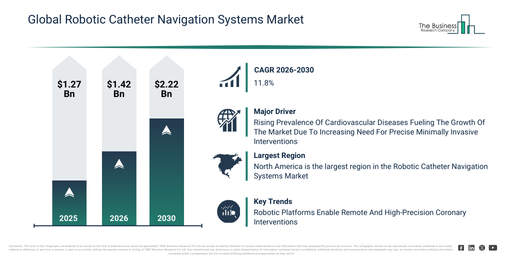
    Robotic Catheter Navigation Systems Market Forecast: Value Set To Climb From $1.42 Billion To $2.22 Billion

    The robotic catheter navigation systems market size has seen rapid expansion in recent years. It is anticipated to increase from $1.27 billion in 2025 to $1.42 billion in 2026, exhibiting a compound annual growth rate (CAGR) of 12.0%. The growth observed in the past can be credited to factors such as the increasing prevalence of cardiovascular diseases, a rising demand for minimally invasive procedures, the growing adoption of robotic-assisted surgeries, the expansion of cardiac catheterization labs, and an increase in healthcare expenditure.

    The robotic catheter navigation systems market size is projected to experience substantial growth over the next few years. This market is anticipated to reach $2.22 billion by 2030, exhibiting a compound annual growth rate (CAGR) of 11.8%. The expansion during the forecast period is largely due to an intensified focus on precision medicine, increased uptake of hybrid robotic systems, heightened investments in research and development, a broader range of applications in neurovascular interventions, and a growing patient desire for quicker recovery. Significant trends expected in the forecast period include advancements in robotic navigation technology, the integration of this technology with imaging and mapping systems, breakthroughs in catheter design and materials, dedicated research and development in artificial intelligence and machine learning, and the incorporation of robotic systems with telemedicine platforms.

    Get A Free Sample Report With In-Depth Market Insights:

    https://thebusinessresearchcompany.com/sample_request?id=45012383&type=smp&name=Robotic%20Catheter%20Navigation%20Systems%20Market%20Report%202026&utm_source=Blogs&utm_medium=Paid&utm_campaign=Oct_PR

    Robotic Catheter Navigation Systems Market Demand Drivers Opening New Revenue Streams

    The increasing incidence of heart and blood vessel conditions is anticipated to drive the expansion of the robotic catheter navigation systems market in the future. These conditions encompass ailments impacting the heart and blood vessels, such as heart attacks, strokes, and high blood pressure. The rise in cardiovascular diseases is linked to unhealthy lifestyle choices, including inadequate nutrition, insufficient physical activity, and tobacco use. Robotic catheter navigation systems assist in managing cardiovascular ailments by allowing for accurate, less invasive guidance inside blood vessels during both diagnostic and therapeutic interventions. These systems improve patient results through greater procedural precision, fewer complications, and quicker recuperation periods. For example, data from October 2024, provided by the Centers for Disease Control, a US-based government agency, showed that in 2023, around 919,032 people succumbed to cardiovascular disease, representing 1 in every 3 deaths. Consequently, the growing occurrence of cardiovascular diseases is fueling the development of the robotic catheter navigation systems market.

    Robotic Catheter Navigation Systems Market Segment Analysis And Revenue Potential

    The robotic catheter navigation systems market covered in this report is segmented –

    1) By Product Type: Magnetic Navigation Systems, Electromechanical Navigation Systems, Other Product Types

    2) By Application: Cardiology, Neurology, Urology, Gastroenterology, Other Application

    3) By End-User: Hospitals, Ambulatory Surgical Centers, Specialty Clinics, Other End-Users

    Subsegments:

    1) By Magnetic Navigation Systems: Magnetic Field Generators, Catheter Steering Units, Imaging And Visualization Tools, Navigation Software Platforms, Sensor Modules

    2) By Electromechanical Navigation Systems: Motorized Catheter Devices, Control Consoles, Imaging Integration Modules, Position Sensors, Monitoring Software

    3) By Other Product Types: Accessories And Consumables, Support And Maintenance Tools, Data Management Software, Calibration Equipment, Connectivity Modules

    Robotic Catheter Navigation Systems Market Trends Powering Strategic Industry Growth

    Major companies operating in the robotic catheter navigation systems market are concentrating on developing advanced solutions, such as robotic platforms featuring integrated control command units, to elevate procedural precision and safety in interventional cardiology. Such robotic platforms with integrated control command units empower physicians to manage coronary angioplasty devices remotely from a shielded cockpit, leading to a significant reduction in radiation exposure for the medical team while simultaneously improving the stability and accuracy of catheter positioning through robotic assistance, which supports complex vascular interventions with millimeter-level precision. For instance, in May 2023, ROBOCATH SAS, a France-based medical robotics company dedicated to creating smart solutions for cardiovascular treatments, unveiled its R-One+ robotic platform. This particular robotic platform with integrated control command units is engineered to conduct coronary angioplasties by allowing cardiologists to operate devices from either a control room or a cath lab cockpit, incorporating advanced hand gesture controls and superior ergonomic conditions. The solution additionally provides improved visibility through radioscopy and hemodynamic monitoring screens to hasten the adoption of robotic percutaneous coronary interventions (PCI) and ensure safer working environments for healthcare professionals.

    Robotic Catheter Navigation Systems Market Competitive Landscape: Which Companies Lead The Industry?

    Major companies operating in the robotic catheter navigation systems market are Johnson & Johnson., Abbott Laboratories, Medtronic plc., Siemens Healthineers Inc, Boston Scientific Corporation, Intuitive Surgical, Terumo Corporation, Springer Nature Link, Biotronik SE & Co. KG, LivaNova PLC, MicroPort Scientific Corporation, ClearPoint Neuro Inc, Imricor Medical Systems Inc., Stereotaxis Inc., Acutus Medical Inc., John Wiley & Sons Inc., Arxiv, Auris Health, Catheter Precision Inc., Robocath S.A.

    View The Full Robotic Catheter Navigation Systems Market Report:

    https://thebusinessresearchcompany.com/report/robotic-catheter-navigation-systems-market-report?utm_source=Blogs&utm_medium=Paid&utm_campaign=Oct_PR

    Robotic Catheter Navigation Systems Market Regional Breakdown: Where Is Demand Concentrated?

    North America was the largest region in the robotic catheter navigation systems market in 2025. Asia-Pacific is expected to be the fastest-growing region in the forecast period. The regions covered in the robotic catheter navigation systems market report are Asia-Pacific, South East Asia, Western Europe, Eastern Europe, North America, South America, Middle East, Africa.

    Reach Out To Our Team:

    The Business Research Company: https://www.thebusinessresearchcompany.com/

    Americas: +1 310-496-7795

    Asia: +44 7882 955267 & +91 8897263534

    Europe: +44 7882 955267

    Email us at: marketing@tbrc.info

    Follow us on:

    LinkedIn: https://in.linkedin.com/company/the-business-research-company

    YouTube: https://www.youtube.com/channel/UC24_fI0rV8cR5DxlCpgmyFQ

    Global Market Model: https://www.thebusinessresearchcompany.com/global-market-model

  • Robotic Balance Training Systems Market Forecast To Reach $3.25 Billion By 2030: Key Growth Drivers And Industry Trends

    Robotic Balance Training Systems Market Forecast To Reach $3.25 Billion By 2030: Key Growth Drivers And Industry Trends

    Built to provide research that’s more actionable and strategically valuable, The Business Research Company’s 2026 market reports include market attractiveness analysis, total addressable market sizing, company benchmarking matrices, interactive Excel dashboards, broader supply chain intelligence, emerging startup tracking, and in-depth product insights.

    Robotic Balance Training Systems Market Revenue Growth On Track For A 16.7% CAGR Through 2030

    The market size for robotic balance training systems has experienced rapid expansion in recent years. It is anticipated to increase from $1.50 billion in 2025 to $1.75 billion in 2026, achieving a compound annual growth rate (CAGR) of 17.0%. The historical growth in this sector is largely due to factors such as the rising occurrence of balance and mobility disorders, the wider adoption of robotic rehabilitation technologies, an escalating demand for measurable therapy outcomes, the expansion of rehabilitation infrastructure investments, and a greater emphasis on fall-prevention programs.

    The robotic balance training systems market is anticipated to experience significant expansion over the next few years. Its valuation is predicted to reach $3.25 billion in 2030, demonstrating a compound annual growth rate (CAGR) of 16.7%. This growth during the forecast period is propelled by a globally increasing aging population, the rising adoption of AI-enabled rehabilitation systems, the growing integration of robotics into clinical procedures, the expanding availability of service and support networks, and an increasing demand for sophisticated post-acute rehabilitation solutions. Key trends influencing this period include advancements in AI-driven adaptive training algorithms, innovations in virtual and augmented reality-based immersive rehabilitation, developments in multi-sensor fusion technologies, ongoing research and development for compact robotic system designs, and progress in cloud-connected rehabilitation platforms.

    Get A Free Sample Report With In-Depth Market Insights:

    https://thebusinessresearchcompany.com/sample_request?id=75611979&type=smp&name=Robotic%20Balance%20Training%20Systems%20Market%20Report%202026&utm_source=Blogs&utm_medium=Paid&utm_campaign=Oct_PR

    Robotic Balance Training Systems Market Growth Backed By Core Demand Fundamentals

    The escalating incidence of neurological disorders is set to drive the expansion of the robotic balance training systems market moving forward. These medical conditions affect the brain, spinal cord, and nerves, disrupting normal nervous system function and causing impairments in movement, cognition, sensation, behavior, or overall bodily control. This rising prevalence of neurological disorders is attributed to unhealthy lifestyle habits, including poor diet, physical inactivity, smoking, excessive alcohol consumption, and chronic stress. Robotic balance training systems assist in managing neurological disorders by offering guided, repetitive, and controlled exercises designed to enhance stability, coordination, and motor function. They also improve patient recovery by supporting neuroplasticity, diminishing the risk of falls, and accelerating rehabilitation outcomes. For instance, in June 2025, Brain Research UK, a United Kingdom-based neurological charity, observed that the prevalence of neurological conditions rose from 10.5 million people in 2024 to an estimated 11 million in 2025, indicating a 4.8 % increase year over year. Therefore, the growing demand for targeted CNS drug delivery is propelling the growth of the robotic balance training systems market.

    Robotic Balance Training Systems Market Segmentation And Category Overview

    The robotic balance training systems market covered in this report is segmented –

    1) By Product Type: Treadmill-Based Systems, Platform-Based Systems, Wearable Systems, Others Product Types

    2) By Technology: Sensor-Based, AI-Enabled, Virtual Reality Integrated, Others Technology

    3) By Distribution Or Channel Type: Direct Sales, Distributor-Based Sales, Online Or Partner-Based Procurement Channels

    4) By Application: Rehabilitation Centers, Hospitals And Clinics, Home Care Settings, Others Application

    5) By End User: Hospitals, Physical Therapy Clinics, Sports Facilities, Home Care

    Subsegments:

    1) By Treadmill-Based Systems: Body Weight Support Treadmill, Fixed Speed Treadmill, Adjustable Speed Treadmill, Split Belt Treadmill

    2) By Platform-Based Systems: Static Platform Systems, Dynamic Platform Systems, Force Plate Systems, Multi-Axis Balance Platforms

    3) By Wearable Systems: Lower Limb Exoskeleton, Full Body Exoskeleton, Ankle And Foot Orthosis, Hip And Knee Support Devices

    4) By Other Product Types: Robotic Walker Systems, Hybrid Balance Training Devices, Multi-Modal Rehabilitation Devices, Assistive Balance Robots

    Robotic Balance Training Systems Market Growth Trends Reshaping The Competitive Landscape

    Leading companies in the robotic balance training systems market are concentrating on creating advanced robotic systems, such as 3D robotic body-weight support systems, to ensure unrestricted mobility during rehabilitation exercises. 3D Robotic Body-Weight Support Systems are rehabilitation devices that assist patients in walking or performing motor exercises by partially supporting their body weight across three dimensions. For instance, in March 2023, Aretech LLC, a US-based developer of advanced rehabilitation technologies, introduced ZeroG 3D. This platform is engineered to support patients up to 450 pounds while enabling free movement in any direction, incorporating customizable boundaries and multi-directional tracking. The solution further offers dynamic body-weight support of up to 200 pounds and adaptable workspaces for training on treadmills or stairs, thereby accelerating the effectiveness of gait and balance therapy in clinical settings.

    Robotic Balance Training Systems Market Competitive Landscape: Who Leads The Industry?

    Major companies operating in the robotic balance training systems market are Yaskawa Electric Corporation, Fourier Intelligence Co. Ltd., Reha Technology AG, Stereotaxis Inc., Cyberdyne Inc., Genrobotics Medical & Mobility Co. Ltd., Neofect Co. Ltd., Ekso Bionics Holdings Inc., Tyromotion GmbH, ReWalk Robotics Ltd., Bertec Corporation, DIH Medical Group, Rex Bionics Ltd., Bionik Laboratories Corp., Aretech LLC, Kinestica d.o.o., Shenzhen Milebot Robotics Co. Ltd., Guangzhou Yikang Medical Equipment Co. Ltd., Balance International Innovations GmbH, Motorika USA Inc.

    View The Full Robotic Balance Training Systems Market Report:

    https://thebusinessresearchcompany.com/report/robotic-balance-training-systems-market-report?utm_source=Blogs&utm_medium=Paid&utm_campaign=Oct_PR

    Robotic Balance Training Systems Market Geographic Landscape: Which Region Dominates Industry Growth?

    North America was the largest region in the robotic balance training systems market in 2025. Asia-Pacific is expected to be the fastest-growing region in the forecast period. The regions covered in the robotic balance training systems market report are Asia-Pacific, South East Asia, Western Europe, Eastern Europe, North America, South America, Middle East, Africa.

    Reach Out To Our Team:

    The Business Research Company: https://www.thebusinessresearchcompany.com/

    Americas: +1 310-496-7795

    Asia: +44 7882 955267 & +91 8897263534

    Europe: +44 7882 955267

    Email us at: marketing@tbrc.info

    Follow us on:

    LinkedIn: https://in.linkedin.com/company/the-business-research-company

    YouTube: https://www.youtube.com/channel/UC24_fI0rV8cR5DxlCpgmyFQ

    Global Market Model: https://www.thebusinessresearchcompany.com/global-market-model
  • Robot-Assisted Rehabilitation Treadmills Market Research 2026: Market Size, Trends, Segments And Growth Forecast

    Robot-Assisted Rehabilitation Treadmills Market Research 2026: Market Size, Trends, Segments And Growth Forecast

    Backed by market attractiveness analysis, total addressable market sizing, company benchmarking matrices, interactive Excel dashboards, wider supply chain intelligence, emerging startup coverage, and detailed product-level insights, The Business Research Company’s 2026 market reports are designed to offer research that is more actionable and strategically valuable than ever.

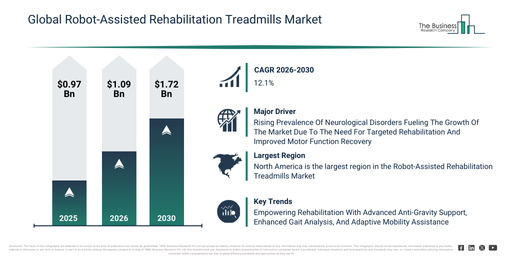
    Robot-Assisted Rehabilitation Treadmills Market Value Growth And Long-Term Outlook

    The market size for robot-assisted rehabilitation treadmills has seen significant growth recently. It is anticipated to expand from $0.97 billion in 2025 to $1.09 billion in 2026, at a compound annual growth rate (CAGR) of 12.4%. This historical increase can be attributed to several factors, including the increasing integration of robotic rehabilitation devices, the rising incidence of neurological disorders, a growing need for advanced physiotherapy solutions, the expansion of rehabilitation centers, and an increased focus on helping patients regain mobility.

    The robot-assisted rehabilitation treadmills market is anticipated to experience substantial expansion over the coming years, with projections indicating it will reach $1.72 billion by 2030, growing at a compound annual growth rate (CAGR) of 12.1%. This growth during the forecast period is fueled by increasing investments in medical robotics, a rising demand for technology-supported rehabilitation, a heightened focus on personalized therapy solutions, the expansion of outpatient rehabilitation services, and a growing elderly demographic requiring mobility assistance. Major trends expected in this period include technological advancements in robotic gait training systems, innovations in sensor-integrated rehabilitation treadmills, progress in artificial intelligence-assisted rehabilitation, ongoing research and development in neurorehabilitation robotics, and developments in immersive rehabilitation technologies.

    Get A Free Sample Report With In-Depth Market Insights:

    https://thebusinessresearchcompany.com/sample_request?id=84945611&type=smp&name=Robot-Assisted%20Rehabilitation%20Treadmills%20Market%20Report%202026&utm_source=Blogs&utm_medium=Paid&utm_campaign=Oct_PR

    Robot-Assisted Rehabilitation Treadmills Market Growth Catalysts And Demand Drivers

    A growing incidence of neurological disorders is anticipated to stimulate the expansion of the robot-assisted rehabilitation treadmills market in the coming years. These conditions are medical ailments impacting the brain, spinal cord, and nerves, thereby disturbing typical nervous system operations and resulting in deficiencies in movement, thought processes, sensation, conduct, or general bodily regulation. The rising occurrence of neurological disorders stems from detrimental lifestyle practices such as inadequate nutrition, lack of physical activity, smoking, excessive alcohol intake, and persistent stress. Robot-assisted rehabilitation treadmills assist in managing neurological disorders by offering guided, repetitive gait training, complete with immediate feedback and assistance. These devices enhance patient recovery by improving mobility, boosting muscle strength, refining balance, and aiding functional recuperation during the rehabilitation process. For example, in June 2025, data from Brain Research UK, a neurological charity based in the United Kingdom, indicated that the incidence of neurological conditions grew from 10.5 million individuals in 2024 to an estimated 11 million in 2025, representing a 4.8 % annual increase. Consequently, the increasing need for precise CNS drug delivery is fueling the expansion of the robot-assisted rehabilitation treadmills market.

    Robot-Assisted Rehabilitation Treadmills Market Segment Outlook: Which Categories Are Growing Fastest?

    The robot-assisted rehabilitation treadmills market covered in this report is segmented –

    1) By Product Type: End-Effector Based Treadmills, Exoskeleton Based Treadmills, Gait Training Treadmills, Other Product Types

    2) By Technology: Semi-Automated, Fully Automated

    3) By Application: Neurological Rehabilitation, Orthopedic Rehabilitation, Geriatric Rehabilitation, Other Applications

    4) By End-User: Hospitals, Rehabilitation Centers, Clinics, Home Care Settings, Other End-Users

    Subsegments:

    1) By End-Effector Based Treadmills: Footplate Based Gait Systems, Distal Joint Guidance Systems, Force Feedback Assisted Platforms, Balance And Stability Training Platforms

    2) By Exoskeleton Based Treadmills: Lower Limb Robotic Exoskeletons, Hip And Knee Joint Assisted Exoskeletons, Full Leg Support Robotic Frames, Wearable Motorized Gait Support Systems

    3) By Gait Training Treadmills: Body Weight Support Treadmills, Robotic Assisted Speed Regulated Treadmills, Dynamic Gait And Posture Training Systems, Multidirectional Gait Correction Treadmills

    4) By Other Product Types: Hybrid Gait Rehabilitation Systems, Robotic Balance Training Platforms, Neuromuscular Reeducation Devices, Specialized Rehabilitation Motion Platforms

    Robot-Assisted Rehabilitation Treadmills Market Trends Shaping Long-Term Demand

    Companies within the robot-assisted rehabilitation treadmills market are concentrating on developing advanced products, such as anti-gravity body weight support systems, to enhance patient mobility outcomes, expedite recovery timelines, and improve clinical rehabilitation protocols. Anti-gravity body weight support systems are integrated mechanisms designed to reduce a patient’s effective body weight during treadmill walking, thereby enabling individuals with mobility challenges to engage in gait training with decreased risk of falls and less physical strain. For example, in June 2024, ReWalk Robotics Ltd., an Israel-based provider of rehabilitation technology solutions, introduced the AlterG NEO Anti-Gravity Treadmill. This treadmill is a cost-effective and user-friendly device featuring the company’s patented Differential Air Pressure (DAP) technology. This core technology delivers precise and consistent unweighting, allowing for safe rehabilitation and athletic training by minimizing stress on injured joints and muscles. Its refreshed design and accessible price point are specifically aimed at making the advantages of anti-gravity therapy available to a broader spectrum of physical rehabilitation clinics and athletic training facilities.

    Robot-Assisted Rehabilitation Treadmills Market Company Landscape And Competitive Strategy

    Major companies operating in the robot-assisted rehabilitation treadmills market are HIWIN Corp., Biodex Medical Systems Inc., Reha Technology AG, Guangzhou Longest Science & Technology Co. Ltd., Hocoma AG, Motek Medical B.V., Ekso Bionics Holdings Inc., Tyromotion GmbH, ReWalk Robotics Ltd., Meditouch Ltd., Woodway USA Inc., Restorative Therapies Inc., BAMA Teknoloji A.S., Aretech LLC, Bionik Laboratories Corp., Techno Concept Inc., Rex Bionics Plc, Rehab-Robotics Company Limited, LokoHelp Group GmbH, ZARYA

    View The Full Robot-Assisted Rehabilitation Treadmills Market Report:

    https://thebusinessresearchcompany.com/report/robot-assisted-rehabilitation-treadmills-market-report?utm_source=Blogs&utm_medium=Paid&utm_campaign=Oct_PR

    Robot-Assisted Rehabilitation Treadmills Market Largest Region: Which Geography Holds The Highest Market Share?

    North America was the largest region in the robot-assisted rehabilitation treadmills market in 2025. Asia-Pacific is expected to be the fastest-growing region in the forecast period. The regions covered in the robot-assisted rehabilitation treadmills market report are Asia-Pacific, South East Asia, Western Europe, Eastern Europe, North America, South America, Middle East, Africa.

    Reach Out To Our Team:

    The Business Research Company: https://www.thebusinessresearchcompany.com/

    Americas: +1 310-496-7795

    Asia: +44 7882 955267 & +91 8897263534

    Europe: +44 7882 955267

    Email us at: marketing@tbrc.info

    Follow us on:

    LinkedIn: https://in.linkedin.com/company/the-business-research-company

    YouTube: https://www.youtube.com/channel/UC24_fI0rV8cR5DxlCpgmyFQ

    Global Market Model: https://www.thebusinessresearchcompany.com/global-market-model

  • Responder Hydration Monitoring Systems Market Forecast 2026: Market Size, Competitive Landscape And Growth Drivers

    Responder Hydration Monitoring Systems Market Forecast 2026: Market Size, Competitive Landscape And Growth Drivers

    Featuring market attractiveness scoring, total addressable market sizing, company benchmarking matrices, interactive Excel dashboards, deeper supply chain intelligence, emerging startup tracking, and granular product-level insights, The Business Research Company’s 2026 market reports are built to deliver research that is both more actionable and more strategically valuable.

    Responder Hydration Monitoring Systems Market Poised To Hit $9.98 Billion By 2030 With A 15.4% CAGR

    The responder hydration monitoring systems market size has seen swift expansion in recent years. This market is set to grow from $4.87 billion in 2025 to $5.63 billion in 2026, demonstrating a compound annual growth rate (CAGR) of 15.7%. The historical growth of this market can be attributed to the rising adoption of wearable health devices, increasing awareness of hydration and wellness, a surge in demand from sports and fitness users, the expansion of occupational safety initiatives, and the growing utilization of remote patient monitoring.

    The responder hydration monitoring systems market is projected to experience significant expansion in the coming years. It is expected to grow to $9.98 billion in 2030, achieving a compound annual growth rate (CAGR) of 15.4%. This anticipated growth can be attributed to factors such as the increasing integration of hydration sensors into smart wearables, greater adoption by first responders and industrial workers, a heightened focus on preventive healthcare, the broadening scope of corporate wellness programs, and a rising demand for cloud-based analytics services. Prominent trends anticipated during the forecast period include technological improvements in hydration sensing, novel developments in non-invasive wearable patches, advancements in AI-based hydration analytics, continued research and development to enhance biosensor accuracy, and the expanding integration of IoT and cloud platforms.

    Get A Free Sample Report With In-Depth Market Insights:

    https://thebusinessresearchcompany.com/sample_request?id=35716076&type=smp&name=Responder%20Hydration%20Monitoring%20Systems%20Market%20Report%202026&utm_source=Blogs&utm_medium=Paid&utm_campaign=Oct_PR

    Responder Hydration Monitoring Systems Market Opportunity Drivers: What’s Unlocking New Revenue Potential?

    The escalating occurrence of heat-stress incidents is anticipated to drive the growth of the responder hydration monitoring systems market going forward. Heat-stress incidents are medical emergencies resulting from the body’s inability to cool itself, often due to prolonged exposure to high temperatures or strenuous physical exertion. The frequency of these incidents is increasing primarily because of more frequent and intense heat conditions, combined with demanding occupational and emergency response activities. Responder hydration monitoring systems assist in mitigating heat-stress by continuously tracking fluid loss, body temperature, and physiological strain in real-time. They enhance responder safety and performance by enabling early alerts and timely interventions to prevent heat-related illnesses. For example, in July 2024, the Korea Disease Control and Prevention Agency (KDCA), a South Korea-based government agency managing organ transplant and disease control, reported 2,818 patients with heat-related illnesses, including 32 presumed deaths, in 2023. This represented an 80.2% increase from 2022, with male patients accounting for 77.8% (2,192 cases) and female patients for 22.2% (626 cases). Therefore, the surge in heat-stress incidents is propelling the expansion of the responder hydration monitoring systems market.

    Responder Hydration Monitoring Systems Market Segment Landscape: Which Areas Lead Development?

    The responder hydration monitoring systems market covered in this report is segmented –

    1) By Product Type: Wearable Hydration Monitors, Smart Water Bottles, Patch-Based Sensors, Other Products

    2) By Technology: Bioimpedance, Optical Sensors, Electrochemical Sensors, Other Technologies

    3) By Sales / Distribution Channel: Direct Device Sales, B2B Institutional Sales, E-Commerce And Retail Sales

    4) By Application: Military, Firefighters, Emergency Medical Services, Sports And Fitness, Other Applications

    5) By End-User: Individual, Institutional

    Subsegments:

    1) By Wearable Hydration Monitors: Wrist-Worn Hydration Trackers, Chest-Strap Hydration Monitoring Devices, Headband Hydration Sensor Units, Smart Armband Hydration Monitors, Clip-On Hydration Detection Devices

    2) By Smart Water Bottles: Hydration-Tracking Smart Bottles, Temperature-Sensing Smart Bottles, App-Connected Water Intake Bottles, Self-Monitoring Fluid Level Bottles, Sensor-Embedded Hydration Bottles

    3) By Patch-Based Sensors: Sweat-Analysis Hydration Patches, Skin-Adhesive Hydration Sensor Patches, Real-Time Hydration Tracking Patches, Heat-Responsive Hydration Patch Sensors, Flexible Wearable Hydration Patches

    4) By Other Products: Handheld Hydration Testing Devices, Hydration Monitoring Chest Modules, Portable Electrolyte Measurement Tools, Hydration Assessment Field Kits, Multi-Parameter Wearable Sensor Units

    Responder Hydration Monitoring Systems Market Innovation Trends Shaping Future Development

    Key entities operating in the responder hydration monitoring systems market are concentrating on developing sophisticated features, such as real-time sweat analysis, with the goal of enhancing hydration assessment, monitoring electrolyte balance, and offering comprehensive physiological insight for first responders, athletes, and high-performance professionals. Real-time sweat analysis describes the ongoing measurement of biomarkers found in sweat, including electrolytes and hydration indicators, utilizing wearable sensors that deliver immediate feedback on an individual’s hydration status as conditions transform. For example, in October 2025, Innovosens AB, a Sweden-based wearable sensing solutions company, unveiled HydroSense, a next-generation sweat sensor engineered for continuous hydration and electrolyte monitoring. The HydroSense platform integrates miniature, skin-mounted sensors that analyze sweat composition in real time, providing actionable hydration data directly to wearable devices or mobile applications. This empowers users and support teams to make informed decisions concerning fluid and electrolyte replacement to optimize performance and lessen heat-related stress.

    Responder Hydration Monitoring Systems Market Key Players Shaping Industry Direction

    Major companies operating in the responder hydration monitoring systems market are GE HealthCare Technologies Inc., Masimo Corporation, Abena A/S, John Wiley & Sons Inc., ResearchGate GmbH, Nix Biosensors Inc., Wearable Technologies AG, BSX Technologies Inc., Mode Sensors Inc., Kenzen Inc., WearOptimo Pty Ltd., GraphWear Technologies Inc., MX3 Diagonistics Inc., DC Rainmaker Inc., Intake Health Inc., Epicore Biosystems Inc, Sixty Inc., HDrop Inc., iHydrate Technologies Inc., Oura Health Oy

    View The Full Responder Hydration Monitoring Systems Market Report:

    https://thebusinessresearchcompany.com/report/responder-hydration-monitoring-systems-market-report?utm_source=Blogs&utm_medium=Paid&utm_campaign=Oct_PR

    Responder Hydration Monitoring Systems Market Regional Analysis: Which Region Leads By Revenue?

    North America was the largest region in the responder hydration monitoring systems market in 2025. Asia-Pacific is expected to be the fastest-growing region in the forecast period. The regions covered in the responder hydration monitoring systems market report are Asia-Pacific, South East Asia, Western Europe, Eastern Europe, North America, South America, Middle East, Africa.

    Reach Out To Our Team:

    The Business Research Company: https://www.thebusinessresearchcompany.com/

    Americas: +1 310-496-7795

    Asia: +44 7882 955267 & +91 8897263534

    Europe: +44 7882 955267

    Email us at: marketing@tbrc.info

    Follow us on:

    LinkedIn: https://in.linkedin.com/company/the-business-research-company

    YouTube: https://www.youtube.com/channel/UC24_fI0rV8cR5DxlCpgmyFQ

    Global Market Model: https://www.thebusinessresearchcompany.com/global-market-model

  • Rescue Airway Devices Market Size In 2026: Regional Growth, Key Segments And Future Outlook

    Rescue Airway Devices Market Size In 2026: Regional Growth, Key Segments And Future Outlook

    Built to provide research that’s more actionable and strategically valuable, The Business Research Company’s 2026 market reports include market attractiveness analysis, total addressable market sizing, company benchmarking matrices, interactive Excel dashboards, broader supply chain intelligence, emerging startup tracking, and in-depth product insights.

    Rescue Airway Devices Market Size And Revenue Outlook Through 2030

    The rescue airway devices market size has experienced rapid growth in recent years. It is projected to increase from $2.76 billion in 2025 to $3.05 billion in 2026, at a compound annual growth rate (CAGR) of 10.4%. The expansion observed in the historic period is attributable to increasing mobile connectivity, rising sensor integration, expanding IoT adoption, growing data analytics usage, and increasing indoor positioning demand.

    The rescue airway devices market is expected to experience swift expansion over the next few years. It is projected to grow to $4.49 billion by 2030, demonstrating a compound annual growth rate (CAGR) of 10.2%. This anticipated growth during the forecast period is primarily driven by factors such as the rise of context-aware automation, increasing demands for real-time localization, the expansion of smart infrastructure, the broader adoption of AI-enabled processing, and the growing prevalence of multi-modal sensing. Key trends anticipated in the upcoming period encompass progress in adaptive sensing, novelties in ambient automation, significant developments in multimodal fusion, ongoing research in predictive intelligence, and technological enhancements in spatial computing.

    Get A Free Sample Report With In-Depth Market Insights:

    https://thebusinessresearchcompany.com/sample_request?id=37435659&type=smp&name=Rescue%20Airway%20Devices%20Market%20Report%202026&utm_source=Blogs&utm_medium=Paid&utm_campaign=Oct_PR

    Rescue Airway Devices Market Growth Momentum: What Factors Are Shaping Demand?

    The increasing prevalence of emergency cases is anticipated to propel the expansion of the rescue airway devices market moving forward. Emergency situations refer to critical medical events such as traffic accidents, cardiac arrests, respiratory failure, and severe injuries that necessitate immediate life-saving interventions. The rise in emergency cases is attributed to a growing number of road traffic accidents and violence-related injuries among increasingly urbanized and motorized populations, which leads people to seek urgent hospital care. Rescue airway devices are crucial in managing these emergency situations by facilitating quick, reliable, and effective airway management in both pre-hospital and hospital settings, thereby ensuring adequate oxygenation and reducing the risk of complications during emergency care. For instance, in October 2025, according to the NHS England, a UK-based government health agency, there were around 401,800 admissions to hospital in an emergency via all accident and emergency departments in September 2025, averaging 13,400 people per day. Furthermore, 133,800 emergency admissions did not originate via accident and emergency, averaging 4,500 per day. Consequently, the growing number of emergency cases is driving the growth of the rescue airway devices market.

    Rescue Airway Devices Market Segments: Where Is Growth Concentrated?

    The rescue airway devices market covered in this report is segmented –

    1) By Product Type: Supraglottic Airway Devices (SGA), Laryngeal Mask Airways (LMA), Intubating Laryngeal Mask Airways (ILMA), Laryngeal Tubes, I-Gel Airway Devices, Other Product Types

    2) By Material: Silicone, Polyvinyl Chloride (PVC), Thermoplastic Elastomers (TPE), Other Materials

    3) By Anatomical Placement: Simple Adjuncts (Upper Airway), Supraglottic Or Extraglottic Airway Devices (SADs Or EGDs), Infraglottic Or Tracheal Devices (Definitive Airway), Airway Access Or Visualization Tools, Ventilation Or Resuscitation Devices

    4) By End User: Hospitals, Ambulatory Surgery Centers (ASC), Clinics, Emergency Medical Services (EMS) Providers, Military And Government Medical Units, Other End Users

    Subsegments:

    1) By Supraglottic Airway Devices (SGA): First Generation Supraglottic Devices, Second Generation Supraglottic Devices, Reusable Supraglottic Devices, Disposable Supraglottic Devices

    2) By Laryngeal Mask Airways (LMA): Reusable Laryngeal Mask Airways, Disposable Laryngeal Mask Airways, First Generation Laryngeal Mask Airways, Second Generation Laryngeal Mask Airways

    3) By Intubating Laryngeal Mask Airways (ILMA): Reusable Intubating Laryngeal Mask Airways, Disposable Intubating Laryngeal Mask Airways, Silicone Intubating Mask Airways, Polyvinyl Chloride Intubating Mask Airways

    4) By Laryngeal Tubes: Single Lumen Laryngeal Tubes, Dual Lumen Laryngeal Tubes, Reusable Laryngeal Tubes, Disposable Laryngeal Tubes

    5) By I-Gel Airway Devices: Standard I-Gel Airway Devices, Pediatric I-Gel Airway Devices, Adult I-Gel Airway Devices, Disposable I-Gel Airway Devices

    6) By Other Product Types: Pharyngeal Airway Devices, Oropharyngeal Airway Devices, Nasopharyngeal Airway Devices, Cuffed Pharyngeal Airway Devices

    Rescue Airway Devices Market Trends Redefining Industry Growth

    Companies operating in the rescue airway devices market are increasingly concentrating on developing sophisticated visual technologies, such as integrated video laryngoscopy solutions, to enhance clinician visibility, procedural accuracy, and patient safety during airway management in both routine and complex clinical situations. These integrated video laryngoscopy solutions are devices that combine high-resolution video imaging with ergonomic controls and software connectivity, enabling medical professionals to visually guide intubation in real time and share imaging data seamlessly with hospital information systems. For example, in January 2025, Ambu A/S, a Denmark-based medical technology company, introduced the Ambu SureSight Connect video laryngoscopy solution, specifically designed to facilitate efficient endotracheal intubation in operating rooms and intensive care units. This solution integrates with Ambu’s digital platforms, including Ambu aView 2 Advance and Ambu aBox 2, aiming to simplify workflows, reduce task complexity, and provide clinicians with comprehensive airway visualization tools. It is distinctive as the sole airway visualization offering that features a one-lung ventilation solution and encompasses all devices recommended for airway assessment and intubation, thereby expanding its utility across diverse clinical settings.

    Rescue Airway Devices Market Competitive Analysis Of Leading Industry Participants

    Major companies operating in the rescue airway devices market are Medtronic plc, Medline Industries LP, GE HealthCare Technologies Inc., Becton, Dickinson and Company, Olympus Corporation, Smiths Group plc, Drägerwerk AG & Co. KGaA, Teleflex Incorporated, Cook Medical LLC, Nihon Kohden Corporation, Fisher & Paykel Healthcare Corporation Limited, Ambu A/S, Armstrong Medical Ltd., Vyaire Medical Inc., Vygon S.A., Intersurgical Ltd., Mercury Enterprises LLC, SunMed LLC, Verathon Inc., SourceMark LLC

    View The Full Rescue Airway Devices Market Report:

    https://thebusinessresearchcompany.com/report/rescue-airway-devices-market-report?utm_source=Blogs&utm_medium=Paid&utm_campaign=Oct_PR

    Rescue Airway Devices Market Geographic Distribution And Regional Opportunities

    North America was the largest region in the rescue airway devices market in 2025. Asia-Pacific is expected to be the fastest-growing region in the forecast period. The regions covered in the rescue airway devices market report are Asia-Pacific, South East Asia, Western Europe, Eastern Europe, North America, South America, Middle East, Africa.

    Reach Out To Our Team:

    The Business Research Company: https://www.thebusinessresearchcompany.com/

    Americas: +1 310-496-7795

    Asia: +44 7882 955267 & +91 8897263534

    Europe: +44 7882 955267

    Email us at: marketing@tbrc.info

    Follow us on:

    LinkedIn: https://in.linkedin.com/company/the-business-research-company

    YouTube: https://www.youtube.com/channel/UC24_fI0rV8cR5DxlCpgmyFQ

    Global Market Model: https://www.thebusinessresearchcompany.com/global-market-model

  • Remote Visualization Workstations Market Growth Forecast Through 2030: Market Size And Trends In 2026

    Remote Visualization Workstations Market Growth Forecast Through 2030: Market Size And Trends In 2026

    Backed by market attractiveness analysis, total addressable market sizing, company benchmarking matrices, interactive Excel dashboards, wider supply chain intelligence, emerging startup coverage, and detailed product-level insights, The Business Research Company’s 2026 market reports are designed to offer research that is more actionable and strategically valuable than ever.

    Remote Visualization Workstations Market Growth From $5.44 Billion In 2026 To $9.53 Billion By 2030 At A CAGR Of 15%

    The remote visualization workstations market has seen rapid growth in recent years. It is projected to expand from $4.72 billion in 2025 to $5.44 billion in 2026, achieving a compound annual growth rate (CAGR) of 15.3%. This historical growth can be attributed to the increasing embrace of remote work models, a rising demand for high-performance remote computing solutions, the ongoing digital transformation across various industries, the expansion of virtualization and remote desktop infrastructure usage, and a growing need for secure remote access and collaboration.

    The remote visualization workstations market is projected to experience substantial expansion over the upcoming years. This market is set to reach $9.53 billion in 2030, demonstrating a compound annual growth rate (CAGR) of 15.0%. This anticipated growth during the forecast timeframe stems from several factors, including an increasing need for hybrid and remote work arrangements, the broadening availability of cloud-based remote visualization platforms, the greater acceptance of AI and machine learning-driven visualization tools, increased reach into developing economies and industries currently not well-served, and a surging requirement for integrated hardware, software, and services in remote visualization solutions. Key trends anticipated over the forecast period encompass technological progress in graphics processing unit (GPU) and processor performance as well as graphic capabilities, breakthroughs in artificial intelligence (AI) and machine learning (ML) alongside advanced analytics integration, the emergence of immersive visualization through augmented reality (AR) and virtual reality (VR) coupled with sophisticated remote collaboration tools, an expansion of cloud-based and hybrid deployment methods for visualization workstations, and intensified research and development funding resulting in remote visualization environments that are more scalable, effective, and secure.

    Get A Free Sample Report With In-Depth Market Insights:

    https://thebusinessresearchcompany.com/sample_request?id=95936908&type=smp&name=Remote%20Visualization%20Workstations%20Market%20Report%202026&utm_source=Blogs&utm_medium=Paid&utm_campaign=Oct_PR

    Remote Visualization Workstations Market Expansion Drivers: What’s Shaping Future Growth?

    The expansion of digital transformation is anticipated to boost the remote visualization workstations market in the future. Digital transformation involves embedding digital technologies throughout business operations to refine processes, improve value delivery, and foster innovation through agile, data-driven methods. This shift is gaining momentum as businesses increasingly strive to provide quicker, more tailored, and smooth customer interactions to maintain competitiveness. Remote visualization workstations significantly contribute to digital transformation by allowing secure, remote access to high-performance computing and graphics processing. They facilitate collaborative projects, lessen reliance on physical infrastructure, and expedite decision-making in sectors like engineering, healthcare, and media, by enhancing adaptability, expandability, and operational effectiveness. For example, the Office for National Statistics, a UK-based government agency, reported in July 2024 that a digital infrastructure initiative secured a $535 million (£434 million) investment by 2022, with an additional $907 million (£736 million) designated for 2023 to 2025. Consequently, the increasing prevalence of digital transformation is fueling the expansion of the remote visualization workstations market.

    Remote Visualization Workstations Market Segment Analysis: What Are The Core Market Categories?

    The remote visualization workstations market covered in this report is segmented –

    1) By Component: Hardware, Software, Services

    2) By Deployment Mode: On-Premises, Cloud-Based, Hybrid

    3) By Application: Engineering And Design, Medical Imaging, Scientific Research, Media And Entertainment, Oil And Gas, Other Applications

    4) By End-User: Healthcare, Education, Manufacturing, Energy, Media And Entertainment, Research Institutes, Other End-Users

    Subsegments:

    1) By Hardware: Central Processing Unit, Graphics Processing Unit, Memory, Storage, Input Devices, Output Devices

    2) By Software: Virtualization Software, Rendering Software, Simulation Software, Monitoring Software, Collaboration Software

    3) By Services: Installation Services, Maintenance Services, Consulting Services, Training Services, Technical Support Services

    Remote Visualization Workstations Market Strategic Trends: What Defines The Next Growth Phase?

    Leading companies in the remote visualization workstations market are concentrating on developing advanced hardware and software capabilities, such as Multi-Instance GPU (MIG) technology, to facilitate high-density virtualized graphics, accelerated AI workloads, and responsive remote compute experiences. Multi-Instance GPU (MIG) itself defines a GPU architecture that partitions a single physical GPU into multiple isolated instances, enabling the simultaneous execution of various tasks or user sessions with guaranteed performance and resource allocation, which is ideal for distributed visualization, simulation, and AI inference within virtual environments. For example, in March 2025, NVIDIA Corporation, a US-based provider of accelerated computing, unveiled its Blackwell RTX platform for professional workstations and servers, notably featuring support for Multi-Instance GPU (MIG) configurations. This innovation allows enterprises to run multiple remote visualization sessions and agentic AI workflows concurrently from a single GPU, thereby enhancing utilization efficiency and delivering consistent performance for designers, engineers, and content creators engaged with complex 3D visuals or large datasets. By incorporating Multi-Instance GPU technology into its RTX-powered workstations and servers, NVIDIA empowers organizations to effectively virtualize high-end graphics and AI workloads, reduce infrastructure costs, and support flexible distributed work environments across sectors like media and entertainment, engineering, and scientific research.

    Remote Visualization Workstations Market Leading Companies And Competitive Benchmarking

    Major companies operating in the remote visualization workstations market are Amazon Web Services Inc., Google LLC, Microsoft Corporation, Dell Technologies Inc., Lenovo Group Limited, Intel Corporation, HP Inc., NVIDIA Corporation, Fujitsu Limited, Atos SE, Super Micro Computer Inc., CoreWeave Inc., Red Hat Inc., Penguin Solutions Inc., Recently Published, Scale Computing Inc., Cirrascale Cloud Services LLC, Puget Systems Inc., BOXX Technologies Inc., NoMachine S.à r.l.

    View The Full Remote Visualization Workstations Market Report:

    https://thebusinessresearchcompany.com/report/remote-visualization-workstations-market-report?utm_source=Blogs&utm_medium=Paid&utm_campaign=Oct_PR

    Remote Visualization Workstations Market Largest Region By Revenue And Market Share

    North America was the largest region in the remote visualization workstations market in 2025. Asia-Pacific is expected to be the fastest-growing region in the forecast period. The regions covered in the remote visualization workstations market report are Asia-Pacific, South East Asia, Western Europe, Eastern Europe, North America, South America, Middle East, Africa.

    Reach Out To Our Team:

    The Business Research Company: https://www.thebusinessresearchcompany.com/

    Americas: +1 310-496-7795

    Asia: +44 7882 955267 & +91 8897263534

    Europe: +44 7882 955267

    Email us at: marketing@tbrc.info

    Follow us on:

    LinkedIn: https://in.linkedin.com/company/the-business-research-company

    YouTube: https://www.youtube.com/channel/UC24_fI0rV8cR5DxlCpgmyFQ

    Global Market Model: https://www.thebusinessresearchcompany.com/global-market-model