Category: Medical Equipment

  • Cell-Free DNA (cfDNA) Kits Market Forecast 2026–2035 Presenting Market Data Trends and Industry Insights

    Cell-Free DNA (cfDNA) Kits Market Forecast 2026–2035 Presenting Market Data Trends and Industry Insights

    The Business Research Company’s 2026 market reports include new capabilities such as market attractiveness scoring and analysis, total addressable market analysis, company scoring matrix, interactive excel data dashboard, improved supply chain analysis, upcoming startups in the market, and overview of key products, aimed at improving the depth, usability, and strategic value of the insights delivered.

    What Market Size Growth Is Projected For The Cell-Free DNA (cfDNA) Kits Market During The Forecast Period 2026–2030?

    The cell-free dna (cfdna) kits market size has seen rapid development in recent years. It is anticipated to increase from $1.8 billion in 2025 to $2.02 billion in 2026, achieving a compound annual growth rate (CAGR) of 12.4%. This past growth can be attributed to factors like the rising adoption of liquid biopsy, expansion in cancer diagnostics, increasing prenatal testing, the advancement of PCR and NGS technologies, and the proliferation of research laboratories.

    The cell-free dna (cfdna) kits market is anticipated to experience significant expansion in the coming years. This market is projected to reach a value of $3.2 billion by 2030, with a compound annual growth rate (CAGR) of 12.2%. The forecasted growth is largely driven by technological advancements in cfDNA kits, a rising emphasis on non-invasive diagnostic tools, the incorporation of AI into analytical processes, the spread of molecular testing in developing economies, and enhanced research and development in cancer biomarkers. Key trends expected during this period involve high-sensitivity DNA isolation, the automation of sample preparation, integration with NGS platforms, accelerated DNA extraction, and the standardization of cfDNA kits.

    Download the Free Sample Report to Explore Key Market Insights:

    https://www.thebusinessresearchcompany.com/sample.aspx?id=28161&type=smp

    What Drivers Are Expected To Influence The Cell-Free DNA (cfDNA) Kits Market During The Forecast Period?

    The increasing occurrence of genetic conditions is projected to stimulate expansion within the cell-free DNA (cfDNA) kits market over the next few years. These disorders are health issues stemming from alterations in an individual’s DNA, potentially arising from mutations in a single gene, several genes, or anomalies in chromosomes. The growing incidence of genetic disorders is fueled by shifts in lifestyle and environmental elements like pollution and poor eating habits, capable of inducing genetic mutations or worsening existing inherited conditions. Cell-free DNA (cfDNA) kits facilitate the early and non-intrusive identification of genetic irregularities through the examination of DNA fragments present in blood or other bodily fluids, leading to quicker diagnoses and aiding healthcare professionals in making prompt and precise treatment choices. For example, in November 2024, data from the Centers for Disease Control and Prevention (CDC), a US-based government body, indicated that approximately 1 in every 33 newborns in the US are affected by a birth defect, with numerous connections to genetic origins. Consequently, the increasing prevalence of genetic disorders is a key factor propelling the expansion of the cell-free DNA (cfDNA) kits market.

    What Market Segments Are Evaluated Within The Cell-Free DNA (cfDNA) Kits Market?

    The cell-free dna (cfdna) kits market covered in this report is segmented –

    1) By Product Type: Plasma Cell-Free DNA (Cfdna) Kits, Serum Cell-Free DNA (Cfdna) Kits, Urine Cell-Free DNA (Cfdna) Kits, Other Product Types

    2) By Technology: Next-Generation Sequencing (NGS), Polymerase Chain Reaction (PCR), Microarray Technology, Digital Polymerase Chain Reaction(PCR)

    3) By Application: Cancer Diagnostics, Prenatal Testing, Transplant Rejection Monitoring, Non-Invasive Disease Detection

    4) By Distribution Channel: Direct Sales, Retail Pharmacies, Online Sales, Distributors

    5) By End User: Hospitals, Research Laboratories, Diagnostic Laboratories, Academic Institutions

    Subsegments:

    1) By Plasma Cell-Free DNA Kits: Single-Stranded DNA Kits, Double-Stranded DNA Kits, High-Sensitivity DNA Kits, Rapid Extraction DNA Kits

    2) By Serum Cell-Free DNA Kits: Low-Volume DNA Kits, High-Yield DNA Kits, Automated DNA Kits, Manual Extraction DNA Kits

    3) By Urine Cell-Free DNA Kits: Early Detection DNA Kits, Concentration DNA Kits, High-Purity DNA Kits, Long-Term Stability DNA Kits

    4) By Other Product Types: Saliva DNA Kits, Cerebrospinal Fluid DNA Kits, Amniotic Fluid DNA Kits, Tissue-Derived DNA Kits

    What Industry Trends Are Redefining The Cell-Free DNA (cfDNA) Kits Market?

    Leading companies in the cell-free DNA (cfDNA) kits market are concentrating on creating advanced products that incorporate digital polymerase chain reaction (PCR)-based absolute quantification, aiming to improve the sensitivity and accuracy of cfDNA analysis. This approach allows for very precise identification of low-frequency genetic variants, offering greater consistency and proving valuable in key areas such as cancer diagnostics, prenatal testing, and transplant rejection monitoring. As an illustration, Omixon, a molecular diagnostics firm based in Hungary, introduced HoloGRAFT ONE in June 2024. This kit, intended for research purposes only, facilitates the monitoring of donor-derived cell-free DNA (dd-cfDNA) after transplantation. It utilizes unique genetic markers and digital PCR technology to differentiate donor DNA from patient DNA, quantifying both the absolute and relative levels of dd-cfDNA through copy-number variants. The purpose of this novel test is to facilitate the early identification of transplant rejection, improve patient oversight, and assist in personalized post-transplant treatment by supplying clinicians with accurate and practical cfDNA measurements.

    Who Are The Top Market Participants Influencing The Cell-Free DNA (cfDNA) Kits Market?

    Major companies operating in the cell-free dna (cfdna) kits market are F. Hoffmann-La Roche Ltd, Thermo Fisher Scientific Inc., Agilent Technologies Inc., Illumina Inc., Bio-Rad Laboratories Inc., QIAGEN N.V, Natera Inc., Myriad Genetics Inc., Guardant Health Inc., Bioneer Corporation, Streck Inc., Freenome Holdings Inc., GRAIL Inc., Zymo Research Corporation, Geneseeq Technology Inc, Covaris LLC, Active Motif Inc., Norgen Biotek Corp, AMSBIO LLC, EpiGentek Group Inc., Paragon Genomics Inc., Suzhou Beaver Biomedical Engineering.

    Read the full cell-free dna (cfdna) kits market report here:

    https://www.thebusinessresearchcompany.com/report/cell-free-dna-cfdna-kits-global-market-report

    Which Region Is Forecast To Lead The Cell-Free DNA (cfDNA) Kits Market In Terms Of Market Size?

    North America was the largest region in the cell-free DNA (cfDNA) kits market in 2025. Asia-Pacific is expected to be the fastest-growing region in the forecast period. The regions covered in the cell-free dna (cfdna) kits market report are Asia-Pacific, South East Asia, Western Europe, Eastern Europe, North America, South America, Middle East, Africa.

    Request A Tailored Cell-Free DNA (cfDNA) Kits Market Research Report For Competitive Advantage:

    https://www.thebusinessresearchcompany.com/customise?id=28161&type=smp

    Browse Through More Reports Similar to the Global Cell-Free DNA (cfDNA) Kits Market 2026, By The Business Research Company

    Cell Free Dna Isolation And Extraction Market Report 2026

    https://www.thebusinessresearchcompany.com/report/cell-free-dna-isolation-and-extraction-global-market-report

    Blood Collection Tubes Market Report 2026

    https://www.thebusinessresearchcompany.com/report/blood-collection-tubes-global-market-report

    Dna Digital Data Storage Market Report 2026

    https://www.thebusinessresearchcompany.com/report/dna-digital-data-storage-global-market-report

    Get in touch with us:

    The Business Research Company: https://www.thebusinessresearchcompany.com/

    Americas +1 310-496-7795

    Asia +44 7882 955267 & +91 8897263534

    Europe +44 7882 955267

    Email us at info@tbrc.info

    Follow us on:

    LinkedIn: https://in.linkedin.com/company/the-business-research-company

    YouTube: https://www.youtube.com/channel/UC24_fI0rV8cR5DxlCpgmyFQ

    Global Market Model: https://www.thebusinessresearchcompany.com/global-market-model

  • Cell-Free DNA (cfDNA) Blood Collection Tube Market Outlook 2026–2030 Highlighting Major Growth Drivers and Emerging Industry Trends

    Cell-Free DNA (cfDNA) Blood Collection Tube Market Outlook 2026–2030 Highlighting Major Growth Drivers and Emerging Industry Trends

    The Business Research Company’s 2026 market reports include new capabilities such as market attractiveness scoring and analysis, total addressable market analysis, company scoring matrix, interactive excel data dashboard, improved supply chain analysis, upcoming startups in the market, and overview of key products, aimed at improving the depth, usability, and strategic value of the insights delivered.

    How Will The Market Size Of The Cell-Free DNA (cfDNA) Blood Collection Tube Market Evolve From 2026 To 2030?

    The market size for cell-free DNA (cfDNA) blood collection tubes has seen rapid expansion in recent years. This market is expected to increase from $1.33 billion in 2025 to $1.51 billion in 2026, registering a compound annual growth rate (CAGR) of 13.6%. The historical growth of this market can be attributed to the rising demand for prenatal testing, the growth in cancer diagnostics, the increasing adoption of cfDNA in research, rising laboratory automation, and the expansion of diagnostic centers.

    The market for cell-free DNA (cfDNA) blood collection tubes is anticipated to experience substantial expansion over the upcoming years. This market is projected to reach $2.49 billion by 2030, exhibiting a compound annual growth rate (CAGR) of 13.3%. This projected increase can be attributed to several factors, including advancements in blood tube preservatives, the incorporation of AI diagnostics, the expanding liquid biopsy market, an increase in clinical trials, and surging demand within developing markets. Key developments expected during this forecast period encompass improved sample preservation techniques, seamless integration with liquid biopsy platforms, the establishment of standardized blood collection procedures, increased automation in sample handling, and the introduction of highly stable tube designs.

    Download the Free Sample Report to Explore Key Market Insights:

    https://www.thebusinessresearchcompany.com/sample.aspx?id=28160&type=smp

    What Drivers Are Influencing The Cell-Free DNA (cfDNA) Blood Collection Tube Market?

    The market for cell-free DNA (cfDNA) blood collection tubes is anticipated to grow in the future due to the rising occurrence of respiratory disorders. These conditions, which impair efficient breathing and oxygen delivery, are frequently exacerbated by air pollution, leading to an increased risk of ailments such as asthma, bronchitis, and chronic obstructive pulmonary disease (COPD). Cell-free DNA (cfDNA) blood collection tubes offer a non-invasive method for managing respiratory disorders by enabling the detection of genetic mutations, monitoring disease progression, and evaluating treatment responses via a straightforward blood test, thus minimizing the need for invasive lung biopsies. For example, in December 2024, the Centers for Disease Control and Prevention, a US-based government agency, reported that an estimated 17,000 to 34,000 hospitalizations were attributed to respiratory syncytial virus (RSV) between October 1 and November 30, 2024. Consequently, the growing incidence of respiratory disorders is a key factor driving the expansion of the cell-free DNA (cfDNA) blood collection tube market. A surge in cancer cases, propelled by rising unhealthy lifestyle habits, is expected to fuel the growth of the cell-free DNA (cfDNA) blood collection tube market. The increasing prevalence of cancer is linked to factors such as inadequate diet, smoking, and insufficient physical activity. Cell-free DNA (cfDNA) blood collection tubes are crucial in cancer management, facilitating liquid biopsies that allow for the identification of tumor-specific genetic mutations, tracking of disease progression, evaluation of treatment effectiveness, and detection of resistance mutations through a straightforward blood test, thereby diminishing the need for intrusive tissue biopsies. For example, in May 2024, the National Cancer Institute, a US-based government agency, projected that the population of cancer survivors in the United States will rise to 26 million by 2040, up from 18.1 million in 2022. Thus, the escalating incidence of cancer is a significant driver for the cell-free DNA (cfDNA) blood collection tube market.

    Which Segment Areas Are Covered In The Cell-Free DNA (cfDNA) Blood Collection Tube Market Analysis?

    The cell-free dna (cfdna) blood collection tube market covered in this report is segmented –

    1) By Type: 5ml, 10ml

    2) By Sample Type: Plasma, Serum, Whole Blood

    3) By Application: In Vitro Diagnostics, Scientific Research

    4) By End-User: Diagnostic Laboratories, Hospitals Or Clinical Centers, Genetic Diagnostic Labs, Cancer Research Centers, Research And Development Institutions, Conventional Diagnostic Centers

    Subsegments:

    1) By 5 mL: Single Use Tube, Vacuum Blood Collection Tube, Gel Separator Tube

    2) By 10 mL: Double Draw Tube, High Volume Collection Tube, Anticoagulant Treated Tube

    What Key Developments And Trends Are Impacting The Cell-Free DNA (cfDNA) Blood Collection Tube Market?

    Leading organizations within the cell-free DNA (cfDNA) blood collection tube market are prioritizing the automation of cfDNA extraction to improve workflow effectiveness. This automation involves the deployment of sophisticated robotic instruments and consistent protocols for isolating cell-free DNA from blood samples, requiring minimal human input. This approach enhances efficiency, precision, and uniformity, while simultaneously decreasing processing time and the potential for human error. For example, in September 2023, Yourgene Health plc, a UK-based molecular diagnostics company, introduced the MagBench Automated DNA Extraction Instrument and Kit. This offering presents a swift, uncomplicated, and economical bench-top robotic solution, specifically designed for cell-free DNA extraction in non-invasive prenatal testing (NIPT) workflows. The purpose of this release is to reinforce automation in NIPT workflows by providing superior throughput, consistency, and dependability in cfDNA extraction, concurrently reducing manual effort and operational expenditures.

    Which Global Companies Are Actively Competing In The Cell-Free DNA (cfDNA) Blood Collection Tube Market?

    Major companies operating in the cell-free dna (cfdna) blood collection tube market are Roche Holding AG, Thermo Fisher Scientific Inc., Becton Dickinson (BD), Qiagen N.V., SARSTEDT AG & Co. KG, Guangzhou Improve Medical Technology, Streck Inc., DiaCarta Inc., Zymo Research Corporation, Biomatrica Inc., PreAnalytiX GmbH, Beijing Cowin Bioscience Co.Ltd., Norgen Biotek Corporation, Nonacus Limited, Guangdong Ardent Biomed Co. Ltd, MagBio Genomics Inc., VanGenes, BEAVER, Hebei Xinle Science & Technology Co. Ltd., Nasmed Diagnostics Pvt. Ltd.

    Read the full cell-free dna (cfdna) blood collection tube market report here:

    https://www.thebusinessresearchcompany.com/report/cell-free-dna-cfdna-blood-collection-tube-global-market-report

    Which Regions Are Expected To Experience Rapid Expansion In The Cell-Free DNA (cfDNA) Blood Collection Tube Market?

    North America was the largest region in the cell-free DNA (cfDNA) blood collection tube market in 2025. Asia-Pacific is expected to be the fastest-growing region in the forecast period. The regions covered in the cell-free dna (cfdna) blood collection tube market report are Asia-Pacific, South East Asia, Western Europe, Eastern Europe, North America, South America, Middle East, Africa.

    Request A Tailored Cell-Free DNA (cfDNA) Blood Collection Tube Market Research Report For Competitive Advantage:

    https://www.thebusinessresearchcompany.com/customise?id=28160&type=smp

    Browse Through More Reports Similar to the Global Cell-Free DNA (cfDNA) Blood Collection Tube Market 2026, By The Business Research Company

    Medical Skin Markers Market Report 2026

    https://www.thebusinessresearchcompany.com/report/medical-skin-markers-global-market-report

    Surface Vision And Inspection Market Report 2026

    https://www.thebusinessresearchcompany.com/report/surface-vision-and-inspection-global-market-report

    Biomarkers Market Report 2026

    https://www.thebusinessresearchcompany.com/report/biomarkers-global-market-report

    Get in touch with us:

    The Business Research Company: https://www.thebusinessresearchcompany.com/

    Americas +1 310-496-7795

    Asia +44 7882 955267 & +91 8897263534

    Europe +44 7882 955267

    Email us at info@tbrc.info

    Follow us on:

    LinkedIn: https://in.linkedin.com/company/the-business-research-company

    YouTube: https://www.youtube.com/channel/UC24_fI0rV8cR5DxlCpgmyFQ

    Global Market Model: https://www.thebusinessresearchcompany.com/global-market-model

  • Rising Oncology Cases Driving Growth in the Cell Surface Marker Detection Market

    Rising Oncology Cases Driving Growth in the Cell Surface Marker Detection Market

    The Business Research Company’s 2026 market reports include new capabilities such as market attractiveness scoring and analysis, total addressable market analysis, company scoring matrix, interactive excel data dashboard, improved supply chain analysis, upcoming startups in the market, and overview of key products, aimed at improving the depth, usability, and strategic value of the insights delivered.

    What Is The Forecasted Market Value Of The Cell Surface Marker Detection Market Across 2026–2030?

    The cell surface marker detection market size has experienced swift expansion in recent years. This market is anticipated to increase from $6.39 billion in 2025 to $7.11 billion in 2026, achieving a compound annual growth rate (CAGR) of 11.2%. The growth observed in the past can be ascribed to increasing biomedical research activities, the expansion of pharmaceutical drug discovery programs, a rising use of flow cytometry in diagnostics, growing investments in life sciences research, and wider availability of laboratory automation.

    The cell surface marker detection market size is anticipated to undergo significant expansion over the next few years. It is projected to achieve a value of $10.81 billion in 2030, advancing at a compound annual growth rate (CAGR) of 11.0%. This growth during the forecast period is attributed to several factors, including the increasing adoption of precision medicine approaches, a rising demand for single-cell analysis, the expansion of translational research initiatives, the growing use of AI-assisted cell analysis, and increasing investments in advanced diagnostic laboratories. Furthermore, major trends anticipated in this period encompass the increasing adoption of high-throughput flow cytometry systems, a rising demand for advanced reagents and kits, the growing use of automated cell analysis platforms, the expansion of marker-based precision diagnostics, and an enhanced focus on multiparameter cell profiling.

    Download the Free Sample Report to Explore Key Market Insights:

    https://www.thebusinessresearchcompany.com/sample.aspx?id=8619&type=smp

    What Drivers Are Shaping The Future Growth Of The Cell Surface Marker Detection Market?

    The expanding prevalence of oncology diseases is projected to drive the growth of the cell surface marker detection market in the coming years. Cancer, a condition where some cells multiply uncontrollably and disseminate to other body parts, is on the rise globally. This increase is attributed to various factors such as the adoption of Western lifestyles, unhealthy dietary choices, frequent consumption of non-vegetarian diets, chemical environmental pollution, and insufficient physical activity. Cell surface marker detection supports the point-of-care prediction of patient response to multiple cancer drugs, thereby stimulating demand. For instance, the World Health Organization reported in February 2024 that over 35 million new cancer cases are anticipated by 2050, representing a 77% surge from the estimated 20 million cases in 2022. Consequently, the escalating occurrence of oncology diseases is a significant driver for the cell surface marker detection market’s expansion.

    What Segmentation Levels Are Considered In The Cell Surface Marker Detection Market?

    The cell surface marker detection market covered in this report is segmented –

    1) By Product: Flow Cytometry, Reagents And Kits

    2) By Application: Disease Diagnosis, Diseases Identification, Research For Drug Discovery, Cytological Academic Research

    3) By End-Users: Pharmaceutical And Biotechnology Companies, Hospitals And Clinical Testing Laboratories, Academic And Research Institutes, Other End Users

    Subsegments:

    1) By Flow Cytometry: Benchtop Flow Cytometers, Portable Flow Cytometers, High-Throughput Flow Cytometers

    2) By Reagents And Kits: Antibodies And Conjugates, Staining Kits, Calibration And Control Kits

    What Trends Are Projected To Affect The Cell Surface Marker Detection Market?

    Major companies in the cell surface marker detection market are investing in advanced technologies, such as innovative fluorescent dyes and antibodies, to improve multicolour flow cytometry capabilities, thereby enhancing the accuracy and efficiency of immunological research and diagnostics. Bio-Rad has expanded its StarBright Violet Dye series by adding 29 highly validated antibodies conjugated to various StarBright Violet Dyes, which improves the ability to detect and analyze multiple cell surface markers in human and animal studies through multicolour flow cytometry. For instance, in May 2024, Bio-Rad Laboratories, Inc., a US-based company that develops and manufactures specialized technological products, launched three new StarBright Red Dyes, StarBright Red 715, 775, and 815. This expansion enhances their existing portfolio of fluorescent dyes, which now totals 32 options across multiple lasers, specifically designed for conventional and full-spectrum flow cytometry applications. Additionally, these dyes exhibit minimal background interference compared to traditional cyanine tandem dyes and are stable enough to be fixed in formalin or alcohol-based fixatives without losing signal integrity.

    Which Leading Firms Are Contributing To The Growth Of The Cell Surface Marker Detection Market?

    Major companies operating in the cell surface marker detection market are Thermo Fisher Scientific Inc, Beckman Coulter Inc, Bio-Rad Laboratories Inc, Becton Dickinson and Company, BD Biosciences, Agilent Inc, Sigma-Aldrich, Qiagen NV, Abcam PLC, GenScript Biotech, BioLegend, Cell Signaling Technology Inc, Merck KGaA, Bio-Techne Corporation, Affymetrix, Danaher Corporation, Miltenyi Biotec, R&D Systems, Siemens Healthineers, F Hoffmann-La Roche Ltd, Sartorius, Sysmex Corporation, Nihon Kohden Corporation, Diasorin SpA, Janssen Diagnostics

    Read the full cell surface marker detection market report here:

    https://www.thebusinessresearchcompany.com/report/cell-surface-marker-detection-global-market-report

    Which Geographic Regions Are Influencing Demand In The Cell Surface Marker Detection Market?

    North America was the largest region in the cell surface marker detection market in 2025. Asia-Pacific is expected to be the fastest-growing region in the forecast period. The regions covered in the cell surface marker detection market report are Asia-Pacific, South East Asia, Western Europe, Eastern Europe, North America, South America, Middle East, Africa.

    Request A Tailored Cell Surface Marker Detection Market Research Report For Competitive Advantage:

    https://www.thebusinessresearchcompany.com/customise?id=8619&type=smp

    Browse Through More Reports Similar to the Global Cell Surface Marker Detection Market 2026, By The Business Research Company

    Individual And Family Services Market Report 2026

    https://www.thebusinessresearchcompany.com/report/individual-and-family-services-global-market-report

    Legal Services Market Report 2026

    https://www.thebusinessresearchcompany.com/report/legal-services-global-market-report

    Individual And Family Services Market Report 2026

    https://www.thebusinessresearchcompany.com/report/individual-and-family-services-global-market-report

    Get in touch with us:

    The Business Research Company: https://www.thebusinessresearchcompany.com/

    Americas +1 310-496-7795

    Asia +44 7882 955267 & +91 8897263534

    Europe +44 7882 955267

    Email us at info@tbrc.info

    Follow us on:

    LinkedIn: https://in.linkedin.com/company/the-business-research-company

    YouTube: https://www.youtube.com/channel/UC24_fI0rV8cR5DxlCpgmyFQ

    Global Market Model: https://www.thebusinessresearchcompany.com/global-market-model
  • Technological Innovations Such as Multi-Channel Asynchronous Processing Advancing the Cell Processing Instruments Market

    Technological Innovations Such as Multi-Channel Asynchronous Processing Advancing the Cell Processing Instruments Market

    The Business Research Company’s 2026 market reports include new capabilities such as market attractiveness scoring and analysis, total addressable market analysis, company scoring matrix, interactive excel data dashboard, improved supply chain analysis, upcoming startups in the market, and overview of key products, aimed at improving the depth, usability, and strategic value of the insights delivered.

    What Market Size Increase Is Anticipated For The Cell Processing Instruments Market Over The 2026–2030 Period?

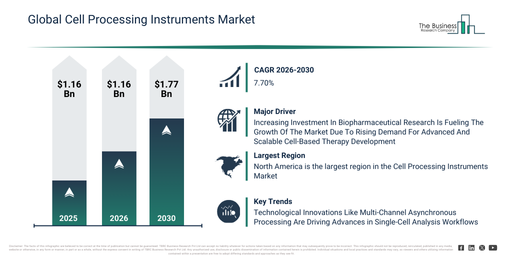
    The cell processing instruments market has experienced substantial expansion in recent years. It is projected to expand from $6.95 billion in 2025 to $7.51 billion in 2026, demonstrating a compound annual growth rate (CAGR) of 8.1%. Historically, this growth was driven by factors such as a lack of automation in cell processing, the dependence on manual methods for cell counting and separation, increasing academic and research pursuits, a rising need for precise cell analysis, and the advent of flow cytometry technologies.

    The cell processing instruments market is anticipated to experience substantial expansion over the coming years. Its value is projected to reach $10.1 billion by 2030, exhibiting a compound annual growth rate (CAGR) of 7.7%. This anticipated growth during the forecast period is attributable to several factors, including the emergence of integrated cell processing platforms, increased capital expenditure in cell therapy and regenerative medicine, the uptake of digital and automated imaging technologies, a surge in contract research and manufacturing endeavors, and innovations in live cell analysis and high-content screening. Key trends for the forecast period encompass a growing need for automated cell processing solutions, wider implementation of flow cytometry and high-content imaging, expansion in the applications of cell therapy and regenerative medicine, a heightened focus on standardization and adherence to regulations, and the incorporation of multi-functional cell analysis platforms.

    Download the Free Sample Report to Explore Key Market Insights:

    https://www.thebusinessresearchcompany.com/sample.aspx?id=27242&type=smp

    Which Economic Or Industry Drivers Are Impacting The Cell Processing Instruments Market?

    The expansion of investment in biopharmaceutical research is projected to fuel the advancement of the cell processing instruments market in the future. Biopharmaceutical research encompasses the scientific investigation and creation of therapeutic items originating from biological sources or engineered to imitate biological molecules, used for diagnosing, preventing, or treating illnesses. The rise in biopharmaceutical research investment stems from an increasing need for novel treatments to tackle the growing prevalence of chronic diseases and fulfill outstanding medical requirements, thereby stimulating more extensive research and development initiatives for precise and efficacious remedies. Cell processing instruments facilitate biopharmaceutical research by allowing for effective, standardized, and scalable manipulation of cells, which in turn hastens the creation and manufacturing of sophisticated cell-based therapies. For instance, in January 2025, as reported by the BioIndustry Association (BIA), a trade association based in the UK, the UK biotech sector observed significant expansion in 2024, attracting £3.5 billion (around $ 4.4 billion) in investment, which marks an impressive 94% increase compared to the prior year. Consequently, the escalating investment within biopharmaceutical research is propelling the growth of the cell processing instruments market.

    How Is The Cell Processing Instruments Market Segmented Across Key Categories?

    The cell processing instruments market covered in this report is segmented –

    1) By Type: Cell Counters, Cell Imaging Systems, Flow Cytometers, Cell Separator Systems, Automated Cell Processing Systems, Other Instruments

    2) By Application: Cell Isolation Or Separation, Cell Imaging And Counting, Cell Viability And Proliferation, Other Applications

    3) By End-Use: Pharmaceutical And Biotechnology Companies, Contract Research Organizations (CROs) And Contract Manufacturing Organizations (CMOs), Academic And Research Institutes, Other End-Uses

    Subsegments:

    1) By Cell Counters: Manual Cell Counters, Automated Cell Counters, Digital Cell Counters

    2) By Cell Imaging Systems: Brightfield Imaging Systems, Fluorescence Imaging Systems, High-Content Imaging Systems, Live Cell Imaging Systems

    3) By Flow Cytometers: Analog Flow Cytometers, Digital Flow Cytometers, Benchtop Flow Cytometers, Clinical Flow Cytometers

    4) By Cell Separator Systems: Magnetic-Activated Cell Sorting (MACS) Systems, Fluorescence-Activated Cell Sorting (FACS) Systems, Centrifugal Elutriation Systems

    5) By Automated Cell Processing Systems: Cell Expansion Systems, Cell Washing And Concentration Systems, Cell Harvesting Systems, Integrated Cell Processing Platforms

    6) By Other Instruments: Cell Disruption Systems, Cell Viability Analyzers, Centrifuges For Cell Processing, Cell Freezing And Thawing Systems

    Which Upcoming Trends Are Expected To Influence The Cell Processing Instruments Market?

    Leading companies in the cell processing instruments market are concentrating on developing innovative approaches, such as multi-channel asynchronous processing, to enhance workflow efficiency and flexibility in cell therapy development. Multi-channel asynchronous processing refers to a system’s capability to run several independent workflows simultaneously on separate channels, allowing different processes to operate in parallel without needing to wait for each other to finish. For instance, in June 2023, Singleron Biotechnologies GmbH, a Germany-based biotechnology company, launched two new instruments, Python Junior and Matrix NEO, with the goal of improving and standardizing the single-cell analysis workflow. Python Junior streamlines the dissociation of solid tissues into high-quality single-cell suspensions through dual independent channels utilizing a combination of mechanical and enzymatic processing, while Matrix NEO enables high-throughput, fully automated single-cell library preparation, encompassing chip priming, cell partitioning, lysis, and nucleic acid capture across four channels, thereby supporting diverse applications and throughput levels in both research and clinical settings.

    Who Are The Dominant Players Shaping The Cell Processing Instruments Market Landscape?

    Major companies operating in the cell processing instruments market are Thermo Fisher Scientific Inc., Danaher Corporation, Merck KGaA, Becton Dickinson and Company, Avantor Inc., Agilent Technologies Inc., Sartorius AG, Revvity Inc., Bio-Rad Laboratories Inc., Eppendorf SE, Tecan Group Ltd., Bio-Techne Corporation, STEMCELL Technologies Inc., Miltenyi Biotec B.V. & Co. KG, Takara Bio Inc., 10x Genomics Inc., Promega Corporation, Esco Lifesciences Group Ltd., NanoCellect Biomedical Inc., InGeneron Inc.

    Read the full cell processing instruments market report here:

    https://www.thebusinessresearchcompany.com/report/cell-processing-instruments-global-market-report

    What Are The Top-Performing Regions Within The Cell Processing Instruments Market?

    North America was the largest region in the cell processing instruments market in 2025. Asia-Pacific is expected to be the fastest-growing region in the forecast period. The regions covered in the cell processing instruments market report are Asia-Pacific, South East Asia, Western Europe, Eastern Europe, North America, South America, Middle East, Africa.

    Request A Tailored Cell Processing Instruments Market Research Report For Competitive Advantage:

    https://www.thebusinessresearchcompany.com/customise?id=27242&type=smp

    Browse Through More Reports Similar to the Global Cell Processing Instruments Market 2026, By The Business Research Company

    Cell Free Dna Isolation And Extraction Market Report 2026

    https://www.thebusinessresearchcompany.com/report/cell-free-dna-isolation-and-extraction-global-market-report

    Dna Diagnostics Market Report 2026

    https://www.thebusinessresearchcompany.com/report/dna-diagnostics-global-market-report

    Dna Testing Market Report 2026

    https://www.thebusinessresearchcompany.com/report/dna-testing-global-market-report

    Get in touch with us:

    The Business Research Company: https://www.thebusinessresearchcompany.com/

    Americas +1 310-496-7795

    Asia +44 7882 955267 & +91 8897263534

    Europe +44 7882 955267

    Email us at info@tbrc.info

    Follow us on:

    LinkedIn: https://in.linkedin.com/company/the-business-research-company

    YouTube: https://www.youtube.com/channel/UC24_fI0rV8cR5DxlCpgmyFQ

    Global Market Model: https://www.thebusinessresearchcompany.com/global-market-model

  • Advanced Kits Enhancing Accuracy and Sensitivity in the Cell Free Tumor Deoxyribonucleic Acid (DNA) Detection Market

    Advanced Kits Enhancing Accuracy and Sensitivity in the Cell Free Tumor Deoxyribonucleic Acid (DNA) Detection Market

    The Business Research Company’s 2026 market reports include new capabilities such as market attractiveness scoring and analysis, total addressable market analysis, company scoring matrix, interactive excel data dashboard, improved supply chain analysis, upcoming startups in the market, and overview of key products, aimed at improving the depth, usability, and strategic value of the insights delivered.

    How Much Is The Cell Free Tumor Deoxyribonucleic Acid (DNA) Detection Market Expected To Grow In Terms Of Market Value Between 2026 And 2030?

    The market for cell-free tumor deoxyribonucleic acid (dna) detection has witnessed rapid expansion in recent years. It is projected to increase from $2.58 billion in 2025 to $3.02 billion in 2026, achieving a compound annual growth rate (CAGR) of 17.2%. This historical growth can be ascribed to factors such as the increasing prevalence of cancer, breakthroughs in molecular diagnostics, a heightened demand for non-invasive testing, the widespread adoption of PCR and NGS techniques, and a rise in clinical research studies.

    The cell-free tumor deoxyribonucleic acid (DNA) detection market is poised for substantial growth in the upcoming years. Its valuation is projected to reach $5.64 billion by 2030, exhibiting a compound annual growth rate (CAGR) of 16.9%. This expansion during the forecast period is primarily driven by the broader application of precision medicine, technological advancements in ctDNA analysis, the integration of AI-based diagnostics, increasing healthcare investments in developing economies, and the rise of early cancer detection programs. Significant trends anticipated for this period include the increased adoption of liquid biopsies, integration with genomic data platforms, real-time tumor monitoring, the emergence of non-invasive cancer diagnostics, and sophisticated ctDNA detection technologies.

    Download the Free Sample Report to Explore Key Market Insights:

    https://www.thebusinessresearchcompany.com/sample.aspx?id=28159&type=smp

    What Major Drivers Are Influencing Demand In The Cell Free Tumor Deoxyribonucleic Acid (DNA) Detection Market?

    The rising need for personalized medicine is projected to stimulate expansion within the cell free tumor deoxyribonucleic acid (DNA) detection market. Personalized medicine represents a medical methodology designed to customize treatment and prevention strategies according to an individual’s distinct genetic makeup, lifestyle, and environmental factors. The growing acceptance of personalized medicine largely stems from breakthroughs in genomics, facilitating the accurate identification of genetic variations and the development of bespoke treatments for patients. Cell free tumor deoxyribonucleic acid (DNA) detection contributes to personalized medicine by offering non-invasive, real-time understanding of a patient’s tumor genetics. This capability empowers clinicians to customize therapies based on unique mutation profiles, track the effectiveness of treatment, and identify disease recurrence at an early stage, thereby enhancing patient results and the exactness of cancer management. As an illustration, in February 2024, data from the Personalized Medicine Coalition (PMC), a US-based nonprofit organization, indicated that the U.S. Food and Drug Administration (FDA) endorsed 26 new personalized medicines in 2023, which marks a notable rise from the 12 approved in 2022. Consequently, the escalating demand for personalized medicine is fueling the growth of the cell free tumor deoxyribonucleic acid (DNA) detection market.

    What Major Segment Divisions Exist Within The Cell Free Tumor Deoxyribonucleic Acid (DNA) Detection Market?

    The cell free tumor deoxyribonucleic acid (dna) detection market covered in this report is segmented –

    1) By Technology: Polymerase Chain Reaction (PCR), Next-Generation Sequencing (NGS), Digital Polymerase Chain Reaction (dPCR)

    2) By Source: Plasma, Serum, Urine

    3) By Application: Oncology, Non-Invasive Prenatal Testing, Transplantation, Other Applications

    4) By End-User: Hospitals, Diagnostic Laboratories, Academic And Research Institutes, Other End-Users

    Subsegments:

    1) By Polymerase Chain Reaction (PCR): Real-Time Polymerase Chain Reaction (qPCR), Multiplex Polymerase Chain Reaction (PCR), Allele-Specific Polymerase Chain Reaction (PCR), High-Resolution Melting (HRM) Analysis, Beaming Polymerase Chain Reaction (PCR)

    2) By Next-Generation Sequencing (NGS): Whole Genome Sequencing (WGS), Whole Exome Sequencing (WES), Targeted Gene Panels, Ribonucleic Acid Sequencing (RNA-seq), Methylation Sequencing

    3) By Digital Polymerase Chain Reaction (dPCR): Droplet Digital Polymerase Chain Reaction (ddPCR), Chip-Based Digital Polymerase Chain Reaction (PCR), Nanofluidic Digital Polymerase Chain Reaction (PCR)

    How Are Trends Shaping The Direction Of The Cell Free Tumor Deoxyribonucleic Acid (DNA) Detection Market?

    Leading companies operating within the cell free tumor deoxyribonucleic acid (DNA) detection market are actively developing advanced products, such as library preparation kits, with the goal of improving the accuracy, sensitivity, and speed of cancer testing. Library preparation kits are defined as reagent sets that prepare DNA or RNA samples for sequencing through processes like fragmentation, tagging, and amplification to enable precise analysis. For instance, in February 2024, Twist Bioscience Corporation, a US-based biotechnology company, launched its cfDNA Library Preparation Kit, specifically designed to enhance the sensitivity and precision of liquid biopsy applications. This kit allows for the generation of high-conversion cfDNA libraries for next-generation sequencing on Illumina platforms, effectively tackling issues presented by low-input and degraded cfDNA samples. This innovation aims to increase the reliability and efficiency of liquid biopsy testing, thereby supporting earlier and more accurate cancer detection, alongside improved monitoring of treatment responses.

    Which Companies Are Leading Innovation In The Cell Free Tumor Deoxyribonucleic Acid (DNA) Detection Market?

    Major companies operating in the cell free tumor deoxyribonucleic acid (dna) detection market are F. Hoffmann-La Roche AG, Thermo Fisher Scientific Inc., Labcorp Holdings Inc., Illumina Inc., Sysmex Inostics Inc., Bio-Rad Laboratories Inc., QIAGEN N.V., Natera Inc., Guardant Health Inc., Invitae Corporation, Foundation Medicine Inc, Adaptive Biotechnologies Corporation, Freenome Holdings Inc., Grail Inc., Biodesix Inc, Personal Genome Diagnostics Inc., Agena Bioscience Inc., Menarini Silicon Biosystems SpA, Exosome Diagnostics Inc., Lucence Health Inc.

    Read the full cell free tumor deoxyribonucleic acid (dna) detection market report here:

    https://www.thebusinessresearchcompany.com/report/cell-free-tumor-deoxyribonucleic-acid-dna-detection-global-market-report

    Which Region Shows The Strongest Potential For Future Growth In The Cell Free Tumor Deoxyribonucleic Acid (DNA) Detection Market?

    North America was the largest region in the cell free tumor deoxyribonucleic acid (DNA) detection market in 2025. Asia-Pacific is expected to be the fastest-growing region in the forecast period. The regions covered in the cell free tumor deoxyribonucleic acid (dna) detection market report are Asia-Pacific, South East Asia, Western Europe, Eastern Europe, North America, South America, Middle East, Africa.

    Request A Tailored Cell Free Tumor Deoxyribonucleic Acid (DNA) Detection Market Research Report For Competitive Advantage:

    https://www.thebusinessresearchcompany.com/customise?id=28159&type=smp

    Browse Through More Reports Similar to the Global Cell Free Tumor Deoxyribonucleic Acid (DNA) Detection Market 2026, By The Business Research Company

    Cell Culture Media Market Report 2026

    https://www.thebusinessresearchcompany.com/report/cell-culture-media-global-market-report

    Cell Cultures Market Report 2026

    https://www.thebusinessresearchcompany.com/report/cell-cultures-global-market-report

    Cell Cultures Market Report 2026

    https://www.thebusinessresearchcompany.com/report/cell-cultures-global-market-report

    Get in touch with us:

    The Business Research Company: https://www.thebusinessresearchcompany.com/

    Americas +1 310-496-7795

    Asia +44 7882 955267 & +91 8897263534

    Europe +44 7882 955267

    Email us at info@tbrc.info

    Follow us on:

    LinkedIn: https://in.linkedin.com/company/the-business-research-company

    YouTube: https://www.youtube.com/channel/UC24_fI0rV8cR5DxlCpgmyFQ

    Global Market Model: https://www.thebusinessresearchcompany.com/global-market-model

  • 3D Cell Culture Plates Transforming the Cell Culture Plates Market

    3D Cell Culture Plates Transforming the Cell Culture Plates Market

    The Business Research Company’s 2026 market reports include new capabilities such as market attractiveness scoring and analysis, total addressable market analysis, company scoring matrix, interactive excel data dashboard, improved supply chain analysis, upcoming startups in the market, and overview of key products, aimed at improving the depth, usability, and strategic value of the insights delivered.

    What Market Value Is Expected For The Cell Culture Plates Market At The End Of The 2026–2030 Forecast Period?

    The cell culture plates market has experienced substantial expansion in recent years. It will grow from $2.29 billion in 2025 to $2.44 billion in 2026 at a compound annual growth rate (CAGR) of 6.2%. The past growth in this market can be ascribed to several factors, including the increasing scope of biomedical research activities, a rise in the utilization of in vitro testing models, increased spending on pharmaceutical research and development, the growing adoption of cell-based assays, and the availability of standardized laboratory consumables.

    The cell culture plates market is poised for significant expansion in the coming years. Its valuation is projected to reach $3.09 billion by 2030, exhibiting a compound annual growth rate (CAGR) of 6.1%. This anticipated growth during the forecast period stems from factors such as a greater demand for sophisticated cell culture models, increased investments in regenerative medicine research, the expansion of biopharmaceutical production, the rising embrace of automated laboratory workflows, and a heightened emphasis on precision medicine research. Key developments expected over this period involve the wider adoption of high-throughput cell culture plates, a surge in the utilization of 3D cell culture systems, an escalating need for coated culture surfaces, the broadened application of plates for organoid and stem cell investigations, and a stronger emphasis on ensuring reproducibility in cell-based assays.

    Download the Free Sample Report to Explore Key Market Insights:

    https://www.thebusinessresearchcompany.com/sample.aspx?id=12438&type=smp

    Which Market Drivers Are Supporting The Expansion Of The Cell Culture Plates Market?

    The increasing incidence of long-term illnesses is projected to boost the expansion of the cell culture plates market moving ahead. These conditions are defined as health issues persisting for a year or more, requiring ongoing medical attention, limiting daily functions, or a combination of these factors. Cell culture plates integrate various cell types within structured and organized systems. This setup helps in comprehending disease progression, maintaining ideal environments for cell growth, evaluating novel therapies, and assessing drug efficacy during research and development activities. As an illustration, in June 2024, data from the National Health Service, a UK-based governmental body, revealed that 3,615,330 people registered with a general practitioner (GP) received a diagnosis of non-diabetic hyperglycemia or pre-diabetes (a state where blood sugar levels are high but not at diabetic levels) in 2023. This represented an 18% rise from 3,065,825 cases recorded in 2022. Consequently, the expanding occurrence of chronic illnesses is fueling the growth of the cell culture plate market.

    What Segment Types Make Up The Cell Culture Plates Market?

    The cell culture plates market covered in this report is segmented –

    1) By Type: Standard Cell Culture Plates, Coated Cell Culture Plates, Specialty Cell Culture Plates

    2) By Material: Polystyrene, Glass, Other Materials

    3) By Surface: Treated, Untreated

    4) By Application: Drug Discovery And Development, Biopharmaceutical Production, Tissue Engineering And Regenerative Medicine, Other Applications

    5) By End-User: Research Institutes, Pharmaceutical And Biotechnology, Diagnostic Laboratories

    Subsegments:

    1) By Standard Cell Culture Plates: 6-Well Plates, 12-Well Plates, 24-Well Plates, 48-Well Plates, 96-Well Plates, 384-Well Plates

    2) By Coated Cell Culture Plates: Collagen-Coated Plates, Poly-D-Lysine-Coated Plates, Fibronectin-Coated Plates

    3) By Specialty Cell Culture Plates: 3D Cell Culture Plates, Microplates For High-Throughput Screening, Plates For Stem Cell Culture, Plates For Organoid Culture

    Which Market Trends Are Creating New Opportunities In The Cell Culture Plates Market?

    Major companies operating in the cell culture plate market are concentrating on creating sophisticated products like 3D Cell Culture Plates to enhance their standing in the industry. These 3D cell culture plates satisfy the demand for advanced, physiologically relevant models, making a substantial contribution to the cell culture plates market across diverse research and development applications. For instance, in May 2024, TheWell Bioscience, a US-based biotechnology research company, launched VitroPrime Spread-Attach Plates. The VitroPrime Spread-Attach Plates are engineered for hydrogel-based 3D and 2D cell culture, offering excellent hydrogel spreading and adherence to improve cell attachment. These plates guarantee uniform gel distribution, minimize boundary effects, and foster accelerated cell proliferation for high-throughput applications.

    Who Are The Key Players Driving Competition In The Cell Culture Plates Market?

    Major companies operating in the cell culture plates market are Thermo Fisher Scientific Inc., Corning Inc., Merck KGaA, Lonza Group AG, Sartorius AG, Eppendorf AG, Greiner Bio-One International GmbH, Sarstedt AG & Co., TPP Techno Plastic Products AG, Sumitomo Bakelite Co. Ltd., USA Scientific Inc., Himedia Laboratories Pvt. Ltd., Porvair PLC, Brand GmbH & Co. KG, Stemcell Technologies Inc., MatTek Corporation, Celltreat Scientific Products, Crystalgen Inc., Jet Bio-Filtration Co. Ltd., Zhejiang Sorfa Life Science Research Co. Ltd., Wuxi NEST Biotechnology Co. Ltd., Cellvis

    Read the full cell culture plates market report here:

    https://www.thebusinessresearchcompany.com/report/cell-culture-plates-global-market-report

    How Is The Cell Culture Plates Market Distributed Across Key Geographic Regions?

    North America was the largest region in the cell culture plates market in 2025. The regions covered in the cell culture plates market report are Asia-Pacific, South East Asia, Western Europe, Eastern Europe, North America, South America, Middle East, Africa.

    Request A Tailored Cell Culture Plates Market Research Report For Competitive Advantage:

    https://www.thebusinessresearchcompany.com/customise?id=12438&type=smp

    Browse Through More Reports Similar to the Global Cell Culture Plates Market 2026, By The Business Research Company

    Cell Culture Media Market Report 2026

    https://www.thebusinessresearchcompany.com/report/cell-culture-media-global-market-report

    3D Cell Culture Technologies Market Report 2026

    https://www.thebusinessresearchcompany.com/report/3d-cell-culture-technologies-global-market-report

    Cell Cultures Market Report 2026

    https://www.thebusinessresearchcompany.com/report/cell-cultures-global-market-report

    Get in touch with us:

    The Business Research Company: https://www.thebusinessresearchcompany.com/

    Americas +1 310-496-7795

    Asia +44 7882 955267 & +91 8897263534

    Europe +44 7882 955267

    Email us at info@tbrc.info

    Follow us on:

    LinkedIn: https://in.linkedin.com/company/the-business-research-company

    YouTube: https://www.youtube.com/channel/UC24_fI0rV8cR5DxlCpgmyFQ

    Global Market Model: https://www.thebusinessresearchcompany.com/global-market-model

  • Personalized Medicine Driving Expansion in the Cell Culture Media Storage Containers Market

    Personalized Medicine Driving Expansion in the Cell Culture Media Storage Containers Market

    The Business Research Company’s 2026 market reports include new capabilities such as market attractiveness scoring and analysis, total addressable market analysis, company scoring matrix, interactive excel data dashboard, improved supply chain analysis, upcoming startups in the market, and overview of key products, aimed at improving the depth, usability, and strategic value of the insights delivered.

    What Is The Estimated Market Size Of The Cell Culture Media Storage Containers Market During 2026–2030?

    The market for cell culture media storage containers has shown substantial growth in recent years. It is projected to expand from $2.88 billion in 2025 to $3.32 billion in 2026, demonstrating a compound annual growth rate (CAGR) of 15.1%. This historical expansion can be linked to several factors, including the surge in cell-based research activities, the broadening of biopharmaceutical production, an increased reliance on in vitro testing methods, rising financial commitments to academic life sciences research, and the growing application of tissue culture techniques.

    The cell culture media storage containers market is poised for significant expansion over the next few years, with projections indicating it will reach $5.51 billion by 2030, growing at a compound annual growth rate (CAGR) of 13.5%. This growth during the forecast period is primarily driven by the escalating demand for biologics and biosimilars, advancements in regenerative medicine research, increased outsourcing to CROs and CMOs, a sharpened focus on scalable cell culture processes, and greater investment in advanced laboratory infrastructure. Notable trends expected in this timeframe include a heightened demand for sterile and contamination-free media storage, the increasing adoption of single-use cell culture storage solutions, a stronger preference for high-durability and leak-proof containers, an expansion of media storage requirements in biopharmaceutical manufacturing, and the growing standardization of storage containers across various laboratories.

    Download the Free Sample Report to Explore Key Market Insights:

    https://www.thebusinessresearchcompany.com/sample.aspx?id=15756&type=smp

    What Underlying Factors Are Accelerating The Growth Of The Cell Culture Media Storage Containers Market?

    An increasing emphasis on personalized medicine is projected to boost the cell culture media storage containers market in the future. This approach, also termed precision medicine, involves customizing treatment and healthcare based on each patient’s unique attributes. The heightened attention to personalized medicine stems from the demand for more precise and impactful therapies, coupled with progress in genomics and advanced healthcare technologies. Cell culture media storage containers are essential in the development of personalized medicine for sustaining and protecting cell cultures, thus facilitating the creation of patient-specific treatments and tailored therapies. As an illustration, in February 2024, the Personalized Medicine Coalition, a US-based entity advocating for personalized medicine, reported that the U.S. Food and Drug Administration sanctioned 16 new personalized treatments for rare disease patients, an increase from 6 in 2022. Consequently, the increased focus on personalized medicine is a significant factor in the expansion of the cell culture media storage containers market.

    How Are The Various Segments Of The Cell Culture Media Storage Containers Market Categorized?

    The cell culture media storage containers market covered in this report is segmented –

    1) By Product: Storage Bag, Storage Bottle, Storage Bin And Drum

    2) By Application: Biopharmaceutical Production, Tissue Engineering, Diagnostic, Regenerative Medicine

    3) By End Use: Pharmaceutical And Biotechnology Companies, Contract Research Organizations And Contract Manufacturing Organizations, Academic And Research Institutes

    Subsegments:

    1) By Storage Bag: Single-Use Storage Bags, Biopharmaceutical Storage Bags, Sterile Storage Bags

    2) By Storage Bottle: Polycarbonate Storage Bottles, Plastic Storage Bottles, Glass Storage Bottles

    3) By Storage Bin And Drum: Plastic Storage Bins, Metal Storage Drums, Food-Grade Storage Bins

    What Trends Are Affecting The Expansion Of The Cell Culture Media Storage Containers Market?

    Major companies active in the cell culture media storage containers market are focusing on developing innovative solutions, such as next-generation single-use mixing technologies, to enhance media homogeneity, improve sterility, and support efficient bioprocessing workflows. These next-generation single-use mixing technologies are characterized as contact-free, magnetically driven systems designed to provide uniform and contamination-free blending of cell culture media, buffers, and various process liquids. For instance, in April 2024, Cytiva, a US-based technology company, launched its Xcellerex Magnetic Mixer at Interphex. This solution is engineered to offer scalable, efficient, and contamination-free mixing, assisting biomanufacturers in maintaining consistent media quality and optimizing both upstream and downstream processing performance. This innovation facilitates greater operational flexibility and aligns with the increasing industry trend towards single-use bioprocessing technologies.

    Which Major Firms Influence Developments In The Cell Culture Media Storage Containers Market?

    Major companies operating in the cell culture media storage containers market are Merck KGaA, Thermo Fisher Scientific Inc, FUJIFILM Holdings Corporation, Becton Dickinson and Company, Corning Incorporated, Avantor Inc, Danaher Life Sciences LLC, Lonza Group AG, Sartorius AG, Bio-Rad Laboratories Inc, Eppendorf AG, STEMCELL Technologies Inc, Greiner Bio-One International GmbH, SARSTEDT AG & Co KG, Cole-Parmer Instrument Company LLC, BioLife Solutions Inc, DWK Life Sciences, MP Biomedicals LLC, HiMedia Laboratories Pvt Ltd, OriGen Biomedical Inc, ThermoGenesis Holdings Inc, CELLTREAT Scientific Products, TPP Techno Plastic Products AG

    Read the full cell culture media storage containers market report here:

    https://www.thebusinessresearchcompany.com/report/cell-culture-media-storage-containers-global-market-report

    Which Region Is Projected To Dominate The Cell Culture Media Storage Containers Market During The Forecast Period?

    North America was the largest region in the cell culture media storage containers market in 2025. Asia-Pacific is expected to be the fastest-growing region in the forecast period. The regions covered in the cell culture media storage containers market report are Asia-Pacific, South East Asia, Western Europe, Eastern Europe, North America, South America, Middle East, Africa.

    Request A Tailored Cell Culture Media Storage Containers Market Research Report For Competitive Advantage:

    https://www.thebusinessresearchcompany.com/customise?id=15756&type=smp

    Browse Through More Reports Similar to the Global Cell Culture Media Storage Containers Market 2026, By The Business Research Company

    Cells Therapy Market Report 2026

    https://www.thebusinessresearchcompany.com/report/cells-therapy-global-market-report

    Cellulars Immunotherapy Market Report 2026

    https://www.thebusinessresearchcompany.com/report/cellulars-immunotherapy-global-market-report

    Cell And Genes Therapy Market Report 2026

    https://www.thebusinessresearchcompany.com/report/cell-and-genes-therapy-global-market-report

    Get in touch with us:

    The Business Research Company: https://www.thebusinessresearchcompany.com/

    Americas +1 310-496-7795

    Asia +44 7882 955267 & +91 8897263534

    Europe +44 7882 955267

    Email us at info@tbrc.info

    Follow us on:

    LinkedIn: https://in.linkedin.com/company/the-business-research-company

    YouTube: https://www.youtube.com/channel/UC24_fI0rV8cR5DxlCpgmyFQ

    Global Market Model: https://www.thebusinessresearchcompany.com/global-market-model

  • Funding for Cancer Research Driving Growth in the Cell Counting Market

    Funding for Cancer Research Driving Growth in the Cell Counting Market

    The Business Research Company’s 2026 market reports include new capabilities such as market attractiveness scoring and analysis, total addressable market analysis, company scoring matrix, interactive excel data dashboard, improved supply chain analysis, upcoming startups in the market, and overview of key products, aimed at improving the depth, usability, and strategic value of the insights delivered.

    What Market Size Expansion Is Predicted For The Cell Culture Consumables And Equipment Market Between 2026 And 2030?

    The cell culture consumables and equipment market size has experienced strong growth in recent years. This market is set to expand from $14.69 billion in 2025 to $16.05 billion in 2026, at a compound annual growth rate (CAGR) of 9.3%. The historical period’s growth can be attributed to several factors, including the limited availability of specialized cell culture instruments, reliance on conventional culture media, growing academic and industrial research activities, rising vaccine and biologics development, and increasing awareness of regenerative medicine potential.

    The cell culture consumables and equipment market size is anticipated to experience substantial growth in the coming years. It is projected to expand to $25.49 billion by 2030, achieving a compound annual growth rate (CAGR) of 12.3%. This expansion during the forecast period can be attributed to advancements in bioreactors and automated incubators, increased investment in stem cell and gene therapy research, the expansion of biotechnology and pharmaceutical industries, the adoption of high-throughput screening technologies, and the integration of smart and automated laboratory equipment. Noteworthy trends during this period encompass a rising demand for sophisticated cell culture consumables, the expansion of stem cell and regenerative medicine research, the increasing adoption of automated cell culture instruments, growth in applications for drug screening and development, and a focus on high-quality culture media and reagents.

    Download the Free Sample Report to Explore Key Market Insights:

    https://www.thebusinessresearchcompany.com/sample.aspx?id=2463&type=smp

    Which Growth Drivers Are Contributing To The Progress Of The Cell Culture Consumables And Equipment Market?

    An increase in financial allocation for cancer research is anticipated to drive the future growth of the cell culture consumables and equipment market. Funding refers to the provision of monetary resources, typically in the form of capital, to back a specific project, initiative, organization, or activity. This financial assistance plays a vital role in the development, advancement, and accessibility of cell culture consumables and equipment. For instance, in September 2023, the National Cancer Institute, a US-based government agency, received a budget of $7.3 billion from the United States Congress for fiscal year 2023, marking a $408 million increase over 2022. Therefore, this elevated funding for cancer research is fueling the expansion of the cell culture consumables and equipment market.

    Which Market Segments Are Examined In The Cell Culture Consumables And Equipment Market Study?

    The cell culture consumables and equipment market covered in this report is segmented –

    1) By Product: Consumables, Instruments

    2) By Application: Vaccination, Toxicity Testing, Cancer Research, Drug Screening And Development, Recombinant Products, Stem Cell Technology, Regenerative Medicine, Other Applications

    3) By End User: Industrial, Biotechnology, Agriculture, Other End Users

    Subsegments:

    1) By Consumables: Culture Media, Cell Culture Reagents, Serum And Supplements, Cell Culture Vials And Flasks, Culture Plates And Dishes, Pipettes And Pipette Tips

    2) By Instruments: Cell Culture Incubators, Bioreactors, Centrifuges, Microscopes, Cell Counters, Shakers And Stirring Systems

    Which Trends Are Influencing The Cell Culture Consumables And Equipment Market?

    Leading companies in the Cell Culture Consumables And Equipment market are focusing on developing innovative products, such as in-unit dry hydrogen-peroxide fogging sterilization, to substantially reduce contamination risk and downtime in GMP cell culture production. Dry H2O2 fogging sterilization is a decontamination method utilizing vapor-phase hydrogen peroxide without condensation, allowing for effective sterilization free from water pooling. In March 2025, Caron Scientific, a US-based provider of environmental testing, controlled-environment incubators, and bioprocess equipment, launched its 7406 Series Incubator Shaker. This system delivers the highest single-chamber capacity in its class while maintaining a compact, vertical footprint, and provides tightly controlled temperature (20 °C–60 °C), CO2 (0–20%), humidity (ambient to 90%), and shaking parameters (adjustable RPM and orbit). Its integrated dry H2O2 decontamination cycle, monitored by a humidity sensor and electronic control, prevents condensation and permits immediate reuse post-sterilization—a first in incubator-shaker design. These capabilities make it ideal for high-throughput, GMP-compliant biologics production with improved operational efficiency and contamination management.

    Who Are The Primary Competitors In The Cell Culture Consumables And Equipment Market?

    Major companies operating in the cell culture consumables and equipment market are Becton Dickinson and Company, Corning Inc., Danaher Corporation, Eppendorf AG, HiMedia Laboratories Private Limited, Lonza Group AG, Merck KGAA, Promocell GmbH, Sartorius AG, Thermo Fisher Scientific Inc., Irvine Scientific Sales Company Inc., CellGenix GmbH, InVitria Inc., Cytiva, Bio-Techne Corporation, GenScript Biotech Corporation, Gedeon Richter Plc., Hetero Drugs Limited, Intas Pharmaceuticals Ltd., LG Chem Ltd., Lupin Limited, Bio-Rad Laboratories Inc., Illumina Inc., Qiagen NV, F. Hoffmann-La Roche Ltd, Norgen Biotek Corporation, Tecan Group Ltd.

    Read the full cell culture consumables and equipment market report here:

    https://www.thebusinessresearchcompany.com/report/cell-culture-consumables-and-equipment-global-market-report

    What Are The Leading Geographic Regions In The Cell Culture Consumables And Equipment Market?

    North America was the largest region in the cell culture consumables and equipment market in 2025. Western Europe was the second-largest region in the global cell culture consumables and equipment market share. The regions covered in the cell culture consumables and equipment market report are Asia-Pacific, South East Asia, Western Europe, Eastern Europe, North America, South America, Middle East, Africa.

    Request A Tailored Cell Culture Consumables And Equipment Market Research Report For Competitive Advantage:

    https://www.thebusinessresearchcompany.com/customise?id=2463&type=smp

    Browse Through More Reports Similar to the Global Cell Culture Consumables And Equipment Market 2026, By The Business Research Company

    Automated Cell Counter Market Report 2026

    https://www.thebusinessresearchcompany.com/report/automated-cell-counter-global-market-report

    Cell Harvesting Market Report 2026

    https://www.thebusinessresearchcompany.com/report/cell-harvesting-global-market-report

    Cell Cultures Market Report 2026

    https://www.thebusinessresearchcompany.com/report/cell-cultures-global-market-report

    Get in touch with us:

    The Business Research Company: https://www.thebusinessresearchcompany.com/

    Americas +1 310-496-7795

    Asia +44 7882 955267 & +91 8897263534

    Europe +44 7882 955267

    Email us at info@tbrc.info

    Follow us on:

    LinkedIn: https://in.linkedin.com/company/the-business-research-company

    YouTube: https://www.youtube.com/channel/UC24_fI0rV8cR5DxlCpgmyFQ

    Global Market Model: https://www.thebusinessresearchcompany.com/global-market-model
  • Global Cell Counting Market Trends and Industry Growth Forecast for 2026–2030

    Global Cell Counting Market Trends and Industry Growth Forecast for 2026–2030

    The Business Research Company’s 2026 market reports include new capabilities such as market attractiveness scoring and analysis, total addressable market analysis, company scoring matrix, interactive excel data dashboard, improved supply chain analysis, upcoming startups in the market, and overview of key products, aimed at improving the depth, usability, and strategic value of the insights delivered.

    How Large Is The Cell Counting Market Projected To Become By 2030 Based On Its 2026 Valuation?

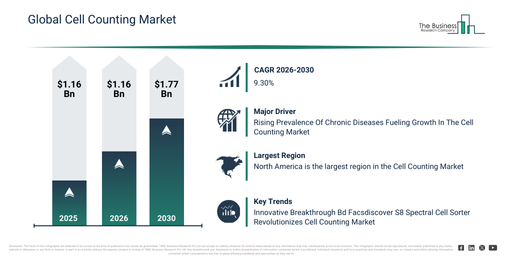
    The cell counting market has witnessed significant growth over recent years. Its valuation is set to rise from $11.39 billion in 2025 to $12.49 billion in 2026, advancing at a compound annual growth rate (CAGR) of 9.7%. The expansion observed historically is attributable to an increase in life sciences research activities, the growing utilization of cell culture techniques, heightened pharmaceutical research investments, more academic research funding, and the widespread adoption of laboratory automation.

    The cell counting market is projected to experience robust expansion over the coming years, reaching $17.83 billion in 2030, driven by a compound annual growth rate (CAGR) of 9.3%. This anticipated growth stems from several factors, including the escalating demand for cell-based treatments, the wider uptake of precision diagnostics, the broadening scope of biotechnology research pipelines, the increasing integration of AI in laboratory analytics, and a heightened emphasis on consistent laboratory procedures. Key trends anticipated during this period encompass the growing implementation of automated cell counting systems, a surge in the application of flow cytometry-based cell analysis, the rising need for high-throughput cell counting solutions, the expansion of research involving cell-based applications, and a strengthened commitment to achieving accurate and reproducible data.

    Download the Free Sample Report to Explore Key Market Insights:

    https://www.thebusinessresearchcompany.com/sample.aspx?id=6489&type=smp

    What Primary Drivers Are Shaping The Development Of The Cell Counting Market?

    The cell counting market is projected to experience growth in the upcoming years due to the increasing occurrence of chronic diseases. These illnesses are defined as conditions that persist for a year or longer, necessitate ongoing medical attention, disrupt daily activities, or both. Chronic diseases are typically characterized by complex origins, multiple contributing factors, extended incubation periods, prolonged sickness, and resulting in reduced function or impairment. Cell counting serves as a vital technique for diagnosing, monitoring, and managing chronic conditions. It assists healthcare professionals in identifying and tracking changes in cell numbers, thereby offering crucial information regarding disease progression and treatment efficacy. For instance, in June 2024, according to the National Health Service, a UK-based government department, 3,615,330 individuals registered with a general practitioner (GP) were diagnosed with non-diabetic hyperglycemia or pre-diabetes (a condition with elevated blood sugar levels, not high enough to be classified as diabetes) in 2023, marking an 18% increase from 3,065,825 cases in 2022. Therefore, the rising prevalence of chronic diseases is driving the cell counting market.

    What Segment Groups Are Identified Within The Cell Counting Market?

    The cell counting market covered in this report is segmented –

    1) By Consumables And Accessories: Media, Sera And Reagents, Assay Kits, Microplates

    2) By Product: Multi-Mode Readers, Cell Counters, Automated Cell Counters, Hemocytometers, Manual Cell Counters, Flow Cytometers

    3) By Application: Research Applications, Clinical And Diagnostic Applications, Industrial Applications

    4) By End-User: Hospitals And Diagnostic, Research Institutions, Pharmaceutical And Biotechnology Companies, Other End-Users

    Subsegments:

    1) By Media: Cell Culture Media, Specialized Growth Media

    2) By Sera and Reagents: Fetal Bovine Serum (FBS), Human Serum, Reagents for Cell Viability

    3) By Assay Kits: Cell Counting Kits, Apoptosis Detection Kits

    4) By Microplates: 96-Well Plates, 384-Well Plates, Specialized Cell Culture Plates

    What Trends Are Advancing Progress In The Cell Counting Market?

    Leading companies in the cell counting market are focusing on innovative products, such as the BD FACSDiscover S8 spectral cell sorter, to better serve the requirements of their existing consumers. Spectral cell sorting is a groundbreaking method that categorizes cells based on their visual properties by integrating superior spectral flow cytometry with high-speed imaging technologies. Unlike traditional flow cytometry, which identifies specific fluorescent bands, spectral flow cytometry captures the entire spectrum of signals generated by sample arrangements, thus facilitating multiple parameter sorting. For instance, in May 2023, Becton, Dickinson, and Company, a US-based manufacturer of medical devices, instrument systems, and reagents, launched the BD FACSDiscover S8 Cell Sorter, introducing two transformative technologies that empower researchers to uncover previously undetectable information about cells in standard flow cytometry investigations. Utilizing BD CellView Image Technology, researchers can analyze comprehensive microscopic images of individual cells and sort them rapidly based on visual criteria to validate findings in real time. Furthermore, BD SpectralFX Technology enables researchers to conduct high-parameter studies with full-spectrum cell sorting and enhanced performance, supported by a new flexible optical architecture and system-aware algorithms. The integration of these advancements within the BD FACSDiscover S8 Cell Sorter significantly broadens researchers’ capabilities, potentially revolutionizing research and cell-based therapy development across various domains including drug discovery, immuno-oncology, and genomics.

    Which Companies Hold Significant Positions In The Cell Counting Market?

    Major companies operating in the cell counting market are Thermo Fisher Scientific Inc., Merck KGaA, PerkinElmer Inc., Bio-Rad Laboratories Inc., Danaher Corporation, Olympus Corporation, HORIBA Ltd., Logos Biosystems Inc., Becton Dickinson and Company, GE Healthcare, Agilent Technologies Inc., BioTek Instruments Inc., DeNovix Inc., Sysmex Corporation, Nexcelom Bioscience LLC, Beckman Coulter Inc., Roche Diagnostics International Ltd., Miltenyi Biotec GmbH, AccuBioTech Co. Ltd., ChemoMetec A/S, Countstar Microscopy Systems, Luminex Corporation, NanoEnTek Inc., Partec GmbH, Advanced Instruments Inc., Analytik Jena AG, Integra Biosciences AG, Meridian Bioscience Inc., Promega Corporation, Sartorius AG

    Read the full cell counting market report here:

    https://www.thebusinessresearchcompany.com/report/cell-counting-global-market-report

    How Does The Cell Counting Market Perform Across Major Global Regions?

    North America was the largest region in the cell counting market in 2025. Asia-Pacific is expected to be the fastest-growing region in the forecast period. The regions covered in the cell counting market report are Asia-Pacific, South East Asia, Western Europe, Eastern Europe, North America, South America, Middle East, Africa.

    Request A Tailored Cell Counting Market Research Report For Competitive Advantage:

    https://www.thebusinessresearchcompany.com/customise?id=6489&type=smp

    Browse Through More Reports Similar to the Global Cell Counting Market 2026, By The Business Research Company

    Dental Diagnostic Imaging Devices And Equipment Market Report 2026

    https://www.thebusinessresearchcompany.com/report/dental-diagnostic-imaging-devices-and-equipment-global-market-report

    Dental Digital X Ray Market Report 2026

    https://www.thebusinessresearchcompany.com/report/dental-digital-x-ray-global-market-report

    Medical And Diagnostic Laboratory Services Market Report 2026

    https://www.thebusinessresearchcompany.com/report/medical-and-diagnostic-laboratory-services-global-market-report

    Get in touch with us:

    The Business Research Company: https://www.thebusinessresearchcompany.com/

    Americas +1 310-496-7795

    Asia +44 7882 955267 & +91 8897263534

    Europe +44 7882 955267

    Email us at info@tbrc.info

    Follow us on:

    LinkedIn: https://in.linkedin.com/company/the-business-research-company

    YouTube: https://www.youtube.com/channel/UC24_fI0rV8cR5DxlCpgmyFQ

    Global Market Model: https://www.thebusinessresearchcompany.com/global-market-model

  • CBCT Dental Imaging Market Size Outlook and Demand Expansion Across 2026–2030

    CBCT Dental Imaging Market Size Outlook and Demand Expansion Across 2026–2030

    The Business Research Company’s 2026 market reports include new capabilities such as market attractiveness scoring and analysis, total addressable market analysis, company scoring matrix, interactive excel data dashboard, improved supply chain analysis, upcoming startups in the market, and overview of key products, aimed at improving the depth, usability, and strategic value of the insights delivered.

    What Market Value Is Anticipated For The CBCT Dental Imaging Market Over The Period 2026–2030?

    The cbct dental imaging market size has demonstrated robust growth in recent years. This market is anticipated to expand from $1.35 billion in 2025 to $1.46 billion in 2026, achieving a compound annual growth rate (CAGR) of 8.5%. Historically, this growth can be ascribed to several factors, including an increased need for dental implant procedures, wider adoption of orthodontic treatments, greater investments in dental diagnostic infrastructure, heightened awareness regarding advanced dental imaging, and the introduction of compact cbct systems.

    The cbct dental imaging market is projected to experience significant growth in the coming years. Its value is expected to reach $2.02 billion by 2030, driven by a compound annual growth rate (CAGR) of 8.3%. This expansion during the forecast period is primarily attributed to the increasing adoption of digital dentistry solutions, a rising demand for minimally invasive diagnostics, the expansion of dental clinics in emerging markets, the growing integration of AI-based image analysis, and an increased focus on workflow efficiency in dental practices. Key trends anticipated in this period include the rising adoption of high-resolution 3D dental imaging systems, greater integration of CBCT with digital dentistry workflows, an expanding use of advanced image processing software, the proliferation of compact and in-clinic CBCT systems, and an enhanced emphasis on radiation dose optimization.

    Download the Free Sample Report to Explore Key Market Insights:

    https://www.thebusinessresearchcompany.com/sample.aspx?id=13401&type=smp

    Which Major Factors Are Driving The Expansion Of The CBCT Dental Imaging Market?

    The rising incidence of dental disorders is anticipated to propel the growth of the CBCT dental imaging market going forward. Dental disorders refer to a range of conditions and issues affecting the oral cavity and surrounding structures. CBCT dental imaging is utilized to diagnose dental conditions, detect impacted teeth, and deliver improved dental services and treatment outcomes. For instance, in October 2024, according to the Australian Institute of Health and Welfare, an Australia-based government agency, in 2022–23 there were around 87,400 hospitalizations for dental conditions and children aged 5–9 years had the highest rate of preventable hospitalizations, at 12.3 per 1,000 population. Therefore, the expanding prevalence of dental disorders will drive the growth of the CBCT dental imaging market.

    How Is The CBCT Dental Imaging Market Divided Into Its Major Segments?

    The cbct dental imaging market covered in this report is segmented –

    1) By Product Type: Flat Panel Detector, Image Intensifier, Other Product Type

    2) By Application: Dental Implants, Orthodontics, Endodontics, Other Application

    3) By End user: Hospitals, Dental Clinics, Academics and Research Institutes, Other End-User

    Subsegments:

    1) By Flat Panel Detector: Active Matrix Flat Panel Detectors, Thin-Film Transistor (TFT) Flat Panel Detectors

    2) By Image Intensifier: Single-Field Image Intensifiers, Dual-Field Image Intensifiers

    3) By Other Product Type: Charge-Coupled Device (CCD), Complementary Metal-Oxide-Semiconductor (CMOS)

    How Are Trends Transforming The CBCT Dental Imaging Market Landscape?

    Major companies in the CBCT dental imaging market are developing advanced imaging systems, such as multi-modal 3D CBCT platforms, to improve precision in diagnosis, treatment planning, and patient care. Multi-modal 3D CBCT platforms refer to CBCT devices that use a cone-shaped X-ray beam to capture three-dimensional volumetric images of the oral and maxillofacial region, while also supporting other imaging modes like cephalometric or 3D-object scanning on a single system, thereby enhancing workflow flexibility and diagnostic utility. An example occurred in February 2024, when Carestream Dental, a US-based dental technology company, launched the CS 8200 3D Access. This compact 4-in-1 system offers panoramic 2D imaging, 3D CBCT scanning, 3D-object scanning, and optional cephalometric imaging; it features ultra-high-resolution imaging at 75 microns, up to six selectable fields of view (from 4 × 4 cm to 10 × 10 cm), and AI-powered automatic panoramic curve mapping alongside nerve mapping.

    Who Are The Prominent Organizations Shaping The CBCT Dental Imaging Market?

    Major companies operating in the cbct dental imaging market are Dentsply Sirona Inc., Carestream Health, Cefla s.c., KaVo Dental GmbH, Gendex, Acteon Group, Planmeca Group, Vatech Network, Genoray Co Ltd, J. Morita Mfg. Corp., Shanghai Handy Medical Equipment Co Ltd, Air Techniques International, Soredex, Xoran Technologies, NewTom, PreXion Inc., Fona Dental SRO, Owandy Radiology, Launca Medical Device Technology Co Ltd, Planmeca Oy, Morita Corporation

    Read the full cbct dental imaging market report here:

    https://www.thebusinessresearchcompany.com/report/cbct-dental-imaging-global-market-report

    Which Region Currently Holds The Largest Share Of The CBCT Dental Imaging Market?

    North America was the largest region in the CBCT dental imaging market in 2025. Asia-Pacific is expected to be the fastest-growing region in the forecast period. The regions covered in the cbct dental imaging market report are Asia-Pacific, South East Asia, Western Europe, Eastern Europe, North America, South America, Middle East, Africa.

    Request A Tailored CBCT Dental Imaging Market Research Report For Competitive Advantage:

    https://www.thebusinessresearchcompany.com/customise?id=13401&type=smp

    Browse Through More Reports Similar to the Global CBCT Dental Imaging Market 2026, By The Business Research Company

    Urinary Catheters Market Report 2026

    https://www.thebusinessresearchcompany.com/report/urinary-catheters-global-market-report

    Central Venous Catheters Market Report 2026

    https://www.thebusinessresearchcompany.com/report/central-venous-catheters-global-market-report

    Diagnostic Catheters Market Report 2026

    https://www.thebusinessresearchcompany.com/report/diagnostic-catheters-global-market-report

    Get in touch with us:

    The Business Research Company: https://www.thebusinessresearchcompany.com/

    Americas +1 310-496-7795

    Asia +44 7882 955267 & +91 8897263534

    Europe +44 7882 955267

    Email us at info@tbrc.info

    Follow us on:

    LinkedIn: https://in.linkedin.com/company/the-business-research-company

    YouTube: https://www.youtube.com/channel/UC24_fI0rV8cR5DxlCpgmyFQ

    Global Market Model: https://www.thebusinessresearchcompany.com/global-market-model