Category: Medical Equipment

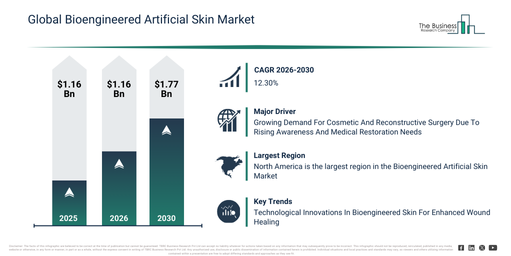
  • Bioengineered Artificial Skin Market Revenue Growth Expected to Reach $4.87 Billion by 2030 with 12.3% CAGR

    Bioengineered Artificial Skin Market Revenue Growth Expected to Reach $4.87 Billion by 2030 with 12.3% CAGR

    The Business Research Company’s 2026 market reports include new capabilities such as market attractiveness scoring and analysis, total addressable market analysis, company scoring matrix, interactive excel data dashboard, improved supply chain analysis, upcoming startups in the market, and overview of key products, aimed at improving the depth, usability, and strategic value of the insights delivered.

    How Will The Market Size Of The Bioengineered Artificial Skin Market Evolve From 2026 To 2030?

    The market size for bioengineered artificial skin has experienced significant expansion recently. Projections indicate it will expand from $2.73 billion in 2025 to $3.07 billion in 2026, showcasing a compound annual growth rate (CAGR) of 12.4%. This historical growth can be attributed to a rising incidence of burn injuries, an increasing prevalence of chronic wounds, the broadening scope of reconstructive surgical procedures, advancements in tissue engineering research, and the expanding availability of biomaterial technologies.

    The bioengineered artificial skin market size is anticipated to experience significant expansion in the coming years. This market is projected to reach a valuation of $4.88 billion in 2030, demonstrating a compound annual growth rate (CAGR) of 12.3%. Factors contributing to this growth over the forecast period include the increasing uptake of regenerative medicine therapies, a heightened demand for sophisticated wound care solutions, the broadening of stem cell-based skin treatments, escalating investments in bioprinting technologies, and a greater emphasis on personalized regenerative healthcare. Key trends expected during this period involve the accelerating development of cell-based skin substitutes, the growing acceptance of 3D bioprinted skin constructs, an expanding utilization of biomimetic scaffold materials, the broadening scope of regenerative wound healing applications, and an intensified focus on personalized skin regeneration.

    Download the Free Sample Report to Explore Key Market Insights:

    https://www.thebusinessresearchcompany.com/sample.aspx?id=24169&type=smp

    What Drivers Are Influencing The Bioengineered Artificial Skin Market?

    The increasing need for cosmetic and reconstructive surgery is anticipated to fuel the expansion of the bioengineered artificial skin market in the future. These medical interventions involve operations designed to improve physical appearance or to restore the proper form and function of body parts impacted by birth defects, injuries, or illnesses. The surge in demand for cosmetic and reconstructive surgery stems from heightened consumer awareness regarding aesthetic improvement possibilities and the escalating requirement for medical repair after trauma, congenital issues, or deformities caused by disease. Bioengineered artificial skin plays a crucial role in cosmetic and reconstructive surgery by facilitating tissue regrowth, minimizing scar formation, and enhancing aesthetic results in procedures that repair or augment damaged or absent skin. For example, in January 2023, the International Society of Aesthetic Plastic Surgery, a US-based professional organization focused on advancing aesthetic (cosmetic) plastic surgery, reported that over 12.8 million surgical and 17.5 million non-surgical operations were performed worldwide, indicating a 19.3% increase in total procedures compared to the prior reporting cycle. Furthermore, plastic surgeons globally conducted more than 14.9 million surgical and 18.8 million non-surgical operations in 2022, marking an 11.2% rise in the overall number of procedures executed. Consequently, the rising demand for cosmetic and reconstructive surgery is stimulating growth in the bioengineered artificial skin market.

    Which Segment Areas Are Covered In The Bioengineered Artificial Skin Market Analysis?

    The bioengineered artificial skin market covered in this report is segmented –

    1) By Product Type: Acellular Dermal Matrices, Cell-Based Skin Substitutes, Skin Grafts, 3D Bioprinted Skin

    2) By Material Type: Collagen-Based, Hyaluronic Acid-Based, Silicone-Based, Polyurethane-Based

    3) By Technology: Bioprinting, Electrospinning, Self-Assembly, Microfabrication

    4) By Application: Burn Treatment, Chronic Wound Care, Surgical Reconstruction, Other Applications

    5) By End-User: Hospitals, Dermatology Clinics, Ambulatory Surgical Centers, Research Institutions

    Subsegments:

    1) By Acellular Dermal Matrices: Biologically Derived Acellular Dermal Matrices, Synthetic Acellular Dermal Matrices, Hydrogel-Based Acellular Dermal Matrices, Collagen-Based Acellular Dermal Matrices

    2) By Cell-Based Skin Substitutes: Autologous Skin Substitutes, Allogeneic Skin Substitutes, Stem Cell-Based Skin Substitutes, Fetal and Neonatal Cell-Based Substitutes

    3) By Skin Grafts: Split-Thickness Skin Grafts, Full-Thickness Skin Grafts, Cultured Skin Grafts, Synthetic Skin Grafts

    4) By 3D Bioprinted Skin: Human Skin Bioprinting, In Vitro Bioprinted Skin Models, Bioink-Based Bioprinted Skin, Multi-Layered Bioprinted Skin

    What Key Developments And Trends Are Impacting The Bioengineered Artificial Skin Market?

    Major companies in the bioengineered artificial skin market are concentrating on technological innovations, including advanced tissue engineering techniques, to create highly effective skin substitutes. These developments aim to improve wound healing, enhance patient outcomes, and meet the increasing need for regenerative medicine in the treatment of severe burns and chronic wounds. Advanced tissue engineering is a multidisciplinary field that combines biology, materials science, and engineering to produce synthetic or biologically derived tissues and organs that can mimic the structure and function of natural tissues for medical applications. For instance, in January 2023, Urgo Group, a France-based healthcare company, launched the Genesis research laboratory, which focuses on developing artificial skin to assist in the effective treatment of severe wounds. This initiative intends to support healthcare professionals by creating advanced bioengineered skin solutions to speed up patient recovery and improve wound-healing results.

    Which Global Companies Are Actively Competing In The Bioengineered Artificial Skin Market?

    Major companies operating in the bioengineered artificial skin market are Stryker Corporation, Smith & Nephew plc, Mölnlycke Health Care AB, Integra LifeSciences Holdings Corporation, Organogenesis Inc., MiMedx Group Inc., Vericel Corporation, AlloSource Inc., Kerecis Inc., PolyNovo Limited, Avita Medical Inc., Cook Biotech Incorporated, Tissue Regenix Group plc, Episkin SA, TissUse GmbH, RenovaCare Inc., PolarityTE Inc., Mallinckrodt Pharmaceuticals (Skin Substitutes), Medtronic plc (Regenerative Therapies), 3D Bioprinting Solutions

    Read the full bioengineered artificial skin market report here:

    https://www.thebusinessresearchcompany.com/report/bioengineered-artificial-skin-global-market-report

    Which Regions Are Expected To Experience Rapid Expansion In The Bioengineered Artificial Skin Market?

    North America was the largest region in the bioengineered artificial skin market in 2025. Asia-Pacific is expected to be the fastest-growing region in the forecast period. The regions covered in the bioengineered artificial skin market report are Asia-Pacific, South East Asia, Western Europe, Eastern Europe, North America, South America, Middle East, Africa.

    Request A Tailored Bioengineered Artificial Skin Market Research Report For Competitive Advantage:

    https://www.thebusinessresearchcompany.com/customise?id=24169&type=smp

    Browse Through More Reports Similar to the Global Bioengineered Artificial Skin Market 2026, By The Business Research Company

    Hemostasis Products Market Report 2026

    https://www.thebusinessresearchcompany.com/report/hemostasis-products-global-market-report

    Hemostats Market Report 2026

    https://www.thebusinessresearchcompany.com/report/hemostats-global-market-report

    Hemostasis Diagnostic Devices And Equipment Market Report 2026

    https://www.thebusinessresearchcompany.com/report/hemostasis-diagnostic-devices-and-equipment-global-market-report

    Get in touch with us:

    The Business Research Company: https://www.thebusinessresearchcompany.com/

    Americas +1 310-496-7795

    Asia +44 7882 955267 & +91 8897263534

    Europe +44 7882 955267

    Email us at info@tbrc.info

    Follow us on:

    LinkedIn: https://in.linkedin.com/company/the-business-research-company

    YouTube: https://www.youtube.com/channel/UC24_fI0rV8cR5DxlCpgmyFQ

    Global Market Model: https://www.thebusinessresearchcompany.com/global-market-model
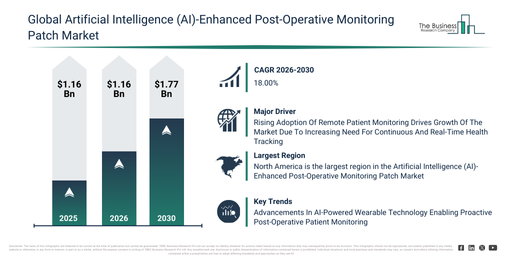
  • Artificial Intelligence (AI)-Enhanced Post-Operative Monitoring Patch Market Revenue Expected to Reach $5.11 Billion by 2030 with 18% CAGR

    Artificial Intelligence (AI)-Enhanced Post-Operative Monitoring Patch Market Revenue Expected to Reach $5.11 Billion by 2030 with 18% CAGR

    The Business Research Company’s 2026 market reports include new capabilities such as market attractiveness scoring and analysis, total addressable market analysis, company scoring matrix, interactive excel data dashboard, improved supply chain analysis, upcoming startups in the market, and overview of key products, aimed at improving the depth, usability, and strategic value of the insights delivered.

    What Is The Expected Market Size Of The Artificial Intelligence (AI)-Enhanced Post-Operative Monitoring Patch Market From 2026 To 2030?

    The artificial intelligence (ai)-enhanced post-operative monitoring patch market has experienced substantial expansion in recent years. This market is expected to reach $2.63 billion in 2026 from $2.22 billion in 2025, progressing at a compound annual growth rate (CAGR) of 18.3%. The drivers behind its historical growth include an increase in surgical procedure volumes, the embrace of wearable medical sensors, a concerted effort to minimize hospital readmissions, the growing prevalence of outpatient surgeries, and the initial adoption of digital health technologies.

    The artificial intelligence (ai)-enhanced post-operative monitoring patch market size is poised for substantial expansion in the coming years. It is projected to reach $5.11 billion in 2030, demonstrating a compound annual growth rate (CAGR) of 18.0%. This anticipated growth during the forecast period is driven by factors such as AI-powered predictive recovery analytics, the expansion of remote patient monitoring programs, a shift towards home care settings, seamless integration with hospital information systems, and the increasing demand for real-time alerts. Prominent trends expected in this period include continuous remote patient monitoring, early detection of post-surgical complications, wireless wearable recovery tracking, data-driven discharge management, and the provision of home-based postoperative care.

    Download the Free Sample Report to Explore Key Market Insights:

    https://www.thebusinessresearchcompany.com/sample.aspx?id=28919&type=smp

    What Drivers Are Influencing The Artificial Intelligence (AI)-Enhanced Post-Operative Monitoring Patch Market?

    The increasing need for remote patient monitoring is anticipated to drive the expansion of the artificial intelligence (AI)-enhanced post-operative monitoring patch market. Remote patient monitoring (RPM) involves leveraging digital tools to remotely monitor patient health information and relay it to medical professionals for continuous evaluation and care. The surge in RPM can be attributed to the growing incidence of chronic conditions necessitating constant, real-time health surveillance to enhance patient results and decrease hospital admissions. AI-enhanced postoperative monitoring patches support remote patient monitoring by constantly assessing patients’ vital signs to identify early indicators of issues, thereby facilitating prompt action and lowering hospital readmission rates. As an illustration, in August 2025, data from the Department of Health and Human Services, a US-based government administration, showed that in 2024, approximately 1 million enrollees utilized remote patient monitoring, marking a 27-percent increase from 2023. Consequently, the escalating demand for remote patient monitoring is fueling the growth of the artificial intelligence (AI)-enhanced post-operative monitoring patch market.

    Which Segments Are Included In The Analysis Of The Artificial Intelligence (AI)-Enhanced Post-Operative Monitoring Patch Market?

    The artificial intelligence (ai)-enhanced post-operative monitoring patch market covered in this report is segmented –

    1) By Product Type: Wearable Patches, Disposable Patches, Reusable Patches

    2) By Distribution Channel: Online, Offline

    3) By Application: Cardiac Monitoring, Respiratory Monitoring, Temperature Monitoring, Mobility Monitoring, Others Applications

    4) By End-User: Hospitals, Ambulatory Surgical Centers, Home Care Settings, Others End-Users

    Subsegments:

    1) By Wearable Patches: Vital Sign Monitoring Patch, Cardiac Monitoring Patch, Temperature Monitoring Patch

    2) By Disposable Patches: Single Use Postoperative Patch, Adhesive Biosensor Patch, Sterile Surgical Recovery Patch

    3) By Reusable Patches: Rechargeable Smart Patch, Washable Sensor Patch

    Which Trends Are Impacting The Growth Of The Artificial Intelligence (AI)-Enhanced Post-Operative Monitoring Patch Market?

    Leading companies in the artificial intelligence (AI)-enhanced post-operative monitoring patch market are focusing on developing advanced solutions, such as wearable devices, to assist users in proactively managing their health. Wearable devices are electronic instruments worn on the body that collect and track data related to health, fitness, or daily activities. For instance, in November 2023, BioIntelliSense, a US-based biotechnology company, alongside UC Davis Health, a US-based health center, introduced a continuous monitoring program for bone marrow transplant patients. This program integrates the FDA-cleared BioButton wearable with AI-powered analytics and a clinical intelligence platform to identify early changes in vital signs, enabling timely medical responses. This advanced post-operative monitoring patch records up to 1,440 vital sign readings per patient daily, helping to detect potential complications following surgery. Worn on the upper left chest, it continuously tracks key physiological indicators such as heart rate, breathing rate, and skin temperature. Utilizing AI algorithms, the system delivers smart alerts and clear visual insights, facilitating proactive and informed post-surgical patient management.

    Which Key Industry Participants Are Active In The Artificial Intelligence (AI)-Enhanced Post-Operative Monitoring Patch Market?

    Major companies operating in the artificial intelligence (ai)-enhanced post-operative monitoring patch market are Medtronic PLC, Koninklijke Philips N V, Masimo Corporation, ZOLL Medical Corporation, iRhythm Technologies Inc, VitalConnect Inc, BioIntelliSense Inc, Biotricity Inc, Vivalink Inc, Blue Spark Technologies Inc, Biobeat Technologies Ltd, SmartCardia SA, Current Health Ltd, Isansys Lifecare Ltd, Sensium Healthcare Ltd, Mintti Health Pvt Ltd, SmartQare Technologies Pvt Ltd, Pulsify Medical, WearOptimo Ltd, Crely Healthcare Pvt Ltd, Epicore Biosystems Inc

    Read the full artificial intelligence (ai)-enhanced post-operative monitoring patch market report here:

    https://www.thebusinessresearchcompany.com/report/artificial-intelligence-ai-enhanced-post-operative-monitoring-patch-global-market-report

    Which Regions Are Expected To Experience Rapid Expansion In The Artificial Intelligence (AI)-Enhanced Post-Operative Monitoring Patch Market?

    North America was the largest region in the artificial intelligence (AI)-enhanced post-operative monitoring patch market in 2025. Asia-Pacific is expected to be the fastest-growing region in the forecast period. The regions covered in the artificial intelligence (AI)-enhanced post-operative monitoring patch market report are Asia-Pacific, South East Asia, Western Europe, Eastern Europe, North America, South America, Middle East, Africa.

    Request A Tailored Artificial Intelligence (AI)-Enhanced Post-Operative Monitoring Patch Market Research Report For Competitive Advantage:

    https://www.thebusinessresearchcompany.com/customise?id=28919&type=smp

    Browse Through More Reports Similar to the Global Artificial Intelligence (AI)-Enhanced Post-Operative Monitoring Patch Market 2026, By The Business Research Company

    Artificial Intelligence Ai In Remote Patient Monitoring Market Report 2026

    https://www.thebusinessresearchcompany.com/report/artificial-intelligence-ai-in-remote-patient-monitoring-global-market-report

    Ai Based Surgical Robots Market Report 2026

    https://www.thebusinessresearchcompany.com/report/ai-based-surgical-robots-global-market-report

    Ai In Medical Devices Market Report 2026

    https://www.thebusinessresearchcompany.com/report/ai-in-medical-devices-global-market-report

    Get in touch with us:

    The Business Research Company: https://www.thebusinessresearchcompany.com/

    Americas +1 310-496-7795

    Asia +44 7882 955267 & +91 8897263534

    Europe +44 7882 955267

    Email us at info@tbrc.info

    Follow us on:

    LinkedIn: https://in.linkedin.com/company/the-business-research-company

    YouTube: https://www.youtube.com/channel/UC24_fI0rV8cR5DxlCpgmyFQ

    Global Market Model: https://www.thebusinessresearchcompany.com/global-market-model
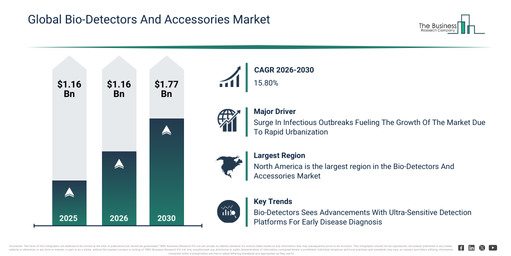
  • Bio-Detectors And Accessories Market Expected to Record Steady Growth and Approach $49.63 Billion by 2030

    Bio-Detectors And Accessories Market Expected to Record Steady Growth and Approach $49.63 Billion by 2030

    The Business Research Company’s 2026 market reports include new capabilities such as market attractiveness scoring and analysis, total addressable market analysis, company scoring matrix, interactive excel data dashboard, improved supply chain analysis, upcoming startups in the market, and overview of key products, aimed at improving the depth, usability, and strategic value of the insights delivered.

    What Is The Forecasted Market Value Of The Bio-Detectors And Accessories Market Across 2026–2030?

    The bio-detectors and accessories market has experienced significant expansion in recent years. This market is anticipated to grow from $23.79 billion in 2025 to $27.61 billion in 2026, exhibiting a compound annual growth rate (CAGR) of 16.1%. The historical increase can be ascribed to a heightened need for pathogen and biomolecule detection, the proliferation of clinical diagnostics laboratories, escalating concerns for food and environmental safety, the embrace of conventional optical and immunoassay techniques, and government investments in defense bio-surveillance.

    The bio-detectors and accessories market is projected to experience significant expansion in the coming years, reaching $49.63 billion in 2030 at a compound annual growth rate (CAGR) of 15.8%. This growth during the projected period can be attributed to several factors, including advancements in biosensor technologies, increased demand for point-of-care testing, the widening scope of genomics and proteomics research, greater laboratory automation, and a heightened focus on early disease detection and monitoring. Key trends anticipated over the forecast period encompass a growing need for swift and precise biological detection, broader utilization of multi-modal detection technologies, increased uptake of portable and point-of-care bio-detectors, an increase in the use of consumables and reagents, and a stronger emphasis on the sensitivity and reliability of detection systems.

    Download the Free Sample Report to Explore Key Market Insights:

    https://www.thebusinessresearchcompany.com/sample.aspx?id=25707&type=smp

    What Drivers Are Shaping The Future Growth Of The Bio-Detectors And Accessories Market?

    The rising occurrence of infectious diseases is set to drive the expansion of the bio-detectors and accessories market in the future. These illnesses are caused by detrimental microorganisms, such as bacteria, viruses, fungi, or parasites, which invade the body, multiply, and lead to infection. The heightened prevalence of infectious diseases is largely attributed to rapid urbanization, a factor that contributes to increased population density and closer human interaction, thereby facilitating the spread of infections. Bio-detectors and accessories are instrumental in combating infectious diseases by enabling swift and precise detection of pathogens, which is vital for timely diagnosis, effective treatment, and the containment of outbreaks. For example, in June 2024, the UK Health Security Agency, a UK-based government agency, disclosed that between week 40 of 2022 and week 15 of 2023, 108 NHS trusts in England recorded 1,681 critical care admissions for confirmed influenza. This marked a considerable increase from the previous season, which saw 182 admissions across 114 trusts, a number that had reached 316 by week 39 of 2022. Thus, the growing incidence of infectious diseases is indeed propelling the growth of the bio-detectors and accessories market.

    What Segmentation Levels Are Considered In The Bio-Detectors And Accessories Market?

    The bio-detectors and accessories market covered in this report is segmented –

    1) By Product: Instruments, Reagents And Media, Accessories And Consumables

    2) By Detection: Optical, Electrochemical, Mass Spectrometry, Immunoassay

    3) By Sensitivity: High, Medium, Low

    4) By Application: Clinical, Defense, Food And Environmental

    5) By End-Use: Point Of Care Testing, Research Laboratories, Diagnostics, Other End Users

    Subsegments:

    1) By Instruments: Spectrometers, PCR Instruments, Biosensors, Immunoassay Analyzers, Mass Detectors

    2) By Reagents And Media: Assay Kits, Detection Reagents, Sample Preparation Reagents, Buffers And Solutions

    3) By Accessories And Consumables: Microplates, Cartridges, Tubes And Vials, Filters, Calibration Standards

    What Trends Are Projected To Affect The Bio-Detectors And Accessories Market?

    Major companies within the bio-detectors and accessories market are focusing on developing advanced technology, such as ultra-sensitive detection platforms, to enhance early disease diagnosis, improve detection accuracy, and enable real-time monitoring in critical healthcare and biodefense applications. Ultra-sensitive detection platforms refer to sophisticated systems and technologies capable of detecting extremely low concentrations of biological molecules, including proteins, deoxyribonucleic acid (DNA), or biomarkers, in samples like blood, saliva, or tissue. For instance, in April 2024, Bio-Rad Laboratories, a US-based life science and clinical diagnostics company, launched the first ultrasensitive multiplexed digital PCR assay, the ddPLEX ESR1 Mutation Detection Kit. The ddPLEX ESR1 Mutation Detection Kit allows for the simultaneous detection, discrimination, and absolute quantification of seven clinically relevant ESR1 mutations within a single well, achieving an analytical sensitivity as low as 0.01% variant allele fraction (VAF). Designed for use with Bio-Rad’s QX600 Droplet Digital PCR System, the kit enables same-day results from circulating tumor DNA (ctDNA) in plasma or DNA extracted from formalin-fixed paraffin-embedded (FFPE) tissue samples. It includes controls for reliable performance and leverages advanced multiplexing with a simple workflow and robust data analysis capabilities.

    Which Leading Firms Are Contributing To The Growth Of The Bio-Detectors And Accessories Market?

    Major companies operating in the bio-detectors and accessories market are Roche Diagnostics GmbH, Thermo Fisher Scientific Inc, Danaher Corporation, Siemens Healthineers AG, GE HealthCare Technologies Inc, Agilent Technologies Inc, Shimadzu Corporation, Bio Rad Laboratories Inc, Bruker Corporation, Smiths Detection Inc, Air Techniques International Inc, Quanterix Corporation, AWSensors SL, Proengin SAS, MBio Diagnostics Inc, Bertin Technologies SAS, Cepheid, Luminex Corporation, BioFire Diagnostics, Hologic Diagnostics, Abbott Diagnostics, Qiagen NV

    Read the full bio-detectors and accessories market report here:

    https://www.thebusinessresearchcompany.com/report/bio-detectors-and-accessories-global-market-report

    Which Geographic Regions Are Influencing Demand In The Bio-Detectors And Accessories Market?

    North America was the largest region in the bio-detectors and accessories market in 2025. Asia-Pacific is expected to be the fastest-growing region in the forecast period. The regions covered in the bio-detectors and accessories market report are Asia-Pacific, South East Asia, Western Europe, Eastern Europe, North America, South America, Middle East, Africa.

    Request A Tailored Bio-Detectors And Accessories Market Research Report For Competitive Advantage:

    https://www.thebusinessresearchcompany.com/customise?id=25707&type=smp

    Browse Through More Reports Similar to the Global Bio-Detectors And Accessories Market 2026, By The Business Research Company

    Bionics Market Report 2026

    https://www.thebusinessresearchcompany.com/report/bionics-global-market-report

    Human Microchipping Market Report 2026

    https://www.thebusinessresearchcompany.com/report/human-microchipping-global-market-report

    Bionic Devices Market Report 2026

    https://www.thebusinessresearchcompany.com/report/bionic-devices-global-market-report

    Get in touch with us:

    The Business Research Company: https://www.thebusinessresearchcompany.com/

    Americas +1 310-496-7795

    Asia +44 7882 955267 & +91 8897263534

    Europe +44 7882 955267

    Email us at info@tbrc.info

    Follow us on:

    LinkedIn: https://in.linkedin.com/company/the-business-research-company

    YouTube: https://www.youtube.com/channel/UC24_fI0rV8cR5DxlCpgmyFQ

    Global Market Model: https://www.thebusinessresearchcompany.com/global-market-model
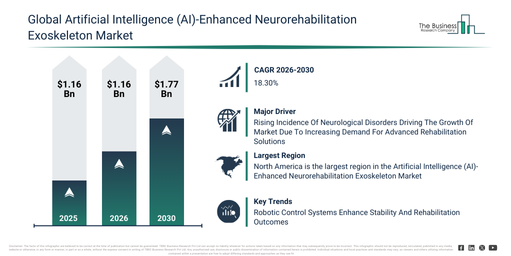
  • Global Artificial Intelligence (AI)-Enhanced Neurorehabilitation Exoskeleton Market Expected to Reach $2.86 Billion by 2030 at 18.3% CAGR

    Global Artificial Intelligence (AI)-Enhanced Neurorehabilitation Exoskeleton Market Expected to Reach $2.86 Billion by 2030 at 18.3% CAGR

    The Business Research Company’s 2026 market reports include new capabilities such as market attractiveness scoring and analysis, total addressable market analysis, company scoring matrix, interactive excel data dashboard, improved supply chain analysis, upcoming startups in the market, and overview of key products, aimed at improving the depth, usability, and strategic value of the insights delivered.

    What Market Valuation Is Forecasted For The Artificial Intelligence (AI)-Enhanced Neurorehabilitation Exoskeleton Market By 2030 Starting From Its 2026 Size?

    The artificial intelligence (ai)-enhanced neurorehabilitation exoskeleton market has seen significant expansion in recent years. It will grow from $1.24 billion in 2025 to $1.47 billion in 2026 at a compound annual growth rate (CAGR) of 18.6%. Its historical growth can be attributed to the rising prevalence of neurological disorders, the early adoption of robotic rehabilitation devices, advancements in sensor technologies, the demand for intensive rehabilitation therapies, and the expansion of rehabilitation centers.

    The market size for artificial intelligence (ai)-enhanced neurorehabilitation exoskeletons is anticipated to experience rapid expansion over the coming years. It is projected to increase to **$2.87 billion in 2030 at a compound annual growth rate (CAGR) of 18.3%**. This growth during the forecast period can be attributed to factors such as AI-enabled adaptive rehabilitation, the expansion of home-based neurorehabilitation, a rising geriatric population, reimbursement support for robotic therapy, and the integration of cloud-based analytics. Furthermore, major trends for this period encompass personalized AI-driven rehabilitation programs, adaptive motion assistance systems, data-driven therapy outcome tracking, home-based robotic rehabilitation, and their integration with clinical rehabilitation protocols.

    Download the Free Sample Report to Explore Key Market Insights:

    https://www.thebusinessresearchcompany.com/sample.aspx?id=28918&type=smp

    What Drivers Are Shaping The Future Growth Of The Artificial Intelligence (AI)-Enhanced Neurorehabilitation Exoskeleton Market?

    The increasing prevalence of neurological disorders is projected to boost the growth of the artificial intelligence (AI)-enhanced neurorehabilitation exoskeleton market in the coming years. Neurological disorders are medical conditions that affect the brain, spinal cord, and nerves, leading to impairments in movement, cognition, sensation, or other bodily functions. This global rise in such disorders is largely attributable to an aging population, as older adults are more prone to conditions like stroke, dementia, and Parkinson’s disease, all of which tend to become more common with age. Artificial intelligence (AI)-enhanced neurorehabilitation exoskeletons support individuals with neurological disorders by offering personalized, adaptive therapy that improves motor function, speeds up recovery, and compensates for impaired movement through continuous monitoring and intelligent adjustments specific to each patient’s needs. For instance, in March 2023, data from the Alzheimer’s Association, a US-based nonprofit voluntary health organization, indicated that approximately 6.7 million Americans aged 65 and older are living with Alzheimer’s dementia, a figure expected to increase to 13.8 million by 2060. Therefore, the escalating incidence of neurological disorders is a key driver for the expansion of the artificial intelligence (AI)-enhanced neurorehabilitation exoskeleton market.

    Which Segment Categories Define The Artificial Intelligence (AI)-Enhanced Neurorehabilitation Exoskeleton Market?

    The artificial intelligence (ai)-enhanced neurorehabilitation exoskeleton market covered in this report is segmented –

    1) By Component: Hardware, Software, Services

    2) By Mobility Type: Mobile, Stationary

    3) By Application: Stroke Rehabilitation, Spinal Cord Injury, Traumatic Brain Injury, Multiple Sclerosis

    4) By End-User: Hospitals And Clinics, Rehabilitation Centers, Home Care Settings

    Subsegments:

    1) By Hardware: Exoskeleton Frames, Actuators And Motors, Sensors And Wearable Devices, Control Units And Embedded Electronics

    2) By Software: Motion Planning Software, Rehabilitation Protocol Software, Data Analytics And Monitoring Software, Connectivity And Integration Software

    3) By Services: Implementation And Setup Services, Training And Education Services, Maintenance And Support Services, Remote Monitoring And Assistance Services

    What Major Market Trends Are Driving Changes In The Artificial Intelligence (AI)-Enhanced Neurorehabilitation Exoskeleton Market?

    Leading companies within the artificial intelligence (AI)-enhanced neurorehabilitation exoskeleton market are concentrating on incorporating innovative solutions, such as robotic control systems, to enhance mobility, stability, and personalized rehabilitation outcomes. Robotic control systems represent technologies that manage and coordinate the movements of a robot or exoskeleton, thereby assisting users in walking, standing, and performing daily activities safely and efficiently by guaranteeing precise, stable, and adaptive motion. For instance, in May 2025, Wandercraft SAS, a France-based robotics company, initiated clinical trials in the U.S. for its AI-powered Personal Exoskeleton. The device merges advanced physical AI with robotic control systems to support individuals with spinal cord injuries, stroke, and other mobility impairments in standing, walking, and safely navigating various surfaces. Constantly adapting to the user’s movements in real time, it significantly improves mobility, stability, and rehabilitation outcomes. Outfitted with a joystick-based control system and intelligent algorithms that forecast shifts in weight, surface, and speed, the exoskeleton encourages greater independence while mitigating secondary health risks associated with prolonged wheelchair use.

    Who Are The Top Companies Competing In The Artificial Intelligence (AI)-Enhanced Neurorehabilitation Exoskeleton Market?

    Major companies operating in the artificial intelligence (ai)-enhanced neurorehabilitation exoskeleton market are Ottobock SE & Co. KGaA, Shanghai Fourier Intelligence Co. Ltd., Kinova Inc., Cyberdyne Inc., Hocoma AG, Myomo Inc., Neofect Co. Ltd., Ekso Bionics Holdings Inc., ReWalk Robotics Ltd., AlterG Inc., RENU ROBOTICS CORPORATION, ExoAtlet Global S.A., REEV Robotics, Bionik Laboratories Corp., Rex Bionics PLC, Wearable Robotics Srl, Gogoa Mobility Robots S.L., Technaid S.L., Bionic Yantra Pvt. Ltd., MediTouch Inc.

    Read the full artificial intelligence (ai)-enhanced neurorehabilitation exoskeleton market report here:

    https://www.thebusinessresearchcompany.com/report/artificial-intelligence-ai-enhanced-neurorehabilitation-exoskeleton-global-market-report

    Which Geographic Regions Are Influencing Demand In The Artificial Intelligence (AI)-Enhanced Neurorehabilitation Exoskeleton Market?

    North America was the largest region in the artificial intelligence (AI)-enhanced neurorehabilitation exoskeleton market in 2025. The regions covered in the artificial intelligence (AI)-enhanced neurorehabilitation exoskeleton market report are Asia-Pacific, South East Asia, Western Europe, Eastern Europe, North America, South America, Middle East, Africa.

    Request A Tailored Artificial Intelligence (AI)-Enhanced Neurorehabilitation Exoskeleton Market Research Report For Competitive Advantage:

    https://www.thebusinessresearchcompany.com/customise?id=28918&type=smp

    Browse Through More Reports Similar to the Global Artificial Intelligence (AI)-Enhanced Neurorehabilitation Exoskeleton Market 2026, By The Business Research Company

    Wearable Robotic Exoskeleton Market Report 2026

    https://www.thebusinessresearchcompany.com/report/wearable-robotic-exoskeleton-global-market-report

    Military Exoskeleton Market Report 2026

    https://www.thebusinessresearchcompany.com/report/military-exoskeleton-global-market-report

    Rehabilitation Robotics Market Report 2026

    https://www.thebusinessresearchcompany.com/report/rehabilitation-robotics-global-market-report

    Get in touch with us:

    The Business Research Company: https://www.thebusinessresearchcompany.com/

    Americas +1 310-496-7795

    Asia +44 7882 955267 & +91 8897263534

    Europe +44 7882 955267

    Email us at info@tbrc.info

    Follow us on:

    LinkedIn: https://in.linkedin.com/company/the-business-research-company

    YouTube: https://www.youtube.com/channel/UC24_fI0rV8cR5DxlCpgmyFQ

    Global Market Model: https://www.thebusinessresearchcompany.com/global-market-model
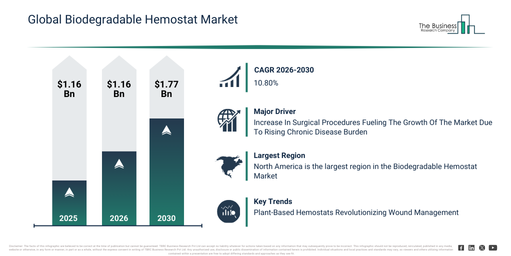
  • Biodegradable Hemostat Industry Expansion Forecast Showing Market Size of $1.63 Billion by 2030 at 10.8% CAGR

    Biodegradable Hemostat Industry Expansion Forecast Showing Market Size of $1.63 Billion by 2030 at 10.8% CAGR

    The Business Research Company’s 2026 market reports include new capabilities such as market attractiveness scoring and analysis, total addressable market analysis, company scoring matrix, interactive excel data dashboard, improved supply chain analysis, upcoming startups in the market, and overview of key products, aimed at improving the depth, usability, and strategic value of the insights delivered.

    What Market Size Increase Is Anticipated For The Biodegradable Hemostat Market Over The 2026–2030 Period?

    The biodegradable hemostat market has shown swift expansion in recent years. Its valuation is set to climb from $0.97 billion in 2025 to $1.08 billion in 2026, at a compound annual growth rate (CAGR) of 11.3%. This historical growth can be linked to factors like the reliance on traditional non-absorbable hemostats, an increase in surgical procedure volumes, enhancements in hospital infrastructure, growing understanding of blood loss management, and the integration of basic wound care technologies.

    The biodegradable hemostat market is projected to experience swift expansion over the coming years. This market is anticipated to reach $1.63 billion by 2030, exhibiting a compound annual growth rate (CAGR) of 10.8%. This projected increase is primarily driven by progress in polymer and biomaterial sciences, an increase in minimally invasive surgical procedures, a rise in trauma and emergency incidents, more regulatory approvals for biodegradable products, and the expansion of ambulatory surgical facilities. Key trends during this period are expected to encompass the growing acceptance of absorbable hemostatic solutions, a heightened preference for materials that are biocompatible and bioabsorbable, their increased application in minimally invasive and laparoscopic surgeries, the broader deployment of advanced hemostatic agents in trauma and emergency medical settings, and an escalated demand for hemostats that are ready-to-use and simple to apply.

    Download the Free Sample Report to Explore Key Market Insights:

    https://www.thebusinessresearchcompany.com/sample.aspx?id=25706&type=smp

    Which Economic Or Industry Drivers Are Impacting The Biodegradable Hemostat Market?

    The increasing frequency of surgical operations is projected to stimulate the growth of the biodegradable hemostat market in the coming period. Surgical procedures refer to medical interventions performed by healthcare professionals employing specialized instruments to treat, mend, or extract portions of the body for health-related reasons. The escalation in surgical procedures is largely attributed to the rising incidence of chronic conditions, which often necessitate operative solutions to manage health issues and enhance patient recovery. Biodegradable hemostats provide an advantage during surgeries since they disintegrate inside the body after use, negating the requirement for removal and lowering the chances of complications following surgery. For instance, in January 2025, data from Intuitive Surgical Inc., a US-based medical device company, revealed that OUS general surgery procedures expanded by roughly 35% in 2024, building on a growth of about 42% in 2023. Colorectal procedures constituted the most significant portion of this additional volume in both years. Consequently, the rising number of surgical procedures is propelling the development of the biodegradable hemostat market.

    How Is The Biodegradable Hemostat Market Segmented Across Key Categories?

    The biodegradable hemostat market covered in this report is segmented –

    1) By Product Type: Natural Polymer-Based Hemostats, Synthetic Polymer-Based Hemostats, Composite Hemostats, Cellulose-Based Hemostats, Gelatin-Based Hemostats

    2) By Formulation: Powdered Hemostats, Granular Hemostats, Liquid Hemostats, Foam Hemostats, Film Or Sheet Hemostats

    3) By Application: Surgical Procedures, Trauma Procedures, Dental Procedures, Laparoscopic Procedures, Other Applications

    4) By Distribution Channel: Direct Sales, Distributors, E-Commerce Platforms, Pharmaceutical Retailers, Healthcare Supply Companies

    5) By End-User: Hospitals, Ambulatory Surgical Centers, Clinics, Research Laboratories, Other End Users

    Subsegments:

    1) By Natural Polymer-Based Hemostats: Collagen-Based, Chitosan-Based, Alginate-Based, Fibrin-Based, Dextran-Based

    2) By Synthetic Polymer-Based Hemostats: Polyethylene Glycol (PEG)-Based, Polyurethane-Based, Polylactic Acid (PLA)-Based, Polyglycolic Acid (PGA)-Based, Polycaprolactone (PCL)-Based

    3) By Composite Hemostats: Natural-Synthetic Polymer Blends, Polymer-Cellulose Composites, Polymer-Gelatin Composites, Multi-Layer Composites, Nano-Composite Hemostats

    4) By Cellulose-Based Hemostats: Oxidized Regenerated Cellulose (ORC), Microcrystalline Cellulose (MCC), Carboxymethyl Cellulose (CMC), Nanocellulose-Based, Hydroxypropyl Cellulose (HPC)

    5) By Gelatin-Based Hemostats: Porcine Gelatin-Based, Bovine Gelatin-Based, Fish Gelatin-Based, Cross-Linked Gelatin, Modified Gelatin Formulations

    Which Upcoming Trends Are Expected To Influence The Biodegradable Hemostat Market?

    Companies operating in the biodegradable hemostat market are focusing on developing advanced solutions, such as plant-based cellulose matrices, to swiftly control bleeding and minimize blood loss. A plant-based cellulose matrix is a naturally derived material made from plant fibers, functioning as a biodegradable support structure commonly utilized in medical environments due to its safe bodily absorption. For instance, in April 2024, LifeScience PLUS, a US-based medical device company, introduced DonorSeal, a unique hemostatic dressing made entirely from plant-sourced cellulose. DonorSeal creates a gel that adheres on blood contact, effectively managing bleeding while being fully biodegradable, absorbable, non-toxic, and pH neutral, making it safe for patients even when on blood thinners. It assists in maintaining a moist and soothing environment that encourages natural tissue repair. The dressing can be easily removed without causing the wound to reopen or stick, providing enhanced comfort and quicker recovery for donor site wounds.

    Who Are The Dominant Players Shaping The Biodegradable Hemostat Market Landscape?

    Major companies operating in the biodegradable hemostat market are Johnson And Johnson Services Inc, Medtronic Plc, Stryker Corporation, Baxter International Inc, Meril Life Sciences Pvt Ltd, Samyang Holdings Corp, Molnlycke Health Care AB, GELITA Medical GmbH, B Braun Melsungen AG, Tricol Biomedical Inc, Hemostasis LLC, Cura Medical, RevMedx Inc, Speed Care Mineral GmbH, Regenity, C R Bard Inc, Integra LifeSciences Corporation, Advanced Medical Solutions Group plc, Anika Therapeutics Inc, Marine Polymer Technologies Inc, Axio Biosolutions Pvt Ltd, Biom Up Inc

    Read the full biodegradable hemostat market report here:

    https://www.thebusinessresearchcompany.com/report/biodegradable-hemostat-global-market-report

    What Are The Top-Performing Regions Within The Biodegradable Hemostat Market?

    North America was the largest region in the biodegradable hemostat market in 2025. The regions covered in the biodegradable hemostat market report are Asia-Pacific, South East Asia, Western Europe, Eastern Europe, North America, South America, Middle East, Africa.

    Request A Tailored Biodegradable Hemostat Market Research Report For Competitive Advantage:

    https://www.thebusinessresearchcompany.com/customise?id=25706&type=smp

    Browse Through More Reports Similar to the Global Biodegradable Hemostat Market 2026, By The Business Research Company

    Hematology Analyzers And Reagents Market Report 2026

    https://www.thebusinessresearchcompany.com/report/hematology-analyzers-and-reagents-global-market-report

    Blood Gas And Electrolyte Analyzers Market Report 2026

    https://www.thebusinessresearchcompany.com/report/blood-gas-and-electrolyte-analyzers-global-market-report

    Veterinary Hematology Analyzers Market Report 2026

    https://www.thebusinessresearchcompany.com/report/veterinary-hematology-analyzers-global-market-report

    Get in touch with us:

    The Business Research Company: https://www.thebusinessresearchcompany.com/

    Americas +1 310-496-7795

    Asia +44 7882 955267 & +91 8897263534

    Europe +44 7882 955267

    Email us at info@tbrc.info

    Follow us on:

    LinkedIn: https://in.linkedin.com/company/the-business-research-company

    YouTube: https://www.youtube.com/channel/UC24_fI0rV8cR5DxlCpgmyFQ

    Global Market Model: https://www.thebusinessresearchcompany.com/global-market-model
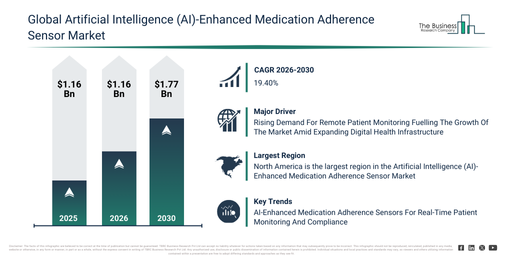
  • Artificial Intelligence (AI)-Enhanced Medication Adherence Sensor Market Expected to Reach $4.75 Billion by 2030 at 19.4% CAGR

    Artificial Intelligence (AI)-Enhanced Medication Adherence Sensor Market Expected to Reach $4.75 Billion by 2030 at 19.4% CAGR

    The Business Research Company’s 2026 market reports include new capabilities such as market attractiveness scoring and analysis, total addressable market analysis, company scoring matrix, interactive excel data dashboard, improved supply chain analysis, upcoming startups in the market, and overview of key products, aimed at improving the depth, usability, and strategic value of the insights delivered.

    How Is The Market Size Of The Artificial Intelligence (AI)-Enhanced Medication Adherence Sensor Market Expected To Change Between 2026 And 2030?

    The artificial intelligence (ai)-enhanced medication adherence sensor market size has experienced rapid growth recently. It is forecast to increase from $1.96 billion in 2025 to $2.34 billion in 2026, exhibiting a compound annual growth rate (CAGR) of 19.7%. The expansion observed over the past period is attributable to issues like medication non-adherence, the increase in chronic diseases, the adoption of digital health, requirements for clinical trial monitoring, and innovations in wearable sensors.

    The artificial intelligence (ai)-enhanced medication adherence sensor market size is projected to experience significant expansion in the coming years. It will grow to $4.75 billion in 2030 at a compound annual growth rate (CAGR) of 19.4%. This anticipated growth during the forecast period is primarily driven by the increasing adoption of remote patient monitoring, advancements in AI-driven adherence analytics, the emergence of value-based care models, the expanding elderly population, and the digitization of pharmaceutical trials. Key trends expected in the forecast period include real-time medication monitoring, the development of chronic disease compliance tools, continued remote patient monitoring, improved elderly medication management, and enhanced clinical trial adherence tracking.

    Download the Free Sample Report to Explore Key Market Insights:

    https://www.thebusinessresearchcompany.com/sample.aspx?id=28917&type=smp

    Which Economic Or Industry Drivers Are Impacting The Artificial Intelligence (AI)-Enhanced Medication Adherence Sensor Market?

    The increasing need for remote patient monitoring is anticipated to fuel expansion in the artificial intelligence (AI)-enhanced medication adherence sensor market moving forward. Remote patient monitoring (RPM) involves employing networked digital technologies to gather and relay health information from patients outside conventional healthcare settings, allowing medical professionals to track and address conditions instantly. RPM is experiencing swift expansion, largely attributed to increasing investments by healthcare systems in digital health infrastructure, which has expedited the incorporation of connected monitoring solutions into patient treatment. Artificial intelligence (AI)-enhanced medication adherence sensors continuously monitor medication consumption and transmit adherence information to healthcare providers, facilitating prompt interventions, minimizing missed doses, and enabling clinicians to remotely oversee treatment compliance and patient well-being. As an illustration, data from April 2025, provided by the Parliamentary Office of Science and Technology, a UK-based non-partisan body of the UK Parliament, indicated that England possessed 12,825 virtual ward beds in March 2025. This amounted to 20 beds per 100,000 GP-registered individuals, maintaining a 76.2% occupancy rate and serving 9,767 patients. Consequently, the escalating need for remote patient monitoring is a key factor propelling the expansion of the artificial intelligence (AI)-enhanced medication adherence sensor market.

    How Is The Artificial Intelligence (AI)-Enhanced Medication Adherence Sensor Market Structured Across Different Segments?

    The artificial intelligence (ai)-enhanced medication adherence sensor market covered in this report is segmented –

    1) By Product Type: Wearable Sensors, Ingestible Sensors, Smart Pill Bottles, Smart Packaging

    2) By Technology: Artificial Intelligence (AI) Algorithms, Internet Of Things (IoT) Integration, Cloud-Based Solutions, Mobile Applications, Other Technologies

    3) By Distribution Channel: Online, Offline

    4) By Application: Chronic Disease Management, Elderly Care, Clinical Trials, Home Healthcare, Other Applications

    5) By End-User: Patients, Healthcare Providers, Pharmaceutical Companies, Other End-Users

    Subsegments:

    1) By Wearable Sensors: Smart Wristbands, Adhesive Patches, Smartwatches, Clothing-Embedded Sensors, Arm Bands

    2) By Ingestible Sensors: Sensor-Embedded Pills, Biocompatible Capsules, Digestive Monitoring Sensors, pH Tracking Sensors, Temperature-Sensing Capsules

    3) By Smart Pill Bottles: Bluetooth-Enabled Pill Bottles, Reminder-Integrated Bottles, Dose-Tracking Bottles, Automatic Dispensing Bottles, Sensor-Activated Bottles

    4) By Smart Packaging: Blister Pack Sensors, Smart Labels, Pressure-Sensitive Packaging, Temperature-Monitoring Packaging, Tamper-Evident Smart Packs

    Which Trends Are Shaping The Future Of The Artificial Intelligence (AI)-Enhanced Medication Adherence Sensor Market?

    Leading businesses within the artificial intelligence (AI)-enhanced medication adherence sensor market are concentrating on creating user-friendly tools, specifically smart pill bottle-based systems, to optimize patient oversight, boost medication adherence, and ensure smooth data exchange with medical professionals. These smart pill bottle systems monitor patients’ medication consumption instantly, document adherence metrics, dispatch notifications and reminders for punctual dosing, and furnish practical information for healthcare providers. As an illustration, in June 2024, PatchRx, a digital health technology firm located in the US, introduced PatchRx Connect. This particular solution offers a straightforward integration, allowing real-time medication adherence data to be directly incorporated into current care management systems. It empowers clinical staff to quickly understand patient medication habits without interrupting existing procedures or compromising patient comfort. The system comprises a smart pill bottle cap, named PatchCap, which monitors medication usage; a cellular gateway, which streams data securely without requiring WiFi or a mobile application; and a Connect API, which enables providers to access adherence measurements within their proprietary software. Such integration contributes to enhanced treatment results and cost reduction by facilitating prompt clinical actions informed by actual adherence data.

    Which Major Players Dominate The Artificial Intelligence (AI)-Enhanced Medication Adherence Sensor Market?

    Major companies operating in the artificial intelligence (ai)-enhanced medication adherence sensor market are AiCure Inc., AdhereTech Inc., AARDEX Group Ltd., EtectRx Inc., Proteus Digital Health, Adherium Limited, Wisepill Technologies Proprietary Ltd., SMRxT Inc., Amiko Digital Health Limited, MedMinder Systems Inc., Spencer Health Solutions Inc., iZafe Group AB, Evalan B.V., Mango Health, DoseSmart, CarePredict, Catalia Health, Sentrian, MedAdherence, Pilloxa

    Read the full artificial intelligence (ai)-enhanced medication adherence sensor market report here:

    https://www.thebusinessresearchcompany.com/report/artificial-intelligence-ai-enhanced-medication-adherence-sensor-global-market-report

    What Are The Top-Performing Regions Within The Artificial Intelligence (AI)-Enhanced Medication Adherence Sensor Market?

    North America was the largest region in the artificial intelligence (AI)-enhanced medication adherence sensor market in 2025. The regions covered in the artificial intelligence (AI)-enhanced medication adherence sensor market report are Asia-Pacific, South East Asia, Western Europe, Eastern Europe, North America, South America, Middle East, Africa.

    Request A Tailored Artificial Intelligence (AI)-Enhanced Medication Adherence Sensor Market Research Report For Competitive Advantage:

    https://www.thebusinessresearchcompany.com/customise?id=28917&type=smp

    Browse Through More Reports Similar to the Global Artificial Intelligence (AI)-Enhanced Medication Adherence Sensor Market 2026, By The Business Research Company

    Artificial Intelligence Ai In Precision Medicine Market Report 2026

    https://www.thebusinessresearchcompany.com/report/artificial-intelligence-ai-in-precision-medicine-global-market-report

    Artificial Intelligence In Healthcare Market Report 2026

    https://www.thebusinessresearchcompany.com/report/artificial-intelligence-in-healthcare-global-market-report

    Artificial Intelligence Ai In Remote Patient Monitoring Market Report 2026

    https://www.thebusinessresearchcompany.com/report/artificial-intelligence-ai-in-remote-patient-monitoring-global-market-report

    Get in touch with us:

    The Business Research Company: https://www.thebusinessresearchcompany.com/

    Americas +1 310-496-7795

    Asia +44 7882 955267 & +91 8897263534

    Europe +44 7882 955267

    Email us at info@tbrc.info

    Follow us on:

    LinkedIn: https://in.linkedin.com/company/the-business-research-company

    YouTube: https://www.youtube.com/channel/UC24_fI0rV8cR5DxlCpgmyFQ

    Global Market Model: https://www.thebusinessresearchcompany.com/global-market-model
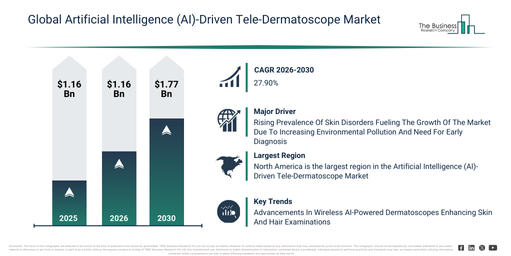
  • Artificial Intelligence (AI)-Driven Tele-Dermatoscope Market Forecast 2026–2035 Highlighting Industry Expansion Opportunities

    Artificial Intelligence (AI)-Driven Tele-Dermatoscope Market Forecast 2026–2035 Highlighting Industry Expansion Opportunities

    The Business Research Company’s 2026 market reports include new capabilities such as market attractiveness scoring and analysis, total addressable market analysis, company scoring matrix, interactive excel data dashboard, improved supply chain analysis, upcoming startups in the market, and overview of key products, aimed at improving the depth, usability, and strategic value of the insights delivered.

    What Is The Market Size Of The Artificial Intelligence (AI)-Driven Tele-Dermatoscope Market In 2026 And What Value Is Projected For 2030?

    The market size for artificial intelligence (ai)-driven tele-dermatoscopes has experienced substantial expansion in recent years. It is projected to grow from $1.51 billion in 2025 to $1.94 billion in 2026, achieving a compound annual growth rate (CAGR) of 28.2%. The growth observed historically can be attributed to an increasing incidence of skin disorders, the demand for remote dermatology, advancements in imaging sensors, the early adoption of AI in dermatology, and the expansion of telemedicine platforms.

    The artificial intelligence (AI)-driven tele-dermatoscope market is projected to experience rapid expansion in the coming years. This market is anticipated to reach $5.19 billion by 2030, exhibiting a compound annual growth rate (CAGR) of 27.9%. This anticipated growth is driven by factors such as the increasing acceptance of tele-dermatology, its integration with AI analytics, obtaining regulatory approvals for various skin imaging devices, the proliferation of cloud-based dermatology platforms, and a heightened understanding regarding the importance of early detection of skin cancer. Key trends shaping the forecast period encompass remote evaluation of skin lesions, automated systems for skin cancer diagnosis, the development of mobile dermatology applications, sophisticated cloud-based management of dermatology data, and seamless integration with existing telemedicine platforms.

    Download the Free Sample Report to Explore Key Market Insights:

    https://www.thebusinessresearchcompany.com/sample.aspx?id=28130&type=smp

    What Major Drivers Are Influencing Demand In The Artificial Intelligence (AI)-Driven Tele-Dermatoscope Market?

    The rising occurrence of skin conditions is anticipated to fuel the expansion of the artificial intelligence (AI)-driven tele-dermatoscope market in the coming years. Skin disorders are ailments that compromise the skin’s typical structure or function, leading to indicators such as redness, itching, scaling, or lesions. A primary factor contributing to the increase in skin disorders is heightened environmental pollution, as noxious airborne contaminants and chemicals can harm the skin’s protective barrier, resulting in irritation, allergic responses, and persistent skin issues. Artificial intelligence (AI)-driven tele-dermatoscopes assist in managing skin disorders by swiftly and precisely examining high-resolution skin images using sophisticated algorithms, facilitating early detection and diagnosis without the necessity of an in-person visit to a dermatologist. For example, in January 2025, data from the American Cancer Society, a professional organization located in the US, indicates that the US is projected to record approximately 105,000 new melanoma cases and about 8,400 associated fatalities in 2025. Consequently, the growing frequency of skin disorders is propelling the growth of the artificial intelligence (AI)-driven tele-dermatoscope market.

    What Are The Key Segments Of The Artificial Intelligence (AI)-Driven Tele-Dermatoscope Market?

    The artificial intelligence (ai)-driven tele-dermatoscope market covered in this report is segmented –

    1) By Product: Handheld Tele-Dermatoscopes, Desktop Tele-Dermatoscopes, Smartphone-Integrated Tele-Dermatoscopes

    2) By Technology: Machine Learning, Deep Learning, Computer Vision, Other Technologies

    3) By Distribution Channel: Online, Offline

    4) By Application: Skin Cancer Detection, Lesion Tracking, General Dermatology, Other Applications

    5) By End User: Hospitals And Clinics, Diagnostic Centers, Research Institutes, Homecare Settings, Other End Users

    Subsegments:

    1) By Handheld Tele-Dermatoscopes: USB-Connected Digital Dermatoscopes, Wireless Digital Dermatoscopes, Smartphone-Compatible Dermatoscopes

    2) By Desktop Tele-Dermatoscopes: Table-Top Dermatoscopes, Trolley-Mounted Dermatoscopes

    3) By Smartphone-Integrated Tele-Dermatoscopes: Clip-On Attachments, Integrated Systems

    What Key Trends Are Influencing The Development Of The Artificial Intelligence (AI)-Driven Tele-Dermatoscope Market?

    Companies operating significantly within the artificial intelligence (AI)-driven tele-dermatoscope market are focusing their efforts on creating advanced solutions, including wireless digital dermatoscopes, to provide enhanced mobility and ease of use. Wireless digital dermatoscopes function as portable instruments that capture detailed images of the skin and send these images wirelessly to computers or mobile devices, facilitating remote skin analysis and diagnosis. For instance, in March 2024, FotoFinder Systems, a Germany-based producer of skin imaging systems, introduced skeen, an innovative wireless digital dermatoscope with cloud storage, designed to revolutionize skin and hair examinations through advanced technology and artificial intelligence (AI). It sets a new benchmark in dermoscopy and trichoscopy by enabling swift, precise, and convenient image capture and storage through a fully compliant cloud-based platform. The device features a high-resolution camera and a magnetically attached optical system that provides 20x or 40x magnification, allowing for elaborate visualization of skin and hair structures in both polarized and non-polarized modes. This instrument offers an entirely wireless workflow, removing any requirement for smartphones, tablets, or extra adapters. Developed by FotoFinder Systems, Skeen integrates sophisticated AI technology, including the AIMEE assistant, to assist physicians in assessing skin lesions by delivering an AI-generated score from a clinically validated deep-learning model.

    Who Are The Leading Companies Operating In The Artificial Intelligence (AI)-Driven Tele-Dermatoscope Market?

    Major companies operating in the artificial intelligence (ai)-driven tele-dermatoscope market are Heine Optotechnik GmbH & Co. KG, Digital Diagnostics, FotoFinder Systems GmbH, Epiphany Dermatology PA, Canfield Scientific Inc., MetaOptima Technology Inc., Base Plus Limited, Skin Analytics, DermaSensor Inc., SkinVision, First Derm, Pixience, VERISKIN INC, Skinive B.V., Miiskin, DermaDetect, Triage Technologies Inc., SkinIO LLC, DermEngine, MoleScope, Stratum Biosciences

    Read the full artificial intelligence (ai)-driven tele-dermatoscope market report here:

    https://www.thebusinessresearchcompany.com/report/artificial-intelligence-ai-driven-tele-dermatoscope-global-market-report

    Which Region Shows The Strongest Potential For Future Growth In The Artificial Intelligence (AI)-Driven Tele-Dermatoscope Market?

    North America was the largest region in the artificial intelligence (AI)-driven tele-dermatoscope market in 2025. Asia-Pacific is expected to be the fastest-growing region in the forecast period. The regions covered in the artificial intelligence (AI)-driven tele-dermatoscope market report are Asia-Pacific, South East Asia, Western Europe, Eastern Europe, North America, South America, Middle East, Africa.

    Request A Tailored Artificial Intelligence (AI)-Driven Tele-Dermatoscope Market Research Report For Competitive Advantage:

    https://www.thebusinessresearchcompany.com/customise?id=28130&type=smp

    Browse Through More Reports Similar to the Global Artificial Intelligence (AI)-Driven Tele-Dermatoscope Market 2026, By The Business Research Company

    Ai In Medical Devices Market Report 2026

    https://www.thebusinessresearchcompany.com/report/ai-in-medical-devices-global-market-report

    Wearable Ai Market Report 2026

    https://www.thebusinessresearchcompany.com/report/wearable-ai-global-market-report

    Ai Based Surgical Robots Market Report 2026

    https://www.thebusinessresearchcompany.com/report/ai-based-surgical-robots-global-market-report

    Get in touch with us:

    The Business Research Company: https://www.thebusinessresearchcompany.com/

    Americas +1 310-496-7795

    Asia +44 7882 955267 & +91 8897263534

    Europe +44 7882 955267

    Email us at info@tbrc.info

    Follow us on:

    LinkedIn: https://in.linkedin.com/company/the-business-research-company

    YouTube: https://www.youtube.com/channel/UC24_fI0rV8cR5DxlCpgmyFQ

    Global Market Model: https://www.thebusinessresearchcompany.com/global-market-model
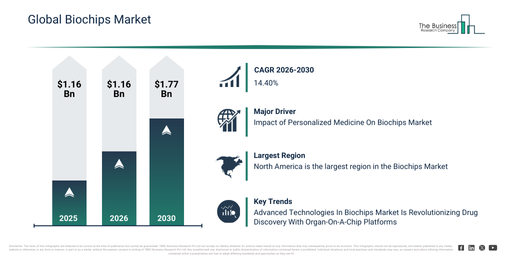
  • Biochips Market Revenue Expected to Reach $29.02 Billion by 2030 with 14.4% CAGR

    Biochips Market Revenue Expected to Reach $29.02 Billion by 2030 with 14.4% CAGR

    The Business Research Company’s 2026 market reports include new capabilities such as market attractiveness scoring and analysis, total addressable market analysis, company scoring matrix, interactive excel data dashboard, improved supply chain analysis, upcoming startups in the market, and overview of key products, aimed at improving the depth, usability, and strategic value of the insights delivered.

    How Much Is The Biochips Market Expected To Grow In Terms Of Market Value Between 2026 And 2030?

    The biochips market size has seen significant growth in recent years. It is anticipated to expand from $14.61 billion in 2025 to $16.97 billion in 2026, achieving a compound annual growth rate (CAGR) of 16.1%. The historical increase can be attributed to several factors, including the expansion of genomics and proteomics research, the broadening of pharmaceutical and biotech research and development programs, the integration of DNA microarrays in genetic screening, the increasing application of biochips in molecular diagnostics, and the development of analytical platforms based on microarray and microfluidic technologies.

    The biochips market size is set to experience substantial expansion in the coming years. It is anticipated to escalate to $29.03 billion in 2030, achieving a compound annual growth rate (CAGR) of 14.4%. This projected growth over the forecast period is fueled by several factors, including the surging demand for personalized therapies and precision medicine, increasing application of lab-on-chip technologies in clinical testing, elevated investment in biomarker discovery and translational research, the broadening uses of biochips across agriculture and life sciences, and the escalating commercialization of sophisticated biochip-based diagnostic instruments. Prominent trends for the forecast period encompass the increasing integration of biochips into genetic sequencing and disease diagnostics, a growing reliance on protein and cell arrays for advanced biomolecular investigations, the rising need for lab-on-chip platforms in point-of-care testing, the wider deployment of biochip applications in drug discovery and development, and a strong emphasis on miniaturization and high-throughput analysis of biological data.

    Download the Free Sample Report to Explore Key Market Insights:

    https://www.thebusinessresearchcompany.com/sample.aspx?id=15737&type=smp

    What Major Drivers Are Influencing Demand In The Biochips Market?

    The biochips market is expected to grow due to the increasing adoption of personalized medicines. Personalized medicine involves customizing medical treatment for individual characteristics, such as genetics or lifestyle, to maximize effectiveness and minimize adverse effects. The rising demand for personalized medicine is fueled by its potential to offer more effective treatments, advances in genomics, the growing complexity of diseases, and regulatory support. Biochips assist in personalized medicine by enabling precise and individualized treatment plans that are tailored to a person’s genetic profile. For instance, in February 2024, the Personalized Medicine Coalition, a US-based non-profit organization, reported that the FDA approved 16 novel personalized therapies for patients with rare diseases in 2023, which is an increase from six approvals in 2022. Therefore, the expanding use of personalized medicines is a key driver for the growth of the biochips market.

    What Major Segment Divisions Exist Within The Biochips Market?

    The biochips market covered in this report is segmented –

    1) By Type: Deoxyribonucleic Acid (DNA) Chips, Protein Chips, Lab-On-Chip, Tissue Arrays, Cell Arrays

    2) By Technology: Microarrays, Microfluidics

    3) By Application: Drug Discovery And Development, Agriculture, Genomics, Disease Diagnostics, Proteomics, Other Applications

    4) By End-User: Biotechnology And Pharmaceutical Companies, Academic And Research Institutes, Hospitals And Diagnostic Centers, Other End-Users

    Subsegments:

    1) By Deoxyribonucleic Acid (Dna) Chips: Gene Expression Chips, Snp (Single Nucleotide Polymorphism) Chips, Dna Microarrays

    2) By Protein Chips: Antibody Arrays, Protein Microarrays, Peptide Arrays

    3) By Lab-On-Chip: Microfluidic Devices, Biosensors

    4) By Tissue Arrays: Tumor Tissue Arrays, Normal Tissue Arrays

    5) By Cell Arrays: Cell-Based Biochips, Cell Signaling Arrays

    How Are Trends Shaping The Direction Of The Biochips Market?

    Leading companies in the biochips market are directing their efforts toward developing advanced technologies, including organ-on-a-chip platforms, with the aim of revolutionizing the processes of drug discovery and development. Organ-on-a-chip platforms are sophisticated microfluidic devices created to simulate the physiological characteristics and functions of human organs in a reduced size. For instance, in April 2024, Boston Micro Fabrication (BMF), a US-based nanotechnology research company, launched BMF Biotechnology Inc. BMF Biotechnology Inc. focuses on Biochips, also known as organ-on-a-chip platforms, which are designed for growing large-scale tissues in vitro. This innovation assists in the faster development of new drugs and cosmetics by offering a platform for testing and research outside the human body.

    Which Companies Are Leading Innovation In The Biochips Market?

    Major companies operating in the biochips market are Thermo Fisher Scientific Inc., Roche Diagnostics International Ltd, Agilent Technologies Inc., PerkinElmer Inc., Illumina Inc., Bio-Rad Laboratories Inc., QIAGEN N.V., Tecan Group Ltd., Cepheid Inc., Randox Laboratories Ltd., Takara Bio Inc., Luminex Corporation, Fluidigm Corporation, Micronit Microtechnologies B.V., Sphere Fluidics Limited, Sengenics, Arrayit Corporation, CustomArray Inc., NanoCellect Biomedical Inc., Dolomite Microfluidics, Biocartis NV

    Read the full biochips market report here:

    https://www.thebusinessresearchcompany.com/report/biochips-global-market-report

    Which Region Shows The Strongest Potential For Future Growth In The Biochips Market?

    North America was the largest region in the biochips market in 2025. Asia-Pacific is expected to be the fastest-growing region in the forecast period. The regions covered in the biochips market report are Asia-Pacific, South East Asia, Western Europe, Eastern Europe, North America, South America, Middle East, Africa.

    Request A Tailored Biochips Market Research Report For Competitive Advantage:

    https://www.thebusinessresearchcompany.com/customise?id=15737&type=smp

    Browse Through More Reports Similar to the Global Biochips Market 2026, By The Business Research Company

    Fully Automatic Biochemistry Analyzer Market Report 2026

    https://www.thebusinessresearchcompany.com/report/fully-automatic-biochemistry-analyzer-global-market-report

    Protein Analyzer Market Report 2026

    https://www.thebusinessresearchcompany.com/report/protein-analyzer-global-market-report

    Clinical Chemistry Analyzers Market Report 2026

    https://www.thebusinessresearchcompany.com/report/clinical-chemistry-analyzers-global-market-report

    Get in touch with us:

    The Business Research Company: https://www.thebusinessresearchcompany.com/

    Americas +1 310-496-7795

    Asia +44 7882 955267 & +91 8897263534

    Europe +44 7882 955267

    Email us at info@tbrc.info

    Follow us on:

    LinkedIn: https://in.linkedin.com/company/the-business-research-company

    YouTube: https://www.youtube.com/channel/UC24_fI0rV8cR5DxlCpgmyFQ

    Global Market Model: https://www.thebusinessresearchcompany.com/global-market-model
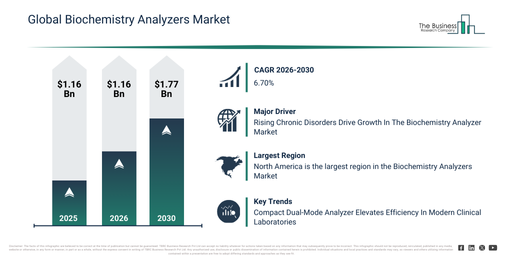
  • Global Biochemistry Analyzers Market Set for Strong Expansion Reaching $6.68 Billion by 2030 at 6.7% CAGR

    Global Biochemistry Analyzers Market Set for Strong Expansion Reaching $6.68 Billion by 2030 at 6.7% CAGR

    The Business Research Company’s 2026 market reports include new capabilities such as market attractiveness scoring and analysis, total addressable market analysis, company scoring matrix, interactive excel data dashboard, improved supply chain analysis, upcoming startups in the market, and overview of key products, aimed at improving the depth, usability, and strategic value of the insights delivered.

    What Market Value Is Expected For The Biochemistry Analyzers Market At The End Of The 2026–2030 Forecast Period?

    The biochemistry analyzers market size has experienced substantial growth in recent years. This market is set to expand from $4.82 billion in 2025 to $5.16 billion in 2026, achieving a compound annual growth rate (CAGR) of 7.0%. Historically, this expansion has been driven by factors such as the increase in clinical testing, the widening scope of hospital diagnostics, the rising prevalence of chronic diseases, the adoption of laboratory automation, and the steady availability of reagents.

    The biochemistry analyzers market size is projected to experience substantial growth in the coming years. It is set to expand to $6.69 billion in 2030, demonstrating a compound annual growth rate (CAGR) of 6.7%. The expansion foreseen for this period can be attributed to the rise of point-of-care testing, the emergence of AI-enabled analyzers, ongoing lab consolidation, an aging population, and the increasing demand for preventive diagnostics. Key trends expected within the forecast timeframe include high-throughput diagnostics, greater automation in clinical laboratories, the spread of point-of-care biochemistry testing, a heightened demand for multi-parameter testing, and advancements in chronic disease diagnostics.

    Download the Free Sample Report to Explore Key Market Insights:

    https://www.thebusinessresearchcompany.com/sample.aspx?id=20511&type=smp

    Which Market Drivers Are Supporting The Expansion Of The Biochemistry Analyzers Market?

    The rising incidence of chronic ailments is projected to stimulate the expansion of the biochemistry analyzers market. These are long-lasting health conditions demanding continuous management and care. This escalation in chronic conditions largely stems from an aging demographic, shifts in lifestyle, and escalating risk factors like poor nutrition, lack of physical activity, and environmental pollution. In managing chronic disorders, biochemistry analyzers are essential for measuring and tracking biomarkers, facilitating accurate diagnosis, monitoring disease advancement, and evaluating the effectiveness of treatments. For example, data from Allergy UK, a national charity based in the UK, released in April 2024, reveals that over 21 million individuals in the UK are impacted by allergies, which was noted as the most commonly reported chronic health condition in 2022. Moreover, forecasts suggest that by 2026, half of Europe’s population will be affected by at least one allergy. Thus, the heightened prevalence of chronic disorders is a key driver for the growth of the biochemistry analyzers market.

    What Segment Types Make Up The Biochemistry Analyzers Market?

    The biochemistry analyzers market covered in this report is segmented –

    1) By Product Type: Semi-Automated Biochemistry Analyzer, Fully Automated Biochemistry Analyzer

    2) By Modality: Bench-Top, Floor Standing

    3) By Application: Clinical Diagnostics, Bioreactor Byproduct Detection, Drug Development Applications, Other Applications

    4) By End User: Hospitals, Diagnostic Centers, Pharmaceutical Companies, Biotechnology Companies, Academic Research Institutes, Contract Research Organizations

    Subsegments:

    1) By Semi-Automated Biochemistry Analyzer: Benchtop Semi-Automated Analyzers, Portable Semi-Automated Analyzers, Miniaturized Semi-Automated Analyzers

    2) By Fully Automated Biochemistry Analyzer: High-Throughput Fully Automated Analyzers, Integrated Fully Automated Analyzers, Point-of-Care Fully Automated Analyzers

    Which Market Trends Are Creating New Opportunities In The Biochemistry Analyzers Market?

    Major companies operating in the biochemistry analyzers market are focusing on developing innovative advancements like integrated clinical analyzers to enhance testing efficiency and ensure consistent diagnostic results across laboratory networks. An integrated clinical analyzer is a laboratory instrument that unifies chemistry and immunoassay testing capabilities within one platform to support broad diagnostic needs and streamlined operations. For instance, in July 2024, Beckman Coulter Diagnostics, a US-based clinical diagnostics solutions provider, launched the DxC 500i Clinical Analyzer. This system combines chemistry and immunoassay workflows in a compact platform equipped with automated sample handling, prioritization functions, and an intuitive interface that supports rapid testing for low-volume laboratories. Its compatibility with standardized reagents and incorporation of Six Sigma–level analytical performance enable commutable results across healthcare networks, improving operational consistency and overall laboratory efficiency.

    Who Are The Key Players Driving Competition In The Biochemistry Analyzers Market?

    Major companies operating in the biochemistry analyzers market are Abbott Laboratories, Roche Diagnostics AG, Siemens Healthineers, Tosoh Corporation, Horiba Ltd, Mindray Medical International Limited, Randox Laboratories Ltd, Bio-Rad Laboratories Inc, Analyticon Biotechnologies GmbH, URIT Medical Electronic Group Co Ltd, Dirui Industrial Co Ltd, ELITechGroup, Erba Diagnostics Mannheim GmbH, Snibe Diagnostic, Hipro Biotechnology Co Ltd, Chengdu Seamaty Technology Co Ltd, Accurex Biomedical Pvt Ltd, Transasia Bio-Medicals Ltd, Labtest Diagnostica SA, KHB Medical

    Read the full biochemistry analyzers market report here:

    https://www.thebusinessresearchcompany.com/report/biochemistry-analyzers-global-market-report

    How Is The Biochemistry Analyzers Market Distributed Across Key Geographic Regions?

    North America was the largest region in the biochemistry analyzers market in 2025. Asia-Pacific is expected to be the fastest-growing region in the forecast period. The regions covered in the biochemistry analyzers market report are Asia-Pacific, South East Asia, Western Europe, Eastern Europe, North America, South America, Middle East, Africa.

    Request A Tailored Biochemistry Analyzers Market Research Report For Competitive Advantage:

    https://www.thebusinessresearchcompany.com/customise?id=20511&type=smp

    Browse Through More Reports Similar to the Global Biochemistry Analyzers Market 2026, By The Business Research Company

    Microbiology Diagnostic Devices And Equipment Market Report 2026

    https://www.thebusinessresearchcompany.com/report/microbiology-diagnostic-devices-and-equipment-global-market-report

    Laboratory Accessories Market Report 2026

    https://www.thebusinessresearchcompany.com/report/laboratory-accessories-global-market-report

    Blood Processing Devices And Consumables Market Report 2026

    https://www.thebusinessresearchcompany.com/report/blood-processing-devices-and-consumables-global-market-report

    Get in touch with us:

    The Business Research Company: https://www.thebusinessresearchcompany.com/

    Americas +1 310-496-7795

    Asia +44 7882 955267 & +91 8897263534

    Europe +44 7882 955267

    Email us at info@tbrc.info

    Follow us on:

    LinkedIn: https://in.linkedin.com/company/the-business-research-company

    YouTube: https://www.youtube.com/channel/UC24_fI0rV8cR5DxlCpgmyFQ

    Global Market Model: https://www.thebusinessresearchcompany.com/global-market-model
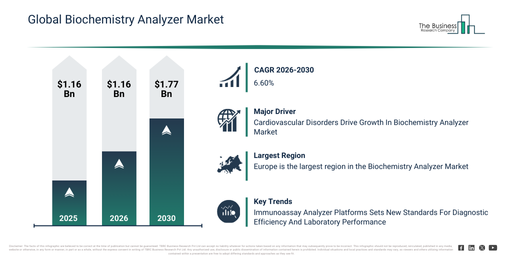
  • Biochemistry Analyzer Market Growth Expected to Reach $6.29 Billion by 2030 with 6.6% CAGR

    Biochemistry Analyzer Market Growth Expected to Reach $6.29 Billion by 2030 with 6.6% CAGR

    The Business Research Company’s 2026 market reports include new capabilities such as market attractiveness scoring and analysis, total addressable market analysis, company scoring matrix, interactive excel data dashboard, improved supply chain analysis, upcoming startups in the market, and overview of key products, aimed at improving the depth, usability, and strategic value of the insights delivered.

    What Is The Estimated Market Size Of The Biochemistry Analyzer Market During 2026–2030?

    The biochemistry analyzer market has shown robust growth in recent years. It is projected to expand from $4.58 billion in 2025 to $4.88 billion in 2026, exhibiting a compound annual growth rate (CAGR) of 6.6%. This historical growth can be attributed to factors such as increasing volumes of hospital laboratory testing, the early adoption of automated clinical chemistry analyzers, the expansion of diagnostic center infrastructure, the rising prevalence of metabolic and chronic diseases, and the integration of biochemistry testing into routine health screenings.

    The biochemistry analyzer market is projected to experience substantial growth over the coming years, anticipated to reach $6.29 billion in 2030, exhibiting a compound annual growth rate (CAGR) of 6.6%. This expansion during the projection period is driven by several factors, including an escalating demand for high-throughput analyzer platforms, the expanding application of biochemistry testing in biopharmaceutical research and development, increased uptake within academic and contract research organizations, a greater focus on swift and precise diagnostic workflows, and the broadening reach of clinical diagnostics in developing healthcare regions. Key trends expected during this forecast span involve the expanding deployment of biochemistry analyzers in everyday clinical diagnostics, a surging need for high-throughput and quick-result testing solutions, the increased integration of biochemistry testing in pharmaceutical development and research, a wider application of analyzers throughout hospitals and diagnostic facilities, and an increased emphasis on ensuring the accuracy, reliability, and standardization of biochemical analyses.

    Download the Free Sample Report to Explore Key Market Insights:

    https://www.thebusinessresearchcompany.com/sample.aspx?id=18255&type=smp

    What Underlying Factors Are Accelerating The Growth Of The Biochemistry Analyzer Market?

    The increasing prevalence of cardiovascular disorders is anticipated to stimulate the expansion of the biochemistry analyzer market moving forward. Cardiovascular diseases encompass a range of conditions affecting the heart and blood vessels. These ailments often involve narrowed or blocked blood vessels, which can lead to various complications such as heart attack, stroke, and peripheral artery disease (PAD). The incidence of cardiovascular diseases is rising due to an aging global population, sedentary lifestyles, poor dietary habits, and high obesity rates. A biochemistry analyzer assists in the diagnosis and management of cardiovascular conditions by providing accurate and timely measurements of key biomarkers. This capability allows healthcare professionals to monitor patient health, assess risk factors, and customize treatment plans effectively. For instance, in January 2024, according to the American Heart Association, a US-based nonprofit organization, the total number of deaths caused by cardiovascular diseases reached 931,578, up from 928,741 in 2023. Furthermore, the age-adjusted death rate from cardiovascular disease also experienced a modest increase, reaching 233.3 per 100,000 in 2024, marking a 4.0% increase from 224.4 per 100,000 in 2023. Consequently, the rising number of cardiovascular disorder cases is propelling the biochemistry analyzer market.

    How Are The Various Segments Of The Biochemistry Analyzer Market Categorized?

    The biochemistry analyzer market covered in this report is segmented –

    1) By Product Type: Semi-Automated, Fully-Automated

    2) By Modality: Bench Top, Floor-Standing

    3) By Application: Clinical Diagnostics, Bioreactor Byproduct Detection, Drug Development, Other Application

    4) By End User: Hospitals, Diagnostic Centers, Pharmaceutical Companies, Biotechnology Companies, Academic Research Institutes, Contract Research Organizations

    Subsegments:

    1) By Semi-Automated: Benchtop Semi-Automated Biochemistry Analyzers, Compact Semi-Automated Biochemistry Analyzers

    2) By Fully-Automated: High-Throughput Fully-Automated Biochemistry Analyzers, Modular Fully-Automated Biochemistry Analyzers

    What Trends Are Affecting The Expansion Of The Biochemistry Analyzer Market?

    Leading firms within the biochemistry analyzer market are prioritizing the creation of immunoassay analyzer platforms, aiming to improve diagnostic precision and minimize maintenance needs. These immunoassay analyzer platforms utilize immunoassay techniques to measure distinct biomarkers in biological samples, delivering superior accuracy and sensitivity for detecting diverse conditions, consequently boosting diagnostic efficiency and aiding extensive patient care. An example of this is Beckman Coulter Inc., a clinical diagnostics company based in the US, which introduced the DxI 9000 Access Immunoassay Analyzer in May 2023. This advanced platform is engineered to uplift laboratory performance. This subsequent generation analyzer can conduct up to 215 tests per hour per square meter. It incorporates sophisticated innovations like PrecisionVision Technology for accurate real-time data, ZeroDaily Maintenance for diminished upkeep, and IntelliServe for remote proactive service and diagnostics. The DxI 9000 improves assay sensitivity using the Lumi-Phos PRO Substrate and facilitates quick, precise heart failure diagnosis via its NT-proBNP assay. This system aims to fulfill the growing requirements for speed, dependability, and precision in clinical laboratories.

    Which Major Firms Influence Developments In The Biochemistry Analyzer Market?

    Major companies operating in the biochemistry analyzer market are Roche Holding AG, Thermo Fisher Scientific, Abbott Laboratories, Siemens Healthineers, Mindray Bio-Medical Electronics Co. Ltd., Hitachi High-Technologies Corporation, Beckman Coulter Inc., Sysmex Corporation, Bio-Rad Laboratories Inc, Ortho Clinical Diagnostics, Horiba Medical Ltd, Randox Laboratories Ltd., NOVA Biomedical Corp., Tecom Group, Dirui Industries Co. Ltd., Transasia Biomedicals Ltd., ELITechGroup, Rayto Life and Analytical Sciences Co. Ltd., DPC (Diagnostic Products Corporation), Cypress Diagnostics Inc, Urit Medical Electronic Group, Adaltis Inc

    Read the full biochemistry analyzer market report here:

    https://www.thebusinessresearchcompany.com/report/biochemistry-analyzer-global-market-report

    Which Region Is Projected To Dominate The Biochemistry Analyzer Market During The Forecast Period?

    Europe was the largest region in the biochemistry analyzer market in 2025. The regions covered in the biochemistry analyzer market report are Asia-Pacific, South East Asia, Western Europe, Eastern Europe, North America, South America, Middle East, Africa.

    Request A Tailored Biochemistry Analyzer Market Research Report For Competitive Advantage:

    https://www.thebusinessresearchcompany.com/customise?id=18255&type=smp

    Browse Through More Reports Similar to the Global Biochemistry Analyzer Market 2026, By The Business Research Company

    Bioprocess Automation Market Report 2026

    https://www.thebusinessresearchcompany.com/report/bioprocess-automation-global-market-report

    Lab Automation In Genomics Market Report 2026

    https://www.thebusinessresearchcompany.com/report/lab-automation-in-genomics-global-market-report

    Pharmacy Automation Systems Market Report 2026

    https://www.thebusinessresearchcompany.com/report/pharmacy-automation-systems-global-market-report

    Get in touch with us:

    The Business Research Company: https://www.thebusinessresearchcompany.com/

    Americas +1 310-496-7795

    Asia +44 7882 955267 & +91 8897263534

    Europe +44 7882 955267

    Email us at info@tbrc.info

    Follow us on:

    LinkedIn: https://in.linkedin.com/company/the-business-research-company

    YouTube: https://www.youtube.com/channel/UC24_fI0rV8cR5DxlCpgmyFQ

    Global Market Model: https://www.thebusinessresearchcompany.com/global-market-model