Category: Medical Equipment

  • Baby Thermometers Market Future Outlook Showing Expansion Toward $21.67 Billion by 2030

    Baby Thermometers Market Future Outlook Showing Expansion Toward $21.67 Billion by 2030

    The Business Research Company’s 2026 market reports include new capabilities such as market attractiveness scoring and analysis, total addressable market analysis, company scoring matrix, interactive excel data dashboard, improved supply chain analysis, upcoming startups in the market, and overview of key products, aimed at improving the depth, usability, and strategic value of the insights delivered.

    How Is The Market Size Of The Baby Thermometers Market Expected To Change Between 2026 And 2030?

    The baby thermometers market has experienced rapid expansion in recent years. Its value is projected to increase from $13.49 billion in 2025 to $14.96 billion in 2026, demonstrating a compound annual growth rate (CAGR) of 10.9%. This historical growth can be attributed to a rise in infant healthcare awareness, an increase in home-based child temperature monitoring, the adoption of digital thermometers replacing mercury devices, the demand for safer and non-invasive temperature measurement, and the expansion of pediatric healthcare product retailing.

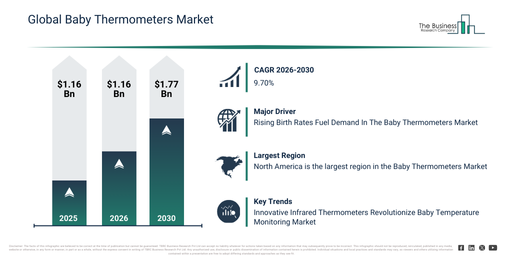
    The baby thermometers market size is expected to show significant growth in the coming years, with projections indicating it will reach $21.68 billion by 2030, at a compound annual growth rate (CAGR) of 9.7%. This expansion during the forecast period is driven by several factors, including an increasing newborn and infant population in emerging markets, a rising preference for infrared and non-contact thermometers, higher demand for portable and travel-friendly baby thermometers, an enhanced focus on hygiene and infection-free temperature monitoring, and the expanding online and pharmacy-based distribution channels for baby care products. Key trends for this period include a growing preference for non-contact and infrared baby thermometers, increasing demand for fast-reading and child-friendly thermometer designs, a rising adoption of models with flexible tips, waterproofing, and pediatric-specific features, the broadening use of baby thermometers for home, travel, and portable applications, and a continuous emphasis on comfort, safety, and ease of use in infant temperature monitoring.

    Download the Free Sample Report to Explore Key Market Insights:

    https://www.thebusinessresearchcompany.com/sample.aspx?id=16622&type=smp

    Which Economic Or Industry Drivers Are Impacting The Baby Thermometers Market?

    Rising birth rates are projected to fuel the expansion of the baby thermometers market in the future. Birth rates denote the count of live births per 1,000 individuals within a population over a particular timeframe, typically a year. Various elements contribute to increasing birth rates, including enhanced healthcare leading to reduced infant mortality, evolving cultural norms favoring larger families, economic stability supporting family planning, and government initiatives that foster childbirth and family development. Baby thermometers are vital for checking newborns’ temperatures to confirm their stability and to identify any early indications of fever or sickness. These devices deliver swift and precise measurements, which are critical for receiving immediate medical attention if necessary. For example, in April 2024, data from National Vital Statistics Reports, a publication of the US-based inter-governmental National Vital Statistics System (NVSS), showed that female birth rates rose by 1% to 5% for women aged 25–29 and 35–44, and observed a 12% increase among women aged 45–49. Consequently, the uptick in birth rates is stimulating the growth of the baby thermometers market.

    How Is The Baby Thermometers Market Structured Across Different Segments?

    The baby thermometers market covered in this report is segmented –

    1) By Type: Rectal, Oral, Infrared, Ear Canal, Pacifier, Armpit

    2) By Thermometer Type: Digital Baby Thermometers, Infrared Baby Thermometers, Pacifier Baby Thermometers, Smart Baby Thermometers

    3) By Connectivity: Non-Connected Baby Thermometers, Connected Baby Thermometers

    4) By Distribution Channel: Retail Store, Online Store, Supermarket, Pharma Store

    5) By Application: Home Use, Clinical Use, Travel And Portable Use, Other Applications

    Subsegments:

    1) By Rectal Thermometers: Digital Rectal Thermometers, Flexible Tip Rectal Thermometers, Disposable Rectal Thermometers, Fast-Read Rectal Thermometers, Waterproof Rectal Thermometers

    2) By Oral Thermometers: Digital Oral Thermometers, Flexible Tip Oral Thermometers, Quick-Read Oral Thermometers, Non-Contact Oral Thermometers, Oral Thermometers With Memory Recall

    3) By Infrared Thermometers: Non-Contact Infrared Thermometers, Forehead Infrared Thermometers, Temporal Artery (Forehead) Infrared Thermometers, Dual-Mode Infrared Thermometers (Forehead And Ear), Touchless Infrared Thermometers

    4) By Ear Canal Thermometers: Digital Ear Thermometers, Infrared Ear Thermometers, Disposable Ear Thermometer Covers, Fast-Reading Ear Thermometers, Pediatric-Specific Ear Thermometers

    5) By Pacifier Thermometers: Digital Pacifier Thermometers, Flexible Tip Pacifier Thermometers, Bpa-Free Pacifier Thermometers, Pacifier Thermometers With Memory Function, Thermometer Pacifiers For Infants

    6) By Armpit (Axillary) Thermometers: Digital Axillary Thermometers, Mercury-Free Axillary Thermometers, Flexible Tip Armpit Thermometers, Fast-Reading Axillary Thermometers, Pediatric-Specific Axillary Thermometers

    Which Trends Are Shaping The Future Of The Baby Thermometers Market?

    Leading companies operating within the baby thermometers market are introducing innovative products, such as infrared thermometers, to gain a competitive advantage. Infrared thermometers utilize infrared technology to measure temperature without physical contact, commonly by scanning the forehead or ear, providing rapid and hygienic readings. These devices are extensively employed in medical settings and households for non-invasive and quick temperature monitoring. For instance, in July 2023, Tenovi, a US-based remote patient monitoring (RPM) solution, launched a cellular-enabled Infrared Thermometer. This new FDA-approved infrared thermometer offers patients the benefit of automatically transmitting real-time temperature readings to doctors and clinicians. A cellular-enabled infrared thermometer facilitates real-time data transfer and remote oversight by integrating infrared temperature measurement with cellular connectivity. In large-scale environments like medical institutions, manufacturing facilities, and field sites, its cellular functionality enables smooth data logging and centralized access through cloud systems. Many versions are engineered for durability, often featuring resistance to dust and water, along with the capacity to withstand high temperatures, ensuring dependable operation across various conditions.

    Which Major Players Dominate The Baby Thermometers Market?

    Major companies operating in the baby thermometers market are Braun GmbH, Omron Healthcare, Exergen Corporation, Microlife Corporation, American Diagnostic Corporation, Contec Medical Systems Co Ltd, Geratherm Medical AG, Kinsa Inc, Withings, Vicks (The Procter & Gamble Company) , Beurer GmbH, Easywell Biomedicals Inc, Berrcom, Rossmax International Ltd, Innovo Medical Group Inc, TempTraq, Elepho, Raiing Medical, Zhongshan Bisen Plastic Electronic Products Co Ltd

    Read the full baby thermometers market report here:

    https://www.thebusinessresearchcompany.com/report/baby-thermometers-global-market-report

    What Are The Top-Performing Regions Within The Baby Thermometers Market?

    North America was the largest region in the baby thermometers market in 2025. Asia-Pacific is expected to be the fastest-growing region in the forecast period. The regions covered in the baby thermometers market report are Asia-Pacific, South East Asia, Western Europe, Eastern Europe, North America, South America, Middle East, Africa.

    Request A Tailored Baby Thermometers Market Research Report For Competitive Advantage:

    https://www.thebusinessresearchcompany.com/customise?id=16622&type=smp

    Browse Through More Reports Similar to the Global Baby Thermometers Market 2026, By The Business Research Company

    Infrared Thermometers Market Report 2026

    https://www.thebusinessresearchcompany.com/report/infrared-thermometers-global-market-report

    Temperature Sensor Market Report 2026

    https://www.thebusinessresearchcompany.com/report/temperature-sensor-global-market-report

    Temperature Monitoring Devices Market Report 2026

    https://www.thebusinessresearchcompany.com/report/temperature-monitoring-devices-global-market-report

    Get in touch with us:

    The Business Research Company: https://www.thebusinessresearchcompany.com/

    Americas +1 310-496-7795

    Asia +44 7882 955267 & +91 8897263534

    Europe +44 7882 955267

    Email us at info@tbrc.info

    Follow us on:

    LinkedIn: https://in.linkedin.com/company/the-business-research-company

    YouTube: https://www.youtube.com/channel/UC24_fI0rV8cR5DxlCpgmyFQ

    Global Market Model: https://www.thebusinessresearchcompany.com/global-market-model

  • Baby Monitoring Devices Market Revenue Growth Expected to Reach $8.64 Billion by 2030 with 11% CAGR

    Baby Monitoring Devices Market Revenue Growth Expected to Reach $8.64 Billion by 2030 with 11% CAGR

    The Business Research Company’s 2026 market reports include new capabilities such as market attractiveness scoring and analysis, total addressable market analysis, company scoring matrix, interactive excel data dashboard, improved supply chain analysis, upcoming startups in the market, and overview of key products, aimed at improving the depth, usability, and strategic value of the insights delivered.

    What Is The Market Size Of The Baby Monitoring Devices Market In 2026 And What Value Is Projected For 2030?

    The baby monitoring devices market size has seen a rapid increase in recent years. It is projected to expand from $5.14 billion in 2025 to $5.7 billion in 2026, achieving a compound annual growth rate (CAGR) of 11.0%. The historical growth in this market can be attributed to factors such as rising urbanization and nuclear family structures, heightened parental awareness concerning infant safety, an increase in consumer electronics adoption, improvements in internet connectivity, and the expansion of e-commerce distribution channels.

    The baby monitoring devices market size is anticipated to experience substantial growth over the coming years. This market is projected to reach $8.65 billion by 2030, demonstrating a compound annual growth rate (CAGR) of 11.0%. This expansion during the forecast period is driven by factors such as increasing demand for smart home integration, the rising adoption of AI-powered infant monitoring systems, the proliferation of remote childcare solutions, a heightened focus on cybersecurity features, and technological advancements in sensor accuracy. Noteworthy trends expected in this period include the increasing uptake of smart baby monitors with app connectivity, an escalating demand for video and night vision monitoring, the growing integration of AI-based audio and motion detection, the expansion of wireless and Wi-Fi enabled devices, and an enhanced emphasis on data privacy and security.

    Download the Free Sample Report to Explore Key Market Insights:

    https://www.thebusinessresearchcompany.com/sample.aspx?id=8440&type=smp

    What Major Drivers Are Influencing Demand In The Baby Monitoring Devices Market?

    An expanding child population is anticipated to drive the growth of the baby monitoring device market moving forward. The term “child population” refers to the count of individuals aged 0–17 years living within a defined area, such as a village, city, state, province, country, or continent. Baby monitoring devices are frequently employed by parents to guarantee the safety and welfare of their infants. These gadgets are often considered vital for newborns and infants, providing parents with reassurance and enabling them to react swiftly to their baby’s requirements. For instance, in 2023, the Federal Interagency Forum on Child and Family, a consortium of 23 Federal government agencies involved in research and activities related to children and families, reported that the United States had 72.5 million children in 2022. This total number of children is projected to increase to 78.2 million by 2050. Consequently, the rising child population is fueling the growth of the baby monitoring device market.

    What Are The Key Segments Of The Baby Monitoring Devices Market?

    The baby monitoring devices market covered in this report is segmented –

    1) By Type: Internet Baby Monitor, Video Baby Monitor, Audio Baby Monitor

    2) By Mode Of Connection: Wired, Wireless

    3) By Application: Home And Family Care, Daycare And Childcare Centers, Neonatal And Pediatric Care Units, Other Applications

    Subsegments:

    1) By Internet Baby Monitor: Wi-Fi Baby Monitors, Smart Baby Monitors With App Connectivity

    2) By Video Baby Monitor: Traditional Video Monitors, Pan-And-Tilt Video Monitors, Night Vision Video Monitors

    3) By Audio Baby Monitor: Standard Audio Monitors, DECT Audio Monitors, Two-Way Communication Audio Monitors

    What Key Trends Are Influencing The Development Of The Baby Monitoring Devices Market?

    Leading companies in the baby monitoring devices market are concentrating on launching AI-based smart solutions, such as AI-based smart baby monitoring devices, to gain a competitive advantage. An AI-based smart baby monitoring device is a technologically advanced system designed to oversee and ensure the safety and well-being of infants. For example, in September 2023, VTech, a Hong Kong-based parenting technology company, unveiled the V-Care VC2105 Smart Nursery Baby Monitor, which utilizes unique local AI capabilities, delivering baby sleep analytics and real-time alerts, to create the ideal baby monitoring system on the market. With the assistance of cutting-edge local AI-powered technology, parents can guarantee a safe and serene sleep environment for their babies and eliminate restless evenings. The 5-inch, 720p High-Definition Parent Unit Display enables parents to observe their child from home, or they can use a smartphone for remote monitoring. Besides offering useful sleep analysis and advantages, this Over-the-Crib WiFi video baby monitor provides parents with a complete view of their babies. Using Sleep Analytics, parents can enhance their babies’ sleep efficiency by discovering when they sleep the longest or how often they are visited throughout the night.

    Who Are The Leading Companies Operating In The Baby Monitoring Devices Market?

    Major companies operating in the baby monitoring devices market are Dorel Industries Inc., Samsung Electronics Co. Ltd., Angelcare Monitors Inc., Motorola Solutions Inc., iBaby Labs Inc., VTech Holdings Limited, Summer Infant Inc., Nanit Inc., Owlet Baby Care Inc., Respisense, Safetosleep, Miku Inc., Infant Optics, MOBI Technologies Inc., Panasonic Corporation, Levana Infotech Pvt. Ltd., Baby Delight Inc., Invidyo LLC, Snuza Inc., Foscam LLC, Mayborn Group Limited, Arlo Technologies Inc.

    Read the full baby monitoring devices market report here:

    https://www.thebusinessresearchcompany.com/report/baby-monitoring-devices-global-market-report

    Which Region Shows The Strongest Potential For Future Growth In The Baby Monitoring Devices Market?

    Asia-Pacific was the largest region in the baby monitoring devices market in 2025. The regions covered in the baby monitoring devices market report are Asia-Pacific, South East Asia, Western Europe, Eastern Europe, North America, South America, Middle East, Africa.

    Request A Tailored Baby Monitoring Devices Market Research Report For Competitive Advantage:

    https://www.thebusinessresearchcompany.com/customise?id=8440&type=smp

    Browse Through More Reports Similar to the Global Baby Monitoring Devices Market 2026, By The Business Research Company

    Fetal And Neonatal Monitoring Devices Market Report 2026

    https://www.thebusinessresearchcompany.com/report/fetal-and-neonatal-monitoring-devices-global-market-report

    Home Health Monitoring Devices Market Report 2026

    https://www.thebusinessresearchcompany.com/report/home-health-monitoring-devices-global-market-report

    Fetal And Neonatal Monitoring Devices Market Report 2026

    https://www.thebusinessresearchcompany.com/report/fetal-and-neonatal-monitoring-devices-global-market-report

    Get in touch with us:

    The Business Research Company: https://www.thebusinessresearchcompany.com/

    Americas +1 310-496-7795

    Asia +44 7882 955267 & +91 8897263534

    Europe +44 7882 955267

    Email us at info@tbrc.info

    Follow us on:

    LinkedIn: https://in.linkedin.com/company/the-business-research-company

    YouTube: https://www.youtube.com/channel/UC24_fI0rV8cR5DxlCpgmyFQ

    Global Market Model: https://www.thebusinessresearchcompany.com/global-market-model
  • Autotransfusion Devices Market Expected to Record Steady Growth and Approach $1.79 Billion by 2030

    Autotransfusion Devices Market Expected to Record Steady Growth and Approach $1.79 Billion by 2030

    The Business Research Company’s 2026 market reports include new capabilities such as market attractiveness scoring and analysis, total addressable market analysis, company scoring matrix, interactive excel data dashboard, improved supply chain analysis, upcoming startups in the market, and overview of key products, aimed at improving the depth, usability, and strategic value of the insights delivered.

    What Will Be The Estimated Market Valuation Of The Autotransfusion Devices Market By The End Of 2030?

    The autotransfusion devices market size has shown significant growth in recent years. It is anticipated to expand from $1.26 billion in 2025 to $1.35 billion by 2026, achieving a compound annual growth rate (CAGR) of 7.0%. The growth observed in the past can be attributed to an increasing volume of surgical procedures, rising concerns over blood supply shortages, growing awareness of transfusion-related risks, the adoption of intraoperative blood recovery techniques, and the expansion of trauma care facilities.

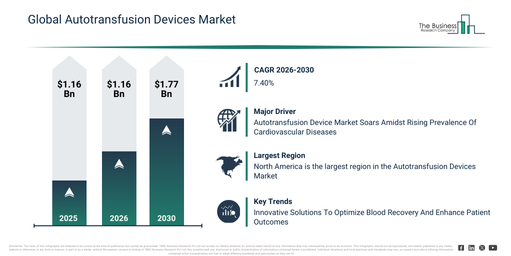
    The autotransfusion devices market is anticipated to experience substantial expansion over the upcoming years. This market is projected to reach $1.8 billion by 2030, demonstrating a compound annual growth rate (CAGR) of 7.4%. This projected growth throughout the forecast period stems from several factors, including an increased emphasis on cost-efficient surgical solutions, the growing embrace of minimally invasive surgical techniques, the broadening scope of patient blood management initiatives, a rising need for automated autotransfusion equipment, and ongoing advancements in disposable medical supplies. Key developments expected during this period involve the wider adoption of blood conservation methods, an increase in autologous transfusion use during surgical procedures, a heightened demand for sophisticated cell salvage systems, the expansion of autotransfusion applications in emergency settings, and a more pronounced focus on patient blood management strategies.

    Download the Free Sample Report to Explore Key Market Insights:

    https://www.thebusinessresearchcompany.com/sample.aspx?id=10275&type=smp

    Which Market Drivers Are Supporting The Expansion Of The Autotransfusion Devices Market?

    The rising occurrence of cardiovascular diseases is projected to drive the expansion of the autotransfusion device market in the future. Cardiovascular diseases (CVDs) encompass various conditions impacting the heart and blood vessels. Autotransfusion devices play a role in lessening the reliance on allogeneic blood transfusions. Allogeneic transfusions involve blood donated from outside sources, whereas autotransfusion enables the patient’s own blood to be reinfused, thereby lowering the chances of reactions and issues linked with donor blood. As an illustration, in January 2024, data from the American Heart Association, a US-based non-profit organization, indicated that the age-adjusted death rate from cardiovascular disease rose to 233.3 per 100,000 in 2024, a 4.0% increase from 224.4 per 100,000 in 2023. Consequently, the growing prevalence of cardiovascular diseases is fueling the growth of the autotransfusion device market.

    Which Segment Classifications Shape The Autotransfusion Devices Market?

    The autotransfusion devices market covered in this report is segmented –

    1) By Product Type: Autotransfusion Systems, Consumables And Accessories

    2) By Application: Cardiovascular Surgeries, Orthopedic Surgeries, Neurological Surgeries, Other Applications

    3) By End-Use: Hospitals, Trauma Centers & Emergency Departments, Other End Users

    Subsegments:

    1) By Autotransfusion Systems: Surgical Autotransfusion Systems, Emergency Autotransfusion Systems, Continuous Flow Autotransfusion Systems

    2) By Consumables And Accessories: Collection Reservoirs, Blood Filters, Tubing Sets, Pumps, Anticoagulants

    How Are Trends Impacting The Autotransfusion Devices Market?

    Major companies operating in the autotransfusion devices market are focusing on developing technologically advanced solutions, including next-generation intelligent control software, to improve precision, efficiency, and patient outcomes during blood transfusions. This next-generation intelligent control software in autotransfusion devices utilizes advanced algorithms to optimize blood recovery, processing, and reinfusion in real-time, thereby enhancing both efficiency and patient safety. For example, in March 2023, Haemonetics Corporation, a US-based provider of blood and plasma supplies and services, announced that its Cell Saver Elite+ Autotransfusion System had received U.S. Food and Drug Administration (FDA) clearance. This next-generation software is designed to maximize the recovery of red blood cells during surgical procedures where there is a potential for medium to high blood loss. This innovative upgrade streamlines autotransfusion operations, minimizes unnecessary allogeneic transfusions, and ultimately contributes to better patient outcomes.

    Which Companies Are Expanding Their Footprint In The Autotransfusion Devices Market?

    Major companies operating in the autotransfusion devices market are Haemonetics Corporation, Medtronic plc, LivaNova plc, Terumo Corporation, Fresenius SE & Co. KGaA, B. Braun Melsungen AG, Asahi Kasei Medical Co. Ltd., Getinge AB, Baxter International Inc., Nipro Corporation, Teleflex Incorporated, Stryker Corporation, Braile Biomédica, Redax S.p.A., Gen World Medical Devices Corporation, Beijing ZKSK Technology Co. Ltd., Beijing Jingjing Medical Equipment Co. Ltd., Brightwake Ltd., Dideco, Atrium Medical Technologies

    Read the full autotransfusion devices market report here:

    https://www.thebusinessresearchcompany.com/report/autotransfusion-devices-global-market-report

    How Is The Autotransfusion Devices Market Distributed Across Key Geographic Regions?

    North America was the largest region in the autotransfusion devices market in 2025. Asia-Pacific is expected to be the fastest-growing region in the global autotransfusion devices market during the forecast period. The regions covered in the autotransfusion devices market report are Asia-Pacific, South East Asia, Western Europe, Eastern Europe, North America, South America, Middle East, Africa.

    Request A Tailored Autotransfusion Devices Market Research Report For Competitive Advantage:

    https://www.thebusinessresearchcompany.com/customise?id=10275&type=smp

    Browse Through More Reports Similar to the Global Autotransfusion Devices Market 2026, By The Business Research Company

    Infusion Pump Market Report 2026

    https://www.thebusinessresearchcompany.com/report/infusion-pump-global-market-report

    Perfusion Systems Market Report 2026

    https://www.thebusinessresearchcompany.com/report/perfusion-systems-global-market-report

    Drug Infusion Systems Market Report 2026

    https://www.thebusinessresearchcompany.com/report/drug-infusion-systems-global-market-report

    Get in touch with us:

    The Business Research Company: https://www.thebusinessresearchcompany.com/

    Americas +1 310-496-7795

    Asia +44 7882 955267 & +91 8897263534

    Europe +44 7882 955267

    Email us at info@tbrc.info

    Follow us on:

    LinkedIn: https://in.linkedin.com/company/the-business-research-company

    YouTube: https://www.youtube.com/channel/UC24_fI0rV8cR5DxlCpgmyFQ

    Global Market Model: https://www.thebusinessresearchcompany.com/global-market-model
  • Autonomous Surgical Robotics Industry Expansion Forecast Showing Market Size of $5.64 Billion by 2030 at 16.6% CAGR

    Autonomous Surgical Robotics Industry Expansion Forecast Showing Market Size of $5.64 Billion by 2030 at 16.6% CAGR

    The Business Research Company’s 2026 market reports include new capabilities such as market attractiveness scoring and analysis, total addressable market analysis, company scoring matrix, interactive excel data dashboard, improved supply chain analysis, upcoming startups in the market, and overview of key products, aimed at improving the depth, usability, and strategic value of the insights delivered.

    What Market Size Growth Is Projected For The Autonomous Surgical Robotics Market During The Forecast Period 2026–2030?

    The autonomous surgical robotics market has experienced swift expansion recently. It is projected to increase from $2.61 billion in 2025 to $3.05 billion in 2026, demonstrating a compound annual growth rate (CAGR) of 16.9%. Historically, this growth was influenced by a significant reliance on manual surgical procedures, the initial integration of basic robotic-assisted surgery, constraints in AI capabilities within operating rooms, an escalating demand for complex surgeries, and the expanding hospital infrastructure in developed regions.

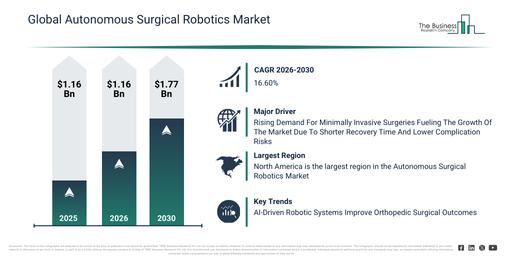
    The autonomous surgical robotics market is anticipated to undergo significant expansion in the coming years. It is forecasted to grow to $5.64 billion by 2030, demonstrating a compound annual growth rate (CAGR) of 16.6%. This predicted growth can be attributed to advancements in autonomous surgical robotics, the integration of AI and machine learning algorithms, the broadening of robotic surgery applications across various specialties, increased investments in smart operating rooms, and rising healthcare expenditure in developing economies. Important trends for this forecast period encompass the increasing adoption of minimally invasive surgical procedures, a rising demand for precision and accuracy in operations, the incorporation of real-time data analytics into surgical procedures, the expansion of robotic surgery into emerging markets, and a focus on reducing human error and improving patient outcomes.

    Download the Free Sample Report to Explore Key Market Insights:

    https://www.thebusinessresearchcompany.com/sample.aspx?id=27218&type=smp

    What Underlying Factors Are Accelerating The Growth Of The Autonomous Surgical Robotics Market?

    The increasing need for minimally invasive surgeries is anticipated to boost the autonomous surgical robotics market. These procedures, carried out via small cuts or openings, lessen patient harm and recovery periods. Their popularity is growing because they offer quicker recovery, fewer complications, less discomfort, and smaller marks, appealing to patients desiring faster and safer treatments. Autonomous surgical robotics improves minimally invasive operations by offering accurate and steady robotic help, thus reducing the need for bigger cuts. These systems enhance surgical precision and patient results, while also shortening recovery and decreasing surgeon tiredness. For example, in June 2024, the American Society of Plastic Surgeons, a US-based non-profit, reported a 7% increase in minimally invasive procedures in 2023 compared to 2022. Consequently, the escalating demand for minimally invasive surgeries is fueling the expansion of the autonomous surgical robotics market.

    What Market Segments Are Evaluated Within The Autonomous Surgical Robotics Market?

    The autonomous surgical robotics market covered in this report is segmented –

    1) By Type: Interventional Surgical Robots, Assisted Surgical Robots, Minimally Invasive Surgical Robots, Other Types

    2) By Application: Urology Surgery, Orthopedic Surgery, Cardiology Surgery, Neurology Surgery, Other Applications

    3) By End-Users: Hospitals, Ambulatory Surgery Centers, Other End-Users

    Subsegments:

    1) By Interventional Surgical Robots: Catheter-Based Interventional Robots, Endovascular Robots, Interventional Radiology Robots, Percutaneous Robots

    2) By Assisted Surgical Robots: Robotic Arm Systems, Robotic Navigation Systems, Robotic Visualization Platforms, Robotic Positioning Systems

    3) By Minimally Invasive Surgical Robots: Laparoscopic Robots, Thoracoscopic Robots, Robotic Endoscopes, Single-Port Surgical Robots

    4) By Other Types: Orthopedic Surgical Robots, Neurosurgical Robots, Dental Surgical Robots, Microsurgical Robots, Autonomous Surgical Robots

    What Industry Trends Are Redefining The Autonomous Surgical Robotics Market?

    Major companies engaged in the autonomous surgical robotics market are prioritizing the development of sophisticated products, such as fully autonomous guidance systems, to enhance precision, improve surgical outcomes, and alleviate surgeon fatigue. Fully autonomous guidance systems describe intelligent robotic platforms that assist surgeons by independently executing pre-planned surgical steps with high accuracy. For instance, in July 2023, Stryker Corporation, a US-based medical technology company, unveiled the Ortho Q Guidance system. This is a cutting-edge robotic surgical system designed for orthopedic procedures, featuring AI-driven automation that allows it to perform bone resections and implant placements without manual intervention. This advanced system includes a state-of-the-art camera with enhanced optical tracking, a dual-PC architecture for real-time data processing, and implant-agnostic software compatible with express knee, precision knee, and versatile hip procedures. The system incorporates real-time intraoperative adjustments and predictive analytics, ensuring optimal alignment and reducing the risk of human error.

    Who Are The Top Market Participants Influencing The Autonomous Surgical Robotics Market?

    Major companies operating in the autonomous surgical robotics market are Johnson & Johnson, Medtronic plc, Stryker Corporation, Intuitive Surgical Inc., Zimmer Biomet Holdings Inc., Smith & Nephew plc, Globus Medical Inc., Renishaw plc, Memic Innovative Surgery Ltd., CMR Surgical Ltd., Noah Medical Inc., THINK Surgical Inc., Medical Microinstruments S.p.A., Distalmotion SA, Moon Surgical SAS, Activ Surgical Inc., Curexo Inc., Virtual Incision Corporation, Andromeda Surgical Inc, Beijing Tuodao Medical Technology Co. Ltd.

    Read the full autonomous surgical robotics market report here:

    https://www.thebusinessresearchcompany.com/report/autonomous-surgical-robotics-global-market-report

    Which Region Is Projected To Dominate The Autonomous Surgical Robotics Market During The Forecast Period?

    North America was the largest region in the autonomous surgical robotics market in 2025. Asia-Pacific is expected to be the fastest-growing region in the forecast period. The regions covered in the autonomous surgical robotics market report are Asia-Pacific, South East Asia, Western Europe, Eastern Europe, North America, South America, Middle East, Africa.

    Request A Tailored Autonomous Surgical Robotics Market Research Report For Competitive Advantage:

    https://www.thebusinessresearchcompany.com/customise?id=27218&type=smp

    Browse Through More Reports Similar to the Global Autonomous Surgical Robotics Market 2026, By The Business Research Company

    Plastic Wire Rolling Machine Market Report 2026

    https://www.thebusinessresearchcompany.com/report/plastic-wire-rolling-machine-global-market-report

    Yarn Winding Machine Market Report 2026

    https://www.thebusinessresearchcompany.com/report/yarn-winding-machine-global-market-report

    Rolled And Drawn Steel Market Report 2026

    https://www.thebusinessresearchcompany.com/report/rolled-and-drawn-steel-global-market-report

    Get in touch with us:

    The Business Research Company: https://www.thebusinessresearchcompany.com/

    Americas +1 310-496-7795

    Asia +44 7882 955267 & +91 8897263534

    Europe +44 7882 955267

    Email us at info@tbrc.info

    Follow us on:

    LinkedIn: https://in.linkedin.com/company/the-business-research-company

    YouTube: https://www.youtube.com/channel/UC24_fI0rV8cR5DxlCpgmyFQ

    Global Market Model: https://www.thebusinessresearchcompany.com/global-market-model
  • Automatic Protein Analyzer Market Revenue Expected to Reach $8.76 Billion by 2030 with 9.1% CAGR

    Automatic Protein Analyzer Market Revenue Expected to Reach $8.76 Billion by 2030 with 9.1% CAGR

    The Business Research Company’s 2026 market reports include new capabilities such as market attractiveness scoring and analysis, total addressable market analysis, company scoring matrix, interactive excel data dashboard, improved supply chain analysis, upcoming startups in the market, and overview of key products, aimed at improving the depth, usability, and strategic value of the insights delivered.

    How Will The Market Size Of The Automatic Protein Analyzer Market Evolve From 2026 To 2030?

    The automatic protein analyzer market has shown robust expansion over recent years. It is anticipated to grow from $5.65 billion in 2025 to $6.18 billion in 2026, achieving a compound annual growth rate (CAGR) of 9.5%. This historical growth can be attributed to several factors including limited automation in protein analysis, a reliance on manual spectrophotometry and chromatography methods, the expansion of clinical research laboratories, the rise in protein-based diagnostics, and the development of proteomics research.

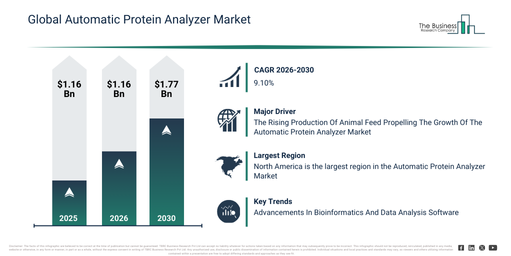
    The automatic protein analyzer market is anticipated to experience substantial expansion over the coming years. It is projected to reach $8.76 billion in 2030, exhibiting a compound annual growth rate (CAGR) of 9.1%. This growth in the forecast period is primarily attributed to factors such as the development of advanced mass spectrometry and HPLC analyzers, the increasing adoption of capillary electrophoresis systems, a rising demand for biomarker identification and PTM analysis, the integration of AI and machine learning for protein data management, and the expansion of applications in clinical diagnostics and drug discovery. Additionally, key trends for this period encompass a growing demand for high-throughput protein analysis, the broadening of proteomics and biomarker research, increased implementation in clinical diagnostics and drug discovery, integration with laboratory automation systems, and a sustained focus on accuracy, sensitivity, and rapid analytical processes.

    Download the Free Sample Report to Explore Key Market Insights:

    https://www.thebusinessresearchcompany.com/sample.aspx?id=20500&type=smp

    Which Growth Drivers Are Contributing To The Progress Of The Automatic Protein Analyzer Market?

    The increasing output of animal feed is projected to fuel the growth of the automatic protein analyzer market in the coming period. Animal feed encompasses any sustenance provided to tamed animals, including farm animals and companions, to support their development, health, and output. The heightened production of animal feed stems from various factors such as increased worldwide demand for animal-sourced products, expansion in livestock rearing, advancements in feed mixtures, and the requirement for efficient and sustainable feeding strategies to foster superior animal productivity. Automatic protein analyzers improve the efficacy and precision of feed formulation by offering comprehensive insights into protein levels, which assists in meeting the rising need for premium animal feed and optimizing overall feed management. For instance, in March 2024, the Agriculture and Horticulture Development Board, a UK-based statutory levy board, reported that poultry feed production amounted to 3,434.1 Mt in 2022-2023, then rose to 3,567.5 Mt in 2023-2024, demonstrating an increase of 3.9%. Therefore, the growing production of animal feed is driving the expansion of the automatic protein analyzer market.

    Which Segment Areas Are Covered In The Automatic Protein Analyzer Market Analysis?

    The automatic protein analyzer market covered in this report is segmented –

    1) By Type Of Analyzer: Capillary Electrophoresis Based Analyzers, High-Performance Liquid Chromatography Based Analyzers, Mass Spectrometry-Based Analyzers

    2) By Protein Type: Intact Proteins, Protein Fragments, Post Translational Modifications (PTMs), Biomarkers, Other Protein Types

    3) By Throughput: Low Throughput, Medium Throughput, High Throughput, Ultra High Throughput

    4) By Application: Clinical Diagnostics, Drug Discovery, Proteomics Research, Forensic Analysis, Other Applications

    Subsegments:

    1) By Capillary Electrophoresis Based Analyzers: Capillary Zone Electrophoresis (CZE), Capillary Gel Electrophoresis (CGE), Capillary Isoelectric Focusing (CIEF), Capillary Electrochromatography (CEC)

    2) By High-Performance Liquid Chromatography (HPLC) Based Analyzers: Reversed-Phase HPLC (RP-HPLC), Size-Exclusion Chromatography (SEC), Ion-Exchange Chromatography (IEX), Affinity Chromatography

    3) By Mass Spectrometry Based Analyzers: Matrix-Assisted Laser Desorption Or Ionization Time-Of-Flight (MALDI-TOF), Electrospray Ionization (ESI) Mass Spectrometry, Tandem Mass Spectrometry (MS/MS), Quadrupole Mass Spectrometry

    What Key Developments And Trends Are Impacting The Automatic Protein Analyzer Market?

    Leading firms within the automatic protein analyzer market are concentrating on creating sophisticated offerings, including bioinformatics and data analysis software, to secure a competitive advantage. Such bioinformatics and data analysis software are crucial for handling and comprehending intricate biological information, especially across disciplines like proteomics, genomics, and systems biology. As an illustration, in January 2024, Agilent Technologies Inc., a US-based consumer electronics company, introduced a novel automated parallel capillary electrophoresis system designed for protein analysis. The Agilent ProteoAnalyzer system delivers enhanced efficiency, adaptability, and dependability, particularly beneficial for protein quality control workflows. By automating separation and data processing alongside simplifying sample preparation stages, the analysis workflow becomes significantly streamlined, leading to improved overall efficiency and a reduction in training and associated labor expenditures.

    Which Global Companies Are Actively Competing In The Automatic Protein Analyzer Market?

    Major companies operating in the automatic protein analyzer market are Roche Holding AG, Avantor Inc., Agilent Technologies Inc., PerkinElmer Inc., Beckman Coulter Inc., Horiba Ltd., Biobase, Malvern Panalytical, Agappe Diagnostics Switzerland GmbH, ProteinSimple, Bioneer Corporation, Nanion Technologies GmbH, Genrui Biotech Inc., Rayto Life and Analytical Sciences Co. Ltd., Goldsite Diagnostics Inc., Thermo Fisher Scientific Inc., Bruker Corporation, Shimadzu Corporation, Waters Corporation, Bio-Rad Laboratories Inc., Danaher Corporation, Hitachi High-Tech Corporation, JEOL Ltd., Oxford Instruments plc, Sartorius AG

    Read the full automatic protein analyzer market report here:

    https://www.thebusinessresearchcompany.com/report/automatic-protein-analyzer-global-market-report

    What Are The Leading Geographic Regions In The Automatic Protein Analyzer Market?

    North America was the largest region in the automatic protein analyzer market in 2025. The regions covered in the automatic protein analyzer market report are Asia-Pacific, South East Asia, Western Europe, Eastern Europe, North America, South America, Middle East, Africa.

    Request A Tailored Automatic Protein Analyzer Market Research Report For Competitive Advantage:

    https://www.thebusinessresearchcompany.com/customise?id=20500&type=smp

    Browse Through More Reports Similar to the Global Automatic Protein Analyzer Market 2026, By The Business Research Company

    Therapeutic Proteins Market Report 2026

    https://www.thebusinessresearchcompany.com/report/therapeutic-proteins-global-market-report

    Protein Labelings Market Report 2026

    https://www.thebusinessresearchcompany.com/report/protein-labelings-global-market-report

    Protein Inhibitor Market Report 2026

    https://www.thebusinessresearchcompany.com/report/protein-inhibitor-global-market-report

    Get in touch with us:

    The Business Research Company: https://www.thebusinessresearchcompany.com/

    Americas +1 310-496-7795

    Asia +44 7882 955267 & +91 8897263534

    Europe +44 7882 955267

    Email us at info@tbrc.info

    Follow us on:

    LinkedIn: https://in.linkedin.com/company/the-business-research-company

    YouTube: https://www.youtube.com/channel/UC24_fI0rV8cR5DxlCpgmyFQ

    Global Market Model: https://www.thebusinessresearchcompany.com/global-market-model
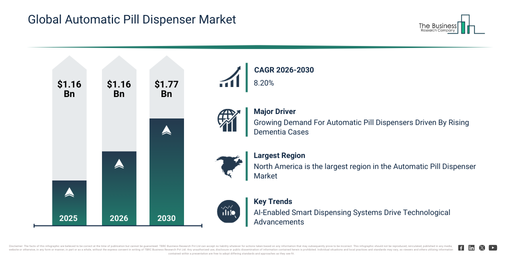
  • Global Automatic Pill Dispenser Market Set for Strong Expansion Reaching $4.63 Billion by 2030 at 8.2% CAGR

    Global Automatic Pill Dispenser Market Set for Strong Expansion Reaching $4.63 Billion by 2030 at 8.2% CAGR

    The Business Research Company’s 2026 market reports include new capabilities such as market attractiveness scoring and analysis, total addressable market analysis, company scoring matrix, interactive excel data dashboard, improved supply chain analysis, upcoming startups in the market, and overview of key products, aimed at improving the depth, usability, and strategic value of the insights delivered.

    What Is The Forecasted Market Value Of The Automatic Pill Dispenser Market Across 2026–2030?

    The automatic pill dispenser market has experienced strong expansion in recent years. It is projected to grow from $3.12 billion in 2025 to $3.38 billion in 2026, at a compound annual growth rate (CAGR) of 8.3%. The historical increase in this market can be attributed to several factors, including the rising medication usage among the aging population, the expansion of home healthcare and assisted living services, the initial implementation of automatic dispensers in hospital and retail pharmacies, the need to reduce medication administration errors and missed doses, and the creation of centralized medication dispensing workflows.

    The automatic pill dispenser market is poised for significant expansion over the coming years. This market is projected to reach $4.63 billion by 2030, exhibiting a compound annual growth rate (CAGR) of 8.2%. Factors contributing to this anticipated growth include an escalating incidence of neurodegenerative conditions and dementia, a greater need for medication adherence tools within home environments, a developing trend towards decentralized and portable pill dispensing systems, broader application in managing therapies for multiple drugs and chronic diseases, and the enlargement of pharmacy-driven patient oversight and care coordination initiatives. Key trends anticipated during this period encompass a wider uptake of automatic pill dispensers for elderly and dementia care, an increased reliance on scheduled medication dispensing for ongoing chronic illness management, the proliferation of automatic dispensers within home healthcare and distant care environments, their growing implementation in nursing homes and assisted living facilities, and an emphasis on minimizing missed doses while improving adherence to medication regimens.

    Download the Free Sample Report to Explore Key Market Insights:

    https://www.thebusinessresearchcompany.com/sample.aspx?id=18233&type=smp

    What Primary Drivers Are Shaping The Development Of The Automatic Pill Dispenser Market?

    The expanding incidence of dementia cases is anticipated to drive the growth of the automatic pill dispenser market in the foreseeable future. Dementia describes a cluster of symptoms that severely impact memory, thought processes, and social capabilities, sufficient to hinder everyday activities. It results from various conditions, including Alzheimer’s disease, vascular issues, and Lewy body dementia. The increase in dementia cases is primarily due to an aging population, greater awareness, and enhanced diagnostic procedures. Automatic pill dispensers are crucial in dementia care for ensuring precise and timely medication administration, which aids in mitigating the risk of skipped or incorrect dosages. For instance, in April 2024, according to the Alzheimer’s Association, approximately 6.9 million Americans aged 65 and older were living with Alzheimer’s dementia, an increase from 6.7 million in the 2023 report. Thus, the rising number of dementia cases is propelling the development of the automatic pill dispenser market.

    What Segmentation Levels Are Considered In The Automatic Pill Dispenser Market?

    The automatic pill dispenser market covered in this report is segmented –

    1) By Type: Centralized Automatic Dispenser, Decentralized Automatic Dispenser, Other Types

    2) By Indication: Physical Disability, Neurodegenerative Disorders And Dementia, Other Indications

    3) By Application: Hospital Pharmacy, Retail Pharmacy, Home Healthcare

    Subsegments:

    1) By Centralized Automatic Dispenser: Hospital-Based Pill Dispensers, Pharmacy-Based Pill Dispensers, Large-Scale Healthcare Facility Dispensers

    2) By Decentralized Automatic Dispenser: Home-Based Pill Dispensers, Nursing Home-Based Pill Dispensers, Point-Of-Care Dispensers (Clinics, Small Healthcare Units)

    3) By Other Types: Mobile Pill Dispensers, Pill Dispensers With Medication Tracking Features, Custom-Designed Dispensers For Specific Applications

    What Trends Are Projected To Affect The Automatic Pill Dispenser Market?

    Leading companies in the automatic pill dispenser market are emphasizing AI-enabled and cloud-connected medication management. This focus includes smart automated dispensing systems that integrate real-time inventory tracking, remote oversight, and automated optimization; these advanced dispensers utilize AI and connectivity to improve medication safety, adherence, and operational efficiency. For example, in April 2024, Omnicell, a US-based pharmacy automation company, unveiled its XT Amplify innovation program for the XT Automated Dispensing System. This program features XTExtend for enhanced interoperability, MedChill for secure temperature-controlled storage with real-time visibility, and SupplyXpert for data-driven inventory optimization, collectively underscoring the market’s transition toward intelligent, connected dispensing technologies.

    Which Leading Firms Are Contributing To The Growth Of The Automatic Pill Dispenser Market?

    Major companies operating in the automatic pill dispenser market are McKesson Corporation, Omnicell Inc., MedMinder Systems Inc, Capsa Healthcare, Hero Health Inc., Swisslog Healthcare, ARxIUM Inc., Aesynt Inc., PillDrill Inc., Talyst LLC, Yuyama Co Ltd, InstyMeds Corporation, E-pill Medication Reminders, MedaCube, MedReady Inc., PharmaSystems Inc., Tunstall Healthcare Group Ltd, Koninklijke Philips N.V., CareRX Inc., RxSafe Inc.

    Read the full automatic pill dispenser market report here:

    https://www.thebusinessresearchcompany.com/report/automatic-pill-dispenser-global-market-report

    How Does The Automatic Pill Dispenser Market Perform Across Major Global Regions?

    North America was the largest region in the automatic pill dispenser market in 2025. Asia-Pacific is expected to be the fastest-growing region in the forecast period. The regions covered in the automatic pill dispenser market report are Asia-Pacific, South East Asia, Western Europe, Eastern Europe, North America, South America, Middle East, Africa.

    Request A Tailored Automatic Pill Dispenser Market Research Report For Competitive Advantage:

    https://www.thebusinessresearchcompany.com/customise?id=18233&type=smp

    Browse Through More Reports Similar to the Global Automatic Pill Dispenser Market 2026, By The Business Research Company

    Dispensing Pharmacy Packaging Machine Market Report 2026

    https://www.thebusinessresearchcompany.com/report/dispensing-pharmacy-packaging-machine-global-market-report

    Central Fill Pharmacy Automation Market Report 2026

    https://www.thebusinessresearchcompany.com/report/central-fill-pharmacy-automation-global-market-report

    Electronic Soap Dispenser Market Report 2026

    https://www.thebusinessresearchcompany.com/report/electronic-soap-dispenser-global-market-report

    Get in touch with us:

    The Business Research Company: https://www.thebusinessresearchcompany.com/

    Americas +1 310-496-7795

    Asia +44 7882 955267 & +91 8897263534

    Europe +44 7882 955267

    Email us at info@tbrc.info

    Follow us on:

    LinkedIn: https://in.linkedin.com/company/the-business-research-company

    YouTube: https://www.youtube.com/channel/UC24_fI0rV8cR5DxlCpgmyFQ

    Global Market Model: https://www.thebusinessresearchcompany.com/global-market-model
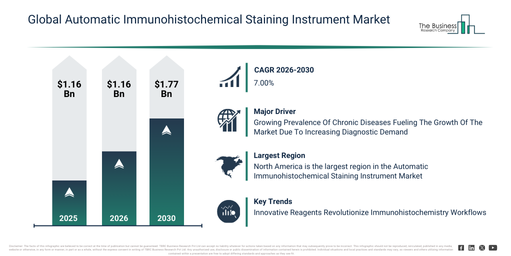
  • Automatic Immunohistochemical Staining Instrument Market Growth Expected to Reach $1.83 Billion by 2030 with 7% CAGR

    Automatic Immunohistochemical Staining Instrument Market Growth Expected to Reach $1.83 Billion by 2030 with 7% CAGR

    The Business Research Company’s 2026 market reports include new capabilities such as market attractiveness scoring and analysis, total addressable market analysis, company scoring matrix, interactive excel data dashboard, improved supply chain analysis, upcoming startups in the market, and overview of key products, aimed at improving the depth, usability, and strategic value of the insights delivered.

    What Market Size Increase Is Anticipated For The Automatic Immunohistochemical Staining Instrument Market Over The 2026–2030 Period?

    The automatic immunohistochemical staining instrument market size has experienced significant expansion in recent years. Forecasts indicate its expansion from $1.3 billion in 2025 to $1.4 billion in 2026 at a compound annual growth rate (CAGR) of 7.1%. Historically, this expansion has been propelled by an increase in cancer diagnostic testing volumes, the development of pathology laboratory infrastructure, greater dependence on immunohistochemistry for disease diagnosis, the expanding availability of automated laboratory instruments, and an increasing need for consistent diagnostic outcomes.

    The market for automatic immunohistochemical staining instruments is projected to experience robust expansion over the coming years. This market is anticipated to reach $1.83 billion by 2030, exhibiting a compound annual growth rate (CAGR) of 7.0%. Factors driving this expansion during the forecast period include the increasing uptake of precision oncology diagnostics, escalating investments in digital pathology platforms, a heightened demand for laboratory automation, the widening scope of companion diagnostics development, and a sharpened focus on personalized medicine strategies. Key trends expected within this period encompass the growing adoption of fully automated IHC staining systems, an increasing need for high-throughput diagnostic workflows, greater integration of digital pathology compatibility, the spread of standardized and reproducible staining protocols, and an amplified emphasis on workflow efficiency within laboratories.

    Download the Free Sample Report to Explore Key Market Insights:

    https://www.thebusinessresearchcompany.com/sample.aspx?id=24164&type=smp

    Which Major Factors Are Driving The Expansion Of The Automatic Immunohistochemical Staining Instrument Market?

    The increasing occurrence of chronic illnesses is anticipated to fuel the expansion of the automatic immunohistochemical staining instrument market in the future. These are defined as enduring health issues that generally advance gradually and necessitate continuous care. Examples encompass diabetes, cardiac conditions, high blood pressure, joint inflammation, persistent respiratory ailments, malignancy, and excessive weight. The rise in chronic disease prevalence stems from shifts in lifestyle, poor nutritional habits, and insufficient exercise, all of which lead to enduring health problems. Automatic immunohistochemical staining instruments bolster diagnostic abilities through accurate and effective tissue examination, positioning them as crucial tools for identifying chronic diseases. These instruments minimize manual labor via rapid, automated staining procedures, thereby boosting diagnostic precision and facilitating earlier disease discovery. For example, in June 2024, data from the National Health Service, a UK-based government body, indicated that 3,615,330 individuals registered with a general practitioner (GP) received a diagnosis of non-diabetic hyperglycemia or pre-diabetes in 2023. This represented an 18% rise from 3,065,825 cases recorded in 2022. Consequently, the expanding occurrence of chronic illnesses is propelling the growth of the automatic immunohistochemical staining instrument market.

    How Is The Automatic Immunohistochemical Staining Instrument Market Segmented Across Key Categories?

    The automatic immunohistochemical staining instrument market covered in this report is segmented –

    1) By Product Type: Fully Automated Stainers, Semi-Automated Stainers, Manual Stainers

    2) By Technology: Slide Staining, Tissue Staining, Fluorescent Staining

    3) By Consumables: Antibodies, Staining Kits, Slides, Coverslips

    4) By Application: Oncology, Cardiovascular Diseases, Neurological Disorders, Infectious Diseases

    5) By End-User: Hospitals, Diagnostic Laboratories, Academic Institutes, Research Laboratories

    Subsegments:

    1) By Fully Automated Stainers: Compact Automated Stainers, High-Throughput Stainers, Benchtop Automated Stainers

    2) By Semi-Automated Stainers: Programmable Stainers, Timer-Based Stainers, Hybrid Stainers

    3) By Manual Stainers: Dip-Type Manual Stainers, Rotary Manual Stainers, Handheld Staining Kits

    Which Upcoming Trends Are Expected To Influence The Automatic Immunohistochemical Staining Instrument Market?

    Key players within the automatic immunohistochemical staining instrument market are concentrating on developing advanced solutions, such as antibody alternative reagents, to enhance the accuracy, efficiency, and versatility of tissue analysis while simultaneously lowering costs and improving reproducibility. An antibody alternative reagent refers to a non-antibody molecule, including aptamers, affirmers, or antibody mimetics, designed to specifically attach to target antigens and serve as a replacement for traditional antibodies in research, diagnostic, or therapeutic applications. For example, in March 2023, Aptamer Group plc, a UK-based biotechnology firm, introduced Optimer-Fc, a novel reagent solution for automated immunohistochemistry (IHC) workflows. Optimer-Fc presents an innovative antibody substitute for immunohistochemistry, broadening target detection capabilities and boosting assay selectivity. It integrates smoothly into automated immunohistochemistry (IHC) workflows, enabling the precise identification of both established and emergent biomarkers.

    Who Are The Dominant Players Shaping The Automatic Immunohistochemical Staining Instrument Market Landscape?

    Major companies operating in the automatic immunohistochemical staining instrument market are F. Hoffmann-La Roche AG, Thermo Fisher Scientific, Agilent Technologies, Leica Biosystems, Sakura Finetek, Olympus Corporation, Biocare Medical, Celnovte Biotechnology Co. Ltd., BioGenex Laboratories, Diagnostic BioSystems, ADS Biotec, Fuzhou Maixin Biotech Co. Ltd., Shenzhen Dartmon Biotechnology Co. Ltd., Ventana Medical Systems, Dako (Agilent Pathology), Nichirei Biosciences Inc., Abcam plc, Bio-Rad Laboratories, Milestone Medical, Medite GmbH

    Read the full automatic immunohistochemical staining instrument market report here:

    https://www.thebusinessresearchcompany.com/report/automatic-immunohistochemical-staining-instrument-global-market-report

    Which Region Currently Holds The Largest Share Of The Automatic Immunohistochemical Staining Instrument Market?

    North America was the largest region in the automatic immunohistochemical staining instrument market in 2025. Asia-Pacific is expected to be the fastest-growing region in the forecast period. The regions covered in the automatic immunohistochemical staining instrument market report are Asia-Pacific, South East Asia, Western Europe, Eastern Europe, North America, South America, Middle East, Africa.

    Request A Tailored Automatic Immunohistochemical Staining Instrument Market Research Report For Competitive Advantage:

    https://www.thebusinessresearchcompany.com/customise?id=24164&type=smp

    Browse Through More Reports Similar to the Global Automatic Immunohistochemical Staining Instrument Market 2026, By The Business Research Company

    Immunohematology Market Report 2026

    https://www.thebusinessresearchcompany.com/report/immunohematology-global-market-report

    Immunofluorescence Assay Market Report 2026

    https://www.thebusinessresearchcompany.com/report/immunofluorescence-assay-global-market-report

    Immunohistochemistry Ihc Market Report 2026

    https://www.thebusinessresearchcompany.com/report/immunohistochemistry-ihc-global-market-report

    Get in touch with us:

    The Business Research Company: https://www.thebusinessresearchcompany.com/

    Americas +1 310-496-7795

    Asia +44 7882 955267 & +91 8897263534

    Europe +44 7882 955267

    Email us at info@tbrc.info

    Follow us on:

    LinkedIn: https://in.linkedin.com/company/the-business-research-company

    YouTube: https://www.youtube.com/channel/UC24_fI0rV8cR5DxlCpgmyFQ

    Global Market Model: https://www.thebusinessresearchcompany.com/global-market-model
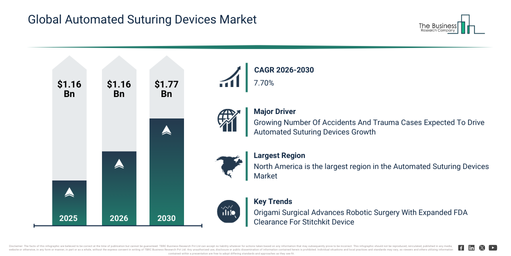
  • Automated Suturing Devices Market Forecast 2026–2035 Reflecting Expansion Opportunities Across Industries

    Automated Suturing Devices Market Forecast 2026–2035 Reflecting Expansion Opportunities Across Industries

    The Business Research Company’s 2026 market reports include new capabilities such as market attractiveness scoring and analysis, total addressable market analysis, company scoring matrix, interactive excel data dashboard, improved supply chain analysis, upcoming startups in the market, and overview of key products, aimed at improving the depth, usability, and strategic value of the insights delivered.

    How Much Is The Automated Suturing Devices Market Expected To Grow In Terms Of Market Value Between 2026 And 2030?

    The automated suturing devices market has experienced robust growth recently. It is projected to increase from $3.46 billion in 2025 to $3.73 billion in 2026, demonstrating a compound annual growth rate (CAGR) of 7.8%. This historical expansion can be attributed to an elevated volume of open and cardiovascular surgical procedures, an early transition toward surgical automation, the adoption of automated stapling and suturing tools, an emphasis on reducing surgical complications and human error, and the expansion of hospital surgical infrastructure.

    The automated suturing devices market size is anticipated to expand significantly in the coming years, with projections indicating a rise to $5.02 billion by 2030, reflecting a compound annual growth rate (CAGR) of 7.7%. This expansion during the forecast period is primarily fueled by the increase in minimally invasive and laparoscopic procedures, a surge in trauma and emergency care interventions, the escalating demand for quicker and standardized suturing workflows, greater adoption of disposable suturing devices, and an intensified focus on improving postoperative outcomes and overall efficiency. Prominent trends observed for this period include the wider integration of automated suturing in minimally invasive procedures, a growing preference for disposable and single-use suturing devices, their increasing application in complex and high-risk surgical specialties, an expansion of automated suturing use in trauma and emergency care, and a concerted effort to reduce operation time while enhancing surgical precision.

    Download the Free Sample Report to Explore Key Market Insights:

    https://www.thebusinessresearchcompany.com/sample.aspx?id=18781&type=smp

    What Key Drivers Are Influencing The Growth Of The Automated Suturing Devices Market?

    The anticipated expansion of the automated suturing devices market is driven by an increasing incidence of accidents and trauma. These cases involve unforeseen occurrences causing physical harm or injury, with contributing factors such as rising urbanization, greater vehicle usage, dangerous work environments, and risky behaviors. Automated suturing devices are crucial in this context as they streamline and enhance the efficiency of surgical procedures for accidents and trauma cases, ultimately improving patient outcomes, reducing surgery time, and minimizing the risk of complications. For example, data from the Government of Canada indicates that serious injuries climbed to 9,261 in 2023, marking a 0.9% year-on-year increase from 9,179 in 2022 and representing their highest level in the past five years. Thus, the growing number of accidents and trauma cases is a significant impetus for the automated suturing devices market.

    What Major Segment Divisions Exist Within The Automated Suturing Devices Market?

    The automated suturing devices market covered in this report is segmented –

    1) By Type: Reusable, Disposable

    2) By Application: Open Heart Surgery, Minimally Invasive Surgery, Trauma, Other Applications

    3) By End Use: Hospitals, Ambulatory Surgical Centers, Other End Uses

    Subsegments:

    1) By Reusable: Handheld Reusable Suturing Devices, Automated Stapling Devices (Reusable)

    2) By Disposable: Handheld Disposable Suturing Devices, Disposable Stapling Devices, Disposable Surgical Suturing Kits

    How Are Trends Shaping The Direction Of The Automated Suturing Devices Market?

    Leading companies in the automated suturing devices market are concentrating on developing technologically advanced products, such as suture delivery canisters, to improve surgical efficiency and safety. A suture delivery canister works to lessen the risk of needle loss, reduce manual handling, and boost overall safety by keeping discarded needles securely contained. For instance, in February 2023, Origami Surgical Inc., a US-based manufacturer of medical devices, secured expanded FDA clearance for its StitchKit device, which is now approved for application through any existing 8mm trocar incision during robotic-assisted surgeries. This updated FDA clearance allows StitchKit’s use with smaller 8mm trocars, which are becoming more prevalent as procedures adopt smaller port sizes. The device contains all essential sutures and a SHARPS container for needle disposal, thereby elevating safety by decreasing the risk of needle loss and minimizing exposed needle transfers. Upon completion of the procedure, StitchKit can be withdrawn with a retrieval string alongside the trocar, thus streamlining the process and improving surgical outcomes.

    Which Companies Are Leading Innovation In The Automated Suturing Devices Market?

    Major companies operating in the automated suturing devices market are Medtronic plc, Intuitive Surgical Inc, Boston Scientific Corporation, Smith & Nephew plc, B Braun Melsungen AG, LSI Solutions Inc, EndoEvolution LLC, Apollo Endosurgery Inc, Sutrue Ltd, DemeTECH Corporation, Surgical Specialties Corporation, Peters Surgical Inc, Teleflex Incorporated, Becton Dickinson and Company, Centennial Surgical Suture Ltd, Coloplast AS, KARL STORZ SE & Co KG, Applied Medical Resources Corporation, Medical Devices Business Services Inc, SuturTek Inc

    Read the full automated suturing devices market report here:

    https://www.thebusinessresearchcompany.com/report/automated-suturing-devices-global-market-report

    Which Region Is Expected To Register The Fastest Growth In The Automated Suturing Devices Market?

    North America was the largest region in the automated suturing devices market in 2025. Asia-Pacific is expected to be the fastest-growing region in the forecast period. The regions covered in the automated suturing devices market report are Asia-Pacific, South East Asia, Western Europe, Eastern Europe, North America, South America, Middle East, Africa.

    Request A Tailored Automated Suturing Devices Market Research Report For Competitive Advantage:

    https://www.thebusinessresearchcompany.com/customise?id=18781&type=smp

    Browse Through More Reports Similar to the Global Automated Suturing Devices Market 2026, By The Business Research Company

    Specialty Devices Market Report 2026

    https://www.thebusinessresearchcompany.com/report/specialty-devices-global-market-report

    Bionic Devices Market Report 2026

    https://www.thebusinessresearchcompany.com/report/bionic-devices-global-market-report

    Medical Device Engineering Services Market Report 2026

    https://www.thebusinessresearchcompany.com/report/medical-device-engineering-services-global-market-report

    Get in touch with us:

    The Business Research Company: https://www.thebusinessresearchcompany.com/

    Americas +1 310-496-7795

    Asia +44 7882 955267 & +91 8897263534

    Europe +44 7882 955267

    Email us at info@tbrc.info

    Follow us on:

    LinkedIn: https://in.linkedin.com/company/the-business-research-company

    YouTube: https://www.youtube.com/channel/UC24_fI0rV8cR5DxlCpgmyFQ

    Global Market Model: https://www.thebusinessresearchcompany.com/global-market-model
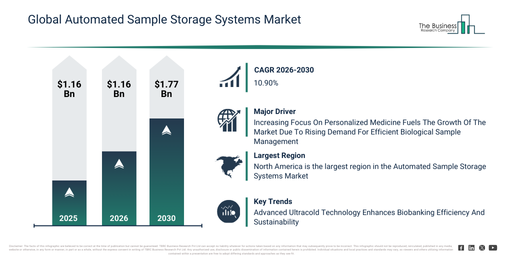
  • Global Automated Sample Storage Systems Market Analysis for 2026–2030 with Strategic Forecast Insights for Businesses

    Global Automated Sample Storage Systems Market Analysis for 2026–2030 with Strategic Forecast Insights for Businesses

    The Business Research Company’s 2026 market reports include new capabilities such as market attractiveness scoring and analysis, total addressable market analysis, company scoring matrix, interactive excel data dashboard, improved supply chain analysis, upcoming startups in the market, and overview of key products, aimed at improving the depth, usability, and strategic value of the insights delivered.

    What Market Value Is Expected For The Automated Sample Storage Systems Market At The End Of The 2026–2030 Forecast Period?

    The automated sample storage systems market size has seen rapid expansion in recent years. This market is set to increase from $1.76 billion in 2025 to $1.95 billion in 2026, achieving a compound annual growth rate (CAGR) of 10.8%. The historical growth of this market can be attributed to several factors including reliance on manual sample storage systems, limited automation in sample management, the growth of hospital and clinical research labs, increasing biological sample volumes, and conventional temperature monitoring practices.

    The automated sample storage systems market is poised for substantial expansion in the coming years. It is predicted to reach $2.95 billion in 2030, growing at a compound annual growth rate (CAGR) of 10.9%. This anticipated growth during the forecast period stems from factors such as advancements in robotic sample retrieval, increased investment in cloud-based storage solutions, the expansion of genomics and pharmaceutical research, the adoption of integrated cryo-inventory management systems, and the development of energy-efficient and scalable storage units. Significant trends expected in this period encompass the rising adoption of automated cryogenic storage solutions, an increasing demand for ultra-low temperature freezers, the integration of RFID and barcode sample tracking systems, the broadening of biobanking and clinical research applications, and a focus on energy-efficient and high-capacity storage systems.

    Download the Free Sample Report to Explore Key Market Insights:

    https://www.thebusinessresearchcompany.com/sample.aspx?id=27217&type=smp

    What Major Growth Drivers Are Shaping The Outlook Of The Automated Sample Storage Systems Market?

    The future expansion of the automated sample storage systems market is anticipated to be significantly boosted by the growing focus on personalized medicine. This medical methodology involves customizing treatment and care for individual patient attributes, including their genetic composition, way of life, and surroundings, aiming to enhance health results. The rise of personalized medicine is largely attributable to progress in genetic testing, which facilitates more accurate and customized treatments aligned with an individual’s distinct genetic profile. Within personalized medicine, automated sample storage systems play a crucial role by safely housing and organizing biological samples, thereby allowing streamlined retrieval and examination for treatment strategies specific to each patient. As an illustration, in February 2024, the Personalized Medicine Coalition, a US-based non-profit organization, reported that the Food and Drug Administration (FDA) sanctioned 16 novel personalized therapies for rare disease patients in 2023, an increase from six in 2022. Consequently, the heightened importance of personalized medicine is fueling the development of the automated sample storage systems services market.

    What Segment Types Make Up The Automated Sample Storage Systems Market?

    The automated sample storage systems market covered in this report is segmented –

    1) By Type: Liquid Nitrogen Storage Systems, Mechanical Freezers, Automated Cryogenic Storage

    2) By Technology: Robotics, Liquid Handling Systems, Temperature Monitoring Systems, Cloud-Based Storage Solutions

    3) By Sample: Blood Samples, Tissue Samples, Cellular Samples, DNA Or RNA Samples

    4) By Application: Biobanking, Pharmaceuticals, Clinical Research, Genomics

    5) By End User: Hospitals, Neurological Clinics, Rehabilitation Centers, Sports Medicine Clinics, Other End Users

    Subsegments:

    1) By Liquid Nitrogen Storage Systems: Vapor Phase Storage Systems, Liquid Phase Storage Systems, Manual Fill LN2 Systems, Auto-fill LN2 Systems, Dewar Vessels And Canisters

    2) By Mechanical Freezers: Ultra-Low Temperature Freezers (ULT, -80°C), Low Temperature Freezers (-20°C to -40°C), High-Capacity Mechanical Freezers, Single-Door And Double-Door Units, Energy-Efficient Mechanical Freezers

    3) By Automated Cryogenic Storage: Robotic Sample Retrieval Systems, Modular Cryogenic Storage Units, High-Throughput Cryo Storage Systems, RFID Or Barcode-Enabled Cryo Units, Integrated Cryo-Inventory Management Systems

    Which Market Trends Are Creating New Opportunities In The Automated Sample Storage Systems Market?

    Leading companies in the automated sample storage systems market are concentrating on developing sophisticated solutions, such as ultracold automated technology, to improve the long-term preservation of sensitive biological samples by maintaining ultra-low temperatures with high precision and minimal human intervention. This ultracold automated technology employs advanced systems to store and manage biological samples at extremely low temperatures, thereby guaranteeing their stability and reducing manual effort in laboratory settings. For example, in July 2023, Azenta Life Sciences, a US-based biotechnology research firm, introduced the BioArc Ultra, an innovative, eco-friendly ultracold automated sample storage system. Designed for high-capacity biorepositories, this system allows for automated storage and retrieval at temperatures as low as -80°C, providing secure, efficient management of up to 10 million 2D barcoded tubes. The BioArc Ultra includes a modular architecture for scalability, redundant cooling and power systems for reliability, and a user-friendly interface for streamlined operations. Its energy-efficient design minimizes environmental impact while maximizing uptime and sample integrity, establishing it as a cutting-edge solution for modern biobanking needs.

    Who Are The Key Players Driving Competition In The Automated Sample Storage Systems Market?

    Major companies operating in the automated sample storage systems market are Thermo Fisher Scientific Inc., Micronic Holding B.V., Revvity Inc., Beckman Coulter Inc., Getinge, Eppendorf SE, Brooks Automation Inc., Hamilton Company, Azenta Inc., Oxford Instruments plc, SPT Labtech Ltd., B Medical Systems S.à r.l., Hier Biomedical Corporation, Simport Scientific Inc., LiCONiC AG, Starlab International GmbH, Biotron Healthcare (India) Pvt. Ltd., ASKION GmbH, Biofortuna Limited, Angelantoni Life Science S.r.l.

    Read the full automated sample storage systems market report here:

    https://www.thebusinessresearchcompany.com/report/automated-sample-storage-systems-global-market-report

    Which Regions Are Projected To Dominate The Automated Sample Storage Systems Market In The Coming Years?

    North America was the largest region in the automated sample storage systems market in 2025. Asia-Pacific is expected to be the fastest-growing region in the forecast period. The regions covered in the automated sample storage systems market report are Asia-Pacific, South East Asia, Western Europe, Eastern Europe, North America, South America, Middle East, Africa.

    Request A Tailored Automated Sample Storage Systems Market Research Report For Competitive Advantage:

    https://www.thebusinessresearchcompany.com/customise?id=27217&type=smp

    Browse Through More Reports Similar to the Global Automated Sample Storage Systems Market 2026, By The Business Research Company

    Water Heaters Market Report 2026

    https://www.thebusinessresearchcompany.com/report/water-heaters-global-market-report

    Hot Melt Based Adhesives Market Report 2026

    https://www.thebusinessresearchcompany.com/report/hot-melt-based-adhesives-global-market-report

    Fireproofing Materials Market Report 2026

    https://www.thebusinessresearchcompany.com/report/fireproofing-materials-global-market-report

    Get in touch with us:

    The Business Research Company: https://www.thebusinessresearchcompany.com/

    Americas +1 310-496-7795

    Asia +44 7882 955267 & +91 8897263534

    Europe +44 7882 955267

    Email us at info@tbrc.info

    Follow us on:

    LinkedIn: https://in.linkedin.com/company/the-business-research-company

    YouTube: https://www.youtube.com/channel/UC24_fI0rV8cR5DxlCpgmyFQ

    Global Market Model: https://www.thebusinessresearchcompany.com/global-market-model
  • Automated Optometry Equipment Market Outlook 2026–2035 Driven by Key Growth Factors and Industry Projections

    Automated Optometry Equipment Market Outlook 2026–2035 Driven by Key Growth Factors and Industry Projections

    The Business Research Company’s 2026 market reports include new capabilities such as market attractiveness scoring and analysis, total addressable market analysis, company scoring matrix, interactive excel data dashboard, improved supply chain analysis, upcoming startups in the market, and overview of key products, aimed at improving the depth, usability, and strategic value of the insights delivered.

    What Is The Estimated Market Size Of The Automated Optometry Equipment Market During 2026–2030?

    The automated optometry equipment market has experienced significant expansion over recent years. Forecasts indicate it will expand from $3.24 billion in 2025 to $3.55 billion in 2026, achieving a compound annual growth rate (CAGR) of 9.6%. Historically, this growth has stemmed from factors such as a rising incidence of vision impairment, a deficit of skilled optometrists, the early integration of automated refractors, the proliferation of optical retail networks, and a heightened need for regular eye check-ups.

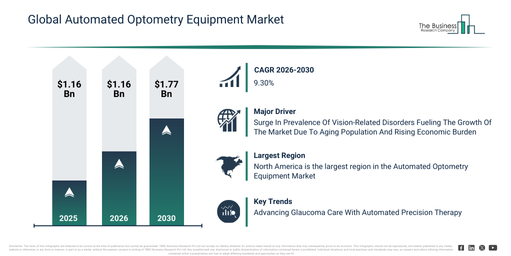
    The market for automated optometry equipment is projected to experience robust expansion over the coming years. It is anticipated to reach $5.07 billion by 2030, showing a compound annual growth rate (CAGR) of 9.3%. This growth during the forecast period can be attributed to the incorporation of artificial intelligence into diagnostics, the growing need for tele-optometry services, a heightened awareness of eye health, progress in imaging system technologies, and the extension of screening initiatives in developing markets. Key trends anticipated during the same period encompass the wider acceptance of automated eye examination setups, an escalating requirement for swift and precise vision assessments, the increasing application of AI-powered refraction and screening instruments, the expansion of optometry provisions in retail environments and medical clinics, and a move towards portable and smaller diagnostic tools.

    Download the Free Sample Report to Explore Key Market Insights:

    https://www.thebusinessresearchcompany.com/sample.aspx?id=28943&type=smp

    What Drivers Are Expected To Influence The Automated Optometry Equipment Market During The Forecast Period?

    The increasing occurrence of vision impairments is anticipated to drive the expansion of the automated optometry equipment market in the future. These disorders encompass health issues that hinder clear sight, involving difficulties with the eyes, the optic nerve, or how the brain processes visuals. The increasing frequency of vision-related problems stems from an aging demographic, given that seniors are more susceptible to ailments such as cataracts, glaucoma, and age-related macular degeneration. Automated optometry equipment contributes to managing the widespread nature of vision disorders through facilitating early identification, precise diagnosis, and effective tracking, consequently enhancing patient results and lessening the chance of significant vision impairment. For example, in June 2024, the Royal National Institute of Blind People, an organization situated in the UK, indicated that 322,638 individuals were registered as blind and partially sighted, of whom 268,500 were registered in England by March 2023. Consequently, the expanding occurrence of vision impairments is fueling the advancement of the automated optometry equipment market.

    How Are The Various Segments Of The Automated Optometry Equipment Market Categorized?

    The automated optometry equipment market covered in this report is segmented –

    1) By Product Type: Autorefractors, Lensmeters, Phoropters, Tonometers, Retinal Cameras, Other Product Types

    2) By Technology: Automated Technology, Semi-Automated Technology, Digital Technology

    3) By Application: Vision Testing, Diagnosis Of Eye Diseases, Research And Clinical Studies

    4) By End Users: Hospitals, Eye Clinics, Optometry Practices, Research Institutions, Other End Users

    Subsegments:

    1) By Autorefractors: Desktop Automated Autorefractors, Handheld Automated Autorefractors, Wavefront-Based Autorefractors, Portable Digital Autorefractors

    2) By Lensmeters: Digital Automated Lensmeters, Imaging-Based Lensmeters, Computer-Integrated Lensmeters

    3) By Phoropters: Digital Phoropters, Fully Automated Phoropters, Computer-Controlled Phoropters

    4) By Tonometers: Non-Contact Automated Tonometers, Digital Applanation Tonometers, Handheld Electronic Tonometers, Continuous Monitoring Tonometers

    5) By Retinal Cameras: Digital Fundus Cameras, Scanning Laser Retinal Cameras, Ultra-Widefield Retinal Cameras, Handheld Digital Retinal Cameras

    6) By Other Product Types: Automated Vision Screeners, Digital Slit Lamp Imaging Systems, Electronic Keratometers, Digital Pachymeters, Corneal Topography Systems

    What Trends Are Affecting The Expansion Of The Automated Optometry Equipment Market?

    Leading companies in the automated optometry equipment market are concentrating on developing innovative glaucoma treatments, such as direct selective laser trabeculoplasty, to improve treatment accessibility, enhance procedural efficiency, and provide safer, more accurate outcomes for patients. Direct selective laser trabeculoplasty is a laser-based glaucoma therapy that utilizes a machine to deliver precise laser beams to a specific area of the eye, eliminating the need for specialized lenses or manual aiming. For instance, in February 2025, Alcon, a Switzerland-based pharmaceutical and medical device firm, announced the complete commercial rollout of its Voyager Direct selective laser trabeculoplasty device in the United States. This introduction marks the market’s first and only direct selective laser trabeculoplasty device. The system is engineered with an automated workflow, enabling the delivery of 120 precise laser pulses without requiring a gonio lens or manual alignment. Direct selective laser trabeculoplasty has shown considerable clinical effectiveness by successfully managing intraocular pressure. Additionally, the device offers a favorable safety profile, with minimal risk of adverse events, representing a significant advancement in glaucoma treatment.

    Which Major Firms Influence Developments In The Automated Optometry Equipment Market?

    Major companies operating in the automated optometry equipment market are Canon Inc., Carl Zeiss Meditec Aktiengesellschaft, Topcon Corporation, NIDEK Co. Ltd., Alcon Inc., EssilorLuxottica, Hoya Corporation, OCULUS Optikgeräte GmbH, Huvitz Co. Ltd., Marco Ophthalmic Inc., Tomey Corporation, Medmont International Pty Ltd., Kowa Company Ltd., Plen Optika Ltd., Visionix Ltd., Keeler Ltd., HEINE Optotechnik GmbH & Co. KG, Forus Health Pvt. Ltd., Gulden Ophthalmic, Reichert Technologies, Optopol Technology, Costruzione Strumenti Oftalmici

    Read the full automated optometry equipment market report here:

    https://www.thebusinessresearchcompany.com/report/automated-optometry-equipment-global-market-report

    Which Region Is Forecast To Lead The Automated Optometry Equipment Market In Terms Of Market Size?

    North America was the largest region in the automated optometry equipment market in 2025. Asia-Pacific is expected to be the fastest-growing region in the forecast period. The regions covered in the automated optometry equipment market report are Asia-Pacific, South East Asia, Western Europe, Eastern Europe, North America, South America, Middle East, Africa.

    Request A Tailored Automated Optometry Equipment Market Research Report For Competitive Advantage:

    https://www.thebusinessresearchcompany.com/customise?id=28943&type=smp

    Browse Through More Reports Similar to the Global Automated Optometry Equipment Market 2026, By The Business Research Company

    Optoelectronics Market Report 2026

    https://www.thebusinessresearchcompany.com/report/optoelectronics-global-market-report

    Eye Testing Equipment Market Report 2026

    https://www.thebusinessresearchcompany.com/report/eye-testing-equipment-global-market-report

    Ophthalmic Microscope Market Report 2026

    https://www.thebusinessresearchcompany.com/report/ophthalmic-microscope-global-market-report

    Get in touch with us:

    The Business Research Company: https://www.thebusinessresearchcompany.com/

    Americas +1 310-496-7795

    Asia +44 7882 955267 & +91 8897263534

    Europe +44 7882 955267

    Email us at info@tbrc.info

    Follow us on:

    LinkedIn: https://in.linkedin.com/company/the-business-research-company

    YouTube: https://www.youtube.com/channel/UC24_fI0rV8cR5DxlCpgmyFQ

    Global Market Model: https://www.thebusinessresearchcompany.com/global-market-model