Category: Medical Equipment

  • Smart Mattress Overlay (Hospital) Market Forecast 2026: Where the Industry Is Headed

    Smart Mattress Overlay (Hospital) Market Forecast 2026: Where the Industry Is Headed

    Uncover key drivers, emerging technologies, and competitive movements shaping the workstation graphics processing unit (gpu) market from 2026–2035 with trusted insights from The Business Research Company

    What upper market value could the Smart Mattress Overlay (Hospital) Market reach by 2030 starting from 2026 levels?

    The smart mattress overlay (hospital) market has experienced considerable expansion recently. It is projected to grow from $1.99 billion in 2025 to $2.23 billion in 2026, exhibiting a compound annual growth rate (CAGR) of 11.6%. This historical growth can be attributed to an increase in long-term hospital stays, the prevalence of pressure ulcers, an aging patient population, the rising demand for patient comfort, and adherence to hospital safety protocols.

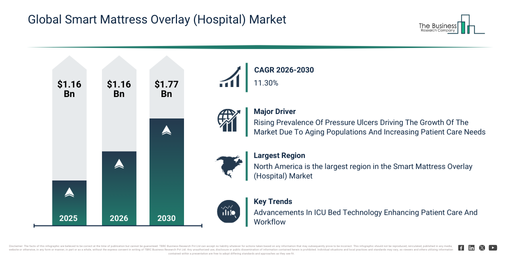
    The smart mattress overlay (hospital) market size is projected to experience swift expansion over the coming years. It is anticipated to reach $3.41 billion by 2030, exhibiting a compound annual growth rate (CAGR) of 11.3%. The drivers behind this growth in the forecast period include the adoption of smart hospital infrastructure, AI-based patient positioning, homecare bed solutions, efforts to reduce nursing workload, and real-time patient monitoring. Prominent trends for the forecast period feature pressure ulcer prevention solutions, sensor-integrated mattress overlays, automated pressure redistribution, patient movement monitoring, and smart hospital bed integration.

    Access Your Free Sample Report for In-Depth Market Insights:

    https://www.thebusinessresearchcompany.com/sample.aspx?id=29200&type=smp

    Which Drivers Are Influencing Long-Term Growth In The Smart Mattress Overlay (Hospital) Market?

    The increasing occurrence of pressure ulcers is projected to fuel the expansion of the smart mattress overlay (hospital) market going forward. These ulcers represent damage to the skin and deeper tissues resulting from sustained pressure on bony prominences, frequently impacting people with restricted movement. The growing incidence of ulcers can be attributed to elements like an aging demographic, who are more prone to mucosal injury and slower tissue healing. Smart mattress overlays (hospital) aid in both preventing and addressing pressure ulcers through uniform body weight distribution, lessening extended pressure on sensitive zones, and enhancing patient well-being and dermatological condition. For example, data from February 2024 by the Society of Tissue Viability (SOTV), a UK-based member-led charitable organization, indicates that around 500,000 individuals in the UK acquire at least one pressure ulcer each year, leading to considerable discomfort, diminished quality of life, and an annual expenditure for the NHS of approximately USD 2.55 billion (£2.2 billion), with legal costs consistently increasing. Consequently, the expanding occurrence of pressure ulcers is a key factor propelling the development of the smart mattress overlay (hospital) market.

    Which Segments Are Driving Activity In The Smart Mattress Overlay (Hospital) Market?

    The smart mattress overlay (hospital) market covered in this report is segmented –

    1) By Product Type: Pressure Relief Overlays, Alternating Pressure Overlays, Low Air Loss Overlays, Other Product Types

    2) By Material: Foam, Gel, Air, Other Materials

    3) By Technology: Sensor-Based, Air-Filled, Gel-Based, Other Technology

    4) By Application: Acute Care, Long-Term Care, Home Care, Other Applications

    5) By End-User: Hospitals, Clinics, Homecare Settings, Other End-Users

    Subsegments:

    1) By Pressure Relief Overlays: Foam Pressure Relief Overlays, Gel Pressure Relief Overlays, Air-Filled Pressure Relief Overlays, Water-Filled Pressure Relief Overlays

    2) By Alternating Pressure Overlays: Dynamic Alternating Pressure Overlays, Static Alternating Pressure Overlays, Hybrid Alternating Pressure Overlays, Portable Alternating Pressure Overlays

    3) By Low Air Loss Overlays: Continuous Low Air Loss Overlays, Zoned Low Air Loss Overlays, Microclimate Management Low Air Loss Overlays, Adjustable Low Air Loss Overlays

    4) By Other Product Types: Combination Therapy Overlays, Self-Adjusting Smart Overlays, Sensor-Integrated Overlays, Customizable Therapeutic Overlays

    How Are New Market Trends Shaping The Landscape Of The Smart Mattress Overlay (Hospital) Market?

    Leading companies in the smart mattress overlay (hospital) market are prioritizing the creation of advanced innovations like intelligent ICU bed platforms. These initiatives aim to elevate patient care and optimize caregiver operations within hospital intensive care units. An intelligent ICU bed platform is essentially a system designed to improve patient monitoring, safety, and comfort in critical care settings, while also supporting the efficiency and management of caregiver workflow. For example, in February 2023, Stryker Corporation, a US-based medical technology company, introduced SmartMedic. This platform integrates with existing intensive care unit beds to allow for patient weight monitoring, tracking of patient repositioning, and simplified bedside radiographic imaging, thereby decreasing patient discomfort and reducing manual involvement. Its wireless connection to nurse call systems further enhances workflow efficiency, enabling healthcare staff to administer timely and precise care, thus marking a significant progression in critical care patient management solutions.

    Which Key Players Are Driving Competition In The Smart Mattress Overlay (Hospital) Market?

    Major companies operating in the smart mattress overlay (hospital) market are Stryker Corporation, Hill-Rom Holdings Inc., Arjo AB, LINET Group SE, Talley Group Ltd., DeRoyal Industries Inc., Direct Healthcare Group, Blue Chip Medical Products, Invacare Corporation, Med-Mizer Inc., Drive DeVilbiss Healthcare, Permobil AB, Winncare Group, Apex Medical Corporation, EHOB Inc., Benmor Medical, Joerns Healthcare, Ossenberg GmbH, Reha-Bed Sp. z o.o., Malvestio S.p.A., Novis Healthcare

    Access The Complete Report For Deeper Market Insights:

    https://www.thebusinessresearchcompany.com/report/smart-mattress-overlay-hospital-global-market-report

    Which Region Is Anticipated To See The Fastest Growth In The Smart Mattress Overlay (Hospital) Market?

    North America was the largest region in the smart mattress overlay (hospital) market in 2025. Asia-Pacific is expected to be the fastest-growing region in the forecast period. The regions covered in the smart mattress overlay (hospital) market report are Asia-Pacific, South East Asia, Western Europe, Eastern Europe, North America, South America, Middle East, Africa.

    Request Your Customized Smart Mattress Overlay (Hospital) Market Research Report for Competitive Advantage:

    https://www.thebusinessresearchcompany.com/customise?id=29200&type=smp

    Browse Through More Reports Similar to the Global Smart Mattress Overlay (Hospital) Market 2026, By The Business Research Company

    Smart Hospital Global Market Report 2026

    https://www.thebusinessresearchcompany.com/report/smart-hospital-global-market-report

    Medical Bed Global Market Report 2026

    https://www.thebusinessresearchcompany.com/report/medical-bed-global-market-report

    Hospital Bed Management Systems Global Market Report 2026

    https://www.thebusinessresearchcompany.com/report/hospital-bed-management-systems-global-market-report

    Get in touch with us:

    The Business Research Company: https://www.thebusinessresearchcompany.com/

    Americas +1 310-496-7795

    Asia +44 7882 955267 & +91 8897263534

    Europe +44 7882 955267

    Email us at info@tbrc.info

    Follow us on:

    LinkedIn: https://in.linkedin.com/company/the-business-research-company

  • Smart Insulin Pens Industry Growth Insights: Revenue Forecast to 2030

    Smart Insulin Pens Industry Growth Insights: Revenue Forecast to 2030

    Uncover key drivers, emerging technologies, and competitive movements shaping the worker heat stress monitoring wearable market from 2026–2035 with trusted insights from The Business Research Company

    What level of CAGR-driven expansion is anticipated in the Smart Insulin Pens Market between 2026 and 2030?

    The market for smart insulin pens has experienced significant growth in recent years. This market is projected to expand from $0.11 billion in 2025 to $0.12 billion by 2026, exhibiting a compound annual growth rate (CAGR) of 7.2%. Historically, this expansion has been driven by factors such as the increasing incidence of diabetes, a growing population requiring insulin, heightened consciousness regarding precise dosing, the development of home healthcare options, and the accessibility of digital health platforms.

    The smart insulin pens market is anticipated to experience significant expansion over the coming years. By 2030, its valuation is projected to reach $0.16 billion, demonstrating a compound annual growth rate (CAGR) of 6.8%. This projected growth is primarily driven by factors such as the increasing integration with digital diabetes ecosystems, the growing embrace of personalized insulin therapy, the broadening scope of remote patient monitoring, a heightened emphasis on data-driven diabetes care, and expanded investments in smart drug delivery technologies. Key trends anticipated during this period encompass the increased adoption of connected insulin delivery devices, the rising utilization of real-time dose tracking solutions, a surging demand for home-based diabetes management, the wider availability of mobile app-integrated insulin pens, and a stronger emphasis on ensuring patient adherence and safety.

    Access Your Free Sample Report for In-Depth Market Insights:

    https://www.thebusinessresearchcompany.com/sample.aspx?id=3090&type=smp

    What Drivers Are Affecting Demand-Supply Dynamics In The Smart Insulin Pens Market?

    The expanding worldwide diabetic population is anticipated to fuel the future expansion of the smart insulin pen market. The diabetic population encompasses individuals diagnosed with diabetes, a long-term health condition marked by high blood glucose levels. This growth in the diabetic population stems from the rising global rates of obesity and lack of physical activity, which are key contributors to Type 2 diabetes. Smart insulin pens facilitate better diabetes care by providing accurate insulin dosage monitoring, reminders, and data synchronization, thereby improving patient compliance and overall blood sugar regulation for those with diabetes. For instance, in 2025, as reported by the International Diabetes Federation, a Belgium-based health organization, in 2024, approximately 589 million adults aged 20-79 had diabetes, with this figure expected to climb to 853 million by 2050. It was also noted that more than 4 in 5 adults with diabetes live in low and middle income countries. Consequently, the growing global diabetic population is propelling the growth of the smart insulin pen market.

    How Is The Smart Insulin Pens Market Organized Into Various Segments?

    The smart insulin pens market covered in this report is segmented –

    1) By Type: First Generation Pens, Second Generation Pens

    2) By Usability: Prefilled, Reusable

    3) By Application: Type 1 Diabetes, Type 2 Diabetes

    4) By End User: Hospitals & Clinics, Ambulatory Surgical Centres, Home Care Settings

    Subsegments:

    1) By First Generation Pens: Basic Smart Insulin Pens With Standard Features, Simple Connectivity to Mobile Apps for Tracking and Logging Insulin Doses

    2) By Second Generation Pens: Advanced Smart Insulin Pens With Enhanced Features, Real-Time Data Sharing With Healthcare Providers and Caregivers, Sophisticated Mobile Applications for Comprehensive Diabetes Management

    Which Trends Are Expected To Influence The Smart Insulin Pens Market In The Upcoming Years?

    Leading firms within the smart insulin pen market are developing integrated solutions that merge real-time glucose surveillance, dose computations, and detection of missed doses to streamline insulin administration and mitigate hypoglycemia risks. These sophisticated systems utilize Bluetooth-enabled pens, accompanying mobile applications, and compact continuous glucose monitors to deliver tailored dosing insights, rectify dosing inaccuracies, and enhance overall glycemic regulation. As an illustration, in December 2024, Medtronic, a medical technology, services, and solutions provider based in the US, introduced its Smart MDI System. This system pairs a smart insulin pen with the Simplera CGM to offer real-time, customized dosing advice. Notably, it stands as the first system of its kind to provide detection of missed meal doses and corresponding correction suggestions, assisting patients in identifying and rectifying unadministered or incorrect insulin injections. Field data indicated that individuals who consistently acted on these practical alerts achieved Time in Range (TIR) levels reaching 67-71%, highlighting the technology’s capacity to optimize glucose management.

    Who Are The Top-Performing Companies In The Smart Insulin Pens Market In Recent Years?

    Major companies operating in the smart insulin pens market are Companion Medical, Novo Nordisk A/S, F. Hoffmann-La Roche AG, Emperra GmbH E-Health Technologies, Diamesco Co. Ltd., Digital Medics Pvt Ltd., Bigfoot Biomedical, Diabnext, Insulet Corporation, Sanofi India, Becton Dickinson, Biocon Ltd, Johnson & Johnson, Terumo, NIPRO, Medtronic PLC, Ypsomed Holding AG, Patients Pending Ltd, Dexcom, Insujet, Eli Lilly, Abbott Laboratories, Tandem Diabetes Care Inc.

    Access The Complete Report For Deeper Market Insights:

    https://www.thebusinessresearchcompany.com/report/smart-insulin-pens-global-market-report

    Which Region Is Anticipated To See The Fastest Growth In The Smart Insulin Pens Market?

    North America was the largest region in the smart insulin pens market in 2025. Western Europe was the second largest region in the global smart insulin pens market share. The regions covered in the smart insulin pens market report are Asia-Pacific, South East Asia, Western Europe, Eastern Europe, North America, South America, Middle East, Africa.

    Request Your Customized Smart Insulin Pens Market Research Report for Competitive Advantage:

    https://www.thebusinessresearchcompany.com/customise?id=3090&type=smp

    Browse Through More Reports Similar to the Global Smart Insulin Pens Market 2026, By The Business Research Company

    Diabetes Pen Global Market Report 2026

    https://www.thebusinessresearchcompany.com/report/diabetes-pen-global-market-report

    Insulin Pens Syringes Pumps And Injectors Market 2026

    https://www.thebusinessresearchcompany.com/report/insulin-pens-syringes-pumps-and-injectors-market

    Insulin Delivery Devices Global Market Report 2026

    https://www.thebusinessresearchcompany.com/report/insulin-delivery-devices-global-market-report

    Get in touch with us:

    The Business Research Company: https://www.thebusinessresearchcompany.com/

    Americas +1 310-496-7795

    Asia +44 7882 955267 & +91 8897263534

    Europe +44 7882 955267

    Email us at info@tbrc.info

    Follow us on:

    LinkedIn: https://in.linkedin.com/company/the-business-research-company

  • Global Smart Infusion Pumps Market Performance Report: Global Trends 2026–2030

    Global Smart Infusion Pumps Market Performance Report: Global Trends 2026–2030

    Uncover key drivers, emerging technologies, and competitive movements shaping the workstation graphics processing unit (gpu) market from 2026–2035 with trusted insights from The Business Research Company

    What long-term size projections exist for the Smart Infusion Pumps Market covering 2026–2035?

    In recent years, the smart infusion pumps market has experienced robust growth. This market is projected to expand from $8.88 billion in 2025 to $9.73 billion in 2026, exhibiting a compound annual growth rate (CAGR) of 9.5%. The historical growth of this market can be attributed to elements such as the reliance on standard infusion pumps, limited integration with hospital IT systems, an expanding oncology and pediatric patient population, the increasing development of hospital and clinic infrastructure, and the adoption of single-channel volumetric pumps.

    The smart infusion pumps market is projected for substantial expansion in the coming years, with its size expected to reach $13.84 billion by 2030, demonstrating a compound annual growth rate (CAGR) of 9.2%. This anticipated growth is driven by several factors, including the advancement of multi-channel and programmable infusion systems, their integration with electronic medical records (EMR), a surging demand for home care infusion therapies, the embrace of MRI-compatible and wireless infusion pumps, and the expanded application of digital and smart pump technologies. Key trends for the forecast period encompass the increasing uptake of smart pump technology, the integration of wireless and closed-loop infusion systems, their growing deployment in home care and ambulatory environments, a pronounced emphasis on minimizing medication errors and improving patient safety, and the broader application of infusion pumps within specialty clinics and oncology.

    Access Your Free Sample Report for In-Depth Market Insights:

    https://www.thebusinessresearchcompany.com/sample.aspx?id=24705&type=smp

    Which Drivers Are Impacting The Competitive Landscape Of The Smart Infusion Pumps Market?

    The rising prevalence of chronic diseases is anticipated to propel the growth of the smart infusion pumps market going forward. These conditions are defined as persistent health issues that manifest gradually and often require ongoing care or management over time. The increase in chronic illnesses is attributed to increasingly sedentary lifestyles, which contribute to obesity, diabetes, and cardiovascular conditions. Smart infusion pumps assist in managing chronic diseases through automated and accurate medication delivery, thereby minimizing human errors and enhancing overall long-term treatment effectiveness. For instance, in April 2025, according to the International Diabetes Federation (IDF), a Belgium-based non-profit organization, nearly 589 million adults aged 20–79 are living with diabetes worldwide, and this number is projected to rise significantly to 853 million by 2050. Consequently, the growing incidence of chronic diseases is fueling the expansion of the smart infusion pumps market.

    What Segments Are Identified Within The Structure Of The Smart Infusion Pumps Market?

    The smart infusion pumps market covered in this report is segmented –

    1) By Type: Large Volumetric Infusion Pumps, Patient Controlled Analgesia Pumps, Syringe Infusion Systems, Electronic- Ambulatory Infusion Systems, Implantable Infusion Systems, MRI-Compatible IV Infusion Pump Systems, Disposable Elastomeric Infusion Systems, Other Types

    2) By Technology: Smart Pump Technology, Digital Infusion Systems, Wireless Infusion Systems, Standard Infusion Pumps, Closed-Loop Systems

    3) By Application: Chemotherapy Or Oncology, Pediatrics Or Neonatology, Gastroenterology, Hematology, Diabetes, Other Applications

    4) By End User: Hospitals, Ambulatory Surgical Centers, Home Care, Specialty Clinics, Other End User

    Subsegments:

    1) By Large Volumetric Infusion Pumps: Single Channel Pumps, Multi-Channel Pumps, Stand-Alone Systems, Integrated Systems

    2) By Patient Controlled Analgesia (PCA) Pumps: Disposable PCA Pumps, Electronic PCA Pumps

    3) By Syringe Infusion Systems: Motor-Driven Syringe Systems, Spring-Driven Syringe Systems

    4) By Electronic-Ambulatory Infusion Systems: Programmable Ambulatory Pumps, Non-Programmable Ambulatory Pumps

    5) By Implantable Infusion Systems: Intrathecal Drug Delivery Pumps, Insulin Delivery Pumps

    6) By MRI-Compatible IV Infusion Pump Systems: Shielded MRI-Compatible Pumps, Non-Shielded MRI-Compatible Pumps

    7) By Disposable Elastomeric Infusion Systems: Continuous Flow Pumps, Patient-Controlled Flow Pumps

    8) By Other Types: Enteral Feeding Pumps, Insulin Infusion Pumps, Chemotherapy Infusion Pumps

    What Trends Are Driving The Growth Trajectory Of The Smart Infusion Pumps Market?

    Leading companies in the smart infusion pumps market are concentrating on developing innovative solutions, such as cassette-based infusion pumps, to enhance medication delivery accuracy, improve patient safety, and streamline drug administration workflows in clinical environments. Cassette-based infusion pumps are a specific type of infusion pump that utilizes a disposable cassette for the precise delivery of fluids or medications. For instance, in August 2023, ICU Medical Inc., a US-based medical technology company, secured 510(k) regulatory clearance from the U.S. Food and Drug Administration (FDA) for its Plum Duo infusion pump featuring cloud-based LifeShield software. This device offers dual-channel delivery, facilitating the simultaneous administration of two compatible intravenous therapies, which improves workflow efficiency and patient care. It also incorporates advanced drug library integration and automated programming to help minimize medication errors. The LifeShield software enhances the pump’s functionality with real-time monitoring, data-driven insights, and clinical decision support, ensuring superior infusion safety and compliance with hospital protocols.

    Which Leading Companies Dominate The Smart Infusion Pumps Market Share?

    Major companies operating in the smart infusion pumps market are Fresenius Kabi AG, Medtronic plc, Becton Dickinson and Company, Baxter International Inc, Terumo Corporation, Mindray Medical International Limited, Moog Inc, ICU Medical Inc, Insulet Corporation, Avanos Medical Inc, JMS Co Ltd, Vygon SA, B Braun Melsungen AG, Eitan Group, Heka Healthcare B V, PROMECON GmbH, Micrel Medical Devices SA, Smiths Medical, Zyno Medical LLC, CME Medical, Bionical Emas, Nipro Corporation

    Access The Complete Report For Deeper Market Insights:

    https://www.thebusinessresearchcompany.com/report/smart-infusion-pumps-global-market-report

    Which Global Regions Are Shaping The Competitive Landscape Of The Smart Infusion Pumps Market?

    North America was the largest region in the smart infusion pumps market in 2025. Asia-Pacific is expected to be the fastest-growing region in the forecast period. The regions covered in the smart infusion pumps market report are Asia-Pacific, South East Asia, Western Europe, Eastern Europe, North America, South America, Middle East, Africa.

    Request Your Customized Smart Infusion Pumps Market Research Report for Competitive Advantage:

    https://www.thebusinessresearchcompany.com/customise?id=24705&type=smp

    Browse Through More Reports Similar to the Global Smart Infusion Pumps Market 2026, By The Business Research Company

    Ambulatory Iv Infusion Pumps Global Market Report 2026

    https://www.thebusinessresearchcompany.com/report/ambulatory-iv-infusion-pumps-global-market-report

    Implantable Infusion Pumps Global Market Report 2026

    https://www.thebusinessresearchcompany.com/report/implantable-infusion-pumps-global-market-report

    Drug Infusion Systems Global Market Report 2026

    https://www.thebusinessresearchcompany.com/report/drug-infusion-systems-global-market-report

    Get in touch with us:

    The Business Research Company: https://www.thebusinessresearchcompany.com/

    Americas +1 310-496-7795

    Asia +44 7882 955267 & +91 8897263534

    Europe +44 7882 955267

    Email us at info@tbrc.info

    Follow us on:

    LinkedIn: https://in.linkedin.com/company/the-business-research-company
  • Smart Implants Market Future Outlook 2026: Key Drivers and Growth Potential

    Smart Implants Market Future Outlook 2026: Key Drivers and Growth Potential

    Uncover key drivers, emerging technologies, and competitive movements shaping the worker heat stress monitoring wearable market from 2026–2035 with trusted insights from The Business Research Company

    What total market size is anticipated for the Smart Implants Market in 2030?

    The smart implants market has experienced substantial expansion in recent years. This market is projected to expand from $5.19 billion in 2025 to $6.05 billion in 2026, exhibiting a compound annual growth rate (CAGR) of 16.6%. Historically, this growth has been driven by factors such as the increasing prevalence of chronic diseases, the rising adoption of implantable medical devices, ongoing advancements in biomedical engineering, the growing acceptance of minimally invasive surgeries, and the expansion of hospital infrastructure.

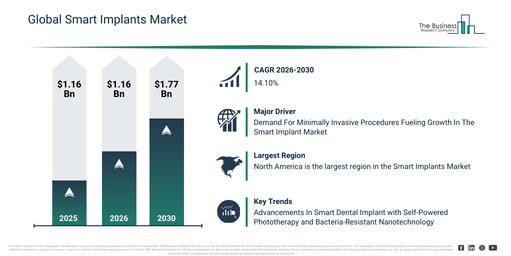
    The smart implants market is projected to experience substantial expansion in the coming years, with its size anticipated to reach $10.26 billion by 2030, demonstrating a compound annual growth rate (CAGR) of 14.1%. This growth during the forecast period can be attributed to several factors, including the escalating demand for personalized healthcare solutions, the rising integration of AI-driven diagnostics, growing investments in connected medical devices, the expansion of remote patient monitoring adoption, and an increasing focus on outcome-based healthcare models. Major trends expected in this period include the rising uptake of sensor-enabled implants, the increasing use of remote patient monitoring implants, a growing integration of wireless data transmission, the expansion of minimally invasive smart implant procedures, and an enhanced focus on personalized implant solutions.

    Access Your Free Sample Report for In-Depth Market Insights:

    https://www.thebusinessresearchcompany.com/sample.aspx?id=15671&type=smp

    What Drivers Are Influencing Production Trends In The Smart Implants Market?

    The increasing adoption of minimally invasive procedures is anticipated to fuel the expansion of the smart implant market moving forward. These medical operations involve the least possible disruption to the body’s natural structure and function, resulting in reduced stress on surrounding tissues and quicker recovery times. The heightened preference for minimally invasive procedures stems from advantages such as less pain and discomfort, minimal scarring, and a lower risk of complications. Smart implants are instrumental in advancing minimally invasive surgery by offering real-time feedback, improving precision and accuracy, enabling remote control and adjustments, facilitating data integration and analysis, and supporting enhanced patient monitoring and recovery. These capabilities contribute to safer, more effective, and patient-centric minimally invasive procedures across various medical specialties. For instance, in August 2023, according to The Aesthetic Society, a US-based organization entirely devoted to aesthetic plastic surgery and cosmetic medicine, Americans spent over $11.8 billion on minimally invasive aesthetic procedures in 2023, representing a 2% increase from 2022. Consequently, the rising demand for minimally invasive procedures is a primary catalyst for the growth of the smart implant market.

    Which Segments Are Gaining Traction In The Smart Implants Market?

    The smart implants market covered in this report is segmented –

    1) By Type: Orthopedic Implants, Cardiovascular Implants, Dental Implants, Other Types

    2) By Surgery: Open Surgery, Minimally Invasive Surgery

    3) By Application: Knee And Hip Arthroplasty, Spine Fusion, Stents, Intraocular Lens, Pacing Devices

    4) By End-User: Hospitals, Ambulatory Surgical Centers, Specialty Clinics, Other End-Users

    Subsegments:

    1) By Orthopedic Implants: Smart Hip Implants, Smart Knee Implants, Smart Spinal Implants

    2) By Cardiovascular Implants: Smart Pacemakers, Implantable Cardioverter Defibrillators (Icds), Smart Stents

    3) By Dental Implants: Smart Endosteal Implants, Smart Subperiosteal Implants

    4) By Other Types: Smart Cochlear Implants, Neural Implants

    What Upcoming Trends Are Likely To Define The Future Path Of The Smart Implants Market?

    Major companies operating in the smart implant market are focusing on creating innovative products, such as piezoelectric technology-based implants, with the aim of increasing implant longevity and improving patient outcomes. Implants that incorporate piezoelectric technology produce electricity from body movements, thereby powering features like antibacterial surfaces or phototherapy to aid healing and extend the implant’s lifespan without external power sources. For instance, in February 2023, researchers at the University of Pennsylvania, a US-based research university, engineered a smart dental implant. This intelligent dental implant features a bacteria-resistant nanoparticle biofilm and an integrated phototherapy light designed to protect periodontal tissue from inflammation. Harnessing piezoelectric technology, it generates electricity for the phototherapy light from natural oral movements, promoting tissue health without needing batteries. Furthermore, barium titanate nanoparticles provide a durable negative charge to repel harmful bacteria, thus enhancing implant longevity and decreasing the need for replacement.

    Who Are The Major Companies Operating In The Smart Implants Market?

    Major companies operating in the smart implants market are Johnson And Johnson Services Inc., Abbott Laboratories, Medtronic plc, Stryker, Boston Scientific Corporation, Zimmer Biomet, Terumo Corporation, Smith And Nephew plc, Biotronik, Integra LifeSciences, Cochlear Ltd., CONMED Corporation, Globus Medical Inc., Penumbra Inc., Orthofix Medical Inc., Nevro Corp., Exactech Inc., Senseonics, Canary Medical Inc., Aleva Neurotherapeutics SA, Intelligent Implants, Rejoint srl

    Access The Complete Report For Deeper Market Insights:

    https://www.thebusinessresearchcompany.com/report/smart-implants-global-market-report

    Which Regions Are Poised For Strategic Growth In The Smart Implants Market?

    North America was the largest region in the smart implants market in 2025. Asia-Pacific is expected to be the fastest-growing region in the forecast period. The regions covered in the smart implants market report are Asia-Pacific, South East Asia, Western Europe, Eastern Europe, North America, South America, Middle East, Africa.

    Request Your Customized Smart Implants Market Research Report for Competitive Advantage:

    https://www.thebusinessresearchcompany.com/customise?id=15671&type=smp

    Browse Through More Reports Similar to the Global Smart Implants Market 2026, By The Business Research Company

    Microelectronic Medical Implants Global Market Report 2026

    https://www.thebusinessresearchcompany.com/report/microelectronic-medical-implants-global-market-report

    Bio Implants Global Market Report 2026

    https://www.thebusinessresearchcompany.com/report/bio-implants-global-market-report

    Active Implantable Medical Devices Global Market Report 2026

    https://www.thebusinessresearchcompany.com/report/active-implantable-medical-devices-global-market-report

    Get in touch with us:

    The Business Research Company: https://www.thebusinessresearchcompany.com/

    Americas +1 310-496-7795

    Asia +44 7882 955267 & +91 8897263534

    Europe +44 7882 955267

    Email us at info@tbrc.info

    Follow us on:

    LinkedIn: https://in.linkedin.com/company/the-business-research-company

  • Smart Hearing Aids Market Trends and Insights: Global Forecast to 2030

    Smart Hearing Aids Market Trends and Insights: Global Forecast to 2030

    Uncover key drivers, emerging technologies, and competitive movements shaping the workstation graphics processing unit (gpu) market from 2026–2035 with trusted insights from The Business Research Company

    What is the expected shift in the Smart Hearing Aids Market’s size between 2026 and 2030?

    The smart hearing aids market size has demonstrated robust growth over recent years. The market is forecast to increase from $7.14 billion in 2025 to $7.7 billion in 2026, exhibiting a compound annual growth rate (CAGR) of 7.8%. Factors contributing to its historical growth include the growing prevalence of hearing loss, increasing awareness regarding hearing health, technological advancements in sound amplification, the rise in the geriatric population, and the adoption of traditional hearing aids.

    The smart hearing aids market size is anticipated to undergo significant expansion in the upcoming years. It is projected to achieve a value of $10.26 billion by 2030, demonstrating a compound annual growth rate (CAGR) of 7.4%. The expected increase during this period stems from factors such as the incorporation of AI and IoT into hearing aids, the proliferation of smart audiology clinics, the creation of rechargeable and Bluetooth-enabled devices, a growing need for pediatric hearing solutions, and progress in tinnitus management technologies. Dominant trends during the forecast timeframe are expected to include personalized hearing experiences, the integration of wireless audio streaming, remote management capabilities for hearing aids, improvements in noise reduction and speech enhancement, and designs that are both ergonomic and discreet.

    Access Your Free Sample Report for In-Depth Market Insights:

    https://www.thebusinessresearchcompany.com/sample.aspx?id=25905&type=smp

    Which Drivers Are Shaping Strategic Decisions In The Smart Hearing Aids Market?

    Increasing occurrences of hearing impairment are anticipated to drive expansion within the smart hearing aids market moving ahead. This condition signifies a partial or total inability to detect sounds in one or both ears, thus impacting an individual’s capacity for communication and auditory perception. The increasing prevalence of hearing loss stems from an aging demographic, given that the auditory system’s natural decline frequently accompanies advancing age. Through sophisticated digital processing, smart hearing aids assist in managing hearing impairment by amplifying sounds, minimizing ambient noise, and improving speech intelligibility. These devices automatically adjust to various surroundings, thereby enhancing the user’s overall auditory experience and communicative capabilities. As an illustration, figures from May 2024, provided by the Department of Health, Disability, and Ageing, an Australia-based government administration, indicated that approximately 3.6 million individuals were affected by some level of hearing loss; this figure is forecast to rise significantly, reaching around 7.8 million by 2060. Consequently, the growing frequency of hearing impairment is propelling the expansion of the smart hearing aids market.

    What Segment Categories Are Covered In The Smart Hearing Aids Market?

    The smart hearing aids market covered in this report is segmented –

    1) By Product Type: Behind-The-Ear (BTE), In-The-Ear (ITE), In-The-Canal (ITC), Completely-In-Canal (CIC), Receiver-In-Canal (RIC)

    2) By Technology: Bluetooth Enabled, Artificial Intelligence (AI)-Powered, Rechargeable, Tinnitus Masking, Other Technologies

    3) By Distribution Channel: Online Stores, Audiology Clinics, Hospitals And Clinics, Retail Pharmacies, Other Distribution Channels

    4) By End-User: Adults, Pediatrics

    Subsegments:

    1) By Behind-The-Ear (BTE): Standard Behind-The-Ear (BTE), Mini Behind-The-Ear (BTE), Power Behind-The-Ear (BTE), Rechargeable Behind-The-Ear (BTE), Bluetooth-Enabled Behind-The-Ear (BTE)

    2) By In-The-Ear (ITE): Full Shell In-The-Ear (ITE), Half Shell In-The-Ear (ITE), Wireless In-The-Ear (ITE), In-The-Ear (ITE) With Telecoil, Custom In-The-Ear (ITE)

    3) By In-The-Canal (ITC): Standard In-The-Canal (ITC), Mini In-The-Canal (ITC), Rechargeable In-The-Canal (ITC), Directional Microphone In-The-Canal (ITC), Wireless In-The-Canal (ITC)

    4) By Completely-In-Canal (CIC): Invisible-In-Canal (IIC), Wireless Completely-In-Canal (CIC), Programmable Completely-In-Canal (CIC), Completely-In-Canal (CIC) With Remote Control, Completely-In-Canal (CIC) With Venting

    5) By Receiver-In-Canal (RIC): Mini Receiver-In-Canal (RIC), Power Receiver-In-Canal (RIC), Rechargeable Receiver-In-Canal (RIC), Receiver-In-Canal (RIC) With Open Fit, Wireless Receiver-In-Canal (RIC)

    Which Trends Are Shaping Activity Within The Smart Hearing Aids Market?

    Leading companies in the smart hearing aids market are concentrating on developing advanced products, such as artificial intelligence (AI)-powered hearing aids, to enhance natural hearing experiences through sophisticated sound processing. These AI-powered hearing aids leverage artificial intelligence to adjust in real time to varied sound environments and improve speech comprehension. They consistently learn user habits to deliver a customized and more natural listening experience. For instance, in February 2025, GN Store Nord A/S, a Denmark-based manufacturer of hearing aids, unveiled ReSound Vivia, its most advanced hearing portfolio. This innovative device utilizes a dedicated Deep Neural Network (DNN) chip, trained on millions of speech samples, to provide exceptional speech clarity in noisy surroundings, while maintaining a discreet, comfortable design and long battery life. ReSound Vivia’s Intelligent Focus feature mimics natural human listening by prioritizing sounds based on where the user is looking, offering a more intuitive and effortless hearing experience.

    Which Major Firms Are Strengthening Their Position In The Smart Hearing Aids Market?

    Major companies operating in the smart hearing aids market are Sonova Holding AG, GN Store Nord A S, WS Audiology, Starkey Hearing Technologies, Jabra Enhance, Widex, Beltone, Unitron, Amplifon Hearing Health Care, Eargo Inc, Audicus, iHEAR Medical, MDHearing, SoundWorld Solutions, Lexie Hearing, Audien Hearing, Melosound, Austar Hearing Science And Technology Xiamen Co Ltd, Soundwave Hearing LLC, Tweak Hearing, Rexton Hearing, Phonak, Oticon

    Access The Complete Report For Deeper Market Insights:

    https://www.thebusinessresearchcompany.com/report/smart-hearing-aids-global-market-report

    Which Regions Are Projected To Dominate The Smart Hearing Aids Market In The Coming Years?

    North America was the largest region in the smart hearing aids market in 2025. The regions covered in the smart hearing aids market report are Asia-Pacific, South East Asia, Western Europe, Eastern Europe, North America, South America, Middle East, Africa.

    Request Your Customized Smart Hearing Aids Market Research Report for Competitive Advantage:

    https://www.thebusinessresearchcompany.com/customise?id=25905&type=smp

    Browse Through More Reports Similar to the Global Smart Hearing Aids Market 2026, By The Business Research Company

    Hearing Implants Global Market Report 2026

    https://www.thebusinessresearchcompany.com/report/hearing-implants-global-market-report

    Hearing Diagnostic Devices And Equipment Global Market Report 2026

    https://www.thebusinessresearchcompany.com/report/hearing-diagnostic-devices-and-equipment-global-market-report

    Ear Health Global Market Report 2026

    https://www.thebusinessresearchcompany.com/report/ear-health-global-market-report

    Get in touch with us:

    The Business Research Company: https://www.thebusinessresearchcompany.com/

    Americas +1 310-496-7795

    Asia +44 7882 955267 & +91 8897263534

    Europe +44 7882 955267

    Email us at info@tbrc.info

    Follow us on:

    LinkedIn: https://in.linkedin.com/company/the-business-research-company

  • Global Smart Foley Catheters Market Report 2026–2030: Data-Driven Growth Insights

    Global Smart Foley Catheters Market Report 2026–2030: Data-Driven Growth Insights

    Uncover key drivers, emerging technologies, and competitive movements shaping the worker heat stress monitoring wearable market from 2026–2035 with trusted insights from The Business Research Company

    What growth pattern is forecast for the Smart Foley Catheters Market size between 2026 and 2035?

    The smart foley catheters market has shown rapid expansion over recent years. It is anticipated to increase from $1.73 billion in 2025 to $1.93 billion in 2026, achieving a compound annual growth rate (CAGR) of 11.8%. The market’s past growth has been driven by factors such as elevated catheter-associated infection rates, an increase in surgical procedures, the necessity for continuous patient monitoring, an aging demographic, and various hospital safety initiatives.

    The smart foley catheters market size is projected to experience substantial expansion over the upcoming years. This market is anticipated to reach $2.99 billion by 2030, exhibiting a compound annual growth rate (CAGR) of 11.5%. Key drivers for this projected growth include the increasing adoption of remote patient monitoring, the implementation of AI-based alert systems, the broadening of home care environments, the development of smart hospital infrastructure, and regulatory initiatives aimed at patient safety. Prominent trends identified for this period encompass real-time urine monitoring, catheter designs focused on infection prevention, wireless transmission of patient data, catheter systems equipped with integrated sensors, and the capability for early detection of complications.

    Access Your Free Sample Report for In-Depth Market Insights:

    https://www.thebusinessresearchcompany.com/sample.aspx?id=30396&type=smp

    Which Drivers Are Impacting Market Performance In The Smart Foley Catheters Market?

    An increasing incidence of chronic illnesses is anticipated to drive the expansion of the smart foley catheters market in the future. These long-term health issues progress gradually and persist over time, frequently demanding ongoing medical attention. The increasing occurrence of chronic diseases stems in part from sedentary habits, where extended periods of sitting and insufficient physical activity heighten the risk of ailments like heart conditions and diabetes. Smart foley catheters assist in managing chronic conditions by continuously tracking urine output, pressure, and temperature, positioning them as an excellent solution for individuals requiring prolonged catheterization. These devices enhance patient safety and clinical efficiency by offering real-time data and automated alerts, thereby minimizing the need for manual monitoring and intervention. For example, figures from June 2024, published by the National Health Service, a UK-based government department, revealed that 3,615,330 individuals registered with a general practitioner (GP) were diagnosed with non-diabetic hyperglycemia or pre-diabetes (a condition with elevated blood sugar levels, not high enough to be classified as diabetes) in 2023. This represented an 18% increase from 3,065,825 cases reported in 2022. Consequently, the expanding prevalence of chronic diseases is stimulating the growth of the smart foley catheters market.

    Which Segments Are Contributing To The Growth Of The Smart Foley Catheters Market?

    The smart foley catheters market covered in this report is segmented –

    1) By Product Type: Sensor-Enabled Indwelling Smart Foley Catheters, Wireless-Connected Smart Foley Catheters, Temperature-Monitoring Smart Foley Catheters, Pressure and Flow-Sensing Smart Foley Catheters, Infection-Detection and Antimicrobial Smart Foley Catheters

    2) By Application: Urinary Incontinence, Surgery, Prostate Gland Surgery, Spinal Cord Injury, Other Applications

    3) By End-User: Hospitals, Clinics, Long-Term Care Facilities

    Subsegments:

    1) By Sensor-Enabled Indwelling Smart Foley Catheters: Two-Way Sensor-Integrated Foley Catheters, Three-Way Sensor-Integrated Foley Catheters, Multi-Parameter Monitoring Foley Catheters

    2) By Wireless-Connected Smart Foley Catheters: Bluetooth-Enabled Foley Catheters, Wi-Fi-Enabled Foley Catheters, Remote Monitoring–Integrated Foley Catheters, EMR/EHR-Integrated Smart Foley Catheters

    3) By Temperature-Monitoring Smart Foley Catheters: Core Body Temperature Sensing Foley Catheters, Continuous Temperature Monitoring Foley Catheters, Fever-Alert Enabled Smart Foley Catheters

    4) By Pressure and Flow-Sensing Smart Foley Catheters: Intravesical Pressure Monitoring Foley Catheters, Urine Flow Rate Monitoring Foley Catheters, Blockage and Occlusion Detection Foley Catheters, Drainage Alarm-Enabled Foley Catheters

    5) By Infection-Detection and Antimicrobial Smart Foley Catheters: Biofilm Detection Smart Foley Catheters, Early UTI Detection Smart Foley Catheters, Antimicrobial-Coated Sensor-Integrated Foley Catheters, pH and Biomarker Monitoring Smart Foley Catheters

    Who Are The Primary Competitors In The Global Smart Foley Catheters Market?

    Major companies operating in the smart foley catheters market are Bactiguard AB, Potrero Medical Inc (Accuryn), FIZE Medical, Becton Dickinson and Company, Medtronic plc, DeRoyal Industries Inc., UNOQUIP, Boen Medical Co. Ltd., Biometrix, Cook Medical LLC, Teleflex Incorporated, B. Braun Melsungen AG, Coloplast A/S, Convatec Group Plc, Hollister Incorporated, Poly Medicure Limited, Romsons Group of Industries Pvt. Ltd., Angiplast Pvt. Ltd., Well Lead Medical Co. Ltd., Medline Industries LP.

    Access The Complete Report For Deeper Market Insights:

    https://www.thebusinessresearchcompany.com/report/global-smart-foley-catheters-market-report

    Which Region Is Expected To Experience The Fastest Growth In The Smart Foley Catheters Market?

    North America was the largest region in the smart foley catheters market in 2025. Asia-Pacific is expected to be the fastest-growing region in the forecast period. The regions covered in the smart foley catheters market report are Asia-Pacific, South East Asia, Western Europe, Eastern Europe, North America, South America, Middle East, Africa.

    Request Your Customized Smart Foley Catheters Market Research Report for Competitive Advantage:

    https://www.thebusinessresearchcompany.com/customise?id=30396&type=smp

    Browse Through More Reports Similar to the Global Smart Foley Catheters Market 2026, By The Business Research Company

    Deflectable Catheters Global Market Report 2026

    https://www.thebusinessresearchcompany.com/report/deflectable-catheters-global-market-report

    Urinary Catheters Global Market Report 2026

    https://www.thebusinessresearchcompany.com/report/urinary-catheters-global-market-report

    Diagnostic Catheters Global Market Report 2026

    https://www.thebusinessresearchcompany.com/report/diagnostic-catheters-global-market-report

    Get in touch with us:

    The Business Research Company: https://www.thebusinessresearchcompany.com/

    Americas +1 310-496-7795

    Asia +44 7882 955267 & +91 8897263534

    Europe +44 7882 955267

    Email us at info@tbrc.info

    Follow us on:

    LinkedIn: https://in.linkedin.com/company/the-business-research-company
  • Smart Exoskeleton Market Dynamics 2026: Future Outlook and Key Insights

    Smart Exoskeleton Market Dynamics 2026: Future Outlook and Key Insights

    Uncover key drivers, emerging technologies, and competitive movements shaping the workstation graphics processing unit (gpu) market from 2026–2035 with trusted insights from The Business Research Company

    How much larger will the Smart Exoskeleton Market be in 2030 compared with 2026?

    The smart exoskeleton market has seen rapid growth recently. It is anticipated to expand from $4.18 billion in 2025 to $4.77 billion in 2026, demonstrating a compound annual growth rate (CAGR) of 14.1%. This historic growth can be attributed to several factors, including the demand for workplace injury reduction, the mobility needs of an aging population, advancements in military performance, the early adoption of rehabilitation robotics, and requirements for industrial productivity.

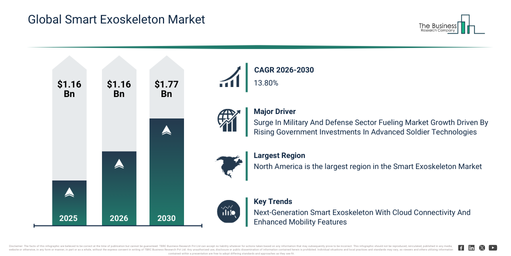
    The smart exoskeleton market is anticipated to experience significant expansion in the upcoming years. By 2030, its size is projected to reach $8.01 billion, demonstrating a compound annual growth rate (CAGR) of 13.8%. Factors contributing to this growth during the forecast period include AI-driven adaptive control systems, the expansion of home rehabilitation services, reduced costs due to mass manufacturing, integration with digital health platforms, and a rise in adoption within emerging economies. Key trends for the forecast period encompass AI-assisted motion control, the increasing use of soft and ultra-soft exoskeletons, optimization of human-machine interfaces, rehabilitation-focused wearable robotics, and the development of lightweight and modular designs.

    Access Your Free Sample Report for In-Depth Market Insights:

    https://www.thebusinessresearchcompany.com/sample.aspx?id=30395&type=smp

    What Drivers Are Guiding Growth Patterns In The Smart Exoskeleton Market?

    The burgeoning military and defense sector is poised to drive the expansion of the smart exoskeleton market in the foreseeable future. Within this sector, smart exoskeletons are utilized to augment soldiers’ strength, endurance, and mobility, while also mitigating fatigue and the potential for injury during combat or arduous operations. The growth of the military and defense sector is fueled by an escalating demand for sophisticated wearable technologies that boost soldier performance, lessen fatigue, and optimize operational effectiveness, prompting greater investment in smart exoskeletons for combat support and logistics applications. These devices bolster the military and defense sector by enhancing the physical capabilities of soldiers, enabling them to transport heavy loads, move with efficiency, and reduce fatigue during missions, thereby improving their endurance, safety, and overall performance on the battlefield. For example, in April 2024, the Stockholm International Peace Research Institute, a Sweden-based non-profit foundation, reported that global military expenditure reached $2,443 billion in 2023, marking a 6.8% increase in real terms compared to 2022. Thus, the expanding military and defense sector is a key catalyst for the smart exoskeleton market’s growth.

    How Is The Smart Exoskeleton Market Divided Into Segments?

    The smart exoskeleton market covered in this report is segmented –

    1) By Component: Hardware, Software, Services

    2) By Type: Rigid Smart Exoskeleton, Soft Smart Exoskeleton

    3) By Body Part: Upper Body, Lower Body, Full Body

    4) By End User: Industrial, Healthcare, Military, Other End Users

    Subsegments:

    1) By Hardware: Sensors, Actuators, Power Sources: Control Systems, Frames And Structures, Controllers And Processors, Communication Modules

    2) By Software: Motion Control Software, Artificial Intelligence (AI) And Machine Learning Algorithms, Data Analytics And Monitoring Software, User Interface (UI) And Customization Tools, Cloud Integration Platforms

    3) By Services: Training And Support Services, Maintenance And Repair Services, System Integration Services, Consulting And Customization Services, After-Sales And Upgradation Services

    What Trends Are Expected To Impact The Competitive Landscape Of The Smart Exoskeleton Market?

    Leading firms in the smart exoskeleton market are increasingly concentrating on advancements like customizable exoskeletons, aiming to elevate user experience, facilitate real-time monitoring, and broaden their utility across medical, industrial, and military domains. Customizable exoskeletons are defined as wearable robotic structures crafted to improve or recover human movement, capable of being adjusted to a person’s body size, specific physical necessities, and functional demands for use in rehabilitation, aiding mobility, or enhancing performance. An illustrative case occurred in April 2025, when Lifeward Ltd., an Israeli medical technology enterprise, introduced the ReWalk 7 Personal Exoskeleton across the country to support individuals suffering from spinal cord injuries. This seventh-generation device incorporates cloud connectivity and adjustable walking speeds, thereby delivering a customized and practical walking experience. Developed with insights from clinicians and patients, it features sophisticated technologies designed to boost safety, comfort, and mobility, enabling users to walk assuredly in daily settings and significantly improve their general quality of life.

    Which Key Market Players Are Investing In Expansion And Innovation Within The Smart Exoskeleton Market?

    Major companies operating in the smart exoskeleton market are Ottobock SE & Co. KGaA, Fourier Intelligence, CYBERDYNE INC., Hocoma AG, GERMAN BIONIC SYSTEMS GMBH, Ekso Bionics Holdings Inc., ReWalk Robotics, ExoAtlet, Rex Bionics Ltd., Bionik Laboratories Corp., SuitX, B-Temia Inc., Technaid Inc., Bioservo Technologies AB, DIH Medical, Honda Motor Co. Ltd., Hyundai Motor Company, Lockheed Martin Corporation, Parker Hannifin Corporation, Gogoa Mobility Robots.

    Access The Complete Report For Deeper Market Insights:

    https://www.thebusinessresearchcompany.com/report/global-smart-exoskeleton-market-report

    Which Geographic Areas Are Emerging As Strong Markets For The Smart Exoskeleton Market?

    North America was the largest region in the smart exoskeleton market in 2025. Asia-Pacific is expected to be the fastest-growing region in the forecast period. The regions covered in the smart exoskeleton market report are Asia-Pacific, South East Asia, Western Europe, Eastern Europe, North America, South America, Middle East, Africa.

    Request Your Customized Smart Exoskeleton Market Research Report for Competitive Advantage:

    https://www.thebusinessresearchcompany.com/customise?id=30395&type=smp

    Browse Through More Reports Similar to the Global Smart Exoskeleton Market 2026, By The Business Research Company

    Wearable Robotic Exoskeleton Global Market Report 2026

    https://www.thebusinessresearchcompany.com/report/wearable-robotic-exoskeleton-global-market-report

    Military Exoskeleton Global Market Report 2026

    https://www.thebusinessresearchcompany.com/report/military-exoskeleton-global-market-report

    Smart Portable Rehabilitation Devices Global Market Report 2026

    https://www.thebusinessresearchcompany.com/report/smart-portable-rehabilitation-devices-global-market-report

    Get in touch with us:

    The Business Research Company: https://www.thebusinessresearchcompany.com/

    Americas +1 310-496-7795

    Asia +44 7882 955267 & +91 8897263534

    Europe +44 7882 955267

    Email us at info@tbrc.info

    Follow us on:

    LinkedIn: https://in.linkedin.com/company/the-business-research-company

  • Smart Disposable Medical Device Market Research: Growth Projections and Trends 2030

    Smart Disposable Medical Device Market Research: Growth Projections and Trends 2030

    Uncover key drivers, emerging technologies, and competitive movements shaping the worker heat stress monitoring wearable market from 2026–2035 with trusted insights from The Business Research Company

    Starting from its 2026 valuation, what market size is the Smart Disposable Medical Device Market expected to reach by 2030?

    The smart disposable medical device market has shown considerable expansion in recent years. This market is anticipated to expand from $6.49 billion in 2025 to $7.8 billion in 2026, demonstrating a compound annual growth rate (CAGR) of 20.2%. Historically, its growth has been driven by factors such as anxieties over hospital-acquired infections, the need for sterilization-free devices, an increase in chronic disease monitoring, the adoption of wearable technology, and adherence to regulatory safety requirements.

    The smart disposable medical device market size is projected to experience substantial expansion over the upcoming years. This market is forecast to reach $16.1 billion by 2030, demonstrating a compound annual growth rate (CAGR) of 19.9%. The projected growth during this period is largely influenced by factors such as the expansion of remote monitoring, the development of smart drug adherence tools, innovations in sustainability-driven materials, enhanced integration with digital health platforms, and the rise in outpatient care. Significant trends anticipated in this forecast period include the prevalence of single-use connected medical devices, disposable tools featuring embedded sensors, devices specifically designed for infection control, disposables capable of transmitting real-time data, and advanced smart drug delivery solutions.

    Access Your Free Sample Report for In-Depth Market Insights:

    https://www.thebusinessresearchcompany.com/sample.aspx?id=29194&type=smp

    What Drivers Are Driving Adoption Within The Smart Disposable Medical Device Market?

    The increasing emphasis on reducing hospital-acquired infections is projected to fuel the expansion of the smart disposable medical device market in the future. Hospital-acquired infections (HAIs) are defined as infections contracted by patients during their stay in a hospital or other healthcare facility, generally appearing 48 hours or more post-admission and not present upon entry. This heightened attention on mitigating HAIs stems from the imperative to enhance patient safety, as diminishing these infections reduces complication probabilities and improves recovery results. Smart disposable medical devices aid in minimizing hospital-acquired infections by guaranteeing single-use sterility and offering real-time monitoring, thus lowering cross-contamination dangers and boosting patient safety. For example, in March 2025, the Health Security Agency, a UK government body, reported that hospital-acquired infections affected 7.6% of patients in 2023, with pneumonia and lower respiratory tract infections being the most prevalent at 29.6%, followed by urinary tract infections at 17.5%, and sepsis or disseminated infections at 10.6%. Consequently, the growing focus on decreasing hospital-acquired infections is propelling the growth of the smart disposable medical device.

    What Segments Are Included Within The Smart Disposable Medical Device Market?

    The smart disposable medical device market covered in this report is segmented –

    1) By Product Type: Smart Syringes, Smart Wearable Patches, Smart Pills

    2) By Connectivity: Bluetooth, Near Field Communication (NFC)

    3) By Application: Patient Monitoring, Drug Delivery, Diagnostics

    4) By End-User: Hospitals And Clinics, Home Care, Ambulatory Surgical Centers

    Subsegments:

    1) By Smart Syringes: Connected Insulin Syringes, Connected Vaccination Syringes, Connected Needle-Free Syringes, Connected Prefilled Syringes

    2) By Smart Wearable Patches: Connected Monitoring Patches, Connected Drug Delivery Patches, Connected Pain Management Patches, Connected Cardiac Monitoring Patches

    3) By Smart Pills: Ingestible Monitoring Pills, Ingestible Drug Delivery Pills, Ingestible Temperature Sensing Pills, Ingestible Diagnostic Pills

    Which Trends Are Guiding The Evolution Of The Smart Disposable Medical Device Market?

    Key players in the smart disposable medical device market are concentrating on creating novel methods, including dual-therapy compatibility, to allow for the effortless monitoring and administration of various drug categories via a singular connected system. This compatibility means a smart medical device can interact with and keep tabs on two distinct kinds of treatments or medicines at the same time. An example of this is Biocorp, a France-based medical technology company, which in January 2023, declared that its Mallya, a smart medical device for disposable injector pens, had received approval from the US Food and Drug Administration. This allows individuals utilizing both insulin and GLP-1 receptor agonist pens to connect their devices to a smartphone, providing them with the capability to observe dosage and the precise date and time of every injection. The integrated connectivity aids in guaranteeing a more accurate therapeutic management. Through its provision of both ease of use and live tracking, Mallya encourages superior treatment adherence and contributes to enhanced patient results.

    Who Are The Core Companies Influencing Trends In The Smart Disposable Medical Device Market?

    Major companies operating in the smart disposable medical device market are Abbott Laboratories, Medtronic plc, Boston Scientific Corporation, Terumo Corporation, Dexcom Inc., Insulet Corporation, iRhythm Technologies Inc., Ypsomed Holding AG, Biotricity Inc., Tasso Inc., Gentag Inc., Nemaura Medical Inc., Proteus Digital Health Inc., SmartTab Systems Inc., Celero Systems Inc., BlueSpark Technologies Inc., Bodytrak Inc., Element Science Inc., Becton Dickinson and Company, Roche Diagnostics, VitalConnect Inc

    Access The Complete Report For Deeper Market Insights:

    https://www.thebusinessresearchcompany.com/report/smart-disposable-medical-device-global-market-report

    Which Region Is Projected To Lead The Smart Disposable Medical Device Market During The Forecast Period?

    North America was the largest region in the smart disposable medical device market in 2025. The regions covered in the smart disposable medical device market report are Asia-Pacific, South East Asia, Western Europe, Eastern Europe, North America, South America, Middle East, Africa.

    Request Your Customized Smart Disposable Medical Device Market Research Report for Competitive Advantage:

    https://www.thebusinessresearchcompany.com/customise?id=29194&type=smp

    Browse Through More Reports Similar to the Global Smart Disposable Medical Device Market 2026, By The Business Research Company

    Disposable Medical Sensors Global Market Report 2026

    https://www.thebusinessresearchcompany.com/report/disposable-medical-sensors-global-market-report

    Portable Medical Devices Global Market Report 2026

    https://www.thebusinessresearchcompany.com/report/portable-medical-devices-global-market-report

    Smart Biopsy Devices Global Market Report 2026

    https://www.thebusinessresearchcompany.com/report/smart-biopsy-devices-global-market-report

    Get in touch with us:

    The Business Research Company: https://www.thebusinessresearchcompany.com/

    Americas +1 310-496-7795

    Asia +44 7882 955267 & +91 8897263534

    Europe +44 7882 955267

    Email us at info@tbrc.info

    Follow us on:

    LinkedIn: https://in.linkedin.com/company/the-business-research-company

  • Ultraviolet (UV) Blocking Contact Lens Market Future Outlook: Strong Growth Expected Toward $2.73 Billion by 2030

    Ultraviolet (UV) Blocking Contact Lens Market Future Outlook: Strong Growth Expected Toward $2.73 Billion by 2030

    Uncover key drivers, emerging technologies, and competitive movements shaping the worker heat stress monitoring wearable market from 2026–2035 with trusted insights from The Business Research Company

    What are the forecasted starting (2026) and ending (2030) market sizes for the Ultraviolet (UV) Blocking Contact Lens Market?

    The ultraviolet (uv) blocking contact lens market size has seen swift expansion in recent years. It is forecast to increase from $1.46 billion in 2025 to $1.65 billion in 2026, growing at a compound annual growth rate (CAGR) of 13.0%. The historical growth in this market can be attributed to rising uv exposure awareness, growth in contact lens adoption, ophthalmologist recommendations, outdoor lifestyle trends, and vision correction demand.

    The ultraviolet (uv) blocking contact lens market is poised for significant expansion in the coming years, with projections indicating it will reach $2.73 billion by 2030, exhibiting a compound annual growth rate (CAGR) of 13.4%. Factors contributing to this growth during the forecast period include an increase in myopia prevalence, the expansion of pediatric eye care, advancements in lens materials, widespread digital device usage, and a rising fashion-led lens demand. Key trends anticipated during the same period encompass a heightened outdoor eye protection demand, a growing preference for daily disposable lenses, increased pediatric uv protection usage, the need for digital eye strain protection, and the integration of cosmetic uv lenses.

    Access Your Free Sample Report for In-Depth Market Insights:

    https://www.thebusinessresearchcompany.com/sample.aspx?id=28346&type=smp

    What Drivers Are Supporting Technological Adoption In The Ultraviolet (UV) Blocking Contact Lens Market?

    The growing engagement in outdoor activities is projected to stimulate the expansion of the ultraviolet (UV) blocking contact lens market in the foreseeable future. Outdoor activities encompass any recreational or physical pursuits undertaken in natural or open environments, such as hiking, cycling, or various sports. The escalation in outdoor recreational participation is attributed to heightened health awareness, as more individuals are pursuing physical activities like hiking, cycling, and camping to enhance their physical fitness and mental well-being. Ultraviolet (UV) blocking contact lens enhance these activities by shielding eyes from detrimental UV rays, making them highly suitable for sports, driving, and general outdoor exposure. They effectively minimize the risk of UV-related ocular damage while preserving clear and comfortable vision, thereby improving overall eye safety and user convenience. For instance, in November 2024, data from the Bureau of Economic Analysis (BEA), a US-based federal statistical agency, indicated that the outdoor recreation economy expanded by 3.6 percent in 2023—in contrast to a 10.2 percent increase in 2022 and surpassing the overall U.S. economy’s 2.9 percent rise—with real gross output climbing 3.2 percent, compensation rising 9.0 percent, and employment increasing 3.3 percent. Hence, the increasing prevalence of outdoor activities is a key factor driving the growth of the ultraviolet (UV) blocking contact lens market.

    Which Segments Are Contributing To The Growth Of The Ultraviolet (UV) Blocking Contact Lens Market?

    The ultraviolet (uv) blocking contact lens market covered in this report is segmented –

    1) By Product Type: Daily Disposable, Weekly Disposable, Monthly Disposable, Extended Wear, Other Product Types

    2) By Material: Hydrogel, Silicone Hydrogel, Hybrid, Other Materials

    3) By Application: Corrective, Therapeutic, Cosmetic, Other Applications

    4) By Distribution Channel: Optical Stores, Online Stores, Hospitals And Clinics, Other Distribution Channels

    5) By End-User: Adults, Children

    Subsegments:

    1) By Daily Disposable: UV-Blocking Spherical Daily Disposable Lenses, UV-Blocking Toric Daily Disposable Lenses, UV-Blocking Multifocal Daily Disposable Lenses, UV-Blocking Cosmetic Daily Disposable Lenses

    2) By Weekly Disposable: UV-Blocking Spherical Weekly Disposable Lenses, UV-Blocking Toric Weekly Disposable Lenses, UV-Blocking Cosmetic Weekly Disposable Lenses, UV-Blocking Therapeutic Weekly Disposable Lenses

    3) By Monthly Disposable: UV-Blocking Spherical Monthly Disposable Lenses, UV-Blocking Toric Monthly Disposable Lenses, UV-Blocking Multifocal Monthly Disposable Lenses, UV-Blocking Silicone Hydrogel Monthly Disposable Lenses

    4) By Extended Wear: UV-Blocking Extended Wear Spherical Lenses, UV-Blocking Extended Wear Toric Lenses, UV-Blocking High Oxygen-Permeable Extended Wear Lenses, UV-Blocking Therapeutic Extended Wear Lenses

    5) By Other Product Types: UV-Blocking Orthokeratology Lenses, UV-Blocking Rigid Gas Permeable (RGP) Lenses, UV-Blocking Scleral Lenses, Pediatric UV-Blocking Contact Lenses

    Which Competitive Trends Are Impacting The Structure Of The Ultraviolet (UV) Blocking Contact Lens Market?

    Leading companies in the ultraviolet (UV) blocking contact lens market are prioritizing the creation of innovative solutions, such as daily disposable contact lenses, to improve eye protection and user convenience. Daily disposable contact lenses are designed for single-day use before being discarded, providing ease and reducing the potential for eye infections. For example, in March 2023, CooperVision Inc., a US-based medical device firm, launched the MyDay Energys contact lenses, engineered to offer UV protection and alleviate digital eye strain. These lenses incorporate DigitalBoost technology, which provides a +0.3D power boost to diminish fatigue from extended digital device usage. They also utilize Aquaform Technology, enabling the lenses to retain twice their weight in water, ensuring superior comfort and hydration. Additionally, as daily disposable lenses, they feature built-in UV protection, safeguarding the eyes from harmful rays while maintaining clear, focused vision all day.

    Who Are The Top-Performing Companies In The Ultraviolet (UV) Blocking Contact Lens Market In Recent Years?

    Major companies operating in the ultraviolet (uv) blocking contact lens market are Alcon Inc., Johnson And Johnson Vision Care Inc., CooperVision Inc., Bausch + Lomb Incorporated, Hoya Corporation, Menicon Co. Ltd., SEED Co. Ltd., St. Shine Optical Co. Ltd., Interojo Inc., Clearlab International Pte. Ltd., Visioneering Technologies Inc., BostonSight Inc., Contamac Ltd., Neo Vision Co. Ltd., UltraVision CLPL, Camax Optical Corp., Purecon Lenses Pvt. Ltd., Ovctek Inc., Ginko International Co. Ltd., Hydron Ltd., Precilens SAS

    Access The Complete Report For Deeper Market Insights:

    https://www.thebusinessresearchcompany.com/report/ultraviolet-uv-blocking-contact-lens-global-market-report

    How Does The Ultraviolet (UV) Blocking Contact Lens Market Perform Across Major Global Regions?

    North America was the largest region in the ultraviolet (UV) blocking contact lens market in 2025. Asia-Pacific is expected to be the fastest-growing region in the forecast period. The regions covered in the ultraviolet (uv) blocking contact lens market report are Asia-Pacific, South East Asia, Western Europe, Eastern Europe, North America, South America, Middle East, Africa.

    Request Your Customized Ultraviolet (UV) Blocking Contact Lens Market Research Report for Competitive Advantage:

    https://www.thebusinessresearchcompany.com/customise?id=28346&type=smp

    Browse Through More Reports Similar to the Global Ultraviolet (UV) Blocking Contact Lens Market 2026, By The Business Research Company

    Contact Lenses Global Market Report 2026

    https://www.thebusinessresearchcompany.com/report/contact-lenses-global-market-report

    Coloured Contact Lenses Global Market Report 2026

    https://www.thebusinessresearchcompany.com/report/coloured-contact-lenses-global-market-report

    Uv Stabilizers Global Market Report 2026

    https://www.thebusinessresearchcompany.com/report/uv-stabilizers-global-market-report

    Get in touch with us:

    The Business Research Company: https://www.thebusinessresearchcompany.com/

    Americas +1 310-496-7795

    Asia +44 7882 955267 & +91 8897263534

    Europe +44 7882 955267

    Email us at info@tbrc.info

    Follow us on:

    LinkedIn: https://in.linkedin.com/company/the-business-research-company
  • Revenue of the Ultrasound Transducer Market Predicted to Achieve $5.52 Billion by 2030, Driven by 4.2% CAGR

    Revenue of the Ultrasound Transducer Market Predicted to Achieve $5.52 Billion by 2030, Driven by 4.2% CAGR

    Uncover key drivers, emerging technologies, and competitive movements shaping the workstation graphics processing unit (gpu) market from 2026–2035 with trusted insights from The Business Research Company

    What upper market value could the Ultrasound Transducer Market reach by 2030 starting from 2026 levels?

    The ultrasound transducer market size has experienced steady expansion in recent years. It is projected to increase from $4.51 billion in 2025 to $4.68 billion in 2026, at a compound annual growth rate (CAGR) of 3.7%. The historical growth of this market can be attributed to the expanding utilization of ultrasound imaging in hospitals and diagnostic centers, an increase in obstetrics and gynecology scanning procedures, the rising need for cardiovascular and vascular imaging diagnostics, the broadening scope of general imaging and musculoskeletal ultrasound applications, and the provision of multiple transducer form factors for varied clinical applications.

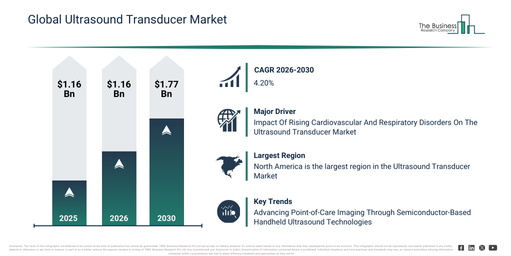
    The market for ultrasound transducers is anticipated to experience consistent growth over the coming years. This market is projected to reach a valuation of $5.52 billion by 2030, exhibiting a compound annual growth rate (CAGR) of 4.2%. This expansion during the forecast period is driven by several factors, including the increasing integration of point-of-care ultrasound devices, a growing need for high-resolution and specialized ultrasound probes, the expansion of ambulatory and outpatient diagnostic services, the wider clinical application of Doppler and 3D/4D ultrasound technologies, and more frequent replacement cycles due to probe wear and the need for performance enhancements. Key trends anticipated during this period encompass a growing requirement for specialized ultrasound transducers in cardiovascular, obstetrics, and musculoskeletal imaging; a heightened preference for high-frequency and compact probes to improve image clarity and procedural precision; an increased deployment of endocavitary and phased array transducers for sophisticated diagnostic and interventional uses; the broader acceptance of portable and point-of-care ultrasound systems, which in turn boosts transducer replacement and upgrade rates; and the expanding clinical application of 3D/4D and Doppler transducers to facilitate thorough diagnostic evaluations across various healthcare environments.

    Access Your Free Sample Report for In-Depth Market Insights:

    https://www.thebusinessresearchcompany.com/sample.aspx?id=13549&type=smp

    Which Drivers Are Influencing Long-Term Growth In The Ultrasound Transducer Market?

    The rising occurrence of cardiovascular and respiratory conditions is anticipated to fuel the expansion of the ultrasound transducer market in the coming years. These disorders encompass a range of health issues impacting both the cardiovascular system (heart and blood vessels) and the respiratory system (lungs and airways). Ultrasound transducers are frequently employed for the diagnosis and management of these conditions, serving a vital role in imaging and evaluating the structures and functions of the heart, blood vessels, lungs, and associated organs. For instance, in December 2023, a research study published by JAMA Network Open, a medical journal of the American Medical Association, estimated the global burden of chronic obstructive pulmonary disease (copd). This study projected that COPD cases worldwide could reach nearly 600 million by 2050, indicating a 23% increase in prevalence. Notably, the number of female cases is expected to surge by 47.1%, whereas male cases are projected to rise by only 9.4%. Consequently, the growing incidence of cardiovascular and respiratory disorders is boosting the growth of the ultrasound transducer market.

    How Is The Ultrasound Transducer Market Divided Into Segments?

    The ultrasound transducer market covered in this report is segmented –

    1) By Product: Linear, Convex, Phased array, Endocavitary, Continuous wave Doppler, Other Products

    2) By Application: Cardiovascular, General Imaging, Musculoskeletal, Obstetrics (OB) And Gynecology (GYN), Vascular, Other Applications

    3) By End User: Hospitals, Diagnostic Centers, Ambulatory Surgical Centers, Clinics

    Subsegments:

    1) By Linear: High-Frequency Linear Transducers, Low-Frequency Linear Transducers

    2) By Convex: Microconvex Transducers, Full-Range Convex Transducers

    3) By Phased Array: Small Footprint Phased Array Transducers, Full-Sector Phased Array Transducers

    4) By Endocavitary: Vaginal Endocavitary Transducers, Rectal Endocavitary Transducers

    5) By Continuous Wave Doppler: Pedoff-Type Continuous Wave Doppler Transducers, Immersion Doppler Transducers

    6) By Other Products: 3D Or 4D Transducers, Intravascular Ultrasound (IVUS) Transducers

    What Industry Trends Are Transforming The Ultrasound Transducer Market?

    Major companies operating in the ultrasound transducer market are actively developing innovative technological products, such as semiconductor-based handheld point-of-care ultrasound probes, specifically designed to meet the requirements of clinicians in demanding environments. A semiconductor-based handheld POCUS probe utilizes CMOS-MEMS ultrasound-on-chip technology to substitute numerous discrete piezoelectric elements with a single silicon chip. This advancement facilitates wider bandwidth, higher frame rates, novel 3D capture modes, and a considerably smaller, lighter probe form factor. For instance, in February 2024, Butterfly Network, a US-based digital health company, launched the Butterfly iQ3. This third-generation handheld whole-body ultrasound probe is built upon the next-generation P4.3 Ultrasound-on-Chip technology. The iQ3 doubles its processing and data transfer speed compared to the previous generation, introduces automated 3D capture tools named iQ Slice and iQ Fan, and features a smaller, lighter ergonomic design along with faster charging and extended run time, all intended to deliver near-cart image quality on a handheld device.

    Which Leading Companies Dominate The Ultrasound Transducer Market Share?

    Major companies operating in the ultrasound transducer market are Hitachi Medical Corporation, Siemens Healthineers, Fujifilm Holdings Corporation, Koninklijke Philips N.V, Alpinion Medical Systems Co. Ltd., GE HealthCare Technologies Inc., Shenzhen Mindray Bio-Medical Electronics Co. Ltd., Neusoft Medical Systems Co. Ltd., Canon Medical Systems Corporation, Samsung Medison Co. Ltd., Esaote SpA, SonoScape Medical Corp., Edan Instruments Inc., Butterfly Network Inc., eZono AG, Broadsound Corporation, iThera Medical GmbH, Shenzhen JiaRui Electronic Technology Co. Ltd., Exact Imaging Inc., MediView LLC, Sonavex Inc., iSono Health Inc.

    Access The Complete Report For Deeper Market Insights:

    https://www.thebusinessresearchcompany.com/report/ultrasound-transducer-global-market-report

    Which Region Is Anticipated To See The Fastest Growth In The Ultrasound Transducer Market?

    North America was the largest region in the ultrasound transducer market in 2025. Asia-Pacific is expected to be the fastest-growing region in the forecast period. The regions covered in the ultrasound transducer market report are Asia-Pacific, South East Asia, Western Europe, Eastern Europe, North America, South America, Middle East, Africa.

    Request Your Customized Ultrasound Transducer Market Research Report for Competitive Advantage:

    https://www.thebusinessresearchcompany.com/customise?id=13549&type=smp

    Browse Through More Reports Similar to the Global Ultrasound Transducer Market 2026, By The Business Research Company

    Ultrasound Systems Devices And Equipment Global Market Report 2026

    https://www.thebusinessresearchcompany.com/report/ultrasound-systems-devices-and-equipment-global-market-report

    Ultrasonic Technology Global Market Report 2026

    https://www.thebusinessresearchcompany.com/report/ultrasonic-technology-global-market-report

    Cardiovascular Ultrasound Global Market Report 2026

    https://www.thebusinessresearchcompany.com/report/cardiovascular-ultrasound-global-market-report

    Get in touch with us:

    The Business Research Company: https://www.thebusinessresearchcompany.com/

    Americas +1 310-496-7795

    Asia +44 7882 955267 & +91 8897263534

    Europe +44 7882 955267

    Email us at info@tbrc.info

    Follow us on:

    LinkedIn: https://in.linkedin.com/company/the-business-research-company