Category: Medical Equipment

  • Global Optical Microscopes Market Report 2026–2035: Key Forecasts and Growth Areas

    Global Optical Microscopes Market Report 2026–2035: Key Forecasts and Growth Areas

    Uncover key drivers, emerging technologies, and competitive movements shaping the worker heat stress monitoring wearable market from 2026–2035 with trusted insights from The Business Research Company

    How much is the Optical Microscopes Market valued at in 2026, and what valuation is forecast for 2030?

    The optical microscopes market has experienced significant expansion in recent years. It is projected to increase from $3.18 billion in 2025 to $3.45 billion in 2026, registering a compound annual growth rate (CAGR) of 8.4%. This historical growth can be attributed to several factors, including the broadening of medical diagnostics, a rise in academic research activities, the increasing application of microscopy in clinical environments, the accessibility of affordable optical systems, and advancements in lens manufacturing technologies.

    The optical microscopes market size is projected to experience substantial growth in the upcoming years, with an expectation to reach $4.61 billion by 2030, demonstrating a compound annual growth rate (CAGR) of 7.5%. This anticipated expansion during the forecast period is attributed to several factors, including increasing investments in life sciences research, rising demand for digital pathology solutions, the expansion of clinical diagnostics infrastructure, the growing integration of AI-based image analysis, and an increasing focus on precision diagnostics. Major trends observed in this period encompass the increasing adoption of digital optical microscopes, a rising demand for high-resolution imaging, the growing integration of image analysis software, the expansion of laboratory and clinical applications, and an enhanced focus on ergonomic microscope design.

    Access Your Free Sample Report for In-Depth Market Insights:

    https://www.thebusinessresearchcompany.com/sample.aspx?id=15883&type=smp

    What Drivers Are Influencing The Growth Of The Optical Microscopes Market?

    The increasing incidence of long-term illnesses is anticipated to boost the expansion of the optical microscope market. A chronic disease is defined as a health condition or ailment characterized by its enduring or prolonged effects, typically persisting for a minimum of three months and potentially worsening over time. The escalation of chronic illnesses is fueled by lifestyle elements like inadequate nutrition, insufficient physical activity, and elevated stress levels. In the study of chronic diseases, optical microscopes are employed to examine and evaluate alterations at the cellular and tissue levels. For example, in February 2024, data from the World Health Organization, an intergovernmental body based in Switzerland, indicated a projection of over 35 million new cancer cases by 2050, which signifies a 77% rise from the approximately 20 million cases estimated in 2022. Consequently, the growing occurrence of chronic health conditions is stimulating the development of the optical microscope market.

    What Segments Are Included Within The Optical Microscopes Market?

    The optical microscopes market covered in this report is segmented –

    1) By Product: Digital Microscopes, Stereo Microscope, Inverted Microscopes, Other Products

    2) By Application: Aerospace, Construction, Power Industry, Medical, Other Applications

    3) By End-User: Hospitals And Clinics, Academic And Research Institutes, Diagnostics Laboratories, Other End Users

    Subsegments:

    1) By Digital Microscopes: Handheld Digital Microscopes, USB Digital Microscopes, Laboratory Digital Microscopes

    2) By Stereo Microscope: Trinocular Stereo Microscopes, Binocular Stereo Microscopes, Zoom Stereo Microscopes

    3) By Inverted Microscopes: Research Inverted Microscopes, Routine Inverted Microscopes

    4) By Other Products: Monocular Microscopes, Compound Microscopes, Polarizing Microscopes

    How Are Emerging Trends Affecting The Progression Of The Optical Microscopes Market?

    Leading companies in the optical microscopes market are developing innovative products, such as multiphoton confocal microscopes, to better serve customers with advanced features. This advanced type of optical microscope utilizes multiphoton excitation to image deep within thick specimens, offering high resolution and minimal damage. The technique is especially useful for observing live tissues and cells in detail, making it valuable for biomedical research, including studies on chronic diseases. For instance, in July 2023, Nikon Corporation, a Japan-based manufacturer of optical instruments, launched the AX R MP with an NSPARC super-resolution multiphoton confocal microscope, which allows for highly sensitive array detection and super-resolution imaging in deep regions of large living specimens. This technology is expected to enhance understanding of brain diseases such as Alzheimer’s and Parkinson’s and aid in drug discovery research.

    Who Are The Primary Competitors In The Global Optical Microscopes Market?

    Major companies operating in the optical microscopes market are Thermo Fisher Scientific Inc., Danaher Corporation, Carl Zeiss AG, Keyence Corporation, Olympus Corporation, VWR International Inc., Sunny Optical Technology (Group) Company Limited, Nikon Corporation, Leica Microsystems GmbH, Motic (Xiamen) Electric Group Co. Ltd., Meiji Techno Co. Ltd., Celestron LLC, Prior Scientific Instruments Ltd., Levenhuk Inc., Labomed Inc., Euromex Microscopen BV, ACCU-SCOPE Inc., Hirox Co. Ltd., AmScope LLC, Swift Optical Instruments, Optec Instrumentation (Shanghai) Co. Ltd.

    Access The Complete Report For Deeper Market Insights:

    https://www.thebusinessresearchcompany.com/report/optical-microscopes-global-market-report

    Which Regions Are Poised For Strategic Growth In The Optical Microscopes Market?

    North America was the largest region in the optical microscopes market in 2025. Asia-Pacific is expected to be the fastest-growing region in the forecast period. The regions covered in the optical microscopes market report are Asia-Pacific, South East Asia, Western Europe, Eastern Europe, North America, South America, Middle East, Africa.

    Request Your Customized Optical Microscopes Market Research Report for Competitive Advantage:

    https://www.thebusinessresearchcompany.com/customise?id=15883&type=smp

    Browse Through More Reports Similar to the Global Optical Microscopes Market 2026, By The Business Research Company

    Microscope Global Market Report 2026

    https://www.thebusinessresearchcompany.com/report/microscope-global-market-report

    Ophthalmic Microscope Global Market Report 2026

    https://www.thebusinessresearchcompany.com/report/ophthalmic-microscope-global-market-report

    Surgical Microscopes Global Market Report 2026

    https://www.thebusinessresearchcompany.com/report/surgical-microscopes-global-market-report

    Get in touch with us:

    The Business Research Company: https://www.thebusinessresearchcompany.com/

    Americas +1 310-496-7795

    Asia +44 7882 955267 & +91 8897263534

    Europe +44 7882 955267

    Email us at info@tbrc.info

    Follow us on:

    LinkedIn: https://in.linkedin.com/company/the-business-research-company
  • Optical Imaging Market 2026–2030: Forecast, Innovation, and Competitive Trends

    Optical Imaging Market 2026–2030: Forecast, Innovation, and Competitive Trends

    Uncover key drivers, emerging technologies, and competitive movements shaping the workstation graphics processing unit (gpu) market from 2026–2035 with trusted insights from The Business Research Company

    By how much is the Optical Imaging Market expected to grow between 2026 and 2030?

    The optical imaging market size has experienced rapid expansion in recent years. It is anticipated to grow from $2.65 billion in 2025 to $3.07 billion in 2026, achieving a compound annual growth rate (CAGR) of 16.0%. The growth observed in the past can be attributed to the increasing utilization of optical imaging in research, the expansion of clinical diagnostic imaging, advancements in photon-based imaging technologies, the proliferation of pathological imaging applications, and the rising demand for non-invasive imaging techniques.

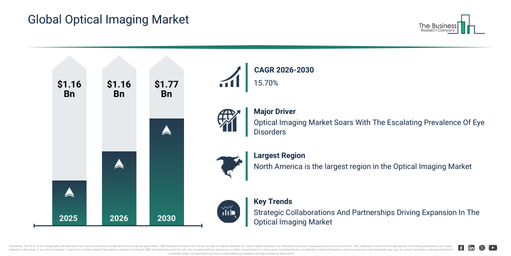
    The optical imaging market is poised for substantial expansion, with its size projected to reach $5.5 billion by 2030, exhibiting a compound annual growth rate (CAGR) of 15.7%. This anticipated growth is primarily fueled by the increasing embrace of precision medicine diagnostics, higher investments in biomedical research imaging, the broader application of intraoperative visualization tools, the rising integration of AI-driven image analysis, and continuous innovations in optical sensor technologies. Throughout the forecast period, notable trends include the wider adoption of advanced optical imaging systems, an increase in the utilization of multispectral and hyperspectral imaging, the growing integration of imaging software and analytics, the expansion of intraoperative optical imaging applications, and an enhanced focus on cellular and molecular imaging.

    Access Your Free Sample Report for In-Depth Market Insights:

    https://www.thebusinessresearchcompany.com/sample.aspx?id=8360&type=smp

    Which Drivers Are Influencing Market Acceleration In The Optical Imaging Market?

    The optical imaging market is projected to expand due to the increasing occurrence of eye disorders. Eye disorders refer to a wide array of conditions and diseases that disrupt the normal functioning of the eye, leading to visual impairment or related issues. Optical imaging technologies, with their non-invasive nature and high-resolution capabilities, offer detailed imaging of the eye’s structures, which assists in the diagnosis and monitoring of various eye disorders. For instance, in August 2023, the World Health Organization, a Switzerland-based intergovernmental organization, reported that at least 2.2 billion people globally were living with near or distance vision impairment, with 1 billion of these cases being either preventable or untreated. Therefore, the rising prevalence of eye disorders is anticipated to propel the growth of the optical imaging market.

    What Leading Segments Are Studied In The Optical Imaging Market?

    The optical imaging market covered in this report is segmented –

    1) By Product: Imaging Systems, Cameras, Software, Other Products

    2) By Application: Pathological Imaging, Intra-operative Imaging

    3) By End-User: Academic and Research Institutes, Pharmaceutical and Biotechnology Companies, Contract Research Organizations (CROs), Neuroscience and Behavioral Research Laboratories, Clinical Research Centers and Specialized Hospitals, Other End Users

    Subsegments:

    1) By Imaging Systems: Fluorescence Imaging Systems, Multispectral Imaging Systems, Hyperspectral Imaging Systems

    2) By Cameras: CCD Cameras, CMOS Cameras, Scientific Cameras

    3) By Software: Image Analysis Software, Visualization Software, Processing Software

    4) By Other Products: Light Sources, Optical Filters, Lenses And Accessories

    Which Innovation Trends Are Advancing Developments Within The Optical Imaging Market?

    Leading firms are strategically forming alliances and cooperative ventures with emerging and mid-sized enterprises within the optical imaging market, aiming to expand their product and service offerings. Such strategic collaborations and agreements facilitate the growth of companies’ current product portfolios and extend their geographical presence. An example of this is Canon Medical Systems, the US commercial subsidiary of Canon Medical Systems Corporation, which specializes in innovative diagnostic and optical imaging technology. In January 2023, it formed a partnership with ScImage, Inc. This strategic collaboration between ScImage and Canon Medical Systems USA is set to directly expand and enhance Canon Medical Systems’ involvement in hemodynamics through the Fysicon QMAPP Hemo portfolio (with Fysicon being a Canon Medical subsidiary). ScImage, a US-based entity, delivers Cloud-native enterprise image management, PACS, and image exchange solutions specifically for the healthcare sector.

    Which Key Market Players Are Investing In Expansion And Innovation Within The Optical Imaging Market?

    Major companies operating in the optical imaging market are PerkinElmer Inc., Carl Zeiss Meditec AG, Koninklijke Philips N.V., Topcon Corporation, Bioptigen Inc., Canon Inc., Heidelberg Engineering Inc., Optovue Inc., Headwall Photonics Inc., Agfa-Gevaert N.V., Hamamatsu Photonics K.K., Hitachi Medical Corporation, Imalux Corporation, Infraredx Inc., Bruker Corporation, ChemImage Corporation, Cytoviva Inc., Leica Biosystems Nussloch GmbH, Michelson Diagnostics Ltd., Raytheon ELCAN Optical Technologies, Santec Corporation, Danaher Corporation, Thorlabs Inc., Tomophase Corporation, Ziemer Ophthalmic Systems AG, Axsun Technologies, Bioptics Inc., Andor Technology Ltd., Abberior Instruments GmbH

    Access The Complete Report For Deeper Market Insights:

    https://www.thebusinessresearchcompany.com/report/optical-imaging-global-market-report

    Which Regions Are Projected To Dominate The Optical Imaging Market In The Coming Years?

    North America was the largest region in the optical imaging market in 2025. The regions covered in the optical imaging market report are Asia-Pacific, South East Asia, Western Europe, Eastern Europe, North America, South America, Middle East, Africa.

    Request Your Customized Optical Imaging Market Research Report for Competitive Advantage:

    https://www.thebusinessresearchcompany.com/customise?id=8360&type=smp

    Browse Through More Reports Similar to the Global Optical Imaging Market 2026, By The Business Research Company

    Commercial Satellite Imaging Global Market Report 2026

    https://www.thebusinessresearchcompany.com/report/commercial-satellite-imaging-global-market-report

    Optical Instrument And Lens Global Market Report 2026

    https://www.thebusinessresearchcompany.com/report/optical-instrument-and-lens-global-market-report

    Optical Instrument And Lens Global Market Report 2026

    https://www.thebusinessresearchcompany.com/report/optical-instrument-and-lens-global-market-report

    Get in touch with us:

    The Business Research Company: https://www.thebusinessresearchcompany.com/

    Americas +1 310-496-7795

    Asia +44 7882 955267 & +91 8897263534

    Europe +44 7882 955267

    Email us at info@tbrc.info

    Follow us on:

    LinkedIn: https://in.linkedin.com/company/the-business-research-company

  • Optical Coherence Tomography (OCT) For Healthcare And Life Science Market Forecast 2026–2035: Data Trends and Industry Insights

    Optical Coherence Tomography (OCT) For Healthcare And Life Science Market Forecast 2026–2035: Data Trends and Industry Insights

    Uncover key drivers, emerging technologies, and competitive movements shaping the worker heat stress monitoring wearable market from 2026–2035 with trusted insights from The Business Research Company

    What is the estimated market size of the Optical Coherence Tomography (OCT) For Healthcare And Life Science Market by the end of 2030?

    The optical coherence tomography (oct) for healthcare and life science market has seen substantial expansion in recent years. This market is projected to expand from $2.26 billion in 2025 to $2.63 billion in 2026, achieving a compound annual growth rate (CAGR) of 16.1%. Historically, this growth has been fueled by several factors, including the rising incidence of eye disorders, the broadening scope of ophthalmic diagnostic procedures, continuous technological advancements in optical imaging, an increase in specialty eye clinics, and its early adoption in various research applications.

    The optical coherence tomography (oct) for healthcare and life science market size is projected to undergo significant expansion in the coming years. Its value is anticipated to reach $4.77 billion by 2030, with a compound annual growth rate (CAGR) of 16.1%. The increase predicted for this period is largely driven by factors such as the rising requirement for point-of-care diagnostics, increasing utilization in cardiology and dermatology, the expansion of tele-ophthalmology services, growing investments in imaging technology innovations, and a stronger emphasis on early disease detection. Significant trends during the forecast period encompass a greater adoption of AI-assisted image analysis, an increasing need for high-resolution non-invasive imaging, the growing deployment of portable and handheld OCT devices, the broadening of OCT applications beyond ophthalmology, and enhanced integration with digital health platforms.

    Access Your Free Sample Report for In-Depth Market Insights:

    https://www.thebusinessresearchcompany.com/sample.aspx?id=19130&type=smp

    What Drivers Are Shaping Future Opportunities In The Optical Coherence Tomography (OCT) For Healthcare And Life Science Market?

    The growing prevalence of ocular diseases is set to boost the expansion of optical coherence tomography (OCT) in the healthcare and life science market moving forward. Ocular diseases are conditions impacting the eyes and their surrounding structures, which can potentially lead to vision loss or blindness. These eye conditions are largely linked to the aging demographic and the increased occurrence of chronic illnesses such as diabetes. Optical coherence tomography (OCT) is employed to generate detailed, cross-sectional images of the retina and optic nerve, thereby aiding in the diagnosis and monitoring of ocular diseases. For example, a report from the Review of Optometry, a US-based publication offering thorough insights into eye care, estimates that 80 million individuals worldwide are impacted by glaucoma, with open-angle glaucoma (OAG) representing 95% of all cases. In the U.S. alone, over three million people are presently living with the condition. Moreover, this figure is anticipated to exceed 111 million by 2040. Hence, the increasing occurrence of ocular diseases will propel the growth of optical coherence tomography (OCT) for the healthcare and life science market.

    Which Segment Groups Are Influencing The Optical Coherence Tomography (OCT) For Healthcare And Life Science Market?

    The optical coherence tomography (oct) for healthcare and life science market covered in this report is segmented –

    1) By Type: Catheter Based Optical Coherence Tomography (OCT) Devices, Doppler Optical Coherence Tomography (OCT) Devices, Handheld Optical Coherence Tomography (OCT) Devices, Tabletop Optical Coherence Tomography (OCT) Devices

    2) By Technology: Time Domain Oct (TdOct), Frequency Domain Oct (FdOct), Other Technologies

    3) By Application: Ophthalmology, Cardiology, Dermatology, Gastroenterology, Other Applications

    4) By End Users: Hospitals, Specialty Clinics, Research Institutes, Other End Users

    Subsegments:

    1) By Catheter Based Optical Coherence Tomography (OCT) Devices: Intravascular OCT (IV-OCT), Endoscopic OCT, Other Catheter-Based Devices

    2) By Doppler Optical Coherence Tomography (OCT) Devices: Speckle-Tracking Doppler OCT, Phase-Resolved Doppler OCT

    3) By Handheld Optical Coherence Tomography (OCT) Devices: Portable Handheld OCT Systems, Compact Handheld Devices

    4) By Tabletop Optical Coherence Tomography (OCT) Devices: Standalone Tabletop Systems, Modular Tabletop Devices

    Which Competitive Trends Are Impacting The Structure Of The Optical Coherence Tomography (OCT) For Healthcare And Life Science Market?

    Leading companies within the optical coherence tomography (oct) for healthcare and life science market are concentrating on creating advanced solutions, such as ophthalmic diagnostic devices, to boost clinical efficiency. Ophthalmic diagnostic devices are instruments utilized to assess ocular health and identify or monitor vision and eye-related medical conditions. For instance, in July 2025, Huvitz, a South Korea-based manufacturer of ophthalmic and dental equipment, unveiled the OCTavius ophthalmic diagnostic device. This versatile 5-in-1 OCT system integrates several essential eye-diagnostic functions into a single unit, thereby reducing the necessity for multiple instruments. It enhances workflow efficiency by providing quick scans and sharp imaging, which supports smoother clinical operations. The device captures fine structural details of the macula and choroid, enabling thorough, layer-specific evaluation. These capabilities establish it as a distinctive tool for early detection and accurate clinical judgment in ophthalmology.

    Who Are The Core Companies Influencing Trends In The Optical Coherence Tomography (OCT) For Healthcare And Life Science Market?

    Major companies operating in the optical coherence tomography (oct) for healthcare and life science market are Abbott Laboratories, Canon Inc., Carl Zeiss Meditec AG, Leica Microsystems GmbH, Thorlabs Inc., Edmund Optics Inc., Huvitz Co. Ltd., Santec Corporation, Topcon Medical Systems Inc., OPTOPOL Technology SA, NinePoint Medical, Wasatch Photonics Inc., Perimeter Medical Imaging AI Inc., Nidek Co. Ltd., Novacam Technologies Inc., DermaLumics, BaySpec Inc., Imalux Corporation, Lumedica, Heidelberg Engineering GmbH

    Access The Complete Report For Deeper Market Insights:

    https://www.thebusinessresearchcompany.com/report/optical-coherence-tomography-oct-for-healthcare-and-life-science-global-market-report

    Which Region Is Expected To Experience The Fastest Growth In The Optical Coherence Tomography (OCT) For Healthcare And Life Science Market?

    North America was the largest region in the optical coherence tomography (OCT) for healthcare and life science market in 2025. Asia-Pacific is expected to be the fastest-growing region in the forecast period. The regions covered in the optical coherence tomography (oct) for healthcare and life science market report are Asia-Pacific, South East Asia, Western Europe, Eastern Europe, North America, South America, Middle East, Africa.

    Request Your Customized Optical Coherence Tomography (OCT) For Healthcare And Life Science Market Research Report for Competitive Advantage:

    https://www.thebusinessresearchcompany.com/customise?id=19130&type=smp

    Browse Through More Reports Similar to the Global Optical Coherence Tomography (OCT) For Healthcare And Life Science Market 2026, By The Business Research Company

    Optical Imaging Global Market Report 2026

    https://www.thebusinessresearchcompany.com/report/optical-imaging-global-market-report

    Optical Measurement Global Market Report 2026

    https://www.thebusinessresearchcompany.com/report/optical-measurement-global-market-report

    Single Photon Emission Computed Tomography Spect Global Market Report 2026

    https://www.thebusinessresearchcompany.com/report/single-photon-emission-computed-tomography-spect-global-market-report

    Get in touch with us:

    The Business Research Company: https://www.thebusinessresearchcompany.com/

    Americas +1 310-496-7795

    Asia +44 7882 955267 & +91 8897263534

    Europe +44 7882 955267

    Email us at info@tbrc.info

    Follow us on:

    LinkedIn: https://in.linkedin.com/company/the-business-research-company

  • Optical Coherence Tomography Market Outlook 2026–2030: Key Business Drivers and Trends

    Optical Coherence Tomography Market Outlook 2026–2030: Key Business Drivers and Trends

    Uncover key drivers, emerging technologies, and competitive movements shaping the workstation graphics processing unit (gpu) market from 2026–2035 with trusted insights from The Business Research Company

    What was the valuation of the Optical Coherence Tomography Market in 2026, and what figure is it projected to hit by 2030?

    The optical coherence tomography market size has shown rapid growth in recent years. It is projected to expand from $2.1 billion in 2025 to $2.4 billion in 2026, achieving a compound annual growth rate (CAGR) of 14.2%. This historical growth can be attributed to the increasing prevalence of retinal disorders, the expansion of ophthalmic diagnostic procedures, the rising adoption of minimally invasive imaging techniques, the growth of cardiovascular imaging applications, and technological advancements in optical imaging systems.

    The optical coherence tomography market size is projected to experience substantial expansion over the coming years. It is anticipated to reach $4.04 billion by 2030, growing at a compound annual growth rate (CAGR) of 14.0%. This growth in the forecast period can be attributed to factors such as increasing demand for early disease detection, the rising use of OCT in oncology and dermatology, the expansion of point-of-care diagnostic imaging, the growing integration of AI-based image analysis, and continuous improvements in imaging resolution and speed. Major trends expected in the forecast period include the increasing adoption of high-resolution OCT systems, a rising demand for portable and handheld OCT devices, the growing integration of OCT with advanced imaging software, the expansion of OCT applications beyond ophthalmology, and an enhanced focus on real-time diagnostic imaging.

    Access Your Free Sample Report for In-Depth Market Insights:

    https://www.thebusinessresearchcompany.com/sample.aspx?id=8231&type=smp

    Which Drivers Are Affecting Market Participation In The Optical Coherence Tomography Market?

    The expanding incidence of diabetes is projected to drive the growth of the optical coherence tomography market in the future. As diabetes becomes globally more widespread, the likelihood of developing diabetic retinopathy, an eye condition linked to the disease, significantly increases. Consequently, the necessity for sophisticated diagnostic instruments such as optical coherence tomography (OCT) escalates due to the greater requirement for prompt diagnosis and continuous observation of diabetic retinopathy, thereby fueling the OCT market’s expansion. A notable example is the data from September 2023, where the World Health Organization, a United Nations specialized agency based in Switzerland, reported 2.0 million diabetes-related fatalities. Hence, the rising occurrence of diabetes is a primary factor stimulating the growth of the optical coherence tomography market.

    What Segment Classifications Make Up The Optical Coherence Tomography Market?

    The optical coherence tomography market covered in this report is segmented –

    1) By Type: Catheter-Based OCT Devices, Doppler OCT Devices, Handheld OCT Devices, Tabletop OCT Devices

    2) By Technology: Time Domain OCT (TDOCT), Frequency Domain OCT (FD-OCT), Spatial Encoded Frequency Domain OCT

    3) By Application: Ophthalmology, Cardiovascular

    Subsegments:

    1) By Catheter-Based OCT Devices: Intracoronary OCT, Intravenous OCT

    2) By Doppler OCT Devices: Time-Domain Doppler OCT, Frequency-Domain Doppler OCT

    3) By Handheld OCT Devices: Portable Retinal OCT, Portable Cardiovascular OCT

    4) By Tabletop OCT Devices: Optical Coherence Tomography Angiography (OCTA), High-Resolution OCT For Research Applications

    What Industry Trends Are Transforming The Optical Coherence Tomography Market?

    Leading companies within the optical coherence tomography (OCT) market are increasingly prioritizing the development of innovative solutions, such as artificial intelligence-enhanced intravascular imaging platforms, to elevate diagnostic precision and streamline clinical decision-making. These AI-enhanced intravascular imaging platforms are advanced systems that merge high-resolution OCT imaging with machine-learning algorithms to automatically analyze vessel structures and plaque characteristics. This capability helps clinicians make faster, more accurate treatment decisions by minimizing manual interpretation and boosting the precision of stent planning. For instance, in October 2023, Abbott Laboratories, a US-based medical device company, launched its latest vascular imaging platform, featuring the Ultreon 1.0 Software, in India. This software seamlessly integrates optical coherence tomography (OCT) with artificial intelligence (AI), offering physicians a comprehensive assessment of blood flow and blockages within coronary arteries. The advanced imaging software is designed to automatically differentiate between calcified and non-calcified blockages, assess the severity of calcium-based blockages, and measure vessel diameter. It further assists physicians in guiding precise stent deployment, ensuring optimal expansion and apposition, with real-time display of results for enhanced accuracy during coronary stenting procedures. Abbott’s OCT technology employs near-infrared light for high-definition, precise imaging within blood vessels, enabling physicians to capture detailed information even in complex patient anatomy.

    Which Major Industry Participants Are Leading The Optical Coherence Tomography Market Growth?

    Major companies operating in the optical coherence tomography market are Carl Zeiss Meditec AG, Heidelberg Engineering GmbH, Imalux Corporation, Michelson Diagnostics Limited, Novacam Technologies Inc., OPTOPOL Technology Sp. z o.o., Topcon Healthcare Solutions Inc., Conavi Medical Inc., ZD Medical Inc., Thorlabs Inc., NIDEK Co. Ltd., Leica Microsystems IR GmbH, Optovue Inc., Canon Inc., Santec Corporation, Tomophase Corporation, LightLab Imaging Inc., Infraredx Inc., NinePoint Medical Inc., Optiscan Pty Ltd., AOT AG

    Access The Complete Report For Deeper Market Insights:

    https://www.thebusinessresearchcompany.com/report/optical-coherence-tomography-global-market-report

    Which Geographic Areas Are Emerging As Strong Markets For The Optical Coherence Tomography Market?

    North America was the largest region in the optical coherence tomography market in 2025. Asia-Pacific is expected to be the fastest-growing region in the forecast period. The regions covered in the optical coherence tomography market report are Asia-Pacific, South East Asia, Western Europe, Eastern Europe, North America, South America, Middle East, Africa.

    Request Your Customized Optical Coherence Tomography Market Research Report for Competitive Advantage:

    https://www.thebusinessresearchcompany.com/customise?id=8231&type=smp

    Browse Through More Reports Similar to the Global Optical Coherence Tomography Market 2026, By The Business Research Company

    Optical Imaging Global Market Report 2026

    https://www.thebusinessresearchcompany.com/report/optical-imaging-global-market-report

    Optical Measurement Global Market Report 2026

    https://www.thebusinessresearchcompany.com/report/optical-measurement-global-market-report

    Ophthalmic Medical Lasers Global Market Report 2026

    https://www.thebusinessresearchcompany.com/report/ophthalmic-medical-lasers-global-market-report

    Get in touch with us:

    The Business Research Company: https://www.thebusinessresearchcompany.com/

    Americas +1 310-496-7795

    Asia +44 7882 955267 & +91 8897263534

    Europe +44 7882 955267

    Email us at info@tbrc.info

    Follow us on:

    LinkedIn: https://in.linkedin.com/company/the-business-research-company

  • Senior Mobility Aid Devices Market Insights Report: Opportunities and Drivers 2030

    Senior Mobility Aid Devices Market Insights Report: Opportunities and Drivers 2030

    Uncover key drivers, emerging technologies, and competitive movements shaping the worker heat stress monitoring wearable market from 2026–2035 with trusted insights from The Business Research Company

    How much is the Senior Mobility Aid Devices Market valued at in 2026, and what valuation is forecast for 2030?

    The senior mobility aid devices market has witnessed substantial growth in recent years. This market is forecast to expand from $11.98 billion in 2025 to $12.9 billion in 2026, achieving a compound annual growth rate (CAGR) of 7.7%. The historical market expansion is attributable to factors including the increasing aging population, a higher incidence of mobility impairments, growing awareness of fall risks, limited access to rehabilitation services, and the rising demand for home healthcare solutions.

    The senior mobility aid devices market size is projected for substantial expansion over the coming years, reaching $17.12 billion by 2030, propelled by a compound annual growth rate (CAGR) of 7.3%. This anticipated growth stems from factors such as the increasing adoption of AI-enabled mobility devices, the integration of IoT in mobility aids, the expansion of electric wheelchairs and scooters, the emergence of personalized rehabilitation programs, and the development of smart assisted living infrastructure. Key developments expected during this period involve smart mobility integration, advancements in fall detection and prevention technology, the availability of personalized mobility solutions, the prevalence of ergonomic and lightweight designs, and an increased focus on home-based mobility assistance.

    Access Your Free Sample Report for In-Depth Market Insights:

    https://www.thebusinessresearchcompany.com/sample.aspx?id=25900&type=smp

    What Drivers Are Influencing The Growth Of The Senior Mobility Aid Devices Market?

    The rising occurrence of disabilities is projected to drive expansion within the senior mobility aid devices market in the coming period. Disabilities encompass enduring physical, mental, intellectual, or sensory conditions that can impede an individual’s complete and effective engagement in society, on par with others. The increase in disabilities stems from the aging worldwide population, leading to a higher incidence of age-associated health issues like arthritis, dementia, and vision or hearing impairment, all of which contribute to lasting limitations. Senior mobility aid devices substantially improve the independence and day-to-day capabilities of individuals with disabilities, providing crucial support, stability, and simplified movement. For example, in October 2024, data from the House of Commons Library, which serves as a UK-based library and information resource for the British Parliament’s lower house, indicated that 16.1 million individuals in the UK had a disability during the 2022-23 financial year, accounting for 24% of the nation’s populace. Consequently, the growing occurrence of disabilities is set to accelerate the expansion of the senior mobility aid devices market.

    How Is The Senior Mobility Aid Devices Market Organized Into Various Segments?

    The senior mobility aid devices market covered in this report is segmented –

    1) By Product Type: Wheelchairs, Scooters, Walking Aids, Mobility Lift, Other Product Types

    2) By Price: Low, Medium, High

    3) By Distribution Channel: Online Channels, Offline Channels

    4) By End-User: Individual, Hospitals And Nursing Homes, Assisted Living, Other End-Users

    Subsegments:

    1) By Wheelchairs: Manual Wheelchairs, Electric Wheelchairs, Transport Wheelchairs, Positioning Wheelchairs, Bariatric Wheelchairs

    2) By Scooters: 3-Wheel Scooters, 4-Wheel Scooters, Foldable Mobility Scooters, Heavy-Duty Mobility Scooters

    3) By Walking Aids: Canes, Crutches, Walkers, Rollators, Gait Trainers

    4) By Mobility Lifts: Stair Lifts, Vehicle Lifts, Ceiling Lifts, Portable Lifts, Pool Lifts

    5) By Other Product Types: Transfer Boards, Patient Lifting Slings, Knee Walkers, Mobility Accessories, Standing Aids

    What Industry Trends Are Transforming The Senior Mobility Aid Devices Market?

    Leading companies operating within the senior mobility aid devices market are prioritizing the development of advanced solutions, including pedestrian-mobility-assistance models, to deliver economical and non-invasive methods for improving mobility. Pedestrian-mobility-assistance models are tools or gadgets that assist individuals with movement challenges in navigating walking environments securely and independently. An example of this is Toyota Motor Corporation, a Japan-based automotive manufacturer, which launched C+walk S, a pedestrian-mobility-assistance model, in March 2023. This three-wheeled mobility device is specifically created for seniors and people who encounter difficulties walking extended distances, offering a safe and user-friendly means of transportation. It is engineered to match average walking speeds and boasts a slender design that integrates seamlessly into urban landscapes, facilitating effortless side-by-side movement and interaction with others. The device can assess upcoming path conditions, making it appropriate for sidewalk travel. Furthermore, it is equipped with safety sensors that detect obstacles and help users avoid potential collisions.

    Who Are The Prominent Global Companies Shaping The Senior Mobility Aid Devices Market Landscape?

    Major companies operating in the senior mobility aid devices market are Medline Industries LP, Ottobock, Invacare Corporation, Permobil, Sunrise Medical LLC, Drive DeVilbiss Healthcare, Handicare AB, Pride Mobility Products Ltd., Vissco Rehabilitation Aids Pvt. Ltd., Graham Field Health Products Inc., Merits Health Products Co. Ltd., Nova Medical Products, Meyra Group GmbH, Karma Medical Products Co. Ltd., Narula Udyog India Pvt. Ltd., Heartway Medical Products Co. Ltd., Arcatron Mobility Pvt. Ltd., Antano Group, PEAAR Healthtech LLP, Golden Technologies Inc., GF Health Products Inc., Kymco Healthcare

    Access The Complete Report For Deeper Market Insights:

    https://www.thebusinessresearchcompany.com/report/senior-mobility-aid-devices-global-market-report

    How Does The Senior Mobility Aid Devices Market Perform Across Major Global Regions?

    Asia-Pacific was the largest region in the senior mobility aid devices market in 2025. The regions covered in the senior mobility aid devices market report are Asia-Pacific, South East Asia, Western Europe, Eastern Europe, North America, South America, Middle East, Africa.

    Request Your Customized Senior Mobility Aid Devices Market Research Report for Competitive Advantage:

    https://www.thebusinessresearchcompany.com/customise?id=25900&type=smp

    Browse Through More Reports Similar to the Global Senior Mobility Aid Devices Market 2026, By The Business Research Company

    Mobility Aids And Transportation Equipment Global Market Report 2026

    https://www.thebusinessresearchcompany.com/report/mobility-aids-and-transportation-equipment-global-market-report

    Elder Care Services And Assistive Devices Global Market Report 2026

    https://www.thebusinessresearchcompany.com/report/elder-care-services-and-assistive-devices-global-market-report

    Disabled And Elderly Assistive Technology Global Market Report 2026

    https://www.thebusinessresearchcompany.com/report/disabled-and-elderly-assistive-technology-global-market-report

    Get in touch with us:

    The Business Research Company: https://www.thebusinessresearchcompany.com/

    Americas +1 310-496-7795

    Asia +44 7882 955267 & +91 8897263534

    Europe +44 7882 955267

    Email us at info@tbrc.info

    Follow us on:

    LinkedIn: https://in.linkedin.com/company/the-business-research-company

  • Self-Sampling Blood Collection And Storage Device Global Forecast: Market to Scale Up to $1.79 Billion by 2030 at 13.5% CAGR

    Self-Sampling Blood Collection And Storage Device Global Forecast: Market to Scale Up to $1.79 Billion by 2030 at 13.5% CAGR

    Uncover key drivers, emerging technologies, and competitive movements shaping the workstation graphics processing unit (gpu) market from 2026–2035 with trusted insights from The Business Research Company

    By how much is the Self-Sampling Blood Collection And Storage Device Market expected to grow between 2026 and 2030?

    The self-sampling blood collection and storage device market has experienced rapid growth in recent years. Its size is expected to increase from $0.95 billion in 2025 to $1.08 billion in 2026, achieving a compound annual growth rate (CAGR) of 13.8%. The expansion during the historic period can be attributed to factors such as limited self-sampling device availability, the reliance on clinical visits for blood collection, increasing awareness of home diagnostics, a rise in the prevalence of chronic diseases, and the development of basic blood collection kits.

    The market for self-sampling blood collection and storage devices is projected to experience substantial expansion in the coming years. This market is forecast to reach a value of $1.79 billion by 2030, exhibiting a compound annual growth rate (CAGR) of 13.5%. Several factors are driving this anticipated growth, including advancements in micro-needle and fingerstick technologies, the increasing acceptance of personalized healthcare, the expansion of telemedicine and remote patient monitoring, a heightened need for genetic and drug testing, and the creation of integrated digital health platforms. Key trends identified for this period encompass the growing use of at-home blood collection devices, a greater call for remote diagnostic testing, improvements in stabilization and preservation reagents, the broadening scope of genetic and infectious disease testing, and the integration of improved user-friendliness and safety features into these devices.

    Access Your Free Sample Report for In-Depth Market Insights:

    https://www.thebusinessresearchcompany.com/sample.aspx?id=24692&type=smp

    Which Drivers Are Influencing Market Acceleration In The Self-Sampling Blood Collection And Storage Device Market?

    The rising consumer requirement for at-home healthcare solutions is anticipated to stimulate the expansion of the self-sampling blood collection and storage devices market moving forward. At-home healthcare solutions refer to medical services, devices, and technologies that allow individuals to access care, monitor, and manage their health remotely, without the necessity of visiting a clinic or hospital. The consumer inclination towards at-home healthcare solutions is growing due to the desire for increased convenience, achieved by removing the need for travel to clinics and cutting down on waiting periods. Self-sampling blood collection and storage devices support at-home healthcare solutions by facilitating easy and precise sample collection without a clinic visit. These devices streamline the procedure, enhance patient comfort, and enable prompt diagnostics, thereby improving overall accessibility to healthcare. For instance, in July 2024, according to the Bureau of Labor Statistics, a US-based federal agency, employment in home- and community-based care reached 4.3 million jobs, driven by 2.5 million workers in services for the elderly and people with disabilities and 1.8 million in home health care. Therefore, the increasing consumer demand for at-home healthcare solutions is a key driver for the growth of the self-sampling blood collection and storage devices market.

    What Segments Are Identified Within The Structure Of The Self-Sampling Blood Collection And Storage Device Market?

    The self-sampling blood collection and storage device market covered in this report is segmented –

    1) By Product Type: Kits, Tubes, Lancets, Others Product Type

    2) By Material Type: Plastic, Glass, Silicone, Metal, Composite Materials

    3) By Sample Type: Blood, Urine, Saliva

    4) By Application: Genetic Testing, Infectious Disease Testing, Drug Testing, Blood Chemistry Testing

    5) By End-User: Hospitals, Diagnostic Laboratories, Research Institutes, Home Care Settings, Other End-Users

    Subsegments:

    1) By Kits: Dried Blood Spot (DBS) Collection Kits, Microtube Collection Kits, Plasma Separation Kits, DNA/RNA Collection Kits, At-home Diagnostic Test Kits

    2) By Tubes: EDTA Tubes, Heparin Tubes, Serum Separator Tubes, Plasma Separator Tubes, Micro Collection Tubes

    3) By Lancets: Push-Button Lancets, Pressure-Activated Lancets, Safety Lancets, Retractable Lancets, Adjustable Depth Lancets

    4) By Others Product Type: Capillary Blood Collection Devices, Blood Collection Cards, Transfer Devices, Filter Paper Devices, Preservation And Stabilization Reagents

    What Trends Are Reshaping The Dynamics Of The Self-Sampling Blood Collection And Storage Device Market?

    Leading firms within the self-sampling blood collection and storage device market are concentrating on creating novel solutions, including advanced self-sampling blood collection devices, aimed at improving sample quality, ease of use for individuals, and diagnostic precision. These cutting-edge self-sampling blood collection devices represent the newest evolution of tools and techniques, empowering people to obtain their own blood samples largely without or entirely without help from medical staff. As an illustration, during February 2023, Capitainer AB, a medical technology firm based in Sweden, introduced Capitainer B 50, a self-sampling blood collection card specifically developed to allow patients to gather and retain considerably greater quantities of blood. This product incorporates functionalities that permit patients to collect two exact 50 µL blood samples via a finger stick, thereby facilitating a broader spectrum of laboratory analyses thanks to the increased sample volume. The device also features an accurate filling system that automatically measures the blood, thereby reducing the chances of either excessive or insufficient filling, and incorporates a sampling indicator for users to confirm successful collection.

    Which Key Players Are Driving Competition In The Self-Sampling Blood Collection And Storage Device Market?

    Major companies operating in the self-sampling blood collection and storage device market are Becton Dickinson And Company, DBS System SA, Terumo Corporation, Sysmex Corporation, Qiagen N V, PerkinElmer Inc, Sarstedt AG And Co KG, Greiner Bio One International GmbH, Trajan Group Holdings Limited, Tasso Inc, PanoHealth, Boston Microfluidics Inc, LAMEDITECH Co Ltd, YourBio Health Inc, Capitainer, Drawbridge Health Inc, Spot On Sciences, Neoteryx LLC, Hemaxis SA, Microsampling Systems Ltd

    Access The Complete Report For Deeper Market Insights:

    https://www.thebusinessresearchcompany.com/report/self-sampling-blood-collection-and-storage-device-global-market-report

    Which Region Is Anticipated To See The Fastest Growth In The Self-Sampling Blood Collection And Storage Device Market?

    North America was the largest region in the self-sampling blood collection and storage device market in2025. Asia-Pacific is expected to be the fastest-growing region in the forecast period. The regions covered in the self-sampling blood collection and storage device market report are Asia-Pacific, South East Asia, Western Europe, Eastern Europe, North America, South America, Middle East, Africa.

    Request Your Customized Self-Sampling Blood Collection And Storage Device Market Research Report for Competitive Advantage:

    https://www.thebusinessresearchcompany.com/customise?id=24692&type=smp

    Browse Through More Reports Similar to the Global Self-Sampling Blood Collection And Storage Device Market 2026, By The Business Research Company

    Blood Screening Global Market Report 2026

    https://www.thebusinessresearchcompany.com/report/blood-screening-global-market-report

    Blood Bank Global Market Report 2026

    https://www.thebusinessresearchcompany.com/report/blood-bank-global-market-report

    Blood Purification Equipment Global Market Report 2026

    https://www.thebusinessresearchcompany.com/report/blood-purification-equipment-global-market-report

    Get in touch with us:

    The Business Research Company: https://www.thebusinessresearchcompany.com/

    Americas +1 310-496-7795

    Asia +44 7882 955267 & +91 8897263534

    Europe +44 7882 955267

    Email us at info@tbrc.info

    Follow us on:

    LinkedIn: https://in.linkedin.com/company/the-business-research-company

  • Self-Monitoring Blood Glucose (SMBG) Devices Market Future Outlook: Strong Growth Expected Toward $24.17 Billion by 2030

    Self-Monitoring Blood Glucose (SMBG) Devices Market Future Outlook: Strong Growth Expected Toward $24.17 Billion by 2030

    Uncover key drivers, emerging technologies, and competitive movements shaping the worker heat stress monitoring wearable market from 2026–2035 with trusted insights from The Business Research Company

    What is the estimated market size of the Self-Monitoring Blood Glucose (SMBG) Devices Market by the end of 2030?

    The market size for self-monitoring blood glucose (smbg) devices has shown strong growth in recent years. It is anticipated to increase from $16.19 billion in 2025 to $17.56 billion in 2026, at a compound annual growth rate (CAGR) of 8.5%. The historical expansion of this market can be attributed to the rising prevalence of diabetes, increased recognition of self-monitoring practices, broader adoption of home healthcare, the availability of affordable glucose meters, and refined diabetes management guidelines.

    The self-monitoring blood glucose (smbg) devices market is anticipated to experience robust expansion over the coming years. Its size is projected to reach $24.17 billion by 2030, exhibiting a compound annual growth rate (CAGR) of 8.3%. This growth during the forecast period is attributable to several factors, including the escalating demand for connected health solutions, the rising integration of continuous glucose monitoring, the broadening of telehealth-based diabetes care, an intensifying focus on preventive healthcare, and increased investments in digital diabetes management. Key trends anticipated within the forecast timeframe encompass the increasing uptake of smart glucose monitoring devices, a growing reliance on continuous glucose monitoring systems, the expanding incorporation of mobile health applications, the extension of remote patient monitoring solutions, and an elevated emphasis on designing patient-friendly devices.

    Access Your Free Sample Report for In-Depth Market Insights:

    https://www.thebusinessresearchcompany.com/sample.aspx?id=6969&type=smp

    What Drivers Are Shaping Future Opportunities In The Self-Monitoring Blood Glucose (SMBG) Devices Market?

    The expanding occurrence of diabetes is projected to fuel the expansion of the self-monitoring blood glucose device market in the future. Diabetes is defined as a persistent metabolic condition where the body either fails to produce sufficient insulin or cannot utilize it effectively, resulting in elevated blood glucose levels that can eventually harm various organs and systems. This increasing prevalence of diabetes largely stems from unhealthy eating habits that contribute to prolonged high blood sugar and progressively stress metabolic health over time. Self-Monitoring Blood Glucose (SMBG) Devices assist in managing diabetes by allowing individuals to monitor their real-time blood sugar levels, facilitating prompt adjustments to diet, medication, or physical activity for improved glycemic control. For instance, in June 2024, as reported by the National Health Service, a UK-based government department, in 2023, the NHS identified over half a million (549,000) additional individuals in England at risk of developing type 2 diabetes, raising the total count of people with non-diabetic hyperglycemia, or pre-diabetes, registered with a GP to 3,615,330. This marks a notable increase compared to 3,065,825 in 2022, signifying a rise of nearly 20%. Consequently, the growing incidence of diabetes is driving the expansion of the self-monitoring blood glucose devices market.

    Which Segments Are Gaining Traction In The Self-Monitoring Blood Glucose (SMBG) Devices Market?

    The self-monitoring blood glucose (smbg) devices market covered in this report is segmented –

    1) By Product: Self-Monitoring Blood Glucose Meters, Testing Strips, Lancets

    2) By Distribution Channel: Hospital Pharmacies, Retail Pharmacies, Online Sales, Diabetes Clinics & Centers

    3) By Application: Type 1 Diabetes, Type 2 Diabetes, Gestational Diabetes

    Subsegments:

    1) By Self-Monitoring Blood Glucose Meters: Traditional Glucose Meters, Smart Glucose Meters

    2) By Testing Strips: Standard Testing Strips, Test Strips for Specific Meters

    3) By Lancets: Standard Lancets, Safety Lancets

    How Are New Market Trends Shaping The Landscape Of The Self-Monitoring Blood Glucose (SMBG) Devices Market?

    Leading companies in the self-monitoring blood glucose (SMBG) devices market are concentrating on developing innovative solutions, such as continuous glucose monitoring (CGM) systems. This effort aims to address the growing demand for less burdensome glucose tracking, improved glycemic control, remote patient monitoring, and better integration with insulin delivery and digital health platforms. CGM systems function as wearable sensors that continuously measure interstitial glucose, providing trend data, alerts, and cloud-connected reporting. Their key features include real-time glucose readings, trend arrows, customizable alarms, and data sharing capabilities. Unlike traditional fingerstick SMBG (glucometers), which require discrete capillary blood samples and offer only point-in-time values, CGMs enable proactive therapy adjustments and richer longitudinal insights, thereby reducing hypoglycemia risk and improving time-in-range. For example, in August 2024, Medtronic plc, an Ireland-based medical technology company, launched Simplera CGM. This compact, disposable, all-in-one continuous glucose monitor is designed for easier self-application, real-time glucose sensing, and seamless use with both the InPen smart insulin pen and the MiniMed 780G system. It offers users a smaller form factor, simplified wear, and enhanced interoperability, supporting continuous visibility for Smart MDI users, redundant sensing for pump users, and overall improved comfort, adherence, and clinical decision-making through continuous glucose trend data integration.

    Who Are The Top-Performing Companies In The Self-Monitoring Blood Glucose (SMBG) Devices Market In Recent Years?

    Major companies operating in the self-monitoring blood glucose (smbg) devices market are Abbott Laboratories, Bionime Corporation, B Braun Melsungen AG, F Hoffmann La Roche Ltd, LifeScan Inc, PHC Holdings Corporation, Home Diagnostics Inc, ARKRAY Inc, Ypsomed Holding AG, Dexcom Inc, Medtronic plc, Senseonics Holdings Inc, AgaMatrix Inc, All Medicus Co Ltd, Ascensia Diabetes Care Holdings AG, Bayer AG, Becton Dickinson and Company, Cnoga Medical Ltd, ForaCare Inc, Infopia Co Ltd, Menarini Diagnostics, Nipro Corporation, Nova Biomedical Corporation, Omron Healthcare Inc, OrSense Ltd, Prodigy Diabetes Care LLC, PTS Diagnostics, TaiDoc Technology Corporation, Trividia Health Inc

    Access The Complete Report For Deeper Market Insights:

    https://www.thebusinessresearchcompany.com/report/self-monitoring-blood-glucose-smbg-devices-global-market-report

    Which Region Is Anticipated To See The Fastest Growth In The Self-Monitoring Blood Glucose (SMBG) Devices Market?

    North America was the largest region in the self-monitoring blood glucose (SMBG) devices market in 2025. Europe is expected to be the fastest-growing region in the forecast period. The regions covered in the self-monitoring blood glucose (smbg) devices market report are Asia-Pacific, South East Asia, Western Europe, Eastern Europe, North America, South America, Middle East, Africa.

    Request Your Customized Self-Monitoring Blood Glucose (SMBG) Devices Market Research Report for Competitive Advantage:

    https://www.thebusinessresearchcompany.com/customise?id=6969&type=smp

    Browse Through More Reports Similar to the Global Self-Monitoring Blood Glucose (SMBG) Devices Market 2026, By The Business Research Company

    Continuous Glucose Monitoring Devices Global Market Report 2026

    https://www.thebusinessresearchcompany.com/report/continuous-glucose-monitoring-devices-global-market-report

    Blood Glucose Monitoring Systems Global Market Report 2026

    https://www.thebusinessresearchcompany.com/report/blood-glucose-monitoring-systems-global-market-report

    Continous Blood Glucose Monitoring Global Market Report 2026

    https://www.thebusinessresearchcompany.com/report/continous-blood-glucose-monitoring-global-market-report

    Get in touch with us:

    The Business Research Company: https://www.thebusinessresearchcompany.com/

    Americas +1 310-496-7795

    Asia +44 7882 955267 & +91 8897263534

    Europe +44 7882 955267

    Email us at info@tbrc.info

    Follow us on:

    LinkedIn: https://in.linkedin.com/company/the-business-research-company
  • Revenue of the Self-Injections Market Predicted to Achieve $15.04 Billion by 2030, Driven by 8.1% CAGR

    Revenue of the Self-Injections Market Predicted to Achieve $15.04 Billion by 2030, Driven by 8.1% CAGR

    Uncover key drivers, emerging technologies, and competitive movements shaping the workstation graphics processing unit (gpu) market from 2026–2035 with trusted insights from The Business Research Company

    What was the valuation of the Self-Injections Market in 2026, and what figure is it projected to hit by 2030?

    The self-injections market size has experienced robust growth in recent years. It is projected to expand from $10.22 billion in 2025 to $11.04 billion in 2026, demonstrating a compound annual growth rate (CAGR) of 8.1%. This historical expansion can be attributed to several factors, including the increasing prevalence of chronic diseases, the broader availability of injectable biologics, a growing preference for home-based treatment, the expansion of specialty pharmaceuticals, and improvements in injection device ergonomics.

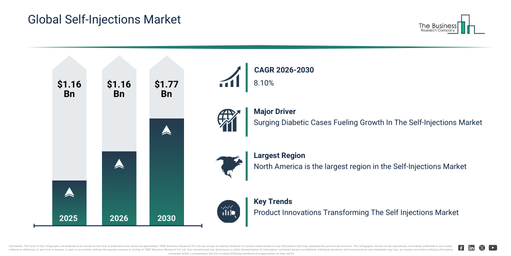
    The self-injections market size is projected to experience robust expansion in the coming years. This market is set to reach $15.05 billion by 2030, driven by a compound annual growth rate (CAGR) of 8.1%. Factors contributing to this growth during the forecast period include the escalating demand for self-care treatments, the increasing uptake of digital health-enabled injectors, the expansion of biologics development pipelines, a heightened emphasis on drug delivery solutions that improve adherence, and the expanding utilization of connected medical devices. Furthermore, key trends anticipated during this period encompass the growing adoption of auto-injector devices, an increasing requirement for wearable injection systems, the expanding application of self-administered biologic therapies, the development of more patient-focused drug delivery designs, and an intensified commitment to ensuring safety and precise dosing.

    Access Your Free Sample Report for In-Depth Market Insights:

    https://www.thebusinessresearchcompany.com/sample.aspx?id=8235&type=smp

    Which Drivers Are Affecting Market Participation In The Self-Injections Market?

    The increasing prevalence of individuals with diabetes is projected to fuel the expansion of the self-injections market in the future. Diabetes is characterized by the pancreas, an organ responsible for insulin production, generating insufficient insulin, resulting in elevated blood sugar levels and potential severe health complications such as heart ailments, sight impairment, and renal disorders. Diabetic individuals can utilize self-injections to administer insulin and various other medications, thereby assisting in the maintenance of optimal blood sugar levels and preventing an accumulation of excess blood sugars at any moment, all without requiring professional medical assistance. As an illustration, a report in November 2025 by Diabetes Care, an international peer-reviewed medical journal based in the US, indicated that approximately 634.8 million adults, constituting 12.0 percent of the worldwide adult population, had impaired glucose tolerance in 2024. This figure is anticipated to rise to 846.5 million adults, or 12.9 percent of the global adult population, by the year 2050. Consequently, the rising count of diabetic patients is a primary force behind the expansion of the self-injections market.

    What Segment Categories Are Covered In The Self-Injections Market?

    The self-injections market covered in this report is segmented –

    1) By Type: Devices, Formulations

    2) By Dosage: Single Dose, Multi Dose

    3) By Application: Autoimmune Diseases, Hormonal Disorders, Orphan Diseases, Pain Management, Other Applications

    4) By Distribution Channel: Chemist, Online Pharmacies

    Subsegments:

    1) By Devices: Pre-Filled Syringes, Auto-Injectors, Microneedle Devices, Wearable Injectors

    2) By Formulations: Biologics, Small Molecules, Combination Products

    Which Trends Are Expected To Influence The Self-Injections Market In The Upcoming Years?

    Leading companies in the self-injections market are prioritizing innovations in drug delivery, particularly hands-free, hidden-needle subcutaneous methods, to simplify the self-administration of large-volume biologics for patients. This hands-free, hidden-needle subcutaneous delivery refers to a wearable injector that delivers medication discreetly without manual effort, keeping the needle concealed for enhanced comfort and safety. As an illustration, in November 2023, Enable Injections Inc., a US-based drug-delivery technology company, secured its initial US Food and Drug Administration (FDA) approval for the enFuse large-volume wearable injector, to be used with EMPAVELI (pegcetacoplan). This compact, mechanical, body-worn system administers up to 25 mL subcutaneously, supporting both self-administration and in-clinic use with features like hands-free operation and minimal interruption to patients’ routines. The enFuse platform boosts convenience, facilitates home-based care, and generally improves the patient experience for the delivery of large-volume therapies.

    Which Leading Companies Dominate The Self-Injections Market Share?

    Major companies operating in the self-injections market are AbbVie Inc., Antares Pharma Inc., Baxter International Inc., Bayer AG, Becton Dickinson and Company, Bristol-Myers Squibb Company, Credence MedSystems Inc., Dali Medical Devices Ltd., Eli Lilly and Company, Enable Injections Inc., Gerresheimer AG, Insulet Corporation, Merck & Co. Inc., Owen Mumford Limited, Pfizer Inc., PharmaJet Inc., Recipharm AB, Schott AG, SHL Group Limited, Terumo Corporation, West Pharmaceutical Services Inc., Wilhelm Haselmeier GmbH & Co. KG, Ypsomed Holding AG, APTAR PHARMA INDIA PVT LTD, Bespak Europe Ltd., Bioject Medical Technologies Inc., Catalent Inc., Crossject SA, Injex Pharma AG, Medeca Pharma AB, Medimop Medical Projects Ltd., Mylan N.V., Nemera Development S.A., Noble Medical Inc.

    Access The Complete Report For Deeper Market Insights:

    https://www.thebusinessresearchcompany.com/report/self-injections-global-market-report

    Which Global Regions Are Shaping The Competitive Landscape Of The Self-Injections Market?

    North America was the largest region in the self-injections market in 2025. Asia-Pacific is expected to be the fastest-growing region in the forecast period. The regions covered in the self-injections market report are Asia-Pacific, South East Asia, Western Europe, Eastern Europe, North America, South America, Middle East, Africa.

    Request Your Customized Self-Injections Market Research Report for Competitive Advantage:

    https://www.thebusinessresearchcompany.com/customise?id=8235&type=smp

    Browse Through More Reports Similar to the Global Self-Injections Market 2026, By The Business Research Company

    Injection Pen Global Market Report 2026

    https://www.thebusinessresearchcompany.com/report/injection-pen-global-market-report

    Chemical Injection Pumps Global Market Report 2026

    https://www.thebusinessresearchcompany.com/report/chemical-injection-pumps-global-market-report

    Chemical Injection Skids Global Market Report 2026

    https://www.thebusinessresearchcompany.com/report/chemical-injection-skids-global-market-report

    Get in touch with us:

    The Business Research Company: https://www.thebusinessresearchcompany.com/

    Americas +1 310-496-7795

    Asia +44 7882 955267 & +91 8897263534

    Europe +44 7882 955267

    Email us at info@tbrc.info

    Follow us on:

    LinkedIn: https://in.linkedin.com/company/the-business-research-company
  • Self-Expanding Stents Sector Forecast Shows Robust Momentum, Climbing to $4.46 Billion With 4.9% CAGR

    Self-Expanding Stents Sector Forecast Shows Robust Momentum, Climbing to $4.46 Billion With 4.9% CAGR

    Uncover key drivers, emerging technologies, and competitive movements shaping the worker heat stress monitoring wearable market from 2026–2035 with trusted insights from The Business Research Company

    What are the forecasted starting (2026) and ending (2030) market sizes for the Self-Expanding Stents Market?

    The self-expanding stents market size has demonstrated robust growth over recent years. It is anticipated to expand from $3.49 billion in 2025 to $3.69 billion in 2026, achieving a compound annual growth rate (CAGR) of 5.8%. The historical expansion of this market can be attributed to factors such as the increasing incidence of cardiovascular diseases, the expansion of interventional cardiology procedures, continuous advancements in stent materials, the growing adoption of endovascular therapies, and rising hospital catheterization lab volumes.

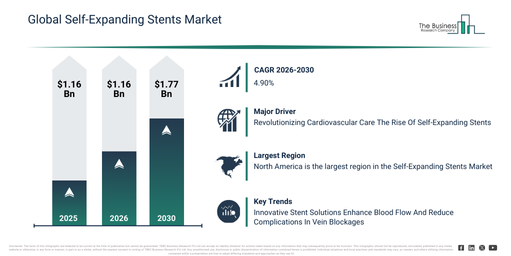
    The self-expanding stents market is projected to experience sustained expansion in the upcoming years. This market is anticipated to reach $4.47 billion by 2030, exhibiting a compound annual growth rate (CAGR) of 4.9%. Key factors contributing to this growth during the forecast period include a rising demand for minimally invasive treatment options, the broadening scope of peripheral artery disease management, an intensified focus on durable vascular implants, the growing embrace of advanced stent technologies, and increased healthcare investments dedicated to interventional devices. Significant trends expected within this period encompass the increased acceptance of nitinol-based stent designs, an escalating demand for minimally invasive vascular procedures, the expanding application of self-expanding stents in peripheral interventions, the development of broader drug-compatible stent platforms, and a heightened emphasis on ensuring long-term vessel patency.

    Access Your Free Sample Report for In-Depth Market Insights:

    https://www.thebusinessresearchcompany.com/sample.aspx?id=15667&type=smp

    What Drivers Are Supporting Technological Adoption In The Self-Expanding Stents Market?

    The increasing occurrence of cardiovascular conditions is projected to drive the expansion of the self-expanding stents market. These conditions involve irregularities affecting the heart and blood vessels. Factors contributing to the rising incidence of cardiovascular diseases include obesity, an aging demographic, and inherited susceptibilities. Self-expanding stents offer significant utility in treating cardiovascular ailments, presenting effective and less invasive treatment options for both immediate and enduring patient requirements. For example, in January 2024, data from the American Heart Association, a US-based non-profit body, indicated that the age-adjusted mortality rate attributable to cardiovascular disease climbed to 233.3 per 100,000 in 2024, representing an increase of 4.0% from 224.4 per 100,000 recorded in 2023. Consequently, the expanding prevalence of cardiovascular diseases is acting as a catalyst for the growth of the self-expanding stents market.

    Which Segments Are Contributing To The Growth Of The Self-Expanding Stents Market?

    The self-expanding stents market covered in this report is segmented –

    1) By Product Type: Gastrointestinal Self-Expanding Stents, Carotid Self-Expanding Stents, Endovascular Self-Expandable Stents, Other Product Types

    2) By Applications: Fem-Pop Artery Stents, Iliac Artery Stents, Carotid Artery Stents, Biliary Stents, Other Applications

    3) By End-Users: Hospitals, Ambulatory Surgical Centers, Other End-Users

    Subsegments:

    1) By Gastrointestinal Self-Expanding Stents: Esophageal Stents, Duodenal Stents, Colonic Stents

    2) By Carotid Self-Expanding Stents: Proximal Protection Carotid Stents, Self-Expanding Carotid Stents

    3) By Endovascular Self-Expandable Stents: Aortic Stents, Renal Artery Stents, Peripheral Artery Stents

    4) By Other Product Types: Biliary Self-Expanding Stents, Urological Self-Expanding Stents

    What Trends Are Driving The Growth Trajectory Of The Self-Expanding Stents Market?

    Major companies operating in the self-expanding stent market are primarily focused on developing innovative solutions, including drug-eluting and bioresorbable stents, to enhance vessel patency, mitigate restenosis, and improve patient outcomes. Drug-eluting stents work by slowly releasing medication to prevent arteries from re-narrowing, whereas bioresorbable stents are designed to dissolve gradually after fulfilling their role of keeping the vessel open. For instance, in June 2024, Koninklijke Philips N.V., a health technology company from the Netherlands, launched the Duo Venous Stent System in the U.S. This system aims to treat patients with blockages in their veins, specifically addressing symptomatic venous outflow obstruction in individuals suffering from chronic venous insufficiency (CVI). These systems incorporate two types of self-expanding stents—Duo Hybrid and Duo Extend—engineered to restore blood flow in blocked veins by providing flexibility, strength, and resistance to compression and vessel curvature. The goal is to improve venous outflow in patients with chronic venous insufficiency while minimizing the risks of stent fracture and corrosion.

    Who Are The Major Companies Operating In The Self-Expanding Stents Market?

    Major companies operating in the self-expanding stents market are Abbott Laboratories, Medtronic PLC, Boston Scientific Corporation, Becton Dickinson And Company (BD Interventional), Terumo Corporation, Phenox GmbH, Balton Sp. z o.o., Biotronik SE And Co. KG, Merit Medical Systems Inc., Aesculap AG, MicroVention Inc., Lifetech Scientific Corporation, Cordis Corporation, Rontis Corporation, Veryan Medical Ltd., Andramed GmbH, Medinol Ltd., iVascular SLU, HEXACATH SAS, Eucatech AG, Endospan Ltd., Endo-Flex GmbH, Endocor GmbH

    Access The Complete Report For Deeper Market Insights:

    https://www.thebusinessresearchcompany.com/report/self-expanding-stents-global-market-report

    Which Regions Are Poised For Strategic Growth In The Self-Expanding Stents Market?

    North America was the largest region in the self-expanding stents market in 2025. Asia-Pacific is expected to be the fastest-growing region in the forecast period. The regions covered in the self-expanding stents market report are Asia-Pacific, South East Asia, Western Europe, Eastern Europe, North America, South America, Middle East, Africa.

    Request Your Customized Self-Expanding Stents Market Research Report for Competitive Advantage:

    https://www.thebusinessresearchcompany.com/customise?id=15667&type=smp

    Browse Through More Reports Similar to the Global Self-Expanding Stents Market 2026, By The Business Research Company

    Drug Eluting Stent Global Market Report 2026

    https://www.thebusinessresearchcompany.com/report/drug-eluting-stent-global-market-report

    Bioabsorbable Stents Global Market Report 2026

    https://www.thebusinessresearchcompany.com/report/bioabsorbable-stents-global-market-report

    Coronary Stents Global Market Report 2026

    https://www.thebusinessresearchcompany.com/report/coronary-stents-global-market-report

    Get in touch with us:

    The Business Research Company: https://www.thebusinessresearchcompany.com/

    Americas +1 310-496-7795

    Asia +44 7882 955267 & +91 8897263534

    Europe +44 7882 955267

    Email us at info@tbrc.info

    Follow us on:

    LinkedIn: https://in.linkedin.com/company/the-business-research-company
  • Sedimentation Centrifuge Market Anticipated to Record Steady Gains, Advancing to $8.47 Billion by 2030

    Sedimentation Centrifuge Market Anticipated to Record Steady Gains, Advancing to $8.47 Billion by 2030

    Uncover key drivers, emerging technologies, and competitive movements shaping the workstation graphics processing unit (gpu) market from 2026–2035 with trusted insights from The Business Research Company

    What upper market value could the Sedimentation Centrifuge Market reach by 2030 starting from 2026 levels?

    The sedimentation centrifuge market has experienced robust growth in recent years. It is projected to increase from $6.28 billion in 2025 to $6.69 billion in 2026, showing a compound annual growth rate (CAGR) of 6.4%. This historical growth can be attributed to factors such as the industrialization of chemical processing, increased mining activities, the expansion of pharmaceutical manufacturing, a rising demand for solid-liquid separation, and the development of high-speed centrifuges.

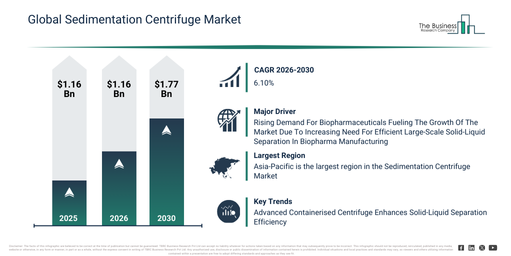
    The market for sedimentation centrifuges is projected to experience robust expansion over the upcoming years. It is set to reach a value of $8.47 billion by 2030, exhibiting a compound annual growth rate (CAGR) of 6.1%. This expansion during the projection period can be attributed to factors such as wastewater reuse programs, more stringent environmental policies, an increase in biopharmaceutical manufacturing, the need for high-throughput processing, and the upgrading of industrial facilities. Significant trends anticipated during this period encompass a growing need for centrifuges with continuous operation, expanded applications in wastewater treatment, a move towards energy-efficient separation technologies, the development of bespoke industrial centrifuges, and broader integration into process optimization uses.

    Access Your Free Sample Report for In-Depth Market Insights:

    https://www.thebusinessresearchcompany.com/sample.aspx?id=19689&type=smp

    Which Drivers Are Influencing Long-Term Growth In The Sedimentation Centrifuge Market?

    An escalating need for biopharmaceuticals is anticipated to drive expansion in the sedimentation centrifuge market. Biopharmaceuticals are defined as therapeutic agents derived from biological origins or through biotechnological processes, differing from conventional chemical synthesis. This heightened demand stems from an increase in chronic and intricate illnesses, necessitating sophisticated, targeted treatments that traditional medicines struggle to address. The growing need for biopharmaceuticals boosts the adoption of sedimentation centrifuges, as they are crucial for effective solid-liquid separation in high-volume manufacturing. These centrifuges enhance production efficiency, guarantee uniform product standards, and facilitate sterile environments, thereby supporting dependable and scalable biopharmaceutical processes. For example, data from June 2025 by the Centers for Medicare & Medicaid Services (CMS), a US-based federal agency, indicated that spending on prescription drugs climbed 11.4% in 2023, reaching $449.7 billion, a significant rise from the 7.8% growth observed in 2022. Consequently, the expanding requirement for biopharmaceuticals is a key factor propelling the development of the sedimentation centrifuge market.

    How Is The Sedimentation Centrifuge Market Divided Into Segments?

    The sedimentation centrifuge market covered in this report is segmented –

    1) By Type: Decanter Centrifuges, Disc Stack Centrifuges, Other Types

    2) By Design: Horizontal Centrifuges, Vertical Centrifuges

    3) By Operation Mode: Batch, Continuous

    4) By End Use: Pharmaceutical, Chemical And Petrochemical, Food And Beverage, Water And Wastewater Treatment, Metal And Mining, Other End Users

    Subsegments:

    1) By Decanter Centrifuges: Horizontal Decanter Centrifuges, Vertical Decanter Centrifuges, High-Performance Decanter Centrifuges

    2) By Disc Stack Centrifuges: Continuous Disc Stack Centrifuges, Batch Disc Stack Centrifuges, High-Speed Disc Stack Centrifuges

    3) By Other Types: Tubular Centrifuges, Batch Centrifuges, Separators

    What Upcoming Trends Are Likely To Define The Future Path Of The Sedimentation Centrifuge Market?

    Leading firms within the sedimentation centrifuge market are prioritizing the creation of sophisticated products, such as containerised decanter centrifuges, aimed at improving separation effectiveness, lowering expenses, and allowing for adaptable implementation. A containerised decanter centrifuge describes a comprehensive centrifuge setup that comes pre-assembled inside a standard shipping container, facilitating quick setup and ease of movement. As an illustration, during March 2025, Multotec Group Limited, a company specializing in mineral processing and industrial equipment based in South Africa, introduced the TS 530L Tailings Decanter Centrifuge. This innovative system is designed to continuously separate fine solid particles from liquid phases through the application of centrifugal forces, thereby supporting high-volume processing while simultaneously reducing operational interruptions and installation demands.

    Which Major Firms Are Strengthening Their Position In The Sedimentation Centrifuge Market?

    Major companies operating in the sedimentation centrifuge market are Thermo Fisher Scientific Inc., Danaher Corporation, Siemens Healthineers AG, KUBOTA Corporation, Andritz AG, GEA Group AG, Alfa Laval AB, VWR International LLC, Beckman Coulter Inc., Biobase Group, Multotec Group, Flottweg SE, Mitsubishi Kakoki Kaisha Ltd., Mclanahan Corporation, Helmer Scientific Inc., Centrifuges Unlimited Inc, Hitachi Koki Co. Ltd., Labnet International Inc., Sigma Laboratory Centrifuges, Andreas Hettich GmbH And Co.KG, Witeg Labortechnik GmbH, Schuett Biotec GmbH, LW Scientific Inc., Centurion Scientific Ltd., Scilogex LLC, Thomas Broadbent And Sons Ltd.

    Access The Complete Report For Deeper Market Insights:

    https://www.thebusinessresearchcompany.com/report/sedimentation-centrifuge-global-market-report

    Which Regions Are Projected To Dominate The Sedimentation Centrifuge Market In The Coming Years?

    Asia-Pacific was the largest region in the sedimentation centrifuge market in 2025. The regions covered in the sedimentation centrifuge market report are Asia-Pacific, South East Asia, Western Europe, Eastern Europe, North America, South America, Middle East, Africa.

    Request Your Customized Sedimentation Centrifuge Market Research Report for Competitive Advantage:

    https://www.thebusinessresearchcompany.com/customise?id=19689&type=smp

    Browse Through More Reports Similar to the Global Sedimentation Centrifuge Market 2026, By The Business Research Company

    Veterinary Orthopedic Implants Global Market Report 2026

    https://www.thebusinessresearchcompany.com/report/veterinary-orthopedic-implants-global-market-report

    Disposable Syringes Global Market Report 2026

    https://www.thebusinessresearchcompany.com/report/disposable-syringes-global-market-report

    Left Ventricular Assist Devices Global Market Report 2026

    https://www.thebusinessresearchcompany.com/report/left-ventricular-assist-devices-global-market-report

    Get in touch with us:

    The Business Research Company: https://www.thebusinessresearchcompany.com/

    Americas +1 310-496-7795

    Asia +44 7882 955267 & +91 8897263534

    Europe +44 7882 955267

    Email us at info@tbrc.info

    Follow us on:

    LinkedIn: https://in.linkedin.com/company/the-business-research-company