Category: Pharmaceuticals

  • Cyclosporine Market 2026 forecast signals growth to $5.46 billion by 2030

    Cyclosporine Market 2026 forecast signals growth to $5.46 billion by 2030

    The Business Research Company’s 2026 market reports include new capabilities such as market attractiveness scoring and analysis, total addressable market analysis, company scoring matrix, interactive excel data dashboard, improved supply chain analysis, upcoming startups in the market, and overview of key products, aimed at improving the depth, usability, and strategic value of the insights delivered.

    What Market Size Increase Is Anticipated For The Cyclosporine Market Over The 2026–2030 Period?

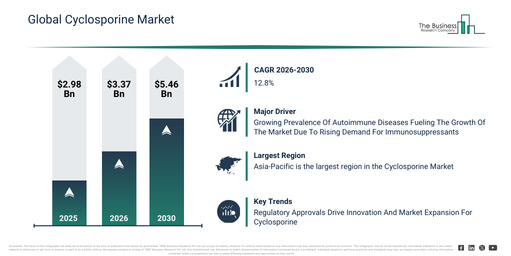
    The cyclosporine market has witnessed significant expansion in recent years. It is anticipated to increase from $2.98 billion in 2025 to $3.37 billion in 2026, growing at a compound annual growth rate (CAGR) of 13.0%. The historical growth of this market can be attributed to an increase in organ transplant procedures, its established effectiveness in immune suppression, the rising occurrence of autoimmune diseases, initial regulatory approvals, and the expanded implementation of hospital-based immunotherapy.

    The cyclosporine market size is anticipated to experience rapid expansion in the coming years. It is forecast to reach $5.46 billion by 2030, achieving a compound annual growth rate (CAGR) of 12.8%. This projected growth during the forecast period can be attributed to the rising prevalence of chronic autoimmune conditions, the increasing burden of ophthalmic diseases, improved transplant survival rates, the wider availability of generic medications, and the growing utilization of outpatient immunosuppressive therapies. Major trends expected in this period include the expanding application in autoimmune disease management, the growing adoption of ophthalmic cyclosporine formulations, a rising demand for long-term immunosuppressive treatments, increased deployment in organ transplant maintenance regimens, and the proliferation of generic cyclosporine products.

    Download the Free Sample Report to Explore Key Market Insights:

    https://www.thebusinessresearchcompany.com/sample.aspx?id=23360&type=smp

    What Underlying Factors Are Accelerating The Growth Of The Cyclosporine Market?

    An increasing incidence of autoimmune conditions is anticipated to fuel the expansion of the cyclosporine market in the coming years. These diseases are characterized by the immune system erroneously attacking the body’s own healthy cells, leading to inflammation, tissue damage, and persistent health issues. The uptick in autoimmune disease prevalence stems from genetic predisposition, with improved genetic testing identifying more people at hereditary risk, thereby increasing their vulnerability to such conditions. Cyclosporine demonstrates efficacy in managing autoimmune diseases by inhibiting T-cell activation, which consequently lessens detrimental immune responses against healthy tissues in illnesses like rheumatoid arthritis, psoriasis, and lupus. For example, in October 2024, a thorough review appearing in Signal Transduction and Targeted Therapy, a journal from Nature, a UK-based peer-reviewed scientific publisher, reported that around 8.4 million individuals globally are affected by rheumatoid arthritis, and its overall incidence rate is growing by 2-3% per year; employing the Markov model approach, the number of affected individuals is forecasted to be about 13.5-17.4 million by 2040. Consequently, the expanding occurrence of autoimmune diseases is a key driver for the cyclosporine market’s growth.

    How Is The Cyclosporine Market Segmented Across Key Categories?

    The cyclosporine market covered in this report is segmented –

    1) By Indication: Transplant Rejection Prophylaxis, Rheumatoid Arthritis, Psoriasis, Autoimmune Myasthenia Gravis, Dry Eye, Other Indications

    2) By Dosage Form: Capsule, Eye Drops, Liquid Solutions, Creams And Ointments

    3) By Route Of Administration: Oral, Topical, Parenteral

    4) By Distribution Channel: Hospital Pharmacies, Retail Pharmacies, Online Pharmacies

    5) By End-Users: Hospitals, Homecare, Speciality Centres, Other End-Users

    Subsegments:

    1) By Transplant Rejection Prophylaxis: Kidney Transplant, Liver Transplant, Heart Transplant, Lung Transplant, Other Transplants

    2) By Rheumatoid Arthritis: Moderate Rheumatoid Arthritis, Severe Rheumatoid Arthritis

    3) By Psoriasis: Plaque Psoriasis, Erythrodermic Psoriasis, Guttate Psoriasis, Pustular Psoriasis

    4) By Autoimmune Myasthenia Gravis: Generalized Myasthenia Gravis, Ocular Myasthenia Gravis

    5) By Dry Eye: Chronic Dry Eye, Severe Dry Eye

    6) By Other Indications: Atopic Dermatitis, Uveitis, Nephrotic Syndrome, Inflammatory Bowel Disease (IBD)

    Which Upcoming Trends Are Expected To Influence The Cyclosporine Market?

    Leading companies in the cyclosporine market are concentrating on securing regulatory clearances to expand their product offerings and strengthen their market position. Such regulatory endorsements affirm the safety and effectiveness of cyclosporine, allowing market entry and fostering greater confidence among both prescribers and patients. For instance, in June 2023, Novaliq GmbH, a biopharmaceutical company based in Germany, obtained approval from the U.S. FDA for VEVYE (cyclosporine ophthalmic solution) 0.1%, a distinctive water-free ophthalmic medicine formulated for addressing dry eye disease (DED). This is the inaugural and sole cyclosporine-derived solution for this condition, demonstrating efficacy within just four weeks. VEVYE incorporates an innovative water-free technology named EyeSol, which improves cyclosporine’s bioavailability and its retention time on the ocular surface without requiring preservatives, oils, or surfactants. The solution operates as a calcineurin inhibitor, assisting in the reduction of inflammation connected to dry eye disease.

    Who Are The Dominant Players Shaping The Cyclosporine Market Landscape?

    Major companies operating in the cyclosporine market are Novartis AG, Viatris Inc., Teva Pharmaceutical Industries Ltd, Sandoz International GmbH, Sun Pharmaceutical Industries Ltd, Apotex Inc., Cipla Ltd, Dr. Reddy’s Laboratories Ltd, Lupin Limited, Glenmark Pharmaceuticals Ltd, Taj Pharmaceuticals Limited, Panacea Biotec Ltd, Novaliq GmbH, Simson Pharma Limited, Strides Pharma Science Ltd, AdvaCare Pharma, JoinHub Pharma, Grevis Pharmaceuticals Pvt Ltd, GMT Pharma International, Logos Pharma.

    Read the full cyclosporine market report here:

    https://www.thebusinessresearchcompany.com/report/cyclosporine-global-market-report

    Which Region Is Projected To Dominate The Cyclosporine Market During The Forecast Period?

    Asia-Pacific was the largest region in the cyclosporine market in 2025. North America is expected to be the fastest-growing region in the forecast period. The regions covered in the cyclosporine market report are Asia-Pacific, South East Asia, Western Europe, Eastern Europe, North America, South America, Middle East, Africa.

    Request A Tailored Cyclosporine Market Research Report For Competitive Advantage:

    https://www.thebusinessresearchcompany.com/customise?id=23360&type=smp

    Browse Through More Reports Similar to the Global Cyclosporine Market 2026, By The Business Research Company

    Interstitial Cystitis Drugs Market Report 2026

    https://www.thebusinessresearchcompany.com/report/interstitial-cystitis-drugs-global-market-report

    Cyclohexylbenzene Market Report 2026

    https://www.thebusinessresearchcompany.com/report/cyclohexylbenzene-global-market-report

    Cyclin Dependent Kinase Cdk 4 Or 6 Inhibitor Drugs Market Report 2026

    https://www.thebusinessresearchcompany.com/report/cyclin-dependent-kinase-cdk-4-or-6-inhibitor-drugs-global-market-report

    Get in touch with us:

    The Business Research Company: https://www.thebusinessresearchcompany.com/

    Americas +1 310-496-7795

    Asia +44 7882 955267 & +91 8897263534

    Europe +44 7882 955267

    Email us at info@tbrc.info

    Follow us on:

    LinkedIn: https://in.linkedin.com/company/the-business-research-company

    YouTube: https://www.youtube.com/channel/UC24_fI0rV8cR5DxlCpgmyFQ

    Global Market Model: https://www.thebusinessresearchcompany.com/global-market-model
  • Gene-Editing Transfection Chemicals Market 2026 reaching $1.56 billion by 2030

    Gene-Editing Transfection Chemicals Market 2026 reaching $1.56 billion by 2030

    The Business Research Company’s 2026 market reports include new capabilities such as market attractiveness scoring and analysis, total addressable market analysis, company scoring matrix, interactive excel data dashboard, improved supply chain analysis, upcoming startups in the market, and overview of key products, aimed at improving the depth, usability, and strategic value of the insights delivered.

    What Market Size Expansion Is Predicted For The Gene-Editing Transfection Chemicals Market Between 2026 And 2030?

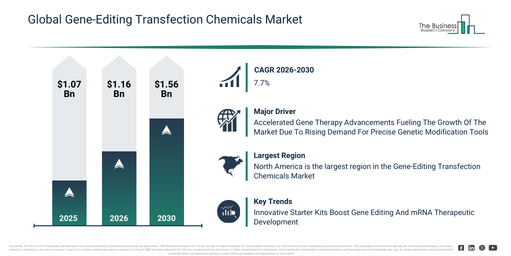
    The gene-editing transfection chemicals market has demonstrated strong expansion over recent years. Projections indicate it will increase from $1.07 billion in 2025 to $1.16 billion in 2026, at a compound annual growth rate (CAGR) of 8.4%. The growth observed in the historic period is attributable to factors such as the limited availability of high-efficiency transfection chemicals, a reliance on traditional delivery methods, growing academic and research institute activities, increasing investment in biotechnology research, and the early adoption of gene-editing tools.

    The gene-editing transfection chemicals market is projected to experience robust expansion over the coming years. This market is anticipated to reach $1.56 billion by 2030, exhibiting a compound annual growth rate (CAGR) of 7.7%. The upward trend during the forecast period is driven by factors such as the advancement of lipid, polymer, and peptide-based chemicals, a growing need for accurate gene-editing applications, an increase in pharmaceutical and biotechnology research and development activities, the incorporation of automated transfection platforms, and a rise in regulatory clearances and established protocols. Key trends anticipated during this period encompass the increasing uptake of lipid-based transfection chemicals, broader utilization of polymer and peptide-based delivery systems, the expansion of both non-viral and viral delivery mechanisms, a wider application of gene-editing in drug discovery and disease modeling, and a concerted effort to enhance transfection efficiency and cell viability.

    Download the Free Sample Report to Explore Key Market Insights:

    https://www.thebusinessresearchcompany.com/sample.aspx?id=25770&type=smp

    What Drivers Are Influencing The Gene-Editing Transfection Chemicals Market?

    The gene-editing transfection chemicals market is expected to grow, driven by the accelerated pace of gene therapy research. Gene therapy is a technique aimed at treating or preventing diseases by directly altering or correcting faulty genes within an individual’s cells. Breakthroughs in gene-editing technologies, such as CRISPR, which enable scientists to precisely target and modify genes responsible for genetic disorders, are fueling this acceleration in gene therapy research. Gene-editing transfection chemicals are crucial tools in gene therapy research and development, as they facilitate the efficient delivery of genetic material, including CRISPR-Cas9 components, mRNA, and plasmid DNA, into human cells. For instance, in December 2024, according to the American Society of Gene & Cell Therapy (ASGCT), a US-based non-profit medical and scientific organization, the Food and Drug Administration (FDA) approved six gene therapy products in 2023, an increase from five approvals in 2022. Therefore, the intensified research in gene therapy is propelling the expansion of the gene-editing transfection chemicals market.

    Which Market Segments Are Examined In The Gene-Editing Transfection Chemicals Market Study?

    The gene-editing transfection chemicals market covered in this report is segmented –

    1) By Chemical Type: Lipid-Based, Polymer-Based, Peptide-Based, Other Chemical Types

    2) By Delivery Mechanism: Non-Viral, Viral

    3) By Application: Biomedical Research, Drug Discovery, Disease Modeling, Agricultural Biotechnology, Vaccine Development, Other Applications

    4) By End-User: Academic And Research Institutes, Biotechnology Companies, Pharmaceutical Companies, Other End-Users

    Subsegments:

    1) By Lipid-Based: Cationic Lipids, Neutral Lipids, Ionizable Lipids

    2) By Polymer-Based: Polyethyleneimine (PEI), Poly(L-Lysine) (PLL), Dendrimers

    3) By Peptide-Based: Cell-Penetrating Peptides (CPPs), Amphipathic Peptides, Targeting Peptides

    4) By Other Chemical Types: Inorganic Nanoparticles, Hybrid Nanoparticles

    Which Trends Are Influencing The Gene-Editing Transfection Chemicals Market?

    Leading companies in the gene-editing transfection chemicals sector are prioritizing the introduction of innovative solutions, such as lipid nanoparticle (LNP) starter kits, to streamline the workflows for gene therapy and mRNA delivery. LNP starter kits are described as ready-to-use formulations or toolkits containing pre-optimized lipid components and protocols specifically designed to facilitate the development and testing of LNP-based delivery systems. For example, in February 2024, the Switzerland-based pharmaceutical company CordenPharma unveiled Lipid NanoParticle (LNP) Starter Kits. These kits are intended to assist researchers and developers in formulating and optimizing mRNA-based therapeutics, including vaccines and gene therapies. The kits incorporate four crucial lipids—ionizable lipids, helper lipids, sterols, and PEGylated lipids—which are obtained from commercial-scale, high-purity materials. This sourcing ensures consistent quality across batches and minimizes the risk of losing valuable payloads during the development process. CordenPharma’s goal, by providing a reliable and scalable lipid platform, is to accelerate the development of gene editing and mRNA therapies while simultaneously safeguarding high-value genetic payloads.

    Who Are The Primary Competitors In The Gene-Editing Transfection Chemicals Market?

    Major companies operating in the gene-editing transfection chemicals market are Thermo Fisher Scientific Inc., Merck KGaA, Lonza Group AG, Takara Bio Inc., Mirus Bio LLC, OZ Biosciences SAS, Genlantis Inc., Polyplus-Transfection SA, Altogen Biosystems LLC, SignaGen Laboratories.

    Read the full gene-editing transfection chemicals market report here:

    https://www.thebusinessresearchcompany.com/report/gene-editing-transfection-chemicals-global-market-report

    Which Regions Are Expected To Experience Rapid Expansion In The Gene-Editing Transfection Chemicals Market?

    North America was the largest region in the gene-editing transfection chemicals market in 2025. The regions covered in the gene-editing transfection chemicals market report are Asia-Pacific, South East Asia, Western Europe, Eastern Europe, North America, South America, Middle East, Africa.

    Request A Tailored Gene-Editing Transfection Chemicals Market Research Report For Competitive Advantage:

    https://www.thebusinessresearchcompany.com/customise?id=25770&type=smp

    Browse Through More Reports Similar to the Global Gene-Editing Transfection Chemicals Market 2026, By The Business Research Company

    Gene Editing Market Report 2026

    https://www.thebusinessresearchcompany.com/report/gene-editing-global-market-report

    Crispr Gene Editing Market Report 2026

    https://www.thebusinessresearchcompany.com/report/crispr-gene-editing-global-market-report

    Genome Editing Or Genome Engineering Market Report 2026

    https://www.thebusinessresearchcompany.com/report/genome-editing-or-genome-engineering-global-market-report

    Get in touch with us:

    The Business Research Company: https://www.thebusinessresearchcompany.com/

    Americas +1 310-496-7795

    Asia +44 7882 955267 & +91 8897263534

    Europe +44 7882 955267

    Email us at info@tbrc.info

    Follow us on:

    LinkedIn: https://in.linkedin.com/company/the-business-research-company

    YouTube: https://www.youtube.com/channel/UC24_fI0rV8cR5DxlCpgmyFQ

    Global Market Model: https://www.thebusinessresearchcompany.com/global-market-model
  • Gene-Circuit Cell Therapy Market 2026 approaching $3.56 billion by 2030

    Gene-Circuit Cell Therapy Market 2026 approaching $3.56 billion by 2030

    The Business Research Company’s 2026 market reports include new capabilities such as market attractiveness scoring and analysis, total addressable market analysis, company scoring matrix, interactive excel data dashboard, improved supply chain analysis, upcoming startups in the market, and overview of key products, aimed at improving the depth, usability, and strategic value of the insights delivered.

    How Large Is The Gene-Circuit Cell Therapy Market Projected To Become By 2030 Based On Its 2026 Valuation?

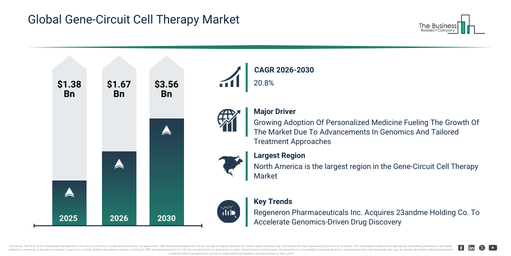
    The gene-circuit cell therapy market size has experienced significant expansion over recent years. It is anticipated to increase from $1.38 billion in 2025 to $1.67 billion in 2026, exhibiting a compound annual growth rate (CAGR) of 21.1%. This historical growth can be attributed to advancements in cell engineering technologies, the accomplishments of car-t cell therapies, the broadening of gene editing platforms, accumulating clinical expertise with cell therapies, and heightened biotechnology investments.

    The gene-circuit cell therapy market is projected for substantial expansion in the coming years, with its size expected to reach $3.56 billion by 2030, reflecting a compound annual growth rate (CAGR) of 20.8%. This anticipated growth during the forecast period is driven by factors such as the increasing commercialization of gene-circuit cell therapies, a rising demand for controllable immunotherapies, the expansion of oncology-focused pipelines, the growing adoption of allogeneic platforms, and advancements in scalable cell manufacturing. Significant trends within this forecast period include the increasing integration of synthetic gene circuits in cell therapy, the rising development of logic-controlled immune cells, a growing utilization of off-the-shelf allogeneic therapies, the expansion of dynamic cellular response systems, and an enhanced focus on ensuring treatment safety and control.

    Download the Free Sample Report to Explore Key Market Insights:

    https://www.thebusinessresearchcompany.com/sample.aspx?id=28233&type=smp

    What Drivers Are Shaping The Future Growth Of The Gene-Circuit Cell Therapy Market?

    The increasing acceptance of personalized medicine is anticipated to propel the expansion of the gene-circuit cell therapy market in the future. This medical approach involves customizing treatment and prevention plans specifically for an individual’s distinct genetic profile, lifestyle, and environmental factors. Its rising uptake is largely attributed to progress in genomics, which facilitates the accurate detection of genetic variations and the development of bespoke treatments for patients. Gene-circuit cell therapy complements personalized medicine by offering targeted and programmable treatment methods, rendering it particularly suitable for managing intricate and long-term illnesses. This therapy boosts the precision of treatments by adapting interventions to each patient’s specific requirements, thereby enhancing their efficacy and overall health results. For example, data from February 2024, provided by the Personalized Medicine Coalition (PMC), a US-based nonprofit, indicates that the U.S. Food and Drug Administration (FDA) gave its approval to 26 new personalized medicines in 2023, which marks a considerable rise from the 12 approved in 2022. Consequently, the expanding use of personalized medicine is a key force behind the growth of the gene-circuit cell therapy market.

    What Segment Groups Are Identified Within The Gene-Circuit Cell Therapy Market?

    The gene-circuit cell therapy market covered in this report is segmented –

    1) By Product Type: Autologous, Allogeneic

    2) By Technology: Clustered Regularly Interspaced Short Palindromic Repeats (CRISPR), Transcription Activator-Like Effector Nuclease (TALEN), Zinc Finger Nuclease (ZFN), Other Technologies

    3) By Application: Oncology, Genetic Disorders, Infectious Diseases, Other Applications

    4) By End-User: Hospitals And Clinics, Research Institutes, Biotechnology And Pharmaceutical Companies, Other End Users

    Subsegments:

    1) By Autologous: Chimeric Antigen Receptor (CAR)-T Cell Therapies, T-Cell Receptor (TCR)-T Cell Therapies, Natural Killer (NK) Cell Therapies, Stem Cell-Based Therapies

    2) By Allogeneic: Off-The-Shelf Chimeric Antigen Receptor (CAR)-T Cell Therapies, Off-The-Shelf Natural Killer (NK) Cell Therapies, TT-Cell Receptor (TCR)-T Cell Therapies, Stem Cell-Derived Therapies

    What Trends Are Advancing Progress In The Gene-Circuit Cell Therapy Market?

    Leading companies in the gene-circuit cell therapy market are prioritizing the development of advanced therapeutic platforms, such as CRISPR-based gene editing systems. This focus aims to boost treatment precision, improve therapeutic outcomes, and address genetic diseases previously considered untreatable. CRISPR-based gene editing systems themselves are innovative technologies that enable precise modifications to the genome, allowing for the correction of genetic defects or the introduction of therapeutic genes into cells. As an illustration, in December 2023, Vertex Pharmaceuticals Inc., a US-based biopharmaceutical company, partnered with CRISPR Therapeutics Inc., a US-based biotechnology research company. This collaboration resulted in conditional marketing authorization from the United Kingdom (U.K.) Medicines and Healthcare products Regulatory Agency (MHRA) for CASGEVY (exagamglogene autotemcel, exa-cel). This treatment is indicated for patients aged 12 and older suffering from sickle cell disease (SCD) with recurrent vaso-occlusive crises or transfusion-dependent beta thalassemia (TDT). Casgevy functions by editing a patient’s hematopoietic stem cells to reactivate fetal hemoglobin production, which in turn reduces or eliminates disease symptoms and offers a potential functional cure for these conditions.

    Which Companies Hold Significant Positions In The Gene-Circuit Cell Therapy Market?

    Major companies operating in the gene-circuit cell therapy market are Tmunity Therapeutics Inc., Ginkgo Bioworks Holdings Inc., Arcellx Inc., Beam Therapeutics Inc., CRISPR Therapeutics AG, Intellia Therapeutics Inc., Orchard Therapeutics plc, Fate Therapeutics Inc., Rubius Therapeutics Inc., BlueRock Therapeutics LP (a subsidiary of Bayer AG), Precigen Inc., SparingVision, Alaunos Therapeutics Inc., Cartesian Therapeutics Inc., Lyell Immunopharma Inc., Synlogic Inc., Senti Biosciences Inc., Autolus Therapeutics plc, Cellectis S.A., Sotio Biotech

    Read the full gene-circuit cell therapy market report here:

    https://www.thebusinessresearchcompany.com/report/gene-circuit-cell-therapy-global-market-report

    Which Geographic Regions Are Influencing Demand In The Gene-Circuit Cell Therapy Market?

    North America was the largest region in the gene-circuit cell therapy market in 2025. The regions covered in the gene-circuit cell therapy market report are Asia-Pacific, South East Asia, Western Europe, Eastern Europe, North America, South America, Middle East, Africa.

    Request A Tailored Gene-Circuit Cell Therapy Market Research Report For Competitive Advantage:

    https://www.thebusinessresearchcompany.com/customise?id=28233&type=smp

    Browse Through More Reports Similar to the Global Gene-Circuit Cell Therapy Market 2026, By The Business Research Company

    Genes Therapy Market Report 2026

    https://www.thebusinessresearchcompany.com/report/genes-therapy-global-market-report

    Cell And Gene Therapy Clinical Trial Services Market Report 2026

    https://www.thebusinessresearchcompany.com/report/cell-and-gene-therapy-clinical-trial-services-global-market-report

    Nucleic Acid Based Gene Therapy Market Report 2026

    https://www.thebusinessresearchcompany.com/report/nucleic-acid-based-gene-therapy-global-market-report

    Get in touch with us:

    The Business Research Company: https://www.thebusinessresearchcompany.com/

    Americas +1 310-496-7795

    Asia +44 7882 955267 & +91 8897263534

    Europe +44 7882 955267

    Email us at info@tbrc.info

    Follow us on:

    LinkedIn: https://in.linkedin.com/company/the-business-research-company

    YouTube: https://www.youtube.com/channel/UC24_fI0rV8cR5DxlCpgmyFQ

    Global Market Model: https://www.thebusinessresearchcompany.com/global-market-model
  • Cyclin-Dependent Kinase (CDK) 4/6 Inhibitor Drugs Market 2026 surging to $35.71 billion by 2030 at 19.4% CAGR

    Cyclin-Dependent Kinase (CDK) 4/6 Inhibitor Drugs Market 2026 surging to $35.71 billion by 2030 at 19.4% CAGR

    The Business Research Company’s 2026 market reports include new capabilities such as market attractiveness scoring and analysis, total addressable market analysis, company scoring matrix, interactive excel data dashboard, improved supply chain analysis, upcoming startups in the market, and overview of key products, aimed at improving the depth, usability, and strategic value of the insights delivered.

    How Much Is The Cyclin-Dependent Kinase (CDK) 4/6 Inhibitor Drugs Market Expected To Grow In Terms Of Market Value Between 2026 And 2030?

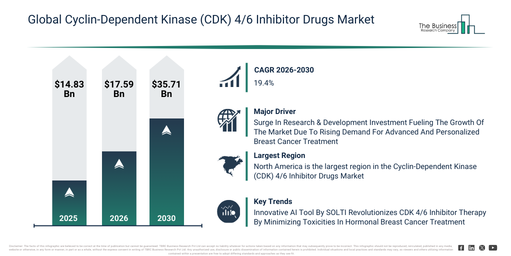
    The cyclin-dependent kinase (cdk) 4/6 inhibitor drugs market size has experienced substantial expansion in recent years. This market is projected to expand from $14.83 billion in 2025 to $17.59 billion in 2026, exhibiting a compound annual growth rate (CAGR) of 18.6%. Historically, this growth can be linked to the FDA’s approval of palbociclib, a greater prevalence of HR-positive HER2-negative breast cancer, the uptake of targeted therapies in developed nations, an increase in clinical trials for cdk4/6 inhibitors, and collaborations among pharmaceutical firms for oncology research.

    The market for cyclin-dependent kinase (cdk) 4/6 inhibitor drugs is projected to experience substantial expansion in the coming years. This market is set to reach $35.71 billion by 2030, exhibiting a compound annual growth rate (CAGR) of 19.4%. Several factors are contributing to this anticipated growth, including an increase in the elderly population afflicted with breast cancer, heightened understanding of the advantages of targeted therapy, the development of oncology healthcare facilities in developing regions, the incorporation of digital health tools for patient oversight, and amplified research and development efforts into advanced cdk4/6 inhibitors. Key trends anticipated during this period encompass individualized treatment plans, strategies involving combination therapies, oral forms of cdk4/6 inhibitors, continued expansion within nascent oncology markets, and the utilization of real-world evidence alongside patient monitoring.

    Download the Free Sample Report to Explore Key Market Insights:

    https://www.thebusinessresearchcompany.com/sample.aspx?id=13121&type=smp

    Which Growth Drivers Are Contributing To The Progress Of The Cyclin-Dependent Kinase (CDK) 4/6 Inhibitor Drugs Market?

    The future expansion of the cyclin-dependent kinase (CDK) 4/6 inhibitor drugs market is anticipated to be propelled by increasing investment in research and development for breast cancer treatment. Breast cancer is characterized by the uncontrolled growth of abnormal cells in the breast, forming tumors. The rising need for more effective and personalized treatment options is driving the surge in R&D investment for breast cancer. CDK 4/6 inhibitor drugs are utilized in breast cancer therapy by blocking proteins responsible for cancer cell growth, which helps in slowing or stopping tumor progression. For example, the National Cancer Institute (NCI), a US-based government agency, reported in July 2025 that it had allocated an estimated $542.0 million in FY 2023 specifically for breast cancer research. Thus, the growing investment in breast cancer treatment research and development significantly drives the growth of the cyclin-dependent kinase (CDK) 4/6 inhibitor drug market.

    What Major Segment Divisions Exist Within The Cyclin-Dependent Kinase (CDK) 4/6 Inhibitor Drugs Market?

    The cyclin-dependent kinase (cdk) 4/6 inhibitor drugs market covered in this report is segmented –

    1) By Drug Type: Palbociclib (Ibrance), Ribociclib (Kisqali), Abermaciclib (Verzenio)

    2) By Patient: Pre-Menopausal, Post-Menopausal, Other Patients

    3) By End-Users: Hospitals, Clinics, Research Laboratories, Retail Pharmacies

    How Are Trends Shaping The Direction Of The Cyclin-Dependent Kinase (CDK) 4/6 Inhibitor Drugs Market?

    Major companies in the cyclin-dependent kinase (CDK) 4/6 inhibitor drugs market are prioritizing the creation of technologically advanced solutions, particularly AI-driven tools, to minimize treatment toxicities and meet critical industry demands. AI instruments for hormonal breast cancer treatment personalize therapies to reduce adverse effects, predict potential negative reactions, and facilitate prompt interventions, thereby improving treatment safety and effectiveness. For instance, in May 2024, SOLTI, a pioneering breast cancer research company based in Spain, introduced an AI-based tool specifically designed to lower toxicities for patients undergoing hormonal breast cancer treatment. This innovative tool analyzes both cancerous and non-cancerous components within breast tissue samples, allowing for more precise predictions of treatment outcomes and aiding in identifying patients who might not require aggressive chemotherapy. By mitigating unnecessary side effects and enabling tailored treatment strategies, the AI tool aims to enhance patient quality of life and boost overall treatment efficacy. This advancement aligns with encouraging results from SOLTI’s PATRICIA study, which demonstrated the advantages of combining hormone therapy with targeted treatments for advanced ER+/HER2+ breast cancer.

    Which Companies Are Leading Innovation In The Cyclin-Dependent Kinase (CDK) 4/6 Inhibitor Drugs Market?

    Major companies operating in the cyclin-dependent kinase (cdk) 4/6 inhibitor drugs market are Pfizer Inc., Novartis AG, Eli Lilly and Company, AstraZeneca PLC, Roche Holding AG, Bristol-Myers Squibb Company, Merck & Co. Inc., Sanofi SA, Gilead Sciences Inc., Jiangsu Hengrui Medicine Co. Ltd., Innovent Biologics Inc., OncoMed Pharmaceuticals Inc., Puma Biotechnology Inc., Adlai Nortye Ltd., Arcus Biosciences Inc., Eisai Co. Ltd., G1 Therapeutics Inc., Simcere Pharmaceutical Group, Betta Pharmaceuticals Co. Ltd., Sihuan Pharmaceutical Holdings Group Ltd., Genor Biopharma Co. Ltd., Shanghai Fosun Pharmaceutical Group Co. Ltd.

    Read the full cyclin-dependent kinase (cdk) 4/6 inhibitor drugs market report here:

    https://www.thebusinessresearchcompany.com/report/cyclin-dependent-kinase-cdk-4-or-6-inhibitor-drugs-global-market-report

    What Are The Leading Geographic Regions In The Cyclin-Dependent Kinase (CDK) 4/6 Inhibitor Drugs Market?

    North America was the largest region in the cyclin-dependent kinase (CDK) 4/6 inhibitor drugs market in 2025. The regions covered in the cyclin-dependent kinase (cdk) 4/6 inhibitor drugs market report are Asia-Pacific, South East Asia, Western Europe, Eastern Europe, North America, South America, Middle East, Africa.

    Request A Tailored Cyclin-Dependent Kinase (CDK) 4/6 Inhibitor Drugs Market Research Report For Competitive Advantage:

    https://www.thebusinessresearchcompany.com/customise?id=13121&type=smp

    Browse Through More Reports Similar to the Global Cyclin-Dependent Kinase (CDK) 4/6 Inhibitor Drugs Market 2026, By The Business Research Company

    Cyclin Dependent Kinase Cdk 4 Or 6 Inhibitor Drugs Market Report 2026

    https://www.thebusinessresearchcompany.com/report/cyclin-dependent-kinase-cdk-4-or-6-inhibitor-drugs-global-market-report

    Kinase Inhibitors Market Report 2026

    https://www.thebusinessresearchcompany.com/report/kinase-inhibitors-global-market-report

    Tyrosine Kinase Inhibitors Market Report 2026

    https://www.thebusinessresearchcompany.com/report/tyrosine-kinase-inhibitors-global-market-report

    Get in touch with us:

    The Business Research Company: https://www.thebusinessresearchcompany.com/

    Americas +1 310-496-7795

    Asia +44 7882 955267 & +91 8897263534

    Europe +44 7882 955267

    Email us at info@tbrc.info

    Follow us on:

    LinkedIn: https://in.linkedin.com/company/the-business-research-company

    YouTube: https://www.youtube.com/channel/UC24_fI0rV8cR5DxlCpgmyFQ

    Global Market Model: https://www.thebusinessresearchcompany.com/global-market-model

  • Gene Therapy On Neurological Diseases Market 2026 growing to $6.48 billion by 2030

    Gene Therapy On Neurological Diseases Market 2026 growing to $6.48 billion by 2030

    The Business Research Company’s 2026 market reports include new capabilities such as market attractiveness scoring and analysis, total addressable market analysis, company scoring matrix, interactive excel data dashboard, improved supply chain analysis, upcoming startups in the market, and overview of key products, aimed at improving the depth, usability, and strategic value of the insights delivered.

    What Market Value Is Anticipated For The Gene Therapy On Neurological Diseases Market Over The Period 2026–2030?

    The market for gene therapy on neurological diseases has expanded swiftly in recent years. It is anticipated to grow from $3.55 billion in 2025 to $4.01 billion in 2026, achieving a compound annual growth rate (CAGR) of 13.0%. The expansion observed in the past can be ascribed to several factors, including the restricted gene therapy options for neurological diseases, the rising prevalence of alzheimer’s and parkinsons disease, the prevailing dependence on conventional treatment methods, increased awareness of genetic approaches, and early clinical trials involving viral vectors.

    The gene therapy on neurological diseases market is projected for significant expansion in the coming years, reaching $6.48 billion by 2030, demonstrating a compound annual growth rate (CAGR) of 12.7%. This anticipated growth is driven by several factors, including advancements in adeno-associated virus and lentiviral treatments, the broadening of non-viral delivery methods, more regulatory approvals for neurological gene therapies, increased research and development funding for specific genetic interventions, and the incorporation of digital monitoring alongside AI-powered patient management systems. Key trends during this period are expected to encompass greater investment in both viral and non-viral gene therapy platforms, a wider application of gene therapy in various neurological conditions, an enhanced emphasis on customized and precise genetic treatments, the expansion of gene therapy initiatives within hospitals and clinics, and the innovation of sophisticated delivery techniques for neurological gene therapy.

    Download the Free Sample Report to Explore Key Market Insights:

    https://www.thebusinessresearchcompany.com/sample.aspx?id=27294&type=smp

    Which Economic Or Industry Drivers Are Impacting The Gene Therapy On Neurological Diseases Market?

    The expanding occurrence of neurological disorders is anticipated to stimulate the development of the gene therapy on neurological diseases market. These conditions are medical ailments impacting the brain, spinal cord, and nerves, resulting in various symptoms such as cognitive, motor, and sensory deficits. The rise in neurological disorders is connected to the aging demographic, given that aging progressively hinders neuronal operation, diminishes brain adaptability, and heightens oxidative stress, thus fostering the onset and advancement of these conditions. Gene therapy for neurological diseases assists in managing these disorders by addressing their underlying genetic origins, thereby providing potential long-lasting or permanent therapeutic options. This approach enhances patient results through the restoration or alteration of gene function, alleviating symptoms, and decreasing the necessity for repeated procedures, consequently elevating the overall quality of life. An example illustrates this: in July 2024, figures from the National Health Service, a UK government body, indicated 487,432 patients had been diagnosed with dementia (a progressive brain disorder affecting memory, thinking, and daily activities) by June 30, 2024. This represented an increase of 3,155 cases when compared to May 31, 2024. Consequently, the growing incidence of neurological disorders is fueling expansion in the gene therapy on neurological diseases market.

    How Is The Gene Therapy On Neurological Diseases Market Divided Into Its Major Segments?

    The gene therapy on neurological diseases market covered in this report is segmented –

    1) By Type: Viral Gene Therapy, Non-Viral Gene Therapy

    2) By Target Disease: Alzheimer’s Disease, Parkinsons Disease, Amyotrophic Lateral Sclerosis (ALS), Huntington’s Disease, Multiple Sclerosis

    3) By Administration Route: Intravenous, Intrathecal, Intranasal, Intracerebral, Other Administration Routes

    4) By Application: Hospital, Clinic, Other Applications

    Subsegments:

    1) By Viral Gene Therapy Type: Adeno Associated Virus, Lentivirus, Retrovirus, Herpes Simplex Virus, Adenovirus

    2) By Non-Viral Gene Therapy Type: Liposomes, Nanoparticles, Electroporation, Gene Gun, Naked Plasmid Deoxyribonucleic Acid (DNA)

    How Are Trends Transforming The Gene Therapy On Neurological Diseases Market Landscape?

    Leading companies within the gene therapy market for neurological diseases are concentrating on developing sophisticated viral delivery platforms, such as the adeno-associated virus serotype 2 (AAV2) vector. This focus aims to enhance targeted gene delivery, boost efficacy, minimize immune responses, and enable enduring treatments. The adeno-associated virus serotype 2 (AAV2) vector is recognized as a modified, non-pathogenic viral delivery system employed in gene therapy to transport therapeutic genes into particular cells, especially neurons, for long-term gene expression. For example, in November 2024, PTC Therapeutics Inc., a biopharmaceutical firm based in the US, secured U.S. Food and Drug Administration (FDA) approval for its gene therapy intended for treating aromatic L-amino acid decarboxylase (AADC) deficiency. This particular therapy utilizes an AAV2 vector to introduce a working copy of the DDC gene into the putamen, facilitating dopamine production and enhancing motor functions. It is administered as a single, intraputaminal infusion designed to deliver ongoing therapeutic advantages, markedly improving motor function and alleviating severe symptoms without requiring subsequent interventions.

    Who Are The Prominent Organizations Shaping The Gene Therapy On Neurological Diseases Market?

    Major companies operating in the gene therapy on neurological diseases market are Novartis AG, Biogen Inc., Sarepta Therapeutics Inc., PTC Therapeutics Inc., Oxford Biomedica plc, Regenxbio Inc., Passage Bio Inc., Intellia Therapeutics Inc., Voyager Therapeutics Inc., UniQure N.V., AviadoBio Ltd., Capsida Biotherapeutics Inc., StrideBio Inc., Lysogene S.A., Wave Life Sciences Ltd., Taysha Gene Therapies Inc., Abeona Therapeutics Inc., CRISPR Therapeutics AG

    Read the full gene therapy on neurological diseases market report here:

    https://www.thebusinessresearchcompany.com/report/gene-therapy-on-neurological-diseases-global-market-report

    What Are The Top-Performing Regions Within The Gene Therapy On Neurological Diseases Market?

    North America was the largest region in the gene therapy on neurological diseases market in 2025. Asia-Pacific is expected to be the fastest-growing region in the forecast period. The regions covered in the gene therapy on neurological diseases market report are Asia-Pacific, South East Asia, Western Europe, Eastern Europe, North America, South America, Middle East, Africa.

    Request A Tailored Gene Therapy On Neurological Diseases Market Research Report For Competitive Advantage:

    https://www.thebusinessresearchcompany.com/customise?id=27294&type=smp

    Browse Through More Reports Similar to the Global Gene Therapy On Neurological Diseases Market 2026, By The Business Research Company

    Switchboard Market Report 2026

    https://www.thebusinessresearchcompany.com/report/switchboard-global-market-report

    Mobile Computer Market 2026

    https://www.thebusinessresearchcompany.com/report/mobile-computer-market

    Surfing Boards Market Report 2026

    https://www.thebusinessresearchcompany.com/report/surfing-boards-global-market-report

    Get in touch with us:

    The Business Research Company: https://www.thebusinessresearchcompany.com/

    Americas +1 310-496-7795

    Asia +44 7882 955267 & +91 8897263534

    Europe +44 7882 955267

    Email us at info@tbrc.info

    Follow us on:

    LinkedIn: https://in.linkedin.com/company/the-business-research-company

    YouTube: https://www.youtube.com/channel/UC24_fI0rV8cR5DxlCpgmyFQ

    Global Market Model: https://www.thebusinessresearchcompany.com/global-market-model

  • C-X-C Chemokine Receptor Type 2 Market 2026 steadily progressing toward $2.39 billion by 2030

    C-X-C Chemokine Receptor Type 2 Market 2026 steadily progressing toward $2.39 billion by 2030

    The Business Research Company’s 2026 market reports include new capabilities such as market attractiveness scoring and analysis, total addressable market analysis, company scoring matrix, interactive excel data dashboard, improved supply chain analysis, upcoming startups in the market, and overview of key products, aimed at improving the depth, usability, and strategic value of the insights delivered.

    What Market Value Is Expected For The C-X-C Chemokine Receptor Type 2 Market At The End Of The 2026–2030 Forecast Period?

    The c-x-c chemokine receptor type 2 market size has expanded quickly in recent years. It is anticipated to increase from $1.38 billion in 2025 to $1.55 billion in 2026, achieving a compound annual growth rate (CAGR) of 11.8%. The historical growth can be attributed to limited understanding of cxcr2 biology, reliance on conventional anti-inflammatory drugs, growing research on chemokine signaling, early-stage monoclonal antibody development, and increasing prevalence of inflammatory diseases.

    The c-x-c chemokine receptor type 2 market is projected for significant expansion over the coming years. This market is forecast to reach $2.39 billion by 2030, exhibiting a compound annual growth rate (CAGR) of 11.5%. This anticipated growth is driven by factors such as the creation of new small molecule and peptide inhibitors, an increase in clinical trials for CXCR2-focused treatments, the growing use of customized and targeted immunotherapies, the incorporation of digital biomarkers and AI in drug discovery, and increased pharmaceutical funding in the oncology and autoimmune sectors. Key trends anticipated during this period involve the emergence of selective CXCR2 inhibitors and dual CXCR1/2 inhibitors, progress in monoclonal antibody and peptide-based therapies, broadened applications across cancer, autoimmune, and inflammatory conditions, an uptick in gene therapy and RNA-based treatments targeting CXCR2, and the incorporation of CXCR2-targeted therapies within personalized medicine strategies.

    Download the Free Sample Report to Explore Key Market Insights:

    https://www.thebusinessresearchcompany.com/sample.aspx?id=27268&type=smp

    What Primary Drivers Are Shaping The Development Of The C-X-C Chemokine Receptor Type 2 Market?

    The C-X-C chemokine receptor type 2 market is anticipated to expand due to the increasing occurrence of inflammatory conditions. These conditions are medical ailments resulting from the body’s immune reactions, manifesting as swelling, redness, heat, discomfort, and impaired function in the affected areas. A key factor contributing to the rise in inflammatory conditions is heightened environmental pollution, which provokes immune system reactions and persistent inflammation. C-X-C Chemokine Receptor Type 2 (CXCR2) plays a role in treating inflammatory conditions by meticulously controlling the movement of immune cells and inflammatory reactions. It helps minimize unintended side effects by facilitating the development of small-molecule inhibitors and biologics that specifically adjust CXCR2 activity, thus enhancing treatment effectiveness and patient results. For example, data from the Centers for Disease Control and Prevention, a US-based government agency, indicated in May 2024 that the prevalence of asthma among adults aged 18 and over in the United States rose from 8.7% in 2022 to 8.9% in 2023. Consequently, the increased occurrence of inflammatory conditions is a significant impetus behind the expansion of the C-X-C chemokine receptor type 2 market.

    What Segment Types Make Up The C-X-C Chemokine Receptor Type 2 Market?

    The c-x-c chemokine receptor type 2 market covered in this report is segmented –

    1) By Product Type: Antagonists, Agonists, Inhibitors, Other Product Types

    2) By Drug Type: Monoclonal Antibodies, Small Molecule Inhibitors, Peptide-based Therapeutics, Gene Therapy Products

    3) By Route Of Administration: Intravenous, Subcutaneous, Oral, Topical

    4) By Application: Cancer Treatment, Autoimmune Disorders, Infectious Diseases, Inflammatory Diseases, Other Applications

    5) By End User: Hospitals, Research Institutions, Pharmaceutical Companies, Contract Research Organizations, Other End Users

    Subsegments:

    1) By Antagonists: Small Molecule Antagonists, Peptide Antagonists, Monoclonal Antibody Antagonists, Synthetic Antagonists

    2) By Agonists: Chemokine-Based Agonists, Recombinant Protein Agonists, Peptide-Based Agonists, Modified Cytokine Agonists

    3) By Inhibitors: Selective CXCR2 Inhibitors, Dual CXCR1 Or 2 Inhibitors, Allosteric Inhibitors, Irreversible Inhibitors

    4) By Other Product Types: RNA-Based Therapeutics, Gene Therapy Vectors, Cell-Based Therapeutics, Biologic Response Modifiers

    Who Are The Key Players Driving Competition In The C-X-C Chemokine Receptor Type 2 Market?

    Major companies operating in the c-x-c chemokine receptor type 2 market are AstraZeneca plc, GSK plc, Eli Lilly and Company, Bio-Techne Corporation, Dompé Farmaceutici S.p.A., Miltenyi Biotec B.V. & Co. KG, Abcam plc, Selleck Chemicals LLC, Cell Signaling Technology Inc., RayBiotech Inc., Bethyl Laboratories Inc., Creative Biolabs Inc., TargetMol LLC, MedChemExpress LLC, BioCompare Inc., Boster Biological Technology Co. Ltd., TME Pharma GmbH, InvivoChem Ltd., Abbexa Ltd., Abiocode Inc.

    Read the full c-x-c chemokine receptor type 2 market report here:

    https://www.thebusinessresearchcompany.com/report/c-x-c-chemokine-receptor-type-2-global-market-report

    How Does The C-X-C Chemokine Receptor Type 2 Market Perform Across Major Global Regions?

    North America was the largest region in the C-X-C chemokine receptor type 2 market in 2025. Asia-Pacific is expected to be the fastest-growing region in the forecast period. The regions covered in the c-x-c chemokine receptor type 2 market report are Asia-Pacific, South East Asia, Western Europe, Eastern Europe, North America, South America, Middle East, Africa.

    Request A Tailored C-X-C Chemokine Receptor Type 2 Market Research Report For Competitive Advantage:

    https://www.thebusinessresearchcompany.com/customise?id=27268&type=smp

    Browse Through More Reports Similar to the Global C-X-C Chemokine Receptor Type 2 Market 2026, By The Business Research Company

    Mortgage Lender Market Report 2026

    https://www.thebusinessresearchcompany.com/report/mortgage-lender-global-market-report

    Property And Casualty Insurance Market Report 2026

    https://www.thebusinessresearchcompany.com/report/property-and-casualty-insurance-global-market-report

    Home Insurance Market Report 2026

    https://www.thebusinessresearchcompany.com/report/home-insurance-global-market-report

    Get in touch with us:

    The Business Research Company: https://www.thebusinessresearchcompany.com/

    Americas +1 310-496-7795

    Asia +44 7882 955267 & +91 8897263534

    Europe +44 7882 955267

    Email us at info@tbrc.info

    Follow us on:

    LinkedIn: https://in.linkedin.com/company/the-business-research-company

    YouTube: https://www.youtube.com/channel/UC24_fI0rV8cR5DxlCpgmyFQ

    Global Market Model: https://www.thebusinessresearchcompany.com/global-market-model
  • Gene Therapy for Parkinson’s Disease Market 2026 projected to reach $2.05 billion by 2030, growing at a CAGR of 26%

    Gene Therapy for Parkinson’s Disease Market 2026 projected to reach $2.05 billion by 2030, growing at a CAGR of 26%

    The Business Research Company’s 2026 market reports include new capabilities such as market attractiveness scoring and analysis, total addressable market analysis, company scoring matrix, interactive excel data dashboard, improved supply chain analysis, upcoming startups in the market, and overview of key products, aimed at improving the depth, usability, and strategic value of the insights delivered.

    What Is The Expected Market Size Of The Gene Therapy For Parkinson’s Disease Market From 2026 To 2030?

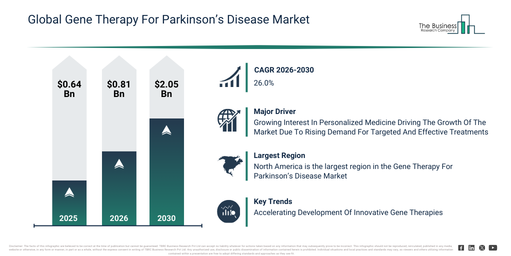
    The gene therapy for parkinson’s disease market size has experienced rapid expansion over recent years. This market is projected to expand from $0.64 billion in 2025 to reach $0.81 billion by 2026, demonstrating a compound annual growth rate (CAGR) of 26.3%. Historically, this growth has been driven by several factors, including developments in viral vector engineering, a deeper comprehension of Parkinson’s disease pathology, increased financial support for neuroscience research, the introduction of enhanced delivery technologies, and promising outcomes from initial clinical trials.

    The gene therapy for Parkinson’s disease market size is projected for substantial expansion in the coming years. It is set to reach $2.05 billion by 2030, demonstrating a compound annual growth rate (CAGR) of 26.0%. This anticipated growth stems from escalating investments in therapies for neurodegenerative conditions, increased adoption of personalized gene therapy methods, the expansion of clinical pipelines in their late stages, a rising need for disease-modifying treatments, and advancements in minimally invasive delivery technologies. Prominent trends throughout this period involve the accelerated development of viral vector-based therapies, a sharpened focus on strategies to restore dopamine, wider application of neurotrophic factor gene delivery, the broadening of precision intracerebral delivery techniques, and a greater emphasis on sustained therapeutic efficacy.

    Download the Free Sample Report to Explore Key Market Insights:

    https://www.thebusinessresearchcompany.com/sample.aspx?id=28231&type=smp

    What Major Drivers Are Influencing Demand In The Gene Therapy For Parkinson’s Disease Market?

    The increasing focus on personalized medicine is anticipated to drive the expansion of the gene therapy for Parkinson’s disease market in the future. Personalized medicine is defined as a medical strategy that customizes treatment and prevention plans based on an individual’s unique genetic profile, lifestyle choices, and environmental factors. The appeal of personalized medicine is increasing, driven by a rising need for focused treatments that enhance efficacy and reduce undesirable side effects. In the context of personalized medicine, gene therapy for Parkinson’s disease is utilized to provide customized genetic alterations aimed at restoring dopamine function and targeting specific disease mechanisms unique to each patient. For example, the Personalized Medicine Coalition, a US-based non-profit, stated in February 2024 that the US Food and Drug Administration (FDA) approved 16 novel personalized treatments for patients with rare diseases in 2023, which represents a significant rise from the 6 approvals recorded in 2022. Consequently, the expanding interest in personalized medicine is fueling the growth of the gene therapy for Parkinson’s disease market.

    Which Segments Are Included In The Analysis Of The Gene Therapy For Parkinson’s Disease Market?

    The gene therapy for parkinson’s disease market covered in this report is segmented –

    1) By Therapy Type: In Vivo Gene Therapy, Ex Vivo Gene Therapy

    2) By Vector Type: Viral Vectors, Non-Viral Vectors

    3) By Target Gene: Aromatic L-Amino Acid Decarboxylase (AADC), Glial Cell Line-Derived Neurotrophic Factor (GDNF), Neurturin, Other Target Genes

    4) By Delivery Method: Intracerebral, Intravenous, Other Delivery Methods

    5) By End-User: Hospitals, Specialty Clinics, Research Institutes, Other End-Users

    Subsegments:

    1) By In Vivo Gene Therapy: Viral Vectors, Non-Viral Vectors

    2) By Ex Vivo Gene Therapy: Autologous Cell-Based Gene Therapy, Allogeneic Cell-Based Gene Therapy

    Which Trends Are Impacting The Growth Of The Gene Therapy For Parkinson’s Disease Market?

    Leading companies in the gene therapy for Parkinson’s disease market are concentrating on creating advanced treatments like regenerative medicine advanced therapy. Their aim is to improve neuronal survival, bring back dopamine function, and offer enduring disease-modifying advantages for individuals with Parkinson’s disease. Regenerative medicine advanced therapy (RMAT) denotes a particular designation from the United States Food and Drug Administration (FDA). This designation is given to regenerative medicine items, including cell therapies, gene therapies, and tissue-engineered products, which are designed to address, alter, reverse, or cure critical or life-threatening conditions. For example, in February 2025, Asklepios BioPharmaceutical, Inc. (AskBio), a US-based gene therapy firm, launched AB-1005. This investigational AAV2-GDNF gene therapy obtained the FDA regenerative medicine advanced therapy (RMAT) designation. This designation, aimed at accelerating the development and assessment of promising treatments, was awarded following data submission by AskBio. This included clinical evidence from its Phase Ib open-label, uncontrolled trial, which showcased AB-1005’s capability to decelerate disease progression and enhance motor function in Parkinson’s patients.

    Which Key Industry Participants Are Active In The Gene Therapy For Parkinson’s Disease Market?

    Major companies operating in the gene therapy for parkinson’s disease market are Merck & Co. Inc., Bayer AG, Sanofi S.A., Eli Lilly and Company, Biogen Inc., PTC Therapeutics Inc., Zambon S.p.A., Oxford BioMedica plc, Voyager Therapeutics Inc., Insilico Medicine Inc., Spur Therapeutics Inc., Cerevance Inc., MeiraGTx Holdings plc, BlackfinBio Inc., Partner Therapeutics Inc., Kenai Therapeutics Inc., CureSen Therapeutics Inc., BioVie Inc., Clexio Biosciences Ltd., Tetraneuron S.L.

    Read the full gene therapy for parkinson’s disease market report here:

    https://www.thebusinessresearchcompany.com/report/gene-therapy-for-parkinsons-disease-global-market-report

    Which Region Shows The Strongest Potential For Future Growth In The Gene Therapy For Parkinson’s Disease Market?

    North America was the largest region in the gene therapy for parkinson’s disease market in 2025. Asia-Pacific is expected to be the fastest-growing region in the forecast period. The regions covered in the gene therapy for parkinson’s disease market report are Asia-Pacific, South East Asia, Western Europe, Eastern Europe, North America, South America, Middle East, Africa.

    Request A Tailored Gene Therapy For Parkinson’s Disease Market Research Report For Competitive Advantage:

    https://www.thebusinessresearchcompany.com/customise?id=28231&type=smp

    Browse Through More Reports Similar to the Global Gene Therapy For Parkinson’s Disease Market 2026, By The Business Research Company

    Genes Therapy Market Report 2026

    https://www.thebusinessresearchcompany.com/report/genes-therapy-global-market-report

    Anti Parkinson Drugs Market Report 2026

    https://www.thebusinessresearchcompany.com/report/anti-parkinson-drugs-global-market-report

    Nucleic Acid Based Gene Therapy Market Report 2026

    https://www.thebusinessresearchcompany.com/report/nucleic-acid-based-gene-therapy-global-market-report

    Get in touch with us:

    The Business Research Company: https://www.thebusinessresearchcompany.com/

    Americas +1 310-496-7795

    Asia +44 7882 955267 & +91 8897263534

    Europe +44 7882 955267

    Email us at info@tbrc.info

    Follow us on:

    LinkedIn: https://in.linkedin.com/company/the-business-research-company

    YouTube: https://www.youtube.com/channel/UC24_fI0rV8cR5DxlCpgmyFQ

    Global Market Model: https://www.thebusinessresearchcompany.com/global-market-model
  • Custom Antibody Market 2026 expected to grow to $0.86 billion by 2030 at a CAGR of 12.8%

    Custom Antibody Market 2026 expected to grow to $0.86 billion by 2030 at a CAGR of 12.8%

    The Business Research Company’s 2026 market reports include new capabilities such as market attractiveness scoring and analysis, total addressable market analysis, company scoring matrix, interactive excel data dashboard, improved supply chain analysis, upcoming startups in the market, and overview of key products, aimed at improving the depth, usability, and strategic value of the insights delivered.

    What Is The Estimated Market Size Of The Custom Antibody Market During 2026–2030?

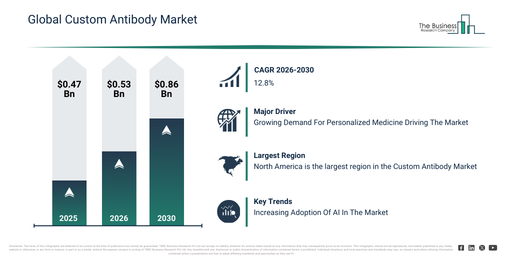
    The custom antibody market has experienced swift expansion over recent years. This market is projected to expand from $0.47 billion in 2025 to $0.53 billion in 2026, demonstrating a compound annual growth rate (CAGR) of 12.9%. This historical development can be linked to several factors, including the surge in biomedical research, the broadening of diagnostics testing, higher pharmaceutical R&D expenditures, innovations in antibody engineering, and an increase in academic research.

    The custom antibody market is projected for significant expansion over the upcoming years. It is anticipated to reach $0.86 billion by 2030, exhibiting a compound annual growth rate (CAGR) of 12.8%. This expansion during the forecast period stems from factors such as the advancement of personalized medicine, the broadening of biologics research, increasing cro utilization, escalating diagnostic requirements, and the evolution of precision oncology. Key trends anticipated over the forecast period encompass a growing need for tailored research antibodies, their expanded application in precision diagnostics, rising integration into drug discovery pipelines, the spread of recombinant antibody technologies, and a surge in outsourcing to cros.

    Download the Free Sample Report to Explore Key Market Insights:

    https://www.thebusinessresearchcompany.com/sample.aspx?id=21162&type=smp

    Which Major Factors Are Driving The Expansion Of The Custom Antibody Market?

    The custom antibody market is projected to grow significantly, fueled by the rising demand for personalized medicine. This medical approach customizes treatment and prevention strategies to align with an individual’s genetic makeup, lifestyle, and environmental factors. The increasing need for personalized medicine is driven by advancements in genomics, the wider availability of biomarker-based therapies, and a growing consumer preference for tailored treatment options that enhance efficacy and reduce adverse effects. Custom antibodies play a crucial role in personalized medicine by providing specific and customized immune reagents, which improve disease detection, therapeutic targeting, and biomarker identification for individualized treatment strategies. For example, in February 2024, the US-based non-profit Personalized Medicine Coalition reported that the Food and Drug Administration (FDA) approved 16 new personalized treatments for rare disease patients in 2023, a notable increase from 6 in 2022. Therefore, the expanding demand for personalized medicine is a primary factor driving the growth of the custom antibody market.

    How Are The Various Segments Of The Custom Antibody Market Categorized?

    The custom antibody market covered in this report is segmented –

    1) By Type: Monoclonal Antibodies, Polyclonal Antibodies, Recombinant Antibodies, Other Types

    2) By Service: Antibody Development, Antibody Production And Purification, Antibody Fragmentation And Labeling

    3) By Source: Mice, Rabbit, Other Sources

    4) By Application: Oncology, Infectious Diseases, Neurology, Stem Cells, Immunology, Cardiovascular Diseases, Other Applications

    5) By End-User: Pharmaceutical And Biotechnology Companies, Academic And Research Institutes, Contract Research Organization, Hospitals And Clinics

    Subsegments:

    1) By Monoclonal Antibodies: Murine Monoclonal Antibodies, Chimeric Monoclonal Antibodies, Humanized Monoclonal Antibodies, Fully Human Monoclonal Antibodies

    2) By Polyclonal Antibodies: Rabbit Polyclonal Antibodies, Goat Polyclonal Antibodies, Sheep Polyclonal Antibodies, Other Animal-Derived Polyclonal Antibodies

    3) By Recombinant Antibodies: Single-Chain Variable Fragment (scFv), Nanobodies, Bispecific Antibodies, Antibody Fragments

    4) By Other Types: Aptamers, Nanobodies (Camelid Antibodies), Hybridomas

    What Trends Are Affecting The Expansion Of The Custom Antibody Market?

    Key players in the custom antibody market are concentrating on integrating cutting-edge technologies like artificial intelligence to refine antibody discovery, heighten specificity, and expedite development processes. Artificial intelligence aids custom antibody development by improving antigen selection, predicting antibody-antigen binding, and streamlining candidate screening through machine learning, which contributes to quicker and more economical biopharmaceutical research. For instance, in October 2024, Archon Biosciences Inc., a biotechnology company based in the US, was launched with $20 million in funding to develop computationally designed antibody cages that allow for the customization of existing antibodies for therapeutic applications. Archon’s proprietary technology involves assembling antibodies into cage structures, which permits modifications to their properties without altering their fundamental structures. This innovation aims to boost antibody affinity for therapeutic targets while diminishing off-target interactions, thereby enhancing efficacy and safety.

    Which Major Firms Influence Developments In The Custom Antibody Market?

    Major companies operating in the custom antibody market are Merck & Co. Inc., AbbVie Inc., Thermo Fisher Scientific Inc., Agilent Technologies Inc., Lonza Group AG, Bio-Rad Laboratories Inc., Bio-Techne Corporation, GenScript Biotech Corporation, BioLegend Inc., Abcam plc, Cusabio Biotech Co. Ltd., OriGene Technologies Inc., Cell Signaling Technology Inc., Abgent Inc., ProSci Incorporated, Santa Cruz Biotechnology Inc., Rockland Immunochemicals Inc., Creative Biolabs Inc., Novus Biologicals LLC, Creative Diagnostics Inc., Biorbyt Ltd., BIOTEM SAS, Capra Biosciences Inc., Pacific Immunology Inc., ProteoGenix SAS

    Read the full custom antibody market report here:

    https://www.thebusinessresearchcompany.com/report/custom-antibody-global-market-report

    Which Region Currently Holds The Largest Share Of The Custom Antibody Market?

    North America was the largest region in the custom antibody market in 2025. Asia-Pacific is expected to be the fastest-growing region in the forecast period. The regions covered in the custom antibody market report are Asia-Pacific, South East Asia, Western Europe, Eastern Europe, North America, South America, Middle East, Africa.

    Request A Tailored Custom Antibody Market Research Report For Competitive Advantage:

    https://www.thebusinessresearchcompany.com/customise?id=21162&type=smp

    Browse Through More Reports Similar to the Global Custom Antibody Market 2026, By The Business Research Company

    Antibody Discovery Market Report 2026

    https://www.thebusinessresearchcompany.com/report/antibody-discovery-global-market-report

    Diagnostic Specialty Antibodies Market Report 2026

    https://www.thebusinessresearchcompany.com/report/diagnostic-specialty-antibodies-global-market-report

    Next Generation Antibody Therapeutics Market Report 2026

    https://www.thebusinessresearchcompany.com/report/next-generation-antibody-therapeutics-global-market-report

    Get in touch with us:

    The Business Research Company: https://www.thebusinessresearchcompany.com/

    Americas +1 310-496-7795

    Asia +44 7882 955267 & +91 8897263534

    Europe +44 7882 955267

    Email us at info@tbrc.info

    Follow us on:

    LinkedIn: https://in.linkedin.com/company/the-business-research-company

    YouTube: https://www.youtube.com/channel/UC24_fI0rV8cR5DxlCpgmyFQ

    Global Market Model: https://www.thebusinessresearchcompany.com/global-market-model

  • Global Gene Therapy For Inherited Genetic Disorders Market 2026 reaching $9.69 billion by 2030

    Global Gene Therapy For Inherited Genetic Disorders Market 2026 reaching $9.69 billion by 2030

    The Business Research Company’s 2026 market reports include new capabilities such as market attractiveness scoring and analysis, total addressable market analysis, company scoring matrix, interactive excel data dashboard, improved supply chain analysis, upcoming startups in the market, and overview of key products, aimed at improving the depth, usability, and strategic value of the insights delivered.

    What Market Valuation Is Forecasted For The Gene Therapy For Inherited Genetic Disorders Market By 2030 Starting From Its 2026 Size?

    The gene therapy for inherited genetic disorders market size has seen significant expansion in recent years. This market is projected to expand from $4.05 billion in 2025 to $4.84 billion in 2026, exhibiting a compound annual growth rate (CAGR) of 19.3%. The growth observed in the historic period stems from several factors, including the limited availability of advanced gene therapy techniques, reliance on conventional treatments for genetic disorders, an increasing prevalence of inherited genetic diseases, early clinical research on viral vectors, and rising awareness of rare disease management.

    The gene therapy for inherited genetic disorders market size is projected to experience substantial expansion over the coming years, reaching $9.69 billion by 2030, driven by a compound annual growth rate (CAGR) of 19.0%. This anticipated growth stems from several factors, including the advancement of novel viral vectors and gene editing technologies, the broader application of RNA-based therapies, the increased uptake of ex vivo stem cell treatments, growing investments in personalized gene therapies, and the enhanced capacity of hospitals and specialty clinics for administering gene therapy. Key trends anticipated during this period encompass the wider deployment of viral vector-based therapies for rare genetic conditions, an increase in ex vivo gene therapy applications, the growing acceptance of RNA-based therapeutics, a heightened emphasis on addressing neurological and ophthalmic disorders, and the incorporation of personalized medicine into gene therapy practices.

    Download the Free Sample Report to Explore Key Market Insights:

    https://www.thebusinessresearchcompany.com/sample.aspx?id=27293&type=smp

    Which Market Drivers Are Supporting The Expansion Of The Gene Therapy For Inherited Genetic Disorders Market?

    The increasing need for personalized medicine is anticipated to drive expansion in the gene therapy for inherited genetic disorders market moving ahead. Personalized medicine involves customizing medical interventions based on a patient’s unique genetic makeup and individual traits to achieve optimal healthcare outcomes. The adoption of personalized medicine is growing, fueled by progress in genetic technologies that facilitate easier and more cost-effective customization of treatments for each person’s distinct genetic composition. This approach enhances gene therapy by adapting treatments to an individual’s specific genetic profile, thereby guaranteeing accurate gene targeting and delivery, boosting efficacy, and minimizing adverse reactions. As an illustration, in February 2024, the Personalized Medicine Coalition, a US-based non-profit organization, reported that in 2023, the United States Food and Drug Administration (FDA) cleared 16 novel personalized treatments for patients with rare diseases, a significant rise from 6 in 2022. Among the personalized treatments newly sanctioned in 2023 were also seven medications for cancer and three for various other illnesses and conditions. Consequently, the escalating demand for personalized medicine is propelling the expansion of the gene therapy for inherited genetic disorders market.

    Which Segment Categories Define The Gene Therapy For Inherited Genetic Disorders Market?

    The gene therapy for inherited genetic disorders market covered in this report is segmented –

    1) By Type: Viral Vector-Based Therapies, Gene Editing Techniques, Ribonucleic Acid-Based Therapies, Ex Vivo Gene Therapy

    2) By Application: Inherited Metabolic Disorders, Neurological Disorders, Cardiovascular Disorders, Musculoskeletal Disorders, Ophthalmic Disorders

    3) By End-User: Hospitals, Specialty Clinics, Research Institutes, Other End-Users

    Subsegments:

    1) By Viral Vector-Based Therapies: Adenovirus Vectors, Adeno-Associated Virus (AAV) Vectors, Lentivirus Vectors

    2) By Gene Editing Techniques: Zinc Finger Nucleases (ZFNs), Transcription Activator-Like Effector Nucleases (TALENs), Meganucleases

    3) By Ribonucleic Acid-Based Therapies: Small Interfering Ribonucleic Acid, Antisense Oligonucleotides (ASOs), Messenger Ribonucleic Acid (mRNA) Therapies

    4) By Ex Vivo Gene Therapy: Hematopoietic Stem Cell Gene Therapy, Mesenchymal Stem Cell Gene Therapy, Induced Pluripotent Stem Cell (iPSC) Therapy

    What Major Market Trends Are Driving Changes In The Gene Therapy For Inherited Genetic Disorders Market?

    Companies active in the gene therapy for inherited genetic disorders market are concentrating on developing inventive solutions, such as ex-vivo CRISPR/Cas9-based gene-edited cell therapies, to address the increasing demand for single-application, potentially curative treatments. These therapies aim to lessen lifelong reliance on transfusions, frequent hospitalizations, and substantial chronic-care expenses linked to inherited blood and metabolic disorders. Ex-vivo CRISPR/Cas9 gene-edited cell therapy involves extracting a patient’s hematopoietic stem cells, precisely editing disease-causing genes (or regulatory elements that boost protective fetal hemoglobin) using CRISPR/Cas9, and then reinfusing these modified cells so they engraft and deliver enduring therapeutic benefits. For example, in December 2023, Vertex Pharmaceuticals, a US-based biopharmaceutical company, obtained U.S. Food and Drug Administration (FDA) approval and achieved commercial availability for CASGEVY (exagamglogene autotemcel). This is a CRISPR/Cas9-based, ex-vivo gene-edited cell therapy designed for sickle cell disease, an inherited genetic disorder. CASGEVY is created from a patient’s own hematopoietic stem cells that are gene edited to increase fetal hemoglobin. The product’s makeup centers on autologous stem cells modified with CRISPR/Cas9; its function is to elevate lasting fetal hemoglobin levels to prevent red-blood-cell sickling; unique attributes include precise genome editing (CRISPR/Cas9) performed ex vivo and a one-time administration with durable effect; its main application is treating severe sickle cell disease (with related indications currently under regulatory review), and the principal benefits observed in trials are considerable reductions in vaso-occlusive crises and transfusion dependence when compared to the prior standard-of-care.

    Who Are The Top Companies Competing In The Gene Therapy For Inherited Genetic Disorders Market?

    Major companies operating in the gene therapy for inherited genetic disorders market are Sanofi S.A., Novartis AG, Astellas Pharma Inc., Vertex Pharmaceuticals Incorporated, Genentech, Biomarin Pharmaceutical Inc, Sarepta Therapeutics Inc., Krystal Biotech Inc., Rocket Pharmaceuticals Inc., Sangamo Therapeutics Inc., REGENXBIO Inc., Passage Bio Inc., Voyager Therapeutics Inc., Generation Bio Co., Avrobio Inc, Editas Medicine Inc., MeiraGTx Holdings Plc, uniQure N.V., Intellia Therapeutics Inc., Bluebird Bio Inc, 4D Molecular Therapeutics Inc., CRISPR Therapeutics AG

    Read the full gene therapy for inherited genetic disorders market report here:

    https://www.thebusinessresearchcompany.com/report/gene-therapy-for-inherited-genetic-disorders-global-market-report

    How Is The Gene Therapy For Inherited Genetic Disorders Market Distributed Across Key Geographic Regions?

    North America was the largest region in the gene therapy for inherited genetic disorders market in 2025. Asia-Pacific is expected to be the fastest-growing region in the forecast period. The regions covered in the gene therapy for inherited genetic disorders market report are Asia-Pacific, South East Asia, Western Europe, Eastern Europe, North America, South America, Middle East, Africa.

    Request A Tailored Gene Therapy For Inherited Genetic Disorders Market Research Report For Competitive Advantage:

    https://www.thebusinessresearchcompany.com/customise?id=27293&type=smp

    Browse Through More Reports Similar to the Global Gene Therapy For Inherited Genetic Disorders Market 2026, By The Business Research Company

    Asphalt Mixing Plants Market Report 2026

    https://www.thebusinessresearchcompany.com/report/asphalt-mixing-plants-global-market-report

    Asphalt Pavers Market Report 2026

    https://www.thebusinessresearchcompany.com/report/asphalt-pavers-global-market-report

    Asphalt Additives Market Report 2026

    https://www.thebusinessresearchcompany.com/report/asphalt-additives-global-market-report

    Get in touch with us:

    The Business Research Company: https://www.thebusinessresearchcompany.com/

    Americas +1 310-496-7795

    Asia +44 7882 955267 & +91 8897263534

    Europe +44 7882 955267

    Email us at info@tbrc.info

    Follow us on:

    LinkedIn: https://in.linkedin.com/company/the-business-research-company

    YouTube: https://www.youtube.com/channel/UC24_fI0rV8cR5DxlCpgmyFQ

    Global Market Model: https://www.thebusinessresearchcompany.com/global-market-model

  • CTLA4 Inhibitors Market 2026 showing high-growth potential, reaching $11.84 billion by 2030 at 16% CAGR

    CTLA4 Inhibitors Market 2026 showing high-growth potential, reaching $11.84 billion by 2030 at 16% CAGR

    The Business Research Company’s 2026 market reports include new capabilities such as market attractiveness scoring and analysis, total addressable market analysis, company scoring matrix, interactive excel data dashboard, improved supply chain analysis, upcoming startups in the market, and overview of key products, aimed at improving the depth, usability, and strategic value of the insights delivered.

    What Market Size Expansion Is Predicted For The CTLA4 Inhibitors Market Between 2026 And 2030?

    The ctla4 inhibitors market has experienced substantial growth in recent years. It is projected to expand from $5.63 billion in 2025 to $6.54 billion in 2026, demonstrating a compound annual growth rate (CAGR) of 16.2%. Historically, this growth can be attributed to advancements in cancer immunology research, the initial approval of CTLA4 inhibitors, rising cancer incidence rates, strong investment in oncology research and development, and increased regulatory support for biologics.

    The ctla4 inhibitors market size is projected to experience substantial growth in the coming years, forecast to reach $11.84 billion by 2030 with a compound annual growth rate (CAGR) of 16.0%. This expansion during the forecast period can be attributed to several factors, including the increasing adoption of precision oncology, the broadening of combination immunotherapy regimens, a growing demand for long-lasting cancer responses, heightened activity in the oncology drug pipeline, and the worldwide growth of cancer treatment infrastructure. Key trends anticipated within this period involve the increasing application of immunotherapy in oncology, the wider embrace of combination cancer therapies, an expansion of clinical trials focusing on solid tumors, a heightened emphasis on immune checkpoint modulation, and the ongoing development of next-generation CTLA4 inhibitors.

    Download the Free Sample Report to Explore Key Market Insights:

    https://www.thebusinessresearchcompany.com/sample.aspx?id=23358&type=smp

    What Key Drivers Are Influencing The Growth Of The CTLA4 Inhibitors Market?

    The growing occurrence of cancer is anticipated to boost the expansion of the CTLA4 inhibitors market. Cancer is a complex set of illnesses defined by the uncontrolled proliferation and spread of abnormal cells, which can infiltrate surrounding tissues and disrupt normal bodily functions. The increasing incidence of cancer is largely driven by prolonged exposure to carcinogens, a significant factor that directly triggers genetic mutations leading to malignant cell transformation. Cytotoxic T-Lymphocyte-Associated Protein 4 (CTLA-4) inhibitors address this escalating cancer burden by enhancing the immune system’s ability to recognize and eliminate cancer cells, thereby improving treatment efficacy and providing new therapeutic options for patients with advanced or treatment-resistant malignancies. For example, in February 2024, the World Health Organization, an international public health body based in Switzerland, reported nearly 20 million new cancer cases in 2022, resulting in approximately 10 million deaths from the disease. Projections suggest that the annual incidence of cancer could increase to 35 million by 2050, marking a 77% rise from 2022 figures. Hence, the increasing prevalence of cancer is propelling the growth of the CTLA4 inhibitors market.

    Which Market Segments Are Examined In The CTLA4 Inhibitors Market Study?

    The ctla4 inhibitors market covered in this report is segmented –

    1) By Type: Monotherapy, Combination Therapy

    2) By Mechanism Of Action: Targeted Inhibition, Immune Checkpoint Blockade, Co-Stimulatory Boosting

    3) By Route Of Administration: Intravenous (IV), Subcutaneous

    4) By Indication: Melanoma, Non-Small Cell Lung Cancer (NSCLC), Colorectal Cancer, Other Malignancies

    5) By End User: Hospitals, Specialty Clinics, Research Institutions

    Subsegments:

    1) By Monotherapy: First-Line Treatment, Second-Line Treatment, Salvage Therapy

    2) By Combination Therapy Subsegments: CTLA-4 Inhibitors With PD-1/PD-L1 Inhibitors, CTLA-4 Inhibitors With Chemotherapy, CTLA-4 Inhibitors With Targeted Therapy, CTLA-4 Inhibitors With Radiotherapy, CTLA-4 Inhibitors With Other Immunotherapies

    Which Trends Are Influencing The CTLA4 Inhibitors Market?

    Companies operating in the CTLA-4 inhibitors market are advancing immunotherapies, such as combination therapies, to strengthen the immune response against cancer cells and enhance treatment outcomes for patients with advanced or resistant cancers. Combination therapy refers to the simultaneous application of two or more treatments for a disease or condition, which intensifies the effect of CTLA-4 inhibitors by boosting the immune system to attack cancer cells more effectively than when administered alone. For instance, in February 2025, Innovent Biologics Inc., a biotechnology company from China, announced the acceptance of the New Drug Application (NDA) for ipilimumab injection by the Center for Drug Evaluation (CDE) of China’s National Medical Products Administration (NMPA), which also granted it Priority Review designation for combination with sintilimab as a neoadjuvant treatment for resectable microsatellite instability-high (MSI-H) or mismatch repair deficient (dMMR) colon cancer. This product is China’s first domestically developed CTLA-4 inhibitor, signifying the growth of local innovations in cancer treatment.

    Who Are The Primary Competitors In The CTLA4 Inhibitors Market?

    Major companies operating in the ctla4 inhibitors market are Bristol-Myers Squibb Company, Agenus Inc., Akeso Inc., Harbour BioMed, MacroGenics Inc., NextCure Inc., Xilio Therapeutics Inc., Shattuck Labs Inc., CytomX Therapeutics Inc., Regeneron Pharmaceuticals Inc., AstraZeneca plc, Merck & Co. Inc., BeiGene Ltd., Innovent Biologics Inc., Incyte Corporation, Pfizer Inc., Amgen Inc., Eli Lilly and Company, Novartis AG, BioNTech SE

    Read the full ctla4 inhibitors market report here:

    https://www.thebusinessresearchcompany.com/report/ctla4-inhibitors-global-market-report

    Which Region Is Expected To Register The Fastest Growth In The CTLA4 Inhibitors Market?

    North America was the largest region in the CTLA4 inhibitors market in 2025. Asia-Pacific is expected to be the fastest-growing region in the forecast period. The regions covered in the ctla4 inhibitors market report are Asia-Pacific, South East Asia, Western Europe, Eastern Europe, North America, South America, Middle East, Africa.

    Request A Tailored CTLA4 Inhibitors Market Research Report For Competitive Advantage:

    https://www.thebusinessresearchcompany.com/customise?id=23358&type=smp

    Browse Through More Reports Similar to the Global CTLA4 Inhibitors Market 2026, By The Business Research Company

    Mtor Inhibitors Market Report 2026

    https://www.thebusinessresearchcompany.com/report/mtor-inhibitors-global-market-report

    Ace Inhibitors Market Report 2026

    https://www.thebusinessresearchcompany.com/report/ace-inhibitors-global-market-report

    Dipeptide Peptidase 4 Inhibitors Market Report 2026

    https://www.thebusinessresearchcompany.com/report/dipeptide-peptidase-4-inhibitors-global-market-report

    Get in touch with us:

    The Business Research Company: https://www.thebusinessresearchcompany.com/

    Americas +1 310-496-7795

    Asia +44 7882 955267 & +91 8897263534

    Europe +44 7882 955267

    Email us at info@tbrc.info

    Follow us on:

    LinkedIn: https://in.linkedin.com/company/the-business-research-company

    YouTube: https://www.youtube.com/channel/UC24_fI0rV8cR5DxlCpgmyFQ

    Global Market Model: https://www.thebusinessresearchcompany.com/global-market-model