Category: Pharmaceuticals

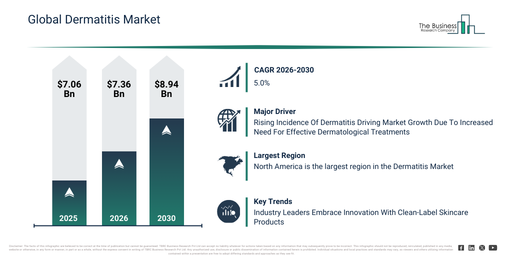
  • Dermatitis Market 2026 projected to reach $8.94 billion by 2030 at 5% CAGR

    Dermatitis Market 2026 projected to reach $8.94 billion by 2030 at 5% CAGR

    The Business Research Company’s 2026 market reports include new capabilities such as market attractiveness scoring and analysis, total addressable market analysis, company scoring matrix, interactive excel data dashboard, improved supply chain analysis, upcoming startups in the market, and overview of key products, aimed at improving the depth, usability, and strategic value of the insights delivered.

    How Is The Market Size Of The Dermatitis Market Expected To Change Between 2026 And 2030?

    The dermatitis market has shown consistent expansion in recent years. It is anticipated to increase from $7.06 billion in 2025 to $7.36 billion in 2026, progressing at a compound annual growth rate (CAGR) of 4.3%. This historical growth can be largely attributed to the significant prevalence of skin disorders, the widespread availability of corticosteroids, an uptick in dermatologist visits, various environmental triggers, and the use of antihistamines.

    The dermatitis market is projected to experience consistent expansion in the upcoming period. This market is forecast to reach a valuation of $8.94 billion by 2030, exhibiting a compound annual growth rate (CAGR) of 5.0%. This anticipated market expansion is driven by advancements in biologics, an increase in skin problems linked to pollution, the proliferation of dermatology clinics, enhanced awareness regarding self-care, and the demographic shift towards an aging population. Key developments anticipated during this period encompass the wider adoption of biologic therapies, a heightened demand for topical solutions, the broader availability of immunomodulatory drugs, greater understanding of persistent skin ailments, and the expansion of over-the-counter dermatology products.

    Download the Free Sample Report to Explore Key Market Insights:

    https://www.thebusinessresearchcompany.com/sample.aspx?id=2413&type=smp

    Which Major Factors Are Driving The Expansion Of The Dermatitis Market?

    The rising occurrence of dermatitis is anticipated to fuel the expansion of the dermatitis market in the coming years. Dermatitis encompasses a range of inflammatory skin conditions, marked by symptoms such as redness, itching, and irritation, frequently provoked by allergens, environmental elements, immune responses, or genetic susceptibility. The uptick in dermatitis incidents is primarily attributed to heightened exposure to environmental allergens and irritants inherent in contemporary lifestyles, which provoke excessive immune system reactions, leading to skin inflammation and impaired barrier function. This escalation in dermatitis cases bolsters the dermatitis market by boosting the need for efficacious treatment solutions, including topical steroids, calcineurin inhibitors, antihistamines, moisturizers, and advanced biologic therapies designed to lessen inflammation and enhance patient results. For example, in March 2025, data from the American Pharmacists Association, a US-based professional organization for pharmacists, indicated that an estimated 33 million Americans were affected by at least one food allergy, impacting approximately 8 percent of children and 11 percent of adults. Consequently, the growing incidence of dermatitis is propelling the growth of the dermatitis market.

    How Is The Dermatitis Market Structured Across Different Segments?

    The dermatitis market covered in this report is segmented –

    1) By Drug Class: Corticosteroids, Emollients Or Moisturizers, Antihistamines, Calcineurin Inhibitors, Antibiotics, Immunomodulators, Interleukin Inhibitors

    2) By Distribution Channel: Hospital, Retail Pharmacies, Drug Stores, Online Or Mail Pharmacies

    3) By Application: Atopic Dermatitis, Contact Dermatitis, Seborrheic Dermatitis

    Subsegments:

    1) By Corticosteroids: Topical Corticosteroids, Oral Corticosteroids, Injectable Corticosteroids

    2) By Emollients Or Moisturizers: Creams, Ointments, Lotions, Gels, Other Emollients Or Moisturizers

    3) By Antihistamines: Oral Antihistamines, Topical Antihistamines, Injectable Antihistamines

    4) By Calcineurin Inhibitors: Topical Calcineurin Inhibitors (Tacrolimus, Pimecrolimus), Oral Calcineurin Inhibitors

    5) By Antibiotics: Topical Antibiotics, Oral Antibiotics, Systemic Antibiotics

    6) By Immunomodulators: Topical Immunomodulators, Oral Immunomodulators

    7) By Interleukin Inhibitors: IL-4 Inhibitors, IL-13 Inhibitors, IL-31 Inhibitors, Other Interleukin Inhibitors

    Which Trends Are Shaping The Future Of The Dermatitis Market?

    Major companies operating in the dermatitis market are innovating clean-label, steroid-free products such as ARCTIVA to gain a competitive advantage and enhance their product offerings. ARCTIVA is a line of steroid-free skincare products designed to treat skin conditions such as eczema and psoriasis, featuring innovative Hydrosurf Glycolipid Technology. For instance, in April 2023, Arctiva Wellness, LLC, a US-based company specializing in clean-label skincare products, introduced ARCTIVA, an innovative range of non-prescription, steroid-free skincare solutions designed to effectively address skin conditions such as eczema and psoriasis. This transformative skincare line integrates cutting-edge scientific research with natural, cruelty-free components, complemented by clinically validated, FDA-approved active ingredients to deliver proven outcomes. Notably, it is the exclusive product line on the market to feature the groundbreaking Hydrosurf Glycolipid Technology, a unique blend of fermented components with significant skincare benefits, initially discovered in Antarctica.

    Which Major Players Dominate The Dermatitis Market?

    Major companies operating in the dermatitis market are LEO Pharma AS, Regeneron Pharmaceuticals Inc., Sanofi S.A., Encore Dermatology Inc., Meda Pharmaceuticals Inc., Allergan Plc, Anacor Pharmaceutical Inc., Astellas Pharma Inc., Mylan N.V., Valeant Pharmaceutical Inc., Galderma SA, Connetics Corporation, Fujisawa Pharmaceutical Company Ltd., AbbVie Inc., Valeant Pharmaceuticals International Inc., GlaxoSmithKline plc, Medimmune Inc., Bausch Health Co. Inc., Nestlé Skin Health India Pvt. Ltd., Aqua Pharmaceuticals Pvt. Ltd., Biofrontera AG, Zydus Lifesciences Limited

    Read the full dermatitis market report here:

    https://www.thebusinessresearchcompany.com/report/dermatitis-drugs-global-market-report

    Which Region Currently Holds The Largest Share Of The Dermatitis Market?

    North America was the largest region in the dermatitis market in 2025. Middle East is expected to be the fastest-growing region in the dermatitis market report during the forecast period. The regions covered in the dermatitis market report are Asia-Pacific, South East Asia, Western Europe, Eastern Europe, North America, South America, Middle East, Africa.

    Request A Tailored Dermatitis Market Research Report For Competitive Advantage:

    https://www.thebusinessresearchcompany.com/customise?id=2413&type=smp

    Browse Through More Reports Similar to the Global Dermatitis Market 2026, By The Business Research Company

    Dermatitis Drugs Market Report 2026

    https://www.thebusinessresearchcompany.com/report/dermatitis-drugs-global-market-report

    Atopic Dermatitis Market Report 2026

    https://www.thebusinessresearchcompany.com/report/atopic-dermatitis-global-market-report

    Dermatology Market Report 2026

    https://www.thebusinessresearchcompany.com/report/dermatology-global-market-report

    Get in touch with us:

    The Business Research Company: https://www.thebusinessresearchcompany.com/

    Americas +1 310-496-7795

    Asia +44 7882 955267 & +91 8897263534

    Europe +44 7882 955267

    Email us at info@tbrc.info

    Follow us on:

    LinkedIn: https://in.linkedin.com/company/the-business-research-company

    YouTube: https://www.youtube.com/channel/UC24_fI0rV8cR5DxlCpgmyFQ

    Global Market Model: https://www.thebusinessresearchcompany.com/global-market-model
  • Formulation innovation accelerating expansion in the Fast Melt Tablets Market 2026

    Formulation innovation accelerating expansion in the Fast Melt Tablets Market 2026

    The Business Research Company’s 2026 market reports include new capabilities such as market attractiveness scoring and analysis, total addressable market analysis, company scoring matrix, interactive excel data dashboard, improved supply chain analysis, upcoming startups in the market, and overview of key products, aimed at improving the depth, usability, and strategic value of the insights delivered.

    How Large Is The Fast Melt Tablets Market Projected To Become By 2030 Based On Its 2026 Valuation?

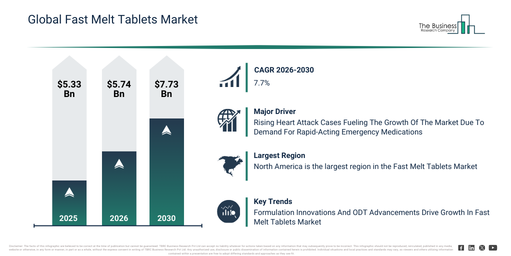
    The fast melt tablets market size has experienced robust growth in recent years. It is anticipated to expand from $5.33 billion in 2025 to $5.74 billion in 2026, at a compound annual growth rate (CAGR) of 7.8%. Historically, this growth can be attributed to several factors including difficulty swallowing conventional tablets, the increasing size of pediatric and geriatric populations, early adoption in allergy and CNS drugs, a clear demand for rapid onset formulations, and the expansion of OTC fast-dissolving medicines.

    The fast melt tablets market is projected to experience substantial expansion over the upcoming years. This market is anticipated to reach a size of $7.73 billion by 2030, exhibiting a compound annual growth rate (CAGR) of 7.7%. Factors contributing to this growth during the forecast period include a heightened emphasis on patient adherence, a rise in neurological and psychiatric conditions, the need for user-friendly drug delivery methods, increased use of medication in homecare settings, and advancements in oral thin-film technologies. Key trends expected throughout this period encompass an escalating demand for easily administered oral dosage forms, wider application in medications for children and the elderly, an increase in CNS and pain management uses, a growing inclination towards drug administration without water, and broader incorporation for travel and emergency scenarios.

    Download the Free Sample Report to Explore Key Market Insights:

    https://www.thebusinessresearchcompany.com/sample.aspx?id=23398&type=smp

    What Major Growth Drivers Are Shaping The Outlook Of The Fast Melt Tablets Market?

    The increasing occurrence of heart attacks is projected to fuel the expansion of the fast melt tablets market. A heart attack is an emergency condition where blood flow to the heart muscle is obstructed, typically by a blood clot or plaque accumulation in coronary arteries. This incidence is on the rise due to higher processed food consumption, which contributes to elevated cholesterol and arterial plaque. Fast melt tablets facilitate swift drug absorption, allowing for prompt delivery of essential medications like aspirin or nitroglycerin to mitigate damage during a heart attack, thereby enhancing patient results by restoring blood flow and minimizing severe complication risks. For example, in September 2025, the British Heart Foundation, a UK-based cardiovascular research charity, predicted that an additional one million people in the UK could be living with cardiovascular disease by 2030, increasing to two million more than current figures by 2040, marking an unprecedented level. Consequently, the growing frequency of heart attacks is propelling the fast melt tablets market’s growth.

    What Segment Groups Are Identified Within The Fast Melt Tablets Market?

    The fast melt tablets market covered in this report is segmented –

    1) By Type: Anti Psychotics, Anti Epileptics, Central Nervous System (CNS) Stimulants, Anxiolytics, Anti Parkinsonian Drugs, Anti Hypertensive, Non-Steroidal Anti-Inflammatory Drugs (NSAIDS), Anti Allergy Drugs, Proton Pump Inhibitors, Other Types

    2) By Indication: Pain Management, Allergy And Respiratory Disorders, Neurological Disorders, Gastrointestinal Disorders, Cardiovascular Disorders, Other Indications

    3) By Dosage Form: Oral, Sublingual, Buccal, Chewable

    4) By Age Group: Adult, Pediatrics, Geriatrics

    5) By Distribution Channel: Hospital Pharmacies, Retail Pharmacies, Drug Stores, Online Pharmacies

    Subsegments:

    1) By Anti Psychotics: Atypical Antipsychotics, Typical Antipsychotics

    2) By Anti Epileptics: Sodium Channel Blockers, Gamma-Aminobutyric Acid (GABA) Analogs

    3) By Central Nervous System (CNS) Stimulants: Amphetamines, Methylphenidate, Modafinil

    4) By Anxiolytics: Benzodiazepines, Azapirones, Antihistamines

    5) By Anti Parkinsonian Drugs: Dopamine Agonists, Monoamine Oxidase-B (MAO-B) Inhibitors, Anticholinergics

    6) By Anti Hypertensive: Beta Blockers, Calcium Channel Blockers

    7) By Non-Steroidal Anti-Inflammatory Drugs (NSAIDS): Cyclooxygenase-1 (COX-1) Inhibitors

    8) By Anti Allergy Drugs: Antihistamines, Leukotriene Receptor Antagonists

    9) By Proton Pump Inhibitors: Omeprazole, Esomeprazole, Lansoprazole, Pantoprazole

    10) By Other Types: Antiemetics, Antidepressants, Analgesics

    What Trends Are Advancing Progress In The Fast Melt Tablets Market?

    Major companies operating in the fast melt tablets market are concentrating on innovative formulations, such as orally disintegrating tablet (ODT) technologies, which facilitate rapid dissolution without water to boost medication adherence, convenience, and accessibility for patients dealing with chronic neurological conditions. Orally Disintegrating Tablet (ODT) Technology enables the delivery of active ingredients via a fast-melt format that dissolves on the tongue within seconds, offering ease of administration for patients who find swallowing traditional tablets difficult or who need discreet, portable dosing solutions. For example, in February 2023, Cycle Pharmaceuticals Ltd., a U.K.-based rare disease and specialty pharmaceuticals company, launched TASCENSO ODT (fingolimod), which is the first FDA-approved orally disintegrating tablet for treating relapsing forms of multiple sclerosis (MS) in patients aged 10 years and older. Developed using Catalent’s ZYDIS fast-dissolve platform, this bioequivalent non-generic ODT ensures continuity of care for U.S. patients losing access to Gilenya support services and is further supported by Cycle’s dedicated patient platform, Cycle Vita, which offers co-pay assistance, bridge programs, and in-home baseline assessments to maintain uninterrupted fingolimod therapy.

    Which Companies Hold Significant Positions In The Fast Melt Tablets Market?

    Major companies operating in the fast melt tablets market are Pfizer Inc., Johnson & Johnson, Teva Pharmaceutical Industries Ltd., Sun Pharmaceutical Industries Ltd., Aurobindo Pharma Limited, Glenmark Pharmaceuticals Ltd., Torrent Pharmaceuticals Ltd., Unichem Laboratories Ltd., Lannett Company Inc., Perrigo Company plc, Catalent Inc., SPI Pharma Inc., Fuji Chemical Industries Co. Ltd., Melt Pharmaceuticals Inc., Akina Inc., Church & Dwight Co. Inc., Windmill Health Products LLC, The Procter & Gamble Company, Hikma Pharmaceuticals plc, Dr. Reddy’s Laboratories Ltd.

    Read the full fast melt tablets market report here:

    https://www.thebusinessresearchcompany.com/report/fast-melt-tablets-global-market-report

    Which Regions Are Projected To Dominate The Fast Melt Tablets Market In The Coming Years?

    North America was the largest region in the fast melt tablets market in 2025. Asia-Pacific is expected to be the fastest-growing region in the forecast period. The regions covered in the fast melt tablets market report are Asia-Pacific, South East Asia, Western Europe, Eastern Europe, North America, South America, Middle East, Africa.

    Request A Tailored Fast Melt Tablets Market Research Report For Competitive Advantage:

    https://www.thebusinessresearchcompany.com/customise?id=23398&type=smp

    Browse Through More Reports Similar to the Global Fast Melt Tablets Market 2026, By The Business Research Company

    Tablets Market Report 2026

    https://www.thebusinessresearchcompany.com/report/tablets-global-market-report

    Effervescent Tablet Market Report 2026

    https://www.thebusinessresearchcompany.com/report/effervescent-tablet-global-market-report

    Hot Melt Based Adhesives Market Report 2026

    https://www.thebusinessresearchcompany.com/report/hot-melt-based-adhesives-global-market-report

    Get in touch with us:

    The Business Research Company: https://www.thebusinessresearchcompany.com/

    Americas +1 310-496-7795

    Asia +44 7882 955267 & +91 8897263534

    Europe +44 7882 955267

    Email us at info@tbrc.info

    Follow us on:

    LinkedIn: https://in.linkedin.com/company/the-business-research-company

    YouTube: https://www.youtube.com/channel/UC24_fI0rV8cR5DxlCpgmyFQ

    Global Market Model: https://www.thebusinessresearchcompany.com/global-market-model
  • Dermal Regeneration Market 2026–2035 expanding across aesthetic and medical applications

    Dermal Regeneration Market 2026–2035 expanding across aesthetic and medical applications

    The Business Research Company’s 2026 market reports include new capabilities such as market attractiveness scoring and analysis, total addressable market analysis, company scoring matrix, interactive excel data dashboard, improved supply chain analysis, upcoming startups in the market, and overview of key products, aimed at improving the depth, usability, and strategic value of the insights delivered.

    What Is The Market Size Of The Dermal Regeneration Market In 2026 And What Value Is Projected For 2030?

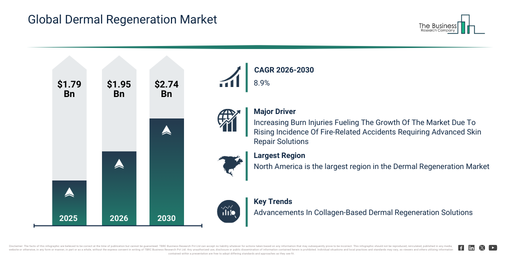
    The dermal regeneration market size has experienced robust growth in recent years. It is projected to expand from $1.79 billion in 2025 to $1.95 billion in 2026, achieving a compound annual growth rate (CAGR) of 8.9%. The market’s past expansion can be ascribed to several factors, including an escalating incidence of chronic wounds, a rise in burn injury cases, the increasing uptake of tissue engineering, the expansion of hospital wound care units, and advancements in biomaterial technologies.

    The dermal regeneration market is projected to experience robust expansion over the upcoming years, with its size anticipated to reach $2.74 billion by 2030, exhibiting a compound annual growth rate (CAGR) of 8.9%. This growth throughout the forecast period can be primarily attributed to factors such as the increasing demand for minimally invasive skin repair solutions, the broadening scope of aesthetic and reconstructive surgery, a rising aging population, augmented investment in regenerative medicine, and advancements in cell-based therapies. Furthermore, significant trends expected during this period include the growing adoption of bioengineered skin substitutes, expanded utilization of collagen and biomaterial scaffolds, a heightened demand for advanced wound healing therapies, the wider application of regenerative treatments in burn care, and increased deployment of dermal regeneration templates.

    Download the Free Sample Report to Explore Key Market Insights:

    https://www.thebusinessresearchcompany.com/sample.aspx?id=25746&type=smp

    What Key Drivers Are Influencing The Growth Of The Dermal Regeneration Market?

    A rise in burn injuries is anticipated to drive the expansion of the dermal regeneration market in the future. Burn injuries involve harm to the skin or its deeper tissues resulting from heat, chemicals, electrical contact, radiation, or friction. The incidence of burn injuries is increasing, largely attributable to the common use of hazardous cooking fuels and devices like open flames and inadequately maintained stoves. These factors elevate the likelihood of accidental fires and scalds, especially in highly populated and economically disadvantaged households. Treating burn injuries necessitates dermal regeneration solutions, as they rely on advanced technologies for tissue repair and skin restoration to effectively manage moderate to severe skin damage. As an illustration, in January 2024, the Consumer Product Safety Commission (CPSC), a federal government agency in the US, reported 11 deaths linked to fireworks, predominantly caused by improper use and equipment failures. Around 14,700 individuals suffered fireworks-related injuries, indicating a substantial increase of approximately 38% in fatalities and 52% in injuries when compared to 2023. Consequently, the growing number of burn injuries is fueling the expansion of the dermal regeneration market.

    What Are The Key Segments Of The Dermal Regeneration Market?

    The dermal regeneration market covered in this report is segmented –

    1) By Product Type: Skin Substitutes, Scaffolds, Other Product Types

    2) By Technology: Tissue Engineering, Cell-Based Therapies, Biomaterial-Based Therapies, Other Technologies

    3) By Source: Cow Collagen, Silicone

    4) By Application: Chronic Wounds, Burn Injuries, Acute Wounds, Plastic And Reconstructive Surgery, Other Applications

    5) By End Use: Hospitals, Dermatology And Aesthetic Clinics, Specialty Clinics, Ambulatory Surgical Centers (ASCs), Other End User

    Subsegments:

    1) By Skin Substitutes: Acellular Skin Substitutes, Cellular Skin Substitutes, Bioengineered Skin Substitutes, Synthetic Skin Substitutes, Allografts, Xenografts

    2) By Scaffolds: Collagen-Based Scaffolds, Synthetic Polymer Scaffolds, Composite Scaffolds, Hyaluronic Acid-Based Scaffolds, Fibrin-Based Scaffolds

    3) By Other Product Types: Dermal Regeneration Templates (DRTs), Hydrogel-Based Products, Growth Factor-Based Therapies, Matrices With Antimicrobial Agents

    What Key Trends Are Influencing The Development Of The Dermal Regeneration Market?

    Leading firms in the dermal regeneration market are concentrating on creating sophisticated offerings, like the collagen-based dermal matrix, to ensure excellent biocompatibility and a minimal chance of immune system rejection. This type of dermal matrix, predominantly composed of collagen, functions as a foundational support system to facilitate the development and repair of skin tissue. An example is Fesarius Therapeutics Inc., a biotechnology company based in the US, which revealed in January 2025 that its DermiSphere hydrogel Dermal Regeneration Template (DermiSphere hDRT) had received 510(k) approval from the US Food and Drug Administration (FDA). The DermiSphere hDRT represents an evolution in collagen-based dermal matrices, specifically designed to foster tissue integration, improve blood vessel formation, and achieve superior wound healing. Its applications include advanced wound care, reconstructive surgical procedures, and regenerative medicine. DermiSphere hDRT offers a novel method for dermal regeneration, holding significant promise to transform current wound care practices.

    Who Are The Leading Companies Operating In The Dermal Regeneration Market?

    Major companies operating in the dermal regeneration market are Smith & Nephew Plc, Integra LifeSciences Corp., Organogenesis Inc., MiMedx Group Inc., Regenity Biosciences Inc., Avita Medical Inc., Polynovo, Symatese Co., Stratatech, MedSkin Solutions Dr. Suwelack AG, Japan Tissue Engineering Co. Ltd., CollPlant Biotechnologies Ltd., Holostem Terapie Avanzate.

    Read the full dermal regeneration market report here:

    https://www.thebusinessresearchcompany.com/report/dermal-regeneration-global-market-report

    Which Region Is Expected To Register The Fastest Growth In The Dermal Regeneration Market?

    North America was the largest region in the dermal regeneration market in 2025. Asia-Pacific is expected to be the fastest-growing region in the forecast period. The regions covered in the dermal regeneration market report are Asia-Pacific, South East Asia, Western Europe, Eastern Europe, North America, South America, Middle East, Africa.

    Request A Tailored Dermal Regeneration Market Research Report For Competitive Advantage:

    https://www.thebusinessresearchcompany.com/customise?id=25746&type=smp

    Browse Through More Reports Similar to the Global Dermal Regeneration Market 2026, By The Business Research Company

    Transdermal Skin Patche Market Report 2026

    https://www.thebusinessresearchcompany.com/report/transdermal-skin-patche-global-market-report

    Regenerative Medicine Market 2026

    https://www.thebusinessresearchcompany.com/report/regenerative-medicine-market

    Dermal Filler Market Report 2026

    https://www.thebusinessresearchcompany.com/report/dermal-filler-global-market-report

    Get in touch with us:

    The Business Research Company: https://www.thebusinessresearchcompany.com/

    Americas +1 310-496-7795

    Asia +44 7882 955267 & +91 8897263534

    Europe +44 7882 955267

    Email us at info@tbrc.info

    Follow us on:

    LinkedIn: https://in.linkedin.com/company/the-business-research-company

    YouTube: https://www.youtube.com/channel/UC24_fI0rV8cR5DxlCpgmyFQ

    Global Market Model: https://www.thebusinessresearchcompany.com/global-market-model
  • Rising awareness and diagnostics driving growth in the Farber’s Disease Market 2026

    Rising awareness and diagnostics driving growth in the Farber’s Disease Market 2026

    The Business Research Company’s 2026 market reports include new capabilities such as market attractiveness scoring and analysis, total addressable market analysis, company scoring matrix, interactive excel data dashboard, improved supply chain analysis, upcoming startups in the market, and overview of key products, aimed at improving the depth, usability, and strategic value of the insights delivered.

    What Market Value Is Anticipated For The Farber’s Disease Market Over The Period 2026–2030?

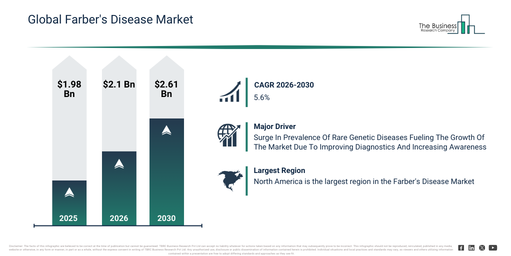
    The farber’s disease market has experienced robust expansion over recent years. Projections indicate further expansion, with its value increasing from $1.98 billion in 2025 to $2.1 billion in 2026, demonstrating a compound annual growth rate (CAGR) of 5.9%. Historically, this growth has been driven by factors such as the improved identification of rare diseases, advancements in pediatric genetic testing, the establishment of comprehensive supportive care protocols, increased hospital specialization, and dedicated research funding.

    The farber’s disease market size is projected to experience robust expansion in the upcoming years. This market is anticipated to reach $2.61 billion by 2030, demonstrating a compound annual growth rate (CAGR) of 5.6%. This expansion during the forecast period is driven by factors such as advancements in gene therapy pipelines, incentives for orphan drugs, initiatives for early diagnosis, comprehensive rare disease registries, and sophisticated genetic tools. Key trends anticipated for this period encompass a heightened focus on rare pediatric conditions, an increase in gene therapy research, wider adoption of supportive care, integrated multidisciplinary treatment strategies, and enhancements in genetic diagnostics.

    Download the Free Sample Report to Explore Key Market Insights:

    https://www.thebusinessresearchcompany.com/sample.aspx?id=24533&type=smp

    What Drivers Are Expected To Influence The Farber’s Disease Market During The Forecast Period?

    The increasing occurrence of rare genetic disorders is projected to boost the growth of the Farber’s disease market. These inherited conditions, stemming from DNA mutations, impact a very small segment of the population. Their rising prevalence is attributed to enhanced diagnostic technologies, facilitating earlier and more precise identification of conditions previously overlooked or misdiagnosed. Farber’s disease contributes to addressing the escalating incidence of rare genetic diseases by serving as a paradigm for developing targeted therapies and advancing research into enzyme replacement treatments for extremely rare conditions. For example, in February 2023, the European Commission (EC), a Belgium-based governmental body, reported that up to 36 million people in the European Union live with a rare disease, with over 6,000 distinct rare diseases in the EU, and approximately 80% of these are genetic in origin. Thus, the growing prevalence of rare genetic diseases is propelling the growth of the Farber’s disease market. Anticipated to drive the Farber’s disease market forward is the expanding investment in clinical trials. These trials are human research studies designed to evaluate the safety, effectiveness, and outcomes of medical interventions such as drugs, treatments, or devices. The surge in clinical trial investments is a result of the increasing demand for innovative treatments, fueled by advancements in medical science, personalized medicine, and the critical need to address unresolved healthcare issues. Farber’s disease plays a role in responding to this increased investment by underscoring the pressing need for research into rare and underserved genetic disorders. For instance, in October 2024, according to Citeline, a US-based pharma intelligence solutions provider, TrialTrove documented 9,959 Phase I–III clinical trials with a 2024 start date investigating at least one drug, indicating a 9.4% increase from 2023. Consequently, the rising investment in clinical trials is propelling the growth of the Farber’s disease market.

    How Is The Farber’s Disease Market Divided Into Its Major Segments?

    The farber’s disease market covered in this report is segmented –

    1) By Type Of Farber’s Disease: Classical Farber’s Disease, Non-Classical Farber’s Disease

    2) By Treatment: Enzyme Replacement Therapy, Symptomatic Treatment, Gene Therapy, Bone Marrow Transplant, Supportive Care

    3) By Clinical Symptoms: Joint Involvement And Deformities, Hearing Loss, Respiratory Distress, Dermatological Manifestations

    4) By End-User: Hospitals, Specialty Clinics, Diagnostic Centers, Other End-Users

    Subsegments:

    1) By Classical Farber’s Disease: Type 1 Severe Infantile Form, Type 2 Intermediate Childhood Form, Type 3 Juvenile-Onset Form

    2) By Non-Classical Farber’s Disease: Type 4 Neurological Predominant Form, Type 5 Visceral Predominant Form, Type 6 Cardiopulmonary Involvement Form

    Who Are The Prominent Organizations Shaping The Farber’s Disease Market?

    Major companies operating in the farber’s disease market are National Institutes of Health (NIH), U.S. National Institute of Neurological Disorders and Stroke (NINDS), Mount Sinai Icahn School of Medicine, Cincinnati Children’s Hospital Medical Center, University of Pennsylvania Gene Therapy Program, Seattle Children’s Research Institute, Genethon (AFM-Téléthon), Sarepta Therapeutics Inc., REGENXBIO Inc., Abeona Therapeutics Inc., Rocket Pharmaceuticals Inc., Passage Bio Inc., Spark Therapeutics Inc., Takeda Rare Disease Research, Orchard Therapeutics plc, Avrobio Inc., bluebird bio Inc., JCR Pharmaceuticals Co. Ltd., Protalix BioTherapeutics Inc., Ultragenyx Pharmaceutical Inc., BioMarin Pharmaceutical Inc., Amicus Therapeutics Inc.

    Read the full farber’s disease market report here:

    https://www.thebusinessresearchcompany.com/report/farbers-disease-global-market-report

    Which Region Is Forecast To Lead The Farber’s Disease Market In Terms Of Market Size?

    North America was the largest region in the farber’s disease market in 2025. Asia-Pacific is expected to be the fastest-growing region in the forecast period. The regions covered in the farber’s disease market report are Asia-Pacific, South East Asia, Western Europe, Eastern Europe, North America, South America, Middle East, Africa.

    Request A Tailored Farber’s Disease Market Research Report For Competitive Advantage:

    https://www.thebusinessresearchcompany.com/customise?id=24533&type=smp

    Browse Through More Reports Similar to the Global Farber’s Disease Market 2026, By The Business Research Company

    Rare Disease Diagnostics Market Report 2026

    https://www.thebusinessresearchcompany.com/report/rare-disease-diagnostics-global-market-report

    Rare Diseases Treatment Market Report 2026

    https://www.thebusinessresearchcompany.com/report/rare-diseases-treatment-global-market-report

    Rare Kidney Diseases Market Report 2026

    https://www.thebusinessresearchcompany.com/report/rare-kidney-diseases-global-market-report

    Get in touch with us:

    The Business Research Company: https://www.thebusinessresearchcompany.com/

    Americas +1 310-496-7795

    Asia +44 7882 955267 & +91 8897263534

    Europe +44 7882 955267

    Email us at info@tbrc.info

    Follow us on:

    LinkedIn: https://in.linkedin.com/company/the-business-research-company

    YouTube: https://www.youtube.com/channel/UC24_fI0rV8cR5DxlCpgmyFQ

    Global Market Model: https://www.thebusinessresearchcompany.com/global-market-model

  • Advancements in genetic engineering and the rise of gene therapy are key growth drivers for the Familial Mediterranean Fever Pharmaceuticals Market 2026

    Advancements in genetic engineering and the rise of gene therapy are key growth drivers for the Familial Mediterranean Fever Pharmaceuticals Market 2026

    The Business Research Company’s 2026 market reports include new capabilities such as market attractiveness scoring and analysis, total addressable market analysis, company scoring matrix, interactive excel data dashboard, improved supply chain analysis, upcoming startups in the market, and overview of key products, aimed at improving the depth, usability, and strategic value of the insights delivered.

    What Is The Expected Market Size Of The Familial Mediterranean Fever Pharmaceuticals Market From 2026 To 2030?

    The familial mediterranean fever pharmaceuticals market size has experienced strong expansion in recent years. It is projected to increase from $1.72 billion in 2025 to $1.81 billion in 2026, reflecting a compound annual growth rate (CAGR) of 5.1%. This historical growth can be attributed to the established effectiveness of colchicine, its genetic prevalence in Mediterranean populations, limited alternative treatment options, increased awareness of the disease, and improved diagnostic criteria.

    The familial mediterranean fever pharmaceuticals market is projected to experience robust expansion in the upcoming years. This market is forecast to reach $2.21 billion by 2030, exhibiting a compound annual growth rate (CAGR) of 5.1%. This anticipated growth is driven by several factors, including an increase in diagnosis rates beyond endemic areas, the wider embrace of biologics, the proliferation of orphan drug initiatives, enhanced genetic screening methods, and a heightened emphasis on averting long-term complications. Key developments anticipated during this forecast timeframe encompass the sustained dependence on colchicine therapy, a rise in the application of interleukin-1 inhibitors, the broadening of biologic treatments for resistant FMF, an intensified commitment to preventing amyloidosis, and advancements in genetic diagnosis facilitating prompt intervention.

    Download the Free Sample Report to Explore Key Market Insights:

    https://www.thebusinessresearchcompany.com/sample.aspx?id=23397&type=smp

    What Drivers Are Influencing The Familial Mediterranean Fever Pharmaceuticals Market?

    Future growth in the familial Mediterranean fever (FMF) pharmaceuticals market is anticipated, driven by the expanding field of gene therapy. This medical approach involves altering or substituting defective genes to address or avert diseases at their genetic origin. Its increasing prevalence stems from progress in genetic engineering, allowing for accurate identification and rectification of genetic conditions, thereby presenting possible cures for illnesses previously considered incurable. Gene therapy favorably influences familial Mediterranean fever (FMF) pharmaceuticals by addressing the fundamental mutations in the MEFV (Mediterranean fever) gene, which could lead to a lasting or definitive cure instead of mere symptom control. An example illustrating this trend is that in July 2024, the American Society of Gene & Cell Therapy (ASGCT), a US-based non-profit organization, reported the commencement of 76 gene therapy trials during the second quarter of 2024, marking a 25% rise compared to the preceding quarter. Consequently, the expansion of gene therapy is propelling the growth of the familial Mediterranean fever (FMF) pharmaceuticals market.

    Which Segments Are Included In The Analysis Of The Familial Mediterranean Fever Pharmaceuticals Market?

    The familial mediterranean fever pharmaceuticals market covered in this report is segmented –

    1) By Drug Type: Colchicine, Interleukin-1 Inhibitors, Anti-IL-6 Drugs

    2) By Route Of Administration: Oral, Injectable

    3) By End Users: Hospitals, Clinical Diagnostic Laboratories, Other End Users

    Subsegments:

    1) By Colchicine: Oral Colchicine, Intravenous Colchicine

    2) By Interleukin-1 Inhibitors: Anakinra, Canakinumab, Rilonacept

    3) By Anti-IL-6 Drugs: Tocilizumab, Off-Label IL-6 Receptor Antagonists, Refractory FMF Supportive IL-6 Modulation

    Which Trends Are Impacting The Growth Of The Familial Mediterranean Fever Pharmaceuticals Market?

    Major companies operating in the familial mediterranean fever pharmaceuticals market are concentrating on specific biologic treatments, including dual interleukin-1 (IL-1α and IL-1β) blockade mechanisms and orphan drug designations, with the goal of achieving lasting disease remission and broadening therapeutic options for individuals with autoinflammatory disorders. These dual interleukin-1 blockade mechanisms employ heterodimeric hybrid proteins that simultaneously bind with high affinity to both IL-1α and IL-1β cytokines, effectively neutralizing the inflammatory cascade driving disease development in familial Mediterranean fever and related conditions. For instance, in November 2024, R-Pharm Group, a Russia-based pharmaceutical company, received U.S. Food and Drug Administration (FDA) Orphan Drug Designation for Goflikicept, a novel heterodimeric hybrid protein targeting both IL-1α and IL-1β, intended for the treatment of familial Mediterranean fever (FMF) and idiopathic recurrent pericarditis (IRP). The company has completed Phase 2/3 clinical trials for IRP and obtained marketing authorization in Russia, while simultaneously advancing a Phase 2 study for FMF across Turkey, Russia, and Armenia, thereby establishing IL-1 blockade as a leading mechanism for sustained remission in autoinflammatory diseases.

    Which Key Industry Participants Are Active In The Familial Mediterranean Fever Pharmaceuticals Market?

    Major companies operating in the familial mediterranean fever pharmaceuticals market are Novartis International AG, Swedish Orphan Biovitrum AB, Granules Pharmaceuticals Inc., Hikma Pharmaceuticals plc, Camber Pharmaceuticals Inc., Teva Pharmaceutical Industries Ltd., Amgen Inc., Indena S.p.A., Harman Finochem, Alchem International, Honour Lab Ltd., Maithri Drugs Pvt. Ltd., Vital Laboratories Pvt. Ltd., Enomark Biotech Pvt. Ltd., Gonane Pharma, Ennature Biopharma, R-Pharm Group, Sun Pharmaceutical Industries Ltd., Dr. Reddy’s Laboratories Ltd., Lupin Limited

    Read the full familial mediterranean fever pharmaceuticals market report here:

    https://www.thebusinessresearchcompany.com/report/familial-mediterranean-fever-pharmaceuticals-global-market-report

    Which Regions Are Expected To Experience Rapid Expansion In The Familial Mediterranean Fever Pharmaceuticals Market?

    Middle East was the largest region in the familial mediterranean fever pharmaceuticals market in 2025. Asia-Pacific is expected to be the fastest-growing region in the forecast period. The regions covered in the familial mediterranean fever pharmaceuticals market report are Asia-Pacific, South East Asia, Western Europe, Eastern Europe, North America, South America, Middle East, Africa.

    Request A Tailored Familial Mediterranean Fever Pharmaceuticals Market Research Report For Competitive Advantage:

    https://www.thebusinessresearchcompany.com/customise?id=23397&type=smp

    Browse Through More Reports Similar to the Global Familial Mediterranean Fever Pharmaceuticals Market 2026, By The Business Research Company

    Anti Infective Drugs Market Report 2026

    https://www.thebusinessresearchcompany.com/report/anti-infective-drugs-global-market-report

    Pharmaceuticals Market 2026

    https://www.thebusinessresearchcompany.com/report/pharmaceuticals-market

    Anticoccidial Drugs Market Report 2026

    https://www.thebusinessresearchcompany.com/report/anticoccidial-drugs-global-market-report

    Get in touch with us:

    The Business Research Company: https://www.thebusinessresearchcompany.com/

    Americas +1 310-496-7795

    Asia +44 7882 955267 & +91 8897263534

    Europe +44 7882 955267

    Email us at info@tbrc.info

    Follow us on:

    LinkedIn: https://in.linkedin.com/company/the-business-research-company

    YouTube: https://www.youtube.com/channel/UC24_fI0rV8cR5DxlCpgmyFQ

    Global Market Model: https://www.thebusinessresearchcompany.com/global-market-model

  • Strategic developments shaping the Global DNA Repair Alkylating Agent Market 2026–2030

    Strategic developments shaping the Global DNA Repair Alkylating Agent Market 2026–2030

    The Business Research Company’s 2026 market reports include new capabilities such as market attractiveness scoring and analysis, total addressable market analysis, company scoring matrix, interactive excel data dashboard, improved supply chain analysis, upcoming startups in the market, and overview of key products, aimed at improving the depth, usability, and strategic value of the insights delivered.

    What Will Be The Estimated Market Valuation Of The Deoxyribonucleic Acid (DNA) Repair Alkylating Agent Market By The End Of 2030?

    The market size for deoxyribonucleic acid (dna) repair alkylating agents has shown substantial growth in recent years. It is anticipated to increase from $3.7 billion in 2025 to $4 billion in 2026, achieving a compound annual growth rate (CAGR) of 8.1%. This expansion in the past can be attributed to several factors, including the limited availability of alkylating agents, a continued reliance on conventional chemotherapy regimens, an expanding cancer patient population, an increase in hospital-based oncology treatments, and the adoption of standard clinical protocols.

    The deoxyribonucleic acid (dna) repair alkylating agent market size is projected to experience robust expansion over the coming years. This market is anticipated to reach $5.45 billion by 2030, exhibiting a compound annual growth rate (CAGR) of 8.0%. Factors contributing to this growth during the projected period include the emergence of new nitrogen mustards and nitrosoureas, the broadening scope of personalized oncology treatments, increased research and development funding for targeted alkylating agents, their incorporation into genomic testing and precision medicine practices, and a growing recognition and uptake of refined treatment protocols. Key trends foreseen in this period involve the increasing utilization of dna repair alkylating agents in cancer treatment, intensified research into innovative alkylating compounds, an expansion of clinical trials and R&D endeavors, the advancement of personalized medicine and targeted therapy applications, and a heightened emphasis on ensuring safety, optimizing dosages, and adhering to regulatory standards.

    Download the Free Sample Report to Explore Key Market Insights:

    https://www.thebusinessresearchcompany.com/sample.aspx?id=25745&type=smp

    What Major Growth Drivers Are Shaping The Outlook Of The Deoxyribonucleic Acid (DNA) Repair Alkylating Agent Market?

    The escalating global incidence of cancer is projected to drive the expansion of the DNA repair alkylating agent market in the future. Cancer is defined as a condition where specific cells within the body begin to multiply uncontrollably, potentially spreading to adjacent tissues or other parts of the body. The worldwide increase in cancer diagnoses is attributed to an expanding aging population, which faces elevated cancer risks. DNA repair alkylating agents treat cancer by disrupting the DNA of rapidly growing tumor cells, thereby preventing their multiplication. This interruption leads to cell death or a cessation of growth, aiding in the control of tumor development. For instance, in February 2024, the World Health Organization, a Switzerland-based healthcare organization, reported an estimated 20 million new cancer cases in 2022, with projections indicating a potential rise to over 35 million by 2050. Thus, the growing prevalence of cancer cases globally propels the growth of the DNA repair alkylating agent market.

    Which Segment Classifications Shape The Deoxyribonucleic Acid (DNA) Repair Alkylating Agent Market?

    The deoxyribonucleic acid (dna) repair alkylating agent market covered in this report is segmented –

    1) By Product Type: Nitrogen Mustards, Nitrosoureas, Alkyl Sulfonates, Triazines, Other Product Types

    2) By Application: Cancer Treatment, Research And Development, Other Applications

    3) By End-User: Hospitals, Research Institutes, Pharmaceutical Companies, Other End-Users

    Subsegments:

    1) By Nitrogen Mustards: Mechlorethamine, Cyclophosphamide, Ifosfamide, Chlorambucil, Melphalan

    2) By Nitrosoureas: Carmustine (BCNU), Lomustine (CCNU), Streptozocin, Semustine

    3) By Alkyl Sulfonates: Busulfan, Treosulfan

    4) By Triazines: Dacarbazine, Temozolomide

    5) By Other Product Types: Thiotepa, Procarbazine, Bendamustine, Lurbinectedin

    How Are Trends Impacting The Deoxyribonucleic Acid (DNA) Repair Alkylating Agent Market?

    Major companies within the deoxyribonucleic acid (DNA) repair alkylating agent market are concentrating on creating sophisticated treatments, such as epoxide forming alkylators, aiming to boost therapeutic accuracy, minimize unintended side effects, and better results for hematologic cancers. These epoxide forming alkylators function as prodrugs, transforming inside the body into potent epoxide intermediates. These intermediates then alkylate and cross-link DNA, providing a more regulated activation process than conventional bifunctional mustards. An example of this is Medexus Pharmaceuticals, a Canadian pharmaceutical firm, which obtained U.S. Food and Drug Administration (FDA) approval in January 2025 for GRAFAPEX (treosulfan). This alkylating agent, when combined with fludarabine, serves as a conditioning treatment before allogeneic hematopoietic stem-cell transplantation (alloHSCT) for adults and pediatric patients (aged one year or older) suffering from acute myeloid leukemia (AML) or myelodysplastic syndrome (MDS). Treosulfan is delivered as an intravenous infusion using a lyophilized powder, where it naturally changes into mono- and diepoxide metabolites that subsequently cross-link DNA. Boasting advantageous pharmacokinetics, lower long-term toxicity compared to busulfan-based treatments, and proven improvements in survival during a Phase III trial (MC-FludT.14/L), GRAFAPEX highlights the market’s evolving preference for more sophisticated DNA-damaging agents for transplantation procedures.

    Which Companies Are Expanding Their Footprint In The Deoxyribonucleic Acid (DNA) Repair Alkylating Agent Market?

    Major companies operating in the deoxyribonucleic acid (dna) repair alkylating agent market are Bristol-Myers Squibb Company, Teva Pharmaceutical Industries Limited, Fresenius Kabi, Intas Pharmaceuticals, Dr. Reddy’s Laboratories, Aurobindo Pharma, Hikma Pharmaceuticals, Natco Pharma Ltd, Medac GmbH, Emcure Pharmaceuticals, Jiangsu Hengrui Pharmaceuticals Co. Ltd.

    Read the full deoxyribonucleic acid (dna) repair alkylating agent market report here:

    https://www.thebusinessresearchcompany.com/report/deoxyribonucleic-acid-dna-repair-alkylating-agent-global-market-report

    Which Regions Are Projected To Dominate The Deoxyribonucleic Acid (DNA) Repair Alkylating Agent Market In The Coming Years?

    North America was the largest region in the deoxyribonucleic acid (DNA) repair alkylating agent market in 2025. Asia-Pacific is expected to be the fastest-growing region in the forecast period. The regions covered in the deoxyribonucleic acid (dna) repair alkylating agent market report are Asia-Pacific, South East Asia, Western Europe, Eastern Europe, North America, South America, Middle East, Africa.

    Request A Tailored Deoxyribonucleic Acid (DNA) Repair Alkylating Agent Market Research Report For Competitive Advantage:

    https://www.thebusinessresearchcompany.com/customise?id=25745&type=smp

    Browse Through More Reports Similar to the Global Deoxyribonucleic Acid (DNA) Repair Alkylating Agent Market 2026, By The Business Research Company

    Dna Repair Drugs Market Report 2026

    https://www.thebusinessresearchcompany.com/report/dna-repair-drugs-global-market-report

    Nucleic Acid Based Gene Therapy Market Report 2026

    https://www.thebusinessresearchcompany.com/report/nucleic-acid-based-gene-therapy-global-market-report

    Dna Based Skin Care Products Market Report 2026

    https://www.thebusinessresearchcompany.com/report/dna-based-skin-care-products-global-market-report

    Get in touch with us:

    The Business Research Company: https://www.thebusinessresearchcompany.com/

    Americas +1 310-496-7795

    Asia +44 7882 955267 & +91 8897263534

    Europe +44 7882 955267

    Email us at info@tbrc.info

    Follow us on:

    LinkedIn: https://in.linkedin.com/company/the-business-research-company

    YouTube: https://www.youtube.com/channel/UC24_fI0rV8cR5DxlCpgmyFQ

    Global Market Model: https://www.thebusinessresearchcompany.com/global-market-model

  • DNA Nanotechnology Market 2026–2035 driven by innovation in molecular engineering

    DNA Nanotechnology Market 2026–2035 driven by innovation in molecular engineering

    The Business Research Company’s 2026 market reports include new capabilities such as market attractiveness scoring and analysis, total addressable market analysis, company scoring matrix, interactive excel data dashboard, improved supply chain analysis, upcoming startups in the market, and overview of key products, aimed at improving the depth, usability, and strategic value of the insights delivered.

    What Market Size Growth Is Projected For The Deoxyribonucleic Acid (DNA) Nanotechnology Market During The Forecast Period 2026–2030?

    The deoxyribonucleic acid (dna) nanotechnology market size has experienced significant expansion in recent years. It is forecast to grow from $6.97 billion in 2025 to $8.75 billion in 2026, with a compound annual growth rate (CAGR) of 25.5%. The increase observed in the past can be ascribed to the advent of dna nanotechnology research, growing investments from academic and pharmaceutical sectors, the creation of fundamental dna nanostructures, an escalating demand for precision medicine, and initial implementations in drug delivery and diagnostics.

    The deoxyribonucleic acid (dna) nanotechnology market is projected to experience rapid expansion over the coming years. This market is predicted to reach $21.48 billion by 2030, exhibiting a compound annual growth rate (CAGR) of 25.2%. Key factors driving this growth during the forecast period include its integration into biosensing and theranostic applications, the wider availability of water-soluble and hybrid formulations, increased investment in nanomedicine research, greater commercialization via online and direct sales channels, and its incorporation into sophisticated nanofabrication methods. Prominent trends anticipated within this period encompass progress in DNA-based nanomachines and logic gate systems, the proliferation of DNA origami and tile-based nanostructures, expanded application of DNA nanotechnology for precise drug delivery, broader use in nanolithography and smart pill technologies, and the creation of hybrid and multifunctional DNA nanostructures.

    Download the Free Sample Report to Explore Key Market Insights:

    https://www.thebusinessresearchcompany.com/sample.aspx?id=27273&type=smp

    What Drivers Are Expected To Influence The Deoxyribonucleic Acid (DNA) Nanotechnology Market During The Forecast Period?

    The increasing incidence of genetic conditions is anticipated to drive the expansion of the deoxyribonucleic acid (DNA) nanotechnology market in the future. These disorders stem from alterations or mutations within DNA, potentially inherited or arising spontaneously, impacting an individual’s health, development, or physiological functions. This growing prevalence is attributed to greater awareness and progress in diagnostic techniques, which facilitate earlier and more precise identification of conditions that were previously undiagnosed. Deoxyribonucleic acid (DNA) nanotechnology offers solutions for genetic diseases by precisely targeting faulty genes, thereby supporting accurate diagnoses and customized therapeutic approaches. It improves treatment effectiveness via regulated drug delivery and gene editing, leading to better patient care and management of these diseases. For example, in July 2025, the National Blood Authority, an Australia-based blood management agency, reported that 2,788 patients were living with hereditary haemophilia A (HMA) in 2023–2024, marking an increase from 2,681 patients in 2022–2023. Consequently, the increasing occurrence of genetic diseases is propelling the expansion of the deoxyribonucleic acid (DNA) nanotechnology market.

    What Market Segments Are Evaluated Within The Deoxyribonucleic Acid (DNA) Nanotechnology Market?

    The deoxyribonucleic acid (dna) nanotechnology market covered in this report is segmented –

    1) By Type: Dynamic Deoxyribonucleic Acid (DNA) Nanotechnology, Structural Deoxyribonucleic Acid (DNA) Nanotechnology

    2) By Formulation Type: Water-Soluble Formulations, Oil-Soluble Formulations, Hybrid Formulations

    3) By Distribution Channel: Online Sales, Direct Sales, Retail Sales, Distributors Or Wholesalers

    4) By Application: Smart Pills, Nanolithography, Targeted Drug Delivery, Other Applications

    5) By End-User: Academic And Research Institutions, Biotechnology And Pharmaceuticals, Other End-Users

    Subsegments:

    1) By Dynamic Deoxyribonucleic Acid Nanotechnology: Strand Displacement Circuits, Conformational Switching Devices, Deoxyribonucleic Acid Walkers, Logic Gate Systems, Nanomachines-Based On Deoxyribonucleic Acid

    2) By Structural Deoxyribonucleic Acid Nanotechnology: Tile-Based Structures, Deoxyribonucleic Acid Origami, Wireframe Nanostructures, Lattice-Based Designs, Hybrid Nanostructures

    What Industry Trends Are Redefining The Deoxyribonucleic Acid (DNA) Nanotechnology Market?

    Major companies operating in the DNA nanotechnology market are concentrating on developing advanced solutions, including artificial intelligence-based DNA sequencing, to boost accuracy and facilitate more precise molecular diagnostics and nanodevice design. Artificial intelligence-based DNA sequencing employs AI to swiftly analyze and interpret DNA data, enhancing accuracy, speed, and personalized disease detection. For instance, in May 2025, the Indian Institute of Technology, an India-based technical institute, launched quantum AI nanotechnology that enables rapid, highly accurate, and cost-effective early identification of genetic mutations, particularly those associated with cancer. This technology merges explainable artificial intelligence with quantum transport mechanisms to decipher raw electrical signals from DNA sequencing with unmatched precision. This quantum-AI methodology utilizes solid-state nanopore or nanogap devices that capture distinct electronic signatures of nucleotides, thereby enabling comprehensive detection of natural, epigenetic, and artificial DNA mutations. The innovation promises significant advancements in genomics, personalized medicine, and cancer diagnostics by allowing for early mutation detection and customized treatment strategies.

    Who Are The Top Market Participants Influencing The Deoxyribonucleic Acid (DNA) Nanotechnology Market?

    Major companies operating in the deoxyribonucleic acid (dna) nanotechnology market are Twist Bioscience Corporation, SomaLogic Inc., Alamar Biosciences Inc., Nanion Technologies GmbH, Eligo Bioscience SA, DNA Nanobots LLC, Nanovery Limited, Parabon NanoLabs Inc., tilibit nanosystems GmbH, Luna Nanotech Inc., Code Biotherapeutics Inc., Sona Nanotech Inc., Cello Therapeutics Inc., Esya Labs Inc., NuProbe Global Inc., Ansa Biotechnologies Inc., GATTAquant GmbH, ARIZ Precision Medicine Inc., NanoApps Medical Inc., Aura Biosciences Inc.

    Read the full deoxyribonucleic acid (dna) nanotechnology market report here:

    https://www.thebusinessresearchcompany.com/report/deoxyribonucleic-acid-dna-nanotechnology-global-market-report

    Which Region Is Forecast To Lead The Deoxyribonucleic Acid (DNA) Nanotechnology Market In Terms Of Market Size?

    North America was the largest region in the deoxyribonucleic acid (DNA) nanotechnology market in 2025. Asia-Pacific is expected to be the fastest-growing region in the forecast period. The regions covered in the deoxyribonucleic acid (dna) nanotechnology market report are Asia-Pacific, South East Asia, Western Europe, Eastern Europe, North America, South America, Middle East, Africa.

    Request A Tailored Deoxyribonucleic Acid (DNA) Nanotechnology Market Research Report For Competitive Advantage:

    https://www.thebusinessresearchcompany.com/customise?id=27273&type=smp

    Browse Through More Reports Similar to the Global Deoxyribonucleic Acid (DNA) Nanotechnology Market 2026, By The Business Research Company

    Cumene Market Report 2026

    https://www.thebusinessresearchcompany.com/report/cumene-global-market-report

    White Cement Market Report 2026

    https://www.thebusinessresearchcompany.com/report/white-cement-global-market-report

    Green Cement Market Report 2026

    https://www.thebusinessresearchcompany.com/report/green-cement-global-market-report

    Get in touch with us:

    The Business Research Company: https://www.thebusinessresearchcompany.com/

    Americas +1 310-496-7795

    Asia +44 7882 955267 & +91 8897263534

    Europe +44 7882 955267

    Email us at info@tbrc.info

    Follow us on:

    LinkedIn: https://in.linkedin.com/company/the-business-research-company

    YouTube: https://www.youtube.com/channel/UC24_fI0rV8cR5DxlCpgmyFQ

    Global Market Model: https://www.thebusinessresearchcompany.com/global-market-model

  • Global Familial Amyloid Polyneuropathy Market 2026 influenced by gene therapy advancements

    Global Familial Amyloid Polyneuropathy Market 2026 influenced by gene therapy advancements

    The Business Research Company’s 2026 market reports include new capabilities such as market attractiveness scoring and analysis, total addressable market analysis, company scoring matrix, interactive excel data dashboard, improved supply chain analysis, upcoming startups in the market, and overview of key products, aimed at improving the depth, usability, and strategic value of the insights delivered.

    What Market Valuation Is Forecasted For The Familial Amyloid Polyneuropathy Market By 2030 Starting From Its 2026 Size?

    The market for familial amyloid polyneuropathy has experienced robust expansion in recent years. Projections indicate it will expand from $1.65 billion in 2025 to $1.79 billion by 2026, demonstrating a compound annual growth rate (CAGR) of 8.3%. Historically, this growth is linked to factors such as improved rare disease diagnosis, increased genetic disorder awareness, advancements in transplant medicine, focused neurology research, and wider adoption of supportive care.

    The market size for familial amyloid polyneuropathy is projected to undergo substantial expansion in the coming years. By 2030, this market is anticipated to reach a valuation of $2.43 billion, exhibiting a compound annual growth rate (CAGR) of 8.0%. This forecasted growth is primarily driven by factors such as innovation in gene therapy, the increase in early genetic testing, enhanced funding for rare diseases, the widespread adoption of precision medicine, and the continued growth of specialty pharmacies. Significant trends for the forecast period include the increasing adoption of TTR stabilizers, the broader expansion of gene silencing therapies, a rise in genetic screening initiatives, a heightened focus on rare disease treatment, and the development of specialty care centers.

    Download the Free Sample Report to Explore Key Market Insights:

    https://www.thebusinessresearchcompany.com/sample.aspx?id=24532&type=smp

    What Drivers Are Shaping The Future Growth Of The Familial Amyloid Polyneuropathy Market?

    The escalating emphasis on gene therapy is anticipated to stimulate the expansion of the familial amyloid polyneuropathy market moving forward. Gene therapy is a therapeutic approach that works by modifying or replacing faulty genes to address the root cause of illnesses. This treatment method is gaining traction as it targets and corrects defective genes, offering lasting or permanent cures rather than merely alleviating symptoms. For familial amyloid polyneuropathy, gene therapy focuses on correcting or silencing the abnormal transthyretin (TTR) gene, thereby preventing the formation of harmful amyloid protein. This intervention aids in reducing amyloid deposits, which slows disease progression and helps preserve nerve function. For instance, in July 2023, according to the American Society of Gene & Cell Therapy (ASGCT), a US-based professional membership organization, and Citeline, a US-based provider of drugs and devices, there were 247 gene therapies in Phase II at the end of the first quarter of 2023, a number that subsequently increased by 5% to reach 260 by the end of the second quarter. Thus, the increasing focus on gene therapy is acting as a catalyst for the growth of the familial amyloid polyneuropathy market.

    Which Segment Categories Define The Familial Amyloid Polyneuropathy Market?

    The familial amyloid polyneuropathy market covered in this report is segmented –

    1) By Treatment: Medication, Gene Therapy, Supportive Care, Pain Management, Symptomatic Treatment

    2) By Diagnosis: Genetic Testing, Biopsy, Imaging, Other Diagnosis

    3) By Patient Age Group: Pediatric, Adult, Geriatric

    4) By Distribution Channel: Hospital Pharmacies, Retail Pharmacies, Online Pharmacies, Specialty Pharmacies, Direct Sales

    5) By End-User: Hospitals, Specialty Clinics, Research Institutes, Other End-Users

    Subsegments:

    1) By Medication: Transthyretin (TTR) Stabilizers, Transthyretin (TTR) Gene Silencers, Tafamidis, Diflunisal, Patisiran

    2) By Gene Therapy: Clustered Regularly Interspaced Short Palindromic Repeats (CRISPR) Or Cas9-Based Therapy, RNA Interference (RNAi) Therapy, Antisense Oligonucleotides (ASO) Therapy

    3) By Supportive Care: Physical Therapy, Occupational Therapy, Nutritional Support, Psychological Counseling

    4) By Pain Management: Non-Steroidal Anti-Inflammatory Drugs (NSAIDs), Opioids, Antidepressants, Anticonvulsants

    5) By Symptomatic Treatment: Gastrointestinal Symptom Management, Cardiovascular Symptom Management, Autonomic Dysfunction Management, Orthostatic Hypotension Treatment

    What Major Market Trends Are Driving Changes In The Familial Amyloid Polyneuropathy Market?

    Key companies within the familial amyloid polyneuropathy market are concentrating on developing advanced treatment solutions, such as RNA interference (RNAi) therapeutics, to slow the progression of the disease and improve patient outcomes. RNA interference (RNAi) therapeutics represent advanced treatments that effectively silence disease-causing genes by targeting their messenger RNA (mRNA). This approach serves to block the production of harmful proteins, thereby addressing genetic diseases at their fundamental origin. For instance, in March 2025, Alnylam Pharmaceuticals, a US-based biopharmaceutical company, introduced AMVUTTRA (vutrisiran), which had received approval from the Food and Drug Administration (FDA) for treating cardiomyopathy linked to wild-type or hereditary transthyretin-mediated amyloidosis (ATTR-CM) in adults. It is administered through four subcutaneous doses per year and is specifically designed to treat both ATTR-CM and the polyneuropathy associated with hereditary transthyretin-mediated amyloidosis (hATTR-PN). By reducing the production of transthyretin (TTR) protein, which is the root cause of the disease, it significantly lowers cardiovascular mortality, hospitalizations, and urgent heart failure visits, as evidenced in the HELIOS-B Phase 3 clinical trial.

    Who Are The Top Companies Competing In The Familial Amyloid Polyneuropathy Market?

    Major companies operating in the familial amyloid polyneuropathy market are Pfizer Inc., AstraZeneca plc, Novo Nordisk A/S, Regeneron Pharmaceuticals Inc., NYU Langone Hospitals, Alexion Pharmaceuticals Inc., Mount Sinai Medical Center, PTC Therapeutics Inc., Mayo Foundation for Medical Education and Research, Arcturus Therapeutics Inc., Precision BioSciences Inc., Creative Biolabs, Stanford Health Care, Duke University Health System, YolTech Therapeutics

    Read the full familial amyloid polyneuropathy market report here:

    https://www.thebusinessresearchcompany.com/report/familial-amyloid-polyneuropathy-global-market-report

    Which Geographic Regions Are Influencing Demand In The Familial Amyloid Polyneuropathy Market?

    North America was the largest region in the familial amyloid polyneuropathy market in 2025. Asia-Pacific is expected to be the fastest-growing region in the forecast period. The regions covered in the familial amyloid polyneuropathy market report are Asia-Pacific, South East Asia, Western Europe, Eastern Europe, North America, South America, Middle East, Africa.

    Request A Tailored Familial Amyloid Polyneuropathy Market Research Report For Competitive Advantage:

    https://www.thebusinessresearchcompany.com/customise?id=24532&type=smp

    Browse Through More Reports Similar to the Global Familial Amyloid Polyneuropathy Market 2026, By The Business Research Company

    Peripheral Neuropathy Market Report 2026

    https://www.thebusinessresearchcompany.com/report/peripheral-neuropathy-global-market-report

    Transthyretin Amyloidosis Treatment Market Report 2026

    https://www.thebusinessresearchcompany.com/report/transthyretin-amyloidosis-treatment-global-market-report

    Diabetic Neuropathy Market Report 2026

    https://www.thebusinessresearchcompany.com/report/diabetic-neuropathy-global-market-report

    Get in touch with us:

    The Business Research Company: https://www.thebusinessresearchcompany.com/

    Americas +1 310-496-7795

    Asia +44 7882 955267 & +91 8897263534

    Europe +44 7882 955267

    Email us at info@tbrc.info

    Follow us on:

    LinkedIn: https://in.linkedin.com/company/the-business-research-company

    YouTube: https://www.youtube.com/channel/UC24_fI0rV8cR5DxlCpgmyFQ

    Global Market Model: https://www.thebusinessresearchcompany.com/global-market-model

  • Deoxyribonucleic Acid (DNA) Manufacturing Market 2026–2030 expanding with biotech advancements

    Deoxyribonucleic Acid (DNA) Manufacturing Market 2026–2030 expanding with biotech advancements

    The Business Research Company’s 2026 market reports include new capabilities such as market attractiveness scoring and analysis, total addressable market analysis, company scoring matrix, interactive excel data dashboard, improved supply chain analysis, upcoming startups in the market, and overview of key products, aimed at improving the depth, usability, and strategic value of the insights delivered.

    How Will The Market Size Of The Deoxyribonucleic Acid (DNA) Manufacturing Market Evolve From 2026 To 2030?

    The deoxyribonucleic acid (dna) manufacturing market has experienced substantial expansion recently. This market is projected to expand from $5.58 billion in 2025 to $6.51 billion in 2026, demonstrating a compound annual growth rate (CAGR) of 16.7%. Historically, this growth has stemmed from several factors, including challenges in obtaining high-quality plasmid and synthetic dna, a dependence on conventional chemical dna synthesis techniques, escalating research and development efforts in cell and gene therapies, increasing academic and industrial research projects, and a surging need for oligonucleotide-based medications.

    The deoxyribonucleic acid (dna) manufacturing market size is anticipated to experience substantial growth in the coming years. It is forecast to expand to $11.95 billion by 2030, demonstrating a compound annual growth rate (CAGR) of 16.4%. This projected expansion during the forecast period is primarily driven by advancements in enzymatic and chemical DNA synthesis technologies, the broadening of gene therapy and vaccine pipelines, increasing uptake of GMP-grade DNA production, a rising demand for long and complex DNA constructs, and the integration of automated DNA manufacturing platforms and digital workflows. Significant trends for this period include an escalating demand for GMP-grade DNA in therapeutic applications, an increase in plasmid and synthetic DNA production for vaccines, the growing adoption of gene synthesis and codon optimization services, the expansion of oligonucleotide synthesis for PCR, siRNA, and antisense applications, and the embedding of DNA manufacturing within cell and gene therapy development pipelines.

    Download the Free Sample Report to Explore Key Market Insights:

    https://www.thebusinessresearchcompany.com/sample.aspx?id=27272&type=smp

    What Drivers Are Influencing The Deoxyribonucleic Acid (DNA) Manufacturing Market?

    The deoxyribonucleic acid (DNA) manufacturing market is anticipated to expand, driven by the escalating demand for gene therapies. Gene therapies involve methods for altering or substituting defective genes to prevent or treat illnesses, while personalized medicine focuses on customizing medical care based on an individual’s genetic makeup, biology, and lifestyle attributes. This growing need for gene therapies stems from the increasing occurrence of genetic conditions, including cystic fibrosis, sickle cell anemia, and specific forms of inherited blindness. Deoxyribonucleic acid (DNA) manufacturing plays a crucial role in gene therapies, supplying the specialized, high-quality DNA sequences required for creating and delivering therapeutic genes capable of rectifying or substituting defective genetic material in patients. For instance, in January 2024, according to the American Society of Gene & Cell Therapy, a US-based organization, in fourth quarter of 2024, the number of pre-registration gene therapy programs experienced its largest increase in over a year, rising 83% compared to third quarter of 2024. Consequently, the expanding demand for gene therapies is fueling the expansion of the deoxyribonucleic acid (DNA) manufacturing market.

    Which Segment Areas Are Covered In The Deoxyribonucleic Acid (DNA) Manufacturing Market Analysis?

    The deoxyribonucleic acid (dna) manufacturing market covered in this report is segmented –

    1) By Type: Plasmid Deoxyribonucleic Acid (DNA), Synthetic Deoxyribonucleic Acid (DNA), Gene Synthesis, Oligonucleotide Synthesis

    2) By Grade: Good Manufacturing Practices (GMP) Grade, Research And Development Grade

    3) By Application: Cell And Gene Therapy, Vaccines, Oligonucleotide-Based Drugs, Other Applications

    4) By End-Use: Pharmaceutical And Biotechnology Companies, Academic And Research Institutes, Contract Research Organizations

    Subsegments:

    1) By Plasmid Deoxyribonucleic Acid (DNA): GMP-Grade Plasmid DNA, Non-GMP-Grade Plasmid DNA, High Copy Number Plasmids, Low Copy Number Plasmids, Bacterial Fermentation-Based Plasmid Production, Transfection-Grade Plasmid DNA

    2) By Synthetic Deoxyribonucleic Acid (DNA): Enzymatic DNA Synthesis, Chemical DNA Synthesis, Long DNA Fragments, Short DNA Fragments, Single-Stranded Synthetic DNA, Double-Stranded Synthetic DNA

    3) By Gene Synthesis: Custom Gene Synthesis, Standard Gene Synthesis, Complex Gene Constructs, Codon Optimization Services, Gene Library Synthesis

    4) By Oligonucleotide Synthesis: DNA Oligonucleotides, Modified Oligonucleotides, Long Oligonucleotides, PCR Primers, SiRNA And Antisense Oligos, Adapter And Linker Oligos

    What Key Developments And Trends Are Impacting The Deoxyribonucleic Acid (DNA) Manufacturing Market?

    Companies prominent in the DNA manufacturing market are concentrating on creating innovative methods, such as GMP-grade plasmid DNA production, to improve the quality, safety, and scalability of gene and cell therapy applications. GMP-grade plasmid DNA production refers to the manufacturing of plasmid DNA under Good Manufacturing Practice (GMP) conditions, which are regulatory guidelines designed to assure the quality, safety, and consistency of biopharmaceutical products. For instance, in April 2025, ProBio Genomics Inc., a US-based contract development and manufacturing organization (CDMO), launched GMP Plasmid DNA Manufacturing Services in Hopewell, complete with in-house analytical testing, method development, and project management. This service offers distinct features, including in-house process development, analytical testing, method development, and project management, thereby removing the necessity for multiple suppliers and accelerating development timelines. The service guarantees a high-quality output with =85% supercoiled plasmid DNA content while diminishing contamination risks. ProBio further provides GMP-like plasmids with a four-week delivery timeline and full GMP-grade plasmids within three months.

    Which Global Companies Are Actively Competing In The Deoxyribonucleic Acid (DNA) Manufacturing Market?

    Major companies operating in the deoxyribonucleic acid (dna) manufacturing market are Thermo Fisher Scientific Inc., Merck KGaA, Lonza Group AG, Kaneka Corporation, Catalent Inc., Charles River Laboratories International Inc., WuXi Biologics Inc., AGC Biologics Inc., Integrated DNA Technologies Inc., GenScript Biotech Corporation, Takara Bio USA Inc., Twist Bioscience Corp., Ajinomoto Bio-Pharma Services, OriGene Technologies Inc., DNA Script SAS, Eurofins Genomics LLC, Touchlight Genetics Ltd., Elegen Inc., VGXI Inc., PlasmidFactory GmbH & Co. KG.

    Read the full deoxyribonucleic acid (dna) manufacturing market report here:

    https://www.thebusinessresearchcompany.com/report/deoxyribonucleic-acid-dna-manufacturing-global-market-report

    Which Regions Are Expected To Experience Rapid Expansion In The Deoxyribonucleic Acid (DNA) Manufacturing Market?

    North America was the largest region in the deoxyribonucleic acid (DNA) manufacturing market in 2025. Asia-Pacific is expected to be the fastest-growing region in the forecast period. The regions covered in the deoxyribonucleic acid (dna) manufacturing market report are Asia-Pacific, South East Asia, Western Europe, Eastern Europe, North America, South America, Middle East, Africa.

    Request A Tailored Deoxyribonucleic Acid (DNA) Manufacturing Market Research Report For Competitive Advantage:

    https://www.thebusinessresearchcompany.com/customise?id=27272&type=smp

    Browse Through More Reports Similar to the Global Deoxyribonucleic Acid (DNA) Manufacturing Market 2026, By The Business Research Company

    Electronic Equipment Repair Service Market Report 2026

    https://www.thebusinessresearchcompany.com/report/electronic-equipment-repair-service-global-market-report

    Maintenance Services Market Report 2026

    https://www.thebusinessresearchcompany.com/report/maintenance-services-global-market-report

    Industrial Maintenance Services Market Report 2026

    https://www.thebusinessresearchcompany.com/report/industrial-maintenance-services-global-market-report

    Get in touch with us:

    The Business Research Company: https://www.thebusinessresearchcompany.com/

    Americas +1 310-496-7795

    Asia +44 7882 955267 & +91 8897263534

    Europe +44 7882 955267

    Email us at info@tbrc.info

    Follow us on:

    LinkedIn: https://in.linkedin.com/company/the-business-research-company

    YouTube: https://www.youtube.com/channel/UC24_fI0rV8cR5DxlCpgmyFQ

    Global Market Model: https://www.thebusinessresearchcompany.com/global-market-model
  • Factor XII Inhibitors Market 2026–2030 expanding with coagulation disorder treatments

    Factor XII Inhibitors Market 2026–2030 expanding with coagulation disorder treatments

    The Business Research Company’s 2026 market reports include new capabilities such as market attractiveness scoring and analysis, total addressable market analysis, company scoring matrix, interactive excel data dashboard, improved supply chain analysis, upcoming startups in the market, and overview of key products, aimed at improving the depth, usability, and strategic value of the insights delivered.

    How Is The Market Size Of The Factor XII Inhibitors Market Expected To Change Between 2026 And 2030?

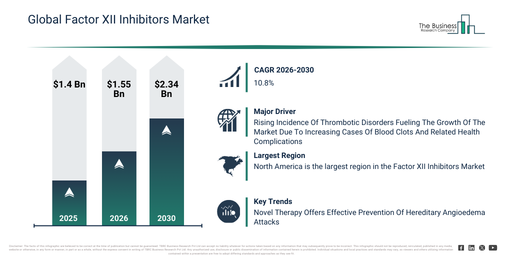
    The factor xii inhibitors market size has demonstrated significant expansion in recent years. It is anticipated to expand from $1.4 billion in 2025 to $1.55 billion in 2026, achieving a compound annual growth rate (CAGR) of 11.1%. The expansion observed in the past can be ascribed to advancements in coagulation biology research, an escalating occurrence of thrombotic disorders, the constraints of conventional anticoagulants, initial positive outcomes in clinical trials for fxii inhibition, and increased investment in rare and specialized therapeutics.

    The factor xii inhibitors market is projected to experience substantial expansion over the upcoming years, reaching a valuation of $2.34 billion by 2030, demonstrating a compound annual growth rate (CAGR) of 10.8%. This anticipated growth during the forecast period is driven by several factors, including the proliferation of late-stage clinical trials, a rising need for safer antithrombotic treatments, the growing adoption of precision medicine, increasing regulatory backing for new anticoagulants, and the extension of fxii inhibitors into inflammatory applications. Key developments expected within this period encompass the accelerated creation of non-bleeding anticoagulant therapies, a heightened emphasis on modulating targeted coagulation pathways, an increase in the clinical assessment of fxii selective inhibitors, the broadening use of rna-based and peptide therapeutics, and the improved application of precision drug design.

    Download the Free Sample Report to Explore Key Market Insights:

    https://www.thebusinessresearchcompany.com/sample.aspx?id=30278&type=smp

    Which Economic Or Industry Drivers Are Impacting The Factor XII Inhibitors Market?

    The increasing occurrence of thrombotic conditions is projected to drive the expansion of the factor XII inhibitors market. These conditions involve the formation of blood clots within veins or arteries, which can obstruct blood flow and lead to severe health issues. The rise in sedentary lifestyles, contributing to inadequate blood circulation and an elevated risk of clot development, is causing an increase in thromboembolic disorders. Factor XII inhibitors address thrombotic disorders by impeding irregular clot formation through the blockade of the contact activation pathway, all while preserving normal hemostasis. This mechanism ensures efficient control of thrombosis while concurrently reducing the likelihood of bleeding. For example, as reported by the US-based government agency, the Centers for Disease Control and Prevention (CDC), in January 2025, approximately 900,000 individuals in the United States suffer from venous thromboembolism, with an estimated 60,000-100,000 Americans succumbing to it each year, and many more facing enduring complications. Consequently, the growing frequency of thrombotic disorders is fueling the expansion of the Factor XII inhibitors market.

    How Is The Factor XII Inhibitors Market Structured Across Different Segments?

    The factor xii inhibitors market covered in this report is segmented –

    1) By Drug Type: Monoclonal Antibodies, Small Molecule Inhibitors, Other Drug Types

    2) By Route Of Administration: Oral, Injectable, Other Routes Of Administration

    3) By Application: Hereditary Angioedema, Thrombosis, Inflammatory Disorders, Other Applications

    4) By End-User: Hospitals, Specialty Clinics, Research Institutes, Other End-Users

    Subsegments:

    1) By Monoclonal Antibodies: Fully Human Monoclonal Antibodies, Humanized Monoclonal Antibodies, Chimeric Monoclonal Antibodies, Bispecific Monoclonal Antibodies, Single-Chain Variable Fragment (scFv) Antibodies

    2) By Small Molecule Inhibitors: Direct Factor XII Inhibitors, Allosteric Factor XII Inhibitors, Reversible Inhibitors, Irreversible Inhibitors, Peptidomimetic Inhibitors

    3) By Other Drug Types: Peptide-Based Inhibitors, RNA Interference (RNAi) Therapeutics, Antisense Oligonucleotides, Combination Therapies

    Which Trends Are Shaping The Future Of The Factor XII Inhibitors Market?

    Leading companies operating in the Factor XII Inhibitors market are concentrating on developing innovative products, such as anti-FXIIa monoclonal antibodies, with the aim of enhancing therapeutic precision and treatment effectiveness. These anti-FXIIa monoclonal antibodies are targeted biologics designed to inhibit activated factor XII, preventing abnormal clot formation while preserving normal hemostasis. For instance, in February 2025, CSL Behring GmbH, a Germany-based biopharmaceutical company, secured manufacturing and marketing approval from Japan’s Ministry of Health, Labour and Welfare (MHLW) for ANDEMBRY (garadacimab) subcutaneous (S.C.) injection 200 mg pens. This product is a novel, human anti-activated factor XII monoclonal antibody approved for the prevention of acute attacks of hereditary angioedema (HAE). It functions by targeting activated factor XIIa, a key driver in the initiation of HAE attacks, and is administered through a convenient subcutaneous injection pen.

    Which Major Players Dominate The Factor XII Inhibitors Market?

    Major companies operating in the factor xii inhibitors market are Taylor & Francis Group, Santa Cruz Biotechnology Inc., CSL Limited, Bridge Medicines Inc., KalVista Pharmaceuticals Inc., Ovid Technologies Inc., Affinity Biologicals Inc., Lunac Therapeutics Ltd., Grantome LLC

    Read the full factor xii inhibitors market report here:

    https://www.thebusinessresearchcompany.com/report/global-factor-xii-inhibitors-market-report

    What Are The Top-Performing Regions Within The Factor XII Inhibitors Market?

    North America was the largest region in the factor XII inhibitors market in 2025. Asia-Pacific is expected to be the fastest-growing region in the forecast period. The regions covered in the factor xii inhibitors market report are Asia-Pacific, South East Asia, Western Europe, Eastern Europe, North America, South America, Middle East, Africa.

    Request A Tailored Factor XII Inhibitors Market Research Report For Competitive Advantage:

    https://www.thebusinessresearchcompany.com/customise?id=30278&type=smp

    Browse Through More Reports Similar to the Global Factor XII Inhibitors Market 2026, By The Business Research Company

    Tumor Necrosis Factor Inhibitor Drugs Market Report 2026

    https://www.thebusinessresearchcompany.com/report/tumor-necrosis-factor-inhibitor-drugs-global-market-report

    Kinase Inhibitors Market Report 2026

    https://www.thebusinessresearchcompany.com/report/kinase-inhibitors-global-market-report

    Enzyme Inhibitor Market Report 2026

    https://www.thebusinessresearchcompany.com/report/enzyme-inhibitor-global-market-report

    Get in touch with us:

    The Business Research Company: https://www.thebusinessresearchcompany.com/

    Americas +1 310-496-7795

    Asia +44 7882 955267 & +91 8897263534

    Europe +44 7882 955267

    Email us at info@tbrc.info

    Follow us on:

    LinkedIn: https://in.linkedin.com/company/the-business-research-company

    YouTube: https://www.youtube.com/channel/UC24_fI0rV8cR5DxlCpgmyFQ

    Global Market Model: https://www.thebusinessresearchcompany.com/global-market-model