Category: Pharmaceuticals

  • CAGR of 5.4% Projected for Pediatric Asthma Treatment Market From 2025 to 2029

    CAGR of 5.4% Projected for Pediatric Asthma Treatment Market From 2025 to 2029

    Claim your 30% discount on Global Market Reports with code ONLINE30. Limited time only.

    Claim your 30% discount on Global Market Reports with code ONLINE30. Limited time only.

    What Is the Current and Projected Market Size of the Pediatric Asthma Treatment Industry?

    The market for pediatric asthma treatment has witnessed robust growth in recent times. The market, valued at $11.03 billion in 2024, is predicted to scale to $11.65 billion in 2025, with a compound annual growth rate (CAGR) of 5.6%. The growth observed in the historical period is associated with the increased prevalence of asthma in children, expanded consciousness about respiratory problems in young children, rising levels of air pollution and environmental allergens, increased health spending on child healthcare, and awareness drives conducted by NGOs and healthcare institutions regarding asthma.

    In the forthcoming years, the pediatric asthma treatment market is projected to experience significant growth, reaching $14.39 billion in 2029, with a compound annual growth rate (CAGR) of 5.4%. The expansion during the forecast period can be credited to factors such as the rising incidence of allergic disorders in children, the growth of biologic therapies for severe pediatric asthma, the upsurge in investments in pediatric drug development, the heightened focus on personalized and precision medicine, and the increase in the middle-class population that has access to private healthcare. Key trends during the forecast period involve the advancement of pediatric-friendly biologic therapies, the creation of swift allergen identification tools, the incorporation of electronic health records, innovation in inhaler formulations, and breakthroughs in asthma immunotherapy.

    Download The Free Sample Report Here:

    https://www.thebusinessresearchcompany.com/sample.aspx?id=25868&type=smp

    #Which Factors Are Currently Driving The Growth Of The Pediatric Asthma Treatment Market?

    The pediatric asthma treatment market is predicted to be boosted by the escalating prevalence of respiratory infections. These infections, which impact the respiratory tract including the nose, throat, airways, and lungs, are typically caused by pathogens such as viruses or bacteria. The heightened incidence of these infections is predominantly tied to increasing levels of air pollution. Pollutants like particulate matter and nitrogen dioxide undermine the respiratory system and increase the likelihood of infections. Pediatric asthma treatment is designed to diminish the regularity and severity of these respiratory infections by enhancing airway function and reducing inflammation, thereby decreasing susceptibility to infectious triggers. As per the Australian Institute of Health and Welfare, a government agency of Australia, chronic obstructive pulmonary disease was responsible for 3.6% of the entire disease burden in June 2024 and represented half of the total respiratory condition burden in 2023. Furthermore, it was estimated that about 638,000 people, or 2.5% of the Australian population, were suffering from chronic obstructive pulmonary disease in 2022. Consequently, the augmenting prevalence of respiratory infections is propelling the growth of the pediatric asthma treatment market.

    How Is The Global Pediatric Asthma Treatment Market Structured In Terms Of Segments?

    The pediatric asthma treatment market covered in this report is segmented –

    1) By Type: Long-Term Control Medications, Quick-Relief Medications, Other Types

    2) By Drug Class: Inhaled Corticosteroids, Long-Acting Beta Agonists, Leukotriene Modifiers, Antihistamines, Biologics

    3) By Route Of Administration: Oral Route, Nasal Route, Injectable Route

    4) By Distribution Channel: Hospital Pharmacies, Retail Pharmacies, Online Pharmacies

    5) By End User: Hospitals, Clinics, Home Care, Other End users

    Subsegments:

    1) By Long-Term Control Medications: Inhaled Corticosteroids, Leukotriene Modifiers, Long-Acting Beta Agonists, Combination Inhalers, Biologic Therapies

    2) By Quick-Relief Medications: Short-Acting Beta Agonists, Anticholinergics, Systemic Corticosteroids

    3) By Other Types: Immunotherapy, Methylxanthines, Alternative Therapies

    What Notable Trends Are Shaping The Direction Of The Pediatric Asthma Treatment Market?

    Firms at the forefront of the pediatric asthma treatment industry are emphasizing the development of novel therapies, such as monoclonal antibodies, aiming to tackle and diminish airway inflammation in children. These monoclonal antibodies are man-made proteins crafted to imitate the immune system’s function to ward off damaging pathogens by selectively pinpointing certain cells or substances. For example, in April 2024, the U.S. Food and Drug Administration accorded approval to AstraZeneca PLC, a biotech and pharmaceutical organization based in the UK, for FASENRA (benralizumab), to be used as supplementary maintenance cure for severe asthma in children from 6 to 11 years, particularly with an eosinophilic phenotype. This antibody has been devised to limit asthma flare-ups and enhance symptom management by concentrating on and doing away with eosinophils. Fasenra is delivered through subcutaneous injection, initially every 4 weeks for the first three doses and subsequently every 8 weeks, with the dosing for children modified as per body weight.

    Who Are The Main Participants Shaping The Pediatric Asthma Treatment Market Landscape?

    Major companies operating in the pediatric asthma treatment market are Pfizer Inc., Merck And Co Inc., Novartis AG, Sanofi S.A., AstraZeneca plc, GlaxoSmithKline plc, Takeda Pharmaceutical Company Limited, Amgen Inc., Boehringer Ingelheim International GmbH, Viatris Inc., Teva Pharmaceutical Industries Limited, Regeneron Pharmaceuticals Inc., Sun Pharmaceutical Industries Limited, Genentech Inc., Chiesi Farmaceutici S.p.A, Dr. Reddy’s Laboratories Ltd, Cipla Ltd, Lupin Limited, Zydus Lifesciences Ltd., ECU Health.

    Get The Full Report Here:

    https://www.thebusinessresearchcompany.com/report/pediatric-asthma-treatment-global-market-report

    Which Region Currently Holds The Largest Share In The Pediatric Asthma Treatment Market?

    North America was the largest region in the pediatric asthma treatment market in 2024. Asia-Pacific is expected to be the fastest-growing region in the forecast period. The regions covered in the pediatric asthma treatment market report are Asia-Pacific, Western Europe, Eastern Europe, North America, South America, Middle East, Africa.

    Request For A Customized Report:

    https://www.thebusinessresearchcompany.com/customise?id=25868&type=smp

    About The Business Research Company:

    With over 15000+ reports from 27 industries covering 60+ geographies, The Business Research Company has built a reputation for offering comprehensive, data-rich research and insights. Armed with 1,500,000 datasets, the optimistic contribution of in-depth secondary research, and unique insights from industry leaders, you can get the information you need to stay ahead in the game.

    Get in touch with us:

    The Business Research Company: https://www.thebusinessresearchcompany.com/

    Americas +1 310-496-7795

    Asia +44 7882 955267 & +91 8897263534

    Europe +44 7882 955267

    Email us at info@tbrc.info

    Follow us on:

    LinkedIn: https://in.linkedin.com/company/the-business-research-company

    YouTube: https://www.youtube.com/channel/UC24_fI0rV8cR5DxlCpgmyFQ

    Global Market Model: https://www.thebusinessresearchcompany.com/global-market-model

  • Industry Forecast: PCSK9 Inhibitor Market to Generate $6.87  Billion Revenue by 2029

    Industry Forecast: PCSK9 Inhibitor Market to Generate $6.87 Billion Revenue by 2029

    Claim your 30% discount on Global Market Reports with code ONLINE30. Limited time only.

    Claim your 30% discount on Global Market Reports with code ONLINE30. Limited time only.

    How Will the PCSK9 Inhibitor Market Evolve in Terms of Growth and Size by 2029?

    The market for PCSK9 inhibitors has experienced a notable expansion in the past few years. The market, from 2024’s valuation of $2.68 billion, is projected to surge to $3.24 billion in 2025, with a compound annual growth rate (CAGR) of 20.9%. Factors like a growing elderly population, increased funding for research and development in lipid-reducing treatments, a surge in approvals by the Food and Drug Administration for PCSK9 inhibitors, escalating strategic partnerships, as well as the growing demand for customized treatment in heart care, have all contributed to this historical growth rate.

    Expectations point towards a significant surge in the PCSK9 inhibitor market size over the next few years. Projections suggest it will balloon to $6.87 billion by 2029, posting a compound annual growth rate (CAGR) of 20.6%. Such growth during the forecasted period can be linked to the rising popularity of combination therapies, an intensive emphasis on lowering low-density lipoprotein cholesterol among patients at high risk, a growing pool of next-generation PCSK9 inhibitors in the pipeline, increased market penetration in emerging economies, and a surge in healthcare initiatives aiming at the prevention of cardiovascular diseases. Major trends predicted within the forecast timeframe encapsulate advancements in PCSK9 therapies based on ribonucleic acid, enhanced delivery systems for better patient compliance, incorporation of innovations in lipid management platforms, the progress in digital health monitoring instruments, and cutting-edge treatment methods driven by biomarkers.

    Download The Free Sample Report Here:

    https://www.thebusinessresearchcompany.com/sample.aspx?id=25867&type=smp

    What factors are expected to fuel PCSK9 Inhibitor market growth in the coming years?

    Growth in the PCSK9 inhibitor market is anticipated to be driven by a rise in hyperlipidemia cases. Hyperlipidemia is manifested by high levels of lipids such as cholesterol and triglycerides in the blood, contributing to a higher likelihood of cardiovascular diseases. This augmentation in hyperlipidemia cases can be attributed to aging populations since cholesterol levels usually surge notably with age, particularly after 45 years. By promoting the liver’s capacity to extract surplus LDL cholesterol from the blood, PCSK9 inhibitors assist in managing hyperlipidemia, resulting in more balanced lipid profiles. For example, the Office for Health Improvement and Disparities, a UK governmental department, reported that around 1.88 million individuals (3%) in England were diagnosed with congenital heart disease (CHD) by a general practitioner in 2023. Moreover, data from the Australian Bureau of Statistics, an Australian governmental organization, revealed an acute increase in high cholesterol rates, skyrocketing from 1.1% in individuals aged 18–34 to 29.0% in those aged 75 and above. Therefore, this surge in hyperlipidemia occurrence is stimulating the enlargement of the PCSK9 inhibitor market.

    What Are The Key Findings From The Segmentation Analysis Of The PCSK9 Inhibitor Market?

    The pcsk9 inhibitor market covered in this report is segmented –

    1) By Drug Type: Alirocumab, Evolocumab, Inclisiran, Bococizumab, Other Types

    2) By Route of Administration: Oral, Subcutaneous Injection, Intravenous Injection

    3) By Modality: Fully-Humanized Monoclonal Antibodies, Small Interfering RNA (siRNA)

    4) By Application: Hypercholesterolemia, Hyperlipidemia, Cardiovascular Disease Prevention, Familial Hypercholesterolemia

    5) By Sales Channel: Hospitals, Specialty Clinics, Retail Pharmacies, Online Pharmacies

    Subsegments:

    1) By Alirocumab: Dosage Forms, Indications, Administration Frequency

    2) By Evolocumab: Dosage Forms, Indications, Administration Frequency

    3) By Inclisiran: Dosage Forms, Indications, Dosing Schedule

    4) By Bococizumab: Dosage Forms, Indications, Development Status

    5) By Other Types: Emerging PCSK9 Inhibitors, Combination Therapies, Biosimilars Or Generics

    What Upcoming Trends Are Expected To Impact The PCSK9 Inhibitor Market Globally?

    Prominent firms in the PCSK9 inhibitor market are concentrating on the creation of groundbreaking solutions, such as in vivo gene therapy. This approach aims to offer enduring or singular treatments that permanently decrease LDL cholesterol levels in high cardiovascular risk patients. In vivo gene therapy is a technique in which genetic material is directly delivered into a person’s body. This helps to alter or substitute defective genes in the targeted cells, making it possible to treat the disease at its origin. In a noteworthy instance, in April 2025, Verve Therapeutics Inc., a clinical-stage company from the USA, released preliminary outcomes from the Heart-2 Phase 1b testing of VERVE-102. The investigation focused on patients with heterozygous familial hypercholesterolemia (HeFH) and premature coronary artery disease (CAD), conditions that require substantial and sustained LDL cholesterol reductions. A single dose of VERVE-102 resulted in dose-responsive decreases in both the PCSK9 protein and LDL-C levels. In the 0.6 mg/kg group, participants saw an average LDL cholesterol reduction of 53%, with some experiencing a high of 69%. This data underscores teh potential of VERVE-102 as a potent cholesterol-reducing therapy.

    What Are The Most Active Companies In The PCSK9 Inhibitor Market Today?

    Major companies operating in the pcsk9 inhibitor market are Merck & Co. Inc., Sanofi S.A, AstraZeneca plc, Novartis AG, Amgen Inc., Regeneron Pharmaceuticals Inc., Astellas Pharma Inc., Dr. Reddy’s Laboratories Ltd., Alnylam Pharmaceuticals Inc., Ionis Pharmaceuticals Inc., Innovent Biologics Inc., Shanghai Junshi Biosciences Co. Ltd., Akeso Inc., Verve Therapeutics Inc., LIB Therapeutics LLC, CiVi Biopharma Inc., CVI Pharmaceuticals Ltd., Vaxxinity Inc., Jiangsu Hengrui Pharmaceuticals Co. Ltd., Shenyang Xinlitai Pharmaceutical Co. Ltd.

    Get The Full Report Here:

    https://www.thebusinessresearchcompany.com/report/pcsk9-inhibitor-global-market-report

    Which Regional Markets Are Attracting The Most Investment In PCSK9 Inhibitor?

    North America was the largest region in the PCSK9 inhibitor market in 2024. Asia-Pacific is expected to be the fastest-growing region in the forecast period. The regions covered in the pcsk9 inhibitor market report are Asia-Pacific, Western Europe, Eastern Europe, North America, South America, Middle East, Africa.

    Request For A Customized Report:

    https://www.thebusinessresearchcompany.com/customise?id=25867&type=smp

    About The Business Research Company:

    With over 15000+ reports from 27 industries covering 60+ geographies, The Business Research Company has built a reputation for offering comprehensive, data-rich research and insights. Armed with 1,500,000 datasets, the optimistic contribution of in-depth secondary research, and unique insights from industry leaders, you can get the information you need to stay ahead in the game.

    Get in touch with us:

    The Business Research Company: https://www.thebusinessresearchcompany.com/

    Americas +1 310-496-7795

    Asia +44 7882 955267 & +91 8897263534

    Europe +44 7882 955267

    Email us at info@tbrc.info

    Follow us on:

    LinkedIn: https://in.linkedin.com/company/the-business-research-company

    YouTube: https://www.youtube.com/channel/UC24_fI0rV8cR5DxlCpgmyFQ

    Global Market Model: https://www.thebusinessresearchcompany.com/global-market-model

  • In-Depth Injectable Cytotoxic Drugs Market Report: Business Trends, Growth Factors, and Forecast to 2029

    In-Depth Injectable Cytotoxic Drugs Market Report: Business Trends, Growth Factors, and Forecast to 2029

    Claim your 30% discount on Global Market Reports with code ONLINE30. Limited time only.

    Claim your 30% discount on Global Market Reports with code ONLINE30. Limited time only.

    What Are the Latest Market Insights for the Injectable Cytotoxic Drugs Industry?

    There has been a significant growth in the market size of injectable cytotoxic drugs recently. The market, which is expected to rise from $18.16 billion in 2024 to $19.41 billion in 2025, is projected to have a compound annual growth rate (CAGR) of 6.9%. This increase during the historical period can be credited to the growing acceptance of mixed chemotherapy treatment plans, increased investments in healthcare, a surge in the number of specialized cancer clinics and treatment facilities, a rise in the approval rate of generic injectable cytotoxic medicines, and growing awareness about the importance of early cancer detection.

    The market for injectable cytotoxic drugs is projected to experience robust growth in the coming years, reaching a value of $25.11 billion in 2029, growing at a compound annual growth rate (CAGR) of 6.6%. This surge during the forecast period can be linked to a growing inclination towards biosimilar cytotoxic drugs, an increased emphasis on outpatient and home-based chemotherapy, a burgeoning pool of injectable cancer drugs, a rising occurrence of cancer, and an escalating demand for affordable cancer treatments. The market’s growth trends for the forecast period involve advances in delivery technology for injectable drugs, enhanced formulation methods to diminish toxicity, developments in antibody-drug conjugate, the incorporation of AI into cancer drug discovery, and partnerships among pharmaceutical corporations.

    Download The Free Sample Report Here:

    https://www.thebusinessresearchcompany.com/sample.aspx?id=25795&type=smp

    What Forces Are Driving The Growth Of The Injectable Cytotoxic Drugs Industry?

    The surge in rheumatoid arthritis cases is anticipated to drive the expansion of the market for injectable cytotoxic drugs. Characterized by constant joint inflammation, pain, and eventual joint damage, rheumatoid arthritis is a persistent autoimmune disorder. The escalating number of rheumatoid arthritis cases is mainly attributed to an aging population since the risk of genetic mutations and immune system malfunctions that lead to this condition increases with age. Injectable cytotoxic drugs aid in the treatment of rheumatoid arthritis by targeting rapidly proliferating cells and limiting overly active immune responses, therefore decelerating the progression of the disease and alleviating symptoms. As reported by the Australian Institute of Health and Welfare, an independent statutory agency based in Australia, in June 2024, rheumatoid arthritis caused 1,322 fatalities, translating to 5.1 deaths for every 100,000 individuals, and was to blame for 0.7% of all deaths in 2022. It was the cause of 2.0% of the overall disease burden and accounted for 16% of the total burden from all musculoskeletal conditions in 2023. Hence, the rising prevalence of rheumatoid arthritis is fueling the growth of the market for injectable cytotoxic drugs.

    What Is The Overview Of Market Segmentation In The Injectable Cytotoxic Drugs Industry?

    The injectable cytotoxic drugs market covered in this report is segmented –

    1) By Drug Type: Alkylating Agents, Antimetabolites, Plant Alkaloids, Antitumor Antibiotics, Platinum-Based Compounds, Cytotoxic Antibiotics, Other Drug Types

    2) By Route Of Administration: Intravenous (IV), Intramuscular (IM), Subcutaneous (SC)

    3) By Distribution Channel: Hospital Pharmacies, Retail Pharmacies, Online Pharmacies, Specialty Drug Stores

    4) By Application: Breast Cancer, Lung Cancer, Prostate Cancer, Colorectal Cancer, Ovarian Cancer, Lymphoma, Leukemia, Other Applications

    5) By End-User: Hospitals, Oncology Clinics, Ambulatory Surgical Centers, Research And Academic Institutes

    Subsegments:

    1) By Alkylating Agents: Cyclophosphamide, Isocyanide, Melphalan, Busulfan

    2) By Antimetabolites: Methotrexate, 5-Fluorouracil (5-FU), Cytarabine, Gemcitabine

    3) By Plant Alkaloids: Vincristine, Vinblastine, Paclitaxel, Docetaxel

    4) By Antitumor Antibiotics: Doxorubicin, Daunorubicin, Epirubicin, Bleomycin

    5) By Platinum-Based Compounds: Cisplatin, Carboplatin, Oxaliplatin

    6) By Cytotoxic Antibiotics: Mitomycin, Actinomycin D, Plicamycin

    7) By Other Drug Types: Irinotecan, Etoposide, Denibulin, Trastuzumab Emtansine (ADC), Lutetium-177 Dotatate

    What Future Market Trends Are Projected For The Injectable Cytotoxic Drugs Industry?

    In order to expand their product offerings and speed up their market entry, leading enterprises in the injectable cytotoxic drugs market are concentrating their efforts on securing regulatory approvals. Regulatory approvals, bestowed by health authorities, confirm a drug’s compliance with safety, efficacy, and quality standards, allowing it to be marketed and prescribed. For instance, in March 2024, Japanese pharmaceutical firm Astellas Pharma Inc. received the green light for VYLOY (zolbetuximab) from the Japanese Ministry of Health, Labour, and Welfare (MHLW). This approval, for the treatment of uncurable, advanced, or recurrent gastric cancer that is CLDN18.2-positive, was backed by Phase III clinical trials (SPOTLIGHT and GLOW) which proved the drug’s significant improvement in progression-free and overall survival when combined with chemotherapy. Eligibility of patients is determined through a companion diagnostic test identifying CLDN18.2 expression in tumor cells. Through this therapy, the unaddressed need in gastric cancer treatment is met, a disease often diagnosed late and plagued with a poor prognosis globally.

    Who Are The Primary Players Operating Across The Global Injectable Cytotoxic Drugs Market?

    Major companies operating in the injectable cytotoxic drugs market are Pfizer Inc., F. Hoffmann-La Roche Ltd., Sanofi S.A., Bristol-Myers Squibb, Novartis AG, Eli Lilly and Company, Amgen Inc., Merck KGaA, Baxter International Inc., Fresenius Kabi AG, Eisai Co. Ltd., Sun Pharmaceutical Industries Ltd., Apotex Inc., Jazz Pharmaceuticals plc, Dr. Reddy’s Laboratories Ltd., Hikma Pharmaceuticals plc, Amneal Pharmaceuticals Inc., Zydus Lifesciences Ltd., Zydus Lifesciences Ltd., NATCO Pharma Ltd.

    Get The Full Report Here:

    https://www.thebusinessresearchcompany.com/report/injectable-cytotoxic-drugs-global-market-report

    Which Region Offers The Most Growth Potential For The Injectable Cytotoxic Drugs Market Through 2029?

    North America was the largest region in the injectable cytotoxic drugs market in 2024. Asia-Pacific is expected to be the fastest-growing region in the forecast period. The regions covered in the injectable cytotoxic drugs market report are Asia-Pacific, Western Europe, Eastern Europe, North America, South America, Middle East, Africa.

    Request For A Customized Report:

    https://www.thebusinessresearchcompany.com/customise?id=25795&type=smp

    About The Business Research Company:

    With over 15000+ reports from 27 industries covering 60+ geographies, The Business Research Company has built a reputation for offering comprehensive, data-rich research and insights. Armed with 1,500,000 datasets, the optimistic contribution of in-depth secondary research, and unique insights from industry leaders, you can get the information you need to stay ahead in the game.

    Get in touch with us:

    The Business Research Company: https://www.thebusinessresearchcompany.com/

    Americas +1 310-496-7795

    Asia +44 7882 955267 & +91 8897263534

    Europe +44 7882 955267

    Email us at info@tbrc.info

    Follow us on:

    LinkedIn: https://in.linkedin.com/company/the-business-research-company

    YouTube: https://www.youtube.com/channel/UC24_fI0rV8cR5DxlCpgmyFQ

    Global Market Model: https://www.thebusinessresearchcompany.com/global-market-model
  • 2025 Hormone Therapy Market Outlook: Opportunities, Growth Trends, and Strategic Analysis

    2025 Hormone Therapy Market Outlook: Opportunities, Growth Trends, and Strategic Analysis

    Claim your 30% discount on Global Market Reports with code ONLINE30. Limited time only.

    Claim your 30% discount on Global Market Reports with code ONLINE30. Limited time only.

    What CAGR Is Anticipated for the Hormone Therapy Market Through 2029?

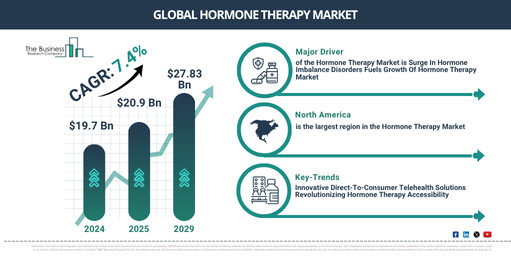
    In recent times, the market size for hormone therapy has significantly expanded. There is an expected growth from $19.7 billion in 2024 to $20.9 billion in 2025, with a compound annual growth rate (CAGR) of 6.1%. Medical improvements, evolution in women’s health, heightened awareness and education, clinical investigations and developments, as well as alterations in healthcare practices have all contributed to the growth experienced in the historic period.

    Expectations are set for the hormone therapy market size to experience robust growth in the ensuing years, reaching $27.83 billion in 2029 with a compound annual growth rate (CAGR) of 7.4%. The projected growth during this period can be attributed to various factors, such as the approach to personalized medicine, the dynamics of an aging population, alterations in women’s health strategies, emphasis on wellness and longevity, along with regulatory adaptations. Significant trends of the forecast period encompass changes in regulations and guidelines, evolving lifestyles coupled with stress, advanced research and development, as well as growing awareness and education.

    Download The Free Sample Report Here:

    https://www.thebusinessresearchcompany.com/sample.aspx?id=9246&type=smp

    What Market Forces Are Driving The Hormone Therapy Sector In 2025 And Beyond?

    The hormone therapy market’s advancement is primarily being driven by a growing number of hormone imbalance disorders. Hormone imbalance is a condition characterized by the body’s overproduction or underproduction of certain hormones. These disorders could include hypothyroidism, hypogonadism, and growth hormone deficiency, amongst others. There are several hormone therapies employed to combat these imbalances, inclusive of estrogen replacement, testosterone replacement, and insulin therapy. For instance, a study published by the London Medical Laboratory, a UK-based diagnostic and phlebotomy institution, predicted a 19% increase in substantial hormone imbalances in 2022 as compared to two years prior. Consequently, this increasing prevalence of hormone imbalance disorders is propelling the growth of the hormone therapy market.

    How Is The Global Hormone Therapy Market Categorized By Segments?

    The hormone therapy market covered in this report is segmented –

    1) By Therapy: Estrogen Hormone Replacement, Growth Hormone Replacement, Thyroid Hormone Replacement, Testosterone Replacement

    2) By Route Of Administration: Oral, Parenteral, Other Routes Of Administration

    3) By Indication: Menopause, Hypothyroidism, Growth Hormone Deficiency, Other Indications

    4) By Distribution Channel: Hospitals Pharmacies, Retail Pharmacies And Stores, Online Pharmacies

    Subsegments:

    1) By Estrogen Hormone Replacement: Systemic Estrogen Therapy, Local Estrogen Therapy, Combination Estrogen-Progestin Therapy

    2) By Growth Hormone Replacement: Recombinant Growth Hormones, Synthetic Growth Hormones

    3) By Thyroid Hormone Replacement: Levothyroxine, Liothyronine, Natural Desiccated Thyroid

    4) By Testosterone Replacement: Injectable Testosterone, Transdermal Testosterone, Oral Testosterone, Pellets

    What Long-Term Trends Are Likely To Affect The Hormone Therapy Market?

    Key players in the hormone therapy market are prioritizing the creation of innovative strategies such as the direct-to-consumer telehealth models for hormone therapy, with the aim to improve accessibility and convenience. The particular model permits patients to avail of hormone therapy services from a distance, eliminating the requirement for conventional face-to-face meetings. For example, LifeMD, a telehealth firm based in the US, collaborated with ASCEND Therapeutics, a US pharmaceutical company, in September 2023 to establish a consolidated direct-to-consumer telehealth model for hormone therapy, concentrating particularly on EstroGel to relieve menopausal symptoms. This collaboration enables patients to directly utilize LifeMD’s telehealth services via the EstroGel website, providing consultations with authorized healthcare professionals who can prescribe the drug and organize home delivery. By improving access and overcoming challenges such as extensive waiting times, this initiative strives to improve health results for women seeking treatment for menopause.

    Which Firms Are Considered Leaders In The Hormone Therapy Market Space?

    Major companies operating in the hormone therapy market include Abbott Laboratories, Bayer AG, Eli Lilly and Company, F. Hoffmann-La Roche, Merck KGaA, Mylan NV, Novartis AG, Novo Nordisk AS, Pfizer Inc., Abbvie Inc., Teva Pharmaceutical Industries Ltd., Perrigo Company Plc., Cipla Inc., Lupin Limited, Sun Pharmaceuticals Industries Ltd., Hikma Pharmaceuticals PLC., Johnsons & Johnsons Services Inc., Boehringer Ingelheim International GmbH, Sanofi S.A., AstraZeneca plc, TherapeuticsMD Inc., Amgen Inc., Genentech Inc., Dr. Reddy’s Laboratories Ltd, Allergan PLC, GlaxoSmithKline plc, Bristol-Myers Squibb Company, Takeda Pharmaceutical Company Limited, Astellas Pharma Inc., Daiichi Sankyo Company Limited

    Get The Full Report Here:

    https://www.thebusinessresearchcompany.com/report/hormone-therapy-global-market-report

    What Role Do Regional Policies And Investments Play In Hormone Therapy Market Expansion?

    North America was the largest region in the hormone therapy market in 2024. The regions covered in the hormone therapy market report are Asia-Pacific, Western Europe, Eastern Europe, North America, South America, Middle East, Africa

    Request For A Customized Report:

    https://www.thebusinessresearchcompany.com/customise?id=9246&type=smp

    About The Business Research Company:

    With over 15000+ reports from 27 industries covering 60+ geographies, The Business Research Company has built a reputation for offering comprehensive, data-rich research and insights. Armed with 1,500,000 datasets, the optimistic contribution of in-depth secondary research, and unique insights from industry leaders, you can get the information you need to stay ahead in the game.

    Get in touch with us:

    The Business Research Company: https://www.thebusinessresearchcompany.com/

    Americas +1 310-496-7795

    Asia +44 7882 955267 & +91 8897263534

    Europe +44 7882 955267

    Email us at info@tbrc.info

    Follow us on:

    LinkedIn: https://in.linkedin.com/company/the-business-research-company

    YouTube: https://www.youtube.com/channel/UC24_fI0rV8cR5DxlCpgmyFQ

    Global Market Model: https://www.thebusinessresearchcompany.com/global-market-model
  • Global Insights: Hepatitis Therapeutics Market Expected to Surpass $22.32 Billion by 2029

    Global Insights: Hepatitis Therapeutics Market Expected to Surpass $22.32 Billion by 2029

    Claim your 30% discount on Global Market Reports with code ONLINE30. Limited time only.

    Claim your 30% discount on Global Market Reports with code ONLINE30. Limited time only.

    What Are the Latest Market Insights for the Hepatitis Therapeutics Industry?

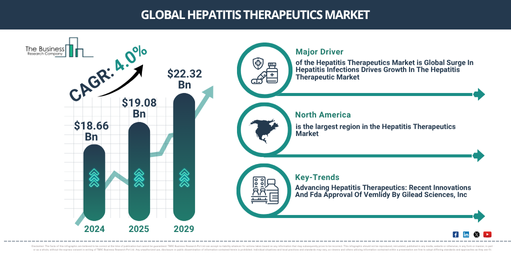
    In recent years, there has been a consistent surge in the hepatitis therapeutics market size. It is expected to escalate from $18.66 billion in 2024 to $19.08 billion in 2025, witnessing a compound annual growth rate (CAGR) of 2.2%. The expansion during the past years can be linked to the evolution of vaccines, antiviral drugs, initiatives in public health, research sponsorship, and the emergence of new therapies.

    The market size for hepatitis therapeutics is forecasted to experience consistent expansion in the coming years. Its growth is predicted to reach $22.32 billion by 2029, with a compound annual growth rate (CAGR) of 4.0%. This projected growth within the forecast period can be credited to ongoing research and development, worldwide health initiatives, transformation in patient care, government strategies, and increased awareness of the disease. The forecast period will also see significant trends such as patient advocacy and support, regular monitoring and check-ups, healthcare fairness, utilization of telemedicine and remote care, with a specific focus on eradicating hepatitis C.

    Download The Free Sample Report Here:

    https://www.thebusinessresearchcompany.com/sample.aspx?id=9956&type=smp

    What Forces Are Driving The Growth Of The Hepatitis Therapeutics Industry?

    The global increase in hepatitis infection is anticipated to drive the growth of the hepatitis therapeutic market. The escalation in hepatitis infection can be attributed to factors like limited access to healthcare and immunizations, a rise in the consumption of intravenous drugs, unregulated blood transfusion protocols, as well as subpar sanitation and hygiene conditions in certain regions globally. For example, the World Health Organization (WHO), a public health agency of the United States-based United Nations, stated in April 2022 that a minimum of 169 cases of acute hepatitis of unmasked origin have been reported from 11 countries. There are approximately 350 million people worldwide with viral hepatitis B or C, but for most, diagnosis and treatment remain elusive. As a result, the hepatitis therapeutic market is seeing expansion due to this surge in hepatitis infections.

    What Is The Overview Of Market Segmentation In The Hepatitis Therapeutics Industry?

    The hepatitis therapeutics market covered in this report is segmented –

    1) By Disease Type: Hepatitis A, Hepatitis B, Hepatitis C, Other Disease Types

    2) By Drug Class: Oral Antivirals, Immune Modulators

    3) By Distribution Channel: Hospital Pharmacies, Drug Stores And Retail Pharmacies, Online Providers

    Subsegments:

    1) By Hepatitis A: Vaccines, Post-Exposure Prophylaxis (PEP)

    2) By Hepatitis B: Antiviral Medications, Immune Modulators, Vaccines

    3) By Hepatitis C: Direct-Acting Antivirals (DAAs), Ribavirin, Interferon-Based Therapies

    4) By Other Disease Types: Hepatitis D, Hepatitis E, Other Viral Hepatitis Infections

    What Future Market Trends Are Projected For The Hepatitis Therapeutics Industry?

    The leading trend in the hepatitis therapeutics market is the emergence of product innovations. To secure their market positions, prominent businesses in this field are introducing novel products. For instance, Gilead Sciences, Inc., a biopharmaceutical firm based in the United States, gained FDA approval in November 2022 for Vemlidy (tenofovir alafenamide) – a medication developed for treating pediatric patients suffering from chronic hepatitis B virus infection. Initially approved by the FDA in 2016, Vemlidy is a specially targeted prodrug of tenofovir, intended for daily treatment of people harboring chronic hepatitis B virus infection and compensated liver disease. As per the American Liver Foundation, it is deemed a preferential or initial treatment for individuals with chronic HBV and compensated liver conditions.

    Who Are The Primary Players Operating Across The Global Hepatitis Therapeutics Market?

    Major companies operating in the hepatitis therapeutics market include Gilead Sciences Inc., Bristol-Myers Squibb Co., AbbVie Inc., Merck & Co. Inc., Johnson & Johnson Services Inc., Cipla Inc., F Hoffmann-La Roche Ltd., Biocon Limited, LAURUS Labs Ltd., Zydus Lifesciences Limited, Hetero Healthcare Limited, Novartis AG, Sanofi SA, GlaxoSmithKline plc, Lupin Ltd., Teva Pharmaceutical Industries Ltd., NATCO Pharma Limited, Pfizer Inc., AstraZeneca plc, Boehringer Ingelheim International GmbH, Eli Lilly and Company, Biocon Biopharmaceuticals Pvt. Ltd.

    Get The Full Report Here:

    https://www.thebusinessresearchcompany.com/report/hepatitis-therapeutics-global-market-report

    Which Region Offers The Most Growth Potential For The Hepatitis Therapeutics Market Through 2029?

    North America was the largest region in the hepatitis therapeutics market in 2024. Asia-Pacific is expected to be the fastest-growing region in the hepatitis therapeutics market report during the forecast period. The regions covered in the hepatitis therapeutics market report are Asia-Pacific, Western Europe, Eastern Europe, North America, South America, Middle East, Africa

    Request For A Customized Report:

    https://www.thebusinessresearchcompany.com/customise?id=9956&type=smp

    About The Business Research Company:

    With over 15000+ reports from 27 industries covering 60+ geographies, The Business Research Company has built a reputation for offering comprehensive, data-rich research and insights. Armed with 1,500,000 datasets, the optimistic contribution of in-depth secondary research, and unique insights from industry leaders, you can get the information you need to stay ahead in the game.

    Get in touch with us:

    The Business Research Company: https://www.thebusinessresearchcompany.com/

    Americas +1 310-496-7795

    Asia +44 7882 955267 & +91 8897263534

    Europe +44 7882 955267

    Email us at info@tbrc.info

    Follow us on:

    LinkedIn: https://in.linkedin.com/company/the-business-research-company

    YouTube: https://www.youtube.com/channel/UC24_fI0rV8cR5DxlCpgmyFQ

    Global Market Model: https://www.thebusinessresearchcompany.com/global-market-model
  • 2025 Analysis: Opportunities and Risks in the Evolving Headache Disorders Market

    2025 Analysis: Opportunities and Risks in the Evolving Headache Disorders Market

    Claim your 30% discount on Global Market Reports with code ONLINE30. Limited time only.

    Claim your 30% discount on Global Market Reports with code ONLINE30. Limited time only.

    What Are the Forecasted Growth Rate and Market Size of the Headache Disorders Market?

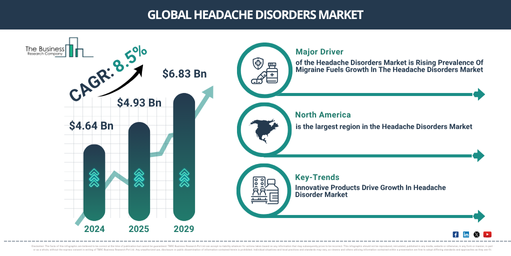
    In recent times, the market size for headache disorders has seen robust growth. The forecast suggests a growth from $4.64 billion in 2024 to $4.93 billion in 2025, with a compound annual growth rate (CAGR) of 6.2%. The substantial growth during the historic period is due to factors such as limited treatment alternatives, increased awareness, higher occurrence rates of headaches, development in healthcare infrastructure, changes in lifestyle, and elevated stress levels.

    The market size for headache disorders is projected to experience substantial expansion in the coming years, increasing to $6.83 billion by 2029 with a Compound Annual Growth Rate (CAGR) of 8.5%. The predicted growth within this period can be credited to the rise of digital health solutions, tailored medical treatments, heightened investments in research and development, the worldwide aging population, and a surge in research on neuroinflammation. The forecast period is set to witness significant trends such as advancements in treatment technology, personalized medicine, an amplified emphasis on preventive therapies, an enlarging repertoire of innovative therapies, and the increasing application of non-pharmaceutical methods.

    Download The Free Sample Report Here:

    https://www.thebusinessresearchcompany.com/sample.aspx?id=9452&type=smp

    Which Factor Is Shaping The Future Of The Headache Disorders Market?

    The headache disorders market is set to experience growth, driven by the rising occurence of migraines. Migraines, a specific type of headache, manifest as recurring bouts of moderate to extreme pain, often throbbing or pulsating, and typically concentrated on one side of the head. These headache disorders may lead to neurological disorders, resulting in debilitating pain, fatigue, and nausea, all of which may contribute to the onset of migraines. For instance, a study published in the UK-based, peer-reviewed Journal of Headache and Pain in April 2022 reported that 52.0% of the surveyed population had an active headache disorder of some kind. Within those numbers, 44.4% were male and 57.8% were female. Furthermore, migraines affected 14.0% of the population, including 8.6% males and 17.0% females. Meanwhile, tension-type headaches (TTH) were found in 26.0% of the population, affecting 23.4% males and 27.1% females. As such, the growing occurrence of migraines is fuelling demand within the headache disorders market.

    What Is The Segment-Wise Breakdown Of The Headache Disorders Market?

    The headache disorders market covered in this report is segmented –

    1) By Type: Migraine, Tension-Type Headache, Cluster Headache, Medication-Overuse Headache, Other Types

    2) By Treatment: Medication, Heat Therapy, Diet Changes, Acupuncture, Oxygen Therapy

    3) By Diagnosis: Complete Blood Count, Skull X-Rays, Sinus X-Rays, CT Scan, Magnetic Resonance Imaging (MRI)

    4) By Route Of Administration: Oral, Parenteral, Other Route Of Administrations

    5) By End-User: Hospitals, Specialty Clinics, Homecare, Other End-Users

    Subsegments:

    1) By Migraine: Chronic Migraine, Episodic Migraine, Migraine With Aura, Migraine Without Aura

    2) By Tension-Type Headache: Episodic Tension-Type Headache, Chronic Tension-Type Headache

    3) By Cluster Headache: Chronic Cluster Headache, Episodic Cluster Headache

    4) By Medication-Overuse Headache: Analgesic-Overuse Headache, Caffeine-Withdrawal Headache

    5) By Other Types: Sinus Headache, Hormonal Headache, Thunderclap Headache, Other Primary And Secondary Headaches

    Which Trends Are Redefining The Future Landscape Of The Headache Disorders Industry?

    Leading companies within the headache disorder market are concentrating on the creation of innovative products, such as migraine tablets, in order to expand treatment possibilities and boost patient results. Migraine tablets, which are aimed specifically at curtailing or stopping migraine attacks by focusing on certain migraine symptom pathways such as pain and inflammation, are making a significant impact. In January 2024, Akums Drugs & Pharmaceuticals, a pharmaceutical producer based in India, debuted the Lasmiditan Tablet. This tablet is a generic version of Eli Lilly’s REYVOW and targets acute migraine treatment. Lasmiditan, approved by the Drug Controller General of India (DCGI) as well as the US Food and Drug Administration (USFDA), works by binding to the 5-HT1F serotonin receptor, disrupting pain communications and reducing nerve inflammation. The suggested dosage varies between 50 mg and 100 mg, with a limit of one dose every 24 hours.

    Which Companies Hold The Largest Market Share In The Headache Disorders Sector?

    Major companies operating in the headache disorders market include Teva Pharmaceutical Industries Ltd., Hikma Pharmaceuticals PLC, Dr. Reddy’s Laboratories Ltd, Novartis AG, Eli Lilly and Company, F. Hoffmann-La Roche Ltd., Sun Pharmaceutical Industries Ltd, Emcure Pharmaceuticals Limited, Endo International plc, WorldMeds LLC, AstraZeneca plc, Bausch & Lomb Incorporated, Nichi-Iko Pharmaceutical Co, Upsher-Smith Laboratories LLC, Bristol-Myers Squibb Company, Bayer AG, Boehringer Ingelheim International GmbH., Gilead Sciences Inc., Amgen Inc., Pfizer Inc., GlaxoSmithKline plc, Johnson & Johnson, Merck & Co. Inc., AbbVie Inc., Eisai Co. Ltd., Impax Laboratories LLC, Lannett Company Inc., Lupin Pharmaceuticals Inc.

    Get The Full Report Here:

    https://www.thebusinessresearchcompany.com/report/headache-disorders-global-market-report

    How Does Regional Performance Compare Across The Headache Disorders Industry?

    North America was the largest region in the headache disorders market in 2024. The regions covered in the headache disorders market report are Asia-Pacific, Western Europe, Eastern Europe, North America, South America, Middle East, Africa

    Request For A Customized Report:

    https://www.thebusinessresearchcompany.com/customise?id=9452&type=smp

    About The Business Research Company:

    With over 15000+ reports from 27 industries covering 60+ geographies, The Business Research Company has built a reputation for offering comprehensive, data-rich research and insights. Armed with 1,500,000 datasets, the optimistic contribution of in-depth secondary research, and unique insights from industry leaders, you can get the information you need to stay ahead in the game.

    Get in touch with us:

    The Business Research Company: https://www.thebusinessresearchcompany.com/

    Americas +1 310-496-7795

    Asia +44 7882 955267 & +91 8897263534

    Europe +44 7882 955267

    Email us at info@tbrc.info

    Follow us on:

    LinkedIn: https://in.linkedin.com/company/the-business-research-company

    YouTube: https://www.youtube.com/channel/UC24_fI0rV8cR5DxlCpgmyFQ

    Global Market Model: https://www.thebusinessresearchcompany.com/global-market-model
  • In-Depth H1N1 Vaccine Market Report: Business Trends, Growth Factors, and Forecast to 2029

    In-Depth H1N1 Vaccine Market Report: Business Trends, Growth Factors, and Forecast to 2029

    Claim your 30% discount on Global Market Reports with code ONLINE30. Limited time only.

    Claim your 30% discount on Global Market Reports with code ONLINE30. Limited time only.

    What Is the Estimated Industry Valuation for the H1N1 Vaccine Sector?

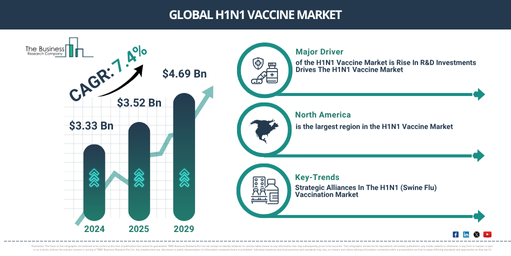
    The market for the H1N1 vaccine has been thriving and expanding robustly over the recent years. It is predicted to intensify from a value of $3.33 billion in 2024 to one of $3.52 billion in 2025, indicating a compound annual growth rate (CAGR) of 5.7%. Factors contributing to this increase during the historic period include prior influenza outbreaks, worldwide health security worry, the successful development and approval of vaccines, international vaccine drives, initiatives to educate the public about health, government subsidies and funding, along with the pharmaceutical industry’s adaptability.

    In the coming years, the H1N1 vaccine market is projected to observe considerable growth, eventually increasing to a market size of $4.69 billion in 2029 at a compound annual growth rate (CAGR) of 7.4%. This projected increment in the forecasted period can be credited to extensive research on comprehensive vaccines, international vaccine fairness programs, the fortification of public health resilience, the strengthening of global health governance, and the integration of H1N1 vaccination within routine immunization practices. Key trends within this forecasted period comprise global readiness for pandemics, flu vaccination schemes, advancements in vaccine development, research on cross-protection, global health drives, technological enhancements in vaccine production, expansion of production capacities, and data observation and surveillance.

    Download The Free Sample Report Here:

    https://www.thebusinessresearchcompany.com/sample.aspx?id=7881&type=smp

    What Forces Are Driving The Growth Of The H1N1 Vaccine Market?

    The escalation in outlay for research and development pursuits in immunology and vaccine science is anticipated to fuel the progress of the H1N1 vaccine market in the future. Vaccines serving the realm of immunology are crucial in thwarting infections and stimulating the production of antibodies to combat these infections. The study of immunology, a vital part of medical and biological sciences, is centered on comprehending the workings of the immune system. The H1N1 vaccine is a critical solution designed to enhance the production of antibodies, thereby providing immunity against a multitude of diseases. For example, in March 2023, as reported by the US-based National Institutes of Health (NIH), the swift creation of mRNA COVID-19 vaccines was facilitated by research backed by the NIH. By March 2022, over 577 million doses had been rolled out in the United States, potentially saving an estimated 2.4 million lives and averting 17 million hospitalizations. Consequently, the upswing in expenditure for research and development activities within immunology and vaccines is contributing heavily to the growth of the H1N1 vaccine market.

    How Is The H1N1 Vaccine Industry Segmented Across Key Parameters?

    The h1n1 vaccine market covered in this report is segmented –

    1) By Product Type: Inactivated Vaccine, Live Attenuated Vaccine

    2) By Route Of Administration: Intradermal Vaccination, Intramuscular Vaccination, Subcutaneous Vaccination

    3) By End Users: Hospitals, Clinics, Research And Diagnostic Laboratories, Other End Users

    Subsegments:

    1) By Inactivated Vaccine: Injectable Inactivated Vaccine, Intranasal Inactivated Vaccine

    2) By Live Attenuated Vaccine: Injectable Live Attenuated Vaccine, Intranasal Live Attenuated Vaccine

    What Notable Trends Are Shaping The Direction Of The H1N1 Vaccine Market?

    Partnerships between corporations are becoming a significant trend, and their popularity is on the rise in the H1N1 (swine flu) vaccination market. Firms in the H1N1 (swine flu) vaccination industry are prioritizing these partnerships to increase their market presence. For example, in August 2022, a major pharmaceutical corporation and the Open Orphan subsidiary hVIVO reached a $123 million agreement to develop a new strain of the H1N1 influenza challenge virus. This deal has bolstered the growth opportunities for both companies within the sector.

    Which Companies Currently Dominate The Competitive Landscape In The H1N1 Vaccine Industry?

    Major companies operating in the H1N1 vaccine market are Sanofi SA, GlaxoSmithKline PLC, CSL Limited, AstraZeneca Inc., Zydus Lifesciences Limited, Merck and Co.Inc., Novavax Inc., Panacea Biotec Ltd., Sinovac Biotech Ltd., Green Cross Corp., Pfizer Inc., Seqirus Ltd., Cipla Inc., Protein Sciences Corporation, Hualan Biological Engineering Inc., Changsheng Bio-Technology Co. Ltd., Bharat Biotech International Limited, Serum Institute of India Pvt. Ltd., Bio Farma Group, PT Kalbe Farma Tbk, Moderna Inc., CureVac NV, BioNTech SE, Inovio Pharmaceuticals Inc., Vaxart Inc., Altimmune Inc., Dynavax Technologies Corporation, VBI Vaccines Inc., GeoVax Labs Inc.

    Get The Full Report Here:

    https://www.thebusinessresearchcompany.com/report/h1n1-vaccine-global-market-report

    Which Geographic Regions Are Driving Demand In The H1N1 Vaccine Market?

    North America was the largest region in the H1N1 vaccine market in 2024. The regions covered in the H1N1 vaccine market report are Asia-Pacific, Western Europe, Eastern Europe, North America, South America, Middle East, Africa.

    Request For A Customized Report:

    https://www.thebusinessresearchcompany.com/customise?id=7881&type=smp

    About The Business Research Company:

    With over 15000+ reports from 27 industries covering 60+ geographies, The Business Research Company has built a reputation for offering comprehensive, data-rich research and insights. Armed with 1,500,000 datasets, the optimistic contribution of in-depth secondary research, and unique insights from industry leaders, you can get the information you need to stay ahead in the game.

    Get in touch with us:

    The Business Research Company: https://www.thebusinessresearchcompany.com/

    Americas +1 310-496-7795

    Asia +44 7882 955267 & +91 8897263534

    Europe +44 7882 955267

    Email us at info@tbrc.info

    Follow us on:

    LinkedIn: https://in.linkedin.com/company/the-business-research-company

    YouTube: https://www.youtube.com/channel/UC24_fI0rV8cR5DxlCpgmyFQ

    Global Market Model: https://www.thebusinessresearchcompany.com/global-market-model
  • Glycopeptide Antibiotics Industry Poised for Rapid Expansion, Projected to Hit $5.38 Billion by 2029

    Glycopeptide Antibiotics Industry Poised for Rapid Expansion, Projected to Hit $5.38 Billion by 2029

    Claim your 30% discount on Global Market Reports with code ONLINE30. Limited time only.

    Claim your 30% discount on Global Market Reports with code ONLINE30. Limited time only.

    How Large Is the Glycopeptide Antibiotics Market Expected to Be in 2029?

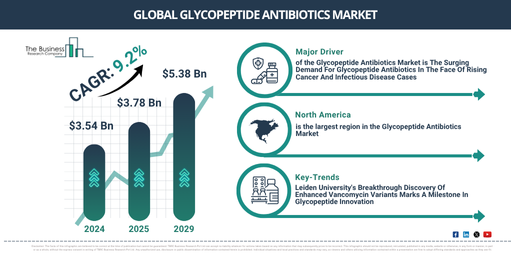
    In recent times, the glycopeptide antibiotics market has been experiencing robust growth. The market, which was worth $3.54 billion in 2024, is anticipated to increase to $3.78 billion in 2025, with a Compound Annual Growth Rate (CAGR) of 7.0%. The factors contributing to the growth during the historic period include the rising antibiotic resistance, the surge in infectious diseases, supportive governmental initiatives, increased healthcare expenses, and the global spread of infectious diseases.

    The market size for glycopeptide antibiotics is forecasted to significantly expand in the ensuing years. It is projected to reach $5.38 billion in 2029, with a compound annual growth rate (CAGR) of 9.2%. This anticipated growth during the forecast period can be primarily attributed to the rise of new infectious diseases, an aging population, ongoing issues with antibiotic resistance, investments and advancements in research and development, and the growth of healthcare infrastructure. Key trends expected during this period include growing antibiotic resistance, progress in research and development, the demand spurred by global health crises, collaboration efforts for antibiotic management, and market growth in developing economies.

    Download The Free Sample Report Here:

    https://www.thebusinessresearchcompany.com/sample.aspx?id=9444&type=smp

    What Are The Contributors To Demand In The Glycopeptide Antibiotics Market?

    Escalating cancer and infectious disease cases are predicted to stimulate the expansion of the glycopeptide antibiotics market. Cancer is a condition characterized by unrestricted proliferation and spread of certain body cells to different regions in the body. Conversely, infectious diseases are ailments induced by organisms like bacteria, viruses, fungi, or parasites. Glycopeptide antibiotics, used in the treatment of infectious ailments caused by methicillin-resistant staphylococcus aureus, streptococcus, or enterococcus bacteria resistant to beta-lactams and other antibiotics, are crucial in this landscape. For cancer patients, the antibiotics enhance the effectiveness of radiotherapy by removing not only the targeted tumour cells but also distant cancer cells deep within the body. An example is the data from the American Cancer Society, a US-based not-for-profit health organization committed to eradicating cancer. This body recorded 1.9 million new cancer cases and 609,360 cancer deaths in the US in 2022, amounting to 1,670 deaths daily. So, the increasing prevalence of cancer and infectious diseases is set to accelerate the growth of the glycopeptide antibiotics market.

    What Segmentation Categories Are Included In The Glycopeptide Antibiotics Market Analysis?

    The glycopeptide antibiotics market covered in this report is segmented –

    1) By Drug: Vancomycin, Dalbavancin, Oritavancin, Other Drugs

    2) By Route of Administration: Oral, Parenteral, Other Routes

    3) By Indication: Skin And Structure Infection, Meningitis, Clostridioides Difficile Infection, Enterocolitis, Other Indications

    4) By End-User: Hospitals, Specialty Clinics, Homecare, Other End-Users

    Subsegments:

    1) By Vancomycin: Vancomycin Injection, Vancomycin Oral Solution, Vancomycin Capsules, Vancomycin Powder for Solution

    2) By Dalbavancin: Dalbavancin IV (Intravenous) Formulation, Dalbavancin Powder for Injection

    3) By Oritavancin: Oritavancin IV (Intravenous) Formulation,Oritavancin Powder for Injection

    4) By Other Drugs: Teicoplanin, Linezolid, Daptomycin, Other Glycopeptide and Lipoglycopeptide Antibiotics

    4o

    What Upcoming Trends Are Expected To Impact The Glycopeptide Antibiotics Market Globally?

    The enhancement of product creativity is an emerging trend noticed within the glycopeptide antibiotics market. Giant corporations within the market are investing in the development of innovative medicines to secure their market standing. For example, in October 2022, Leiden University, based in the Netherlands, introduced new forms of the antibiotic, vancomycin. By attaching a set of molecules to an existing vancomycin molecule, they were successful in creating an upgraded version of the antibiotic vancomycin. The new strand of vancomycin is found to be considerably more potent against gram-positive bacteria, by up to a thousand times, than its previous version. It also exhibits lower degrees of nephrotoxicity compared to the commonly-used polymyxin antibiotics. Also, it was developed to overcome the limitation of vancomycin that is only potent against gram-positive strains and incapable of penetrating the outer membrane of gram-negative bacteria.

    Who Are The Top-Ranked Companies In The Glycopeptide Antibiotics Market Today?

    Major companies operating in the glycopeptide antibiotics market include ANI Pharmaceuticals Inc., Fresenius SE & Co. KGaA, Pfizer Inc., Novartis AG, Hikma Pharmaceuticals Plc., Aurobindo Pharma Limited, Abbvie Inc., Cumberland Pharmaceuticals Inc., Janssen Global, Bristol-Myers Squibb Company, Shenwei Pharmaceutical Hainan Co. Ltd., Zhejiang Hisun Pharmaceutical Co. Ltd., Alvogen, Bayer AG, Merck & Co. Inc., Teva Pharmaceutical Industries Ltd., Sanofi SA, GlaxoSmithKline plc, Johnson & Johnson, AstraZeneca, Boehringer Ingelheim GmbH, Cipla Inc.

    Get The Full Report Here:

    https://www.thebusinessresearchcompany.com/report/glycopeptide-antibiotics-global-market-report

    How Is Glycopeptide Antibiotics Market Adoption Varying Across Different Regions And Sectors?

    North America was the largest region in the glycopeptide antibiotics market in 2024. The regions covered in the glycopeptide antibiotics market report are Asia-Pacific, Western Europe, Eastern Europe, North America, South America, Middle East, Africa

    Request For A Customized Report:

    https://www.thebusinessresearchcompany.com/customise?id=9444&type=smp

    About The Business Research Company:

    With over 15000+ reports from 27 industries covering 60+ geographies, The Business Research Company has built a reputation for offering comprehensive, data-rich research and insights. Armed with 1,500,000 datasets, the optimistic contribution of in-depth secondary research, and unique insights from industry leaders, you can get the information you need to stay ahead in the game.

    Get in touch with us:

    The Business Research Company: https://www.thebusinessresearchcompany.com/

    Americas +1 310-496-7795

    Asia +44 7882 955267 & +91 8897263534

    Europe +44 7882 955267

    Email us at info@tbrc.info

    Follow us on:

    LinkedIn: https://in.linkedin.com/company/the-business-research-company

    YouTube: https://www.youtube.com/channel/UC24_fI0rV8cR5DxlCpgmyFQ

    Global Market Model: https://www.thebusinessresearchcompany.com/global-market-model

  • 2025 Post-Traumatic Stress Disorder Therapeutics Market Outlook: Opportunities, Growth Trends, and Strategic Analysis

    2025 Post-Traumatic Stress Disorder Therapeutics Market Outlook: Opportunities, Growth Trends, and Strategic Analysis

    Claim your 30% discount on Global Market Reports with code ONLINE30. Limited time only.

    Claim your 30% discount on Global Market Reports with code ONLINE30. Limited time only.

    How Will the Post-Traumatic Stress Disorder Therapeutics Market Evolve in Terms of Growth and Size by 2029?

    In recent years, the market size for therapeutics dealing with post-traumatic stress disorder has seen subtle yet consistent growth. It is projected to progress from a valuation of $1.15 billion in 2024 up to $1.2 billion in 2025 while fostering a compound annual growth rate (CAGR) of 4.1%. Factors driving the growth during this historical period can be traced back to heightened awareness, propensity of trauma instances, governmental endeavors, advancements in diagnostic resources, diminishing stigma, psychological assistance initiatives, and concentrated healthcare for veterans.

    Expectations are for the therapeutics market for post-traumatic stress disorder to consistently grow in the years to come, ultimately reaching a value of $1.36 billion in 2029, equating to a compound annual growth rate (CAGR) of 3.2%. This anticipated growth during the forecast period may be due to increased availability of mental health services, policies from the government concerning mental health, biological and neurological investigations, instances of PTSD in civilian populations, and planning for crisis response. The prediction period is also likely to witness significant trends such as the incorporation of digital therapeutics, progress in pharmacological treatment methods, techniques related to neurostimulation and brain stimulation, therapy assisted by psychedelics, and joint research endeavours.

    Download The Free Sample Report Here:

    https://www.thebusinessresearchcompany.com/sample.aspx?id=9214&type=smp

    What factors are expected to fuel Post-Traumatic Stress Disorder Therapeutics market growth in the coming years?

    The escalating number of post-traumatic stress disorder (PTSD) cases worldwide is projected to fuel the expansion of the PTSD therapeutics market in the future. PTSD is a syndrome that individuals suffer from after experiencing terrifying, astounding, or perilous incidents. Treatments for post-traumatic stress disorder, including psychotherapy and medication, can assist individuals in regaining control over their lives. For instance, the Ministry of Defence (MoD) Department of Community Mental Health (DCMH), in March 2024, revealed that a UK-based company that provides mental health services to active personnel and reservists reported an increase in PTSD assessments from 266 cases in 2022 to 320 cases in 2023. This significant increase in documented cases demonstrates the growing burden of PTSD, thus driving the progress of the PTSD therapeutics market.

    What Are The Key Findings From The Segmentation Analysis Of The Post-Traumatic Stress Disorder Therapeutics Market?

    The post-traumatic stress disorder therapeutics market covered in this report is segmented –

    1) By Drug Class: Antidepressants, Anti-Anxiety, Antihypertensive, Monoamine Oxidase (MAOs), Antipsychotics Or Second Generation Antipsychotics (SGOs), Beta-Blockers, Other Classes

    2) By Age Group: Pediatric, Geriatric, Adult

    3) By End User: Mental Health Center, Hospitals, Outpatient Clinics, Other End Users

    Subsegments:

    1) By Antidepressants: Selective Serotonin Reuptake Inhibitors (SSRIs), Serotonin-Norepinephrine Reuptake Inhibitors (SNRIs)

    2) By Anti-Anxiety: Benzodiazepines, Buspirone

    3) By Antihypertensive: Prazosin, Clonidine

    4) By Monoamine Oxidase Inhibitors (MAOs): Traditional MAOIs, Reversible MAOIs

    5) By Antipsychotics (Second Generation Antipsychotics – SGOs): Risperidone, Quetiapine

    6) By Beta-Blockers: Propranolol, Atenolol

    7) By Other Classes: Mood Stabilizers, Adjunctive Therapies

    Which Trends Are Expected To Shape The Future Of The Post-Traumatic Stress Disorder Therapeutics Market?

    In the post-traumatic stress disorder therapeutics market, strategic partnerships, funding, and investments have become a prevalent trend. Prominent companies in the market are forming strategic alliances and investing in various firms to consolidate their market presence. For instance, in January 2022, a cross-disciplinary research group from Monash University including Professor Dan Lubman AM, Dr. Shalini Arunogiri, and Dr. Paul Liknaitzky, was granted over $1.9 million to examine the efficiency of MDMA-assisted psychological therapy for alcohol use disorder (AUD) and post-traumatic stress disorder (PTSD). This endeavor is one among the seven clinical trials conducted under the Medical Research Future Fund (MRFF), announced by the Federal government in the same month, to investigate the application of potentially revolutionary combination medicines for severe mental disorders.

    What Are The Most Active Companies In The Post-Traumatic Stress Disorder Therapeutics Market Today?

    Major companies operating in the post-traumatic stress disorder therapeutics market include Pfizer Inc., GlaxoSmithKline plc, Bionomics Limited, Otsuka Pharmaceutical Co Ltd., Eli Lilly and Company, AstraZeneca plc, Tonix Pharmaceuticals Holding Corp., Freespira Inc., MicroTransponder Inc., Compass Pathways plc, Boehringer Ingelheim International GmbH, Halucenex Life Sciences Inc., Bionorica SE, MAPS Europe BV, Hoffmann-La Roche Ltd., Praxis Precision Medicines Inc., H Lundbeck A/S, Johnson & Johnson, Sanofi SA, Takeda Pharmaceutical Company Limited, Merck KGaA, Jazz Pharmaceuticals plc

    Get The Full Report Here:

    https://www.thebusinessresearchcompany.com/report/post-traumatic-stress-disorder-therapeutics-global-market-report

    Which Regional Markets Are Attracting The Most Investment In Post-Traumatic Stress Disorder Therapeutics?

    North America was the largest region in the post-traumatic stress disorder therapeutics market in 2024. Asia-Pacific is expected to be the fastest-growing region in the forecast period. The regions covered in the post-traumatic stress disorder therapeutics market report are Asia-Pacific, Western Europe, Eastern Europe, North America, South America, Middle East, Africa

    Request For A Customized Report:

    https://www.thebusinessresearchcompany.com/customise?id=9214&type=smp

    About The Business Research Company:

    With over 15000+ reports from 27 industries covering 60+ geographies, The Business Research Company has built a reputation for offering comprehensive, data-rich research and insights. Armed with 1,500,000 datasets, the optimistic contribution of in-depth secondary research, and unique insights from industry leaders, you can get the information you need to stay ahead in the game.

    Get in touch with us:

    The Business Research Company: https://www.thebusinessresearchcompany.com/

    Americas +1 310-496-7795

    Asia +44 7882 955267 & +91 8897263534

    Europe +44 7882 955267

    Email us at info@tbrc.info

    Follow us on:

    LinkedIn: https://in.linkedin.com/company/the-business-research-company

    YouTube: https://www.youtube.com/channel/UC24_fI0rV8cR5DxlCpgmyFQ

    Global Market Model: https://www.thebusinessresearchcompany.com/global-market-model

  • Global GLP-1 Receptor Agonist Market Forecast to Reach $17.36 Billion by 2029, Driven by 5.4% CAGR

    Global GLP-1 Receptor Agonist Market Forecast to Reach $17.36 Billion by 2029, Driven by 5.4% CAGR

    Claim your 30% discount on Global Market Reports with code ONLINE30. Limited time only.

    Claim your 30% discount on Global Market Reports with code ONLINE30. Limited time only.

    What Is the Outlook for the GLP-1 Receptor Agonist Market Heading Into 2029?

    The market for GLP-1 receptor agonist has been consistently expanding over the past few years. It is expected to rise from $13.58 billion in 2024 to $14.09 billion in 2025, with a compound annual growth rate (CAGR) of 3.8%. The expansion during the historical period can be credited to an increase in diabetes cases, clinical effectiveness, patient awareness and acceptance, global health initiatives, and a preference among patients for injectable treatments.

    Expectations suggest the GLP-1 receptor agonist market will experience substantial growth in the coming years, increasing to $17.36 billion by the year 2029 at a compound annual growth rate (CAGR) of 5.4%. Factors contributing to this anticipated growth during the forecast period include increased focus on lifestyle management, the rise of personalized medicine, wider indications, the evolution of next-generation products, and incorporation into combined therapies. The forecast period also sees a shift towards introducing oral formulations, prioritizing combination therapies, building strategic partnerships and collaborations, refining reimbursement policies and accessibility, and adopting patient-focused approaches.

    Download The Free Sample Report Here:

    https://www.thebusinessresearchcompany.com/sample.aspx?id=9631&type=smp

    Which Factors Are Pushing The GLP-1 Receptor Agonist Market Forward?

    The enhanced prevalence of diabetes is foreseen to boost the GLP-1 receptor agonist market. Diabetes, a persistent disease, emerges when there is insufficient insulin production from the pancreas, or when the body is unable to effectively use the provided insulin. Elevated blood sugar levels are a sign of this metabolic disorder, diabetes mellitus. The GLP-1 receptor agonist is applied in diabetes treatment to encourage the body to generate increased insulin levels, consequently reducing blood sugar levels. Thus, an uptick in diabetes cases will enhance the market growth. For example, the UK’s Office for Health Improvement and Disparities reported in March 2024 that between March 2022 and March 2023, there was a 22% increase in type 1 diabetes patients receiving all eight recommended care processes, while in type 2 diabetes, it rose by 21%. In addition, the percentage of people achieving their HbA1c target levels reached 37.9%, representing the highest value ever documented by the National Diabetes Audit (NDA). As a result, the escalating occurrence of diabetes is fuelling the GLP-1 receptor agonist market.

    Which Segment Held The Largest Share In The GLP-1 Receptor Agonist Market In 2025?

    The glp-1 receptor agonist market covered in this report is segmented –

    1) By Drug Class: Exenatide, Liraglutide, Dulaglutide, Lixisenatide, Other Drugs

    2) By Route Of Administration: Parenteral, Oral

    3) By End Users: Hospitals, Surgical Clinics, Other Users

    Subsegments:

    1) By Exenatide: Byetta, Bydureon

    2) By Liraglutide: Victoza, Saxenda

    3) By Dulaglutide: Trulicity

    4) By Lixisenatide: Adlyxin

    5) By Other Drugs: Semaglutide, Tirzepatide, Others

    How Are Key Trends Driving Expansion In The GLP-1 Receptor Agonist Industry?

    In the GLP-1 receptor agonist market, a prominent trend has emerged in the form of product innovations. The major players in this sector are endeavoring to bring forth innovative solutions as a strategy to consolidate their market presence. For instance, in May 2022, Eli Lilly and Company, a pharmaceutical establishment based in the U.S., which is devoted to improving lives through their medicines, introduced their newly FDA-approved product, Mounjaro, a GIP and GLP-1 receptor agonist. This product has been uniquely designed with a single molecule that activates the body’s receptors for the incretin hormones GIP and GLP-1. It is provided as an auto-injector pen with a previously attached, concealed needle, which users are not required to manage or see and is available in 6 different doses.

    Which Organizations Are Driving Progress In The GLP-1 Receptor Agonist Industry?

    Major companies operating in the GLP-1 receptor agonist market include Novo Nordisk A/S, Sanofi SA, Eli Lilly and Company, AstraZeneca Inc., Boehringer Ingelheim International GmbH, Hanmi Pharm Co. Ltd., Pfizer Inc., Amgen Inc., Innovent Biologics Inc., Jiangsu Hengrui Medicine Co., Sun Pharmaceuticals Industries Ltd., PegBio Co. Ltd., Zealand Pharma A/S, Bristol-Myers Squibb Company, Chongqing Lummy Pharmaceutical Co. Ltd., Daiichi Sankyo Company Limited, Dong-A ST Co. Ltd., Eisai Co. Ltd., HanAll Biopharma Co. Ltd., Ipsen SA, Johnson & Johnson, Merck & Co. Inc., Novartis AG

    Get The Full Report Here:

    https://www.thebusinessresearchcompany.com/report/glp-1-receptor-agonist-global-market-report

    Which Region Is Expected To Experience The Highest Growth In The GLP-1 Receptor Agonist Industry?

    North America was the largest region in the GLP-1 receptor agonist market in 2024. Asia-Pacific is expected to be the fastest-growing region in the GLP-1 receptor agonist market report during the forecast period. The regions covered in the GLP-1 receptor agonist market report are Asia-Pacific, Western Europe, Eastern Europe, North America, South America, Middle East, Africa

    Request For A Customized Report:

    https://www.thebusinessresearchcompany.com/customise?id=9631&type=smp

    About The Business Research Company:

    With over 15000+ reports from 27 industries covering 60+ geographies, The Business Research Company has built a reputation for offering comprehensive, data-rich research and insights. Armed with 1,500,000 datasets, the optimistic contribution of in-depth secondary research, and unique insights from industry leaders, you can get the information you need to stay ahead in the game.

    Get in touch with us:

    The Business Research Company: https://www.thebusinessresearchcompany.com/

    Americas +1 310-496-7795

    Asia +44 7882 955267 & +91 8897263534

    Europe +44 7882 955267

    Email us at info@tbrc.info

    Follow us on:

    LinkedIn: https://in.linkedin.com/company/the-business-research-company

    YouTube: https://www.youtube.com/channel/UC24_fI0rV8cR5DxlCpgmyFQ

    Global Market Model: https://www.thebusinessresearchcompany.com/global-market-model