Category: Pharmaceuticals

  • Artificial Intelligence (AI) In Predictive Toxicology Industry Valued at $1.84 Billion by 2029 With CAGR of 30% | Size and Share Insights

    Artificial Intelligence (AI) In Predictive Toxicology Industry Valued at $1.84 Billion by 2029 With CAGR of 30% | Size and Share Insights

    Claim your 30% discount on Global Market Reports with code ONLINE30. Limited time only.

    What Is the Forecast for the Artificial Intelligence (AI) In Predictive Toxicology Market from 2024 to 2025?

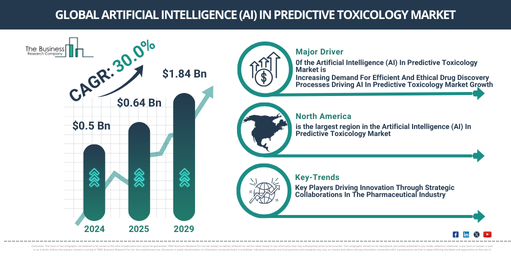
    There has been significant growth in recent years in the size of the market for artificial intelligence (AI) in predictive toxicology. It is predicted to expand from $0.5 billion in 2024 to $0.64 billion in 2025, representing a compound annual growth rate (CAGR) of 30.0%. The increase during the historical period can be linked to amplified regulatory scrutiny regarding toxicity evaluation, heightened worries about the safety of chemicals, access to extensive datasets for model training, the rising expense and ethical questions around animal testing, and the need for quicker and more economical methods of toxicity screening.

    What Is the Projected Market Size of the Artificial Intelligence (AI) In Predictive Toxicology Market?

    Predictions anticipate a significant increase in the size of the artificial intelligence (AI) market in predictive toxicology. In the coming years, the market could reach a whopping $1.84 billion in 2029, growing at a compound annual growth rate (CAGR) of 30.0%. Numerous factors, such as the advent of explainable AI in toxicology predictions, the need for personalized toxicity evaluations, the standardization and regulatory approval of AI-based toxicity expectations, the increase in outsourcing services for predictive toxicology, and the widening applications of AI in drug discovery and development, contribute to growth during the forecast period. The era is marked by noticeable trends such as the convergence towards 3D cell culture models for toxicity testing, the emergence of federated learning methods for cooperative toxicity prediction, the utilization of generative models for forecasting chemical toxicity pathways, the integration of natural language processing for toxicity data extraction from literature, and the growth of virtual screening platforms for prioritizing chemical testing.

    Download The Free Sample Report Here:

    https://www.thebusinessresearchcompany.com/sample.aspx?id=14253&type=smp

    Who are the Major Competitors in the Artificial Intelligence (AI) In Predictive Toxicology Market Outlook?

    Major companies operating in the artificial intelligence (AI) in predictive toxicology market are Laboratory Corporation of America Holdings (LabCorp), Eurofins Scientific SE, Wuxi AppTec, Charles River Laboratories International, Medidata Solutions Inc., Certara Inc., Schrödinger, Merative L.P., Molecular Devices LLC, Envigo (Inotiv Inc.), Instem plc, Simulations Plus, Cyprotex, Recursion Pharmaceuticals, Exscientia PLC, BIOVIA Corporation, Lhasa Limited, Chemaxon Ltd., Insilico Medicine Inc., Algorithme Pharma, CiToxLAB, ArisGlobal, Benevolent AI, Berg Health, Cyclica Therapeutics Inc., Celsius Therapeutics, Biovista Inc., BioTeam Inc.

    What Is Fueling Growth in the Artificial Intelligence (AI) In Predictive Toxicology Market?

    The surge in demand for more effective and ethical procedures in drug discovery is predicted to stimulate the expansion of the artificial intelligence (AI) in predictive toxicology market. The intricate and evolving nature of drug discovery, which includes comprehensive examinations, creation, and testing of chemical compounds to identify potential treatment agents to combat diseases and improve overall health, triggers the requirement for efficient and ethical drug discovery processes. The said processes employ cutting-edge tech and conscientious research methods to manufacture new medicinal agents. The growing incidents of chronic illnesses, the increasing inclination towards personalized treatment, and higher prevalence of illnesses related to aging drive the demand for these processes. Predictive toxicology powered by AI boosts the drug discovery systems by competently scrutinizing extensive data sets, which helps to foresee possible toxicological outcomes. This hastens the drug development process while also maintaining ethical standards. For example, the Belgium-based European Federation of Pharmaceutical Industries and Associations (EFPIA) reported in June 2023 that Europe’s total pharmaceutical R&D expenditure amounted to $49,500 million (€44,500 million) in 2022, which marks an increase of roughly 6.45% from $46,500 million (€42,533 million) in 2021. As a result, the booming demand for efficient and ethical processes in drug discovery is propelling the growth of the AI in predictive toxicology market.

    Request For A Customized Report:

    https://www.thebusinessresearchcompany.com/customise?id=14253&type=smp

    Which Artificial Intelligence (AI) In Predictive Toxicology Market Segments Are Growing the Fastest?

    The artificial intelligence (AI) in predictive toxicology market covered in this report is segmented –

    1) By Component: Solution, Services

    2) By Technology: Machine Learning, Natural Language Processing, Computer Vision, Other Technologies

    3) By Toxicity Endpoints: Genotoxicity, Hepatotoxicity, Neurotoxicity, Cardiotoxicity, Other Toxicity Endpoints

    4) By End User: Pharmaceutical And Biotechnology Companies, Chemical And Cosmetics, Contract Research Organizations, Other End Users

    Subsegments:

    1) By Solution: Software Platforms, Data Analysis Tools, Predictive Modeling Solutions, Database And Information Systems

    2) By Services: Consulting Services, Training And Support Services, Data Management And Integration Services, Research And Development Services

    Which Industry Trends Are Shaping the Future of the Artificial Intelligence (AI) In Predictive Toxicology Market?

    A trend in the AI predictive toxicology market is for major industry players to boost their market share and spur innovation through strategic collaborations. These partnerships aim to elevate the prediction and analysis of chemical and pharmaceutical toxicity through the use of artificial intelligence and machine learning. For instance, a UK-based AI research and development firm, SyntheticGestalt, known for its AI drug discovery solutions, fused its operations with Enamine, a Ukraine-based company supplying chemical building blocks and drug discovery services, in January 2024. They then jointly developed AI models designed to generate synthetically accessible biologically active compounds and optimize their physicochemical and ADME/Tox (Absorption, Distribution, Metabolism, and Excretion or Toxicity) attributes. These models will be used in SyntheticGestalt’s compound discovery work, for the benefit of both academic researchers and pharmaceutical companies. Enamine has made their extensive Enamine REAL database, complete with 38 billion molecules, available as part of this partnership. This database will be incorporated into SyntheticGestalt’s Drug Discovery Service, wherein their proprietary AI models will predict the physicochemical and ADME or Tox properties of compounds. This service promises to offer enhanced alternative compounds swiftly for those with complications.

    Access The Full Report Here:

    https://www.thebusinessresearchcompany.com/report/artificial-intelligence-ai-in-predictive-toxicology-global-market-report

    Which Countries Are Leading the Artificial Intelligence (AI) In Predictive Toxicology Market?

    North America was the largest region in the artificial intelligence (AI) in predictive toxicology market in 2024. Asia-Pacific is expected to be the fastest-growing region in the forecast period. The regions covered in the artificial intelligence (AI) in predictive toxicology market report are Asia-Pacific, Western Europe, Eastern Europe, North America, South America, Middle East, Africa.

    Purchase The Full Report Today:

    https://www.thebusinessresearchcompany.com/purchaseoptions.aspx?id=14253

    This Report Delivers Insight On:

    1. How big is the artificial intelligence (ai) in predictive toxicology market, and how is it changing globally?

    2. Who are the major companies in the artificial intelligence (ai) in predictive toxicology market, and how are they performing?

    3. What are the key opportunities and risks in the artificial intelligence (ai) in predictive toxicology market right now?

    4. Which products or customer segments are growing the most in the artificial intelligence (ai) in predictive toxicology market?

    5. What factors are helping or slowing down the growth of the artificial intelligence (ai) in predictive toxicology market?

    About The Business Research Company:

    With over 15000+ reports from 27 industries covering 60+ geographies, The Business Research Company has built a reputation for offering comprehensive, data-rich research and insights. Armed with 1,500,000 datasets, the optimistic contribution of in-depth secondary research, and unique insights from industry leaders, you can get the information you need to stay ahead in the game.

    Get in touch with us:

    The Business Research Company: https://www.thebusinessresearchcompany.com/

    Americas +1 310-496-7795

    Asia +44 2071930708

    Europe +44 7882 955267

    Email us at info@tbrc.info

    Follow us on:

    LinkedIn: https://in.linkedin.com/company/the-business-research-company

    YouTube: https://www.youtube.com/channel/UC24_fI0rV8cR5DxlCpgmyFQ

    Global Market Model: https://www.thebusinessresearchcompany.com/global-market-model
  • Artificial Intelligence (AI) In Biopharmaceuticals Market to Reach $6.67 Billion by 2029 | Key Drivers and Future Outlook

    Artificial Intelligence (AI) In Biopharmaceuticals Market to Reach $6.67 Billion by 2029 | Key Drivers and Future Outlook

    Claim your 30% discount on Global Market Reports with code ONLINE30. Limited time only.

    What Is the Growth Rate of the Artificial Intelligence (AI) In Biopharmaceuticals Market?

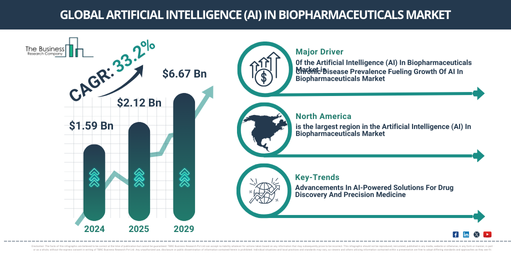
    The market size of artificial intelligence (AI) in biopharmaceuticals has seen substantial growth in recent times. The size is projected to rise from $1.59 billion in 2024 to $2.12 billion in 2025, demonstrating a compound annual growth rate (CAGR) of 33.1%. The growth witnessed in the historical period is mainly due to developments in computational ability, growth in biomedical data, shifts towards precision medicine, and regulatory guidance and support.

    What Growth Rate Is Forecasted for the Artificial Intelligence (AI) In Biopharmaceuticals Market by 2029?

    In the coming years, the market size for artificial intelligence (AI) in biopharmaceuticals is projected to experience significant expansion. The market is forecasted to increase to $6.67 billion in 2029, with a compound annual growth rate (CAGR) of 33.2%. This upward trend during the predicted period can be credited to the progress in computational biology, the integration of multi-modal data, the synergy between AI and life sciences, favorable regulatory environments, and the adoption of ethical AI principles. Key trends for the forecast period embrace the incorporation of multi-omics data, the use of AI in drug creation and discovery, the understanding and acceptance of AI in regulatory circles, technological progress, regulatory advancements, and fresh emerging opportunities.

    Download The Free Sample Report Here:

    https://www.thebusinessresearchcompany.com/sample.aspx?id=14251&type=smp

    Which Key Companies Are Shaping the Future of the Artificial Intelligence (AI) In Biopharmaceuticals Market?

    Major companies operating in the artificial intelligence (AI) in biopharmaceuticals market are Apple Inc., Google LLC, Microsoft Corporation, Tencent Holdings Limited, Amazon Web Services Inc., International Business Machines Corporation, Exscientia Limited, NVIDIA Corporation, Amgen Inc., DeepMind Technologies Limited, Schrödinger Inc., XtalPi Inc., ConcertAI Inc., Insilico Medicine Inc., Recursion Pharmaceuticals, BenevolentAI, BioXcel Therapeutics, Atomwise Inc., BioAge Labs Inc., GNS Healthcare, Berg Health, Deep 6 AI Inc., Cloud Pharmaceuticals Inc., Numerate Inc., AI Therapeutics, Envisagenics, twoXAR Inc., Cyclica Inc.

    Which Factors Are Driving Demand in the Artificial Intelligence (AI) In Biopharmaceuticals Industry?

    The escalating occurrence of persistent illnesses is projected to stimulate the development of artificial intelligence (AI) in the biopharmaceuticals market. Chronic illnesses are enduring conditions that typically advance gradually and can last for several years or even a lifetime. The triggers primarily include lifestyle habits, an elderly population, genetic factors, and environmental elements. AI used in biopharmaceuticals is progressively being employed to control chronic diseases since it is capable of analyzing vast quantities of varied data, pinpointing patterns, and customizing treatment strategies. A case in point, in November 2023, the Department of Health and Human Services, a US government department, reported an increase of 11 percent in new cases of chronic hepatitis B in 2022 compared to 2021. Hence, the escalating occurrence of chronic diseases is fueling the growth of artificial intelligence (AI) in the biopharmaceuticals market.

    Request For A Customized Report:

    https://www.thebusinessresearchcompany.com/customise?id=14251&type=smp

    How Is the Artificial Intelligence (AI) In Biopharmaceuticals Market Segmented by Several Divisions?

    The artificial intelligence (AI) in biopharmaceuticals market covered in this report is segmented –

    1) By Offering: Hardware, Software, Services

    2) By Deployment: Cloud, On-Premises

    3) By Technology: Machine Learning, Natural Language Processing, Deep Learning, Other Technologies

    4) By Application: Business Process And Supply Chain, Drug Discovery, Medical Imaging And Diagnostics, Precision Medicine

    5) By End-Users: Manufacturers, Contract Research Organizations, Academic And Government Research Institutes

    Subsegments:

    1) By Hardware: High-Performance Computing Systems, AI-Enabled Laboratory Equipment, Data Storage Solutions

    2) By Software: Drug Discovery Platforms, Clinical Trial Management Software, Predictive Analytics Tools, Natural Language Processing Solutions

    3) By Services: Consulting Services, Implementation And Integration Services, Data Management And Analytics Services, Training And Support Services

    What are the Emerging Market Trends Driving the Growth of the Artificial Intelligence (AI) In Biopharmaceuticals Industry?

    The primary focus for leading companies in the biopharmaceutical artificial intelligence (AI) industry is the creation of cutting-edge advancements such as the AI-powered solutions for target and lead identification suites. These are designed to expedite drug discovery processes and precision medicine, fundamentally reshaping life sciences organizations. These advancements, dedicated to drug discovery and precision medicine, provide an array of novel methodologies for developing new drugs and personalizing treatment plans. Google LLC, a US-based cloud computing service provider, launched two innovative AI-powered tools – the target and lead identification suites – in May 2023. These tools are designed to assist researchers in predicting and understanding protein structures, a fundamental aspect of drug creation. Additionally, this suite allows researchers to consume, stockpile, examine, and distribute vast amounts of genomic data, vital for precision medicine. These platforms intend to streamline drug discovery, cut down expenses, and expedite the delivery of new treatments to the market. By offering efficient data management, precise protein structure predictions, and progressive genomic analysis abilities, these tools aim to transform drug development processes and enhance patient outcomes.

    Access The Full Report Here:

    https://www.thebusinessresearchcompany.com/report/artificial-intelligence-ai-in-biopharmaceuticals-global-market-report

    Which Regions Are Driving Growth in the Artificial Intelligence (AI) In Biopharmaceuticals Market?

    North America was the largest region in the artificial intelligence (AI) in biopharmaceuticals market in 2024. Asia-Pacific is expected to be the fastest-growing region in the forecast period. The regions covered in the artificial intelligence (AI) in biopharmaceuticals market report are Asia-Pacific, Western Europe, Eastern Europe, North America, South America, Middle East, Africa.

    Purchase The Full Report Today:

    https://www.thebusinessresearchcompany.com/purchaseoptions.aspx?id=14251

    This Report Delivers Insight On:

    1. How big is the artificial intelligence (ai) in biopharmaceuticals market, and how is it changing globally?

    2. Who are the major companies in the artificial intelligence (ai) in biopharmaceuticals market, and how are they performing?

    3. What are the key opportunities and risks in the artificial intelligence (ai) in biopharmaceuticals market right now?

    4. Which products or customer segments are growing the most in the artificial intelligence (ai) in biopharmaceuticals market?

    5. What factors are helping or slowing down the growth of the artificial intelligence (ai) in biopharmaceuticals market?

    About The Business Research Company:

    With over 15000+ reports from 27 industries covering 60+ geographies, The Business Research Company has built a reputation for offering comprehensive, data-rich research and insights. Armed with 1,500,000 datasets, the optimistic contribution of in-depth secondary research, and unique insights from industry leaders, you can get the information you need to stay ahead in the game.

    Get in touch with us:

    The Business Research Company: https://www.thebusinessresearchcompany.com/

    Americas +1 310-496-7795

    Asia +44 2071930708

    Europe +44 7882 955267

    Email us at info@tbrc.info

    Follow us on:

    LinkedIn: https://in.linkedin.com/company/the-business-research-company

    YouTube: https://www.youtube.com/channel/UC24_fI0rV8cR5DxlCpgmyFQ

    Global Market Model: https://www.thebusinessresearchcompany.com/global-market-model
  • Cell Regeneration Medicine Market Projected at $82.68 Billion by 2029 | Strategic Insights and Forecast Data

    Cell Regeneration Medicine Market Projected at $82.68 Billion by 2029 | Strategic Insights and Forecast Data

    Claim your 30% discount on Global Market Reports with code ONLINE30. Limited time only.

    How Has the Cell Regeneration Medicine Market Size Changed, over the years?

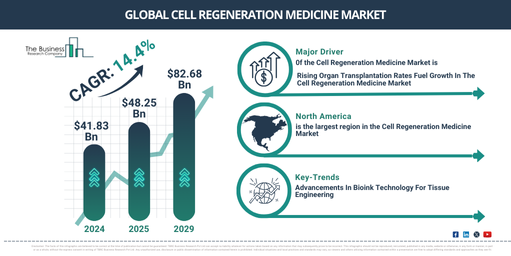
    Over the past few years, the cell regeneration medicine market has seen significant enlargement. It is projected to expand from being a $41.83 billion industry in 2024 to a $48.25 billion one in 2025, manifesting a compound annual growth rate (CAGR) of 15.4%. Factors contributing to this historic period growth include the aging population, the rise of chronic diseases, increased governmental and corporate financial support, and an escalating demand for functional regenerative medicine products.

    How Much Will the Cell Regeneration Medicine Market Be Worth in 2029?

    Predictions indicate a swift expansion of the cell regeneration medicine market in the forthcoming years. By 2029, a market worth of $82.68 billion is anticipated, correlating to a compound annual growth rate (CAGR) of 14.4%. This projected growth within the forecasted period is primarily due to factors like an increased demand for regenerative medicine products in the horeca sector, organ transplant scarcity, an increase in research and development activities, and a heightened demand for gene therapies. During the forecast period, major trends expected to shape the market include advanced therapies, clinical trial expansion, tissue engineering and 3d bioprinting, exosome-based therapies, and personalized medicine.

    Download The Free Sample Report Here:

    https://www.thebusinessresearchcompany.com/sample.aspx?id=12884&type=smp

    Which is the Largest Company in the Cell Regeneration Medicine Market?

    Major companies operating in the cell regeneration medicine market are Pfizer Inc., Johnson & Johnson, F.Hoffman-La Roche Ltd., AbbVie Inc., Bayer AG, Novartis AG, Bristol-Myers Squibb Company, Medtronic PLC, Eli Lilly and Company, Boehringer Ingelheim International GmbH, Amgen Inc., ViaCord LLC, Stryker Corporation, Zimmer Biomet Holdings Inc., Cook Biotech Inc., Integra LifeSciences Holdings Corporation, NuVasive Inc., Organogenesis Holdings Inc., AMAG Pharmaceuticals Inc., Takara Bio Inc., MiMedx Group Inc., Vericel Corporation, Mesoblast Limited, Osiris Therapeutics Inc., Guanhao Biotech Co. Ltd., CordLife Group Limited, FUJIFILM Cellular Dynamics Inc., Cesca Therapeutics Inc., U.S. Stem Cell Inc., Cytori Therapeutics Inc.

    What Are the Main Market Drivers in the Cell Regeneration Medicine Industry?

    The cell regeneration medicine market is likely to be fuelled by the growing acceptance of organ transplantation. This medical practice, which involves transplanting an organ from one body to another to replace a damaged or missing part, has been gaining traction as it contributes towards longer lifespans and can prevent the need for medical interventions like dialysis. Cell regeneration medicine, with its focus on regenerating and repairing damaged tissues or organs, holds the potential to bring significant advancements to organ transplantation. As an illustration, data from the scientific and educational organization United Network for Organ Sharing based in the US reveals that approximately 42,887 organ transplants took place in the country in 2022, marking a 3.7% rise from 2021. Hence, the maturing organ transplant practice will create a drive in the cell regeneration medicine market. Cell Regeneration Medicine’s Crucial Part in Managing Chronic Illnesses: Cell Regeneration Medicine Market Driver

    Request For A Customized Report:

    https://www.thebusinessresearchcompany.com/customise?id=12884&type=smp

    How Is the Cell Regeneration Medicine Market Segments Structured?

    The cell regeneration medicine market covered in this report is segmented –

    1) By Product: Therapeutics, Tools, Banks, Services

    2) By Therapeutic Category: Dermatology, Musculoskeletal, Immunology And Inflammation, Oncology, Cardiovascular, Ophthalmology, Other Therapeutic Categories

    3) By End-User: Hospitals And Clinics, Commercial Industries, Government And Academic Research Institutes

    Subsegments:

    1) By Therapeutics: Stem Cell Therapies, Gene Therapies, Tissue Engineering Products

    2) By Tools: Cell Culture Equipment, Bioreactors, Imaging Systems

    3) By Banks: Stem Cell Banks, Tissue Banks, Cord Blood Banks

    4) By Services: Cell Processing Services, Research And Development Services, Clinical Trial Services

    What Strategic Trends Are Transforming the Cell Regeneration Medicine Market?

    Leading firms in the cell regeneration medicine market are concentrating their efforts in the creation of medical-grade bioink to strengthen their competitive positions. The mention of medical-grade bioink encompasses a specifically tailored ink used in bioprinting that complies with strict regulatory safety and biocompatibility criteria. This makes it appropriate for tissue engineering, regenerative medicine, and the formation of biological structures for medical purposes. For instance, CELLINK, a Sweden-based firm known for its cell regeneration medicine products and technologies, unveiled CELLINK Vivoink in October 2023. This product is the first-ever medical-grade bioink formulated for clinical usage in regenerative medicine and tissue engineering, with a focus on top-notch printability, mechanical stability, and cell viability.

    Access The Full Report Here:

    https://www.thebusinessresearchcompany.com/report/cell-regeneration-medicine-global-market-report

    Which Global Regions Offer the Highest Growth in the Cell Regeneration Medicine Market?

    North America was the largest region in the cell regeneration medicine market in 2024. The regions covered in cell regeneration medicine market report are Asia-Pacific, Western Europe, Eastern Europe, North America, South America, Middle East and Africa.

    Purchase The Full Report Today:

    https://www.thebusinessresearchcompany.com/purchaseoptions.aspx?id=12884

    This Report Delivers Insight On:

    1. How big is the cell regeneration medicine market, and how is it changing globally?

    2. Who are the major companies in the cell regeneration medicine market, and how are they performing?

    3. What are the key opportunities and risks in the cell regeneration medicine market right now?

    4. Which products or customer segments are growing the most in the cell regeneration medicine market?

    5. What factors are helping or slowing down the growth of the cell regeneration medicine market?

    About The Business Research Company:

    With over 15000+ reports from 27 industries covering 60+ geographies, The Business Research Company has built a reputation for offering comprehensive, data-rich research and insights. Armed with 1,500,000 datasets, the optimistic contribution of in-depth secondary research, and unique insights from industry leaders, you can get the information you need to stay ahead in the game.

    Get in touch with us:

    The Business Research Company: https://www.thebusinessresearchcompany.com/

    Americas +1 310-496-7795

    Asia +44 2071930708

    Europe +44 7882 955267

    Email us at info@tbrc.info

    Follow us on:

    LinkedIn: https://in.linkedin.com/company/the-business-research-company

    YouTube: https://www.youtube.com/channel/UC24_fI0rV8cR5DxlCpgmyFQ

    Global Market Model: https://www.thebusinessresearchcompany.com/global-market-model
  • Cell Culture Media Market to Reach $10.07 Billion by 2029 | Key Drivers and Future Outlook

    Cell Culture Media Market to Reach $10.07 Billion by 2029 | Key Drivers and Future Outlook

    Claim your 30% discount on Global Market Reports with code ONLINE30. Limited time only.

    What Is the Growth Rate of the Cell Culture Media Market?

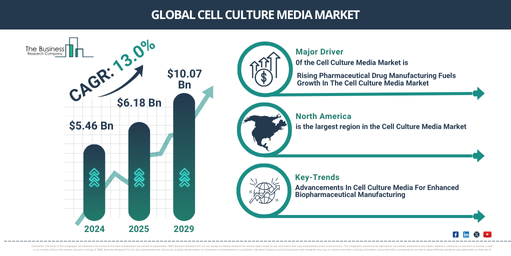
    In recent times, the cell culture media market has experienced significant growth. There is a projection that this market will expand from $5.46 billion in 2024 to $6.18 billion in 2025, delivering a compound annual growth rate (CAGR) of 13.3%. The historical growth trend is a result of the increase in research and development (R&D) activities, the surge in chronic diseases, the expansion of the biopharmaceutical industry, the support from government initiatives and funding, and the rising demand for both regenerative medicine and stem cell therapies.

    What Growth Rate Is Forecasted for the Cell Culture Media Market by 2029?

    The market size for cell culture media is projected to undergo swift expansion in the upcoming years, increasing to $10.07 billion in 2029 with a compound annual growth rate (CAGR) of 13.0%. This anticipated growth during the forecast period is due to factors such as the rising interest in personalized medicine, an expanding array of biopharmaceutical products, the broadening scope of stem cell research, and the growing use of organ-on-a-chip tech for drug testing and toxicity screening. It is also due to the development of healthcare infrastructure, escalating investments in life sciences research, and the widening of biopharmaceutical manufacturing capabilities. Notable trends for the forecast period include advancements in biotechnology, the development of cell and gene therapies, the use of organ-on-a-chip technology for drug testing & toxicity screening, the preference for animal-free and chemically defined cell culture media, as well as the incorporation of innovative cell culture systems, microfluidics and bioreactor technologies.

    Download The Free Sample Report Here:

    https://www.thebusinessresearchcompany.com/sample.aspx?id=14871&type=smp

    Which Key Companies Are Shaping the Future of the Cell Culture Media Market?

    Major companies operating in the cell culture media market are Thermo Fisher Scientific Inc., Danaher Corporation, Merck KGaA, Becton Dickinson and Company, Corning Incorporated, Lonza Group AG, Sartorius AG, CYTIVA Lifesciences, Bio-Rad Laboratories Inc., STEMCELL Technologies Inc., Miltenyi Biotec, Takara Bio, MP Biomedicals, FUJIFILM Irvine Scientific Inc., Promocell Inc., InSphero AG, PeproTech Inc., HiMedia Laboratories Pvt. Ltd., Elabscience Biotechnology Inc., Capricorn Scientific GmbH, CAISSON Laboratories Inc., Cell Biologics Inc., Nucleus Biologics LLC

    Which Factors Are Driving Demand in the Cell Culture Media Industry?

    The cell culture media market is anticipated to be boosted by an upsurge in the production of pharmaceutical drugs. Pharmaceuticals are substances or medications used to prevent, diagnose, or treat various medical conditions in humans and animals. The escalating production of these drugs is due to the rising prevalence of chronic and infectious diseases and the growth of the elderly population, requiring the increased demand for medication to manage age-associated conditions. Cell culture media supply necessary nutrients and the environment for cell growth and maintenance utilized in the production of pharmaceutical drugs, ensuring optimal cell growth and the creation of required therapeutic proteins or molecules. For instance, as reported by the European Federation of Pharmaceutical Industries and Associations (EFPIA), a Belgium-based European trade association for the pharmaceutical industry, in June 2023, the total biopharmaceutical production in Europe was $384,200 million (€340,000 million) in 2022, a rise of roughly 4.95% from $366,267 million (€323,950 million) in 2021. Consequently, the growth of the cell culture media market is fueled by increasing pharmaceutical drug manufacturing.

    Request For A Customized Report:

    https://www.thebusinessresearchcompany.com/customise?id=14871&type=smp

    How Is the Cell Culture Media Market Segmented by Several Divisions?

    The cell culture media market covered in this report is segmented –

    1) By Type: Liquid Media, Semi-Solid And Solid Media

    2) By Product: Serum Free Media, Classical Media, Stem Cell Culture Media, Specialty Media, Chemically Defined Media, Other Cell Culture Media

    3) By Application: Biopharmaceutical Production, Diagnostics, Drug Screening And Development, Tissue Engineering And Regenerative Medicine, Other Applications

    4) By End User: Biotechnology And Pharmaceutical Industry, Academic Institute, Research Laboratory, Other End Users

    Subsegments:

    1) By Liquid Media: Classical Media, Chemically Defined Media, Serum-Free Media, Specialty Media (Protein-Free, Low-Glucose Media)

    2) By Semi-Solid And Solid Media: Semi-Solid Media (Agar-Based), Solid Media (Petri Dishes, Agar Plates For Colony Formation)

    What are the Emerging Market Trends Driving the Growth of the Cell Culture Media Industry?

    In a bid to gain a significant footing in the cell culture media market, leading enterprises are concentrating their efforts on devising innovative cell culture media, including chemically defined and animal-component-free formulations. These new formulations are designed to enhance cell growth and protein creation, thereby increasing the efficiency and scalability of biopharmaceutical production processes. As a case in point, in July 2023, TheraPRO CHO Media System, a cutting-edge cell culture platform designed to boost productivity and quality in the production of therapeutic proteins, was launched by Switzerland-based health company Lonza Group Ltd. This novel system is specifically crafted to bolster the production of therapeutic monoclonal antibodies and incorporates a chemically defined, animal-component-free, two-step production process, ensuring scalable outcomes and simplifying media preparation.

    Access The Full Report Here:

    https://www.thebusinessresearchcompany.com/report/cell-culture-media-global-market-report

    Which Regions Are Driving Growth in the Cell Culture Media Market?

    North America was the largest region in the cell culture media market in 2024. Asia-Pacific is expected to be the fastest-growing region in the forecast period. The regions covered in the cell culture media market report are Asia-Pacific, Western Europe, Eastern Europe, North America, South America, Middle East, Africa.

    Purchase The Full Report Today:

    https://www.thebusinessresearchcompany.com/purchaseoptions.aspx?id=14871

    This Report Delivers Insight On:

    1. How big is the cell culture media market, and how is it changing globally?

    2. Who are the major companies in the cell culture media market, and how are they performing?

    3. What are the key opportunities and risks in the cell culture media market right now?

    4. Which products or customer segments are growing the most in the cell culture media market?

    5. What factors are helping or slowing down the growth of the cell culture media market?

    About The Business Research Company:

    With over 15000+ reports from 27 industries covering 60+ geographies, The Business Research Company has built a reputation for offering comprehensive, data-rich research and insights. Armed with 1,500,000 datasets, the optimistic contribution of in-depth secondary research, and unique insights from industry leaders, you can get the information you need to stay ahead in the game.

    Get in touch with us:

    The Business Research Company: https://www.thebusinessresearchcompany.com/

    Americas +1 310-496-7795

    Asia +44 2071930708

    Europe +44 7882 955267

    Email us at info@tbrc.info

    Follow us on:

    LinkedIn: https://in.linkedin.com/company/the-business-research-company

    YouTube: https://www.youtube.com/channel/UC24_fI0rV8cR5DxlCpgmyFQ

    Global Market Model: https://www.thebusinessresearchcompany.com/global-market-model
  • Antiparasitic Drugs Market Projected at $33.64 Billion by 2029 | Strategic Insights and Forecast Data

    Antiparasitic Drugs Market Projected at $33.64 Billion by 2029 | Strategic Insights and Forecast Data

    Claim your 30% discount on Global Market Reports with code ONLINE30. Limited time only.

    How Has the Antiparasitic Drugs Market Size Changed, over the years?

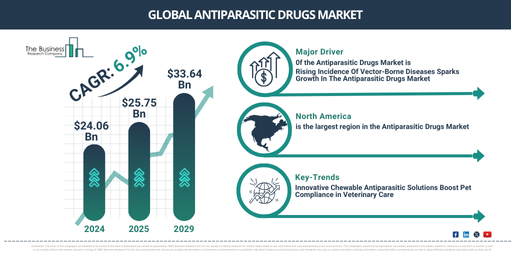
    The market size for antiparasitic drugs has seen significant expansion in the previous years. It is projected to escalate from $24.06 billion in 2024 to $25.75 billion in 2025, with an impressive compound annual growth rate (CAGR) of 7.0%. Factors such as the widespread occurrence of parasitic infections, the resistance to current treatments, and international health initiatives contributed to this growth during the historical period.

    How Much Will the Antiparasitic Drugs Market Be Worth in 2029?

    In the coming years, the market size for antiparasitic drugs is projected to experience robust growth, eventually reaching $33.64 billion in 2029 with a compound annual growth rate (CAGR) of 6.9%. This anticipated expansion over the forecast period can be ascribed to factors such as the emergence of new parasitic threats, changes in climate patterns and the spread of vector-borne diseases, a greater focus on international health security, and improved access to healthcare services. Crucial trends for the forecast period encompass advancements in the process of drug development, emphasis on targeted therapies, the use of combination treatments, increased public-private collaborations, the implementation of telemedicine, and the rising use of remote diagnostics.

    Download The Free Sample Report Here:

    https://www.thebusinessresearchcompany.com/sample.aspx?id=12927&type=smp

    Which is the Largest Company in the Antiparasitic Drugs Market?

    Major companies operating in the antiparasitic drugs market are Pfizer Inc., Johnson & Johnson, Cadila Pharmaceuticals, Merck & Co.Inc., Bayer AG, Novartis AG, Sanofi S.A., GlaxoSmithKline PLC, Takeda Pharmaceutical Company Limited, Boehringer Ingelheim group, Zoetis Inc., Eisai Co. Ltd., Covetrus Inc., IDEXX Laboratories Inc., Dr. Reddy’s Laboratories, Intas Pharmaceuticals Ltd., Alkem Laboratories Ltd., Ceva Sante Animale S.A., Elanco Animal Health Incorporated, Phibro Animal Health Corporation, Norbrook Laboratories Ltd., Mankind Pharma, Neogen Corporation, Bimeda Inc., Indoco Remedies Ltd., ECO Animal Health, Lincoln Pharmaceuticals Ltd., Laboratorios Calier.

    What Are the Main Market Drivers in the Antiparasitic Drugs Industry?

    The rise in vector-borne disease cases is predicted to boost the antiparasitic drugs market growth. Vector-borne diseases are infectious ailments that get transferred to humans or other animals through arthropod bites, such as mosquitoes, ticks, and flies. Malaria, dengue, and yellow fever are a few examples of these diseases. In controlling the spread of these diseases, antiparasitic drugs play an integral role by attacking and killing the culpable parasites. Typical antiparasitic medications for treating malaria include chloroquine, doxycycline, and atovaquone-proguanil. According to the Centers for Disease Control and Prevention, a government agency based in the US, more than 9.7 million dengue cases were reported from January to June 2024 across Americas, showing a significant increase from the 4.6 million cases in 2023. In the US, 1,498 dengue cases were reported in Puerto Rico, while 745 cases were identified among U.S. travelers returning from affected regions. Thus, the rise in vector-borne diseases propels the antiparasitic drugs market growth.

    Antiparasitic Drugs Market Driver: High Prevalence Of Parasitic Infections Raise Antiparasitic Drug Market


    Request For A Customized Report:

    https://www.thebusinessresearchcompany.com/customise?id=12927&type=smp

    How Is the Antiparasitic Drugs Market Segments Structured?

    The antiparasitic drugs market covered in this report is segmented –

    1) By Product Type: Anthelmintics, Antiprotozoals, Ectoparasiticide, Other Products

    2) By Treatment: Avermectins, Bezimidazoles, Pyrimidines, Organophosphates, Imidazolesthiazoles

    3) By Route of Administration: Oral, Injectable, Topical

    4) By End User: Hospitals, Homecare, Specialty Clinics, Other End Users

    Subsegments:

    1) By Anthelmintics: Benzimidazoles, Ivermectin, Pyrantel Pamoate, Praziquantel

    2) By Antiprotozoals: Metronidazole, Tinidazole, Nitazoxanide, Pentamidine

    3) By Ectoparasiticides: Permethrin, Malathion, Lindane, Fipronil

    4) By Other Products: Combination Antiparasitic Drugs, Novel Antiparasitic Agents

    What Strategic Trends Are Transforming the Antiparasitic Drugs Market?

    Leading businesses in the antiparasitic drug industry are concentrating on introducing unique items such as chewable veterinary products to boost the ease of delivery and improve pet compliance. Chewable veterinary items are flavorful, straightforward to give tablets or treats engineered to offer medication to animals. These make the treatment process tastier and stress-free, thus enhancing pet compliance. For example, in April 2024, Germany-based pharma firm C.H. Boehringer Sohn AG and Co. KG introduced NexGard Spectra for comprehensive parasite management. NexGard SPECTRA is a delectable, soft chew capable of providing both internal and external parasite control for dogs. It is efficient against anything from fleas, ticks, heartworms, to various intestinal worms – all in just a single monthly serving. The chew exhibits quick results, eliminating fleas within four hours of its administration, and presents a striking 99% effectiveness against numerous parasites in a short span.

    Access The Full Report Here:

    https://www.thebusinessresearchcompany.com/report/antiparasitic-drugs-global-market-report

    Which Global Regions Offer the Highest Growth in the Antiparasitic Drugs Market?

    North America was the largest region in the antiparasitic drugs market in 2024. Asia-Pacific is expected to be the fastest-growing region in the forecast period. The regions covered in antiparasitic drugs market report are Asia-Pacific, Western Europe, Eastern Europe, North America, South America, Middle East and Africa.

    Purchase The Full Report Today:

    https://www.thebusinessresearchcompany.com/purchaseoptions.aspx?id=12927

    This Report Delivers Insight On:

    1. How big is the antiparasitic drugs market, and how is it changing globally?

    2. Who are the major companies in the antiparasitic drugs market, and how are they performing?

    3. What are the key opportunities and risks in the antiparasitic drugs market right now?

    4. Which products or customer segments are growing the most in the antiparasitic drugs market?

    5. What factors are helping or slowing down the growth of the antiparasitic drugs market?

    About The Business Research Company:

    With over 15000+ reports from 27 industries covering 60+ geographies, The Business Research Company has built a reputation for offering comprehensive, data-rich research and insights. Armed with 1,500,000 datasets, the optimistic contribution of in-depth secondary research, and unique insights from industry leaders, you can get the information you need to stay ahead in the game.

    Get in touch with us:

    The Business Research Company: https://www.thebusinessresearchcompany.com/

    Americas +1 310-496-7795

    Asia +44 2071930708

    Europe +44 7882 955267

    Email us at info@tbrc.info

    Follow us on:

    LinkedIn: https://in.linkedin.com/company/the-business-research-company

    YouTube: https://www.youtube.com/channel/UC24_fI0rV8cR5DxlCpgmyFQ

    Global Market Model: https://www.thebusinessresearchcompany.com/global-market-model
  • Osimertinib Drugs Market Projected at $14.05 Billion by 2029 | Strategic Insights and Forecast Data

    Osimertinib Drugs Market Projected at $14.05 Billion by 2029 | Strategic Insights and Forecast Data

    Claim your 30% discount on Global Market Reports with code ONLINE30. Limited time only.

    #How Has the Osimertinib Drugs Market Size Changed, over the years?#_x000D_

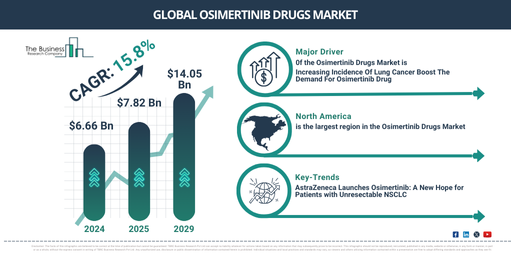
    In recent times, the osimertinib drugs market has seen swift expansion. It is predicted that the market will rise from $6.66 billion in 2024 to $7.82 billion in 2025, with a compound annual growth rate (CAGR) of 17.4%. The significant growth in the past has been driven by factors such as investment in research and development, the introduction of targeted therapy, successful clinical trials, resistance to older treatments, and an enhanced safety profile._x000D_

    _x000D_

    #How Much Will the Osimertinib Drugs Market Be Worth in 2029?#_x000D_

    A swift expansion is anticipated in the osimertinib drugs market size in the upcoming years, with an anticipated worth of $14.05 billion by 2029 and a compound annual growth rate (CAGR) of 15.8%. This projected growth over the forecasted period can be chiefly attributed to improved patient-focused care, ongoing clinical studies and research, the incorporation of precision medicine, initiatives related to pricing and access, and expanding the global market. The forecast period will likely see significant trends such as the introduction of biosimilars and increased market competition, the adoption of liquid biopsy, advancements in genomic profiling, strategies for managing resistance, and trials combining immunotherapy._x000D_

    _x000D_

    #Download The Free Sample Report Here:#_x000D_

    https://www.thebusinessresearchcompany.com/sample.aspx?id=13255&type=smp_x000D_

    _x000D_

    #Which is the Largest Company in the Osimertinib Drugs Market?#_x000D_

    Major companies operating in the osimertinib drugs market report are Syndax Pharmaceuticals Ltd., Pfizer Inc., F. Hoffmann-La Roche AG, AstraZeneca PLC, Amgen Inc., Sandoz International GmbH, Incyte Corporation, Dr. Reddy’s Laboratories Ltd., Cipla Limited, Seagen Inc., Zydus Lifesciences Limited, Sun Pharmaceutical Industries Ltd., Alembic Pharmaceuticals Limited, Aristo Pharmaceuticals Private Limited, Incepta Pharmaceuticals Ltd., Accord Healthcare Limited, Asmo Corporation, Beacon Pharmaceutical Limited, Clearsynth Labs Limited, Apino Pharma Co. Ltd., Kay Biotech Private Limited, Drug International Limited, MSN Laboratories Pvt Ltd., Array BioPharma Inc., Dolphin Pharmaceutical Limited, Hetero Drugs Ltd., Serum Biotech Limited, Zenix Remedies, Accure Labs Pvt. Ltd._x000D_

    _x000D_

    #What Are the Main Market Drivers in the Osimertinib Drugs Industry?#_x000D_

    The escalating incidence of lung cancer is anticipated to fuel the expansion of the osimertinib drug market. Lung cancer is a type of cancer originating in pulmonary tissues, primarily in the cells of the air passages. Osimertinib is used in treating lung cancer by inhibiting the activity of proteins involved in the multiplication and propagation of cancer cells. For example, the American Cancer Society, a government organization based in the US, reported that approximately 236,740 lung cancer cases were diagnosed in the US in 2022, and this figure rose to 238,340 by 2023. Therefore, the escalating incidence of lung cancer is buoying the osimertinib drug market’s growth. The growing efforts by organizations to enhance lung cancer care and treatment are slated to further stimulate the expansion of the osimertinib drug market. These organizational efforts for improving lung cancer care encompass policies, funding initiatives, and programs to increase accessibility, affordability, and care quality for those diagnosed with lung cancer. Organizations are launching initiatives aimed at maximizing the use of osimertinib for better treatment outcomes. For example, in May 2024, The Australian Department of Health and Aged Care, a government agency based in Australia, began the National Lung Cancer Screening Program (NLCSP). The main objective is to offer a standardized approach to early detection of lung cancer by using low-dose computed tomography (LDCT) scans. This initiative mainly targets high-risk individuals, particularly those aged between 50 and 80 who have a substantial history of smoking. Therefore, the growing efforts by organizations to enhance lung cancer care and treatment are boosting the expansion of the osimertinib drug market._x000D_

    _x000D_

    #Request For A Customized Report:#_x000D_

    https://www.thebusinessresearchcompany.com/customise?id=13255&type=smp_x000D_

    _x000D_

    #How Is the Osimertinib Drugs Market Segments Structured?#_x000D_

    The osimertinib drugs market covered in this report is segmented –_x000D_

    _x000D_

    1) By Type: 40 mg, 80 mg_x000D_

    2) By Distribution Channel: Hospital Pharmacy, Drug Store And Retail Pharmacy, Online Pharmacy_x000D_

    3) By Application: Locally Advanced Non-Small Cell Lung Cancer (NSCLC), Metastatic Non-Small Cell Lung Cancer (NSCLC), Other Applications_x000D_

    _x000D_

    #What Strategic Trends Are Transforming the Osimertinib Drugs Market?#_x000D_

    Leading organizations in the osimertinib drugs market are shifting their focus towards targeted treatments to enhance the results for non-small cell lung cancer (NSCLC) patients, specifically those with EGFR mutations. The intention is to amplify the effectiveness of treatment and improve the patient’s quality of life. They are also augmenting their investments in clinical trials and research collaborations to broaden osimertinib’s applications and examine its effectiveness when combined with other treatment methods for comprehensive patient benefits. For example, AstraZeneca Pharmaceuticals LP, a pharmaceutical company based in the United States, introduced osimertinib (Tagrisso) in September 2024 for adults suffering from advanced, non-operable non-small cell lung cancer (NSCLC) with specific EGFR mutations that have FDA approval. This sanction comes in the wake of a clinical trial that showed substantial enhancements in progression-free survival when compared to a placebo._x000D_

    _x000D_

    #Access The Full Report Here:#_x000D_

    https://www.thebusinessresearchcompany.com/report/osimertinib-drugs-global-market-report_x000D_

    _x000D_

    #Which Global Regions Offer the Highest Growth in the Osimertinib Drugs Market?#_x000D_

    North America was the largest region in the osimertinib drugs market in 2024. The regions covered in the osimertinib drugs market report are Asia-Pacific, Western Europe, Eastern Europe, North America, South America, Middle East, Africa_x000D_

    _x000D_

    #Purchase The Full Report Today:#_x000D_

    https://www.thebusinessresearchcompany.com/purchaseoptions.aspx?id=13255_x000D_

    _x000D_

    #This Report Delivers Insight On: #_x000D_

    1. How big is the osimertinib drugs market, and how is it changing globally?_x000D_

    2. Who are the major companies in the osimertinib drugs market, and how are they performing?_x000D_

    3. What are the key opportunities and risks in the osimertinib drugs market right now?_x000D_

    4. Which products or customer segments are growing the most in the osimertinib drugs market?_x000D_

    5. What factors are helping or slowing down the growth of the osimertinib drugs market?_x000D_

    _x000D_

    #About The Business Research Company:#_x000D_

    With over 15000+ reports from 27 industries covering 60+ geographies, The Business Research Company has built a reputation for offering comprehensive, data-rich research and insights. Armed with 1,500,000 datasets, the optimistic contribution of in-depth secondary research, and unique insights from industry leaders, you can get the information you need to stay ahead in the game._x000D_

    _x000D_

    #Get in touch with us:#_x000D_

    The Business Research Company: https://www.thebusinessresearchcompany.com/_x000D_

    Americas +1 310-496-7795_x000D_

    Asia +44 2071930708_x000D_

    Europe +44 7882 955267_x000D_

    Email us at info@tbrc.info_x000D_

    _x000D_

    #Follow us on:#_x000D_

    _x000D_

    LinkedIn: https://in.linkedin.com/company/the-business-research-company_x000D_

    YouTube: https://www.youtube.com/channel/UC24_fI0rV8cR5DxlCpgmyFQ_x000D_

    Global Market Model: https://www.thebusinessresearchcompany.com/global-market-model

  • Anti-Neoplastic Agents Industry Growth Expected to Reach $202.12 Billion by 2029 at a CAGR of 9.1% | Segmentation and Growth Opportunities

    Anti-Neoplastic Agents Industry Growth Expected to Reach $202.12 Billion by 2029 at a CAGR of 9.1% | Segmentation and Growth Opportunities

    Claim your 30% discount on Global Market Reports with code ONLINE30. Limited time only.

    What Is the Forecast for the Anti-Neoplastic Agents Market Growth in 2025?

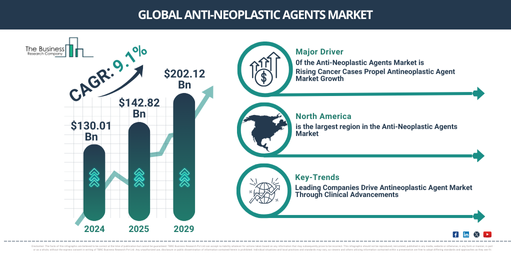
    In recent times, the market size for anti-neoplastic agents has experienced substantial growth. The market value, which is set to rise from $130.01 billion in 2024 to $142.82 billion in 2025, will do so at a compound annual growth rate (CAGR) of 9.9%. The expansion during the historic period can be linked to factors such as a rise in cancer cases, a growing need for therapies, an increased preference for minimally invasive cancer treatments, and the demand for cost-effective anti-neoplastic treatments.

    What Is the Forecast for the Anti-Neoplastic Agents Market Size Through 2029?

    The market size for anti-neoplastic agents is poised for robust expansion in the coming years, with a projection to reach $202.12 billion in 2029, growing at a compound annual growth rate (CAGR) of 9.1%. The anticipated growth over the forecast timeframe can be attributed to factors such as the increasing knowledge and awareness among patients, government initiatives, the rising trend of individualized cancer treatments, and an enhanced emphasis on quality of life during cancer treatment. Key trends expected during the forecast period are progress in oncology research, the evolution of targeted therapies, innovations in biotechnology, and advances in diagnostic tools.

    Download The Free Sample Report Here:

    https://www.thebusinessresearchcompany.com/sample.aspx?id=12901&type=smp

    What are the Key Market Players in Anti-Neoplastic Agents Market and How They’re Evolving?

    Major companies operating in the anti-neoplastic agents market are Pfizer Inc., F. Hoffmann-La Roche Ltd., Merck & Co. Inc., Bayer AG, Novartis AG, Bristol-Myers Squibb Company, AstraZeneca PLC, Fresenius SE & Co. KGaA, Takeda Pharmaceutical Company Limited, Boehringer Ingelheim International GmbH, Viatris Inc., Teva Pharmaceutical Industries Ltd., Eisai Co. Ltd., Sun Pharmaceutical Industries Limited, Ipsen SA, Cipla Limited, Dr. Reddy’s Laboratories Ltd., Intas Pharmaceuticals Limited, Hikma Pharmaceuticals PLC, Gland Pharma Limited, Zydus Lifesciences Limited, Glenmark Pharmaceuticals Ltd., Jubilant Life Sciences Ltd., Lantheus Holdings Inc., Hutchison Medipharma Ltd., Natco Pharma Ltd., Accord Healthcare Limited, Qilu Pharmaceutical Co. Ltd.

    What Are the Primary Growth Drivers in the Anti-Neoplastic Agents Market?

    The growth of the antineoplastic agent market is predicted to be spurred by the escalating number of cancer cases. Cancer, a group of diseases that can occur in virtually any organ or tissue in the human body, arises when irregular cells multiply out of control, exceed their usual limits and either spread to other organs or infiltrate nearby body parts. Antineoplastic agents are crucial to cancer treatment as they stall the growth and division of cancer cells using several mechanisms such as DNA damage, cell cycle interruption, and disruption of vital cellular pathways. For instance, in February 2024, the International Agency for Research on Cancer (IARC), a French-based global agency that encourages international cooperation in cancer research, reported the latest global cancer burden estimates. According to these, the cancer burden is projected to increase to over 35 million in 2050, reflecting a jump of 77% compared to an estimated 20 million in 2022. As a result, the rising frequency of cancer cases is fueling the expansion of the antineoplastic agent market. The anti-neoplastic agent market’s growth is also expected to be spurred by an increase in investment in cancer research. Such investment involves supplying financial resources to aid scientific initiatives focused on studying, preventing, diagnosing, and treating cancer. Enhanced funding for cancer research enables pharmaceutical and biotech companies to push forward in discovering, developing, and thoroughly testing new anti-neoplastic agents. This includes identifying drug targets and creating potential candidates. For instance, the Department of Health and Aged Care, an Australian government entity, invested $893.5 million in March 2022 to augment cancer services and outcomes. This figure incorporated $329.4 million for new cancer drugs like Trodelvy for triple-negative breast cancer, Lynparza for metastatic castration-resistant prostate cancer, and Mylotarg for acute myeloid leukemia, which could benefit hundreds of patients each year. Therefore, increased investment in cancer research is likely to stimulate the growth of the anti-neoplastic agent market.

    Request For A Customized Report:

    https://www.thebusinessresearchcompany.com/customise?id=12901&type=smp

    What Are the Leading Segments in the Global Anti-Neoplastic Agents Industry?

    The anti-neoplastic agents market covered in this report is segmented –

    1) By Type: Alkylating Agents, Antimetabolites, Hormones And Antagonists, Miscellaneous

    2) By Disease Type: Gastrointestinal Cancer, Prostate Cancer, Lung Cancer, Breast Cancer, Other Disease Types

    3) By End User: Hospitals, Clinics, Cancer Rehabilitation Centers, Ambulatory Surgical Centers

    Subsegments:

    1) By Alkylating Agents: Nitrogen Mustards, Alkyl Sulfonates, Nitrosoureas, Triazines

    2) By Antimetabolites: Purine Analogues, Pyrimidine Analogues, Folate Antagonists

    3) By Hormones and Antagonists: Estrogens and Antiestrogens, Androgens and Antiandrogens, Glucocorticoids

    4) By Miscellaneous: Vinca Alkaloids, Taxanes, Antibiotic Antineoplastics, Targeted Therapy Agents

    What Are the Key Market Trends in the Anti-Neoplastic Agents Industry?

    Leading firms in the anti-neoplastic agent industry are concentrated on advancing their clinical procedures to maintain market dominance. For example, in March 2022, Switzerland’s pharmaceutical firm, Novartis AG, publicized the approval of Pluvicto by the Food and Drug Administration (FDA). Pluvicto, a pioneering targeted radioligand therapy, has been developed to treat progressive, Prostate-specific membrane antigen (PSMA) positive metastatic castration-resistant prostate cancer (mCRPC). The treatment involves the administration of 7.4 GBq (200 mCi) of Pluvicto intravenously, every six weeks, capping at six rounds or in cases of disease progression or intolerable toxicity. Patients with mCRPC who have received prior treatment should be considered for Pluvicto therapy, depending on their tumor’s PSMA expression, assessed using Locametz or another FDA-approved PSMA-11 imaging agent.

    Access The Full Report Here:

    https://www.thebusinessresearchcompany.com/report/anti-neoplastic-agents-global-market-report

    What Is the Regional Outlook for the Anti-Neoplastic Agents Market?

    North America was the largest region in the anti-neoplastic agents market in 2024. Asia-Pacific is expected to be the fastest-growing region in the forecast period. The regions covered in anti-neoplastic agents market report are Asia-Pacific, Western Europe, Eastern Europe, North America, South America, Middle East and Africa.

    Purchase The Full Report Today:

    https://www.thebusinessresearchcompany.com/purchaseoptions.aspx?id=12901

    This Report Delivers Insight On:

    1. How big is the anti-neoplastic agents market, and how is it changing globally?

    2. Who are the major companies in the anti-neoplastic agents market, and how are they performing?

    3. What are the key opportunities and risks in the anti-neoplastic agents market right now?

    4. Which products or customer segments are growing the most in the anti-neoplastic agents market?

    5. What factors are helping or slowing down the growth of the anti-neoplastic agents market?

    About The Business Research Company:

    With over 15000+ reports from 27 industries covering 60+ geographies, The Business Research Company has built a reputation for offering comprehensive, data-rich research and insights. Armed with 1,500,000 datasets, the optimistic contribution of in-depth secondary research, and unique insights from industry leaders, you can get the information you need to stay ahead in the game.

    Get in touch with us:

    The Business Research Company: https://www.thebusinessresearchcompany.com/

    Americas +1 310-496-7795

    Asia +44 2071930708

    Europe +44 7882 955267

    Email us at info@tbrc.info

    Follow us on:

    LinkedIn: https://in.linkedin.com/company/the-business-research-company

    YouTube: https://www.youtube.com/channel/UC24_fI0rV8cR5DxlCpgmyFQ

    Global Market Model: https://www.thebusinessresearchcompany.com/global-market-model
  • Anti-Inflammatory Therapeutics Industry Valued at $144.05 Billion by 2029 With CAGR of 5% | Size and Share Insights

    Anti-Inflammatory Therapeutics Industry Valued at $144.05 Billion by 2029 With CAGR of 5% | Size and Share Insights

    Claim your 30% discount on Global Market Reports with code ONLINE30. Limited time only.

    What Is the Forecast for the Anti-Inflammatory Therapeutics Market from 2024 to 2025?

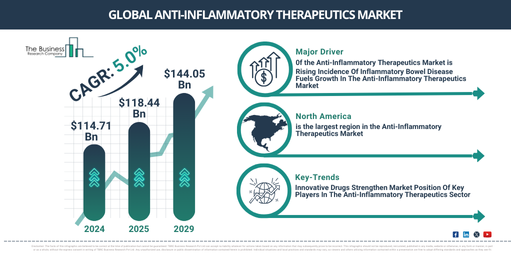
    In recent times, there has been consistent growth in the market size of anti-inflammatory therapeutics. It is projected to increase from $114.71 billion in 2024 to $118.44 billion in 2025, indicating a compound annual growth rate (CAGR) of 3.3%. Factors that have contributed to the growth during the historic period include the rise of chronic diseases, an aging population, heightened awareness, and government initiatives.

    What Is the Projected Market Size of the Anti-Inflammatory Therapeutics Market?

    Projected to see substantial growth in the coming years, the anti-inflammatory therapeutics market is estimated to reach $144.05 billion in 2029, growing at a compounded annual growth rate of 5.0%. This anticipated growth within the forecast period is largely due to innovative treatments, heightened healthcare spending, emphasis on rare diseases, and the development of biologics and biosimilars. Key trends expected to influence the forecast period include progresses in immunotherapy, the application of artificial intelligence (AI) and machine learning (ML) in pharmaceutical discovery, and an extended range of indications.

    Download The Free Sample Report Here:

    https://www.thebusinessresearchcompany.com/sample.aspx?id=12861&type=smp

    Who are the Major Competitors in the Anti-Inflammatory Therapeutics Market Outlook?

    Major companies operating in the anti-inflammatory therapeutics market are Pfizer Inc., Johnson and Johnson Limited, F. Hoffmann-La Roche Ltd., Merck and Co. Inc., AbbVie Inc., Bayer AG, Novartis AG, Sanofi-Aventis LLC., Bristol-Myers Squibb Company, AstraZeneca PLC, GlaxoSmithKline plc., Takeda Pharmaceutical Company Limited, Eli Lilly and Co Ltd., Amgen Inc., Boehringer Ingelheim International GmbH, Viatris Inc., Teva Pharmaceutical Industries Ltd., Regeneron Pharmaceuticals Inc., Astellas Pharma Inc., Biogen Inc., Daiichi Sankyo Company Limited, Eisai Co. Ltd., Sun Pharmaceutical Industries Limited, Otsuka Pharmaceutical Co. Ltd., Dr. Reddy’s Laboratories Ltd., Hikma Pharmaceuticals PLC, Cipla Inc., Zydus Lifesciences Ltd., Lupin Limited, Torrent Pharmaceuticals Ltd.

    What Is Fueling Growth in the Anti-Inflammatory Therapeutics Market?

    The growth of the anti-inflammatory therapeutics market is likely to be fuelled by the rising incidence of inflammatory bowel disease. Gastrointestinal inflammation, a characteristic of this chronic ailment, is effectively treated with anti-inflammatory therapeutics. They aid in managing the disease’s symptoms, lessening inflammation, and mitigating the chance of surgery. According to the Oxford University Press in July 2023, inflammatory bowel disease has a prevalence rate of 721 per 100,000 individuals and incidences are at a rate of 10.9 per 100,000 person-years. This escalating occurrence of inflammatory bowel disease propels the growth of the anti-inflammatory therapeutics market. With an anticipated surge in autoimmune disorder incidences, there is an expected robust growth in the anti-inflammatory therapeutics market. Autoimmune disorders, a medical condition that mistakenly activates the immune system to launch an attack on the body’s healthy cells, have been on the rise. Anti-inflammatory therapeutics are critical in the management of these disorders, where they work to curtail inflammation, control the exaggerated reaction of the immune system, and alleviate symptoms associated with these disorders. As projected by the Guardian Media Group in January 2022, autoimmune disorders will affect 4 million individuals in the UK and globally the rates are are expected to increase annually by 3% to 9%. Furthermore, Oxford University reported in May 2023, that 10% of the global population is affected by autoimmune disorders. This surge in autoimmune disorders bolsters the growth of the anti-inflammatory therapeutics market.

    Request For A Customized Report:

    https://www.thebusinessresearchcompany.com/customise?id=12861&type=smp

    Which Anti-Inflammatory Therapeutics Market Segments Are Growing the Fastest?

    The anti-inflammatory therapeutics market covered in this report is segmented –

    1) By Drug Class: Nonsteroidal Anti-Inflammatory Drugs (NSAIDs), Corticosteroids, Anti-Inflammatory Biologics

    2) By Indication: Arthritis, Respiratory Diseases, Multiple Sclerosis, Psoriasis, Inflammatory Bowel Diseases, Other Inflammatory Diseases

    3) By Distribution Channel: Retail Pharmacies, Hospital Pharmacies, Online Distribution

    Subsegments:

    1) By Nonsteroidal Anti-Inflammatory Drugs (NSAIDs): Ibuprofen, Aspirin, Naproxen, Diclofenac, Celecoxib, Indomethacin, Ketoprofen

    2) By Corticosteroids: Prednisone, Dexamethasone, Hydrocortisone, Methylprednisolone, Triamcinolone, Betamethasone

    3) By Anti-Inflammatory Biologics: Tumor Necrosis Factor (TNF) Inhibitors, Interleukin Inhibitors, Janus Kinase (JAK) Inhibitors, Monoclonal Antibodies, Recombinant Proteins, Fusion Proteins

    Which Industry Trends Are Shaping the Future of the Anti-Inflammatory Therapeutics Market?

    Leading businesses in the anti-inflammatory therapeutics market are debuting groundbreaking drugs to fortify their market presence. For example, in February 2023, US-based biotech firm Regeneron Pharmaceuticals Inc., together with Sanofi, a pharmaceutical and healthcare firm from France, unveiled Kevzara (sarilumab). This is the first and sole anti-inflammatory biologic suggested for adult patients suffering from polymyalgia rheumatic (PMR), an inflammatory rheumatic disorder, which fails to respond adequately to corticosteroids or whose tolerance to corticosteroid tapering is low.

    Access The Full Report Here:

    https://www.thebusinessresearchcompany.com/report/anti-inflammatory-therapeutics-global-market-report

    Which Countries Are Leading the Anti-Inflammatory Therapeutics Market?

    North America was the largest region in the anti-inflammatory therapeutics market in 2024. Europe is expected to be the fastest-growing region in the forecast period. The regions covered in the anti-inflammatory therapeutics market report are Asia-Pacific, Western Europe, Eastern Europe, North America, South America, Middle East and Africa.

    Purchase The Full Report Today:

    https://www.thebusinessresearchcompany.com/purchaseoptions.aspx?id=12861

    This Report Delivers Insight On:

    1. How big is the anti-inflammatory therapeutics market, and how is it changing globally?

    2. Who are the major companies in the anti-inflammatory therapeutics market, and how are they performing?

    3. What are the key opportunities and risks in the anti-inflammatory therapeutics market right now?

    4. Which products or customer segments are growing the most in the anti-inflammatory therapeutics market?

    5. What factors are helping or slowing down the growth of the anti-inflammatory therapeutics market?

    About The Business Research Company:

    With over 15000+ reports from 27 industries covering 60+ geographies, The Business Research Company has built a reputation for offering comprehensive, data-rich research and insights. Armed with 1,500,000 datasets, the optimistic contribution of in-depth secondary research, and unique insights from industry leaders, you can get the information you need to stay ahead in the game.

    Get in touch with us:

    The Business Research Company: https://www.thebusinessresearchcompany.com/

    Americas +1 310-496-7795

    Asia +44 2071930708

    Europe +44 7882 955267

    Email us at info@tbrc.info

    Follow us on:

    LinkedIn: https://in.linkedin.com/company/the-business-research-company

    YouTube: https://www.youtube.com/channel/UC24_fI0rV8cR5DxlCpgmyFQ

    Global Market Model: https://www.thebusinessresearchcompany.com/global-market-model
  • Antidotes Market to Reach $3.64 Billion by 2029 | Key Drivers and Future Outlook

    Claim your 30% discount on Global Market Reports with code ONLINE30. Limited time only.

    What Is the Growth Rate of the Antidotes Market?

    The market size for antidotes has significantly expanded in the past few years. With a compound annual growth rate (CAGR) of 9.8%, it’s projected to increase from $2.23 billion in 2024 to $2.45 billion in 2025. The historic growth can be ascribed to various factors such as poison control centers, regulatory approvals, industrial and occupational safety measures, as well as education and training.

    What Growth Rate Is Forecasted for the Antidotes Market by 2029?

    In the forthcoming years, the market size of antidotes is anticipated to witness significant expansion. It’s projected to rise to $3.64 billion in 2029, with a compound annual growth rate (CAGR) of 10.4%. The increase during the forecast period is due to factors such as drug overdose emergencies, the emergence of new toxins, regulatory backing, and the usage of telemedicine and remote consultations. The forecast period is also anticipated to see major trends such as combined antidotes, tailored poison management, digital control of poison, and antidotes for children.

    Download The Free Sample Report Here:

    https://www.thebusinessresearchcompany.com/sample.aspx?id=13029&type=smp

    Which Key Companies Are Shaping the Future of the Antidotes Market?

    Major companies operating in the antidotes market are Pfizer Inc., Johnson & Johnson, Merck & Co., Bayer AG, Novartis AG, Bristol Myers Squibb, Alexion Pharmaceuticals Inc., AstraZeneca PLC, Sanofi S.A., Eli Lilly and Company, Boehringer Ingelheim International GmbH, Baxter International Inc., Teva Pharmaceutical Industries Ltd., Mylan N.V., CSL Behring, Daiichi Sanko Inc., Fresenius Kabi AG, Aurobindo Pharma Limited, Dr. Reddy’s Laboratories Ltd., Hikma Pharmaceuticals PLC, Ferring B.V., Lupin Limited, Zydus Lifesciences Ltd., Mallinckrodt Pharmaceuticals Ltd., Nichi-Iko Pharmaceutical Co. Ltd., Akorn Incorporated, Meridian Medical Technologies Inc., Alvogen Pharma India Pvt. Ltd., Wockhardt Limited, ADAPT Pharma Inc.

    Which Factors Are Driving Demand in the Antidotes Industry?

    The upswing in poison incidents is predicted to spur the growth of the antidotes market in the future. The term “poison incidents” refer to instances when people come into contact with, ingest, or are exposed to materials that are harmful or toxic to their health. Antidotes play a crucial role in these scenarios due to their ability to counteract the detrimental effects of hazardous substances. They work by neutralizing, mitigating, or reversing the destructive impacts of the poison. For instance, a report by the U.S-based multinational news channel and website, Cable News Network (CNN), highlighted in October 2023 that there were 112,024 overdose fatalities in May 2023, marking a 2.5% rise from 109,261 deaths in May 2022. Hence, the surge in poison incidents is catalyzing the expansion of the antidotes market. An increase in the rate of various medical conditions will also likely boost the growth of the antidotes market. Medical conditions refer to diseases, illnesses, or injuries such as opioid poisoning, cyanide poisoning, or benzodiazepine poisoning that have a negative impact on part or whole of an organism’s structure or function, and can be treated or prevented with antidotes. Antidotes are used to alleviate or prevent poisoning, countering the destructive impacts of toxins. They work by binding to the poison, neutralizing it, or blocking its negative effects on the body. For example, a report by US-based multinational health insurance and services company, the UnitedHealth Group Incorporated, stated in December 2023 that the prevalence of diabetes had increased to 11.5% among adults, impacting 31.9 million individuals, while the prevalence of depression had risen to 21.7%, affecting 54.2 million adults. Therefore, the increase in the prevalence of medical conditions is contributing to the growth of the antidotes market.

    Request For A Customized Report:

    https://www.thebusinessresearchcompany.com/customise?id=13029&type=smp

    How Is the Antidotes Market Segmented by Several Divisions?

    The antidotes market covered in this report is segmented –

    1) By Type: Chemical Antidotes, Physical Antidotes, Pharmacological Antidotes, Other Types

    2) By Route Of Administration: Injectable, Oral, Capsules And Tablets, Syrup

    3) By Application: Animal Bites, Heavy Metal Poisoning

    4) By End-User: Hospitals, Homecare, Specialty Clinics, Other End-Users

    Subsegments:

    1) By Chemical Antidotes: Chelating Agents, Oxidizing Agents, Reducing Agents

    2) By Physical Antidotes: Activated Charcoal, Gastric Lavage, Whole Bowel Irrigation

    3) By Pharmacological Antidotes: Opioid Antagonists, Benzodiazepine Antagonists, Cholinesterase Reactivators

    4) By Other Types: Supportive Therapies, Adjunctive Treatments

    What are the Emerging Market Trends Driving the Growth of the Antidotes Industry?

    The key players in the market are focusing their efforts on developing groundbreaking offerings, like atropine sulfate injections, to expand their market coverage and offer improved treatment alternatives. This antimuscarinic drug operates by blocking the effect of acetylcholine on muscarinic receptors in the parasympathetic nervous system. An example of this is seen in August 2022, when American Regent Inc., an American manufacturer of sterile injectable products for medical providers, brought to the market an atropine sulfate injection, USP. This conventional injectable medication is used as an antisialagogue, a treatment for organophosphorus or muscarinic mushroom poisoning, and for managing bradyasystolic cardiac arrest. Its primary purpose is the temporary halt of serious or potentially fatal muscarinic effects.

    Access The Full Report Here:

    https://www.thebusinessresearchcompany.com/report/antidotes-global-market-report

    Which Regions Are Driving Growth in the Antidotes Market?

    North America was the largest region in the antidotes market in 2024. Asia-Pacific is expected to be the fastest-growing region in the forecast period. The regions covered in antidotes market report are Asia-Pacific, Western Europe, Eastern Europe, North America, South America, Middle East and Africa.

    Purchase The Full Report Today:

    https://www.thebusinessresearchcompany.com/purchaseoptions.aspx?id=13029

    This Report Delivers Insight On:

    1. How big is the antidotes market, and how is it changing globally?

    2. Who are the major companies in the antidotes market, and how are they performing?

    3. What are the key opportunities and risks in the antidotes market right now?

    4. Which products or customer segments are growing the most in the antidotes market?

    5. What factors are helping or slowing down the growth of the antidotes market?

    About The Business Research Company:

    With over 15000+ reports from 27 industries covering 60+ geographies, The Business Research Company has built a reputation for offering comprehensive, data-rich research and insights. Armed with 1,500,000 datasets, the optimistic contribution of in-depth secondary research, and unique insights from industry leaders, you can get the information you need to stay ahead in the game.

    Get in touch with us:

    The Business Research Company: https://www.thebusinessresearchcompany.com/

    Americas +1 310-496-7795

    Asia +44 2071930708

    Europe +44 7882 955267

    Email us at info@tbrc.info

    Follow us on:

    LinkedIn: https://in.linkedin.com/company/the-business-research-company

    YouTube: https://www.youtube.com/channel/UC24_fI0rV8cR5DxlCpgmyFQ

    Global Market Model: https://www.thebusinessresearchcompany.com/global-market-model
  • Antibody Discovery Market Size to Exceed $14.6 Billion by 2029 | Growth and Industry Trends

    Antibody Discovery Market Size to Exceed $14.6 Billion by 2029 | Growth and Industry Trends

    Claim your 30% discount on Global Market Reports with code ONLINE30. Limited time only.

    How Has the Antibody Discovery Market Grown from 2024 to 2025?

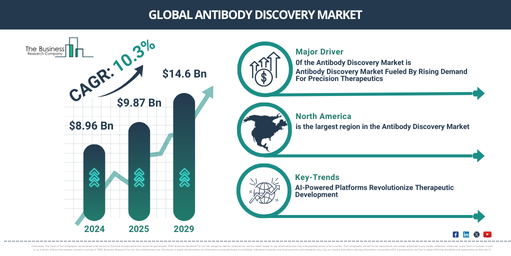
    In recent times, the antibody discovery market has experienced a fast-paced growth. Estimated to increase from $8.96 billion in 2024 to $9.87 billion in 2025, it will exhibit a compound annual growth rate (CAGR) of 10.2%. Factors contributing to this expansion during the historic period include a rise in funds allocated for drug discovery, increased funding in research and development activities, and the existence of numerous healthcare research centers and academic institutions.

    What Growth Rate Is Anticipated for the Antibody Discovery Market in the Coming Years?

    In the coming years, the antibody discovery market is predicted to experience swift expansion, projected to reach $14.6 billion by 2029, with an estimated compound annual growth rate (CAGR) of 10.3%. The predicted growth within this period can be credited to a rising demand for antibody drug discovery services and platforms, a swell in funding towards novel technology development, an augmented demand for precision therapeutics and the extended use of antibodies in roles surpassing their traditional therapeutic purposes. Key trends projected within this period encompass amplified research and development endeavors, heightened demand for monoclonal antibodies, greater uptake of innovative technologies, an increased necessity for targeted therapeutics, and the evolution of groundbreaking antibody formats.

    Download The Free Sample Report Here:

    https://www.thebusinessresearchcompany.com/sample.aspx?id=13783&type=smp

    Who Are the Leading Companies in the Antibody Discovery Market?

    Major companies operating in the antibody discovery market report are Danaher Corporation, Eurofins Scientific, Sartorius AG, Charles River Laboratories, Bruker Corporation, WuXi Biologics, Genmab A/S, Evotec, Cambrex corporation, ChemPartner, Aragen life science Pvt ltd, Genscript Technology Corporation, Biocytogen, Alcami Corporation Inc, Twist Bioscience, BioDuro-Sundia, Fairjourney Biologics S.A, Harbour BioMed, Rockland Immunochemicals, Creative Biolabs, Synbio technologies, ImmunoPrecise, Ablexis, Myrio Therapeutics, Antibody Solutions, MabSilico

    What Are the Key Drivers of the Antibody Discovery Market?

    The expansion of the antibody discovery market is anticipated to be fueled by the increasing demand for precision therapeutics. Precision therapeutics, sometimes referred to as personalized therapeutics, involve customizing medical treatment procedures and interventions to suit each patient’s distinct characteristics. This is where antibody discovery plays a critical role, as it facilitates the creation of highly targeted therapies, like monoclonal antibodies. These therapies are tailored to interact specifically and accurately with disease-related molecules or cells, leading to more effective and personalized care. For instance, in January 2023, it was reported by the Personalized Medicine Coalition, a professional membership organization based in the US, that the FDA’s Center for Drug Evaluation and Research (CDER) approved 37 novel molecular entities (NMEs) in 2022, and out of these, about 34% which accounts for 12, are identified as personalized medicines by the Personalized Medicine Coalition (PMC). Consequently, the escalating demand for precision therapeutics is projected to bolster the antibody discovery market’s growth.

    Request For A Customized Report:

    https://www.thebusinessresearchcompany.com/customise?id=13783&type=smp

    What Are the Key Market Segments in the Antibody Discovery Industry?

    The antibody discovery market covered in this report is segmented –

    1) By Methods: Phage Display, Hybridoma, Other Methods

    2) By Antibody Type: Humanized Antibody, Human Antibody, Chimeric Antibody, Murine Antibody

    3) By End Users: Pharmaceutical And Biotechnology Industry, Research Laboratory, Academic Laboratory

    Subsegments:

    1) By Phage Display: Selection And Screening Techniques, Optimization Methods

    2) By Hybridoma: Monoclonal Antibody Production, Screening And Selection Processes

    3) By Other Methods: Transgenic Mouse Technology, B-Cell Engineering, Single-Cell Sorting Techniques

    What Are the Latest Trends in the Antibody Discovery Market?

    Leading firms involved in the antibody discovery market are introducing trailblazing technologies such as an AI-integrated computational antibody drug discovery platform for enhancing the effectiveness and precision of antibody creation. This AI-driven platform combines artificial intelligence and computational methods to speed up the identification and optimization of therapeutic antibodies. For example, SwiftPharma BV, a company based in Belgium that innovates recombinant proteins from a distinctive plant-based system, launched an AI-guided antibody discovery platform in October 2023. It integrates artificial intelligence, massive data, machine learning, and phage display methods to swiftly predict exact and high-affinity antibody-antigen binding. Comparable to natural language processing, this technology generates a wide range of antibody variations, helping SwiftPharma to construct comprehensive antibody libraries swiftly. This sophisticated system significantly accelerates the discovery of potential antibody medicines with extraordinary speed.

    Access The Full Report Here:

    https://www.thebusinessresearchcompany.com/report/antibody-discovery-global-market-report

    What Are the Key Regional Markets in the Antibody Discovery Industry?

    North America was the largest region in the antibody discovery market in 2024. Asia-Pacific is expected to be the fastest-growing region in the forecast period. The regions covered in the antibody discovery market report are Asia-Pacific, Western Europe, Eastern Europe, North America, South America, Middle East, Africa.

    Purchase The Full Report Today:

    https://www.thebusinessresearchcompany.com/purchaseoptions.aspx?id=13783

    This Report Delivers Insight On:

    1. How big is the antibody discovery market, and how is it changing globally?

    2. Who are the major companies in the antibody discovery market, and how are they performing?

    3. What are the key opportunities and risks in the antibody discovery market right now?

    4. Which products or customer segments are growing the most in the antibody discovery market?

    5. What factors are helping or slowing down the growth of the antibody discovery market?

    About The Business Research Company:

    With over 15000+ reports from 27 industries covering 60+ geographies, The Business Research Company has built a reputation for offering comprehensive, data-rich research and insights. Armed with 1,500,000 datasets, the optimistic contribution of in-depth secondary research, and unique insights from industry leaders, you can get the information you need to stay ahead in the game.

    Get in touch with us:

    The Business Research Company: https://www.thebusinessresearchcompany.com/

    Americas +1 310-496-7795

    Asia +44 2071930708

    Europe +44 7882 955267

    Email us at info@tbrc.info

    Follow us on:

    LinkedIn: https://in.linkedin.com/company/the-business-research-company

    YouTube: https://www.youtube.com/channel/UC24_fI0rV8cR5DxlCpgmyFQ

    Global Market Model: https://www.thebusinessresearchcompany.com/global-market-model