Category: Pharmaceuticals

  • Global Non-injectable Insulin Market Projected to Reach $3.17 Billion by 2029 at a CAGR of 10.1%

    Discover trends, market shifts, and competitive outlooks for the non-injectable insulin industry through 2025-2034 with The Business Research Company’s reliable data and in-depth research

    What is the Projected CAGR for the Non-injectable Insulin Market Size from 2025 to 2034?

    The market size for non-injectable insulin has witnessed a swift expansion in recent times. The market is projected to inflate from $1.92 billion in 2024 to $2.16 billion in 2025, reflecting a compound annual growth rate (CAGR) of 12.1%. This significant surge during the historic period can be credited to the increased patient compliance, addressing needle phobia, improved quality of life, easier application process, and consistent control of blood sugar levels.

    The market for non-injectable insulin is anticipated to experience swift expansion in the next few years, reaching a worth of $3.17 billion in 2029 with a compounded annual growth rate (CAGR) of 10.1%. The factors contributing to this projected growth during the forecast period include ongoing focus on patient adherence, lasting solutions for needle phobia, constant enhancement of quality of life and safety, and minimized risk of injuries and infections. Key trends during this period include advancements in technology, development of tech-based solutions, integration of digital health, application of nanotechnology, and usage of combination therapies.

    Download a free sample to assess the report’s scope and structure:

    https://www.thebusinessresearchcompany.com/sample.aspx?id=13888&type=smp

    What are the Fundamental Drivers and Innovations Shaping the Non-injectable Insulin Market?

    The upward trend in obesity and diabetes disorders is forecasted to boost the advancement of the non-injectable insulin market. Obesity, a health condition distinguished by an overabundance of body fat usually due to disparity between energy consumption and energy use, and diabetes mellitus, more simply known as diabetes, which is a set of metabolic diseases categorized by enduringly high blood sugar levels. Non-injectable insulin is employed to take care of diabetes and obesity, with the prospective for improving management by confronting obstacles to insulin treatment, proposing likely weight management advantages, and offering simpler therapy options. For instance, the World Heart Federation, a NGO located in Switzerland, indicated in 2022 that obesity rates around the globe are expected to skyrocket, with around 2.3 billion people in 2021, encompassing children and adults, struggling with overweight and obesity. This is anticipated to escalate to 2.7 billion by 2025. Additionally, in April 2023, as per a study by the British Diabetic Association, the UK’s diabetes charity, about 4.3 million people in the UK are diabetic, while over 2.4 million are at a high threat of developing type 2 diabetes. The registration rates for 2021-22 saw an increase of 148,951 as compared to the preceding year. Hence, the escalating issues of obesity and diabetes are fuelling the growth of the non-injectable insulin market.

    How Is the Non-injectable Insulin Market Segmented?

    The non-injectable insulin market covered in this report is segmented –

    1) By Type: Synthetic Insulin, Semi Synthetic Insulin

    2) By Product: Pills, Sprays, Other Products

    3) By Distribution Channel: Hospital Pharmacies, Online Pharmacies, Drug Stores

    Subsegments:

    1) By Synthetic Insulin: Rapid-Acting Synthetic Insulin, Short-Acting Synthetic Insulin, Intermediate-Acting Synthetic Insulin, Long-Acting Synthetic Insulin

    2) By Semi-Synthetic Insulin: Modified Insulin Analogs, Combination Insulins, Biosimilar Insulins, Insulin With Extended Release Formulations

    Request customized data on this market:

    https://www.thebusinessresearchcompany.com/customise?id=13888&type=smp

    Which Regions Are Driving the Next Phase of the Non-injectable Insulin Market Growth?

    North America was the largest region in the non-injectable insulin market in 2024. Asia-Pacific is expected to be the fastest-growing region in the forecast period. The regions covered in the non-injectable insulin market report are Asia-Pacific, Western Europe, Eastern Europe, North America, South America, Middle East, Africa.

    What Key Trends Are Shaping the Future of the Non-injectable Insulin Market?

    Leading firms in the non-injectable insulin market are prioritizing innovative enhancements in drug delivery mechanisms, such as a needle-free oral insulin spray. This shift aims to better the lives of individuals managing their diabetes through numerous insulin shots. A needle-free insulin spray offers a pain-free substitute for controlling blood glucose levels, presenting a more convenient option as it can be sprayed directly into the mouth. For instance, in November 2023, Ozulin, an oral insulin spray, was introduced by NiedlFree Technologies, a technological platform based in India. The spray aims to facilitate a more manageable solution for people with diabetes, mainly those who find traditional injection-based insulin methods tough. If approved, Ozulin has the capacity to revolutionize diabetic treatment by offering a more convenient and painless substitute for insulin injections.

    View the full report here:

    https://www.thebusinessresearchcompany.com/report/non-injectable-insulin-global-market-report

    How Is the Non-injectable Insulin Market Defined and What Are Its Core Parameters?

    Non-injectable insulin is a type of insulin that can be administered into the body without the need for injection. These non-injectable forms of insulin aim to offer alternatives to traditional injections, making diabetes management more accessible and potentially improving the overall quality of life for individuals with diabetes.

    Purchase the full report and get a swift delivery:

    https://www.thebusinessresearchcompany.com/purchaseoptions.aspx?id=13888

    About The Business Research Company:

    With over 15000+ reports from 27 industries covering 60+ geographies, The Business Research Company has built a reputation for offering comprehensive, data-rich research and insights. Armed with 1,500,000 datasets, the optimistic contribution of in-depth secondary research, and unique insights from industry leaders, you can get the information you need to stay ahead in the game.

    Get in touch with us:

    The Business Research Company: https://www.thebusinessresearchcompany.com/

    Americas +1 3156230293

    Asia +44 2071930708

    Europe +44 2071930708

    Email us at info@tbrc.info

    Follow us on:

    LinkedIn: https://in.linkedin.com/company/the-business-research-company

    YouTube: https://www.youtube.com/channel/UC24_fI0rV8cR5DxlCpgmyFQ

    Global Market Model: https://www.thebusinessresearchcompany.com/global-market-model

  • Nivolumab Market Outlook 2025–2034: Identifying Growth Drivers, Technology Trends, and Policy Impact

    Nivolumab Market Outlook 2025–2034: Identifying Growth Drivers, Technology Trends, and Policy Impact

    Discover trends, market shifts, and competitive outlooks for the nivolumab industry through 2025-2034 with The Business Research Company’s reliable data and in-depth research

    How Has the Nivolumab Market Growth Performance Trended Historically, And What Lies Ahead?

    The market size of nivolumab has seen accelerated expansion in the recent past. This market is anticipated to increase from $1.69 billion in 2024 to $1.94 billion in 2025, demonstrating a compound annual growth rate (CAGR) of 14.7%. The remarkable growth observed during the historic period is primarily the outcome of breakthroughs in immunotherapy, a surge in cancer cases, fruitful clinical trials, and obtaining regulatory authorizations.

    The market for nivolumab is anticipated to experience swift expansion in the coming years, reaching a value of $3.2 billion by 2029 with a compounded annual growth rate (CAGR) of 13.4%. The projected growth during this forecast period is due to several factors including personalized healthcare, emerging medical indications, worldwide availability of cancer treatments, and advancements in combined therapy methods. Noteworthy trends during this forecast period comprise treatments driven by biomarkers, neoantigen vaccines, improved immunotherapy plans, and long-term monitoring studies.

    Download a free sample to assess the report’s scope and structure:

    https://www.thebusinessresearchcompany.com/sample.aspx?id=13012&type=smp

    What Are the Core Market Drivers Propelling Growth in the Nivolumab Industry?

    The escalating rate of cancer occurrence is anticipated to expedite the expansion of the nivolumab market in the future. Cancer is a type of disease that can emerge in almost any organ or tissue as abnormal cells uncontrollably multiply, surpass their normal limits and spread to other organs or invade nearby body parts. Nivolumab is utilized to manage and treat various kinds of cancer by preventing cancer cells from inhibiting the immune system and permitting the immune system to attack and kill the cancer cells. For example, the Australian Institute of Health and Welfare, a government agency located in Australia that concentrates on offering extensive health and welfare data and insights, reports that the number of cancer diagnoses increased from 156,781 in 2021 to 160,570 in 2022 in July 2024, indicating a surge of 3,789 cases within a year. Consequently, the mounting prevalence of cancer stimulates the development of the nivolumab market. The Nivolumab Market Driver: The Growth in Non-Small Cell Lung Cancer (NSCLC) Instances Is Boosting The Expansion Of The Nivolumab Market

    How Is the Nivolumab Market Segmented?

    The nivolumab market covered in this report is segmented –

    1) By Type: Injection 4mL, Injection 10mL

    2) By Route Of Administration: Intravenous, Other Routes Of Administration

    3) By Application: Melanoma, Non-small Cell Lung Cancer (NSCLC), Malignant Pleural Mesothelioma, Classical Hodgkin Lymphoma (CHL), Squamous Cell Carcinoma Of The Head And Neck (SCCHN), Renal Cell Carcinoma (RCC), Other Applications

    4) By End-User: Clinic, Hospital, Other End-Users

    Subsegments:

    1) By Injection 4mL: Single-Dose Vial, Multi-Dose Vial

    2) By Injection 10mL: Single-Dose Vial, Multi-Dose Vial

    Request customized data on this market:

    https://www.thebusinessresearchcompany.com/customise?id=13012&type=smp

    Which Regions Are Driving the Next Phase of the Nivolumab Market Growth?

    North America was the largest region in the nivolumab market in 2024. The regions covered in nivolumab market report are Asia-Pacific, Western Europe, Eastern Europe, North America, South America, Middle East and Africa.

    What Key Market Trends and Innovations Are Shaping the Future of the Nivolumab Industry?

    Leading entities in the nivolumab industry are concentrating on the creation of novel drugs to cater to their clients and maintain their market standing. The production of fresh medications can result in more effective treatment results for patients afflicted with different illnesses. To illustrate, Bristol-Myers Squibb Co., a US enterprise majorly devoted to cancer, cardiovascular, immunology, and fibrotic therapeutic research, declared in May 2022 that the U.S. Food and Drug Administration (FDA) had given approval for two nivolumab-based treatments, including Nivolumab combined with fluoropyrimidine and platinum-containing chemotherapy, and Nivolumab added to Yervoy (ipilimumab). These drugs are for the first-line treatment of adults with unresectable advanced or metastatic esophageal squamous cell carcinoma (ESCC) irrespective of PD-L1 status.

    View the full report here:

    https://www.thebusinessresearchcompany.com/report/nivolumab-global-market-report

    How Is the Nivolumab Market Defined and What Are Its Core Parameters?

    Nivolumab refers to an immunoglobulin G4 (IgG4) completely human antibody that targets programmed cell death protein 1 (PD1) and is licensed at a dose of 3 mg/kg for metastatic or unresectable melanoma, metastatic non-small cell lung cancer following platinum-based chemotherapy and metastatic renal cell carcinoma in the second-line context. It is a targeted therapy medication used to manage and treat a variety of cancers. It functions by boosting the immune system.

    Purchase the full report and get a swift delivery:

    https://www.thebusinessresearchcompany.com/purchaseoptions.aspx?id=13012

    About The Business Research Company:

    With over 15000+ reports from 27 industries covering 60+ geographies, The Business Research Company has built a reputation for offering comprehensive, data-rich research and insights. Armed with 1,500,000 datasets, the optimistic contribution of in-depth secondary research, and unique insights from industry leaders, you can get the information you need to stay ahead in the game.

    Get in touch with us:

    The Business Research Company: https://www.thebusinessresearchcompany.com/

    Americas +1 3156230293

    Asia +44 2071930708

    Europe +44 2071930708

    Email us at info@tbrc.info

    Follow us on:

    LinkedIn: https://in.linkedin.com/company/the-business-research-company

    YouTube: https://www.youtube.com/channel/UC24_fI0rV8cR5DxlCpgmyFQ

    Global Market Model: https://www.thebusinessresearchcompany.com/global-market-model
  • Strategic Growth Drivers Shaping the Nicotine Replacement Therapy Market Outlook 2025- 2034:Rising Incidence Of Smoking-Related Diseases Propels Growth In Nicotine Replacement Therapy Market

    Strategic Growth Drivers Shaping the Nicotine Replacement Therapy Market Outlook 2025- 2034:Rising Incidence Of Smoking-Related Diseases Propels Growth In Nicotine Replacement Therapy Market

    Discover trends, market shifts, and competitive outlooks for the nicotine replacement therapy industry through 2025-2034 with The Business Research Company’s reliable data and in-depth research

    What Is the Estimated Market Size of the Nicotine Replacement Therapy Market In 2029?

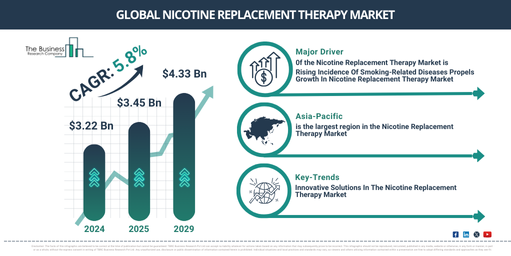
    The market size of nicotine replacement therapy has experienced robust growth in the past few years. The market is set to expand from a value of $3.22 billion in 2024 to an estimated $3.45 billion in 2025, representing a compound annual growth rate (CAGR) of 7.4%. Reasons for growth during the historical period include public health initiatives, shifts in lifestyle, suggestions from doctors, market rivalry, and heightened consumer awareness.

    The market for nicotine replacement therapy is anticipated to witness significant expansion in the coming years, reaching $4.33 billion by 2029 with a compound annual growth rate (CAGR) of 5.8%. The predicted growth in the forecast period is due to factors such as the emergence of new markets, personalised treatment strategies, government interventions, better healthcare accessibility, and shifting population attributes. Key trends to look out for during this forecast period encompass technological progression, research developments, incorporation of digital health solutions, digital therapeutic integration, and institutional wellness programs.

    Download a free sample to assess the report’s scope and structure:

    https://www.thebusinessresearchcompany.com/sample.aspx?id=13887&type=smp

    Which Factors and External Forces Are Driving Demand in the Nicotine Replacement Therapy Market?

    The growth of the nicotine replacement therapy market is anticipated to be fueled by an increasing prevalence of diseases linked to smoking. These ailments are predominantly caused by tobacco product usage, most notably smoking. Nicotine replacement therapy (NRT) is largely employed to assist individuals in giving up smoking, consequently decreasing the chance of acquiring smoking-related diseases and aiding in counseling, support, and dedication to lifestyle modifications. For example, a report by the National Health Service (NHS), a UK-based publicly funded healthcare system, in December 2023 indicated that there was a surge in hospitalizations due to smoking-related diseases to about 408,700 admissions in 2022-23, up from 389,800 in 2021-22, a jump of 4.8%. Hence, it is clear that the escalating rate of diseases caused by smoking is propelling the nicotine replacement therapy market’s growth.

    Which Segments in the Nicotine Replacement Therapy Offer the Most Growth?

    The nicotine replacement therapy market covered in this report is segmented –

    1) By Product Type: Patch, Gum, Lozenge, Inhaler, Spray, Other Products

    2) By Distribution Channel: Hospital Pharmacy, Retail Pharmacy, Online Pharmacy

    3) By Location: Hospitals And Deaddiction Centers, Home

    Subsegments:

    1) By Patch: Transdermal Nicotine Patches, Extended-Release Patches, Combination Patches

    2) By Gum: Nicotine Chewing Gum, Sugar-Free Nicotine Gum, Different Strengths Of Nicotine Gum

    3) By Lozenge: Nicotine Lozenges, Different Strengths Of Nicotine Lozenges

    4) By Inhaler: Nicotine Inhalation Devices, Disposable Inhalers, Refillable Inhaler Systems

    5) By Spray: Nasal Nicotine Spray, Oral Nicotine Spray, Metered-Dose Spray Systems

    6) By Other Products: Nicotine Tablets, Electronic Cigarettes As NRT, Nicotine Pouches, Herbal Cigarettes And Other Smoking Cessation Aids

    Request customized data on this market:

    https://www.thebusinessresearchcompany.com/customise?id=13887&type=smp

    What Are the Fastest-Growing Geographies in the Nicotine Replacement Therapy Market?

    Asia-Pacific was the largest region in the nicotine replacement therapy market in 2024. It is expected to be the fastest-growing region in the forecast period. The regions covered in the nicotine replacement therapy market report are Asia-Pacific, Western Europe, Eastern Europe, North America, South America, Middle East, Africa.

    Which Cutting-Edge Market Trends Are Expected to Drive theNicotine Replacement Therapy Market’s Growth?

    Notable players in the nicotine replacement therapy market are emphasizing on inventive solutions, such as Cigibud smoking cessation filters, to mitigate the serious health hazards related to smoking. A smoking cessation filter is fashioned to assist people in quitting smoking by limiting the intake of damaging substances from cigarettes. For instance, Nanoclean Global Pvt. Ltd, a nanotechnology startup from India, released the world’s first-ever smoking cessation filter, Cigibud, in March 2023. This filter utilizes patented nanofiber technology and is a scientifically confirmed method to quit smoking. It works to lessen the amount of tar and nicotine in cigarettes, hence simplifying the process of quitting smoking. The filter is both biodegradable and biocompatible, designed with minute holes that impede even the smallest particle from passing through. Inspired by nicotine replacement therapy (NRT), it operates by gradually decreasing nicotine levels. Furthermore, its primary function is to decrease the tar and nicotine content from cigarettes, with the overarching goal of assisting individuals in their endeavor to quit smoking.

    View the full report here:

    https://www.thebusinessresearchcompany.com/report/nicotine-replacement-therapy-global-market-report

    What Are the Key Elements That Define the Nicotine Replacement Therapy Market?

    Nicotine replacement therapy is a medical approach designed to help individuals quit smoking or reduce their dependence on nicotine by providing controlled doses of nicotine without the harmful effects of tobacco smoke. It aims to alleviate withdrawal symptoms and cravings associated with quitting smoking, making the process more manageable and increasing the likelihood of long-term success.

    Purchase the full report and get a swift delivery:

    https://www.thebusinessresearchcompany.com/purchaseoptions.aspx?id=13887

    About The Business Research Company:

    With over 15000+ reports from 27 industries covering 60+ geographies, The Business Research Company has built a reputation for offering comprehensive, data-rich research and insights. Armed with 1,500,000 datasets, the optimistic contribution of in-depth secondary research, and unique insights from industry leaders, you can get the information you need to stay ahead in the game.

    Get in touch with us:

    The Business Research Company: https://www.thebusinessresearchcompany.com/

    Americas +1 3156230293

    Asia +44 2071930708

    Europe +44 2071930708

    Email us at info@tbrc.info

    Follow us on:

    LinkedIn: https://in.linkedin.com/company/the-business-research-company

    YouTube: https://www.youtube.com/channel/UC24_fI0rV8cR5DxlCpgmyFQ

    Global Market Model: https://www.thebusinessresearchcompany.com/global-market-model
  • Major Drivers Propelling the Growth oh theNarcotic Drugs Market Forward: Role Of Rising Chronic Disease Incidence In Driving Growth Of The Narcotic Drug Market

    Major Drivers Propelling the Growth oh theNarcotic Drugs Market Forward: Role Of Rising Chronic Disease Incidence In Driving Growth Of The Narcotic Drug Market

    Discover trends, market shifts, and competitive outlooks for the narcotic drugs industry through 2025-2034 with The Business Research Company’s reliable data and in-depth research

    How Has the Narcotic Drugs Market Growth Performance Trended Historically, And What Lies Ahead?

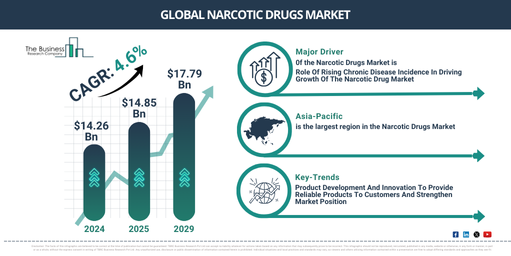
    The market size for narcotic drugs has seen a steady expansion in recent years. The market, which is projected to be worth $14.26 billion in 2024, is projected to reach $14.85 billion in 2025, reflecting a compound annual growth rate (CAGR) of 4.1%. The surge in growth during the historic period can be linked to a rise in medical needs, amplified public health concerns, improved access to healthcare, an increase in chronic pain prevalence, and government efforts to bolster pain management.

    Expect a consistent rise in the size of the narcotic drugs market over the upcoming years, eventually reaching $17.79 billion by 2029 with a compound annual growth rate (CAGR) of 4.6%. Anticipated growth during the forecast period is largely due to the rising demand for generic narcotic drugs, an expanding pharmaceutical industry, an increasing demand for minimally invasive surgical procedures, and a heightened utilization of narcotic drugs in palliative care. Key trends to watch during the forecast period include advancements in pharmaceuticals, the rise of telemedicine and remote monitoring, the development of non-opioid alternatives, and the application of artificial intelligence (AI) in the discovery and development of new drugs.

    Download a free sample to assess the report’s scope and structure:

    https://www.thebusinessresearchcompany.com/sample.aspx?id=12863&type=smp

    Which Major Market Drivers Are Expected to Boost the Growth Potential of the Narcotic Drugs Market?

    The narcotic drugs market is projected for growth as the instances of chronic illnesses continue to increase. Chronic diseases, which continue for over three months and may worsen over time, often require narcotic drugs for management and symptom relief, including cancer, chronic pain syndrome, terminal illness, and severe arthritis. For example, in June 2024, the National Health Service, a United Kingdom government department, found that in 2023, there was an extra 549,000 individuals in England who were at risk of developing type 2 diabetes. This brought their total number of individuals with non-diabetic hyperglycemia, or pre-diabetes, registered with a GP to 3,615,330, a significant increase from 3,065,825 in 2022 — an approximate increase of 20%. Therefore, this increase in chronic diseases is a major contributor to the growth of the narcotic drugs market. When it comes to the market drivers shaping the growth of narcotic drugs, the rising use of opioids as prescription medicine is set to push the market forward. Opioids, a category of drugs that envelops both legal prescription medicine and illegal substances, are known to create a feeling of euphoria, relaxation, and sedation. Opioids’ common use as prescription medications contributes to the increased use of narcotic drugs, primarily because of their powerful pain-easing and sedative effects — particularly when other pain management methods don’t suffice. To illustrate, according to the Australian Institute of Health and Welfare, a government agency based in Australia, there were 53,272 individuals across Australia (with the exception of Western Australia) being treated for opioid dependence on a certain day in 2023, translating to a rate of 22 individuals per 10,000. Thus, the growing use of opioids as prescription medicine is another factor fuelling the narcotic drugs market’s progress.

    Which Key Market Segments Comprise the Narcotic Drugs Market and Drive Its Revenue Growth?

    The narcotic drugs market covered in this report is segmented –

    1) By Drug: Opium, Heroin, Codeine, Oxycodone, Other Drugs

    2) By Source: Natural, Semi-Synthetic, Synthetic

    3) By Indication: Pain Management, Cough, Diarrhea, Dysentery, Asthma, Other Indications

    4) By Distribution Channel: Hospital Pharmacy, Online Pharmacy, Retail Pharmacy

    5) By End User: Hospitals, Homecare, Specialty Clinics, Other End Users

    Subsegments:

    1) By Opium: Raw Opium, Opium Extracts, Opium Derivatives

    2) By Heroin: Diacetylmorphine, Heroin Hydrochloride, Heroin Acetate

    3) By Codeine: Codeine Phosphate, Codeine Sulfate

    4) By Oxycodone: Oxycodone Hydrochloride, Oxycodone Acetaminophen, Controlled-Release Oxycodone

    5) By Other Drugs: Fentanyl, Morphine, Hydromorphone, Methadone, Buprenorphine

    Request customized data on this market:

    https://www.thebusinessresearchcompany.com/customise?id=12863&type=smp

    Which Areas Are Leading Regions in the Narcotic Drugs Market Expansion Across the Globe?

    Asia-Pacific was the largest region in the narcotic drugs market in 2024. The regions covered in the narcotic drug market report are Asia-Pacific, Western Europe, Eastern Europe, North America, South America, Middle East and Africa.

    What Are the Key Market Trends in theNarcotic Drugs Market Over the Coming Years?

    In an effort to offer dependable solutions to their patrons and solidify their standing in the narcotic drug market, leading corporations are placing heightened emphasis on innovation and product creation. For instance, in May 2023, Indivior PLC, an American pharmaceutical firm, introduced the OPVEE (nalmefene) nasal spray. This product is an opioid overdose salvation medication designed for both natural and synthetic opioids such as fentanyl. It’s advised that this spray is used without delay to treat confirmed or suspected opioid overdoses caused by natural or synthetic opioids in adults and children aged 12 and above, as shown through the decrease in respiratory and central nervous activities.

    View the full report here:

    https://www.thebusinessresearchcompany.com/report/narcotic-drugs-global-market-report

    How Is the Narcotic Drugs Market Conceptually Defined?

    A narcotic drug is a type of drug that acts on the central nervous system to produce sleepiness, pain relief, euphoria, and sometimes hallucinations. Narcotic drugs are typically derived from the opium poppy plant but can also be synthetically produced.

    Purchase the full report and get a swift delivery:

    https://www.thebusinessresearchcompany.com/purchaseoptions.aspx?id=12863

    About The Business Research Company:

    With over 15000+ reports from 27 industries covering 60+ geographies, The Business Research Company has built a reputation for offering comprehensive, data-rich research and insights. Armed with 1,500,000 datasets, the optimistic contribution of in-depth secondary research, and unique insights from industry leaders, you can get the information you need to stay ahead in the game.

    Get in touch with us:

    The Business Research Company: https://www.thebusinessresearchcompany.com/

    Americas +1 3156230293

    Asia +44 2071930708

    Europe +44 2071930708

    Email us at info@tbrc.info

    Follow us on:

    LinkedIn: https://in.linkedin.com/company/the-business-research-company

    YouTube: https://www.youtube.com/channel/UC24_fI0rV8cR5DxlCpgmyFQ

    Global Market Model: https://www.thebusinessresearchcompany.com/global-market-model
  • Emerging Trends Redefining the Myelodysplastic Syndrome Market Landscape: Innovative Drug Development And Approvals Transform Myelodysplastic Syndrome (MDS) Treatment Market

    Emerging Trends Redefining the Myelodysplastic Syndrome Market Landscape: Innovative Drug Development And Approvals Transform Myelodysplastic Syndrome (MDS) Treatment Market

    Discover trends, market shifts, and competitive outlooks for the myelodysplastic syndrome (mds) drugs industry through 2025-2034 with The Business Research Company’s reliable data and in-depth research

    What Is the Current and Projected Market Size of the Myelodysplastic Syndrome (MDS) Drugs Market Through 2034?

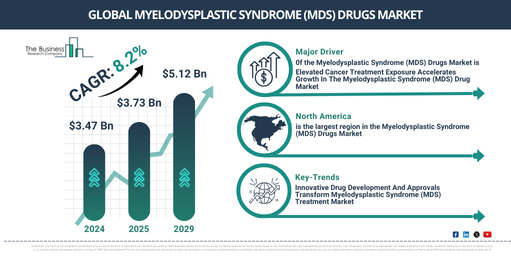
    In recent times, the market size for myelodysplastic syndrome (MDS) drugs has shown robust growth. Projected growth indicates that it will rise from $3.47 billion in 2024 to $3.73 billion in 2025, exhibiting a compound annual growth rate (CAGR) of 7.5%. This hike during the historical period is a result of factors such as the aging population, advances in targeted therapies, clinical trials, and heightened awareness.

    In the upcoming years, the market size for drugs used to treat myelodysplastic syndrome (MDS) is projected to experience robust expansion, ballooning to $5.12 billion by 2029 with a compound annual growth rate (CAGR) of 8.2%. This promising growth projected in the forecast period can be credited to advances in genomic research, the development of immunotherapies, the global augmentation of healthcare, and the identification of biomarkers. Noteworthy trends for the forecast period comprise personalized medicine, the increasing use of combinatorial therapies, management of symptoms, and enhanced data sharing and collaboration.

    Download a free sample to assess the report’s scope and structure:

    https://www.thebusinessresearchcompany.com/sample.aspx?id=13043&type=smp

    What Are the Core Market Drivers Propelling Growth in the Myelodysplastic Syndrome (MDS) Drugs Industry?

    The upward trend in utilization of cancer treatment methods such as chemotherapy and radiation is projected to enhance the expansion of the myelodysplastic syndrome (MDS) drug market. Medications used in chemotherapy are designed to destroy cancerous cells, while radiation employs high-intensity radiation doses to exterminate cancer cells and decrease tumour rates. Unfortunately, these therapies have adverse effects on the stem cells in the bone marrow, which are responsible for generating new blood cells. This disruption in cell creation contributes to MDS occurrence. MDS drugs, however, present several advantages in the control and treatment of MDS, an array of disorders identified by irregular blood cell production in the bone marrow. A case in point is the analysis by the European Society of Radiation Oncology (ESTRO), a Belgium-based establishment, which anticipates a 16% surge in the radiotherapy treatment courses by 2025, based on projected cancer rates. Consequently, the growth of the myelodysplastic syndrome (MDS) drug market is being fueled by the increased reliance on cancer treatment methods such as chemotherapy and radiation.

    Myelodysplastic Syndrome (MDS) Drugs Market Driver: Escalating Myeloid Leukemia Cases Spur Myelodysplastic Syndrome (MDS) Drug Treatment Market


    How Is the Myelodysplastic Syndrome (MDS) Drugs Market Segmented?

    The myelodysplastic syndrome (MDS) drugs market covered in this report is segmented –

    1) By Drug Type: Chemotherapy, Immunomodulatory Drugs

    2) By Route Of Administration: Oral, Parenteral

    3) By Syndrome: Refractory Cytopenia With Multilineage Dysplasia, Refractory Anemia, Refractory Anemia With Ringed Sideroblasts

    4) By End User: Hospitals, Clinics, Ambulatory Surgical Centers

    Subsegments:

    1) By Chemotherapy: Hypomethylating Agents, Cytotoxic Agents

    2) By Immunomodulatory Drugs: Lenalidomide, Thalidomide, Pomalidomide

    Request customized data on this market:

    https://www.thebusinessresearchcompany.com/customise?id=13043&type=smp

    Which Regions Are Driving the Next Phase of the Myelodysplastic Syndrome (MDS) Drugs Market Growth?

    North America was the largest region in the myelodysplastic syndrome (MDS) drugs market in 2024. The regions covered in myelodysplastic syndrome (MDS) drugs market report are Asia-Pacific, Western Europe, Eastern Europe, North America, South America, Middle East and Africa.

    What Key Market Trends and Innovations Are Shaping the Future of the Myelodysplastic Syndrome (MDS) Drugs Industry?

    Major businesses in the myelodysplastic syndrome (MDS) drug market are focusing their efforts on developing innovative products such as targeted therapies to enhance patient outcomes, cater to specific client demands, and adapt to the ecosystem. Targeted therapy for MDS involves the use of drugs that explicitly target cancer cells with genetic mutations or molecular abnormalities, with the aim of selectively eliminating these abnormal cells while minimizing harm to healthy cells. For example, the U.S. FDA approved Tibsovo (ivosidenib) in October 2023 for treating adult patients with relapsed or refractory (R/R) MDS who have an isocitrate dehydrogenase-1 (IDH1) mutation. The efficacy of Tibsovo for this new usage was assessed in an open-label, single-arm, multicenter study that involved 18 adult patients with relapsed or refractory MDS with an IDH1 mutation.

    View the full report here:

    https://www.thebusinessresearchcompany.com/report/myelodysplastic-syndrome-mds-drugs-global-market-report

    How Is the Myelodysplastic Syndrome (MDS) Drugs Market Defined and What Are Its Core Parameters?

    Myelodysplastic syndrome (MDS) drugs are medications used to treat myelodysplastic syndrome, a collection of several bone marrow illnesses in which the bone marrow fails to create enough healthy blood cells. They work by helping to restore normal gene function in bone marrow cells and produce more red blood cells.

    Purchase the full report and get a swift delivery:

    https://www.thebusinessresearchcompany.com/purchaseoptions.aspx?id=13043

    About The Business Research Company:

    With over 15000+ reports from 27 industries covering 60+ geographies, The Business Research Company has built a reputation for offering comprehensive, data-rich research and insights. Armed with 1,500,000 datasets, the optimistic contribution of in-depth secondary research, and unique insights from industry leaders, you can get the information you need to stay ahead in the game.

    Get in touch with us:

    The Business Research Company: https://www.thebusinessresearchcompany.com/

    Americas +1 3156230293

    Asia +44 2071930708

    Europe +44 2071930708

    Email us at info@tbrc.info

    Follow us on:

    LinkedIn: https://in.linkedin.com/company/the-business-research-company

    YouTube: https://www.youtube.com/channel/UC24_fI0rV8cR5DxlCpgmyFQ

    Global Market Model: https://www.thebusinessresearchcompany.com/global-market-model
  • Multidrug Resistant Bacteria Outlook 2034: Key Drivers, Trends, and Market Frontiers

    Multidrug Resistant Bacteria Outlook 2034: Key Drivers, Trends, and Market Frontiers

    Discover trends, market shifts, and competitive outlooks for the multidrug resistant bacteria industry through 2025-2034 with The Business Research Company’s reliable data and in-depth research

    How Fast Is The Multidrug Resistant Bacteria Market Expected to Grow Between 2025 And 2029?

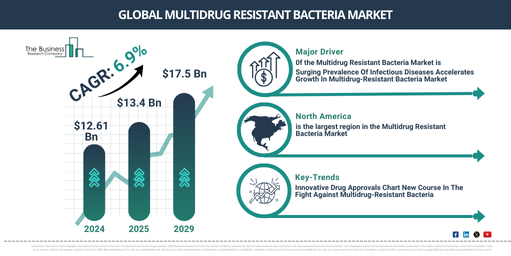
    In recent times, the market size for multidrug resistant bacteria has markedly expanded. It’s projected to increase from $12.61 billion in 2024 to $13.4 billion in 2025, with a compound annual growth rate (CAGR) of 6.2%. Factors such as the crisis of antibiotic resistance, progress in drug discovery, regulatory incentives, and public health programs have contributed to the growth during the historic period.

    Expectations are high for substantial expansion in the market size of multidrug resistant bacteria in the coming years. The market, forecasted to reach a value of $17.5 billion in 2029, is predicted to have a compound annual growth rate (CAGR) of 6.9%. Contributing to this anticipated growth during the forecast period are factors such as antibiotic stewardship programs, worldwide resistance spread, phage therapy and alternative treatments, along with both public and private investments. Key trends to watch during the forecast period would be precision medicine approaches to infectious diseases, combination therapies, ongoing surveillance and monitoring, and global cooperation.

    Download a free sample to assess the report’s scope and structure:

    https://www.thebusinessresearchcompany.com/sample.aspx?id=13044&type=smp

    How Are Key Drivers in the Industry Acting as Catalysts for the Growth of the Multidrug Resistant Bacteria Market?

    The escalation in the incidence of infectious diseases is predicted to stimulate the expansion of the multidrug-resistant bacteria market in the future. Illnesses caused by harmful microbes, such as bacteria, parasites, viruses, or fungi, are identified as infectious diseases. The connection between multidrug-resistant bacteria and these diseases is strong, owing to the bacteria’s capacity to cause infections which pose challenges in treatment with usual antibiotics. This resistance to multiple antibiotics decreases the bacteria’s susceptibility to drugs typically used in treating bacterial infections. As an example, the Centers for Disease Control and Prevention, a national public health institution based in the U.S., published an article in November 2023 stating a rise in tuberculosis cases in the USA, from 8,320 in 2022 to 9,615 in 2023, marking a growth of 1,295 cases. Thus, the mounting occurrence of infectious diseases is projected to contribute to the surge of the multidrug-resistant bacteria market.

    Which Segments in the Multidrug Resistant Bacteria Offer the Most Growth?

    The multidrug resistant bacteria market covered in this report is segmented –

    1) By Disease: Urinary Tract Infection, Intra-Abdominal Infections, Blood Stream Infections, Clostridium Difficile Infections, Acute Bacterial Skin And Skin Structure Infections, Hospital Acquired Bacterial Pneumonia, Acquired Bacterial Pneumonia, Other Diseases

    2) By Drug Class: Oxazolidinones, Lipoglycopeptides, Tetracyclines, Cephalosporins, Combination Therapies, Other Drug Classes

    3) By Route Of Administration: Oral, Parenteral, Other Routes Of Administration

    4) By End-User: Hospitals, Specialty Clinics, Homecare, Other End-Users

    Subsegments:

    1) By Urinary Tract Infection: Cystitis, Pyelonephritis

    2) By Intra-Abdominal Infections: Appendicitis, Peritonitis

    3) By Blood Stream Infections: Bacteremia, Sepsis

    4) By Clostridium Difficile Infections: Mild CDI, Severe CDI

    5) By Acute Bacterial Skin And Skin Structure Infections: Cellulitis, Abscesses

    6) By Hospital Acquired Bacterial Pneumonia: Ventilator-Associated Pneumonia, Hospital-Acquired Pneumonia

    7) By Acquired Bacterial Pneumonia: Community-Acquired Pneumonia, Aspiration Pneumonia

    By Other Diseases: Bone and Joint Infections, Endocarditis

    Request customized data on this market:

    https://www.thebusinessresearchcompany.com/customise?id=13044&type=smp

    What Are the Fastest-Growing Geographies in the Multidrug Resistant Bacteria Market?

    North America was the largest region in the multidrug-resistant bacteria market in 2024. The regions covered in multidrug-resistant bacteria market report are Asia-Pacific, Western Europe, Eastern Europe, North America, South America, Middle East and Africa.

    What Are the Current Market Growth and Trends in the Multidrug Resistant Bacteria Industry?

    Key players in the multidrug-resistant bacteria market are concentrating their efforts on the creation of novel drugs and obtaining regulatory approvals, all in an attempt to cater to an emerging consumer sector. Getting the green light for drugs targeting multidrug-resistant bacteria is critical in curtailing the surge of antibiotic resistance. In a notable example, Entasis Therapeutics Inc., an American biotech firm, in May 2023 saw its new drug Xacduor, a combined antibiotic, gaining approval from the Food and Drug Administration (FDA). Xacduor is developed to combat hospital-acquired bacterial pneumonia (HABP) and ventilator-associated bacterial pneumonia (VAP) induced by acinetobacter baumannii, a notoriously stubborn pathogen. This drug combines the powers of ceftolozane, a cephalosporin antibiotic, and tedizolid phosphate from the novel oxazolidinone category. Moreover, it provides an alternative solution for patients harboring Acinetobacter baumannii infections that have proven irresponsive to other therapies. This drug can be used as an injectable dose integrating the antibiotic beta-lactam sulbactam and the beta-lactamase inhibitor wide-spectrum durlobactam, successfully diminishing acinetobacter resistance and enhancing the drug’s efficiency.

    View the full report here:

    https://www.thebusinessresearchcompany.com/report/multidrug-resistant-bacteria-global-market-report

    What Are the Key Elements That Define the Multidrug Resistant Bacteria Market?

    Multidrug-resistant bacteria refer to strains of bacteria that have developed resistance to multiple types or classes of antibiotics. These bacteria are no longer susceptible to the effects of several different antibiotics that would typically be effective in treating bacterial infections. Multidrug-resistant organisms tend to occur in hospitals and medical care facilities when antibiotics are used for longer than necessary or when they are not needed.

    Purchase the full report and get a swift delivery:

    https://www.thebusinessresearchcompany.com/purchaseoptions.aspx?id=13044

    About The Business Research Company:

    With over 15000+ reports from 27 industries covering 60+ geographies, The Business Research Company has built a reputation for offering comprehensive, data-rich research and insights. Armed with 1,500,000 datasets, the optimistic contribution of in-depth secondary research, and unique insights from industry leaders, you can get the information you need to stay ahead in the game.

    Get in touch with us:

    The Business Research Company: https://www.thebusinessresearchcompany.com/

    Americas +1 3156230293

    Asia +44 2071930708

    Europe +44 2071930708

    Email us at info@tbrc.info

    Follow us on:

    LinkedIn: https://in.linkedin.com/company/the-business-research-company

    YouTube: https://www.youtube.com/channel/UC24_fI0rV8cR5DxlCpgmyFQ

    Global Market Model: https://www.thebusinessresearchcompany.com/global-market-model
  • Migraine Drugs Market Outlook 2025–2034: Identifying Growth Drivers, Technology Trends, and Policy Impact

    Migraine Drugs Market Outlook 2025–2034: Identifying Growth Drivers, Technology Trends, and Policy Impact

    Discover trends, market shifts, and competitive outlooks for the migraine drugs industry through 2025-2034 with The Business Research Company’s reliable data and in-depth research

    What Is the Estimated Market Size of the Migraine Drugs Market In 2029?

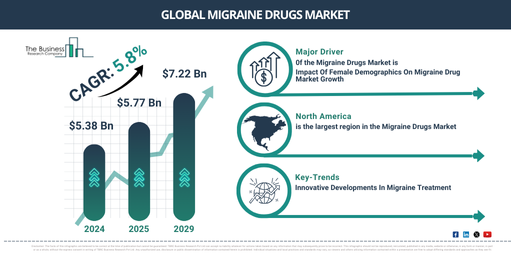
    In the past few years, the migraine drugs market has experienced robust growth. The market size will increase from $5.38 billion in 2024 to $5.77 billion in 2025, with a compound annual growth rate (CAGR) of 7.2%. The reason for this growth during the historic period includes advancements in the formulation of drugs, a rise in awareness and diagnosis, the influence of stress and lifestyle factors, the widespread expansion of generic drugs, and the introduction of CGRP inhibitors.

    The market for migraine drugs is predicted to witness robust expansion in the succeeding years, with its worth escalating to $7.22 billion in 2029, demonstrating a compound annual growth rate (CAGR) of 5.8%. The anticipated growth for the forecasted duration can be ascribed to elements like personalized medical strategies, telemedicine, remote medical consultations, health policy and insurance provisions, and the escalating global migraine occurrences. Combination therapies also contribute to this growth. Key trends to watch during this forecast period include targeted therapies, telemedicine and remote medical consultations, patient-focused strategies, digital therapeutic methods, the use of biosimilars in treating migraines and clinical investigations and trials.

    Download a free sample to assess the report’s scope and structure:

    https://www.thebusinessresearchcompany.com/sample.aspx?id=13484&type=smp

    What Are the Core Market Drivers Propelling Growth in the Migraine Drugs Industry?

    The surge in the female population is anticipated to boost the expansion of the market for migraine medications. The term ‘female population’ pertains to the aggregate number of female residents in a country or region during a certain timeframe, across all age groups. Due to various genetic, hormonal, and environmental aspects, the incidence of migraines is substantially more prevalent among women than men. For example, as per the World Population Prospects 2022 from the United Nations, a US-based international organization, females are projected to account for 4.00 billion or 49.75% of the global population in 2022. The prediction suggests that the number of women will surpass men by 2049. Consequently, the escalating number of females is contributing to the advancement of the migraine drugs market.

    Migraine Drugs Market Driver: Rising Migraine Instances Boosting The Expansion Of The Migraine Medicine Market


    How Is the Migraine Drugs Market Segmented?

    The migraine drugs market covered in this report is segmented –

    1) By Drug Class: Triptans, Betablockers, Angiotensin Blockers, Tricyclics, Anticonvulsants

    2) By Route of Administration: Oral, Injectable, Other Routes

    3) By End-User: Hospitals And Clinics, Retail Pharmacy, Online Pharmacy, Other End Users

    Subsegments:

    1) By Triptans: Sumatriptan, Rizatriptan, Zolmitriptan, Eletriptan

    2) By Beta Blockers: Propranolol, Metoprolol, Timolol

    3) By Angiotensin Blockers: Candesartan, Losartan

    4) By Tricyclics: Amitriptyline, Nortriptyline

    5) By Anticonvulsants: Topiramate, Valproate

    Request customized data on this market:

    https://www.thebusinessresearchcompany.com/customise?id=13484&type=smp

    Which Regions Are Driving the Next Phase of the Migraine Drugs Market Growth?

    North America was the largest region in the migraine market in 2024. Asia-Pacific is expected to be the fastest-growing region in the forecast period. The regions covered in the migraine drugs market report are Asia-Pacific, Western Europe, Eastern Europe, North America, South America, Middle East, Africa.

    What Key Market Trends and Innovations Are Shaping the Future of the Migraine Drugs Industry?

    Major firms in the migraine medications market are prioritizing the creation of unique products like Zavzpret to offer improved solutions for patients and establish dominance in the market. Zavzpret is a nasal spray drug engineered for the immediate relief of migraines both with and without aura in adult patients. In March 2023, the pharmaceutical giant, Pfizer, based in the US, was given the green light for Zavzpret by the US Food and Drug Administration, a federal agency. Zavzpret is unique in the sense that it is the first and only approved zavegepant (CGRP receptor antagonist) nasal spray for migraine’s acute treatment. Its mechanism operates by targeting the calcitonin gene-related peptide (CGRP) and is specifically developed to offer instant relief from migraines. The endorsement of Zavzpret rolls out a new treatment alternative for migraine sufferers, particularly beneficial for those experiencing nausea and vomiting during migraines, and for individuals who cannot utilize triptans due to cardiovascular risks.

    View the full report here:

    https://www.thebusinessresearchcompany.com/report/migraine-drugs-global-market-report

    How Is the Migraine Drugs Market Defined and What Are Its Core Parameters?

    Migraine drugs refer to medications used to treat a kind of neurological illness in which a person experiences a sharp, throbbing headache. They function by focusing on different physiological mechanisms that cause migraines.

    Purchase the full report and get a swift delivery:

    https://www.thebusinessresearchcompany.com/purchaseoptions.aspx?id=13484

    About The Business Research Company:

    With over 15000+ reports from 27 industries covering 60+ geographies, The Business Research Company has built a reputation for offering comprehensive, data-rich research and insights. Armed with 1,500,000 datasets, the optimistic contribution of in-depth secondary research, and unique insights from industry leaders, you can get the information you need to stay ahead in the game.

    Get in touch with us:

    The Business Research Company: https://www.thebusinessresearchcompany.com/

    Americas +1 3156230293

    Asia +44 2071930708

    Europe +44 2071930708

    Email us at info@tbrc.info

    Follow us on:

    LinkedIn: https://in.linkedin.com/company/the-business-research-company

    YouTube: https://www.youtube.com/channel/UC24_fI0rV8cR5DxlCpgmyFQ

    Global Market Model: https://www.thebusinessresearchcompany.com/global-market-model
  • Strong CAGR to Propel in the Machine Learning (ML) in The Pharmaceutical Industry Market and Beyond upto $13.99 Billion by 2029

    Strong CAGR to Propel in the Machine Learning (ML) in The Pharmaceutical Industry Market and Beyond upto $13.99 Billion by 2029

    Discover trends, market shifts, and competitive outlooks for the machine learning (ml) in the pharmaceutical industry industry through 2025-2034 with The Business Research Company’s reliable data and in-depth research

    What is the Projected CAGR for the Machine Learning (ML) in The Pharmaceutical Industry Market Size from 2025 to 2034?

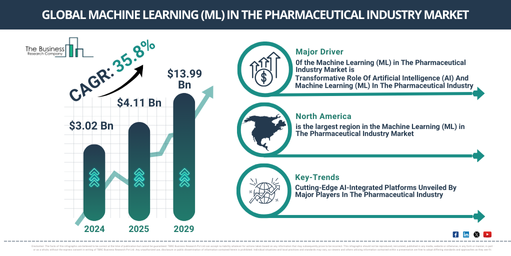
    The market size for machine learning (ML) in the pharmaceutical industry has seen an impressive surge in recent years. The value of the market is expected to increase from $3.02 billion in 2024 to $4.11 billion in 2025, with a compound annual growth rate (CAGR) of 35.9%. The significant growth observed in the historical period can be linked to the rising acceptance of federated learning, the acceleration of drug discovery timelines, improved drug safety measures and pharmacovigilance, as well as the broadening scope of precision medicine applications.

    Anticipated exponential expansion is projected for the machine learning (ML) in the pharmaceutical industry market in the coming years, reaching $13.99 billion in 2029, with a compound annual growth rate (CAGR) of 35.8%. The leap in the projected timeframe is linked to the increasing complexity of biological data, heightened computational power, heightened industry understanding, and education, as well as a focus on patient-centric healthcare responses. Key trends for this forecast period incorporate partnerships and collaborations between AI and pharma, drug-agnostic treatments, ML system interoperability, the decentralization of clinical trials, and the discovery of AI-propelled biomarkers.

    Download a free sample to assess the report’s scope and structure:

    https://www.thebusinessresearchcompany.com/sample.aspx?id=13872&type=smp

    Which Primay Drivers Are Accelerating Growth in the Machine Learning (ML) in The Pharmaceutical Industry Market?

    The pharmaceutical industry is being propelled by the rising uptake of artificial intelligence (AI) and machine learning (ML). AI is defined as computer software that emulates human cognitive functions to carry out intricate tasks such as evaluation, reasoning, and learning. ML, on the other hand, is an aspect of AI that utilises data-trained algorithms to generate models capable of executing complex tasks. The implementation of AI and ML in pharmaceutical technology and drug delivery design provides swift remedies to intricate problems. It carries the potential to alliterate the drug delivery procedure, enrich decision-making instruments, and manipulate huge amounts of data for more effectual decisions. For example, Forbes, a US-based business magazine, reported in June 2023 approximately 432,000 UK firms, equivalent to one in six, have integrated at least one AI technology into their operations. In addition, at least one AI technology has been embraced by 68% of major businesses, 33% of medium-sized enterprises, and 15% of small businesses. As a result, the escalating uptake of artificial intelligence (AI) is set to push forward machine learning (ML) within the pharmaceutical industry.

    Which Primary Segments of the Machine Learning (ML) in The Pharmaceutical Industry Market Are Driving Growth and Industry Transformations?

    The machine learning (ML) in the pharmaceutical industry market covered in this report is segmented –

    1) By Component: Solution, Services

    2) By Component: Cloud, On-premise

    3) By Enterprise Size: Small and Medium Enterprises (SMEs), Large Enterprises

    Subsegments:

    1) By Solution: Drug Discovery Platforms, Predictive Analytics Tools, Clinical Trial Optimization Solutions, Patient Data Management Systems, Personalized Medicine Applications

    2) By Services: Consulting Services, Implementation And Integration Services, Data Analysis And Modeling Services, Training And Support Services, Managed Services

    Request customized data on this market:

    https://www.thebusinessresearchcompany.com/customise?id=13872&type=smp

    Which Regions Are Key Players in the Growth of the Machine Learning (ML) in The Pharmaceutical Industry Market?

    North America was the largest region in the machine learning in the pharmaceutical industry market in 2024. Asia-Pacific is expected to be the fastest-growing region in the forecast period. The regions covered in the machine learning (ML) in the pharmaceutical industry market report are Asia-Pacific, Western Europe, Eastern Europe, North America, South America, Middle East, Africa.

    Which Technological Trends Are Reshaping the Machine Learning (ML) in The Pharmaceutical Industry Industry Dynamics?

    Prominent firms in the pharmaceutical industry dealing with machine learning (ML) are dedicated to creating accessible software platforms, like drug discovery software, to augment their pharmaceutical discovery prowess. Drug discovery software includes numerous specific tools and platforms utilized throughout the procedure of recognizing and crafting new pharmaceutical drugs. For example, in December 2023, the US pharmaceutical company Merck & Co. Inc., introduced the AIDDISON drug discovery software. This is the first software-as-a-service platform that marries drug discovery and synthesis through the application of generative AI, machine learning, and computer-aided drug design. It equips labs with the ability to pinpoint suitable drug candidates within an expansive chemical space, virtually assess compounds from a pool of more than 60 billion chemical targets, and analyze synthesis routes for more secure, economically efficient, and higher yield drug production.

    View the full report here:

    https://www.thebusinessresearchcompany.com/report/machine-learning-ml-in-the-pharmaceutical-industry-global-market-report

    What Parameters Are Used to Define the Machine Learning (ML) in The Pharmaceutical Industry Market?

    Machine learning (ML) in the pharmaceutical industry market refers to the use of artificial intelligence (AI) algorithms and techniques. They are used to improve various aspects of drug discovery, development, and manufacturing processes. The implementation of ML solutions in the pharmaceutical industry requires careful regulatory compliance and addressing potential challenges related to data quality, research gaps, and regulatory uncertainty.

    Purchase the full report and get a swift delivery:

    https://www.thebusinessresearchcompany.com/purchaseoptions.aspx?id=13872

    About The Business Research Company:

    With over 15000+ reports from 27 industries covering 60+ geographies, The Business Research Company has built a reputation for offering comprehensive, data-rich research and insights. Armed with 1,500,000 datasets, the optimistic contribution of in-depth secondary research, and unique insights from industry leaders, you can get the information you need to stay ahead in the game.

    Get in touch with us:

    The Business Research Company: https://www.thebusinessresearchcompany.com/

    Americas +1 3156230293

    Asia +44 2071930708

    Europe +44 2071930708

    Email us at info@tbrc.info

    Follow us on:

    LinkedIn: https://in.linkedin.com/company/the-business-research-company

    YouTube: https://www.youtube.com/channel/UC24_fI0rV8cR5DxlCpgmyFQ

    Global Market Model: https://www.thebusinessresearchcompany.com/global-market-model
  • Major Trends and Emerging Patterns in the Liver Health Supplements Market: Market Leaders Introduce Breakthrough Products To Boost Liver Health

    Major Trends and Emerging Patterns in the Liver Health Supplements Market: Market Leaders Introduce Breakthrough Products To Boost Liver Health

    Discover trends, market shifts, and competitive outlooks for the liver health supplements industry through 2025-2034 with The Business Research Company’s reliable data and in-depth research

    How Has The Liver Health Supplements Market Size Shifted, And What Is the Outlook Through 2034?

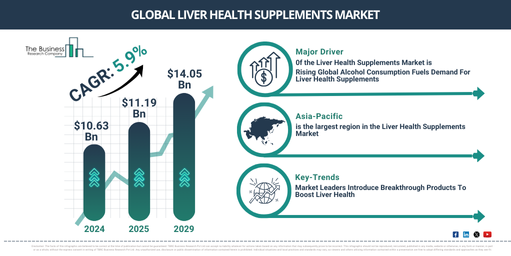
    The market for liver health supplements has seen robust growth in the past few years. The market, which was valued at $10.63 billion in 2024, is expected to increase to $11.19 billion in 2025, representing a compound annual growth rate (CAGR) of 5.2%. Growth factors in the historic period include an increase in liver disease, an uptick in awareness surrounding liver health, an aging demographic, and dietary and lifestyle factors.

    Anticipated to witness robust growth in the coming years, the liver health supplements market is projected to expand to $14.05 billion by 2029, with a compound annual growth rate (CAGR) of 5.9%. The potential market growth during the forecast period can be associated with factors like rising self-care conscious, increasing instances of non-alcoholic fatty liver disease, personalized nutrition, the surge in e-commerce, and a holistic approach to health. The period is also expected to see leading trends including progressions in the research and development of liver health supplements, the usage of natural and herbal ingredients, clinical research and transparency, detoxification products, and innovative nutraceuticals.

    Download a free sample to assess the report’s scope and structure:

    https://www.thebusinessresearchcompany.com/sample.aspx?id=12953&type=smp

    What Are the Primary Drivers Supporting the Market Growth of the Liver Health Supplements Market?

    The increase in alcohol consumption is anticipated to fuel the advancement of the liver health supplements market. Drinking alcohol involves the intake of alcoholic beverages containing the key ingredient, ethanol. Those consuming high levels of alcohol potentially gain protective benefits from liver health supplements, as these products play a significant role in eliminating toxins from the body. Ingredients such as milk thistle, dandelion root, and kudzu root found in considerable supplements can boost liver health by encouraging detoxification and decreasing inflammation. An example of this trend was seen in February 2024, where the Australian Institute of Health and Welfare, a governmental organization in Australia, reported that during 2022-2023, around 31% or 6.6 million people aged 14 and up put their health at risk due to alcohol consumption. Consequently, the uptick in alcohol consumption is contributing to the surge of the liver health supplements market. Liver Health Supplements Market Driver: the Increasing Incidence of Chronic Liver Diseases Accelerates the Growth of the Liver Health Supplements Market.

    Which Primary Segments of the Liver Health Supplements Market Are Driving Growth and Industry Transformations?

    The liver health supplements market covered in this report is segmented –

    1) By Product: Vitamin And Minerals, Herbal Supplements, Other Products

    2) By Nature: Organic, Conventional

    3) By Form: Dry, Tablets, Powder, Liquid

    4) By Distribution Channel: Hospital Pharmacies, Retail Pharmacies, Online Pharmacies

    Subsegments:

    1) By Vitamin And Minerals: Vitamin E, Vitamin C, B-complex Vitamins, Minerals

    2) By Herbal Supplements: Milk Thistle, Dandelion Root, Turmeric, Artichoke Extract

    3) By Other Products: Amino Acids, Probiotics, Fatty Acids

    Request customized data on this market:

    https://www.thebusinessresearchcompany.com/customise?id=12953&type=smp

    Which Regions Are Key Players in the Growth of the Liver Health Supplements Market?

    Asia-Pacific was the largest region in the liver health supplements market in 2024. North America is expected to be the fastest-growing region in the forecast period. The regions covered in liver health supplements market report are Asia-Pacific, Western Europe, Eastern Europe, North America, South America, Middle East and Africa.

    What Are the Most Significant Market Trends in the Liver Health Supplements Market?

    In an attempt to maintain their dominance in the liver health supplements market, primary corporations are focusing on the creation of groundbreaking products. The rising innovation in supplements plays a crucial role in driving the expansion of new liver cells, thereby enhancing liver functionality. For example, a new dietary supplement known as Evogen Liver Longer was introduced by Evogen Nutrition, an American company specializing in healthy lifestyle nutrition, in March 2023. This innovative supplement aims to support liver health holistically and compose of various liver-beneficial constituents such as tauroursodeoxycholic acid (TUDCA), siphons, and milk thistle extract. These elements offer potent antioxidant support, ensuring the protection and improvement of liver function.

    View the full report here:

    https://www.thebusinessresearchcompany.com/report/liver-health-supplements-global-market-report

    What Parameters Are Used to Define the Liver Health Supplements Market?

    Liver health supplements refer to a category of dietary supplements that are designed to support and promote the health and functioning of the liver. Its purpose is to improve liver function and health by assisting the liver’s natural detoxifying mechanisms.

    Purchase the full report and get a swift delivery:

    https://www.thebusinessresearchcompany.com/purchaseoptions.aspx?id=12953

    About The Business Research Company:

    With over 15000+ reports from 27 industries covering 60+ geographies, The Business Research Company has built a reputation for offering comprehensive, data-rich research and insights. Armed with 1,500,000 datasets, the optimistic contribution of in-depth secondary research, and unique insights from industry leaders, you can get the information you need to stay ahead in the game.

    Get in touch with us:

    The Business Research Company: https://www.thebusinessresearchcompany.com/

    Americas +1 3156230293

    Asia +44 2071930708

    Europe +44 2071930708

    Email us at info@tbrc.info

    Follow us on:

    LinkedIn: https://in.linkedin.com/company/the-business-research-company

    YouTube: https://www.youtube.com/channel/UC24_fI0rV8cR5DxlCpgmyFQ

    Global Market Model: https://www.thebusinessresearchcompany.com/global-market-model
  • $29.41 Billion Forecast for Lentiviral Vector Market by 2029, Backed by Demand and Innovation

    $29.41 Billion Forecast for Lentiviral Vector Market by 2029, Backed by Demand and Innovation

    Discover trends, market shifts, and competitive outlooks for the lentiviral vector industry through 2025-2034 with The Business Research Company’s reliable data and in-depth research

    What is the Projected CAGR for the Lentiviral Vector Market Size from 2025 to 2034?

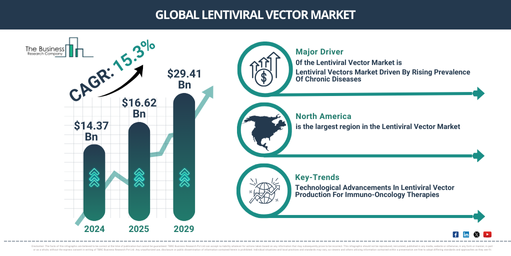
    In recent times, the lentiviral vector market has witnessed swift expansion. It is projected to increase from $14.37 billion in 2024 to $16.62 billion in 2025, registering a compound annual growth rate (CAGR) of 15.7%. Factors such as the rising prevalence of genetic disorders, heightened gene delivery demand, advancements in biotech and pharmaceutical sectors, increased investments in clinical trials, and regulatory approvals contributed to the growth witnessed during the historic period.

    In the forthcoming years, the lentiviral vector market is projected to undergo swift expansion. The market is expected to reach a value of $29.41 billion by 2029, growing at a compound annual growth rate (CAGR) of 15.3%. Factors fueling the growth in the predicted period include the rise of personalized medicine, advancements in gene editing, growing demand for rare disease therapy, increasing adoption of lentiviral vector, investment in genomic medicine, and emphasis on manufacturing scalability. Future market trends involve the extension of research and development, incorporation into CAR-T cell therapy, creation of next-gen vectors, usage in the development of vaccines, and evolution of production technologies.

    Download a free sample to assess the report’s scope and structure:

    https://www.thebusinessresearchcompany.com/sample.aspx?id=14742&type=smp

    What Are the Core Growth Drivers Propelling the Lentiviral Vector Market Forward?

    The escalating incidence of chronic health problems is anticipated to drive growth in the lentiviral vectors market. Chronic diseases are essentially long-lasting medical ailments that usually develop slowly and persist either for several years or an individual’s entire life. Factors such as aging populations, unhealthy lifestyle habits, urbanization and environmental issues are causing a rise in the incidence of these diseases. Lentiviral vectors provide efficient and adaptable means for creating vaccines and treatment methods for chronic diseases. They address the gap in healthcare needs and enhance patient result. For example, data from the British Heart Foundation, a cardiovascular research organization based in the UK, states that in September 2024, nearly 7.6 million people in the UK suffered from heart and circulatory diseases. These include approximately 4 million men and 3.6 million women. These conditions account for approximately 27% of all fatalities in the UK, resulting in over 170,000 deaths annually, or about 480 deaths each day, corresponding to one death every three minutes. Therefore, the rising incidence of chronic diseases is contributing to the growth of the lentiviral vectors market.

    What Segment Types Define the Lentiviral Vector Market Structure?

    The lentiviral vector market covered in this report is segmented –

    1) By Product Type: Kits, Reagents And Consumables

    2) By Indication: Cancer, Genetic Disorder, Infectious Disease, Veterinary Disease, Other Indications

    3) By End User: Biotechnology Companies, Pharmaceutical Companies, Contract Research Organization (CRO), Academic And Research Institutes

    Subsegments:

    1) By Kits: Lentiviral Transduction Kits, Lentiviral Packaging Kits, Lentiviral Vector Production Kits

    2) By Reagents and Consumables: Lentiviral Packaging Reagents, Lentiviral Vector Concentration Reagents, Transfection Reagents for Lentiviral Vectors

    Request customized data on this market:

    https://www.thebusinessresearchcompany.com/customise?id=14742&type=smp

    Which Geographic Areas Hold the Strongest Growth Potential in the Lentiviral Vector Market?

    North America was the largest region in the lentiviral vector market in 2024. Asia-Pacific is expected to be the fastest-growing region in the forecast period. The regions covered in the lentiviral vector market report are Asia-Pacific, Western Europe, Eastern Europe, North America, South America, Middle East and Africa.

    Which Emerging Trends that Are Influencing theLentiviral Vector Industry Evolution?

    Leading firms in the lentiviral vectors market are concentrating on producing LV vector production platforms like LentiSure, with the aim to strengthen the productivity and toughness of lentivirus vectors generation used in cell-based immuno-oncology therapies. LentiSure, which is an LV vector production platform, is specially designed to increase reliability and sturdiness in vectors generation. For instance, Yposkesi sk pharmteco, a viral vectors producer based in France, introduced LentiSure in May 2023. This superior platform is built to boost lentiviral (LV) vectors production, especially targeting to amplify the resiliency and efficiency of lentivirus production. It meets the growing need for sturdy and economically scaleable viral-vector manufacturing technologies in cell and gene therapies, promising consistent quality with average titers at cell culture harvest at 10e7 IG/mL bioreactor volume. This ensures enhanced productivity and greater success for cell therapy developers.

    View the full report here:

    https://www.thebusinessresearchcompany.com/report/lentiviral-vector-global-market-report

    What Is the Definition of the Lentiviral Vector Market?

    A lentiviral vector refers to a type of viral vector derived from lentiviruses, a subgroup of retroviruses known for their ability to integrate genetic material into the DNA of the host cell’s genome. These vectors are commonly used in molecular biology and gene therapy applications to deliver genetic material into target cells for various purposes, including gene expression, gene silencing, or genetic modification.

    Purchase the full report and get a swift delivery:

    https://www.thebusinessresearchcompany.com/purchaseoptions.aspx?id=14742

    About The Business Research Company:

    With over 15000+ reports from 27 industries covering 60+ geographies, The Business Research Company has built a reputation for offering comprehensive, data-rich research and insights. Armed with 1,500,000 datasets, the optimistic contribution of in-depth secondary research, and unique insights from industry leaders, you can get the information you need to stay ahead in the game.

    Get in touch with us:

    The Business Research Company: https://www.thebusinessresearchcompany.com/

    Americas +1 3156230293

    Asia +44 2071930708

    Europe +44 2071930708

    Email us at info@tbrc.info

    Follow us on:

    LinkedIn: https://in.linkedin.com/company/the-business-research-company

    YouTube: https://www.youtube.com/channel/UC24_fI0rV8cR5DxlCpgmyFQ

    Global Market Model: https://www.thebusinessresearchcompany.com/global-market-model