Category: Pharmaceuticals

  • AI In Bioinformatics Market Valuation Expected To Reach $26.46 Billion By 2029, Growing At A Rate Of 44%

    AI In Bioinformatics Market Valuation Expected To Reach $26.46 Billion By 2029, Growing At A Rate Of 44%

    Discover trends, market shifts, and competitive outlooks for the ai in bioinformatics industry through 2025-2034 with The Business Research Company’s reliable data and in-depth research

    What is the Projected CAGR for the AI In Bioinformatics Market Size from 2025 to 2034?

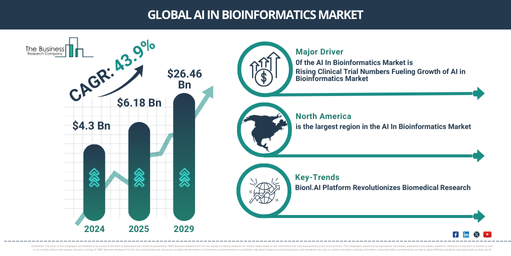
    The market size for AI in bioinformatics has seen a substantial increase in recent times. The market, valued at $4.3 billion in 2024, is set to escalate to $6.18 billion in 2025, exhibiting a 43.8% compound annual growth rate (CAGR). The significant growth during the historic span can be linked to the surge in genomic data accessibility, the emergence of precision medicine, an upward demand for biomarker discovery, improvements in clinical trial optimization, and enhanced collaborations.

    In the coming years, significant expansion is anticipated in the AI in bioinformatics market, with projections suggesting an increase to $26.46 billion in 2029, a CAGR of 43.9%. This predicted surge during the forecasted span can be credited to the growth of single-cell technologies, a stronger emphasis on the integration of multi-omics, a heightened attention to functional genomics, the hastened repurposing of drugs, and the increased utilization of AI in pathology. Key trends forecasted include the ethical use of AI and responsible data handling, the advent of AI-controlled virtual labs, the merging of quantum computing, AI-facilitated clinical trials, and the application of blockchain for assured secure data exchange.

    Download a free sample to assess the report’s scope and structure:

    https://www.thebusinessresearchcompany.com/sample.aspx?id=13774&type=smp

    Which Factors and External Forces Are Driving Demand in the AI In Bioinformatics Market?

    Advancements in AI in the bioinformatics market are being pushed forward by the growing count of clinical trials. Clinical trials, which involve human participants in thoroughly planned medical research processes to ascertain the safety and effectiveness of new medications, treatments, or therapeutic methods, use AI in bioinformatics for data analysis. This technology is applied to scrutinize patient data gleaned from electronic health records and other sources. The aim is to pinpoint suitable candidates who meet particular criteria for these trials, thereby enhancing targeted recruitment and efficiency. In May 2023, Xtalks, a Canadian platform for life science and medicinal devices, cited ClinicalTrials.gov to state that of the 452,604 clinical trials registered globally, 64,838 are actively pursuing participants. The number of registered trials saw a significant rise from just over 365,000 reported early in 2021. Consequently, this surge in clinical trials is spurring on AI growth in the bioinformatics market.

    Which Segments in the AI In Bioinformatics Offer the Most Growth?

    The AI in bioinformatics market covered in this report is segmented –

    1) By Type: Machine Learning, Deep Learning, Other Types

    2) By Offering: Services, Software

    3) By Application: Genomics, Chemoinformatics And Drug Design, Proteomics, DNA Sequencing, System Biology, Transcriptomics, Text Mining, Microarrays, Metabolomics, Other Applications

    Subsegments:

    1) By Machine Learning: Supervised Learning Algorithms, Unsupervised Learning Algorithms, Reinforcement Learning

    2) By Deep Learning: Neural Networks, Natural Language Processing Models, Generative Adversarial Networks (GANs)

    3) By Other Types: Statistical Models, Evolutionary Algorithms, Fuzzy Logic Systems

    Request customized data on this market:

    https://www.thebusinessresearchcompany.com/customise?id=13774&type=smp

    What Are the Fastest-Growing Geographies in the AI In Bioinformatics Market?

    North America was the largest region in the AI in bioinformatics market in 2024. Asia-Pacific is expected to be the fastest-growing region in the forecast period. The regions covered in the AI in bioinformatics market report are Asia-Pacific, Western Europe, Eastern Europe, North America, South America, Middle East, Africa.

    Which Cutting-Edge Market Trends Are Expected to Drive the AI In Bioinformatics Market’s Growth?

    Leading firms in the AI in bioinformatics market are leveraging technological advancements on the Bionl.AI platform to boost their market profitability. The Bionl.AI platform provides a comprehensive workspace for experimentation, analysis, and visualization, significantly reducing the time needed to accomplish intricate tasks. For example, in October 2023, Bionl Inc., an American biomedical and bioinformatics research platform firm, unveiled Bionl.AI, an innovative platform designed to transform biomedical and bioinformatics research. It offers a no-code solution that enables researchers, students, and professionals to study biomedicine through natural language inquiries. This platform utilizes the latest GenAI models to provide immediate insights and simplify complex analyses.

    View the full report here:

    https://www.thebusinessresearchcompany.com/report/ai-in-bioinformatics-global-market-report

    What Are the Key Elements That Define the AI In Bioinformatics Market?

    AI in Bioinformatics refers to the application of artificial intelligence (AI) techniques and algorithms to analyze and interpret biological data. Bioinformatics involves the management and analysis of large and complex biological datasets, such as genomic sequences, protein structures, and other biological information.

    Purchase the full report and get a swift delivery:

    https://www.thebusinessresearchcompany.com/purchaseoptions.aspx?id=13774

    About The Business Research Company:

    With over 15000+ reports from 27 industries covering 60+ geographies, The Business Research Company has built a reputation for offering comprehensive, data-rich research and insights. Armed with 1,500,000 datasets, the optimistic contribution of in-depth secondary research, and unique insights from industry leaders, you can get the information you need to stay ahead in the game.

    Get in touch with us:

    The Business Research Company: https://www.thebusinessresearchcompany.com/

    Americas +1 3156230293

    Asia +44 2071930708

    Europe +44 2071930708

    Email us at info@tbrc.info

    Follow us on:

    LinkedIn: https://in.linkedin.com/company/the-business-research-company

    YouTube: https://www.youtube.com/channel/UC24_fI0rV8cR5DxlCpgmyFQ

    Global Market Model: https://www.thebusinessresearchcompany.com/global-market-model

  • Top Trends Driving Innovation and Change in the Advanced Therapeutics Pharmaceutical Outsourcing Market: Strategic Partnerships In Advanced Therapeutics Pharmaceutical Outsourcing

    Top Trends Driving Innovation and Change in the Advanced Therapeutics Pharmaceutical Outsourcing Market: Strategic Partnerships In Advanced Therapeutics Pharmaceutical Outsourcing

    Discover trends, market shifts, and competitive outlooks for the advanced therapeutics pharmaceutical outsourcing industry through 2025-2034 with The Business Research Company’s reliable data and in-depth research

    What Are the Projected Market Size and Growth Rates for the Advanced Therapeutics Pharmaceutical Outsourcing Market From 2025 To 2029?

    The market size for advanced therapeutics pharmaceutical outsourcing has seen consistent growth over the past few years. Expected to rise from $8.07 billion in 2024 to $8.43 billion in 2025, it will maintain a compound annual growth rate (CAGR) of 4.5%. Factors contributing to this growth during the historic period include the expansion of the biopharmaceutical infrastructure, adherence to regulatory compliance, a rising demand for innovative drugs to treat chronic and severe diseases, enhanced efficiency, and increasing demand for personalized medicine.

    Anticipations reveal a robust upsurge in the advanced therapeutics pharmaceutical outsourcing market in the upcoming years, with the market value predicted to reach $10.27 billion by 2029, growing at a compound annual growth rate (CAGR) of 5.1%. This growth during the forecast period can be credited to the rising utilization of cell and gene therapies, an amplified concentration on mRNA therapies, increased demand for state-of-the-art treatments, superior efficiency, and economical solutions rendered by outsourcing associates, coupled with collaborative creativity. Major trends to be witnessed during the forecast duration encompass technological progression, growing proficiency in advanced therapeutics, a mounting pipeline of creative therapies, the incorporation of groundbreaking technology, as well as swift breakthroughs in gene therapy, cell therapy, and mRNA technologies.

    Download a free sample to assess the report’s scope and structure:

    https://www.thebusinessresearchcompany.com/sample.aspx?id=13768&type=smp

    What External and Internal Drivers Are Contributing to the Growth of the Advanced Therapeutics Pharmaceutical Outsourcing Market?

    The growth of the advanced therapeutics pharmaceutical outsourcing market is expected to surge due to the rising adoption of cell and gene therapies. These innovative approaches, which utilize living cells or genetic material, are used for the treatment or curative processes for various diseases. Cell and gene therapies utilize the advanced therapeutics pharmaceutical outsourcing as it provides access to experienced providers with proven track records, thus saving the time and resources of the companies in team building. A report published in the UK-based scientific journal Nature in November 2023 predicts an upsurge in the number of new patients availing gene therapies, from 16,244 in 2020 to 94,696 in 2025. Hence, the increasing usage of cell and gene therapies is fueling the growth of the advanced therapeutics pharmaceutical outsourcing market.

    What Segment Types Define the Advanced Therapeutics Pharmaceutical Outsourcing Market Structure?

    The advanced therapeutics pharmaceutical outsourcing market covered in this report is segmented –

    1) By Service Type: Contract Research Organizations (CROs), Contract Development And Manufacturing Organizations (CDMOs)

    2) By Indication: Oncology, Neurology, Cardiology, Infectious Diseases, Other Indications

    3) By Therapy: Cell Therapy, Gene Therapy, RNA-based Therapies

    4) By Application: Preclinical Services, Clinical Services, Commercial Manufacturing And Packaging

    Subsegments:

    1) By Contract Research Organizations (CROs): Preclinical Research Services, Clinical Trial Management Services, Regulatory Affairs Services, Data Management And Biostatistics

    2) By Contract Development And Manufacturing Organizations (CDMOs): Drug Development Services, Formulation Development, Analytical Testing Services, Commercial Manufacturing Services

    Request customized data on this market:

    https://www.thebusinessresearchcompany.com/customise?id=13768&type=smp

    Which Geographic Areas Hold the Strongest Growth Potential in the Advanced Therapeutics Pharmaceutical Outsourcing Market?

    North America was the largest region in the advanced therapeutics pharmaceutical outsourcing market in 2024. The regions covered in the advanced therapeutics pharmaceutical outsourcing market report are Asia-Pacific, Western Europe, Eastern Europe, North America, South America, Middle East, Africa.

    What Long-Term Trends Are Transforming the Competitive Landscape of the Advanced Therapeutics Pharmaceutical Outsourcing Market?

    Leading firms involved in the advanced therapeutics pharmaceutical outsourcing market are pursuing strategic partnerships in their bid to offer dependable services to their clientele. A strategic partnership includes a cooperative agreement established between two or more entities, usually companies, with the aim of realizing reciprocal benefits which would be unattainable individually. For example, in the first month of 2023, Lonza, a Switzerland-based enterprises specializing in manufacturing for the pharmaceutical, biotech, and nutrition industries, forged an alliance with Context Therapeutics Inc., a U.S. biopharmaceutical enterprise committed to developing solid tumor treatments. This alliance sees Lonza offering manufacturing feasibility studies, gene and cell line construction, and drug substance and drug product process development.

    View the full report here:

    https://www.thebusinessresearchcompany.com/report/advanced-therapeutics-pharmaceutical-outsourcing-global-market-report

    What Is the Definition of the Advanced Therapeutics Pharmaceutical Outsourcing Market?

    Advanced Therapeutic Pharmaceutical Outsourcing refers to contracting out specialized pharmaceutical services related to advanced therapeutic products. These products often include advanced therapies such as cell and gene therapies, personalized medicines, biologics, and other novel treatments. They are used to obtain specialized expertise and capabilities in producing, testing, and developing advanced therapeutic products.

    Purchase the full report and get a swift delivery:

    https://www.thebusinessresearchcompany.com/purchaseoptions.aspx?id=13768

    About The Business Research Company:

    With over 15000+ reports from 27 industries covering 60+ geographies, The Business Research Company has built a reputation for offering comprehensive, data-rich research and insights. Armed with 1,500,000 datasets, the optimistic contribution of in-depth secondary research, and unique insights from industry leaders, you can get the information you need to stay ahead in the game.

    Get in touch with us:

    The Business Research Company: https://www.thebusinessresearchcompany.com/

    Americas +1 3156230293

    Asia +44 2071930708

    Europe +44 2071930708

    Email us at info@tbrc.info

    Follow us on:

    LinkedIn: https://in.linkedin.com/company/the-business-research-company

    YouTube: https://www.youtube.com/channel/UC24_fI0rV8cR5DxlCpgmyFQ

    Global Market Model: https://www.thebusinessresearchcompany.com/global-market-model
  • Bipolar Disorder Drugs And Treatment Market Overview 2025: Competitive Shifts, Forecast Models, and Emerging Opportunities

    Bipolar Disorder Drugs And Treatment Market Overview 2025: Competitive Shifts, Forecast Models, and Emerging Opportunities

    We’ve updated all our reports with current data on tariff changes, trade developments, and supply chain shifts affecting key industries.

    What is the Projected CAGR for the Bipolar Disorder Drugs And Treatment Market Size from 2025 to 2034?

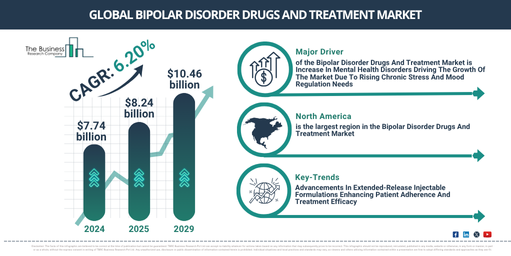
    In recent years, there has been substantial growth in the market size of drugs and treatment for bipolar disorder. It is forecasted to inflate from $7.74 billion in 2024 to $8.24 billion in 2025, reflecting a compound annual growth rate (CAGR) of 6.4%. Factors contributing to the growth during the historic period include an increase in healthcare spending, a rise in mental health research and its funding, more healthcare professionals specializing in mental health, an increased rate of early diagnosis of bipolar disorder patients, and a growing demand for outpatient psychiatric care.

    In the forthcoming years, the market for bipolar disorder drugs and therapy is predicted to witness robust growth. By 2029, it is anticipated to climb to a worth of $10.46 billion, boasting a compound annual growth rate (CAGR) of 6.2%. This substantial growth throughout the forecast period can be ascribed to an increasing incidence of bipolar disorder globally, heightened attention towards mental health issues, a growing acceptance of therapeutic approaches towards mental issues, an enlargement of insurance policies covering mental health therapy, and governmental interventions to bolster mental health care. Conspicuous trends during the forecast period encompass strides in the advancement of medication for bipolar disorder, enhancements in diagnostic practices and apparatus, the roll-out of innovative and fresh drug formulations, ongoing studies and clinical trials for groundbreaking drugs, and the availability of generic medicines for bipolar disorder.

    Download a free sample to assess the report’s scope and structure:

    https://www.thebusinessresearchcompany.com/sample.aspx?id=24171&type=smp

    What Are the Core Growth Drivers Propelling the Bipolar Disorder Drugs And Treatment Market Forward?

    The escalation in mental health disorders is poised to trigger the expansion of the bipolar disorder drugs and treatment market in the forthcoming years. Mental health disorders, affecting an individual’s thoughts, emotions, behavior, or mood, often hinder their everyday functions and wellness. The surge in such disorders can be attributed to the growing chronic stress stemming from contemporary lifestyles as enduring strains related to work, money, and societal pressures can degrade emotional health and give rise to long-term psychological issues. Drugs and treatments for bipolar disorder prove beneficial in managing mental health disorders by stabilizing mood swings, an important factor for enhancing emotional regulation and diminishing the intensity and frequency of disruptive episodes linked with these conditions. For example, in September 2024, as per the National Institute of Mental Health (NIMH), a federal agency based in the US, showed that any mental illness (AMI) impacted more than 59.3 million adults in the US in 2022, making up 23.1% of the adult population. Also, the incidence of AMI was considerably higher in women (26.4%) than men (19.7%). Consequently, the rising prevalence of mental health disorders will play a crucial role in propelling the bipolar disorder drugs and treatment market.

    What Segment Types Define the Bipolar Disorder Drugs And Treatment Market Structure?

    The bipolar disorder drugs and treatment market covered in this report is segmented –

    1) By Types: Mood Stabilizers, Anticonvulsants, Antipsychotic Drugs, Antidepressant Drugs, Anti-Anxiety Drugs

    2) By Route Of Administration: Oral, Parenteral, Other Routes Of Administration

    3) By Bipolar Disorder: Bipolar I Disorder, Bipolar II Disorder, Cyclothymic Disorder

    4) By Distribution Channel: Hospital Pharmacies, Retail Pharmacies, Online Pharmacies

    Subsegments:

    1) By Mood Stabilizers: Lithium Carbonate, Lamotrigine, Valproate

    2) By Anticonvulsants: Carbamazepine, Oxcarbazepine, Topiramate

    3) By Antipsychotic Drugs: Olanzapine, Risperidone, Quetiapine, Aripiprazole

    4) By Antidepressant Drugs: Selective Serotonin Reuptake Inhibitors (SSRIs), Serotonin-Norepinephrine Reuptake Inhibitors (SNRIs), Tricyclic Antidepressants (TCAs)

    5) By Anti-Anxiety Drugs: Benzodiazepines, Buspirone

    Request customized data on this market:

    https://www.thebusinessresearchcompany.com/sample.aspx?id=24171&type=smp

    Which Geographic Areas Hold the Strongest Growth Potential in the Bipolar Disorder Drugs And Treatment Market?

    North America was the largest region in the bipolar disorder drugs and treatment market in 2024. Asia-Pacific is expected to be the fastest-growing region in the forecast period. The regions covered in the bipolar disorder drugs and treatment market report are Asia-Pacific, Western Europe, Eastern Europe, North America, South America, Middle East, Africa.

    Which Emerging Trends that Are Influencing the Bipolar Disorder Drugs And Treatment Industry Evolution?

    Leading firms in the bipolar disorder drugs and treatment market are prioritizing the creation of progressive solutions like extended-release injectable formulations, which offer long-lasting therapeutic benefits. These extended-release injectable formulations gradually release medicine into the bloodstream, thus eliminating the necessity for daily dosage and ensuring steady therapeutic effects. Notably, in January 2023, the U.S. Food and Drug Administration (FDA) endorsed Rykindo (risperidone), a solution specifically designed for long-term injection treatment of adult schizophrenia and also for treatment of adult bipolar I disorder either independently or in conjunction with lithium or valproate. This solution was proposed by Luye Pharma, a pharmaceutical firm based in China. Rykindo, which is given through intramuscular injection bi-weekly, employs a specialized microsphere technology devised by Luye Pharma to facilitate prolonged effects. Risperidone, the primary component, is steadily released over time through extended-release microsphere technology.

    View the full report here:

    https://www.thebusinessresearchcompany.com/report/bipolar-disorder-drugs-and-treatment-global-market-report

    What Is the Definition of the Bipolar Disorder Drugs And Treatment Market?

    Bipolar disorder drugs and treatment refer to a comprehensive approach designed to manage extreme mood shifts and support long-term mental stability. It focuses on regulating brain activity to minimize the intensity and recurrence of mood episodes while addressing co-occurring issues such as disrupted sleep, anxiety, or concentration difficulties.

    Purchase the full report and get a swift delivery:

    https://www.thebusinessresearchcompany.com/customise?id=24171&type=smp

    About The Business Research Company:

    With over 15000+ reports from 27 industries covering 60+ geographies, The Business Research Company has built a reputation for offering comprehensive, data-rich research and insights. Armed with 1,500,000 datasets, the optimistic contribution of in-depth secondary research, and unique insights from industry leaders, you can get the information you need to stay ahead in the game.

    Get in touch with us:

    The Business Research Company: https://www.thebusinessresearchcompany.com/

    Americas +1 3156230293

    Asia +44 2071930708

    Europe +44 2071930708

    Email us at info@tbrc.info

    Follow us on:

    LinkedIn: https://in.linkedin.com/company/the-business-research-company

    YouTube: https://www.youtube.com/channel/UC24_fI0rV8cR5DxlCpgmyFQ

    Global Market Model: https://www.thebusinessresearchcompany.com/global-market-model
  • Bioconvergence Outlook 2034: Key Drivers, Trends, and Market Frontiers

    Bioconvergence Outlook 2034: Key Drivers, Trends, and Market Frontiers

    We’ve updated all our reports with current data on tariff changes, trade developments, and supply chain shifts affecting key industries.

    What Are the Key Milestones in the Bioconvergence Market’s Growth Trajectory From 2025 To 2034?

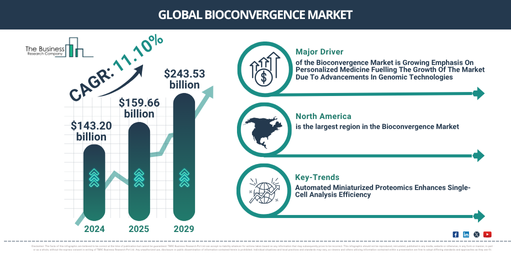
    The bioconvergence marketplace has experienced a swift expansion in recent years. The market which is valued at $143.20 billion in 2024 is expected to escalate to $159.66 billion in 2025, demonstrating a compound annual growth rate (CAGR) of 11.5%. Factors contributing to this significant growth during the historical phase include the emergence of personalized medicine, advancements in biomedical engineering, the surge in healthcare digitization, progress in bioinformatics, and partnerships between the technology and biotech sectors.

    The bioconvergence market is anticipated to witness swift expansion in the upcoming years, reaching $243.53 billion in 2029 with a CAGR of 11.1%. The predicted upswing in the forecast period can be linked to the escalating development of regenerative medicine, rising instances of chronic illnesses, incorporation of bioelectronics and biosensors, advancement in engineered living materials, and a boost in biotechnology research and development investment. Significant trends expected during the forecast period include the utilization of artificial intelligence in drug discovery, the progression of lab-on-a-chip technologies, the surge in wearable biosensors, the proliferation of 3D bioprinting applications, the use of nanorobotics for specific therapies, the adoption of organ-on-a-chip models and advancements in gene editing techniques.

    Download a free sample to assess the report’s scope and structure:

    https://www.thebusinessresearchcompany.com/sample.aspx?id=24168&type=smp

    How Are Key Drivers in the Industry Acting as Catalysts for the Growth of the Bioconvergence Market?

    The bioconvergence market’s expansion is expected to be driven by the increasing focus on personalized medicine. Personalized medicine employs a patient-specific approach, tailoring treatments based on an individual’s genetic makeup, environmental influences, and lifestyle habits to enhance the effectiveness of care. This approach is gaining popularity due to advancements in genomic technologies, enabling accurate identification of genes and the development of personalized treatments. By integrating cutting-edge technologies into biological research, bioconvergence augments personalized medicine and allows for the creation of precise treatment plans based on a patient’s genetic and molecular characteristics. This enhances healthcare results by providing targeted treatments and minimizing undesirable effects. As per the Personalized Medicine Coalition (PMC), a nonprofit organization based in the US, the U.S. Food and Drug Administration (FDA) endorsed 26 new personalized medicine in 2023, a noticeable increase from the 12 sanctioned in 2022. Consequently, the increasing emphasis on personalized medicine is fueling the expansion of the bioconvergence market.

    Which Segments in the Bioconvergence Offer the Most Growth?

    The bioconvergence market covered in this report is segmented –

    1) By Component: Devices, Software, Services, Platforms

    2) By Technology: Artificial Intelligence, Robotics, Three-Dimensional (3D) Printing, Nanotechnology, Synthetic Biology, Bioinformatics, Wearable Devices

    3) By Application: Drug Discovery, Regenerative Medicine, Optogenetics, Nanorobotics For Drug Discovery, Diagnostic And Biological Sensors, Bioelectronics, Precision Medicine

    4) By End-User: Pharmaceutical And Biotechnology Industry, Contract Research Organization, Other End Users

    Subsegments:

    1) By Devices: Diagnostic Devices, Therapeutic Devices, Wearable Medical Devices, Implantable Devices, Robotic Surgical Systems

    2) By Software: Bioinformatics Software, Clinical Decision Support Systems, Genomic Data Analysis Tools, Imaging And Diagnostic Software, Laboratory Information Management Systems (LIMS)

    3) By Services: Contract Research Services, Consulting And Integration Services, Data Management And Analysis Services, Custom Software Development, Regulatory And Compliance Services

    4) By Platforms: Artificial Intelligence Platforms, Omics Integration Platforms, Digital Health Platforms, Personalized Medicine Platforms, Cloud-Based Analytics Platforms

    Request customized data on this market:

    https://www.thebusinessresearchcompany.com/sample.aspx?id=24168&type=smp

    What Are the Fastest-Growing Geographies in the Bioconvergence Market?

    North America was the largest region in the bioconvergence market in 2024. Asia-Pacific is expected to be the fastest-growing region in the forecast period. The regions covered in the bioconvergence market report are Asia-Pacific, Western Europe, Eastern Europe, North America, South America, Middle East, Africa.

    What Are the Current Market Growth and Trends in the Bioconvergence Industry?

    Leading firms in the bioconvergence market are honing their focus on the creation of novel products. These include automated miniaturized single-cell proteomics sample preparation systems designed to optimize protein analysis accuracy, minimize sample wastage, and make single-cell research workflows more efficient. This process relies on automation to manage and prepare proteins from individual cells in exceptionally small volumes. For instance, Scienion GmbH, a biotechnology firm rooted in Germany, introduced the proteochip LF 48 in September 2022. This tool, designed for bioconvergence, paves the way for reproducible and miniaturized workflows in the context of mass spectrometry-based single-cell proteomics analysis. It makes the lysis and protein digestion of individual cells possible on-chip, helping researchers to cut down on sample loss, improve workflows, and derive more profound biological understanding through effective mass spectrometry analysis. The proteochip LF 48 is extremely adaptable and facilitates efficient sample preparation for a broad range of single-cell proteomics uses. It achieves this by merging accurate cell handling with on-chip lysis and protein digestion, thereby enhancing both the efficiency of the workflow and the quality of the data generated.

    View the full report here:

    https://www.thebusinessresearchcompany.com/report/bioconvergence-global-market-report

    What Are the Key Elements That Define the Bioconvergence Market?

    Bioconvergence is the integration of biology with engineering, data science, and advanced technologies to drive innovation in healthcare, biotechnology, and life sciences. Its main goal is to develop smarter, more personalized, and more efficient solutions such as precision medicine, advanced diagnostics, and bioengineered products. Bioconvergence fosters the creation of faster, cheaper, and more effective novel therapies, devices, and platforms.

    Purchase the full report and get a swift delivery:

    https://www.thebusinessresearchcompany.com/customise?id=24168&type=smp

    About The Business Research Company:

    With over 15000+ reports from 27 industries covering 60+ geographies, The Business Research Company has built a reputation for offering comprehensive, data-rich research and insights. Armed with 1,500,000 datasets, the optimistic contribution of in-depth secondary research, and unique insights from industry leaders, you can get the information you need to stay ahead in the game.

    Get in touch with us:

    The Business Research Company: https://www.thebusinessresearchcompany.com/

    Americas +1 3156230293

    Asia +44 2071930708

    Europe +44 2071930708

    Email us at info@tbrc.info

    Follow us on:

    LinkedIn: https://in.linkedin.com/company/the-business-research-company

    YouTube: https://www.youtube.com/channel/UC24_fI0rV8cR5DxlCpgmyFQ

    Global Market Model: https://www.thebusinessresearchcompany.com/global-market-model
  • Global Behcets disease Market Trends: Regional Breakdowns and Strategic Insights

    Global Behcets disease Market Trends: Regional Breakdowns and Strategic Insights

    We’ve updated all our reports with current data on tariff changes, trade developments, and supply chain shifts affecting key industries.

    How Has The Behcets disease Market Size Shifted, And What Is the Outlook Through 2034?

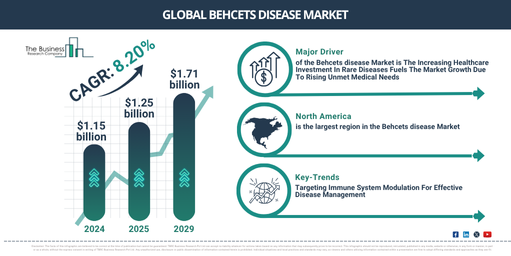
    The market size for behcets disease has been expanding robustly over the past few years. The projection is that it will rise from $1.15 billion in 2024 to $1.25 billion in 2025, experiencing a compound annual growth rate (CAGR) of 8.4%. Factors that contributed to this expansion during the historical timeline include heightened awareness of rare diseases, access to biologic treatments, improvement in healthcare infrastructure, increased instances of autoimmune diseases, and escalating acceptance of biologic therapies.

    The market size of Behcets disease is projected to experience significant expansion in the upcoming years, reaching a valuation of $1.71 billion by 2029 with an 8.2% CAGR. This growth during the forecast period is influenced by factors such as escalated research efforts into autoimmune and inflammatory diseases, an increase in clinical trials and research studies, personalized therapy advancements, improved patient healthcare access in developing markets, and a heightened focus on models that prioritize patient care. Other noteworthy trends during this forecast period encompass progress in diagnostic methods, advancements in precision medicine, the migration towards telemedicine and digital health solutions, increased partnerships between pharmaceutical firms and research entities, and the introduction of innovative combination therapies for treatment.

    Download a free sample to assess the report’s scope and structure:

    https://www.thebusinessresearchcompany.com/sample.aspx?id=24167&type=smp

    What Are the Major Market Drivers Behind the Rising Adoption of Behcets disease Market?

    The behcets disease market is anticipated to grow due to a rise in healthcare investments in rare diseases. These are diseases that affect fewer than 1 in 2,000 individuals and usually present with complex symptoms and limited treatments. The push for more investment in this sector is due to the recognition of the unutilized medical needs because many patients have no effective treatment. This has led to governments and pharmaceutical firms prioritizing this area for research, development, and funding. Behçet’s disease is a perfect example of how concentrated research and advocacy in a specific rare disease can inspire more widespread investment in the rare diseases sector, serving as a clear signal that focused initiatives can bring about significant improvements in comprehension, management, and policy for all rare diseases. For instance, Global Genes, a US nonprofit organization, reported in April 2024 that in the first quarter of 2024, firms developing rare disease drugs secured $7.1 billion through public equity and debt financing, marking a 307% increase from the $1.8 billion raised during the same period in 2023. Therefore, the enhanced investment in healthcare for rare diseases is fuelling the growth of the behcets disease market.

    Which Key Market Segments Comprise the Behcets disease Market and Drive Its Revenue Growth?

    The behcets disease market covered in this report is segmented –

    1) By Treatment Type: Corticosteroids, Immunosuppressants, Biologics, Other Treatments

    2) By Route Of Administration: Oral, Injectable, Topical

    3) By Type of Disease: Non-Ocular Behcet’s Disease, Ocular Behcet’s Disease

    4) By Distribution Channel: Hospital Pharmacies, Retail Pharmacies, Online Pharmacies, Other Distribution Channels

    5) By End User: Hospitals, Clinics, Ambulatory Surgical Centers

    Subsegments:

    1) By Corticosteroids: Oral Corticosteroids, Topical Corticosteroids, Intravenous Corticosteroids

    2) By Immunosuppressants: Methotrexate, Azathioprine, Cyclophosphamide, Mycophenolate Mofetil, Cyclosporine

    3) By Biologics: Tumor Necrosis Factor (TNF) Inhibitors, Interleukin Inhibitors

    4) By Other Treatments: Colchicine, Thalidomide, Hydroxychloroquine, Corticosteroid-Sparing Agents

    Request customized data on this market:

    https://www.thebusinessresearchcompany.com/sample.aspx?id=24167&type=smp

    Which Areas Are Leading Regions in the Behcets disease Market Expansion Across the Globe?

    North America was the largest region in the behcets disease market in 2024. Asia-Pacific is expected to be the fastest-growing region in the forecast period. The regions covered in the behcets disease market report are Asia-Pacific, Western Europe, Eastern Europe, North America, South America, Middle East, Africa.

    What Are the Strategic Trends Steering the Behcets disease Market Direction?

    The focus for many leading companies in the behcets disease market is on the execution of clinical trials aimed at crafting innovative products such as innate defense regulator (IDR), with the goal to amplify immune system modulation and provide more effective inflammation treatments and other symptoms ingrained with the disease. Innate defense regulators (IDRs) – synthetic peptides that augment the innate immune response by fortifying the body’s natural defense mechanisms – can help manage Behçet’s disease by controlling the immune system to minimize exaggerated inflammation, possibly easing symptoms and managing flare-ups. For example, patient enrollment was commenced by Soligenix, Inc., an American biopharmaceutical firm, for its Phase 2 study (protocol number DUS-AUBD-01) evaluating the usability of SGX945 (dusquetide) in treating Behçet’s disease in November 2024. The study’s intention is to examine the potential of SGX945, an innate defense regulator (IDR), to control the immune system and cut down inflammation, offering an innovative therapeutic approach to managing the symptoms and flare-ups linked with Behçet’s disease.

    View the full report here:

    https://www.thebusinessresearchcompany.com/report/behcets-disease-global-market-report

    How Is the Behcets disease Market Conceptually Defined?

    Behçet’s disease is a rare, chronic, and multisystem inflammatory disorder characterized by recurrent episodes of inflammation in various parts of the body, particularly the eyes, mouth, skin, and genitals. It is classified as a vasculitis, meaning it involves inflammation of blood vessels, and can affect both large and small blood vessels.

    Purchase the full report and get a swift delivery:

    https://www.thebusinessresearchcompany.com/customise?id=24167&type=smp

    About The Business Research Company:

    With over 15000+ reports from 27 industries covering 60+ geographies, The Business Research Company has built a reputation for offering comprehensive, data-rich research and insights. Armed with 1,500,000 datasets, the optimistic contribution of in-depth secondary research, and unique insights from industry leaders, you can get the information you need to stay ahead in the game.

    Get in touch with us:

    The Business Research Company: https://www.thebusinessresearchcompany.com/

    Americas +1 3156230293

    Asia +44 2071930708

    Europe +44 2071930708

    Email us at info@tbrc.info

    Follow us on:

    LinkedIn: https://in.linkedin.com/company/the-business-research-company

    YouTube: https://www.youtube.com/channel/UC24_fI0rV8cR5DxlCpgmyFQ

    Global Market Model: https://www.thebusinessresearchcompany.com/global-market-model
  • Autoimmune Monoclonal Antibody Market Forecast Reaching $98.81 Billion by 2029 at 8.4% CAGR

    Autoimmune Monoclonal Antibody Market Forecast Reaching $98.81 Billion by 2029 at 8.4% CAGR

    We’ve updated all our reports with current data on tariff changes, trade developments, and supply chain shifts affecting key industries.

    What Are the Key Projections for the CAGR of the Autoimmune Monoclonal Antibody Market Size From 2025 to 2034?

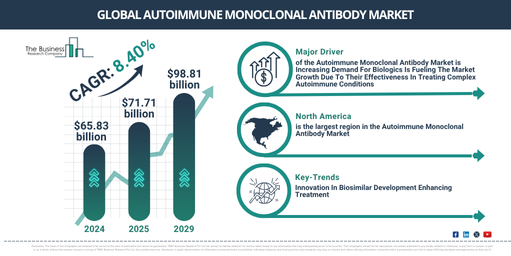
    The market size for autoimmune monoclonal antibody has been rising robustly in the recent past. It is forecasted to increase from $65.83 billion in 2024 to $71.71 billion in 2025 with a compound annual growth rate (CAGR) of 8.7%. The spike during this historic period was due to factors such as the increasing incidence of autoimmune diseases, the escalating use of biologics for treatment, a surge in the understanding of targeted therapies, earlier authorizations for monoclonal antibody drugs, and the expansion of healthcare accessibility in developed nations.

    The market size of autoimmune monoclonal antibodies is projected to witness substantial growth in the approaching years, reaching $98.81 billion in 2029 with a compound annual growth rate (CAGR) of 8.4%. The growth within the projected period can be ascribed to the escalated demand for personalized healthcare, increased uptake of biosimilars, proliferating autoimmune therapy clinical trials, an expanding elderly population, and a heightened incidence of chronic immune disorders. The forecast period may illustrate notable trends such as advancements in antibody engineering, the invention of bispecific antibodies, the rising application of artificial intelligence in the field of drug discovery, the incorporation of genomics in devising treatment plans, and innovative drug delivery systems.

    Download a free sample to assess the report’s scope and structure:

    https://www.thebusinessresearchcompany.com/sample.aspx?id=24162&type=smp

    Which Major Market Drivers Are Expected to Boost the Growth Potential of the Autoimmune Monoclonal Antibody Market?

    The growth of the autoimmune monoclonal antibody market is being driven by the escalating demand for biologics. Biologics are medicinal products that are made from living organisms or their components, and they are utilized in the diagnosis, prevention and treatment of diseases. Their growing demand stems from their efficacious treatment of complex conditions such as cancer, autoimmune disorders and genetic diseases, cases in which traditional therapies might not be as successful. Autoimmune monoclonal antibodies facilitate biologic therapies by providing specific immune modulation, making them suitable for managing hyperactive immune responses. They curtail the necessity for broad immunosuppressants through providing accurate treatment, which betters patient results and reduces side effects. For instance, Cardinal Health Inc., an American healthcare company, reported that there were 40 FDA approved biosimilar products in 2023. Out of these, 25 are commercially accessible in the American market. This is an uptick from the 33 biosimilar products of 2022. It can therefore be affirmed that the growing demands for biologics are propelling the autoimmune monoclonal antibody market’s prospering.

    Which Key Market Segments Comprise the Autoimmune Monoclonal Antibody Market and Drive Its Revenue Growth?

    The autoimmune monoclonal antibody market covered in this report is segmented –

    1) By Type: Immunoglobulin G Monoclonal Antibodies, Immunoglobulin M Monoclonal Antibodies, Chimeric Monoclonal Antibodies, Fully Human Monoclonal Antibodies

    2) By  Route Of Administration: Subcutaneous, Intravenous, Intramuscular

    3) By Application: Rheumatoid Arthritis, Multiple Sclerosis, Systemic Lupus Erythematosus, Psoriasis, Inflammatory Bowel Disease

    4) By Distribution Channel: Hospital Pharmacy, Online Pharmacy, Retail Pharmacy

    5) By End User: Hospitals, Outpatient Clinics, Homecare Settings, Research Institutions

    Subsegments:

    1) By Immunoglobulin G (IgG) Monoclonal Antibodies: Immunoglobulin G1 (IgG1), Immunoglobulin G2 (IgG2), Immunoglobulin G3 (IgG3), Immunoglobulin G4 (IgG4)

    2) By Immunoglobulin M (IgM) Monoclonal Antibodies: Pentameric Immunoglobulin M (IgM), Hexameric Immunoglobulin M (IgM)

    3) By Chimeric Monoclonal Antibodies: Murine Variable Region + Human Constant Region, Humanized Variable Region + Murine Constant Region

    4) By Fully Human Monoclonal Antibodies: Phage Display-Derived, Transgenic Mouse-Derived, Fully Human Hybridoma-Derived

    Request customized data on this market:

    https://www.thebusinessresearchcompany.com/sample.aspx?id=24162&type=smp

    Which Areas Are Leading Regions in the Autoimmune Monoclonal Antibody Market Expansion Across the Globe?

    North America was the largest region in the autoimmune monoclonal antibody market in 2024. Asia-Pacific is expected to be the fastest-growing region in the forecast period. The regions covered in the autoimmune monoclonal antibody market report are Asia-Pacific, Western Europe, Eastern Europe, North America, South America, Middle East, Africa.

    What Are the Key Market Trends in the Autoimmune Monoclonal Antibody Market Over the Coming Years?

    Major corporations involved in the autoimmune monoclonal antibody market are dedicating their efforts to creating novel solutions, including the development of biosimilars that prioritize safety, effectiveness, and quality. This development process involves the creation of closely similar, secure, and efficient biological products to pre-approved biologics utilizing modern biotechnology, thorough analytical testing, and clinical trials to showcase similar quality, effectiveness, and safety for regulatory sanctioning. As an example, in February 2025, Biocon Biologics Limited, a biopharmaceutical firm from India, introduced YESINTEK, a biosimilar designed to cure autoimmune ailments such as Crohn’s disease, ulcerative colitis, and psoriasis. YESINTEK does this by targeting and inhibiting the interleukin-12 and interleukin-23 activities to mitigate inflammation and control the immune response. It impersonates the reference product, stelara, meaning it can support long-term disease control, enhancing patient access to biologic therapies.

    View the full report here:

    https://www.thebusinessresearchcompany.com/report/autoimmune-monoclonal-antibody-global-market-report

    How Is the Autoimmune Monoclonal Antibody Market Conceptually Defined?

    Autoimmune monoclonal antibodies are lab-made proteins designed to target specific components of the immune system involved in autoimmune diseases. These antibodies help regulate or block abnormal immune responses that mistakenly attack the body’s own tissues. Their main purpose is to reduce inflammation and prevent the immune system from attacking the body’s own tissues, thereby minimizing damage and maintaining normal physiological function.

    Purchase the full report and get a swift delivery:

    https://www.thebusinessresearchcompany.com/customise?id=24162&type=smp

    About The Business Research Company:

    With over 15000+ reports from 27 industries covering 60+ geographies, The Business Research Company has built a reputation for offering comprehensive, data-rich research and insights. Armed with 1,500,000 datasets, the optimistic contribution of in-depth secondary research, and unique insights from industry leaders, you can get the information you need to stay ahead in the game.

    Get in touch with us:

    The Business Research Company: https://www.thebusinessresearchcompany.com/

    Americas +1 3156230293

    Asia +44 2071930708

    Europe +44 2071930708

    Email us at info@tbrc.info

    Follow us on:

    LinkedIn: https://in.linkedin.com/company/the-business-research-company

    YouTube: https://www.youtube.com/channel/UC24_fI0rV8cR5DxlCpgmyFQ

    Global Market Model: https://www.thebusinessresearchcompany.com/global-market-model

  • $1.99 Billion Forecast for Autoimmune Hemolytic Anemia Treatment Market by 2029, Backed by Demand and Innovation

    $1.99 Billion Forecast for Autoimmune Hemolytic Anemia Treatment Market by 2029, Backed by Demand and Innovation

    We’ve updated all our reports with current data on tariff changes, trade developments, and supply chain shifts affecting key industries.

    How Has The Autoimmune Hemolytic Anemia Treatment Market Growth Evolved From 2024 To 2025, And What’s Ahead?

    Over the past few years, the market size for autoimmune hemolytic anemia treatment has demonstrated robust growth. Its growth projection is from $1.30 billion in 2024 to $1.41 billion in 2025, maintaining a compound annual growth rate (CAGR) of 9.0%. The growth during the past period is credited to an increased understanding of the disease among health care providers, a surge in cases of autoimmune disorders, expansion in hospital infrastructure, an increase in the number of published clinical research, and a rise in the occurrence of infections.

    In the upcoming years, the market size for autoimmune hemolytic anemia treatment is projected to experience robust growth. By 2029, it is expected to reach $1.99 billion with a compound annual growth rate (CAGR) of 8.9%. Factors such as the global increase in AIHA incidence, the escalating demand for targeted treatments, a mounting emphasis on personalized medicine, rising funding towards autoimmunity research, and expanded healthcare accessibility in emerging regions, are anticipated to contribute to growth during the forecast period. Key trends to watch in the forecasting period include improvements in diagnostic technology, the incorporation of digital health and telemedicine, advancements in targeted treatments, AI-driven diagnosis and drug discovery, and the introduction of innovative immunosuppressive strategies.

    Download a free sample to assess the report’s scope and structure:

    https://www.thebusinessresearchcompany.com/sample.aspx?id=24161&type=smp

    What Are the Core Growth Drivers Propelling the Autoimmune Hemolytic Anemia Treatment Market Forward?

    The increasing occurrence of autoimmune diseases is poised to boost the autoimmune hemolytic anemia treatment market. Autoimmune conditions are illnesses where the body’s immune system accidentally targets its own tissues, resulting in inflammation and harm. Genetic predisposition largely fuels the growing incidence of these diseases, making individuals more prone to develop these diseases. In treating autoimmune hemolytic anemia, this plays a vital role in handling the complications of autoimmune diseases by focusing on and reducing the red blood cell destruction caused by the immune system. For example, a study of 22 million people in May 2023 by the National Institute for Health and Care Research (NIHR), a UK-based group that funds, endorses, and conducts health and care research to improve people’s health and living standards, shows that autoimmune disorders now affect roughly one in ten people. With 19 autoimmune diseases affecting about 10% of the population, 13% of women and 7% of men, the increasing frequency of autoimmune diseases will fuel the growth of the autoimmune hemolytic anemia treatment market.

    What Segment Types Define the Autoimmune Hemolytic Anemia Treatment Market Structure?

    The autoimmune hemolytic anemia treatment market covered in this report is segmented –

    1) By Type: Warm Autoimmune Hemolytic Anemia, Cold Autoimmune Hemolytic Anemia, Other Types

    2) By Drug Class: Corticosteroids, Immunosuppressive Agents, Other Drug Classes

    3) By Route Of Administration: Injectable, Oral, Other Route Of Administrations

    4) By Distribution Channel: Hospital Pharmacy, Retail Pharmacy, Online Pharmacy

    Subsegment:

    1) By Warm Autoimmune Hemolytic Anemia: Primary Warm Autoimmune Hemolytic Anemia, Secondary Warm Autoimmune Hemolytic Anemia

    2) By Cold Autoimmune Hemolytic Anemia: Primary Cold Agglutinin Disease (CAD), Secondary Cold Autoimmune Hemolytic Anemia

    3) By Other Types: Mixed-Type Autoimmune Hemolytic Anemia, Paroxysmal Cold Hemoglobinuria (PCH), Drug-Induced Autoimmune Hemolytic Anemia

    Request customized data on this market:

    https://www.thebusinessresearchcompany.com/sample.aspx?id=24161&type=smp

    Which Geographic Areas Hold the Strongest Growth Potential in the Autoimmune Hemolytic Anemia Treatment Market?

    North America was the largest region in the autoimmune hemolytic anemia treatment market in 2024. Asia-Pacific is expected to be the fastest-growing region in the forecast period. The regions covered in the autoimmune hemolytic anemia treatment market report are Asia-Pacific, Western Europe, Eastern Europe, North America, South America, Middle East, Africa.

    Which Emerging Trends that Are Influencing the Autoimmune Hemolytic Anemia Treatment Industry Evolution?

    Primary businesses in the autoimmune hemolytic anemia treatment market are now focusing on innovative improvements in targeted therapies. These include first-in-class monoclonal antibodies, which precisely impede specific immune pathways like the classical complement system and lower red blood cell damage with fewer side effects. First-in-class monoclonal antibodies, as unique therapeutic antibodies, target unique mechanisms or pathways in humans that have no previously approved treatments. For example, Sanofi S.A., a French healthcare firm, was granted commercial authorization from the European Commission in November 2022 for a monoclonal antibody called Enjaymo (sutimlimab). This antibody is designed to target and curtail the C1s protein in the classical complement pathway. It is utilized for treating hemolytic anemia in adults with Cold Agglutinin Disease (CAD), an uncommon, persistent autoimmune ailment where the immune system incorrectly demolishes healthy red blood cells, leading to hemolysis. Enjaymo operates by decreasing red blood cell destruction, thereby providing a targeted treatment for CAD, an instance of autoimmune hemolytic anemia (AIHA).

    View the full report here:

    https://www.thebusinessresearchcompany.com/report/autoimmune-hemolytic-anemia-treatment-global-market-report

    What Is the Definition of the Autoimmune Hemolytic Anemia Treatment Market?

    Autoimmune Hemolytic Anemia (AIHA) treatment involves the use of medications and therapies to stop the immune system from attacking the body’s own red blood cells. The main purpose of treatment is to reduce red blood cell destruction, manage anemia symptoms, and prevent complications.

    Purchase the full report and get a swift delivery:

    https://www.thebusinessresearchcompany.com/customise?id=24161&type=smp

    About The Business Research Company:

    With over 15000+ reports from 27 industries covering 60+ geographies, The Business Research Company has built a reputation for offering comprehensive, data-rich research and insights. Armed with 1,500,000 datasets, the optimistic contribution of in-depth secondary research, and unique insights from industry leaders, you can get the information you need to stay ahead in the game.

    Get in touch with us:

    The Business Research Company: https://www.thebusinessresearchcompany.com/

    Americas +1 3156230293

    Asia +44 2071930708

    Europe +44 2071930708

    Email us at info@tbrc.info

    Follow us on:

    LinkedIn: https://in.linkedin.com/company/the-business-research-company

    YouTube: https://www.youtube.com/channel/UC24_fI0rV8cR5DxlCpgmyFQ

    Global Market Model: https://www.thebusinessresearchcompany.com/global-market-model
  • Insomnia Therapeutics Market in Focus: Forecasting Growth Drivers, Scaling Potential, and Global Opportunities

    Insomnia Therapeutics Market in Focus: Forecasting Growth Drivers, Scaling Potential, and Global Opportunities

    We’ve updated all our reports with current data on tariff changes, trade developments, and supply chain shifts affecting key industries.

    #How Has The Insomnia Therapeutics Market Size Shifted, And What Is the Outlook Through 2034?#_x000D_

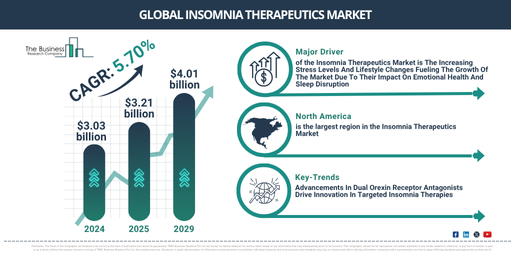
    The market size for therapies related to insomnia has seen substantial growth in the recent past. Its expansion from $3.03 billion in 2024 to $3.21 billion in 2025, with a compound annual growth rate (CAGR) of 6.0%, can be credited to several factors. These include the rising occurrence of insomnia, heightened awareness of sleep-related illnesses, increased acceptance of cognitive behavioral therapy for insomnia (CBT-I), growth in pharmaceutical solutions, and the surging use of over-the-counter sleep aids._x000D_

    _x000D_

    Over the next several years, the insomnia therapeutics market is projected to experience substantial expansion. The market is estimated to escalate to $4.01 billion by 2029, with a Compound Annual Growth Rate (CAGR) of 5.7%. The escalation during the forecast period could be due to progress in AI-based sleep monitoring, heightened demand for tailored medicine, an increasing aged population suffering from sleep-related disorders, increased awareness about mental health, and a burgeoning pipeline of innovative insomnia drugs. Key trends during the forecast period encompass the amalgamation of digital therapeutics into insomnia treatment, a growing preference for non-drug therapies, a surge in the adoption of wearable sleep tracking devices, the emergence of next-generation sleep medications, and the expansion of telemedicine in managing sleep disorders._x000D_

    _x000D_

    #Download a free sample to assess the report’s scope and structure:#_x000D_

    https://www.thebusinessresearchcompany.com/sample.aspx?id=24255&type=smp_x000D_

    _x000D_

    #What Are the Core Market Drivers Propelling Growth in the Insomnia Therapeutics Industry?#_x000D_

    The escalation in stress levels and shifts in lifestyle are anticipated to fuel the expansion of the insomnia therapeutics market in the future. These stress levels and lifestyle adjustments refer to the psychological and behavioral alterations in everyday tasks and obligations that lead to emotional tension and interrupted sleep patterns. The surge in stress levels and lifestyle modifications can be traced back to constant digital connectivity, which blurs the line between work and personal life, and restricts genuine mental relaxation time. Insomnia therapeutics play a pivotal role by providing effective treatment options supported by scientific data that aid in reestablishing regular sleep cycles, alleviating sleep-related anxiety, and fostering mental health in the face of contemporary stressors. For instance, the American Psychiatric Association (APA), a US organization of psychiatrists, reported in May 2024 that the proportion of U.S. adults expressing increased anxiety escalated from 32% in 2022 to 37% in 2023, and finally to 43% in 2024. Thus, the escalating stress levels and lifestyle adjustments positively influence the expansion of the insomnia therapeutics market._x000D_

    _x000D_

    #How Is the Insomnia Therapeutics Market Segmented?#_x000D_

    The insomnia therapeutics market covered in this report is segmented –_x000D_

    _x000D_

    1) By Treatment Type: Drugs, Medical Devices_x000D_

    2) By Formulation: Tablets, Capsules, Liquid Solutions, Patches_x000D_

    3) By Route Of Administration: Oral, Intravenous, Transdermal, Other Routes Of Administration_x000D_

    4) By Distribution Channel: Hospital Pharmacies, Retail Pharmacies, Online Pharmacies, Clinics, Wellness Centers_x000D_

    _x000D_

    Subsegments:_x000D_

    1) By Drugs: Benzodiazepines, Nonbenzodiazepines, Antidepressants, Orexin Antagonists, Melatonin Antagonists, Other Drugs_x000D_

    2) By Medical Devices: Cognitive Behavioral Therapy Devices (CBT-I Devices), Polysomnography Devices, Sleep Tracking Devices, Neurostimulation Devices, Light Therapy Devices_x000D_

    _x000D_

    #Request customized data on this market:#_x000D_

    https://www.thebusinessresearchcompany.com/sample.aspx?id=24255&type=smp_x000D_

    _x000D_

    #Which Regions Are Driving the Next Phase of the Insomnia Therapeutics Market Growth?#_x000D_

    North America was the largest region in the insomnia therapeutics market in 2024. Asia-Pacific is expected to be the fastest-growing region in the forecast period. The regions covered in the insomnia therapeutics market report are Asia-Pacific, Western Europe, Eastern Europe, North America, South America, Middle East, Africa._x000D_

    _x000D_

    #What Key Market Trends and Innovations Are Shaping the Future of the Insomnia Therapeutics Industry?#_x000D_

    Key companies in the insomnia therapeutics market are honing in on the development of advanced treatments such as dual orexin receptor antagonists (DORAs), aiming to offer targeted treatment options with less side effects and enhanced safety. DORAs are a type of drug that inhibit the pathways in the brain that signal wakefulness by blocking both orexin-1 and orexin-2 receptors, typically used in insomnia treatment. For example, in June 2023, Switzerland’s Idorsia Pharmaceuticals Ltd. introduced QUVIVIQ (daridorexant), a first of its kind DORA for treating chronic insomnia. This therapy aims to decrease wakefulness at night without changing the natural sleep pattern, thus improving the onset, continuation of sleep, and daytime function for patients. The green light given to this therapy brings a notable shift in the treatment of insomnia, offering a unique method of action unlike the conventional sedative-hypnotics, and filling the gap for long-term, non-addictive therapeutic alternatives._x000D_

    _x000D_

    #View the full report here:#_x000D_

    https://www.thebusinessresearchcompany.com/report/insomnia-therapeutics-global-market-report_x000D_

    _x000D_

    #How Is the Insomnia Therapeutics Market Defined and What Are Its Core Parameters?#_x000D_

    Insomnia therapeutics refer to treatments aimed at managing and alleviating the symptoms of insomnia, a condition characterized by difficulty falling or staying asleep. These treatments include prescription medications, over-the-counter sleep aids, and non-pharmacological interventions such as cognitive behavioral therapy for insomnia (CBT-I)._x000D_

    _x000D_

    #Purchase the full report and get a swift delivery:#_x000D_

    https://www.thebusinessresearchcompany.com/customise?id=24255&type=smp_x000D_

    _x000D_

    #About The Business Research Company:#_x000D_

    With over 15000+ reports from 27 industries covering 60+ geographies, The Business Research Company has built a reputation for offering comprehensive, data-rich research and insights. Armed with 1,500,000 datasets, the optimistic contribution of in-depth secondary research, and unique insights from industry leaders, you can get the information you need to stay ahead in the game._x000D_

    _x000D_

    #Get in touch with us:#_x000D_

    The Business Research Company: https://www.thebusinessresearchcompany.com/_x000D_

    Americas +1 3156230293_x000D_

    Asia +44 2071930708_x000D_

    Europe +44 2071930708_x000D_

    Email us at info@tbrc.info_x000D_

    _x000D_

    #Follow us on:#_x000D_

    _x000D_

    LinkedIn: https://in.linkedin.com/company/the-business-research-company_x000D_

    YouTube: https://www.youtube.com/channel/UC24_fI0rV8cR5DxlCpgmyFQ_x000D_

    Global Market Model: https://www.thebusinessresearchcompany.com/global-market-model

  • Global Autoimmune Gastrointestinal Dysmotility Market Projected to Reach $2.3 Billion by 2029 at a CAGR of 5.9%

    Global Autoimmune Gastrointestinal Dysmotility Market Projected to Reach $2.3 Billion by 2029 at a CAGR of 5.9%

    We’ve updated all our reports with current data on tariff changes, trade developments, and supply chain shifts affecting key industries.

    What is the Projected CAGR for the Autoimmune Gastrointestinal Dysmotility Market Size from 2025 to 2034?

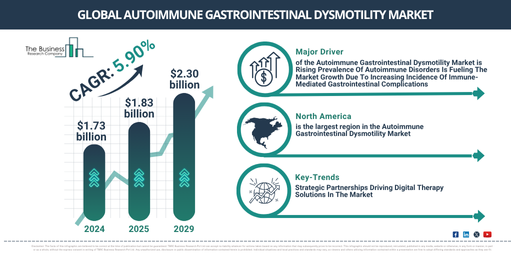
    There has been significant growth in recent years in the autoimmune gastrointestinal dysmotility market size. This market is projected to expand from $1.73 billion in 2024 to $1.83 billion in 2025, experiencing a compound annual growth rate (CAGR) of 6.0%. The historic growth can be traced back to factors such as increasing ignorance about rare diseases, growth in underdeveloped diagnostic procedures, higher incidences of misdiagnosis with other gastrointestinal disorders, a rise in the shortage of targeted therapies, and escalating delays in research advancements.

    In the forthcoming years, the autoimmune gastrointestinal dysmotility market is set to experience robust growth. The market size is projected to reach $2.30 billion in 2029, with a 5.9% compound annual growth rate (CAGR). Factors contributing to this growth during the predicted period include an increase in the prevalence of autoimmune diseases, enhancements in diagnostic methods, a rise in healthcare spending, heightened rare disease awareness, and improved education for clinicians. The forecasted period will also see key trends like advancements in diagnostic technology, breakthroughs in immunotherapy, progress in neurogastroenterology research, research into motility modulators, and customised treatment plans.

    Download a free sample to assess the report’s scope and structure:

    https://www.thebusinessresearchcompany.com/sample.aspx?id=24160&type=smp

    What are the Fundamental Drivers and Innovations Shaping the Autoimmune Gastrointestinal Dysmotility Market?

    The autoimmune gastrointestinal dysmotility market is projected to grow due to the increasing incidences of autoimmune disorders. Autoimmune diseases occur when the body’s immune system erroneously harms its healthy cells rather than safeguarding them from infections and foreign bodies. The increasing rate of these disorders is predominantly owing to the interplay between genetic vulnerability and environmental factors, which together disrupt the regulation of the immune system, making it more likely to harm its own tissues. Autoimmune gastrointestinal dysmotility aids in pinpointing and overseeing autoimmune disorders by uncovering immune-triggered damage to the enteric nervous system, thus linking gastrointestinal symptoms to systemic autoimmune reactions. For instance, a 2022 study by Versorgungsatlas.de surveyed 73,241,305 individuals, of which 6,304,340 had at least one autoimmune disease diagnosis, pointing to an observed prevalence rate of 8.61. Therefore, rising autoimmune disorder diagnoses are pushing the growth of the autoimmune gastrointestinal dysmotility market forward. The expanding concentration on personalized medicine which contributes to perfected treatments for individual autoimmune conditions, is acting as a catalyst for the market growth. Personalized medicine, a form of therapy distinctly tailored to a patient’s unique genetic attributes, lifestyle, and surroundings, is expected to drive the autoimmune gastrointestinal dysmotility market. Personalized medicine’s ascent is primarily due to developments in genomics, which permit exact identification of genetic variants, consequently enabling tailored treatments for individuals. In the realm of autoimmune gastrointestinal dysmotility treatment, personalized medicine enhances therapeutic efficiency and reduces side effects by adapting treatments to a person’s unique genetic profile and particular disease traits, thereby providing more precise solutions for managing complex gastrointestinal disorders. The U.S. Food and Drug Administration, in line with the Personalized Medicine Coalition’s report, approved 26 new personalized medicines in 2023, up from the 12 approved in 2022. Consequently, the growing emphasis on personalized medicine is fueling the growth of the autoimmune gastrointestinal dysmotility market.

    How Is the Autoimmune Gastrointestinal Dysmotility Market Segmented?

    The autoimmune gastrointestinal dysmotility market covered in this report is segmented –

    1) By Treatment Type: Medications, Surgical Interventions, Dietary Management, Physical Therapy

    2) By Drug Class: Prokinetic Agents, Anti-Inflammatory Drugs, Immunosuppressive Drugs, Antibiotics

    3) By Disease Type: Gastroparesis, Chronic Intestinal Pseudo-Obstruction (Cipo), Functional Dyspepsia, Irritable Bowel Syndrome (Ibs), Celiac Disease

    4) By Distribution Channel: Hospital Pharmacy, Retail Pharmacy, Online Pharmacies, Other Distribution Channels

    5) By End User: Hospitals, Clinics, Home Care Settings, Research Institutions

    Subsegments:

    1) By Medications: Immunosuppressants, Corticosteroids, Prokinetic Agents, Antiemetics, Antispasmodics, Antibiotics

    2) By Surgical Interventions: Gastrostomy, Jejunostomy, Colostomy, Ileostomy, Pyloroplasty, Colectomy

    3) By Dietary Management: Enteral Nutrition, Parenteral Nutrition, Gluten-Free Diet, Elemental Diet, Small Frequent Meals

    4) By Physical Therapy: Pelvic Floor Therapy, Abdominal Massage Therapy, Neuromuscular Electrical Stimulation (NMES), Biofeedback Therapy, Respiratory Muscle Training, Postural Training

    Request customized data on this market:

    https://www.thebusinessresearchcompany.com/sample.aspx?id=24160&type=smp

    Which Regions Are Driving the Next Phase of the Autoimmune Gastrointestinal Dysmotility Market Growth?

    North America was the largest region in the autoimmune gastrointestinal dysmotility market in 2024. The regions covered in the autoimmune gastrointestinal dysmotility market report are Asia-Pacific, Western Europe, Eastern Europe, North America, South America, Middle East, Africa.

    What Key Trends Are Shaping the Future of the Autoimmune Gastrointestinal Dysmotility Market?

    Key corporations in the autoimmune gastrointestinal dysmotility market are strategically partnering up to deliver digital therapeutic solutions specially designed to manage such medical conditions. Collaborative strategies enhance patient care via a virtual-first approach, extensive healthcare teams, improved symptom management, increased access to necessary care, and cost efficiency for autoimmune gastrointestinal dysmotility. For example, in March 2022, Solera Health, a US digital health firm, collaborated with Oshi Health and Vivante Health, two other US digital health companies, to forward this cause. The partnership is intended to offer top-notch digital therapy solutions that aid in managing and treating autoimmune gastrointestinal dysmotility. The coordinated effort seeks to boost access to specialty care for patients and enhance the overall effectiveness of treatments for those suffering from gastrointestinal disorders.

    View the full report here:

    https://www.thebusinessresearchcompany.com/report/autoimmune-gastrointestinal-dysmotility-global-market-report

    How Is the Autoimmune Gastrointestinal Dysmotility Market Defined and What Are Its Core Parameters?

    Autoimmune gastrointestinal dysmotility (AGID) is a rare disorder where the immune system attacks the nerves controlling digestive tract movement. This disorder leads to slowed or abnormal motility, causing symptoms such as nausea, bloating, constipation, or intestinal blockage. Autoimmune gastrointestinal dysmotility (AGID) is often associated with autoimmune conditions or may occur as a paraneoplastic syndrome.

    Purchase the full report and get a swift delivery:

    https://www.thebusinessresearchcompany.com/customise?id=24160&type=smp

    About The Business Research Company:

    With over 15000+ reports from 27 industries covering 60+ geographies, The Business Research Company has built a reputation for offering comprehensive, data-rich research and insights. Armed with 1,500,000 datasets, the optimistic contribution of in-depth secondary research, and unique insights from industry leaders, you can get the information you need to stay ahead in the game.

    Get in touch with us:

    The Business Research Company: https://www.thebusinessresearchcompany.com/

    Americas +1 3156230293

    Asia +44 2071930708

    Europe +44 2071930708

    Email us at info@tbrc.info

    Follow us on:

    LinkedIn: https://in.linkedin.com/company/the-business-research-company

    YouTube: https://www.youtube.com/channel/UC24_fI0rV8cR5DxlCpgmyFQ

    Global Market Model: https://www.thebusinessresearchcompany.com/global-market-model
  • Strong CAGR to Propel in the Injection Human Interleukin 2 Market and Beyond upto $1.82 Billion by 2029

    Strong CAGR to Propel in the Injection Human Interleukin 2 Market and Beyond upto $1.82 Billion by 2029

    We’ve updated all our reports with current data on tariff changes, trade developments, and supply chain shifts affecting key industries.

    #How Has the Injection Human Interleukin 2 Market Growth Performance Trended Historically, And What Lies Ahead?#_x000D_

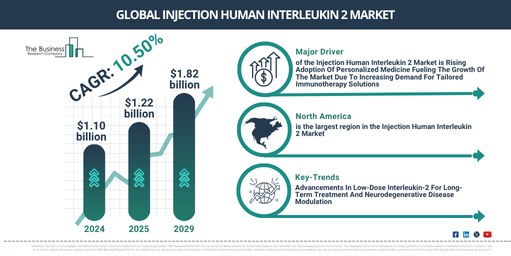
    The market size for human interleukin 2 injections has seen a significant rise in the past few years. The market, currently valued at $1.10 billion in 2024, is projected to escalate to $1.22 billion in 2025, reflecting a compound annual growth rate (CAGR) of 10.8%. This growth in the historic phase can be linked to improved health care infrastructure, amplified usage of IL-2 in autoimmune diseases, an increased number of clinical trials, an expanding line-up of cancer immunotherapy drugs, worldwide population growth, and an aging demographic._x000D_

    _x000D_

    The market size of injection human interleukin 2 is projected to witness a significant surge in the coming years, potentially reaching $1.82 billion in 2029 at a compound annual growth rate (CAGR) of 10.5%. The expected expansion during the forecast period can be linked to the rising instances of cancer, growing preference for immunotherapy treatments, advancement in personalized medicine methods, substantial funding for cancer research from both government and private sectors, and heightened awareness of the advantages of immunotherapy. Notable trends predicted for the forecast period include breakthroughs in biotechnology and genetic engineering, progress in combination therapies, innovative drug transport systems, enhancement in drug effectiveness and security profiles, and the production of next-generation IL-2 therapies._x000D_

    _x000D_

    #Download a free sample to assess the report’s scope and structure:#_x000D_

    https://www.thebusinessresearchcompany.com/sample.aspx?id=24254&type=smp_x000D_

    _x000D_

    #Which Primay Drivers Are Accelerating Growth in the Injection Human Interleukin 2 Market?#_x000D_

    The growth of the injection human interleukin 2 market is predicted to be driven by the emerging emphasis on personalized medicine. This medical approach customizes preventative and treatment measures to a person’s unique genetic, lifestyle, and environmental factors. The move towards personalized medicine is being driven by advancements in genetic testing, allowing for more precise diagnosis and individualized treatments. This results in improved patient outcomes and fewer side effects. The swelling demand for personalized medicine augments the use of Injection Human Interleukin 2. This is through its implementation in tailored immunotherapy routines, wherein IL-2 is dispensed based on a patient’s distinct immune profile to heighten healing efficacy and lower untoward effects. For example, a report from the US-based non-profit organization, the Personalized Medicine Coalition, stated in February 2024 that the FDA approved 16 new personalized medicines for patients with rare diseases in 2023, a significant increase from the six approved in 2022. Thus, the escalating emphasis on personalized medicine is projected to accelerate the injection human interleukin 2 market’s growth._x000D_

    _x000D_

    #Which Primary Segments of the Injection Human Interleukin 2 Market Are Driving Growth and Industry Transformations?#_x000D_

    The injection human interleukin 2 market covered in this report is segmented –_x000D_

    _x000D_

    1) By Product Type: Recombinant Human Interleukin 2, Natural Human Interleukin 2_x000D_

    2) By Route Of Administration: Subcutaneous Injection, Intravenous Injection, Intramuscular Injection_x000D_

    3) By Distribution Channel: Direct Sales, Pharmacies, Online Sales_x000D_

    4) By Application: Oncology, Immunotherapy, Autoimmune Diseases_x000D_

    5) By End-User: Hospitals, Clinics, Research Institutes, Others End-Users_x000D_

    _x000D_

    Subsegments:_x000D_

    1) By Recombinant Human Interleukin 2: Escherichia Coli Derived Interleukin 2, Yeast Derived Interleukin 2, Mammalian Cell Derived Interleukin 2_x000D_

    2) By Natural Human Interleukin 2: Plasma Derived Interleukin 2, Peripheral Blood Mononuclear Cell Derived Interleukin 2_x000D_

    _x000D_

    #Request customized data on this market:#_x000D_

    https://www.thebusinessresearchcompany.com/sample.aspx?id=24254&type=smp_x000D_

    _x000D_

    #Which Regions Are Key Players in the Growth of the Injection Human Interleukin 2 Market?#_x000D_

    North America was the largest region in the injection human interleukin 2 market in 2024. Asia-Pacific is expected to be the fastest-growing region in the forecast period. The regions covered in the injection human interleukin 2 market report are Asia-Pacific, Western Europe, Eastern Europe, North America, South America, Middle East, Africa._x000D_

    _x000D_

    #Which Technological Trends Are Reshaping the Injection Human Interleukin 2 Industry Dynamics?#_x000D_

    Leading firms active in the injection human interleukin-2 marketplace are concentrating their efforts on formulating novel solutions like low-dose interleukin-2 to facilitate extended treatment plans. Providing small quantities of IL-2 through the adoption of a low-dose interleukin-2 therapeutic strategy, allows for a selective stimulation of regulatory T cells. This can boost immune tolerance, limit inflammation and reduce side effects. An example of this is in October 2024, when Coya Therapeutics Inc., an American biotech firm, released the outcomes from a double-blind research investigating the impact of subcutaneous low-dose interleukin-2 (LD IL-2) on Alzheimer’s disease (AD). The research not only reached its initial and secondary goals, it also strengthened the ability to regulate T cells (Tregs), without any interference with T effector lymphocytes. Preliminary results established that administering low-dose IL-2 (LD IL-2) every four weeks aided in the stabilization of cognition, boosted the soluble Aß42 levels in cerebrospinal fluid (CSF), and ensured the stable formation of CSF Neurofilament Light Chain (NfL). These results provide robust support for the potential of Treg modification in treating neurodegenerative diseases, particularly Alzheimer’s. COYA 301, an under-investigation low-dose IL-2, is intended to enhance Treg functionality through subcutaneous administration for controlling inflammation._x000D_

    _x000D_

    #View the full report here:#_x000D_

    https://www.thebusinessresearchcompany.com/report/injection-human-interleukin-2-global-market-report_x000D_

    _x000D_

    #What Parameters Are Used to Define the Injection Human Interleukin 2 Market?#_x000D_

    Injection human interleukin 2 is a biologic drug used primarily in immunotherapy to stimulate the growth and activity of immune cells, particularly T-cells and natural killer (NK) cells. It is a recombinant form of a naturally occurring cytokine, interleukin-2, which plays a vital role in regulating immune responses. By enhancing the body’s natural immune defense mechanisms, IL-2 injection can help recognize and attack cancer cells more effectively._x000D_

    _x000D_

    #Purchase the full report and get a swift delivery:#_x000D_

    https://www.thebusinessresearchcompany.com/customise?id=24254&type=smp_x000D_

    _x000D_

    #About The Business Research Company:#_x000D_

    With over 15000+ reports from 27 industries covering 60+ geographies, The Business Research Company has built a reputation for offering comprehensive, data-rich research and insights. Armed with 1,500,000 datasets, the optimistic contribution of in-depth secondary research, and unique insights from industry leaders, you can get the information you need to stay ahead in the game._x000D_

    _x000D_

    #Get in touch with us:#_x000D_

    The Business Research Company: https://www.thebusinessresearchcompany.com/_x000D_

    Americas +1 3156230293_x000D_

    Asia +44 2071930708_x000D_

    Europe +44 2071930708_x000D_

    Email us at info@tbrc.info_x000D_

    _x000D_

    #Follow us on:#_x000D_

    _x000D_

    LinkedIn: https://in.linkedin.com/company/the-business-research-company_x000D_

    YouTube: https://www.youtube.com/channel/UC24_fI0rV8cR5DxlCpgmyFQ_x000D_

    Global Market Model: https://www.thebusinessresearchcompany.com/global-market-model