Category: Pharmaceuticals

  • Strategic Growth Drivers Shaping the Humanoid Healthcare Assistive Robot Market Outlook 2025- 2034:Growing Acceptance Of Robotic Solutions Fueling The Growth Of The Market Due To Enhancing Efficiency And Reduced Staff Workload

    Strategic Growth Drivers Shaping the Humanoid Healthcare Assistive Robot Market Outlook 2025- 2034:Growing Acceptance Of Robotic Solutions Fueling The Growth Of The Market Due To Enhancing Efficiency And Reduced Staff Workload

    We’ve updated all our reports with current data on tariff changes, trade developments, and supply chain shifts affecting key industries.

    #How Has the Humanoid Healthcare Assistive Robot Market Growth Performance Trended Historically, And What Lies Ahead?#_x000D_

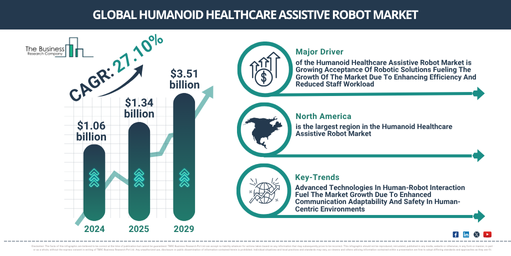
    The market for humanoid healthcare assistive robots has seen an explosive growth in the past few years. The market size is anticipated to expand from a value of $1.06 billion in 2024 to a substantial $1.34 billion in 2025, marking a compound annual growth rate (CAGR) of 27.3%. Factors such as the growing demand for automation in healthcare, an increase in chronic diseases, shortage of staff in the healthcare field, escalating healthcare expenses, the requirement for remote patient supervision, and the call for customized patient care have all contributed to the surge in growth during the historical period._x000D_

    _x000D_

    The market size of the humanoid healthcare assistive robot is anticipated to witness a surge, escalating to $3.51 billion in 2029 with a compound annual growth rate (CAGR) of 27.1%. This growth projection for the forecast period is due to factors such as the widening application of AI in healthcare, heightened attention towards elderly care, increased healthcare expenditure, the amalgamation of robots with telemedicine, the need for assistive technologies for people with disabilities, and advanced robot-human interaction. The significant trends in the forecast period consist of progress in deep learning algorithms, enhanced interfaces for human-robot interaction, bettered robot mobility and dexterity, the emergence of soft robotics, incorporation of the 5G technology for instant communication, and the application of wearable sensors for patient surveillance._x000D_

    _x000D_

    #Download a free sample to assess the report’s scope and structure:#_x000D_

    https://www.thebusinessresearchcompany.com/sample.aspx?id=24243&type=smp_x000D_

    _x000D_

    #Which Factors and External Forces Are Driving Demand in the Humanoid Healthcare Assistive Robot Market?#_x000D_

    The acceptance of robotic solutions is increasing and this is projected to stimulate the expansion of the humanoid healthcare assistive robot market. Robotic solutions encompass the application of robotic systems and technologies for task automation, increased efficiency, and resolving complex issues across diverse industries and applications. The heightened adoption of these solutions is credited to their capacity to lessen the load on healthcare personnel by seamlessly executing repetitive tasks, thereby allowing staff to attend to more critical patient care duties. Humanoid healthcare assistive robots augment these solutions by offering personalized help in caregiving, rehabilitation, and patient interaction with adaptive assistance and human-like behavior. For instance, the International Federation of Robotics (IFR), a non-profit organization from Germany focusing on research in the robotics industry, reported that 553,052 industrial robot installations were documented in factories globally in September 2023, marking a 5% growth from 2022. Therefore, the escalating acceptance of robotic solutions is spearheading the growth of the humanoid healthcare assistive robot market._x000D_

    _x000D_

    #Which Segments in the Humanoid Healthcare Assistive Robot Offer the Most Growth?#_x000D_

    The humanoid healthcare assistive robot market covered in this report is segmented –_x000D_

    _x000D_

    1) By Type: Surveillance Healthcare Assistive Robot, Security Healthcare Assistive Robot_x000D_

    2) By Component: Hardware, Software, Services_x000D_

    3) By Technology: Artificial Intelligence, Machine learning, Natural Language Processing, Robotic Process Automation, Computer Vision_x000D_

    4) By Application: Elderly Care, Rehabilitation, Surgery Assistance, Patient Monitoring, Other Applications_x000D_

    5) By End-User: Hospitals, Clinics, Home Care Settings, Rehabilitation Centers, Other End-Users_x000D_

    _x000D_

    Subsegments:_x000D_

    1) By Surveillance Healthcare Assistive Robot: Remote Monitoring Robots, Diagnostic Assistance Robots, Patient Interaction Robots, Vital Signs Monitoring Robots, Surveillance And Security Monitoring Robots_x000D_

    2) By Security Healthcare Assistive Robot: Patient Safety Robots, Anti-Disruption Robots, Emergency Response Robots, Intruder Detection Robots, Automated Security Robots For Hospitals_x000D_

    _x000D_

    #Request customized data on this market:#_x000D_

    https://www.thebusinessresearchcompany.com/sample.aspx?id=24243&type=smp_x000D_

    _x000D_

    #What Are the Fastest-Growing Geographies in the Humanoid Healthcare Assistive Robot Market?#_x000D_

    North America was the largest region in the humanoid healthcare assistive robot market in 2024. Asia-Pacific is expected to be the fastest-growing region in the forecast period. The regions covered in the humanoid healthcare assistive robot market report are Asia-Pacific, Western Europe, Eastern Europe, North America, South America, Middle East, Africa._x000D_

    _x000D_

    #Which Cutting-Edge Market Trends Are Expected to Drive the Humanoid Healthcare Assistive Robot Market’s Growth?#_x000D_

    Key players in the humanoid healthcare assistive robot market are prioritizing the development of technologically superior solutions such as human-robot interaction to promote more effective and responsive communication with humans. The concept of human-robot interaction (HRI) relates to the design and study of systems that permit robots to interact, liaise, and communicate naturally and intuitively with human beings. This primarily involves grasping how humans manage, perceive, and work in conjunction with robots, with the central focus on facilitating smooth and effective exchanges. For instance, the US-based company, Toyota Research Institute, notable for its artificial intelligence-based research and robotics innovation, introduced their Punyo robots in March 2024. This robot is uniquely devoid of legs, emphasizing safety, softness, and adaptability for day-to-day human tasks. The robot is equipped with tactile sensors adapting to objects, airbags in its appendages for pressure regulation for hardness and softness, as well as progressive learning techniques. The Punyo is designed to observe and replicate human behaviors, making it competent for various home tasks and enhancing its functionality in everyday settings by integrating soft materials with in-house mechanical structures._x000D_

    _x000D_

    #View the full report here:#_x000D_

    https://www.thebusinessresearchcompany.com/report/humanoid-healthcare-assistive-robot-global-market-report_x000D_

    _x000D_

    #What Are the Key Elements That Define the Humanoid Healthcare Assistive Robot Market?#_x000D_

    A humanoid healthcare assistive robot is a robotic system designed to mimic human appearance and behavior, specifically created to assist in healthcare settings. These robots typically feature advanced sensors and motion control systems to interact with patients and healthcare providers. They are capable of performing tasks such as assisting with mobility, delivering medications, monitoring vital signs, and providing companionship or emotional support._x000D_

    _x000D_

    #Purchase the full report and get a swift delivery:#_x000D_

    https://www.thebusinessresearchcompany.com/customise?id=24243&type=smp_x000D_

    _x000D_

    #About The Business Research Company:#_x000D_

    With over 15000+ reports from 27 industries covering 60+ geographies, The Business Research Company has built a reputation for offering comprehensive, data-rich research and insights. Armed with 1,500,000 datasets, the optimistic contribution of in-depth secondary research, and unique insights from industry leaders, you can get the information you need to stay ahead in the game._x000D_

    _x000D_

    #Get in touch with us:#_x000D_

    The Business Research Company: https://www.thebusinessresearchcompany.com/_x000D_

    Americas +1 3156230293_x000D_

    Asia +44 2071930708_x000D_

    Europe +44 2071930708_x000D_

    Email us at info@tbrc.info_x000D_

    _x000D_

    #Follow us on:#_x000D_

    _x000D_

    LinkedIn: https://in.linkedin.com/company/the-business-research-company_x000D_

    YouTube: https://www.youtube.com/channel/UC24_fI0rV8cR5DxlCpgmyFQ_x000D_

    Global Market Model: https://www.thebusinessresearchcompany.com/global-market-model
  • Market Trends Influencing Strategic Decisions in the High End Cellomics Industry: Advancements In High-Content Analysis Systems For Precision Medicine And Drug Discovery

    Market Trends Influencing Strategic Decisions in the High End Cellomics Industry: Advancements In High-Content Analysis Systems For Precision Medicine And Drug Discovery

    We’ve updated all our reports with current data on tariff changes, trade developments, and supply chain shifts affecting key industries.

    #What is the Projected CAGR for the High End Cellomics Market Size from 2025 to 2034?#_x000D_

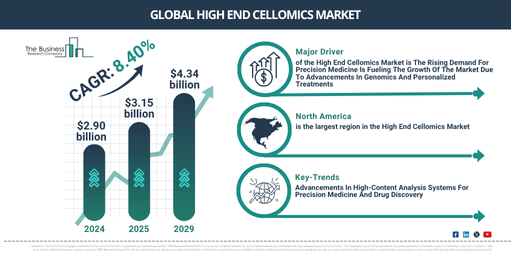
    The upscale cellomics market has witnessed robust growth in the past few years. The market size is projected to increase from $2.90 billion in 2024 to $3.15 billion in 2025, exhibiting a compound annual growth rate (CAGR) of 8.6%. This significant growth during the historic period is due to an increased need for high-content screening in drug discovery, advancements in imaging systems, a surge in personalized medicine research, a rise in investment for academic and pharmaceutical research and development, and a broadening of stem cell and cancer research applications._x000D_

    _x000D_

    The size of the high-end cellomics market is anticipated to experience substantial growth in the forthcoming years, with the value projected to reach $4.34 billion by 2029, representing a compound annual growth rate (CAGR) of 8.4%. This growth during the prediction period may be credited to factors such as the implementation of AI and machine learning in cell analysis, increased acceptance of 3D cell culture models, a growing demand for automated and high-throughput systems, an intensified focus on regenerative medicine and gene therapy, and market expansion into areas with enhanced healthcare infrastructure. Among the significant trends forecasted for this period are AI-led image analysis, integration of high-content screening with CRISPR technologies, progression in 3D cell culture and organoid models, the automation and downsizing of cell-based assays, along with cloud-based data management and analytical platforms._x000D_

    _x000D_

    #Download a free sample to assess the report’s scope and structure:#_x000D_

    https://www.thebusinessresearchcompany.com/sample.aspx?id=24237&type=smp_x000D_

    _x000D_

    #What Are the Major Market Drivers Behind the Rising Adoption of High End Cellomics Market?#_x000D_

    There is an expectation for the high-end cellomics market to expand due to the growing need for precision medicine. Precision medicine is an approach in healthcare that customizes treatments for patients based on their genetic information, environmental factors, and lifestyle. The expansion of precision medicine can be credited to advancements in genomics, paving the way for personalized treatments that are tied to an individual’s genetic composition. This not only boosts their effectiveness but also reduces their side effects. High-end cellomics makes use of sophisticated imaging to provide live observations of cellular activities, thus assisting in the recognition of biomarkers and monitoring of disease progress. Precision medicine is thereby enhanced, with boosted personal treatment strategies and increased accuracy in diagnosis. For example, as reported by the Personalized Medicine Coalition, a healthcare institution based in the US, the FDA gave approval to 16 fresh personalized treatments in 2023 specially designed for patients with rare diseases, a significant increase from only six in 2022. As such, the intensifying need for precision medicine is propelling the high-end cellomics market._x000D_

    _x000D_

    #Which Key Market Segments Comprise the High End Cellomics Market and Drive Its Revenue Growth?#_x000D_

    The high end cellomics market covered in this report is segmented –_x000D_

    _x000D_

    1) By Product Type: Instruments, Reagents And Consumables, Software And Services_x000D_

    2) By Technology: Microscopy, Flow Cytometry, Single-Cell Genomics, Mass Spectrometry, Next Generation Sequencing, Other Technologies_x000D_

    3) By Application: Drug Discovery, Cancer Research, Neuroscience, Stem Cell Research And Regenerative Medicine, Personalized Medicine, Other Applications_x000D_

    4) By End-User: Biotechnology And Pharmaceutical Companies, Hospitals And Diagnostic Laboratories, Contract Research Organizations, Other End-Users_x000D_

    _x000D_

    Subsegments:_x000D_

    1) By Instruments: High-Content Screening Systems, Flow Cytometers, Confocal Microscopes, Automated Microscopy Systems, Image Analysis Workstations, Robotic Cell Handling Systems_x000D_

    2) By Reagents And Consumables: Fluorescent Dyes And Probes, Cell Staining Kits, Cell Culture Reagents, Assay Kits, Microplates, Slide And Cover Glasses, Fixatives And Buffers_x000D_

    3) By Software And Services: Image Analysis Software, Data Management And Integration Tools, Artificial Intelligence (AI)-Based Predictive Analytics Software, Cloud-Based Data Storage Solutions, Technical Support And Maintenance Services, Custom Assay Development Services, Training And User Support Programs_x000D_

    _x000D_

    #Request customized data on this market:#_x000D_

    https://www.thebusinessresearchcompany.com/sample.aspx?id=24237&type=smp_x000D_

    _x000D_

    #Which Areas Are Leading Regions in the High End Cellomics Market Expansion Across the Globe?#_x000D_

    North America was the largest region in the high-end cellomics market in 2024. Asia-Pacific is expected to be the fastest-growing region in the forecast period. The regions covered in the high end cellomics market report are Asia-Pacific, Western Europe, Eastern Europe, North America, South America, Middle East, Africa._x000D_

    _x000D_

    #What Are the Strategic Trends Steering the High End Cellomics Market Direction?#_x000D_

    Leaders in the high-end cellomics market are honing their focus on the production of cutting-edge items such as the high-content analysis system. This is aimed at promoting precision medicine through comprehensive phenotypic analysis. The high-content analysis (HCA) system, a sophisticated imaging technology, offers multiple measurements of cellular parameters under high-throughput circumstances. This allows for detailed exploration of intricate biological processes at a cellular level. This provides valuable data relevant for drug discovery, toxicity assessments, and personalized medicine applications. For example, Yokogawa Electric Corporation, a Tokyo-based electrical engineering and software firm, launched the CellVoyager CQ3000 in February 2024. This benchtop high-content analysis system is designed to rapidly capture high-resolution 3D images of live cellular cultures, thus allowing for a thorough and efficient assessment of cellular responses and the impacts of drugs. Its features include Yokogawa’s unique confocal scanner unit with dual spinning-disk technology for low phototoxicity, precise temperature control for consistent long-term live cell imaging, among other options. Paired with the CellPathfinder image analysis software, it aids in complex data analysis, including deep learning, which advances drug discovery, regenerative medicine research, and fundamental biological studies._x000D_

    _x000D_

    #View the full report here:#_x000D_

    https://www.thebusinessresearchcompany.com/report/high-end-cellomics-global-market-report_x000D_

    _x000D_

    #How Is the High End Cellomics Market Conceptually Defined?#_x000D_

    High-end cellomics involves cutting-edge, automated technologies that integrate high-content imaging with advanced data analytics to examine cellular behavior at the single-cell level. These platforms support high-throughput screening and provide quantitative insights into cell morphology, molecular expression, and functional responses. They are particularly useful for detecting subtle cellular changes in response to drugs or environmental stimuli._x000D_

    _x000D_

    #Purchase the full report and get a swift delivery:#_x000D_

    https://www.thebusinessresearchcompany.com/customise?id=24237&type=smp_x000D_

    _x000D_

    #About The Business Research Company:#_x000D_

    With over 15000+ reports from 27 industries covering 60+ geographies, The Business Research Company has built a reputation for offering comprehensive, data-rich research and insights. Armed with 1,500,000 datasets, the optimistic contribution of in-depth secondary research, and unique insights from industry leaders, you can get the information you need to stay ahead in the game._x000D_

    _x000D_

    #Get in touch with us:#_x000D_

    The Business Research Company: https://www.thebusinessresearchcompany.com/_x000D_

    Americas +1 3156230293_x000D_

    Asia +44 2071930708_x000D_

    Europe +44 2071930708_x000D_

    Email us at info@tbrc.info_x000D_

    _x000D_

    #Follow us on:#_x000D_

    _x000D_

    LinkedIn: https://in.linkedin.com/company/the-business-research-company_x000D_

    YouTube: https://www.youtube.com/channel/UC24_fI0rV8cR5DxlCpgmyFQ_x000D_

    Global Market Model: https://www.thebusinessresearchcompany.com/global-market-model
  • Acquired Autoimmune Hemolytic Anemia Market Forecast Reaching $2.88 Billion by 2029 at 7.4% CAGR

    Acquired Autoimmune Hemolytic Anemia Market Forecast Reaching $2.88 Billion by 2029 at 7.4% CAGR

    We’ve updated all our reports with current data on tariff changes, trade developments, and supply chain shifts affecting key industries.

    What Are the Projected Market Size and Growth Rates for the Acquired Autoimmune Hemolytic Anemia Market From 2025 To 2029?

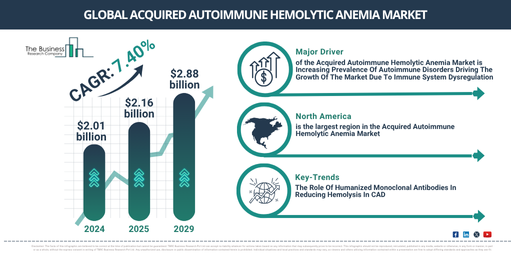
    The market size for acquired autoimmune hemolytic anemia has been expanding remarkably in the past few years. Its growth is predicted to elevate from $2.01 billion in 2024 to $2.16 billion in 2025, reflecting a compound annual growth rate (CAGR) of 7.5%. The growth observed in the precedent period can be credited to factors such as rising diagnosis rates, increasing instances of secondary AIHA, the development of hospital hematology units, governmental and regulatory backing, and escalated investments in hematology.

    In the next few years, the market size for acquired autoimmune hemolytic anemia is projected to experience significant growth, expected to reach $2.88 billion by 2029, with a compound annual growth rate (CAGR) of 7.4%. Factors contributing to this growth during the forecast period comprise an increase in the prevalence of autoimmune diseases, enhanced understanding of the complement system’s function, escalating collaboration between biopharma and academia, a rise in the application of personalized medicine, and an aging population. Emerging trends in the forecast period involve the adoption of targeted biologic therapies, progress in complement pathway inhibitors, the use of AI and data analytics in managing disease, the introduction of AI in designing clinical trials, and advancements in orphan drug development.

    Download a free sample to assess the report’s scope and structure:

    https://www.thebusinessresearchcompany.com/sample.aspx?id=24132&type=smp

    Which Major Market Drivers Are Expected to Boost the Growth Potential of the Acquired Autoimmune Hemolytic Anemia Market?

    The growth of the acquired autoimmune hemolytic anemia market is predicted to be fueled by the rising occurrence of autoimmune disorders. Autoimmune disorders occur when the immune system erroneously attacks the body’s own healthy cells and tissues, mistaking them for harmful invaders. This increasing prevalence is largely due to the impact of environmental triggers and lifestyle alterations that may interfere with the immune system’s regulation. This surge in autoimmune disorders results in a greater incidence of acquired autoimmune hemolytic anemia since individuals with autoimmune conditions have a higher likelihood of developing secondary AIHA due to the misregulation of the immune system. For example, the autoimmune registry, a US-based organization that collects and assesses information about autoimmune disorders, reported in 2022 that the percentage of patients diagnosed with multiple autoimmune conditions increased from 52% in 2021 to 55% in 2022. Hence, as autoimmune disorders become more prevalent, they are likely to influence the acquired autoimmune hemolytic anemia market’s growth.

    Which Key Market Segments Comprise the Acquired Autoimmune Hemolytic Anemia Market and Drive Its Revenue Growth?

    The acquired autoimmune hemolytic anemia market covered in this report is segmented –

    1) By Diagnosis Method: Complete Blood Count, Peripheral Blood Smear, Direct Coombs Test, Indirect Coombs Test

    2) By Treatment Type: Corticosteroids, Immunosuppressive Agents, Intravenous Immunoglobulin, Rituximab

    3) By Severity: Mild, Moderate, Severe

    4) By End User: Hospitals, Specialty Clinics, Research Institutions

    Subsegment:

    1) By Complete Blood Count: Hemoglobin Level, Hematocrit (HCT), Reticulocyte Count, White Blood Cell Count, Platelet Count

    2) By Peripheral Blood Smear: Spherocytes, Polychromasia, Schistocytes, Increased Reticulocyte Count

    3) By Direct Coombs Test: Immunoglobulin G Coombs Test, Immunoglobulin M Coombs Test, Complement Coombs Test

    4) By Indirect Coombs Test: Screening For Alloantibodies, Detection Of Sensitizing Antibodies, Crossmatch Testing

    Request customized data on this market:

    https://www.thebusinessresearchcompany.com/sample.aspx?id=24132&type=smp

    Which Areas Are Leading Regions in the Acquired Autoimmune Hemolytic Anemia Market Expansion Across the Globe?

    North America was the largest region in the acquired autoimmune hemolytic anemia market in 2024. Europe is expected to be the fastest-growing region in the forecast period. The regions covered in the acquired autoimmune hemolytic anemia market report are Asia-Pacific, Western Europe, Eastern Europe, North America, South America, Middle East, Africa.

    What Are the Key Market Trends in the Acquired Autoimmune Hemolytic Anemia Market Over the Coming Years?

    Major businesses that dominate the acquired autoimmune hemolytic anemia market are focusing on enhancing targeted treatments like humanized monoclonal antibodies. The goal is to increase the efficacy of therapies, minimize side effects, and offer more customized treatment alternatives for those dealing with autoimmune hemolytic anemia. A humanized monoclonal antibody is a lab-created protein made to replicate human antibodies and include small sections of non-human (usually mouse) antibodies to boost its targeted antigen interaction and lower immune system rejection. As an example, in February 2022, Sanofi, healthcare firm from France, gained approval from the U.S. Food and Drug Administration (FDA) for Enjaymo (sutimlimab-jome), making it the first exclusive treatment for cold agglutinin disease (CAD), a rare type of autoimmune hemolytic anemia. It inhibits C1s in the classical complement pathway, reducing the immune system’s premature destruction of healthy red blood cells thus lessening the necessity of red blood cell transfusions in CAD patients. Enjaymo has a specific selectivity for C1-activated hemolysis without interfering with the lectin or alternative complement pathways.

    View the full report here:

    https://www.thebusinessresearchcompany.com/report/acquired-autoimmune-hemolytic-anemia-global-market-report

    How Is the Acquired Autoimmune Hemolytic Anemia Market Conceptually Defined?

    Acquired autoimmune hemolytic anemia (AIHA) is a rare disorder that causes anemia when the body’s immune system unintentionally targets and kills its own red blood cells it is frequently brought on by infections, autoimmune disorders, malignancies, or specific drugs, and it can appear suddenly or gradually. This happens as a result of the body producing antibodies that attack its own red blood cells, causing hemolysis, or the premature breakdown of those cells.

    Purchase the full report and get a swift delivery:

    https://www.thebusinessresearchcompany.com/customise?id=24132&type=smp

    About The Business Research Company:

    With over 15000+ reports from 27 industries covering 60+ geographies, The Business Research Company has built a reputation for offering comprehensive, data-rich research and insights. Armed with 1,500,000 datasets, the optimistic contribution of in-depth secondary research, and unique insights from industry leaders, you can get the information you need to stay ahead in the game.

    Get in touch with us:

    The Business Research Company: https://www.thebusinessresearchcompany.com/

    Americas +1 3156230293

    Asia +44 2071930708

    Europe +44 2071930708

    Email us at info@tbrc.info

    Follow us on:

    LinkedIn: https://in.linkedin.com/company/the-business-research-company

    YouTube: https://www.youtube.com/channel/UC24_fI0rV8cR5DxlCpgmyFQ

    Global Market Model: https://www.thebusinessresearchcompany.com/global-market-model
  • Top Trends Driving Innovation and Change in the Peripheral Vasodilator Drugs Market:  Innovation In Peripheral Vasodilator Market With Advanced Drug Development

    Top Trends Driving Innovation and Change in the Peripheral Vasodilator Drugs Market: Innovation In Peripheral Vasodilator Market With Advanced Drug Development

    Discover trends, market shifts, and competitive outlooks for the peripheral vasodilator drugs industry through 2025-2034 with The Business Research Company’s reliable data and in-depth research

    How Has The Peripheral Vasodilator Drugs Market Growth Evolved From 2024 To 2025, And What’s Ahead?

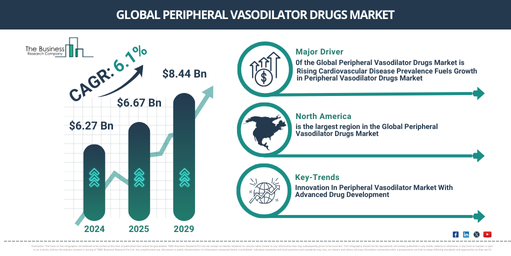
    The market size for peripheral vasodilator drugs has seen robust growth in the past few years. There will be an increase from $6.27 billion in 2024 to about $6.67 billion in 2025, with a compound annual growth rate (CAGR) of 6.3%. The historical growth can be credited to the transition towards less invasive surgical methods, the need for minimally invasive heart devices, continuous training and education initiatives for health care professionals, increased health care expenditure, and the escalating patient inclination towards non-surgical or minimally invasive treatment alternatives.

    Expectations are high for the peripheral vasodilator drugs market to experience robust growth in the coming years. By 2029, it is projected to expand to a value of $8.44 billion, with a compound annual growth rate (CAGR) of 6.1%. This anticipated growth over the forecast period can be associated with factors such as the increase in the aging population, heightened awareness towards heart health, the establishment of screening programs, the presence of positive reimbursement policies for structural heart procedures, and timely approval of regulatory processes for novel structural heart devices. Looking forward, the forecast period is set to witness trends such as increased teamwork, real-world evidence, gene therapy, preventive strategies, and a shift towards value-based healthcare.

    Download a free sample to assess the report’s scope and structure:

    https://www.thebusinessresearchcompany.com/sample.aspx?id=16508&type=smp

    What Are the Core Market Drivers Propelling Growth in the Peripheral Vasodilator Drugs Industry?

    The growth of the peripheral vasodilator drug market is anticipated to be driven by an escalating prevalence of cardiovascular diseases. A myriad of disorders, known collectively as cardiovascular diseases (CVDs), affect the heart and blood vessels, often arising from atherosclerosis and leading to conditions such as heart attacks, strokes, hypertension, and heart failure. The increasing occurrences of cardiovascular diseases are largely attributable to factors like sedentary lifestyle, unhealthy diet, rising obesity rates, aging populations, and associated health ailments including diabetes and hypertension. The utilization of peripheral vasodilators for the treatment of cardiovascular diseases enhances blood flow, reduces blood pressure, decreases the workload of the heart and mitigates symptoms of conditions like peripheral arterial disease. As an example, the Australian Institute of Health and Welfare, a government agency in Australia, noted that in June 2024, doctor-certified deaths resulting from coronary heart disease (CHD) escalated to 14,100 in 2021 and further increased to 14,900 in 2022. Consequently, the escalating prevalence of cardiovascular diseases is fueling the growth of the peripheral vasodilator drug market.

    What Segment Types Define the Peripheral Vasodilator Drugs Market Structure?

    The peripheral vasodilator drugs market covered in this report is segmented –

    1) By Drug Type: Calcium Channel Blockers, Direct-Acting Vasodilators, Alpha-Adrenergic Blockers, Potassium Channel Activators, Nitrates, Other Types

    2) By Indication: Hypertension, Angina, Heart Failure, Other Indications

    3) By Application: Hospital, Retail Pharmacies, Other Applications

    Subsegments:

    1) By Calcium Channel Blockers: Dihydropyridines, Non-Dihydropyridines

    2) By Direct-Acting Vasodilators: Hydralazine, Minoxidil, Nitroprusside

    3) By Alpha-Adrenergic Blockers: Prazosin, Doxazosin, Terazosin

    4) By Potassium Channel Activators: Nicorandil, Diazoxide

    5) By Nitrates: Nitroglycerin, Isosorbide Dinitrate, Isosorbide Mononitrate

    6) By Other Types: Phosphodiesterase Inhibitors, Endothelin Receptor Antagonists

    Request customized data on this market:

    https://www.thebusinessresearchcompany.com/customise?id=16508&type=smp

    Which Regions Are Driving the Next Phase of the Peripheral Vasodilator Drugs Market Growth?

    North America was the largest region in the peripheral vasodilator drugs market in 2024. The regions covered in the peripheral vasodilator drugs market report are Asia-Pacific, Western Europe, Eastern Europe, North America, South America, Middle East, Africa.

    What Are the Strategic Trends Steering the Peripheral Vasodilator Drugs Market Direction?

    In an effort to enhance treatment results and increase their market dominance in cardiovascular therapeutics, predominant players in the peripheral vasodilator drugs market are focusing on the development of triple-drug combination therapies. This antihypertensive fixed-dose combination (FDC) therapy specifically targets those patients who cannot sufficiently control their blood pressure with dual-drug therapies or are incapable of enduring diuretic-based mixes. An example of this is Met XL AMT, a new triple-drug combination unveiled by Ajanta Pharma Limited, an Indian pharmaceutical firm skilled in cardiology, in August 2023. Designed to manage hypertension amongst Indian patients, the FDC consists of three antihypertensive agents: Telmisartan, Amlodipine, and Metoprolol. Acting in unison, these agents relax blood vessels to decrease blood pressure – a key function of peripheral vasodilators. Specifically approved by DCGI for managing uncontrolled hypertension in conjunction with stable coronary artery disease, this medication is the world’s first FDC of metoprolol succinate (extended-release) 50 mg, amlodipine 5 mg, and telmisartan 40 mg.

    View the full report here:

    https://www.thebusinessresearchcompany.com/report/peripheral-vasodilator-drugs-global-market-report

    What Is the Definition of the Peripheral Vasodilator Drugs Market?

    Peripheral vasodilator drugs refer to medications that primarily act on blood vessels outside of the heart and brain, specifically targeting the peripheral circulation. These drugs are used to widen (dilate) blood vessels, thereby reducing resistance to blood flow and lowering blood pressure.

    Purchase the full report and get a swift delivery:

    https://www.thebusinessresearchcompany.com/purchaseoptions.aspx?id=16508

    About The Business Research Company:

    With over 15000+ reports from 27 industries covering 60+ geographies, The Business Research Company has built a reputation for offering comprehensive, data-rich research and insights. Armed with 1,500,000 datasets, the optimistic contribution of in-depth secondary research, and unique insights from industry leaders, you can get the information you need to stay ahead in the game.

    Get in touch with us:

    The Business Research Company: https://www.thebusinessresearchcompany.com/

    Americas +1 3156230293

    Asia +44 2071930708

    Europe +44 2071930708

    Email us at info@tbrc.info

    Follow us on:

    LinkedIn: https://in.linkedin.com/company/the-business-research-company

    YouTube: https://www.youtube.com/channel/UC24_fI0rV8cR5DxlCpgmyFQ

    Global Market Model: https://www.thebusinessresearchcompany.com/global-market-model
  • Peptide Based Metabolic Disorders TherapeuticsMarket Overview 2025–2034: CAGR Trends, Long-Term Growth Paths, and Business Implications

    Peptide Based Metabolic Disorders TherapeuticsMarket Overview 2025–2034: CAGR Trends, Long-Term Growth Paths, and Business Implications

    Discover trends, market shifts, and competitive outlooks for the peptide based metabolic disorders therapeutics industry through 2025-2034 with The Business Research Company’s reliable data and in-depth research

    What Are the Projected Market Size and Growth Rates for the Peptide Based Metabolic Disorders Therapeutics Market From 2025 To 2029?

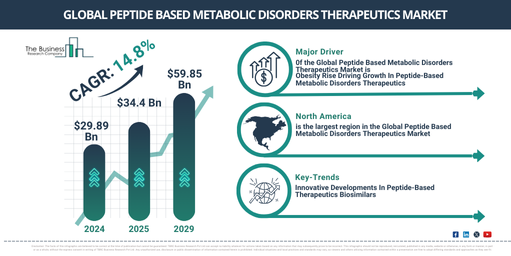
    The market size of peptide-related metabolic disorder treatments has seen swift growth in recent years. With an expansion from $29.89 billion in 2024 to an expected $34.4 billion in 2025, the compound annual growth rate (CAGR) is projected to be 15.1%. The unprecedented growth during the historic period is a result of several factors including the rising incidence of metabolic disorders, advancements in peptide synthesis technology, increased spending in healthcare, growth in the elderly population, enlargement of the biopharmaceutical sector, regulatory permissions for novel therapies, and heightened awareness around personalized medicine.

    The market for peptide-based therapeutics to treat metabolic disorders is predicted to experience swift expansion in the coming years. It is projected to reach a valuation of $59.85 billion in 2029, representing a compound annual growth rate (CAGR) of 14.8%. This projected growth during the forecast period can be linked to the creation of new peptide analogs, increased investments in metabolic disorder research, the adoption of precision medicine protocols, development in emerging markets, collaborative efforts in drug creation, advancements in drug delivery systems, and an emphasis on treatments tailored to individual patients. Key trends for the forecast period include the application of artificial intelligence in medicinal discoveries, the increase of therapies individualized towards the patient, the use of CRISPR/Cas9 for genetic treatments, the employment of wearable devices for patient monitoring, the creation of orally ingestible peptide formulations, the rise of digital therapeutics in disease management, and the broadening use of biobanks for personalized medical treatments.

    Download a free sample to assess the report’s scope and structure:

    https://www.thebusinessresearchcompany.com/sample.aspx?id=16764&type=smp

    How Are Key Drivers in the Industry Acting as Catalysts for the Growth of the Peptide Based Metabolic Disorders Therapeutics Market?

    The escalation in obesity occurrences is predicted to stimulate the expansion of the peptide-based metabolic disorders therapeutic market. Obesity, defined by an unhealthy accumulation of body fat, poses a health threat. The rise in obesity cases is attributable to inactive lifestyles, poor eating habits, inherited factors, and environmental influence that favor high-calorie diets and physical inactivity. Therapies for peptide-based metabolic disorders aim to manage issues such as obesity by utilizing peptides to balance metabolic functions, enhance insulin responsiveness, and suppress appetite, thereby boosting patient health results and lessening long-term health dangers linked to these chronic conditions. For instance, as per The British Diabetic Association, a healthcare and research charity based in the UK, in April 2024, 4.4 million people in the UK are dealing with diabetes, and roughly 1.2 million others could have undiagnosed type 2 diabetes. The registration figures for 2022-23 denote an increase of 167,822 from 2021-22. Consequently, the escalating prevalence of obesity is propelling the peptide-based metabolic disorder therapeutics market.

    Which Primary Segments of the Peptide Based Metabolic Disorders Therapeutics Market Are Driving Growth and Industry Transformations?

    The peptide based metabolic disorders therapeutics market covered in this report is segmented –

    1) By Drug Type: Liraglutide, Exenatide, Other Drug Type

    2) By Application: Lysosomal Storage Diseases, Diabetes, Obesity, Hypercholesterolemia, Other Applications

    3) By Distribution Channel: Hospital Pharmacies, Retail Pharmacies, Online Pharmacies

    Subsegments:

    1) By Liraglutide: Brand: Saxenda, Brand: Victoza, Generic Liraglutide, Liraglutide For Type 2 Diabetes, Liraglutide For Obesity

    2) By Exenatide: Brand: Byetta, Brand: Bydureon, Exenatide For Type 2 Diabetes, Extended-Release Exenatide, Generic Exenatide

    3) By Other Drug Type: Semaglutide, Dulaglutide, Albiglutide, Lixisenatide, GLP-1 Receptor Agonists, Pramlintide, Other Peptide-Based Drugs For Metabolic Disorders

    Request customized data on this market:

    https://www.thebusinessresearchcompany.com/customise?id=16764&type=smp

    What Are the Fastest-Growing Geographies in the Peptide Based Metabolic Disorders Therapeutics Market?

    North America was the largest region in the peptide based metabolic disorders therapeutics market in 2024. Asia-Pacific is expected to be the fastest-growing region in the forecast period. The regions covered in the peptide based metabolic disorders therapeutics market report are Asia-Pacific, Western Europe, Eastern Europe, North America, South America, Middle East, Africa.

    What Key Trends Are Shaping the Future of the Peptide Based Metabolic Disorders Therapeutics Market?

    Key companies in the peptide-based metabolic disorders therapeutics market are focusing on creating innovative peptide-based solutions like anti-diabetic biosimilars, in order to meet medical needs that have not been addressed and widen the array of treatment choices for patients. Anti-diabetic biosimilars that are peptide-based are essentially therapeutic drugs that echo existing peptide-based diabetes treatments, providing the same efficacy and safety outcomes as established medicines but potentially reducing the costs of treatment with competitive pricing. For instance, Lirafit, a biosimilar version of the well-known diabetic medication Liraglutide, was introduced in India by Glenmark Pharmaceuticals Ltd., an India-based pharma company, in January 2024. Lirafit is a glucagon-like peptide-1 receptor agonists (GLP-1 RAs), a category of medicines that replicate the activity of the naturally present GLP-1 hormone, which plays an essential role in managing blood sugar levels. Clinical tests have shown the effectiveness of this biosimilar in decreasing glycemic parameters, supporting weight reduction, and improving cardiovascular safety, all of which are important in treating diabetes and related conditions such as obesity and cardiovascular diseases.

    View the full report here:

    https://www.thebusinessresearchcompany.com/report/peptide-based-metabolic-disorders-therapeutics-global-market-report

    What Parameters Are Used to Define the Peptide Based Metabolic Disorders Therapeutics Market?

    Peptide-based metabolic disorder therapeutics refer to pharmaceutical treatments derived from peptides short chains of amino acids that target and modulate biological pathways involved in metabolic disorders such as diabetes, obesity, and related conditions. These therapies are designed to regulate hormone levels, enhance insulin sensitivity, control appetite, and manage glucose metabolism, aiming to improve patient outcomes and quality of life.

    Purchase the full report and get a swift delivery:

    https://www.thebusinessresearchcompany.com/purchaseoptions.aspx?id=16764

    About The Business Research Company:

    With over 15000+ reports from 27 industries covering 60+ geographies, The Business Research Company has built a reputation for offering comprehensive, data-rich research and insights. Armed with 1,500,000 datasets, the optimistic contribution of in-depth secondary research, and unique insights from industry leaders, you can get the information you need to stay ahead in the game.

    Get in touch with us:

    The Business Research Company: https://www.thebusinessresearchcompany.com/

    Americas +1 3156230293

    Asia +44 2071930708

    Europe +44 2071930708

    Email us at info@tbrc.info

    Follow us on:

    LinkedIn: https://in.linkedin.com/company/the-business-research-company

    YouTube: https://www.youtube.com/channel/UC24_fI0rV8cR5DxlCpgmyFQ

    Global Market Model: https://www.thebusinessresearchcompany.com/global-market-model
  • Peptide And Oligonucleotide CDMO Outlook 2034: Key Drivers, Trends, and Market Frontiers

    Peptide And Oligonucleotide CDMO Outlook 2034: Key Drivers, Trends, and Market Frontiers

    Discover trends, market shifts, and competitive outlooks for the peptide and oligonucleotide cdmo industry through 2025-2034 with The Business Research Company’s reliable data and in-depth research

    What Is the Estimated Market Size of the Peptide And Oligonucleotide CDMO Market In 2029?

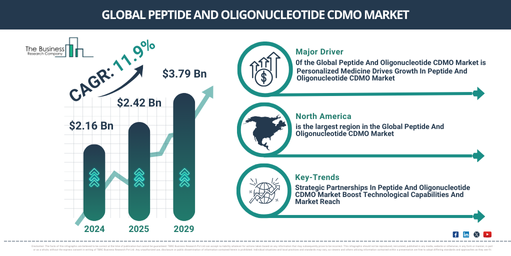
    The market for peptides and oligonucleotides cdmo has seen a swift expansion in the past few years. The market, worth $2.16 billion in 2024, is expected to soar to $2.42 billion in 2025, demonstrating a compound annual growth rate (CAGR) of 12.1%. The surge during the historical period can be linked to increased needs for therapeutic agents, progress in synthesis and manufacturing, and growing trends in personalized medicine. Additionally, regulatory guidelines, and a heightened emphasis on antiviral peptides and mRNA vaccines underscore the prominence of oligonucleotides in the development of vaccines.

    Anticipated to experience swift expansion in the years to come, the peptide and oligonucleotide CDMO market is projected to escalate to $3.79 billion by 2029, with a compound annual growth rate (CAGR) of 11.9%. This predicted upsurge during the forecast period is largely due to factors such as the rising demand for tailor-made medicines, advancements in biotechnological field, broadening applications, the escalating tendency to outsource, and an increasing prevalence of chronic illnesses. Key trends during this projected period include personalized treatment modalities, enhancement in technology, challenges in maintaining quality, global market expansions, and heightened collaborative efforts among biopharmaceutical firms.

    Download a free sample to assess the report’s scope and structure:

    https://www.thebusinessresearchcompany.com/sample.aspx?id=15892&type=smp

    What Are the Major Market Drivers Behind the Rising Adoption of Peptide And Oligonucleotide CDMO Market?

    As personalized medicine becomes more common, the peptide and oligonucleotide CDMO markets are set to experience substantial growth. Personalized medicine enables healthcare to be tailored according to individual factors, encompassing their genetics, environment, and lifestyle. The rise in popularity of this approach can be attributed to developments in genomic technology, a heightened comprehension of disease mechanisms on a molecular scale, and the call for more efficient and targeted treatment options that are adapted to suit the genetic profiles and medical backgrounds of individual patients. Crucial to this process are peptide and oligonucleotide contract development and manufacturing organizations (CDMOs), which create therapies meeting the unique needs of each patient. As an expression of this trend, in February 2024, the Personalized Medicine Coalition, a UK-based group advocating for the use of personalized medicine, reported that the FDA’s Center for Drug Evaluation and Research (CDER) had approved 16 novel personalized treatments for patients with rare diseases, a significant increase from the 6 approvals granted in 2022. This rise in personalized medicine’s use is therefore a driving factor behind the peptide and oligonucleotide CDMO market’s growth.

    Which Segments in the Peptide And Oligonucleotide CDMO Offer the Most Growth?

    The peptide and oligonucleotide cdmo market covered in this report is segmented –

    1) By Product: Peptides, Oligonucleotides

    2) By Service Type: Contract Development, Contract Manufacturing,

    3) By Application: Therapeutics, Research Applications, Diagnostics, Other Applications

    4) By End User: Biopharmaceutical Companies, Pharmaceutical Companies, Research Institutes, Academic and Government Organizations, Others End Users

    Subsegments:

    1) By Peptides: Active Pharmaceutical Ingredients (Apis), Peptide Drug Products, Peptide Synthesis And Manufacturing Services

    2) By Oligonucleotides: Antisense Oligonucleotides, Sirna And Mrna Oligonucleotides, Oligonucleotide Synthesis And Manufacturing Services

    Request customized data on this market:

    https://www.thebusinessresearchcompany.com/customise?id=15892&type=smp

    Which Areas Are Leading Regions in the Peptide And Oligonucleotide CDMO Market Expansion Across the Globe?

    North America was the largest region in the peptide and oligonucleotide CDMO market in 2023. Asia-Pacific is expected to be the fastest-growing region in the forecast period. The regions covered in the peptide and oligonucleotide cdmo market report are Asia-Pacific, Western Europe, Eastern Europe, North America, South America, Middle East and Africa.

    What Are the Most Significant Market Trends in the Peptide And Oligonucleotide CDMO Market?

    Leading firms engaged in the peptide and oligonucleotide CDMO market are concentrating on establishing strategic collaborations to augment their service portfolio, extend their technological prowess, and broaden their presence in the market. Partnerships concerning the development and manufacturing of peptides involves cooperative agreements between two companies centered around the manufacture and development of peptide-based treatments. For example, in May 2023, the American contract development and manufacturing organization (CDMO), PolyPeptide Group AG, forged a partnership with Numaferm GmbH, a biotech firm based in Germany, focusing on peptide production and development. The objective of this collaboration is to leverage PolyPeptide’s cGMP manufacturing capabilities and market penetration, in combination with Numaferm’s proficiency in environment-friendly peptide production and biochemical production platforms. The alliance aims to collaboratively investigate the evolution of suitable peptide candidates, with the intention of promoting more eco-friendly production of peptide-based APIs.

    View the full report here:

    https://www.thebusinessresearchcompany.com/report/peptide-and-oligonucleotide-cdmo-global-market-report

    What Are the Key Elements That Define the Peptide And Oligonucleotide CDMO Market?

    A peptide and oligonucleotide CDMO (contract development and manufacturing organization) refers to a company that provides services for the development, manufacturing, and supply of peptides and oligonucleotide-based therapeutics. These organizations offer expertise in synthetic chemistry, process development, analytical testing, and cGMP manufacturing to support the production of peptides and oligonucleotides for various companies.

    Purchase the full report and get a swift delivery:

    https://www.thebusinessresearchcompany.com/purchaseoptions.aspx?id=15892

    About The Business Research Company:

    With over 15000+ reports from 27 industries covering 60+ geographies, The Business Research Company has built a reputation for offering comprehensive, data-rich research and insights. Armed with 1,500,000 datasets, the optimistic contribution of in-depth secondary research, and unique insights from industry leaders, you can get the information you need to stay ahead in the game.

    Get in touch with us:

    The Business Research Company: https://www.thebusinessresearchcompany.com/

    Americas +1 3156230293

    Asia +44 2071930708

    Europe +44 2071930708

    Email us at info@tbrc.info

    Follow us on:

    LinkedIn: https://in.linkedin.com/company/the-business-research-company

    YouTube: https://www.youtube.com/channel/UC24_fI0rV8cR5DxlCpgmyFQ

    Global Market Model: https://www.thebusinessresearchcompany.com/global-market-model
  • Pediatric Supplements Market Forecast Reaching $5.64 Billion by 2029 at 7.5% CAGR

    Pediatric Supplements Market Forecast Reaching $5.64 Billion by 2029 at 7.5% CAGR

    Discover trends, market shifts, and competitive outlooks for the pediatric supplements industry through 2025-2034 with The Business Research Company’s reliable data and in-depth research

    What is the Anticipated CAGR of the Pediatric Supplements Market, and What Factors Will Drive It?

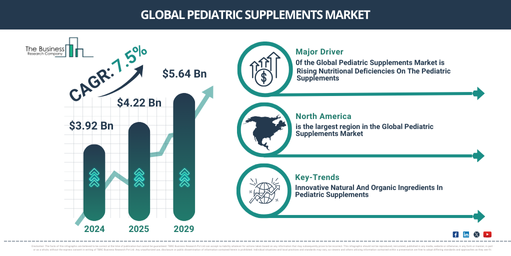
    The size of the market for pediatric supplements has experienced significant growth in the recent past. With a compound annual growth rate (CAGR) of 7.7%, it is forecasted to increase from $3.92 billion in 2024 to $4.22 billion in 2025. The catalysts for the growth during this historical period include higher rates of nutritional deficiencies in infants and children, a surge in the demand for health supplements for children, swelling consumer consciousness, greater realization of health benefits, and the expansion of e-commerce.

    In the coming years, the market size for pediatric supplements is anticipated to witness significant expansion. It is projected to escalate to $5.64 billion in 2029, with a compound annual growth rate (CAGR) of 7.5%. Factors contributing to this growth in the forecast period include the swelling demand for supplements rich in purified protein, an upswing in healthcare expenditure, rising cognizance of pediatric health, burgeoning health and wellness trends, and an expanding child population. Within the forecast period, the market is expected to be shaped by trends such as novel product formulations, heightened demand for supplements that enhance immunity, innovation in delivery methods, the use of natural and organic ingredients, and emphasis on quality control and sourcing of ingredients.

    Download a free sample to assess the report’s scope and structure:

    https://www.thebusinessresearchcompany.com/sample.aspx?id=16144&type=smp

    What Are the Core Growth Drivers Propelling the Pediatric Supplements Market Forward?

    The increase in nutritional deficiencies is predicted to drive the expansion of the pediatric supplement market. These deficiencies imply a lack of crucial nutrients required for growth, wellbeing, and overall health. The rising intake of heavily processed foods, typically low in necessary nutrients and high in non-nutritious calories, sugars, and unhealthy fats, is a considerable contributor to these deficiencies. Pediatric supplements are designed to counter nutritional deficiencies in babies and children by supplementing their diets with the essential nutrients. For example, as recorded by the United Nations International Children’s Emergency Fund (UNICEF), a US-based intergovernmental United Nations entity, in June 2023, malnutrition prevention efforts reached 356.3 million children under the age of 5 and mothers in 2022, a distinct increase from 336.4 million in 2021. Thus, the escalating rate of nutritional deficiencies stimulates the expansion of the pediatric supplement market.

    Which Key Market Segments Comprise the Pediatric Supplements Market and Drive Its Revenue Growth?

    The pediatric supplements market covered in this report is segmented –

    1) By Product Type: Vitamins, Minerals, Probiotics, Omega-3 Fatty Acids, Amino Acids, Other Product Types

    2) By Form: Gummies, Chewable, Liquids, Powders, Tablets, Other Forms

    3) By Distribution Channel: Pharmacies, Supermarkets Or Hypermarkets, Online Retailers, Specialty Stores, Other Distribution Channels

    4) By Age Group: Infants, Toddlers, Middle Childhood, Adolescents

    5) By Application: Immunity Enhancement, Brain And Cognitive Support, Bone And Teeth Support, Gastrointestinal Support, General Well-Being, Other Applications

    Subsegments:

    1) By Vitamins: Vitamin A, Vitamin B (B1, B2, B3, B6, B12, Etc.), Vitamin C, Vitamin D, Vitamin E, Vitamin K, Multivitamins

    2) By Minerals: Calcium, Iron, Magnesium, Zinc, Potassium, Selenium

    3) By Probiotics: Lactobacillus, Bifidobacterium, Streptococcus Thermophilus, Other Probiotic Strains

    4) By Omega-3 Fatty Acids: DHA (Docosahexaenoic Acid), EPA (Eicosapentaenoic Acid), ALA (Alpha-Linolenic Acid)

    5) By Amino Acids: L-Arginine, L-Carnitine, L-Glutamine, L-Leucine, L-Isoleucine, L-Valine

    6) By Other Product Types: Herbal Supplements, Protein Supplements, Fiber Supplements, Enzyme Supplements

    Request customized data on this market:

    https://www.thebusinessresearchcompany.com/customise?id=16144&type=smp

    Which Geographic Areas Hold the Strongest Growth Potential in the Pediatric Supplements Market?

    North America was the largest region in the pediatric supplements market in 2024. Asia-Pacific is expected to be the fastest-growing region in the forecast period. The regions covered in the pediatric supplements market report are Asia-Pacific, Western Europe, Eastern Europe, North America, South America, Middle East, Africa.

    Which Cutting-Edge Market Trends Are Expected to Drive the Pediatric Supplements Market’s Growth?

    Leading companies in the pediatric supplement sector are concentrating their efforts on creating natural and organic ingredient-based products for kids, such as vitamin D and probiotic drops. This move is a response to the growing demand for healthier alternatives. Supplements like Vitamin D and probiotic drops are formulated to provide infants and young children with vital nutrients essential for their growth and development. For example, in February 2024, a renowned US pediatric nutrition enterprise, Bobbie, debuted their first non-formula products composed of organic vitamin D and probiotic drops. Bobbie’s Organic Vitamin D Drops ensures 100% of the daily vitamin D (400 IU) requirement for infants aged 0-12 months through a simple 3-drop dosage. Crafted with certified organic, non-GMO ingredients, they are a perfect fit for breastfed and mixed-fed infants aiming to promote robust bone health, teeth development, immune function, and facilitate calcium intake. These latest supplements aim to tackle prevalent pediatric deficiencies and cater to the distinct nutritional demands of infants and toddlers. The Organic probiotic drops present a mix of clinically backed probiotic strains that are effective in easing colic in infants.

    View the full report here:

    https://www.thebusinessresearchcompany.com/report/pediatric-supplements-global-market-report

    How Is the Pediatric Supplements Market Conceptually Defined?

    Pediatric supplements are specially formulated products designed to provide essential vitamins, minerals, and nutrients to infants, children, and adolescents. These supplements cater to the specific nutritional needs of growing bodies during different stages of childhood development. Pediatric supplements are dietary supplements intended to supplement the diet of children and adolescents up to age 18.

    Purchase the full report and get a swift delivery:

    https://www.thebusinessresearchcompany.com/purchaseoptions.aspx?id=16144

    About The Business Research Company:

    With over 15000+ reports from 27 industries covering 60+ geographies, The Business Research Company has built a reputation for offering comprehensive, data-rich research and insights. Armed with 1,500,000 datasets, the optimistic contribution of in-depth secondary research, and unique insights from industry leaders, you can get the information you need to stay ahead in the game.

    Get in touch with us:

    The Business Research Company: https://www.thebusinessresearchcompany.com/

    Americas +1 3156230293

    Asia +44 2071930708

    Europe +44 2071930708

    Email us at info@tbrc.info

    Follow us on:

    LinkedIn: https://in.linkedin.com/company/the-business-research-company

    YouTube: https://www.youtube.com/channel/UC24_fI0rV8cR5DxlCpgmyFQ

    Global Market Model: https://www.thebusinessresearchcompany.com/global-market-model
  • Peanut Allergy Treatment Market in Focus: Forecasting Growth Drivers, Scaling Potential, and Global Opportunities

    Peanut Allergy Treatment Market in Focus: Forecasting Growth Drivers, Scaling Potential, and Global Opportunities

    Discover trends, market shifts, and competitive outlooks for the peanut allergy treatment industry through 2025-2034 with The Business Research Company’s reliable data and in-depth research

    What Are the Key Projections for the CAGR of the Peanut Allergy Treatment Market Size From 2025 to 2034?

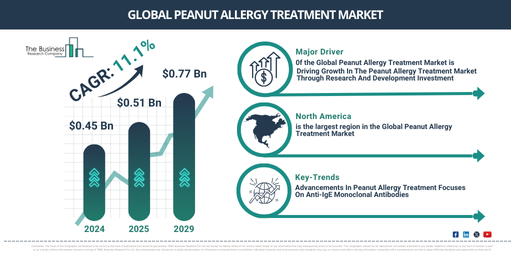
    The market for treating peanut allergies has seen a significant expansion in the recent past. The market which was valued at $0.45 billion in 2024, is forecasted to rise to $0.51 billion in 2025, with a compound annual growth rate (CAGR) of 11.4%. This growth in the previous years was driven by several factors like a surge in the incidence of the allergy, improvements in testing methods, increased public understanding and anxiety, the creation of early response strategies, and regulatory permissions for treatments of peanut allergies.

    The market for treatment of peanut allergies is anticipated to witness a significant surge in the coming years, potentially reaching $0.77 billion by 2029, with a compound annual growth rate (CAGR) of 11.1%. This growth is largely ascribed to the increasing prevalence of the condition, the rise of personalized medicine, the emergence of innovative immunotherapy treatments, boosted private and public funding, as well as the advancement of telemedicine. The prediction period is characterized by distinct trends such as the growing acceptance of immunotherapy, evolution in biologic therapies, usage of probiotics in treatments, breakthroughs in delivery system technology, personalized medical strategies, and regulatory ratifications and backing.

    Download a free sample to assess the report’s scope and structure:

    https://www.thebusinessresearchcompany.com/sample.aspx?id=15888&type=smp

    Which Primay Drivers Are Accelerating Growth in the Peanut Allergy Treatment Market?

    Investments dedicated to Research and Development (R&D) in allergy remediation are anticipated to spur the expansion of the peanut allergy treatment market. R&D investment pertains to the financial contribution made by corporations, organizations, or governments to facilitate activities that promote innovation, product growth, and technology advancement, and it is integral to progressing peanut allergy treatments. This financial commitment encourages the development of pioneering desensitization methods and immunotherapies, with the goal to diminish allergic reactions and enhance the life quality of individuals living with peanut allergies. For example, the Victorian Government revealed a strategic investment of $12 million in Aravax, a clinical-stage biotech firm based in Australia, in January 2024 to considerably progress global peanut allergy treatment. This investment is a part of a wider $66 million round focusing on the development of Aravax’s ground-breaking immunotherapy, PVX108. Both the U.S. Food and Drug Administration (FDA) and Australia’s Therapeutic Goods Administration (TGA) have granted this initiative Phase 2 trial approvals, emphasizing its potential influence on global public health. Hence, R&D investment in allergy treatments is propelling the growth of the peanut allergy treatment market.

    How Is the Peanut Allergy Treatment Market Segmented?

    The peanut allergy treatment market covered in this report is segmented –

    1) By Drug Class: Antihistamines, Immunotherapies, Epinephrine, Other Drug Classes

    2) By Route Of Administration: Injectable, Oral, Other Routes Of Administration

    3) By Distribution Channel: Retail Pharmacy, Hospital Pharmacy, Other Distribution Channels

    Subsegments:

    1) By Antihistamines: Oral Antihistamines, Topical Antihistamines

    2) By Immunotherapies: Oral Immunotherapy (OIT), Sublingual Immunotherapy (SLIT), Epicutaneous Immunotherapy (EPIT)

    3) By Epinephrine: Epinephrine Auto-Injectors, Epinephrine Inhalers

    4) By Other Drug Classes: Leukotriene Receptor Antagonists, Monoclonal Antibodies, Corticosteroids

    Request customized data on this market:

    https://www.thebusinessresearchcompany.com/customise?id=15888&type=smp

    Which Regions Are Key Players in the Growth of the Peanut Allergy Treatment Market?

    North America was the largest region in the peanut allergy treatment market in 2023. Asia-Pacific is expected to be the fastest-growing region in the forecast period. The regions covered in the peanut allergy treatment market report are Asia-Pacific, Western Europe, Eastern Europe, North America, South America, Middle East and Africa.

    Which Technological Trends Are Reshaping the Peanut Allergy Treatment Industry Dynamics?

    Prominent enterprises in the peanut allergy treatment market are concentrating on bioscience related therapeutic developments, specifically anti-IgE monoclonal antibodies, to provide more efficient and targeted solutions for peanut allergy control. Their ultimate goal is to enhance the patient’s overall well-being and life quality. Anti-IgE monoclonal antibodies are specially crafted therapeutic agents used to neutralize specific antibodies, termed immunoglobulin E, in the human body. For example, Novartis Pharmaceuticals Corporation, originating from Switzerland, was granted approval for Xolair (omalizumab) by the FDA in February 2024. This drug aims to reduce allergic responses, such as anaphylaxis in patients aged 1 or older suffering from IgE-mediated food allergies. The approval was based on the results of the Phase III OUtMATCH study funded by NIH, which demonstrated significant enhancement in food allergy resistance in Xolair-treated patients as opposed to those who received a placebo.

    View the full report here:

    https://www.thebusinessresearchcompany.com/report/peanut-allergy-treatment-global-market-report

    How Is the Peanut Allergy Treatment Market Defined and What Are Its Core Parameters?

    Peanut allergy treatment refers to various medical approaches designed to manage and reduce the severity of allergic reactions to peanuts. These treatments involve various approaches, such as epicutaneous immunotherapy and biologic therapies aimed at desensitizing individuals to peanuts and mitigating allergic reactions.

    Purchase the full report and get a swift delivery:

    https://www.thebusinessresearchcompany.com/purchaseoptions.aspx?id=15888

    About The Business Research Company:

    With over 15000+ reports from 27 industries covering 60+ geographies, The Business Research Company has built a reputation for offering comprehensive, data-rich research and insights. Armed with 1,500,000 datasets, the optimistic contribution of in-depth secondary research, and unique insights from industry leaders, you can get the information you need to stay ahead in the game.

    Get in touch with us:

    The Business Research Company: https://www.thebusinessresearchcompany.com/

    Americas +1 3156230293

    Asia +44 2071930708

    Europe +44 2071930708

    Email us at info@tbrc.info

    Follow us on:

    LinkedIn: https://in.linkedin.com/company/the-business-research-company

    YouTube: https://www.youtube.com/channel/UC24_fI0rV8cR5DxlCpgmyFQ

    Global Market Model: https://www.thebusinessresearchcompany.com/global-market-model
  • Key Factors Fueling the Growth of the Nutritional Serum Market in 2025: Growing Focus on Personal Care and Beauty Propels Nutritional Serum Market Growth

    Key Factors Fueling the Growth of the Nutritional Serum Market in 2025: Growing Focus on Personal Care and Beauty Propels Nutritional Serum Market Growth

    Discover trends, market shifts, and competitive outlooks for the nutritional serum industry through 2025-2034 with The Business Research Company’s reliable data and in-depth research

    How Has The Nutritional Serum Market Size Shifted, And What Is the Outlook Through 2034?

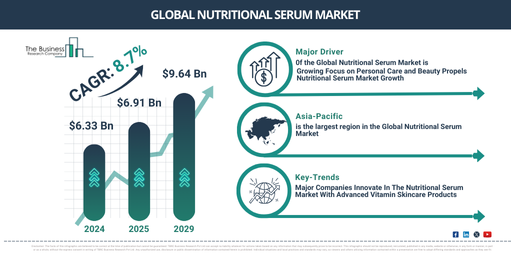
    The market for nutritional serum has seen robust growth in the past few years. It is projected to rise from $6.33 billion in 2024 to $6.91 billion in 2025, with a compound annual growth rate (CAGR) of 9.1%. Factors such as the growing elderly population, heightened health and wellness consciousness, the widening sports and fitness industry, rising comfort in serum usage, and the burgeoning popularity of clean beauty products contributed to this historical growth.

    The market size of nutritional serums is forecasted to witness significant development in the upcoming years, ascending to a value of $9.64 billion in 2029 with a compound annual growth rate of 8.7%. This anticipated progression during the estimated period can be associated with the escalating inclinations towards organic and natural elements, preventive healthcare measures, proliferation of vegan and vegetarian lifestyles, expansion of corporate wellness initiatives, and emphasis on immune health. Some of the emerging trends during this projection period encompass the embrace of eco-friendly packaging approaches, the creation of innovative nutritional serums compatible with wearable health tech gadgets, advancements in formulation methods, the adoption of subscription-driven models, and the evolution in the realm of hybrid nutritional products.

    Download a free sample to assess the report’s scope and structure:

    https://www.thebusinessresearchcompany.com/sample.aspx?id=18791&type=smp

    What Are the Primary Drivers Supporting the Market Growth of the Nutritional Serum Market?

    The increased emphasis on personal hygiene and attractiveness is projected to drive the expansion of the nutritional serum market. Personal hygiene and attractiveness involve the use of products and practices designed to improve and sustain a person’s physical appearance and cleanliness. This focus is propelled by consumers’ demand for self-care, grooming, and beauty enhancement goods and services. Nutritional serums, which deliver a concentrated blend of nutrients, vitamins, and antioxidants directly to the skin, play a crucial role in the personal hygiene and beauty industry. They augment skin hydration, texture, and luminosity, and address issues like dullness, aging, and uneven skin tone. In October 2023, for example, the US Bureau of Labor Statistics noted a substantial rise from 19.3% in 2021 to 20.3% in 2022 in the consumption of personal care products and services. Consequently, the heightened emphasis on personal hygiene and attractiveness is fuelling the nutritional serum market’s growth.

    How Is the Nutritional Serum Market Segmented?

    The nutritional serum market covered in this report is segmented –

    1) By Type: Vitamin Serums, Antioxidant Serums, Hydrating Serums, Exfoliating Serums, Anti-Aging Serums, Brightening Serums, Anti-Acne Serums, Oil Control Serums, Skin-Tightening Serums, Other Types

    2) By Skin Type: Dry Skin, Oily Skin, Normal Skin, Sensitive Skin

    3) By Price: Low, Medium, High

    4) By Distribution Channel: Online, Offline

    5) By End Use: Men, Women

    Subsegments:

    1) By Vitamin Serums: Vitamin C Serums, Vitamin E Serums, Vitamin A (Retinol) Serums, Vitamin B Complex Serums, Other Vitamin-Infused Serums

    2) By Antioxidant Serums: Green Tea Extract Serums, Niacinamide Serums, Resveratrol Serums, Coenzyme Q10 Serums, Other Antioxidant-Infused Serums

    3) By Hydrating Serums: Hyaluronic Acid Serums, Glycerin-Based Serums, Aloe Vera Serums, Other Moisturizing Serums

    4) By Exfoliating Serums: Alpha Hydroxy Acid (AHA) Serums, Beta Hydroxy Acid (BHA) Serums, Enzyme-Based Serums, Other Exfoliating Serums

    5) By Anti-Aging Serums: Peptide-Based Serums, Retinol Or Retinoid Serums, Collagen-Boosting Serums, Other Anti-Aging Formulations

    6) By Brightening Serums: Vitamin C-Based Serums, Niacinamide Serums, Licorice Extract Serums, Arbutin Serums, Other Brightening Serums

    7) By Anti-Acne Serums: Salicylic Acid Serums, Benzoyl Peroxide Serums, Tea Tree Oil Serums, Sulfur-Based Serums, Other Acne-Fighting Serums

    8) By Oil Control Serums: Salicylic Acid Oil Control Serums, Niacinamide Oil Control Serums, Clay-Based Serums, Other Oil Regulation Serums

    9) By Skin-Tightening Serums: Collagen-Boosting Serums, Elastin-Enhancing Serums, Firming Peptide Serums, Other Skin Tightening Formulas

    10) By Other Types: Custom Formulated Serums, Multi-Function Serums, Specialized Serums For Sensitive Skin

    Request customized data on this market:

    https://www.thebusinessresearchcompany.com/customise?id=18791&type=smp

    Which Regions Are Key Players in the Growth of the Nutritional Serum Market?

    Asia-Pacific was the largest region in the nutritional serum market in 2024. The regions covered in the nutritional serum market report are Asia-Pacific, Western Europe, Eastern Europe, North America, South America, Middle East, Africa.

    What Are the Most Significant Market Trends in the Nutritional Serum Market?

    Leading businesses within the nutritional serum market are prioritizing the creation of unique skincare products such as Vitamin serums to cater to the escalating demand for specialized skincare solutions. Vitamin serums are skincare items that comprise high levels of vitamins such as Vitamin C, E, or A and are aimed at addressing specific skin concerns such as brightening, aging, and hydration. For instance, Galderma S.A., a pharmaceutical firm based in Switzerland, introduced its Cetaphil Vitamin C Serum and Cetaphil Ceramide Serum to the market in July 2024. The Vitamin C Serum from Cetaphil comprises 3-O-ethyl ascorbic acid, which provides antioxidant protection and reduces dark spots. In contrast, the Ceramide Serum contains ceramides, Centella Asiatica, and allantoin, which act to repair and strengthen the skin’s defense mechanisms, facilitating 48-hour hydration and a refined skin texture.

    View the full report here:

    https://www.thebusinessresearchcompany.com/report/nutritional-serum-global-market-report

    How Is the Nutritional Serum Market Defined and What Are Its Core Parameters?

    Nutritional serum is a specialized liquid formulation rich in essential nutrients, vitamins, minerals, and other beneficial compounds designed to support and enhance overall health and well-being. It addresses deficiencies, improves nutritional status, and supports recovery in patients who cannot obtain adequate nutrition through oral intake.

    Purchase the full report and get a swift delivery:

    https://www.thebusinessresearchcompany.com/purchaseoptions.aspx?id=18791

    About The Business Research Company:

    With over 15000+ reports from 27 industries covering 60+ geographies, The Business Research Company has built a reputation for offering comprehensive, data-rich research and insights. Armed with 1,500,000 datasets, the optimistic contribution of in-depth secondary research, and unique insights from industry leaders, you can get the information you need to stay ahead in the game.

    Get in touch with us:

    The Business Research Company: https://www.thebusinessresearchcompany.com/

    Americas +1 3156230293

    Asia +44 2071930708

    Europe +44 2071930708

    Email us at info@tbrc.info

    Follow us on:

    LinkedIn: https://in.linkedin.com/company/the-business-research-company

    YouTube: https://www.youtube.com/channel/UC24_fI0rV8cR5DxlCpgmyFQ

    Global Market Model: https://www.thebusinessresearchcompany.com/global-market-model
  • Major Trends and Emerging Patterns in the Nuclear Medicine Radioisotopes Market: Technological Advancement To Drive Innovation In The Nuclear Medicine Radioisotopes

    Major Trends and Emerging Patterns in the Nuclear Medicine Radioisotopes Market: Technological Advancement To Drive Innovation In The Nuclear Medicine Radioisotopes

    Discover trends, market shifts, and competitive outlooks for the nuclear medicine radioisotopes industry through 2025-2034 with The Business Research Company’s reliable data and in-depth research

    #How Has the Nuclear Medicine Radioisotopes Market Growth Performance Trended Historically, And What Lies Ahead?3

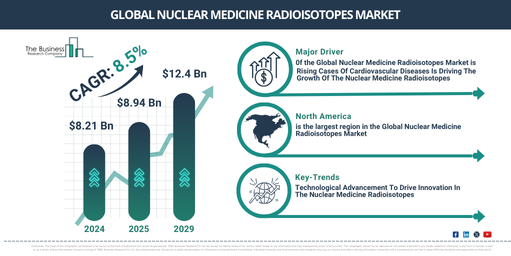
    Over the recent years, the market size for nuclear medicine radioisotopes has experienced substantial growth. The market is projected to expand from $8.21 billion in 2024 to $8.94 billion in 2025, with a compound annual growth rate (CAGR) of 8.9%. Main reasons behind the historical growth are the discovery of radioactivity, the rise of nuclear medicine, its therapeutic applications, clinical research, and patient demand.

    There is a forecast of substantial escalation in the market size for nuclear medicine radioisotopes in the coming years, with a predicted increase to $12.4 billion by 2029, growing at a compound annual growth rate (CAGR) of 8.5%. This positive growth prospect during the prediction period is seen to be driven by factors such as an increase in healthcare expenditure, enhancement of healthcare structures, a rising consciousness about environmental sustainability, educational initiatives, awareness drives and a surge in medical tourism. Noteworthy trends for the forecast period encompass the creation of novel radioisotopes, advancements in production and supply chain, the introduction of microfluidics and lab-on-a-chip technology, the application of artificial intelligence in the development of radiopharmaceuticals, and the use of nanotechnology.

    Download a free sample to assess the report’s scope and structure:

    https://www.thebusinessresearchcompany.com/sample.aspx?id=16132&type=smp

    How Are Key Drivers in the Industry Acting as Catalysts for the Growth of the Nuclear Medicine Radioisotopes Market?

    The nuclear medicine radioisotope market is anticipated to expand due to the increasing incidence of cardiovascular diseases. These diseases, which impact the heart and blood vessels, are growing due to factors such as sedentary lifestyles, poor diet, rising obesity rates, and ageing populations. Nuclear medicine radioisotopes play a crucial role in the diagnosis, assessment, and management of cardiovascular diseases by providing detailed information on cardiac function, blood flow, and tissue health, critical for accurate diagnosis and efficient treatment planning. For example, data released by the British Heart Foundation in September 2024 revealed that around 7.6 million people in the UK, including 4 million men and 3.6 million women, are living with heart and circulatory diseases. These diseases account for roughly 27% of all deaths in the UK, representing over 170,000 deaths each year – equivalent to nearly 480 daily deaths or one death every three minutes. Therefore, the escalating incidence of cardiovascular diseases is fuelling the growth of the nuclear medicine radioisotope market.

    Which Primary Segments of the Nuclear Medicine Radioisotopes Market Are Driving Growth and Industry Transformations?

    The nuclear medicine radioisotopes market covered in this report is segmented –

    1) By Type: Technetium-99m (Tc-99m), Thallium-201 (Tl-201), Iodine (I-123), Fluorine-18, Rubidium-82 (Rb-82), Iodine-131 (I-131), Lutetium-177 (Lu-177), Radium-223 (Ra-223) And Alpharadin, Other Types

    2) By Application: Oncology, Cardiology, Thyroid, Neurology, Other Applications

    3) By End-User: Hospitals, Diagnostic Centers, Specialty Clinics, Education And Research Institutes, Other End-Users

    Subsegments:

    1) By Technetium-99m (Tc-99m): Sodium Pertechnetate Tc-99m, Tc-99m MDP (Methylene Diphosphonate), Tc-99m HMPAO (Hexamethylpropyleneamine oxime)

    2) By Thallium-201 (Tl-201): Thallous Chloride Tl-201, Thallium-201 for Cardiac Imaging

    3) By Iodine-123 (I-123): Iodine-123 Sodium Iodide, Iodine-123 Ioflupane (DaTscan)

    4) By Fluorine-18: FDG (Fluorodeoxyglucose) F-18, Fluoride-18 For Bone Imaging

    5) By Rubidium-82 (Rb-82): Rb-82 For PET (Positron Emission Tomography) Imaging, Rb-82 For Cardiac Imaging

    6) By Iodine-131 (I-131): I-131 Sodium Iodide, I-131 For Thyroid Cancer Treatment, I-131 For Hyperthyroidism Treatment

    7) By Lutetium-177 (Lu-177): Lu-177-DOTATATE, Lu-177 For Prostate Cancer Treatment

    8) By Radium-223 (Ra-223): Ra-223 Dichloride (Xofigo)

    9) By Alpharadin (Radium-223 Alpha Emitters): Alpharadin For Bone Metastasis Treatment

    10) By Other Types: Ac-225 For Targeted Alpha Therapy (TAT), Ac-225 For Cancer Treatment, Gallium-68 (Ga-68), Copper-64 (Cu-64), Yttrium-90 (Y-90)

    Request customized data on this market:

    https://www.thebusinessresearchcompany.com/customise?id=16132&type=smp

    What Are the Fastest-Growing Geographies in the Nuclear Medicine Radioisotopes Market?

    North America was the largest region in the nuclear medicine radioisotopes market in 2023. Asia-Pacific is expected to be the fastest-growing region in the forecast period. The regions covered in the nuclear medicine radioisotopes market report are Asia-Pacific, Western Europe, Eastern Europe, North America, South America, Middle East, Africa.

    What Are the Current Market Growth and Trends in the Nuclear Medicine Radioisotopes Industry?

    Leading organizations in the nuclear medicine radioisotopes market are honing their focus on pioneering novel products like compact low-energy cyclotrons to enhance the manufacture and access to radioisotopes. This will ultimately make diagnostic and therapeutic interventions more efficient and easily accessible. The compact, low-energy cyclotron is a miniaturized particle accelerator that aids in creating radioisotopes utilized in medical imaging and nuclear medicine treatments. For instance, IBA, a Belgium-based company specializing in radiopharmaceutical production solutions, unveiled the Cyclone Key in January 2022, a newly designed accelerator facilitating broader access to diagnostic tools and paving the way for onsite radiopharmaceutical production. This cutting-edge model boasts of features including a sleek, efficient design, completely automated functions, multi-isotope production abilities, user-friendly installation and operation, water cooling, self-shielding, and high performance, that underscore its versatility and dependability.

    View the full report here:

    https://www.thebusinessresearchcompany.com/report/nuclear-medicine-radioisotopes-global-market-report

    What Parameters Are Used to Define the Nuclear Medicine Radioisotopes Market?

    Nuclear medicine radioisotopes are radioactive isotopes used in nuclear medicine to diagnose, treat, and research various medical conditions. These isotopes emit radiation detected and imaged by specialized equipment or deliver therapeutic doses of radiation to targeted tissues. Nuclear medicine radioisotopes are essential in modern medical diagnostics and treatments, providing critical information and therapeutic options that improve patient outcomes.

    Purchase the full report and get a swift delivery:

    https://www.thebusinessresearchcompany.com/purchaseoptions.aspx?id=16132

    About The Business Research Company:

    With over 15000+ reports from 27 industries covering 60+ geographies, The Business Research Company has built a reputation for offering comprehensive, data-rich research and insights. Armed with 1,500,000 datasets, the optimistic contribution of in-depth secondary research, and unique insights from industry leaders, you can get the information you need to stay ahead in the game.

    Get in touch with us:

    The Business Research Company: https://www.thebusinessresearchcompany.com/

    Americas +1 3156230293

    Asia +44 2071930708

    Europe +44 2071930708

    Email us at info@tbrc.info

    Follow us on:

    LinkedIn: https://in.linkedin.com/company/the-business-research-company

    YouTube: https://www.youtube.com/channel/UC24_fI0rV8cR5DxlCpgmyFQ

    Global Market Model: https://www.thebusinessresearchcompany.com/global-market-model