Category: Pharmaceuticals

  • Key Factors Fueling the Growth of the Myelodysplastic Syndrome Drugs Market in 2025: Rising MDS Cases Fuel Growth In Myelodysplastic Syndrome Drug Market

    Key Factors Fueling the Growth of the Myelodysplastic Syndrome Drugs Market in 2025: Rising MDS Cases Fuel Growth In Myelodysplastic Syndrome Drug Market

    Discover trends, market shifts, and competitive outlooks for the myelodysplastic syndrome drugs industry through 2025-2034 with The Business Research Company’s reliable data and in-depth research

    What Are the Key Milestones in the Myelodysplastic Syndrome Drugs Market’s Growth Trajectory From 2025 To 2034?

    Recent years have seen robust growth in the myelodysplastic syndrome drugs market size. Projected to rise from $2.25 billion in 2024 to $2.47 billion in 2025, it’s expected to experience a compound annual growth rate (CAGR) of 9.8%. Elements such as an aging demographic, advances in diagnostic procedures, cases of MDS related to chemotherapy, a rise in cancer survivors, as well as ongoing clinical research and pharmaceutical advancements have all contributed to this growth seen in the historic period.

    The market for drugs treating myelodysplastic syndrome is predicted to experience significant expansion in the near future, reaching a valuation of $3.58 billion in 2029, with a Compound Annual Growth Rate (CAGR) of 9.7%. Factors contributing to growth in this timeframe include an aging population, advancements in specialized treatments, enhanced comprehension of disease mechanisms, increased levels of awareness and early diagnosis, as well as oncology research expansion. Notable anticipated trends within this period include the optimization of erythropoiesis-stimulating agents, combination therapies, an elevated emphasis on iron chelation therapy, gaining regulatory approvals and market access, as well as adopting patient-centric care models.

    Download a free sample to assess the report’s scope and structure:

    https://www.thebusinessresearchcompany.com/sample.aspx?id=10675&type=smp

    What are the Fundamental Drivers and Innovations Shaping the Myelodysplastic Syndrome Drugs Market?

    The burgeoning occurrence of myelodysplastic syndrome is anticipated to spur the expansion of the myelodysplastic syndrome drug market in the upcoming years. Myelodysplastic syndrome (MDS) entails a collection of disorders marked by the irregular growth and maturing of blood cells in the bone marrow. This blood cancer type primarily impedes the generation of healthy blood cells. Drugs for myelodysplastic syndrome are utilized in treatment, involving medicines that suppress or regulate the immune system, thus reducing the need for red blood cell transfusions. For example, in October 2022, the American Journal of Managed Care, a US-based publication, estimated the prevalence of myelodysplastic syndrome in the USA to be between 60,000 and 175,000 cases. Hence, the escalating incidences of myelodysplastic syndrome are fueling the development of the myelodysplastic syndrome drug market.

    How Is the Myelodysplastic Syndrome Drugs Market Segmented?

    The myelodysplastic syndrome drugs market covered in this report is segmented –

    1) By Therapeutic Class: Immunomodulatory Drugs, Hypomethylating Agents, Anti-anemics

    2) By Type of Syndrome: Refractory Cytopenia With Multilineage Dysplasia, Refractory Anemia, Refractory Anemia With Excess Blasts, Refractory Anemia With Ringed Sideroblasts

    3) By Route of Administration: Oral, Parenteral

    4) By Applications: Original, Generics

    5) By End-User: Hospitals, Clinics, Ambulatory Surgical Centers

    Subsegments:

    1) By Immunomodulatory Drugs: Thalidomide, Lenalidomide, Pomalidomide

    2) By Hypomethylating Agents: Azacitidine, Decitabine, Guadecitabine

    3) By Anti-anemics: Erythropoiesis-Stimulating Agents (ESAs), Iron Supplements, Blood Transfusion Products

    Request customized data on this market:

    https://www.thebusinessresearchcompany.com/customise?id=10675&type=smp

    Which Regions Are Driving the Next Phase of the Myelodysplastic Syndrome Drugs Market Growth?

    North America was the largest region in the Myelodysplastic syndrome drugs market in 2024.Asia-Pacific is expected to be the fastest growing region in the global myelodysplastic syndrome drugs market report during the forecast period. The regions covered in the myelodysplastic syndrome drugs market report are Asia-Pacific, Western Europe, Eastern Europe, North America, South America, Middle East, Africa.

    What Key Trends Are Shaping the Future of the Myelodysplastic Syndrome Drugs Market?

    In an effort to inhibit the enzyme telomerase and taper off the advancement of uncontrolled cell division, leading businesses in the myelodysplastic syndrome drugs market are progressing on the development of telomerase inhibitors. These inhibitors prove beneficial in the realm of myelodysplastic syndrome drugs as they help to limit the growth of abnormal cells, which in turn could elevate patient results. For example, Geron Corporation, an American biotech firm, rolled out rytelo (imetelstat), an intravenous telomerase inhibitor greenlit by the FDA in June 2024, for adults suffering from low to intermediate-1 risk myelodysplastic syndromes (LR-MDS) and transfusion-dependent anemia lacking response or eligibility for ESA. Rytelo provides transfusion independence that lasts, raises hemoglobin levels, and meets an existing void in the myelodysplastic syndrome drugs market while maintaining a manageable safety report.

    View the full report here:

    https://www.thebusinessresearchcompany.com/report/myelodysplastic-syndrome-drugs-global-market-report

    How Is the Myelodysplastic Syndrome Drugs Market Defined and What Are Its Core Parameters?

    Myelodysplastic syndrome (MDS) is a diverse set of illnesses in which the bone marrow fails to create enough healthy blood cells (red blood cells, white blood cells, and platelets) due to aberrant cell formation and maturation. This condition is caused by uncontrolled cell growth and division that damages tissue. Myelodysplastic syndrome drugs include epoetin alfa, darbepoetin alfa, filgrastim, and other MDS drugs.

    Purchase the full report and get a swift delivery:

    https://www.thebusinessresearchcompany.com/purchaseoptions.aspx?id=10675

    About The Business Research Company:

    With over 15000+ reports from 27 industries covering 60+ geographies, The Business Research Company has built a reputation for offering comprehensive, data-rich research and insights. Armed with 1,500,000 datasets, the optimistic contribution of in-depth secondary research, and unique insights from industry leaders, you can get the information you need to stay ahead in the game.

    Get in touch with us:

    The Business Research Company: https://www.thebusinessresearchcompany.com/

    Americas +1 3156230293

    Asia +44 2071930708

    Europe +44 2071930708

    Email us at info@tbrc.info

    Follow us on:

    LinkedIn: https://in.linkedin.com/company/the-business-research-company

    YouTube: https://www.youtube.com/channel/UC24_fI0rV8cR5DxlCpgmyFQ

    Global Market Model: https://www.thebusinessresearchcompany.com/global-market-model

  • Emerging Trends Redefining the Mouthwash Market Landscape: Cambrian Biopharma And Novartis Strategic Alliances Advance MTOR Inhibitors Research

    Emerging Trends Redefining the Mouthwash Market Landscape: Cambrian Biopharma And Novartis Strategic Alliances Advance MTOR Inhibitors Research

    Discover trends, market shifts, and competitive outlooks for the mtor inhibitors industry through 2025-2034 with The Business Research Company’s reliable data and in-depth research

    How Fast Is The mTOR Inhibitors Market Expected to Grow Between 2025 And 2029?

    The market size for mTOR inhibitors has significantly expanded in the recent past. The projection is to escalate from $7.43 billion in 2024 to $7.81 billion in 2025, with a compound annual growth rate (CAGR) of 5.2%. The historical growth is due to factors such as advancements in oncology treatment, renal cell carcinoma treatment, transplantation medicine, clinical research, drug development, and immunosuppressive applications.

    Anticipations for robust expansion are present for the mTOR inhibitors market, with predictions suggesting it will swell to $9.9 billion by 2029, boasting a compound annual growth rate (CAGR) of 6.1%. The surge during the forecasting period can be credited to a growing presence of oncology indications, strides in precision medicine, increasing transplant cases, management of chronic disease, and a mounting elderly population. Dominant shifts in the same timeframe comprise exploring the neuroprotective effects, employing it in transplant medicine, escalating curiosity in metabolic disorders, collaborations in drug research, and worldwide health schemes for uncommon illnesses.

    Download a free sample to assess the report’s scope and structure:

    https://www.thebusinessresearchcompany.com/sample.aspx?id=10860&type=smp

    What Are the Core Market Drivers Propelling Growth in the mTOR Inhibitors Industry?

    The mTOR inhibitors market is projected to expand due to an increase in kidney diseases globally. Kidney disease, a condition leading to a slow breakdown and eventual loss of organ function, requires the use of mTOR inhibitors for treatment. Sirolimus and everolimus, types of mTOR inhibitors, are extensively used in immunosuppressive therapies to avoid renal allograft rejection. With the surge in kidney diseases worldwide, the need for mTOR inhibitors has subsequently intensified. For example, as per the International Society of Nephrology, a professional association based in the US, in April 2022, around 843.6 million individuals globally are living with stage 1 to 5 kidney disease. Chronic renal disease, a steadily progressing illness, affects over 800 million people or 10% of the global population. Consequently, the escalating prevalence of kidney diseases is anticipated to bolster the growth of the mTOR inhibitors market.

    How Is the mTOR Inhibitors Market Segmented?

    The mTOR inhibitors market covered in this report is segmented –

    1) By Product Type: Rapamune, Afinitor, Torisel, Zortress, Other Product Types

    2) By Indication: Oncology, Immunosuppressant, Organ Transplantation, Other Indications

    3) By Route of Administration: Oral, Intravenous

    4) By Application: Tumor Treatment, Kidney Transplant, Other Applications

    5) By Distribution Channel: Hospital Pharmacies, Retail Pharmacies, Online Pharmacies

    Subsegments:

    1) By Rapamune: Dosage Forms, Indications

    2) By Afinitor: Dosage Forms, Indications

    3) By Torisel: Dosage Forms, Indications

    4) By Zortress: Dosage Forms, Indications

    5) By Other Product Types: Experimental MTOR Inhibitors, Generic Versions of MTOR Inhibitors, Combination Therapies with MTOR Inhibitors

    Request customized data on this market:

    https://www.thebusinessresearchcompany.com/customise?id=10860&type=smp

    Which Regions Are Driving the Next Phase of the mTOR Inhibitors Market Growth?

    North America was the largest region in the mTOR inhibitors market in 2024.Asia-Pacific is expected to be the fastest-growing region in the forecast period. The regions covered in the mTOR inhibitors market report are Asia-Pacific, Western Europe, Eastern Europe, North America, South America, Middle East, Africa.

    What Key Market Trends and Innovations Are Shaping the Future of the mTOR Inhibitors Industry?

    One of the emerging trends in the mTOR inhibitors market is the rising partnerships and collaborations. Businesses are joining forces to gain an upper hand in the mTOR inhibitors market. A case in point, in October 2022, Mirati Therapeutics, Inc., an American clinical-stage targeted oncology company, established a partnership with Aadi Bioscience, Inc. for an unrevealed sum. The objective of this alliance is to capitalize on the combined efficacy of two drugs to potentially expand benefits for patients with KRAS G12C mutant NSCLC and other cancer variants. Aadi Bioscience, Inc. is a US commercial stage biopharmaceutical enterprise which is committed to formulating precision therapies for genetically defined cancers, aiming to offer treatment solutions to cancer patients with mTOR pathway driver alterations. Furthermore, in February 2022, Cambrian Biopharma, an American longevity biotech firm with multiple assets, entered into a licensing deal with Novartis for an unrevealed sum. The goal of this licensing deal is to advance a group of innovative and specific compounds, crafted and characterized by Novartis to target the mTOR pathway. Novartis is a Switzerland-based healthcare company that specializes in research, development, production and marketing of healthcare products, concentrating in fields such as oncology and other rare disorders.

    View the full report here:

    https://www.thebusinessresearchcompany.com/report/mtor-inhibitors-global-market-report

    How Is the mTOR Inhibitors Market Defined and What Are Its Core Parameters?

    mTOR inhibitors refer to a class of drugs that inhibits the mTOR (mammalian/mechanistic target of rapamycin) protein, which aids in regulating cell division. The activity of mTOR is to stop the proliferation of cancer cells and prevent the development of new cells required for tumor growth.

    Purchase the full report and get a swift delivery:

    https://www.thebusinessresearchcompany.com/purchaseoptions.aspx?id=10860

    About The Business Research Company:

    With over 15000+ reports from 27 industries covering 60+ geographies, The Business Research Company has built a reputation for offering comprehensive, data-rich research and insights. Armed with 1,500,000 datasets, the optimistic contribution of in-depth secondary research, and unique insights from industry leaders, you can get the information you need to stay ahead in the game.

    Get in touch with us:

    The Business Research Company: https://www.thebusinessresearchcompany.com/

    Americas +1 3156230293

    Asia +44 2071930708

    Europe +44 2071930708

    Email us at info@tbrc.info

    Follow us on:

    LinkedIn: https://in.linkedin.com/company/the-business-research-company

    YouTube: https://www.youtube.com/channel/UC24_fI0rV8cR5DxlCpgmyFQ

    Global Market Model: https://www.thebusinessresearchcompany.com/global-market-model
  • Next-Gen Methicillin-Resistant Staphylococcus Aureus (MRSA) Drugs : Market Forecast, Transformation, and Long-Term Trajectories

    Next-Gen Methicillin-Resistant Staphylococcus Aureus (MRSA) Drugs : Market Forecast, Transformation, and Long-Term Trajectories

    Discover trends, market shifts, and competitive outlooks for the methicillin-resistant staphylococcus aureus (mrsa) drugs industry through 2025-2034 with The Business Research Company’s reliable data and in-depth research

    How Fast Is The Methicillin-Resistant Staphylococcus Aureus (MRSA) Drugs Market Expected to Grow Between 2025 And 2029?

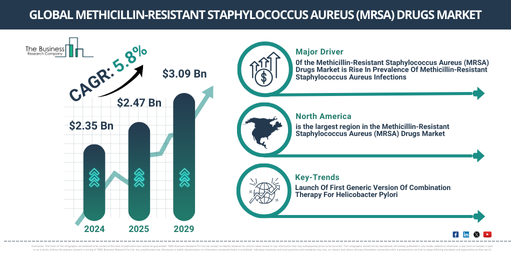
    The market size for drugs used in the treatment of methicillin-resistant staphylococcus aureus (MRSA) has seen consistent growth over recent years. The growth is projected to continue from a market value of $2.35 billion in 2024, expanding to a larger $2.47 billion in 2025. This represents a compound annual growth rate (CAGR) of 4.9%. Factors contributing to this growth during the historic period include concerns over antibiotic resistance, the prevalence of hospital-acquired infections and surgical procedures, a global rise in MRSA cases, and high mortality rates.

    The market size for drugs combating methicillin-resistant staphylococcus aureus (MRSA) is projected to see a substantial increase in the coming years. The forecast predicts it will reach “$3.09 billion in 2029, growing at a compound annual growth rate (CAGR) of 5.8%. The projected growth during this period is due to ongoing issues with antibiotic resistance, advancements in detecting MRSA, worldwide healthcare-associated infections, preventative methodologies in surgeries, and an increase in MRSA cases acquired in the community. Key trends for the forecast period include the investigation of immunomodulators, strategic collaborations for drug development, tailored treatments based on the characteristics of the strain, a focus on pediatric-specific drug formulations, and global health initiatives aimed at tackling antibiotic resistance.

    Download a free sample to assess the report’s scope and structure:

    https://www.thebusinessresearchcompany.com/sample.aspx?id=10859&type=smp

    Which Major Market Drivers Are Expected to Boost the Growth Potential of the Methicillin-Resistant Staphylococcus Aureus (MRSA) Drugs Market?

    The surge in Hospital Acquired Infections (HAIs) is anticipated to stimulate the expansion of the methicillin-resistant Staphylococcus aureus drugs market. HAIs are infections contracted by patients whilst undergoing treatment in a healthcare institution, developing 48 hours or later post admission. These infections are primarily due to factors like polluted medical apparatus, inadequate hand sanitation amongst healthcare professionals, excessive utilization of antibiotics, extended hospitalization, and the degraded immune systems of patients. Drugs targeting methicillin-resistant Staphylococcus aureus (MRSA) are employed to combat these HAIs by specifically targeting and eliminating MRSA strains that are immune to traditional antibiotics, thereby mitigating the dissemination and intensity of these infections within healthcare environments. For example, it was reported by the World Health Organization, a Switzerland-based intergovernmental organization, in 2023 that approximately 136 million instances of heath care associated antibiotic-resistant infections happen globally each year. Hence, the upturn in the occurrence of methicillin-resistant Staphylococcus aureus infections is facilitating the growth of the methicillin-resistant Staphylococcus aureus drug market.

    Which Key Market Segments Comprise the Methicillin-Resistant Staphylococcus Aureus (MRSA) Drugs Market and Drive Its Revenue Growth?

    The methicillin-resistant staphylococcus aureus (MRSA) drugs market covered in this report is segmented –

    1) By Drug Class: Lipopeptides, Oxazolidinones, Cephalosporin, Tetracycline, Folate Antagonist, Lipoglycopeptide, Other Drug Classes

    2) By Indication: Skin Infections, Bone and Joint Infections, Bacteremia, Animal Infections

    3) By MRSA Type: Hospital-Acquired (HA-MRSA), Community-Acquired (CA-MRSA)

    4) By Route of Administration: Oral Administration, Parenteral Administration

    5) By End User: Hospitals and Clinics, Research and Academic Institutes, Other End-Users

    Subsegments:

    1) By Lipopeptides: Daptomycin

    2) By Oxazolidinones: Linezolid, Tedizolid

    3) By Cephalosporin: Ceftaroline

    4) By Tetracycline: Minocycline, Doxycycline

    5) By Folate Antagonist: Trimethoprim Or Sulfamethoxazole

    6) By Lipoglycopeptide: Telavancin, Dalbavancin, Oritavancin

    7) By Other Drug Classes: Vancomycin, Clindamycin, Quinupristin Or Dalfopristin

    Request customized data on this market:

    https://www.thebusinessresearchcompany.com/customise?id=10859&type=smp

    Which Areas Are Leading Regions in the Methicillin-Resistant Staphylococcus Aureus (MRSA) Drugs Market Expansion Across the Globe?

    North America was the largest region in the global methicillin-resistant staphylococcus aureus drugs market in 2024.Asia-Pacific is expected to be the fastest-growing region in the forecast period. The regions covered in the methicillin-resistant staphylococcus aureus (MRSA) drugs market report are Asia-Pacific, Western Europe, Eastern Europe, North America, South America, Middle East, Africa

    What Are the Key Market Trends in theMethicillin-Resistant Staphylococcus Aureus (MRSA) Drugs Market Over the Coming Years?

    The Methicillin-Resistant Staphylococcus aureus (MRSA) drug market is seeing a surge in product innovation as a central trend. The prominent players in the Methicillin-Resistant Staphylococcus Aureus (MRSA) drug market are striving towards new product development in order to strengthen their market stance. An illustrative example of this is Endo, an American biopharmaceutical corporation, which debuted a cost-effective generic version of Pylera (bismuth subcitrate potassium, metronidazole, tetracycline hydrochloride) capsules in March 2023. These capsules are aimed at treating Helicobacter pylori infections. With this launch, they aim to bolster the availability of effective gastric ulcer therapy, facilitate healthcare cost savings, and ensure that an increasing number of patients can effectively manage their health issues.

    View the full report here:

    https://www.thebusinessresearchcompany.com/report/methicillin-resistant-staphylococcus-aureus-mrsa-drugs-global-market-report

    How Is the Methicillin-Resistant Staphylococcus Aureus (MRSA) Drugs Market Conceptually Defined?

    Methicillin-resistant Staphylococcus aureus (MRSA) drugs refer to a group of drugs used to treat infections caused by the bacterium Staphylococcus aureus that are resistant to methicillin and other common antibiotics. These drugs are specifically chosen to target and kill MRSA bacteria or inhibit their growth. MRSA is a source of staph infections that is challenging to treat due to antibiotic resistance.

    Purchase the full report and get a swift delivery:

    https://www.thebusinessresearchcompany.com/purchaseoptions.aspx?id=10859

    About The Business Research Company:

    With over 15000+ reports from 27 industries covering 60+ geographies, The Business Research Company has built a reputation for offering comprehensive, data-rich research and insights. Armed with 1,500,000 datasets, the optimistic contribution of in-depth secondary research, and unique insights from industry leaders, you can get the information you need to stay ahead in the game.

    Get in touch with us:

    The Business Research Company: https://www.thebusinessresearchcompany.com/

    Americas +1 3156230293

    Asia +44 2071930708

    Europe +44 2071930708

    Email us at info@tbrc.info

    Follow us on:

    LinkedIn: https://in.linkedin.com/company/the-business-research-company

    YouTube: https://www.youtube.com/channel/UC24_fI0rV8cR5DxlCpgmyFQ

    Global Market Model: https://www.thebusinessresearchcompany.com/global-market-model
  • Melanoma Therapeutics Market 2025-2034: Key Highlights, Growth Dynamics, and Emerging Trends

    Melanoma Therapeutics Market 2025-2034: Key Highlights, Growth Dynamics, and Emerging Trends

    Discover trends, market shifts, and competitive outlooks for the melanoma therapeutics industry through 2025-2034 with The Business Research Company’s reliable data and in-depth research

    What is the Projected CAGR for the Melanoma Therapeutics Market Size from 2025 to 2034?

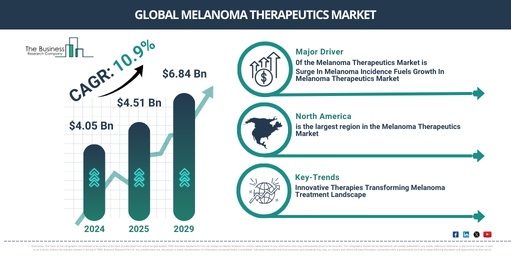
    The market size for melanoma treatments has seen substantial growth lately and it is expected that the market, valued at $4.05 billion in 2024, will increase to $4.51 billion in 2025, with a compound annual growth rate (CAGR) of 11.4%. The growth during the historic period is due to changes in treatment guidelines, heightened awareness and early detection, regulatory approvals and clinical trials, the evolution of combination therapies, and advancements in surgical techniques.

    Anticipated rapid expansion is expected in the melanoma therapeutics market size over the coming years. It is predicted to reach “$6.84 billion by 2029, with a compound annual growth rate (CAGR) of 10.9%. The growth anticipated in this forecast period can be credited to the rising treatment procedures, identifying biomarkers, regulatory assistance for innovation, developments in personalized medicine and enhancements in immunotherapy. The upcoming trends within this period are predicted to be the evolution of treatment guidelines, the role of telemedicine in oncology, patient support and awareness, research on biomarkers, and combined therapies.

    Download a free sample to assess the report’s scope and structure:

    https://www.thebusinessresearchcompany.com/sample.aspx?id=10713&type=smp

    How Are Key Drivers in the Industry Acting as Catalysts for the Growth of theMelanoma Therapeutics Market?

    The melanoma therapeutics market’s expansion is likely to be fueled by the escalating prevalence of melanoma. Melanoma is a form of skin cancer that originates from melanocytes, and melanoma therapeutics encompass all the therapies and medications utilized to help cancer patients find relief from their condition. Hence, a surge in melanoma incidences triggers an increase in the sales of melanoma therapeutics. For instance, a 2024 report by the Australian Institute of Health and Welfare—a domestic agency based in Australia that provides information and statistics on the country’s health and welfare—predicted that by 2034, Australia would witness approximately 209,000 new cancer diagnoses. This is markedly higher than the estimated 169,000 cases projected for 2024, a clear indication of the growing population’s effect on cancer rates. Furthermore, by 2024, cancer is expected to be responsible for nearly 30% of all deaths in Australia. Therefore, the growth in melanoma incidences is driving the upward trajectory of the melanoma therapeutics drug market.

    Which Segments in the Melanoma Therapeutics Offer the Most Growth?

    The melanoma therapeutics market covered in this report is segmented –

    1) By Drug Type: Monoclonal Antibodies, Small Molecule Inhibitors, Other Drug Types

    2) By Therapy: Surgery, Radiation Therapy, Immunotherapy, Targeted Therapy, Chemotherapy

    3) By Route of administration: Oral, Injectable

    4) By Cancer Type: Superficial Spreading Melanoma, Nodular Melanoma, Lentigo Maligna Melanoma, Acral Lentiginous Melanoma, Amelanotic Melanoma, Other Cancer Types

    5) By Diagnosis: Dermatoscopy, Sentinel Lymph Node Biopsy, Blood Test, X-ray, Ultrasound, CT Scan

    Subsegments:

    1) By Monoclonal Antibodies: Checkpoint Inhibitors, Targeted Monoclonal Antibodies, Conjugated Antibodies

    2) By Small Molecule Inhibitors: BRAF Inhibitors, MEK Inhibitors, Other Kinase Inhibitors

    3) By Other Drug Types: Chemotherapy Agents, Immunotherapy Agents, Adjuvant Therapies

    Request customized data on this market:

    https://www.thebusinessresearchcompany.com/customise?id=10713&type=smp

    What Are the Fastest-Growing Geographies in the #How Are Key Drivers in the Industry Acting as Catalysts for the Growth of theMelanoma Therapeutics Market?# Market?

    North America was the largest region in the melanoma therapeutics market in 2024. The regions covered in the melanoma therapeutics market report are Asia-Pacific, Western Europe, Eastern Europe, North America, South America, Middle East, Africa

    What Are the Current Market Growth and Trends in the Melanoma Therapeutics Industry?

    The emergence of product innovations is a prominent trend in the melanoma therapeutics market. Major market players are introducing novel and advanced therapies to consolidate their market presence. For instance, Immunocore, a biotechnology firm based in the UK, received FDA approval in January 2022 for its newly developed KIMMTRAK (tebentafusp-tebn) to treat metastatic uveal melanoma. With a recorded overall survival of nearly 22 months in successful phase 3 clinical trials, KIMMTRAK is the first and sole therapy approved to treat metastatic or unresectable uveal melanoma. It is a fresh bispecific protein featuring anti-CD3 immune-effector activity connected to a soluble T cell receptor, making it the first compound built on Immunocore’s ImmTAC technology platform. This platform aims to redirect and activate T lymphocytes for the identification and eradication of tumor cells.

    View the full report here:

    https://www.thebusinessresearchcompany.com/report/melanoma-therapeutics-global-market-report

    What Are the Key Elements That Define the Melanoma Therapeutics Market?

    Melanoma therapeutics refers to a treatment procedure used for the treatment of melanoma, a type of skin cancer that develops in the melanocytes. They work by targeting abnormal cells either by killing them directly or by preventing them from growing and multiplying.

    Purchase the full report and get a swift delivery:

    https://www.thebusinessresearchcompany.com/purchaseoptions.aspx?id=10713

    About The Business Research Company:

    With over 15000+ reports from 27 industries covering 60+ geographies, The Business Research Company has built a reputation for offering comprehensive, data-rich research and insights. Armed with 1,500,000 datasets, the optimistic contribution of in-depth secondary research, and unique insights from industry leaders, you can get the information you need to stay ahead in the game.

    Get in touch with us:

    The Business Research Company: https://www.thebusinessresearchcompany.com/

    Americas +1 3156230293

    Asia +44 2071930708

    Europe +44 2071930708

    Email us at info@tbrc.info

    Follow us on:

    LinkedIn: https://in.linkedin.com/company/the-business-research-company

    YouTube: https://www.youtube.com/channel/UC24_fI0rV8cR5DxlCpgmyFQ

    Global Market Model: https://www.thebusinessresearchcompany.com/global-market-model
  • Melanoma Drugs Market Trends 2025-2034: Growth, Strategic Insights, and Opportunities Ahead

    Melanoma Drugs Market Trends 2025-2034: Growth, Strategic Insights, and Opportunities Ahead

    Discover trends, market shifts, and competitive outlooks for the melanoma drugs industry through 2025-2034 with The Business Research Company’s reliable data and in-depth research

    What Is the Current and Projected Market Size of the Melanoma Drugs Market Through 2034?

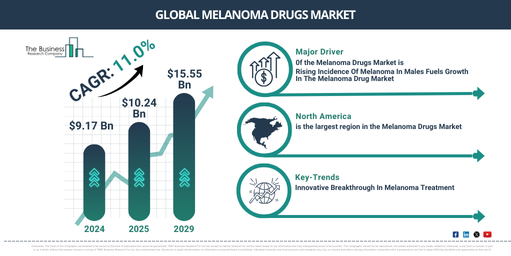
    In recent times, the market size for melanoma drugs has seen swift expansion. The market is expected to rise from a value of $9.17 billion in 2024 to $10.24 billion in 2025, experiencing a Compound Annual Growth Rate (CAGR) of 11.7%. This gain during the past period can be linked to advancements in clinical research, escalating occurrence rates, evolving treatment scenarios, enhanced diagnostic methodologies, and regulatory authorizations.

    The market size for melanoma drugs is projected to experience swift expansion in the coming years, anticipated to reach “$15.55 billion by 2029, with a compound annual growth rate (CAGR) of 11.0%. Factors contributing to the predicted growth during the forecast period are advances in immunotherapy, biomarker studies, the worldwide aging demographic, expanding markets in newly prosperous nations, and partnerships in scientific research. Key trends that will shape the forecast period consist of breakthroughs in adjuvant therapies, broader application of checkpoint inhibitors, tactics in patient stratification, assimilation of real-world evidence, and international collaborations in clinical trials.

    Download a free sample to assess the report’s scope and structure:

    https://www.thebusinessresearchcompany.com/sample.aspx?id=10783&type=smp

    What Are the Major Market Drivers Behind the Rising Adoption of Melanoma Drugs Market?

    The rising number of melanoma cases in men is projected to drive the expansion of the melanoma drug market in the future. Melanoma, a form of skin cancer, develops in the cells (melanocytes) responsible for skin pigmentation. Medications designed to curb the growth and dissemination of melanoma cells in the body are known as melanoma drugs. As a consequence, the augmenting occurrence of melanoma will escalate the need for the melanoma drugs market. Take for example, data from a report by the American Cancer Society, Inc, a US-based volunteer health organization dedicated to cancer eradication, shows an increase in new male melanoma patients in the United States, from 57,180 in 2022 to 58,120 in 2023. Hence, the rising trend of melanoma incidences in men is steering the melanoma drug market’s advancement.

    Which Key Market Segments Comprise the Melanoma Drugs Market and Drive Its Revenue Growth?

    The melanoma drugs market covered in this report is segmented –

    1) By Therapy: Chemotherapy, Immunotherapy, Targeted Therapy

    2) By Disease Type: Superficial Spreading Melanoma, Lentigo Maligna, Acral Lentiginous Melanoma, Nodular Melanoma

    3) By Application: Hospitals, Outpatient Oncologist Clinics, Other Applications

    Subsegments:

    1) By Chemotherapy: Alkylating Agents, Antimetabolites, Plant Alkaloids, Topoisomerase Inhibitors

    2) By Immunotherapy: Checkpoint Inhibitors, Interleukin Therapy, Oncolytic Virus Therapy, Cancer Vaccines

    3) By Targeted Therapy: BRAF Inhibitors, MEK Inhibitors, Immune Modulators, Other Targeted Agents

    Request customized data on this market:

    https://www.thebusinessresearchcompany.com/customise?id=10783&type=smp

    Which Areas Are Leading Regions in the Melanoma Drugs Market Expansion Across the Globe?

    North America was the largest region in the melanoma drugs market in 2024. The regions covered in the melanoma drugs market report are Asia-Pacific, Western Europe, Eastern Europe, North America, South America, Middle East, Africa

    What Are the Strategic Trends Steering theMelanoma Drugs Market Direction?

    The trend of product innovation is steadily rising in the melanoma drugs market. To solidify their presence in this market, prominent companies are channeling their focus on the creation of innovative solutions. For instance, in March 2022, the U.S. Food and Drug Administration (FDA), a federal agency based in the United States, gave its approval for Opdualag. This drug is a fixed-dose combination of the LAG-3-blocking antibody relatlimab and the programmed death receptor-1 blocking antibody nivolumab and was developed by Bristol-Myers Squibb Company, an American pharmaceutical company. It is intended for the treatment of melanoma in adult and pediatric patients. The two antibodies, relatlimab and nivolumab, which work by suppressing the programmed death receptor-1 and LAG-3, are combined to form Opdualag at a specified dosage. It is advised for adults and children above the age of 12 years, who weigh a minimum of 40 kg, and should be administered 480 mg of nivolumab and 160 mg of relatlimab intravenously every four weeks, and continue till the disease progresses or toxicity levels become unacceptable.

    View the full report here:

    https://www.thebusinessresearchcompany.com/report/melanoma-drugs-global-market-report

    How Is the Melanoma Drugs Market Conceptually Defined?

    Melanoma drug refers to a drug used for the medication of skin cancer that develops in the cells that produce melanin, the pigment responsible for the color of the skin, hair, and eyes. Melanoma drugs are used to treat melanoma that aims to target and inhibit the growth and spread of melanoma cells in the body.

    Purchase the full report and get a swift delivery:

    https://www.thebusinessresearchcompany.com/purchaseoptions.aspx?id=10783

    About The Business Research Company:

    With over 15000+ reports from 27 industries covering 60+ geographies, The Business Research Company has built a reputation for offering comprehensive, data-rich research and insights. Armed with 1,500,000 datasets, the optimistic contribution of in-depth secondary research, and unique insights from industry leaders, you can get the information you need to stay ahead in the game.

    Get in touch with us:

    The Business Research Company: https://www.thebusinessresearchcompany.com/

    Americas +1 3156230293

    Asia +44 2071930708

    Europe +44 2071930708

    Email us at info@tbrc.info

    Follow us on:

    LinkedIn: https://in.linkedin.com/company/the-business-research-company

    YouTube: https://www.youtube.com/channel/UC24_fI0rV8cR5DxlCpgmyFQ

    Global Market Model: https://www.thebusinessresearchcompany.com/global-market-model
  • Mantle Cell Lymphoma Therapeutics Outlook 2034: Key Drivers, Trends, and Market Frontiers

    Mantle Cell Lymphoma Therapeutics Outlook 2034: Key Drivers, Trends, and Market Frontiers

    Discover trends, market shifts, and competitive outlooks for the mantle cell lymphoma therapeutics industry through 2025-2034 with The Business Research Company’s reliable data and in-depth research

    What Are the Key Projections for the CAGR of the Mantle Cell Lymphoma Therapeutics Market Size From 2025 to 2034?

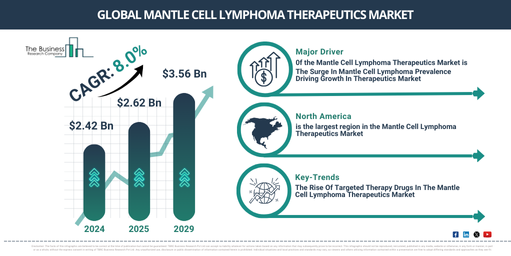
    In recent times, the market size for mantle cell lymphoma therapeutics has seen considerable growth. The market, which stands at $2.42 billion in 2024, is projected to increase to $2.62 billion in 2025, exhibiting a compound annual growth rate (CAGR) of 8.2%. The surge during the historical period can be traced back to advancements in research, successful clinical trials, enhancement in diagnostic tools, expanded access to treatments, and the advent of cooperative research initiatives.

    In the coming years, the therapeutics market for mantle cell lymphoma is projected to experience robust expansion, with the market size set to reach “$3.56 billion by 2029, reflecting a compound annual growth rate (CAGR) of 8.0%. This anticipated growth over the forecasted period can be ascribed to advancements in targeted therapies, breakthroughs in immunotherapy, the rise of personalized medicine, global market penetration, and a rise in incidence rates. Key trends over this period comprise progress in immunotherapy, the evolution of precision medicine and biomarker development, targeted therapies tailored to specific pathways, combination therapy approaches, and the incorporation of artificial intelligence (AI).

    Download a free sample to assess the report’s scope and structure:

    https://www.thebusinessresearchcompany.com/sample.aspx?id=10813&type=smp

    How Are Key Drivers in the Industry Acting as Catalysts for the Growth of theMantle Cell Lymphoma Therapeutics Market?

    The increasing incidence of mantle cell lymphoma (MCL), a form of non-Hodgkin’s lymphoma that impacts the lymphatic system, is anticipated to boost the mantle cell lymphoma therapeutics market’s growth. Therapeutic measures for MCL work towards decreasing its occurrence, managing the disease, improving patient outcomes, extending survival rates, and diminishing disease burden. For example, the National Library of Medicine, a biomedical library managed by the US Federal Government, reported in December 2022 that the annual incidence of mantle cell lymphoma is one case per 200,000 people, which accounts for 5% of all non-Hodgkins lymphomas. Consequently, the escalating incidence of mantle cell lymphoma is fuelling the expansion of the mantle cell lymphoma therapeutics market.

    Which Segments in the Mantle Cell Lymphoma Therapeutics Offer the Most Growth?

    The mantle cell lymphoma therapeutics market covered in this report is segmented –

    1) By Type: Combination Therapy, Monotherapy

    2) By Mechanism of Action: Bruton Tyrosine Kinase Inhibitors, Alkylating Agents, Deoxyribonucleic Acid Synthesis Inhibitors, Microtubule Inhibitors, Monoclonal Antibodies, Other Mechanisms

    3) By Route of Administration: Oral, Parenteral

    4) By Application: Hospital, Research Institute, Other Applications

    Subsegments:

    1) By Combination Therapy: Chemotherapy Combinations, Targeted Therapy Combinations, Immunotherapy Combinations

    2) By Monotherapy: Single-Agent Chemotherapy, Targeted Therapy Monotherapy, Immunotherapy Monotherapy

    Request customized data on this market:

    https://www.thebusinessresearchcompany.com/customise?id=10813&type=smp

    What Are the Fastest-Growing Geographies in the #How Are Key Drivers in the Industry Acting as Catalysts for the Growth of theMantle Cell Lymphoma Therapeutics Market?# Market?

    North America was the largest region in the global mantle cell lymphoma therapeutics market in 2024. The regions covered in the mantle cell lymphoma therapeutics market report are Asia-Pacific, Western Europe, Eastern Europe, North America, South America, Middle East, Africa

    What Are the Current Market Growth and Trends in the Mantle Cell Lymphoma Therapeutics Industry?

    A significant trend emerging in the mantle cell lymphoma therapeutics market is the creation of targeted therapy drugs. To maintain their market standing, main companies in this market are focusing on the development of new targeted therapy drugs. For example, approval was granted to AstraZeneca plc., a UK-based pharmaceutical firm, in March 2023 to introduce Calquence (acalabrutinib) into the Chinese market via the National Medical Products Administration (NMPA). This drug is intended for use by adult patients with mantle cell lymphoma (MCL). As a selective Bruton’s tyrosine kinase (BTK) inhibitor, Calquence (acalabrutinib) presents an effective and well-tolerated new therapy approach to manage mantle cell lymphoma.

    View the full report here:

    https://www.thebusinessresearchcompany.com/report/mantle-cell-lymphoma-therapeutics-global-market-report

    What Are the Key Elements That Define the Mantle Cell Lymphoma Therapeutics Market?

    Mantle cell lymphoma therapeutics refers to treatment approaches and strategies used to manage mantle cell lymphoma (MCL); a type of non-Hodgkin lymphoma characterized by abnormal B-cell growth in the lymphatic system. These treatments use focused strategies like BTK and BCL2 inhibitors, which have long-lasting therapeutic effects.

    Purchase the full report and get a swift delivery:

    https://www.thebusinessresearchcompany.com/purchaseoptions.aspx?id=10813

    About The Business Research Company:

    With over 15000+ reports from 27 industries covering 60+ geographies, The Business Research Company has built a reputation for offering comprehensive, data-rich research and insights. Armed with 1,500,000 datasets, the optimistic contribution of in-depth secondary research, and unique insights from industry leaders, you can get the information you need to stay ahead in the game.

    Get in touch with us:

    The Business Research Company: https://www.thebusinessresearchcompany.com/

    Americas +1 3156230293

    Asia +44 2071930708

    Europe +44 2071930708

    Email us at info@tbrc.info

    Follow us on:

    LinkedIn: https://in.linkedin.com/company/the-business-research-company

    YouTube: https://www.youtube.com/channel/UC24_fI0rV8cR5DxlCpgmyFQ

    Global Market Model: https://www.thebusinessresearchcompany.com/global-market-model
  • Strong CAGR to Propel in the Lysosomal Disease Treatment Market and Beyond upto $13.7 Billion by 2029

    Strong CAGR to Propel in the Lysosomal Disease Treatment Market and Beyond upto $13.7 Billion by 2029

    Discover trends, market shifts, and competitive outlooks for the lysosomal disease treatment industry through 2025-2034 with The Business Research Company’s reliable data and in-depth research

    What is the Anticipated CAGR of the Lysosomal Disease Treatment Market, and What Factors Will Drive It?

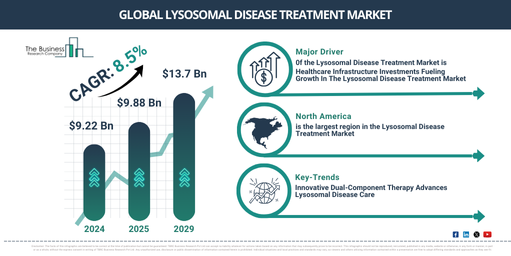
    The market for treatment of lysosomal diseases has seen robust growth in the past few years. It is projected to increase from a valuation of $9.22 billion in 2024 to $9.88 billion in 2025, presenting a compound annual growth rate (CAGR) of 7.2%. This surge during the historical period is due to the progression in treatment methods, heightened understanding and consciousness, an increase in research studies and clinical trials, improvements in diagnostic equipment, and the establishment of screening programs for newborns.

    The market for lysosomal disease treatment is predicted to experience significant expansion in the upcoming years, reaching a value of “$13.7 billion in 2029 with a compound annual growth rate (CAGR) of 8.5%. This robust growth during the projected period can be attributed to the progress in gene therapy, ongoing improvements in enzyme replacement therapy (ERT), the introduction of novel therapeutic models, improved screening and early detection plans, and increased funding for research and development. The forecast period is also characterized by the evolution of enzyme replacement therapy (ERT), breakthroughs in gene therapy, the advancement of chaperone therapy, substrate reduction therapy (SRT), and increased expansion of newborn screening programs.

    Download a free sample to assess the report’s scope and structure:

    https://www.thebusinessresearchcompany.com/sample.aspx?id=10482&type=smp

    Which Primay Drivers Are Accelerating Growth in the Lysosomal Disease Treatment Market?

    The upward trend in the lysosomal disease treatment market is projected to be fueled by greater investment in healthcare infrastructure. This encompasses the allocation of financial resources for the development, upgrade, and maintenance of healthcare facilities, equipment, and services. When more money is invested into the infrastructure of healthcare related to lysosomal disease treatment, the potential for improved patient outcomes, advancements in research, and overall healthcare proficiency is augmented. For instance, The Moscow Times, an online language newspaper from Russia, indicates that a federal project in Russia for upgrading primary healthcare has committed to expenditure up to 88.8 billion rubles ($910 million) in 2023, and 550 billion rubles ($5.7 billion) during the period of 2023-25. As a result, the advancement of the lysosomal disease treatment market is being driven by these escalations in healthcare infrastructure investment.

    Which Primary Segments of the Lysosomal Disease Treatment Market Are Driving Growth and Industry Transformations?

    The lysosomal disease treatment market covered in this report is segmented –

    1) By Disease Type: Mucopolysaccharidosis, Pompe Syndrome, Fabry Diseases, Gaucher’s Disease, Other Disease Types

    2) By Therapy: Substrate Reduction Therapy, Stem Cell Therapy, Enzyme Replacement Therapy, Other Therapies

    3) By Route Of Administration: Oral, Parenteral, Other Routes Of Administration

    4) By End User: Hospitals, Specialty Clinics, Homecare, Other End Users

    Subsegments:

    1) By Mucopolysaccharidosis: MPS I (Hurler Syndrome), MPS II (Hunter Syndrome), MPS III (Sanfilippo Syndrome), MPS IV (Morquio Syndrome), MPS VI (Maroteaux-Lamy Syndrome), MPS VII (Sly Syndrome)

    2) By Pompe Syndrome: Late-Onset Pompe Disease, Infantile-Onset Pompe Disease

    3) By Fabry Disease: Classic Fabry Disease, Late-Onset Fabry Disease

    4) By Gaucher’s Disease: Type 1 Gaucher Disease, Type 2 Gaucher Disease, Type 3 Gaucher Disease

    5) Other Disease Types: Niemann-Pick Disease, Krabbe Disease, Tay-Sachs Disease

    Request customized data on this market:

    https://www.thebusinessresearchcompany.com/customise?id=10482&type=smp

    Which Regions Are Key Players in the Growth of the #Which Primay Drivers Are Accelerating Growth in the Lysosomal Disease Treatment Market?# Market?

    North America was the largest region in the lysosomal disease treatment market in 2024.Europe is expected to be the fastest-growing region in the global lysosomal disease treatment market report during the forecast period. The regions covered in the lysosomal disease treatment market report are Asia-Pacific, Western Europe, Eastern Europe, North America, South America, Middle East, Africa

    Which Technological Trends Are Reshaping the Lysosomal Disease Treatment Industry Dynamics?

    Key players in the lysosomal disease treatment sector are prioritizing the creation of innovative strategies such as dual-component therapy. This novel approach is designed to augment enzyme replacement and boost muscle function in affected patients. A dual-component therapy pairs two supplementary drugs or agents, enhancing their combined therapeutic impact for specific health conditions. Take, for example, Amicus Therapeutics, a biotechnology firm based in the United States, reported in September 2023 that the U.S. Federal and Drug Administration (FDA) granted approval for Pombiliti (cipaglucosidase alfa-atga) and Opfolda (miglustat) 65 mg capsules. These two drugs together form a dual-component therapy targeting late-onset Pompe disease, a severe lysosomal disorder manifested by an accumulation of glycogen owing to enzyme deficiency. This particular combination results in increased enzyme uptake in muscle cells and enzyme stabilization in the circulatory system, effectively enhancing patients’ musculoskeletal strength and respiratory function, particularly in those unresponsive to existing treatments. Recent clinical trials suggest this groundbreaking approach could meet significant unmet needs in managing this disabling disease.

    View the full report here:

    https://www.thebusinessresearchcompany.com/report/lysosomal-disease-treatment-global-market-report

    What Parameters Are Used to Define the Lysosomal Disease Treatment Market?

    Lysosomal diseases (LSDs) refer to diseases in which substrates accumulate in excess in the cells of various organs due to defective lysosomal function. The accumulation of materials in the lysosomes leads to damage in various tissues and organs, resulting in a wide range of symptoms that can affect different parts of the body.

    Purchase the full report and get a swift delivery:

    https://www.thebusinessresearchcompany.com/purchaseoptions.aspx?id=10482

    About The Business Research Company:

    With over 15000+ reports from 27 industries covering 60+ geographies, The Business Research Company has built a reputation for offering comprehensive, data-rich research and insights. Armed with 1,500,000 datasets, the optimistic contribution of in-depth secondary research, and unique insights from industry leaders, you can get the information you need to stay ahead in the game.

    Get in touch with us:

    The Business Research Company: https://www.thebusinessresearchcompany.com/

    Americas +1 3156230293

    Asia +44 2071930708

    Europe +44 2071930708

    Email us at info@tbrc.info

    Follow us on:

    LinkedIn: https://in.linkedin.com/company/the-business-research-company

    YouTube: https://www.youtube.com/channel/UC24_fI0rV8cR5DxlCpgmyFQ

    Global Market Model: https://www.thebusinessresearchcompany.com/global-market-model
  • Emerging Trends Redefining the Diet Pills Market Landscape: Advancements In Drug Therapeutics Transforming The Market

    Emerging Trends Redefining the Diet Pills Market Landscape: Advancements In Drug Therapeutics Transforming The Market

    Discover trends, market shifts, and competitive outlooks for the diffuse large b-cell lymphoma therapeutics industry through 2025-2034 with The Business Research Company’s reliable data and in-depth research

    What Are the Key Milestones in the Diffuse Large B-cell Lymphoma Therapeutics Market’s Growth Trajectory From 2025 To 2034?

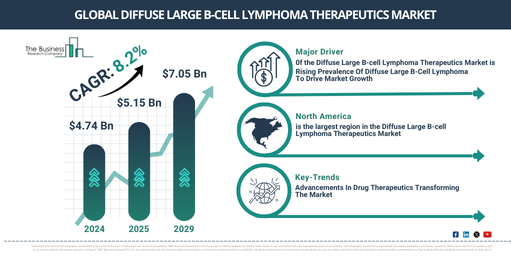
    The market size for therapeutics relating to diffuse large B-cell lymphoma has seen substantial growth recently. It’s set to expand from $4.74 billion in 2024 to $5.15 billion in 2025, showing a compound annual growth rate (CAGR) of 8.5%. Factors such as advancements in clinical research, regulatory authorizations, patient consciousness & diagnosis, combined efforts, and evolution of care standards have contributed to growth during the historic period.

    Anticipated robust expansion is on the horizon for the diffuse large B-cell lymphoma therapeutics market, with projections indicating growth to “$7.05 billion by 2029, with a compound annual growth rate (CAGR) of 8.2%. This forecasted growth could be as a result of factors such as discovery of biomarkers, advancements in immunotherapy, escalating incidence rates, an aging global population, development in healthcare infrastructure, and increased accessibility to innovative drugs. The forecast period is also expected to witness noteworthy trends such as the advent of outpatient treatment settings, the emergence of collaborative clinical trials, the shift towards patient-centric care models, advancements in diagnostic imaging technology, and the digitization of healthcare.

    Download a free sample to assess the report’s scope and structure:

    https://www.thebusinessresearchcompany.com/sample.aspx?id=10805&type=smp

    What Are the Core Market Drivers Propelling Growth in the Diffuse Large B-cell Lymphoma Therapeutics Industry?

    The continued rise in the occurrence of diffuse large B-cell lymphoma (DLBCL), an aggressive type of cancer originating from B-cells in the lymphatic system and characterized by fast and widespread growth, is projected to boost the expansion of the DLBCL therapeutics market. The primary role of these therapeutics is to enhance the management and treatment of cancer cells in affected individuals. Illustratively, predictions from the American Cancer Society, a voluntary health organization in the USA, suggest that by the year 2023, non-Hodgkin’s lymphoma (NHL), a category under which DLBCL falls, will be diagnosed in roughly 80,550 individuals (44,880 males and 35,670 females), with about 20,180 people succumbing to the illness. Therefore, this escalating prevalence of DLBCL is a critical factor propelling the growth of the DLBCL therapeutics market.

    How Is the Diffuse Large B-cell Lymphoma Therapeutics Market Segmented?

    The diffuse large B-cell lymphoma therapeutics market covered in this report is segmented –

    1) By Drug Class: Cisplatin, Carboplatin, 5-fluorouracil, Docetaxel, Paclitaxel, Methotrexate, Other Drugs

    2) By Therapy: Targeted Therapy, Immunotherapy, Chemotherapy, Other Therapies

    3) By Route of Administration: Oral, Parenteral, Other Routes

    4) By End User: Hospitals, Clinics, Other End-Users

    Subsegments:

    1) By Cisplatin: Injection Formulations, Combination Therapies

    2) By Carboplatin: Injection Formulations, Combination Therapies

    3) By 5-Fluorouracil: Injection Formulations, Oral Formulations

    4) By Docetaxel: Injection Formulations, Combination Therapies

    5) By Paclitaxel: Injection Formulations, Combination Therapies

    6) By Methotrexate: Injection Formulations, Oral Formulations, Combination Therapies

    7) By Other Drugs: Monoclonal Antibodies, Targeted Therapies, Immunotherapies, Experimental Therapies

    Request customized data on this market:

    https://www.thebusinessresearchcompany.com/customise?id=10805&type=smp

    Which Regions Are Driving the Next Phase of the Diffuse Large B-cell Lymphoma Therapeutics Market Growth?

    North America was the largest region in the global diffuse large B-cell lymphoma therapeutics market in 2024.Asia-Pacific is expected to be the fastest-growing region in the forecast period. The regions covered in the diffuse large B-cell lymphoma therapeutics market report are Asia-Pacific, Western Europe, Eastern Europe, North America, South America, Middle East, Africa

    What Key Market Trends and Innovations Are Shaping the Future of the Diffuse Large B-cell Lymphoma Therapeutics Industry?

    One emerging trend in the diffuse large B-cell lymphoma therapeutics market is the development of drug treatments, a move being made by leading firms to maintain their position in the field. This was exemplified in June 2022 when US-based Bristol-Myers Squibb, a pharmaceutical enterprise with a focus on drug research and development, obtained US FDA approval for their CAR T Cell Therapy Breyanzi. This treatment has been developed for patients suffering from diffuse large B-cell lymphoma (DLBCL), large B-cell lymphoma (LBCL), and refractory or relapsed large B-cell lymphoma. Breyanzi is a CD19-directed chimeric antigen receptor (CAR) T-cell therapy, capable of aiding a variety of patients, including those with primary mediastinal large B-cell lymphoma, high-grade B-cell lymphoma, and grade 3B follicular lymphoma.

    View the full report here:

    https://www.thebusinessresearchcompany.com/report/diffuse-large-b-cell-lymphoma-therapeutics-global-market-report

    How Is the Diffuse Large B-cell Lymphoma Therapeutics Market Defined and What Are Its Core Parameters?

    Diffuse large B-cell lymphoma therapeutics refer to the treatment approaches and medications used to manage and combat diffuse large B-cell lymphoma, a type of non-Hodgkin lymphoma characterized by rapidly growing cancerous B-cells.

    Purchase the full report and get a swift delivery:

    https://www.thebusinessresearchcompany.com/purchaseoptions.aspx?id=10805

    About The Business Research Company:

    With over 15000+ reports from 27 industries covering 60+ geographies, The Business Research Company has built a reputation for offering comprehensive, data-rich research and insights. Armed with 1,500,000 datasets, the optimistic contribution of in-depth secondary research, and unique insights from industry leaders, you can get the information you need to stay ahead in the game.

    Get in touch with us:

    The Business Research Company: https://www.thebusinessresearchcompany.com/

    Americas +1 3156230293

    Asia +44 2071930708

    Europe +44 2071930708

    Email us at info@tbrc.info

    Follow us on:

    LinkedIn: https://in.linkedin.com/company/the-business-research-company

    YouTube: https://www.youtube.com/channel/UC24_fI0rV8cR5DxlCpgmyFQ

    Global Market Model: https://www.thebusinessresearchcompany.com/global-market-model
  • Diet Pills Market 2025-2034: Key Highlights, Growth Dynamics, and Emerging Trends

    Diet Pills Market 2025-2034: Key Highlights, Growth Dynamics, and Emerging Trends

    Discover trends, market shifts, and competitive outlooks for the diet pills industry through 2025-2034 with The Business Research Company’s reliable data and in-depth research

    How Has The Diet Pills Market Size Shifted, And What Is the Outlook Through 2034?

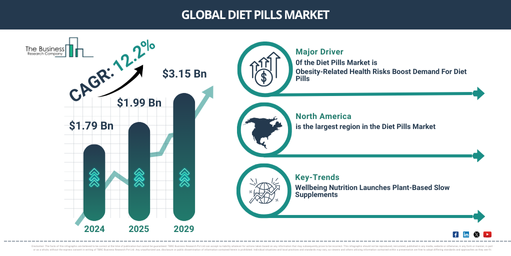
    In recent times, the diet pills market has seen a rapid expansion. Its growth trajectory will progress from $1.79 billion in 2024 to $1.99 billion in 2025, with a compound annual growth rate (CAGR) of 11.1%. The significant growth during the past few years can be traced back to factors such as heightened health and fitness consciousness, escalating rates of obesity, shifts in lifestyle and diet habits, marketing and promotional maneuvers, as well as medical recommendations and prescriptions.

    In the forthcoming years, the diet pills market is anticipated to witness a fast-paced growth, reaching up to “$3.15 billion by 2029 with a CAGR of 12.2%. The forecasted growth is largely due to overarching health and wellness trends, increasing issues of global obesity, growing reach of weight management services, novel formulations and ingredient innovations, and the rise of e-commerce and direct-to-consumer channels. The forecast period will see key trends like advancements in formulation technology, focus on mental health, use of appetite suppressants, integration of digital health, and expansion of online and e-commerce distribution networks.

    Download a free sample to assess the report’s scope and structure:

    https://www.thebusinessresearchcompany.com/sample.aspx?id=10774&type=smp

    Which Primay Drivers Are Accelerating Growth in the Diet Pills Market?

    The escalating issue of obesity is predicted to boost the expansion of the diet pill market in the future. Obesity, which is typically defined as an abnormal or excessive weight gain, with a body mass index (BMI) exceeding 30, is a serious health concern. It increases the likelihood of fatal consequences from cancers of various organs including the esophagus, colon, rectum, liver, gallbladder, pancreas, and kidney. Obesity also amplifies the incidence of diseases like type 2 diabetes (T2D) and cardiovascular diseases (CVD). To aid in weight loss, individuals battling obesity often resort to diet pills. These pills help curb an individual’s appetite and food cravings, thus facilitating weight loss. As per the National Institute of Diabetes and Digestive and Kidney Diseases (NIDDK), in May 2022, obesity was prevalent in more than 2 in 5 adults (42.4%), with severe obesity apparent in roughly 1 in 11 adults (9.2%). Consequently, the increasing rate of obesity is spurring the development of the diet pill market.

    Which Primary Segments of the Diet Pills Market Are Driving Growth and Industry Transformations?

    The diet pills market covered in this report is segmented –

    1) By Product Type: Prescription, Over The Counter, Herbal Supplements

    2) By Age: Teenagers, Adults

    3) By Distribution Channel: Hospital Pharmacies, Retail Pharmacies, Online Pharmacies, Drug Stores

    4) By Application: Appetite Suppression, Fat Blocking, Other Applications

    Subsegments:

    1) By Prescription: Prescription Weight Loss Pills, Prescription Appetite Suppressants, Prescription Fat Blockers

    2) By Over The Counter: Non-Prescription Weight Loss Pills, Appetite Control Tablets, Fat Burners, Metabolism Boosters

    3) By Herbal Supplements: Herbal Weight Loss Pills, Herbal Appetite Suppressants, Natural Fat Burners, Traditional Herbal Formulations

    Request customized data on this market:

    https://www.thebusinessresearchcompany.com/customise?id=10774&type=smp

    Which Regions Are Key Players in the Growth of the #Which Primay Drivers Are Accelerating Growth in the Diet Pills Market?# Market?

    North America was the largest region in the diet pills market in 2024. The regions covered in the diet pills market report are Asia-Pacific, Western Europe, Eastern Europe, North America, South America, Middle East, Africa

    Which Technological Trends Are Reshaping the Diet Pills Industry Dynamics?

    One of the significant trends in the diet pill market is the rise in demand for plant-based supplements. In an attempt to maintain their market position, companies are beginning to manufacture such products. A notable example is an Indian company, Wellbeing Nutrition, that released its product, SLOW, in April 2022. This product, composed of 13 different supplements, is made to satisfy various wellness and health needs. These include reproductive support, bone health, weight loss, and daily multivitamins and nutrition needs, among others. SLOW utilizes coated pellets in a capsule, facilitating a steady release and ensuring that the body efficiently absorbs the essential vitamins and nutrients all through the day. This new product line aims to fulfill consumer requirements, from improved energy and physical stamina to mental sharpness and prevention of certain diseases.

    View the full report here:

    https://www.thebusinessresearchcompany.com/report/diet-pills-global-market-report

    What Parameters Are Used to Define the Diet Pills Market?

    Diet pills refer to tablets or capsules intended to assist users in reducing or controlling their weight. It is used to improve metabolism, lower appetite, and break down fat.

    Purchase the full report and get a swift delivery:

    https://www.thebusinessresearchcompany.com/purchaseoptions.aspx?id=10774

    About The Business Research Company:

    With over 15000+ reports from 27 industries covering 60+ geographies, The Business Research Company has built a reputation for offering comprehensive, data-rich research and insights. Armed with 1,500,000 datasets, the optimistic contribution of in-depth secondary research, and unique insights from industry leaders, you can get the information you need to stay ahead in the game.

    Get in touch with us:

    The Business Research Company: https://www.thebusinessresearchcompany.com/

    Americas +1 3156230293

    Asia +44 2071930708

    Europe +44 2071930708

    Email us at info@tbrc.info

    Follow us on:

    LinkedIn: https://in.linkedin.com/company/the-business-research-company

    YouTube: https://www.youtube.com/channel/UC24_fI0rV8cR5DxlCpgmyFQ

    Global Market Model: https://www.thebusinessresearchcompany.com/global-market-model
  • Top Trends Driving Innovation and Change in the Scar Treatment Market: Revolutionizing Scar Treatment With Advanced Laser Technology

    Top Trends Driving Innovation and Change in the Scar Treatment Market: Revolutionizing Scar Treatment With Advanced Laser Technology

    Discover trends, market shifts, and competitive outlooks for the scar treatment industry through 2025-2034 with The Business Research Company’s reliable data and in-depth research

    How Fast Is The Scar Treatment Market Expected to Grow Between 2025 And 2029?

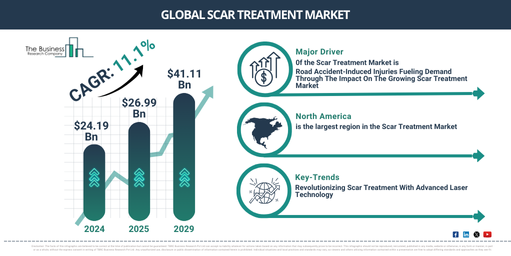
    Over the past few years, the size of the scar treatment market has been expanding swiftly. It is projected to increase from a market value of $24.19 billion in 2024 to $26.99 billion in 2025, with a compound annual growth rate (CAGR) of 11.5%. The impressive growth demonstrated during the historical period is linked to the incorporation of minimally invasive techniques, better market accessibility, advancements in wound care practices, ongoing research and clinical trials, and the progressive evolution in the realm of cosmetic surgery.

    In the coming years, we anticipate a fast-paced expansion in the scar treatment market. Predictions suggest that it will increase to “$41.11 billion by 2029 with a Compound Annual Growth Rate (CAGR) of 11.1%. This anticipated growth could be driven by novel topical treatments, progress in regenerative medicine, the evolution of cosmetic surgery methodologies, custom-made treatment strategies, and less invasive operations. Key market trends during this forecast period comprise increased interest in aesthetic procedures, advancements in topical treatments, progress in regenerative medicine, developments in cosmetic surgery, and a patient-focused approach.

    Download a free sample to assess the report’s scope and structure:

    https://www.thebusinessresearchcompany.com/sample.aspx?id=10572&type=smp

    What External and Internal Drivers Are Contributing to the Growth of theScar Treatment Market?

    The growth of the scar treatment market is expected to be fuelled by the rising number of road accidents. Road accidents refer to an incident in which at least one person is injured or killed, involving one or more vehicles on the public road. Natural healing and tissue replacement processes, which follow accidental burns, scrapes, or cuts on the skin, often leave scars behind. The visibility of these scars could be significantly minimized through specialized scar treatments that work on the damaged skin layers and yield observable results. For instance, the National Highway Traffic Safety Administration, a US federal government agency, reveals that approximately 20,175 individuals died in car accidents on the roads in the US in the first half of 2022, marking a 0.5% increase from 2021. Consequently, the rising number of road accidents is propelling the growth of the scar treatment market.

    What Segment Types Define the Scar Treatment Market Structure?

    The scar treatment market covered in this report is segmented –

    1) By Scar Type: Atrophic Scars, Hypertrophic And Keloid Scars, Contracture Scars, Other Scar Types

    2) By Treatment Type: Topical, Laser, Surface, Surgical, Injectable

    3) By End User: Hospitals, Clinics, Pharmacies and Drug Store, E-commerce

    Subsegments:

    1) By Atrophic Scars: Acne Scars, Surgical Scars, Other Atrophic Scars

    2) By Hypertrophic And Keloid Scars: Hypertrophic Scars, Keloid Scars

    3) By Contracture Scars: Post-Burn Contracture Scars, Other Contracture Scars

    4) By Other Scar Types: Stretch Marks, Other Types of Scars

    Request customized data on this market:

    https://www.thebusinessresearchcompany.com/customise?id=10572&type=smp

    Which Geographic Areas Hold the Strongest Growth Potential in the Scar Treatment Market?

    North America was the largest region in the scar treatment market in 2024.Asia-Pacific is expected to be the fastest-growing region in the global scar treatment market report during the forecast period. The regions covered in the scar treatment market report are Asia-Pacific, Western Europe, Eastern Europe, North America, South America, Middle East, Africa

    What Long-Term Trends Are Transforming the Competitive Landscape of the Scar Treatment Market?

    Innovative product development is a rising trend observed in the field of scar treatment. Dominant entities in the scar treatment industry are advancing skincare technologies to boost treatment efficiency, enhance patient results, and offer less intrusive alternatives for people seeking scar mitigation. This technology is designed to boost the efficacy of treatments, increase safety, and achieve maximum results for various skin issues. For example, Doctors Aesthetics Centre, a company based in India, in March 2023, initiated the launch of Picocare Majesty. This is a ground-breaking skin care device employing sophisticated picosecond technology designed to address and remedy various scar types, such as acne scars, surgical scars, and pigment irregularities, marking its first appearance in South India.

    View the full report here:

    https://www.thebusinessresearchcompany.com/report/scar-treatment-global-market-report

    What Is the Definition of the Scar Treatment Market?

    Scar treatment refers to the process of minimizing or reducing a scar’s size or appearance. It restores appearance by giving skin an even tone and smoother texture after treatment

    Purchase the full report and get a swift delivery:

    https://www.thebusinessresearchcompany.com/purchaseoptions.aspx?id=10572

    About The Business Research Company:

    With over 15000+ reports from 27 industries covering 60+ geographies, The Business Research Company has built a reputation for offering comprehensive, data-rich research and insights. Armed with 1,500,000 datasets, the optimistic contribution of in-depth secondary research, and unique insights from industry leaders, you can get the information you need to stay ahead in the game.

    Get in touch with us:

    The Business Research Company: https://www.thebusinessresearchcompany.com/

    Americas +1 3156230293

    Asia +44 2071930708

    Europe +44 2071930708

    Email us at info@tbrc.info

    Follow us on:

    LinkedIn: https://in.linkedin.com/company/the-business-research-company

    YouTube: https://www.youtube.com/channel/UC24_fI0rV8cR5DxlCpgmyFQ

    Global Market Model: https://www.thebusinessresearchcompany.com/global-market-model