Category: Pharmaceuticals

  • Cell Culture Media Market Report 2024: Market Size, Drivers, And Trends

    Cell Culture Media Market Report 2024: Market Size, Drivers, And Trends

    The Business Research Company’s global market reports are now updated with the latest market sizing information for the year 2024 and forecasted to 2033

    The cell culture media market has experienced rapid growth, driven by various factors:

    • Growing research and development (R&D) activities
    • Rising prevalence of chronic diseases
    • Expansion of the biopharmaceutical industry
    • Supportive government initiatives and funding
    • Growing demand for regenerative medicine and stem cell therapies

    The Growth Trajectory

    • Market size projected to increase from $4.84 billion in 2023 to $5.46 billion in 2024
    • Expected to reach $8.91 billion by 2028, at a CAGR of 13.0%

    Factors Driving Growth

    1. Focus on Personalized Medicine
      • Tailoring treatments to individual patients
      • Increasing demand for specialized cell culture media formulations
    2. Expansion of Stem Cell Research
      • Growing interest in stem cell therapies
      • Demand for advanced culture media for stem cell maintenance and differentiation
    3. Technological Advancements
      • Integration of advanced cell culture systems
      • Adoption of microfluidics and bioreactor technologies

    View More On The Cell Culture Media Market Report 2024 – https://www.thebusinessresearchcompany.com/report/cell-culture-media-global-market-report

    Advancements In Cell Culture Media For Enhanced Biopharmaceutical Manufacturing

    • Focus on chemically defined and animal-component-free formulations
    • Example: Lonza’s TheraPRO CHO Media System

    Acquisition Strengthens Market Presence

    • ANGUS Chemical Company acquires Expression Systems LLC
    • Enhances capabilities in bioprocessing and cell culture media

    Market Segmentation

    1. By Type
      • Liquid Media
      • Semi-solid And Solid Media
    2. By Product
      • Serum Free Media
      • Classical Media
      • Stem Cell Culture Media
      • Specialty Media
      • Chemically Defined Media
      • Other Cell Culture Media
    3. By Application
      • Biopharmaceutical Production
      • Diagnostics
      • Drug Screening And Development
      • Tissue Engineering And Regenerative Medicine
      • Other Applications
    4. By End User
      • Biotechnology And Pharmaceutical Industry
      • Academic Institute
      • Research Laboratory
      • Other End Users

    Regional Insights

    • North America: Largest market in 2023
    • Asia-Pacific: Fastest-growing region in the forecast period

    Conclusion

    The cell culture media market is witnessing significant growth, fueled by increasing demand for personalized medicine, expanding biopharmaceutical manufacturing capabilities, and technological advancements. As companies continue to innovate and expand their portfolios, the market is poised for further evolution, catering to the diverse needs of the biotechnology and pharmaceutical industries worldwide.

    Request A Sample Of The Global Cell Culture Media Market Report 2024:
    https://www.thebusinessresearchcompany.com/sample_request?id=14871&type=smp

  • Pharma 4.0 Market Growth Analysis Till 2033 By The Business Research Company

    Pharma 4.0 Market Growth Analysis Till 2033 By The Business Research Company

    The Business Research Company’s market reports offer an in-depth analysis on the market’s growth potential, major drivers, key trends and more.

    Introduction

    The Pharma 4.0 market has witnessed exponential growth in recent years, with significant projections for the future. Understanding the driving factors and emerging trends in this dynamic industry is crucial for stakeholders aiming to capitalize on its potential.

    Market Growth Trajectory

    • The market size surged from $14.92 billion in 2023 to $17.99 billion in 2024, showcasing a Compound Annual Growth Rate (CAGR) of 20.5%.
    • Projections indicate further expansion, reaching $38.44 billion by 2028, with a CAGR of 20.9%.

    Driving Forces Behind Market Growth

    • Regulatory compliance and quality assurance.
    • Drug patent expirations and generic competition.
    • Increasing healthcare expenditure.
    • Demand for personalized medicine and biologics.
    • Globalization of pharmaceutical markets.

    Forecasted Growth Drivers

    • Shift towards value-based healthcare models.
    • Aging population and increased healthcare needs.
    • Demand for personalized medicine and precision therapeutics.
    • Regulatory reforms and changes in healthcare policies.
    • Growing emphasis on patient-centric care and outcomes.

    Read More On The Pharma 4.0 Market Report 2024 – https://www.thebusinessresearchcompany.com/report/pharma-4-0-global-market-report

     Major Trends Shaping the Market

    • Personalized medicine and precision therapeutics.
    • Digital health technologies.
    • Value-based healthcare models.
    • Regulatory harmonization and accelerated approval processes.
    • Supply chain digitization and transparency.

    Telemedicine And Remote Patient Monitoring Fuel Pharma 4.0 Market Growth

    • Telemedicine and remote patient monitoring facilitate convenient healthcare access.
    • Technological advancements drive their expansion.
    • Significant roles in enabling patient-centered care and real-time data collection.
    • Examples showcasing their prevalence and impact on the market growth.

    Key Players in the Pharma 4.0 Market

    • Alphabet Inc.
    • Microsoft Corporation.
    • Pfizer Inc.
    • Johnson & Johnson.
    • Amazon Web Services Inc.
    • Roche Holding AG.
    • International Business Machines Corporation.
    • Merck & Co. Inc.
    • Cisco Systems Inc.
    • Bristol Myers Squibb Company.
    • Oracle Corporation.
    • AstraZeneca PLC.
    • POLARISqb.
    • Syntekabio.
    • Optibrium.

    Adoption Of Cloud-Based Drug Discovery Platforms In Pharma 4.0 Market

    • Development of cloud-based drug discovery platforms to gain a competitive edge.
    • Example: Optibrium Ltd.’s cloud-based drug discovery platform, StarDrop.
    • Advantages including enhanced accessibility, reduced costs, and advanced data security.

    ProductLife Group Strengthens Market Position Through Acquisition

    • Acquisition of Pharma IT ApS by ProductLife Group.
    • Expected benefits include enhanced market presence and expanded service offerings.
    • Pharma IT ApS’s expertise in life sciences consulting complements ProductLife Group’s capabilities.

    Market Segmentation

    • By Component: Hardware, Software, Services.
    • By Technology: Cloud Computing, Artificial Intelligence (AI), Big Data Analytics, Internet of Things (IoT).
    • By Application: Drug Discovery And Development, Clinical Trials, Manufacturing.
    • By End-User: Pharmaceutical Companies, Biotechnology Companies, Contract Research Organizations (CROs) And Contract Manufacturing Organizations (CMOs).

    Regional Insights

    • North America led the pharma 4.0 market in 2023.
    • Europe is anticipated to witness the fastest growth in the forecast period.

    In conclusion, the Pharma 4.0 market presents immense opportunities driven by technological advancements, regulatory reforms, and shifting healthcare paradigms. Stakeholders must stay abreast of market dynamics and embrace innovation to thrive in this rapidly evolving landscape.

    Request for A Sample Of The Global Pharma 4.0 Market Report:
    https://www.thebusinessresearchcompany.com/sample_request?id=14772&type=smp

  • Overview Of The Lentiviral Vector Market 2024-2033: Growth And Major Players Analysis

    Overview Of The Lentiviral Vector Market 2024-2033: Growth And Major Players Analysis

    The Business Research Company’s global market reports are now updated with the latest market sizing information for the year 2024 and forecasted to 2033

    The lentiviral vector market has witnessed remarkable growth recently, with the market size expanding from $12.50 billion in 2023 to an anticipated $14.37 billion in 2024, reflecting a compound annual growth rate (CAGR) of 15.0%. This growth is driven by several factors, including the increasing prevalence of genetic disorders, rising demand for gene delivery, and the expansion of biotech and pharmaceutical sectors.

    Key Drivers of Market Growth

    Prevalence of Chronic Diseases

    • Chronic Diseases on the Rise: The prevalence of chronic diseases, such as diabetes, cardiovascular diseases, and cancer, is increasing globally due to factors like aging populations, unhealthy lifestyles, and environmental changes.
    • Impact on Lentiviral Vectors: Lentiviral vectors are versatile tools for developing vaccines and treatments for chronic diseases, which address unmet medical needs and improve patient outcomes.

    Adoption of Gene Delivery Solutions

    • Demand for Gene Therapy: The demand for efficient gene delivery methods has surged, driven by advancements in gene therapy and personalized medicine.
    • Lentiviral Vectors’ Role: Lentiviral vectors are preferred for their ability to integrate into the host genome, ensuring long-term expression of therapeutic genes.

    Expansion in Biotech and Pharma

    • Industry Growth: The biotech and pharmaceutical industries are expanding rapidly, fueled by significant investments in research and development.
    • Clinical Trials and Approvals: Increased investment in clinical trials and regulatory approvals for gene therapies have boosted the lentiviral vector market.

    View More On The Lentiviral Vector Market Report 2024 – https://www.thebusinessresearchcompany.com/report/lentiviral-vector-global-market-report

    Future Market Projections

    Rapid Growth Forecast

    • Future Projections: The lentiviral vector market is expected to grow from $14.37 billion in 2024 to $25.50 billion in 2028, with a CAGR of 15.4%.
    • Key Drivers: This growth is attributed to the rise of personalized medicine, innovations in gene editing, increasing demand for rare disease therapies, and substantial funding in genomic medicine.

    Emerging Trends

    • R&D Expansion: There is a significant focus on expanding research and development activities to enhance the capabilities of lentiviral vectors.
    • CAR-T Cell Therapy: Integration of lentiviral vectors in CAR-T cell therapy is gaining traction, revolutionizing cancer treatment.
    • Next-Generation Vectors: Development of advanced vectors promises improved safety, efficiency, and targeting capabilities.
    • Vaccine Development: Adoption in vaccine development, especially in response to emerging infectious diseases, is a major trend.
    • Production Technologies: Innovations in production technologies are focused on improving scalability and reducing manufacturing costs.

    Technological Advancements

    Enhancing Production Efficiency

    • LentiSure Platform: Companies like Yposkesi are developing advanced production platforms such as LentiSure to enhance the efficiency and robustness of lentiviral vector production.
    • Efficiency Gains: These platforms aim to produce high-quality vectors at scale, meeting the growing demand for cell and gene therapies.

    Acquisition Strategies

    • Charles River Laboratories and Vigene Biosciences: In June 2021, Charles River Laboratories acquired Vigene Biosciences to bolster its gene therapy capabilities, particularly in viral vectors and plasmid DNA sectors.
    • Strategic Impact: This acquisition enables Charles River to better meet clients’ evolving scientific needs and expand its offerings in the high-growth cell and gene therapy market.

    Market Segmentation

    By Product Type

    • Kits: Tools for researchers and clinicians to facilitate gene delivery.
    • Reagents and Consumables: Essential materials for lentiviral vector production and application.

    By Indication

    • Cancer: A significant application area due to the need for innovative cancer therapies.
    • Genetic Disorders: Addressing genetic diseases with long-term solutions.
    • Infectious Diseases: Development of vaccines and treatments.
    • Veterinary Diseases and Other Indications: Expanding the scope of lentiviral vector applications.

    By End User

    • Biotechnology Companies: Leading the development and commercialization of gene therapies.
    • Pharmaceutical Companies: Investing heavily in research and clinical trials.
    • Contract Research Organizations (CROs): Providing essential support for clinical development.
    • Academic and Research Institutes: Driving innovation through fundamental research.

    Regional Insights

    North America

    • Market Leader: North America was the largest region in the lentiviral vector market in 2023, driven by robust research infrastructure and significant investment in biotech.

    Asia-Pacific

    • Rapid Growth: Asia-Pacific is expected to be the fastest-growing region during the forecast period, fueled by increasing healthcare investments and advancements in gene therapy research.

    The lentiviral vector market is on a promising trajectory, driven by technological advancements, strategic acquisitions, and increasing applications in various medical fields. As research and development continue to expand, the market is set to revolutionize treatments for chronic diseases, genetic disorders, and beyond.

    Request A Sample Of The Global Lentiviral Vector Market Report 2024:
    https://www.thebusinessresearchcompany.com/sample_request?id=14742&type=smp

  • Key Takeaways From The Global Process Analytical Technology Market Forecast 2024

    Key Takeaways From The Global Process Analytical Technology Market Forecast 2024

    The Business Research Company’s global market reports are now updated with the latest market sizing information for the year 2024 and forecasted to 2033

    As per The Business Research Company’s Process Analytical Technology Global Market Report 2024, the process analytical technology market is expected to show significant growth in the forecast period.

    The process analytical technology (PAT) market has experienced significant growth, escalating from $2.68 billion in 2023 to a projected $2.99 billion in 2024, boasting a notable compound annual growth rate (CAGR) of 11.6%. This surge in growth is attributed to several factors:

    • Regulatory compliance requirements
    • Quality control imperatives
    • Cost reduction initiatives
    • Globalization of supply chains
    • Intense market competition

    Anticipated Surge Ahead

    Projections indicate a continued upward trajectory, with the market expected to reach $4.68 billion by 2028, maintaining a robust CAGR of 11.9%. Key drivers for this anticipated growth include:

    • Sustainability initiatives
    • Trends in personalized medicine
    • Integration with Industry 4.0
    • Expansion into emerging markets
    • Transition towards continuous manufacturing

    View More On The Process Analytical Technology Market Report 2024 – https://www.thebusinessresearchcompany.com/report/process-analytical-technology-global-market-report

    Trends Shaping the Future

    In the forecast period, several trends are poised to redefine the landscape of process analytical technology:

    • Adoption of remote monitoring technologies
    • Increased focus on data analytics and AI
    • Expansion of digital twins
    • Integration of blockchain for supply chain transparency
    • Rise of personalized manufacturing

    Surging Demand For Personalized Medicine

    The rising demand for personalized medicine is expected to be a significant growth driver for the PAT market:

    • Advancements in genomics enabling tailored treatments
    • Utilization of PAT in monitoring and analyzing critical parameters during manufacturing
    • Ensuring precise control over the production process for quality and consistency

    Innovations Driving Market Growth

    Major companies are at the forefront of innovation in the PAT market, developing cutting-edge products to gain a competitive edge:

    • Introduction of compact radiance instruments for single-cell analysis
    • Real-time characterization of cellular heterogeneity, responses, and behavior
    • High-resolution analysis during manufacturing processes
    • Significant advancements in biomanufacturing and quality control environments

    Strategic Acquisitions to Enhance Capabilities

    In January 2024, Bruker Corporation expanded its biopharma PAT portfolio through the acquisition of Tornado Spectral Systems Inc.:

    • Integration of Tornado’s Raman instruments to enhance quality control capabilities
    • Strengthening of capabilities in pharma and biotech quality control applications

    Market Segmentation

    The PAT market is segmented based on various factors:

    • By Product: Analyzers, Sensors and Probes, Samplers, Software and Services
    • By Technique: Spectroscopy, Chromatography, Particle Size Analysis, Electrophoresis, and Other Techniques
    • By Application: Small Molecules, Large Molecules, Manufacturing Applications, and Other Applications
    • By End-User: Pharmaceutical Companies, Biotechnology Companies, and Other End-Users

    Regional Dynamics

    • North America emerged as the largest region in 2023
    • Asia-Pacific is anticipated to witness the fastest growth in the forecast period

    In conclusion, the process analytical technology market is on a trajectory of rapid expansion, fueled by technological advancements, evolving healthcare paradigms, and the pursuit of efficiency and quality in manufacturing processes. As the industry continues to innovate and adapt, it holds immense potential to revolutionize pharmaceutical and biotech sectors and address emerging healthcare challenges on a global scale.

    Request A Sample Of The Global Process Analytical Technology Market Report 2024:
    https://www.thebusinessresearchcompany.com/sample_request?id=14777&type=smp

  • Top 5 Insights From The Cold Chain Temperature Monitoring Market Report 2024

    Top 5 Insights From The Cold Chain Temperature Monitoring Market Report 2024

    The Business Research Company’s global market reports are now updated with the latest market sizing information for the year 2024 and forecasted to 2033

    According to The Business Research Company’s Cold Chain Temperature Monitoring Global Market Report 2024, the cold chain temperature monitoring market is expected to show promising growth in the forecast period.

    Rapid Expansion Projections

    • Market size surge from $7.52 billion in 2023 to $8.79 billion in 2024.
    • Compound Annual Growth Rate (CAGR) of 16.9% attributed to various factors:
      • Increased global trade.
      • Rising demand for pharmaceutical products.
      • Importance of maintaining product quality.
      • Growing availability of cold chain logistics.
      • Focus on predictive maintenance.
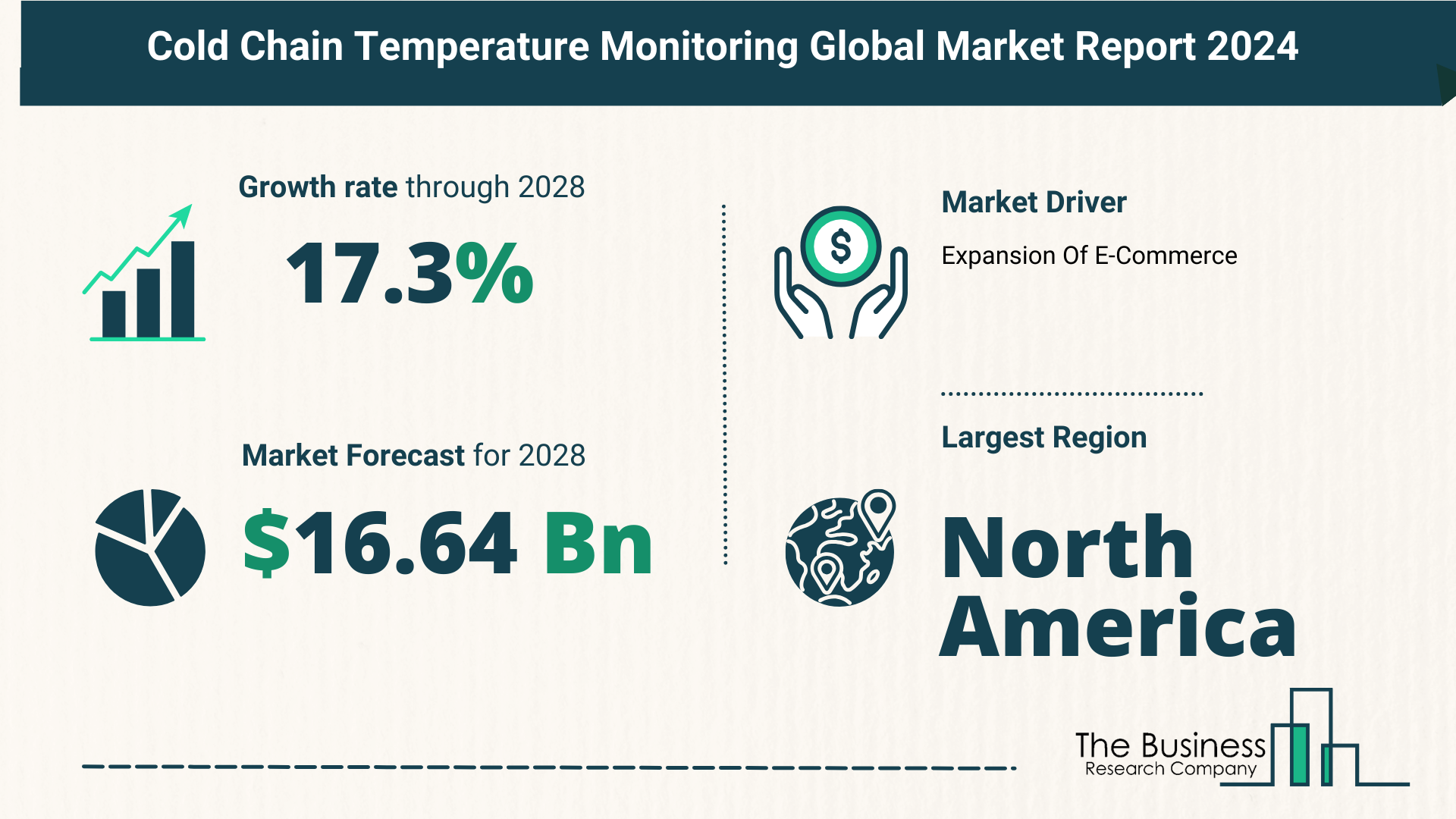
    • Forecasted growth to $16.64 billion in 2028 with a CAGR of 17.3%.
    • Factors driving this growth:
      • Integration of emerging technologies.
      • Expansion and enhancement of product portfolios.
      • Adoption of innovative temperature monitoring solutions.
      • Increasing demand in developing countries.
      • Focus on automation and cold storage technologies.

    E-Commerce Expansion Fuels Demand For Cold Chain Temperature Monitoring Solutions

    • E-commerce expansion acts as a catalyst for market growth.
    • Cold chain systems crucial for maintaining product quality in e-commerce.
    • Real-time visibility and control crucial for compliance and customer satisfaction.
    • Example: US e-commerce sales in 2023 reached $1,118.7 billion, up 7.6% from 2022.

    View More On The Cold Chain Temperature Monitoring Market Report 2024 – https://www.thebusinessresearchcompany.com/report/cold-chain-temperature-monitoring-global-market-report

    Key Players in the Market

    • Zebra Technologies Corporation
    • Cryoport Inc.
    • Cold Chain Technologies
    • Controlant
    • Sensitech Inc.
    • OMEGA Engineering inc.
    • Luna
    • Elitech
    • MOBIQU
    • Thermo Electric Company Inc.
    • DeltaTrak Inc.
    • Berlinger & Co. AG
    • Insignia Technologies
    • AeroSafe Global

    Technology Solutions Driving Efficiency In Cold Chain Temperature Monitoring

    • Development of innovative trackers like CubiSens XT1.
    • CubiSens XT1 integrates various sensors for comprehensive monitoring.
    • Aimed at optimizing agricultural processes and increasing efficiency.
    • Example: CubeWorks launched CubiSens XT1 in September 2022.

    Azenta Enhances Cold Chain Capabilities With Acquisition Of B Medical Systems SA

    • Acquisition strengthens cold chain capabilities of Azenta Inc.
    • Acquisition of B Medical Systems SA brings enhanced solutions for temperature-sensitive specimens transport.
    • B Medical Systems SA is a Luxembourg-based medical refrigeration manufacturer.

    Market Segmentation

    • Segmented by Hardware:
      • Conventional Temperature Loggers.
      • Real-Time Monitoring Devices.
      • Resistance Temperature Detectors.
      • Temperature Indicators.
      • Other Hardware.
    • Segmented by Software:
      • On Premise.
      • Cloud Based.
    • Segmented by End User:
      • Fish, Meat And Seafood.
      • Processed Food.
      • Bakery And Confectionaries.
      • Fruits And Vegetables.
      • Dairy Products.
      • Other End Users.

    Regional Insights

    • North America led the market in 2023.
    • Asia-Pacific expected to be the fastest-growing region in the forecast period.

    In conclusion, the cold chain temperature monitoring market is poised for substantial growth driven by various factors such as e-commerce expansion, technological advancements, and strategic acquisitions. Key players are innovating with new solutions to meet the evolving demands of diverse industries, promising a future of enhanced efficiency, compliance, and product quality assurance across the supply chain.

    Request A Sample Of The Global Cold Chain Temperature Monitoring Market Report 2024:
    https://www.thebusinessresearchcompany.com/sample_request?id=14676&type=smp

  • Key Takeaways From The Global Pharmaceutical Contract Development And Manufacturing Organization (CMO) Market Forecast 2024

    Key Takeaways From The Global Pharmaceutical Contract Development And Manufacturing Organization (CMO) Market Forecast 2024

    The Business Research Company’s global market reports are now updated with the latest market sizing information for the year 2024 and forecasted to 2033

    As per The Business Research Company’s Pharmaceutical Contract Development And Manufacturing Organization (CMO) Global Market Report 2024, the pharmaceutical contract development and manufacturing organization (CMO) market is expected to show significant growth in the forecast period.

    • Market Growth Overview:
      • Strong recent growth
      • Expected CAGR of 7.0% from 2023 to 2024
    • Drivers of Growth:
      • Increase in demand for medicines globally
      • Push for existing drug production and R&D for new drugs
      • Cost-cutting measures driving collaborations with CMOs

    Pharmaceutical Contract Development And Manufacturing Firms Introduce Innovative Devpack Services To Enhance Industry Capabilities

    • Introduction of DevPack:
      • Aimed at enhancing service portfolios
      • Standardized dataset for development processes
    • Example:
      • ASM Research Chemicals’ launch of DevPack for API manufacturing
      • Optimized across ten core partners

    View More On The Pharmaceutical Contract Development And Manufacturing Organization (CMO) Market Report 2024 – https://www.thebusinessresearchcompany.com/report/pharmaceutical-contract-developments-and-manufacturing-organization-cmo-global-market-report

    Catalent Expands Expertise With Acquisition Of Metrics Contract Services

    • Strategic Acquisition:
      • Catalent acquires Metrics Contract Services for $475 million
      • Improves Catalent’s capabilities with highly potent chemicals
      • Enhances expertise in oral solid formulation research and production

    Market Segmentation and Regional Analysis

    • Segmentation:
      • By Type: Contract Manufacturing Services, Contract Research Services
      • By Research Phase: Preclinical, Phase I-IV
      • By End User: Big, Generic, Small & Medium-Sized Pharmaceutical Companies
    • Regional Analysis:
      • North America leads in 2023
      • Middle East forecasted as fastest-growing region

    The pharmaceutical contract development and manufacturing (CMO) market has experienced significant growth in recent years, with a promising outlook for the future. This growth trajectory is driven by various factors, including the increasing demand for medicines worldwide and the emphasis on cost-cutting measures within pharmaceutical companies. As companies seek to streamline their operations and enhance their capabilities, they are increasingly turning to CMOs for collaboration and support.

    One notable trend in the industry is the introduction of innovative services like the DevPack, aimed at improving efficiency and standardizing processes across partners. ASM Research Chemicals’ recent launch of DevPack for API manufacturing exemplifies this trend, providing a standardized dataset for development processes and aiding in early-stage manufacturing route development.

    Furthermore, strategic acquisitions, such as Catalent’s acquisition of Metrics Contract Services, play a significant role in expanding companies’ expertise and capabilities. This move not only enhances Catalent’s ability to work with highly potent chemicals but also strengthens its position in oral solid formulation research and production.

    In terms of market segmentation, the pharmaceutical CMO market is categorized by type, research phase, and end-user. This segmentation allows for a comprehensive understanding of the market landscape and provides insights into specific areas of growth and opportunity. Additionally, regional analysis highlights the dominance of North America in 2023 and the potential for significant growth in regions like the Middle East.

    Overall, the pharmaceutical contract development and manufacturing market are poised for continued growth, driven by factors such as increasing government support, healthcare access, and investments in R&D. With the introduction of innovative services, strategic partnerships, and a focus on sustainability, the industry is well-positioned to meet the evolving needs of the healthcare sector and contribute to advancements in medicine and patient care.

    Request A Sample Of The Global Pharmaceutical Contract Development And Manufacturing Organization (CMO) Market Report 2024:

    https://www.thebusinessresearchcompany.com/sample_request?id=2825&type=smp

  • Pharmaceutical Drugs Global Market Outlook 2024-2033: Size And Growth Rate Analysis

    Pharmaceutical Drugs Global Market Outlook 2024-2033: Size And Growth Rate Analysis

    The Business Research Company’s global market reports provide comprehensive analysis on the various markets in 27 industries across 60 geographies.

    Introduction

    The pharmaceutical drugs market has experienced robust growth in recent years, with projections indicating continued expansion. Understanding the factors fueling this growth is crucial for stakeholders in the healthcare sector.

    Market Growth Trajectory

    • The market size surged from $1199.86 billion in 2023 to $1267.05 billion in 2024, with a CAGR of 5.6%.
    • Forecasted growth predicts an escalation to $2092.95 billion in 2028, driven by a CAGR of 13.4%.

    Factors Driving Growth

    • Increased healthcare awareness
    • Prevalence of respiratory diseases
    • Lifestyle changes
    • Pharmaceutical R&D expenditure
    • Aging population
    • Surgical procedures
    • Economic growth in emerging markets
    • Approvals for hematology/oncology drugs

    View More On The Pharmaceutical Drugs Market Report 2024 – https://www.thebusinessresearchcompany.com/report/pharmaceutical-drugs-global-market-report

    Emerging Trends

    • Biomarkers for drug development
    • Next-generation biologics
    • Personalized medicine
    • AI in drug discovery
    • Combination drug therapy for respiratory diseases
    • Partnerships with wearables companies
    • 3D printing in drug manufacturing
    • Microneedle pills for enhanced drug delivery
    • MRNA vaccines

    Impact of Non-Communicable Diseases and Lifestyles

    • Sedentary jobs and busy lifestyles affect disease profiles.
    • Non-communicable diseases like cancer and diabetes are on the rise.
    • Chronic disease burden leads to increased demand for biologic drugs.

    Key Players

    • Pfizer Inc.
    • AbbVie
    • Johnson & Johnson
    • Merck & Co
    • Sanofi S.A.
    • F. Hoffmann-La Roche Ltd.
    • Novartis AG
    • Bristol-Myers Squibb
    • AstraZeneca
    • GlaxosmithKline
    • Shanghai Pharmaceutical Drugs
    • Shanghai Fosun Pharmaceutical
    • And more…

    Dermatology Drugs Market Dynamics

    • Early Rx-to-OTC switch is a significant trend.
    • Companies switch to OTC status well in advance of patent expiry.
    • FDA’s role in facilitating Rx-to-OTC transitions.

    Market Segmentation

    1. By Type
      • Cardiovascular Drugs
      • Dermatology Drugs
      • Gastrointestinal Drugs
      • Genito-Urinary Drugs
      • And more…
    2. By Distribution Channel
      • Hospital Pharmacies
      • Retail Pharmacies/Drug Stores
      • Other Distribution Channels
    3. By Drug Classification
      • Branded Drugs
      • Generic Drugs
    4. By Mode of Purchase
      • Over-The-Counter (OTC) Drugs
      • Prescription-Based Drugs

    Regional Insights

    • North America led the market in 2023.
    • The Middle East is anticipated to exhibit the fastest growth.

    Conclusion

    The pharmaceutical drugs market is on an upward trajectory, fueled by various factors such as healthcare advancements, lifestyle changes, and evolving treatment modalities. Understanding these dynamics is essential for stakeholders to navigate this dynamic landscape effectively. As the market continues to evolve, collaboration, innovation, and strategic partnerships will be key to driving sustainable growth and improving global healthcare outcomes.

    Request A Sample Of The Global Pharmaceutical Drugs Market Report 2024:
    https://www.thebusinessresearchcompany.com/sample_request?id=3619&type=smp

  • Growth Trajectory Of The Pharmaceutical Excipients Market 2024-2033

    Growth Trajectory Of The Pharmaceutical Excipients Market 2024-2033

    The Business Research Company’s global market reports are now updated with the latest market sizing information for the year 2024 and forecasted to 2033

    The pharmaceutical excipients market has witnessed robust growth in recent years, with significant projections for the future. Key insights include:

    • Market size reached $9,728.83 billion in 2023, expected to hit $10,378.8 billion in 2024, with a CAGR of 6.7%.
    • Forecast predicts further expansion to $13,399.77 billion by 2028, at a CAGR of 6.6%.

    Drivers of Growth

    Several factors contribute to this growth:

    • Strong economic growth in emerging markets.
    • Surge in generic drug sales.
    • Advancements in healthcare infrastructure.

    Rising Trends

    Notable trends shaping the future market landscape:

    • Emphasis on sustainable packaging.
    • Increased mergers and acquisitions.
    • Focus on reducing greenhouse gas emissions.
    • Leveraging AI for supply chain transparency.

    View More On The Pharmaceutical Excipients Market Report 2024 – https://www.thebusinessresearchcompany.com/report/pharmaceutical-excipient-global-market-report

    Rise Of Generic Drugs Fuels Growth In The Pharmaceutical Excipients Market

    Global Surge in Generic Drugs

    • Generic drugs contribute significantly to market growth.
    • India leads in generic drug production, with 20% of global exports.
    • Indian pharmaceutical companies received 300 generic drug approvals in the USA.

    Major Players

    Key companies driving the market include:

    • BASF SE
    • Ashland Global Holdings
    • Evonik Industries AG
    • International Flavors & Fragrances, Inc.
    • And many more.

    Pharmaceutical Excipient Market Benefits From Advanced Solutions Like Apisolex, Enhancing Manufacturing Efficiency And Reducing API Loss

    Introduction of Advanced Excipients

    • Apisolex technology improves solubility challenges.
    • Lubrizol Life Science (LLS) Health launched Apisolex to enhance solubility and streamline manufacturing.

    Philip Morris International Acquires Fertin Pharma

    • Acquisition aims to bolster smoke-free product development.
    • Fertin Pharma brings expertise in pharmaceutical excipients.

    Segmentation and Regional Insights

    Market Segments

    The pharmaceutical excipients market is segmented by:

    • Product: Inorganic Chemicals, Organic Chemicals, Others
    • Functionality: Fillers, Binders, Coating Agents, etc.
    • Type of Formulation: Oral, Topical, Parenteral, Others

    Regional Dynamics

    • North America dominates the market.
    • Middle East expected to be the fastest-growing region.

    In conclusion, the pharmaceutical excipients market is on a trajectory of substantial growth, driven by various factors including the rise of generic drugs, technological advancements, and strategic acquisitions. With evolving trends and expanding regional markets, the industry is poised for significant developments in the coming years.

    Request A Sample Of The Global Pharmaceutical Excipients Market Report 2024:
    https://www.thebusinessresearchcompany.com/sample_request?id=3415&type=smp

  • Key Trends And Drivers In The Pancreatic Cancer Drugs Market 2024

    Key Trends And Drivers In The Pancreatic Cancer Drugs Market 2024

    The Business Research Company’s market reports offer an in-depth analysis on the market’s growth potential, major drivers, key trends and more.

    The pancreatic cancer drugs market has shown steady growth over recent years, with a projected increase from $3.83 billion in 2023 to $3.98 billion in 2024 at a compound annual growth rate (CAGR) of 3.8%. This growth is attributed to several factors including:

    Strong Economic Growth in Emerging Markets

    Increasing Aging Population

    Rising Prevalence of Pancreatic Cancer

    Future Outlook

    Expectations for the market’s growth remain positive, with a forecasted rise to $4.65 billion by 2028 at a CAGR of 4.0%. Key drivers for this growth include:

    1. Increase in Cancer Incidence Rates2. Rise in Healthcare Expenditure3. Government Support

    Major Trends Shaping the Market

    In the forecast period, several trends are expected to influence the pancreatic cancer drugs market significantly:

    1. Development of New Drugs2. Advancements in Nanomedicine Treatment3. Increased Investments 4. Strategic Collaborations 5. Product Innovations

    Factors Driving Market Growth

    Growing Pancreatic Cancer Cases

    The prevalence of pancreatic cancer continues to rise, driven by factors such as an aging population and increasing obesity rates. This increase in cases directly impacts the demand for pancreatic cancer drugs. Notably, in 2023, an estimated 64,050 people were diagnosed with pancreatic cancer, with approximately 50,550 deaths reported. Major companies operating in this space include:

    • Bristol-Myers Squibb Company
    • Pfizer Inc.
    • AstraZeneca PLC
    • Hoffmann-La Roche AG
    • Novartis AG

    Increasing Focus on Investment

    Companies are investing in local drug delivery systems to enhance their competitive position. For example, OncoLize raised a significant seed investment round in April 2023 to develop a local drug delivery system targeting pancreatic and lung cancer. This approach aims to improve drug efficacy and reduce side effects, offering promising advancements in cancer treatment.

    Strategic Growth in Oncology

    Servier’s acquisition of Agios Pharmaceuticals in April 2021 underscores the strategic moves within the oncology sector. This acquisition strengthens Servier’s oncology portfolio, particularly in the realm of pancreatic cancer drugs.

    Read More On The Pancreatic Cancer Drugs Market Report 2024 – https://www.thebusinessresearchcompany.com/report/pancreatic-cancer-drugs-global-market-report

    Market Segmentation

    The pancreatic cancer drugs market is segmented by:

    1. Type:
    • Pancreatic Neuroendocrine Cancer Drugs
    • Pancreatic Exocrine Cancer Drugs
    1. Drug Combination:
    • Single
    • Double
    • Triplet
    • Quadruplet
    1. End User:
    • Hospital Pharmacies
    • Retail Pharmacies
    • Other End-Users

    Regional Insights

    In 2023, North America dominated the pancreatic cancer drugs market. However, the Middle East is expected to witness the fastest growth during the forecast period, highlighting evolving dynamics in regional market shares.

    Conclusion

    The pancreatic cancer drugs market is on a trajectory of steady growth, fueled by increasing cancer incidence rates, advancements in treatment modalities, and strategic investments. Key players are actively pursuing innovative approaches to address the growing demand for effective pancreatic cancer treatments, signaling a promising outlook for the future of cancer care.

    Request for A Sample Of The Global Pancreatic Cancer Drugs Market Report:
    https://www.thebusinessresearchcompany.com/sample_request?id=2565&type=smp

  • Key Trends And Drivers In The Pharmaceutical API Manufacturing Market 2024

    Key Trends And Drivers In The Pharmaceutical API Manufacturing Market 2024

    The Business Research Company’s market reports offer an in-depth analysis on the market’s growth potential, major drivers, key trends and more.

    Introduction: Sustained Growth in Pharmaceutical API Manufacturing

    • Strong growth from $206.95 billion in 2023 to $219.76 billion in 2024.
    • Expected compound annual growth rate (CAGR) of 6.2%.
    • Drivers: increased pharmaceutical R&D, outsourcing preference, chronic illness prevalence, healthcare expenditure, patent expirations, and government policies.

    Future Outlook: Anticipating Expansion

    • Projected growth to $279.03 billion in 2028.
    • Forecasted CAGR of 6.2%.
    • Drivers: aging population, technological advancements, cancer prevalence, mergers and acquisitions, emerging economies.
    • Major trends: production facility expansion, AI integration, greener manufacturing, QR code labeling.

    Read More On The Pharmaceutical API Manufacturing Market Report 2024 – https://www.thebusinessresearchcompany.com/report/pharmaceutical-api-manufacturing-global-market-report

    Rising Aging Population Fueling Growth In Pharmaceutical API Manufacturing

    • Aging population drives increased pharmaceutical demand.
    • WHO predicts 80% of seniors in low- and middle-income nations by 2050.
    • Aging demographics lead to heightened pharmaceutical API demand, propelling market growth.

    Leading Players: Driving Innovation

    • Major companies: Pfizer Inc., Sanofi S.A, Teva Pharmaceutical Industries Ltd., and more.
    • Diverse portfolios catering to various therapeutic needs.
    • Focus on innovation and strategic partnerships.

    Technological Advancements Streamlining The API Manufacturing Process

    • Adoption of modern technologies enhances API manufacturing efficiency.
    • Advances in Lyophilization optimize freeze-drying processes.
    • Example: Telstar’s LyoGistics Zero improves hygiene in API manufacturing.

    Piramal Pharma Ltd Strategic Acquisition Of Hemmo Pharmaceuticals

    • Piramal Pharma Ltd. acquires Hemmo Pharmaceuticals for $105.8 million in March 2021.
    • Acquisition expands PPS’s peptide API industry access and capabilities.
    • Hemmo Pharmaceuticals brings expertise in peptide API manufacturing and development.

    Market Segmentation: Understanding the Landscape

    • Therapy area segments: Cardiovascular Disorders, Metabolic Disorders, Neurological Disorders, Oncology, Musculoskeletal Disorders, and others.
    • API type segments: Chemical API, Biological API.
    • Drug type segments: Prescription Drugs, Over-The-Counter (OTC) Drugs.

    Regional Insights: Dynamics Across Geographies

    • North America leads the market in 2023.
    • The Middle East anticipates the fastest growth during the forecast period.

    Conclusion: Advancing Pharmaceutical API Manufacturing

    • Pharmaceutical API manufacturing market poised for robust expansion.
    • Aging demographics, technological advancements, and strategic acquisitions drive growth.
    • Adoption of greener practices and AI integration mark emerging trends.
    • Regional dynamics underscore diverse opportunities for market stakeholders.

    Request for A Sample Of The Global Pharmaceutical API Manufacturing Market Report:
    https://www.thebusinessresearchcompany.com/sample_request?id=2467&type=smp