Category: Pharmaceuticals

  • Mexiletine Hydrochloride Market Growth Is Reshaping Competitive Advantage Across The Industry

    Mexiletine Hydrochloride Market Growth Is Reshaping Competitive Advantage Across The Industry

    Enhanced with market attractiveness analysis, total addressable market evaluation, company benchmarking matrices, interactive Excel dashboards, expanded supply chain intelligence, emerging startup coverage, and detailed product insights, The Business Research Company’s 2026 market reports deliver more actionable and strategically valuable research.

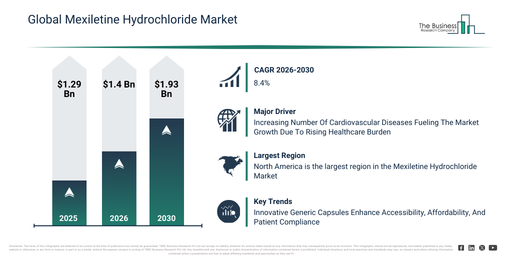
    Mexiletine Hydrochloride Market Expansion From $1.4 Billion In 2026 To $1.93 Billion In 2030

    The mexiletine hydrochloride market has experienced robust expansion over the past few years. Its value is projected to rise from $1.29 billion in 2025 to $1.4 billion in 2026, reflecting a compound annual growth rate (CAGR) of 8.7%. This historical growth has been largely driven by a higher incidence of ventricular arrhythmias, broader adoption of cardiovascular treatment regimens, increased reliance on oral medications for heart conditions, breakthroughs in electrophysiology studies, and a growing need for long-term arrhythmia management solutions.

    The mexiletine hydrochloride market is anticipated to experience substantial expansion in the coming years. By 2030, its value is projected to reach $1.93 billion, reflecting a compound annual growth rate (CAGR) of 8.4%. This projected growth during the forecast period is driven by factors such as an increasing elderly population affected by heart conditions, a higher need for affordable cardiovascular medications, the expansion of cardiac care delivered at home, a rising emphasis on managing neuropathic pain, and the broader accessibility of generic drug versions. Key developments shaping the market outlook include the growing application of sodium channel blockers in heart disease treatment, a higher uptake of oral medications for arrhythmia, intensified attention to therapies for neuromuscular diseases, the scaling up of generic drug production, and a sustained emphasis on managing heart rhythm over the long term.

    Download A Free Sample Report For Comprehensive Market Insights:

    https://www.thebusinessresearchcompany.com/sample.aspx?id=28268&type=smp&utm_source=BlogsPR&utm_medium=Paid&utm_campaign=Jul_PR

    Mexiletine Hydrochloride Market Industry Drivers: What Is Driving Revenue Growth?

    The growing prevalence of cardiovascular disorders is anticipated to drive expansion in the mexiletine hydrochloride market in the coming years. These conditions affect the heart and blood vessels, encompassing coronary heart disease, cerebrovascular disease, and various other cardiac issues. This rise is largely attributed to aging populations and increasingly sedentary lifestyles, where extended life expectancy combined with insufficient physical activity and poor eating habits markedly elevates the likelihood of developing heart-related ailments. Mexiletine hydrochloride functions by inhibiting specific electrical signals and sodium channels within the heart, helping to stabilize irregular heartbeats and proving valuable in treating ventricular arrhythmias and other rhythm disturbances linked to cardiovascular diseases. For example, in August 2025, the National Institutes of Health (NIH), the world’s leading biomedical research agency headquartered in Bethesda, projected that between 2025 and 2050, cardiovascular prevalence will increase by 90.0%, crude mortality by 73.4%, and crude DALYs by 54.7%, with annual cardiovascular deaths expected to rise from 20.5 million to 35.6 million. Consequently, the rising number of cardiovascular diseases is fueling growth in the mexiletine hydrochloride market.The rising prevalence of cardiovascular disorders is expected to fuel growth in the mexiletine hydrochloride market moving forward. These conditions, encompassing coronary heart disease, cerebrovascular disease, and other heart-related issues, affect the heart and blood vessels. Their increasing incidence stems from aging populations and sedentary lifestyles, where extended life expectancy paired with reduced physical activity and poor dietary habits significantly elevates the risk of developing cardiac problems. Mexiletine hydrochloride operates by inhibiting specific electrical signals and sodium channels in the heart to stabilize irregular rhythms, making it an effective therapeutic option for ventricular arrhythmias and other rhythm disturbances linked to cardiovascular diseases. As an illustration, in August 2025, the National Institutes of Health (NIH), the world’s premier biomedical research agency based in Bethesda, projected that from 2025 to 2050, cardiovascular prevalence will increase by 90.0%, crude mortality by 73.4%, and crude DALYs by 54.7%, with annual cardiovascular deaths expected to climb from 20.5 million to 35.6 million. Hence, the growing number of cardiovascular diseases is propelling the expansion of the mexiletine hydrochloride market.

    Mexiletine Hydrochloride Market Segment Landscape And Growth Potential

    The mexiletine hydrochloride market covered in this report is segmented –

    1) By Product Type: Capsules, Tablets, Injection, Other Product Types

    2) By Distribution Channel: Hospital Pharmacies, Retail Pharmacies, Online Pharmacies, Other Distribution Channels

    3) By Application: Arrhythmias, Neuropathic Pain, Myotonic Disorders, Other Applications

    4) By End-User: Hospitals, Clinics, Homecare, Other End-Users

    Subsegments:

    1) By Capsules: Extended Release Capsules, Immediate Release Capsules

    2) By Tablets: Film Coated Tablets, Chewable Tablets, Dispersible Tablets

    3) By Injection: Intravenous Injection, Intramuscular Injection, Subcutaneous Injection

    4) By Other Product Types: Oral Suspension, Topical Solution, Compounded Formulations

    Mexiletine Hydrochloride Market Growth Trends: What Is Influencing The Future Outlook?

    Key players in the Mexiletine Hydrochloride market are concentrating on advancing novel approaches, including generic capsule formulations, to boost availability, cost-effectiveness, and patient adherence. These generic capsule formulations replicate branded drugs by containing the identical active ingredient, potency, and dosage form, yet they are generally more economical and easier to obtain. A notable example occurred in June 2023, when Camber Pharmaceuticals Inc., a generic drug manufacturer based in the United States, introduced Mexiletine Hydrochloride Capsules, USP, offered in 150 mg, 200 mg, and 250 mg dosages. This product release brings three distinct benefits: it allows for dose-specific adaptability through various strengths, includes high-count 100-bottle packaging designed for extended use, and provides a budget-friendly generic substitute for branded Mexitil, thus improving patient access.

    Mexiletine Hydrochloride Market Competitive Landscape: Who Are The Leading Companies?

    Major companies operating in the mexiletine hydrochloride market are Teva Pharmaceuticals Industries Ltd., Macleods Pharmaceuticals Limited, Cipla Limited, Lupin Limited, Alembic Pharmaceuticals Limited, ANI Pharmaceuticals Inc., Taj Pharmaceuticals Limited, Biophore India Pharmaceuticals Pvt. Ltd., Professional Compounding Centers of America Inc. (PCCA), Medichem S.A., Camber Pharmaceuticals Inc., Ingenus Pharmaceuticals LLC, AGC Pharma Chemicals Europe S.L.U., Rivopharm S.A., Kalintis Healthcare Pvt. Ltd., Senores Pharmaceuticals Inc., Midas Pharma GmbH, Tooba Pharmaceuticals Private Limited, Changzhou Yabang Pharmaceutical Co. Ltd., Shreeji Pharma International

    Access The Complete Mexiletine Hydrochloride Market Report:

    https://www.thebusinessresearchcompany.com/report/mexiletine-hydrochloride-global-market-report?utm_source=BlogsPR&utm_medium=Paid&utm_campaign=Jul_PR

    Mexiletine Hydrochloride Market Geographic Analysis: Where Is Demand Growing The Fastest?

    North America was the largest region in the mexiletine hydrochloride market in 2025. Asia-Pacific is expected to be the fastest-growing region in the forecast period. The regions covered in the mexiletine hydrochloride market report are Asia-Pacific, South East Asia, Western Europe, Eastern Europe, North America, South America, Middle East, Africa.

    Get in touch with us:

    The Business Research Company: https://www.thebusinessresearchcompany.com/?utm_source=BlogsPR&utm_medium=Paid&utm_campaign=home_page_test

    Americas: +1 310-496-7795

    Asia: +44 7882 955267 & +91 8897263534

    Europe: +44 7882 955267

    Email us at: marketing@tbrc.info

    Follow us on:

    LinkedIn: https://in.linkedin.com/company/the-business-research-company

    YouTube: https://www.youtube.com/channel/UC24_fI0rV8cR5DxlCpgmyFQ

    Global Market Model: https://www.thebusinessresearchcompany.com/global-market-model
  • Metronidazole Market Forecast Signals New Revenue Opportunities Through 2030

    Metronidazole Market Forecast Signals New Revenue Opportunities Through 2030

    Through market attractiveness analysis, total addressable market evaluation, company benchmarking matrices, interactive Excel dashboards, expanded supply chain intelligence, emerging startup coverage, and detailed product insights, The Business Research Company’s 2026 market reports provide more actionable and strategically valuable research.

    Metronidazole Market Forecast Highlighting Growth From $0.64 Billion To $0.79 Billion

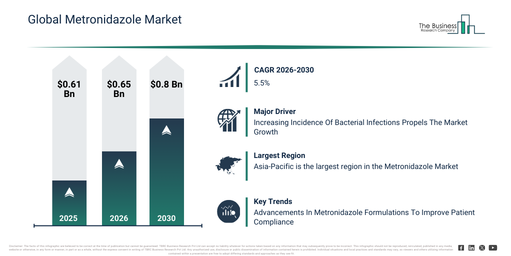
    The metronidazole market has seen robust expansion in recent years, with its value climbing from $0.61 billion in 2025 to $0.65 billion in 2026, marking a compound annual growth rate (CAGR) of 5.5%. This past growth was largely driven by a high prevalence of bacterial and protozoal infections, proven clinical effectiveness over a long period, widespread listing on essential medicines registers, increased utilization of antibiotics in hospital settings, and a rise in the number of surgical interventions.

    The metronidazole market is projected to experience robust expansion over the coming years, reaching an estimated value of $0.8 billion by 2030, with a compound annual growth rate (CAGR) of 5.5%. This anticipated growth during the forecast period can be linked to factors such as the escalating global infection burden, rising rates of hospital admissions, a consistent need for affordable antibiotic options, the growth of outpatient antimicrobial therapy, and advances in emerging healthcare markets. Key trends shaping this period encompass the extensive application of metronidazole in anaerobic bacterial infections, an increasing demand for broad-spectrum antimicrobial agents, the broadening of topical and oral formulation availability, heightened usage in treating gynecological and gastrointestinal infections, and a growing preference for cost-effective generic antibiotics.

    Download A Free Sample Report For Comprehensive Market Insights:

    https://www.thebusinessresearchcompany.com/sample.aspx?id=21222&type=smp&utm_source=BlogsPR&utm_medium=Paid&utm_campaign=Jul_PR

    #Metronidazole Market Growth Factors: Which Forces Are Supporting Market Expansion?

    The rising prevalence of bacterial infections is anticipated to accelerate the expansion of the metronidazole market in the coming period. Bacterial infections stem from the proliferation of harmful microorganisms within the body. This upward trend in infection rates is fueled by antibiotic resistance, shifting environmental conditions, and a growing number of immunocompromised individuals. Metronidazole works by disrupting bacterial DNA, thereby stopping its replication and limiting its spread. As a result, it proves highly effective against anaerobic bacteria and selected protozoal infections, curbing bacterial growth and facilitating recovery. For example, in November 2025, the UK Health Security Agency reported a 9.3% increase in antibiotic-resistant bacteraemia cases—a serious bloodstream infection—since 2023, with numbers climbing from 18,740 in 2023 to 20,484 in 2024. Consequently, the growing frequency of bacterial infections is set to drive forward the metronidazole market’s growth.

    Metronidazole Market Categorization By Product Type And Application

    The metronidazole market covered in this report is segmented –

    1) By Formulation Type: Tablets, Capsules, Intravenous (IV) Solutions, Topical Creams Or Ointments, Other Formulation Types

    2) By Application: Bacterial Infections, Parasitic Infections, Gynecological Infections, Surgical Prophylaxis, Other Applications

    3) By Distribution Channel: Hospital Pharmacies, Retail Pharmacies, Online Pharmacies, Other Distribution Channels

    4) By End-User: Hospitals, Clinics, Homecare, Other End Users

    Subsegments:

    1) By Tablets: Immediate Release Tablets, Extended Release Tablets

    2) By Capsules: Immediate Release Capsules, Extended Release Capsules

    3) By Intravenous (IV) Solutions: Single-dose IV Solutions, Multi-dose IV Solutions

    4) By Topical Creams Or Ointments: Topical Creams, Topical Ointments

    5) By Other Formulation Types: Oral Suspension, Vaginal Gels Or Suppositories

    Metronidazole Market Industry Trends: What Changes Are Reshaping Demand?

    Major players within the metronidazole sector are actively working on creating improved products, including ready-to-use oral liquids, aimed at boosting patient compliance. This is particularly beneficial for individuals who struggle to swallow tablets or require a more straightforward method of administering treatment for infections. These pre-formulated liquid medications are supplied without any need for additional mixing or preparation before use, offering significant patient convenience. As an example, in November 2023, Kesin Pharma Corporation, a specialty pharmaceutical firm based in the United States, revealed that the FDA had approved LIKMEZ (metronidazole) oral suspension at a dosage of 500 mg per 5 mL. Representing a novel formulation of a well-known antibiotic, this product is designed to support better patient adherence and is authorized for the management of trichomoniasis, anaerobic bacterial infections in adults, and amebiasis affecting both adults and children. Supplied as a strawberry peppermint-flavored suspension in a 200 mL bottle, LIKMEZ boasts a 24-month shelf life and requires no refrigeration.

    Metronidazole Market Company Landscape And Strategic Competition

    Major companies operating in the metronidazole market are Pfizer Inc., Merck & Co. Inc., Abbott Laboratories, Fresenius Kabi AG, Baxter International Inc., Sandoz Group AG, Sun Pharmaceutical Industries Ltd., Aurobindo Pharma Limited, Cipla Limited, Dr. Reddy’s Laboratories Ltd., Lupin Pharmaceuticals Inc., Zydus Lifesciences, YiChang HEC ChangJiang Pharmaceutical Co. Ltd., Aarti Drugs Ltd., Unichem Laboratories, Cosette Pharmaceuticals Inc., Saptalis Pharmaceuticals LLC, Huanggang Saikang Pharmaceutical Co. Ltd., Kesin Pharma, Hubei Hongyuan Pharmaceutical Technology Co. Ltd., Huanggang Yinhe Aarti Pharmaceutical Co. Ltd., Higgs Healthcare

    Access The Complete Metronidazole Market Report:

    https://www.thebusinessresearchcompany.com/report/metronidazole-global-market-report?utm_source=BlogsPR&utm_medium=Paid&utm_campaign=Jul_PR

    Metronidazole Market Global Footprint: Which Region Holds Market Leadership?

    Asia-Pacific was the largest region in the metronidazole market in 2025. The regions covered in the metronidazole market report are Asia-Pacific, South East Asia, Western Europe, Eastern Europe, North America, South America, Middle East, Africa.

    Get in touch with us:

    The Business Research Company: https://www.thebusinessresearchcompany.com/?utm_source=BlogsPR&utm_medium=Paid&utm_campaign=home_page_test

    Americas: +1 310-496-7795

    Asia: +44 7882 955267 & +91 8897263534

    Europe: +44 7882 955267

    Email us at: marketing@tbrc.info

    Follow us on:

    LinkedIn: https://in.linkedin.com/company/the-business-research-company

    YouTube: https://www.youtube.com/channel/UC24_fI0rV8cR5DxlCpgmyFQ

    Global Market Model: https://www.thebusinessresearchcompany.com/global-market-model
  • Cephalosporin Drugs Market Growth Is Accelerating As Industry Transformation Continues

    Cephalosporin Drugs Market Growth Is Accelerating As Industry Transformation Continues

    Enhanced with market attractiveness analysis, total addressable market evaluation, company benchmarking matrices, interactive Excel dashboards, expanded supply chain intelligence, emerging startup coverage, and detailed product insights, The Business Research Company’s 2026 market reports deliver more actionable and strategically valuable research.

    Cephalosporin Drugs Market Growth Potential: How Will Market Size Change Through 2030?

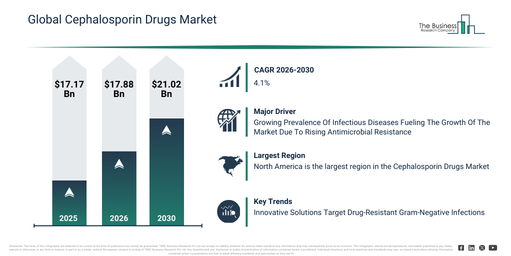
    The market for cephalosporin drugs has experienced consistent expansion over the recent past. Rising from a valuation of $17.17 billion in 2025, it is projected to reach $17.88 billion by 2026, reflecting a compound annual growth rate (CAGR) of 4.1%. This historical growth has been driven largely by a significant prevalence of bacterial infections, the established clinical effectiveness that cephalosporins offer, extensive recognition of these drugs among medical practitioners, the availability of several distinct generations of treatment options, and the widening scope of antibiotic usage within hospital settings.

    The cephalosporin drugs market is projected to experience consistent expansion over the coming years. By 2030, its value is anticipated to reach $21.02 billion, reflecting a compound annual growth rate (CAGR) of 4.1%. This forecasted growth is driven by factors such as escalating concerns over antimicrobial resistance, a rising need for advanced-generation antibiotics, the broadening of hospital infrastructure, an uptick in surgical interventions, and ongoing demand within emerging healthcare markets. Key developments anticipated during this period include a sustained preference for broad-spectrum antibiotics, extensive application across diverse infection categories, a greater reliance on higher-generation cephalosporins, a substantial presence of generic drug products, and the predominant role of hospital settings in administering injectable cephalosporins.

    Download A Free Sample Report For Comprehensive Market Insights:

    https://www.thebusinessresearchcompany.com/sample.aspx?id=24187&type=smp&utm_source=BlogsPR&utm_medium=Paid&utm_campaign=Jul_PR

    Cephalosporin Drugs Market Expansion Supported By Key Demand Factors

    The rising incidence of infectious diseases is anticipated to drive the expansion of the cephalosporin drugs market in the coming period. Infectious diseases are medical conditions triggered by microorganisms like bacteria, viruses, fungi, or parasites, which can be transmitted between individuals. This increase in infectious diseases is largely attributed to the growing problem of antimicrobial resistance, which makes previously manageable infections harder to treat, resulting in more frequent and persistent outbreaks. Cephalosporin drugs are utilized to manage infectious diseases by providing broad-spectrum antibacterial activity, which makes them highly effective against a wide range of bacterial infections. These medications shorten treatment duration by delivering rapid and dependable relief, thereby enhancing patient recovery outcomes. For example, in December 2024, the World Health Organization, a health agency based in Switzerland, reported that there were an estimated 263 million malaria cases and 597,000 malaria deaths globally in 2023. This marks an increase of roughly 11 million cases compared to 2022, with nearly the same number of fatalities. Around 95 percent of these deaths occurred in the WHO African Region. Consequently, the growing prevalence of infectious diseases is fueling the growth of the cephalosporin drugs market.

    Cephalosporin Drugs Market Segment Breakdown: Which Categories Generate The Most Revenue?

    The cephalosporin drugs market covered in this report is segmented –

    1) By Generation: First Generation, Second Generation, Third Generation, Fourth Generation, Fifth Generation

    2) By Route of Administration: Oral, Parenteral, Topical

    3) By Application: Skin Infection, Respiratory Tract Infection, Urinary Tract Infection

    4) By Distribution Channel: Hospital Pharmacy, Retail Pharmacy, Online Pharmacy

    Subsegments:

    1) By First Generation: Cefazolin, Cephradine, Cephalexin

    2) By Second Generation: Cefuroxime, Loracarbef, Cefaclor, Cefprozil

    3) By Third Generation: Ceftriaxone, Cefdinir, Cefotaxime, Ceftazidime

    4) By Fourth Generation: Cefepime, Cefpirome

    5) By Fifth Generation: Ceftaroline, Ceftobiprole

    Cephalosporin Drugs Market Growth Trends Influencing Competitive Dynamics

    Major pharmaceutical firms in the cephalosporin drugs sector are concentrating on creating cutting-edge solutions, such as therapies for gram-negative bacterial infections, in order to counter antimicrobial resistance and tackle the growing global challenge of drug-resistant diseases. A gram-negative bacterial infection treatment involves the application of specific antibiotics to eliminate gram-negative bacteria, which possess a distinctive cell wall structure that increases their resistance to many conventional antimicrobials. For example, in May 2024, Shionogi & Co. Ltd., a pharmaceutical company based in Japan, introduced FETROJA (Cefiderocol). This innovative antibiotic is intended for the management of serious gram-negative bacterial infections, including those that are non-responsive to other medications. Its unique Trojan horse mechanism enables it to bypass various resistance mechanisms, providing a vital therapeutic alternative for patients who have limited available options.

    Cephalosporin Drugs Market Key Players And Strategic Industry Positioning

    Major companies operating in the cephalosporin drugs market are Pfizer Inc., F. Hoffmann-La Roche Ltd., Merck & Co. Inc., AbbVie Inc., AstraZeneca plc, Abbott Laboratories, Novartis AG, Eli Lilly and Company, Teva Pharmaceutical Industries Ltd., Astellas Pharma Inc., Baxter International, Macleods Pharmaceuticals Ltd, Sun Pharmaceutical Industries Ltd., Lupin Limited, Zydus Lifesciences Limited, Alkem Laboratories Ltd., Mankind Pharma Limited, Aristo Pharmaceuticals Ltd, Hetero Drugs Ltd, Covalent Laboratories Private Limited.

    Access The Complete Cephalosporin Drugs Market Report:

    https://www.thebusinessresearchcompany.com/report/cephalosporin-drugs-global-market-report?utm_source=BlogsPR&utm_medium=Paid&utm_campaign=Jul_PR

    Cephalosporin Drugs Market Regional Analysis And Leading Geography

    North America was the largest region in the cephalosporin drugs market in 2025. Asia-Pacific is expected to be the fastest-growing region in the forecast period. The regions covered in the cephalosporin drugs market report are Asia-Pacific, South East Asia, Western Europe, Eastern Europe, North America, South America, Middle East, Africa.

    Get in touch with us:

    The Business Research Company: https://www.thebusinessresearchcompany.com/?utm_source=BlogsPR&utm_medium=Paid&utm_campaign=home_page_test

    Americas: +1 310-496-7795

    Asia: +44 7882 955267 & +91 8897263534

    Europe: +44 7882 955267

    Email us at: marketing@tbrc.info

    Follow us on:

    LinkedIn: https://in.linkedin.com/company/the-business-research-company

    YouTube: https://www.youtube.com/channel/UC24_fI0rV8cR5DxlCpgmyFQ

    Global Market Model: https://www.thebusinessresearchcompany.com/global-market-model
  • Kidney Cancer Drugs Market Size Projected To Increase From $8.88 Billion To $10.81 Billion During The Forecast Period

    Kidney Cancer Drugs Market Size Projected To Increase From $8.88 Billion To $10.81 Billion During The Forecast Period

    Enhanced with market attractiveness analysis, total addressable market evaluation, company benchmarking matrices, interactive Excel dashboards, expanded supply chain intelligence, emerging startup coverage, and detailed product insights, The Business Research Company’s 2026 market reports deliver more actionable and strategically valuable research.

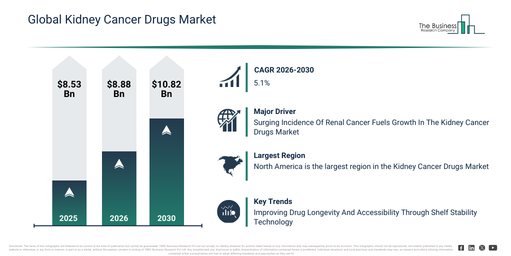
    Kidney Cancer Drugs Market Expected To Reach $10.81 Billion By 2030 At 5.1% CAGR

    The market for kidney cancer drugs has experienced consistent expansion over recent years, with projections indicating a rise from $8.53 billion in 2025 to $8.88 billion in 2026, reflecting a compound annual growth rate (CAGR) of 4.1%. This increase during the historical period has been driven by factors such as the scarcity of therapeutic alternatives, frequent diagnosis at advanced stages, reliance on traditional chemotherapy, limited uptake of immunotherapies, and an underutilization of precision medicine approaches.

    The kidney cancer drugs market is anticipated to experience robust expansion over the coming years, reaching a projected value of $10.82 billion by 2030, with a compound annual growth rate (CAGR) of 5.1%. This forecasted growth is driven by factors such as the rise of targeted therapies, higher investment in research and development, progress in genomics, growing awareness around precision medicine, and the incorporation of artificial intelligence into drug discovery efforts. Key developments shaping the market during this period involve the advancement of targeted therapy options, the broadening use of immunotherapy, investigations into angiogenesis inhibition, refinement of tyrosine kinase inhibitors, and the adoption of combination treatment approaches.

    Download A Free Sample Report For Comprehensive Market Insights:

    https://www.thebusinessresearchcompany.com/sample.aspx?id=2591&type=smp&utm_source=BlogsPR&utm_medium=Paid&utm_campaign=Jul_PR

    Kidney Cancer Drugs Market Industry Drivers: What Is Driving Revenue Growth?

    The increasing prevalence of renal cancer significantly drives the market for kidney cancer drugs. This form of cancer, which typically manifests as renal cell carcinoma, originates in the kidneys. Contributing factors such as shifting lifestyle habits, tobacco use, and poor dietary choices promote the development of cancerous cells in the kidneys. Drugs designed for kidney cancer are used to combat the disease by targeting and eliminating cancer cells, slowing tumor progression, or inhibiting signals that facilitate cancer metastasis. According to the American Cancer Society, a professional organization based in the United States, an estimated 80,980 new cases of kidney (renal) cancer are projected to be diagnosed in the U.S. in 2025, along with around 14,510 deaths attributed to the illness. This growing disease burden, therefore, fuels expansion in the kidney cancer drugs market.

    Kidney Cancer Drugs Market Segment Analysis: What Are The Major Market Categories?

    The kidney cancer drugs market covered in this report is segmented –

    1) By Cancer Type: Renal Cell Carcinoma (RCC), Transitional Cell Carcinoma (TCC) Or Urothelial Cell Carcinoma (UCC)

    2) By Product: Nexavar (Sorafenib), Sutent (Sunitinib), Afinitor (Everolimus), Votrient (Pazopanib), Avastin (Bevacizumab), Inlyta (Axitinib), Other Products

    3) By End Users: Hospitals, Clinics, Research Center, Other End-Users

    Subsegments:

    1) By Renal Cell Carcinoma (RCC): Targeted Therapies, Immune Checkpoint Inhibitors, Cytokine Therapies

    2) By Transitional Cell Carcinoma (TCC) Or Urothelial Cell Carcinoma (UCC): Chemotherapy Agents, Immunotherapy Agents, Antibody-Drug Conjugates (ADCs)

    Kidney Cancer Drugs Market Growth Trends: What Is Influencing The Future Outlook?

    Leading firms in the kidney cancer drugs market are prioritizing advancements like shelf stability technology to boost product durability, simplify storage, and guarantee steady availability of essential therapies for patients and medical professionals. Shelf stability technology involves specialized formulations and packaging designed to prolong the shelf life of pharmaceuticals, eliminating the need for refrigeration or extra handling. This approach ensures drugs retain their efficacy and safety over a longer duration, enhancing ease of access and logistical convenience. For example, in April 2024, Amneal Pharmaceuticals Inc., a company based in the US, introduced PEMRYDI RTU. This product represents the first ready-to-use form of pemetrexed for injection, requiring neither reconstitution, dilution, nor refrigeration. Such an innovation streamlines the administrative process for healthcare workers.

    Kidney Cancer Drugs Market Leading Companies Driving Competitive Growth

    Major companies operating in the kidney cancer drugs market are Pfizer Inc., Novartis AG, Exelixis Inc., F. Hoffmann-La Roche AG, Bristol Myers Squibb Company, Bayer AG, Merck & Co. Inc., EUSA Pharma Inc., UroGen Pharma Ltd., Natco Pharma, CStone Pharma, BeiGene, Takeda Pharmaceuticals, Astellas Pharma Inc, AstraZeneca plc, GlaxoSmithKline plc, Amgen Inc, Eli Lilly and Company, Abbvie, Johnson & Johnson, Sanofi, AVEO Oncology, Teva Pharmaceutical Industries Ltd.

    Access The Complete Kidney Cancer Drugs Market Report:

    https://www.thebusinessresearchcompany.com/report/kidney-cancer-drugs-global-market-report?utm_source=BlogsPR&utm_medium=Paid&utm_campaign=Jul_PR

    Kidney Cancer Drugs Market Largest Region: Which Geography Holds The Highest Market Share?

    North America was the largest region in the kidney cancer drugs market in 2025. Middle East is expected to be the fastest-growing region in the global kidney cancer drugs market share during the forecast period. The regions covered in the kidney cancer drugs market report are Asia-Pacific, South East Asia, Western Europe, Eastern Europe, North America, South America, Middle East, Africa.

    Get in touch with us:

    The Business Research Company: https://www.thebusinessresearchcompany.com/?utm_source=BlogsPR&utm_medium=Paid&utm_campaign=home_page_test

    Americas: +1 310-496-7795

    Asia: +44 7882 955267 & +91 8897263534

    Europe: +44 7882 955267

    Email us at: marketing@tbrc.info

    Follow us on:

    LinkedIn: https://in.linkedin.com/company/the-business-research-company

    YouTube: https://www.youtube.com/channel/UC24_fI0rV8cR5DxlCpgmyFQ

    Global Market Model: https://www.thebusinessresearchcompany.com/global-market-model
  • Ketone Supplements Market Growth Outlook Reveals A CAGR Of 9.8% And A Market Value Of $10.23 Billion By 2030

    Ketone Supplements Market Growth Outlook Reveals A CAGR Of 9.8% And A Market Value Of $10.23 Billion By 2030

    Through market attractiveness analysis, total addressable market evaluation, company benchmarking matrices, interactive Excel dashboards, expanded supply chain intelligence, emerging startup coverage, and detailed product insights, The Business Research Company’s 2026 market reports provide more actionable and strategically valuable research.

    Ketone Supplements Market Size And Revenue Forecast Through 2030

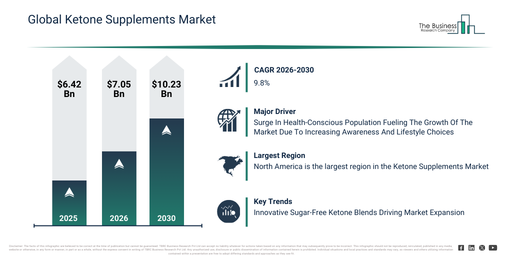
    The ketone supplements market has exhibited robust expansion over the last several years. Projected to increase from $6.42 billion in 2025 to $7.05 billion in 2026, this growth reflects a compound annual growth rate (CAGR) of 9.8%. This historical upward trend has been driven by factors such as the growing popularity of low-carb diets, a rise in sports nutrition product usage, the expansion of online supplement retail, heightened consumer focus on metabolic health, and the increased availability of exogenous ketone offerings.

    Projections indicate the ketone supplements market will experience robust expansion over the coming years. By 2030, its value is anticipated to reach $10.23 billion, reflecting a compound annual growth rate (CAGR) of 9.8%. Several factors are driving this anticipated growth, including the increased adoption of functional nutrition, a growing public awareness of the benefits associated with ketosis, the rise of tailored nutrition offerings, greater penetration of online retail, and new developments in the ways ketones can be delivered. Key trends shaping this forecast period involve the wider embrace of ketogenic dietary patterns, a heightened desire for supplements that boost athletic performance, greater consumer interest in products supporting cognitive energy, the proliferation of clean-label and sugar-free alternatives, and the expansion of brands that sell directly to consumers.

    Download A Free Sample Report For Comprehensive Market Insights:

    https://www.thebusinessresearchcompany.com/sample.aspx?id=22028&type=smp&utm_source=BlogsPR&utm_medium=Paid&utm_campaign=Jul_PR

    #Ketone Supplements Market Growth Factors: Which Forces Are Supporting Market Expansion?

    The rising number of health-conscious individuals is expected to boost the ketone supplements market in the coming period. These individuals are those who deliberately make lifestyle decisions centered on their well-being, including eating nutritious meals, engaging in regular physical activity, and steering clear of harmful substances. This trend is fueled by greater awareness of how lifestyle choices affect health, the impact of social media, and enhanced access to health-related information. Ketone supplements serve as a useful resource for such people, aiding in weight control, enhancing athletic performance, sharpening mental clarity, and speeding up post-exercise recovery. As reported by the International Food Information Council, a nonprofit based in the US, in April 2023, the share of Americans adhering to a specific diet or eating pattern over the past year climbed to 52% in 2023, compared to 48% in 2022. Consequently, the expansion of the health-conscious population is propelling forward the ketone supplements market.

    Ketone Supplements Market Segment Breakdown: Which Categories Generate The Most Revenue?

    The ketone supplements market covered in this report is segmented –

    1) By Product Type: Tablets Or Capsules, Powder, Gummies, Liquid

    2) By Application: Supplements, Food And Beverages

    3) By Distribution Channel: Hypermarkets or Supermarkets, Convenience Stores, Specialist Stores, Online Retail, Other Distribution Channels

    Subsegments:

    1) By Tablets or Capsules: Exogenous Ketone Capsules, Ketone Ester Tablets, BHB (Beta-Hydroxybutyrate) Salt Capsules, Multi-Nutrient Ketone Blends

    2) By Powder: Pure BHB Powder, Ketone Ester Powder, Ketogenic Meal Replacement Powder, Flavored Ketone Powders

    3) By Gummies: BHB Gummies, MCT (Medium-Chain Triglyceride) Gummies, Multi-Vitamin Infused Ketone Gummies, Sugar-Free Ketone Gummies

    4) By Liquid: Ready-to-Drink Ketone Beverages, Liquid Ketone Esters, Ketone Energy Shots, Electrolyte-Infused Ketone Drinks

    Ketone Supplements Market Industry Trends: What Changes Are Reshaping Demand?

    Major players in the ketone supplements industry are concentrating on creating advanced product formulations, including sugar-free ketone blends, aimed at boosting energy levels and improving metabolic function. A sugar-free ketone blend refers to a product that pairs exogenous ketones—like beta-hydroxybutyrate (BHB) salts—with additional components, all while excluding any added sugars. Such blends help induce ketosis, a metabolic condition in which the body utilizes fat as its primary energy source rather than carbohydrates. As an example, in October 2024, KEY, a ketone supplement company based in the United States, made its all-natural, sugar-free ketone drink available nationwide through Sprouts Farmers Market stores, thereby broadening consumer access. KEY sets itself apart with a formulation that contains no sugar and includes 80 mg of caffeine sourced from green tea, providing steady energy without the subsequent energy drop. By offering a natural energy alternative derived from ketones, it promotes metabolic efficiency and sustained physical performance.

    Ketone Supplements Market Key Players And Strategic Industry Positioning

    Major companies operating in the ketone supplements market are HVMN Inc., Perfect Keto LLC, KetoneAid Inc., Ketologic LLC, BPI Sports LLC, Ancient Nutrition LLC, Zhou Nutrition LLC, Finaflex LLC, Apex International LLC, SMP Nutra LLC, Nutra Business LLC, Redrose Manufacturing Limited, BL Bio Lab LLC, Zenwise Health LLC, Winergy Inc., Fermentis Life Sciences Inc., TdeltaS Global Inc., Green Healthcare Solutions LLC, Savant Science Inc., Sapien Labs Nutrition Products Ltd

    Access The Complete Ketone Supplements Market Report:

    https://www.thebusinessresearchcompany.com/report/ketone-supplements-global-market-report?utm_source=BlogsPR&utm_medium=Paid&utm_campaign=Jul_PR

    Ketone Supplements Market Regional Analysis: Which Region Leads By Revenue?

    North America was the largest region in the ketone supplements market in 2025. Asia-Pacific is expected to be the fastest-growing region in the forecast period. The regions covered in the ketone supplements market report are Asia-Pacific, South East Asia, Western Europe, Eastern Europe, North America, South America, Middle East, Africa.

    Get in touch with us:

    The Business Research Company: https://www.thebusinessresearchcompany.com/?utm_source=BlogsPR&utm_medium=Paid&utm_campaign=home_page_test

    Americas: +1 310-496-7795

    Asia: +44 7882 955267 & +91 8897263534

    Europe: +44 7882 955267

    Email us at: marketing@tbrc.info

    Follow us on:

    LinkedIn: https://in.linkedin.com/company/the-business-research-company

    YouTube: https://www.youtube.com/channel/UC24_fI0rV8cR5DxlCpgmyFQ

    Global Market Model: https://www.thebusinessresearchcompany.com/global-market-model
  • Ketolides Market Forecast Highlights Expansion From $3.45 Billion To $4.23 Billion Through 2030

    Ketolides Market Forecast Highlights Expansion From $3.45 Billion To $4.23 Billion Through 2030

    Delivering more actionable and strategically valuable research, The Business Research Company’s 2026 market reports feature market attractiveness analysis, total addressable market evaluation, company benchmarking matrices, interactive Excel dashboards, expanded supply chain intelligence, emerging startup coverage, and detailed product insights.

    Ketolides Market Growth From $3.45 Billion In 2026 To $4.23 Billion By 2030 At A CAGR Of 5.2%

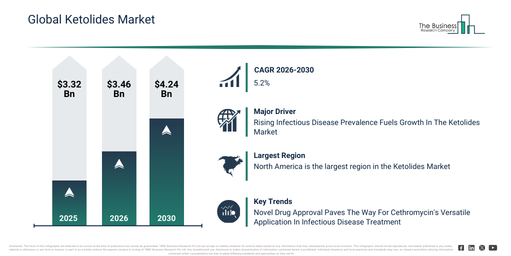
    The ketolides market has experienced consistent growth over recent years, with its value projected to increase from $3.32 billion in 2025 to $3.46 billion in 2026, reflecting a compound annual growth rate (CAGR) of 4.1%. This expansion during the historical period can be linked to factors such as the growing incidence of bacterial infections, a higher frequency of respiratory tract infections, an expanding elderly population, increasing need for substitutes for macrolide-resistant antibiotics, and progress in antibiotic research.

    The ketolides market is projected to experience robust expansion over the coming years. By 2030, it is anticipated to reach a value of $4.24 billion, driven by a compound annual growth rate (CAGR) of 5.2%. This forecasted growth is supported by the broadening of precision medicine applications, the creation of next-generation ketolides, greater uptake in emerging economies, heightened investment into research on antibiotic resistance, and the expansion of both hospital and retail pharmacy networks. Key developments shaping this period comprise the introduction of innovative ketolide derivatives, improved management of antibiotic resistance, rising antibiotic use in hospital and retail settings, the move toward personalized antibiotic therapies, and advances in drug formulation and delivery technologies.

    Download A Free Sample Report For Comprehensive Market Insights:

    https://www.thebusinessresearchcompany.com/sample.aspx?id=12918&type=smp&utm_source=BlogsPR&utm_medium=Paid&utm_campaign=Jul_PR

    Ketolides Market Demand Drivers: What Is Fueling Industry Growth?

    The growing incidence of infectious diseases is anticipated to drive the ketolides market forward in the coming years. Infectious diseases, caused by pathogens such as bacteria, viruses, fungi, or parasites, can be transmitted between individuals, leading to various symptoms and health issues. One example of such a disease is tuberculosis. Ketolides, employed in the treatment of infectious diseases, have been assessed for their potential in addressing tuberculosis due to their high intracellular activity, which is crucial in managing the condition. For example, in February 2024, data from GOV.UK, a UK government department, showed that tuberculosis (TB) cases in England rose by 10.7% in 2023, from 4,380 in 2022 to 4,850. Consequently, the rising prevalence of infectious diseases is fueling expansion in the ketolides market.

    Ketolides Market Driver: Expanding Healthcare Industry Fuels Growth In The Ketolides Market

    The growth of the ketolides market is expected to be propelled by the expanding healthcare industry in the foreseeable future. This industry encompasses the integration of sectors within the economic system that deliver products and services aimed at curing, preventing, rehabilitating, and providing palliative care for patients. Its expansion contributes to the development of ketolides through involvement in clinical trials and the provision of feedback on the safety and efficacy of these drugs. Moreover, these entities play a vital role in guaranteeing that ketolides are administered to patients in a secure and effective manner. As an illustration, in May 2023, the American Health Care Association, a US-based nonprofit, reported that the number of hospitals in the United States increased to 6,129 in 2023 from 6,093 in 2022. Hence, the broadening of the healthcare sector is driving expansion in the ketolides market.

    Ketolides Market Segmentation: How Is The Market Structured Across Key Categories?

    The ketolides market covered in this report is segmented –

    1) By Drug Type: Telithromycin, Cethromycin, Solithromycin

    2) By Indication: Bronchitis, Pneumonia, Sinusitis, Tonsillitis Or Pharyngitis

    3) By Microorganism: Streptococcus Pneumoniae, Haemophilus Influenzae, Moraxella Catarrhalis, Chlamydophila Pneumoniae, Mycoplasma Pneumoniae

    4) By Distribution Channel: Hospital Pharmacies, Retail Pharmacies, Online Pharmacies, Other Distribution Channels

    Ketolides Market Innovation Trends: Which Developments Are Transforming The Industry?

    Major players within the ketolides sector are placing a strong emphasis on the creation of novel drugs and therapeutic approaches, aiming to secure a competitive edge and maintain their market foothold. A case in point occurred in June 2023, when AliquantumRx Inc., a biotechnology research firm headquartered in the United States, secured approval from the U.S. Patent and Trademark Office (USPTO), a federal agency under the Department of Commerce, for a patent entitled “salts and polymorphs of cethromycin for the treatment of bacterial and protozoan disease.” Cethromycin, which belongs to the ketolide antibiotic class, demonstrates efficacy against a range of infectious conditions arising from bacteria and protozoa, including malaria, babesiosis, toxoplasmosis, diarrhea, and others. This newly granted patent is expected to enhance the company’s opportunities for success while reducing the risks linked to cethromycin’s commercialization, as it now extends the drug’s applicability to indications beyond malaria.

    Ketolides Market Competitive Landscape And Leading Companies

    Major companies operating in the ketolides market are Pfizer Inc., F. Merck & Co. Inc., Novartis AG, Sanofi S.A., AstraZeneca PLC, Abbott Laboratories, GSK PLC, Takeda Pharmaceutical Company Limited, Eli Lilly and Company, Teva Pharmaceutical Industries Ltd., Astellas Pharma Inc., Daiichi Sankyo Company Limited, Shionogi & Company Limited, Dr. Reddys Laboratories Ltd., Glenmark Pharmaceuticals Ltd., Corden Pharma GmbH, Optimer Pharmaceuticals Inc., Vivimed Labs Limited, Wockhardt Ltd., Advanced Life Sciences Holdings Inc

    Access The Complete Ketolides Market Report:

    https://www.thebusinessresearchcompany.com/report/ketolides-global-market-report?utm_source=BlogsPR&utm_medium=Paid&utm_campaign=Jul_PR

    Ketolides Market Geographic Distribution And Regional Opportunities

    North America was the largest region in the ketolides market in 2025. The regions covered in the ketolides market report are Asia-Pacific, South East Asia, Western Europe, Eastern Europe, North America, South America, Middle East, Africa.

    Get in touch with us:

    The Business Research Company: https://www.thebusinessresearchcompany.com/?utm_source=BlogsPR&utm_medium=Paid&utm_campaign=home_page_test

    Americas: +1 310-496-7795

    Asia: +44 7882 955267 & +91 8897263534

    Europe: +44 7882 955267

    Email us at: marketing@tbrc.info

    Follow us on:

    LinkedIn: https://in.linkedin.com/company/the-business-research-company

    YouTube: https://www.youtube.com/channel/UC24_fI0rV8cR5DxlCpgmyFQ

    Global Market Model: https://www.thebusinessresearchcompany.com/global-market-model
  • Janus Kinases (JAKs) Inhibitor Drug Market Expected To Reach $11.04 Billion By 2030 As Growth Accelerates At 11.4% CAGR

    Janus Kinases (JAKs) Inhibitor Drug Market Expected To Reach $11.04 Billion By 2030 As Growth Accelerates At 11.4% CAGR

    Enhanced with market attractiveness analysis, total addressable market evaluation, company benchmarking matrices, interactive Excel dashboards, expanded supply chain intelligence, emerging startup coverage, and detailed product insights, The Business Research Company’s 2026 market reports deliver more actionable and strategically valuable research.

    Janus Kinases (JAKs) Inhibitor Drug Market Expansion Outlook: What Revenue Opportunities Lie Ahead?

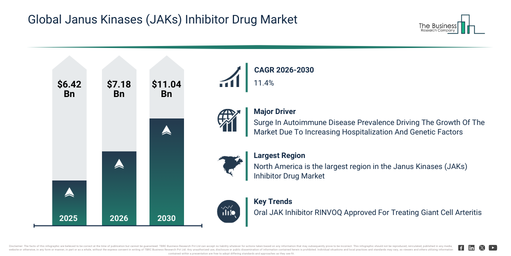
    The market for Janus kinase (JAK) inhibitor medications has experienced swift expansion in recent times. Valued at $6.42 billion in 2025, it is projected to reach $7.18 billion by 2026, reflecting a compound annual growth rate (CAGR) of 11.7%. Historical growth has been fueled by a rising incidence of autoimmune disorders, constraints associated with biologic therapies, immunology treatments administered within hospital settings, promising early results from clinical trials involving JAK inhibitors, and a growing need for oral anti-inflammatory medications.

    The market for Janus kinase (JAK) inhibitor drugs is projected to experience significant expansion over the coming years, with its value anticipated to reach $11.04 billion by 2030, advancing at a compound annual growth rate (CAGR) of 11.4%. This forecasted growth is largely driven by the ongoing pipeline development of selective JAK inhibitors, their broadening applications in dermatology and gastroenterology, a rising demand for precision immune modulation, the management of autoimmune diseases in outpatient settings, and supportive regulatory pathways for small-molecule therapies. Key developments shaping this period include the expanding utilization of JAK inhibitors for autoimmune conditions, a growing preference for oral small-molecule immunotherapies, an increased uptake of selective JAK1 inhibitors, a heightened emphasis on long-term safety assessments, and the widening use of JAK inhibitors beyond rheumatology.

    Download A Free Sample Report For Comprehensive Market Insights:

    https://www.thebusinessresearchcompany.com/sample.aspx?id=24578&type=smp&utm_source=BlogsPR&utm_medium=Paid&utm_campaign=Jul_PR

    Janus Kinases (JAKs) Inhibitor Drug Market Growth Drivers: What Factors Are Accelerating Expansion?

    The growing occurrence of autoimmune disorders is anticipated to accelerate the expansion of the Janus kinases (JAKs) inhibitor drug market moving forward. Autoimmune disorders are characterized by the immune system erroneously attacking the body’s own healthy cells and tissues. This rise in autoimmune disease prevalence is driven by genetic influences, since specific genetic tendencies can heighten an individual’s vulnerability to immune system irregularities. Janus kinase (JAK) inhibitors prove effective for autoimmune conditions by targeting and obstructing particular enzymes involved in immune responses, thereby lessening inflammation and stopping the immune system from damaging the body’s tissues. As an example, in February 2024, data from Arthritis Australia, an Australian non-profit organization, indicated that by 2025, an estimated 562,378 people in Australia are predicted to have rheumatoid arthritis (RA), making up 14% of the overall arthritis population. By 2040, the number of Australians with RA is forecasted to grow by 33%, reaching 748,721 individuals—a rise of 186,343 people living with RA relative to 2025. Consequently, the increasing incidence of autoimmune diseases is fueling the growth of the Janus kinases (JAKs) inhibitor drug market.

    Janus Kinases (JAKs) Inhibitor Drug Market Segmentation Trends And Revenue Drivers

    The janus kinases (jaks) inhibitor drug market covered in this report is segmented –

    1) By Type: JAK1 Inhibitor, JAK2 Inhibitor, JAK3 Inhibitor, Other Types

    2) By Drug Type: Selective JAK Inhibitors, Non-Selective JAK Inhibitors, Oral JAK Inhibitors, Other Drug Types

    3) By Route of Administration: Oral, Injectable, Topical

    4) By Application: Rheumatoid Arthritis, Psoriatic Arthritis, Inflammatory Bowel Disease, Atopic Dermatitis, Ulcerative Colitis

    5) By End User: Hospitals, Homecare, Specialty Clinics, Other End Users

    Subsegments:

    1) By JAK1 Inhibitor: Filgotinib, Upadacitinib, Itacitinib, Abrocitinib, Brepocitinib

    2) By JAK2 Inhibitor: Fedratinib, Pacritinib, Momelotinib, Gandotinib, NS-018

    3) By JAK3 Inhibitor: Tofacitinib, PF-06651600, Ritlecitinib

    4) By Other Types: Baricitinib, Ruxolitinib, Oclacitinib, Delgocitinib, Peficitinib

    Janus Kinases (JAKs) Inhibitor Drug Market Trends: What Is Shaping Future Industry Growth?

    Leading firms within the janus kinases (JAKs) inhibitor drug market are prioritizing the acquisition of regulatory approvals to broaden their therapeutic applications, hasten product launches, and secure a market advantage. Regulatory approvals are official permissions issued by health authorities, enabling pharmaceutical companies to distribute and advertise a drug after it has proven its safety and effectiveness for particular medical conditions. For example, in April 2025, AbbVie Inc., a biopharmaceutical company headquartered in the United States, secured Food and Drug Administration (FDA) approval for RINVOQ (upadacitinib), an oral JAK inhibitor developed for treating adults with giant cell arteritis (GCA). This medication targets JAK1 and upadacitinib, impairing the JAK-STAT signaling pathway, which is essential for relaying signals from pro-inflammatory cytokines involved in immune-mediated and inflammatory disorders. This clearance introduces a significant new therapeutic alternative, helping to decrease dependence on glucocorticoids linked to substantial side effects, thus fulfilling a major gap in GCA management and enhancing patient results.

    Janus Kinases (JAKs) Inhibitor Drug Market Industry Leaders: Which Organizations Are Driving Competition?

    Major companies operating in the janus kinases (jaks) inhibitor drug market are Novartis AG, Roche Holding AG, LEO Pharma A/S, Mitsubishi Tanabe Pharma Corporation, Sun Pharmaceutical Industries Ltd., Dr. Reddy’s Laboratories Ltd., Cipla Ltd., Glenmark Pharmaceuticals Ltd., Lupin Limited, Torrent Pharmaceuticals Ltd., Zydus Lifesciences Ltd., Almirall S.A., Kyowa Kirin Co. Ltd., Chugai Pharmaceutical Co. Ltd., Abbisko Therapeutics Co. Ltd., Concert Pharmaceuticals Inc., Jiangsu Hengrui Pharmaceuticals Co. Ltd., BioCryst Pharmaceuticals Inc., Priovant Therapeutics Ltd., Aclaris Therapeutics Inc.

    Access The Complete Janus Kinases (JAKs) Inhibitor Drug Market Report:

    https://www.thebusinessresearchcompany.com/report/janus-kinases-jaks-inhibitor-drug-global-market-report?utm_source=BlogsPR&utm_medium=Paid&utm_campaign=Jul_PR

    Janus Kinases (JAKs) Inhibitor Drug Market Largest Region By Revenue And Market Share

    North America was the largest region in the janus kinases (JAKs) inhibitor market in 2025. The regions covered in the janus kinases (jaks) inhibitor drug market report are Asia-Pacific, South East Asia, Western Europe, Eastern Europe, North America, South America, Middle East, Africa.

    Get in touch with us:

    The Business Research Company: https://www.thebusinessresearchcompany.com/?utm_source=BlogsPR&utm_medium=Paid&utm_campaign=home_page_test

    Americas: +1 310-496-7795

    Asia: +44 7882 955267 & +91 8897263534

    Europe: +44 7882 955267

    Email us at: marketing@tbrc.info

    Follow us on:

    LinkedIn: https://in.linkedin.com/company/the-business-research-company

    YouTube: https://www.youtube.com/channel/UC24_fI0rV8cR5DxlCpgmyFQ

    Global Market Model: https://www.thebusinessresearchcompany.com/global-market-model
  • Janus Kinase (JAK) Inhibitors Market Set To Grow From $27.88 Billion In 2026 To $56.77 Billion By 2030 At A CAGR Of 19.5%

    Janus Kinase (JAK) Inhibitors Market Set To Grow From $27.88 Billion In 2026 To $56.77 Billion By 2030 At A CAGR Of 19.5%

    Through market attractiveness analysis, total addressable market evaluation, company benchmarking matrices, interactive Excel dashboards, expanded supply chain intelligence, emerging startup coverage, and detailed product insights, The Business Research Company’s 2026 market reports provide more actionable and strategically valuable research.

    Janus Kinase (JAK) Inhibitors Market Growth Potential: How Will Market Size Change Through 2030?

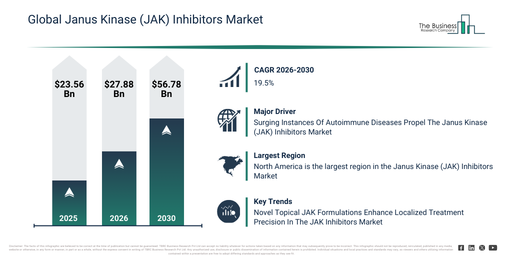
    The market for janus kinase (JAK) inhibitors has experienced swift expansion in recent years. Its value is projected to increase from $23.56 billion in 2025 to $27.88 billion in 2026, reflecting a compound annual growth rate (CAGR) of 18.4%. This past growth has been driven by factors such as the increasing frequency of autoimmune conditions, the authorization of first-generation JAK inhibitors, heightened research and development spending, greater physician awareness, and a robust pipeline of clinical trials.

    The market for janus kinase (JAK) inhibitors is projected to experience rapid expansion in the coming years, reaching a value of $56.78 billion by 2030, driven by a compound annual growth rate (CAGR) of 19.5%. This forecasted growth is fueled by the rise of next-generation JAK inhibitors, their broadening use in new therapeutic areas, progress in drug delivery technologies, strategic collaborations aimed at pipeline advancement, and a growing reliance on precision medicine. Key trends shaping this period include a shift toward individualized therapy, the development of combination treatments, extension of JAK inhibitor applications beyond rheumatology, increased attention to pediatric uses, and the creation of non-oral formulations.

    Download A Free Sample Report For Comprehensive Market Insights:

    https://www.thebusinessresearchcompany.com/sample.aspx?id=12524&type=smp&utm_source=BlogsPR&utm_medium=Paid&utm_campaign=Jul_PR

    Janus Kinase (JAK) Inhibitors Market Growth Factors Supporting Long-Term Expansion

    The rising prevalence of autoimmune conditions is expected to boost the Janus kinase (JAK) inhibitors market. Autoimmune diseases encompass a wide range of disorders defined by an atypical immune reaction where the body’s defense system erroneously targets and harms its own healthy cells, tissues, and organs. Janus kinase inhibitors offer therapeutic advantages for these conditions by regulating immune activity, curbing inflammation, and easing symptoms like those found in rheumatoid arthritis. For example, in September 2023, the Impact of IBD Report 2023 from the Inflammatory Bowel Disease Clinical and Research Centre, a Canadian entity dedicated to enhancing outcomes for patients with Crohn’s disease and ulcerative colitis, reported a prevalence of 825 per 100,000 in 2023, meaning over 320,000 individuals in Canada are affected by inflammatory bowel disease. With an expected annual rise of 2.44%, this number is projected to reach 470,000 Canadians, or 1.1% of the population, by 2035. Consequently, the growing number of autoimmune disease cases is propelling the expansion of the Janus kinase inhibitors market.

    Janus Kinase (JAK) Inhibitors Market Segment Analysis Highlighting Growth Areas

    The janus kinase (jak) inhibitors market covered in this report is segmented –

    1) By Inhibitors Type: Ruxolitinib, Tofacitinib, Oclacitinib, Baricitinib, Peficitinib, Other Inhibitor Types

    2) By Mode Of Administration: Injectable, Oral, Other Modes Of Administration

    3) By Distribution Channel: Hospital Pharmacies, Retail Pharmacies, Online Pharmacies

    4) By Application: Autoimmune Disorders, Oncology, Inflammatory Disorders, Metabolic Disorders

    Subsegments:

    1) By Ruxolitinib: Ruxolitinib Tablets, Ruxolitinib Cream, Ruxolitinib Oral Solution

    2) By Tofacitinib: Tofacitinib Tablets, Tofacitinib Extended-Release Tablets, Tofacitinib Oral Solution

    3) By Oclacitinib: Oclacitinib Tablets, Oclacitinib for Veterinary Use

    4) By Baricitinib: Baricitinib Tablets, Baricitinib Extended-Release Formulations

    5) By Peficitinib: Peficitinib Tablets, Peficitinib Oral Formulations

    6) By Other Inhibitor Types: Emerging JAK Inhibitors, Combination JAK Inhibitor Therapies, Non-Oral JAK Inhibitor Formulations

    Janus Kinase (JAK) Inhibitors Market Industry Trends Shaping Future Revenue Growth

    Major players within the Janus kinase (JAK) inhibitors market are placing strong emphasis on the creation of advanced localized formulations, including topical JAK inhibitor creams, to enhance targeted therapy, minimize systemic exposure, and widen clinical applications. By enabling JAK inhibition to be delivered directly to affected tissues, these localized treatments achieve better safety profiles and improved efficacy when addressing inflammatory skin conditions. A notable example is LEO Pharma, a dermatology-focused pharmaceutical firm headquartered in Denmark, which secured a favorable recommendation from the European Medicines Agency’s (EMA) CHMP in July 2024 for its product Anzupgo (delgocitinib) cream. This topical pan-JAK inhibitor, targeting JAK1, JAK2, JAK3, and TYK2, is intended for managing moderate-to-severe chronic hand eczema (CHE). Subsequently, Swissmedic granted approval to Anzupgo in November 2024, marking it as the first authorized topical pan-JAK inhibitor for CHE in Switzerland. Such regulatory successes underscore an increasing industry trend toward developing next-generation topical JAK therapies that offer precise, localized inflammation control and expand the utility of JAK inhibitors beyond systemic treatment scenarios.

    Janus Kinase (JAK) Inhibitors Market Leading Companies: Who Holds Significant Market Presence?

    Major companies operating in the janus kinase (jak) inhibitors market are Pfizer Inc., Merck & Co. Inc., AbbVie Inc., Novartis AG, Sanofi SA, Bristol Myers Squibb Company, GSK Plc., Takeda Pharmaceutical Company Ltd., Eli Lilly and Company, Incyte Corporation, Kyowa Hakko Kirin Co. Ltd., Galapagos NV, Sierra Oncology Inc., Theravance Biopharma Inc., Aclaris Therapeutics Inc., AstraZeneca PLC, Janssen Pharmaceuticals, Boehringer Ingelheim International GmbH, Pfizer Oncology, Regeneron Pharmaceuticals Inc.

    Access The Complete Janus Kinase (JAK) Inhibitors Market Report:

    https://www.thebusinessresearchcompany.com/report/janus-kinase-jak-inhibitors-global-market-report?utm_source=BlogsPR&utm_medium=Paid&utm_campaign=Jul_PR

    Janus Kinase (JAK) Inhibitors Market Regional Analysis And Leading Geography

    North America was the largest region in the Janus kinase (JAK) inhibitors market in 2025. Asia-Pacific is expected to be the fastest-growing region in the forecast period. The regions covered in the janus kinase (jak) inhibitors market report are Asia-Pacific, South East Asia, Western Europe, Eastern Europe, North America, South America, Middle East, Africa.

    Get in touch with us:

    The Business Research Company: https://www.thebusinessresearchcompany.com/?utm_source=BlogsPR&utm_medium=Paid&utm_campaign=home_page_test

    Americas: +1 310-496-7795

    Asia: +44 7882 955267 & +91 8897263534

    Europe: +44 7882 955267

    Email us at: marketing@tbrc.info

    Follow us on:

    LinkedIn: https://in.linkedin.com/company/the-business-research-company

    YouTube: https://www.youtube.com/channel/UC24_fI0rV8cR5DxlCpgmyFQ

    Global Market Model: https://www.thebusinessresearchcompany.com/global-market-model
  • Isovaleric Acidemia (IVA) Treatment Market Opportunities Are Emerging Beyond Traditional Growth Areas

    Isovaleric Acidemia (IVA) Treatment Market Opportunities Are Emerging Beyond Traditional Growth Areas

    Delivering more actionable and strategically valuable research, The Business Research Company’s 2026 market reports feature market attractiveness analysis, total addressable market evaluation, company benchmarking matrices, interactive Excel dashboards, expanded supply chain intelligence, emerging startup coverage, and detailed product insights.

    Isovaleric Acidemia (IVA) Treatment Market Value Analysis: What Growth Is Expected Over The Forecast Period?

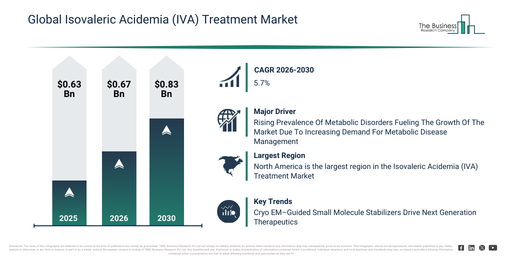
    The market for isovaleric acidemia (IVA) treatments has experienced notable growth over the past few years. Projections indicate an increase from $0.63 billion in 2025 to $0.67 billion in 2026, reflecting a compound annual growth rate (CAGR) of 5.8%. Several factors contributed to this expansion during the historical period, including enhanced newborn screening initiatives, a greater understanding of rare metabolic diseases, the accessibility of dietary and supplement-based therapies, the proliferation of specialized pediatric metabolic centers, and higher survival rates among individuals with IVA.

    The isovaleric acidemia (IVA) treatment market is projected to experience robust expansion over the coming years. By 2030, its value is anticipated to reach $0.83 billion, reflecting a compound annual growth rate (CAGR) of 5.7%. This forecasted growth is driven by progress in therapies for rare diseases, the broadening of genetic counseling services, a heightened emphasis on preventive metabolic care, an uptick in clinical trials focused on gene therapy, and increased funding for orphan drug development. Key trends shaping this period include the wider implementation of early genetic screening and diagnosis, the expanded use of carnitine and glycine supplementation, a greater focus on customized dietary management strategies, the growth of home-based long-term IVA care, and intensified research into gene therapy methods.

    Download A Free Sample Report For Comprehensive Market Insights:

    https://www.thebusinessresearchcompany.com/sample.aspx?id=24269&type=smp&utm_source=BlogsPR&utm_medium=Paid&utm_campaign=Jul_PR

    Isovaleric Acidemia (IVA) Treatment Market Demand Drivers Creating New Revenue Opportunities

    The anticipated expansion of the isovaleric acidemia (IVA) treatment market is largely driven by the growing incidence of metabolic disorders. These disorders, which disrupt normal metabolic processes and impair the body’s ability to convert food into energy, encompass conditions such as diabetes mellitus, hypothyroidism, hyperthyroidism, phenylketonuria (PKU), galactosemia, maple syrup urine disease (MSUD), isovaleric acidemia (IVA), Gaucher disease, Fabry disease, Wilson’s disease, and various lysosomal storage disorders. Their rising prevalence stems from lifestyle factors like poor dietary habits and physical inactivity, which foster obesity and insulin resistance. Isovaleric acidemia treatment helps manage these disorders by mitigating the accumulation of toxic substances, restoring typical metabolic function, and averting issues such as neurological damage. For example, in September 2023, the World Health Organization—a United Nations specialized agency based in Switzerland—reported 2.0 million diabetes-related deaths. Consequently, the rising occurrence of metabolic disorders is fueling growth in the isovaleric acidemia (IVA) treatment market.

    The isovaleric acidemia (IVA) treatment market is expected to be propelled forward by the growing emphasis on personalized medicine. This approach customizes healthcare and treatment decisions based on an individual’s genetic profile, lifestyle, and environment, driven largely by breakthroughs in genomic sequencing that enable more accurate detection of genetic variations related to disease and therapeutic responses. Personalized medicine enhances IVA treatment by customizing therapeutic strategies to each patient’s unique IVD gene variants and metabolic characteristics, thereby facilitating more accurate correction of enzyme deficiencies and leading to better clinical results. As an illustration, in February 2024, the Personalized Medicine Coalition, a non-profit organization in the U.S., stated that the U.S. Food and Drug Administration (FDA) approved 16 novel personalized treatments for rare diseases in 2023, a substantial jump from just 6 in 2022. Thus, the increasing focus on personalized medicine is driving the expansion of the isovaleric acidemia (IVA) treatment market.

    Isovaleric Acidemia (IVA) Treatment Market Segment Performance And Strategic Opportunities

    The isovaleric acidemia (iva) treatment market covered in this report is segmented –

    1) By Type: Classical Isovaleric Acidemia, Non-classical Isovaleric Acidemia, Moderate Isovaleric Acidemia

    2) By Treatment: Dietary Management, Enzyme Replacement Therapy, Gene Therapy, Pharmacological Treatment

    3) By Route of Administration: Oral, Injectable

    4) By End-user: Hospitals, Clinics, Homecare Settings

    Subsegments:

    1) By Classical Isovaleric Acidemia: Dietary Management, Carnitine Supplementation, Glycine Supplementation, Emergency Management, Gene Therapy (Investigational)

    2) By Non-classical Isovaleric Acidemia: Observation and Preventive Care, Mild Dietary Modifications, Occasional Supplementation, Genetic Counseling and Monitoring

    3) By Moderate Isovaleric Acidemia: Protein-restricted Diet, Intermittent Carnitine/Glycine Therapy, Periodic Monitoring and Supportive Care, Acute Episode Management

    Isovaleric Acidemia (IVA) Treatment Market Trends Driving Strategic Industry Expansion

    Leading pharmaceutical firms in the isovaleric acidemia (IVA) treatment sector are increasingly turning toward precision-medicine strategies grounded in advanced structural biology—for example, using cryo-electron microscopy at high resolution to engineer small-molecule stabilizers of isovaleryl-CoA dehydrogenase (IVD). These compounds are designed to boost residual IVD enzyme activity, minimize the accumulation of harmful metabolites, and deliver more lasting metabolic stability for individuals living with IVA. Such high-resolution cryo-EM–guided stabilizers represent a class of meticulously designed drugs, formulated by leveraging detailed cryo-electron microscopy structures to attach to and fortify the defective IVD enzyme, thereby partially reinstating its normal metabolic role in isovaleric acidemia. A case in point occurred in June 2025, when a research team unveiled the cryo-EM architecture of human IVD, showing that it arranges as a tetramer featuring a U-shaped channel for substrate binding, and pinpointed essential amino acids—including E411, T200, and R312—that govern interactions with FAD and substrate. This breakthrough shed light on how pathogenic mutations interfere with FAD binding, uncovered previously unknown binding cavities amenable to stabilization by therapeutic agents, and established the groundwork for the logical development of small-molecule “molecular chaperones” capable of rescuing mutant IVD activity—a compelling next-wave treatment avenue within the IVA therapeutic marketplace.

    Isovaleric Acidemia (IVA) Treatment Market Key Players: Which Companies Shape Industry Competition?

    Major companies operating in the isovaleric acidemia (iva) treatment market are Nestlé Health Science S.A., Nutricia Advanced Medical Nutrition, Nutricia Metabolics, Vitaflo International Ltd., Abbott Nutrition, Cambrooke Therapeutics Inc., Solace Nutrition LLC, Recordati Rare Diseases Inc., Targeted Medical Pharma Inc., Mead Johnson Nutrition, Ajinomoto Co. Inc., Danone S.A., Orchard Therapeutics plc, Rocket Pharmaceuticals Inc., REGENXBIO Inc., uniQure N.V., Abeona Therapeutics Inc., Bluebird Bio Inc., Editas Medicine Inc., CRISPR Therapeutics AG

    Access The Complete Isovaleric Acidemia (IVA) Treatment Market Report:

    https://www.thebusinessresearchcompany.com/report/isovaleric-acidemia-iva-treatment-global-market-report?utm_source=BlogsPR&utm_medium=Paid&utm_campaign=Jul_PR

    Isovaleric Acidemia (IVA) Treatment Market Geographic Analysis: Where Is Demand Growing The Fastest?

    North America was the largest region in the isovaleric acidemia (IVA) treatment market in 2025. Asia-Pacific is expected to be the fastest-growing region in the forecast period. The regions covered in the isovaleric acidemia (iva) treatment market report are Asia-Pacific, South East Asia, Western Europe, Eastern Europe, North America, South America, Middle East, Africa.

    Get in touch with us:

    The Business Research Company: https://www.thebusinessresearchcompany.com/?utm_source=BlogsPR&utm_medium=Paid&utm_campaign=home_page_test

    Americas: +1 310-496-7795

    Asia: +44 7882 955267 & +91 8897263534

    Europe: +44 7882 955267

    Email us at: marketing@tbrc.info

    Follow us on:

    LinkedIn: https://in.linkedin.com/company/the-business-research-company

    YouTube: https://www.youtube.com/channel/UC24_fI0rV8cR5DxlCpgmyFQ

    Global Market Model: https://www.thebusinessresearchcompany.com/global-market-model
  • Isotretinoin Drugs Market Expansion Is Opening New Pathways For Strategic Investment

    Isotretinoin Drugs Market Expansion Is Opening New Pathways For Strategic Investment

    Enhanced with market attractiveness analysis, total addressable market evaluation, company benchmarking matrices, interactive Excel dashboards, expanded supply chain intelligence, emerging startup coverage, and detailed product insights, The Business Research Company’s 2026 market reports deliver more actionable and strategically valuable research.

    Isotretinoin Drugs Market Size Forecast: How Large Could The Market Become By 2030?

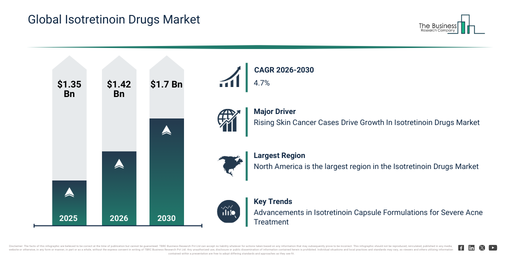
    The isotretinoin drugs market has experienced robust expansion in recent years, with projections indicating a rise from $1.35 billion in 2025 to $1.42 billion in 2026, reflecting a compound annual growth rate (CAGR) of 5.2%. This historical growth has been driven by several factors: the high incidence of severe and treatment-resistant acne, the well-documented clinical effectiveness of isotretinoin, the limited success of other acne treatments, broad acceptance among dermatologists, and the accessibility of capsule-based oral formulations.

    The market for isotretinoin drugs is anticipated to experience consistent growth over the coming years, reaching $1.7 billion by 2030, driven by a compound annual growth rate of 4.7%. This forecasted expansion is largely due to higher rates of adult acne, improved access to dermatological services, a growing need for reliable long-term acne treatments, an uptick in the production of generic medications, and better frameworks for patient monitoring and safety adherence. Key developments shaping this period include the persistent use of isotretinoin as the primary treatment for severe acne, a stronger focus on risk mitigation and regulated prescription practices, a broader selection of generic isotretinoin options, heightened awareness of chronic acne management among both young adults and older populations, and the widening application of isotretinoin for uncommon skin and cancer-related conditions.

    Download A Free Sample Report For Comprehensive Market Insights:

    https://www.thebusinessresearchcompany.com/sample.aspx?id=16095&type=smp&utm_source=BlogsPR&utm_medium=Paid&utm_campaign=Jul_PR

    Isotretinoin Drugs Market Expansion Supported By Key Demand Factors

    The anticipated growth of the isotretinoin drugs market is expected to be driven by the increasing incidence of skin cancer. This condition involves the abnormal proliferation of skin cells, often resulting from extended contact with ultraviolet (UV) radiation emitted by the sun or artificial tanning devices. The surge in skin cancer cases is largely attributed to heightened UV exposure, compounded by stratospheric ozone thinning and changes in lifestyle that encourage more time spent outdoors without proper sun protection. Isotretinoin-based medications are employed to prevent and manage specific types of skin cancer owing to their capability to curb the multiplication of malignant cells. As an illustration, data from the American Cancer Society, a US nonprofit focused on cancer eradication, indicated in January 2024 that 108,270 new skin cancer diagnoses were projected, marking a 3.2% rise compared to the 104,930 cases recorded in 2023. Hence, the growing number of skin cancer occurrences will fuel expansion in the isotretinoin drugs market.

    Isotretinoin Drugs Market Segment Landscape And Growth Potential

    The isotretinoin drugs market covered in this report is segmented –

    1) By Form: Capsules, Injection

    2) By Indication Type: Severe Acne, Neuroblastoma, Cutaneous T-Cell Lymphoma, Harlequin Ichthyosis, Xeroderma Pigmentosum, Fibrodysplasia Ossificans Progressiva, Squamous Cell Skin Cancers, Other Indication Types

    3) By Distribution Channel: Hospitals Pharmacies, Retail Pharmacies, Online Pharmacies

    Subsegments:

    1) By Capsules: Soft Gel Capsules, Hard Gel Capsules, Liquid-Filled Capsules

    2) By Injection: Intravenous Injection, Intramuscular Injection

    Isotretinoin Drugs Market Growth Trends Influencing Competitive Dynamics

    Leading companies within the isotretinoin drugs market are prioritizing innovations in product development—specifically isotretinoin capsules—to broaden therapeutic options and improve patient accessibility. These capsules are indicated for severe forms of acne, such as nodular or cystic acne, and come with strict usage restrictions due to serious side effects, particularly a heightened risk of congenital disabilities. As an example, in July 2023, Upsher-Smith Laboratories, LLC, a pharmaceutical firm based in the United States, introduced the first Isotretinoin Capsules USP, available in 10 mg, 20 mg, 30 mg, and 40 mg strengths. These capsules are classified as therapeutically equivalent (TE code AB1) to the brand Accutane. The medication is prescribed for treating severe acne, delivering a well-established solution for challenging cases.

    Isotretinoin Drugs Market Competitive Landscape: Who Are The Leading Companies?

    Major companies operating in the isotretinoin drugs market are F. Hoffmann-La Roche Ltd., Viatris Inc., Teva Pharmaceutical Industries Ltd., Bausch Health Companies Inc., Hetero Drugs Ltd., Sun Pharmaceuticals Industries Limited, Intas Pharmaceuticals Ltd., Aurobindo Pharma, Dr. Reddy’s Laboratories Ltd., Cipla Limited, Amneal Pharmaceuticals LLC, Lupin Pharmaceuticals Inc, Zydus Lifesciences Limited, Glenmark Pharmaceuticals, Alkem Laboratories, Torrent Pharmaceuticals Ltd, Alembic Pharmaceuticals Ltd, Ajanta Pharma Ltd, Strides Pharma Science Limited, Wockhardt Ltd., Douglas Pharmaceuticals Limited, Chongqing Huapont Pharm Co. Ltd., Cipher Pharmaceuticals Inc.

    Access The Complete Isotretinoin Drugs Market Report:

    https://www.thebusinessresearchcompany.com/report/isotretinoin-drugs-global-market-report?utm_source=BlogsPR&utm_medium=Paid&utm_campaign=Jul_PR

    Isotretinoin Drugs Market Global Footprint: Which Region Holds Market Leadership?

    North America was the largest region in the isotretinoin drugs market in 2025. The regions covered in the isotretinoin drugs market report are Asia-Pacific, South East Asia, Western Europe, Eastern Europe, North America, South America, Middle East, Africa.

    Get in touch with us:

    The Business Research Company: https://www.thebusinessresearchcompany.com/?utm_source=BlogsPR&utm_medium=Paid&utm_campaign=home_page_test

    Americas: +1 310-496-7795

    Asia: +44 7882 955267 & +91 8897263534

    Europe: +44 7882 955267

    Email us at: marketing@tbrc.info

    Follow us on:

    LinkedIn: https://in.linkedin.com/company/the-business-research-company

    YouTube: https://www.youtube.com/channel/UC24_fI0rV8cR5DxlCpgmyFQ

    Global Market Model: https://www.thebusinessresearchcompany.com/global-market-model