Category: Pharmaceuticals

  • Fast Melt Tablets Market Growth To $7.72 Billion By 2030: What’s Driving The Expansion?

    Fast Melt Tablets Market Growth To $7.72 Billion By 2030: What’s Driving The Expansion?

    Built to provide research that’s more actionable and strategically valuable, The Business Research Company’s 2026 market reports include market attractiveness analysis, total addressable market sizing, company benchmarking matrices, interactive Excel dashboards, broader supply chain intelligence, emerging startup tracking, and in-depth product insights.

    Fast Melt Tablets Market Value Analysis: What Growth Lies Ahead Over The Forecast Period?

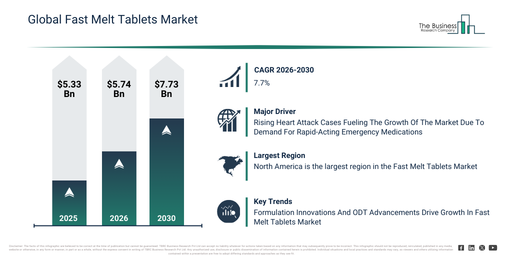
    The market for fast melt tablets has demonstrated substantial growth in recent years. This market is projected to expand from $5.33 billion in 2025 to $5.74 billion in 2026, exhibiting a compound annual growth rate (CAGR) of 7.8%. This historical growth is attributable to several factors, including the challenge of swallowing conventional tablets, an increase in pediatric and geriatric populations, the early uptake in allergy and CNS drugs, the rising demand for rapid onset formulations, and the broader availability of OTC fast-dissolving medicines.

    The fast melt tablets market size is expected to undergo significant expansion in the coming years. This market is set to reach $7.73 billion in 2030, demonstrating a compound annual growth rate (CAGR) of 7.7%. The anticipated growth within this period stems from an increased focus on patient adherence, a rise in neurological and psychiatric disorders, the demand for convenient drug delivery systems, the expansion of homecare medication usage, and innovations within oral thin-film technologies. Notable trends during the forecast period encompass a growing demand for patient-friendly oral dosage forms, increased application in pediatric and geriatric medications, an expansion of CNS and pain management uses, a rising preference for water-free drug administration, and broader adoption for travel-friendly and emergency situations.

    Get A Free Sample Report With In-Depth Market Insights:

    https://thebusinessresearchcompany.com/sample_request?id=45973233&type=smp&name=Fast%20Melt%20Tablets%20Market%20Report%202026&utm_source=Blogs&utm_medium=Paid&utm_campaign=Oct_PR

    Fast Melt Tablets Market Opportunity Drivers: What’s Unlocking New Revenue Potential?

    The increasing occurrence of heart attacks is anticipated to drive expansion in the fast melt tablets market moving ahead. A heart attack constitutes a critical medical event where the heart muscle’s blood supply is obstructed, typically by a blood clot or plaque accumulation within the coronary arteries. This surge in heart attack cases is linked to greater intake of processed foods, resulting in elevated cholesterol and increased arterial plaque formation. Fast melt tablets facilitate swift drug absorption, allowing for the rapid administration of vital medications like aspirin or nitroglycerin. This helps avert additional damage during a heart attack, thereby enhancing patient recovery by reinstating blood flow and mitigating the likelihood of serious complications. As an illustration, the British Heart Foundation, a UK-based cardiovascular research charity, reported in September 2025 that an extra one million individuals in the UK might be living with cardiovascular disease by 2030, escalating to two million more than current figures by 2040. This projected increase represents the highest figure ever recorded. Consequently, the escalating frequency of heart attacks is a key factor boosting the expansion of the fast melt tablets market.

    Fast Melt Tablets Market Segment Trends And Revenue Contributors

    The fast melt tablets market covered in this report is segmented –

    1) By Type: Anti Psychotics, Anti Epileptics, Central Nervous System (CNS) Stimulants, Anxiolytics, Anti Parkinsonian Drugs, Anti Hypertensive, Non-Steroidal Anti-Inflammatory Drugs (NSAIDS), Anti Allergy Drugs, Proton Pump Inhibitors, Other Types

    2) By Indication: Pain Management, Allergy And Respiratory Disorders, Neurological Disorders, Gastrointestinal Disorders, Cardiovascular Disorders, Other Indications

    3) By Dosage Form: Oral, Sublingual, Buccal, Chewable

    4) By Age Group: Adult, Pediatrics, Geriatrics

    5) By Distribution Channel: Hospital Pharmacies, Retail Pharmacies, Drug Stores, Online Pharmacies

    Subsegments:

    1) By Anti Psychotics: Atypical Antipsychotics, Typical Antipsychotics

    2) By Anti Epileptics: Sodium Channel Blockers, Gamma-Aminobutyric Acid (GABA) Analogs

    3) By Central Nervous System (CNS) Stimulants: Amphetamines, Methylphenidate, Modafinil

    4) By Anxiolytics: Benzodiazepines, Azapirones, Antihistamines

    5) By Anti Parkinsonian Drugs: Dopamine Agonists, Monoamine Oxidase-B (MAO-B) Inhibitors, Anticholinergics

    6) By Anti Hypertensive: Beta Blockers, Calcium Channel Blockers

    7) By Non-Steroidal Anti-Inflammatory Drugs (NSAIDS): Cyclooxygenase-1 (COX-1) Inhibitors

    8) By Anti Allergy Drugs: Antihistamines, Leukotriene Receptor Antagonists

    9) By Proton Pump Inhibitors: Omeprazole, Esomeprazole, Lansoprazole, Pantoprazole

    10) By Other Types: Antiemetics, Antidepressants, Analgesics

    Fast Melt Tablets Market Innovation Trends Shaping Future Development

    Major companies engaged in the fast melt tablets market are focusing on innovative formulations, such as orally disintegrating tablet (ODT) technologies designed for rapid dissolution without water, to improve medication adherence, convenience, and accessibility for patients with chronic neurological conditions. Orally Disintegrating Tablet (ODT) Technology delivers active ingredients in a fast-melt format that breaks down on the tongue in mere seconds, offering ease of administration for patients experiencing difficulty swallowing traditional tablets or those needing discreet, portable dosing options. For instance, in February2023, Cycle Pharmaceuticals Ltd., a U.K.-based rare disease and specialty pharmaceuticals company, launched TASCENSO ODT (fingolimod), which is the first FDA-approved orally disintegrating tablet for treating relapsing forms of multiple sclerosis (MS) in patients aged 10 years and older. This bioequivalent non-generic ODT, developed using Catalent’s ZYDIS fast-dissolve platform, ensures continuity of care for U.S. patients losing access to Gilenya support services and is supported by Cycle’s dedicated patient platform, Cycle Vita, offering co-pay assistance, bridge programs, and in-home baseline assessments to maintain uninterrupted fingolimod therapy.

    Fast Melt Tablets Market Competitive Landscape: Which Companies Lead The Industry?

    Major companies operating in the fast melt tablets market are Pfizer Inc., Johnson & Johnson, Teva Pharmaceutical Industries Ltd., Sun Pharmaceutical Industries Ltd., Aurobindo Pharma Limited, Glenmark Pharmaceuticals Ltd., Torrent Pharmaceuticals Ltd., Unichem Laboratories Ltd., Lannett Company Inc., Perrigo Company plc, Catalent Inc., SPI Pharma Inc., Fuji Chemical Industries Co. Ltd., Melt Pharmaceuticals Inc., Akina Inc., Church & Dwight Co. Inc., Windmill Health Products LLC, The Procter & Gamble Company, Hikma Pharmaceuticals plc, Dr. Reddy’s Laboratories Ltd.

    View The Full Fast Melt Tablets Market Report:

    https://thebusinessresearchcompany.com/report/fast-melt-tablets-global-market-report?utm_source=Blogs&utm_medium=Paid&utm_campaign=Oct_PR

    Fast Melt Tablets Market Geographic Analysis: Where Is Demand Accelerating Fastest?

    North America was the largest region in the fast melt tablets market in 2025. Asia-Pacific is expected to be the fastest-growing region in the forecast period. The regions covered in the fast melt tablets market report are Asia-Pacific, South East Asia, Western Europe, Eastern Europe, North America, South America, Middle East, Africa.

    Reach Out To Our Team:

    The Business Research Company: https://www.thebusinessresearchcompany.com/

    Americas: +1 310-496-7795

    Asia: +44 7882 955267 & +91 8897263534

    Europe: +44 7882 955267

    Email us at: marketing@tbrc.info

    Follow us on:

    LinkedIn: https://in.linkedin.com/company/the-business-research-company

    YouTube: https://www.youtube.com/channel/UC24_fI0rV8cR5DxlCpgmyFQ

    Global Market Model: https://www.thebusinessresearchcompany.com/global-market-model
  • Farber’s Disease Market Trends Reshaping Industry Growth Through 2030

    Farber’s Disease Market Trends Reshaping Industry Growth Through 2030

    Backed by market attractiveness analysis, total addressable market sizing, company benchmarking matrices, interactive Excel dashboards, wider supply chain intelligence, emerging startup coverage, and detailed product-level insights, The Business Research Company’s 2026 market reports are designed to offer research that is more actionable and strategically valuable than ever.

    Farber’s Disease Market Size Forecast: How Big Could The Market Get By 2030?

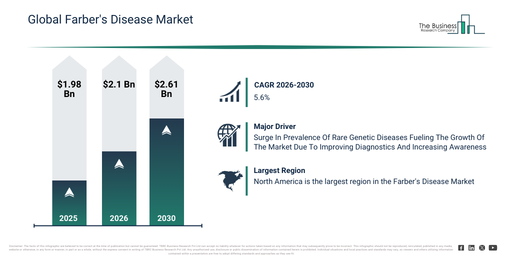
    The farber’s disease market has shown significant expansion in recent years. Its value is expected to rise from $1.98 billion in 2025 to $2.1 billion in 2026, achieving a compound annual growth rate (CAGR) of 5.9%. This past growth can be ascribed to several factors, including the identification of rare diseases, the availability of pediatric genetic testing, established supportive care protocols, increased hospital specialization, and dedicated research funding.

    The farber’s disease market is anticipated to experience substantial expansion in the coming years. By 2030, this market is projected to reach $2.61 billion, exhibiting a compound annual growth rate (CAGR) of 5.6%. This anticipated growth during the forecast period is attributable to several factors, including developments in gene therapy pipelines, incentives for orphan drugs, initiatives for early diagnosis, establishment of rare disease registries, and sophisticated genetic tools. Key trends expected over the forecast period encompass a heightened emphasis on rare pediatric conditions, broadening gene therapy research, an increase in the adoption of supportive care, the emergence of multidisciplinary treatment strategies, and advancements in genetic diagnostics.

    Get A Free Sample Report With In-Depth Market Insights:

    https://thebusinessresearchcompany.com/sample_request?id=93612145&type=smp&name=Farber%27s%20Disease%20Market%20Report%202026&utm_source=Blogs&utm_medium=Paid&utm_campaign=Oct_PR

    Farber’s Disease Market Growth Momentum: What Factors Are Shaping Demand?

    The increasing occurrence of rare genetic disorders is projected to fuel the expansion of the Farber’s disease market going forward. Rare genetic diseases are defined as inherited conditions stemming from DNA mutations that impact a very small segment of the population. The rising incidence of these disorders is attributed to enhanced diagnostic technologies, which allow for earlier and more precise identification of conditions that were previously undiagnosed or misdiagnosed. Farber’s disease plays a vital role in addressing this growing prevalence by serving as a framework for developing targeted therapies and advancing research in enzyme replacement treatments for ultra-rare conditions. For instance, in February 2023, the European Commission (EC), a Belgium-based government entity, reported that up to 36 million people in the European Union live with a rare disease; the EU is home to more than 6,000 distinct rare diseases, and approximately 80% of rare diseases have a genetic origin. Thus, the increasing prevalence of rare genetic diseases is driving the growth of the Farber’s disease market. Higher investment in clinical trials is anticipated to boost the Farber’s disease market moving forward. Clinical trials are research studies performed on humans to evaluate the safety, effectiveness, and results of medical interventions such as drugs, treatments, or devices. This surge in clinical trial investment is due to the growing demand for innovative treatments, which is driven by advancements in medical science, personalized medicine, and the urgent need to address unmet healthcare needs. Farber’s disease contributes by emphasizing the critical requirement for research into rare and underserved genetic disorders. For instance, in October 2024, Citeline, a US-based pharma intelligence solutions provider, stated that TrialTrove captured 9,959 Phase I–III clinical trials with a 2024 start date investigating at least one drug, representing a 9.4% increase from 2023. Therefore, the increasing investment in clinical trials is driving the growth of the Farber’s disease market.

    Farber’s Disease Market Segment Analysis Spotlighting Growth Areas

    The farber’s disease market covered in this report is segmented –

    1) By Type Of Farber’s Disease: Classical Farber’s Disease, Non-Classical Farber’s Disease

    2) By Treatment: Enzyme Replacement Therapy, Symptomatic Treatment, Gene Therapy, Bone Marrow Transplant, Supportive Care

    3) By Clinical Symptoms: Joint Involvement And Deformities, Hearing Loss, Respiratory Distress, Dermatological Manifestations

    4) By End-User: Hospitals, Specialty Clinics, Diagnostic Centers, Other End-Users

    Subsegments:

    1) By Classical Farber’s Disease: Type 1 Severe Infantile Form, Type 2 Intermediate Childhood Form, Type 3 Juvenile-Onset Form

    2) By Non-Classical Farber’s Disease: Type 4 Neurological Predominant Form, Type 5 Visceral Predominant Form, Type 6 Cardiopulmonary Involvement Form

    Farber’s Disease Market Leading Companies: Who Holds The Strongest Market Presence?

    Major companies operating in the farber’s disease market are National Institutes of Health (NIH), U.S. National Institute of Neurological Disorders and Stroke (NINDS), Mount Sinai Icahn School of Medicine, Cincinnati Children’s Hospital Medical Center, University of Pennsylvania Gene Therapy Program, Seattle Children’s Research Institute, Genethon (AFM-Téléthon), Sarepta Therapeutics Inc., REGENXBIO Inc., Abeona Therapeutics Inc., Rocket Pharmaceuticals Inc., Passage Bio Inc., Spark Therapeutics Inc., Takeda Rare Disease Research, Orchard Therapeutics plc, Avrobio Inc., bluebird bio Inc., JCR Pharmaceuticals Co. Ltd., Protalix BioTherapeutics Inc., Ultragenyx Pharmaceutical Inc., BioMarin Pharmaceutical Inc., Amicus Therapeutics Inc.

    View The Full Farber’s Disease Market Report:

    https://thebusinessresearchcompany.com/report/farbers-disease-global-market-report?utm_source=Blogs&utm_medium=Paid&utm_campaign=Oct_PR

    Farber’s Disease Market Global Footprint: Which Region Leads The Industry?

    North America was the largest region in the farber’s disease market in 2025. Asia-Pacific is expected to be the fastest-growing region in the forecast period. The regions covered in the farber’s disease market report are Asia-Pacific, South East Asia, Western Europe, Eastern Europe, North America, South America, Middle East, Africa.

    Reach Out To Our Team:

    The Business Research Company: https://www.thebusinessresearchcompany.com/

    Americas: +1 310-496-7795

    Asia: +44 7882 955267 & +91 8897263534

    Europe: +44 7882 955267

    Email us at: marketing@tbrc.info

    Follow us on:

    LinkedIn: https://in.linkedin.com/company/the-business-research-company

    YouTube: https://www.youtube.com/channel/UC24_fI0rV8cR5DxlCpgmyFQ

    Global Market Model: https://www.thebusinessresearchcompany.com/global-market-model
  • Familial Mediterranean Fever Pharmaceuticals Market Growth To $2.2 Billion Creates New Opportunities Across The Industry

    Familial Mediterranean Fever Pharmaceuticals Market Growth To $2.2 Billion Creates New Opportunities Across The Industry

    Featuring market attractiveness scoring, total addressable market sizing, company benchmarking matrices, interactive Excel dashboards, deeper supply chain intelligence, emerging startup tracking, and granular product-level insights, The Business Research Company’s 2026 market reports are built to deliver research that is both more actionable and more strategically valuable.

    Familial Mediterranean Fever Pharmaceuticals Market Revenue Outlook: What CAGR Lies Ahead Through 2030?

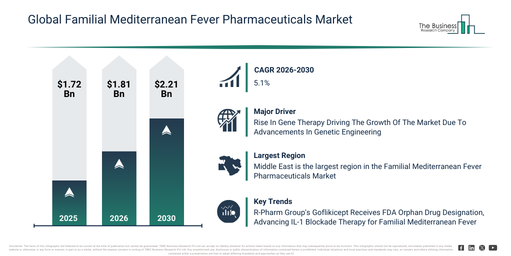
    The familial mediterranean fever pharmaceuticals market has experienced substantial growth in recent years. It is projected to expand from $1.72 billion in 2025 to $1.81 billion in 2026, demonstrating a compound annual growth rate (CAGR) of 5.1%. The market’s historical growth is attributable to the established effectiveness of colchicine, its genetic prevalence in Mediterranean populations, the scarcity of alternative therapies, increased disease awareness, and refined diagnostic criteria.

    The familial mediterranean fever pharmaceuticals market is projected to experience substantial expansion over the coming years. Its valuation is anticipated to reach $2.21 billion by 2030, exhibiting a compound annual growth rate (CAGR) of 5.1%. Key drivers for this growth during the forecast period include an increase in diagnosis rates beyond endemic areas, the rising adoption of biologics, the expansion of orphan drug initiatives, advancements in genetic screening, and a heightened emphasis on preventing long-term complications. Significant trends anticipated in this period encompass the ongoing dependence on colchicine therapy, a rise in the utilization of interleukin-1 inhibitors, the broadening of biologic treatments for resistant FMF, an increased focus on preventing amyloidosis, and enhanced genetic diagnostic methods facilitating earlier intervention.

    Get A Free Sample Report With In-Depth Market Insights:

    https://thebusinessresearchcompany.com/sample_request?id=17954713&type=smp&name=Familial%20Mediterranean%20Fever%20Pharmaceuticals%20Market%20Report%202026&utm_source=Blogs&utm_medium=Paid&utm_campaign=Oct_PR

    Familial Mediterranean Fever Pharmaceuticals Market Expansion Drivers: What’s Shaping Future Growth?

    The familial Mediterranean fever (FMF) pharmaceuticals market is projected to grow, driven by the expanding field of gene therapy. This medical approach involves modifying or replacing faulty genes to address or prevent diseases at their genetic origin. The increase in gene therapy is attributed to advancements in genetic engineering, which enable precise targeting and correction of genetic disorders, offering potential cures for conditions previously considered untreatable. Gene therapy positively influences familial Mediterranean fever (FMF) pharmaceuticals by targeting the underlying mutations in the MEFV (Mediterranean fever) gene, potentially offering a long-term or permanent solution rather than just symptom management. For instance, in July 2024, according to the American Society of Gene & Cell Therapy (ASGCT), a US-based non-profit organization, 76 gene therapy trials were initiated in the second quarter of 2024, marking a 25% increase from the previous quarter. Therefore, the growth of gene therapy is a key factor boosting the familial Mediterranean fever (FMF) pharmaceuticals market.

    Familial Mediterranean Fever Pharmaceuticals Market Segment Performance And Emerging Opportunities

    The familial mediterranean fever pharmaceuticals market covered in this report is segmented –

    1) By Drug Type: Colchicine, Interleukin-1 Inhibitors, Anti-IL-6 Drugs

    2) By Route Of Administration: Oral, Injectable

    3) By End Users: Hospitals, Clinical Diagnostic Laboratories, Other End Users

    Subsegments:

    1) By Colchicine: Oral Colchicine, Intravenous Colchicine

    2) By Interleukin-1 Inhibitors: Anakinra, Canakinumab, Rilonacept

    3) By Anti-IL-6 Drugs: Tocilizumab, Off-Label IL-6 Receptor Antagonists, Refractory FMF Supportive IL-6 Modulation

    Familial Mediterranean Fever Pharmaceuticals Market Strategic Trends: What Defines The Next Growth Phase?

    Leading pharmaceutical firms within the familial mediterranean fever pharmaceuticals market are prioritizing advanced biologic treatments, specifically approaches like dual interleukin-1 (IL-1a and IL-1ß) blockade mechanisms and strategies involving orphan drug designation. This strategic direction aims to ensure long-term disease remission and broaden the array of available treatments for individuals suffering from autoinflammatory conditions. These dual interleukin-1 blockade mechanisms utilize heterodimeric hybrid proteins designed to concurrently attach with strong affinity to both IL-1a and IL-1ß cytokines, effectively halting the inflammatory cascade responsible for initiating and progressing familial Mediterranean fever and associated ailments. An illustrative example is R-Pharm Group, a pharmaceutical company based in Russia, which, in November 2024, was granted U.S. Food and Drug Administration (FDA) Orphan Drug Designation for Goflikicept. This particular drug is a new heterodimeric hybrid protein specifically designed to target both IL-1a and IL-1ß for treating familial Mediterranean fever (FMF) and idiopathic recurrent pericarditis (IRP). R-Pharm Group successfully concluded Phase 2/3 clinical trials for IRP and secured marketing authorization in Russia. Concurrently, the firm is progressing a Phase 2 study for FMF across Turkey, Russia, and Armenia, thereby solidifying IL-1 blockade’s position as a primary method for achieving prolonged remission in various autoinflammatory diseases.

    Familial Mediterranean Fever Pharmaceuticals Market Key Players: Which Companies Lead Industry Competition?

    Major companies operating in the familial mediterranean fever pharmaceuticals market are Novartis International AG, Swedish Orphan Biovitrum AB, Granules Pharmaceuticals Inc., Hikma Pharmaceuticals plc, Camber Pharmaceuticals Inc., Teva Pharmaceutical Industries Ltd., Amgen Inc., Indena S.p.A., Harman Finochem, Alchem International, Honour Lab Ltd., Maithri Drugs Pvt. Ltd., Vital Laboratories Pvt. Ltd., Enomark Biotech Pvt. Ltd., Gonane Pharma, Ennature Biopharma, R-Pharm Group, Sun Pharmaceutical Industries Ltd., Dr. Reddy’s Laboratories Ltd., Lupin Limited

    View The Full Familial Mediterranean Fever Pharmaceuticals Market Report:

    https://thebusinessresearchcompany.com/report/familial-mediterranean-fever-pharmaceuticals-global-market-report?utm_source=Blogs&utm_medium=Paid&utm_campaign=Oct_PR

    Familial Mediterranean Fever Pharmaceuticals Market Regional Distribution: Which Areas Power Market Growth?

    Middle East was the largest region in the familial mediterranean fever pharmaceuticals market in 2025. Asia-Pacific is expected to be the fastest-growing region in the forecast period. The regions covered in the familial mediterranean fever pharmaceuticals market report are Asia-Pacific, South East Asia, Western Europe, Eastern Europe, North America, South America, Middle East, Africa.

    Reach Out To Our Team:

    The Business Research Company: https://www.thebusinessresearchcompany.com/

    Americas: +1 310-496-7795

    Asia: +44 7882 955267 & +91 8897263534

    Europe: +44 7882 955267

    Email us at: marketing@tbrc.info

    Follow us on:

    LinkedIn: https://in.linkedin.com/company/the-business-research-company

    YouTube: https://www.youtube.com/channel/UC24_fI0rV8cR5DxlCpgmyFQ

    Global Market Model: https://www.thebusinessresearchcompany.com/global-market-model
  • Familial Amyloid Polyneuropathy Market Forecast: Breaking Down The Numbers Behind Future Expansion

    Familial Amyloid Polyneuropathy Market Forecast: Breaking Down The Numbers Behind Future Expansion

    Built to provide research that’s more actionable and strategically valuable, The Business Research Company’s 2026 market reports include market attractiveness analysis, total addressable market sizing, company benchmarking matrices, interactive Excel dashboards, broader supply chain intelligence, emerging startup tracking, and in-depth product insights.

    Familial Amyloid Polyneuropathy Market Growth Analysis: How Will Revenue Trend Over The Forecast Period?

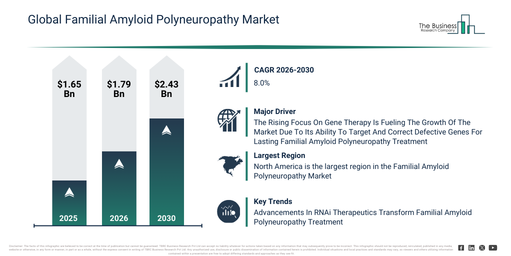
    The familial amyloid polyneuropathy market has experienced robust growth in recent years. It is anticipated to expand from $1.65 billion in 2025 to $1.79 billion in 2026, at a compound annual growth rate (CAGR) of 8.3%. The growth observed in the past can be attributed to elements like rare disease diagnosis, increasing genetic disorder awareness, advancements in transplant medicine development, dedicated neurology research, and the embrace of supportive care.

    The familial amyloid polyneuropathy market size is anticipated to undergo strong growth in the next few years. It is predicted to expand to $2.43 billion in 2030, at a compound annual growth rate (CAGR) of 8.0%. This expansion during the forecast period can be attributed to innovations in gene therapy, the availability of early genetic testing, increased funding for rare diseases, wider adoption of precision medicine, and the development of specialty pharmacies. Major trends expected during the forecast period involve the growing adoption of TTR stabilizers, the broader implementation of gene silencing therapies, enhanced genetic screening, a heightened focus on rare disease treatment, and the proliferation of specialty care centers.

    Get A Free Sample Report With In-Depth Market Insights:

    https://thebusinessresearchcompany.com/sample_request?id=95404699&type=smp&name=Familial%20Amyloid%20Polyneuropathy%20Market%20Report%202026&utm_source=Blogs&utm_medium=Paid&utm_campaign=Oct_PR

    Familial Amyloid Polyneuropathy Market Development Factors: What’s Supporting Demand?

    An increasing focus on gene therapy is projected to stimulate the growth of the familial amyloid polyneuropathy market in the future. Gene therapy serves as a treatment strategy designed to modify or replace defective genes, addressing the fundamental origins of diseases. It is becoming more prominent due to its ability to target and rectify faulty genes, offering lasting or permanent cures rather than merely providing symptomatic relief. Specifically for familial amyloid polyneuropathy, gene therapy aims to correct or silence the defective transthyretin (TTR) gene, thus preventing the formation of harmful amyloid protein. This process aids in reducing amyloid deposits, which slows disease progression and helps preserve nerve function. For example, in July 2023, information from the American Society of Gene & Cell Therapy (ASGCT), a US-based professional membership organization, and Citeline, a US-based provider of drugs and devices, indicated that 247 gene therapies were in Phase II at the close of the first quarter of 2023, a number that subsequently rose by 5% to reach 260 by the end of the second quarter. Therefore, the growing emphasis on gene therapy is a key driver for the familial amyloid polyneuropathy market’s expansion.

    Familial Amyloid Polyneuropathy Market Segment Landscape And Growth Outlook

    The familial amyloid polyneuropathy market covered in this report is segmented –

    1) By Treatment: Medication, Gene Therapy, Supportive Care, Pain Management, Symptomatic Treatment

    2) By Diagnosis: Genetic Testing, Biopsy, Imaging, Other Diagnosis

    3) By Patient Age Group: Pediatric, Adult, Geriatric

    4) By Distribution Channel: Hospital Pharmacies, Retail Pharmacies, Online Pharmacies, Specialty Pharmacies, Direct Sales

    5) By End-User: Hospitals, Specialty Clinics, Research Institutes, Other End-Users

    Subsegments:

    1) By Medication: Transthyretin (TTR) Stabilizers, Transthyretin (TTR) Gene Silencers, Tafamidis, Diflunisal, Patisiran

    2) By Gene Therapy: Clustered Regularly Interspaced Short Palindromic Repeats (CRISPR) Or Cas9-Based Therapy, RNA Interference (RNAi) Therapy, Antisense Oligonucleotides (ASO) Therapy

    3) By Supportive Care: Physical Therapy, Occupational Therapy, Nutritional Support, Psychological Counseling

    4) By Pain Management: Non-Steroidal Anti-Inflammatory Drugs (NSAIDs), Opioids, Antidepressants, Anticonvulsants

    5) By Symptomatic Treatment: Gastrointestinal Symptom Management, Cardiovascular Symptom Management, Autonomic Dysfunction Management, Orthostatic Hypotension Treatment

    Familial Amyloid Polyneuropathy Market Transformation Trends: What Innovations Are Driving Change?

    Leading companies within the familial amyloid polyneuropathy market are concentrating on developing advanced treatment solutions, such as RNA interference (RNAi) therapeutics, to slow the progression of the disease and improve patient outcomes. RNA interference (RNAi) therapeutics are sophisticated treatments that silence genes responsible for causing disease by targeting their messenger RNA (mRNA). This method effectively blocks the production of harmful proteins, thereby addressing genetic diseases at their fundamental source. For example, in March 2025, Alnylam Pharmaceuticals, a US-based biopharmaceutical company, launched AMVUTTRA (vutrisiran), which had previously received approval from the Food and Drug Administration (FDA) for the treatment of cardiomyopathy resulting from wild-type or hereditary transthyretin-mediated amyloidosis (ATTR-CM) in adult patients. It is administered as four subcutaneous doses per year and is designed to treat both ATTR-CM and the polyneuropathy associated with hereditary transthyretin-mediated amyloidosis (hATTR-PN). By reducing the production of the transthyretin (TTR) protein, identified as the root cause of the disease, it significantly decreases cardiovascular mortality, hospitalizations, and urgent heart failure visits, as evidenced in the HELIOS-B Phase 3 clinical trial.

    Familial Amyloid Polyneuropathy Market Competitive Landscape: Who Leads The Industry?

    Major companies operating in the familial amyloid polyneuropathy market are Pfizer Inc., AstraZeneca plc, Novo Nordisk A/S, Regeneron Pharmaceuticals Inc., NYU Langone Hospitals, Alexion Pharmaceuticals Inc., Mount Sinai Medical Center, PTC Therapeutics Inc., Mayo Foundation for Medical Education and Research, Arcturus Therapeutics Inc., Precision BioSciences Inc., Creative Biolabs, Stanford Health Care, Duke University Health System, YolTech Therapeutics

    View The Full Familial Amyloid Polyneuropathy Market Report:

    https://thebusinessresearchcompany.com/report/familial-amyloid-polyneuropathy-global-market-report?utm_source=Blogs&utm_medium=Paid&utm_campaign=Oct_PR

    Familial Amyloid Polyneuropathy Market Leading Geography: Which Region Contributes The Most Revenue?

    North America was the largest region in the familial amyloid polyneuropathy market in 2025. Asia-Pacific is expected to be the fastest-growing region in the forecast period. The regions covered in the familial amyloid polyneuropathy market report are Asia-Pacific, South East Asia, Western Europe, Eastern Europe, North America, South America, Middle East, Africa.

    Reach Out To Our Team:

    The Business Research Company: https://www.thebusinessresearchcompany.com/

    Americas: +1 310-496-7795

    Asia: +44 7882 955267 & +91 8897263534

    Europe: +44 7882 955267

    Email us at: marketing@tbrc.info

    Follow us on:

    LinkedIn: https://in.linkedin.com/company/the-business-research-company

    YouTube: https://www.youtube.com/channel/UC24_fI0rV8cR5DxlCpgmyFQ

    Global Market Model: https://www.thebusinessresearchcompany.com/global-market-model
  • Factor XII Inhibitors Market Expected To Grow At 10.8% CAGR Through 2030: What Businesses Need To Know

    Factor XII Inhibitors Market Expected To Grow At 10.8% CAGR Through 2030: What Businesses Need To Know

    Backed by market attractiveness analysis, total addressable market sizing, company benchmarking matrices, interactive Excel dashboards, wider supply chain intelligence, emerging startup coverage, and detailed product-level insights, The Business Research Company’s 2026 market reports are designed to offer research that is more actionable and strategically valuable than ever.

    Factor XII Inhibitors Market Forecast: What Value Will The Market Reach By 2030?

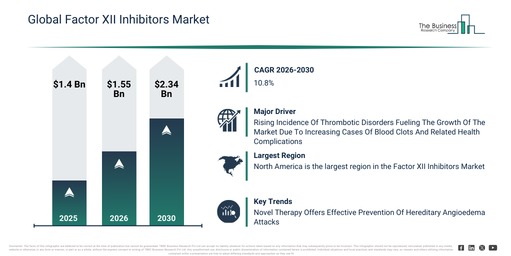
    The factor xii inhibitors market has expanded considerably in recent years. It is anticipated to increase from $1.4 billion in 2025 to $1.55 billion in 2026, registering a compound annual growth rate (CAGR) of 11.1%. The expansion observed historically can be attributed to progress in coagulation biology research, a rise in the occurrence of thrombotic disorders, deficiencies of conventional anticoagulants, early positive outcomes in fxii inhibition clinical trials, and increased investment in niche and specialized treatments.

    The market size for factor xii inhibitors is anticipated to grow significantly in the coming years. This market is forecast to reach a valuation of $2.34 billion in 2030, exhibiting a compound annual growth rate (CAGR) of 10.8%. Key drivers for this growth during the projection period include the broader scope of late-stage clinical trials, a surging need for safer antithrombotic treatments, the increasing integration of precision medicine, enhanced regulatory backing for new anticoagulants, and the application of fxii inhibitors in inflammatory conditions. Significant trends observed within this period encompass the escalating creation of non-bleeding anticoagulant solutions, a heightened emphasis on modulating targeted coagulation pathways, expanding clinical assessments of fxii selective inhibitors, the broader adoption of rna-based and peptide therapeutic approaches, and improved utilization of precision drug design.

    Get A Free Sample Report With In-Depth Market Insights:

    https://thebusinessresearchcompany.com/sample_request?id=21456993&type=smp&name=Factor%20XII%20Inhibitors%20Market%20Report%202026&utm_source=Blogs&utm_medium=Paid&utm_campaign=Oct_PR

    Factor XII Inhibitors Market Industry Drivers: What’s Behind The Revenue Growth?

    The increasing occurrence of thrombotic conditions is anticipated to fuel the expansion of the factor XII inhibitors market. Thromboembolic conditions involve the development of blood clots within veins or arteries, which can obstruct blood flow and lead to severe health issues. The prevalence of these disorders is growing due to the rise in inactive lifestyles, which contribute to inadequate blood circulation and an elevated chance of clot formation. In managing thrombotic disorders, Factor XII inhibitors assist in preventing pathological clot formation by obstructing the contact activation pathway without disturbing normal blood clotting. This facilitates effective management of thrombosis with a reduced chance of hemorrhage. For instance, in January 2025, according to the Centers for Disease Control and Prevention (CDC), a US-based government agency, approximately 900,000 people in the United States are affected by venous thromboembolism, of which an estimated 60,000-100,000 Americans die annually, while many others experience long-term complications. Consequently, the escalating incidence of thrombotic disorders is boosting the growth of the Factor XII inhibitors market.

    Factor XII Inhibitors Market Breakdown By Product Type And Application

    The factor xii inhibitors market covered in this report is segmented –

    1) By Drug Type: Monoclonal Antibodies, Small Molecule Inhibitors, Other Drug Types

    2) By Route Of Administration: Oral, Injectable, Other Routes Of Administration

    3) By Application: Hereditary Angioedema, Thrombosis, Inflammatory Disorders, Other Applications

    4) By End-User: Hospitals, Specialty Clinics, Research Institutes, Other End-Users

    Subsegments:

    1) By Monoclonal Antibodies: Fully Human Monoclonal Antibodies, Humanized Monoclonal Antibodies, Chimeric Monoclonal Antibodies, Bispecific Monoclonal Antibodies, Single-Chain Variable Fragment (scFv) Antibodies

    2) By Small Molecule Inhibitors: Direct Factor XII Inhibitors, Allosteric Factor XII Inhibitors, Reversible Inhibitors, Irreversible Inhibitors, Peptidomimetic Inhibitors

    3) By Other Drug Types: Peptide-Based Inhibitors, RNA Interference (RNAi) Therapeutics, Antisense Oligonucleotides, Combination Therapies

    #Factor XII Inhibitors Market Growth Trends: What’s Shaping The Future Outlook?

    Leading companies in the Factor XII Inhibitors market are concentrating on developing innovative products, such as anti-FXIIa monoclonal antibodies, to enhance therapeutic precision and treatment effectiveness. These anti-FXIIa monoclonal antibodies are targeted biologics designed to inhibit activated factor XII, preventing abnormal clot formation while preserving normal hemostasis. For instance, in February 2025, CSL Behring GmbH, a Germany-based biopharmaceutical company, received manufacturing and marketing approval from Japan’s Ministry of Health, Labour and Welfare (MHLW) for ANDEMBRY (garadacimab) subcutaneous (S.C.) injection 200 mg pens. This product is a novel, human anti-activated factor XII monoclonal antibody approved for the prevention of acute attacks of hereditary angioedema (HAE). It functions by targeting activated factor XIIa, a key driver in the initiation of HAE attacks, and is administered through a convenient subcutaneous injection pen.

    Factor XII Inhibitors Market Company Landscape And Competitive Strategy

    Major companies operating in the factor xii inhibitors market are Taylor & Francis Group, Santa Cruz Biotechnology Inc., CSL Limited, Bridge Medicines Inc., KalVista Pharmaceuticals Inc., Ovid Technologies Inc., Affinity Biologicals Inc., Lunac Therapeutics Ltd., Grantome LLC

    View The Full Factor XII Inhibitors Market Report:

    https://thebusinessresearchcompany.com/report/global-factor-xii-inhibitors-market-report?utm_source=Blogs&utm_medium=Paid&utm_campaign=Oct_PR

    Factor XII Inhibitors Market Regional Outlook: Where Is Opportunity Concentrated?

    North America was the largest region in the factor XII inhibitors market in 2025. Asia-Pacific is expected to be the fastest-growing region in the forecast period. The regions covered in the factor xii inhibitors market report are Asia-Pacific, South East Asia, Western Europe, Eastern Europe, North America, South America, Middle East, Africa.

    Reach Out To Our Team:

    The Business Research Company: https://www.thebusinessresearchcompany.com/

    Americas: +1 310-496-7795

    Asia: +44 7882 955267 & +91 8897263534

    Europe: +44 7882 955267

    Email us at: marketing@tbrc.info

    Follow us on:

    LinkedIn: https://in.linkedin.com/company/the-business-research-company

    YouTube: https://www.youtube.com/channel/UC24_fI0rV8cR5DxlCpgmyFQ

    Global Market Model: https://www.thebusinessresearchcompany.com/global-market-model
  • Facet-Joint Injection Market Forecast To Reach $4.1 Billion By 2030: Key Trends Explained

    Facet-Joint Injection Market Forecast To Reach $4.1 Billion By 2030: Key Trends Explained

    Featuring market attractiveness scoring, total addressable market sizing, company benchmarking matrices, interactive Excel dashboards, deeper supply chain intelligence, emerging startup tracking, and granular product-level insights, The Business Research Company’s 2026 market reports are built to deliver research that is both more actionable and more strategically valuable.

    Facet-Joint Injection Market Size Outlook: How Quickly Will Revenue Expand Through 2030?

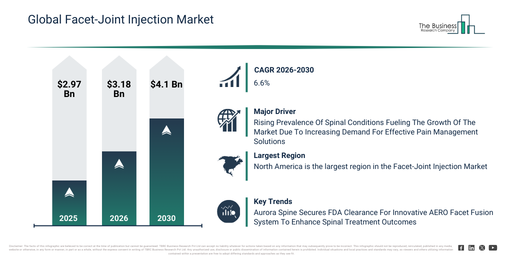
    The facet-joint injection market has seen robust expansion in recent years. It is projected to increase from $2.97 billion in 2025 to $3.18 billion in 2026, maintaining a compound annual growth rate (CAGR) of 6.9%. The market’s past growth is attributable to spinal degeneration prevalence, arthritis incidence, pain management awareness, corticosteroid use, and outpatient procedure growth.

    The facet-joint injection market size is expected to experience robust growth over the next few years. It is forecast to reach $4.1 billion in 2030, demonstrating a compound annual growth rate (CAGR) of 6.6%. This projected growth can be attributed to factors such as an aging population, a preference for minimally invasive treatments, the prevalence of chronic pain, the expansion of ambulatory care, and the use of imaging-guided procedures. Significant trends expected during the forecast period include a heightened demand for minimally invasive pain procedures, increased application in chronic back pain management, the proliferation of outpatient pain clinics, the adoption of image-guided injection techniques, and the growth of ambulatory surgical centers.

    Get A Free Sample Report With In-Depth Market Insights:

    https://thebusinessresearchcompany.com/sample_request?id=89885468&type=smp&name=Facet-Joint%20Injection%20Market%20Report%202026&utm_source=Blogs&utm_medium=Paid&utm_campaign=Oct_PR

    Facet-Joint Injection Market Growth Factors: What’s Supporting Expansion?

    The increasing incidence of spinal conditions and persistent back pain is anticipated to fuel the expansion of the facet-joint injection market moving forward. Spinal diseases and chronic back pain encompass long-term ailments affecting the spine, such as disc degeneration, arthritis, or nerve compression, which result in ongoing discomfort, limited mobility, and a reduced quality of life. The growing prevalence of these conditions is attributed to sedentary lifestyles and poor posture, prompting individuals to seek effective, low-disruption treatments to alleviate persistent discomfort and restore functional movement. Facet-joint injections address spinal diseases and chronic back pain by diminishing pain and inflammation in the spine, offering relief to individuals suffering from the increasing issue of spinal diseases and chronic back pain. For instance, in May 2023, Spinal Cord Inc., a US-based non-profit resource center, reported that in 2023, approximately 18,000 new spinal cord injury (SCI) cases are reported annually in the United States, with an estimated 302,000 individuals currently living with spinal cord injuries nationwide. Consequently, the rising occurrence of spinal diseases and chronic back pain is driving the growth of the facet-joint injection market. The expanding demand for minimally invasive procedures is expected to propel the growth of the facet-joint injection market in the coming years. Minimally invasive procedures are medical interventions performed through small incisions or without requiring extensive surgical cuts. The increasing adoption of minimally invasive procedures is due to a growing patient preference for quicker recovery times and reduced post-operative pain. Facet-joint injections enhance minimally invasive procedures by providing targeted pain relief and diagnostic accuracy without the necessity for major surgical intervention. For example, in 2023, the American Society of Plastic Surgeons, a US-based specialty organization, indicated that the total number of minimally invasive cosmetic procedures rose from 23.7 million in 2022 to 25.4 million in 2023. Therefore, the growing demand for minimally invasive procedures is driving the growth of the facet-joint injection market.

    Facet-Joint Injection Market Segment Analysis And Revenue Potential

    The facet-joint injection market covered in this report is segmented –

    1) By Product Type: Corticosteroids, Local Anesthetics, Hyaluronic Acid, Other Product Types

    2) By Application: Cervical Facet Joints, Thoracic Facet Joints, Lumbar Facet Joints

    3) By End-User: Hospitals, Ambulatory Surgical Centers, Specialty Clinics, Other End-Users

    Subsegments:

    1) By Corticosteroids: Triamcinolone Acetonide, Methylprednisolone Acetate, Dexamethasone Sodium Phosphate, Betamethasone

    2) By Local Anesthetics: Lidocaine, Bupivacaine, Ropivacaine, Prilocaine

    3) By Hyaluronic Acid: High Molecular Weight Hyaluronic Acid, Low Molecular Weight Hyaluronic Acid, Cross-Linked Hyaluronic Acid, Non-Cross-Linked Hyaluronic Acid

    4) By Other Product Types: Platelet-Rich Plasma, Biological Agents, Combination Formulations

    Facet-Joint Injection Market Industry Trends: What’s Reshaping Demand?

    Leading companies in the facet-joint injection market are concentrating on developing novel products, such as facet fusion systems, aimed at providing more prolonged relief and better treatment results. Facet fusion systems are medical devices specifically engineered to stabilize and fuse the spinal facet joints by encouraging bone growth connecting neighboring vertebrae. As an illustration, in March 2025, Aurora Spine Corporation, a medical device company situated in the US, revealed that the AEROTM Facet Fusion System, which is its latest product, obtained 510(k) clearance from the U.S. Food and Drug Administration (FDA). The system features an integrated titanium plasma spray coating designed to enhance osseointegration and its capacity for fusion. It supports a range of implant sizes to suit diverse patient anatomies and provides radiolucent instrumentation to improve visibility during surgical procedures. These attributes collectively strive to elevate procedural efficiency and the long-term effectiveness in addressing chronic back pain originating from facet joint disorders.

    Facet-Joint Injection Market Key Players Shaping Industry Direction

    Major companies operating in the facet-joint injection market are Abbott Laboratories, B. Braun Melsungen AG, BD (Becton Dickinson and Company), Cook Medical, Teleflex Incorporated, Merit Medical Systems Inc., Halyard Health, ICU Medical Inc., Pajunk GmbH Medizintechnologie, Avanos Medical Inc., Vygon SA, Cardinal Health Inc., Terumo Corporation, Nipro Corporation, Septodont Holding, Fresenius Kabi AG, Hikma Pharmaceuticals PLC, Sun Pharmaceutical Industries Ltd., Aurobindo Pharma Ltd., Zydus Lifesciences Ltd., Amneal Pharmaceuticals LLC, Lupin Limited, Piramal Pharma Limited, Intas Pharmaceuticals Ltd., Gland Pharma Limited, Amphastar Pharmaceuticals Inc., Fresenius Medical Care, Baxter International Inc., McKesson Corporation

    View The Full Facet-Joint Injection Market Report:

    https://thebusinessresearchcompany.com/report/facet-joint-injection-global-market-report?utm_source=Blogs&utm_medium=Paid&utm_campaign=Oct_PR

    Facet-Joint Injection Market Geographic Landscape: Which Region Leads Industry Growth?

    North America was the largest region in the facet-joint injection market in 2025. Asia-Pacific is expected to be the fastest-growing region in the forecast period. The regions covered in the facet-joint injection market report are Asia-Pacific, South East Asia, Western Europe, Eastern Europe, North America, South America, Middle East, Africa.

    Reach Out To Our Team:

    The Business Research Company: https://www.thebusinessresearchcompany.com/

    Americas: +1 310-496-7795

    Asia: +44 7882 955267 & +91 8897263534

    Europe: +44 7882 955267

    Email us at: marketing@tbrc.info

    Follow us on:

    LinkedIn: https://in.linkedin.com/company/the-business-research-company

    YouTube: https://www.youtube.com/channel/UC24_fI0rV8cR5DxlCpgmyFQ

    Global Market Model: https://www.thebusinessresearchcompany.com/global-market-model
  • Fabry Disease Market Analysis Through 2030: Market Size, Growth Trends And Industry Outlook

    Fabry Disease Market Analysis Through 2030: Market Size, Growth Trends And Industry Outlook

    Built to provide research that’s more actionable and strategically valuable, The Business Research Company’s 2026 market reports include market attractiveness analysis, total addressable market sizing, company benchmarking matrices, interactive Excel dashboards, broader supply chain intelligence, emerging startup tracking, and in-depth product insights.

    Fabry Disease Market Size, Value And Growth Trajectory Through 2030

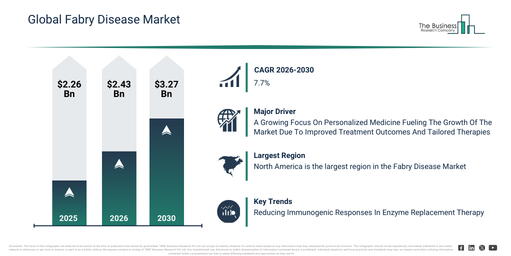
    The Fabry disease market has experienced robust expansion in recent years. It is projected to increase from $2.26 billion in 2025 to $2.43 billion in 2026, exhibiting a compound annual growth rate (CAGR) of 7.7%. Historically, this market growth can be attributed to heightened awareness of rare genetic disorders, the approval of enzyme replacement therapies, the expansion of specialty clinics, the growth in genetic screening programs, and rising diagnosis rates.

    The Fabry disease market is projected to undergo significant expansion in the coming years, with its size expected to reach $3.27 billion by 2030, demonstrating a compound annual growth rate (CAGR) of 7.7%. This anticipated growth during the forecast period is primarily driven by advancements in gene-based therapies, the broadening of newborn screening initiatives, increased healthcare investment in rare diseases, the evolution of personalized medicine, and the creation of next-generation oral therapies. Significant trends influencing this period include the rising adoption of enzyme replacement therapy, a heightened emphasis on diagnosing rare diseases, the growing application of genetic testing for early detection, the expansion of oral and adjunct treatment options, and the increasing implementation of patient-centric treatment approaches.

    Get A Free Sample Report With In-Depth Market Insights:

    https://thebusinessresearchcompany.com/sample_request?id=76502108&type=smp&name=Fabry%20Disease%20Market%20Report%202026&utm_source=Blogs&utm_medium=Paid&utm_campaign=Oct_PR

    Fabry Disease Market Demand Drivers: What’s Powering Industry Growth?

    An increasing emphasis on personalized medicine is anticipated to fuel the expansion of the fabry disease market in the future. This treatment approach utilizes an individual’s genetic, environmental, and lifestyle data to customize medical care and therapies, aiming for improved patient results. The heightened attention on personalized medicine stems from its capacity to enhance treatment efficacy and mitigate adverse effects through the customization of therapies for specific patient requirements. It facilitates the customization of treatment strategies according to a patient’s particular genetic mutation and the seriousness of their disease, thereby bettering outcomes and reducing unwarranted side effects. For instance, in February 2024, the Personalized Medicine Coalition, a US-based non-profit organization, reported that in 2023, the FDA granted approval for 16 new personalized treatments for rare disease patients, marking a substantial increase from the six approvals in 2022. Consequently, an increasing focus on personalized medicine is a key driver for the growth of the fabry disease market.

    Fabry Disease Market Segmentation And Category Overview

    The fabry disease market covered in this report is segmented –

    1) By Type: Type 1, Type 2, Other Types

    2) By Treatment: Enzyme Replacement Therapy, Oral Therapy, Adjunct Therapy, Other Treatments

    3) By Diagnosis: Blood Test, Genetic Test, Other Diagnosis

    4) By Distribution Channel: Hospital Pharmacy, Online Pharmacy, Retail Pharmacy

    5) By End User: Hospitals, Homecare, Specialty Clinics, Other End Users

    Subsegments:

    1) By Type 1: Classic Fabry Disease, Later-Onset Fabry Disease

    2) By Type 2: Cardiovascular-Focused Fabry Disease, Renal-Focused Fabry Disease

    3) By Other Types: Variant Fabry Disease, X-linked Fabry Disease

    Fabry Disease Market Innovation Trends: What Developments Are Reshaping The Industry?

    Major companies in the fabry disease market are concentrating on creating novel therapies, such as PEGylated enzyme replacement therapy (ERT). This focus aims to boost treatment effectiveness, improve patient adherence, and decrease immunogenic reactions often seen with traditional ERTs. PEGylated enzyme replacement therapy (ERT) represents an altered version of standard ERT, where polyethylene glycol (PEG) chains are joined to the enzyme. This modification serves to elevate its stability, extend its circulation duration within the body, and diminish reactions from the immune system. An illustrative example is the announcement in May 2023 by Chiesi Global Rare Diseases, a division of the Italy-based pharmaceutical company Chiesi Group, regarding the U.S. Food and Drug Administration (FDA), a US-based government agency, granting approval for PRX-102 (pegunigalsidase alfa) for treating adult Fabry disease patients. This approval stems from a comprehensive clinical program involving more than 140 patients, with long-term monitoring spanning up to 7.5 years. The program conclusively showed the therapy’s capability in lessening renal Gb3 deposits and sustaining kidney function, all while demonstrating a favorable safety profile.

    Fabry Disease Market Competitive Analysis Of Leading Industry Participants

    Major companies operating in the fabry disease market are Sanofi S.A., GlaxoSmithKline plc, Takeda Pharmaceutical Company Limited, JCR Pharmaceuticals Co. Ltd., Sumitomo Pharma Co. Ltd, Chiesi Farmaceutici S.p.A., Amicus Therapeutics Inc., Idorsia Pharmaceuticals Ltd, Sangamo Therapeutics Inc., uniQure N.V., Protalix BioTherapeutics Inc., Spur Therapeutics Inc., Exegenesis Bio Inc., ISU ABXIS Co. Ltd., Eleva GmbH, AceLink Therapeutics Inc., 4D Molecular Therapeutics Inc., iBio Inc., Freeline Therapeutics Holdings plc, Greenovation Biotech GmbH

    View The Full Fabry Disease Market Report:

    https://thebusinessresearchcompany.com/report/fabry-disease-global-market-report?utm_source=Blogs&utm_medium=Paid&utm_campaign=Oct_PR

    Fabry Disease Market Largest Region: Which Geography Holds The Biggest Share?

    North America was the largest region in the fabry disease market in 2025. Asia-Pacific is expected to be the fastest-growing region in the forecast period. The regions covered in the fabry disease market report are Asia-Pacific, South East Asia, Western Europe, Eastern Europe, North America, South America, Middle East, Africa.

    Reach Out To Our Team:

    The Business Research Company: https://www.thebusinessresearchcompany.com/

    Americas: +1 310-496-7795

    Asia: +44 7882 955267 & +91 8897263534

    Europe: +44 7882 955267

    Email us at: marketing@tbrc.info

    Follow us on:

    LinkedIn: https://in.linkedin.com/company/the-business-research-company

    YouTube: https://www.youtube.com/channel/UC24_fI0rV8cR5DxlCpgmyFQ

    Global Market Model: https://www.thebusinessresearchcompany.com/global-market-model
  • Eylea Market Outlook From 2026 To 2030: Key Growth Factors And Future Opportunities

    Eylea Market Outlook From 2026 To 2030: Key Growth Factors And Future Opportunities

    Backed by market attractiveness analysis, total addressable market sizing, company benchmarking matrices, interactive Excel dashboards, wider supply chain intelligence, emerging startup coverage, and detailed product-level insights, The Business Research Company’s 2026 market reports are designed to offer research that is more actionable and strategically valuable than ever.

    Eylea Market CAGR Outlook And Future Development

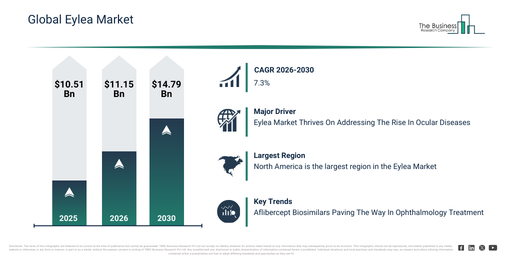
    The eylea market has shown robust expansion in recent years. Its value is expected to rise from $10.51 billion in 2025 to $11.15 billion in 2026, demonstrating a compound annual growth rate (CAGR) of 6.2%. This past growth can be attributed to several factors including the rising occurrence of age-related macular degeneration, an aging global demographic, the high clinical efficacy of anti-vegf drugs, an increase in ophthalmology specialty centers, and supportive reimbursement policies for retinal therapies.

    The eylea market is projected for substantial expansion over the coming years. By 2030, its valuation is predicted to reach $14.79 billion, exhibiting a compound annual growth rate (CAGR) of 7.3%. Factors contributing to this anticipated growth during the forecast timeframe include a rising diabetic demographic, broader application in more retinal conditions, advancements in long-acting formulations, enhancements in drug delivery methods, and wider availability in developing economies. Key developments expected within the same period encompass longer-interval anti-VEGF treatments, a move towards using prefilled syringes, increased application in managing diabetic retinopathy, a rise in hospital-administered intravitreal procedures, and a greater emphasis on real-world data and patient results.

    Get A Free Sample Report With In-Depth Market Insights:

    https://thebusinessresearchcompany.com/sample_request?id=88524868&type=smp&name=Eylea%20Market%20Report%202026&utm_source=Blogs&utm_medium=Paid&utm_campaign=Oct_PR

    Eylea Market Growth Drivers: What’s Behind The Acceleration?

    The Eylea market is anticipated to grow due to the rising occurrence of ocular diseases. These conditions refer to eye issues that interfere with proper eye function, negatively affecting vision and clarity, often without symptoms until they become advanced. Eylea provides treatment for various ocular diseases, specifically targeting conditions like wet age-related macular degeneration (AMD) and glaucoma, which damage the retina or macula and impair vision. Its mechanism involves blocking the protein responsible for developing new, weaker blood vessels and reducing retinal swelling caused by blockages in blood vessels. For instance, according to the BrightFocus Foundation, in 2024, approximately 80 million people globally are living with glaucoma, and this figure is projected to rise to 111 million by 2040. Consequently, the increasing prevalence of ocular diseases is driving the Eylea market.

    Eylea Market Segment Outlook: Which Categories Are Growing Fastest?

    The eylea market covered in this report is segmented –

    1) By Product: Prefilled Syringe Package, Vial Package

    2) By Disorder: Wet Age-Related Macular Degeneration (AMD), Diabetic Retinopathy, Other Disorders

    3) By Application: Hospitals, Retail Pharmacy, Other Applications

    Subsegments:

    1) By Prefilled Syringe Package: Single-Dose Prefilled Syringes, Multi-Dose Prefilled Syringes

    2) By Vial Package: Single-Dose Vials, Multi-Dose Vials

    Eylea Market Trends: What’s Defining The Industry’s Next Phase?

    Key companies within the eylea market are concentrating on creating biologic medications, such as aflibercept biosimilar, to secure a competitive edge. An Aflibercept Biosimilar represents a biologically analogous version of the original aflibercept drug, engineered to exhibit no clinically relevant discrepancies and provide an economical substitute for managing specific eye conditions. For example, in September 2023, Biocon Biologics Ltd., an India-based biopharmaceutical enterprise, obtained marketing approval from the European Commission (EC) for YESAFILI, an Aflibercept biosimilar, across the European Union (EU). This authorization followed a positive recommendation from the European Medicines Agency’s Committee for Medicinal Products for Human Use (CHMP) in July. YESAFILI, an ophthalmology solution, is developed for addressing various eye ailments, and its approval demonstrates its equivalence in terms of quality, safety, and efficacy when compared to the reference product Eylea (aflibercept).

    Eylea Market Leading Companies And Competitive Benchmarking

    Major companies operating in the eylea market are Regeneron Pharmaceuticals Inc., Bayer AG, Novartis AG, Roche Holding AG, Pfizer Inc., Amgen Inc., Sanofi S.A., AbbVie Inc., Alcon Inc., Genentech Inc., Johnson & Johnson, Samsung Bioepis Co. Ltd., Boehringer Ingelheim GmbH, Eisai Co. Ltd., Daiichi Sankyo Company Limited, Aerie Pharmaceuticals Inc., Otsuka Pharmaceutical Co. Ltd., Santen Pharmaceutical Co. Ltd., Allergan plc, BioMarin Pharmaceutical Inc.

    View The Full Eylea Market Report:

    https://thebusinessresearchcompany.com/report/eylea-global-market-report?utm_source=Blogs&utm_medium=Paid&utm_campaign=Oct_PR

    Eylea Market Regional Analysis: Which Geography Leads On Revenue?

    North America was the largest region in the eylea market in 2025. Asia-Pacific is expected to be the fastest-growing region in the eylea market during the forecast period. The regions covered in the eylea market report are Asia-Pacific, South East Asia, Western Europe, Eastern Europe, North America, South America, Middle East, Africa.

    Reach Out To Our Team:

    The Business Research Company: https://www.thebusinessresearchcompany.com/

    Americas: +1 310-496-7795

    Asia: +44 7882 955267 & +91 8897263534

    Europe: +44 7882 955267

    Email us at: marketing@tbrc.info

    Follow us on:

    LinkedIn: https://in.linkedin.com/company/the-business-research-company

    YouTube: https://www.youtube.com/channel/UC24_fI0rV8cR5DxlCpgmyFQ

    Global Market Model: https://www.thebusinessresearchcompany.com/global-market-model
  • Eye Drop Mist Market Growth Forecast: Market Size, Key Trends And Emerging Opportunities Through 2030

    Eye Drop Mist Market Growth Forecast: Market Size, Key Trends And Emerging Opportunities Through 2030

    Featuring market attractiveness scoring, total addressable market sizing, company benchmarking matrices, interactive Excel dashboards, deeper supply chain intelligence, emerging startup tracking, and granular product-level insights, The Business Research Company’s 2026 market reports are built to deliver research that is both more actionable and more strategically valuable.

    Eye Drop Mist Market Set To Climb From $1.71 Billion In 2026 To $2.6 Billion By 2030

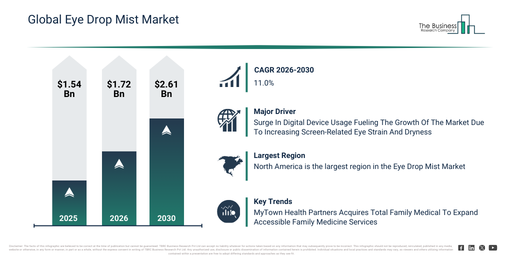
    The eye drop mist market has experienced swift expansion in recent times. This market is projected to expand from $1.54 billion in 2025 to $1.72 billion in 2026, demonstrating a compound annual growth rate (CAGR) of 11.3%. Historically, this expansion has been driven by factors such as the rising incidence of dry eye syndrome, increased exposure to screens, wider adoption of contact lenses, heightened public awareness concerning eye hygiene, and the accessibility of over-the-counter eye care products.

    The eye drop mist market is projected to experience substantial expansion over the upcoming years, with its valuation anticipated to reach $2.61 billion by 2030, exhibiting a compound annual growth rate (CAGR) of 11.0%. This anticipated growth during the forecast timeframe is primarily driven by factors such as the surging demand for portable eye care solutions, a heightened emphasis on formulations without preservatives, the expanding eye care requirements of an aging demographic, the rising integration of novel spray delivery methods, and a greater focus on everyday eye comfort. Key trends identified for this period encompass a greater uptake of preservative-free eye mist products, an increased need for accessible ocular hydration options, the widening application of multi-dose spray delivery mechanisms, the broadening scope of medicated eye mist uses, and an elevated concentration on user-friendly eye care items.

    Get A Free Sample Report With In-Depth Market Insights:

    https://thebusinessresearchcompany.com/sample_request?id=79083915&type=smp&name=Eye%20Drop%20Mist%20Market%20Report%202026&utm_source=Blogs&utm_medium=Paid&utm_campaign=Oct_PR

    Eye Drop Mist Market Growth Factors Behind Sustained Expansion

    The increasing adoption of digital devices is anticipated to fuel expansion in the eye drop mist market. This term denotes how people interact with electronics like smartphones, tablets, computers, and wearables for various activities including communication, entertainment, professional tasks, or education. This rise in digital device engagement stems from greater internet penetration, which has made online access more readily available and economical for a broader demographic. Using digital devices leads to increased eye strain and dryness associated with screens, thereby boosting the need for eye drop mist. Such mists offer rapid hydration and comfort, alleviating eye discomfort and mitigating irritation resulting from extended screen exposure. An example illustrates this trend: in October 2023, the GSM Association, a UK-based non-profit organization, reported that almost 4.3 billion people (53% of the global population) were using their smartphones for internet access, with approximately 80% of mobile internet users utilizing 4G or 5G smartphones, marking a rise of 330 million people from 2022 to 2023. Consequently, the growing prevalence of digital device usage is propelling the expansion of the eye drop mist market.

    Eye Drop Mist Market Segment Landscape: Which Areas Lead Development?

    The eye drop mist market covered in this report is segmented –

    1) By Product Type: Preservative-Free Eye Drop Mist, Medicated Eye Drop Mist, Lubricating Eye Drop Mist, Other Product Types

    2) By Application: Dry Eye Syndrome, Allergies, Eye Fatigue, Other Applications

    3) By Distribution Channel: Hospital Pharmacies, Retail Pharmacies, Online Pharmacies, Other Distribution Channels

    4) By End-User: Hospitals, Clinics, Homecare, Other End-Users

    Subsegments:

    1) By Preservative-Free Eye Drop Mist: Single Dose Units, Multi Dose Systems

    2) By Medicated Eye Drop Mist: Allergy Relief, Anti Inflammatory, Antibiotic Formulation, Antihistamine Formulation, Glaucoma Treatment

    3) By Lubricating Eye Drop Mist: Dry Eye Relief, Contact Lens Rewetting, Redness Relief, Moisturizing Formulation

    4) By Other Product Types Eye Drop Mist: Herbal Formulation, Vitamin Enriched Formulation, Combination Therapy, Specialty Use Formulation

    Eye Drop Mist Market Industry Trends Fueling Future Revenue Growth

    Major companies operating in the eye drop mist market are focusing on developing innovative solutions, such as microdosing systems, to deliver precise, controlled eye medication or moisture with minimal waste. A microdosing system is a delivery mechanism that administers precise, controlled, and minimal amounts of medication or fluid to the eyes, ensuring uniform coverage and reducing wastage compared to traditional droppers. For instance, in March 2023, EYE-GO A/S, a Denmark-based MedTech company, launched MistGo, an advanced microdosing delivery system for topical ophthalmic treatments. This system administers a precise, gentle mist of approximately 6 µL evenly over the cornea, maximizing drug absorption while avoiding issues such as overdosing, contamination, and incorrect application often seen with conventional eyedroppers. MistGo features integrated eye interfaces that allow safe, contact-free administration, enhancing patient adherence and improving therapeutic outcomes.

    Eye Drop Mist Market Industry Leaders And Competitive Landscape

    Major companies operating in the eye drop mist market are Bausch + Lomb Incorporated, AptarGroup Inc., Laboratoires Théa, Similasan AG, Reckitt Benckiser Group plc, OCuSOFT Inc., Scope Ophthalmics Ltd., Medicom Healthcare Ltd., AFT Pharmaceuticals Ltd., Aero Pump GmbH, I-MED Pharma Inc., Eyeeco Inc., EYE-GO A/S, Iskon Remedies Pvt. Ltd., Max Concept Enterprises Ltd., Servocare Lifesciences Pvt. Ltd., Dry Eye Shop LLC, Eyenovia Inc., KBIDI Co. Ltd., Swissvision Pharmaceuticals Pvt. Ltd.

    View The Full Eye Drop Mist Market Report:

    https://thebusinessresearchcompany.com/report/eye-drop-mist-global-market-report?utm_source=Blogs&utm_medium=Paid&utm_campaign=Oct_PR

    Eye Drop Mist Market Geographic Spread And Regional Opportunities

    North America was the largest region in the eye drop mist market in 2025. Asia-Pacific is expected to be the fastest-growing region in the forecast period. The regions covered in the eye drop mist market report are Asia-Pacific, South East Asia, Western Europe, Eastern Europe, North America, South America, Middle East, Africa.

    Reach Out To Our Team:

    The Business Research Company: https://www.thebusinessresearchcompany.com/

    Americas: +1 310-496-7795

    Asia: +44 7882 955267 & +91 8897263534

    Europe: +44 7882 955267

    Email us at: marketing@tbrc.info

    Follow us on:

    LinkedIn: https://in.linkedin.com/company/the-business-research-company

    YouTube: https://www.youtube.com/channel/UC24_fI0rV8cR5DxlCpgmyFQ

    Global Market Model: https://www.thebusinessresearchcompany.com/global-market-model
  • Eye Allergy Therapeutics Market CAGR Forecast Through 2030: Key Trends Shaping Industry Expansion

    Eye Allergy Therapeutics Market CAGR Forecast Through 2030: Key Trends Shaping Industry Expansion

    Built to provide research that’s more actionable and strategically valuable, The Business Research Company’s 2026 market reports include market attractiveness analysis, total addressable market sizing, company benchmarking matrices, interactive Excel dashboards, broader supply chain intelligence, emerging startup tracking, and in-depth product insights.

    Eye Allergy Therapeutics Market Forecast: Value Set To Climb From $3.44 Billion To $4.34 Billion

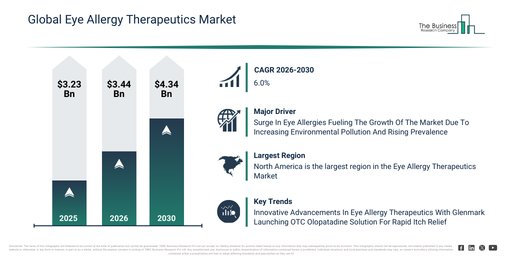
    The eye allergy therapeutics market size has demonstrated strong growth in recent years. This market is projected to expand from $3.23 billion in 2025 to $3.44 billion in 2026, at a compound annual growth rate (CAGR) of 6.5%. The historical growth in this sector can be attributed to several factors, including limited treatment options available for eye allergies, a reliance on traditional antihistamines, the growing prevalence of allergic conjunctivitis, an increase in ophthalmology clinic visits, and rising awareness of ocular allergy management.

    The eye allergy therapeutics market is projected to experience substantial expansion in the coming years, with its size expected to reach $4.34 billion by 2030, demonstrating a compound annual growth rate (CAGR) of 6.0%. Key factors contributing to this growth over the forecast period include the emergence of dual-action and biologic treatments, the broadening of immunotherapy choices, intensified research into innovative ocular drug delivery methods, a rise in the uptake of homecare treatment approaches, and the incorporation of digital health technologies for monitoring allergies. Noteworthy trends anticipated during this period encompass the increasing occurrence of both seasonal and perennial eye allergies, a greater acceptance of dual-action agents and new drug formulations, an expansion in homecare and self-administered therapies, the growth of online and retail pharmacy distribution networks, and a heightened emphasis on patient-focused care and safety.

    Get A Free Sample Report With In-Depth Market Insights:

    https://thebusinessresearchcompany.com/sample_request?id=60818467&type=smp&name=Eye%20Allergy%20Therapeutics%20Market%20Report%202026&utm_source=Blogs&utm_medium=Paid&utm_campaign=Oct_PR

    Eye Allergy Therapeutics Market Demand Drivers Opening New Revenue Streams

    The increasing occurrence of eye allergies is anticipated to drive the expansion of the eye allergy therapeutics market in the future. Eye allergies are defined as immune responses that lead to inflammation and irritation in the eyes when exposed to allergens. This surge in eye allergy cases stems from escalating environmental pollution, which exposes people to a greater quantity of airborne allergens, consequently leading to more frequent allergic reactions. Eye allergy therapeutics manage these conditions by diminishing inflammation, alleviating itching and redness, and inhibiting allergic responses to deliver effective symptom alleviation. For example, data from May 2025, provided by the National Library of Medicine, a US-based biomedical library, indicated that ocular allergy (OA) impacted 49.3% (n=207) of surveyed cases. Among these, seasonal allergic conjunctivitis (SAC) accounted for 90.3%, with a notable prevalence among 14-year-olds (23.4%) and females (58.8%). Consequently, the growing incidence of eye allergies is boosting the expansion of the eye allergy therapeutics market.

    Eye Allergy Therapeutics Market Segments: Where Is Growth Concentrated?

    The eye allergy therapeutics market covered in this report is segmented –

    1) By Drug Class: Antihistamines, Mast Cell Stabilizers, Dual-Action Agents, Corticosteroids, Immunotherapy, Other Drug Classes

    2) By Allergy Type: Seasonal Allergic Conjunctivitis (SAC), Perennial Allergic Conjunctivitis (PAC), Vernal Keratoconjunctivitis (VKC), Atopic Keratoconjunctivitis (AKC), Giant Papillary Conjunctivitis

    3) By Route of Administration: Topical, Oral, Injectable, Ocular, Systemic

    4) By Distribution Channel: Hospital Pharmacies, Retail Pharmacies, Online Pharmacies, Other Channels

    5) By End User: Hospitals, Clinics, Homecare Settings, Pharmacies, Research Institutions

    Subsegments:

    1) By Antihistamines: Olopatadine, Ketotifen, Emedastine, Levocabastine, Bepotastine

    2) By Mast Cell Stabilizers: Cromolyn Sodium, Nedocromil, Lodoxamide, Pemirolast

    3) By Dual-action Agents: Olopatadine, Ketotifen Fumarate, Azelastine, Alcaftadine

    4) By Corticosteroids: Loteprednol Etabonate, Prednisolone Acetate, Dexamethasone, Fluorometholone

    5) By Immunotherapy: Subcutaneous Immunotherapy, Sublingual Immunotherapy, Allergen-specific Desensitization Drops

    6) By Other Drug Classes: Nonsteroidal Anti-inflammatory Drugs, Biologics

    Eye Allergy Therapeutics Market Trends Powering Strategic Industry Growth

    Major companies operating in the eye allergy therapeutics market are concentrating on creating innovative solutions, such as eye allergy itch relief therapeutics, to provide quicker symptom alleviation, enhance patient comfort, and expand access via over-the-counter availability. Eye allergy itch relief therapeutics are treatments specifically formulated to alleviate itching caused by allergic reactions in the eyes. For instance, in August 2024, Glenmark Pharmaceuticals Limited, an India-based pharmaceutical company, launched Olopatadine Hydrochloride Ophthalmic Solution USP, 0.1% (OTC), aimed at relieving eye allergy symptoms. This formulation is designed for twice-daily use and provides rapid and long-lasting relief from allergic conjunctivitis symptoms such as itching, redness, and watery eyes. The over-the-counter availability aligns with the growing demand for self-care solutions and supports wider consumer reach in the eye care segment.

    Eye Allergy Therapeutics Market Key Participants And Competitive Landscape

    Major companies operating in the eye allergy therapeutics market are Novartis AG, Teva Pharmaceutical Industries Limited, Alcon Inc., Bausch Health Companies Inc., Sun Pharmaceutical Industries Limited, Santen Pharmaceutical Co. Ltd., Ocular Therapeutix Inc., Nicox S.A.

    View The Full Eye Allergy Therapeutics Market Report:

    https://thebusinessresearchcompany.com/report/eye-allergy-therapeutics-global-market-report?utm_source=Blogs&utm_medium=Paid&utm_campaign=Oct_PR

    Eye Allergy Therapeutics Market Top Region By Revenue And Market Share

    North America was the largest region in the eye allergy therapeutics market in 2025. The regions covered in the eye allergy therapeutics market report are Asia-Pacific, South East Asia, Western Europe, Eastern Europe, North America, South America, Middle East, Africa.

    Reach Out To Our Team:

    The Business Research Company: https://www.thebusinessresearchcompany.com/

    Americas: +1 310-496-7795

    Asia: +44 7882 955267 & +91 8897263534

    Europe: +44 7882 955267

    Email us at: marketing@tbrc.info

    Follow us on:

    LinkedIn: https://in.linkedin.com/company/the-business-research-company

    YouTube: https://www.youtube.com/channel/UC24_fI0rV8cR5DxlCpgmyFQ

    Global Market Model: https://www.thebusinessresearchcompany.com/global-market-model