Category: Pharmaceuticals

  • Rising Prevalence Of Inflammatory Conditions Fueling The Growth Of The Market Due To Increasing Environmental Pollution And Chronic Immune Responses Is Supporting Development Across The C-X-C Chemokine Receptor Type 2 Market

    Rising Prevalence Of Inflammatory Conditions Fueling The Growth Of The Market Due To Increasing Environmental Pollution And Chronic Immune Responses Is Supporting Development Across The C-X-C Chemokine Receptor Type 2 Market

    The Business Research Company’s 2026 market reports feature advanced enhancements such as market attractiveness analysis, total addressable market evaluation, company benchmarking matrices, interactive Excel dashboards, expanded supply chain intelligence, emerging startup coverage, and detailed product insights, delivering more actionable and strategically valuable research.

    What Is The Estimated Growth In Market Size Of The C-X-C Chemokine Receptor Type 2 Market During 2026–2030?

    The market size for c-x-c chemokine receptor type 2 has expanded rapidly in recent years. It is projected to increase from $1.38 billion in 2025 to $1.55 billion in 2026, demonstrating a compound annual growth rate (CAGR) of 11.8%. Historically, this growth has been attributed to factors such as a limited understanding of cxcr2 biology, reliance on conventional anti-inflammatory drugs, growing research on chemokine signaling, early-stage monoclonal antibody development, and the increasing prevalence of inflammatory diseases.

    The c-x-c chemokine receptor type 2 market size is projected for substantial expansion over the next few years, set to reach $2.39 billion in 2030 at a compound annual growth rate (CAGR) of 11.5%. This growth in the forecast period is primarily fueled by the development of novel small molecule and peptide inhibitors, the expansion of clinical trials for cxcr2 therapies, the rising adoption of personalized and targeted immunotherapies, the integration of digital biomarkers and AI-based drug discovery, and increasing pharmaceutical investment in oncology and autoimmune markets. Key trends anticipated during this period include the creation of selective cxcr2 inhibitors and dual cxcr1/2 inhibitors, advancements in monoclonal antibody and peptide-based therapeutics, the expansion of applications in cancer, autoimmune, and inflammatory diseases, growth in gene therapy and RNA-based therapeutics targeting cxcr2, and the incorporation of cxcr2 targeted therapies with personalized medicine approaches.

    Download A Free Sample Report For Comprehensive Market Insights:

    https://www.thebusinessresearchcompany.com/sample.aspx?id=27268&type=smp

    What Market Drivers Are Helping Shape The C-X-C Chemokine Receptor Type 2 Market Expansion?

    The rising occurrence of inflammatory conditions is expected to drive the C-X-C chemokine receptor type 2 market forward. These medical disorders, characterized by symptoms such as swelling, redness, heat, pain, and loss of function in affected tissues or organs, arise from the body’s immune response. A key factor in the increase of inflammatory conditions is growing environmental pollution, which triggers immune system reactions and chronic inflammation. C-X-C Chemokine Receptor Type 2 (CXCR2) facilitates the treatment of inflammatory conditions by precisely regulating immune cell movement and inflammatory responses. It also helps in reducing off-target effects by enabling small-molecule inhibitors and biologics that specifically modulate CXCR2 activity, thereby enhancing treatment effectiveness and patient outcomes. For instance, according to the Centers for Disease Control and Prevention in May 2024, the prevalence of asthma among adults aged 18 and above in the United States saw an increase from 8.7% in 2022 to 8.9% in 2023. Consequently, the increasing prevalence of inflammatory conditions is a significant driver for the C-X-C chemokine receptor type 2 market. A growing emphasis on targeted therapies is anticipated to boost the C-X-C chemokine receptor type 2 market in the coming years. Targeted therapies are specific treatments designed to inhibit molecular abnormalities in diseases like cancer, improving treatment precision and minimizing damage to healthy cells. This heightened focus on targeted approaches is primarily driven by advancements in precision medicine, which allows for personalized and more effective treatments based on individual genetic profiles. C-X-C chemokine receptor type 2 plays a role in enabling targeted therapies by guiding immune responses, supporting precise interventions for autoimmune and inflammatory diseases. It also supports precision medicine by facilitating the development of small-molecule inhibitors and biologics that specifically modulate CXCR2 activity, leading to improved therapeutic efficacy and reduced off-target effects. For example, in December 2024, the American Society of Gene & Cell Therapy reported that the Food and Drug Administration (FDA) approved 6 gene therapy products in 2023, an increase from 5 approvals in 2022. Therefore, the increasing focus on targeted therapies is propelling the growth of the C-X-C chemokine receptor type 2 market.

    What Are The Core Segment Classifications In The C-X-C Chemokine Receptor Type 2 Market?

    The c-x-c chemokine receptor type 2 market covered in this report is segmented –

    1) By Product Type: Antagonists, Agonists, Inhibitors, Other Product Types

    2) By Drug Type: Monoclonal Antibodies, Small Molecule Inhibitors, Peptide-based Therapeutics, Gene Therapy Products

    3) By Route Of Administration: Intravenous, Subcutaneous, Oral, Topical

    4) By Application: Cancer Treatment, Autoimmune Disorders, Infectious Diseases, Inflammatory Diseases, Other Applications

    5) By End User: Hospitals, Research Institutions, Pharmaceutical Companies, Contract Research Organizations, Other End Users

    Subsegments:

    1) By Antagonists: Small Molecule Antagonists, Peptide Antagonists, Monoclonal Antibody Antagonists, Synthetic Antagonists

    2) By Agonists: Chemokine-Based Agonists, Recombinant Protein Agonists, Peptide-Based Agonists, Modified Cytokine Agonists

    3) By Inhibitors: Selective CXCR2 Inhibitors, Dual CXCR1 Or 2 Inhibitors, Allosteric Inhibitors, Irreversible Inhibitors

    4) By Other Product Types: RNA-Based Therapeutics, Gene Therapy Vectors, Cell-Based Therapeutics, Biologic Response Modifiers

    Which Companies Form The Competitive Landscape Of The C-X-C Chemokine Receptor Type 2 Market?

    Major companies operating in the c-x-c chemokine receptor type 2 market are AstraZeneca plc, GSK plc, Eli Lilly and Company, Bio-Techne Corporation, Dompé Farmaceutici S.p.A., Miltenyi Biotec B.V. & Co. KG, Abcam plc, Selleck Chemicals LLC, Cell Signaling Technology Inc., RayBiotech Inc., Bethyl Laboratories Inc., Creative Biolabs Inc., TargetMol LLC, MedChemExpress LLC, BioCompare Inc., Boster Biological Technology Co. Ltd., TME Pharma GmbH, InvivoChem Ltd., Abbexa Ltd., Abiocode Inc.

    Access The Complete C-X-C Chemokine Receptor Type 2 Market Report:

    https://www.thebusinessresearchcompany.com/report/c-x-c-chemokine-receptor-type-2-global-market-report

    Which Region Commands The Largest Share Of The C-X-C Chemokine Receptor Type 2 Market?

    North America was the largest region in the C-X-C chemokine receptor type 2 market in 2025. Asia-Pacific is expected to be the fastest-growing region in the forecast period. The regions covered in the c-x-c chemokine receptor type 2 market report are Asia-Pacific, South East Asia, Western Europe, Eastern Europe, North America, South America, Middle East, Africa.

    Access C-X-C Chemokine Receptor Type 2 Market Report for Deeper Competitive Insights

    https://www.thebusinessresearchcompany.com/sample.aspx?id=27268&type=smp

    Browse Through More Reports Similar to the Global C-X-C Chemokine Receptor Type 2 Market 2026, By The Business Research Company

    Mortgage Lender Market Report 2026

    https://www.thebusinessresearchcompany.com/report/mortgage-lender-global-market-report

    Property And Casualty Insurance Market Report 2026

    https://www.thebusinessresearchcompany.com/report/property-and-casualty-insurance-global-market-report

    Home Insurance Market Report 2026

    https://www.thebusinessresearchcompany.com/report/home-insurance-global-market-report

    Get in touch with us:

    The Business Research Company: https://www.thebusinessresearchcompany.com/

    Americas: +1 310-496-7795

    Asia: +44 7882 955267 & +91 8897263534

    Europe: +44 7882 955267

    Email us at: marketing@tbrc.info

    Follow us on:

    LinkedIn: https://in.linkedin.com/company/the-business-research-company

    YouTube: https://www.youtube.com/channel/UC24_fI0rV8cR5DxlCpgmyFQ

    Global Market Model: https://www.thebusinessresearchcompany.com/global-market-model
  • Growing Demand For Personalized Medicine Driving The Market Is Supporting Development Across The Custom Antibody Market

    Growing Demand For Personalized Medicine Driving The Market Is Supporting Development Across The Custom Antibody Market

    The Business Research Company’s 2026 market reports feature advanced enhancements such as market attractiveness analysis, total addressable market evaluation, company benchmarking matrices, interactive Excel dashboards, expanded supply chain intelligence, emerging startup coverage, and detailed product insights, delivering more actionable and strategically valuable research.

    What Market Value Expansion Is Expected For The Custom Antibody Market Over The Forecast Period?

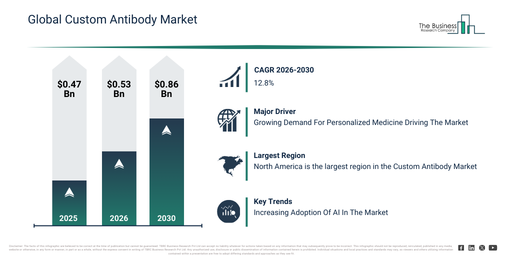
    The custom antibody market has recently seen substantial expansion in its size. Its value is expected to climb from $0.47 billion in 2025 to $0.53 billion in 2026, achieving a compound annual growth rate (CAGR) of 12.9%. This historical growth can be linked to several contributing factors, including the surge in biomedical research, the wider adoption of diagnostics testing, elevated spending on pharmaceutical research and development, innovations in antibody engineering, and the growth of academic research.

    The custom antibody market is projected to experience substantial expansion over the coming years. It is set to reach $0.86 billion by 2030, showing a compound annual growth rate (CAGR) of 12.8%. This expansion during the projection period stems from advancements in personalized medicine, a broadened scope of biologics research, increased engagement with contract research organizations (CROs), escalating demand for diagnostics, and progress in precision oncology. Key developments anticipated within this timeframe include a heightened need for specialized research antibodies, their increased application in precision diagnostics, greater integration into drug discovery processes, advancements in recombinant antibody technologies, and a rise in outsourcing activities to CROs.

    Download A Free Sample Report For Comprehensive Market Insights:

    https://www.thebusinessresearchcompany.com/sample.aspx?id=21162&type=smp

    Which Significant Factors Are Encouraging Growth In The Custom Antibody Market?

    The increasing need for personalized medicine is anticipated to propel the expansion of the custom antibody market moving forward. Personalized medicine refers to a medical methodology that tailors treatment and prevention strategies specifically to an individual’s genetic composition, lifestyle, and environmental factors. This escalating demand for personalized medicine is driven by advancements in genomics, a wider availability of biomarker-based therapies, and an increasing consumer preference for customized treatment options that enhance efficacy and reduce adverse effects. Custom antibodies support personalized medicine by providing precise and bespoke immune reagents that improve disease detection, therapeutic targeting, and biomarker identification for individualized treatment plans. For instance, in February 2024, the Personalized Medicine Coalition, a US-based non-profit organization, noted that in 2023, the Food and Drug Administration (FDA) approved 16 new personalized treatments for rare disease patients, marking an increase from 6 in 2022. Thus, the rising demand for personalized medicine is a significant driver for the growth of the custom antibody market.

    How Is The Custom Antibody Market Structured Across Different Market Segments?

    The custom antibody market covered in this report is segmented –

    1) By Type: Monoclonal Antibodies, Polyclonal Antibodies, Recombinant Antibodies, Other Types

    2) By Service: Antibody Development, Antibody Production And Purification, Antibody Fragmentation And Labeling

    3) By Source: Mice, Rabbit, Other Sources

    4) By Application: Oncology, Infectious Diseases, Neurology, Stem Cells, Immunology, Cardiovascular Diseases, Other Applications

    5) By End-User: Pharmaceutical And Biotechnology Companies, Academic And Research Institutes, Contract Research Organization, Hospitals And Clinics

    Subsegments:

    1) By Monoclonal Antibodies: Murine Monoclonal Antibodies, Chimeric Monoclonal Antibodies, Humanized Monoclonal Antibodies, Fully Human Monoclonal Antibodies

    2) By Polyclonal Antibodies: Rabbit Polyclonal Antibodies, Goat Polyclonal Antibodies, Sheep Polyclonal Antibodies, Other Animal-Derived Polyclonal Antibodies

    3) By Recombinant Antibodies: Single-Chain Variable Fragment (scFv), Nanobodies, Bispecific Antibodies, Antibody Fragments

    4) By Other Types: Aptamers, Nanobodies (Camelid Antibodies), Hybridomas

    What Trends Are Affecting The Custom Antibody Market Dynamics?

    Leading companies in the custom antibody market are prioritizing the integration of advanced technologies, such as artificial intelligence, to boost antibody discovery, refine specificity, and accelerate development workflows. Artificial intelligence assists custom antibody development by improving antigen selection, predicting antibody-antigen interactions, and streamlining candidate screening using machine learning, which contributes to faster and more economical biopharmaceutical research. For example, in October 2024, Archon Biosciences Inc., a US-based biotechnology company, was established with $20 million in funding to create computationally designed antibody cages that allow for the customization of existing antibodies for therapeutic applications. Archon’s proprietary technology constructs antibodies into cage structures, enabling modifications to their characteristics without altering their fundamental structures. This innovation seeks to enhance antibody affinity for therapeutic targets while minimizing off-target interactions, thus improving efficacy and safety.

    Who Are The Key Market Participants In The Custom Antibody Market?

    Major companies operating in the custom antibody market are Merck & Co. Inc., AbbVie Inc., Thermo Fisher Scientific Inc., Agilent Technologies Inc., Lonza Group AG, Bio-Rad Laboratories Inc., Bio-Techne Corporation, GenScript Biotech Corporation, BioLegend Inc., Abcam plc, Cusabio Biotech Co. Ltd., OriGene Technologies Inc., Cell Signaling Technology Inc., Abgent Inc., ProSci Incorporated, Santa Cruz Biotechnology Inc., Rockland Immunochemicals Inc., Creative Biolabs Inc., Novus Biologicals LLC, Creative Diagnostics Inc., Biorbyt Ltd., BIOTEM SAS, Capra Biosciences Inc., Pacific Immunology Inc., ProteoGenix SAS

    Access The Complete Custom Antibody Market Report:

    https://www.thebusinessresearchcompany.com/report/custom-antibody-global-market-report

    Which Region Accounts For The Highest Share Of The Custom Antibody Market?

    North America was the largest region in the custom antibody market in 2025. Asia-Pacific is expected to be the fastest-growing region in the forecast period. The regions covered in the custom antibody market report are Asia-Pacific, South East Asia, Western Europe, Eastern Europe, North America, South America, Middle East, Africa.

    Access Custom Antibody Market Report for Deeper Competitive Insights

    https://www.thebusinessresearchcompany.com/sample.aspx?id=21162&type=smp

    Browse Through More Reports Similar to the Global Custom Antibody Market 2026, By The Business Research Company

    Antibody Discovery Market Report 2026

    https://www.thebusinessresearchcompany.com/report/antibody-discovery-global-market-report

    Diagnostic Specialty Antibodies Market Report 2026

    https://www.thebusinessresearchcompany.com/report/diagnostic-specialty-antibodies-global-market-report

    Next Generation Antibody Therapeutics Market Report 2026

    https://www.thebusinessresearchcompany.com/report/next-generation-antibody-therapeutics-global-market-report

    Get in touch with us:

    The Business Research Company: https://www.thebusinessresearchcompany.com/

    Americas: +1 310-496-7795

    Asia: +44 7882 955267 & +91 8897263534

    Europe: +44 7882 955267

    Email us at: marketing@tbrc.info

    Follow us on:

    LinkedIn: https://in.linkedin.com/company/the-business-research-company

    YouTube: https://www.youtube.com/channel/UC24_fI0rV8cR5DxlCpgmyFQ

    Global Market Model: https://www.thebusinessresearchcompany.com/global-market-model

  • Rising Incidence Of Cancer Fueling The Growth Of The Market Due To Increasing Demand For Advanced Cancer Immunotherapies Is Supporting Development Across The CTLA4 Inhibitors Market

    Rising Incidence Of Cancer Fueling The Growth Of The Market Due To Increasing Demand For Advanced Cancer Immunotherapies Is Supporting Development Across The CTLA4 Inhibitors Market

    The Business Research Company’s 2026 market reports feature advanced enhancements such as market attractiveness analysis, total addressable market evaluation, company benchmarking matrices, interactive Excel dashboards, expanded supply chain intelligence, emerging startup coverage, and detailed product insights, delivering more actionable and strategically valuable research.

    How Will The Market Value Of The CTLA4 Inhibitors Market Change Between 2026 And 2030?

    The ctla4 inhibitors market has expanded considerably in recent years. It is forecast to grow from $5.63 billion in 2025 to $6.54 billion in 2026, demonstrating a compound annual growth rate (CAGR) of 16.2%. The past growth is attributable to developments such as advances in cancer immunology research, the approval of the first CTLA4 inhibitors, an increase in cancer incidence rates, significant investment in oncology R&D, and greater regulatory support for biologics.

    The ctla4 inhibitors market size is anticipated to undergo substantial growth over the coming years. It is projected to reach $11.84 billion in 2030, exhibiting a compound annual growth rate (CAGR) of 16.0%. This projected expansion is primarily driven by factors such as the increasing adoption of precision oncology, the broadening of combination immunotherapy regimens, a heightened demand for durable responses in cancer treatment, the surge in oncology pipeline activity, and the global enhancement of cancer treatment infrastructure. Key trends expected in the forecast period include the growing application of immunotherapy in oncology, wider acceptance of combination cancer therapies, the proliferation of clinical trials for solid tumors, an amplified focus on immune checkpoint modulation, and the advancement of next-generation CTLA4 inhibitors.

    Download A Free Sample Report For Comprehensive Market Insights:

    https://www.thebusinessresearchcompany.com/sample.aspx?id=23358&type=smp

    What Core Drivers Are Transforming The CTLA4 Inhibitors Market?

    The increasing incidence of cancer is projected to drive the growth of the CTLA4 inhibitors market in the coming years. Cancer represents a complex group of diseases marked by the uncontrolled multiplication and spread of abnormal cells, which can invade adjacent tissues and disrupt normal bodily functions. The escalating incidence of cancer is significantly influenced by prolonged exposure to carcinogens, a key factor that directly triggers genetic mutations leading to the transformation into malignant cells. Cytotoxic T-Lymphocyte-Associated Protein 4 (CTLA-4) inhibitors address the growing cancer burden by enhancing the immune system’s capacity to identify and eliminate cancer cells, thereby improving treatment effectiveness and offering new therapeutic alternatives for patients with advanced or treatment-resistant malignancies. For example, in February 2024, according to the World Health Organization, a Switzerland-based international public health organization, approximately 20 million new cancer cases were reported in 2022, leading to around 10 million deaths from the disease. Projections suggest that the annual incidence of cancer could climb to 35 million by 2050, indicating a 77% increase from 2022 figures. Therefore, the rising incidence of cancer is a primary driver for the expansion of the CTLA4 inhibitors market.

    Which Segment-Based Categories Are Covered In The CTLA4 Inhibitors Market?

    The ctla4 inhibitors market covered in this report is segmented –

    1) By Type: Monotherapy, Combination Therapy

    2) By Mechanism Of Action: Targeted Inhibition, Immune Checkpoint Blockade, Co-Stimulatory Boosting

    3) By Route Of Administration: Intravenous (IV), Subcutaneous

    4) By Indication: Melanoma, Non-Small Cell Lung Cancer (NSCLC), Colorectal Cancer, Other Malignancies

    5) By End User: Hospitals, Specialty Clinics, Research Institutions

    Subsegments:

    1) By Monotherapy: First-Line Treatment, Second-Line Treatment, Salvage Therapy

    2) By Combination Therapy Subsegments: CTLA-4 Inhibitors With PD-1/PD-L1 Inhibitors, CTLA-4 Inhibitors With Chemotherapy, CTLA-4 Inhibitors With Targeted Therapy, CTLA-4 Inhibitors With Radiotherapy, CTLA-4 Inhibitors With Other Immunotherapies

    Which Trends Are Influencing The Expansion Of The CTLA4 Inhibitors Market?

    Leading companies within the CTLA-4 inhibitors market are developing advanced immunotherapies, such as combination treatments, to boost the immune response against cancer cells and enhance treatment results for individuals with advanced or resistant cancers. Combination therapy involves simultaneously utilizing two or more treatments for a disease or condition, which amplifies the effectiveness of CTLA-4 inhibitors by prompting the immune system to target cancer cells more efficiently than when used alone. As an illustration, in February 2025, Innovent Biologics Inc., a China-based biotechnology firm, announced that the New Drug Application (NDA) for ipilimumab injection had been accepted by the Center for Drug Evaluation (CDE) of China’s National Medical Products Administration (NMPA) and was granted Priority Review designation for its use in combination with sintilimab as a neoadjuvant treatment for resectable microsatellite instability-high (MSI-H) or mismatch repair deficient (dMMR) colon cancer. This product stands as the first domestically developed CTLA-4 inhibitor in China, highlighting the growth of local innovations in cancer therapy.

    Which Organizations Are Operating Within The CTLA4 Inhibitors Market?

    Major companies operating in the ctla4 inhibitors market are Bristol-Myers Squibb Company, Agenus Inc., Akeso Inc., Harbour BioMed, MacroGenics Inc., NextCure Inc., Xilio Therapeutics Inc., Shattuck Labs Inc., CytomX Therapeutics Inc., Regeneron Pharmaceuticals Inc., AstraZeneca plc, Merck & Co. Inc., BeiGene Ltd., Innovent Biologics Inc., Incyte Corporation, Pfizer Inc., Amgen Inc., Eli Lilly and Company, Novartis AG, BioNTech SE

    Access The Complete CTLA4 Inhibitors Market Report:

    https://www.thebusinessresearchcompany.com/report/ctla4-inhibitors-global-market-report

    Which Region Is The Primary Market For The CTLA4 Inhibitors Market?

    North America was the largest region in the CTLA4 inhibitors market in 2025. Asia-Pacific is expected to be the fastest-growing region in the forecast period. The regions covered in the ctla4 inhibitors market report are Asia-Pacific, South East Asia, Western Europe, Eastern Europe, North America, South America, Middle East, Africa.

    Access CTLA4 Inhibitors Market Report for Deeper Competitive Insights

    https://www.thebusinessresearchcompany.com/sample.aspx?id=23358&type=smp

    Browse Through More Reports Similar to the Global CTLA4 Inhibitors Market 2026, By The Business Research Company

    Mtor Inhibitors Market Report 2026

    https://www.thebusinessresearchcompany.com/report/mtor-inhibitors-global-market-report

    Ace Inhibitors Market Report 2026

    https://www.thebusinessresearchcompany.com/report/ace-inhibitors-global-market-report

    Dipeptide Peptidase 4 Inhibitors Market Report 2026

    https://www.thebusinessresearchcompany.com/report/dipeptide-peptidase-4-inhibitors-global-market-report

    Get in touch with us:

    The Business Research Company: https://www.thebusinessresearchcompany.com/

    Americas: +1 310-496-7795

    Asia: +44 7882 955267 & +91 8897263534

    Europe: +44 7882 955267

    Email us at: marketing@tbrc.info

    Follow us on:

    LinkedIn: https://in.linkedin.com/company/the-business-research-company

    YouTube: https://www.youtube.com/channel/UC24_fI0rV8cR5DxlCpgmyFQ

    Global Market Model: https://www.thebusinessresearchcompany.com/global-market-model
  • Rising Prevalence Of Human Immunodeficiency Virus (HIV) Or Acquired Immunodeficiency Syndrome (AIDS) Fueling The Growth Of The Market Due To Increasing Vulnerability To Opportunistic Infections Is Supporting Development Across The Cryptococcosis Therapeutics Market

    Rising Prevalence Of Human Immunodeficiency Virus (HIV) Or Acquired Immunodeficiency Syndrome (AIDS) Fueling The Growth Of The Market Due To Increasing Vulnerability To Opportunistic Infections Is Supporting Development Across The Cryptococcosis Therapeutics Market

    The Business Research Company’s 2026 market reports feature advanced enhancements such as market attractiveness analysis, total addressable market evaluation, company benchmarking matrices, interactive Excel dashboards, expanded supply chain intelligence, emerging startup coverage, and detailed product insights, delivering more actionable and strategically valuable research.

    What Is The Forecasted Rise In Market Size Of The Cryptococcosis Therapeutics Market During The Forecast Period?

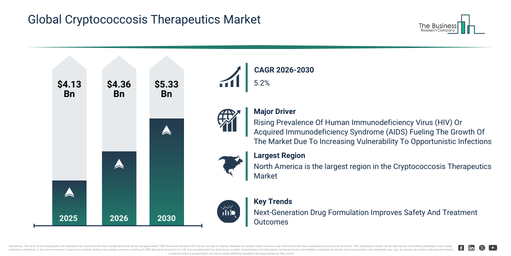
    The cryptococcosis therapeutics market has experienced robust expansion over recent years. Its projected growth will see it rise from $4.13 billion in 2025 to $4.36 billion in 2026, advancing at a compound annual growth rate (CAGR) of 5.6%. This historical growth can be linked to several factors, including the restricted availability of antifungal treatments, a significant number of immunocompromised individuals, the dependence on hospital-administered therapies, the prevalence of patented medications, and the slow integration of oral dosage forms.

    The cryptococcosis therapeutics market is anticipated to experience substantial expansion over the coming years. By 2030, its valuation is projected to reach $5.33 billion, driven by a compound annual growth rate (CAGR) of 5.2%. This anticipated growth during the forecast timeframe is attributable to a rising occurrence of cryptococcosis in developing areas, the creation of new antifungal compounds, enhanced understanding among medical professionals, the broadening of online pharmacy platforms, and increased funding for both combination and targeted therapeutic approaches. Key trends observed throughout the projected period encompass a greater acceptance of generic antifungal medications, a growing inclination towards intravenous delivery for serious instances, the proliferation of online and physical retail pharmacy distribution networks, an intensified emphasis on prompt detection and management of cryptococcosis, and the formulation of combined treatments and innovative drug forms.

    Download A Free Sample Report For Comprehensive Market Insights:

    https://www.thebusinessresearchcompany.com/sample.aspx?id=25733&type=smp

    Which Growth Factors Are Strengthening The Cryptococcosis Therapeutics Market Landscape?

    The increasing incidence of human immunodeficiency virus (HIV) or acquired immunodeficiency syndrome (AIDS) is projected to drive expansion in the cryptococcosis therapeutics market. This chronic, life-threatening viral condition, which weakens the body’s immune system and leaves it susceptible to infections and diseases, is becoming more prevalent in certain regions due to limited healthcare access. This lack of access hinders early detection, consistent treatment, and effective prevention strategies. Cryptococcosis therapeutics are vital in managing HIV/AIDS as they target the opportunistic fungal infections commonly affecting immunocompromised individuals. These treatments improve patient outcomes by reducing the risk of severe complications, such as cryptococcal meningitis, thereby enhancing quality of life and supporting long-term disease management. For instance, according to the UK Health Security Agency in October 2024, England recorded 6,008 HIV diagnoses (including individuals previously diagnosed abroad) in 2023, representing a 51% increase from the 3,975 cases reported in 2022. Therefore, the rising prevalence of human immunodeficiency virus (HIV) or acquired immunodeficiency syndrome (AIDS) is a key factor propelling the growth of the cryptococcosis therapeutics market.

    What Are The Major Segment Categories Within The Cryptococcosis Therapeutics Market?

    The cryptococcosis therapeutics market covered in this report is segmented –

    1) By Drug Type: Branded, Generic

    2) By Treatment: Amphotericin B, Flucytosine, Fluconazole, Other Treatments

    3) By Route Of Administration: Oral, Intravenous, Inhalation

    4) By Distribution Channel: Hospital Pharmacies, Retail Pharmacies, Online Pharmacies

    5) By End-User: Hospitals, Ambulatory Surgical Centers, Other End Users

    Subsegments:

    1) By Branded Drugs: Ambisome, Diflucan, Vfend, Noxafil, Cresemba

    2) By Generic Drugs: Amphotericin B Deoxycholate, Fluconazole, Flucytosine

    What Trends Are Impacting The Cryptococcosis Therapeutics Market?

    Major companies operating in the cryptococcosis therapeutics market are focusing on conducting clinical trials to develop innovative therapies such as oral lipid-nanocrystal (LNC) formulations to improve treatment accessibility, reduce toxicity, and enhance patient outcomes. Oral lipid-nanocrystal (LNC) formulations are drug delivery systems that encapsulate medications in tiny lipid-based crystals, allowing oral administration while targeting tissues, including the central nervous system, and reducing kidney toxicity compared to traditional intravenous therapies. For instance, in March 2023, Matinas BioPharma Holdings, Inc., a US-based biopharmaceutical company, presented MAT2203, its oral LNC amphotericin B, in two oral presentations at the European Congress of Clinical Microbiology & Infectious Diseases (ECCMID). The Phase 2 EnACT trial of MAT2203 achieved a mean early fungicidal activity exceeding the study’s primary threshold, delivered approximately 95% two-week survival in an all-oral cohort of 40 patients, and showed no evidence of kidney toxicity after six weeks of treatment. MAT2203 leverages Matinas’ proprietary LNC platform to convert an otherwise intravenous-only antifungal into an oral therapy, highlighting its potential to shift the current IV-based treatment paradigm.

    Who Are The Businesses Driving Activity In The Cryptococcosis Therapeutics Market?

    Major companies operating in the cryptococcosis therapeutics market are Pfizer Inc., Merck & Co. Inc., Gilead Sciences Inc., Asahi Kasei Pharma Corporation, Astellas Pharma Inc., Sun Pharmaceutical Industries Limited, Dr. Reddy’s Laboratories Ltd., Cipla Limited, Basilea Pharmaceutica AG, F2G Limited, Century Pharmaceuticals Ltd., LGM Pharma LLC, Zeon Health Industries Pvt. Ltd., Matinas BioPharma Holdings Inc.

    Access The Complete Cryptococcosis Therapeutics Market Report:

    https://www.thebusinessresearchcompany.com/report/cryptococcosis-therapeutics-global-market-report

    Which Geographic Region Represents The Largest Cryptococcosis Therapeutics Market Share?

    North America was the largest region in the cryptococcosis therapeutics market in 2025. Asia-Pacific is expected to be the fastest-growing region in the forecast period. The regions covered in the cryptococcosis therapeutics market report are Asia-Pacific, South East Asia, Western Europe, Eastern Europe, North America, South America, Middle East, Africa.

    Access Cryptococcosis Therapeutics Market Report for Deeper Competitive Insights

    https://www.thebusinessresearchcompany.com/sample.aspx?id=25733&type=smp

    Browse Through More Reports Similar to the Global Cryptococcosis Therapeutics Market 2026, By The Business Research Company

    Infectious Disease Therapeutics Market Report 2026

    https://www.thebusinessresearchcompany.com/report/infectious-disease-therapeutics-global-market-report

    Cephalosporin Market Report 2026

    https://www.thebusinessresearchcompany.com/report/cephalosporin-global-market-report

    Anti Infective Drugs Market Report 2026

    https://www.thebusinessresearchcompany.com/report/anti-infective-drugs-global-market-report

    Get in touch with us:

    The Business Research Company: https://www.thebusinessresearchcompany.com/

    Americas: +1 310-496-7795

    Asia: +44 7882 955267 & +91 8897263534

    Europe: +44 7882 955267

    Email us at: marketing@tbrc.info

    Follow us on:

    LinkedIn: https://in.linkedin.com/company/the-business-research-company

    YouTube: https://www.youtube.com/channel/UC24_fI0rV8cR5DxlCpgmyFQ

    Global Market Model: https://www.thebusinessresearchcompany.com/global-market-model

  • Growing Demand for Natural Gas Driving Growth in the Cryogenic Vaporizer Market Is Supporting Development Across The Cryogenic Vaporizer Market

    Growing Demand for Natural Gas Driving Growth in the Cryogenic Vaporizer Market Is Supporting Development Across The Cryogenic Vaporizer Market

    The Business Research Company’s 2026 market reports feature advanced enhancements such as market attractiveness analysis, total addressable market evaluation, company benchmarking matrices, interactive Excel dashboards, expanded supply chain intelligence, emerging startup coverage, and detailed product insights, delivering more actionable and strategically valuable research.

    How Is The Cryogenic Vaporizer Market’s Market Value Anticipated To Evolve From 2026 To 2030?

    The cryogenic vaporizer market has demonstrated robust expansion in recent years. This market is projected to expand from $5.19 billion in 2025 to $5.48 billion in 2026, achieving a compound annual growth rate (CAGR) of 5.8%. Historically, this expansion has been propelled by factors including increasing industrial gas consumption, the proliferation of oil and gas processing facilities, the established application of cryogenic storage systems, demand emanating from metallurgical industries, and the heightened utilization of oxygen and nitrogen gases.

    The cryogenic vaporizer market is anticipated to show significant expansion in the coming years. It is forecast to reach $6.89 billion by 2030, driven by a compound annual growth rate (CAGR) of 5.9%. This expected growth during the forecast period can be attributed to the increasing LNG transportation infrastructure, a rising need for medical oxygen systems, the proliferation of hydrogen and clean energy projects, the growth of industrial automation, and the demand for effective gas handling equipment. Prominent trends for this period encompass the increasing utilization of cryogenic gases in industrial processes, a growing preference for ambient air heated vaporizers, the expansion of LNG infrastructure and distribution networks, an uptick in demand from the healthcare and medical gas supply sectors, and a stronger focus on energy-efficient vaporization systems.

    Download A Free Sample Report For Comprehensive Market Insights:

    https://www.thebusinessresearchcompany.com/sample.aspx?id=19019&type=smp

    What Important Drivers Are Powering The Cryogenic Vaporizer Market Growth?

    The increasing demand for natural gas is anticipated to stimulate the expansion of the cryogenic vaporizer market in the future. Natural gas, a fossil fuel predominantly consisting of methane, finds application in generating electricity, various industrial processes, heating, and transportation. The heightened demand for natural gas stems from its reduced carbon intensity when compared to coal and oil. The cryogenic vaporizer market facilitates this demand by transforming liquefied natural gas (LNG) into a gaseous state, ready for immediate subsequent applications. As an illustration, data from the U.S. Energy Information Administration (EIA), a U.S.-based government agency, indicated that natural gas consumption in the United States in June 2024 reached 2,428 billion cubic feet (2.428 trillion cubic feet), equating to 80.9 billion cubic feet per day. This marks an increase of 2.1 billion cubic feet per day from the 78.8 billion cubic feet per day consumed in June 2023. Consequently, the expanding demand for natural gas is fueling the growth of the cryogenic vaporizer market.

    How Is The Cryogenic Vaporizer Market Distributed Across Key Segments?

    The cryogenic vaporizer market covered in this report is segmented –

    1) By Product: Ambient Air Heated Vaporizer, Steam Heated Vaporizer, Other Products

    2) By Cryogen Type: Nitrogen, Oxygen, Natural Gas, Argon, Other Cryogen Types

    3) By End-User: Oil And Gas Industry, Power, Food And Beverage, Chemical, Rubber And Plastics, Metallurgy, Healthcare, Shipping, Other End-Users

    Subsegments:

    1) By Ambient Air Heated Vaporizer: Natural Draft Ambient Vaporizer, Forced Draft Ambient Vaporizer

    2) By Steam Heated Vaporizer: Low-Pressure Steam Heated Vaporizer, High-Pressure Steam Heated Vaporizer

    3) By Other Products: Water Bath Vaporizer, Electric Heated Vaporizer, Direct Fired Vaporizer

    Which Trends Are Affecting The Cryogenic Vaporizer Market Framework?

    Leading companies in the cryogenic vaporizer market are increasingly focusing on developing innovative solutions, such as microchannel heat-exchanger vaporizers, to address the rising demand for compact, highly efficient regasification systems in the maritime LNG sector. Microchannel heat-exchanger vaporizers utilize finely machined, diffusion-welded microchannels, often in printed circuit heat exchanger (PCHE) form, to achieve an exceptionally high heat transfer area density within a small footprint, thereby offering significantly greater thermal efficiency and less weight compared to traditional shell-and-tube vaporizers. For instance, in October 2025, Shensi Technology (Anhui) Co., Ltd., a China-based thermal-management and heat-exchanger specialist, launched its PCHE-LNG heat exchanger specifically designed for the FGSS (fuel gas supply system) sector. This innovative cryogenic microchannel exchanger, produced using advanced diffusion-welding technology, delivers a heat-transfer area density of up to 6,400 m³/m³, which allows it to halve the floor space compared to ORVs while reducing energy consumption by around 20%. It supports both high- and low-pressure LNG systems, has demonstrated full-scale operation in offshore settings, and has obtained class certifications in China, Europe, and Japan, with mass production and customization services now available.

    Which Firms Are Competing In The Cryogenic Vaporizer Market?

    Major companies operating in the cryogenic vaporizer market are Linde plc, Chart Industries Inc., Nikkiso Co. Ltd., Kobe Steel Ltd., Cryostar, Cryolor SA, Taylor-Wharton Cryogenics LLC, INOX India Pvt. Ltd., Cryonorm B.V., Cryeng Group Pty Ltd, Isisan Energy Solutions Private Limited, Incryo Systems Pvt. Ltd., Cryogas Equipment Private Limited, Super Cryogenic Systems Private Limited, GMS Interneer Co. Ltd., Kagla Vaportech Corporation, FIBA Technologies Inc., OPW Clean Energy Solutions, Iec Fabchem Limited, CryoVation

    Access The Complete Cryogenic Vaporizer Market Report:

    https://www.thebusinessresearchcompany.com/report/cryogenic-vaporizer-global-market-report

    Which Region Leads The Cryogenic Vaporizer Market By Size?

    Asia-Pacific was the largest region in the cryogenic vaporizer market in 2025. North America is expected to be the fastest-growing region in the forecast period. The regions covered in the cryogenic vaporizer market report are Asia-Pacific, South East Asia, Western Europe, Eastern Europe, North America, South America, Middle East, Africa.

    Access Cryogenic Vaporizer Market Report for Deeper Competitive Insights

    https://www.thebusinessresearchcompany.com/sample.aspx?id=19019&type=smp

    Browse Through More Reports Similar to the Global Cryogenic Vaporizer Market 2026, By The Business Research Company

    Vaporizers Market Report 2026

    https://www.thebusinessresearchcompany.com/report/vaporizers-global-market-report

    Cryogenic Equipment Market 2026

    https://www.thebusinessresearchcompany.com/report/cryogenic-equipment-market

    Cryoablation Devices Market Report 2026

    https://www.thebusinessresearchcompany.com/report/cryoablation-devices-global-market-report

    Get in touch with us:

    The Business Research Company: https://www.thebusinessresearchcompany.com/

    Americas: +1 310-496-7795

    Asia: +44 7882 955267 & +91 8897263534

    Europe: +44 7882 955267

    Email us at: marketing@tbrc.info

    Follow us on:

    LinkedIn: https://in.linkedin.com/company/the-business-research-company

    YouTube: https://www.youtube.com/channel/UC24_fI0rV8cR5DxlCpgmyFQ

    Global Market Model: https://www.thebusinessresearchcompany.com/global-market-model

  • Rising Prevalence Of Inflammatory Bowel Disorders Drives Growth Of Crohn’s Disease Treatment Market Is Supporting Development Across The Crohn’s Disease Treatment Market

    Rising Prevalence Of Inflammatory Bowel Disorders Drives Growth Of Crohn’s Disease Treatment Market Is Supporting Development Across The Crohn’s Disease Treatment Market

    The Business Research Company’s 2026 market reports feature advanced enhancements such as market attractiveness analysis, total addressable market evaluation, company benchmarking matrices, interactive Excel dashboards, expanded supply chain intelligence, emerging startup coverage, and detailed product insights, delivering more actionable and strategically valuable research.

    By 2030, How Much Growth In Market Size Is Expected For The Crohn’s Disease Treatment Market?

    The crohn’s disease treatment market size has experienced robust growth in recent years. It is projected to expand from $13.1 billion in 2025 to $13.99 billion in 2026, achieving a compound annual growth rate (CAGR) of 6.8%. This historical growth can be attributed to factors such as the increasing prevalence of Crohn’s disease, growing awareness of inflammatory bowel diseases, the expansion of hospital pharmacy networks, the availability of conventional anti-inflammatory drugs, and improved diagnostic capabilities.

    The crohn’s disease treatment market size is forecast to show robust expansion over the next few years. It is predicted to attain $18.86 billion in 2030, progressing at a compound annual growth rate (CAGR) of 7.8%. This growth during the forecast period can be linked to the broadening pipeline for biologics and small molecules, a growing preference for personalized treatments, increased online pharmacy access, rising healthcare expenditure in emerging markets, and a focus on long-term disease management. Notable developments expected in this period include the rising adoption of biologic therapies, a shift towards earlier and more aggressive treatment approaches, an increasing emphasis on steroid-sparing regimens, the expansion of oral small-molecule therapies, and the growth of online and specialty pharmacy channels.

    Download A Free Sample Report For Comprehensive Market Insights:

    https://www.thebusinessresearchcompany.com/sample.aspx?id=10852&type=smp

    Which Major Factors Are Contributing To The Development Of The Crohn’s Disease Treatment Market?

    The growing occurrence of inflammatory bowel disorders is anticipated to boost the Crohn’s disease treatment market moving forward. Inflammatory bowel disorders are defined as a collection of chronic illnesses characterized by inflammation within the gastrointestinal tract, which can inflict damage and inflammation anywhere along the digestive system from the mouth to the anus. Treating Crohn’s disease aims to lessen intestinal inflammation, avert symptom flare-ups, and sustain remission. For example, a September 2023 report from the National Center for Biotechnology Information, a US government body, indicated a comparable rise in the prevalence of Crohn’s disease and ulcerative colitis. Inflammatory bowel disease is estimated at 825 cases per 100,000 people in 2023, with 410 attributed to Crohn’s disease and 414 to ulcerative colitis and IBD-u. Consequently, this increasing prevalence of such disorders is stimulating the growth of the Crohn’s disease treatment market.

    How Does Segment Analysis Break Down The Crohn’s Disease Treatment Market Structure?

    The crohn’s disease treatment market covered in this report is segmented –

    1) By Drug Type: Antibiotics, Amino Salicylates, Corticosteroids, Immunomodulators, Other Drug Types

    2) By Distribution Channel: Hospital Pharmacies, Retail Pharmacies, Online Pharmacies

    3) By Application: Neuropathic Pain, Fibromyalgia, Chronic Back Pain, Arthritic Pain, Migraine Post-Operative Pain, Cancer Pain, Other Applications

    Subsegments:

    1) By Antibiotics: Metronidazole, Ciprofloxacin, Other Antibiotics

    2) By Amino Salicylates: Mesalamine, Sulfasalazine, Other Amino Salicylates

    3) By Corticosteroids: Prednisone, Budesonide, Other Corticosteroids

    4) By Immunomodulators: Azathioprine, Methotrexate, Mercaptopurine

    5) By Other Drug Types: Biologics, Small Molecules, Other Treatments

    What Trends Are Influencing The Crohn’s Disease Treatment Market?

    Major companies in the crohn’s disease treatment market are innovating and getting new drugs approved, such as biosimilar ustekinumab, to provide more effective and accessible treatment options for patients, ultimately improving patient outcomes and quality of life. Biosimilar ustekinumab refers to a biologic drug highly similar to the original ustekinumab, a monoclonal antibody used for treating autoimmune conditions. For instance, in July 2024, Sandoz International GmbH, a Switzerland-based pharmaceutical company, launched Pyzchiva (ustekinumab) across Europe, establishing it as the first ustekinumab biosimilar available in all strengths, including a 130 mg vial specifically for Crohn’s disease. This product is indicated for adults and children over six with plaque psoriasis, psoriatic arthritis, and Crohn’s disease, enhancing Sandoz’s immunology portfolio while aiming to improve access to affordable treatments for chronic inflammatory disease.

    Who Are The Major Companies Operating In The Crohn’s Disease Treatment Market?

    Major companies operating in the crohn’s disease treatment market are AbbVie Inc., Janssen Pharmaceuticals, Takeda Pharmaceutical Company Limited, Bristol-Myers Squibb Company, Galapagos NV, Teva Pharmaceutical Industries Ltd., Mylan N.V., Glenmark Pharmaceuticals, Tillotts Pharma AG, Dr. Falk Pharma GmbH, Shire Pharmaceuticals, Salix Pharmaceuticals, Prometheus Laboratories Inc., Pfizer Inc., Novartis AG, Sanofi S.A., Eli Lilly and Company, Boehringer Ingelheim GmbH, Arena Pharmaceuticals Inc., F. Hoffmann-La Roche Ltd.

    Access The Complete Crohn’s Disease Treatment Market Report:

    https://www.thebusinessresearchcompany.com/report/crohns-disease-treatment-global-market-report

    Which Region Has The Strongest Presence In The Crohn’s Disease Treatment Market?

    North America was the largest region in the global Crohn’s disease treatment market in 2025. Asia-Pacific is expected to be the fastest-growing region in the forecast period. The regions covered in the crohn’s disease treatment market report are Asia-Pacific, South East Asia, Western Europe, Eastern Europe, North America, South America, Middle East, Africa.

    Access Crohn’s Disease Treatment Market Report for Deeper Competitive Insights

    https://www.thebusinessresearchcompany.com/sample.aspx?id=10852&type=smp

    Browse Through More Reports Similar to the Global Crohn’s Disease Treatment Market 2026, By The Business Research Company

    Crohns Disease Treatment Market Report 2026

    https://www.thebusinessresearchcompany.com/report/crohns-disease-treatment-global-market-report

    Crohns Disease Cd Treatment Market Report 2026

    https://www.thebusinessresearchcompany.com/report/crohns-disease-cd-treatment-global-market-report

    Inflammatory Bowel Disease Treatment Market Report 2026

    https://www.thebusinessresearchcompany.com/report/inflammatory-bowel-disease-treatment-global-market-report

    Get in touch with us:

    The Business Research Company: https://www.thebusinessresearchcompany.com/

    Americas: +1 310-496-7795

    Asia: +44 7882 955267 & +91 8897263534

    Europe: +44 7882 955267

    Email us at: marketing@tbrc.info

    Follow us on:

    LinkedIn: https://in.linkedin.com/company/the-business-research-company

    YouTube: https://www.youtube.com/channel/UC24_fI0rV8cR5DxlCpgmyFQ

    Global Market Model: https://www.thebusinessresearchcompany.com/global-market-model
  • Increase In Surgical Procedures Fueling The Growth Of The Market Due To Rising Chronic Disease Burden Is Supporting Development Across The Critical Care Drugs Market

    Increase In Surgical Procedures Fueling The Growth Of The Market Due To Rising Chronic Disease Burden Is Supporting Development Across The Critical Care Drugs Market

    The Business Research Company’s 2026 market reports feature advanced enhancements such as market attractiveness analysis, total addressable market evaluation, company benchmarking matrices, interactive Excel dashboards, expanded supply chain intelligence, emerging startup coverage, and detailed product insights, delivering more actionable and strategically valuable research.

    What Market Value Trend Is Expected For The Critical Care Drugs Market From 2026 To 2030?

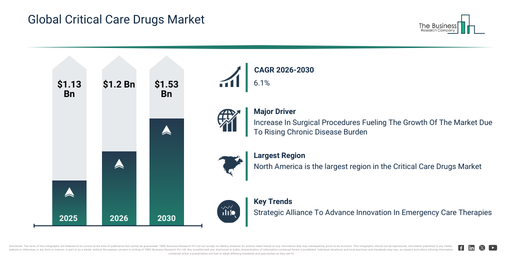
    The critical care drugs market size has shown robust growth recently. It is forecast to expand from $1.13 billion in 2025 to $1.2 billion in 2026, achieving a compound annual growth rate (CAGR) of 6.4%. The historical expansion of this market can be attributed to factors such as an increase in critical illnesses, a rise in ICU admissions, the limited availability of sophisticated critical care medications, expanding hospital infrastructure, and the reliance on conventional sedatives and analgesics.

    The critical care drugs market size is projected to experience robust expansion over the coming years, reaching $1.53 billion by 2030, exhibiting a compound annual growth rate (CAGR) of 6.1%. This projected growth can be ascribed to several factors, including the advancement of new opioids and sedatives, the incorporation of AI-based monitoring and dosing instruments, the broadening of acute care protocols, increasing governmental efforts to enhance ICU capacity, and the rising uptake of precision critical care therapies. Key trends anticipated during this period encompass a greater utilization of sophisticated sedatives and analgesics in ICU environments, increased implementation of continuous monitoring and dose optimization tools, a rise in acute care and critical event management pharmaceuticals, the proliferation of protocol-based drug administration in operating theatres, and an intensified emphasis on patient safety and the reduction of adverse drug reactions in critical care.

    Download A Free Sample Report For Comprehensive Market Insights:

    https://www.thebusinessresearchcompany.com/sample.aspx?id=27266&type=smp

    What Key Growth Drivers Are Influencing The Critical Care Drugs Market?

    An increase in surgical procedures is anticipated to fuel the expansion of the critical care drugs market in the future. These procedures involve medical interventions performed by doctors to address or rectify health concerns like injuries or illnesses through operation. The increasing incidence of chronic conditions necessitating operative treatment is contributing to the rise in surgical procedures. Within surgical contexts, critical care drugs serve to manage discomfort, stabilize essential bodily functions, avert infections, and aid recuperation both during and following operations. For example, data from May 2025, supplied by the Australian Institute of Health and Welfare, an Australia-based government agency, indicated that approximately 778,500 patients were admitted for surgery from public hospital waiting lists in 2023–24. This represented a 5.8% increase over the 2022–23 period. Consequently, the increased volume of surgical procedures is acting as a catalyst for the critical care drugs market’s expansion.

    What Segment Types Are Included In The Critical Care Drugs Market Analysis?

    The critical care drugs market covered in this report is segmented –

    1) By Drug Type: Opioids, Morphine, Pethidine, Naloxone, Fentanyl, Benzodiazepines, Diazepam, Midazolam, Lorazepum, Other Types

    2) By Clinical Applications: Sepsis And Septic Shock, Acute Respiratory Distress Syndrome (ARDS), Acute Cardiovascular Events, Acute Kidney Injury, Traumatic Injuries

    3) By Route Of Administration: Intravenous (IV), Intramuscular (IM), Inhalation, Subcutaneous

    4) By End User: Intensive Care Unit (ICU), Coronary Care Unit (CCU), Operation Theatres, Trauma Centers

    Subsegments:

    1) By Opioids: Codeine, Hydromorphone, Oxycodone, Tapentadol, Methadone

    2) By Morphine: Immediate-Release Morphine, Extended-Release Morphine, Injectable Morphine, Oral Morphine Solutions

    3) By Pethidine: Injectable Pethidine, Oral Pethidine, Pethidine Combinations

    4) By Naloxone: Injectable Naloxone, Nasal Naloxone, Auto-injector Naloxone

    5) By Fentanyl: Transdermal Patches, Injectable Fentanyl, Buccal Tablets, Sublingual Spray, Lozenges

    6) By Benzodiazepines: Short-Acting Benzodiazepines, Intermediate-Acting Benzodiazepines, Long-Acting Benzodiazepines

    7) By Diazepam: Oral Tablets, Injectable Diazepam, Rectal Gel, Oral Solution

    8) By Midazolam: Injectable Midazolam, Nasal Spray, Buccal Formulation, Oral Syrup

    9) By Lorazepam: Oral Tablets, Injectable Lorazepam, Oral Concentrate

    10) By Other Types: Propofol, Ketamine, Dexmedetomidine, Etomidate, Clonidine

    Which Trends Are Guiding The Development Of The Critical Care Drugs Market?

    Major companies operating within the critical care drugs market are increasingly concentrating on strategic partnerships to expand their product pipelines, enhance research capabilities, accelerate market access, and strengthen their presence in high-growth therapeutic areas. Strategic partnerships provide benefits to critical care drugs by speeding up research, development, and market entry through shared expertise and resources. They enable pharmaceutical companies to collaborate with hospitals, research institutions, or biotech firms to improve drug innovation and clinical trial efficiency. For example, in March 2024, Dr. Reddy’s Laboratories Ltd., an India-based pharmaceutical company, collaborated with Pharmazz Inc., a US-based pharmaceutical company, to launch and commercialize Centhaquine, an innovative resuscitative drug designed for hypovolemic shock, in India under the brand name Lyfaquin. This strategic move grants Dr. Reddy’s exclusive marketing and distribution rights in India and Nepal, with Pharmazz receiving upfront payments and royalties. The partnership enhances Dr. Reddy’s critical care portfolio by introducing a novel therapy, approved by the Drugs Controller General of India (DCGI), for emergency conditions, thereby reinforcing its focus on life-saving treatments for critically ill patients.

    Which Companies Are Influencing The Critical Care Drugs Market?

    Major companies operating in the critical care drugs market are Intas Pharmaceuticals, Sun Pharmaceutical Industries Ltd., Aurobindo Pharma, Dr. Reddy’s Laboratories Ltd., Cipla Ltd., Lupin Ltd., Zydus Lifesciences Limited, Cargus Biopharma, Glenmark Pharmaceuticals, Torrent Pharmaceuticals, Mankind Pharma, Novalab Healthcare, Arlak Biotech Ltd., Pax Healthcare, SwissChem Healthcare, Iskon Remedies, Salvus Pharma, Fortune Labs, H&I Critical Care, Biofield Pharma.

    Access The Complete Critical Care Drugs Market Report:

    https://www.thebusinessresearchcompany.com/report/critical-care-drugs-global-market-report

    Which Region Stands As The Largest Contributor To The Critical Care Drugs Market?

    North America was the largest region in the critical care drugs market in 2025. Asia-Pacific is expected to be the fastest-growing region in the forecast period. The regions covered in the critical care drugs market report are Asia-Pacific, South East Asia, Western Europe, Eastern Europe, North America, South America, Middle East, Africa.

    Access Critical Care Drugs Market Report for Deeper Competitive Insights

    https://www.thebusinessresearchcompany.com/sample.aspx?id=27266&type=smp

    Browse Through More Reports Similar to the Global Critical Care Drugs Market 2026, By The Business Research Company

    Landscaping Services Market Report 2026

    https://www.thebusinessresearchcompany.com/report/landscaping-services-global-market-report

    Architectural Services Market Report 2026

    https://www.thebusinessresearchcompany.com/report/architectural-services-global-market-report

    Crop Production Market Report 2026

    https://www.thebusinessresearchcompany.com/report/crop-production-global-market-report

    Get in touch with us:

    The Business Research Company: https://www.thebusinessresearchcompany.com/

    Americas: +1 310-496-7795

    Asia: +44 7882 955267 & +91 8897263534

    Europe: +44 7882 955267

    Email us at: marketing@tbrc.info

    Follow us on:

    LinkedIn: https://in.linkedin.com/company/the-business-research-company

    YouTube: https://www.youtube.com/channel/UC24_fI0rV8cR5DxlCpgmyFQ

    Global Market Model: https://www.thebusinessresearchcompany.com/global-market-model

  • Growing Demand For Critical Care Antiarrhythmic Drugs Amid Rising Cardiovascular Disease Prevalence Is Supporting Development Across The Critical Care Antiarrhythmic Drugs Market

    Growing Demand For Critical Care Antiarrhythmic Drugs Amid Rising Cardiovascular Disease Prevalence Is Supporting Development Across The Critical Care Antiarrhythmic Drugs Market

    The Business Research Company’s 2026 market reports feature advanced enhancements such as market attractiveness analysis, total addressable market evaluation, company benchmarking matrices, interactive Excel dashboards, expanded supply chain intelligence, emerging startup coverage, and detailed product insights, delivering more actionable and strategically valuable research.

    How Does The Forecasted Market Size Of The Critical Care Antiarrhythmic Drugs Market Compare Between 2026 And 2030?

    The critical care antiarrhythmic drugs market size has experienced robust growth in recent years. It is anticipated to expand from $1.06 billion in 2025 to $1.13 billion in 2026, achieving a compound annual growth rate (CAGR) of 5.9%. This historical expansion can be attributed to factors such as the high occurrence of acute cardiac arrhythmias, the recognized role of antiarrhythmic drugs in intensive care units, the expansion of emergency cardiac care services, the availability of proven intravenous drug formulations, and the development of hospital-based critical care infrastructure.

    The critical care antiarrhythmic drugs market is projected to experience robust expansion over the coming years. Its valuation is anticipated to reach $1.39 billion by 2030, demonstrating a compound annual growth rate (CAGR) of 5.3%. This projected expansion during the forecast period is primarily driven by factors such as the increasing incidence of cardiovascular diseases, a growing elderly demographic with associated cardiac risk factors, the broadening of intensive care and emergency medical provisions, a heightened emphasis on timely arrhythmia intervention, and the need for swift stabilization treatments in critical care. Noteworthy trends identified for this period encompass the increasing adoption of rapid-acting intravenous antiarrhythmic medications, a stronger reliance on evidence-based guidelines within critical care environments, a rise in the use of combination therapies for severe arrhythmias, the expanded application of antiarrhythmic drugs in emergency cardiac scenarios, and consistent demand for both established and generic critical care antiarrhythmics.

    Download A Free Sample Report For Comprehensive Market Insights:

    https://www.thebusinessresearchcompany.com/sample.aspx?id=16386&type=smp

    Which Core Factors Are Supporting The Expansion Of The Critical Care Antiarrhythmic Drugs Market?

    The anticipated expansion of the critical care antiarrhythmic drugs market is linked to the growing incidence of cardiovascular disease. These conditions, which impact the heart and its vessels, frequently result in severe issues like arrhythmias, heart attacks, and strokes. A rise in sedentary living, poor dietary choices, tobacco use, and escalating levels of obesity and hypertension are contributing to the increased occurrence of cardiovascular disease. This market plays a crucial role in cardiac emergency care, helping to re-establish a regular heart rhythm and avert cardiac arrest in individuals suffering from severe arrhythmias. For example, the World Heart Federation, a non-governmental organization based in Switzerland, reported in 2023 that worldwide fatalities attributed to cardiovascular disease are anticipated to climb to 0.0222 billion by 2030 and further to 0.0323 billion by 2050, underscoring a significant global rise in the CVD burden. Consequently, the expanding occurrence of cardiovascular disease is a key factor propelling the growth of the critical care antiarrhythmic drugs market.

    Which Segment Divisions Form The Structure Of The Critical Care Antiarrhythmic Drugs Market?

    The critical care antiarrhythmic drugs market covered in this report is segmented –

    1) By Type: Sodium Channel Blockers, Potassium Channel Blockers, Other Types

    2) By Disease Type: Ventricular Arrhythmias, Supraventricular Arrhythmias

    3) By Application: Hospitals, Other Applications

    Subsegments:

    1) By Sodium Channel Blockers: Class I Antiarrhythmic Drugs, Class Ia Antiarrhythmics, Class Ib Antiarrhythmics, Class Ic Antiarrhythmics

    2) By Potassium Channel Blockers: Class Iii Antiarrhythmic Drugs

    3) By Other Types: Adenosine, Magnesium Sulfate, Other Experimental Or Off-Label Drugs

    What Trends Are Influencing The Future Of The Critical Care Antiarrhythmic Drugs Market?

    Major companies in the critical care antiarrhythmic drugs market are focusing on developing ultra-short-acting, highly selective beta-1 blocker therapies to improve heart rate control and reduce adverse effects in critically ill patients. These ultra-short-acting, highly selective beta-1 blocker therapies are medications designed to quickly reduce heart rate by specifically targeting beta-1 receptors in the heart, with effects that wear off rapidly after administration. For instance, in November 2024, AOP Orphan Pharmaceuticals GmbH, an Austria-based pharmaceutical company, received U.S. FDA approval for Rapiblyk (landiolol), intended for rapid ventricular rate reduction in adults with supraventricular tachycardia (such as atrial fibrillation and atrial flutter) in critical care. Rapiblyk is formulated as a lyophilized powder for intravenous injection (280 mg vial), and upon reconstitution, it is infused at a dose range of 9.3–74.6 µg/kg/min. Its ultra-short half-life allows for a heart rate reduction of 40–90% within approximately 10 minutes, with minimal impact on blood pressure, making it especially useful in ICU, emergency department, perioperative, and cardiac surgical settings. Its fast onset and offset, combined with high ß1/ß2 selectivity (˜ 255:1), distinguish it from conventional beta-blockers, ensuring effective rate control without long-lasting systemic effects.

    Who Are The Companies Shaping The Critical Care Antiarrhythmic Drugs Market Landscape?

    Major companies operating in the critical care antiarrhythmic drugs market are Pfizer Inc., F. Hoffmann-La Roche Ltd., Bayer AG, Sanofi S.A., Bristol Myers Squibb, Novartis AG, Viatris Inc., Teva Pharmaceutical Industries Ltd., Baxter International Inc., Fresenius Kabi AG, Sun Pharmaceutical Industries Ltd., Aurobindo Pharma Limited, Dr. Reddy’s Laboratories Ltd., Hikma Pharmaceuticals Plc, Amneal Pharmaceuticals Inc., Lupin Pharmaceutical Limited, Biocon Limited, Glenmark Pharmaceuticals Limited, Torrent Pharmaceuticals Ltd., Alembic Pharmaceuticals Ltd., Upsher-Smith Laboratories LLC., Mayne Pharma International Pty Ltd., Zydus Cadila Healthcare Limited, Amomed Pharma GmbH

    Access The Complete Critical Care Antiarrhythmic Drugs Market Report:

    https://www.thebusinessresearchcompany.com/report/critical-care-antiarrhythmic-drugs-global-market-report

    What Is The Largest Regional Market In The Critical Care Antiarrhythmic Drugs Market?

    North America was the largest region in the critical care antiarrhythmic drugs market in 2025. Europe is expected to be the fastest-growing region in the forecast period. The regions covered in the critical care antiarrhythmic drugs market report are Asia-Pacific, South East Asia, Western Europe, Eastern Europe, North America, South America, Middle East, Africa.

    Access Critical Care Antiarrhythmic Drugs Market Report for Deeper Competitive Insights

    https://www.thebusinessresearchcompany.com/sample.aspx?id=16386&type=smp

    Browse Through More Reports Similar to the Global Critical Care Antiarrhythmic Drugs Market 2026, By The Business Research Company

    Critical Care Antiarrhythmic Drugs Market Report 2026

    https://www.thebusinessresearchcompany.com/report/critical-care-antiarrhythmic-drugs-global-market-report

    Cardiovascular Monitoring And Diagnostic Devices And Equipment Market Report 2026

    https://www.thebusinessresearchcompany.com/report/cardiovascular-monitoring-and-diagnostic-devices-and-equipment-global-market-report

    Arrhythmia Market Report 2026

    https://www.thebusinessresearchcompany.com/report/arrhythmia-global-market-report

    Get in touch with us:

    The Business Research Company: https://www.thebusinessresearchcompany.com/

    Americas: +1 310-496-7795

    Asia: +44 7882 955267 & +91 8897263534

    Europe: +44 7882 955267

    Email us at: marketing@tbrc.info

    Follow us on:

    LinkedIn: https://in.linkedin.com/company/the-business-research-company

    YouTube: https://www.youtube.com/channel/UC24_fI0rV8cR5DxlCpgmyFQ

    Global Market Model: https://www.thebusinessresearchcompany.com/global-market-model
  • Government Initiatives Catalysts For Growth In The COVID-19 Drug-Associated API Market Is Supporting Development Across The COVID-19 Drug Associated APIs Market

    Government Initiatives Catalysts For Growth In The COVID-19 Drug-Associated API Market Is Supporting Development Across The COVID-19 Drug Associated APIs Market

    The Business Research Company’s 2026 market reports feature advanced enhancements such as market attractiveness analysis, total addressable market evaluation, company benchmarking matrices, interactive Excel dashboards, expanded supply chain intelligence, emerging startup coverage, and detailed product insights, delivering more actionable and strategically valuable research.

    What Increase In Market Value Is Predicted For The COVID-19 Drug Associated APIs Market During The 2026–2030 Period?

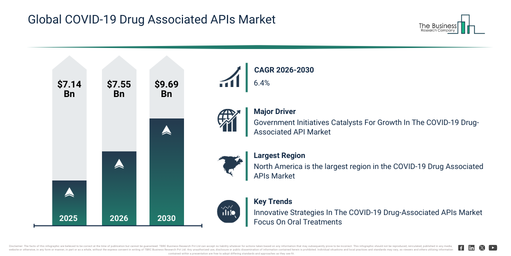
    The covid-19 drug associated apis market has experienced substantial growth recently. It will grow from $7.14 billion in 2025 to $7.55 billion in 2026 at a compound annual growth rate (CAGR) of 5.8%. The historical expansion of this market can be attributed to the initial surge in covid-19 cases, the urgent need for repurposed drugs, limited availability of antiviral apis, dependency on imports from asia-pacific, and accelerated emergency approvals.

    The covid-19 drug associated apis market is projected to experience robust expansion over the coming years. Its valuation is anticipated to reach $9.69 billion in 2030, exhibiting a compound annual growth rate (CAGR) of 6.4%. Factors contributing to this growth during the projected timeframe include the creation of advanced antiviral and immunomodulator APIs, the scaling up of local API production, increased uptake of biotechnological synthesis methods, elevated government investment for pandemic readiness, and the expanding need for a variety of covid-19 therapeutic approaches. Key trends observed within this period encompass a surging demand for antiviral and antimalarial APIs, a heightened emphasis on in-house and third-party API production, the broadening of synthetic and biotech-derived API output, augmented R&D spending for covid-19 medications, and stricter regulatory supervision over API quality and supply networks.

    Download A Free Sample Report For Comprehensive Market Insights:

    https://www.thebusinessresearchcompany.com/sample.aspx?id=3248&type=smp

    What Are The Main Drivers Accelerating The Growth Of The COVID-19 Drug Associated APIs Market?

    Actions by governments to foster research and development within the healthcare sector are projected to fuel the expansion of the COVID-19 drug-associated API market. These governmental initiatives represent specific programs, policies, or projects undertaken by authorities at local, regional, national, or international levels to address particular issues, achieve set objectives, or instigate positive societal shifts. There is an increasing focus on government efforts in healthcare R&D to promote innovation and accelerate the discovery of new treatments that tackle critical public health challenges. COVID-19 drug-associated APIs assist these government initiatives for research and development in healthcare by supplying essential active ingredients that facilitate the rapid development, testing, and production of treatments and vaccines. For instance, in April 2025, according to the Office for National Statistics (ONS), a UK-government agency, UK government net R&D expenditure was £17.4 ($20.10) billion in 2023, an increase from £16.1 billion in 2022. Consequently, government initiatives for research and development in healthcare are driving the growth of the COVID-19 drug-associated API market.

    How Are Different Segment Groups Identified Within The COVID-19 Drug Associated APIs Market?

    The covid-19 drug associated apis market covered in this report is segmented –

    1) By Drug Class: Antimalarials, Bronchodilators, Antibiotics, Antivirals, Other Drug Class

    2) By Synthesis Type: Synthetic, Biotech

    3) By Business Mode: Captive API, Merchant API

    Subsegments:

    1) By Antimalarials: Hydroxychloroquine, Chloroquine

    2) By Bronchodilators: Beta-Agonists, Anticholinergics

    3) By Antibiotics: Macrolides, Tetracyclines

    4) By Antivirals: Remdesivir, Favipiravir, Lopinavir Or Ritonavir

    5) By Other Drug Classes: Corticosteroids, Immunomodulators

    Which Trends Are Contributing To Changes In The COVID-19 Drug Associated APIs Market?

    Leading companies in the COVID-19 drug-associated APIs market are intensifying their efforts to introduce innovative offerings, such as oral treatments for COVID-19, to secure a competitive edge. Oral treatment for COVID-19 refers to medications taken by mouth to manage and treat the infection caused by the SARS-CoV-2 virus, responsible for COVID-19. For instance, in May 2023, Pfizer Inc., a US-based pharmaceutical company, launched PAXLOVID, which received approval from the FDA. This oral investigational drug, a SARS-CoV-2 protease inhibitor, demonstrated an 89% reduction in the risk of hospitalization or death compared to a placebo in high-risk, non-hospitalized adults with COVID-19. Designed for early administration, it aims to be prescribed at the first sign of infection or exposure awareness, potentially preventing severe illness, hospitalization, and death.

    Which Industry Players Are Present In The COVID-19 Drug Associated APIs Market?

    Major companies operating in the covid-19 drug associated apis market are Dr. Reddy’s Laboratories Ltd., Lianyungang Guike Pharmaceutical CO. LTD., Alembic Pharmaceuticals Ltd., Wockhardt Ltd., Sandoz Srl, Lupin Limited, Aurobindo Pharma Ltd., Shanghai Shyndec Pharmaceutical Co. Ltd., Zhejiang Yatai Pharmaceutical Co. Ltd., Zhejiang Guobang Pharmaceutical Co Ltd., Cipla Limited, Shandong Boyuan Pharmaceutical Co. Ltd., Aspiro Pharma Ltd., Qilu Antibiotics Pharmaceutical Co. Ltd., Shenzhen China Resources Jiuxin Pharmaceutical Co. Ltd., Zhejiang Cheng Yi Pharmaceutical, Star Lake Bioscience Co.Inc., Hetero Labs Ltd., Geno Pharmaceuticals Ltd., Mylan Laboratories Ltd., Ipca Laboratories Limited, Zydus Takeda Healthcare Private Limited, Mangalam Drugs & Organics, Wallace Pharmaceuticals, Zhejiang Hisun Pharmaceutical Co. Ltd., Zhejiang Huahai Pharmaceutical Co. Ltd., Zhejiang Jiuzhou Pharmaceutical Co. Ltd., Zhejiang NHU Co. Ltd., Zhejiang Xianju Pharmaceutical Co. Ltd., Zhejiang Yongtai Technology Co. Ltd., Zhejiang Zhebei Pharmaceutical Co. Ltd., Zhejiang Tianyu Pharmaceutical Co. Ltd., Zhejiang Aisheng Pharmaceutical Co. Ltd., Zhejiang Aokang Pharmaceutical Co. Ltd.

    Access The Complete COVID-19 Drug Associated APIs Market Report:

    https://www.thebusinessresearchcompany.com/report/covid19-drug-associated-api-global-market-report

    Which Region Contributes The Most To The COVID-19 Drug Associated APIs Market?

    North America was the largest region in the COVID-19 drug-associated APIs market in 2025. Middle East is expected to be the fastest growing region in the global COVID-19 drug associated APIs market share during the forecast period. The regions covered in the covid-19 drug associated apis market report are Asia-Pacific, South East Asia, Western Europe, Eastern Europe, North America, South America, Middle East, Africa.

    Access COVID-19 Drug Associated APIs Market Report for Deeper Competitive Insights

    https://www.thebusinessresearchcompany.com/sample.aspx?id=3248&type=smp

    Browse Through More Reports Similar to the Global COVID-19 Drug Associated APIs Market 2026, By The Business Research Company

    Coronavirus Current Therapy Market Report 2026

    https://www.thebusinessresearchcompany.com/report/coronavirus-current-therapy-global-market-report

    Hydroxychloroquines Market Report 2026

    https://www.thebusinessresearchcompany.com/report/hydroxychloroquines-global-market-report

    Covid 19 Detection Test Kits And Consumables Market Report 2026

    https://www.thebusinessresearchcompany.com/report/covid-19-detection-test-kits-and-consumables-global-market-report

    Get in touch with us:

    The Business Research Company: https://www.thebusinessresearchcompany.com/

    Americas: +1 310-496-7795

    Asia: +44 7882 955267 & +91 8897263534

    Europe: +44 7882 955267

    Email us at: marketing@tbrc.info

    Follow us on:

    LinkedIn: https://in.linkedin.com/company/the-business-research-company

    YouTube: https://www.youtube.com/channel/UC24_fI0rV8cR5DxlCpgmyFQ

    Global Market Model: https://www.thebusinessresearchcompany.com/global-market-model
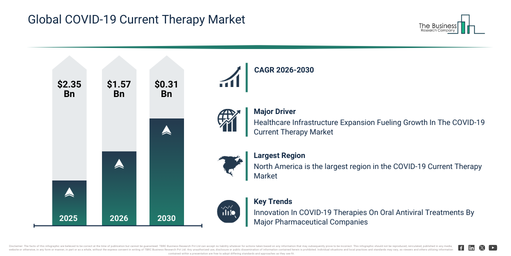
  • Healthcare Infrastructure Expansion Fueling Growth In The COVID-19 Current Therapy Market Is Supporting Development Across The COVID-19 Current Therapy Market

    Healthcare Infrastructure Expansion Fueling Growth In The COVID-19 Current Therapy Market Is Supporting Development Across The COVID-19 Current Therapy Market

    The Business Research Company’s 2026 market reports feature advanced enhancements such as market attractiveness analysis, total addressable market evaluation, company benchmarking matrices, interactive Excel dashboards, expanded supply chain intelligence, emerging startup coverage, and detailed product insights, delivering more actionable and strategically valuable research.

    How Will The Market Size Of The COVID-19 Current Therapy Market Progress Through 2030?

    The covid-19 current therapy market size has experienced a steep decline in recent years. It is forecast to decrease from $2.35 billion in 2025 to $1.57 billion in 2026, at a compound annual growth rate (CAGR) of -33.2%. The reduction observed historically can be attributed to the sudden emergence of covid-19, elevated hospitalization rates, limited initial treatment options, diminishing government and healthcare initiatives, and fewer emergency drug approvals.

    The market size for covid-19 current therapy is anticipated to experience a substantial decrease over the coming years. Its value is expected to fall to $0.31 billion in 2030, at a compound annual growth rate (CAGR) of -33.2%. This projected reduction during the forecast period is primarily due to a decline in telemedicine adoption for covid-19 management and a more limited expansion of home care services. Significant trends identified for the forecast period include an increasing embrace of antiviral and monoclonal antibody treatments, greater utilization of corticosteroids for critical covid-19 infections, an expansion of home care and remote patient monitoring options for covid-19, a proliferation of supplement and immune support therapies, and the incorporation of combination and experimental therapies into treatment strategies.

    Download A Free Sample Report For Comprehensive Market Insights:

    https://www.thebusinessresearchcompany.com/sample.aspx?id=3247&type=smp

    Which Growth Drivers Are Expected To Support The COVID-19 Current Therapy Market Forward?

    The expansion of healthcare infrastructure is projected to drive the growth of the COVID-19 current therapy market moving forward. The healthcare industry consolidates sectors of the economic system that deliver products and services aimed at curing, preventing, rehabilitating, and offering palliative care to patients. Healthcare infrastructure plays a vital role in the effective deployment of COVID-19 therapies, ensuring prompt patient care, supporting research and clinical trials, and providing essential resources for optimal treatment. For instance, in May 2023, the American Health Care Association, a US-based nonprofit organization, reported an increase in hospitals in the US to 6,129 from 6,093 in 2022. Furthermore, in May 2023, a report from the Office for National Statistics, a UK-based government department, showed that healthcare spending in the UK significantly increased by 9.4% in nominal terms and 9.7% in real terms. Thus, the growing healthcare industry is fueling the expansion of the COVID-19 current therapy market.

    What Segment Categories Are Evaluated In The COVID-19 Current Therapy Market Study?

    The covid-19 current therapy market covered in this report is segmented –

    1) By Drug Type: Antiviral, Monoclonal Antibodies, Corticosteroid, Supplements, Antimalarial, Interferons And Interleukin Inhibitors, Other Anti-Infective Drugs

    2) By Route Of Administration: Oral, Intravenous

    3) By End-User: Hospitals, Clinics, Home Care, Others

    Subsegments:

    1) By Antiviral: Remdesivir, Oseltamivir, Favipiravir, Nirmatrelvir Or ritonavir (Paxlovid)

    2) By Monoclonal Antibodies: Bamlanivimab, Casirivimab Or Imdevimab (REGEN-COV), Sotrovimab, Etesevimab

    3) By Corticosteroid: Dexamethasone, Hydrocortisone, Prednisone

    4) By Supplements: Vitamin D, Vitamin C, Zinc, Quercetin

    5) By Antimalarial: Hydroxychloroquine, Chloroquine

    6) By Interferons and Interleukin Inhibitors: Interferon beta-1a, Interleukin-6 inhibitors

    7) By Other Anti-Infective Drugs: Antibiotics, Antifungal Agents

    What Trends Are Shaping The COVID-19 Current Therapy Market Structure?

    Leading companies within the COVID-19 current therapy market are intensifying their efforts to introduce novel products, such as oral antiviral treatments for COVID-19, to secure a competitive advantage. Antiviral treatments are medications designed to prevent viruses from replicating and spreading throughout the body. For instance, in April 2024, Invivyd, a US-based firm specializing in antibody-based therapies for serious viral infectious diseases, provided an update regarding the introduction of PEMGARDA™. This occurred subsequent to receiving emergency use authorization (EUA) from The U.S. Food and Drug Administration (FDA). PEMGARDA rapidly became accessible for commercial distribution, with its aim being to prevent COVID-19 in individuals with moderate-to-severe immune compromise.

    Which Organizations Are Involved In The COVID-19 Current Therapy Market?

    Major companies operating in the covid-19 current therapy market are Gilead Sciences Inc., Ipca Laboratories Limited, Zydus Cadila, Regeneron Pharmaceuticals Inc., Sun Pharmaceutical Industries Limited, AbbVie, Glenmark Pharmaceuticals Limited, Eli Lilly and Company, Wallace Pharmaceuticals Inc., Canary Health Technologies, Thermo Fisher Scientific

    Access The Complete COVID-19 Current Therapy Market Report:

    https://www.thebusinessresearchcompany.com/report/coronavirus-current-therapy-global-market-report

    Which Regional Market Leads The COVID-19 Current Therapy Market?

    North America is the largest region in the COVID-19 current therapy market in 2025. Middle East is expected to be the fastest-growing region in the global COVID-19 current therapy market share during the forecast period. The regions covered in the covid-19 current therapy market report are Asia-Pacific, South East Asia, Western Europe, Eastern Europe, North America, South America, Middle East, Africa.

    Access COVID-19 Current Therapy Market Report for Deeper Competitive Insights

    https://www.thebusinessresearchcompany.com/sample.aspx?id=3247&type=smp

    Browse Through More Reports Similar to the Global COVID-19 Current Therapy Market 2026, By The Business Research Company

    Hydroxychloroquines Market Report 2026

    https://www.thebusinessresearchcompany.com/report/hydroxychloroquines-global-market-report

    Covid 19 Detection Test Kits And Consumables Market Report 2026

    https://www.thebusinessresearchcompany.com/report/covid-19-detection-test-kits-and-consumables-global-market-report

    Covid 19 Rapid Test Kits Market 2026

    https://www.thebusinessresearchcompany.com/report/covid-19-rapid-test-kits-market

    Get in touch with us:

    The Business Research Company: https://www.thebusinessresearchcompany.com/

    Americas: +1 310-496-7795

    Asia: +44 7882 955267 & +91 8897263534

    Europe: +44 7882 955267

    Email us at: marketing@tbrc.info

    Follow us on:

    LinkedIn: https://in.linkedin.com/company/the-business-research-company

    YouTube: https://www.youtube.com/channel/UC24_fI0rV8cR5DxlCpgmyFQ

    Global Market Model: https://www.thebusinessresearchcompany.com/global-market-model