Category: Pharmaceuticals

  • Rising Knee And Hip Replacement Surgeries Driving The Market Due To Increasing Risk Of Post-Surgical Bone Complications Is Supporting Development Across The Avascular Necrosis Market

    Rising Knee And Hip Replacement Surgeries Driving The Market Due To Increasing Risk Of Post-Surgical Bone Complications Is Supporting Development Across The Avascular Necrosis Market

    The Business Research Company’s 2026 market reports feature advanced enhancements such as market attractiveness analysis, total addressable market evaluation, company benchmarking matrices, interactive Excel dashboards, expanded supply chain intelligence, emerging startup coverage, and detailed product insights, delivering more actionable and strategically valuable research.

    What Is The Expected Market Size Of The Avascular Necrosis Market In 2026 And How Much Will It Reach By 2030?

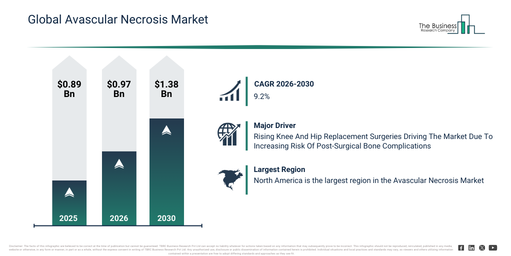
    The avascular necrosis market size has experienced significant expansion over recent years. It is anticipated to increase from $0.89 billion in 2025 to $0.97 billion in 2026, achieving a compound annual growth rate (CAGR) of 9.5%. The historical growth of this market can be linked to factors like trauma-related bone injuries, excessive steroid use, alcohol intake, late diagnoses, and the rise in orthopedic surgeries.

    The avascular necrosis market is anticipated to experience robust expansion over the coming years. Its valuation is set to reach $1.38 billion by 2030, exhibiting a compound annual growth rate (CAGR) of 9.2%. Factors contributing to this growth during the forecast timeframe include the wider uptake of advanced imaging, ongoing research in regenerative medicine, an expanding aging population, the rising incidence of sports injuries, and innovations in orthopedics. Key developments anticipated within the forecast horizon encompass the increasing application of early diagnostic imaging, a greater embrace of joint-preserving treatments, the proliferation of minimally invasive surgical techniques, an expansion of physical rehabilitation initiatives, and an emphasis on interventions for early-stage disease.

    Download A Free Sample Report For Comprehensive Market Insights:

    https://www.thebusinessresearchcompany.com/sample.aspx?id=24476&type=smp

    Which Major Factors Are Contributing To The Development Of The Avascular Necrosis Market?

    The avascular necrosis market is anticipated to expand due to the increasing volume of knee replacements and hip surgeries. These surgical interventions involve replacing damaged joints and providing pain relief for individuals suffering from severe avascular necrosis. The rising incidence of osteoarthritis, a condition that causes significant joint pain and impaired mobility, often necessitates such surgical procedures for relief and an improved quality of life, thereby contributing to the increase in knee and hip surgeries. Moreover, avascular necrosis itself, characterized by the death of bone tissue due to reduced blood supply, is a major factor in the demand for knee replacements and hip surgeries, frequently resulting in joint deterioration and collapse. For instance, in November 2024, the American Joint Replacement Registry (AJRR), a US-based registry managed by the American Academy of Orthopaedic Surgeons, reported that in 2023, the number of hip and knee arthroplasty procedures recorded in its registry exceeded 4 million, marking an 18% increase compared to 2022. Consequently, the growing number of knee replacements and hip surgeries is driving the growth of the avascular necrosis market.

    How Is The Avascular Necrosis Market Distributed Across Key Segments?

    The avascular necrosis market covered in this report is segmented –

    1) By Type: Trauma Related Avascular Necrosis, Non-Trauma Related Avascular Necrosis

    2) By Diagnosis: Imaging, Biopsy, Computed Tomography Scan, Positron Emission Tomography, X-Ray

    3) By Treatment Type: Medications, Surgery, Physical Therapy, Lifestyle Changes, Bone Grafting

    4) By End-User: Hospitals, Specialty Clinics, Rehabilitation Centers, Ambulatory Surgical Centers, Home Care Settings

    Subsegments:

    1) By Trauma-Related Avascular Necrosis: Fracture-Induced Avascular Necrosis, Dislocation-Induced Avascular Necrosis, Post-Surgical Avascular Necrosis, Crush Injury-Related Avascular Necrosis, Sports Injury-Associated Avascular Necrosis

    2) By Non-Trauma Related Avascular Necrosis: Steroid-Induced Avascular Necrosis, Alcohol-Induced Avascular Necrosis, Sickle Cell Disease-Associated Avascular Necrosis, Lupus-Related Avascular Necrosis, Radiation Therapy-Induced Avascular Necrosis, Idiopathic Avascular Necrosis

    Who Are The Major Companies Operating In The Avascular Necrosis Market?

    Major companies operating in the avascular necrosis market are Stryker Corporation, Massachusetts General Hospital, Zimmer Biomet Holdings Inc., Smith & Nephew plc, Stanford Health Care, Apollo Hospitals Enterprise Limited, Singapore General Hospital Pte Ltd., Fortis Healthcare Limited, Narayana Hrudayalaya Limited, Bumrungrad International Hospital Co. Ltd., Aster DM Healthcare Limited, Mount Elizabeth Hospital Pte Ltd., Gleneagles Hospital Pte Ltd., Shalby Limited, Texas Orthopedic Hospital LLC, Regrow Biosciences Pvt. Ltd., Maxcure Hospitals Limited, Medicover Hospitals Private Limited, Mesoblast Limited, Athersys Inc.

    Access The Complete Avascular Necrosis Market Report:

    https://www.thebusinessresearchcompany.com/report/avascular-necrosis-global-market-report

    Which Region Has The Strongest Presence In The Avascular Necrosis Market?

    North America was the largest region in the avascular necrosis market in 2025. Asia-Pacific is expected to be the fastest-growing region in the forecast period. The regions covered in the avascular necrosis market report are Asia-Pacific, South East Asia, Western Europe, Eastern Europe, North America, South America, Middle East, Africa.

    Access Avascular Necrosis Market Report for Deeper Competitive Insights

    https://www.thebusinessresearchcompany.com/sample.aspx?id=24476&type=smp

    Browse Through More Reports Similar to the Global Avascular Necrosis Market 2026, By The Business Research Company

    Peripheral Artery Disease Market Report 2026

    https://www.thebusinessresearchcompany.com/report/peripheral-artery-disease-global-market-report

    Peripheral Arterial Disease Market Report 2026

    https://www.thebusinessresearchcompany.com/report/peripheral-arterial-disease-global-market-report

    Rare Inflammatory Disease Treatment Market Report 2026

    https://www.thebusinessresearchcompany.com/report/rare-inflammatory-disease-treatment-global-market-report

    Get in touch with us:

    The Business Research Company: https://www.thebusinessresearchcompany.com/

    Americas: +1 310-496-7795

    Asia: +44 7882 955267 & +91 8897263534

    Europe: +44 7882 955267

    Email us at: marketing@tbrc.info

    Follow us on:

    LinkedIn: https://in.linkedin.com/company/the-business-research-company

    YouTube: https://www.youtube.com/channel/UC24_fI0rV8cR5DxlCpgmyFQ

    Global Market Model: https://www.thebusinessresearchcompany.com/global-market-model

  • Chronic Disease Surge Propels Automated Liquid Handling Market Is Supporting Development Across The Automated Liquid Handling Systems Market

    Chronic Disease Surge Propels Automated Liquid Handling Market Is Supporting Development Across The Automated Liquid Handling Systems Market

    The Business Research Company’s 2026 market reports feature advanced enhancements such as market attractiveness analysis, total addressable market evaluation, company benchmarking matrices, interactive Excel dashboards, expanded supply chain intelligence, emerging startup coverage, and detailed product insights, delivering more actionable and strategically valuable research.

    What Market Size Is Forecasted For The Automated Liquid Handling Systems Market By 2030 Based On Its 2026 Value?

    The automated liquid handling systems market has witnessed substantial growth in recent years. It is anticipated to increase from $4.19 billion in 2025 to $4.49 billion in 2026, demonstrating a compound annual growth rate (CAGR) of 7.2%. This historical growth can be attributed to factors such as the increasing implementation of automated liquid handling in pharmaceutical research, the demand for high-throughput screening, a rising necessity for accuracy in sample preparation, the expansion of biotechnology and genomics research, and the proliferation of contract research organizations.

    The automated liquid handling systems market is projected to experience substantial expansion over the coming years. This market is forecast to reach $5.73 billion by 2030, exhibiting a compound annual growth rate (CAGR) of 6.3%. During this projected timeframe, key drivers of growth include the incorporation of AI and machine learning to optimize protocols, the rising need for laboratory automation in developing economies, the creation of multi-channel and robotic liquid handling systems, an increasing focus on personalized medicine, and progress in modular and adaptable liquid handling platforms. Significant trends anticipated within the forecast period encompass the automation of high-throughput screening, the reduction in size of liquid handling instruments, their integration with laboratory information management systems (LIMS), designs featuring multi-functionality and modularity, and improved accuracy and precision in liquid handling operations.

    Download A Free Sample Report For Comprehensive Market Insights:

    https://www.thebusinessresearchcompany.com/sample.aspx?id=14850&type=smp

    What Key Growth Drivers Are Influencing The Automated Liquid Handling Systems Market?

    The increasing incidence of chronic diseases is projected to stimulate the expansion of the automated liquid handling systems market moving forward. A chronic disease is characterized as a persistent health state that can be managed but generally lacks a complete cure. The rising occurrence of these conditions is linked to heightened intake of processed foods, inactive lifestyles involving extended sitting, and decreased physical activity. Automated liquid handling systems provide benefits such as superior accuracy, consistency, and throughput compared to manual pipetting, making them vital in the pharmaceutical and biotechnology sectors. For example, in April 2025, data from the Centers for Disease Control and Prevention (CDC), a US-based federal agency, indicated that in 2023, approximately 194 million U.S. adults, or 76.4%, reported having at least one chronic condition. The prevalence was 59.5% among young adults, 78.4% among midlife adults, and 93.0% among older adults. Therefore, the increasing prevalence of chronic disease is a key factor driving the growth of the automated liquid handling systems market.

    How Does Segment Analysis Break Down The Automated Liquid Handling Systems Market Structure?

    The automated liquid handling systems market covered in this report is segmented –

    1) By Type: Automated Liquid Handling System, Semi-automated Liquid Handling System

    2) By Application: Drug Discovery And ADME-Tox Research, Cancer And Genomic Research, Bioprocessing Or Biotechnology, Other Applications

    3) By End User: Contract Research Organizations, Pharmaceutical And Biotechnology, Academic And Research Institutes

    Subsegments:

    1) By Automated Liquid Handling System: Single-Channel Automated Systems, Multi-Channel Automated Systems, Integrated Liquid Handling Systems, Robotic Liquid Handling Systems

    2) By Semi-Automated Liquid Handling System: Manual-Supported Semi-Automated Systems, Partially Automated Pipetting Systems, Semi-Automated Dispensing Systems

    What Trends Are Shaping The Automated Liquid Handling Systems Market Structure?

    Leading companies within the automated liquid handling systems market are concentrating on creating advanced platforms designed to improve precision, processing capacity, and operational efficiency for life sciences and laboratory applications. These innovative systems incorporate sophisticated robotics, software-controlled procedures, and modular architectures to enable scalable and high-volume sample processing. For instance, in February 2025, Tecan US Inc., a US-based laboratory automation company, launched Veya, a next-generation liquid handling platform engineered to offer superior flexibility, speed, and reproducibility across various laboratory workflows. The platform’s user-friendly interface, automation features, and compatibility with subsequent analytical instruments are intended to optimize lab operations, decrease human errors, and expedite research and diagnostic results.

    Which Companies Are Influencing The Automated Liquid Handling Systems Market?

    Major companies operating in the automated liquid handling systems market are Thermo Fisher Scientific Inc, Danaher Corporation, Agilent Technologies, PerkinElmer Inc, Eppendorf AG, Tecan Group Ltd, Hamilton Company, Formulatrix Inc, Analytik Jena AG, Gilson Inc, Corning Inc, Bio Rad Laboratories Inc, Qiagen NV, Becton Dickinson and Company, Lonza Group AG, Mettler Toledo International Inc, Sartorius AG, SPT Labtech Ltd, Opentrons Labworks Inc, Beijing TXTB Science and Technology Co Ltd

    Access The Complete Automated Liquid Handling Systems Market Report:

    https://www.thebusinessresearchcompany.com/report/automated-liquid-handling-systems-global-market-report

    Which Region Stands As The Largest Contributor To The Automated Liquid Handling Systems Market?

    North America was the largest region in the automated liquid handling systems market in 2025. Asia Pacific is expected to be the fastest-growing region in the forecast period. The regions covered in the automated liquid handling systems market report are Asia-Pacific, South East Asia, Western Europe, Eastern Europe, North America, South America, Middle East, Africa.

    Access Automated Liquid Handling Systems Market Report for Deeper Competitive Insights

    https://www.thebusinessresearchcompany.com/sample.aspx?id=14850&type=smp

    Browse Through More Reports Similar to the Global Automated Liquid Handling Systems Market 2026, By The Business Research Company

    Automated Liquid Handling Systems Market Report 2026

    https://www.thebusinessresearchcompany.com/report/automated-liquid-handling-systems-global-market-report

    Automated Liquid Handling Technologies Market Report 2026

    https://www.thebusinessresearchcompany.com/report/automated-liquid-handling-technologies-global-market-report

    Liquid Handling Systems Market Report 2026

    https://www.thebusinessresearchcompany.com/report/liquid-handling-systems-global-market-report

    Get in touch with us:

    The Business Research Company: https://www.thebusinessresearchcompany.com/

    Americas: +1 310-496-7795

    Asia: +44 7882 955267 & +91 8897263534

    Europe: +44 7882 955267

    Email us at: marketing@tbrc.info

    Follow us on:

    LinkedIn: https://in.linkedin.com/company/the-business-research-company

    YouTube: https://www.youtube.com/channel/UC24_fI0rV8cR5DxlCpgmyFQ

    Global Market Model: https://www.thebusinessresearchcompany.com/global-market-model

  • The Growing Adoption Of Personalized Therapies Fueling Market Expansion Due To Advances In Genomics And Demand For Tailored Treatments Is Supporting Development Across The Autologous Stem Cell And Non-Stem Cell Based Therapies Market

    The Growing Adoption Of Personalized Therapies Fueling Market Expansion Due To Advances In Genomics And Demand For Tailored Treatments Is Supporting Development Across The Autologous Stem Cell And Non-Stem Cell Based Therapies Market

    The Business Research Company’s 2026 market reports feature advanced enhancements such as market attractiveness analysis, total addressable market evaluation, company benchmarking matrices, interactive Excel dashboards, expanded supply chain intelligence, emerging startup coverage, and detailed product insights, delivering more actionable and strategically valuable research.

    How Is The Market Value Of The Autologous Stem Cell And Non-Stem Cell Based Therapies Market Projected To Expand During 2026–2030?

    The autologous stem cell and non-stem cell based therapies market has shown rapid expansion in recent years. This market is expected to grow from $11.49 billion in 2025 to $13.31 billion in 2026, registering a compound annual growth rate (CAGR) of 15.8%. Historically, this growth can be attributed to factors such as the rising prevalence of degenerative disorders, advancements in stem cell isolation techniques, increasing awareness of regenerative medicine, the early adoption of autologous therapies in developed countries, and government initiatives supporting cell-based therapies.

    The autologous stem cell and non-stem cell based therapies market size is anticipated to expand rapidly over the coming years. This market is projected to reach $22.59 billion in 2030, exhibiting a compound annual growth rate (CAGR) of 14.1%. The expansion during the forecast period is primarily driven by increasing investment in personalized medicine, the growing infrastructure for cell therapy manufacturing, the integration of AI in cell therapy development, a rising demand in emerging markets, and the advancement of combination cell-based therapies. Significant trends expected during this period include personalized regenerative therapies, immunomodulatory cell therapies, minimally invasive autologous treatments, innovations in cell expansion and manufacturing, and sophisticated tissue engineering solutions.

    Download A Free Sample Report For Comprehensive Market Insights:

    https://www.thebusinessresearchcompany.com/sample.aspx?id=15729&type=smp

    Which Core Factors Are Supporting The Expansion Of The Autologous Stem Cell And Non-Stem Cell Based Therapies Market?

    The rising acceptance of tailored treatments is anticipated to drive expansion in the autologous stem cell and non–stem cell-based therapies market in the future. These customized medical approaches are crafted to match a person’s distinct genetic makeup, way of life, and clinical traits, aiming to maximize treatment efficacy and reduce negative side effects. The surge in personalized therapies stems from substantial progress in genomics and the creation of drugs utilizing biomarkers, coupled with patients’ increasing desire for precise, more potent therapeutic alternatives. Autologous stem cell and non–stem cell-based therapies greatly facilitate this evolution by employing a patient’s own cellular material and genetic information to provide exceedingly customized treatment approaches, leading to better results and fewer difficulties. For example, in February 2024, data from the Personalized Medicine Coalition (PMC), a US-based entity, indicated that in 2023, the U.S. Food and Drug Administration categorized approximately 38%, or 20 out of 53 novel therapeutic molecular entities it approved, as personalized medicines, underscoring the swift growth of precision treatment methods. Consequently, the increasing embrace of personalized therapies is fueling the expansion of the autologous stem cell and non–stem cell-based therapies market.

    What Segment Types Are Included In The Autologous Stem Cell And Non-Stem Cell Based Therapies Market Analysis?

    The autologous stem cell and non-stem cell based therapies market covered in this report is segmented –

    1) By Type: Autologous Stem Cells, Autologous Non-Stem Cells, Other Types

    2) By Application: Cancer, Neurodegenerative Disorders, Cardiovascular Disease, Orthopedic Diseases, Other Applications

    3) By End-User: Hospitals, Ambulatory Surgical Centers, Research Facilities, Other End Users

    Subsegments:

    1) By Autologous Stem Cells: Hematopoietic Stem Cells, Mesenchymal Stem Cells, Neural Stem Cells, Endothelial Stem Cells

    2) By Autologous Non-Stem Cells: Platelet-Rich Plasma (Prp), Adipose-Derived Cells, Peripheral Blood Cells

    3) By Other Types: Exosome-Based Therapies, Tissue-Engineered Constructs

    Which Trends Are Supporting The Evolution Of The Autologous Stem Cell And Non-Stem Cell Based Therapies Market?

    Leading companies in the autologous stem cell and non-stem cell-based therapies market are advancing tumor-derived autologous T cell immunotherapy to enhance personalized cancer treatment approaches. This immunotherapy operates by extracting T cells from a patient’s tumor, expanding and activating them in a laboratory setting, and then reinfusing them into the patient to boost the immune system’s specific ability to target and eliminate cancer cells. For instance, in February 2024, Iovance Biotherapeutics, a US-based biotechnology company, received accelerated approval from the Food and Drug Administration, a US-based federal agency, for Amtagvi (lifileucel). This marked the first cellular therapy indicated for treating adult patients with melanoma. Lifileucel is a tumor-derived autologous T-cell immunotherapy, comprising a patient’s naturally occurring immune cells known as tumor-infiltrating lymphocytes (TILs), which enables the patient’s immune system to recognize and attack the cancer more effectively.

    Who Are The Companies Shaping The Autologous Stem Cell And Non-Stem Cell Based Therapies Market Landscape?

    Major companies operating in the autologous stem cell and non-stem cell based therapies market are Bayer AG, Novartis AG, Takeda Pharmaceutical Company Limited, Gilead Sciences Inc., Merck & Co. Inc., Stemcell Technologies Inc., Dendreon Corporation, Vericel Corporation, Sangamo Therapeutics Inc., NEOSTEM, Orgenesis Inc., Adaptimmune Therapeutics, Stempeutics Research Pvt Ltd., MEDIPOST, Castle Creek Biosciences Inc., BrainStorm Cell Limited, Athersys Inc., Cytori Therapeutics Inc., Opexa Therapeutics, Gamida Cell, Regen BioPharma Inc., RepliCel Life Sciences, InGeneron Inc., BioCardia Inc., ReNeuron Group

    Access The Complete Autologous Stem Cell And Non-Stem Cell Based Therapies Market Report:

    https://www.thebusinessresearchcompany.com/report/autologous-stem-cell-and-non-stem-cell-based-therapies-global-market-report

    What Is The Largest Regional Market In The Autologous Stem Cell And Non-Stem Cell Based Therapies Market?

    North America was the largest region in the autologous stem cell and non-stem cell based therapies market in 2025. Asia-Pacific is expected to be the fastest-growing region in the forecast period. The regions covered in the autologous stem cell and non-stem cell based therapies market report are Asia-Pacific, South East Asia, Western Europe, Eastern Europe, North America, South America, Middle East, Africa.

    Access Autologous Stem Cell And Non-Stem Cell Based Therapies Market Report for Deeper Competitive Insights

    https://www.thebusinessresearchcompany.com/sample.aspx?id=15729&type=smp

    Browse Through More Reports Similar to the Global Autologous Stem Cell And Non-Stem Cell Based Therapies Market 2026, By The Business Research Company

    Autologous Stem Cell And Non Stem Cell Based Therapies Market Report 2026

    https://www.thebusinessresearchcompany.com/report/autologous-stem-cell-and-non-stem-cell-based-therapies-global-market-report

    Autologous Cell Therapy Market Report 2026

    https://www.thebusinessresearchcompany.com/report/autologous-cell-therapy-global-market-report

    Stem Cells Therapy Market Report 2026

    https://www.thebusinessresearchcompany.com/report/stem-cells-therapy-global-market-report

    Get in touch with us:

    The Business Research Company: https://www.thebusinessresearchcompany.com/

    Americas: +1 310-496-7795

    Asia: +44 7882 955267 & +91 8897263534

    Europe: +44 7882 955267

    Email us at: marketing@tbrc.info

    Follow us on:

    LinkedIn: https://in.linkedin.com/company/the-business-research-company

    YouTube: https://www.youtube.com/channel/UC24_fI0rV8cR5DxlCpgmyFQ

    Global Market Model: https://www.thebusinessresearchcompany.com/global-market-model

  • Increasing Demand For Biologics Is Fueling The Market Growth Due To Their Effectiveness In Treating Complex Autoimmune Conditions Is Supporting Development Across The Autoimmune Monoclonal Antibody Market

    Increasing Demand For Biologics Is Fueling The Market Growth Due To Their Effectiveness In Treating Complex Autoimmune Conditions Is Supporting Development Across The Autoimmune Monoclonal Antibody Market

    The Business Research Company’s 2026 market reports feature advanced enhancements such as market attractiveness analysis, total addressable market evaluation, company benchmarking matrices, interactive Excel dashboards, expanded supply chain intelligence, emerging startup coverage, and detailed product insights, delivering more actionable and strategically valuable research.

    What Are The Forecasted Market Size Figures For The Autoimmune Monoclonal Antibody Market In 2026 And 2030?

    The market for autoimmune monoclonal antibodies has experienced robust expansion over recent years. Projections indicate it will expand from $70.86 billion in 2025 to $76.6 billion in 2026, achieving a compound annual growth rate (CAGR) of 8.1%. Factors contributing to this historical growth include the prevalence of autoimmune diseases, approvals of biologic drugs, the expansion of hospital infusion centers, management of chronic inflammation, and the growth of specialty clinics.

    The market for autoimmune monoclonal antibodies is projected to experience substantial expansion over the upcoming years. This market is set to reach $104.57 billion by 2030, exhibiting a compound annual growth rate (CAGR) of 8.1%. This anticipated growth within the forecast timeframe stems from factors such as progress in precision immunology, increased biosimilar market presence, the creation of long-acting antibodies, the administration of biologics in outpatient settings, and individualized autoimmune treatments. Key developments expected during this period involve a greater embrace of targeted biologic treatments, wider development of fully human antibodies, an increase in their application for chronic autoimmune conditions, a growing preference for subcutaneous administration, and an emphasis on managing diseases over the long term.

    Download A Free Sample Report For Comprehensive Market Insights:

    https://www.thebusinessresearchcompany.com/sample.aspx?id=24162&type=smp

    What Are The Main Drivers Accelerating The Growth Of The Autoimmune Monoclonal Antibody Market?

    The future expansion of the autoimmune monoclonal antibody market is anticipated to be driven by the rising need for biologics. Biologics are a class of medicinal substances originating from living organisms or their constituent parts, utilized for treating, preventing, or diagnosing various illnesses. This growing demand for biologics stems mainly from their efficacy in managing intricate conditions like cancer, autoimmune disorders, and genetic ailments, areas where conventional treatments often prove less potent. Autoimmune monoclonal antibodies enhance biologic treatments by offering specific immune modulation, rendering them effective in controlling hyperactive immune responses. These antibodies reduce the necessity for broad immunosuppressive drugs through their precise therapeutic action, thereby enhancing patient results and lessening adverse reactions. As an illustration, Cardinal Health Inc., a US-based healthcare firm, reported in June 2024 that 40 biosimilar products had received Food and Drug Administration (FDA) approval in 2023, with 25 of these being commercially accessible in the US market, marking an increase from 33 biosimilar products in 2022. Consequently, the rising demand for biologics is propelling the expansion of the autoimmune monoclonal antibody market.

    Which Segment Divisions Form The Structure Of The Autoimmune Monoclonal Antibody Market?

    The autoimmune monoclonal antibody market covered in this report is segmented –

    1) By Type: Immunoglobulin G Monoclonal Antibodies, Immunoglobulin M Monoclonal Antibodies, Chimeric Monoclonal Antibodies, Fully Human Monoclonal Antibodies

    2) By Route Of Administration: Subcutaneous, Intravenous, Intramuscular

    3) By Application: Rheumatoid Arthritis, Multiple Sclerosis, Systemic Lupus Erythematosus, Psoriasis, Inflammatory Bowel Disease

    4) By Distribution Channel: Hospital Pharmacy, Online Pharmacy, Retail Pharmacy

    5) By End User: Hospitals, Outpatient Clinics, Homecare Settings, Research Institutions

    Subsegments:

    1) By Immunoglobulin G (IgG) Monoclonal Antibodies: Immunoglobulin G1 (IgG1), Immunoglobulin G2 (IgG2), Immunoglobulin G3 (IgG3), Immunoglobulin G4 (IgG4)

    2) By Immunoglobulin M (IgM) Monoclonal Antibodies: Pentameric Immunoglobulin M (IgM), Hexameric Immunoglobulin M (IgM)

    3) By Chimeric Monoclonal Antibodies: Murine Variable Region + Human Constant Region, Humanized Variable Region + Murine Constant Region

    4) By Fully Human Monoclonal Antibodies: Phage Display-Derived, Transgenic Mouse-Derived, Fully Human Hybridoma-Derived

    What Trends Are Affecting The Growth Of The Autoimmune Monoclonal Antibody Market?

    Leading firms in the autoimmune monoclonal antibody sector are concentrating on devising novel solutions, including biosimilar development, aimed at improving safety, efficacy, and overall quality. This process involves generating biological products that are highly comparable, secure, and effective to already approved biologics, achieved through sophisticated biotechnology, meticulous analytical testing, and clinical trials to confirm equivalent quality, effectiveness, and safety for regulatory clearance. As an illustration, Biocon Biologics Limited, an India-based biopharmaceutical enterprise, introduced YESINTEK in February 2025. This biosimilar addresses autoimmune conditions like Crohn’s disease, ulcerative colitis, and psoriasis by specifically targeting and suppressing the functions of interleukin-12 and interleukin-23, thereby diminishing inflammation and modulating immune responses. By mirroring the reference product Stelara, Yesintek facilitates sustained disease management and broadens patient access to biologic treatments.

    Which Industry Players Are Present In The Autoimmune Monoclonal Antibody Market?

    Major companies operating in the autoimmune monoclonal antibody market are Johnson & Johnson, F. Hoffmann-La Roche Ltd, Pfizer Inc., Merck & Co. Inc., AbbVie Inc., Novartis AG, Sanofi S.A., Bristol-Myers Squibb Company, AstraZeneca PLC, Eli Lilly and Company, Amgen Inc., Teva Pharmaceutical Industries Ltd., Regeneron Pharmaceuticals Inc., UCB S.A., Genmab A/S, Zymeworks Inc., Xencor Inc., Immutep Limited, Cue Biopharma Inc., Santa Ana Bio Inc.

    Access The Complete Autoimmune Monoclonal Antibody Market Report:

    https://www.thebusinessresearchcompany.com/report/autoimmune-monoclonal-antibody-global-market-report

    Which Region Contributes The Most To The Autoimmune Monoclonal Antibody Market?

    North America was the largest region in the autoimmune monoclonal antibody market in 2025. Asia-Pacific is expected to be the fastest-growing region in the forecast period. The regions covered in the autoimmune monoclonal antibody market report are Asia-Pacific, South East Asia, Western Europe, Eastern Europe, North America, South America, Middle East, Africa.

    Access Autoimmune Monoclonal Antibody Market Report for Deeper Competitive Insights

    https://www.thebusinessresearchcompany.com/sample.aspx?id=24162&type=smp

    Browse Through More Reports Similar to the Global Autoimmune Monoclonal Antibody Market 2026, By The Business Research Company

    Autoimmune Disease Diagnosis Market Report 2026

    https://www.thebusinessresearchcompany.com/report/autoimmune-disease-diagnosis-global-market-report

    Autoimmune Treatment Market Report 2026

    https://www.thebusinessresearchcompany.com/report/autoimmune-treatment-global-market-report

    Monoclonal Antibodies Market Report 2026

    https://www.thebusinessresearchcompany.com/report/monoclonal-antibodies-global-market-report

    Get in touch with us:

    The Business Research Company: https://www.thebusinessresearchcompany.com/

    Americas: +1 310-496-7795

    Asia: +44 7882 955267 & +91 8897263534

    Europe: +44 7882 955267

    Email us at: marketing@tbrc.info

    Follow us on:

    LinkedIn: https://in.linkedin.com/company/the-business-research-company

    YouTube: https://www.youtube.com/channel/UC24_fI0rV8cR5DxlCpgmyFQ

    Global Market Model: https://www.thebusinessresearchcompany.com/global-market-model
  • Rising Prevalence Of Autoimmune Diseases Fueling The Growth Of The Market Due To Increased Incidence And Genetic Susceptibility Is Supporting Development Across The Autoimmune Hemolytic Anemia Treatment Market

    Rising Prevalence Of Autoimmune Diseases Fueling The Growth Of The Market Due To Increased Incidence And Genetic Susceptibility Is Supporting Development Across The Autoimmune Hemolytic Anemia Treatment Market

    The Business Research Company’s 2026 market reports feature advanced enhancements such as market attractiveness analysis, total addressable market evaluation, company benchmarking matrices, interactive Excel dashboards, expanded supply chain intelligence, emerging startup coverage, and detailed product insights, delivering more actionable and strategically valuable research.

    How Much Larger Will The Autoimmune Hemolytic Anemia Treatment Market Become By 2030 Compared To 2026?

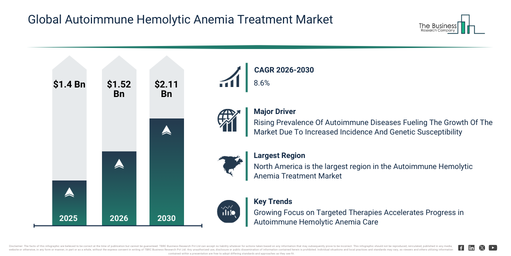
    The autoimmune hemolytic anemia treatment market size has experienced substantial expansion in recent years. Forecasts indicate its growth from $1.4 billion in 2025 to $1.52 billion in 2026, reflecting a compound annual growth rate (CAGR) of 8.6%. The historical increase in this market can be attributed to the rising prevalence of autoimmune disorders, improved anemia diagnosis, the widespread use of corticosteroids, enhanced hospital hematology services, and greater awareness of blood disorders.

    The autoimmune hemolytic anemia treatment market is poised for significant expansion in the coming years. By 2030, this market is projected to reach $2.11 billion, demonstrating a compound annual growth rate (CAGR) of 8.6%. This anticipated growth is driven by factors such as the advancement of targeted immunotherapy, the implementation of personalized treatment approaches, the availability of improved early diagnostic tools, enhanced long-term disease management strategies, and ongoing research into biologic therapies. Key trends expected during this period involve an increased reliance on corticosteroid therapy, the growing acceptance of immunosuppressive agents, the broadening of second-line treatment alternatives, an expansion in early diagnosis and patient monitoring, and a concerted effort to mitigate treatment-associated complications.

    Download A Free Sample Report For Comprehensive Market Insights:

    https://www.thebusinessresearchcompany.com/sample.aspx?id=24161&type=smp

    Which Growth Drivers Are Expected To Support The Autoimmune Hemolytic Anemia Treatment Market Forward?

    The autoimmune hemolytic anemia treatment market is projected to grow as the prevalence of autoimmune diseases increases. Autoimmune conditions are disorders where the immune system mistakenly targets the body’s own tissues, leading to inflammation and damage. The escalating occurrence of autoimmune diseases is largely influenced by genetic predisposition, making individuals more susceptible to developing these ailments. Managing the complications of autoimmune diseases relies significantly on the treatment of autoimmune hemolytic anemia, which works by directly reducing the destruction of red blood cells caused by the immune system. For instance, in May 2023, a study of 22 million people, cited by the National Institute for Health and Care Research (NIHR), a UK-based organization that funds, supports, and delivers health and care research to improve people’s health and well-being, revealed that autoimmune disorders now impact approximately one in ten individuals. This research also indicated that 19 autoimmune diseases affect about 10% of the population, specifically 13% of women and 7% of men. Therefore, the rising prevalence of autoimmune diseases will be a key driver for the growth of the autoimmune hemolytic anemia treatment market.

    How Are Different Segment Groups Identified Within The Autoimmune Hemolytic Anemia Treatment Market?

    The autoimmune hemolytic anemia treatment market covered in this report is segmented –

    1) By Type: Warm Autoimmune Hemolytic Anemia, Cold Autoimmune Hemolytic Anemia, Other Types

    2) By Drug Class: Corticosteroids, Immunosuppressive Agents, Other Drug Classes

    3) By Route Of Administration: Injectable, Oral, Other Route Of Administrations

    4) By Distribution Channel: Hospital Pharmacy, Retail Pharmacy, Online Pharmacy

    Subsegments:

    1) By Warm Autoimmune Hemolytic Anemia: Primary Warm Autoimmune Hemolytic Anemia, Secondary Warm Autoimmune Hemolytic Anemia

    2) By Cold Autoimmune Hemolytic Anemia: Primary Cold Agglutinin Disease (CAD), Secondary Cold Autoimmune Hemolytic Anemia

    3) By Other Types: Mixed-Type Autoimmune Hemolytic Anemia, Paroxysmal Cold Hemoglobinuria (PCH), Drug-Induced Autoimmune Hemolytic Anemia

    Which Trends Are Influencing The Direction Of The Autoimmune Hemolytic Anemia Treatment Market?

    Major companies in the autoimmune hemolytic anemia (AIHA) treatment market are focused on advancing targeted immunotherapies with the goal of improving disease control, reducing hemolysis, and offering safer long-term management options for patients. These targeted immunotherapies seek to modulate specific immune pathways responsible for the destruction of red blood cells, thus addressing the underlying autoimmune mechanism rather than simply managing symptoms. For instance, in June 2025, HUTCHMED, a China-based biopharmaceutical company, initiated its Phase II/III registration trial (ESLIM-02). This trial is designed to evaluate sovleplenib, a selective Syk inhibitor, for the treatment of warm autoimmune hemolytic anemia (wAIHA), assessing its ability to inhibit immune-mediated hemolysis, improve hemoglobin levels, and provide a novel therapeutic option for patients with limited treatment alternatives.

    Which Organizations Are Involved In The Autoimmune Hemolytic Anemia Treatment Market?

    Major companies operating in the autoimmune hemolytic anemia treatment market are Johnson & Johnson, F. Hoffmann-La Roche Ltd., AbbVie Inc., Sanofi SA, Novartis AG, Amgen Inc., Incyte Corporation, Alexion Pharmaceuticals Inc., Hutchison China MediTech Limited, BioCryst Pharmaceuticals Inc., Annexon Inc., Rigel Pharmaceuticals Inc., Nanjing IASO Biotherapeutics Co. Ltd., Apellis Pharmaceuticals Inc., Momenta Pharmaceuticals Inc., Zenas BioPharma Inc., Immunovant Sciences GmbH, Alpine Immune Sciences Inc., Agios Pharmaceuticals Inc., Kezar Life Sciences Inc.

    Access The Complete Autoimmune Hemolytic Anemia Treatment Market Report:

    https://www.thebusinessresearchcompany.com/report/autoimmune-hemolytic-anemia-treatment-global-market-report

    Which Regional Market Leads The Autoimmune Hemolytic Anemia Treatment Market?

    North America was the largest region in the autoimmune hemolytic anemia treatment market in 2025. Asia-Pacific is expected to be the fastest-growing region in the forecast period. The regions covered in the autoimmune hemolytic anemia treatment market report are Asia-Pacific, South East Asia, Western Europe, Eastern Europe, North America, South America, Middle East, Africa.

    Access Autoimmune Hemolytic Anemia Treatment Market Report for Deeper Competitive Insights

    https://www.thebusinessresearchcompany.com/sample.aspx?id=24161&type=smp

    Browse Through More Reports Similar to the Global Autoimmune Hemolytic Anemia Treatment Market 2026, By The Business Research Company

    Autoimmune Treatment Market Report 2026

    https://www.thebusinessresearchcompany.com/report/autoimmune-treatment-global-market-report

    Anemia And Other Blood Disorder Drugs Market Report 2026

    https://www.thebusinessresearchcompany.com/report/anemia-and-other-blood-disorder-drugs-global-market-report

    Chemotherapy Induced Anemia Market Report 2026

    https://www.thebusinessresearchcompany.com/report/chemotherapy-induced-anemia-global-market-report

    Get in touch with us:

    The Business Research Company: https://www.thebusinessresearchcompany.com/

    Americas: +1 310-496-7795

    Asia: +44 7882 955267 & +91 8897263534

    Europe: +44 7882 955267

    Email us at: marketing@tbrc.info

    Follow us on:

    LinkedIn: https://in.linkedin.com/company/the-business-research-company

    YouTube: https://www.youtube.com/channel/UC24_fI0rV8cR5DxlCpgmyFQ

    Global Market Model: https://www.thebusinessresearchcompany.com/global-market-model

  • Rising Clinical Trial Activity Drives Growth Of The Market Due To Expanding Research Investment And Advancements In Novel Therapeutics Is Supporting Development Across The Autoimmune Gastrointestinal Dysmotility Market

    Rising Clinical Trial Activity Drives Growth Of The Market Due To Expanding Research Investment And Advancements In Novel Therapeutics Is Supporting Development Across The Autoimmune Gastrointestinal Dysmotility Market

    The Business Research Company’s 2026 market reports feature advanced enhancements such as market attractiveness analysis, total addressable market evaluation, company benchmarking matrices, interactive Excel dashboards, expanded supply chain intelligence, emerging startup coverage, and detailed product insights, delivering more actionable and strategically valuable research.

    What Growth In Market Value Is Anticipated For The Autoimmune Gastrointestinal Dysmotility Market Between 2026 And 2030?

    The autoimmune gastrointestinal dysmotility market has experienced robust growth in recent years. It is projected to expand from $1.82 billion in 2025 to $1.92 billion in 2026, reflecting a compound annual growth rate (CAGR) of 5.5%. This historical growth can be attributed to increased autoimmune disease diagnoses, the prevalence of gastroparesis, the expansion of hospital gastroenterology, the use of immunosuppressive drugs, and heightened rare disease awareness.

    The autoimmune gastrointestinal dysmotility market is projected to experience substantial growth over the coming years. Its valuation is forecast to reach $2.63 billion by 2030, demonstrating a compound annual growth rate (CAGR) of 8.2%. This growth throughout the forecast period is primarily attributed to enhancements in early diagnostic capabilities, the introduction of personalized treatment methodologies, increasing demand for long-term care, the development of home-based nutrition therapy, and the expansion of autoimmune research efforts. Furthermore, key trends for this period include a heightened recognition of rare gastrointestinal disorders, an increase in the utilization of immunosuppressive treatments, the widening scope of nutritional and dietary management options, a rising adoption of multidisciplinary care approaches, and a significant focus on long-term symptom management.

    Download A Free Sample Report For Comprehensive Market Insights:

    https://www.thebusinessresearchcompany.com/sample.aspx?id=24160&type=smp

    What Influential Factors Are Boosting The Autoimmune Gastrointestinal Dysmotility Market Demand?

    The expanding number of clinical trials is projected to fuel the advancement of the autoimmune gastrointestinal dysmotility market moving forward. Clinical trials are investigative studies designed to ascertain the safety, effectiveness, and best application of medical interventions, including pharmaceuticals, biologics, medical devices, and treatment protocols, in human participants, with the goal of expanding medical knowledge and enhancing patient care. The growth in clinical trials stems primarily from broadened regulatory frameworks that mandate trial registration, increased investment in pharmaceutical research and development, and the swift progression of innovation in novel therapeutic approaches such as immunotherapies and biologics that address autoimmune conditions impacting gastrointestinal motility. For autoimmune gastrointestinal dysmotility, these trials contribute to advancing treatment avenues by methodically assessing new immunosuppressive therapies, prokinetic agents, and biologics, identifying superior treatment regimens for managing gastrointestinal motility disorders, and establishing data-backed methodologies that facilitate regulatory approvals and the clinical adoption of breakthrough treatments targeting autoimmune-mediated gastrointestinal dysfunction. For instance, in November 2025, according to ClinicalTrials.gov, a US-based clinical trials registry managed by the National Institutes of Health, the total count of registered clinical studies reached 477,203 by the close of 2023 (encompassing 437,493 cumulative and 39,710 new registrations) and further increased to 520,877 by the end of 2024 (comprising 477,203 cumulative and 43,674 new registrations), marking a 9.1% year-on-year rise in overall registered studies. Consequently, the increasing volume of clinical trials is propelling the expansion of the autoimmune gastrointestinal dysmotility market.

    What Segment Categories Are Evaluated In The Autoimmune Gastrointestinal Dysmotility Market Study?

    The autoimmune gastrointestinal dysmotility market covered in this report is segmented –

    1) By Treatment Type: Medications, Surgical Interventions, Dietary Management, Physical Therapy

    2) By Drug Class: Prokinetic Agents, Anti-Inflammatory Drugs, Immunosuppressive Drugs, Antibiotics

    3) By Disease Type: Gastroparesis, Chronic Intestinal Pseudo-Obstruction (Cipo), Functional Dyspepsia, Irritable Bowel Syndrome (Ibs)

    4) By Distribution Channel: Hospital Pharmacy, Retail Pharmacy, Online Pharmacies, Other Distribution Channels

    5) By End User: Hospitals, Clinics, Home Care Settings, Research Institutions

    Subsegments:

    1) By Medications: Immunosuppressants, Corticosteroids, Prokinetic Agents, Antiemetics, Antispasmodics, Antibiotics

    2) By Surgical Interventions: Gastrostomy, Jejunostomy, Colostomy, Ileostomy, Pyloroplasty, Colectomy

    3) By Dietary Management: Enteral Nutrition, Parenteral Nutrition, Gluten-Free Diet, Elemental Diet, Small Frequent Meals

    4) By Physical Therapy: Pelvic Floor Therapy, Abdominal Massage Therapy, Neuromuscular Electrical Stimulation (NMES), Biofeedback Therapy, Respiratory Muscle Training, Postural Training

    Who Are The Firms Contributing To The Autoimmune Gastrointestinal Dysmotility Market Ecosystem?

    Major companies operating in the autoimmune gastrointestinal dysmotility market are AbbVie Inc., GlaxoSmithKline plc, Takeda Pharmaceutical Company Limited, Teva Pharmaceutical Industries Ltd., Chugai Pharmaceutical Co. Ltd., Zeria Pharmaceutical Co. Ltd., Ironwood Pharmaceuticals Inc., Vanda Pharmaceuticals Inc., Dr. Falk Pharma GmbH, Rose Pharma LLC, Parvus Therapeutics Inc., CinDome Pharma Inc., Neurogastrx Inc., Renexxion LLC, ISOThrive Inc., Ambrose Healthcare Inc., AnTolRx Inc., Enteralia Bioscience S.r.l., Immunic Inc., Mozart Therapeutics Inc.

    Access The Complete Autoimmune Gastrointestinal Dysmotility Market Report:

    https://www.thebusinessresearchcompany.com/report/autoimmune-gastrointestinal-dysmotility-global-market-report

    Which Region Holds The Largest Share In The Autoimmune Gastrointestinal Dysmotility Market?

    North America was the largest region in the autoimmune gastrointestinal dysmotility market in 2025. The regions covered in the autoimmune gastrointestinal dysmotility market report are Asia-Pacific, South East Asia, Western Europe, Eastern Europe, North America, South America, Middle East, Africa.

    Access Autoimmune Gastrointestinal Dysmotility Market Report for Deeper Competitive Insights

    https://www.thebusinessresearchcompany.com/sample.aspx?id=24160&type=smp

    Browse Through More Reports Similar to the Global Autoimmune Gastrointestinal Dysmotility Market 2026, By The Business Research Company

    Autoimmune Disease Diagnosis Market Report 2026

    https://www.thebusinessresearchcompany.com/report/autoimmune-disease-diagnosis-global-market-report

    Autoimmune Treatment Market Report 2026

    https://www.thebusinessresearchcompany.com/report/autoimmune-treatment-global-market-report

    Veterinary Autoimmune Disease Therapeutics Market Report 2026

    https://www.thebusinessresearchcompany.com/report/veterinary-autoimmune-disease-therapeutics-global-market-report

    Get in touch with us:

    The Business Research Company: https://www.thebusinessresearchcompany.com/

    Americas: +1 310-496-7795

    Asia: +44 7882 955267 & +91 8897263534

    Europe: +44 7882 955267

    Email us at: marketing@tbrc.info

    Follow us on:

    LinkedIn: https://in.linkedin.com/company/the-business-research-company

    YouTube: https://www.youtube.com/channel/UC24_fI0rV8cR5DxlCpgmyFQ

    Global Market Model: https://www.thebusinessresearchcompany.com/global-market-model

  • Increasing Prevalence Of Cardiovascular Diseases Is Fueling The Market Growth Due To Rising Demand For Vascular And Anti-Inflammatory Therapies Is Supporting Development Across The Autacoids And Related Drug Market

    Increasing Prevalence Of Cardiovascular Diseases Is Fueling The Market Growth Due To Rising Demand For Vascular And Anti-Inflammatory Therapies Is Supporting Development Across The Autacoids And Related Drug Market

    The Business Research Company’s 2026 market reports feature advanced enhancements such as market attractiveness analysis, total addressable market evaluation, company benchmarking matrices, interactive Excel dashboards, expanded supply chain intelligence, emerging startup coverage, and detailed product insights, delivering more actionable and strategically valuable research.

    What Is The Expected Market Value Outlook For The Autacoids And Related Drug Market Through 2030?

    The autacoids and related drug market has experienced substantial growth in recent years. This market is set to expand from $52.81 billion in 2025 to $55.87 billion in 2026, achieving a compound annual growth rate (CAGR) of 5.8%. The expansion observed in prior periods can be attributed to several factors including the prevalence of inflammatory diseases, the rising incidence of allergies, the burden posed by cardiovascular disorders, new treatments for gastrointestinal conditions, and the ongoing development of hospital pharmacology.

    The autacoids and related drug market is anticipated to show strong growth over the next few years. It is projected to expand to $70.07 billion in 2030, achieving a compound annual growth rate (CAGR) of 5.8%. This growth during the forecast period can be attributed to the adoption of precision pharmacology, the development of receptor-targeted drugs, the increasing management of chronic diseases, the expansion of outpatient treatment, and the use of combination therapies. Key trends during this period include the broadening application in inflammatory disease management, an intensified focus on receptor-specific drug action, a rising demand for targeted autacoid modulators, increasing utilization in cardiovascular and respiratory care, and greater adoption of combination therapies.

    Download A Free Sample Report For Comprehensive Market Insights:

    https://www.thebusinessresearchcompany.com/sample.aspx?id=24159&type=smp

    Which Drivers Are Advancing The Autacoids And Related Drug Market Growth?

    The growing incidence of cardiovascular diseases is anticipated to spur the expansion of the autacoids and related drugs market moving forward. These conditions represent a spectrum of disorders affecting the heart and blood vessels, including coronary heart disease, heart failure, stroke, and hypertension. The increasing occurrence of cardiovascular diseases is primarily linked to inadequate diet, as consuming excessive saturated fats, trans fats, added sugars, and sodium leads to high blood pressure, obesity, and elevated cholesterol levels, all major risk factors for heart-related ailments. Autacoids and their associated drugs enhance cardiovascular health through the modulation of vascular tone and inflammation, which is critical in conditions like hypertension and heart failure. Agents that target pathways involving nitric oxide, endothelin, and prostacyclin contribute to restoring endothelial function, thereby promoting vasodilation and reducing vascular resistance. Illustratively, in September 2023, the World Health Organization, a Switzerland-based intergovernmental organization, reported 17.9 million deaths due to cardiovascular diseases. Thus, the escalating prevalence of cardiovascular diseases is a key driver for the growth of the autacoids and related drugs market.

    How Is The Autacoids And Related Drug Market Examined Through Segment Analysis?

    The autacoids and related drug market covered in this report is segmented –

    1) By Type: Histamines, Prostaglandins, Leukotrienes, Serotonin, Bradykinin

    2) By Administration: Oral, Injectable, Topical, Intranasal, Inhalation

    3) By Application: Cardiovascular Disorders, Inflammatory Diseases, Respiratory Disorders, Allergies, Gastrointestinal Disorders

    4) By End User: Hospitals, Clinics, Homecare, Pharmacies

    Subsegments:

    1) By Histamines: H1 Receptor Antagonists, H2 Receptor Antagonists, H3 Receptor Antagonists, H4 Receptor Antagonists, Histamine Agonists

    2) By Prostaglandins: Prostaglandin E1 (PGE1) Analogs, Prostaglandin E2 (PGE2) Analogs, Prostaglandin F2a (PGF2a) Analogs, Prostaglandin I2 (PGI2) Analogs, Prostaglandin D2 (PGD2) Analogs

    3) By Leukotrienes: Leukotriene Receptor Antagonists (LTRAs), 5-Lipoxygenase Inhibitors, Leukotriene Synthesis Inhibitors

    4) By Serotonin: 5-HT1 Receptor Agonists, 5-HT2 Receptor Antagonists, 5-HT3 Receptor Antagonists, 5-HT4 Receptor Agonists, 5-HT6 And 5-HT7 Modulators

    5) By Bradykinin: Bradykinin B1 Receptor Antagonists, Bradykinin B2 Receptor Antagonists, Bradykinin Receptor Agonists

    Which Trends Are Shaping The Autacoids And Related Drug Market Landscape?

    Major companies involved in autacoids and related drugs are prioritizing the development of innovative products, such as antihistamines, to boost therapeutic efficacy, decrease side effects, and precisely and safely tackle emerging allergic and inflammatory conditions. Antihistamines are medications designed to block the effects of histamine, a chemical the immune system releases during an allergic reaction. For instance, in March 2023, Tiefenbacher Pharmaceuticals, a Germany-based pharmaceuticals company, launched Bilastine as an over-the-counter (OTC) medicine in Germany. This action marked a significant progression in improving access to effective allergy treatments. The Bilastine 20 mg tablets offer a non-sedating, second-generation antihistamine solution for patients experiencing allergic symptoms such as hay fever and urticaria.

    Which Key Players Are Active In The Autacoids And Related Drug Market?

    Major companies operating in the autacoids and related drug market are Sanofi S.A., Fresenius SE & Co. KGaA, Dr. Reddy’s Laboratories Limited, EUROAPI S.A., Pfizer CentreOne, Cayman Chemical Company, Tokyo Chemical Industry Co. Ltd., Avanti Polar Lipids Inc., Kyowa Pharma Chemical Co. Ltd., Nicox S.A., Glentham Life Sciences Ltd., LGM Pharma Inc., chemBlink Inc., ZellBio GmbH, AquigenBio LLC, BOC Sciences Inc., Yarrow Chem Products Pvt. Ltd., LEBSA S.A., VDK NaturaSyn S.A., Enzo Life Sciences Inc.

    Access The Complete Autacoids And Related Drug Market Report:

    https://www.thebusinessresearchcompany.com/report/autacoids-and-related-drug-global-market-report

    Which Region Is The Dominant Market In The Autacoids And Related Drug Market?

    North America was the largest region in the autacoids and related drug market in 2025. Asia-Pacific is expected to be the fastest-growing region in the forecast period. The regions covered in the autacoids and related drug market report are Asia-Pacific, South East Asia, Western Europe, Eastern Europe, North America, South America, Middle East, Africa.

    Access Autacoids And Related Drug Market Report for Deeper Competitive Insights

    https://www.thebusinessresearchcompany.com/sample.aspx?id=24159&type=smp

    Browse Through More Reports Similar to the Global Autacoids And Related Drug Market 2026, By The Business Research Company

    Rheumatoid Arthritis Drugs Market Report 2026

    https://www.thebusinessresearchcompany.com/report/rheumatoid-arthritis-drugs-global-market-report

    Rheumatoid Arthritis Drugs Market Report 2026

    https://www.thebusinessresearchcompany.com/report/rheumatoid-arthritis-drugs-global-market-report

    Antacids Market Report 2026

    https://www.thebusinessresearchcompany.com/report/antacids-global-market-report

    Get in touch with us:

    The Business Research Company: https://www.thebusinessresearchcompany.com/

    Americas: +1 310-496-7795

    Asia: +44 7882 955267 & +91 8897263534

    Europe: +44 7882 955267

    Email us at: marketing@tbrc.info

    Follow us on:

    LinkedIn: https://in.linkedin.com/company/the-business-research-company

    YouTube: https://www.youtube.com/channel/UC24_fI0rV8cR5DxlCpgmyFQ

    Global Market Model: https://www.thebusinessresearchcompany.com/global-market-model

  • Rising Cancer Incidence Drives Growth In The Aurora Kinase B Market Is Supporting Development Across The Aurora Kinase B Market

    Rising Cancer Incidence Drives Growth In The Aurora Kinase B Market Is Supporting Development Across The Aurora Kinase B Market

    The Business Research Company’s 2026 market reports feature advanced enhancements such as market attractiveness analysis, total addressable market evaluation, company benchmarking matrices, interactive Excel dashboards, expanded supply chain intelligence, emerging startup coverage, and detailed product insights, delivering more actionable and strategically valuable research.

    How Will The Market Value Of The Aurora Kinase B Market Increase Between 2026 And 2030?

    The aurora kinase b market size has experienced rapid expansion in recent years. It is anticipated to grow from $1.27 billion in 2025 to $1.43 billion in 2026, achieving a compound annual growth rate (CAGR) of 12.0%. The growth observed in the historic period can be attributed to several factors, including advancements in molecular oncology research, the identification of aurora kinase b as a specific target in cancer therapy, the broadening of clinical trial infrastructure, increased investment in targeted cancer therapies, and progress made in the development of kinase inhibitors.

    The aurora kinase b market is poised for substantial growth in the upcoming years. It is projected to achieve a size of $2.22 billion by 2030, demonstrating a compound annual growth rate (CAGR) of 11.7%. This anticipated expansion over the forecast period is primarily driven by factors such as the escalating demand for precision cancer therapeutics, the wider adoption of personalized medicine strategies, an increase in oncology clinical trial activities, growing investments in innovative kinase inhibitors, and improved regulatory support for targeted oncology drugs. Furthermore, significant trends expected during this period include the intensified development of selective aurora kinase b inhibitors, a greater emphasis on combination oncology therapies, the expansion of precision oncology drug pipelines, a rising focus on mitotic targeted therapies, and enhanced biomarker-based patient stratification.

    Download A Free Sample Report For Comprehensive Market Insights:

    https://www.thebusinessresearchcompany.com/sample.aspx?id=20496&type=smp

    What Primary Factors Are Fueling The Expansion Of The Aurora Kinase B Market?

    An anticipated increase in cancer cases is projected to boost the expansion of the aurora kinase B market in the future. Cancer encompasses a range of illnesses defined by the unchecked proliferation and dissemination of atypical cells, capable of invading adjacent tissues and spreading to distant areas of the body. The escalating number of cancer diagnoses stems from elements like an aging demographic, shifts in lifestyle, environmental risk factors, and advancements in screening and identification. Aurora kinase B is crucial for cell division (mitosis), and elevated levels of its expression are associated with unstable chromosomes and the advancement of cancer. Given its participation in the division of tumor cells, it is frequently a focus for cancer treatments. For example, in February 2024, the World Health Organization, an intergovernmental body situated in Switzerland, reported approximately 20 million new cancer cases in 2022, alongside 9.7 million fatalities. Projections indicate that by 2050, new cancer cases will surpass 35 million, marking a 77% surge compared to 2022 figures. Consequently, the increasing prevalence of cancer is fueling the expansion of the aurora kinase B market.

    Which Segment Groups Define The Aurora Kinase B Market Landscape?

    The aurora kinase b market covered in this report is segmented –

    1) By Type: AZD-2811, CS-2164, Danusertib, Ilorasertib, NMI-900, Other Types

    2) By Application: Anaplastic Large Cell Lymphoma, Kidney Cancer, Lung Cancer, Prostate Cancer, Other Applications

    3) By End-User: Hospitals, Research Institutes, Diagnostic Laboratories, Other End-Users

    Subsegments:

    1) By AZD-2811: Phase I Clinical Trials AZD-2811, Preclinical Development of AZD-2811, AZD-2811 in Combination Therapy, Targeted Cancer Treatment with AZD-2811

    2) By CS-2164: Phase II Clinical Trials CS-2164, Preclinical Development of CS-2164, CS-2164 in Targeted Cancer Therapy, CS-2164 Combination Therapy in Clinical Studies

    3) By Danusertib: Phase III Clinical Trials Danusertib, Danusertib for Hematological Malignancies, Danusertib for Solid Tumors, Combination Therapy with Danusertib

    4) By Ilorasertib: Preclinical Development of Ilorasertib, Ilorasertib in Solid Tumor Treatment, Phase I and II Clinical Trials of Ilorasertib, Ilorasertib in Combination with Chemotherapies

    5) By NMI-900: NMI-900 in Early-Stage Clinical Trials, NMI-900 for Targeted Cancer Therapy, Preclinical Studies of NMI-900, NMI-900 Combination Therapy Trials

    6) By Other Types: Other Aurora Kinase B Inhibitors in Development, Novel Targeted Aurora Kinase B Drugs, Combination Therapies Involving Aurora Kinase B Inhibitors, Investigational Aurora Kinase B Inhibitors in Oncology

    What Trends Are Influencing The Aurora Kinase B Market Outlook?

    Leading companies within the aurora kinase B market are actively engaged in developing innovative products, such as aurora kinase inhibitors, designed to specifically target and disrupt critical processes involved in cell division. Aurora kinase inhibitors are medications formulated to block the activity of Aurora kinases, which are essential for cell division, thereby impeding the proliferation of cancer cells and potentially reducing tumor growth. For instance, in June 2023, Ellipses Pharma, a biotechnology company based in the UK, announced the U.S. Food and Drug Administration (FDA) approval for its compound, EP0042, which functions as a dual FLT-3 and Aurora kinase inhibitor. EP0042 is currently being developed as a treatment for acute myeloid leukemia (AML) and operates by targeting both FLT3 and Aurora kinase. This specific approach is crafted for AML patients who have developed resistance to FLT3 inhibitors. Research has demonstrated that the dual inhibition of FLT3 and Aurora kinase can overcome acquired resistance to selective FLT3 inhibition in both in vitro and in vivo settings.

    Who Are The Leading Firms Participating In The Aurora Kinase B Market?

    Major companies operating in the aurora kinase b market are Pfizer Inc., Johnson & Johnson, Roche Holding AG, Merck & Co. Inc., AbbVie Inc., Sanofi SA, Bristol-Myers Squibb Company, AstraZeneca PLC, Novartis AG, GlaxoSmithKline plc, Takeda Pharmaceutical Company Limited, Boehringer Ingelheim International GmbH, Amgen Inc., Astellas Pharma Inc., Promega Corporation, Rigel Pharmaceuticals Inc., Tocris Bioscience, BPS Bioscience Inc., Advenchen Laboratories LLC, Shenzhen Chipscreen Biosciences Co. Ltd., Cyclacel Pharmaceuticals Inc., Sareum Holdings plc

    Access The Complete Aurora Kinase B Market Report:

    https://www.thebusinessresearchcompany.com/report/aurora-kinase-b-global-market-report

    Which Area Represents The Largest Portion Of The Aurora Kinase B Market?

    North America was the largest region in the aurora kinase B market in 2025. Asia-Pacific is expected to be the fastest-growing region in the forecast period. The regions covered in the aurora kinase b market report are Asia-Pacific, South East Asia, Western Europe, Eastern Europe, North America, South America, Middle East, Africa.

    Access Aurora Kinase B Market Report for Deeper Competitive Insights

    https://www.thebusinessresearchcompany.com/sample.aspx?id=20496&type=smp

    Browse Through More Reports Similar to the Global Aurora Kinase B Market 2026, By The Business Research Company

    Cancer Biologics Market Report 2026

    https://www.thebusinessresearchcompany.com/report/cancer-biologics-global-market-report

    Skin Cancer Drugs Market Report 2026

    https://www.thebusinessresearchcompany.com/report/skin-cancer-drugs-global-market-report

    Pancreatic Cancer Drugs Market Report 2026

    https://www.thebusinessresearchcompany.com/report/pancreatic-cancer-drugs-global-market-report

    Get in touch with us:

    The Business Research Company: https://www.thebusinessresearchcompany.com/

    Americas: +1 310-496-7795

    Asia: +44 7882 955267 & +91 8897263534

    Europe: +44 7882 955267

    Email us at: marketing@tbrc.info

    Follow us on:

    LinkedIn: https://in.linkedin.com/company/the-business-research-company

    YouTube: https://www.youtube.com/channel/UC24_fI0rV8cR5DxlCpgmyFQ

    Global Market Model: https://www.thebusinessresearchcompany.com/global-market-model

  • Rising Demand For Targeted Therapies Fuelling The Growth Of The Market Due To Enhanced Treatment Precision And Patient Outcomes Is Supporting Development Across The Atypical Hemolytic Uremic Syndrome Treatment Market

    Rising Demand For Targeted Therapies Fuelling The Growth Of The Market Due To Enhanced Treatment Precision And Patient Outcomes Is Supporting Development Across The Atypical Hemolytic Uremic Syndrome Treatment Market

    The Business Research Company’s 2026 market reports feature advanced enhancements such as market attractiveness analysis, total addressable market evaluation, company benchmarking matrices, interactive Excel dashboards, expanded supply chain intelligence, emerging startup coverage, and detailed product insights, delivering more actionable and strategically valuable research.

    What Will Be The Estimated Market Size Of The Atypical Hemolytic Uremic Syndrome Treatment Market By 2030?

    The atypical hemolytic uremic syndrome treatment market size has observed substantial growth over recent years. It is anticipated to increase from $1.73 billion in 2025 to $1.86 billion in 2026, demonstrating a compound annual growth rate (CAGR) of 7.2%. The rise during the historical period can be attributed to factors such as increased diagnosis of rare diseases, the adoption of plasma exchange, a growing number of kidney failure cases, approvals of biologic drugs, and the expansion of hospital nephrology services.

    The atypical hemolytic uremic syndrome treatment market size is poised for significant expansion in the coming years. It is forecast to reach $2.46 billion by 2030, demonstrating a compound annual growth rate (CAGR) of 7.2%. This growth during the forecast period stems from the adoption of precision medicine, advances in complement pathway research, orphan drug incentives, genetic screening programs, and biologics innovation. Prominent trends expected in this period encompass an increase in complement inhibitor therapy, the growth of genetic diagnostic testing, broader long-term disease management, rising adoption of targeted biologics, and a focus on ensuring access to rare disease treatments.

    Download A Free Sample Report For Comprehensive Market Insights:

    https://www.thebusinessresearchcompany.com/sample.aspx?id=24156&type=smp

    Which Strategic Drivers Are Supporting The Atypical Hemolytic Uremic Syndrome Treatment Market Development?

    The future expansion of the atypical hemolytic uremic syndrome treatment market is anticipated to be fueled by the growing requirement for targeted therapies. These medical interventions are designed to specifically target and disrupt the molecular pathways involved in the progression and spread of various diseases. The escalating demand for targeted therapies stems from their capacity to deliver more precise treatments with reduced side effects, improve patient results, and offer viable alternatives to conventional, less specific therapeutic options. Treatments for atypical hemolytic uremic syndrome (aHUS) align with targeted approaches by directly inhibiting the overactivation of the complement system, which is the underlying cause of the condition, thereby facilitating precise intervention that minimizes harm to blood vessels and kidneys. For instance, in October 2023, as reported by NHS England, a UK-based government agency, in England, 11 million hormone replacement therapy (HRT) items were prescribed, representing a 47% increase from 2021–22, with approximately 2.3 million patients receiving prescriptions, indicating a 29% year-on-year rise. Consequently, the increasing need for targeted therapies is propelling expansion within the atypical hemolytic uremic syndrome treatment market.

    What Key Segment Areas Are Included In The Atypical Hemolytic Uremic Syndrome Treatment Market Assessment?

    The atypical hemolytic uremic syndrome treatment market covered in this report is segmented –

    1) By Treatment Type: Complement Inhibitors, Plasma Exchange Therapy, Supportive Care, Antibiotics

    2) By Route of Administration: Intravenous, Subcutaneous, Oral

    3) By Technology: Genetic Testing And Diagnostic Tools, Realtime Monitoring And Complement Activation Technologies, Treatment Delivery Systems, Digital Health Solutions

    4) By End User: Hospital, Speciality Clinics, Home care Settings, Ambulatory Care Centres

    Subsegments:

    1) By Complement Inhibitors: Eculizumab, Ravulizumab, C5 Inhibitors, Factor H Inhibitors

    2) By Plasma Exchange Therapy: Fresh Frozen Plasma (FFP) Exchange, Therapeutic Plasma Exchange (TPE), Plasma Filtration

    3) By Supportive Care: Dialysis, Kidney Transplantation, Red Blood Cell Transfusions, Platelet Transfusions, Anticoagulants

    4) By Antibiotics: Broad-Spectrum Antibiotics, Targeted Antibiotics, Prophylactic Antibiotics

    Which Trends Are Expected To Shape The Atypical Hemolytic Uremic Syndrome Treatment Market?

    Key companies operating in the atypical hemolytic uremic syndrome treatment market are prioritizing the development of innovative therapies, including monoclonal antibody drugs, to achieve more targeted complement inhibition and enhance patient outcomes. Monoclonal antibody drugs are proteins created in laboratories that replicate the immune system’s function to combat detrimental pathogens by precisely identifying and binding to specific proteins involved in various disease processes. For example, in January 2025, AstraZeneca Pharma India Limited, an India-based biopharmaceutical company, obtained approval from the Central Drugs Standard Control Organisation (CDSCO) for the import, sale, and distribution of eculizumab (marketed as Soliris) in India. These particular monoclonal antibodies specifically attach to complement protein C5, preventing its cleavage and consequently inhibiting the formation of the terminal complement complex, which plays a role in immune-mediated cell destruction. It is employed to manage rare and severe conditions such as paroxysmal nocturnal hemoglobinuria (PNH), atypical hemolytic uremic syndrome (aHUS), generalized myasthenia gravis, and neuromyelitis optica spectrum disorder by mitigating complement-mediated damage.

    Which Companies Are Engaged In The Atypical Hemolytic Uremic Syndrome Treatment Market Environment?

    Major companies operating in the atypical hemolytic uremic syndrome treatment market are F. Hoffmann-La Roche Ltd., Bristol-Myers Squibb Company, AstraZeneca plc, Novartis AG, Amgen Inc., Teva Pharmaceutical Industries Ltd., Chugai Pharmaceutical Co. Ltd., Alnylam Pharmaceuticals Inc., Vifor Pharma Ltd., Samsung Bioepis Co. Ltd., Fuji Pharma Co. Ltd., Aevitas Therapeutics Inc., Pharmasyntez JSC, Omeros Corporation, ChemoCentryx Inc., ISU Abxis Co. Ltd., Greenovation Biotech GmbH, Akari Therapeutics plc, NovelMed Therapeutics Inc., Eleva GmbH.

    Access The Complete Atypical Hemolytic Uremic Syndrome Treatment Market Report:

    https://www.thebusinessresearchcompany.com/report/atypical-hemolytic-uremic-syndrome-treatment-global-market-report

    Which Region Commands The Largest Share Of The Atypical Hemolytic Uremic Syndrome Treatment Market?

    North America was the largest region in the atypical hemolytic uremic syndrome treatment market in 2025. Asia-Pacific is expected to be the fastest-growing region in the forecast period. The regions covered in the atypical hemolytic uremic syndrome treatment market report are Asia-Pacific, South East Asia, Western Europe, Eastern Europe, North America, South America, Middle East, Africa.

    Access Atypical Hemolytic Uremic Syndrome Treatment Market Report for Deeper Competitive Insights

    https://www.thebusinessresearchcompany.com/sample.aspx?id=24156&type=smp

    Browse Through More Reports Similar to the Global Atypical Hemolytic Uremic Syndrome Treatment Market 2026, By The Business Research Company

    Hemodialysis Market Report 2026

    https://www.thebusinessresearchcompany.com/report/hemodialysis-global-market-report

    Urea Cycle Disorders Treatment Market Report 2026

    https://www.thebusinessresearchcompany.com/report/urea-cycle-disorders-treatment-global-market-report

    Hemoglobinopathies Treatment Market Report 2026

    https://www.thebusinessresearchcompany.com/report/hemoglobinopathies-treatment-global-market-report

    Get in touch with us:

    The Business Research Company: https://www.thebusinessresearchcompany.com/

    Americas: +1 310-496-7795

    Asia: +44 7882 955267 & +91 8897263534

    Europe: +44 7882 955267

    Email us at: marketing@tbrc.info

    Follow us on:

    LinkedIn: https://in.linkedin.com/company/the-business-research-company

    YouTube: https://www.youtube.com/channel/UC24_fI0rV8cR5DxlCpgmyFQ

    Global Market Model: https://www.thebusinessresearchcompany.com/global-market-model

  • Rising Prevalence Of ADHD Spurs Growth In The Attention-Deficit Hyperactivity Disorder (ADHD) Therapeutic Market Is Supporting Development Across The Attention Deficit Hyperactivity Disorder (ADHD) Therapeutics Market

    Rising Prevalence Of ADHD Spurs Growth In The Attention-Deficit Hyperactivity Disorder (ADHD) Therapeutic Market Is Supporting Development Across The Attention Deficit Hyperactivity Disorder (ADHD) Therapeutics Market

    The Business Research Company’s 2026 market reports feature advanced enhancements such as market attractiveness analysis, total addressable market evaluation, company benchmarking matrices, interactive Excel dashboards, expanded supply chain intelligence, emerging startup coverage, and detailed product insights, delivering more actionable and strategically valuable research.

    What Is The Estimated Growth In Market Size Of The Attention Deficit Hyperactivity Disorder (ADHD) Therapeutics Market During 2026–2030?

    The attention deficit hyperactivity disorder (adhd) therapeutics market size has observed robust growth over recent years. It is anticipated to expand from $13.97 billion in 2025 to $14.67 billion in 2026, at a compound annual growth rate (CAGR) of 5.0%. This historical expansion can be ascribed to factors like an increase in adhd diagnosis rates, heightened awareness regarding mental health, the availability of stimulant drugs, a rise in pediatric adhd cases, and the establishment of early intervention programs.

    The attention deficit hyperactivity disorder (adhd) therapeutics market is projected to experience substantial expansion over the coming years. Its valuation is anticipated to reach $17.86 billion in 2030, exhibiting a compound annual growth rate (CAGR) of 5.0%. This projected growth during the forecast period is propelled by several factors, including advancements in precision medicine for ADHD, the increasing adoption of digital therapeutics, the broadening reach of telehealth platforms, the incorporation of AI into ADHD management strategies, and a rise in adult ADHD diagnoses. Key developments expected within this period involve the emergence of personalized ADHD treatment programs, widespread use of telehealth and remote ADHD management, the proliferation of digital therapeutics and mobile applications for ADHD, a rise in non-pharmacological interventions, and the enhanced integration of behavioral and cognitive therapies.

    Download A Free Sample Report For Comprehensive Market Insights:

    https://www.thebusinessresearchcompany.com/sample.aspx?id=14042&type=smp

    What Major Growth Factors Are Impacting The Attention Deficit Hyperactivity Disorder (ADHD) Therapeutics Market?

    The increasing occurrence of attention-deficit hyperactivity disorder is anticipated to drive the expansion of the attention-deficit hyperactivity disorder (ADHD) therapeutics market moving forward. This rising prevalence of attention-deficit hyperactivity disorder (ADHD) denotes an increasing number of individuals diagnosed with this neurodevelopmental condition over time. ADHS therapeutics are designed to address the multifaceted nature of the disorder, aiming to enhance symptom management, reduce functional impairment, improve quality of life, and foster overall well-being for those affected by ADHD. For instance, in May 2025, according to NHS England Digital, a UK-based national information and technology partner, an estimated 2,498,000 individuals in England were living with ADHD, encompassing both diagnosed and undiagnosed cases. Consequently, the growing prevalence of ADHD is a primary factor fueling the growth of the attention-deficit hyperactivity disorder (ADHD) therapeutic market.

    How Is Segment Classification Applied In The Attention Deficit Hyperactivity Disorder (ADHD) Therapeutics Market?

    The attention deficit hyperactivity disorder (adhd) therapeutics market covered in this report is segmented –

    1) By Drug Type: Stimulants, Non-Stimulants

    2) By Psychotherapy: Behavior Therapy, Cognitive Behavioral Therapy, Family Therapy

    3) By Age Group: Pediatric And Adolescent, Adult

    4) By Distribution Channel: Hospital Pharmacies, Specialty Clinics, Retail Pharmacies

    Subsegments:

    1) By Stimulants: Amphetamine-Based Stimulants, Methylphenidate-Based Stimulants

    2) By Non-Stimulants: Atomoxetine, Guanfacine, Clonidine

    What Trends Are Affecting The Attention Deficit Hyperactivity Disorder (ADHD) Therapeutics Market Dynamics?

    Major companies engaged in the attention-deficit hyperactivity disorder (ADHD) therapeutics market are prioritizing the development of digital innovations, including Endeavor over-the-counter (OTC) versions of digital therapeutics for ADHD, to meet the growing demand for digital solutions and the increasing adoption of remote healthcare. Digital therapeutics represent evidence-based therapeutic interventions driven by high-quality software programs aimed at preventing, managing, or treating a medical disorder or disease. These interventions are designed for independent use or as a complement to traditional medical treatments. For example, in June 2023, Akili, a US-based digital health company, launched an over-the-counter (OTC) iteration of its video game-based digital therapeutic for adults living with attention-deficit hyperactivity disorder (ADHD). This OTC version, named EndeavorOTC, is engineered to improve attention, time management, and organizational skills. Additionally, this launch follows the successful introduction of Akili’s FDA-authorized prescription video game treatment, EndeavorRx, for children with ADHD. The OTC version offers adults a non-pharmacological treatment option for managing their ADHD symptoms.

    Who Are The Prominent Players Across The Attention Deficit Hyperactivity Disorder (ADHD) Therapeutics Market?

    Major companies operating in the attention deficit hyperactivity disorder (adhd) therapeutics market are Pfizer Inc, Johnson & Johnson, Novartis AG, GlaxoSmithKline plc, Takeda Pharmaceutical Company Limited, Eli Lilly and Company, Otsuka Pharmaceutical Co Ltd, UCB S.A., Amneal Pharmaceuticals LLC, Lupin Limited, Mallinckrodt Pharmaceuticals Inc, Arbor Pharmaceuticals LLC, Tris Pharma Inc, NEOS Therapeutic Inc, Rhodes Pharmaceuticals L.P., KemPharm Inc, Ironshore Pharmaceuticals Inc, Purdue Pharma L.P., Aevi Genomic Medicine, Highland Therapeutics Inc

    Access The Complete Attention Deficit Hyperactivity Disorder (ADHD) Therapeutics Market Report:

    https://www.thebusinessresearchcompany.com/report/attention-deficit-hyperactivity-disorder-adhd-therapeutics-global-market-report

    Which Region Accounts For The Highest Share Of The Attention Deficit Hyperactivity Disorder (ADHD) Therapeutics Market?

    North America was the largest region in the attention deficit hyperactivity disorder (ADHD) therapeutic market in 2025. Asia-Pacific is expected to be the fastest-growing region in the forecast period. The regions covered in the attention deficit hyperactivity disorder (adhd) therapeutics market report are Asia-Pacific, South East Asia, Western Europe, Eastern Europe, North America, South America, Middle East, Africa.

    Access Attention Deficit Hyperactivity Disorder (ADHD) Therapeutics Market Report for Deeper Competitive Insights

    https://www.thebusinessresearchcompany.com/sample.aspx?id=14042&type=smp

    Browse Through More Reports Similar to the Global Attention Deficit Hyperactivity Disorder (ADHD) Therapeutics Market 2026, By The Business Research Company

    Attention Deficit Hyperactivity Disorder Adhd Therapeutics Market Report 2026

    https://www.thebusinessresearchcompany.com/report/attention-deficit-hyperactivity-disorder-adhd-therapeutics-global-market-report

    Bipolar Disorder Therapeutics Market Report 2026

    https://www.thebusinessresearchcompany.com/report/bipolar-disorder-therapeutics-global-market-report

    Autism Spectrum Disorders Treatment Market Report 2026

    https://www.thebusinessresearchcompany.com/report/autism-spectrum-disorders-treatment-global-market-report

    Get in touch with us:

    The Business Research Company: https://www.thebusinessresearchcompany.com/

    Americas: +1 310-496-7795

    Asia: +44 7882 955267 & +91 8897263534

    Europe: +44 7882 955267

    Email us at: marketing@tbrc.info

    Follow us on:

    LinkedIn: https://in.linkedin.com/company/the-business-research-company

    YouTube: https://www.youtube.com/channel/UC24_fI0rV8cR5DxlCpgmyFQ

    Global Market Model: https://www.thebusinessresearchcompany.com/global-market-model