Category: Pharmaceuticals

  • Active Pharmaceutical Ingredients Market Expansion Outlook Through 2030 With Revenue Growth Insights

    Active Pharmaceutical Ingredients Market Expansion Outlook Through 2030 With Revenue Growth Insights

    The Business Research Company’s 2026 market reports feature advanced enhancements such as market attractiveness analysis, total addressable market evaluation, company benchmarking matrices, interactive Excel dashboards, expanded supply chain intelligence, emerging startup coverage, and detailed product insights, delivering more actionable and strategically valuable research.

    What Market Value Trend Is Expected For The Active Pharmaceutical Ingredients Market From 2026 To 2030?

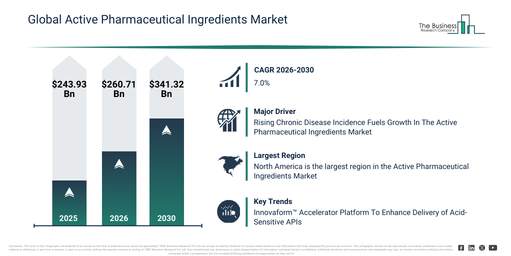
    The active pharmaceutical ingredients market size has experienced significant expansion in recent years. This market is set to increase from $243.93 billion in 2025 to $260.71 billion in 2026, achieving a compound annual growth rate (CAGR) of 6.9%. The market’s growth during the historical period was driven by factors including the rising prevalence of chronic diseases, increasing demand for generic drugs, expansion of pharmaceutical R&D, development of hospital and clinical infrastructure, and advancements in chemical synthesis technologies.

    The active pharmaceutical ingredients market is anticipated to show significant expansion in the coming years. It is projected to grow to $341.32 billion in 2030, achieving a compound annual growth rate (CAGR) of 7.0%. This growth during the forecast period can be attributed to factors such as the increasing acceptance of biologics, rising investments in precision medicine, a surging demand for targeted therapies, the broadening of contract manufacturing services, and the incorporation of AI into drug discovery. Additionally, major trends expected in this period include the development of personalized medicine, innovation in biologic APIs, sophisticated drug delivery systems, adherence to regulatory compliance and quality standards, and the prevalence of outsourcing and contract manufacturing.

    Download A Free Sample Report For Comprehensive Market Insights:

    https://www.thebusinessresearchcompany.com/sample.aspx?id=8539&type=smp

    What Major Growth Factors Are Impacting The Active Pharmaceutical Ingredients Market?

    The rising occurrence of chronic illnesses is anticipated to boost the expansion of the active pharmaceutical ingredients market in the future. Such an illness typically persists for a minimum of three months and can progressively deteriorate. Among the most common chronic conditions are cancer, cardiovascular disease, stroke, diabetes, and arthritis. APIs are utilized in high-grade pharmaceuticals designed to treat conditions in oncology, cardiology, neurology, orthopedics, among others. For example, in March 2025, GOV.UK, a non-profit government body based in the UK, reported that the prevalence of type 2 diabetes among adults aged 17 and above in England stood at 7.0% in March 2024. This figure represented an increase from 6.8% observed in March 2023. Consequently, the rising frequency of chronic ailments is set to fuel the expansion of the active pharmaceutical ingredients market.

    Which Segment Divisions Form The Structure Of The Active Pharmaceutical Ingredients Market?

    The active pharmaceutical ingredients market covered in this report is segmented –

    1) By Type: Innovative Active Pharmaceutical Ingredient (APIs), Generic Active Pharmaceutical Ingredient (APIs)

    2) By Manufacturer: Captive Manufacturers, Merchant Manufacturers

    3) By Type Of Drug: Prescription Drugs, Over-The-Counter Drugs

    4) By Therapeutic Application: Communicable Diseases, Oncology, Diabetes, Cardiovascular Disease, Pain Management, Respiratory Diseases, Other Therapeutic Applications

    Subsegments:

    1) By Innovative APIs: Biologics, Novel Chemical Entities (NCEs), Targeted Therapies

    2) By Generic APIs: Off-Patent Pharmaceuticals, Biosimilars, Over-The-Counter (OTC) Generic Drugs

    What Trends Are Shaping The Active Pharmaceutical Ingredients Market Structure?

    Companies operating within the active pharmaceutical ingredients market are focused on advancing technologies like the Innovaform Accelerator to enhance the delivery, stability, and bioavailability of acid-sensitive APIs. The Innovaform Accelerator platform combines advanced capsule and formulation technologies to safeguard APIs from gastric degradation and enable targeted intestinal release, providing a more efficient and scalable alternative to traditional post-fill coating methods. As an illustration, in September 2024, Lonza Group AG, a pharmaceutical and biotechnology manufacturing firm based in Switzerland, unveiled the Innovaform Accelerator at its facility in Colmar, France. This platform supports the encapsulation of small molecules, peptides, proteins, and nucleic-acid therapeutics, facilitating tailored release profiles, accelerated first-in-human studies, and streamlined manufacturing processes. Moreover, it aids in the delivery of next-generation medicines, including RNA-based therapeutics and biologics, while ensuring API integrity during passage through the stomach.

    Who Are The Prominent Players Across The Active Pharmaceutical Ingredients Market?

    Major companies operating in the active pharmaceutical ingredients market are Albemarle Corporation, Aurobindo Pharma Limited, Dr. Reddy’s Laboratories Limited, AbbVie Inc., Teva Pharmaceutical Industries Limited, Cipla Limited, Boehringer Ingelheim International GmbH, Merck KGaA, Sun Pharmaceutical Industries Limited, Bristol-Myers Squibb Company, Mylan Pharmaceuticals ULC, BASF SE, Lupin Limited, Johnson & Johnson Services Inc., F. Hoffmann-La Roche AG, Pfizer Inc., Novartis International AG, Sanofi S.A, Viatris Inc., Cadila Pharmaceuticals Limited, Amneal Pharmaceuticals Inc., Apotex Inc., Lonza Group AG, HPM Chemicals and Fertilizers Ltd., GlaxoSmithKline PLC, Daiichi Sankyo Inc., Catalent Inc.

    Access The Complete Active Pharmaceutical Ingredients Market Report:

    https://www.thebusinessresearchcompany.com/report/active-pharmaceutical-ingredients-global-market-report

    Which Region Leads The Active Pharmaceutical Ingredients Market By Size?

    North America was the largest region in the active pharmaceutical ingredients market share in 2025. The regions covered in the active pharmaceutical ingredients market report are Asia-Pacific, South East Asia, Western Europe, Eastern Europe, North America, South America, Middle East, Africa.

    Access Active Pharmaceutical Ingredients Market Report for Deeper Competitive Insights

    https://www.thebusinessresearchcompany.com/sample.aspx?id=8539&type=smp

    Browse Through More Reports Similar to the Global Active Pharmaceutical Ingredients Market 2026, By The Business Research Company

    Active Pharmaceutical Ingredients Market Report 2026

    https://www.thebusinessresearchcompany.com/report/active-pharmaceutical-ingredients-global-market-report

    Small Molecule Active Pharmaceutical Ingredient Market Report 2026

    https://www.thebusinessresearchcompany.com/report/small-molecule-active-pharmaceutical-ingredient-global-market-report

    Veterinary Active Pharmaceutical Ingredients Manufacturing Market Report 2026

    https://www.thebusinessresearchcompany.com/report/veterinary-active-pharmaceutical-ingredients-manufacturing-global-market-report

    Get in touch with us:

    The Business Research Company: https://www.thebusinessresearchcompany.com/

    Americas: +1 310-496-7795

    Asia: +44 7882 955267 & +91 8897263534

    Europe: +44 7882 955267

    Email us at: marketing@tbrc.info

    Follow us on:

    LinkedIn: https://in.linkedin.com/company/the-business-research-company

    YouTube: https://www.youtube.com/channel/UC24_fI0rV8cR5DxlCpgmyFQ

    Global Market Model: https://www.thebusinessresearchcompany.com/global-market-model
  • Active Pharmaceutical Ingredient (API) Intermediate Market Industry Analysis Covering Trends, Drivers, And Future Outlook

    Active Pharmaceutical Ingredient (API) Intermediate Market Industry Analysis Covering Trends, Drivers, And Future Outlook

    The Business Research Company’s 2026 market reports feature advanced enhancements such as market attractiveness analysis, total addressable market evaluation, company benchmarking matrices, interactive Excel dashboards, expanded supply chain intelligence, emerging startup coverage, and detailed product insights, delivering more actionable and strategically valuable research.

    How Does The Forecasted Market Size Of The Active Pharmaceutical Ingredient (API) Intermediate Market Compare Between 2026 And 2030?

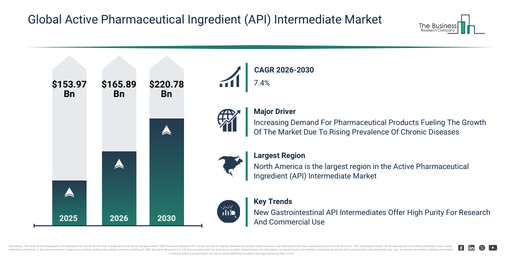
    The market size for active pharmaceutical ingredient (API) intermediates has demonstrated strong growth over recent years. It is projected to increase from $153.97 billion in 2025 to $165.89 billion in 2026, exhibiting a compound annual growth rate (CAGR) of 7.7%. Historically, this expansion has been driven by factors such as the growth in pharmaceutical manufacturing, cost advantages found in emerging markets, expertise in chemical synthesis, the demand for generic drugs, and the expansion of global healthcare.

    The active pharmaceutical ingredient (API) intermediate market size is anticipated to experience robust expansion over the coming years. It is projected to reach **$220.78 billion in 2030, demonstrating a compound annual growth rate (CAGR) of 7.4%.** This growth within the forecast period can be attributed to several factors, including the reshoring of pharmaceutical supply chains, heightened regulatory scrutiny, advancements in synthesis methods, the expansion of biotech intermediates, and increased pharmaceutical R&D activities. Significant trends expected during this period involve an uptick in the outsourcing of API intermediate production, the proliferation of CDMO partnerships, a greater demand for high-purity intermediates, a strong focus on regulatory-compliant manufacturing, and the broadening of generic drug production.

    Download A Free Sample Report For Comprehensive Market Insights:

    https://www.thebusinessresearchcompany.com/sample.aspx?id=24453&type=smp

    What Market Drivers Are Helping Shape The Active Pharmaceutical Ingredient (API) Intermediate Market Expansion?

    The active pharmaceutical ingredient (API) intermediate market is expected to experience growth driven by the rising demand for pharmaceutical products in the future. Pharmaceutical products are defined as substances or compounds utilized for diagnosing, treating, preventing, or curing diseases and medical conditions in humans or animals. This increased demand for pharmaceutical products is attributed to the growing prevalence of chronic diseases, which necessitate long-term medication and continuous healthcare management. API intermediates play a crucial role as essential building blocks in pharmaceutical manufacturing, enabling the efficient synthesis and quality control of active pharmaceutical ingredients. For example, in April 2024, Eurostat, the Luxembourg-based official statistical agency of the European Union, reported that imports of medicinal and pharmaceutical products into the EU saw a 6.1% increase in 2023, amounting to $129 billion (€119 billion) compared to the preceding year. During the same timeframe, EU exports reached $300 billion (€277 billion), resulting in a trade surplus of $171 billion (€158 billion). Therefore, the escalating demand for pharmaceutical products is propelling the expansion of the active pharmaceutical ingredient (API) intermediate market.

    How Are Different Segment Groups Identified Within The Active Pharmaceutical Ingredient (API) Intermediate Market?

    The active pharmaceutical ingredient (api) intermediate market covered in this report is segmented –

    1) By Type: Bulk Drug Intermediates, Chemical Intermediates

    2) By Natural: Plant-Derived Intermediates, Animal-Derived Intermediates, Microbial Intermediates, Synthetic Natural Products, Biotransformed Intermediates

    3) By Application: Analgesics, Antidiabetic Drugs, Anti-Infective Drugs, Cardiovascular Drugs, Anticancer Drugs, Other Applications

    4) By End-User: Pharmaceutical Companies, Research Institutes, Contract Manufacturing Organizations, Other End-Users

    Subsegments:

    1) By Bulk Drug Intermediates: Synthetic Intermediates, Biotech Intermediates, Peptide Intermediates, Steroidal Intermediates, Amino Acid Intermediates

    2) By Chemical Intermediates: Chiral Intermediates, Heterocyclic Intermediates, Organometallic Intermediates, Aromatic Intermediates, Aliphatic Intermediates

    Which Trends Are Supporting The Evolution Of The Active Pharmaceutical Ingredient (API) Intermediate Market?

    Major companies within the active pharmaceutical ingredient (API) intermediate market are prioritizing the creation of novel therapies, such as gastrointestinal active pharmaceutical ingredient (API) intermediates, to boost treatment effectiveness and expand their range of therapeutic offerings. These gastrointestinal active pharmaceutical ingredient (API) intermediates are chemical compounds that function as vital foundational elements in the production of active pharmaceutical ingredients for addressing digestive system disorders. For example, in October 2023, Hunan Huateng Pharmaceutical, a China-based pharmaceutical company, introduced Fexuprazan and Vonoprazan intermediates to satisfy the escalating requirements of the pharmaceutical industry. These intermediates are accessible in both good manufacturing practice (GMP) and non-good manufacturing practice (GMP) grades, thereby guaranteeing exceptional purity that exceeds industry standards. They are specifically engineered to offer pharmaceutical manufacturers versatile solutions for both research purposes and commercial scale production. This introduction seeks to bolster the growing need for innovative gastrointestinal therapies by providing high-quality, precise, and dependable components for the development of new drugs.

    Which Companies Form The Competitive Landscape Of The Active Pharmaceutical Ingredient (API) Intermediate Market?

    Major companies operating in the active pharmaceutical ingredient (api) intermediate market are Laurus Labs Ltd., Jubilant Pharmova Ltd., Cambrex Corporation, Hovione Holdings S.A., Vasudha Pharma Chem Ltd., ABA Chemicals Private Limited, Jay Finechem Industries Ltd., Glenmark Life Sciences Ltd., Suven Pharmaceuticals Ltd., IOL Chemicals and Pharmaceuticals Ltd., Hetero Labs Ltd., Aurobindo Pharma Ltd., Ipca Laboratories Ltd., Dr. Reddy’s Laboratories Ltd., Concord Biotech Ltd., Alembic Pharmaceuticals Ltd., Granules India Ltd., Ind-Swift Laboratories Ltd., Piramal Pharma Ltd., Neuland Laboratories Ltd., SMS Lifesciences India Ltd., Aarti Drugs Ltd., Shilpa Medicare Ltd., Laxai Avanti Life Sciences Pvt. Ltd.

    Access The Complete Active Pharmaceutical Ingredient (API) Intermediate Market Report:

    https://www.thebusinessresearchcompany.com/report/active-pharmaceutical-ingredient-api-intermediate-global-market-report

    Which Region Has The Strongest Presence In The Active Pharmaceutical Ingredient (API) Intermediate Market?

    North America was the largest region in the active pharmaceutical ingredient (API) intermediate market in 2025. Asia-Pacific is expected to be the fastest-growing region in the forecast period. The regions covered in the active pharmaceutical ingredient (api) intermediate market report are Asia-Pacific, South East Asia, Western Europe, Eastern Europe, North America, South America, Middle East, Africa.

    Access Active Pharmaceutical Ingredient (API) Intermediate Market Report for Deeper Competitive Insights

    https://www.thebusinessresearchcompany.com/sample.aspx?id=24453&type=smp

    Browse Through More Reports Similar to the Global Active Pharmaceutical Ingredient (API) Intermediate Market 2026, By The Business Research Company

    Active Pharmaceutical Ingredients Market Report 2026

    https://www.thebusinessresearchcompany.com/report/active-pharmaceutical-ingredients-global-market-report

    Pharmaceutical Chemicals Market Report 2026

    https://www.thebusinessresearchcompany.com/report/pharmaceutical-chemicals-global-market-report

    Veterinary Active Pharmaceutical Ingredients Manufacturing Market Report 2026

    https://www.thebusinessresearchcompany.com/report/veterinary-active-pharmaceutical-ingredients-manufacturing-global-market-report

    Get in touch with us:

    The Business Research Company: https://www.thebusinessresearchcompany.com/

    Americas: +1 310-496-7795

    Asia: +44 7882 955267 & +91 8897263534

    Europe: +44 7882 955267

    Email us at: marketing@tbrc.info

    Follow us on:

    LinkedIn: https://in.linkedin.com/company/the-business-research-company

    YouTube: https://www.youtube.com/channel/UC24_fI0rV8cR5DxlCpgmyFQ

    Global Market Model: https://www.thebusinessresearchcompany.com/global-market-model
  • Acquired Autoimmune Hemolytic Anemia Market Forecast Assessing Growth Potential And Industry Direction

    Acquired Autoimmune Hemolytic Anemia Market Forecast Assessing Growth Potential And Industry Direction

    The Business Research Company’s 2026 market reports feature advanced enhancements such as market attractiveness analysis, total addressable market evaluation, company benchmarking matrices, interactive Excel dashboards, expanded supply chain intelligence, emerging startup coverage, and detailed product insights, delivering more actionable and strategically valuable research.

    What Increase In Market Value Is Predicted For The Acquired Autoimmune Hemolytic Anemia Market During The 2026–2030 Period?

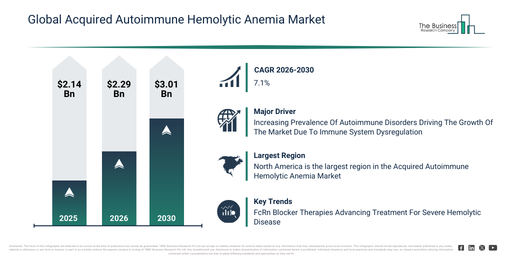
    The acquired autoimmune hemolytic anemia market size has experienced significant expansion in recent years. It is projected to increase from $2.14 billion in 2025 to $2.29 billion in 2026, demonstrating a compound annual growth rate (CAGR) of 7.1%. The factors contributing to its historical growth include improved autoimmune disease diagnosis, corticosteroid treatment reliance, hospital hematology specialization, an uptick in malignancy-linked anemia cases, and the availability of diagnostic tests.

    The market size for acquired autoimmune hemolytic anemia is anticipated to experience significant expansion over the next few years. Its valuation is projected to reach $3.01 billion by 2030, exhibiting a compound annual growth rate (CAGR) of 7.1%. This growth during the forecast period is attributable to rare disease awareness growth, biologic therapy adoption, advanced diagnostic integration, hematology research funding, and personalized treatment protocols. Furthermore, major trends in the forecast period include increasing use of targeted immunosuppressive therapies, rising adoption of rituximab-based treatment, growth in hospital-based hematology care, improved diagnostic testing adoption, and the expansion of rare disease treatment programs.

    Download A Free Sample Report For Comprehensive Market Insights:

    https://www.thebusinessresearchcompany.com/sample.aspx?id=24132&type=smp

    Which Significant Factors Are Encouraging Growth In The Acquired Autoimmune Hemolytic Anemia Market?

    The rising occurrence of autoimmune conditions is anticipated to fuel the expansion of the acquired autoimmune hemolytic anemia market in the future. Autoimmune disorders involve the immune system mistakenly attacking the body’s healthy cells and tissues, perceiving them as harmful invaders. This increasing prevalence of autoimmune disorders is primarily linked to more environmental triggers and shifts in lifestyle that can disrupt the immune system’s regulatory functions. Consequently, the growing number of autoimmune disorders leads to a higher frequency of acquired autoimmune hemolytic anemia, as individuals with such conditions are more prone to developing secondary AIHA due to their immune system dysregulation. For instance, in 2023, data from the Gastro-Intestinal Epidemiology Consortium (CanGIEC), a Canada-based national network of researchers and clinicians, indicated the prevalence of inflammatory bowel disease was estimated at 825 cases per 100,000 people. This figure is projected to increase by 2.44% annually, reaching 1,075 cases per 100,000 people by 2035. Thus, the escalating prevalence of autoimmune disorders will propel the growth of the acquired autoimmune hemolytic anemia market.

    What Segment Categories Are Evaluated In The Acquired Autoimmune Hemolytic Anemia Market Study?

    The acquired autoimmune hemolytic anemia market covered in this report is segmented –

    1) By Diagnosis Method: Complete Blood Count, Peripheral Blood Smear, Direct Coombs Test, Indirect Coombs Test

    2) By Treatment Type: Corticosteroids, Immunosuppressive Agents, Intravenous Immunoglobulin, Rituximab

    3) By Severity: Mild, Moderate, Severe

    4) By End User: Hospitals, Specialty Clinics, Research Institutions

    Subsegments:

    1) By Complete Blood Count: Hemoglobin Level, Hematocrit (HCT), Reticulocyte Count, White Blood Cell Count, Platelet Count

    2) By Peripheral Blood Smear: Spherocytes, Polychromasia, Schistocytes, Increased Reticulocyte Count

    3) By Direct Coombs Test: Immunoglobulin G Coombs Test, Immunoglobulin M Coombs Test, Complement Coombs Test

    4) By Indirect Coombs Test: Screening For Alloantibodies, Detection Of Sensitizing Antibodies, Crossmatch Testing

    What Trends Are Affecting The Growth Of The Acquired Autoimmune Hemolytic Anemia Market?

    Leading firms within the acquired autoimmune hemolytic anemia market are prioritizing breakthroughs in targeted treatments, like neonatal Fc receptor (FcRn) blockers, aiming to boost treatment effectiveness, better maternal and fetal health outcomes, and offer superior interventions for high-risk pregnancies affected by severe hemolytic disease. An FcRn blocker functions as a therapeutic antibody intended to block the neonatal Fc receptor, which typically recycles immunoglobulin G (IgG) antibodies in the body. This action consequently lowers harmful antibody levels that lead to the breakdown of red blood cells and hemolytic issues in both mothers and their fetuses. As an illustration, in January 2025, the US-based pharmaceutical and healthcare entity, Johnson & Johnson, was granted U.S. Food and Drug Administration (FDA) Breakthrough Therapy Designation for nipocalimab, intended for treating individuals with a high risk of severe hemolytic disease of the fetus and newborn (HDFN). Nipocalimab operates by precisely inhibiting the neonatal Fc receptor (FcRn), which decreases maternal IgG antibody concentrations that traverse the placenta and target fetal red blood cells. This effectively averts severe hemolytic disease, diminishes the requirement for intrauterine transfusions, and enhances results for high-risk pregnancies. This medication specifically addresses FcRn-driven IgG recycling, leaving other immune system functions undisturbed.

    Who Are The Key Market Participants In The Acquired Autoimmune Hemolytic Anemia Market?

    Major companies operating in the acquired autoimmune hemolytic anemia market are F. Hoffmann-La Roche Ltd., Alexion Pharmaceuticals Inc., Apellis Pharmaceuticals Inc., Sanofi S.A., AbbVie Inc., Novartis AG, Incyte Corporation, BioCryst Pharmaceuticals Inc., Annexon Inc., Rigel Pharmaceuticals Inc., Zenas BioPharma Inc., Immunovant Sciences GmbH, Alpine Immune Sciences Inc., Agios Pharmaceuticals Inc., Johnson & Johnson, Merck KGaA, Bristol Myers Squibb Company, Takeda Pharmaceutical Company Limited, CSL Behring, Grifols S.A.

    Access The Complete Acquired Autoimmune Hemolytic Anemia Market Report:

    https://www.thebusinessresearchcompany.com/report/acquired-autoimmune-hemolytic-anemia-global-market-report

    Which Region Stands As The Largest Contributor To The Acquired Autoimmune Hemolytic Anemia Market?

    North America was the largest region in the acquired autoimmune hemolytic anemia market in 2025. Europe is expected to be the fastest-growing region in the forecast period. The regions covered in the acquired autoimmune hemolytic anemia market report are Asia-Pacific, South East Asia, Western Europe, Eastern Europe, North America, South America, Middle East, Africa.

    Access Acquired Autoimmune Hemolytic Anemia Market Report for Deeper Competitive Insights

    https://www.thebusinessresearchcompany.com/sample.aspx?id=24132&type=smp

    Browse Through More Reports Similar to the Global Acquired Autoimmune Hemolytic Anemia Market 2026, By The Business Research Company

    Autoimmune Disease Diagnosis Market Report 2026

    https://www.thebusinessresearchcompany.com/report/autoimmune-disease-diagnosis-global-market-report

    Autoimmune Treatment Market Report 2026

    https://www.thebusinessresearchcompany.com/report/autoimmune-treatment-global-market-report

    Anemia And Other Blood Disorder Drugs Market Report 2026

    https://www.thebusinessresearchcompany.com/report/anemia-and-other-blood-disorder-drugs-global-market-report

    Get in touch with us:

    The Business Research Company: https://www.thebusinessresearchcompany.com/

    Americas: +1 310-496-7795

    Asia: +44 7882 955267 & +91 8897263534

    Europe: +44 7882 955267

    Email us at: marketing@tbrc.info

    Follow us on:

    LinkedIn: https://in.linkedin.com/company/the-business-research-company

    YouTube: https://www.youtube.com/channel/UC24_fI0rV8cR5DxlCpgmyFQ

    Global Market Model: https://www.thebusinessresearchcompany.com/global-market-model
  • Acne Drugs Market Expected To Witness Revenue Growth Toward $7.7 Billion By 2030

    Acne Drugs Market Expected To Witness Revenue Growth Toward $7.7 Billion By 2030

    The Business Research Company’s 2026 market reports feature advanced enhancements such as market attractiveness analysis, total addressable market evaluation, company benchmarking matrices, interactive Excel dashboards, expanded supply chain intelligence, emerging startup coverage, and detailed product insights, delivering more actionable and strategically valuable research.

    How Will The Market Size Of The Acne Drugs Market Progress Through 2030?

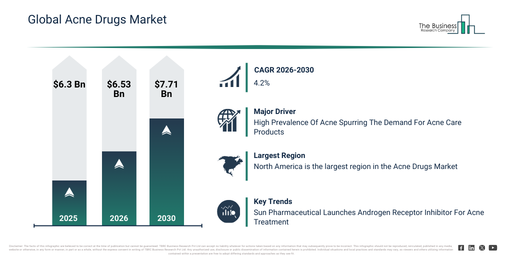
    The acne drugs market size has demonstrated consistent growth in recent years. Its valuation is forecast to climb from $6.3 billion in 2025 to $6.53 billion in 2026, progressing at a compound annual growth rate (CAGR) of 3.5%. This historical expansion can be attributed to factors such as the increasing prevalence of acne among adolescents, limited availability of combination therapies, heightened awareness of dermatological treatments, a reliance on topical antibiotics, and a rise in visits to dermatology clinics.

    The acne drugs market size is anticipated to experience consistent expansion over the upcoming years, projected to reach $7.71 billion in 2030, exhibiting a compound annual growth rate (CAGR) of 4.2%. This growth during the forecast period can be ascribed to factors such as the creation of novel anti-inflammatory and retinoid formulations, an expanded selection of OTC acne products, the increasing embrace of digital skincare platforms, a rise in personalized dermatology solutions, and augmented investment in acne research and clinical trials. Key trends for this period encompass the growing prevalence of combination therapies for acne treatment, a greater reliance on topical and oral retinoids, the rise of over-the-counter (OTC) acne remedies, the wider availability of personalized acne treatment plans, and increased public awareness concerning skin health and preventive dermatology.

    Download A Free Sample Report For Comprehensive Market Insights:

    https://www.thebusinessresearchcompany.com/sample.aspx?id=2412&type=smp

    What Core Drivers Are Transforming The Acne Drugs Market?

    The growing occurrence of acne is anticipated to drive expansion in the acne drug market. This skin condition arises when pores become blocked by oil and dead skin cells, resulting in pimples, blackheads, and inflammation. Its increasing prevalence is driven by its common appearance across adolescents, young adults, and adults. Medications for acne contribute to better skin appearance through diminishing inflammation, regulating oil secretion, and averting pore blockages. As an illustration, in March 2024, data from a report by Pierre Fabre Laboratories, a pharmaceutical and dermo-cosmetics firm from France, revealed that around 20.5% of adults worldwide are affected by acne, with the highest rates observed in adolescents and young adults between 16–24 years, reaching 28.3%. Adults from 25–39 years also exhibit a significant rate of 19.3%, and females experience it more frequently than males, with prevalence rates of 23.6% and 17.5% correspondingly. Consequently, the growing incidence of acne is propelling the expansion of the acne drug market.

    How Is The Acne Drugs Market Examined Through Segment Analysis?

    The acne drugs market covered in this report is segmented –

    1) By Type: Inflammatory Acne Drugs, Non-Inflammatory Acne Drugs

    2) By Therapeutic Class: Retinoids, Antibiotics, Salicylic Aci, Benzoyl Peroxide, Other Therapeutics

    3) By End User: Hospitals And Clinics, Pharmacies And Drug Stores, Other End Users

    Subsegments:

    1) By Inflammatory Acne Drugs: Antibiotics (Topical And Oral), Anti-inflammatory Drugs, Corticosteroids, Combination Therapies

    2) By Non-Inflammatory Acne Drugs: Retinoids (Topical And Oral), Benzoyl Peroxide, Salicylic Acid, Alpha Hydroxy Acids (AHAs), Over-The-Counter (OTC) Treatments

    Which Trends Are Influencing The Direction Of The Acne Drugs Market?

    Leading companies within the acne drug market are concentrating on developing sophisticated receptor inhibitor drugs and expanding their research into treatments. This strategy aims to create cutting-edge products and secure a competitive advantage in the growing healthcare industry. Advanced receptor inhibitor drugs are a class of medication designed to block the activity of specific receptors in the body. For instance, in September 2023, Sun Pharmaceutical Industries Ltd., an Indian biopharmaceutical company, introduced (PR)WINLEVI (clascoterone cream 1% w/w). WINLEVI is thought to mitigate the effects of acne hormones on the skin by disrupting the androgen cascade, differing from topical acne treatments that typically focus on follicular hyperkeratinization, reducing inflammation, or antibacterial properties. While WINLEVI’s exact mechanism of action is still uncertain, it strives to suppress the actions of androgen receptors in the cells of sebaceous glands (the skin’s oil-producing glands) to aid in diminishing sebum (oil) production and inflammatory cytokines.

    Which Organizations Are Operating Within The Acne Drugs Market?

    Major companies operating in the acne drugs market are Johnson & Johnson, Galderma S.A., Almirall SA, Bausch Health Companies Inc., GlaxoSmithKline, Reckitt Benckiser Group, Mayne Pharma Group Limited, Allergan Plc., Cipher Pharmaceuticals, Sol Gel Advanced Topical Therapy, Pfizer Inc., Novartis AG, Merck & Co. Inc., Amgen Inc., Eli Lilly and Company, Daiichi Sankyo Company Limited, Sinopharm Group Co. Ltd, Mylan N.V., F. Hoffmann-La Roche Ltd, Bayer AG, Teva Pharmaceutical Industries, Sun Pharmaceutical Industries Ltd., Cipla Inc., Zydus Cadila, Otsuka Pharmaceutical Co. Ltd, Shanghai Pharmaceuticals Holding Co. Ltd, Jiangsu Hengrui Medicine, Guangzhou Baiyunshan Pharmaceutical, China Meheco Co Ltd, Huadong Medicine Co. Ltd., Ranbaxy Laboratories, Stiefel Laboratories, BIOCAD, Zentiva (Sanofi), Gedeon Richter Plc, Polpharma SA Pharmaceutical Works, Egis Group, Dermira Inc.

    Access The Complete Acne Drugs Market Report:

    https://www.thebusinessresearchcompany.com/report/acne-drugs-global-market-report

    What Is The Largest Regional Market In The Acne Drugs Market?

    North America was the largest region in the acne drugs market in 2025. Middle East is expected to be the largest growing region in the global acne drugs market during the forecast period. The regions covered in the acne drugs market report are Asia-Pacific, South East Asia, Western Europe, Eastern Europe, North America, South America, Middle East, Africa.

    Access Acne Drugs Market Report for Deeper Competitive Insights

    https://www.thebusinessresearchcompany.com/sample.aspx?id=2412&type=smp

    Browse Through More Reports Similar to the Global Acne Drugs Market 2026, By The Business Research Company

    Drugs For Immunotherapy Market Report 2026

    https://www.thebusinessresearchcompany.com/report/drugs-for-immunotherapy-global-market-report

    Dermatology Drugs Market Report 2026

    https://www.thebusinessresearchcompany.com/report/dermatology-drugs-global-market-report

    Cosmetic Lasers Market Report 2026

    https://www.thebusinessresearchcompany.com/report/cosmetic-lasers-global-market-report

    Get in touch with us:

    The Business Research Company: https://www.thebusinessresearchcompany.com/

    Americas: +1 310-496-7795

    Asia: +44 7882 955267 & +91 8897263534

    Europe: +44 7882 955267

    Email us at: marketing@tbrc.info

    Follow us on:

    LinkedIn: https://in.linkedin.com/company/the-business-research-company

    YouTube: https://www.youtube.com/channel/UC24_fI0rV8cR5DxlCpgmyFQ

    Global Market Model: https://www.thebusinessresearchcompany.com/global-market-model
  • Acetaminophen-Opioid Combination Market Industry Outlook 2026–2030 Highlighting Growth Momentum And Market Trends

    Acetaminophen-Opioid Combination Market Industry Outlook 2026–2030 Highlighting Growth Momentum And Market Trends

    The Business Research Company’s 2026 market reports feature advanced enhancements such as market attractiveness analysis, total addressable market evaluation, company benchmarking matrices, interactive Excel dashboards, expanded supply chain intelligence, emerging startup coverage, and detailed product insights, delivering more actionable and strategically valuable research.

    What Is The Expected Market Size Of The Acetaminophen-Opioid Combination Market In 2026 And How Much Will It Reach By 2030?

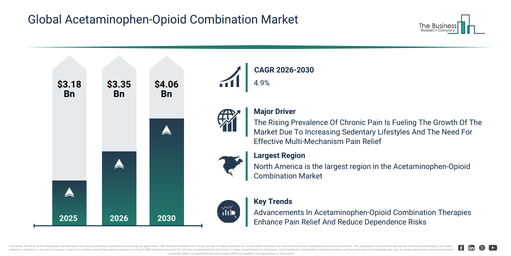
    The acetaminophen-opioid combination market has experienced significant growth in recent years. Its size is anticipated to expand from $3.18 billion in 2025 to $3.35 billion in 2026, achieving a compound annual growth rate (CAGR) of 5.3%. The historical increase in this market can be linked to several factors, including numerous surgical pain cases, current opioid prescribing practices, existing hospital pain management protocols, the widespread availability of combination drugs, and the prevalence of chronic pain.

    The acetaminophen-opioid combination market size is anticipated to show consistent growth over the coming years. It is projected to expand to $4.06 billion in 2030, achieving a compound annual growth rate (CAGR) of 4.9%. This projected growth can be linked to factors such as opioid stewardship programs, an increasing preference for non-opioid treatments, digital systems for tracking prescriptions, stricter regulatory measures, and the expansion of outpatient pain management. Significant trends expected during this period include a decrease in use due to opioid regulations, a move towards combinations with lower dosages, heightened monitoring of prescription utilization, an increase in generic combination products, and a greater emphasis on managing acute pain.

    Download A Free Sample Report For Comprehensive Market Insights:

    https://www.thebusinessresearchcompany.com/sample.aspx?id=24450&type=smp

    Which Growth Factors Are Strengthening The Acetaminophen-Opioid Combination Market Landscape?

    The acetaminophen-opioid combination market is projected to expand due to the increasing incidence of chronic pain. Chronic pain, defined as persistent or recurring discomfort lasting beyond three to six months and significantly impacting daily life and welfare, is on the rise. This surge is attributed to sedentary habits leading to poor posture and muscle weakness, which in turn place additional stress on the body and result in ongoing pain. Acetaminophen-opioid combinations provide effective relief for chronic pain by addressing several pain pathways simultaneously. This method not only improves pain management and daily functioning but also potentially reduces the necessary opioid dosage. For example, data from the Australian Institute of Health and Welfare in June 2024 revealed that in 2023, chronic conditions were responsible for Australians losing about 4.4 million years of healthy life, constituting 85% of the nation’s total disease burden. Consequently, the growing occurrence of chronic pain is a key factor propelling the acetaminophen-opioid combination market. The acetaminophen-opioid combination market’s expansion is anticipated due to the rising volume of orthopedic surgical procedures. These procedures focus on the diagnosis, treatment, or repair of conditions impacting the musculoskeletal system, including bones, joints, muscles, and ligaments. The growth in orthopedic surgeries stems from an aging demographic experiencing more degenerative musculoskeletal ailments, thereby heightening the demand for interventions that enhance mobility and alleviate discomfort. Acetaminophen-opioid combinations are effective in addressing moderate to severe postoperative pain following orthopedic operations by engaging various pain pathways. This approach not only boosts patient comfort and facilitates mobility but also helps reduce the necessity for higher opioid dosages. For example, data from the UK’s Office for Health Improvement and Disparities in January 2024 indicated that in 2023, 18.4% of individuals aged 16 and above reported a long-term musculoskeletal disorder, an increase from 17.6% in 2022. Consequently, the growing number of orthopedic surgical procedures is a significant factor propelling the acetaminophen-opioid combination market.

    Which Segment Groups Define The Acetaminophen-Opioid Combination Market Landscape?

    The acetaminophen-opioid combination market covered in this report is segmented –

    1) By Product: Hydrocodone-Acetaminophen, Oxycodone-Acetaminophen, Codeine-Acetaminophen, Tramadol-Acetaminophen, Other Products

    2) By Strength: Low Dose Combinations, Moderate To High Dose Combinations, Extended-Release Combinations

    3) By Indication: Acute Pain, Chronic Pain

    4) By Distribution Channel: Hospital Pharmacies, Retail Pharmacies, Online Pharmacies, Clinics

    What Trends Are Driving Changes In The Acetaminophen-Opioid Combination Market?

    Companies operating in the acetaminophen-opioid combination market are concentrating on developing advanced products, such as oxycodone hydrochloride and acetaminophen tablets, to improve pain relief efficacy and decrease the risk of opioid dependence. Oxycodone hydrochloride and acetaminophen tablets combine a strong opioid painkiller with a non-opioid analgesic to effectively alleviate moderate to severe pain. This dual-action formula targets pain through complementary pathways, leading to enhanced relief. For instance, in May 2025, Elite Pharmaceuticals, Inc., a US-based specialty pharmaceutical company, launched its generic version of Percocet in strengths of 5mg/325mg, mg/325 mg, and 10 mg/325 mg. Manufactured under cGMP standards, it offers a trustworthy, high-quality alternative to the branded Percocet, addressing immediate-release pain management needs. This medication is indicated for the relief of moderate to moderately severe pain, marking a significant market entry for Elite within the niche generic pharmaceutical sector.

    Who Are The Businesses Driving Activity In The Acetaminophen-Opioid Combination Market?

    Major companies operating in the acetaminophen-opioid combination market are Sun Pharmaceutical Industries Ltd, Endo Pharmaceuticals, Amneal Pharmaceuticals, Mallinckrodt Pharmaceuticals plc, Lupin Pharmaceuticals, Alvogen, Camber Pharmaceuticals Inc., Watson Laboratories, West-Ward Pharmaceuticals Corp., Teva Pharmaceutical Industries Ltd, Purdue Pharma L.P., Hikma Pharmaceuticals PLC, Dr. Reddy’s Laboratories Ltd, Zydus Lifesciences Ltd, Aurobindo Pharma Ltd, Cipla Ltd, Sandoz (Novartis AG), Apotex Inc., Mylan N.V. (Viatris Inc.), Torrent Pharmaceuticals Ltd, Alembic Pharmaceuticals Ltd, Strides Pharma Science Ltd, Wockhardt Ltd, Micro Labs Ltd, Intas Pharmaceuticals Ltd

    Access The Complete Acetaminophen-Opioid Combination Market Report:

    https://www.thebusinessresearchcompany.com/report/acetaminophen-opioid-combination-global-market-report

    Which Region Contributes The Most To The Acetaminophen-Opioid Combination Market?

    North America was the largest region in the acetaminophen-opioid combination market in 2025. The regions covered in the acetaminophen-opioid combination market report are Asia-Pacific, South East Asia, Western Europe, Eastern Europe, North America, South America, Middle East, Africa.

    Access Acetaminophen-Opioid Combination Market Report for Deeper Competitive Insights

    https://www.thebusinessresearchcompany.com/sample.aspx?id=24450&type=smp

    Browse Through More Reports Similar to the Global Acetaminophen-Opioid Combination Market 2026, By The Business Research Company

    Opioids Market Report 2026

    https://www.thebusinessresearchcompany.com/report/opioids-global-market-report

    Pain Management Drugs Market Report 2026

    https://www.thebusinessresearchcompany.com/report/pain-management-drugs-global-market-report

    Oxycodone Drugs Market Report 2026

    https://www.thebusinessresearchcompany.com/report/oxycodone-drugs-global-market-report

    Get in touch with us:

    The Business Research Company: https://www.thebusinessresearchcompany.com/

    Americas: +1 310-496-7795

    Asia: +44 7882 955267 & +91 8897263534

    Europe: +44 7882 955267

    Email us at: marketing@tbrc.info

    Follow us on:

    LinkedIn: https://in.linkedin.com/company/the-business-research-company

    YouTube: https://www.youtube.com/channel/UC24_fI0rV8cR5DxlCpgmyFQ

    Global Market Model: https://www.thebusinessresearchcompany.com/global-market-model
  • ACE Inhibitors Market Growth Forecast With Analysis Of Industry Progress Through 2030

    ACE Inhibitors Market Growth Forecast With Analysis Of Industry Progress Through 2030

    The Business Research Company’s 2026 market reports feature advanced enhancements such as market attractiveness analysis, total addressable market evaluation, company benchmarking matrices, interactive Excel dashboards, expanded supply chain intelligence, emerging startup coverage, and detailed product insights, delivering more actionable and strategically valuable research.

    What Market Size Is Forecasted For The ACE Inhibitors Market By 2030 Based On Its 2026 Value?

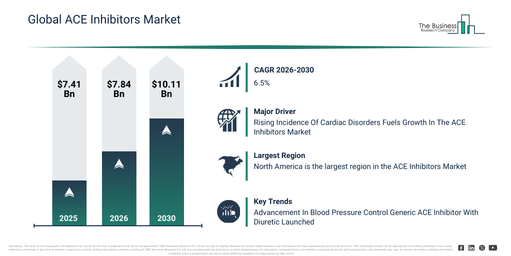
    The ace inhibitors market has experienced significant growth in recent years. It will grow from $7.41 billion in 2025 to $7.84 billion in 2026 at a compound annual growth rate (CAGR) of 5.8%. This historical growth can be attributed to the increasing prevalence of hypertension, rising awareness about cardiovascular diseases, the introduction of first-generation ace inhibitors, a growing geriatric population, and advancements in drug formulation.

    The market for ace inhibitors is projected to experience robust expansion over the coming years. This market is anticipated to reach $10.11 billion by 2030, exhibiting a compound annual growth rate (CAGR) of 6.5%. Several factors will drive this growth during the forecast period, including the increasing demand for personalized medicine, the incorporation of digital health solutions, the enlargement of emerging markets, the creation of new ace inhibitor combinations, and the expansion of home healthcare services. Key trends expected during this period involve personalized approaches to hypertension management, the adoption of telemedicine and remote patient monitoring, the evolution of combination therapies, an increase in generic ace inhibitors, and the broadening of home healthcare options.

    Download A Free Sample Report For Comprehensive Market Insights:

    https://www.thebusinessresearchcompany.com/sample.aspx?id=10671&type=smp

    What Important Drivers Are Powering The ACE Inhibitors Market Growth?

    A projected rise in the occurrence of cardiac disorders is anticipated to drive the future growth of the ACE inhibitors market. Cardiac disorders are a category of medical conditions affecting the heart or blood vessels, covering a broad spectrum such as coronary artery disease, heart failure, and arrhythmias. ACE inhibitors are essential in managing these conditions, operating by inhibiting the angiotensin-converting enzyme, which helps to decrease vasoconstriction, sodium retention, and aldosterone secretion, ultimately improving heart function. For example, the American Heart Association, a US-based non-profit, reported in January 2024 that the age-adjusted death rate from cardiovascular disease rose to 233.3 per 100,000 in 2024, marking a 4.0% increase from 224.4 per 100,000 in 2023. This demonstrates how the increasing incidence of cardiac disorders is indeed fueling the expansion of the ACE inhibitors market.

    What Key Segment Areas Are Included In The ACE Inhibitors Market Assessment?

    The ace inhibitors market covered in this report is segmented –

    1) By Type: Sulfhydryl-containing Agents, Dicarboxylate-containing Agents, Phosphonate-containing Agents

    2) By Drug: Ramipril, Enalapril, Benazepril, Fosinopril, Captopril, Moexipril, Other Drugs

    3) By Dosage Form: Oral Tablets, Oral Solutions

    4) By Application: Heart Failure, Chronic Kidney Disease, Hypertension, Diabetes, Heart Attack, Other Applications

    5) By End-Users: Hospitals, Online Drug Stores, Other End-Users

    Subsegments:

    1) By Sulfhydryl-Containing Agents: Captopril, Zofenopril

    2) By Dicarboxylate-Containing Agents: Enalapril, Lisinopril, Ramipril, Quinapril, Benazepril, Perindopril

    3) By Phosphonate-Containing Agents: Fosinopril, Fosinopril Sodium, Fosinopril Calcium

    Which Trends Are Shaping The ACE Inhibitors Market Landscape?

    Companies operating in the ACE inhibitor market are increasingly concentrating on introducing generic medications to secure a competitive advantage. A generic drug is a medicine that mirrors a brand-name drug in its active ingredients, dosage, safety profile, strength, administration route, and overall effectiveness, typically becoming available at a reduced cost once its original patent expires. For example, in August 2023, Pharmascience Inc., a pharmaceutical company based in Canada, launched pms-PERINDOPRIL-INDAPAMIDE. This generic medication is specifically formulated for the initial management of mild to moderate essential hypertension (high blood pressure) in adults. The combination product contains two active components: perindopril erbumine, an angiotensin-converting enzyme (ACE) inhibitor which helps relax blood vessels, and indapamide, a chlorosulphamoyl diuretic that facilitates the body’s removal of excess fluid and sodium. These ingredients work synergistically to effectively decrease blood pressure in a wide array of patients. pms-PERINDOPRIL-INDAPAMIDE is provided in various dosage forms, featuring 2 mg, 4 mg, and 8 mg of perindopril erbumine, each combined with 0.625 mg, 1.25 mg, and 2.5 mg of indapamide, respectively.

    Which Firms Are Competing In The ACE Inhibitors Market?

    Major companies operating in the ace inhibitors market are Pfizer Inc., Novartis AG, Johnson & Johnson Private Limited, Merck KGaA, Sanofi S.A., Bayer AG, Teva Pharmaceutical Industries Ltd., Bristol-Myers Squibb Co., Takeda Pharmaceuticals Company, Daiichi Sankyo Company Ltd., Endo International plc, Sun Pharmaceutical Industries Ltd., Boehringer Ingelheim, Bausch Health Companies Inc., Dr. Reddy’s Laboratories, Abbott Laboratories, Eli Lilly and Company, Cipla Limited, GlaxoSmithKline plc, Cadila Healthcare Limited, AbbVie Inc., Sandoz Group AG, Accord Healthcare Ltd., AstraZeneca plc, Lupin Limited, Macleods Pharmaceuticals Limited, Zydus lifescience Ltd., Apotex Inc.

    Access The Complete ACE Inhibitors Market Report:

    https://www.thebusinessresearchcompany.com/report/ace-inhibitors-global-market-report

    Which Regional Market Leads The ACE Inhibitors Market?

    North America was the largest region in the ACE inhibitors market in 2025. Asia-Pacific is expected to be the fastest-growing region in the global ACE inhibitors market report during the forecast period. The regions covered in the ace inhibitors market report are Asia-Pacific, South East Asia, Western Europe, Eastern Europe, North America, South America, Middle East, Africa.

    Access ACE Inhibitors Market Report for Deeper Competitive Insights

    https://www.thebusinessresearchcompany.com/sample.aspx?id=10671&type=smp

    Browse Through More Reports Similar to the Global ACE Inhibitors Market 2026, By The Business Research Company

    Ace Inhibitors Market Report 2026

    https://www.thebusinessresearchcompany.com/report/ace-inhibitors-global-market-report

    Enzyme Inhibitor Market Report 2026

    https://www.thebusinessresearchcompany.com/report/enzyme-inhibitor-global-market-report

    Kinase Inhibitors Market Report 2026

    https://www.thebusinessresearchcompany.com/report/kinase-inhibitors-global-market-report

    Get in touch with us:

    The Business Research Company: https://www.thebusinessresearchcompany.com/

    Americas: +1 310-496-7795

    Asia: +44 7882 955267 & +91 8897263534

    Europe: +44 7882 955267

    Email us at: marketing@tbrc.info

    Follow us on:

    LinkedIn: https://in.linkedin.com/company/the-business-research-company

    YouTube: https://www.youtube.com/channel/UC24_fI0rV8cR5DxlCpgmyFQ

    Global Market Model: https://www.thebusinessresearchcompany.com/global-market-model
  • Global Abortion Drugs Market Forecast Highlighting Expansion And Competitive Dynamics

    Global Abortion Drugs Market Forecast Highlighting Expansion And Competitive Dynamics

    The Business Research Company’s 2026 market reports feature advanced enhancements such as market attractiveness analysis, total addressable market evaluation, company benchmarking matrices, interactive Excel dashboards, expanded supply chain intelligence, emerging startup coverage, and detailed product insights, delivering more actionable and strategically valuable research.

    How Is The Market Value Of The Abortion Drugs Market Projected To Expand During 2026–2030?

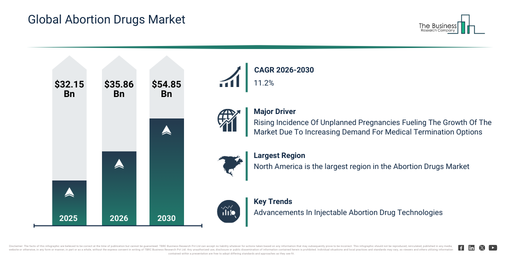
    The abortion drugs market has seen rapid expansion in recent years. It is projected to increase from $32.15 billion in 2025 to $35.86 billion in 2026, achieving a compound annual growth rate (CAGR) of 11.5%. The historical growth of this market can be attributed to factors such as regulatory approvals, the provision of hospital-based abortion services, various women’s reproductive health programs, the availability of misoprostol, and validated clinical safety.

    The abortion drugs market is projected to experience substantial expansion over the coming years. The market is anticipated to expand to $54.85 billion in 2030, exhibiting a compound annual growth rate (CAGR) of 11.2%. This anticipated growth during the forecast period is fueled by factors such as the expansion of telehealth, a heightened awareness of reproductive health, the increasing penetration of generic drugs, regulatory harmonization efforts, and the advancement of digital pharmacies. Key trends expected over this period encompass a greater adoption of medical abortion drugs, an escalating demand for terminating early-stage pregnancies, wider access through telemedicine, the proliferation of generic abortion medications, and a strong emphasis on the safe and regulated utilization of these drugs.

    Download A Free Sample Report For Comprehensive Market Insights:

    https://www.thebusinessresearchcompany.com/sample.aspx?id=24449&type=smp

    Which Major Factors Are Contributing To The Development Of The Abortion Drugs Market?

    The anticipated increase in unplanned pregnancies is projected to boost the expansion of the abortion drug market. Unintended pregnancies are those not desired or planned at the point of conception, often stemming from inconsistent or incorrect use of contraception. The growing occurrence of unplanned pregnancies is primarily attributed to limited access to contraception, as factors such as cost, lack of education, and inadequate healthcare infrastructure hinder individuals from obtaining and effectively utilizing birth control methods. Abortion drugs facilitate the management of unplanned pregnancies by offering a safe, non-surgical choice to end an early pregnancy, thereby granting individuals greater control over their reproductive decisions, minimizing the need for invasive procedures, and supporting timely healthcare access in both clinical and home settings. For instance, in January 2025, a report from the National Center for Biotechnology Information (NCBI), a division of the US-based National Library of Medicine (NLM), stated that an estimated six million unintended pregnancies occurred in Pakistan in 2023, with 64 % of these, or approximately 3.8 million, resulting in induced abortions. Thus, the rising incidence of unplanned pregnancies is propelling the growth of the abortion drugs market.

    How Is Segment Classification Applied In The Abortion Drugs Market?

    The abortion drugs market covered in this report is segmented –

    1) By Drug Class: Mifepristone, Misoprostol, Pitocin, Hemabate, Carboprost, Other Drug Classes

    2) By Route Of Administration: Oral, Intravenous, Subcutaneous

    3) By Therapeutic Application: Medical Abortion, Surgical Abortion

    4) By Distribution Channel: Hospital Pharmacies, Retail Pharmacies, Online Pharmacies

    Subsegments:

    1) By Mifepristone: Generic Mifepristone, Branded Mifepristone, Combination With Misoprostol

    2) By Misoprostol: Oral Tablets, Vaginal Tablets, Sublingual Tablets, Buccal Tablets

    3) By Pitocin: Injectable Solution, Intravenous (IV) Administration, Intramuscular (IM) Administration

    4) By Hemabate: Injectable Solution, Single-Dose Vials, Multi-Dose Vials

    5) By Carboprost: Intramuscular Injection, Prefilled Syringes, Vial Form

    6) By Other Drug Classes: Methotrexate, Dinoprostone, Ergometrine, Oxytocin Analogs

    What Trends Are Influencing The Abortion Drugs Market Outlook?

    Major companies in the abortion drugs market are concentrating on developing innovative products, such as advanced prostaglandin-based injectable agents, to improve the safety, efficacy, and reliability of medical pregnancy termination and related obstetric care. These advanced prostaglandin-based injectable agents are modern formulations of prostaglandin analogs designed to induce strong, controlled uterine contractions, thereby enhancing the effectiveness and predictability of pregnancy termination procedures while offering a more stable, precisely dosed, and clinically reliable alternative to older or less targeted therapies. For instance, in May 2023, Eugia US LLC, a US-based pharmaceutical manufacturing company, received U.S. Food and Drug Administration (USFDA) approval for its Carboprost Tromethamine Injection USP 250 mcg/mL, Single-Dose Vials, an advanced injectable prostaglandin analog used in second-trimester pregnancy termination and the treatment of postpartum hemorrhage. This product features a precisely calibrated single-dose formulation that boosts clinical accuracy, reduces the risk of contamination, and ensures consistent potency.

    Who Are The Major Companies Operating In The Abortion Drugs Market?

    Major companies operating in the abortion drugs market are Pfizer Inc., Bayer AG, Intas Pharmaceuticals, Sun Pharmaceutical Industries Ltd., Macleods Pharmaceuticals Ltd, Cipla Ltd., Lupin Ltd., Zydus Lifesciences Ltd., Cadila Pharmaceuticals, Alkem Laboratories Ltd., Shanghai Xinhua Pharmaceutical Co. Ltd., Medley Pharmaceuticals, Acme Formulations Ltd., Aristo Pharmaceuticals Pvt. Ltd., Mankind Pharma Ltd., Neiss Labs Ltd., Danco Laboratories LLC, GenBioPro Inc., Exelgyn SA, Linepharma International Limited, Adorshea

    Access The Complete Abortion Drugs Market Report:

    https://www.thebusinessresearchcompany.com/report/abortion-drugs-global-market-report

    Which Region Holds The Largest Share In The Abortion Drugs Market?

    North America was the largest region in the abortion drugs market in 2025. Asia-Pacific is expected to be the fastest-growing region in the forecast period. The regions covered in the abortion drugs market report are Asia-Pacific, South East Asia, Western Europe, Eastern Europe, North America, South America, Middle East, Africa.

    Access Abortion Drugs Market Report for Deeper Competitive Insights

    https://www.thebusinessresearchcompany.com/sample.aspx?id=24449&type=smp

    Browse Through More Reports Similar to the Global Abortion Drugs Market 2026, By The Business Research Company

    Ethical Pharmaceuticals Market Report 2026

    https://www.thebusinessresearchcompany.com/report/ethical-pharmaceuticals-global-market-report

    Breast Cancer Drugs Market Report 2026

    https://www.thebusinessresearchcompany.com/report/breast-cancer-drugs-global-market-report

    Preeclampsia Drugs Market Report 2026

    https://www.thebusinessresearchcompany.com/report/preeclampsia-drugs-global-market-report

    Get in touch with us:

    The Business Research Company: https://www.thebusinessresearchcompany.com/

    Americas: +1 310-496-7795

    Asia: +44 7882 955267 & +91 8897263534

    Europe: +44 7882 955267

    Email us at: marketing@tbrc.info

    Follow us on:

    LinkedIn: https://in.linkedin.com/company/the-business-research-company

    YouTube: https://www.youtube.com/channel/UC24_fI0rV8cR5DxlCpgmyFQ

    Global Market Model: https://www.thebusinessresearchcompany.com/global-market-model
  • Abemaciclib Market Analysis Through 2030 Focusing On Demand Trends And Growth Drivers

    Abemaciclib Market Analysis Through 2030 Focusing On Demand Trends And Growth Drivers

    The Business Research Company’s 2026 market reports feature advanced enhancements such as market attractiveness analysis, total addressable market evaluation, company benchmarking matrices, interactive Excel dashboards, expanded supply chain intelligence, emerging startup coverage, and detailed product insights, delivering more actionable and strategically valuable research.

    What Are The Forecasted Market Size Figures For The Abemaciclib Market In 2026 And 2030?

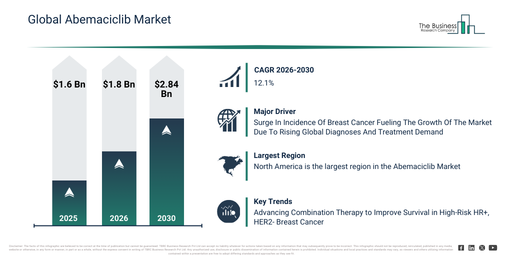
    The abemaciclib market size has seen a rapid expansion in recent years. Its valuation is projected to increase from $1.6 billion in 2025 to $1.8 billion in 2026, achieving a compound annual growth rate (CAGR) of 12.4%. The growth observed during previous periods can be ascribed to factors such as the rising occurrence of hormone receptor-positive breast cancer, developments in molecular oncology research, the granting of regulatory approvals for targeted treatments, more effective diagnostic screening programs, and the establishment of additional oncology treatment centers.

    The abemaciclib market is projected to experience substantial expansion in the coming years. Its value is anticipated to reach $2.84 billion by 2030, exhibiting a compound annual growth rate (CAGR) of 12.1%. This projected growth during the forecast period is driven by several factors, including the escalating demand for precision oncology medications, increasing investments in targeted cancer treatments, the broadening of early breast cancer therapy protocols, the rising use of oral anticancer agents, and ongoing advancements in cell cycle inhibition therapies. Key trends identified for the forecast period encompass the wider adoption of cdk4/6 inhibitor treatments, a greater utilization of combination endocrine therapies, an intensifying focus on targeted breast cancer treatments, the expanded use of oral oncology drugs, and a heightened emphasis on interventions for early-stage cancer.

    Download A Free Sample Report For Comprehensive Market Insights:

    https://www.thebusinessresearchcompany.com/sample.aspx?id=28112&type=smp

    What Key Growth Drivers Are Influencing The Abemaciclib Market?

    The rising occurrence of breast cancer is anticipated to drive the expansion of the abemaciclib market in the future. Breast cancer is defined as a malignant growth originating in the breast tissue, typically impacting the ducts or lobules, with the potential to metastasize to other bodily regions if left untreated. This increase in breast cancer cases stems from enhanced detection and screening techniques, leading to the diagnosis of more cases that might have previously been overlooked. Abemaciclib aids in managing breast cancer by targeting and inhibiting particular enzymes that foster tumor cell proliferation, thus decelerating disease progression and enhancing patient results. As an illustration, in February 2025, data from the International Agency for Research on Cancer (IARC), a France-based intergovernmental body, indicated that approximately 2.3 million women worldwide were diagnosed with breast cancer in 2022, resulting in 670,000 deaths. Projections suggest these figures could rise to 3.2 million cases and 1.1 million deaths annually by 2050. Consequently, the rising occurrence of breast cancer is fueling the expansion of the abemaciclib market.

    What Are The Core Segment Classifications In The Abemaciclib Market?

    The abemaciclib market covered in this report is segmented –

    1) By Product Type: Tablets, Capsules, Other Product Types

    2) By Indication: Advanced Or Metastatic Breast Cancer, Early Breast Cancer, Other Indications

    3) By Distribution Channel: Online, Offline

    4) By End-User: Hospitals, Cancer Treatment Centers, Other End-Users

    Subsegments:

    1) By Tablets: Standard Tablets, Extended-Release Tablets

    2) By Capsules: Hard Gelatin Capsules, Soft Gelatin Capsules

    3) By Other Product Types: Oral Suspensions, Injectable Forms, Topical Forms

    Which Trends Are Expected To Shape The Abemaciclib Market?

    Major companies operating in the abemaciclib market are prioritizing the development of sophisticated innovations, including combination therapy with endocrine treatment. This focus aims to enhance overall survival, improve long-term treatment efficacy, and reduce recurrence for high-risk HR+, HER2-negative early breast cancer patients. Combination therapy with endocrine treatment involves administering abemaciclib alongside hormone-blocking therapy to more effectively inhibit the growth and spread of HR+ breast cancer cells. As an illustration, in August 2025, Eli Lilly and Company, a US-based pharmaceutical and biotechnology company, presented new Phase 3 data. This data showed that adjuvant abemaciclib, when combined with endocrine therapy, significantly improved overall survival in patients with high-risk HR+, HER2-negative, node-positive early breast cancer. The therapy also demonstrated meaningful reductions in both recurrence and long-term disease progression. This progress expands global access to evidence-based combination strategies for high-risk breast cancer patients. Ultimately, the combination of abemaciclib with endocrine therapy is intended to further optimize patient outcomes and deliver a more effective, long-term treatment approach.

    Which Companies Are Influencing The Abemaciclib Market?

    Major companies operating in the abemaciclib market are Eli Lilly and Company

    Access The Complete Abemaciclib Market Report:

    https://www.thebusinessresearchcompany.com/report/abemaciclib-global-market-report

    Which Region Is The Dominant Market In The Abemaciclib Market?

    North America was the largest region in the abemaciclib market in 2025. Asia-Pacific is expected to be the fastest-growing region in the forecast period. The regions covered in the abemaciclib market report are Asia-Pacific, South East Asia, Western Europe, Eastern Europe, North America, South America, Middle East, Africa.

    Access Abemaciclib Market Report for Deeper Competitive Insights

    https://www.thebusinessresearchcompany.com/sample.aspx?id=28112&type=smp

    Browse Through More Reports Similar to the Global Abemaciclib Market 2026, By The Business Research Company

    Macadamia Market Report 2026

    https://www.thebusinessresearchcompany.com/report/macadamia-global-market-report

    Ibrutinib Market Report 2026

    https://www.thebusinessresearchcompany.com/report/ibrutinib-global-market-report

    Agritech Market Report 2026

    https://www.thebusinessresearchcompany.com/report/agritech-global-market-report

    Get in touch with us:

    The Business Research Company: https://www.thebusinessresearchcompany.com/

    Americas: +1 310-496-7795

    Asia: +44 7882 955267 & +91 8897263534

    Europe: +44 7882 955267

    Email us at: marketing@tbrc.info

    Follow us on:

    LinkedIn: https://in.linkedin.com/company/the-business-research-company

    YouTube: https://www.youtube.com/channel/UC24_fI0rV8cR5DxlCpgmyFQ

    Global Market Model: https://www.thebusinessresearchcompany.com/global-market-model
  • 3D Bioprinted Human Tissue Market Projected To Surpass $3.59 Billion By 2030 At 13.2% CAGR

    3D Bioprinted Human Tissue Market Projected To Surpass $3.59 Billion By 2030 At 13.2% CAGR

    The Business Research Company’s 2026 market reports feature advanced enhancements such as market attractiveness analysis, total addressable market evaluation, company benchmarking matrices, interactive Excel dashboards, expanded supply chain intelligence, emerging startup coverage, and detailed product insights, delivering more actionable and strategically valuable research.

    How Much Larger Will The 3D Bioprinted Human Tissue Market Become By 2030 Compared To 2026?

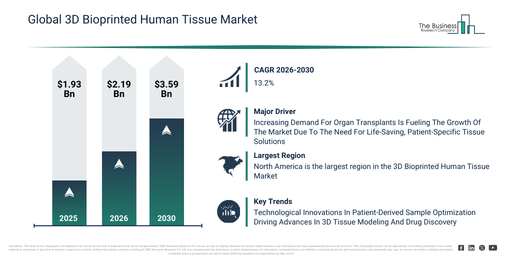
    The market size for 3D bioprinted human tissue has seen rapid expansion in recent years. Its value is expected to rise from $1.93 billion in 2025 to $2.19 billion in 2026, achieving a compound annual growth rate (CAGR) of 13.5%. This historical growth can be linked to the early embrace of tissue engineering technologies, an increasing requirement for advanced in vitro testing models, the restrictions inherent in traditional animal testing methods, expanding academic research funding, and initial progress in biomaterials and bioinks.

    The market size for 3d bioprinted human tissue is anticipated to experience substantial growth in the coming years. It is projected to expand to $3.59 billion in 2030, demonstrating a compound annual growth rate (CAGR) of 13.2%. This growth during the forecast period is attributable to breakthroughs in bioprinting resolution and scalability, increasing investment in regenerative medicine, a heightened pharmaceutical demand for predictive drug testing models, the expansion of organ transplantation research, and supportive regulatory frameworks for advanced therapies. Significant trends observed in the forecast period encompass the escalating utilization of 3d bioprinted tissues in drug testing and disease modeling, a rising demand for regenerative medicine and tissue engineering solutions, an increase in customized and patient-specific tissue constructs, the proliferation of academic and clinical research collaborations, and the growing adoption of bioprinted tissues as alternatives to animal testing.

    Download A Free Sample Report For Comprehensive Market Insights:

    https://www.thebusinessresearchcompany.com/sample.aspx?id=27196&type=smp

    Which Core Factors Are Supporting The Expansion Of The 3D Bioprinted Human Tissue Market?

    The 3D bioprinted human tissue market is projected to grow as the demand for organ transplants increases. Organ transplantation is a medical procedure involving the transfer of organs from a donor to a recipient to replace damaged or failing ones. The surge in demand for organ transplants is attributed to patients seeking critical procedures that minimize waiting times, improve survival rates, and offer hope through accessible and reliable transplant solutions. 3D bioprinted human tissue provides a transformative solution for organ transplants by enabling the creation of patient-specific, functional tissues that lower rejection risks and reduce dependence on donor organs. For instance, according to the Organ Procurement and Transplantation Network, a US-based non-profit organization, there was a modest rise in kidney transplants by January 2025, totaling 27,759 in 2024, an increase of 1.6 percent compared to 2023. In contrast, the number of heart transplants stayed almost the same, with 4,572 procedures in 2024 compared to 4,545 in 2023. Therefore, the growing need for organ transplants is stimulating the expansion of the 3D bioprinted human tissue market.

    How Is The 3D Bioprinted Human Tissue Market Structured Across Different Market Segments?

    The 3d bioprinted human tissue market covered in this report is segmented –

    1) By Tissue Type: Skin, Cartilage, Liver, Bone, Heart, Other Tissue Types

    2) By Technology: Extrusion-Based, Inkjet Bioprinting, Laser-Assisted Bioprinting, Microfluidic And Acoustic, Magnetic Levitation, Hybrid Or 4D

    3) By Materials: Natural Biomaterials, Synthetic Biomaterials, Decellularized Extracellular Matrices, Hydrogels, Composite Materials, Other Materials

    4) By Application: Tissue Engineering, Cosmetic Surgery, Drug Testing And Development, Food Testing

    5) By End-User: Pharmaceutical Companies, Biotechnology Firms, Academic Research Institutions, Contract Research Organizations, Hospitals And Clinics

    Subsegments:

    1) By Skin: Wound Healing Applications, Cosmetic Testing Models, Skin Graft Replacements

    2) By Cartilage: Joint Repair Models, Nasal Reconstruction, Ear Reconstruction

    3) By Liver: Toxicity Testing Models, Disease Modeling, Transplant Research

    4) By Bone: Orthopedic Implants, Cranial Repair Models, Bone Graft Substitutes

    5) By Heart: Cardiac Patch Development, Heart Valve Models, Myocardial Regeneration

    6) By Other Tissue Types: Kidney Models, Lung Tissue Constructs, Pancreatic Tissue Models

    What Trends Are Affecting The 3D Bioprinted Human Tissue Market Dynamics?

    Major companies operating in the 3D bioprinted human tissue market are emphasizing the development of innovative approaches, such as patient-derived sample optimization, to create highly accurate and personalized tissue models that enhance drug testing, disease research, and regenerative medicine outcomes. Patient-derived sample optimization refers to the improved capacity to efficiently utilize limited patient cells to generate multiple high-quality, biologically relevant 3D tissue models for more precise and individualized research findings. For instance, in January 2025, Inventia Life Science Pty Ltd., an Australia-based biotechnology company, launched the RASTRUM solution as a component of its Inventia Life Science suite. This solution is specifically designed to facilitate the rapid, precise, and reproducible creation of complex 3D human tissue models that closely mimic real human tissues for applications in drug discovery, disease modeling, and regenerative medicine. It leverages advanced drop-on-demand bioprinting technology to automate and scale the production of 3D cell cultures in standard lab plate formats, substantially reducing manual effort and variability. This capability enables researchers to conduct high-throughput, consistent experiments with biologically relevant tissue models, thereby accelerating discoveries and improving the predictability of preclinical research outcomes.

    Who Are The Companies Shaping The 3D Bioprinted Human Tissue Market Landscape?

    Major companies operating in the 3d bioprinted human tissue market are Inventia Life Science PTY LTD., Aspect Biosystems Ltd., Cellink Global AB, Prellis Biologics Inc., Cyfuse Biomedical K.K., Poietis SAS, Fluidform LLC, EpiBone Inc., Carcinotech Ltd., Organovo Holdings Inc., CollPlant Biotechnologies Ltd.

    Access The Complete 3D Bioprinted Human Tissue Market Report:

    https://www.thebusinessresearchcompany.com/report/3d-bioprinted-human-tissue-global-market-report

    Which Area Represents The Largest Portion Of The 3D Bioprinted Human Tissue Market?

    North America was the largest region in the 3D bioprinted human tissue market in 2025. Asia-Pacific is expected to be the fastest-growing region in the forecast period. The regions covered in the 3d bioprinted human tissue market report are Asia-Pacific, South East Asia, Western Europe, Eastern Europe, North America, South America, Middle East, Africa.

    Access 3D Bioprinted Human Tissue Market Report for Deeper Competitive Insights

    https://www.thebusinessresearchcompany.com/sample.aspx?id=27196&type=smp

    Browse Through More Reports Similar to the Global 3D Bioprinted Human Tissue Market 2026, By The Business Research Company

    Resilient Flooring Market Report 2026

    https://www.thebusinessresearchcompany.com/report/resilient-flooring-global-market-report

    Industrial Flooring Market Report 2026

    https://www.thebusinessresearchcompany.com/report/industrial-flooring-global-market-report

    Automotive Load Floor Market Report 2026

    https://www.thebusinessresearchcompany.com/report/automotive-load-floor-global-market-report

    Get in touch with us:

    The Business Research Company: https://www.thebusinessresearchcompany.com/

    Americas: +1 310-496-7795

    Asia: +44 7882 955267 & +91 8897263534

    Europe: +44 7882 955267

    Email us at: marketing@tbrc.info

    Follow us on:

    LinkedIn: https://in.linkedin.com/company/the-business-research-company

    YouTube: https://www.youtube.com/channel/UC24_fI0rV8cR5DxlCpgmyFQ

    Global Market Model: https://www.thebusinessresearchcompany.com/global-market-model
  • 2D Cell Culture Market Forecast Through 2030 Featuring Industry Drivers And Opportunities

    2D Cell Culture Market Forecast Through 2030 Featuring Industry Drivers And Opportunities

    The Business Research Company’s 2026 market reports feature advanced enhancements such as market attractiveness analysis, total addressable market evaluation, company benchmarking matrices, interactive Excel dashboards, expanded supply chain intelligence, emerging startup coverage, and detailed product insights, delivering more actionable and strategically valuable research.

    What Growth In Market Value Is Anticipated For The 2D Cell Culture Market Between 2026 And 2030?

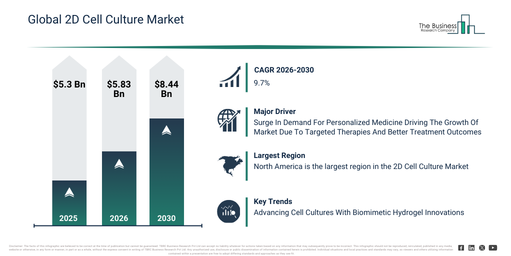
    The 2d cell culture market size has experienced robust growth over recent years. It is forecast to expand from $5.3 billion in 2025 to $5.83 billion in 2026, achieving a compound annual growth rate (CAGR) of 10.0%. The expansion observed in previous periods can be linked to the widespread adoption of monolayer culture techniques, their extensive application in early-stage drug discovery, the availability of cost-effective plasticware, the reliance of academic research on 2d models, and the implementation of standardized laboratory protocols.

    The 2d cell culture market size is expected to show significant growth in the coming years, with projections indicating it will reach $8.44 billion in 2030, expanding at a compound annual growth rate (CAGR) of 9.7%. The anticipated expansion during this forecast period stems from factors such as increasing integration with automated imaging systems, a rise in demand from biopharmaceutical pipelines, the broadening of toxicology and safety testing, greater utilization in regenerative medicine studies, and its continued relevance alongside 3d culture models. Noteworthy trends predicted for this period include a growing adoption of standardized cell culture consumables, the increasing use of automated 2d culture platforms, a heightened demand for assays with high reproducibility, the expansion of high-throughput screening applications, and an increased focus on cost-efficient cell-based research.

    Download A Free Sample Report For Comprehensive Market Insights:

    https://www.thebusinessresearchcompany.com/sample.aspx?id=28896&type=smp

    What Are The Main Drivers Accelerating The Growth Of The 2D Cell Culture Market?

    The 2D cell culture market is expected to witness growth, propelled by the escalating demand for personalized medicine. Personalized medicine is a medical philosophy that customizes treatment and prevention approaches to suit an individual’s distinct genetic makeup, lifestyle, and environment, rather than adopting a universal method. The surge in personalized medicine demand is attributed to its ability to yield improved treatment outcomes, as it provides focused therapies that are both more effective and have fewer side effects. This consequently aids in quicker patient recovery and enhances their quality of life. The need for 2D cell culture is consequently driven by personalized medicine, as it allows researchers to cultivate and analyze patient-specific cells, thereby enabling the study of individual drug responses and the development of tailored treatment strategies. For instance, in February 2024, the Personalized Medicine Coalition, a US-based non-profit organization, reported that the FDA approved 16 new personalized treatments for patients with rare diseases in 2023, which signifies a substantial increase from the six approved in 2022. Hence, the increasing demand for personalized medicine is a significant factor driving the expansion of the 2D cell culture market.

    Which Segment-Based Categories Are Covered In The 2D Cell Culture Market?

    The 2d cell culture market covered in this report is segmented –

    1) By Type: Skin Cell, Lung Cell, Brain Cell, Kidney Cell, Liver Cell, Breast Cell, Other Types

    2) By Technology: 2D Cell Culture Platforms, Microfluidics Technology, Automated Cell Culture Systems, Incubation and Analysis Systems, Culture Monitoring and Control Systems

    3) By Application: Pharmaceutical, Stem Cell Research, Bioproduction, Food Application, Bioenergy, Environment Testing and Toxicology, Agriculture

    4) By End-User: Pharmaceutical Companies, Biotechnology Companies, Contract Research Organizations, Academic Research Institutes

    Subsegments:

    1) By Skin Cell: Epidermal Cell, Dermal Cell, Melanocyte, Keratinocyte

    2) By Lung Cell: Alveolar Cell, Bronchial Cell, Pneumocyte

    3) By Brain Cell: Neuron, Astrocyte, Microglia, Oligodendrocyte

    4) By Kidney Cell: Glomerular Cell, Tubular Cell, Podocyte

    5) By Liver Cell: Hepatocyte, Kupffer Cell, Stellate Cell

    6) By Breast Cell: Luminal Cell, Myoepithelial Cell, Basal Cell

    7) By Other Types: Endothelial Cell, Fibroblast, Stem Cell, Immune Cell

    Which Trends Are Influencing The Expansion Of The 2D Cell Culture Market?

    Companies prominently involved in the 2D cell culture market are concentrating on developing advanced biomaterials, such as thin hydrogel coatings for 2D substrates, with the goal of enhancing cell adhesion, replicating native tissue environments, and improving experimental consistency. Thin hydrogel coatings for 2D substrates are defined as specialized surface layers that create a biomimetic, cell-conducive environment to improve cell attachment, growth, and functionality in 2D cultures. As an example, in September 2025, TheWell Bioscience Inc., a US-based Biotechnology company, unveiled an innovative, xeno-free biomimetic hydrogel system. This platform is designed to support both 2D and 3D neuronal cell cultures, in addition to enabling in vivo injectable delivery. Its primary aim is to advance neuroregenerative research by closely mimicking the natural cellular environment. The technology further supports applications in precision medicine, cell therapy, and biomanufacturing. Collectively, it marks a significant advancement in the development of effective cell-based therapies.

    Which Industry Players Are Present In The 2D Cell Culture Market?

    Major companies operating in the 2d cell culture market are Tecan Group Ltd., Roche Holding AG, Thermo Fisher Scientific Inc., Takara Bio Inc., Danaher Corporation, Merck KGaA, GE Healthcare, Corning Incorporated, Becton Dickinson and Company (BD), Lonza Group AG, Agilent Technologies Inc., Sartorius AG, PerkinElmer Inc., Bio-Rad Laboratories Inc., Eppendorf AG, Bio-Techne Corporation, STEMCELL Technologies Inc., Greiner Bio-One International AG, Promega Corporation, BICO Group AB, Cedarlane Laboratories Ltd., Creative Bioarray Inc., PromoCell GmbH, Biolamina AB, HiMedia Laboratories Pvt. Ltd., 3H Biomedical AB, Cell Microsystems Inc., AlveoliX AG.

    Access The Complete 2D Cell Culture Market Report:

    https://www.thebusinessresearchcompany.com/report/2d-cell-culture-global-market-report

    Which Region Commands The Largest Share Of The 2D Cell Culture Market?

    North America was the largest region in the 2D cell culture market in 2025. Asia-Pacific is expected to be the fastest-growing region in the forecast period. The regions covered in the 2d cell culture market report are Asia-Pacific, South East Asia, Western Europe, Eastern Europe, North America, South America, Middle East, Africa.

    Access 2D Cell Culture Market Report for Deeper Competitive Insights

    https://www.thebusinessresearchcompany.com/sample.aspx?id=28896&type=smp

    Browse Through More Reports Similar to the Global 2D Cell Culture Market 2026, By The Business Research Company

    Cell Cultures Market Report 2026

    https://www.thebusinessresearchcompany.com/report/cell-cultures-global-market-report

    Cell Culture Media Market Report 2026

    https://www.thebusinessresearchcompany.com/report/cell-culture-media-global-market-report

    3D Cell Culture Technologies Market Report 2026

    https://www.thebusinessresearchcompany.com/report/3d-cell-culture-technologies-global-market-report

    Get in touch with us:

    The Business Research Company: https://www.thebusinessresearchcompany.com/

    Americas: +1 310-496-7795

    Asia: +44 7882 955267 & +91 8897263534

    Europe: +44 7882 955267

    Email us at: marketing@tbrc.info

    Follow us on:

    LinkedIn: https://in.linkedin.com/company/the-business-research-company

    YouTube: https://www.youtube.com/channel/UC24_fI0rV8cR5DxlCpgmyFQ

    Global Market Model: https://www.thebusinessresearchcompany.com/global-market-model