Category: Pharmaceuticals

  • Urinary pH Modifier Market Outlook 2026–2030 Driven By Growth Factors And Projections

    Urinary pH Modifier Market Outlook 2026–2030 Driven By Growth Factors And Projections

    The Business Research Company’s 2026 market reports feature enhanced tools like market attractiveness analysis, TAM assessment, and company scoring matrices, along with interactive dashboards, deeper supply chain insights, and startup coverage strengthening the depth, usability, and strategic value of insights.

    How Large Will The Urinary pH Modifier Market Be By 2030 Compared To Its 2026 Market Size?

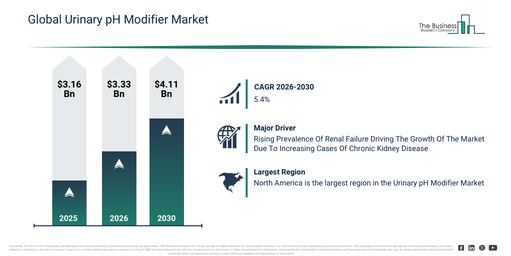
    The urinary pH modifier market has experienced significant growth in recent years. It is anticipated to increase from $3.16 billion in 2025 to $3.33 billion in 2026, achieving a compound annual growth rate (CAGR) of 5.5%. This historical expansion can be attributed to factors like the high occurrence of urinary tract disorders, the clinical utilization of sodium bicarbonate, hospital-based electrolyte correction, a rising prevalence of kidney stones, and its application in emergency care.

    The urinary ph modifier market is projected to experience robust expansion over the coming years. By 2030, its value is anticipated to reach $4.11 billion, exhibiting a compound annual growth rate (CAGR) of 5.4%. This projected growth during the forecast timeframe is attributable to factors such as an expanding aging population, an increase in metabolic disorder cases, the broadening of outpatient care, a heightened need for oral dosage forms, and the uptake of preventive urology practices. Key trends anticipated over the same period encompass an escalating application in kidney stone management, wider acceptance in the treatment of metabolic acidosis, a greater need for oral alkalizing agents, an enlargement of home-based urinary care options, and a move towards combination electrolyte therapies.

    Access Your Free Sample Report For In-Depth Market Analysis:

    https://www.thebusinessresearchcompany.com/sample.aspx?id=23551&type=smp

    Which Important Drivers Are Guiding The Urinary pH Modifier Market Growth?

    The increasing occurrence of renal failure is anticipated to boost the urinary pH modifiers market in the future. Renal failure refers to a medical state where the kidneys lose their capacity to filter waste, maintain fluid balance, and regulate electrolytes, resulting in a buildup of toxins within the body. The growing incidence of diabetes primarily fuels this rise in renal failure, as diabetes gradually harms kidney filtration, eventually leading to chronic kidney disease and, ultimately, renal failure. The prevalence of renal failure consequently increases the need for urinary pH modifiers, which aid in managing acid-base imbalances, preventing the formation of kidney stones, and mitigating complications associated with impaired kidney function. For instance, data from Kidney Research UK in June 2023 indicated that 7.19 million individuals in the UK, comprising over 10% of the population, suffer from chronic kidney disease, with this figure projected to reach 7.61 million by 2033. Therefore, the rising prevalence of renal failure is a key factor propelling the growth of the urinary pH modifiers market. The growing recognition of preventive healthcare is set to drive the urinary pH modifiers market forward. Preventive healthcare encompasses actions undertaken to avert diseases instead of treating them post-onset. The significance of preventive healthcare is increasing as more individuals acknowledge the value of early health management to prevent chronic conditions and mitigate future medical costs. This focus on prevention stimulates the demand for urinary pH modifiers by encouraging the proactive care of urinary tract health. These modifiers assist in balancing urine pH, thereby decreasing the likelihood of infections and kidney stones. For example, in July 2024, the National Health Service (NHS) England, a UK government body, reported that 51.8% of older adult care home residents had received the spring vaccination as of May 2024, a figure that climbed to 63.3% by June 2024, indicating an 11.5 percentage point increase. Consequently, the expanding awareness of preventive healthcare is boosting the growth of the urinary pH modifiers market.

    How Is The Urinary pH Modifier Market Categorized Across Its Segment Groups?

    The urinary ph modifier market covered in this report is segmented –

    1) By Drug: Potassium Acid Phosphate, Sodium Bicarbonate, Sodium Citrate, Potassium Citrate

    2) By Dosage: Injection, Tablets, Solution, Powder, Other Dosages

    3) By Indication: Alkalosis, Alkylating Agent Cystitis, Diabeitc Ketoacidosis, Metabolic Acidosis, Other Indications

    4) By Distribution Channel: Online Retail, Pharmacies, Supermarkets, Health Food Stores

    5) By End-User: Hospitals, Clinics, Home Care

    Subsegments:

    1) By Potassium Acid Phosphate: Monobasic Potassium Phosphate, Dibasic Potassium Phosphate, Combination Formulations

    2) By Sodium Bicarbonate: Oral Sodium Bicarbonate Tablets, Intravenous Sodium Bicarbonate Injection, Effervescent Sodium Bicarbonate Powder

    3) By Sodium Citrate: Sodium Citrate Dihydrate, Sodium Citrate Anhydrous, Sodium Citrate Oral Solution

    4) By Potassium Citrate: Potassium Citrate Extended-Release Tablets, Potassium Citrate Oral Solution, Combination Therapy With Other Alkalizing Agents

    Which Firms Are Influencing Competition In The Urinary pH Modifier Market?

    Major companies operating in the urinary ph modifier market are Intas Pharmaceuticals Ltd., Apex Laboratories Pvt. Ltd., Cipla Limited, Sun Pharmaceutical Industries Ltd., Dr. Reddy’s Laboratories Ltd., Lupin Limited, Zydus Lifesciences Limited, Torrent Pharmaceuticals Ltd., Glenmark Pharmaceuticals Ltd., Abbott Laboratories, Pfizer Inc., Bayer AG, Sanofi S.A., Teva Pharmaceutical Industries Ltd., Aurobindo Pharma Limited, Mylan N.V., Virbac, Vetoquinol, Orion Pharma Animal Health, Millpledge Ltd.

    Get The Full Urinary pH Modifier Market Report:

    https://www.thebusinessresearchcompany.com/report/urinary-ph-modifier-global-market-report

    Which Region Leads The Urinary pH Modifier Market In Overall Market Size?

    North America was the largest region in the urinary pH modifier market in 2025. The regions covered in the urinary ph modifier market report are Asia-Pacific, South East Asia, Western Europe, Eastern Europe, North America, South America, Middle East, Africa.

    Request A Customized Urinary pH Modifier Market Report For Competitive Insights:

    https://www.thebusinessresearchcompany.com/report/urinary-ph-modifier-global-market-report

    Browse Through More Reports Similar to the Global Urinary pH Modifier Market 2026, By The Business Research Company

    Ursolic Acid Market Report 2026

    https://www.thebusinessresearchcompany.com/report/ursolic-acid-global-market-report

    Nephrology And Urology Devices Market Report 2026

    https://www.thebusinessresearchcompany.com/report/nephrology-and-urology-devices-global-market-report

    Urology Devices Market Report 2026

    https://www.thebusinessresearchcompany.com/report/urology-devices-global-market-report

    Get in touch with us:

    The Business Research Company: https://www.thebusinessresearchcompany.com/

    Americas +1 310-496-7795

    Asia +44 7882 955267 & +91 8897263534

    Europe +44 7882 955267

    Email us at: marketing@tbrc.info

    Follow us on:

    LinkedIn: https://in.linkedin.com/company/the-business-research-company

    YouTube: https://www.youtube.com/channel/UC24_fI0rV8cR5DxlCpgmyFQ

    Global Market Model: https://www.thebusinessresearchcompany.com/global-market-model
  • Urea Cycle Disorders Treatment Market Developments And Opportunities Across 2026–2030

    Urea Cycle Disorders Treatment Market Developments And Opportunities Across 2026–2030

    The Business Research Company’s 2026 market reports feature enhanced tools like market attractiveness analysis, TAM assessment, and company scoring matrices, along with interactive dashboards, deeper supply chain insights, and startup coverage strengthening the depth, usability, and strategic value of insights.

    What Is The Projected Increase In Market Value Of The Urea Cycle Disorders Treatment Market During 2026–2030?

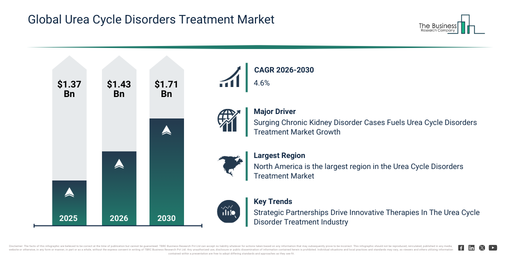
    The urea cycle disorders treatment market has exhibited steady growth in recent years. This market is expected to expand from $1.37 billion in 2025 to $1.43 billion in 2026, at a compound annual growth rate (CAGR) of 3.8%. The expansion observed in the past can be attributed to factors such as insufficient awareness concerning UCD, restricted availability of treatment methods, low patient diagnosis figures, elevated treatment expenditures, and a dependency on care provided in hospitals.

    The urea cycle disorders treatment market size is projected to demonstrate consistent growth over the coming years. It is forecasted to reach $1.71 billion by 2030, growing at a compound annual growth rate (CAGR) of 4.6%. This growth during the forecast period is attributable to several factors, including an increase in gene therapy research, the growing acceptance of precision medicine, technological progress in ammonia monitoring, a heightened focus on pediatric patients, and the broadening of home healthcare services. Significant trends anticipated for the forecast period comprise the development of personalized UCD therapies, enhanced ammonia scavenger formulations, advancements in enzyme replacement therapy, innovations in pediatric-focused treatments, and the emergence of home-based and remote monitoring solutions.

    Access Your Free Sample Report For In-Depth Market Analysis:

    https://www.thebusinessresearchcompany.com/sample.aspx?id=12237&type=smp

    What Major Factors Are Driving The Urea Cycle Disorders Treatment Market Forward?

    The escalating prevalence of chronic kidney disorder cases is projected to stimulate the expansion of the urea cycle disorders treatment market moving forward. Chronic kidney disease (CKD) refers to a long-standing condition characterized by the gradual decline of kidney function over an extended period. For managing metabolic waste, particularly elevated urea levels, chronic kidney disorder utilizes urea cycle disorder treatment, as impaired kidney function impedes proper waste excretion. For instance, in November 2023, according to Kidney Care UK, a UK-based kidney patient support charity, an estimated 7.2 million individuals are living with chronic kidney disease (CKD) stages 1–5, with approximately 3.5 million people in the UK experiencing the advanced stages of CKD (stages 3-5), where symptoms are anticipated to become progressively harder to manage. Therefore, the increasing number of chronic kidney disorder cases is fostering the growth of the urea cycle disorders treatment market.

    How Are Segments Identified Within The Urea Cycle Disorders Treatment Market Segment Framework?

    The urea cycle disorders treatment market covered in this report is segmented –

    1) By Treatment: Amino Acid Supplements, Sodium Phenylbutyrate, Glycerol Phenylbutyrate, Sodium Benzoate, Other Treatments

    2) By Enzyme Deficiency: Ornithine Transcarbamylase (OTC), Argininosuccinate Synthetase (AS), Arginase (AG), Argininosuccinate Lyase (AL), Carbamoyl Phosphate Synthase (CPS1)

    3) By Route of Administration: Oral, Injectables

    4) By Distribution Channel: Hospital Pharmacies, Retail Pharmacies, Online Pharmacies

    Subsegments:

    1) By Amino Acid Supplements: Arginine Supplements, Citrulline Supplements, Other Essential Amino Acids

    2) By Sodium Phenylbutyrate: Powder Form, Tablet Form

    3) By Glycerol Phenylbutyrate: Oral Solutions, Other Forms

    4) By Sodium Benzoate: Intravenous Solutions, Oral Formulations

    5) By Other Treatments: Liver Transplantation, Dietary Modifications, Enzyme Replacement Therapy, Other Supportive Therapies

    What Emerging Trends Are Seen In The Urea Cycle Disorders Treatment Market?

    Leading companies in the urea cycle disorder treatment sector are increasingly adopting a strategic partnership model to drive innovative therapies and enhance disease management. Such strategic collaborations entail businesses leveraging each other’s strengths and resources to achieve mutual benefits and collective success. As an illustration, in June 2024, Orsini Specialty Pharmacy, a US-based provider of personalized care and medications, and Zevra Therapeutics Inc., a US-based rare disease therapeutics company, announced that Orsini would serve as the pharmacy partner for OLPRUVA (sodium phenylbutyrate) oral suspension. OLPRUVA is a prescription medication utilized alongside specific therapies, including dietary modifications, for the long-term management of urea cycle disorders (UCDs) in particular adult and pediatric patients who have deficiencies in carbamylphosphate synthetase (CPS), ornithine transcarbamylase (OTC), or argininosuccinic acid synthetase (AS).

    Who Are The Companies Competing Within The Urea Cycle Disorders Treatment Market?

    Major companies operating in the urea cycle disorders treatment market are Bausch Health Companies Inc., Recordati Rare Diseases, Eurocept Pharmaceuticals Holding, Acer Therapeutics, Ultragenyx Pharmaceutical, Aeglea BioTherapeutics, Arcturus Therapeutics Inc., Orpharma Pty Ltd., Horizon Therapeutics Plc, Synlogic, Amicus Therapeutics, Sobi, PTC Therapeutics, Chiesi Farmaceutici S.p.A., Astellas Pharma Inc., Protalix BioTherapeutics, Erytech Pharma, Relief Therapeutics Holding AG, Selecta Biosciences Inc., Argenx SE, Dynacure SA, Inventiva SA

    Get The Full Urea Cycle Disorders Treatment Market Report:

    https://www.thebusinessresearchcompany.com/report/urea-cycle-disorders-treatment-global-market-report

    Which Region Is The Top Contributor To The Urea Cycle Disorders Treatment Market By Share?

    North America was the largest region in the urea cycle disorders treatment market in 2025. The regions covered in the urea cycle disorders treatment market report are Asia-Pacific, South East Asia, Western Europe, Eastern Europe, North America, South America, Middle East, Africa.

    Request A Customized Urea Cycle Disorders Treatment Market Report For Competitive Insights:

    https://www.thebusinessresearchcompany.com/report/urea-cycle-disorders-treatment-global-market-report

    Browse Through More Reports Similar to the Global Urea Cycle Disorders Treatment Market 2026, By The Business Research Company

    Urea Cycle Disorders Treatment Market Report 2026

    https://www.thebusinessresearchcompany.com/report/urea-cycle-disorders-treatment-global-market-report

    Urology Supplements Market Report 2026

    https://www.thebusinessresearchcompany.com/report/urology-supplements-global-market-report

    Urea Market Report 2026

    https://www.thebusinessresearchcompany.com/report/urea-global-market-report

    Get in touch with us:

    The Business Research Company: https://www.thebusinessresearchcompany.com/

    Americas +1 310-496-7795

    Asia +44 7882 955267 & +91 8897263534

    Europe +44 7882 955267

    Email us at: marketing@tbrc.info

    Follow us on:

    LinkedIn: https://in.linkedin.com/company/the-business-research-company

    YouTube: https://www.youtube.com/channel/UC24_fI0rV8cR5DxlCpgmyFQ

    Global Market Model: https://www.thebusinessresearchcompany.com/global-market-model
  • Unit Dose Manufacturing Market Forecast 2026–2030 Presenting Long-Term Industry Insights

    Unit Dose Manufacturing Market Forecast 2026–2030 Presenting Long-Term Industry Insights

    The Business Research Company’s 2026 market reports feature enhanced tools like market attractiveness analysis, TAM assessment, and company scoring matrices, along with interactive dashboards, deeper supply chain insights, and startup coverage strengthening the depth, usability, and strategic value of insights.

    How Is The Market Size Of The Unit Dose Manufacturing Market Expected To Change From 2026 To 2030?

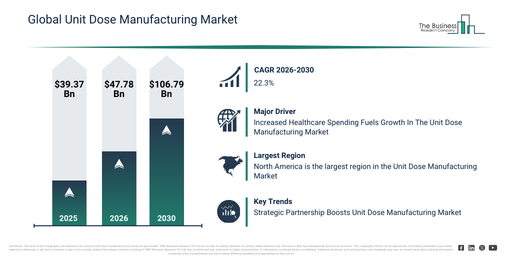
    The unit dose manufacturing market has experienced significant growth in recent years. It is projected to expand from $39.37 billion in 2025 to $47.78 billion in 2026, achieving a compound annual growth rate (CAGR) of 21.4%. The expansion observed historically is attributable to factors such as the rise in demand from hospitals and pharmacies, an increased prevalence of chronic diseases, the adoption of standardized dosing formats, improvements in packaging technology, and cost-efficiency in bulk drug manufacturing.

    The unit dose manufacturing market is set for significant expansion over the next few years. It is forecast to achieve a valuation of $106.79 billion by 2030, progressing at a compound annual growth rate (CAGR) of 22.3%. This growth during the forecast period is propelled by factors such as the rise of personalized medicine, increased outsourcing of unit dose manufacturing, the expansion of home healthcare services, a heightened regulatory focus on medication safety, and innovations in sustainable and biodegradable packaging. Notable trends anticipated in this period include personalized dosage packaging, the automation of drug filling and packaging, the adoption of smart inventory management, stringent regulatory compliance and serialization, and the development of eco-friendly packaging solutions.

    Access Your Free Sample Report For In-Depth Market Analysis:

    https://www.thebusinessresearchcompany.com/sample.aspx?id=12215&type=smp

    Which Key Drivers Are Affecting The Unit Dose Manufacturing Market Development?

    The surge in healthcare spending is anticipated to drive the expansion of the unit dose manufacturing market in the future. Health spending encompasses all expenditures related to the provision of health services, activities for family planning, nutrition programs, and emergency assistance centered on health. Elevated healthcare expenditure is expected to facilitate the progress and development of diverse health-related services, including unit dose manufacturing, which will underpin the growth of the unit dose manufacturing market. For example, statistics released by Cross River Therapy, a US-based provider of ABA therapy services, indicated that in September 2024, the U.S. pharmaceutical industry generated $550 billion in revenue, with Americans dedicating $576.9 billion to medicine, and projected spending expected to escalate to $605-$635 billion by 2025. As a result, the increase in healthcare spending is fueling the growth of the unit dose manufacturing market.

    What Are The Key Segment Divisions In The Unit Dose Manufacturing Market Segment Structure?

    The unit dose manufacturing market covered in this report is segmented –

    1) By Product: Liquid Unit Dose, Solid Unit Dose, Other Products

    2) By Sourcing: In-House, Outsourcing

    3) By End-User: Independent Pharmacies, Long Term Care Facility, Hospitals, Other End-Users

    Subsegments:

    1) By Liquid Unit Dose: Liquid Vials, Ampoules, Pre-filled Syringes

    2) By Solid Unit Dose: Tablets, Capsules, Powder Packs

    3) By Other Products: Transdermal Patches, Inhalation Doses, Creams And Ointments In Unit Dose Packaging

    Which Trends Are Guiding The Direction Of The Unit Dose Manufacturing Market?

    Leading companies operating within the unit dose manufacturing market are emphasizing strategic collaborations to uphold their market presence. Strategic partnerships involve a process where businesses utilize each other’s strengths and resources to attain reciprocal advantages and success. For example, in November 2023, iA, a US-based supplier of integrated pharmacy fulfillment platforms, disclosed a distributor agreement with Euclid Medical Products, a US-based expert in multi-unit automated packaging and barcoding systems. Through this alliance, iA’s NEXiA Enterprise Software Suite will incorporate Euclid’s Axial Adherence Packaging Technology into centralized fulfillment solutions. This joint effort broadens the functionalities of iA’s centralized fulfillment solutions, offering choices for various medication dispensing techniques, including automated multi-dose and unit-dose packaging.

    Which Organizations Are Engaged In The Unit Dose Manufacturing Market?

    Major companies operating in the unit dose manufacturing market are Nipro Corporation, Catalent Inc., Corden Pharma GmbH, LTS Lohmann Therapie-Systeme AG, PCI Pharma Services, Comar LLC, Renaissance Lakewood LLC, Mikart LLC, Tapemark Company Inc., Bilcare Research, Medical Packaging Inc, American Health Packaging, Aphena Pharma Solutions, Vetter Pharma International GmbH, Baxter International Inc., Fresenius Kabi AG, Patheon Inc., Recipharm AB, Lonza Group AG, Aenova Group, Piramal Pharma Solutions, Jubilant HollisterStier Inc., IDT Biologika GmbH, Famar HealthCare, Vion Pharmaceuticals

    Get The Full Unit Dose Manufacturing Market Report:

    https://www.thebusinessresearchcompany.com/report/unit-dose-manufacturing-global-market-report

    Which Region Represents The Largest Share Of The Unit Dose Manufacturing Market?

    North America was the largest region in the unit dose manufacturing market in 2025. The regions covered in the unit dose manufacturing market report are Asia-Pacific, South East Asia, Western Europe, Eastern Europe, North America, South America, Middle East, Africa.

    Request A Customized Unit Dose Manufacturing Market Report For Competitive Insights:

    https://www.thebusinessresearchcompany.com/report/unit-dose-manufacturing-global-market-report

    Browse Through More Reports Similar to the Global Unit Dose Manufacturing Market 2026, By The Business Research Company

    Unit Dose Manufacturing Market Report 2026

    https://www.thebusinessresearchcompany.com/report/unit-dose-manufacturing-global-market-report

    Radiation Dose Management Market Report 2026

    https://www.thebusinessresearchcompany.com/report/radiation-dose-management-global-market-report

    Oral Solid Dosage Contract Manufacturing Market Report 2026

    https://www.thebusinessresearchcompany.com/report/oral-solid-dosage-contract-manufacturing-global-market-report

    Get in touch with us:

    The Business Research Company: https://www.thebusinessresearchcompany.com/

    Americas +1 310-496-7795

    Asia +44 7882 955267 & +91 8897263534

    Europe +44 7882 955267

    Email us at: marketing@tbrc.info

    Follow us on:

    LinkedIn: https://in.linkedin.com/company/the-business-research-company

    YouTube: https://www.youtube.com/channel/UC24_fI0rV8cR5DxlCpgmyFQ

    Global Market Model: https://www.thebusinessresearchcompany.com/global-market-model
  • Ublituximab Market Growth Analysis 2026–2030 Highlighting Innovation And Competitive Landscape

    Ublituximab Market Growth Analysis 2026–2030 Highlighting Innovation And Competitive Landscape

    The Business Research Company’s 2026 market reports feature enhanced tools like market attractiveness analysis, TAM assessment, and company scoring matrices, along with interactive dashboards, deeper supply chain insights, and startup coverage strengthening the depth, usability, and strategic value of insights.

    From Its 2026 Market Size, What Value Is The Ublituximab Market Projected To Reach By 2030?

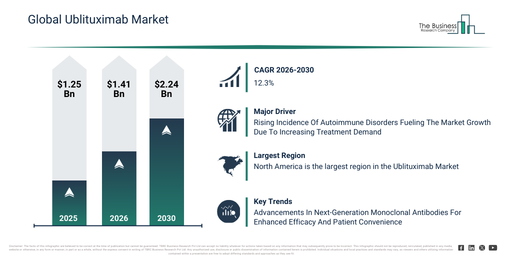
    The ublituximab market has seen rapid expansion in recent years. It is anticipated to grow from $1.25 billion in 2025 to $1.41 billion in 2026, demonstrating a compound annual growth rate (CAGR) of 12.6%. The market’s past growth is primarily due to advances in monoclonal antibody development, a rising prevalence of b-cell related disorders, increased biologics manufacturing capacity, regulatory approvals for cd20 therapies, and a surge in immuno-oncology research.

    The ublituximab market is poised for significant expansion in the coming years. Projections indicate it will reach a valuation of $2.24 billion by 2030, demonstrating a compound annual growth rate (CAGR) of 12.3%. This anticipated growth throughout the forecast period stems from several factors, including the escalating development of next-generation antibodies, a heightened emphasis on the durability and safety of treatments, the broadening of its application into autoimmune indications, increasing investments in innovative biologics manufacturing, and the rising uptake of precision immunotherapy. Key trends foreseen for the same period encompass the growing acceptance of cd20-targeted monoclonal antibodies, an increased focus on b-cell depletion therapies, wider application of immune-modulating treatments, the expansion of combination antibody regimens, and improved optimization within antibody engineering.

    Access Your Free Sample Report For In-Depth Market Analysis:

    https://www.thebusinessresearchcompany.com/sample.aspx?id=28344&type=smp

    What Factors Are Contributing To The Growth Of The Ublituximab Market?

    The growing occurrence of autoimmune conditions is anticipated to boost the expansion of the ublituximab market in the future. These conditions involve the immune system erroneously attacking healthy cells or experiencing impaired blood cell production and function. The greater detection rate of these disorders is largely attributed to enhanced diagnostic tools and heightened public understanding, as medical systems are now better equipped to spot previously undetected instances through advanced testing and broader screening initiatives. Ublituximab, which is a glycoengineered anti-CD20 monoclonal antibody, aids in managing autoimmune disorders by specifically reducing pathogenic B cells, consequently lessening irregular immune responses and uncontrolled cell division. For instance, in February 2024 according to the Arthritis Australia is a Australia-based non-profit organization In 2025, an estimated 212,136 males and 362,137 females are projected to have rheumatoid arthritis (RA), with the numbers expected to rise by 2040 to approximately 280,040 males and 479,828 females. Consequently, the increasing frequency of autoimmune conditions is fueling the expansion of the ublituximab market.

    Which Segment Categories Are Included In The Ublituximab Market Segment Analysis?

    The ublituximab market covered in this report is segmented –

    1) By Formulation Type: Intravenous, Pre-Filled Syringes

    2) By Indication: Chronic Lymphocytic Leukemia, Multiple Sclerosis, Non-Hodgkin Lymphoma

    3) By Distribution Channel: Hospital Pharmacies, Retail Pharmacies, Online Pharmacies

    4) By End-User: Hospitals, Specialty Clinics, Research Institutes

    Subsegments:

    1) By Intravenous: Single Dose Vials, Multi Dose Vials, Lyophilized Powder, Liquid Solution

    2) By Pre Filled Syringes: Standard Pre Filled Syringes, Safety Engineered Pre Filled Syringes, Disposable Pre Filled Syringes, Reusable Pre Filled Syringes

    What Trends Are Affecting The Growth Of The Ublituximab Market?

    Leading companies in the ublituximab market are concentrating on developing innovative products like next-generation monoclonal antibodies, aiming to improve efficacy, reduce side effects, and enhance patient convenience. These advanced monoclonal antibodies are engineered to have improved targeting, potency, or safety profiles, thereby boosting treatment effectiveness, minimizing adverse reactions, and offering more convenient dosing. For example, in January 2023, TG Therapeutics Inc., a US-based biopharmaceutical company, introduced BRIUMVI (ublituximab-xiiy) for adult patients with relapsing forms of multiple sclerosis, providing a one-hour infusion option and an extensive patient support program to enhance accessibility and treatment adherence. This medication is a glycoengineered anti-CD20 monoclonal antibody designed for efficient B-cell depletion, which reduces relapse rates and disease activity in patients with RMS, while also minimizing potential side effects and offering a more convenient dosing schedule compared to traditional therapies. Its mechanism of action involves binding to a specific epitope on CD20-expressing B-cells, resulting in their targeted elimination through antibody-dependent cellular cytotoxicity (ADCC) and apoptosis, which aids in modulating the autoimmune response underlying multiple sclerosis.

    Who Are The Active Companies Shaping The Ublituximab Market?

    Major companies operating in the ublituximab market are Samsung Biologics Co. Ltd., TG Therapeutics Inc.

    Get The Full Ublituximab Market Report:

    https://www.thebusinessresearchcompany.com/report/ublituximab-global-market-report

    Which Geographic Region Dominates The Ublituximab Market?

    North America was the largest region in the ublituximab market in 2025. Asia-Pacific is expected to be the fastest-growing region in the forecast period. The regions covered in the ublituximab market report are Asia-Pacific, South East Asia, Western Europe, Eastern Europe, North America, South America, Middle East, Africa.

    Request A Customized Ublituximab Market Report For Competitive Insights:

    https://www.thebusinessresearchcompany.com/report/ublituximab-global-market-report

    Browse Through More Reports Similar to the Global Ublituximab Market 2026, By The Business Research Company

    Tofacitinib Market Report 2026

    https://www.thebusinessresearchcompany.com/report/tofacitinib-global-market-report

    Ibrutinib Market Report 2026

    https://www.thebusinessresearchcompany.com/report/ibrutinib-global-market-report

    Denosumab Market Report 2026

    https://www.thebusinessresearchcompany.com/report/denosumab-global-market-report

    Get in touch with us:

    The Business Research Company: https://www.thebusinessresearchcompany.com/

    Americas +1 310-496-7795

    Asia +44 7882 955267 & +91 8897263534

    Europe +44 7882 955267

    Email us at: marketing@tbrc.info

    Follow us on:

    LinkedIn: https://in.linkedin.com/company/the-business-research-company

    YouTube: https://www.youtube.com/channel/UC24_fI0rV8cR5DxlCpgmyFQ

    Global Market Model: https://www.thebusinessresearchcompany.com/global-market-model
  • Tyrosine Kinase Inhibitors Market Forecast Through 2030 With Insights On Market Patterns And Developments

    Tyrosine Kinase Inhibitors Market Forecast Through 2030 With Insights On Market Patterns And Developments

    The Business Research Company’s 2026 market reports feature enhanced tools like market attractiveness analysis, TAM assessment, and company scoring matrices, along with interactive dashboards, deeper supply chain insights, and startup coverage strengthening the depth, usability, and strategic value of insights.

    How Much Growth In Market Value Is Expected For The Tyrosine Kinase Inhibitors Market Between 2026 And 2030?

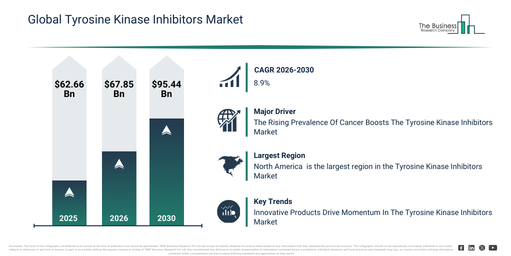
    The market for tyrosine kinase inhibitors has experienced robust expansion in recent years. This market is projected to expand from $62.66 billion in 2025 to $67.85 billion by 2026, demonstrating a compound annual growth rate (CAGR) of 8.3%. Historically, this expansion has been driven by factors such as the approval of first-generation TKIs, the increasing incidence of chronic myeloid leukemia, significant advancements in molecular biology, the proliferation of hospital pharmacy networks, and an escalation in research and development activities for oncology drugs.

    The tyrosine kinase inhibitors market is projected to experience substantial expansion over the next few years. This market is anticipated to reach a valuation of $95.44 billion by 2030, demonstrating a compound annual growth rate (CAGR) of 8.9%. Factors contributing to this growth during the forecast period include the introduction of next-generation TKIs, the increasing reach of emerging markets, wider embrace of precision medicine, the rise in online pharmacy distribution, and strategic alliances between biotechnology and pharmaceutical firms. Key trends expected within the forecast timeframe encompass personalized cancer treatments, the proliferation of targeted oncology medications, an increase in clinical trials for TKIs, the creation of combination therapies, and a greater uptake of oral oncology drugs.

    Access Your Free Sample Report For In-Depth Market Analysis:

    https://www.thebusinessresearchcompany.com/sample.aspx?id=11957&type=smp

    Which Strong Drivers Are Impacting The Tyrosine Kinase Inhibitors Market Growth?

    The increasing prevalence of cancer is anticipated to propel the growth of the tyrosine kinase inhibitors market moving forward. Cancer describes a broad category of diseases that originate in any part of the body’s organs or tissues, where abnormal cells grow uncontrollably, exceeding their typical boundaries to affect nearby body parts and spread to other organs. Tyrosine kinase inhibitors are utilized in targeted therapy to identify and eliminate specific cancer cell types by blocking tyrosine kinases, which assist in preventing cancer cell growth. For instance, in February 2024, data from the World Health Organization, a Switzerland-based intergovernmental body, projected over 35 million new cancer cases by 2050, signifying a 77% increase compared to the estimated 20 million cases in 2022. Therefore, the escalating prevalence of cancer is a key driver for the expansion of the tyrosine kinase inhibitors market.

    How Is The Tyrosine Kinase Inhibitors Market Broken Down By Segment Categories?

    The tyrosine kinase inhibitors market covered in this report is segmented –

    1) By Type: BCR-ABL Tyrosine Kinase Inhibitor, Epidermal Growth Factor Receptor (EGFR) Tyrosine Kinase Inhibitors, Vascular Endothelial Growth Factor Receptor (VEGFR) Tyrosine Kinase Inhibitors, Other Types

    2) By Distribution Channel: Hospital Pharmacy, Independent Pharmacies, Online Pharmacies

    3) By Application: Chronic Myeloid Leukemia (CML), Lung Cancer, Breast Cancer, Renal Cell Cancer, Other Applications

    Subsegments:

    1) By BCR-ABL Tyrosine Kinase Inhibitor: Imatinib, Dasatinib, Nilotinib, Bosutinib, Ponatinib

    2) By Epidermal Growth Factor Receptor (EGFR) Tyrosine Kinase Inhibitors: Gefitinib, Erlotinib, Afatinib, Osimertinib, Dacomitinib

    3) By Vascular Endothelial Growth Factor Receptor (VEGFR) Tyrosine Kinase Inhibitors: Sorafenib, Sunitinib, Pazopanib, Axitinib, Regorafenib

    4) By Other Types: Platelet-Derived Growth Factor Receptor (PDGFR) Inhibitors, RET Tyrosine Kinase Inhibitors, Fibroblast Growth Factor Receptor (FGFR) Inhibitors, Other Emerging Tyrosine Kinase Inhibitors

    Which Trends Are Shaping The Tyrosine Kinase Inhibitors Market?

    Leading companies in the tyrosine kinase inhibitor market are prioritizing the development of advanced therapies, such as targeted leukemia inhibitors, to boost treatment effectiveness and patient outcomes. These targeted inhibitors are designed to specifically block aberrant tyrosine kinase activity in cancer cells, leading to improved survival rates and fewer adverse effects compared to traditional treatments. For instance, in February 2023, Xspray Pharma AB, a Swedish pharmaceutical firm, entered into an agreement with EVERSANA, a U.S.-based life sciences service company, to support the American launch and commercialization of its first innovative cancer therapy, Dasynoc, intended for the treatment of chronic myeloid leukemia (CML) and acute lymphoblastic leukemia (ALL). Dasynoc offers a new and distinct treatment option for CML and ALL patients within the $3.5 billion U.S. market for Tyrosine Kinase Inhibitors. It signifies a notable advancement for CML patients, considering that retrospective registry data presented at ASH 2022 demonstrated a 5-year overall survival rate of 79% for those treated with a tyrosine kinase inhibitor (TKI) combined with a proton pump inhibitor (PPI) (such as omeprazole), contrasting with 94% for patients receiving TKI alone.

    Which Players Are Present In The Tyrosine Kinase Inhibitors Market Space?

    Major companies operating in the tyrosine kinase inhibitors market are Pfizer Inc, Johnson And Johnson, F. Hoffmann-La Roche AG, AbbVie Inc, Bayer AG, Novartis AG, Bristol-Myers Squibb Company, AstraZeneca Plc, Eli Lilly and Company, Amgen Inc, Boehringer Ingelheim International GmbH, Astellas Pharma Inc, Eisai Co. Ltd, Incyte Corporation, Dr. Reddy’s Laboratories Ltd, Exelixis Inc, Blueprint Medicines Corporation, Deciphera Pharmaceuticals LLC, Turning Point Therapeutics Inc, Kura Oncology Inc, ArQule Inc

    Get The Full Tyrosine Kinase Inhibitors Market Report:

    https://www.thebusinessresearchcompany.com/report/tyrosine-kinase-inhibitors-global-market-report

    Which Region Is The Leading Market For The Tyrosine Kinase Inhibitors Market?

    North America was the largest region in the tyrosine kinase inhibitors market in 2025. Asia-Pacific is expected to be the fastest-growing region in the forecast period. The regions covered in the tyrosine kinase inhibitors market report are Asia-Pacific, South East Asia, Western Europe, Eastern Europe, North America, South America, Middle East, Africa.

    Request A Customized Tyrosine Kinase Inhibitors Market Report For Competitive Insights:

    https://www.thebusinessresearchcompany.com/report/tyrosine-kinase-inhibitors-global-market-report

    Browse Through More Reports Similar to the Global Tyrosine Kinase Inhibitors Market 2026, By The Business Research Company

    Tyrosine Kinase Inhibitors Market Report 2026

    https://www.thebusinessresearchcompany.com/report/tyrosine-kinase-inhibitors-global-market-report

    Kinase Inhibitors Market Report 2026

    https://www.thebusinessresearchcompany.com/report/kinase-inhibitors-global-market-report

    Janus Kinase Jak Inhibitors Market Report 2026

    https://www.thebusinessresearchcompany.com/report/janus-kinase-jak-inhibitors-global-market-report

    Get in touch with us:

    The Business Research Company: https://www.thebusinessresearchcompany.com/

    Americas +1 310-496-7795

    Asia +44 7882 955267 & +91 8897263534

    Europe +44 7882 955267

    Email us at: marketing@tbrc.info

    Follow us on:

    LinkedIn: https://in.linkedin.com/company/the-business-research-company

    YouTube: https://www.youtube.com/channel/UC24_fI0rV8cR5DxlCpgmyFQ

    Global Market Model: https://www.thebusinessresearchcompany.com/global-market-model
  • Tylosin Market Outlook For 2026–2030 Covering Growth Drivers And Industry Trends

    Tylosin Market Outlook For 2026–2030 Covering Growth Drivers And Industry Trends

    The Business Research Company’s 2026 market reports feature enhanced tools like market attractiveness analysis, TAM assessment, and company scoring matrices, along with interactive dashboards, deeper supply chain insights, and startup coverage strengthening the depth, usability, and strategic value of insights.

    What Is The Estimated Market Size Of The Tylosin Market In 2026, And How Will Its Value Evolve By 2030?

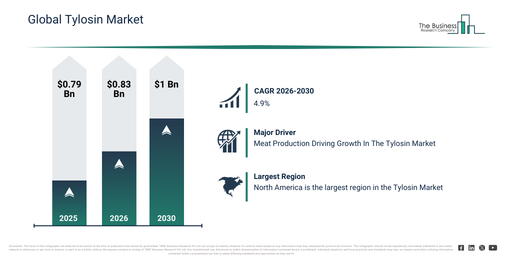
    The tylosin market has demonstrated robust growth in recent years. It is anticipated to expand from $0.79 billion in 2025 to $0.83 billion in 2026, achieving a compound annual growth rate (CAGR) of 5.6%. This historical expansion can be ascribed to the growth of commercial livestock farming, widespread bacterial infections in animals, the established efficacy of macrolide antibiotics, the expansion of veterinary healthcare services, and rising global meat consumption.

    The tylosin market is anticipated to experience stable growth in the coming years, projected to reach $1 billion by 2030, exhibiting a compound annual growth rate (CAGR) of 4.9%. This expansion during the forecast period stems from factors such as escalating demand for protein-rich diets, the growth of commercial animal farming, increasing financial commitments to veterinary care, broadening animal health regulations, and the greater uptake of preventative veterinary treatments. Significant trends anticipated within this timeframe encompass a heightened demand for veterinary antibiotics, their increasing application in livestock disease management, an intensified focus on animal health and welfare, the expansion of poultry and swine farming, and more stringent monitoring of antibiotic use in animals.

    Access Your Free Sample Report For In-Depth Market Analysis:

    https://www.thebusinessresearchcompany.com/sample.aspx?id=15946&type=smp

    What Key Factors Are Shaping The Tylosin Market Landscape?

    The tylosin market is projected to expand significantly due to the anticipated rise in meat production. Meat production encompasses the breeding, slaughter, and processing of animals to provide meat for human consumption. This surge in meat production stems from consumers’ increasing desire for high-protein diets, influenced by evolving dietary habits. The tylosin market facilitates greater livestock output by ensuring herd well-being through successful treatment of bacterial infections affecting the respiratory and gastrointestinal systems. For example, data from July 2024, provided by the UK’s Department for Environment Food and Rural Affairs, showed that total animal feed production was 29,397 units in 2022, rising to 31,128 units in 2023. Consequently, the growing volume of meat production is a key factor propelling the expansion of the tylosin market. The advancement and evolution of livestock farming are anticipated to fuel the expansion of the tylosin market in the coming years. Modernized livestock farming involves implementing cutting-edge technologies, refined management approaches, and streamlined production methods aimed at boosting animal health, output, and long-term viability in livestock operations. This progression in livestock farming is largely spurred by the rising consumer appetite for premium animal products, which prompts producers to embrace sophisticated techniques, innovations, and optimized management frameworks. Tylosin plays a crucial role in livestock farming by aiding in the preservation of animal health and productivity through successful management of bacterial infections, thereby facilitating more efficient and enduring farm practices. For instance, in January 2024, the US Government Accountability Office reported that in 2023, 27% of farms and ranches across the U.S. had implemented precision agriculture methods for either crop or livestock management. Hence, the continuous growth and modernization within the livestock farming sector are significant contributors to the tylosin market’s growth.

    What Are The Different Segment Types In The Tylosin Market Segment Breakdown?

    The tylosin market covered in this report is segmented –

    1) By Type: Tylosin Tartrate, Tylosin Phosphate, Other Types

    2) By Application: Animal Feed Additives, Animal Drugs, Other Applications

    3) By Distribution Channel: Hospital Pharmacies, Drug Stores And Retail Pharmacies, Online Providers

    Subsegment:

    1) By Tylosin Tartrate: Injectable Tylosin Tartrate, Oral Soluble Tylosin Tartrate, Water-Soluble Tylosin Tartrate, Veterinary-Grade Tylosin Tartrate

    2) By Tylosin Phosphate: Feed-Grade Tylosin Phosphate, Water-Soluble Tylosin Phosphate, Premix Tylosin Phosphate, Medicated Feed Tylosin Phosphate

    3) By Other Types: Tylosin Base, Tylosin Complexes and Blends, Customized Veterinary Tylosin Formulations, Combination Antibiotic Formulations Containing Tylosin

    Who Are The Well-Known Companies In The Tylosin Market?

    Major companies operating in the tylosin market are Zoetis Inc., Elanco Animal Health Inc., Ceva Santé Animale, Phibro Animal Health Corporation, Huvepharma AD, Vetoquinol S.A., Norbrook Inc., Shandong Lukang Pharmaceutical Co. Ltd., Qilu Animal Health Products Co. Ltd., Hebei Veyong Animal Pharmaceutical, Apeloa Pharmaceutical Co. Ltd., Suanfarma SA, AdvaCare Pharma, Ningxia Tairui Pharmaceutical Co. Ltd., Pucheng Chia Tai Biochemistry Co. Ltd., Anhui Sinotech Industrial, Rochem International Inc., Vetgen Healthcare Pvt. Ltd., Sunvet Pharma Private Ltd., Nestlife Science Pvt. Ltd.

    Get The Full Tylosin Market Report:

    https://www.thebusinessresearchcompany.com/report/tylosin-global-market-report

    Where Is The Tylosin Market Primarily Concentrated By Region?

    North America was the largest region in the tylosin market in 2025. Asia-Pacific is expected to be the fastest-growing region in the forecast period. The regions covered in the tylosin market report are Asia-Pacific, South East Asia, Western Europe, Eastern Europe, North America, South America, Middle East, Africa.

    Request A Customized Tylosin Market Report For Competitive Insights:

    https://www.thebusinessresearchcompany.com/report/tylosin-global-market-report

    Browse Through More Reports Similar to the Global Tylosin Market 2026, By The Business Research Company

    Tylosin Market Report 2026

    https://www.thebusinessresearchcompany.com/report/tylosin-global-market-report

    Atenolol Market Report 2026

    https://www.thebusinessresearchcompany.com/report/atenolol-global-market-report

    Heparin Market Report 2026

    https://www.thebusinessresearchcompany.com/report/heparin-global-market-report

    Get in touch with us:

    The Business Research Company: https://www.thebusinessresearchcompany.com/

    Americas +1 310-496-7795

    Asia +44 7882 955267 & +91 8897263534

    Europe +44 7882 955267

    Email us at: marketing@tbrc.info

    Follow us on:

    LinkedIn: https://in.linkedin.com/company/the-business-research-company

    YouTube: https://www.youtube.com/channel/UC24_fI0rV8cR5DxlCpgmyFQ

    Global Market Model: https://www.thebusinessresearchcompany.com/global-market-model
  • Surge In Gastric Disorders Fueling The Growth Of The Due To Rising Prevalence And Associated Digestive Complications Is Supporting Expansion In The Tumor Necrosis Factor Inhibitor Drugs Market

    Surge In Gastric Disorders Fueling The Growth Of The Due To Rising Prevalence And Associated Digestive Complications Is Supporting Expansion In The Tumor Necrosis Factor Inhibitor Drugs Market

    The Business Research Company’s 2026 market reports feature enhanced tools like market attractiveness analysis, TAM assessment, and company scoring matrices, along with interactive dashboards, deeper supply chain insights, and startup coverage strengthening the depth, usability, and strategic value of insights.

    How Does The Market Size Of The Tumor Necrosis Factor Inhibitor Drugs Market Compare Between 2026 And 2030?

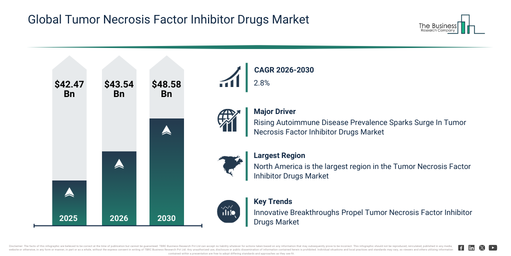
    The tumor necrosis factor inhibitor drugs market size has shown steady expansion in recent years. It is anticipated to grow from $42.47 billion in 2025 to $43.54 billion in 2026, reflecting a compound annual growth rate (CAGR) of 2.5%. This historical growth can be attributed to the increasing prevalence of autoimmune diseases, restricted treatment alternatives, heightened research and development in biologics, robust patent protection for major TNFI drugs, and rising awareness among both patients and medical professionals.

    The tumor necrosis factor inhibitor drugs market size is projected to experience consistent growth in the coming years. It is foreseen to expand to $48.58 billion by 2030, demonstrating a compound annual growth rate (CAGR) of 2.8%. This expansion during the forecast period is primarily driven by the increasing availability of biosimilars, continuous advancements in precision medicine, a growing prevalence of chronic diseases, the rising adoption of digital health monitoring solutions, and the development of innovative next-generation delivery systems. Significant trends anticipated for this forecast period involve personalized TNF inhibitor therapies, the continued embrace and expansion of biosimilars, the use of combination therapies incorporating TNF inhibitors, the shift towards home-based and self-administered treatments, and the implementation of advanced drug delivery systems.

    Access Your Free Sample Report For In-Depth Market Analysis:

    https://www.thebusinessresearchcompany.com/sample.aspx?id=9383&type=smp

    Which Factors Are Influencing The Growth Of The Tumor Necrosis Factor Inhibitor Drugs Market?

    The increasing prevalence of autoimmune illness is anticipated to propel the growth of the tumor necrosis factor inhibitor drugs market going forward. Autoimmune disorders are conditions in which the body’s immune system unintentionally targets and destroys healthy human tissue. Tumor necrosis factor inhibitor drugs are utilized in these disorders to stop inflammation. These drugs block the action associated with pain, swelling, or illness. They contribute to stabilizing the immune system and protecting the body from inflammation. For instance, in January 2025, according to Mayo Clinic, a US-based nonprofit academic medical center, it was reported that approximately 15 million people are estimated to have one or more of 105 autoimmune diseases. Therefore, the rising prevalence of autoimmune disorders is driving the growth of the tumor necrosis factor inhibitor drugs market.

    Which Segment Classifications Are Used In The Tumor Necrosis Factor Inhibitor Drugs Market Segment Analysis?

    The tumor necrosis factor inhibitor drugs market covered in this report is segmented –

    1) By Product Type: Humira, Enbrel, Remicade, Simponi Or Simponi Aria, Cimzia, Biosimilars

    2) By Route Of Administration: Subcutaneous Injection, Intravenous Injection

    3) By Distribution Channel: Hospital Pharmacies, Retail Pharmacies, Online Pharmacies

    4) By Application: Rheumatoid Arthritis, Psoriasis, Psoriatic Arthritis, Crohn’s Disease, Ulcerative Colitis, Ankylosing Spondylitis, Juvenile Idiopathic Arthritis, Hidradenitis Suppurativa, Other Applications

    Which Trends Are Shaping Growth In The Tumor Necrosis Factor Inhibitor Drugs Market?

    Leading companies within the tumor necrosis factor (TNF) inhibitor drugs market are prioritizing the development of innovative solutions, including interchangeable biosimilar TNF-inhibitor formulations. This strategic focus aims to address the growing demand for cost-effective biologic therapies, enhance patient access, and offer high-quality alternatives to established branded TNF inhibitors. Interchangeable biosimilars represent sophisticated biologic products designed to exhibit equivalence to their reference medicines in safety, purity, potency, and clinical performance, while simultaneously presenting greater affordability and broader availability compared to conventional branded biologics. Illustrating this trend, in May 2024, Teva Pharmaceuticals, a US-based pharmaceutical company, announced the availability of SIMLANDI (adalimumab-ryvk) injection in the U.S. in partnership with Alvotech, a Luxembourg-based biotechnology company. This product is an interchangeable biosimilar to Humira, indicated for treating various autoimmune conditions such as adult rheumatoid arthritis, juvenile idiopathic arthritis, adult psoriatic arthritis, adult ankylosing spondylitis, Crohn’s disease, adult ulcerative colitis, adult plaque psoriasis, adult hidradenitis suppurativa, and adult uveitis.

    Which Firms Are Contributing To The Tumor Necrosis Factor Inhibitor Drugs Market Ecosystem?

    Major companies operating in the tumor necrosis factor inhibitor drugs market are AbbVie Inc.,Amgen Inc.,Johnson & Johnson Services Inc.,Novartis International AG,Pfizer Inc.,Samsung Bioepis Co. Ltd.,Sanofi SA,Lupin Ltd.,Cadila Healthcare Ltd.,Aryogen Biopharma,Casi Pharmaceuticals,Celltrion Inc.,Hanall Biopharma,Intas Pharmaceuticals,Mylan N.V.,Sandoz International GmbH,Fresenius Kabi AG,Boehringer Ingelheim GmbH,Merck KGaA,Teva Pharmaceutical Industries Limited

    Get The Full Tumor Necrosis Factor Inhibitor Drugs Market Report:

    https://www.thebusinessresearchcompany.com/report/tumor-necrosis-factor-inhibitor-drugs-global-market-report

    Which Region Has The Greatest Market Share In The Tumor Necrosis Factor Inhibitor Drugs Market?

    North America was the largest region in the tumor necrosis factor inhibitor drugs market in 2025. Asia-Pacific is expected to be the fastest-growing region in the tumor necrosis factor (TNF) inhibitors drugs market report during the forecast period. The regions covered in the tumor necrosis factor inhibitor drugs market report are Asia-Pacific, South East Asia, Western Europe, Eastern Europe, North America, South America, Middle East, Africa.

    Request A Customized Tumor Necrosis Factor Inhibitor Drugs Market Report For Competitive Insights:

    https://www.thebusinessresearchcompany.com/report/tumor-necrosis-factor-inhibitor-drugs-global-market-report

    Browse Through More Reports Similar to the Global Tumor Necrosis Factor Inhibitor Drugs Market 2026, By The Business Research Company

    Tumor Necrosis Factor Inhibitor Drugs Market Report 2026

    https://www.thebusinessresearchcompany.com/report/tumor-necrosis-factor-inhibitor-drugs-global-market-report

    Antiparasitic Drugs Market Report 2026

    https://www.thebusinessresearchcompany.com/report/antiparasitic-drugs-global-market-report

    Atherosclerosis Drugs Market Report 2026

    https://www.thebusinessresearchcompany.com/report/atherosclerosis-drugs-global-market-report

    Get in touch with us:

    The Business Research Company: https://www.thebusinessresearchcompany.com/

    Americas +1 310-496-7795

    Asia +44 7882 955267 & +91 8897263534

    Europe +44 7882 955267

    Email us at: marketing@tbrc.info

    Follow us on:

    LinkedIn: https://in.linkedin.com/company/the-business-research-company

    YouTube: https://www.youtube.com/channel/UC24_fI0rV8cR5DxlCpgmyFQ

    Global Market Model: https://www.thebusinessresearchcompany.com/global-market-model
  • Rise In Sports And Physical Activities Fueling The Growth Of The Due To Increasing Health Awareness Is Contributing To Changes In The Tumor Models Market

    Rise In Sports And Physical Activities Fueling The Growth Of The Due To Increasing Health Awareness Is Contributing To Changes In The Tumor Models Market

    The Business Research Company’s 2026 market reports feature enhanced tools like market attractiveness analysis, TAM assessment, and company scoring matrices, along with interactive dashboards, deeper supply chain insights, and startup coverage strengthening the depth, usability, and strategic value of insights.

    What Is The Forecasted Market Size Trajectory Of The Tumor Models Market From 2026 To 2030?

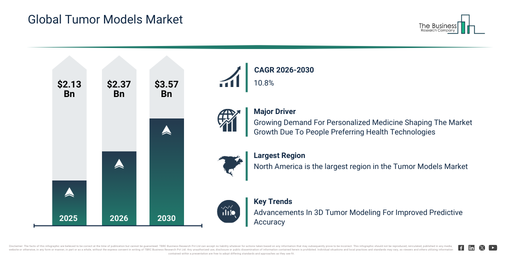
    The tumor models market has experienced substantial expansion in its size over recent years. Forecasts indicate its value will ascend from $2.13 billion in 2025 to $2.37 billion by 2026, achieving a compound annual growth rate (CAGR) of 11.3%. The growth observed during the historic period stems from factors such as limited availability of advanced tumor models, reliance on traditional 2d cell cultures, growing cancer research funding, increasing prevalence of cancer, and the adoption of orthotopic and heterotopic models.

    The tumor models market is poised for substantial growth over the next few years, with projections indicating it will reach $3.57 billion in 2030, demonstrating a compound annual growth rate (CAGR) of 10.8%. This anticipated expansion can be attributed to advancements in organ-on-a-chip and 3D spheroid technologies, an increasing focus on personalized oncology treatments, the expansion of contract research organizations (CROs) in tumor research, rising pharmaceutical R&D expenditure, and the integration of AI and big data analytics in tumor model studies. Major trends during this period include the increasing use of 3D tumor spheroids and organ-on-a-chip models, a rising demand for personalized medicine and targeted cancer therapies, the expansion of xenograft and genetically engineered mouse models (GEMMs), growth in drug discovery and toxicology studies utilizing tumor models, and increased collaboration between pharmaceutical companies and academic institutions.

    Access Your Free Sample Report For In-Depth Market Analysis:

    https://www.thebusinessresearchcompany.com/sample.aspx?id=27441&type=smp

    What Leading Drivers Are Supporting The Tumor Models Market Expansion?

    The increasing need for personalized medical approaches is projected to fuel the expansion of the tumor models market in the future. This medical approach, known as personalized medicine, involves utilizing details about an individual’s genetic makeup and environmental factors to customize treatments and health services according to their unique requirements. The growing popularity of personalized medicine stems from individuals favoring health technologies that provide real-time monitoring and therapeutic strategies tailored to their distinct biological profiles. Tumor models assist personalized medicine by serving as experimental platforms that imitate the characteristics of actual human cancers, thereby enabling researchers and clinicians to assess and forecast how tumors from individual patients will react to particular therapies, leading to a more customized treatment strategy. As an example, in February 2024, data from the Personalized Medicine Coalition (PMC), a U.S. based nonprofit entity, indicated that the U.S. Food and Drug Administration (FDA) granted approval to 26 novel personalized medicines in 2023, marking a notable rise from the 12 approvals in 2022. Consequently, the escalating demand for personalized medicine is a key impetus for the expansion of the tumor models market.

    How Is The Tumor Models Market Organized By Segment Classification?

    The tumor models market covered in this report is segmented –

    1) By Type Of Tumor: Primary Tumor Models, Metastatic Tumor Models, Orthotopic Tumor Models, Heterotopic Tumor Models

    2) By Application: Drug Discovery And Development, Cancer Research, Personalized Medicine, Toxicology Studies

    3) By Technology: Xenograft Models, Genetically Engineered Mouse Models (GEMMs), Three-Dimensional (3D) Tumor Spheroids, Organ-On-A-Chip Models

    4) By End-User: Pharmaceutical And Biotechnology Companies, Academic Institutions, Contract Research Organizations (CROs), Government Research Organizations

    Subsegments:

    1) By Primary Tumor Models: Carcinoma Models, Sarcoma Models, Glioma Models, Melanoma Models, Leukemia Models, Lymphoma Models

    2) By Metastatic Tumor Models: Lung Metastasis Models, Bone Metastasis Models, Liver Metastasis Models, Brain Metastasis Models, Lymph Node Metastasis Models

    3) By Orthotopic Tumor Models: Orthotopic Breast Cancer Models, Orthotopic Lung Cancer Models, Orthotopic Pancreatic Cancer Models, Orthotopic Colon Cancer Models, Orthotopic Prostate Cancer Models

    4) By Heterotopic Tumor Models: Subcutaneous Tumor Models, Intramuscular Tumor Models, Intraperitoneal Tumor Models

    What Trends Are Affecting The Direction Of The Tumor Models Market?

    Leading companies in the tumor models market are concentrating on developing advanced solutions, such as tumor spheroid models, to improve the physiological relevance and predictive accuracy of in vitro cancer models. Tumor spheroid models are characterized as three-dimensional (3D) aggregates of cancer cells that spontaneously form spherical structures in culture. For example, in June 2024, Predictive Oncology, a US-based provider of advanced 3D cell culture technologies and predictive oncology solutions, introduced novel 3D cell technology designed to accelerate cancer therapeutic drug discovery. This technology offers unique features, including advanced 3D tumor spheroid and organoid models that closely replicate the tumor microenvironment, high-throughput screening capabilities for rapid drug testing, support for patient-derived personalized tumor models, detailed analysis of drug penetration in 3D structures, and integration with AI-driven data analytics for enhanced predictive accuracy and deeper insights into therapeutic responses.

    Who Are The Industry Participants Involved In The Tumor Models Market?

    Major companies operating in the tumor models market are WuXi AppTec Co Ltd., Charles River Laboratories International Inc., Pharmaron Beijing Co. Ltd., The Jackson Laboratory, Taconic Biosciences Inc., Cyagen Biosciences Inc., Crown Bioscience Inc., Champions Oncology Inc., InSphero AG, Creative Biolabs Inc., Oncodesign S.A., Xentech S.A., MIMETAS BV, Experimental Pharmacology and Oncology Berlin-Buch GmbH.

    Get The Full Tumor Models Market Report:

    https://www.thebusinessresearchcompany.com/report/tumor-models-global-market-report

    Which Region Accounts For The Largest Portion Of The Tumor Models Market?

    North America was the largest region in the tumor models market in 2025. Asia-Pacific is expected to be the fastest-growing region in the forecast period. The regions covered in the tumor models market report are Asia-Pacific, South East Asia, Western Europe, Eastern Europe, North America, South America, Middle East, Africa.

    Request A Customized Tumor Models Market Report For Competitive Insights:

    https://www.thebusinessresearchcompany.com/report/tumor-models-global-market-report

    Browse Through More Reports Similar to the Global Tumor Models Market 2026, By The Business Research Company

    Voice Payment Software Market Report 2026

    https://www.thebusinessresearchcompany.com/report/voice-payment-software-global-market-report

    Voice Banking Market Report 2026

    https://www.thebusinessresearchcompany.com/report/voice-banking-global-market-report

    Voice Commerce Market Report 2026

    https://www.thebusinessresearchcompany.com/report/voice-commerce-global-market-report

    Get in touch with us:

    The Business Research Company: https://www.thebusinessresearchcompany.com/

    Americas +1 310-496-7795

    Asia +44 7882 955267 & +91 8897263534

    Europe +44 7882 955267

    Email us at: marketing@tbrc.info

    Follow us on:

    LinkedIn: https://in.linkedin.com/company/the-business-research-company

    YouTube: https://www.youtube.com/channel/UC24_fI0rV8cR5DxlCpgmyFQ

    Global Market Model: https://www.thebusinessresearchcompany.com/global-market-model
  • The Tumor Infiltrating Lymphocytes Market Is Evolving Due To Surging Prevalence Of Chronic Kidney Diseases Sparks Growth In The Late-Stage CKD Drug

    The Tumor Infiltrating Lymphocytes Market Is Evolving Due To Surging Prevalence Of Chronic Kidney Diseases Sparks Growth In The Late-Stage CKD Drug

    The Business Research Company’s 2026 market reports feature enhanced tools like market attractiveness analysis, TAM assessment, and company scoring matrices, along with interactive dashboards, deeper supply chain insights, and startup coverage strengthening the depth, usability, and strategic value of insights.

    How Much Will The Market Value Of The Tumor Infiltrating Lymphocytes Market Grow Between 2026 And 2030?

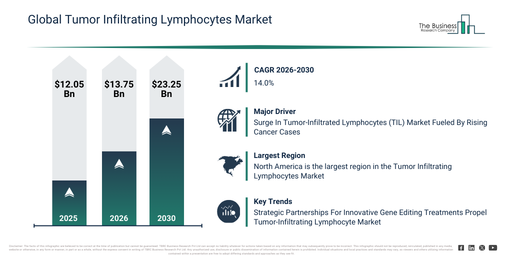
    The tumor infiltrating lymphocytes market has seen rapid expansion in recent years. It is projected to increase from $12.05 billion in 2025 to $13.75 billion in 2026, exhibiting a compound annual growth rate (CAGR) of 14.2%. The historical growth can be attributed to several factors including the rising prevalence of cancer, progress in immunotherapy research, increasing awareness of personalized medicine, the initial positive outcomes of adoptive cell therapies, and partnerships between research institutes and biotech companies.

    The tumor infiltrating lymphocytes market size is projected to undergo substantial expansion in the coming years, with expectations to reach $23.25 billion by 2030, demonstrating a compound annual growth rate (CAGR) of 14.0%. This anticipated growth during the forecast period is primarily fueled by the increasing adoption of tumor infiltrating lymphocytes therapies, the expansion of cGMP-compliant manufacturing facilities, the integration of AI into cell therapy process optimization, a rise in strategic partnerships between pharmaceutical and biotechnology entities, and regulatory approvals for novel T-cell therapies. Significant trends influencing the forecast period include the progression of personalized cell therapy development, refined ex vivo T-cell expansion techniques, innovative immunotherapy combination approaches, modulation of the tumor microenvironment, and advanced methods for cell storage and cryopreservation.

    Access Your Free Sample Report For In-Depth Market Analysis:

    https://www.thebusinessresearchcompany.com/sample.aspx?id=9440&type=smp

    Which Key Factors Are Driving The Tumor Infiltrating Lymphocytes Market Growth?

    The increasing incidence of cancer is anticipated to propel the growth of the tumor infiltrated lymphocytes (TIL) market moving forward. Cancer describes a condition where certain bodily cells proliferate uncontrollably and metastasize to other body parts, leading to diverse and sometimes life-threatening health complications. Tumor-infiltrating lymphocytes are immune cells capable of identifying and eliminating cancerous cells; they are extracted from a patient’s tumor, cultivated in large quantities in a laboratory setting, and then re-introduced into the patient to bolster the immune system’s fight against cancer. For instance, in August 2024, a report from the Australian Institute of Health and Welfare, a national agency for health and welfare data in Australia, projected approximately 209,000 new cancer diagnoses in Australia by 2034. This marks a substantial rise from the estimated 169,000 cases expected in 2024, reflecting an expanding population and increasing cancer prevalence. Additionally, in 2024, cancer is projected to contribute to about 3 out of every 10 deaths across the country. Consequently, the growing number of individuals afflicted with cancer will be a key driver for the tumor infiltrated lymphocyte market.

    Which Segments Define The Tumor Infiltrating Lymphocytes Market Segment Structure?

    The tumor infiltrating lymphocytes market covered in this report is segmented –

    1) By Anatomy: CD3, CD8, CD16, CD56, CD4, CD57, FOXP3

    2) By Component: T-Cells, Natural Killer Cells

    3) By Application: Melanoma, Cervical Cancer, Ovarian Cancer, Other Applications

    4) By End-User: Hospitals, Cancer Research Centers, Clinics

    What Trends Are Influencing The Evolution Of The Tumor Infiltrating Lymphocytes Market?

    Leading companies operating within the tumor-infiltrating lymphocyte market are adopting a strategic partnership approach to develop innovative treatments that regulate gene editing. Strategic partnerships signify a process where companies utilize each other’s strengths and resources to achieve mutual benefits and success. For instance, in February 2023, Moderna, a US-based pharmaceutical and biotechnology company, initiated a strategic collaboration with Life Edit Therapeutics, a US-based next-generation genome editing company, to accelerate the advancement of novel in vivo gene editing therapies. This alliance intends to leverage Moderna’s mRNA technology alongside Life Edit’s proprietary genome editing platform to create more effective and precise therapies for various diseases, including cancer and genetic disorders. This collaboration underscores a growing trend in the biopharmaceutical industry to combine innovative technologies for advanced therapeutic solutions.

    Who Are The Established Players Within The Tumor Infiltrating Lymphocytes Market?

    Major companies operating in the tumor infiltrating lymphocytes market are Novartis AG, Pfizer Inc., Precision BioScience Inc., TCR2 Therapeutics Inc., Merck KGaA, Autolus Therapeutics PLC., Eli Lilly and Company, Oxford Biomedica PLC., Unum Therapeutics Inc., Amgen Inc., Gilead Sciences Inc., Sorrento Therapeutics Inc., TILT Biotherapeutics Ltd., Iovance Biotherapeutics Inc., Adaptimmune Therapeutics plc, Atara Biotherapeutics Inc., BioNTech SE, CARsgen Therapeutics Ltd., Cellectis S.A., Celyad Oncology SA, CRISPR Therapeutics AG, Intellia Therapeutics Inc., MaxCyte Inc.

    Get The Full Tumor Infiltrating Lymphocytes Market Report:

    https://www.thebusinessresearchcompany.com/report/tumor-infiltrating-lymphocytes-global-market-report

    Which Region Holds The Highest Market Share In The Tumor Infiltrating Lymphocytes Market?

    North America was the largest region in the tumor infiltrating lymphocytes market in 2025. The regions covered in the tumor infiltrating lymphocytes market report are Asia-Pacific, South East Asia, Western Europe, Eastern Europe, North America, South America, Middle East, Africa.

    Request A Customized Tumor Infiltrating Lymphocytes Market Report For Competitive Insights:

    https://www.thebusinessresearchcompany.com/report/tumor-infiltrating-lymphocytes-global-market-report

    Browse Through More Reports Similar to the Global Tumor Infiltrating Lymphocytes Market 2026, By The Business Research Company

    Tumor Infiltrating Lymphocytes Market Report 2026

    https://www.thebusinessresearchcompany.com/report/tumor-infiltrating-lymphocytes-global-market-report

    Cancer Immunotherapy Market Report 2026

    https://www.thebusinessresearchcompany.com/report/cancer-immunotherapy-global-market-report

    Circulating Tumor Cells Market Report 2026

    https://www.thebusinessresearchcompany.com/report/circulating-tumor-cells-global-market-report

    Get in touch with us:

    The Business Research Company: https://www.thebusinessresearchcompany.com/

    Americas +1 310-496-7795

    Asia +44 7882 955267 & +91 8897263534

    Europe +44 7882 955267

    Email us at: marketing@tbrc.info

    Follow us on:

    LinkedIn: https://in.linkedin.com/company/the-business-research-company

    YouTube: https://www.youtube.com/channel/UC24_fI0rV8cR5DxlCpgmyFQ

    Global Market Model: https://www.thebusinessresearchcompany.com/global-market-model
  • The Rise Of Technological Advancement Transforms The Is Influencing The Tubulin Inhibitors For Breast Cancer Market

    The Rise Of Technological Advancement Transforms The Is Influencing The Tubulin Inhibitors For Breast Cancer Market

    The Business Research Company’s 2026 market reports feature enhanced tools like market attractiveness analysis, TAM assessment, and company scoring matrices, along with interactive dashboards, deeper supply chain insights, and startup coverage strengthening the depth, usability, and strategic value of insights.

    What Changes In Market Value Are Expected For The Tubulin Inhibitors For Breast Cancer Market Over The 2026–2030 Period?

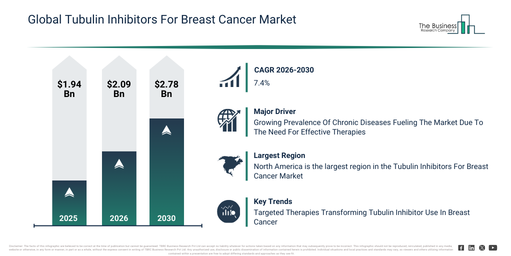
    The tubulin inhibitors for breast cancer market size has demonstrated robust expansion over recent years. It is anticipated to increase from $1.94 billion in 2025 to $2.09 billion in 2026, achieving a compound annual growth rate (CAGR) of 7.7%. Historically, this market expansion can be linked to factors such as the restricted availability of tubulin inhibitor drugs, a continued reliance on conventional chemotherapy, the rising prevalence of breast cancer, the expansion of hospital-based oncology treatments, and the adoption of standard treatment protocols.

    The tubulin inhibitors for breast cancer market is projected to experience substantial expansion in the coming years, reaching $2.78 billion by 2030, driven by a compound annual growth rate (CAGR) of 7.4%. This growth over the forecast period is fueled by advancements in novel agents such as colchicine, taxanes, vinca alkaloids, and epothilones, along with the broader application of neoadjuvant and adjuvant therapies. Further contributing factors include increasing investments in personalized and targeted treatments, more frequent regulatory approvals for new formulations, and the integration of digital health platforms and clinical decision support tools. Key trends anticipated during this period encompass the expanded application of tubulin inhibitors in early-stage breast cancer, the development of more combination and targeted therapies, a surge in clinical trials for new tubulin inhibitors, the increasing embrace of personalized medicine strategies, and a rising preference for outpatient and clinic-based treatment options.

    Access Your Free Sample Report For In-Depth Market Analysis:

    https://www.thebusinessresearchcompany.com/sample.aspx?id=24731&type=smp

    What Primary Drivers Are Shaping The Tubulin Inhibitors For Breast Cancer Market?

    An increasing prevalence of chronic diseases is anticipated to propel the growth of the tubulin inhibitors for breast cancer market in the future. These enduring health conditions, exemplified by breast cancer, involve uncontrolled cell growth and frequent recurrences, thus requiring continuous treatment. Sedentary habits primarily fuel the rise of chronic illnesses, contributing to issues like obesity, diabetes, and various cardiovascular ailments. Tubulin inhibitors aid in managing chronic diseases through their ability to disrupt irregular cell division, which can diminish inflammation, decelerate disease advancement, and assist in controlling conditions associated with unchecked cellular growth. To illustrate, the National Breast Cancer Foundation, a US-based nonprofit organization, projected in April 2025 that approximately 316,950 women and 2,800 men would be diagnosed with invasive breast cancer, alongside 59,080 new cases of non-invasive (in situ) breast cancer. Consequently, the increasing occurrence of chronic diseases is boosting the expansion of the tubulin inhibitors for breast cancer market.

    How Is The Tubulin Inhibitors For Breast Cancer Market Segmented Across Different Segment Categories?

    The tubulin inhibitors for breast cancer market covered in this report is segmented –

    1) By Drug Class: Taxanes, Vinca Alkaloids, Epothilones, Other Drug Classes

    2) By Mechanism Of Action: Microtubule Destabilizers, Microtubule Polymerization Inhibitors, Modulators Of Tubulin Dynamics, Targeted Microtubule-Associated Proteins

    3) By Stage Of Breast Cancer: Early-stage Breast Cancer, Locally Advanced Breast Cancer, Metastatic Breast Cancer

    4) By Treatment Approach: Chemotherapy, Combination Therapy, Adjuvant Therapy, Neoadjuvant Therapy

    5) By Application: Hospital, Clinic, Drug Center, Other Applications

    Subsegments:

    1) By Taxanes: Paclitaxel, Docetaxel

    2) By Vinca Alkaloids: Vinorelbine, Vincristine, Vindesine

    3) By Epothilones: Ixabepilone, Epothilone B Derivatives

    4) By Other Drug Classes: Maytansinoids, Eribulin Mesylate, Cabazitaxel, Discodermolide

    Which Trends Are Impacting The Progress Of The Tubulin Inhibitors For Breast Cancer Market?

    Leading companies in the tubulin inhibitors for breast cancer market are developing advanced treatment approaches, such as antibody-drug conjugates (ADCs), to enhance therapeutic precision and minimize adverse effects. ADCs that incorporate tubulin inhibitors connect powerful anti-mitotic drugs to monoclonal antibodies that specifically target breast cancer cells, enabling direct drug delivery to the tumor site. This precise method increases the efficacy of tubulin inhibitors while concurrently lowering systemic toxicity. For instance, in December 2023, Roche, a Switzerland-based pharmaceutical company, continued the expansion of Kadcyla (ado-trastuzumab emtansine), a HER2-targeted ADC designed to deliver the tubulin inhibitor DM1 directly to HER2-positive breast cancer cells, thereby improving results in advanced breast cancer cases. This innovative treatment elevates outcomes for patients with advanced breast cancer by providing a more tailored, potent, and secure therapeutic strategy.

    Which Organizations Play A Role In The Tubulin Inhibitors For Breast Cancer Market Landscape?

    Major companies operating in the tubulin inhibitors for breast cancer market are Pfizer Inc., F. Hoffmann-La Roche Ltd., Sanofi S.A., Novartis AG, Eli Lilly and Company, Eisai Co. Ltd., Sun Pharmaceutical Industries Limited, Genentech Inc., Luye Pharma Group Ltd., CSPC Pharmaceutical Group Limited, Jiangsu Hengrui Pharmaceuticals Co. Ltd., Natco Pharma Limited, Samyang Biopharmaceuticals Corporation, Qilu Pharmaceutical Co. Ltd., Beijing Biostar Pharmaceuticals Co. Ltd., Beijing Youcare Pharmaceutical Group Co. Ltd., Teva Pharmaceutical Industries Ltd., Fresenius Kabi AG, Dr. Reddy’s Laboratories Ltd., Cipla Ltd., Hikma Pharmaceuticals PLC, Aurobindo Pharma Ltd., Accord Healthcare Ltd., Baxter International Inc., Mylan N.V. (Viatris Inc.), Intas Pharmaceuticals Ltd., Zydus Lifesciences Ltd.

    Get The Full Tubulin Inhibitors For Breast Cancer Market Report:

    https://www.thebusinessresearchcompany.com/report/tubulin-inhibitors-for-breast-cancer-global-market-report

    Where Is The Tubulin Inhibitors For Breast Cancer Market Most Concentrated Geographically?

    North America was the largest region in the tubulin inhibitors for breast cancer market in 2025. Asia-Pacific is expected to be the fastest-growing region in the forecast period. The regions covered in the tubulin inhibitors for breast cancer market report are Asia-Pacific, South East Asia, Western Europe, Eastern Europe, North America, South America, Middle East, Africa.

    Request A Customized Tubulin Inhibitors For Breast Cancer Market Report For Competitive Insights:

    https://www.thebusinessresearchcompany.com/report/tubulin-inhibitors-for-breast-cancer-global-market-report

    Browse Through More Reports Similar to the Global Tubulin Inhibitors For Breast Cancer Market 2026, By The Business Research Company

    Breast Cancer Drugs Market Report 2026

    https://www.thebusinessresearchcompany.com/report/breast-cancer-drugs-global-market-report

    Lung Cancer Drugs Market Report 2026

    https://www.thebusinessresearchcompany.com/report/lung-cancer-drugs-global-market-report

    Cancer Diagnostics Market Report 2026

    https://www.thebusinessresearchcompany.com/report/cancer-diagnostics-global-market-report

    Get in touch with us:

    The Business Research Company: https://www.thebusinessresearchcompany.com/

    Americas +1 310-496-7795

    Asia +44 7882 955267 & +91 8897263534

    Europe +44 7882 955267

    Email us at: marketing@tbrc.info

    Follow us on:

    LinkedIn: https://in.linkedin.com/company/the-business-research-company

    YouTube: https://www.youtube.com/channel/UC24_fI0rV8cR5DxlCpgmyFQ

    Global Market Model: https://www.thebusinessresearchcompany.com/global-market-model