Category: Pharmaceuticals

  • Rare Diseases Treatment Market Forecast 2026–2030 Highlighting Expansion Across Industries

    Rare Diseases Treatment Market Forecast 2026–2030 Highlighting Expansion Across Industries

    The Business Research Company’s 2026 market reports feature enhanced tools like market attractiveness analysis, TAM assessment, and company scoring matrices, along with interactive dashboards, deeper supply chain insights, and startup coverage strengthening the depth, usability, and strategic value of insights.

    From Its 2026 Market Size, What Value Is The Rare Diseases Treatment Market Projected To Reach By 2030?

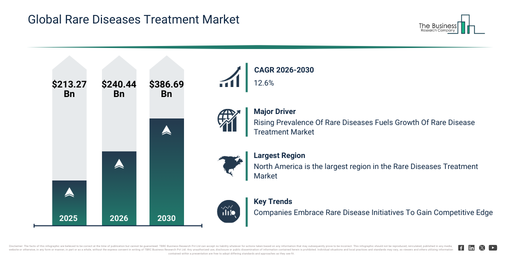
    The market size for rare diseases treatment has seen rapid expansion in recent years. It is projected to increase from $213.27 billion in 2025 to $240.44 billion in 2026, exhibiting a compound annual growth rate (CAGR) of 12.7%. The historical progression of this market can be linked to heightened awareness of rare diseases, significant advancements in biologics and gene therapies, the rising prevalence of rare diseases, government incentives aimed at orphan drugs, and the establishment of specialized healthcare infrastructure.

    The rare diseases treatment market size is projected to experience significant expansion over the next few years. It is anticipated to grow to $386.69 billion by 2030, exhibiting a compound annual growth rate (CAGR) of 12.6%. This expected growth during the forecast period can be attributed to various factors including the increasing adoption of personalized medicine, a growing pipeline of orphan drugs, technological advancements in drug delivery, escalating collaborations between pharmaceutical and biotechnology firms, and the widening reach of global rare disease patient registries. Prominent trends for the upcoming period include individualized treatment strategies, an expansion in orphan drug development, sophisticated drug delivery systems, efforts towards regulatory harmonization for rare diseases, and care models centered around patients.

    Access Your Free Sample Report For In-Depth Market Analysis:

    https://www.thebusinessresearchcompany.com/sample.aspx?id=8248&type=smp

    What Key Factors Are Affecting The Rare Diseases Treatment Market Demand?

    The growing impact of rare diseases is a primary factor fueling the rare disease treatment market. These conditions are defined by their low prevalence, affecting a considerably smaller segment of the population than more common illnesses. A rise in both the occurrence and associated deaths from rare diseases is generating a need for efficacious rare disease treatments. Treatments for rare diseases are vital, particularly for conditions frequently without standard therapy, as they aim to improve patient health, lessen the disease’s impact, and consequently boost the quality of life for those afflicted. To illustrate, data from August 2024, provided by the International Federation of Medical Students’ Associations (IFMSA), a medical student association federation located in Denmark, indicated that around 300 million individuals worldwide (with estimates varying from 263 and 446 million) suffer from a rare disease. This figure accounts for approximately 3.5% to 5.9% of the global populace. Consequently, the expanding occurrence of rare diseases is a key accelerator for the rare disease treatment market.

    Which Segments Define The Rare Diseases Treatment Market Segment Structure?

    The rare diseases treatment market covered in this report is segmented –

    1) By Drug Type: Originator Drugs (Patented Molecules), Generic Drugs

    2) By Drug Class: Biologics, Organic Compounds

    3) By Mode Of Administration: Injectable, Oral, Other Modes Of Administration

    4) By Therapeutic Area: Cancer, Neurological Conditions, Cardiovascular Conditions, Musculoskeletal Conditions, Hematologic Disorders, Infectious Diseases, Metabolic Disorders, Endocrine Disorders, Other Therapeutic Areas

    5) By Distribution Channel: Hospital Pharmacies, Specialty Pharmacies, Retail Pharmacies

    Subsegments:

    1) By Originator Drugs: Monoclonal Antibodies, Enzyme Replacement Therapies, Gene Therapies, Small Molecule Drugs

    2) By Generic Drugs: Generic Monoclonal Antibodies, Generic Enzyme Replacement Therapies, Generic Small Molecule Drugs, Biosimilars

    What Trends Are Influencing The Rare Diseases Treatment Market?

    Leading companies active in the rare disease treatment market are intensifying their focus on implementing rare disease initiatives to secure a competitive advantage. Rare disease initiatives signify structured efforts, programs, or activities undertaken by various parties, including governments, research institutions, and pharmaceutical companies, to tackle the distinct difficulties linked with rare diseases. For example, in October 2023, the Oxford-Harrington Rare Disease Centre, a UK-based research institution, unveiled the Therapeutics Accelerator, dedicated to advancing novel treatments for rare conditions. This unique transatlantic undertaking aims to pinpoint, finance, and drive breakthrough academic discoveries to introduce 40 potentially life-changing therapies into clinical trials over the next decade. Operating under a non-profit/for-profit framework, the Accelerator intends to allocate up to £200 million in funding to support new projects, targeting regulatory approvals in crucial markets such as the United States, the United Kingdom, and Europe.

    Who Are The Established Players Within The Rare Diseases Treatment Market?

    Major companies operating in the rare diseases treatment market are AbbVie Inc., Actelion Pharmaceuticals Ltd, Alexion Pharmaceuticals Inc., Celgene Corporation, Johnson & Johnson, Novartis AG, Pfizer Inc, Sanofi S.A., Merck & Co. Inc., Vertex Pharmaceuticals, Takeda Pharmaceutical Company, Abeona Therapeutics Inc., Akcea Therapeutics Inc., Alnylam Pharmaceuticals Inc., Amicus Therapeutics Inc., BioMarin Pharmaceutical Inc., bluebird bio Inc., Catalyst Pharmaceuticals Inc., Cerecor Inc., CSL Behring Ltd., Dicerna Pharmaceuticals Inc., Genzyme Corporation, Horizon Therapeutics plc, Intercept Pharmaceuticals Inc., Ionis Pharmaceuticals Inc.

    Get The Full Rare Diseases Treatment Market Report:

    https://www.thebusinessresearchcompany.com/report/rare-diseases-treatment-global-market-report

    Which Region Is The Leading Market For The Rare Diseases Treatment Market?

    North America was the largest region in the rare disease treatment market in 2025. The regions covered in the rare diseases treatment market report are Asia-Pacific, South East Asia, Western Europe, Eastern Europe, North America, South America, Middle East, Africa.

    Request A Customized Rare Diseases Treatment Market Report For Competitive Insights:

    https://www.thebusinessresearchcompany.com/report/rare-diseases-treatment-global-market-report

    Browse Through More Reports Similar to the Global Rare Diseases Treatment Market 2026, By The Business Research Company

    Rare Diseases Treatment Market Report 2026

    https://www.thebusinessresearchcompany.com/report/rare-diseases-treatment-global-market-report

    Rare Inflammatory Disease Treatment Market Report 2026

    https://www.thebusinessresearchcompany.com/report/rare-inflammatory-disease-treatment-global-market-report

    Rare Neurological Disease Treatment Market Report 2026

    https://www.thebusinessresearchcompany.com/report/rare-neurological-disease-treatment-global-market-report

    Get in touch with us:

    The Business Research Company: https://www.thebusinessresearchcompany.com/

    Americas +1 310-496-7795

    Asia +44 7882 955267 & +91 8897263534

    Europe +44 7882 955267

    Email us at: marketing@tbrc.info

    Follow us on:

    LinkedIn: https://in.linkedin.com/company/the-business-research-company

    YouTube: https://www.youtube.com/channel/UC24_fI0rV8cR5DxlCpgmyFQ

    Global Market Model: https://www.thebusinessresearchcompany.com/global-market-model
  • Global Rare Disease Pharmaceutical Service Market Analysis For 2026–2030 With Strategic Insights

    Global Rare Disease Pharmaceutical Service Market Analysis For 2026–2030 With Strategic Insights

    The Business Research Company’s 2026 market reports feature enhanced tools like market attractiveness analysis, TAM assessment, and company scoring matrices, along with interactive dashboards, deeper supply chain insights, and startup coverage strengthening the depth, usability, and strategic value of insights.

    How Much Growth In Market Value Is Expected For The Rare Disease Pharmaceutical Service Market Between 2026 And 2030?

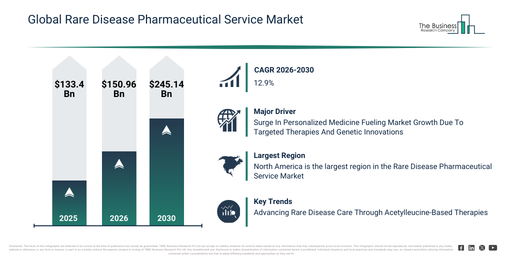
    The rare disease pharmaceutical service market has observed rapid expansion in recent years. It is anticipated to increase from $133.4 billion in 2025 to $150.96 billion in 2026, registering a compound annual growth rate (CAGR) of 13.2%. The historical growth in this market can be linked to the rise in orphan drug development initiatives, increasing rare disease diagnosis rates, the expansion of clinical research infrastructure, growing regulatory incentives for rare diseases, and the enhanced involvement of specialized service providers.

    The rare disease pharmaceutical service market is anticipated to experience substantial expansion over the coming years. Its valuation is projected to reach $245.14 billion by 2030, exhibiting a compound annual growth rate (CAGR) of 12.9%. This projected growth stems from several factors, including the increasing externalization of rare disease development processes, greater adoption of digital platforms for clinical trials, the broadening scope of global rare disease pipelines, a heightened emphasis on generating real-world evidence, and an escalating need for specialized regulatory knowledge. Key trends characterizing this period involve a rising call for comprehensive rare disease services, an intensified focus on complete drug development support, a stronger commitment to patient-centric care frameworks, the expansion of services related to regulation and market access, and improved application of data-driven clinical management strategies.

    Access Your Free Sample Report For In-Depth Market Analysis:

    https://www.thebusinessresearchcompany.com/sample.aspx?id=28314&type=smp

    Which Primary Drivers Are Impacting The Rare Disease Pharmaceutical Service Market Growth?

    The expansion of personalized medicine is anticipated to fuel the growth of the rare disease pharmaceutical service market moving forward. Personalized medicine is defined as medical treatments specifically designed for individual genetic profiles, enhancing effectiveness and reducing unwanted side effects. This surge in personalized medicine stems from advancements in genomics, biomarker research, and data analytics, which enable therapies to be precisely adapted to a person’s genetic makeup, thereby improving efficacy, lessening side effects, and addressing specific patient requirements more accurately than conventional standardized treatments. Pharmaceutical Service plays a crucial role in personalized medicine by creating targeted therapies, utilizing genetic and biomarker information, and delivering customized treatment options to cater to the unique needs of individual patients. For instance, in February 2024, the Personalized Medicine Coalition, a US-based non-profit organization, reported that the FDA approved 16 new personalized treatments for rare disease patients in 2023, a notable increase from 6 approvals in 2022. Consequently, the increasing prevalence of personalized medicine is a significant driver behind the development of the rare disease pharmaceutical service market.

    How Is The Rare Disease Pharmaceutical Service Market Segmented Across Different Segment Categories?

    The rare disease pharmaceutical service market covered in this report is segmented –

    1) By Types: Drug Discovery, Clinical Trials, Other Types

    2) By Application: Congenital And Genetic Diseases, Tumors And Cancer, Endocrine Diseases

    3) By End User: Pharmaceutical Companies, Biotechnology Companies, Academic And Research Institutions, Hospitals And Specialty Clinics, Contract Research Organizations (CROs) And Contract Development And Manufacturing Organizations (CDMOs), Diagnostic Laboratories And Genetic Testing Centers

    Subsegments:

    1) By Drug Discovery: Target Identification And Validation, Preclinical Research And Toxicology Studies, Biomarker Discovery And Validation, Genomic And Proteomic Analysis, Computational Drug Design And Modeling, High-Throughput Screening (HTS), Lead Optimization And Candidate Selection

    2) By Clinical Trials: Clinical Trial Design And Protocol Development, Patient Recruitment And Retention, Site Management And Monitoring, Regulatory Affairs And Compliance Support, Data Management And Biostatistics, Pharmacovigilance And Safety Monitoring, Real-World Evidence (RWE) And Post-Marketing Studies

    3) By Other Types: Market Access And Pricing Strategy, Health Economics And Outcomes Research (HEOR), Regulatory Affairs And Compliance Services, Manufacturing And CMC (Chemistry, Manufacturing, and Controls) Support, Medical Affairs And Scientific Communication, Post-Marketing Surveillance, Consulting And Strategic Advisory

    Which Trends Are Shaping Growth In The Rare Disease Pharmaceutical Service Market?

    Major companies operating in the rare disease pharmaceutical service market are increasingly concentrating on the development of innovative treatment approaches, such as acetylleucine, to enhance treatment effectiveness, improve patient outcomes, and address unmet needs within rare neurological and metabolic disorders. Acetylleucine, a modified amino acid (N-acetyl-L-leucine), serves as a therapeutic agent designed to support motor function, balance, and neurological health in affected patients. For example, in September 2024, IntraBio, a US-based biopharmaceutical firm, secured FDA approval for AQNEURSA, which is the first stand-alone therapy for Niemann-Pick Disease Type C, a rare, life-threatening neurodegenerative disorder. This milestone is particularly noteworthy, as the treatment exhibited rapid and significant improvements in neurological symptoms, thereby presenting a groundbreaking therapeutic option for both pediatric and adult patients living with this rare disease.

    Which Organizations Play A Role In The Rare Disease Pharmaceutical Service Market Landscape?

    Major companies operating in the rare disease pharmaceutical service market are Johnson & Johnson, Merck & Co. Inc., Pfizer Inc., AbbVie Inc., Sanofi S.A., Novartis AG, AstraZeneca PLC, GlaxoSmithKline PLC (GSK), Takeda Pharmaceutical Company Limited, Amgen Inc., Biogen Inc., Chiesi Farmaceutici S.p.A., Recordati Industria Chimica e Farmaceutica S.p.A., BioMarin Pharmaceutical Inc., Sarepta Therapeutics Inc., Ultragenyx Pharmaceutical Inc., Amicus Therapeutics Inc., Travere Therapeutics Inc., Sciensus Healthcare Ltd., SOM Innovation Biotech S.L.

    Get The Full Rare Disease Pharmaceutical Service Market Report:

    https://www.thebusinessresearchcompany.com/report/rare-disease-pharmaceutical-service-global-market-report

    Where Is The Rare Disease Pharmaceutical Service Market Primarily Concentrated By Region?

    North America was the largest region in the rare disease pharmaceutical service market in 2025. The regions covered in the rare disease pharmaceutical service market report are Asia-Pacific, South East Asia, Western Europe, Eastern Europe, North America, South America, Middle East, Africa.

    Request A Customized Rare Disease Pharmaceutical Service Market Report For Competitive Insights:

    https://www.thebusinessresearchcompany.com/report/rare-disease-pharmaceutical-service-global-market-report

    Browse Through More Reports Similar to the Global Rare Disease Pharmaceutical Service Market 2026, By The Business Research Company

    Rare Diseases Treatment Market Report 2026

    https://www.thebusinessresearchcompany.com/report/rare-diseases-treatment-global-market-report

    Drug Discovery Services Market Report 2026

    https://www.thebusinessresearchcompany.com/report/drug-discovery-services-global-market-report

    Rare Disease Diagnostics Market Report 2026

    https://www.thebusinessresearchcompany.com/report/rare-disease-diagnostics-global-market-report

    Get in touch with us:

    The Business Research Company: https://www.thebusinessresearchcompany.com/

    Americas +1 310-496-7795

    Asia +44 7882 955267 & +91 8897263534

    Europe +44 7882 955267

    Email us at: marketing@tbrc.info

    Follow us on:

    LinkedIn: https://in.linkedin.com/company/the-business-research-company

    YouTube: https://www.youtube.com/channel/UC24_fI0rV8cR5DxlCpgmyFQ

    Global Market Model: https://www.thebusinessresearchcompany.com/global-market-model
  • Rare Disease Genome Editing Market Outlook 2026–2030 Driven By Growth Factors And Projections

    Rare Disease Genome Editing Market Outlook 2026–2030 Driven By Growth Factors And Projections

    The Business Research Company’s 2026 market reports feature enhanced tools like market attractiveness analysis, TAM assessment, and company scoring matrices, along with interactive dashboards, deeper supply chain insights, and startup coverage strengthening the depth, usability, and strategic value of insights.

    What Is The Estimated Market Size Of The Rare Disease Genome Editing Market In 2026, And How Will Its Value Evolve By 2030?

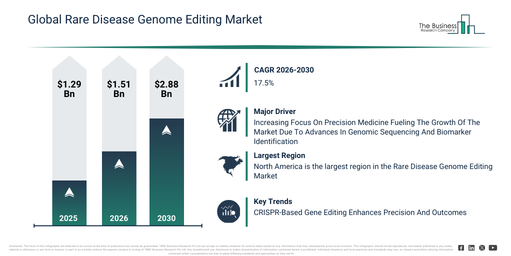
    The rare disease genome editing market size has experienced rapid growth in recent years. It is projected to expand from $1.29 billion in 2025 to $1.51 billion in 2026, exhibiting a compound annual growth rate (CAGR) of 17.8%. This growth during the historical period is attributable to advancements in gene editing technologies, a rise in the identification of rare genetic mutations, increased funding for genomic research, early positive results from gene therapy trials, and expanding academic research initiatives.

    The rare disease genome editing market size is projected to experience substantial growth over the next few years. It is forecast to expand to $2.88 billion by 2030, achieving a compound annual growth rate (CAGR) of 17.5%. This growth during the forecast period is fueled by escalating investment in curative rare disease therapies, the increasing embrace of precision medicine strategies, the expansion of clinical genome editing trials, growing regulatory support for orphan drugs, and increased collaboration between biotechnology companies and healthcare providers. Prominent trends for the upcoming period encompass the wider adoption of CRISPR-based therapeutics, a heightened focus on gene editing for monogenic disorders, the expanding utilization of personalized genome editing approaches, the development of advanced editing platforms, and enhanced integration of genomic data analytics.

    Access Your Free Sample Report For In-Depth Market Analysis:

    https://www.thebusinessresearchcompany.com/sample.aspx?id=28313&type=smp

    What Significant Factors Are Influencing The Rare Disease Genome Editing Market Expansion?

    An escalating emphasis on precision medicine is anticipated to drive expansion within the rare disease genome editing market moving ahead. This tailored healthcare strategy, known as precision medicine, leverages an individual’s genetics, environmental factors, and lifestyle choices to deliver more precise and impactful treatments. The rising prominence of precision medicine stems from progress in genomic sequencing and the identification of biomarkers, which facilitate accurate diagnosis and specialized treatments. The rare disease genome editing market supports precision medicine through its capacity to allow for the focused correction of genetic mutations, leading to more customized and efficacious therapies. This contributes to healthcare progress by tackling the fundamental origins of rare conditions, enhancing patient results, and lessening dependence on managing symptoms alone. For example, in March 2024, Novotech, a biotechnology firm based in Australia, reported that in 2023, 43% of the 217 FDA-approved oncology therapies qualified as precision oncology treatments, with 78 of these involving DNA or NGS-detectable biomarkers. Consequently, the growing attention on precision medicine is propelling the expansion of the rare disease genome editing market.

    What Are The Main Segments Within The Rare Disease Genome Editing Market Segment Structure?

    The rare disease genome editing market covered in this report is segmented –

    1) By Technology: Clustered Regularly Interspaced Short Palindromic Repeats (CRISPR) Or CRISPR-Associated Protein 9, Transcription Activator-Like Effector Nucleases (TALEN), Zinc Finger Nucleases (ZFN), Other Technologies

    2) By Disease Type: Monogenic Disorders, Multifactorial Disorders, Chromosomal Disorders

    3) By Application: Therapeutics, Research

    4) By End User: Biotechnology And Pharmaceutical Companies, Academic And Government Research Institutes, Hospitals

    Subsegments:

    1) By Clustered Regularly Interspaced Short Palindromic Repeats (CRISPR) Or CRISPR-Associated Protein 9: Clustered Regularly Interspaced Short Palindromic Repeats (CRISPR)-Associated Protein 9, Clustered Regularly Interspaced Short Palindromic Repeats (CRISPR)-Associated Protein 12, Clustered Regularly Interspaced Short Palindromic Repeats (CRISPR)-Associated Protein 13, Base Editing, Prime Editing

    2) By Transcription Activator-Like Effector Nucleases (TALEN): Standard Transcription Activator-Like Effector Nucleases (TALEN), Designer Transcription Activator-Like Effector Nucleases (dTALEN), Transcription Activator-Like Effector Nucleases (TALEN) Paired Nucleases

    3) By Zinc Finger Nucleases (ZFN): Standard Zinc Finger Nucleases (ZFN), Engineered Zinc Finger Nucleases (ZFN), Modular Zinc Finger Nucleases (ZFN)

    4) By Other Technologies: Meganucleases, Ribonucleic Acid (RNA)-Guided Nucleases, Clustered Regularly Interspaced Short Palindromic Repeats (CRISPR)-Associated Transposases

    What Trends Are Affecting The Direction Of The Rare Disease Genome Editing Market?

    Leading companies within the rare disease genome editing market are concentrating on the creation of sophisticated therapeutic platforms, such as CRISPR-based gene editing systems, aiming to boost treatment accuracy, elevate patient outcomes, and tackle genetic conditions previously lacking cures. These innovative CRISPR-based gene editing systems represent technologies capable of precise genomic alterations, enabling the rectification of genetic flaws or the insertion of therapeutic genes into cells. A notable example occurred in December 2023, when US-based biopharmaceutical company Vertex Pharmaceuticals Inc., collaborating with US-based biotechnology research company CRISPR Therapeutics Inc., secured conditional marketing approval from the United Kingdom (U.K.) Medicines and Healthcare products Regulatory Agency (MHRA) for their product, CASGEVY (exagamglogene autotemcel, exa-cel). This therapy is prescribed for individuals aged 12 and above who suffer from sickle cell disease (SCD) with recurring vaso-occlusive crises or transfusion-dependent beta thalassemia (TDT). Casgevy functions by modifying a patient’s hematopoietic stem cells, thereby reactivating fetal hemoglobin production, which subsequently diminishes or eradicates disease symptoms and presents a potential functional cure for these ailments.

    Who Are The Companies Participating In The Rare Disease Genome Editing Market?

    Major companies operating in the rare disease genome editing market are Regeneron Pharmaceuticals Inc., Sarepta Therapeutics Inc., Ultragenyx Pharmaceutical Inc., Beam Therapeutics Inc., CRISPR Therapeutics AG, Rocket Pharmaceuticals Inc., Sangamo Therapeutics Inc., Arcturus Therapeutics Holdings Inc., Editas Medicine Inc., Krystal Biotech Inc., Caribou Biosciences Inc, Bluebird Bio Inc., SpliceBio S.L., Cellectis SA, Generation Bio Co., iECURE Inc., Affinia Therapeutics Inc., Precision Biosciences Inc., Intellia Therapeutics Inc., MeiraGTx Holdings plc

    Get The Full Rare Disease Genome Editing Market Report:

    https://www.thebusinessresearchcompany.com/report/rare-disease-genome-editing-global-market-report

    Which Region Has The Greatest Market Share In The Rare Disease Genome Editing Market?

    North America was the largest region in the rare disease genome editing market in 2025. Asia-Pacific is expected to be the fastest-growing region in the forecast period. The regions covered in the rare disease genome editing market report are Asia-Pacific, South East Asia, Western Europe, Eastern Europe, North America, South America, Middle East, Africa.

    Request A Customized Rare Disease Genome Editing Market Report For Competitive Insights:

    https://www.thebusinessresearchcompany.com/report/rare-disease-genome-editing-global-market-report

    Browse Through More Reports Similar to the Global Rare Disease Genome Editing Market 2026, By The Business Research Company

    Genome Editing Or Genome Engineering Market Report 2026

    https://www.thebusinessresearchcompany.com/report/genome-editing-or-genome-engineering-global-market-report

    Crispr Gene Editing Market Report 2026

    https://www.thebusinessresearchcompany.com/report/crispr-gene-editing-global-market-report

    Gene Editing Market Report 2026

    https://www.thebusinessresearchcompany.com/report/gene-editing-global-market-report

    Get in touch with us:

    The Business Research Company: https://www.thebusinessresearchcompany.com/

    Americas +1 310-496-7795

    Asia +44 7882 955267 & +91 8897263534

    Europe +44 7882 955267

    Email us at: marketing@tbrc.info

    Follow us on:

    LinkedIn: https://in.linkedin.com/company/the-business-research-company

    YouTube: https://www.youtube.com/channel/UC24_fI0rV8cR5DxlCpgmyFQ

    Global Market Model: https://www.thebusinessresearchcompany.com/global-market-model
  • Ranibizumab Market Developments And Opportunities Across 2026–2030

    Ranibizumab Market Developments And Opportunities Across 2026–2030

    The Business Research Company’s 2026 market reports feature enhanced tools like market attractiveness analysis, TAM assessment, and company scoring matrices, along with interactive dashboards, deeper supply chain insights, and startup coverage strengthening the depth, usability, and strategic value of insights.

    How Does The Market Size Of The Ranibizumab Market Compare Between 2026 And 2030?

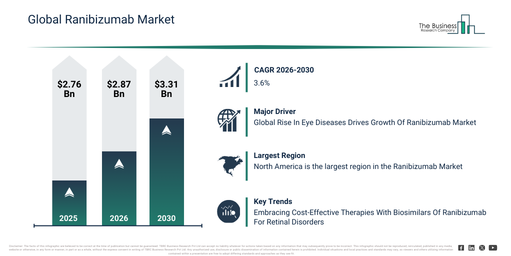
    The ranibizumab market size has shown consistent expansion in recent years. It is projected to increase from $2.76 billion in 2025 to $2.87 billion in 2026, demonstrating a compound annual growth rate (CAGR) of 4.0%. This historical growth was driven by factors such as the increasing prevalence of age-related macular degeneration, the clinical validation of anti-VEGF therapy efficacy, a rising incidence of diabetic retinopathy, improved diagnostic imaging for retinal disorders, and early regulatory approvals for ranibizumab.

    The ranibizumab market is projected to experience steady expansion in the coming years. It is forecast to reach $3.31 billion by 2030, exhibiting a compound annual growth rate (CAGR) of 3.6%. This anticipated growth during the forecast period is primarily driven by factors such as the global rise in the aging population, increasing diabetes prevalence across the world, enhanced accessibility to advanced ophthalmic care, the growing adoption of intravitreal injections, and continuous enhancements in retinal disease screening programs. Significant trends expected in the forecast period include the increasing uptake of anti-VEGF therapies for retinal conditions, a developing preference for prefilled syringe formulations, a rising demand for treatments for diabetic eye disorders, the expansion of specialized ophthalmology care centers, and a greater utilization of long-term maintenance therapy for chronic retinal ailments.

    Access Your Free Sample Report For In-Depth Market Analysis:

    https://www.thebusinessresearchcompany.com/sample.aspx?id=16172&type=smp

    Which Important Drivers Are Guiding The Ranibizumab Market Growth?

    The ranibizumab market is anticipated to expand significantly due to the increasing occurrence of eye disorders. Eye conditions comprise various ailments that can negatively impact vision and overall eye health. The growing incidence of eye diseases is attributable to factors like aging populations and shifts in lifestyle, alongside an uptick in chronic illnesses such as diabetes. Ranibizumab is utilized in treating conditions like age-related macular degeneration and diabetic retinopathy, thereby helping to diminish vision impairment amid the rising prevalence of eye diseases. For example, in August 2023, the World Health Organization (WHO), a Switzerland-based intergovernmental organization, stated that approximately 2.2 billion people globally experience either near or distance vision impairment. Hence, the increasing prevalence of eye diseases will propel the growth of the ranibizumab market.

    How Is Segmentation Applied In The Ranibizumab Market Segment Analysis?

    The ranibizumab market covered in this report is segmented –

    1) By Product: Single Use Prefilled Syringe, Single Use Glass Vial

    2) By Application: Wet Age Related Macular Degeneration (AMD), Diabetic Retinopathy (DR), Diabetic Macular Edema (DME), Myopic Choroidal Neovascularization (MCNV), Retinal Vein Occlusion (RVO)

    3) By Distribution Channel: Hospital Pharmacies, Online Pharmacies, Other Distribution Channels

    Subsegments:

    1) By Single Use Prefilled Syringe: 0.3 Ml Syringe, 0.5 Ml Syringe, 1 Ml Syringe, Other Volume Variants

    2) By Single Use Glass Vial: 0.5 Mg Or 0.05 Ml Vial, 1.0 Mg Or 0.1 Ml Vial, 2.0 Mg Or 0.2 Ml Vial, Other Volume Variants

    What Trends Are Influencing The Evolution Of The Ranibizumab Market?

    Companies operating within the ranibizumab market are increasingly concentrating on cost-efficient therapies, such as ranibizumab biosimilars, to manage and avert vision impairment in individuals with retinal disorders. A ranibizumab biosimilar is a biological drug substantially similar to the original ranibizumab, yet it is marketed under a different brand name, offering a more budget-friendly alternative while upholding comparable effectiveness and safety. For instance, in April 2024, Formycon AG, a Germany-based biotechnology company, along with Bioeq AG, a Switzerland-based biopharmaceutical company, announced the commercial release of FYB201, a biosimilar to Lucentis (Ranibizumab), in Canada and Switzerland. This launch followed the marketing authorization granted by Health Canada under the brand name Ranopto and by Swissmedic under the brand name Ranivisio. FYB201 provides a new, high-quality, effective, and affordable treatment option for patients suffering from severe retinal diseases. It has already demonstrated its significance as a cost-effective treatment choice for patients in the USA and various parts of Europe.

    Who Are The Companies Participating In The Ranibizumab Market Environment?

    Major companies operating in the ranibizumab market are F. Hoffmann-La Roche AG, Genentech Inc., Bayer AG, Novartis AG, Biocon Limited, Samsung Biologics Co Ltd, Celltrion Healthcare Co Ltd, Formycon AG, Coherus BioSciences Inc, Xbrane Biopharma AB, Alvotech, Stada Arzneimittel AG, Sun Pharmaceutical Industries Ltd, Dr. Reddy’s Laboratories Ltd, Cipla Limited, Lupin Limited, Glenmark Pharmaceuticals Limited, Intas Pharmaceuticals Ltd, Enzene Biosciences Ltd, Amman Pharmaceutical Industries

    Get The Full Ranibizumab Market Report:

    https://www.thebusinessresearchcompany.com/report/ranibizumab-global-market-report

    Which Region Accounts For The Largest Portion Of The Ranibizumab Market?

    North America was the largest region in the ranibizumab market in 2025. The regions covered in the ranibizumab market report are Asia-Pacific, South East Asia, Western Europe, Eastern Europe, North America, South America, Middle East, Africa.

    Request A Customized Ranibizumab Market Report For Competitive Insights:

    https://www.thebusinessresearchcompany.com/report/ranibizumab-global-market-report

    Browse Through More Reports Similar to the Global Ranibizumab Market 2026, By The Business Research Company

    Ranibizumab Market Report 2026

    https://www.thebusinessresearchcompany.com/report/ranibizumab-global-market-report

    Ibrutinib Market Report 2026

    https://www.thebusinessresearchcompany.com/report/ibrutinib-global-market-report

    Takaful Market Report 2026

    https://www.thebusinessresearchcompany.com/report/takaful-global-market-report

    Get in touch with us:

    The Business Research Company: https://www.thebusinessresearchcompany.com/

    Americas +1 310-496-7795

    Asia +44 7882 955267 & +91 8897263534

    Europe +44 7882 955267

    Email us at: marketing@tbrc.info

    Follow us on:

    LinkedIn: https://in.linkedin.com/company/the-business-research-company

    YouTube: https://www.youtube.com/channel/UC24_fI0rV8cR5DxlCpgmyFQ

    Global Market Model: https://www.thebusinessresearchcompany.com/global-market-model
  • Radiopharmaceuticals Market Forecast 2026–2030 Presenting Long-Term Industry Insights

    Radiopharmaceuticals Market Forecast 2026–2030 Presenting Long-Term Industry Insights

    The Business Research Company’s 2026 market reports feature enhanced tools like market attractiveness analysis, TAM assessment, and company scoring matrices, along with interactive dashboards, deeper supply chain insights, and startup coverage strengthening the depth, usability, and strategic value of insights.

    What Is The Forecasted Market Size Trajectory Of The Radiopharmaceuticals Market From 2026 To 2030?

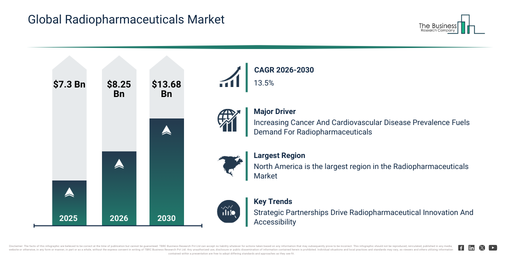
    The radiopharmaceuticals market size has rapidly expanded in recent years. It is anticipated to grow from $7.3 billion in 2025 to $8.25 billion in 2026, at a compound annual growth rate (CAGR) of 13.0%. The notable growth observed in the historic period can be attributed to several factors including the adoption of nuclear imaging technologies, an increase in cancer diagnosis rates, the steady availability of radioisotopes, the expansion of hospital-based nuclear medicine facilities, and various regulatory approvals for diagnostic agents.

    The radiopharmaceuticals market is projected to experience substantial growth over the coming years, reaching $13.68 billion by 2030, driven by a compound annual growth rate (CAGR) of 13.5%. This anticipated expansion throughout the forecast period can be linked to several factors, including the advancement of precision oncology, an increasing need for targeted radiotherapies, the proliferation of diagnostic imaging centers, investments in cyclotron infrastructure, and innovations in isotope production technology. Key trends anticipated during this period encompass the growing application of radiopharmaceuticals in oncology, the development of theranostics, the broader adoption of PET and SPECT imaging, the ongoing creation of targeted radiotherapies, and enhancements to nuclear medicine infrastructure.

    Access Your Free Sample Report For In-Depth Market Analysis:

    https://www.thebusinessresearchcompany.com/sample.aspx?id=3471&type=smp

    What Major Factors Are Driving The Radiopharmaceuticals Market Forward?

    The rising incidence of cancer and cardiovascular ailments is anticipated to fuel the demand within the radiopharmaceuticals market. Radiopharmaceuticals are gaining prominence as a secure and potent therapeutic choice, surpassing traditional medications. These agents offer radiologists a significant advantage in managing cancer and cardiovascular conditions, primarily due to benefits such as targeted therapy. Globally, cancer stands as the second leading cause of mortality, accounting for approximately 1 in 6 deaths. For example, in April 2024, data from the International Agency for Research on Cancer (IARC), a specialized agency based in France, indicated that in 2022, there were almost 20 million new cancer diagnoses and 9.7 million deaths attributed to cancer worldwide. Projections suggest that by 2040, these figures will climb to an estimated 29.9 million new cases and 15.3 million annual deaths. Consequently, the growing number of cancer and cardiovascular disease cases is poised to significantly boost the need for radiopharmaceuticals in treating these illnesses.

    What Segment Categories Shape The Radiopharmaceuticals Market Segment Landscape?

    The radiopharmaceuticals market covered in this report is segmented –

    1) By Type: Diagnostic, Therapeutic

    2) By Application: Oncology, Cardiology, Gastroenterology, Neuroendocrinology, Musculoskeletal, Respiratory, Nephrology, Other Applications

    3) By End User: Hospitals And Ambulatory Surgical Centers, Diagnostic Centers, Cancer Research Institutes

    Subsegments:

    1) By Diagnostic: Positron Emission Tomography (PET) Radiopharmaceuticals, Single Photon Emission Computed Tomography (SPECT) Radiopharmaceuticals

    2) By Therapeutic: Alpha Emitters, Beta Emitters, Brachytherapy

    Which Trends Are Impacting The Progress Of The Radiopharmaceuticals Market?

    Companies operating in the radiopharmaceuticals market are increasingly forming strategic alliances to accelerate innovation and expand access to advanced diagnostic and therapeutic solutions. These collaborations focus on enhancing radiopharmaceutical development, strengthening regional production capabilities, and supporting the growing demand for precision imaging and targeted therapies. For instance, in June 2023, the University of Pittsburgh Medical Center (UPMC), a US-based hospital system, partnered with PharmaLogic Holdings Corporation to co-develop and manufacture new radiopharmaceuticals at a Pittsburgh facility. The partnership aims to expand patient and clinician access to cutting-edge diagnostic and therapeutic agents that are not currently available in nearby regions. Under the non-exclusive agreement, UPMC and PharmaLogic will translate experimental radiopharmaceuticals into clinically useful medications, supporting broader commercialization and accelerating the adoption of novel nuclear medicine treatments.

    Who Are The Companies Operating Across The Radiopharmaceuticals Market Value Chain?

    Major companies operating in the radiopharmaceuticals market are Cardinal Health, Curium Pharma, Siemens Healthineers AG, Novartis AG, General Electric Company (GE), IBA Group, Bayer AG, Lantheus Medical Imaging Inc., Bracco Imaging S.p.A., Eckert & Ziegler, Nihon Medi-Physics Co. Ltd., Fujifilm Corporation, ANSTO, Yantai Dongcheng Pharmaceutical Group Co. Ltd., Bracco Imaging SpA., Canon Inc., China Isotope & Radiation Corporation (CIRC), Alliance Medical, Advanced Accelerator Applications, JSC Isotope, Pharm-Sintez, Synektik SA, Polatom, RadioMedic sro, ÚJV Rež, Actinium Pharmaceuticals Inc., Alseres Pharmaceuticals Inc., Avid Radiopharmaceuticals, Fusion Pharmaceuticals, Peregrine Pharmaceuticals Inc., PETNET Solutions Inc., Positron Corporation, Triad Isotopes Inc., Telix Pharmaceuticals, Rosatom, Alliance Medical Group, Hologic Inc., Segami Corporation, Eczacýbaþý-Monrol Nuclear Products, NTP Radioisotopes.

    Get The Full Radiopharmaceuticals Market Report:

    https://www.thebusinessresearchcompany.com/report/radiopharmaceutical-global-market-report

    Which Region Holds The Highest Market Share In The Radiopharmaceuticals Market?

    North America was the largest region in the global radiopharmaceuticals market in 2025. The Middle East is expected to be the fastest growing region in the forecast period. The regions covered in the radiopharmaceuticals market report are Asia-Pacific, South East Asia, Western Europe, Eastern Europe, North America, South America, Middle East, Africa.

    Request A Customized Radiopharmaceuticals Market Report For Competitive Insights:

    https://www.thebusinessresearchcompany.com/report/radiopharmaceutical-global-market-report

    Browse Through More Reports Similar to the Global Radiopharmaceuticals Market 2026, By The Business Research Company

    Radiotherapy Devices Market Report 2026

    https://www.thebusinessresearchcompany.com/report/radiotherapy-devices-global-market-report

    Cancer Diagnostics Market Report 2026

    https://www.thebusinessresearchcompany.com/report/cancer-diagnostics-global-market-report

    Diagnostic Equipment Market Report 2026

    https://www.thebusinessresearchcompany.com/report/diagnostic-equipment-global-market-report

    Get in touch with us:

    The Business Research Company: https://www.thebusinessresearchcompany.com/

    Americas +1 310-496-7795

    Asia +44 7882 955267 & +91 8897263534

    Europe +44 7882 955267

    Email us at: marketing@tbrc.info

    Follow us on:

    LinkedIn: https://in.linkedin.com/company/the-business-research-company

    YouTube: https://www.youtube.com/channel/UC24_fI0rV8cR5DxlCpgmyFQ

    Global Market Model: https://www.thebusinessresearchcompany.com/global-market-model
  • Radioligand Therapy Market Growth Analysis 2026–2030 Highlighting Innovation And Competitive Landscape

    Radioligand Therapy Market Growth Analysis 2026–2030 Highlighting Innovation And Competitive Landscape

    The Business Research Company’s 2026 market reports feature enhanced tools like market attractiveness analysis, TAM assessment, and company scoring matrices, along with interactive dashboards, deeper supply chain insights, and startup coverage strengthening the depth, usability, and strategic value of insights.

    How Much Will The Market Value Of The Radioligand Therapy Market Grow Between 2026 And 2030?

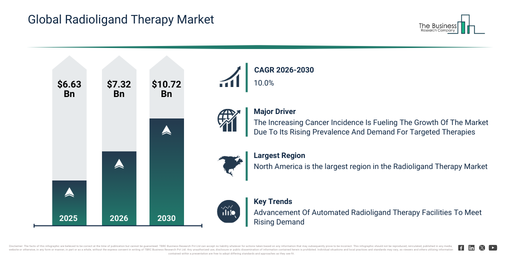
    The radioligand therapy market has seen considerable growth in recent years. Its size is expected to expand from $6.63 billion in 2025 to $7.32 billion in 2026, achieving a compound annual growth rate (CAGR) of 10.4%. This historical expansion can be attributed to several factors, including the limited availability of radioligands, reliance on conventional cancer therapies, growing awareness of targeted therapy benefits, increasing hospital adoption of nuclear medicine techniques, and regulatory approvals for early rlt drugs.

    The radioligand therapy market size is anticipated to experience substantial growth in the coming years. It is projected to expand to $10.72 billion by 2030, demonstrating a compound annual growth rate (CAGR) of 10.0%. This growth during the forecast period is attributable to the introduction of novel alpha and beta emitters, the expansion of combined emission therapies, integration with precision oncology, an increase in clinical trials for neurological and cardiovascular applications, and greater investment in home care and outpatient rlt services. Prominent trends for the forecast period include the increasing adoption of targeted radioligand therapy in oncology, the broadening of alpha and beta emitter-based therapies, the integration of radioligand therapy with personalized medicine approaches, the expansion of hospital and research institution-based rlt programs, and a heightened focus on minimizing side effects and improving patient outcomes.

    Access Your Free Sample Report For In-Depth Market Analysis:

    https://www.thebusinessresearchcompany.com/sample.aspx?id=27403&type=smp

    Which Key Drivers Are Affecting The Radioligand Therapy Market Development?

    The escalating incidence of cancer is projected to stimulate growth within the radioligand therapy market. Cancer is defined as a condition involving the unchecked proliferation of abnormal cells that can infiltrate surrounding tissues and disseminate throughout the body. The rise in cancer cases is attributed to sustained exposure to environmental pollutants, which harm DNA, impair cell function, and foster irregular cell development. Radioligand therapy functions by delivering radiation precisely to tumor cells through ligands that bind to specific receptors, thereby minimizing harm to healthy tissues and eradicating cancer cells internally. For instance, in October 2025, the National Health Service (NHS), a UK-based government health agency, reported 354,820 new cancer diagnoses in 2023, equating to an average of 972 per day, which signifies an increase of 8,605 compared to 2022. Consequently, the increasing cancer incidence is driving the growth of the radioligand therapy market.

    Which Segment Types Are Examined In The Radioligand Therapy Market Segment Study?

    The radioligand therapy market covered in this report is segmented –

    1) By Type Of Radioligand: Alpha Emitters, Beta Emitters, Auger Emitters, Combined Emissions

    2) By Molecular Target: Hormone Receptors, Growth Factor Receptors, Antigen Tumor Markers, Other Molecular Targets

    3) By Route Of Administration: Intravenous (IV), Intramuscular (IM), Subcutaneous, Oral

    4) By Application: Oncology, Cardiovascular Disorders, Neurological Disorders, Infectious Diseases

    5) By End-User: Hospitals, Diagnostic Laboratories, Research Institutions, Home Care Settings

    Subsegments:

    1) By Alpha Emitters: Actinium-225 (Ac-225), Radium-223 (Ra-223), Astatine-211 (At-211), Bismuth-213 (Bi-213)

    2) By Beta Emitters: Lutetium-177 (Lu-177), Iodine-131 (I-131), Yttrium-90 (Y-90), Samarium-153 (Sm-153)

    3) By Auger Emitters: Iodine-125 (I-125), Indium-111 (In-111), Gallium-67 (Ga-67), Thallium-201 (Tl-201)

    4) By Combined Emissions: Terbium-161 (Tb-161), Copper-67 (Cu-67), Rhenium-186 (Re-186), Lead-212 (Pb-212)

    What Trends Are Transforming The Radioligand Therapy Market?

    Companies operating in the radioligand therapy market are focusing on developing advanced solutions, such as radioligand therapy facilities, to boost production efficiency and maintain high quality and safety standards in the manufacturing and distribution of targeted cancer treatments. These radioligand therapy facilities are specialized centers designed to manage and deliver radioactive drugs for targeted cancer treatment, utilizing advanced imaging systems and radiation shielding, while ensuring safety through trained personnel and strict protocols. For instance, in January 2024, Novartis AG, a Switzerland-based pharmaceutical company, announced the automation of its new large-scale radioligand therapy (RLT) production plant in Indiana. This plant received Food and Drug Administration (FDA) approval for commercial manufacturing. This 70,000-square-foot facility is the largest and most advanced Novartis site dedicated to RLT, designed for efficient, time-sensitive production, and includes plans for fully automated production lines, enabling substantial supply increases to meet growing patient demand in the US and Canada.

    Which Players Are Part Of The Competitive Landscape Of The Radioligand Therapy Market?

    Major companies operating in the radioligand therapy market are Novartis AG, Lantheus Holdings Inc., Curium LLC, Eckert & Ziegler Strahlen- und Medizintechnik AG, Telix Pharmaceuticals, Mariana Oncology Inc., AdvanCell Pty Ltd., Evergreen Theragnostics Inc., Fusion Pharmaceuticals Inc., RadioMedix Inc., Ariceum Therapeutics GmbH, Radiopharm Theranostics Limited, Convergent Therapeutics Inc., C-Ray Therapeutics Inc.

    Get The Full Radioligand Therapy Market Report:

    https://www.thebusinessresearchcompany.com/report/radioligand-therapy-global-market-report

    Where Is The Radioligand Therapy Market Most Concentrated Geographically?

    North America was the largest region in the radioligand therapy market in 2025. Asia-Pacific is expected to be the fastest-growing region in the forecast period. The regions covered in the radioligand therapy market report are Asia-Pacific, South East Asia, Western Europe, Eastern Europe, North America, South America, Middle East, Africa.

    Request A Customized Radioligand Therapy Market Report For Competitive Insights:

    https://www.thebusinessresearchcompany.com/report/radioligand-therapy-global-market-report

    Browse Through More Reports Similar to the Global Radioligand Therapy Market 2026, By The Business Research Company

    Property Management Service Market Report 2026

    https://www.thebusinessresearchcompany.com/report/property-management-service-global-market-report

    Real Estate Rental Market Report 2026

    https://www.thebusinessresearchcompany.com/report/real-estate-rental-global-market-report

    Financial Accounting Advisory Services Market Report 2026

    https://www.thebusinessresearchcompany.com/report/financial-accounting-advisory-services-global-market-report

    Get in touch with us:

    The Business Research Company: https://www.thebusinessresearchcompany.com/

    Americas +1 310-496-7795

    Asia +44 7882 955267 & +91 8897263534

    Europe +44 7882 955267

    Email us at: marketing@tbrc.info

    Follow us on:

    LinkedIn: https://in.linkedin.com/company/the-business-research-company

    YouTube: https://www.youtube.com/channel/UC24_fI0rV8cR5DxlCpgmyFQ

    Global Market Model: https://www.thebusinessresearchcompany.com/global-market-model
  • Global Small Molecule Active Pharmaceutical Ingredient Market Analysis For 2026–2030 With Strategic Insights

    Global Small Molecule Active Pharmaceutical Ingredient Market Analysis For 2026–2030 With Strategic Insights

    The Business Research Company’s 2026 market reports feature enhanced tools like market attractiveness analysis, TAM assessment, and company scoring matrices, along with interactive dashboards, deeper supply chain insights, and startup coverage strengthening the depth, usability, and strategic value of insights.

    How Is The Market Size Of The Small Molecule Active Pharmaceutical Ingredient Market Expected To Change From 2026 To 2030?

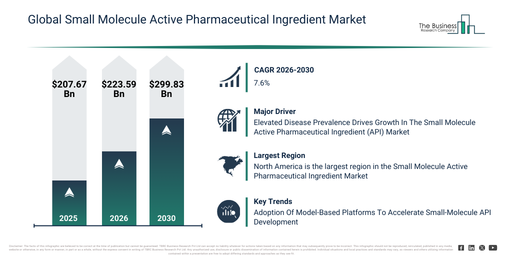
    The small molecule active pharmaceutical ingredient market size has experienced significant expansion over recent years. Projections indicate it will increase from $207.67 billion in 2025 to $223.59 billion in 2026, showcasing a compound annual growth rate (CAGR) of 7.7%. Historically, this growth was driven by factors such as the expansion of generic drug manufacturing, the expiration of patents for major drugs, the rising incidence of chronic diseases, well-established chemical synthesis capabilities, and the broadening of pharmaceutical manufacturing centers in Asia.

    The small molecule active pharmaceutical ingredient market is projected to experience substantial expansion over the upcoming years. This market is anticipated to reach a valuation of $299.83 billion by 2030, demonstrating a compound annual growth rate (CAGR) of 7.6%. Factors contributing to this growth during the projection period include an escalating demand for oncology and metabolic medications, an increase in contract API manufacturing, improvements in synthetic chemistry methods, a surge in regulatory approvals for generic drugs, and the expansion of pharmaceutical pipelines within developing markets. Key trends identified for the forecast timeframe involve the proliferation of generic small molecule APIs, greater reliance on outsourcing to contract manufacturing organizations, an increasing need for high-purity and potent APIs, efforts toward process optimization to achieve cost-effective API production, and an intensified emphasis on regulatory adherence and quality benchmarks.

    Access Your Free Sample Report For In-Depth Market Analysis:

    https://www.thebusinessresearchcompany.com/sample.aspx?id=7948&type=smp

    Which Key Factors Are Driving The Small Molecule Active Pharmaceutical Ingredient Market Growth?

    A primary factor fueling the growth of the small molecule active pharmaceutical ingredient (API) market is the rising occurrence of various diseases. A disease is defined as a specific abnormal state, involving a structural or functional impairment, which impacts a patient’s body. Active pharmaceutical ingredients (APIs) constitute the potent elements within a pharmaceutical drug, responsible for eliciting the desired physiological response to manage diverse ailments. As an illustration, reports from the American Society of Clinical Oncology (ASCO), a professional organization based in the US, indicated that in March 2023, an estimated more than 12,000 individuals in the US received a diagnosis of neuroendocrine tumors annually. Moreover, roughly 171,000 people were living with this condition in 2023. Globally, Cardiovascular diseases have led to the demise of 17.9 million individuals. Consequently, the growing occurrence of diseases is expected to remain a fundamental impetus for the small molecule API market.

    How Are Different Segments Classified In The Small Molecule Active Pharmaceutical Ingredient Market Segment Analysis?

    The small molecule active pharmaceutical ingredient market covered in this report is segmented –

    1) By Type: Synthetic, Chemical, Biological

    2) By Therapeutic Type: Autoimmune Diseases, Oncology, Metabolic Diseases, Ophthalmology, Cardiovascular Diseases, Infectious Diseases, Neurology, Respiratory Disorders, Dermatology, Urology

    3) By Manufacturing Method: In-House, Contract

    4) By Application: Clinical, Commercial

    Subsegments:

    1) By Synthetic: Small Molecule Drugs, Generic Drugs

    2) By Chemical: Organic Compounds, Inorganic Compounds

    3) By Biological: Natural Products, Semi-Synthetic Compounds

    Which Trends Are Shaping Growth In The Small Molecule Active Pharmaceutical Ingredient Market?

    Leading companies in the small molecule active pharmaceutical ingredient (API) market are prioritizing the introduction of advanced development platforms. These platforms are designed to expedite API process design, boost efficiency, and reduce time-to-market. Their aim is to streamline early development, enhance scalability, and support robust, cost-effective API manufacturing. For example, in May 2025, Lonza Group AG, a Switzerland-based pharmaceutical manufacturing company, launched its Design2Optimize Platform to streamline small molecule API development. This platform integrates digital tools, data-driven process optimization, and advanced automation to accelerate route scouting, improve process robustness, and minimize development timelines. By providing end-to-end optimization capabilities, Design2Optimize™ assists drug developers in enhancing API quality, reducing risk, and achieving faster, more efficient scale-up for commercial manufacturing.

    Who Are The Companies Driving Activity In The Small Molecule Active Pharmaceutical Ingredient Market?

    Major companies operating in the small molecule active pharmaceutical ingredient market are Pfizer Inc., BASF SE, Roche Holding AG, F. Hoffmann-La Roche Limited, AbbVie Inc., Allergan plc, Bayer AG, Novartis AG, Sanofi SA, Bristol Myers Squibb Company, AstraZeneca plc, Glaxo Smith Kline plc, China Resources Pharmaceutical Group Limited, Takeda Pharmaceutical Company Limited, Eli Lilly and Company, Gilead Sciences Inc., Boehringer Ingelheim International GmbH, Merck KGaA, Viatris Inc., Teva Pharmaceutical Industries Limited, Johnson Matthey plc, Astellas Pharma Inc., Albemarle Corporation, Sun Pharmaceutical Industries Limited, Aurobindo Pharma Limited, Dr Reddy’s Laboratories Limited, Siegfried Holding AG, Albany Molecular Research Inc., Cipla Inc., Cambrex Corporation, Daiichi Sankyo Company Ltd., Eisai Co Ltd., Otsuka Holdings Co Ltd.

    Get The Full Small Molecule Active Pharmaceutical Ingredient Market Report:

    https://www.thebusinessresearchcompany.com/report/small-molecule-active-pharmaceutical-ingredient-global-market-report

    Which Region Leads The Small Molecule Active Pharmaceutical Ingredient Market In Overall Market Size?

    North America was the largest region in the small molecule active pharmaceutical ingredient market in 2025. Asia-Pacific is expected to be the fastest-growing region in the forecast period. The regions covered in the small molecule active pharmaceutical ingredient market report are Asia-Pacific, South East Asia, Western Europe, Eastern Europe, North America, South America, Middle East, Africa.

    Request A Customized Small Molecule Active Pharmaceutical Ingredient Market Report For Competitive Insights:

    https://www.thebusinessresearchcompany.com/report/small-molecule-active-pharmaceutical-ingredient-global-market-report

    Browse Through More Reports Similar to the Global Small Molecule Active Pharmaceutical Ingredient Market 2026, By The Business Research Company

    Small Molecule Active Pharmaceutical Ingredient Market Report 2026

    https://www.thebusinessresearchcompany.com/report/small-molecule-active-pharmaceutical-ingredient-global-market-report

    Active Pharmaceutical Ingredients Market Report 2026

    https://www.thebusinessresearchcompany.com/report/active-pharmaceutical-ingredients-global-market-report

    Small Molecule Drug Discovery Market Report 2026

    https://www.thebusinessresearchcompany.com/report/small-molecule-drug-discovery-global-market-report

    Get in touch with us:

    The Business Research Company: https://www.thebusinessresearchcompany.com/

    Americas +1 310-496-7795

    Asia +44 7882 955267 & +91 8897263534

    Europe +44 7882 955267

    Email us at: marketing@tbrc.info

    Follow us on:

    LinkedIn: https://in.linkedin.com/company/the-business-research-company

    YouTube: https://www.youtube.com/channel/UC24_fI0rV8cR5DxlCpgmyFQ

    Global Market Model: https://www.thebusinessresearchcompany.com/global-market-model
  • Small Interfering Ribonucleic Acid (RNA) Market Outlook 2026–2030 Driven By Growth Factors And Projections

    Small Interfering Ribonucleic Acid (RNA) Market Outlook 2026–2030 Driven By Growth Factors And Projections

    The Business Research Company’s 2026 market reports feature enhanced tools like market attractiveness analysis, TAM assessment, and company scoring matrices, along with interactive dashboards, deeper supply chain insights, and startup coverage strengthening the depth, usability, and strategic value of insights.

    From Its 2026 Market Size, What Value Is The Small Interfering Ribonucleic Acid (RNA) Market Projected To Reach By 2030?

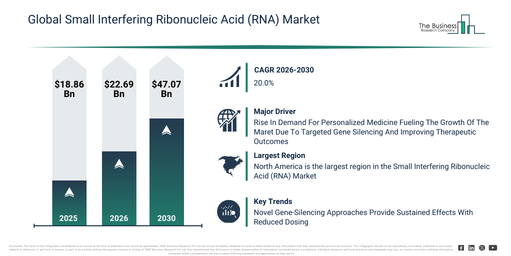
    The small interfering ribonucleic acid (rna) market size has undergone significant expansion in recent years. It is anticipated to increase from $18.86 billion in 2025 to $22.69 billion in 2026, achieving a compound annual growth rate (CAGR) of 20.3%. The market’s past growth can be linked to advancements in molecular biology research, a growing occurrence of genetic and chronic illnesses, the initial successes of rna-based therapies, enhanced research funding in genomics, and the establishment of rna interference mechanisms.

    The small interfering ribonucleic acid (rna) market size is projected to experience rapid expansion in the coming years. This market is predicted to reach $47.07 billion by 2030, exhibiting a compound annual growth rate (CAGR) of 20.0%. Factors driving this growth during the projected period include a rise in regulatory clearances for rna-based treatments, a greater need for individualized medicine, advancements in nanoparticle delivery technologies, increased funding from pharmaceutical firms, and the expanded use of sirna for infectious and rare conditions. Key trends anticipated in this forecast timeframe encompass a wider clinical integration of rna interference treatments, an intensified focus on precise gene silencing methods, the proliferation of sophisticated sirna delivery systems, an uptick in investments for developing precision therapeutics, and a stronger emphasis on scalable rna production.

    Access Your Free Sample Report For In-Depth Market Analysis:

    https://www.thebusinessresearchcompany.com/sample.aspx?id=30394&type=smp

    What Primary Drivers Are Shaping The Small Interfering Ribonucleic Acid (RNA) Market?

    The escalating need for personalized medicine is projected to stimulate the expansion of the small interfering ribonucleic acid (RNA) market in the future. Personalized medicine represents a healthcare strategy focused on customizing treatments for individual patients based on their genetic, environmental, and lifestyle attributes to optimize results and elevate care. The heightened demand for personalized medicine is driven by breakthroughs in genomic technologies, which allow for the accurate identification of genetic variations and the development of tailored therapies for individuals. Small interfering ribonucleic acid (siRNA) improves personalized medicine through targeted gene silencing, making it highly effective for managing specific genetic disorders and conditions. It diminishes unintended effects by precisely inhibiting disease-causing mRNA, thereby enhancing therapeutic effectiveness and patient outcomes. For instance, in February 2024, the Personalized Medicine Coalition (PMC), a US-based nonprofit organization, stated that the U.S. Food and Drug Administration (FDA) authorized 26 new personalized medicines in 2023, which is a considerable rise from the 12 approved in 2022. Thus, the increasing demand for personalized medicine is a significant catalyst for the growth of the small interfering ribonucleic acid (RNA) market.

    How Is The Small Interfering Ribonucleic Acid (RNA) Market Categorized Across Its Segment Groups?

    The small interfering ribonucleic acid (rna) market covered in this report is segmented –

    1) By Type: Liposome Systemic Therapy, Nanoparticle-Based Systemic Therapy

    2) By Indication: Cardiovascular Diseases, Respiratory Diseases, Oncology, Neurodegenerative Diseases, Infectious Diseases

    3) By End-User: Hospital, Research Institutions, Pharmaceutical And Biotechnology Companies, Academic Institutions

    Subsegments:

    1) By Liposome Systemic Therapy: Cationic Liposome Delivery, Neutral Liposome Delivery, Pegylated Liposome Delivery, Targeted Liposome Delivery

    2) By Nanoparticle-Based Systemic Therapy: Lipid Nanoparticle Delivery, Polymer Nanoparticle Delivery, Gold Nanoparticle Delivery, Silica Nanoparticle Delivery

    What Trends Are Affecting The Direction Of The Small Interfering Ribonucleic Acid (RNA) Market?

    Leading companies in the small interfering ribonucleic acid (siRNA) therapeutics market are concentrating on securing regulatory approvals for innovative mechanisms aimed at treating rare genetic diseases, intending to offer sustained effects and reduce the frequency of dosing for patients. Regulatory approvals signify official clearances granted by authorities, permitting a drug or therapy to be safely tested, marketed, or used for patients. For instance, in March 2025, Alnylam Pharmaceuticals Inc., a US-based biopharmaceutical company, obtained approval from the U.S. Food and Drug Administration (FDA) for Qfitlia (fitusiran). This marked the first small interfering ribonucleic acid (siRNA)-based therapy for adults and adolescents aged 12 years and older diagnosed with hemophilia A or B, regardless of inhibitor presence. It functions by lowering antithrombin levels, thereby enhancing thrombin generation to foster clot formation and diminish bleeding episodes. Qfitlia offers a subcutaneous, once-every-two-month dosing regimen, presenting a novel, non-factor therapeutic choice for hemophilia management.

    Which Firms Are Influencing Competition In The Small Interfering Ribonucleic Acid (RNA) Market?

    Major companies operating in the small interfering ribonucleic acid (rna) market are Novartis AG, Thermo Fisher Scientific Inc., GlaxoSmithKline plc, Sanofi S.A., Sarepta Therapeutics Inc., Alnylam Pharmaceuticals Inc., Ionis Pharmaceuticals Inc., Wave Life Sciences Ltd., Silence Therapeutics plc, Arrowhead Pharmaceuticals Inc., Quark Pharmaceuticals Inc., Arbutus Biopharma Corporation, Evox Therapeutics Ltd., Phio Pharmaceuticals Inc., Genecon Biotechnologies Co. Ltd., Olix Pharmaceuticals Inc., Benitec Biopharma Ltd., Bio-Path Holdings Inc., Calando Pharmaceuticals Inc., Sirnaomics Ltd.

    Get The Full Small Interfering Ribonucleic Acid (RNA) Market Report:

    https://www.thebusinessresearchcompany.com/report/global-small-interfering-ribonucleic-acid-rna-market-report

    Which Region Is The Top Contributor To The Small Interfering Ribonucleic Acid (RNA) Market By Share?

    North America was the largest region in the small interfering ribonucleic acid (RNA) market in 2025. The regions covered in the small interfering ribonucleic acid (rna) market report are Asia-Pacific, South East Asia, Western Europe, Eastern Europe, North America, South America, Middle East, Africa.

    Request A Customized Small Interfering Ribonucleic Acid (RNA) Market Report For Competitive Insights:

    https://www.thebusinessresearchcompany.com/report/global-small-interfering-ribonucleic-acid-rna-market-report

    Browse Through More Reports Similar to the Global Small Interfering Ribonucleic Acid (RNA) Market 2026, By The Business Research Company

    Ribonucleic Acid Rna Sequencing Market Report 2026

    https://www.thebusinessresearchcompany.com/report/ribonucleic-acid-rna-sequencing-global-market-report

    Ribose Nucleic Acid Rna Based Therapeutics Market Report 2026

    https://www.thebusinessresearchcompany.com/report/ribose-nucleic-acid-rna-based-therapeutics-global-market-report

    Nucleic Acid Isolation And Purification Market Report 2026

    https://www.thebusinessresearchcompany.com/report/nucleic-acid-isolation-and-purification-global-market-report

    Get in touch with us:

    The Business Research Company: https://www.thebusinessresearchcompany.com/

    Americas +1 310-496-7795

    Asia +44 7882 955267 & +91 8897263534

    Europe +44 7882 955267

    Email us at: marketing@tbrc.info

    Follow us on:

    LinkedIn: https://in.linkedin.com/company/the-business-research-company

    YouTube: https://www.youtube.com/channel/UC24_fI0rV8cR5DxlCpgmyFQ

    Global Market Model: https://www.thebusinessresearchcompany.com/global-market-model
  • Small Cell Lung Cancer Therapeutics Market Developments And Opportunities Across 2026–2030

    Small Cell Lung Cancer Therapeutics Market Developments And Opportunities Across 2026–2030

    The Business Research Company’s 2026 market reports feature enhanced tools like market attractiveness analysis, TAM assessment, and company scoring matrices, along with interactive dashboards, deeper supply chain insights, and startup coverage strengthening the depth, usability, and strategic value of insights.

    How Much Growth In Market Value Is Expected For The Small Cell Lung Cancer Therapeutics Market Between 2026 And 2030?

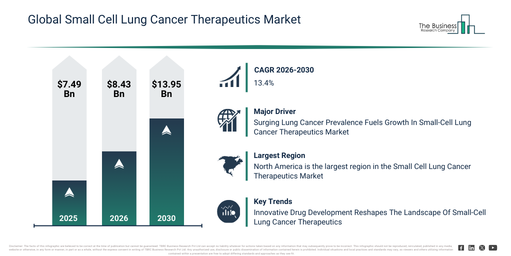
    The small cell lung cancer therapeutics market size has seen rapid expansion over recent years. It is anticipated to increase from $7.49 billion in 2025 to $8.43 billion in 2026, achieving a compound annual growth rate (CAGR) of 12.5%. This historical growth can be ascribed to the increasing prevalence of lung cancers linked to smoking, the high mortality rate of small cell lung cancer, the historically limited treatment options, heightened awareness of lung cancer, and expanding investment in oncology research.

    The small cell lung cancer therapeutics market size is anticipated to experience substantial growth in the upcoming years. It is projected to expand to $13.95 billion by 2030, demonstrating a compound annual growth rate (CAGR) of 13.4%. This projected growth can be attributed to innovations in immunotherapy and targeted therapies, the integration of AI into treatment planning, an increase in the adoption of precision medicine, advancements in early detection technologies, and the global expansion of cancer therapy centers. Key trends for the forecast period encompass further developments in immunotherapy, the creation of combination therapies, improved early detection and diagnosis tools, personalized treatment protocols, and effective drug resistance management strategies.

    Access Your Free Sample Report For In-Depth Market Analysis:

    https://www.thebusinessresearchcompany.com/sample.aspx?id=12912&type=smp

    Which Major Drivers Are Influencing The Expansion Of The Small Cell Lung Cancer Therapeutics Market?

    The small-cell lung cancer therapeutics market is projected to expand due to the escalating prevalence of lung cancer. Lung cancer is a malignant condition defined by the unchecked proliferation of abnormal cells within the lung tissues, presenting with symptoms like coughing, chest pain, and difficulty breathing. Treatments for lung cancer, including small cell lung cancer, typically involve a combination of chemotherapy, radiation therapy, and, in some cases, targeted therapies, which aim to provide patients with prolonged survival and an improved quality of life. For instance, according to the American Cancer Society Facts and Figures, a US-based professional organizations company, new lung and bronchus cancer cases were estimated at 236,740 in 2022 and 238,340 in 2023, with corresponding estimated deaths of 130,180 in 2022 and 127,070 in 2023, as reported in January 2023. Therefore, the rising occurrence of lung cancer is fueling the growth of the small-cell lung cancer therapeutics market.

    How Are Segments Identified Within The Small Cell Lung Cancer Therapeutics Market Segment Framework?

    The small cell lung cancer therapeutics market covered in this report is segmented –

    1) By Drug Type: Atezolizumab, Topotecan, Lurbinectedin, Durvalumab, Methotrexate, Pembrolizumab

    2) By Treatment Type: Chemotherapy, Targeted Therapy, Other Treatment Types

    3) By Route Of Administration: Oral, Parenteral, Other Routes Of Administrations

    4) By End-Users: Hospitals, Cancer Therapy Centers, Other End-Users

    What Trends Are Influencing The Evolution Of The Small Cell Lung Cancer Therapeutics Market?

    Leading companies engaged in small-cell lung cancer therapeutics are concentrating on developing innovative products, such as monoclonal antibodies, to boost the efficacy of targeted treatments and improve patient outcomes. Monoclonal antibodies are laboratory-generated molecules designed to specifically bind to particular antigens, ensuring uniformity and specificity from a single clone of immune cells. They are widely utilized in therapies for cancer and autoimmune diseases owing to their precise action. For example, in March 2024, PT Kalbe Farma Tbk, an Indonesian-based healthcare provider, introduced Serplulimab to lung cancer patients. Serplulimab, a fully humanized anti-PD-1 monoclonal antibody, has exhibited significant effectiveness as a first-line treatment for extensive-stage small cell lung cancer (ES-SCLC), extending the median overall survival to 15.4 months compared to 10.9 months achieved with chemotherapy alone. In clinical trials, it also showed enhanced progression-free survival and a higher objective response rate, solidifying its position as a promising alternative for patients previously untreated for this aggressive cancer type.

    Who Are The Companies Competing Within The Small Cell Lung Cancer Therapeutics Market?

    Major companies operating in the small cell lung cancer therapeutics market are Pfizer Inc., F. Hoffmann-La Roche AG, AbbVie Inc, Bayer AG, Janssen Pharmaceuticals, Novartis AG, Merck and Co. Inc., Sanofi S.A, Bristol-Myers Squibb Company, Astrazeneca plc, GSK plc, Eli Lilly and Company, Gilead Sciences Inc, Boehringer Ingelheim International GmbH, Otsuka Pharmaceutical Co. Ltd., Teva Pharmaceutical Industries Ltd., Regeneron Pharmaceuticals, Mylan N.V., Astellas Pharma Inc., Daiichi Sankyo Company Ltd., Aurobindo Pharma Limited, Kyowa Kirin Co. Ltd.

    Get The Full Small Cell Lung Cancer Therapeutics Market Report:

    https://www.thebusinessresearchcompany.com/report/small-cell-lung-cancer-therapeutics-global-market-report

    Which Region Represents The Largest Share Of The Small Cell Lung Cancer Therapeutics Market?

    North America was the largest region in the small cell Lung cancer therapeutics market in 2025. Asia-Pacific is expected to be the fastest-growing region in the forecast period. The regions covered in the small cell lung cancer therapeutics market report are Asia-Pacific, South East Asia, Western Europe, Eastern Europe, North America, South America, Middle East, Africa.

    Request A Customized Small Cell Lung Cancer Therapeutics Market Report For Competitive Insights:

    https://www.thebusinessresearchcompany.com/report/small-cell-lung-cancer-therapeutics-global-market-report

    Browse Through More Reports Similar to the Global Small Cell Lung Cancer Therapeutics Market 2026, By The Business Research Company

    Small Cell Lung Cancer Therapeutics Market Report 2026

    https://www.thebusinessresearchcompany.com/report/small-cell-lung-cancer-therapeutics-global-market-report

    Non Small Cell Lung Cancer Nsclc Market Report 2026

    https://www.thebusinessresearchcompany.com/report/non-small-cell-lung-cancer-nsclc-global-market-report

    Non Small Cell Lung Cancer Nsclc Market Report 2026

    https://www.thebusinessresearchcompany.com/report/non-small-cell-lung-cancer-nsclc-global-market-report

    Get in touch with us:

    The Business Research Company: https://www.thebusinessresearchcompany.com/

    Americas +1 310-496-7795

    Asia +44 7882 955267 & +91 8897263534

    Europe +44 7882 955267

    Email us at: marketing@tbrc.info

    Follow us on:

    LinkedIn: https://in.linkedin.com/company/the-business-research-company

    YouTube: https://www.youtube.com/channel/UC24_fI0rV8cR5DxlCpgmyFQ

    Global Market Model: https://www.thebusinessresearchcompany.com/global-market-model
  • Sleeping Pills Market Forecast 2026–2030 Presenting Long-Term Industry Insights

    Sleeping Pills Market Forecast 2026–2030 Presenting Long-Term Industry Insights

    The Business Research Company’s 2026 market reports feature enhanced tools like market attractiveness analysis, TAM assessment, and company scoring matrices, along with interactive dashboards, deeper supply chain insights, and startup coverage strengthening the depth, usability, and strategic value of insights.

    What Is The Estimated Market Size Of The Sleeping Pills Market In 2026, And How Will Its Value Evolve By 2030?

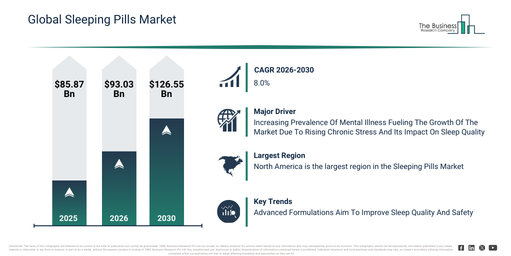
    The sleeping pills market size has seen robust growth over recent years. It is anticipated to expand from $85.87 billion in 2025 to $93.03 billion in 2026, achieving a compound annual growth rate (CAGR) of 8.3%. This historical growth can be linked to the limited availability of sleep disorder treatments, an increasing prevalence of insomnia, the strong presence of prescription sleeping pills, established pharmacy distribution channels, and insufficient awareness regarding sleep hygiene.

    The sleeping pills market is projected to experience substantial expansion over the upcoming years. By 2030, this market is anticipated to reach a valuation of $126.55 billion, exhibiting a compound annual growth rate (CAGR) of 8.0%. This projected growth during the forecast period stems from factors such as the advancement of new non-benzodiazepine medications, a growing preference for melatonin and herbal supplements, increasing prevalence of online pharmacies, tailored sleep treatment initiatives, and a broadening consumer base among the elderly and adults. Key trends observed within the forecast period encompass a global increase in sleep disorder diagnoses, greater uptake of over-the-counter sleep solutions, an enhanced emphasis on customized sleep therapy, the proliferation of online pharmacies and e-commerce platforms, and heightened awareness regarding natural and herbal sleep aids.

    Access Your Free Sample Report For In-Depth Market Analysis:

    https://www.thebusinessresearchcompany.com/sample.aspx?id=24704&type=smp

    What Key Drivers Are Fueling The Growth Of The Sleeping Pills Market?

    A rise in mental illness cases is projected to boost the expansion of the sleeping pills market in the future. These conditions encompass various mental health disorders impacting an individual’s mood, cognitive processes, conduct, and general daily operation. The growing occurrence of mental illness stems from elevated chronic stress, which, when prolonged, impairs brain function and can initiate or exacerbate mental health issues. Sleeping pills contribute to addressing mental illness by enhancing sleep quality, a critical factor for maintaining emotional and cognitive balance. These medications assist in alleviating anxiety and depression symptoms through facilitating restorative sleep, thereby improving general mental well-being and daily performance. For example, data reported in 2025 by US-based health agencies, the National Alliance on Mental Illness and NextStep Solutions Behavioral Health, indicated that the prevalence of serious mental illness (SMI) stood at approximately 5.44% in 2023, staying near 5.6% of adults in 2024, demonstrating consistency within this severe classification. Consequently, the expanding incidence of mental illness is stimulating the development of the sleeping pills market.

    What Are The Key Segment Divisions In The Sleeping Pills Market Segment Structure?

    The sleeping pills market covered in this report is segmented –

    1) By Medication Type: Prescription Sleeping Pills, Over The Counter (OTC) Sleeping Pills

    2) By Product Type: Benzodiazepines, Non Benzodiazepines

    3) By Sleep Disorder: Insomnia, Sleep Disorder, Restless Leg Syndrome Narcolepsy, Sleepwalking

    4) By Consumer Demographics: Age Groups, Gender, Health Conditions

    5) By Distribution Channel: Retail Pharmacies, Online Pharmacies, Hospitals And Clinics, Health And Wellness Stores

    Subsegments:

    1) By Prescription Sleeping Pills: Benzodiazepines, Non-Benzodiazepines, Antidepressants, Antihistamines, Melatonin Receptor Agonists, Orexin Receptor Antagonists

    2) By Over The Counter (OTC): Diphenhydramine, Doxylamine, Melatonin Supplements, Valerian Root

    Which Trends Are Impacting The Progress Of The Sleeping Pills Market?

    Leading companies in the sleeping pills market are concentrating on creating advanced formulations, including novel drug compositions, to improve sleep quality, minimize dependency risks, and reduce side effects. Novel drug formulations entail the development of new medication mixtures intended to enhance effectiveness, optimize absorption, lessen adverse reactions, and deliver more targeted and patient-friendly treatment solutions. For example, in October 2024, Neurovalens, a medical device company based in the UK, introduced Modius Sleep, a Food and Drug Administration (FDA)-cleared, physician-prescribed medical device specifically designed to address chronic insomnia in adults aged 22 and above. This device utilizes low-level electrical vestibular nerve stimulation to target the hypothalamus and brainstem, which are critical areas governing sleep and circadian rhythms. The device is worn on the head for 30 minutes every evening, typically 1–2 hours prior to bedtime, offering adjustable intensity for user comfort. Modius Sleep is user-friendly, portable, and can be worn while engaging in activities such as reading or watching TV.

    Which Organizations Are Engaged In The Sleeping Pills Market?

    Major companies operating in the sleeping pills market are Pfizer Inc., Johnson & Johnson, F. Hoffmann-La Roche AG, Merck & Co. Inc., Sanofi S.A., Abbott Laboratories, GSK plc, Takeda Pharmaceutical Company Limited, Eli Lilly and Company, Viatris Inc., Teva Pharmaceutical Industries Ltd., Eisai Co Ltd., Sun Pharmaceutical Industries Ltd., Apotex Inc., Cipla Limited, Aurobindo Pharma Ltd. , Dr. Reddy’s Laboratories Ltd., Hikma Pharmaceuticals plc, Lupin Limited, Glenmark Pharmaceuticals Ltd., Torrent Pharmaceuticals Ltd., Perrigo Company plc, Mallinckrodt Pharmaceuticals plc, Idorsia Pharmaceuticals Ltd, Procter & Gamble Health Limited (P&G Health), Allegiant Health

    Get The Full Sleeping Pills Market Report:

    https://www.thebusinessresearchcompany.com/report/sleeping-pills-global-market-report

    Which Geographic Region Dominates The Sleeping Pills Market?

    North America was the largest region in the sleeping pills market in 2025. Europe is expected to be the fastest-growing region in the forecast period. The regions covered in the sleeping pills market report are Asia-Pacific, South East Asia, Western Europe, Eastern Europe, North America, South America, Middle East, Africa.

    Request A Customized Sleeping Pills Market Report For Competitive Insights:

    https://www.thebusinessresearchcompany.com/report/sleeping-pills-global-market-report

    Browse Through More Reports Similar to the Global Sleeping Pills Market 2026, By The Business Research Company

    Sleep Apnea Devices Market Report 2026

    https://www.thebusinessresearchcompany.com/report/sleep-apnea-devices-global-market-report

    Sleep Tech Devices Market Report 2026

    https://www.thebusinessresearchcompany.com/report/sleep-tech-devices-global-market-report

    Sleeping Aids Market Report 2026

    https://www.thebusinessresearchcompany.com/report/sleeping-aids-global-market-report

    Get in touch with us:

    The Business Research Company: https://www.thebusinessresearchcompany.com/

    Americas +1 310-496-7795

    Asia +44 7882 955267 & +91 8897263534

    Europe +44 7882 955267

    Email us at: marketing@tbrc.info

    Follow us on:

    LinkedIn: https://in.linkedin.com/company/the-business-research-company

    YouTube: https://www.youtube.com/channel/UC24_fI0rV8cR5DxlCpgmyFQ

    Global Market Model: https://www.thebusinessresearchcompany.com/global-market-model