Category: Pharmaceuticals

  • The Drugs For Hormonal Replacement Therapy Market Is Evolving Due To Rising Respiratory Infections Fuel Growth In RSV Vaccine

    The Drugs For Hormonal Replacement Therapy Market Is Evolving Due To Rising Respiratory Infections Fuel Growth In RSV Vaccine

    The Business Research Company’s 2026 market reports feature enhanced tools like market attractiveness analysis, TAM assessment, and company scoring matrices, along with interactive dashboards, deeper supply chain insights, and startup coverage strengthening the depth, usability, and strategic value of insights.

    What Is The Anticipated Rise In Market Value Of The Drugs For Hormonal Replacement Therapy Market During The Forecast Period?

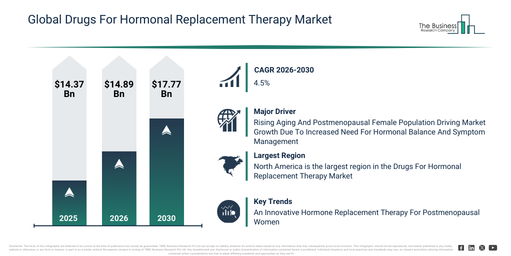
    The market size for drugs used in hormonal replacement therapy has demonstrated consistent growth over recent years. Forecasts indicate it will expand from $14.37 billion in 2025 to $14.89 billion by 2026, advancing at a compound annual growth rate (CAGR) of 3.6%. Historically, this growth can be attributed to menopause-related health needs, hormone deficiency disorders, the clinical acceptance of HRT, hospital-based endocrinology services, and the availability of oral hormone drugs.

    The market for drugs used in hormonal replacement therapy is projected to experience consistent expansion over the upcoming years. This market is anticipated to reach $17.77 billion by 2030, demonstrating a compound annual growth rate (CAGR) of 4.5%. Factors contributing to this anticipated growth include an aging worldwide population, increased recognition of hormone imbalances, advancements in bioidentical hormones, the broadening of outpatient endocrinology services, and enhancements in diagnostic testing. Key trends expected during the forecast timeframe encompass an escalating demand for menopause management solutions, an increase in testosterone replacement therapy, the development of personalized hormone treatments, a greater adoption of transdermal therapies, and an emphasis on the long-term safety of hormone treatments.

    Access Your Free Sample Report For In-Depth Market Analysis:

    https://www.thebusinessresearchcompany.com/sample.aspx?id=2575&type=smp

    What Primary Drivers Are Shaping The Drugs For Hormonal Replacement Therapy Market?

    The expanding demographic of older and postmenopausal women is anticipated to fuel the drugs for hormonal replacement therapy market. Females reaching postmenopause frequently face diminished estrogen and progesterone levels, resulting in symptoms such as hot flashes, mood swings, bone density loss, and sleep disturbances. This increase in the postmenopausal female segment is largely attributable to longer life expectancies and an older global female population, meaning more women live past menopause. The growing postmenopausal demographic supports the hormonal replacement therapy market by increasing the need for medicines that reestablish hormonal equilibrium, avert long-term issues like osteoporosis, and enhance general health. For example, in May 2025, a global research initiative on women’s health, Impacts of Menopause, projected that by 2030, the population of women aged 45 to 55 would reach almost 500 million, indicating that approximately 6 percent of the world’s population will be in menopause. Consequently, the rising population of aging and postmenopausal women is propelling the growth of the drugs for hormonal replacement therapy market.

    Which Segment Types Are Examined In The Drugs For Hormonal Replacement Therapy Market Segment Study?

    The drugs for hormonal replacement therapy market covered in this report is segmented –

    1) By Therapy Type: Estrogen Replacement Therapy, Human Growth Hormone (HGH) Replacement Therapy, Thyroid Replacement Therapy, Testosterone Replacement Therapy

    2) By Distribution Channel: Hospital Pharmacies, Retail Pharmacies, Online Pharmacies

    3) By Application: Hypothyroidism, Male Hypogonadism, Growth Hormone Deficiency, Menopause, Other Applications

    Subsegments:

    1) By Estrogen Replacement Therapy: Oral Estrogen Therapy (Estradiol, Conjugated Estrogens), Transdermal Estrogen Therapy (Estradiol Patches), Estrogen Implants, Vaginal Estrogen Therapy (Creams, Tablets, Rings)

    2) By Human Growth Hormone (HGH) Replacement Therapy: Recombinant Human Growth Hormone (Somatropin), Synthetic Growth Hormone Preparations, HGH Injections

    3) By Thyroid Replacement Therapy: Levothyroxine Sodium (Synthetic T4), Liothyronine Sodium (Synthetic T3), Combination Therapy (T4 and T3), Natural Desiccated Thyroid (Armour Thyroid)

    4) By Testosterone Replacement Therapy: Injectable Testosterone (Testosterone Enanthate, Testosterone Cypionate), Transdermal Testosterone (Patches, Gels), Oral Testosterone (Testosterone Undecanoate), Buccal Testosterone, Testosterone Implants

    Which Trends Are Impacting The Progress Of The Drugs For Hormonal Replacement Therapy Market?

    Leading enterprises within the hormonal replacement therapy market are prioritizing the creation of advanced solutions, specifically novel hormone replacement therapies tailored for postmenopausal women who have a uterus. New Hormone Replacement Therapy (HRT) denotes groundbreaking treatments engineered to restore or maintain hormonal equilibrium in the body, usually when natural hormone levels decrease due to age or health issues. As an example, in June 2023, Pfizer, a pharmaceutical firm based in the US, introduced DUAVEE (conjugated estrogens/bazedoxifene). This product addresses moderate to severe vasomotor symptoms linked to menopause, including hot flashes, and also aids in preventing postmenopausal osteoporosis. A distinctive characteristic of DUAVEE is its formulation, which unites conjugated estrogens with bazedoxifene, a selective estrogen receptor modulator (SERM), rather than a progestin. This novel combination contributes to lowering the danger of endometrial hyperplasia, a condition that might arise with therapies relying solely on estrogen, thus presenting a more secure alternative for women with a uterus facing menopausal symptoms.

    Which Players Are Part Of The Competitive Landscape Of The Drugs For Hormonal Replacement Therapy Market?

    Major companies operating in the drugs for hormonal replacement therapy market are Novo Nordisk AS, Eli Lilly and Company, Pfizer Inc., Abbott Laboratories, Bayer AG, Novartis AG, Teva Pharmaceutical Industries Ltd., Mylan N.V., Viatris Inc., Orion Pharma AB, Allergan Plc, Wyeth Ltd., Amgen Inc., Genentech USA Inc., TherapeuticsMD Inc., GlaxoSmithKline plc, Sanofi S.A., Johnson & Johnson Services Inc., Takeda Pharmaceutical Company Limited, Hisamitsu Pharmaceutical Co. Inc.

    Get The Full Drugs For Hormonal Replacement Therapy Market Report:

    https://www.thebusinessresearchcompany.com/report/drugs-for-hormonal-replacement-therapy-global-market-report

    Which Region Leads The Drugs For Hormonal Replacement Therapy Market In Overall Market Size?

    North America was the largest region in the drugs for hormonal replacement therapy market in 2025. The Middle East is expected to be the fastest-growing region in the drugs for hormonal replacement therapy market during the forecast period. The regions covered in the drugs for hormonal replacement therapy market report are Asia-Pacific, South East Asia, Western Europe, Eastern Europe, North America, South America, Middle East, Africa.

    Request A Customized Drugs For Hormonal Replacement Therapy Market Report For Competitive Insights:

    https://www.thebusinessresearchcompany.com/report/drugs-for-hormonal-replacement-therapy-global-market-report

    Browse Through More Reports Similar to the Global Drugs For Hormonal Replacement Therapy Market 2026, By The Business Research Company

    Drugs For Hormonal Replacement Therapy Market Report 2026

    https://www.thebusinessresearchcompany.com/report/drugs-for-hormonal-replacement-therapy-global-market-report

    Hormone Therapy Market Report 2026

    https://www.thebusinessresearchcompany.com/report/hormone-therapy-global-market-report

    Testosterone Replacement Therapy Market Report 2026

    https://www.thebusinessresearchcompany.com/report/testosterone-replacement-therapy-global-market-report

    Get in touch with us:

    The Business Research Company: https://www.thebusinessresearchcompany.com/

    Americas +1 310-496-7795

    Asia +44 7882 955267 & +91 8897263534

    Europe +44 7882 955267

    Email us at: marketing@tbrc.info

    Follow us on:

    LinkedIn: https://in.linkedin.com/company/the-business-research-company

    YouTube: https://www.youtube.com/channel/UC24_fI0rV8cR5DxlCpgmyFQ

    Global Market Model: https://www.thebusinessresearchcompany.com/global-market-model
  • The Intratumoral Cancer Therapies Market Is Witnessing Impact From Rising Prevalence Of Fungal Infections Driving Growth Due To Increased Need For Effective Antifungal Therapies

    The Intratumoral Cancer Therapies Market Is Witnessing Impact From Rising Prevalence Of Fungal Infections Driving Growth Due To Increased Need For Effective Antifungal Therapies

    The Business Research Company’s 2026 market reports feature enhanced tools like market attractiveness analysis, TAM assessment, and company scoring matrices, along with interactive dashboards, deeper supply chain insights, and startup coverage strengthening the depth, usability, and strategic value of insights.

    By 2030, What Market Size Is The Intratumoral Cancer Therapies Market Expected To Reach Based On Its 2026 Value?

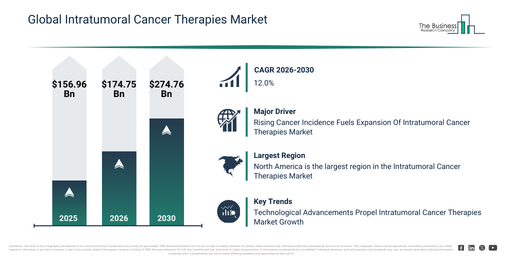
    The intratumoral cancer therapies market size has demonstrated significant expansion in recent years. It is anticipated to increase from $156.96 billion in 2025 to $174.75 billion in 2026, achieving a compound annual growth rate (CAGR) of 11.3%. The historical period’s growth can be attributed to several factors including limited treatment specificity, a substantial reliance on chemotherapy, infrequent adoption of immunotherapy, established conventional tumor injection methods, and inconsistencies in regional healthcare infrastructure.

    The market for intratumoral cancer therapies is projected to experience swift expansion over the coming years. This market is set to reach $274.76 billion by 2030, demonstrating a compound annual growth rate (CAGR) of 12.0%. Key factors driving this growth during the forecast period include the increasing adoption of precision medicine, the expanding application of immuno-oncology therapies, innovations in injection device technology, a surge in collaborations with biotechnology companies, and greater funding for cancer research. Significant trends anticipated in this period encompass targeted intratumoral drug delivery methods, combined therapy strategies, individualized cancer treatments, less invasive administration techniques, and improved modulation of the tumor microenvironment.

    Access Your Free Sample Report For In-Depth Market Analysis:

    https://www.thebusinessresearchcompany.com/sample.aspx?id=9979&type=smp

    What Key Drivers Are Fueling The Growth Of The Intratumoral Cancer Therapies Market?

    The growing occurrence of cancer is anticipated to drive the expansion of the intratumoral cancer therapies market in the future. Cancer refers to a collection of illnesses marked by the unregulated proliferation and dissemination of atypical cells within the body. These therapies, intratumoral cancer therapies, find application in both identifying and managing cancer, assisting in the prevention of off-target toxicities, dose-limiting toxicities, and unwanted consequences stemming from immune stimulation in individuals afflicted with cancer. As an illustration, in January 2023, the American Cancer Society, a U.S.-based nonprofit cancer advocacy organization, forecast around 1,958,310 new cancer diagnoses for 2023 in the United States, a figure that contrasts with roughly 1,918,160 new cases reported in 2022, signifying an increase of about 2.1%. Consequently, the rising occurrence of cancer is fueling the expansion of the intratumoral cancer therapies market.

    How Are Segments Identified Within The Intratumoral Cancer Therapies Market Segment Framework?

    The intratumoral cancer therapies market covered in this report is segmented –

    1) By Technology: Monoclonal Antibodies, Vaccines, Checkpoint Inhibitors, Cell Therapies, Immunes System Modulator, Adoptive Cell Transfer, Cytokines

    2) By Application: Lung Cancer, Breast Cancer, Melanoma, Prostate Cancer, Head And Neck Cancer, Other Applications

    3) By End Users: Hospitals, Cancer Research Centers, Clinics

    Subsegments:

    1) By Monoclonal Antibodies: Naked Monoclonal Antibodies, Conjugated Monoclonal Antibodies, Bispecific Monoclonal Antibodies

    2) By Vaccines: Peptide-Based Vaccines, Protein-Based Vaccines, DNA Vaccines

    3) By Checkpoint Inhibitors: PD-1 Or PD-L1 Inhibitors, CTLA-4 Inhibitors

    4) By Cell Therapies: CAR T-Cell Therapy, TCR Therapy

    5) By Immune System Modulators: Immune Checkpoint Inhibitors, Toll-Like Receptor Agonists

    6) By Adoptive Cell Transfer: Tumor-Infiltrating Lymphocytes (TILs), Peripheral Blood Lymphocytes (PBLs)

    7) By Cytokines: Interleukins, Interferons, Tumor Necrosis Factor (TNF)

    What Trends Are Shaping The Future Of The Intratumoral Cancer Therapies Market?

    Leading firms in the intratumoral cancer therapies market are concentrating on creating novel solutions, including sophisticated oncolytic virus platforms, to address the increasing need for focused tumor elimination, improved immune responses, and advanced localized cancer treatments. These oncolytic virus therapies involve genetically modified viral structures that are engineered to specifically reproduce within cancer cells, leading to direct tumor breakdown and concurrently stimulating a body-wide anti-tumor immune response, thereby presenting a more precise and immune-boosting option compared to conventional chemotherapy and radiation. As an illustration, in November 2024, Replimune Group, Inc., a U.S.-based clinical-stage biotechnology company, disclosed that its primary experimental drug, RP1 (vusolimogene oderparepvec) — an engineered herpes simplex virus equipped with a fusogenic protein and GM-CSF — had been granted Breakthrough Therapy Designation by the FDA, with its Biologics License Application also submitted via the Accelerated Approval pathway. This particular technology facilitates the intratumoral administration of an oncolytic virus that directly eliminates tumor cells and enhances systemic immune reactions, marking a notable progression in cancer therapy.

    Who Are The Companies Competing Within The Intratumoral Cancer Therapies Market?

    Major companies operating in the intratumoral cancer therapies market are Amgen Inc., AstraZeneca plc, Bayer AG, Bristol-Myers Squibb Company, Pfizer Inc., Novartis AG, Johnson & Johnson, Eli Lilly and Company, F. Hoffmann-la Roche, Takeda Pharmaceutical Company Ltd., GSK plc, Ziopharm Oncology Inc., Celldex Therapeutics Inc., Astellas Pharma Inc., Sirnaomics, Checkmate Pharmaceuticals Inc., Immunovative Therapies Ltd., Idera Pharmaceuticals Inc., Daiichi Sankyo, Philogen S.p.A., Apexigen Inc., Merck Group, OncoSec Medical Incorporated, DNAtrix, Istari Oncology Inc., Nanobiotix, Exicure Inc., Karyopharm Therapeutics Inc., Torigen Pharmaceuticals Inc.

    Get The Full Intratumoral Cancer Therapies Market Report:

    https://www.thebusinessresearchcompany.com/report/intratumoral-cancer-therapies-global-market-report

    Which Region Leads The Intratumoral Cancer Therapies Market In Terms Of Market Share?

    North America was the largest region in the intratumoral cancer therapies market in 2025. The regions covered in the intratumoral cancer therapies market report are Asia-Pacific, South East Asia, Western Europe, Eastern Europe, North America, South America, Middle East, Africa.

    Request A Customized Intratumoral Cancer Therapies Market Report For Competitive Insights:

    https://www.thebusinessresearchcompany.com/report/intratumoral-cancer-therapies-global-market-report

    Browse Through More Reports Similar to the Global Intratumoral Cancer Therapies Market 2026, By The Business Research Company

    Intratumoral Cancer Therapies Market Report 2026

    https://www.thebusinessresearchcompany.com/report/intratumoral-cancer-therapies-global-market-report

    Intestine Cancer Therapeutics Market Report 2026

    https://www.thebusinessresearchcompany.com/report/intestine-cancer-therapeutics-global-market-report

    Appendiceal Cancer Treatment Market Report 2026

    https://www.thebusinessresearchcompany.com/report/appendiceal-cancer-treatment-global-market-report

    Get in touch with us:

    The Business Research Company: https://www.thebusinessresearchcompany.com/

    Americas +1 310-496-7795

    Asia +44 7882 955267 & +91 8897263534

    Europe +44 7882 955267

    Email us at: marketing@tbrc.info

    Follow us on:

    LinkedIn: https://in.linkedin.com/company/the-business-research-company

    YouTube: https://www.youtube.com/channel/UC24_fI0rV8cR5DxlCpgmyFQ

    Global Market Model: https://www.thebusinessresearchcompany.com/global-market-model
  • The Rise Of Impact Of Increasing Infertility Rates On The Growth Of The Is Influencing The Drugs For Erectile Dysfunction Market

    The Rise Of Impact Of Increasing Infertility Rates On The Growth Of The Is Influencing The Drugs For Erectile Dysfunction Market

    The Business Research Company’s 2026 market reports feature enhanced tools like market attractiveness analysis, TAM assessment, and company scoring matrices, along with interactive dashboards, deeper supply chain insights, and startup coverage strengthening the depth, usability, and strategic value of insights.

    How Is The Market Size Of The Drugs For Erectile Dysfunction Market Expected To Scale Between 2026 And 2030?

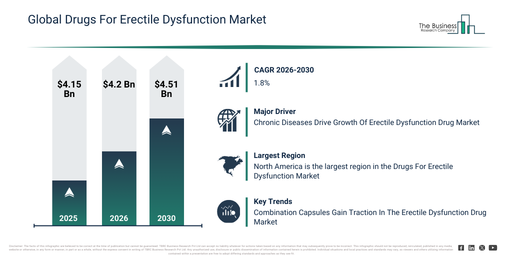
    The market for erectile dysfunction drugs has experienced modest growth in recent years. It is projected to expand from $4.15 billion in 2025 to $4.2 billion in 2026, at a compound annual growth rate (CAGR) of 1.0%. This historical increase can be ascribed to factors such as the rising incidence of erectile dysfunction among the aging male demographic, enhanced awareness about sexual health, the development of hospital and retail pharmacies, the expiry of patents for key medications, and intensified research and development efforts in erectile dysfunction treatments.

    The market for drugs treating erectile dysfunction is anticipated to show slight growth in the upcoming years. It is projected to expand to $4.51 billion by 2030, exhibiting a compound annual growth rate (CAGR) of 1.8%. This growth over the forecast period is attributed to several factors such as progress in personalized medicine, the increasing acceptance of combination therapies, the broadening scope of telemedicine and online pharmacies, rising investments in biotech and precision medicine, and more prevalent male reproductive health awareness campaigns. Significant trends expected during this time include personalized erectile dysfunction therapy, advanced minimally invasive drug delivery systems, greater male reproductive health awareness, diverse combination therapy approaches, and the continued expansion of online pharmacies.

    Access Your Free Sample Report For In-Depth Market Analysis:

    https://www.thebusinessresearchcompany.com/sample.aspx?id=2443&type=smp

    Which Major Drivers Are Influencing The Expansion Of The Drugs For Erectile Dysfunction Market?

    The substantial rise in chronic disease cases is a primary factor driving the drugs for the erectile dysfunction market. Chronic diseases are defined as enduring health conditions that typically advance slowly and necessitate continuous management rather than immediate, short-term interventions. The increase in these conditions is largely attributed to growing sedentary lifestyles, which contribute to obesity and metabolic issues that elevate long-term health risks. Erectile dysfunction medications assist in managing chronic diseases by enhancing blood flow and vascular function, thereby benefiting conditions like hypertension, diabetes-related circulatory problems, and various cardiovascular issues. For example, in April 2025, data from the Centers for Disease Control and Prevention (CDC), a US-based federal agency, indicated that in 2023, approximately 194 million U.S. adults, or 76.4%, reported having at least one chronic condition. The prevalence was 59.5% among young adults, 78.4% among midlife adults, and 93.0% among older adults. Thus, the significant increase in chronic diseases is expected to propel the drugs for the erectile dysfunction market.

    How Are Different Segments Classified In The Drugs For Erectile Dysfunction Market Segment Analysis?

    The drugs for erectile dysfunction market covered in this report is segmented –

    1) By Drugs: Sildenafil Citrate, Mirodenafil, Vardenafil

    2) By Mode Of Administration: Oral, Topical, Injections

    3) By End Users: Hospital Pharmacies, Retail Pharmacies, Online Pharmacies

    Subsegments:

    1) By Sildenafil Citrate: Brand Names (Viagra), Generic Forms, Dosage Forms (Tablets, Chewables)

    2) By Mirodenafil: Brand Names (Mvix), Dosage Forms, Combination Products

    3) By Vardenafil: Brand Names (Levitra, Staxyn), Dosage Forms, Administration Routes (Oral, Dissolvable)

    What Trends Are Transforming The Drugs For Erectile Dysfunction Market?

    Key players in the market for drugs treating erectile dysfunction are increasingly concentrating on introducing combination capsules, such as therapy capsules, to maximize their revenue. Tamsulosin and Tadalafil represent a combination of medicines employed for managing both benign prostatic hyperplasia (BPH) and erectile dysfunction. For example, in September 2023, Akums Drugs & Pharmaceuticals Ltd., an India-based pharmaceutical enterprise, unveiled a therapy capsule for the management of erectile dysfunction and enlarged prostate within the Indian market. This capsule contains a mix of Tamsulosin and Tadalafil, which has shown notable improvements in BPH (Benign Prostatic Hyperplasia) and the Erectile Dysfunction Index. The combination markedly enhances total, voting, and other symptoms associated with BPH. The launch of this therapy capsule is projected to offer an alternative treatment option for patients suffering from both ailments.

    Who Are The Companies Driving Activity In The Drugs For Erectile Dysfunction Market?

    Major companies operating in the drugs for erectile dysfunction market are Pfizer Inc., Eli Lilly and Company, Bayer AG, Viatris Inc., Teva Pharmaceutical Industries Ltd., Futura Medical plc, Zydus Cadila, Lupin Limited, Cipla Limited, Dong-A Pharmaceutical Co., Ltd., Aurobindo Pharma Ltd., Alembic Pharmaceuticals Ltd., Lupin Limited, Glenmark Pharmaceuticals Ltd., Sun Pharmaceutical Industries Ltd., AvKARE Inc., Endo Pharmaceuticals Inc., Teva Pharmaceutical USA, Aurobindo Pharma USA, Hims & Hers Health Inc., Antares Pharma Inc., Acrux Limited, Mankind Pharma Ltd., Futura Medical plc, Adamis Pharmaceuticals Corporation

    Get The Full Drugs For Erectile Dysfunction Market Report:

    https://www.thebusinessresearchcompany.com/report/drugs-for-erectile-dysfunction-global-market-report

    Which Region Is The Top Contributor To The Drugs For Erectile Dysfunction Market By Share?

    North America was the largest region in the drugs for erectile dysfunction market in 2025. Middle East is expected to be the fastest-growing region in the global drugs for erectile dysfunction market during the forecast period. The regions covered in the drugs for erectile dysfunction market report are Asia-Pacific, South East Asia, Western Europe, Eastern Europe, North America, South America, Middle East, Africa.

    Request A Customized Drugs For Erectile Dysfunction Market Report For Competitive Insights:

    https://www.thebusinessresearchcompany.com/report/drugs-for-erectile-dysfunction-global-market-report

    Browse Through More Reports Similar to the Global Drugs For Erectile Dysfunction Market 2026, By The Business Research Company

    Drugs For Erectile Dysfunction Market Report 2026

    https://www.thebusinessresearchcompany.com/report/drugs-for-erectile-dysfunction-global-market-report

    Erectile Dysfunction Devices Market Report 2026

    https://www.thebusinessresearchcompany.com/report/erectile-dysfunction-devices-global-market-report

    Epilepsy Drugs Market Report 2026

    https://www.thebusinessresearchcompany.com/report/epilepsy-drugs-global-market-report

    Get in touch with us:

    The Business Research Company: https://www.thebusinessresearchcompany.com/

    Americas +1 310-496-7795

    Asia +44 7882 955267 & +91 8897263534

    Europe +44 7882 955267

    Email us at: marketing@tbrc.info

    Follow us on:

    LinkedIn: https://in.linkedin.com/company/the-business-research-company

    YouTube: https://www.youtube.com/channel/UC24_fI0rV8cR5DxlCpgmyFQ

    Global Market Model: https://www.thebusinessresearchcompany.com/global-market-model
  • Growth In The Intranasal Corticosteroids Market Is Being Driven By Surgical Procedures Propel Growth Of The Antifibrinolytic Drug

    Growth In The Intranasal Corticosteroids Market Is Being Driven By Surgical Procedures Propel Growth Of The Antifibrinolytic Drug

    The Business Research Company’s 2026 market reports feature enhanced tools like market attractiveness analysis, TAM assessment, and company scoring matrices, along with interactive dashboards, deeper supply chain insights, and startup coverage strengthening the depth, usability, and strategic value of insights.

    What Is The Anticipated Rise In Market Value Of The Intranasal Corticosteroids Market During The Forecast Period?

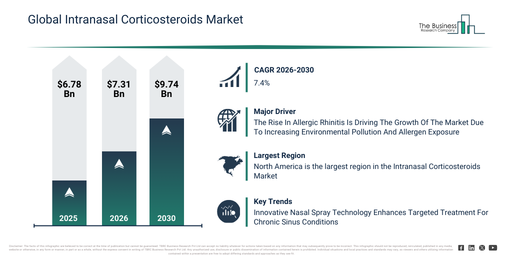
    The intranasal corticosteroids market size has seen significant growth in recent years. It is projected to expand from $6.78 billion in 2025 to $7.31 billion in 2026, achieving a compound annual growth rate (CAGR) of 7.8%. The historical growth of this market stemmed from limited awareness of intranasal corticosteroids, reliance on hospital pharmacies for drug distribution, a growing incidence of nasal allergies, a preference for conventional treatment methods, and restricted online pharmacy access.

    The intranasal corticosteroids market is projected to experience robust expansion in the coming years. This market is anticipated to reach $9.74 billion by 2030, demonstrating a compound annual growth rate (CAGR) of 7.4%. Factors contributing to this growth during the forecast period include enhanced healthcare consciousness, the expansion of both retail and online pharmacy sectors, a higher occurrence of chronic rhinitis and nasal polyps, the integration of combination therapies, and the creation of user-friendly spray devices. Key trends expected within the forecast timeframe involve a growing prevalence of allergic rhinitis and various nasal disorders, a rise in the usage of prescribed intranasal corticosteroids, an increase in the application of over-the-counter intranasal corticosteroids, the broadening of hospital and homecare distribution networks, and an emphasis on patient-focused treatment alongside simplified administration.

    Access Your Free Sample Report For In-Depth Market Analysis:

    https://www.thebusinessresearchcompany.com/sample.aspx?id=25799&type=smp

    Which Drivers Are Supporting The Intranasal Corticosteroids Market Growth?

    The growing incidence of allergic rhinitis is anticipated to propel the expansion of the intranasal corticosteroids market moving forward. Allergic rhinitis is an allergic reaction that leads to inflammation of the nasal passages, commonly caused by airborne allergens such as pollen, dust mites, mold, or pet dander. The rise in allergic rhinitis cases is primarily attributed to increasing environmental pollution, which exposes individuals to airborne allergens and irritants that provoke allergic responses in the nasal passages. Intranasal corticosteroids assist in managing allergic rhinitis by reducing inflammation in the nasal passages, thereby alleviating symptoms like sneezing, congestion, and a runny nose. For instance, in October 2023, according to the National Library of Medicine, a US-based biomedical library, allergic rhinitis affects more than 400 million people worldwide, with prevalence rates estimated at 10% to 30% among adults and over 40% in children. Consequently, the increasing prevalence of allergic rhinitis is driving the intranasal corticosteroid market.

    What Are The Key Segment Divisions In The Intranasal Corticosteroids Market Segment Structure?

    The intranasal corticosteroids market covered in this report is segmented –

    1) By Drug Types: Prescribed Drugs, Over-The-Counter Drugs

    2) By Application: Allergic Rhinitis, Nasal Polyps, Sinusitis, Other Applications

    3) By Distribution Channel: Hospital Pharmacies, Retail Pharmacies, Online Pharmacies, Other Distribution Channel

    4) By End User: Hospitals, Clinics, Homecare, Healthcare Providers

    Subsegments:

    1) By Prescribed Drugs: Fluticasone Propionate, Mometasone Furoate, Budesonide, Beclomethasone Dipropionate, Ciclesonide

    2) By Over-The-Counter Drugs: Triamcinolone Acetonide, Fluticasone Furoate, Budesonide Over-The-Counter Drugs

    Which Trends Are Contributing To Changes In The Intranasal Corticosteroids Market?

    Leading firms within the intranasal corticosteroids sector are prioritizing the creation of novel formulations, particularly nasal sprays, to optimize drug targeting and boost patient adherence. These liquid medications are administered straight into the nasal passages via a spray nozzle, addressing conditions like allergies, congestion, or inflammation. They facilitate rapid drug uptake through the nasal lining, providing prompt relief with limited systemic impact. An example is in March 2024, when OptiNose Inc., an American pharmaceutical firm, secured U.S. Food and Drug Administration (FDA) approval for XHANCE. This product represents the initial and sole treatment specifically indicated for adults experiencing chronic rhinosinusitis (CRS) lacking nasal polyps. This particular nasal spray employs a distinct exhalation delivery mechanism, allowing the medicine to penetrate deeply into the nasal cavity, thereby effectively managing CRS in adults, whether polyps are present or not. Each application provides 93 mcg of fluticasone propionate. The device functions by requiring the user to exhale into a mouthpiece while simultaneously dispensing the spray into the nostril, ensuring accurate administration and improved symptom alleviation.

    Which Organizations Are Engaged In The Intranasal Corticosteroids Market?

    Major companies operating in the intranasal corticosteroids market are GlaxoSmithKline plc, Teva Pharmaceutical Industries Ltd., Sandoz Group AG, Haleon plc, Intas Pharmaceuticals Limited, Organon Pharma (UK) Limited, Sun Pharmaceutical Industries Ltd., Apotex Inc., Perrigo Company plc, Aurobindo Pharma Limited, Cipla Ltd., Hikma Pharmaceuticals plc, Zydus Lifesciences Ltd., Glenmark Pharmaceuticals Limited, OptiNose US Inc., Taro Pharmaceutical Industries Ltd., Maya Biotech Private Limited, AdvaCare Pharma USA, Lupin Ltd., Xenone Healthcare Private Limited.

    Get The Full Intranasal Corticosteroids Market Report:

    https://www.thebusinessresearchcompany.com/report/intranasal-corticosteroids-global-market-report

    Which Region Leads The Intranasal Corticosteroids Market In Overall Market Size?

    North America was the largest region in the intranasal corticosteroids market in 2025. Asia-Pacific is expected to be the fastest-growing region in the forecast period. The regions covered in the intranasal corticosteroids market report are Asia-Pacific, South East Asia, Western Europe, Eastern Europe, North America, South America, Middle East, Africa.

    Request A Customized Intranasal Corticosteroids Market Report For Competitive Insights:

    https://www.thebusinessresearchcompany.com/report/intranasal-corticosteroids-global-market-report

    Browse Through More Reports Similar to the Global Intranasal Corticosteroids Market 2026, By The Business Research Company

    Internal Nasal Dilators Market Report 2026

    https://www.thebusinessresearchcompany.com/report/internal-nasal-dilators-global-market-report

    Corticosteroid Market Report 2026

    https://www.thebusinessresearchcompany.com/report/corticosteroid-global-market-report

    Intranasal Drug Delivery Devices Market Report 2026

    https://www.thebusinessresearchcompany.com/report/intranasal-drug-delivery-devices-global-market-report

    Get in touch with us:

    The Business Research Company: https://www.thebusinessresearchcompany.com/

    Americas +1 310-496-7795

    Asia +44 7882 955267 & +91 8897263534

    Europe +44 7882 955267

    Email us at: marketing@tbrc.info

    Follow us on:

    LinkedIn: https://in.linkedin.com/company/the-business-research-company

    YouTube: https://www.youtube.com/channel/UC24_fI0rV8cR5DxlCpgmyFQ

    Global Market Model: https://www.thebusinessresearchcompany.com/global-market-model
  • Impact Of Increasing Research And Development On The Growth Of The Replagal Is Playing A Role In Shaping The Drugs For Benign Prostatic hypertrophy Market

    Impact Of Increasing Research And Development On The Growth Of The Replagal Is Playing A Role In Shaping The Drugs For Benign Prostatic hypertrophy Market

    The Business Research Company’s 2026 market reports feature enhanced tools like market attractiveness analysis, TAM assessment, and company scoring matrices, along with interactive dashboards, deeper supply chain insights, and startup coverage strengthening the depth, usability, and strategic value of insights.

    What Level Of Market Value Growth Is Predicted For The Drugs For Benign Prostatic hypertrophy Market From 2026 To 2030?

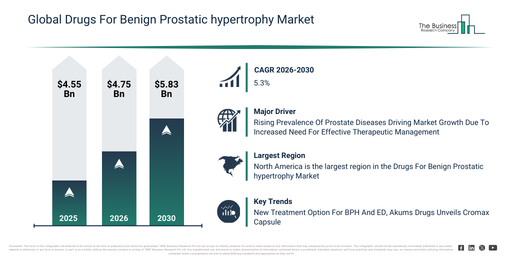
    The market size for drugs addressing benign prostatic hypertrophy has shown steady expansion in recent years. This market is expected to expand from $4.55 billion in 2025 to $4.75 billion in 2026, progressing at a compound annual growth rate (CAGR) of 4.4%. The historical growth can be linked to factors such as aging population growth, long-term alpha blocker usage, hospital-based urology care, the availability of oral therapies, and improved diagnostic tools.

    The market for drugs treating benign prostatic hypertrophy is projected to experience substantial growth in the upcoming years. This market is anticipated to reach a valuation of $5.83 billion by 2030, demonstrating a compound annual growth rate (CAGR) of 5.3%. Factors contributing to this growth during the forecast period include an increase in male life expectancy, enhanced access to healthcare services, advancements in combination drug therapies, the expansion of outpatient urology clinics, and lifestyle-associated risk factors. Key trends anticipated in the same period involve a heightened demand from the aging male demographic, a greater uptake of combination therapies, the development of minimally invasive drug treatments, an increase in generic BPH drugs, and increased awareness regarding early diagnosis.

    Access Your Free Sample Report For In-Depth Market Analysis:

    https://www.thebusinessresearchcompany.com/sample.aspx?id=2594&type=smp

    What Key Drivers Are Fueling The Growth Of The Drugs For Benign Prostatic hypertrophy Market?

    The expanding occurrence of prostate diseases is anticipated to boost the growth of the drugs for benign prostatic hypertrophy market in the coming years. Prostate diseases encompass various medical conditions impacting the prostate gland, a male reproductive organ situated just beneath the bladder. The escalating incidence of these diseases largely stems from aging, alongside related metabolic and inflammatory elements that foster the development of conditions such as benign prostatic hyperplasia (BPH) and prostate cancer. Medications for benign prostatic hypertrophy (BPH) are crucial for handling and easing urinary symptoms linked to prostate diseases, offering comfort by lessening prostate gland enlargement and enhancing urine flow. For instance, in August 2024, according to Cancer Therapy Advisor, a US-medical information provider, an estimated 299,010 new cases of prostate cancer were expected to be diagnosed in the country in 2024 accounting for 14.9 percent of all new cancer cases with slightly more than 35,000 deaths projected. Consequently, the heightened prevalence of prostate diseases is fueling the expansion of the drugs for benign prostatic hypertrophy market.

    How Is The Drugs For Benign Prostatic hypertrophy Market Categorized Across Its Segment Groups?

    The drugs for benign prostatic hypertrophy market covered in this report is segmented –

    1) By Type: Alpha Blocker, 5-alpha Reductase Inhibitor, Phosphodiesterase-5 Inhibitor, Other Types

    2) By Distribution Channel: Hospital Pharmacies, Retail Pharmacies, Online Pharmacies

    3) By End User: Hospital Pharmacies, Retail Pharmacies, Other End-Users

    Subsegments:

    1) By Alpha Blocker: Tamsulosin, Alfuzosin, Doxazosin, Terazosin, Silodosin

    2) By 5-alpha Reductase Inhibitor: Finasteride, Dutasteride

    3) By Phosphodiesterase-5 Inhibitor: Tadalafil, Sildenafil

    4) By Other Types: Anticholinergics, Herbal Supplements (Saw Palmetto), Combination Therapy Drugs (Alpha Blocker + 5-alpha Reductase Inhibitor)

    What Trends Are Shaping The Future Of The Drugs For Benign Prostatic hypertrophy Market?

    Major companies operating in the drugs for benign prostatic hypertrophy market are concentrating on developing technologically advanced solutions, such as novel medications for both enlarged prostate (benign prostatic hyperplasia, BPH) and erectile dysfunction, to secure a competitive edge. Benign Prostatic Hyperplasia (BPH) describes a non-cancerous enlargement of the prostate gland, while erectile dysfunction (ED) is characterized by the inability to achieve or sustain an erection sufficient for sexual activity. For instance, in September 2023, Akums Drugs and Pharmaceuticals Ltd., an Indian-based paint and coating manufacturing pharmaceutical contract manufacturer, launched Tamsulosin + Tadalafil Capsule to broaden its product offerings within the pharmaceutical sector, particularly addressing prevalent men’s health issues. This innovative product, Cromax, provides unique features like a dual-action formulation integrating Tamsulosin, which targets smooth muscle relaxation in the prostate and urethra to enhance urine flow, and Tadalafil, which improves blood flow to the penis to facilitate erections. This combination therapy not only offers a more convenient treatment option for men suffering from both benign prostatic hyperplasia (BPH) and erectile dysfunction but also demonstrates significant improvements in the International Prostate Symptom Score (IPSS).

    Which Firms Are Influencing Competition In The Drugs For Benign Prostatic hypertrophy Market?

    Major companies operating in the drugs for benign prostatic hypertrophy market are Astellas Pharma Inc., Boehringer Ingelheim International GmbH, GlaxoSmithKline plc, Teva Pharmaceutical Industries Limited, Sanofi S.A., Pfizer Inc., Ipsen S.A., Novartis International AG, Bayer AG, Merck & Co. Inc., Endo Pharmaceuticals Inc., Impax Laboratories Inc., Kissei Pharmaceutical Co. Ltd., Abbott Laboratories, Eli Lilly and Company, Bausch Health Companies Inc., Aurobindo Pharma Limited, Sun Pharmaceutical Industries Ltd., Zydus Lifesciences Ltd., Cipla Ltd

    Get The Full Drugs For Benign Prostatic hypertrophy Market Report:

    https://www.thebusinessresearchcompany.com/report/drugs-for-benign-prostatic-hypertrophy-global-market-report

    Which Region Represents The Largest Share Of The Drugs For Benign Prostatic hypertrophy Market?

    North America was the largest region in the drugs for benign prostatic hypertrophy market in 2025. Middle East is expected to be the fastest-growing region in the drugs for benign prostatic hypertrophy market. The regions covered in the drugs for benign prostatic hypertrophy market report are Asia-Pacific, South East Asia, Western Europe, Eastern Europe, North America, South America, Middle East, Africa.

    Request A Customized Drugs For Benign Prostatic hypertrophy Market Report For Competitive Insights:

    https://www.thebusinessresearchcompany.com/report/drugs-for-benign-prostatic-hypertrophy-global-market-report

    Browse Through More Reports Similar to the Global Drugs For Benign Prostatic hypertrophy Market 2026, By The Business Research Company

    Drugs For Benign Prostatic Hypertrophy Market Report 2026

    https://www.thebusinessresearchcompany.com/report/drugs-for-benign-prostatic-hypertrophy-global-market-report

    Benign Prostatic Hyperplasia Bph Treatment Devices And Equipment Market Report 2026

    https://www.thebusinessresearchcompany.com/report/benign-prostatic-hyperplasia-bph-treatment-devices-and-equipment-global-market-report

    Prostate Cancer Drugs Market Report 2026

    https://www.thebusinessresearchcompany.com/report/prostate-cancer-drugs-global-market-report

    Get in touch with us:

    The Business Research Company: https://www.thebusinessresearchcompany.com/

    Americas +1 310-496-7795

    Asia +44 7882 955267 & +91 8897263534

    Europe +44 7882 955267

    Email us at: marketing@tbrc.info

    Follow us on:

    LinkedIn: https://in.linkedin.com/company/the-business-research-company

    YouTube: https://www.youtube.com/channel/UC24_fI0rV8cR5DxlCpgmyFQ

    Global Market Model: https://www.thebusinessresearchcompany.com/global-market-model
  • Interventional Lung Solutions Market Analysis With Focus On Growth Potential And Future Outlook

    Interventional Lung Solutions Market Analysis With Focus On Growth Potential And Future Outlook

    The Business Research Company’s 2026 market reports feature enhanced tools like market attractiveness analysis, TAM assessment, and company scoring matrices, along with interactive dashboards, deeper supply chain insights, and startup coverage strengthening the depth, usability, and strategic value of insights.

    How Is The Market Size Of The Interventional Lung Solutions Market Expected To Scale Between 2026 And 2030?

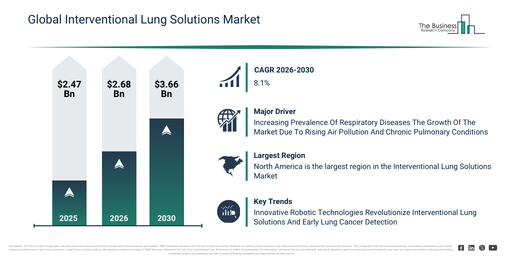
    Significant growth has been observed in the interventional lung solutions market in recent years. Projections indicate it will expand from $2.47 billion in 2025 to reach $2.68 billion by 2026, exhibiting a compound annual growth rate (CAGR) of 8.3%. Historically, this growth has been driven by factors such as the rising incidence of COPD and lung cancer, the inherent constraints of surgical lung interventions, continuous progress in bronchoscopy technology, the increasing embrace of minimally invasive procedures by hospitals, and an uptick in healthcare expenditure.

    The interventional lung solutions market is projected to experience substantial expansion over the upcoming years. This market is set to reach $3.66 billion by 2030, exhibiting a compound annual growth rate (CAGR) of 8.1%. Factors contributing to this growth during the projected period include an expanding elderly demographic suffering from respiratory conditions, a rise in the uptake of robotic-assisted procedures, the broadening scope of outpatient pulmonary treatments, an increased emphasis on early detection of lung cancer, and progress in navigation bronchoscopy technology. Key trends anticipated for the forecast period encompass the growing acceptance of minimally invasive pulmonary techniques, a surge in the deployment of robotic bronchoscopy systems, heightened demand for devices designed for lung volume reduction, the proliferation of image-guided interventional lung treatments, and an elevated preference for disposable bronchoscopes.

    Access Your Free Sample Report For In-Depth Market Analysis:

    https://www.thebusinessresearchcompany.com/sample.aspx?id=24258&type=smp

    What Key Factors Are Affecting The Interventional Lung Solutions Market Demand?

    The rising incidence of respiratory illnesses is anticipated to boost the interventional lung solutions market in the future. These conditions are health problems impacting the lungs and airways, hindering breathing and normal respiratory functions. The surge in respiratory diseases stems from escalating air pollution, leading to constant exposure to hazardous airborne particles and irritants. Interventional lung solutions offer minimally invasive treatments to manage these diseases, enhancing lung function and alleviating symptoms for patients with chronic pulmonary issues. For example, a May 2025 report from BioMed Central Ltd, a UK-based journal, estimated the global chronic obstructive pulmonary disease prevalence at 10.3%, with those affected predicted to hit 600 million by 2050. Globally, around 262 million people are currently affected by asthma. Consequently, the growing occurrence of respiratory diseases fuels the interventional lung solutions market.

    Which Segment Categories Are Included In The Interventional Lung Solutions Market Segment Analysis?

    The interventional lung solutions market covered in this report is segmented –

    1) By Product Type: Bronchoscopes, Endobronchial Ultrasound Needles, Pleuroscopes, Airway Stents, Other Product Types

    2) By Technology: Robotic Surgery, Laser Therapy, Electromagnetic Navigation Bronchoscopy

    3) By Procedure: Bronchoscopy, Thoracoscopy, Pleuroscopy, Other Procedures

    4) By Application: Lung Cancer Treatment, Chronic Obstructive Pulmonary Disease

    5) By End-User: Hospitals, Ambulatory Surgical Centers, Specialty Clinics, Other End-Users

    Subsegments:

    1) BY Bronchoscopes: Flexible Bronchoscopes, Rigid Bronchoscopes, Disposable Bronchoscopes

    2) By Endobronchial Ultrasound Needles: Transbronchial Aspiration Needles, Biopsy Needles

    3) By Pleuroscopes: Flexible Pleuroscopes, Semi-Rigid Pleuroscopes

    4) By Airway Stents: Metallic Stents, Silicone Stents, Hybrid Stents

    5) By Other Product Types: Bronchial Thermoplasty Devices, Lung Volume Reduction Devices, Electromagnetic Navigation Systems, Cryotherapy And Ablation Devices

    What Market Trends Are Affecting The Interventional Lung Solutions Market?

    Leading companies in the interventional lung solutions market are concentrating on developing innovative technologies, such as the Ion Endoluminal System, to enhance the precision of lung cancer diagnostics, facilitate minimally invasive procedures, and improve patient outcomes through advanced navigation and biopsy features. The Ion Endoluminal System is a robotic-assisted platform designed for minimally invasive lung interventions, enabling accurate airway navigation to access small or challenging lung nodules. For instance, in April 2024, H. Lee Moffitt Cancer Center and Research Institute Foundation Inc., a US-based non-profit institution, introduced a new Ion Robotic Bronchoscopy platform, significantly enhancing their interventional pulmonology program with cutting-edge fiber-optic technology and a minimally invasive catheter system. This technology utilizes fiber optics and the smallest catheter available commercially to reach every region of the lung. The platform features an ultra-thin, highly maneuverable catheter with 180° articulation, integrated real-time vision, and shape-sensing technology, which allows for precise navigation and biopsy of hard-to-reach peripheral lung nodules. This system delivers exceptional stability and accuracy for tissue sampling, enabling physicians to access all 18 lung segments and thus improving the early detection of lung cancer.

    Who Are The Active Companies Shaping The Interventional Lung Solutions Market?

    Major companies operating in the interventional lung solutions market are Johnson and Johnson, Siemens AG, Medtronic plc, FUJIFILM Holdings Corporation, GE Healthcare Technologies Inc., Boston Scientific Corporation, Olympus Corporation, Intuitive Surgical Inc., Smiths Medical Inc., Cook Medical Inc., Merit Medical Systems Inc., Penumbra Inc., Vygon SA, AngioDynamics Inc., Vapotherm Inc., Pulmonx Corporation, Broncus Medical Inc., Thirona B.V., Body Vision Medical Ltd., EndoMed Systems GmbH

    Get The Full Interventional Lung Solutions Market Report:

    https://www.thebusinessresearchcompany.com/report/interventional-lung-solutions-global-market-report

    Which Region Is The Top Contributor To The Interventional Lung Solutions Market By Share?

    North America was the largest region in the interventional lung solutions market in 2025. Asia-Pacific is expected to be the fastest-growing region in the forecast period. The regions covered in the interventional lung solutions market report are Asia-Pacific, South East Asia, Western Europe, Eastern Europe, North America, South America, Middle East, Africa.

    Request A Customized Interventional Lung Solutions Market Report For Competitive Insights:

    https://www.thebusinessresearchcompany.com/report/interventional-lung-solutions-global-market-report

    Browse Through More Reports Similar to the Global Interventional Lung Solutions Market 2026, By The Business Research Company

    Artificial Lung Market Report 2026

    https://www.thebusinessresearchcompany.com/report/artificial-lung-global-market-report

    In Vitro Lung Model Market Report 2026

    https://www.thebusinessresearchcompany.com/report/in-vitro-lung-model-global-market-report

    Lower Respiratory Tract Therapeutics Market Report 2026

    https://www.thebusinessresearchcompany.com/report/lower-respiratory-tract-therapeutics-global-market-report

    Get in touch with us:

    The Business Research Company: https://www.thebusinessresearchcompany.com/

    Americas +1 310-496-7795

    Asia +44 7882 955267 & +91 8897263534

    Europe +44 7882 955267

    Email us at: marketing@tbrc.info

    Follow us on:

    LinkedIn: https://in.linkedin.com/company/the-business-research-company

    YouTube: https://www.youtube.com/channel/UC24_fI0rV8cR5DxlCpgmyFQ

    Global Market Model: https://www.thebusinessresearchcompany.com/global-market-model
  • The Drug Repurposing Market Is Witnessing Impact From Rising Prevalence Of Cardiovascular Diseases Driving Growth In The

    The Drug Repurposing Market Is Witnessing Impact From Rising Prevalence Of Cardiovascular Diseases Driving Growth In The

    The Business Research Company’s 2026 market reports feature enhanced tools like market attractiveness analysis, TAM assessment, and company scoring matrices, along with interactive dashboards, deeper supply chain insights, and startup coverage strengthening the depth, usability, and strategic value of insights.

    How Will The Market Value Of The Drug Repurposing Market Progress Between 2026 And 2030?

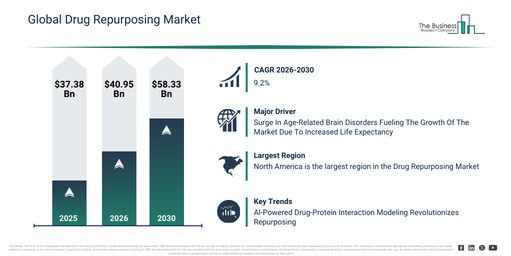
    The drug repurposing market has experienced substantial growth in recent years. It is projected to expand from $37.38 billion in 2025 to $40.95 billion in 2026, reflecting a compound annual growth rate (CAGR) of 9.6%. The historical expansion of this market can be attributed to several factors, including the significant cost and time involved in traditional drug discovery, a rising number of failed drug candidates, the increasing prevalence of chronic and rare diseases, limited therapeutic options for emerging diseases, and the early adoption of computational methods for drug repositioning.

    The drug repurposing market is anticipated to experience robust expansion over the coming years, projected to reach $58.33 billion by 2030, driven by a compound annual growth rate (CAGR) of 9.2%. This growth throughout the forecast period stems from factors such as the integration of AI and machine learning in drug repurposing, increasing investment in biotech and pharmaceutical research, the broadening capabilities of contract research organizations (CROs), a heightened demand for cost-effective therapies, and supportive regulatory frameworks for repurposed drug approvals. Key trends expected during this period involve a greater emphasis on phenotypic and target-based screening, the growing acceptance of structure-based drug repositioning, the development of off-target activity identification methods, the wider application of drug repurposing for rare and infectious diseases, and the reduction of drug development timelines by leveraging existing molecules.

    Access Your Free Sample Report For In-Depth Market Analysis:

    https://www.thebusinessresearchcompany.com/sample.aspx?id=25758&type=smp

    Which Drivers Are Supporting The Drug Repurposing Market Growth?

    The expanding occurrence of neurodegenerative conditions is anticipated to fuel the expansion of the drug repurposing market in the future. These diseases are a category of ailments marked by the gradual deterioration of neuron structure or function, ultimately leading to their demise. The surge in neurodegenerative conditions, for instance, Alzheimer’s dementia, stems from longer life expectancies, given that aging serves as the main risk factor for the progressive decline of neuronal activity over time. Drug repurposing aids in addressing neurodegenerative diseases by pinpointing established medications with verified safety records that can be re-purposed to target specific disease mechanisms, thereby expediting the creation of efficacious therapies. As an illustration, in March 2023, data from the Alzheimer’s Association, a US-based nonprofit voluntary health organization, reported approximately 6.7 million Americans aged 65 and older were living with Alzheimer’s dementia in 2023, with forecasts predicting a rise to 13.8 million by 2060. Consequently, the increasing occurrence of neurodegenerative disorders is propelling the expansion of the drug repurposing market.

    How Are Segments Identified Within The Drug Repurposing Market Segment Framework?

    The drug repurposing market covered in this report is segmented –

    1) By Type: Disease-Centric, Target-Centric, Drug-Centric

    2) By Drug Molecules: Biologics, Small Molecule

    3) By Therapeutic Area: Oncology, Neurology, Infectious Diseases, Cardiovascular Diseases, Autoimmune Disorders

    4) By Route Of Administration: Oral, Intravenous, Topical, Inhalation, Intramuscular

    5) By End-User: Pharmaceutical Companies, Research And Academic Institutes, Contract Research Organizations

    Subsegments:

    1) By Disease-Centric: Phenotypic Screening, Epidemiological Analysis, Clinical Observation-Based Repurposing

    2) By Target-Centric: Protein Target Modulation, Pathway Modulation, Biomarker-Based Targeting

    3) By Drug-Centric: Off-Target Activity Identification, Structure-Based Drug Repositioning, Adverse Effect-Based Repurposing

    Which Trends Are Contributing To Changes In The Drug Repurposing Market?

    Key players within the drug repurposing sector are prioritizing the creation of sophisticated tools, including artificial intelligence (AI)-driven drug-protein interaction modeling, to hasten the discovery of novel therapeutic applications for existing medications. This AI-enabled drug-protein interaction modeling utilizes AI and machine learning capabilities to forecast drug interactions with proteins throughout the human proteome, employing vast datasets to boost both precision and reliability. For example, in July 2025, Cosmos Health Inc., a US-based healthcare firm, launched Cloudscreen 2.0, an advanced AI platform specifically for drug repurposing initiatives. The system represents a next-generation design, capable of processing datasets more than 100 times larger than previous versions, which allows for thorough analysis of drug-protein interactions. Incorporating mutagenesis data and specific tools for assessing disordered proteins, this platform is geared towards addressing diseases like cancer, obesity, and diabetes. Moreover, its foundation in graphics processing unit (GPU)-based cloud computing facilitates scalable processing, establishing the platform as a pivotal innovation for accelerating research and development pipelines in drug repurposing across numerous therapeutic fields.

    Who Are The Companies Competing Within The Drug Repurposing Market?

    Major companies operating in the drug repurposing market are F. Hoffmann-La Roche Ltd , Bayer AG, Takeda Pharmaceutical Company Limited, Amgen Inc., Teva Pharmaceutical Industries Limited, Astellas Pharma Inc., UCB S.A., Eisai Co Ltd., Celltrion Inc., Evotec SE, BenevolentAI Limited, Insilico Medicine Inc., Recursion Pharmaceuticals Inc., Pharnext S.A., Healx Ltd., Algernon Pharmaceuticals Inc., BioXcel Therapeutics Inc.

    Get The Full Drug Repurposing Market Report:

    https://www.thebusinessresearchcompany.com/report/drug-repurposing-global-market-report

    Which Geographic Region Dominates The Drug Repurposing Market?

    North America was the largest region in the drug repurposing market in 2025. Asia-Pacific is expected to be the fastest-growing region in the forecast period. The regions covered in the drug repurposing market report are Asia-Pacific, South East Asia, Western Europe, Eastern Europe, North America, South America, Middle East, Africa.

    Request A Customized Drug Repurposing Market Report For Competitive Insights:

    https://www.thebusinessresearchcompany.com/report/drug-repurposing-global-market-report

    Browse Through More Reports Similar to the Global Drug Repurposing Market 2026, By The Business Research Company

    Pharmacy Repackaging Systems Market Report 2026

    https://www.thebusinessresearchcompany.com/report/pharmacy-repackaging-systems-global-market-report

    Music Therapy Market Report 2026

    https://www.thebusinessresearchcompany.com/report/music-therapy-global-market-report

    Personal Development Market Report 2026

    https://www.thebusinessresearchcompany.com/report/personal-development-global-market-report

    Get in touch with us:

    The Business Research Company: https://www.thebusinessresearchcompany.com/

    Americas +1 310-496-7795

    Asia +44 7882 955267 & +91 8897263534

    Europe +44 7882 955267

    Email us at: marketing@tbrc.info

    Follow us on:

    LinkedIn: https://in.linkedin.com/company/the-business-research-company

    YouTube: https://www.youtube.com/channel/UC24_fI0rV8cR5DxlCpgmyFQ

    Global Market Model: https://www.thebusinessresearchcompany.com/global-market-model
  • Interstitial Cystitis Drugs Market Forecast Showing Industry Progress And Growth Trends

    Interstitial Cystitis Drugs Market Forecast Showing Industry Progress And Growth Trends

    The Business Research Company’s 2026 market reports feature enhanced tools like market attractiveness analysis, TAM assessment, and company scoring matrices, along with interactive dashboards, deeper supply chain insights, and startup coverage strengthening the depth, usability, and strategic value of insights.

    What Level Of Market Value Growth Is Predicted For The Interstitial Cystitis Drugs Market From 2026 To 2030?

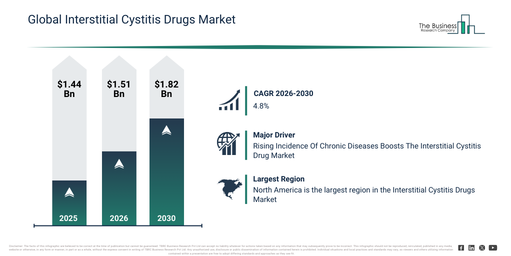
    The interstitial cystitis drugs market has shown consistent expansion in recent years. It is anticipated to increase from $1.44 billion in 2025 to $1.51 billion in 2026, demonstrating a compound annual growth rate (CAGR) of 4.8%. The historical growth of this market can be attributed to factors such as limited awareness of IC, a reliance on conventional therapies, a high prevalence of misdiagnosis, restricted R&D funding, and the low adoption of intravesical therapy.

    The interstitial cystitis drugs market is anticipated to experience consistent expansion over the upcoming years. This market is projected to reach a valuation of $1.82 billion by 2030, demonstrating a compound annual growth rate (CAGR) of 4.8%. Factors contributing to this growth during the projected period include the increasing uptake of targeted therapies, enhanced investment in IC research, a rise in the incidence of bladder disorders, innovations in drug delivery technologies, and the expansion of healthcare infrastructure. Key trends anticipated within this forecast period encompass personalized treatment strategies, non-invasive methods for drug delivery, the evolution of combination therapies, improved therapies for repairing the bladder lining, and a heightened emphasis on managing symptoms.

    Access Your Free Sample Report For In-Depth Market Analysis:

    https://www.thebusinessresearchcompany.com/sample.aspx?id=13461&type=smp

    Which Primary Drivers Are Impacting The Interstitial Cystitis Drugs Market Growth?

    The escalating prevalence of chronic diseases is anticipated to spur expansion within the interstitial cystitis drug market. Chronic diseases are defined as enduring health conditions that persist over long durations, frequently for a person’s entire life. Cystitis medications function by targeting and eradicating the bacteria responsible for urinary tract infections, thereby treating these conditions. These drugs resolve the underlying infection in the urinary tract, thereby alleviating symptoms like painful, frequent, and urgent urination caused by various chronic illnesses, including urinary tract infections (UTIs). For instance, data from the National Institute of Health, a US-based public health research agency, revealed that in January 2023, urinary tract infections accounted for over 1 million visits to emergency departments in the US, making them the seventh most common reason for such visits. Among these cases, 22% (220,000) were categorized as complicated urinary tract infections, with approximately 100,000 patients requiring hospital admission annually. Consequently, the increasing occurrence of chronic diseases is propelling the growth of the interstitial cystitis drug market. Growth in pharmaceutical drug production is projected to fuel the expansion of the interstitial cystitis drug market. Drug production encompasses the entire manufacturing process of pharmaceutical goods, involving the synthesis, formulation, and packaging of medications designed for therapeutic purposes. Several factors contribute to the demand for drug production within the pharmaceutical sector, such as an aging population, ongoing research and development, various health initiatives, and the demand for generic drugs. Enhanced drug production capabilities improve treatment options for interstitial cystitis by fostering the creation of innovative therapies that address the increasing need for effective medications, driven by greater awareness and diagnosis. Improved manufacturing ensures quick responses to market demands, guaranteeing patient access to the latest treatments. For example, in June 2023, the European Federation of Pharmaceutical Industries and Associations (EFPIA), a Belgium-based trade association representing the European pharmaceutical industry, reported that Europe’s total pharmaceutical production reached €390,000 million ($422,803 million) in 2023, an increase from €363,300 million ($393,857 million) in 2022. Therefore, the rising incidence of chronic diseases is driving the growth of the interstitial cystitis drug market.

    How Is The Interstitial Cystitis Drugs Market Broken Down By Segment Categories?

    The interstitial cystitis drugs market covered in this report is segmented –

    1) By Drugs: Pentosan Polysulfate Sodium, Dimethyl Sulfoxide, Other Drugs

    2) By Type: Oral Therapy, Intravesical Therapy

    3) By Distribution Channel: Hospital Pharmacies, Retail Pharmacies, Online Pharmacies

    Subsegments:

    1) By Pentosan Polysulfate Sodium: Oral Pentosan Polysulfate Sodium, Injectable Pentosan Polysulfate Sodium

    2) By Dimethyl Sulfoxide (DMSO): Intravesical DMSO (Bladder Instillation)

    3) By Other Drugs: Amitriptyline, Hydroxyzine, Cimetidine, Gabapentin

    Which Players Are Present In The Interstitial Cystitis Drugs Market Space?

    Major companies operating in the interstitial cystitis drugs market are Pfizer Inc., Johnson & Johnson , Merck & Co. Inc., AbbVie Inc., Bayer AG, Novartis AG, Sanofi SA, GlaxoSmithKline PLC, Eli Lilly and Company, Amgen Inc., Viatris Inc., Teva Pharmaceutical Industries Ltd., Astellas Pharma Inc., Boehringer Ingelheim International GmbH, UCB S.A., Sun Pharmaceutical Industries Ltd., Perrigo Company PLC, Cipla Limited, Ferring B.V., Grunenthal Pharma, Kyorin Pharmaceutical Co. Ltd, Seikagaku Corporation, UroGen Pharma, Alivio Therapeutics, Lipella Pharmaceuticals, GlycoMira Therapeutics Inc.

    Get The Full Interstitial Cystitis Drugs Market Report:

    https://www.thebusinessresearchcompany.com/report/interstitial-cystitis-drugs-global-market-report

    Which Region Represents The Largest Share Of The Interstitial Cystitis Drugs Market?

    North America was the largest region in the interstitial cystitis drugs market in 2025. Asia-Pacific is expected to be the fastest-growing region in the forecast period. The regions covered in the interstitial cystitis drugs market report are Asia-Pacific, South East Asia, Western Europe, Eastern Europe, North America, South America, Middle East, Africa.

    Request A Customized Interstitial Cystitis Drugs Market Report For Competitive Insights:

    https://www.thebusinessresearchcompany.com/report/interstitial-cystitis-drugs-global-market-report

    Browse Through More Reports Similar to the Global Interstitial Cystitis Drugs Market 2026, By The Business Research Company

    Interstitial Cystitis Drugs Market Report 2026

    https://www.thebusinessresearchcompany.com/report/interstitial-cystitis-drugs-global-market-report

    Interstitial Cystitis Market Report 2026

    https://www.thebusinessresearchcompany.com/report/interstitial-cystitis-global-market-report

    Gastrointestinal Drugs Market 2026

    https://www.thebusinessresearchcompany.com/report/gastrointestinal-drugs-global-market

    Get in touch with us:

    The Business Research Company: https://www.thebusinessresearchcompany.com/

    Americas +1 310-496-7795

    Asia +44 7882 955267 & +91 8897263534

    Europe +44 7882 955267

    Email us at: marketing@tbrc.info

    Follow us on:

    LinkedIn: https://in.linkedin.com/company/the-business-research-company

    YouTube: https://www.youtube.com/channel/UC24_fI0rV8cR5DxlCpgmyFQ

    Global Market Model: https://www.thebusinessresearchcompany.com/global-market-model

  • Growth In The Drug Repositioning Service Market Is Being Driven By Expansion & Healthcare Infrastructure Development Driving The Growth Due To Increased Hospital Capacity And Service Utilization

    Growth In The Drug Repositioning Service Market Is Being Driven By Expansion & Healthcare Infrastructure Development Driving The Growth Due To Increased Hospital Capacity And Service Utilization

    The Business Research Company’s 2026 market reports feature enhanced tools like market attractiveness analysis, TAM assessment, and company scoring matrices, along with interactive dashboards, deeper supply chain insights, and startup coverage strengthening the depth, usability, and strategic value of insights.

    What Are The Market Size Estimates For The Drug Repositioning Service Market In 2026 And 2030?

    The drug repositioning service market size has demonstrated robust expansion over recent years. It is projected to increase from $34.2 billion in 2025 to $36.19 billion in 2026, registering a compound annual growth rate (CAGR) of 5.8%. The historical growth of this market can be attributed to several factors, including rising pharmaceutical R&D costs, the availability of extensive legacy drug data, a growing number of failed clinical trials, the increasing demand for faster drug development cycles, and the early adoption of computational drug discovery.

    The drug repositioning service market is anticipated to experience robust expansion over the coming years. This market is projected to reach $45.92 billion by 2030, exhibiting a compound annual growth rate (CAGR) of 6.1%. This anticipated growth is driven by factors such as a heightened need for economical drug development, the growing integration of AI-powered discovery tools, an intensified emphasis on rare and orphan conditions, the broadening scope of data-informed clinical research, and a greater acceptance of repurposed drugs by regulatory bodies. Key developments expected during this forecast period encompass the increasing application of AI-driven drug repurposing platforms, a heightened emphasis on re-evaluating drugs that failed in clinical trials, the expanding incorporation of real-world data into drug discovery processes, the proliferation of precision medicine-focused repositioning strategies, and strengthened partnerships between pharmaceutical companies and contract research organizations (CROs).

    Access Your Free Sample Report For In-Depth Market Analysis:

    https://www.thebusinessresearchcompany.com/sample.aspx?id=29040&type=smp

    What Key Factors Are Affecting The Drug Repositioning Service Market Demand?

    The projected growth of the drug repositioning service market is expected to be propelled by rising healthcare expenditures. Healthcare expenditures represent the comprehensive financial outlay on health services, encompassing aspects like prevention, treatment, rehabilitation, and administration. These expenditures are primarily increasing due to escalating medical costs, which are driven by advancements in technology and the expanding demand for healthcare services. Elevated healthcare spending positively impacts drug repositioning services because increased funding facilitates more clinical trials and research, thereby accelerating the identification of new therapeutic uses for existing drugs. For instance, in May 2024, the Office for National Statistics, a UK-based Government department, indicated that total healthcare expenditure saw a notable rise of 5.6% in nominal terms from 2022 to 2023. Thus, the increase in healthcare expenditures is a key driver for the drug repositioning service market’s expansion.

    What Are The Key Segment Divisions In The Drug Repositioning Service Market Segment Structure?

    The drug repositioning service market covered in this report is segmented –

    1) By Type: Generic Drugs, Clinical Trial Failed Drugs

    2) By Therapeutic Area: Oncology, Neurology, Infectious Diseases, Cardiovascular Diseases, Other Therapeutic Area

    3) By End-User: Pharmaceutical Companies, Biotechnology Firms, Contract Research Organizations (CROs), Academic Research Institutions, Hospitals And Ambulatory Surgical Centers.

    Subsegments:

    1) By Generic Drugs: Small Molecule Drugs, Biologics, Biosimilars, Peptide-Based Drugs

    2) By Clinical Trial Failed Drugs: Phase I Failed Drugs, Phase II Failed Drugs, Phase III Failed Drugs, Safety-Related Failed Drugs, Efficacy-Related Failed Drugs

    What Market Trends Are Affecting The Drug Repositioning Service Market?

    Leading companies in the drug repositioning service market are increasingly embracing artificial intelligence (AI) for drug repositioning, particularly through computational systems that leverage AI for systematic analysis of literature and biological data to identify novel therapeutic uses for existing medications. A computational drug repositioning system is essentially a technology-powered platform that utilizes AI, machine learning, and data mining techniques to thoroughly examine existing drugs, compounds, and biological information. For instance, in November 2024, the Japanese firms UBE and FRONTEO initiated a collaborative co-creation project. This project establishes a joint framework that combines the specialized knowledge of both UBE and FRONTEO to bolster drug repositioning efforts. It facilitates smooth integration between dry research (data analysis) and wet research (biological testing), thus improving the progression from initial hypothesis generation to experimental confirmation. By employing FRONTEO’s AI-powered Drug Discovery AI Factory and KIBIT technology, the initiative methodically uncovers previously undiscovered connections between diseases and molecules.

    Which Organizations Are Engaged In The Drug Repositioning Service Market?

    Major companies operating in the drug repositioning service market are Recursion Pharmaceuticals Inc., Excelra, LifeArc, Cosmos Health Inc., Fios Genomics, Insilico Medicine Inc., Melior Discovery, Delta4, Acubiosys, VeriSIM Life, BioXcel Therapeutics Inc., Pharnext S.S., NuMedii, GVK Biosciences, Plex Research, Paradigm Biopharmaceuticals, BenevolentAI Limited

    Get The Full Drug Repositioning Service Market Report:

    https://www.thebusinessresearchcompany.com/report/drug-repositioning-service-global-market-report

    Which Region Is The Leading Market For The Drug Repositioning Service Market?

    North America was the largest region in the drug repositioning service market in 2025. Asia-Pacific is expected to be the fastest-growing region in the forecast period. The regions covered in the drug repositioning service market report are Asia-Pacific, South East Asia, Western Europe, Eastern Europe, North America, South America, Middle East, Africa.

    Request A Customized Drug Repositioning Service Market Report For Competitive Insights:

    https://www.thebusinessresearchcompany.com/report/drug-repositioning-service-global-market-report

    Browse Through More Reports Similar to the Global Drug Repositioning Service Market 2026, By The Business Research Company

    Drug Discovery Services Market Report 2026

    https://www.thebusinessresearchcompany.com/report/drug-discovery-services-global-market-report

    Controlled Substance Market Report 2026

    https://www.thebusinessresearchcompany.com/report/controlled-substance-global-market-report

    Behavioral Rehabilitation Market Report 2026

    https://www.thebusinessresearchcompany.com/report/behavioral-rehabilitation-global-market-report

    Get in touch with us:

    The Business Research Company: https://www.thebusinessresearchcompany.com/

    Americas +1 310-496-7795

    Asia +44 7882 955267 & +91 8897263534

    Europe +44 7882 955267

    Email us at: marketing@tbrc.info

    Follow us on:

    LinkedIn: https://in.linkedin.com/company/the-business-research-company

    YouTube: https://www.youtube.com/channel/UC24_fI0rV8cR5DxlCpgmyFQ

    Global Market Model: https://www.thebusinessresearchcompany.com/global-market-model
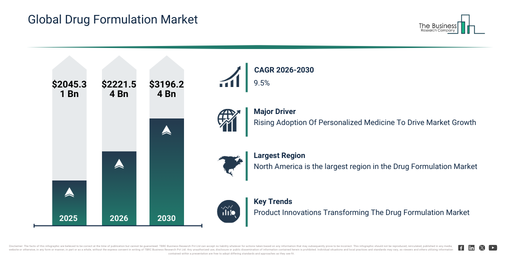
  • Drug Formulation Market Analysis With Focus On Growth Potential And Future Outlook

    Drug Formulation Market Analysis With Focus On Growth Potential And Future Outlook

    The Business Research Company’s 2026 market reports feature enhanced tools like market attractiveness analysis, TAM assessment, and company scoring matrices, along with interactive dashboards, deeper supply chain insights, and startup coverage strengthening the depth, usability, and strategic value of insights.

    What Expansion In Market Value Is Forecasted For The Drug Formulation Market Between 2026 And 2030?

    The drug formulation market size has seen substantial growth over recent years. It is forecast to increase from $2045.31 billion in 2025 to $2221.54 billion in 2026, exhibiting a compound annual growth rate (CAGR) of 8.6%. This historical expansion can be linked to factors such as growth in generic drug demand, rising prevalence of chronic diseases, advancements in pharmaceutical research, expansion of hospital and clinic networks, and increasing investments in R&D.

    The drug formulation market size is projected to experience robust expansion over the coming years. This market is predicted to reach $3196.24 billion by 2030, exhibiting a compound annual growth rate (CAGR) of 9.5%. This anticipated growth during the forecast period can be attributed to several factors, including the rise of gene and cell therapies, the integration of AI in drug design, the advancement of novel excipients, a surge in biologics and specialty drugs, and the broadening of nascent pharmaceutical markets. Key trends anticipated within the forecast timeframe encompass personalized drug formulations, sophisticated drug delivery systems, the ongoing development of biologics and biosimilars, enhancements in formulation stability and shelf-life, and a continued focus on regulatory compliance and quality assurance.

    Access Your Free Sample Report For In-Depth Market Analysis:

    https://www.thebusinessresearchcompany.com/sample.aspx?id=9900&type=smp

    Which Primary Drivers Are Impacting The Drug Formulation Market Growth?

    The drug formulation market is projected to grow as personalized medicine sees increasing adoption. This innovative healthcare method customizes medical treatments and interventions to align with the unique characteristics of each patient, specifically tailoring therapies based on individual factors such as genetics and biomarkers. This approach necessitates the development of bespoke drug formulations to optimize both efficacy and safety for every patient. The ramifications include a demand for individualized treatment plans, formulations that accommodate genomic insights, enhanced drug responses, and specialized therapies for rare diseases. For example, in 2023, the Personalized Medicine Coalition (PMC), a US-based non-profit, reported that personalized medicines constituted approximately 38 percent of all newly approved therapeutic molecular entities, an increase from 34 percent in 2022. Therefore, the expanding adoption of personalized medicine is a key driver for the growth of the drug formulation market.

    Which Segment Categories Are Included In The Drug Formulation Market Segment Analysis?

    The drug formulation market covered in this report is segmented –

    1) By Dosage Form: Oral formulations, Parenteral Formulations, Topical Formulations, Inhalation Formulations

    2) By Formulation: Tablets, Capsules, Injectable, Sprays, Suspensions, Powders, Other Formulations

    3) By Therapy Area: Cardiovascular Diseases (CVDs), Pain, Diabetes, Cancer, Respiratory Diseases, Other Diseases

    4) By End-User: Big Pharma, Small And Medium Pharma, Biotech Companies

    Subsegments:

    1) By Oral Formulations: Tablets, Capsules, Powders, Liquids Or Solutions

    2) By Parenteral Formulations: Injectables, Implants, Infusions

    3) By Topical Formulations: Creams, Ointments, Gels, Transdermal Patches

    4) By Inhalation Formulations: Metered-Dose Inhalers (MDIs), Dry Powder Inhalers (DPIs), Nebulizers

    Which Trends Are Influencing Demand In The Drug Formulation Market?

    Leading companies in the drug formulation sector are developing new fixed dose combination drugs to achieve a competitive advantage in the type 2 diabetes market. A Fixed Dose Combination (FDC) is defined as a pharmaceutical preparation containing two or more active ingredients combined at a fixed ratio of doses within a single dosage form. For example, in October 2023, Glenmark Pharmaceuticals Limited, an India-based pharmaceutical company, launched its first triple-drug fixed-dose combination under the brand name Zita DM. This product comprises the DPP4 inhibitor, Teneligliptin (20mg), the SGLT2 inhibitor, Dapagliflozin (10mg), and Metformin SR (500mg/1000mg) in a fixed dose. It is prescribed for once-daily administration to improve glycemic control in patients with Type 2 diabetes.

    Who Are The Active Companies Shaping The Drug Formulation Market?

    Major companies operating in the drug formulation market are AstraZeneca PLC, The Bristol-Myers Squibb Company, Eli Lilly and Company, Gilead Sciences Inc., Merck & Co. Inc., Novartis AG, Pfizer Inc., AbbVie Inc., C.H. Boehringer Sohn AG & Co. KG, F. Hoffmann-La Roche AG, Johnson & Johnson, Bayer AG, Teva Pharmaceutical Industries Ltd., Sanofi S.A., GlaxoSmithKline plc, Novo Nordisk A/S, Amgen Inc., Viatris Inc., Sandoz International GmbH, Takeda Pharmaceutical Company Limited, Sun Pharmaceutical Industries Ltd., Dr. Reddy’s Laboratories Ltd., Cipla Ltd., Lupin Limited, Torrent Pharmaceuticals Limited, Jubilant Life Sciences Limited, Cadila Healthcare Limited, Glenmark Pharmaceuticals Ltd., Wockhardt Ltd., Hikma Pharmaceuticals plc

    Get The Full Drug Formulation Market Report:

    https://www.thebusinessresearchcompany.com/report/drug-formulation-global-market-report

    Where Is The Drug Formulation Market Primarily Concentrated By Region?

    North America was the largest region in the drug formulation market in 2025. Asia-Pacific is expected to be the fastest-growing region in the drug formulation market report during the forecast period. The regions covered in the drug formulation market report are Asia-Pacific, South East Asia, Western Europe, Eastern Europe, North America, South America, Middle East, Africa.

    Request A Customized Drug Formulation Market Report For Competitive Insights:

    https://www.thebusinessresearchcompany.com/report/drug-formulation-global-market-report

    Browse Through More Reports Similar to the Global Drug Formulation Market 2026, By The Business Research Company

    Drug Formulation Market Report 2026

    https://www.thebusinessresearchcompany.com/report/drug-formulation-global-market-report

    Oral Solid Dosage Pharmaceutical Formulation Market Report 2026

    https://www.thebusinessresearchcompany.com/report/oral-solid-dosage-pharmaceutical-formulation-global-market-report

    Active Pharmaceutical Ingredients Market Report 2026

    https://www.thebusinessresearchcompany.com/report/active-pharmaceutical-ingredients-global-market-report

    Get in touch with us:

    The Business Research Company: https://www.thebusinessresearchcompany.com/

    Americas +1 310-496-7795

    Asia +44 7882 955267 & +91 8897263534

    Europe +44 7882 955267

    Email us at: marketing@tbrc.info

    Follow us on:

    LinkedIn: https://in.linkedin.com/company/the-business-research-company

    YouTube: https://www.youtube.com/channel/UC24_fI0rV8cR5DxlCpgmyFQ

    Global Market Model: https://www.thebusinessresearchcompany.com/global-market-model