Category: Pharmaceuticals

  • Herbal Medicine Market Outlook Highlighting Key Drivers And Market Evolution

    Herbal Medicine Market Outlook Highlighting Key Drivers And Market Evolution

    The Business Research Company’s 2026 market reports feature enhanced tools like market attractiveness analysis, TAM assessment, and company scoring matrices, along with interactive dashboards, deeper supply chain insights, and startup coverage strengthening the depth, usability, and strategic value of insights.

    How Much Growth In Market Value Is Expected For The Herbal Medicine Market Between 2026 And 2030?

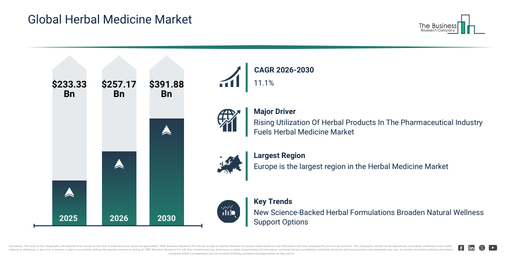
    The herbal medicine market has experienced substantial growth in recent years. Its valuation is projected to expand from $233.33 billion in 2025 to $257.17 billion in 2026, demonstrating a compound annual growth rate (CAGR) of 10.2%. This historical growth can be ascribed to several factors, including heightened awareness of natural remedies, the enduring legacy of traditional herbal knowledge, the development of the pharmaceutical and nutraceutical industries, a growing consumer preference for plant-based medicines, and governmental backing for herbal cultivation.

    The herbal medicine market size is anticipated to experience substantial expansion in the forthcoming years. It is projected to reach $391.88 billion in 2030, demonstrating a compound annual growth rate (CAGR) of 11.1%. This growth during the forecast period is propelled by advancements in herbal extraction technologies, escalating investment in herbal pharmaceuticals, the widening of global distribution networks, increased health consciousness among consumers, and the integration of herbal products with functional foods. Prominent trends for the forecast period involve an increased demand for natural remedies, the growing adoption of herbal dietary supplements, a rising preference for herbal beauty products, the integration of functional foods with herbal extracts, and the expansion of e-commerce channels for herbal products.

    Access Your Free Sample Report For In-Depth Market Analysis:

    https://www.thebusinessresearchcompany.com/sample.aspx?id=12243&type=smp

    Which Major Drivers Are Influencing The Expansion Of The Herbal Medicine Market?

    The expanding application of herbal products within the pharmaceutical industry is expected to fuel the growth of the herbal medicine market moving forward. Herbal products are characterized as any medication whose active ingredients consist solely of one or more herbal substances, one or more herbal preparations, or a combination of these. The integration of herbal products into the pharmaceutical sector is set to bolster demand for the herbal medicine market. As an illustration, in February 2024, a report by Glanbia Nutritionals (NA) Inc., a US-based firm offering dairy and non-dairy solutions, revealed that the United States herbal supplement market is valued at $5.9 billion, with a projected compound annual growth rate (CAGR) of 4.3% from 2022 to 2027. Consequently, the rising incorporation of herbal products in the pharmaceutical industry is a key driver for the expansion of the herbal medicine market.

    What Are The Different Segment Types In The Herbal Medicine Market Segment Breakdown?

    The herbal medicine market covered in this report is segmented –

    1) By Product: Capsules And Tablets, Powders, Extracts, Syrups, Other Products

    2) By Category: Herbal Pharmaceuticals, Herbal Functional Foods, Herbal Dietary Supplements, Herbal Beauty Products

    3) By Distribution Channel: Hospitals, Retail Pharmacies, E-commerce

    4) By Application: Pharmaceutical And Nutraceutical, Food And Beverages, Personal Care And Beauty Products

    Subsegments:

    1) By Capsules And Tablets: Herbal Capsules, Herbal Tablets

    2) By Powders: Single Herb Powders, Blend Powders

    3) By Extracts: Liquid Extracts, Dry Extracts, Standardized Extracts

    4) By Syrups: Herbal Syrups, Cough Syrups

    5) By Other Products: Teas, Tinctures, Ointments And Creams

    Which Trends Are Shaping Growth In The Herbal Medicine Market?

    Leading companies in the herbal medicine market are concentrating on developing advanced solutions like targeted herbal formulations to boost overall health and wellness. These specific herbal formulations are plant-based products designed with clinically studied ingredients to address particular health needs and support effective daily well-being. For example, in December 2023, Garden of Life, a nutritional supplements company based in the U.S., unveiled its new Herbals collection, which features targeted herbal solutions grounded in nature and supported by scientific research. The collection offers six formulations that provide benefits for blood sugar support, stress relief, brain health, heart health, eye health, menopause, and hair growth. Each product integrates primary clinically-supported herbal ingredients with additional complementary components to deliver whole-food-based advantages and is offered in consumer-friendly formats such as softgels, capsules, and gummies. The introduction underscores the use of clean, traceable, non-GMO ingredients with third-party certifications, strengthening product quality and consumer trust while broadening science-backed herbal alternatives across various health categories.

    Who Are The Well-Known Companies In The Herbal Medicine Market?

    Major companies operating in the herbal medicine market are Patanjali Ayurved Ltd., Dabur Ltd., NOW Foods, Boiron Group, Nature’s Sunshine Products, Emami Ltd., Ricola AG, Young Living Essential Oils, Nature’s Way, Swanson Health Products, Gaia Herbs, New Chapter, Bio-Botanica Inc., Schaper & Brümmer GmbH & Co. KG, Traditional Medicinals, Herb Pharm, Nature’s Answer, Nature’s Bounty, Himalaya Global Holdings Ltd., Arizona Natural Products, Dasherb Corp, ZeinPharma Germany GmbH, Solaray, Hishimo Pharmaceuticals Pvt. Ltd., Beovita Deutschland GmbH & Co. KG, Dr. Willmar Schwable India Pvt. Ltd., Source Naturals

    Get The Full Herbal Medicine Market Report:

    https://www.thebusinessresearchcompany.com/report/herbal-medicine-global-market-report

    Which Region Leads The Herbal Medicine Market In Overall Market Size?

    Europe was the largest region in the herbal medicine market in 2025. Asia-Pacific is expected to be the fastest-growing region in the herbal medicine market report during the forecast period. The regions covered in the herbal medicine market report are Asia-Pacific, South East Asia, Western Europe, Eastern Europe, North America, South America, Middle East, Africa.

    Request A Customized Herbal Medicine Market Report For Competitive Insights:

    https://www.thebusinessresearchcompany.com/report/herbal-medicine-global-market-report

    Browse Through More Reports Similar to the Global Herbal Medicine Market 2026, By The Business Research Company

    Herbal Medicine Market Report 2026

    https://www.thebusinessresearchcompany.com/report/herbal-medicine-global-market-report

    Herbal Supplements Market Report 2026

    https://www.thebusinessresearchcompany.com/report/herbal-supplements-global-market-report

    Herbicides Market Report 2026

    https://www.thebusinessresearchcompany.com/report/herbicides-global-market-report

    Get in touch with us:

    The Business Research Company: https://www.thebusinessresearchcompany.com/

    Americas +1 310-496-7795

    Asia +44 7882 955267 & +91 8897263534

    Europe +44 7882 955267

    Email us at: marketing@tbrc.info

    Follow us on:

    LinkedIn: https://in.linkedin.com/company/the-business-research-company

    YouTube: https://www.youtube.com/channel/UC24_fI0rV8cR5DxlCpgmyFQ

    Global Market Model: https://www.thebusinessresearchcompany.com/global-market-model

  • HER2 Inhibitors Market Overview 2026–2030 With Insights On Industry Developments

    HER2 Inhibitors Market Overview 2026–2030 With Insights On Industry Developments

    The Business Research Company’s 2026 market reports feature enhanced tools like market attractiveness analysis, TAM assessment, and company scoring matrices, along with interactive dashboards, deeper supply chain insights, and startup coverage strengthening the depth, usability, and strategic value of insights.

    What Is The Estimated Market Size Of The HER2 Inhibitors Market In 2026, And How Will Its Value Evolve By 2030?

    The her2 inhibitors market size has demonstrated significant growth in recent years. It is forecast to expand from $9.64 billion in 2025 to $10.6 billion in 2026, achieving a compound annual growth rate (CAGR) of 9.9%. This historical growth can be ascribed to several factors, including the initial approval of her2-targeted therapies, an increase in breast cancer cases, enhanced her2 diagnostic testing, favorable clinical trial results, and the acceptance of targeted oncology treatments.

    The her2 inhibitors market is set to observe significant growth in the upcoming years. It is forecast to expand to $14.85 billion by 2030, achieving a compound annual growth rate (CAGR) of 8.8%. The projected growth can be linked to several factors, including an increase in the identification of her2-low patients, the expansion of the pipeline for novel her2 inhibitors, the rising adoption of combination regimens, the extension into metastatic and adjuvant treatment settings, and growing healthcare spending in oncology. Major developments anticipated in the forecast period encompass the broadening of her2-targeted combination therapies, an increase in the use of her2 inhibitors in early-stage cancer, a heightened focus on treating her2-low breast cancer, the creation of next-generation antibody drug conjugates, and improved patient stratification alongside biomarker testing.

    Access Your Free Sample Report For In-Depth Market Analysis:

    https://www.thebusinessresearchcompany.com/sample.aspx?id=3396&type=smp

    What Key Drivers Are Fueling The Growth Of The HER2 Inhibitors Market?

    Future expansion of the HER2 inhibitors market is anticipated due to governmental efforts focused on enhancing breast cancer care and treatment. These governmental endeavors, designed to improve breast cancer care, encompass policies, funding, and programs implemented by the authorities to boost the accessibility, affordability, and quality of care for individuals diagnosed with breast cancer. Access to HER2 inhibitors, which are a form of breast cancer therapy, has been improved by government initiatives via subsidized initiatives and investment in research, thereby improving patient care and outcomes. As an illustration, in February 2023, the World Health Organization (WHO), an intergovernmental body based in Switzerland, unveiled its new Global Breast Cancer Initiative Framework. This framework offers a strategic plan aimed at achieving goals to prevent 2.5 million breast cancer deaths by 2040. Consequently, governmental programs to advance breast cancer care and treatment are fueling the expansion of the HER2 inhibitors market.

    Which Segment Classifications Are Used In The HER2 Inhibitors Market Segment Analysis?

    The her2 inhibitors market covered in this report is segmented –

    1) By Treatment: Monotherapy, Combination Therapy

    2) By Application: Squamous Cell Carcinoma, Adenocarcinoma, Large Cell Carcinoma, Breast Cancer, Other Applications

    3) By End User: Hospitals, Clinics, Other End Users

    Subsegments:

    1) By Monotherapy: Single-Agent HER2 Inhibitors, Targeted HER2 Therapies

    2) By Combination Therapy: HER2 Inhibitors Combined With Chemotherapy, HER2 Inhibitors Combined With Targeted Therapies, HER2 Inhibitors Combined With Hormonal Therapies

    What Trends Are Affecting The Direction Of The HER2 Inhibitors Market?

    Leading companies within the HER2 inhibitor market are prioritizing the creation of therapies for pre-treated HR+/HER2-metastatic breast cancer to secure a market advantage. This particular form, HR+/HER2-metastatic breast cancer, is a variant of metastatic breast cancer identified by the presence of hormone receptors (HR+). An illustrative example is Gilead Sciences, Inc., a US-based biopharmaceutical firm, which obtained U.S. FDA approval in February 2023 for Trodelvy (Sacituzumab govitecan-hziy). This approval was for treating adults with unresectable locally advanced or metastatic HR-positive, HER2-negative breast cancer, specifically after they have received prior endocrine-based and two additional systemic therapies in the metastatic setting.

    Which Firms Are Contributing To The HER2 Inhibitors Market Ecosystem?

    Major companies operating in the her2 inhibitors market are Pfizer Inc., Johnson & Johnson Services Inc., F Hoffmann-La Roche Ltd., Merck & Co. Inc., Novartis AG, Sanofi SA, Bristol-Myers Squibb Company, AstraZeneca plc, Takeda Pharmaceutical Company Limited, Eli Lilly International Corp., C.H. Boehringer Sohn AG & Co. KG, Teva Pharmaceutical Industries Ltd., Daiichi Sankyo Company Limited, Ipsen SA, the Pierre Fabre Group, Biocon Biopharmaceuticals Pvt. Ltd., Innovent Biologics Inc., Seattle Genetics Inc., Zymeworks Inc., Puma Biotechnology Inc., MacroGenics Inc., Mersana Therapeutics Inc., Cellestia Biotech AG

    Get The Full HER2 Inhibitors Market Report:

    https://www.thebusinessresearchcompany.com/report/her2-inhibitor-global-market-report

    Which Region Is The Top Contributor To The HER2 Inhibitors Market By Share?

    North America was the largest region in the HER2 inhibitors market in 2025. Middle East is expected to be the fastest-growing region in the HER2 inhibitors market report during the forecast period. The regions covered in the her2 inhibitors market report are Asia-Pacific, South East Asia, Western Europe, Eastern Europe, North America, South America, Middle East, Africa.

    Request A Customized HER2 Inhibitors Market Report For Competitive Insights:

    https://www.thebusinessresearchcompany.com/report/her2-inhibitor-global-market-report

    Browse Through More Reports Similar to the Global HER2 Inhibitors Market 2026, By The Business Research Company

    Antidepressant Market Report 2026

    https://www.thebusinessresearchcompany.com/report/antidepressant-global-market-report

    Checkpoint Inhibitor Market Report 2026

    https://www.thebusinessresearchcompany.com/report/checkpoint-inhibitor-global-market-report

    Protein Inhibitor Market Report 2026

    https://www.thebusinessresearchcompany.com/report/protein-inhibitor-global-market-report

    Get in touch with us:

    The Business Research Company: https://www.thebusinessresearchcompany.com/

    Americas +1 310-496-7795

    Asia +44 7882 955267 & +91 8897263534

    Europe +44 7882 955267

    Email us at: marketing@tbrc.info

    Follow us on:

    LinkedIn: https://in.linkedin.com/company/the-business-research-company

    YouTube: https://www.youtube.com/channel/UC24_fI0rV8cR5DxlCpgmyFQ

    Global Market Model: https://www.thebusinessresearchcompany.com/global-market-model
  • Hepatorenal Syndrome Treatment Market Forecast Highlighting Key Trends And Expansion Potential

    Hepatorenal Syndrome Treatment Market Forecast Highlighting Key Trends And Expansion Potential

    The Business Research Company’s 2026 market reports feature enhanced tools like market attractiveness analysis, TAM assessment, and company scoring matrices, along with interactive dashboards, deeper supply chain insights, and startup coverage strengthening the depth, usability, and strategic value of insights.

    How Does The Market Size Of The Hepatorenal Syndrome Treatment Market Compare Between 2026 And 2030?

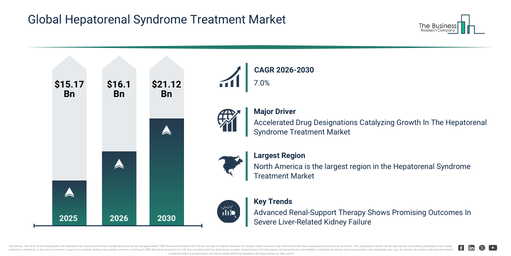
    The hepatorenal syndrome treatment market has experienced robust growth recently. Its valuation is projected to increase from $15.17 billion in 2025 to $16.1 billion in 2026, exhibiting a compound annual growth rate (CAGR) of 6.1%. This historic expansion stemmed from elements including limited awareness of hrs, a lack of standardized treatment protocols, the high mortality associated with liver failure, a dependency on conventional dialysis methods, and restricted access to advanced therapeutics.

    The market size for hepatorenal syndrome treatment is projected to experience substantial expansion over the upcoming years. This market is anticipated to reach a valuation of $21.12 billion by 2030, demonstrating a compound annual growth rate (CAGR) of 7.0%. Factors contributing to this growth during the projection period include progress in targeted therapies, the uptake of precision medicine strategies, an expanding healthcare infrastructure, the incorporation of AI and digital instruments for patient monitoring, and heightened investment in the creation of new drugs. Key trends anticipated within the forecast period encompass a rising incidence of chronic liver conditions, developments in renal replacement therapies, individualized treatment methodologies for HRS, the expansion of hospital and clinical facilities, and an increased emphasis on timely diagnosis and ongoing monitoring.

    Access Your Free Sample Report For In-Depth Market Analysis:

    https://www.thebusinessresearchcompany.com/sample.aspx?id=10414&type=smp

    Which Drivers Are Supporting The Hepatorenal Syndrome Treatment Market Growth?

    An increasing number of fast-track and novel drug designations is projected to fuel the expansion of the hepatorenal syndrome treatment market in the future. These designations represent regulatory routes designed to accelerate the creation, evaluation, and authorization of medications for severe illnesses where current treatments are lacking, thereby bringing new treatments to patients more rapidly. The growing prevalence of fast-track and novel drug designations specifically seeks to speed up the creation of therapies for hepatorenal syndrome, responding to the critical demand for effective solutions, potentially enhancing patient results, and fulfilling the unaddressed medical requirements of this ailment. As an illustration, in January 2024, a report titled “New Drug Therapy Approvals 2023” from the Center for Drug Evaluation and Research (CDER), a division of the U.S. Food and Drug Administration (FDA) in the US, indicated that CDER granted approval to 55 new drugs in 2023, with 20 (36%) being categorized as first-in-class, an increase from 37 novel drug approvals in 2022. Consequently, the increased use of fast-track and novel drug designations is a key factor propelling the expansion of the hepatorenal syndrome treatment market.

    How Is The Hepatorenal Syndrome Treatment Market Organized By Segment Classification?

    The hepatorenal syndrome treatment market covered in this report is segmented –

    1) By Type: Type 1 Hepatorenal Syndrome, Type 2 Hepatorenal Syndrome

    2) By Treatment: Therapeutics, Surgical Treatment

    3) By End-User: Hospitals And Clinics, Ambulatory Surgical Centers, Academic And Research Institutes, Other End-Users

    Subsegments:

    1) By Type 1 Hepatorenal Syndrome: Intravenous Albumin, Vasopressors, Dialysis, Liver Transplantation

    2) By Type 2 Hepatorenal Syndrome: Albumin Infusion, Midodrine, Octreotide, Liver Transplantation

    What Trends Are Influencing The Evolution Of The Hepatorenal Syndrome Treatment Market?

    Key players in the hepatorenal syndrome treatment market are concentrating on developing innovative advancements, such as vasoconstrictive renal-support therapies, to enhance kidney function and clinical outcomes for patients experiencing rapid deterioration linked to advanced liver disease. A vasoconstrictive renal-support therapy is a pharmacological treatment designed to improve renal perfusion and support kidney recovery through selective constriction of splanchnic blood vessels and stabilization of circulatory function. For instance, in June 2024, Mallinckrodt plc, an Ireland-based specialty pharmaceutical company, presented new clinical data on TERLIVAZ, a terlipressin injection approved for hepatorenal syndrome with a rapid reduction in kidney function. The findings demonstrated favorable results across several patient subgroups, including improved reversal rates of kidney dysfunction and a reduced need for renal replacement therapy. The data further emphasized the therapy’s importance in addressing a life-threatening complication of advanced liver disease and its potential to inform earlier diagnosis and more effective clinical management.

    Who Are The Industry Participants Involved In The Hepatorenal Syndrome Treatment Market?

    Major companies operating in the hepatorenal syndrome treatment market are BioVie Inc., Cumberland Pharmaceuticals Inc., Mallinckrodt Pharmaceuticals, Orphan Therapeutics LLC, Baxter International Inc., Novartis AG, Eli Lilly and Company, Johnson & Johnson, Boehringer Ingelheim GmbH, Bayer AG, Gilead Sciences Inc., Pfizer Inc., AstraZeneca PLC, AbbVie Inc., Amgen Inc., F Hoffmann-La Roche Ltd, Takeda Pharmaceutical Company Limited, Daiichi Sankyo Company Limited, Teva Pharmaceutical Industries Ltd., Otsuka Pharmaceutical Co Ltd, Astellas Pharma Inc., Kyowa Kirin Co Ltd

    Get The Full Hepatorenal Syndrome Treatment Market Report:

    https://www.thebusinessresearchcompany.com/report/hepatorenal-syndrome-treatment-global-market-report

    Which Region Represents The Largest Share Of The Hepatorenal Syndrome Treatment Market?

    North America was the largest region in the hepatorenal syndrome treatment market in 2025. Asia-Pacific is expected to be the fastest-growing region in the global hepatorenal syndrome treatment market during the forecast period. The regions covered in the hepatorenal syndrome treatment market report are Asia-Pacific, South East Asia, Western Europe, Eastern Europe, North America, South America, Middle East, Africa.

    Request A Customized Hepatorenal Syndrome Treatment Market Report For Competitive Insights:

    https://www.thebusinessresearchcompany.com/report/hepatorenal-syndrome-treatment-global-market-report

    Browse Through More Reports Similar to the Global Hepatorenal Syndrome Treatment Market 2026, By The Business Research Company

    Hepatorenal Syndrome Treatment Market Report 2026

    https://www.thebusinessresearchcompany.com/report/hepatorenal-syndrome-treatment-global-market-report

    Alcoholic Hepatitis Treatment Market Report 2026

    https://www.thebusinessresearchcompany.com/report/alcoholic-hepatitis-treatment-global-market-report

    Liver Diseases Therapeutics Market Report 2026

    https://www.thebusinessresearchcompany.com/report/liver-diseases-therapeutics-global-market-report

    Get in touch with us:

    The Business Research Company: https://www.thebusinessresearchcompany.com/

    Americas +1 310-496-7795

    Asia +44 7882 955267 & +91 8897263534

    Europe +44 7882 955267

    Email us at: marketing@tbrc.info

    Follow us on:

    LinkedIn: https://in.linkedin.com/company/the-business-research-company

    YouTube: https://www.youtube.com/channel/UC24_fI0rV8cR5DxlCpgmyFQ

    Global Market Model: https://www.thebusinessresearchcompany.com/global-market-model
  • Hepatocellular Carcinoma Drugs Market Analysis Covering Growth Drivers And Future Outlook

    Hepatocellular Carcinoma Drugs Market Analysis Covering Growth Drivers And Future Outlook

    The Business Research Company’s 2026 market reports feature enhanced tools like market attractiveness analysis, TAM assessment, and company scoring matrices, along with interactive dashboards, deeper supply chain insights, and startup coverage strengthening the depth, usability, and strategic value of insights.

    What Is The Forecasted Market Size Trajectory Of The Hepatocellular Carcinoma Drugs Market From 2026 To 2030?

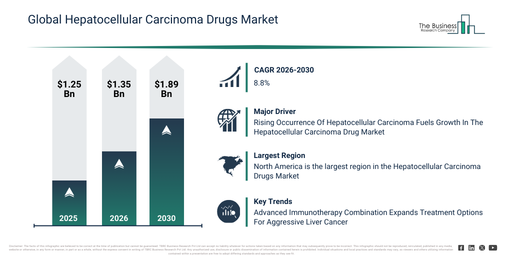
    The hepatocellular carcinoma drugs market has witnessed robust expansion in recent years. This market is set to increase from $1.25 billion in 2025 to $1.35 billion in 2026, exhibiting a compound annual growth rate (CAGR) of 8.0%. The historical growth in this sector can be ascribed to several factors, including the widespread occurrence of chronic hepatitis B and C, a significant incidence of liver cirrhosis, increasing levels of alcohol consumption, the scarcity of available treatment alternatives, and the common late-stage identification of hepatocellular carcinoma.

    The hepatocellular carcinoma drugs market size is projected to undergo significant expansion over the coming years. Its value is expected to reach $1.89 billion by 2030, demonstrating a compound annual growth rate (CAGR) of 8.8%. This anticipated growth during the forecast period stems from progress in targeted therapy, the increasing prevalence of immunotherapy drugs, the broadening of early screening programs, enhancements in healthcare infrastructure across emerging markets, and the growing acceptance of personalized medicine. Notable trends for the forecast period encompass the evolution of targeted therapy, advancements in immunotherapy, the adoption of personalized medicine, initiatives for early diagnosis and screening, and continued research into combination therapy.

    Access Your Free Sample Report For In-Depth Market Analysis:

    https://www.thebusinessresearchcompany.com/sample.aspx?id=10809&type=smp

    What Key Factors Are Affecting The Hepatocellular Carcinoma Drugs Market Demand?

    The rising incidence of hepatocellular carcinoma is anticipated to propel the growth of the hepatocellular carcinoma drug market over the coming years. Hepatocellular carcinoma (HCC) is identified as a primary malignant disease of the liver and represents the most common form of liver cancer. This condition initiates in hepatocyte cells, which are the main type of liver cells. A majority of HCC cases stem from infections with hepatitis B or C, or from cirrhosis. As the occurrence of hepatocellular carcinoma continues to climb, it generates an increased demand for efficacious hepatocellular carcinoma drugs to treat the illness. For instance, in 2023, according to a report published by the American Cancer Society, Inc., a US-based nationwide voluntary health organization dedicated to eliminating cancer, the estimated new cases of liver cancer diagnosed in females in the United States climbed from 12,660 in 2022 to 13,230 in 2023. Thus, the escalating occurrence of hepatocellular carcinoma is a key driver for the growth of the hepatocellular carcinoma drug market.

    Which Segments Define The Hepatocellular Carcinoma Drugs Market Segment Structure?

    The hepatocellular carcinoma drugs market covered in this report is segmented –

    1) By Type: Brachytherapy, Chemotherapy

    2) By Drug Class: PD-1/PD-L1 Inhibitors, Tyrosine Kinase Inhibitors

    3) By End User: Hospitals, Clinics, Cancer Rehabilitation Centers, Ambulatory Surgical Centers

    Subsegments:

    1) By Brachytherapy: Radioactive Seed Implants, Balloon-Activated Brachytherapy, Selective Internal Radiation Therapy

    2) By Chemotherapy: Systemic Chemotherapy, Targeted Therapy Agents, Combination Chemotherapy Regimens, Adjuvant Chemotherapy

    Which Trends Are Impacting The Progress Of The Hepatocellular Carcinoma Drugs Market?

    Major companies within the hepatocellular carcinoma drugs market are focusing on developing innovative products, such as immune checkpoint inhibitor combinations, to improve treatment outcomes for patients with advanced disease. An immune checkpoint inhibitor combination is a therapeutic regimen that pairs two complementary immunotherapies to enhance the body’s antitumor response by targeting distinct immune regulatory pathways. For instance, in April 2025, the U.S. Food and Drug Administration, a US–based regulatory authority, approved the nivolumab–ipilimumab combination regimen. This dual-agent therapy was authorized for first-line treatment of adults with unresectable or metastatic hepatocellular carcinoma, having demonstrated superior overall survival and response rates when compared with existing therapeutic options. It introduces a clinically validated immunotherapy alternative that broadens the systemic treatment landscape for advanced liver cancer.

    Who Are The Established Players Within The Hepatocellular Carcinoma Drugs Market?

    Major companies operating in the hepatocellular carcinoma drugs market are AbbVie Inc., Amgen Inc., Bayer AG, Bristol-Myers Squibb Company, Eisai Co.Ltd., Eli Lilly and Company, Johnson & Johnson, Merck & Co. Inc., Novartis AG, Pfizer Inc., Takeda Pharmaceutical Company Limited, Teva Pharmaceutical Industries Ltd., F. Hoffmann-La Roche Ltd, Gilead Sciences Inc., Exelixis Inc., Ipsen Pharma Biotech SAS, AstraZeneca plc, BeiGene Ltd., Ono Pharmaceutical Co. Ltd., Roche Holdings AG, Sanofi S.A., Astellas Pharma Inc., Daiichi Sankyo Company Limited, Otsuka Pharmaceutical Co. Ltd., Kyowa Kirin Co. Ltd., Sumitomo Dainippon Pharma Co. Ltd., Hengrui Medicine Co. Ltd., CSPC Pharmaceutical Group Limited, Hutchison China MediTech Limited, Jiangsu Hengrui Medicine Co. Ltd.

    Get The Full Hepatocellular Carcinoma Drugs Market Report:

    https://www.thebusinessresearchcompany.com/report/hepatocellular-carcinoma-drugs-global-market-report

    Which Geographic Region Dominates The Hepatocellular Carcinoma Drugs Market?

    North America was the largest region in the hepatocellular carcinoma drug market in 2025. The regions covered in the hepatocellular carcinoma drugs market report are Asia-Pacific, South East Asia, Western Europe, Eastern Europe, North America, South America, Middle East, Africa.

    Request A Customized Hepatocellular Carcinoma Drugs Market Report For Competitive Insights:

    https://www.thebusinessresearchcompany.com/report/hepatocellular-carcinoma-drugs-global-market-report

    Browse Through More Reports Similar to the Global Hepatocellular Carcinoma Drugs Market 2026, By The Business Research Company

    Hepatocellular Carcinoma Drugs Market Report 2026

    https://www.thebusinessresearchcompany.com/report/hepatocellular-carcinoma-drugs-global-market-report

    Unresectable Hepatocellular Carcinoma Market Report 2026

    https://www.thebusinessresearchcompany.com/report/unresectable-hepatocellular-carcinoma-global-market-report

    Hepatitis Drugs Market Report 2026

    https://www.thebusinessresearchcompany.com/report/hepatitis-drugs-global-market-report

    Get in touch with us:

    The Business Research Company: https://www.thebusinessresearchcompany.com/

    Americas +1 310-496-7795

    Asia +44 7882 955267 & +91 8897263534

    Europe +44 7882 955267

    Email us at: marketing@tbrc.info

    Follow us on:

    LinkedIn: https://in.linkedin.com/company/the-business-research-company

    YouTube: https://www.youtube.com/channel/UC24_fI0rV8cR5DxlCpgmyFQ

    Global Market Model: https://www.thebusinessresearchcompany.com/global-market-model
  • Hepatitis Therapeutics Market Forecast Through 2030 With Insights On Market Patterns And Developments

    Hepatitis Therapeutics Market Forecast Through 2030 With Insights On Market Patterns And Developments

    The Business Research Company’s 2026 market reports feature enhanced tools like market attractiveness analysis, TAM assessment, and company scoring matrices, along with interactive dashboards, deeper supply chain insights, and startup coverage strengthening the depth, usability, and strategic value of insights.

    How Much Will The Market Value Of The Hepatitis Therapeutics Market Grow Between 2026 And 2030?

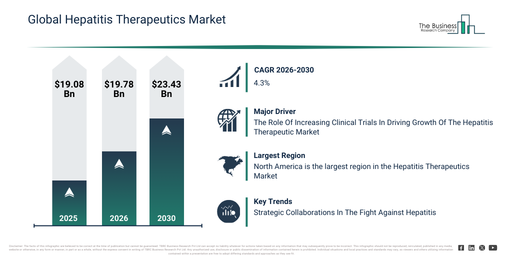
    The hepatitis therapeutics market has experienced consistent expansion in recent years. Projections indicate a rise from $19.08 billion in 2025 to $19.78 billion in 2026, achieving a compound annual growth rate (CAGR) of 3.7%. This historical growth can be attributed to the significant prevalence of hepatitis b and c infections, the introduction of interferon-based therapies, the broadening of public vaccination initiatives, enhanced awareness in blood screening and diagnostics, and government-led viral hepatitis control programs.

    The hepatitis therapeutics market is projected to experience consistent expansion in the coming years. This market is anticipated to reach $23.43 billion by 2030, exhibiting a compound annual growth rate (CAGR) of 4.3%. Factors contributing to this growth during the projected timeframe include the increasing adoption of direct-acting antivirals, greater investment in innovative immune modulators, enhanced treatment accessibility in developing regions, higher diagnosis rates due to screening initiatives, and the ongoing development of pipeline pan-genotypic therapies. Key trends shaping the forecast period encompass the increasing use of direct-acting antivirals for hepatitis C, a heightened emphasis on combination therapies for chronic hepatitis, the broadening of vaccination efforts to prevent hepatitis, a move towards long-term management utilizing oral antivirals, and the expanding role of online and specialty pharmacies in facilitating drug access.

    Access Your Free Sample Report For In-Depth Market Analysis:

    https://www.thebusinessresearchcompany.com/sample.aspx?id=9956&type=smp

    Which Primary Drivers Are Impacting The Hepatitis Therapeutics Market Growth?

    The increasing volume of clinical trials is projected to fuel expansion within the hepatitis therapeutic market in the future. These trials represent research endeavors aimed at assessing novel treatments, drugs, or interventions involving human subjects. They are instrumental in advancing new hepatitis therapeutics by establishing a stringent and moral structure for evaluating the safety and effectiveness of prospective treatments, thereby ensuring patients receive the most impactful and advantageous therapies. As an illustration, in December 2024, data from the Association of the British Pharmaceutical Industry, a non-profit entity situated in the UK, revealed that industry-initiated clinical trials in the UK increased from 411 trials in 2022 to 426 trials in 2023, signifying a rise of 3.7%. Consequently, the expanding volume of clinical trials is a key impetus behind the growth observed in the hepatitis therapeutics market.

    How Is The Hepatitis Therapeutics Market Segmented Across Different Segment Categories?

    The hepatitis therapeutics market covered in this report is segmented –

    1) By Disease Type: Hepatitis A, Hepatitis B, Hepatitis C, Other Disease Types

    2) By Drug Class: Oral Antivirals, Immune Modulators

    3) By Distribution Channel: Hospital Pharmacies, Drug Stores And Retail Pharmacies, Online Providers

    Subsegments:

    1) By Hepatitis A: Vaccines, Post-Exposure Prophylaxis (PEP)

    2) By Hepatitis B: Antiviral Medications, Immune Modulators, Vaccines

    3) By Hepatitis C: Direct-Acting Antivirals (DAAs), Ribavirin, Interferon-Based Therapies

    4) By Other Disease Types: Hepatitis D, Hepatitis E

    What Trends Are Transforming The Hepatitis Therapeutics Market?

    Leading companies in the hepatitis therapeutics market are increasingly concentrating on establishing agreements for developing therapeutics to gain a competitive advantage. A strategic agreement is defined as a formal contract between two or more entities, outlining the terms of their collaborative efforts to achieve mutual business objectives. As an illustration, in October 2023, GlaxoSmithKline PLC, a UK-based pharmaceutical and biotechnology company, announced an agreement to secure an exclusive license for JNJ-3989. This substance is an investigational subcutaneous RNA interference (RNAi) therapeutic designed for the treatment of chronic hepatitis B (CHB). JNJ-3989 operates as a novel RNAi therapeutic that specifically targets the hepatitis B virus (HBV) X protein. The X protein is vital for both HBV replication and its viral persistence.

    Which Organizations Play A Role In The Hepatitis Therapeutics Market Landscape?

    Major companies operating in the hepatitis therapeutics market are Gilead Sciences Inc., Bristol-Myers Squibb Co., AbbVie Inc., Merck & Co. Inc., Johnson & Johnson Services Inc., Cipla Inc., F Hoffmann-La Roche Ltd., Biocon Limited, LAURUS Labs Ltd., Zydus Lifesciences Limited, Hetero Healthcare Limited, Novartis AG, Sanofi SA, GlaxoSmithKline plc, Lupin Ltd., Teva Pharmaceutical Industries Ltd., NATCO Pharma Limited, Pfizer Inc., AstraZeneca plc, Boehringer Ingelheim International GmbH, Biocon Biopharmaceuticals Pvt. Ltd.

    Get The Full Hepatitis Therapeutics Market Report:

    https://www.thebusinessresearchcompany.com/report/hepatitis-therapeutics-global-market-report

    Which Region Is The Leading Market For The Hepatitis Therapeutics Market?

    North America was the largest region in the hepatitis therapeutics market in 2025. Asia-Pacific is expected to be the fastest-growing region in the hepatitis therapeutics market report during the forecast period. The regions covered in the hepatitis therapeutics market report are Asia-Pacific, South East Asia, Western Europe, Eastern Europe, North America, South America, Middle East, Africa.

    Request A Customized Hepatitis Therapeutics Market Report For Competitive Insights:

    https://www.thebusinessresearchcompany.com/report/hepatitis-therapeutics-global-market-report

    Browse Through More Reports Similar to the Global Hepatitis Therapeutics Market 2026, By The Business Research Company

    Hepatitis Therapeutics Market Report 2026

    https://www.thebusinessresearchcompany.com/report/hepatitis-therapeutics-global-market-report

    Hepatitis Drugs Market Report 2026

    https://www.thebusinessresearchcompany.com/report/hepatitis-drugs-global-market-report

    Liver Diseases Therapeutics Market Report 2026

    https://www.thebusinessresearchcompany.com/report/liver-diseases-therapeutics-global-market-report

    Get in touch with us:

    The Business Research Company: https://www.thebusinessresearchcompany.com/

    Americas +1 310-496-7795

    Asia +44 7882 955267 & +91 8897263534

    Europe +44 7882 955267

    Email us at: marketing@tbrc.info

    Follow us on:

    LinkedIn: https://in.linkedin.com/company/the-business-research-company

    YouTube: https://www.youtube.com/channel/UC24_fI0rV8cR5DxlCpgmyFQ

    Global Market Model: https://www.thebusinessresearchcompany.com/global-market-model
  • Hepatitis Drugs Market Outlook For 2026–2030 Covering Growth Drivers And Industry Trends

    Hepatitis Drugs Market Outlook For 2026–2030 Covering Growth Drivers And Industry Trends

    The Business Research Company’s 2026 market reports feature enhanced tools like market attractiveness analysis, TAM assessment, and company scoring matrices, along with interactive dashboards, deeper supply chain insights, and startup coverage strengthening the depth, usability, and strategic value of insights.

    What Changes In Market Value Are Expected For The Hepatitis Drugs Market Over The 2026–2030 Period?

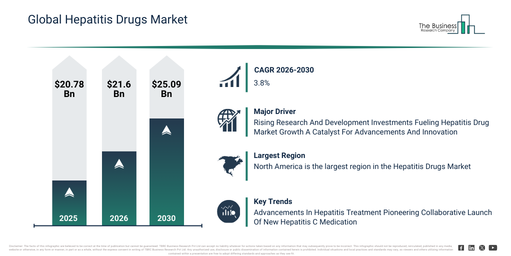
    The hepatitis drugs market size has demonstrated consistent expansion in recent years. This market is projected to expand from $20.78 billion in 2025 to $21.6 billion in 2026, exhibiting a compound annual growth rate (CAGR) of 4.0%. The growth observed in the preceding period can be attributed to the significant prevalence of hepatitis B and C infections, the historical reliance on interferon-based therapies, restricted access to treatment in economically challenged regions, government-initiated hepatitis screening programs, and an increase in infections linked to blood transfusions and injections.

    The hepatitis drugs market size is projected to experience consistent expansion in the coming years. This market is set to reach $25.09 billion by 2030, exhibiting a compound annual growth rate (CAGR) of 3.8%. Several factors will drive this growth during the projected timeframe, including the increasing uptake of direct-acting antivirals, rising healthcare spending on liver conditions, the broadening of mass vaccination initiatives, enhanced awareness and diagnostic frequencies, and continuous pipeline advancements for future antiviral treatments. Key trends anticipated within this period encompass a move towards oral direct-acting antiviral therapies, increased utilization of combination drug protocols, a heightened focus on pan-genotypic hepatitis solutions, the proliferation of generic and biosimilar hepatitis medications, and greater importance placed on prompt diagnosis and accessible treatment.

    Access Your Free Sample Report For In-Depth Market Analysis:

    https://www.thebusinessresearchcompany.com/sample.aspx?id=6889&type=smp

    What Significant Factors Are Influencing The Hepatitis Drugs Market Expansion?

    Increased expenditure in research and development is anticipated to propel the growth of the hepatitis drug market in the coming years. Research and development involves investigative operations carried out by businesses, institutions, or organizations to discover, experiment, invent, and develop new goods, processes, or services, or to enhance current ones. Investments in research and development contribute considerably to financial growth, societal improvement, corporate success, and sustainability, promoting advancement and creativity in several areas. For instance, in May 2023, according to the Parliament of Australia, an Australia-based government supreme legislative branch, the government is going to invest $12.1 billion in research and development in 2022–23, a 3.2% increase over 2021-2022. Therefore, the rising investment in research and development is driving the hepatitis drugs market.

    What Are The Main Segments Within The Hepatitis Drugs Market Segment Structure?

    The hepatitis drugs market covered in this report is segmented –

    1) By Drug Class: Interferon Alphas, HIV NRTIs, Nucleotide Polymerase Or NS5A Inhibitor Combinations, Hepatitis C Protease Or NS5A Inhibitor Combinations, NS5A Inhibitors, Nucleotide Polymerase Inhibitors, Nucleoside Analogue Antivirals

    2) By Route Of Administration: Oral, Injection

    3) By Distribution Channel: Hospital Pharmacies, Retail Pharmacies, Online Pharmacies

    4) By Application: Hepatitis A, Hepatitis B, Hepatitis C, Hepatitis D, Hepatitis E

    Subsegments:

    1) By Interferon Alphas: Pegylated Interferon Alpha, Non-Pegylated Interferon Alpha

    2) By HIV NRTIs: Zidovudine, Lamivudine, Abacavir, Tenofovir

    3) By Nucleotide Polymerase Or NS5A Inhibitor Combinations: Sofosbuvir Or velpatasvir, Sofosbuvir Or ledipasvir

    4) By Hepatitis C Protease Or NS5A Inhibitor Combinations: Glecaprevir Or pibrentasvir, Paritaprevir Or ombitasvir Or dasabuvir

    5) By NS5A Inhibitors: Daclatasvir, Ledipasvir, Velpatasvir

    6) By Nucleotide Polymerase Inhibitors: Sofosbuvir, Dasabuvir

    7) By Nucleoside Analogue Antivirals: Adefovir, Entecavir, Lamivudine

    What Trends Are Shaping The Future Of The Hepatitis Drugs Market?

    Leading companies in the hepatitis drugs market are concentrating on developing medications with advanced formulations to improve treatment effectiveness, enhance patient adherence, reduce adverse effects, and address the various strains of the hepatitis virus. The FDA Fast Track designation is a procedure established to accelerate the development and review of drugs that treat serious illnesses and fulfill an unmet medical need. Therapies receiving this designation are intended to allow patients quicker access to new treatments, particularly for severe or life-threatening conditions. For example, in February 2024, GSK plc, a pharmaceutical company based in the UK, was granted the U.S. Food and Drug Administration (FDA) Fast Track designation for its drug bepirovirsen, intended for the treatment of chronic hepatitis B (CHB). This designation is noteworthy as it seeks to expedite the development and assessment process for treatments that cater to unmet medical needs in serious health situations.

    Who Are The Companies Participating In The Hepatitis Drugs Market?

    Major companies operating in the hepatitis drugs market are Gilead Sciences Inc., F. Hoffmann-La Roche Ltd, GlaxoSmithKline plc, Johnson & Johnson, Merck & Co. Inc., Abbott Laboratories, AbbVie Inc., Arbutus Biopharma Corporation, Aspen Pharmacare Holdings Limited, Aurobindo Pharma Limited, Beximco Pharmaceuticals Ltd., Biocon Limited, Bristol-Myers Squibb Company, Cadila Healthcare Limited, Cipla Limited, Dr. Reddy’s Laboratories Ltd., Enanta Pharmaceuticals Inc., Hetero Drugs Limited, Laurus Labs Limited, Lupin Pharmaceuticals Inc., Micro Labs Limited, Mylan N. V., Natco Pharma Limited, Novartis International AG, Roche Holding AG, Sun Pharmaceutical Industries Limited, Teva Pharmaceutical Industries Ltd., Zydus Cadila Healthcare Limited, Vir Biotechnology Inc., Genentech Inc., Eisai Pharmaceuticals India Pvt. Ltd.

    Get The Full Hepatitis Drugs Market Report:

    https://www.thebusinessresearchcompany.com/report/hepatitis-drugs-global-market-report

    Where Is The Hepatitis Drugs Market Primarily Concentrated By Region?

    North America was the largest region in the hepatitis drugs market in 2025. Asia-Pacific is expected to be the fastest-growing region in the forecast period. The regions covered in the hepatitis drugs market report are Asia-Pacific, South East Asia, Western Europe, Eastern Europe, North America, South America, Middle East, Africa.

    Request A Customized Hepatitis Drugs Market Report For Competitive Insights:

    https://www.thebusinessresearchcompany.com/report/hepatitis-drugs-global-market-report

    Browse Through More Reports Similar to the Global Hepatitis Drugs Market 2026, By The Business Research Company

    Hepatitis Drugs Market Report 2026

    https://www.thebusinessresearchcompany.com/report/hepatitis-drugs-global-market-report

    Hepatitis Therapeutics Market Report 2026

    https://www.thebusinessresearchcompany.com/report/hepatitis-therapeutics-global-market-report

    Viral Hepatitis Market Report 2026

    https://www.thebusinessresearchcompany.com/report/viral-hepatitis-global-market-report

    Get in touch with us:

    The Business Research Company: https://www.thebusinessresearchcompany.com/

    Americas +1 310-496-7795

    Asia +44 7882 955267 & +91 8897263534

    Europe +44 7882 955267

    Email us at: marketing@tbrc.info

    Follow us on:

    LinkedIn: https://in.linkedin.com/company/the-business-research-company

    YouTube: https://www.youtube.com/channel/UC24_fI0rV8cR5DxlCpgmyFQ

    Global Market Model: https://www.thebusinessresearchcompany.com/global-market-model

  • Rising Lymphoma Incidence Fuels Growth Of The Is Supporting Expansion In The Hepatitis B Virus (HBV) Capsid Inhibitors Market

    Rising Lymphoma Incidence Fuels Growth Of The Is Supporting Expansion In The Hepatitis B Virus (HBV) Capsid Inhibitors Market

    The Business Research Company’s 2026 market reports feature enhanced tools like market attractiveness analysis, TAM assessment, and company scoring matrices, along with interactive dashboards, deeper supply chain insights, and startup coverage strengthening the depth, usability, and strategic value of insights.

    By 2030, What Market Size Is The Hepatitis B Virus (HBV) Capsid Inhibitors Market Expected To Reach Based On Its 2026 Value?

    The hepatitis b virus (hbv) capsid inhibitors market has experienced substantial growth in recent years. This market is projected to expand from $0.52 billion in 2025 to $0.59 billion in 2026, at a compound annual growth rate (CAGR) of 13.7%. The historical growth can be ascribed to the global burden of chronic hepatitis b infection, limitations of existing antiviral therapies, early clinical validation of capsid inhibitors, increased virology research funding, and growing pharmaceutical pipeline activity.

    The hepatitis b virus (hbv) capsid inhibitors market is anticipated to experience swift expansion in the coming years. Its value is projected to reach $0.98 billion by 2030, demonstrating a compound annual growth rate (CAGR) of 13.4%. This projected growth during the forecast period is fueled by factors such as the broader adoption of combination regimens involving immunotherapies, increased financial commitments to curative HBV therapies, a rise in regulatory clearances for new antivirals, expanding worldwide screening initiatives, and progress in next-generation capsid inhibitors. Key developments anticipated during this period encompass a heightened emphasis on functional cure strategies for HBV, the escalating development of capsid assembly modulators, evolving combination therapy methods, an expansion of late-stage clinical trial pipelines, and improved targeting of pathways involved in viral replication.

    Access Your Free Sample Report For In-Depth Market Analysis:

    https://www.thebusinessresearchcompany.com/sample.aspx?id=30294&type=smp

    Which Important Drivers Are Guiding The Hepatitis B Virus (HBV) Capsid Inhibitors Market Growth?

    The growing incidence of hepatitis B virus infections is anticipated to boost the hepatitis B virus (HBV) capsid inhibitors market. Hepatitis B Virus (HBV) infections are liver ailments caused by the hepatitis B virus, leading to both acute and chronic conditions. These infections spread through contact with infected blood or bodily fluids and can result in severe complications such as liver cirrhosis or liver cancer. The increasing prevalence of Hepatitis B Virus (HBV) infections is primarily due to insufficient vaccination coverage, leaving a significant portion of the population unprotected and facilitating easier viral transmission via infected blood or bodily fluids. Hepatitis B virus (HBV) capsid inhibitors address hepatitis B virus (HBV) infections by disrupting the formation and assembly of the viral capsid, thereby inhibiting viral replication and reducing the spread of infection within the body. For instance, in April 2024, a report from the World Health Organization (WHO), a Switzerland-based intergovernmental organization, highlighted that by the end of 2022, only 13% of individuals with chronic hepatitis B had been diagnosed, and approximately 3% (7 million) had received antiviral treatment. For hepatitis C, 36% of affected individuals were diagnosed, with 20% (12.5 million) receiving curative therapy. These figures remain well below the global target of treating 80% of people living with chronic hepatitis B and C by 2030. Therefore, the increasing prevalence of hepatitis B virus infections is driving the expansion of the hepatitis B virus (HBV) capsid inhibitors market.

    How Is Segmentation Applied In The Hepatitis B Virus (HBV) Capsid Inhibitors Market Segment Analysis?

    The hepatitis b virus (hbv) capsid inhibitors market covered in this report is segmented –

    1) By Drug Type: Core Protein Allosteric Modulators (CpAMs), Capsid Assembly Modulators, Other Drug Types

    2) By Application: Chronic Hepatitis B, Acute Hepatitis B, Other Applications

    3) By Distribution Channel: Hospital Pharmacies, Retail Pharmacies, Online Pharmacies, Other Distribution Channels

    4) By End-User: Hospitals, Clinics, Research Institutes, Other End-Users

    Subsegments:

    1) By Core Protein Allosteric Modulators (CpAMs): Class I Core Protein Allosteric Modulators (CpAMs), Class II Core Protein Allosteric Modulators (CpAMs)

    2) By Capsid Assembly Modulators: Direct Capsid Assembly Modulators, Indirect Capsid Assembly Modulators

    3) By Other Drug Types: Novel Capsid Inhibitors, Combination Therapies, Experimental Mechanism-Based Inhibitors

    Which Trends Are Contributing To Changes In The Hepatitis B Virus (HBV) Capsid Inhibitors Market?

    Key companies active in the hepatitis B virus (HBV) capsid inhibitors market are prioritizing the development of innovations, such as oral small molecule capsid assembly modulators, to enhance antiviral efficacy, boost patient compliance, and achieve lasting viral suppression. Oral small-molecule capsid assembly modulators are orally administered antiviral agents that disrupt the assembly of the hepatitis B virus (HBV) capsid, thereby blocking its replication and decreasing viral activity in the body. For example, in July 2024, Aligos Therapeutics, Inc., a US-based clinical-stage biopharmaceutical company, partnered with Xiamen Amoytop Biotech Co., Ltd., a China-based biopharmaceutical company, to commence a clinical trial evaluating novel treatment candidates for chronic hepatitis B (CHB). This initiative aims to leverage its advanced capsid assembly modulator technology to improve antiviral effectiveness and accelerate the development of next-generation HBV therapies. This launch signifies a vital step in advancing Aligos’s commitment to developing effective and potentially curative treatments for patients experiencing chronic hepatitis B.

    Who Are The Companies Participating In The Hepatitis B Virus (HBV) Capsid Inhibitors Market Environment?

    Major companies operating in the hepatitis b virus (hbv) capsid inhibitors market are Johnson & Johnson, Roche Holding AG, GlaxoSmithKline plc, Gilead Sciences Inc., Jiangsu Hengrui Pharmaceuticals Co. Ltd., Novotech Health Holdings Pte. Ltd, Enanta Pharmaceuticals Inc., Assembly Biosciences Inc., Arbutus Biopharma Corporation, Aligos Therapeutics Inc., Qilu Pharmaceutical Co Ltd., Chia Tai Tianqing Pharmaceutical Group Co Ltd., Hepion Pharmaceuticals Inc., Shanghai Zhimeng Biopharma Inc., Antios Therapeutics, Bluejay Therapeutics Inc., Core Biopharma Inc., Door Pharmaceuticals, Shanghai Longwood Biopharmaceuticals Co. Ltd., Zhimeng Biopharma Inc.

    Get The Full Hepatitis B Virus (HBV) Capsid Inhibitors Market Report:

    https://www.thebusinessresearchcompany.com/report/global-hepatitis-b-virus-hbv-capsid-inhibitors-market-report

    Which Region Has The Greatest Market Share In The Hepatitis B Virus (HBV) Capsid Inhibitors Market?

    Asia-Pacific was the largest region in the hepatitis B virus (HBV) capsid inhibitors market in 2025. The regions covered in the hepatitis b virus (hbv) capsid inhibitors market report are Asia-Pacific, South East Asia, Western Europe, Eastern Europe, North America, South America, Middle East, Africa.

    Request A Customized Hepatitis B Virus (HBV) Capsid Inhibitors Market Report For Competitive Insights:

    https://www.thebusinessresearchcompany.com/report/global-hepatitis-b-virus-hbv-capsid-inhibitors-market-report

    Browse Through More Reports Similar to the Global Hepatitis B Virus (HBV) Capsid Inhibitors Market 2026, By The Business Research Company

    Hepatitis B Virus Hbv Market Report 2026

    https://www.thebusinessresearchcompany.com/report/hepatitis-b-virus-hbv-global-market-report

    Preventive Vaccines Market Report 2026

    https://www.thebusinessresearchcompany.com/report/preventive-vaccines-global-market-report

    Chronic Hepatitis B Market Report 2026

    https://www.thebusinessresearchcompany.com/report/chronic-hepatitis-b-global-market-report

    Get in touch with us:

    The Business Research Company: https://www.thebusinessresearchcompany.com/

    Americas +1 310-496-7795

    Asia +44 7882 955267 & +91 8897263534

    Europe +44 7882 955267

    Email us at: marketing@tbrc.info

    Follow us on:

    LinkedIn: https://in.linkedin.com/company/the-business-research-company

    YouTube: https://www.youtube.com/channel/UC24_fI0rV8cR5DxlCpgmyFQ

    Global Market Model: https://www.thebusinessresearchcompany.com/global-market-model
  • Impact Of The Aging Population On The Growth Of The Is Contributing To Changes In The Hepatitis B Virus (HBV) Market

    Impact Of The Aging Population On The Growth Of The Is Contributing To Changes In The Hepatitis B Virus (HBV) Market

    The Business Research Company’s 2026 market reports feature enhanced tools like market attractiveness analysis, TAM assessment, and company scoring matrices, along with interactive dashboards, deeper supply chain insights, and startup coverage strengthening the depth, usability, and strategic value of insights.

    What Is The Anticipated Rise In Market Value Of The Hepatitis B Virus (HBV) Market During The Forecast Period?

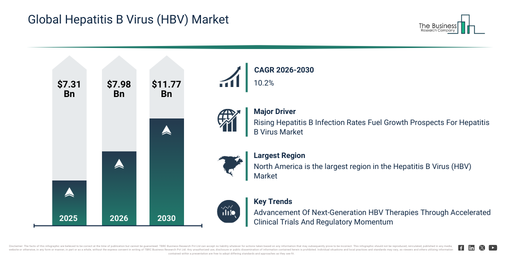
    The hepatitis b virus (hbv) market size has shown substantial growth over recent years. It is projected to expand from $7.31 billion in 2025 to $7.98 billion in 2026, at a compound annual growth rate (CAGR) of 9.3%. This historical expansion can be linked to factors such as the high prevalence of hbv in Asia-Pacific, insufficient awareness concerning hbv treatment, low vaccination coverage during initial years, a reliance on generic antiviral drugs, and an increasing incidence of chronic liver disease.

    The market size for the hepatitis B virus (HBV) is projected to experience substantial growth over the next few years. It is expected to reach $11.77 billion by 2030, driven by a compound annual growth rate (CAGR) of 10.2%. The anticipated expansion during this forecast period stems from increased research and development in HBV treatments, the broadening of government vaccination initiatives, the adoption of precision medicine, escalating healthcare expenditure, and improvements in screening and diagnostic infrastructure. Key trends anticipated in the forecast period include the growing acceptance of antiviral therapies, the rise of hepatitis B vaccination programs, the creation of combination therapies, a focus on managing HBV in pediatric and geriatric populations, and the wider availability of screening and diagnostic services.

    Access Your Free Sample Report For In-Depth Market Analysis:

    https://www.thebusinessresearchcompany.com/sample.aspx?id=12867&type=smp

    What Major Factors Are Driving The Hepatitis B Virus (HBV) Market Forward?

    The widespread occurrence of hepatitis B infection is anticipated to drive the expansion of the hepatitis B virus market in the coming years. Hepatitis B, a liver ailment caused by the hepatitis B virus (HBV), can be prevented via vaccination. An escalation in hepatitis B infection rates is poised to elevate the demand for diagnostic tests and treatment solutions. For example, the Centers for Disease Control and Prevention (CDC), a US-based national public health agency focused on the control and prevention of disease, injury, and disability, estimated 13,300 new hepatitis B infections and 69,800 new hepatitis C infections in 2023. Therefore, the significant prevalence of hepatitis B infection will propel the hepatitis B virus market.

    What Segment Categories Shape The Hepatitis B Virus (HBV) Market Segment Landscape?

    The hepatitis b virus (hbv) market covered in this report is segmented –

    1) By Type: Acute, Chronic

    2) By Treatment: Immune Modulator Drugs, Antiviral Drugs, Vaccine, Surgery

    3) By Age Group: Pediatrics, Adults, Seniors

    4) By End User: Medical Providers, Patients, Healthcare Payers

    Subsegments:

    1) By Acute HBV: Asymptomatic Acute HBV, Symptomatic Acute HBV, Severe Acute HBV

    2) By Chronic HBV: Chronic Hepatitis B (HBeAg Positive), Chronic Hepatitis B (HBeAg Negative), Chronic Hepatitis B With Compensated Liver Disease, Chronic Hepatitis B With Decompensated Liver Disease, Chronic Hepatitis B With Hepatocellular Carcinoma (HCC)

    What Market Trends Are Affecting The Hepatitis B Virus (HBV) Market?

    Major companies operating in the HBV market are prioritizing the advancement of innovative therapies through ongoing clinical trials and expediting regulatory pathways to enhance treatment efficacy and secure a competitive advantage. For instance, in August 2025, Aligos Therapeutics, a US-based therapeutics company, initiated patient dosing in its Phase II B-SUPREME trial, which is evaluating ALG-000184, a pioneering oral capsid assembly modulator for chronic hepatitis B. This randomized, double-blind study plans to enroll approximately 200 treatment-naïve adults, comparing ALG-000184 with tenofovir disoproxil fumarate over 48 weeks. The primary objective is to achieve HBV DNA levels below quantifiable limits in both HBeAg-positive and HBeAg-negative participants, with secondary endpoints evaluating safety, pharmacokinetics, and antigen changes. Earlier Phase I data indicated strong antiviral activity and good tolerability, thereby supporting the drug’s potential. Interim results are anticipated in 2026, and the full topline findings are expected in 2027.

    Who Are The Companies Operating Across The Hepatitis B Virus (HBV) Market Value Chain?

    Major companies operating in the hepatitis b virus (hbv) market are Pfizer Inc., Johnson & Johnson Services Inc., F. Hoffmann-La Roche Ltd., Merck & Co. Inc., AbbVie Inc., Bristol-Myers Squibb Company, Sanofi SA, GlaxoSmithKline PLC, Gilead Sciences Inc., Mylan N.V., Teva Pharmaceutical Industries Ltd., Aurobindo Pharma Limited, Apotex Corp., Lupin Pharmaceuticals Inc., Cadila Healthcare Ltd., Dynavax Technologies Corporation, Accord Healthcare Inc., Par Pharmaceutical Inc., Arbutus Biopharma Corporation, Antios Therapeutics Inc.

    Get The Full Hepatitis B Virus (HBV) Market Report:

    https://www.thebusinessresearchcompany.com/report/hepatitis-b-virus-hbv-global-market-report

    Which Region Accounts For The Largest Portion Of The Hepatitis B Virus (HBV) Market?

    North America was the largest region in the hepatitis B Virus (HBV) market in 2025. Asia-Pacific is expected to be the fastest-growing region in the forecast period. The regions covered in the hepatitis b virus (hbv) market report are Asia-Pacific, South East Asia, Western Europe, Eastern Europe, North America, South America, Middle East, Africa.

    Request A Customized Hepatitis B Virus (HBV) Market Report For Competitive Insights:

    https://www.thebusinessresearchcompany.com/report/hepatitis-b-virus-hbv-global-market-report

    Browse Through More Reports Similar to the Global Hepatitis B Virus (HBV) Market 2026, By The Business Research Company

    Hepatitis B Virus Hbv Market Report 2026

    https://www.thebusinessresearchcompany.com/report/hepatitis-b-virus-hbv-global-market-report

    Chronic Hepatitis B Market Report 2026

    https://www.thebusinessresearchcompany.com/report/chronic-hepatitis-b-global-market-report

    Preventive Vaccines Market Report 2026

    https://www.thebusinessresearchcompany.com/report/preventive-vaccines-global-market-report

    Get in touch with us:

    The Business Research Company: https://www.thebusinessresearchcompany.com/

    Americas +1 310-496-7795

    Asia +44 7882 955267 & +91 8897263534

    Europe +44 7882 955267

    Email us at: marketing@tbrc.info

    Follow us on:

    LinkedIn: https://in.linkedin.com/company/the-business-research-company

    YouTube: https://www.youtube.com/channel/UC24_fI0rV8cR5DxlCpgmyFQ

    Global Market Model: https://www.thebusinessresearchcompany.com/global-market-model
  • The Heparin Market Is Evolving Due To Impact Of Healthcare Infrastructure Expansion On Vaccine Accessibility And Uptake

    The Heparin Market Is Evolving Due To Impact Of Healthcare Infrastructure Expansion On Vaccine Accessibility And Uptake

    The Business Research Company’s 2026 market reports feature enhanced tools like market attractiveness analysis, TAM assessment, and company scoring matrices, along with interactive dashboards, deeper supply chain insights, and startup coverage strengthening the depth, usability, and strategic value of insights.

    How Is The Market Size Of The Heparin Market Expected To Scale Between 2026 And 2030?

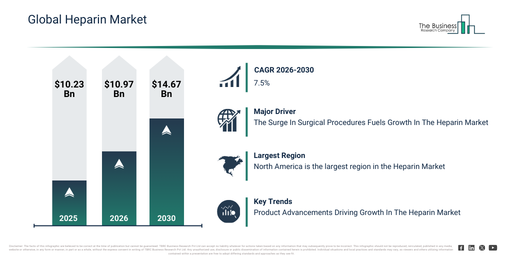
    The heparin market has seen robust growth in recent years. It is anticipated to expand from $10.23 billion in 2025 to $10.97 billion in 2026, exhibiting a compound annual growth rate (CAGR) of 7.2%. The historical increase can be attributed to an uptick in cardiovascular surgeries, extensive utilization in dialysis procedures, the established clinical effectiveness of UFH and LMWH, a rise in inpatient hospital admissions, and existing reimbursement mechanisms for anticoagulants.

    The heparin market is projected to experience substantial expansion over the upcoming years. This market is anticipated to reach $14.67 billion by 2030, exhibiting a compound annual growth rate (CAGR) of 7.5%. Factors driving this growth during the projected timeframe include the increasing incidence of venous thromboembolism, an elderly demographic suffering from chronic conditions, the broader application of LMWH in outpatient settings, the expansion of specialty pharmacies, and a heightened emphasis on preventive anticoagulation. Key trends anticipated for this period encompass the increasing acceptance of low molecular weight heparin, the development of more hospital-based anticoagulation protocols, a higher demand for dialysis and cardiac care applications, a move towards pre-filled and ready-to-use injectables, and an expanded distribution network through online and retail pharmacies.

    Access Your Free Sample Report For In-Depth Market Analysis:

    https://www.thebusinessresearchcompany.com/sample.aspx?id=6684&type=smp

    Which Key Drivers Are Affecting The Heparin Market Development?

    The heparin market is anticipated to grow as a result of an increasing number of surgical procedures. These medical interventions, which involve making incisions or using minimally invasive techniques to access and manipulate the body’s tissues or organs, necessitate the use of heparin, an anticoagulant, to prevent blood clots during and after surgery. This consistent requirement is fueling the demand for heparin and consequently driving the market’s expansion. For instance, in February 2024, the American Academy of Facial Plastic and Reconstructive Surgery reported that approximately 83% of all medical procedures in 2023 were minimally invasive, with standard surgical procedures accounting for the remaining 17%. Additionally, according to the American Society of Plastic Surgeons, the total number of cosmetic minimally invasive procedures increased from 23.7 million in 2022 to 25.4 million in 2023. Therefore, the rising frequency of surgical procedures is propelling the growth of the heparin market.

    Which Segment Types Are Examined In The Heparin Market Segment Study?

    The heparin market covered in this report is segmented –

    1) By Product: Unfractionated Heparin, Low Molecular Weight Heparin (LMWH), Ultra-Low Molecular Weight Heparin (ULMWH)

    2) By Source: Bovine, Porcine

    3) By Route of Administration: Intravenous, Subcutaneous

    4) By Application: Venous Thromboembolism, Atrial Fibrillation, Renal Impairment, Coronary Artery Disease, Other Applications

    5) By Distribution Channel: Hospital Pharmacies, Drug Stores And Retail Pharmacies, Online Pharmacies

    Subsegments:

    1) By Unfractionated Heparin: Injectable Formulations, Intravenous (IV) Solutions

    2) By Low Molecular Weight Heparin (LMWH): Enoxaparin, Dalteparin, Tinzaparin

    3) By Ultra-Low Molecular Weight Heparin (ULMWH): Specific Formulations For Specialized Therapies

    Which Trends Are Influencing Demand In The Heparin Market?

    Major companies operating in the heparin market are concentrating on developing innovative solutions to improve drug efficacy, enhance safety profiles, and lessen side effects, while also exploring advanced delivery methods and biosimilar development to satisfy rising global demand. Heparin Sodium Chloride Injection is a sterile preparation that combines heparin, an anticoagulant (blood thinner), with sodium chloride, which is frequently used to maintain osmotic balance and stability within the solution. For instance, in February 2024, B. Braun Medical Inc., a US-based medical company, introduced Heparin Sodium 2,000 Units in 0.9% Sodium Chloride Injection, supplied in a 1,000 mL EXCEL IV container at a concentration of 2 units/mL. This product represents the fifth addition to B. Braun’s Heparin portfolio and is designed to address the varied needs of healthcare facilities for this vital anticoagulant medication.

    Which Players Are Part Of The Competitive Landscape Of The Heparin Market?

    Major companies operating in the heparin market are Baxter International Inc., B. Braun Medical Inc., Dr. Reddy’s Laboratories Ltd., Fresenius SE & Co. KGaA, Leo Pharma A/S, Aspen Pharmacare plc, Bioiberica SA, Biomedical Foscama Group, Biovet SA, Changzhou Qianhong Bio-pharma Co. Ltd., CSPC NBP Pharmaceutical Co. Ltd., Intas Pharmaceuticals Ltd., Nanjing King-friend Biochemical Pharmaceutical Co. Ltd., Opocrin Pharmaceuticals Ltd., Pfizer Inc., Pharma Action Ltd., Rovi Pharma Industrial Services Ltd., Sagent Pharmaceuticals Inc., Sanofi S. A., Shenzhen Hepalink Pharmaceutical Co. Ltd., Sichuan Deebio Pharmaceutical Co. Ltd., Teva Pharmaceuticals Industries Ltd., VAV Life Sciences Inc., Viatris Inc., Wanbang Biopharmaceuticals Co. Ltd., Wockhardt Ltd., Xinbai Pharmaceuticals Co. Ltd., Yino Pharma Co. Ltd.

    Get The Full Heparin Market Report:

    https://www.thebusinessresearchcompany.com/report/heparin-global-market-report

    Which Region Holds The Highest Market Share In The Heparin Market?

    North America was the largest region in the heparin market in 2025. Asia-Pacific is expected to be the fastest-growing region in the forecast period. The regions covered in the heparin market report are Asia-Pacific, South East Asia, Western Europe, Eastern Europe, North America, South America, Middle East, Africa.

    Request A Customized Heparin Market Report For Competitive Insights:

    https://www.thebusinessresearchcompany.com/report/heparin-global-market-report

    Browse Through More Reports Similar to the Global Heparin Market 2026, By The Business Research Company

    Heparin Market Report 2026

    https://www.thebusinessresearchcompany.com/report/heparin-global-market-report

    Low Molecular Weight Heparin Market Report 2026

    https://www.thebusinessresearchcompany.com/report/low-molecular-weight-heparin-global-market-report

    Hexane Market Report 2026

    https://www.thebusinessresearchcompany.com/report/hexane-global-market-report

    Get in touch with us:

    The Business Research Company: https://www.thebusinessresearchcompany.com/

    Americas +1 310-496-7795

    Asia +44 7882 955267 & +91 8897263534

    Europe +44 7882 955267

    Email us at: marketing@tbrc.info

    Follow us on:

    LinkedIn: https://in.linkedin.com/company/the-business-research-company

    YouTube: https://www.youtube.com/channel/UC24_fI0rV8cR5DxlCpgmyFQ

    Global Market Model: https://www.thebusinessresearchcompany.com/global-market-model
  • The Rise Of Rise In Number Of Patients With HIV Driving Growth Due To Increasing Demand For Growth Hormone Therapies In HIV Care Is Influencing The Heavy Metal Poisoning Drugs Market

    The Rise Of Rise In Number Of Patients With HIV Driving Growth Due To Increasing Demand For Growth Hormone Therapies In HIV Care Is Influencing The Heavy Metal Poisoning Drugs Market

    The Business Research Company’s 2026 market reports feature enhanced tools like market attractiveness analysis, TAM assessment, and company scoring matrices, along with interactive dashboards, deeper supply chain insights, and startup coverage strengthening the depth, usability, and strategic value of insights.

    What Level Of Market Value Growth Is Predicted For The Heavy Metal Poisoning Drugs Market From 2026 To 2030?

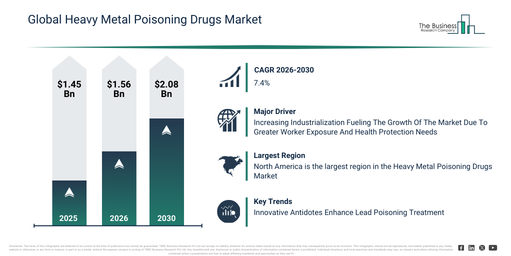
    The heavy metal poisoning drugs market has experienced substantial growth recently. This market is projected to expand from $1.45 billion in 2025 to $1.56 billion in 2026, exhibiting a compound annual growth rate (CAGR) of 7.7%. Historically, this expansion has been driven by factors such as industrial pollution exposure, instances of lead and mercury poisoning, advancements in emergency medicine, the establishment of hospital toxicology units, and occupational health regulations.

    The heavy metal poisoning drugs market size is anticipated to demonstrate robust growth over the next few years. It is projected to achieve a value of $2.08 billion by 2030, growing at a compound annual growth rate (CAGR) of 7.4%. This expansion during the forecast period can be attributed to several factors, including the increased scope of environmental monitoring, the enforcement of more stringent safety regulations, enhancements in diagnostic testing, the progression of industrialization in developing regions, and comprehensive public health surveillance. Prominent trends expected in this period involve the continued dependence on chelation therapy, a heightened understanding of environmental toxic exposure, the broadening of emergency poison treatment protocols, an increased application of oral and injectable chelators, and a stronger focus on occupational and industrial safety.

    Access Your Free Sample Report For In-Depth Market Analysis:

    https://www.thebusinessresearchcompany.com/sample.aspx?id=24557&type=smp

    What Factors Are Contributing To The Growth Of The Heavy Metal Poisoning Drugs Market?

    The expanding industrialization is anticipated to boost the heavy metal poisoning drugs market in the future. Industrialization signifies an economic shift from a primarily agricultural foundation to one centered on the production of goods and services. This rise in industrialization stems from swift urban expansion and infrastructure development, which foster an environment favorable for business advancement and economic progress. Heavy metal poisoning drugs play a crucial role in supporting industrialization by safeguarding worker health, mitigating dangers from toxic exposure, and ensuring adherence to safety standards, thereby improving output and workplace security. As an illustration, in September 2024, data from the UK’s Office for National Statistics revealed that the total sales value of UK manufacturers’ products reached $574.6 billion (£456.1 billion) in 2023, representing a rise of about $21.7 billion (£17.2 billion), or 3.9%, from $553.2 billion (£438.9 billion) in 2022. Consequently, the escalating industrialization is fueling the expansion of the heavy metal poisoning drugs market.

    How Are Different Segments Classified In The Heavy Metal Poisoning Drugs Market Segment Analysis?

    The heavy metal poisoning drugs market covered in this report is segmented –

    1) By Product Type: Deferasirox, Deferoxamine Mesylate, Emeramide, Other Product Types

    2) By Application: Arsenic Toxicity, Chromium Toxicity, Copper Toxicity, Lead Toxicity, Other Applications

    3) By End-User: Hospitals, Clinics, Home Healthcare

    Subsegments:

    1) By Deferasirox: Oral Tablet Formulations, Dispersible Tablets (DT), Generic Deferasirox Products, Iron Overload From Blood Transfusions, Beta-Thalassemia Related Use

    2) By Deferoxamine Mesylate: Intramuscular Injections, Subcutaneous Infusion Pumps, Iron Poisoning Emergency Kits, Aluminum Toxicity In Dialysis Patients, Pediatric And Adult Formulations

    3) By Emeramide: Mercury-Specific Chelation, Oral Capsule Form, Lipophilic Chelators, Environmental Toxic Exposure Applications, Investigational Therapies

    4) By Other Product Types: Dimercaprol (BAL), Dimercaptosuccinic Acid (DMSA), 2,3-Dimercapto-1-Propanesulfonic Acid (DMPS), Penicillamine, Calcium Disodium Ethylenediaminetetraacetate (EDTA)

    What Emerging Trends Are Seen In The Heavy Metal Poisoning Drugs Market?

    Leading companies in the heavy metal poisoning drugs market are prioritizing the creation of innovative solutions, such as antidotes for addressing lead poisoning. This focus aims to improve treatment efficacy, mitigate side effects, and respond to the growing incidence of environmental and occupational exposure to toxic metals. Antidotes for lead poisoning are essentially chelating agents that attach to lead in the bloodstream, aiding its elimination from the body through urine. For example, in August 2023, Rising Pharmaceuticals, a US-based pharmaceutical company, introduced edetate calcium disodium injection, an antidote specifically for treating lead poisoning in both children and adults. This injectable chelating agent is instrumental in reducing blood and tissue lead levels and holds particular significance for managing severe conditions like lead encephalopathy.

    Who Are The Companies Driving Activity In The Heavy Metal Poisoning Drugs Market?

    Major companies operating in the heavy metal poisoning drugs market are Sun Pharmaceutical Industries Ltd., Aurobindo Pharma Ltd., Dr. Reddy’s Laboratories Ltd., Hikma Pharmaceuticals, Lupin Pharmaceuticals Inc., Zydus Cadila, Aristo Pharmaceuticals Pvt. Ltd., Medopharm Pvt. Ltd., Cayman Chemical, Recordati Rare Diseases Inc., Midas Pharma GmbH, EmeraMed Limited, Ambrosia Remedies Pvt. Ltd., SGPharma Pvt. Ltd., Nouryon, Actavis Pharma, Captura Biopharma, Hope Pharmaceuticals, HOPO Therapeutics Inc., Triveni Interchem Pvt. Ltd.

    Get The Full Heavy Metal Poisoning Drugs Market Report:

    https://www.thebusinessresearchcompany.com/report/heavy-metal-poisoning-drugs-global-market-report

    Where Is The Heavy Metal Poisoning Drugs Market Most Concentrated Geographically?

    North America was the largest region in the heavy metal poisoning drugs market in 2025. The regions covered in the heavy metal poisoning drugs market report are Asia-Pacific, South East Asia, Western Europe, Eastern Europe, North America, South America, Middle East, Africa.

    Request A Customized Heavy Metal Poisoning Drugs Market Report For Competitive Insights:

    https://www.thebusinessresearchcompany.com/report/heavy-metal-poisoning-drugs-global-market-report

    Browse Through More Reports Similar to the Global Heavy Metal Poisoning Drugs Market 2026, By The Business Research Company

    Heavy Metal Testing Market Report 2026

    https://www.thebusinessresearchcompany.com/report/heavy-metal-testing-global-market-report

    Metal Products Market Report 2026

    https://www.thebusinessresearchcompany.com/report/metal-products-global-market-report

    Pharmaceuticals Market Report 2026

    https://www.thebusinessresearchcompany.com/report/pharmaceuticals-global-market-report

    Get in touch with us:

    The Business Research Company: https://www.thebusinessresearchcompany.com/

    Americas +1 310-496-7795

    Asia +44 7882 955267 & +91 8897263534

    Europe +44 7882 955267

    Email us at: marketing@tbrc.info

    Follow us on:

    LinkedIn: https://in.linkedin.com/company/the-business-research-company

    YouTube: https://www.youtube.com/channel/UC24_fI0rV8cR5DxlCpgmyFQ

    Global Market Model: https://www.thebusinessresearchcompany.com/global-market-model