Category: Pharmaceuticals

  • Global Cell Line Development Market Analysis For 2026–2030 With Strategic Insights

    Global Cell Line Development Market Analysis For 2026–2030 With Strategic Insights

    The Business Research Company’s 2026 market reports feature enhanced tools like market attractiveness analysis, TAM assessment, and company scoring matrices, along with interactive dashboards, deeper supply chain insights, and startup coverage strengthening the depth, usability, and strategic value of insights.

    What Is The Anticipated Rise In Market Value Of The Cell Line Development Market During The Forecast Period?

    The cell line development market has experienced significant expansion in recent years. Projections indicate a rise from $9.36 billion in 2025 to $10.7 billion in 2026, at a compound annual growth rate (CAGR) of 14.4%. This historical growth can be attributed to several key factors, including the increase in monoclonal antibody development, the expansion of biopharmaceutical research activities, the growing utilization of mammalian expression systems, a heightened demand for in vitro toxicity testing, and the general growth in academic and industrial life science research.

    The cell line development market size is anticipated to undergo significant expansion over the next few years. It is projected to reach $16.99 billion by 2030, demonstrating a compound annual growth rate (CAGR) of 12.3%. The growth during this forecast period can be ascribed to a surge in biologics and biosimilar pipelines, an escalating demand for scalable bioproduction platforms, increasing investment in cell and gene therapies, the growing adoption of continuous cell lines, and the broadening of tissue engineering and regenerative medicine research. Prominent trends for the forecast period encompass the rising uptake of stable and high-yield cell lines, an increasing need for serum-free and chemically defined media, an intensified focus on cell line stability and genetic integrity, the expanded utilization of mammalian cell lines in bioproduction, and a rising tendency to outsource cell line development activities.

    Access Your Free Sample Report For In-Depth Market Analysis:

    https://www.thebusinessresearchcompany.com/sample.aspx?id=15536&type=smp

    Which Key Drivers Are Affecting The Cell Line Development Market Development?

    The escalating occurrence of cancer is anticipated to propel the expansion of the cell line development market in the foreseeable future. Cancer is defined as a collection of diseases marked by the uncontrolled multiplication and spread of abnormal cells throughout the body. The upward trend in cancer prevalence is linked to an aging global population, lifestyle-related risks, obesity, and genetic predispositions. The cell line development market plays a crucial role in cancer research by enabling the creation of reliable cellular models, which are vital for drug screening, efficacy testing, and the identification of promising therapeutic candidates. For example, in February 2024, the World Health Organization (WHO), a Switzerland-based United Nations agency, projected that global cancer cases would exceed 0.035 billion by 2050, indicating a 77% increase from the 0.02 billion cases recorded in 2022. Therefore, the increasing incidence of cancer is a primary driver for the growth of the cell line development market.

    How Are Segments Identified Within The Cell Line Development Market Segment Framework?

    The cell line development market covered in this report is segmented –

    1) By Product: Reagents And Media, Equipment, Accessories And Consumables

    2) By Source: Mammalian, Non-Mammalian

    3) By Cell Line: Recombinant, Hybridomas, Continuous Cell Line, Primary Cell Line

    4) By Application: Bioproduction, Drug Discovery, Toxicity Testing, Tissue Engineering, Research

    Subsegments:

    1) By Reagents And Media: Cell Culture Media, Serum-Free Media, Recombinant Protein Supplements, Growth Factors, Cytokines And Hormones, Buffers And Salts

    2) By Equipment: Bioreactors And Fermenters, Incubators, Cell Counters And Analyzers, Cell Sorters, Cryopreservation Equipment, Filtration And Separation Equipment

    3) By Accessories And Consumables: Culture Vessels (Flasks, Plates), Pipettes And Pipette Tips, Cell Culture Inserts, Syringes And Needles, Cryovials And Freezing Containers, Petri Dishes

    What Trends Are Influencing The Evolution Of The Cell Line Development Market?

    Leading companies in the cell line development market are concentrating on developing groundbreaking platforms to optimize workflows, boost productivity, and expedite the development of biologic drugs. These pioneering cell line development platforms represent sophisticated, engineered systems crafted to enhance cell line creation by improving selection effectiveness, elevating protein expression levels, and shortening overall development timelines for biologic therapeutics. As an example, in January 2023, Abzena, a UK-based provider of outsourced research, development, and manufacturing services, unveiled AbZelect and AbZelectPro. These two next-generation platforms are engineered to accelerate the cell line development process for biologic drug programs, offering superior productivity per manufacturing run, expanded capacity, reduced operational expenditures, and more rapid delivery of crucial therapies to patients.

    Who Are The Companies Competing Within The Cell Line Development Market?

    Major companies operating in the cell line development market are Thermo Fisher Scientific Inc., Danaher Corporation, Merck KGaA, GE Health Care, Corning Inc., Lonza Group Ltd., WuXi AppTec, Sartorius AG, GenScript Biotech Corporation, FUJIFILM Diosynth Biotechnologies, KBI Biopharma Inc., Advanced Instruments LLC, Cyagen, Horizon Discovery Group Plc, Probiogen AG, PromoCell GmbH, Premas Biotech, Eurofins Scientific SE, Promega Corporation, Rentschler Biopharma SE

    Get The Full Cell Line Development Market Report:

    https://www.thebusinessresearchcompany.com/report/cell-line-development-global-market-report

    Which Region Dominates The Cell Line Development Market By Market Share?

    North America was the largest region in the cell line development market in 2025. The regions covered in the cell line development market report are Asia-Pacific, South East Asia, Western Europe, Eastern Europe, North America, South America, Middle East, Africa.

    Request A Customized Cell Line Development Market Report For Competitive Insights:

    https://www.thebusinessresearchcompany.com/report/cell-line-development-global-market-report

    Browse Through More Reports Similar to the Global Cell Line Development Market 2026, By The Business Research Company

    Cell Line Development Market Report 2026

    https://www.thebusinessresearchcompany.com/report/cell-line-development-global-market-report

    Cell Cultures Market Report 2026

    https://www.thebusinessresearchcompany.com/report/cell-cultures-global-market-report

    Cell Cultures Market Report 2026

    https://www.thebusinessresearchcompany.com/report/cell-cultures-global-market-report

    Get in touch with us:

    The Business Research Company: https://www.thebusinessresearchcompany.com/

    Americas +1 310-496-7795

    Asia +44 7882 955267 & +91 8897263534

    Europe +44 7882 955267

    Email us at: marketing@tbrc.info

    Follow us on:

    LinkedIn: https://in.linkedin.com/company/the-business-research-company

    YouTube: https://www.youtube.com/channel/UC24_fI0rV8cR5DxlCpgmyFQ

    Global Market Model: https://www.thebusinessresearchcompany.com/global-market-model
  • Cell Culture Media Market For Regenerative Medicines Market Outlook 2026–2030 Driven By Growth Factors And Projections

    Cell Culture Media Market For Regenerative Medicines Market Outlook 2026–2030 Driven By Growth Factors And Projections

    The Business Research Company’s 2026 market reports feature enhanced tools like market attractiveness analysis, TAM assessment, and company scoring matrices, along with interactive dashboards, deeper supply chain insights, and startup coverage strengthening the depth, usability, and strategic value of insights.

    How Is The Market Size Of The Cell Culture Media Market For Regenerative Medicines Market Expected To Scale Between 2026 And 2030?

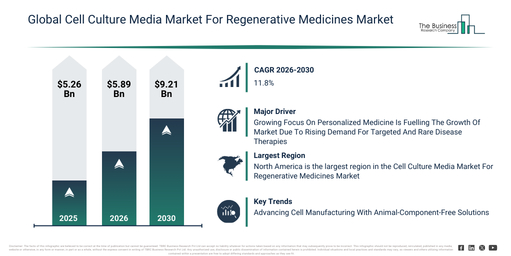
    The market size for cell culture media utilized in regenerative medicines has experienced substantial rapid growth recently. This market is expected to expand from $5.26 billion in 2025 to $5.89 billion in 2026, achieving a compound annual growth rate (CAGR) of 12.0%. The historical growth can be attributed to several factors including the rising application of cell culture in academic research, increased investments in regenerative medicine, continued reliance on traditional basal media formulations, the expansion of pharmaceutical and biotechnology research and development, and the growing prevalence of chronic and degenerative diseases.

    The cell culture media market for regenerative medicines is projected to experience substantial growth over the next few years. It is forecast to expand to $9.21 billion by 2030, driven by a compound annual growth rate (CAGR) of 11.8%. This expansion in the projected period is expected due to advancements in stem cell and gene therapy development, an increasing demand for personalized regenerative treatments, the expansion of cell therapy manufacturing facilities, a growing adoption of chemically defined and specialty media, and increasing regulatory approvals for regenerative medicine products. Prominent trends for this forecast period encompass a rising demand for serum-free and chemically defined media, the increasing use of cell culture media in stem cell and cell therapy applications, an escalating focus on media optimization for cell differentiation and proliferation, the expansion of regenerative medicine research and clinical trials, and a growing need for scalable and reproducible cell culture solutions.

    Access Your Free Sample Report For In-Depth Market Analysis:

    https://www.thebusinessresearchcompany.com/sample.aspx?id=27241&type=smp

    What Factors Are Contributing To The Growth Of The Cell Culture Media Market For Regenerative Medicines Market?

    An increasing emphasis on personalized medicine is anticipated to fuel the expansion of the cell culture media market for regenerative medicines. This medical approach tailors treatment and prevention plans to an individual’s unique genetic profile, environment, and lifestyle. The heightened attention on personalized medicine stems from a greater demand for targeted therapies for rare and complex conditions, a demand amplified by advancements in genomic research and the availability of precision diagnostics. The cell culture media market for regenerative medicines contributes to personalized medicine by facilitating the creation of specialized media specifically designed to cultivate patient-specific cells for bespoke regenerative treatments. For example, in February 2024, the Personalized Medicine Coalition, a US-based nonprofit, reported that the FDA cleared 16 new personalized therapies for rare disease patients in 2023, an increase from 6 in 2022. Consequently, the expanding focus on personalized medicine is a key factor driving the growth of the cell culture media market for regenerative medicines.

    What Are The Key Segment Divisions In The Cell Culture Media Market For Regenerative Medicines Market Segment Structure?

    The cell culture media market for regenerative medicines market covered in this report is segmented –

    1) By Type: Liquid Media, Semi-Solid And Solid Media

    2) By Application: Tissue Engineering, Stem Cell Research, Cell Therapy, Drug Discovery And Development, Other Applications

    3) By End User: Pharmaceutical And Biotechnology Companies, Academic And Research Institutes, Hospitals And Diagnostic Laboratories, Cell Banks, Other End Users

    Subsegments:

    1) By Liquid Media: Basal Media, Serum-Free Media, Chemically Defined Media, Protein-Free Media, Specialty Media

    2) By Semi-Solid And Solid Media: Agar-Based Media, Gelatin-Based Media, Collagen-Based Media, Methylcellulose Media

    Which Trends Are Impacting The Progress Of The Cell Culture Media Market For Regenerative Medicines Market?

    Leading companies operating within the regenerative medicines market for cell culture media are concentrating on developing innovative products, such as animal-component-free mediums. These efforts aim to enhance cell growth consistency, improve safety, meet regulatory requirements, and support scalable clinical manufacturing processes. An animal-component-free medium constitutes a cell culture solution formulated entirely without materials derived from animals, specifically designed to improve consistency, safety, and regulatory compliance in both research and therapeutic applications. For instance, in May 2023, Lonza Group AG, a Switzerland-based life sciences company, launched TheraPEAK T-VIVO Cell Culture Medium. This product is a novel, chemically defined, animal-component-free formulation engineered to optimize CAR T-cell manufacturing. By eliminating reliance on animal or human serum, which are traditionally associated with high variability, potential adventitious agents, and the need for extensive safety testing and batch stockpiling, the new medium enhances process consistency, improves control, and streamlines regulatory compliance, ultimately leading to reduced costs and an accelerated time-to-market. Delivering high performance without requiring human serum supplementation, TheraPEAK T-VIVO marks a strategic advancement in Lonza’s mission to expedite and simplify cell therapy commercialization for its global customer base.

    Which Organizations Are Engaged In The Cell Culture Media Market For Regenerative Medicines Market?

    Major companies operating in the cell culture media market for regenerative medicines market are Thermo Fisher Scientific Inc., Danaher Corporation, Merck KGaA, Avantor Inc., Lonza Group AG, Cytiva Life Sciences, Sartorius AG, Bio-Techne Corporation, Miltenyi Biotec B.V. & Co. KG, STEMCELL Technologies Inc., FUJIFILM Irvine Scientific Inc., PromoCell GmbH, Cell Biologics Inc., Xcell Biosciences Inc.

    Get The Full Cell Culture Media Market For Regenerative Medicines Market Report:

    https://www.thebusinessresearchcompany.com/report/cell-culture-media-market-for-regenerative-medicines-global-market-report

    Which Region Is The Largest In The Cell Culture Media Market For Regenerative Medicines Market?

    North America was the largest region in the cell culture media market for regenerative medicines market in 2025. Asia-Pacific is expected to be the fastest-growing region in the forecast period. The regions covered in the cell culture media market for regenerative medicines market report are Asia-Pacific, South East Asia, Western Europe, Eastern Europe, North America, South America, Middle East, Africa.

    Request A Customized Cell Culture Media Market For Regenerative Medicines Market Report For Competitive Insights:

    https://www.thebusinessresearchcompany.com/report/cell-culture-media-market-for-regenerative-medicines-global-market-report

    Browse Through More Reports Similar to the Global Cell Culture Media Market For Regenerative Medicines Market 2026, By The Business Research Company

    Quick Response Qr Codes Payment Market Report 2026

    https://www.thebusinessresearchcompany.com/report/quick-response-qr-codes-payment-global-market-report

    Digital Gift Card Market Report 2026

    https://www.thebusinessresearchcompany.com/report/digital-gift-card-global-market-report

    Pay Per Click Ppc Software Market Report 2026

    https://www.thebusinessresearchcompany.com/report/pay-per-click-ppc-software-global-market-report

    Get in touch with us:

    The Business Research Company: https://www.thebusinessresearchcompany.com/

    Americas +1 310-496-7795

    Asia +44 7882 955267 & +91 8897263534

    Europe +44 7882 955267

    Email us at: marketing@tbrc.info

    Follow us on:

    LinkedIn: https://in.linkedin.com/company/the-business-research-company

    YouTube: https://www.youtube.com/channel/UC24_fI0rV8cR5DxlCpgmyFQ

    Global Market Model: https://www.thebusinessresearchcompany.com/global-market-model

  • Cell Culture Media Market Developments And Opportunities Across 2026–2030

    Cell Culture Media Market Developments And Opportunities Across 2026–2030

    The Business Research Company’s 2026 market reports feature enhanced tools like market attractiveness analysis, TAM assessment, and company scoring matrices, along with interactive dashboards, deeper supply chain insights, and startup coverage strengthening the depth, usability, and strategic value of insights.

    What Level Of Market Value Growth Is Predicted For The Cell Culture Media Market From 2026 To 2030?

    The cell culture media market has seen swift growth over the past few years. It is projected to expand from $6.13 billion in 2025 to $6.9 billion in 2026, exhibiting a compound annual growth rate (CAGR) of 12.6%. The expansion witnessed in previous periods is attributable to escalating demand for biopharmaceutical manufacturing, a rise in academic and clinical research activities, the emergence of stem cell research, the evolution of classical media formulations, and increasing knowledge of drug screening techniques.

    The cell culture media market size is projected to experience substantial growth over the coming years. It is anticipated to expand to $10.41 billion by 2030, demonstrating a compound annual growth rate (CAGR) of 10.8%. This projected expansion during the forecast period stems from various factors, including breakthroughs in precision medicine, the rising uptake of automated liquid handling systems, an increase in tissue engineering and regenerative medicine applications, the need for serum-free and chemically defined media, and the broadening scope of cell-based diagnostics and therapies. Significant trends expected during this forecast period feature customized cell culture media formulations, an increase in stem cell research applications, the creation of serum-free and chemically defined media, the incorporation of automation and high-throughput screening, and the progress in tissue engineering and regenerative medicine.

    Access Your Free Sample Report For In-Depth Market Analysis:

    https://www.thebusinessresearchcompany.com/sample.aspx?id=14871&type=smp

    Which Strong Drivers Are Impacting The Cell Culture Media Market Growth?

    The rising production of pharmaceutical drugs is anticipated to propel the cell culture media market forward. Pharmaceutical drugs encompass medications or compounds employed for the prevention, treatment, or diagnosis of medical conditions in both humans and animals. This surge in pharmaceutical drug manufacturing is attributable to the increasing prevalence of chronic and infectious diseases, coupled with a growing aging population, which together necessitate a greater demand for medications to manage age-related conditions and ailments. Cell culture media furnish the essential nutrients and environment for the proliferation and maintenance of cells utilized in pharmaceutical drug manufacturing, thereby ensuring optimal cell growth and the generation of desired therapeutic proteins or molecules. For instance, in December 2024, the Association of the British Pharmaceutical Industry (ABPI), a UK-based organization, reported that the total number of clinical trials for drugs initiated in the UK increased from 411 in 2022 to 426 in 2023. Therefore, the expansion in pharmaceutical drug manufacturing is a key driver for the growth of the cell culture media market.

    Which Segment Categories Are Included In The Cell Culture Media Market Segment Analysis?

    The cell culture media market covered in this report is segmented –

    1) By Media Format: Liquid Media, Semi-Solid And Solid Media

    2) By Product: Serum Free Media, Classical Media, Stem Cell Culture Media, Specialty Media, Chemically Defined Media, Other Cell Culture Media

    3) By Application: Biopharmaceutical Production, Diagnostics, Drug Screening And Development, Tissue Engineering And Regenerative Medicine, Other Applications

    4) By End User: Biotechnology And Pharmaceutical Industry, Academic Institute, Research Laboratory, Other End Users

    Subsegments:

    1) By Liquid Media: Classical Media, Chemically Defined Media, Serum-Free Media, Specialty Media (Protein-Free, Low-Glucose Media)

    2) By Semi-Solid And Solid Media: Semi-Solid Media (Agar-Based), Solid Media (Petri Dishes, Agar Plates For Colony Formation)

    What Trends Are Transforming The Cell Culture Media Market?

    Key companies in the cell culture media market are concentrating on creating advanced cell culture media, such as chemically defined and animal-component-free formulations, to achieve a competitive advantage. These chemically defined and animal-component-free formulations are intended to optimize cell growth and protein output, ultimately enhancing the scalability and efficiency of biopharmaceutical manufacturing. For instance, in July 2023, Lonza Group Ltd., a Switzerland-based healthcare company, unveiled its TheraPRO CHO Media System, an innovative cell culture platform engineered to boost productivity and quality in therapeutic protein manufacture. This novel system is specifically designed to optimize therapeutic monoclonal antibody production and features a chemically defined, animal-component-free, two-part production process, simplifying media preparation and ensuring scalability.

    Who Are The Active Companies Shaping The Cell Culture Media Market?

    Major companies operating in the cell culture media market are Thermo Fisher Scientific Inc., Danaher Corporation, Merck KGaA, Becton Dickinson and Company, Corning Incorporated, Lonza Group AG, Sartorius AG, CYTIVA Lifesciences, Bio-Rad Laboratories Inc., STEMCELL Technologies Inc., Miltenyi Biotec, Takara Bio, MP Biomedicals, FUJIFILM Irvine Scientific Inc., Promocell Inc., InSphero AG, PeproTech Inc., HiMedia Laboratories Pvt. Ltd., Elabscience Biotechnology Inc., Capricorn Scientific GmbH, CAISSON Laboratories Inc., Cell Biologics Inc., Nucleus Biologics LLC

    Get The Full Cell Culture Media Market Report:

    https://www.thebusinessresearchcompany.com/report/cell-culture-media-global-market-report

    Which Region Leads The Cell Culture Media Market In Terms Of Market Share?

    North America was the largest region in the cell culture media market in 2025. Asia-Pacific is expected to be the fastest-growing region in the forecast period. The regions covered in the cell culture media market report are Asia-Pacific, South East Asia, Western Europe, Eastern Europe, North America, South America, Middle East, Africa.

    Request A Customized Cell Culture Media Market Report For Competitive Insights:

    https://www.thebusinessresearchcompany.com/report/cell-culture-media-global-market-report

    Browse Through More Reports Similar to the Global Cell Culture Media Market 2026, By The Business Research Company

    Cell Culture Media Market Report 2026

    https://www.thebusinessresearchcompany.com/report/cell-culture-media-global-market-report

    Cell Cultures Market Report 2026

    https://www.thebusinessresearchcompany.com/report/cell-cultures-global-market-report

    Cell Culture Media Storage Containers Market Report 2026

    https://www.thebusinessresearchcompany.com/report/cell-culture-media-storage-containers-global-market-report

    Get in touch with us:

    The Business Research Company: https://www.thebusinessresearchcompany.com/

    Americas +1 310-496-7795

    Asia +44 7882 955267 & +91 8897263534

    Europe +44 7882 955267

    Email us at: marketing@tbrc.info

    Follow us on:

    LinkedIn: https://in.linkedin.com/company/the-business-research-company

    YouTube: https://www.youtube.com/channel/UC24_fI0rV8cR5DxlCpgmyFQ

    Global Market Model: https://www.thebusinessresearchcompany.com/global-market-model
  • Cell Culture Market Forecast 2026–2030 Presenting Long-Term Industry Insights

    Cell Culture Market Forecast 2026–2030 Presenting Long-Term Industry Insights

    The Business Research Company’s 2026 market reports feature enhanced tools like market attractiveness analysis, TAM assessment, and company scoring matrices, along with interactive dashboards, deeper supply chain insights, and startup coverage strengthening the depth, usability, and strategic value of insights.

    How Will The Market Value Of The Cell Culture Market Progress Between 2026 And 2030?

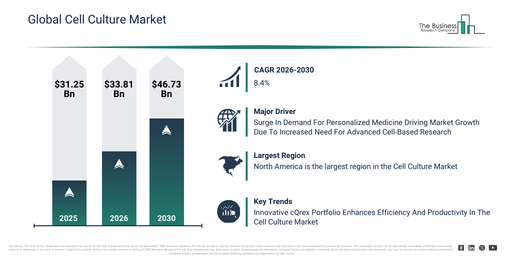
    The cell culture market has experienced substantial expansion in recent years. This market is forecasted to expand from $31.25 billion in 2025 to $33.81 billion in 2026, demonstrating a compound annual growth rate (CAGR) of 8.2%. The growth observed in the past can be attributed to factors like the rise in life science research, increased academic funding, the broadening of the biopharmaceutical industry, the extensive application of cell lines, and the demand for in vitro testing.

    The cell culture market size is projected to experience robust expansion over the coming years. Its valuation is expected to reach $46.73 billion by 2030, achieving a compound annual growth rate (CAGR) of 8.4%. The impetus for this growth throughout the forecast period stems from factors such as the rise in regenerative medicine, escalating biologics development, advancements in cell culture media, the broadening scope of personalized medicine, and increasing investments in research and development. Significant trends anticipated during this period include a heightened demand for biopharmaceutical production, ongoing progress in stem cell research, an expansion of cancer research applications, a greater adoption of advanced cell lines, and an increased focus on the utilization of serum-free media.

    Access Your Free Sample Report For In-Depth Market Analysis:

    https://www.thebusinessresearchcompany.com/sample.aspx?id=3392&type=smp

    What Key Factors Are Shaping The Cell Culture Market Landscape?

    The increasing need for individualized healthcare approaches is anticipated to drive the expansion of the cell culture market in the future. Often referred to as precision medicine, these treatments and therapies are medical interventions specifically designed to match the unique attributes of each patient. This surge in demand stems from patients’ preference for medical care aligned with their distinct genetic, molecular, and environmental profiles, resulting in better therapeutic results and fewer adverse reactions. Within personalized medicine, cell culture is fundamental, acting as an essential instrument for research activities, drug creation, modeling diseases, and developing treatments customized for specific individuals. As an illustration, in February 2024, the US-based Personalized Medicine Coalition, a non-profit advocating for tailored treatment strategies, reported that out of the 53 new therapeutic molecular entities cleared by the Food and Drug Administration in 2023, 20, along with six new gene and cell-based therapies, were designated as personalized medicines. This represented roughly 38% of all new molecular entities approved across the country. Consequently, the expanding requirement for personalized medicine is fueling the growth of the cell culture market.

    How Is The Cell Culture Market Broken Down By Segment Categories?

    The cell culture market covered in this report is segmented –

    1) By Type: Primary Cell Culture, Secondary Cell Culture, Cell Line

    2) By Media: Natural, Artificial

    3) By Applications: Stem Cell Technologies, Cancer Research, Biopharmaceutical, Tissue Engineering & Regenerative Medicine, Other Applications

    Subsegments:

    1) By Primary Cell Culture: Adherent Cell Culture, Suspension Cell Culture

    2) By Secondary Cell Culture: Continuous Cell Lines, Finite Cell Lines

    3) By Cell Line: Immortalized Cell Lines, Transformed Cell Lines

    What Trends Are Shaping The Future Of The Cell Culture Market?

    Leading companies in the cell culture market are innovating solutions like the cQrex portfolio to enhance the efficiency and productivity of cell cultures and tackle associated difficulties. The cQrex portfolio of cell culture ingredients consists of peptides and the keto acid AKG, engineered to manage critical nutrient supply through improved stability or solubility, thus boosting productivity. For instance, in June 2023, Evonik Industries AG, a Germany-based specialty chemicals company, launched the cQrex portfolio to elevate cell culture efficiency and productivity. This portfolio serves as a valuable tool for cell culture scientists aiming to improve their cultures’ efficiency and productivity, proving particularly beneficial for producing high-value products such as monoclonal antibodies and vaccines. Its high purity, broad application range, and ease of use contribute to its utility, further assisting scientists in boosting cell culture performance.

    Which Players Are Present In The Cell Culture Market Space?

    Major companies operating in the cell culture market are Becton Dickinson, Corning Incorporation, Eppendorf, GE Healthcare, Merck KGaA, Thermo Fisher Scientific, Lonza Group, HiMedia Laboratories, Agilent Technologies Inc., PromoCell GmbH, CellGenix GmbH, InvivoGen, Greiner Bio-One, Irvine Scientific, Cell Culture Company (CCC) LLC, Sera Care Life Sciences Incorporation, American Type Culture Collection, Miltenyi Biotec, Bel-Art Products Inc., Sumitomo Bakelite, EMD Millipore, VWR International LLC, WHEATON IndustriesInc, Sartorius AG, Nunc Systems, Pall Corporation

    Get The Full Cell Culture Market Report:

    https://www.thebusinessresearchcompany.com/report/cell-cultures-global-market-report

    Which Region Leads The Cell Culture Market In Overall Market Size?

    North America was the largest region in the cell culture market in 2025. The Middle East is expected to be the fastest-growing region in the global cell culture market share during the forecast period. The regions covered in the cell culture market report are Asia-Pacific, South East Asia, Western Europe, Eastern Europe, North America, South America, Middle East, Africa.

    Request A Customized Cell Culture Market Report For Competitive Insights:

    https://www.thebusinessresearchcompany.com/report/cell-cultures-global-market-report

    Browse Through More Reports Similar to the Global Cell Culture Market 2026, By The Business Research Company

    Cell Cultures Market Report 2026

    https://www.thebusinessresearchcompany.com/report/cell-cultures-global-market-report

    Cell Culture Media Market Report 2026

    https://www.thebusinessresearchcompany.com/report/cell-culture-media-global-market-report

    Primary Cell Culture Market Report 2026

    https://www.thebusinessresearchcompany.com/report/primary-cell-culture-global-market-report

    Get in touch with us:

    The Business Research Company: https://www.thebusinessresearchcompany.com/

    Americas +1 310-496-7795

    Asia +44 7882 955267 & +91 8897263534

    Europe +44 7882 955267

    Email us at: marketing@tbrc.info

    Follow us on:

    LinkedIn: https://in.linkedin.com/company/the-business-research-company

    YouTube: https://www.youtube.com/channel/UC24_fI0rV8cR5DxlCpgmyFQ

    Global Market Model: https://www.thebusinessresearchcompany.com/global-market-model

  • Cell Banking Outsourcing Market Growth Analysis 2026–2030 Highlighting Innovation And Competitive Landscape

    Cell Banking Outsourcing Market Growth Analysis 2026–2030 Highlighting Innovation And Competitive Landscape

    The Business Research Company’s 2026 market reports feature enhanced tools like market attractiveness analysis, TAM assessment, and company scoring matrices, along with interactive dashboards, deeper supply chain insights, and startup coverage strengthening the depth, usability, and strategic value of insights.

    What Are The Market Size Estimates For The Cell Banking Outsourcing Market In 2026 And 2030?

    The cell banking outsourcing market size has seen rapid growth in recent years. This market is set to expand from $12.86 billion in 2025 to $14.76 billion in 2026, achieving a compound annual growth rate (CAGR) of 14.8%. The historical growth can be attributed to several factors including the growth in biologics manufacturing, increasing reliance on outsourced bioprocessing services, expansion of vaccine production programs, rising need for standardized cell line storage, and cost optimization by pharmaceutical companies.

    The cell banking outsourcing market is projected to experience substantial expansion in the coming years. This market is anticipated to reach a valuation of $24.12 billion by 2030, exhibiting a compound annual growth rate (CAGR) of 13.1%. This expansion during the projection period is driven by several factors, including a surge in cell and gene therapy pipelines, increasing demand for viral vector manufacturing, stricter regulatory scrutiny on cell line traceability, advancements in personalized medicine development, and the growth of contract development and manufacturing organizations. Key trends anticipated during the forecast period encompass the increasing outsourcing of GMP-compliant cell banking services, a growing need for multi-species cell banking capabilities, efforts to standardize cell line documentation and traceability, the expansion of viral and vector cell banking for advanced therapies, and a rising inclination towards long-term cell bank storage agreements.

    Access Your Free Sample Report For In-Depth Market Analysis:

    https://www.thebusinessresearchcompany.com/sample.aspx?id=15754&type=smp

    Which Factors Are Influencing The Growth Of The Cell Banking Outsourcing Market?

    The cell banking outsourcing market is projected to expand significantly due to the increasing burden of chronic diseases. These are long-lasting medical conditions that develop gradually and persist over extended periods, often requiring ongoing management. Lifestyle changes, aging populations, and genetic predispositions are driving the increasing prevalence of chronic diseases. The cell banking outsourcing market supports chronic disease research by providing specialized infrastructure, advanced technologies, and expert capabilities essential for the efficient storage, preservation, and processing of cellular materials used in therapeutic development. For instance, in April 2025, according to the NHS Confederation, a UK-based national association, it is estimated that by 2035, 17% of the UK population could be living with four or more chronic conditions. Therefore, the rise in the burden of chronic diseases is a key factor driving the growth of the cell banking outsourcing market.

    What Are The Different Segment Types In The Cell Banking Outsourcing Market Segment Breakdown?

    The cell banking outsourcing market covered in this report is segmented –

    1) By Type: Master Cell Banking, Working Cell Banking, Viral Cell Banking

    2) By Cell Type: Stem Cell Banking, Non-Stem Cell Banking

    3) By Phase: Bank Storage, Bank Characterization And Testing, Bank Preparation

    Subsegments:

    1) By Master Cell Banking: Human Master Cell Bank, Animal Master Cell Bank

    2) By Working Cell Banking: Human Working Cell Bank, Animal Working Cell Bank

    3) By Viral Cell Banking: Virus Bank For Vaccine Production, Viral Vector Bank For Gene Therapy, Adenovirus Bank

    Which Trends Are Contributing To Changes In The Cell Banking Outsourcing Market?

    Major companies active in the cell banking outsourcing market are prioritizing the development of technologically advanced solutions, including single-cell potency characterization platforms, to provide more precise potency assessments and support the creation of high-quality cell therapies. A single-cell potency characterization platform refers to a sophisticated analytical system designed to evaluate the functional capabilities and therapeutic potential of individual cells within heterogeneous cell populations, thereby offering deeper insights into cell behavior, potency, and mechanisms of action for research and clinical development. For example, in January 2024, Cellply Srl, an Italy-based biotechnology company, launched VivaCyte, an all-encompassing single-cell potency characterization platform that integrates potency analysis with immunophenotyping. This platform features fully automated operation, single-cell resolution, and rapid multi-parameter functional assessment, aiming to reduce development time, cost, and risk while enabling comprehensive evaluation of numerous cell therapy candidates across diverse process options.

    Who Are The Well-Known Companies In The Cell Banking Outsourcing Market?

    Major companies operating in the cell banking outsourcing market are Lonza Group Ltd., WuXi AppTec, Charles River Laboratories, Labcorp Drug Development, Covance Inc., SGS Life Sciences, Sartorius AG, BioReliance, Cleancells, Clean Biologics, Texcell, Goodwin Biotechnology Inc., Perfectus Biomed Limited, BioStorage Technologies Inc., Toxikon Corp., PX’Therapeutics SA, Sigma-Aldrich Co. Ltd., Transcell Biolife Pvt Ltd, Eurofins Scientific SE, ViruSure GmbH

    Get The Full Cell Banking Outsourcing Market Report:

    https://www.thebusinessresearchcompany.com/report/cell-banking-outsourcing-global-market-report

    Which Region Is The Top Contributor To The Cell Banking Outsourcing Market By Share?

    North America was the largest region in the cell banking outsourcing market in 2025. Asia-Pacific is expected to be the fastest-growing region in the forecast period. The regions covered in the cell banking outsourcing market report are Asia-Pacific, South East Asia, Western Europe, Eastern Europe, North America, South America, Middle East, Africa.

    Request A Customized Cell Banking Outsourcing Market Report For Competitive Insights:

    https://www.thebusinessresearchcompany.com/report/cell-banking-outsourcing-global-market-report

    Browse Through More Reports Similar to the Global Cell Banking Outsourcing Market 2026, By The Business Research Company

    Cell Banking Outsourcing Market Report 2026

    https://www.thebusinessresearchcompany.com/report/cell-banking-outsourcing-global-market-report

    Hospital Outsourcing Market Report 2026

    https://www.thebusinessresearchcompany.com/report/hospital-outsourcing-global-market-report

    Call Center Outsourcing Market Report 2026

    https://www.thebusinessresearchcompany.com/report/call-center-outsourcing-global-market-report

    Get in touch with us:

    The Business Research Company: https://www.thebusinessresearchcompany.com/

    Americas +1 310-496-7795

    Asia +44 7882 955267 & +91 8897263534

    Europe +44 7882 955267

    Email us at: marketing@tbrc.info

    Follow us on:

    LinkedIn: https://in.linkedin.com/company/the-business-research-company

    YouTube: https://www.youtube.com/channel/UC24_fI0rV8cR5DxlCpgmyFQ

    Global Market Model: https://www.thebusinessresearchcompany.com/global-market-model
  • Cell and Gene Therapy Market Forecast Through 2030 With Insights On Market Patterns And Developments

    Cell and Gene Therapy Market Forecast Through 2030 With Insights On Market Patterns And Developments

    The Business Research Company’s 2026 market reports feature enhanced tools like market attractiveness analysis, TAM assessment, and company scoring matrices, along with interactive dashboards, deeper supply chain insights, and startup coverage strengthening the depth, usability, and strategic value of insights.

    What Expansion In Market Value Is Forecasted For The Cell and Gene Therapy Market Between 2026 And 2030?

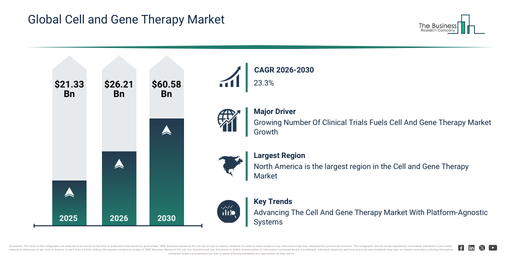
    The cell and gene therapy market has experienced exponential growth in its size over recent years. Projections indicate it will expand from $21.33 billion in 2025 to $26.21 billion by 2026, demonstrating a compound annual growth rate (CAGR) of 22.9%. Historically, this expansion has been driven by factors such as the restricted availability of cell and gene therapies, a prevailing dependence on traditional treatment options, the significant expense associated with initial therapeutic generations, a rising prevalence of oncology and neurological conditions, and an insufficient number of dedicated treatment centers.

    The cell and gene therapy market is projected to experience rapid expansion in the coming years. This market is set to reach $60.58 billion by 2030, exhibiting a compound annual growth rate (CAGR) of 23.3%. Factors contributing to this growth during the forecast period include the advancement of car-t and genome editing therapies, the proliferation of clinical trials and research initiatives, the growing acceptance of personalized medicine, enhanced government backing and financial aid for rare disease treatments, and the incorporation of digital solutions for tracking therapies and managing patients. Key trends anticipated during this period involve the wider uptake of car-t and stem cell therapies, increased financial commitment to gene therapy for oncology and rare diseases, an increase in personalized and targeted cell-based treatments, the proliferation of hospitals and ambulatory surgical centers providing cutting-edge therapies, and the incorporation of genome editing and viral vector-based technologies into clinical applications.

    Access Your Free Sample Report For In-Depth Market Analysis:

    https://www.thebusinessresearchcompany.com/sample.aspx?id=3472&type=smp

    What Leading Drivers Are Supporting The Cell and Gene Therapy Market Expansion?

    The increasing volume of active clinical trials is anticipated to drive the expansion of the cell and gene therapy market in the future. These trials represent investigations carried out involving human subjects to assess the safety and efficacy of novel medical approaches, treatments, or diagnostic methods. They are crucial for the progress and evolution of cell and gene therapy, offering a secure and regulated setting for evaluating emerging therapies and gathering information regarding their safety and effectiveness. An example of this trend is observed in December 2024, where the Association of the British Pharmaceutical Industry (ABPI), an organization based in the UK, reported an increase in pharmaceutical industry trials initiated in the UK for the second year in a row, escalating from 411 in 2022 to 426 in 2023. Consequently, the rising count of active clinical trials serves as a key driver for the expansion of the cell and gene therapy market.

    Which Segment Classifications Are Used In The Cell and Gene Therapy Market Segment Analysis?

    The cell and gene therapy market covered in this report is segmented –

    1) By Product: Cell Therapy, Gene Therapy

    2) By Application: Oncology, Neurological Disorders, Other Applications

    3) By End User: Hospitals, Ambulatory Surgical Centers, Cancer Care Centers, Wound Care Centers, Other End-Users

    Subsegments:

    1) By Cell Therapy: Autologous Cell Therapy, Allogeneic Cell Therapy, Stem Cell Therapy, CAR-T Cell Therapy

    2) By Gene Therapy: Viral Vector-Based Gene Therapy, Non-Viral Vector-Based Gene Therapy, Genome Editing Technologies, Antisense Oligonucleotide Therapy

    What Market Trends Are Affecting The Cell and Gene Therapy Market?

    Leading companies operating in the cell and gene therapy market are increasingly focusing on implementing agnostic systems to gain a competitive advantage. Agnostic systems are those designed to integrate with a diverse range of different cell and gene therapy (CGT) software platforms, as well as biopharmaceutical or provider-facing platforms. For instance, in April 2023, AmerisourceBergen, a US-based healthcare company, launched the Cell and Gene Therapy Integration Hub. This new platform-agnostic system is intended to improve connectivity throughout the cell and gene therapy (CGT) treatment journey, thereby enabling an enhanced patient and provider experience. The hub, powered by the company’s customer relationship management system, is engineered to accelerate the benefits investigation process, provide a real-time view of therapy development and transportation status, and assist in coordinating patient support.

    Which Firms Are Contributing To The Cell and Gene Therapy Market Ecosystem?

    Major companies operating in the cell and gene therapy market are Biogen Inc., Novartis AG, Gilead Sciences, Ionis Pharmaceuticals Inc., Alnylam Pharmaceuticals Inc., ArrowHead Pharmaceuticals Inc., Spark Therapeutics, Bluebird Bio Inc., RegenexBio, Mesoblast Limited, Stempeutics Research Pvt. Ltd., EdiGene Inc., Takara Bio, Oxford Biomedica plc, Merck, GenScript, Cellular Biomedicine Group, inStem, Bristol-Myers Squibb, Amgen, Pfizer, Kite Pharma, Freeline Therapeutics, PsiOxus Therapeutics, Herantis Pharma Plc, AstraZeneca

    Get The Full Cell and Gene Therapy Market Report:

    https://www.thebusinessresearchcompany.com/report/cell-and-genes-therapy-global-market-report

    Which Region Represents The Largest Share Of The Cell and Gene Therapy Market?

    North America was the largest region in the cell and gene therapy market in 2025. The regions covered in the cell and gene therapy market report are Asia-Pacific, South East Asia, Western Europe, Eastern Europe, North America, South America, Middle East, Africa.

    Request A Customized Cell and Gene Therapy Market Report For Competitive Insights:

    https://www.thebusinessresearchcompany.com/report/cell-and-genes-therapy-global-market-report

    Browse Through More Reports Similar to the Global Cell and Gene Therapy Market 2026, By The Business Research Company

    Cancer Biologics Market Report 2026

    https://www.thebusinessresearchcompany.com/report/cancer-biologics-global-market-report

    Nucleic Acid Based Gene Therapy Market Report 2026

    https://www.thebusinessresearchcompany.com/report/nucleic-acid-based-gene-therapy-global-market-report

    Genes Therapy Market Report 2026

    https://www.thebusinessresearchcompany.com/report/genes-therapy-global-market-report

    Get in touch with us:

    The Business Research Company: https://www.thebusinessresearchcompany.com/

    Americas +1 310-496-7795

    Asia +44 7882 955267 & +91 8897263534

    Europe +44 7882 955267

    Email us at: marketing@tbrc.info

    Follow us on:

    LinkedIn: https://in.linkedin.com/company/the-business-research-company

    YouTube: https://www.youtube.com/channel/UC24_fI0rV8cR5DxlCpgmyFQ

    Global Market Model: https://www.thebusinessresearchcompany.com/global-market-model
  • Celiac Disease Treatment Market Outlook For 2026–2030 Covering Growth Drivers And Industry Trends

    Celiac Disease Treatment Market Outlook For 2026–2030 Covering Growth Drivers And Industry Trends

    The Business Research Company’s 2026 market reports feature enhanced tools like market attractiveness analysis, TAM assessment, and company scoring matrices, along with interactive dashboards, deeper supply chain insights, and startup coverage strengthening the depth, usability, and strategic value of insights.

    How Large Will The Celiac Disease Treatment Market Be By 2030 Compared To Its 2026 Market Size?

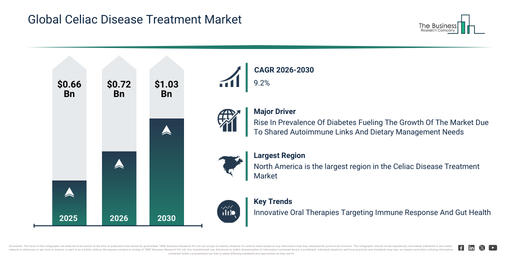
    The celiac disease treatment market size has shown significant expansion in recent years. Its valuation is set to climb from $0.66 billion in 2025 to $0.72 billion in 2026, achieving a compound annual growth rate of 9.3%. The historical period’s growth can be linked to factors such as restricted pharmacological treatment alternatives, the primary reliance on gluten-free diet management, increasing rates of diagnosis, heightened awareness of autoimmune disorders, and improved availability of diagnostic testing.

    The celiac disease treatment market is projected to experience robust expansion over the coming years. Its valuation is set to reach $1.03 billion by 2030, demonstrating a compound annual growth rate (CAGR) of 9.2%. This anticipated growth is primarily driven by the emergence of non-dietary therapeutic solutions, the broadening of enzyme and immunotherapy pipelines, an increase in the global incidence of celiac disease, enhanced diagnostic precision, and greater healthcare expenditure directed towards chronic autoimmune conditions. Key trends anticipated during this period encompass the wider acceptance of gluten-free dietary management, the evolving development of enzyme-based therapies, a heightened emphasis on early detection and screening, the diversification of nutritional supplement-based treatments, and improved patient understanding and disease education.

    Access Your Free Sample Report For In-Depth Market Analysis:

    https://www.thebusinessresearchcompany.com/sample.aspx?id=24186&type=smp

    Which Key Factors Are Driving The Celiac Disease Treatment Market Growth?

    The increasing occurrence of diabetes is projected to stimulate expansion within the celiac disease treatment market in the coming period. Diabetes is a long-term health condition characterized by the body’s impaired ability to manage blood sugar or glucose levels effectively. The growing incidence of diabetes stems from common dietary requirements, given that both diabetes and celiac disease necessitate strict regulation of food consumption to maintain blood sugar stability and avoid adverse outcomes. Treatment for celiac disease assists in diabetes management by advocating a gluten-free regimen, which can enhance general digestive well-being and nutrient uptake. This approach facilitates superior blood sugar regulation and minimizes complications for those dealing with both ailments. As an illustration, in June 2024, the National Health Service, a UK government body, reported that approximately 3,615,330 individuals registered with a general practitioner (GP) received a diagnosis of non-diabetic hyperglycemia or pre-diabetes in 2023. This represented an 18% rise from 3,065,825 cases recorded in 2022. Consequently, the escalating prevalence of diabetes is fueling the expansion of the celiac disease treatment market.

    How Is The Celiac Disease Treatment Market Organized By Segment Classification?

    The celiac disease treatment market covered in this report is segmented –

    1) By Treatment Type: Vitamins And Minerals, Gluten Degrading Enzymes, Symptomatic Treatment, Other Treatments

    2) By Diagnosis: Serological Tests, Genetic Testing, Biopsy

    3) By Distribution Channel: Hospitals, Research Centres, Clinics, Other Distribution Channels

    Subsegments:

    1) By Vitamins and Minerals: Iron Supplements, Calcium Supplements, Vitamin D, Vitamin B12, Multivitamins

    2) By Gluten Degrading Enzymes: Endopeptidases, Exopeptidases, Combination Enzyme Formulations

    3) By Symptomatic Treatment: Antidiarrheal Medications, Antidepressants, Anti-inflammatory Drugs, Immunosuppressive Agents

    4) By Other Treatments: Probiotics, Immunotherapy, Experimental Therapies

    Which Trends Are Influencing Demand In The Celiac Disease Treatment Market?

    Leading companies in the celiac disease treatment market are prioritizing the creation of oral treatments, specifically small molecule therapies. These therapies aim to offer precise relief by inhibiting immune reactions to gluten, boosting patient adherence, and providing alternatives to restrictive gluten-free diets. Small molecule therapies are minute drugs that easily penetrate cells to target and address disease-causing proteins or enzymes. As an illustration, in February 2025, Immunic Inc., a US-based biotechnology company, introduced IMU-856. This small molecule elevates endogenous glucagon-like peptide-1 (GLP-1) levels, which contributes to better intestinal barrier function in celiac disease patients. It also enhances nutrient absorption and eases symptoms without suppressing immune activity.

    Who Are The Industry Participants Involved In The Celiac Disease Treatment Market?

    Major companies operating in the celiac disease treatment market are Pfizer Inc., Johnson And Johnson, F. Hoffmann-La Roche Ltd., Merck And Co. Inc., Sanofi S.A., Novartis AG, Takeda Pharmaceuticals Company Ltd., Amgen Inc., General Mills Inc., Viatris Inc., Teva Pharmaceutical Inc., Nestlé Health Science, Hikma Pharmaceuticals PLC, Amneal Pharmaceuticals LLC, Zydus Pharmaceuticals Inc., Glenmark Pharmaceuticals Company Ltd., West-Ward Pharmaceuticals Company Ltd, Innovate Biopharmaceutical, Acto Biosciences, ImmunogenX

    Get The Full Celiac Disease Treatment Market Report:

    https://www.thebusinessresearchcompany.com/report/celiac-disease-treatment-global-market-report

    Which Geographic Region Dominates The Celiac Disease Treatment Market?

    North America was the largest region in the celiac disease treatment market in 2025. Asia-Pacific is expected to be the fastest-growing region in the forecast period. The regions covered in the celiac disease treatment market report are Asia-Pacific, South East Asia, Western Europe, Eastern Europe, North America, South America, Middle East, Africa.

    Request A Customized Celiac Disease Treatment Market Report For Competitive Insights:

    https://www.thebusinessresearchcompany.com/report/celiac-disease-treatment-global-market-report

    Browse Through More Reports Similar to the Global Celiac Disease Treatment Market 2026, By The Business Research Company

    Constipation Treatment Market Report 2026

    https://www.thebusinessresearchcompany.com/report/constipation-treatment-global-market-report

    Inflammatory Bowel Disease Treatment Market Report 2026

    https://www.thebusinessresearchcompany.com/report/inflammatory-bowel-disease-treatment-global-market-report

    Crohns Disease Treatment Market Report 2026

    https://www.thebusinessresearchcompany.com/report/crohns-disease-treatment-global-market-report

    Get in touch with us:

    The Business Research Company: https://www.thebusinessresearchcompany.com/

    Americas +1 310-496-7795

    Asia +44 7882 955267 & +91 8897263534

    Europe +44 7882 955267

    Email us at: marketing@tbrc.info

    Follow us on:

    LinkedIn: https://in.linkedin.com/company/the-business-research-company

    YouTube: https://www.youtube.com/channel/UC24_fI0rV8cR5DxlCpgmyFQ

    Global Market Model: https://www.thebusinessresearchcompany.com/global-market-model
  • Impact Of Increasing Rheumatoid Arthritis Prevalence On The Growth Of The Is Supporting Expansion In The Celiac Disease Market

    The Business Research Company’s 2026 market reports feature enhanced tools like market attractiveness analysis, TAM assessment, and company scoring matrices, along with interactive dashboards, deeper supply chain insights, and startup coverage strengthening the depth, usability, and strategic value of insights.

    What Is The Projected Increase In Market Value Of The Celiac Disease Market During 2026–2030?

    In recent years, the market size for celiac disease has expanded quickly. Forecasts indicate a rise from $0.78 billion in 2025 to $0.87 billion in 2026, with a compound annual growth rate (CAGR) of 10.3%. The growth observed in past periods can be attributed to heightened autoimmune disease awareness, improved diagnostics, the adoption of dietary management strategies, comprehensive hospital gastroenterology care, and dedicated patient advocacy efforts.

    The celiac disease market size is anticipated to experience substantial growth over the coming years, with projections indicating it will reach $1.27 billion by 2030, demonstrating a compound annual growth rate (CAGR) of 10.0%. This expansion during the forecast period is primarily driven by factors like novel drug development, gluten-free food innovation, personalized nutrition, early screening programs, and microbiome research. Significant trends identified for the forecast period comprise the rising adoption of gluten-free diets, an increase in packaged gluten-free foods, the expansion of drug-based therapies, enhanced disease awareness and diagnosis, and a focus on microbiome-based treatments.

    Access Your Free Sample Report For In-Depth Market Analysis:

    https://www.thebusinessresearchcompany.com/sample.aspx?id=24497&type=smp

    What Primary Drivers Are Shaping The Celiac Disease Market?

    The expansion of personalized medicine is anticipated to propel the growth of the celiac disease market going forward. This healthcare approach customizes medical care based on an individual’s genetic profile, environment, and lifestyle. The demand for personalized medicine is increasing due to the wider availability of genetic testing, which allows for more accurate diagnoses and targeted treatments designed for individual patient needs. The development of personalized medicine supports celiac disease treatment by enabling precise identification of genetic markers and individual immune responses, leading to more targeted and effective management strategies for each patient. For instance, in February 2024, according to the Personalized Medicine Coalition, a US-based nonprofit organization, the FDA authorized 16 personalized therapies in 2023 targeting rare diseases, a rise compared to the 6 approved in 2022. Consequently, the growth of personalized medicine will boost the growth of the celiac disease market.

    Which Segments Define The Celiac Disease Market Segment Structure?

    The celiac disease market covered in this report is segmented –

    1) By Treatment: Larazotide Acetate, Gluten Free Diet, Other Treatments

    2) By Route Of Administration: Oral, Parenteral

    3) By End Users: Hospitals, Homecare, Other End-Users

    Subsegments:

    1) By Larazotide Acetate: Clinical Trial Phase Products, Oral Capsule Formulation, Adult Celiac Patients, Pediatric Investigational Use, Monotherapy And Combination Therapy

    2) By Gluten Free Diet: Packaged Gluten-Free Foods, Gluten-Free Bakery Products, Gluten-Free Snacks, Gluten-Free Nutritional Supplements, Gluten-Free Beverages

    3) By Other Treatments: Corticosteroids, Immunosuppressive Drugs, Enzyme Therapies, Monoclonal Antibodies, Probiotics And Microbiome Modulators

    What Emerging Trends Are Seen In The Celiac Disease Market?

    Leading companies in the celiac disease market are focusing on developing advanced solutions, such as anti-interleukin-15 (IL-15) antibodies, to mitigate tissue damage by limiting excessive immune cell activity. Anti-interleukin-15 (IL-15) antibodies are specialized proteins designed to inhibit the function of the IL-15 cytokine, thereby helping to regulate immune system activity and inflammation. For instance, in May 2025, Teva Pharmaceutical Industries, an Israel-based pharmaceutical company, announced that the U.S. Food and Drug Administration had granted Fast Track status for TEV-53408, an investigational anti-interleukin-15 (IL-15) antibody. This is an investigational monoclonal antibody developed for individuals with celiac disease who continue to follow a gluten-free diet. It functions by blocking interleukin-15 (IL-15), a molecule implicated in triggering the immune response that leads to intestinal harm in celiac patients. The therapy is currently undergoing testing in a Phase 2a clinical trial to evaluate its safety and how effectively it works.

    Who Are The Established Players Within The Celiac Disease Market?

    Major companies operating in the celiac disease market are Pfizer Inc., Sanofi SA, Novartis AG, Takeda Pharmaceutical Company Ltd., Chugai Pharmaceutical Co. Ltd., Dr Falk Pharma GmbH, Theriva Biologics Inc., Equillium Inc., Immunic Inc., Barinthus Biotherapeutics Plc, Allero Therapeutics, Anokion SA, Mozart Therapeutics, ImmunogenX, Topas Therapeutics GmbH, Parvus Therapeutics Inc., AMYRA Biotech AG, Provention Limited, Precigen Inc., Zedira GmbH, AnTolRx Inc., Nemysis Ltd., Entero Therapeutics Inc.

    Get The Full Celiac Disease Market Report:

    https://www.thebusinessresearchcompany.com/report/celiac-disease-global-market-report

    Which Region Is The Leading Market For The Celiac Disease Market?

    North America was the largest region in the celiac disease market in 2025. Asia-Pacific is expected to be the fastest-growing region in the forecast period. The regions covered in the celiac disease market report are Asia-Pacific, South East Asia, Western Europe, Eastern Europe, North America, South America, Middle East, Africa.

    Request A Customized Celiac Disease Market Report For Competitive Insights:

    https://www.thebusinessresearchcompany.com/report/celiac-disease-global-market-report

    Browse Through More Reports Similar to the Global Celiac Disease Market 2026, By The Business Research Company

    Rare Diseases Treatment Market Report 2026

    https://www.thebusinessresearchcompany.com/report/rare-diseases-treatment-global-market-report

    Rare Disease Diagnostics Market Report 2026

    https://www.thebusinessresearchcompany.com/report/rare-disease-diagnostics-global-market-report

    Rare Inflammatory Disease Treatment Market Report 2026

    https://www.thebusinessresearchcompany.com/report/rare-inflammatory-disease-treatment-global-market-report

    Get in touch with us:

    The Business Research Company: https://www.thebusinessresearchcompany.com/

    Americas +1 310-496-7795

    Asia +44 7882 955267 & +91 8897263534

    Europe +44 7882 955267

    Email us at: marketing@tbrc.info

    Follow us on:

    LinkedIn: https://in.linkedin.com/company/the-business-research-company

    YouTube: https://www.youtube.com/channel/UC24_fI0rV8cR5DxlCpgmyFQ

    Global Market Model: https://www.thebusinessresearchcompany.com/global-market-model
  • Impact Of Increasing Multiple Sclerosis Prevalence On The Growth Of The Kesimpta Is Contributing To Changes In The CD40 Ligand (CD40L) Antibody Market

    Impact Of Increasing Multiple Sclerosis Prevalence On The Growth Of The Kesimpta Is Contributing To Changes In The CD40 Ligand (CD40L) Antibody Market

    The Business Research Company’s 2026 market reports feature enhanced tools like market attractiveness analysis, TAM assessment, and company scoring matrices, along with interactive dashboards, deeper supply chain insights, and startup coverage strengthening the depth, usability, and strategic value of insights.

    How Is The Market Size Of The CD40 Ligand (CD40L) Antibody Market Expected To Change From 2026 To 2030?

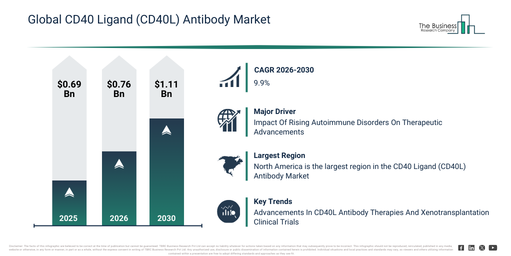
    The cd40 ligand (cd40l) antibody market has experienced substantial growth in recent years. Its valuation is set to rise from $0.69 billion in 2025 to $0.76 billion in 2026, achieving a compound annual growth rate (CAGR) of 10.0%. Historically, this expansion has been driven by progress in immunology research, a rising prevalence of autoimmune diseases, advancements in biologics development, an increase in research funding, and improvements in antibody engineering.

    The cd40 ligand (cd40l) antibody market size is projected to experience robust expansion in the coming years, with an expected increase to $1.11 billion by 2030, demonstrating a compound annual growth rate (CAGR) of 9.9%. This anticipated growth during the forecast period can be attributed to factors such as the expanding immunotherapy pipelines, a rise in transplant procedures, the development of targeted immune therapies, heightened clinical trial activity, and increasing investments in biotechnology. Key trends expected over the same period encompass intensified research into immune modulation therapies, a rise in the development of monoclonal cd40l antibodies, an increased emphasis on autoimmune and transplant indications, the expansion of both preclinical and clinical studies, and enhanced collaboration between pharmaceutical companies and research institutions.

    Access Your Free Sample Report For In-Depth Market Analysis:

    https://www.thebusinessresearchcompany.com/sample.aspx?id=21132&type=smp

    Which Major Drivers Are Influencing The Expansion Of The CD40 Ligand (CD40L) Antibody Market?

    The increasing occurrence of autoimmune disorders is anticipated to propel the growth of the CD40 ligand (CD40L) antibody market in the future. Autoimmune disorders arise when the immune system erroneously attacks the body’s healthy cells, causing damage, and include conditions such as rheumatoid arthritis, lupus, and type 1 diabetes. The rising incidence of these disorders can be linked to factors including environmental triggers, genetic predisposition, shifts in lifestyle, and greater diagnostic awareness, which collectively lead to higher rates of detection and manifestation. CD40 Ligand (CD40L) antibodies are presenting as a potential therapeutic approach for managing autoimmune disorders by modulating the immune system’s overactive response. For instance, in May 2023, according to the University of Oxford, a UK-based research university, autoimmune disorders affect about one in ten individuals, with 13% of women and 7% of men impacted across 19 studied autoimmune diseases. Therefore, the escalating incidences of autoimmune disorders are driving the growth of the CD40 ligand (CD40L) antibody market.

    How Is The CD40 Ligand (CD40L) Antibody Market Segmented Across Different Segment Categories?

    The cd40 ligand (cd40l) antibody market covered in this report is segmented –

    1) By Type: Monoclonal Antibody, Polyclonal Antibody

    2) By Application: Flow Cytometry, Enzyme-Linked Immunosorbent Assay (ELISA), Western Blot, Immunoprecipitation, Immunofluorescence, Other Applications

    3) By End-User: Hospitals, Research Institutes, Specialty Clinics, Other End-Users

    Subsegments:

    1) By Monoclonal Antibody: Fully Human Monoclonal Antibodies, Humanized Monoclonal Antibodies, Chimeric Monoclonal Antibodies

    2) By Polyclonal Antibody: Rabbit Polyclonal Antibodies, Goat Polyclonal Antibodies, Mouse Polyclonal Antibodies

    Which Trends Are Guiding The Direction Of The CD40 Ligand (CD40L) Antibody Market?

    Major companies operating in the CD40 ligand (CD40L) antibody market are concentrating on advancing clinical trials and expanding therapeutic applications, such as CD40L-targeted immunomodulated xenotransplantation to enhance graft survival in genetically modified porcine-to-human heart transplantation. CD40L-targeted immunomodulated xenotransplantation describes the procedure of transferring organs, tissues, or cells between different species by specifically using treatments that inhibit the CD40 ligand (CD40L) pathway. This aims to modulate the recipient’s immune response, diminish organ rejection, and improve graft survival. For example, in September 2023, Eledon Pharmaceuticals Inc., a US-based biotechnology company, announced the utilization of Tegoprubart anti-CD40L antibody in a clinical trial following the second-ever genetically modified pig heart transplant; the trial sought to assess its role in preventing organ rejection and extending therapeutic uses in organ transplantation. Tegoprubart has additionally displayed potential in addressing autoimmune diseases by modulating immune responses.

    Which Organizations Play A Role In The CD40 Ligand (CD40L) Antibody Market Landscape?

    Major companies operating in the cd40 ligand (cd40l) antibody market are Thermo Fisher Scientific Co. Ltd., Amgen Inc., Bio-Rad Laboratories Inc., Bio-Techne Corporation, Kiniksa Pharmaceuticals Ltd., BioLegend, Cytek Biosciences Inc., Sino Biological Inc., ACROBiosystems, Elabscience Biotechnology Inc., Cayman Chemical, Eledon Pharmaceuticals, Cell Signaling Technology, Enzo Biochem, GeneTex, GeminiBio, Creative Biolabs, BPS Bioscience Inc., LSBio, MyBiosource Inc., Boster Biological Technology, Bio X Cell, Assay Genie, Abeomics, Leinco Technologies Inc.

    Get The Full CD40 Ligand (CD40L) Antibody Market Report:

    https://www.thebusinessresearchcompany.com/report/cd40-ligand-cd40l-antibody-global-market-report

    Where Is The CD40 Ligand (CD40L) Antibody Market Primarily Concentrated By Region?

    North America was the largest region in the CD40 ligand (CD40L) antibody market in 2025. Asia-Pacific is expected to be the fastest-growing region in the forecast period. The regions covered in the cd40 ligand (cd40l) antibody market report are Asia-Pacific, South East Asia, Western Europe, Eastern Europe, North America, South America, Middle East, Africa.

    Request A Customized CD40 Ligand (CD40L) Antibody Market Report For Competitive Insights:

    https://www.thebusinessresearchcompany.com/report/cd40-ligand-cd40l-antibody-global-market-report

    Browse Through More Reports Similar to the Global CD40 Ligand (CD40L) Antibody Market 2026, By The Business Research Company

    Monoclonal Antibodies Market Report 2026

    https://www.thebusinessresearchcompany.com/report/monoclonal-antibodies-global-market-report

    Next Generation Antibody Therapeutics Market Report 2026

    https://www.thebusinessresearchcompany.com/report/next-generation-antibody-therapeutics-global-market-report

    Monoclonal Antibodies Market Report 2026

    https://www.thebusinessresearchcompany.com/report/monoclonal-antibodies-global-market-report

    Get in touch with us:

    The Business Research Company: https://www.thebusinessresearchcompany.com/

    Americas +1 310-496-7795

    Asia +44 7882 955267 & +91 8897263534

    Europe +44 7882 955267

    Email us at: marketing@tbrc.info

    Follow us on:

    LinkedIn: https://in.linkedin.com/company/the-business-research-company

    YouTube: https://www.youtube.com/channel/UC24_fI0rV8cR5DxlCpgmyFQ

    Global Market Model: https://www.thebusinessresearchcompany.com/global-market-model

  • The CD-19 Antibody Market Is Evolving Due To Impact Of Rising Cancer Prevalence On The Growth Of The Kepivance

    The CD-19 Antibody Market Is Evolving Due To Impact Of Rising Cancer Prevalence On The Growth Of The Kepivance

    The Business Research Company’s 2026 market reports feature enhanced tools like market attractiveness analysis, TAM assessment, and company scoring matrices, along with interactive dashboards, deeper supply chain insights, and startup coverage strengthening the depth, usability, and strategic value of insights.

    From Its 2026 Market Size, What Value Is The CD-19 Antibody Market Projected To Reach By 2030?

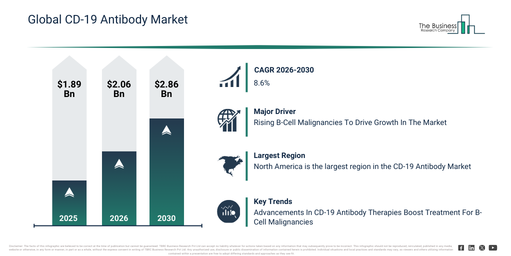
    The cd-19 antibody market has experienced robust expansion in recent years. It is projected to increase from $1.89 billion in 2025 to $2.06 billion in 2026, at a compound annual growth rate (CAGR) of 8.7%. This historic period’s growth can be attributed to advances in monoclonal antibody technology, the rising incidence of leukemia and lymphoma, the expansion of immunotherapy approvals, growth in oncology research, and increased funding in hematology.

    The cd-19 antibody market is projected for significant expansion in the coming years. This market is anticipated to reach a value of $2.86 billion by 2030, exhibiting a compound annual growth rate (CAGR) of 8.6%. This projected growth during the forecast period is fueled by advancements in cell and gene therapies, increased adoption of precision oncology, the widening use of combination immunotherapies, the escalating prevalence of cancer, and the proliferation of specialty oncology centers. Key trends anticipated during this period encompass the increasing application of cd19-targeted immunotherapies, broader integration into b-cell malignancy treatment, enhanced synergy with CAR-T cell therapies, the development of more monoclonal antibodies, and a heightened emphasis on precision hematologic oncology.

    Access Your Free Sample Report For In-Depth Market Analysis:

    https://www.thebusinessresearchcompany.com/sample.aspx?id=21130&type=smp

    What Key Drivers Are Fueling The Growth Of The CD-19 Antibody Market?

    The increasing occurrence of B-cell cancers is anticipated to boost the expansion of the CD-19 antibody market in the future. B-cell malignancies are a category of cancers stemming from irregular B lymphocytes, encompassing B-cell lymphomas and leukemias. These conditions impact the immune system and can result in unchecked cellular proliferation. The growing incidence of B-cell malignancies is linked to various factors like an aging population, genetic predispositions, environmental influences, lifestyle choices, enhanced diagnostic capabilities, and alterations in the immune system. CD19 antibodies aid in treating B-cell malignancies by precisely targeting the CD19 protein on cancerous B cells, thereby destroying them, preserving healthy cells, and strengthening the body’s immune defenses. As an illustration, in January 2024, data from the American Cancer Society, a US-based non-profit, indicated that approximately 80,620 individuals in the USA were projected to be diagnosed with non-Hodgkin lymphoma. Furthermore, an estimated 20,240 people, consisting of 44,590 males and 36,030 females, were expected to succumb to non-Hodgkin lymphoma. Consequently, the increased prevalence of B-cell malignancies is stimulating the expansion of the CD-19 antibody market.

    What Are The Main Segments Within The CD-19 Antibody Market Segment Structure?

    The cd-19 antibody market covered in this report is segmented –

    1) By Disease Type: B-Cell Non-Hodgkin Lymphoma, Chronic Lymphocytic Leukemia, Acute Lymphoblastic Leukemia, Other Disease Types

    2) By Type: Polyclonal, Monoclonal

    3) By Route Of Administration: Intravenous, Subcutaneous

    4) By Application: Enzyme Linked Immunosorbent Assay, Flow Cytometry, Immunohistochemistry Frozen, Immunohistochemistry Paraffin, Other Applications

    Subsegments:

    1) By B-Cell Non-Hodgkin Lymphoma: Diffuse Large B-Cell Lymphoma (DLBCL), Follicular Lymphoma, Mantle Cell Lymphoma

    2) By Chronic Lymphocytic Leukemia: Relapsed Or Refractory CLL, Treatment-Naïve CLL

    3) By Acute Lymphoblastic Leukemia: B-Cell Precursor ALL, Philadelphia Chromosome-Positive ALL

    4) By Other Disease Types: Hairy Cell Leukemia, Waldenström’s Macroglobulinemia, Marginal Zone Lymphoma

    What Trends Are Affecting The Growth Of The CD-19 Antibody Market?

    Major companies in the CD-19 antibody market are concentrating on developing technological innovations, such as genetically modified autologous T-cell immunotherapy, to boost the effectiveness of cancer treatments, especially for hematologic malignancies. This form of immunotherapy involves genetically engineering a patient’s own T cells to recognize and attack cancer cells, which are then reintroduced into the patient’s body to amplify the immune response against the disease. For instance, in November 2024, Autolus Therapeutics plc, a US-based biopharmaceutical company, announced the U.S. FDA approval for AUCATZYL (obecabtagene autoleucel), indicated for treating adult patients with relapsed or refractory B-cell precursor acute lymphoblastic leukemia (ALL). This design aims to lessen excessive T-cell activation, thereby minimizing toxicity and improving the persistence of the therapeutic cells. It is administered as a split-dose infusion on days 1 and 10, with dosing individualized based on a bone marrow assessment prior to treatment.

    Who Are The Companies Participating In The CD-19 Antibody Market?

    Major companies operating in the cd-19 antibody market are Pfizer Inc., F. Hoffmann-La Roche Ltd., AstraZeneca plc, Novartis AG, Thermo Fisher Scientific Inc., Amgen Inc., Bio-Rad Laboratories Inc., Miltenyi Biotec GmbH, Abcam Plc, Kite Pharma Inc., BioLegend Inc., Xencor Inc., Juno Therapeutics Inc., BD Biosciences, Zenas BioPharma Inc., Cell Signaling Technology Inc., Santa Cruz Biotechnology Inc., Novus Biologicals LLC, Tonbo Biosciences Inc., Bio X Cell Inc.

    Get The Full CD-19 Antibody Market Report:

    https://www.thebusinessresearchcompany.com/report/cd-19-antibody-global-market-report

    Which Region Has The Greatest Market Share In The CD-19 Antibody Market?

    North America was the largest region in the CD-19 antibody market in 2025. The regions covered in the cd-19 antibody market report are Asia-Pacific, South East Asia, Western Europe, Eastern Europe, North America, South America, Middle East, Africa.

    Request A Customized CD-19 Antibody Market Report For Competitive Insights:

    https://www.thebusinessresearchcompany.com/report/cd-19-antibody-global-market-report

    Browse Through More Reports Similar to the Global CD-19 Antibody Market 2026, By The Business Research Company

    Monoclonal Antibodies Market Report 2026

    https://www.thebusinessresearchcompany.com/report/monoclonal-antibodies-global-market-report

    Next Generation Antibody Therapeutics Market Report 2026

    https://www.thebusinessresearchcompany.com/report/next-generation-antibody-therapeutics-global-market-report

    Polyclonal Antibodies Market Report 2026

    https://www.thebusinessresearchcompany.com/report/polyclonal-antibodies-global-market-report

    Get in touch with us:

    The Business Research Company: https://www.thebusinessresearchcompany.com/

    Americas +1 310-496-7795

    Asia +44 7882 955267 & +91 8897263534

    Europe +44 7882 955267

    Email us at: marketing@tbrc.info

    Follow us on:

    LinkedIn: https://in.linkedin.com/company/the-business-research-company

    YouTube: https://www.youtube.com/channel/UC24_fI0rV8cR5DxlCpgmyFQ

    Global Market Model: https://www.thebusinessresearchcompany.com/global-market-model