Category: Pharmaceuticals

  • Rising Infection Rates and Antibiotic Resistance Driving Penicillin API Market Growth

    Rising Infection Rates and Antibiotic Resistance Driving Penicillin API Market Growth

    The Business Research Company’s 2026 market reports include new capabilities such as market attractiveness scoring and analysis, total addressable market analysis, company scoring matrix, interactive excel data dashboard, improved supply chain analysis, upcoming startups in the market, and overview of key products, aimed at improving the depth, usability, and strategic value of the insights delivered.

    How Much Is The Penicillin Active Pharmaceutical Ingredients Market Expected To Grow In Terms Of Market Value Between 2026 And 2030?

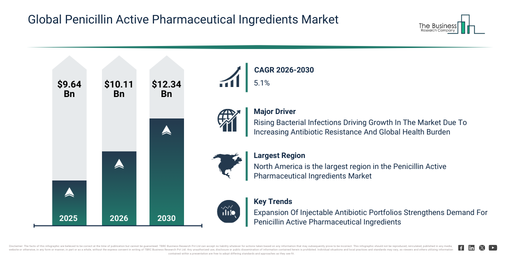
    The market size for penicillin active pharmaceutical ingredients has experienced consistent expansion in recent years. Projections indicate that this market will increase from $9.64 billion in 2025 to $10.11 billion in 2026, at a compound annual growth rate (CAGR) of 4.9%. This historical growth can be attributed to factors such as elevated global demand for antibiotics, the broadening of generic drug manufacturing, an increase in infectious disease treatments, substantial large-scale fermentation capacity, and the growing use of antibiotics in hospitals.

    The penicillin active pharmaceutical ingredients market is projected for significant expansion over the coming years. Its valuation is anticipated to reach $12.34 billion in 2030, exhibiting a compound annual growth rate (CAGR) of 5.1%. This projected growth throughout the forecast period stems from factors such as an increasing burden of bacterial infections, the broadening of generic antibiotic markets, an uptick in contract API manufacturing, more robust antibiotic stockpiling initiatives, and the expansion of pharmaceutical production in developing markets. Key developments expected during this period involve high purity fermentation techniques, the wider adoption of semisynthetic penicillin, the establishment of continuous API manufacturing lines, advanced methods for antibiotic quality assessment, and the optimization of costs in bulk antibiotic production.

    Download the Free Sample Report to Explore Key Market Insights:

    https://www.thebusinessresearchcompany.com/sample.aspx?id=33256&type=smp

    What Key Drivers Are Influencing The Growth Of The Penicillin Active Pharmaceutical Ingredients Market?

    The increasing occurrence of bacterial infections is anticipated to propel the growth of the penicillin active pharmaceutical ingredients market in the future. Bacterial infections are illnesses caused by harmful bacteria that infiltrate the body and proliferate, resulting in disease symptoms and potential complications. The expanding prevalence of bacterial infections is primarily driven by antimicrobial resistance, as the overuse and misuse of antibiotics allow bacteria to develop resistance mechanisms, making infections more difficult to treat and more persistent in both healthcare and community settings. This growing incidence of bacterial infections consequently increases demand for penicillin-based antibiotics, as they remain crucial for treating common bacterial diseases and combating resistant strains in clinical practice. For instance, in September 2024, according to the Institute for Health Metrics and Evaluation, a US-based health research center, antibiotic-resistant infections could cause over 39 million deaths by 2050, with AMR bacteria driving a 75% increase in cases from 4.71 to 8.22 million per year. Therefore, the rising incidence of bacterial infections is a significant factor driving the growth of the penicillin active pharmaceutical ingredients market.

    What Major Segment Divisions Exist Within The Penicillin Active Pharmaceutical Ingredients Market?

    The penicillin active pharmaceutical ingredients market covered in this report is segmented –

    1) By Product Type: Penicillin G; Penicillin V; Ampicillin; Amoxicillin; Other Product Types

    2) By Formulation Type: Oral Formulations; Injectable Formulations; Topical Formulations

    3) By Distribution Channel: Direct Distribution; Online Pharmacies; Third Party Distributors

    4) By Application: Bacterial Infections; Respiratory Infections; Skin Infections; Urinary Tract Infections; Gastrointestinal Infections

    5) By End User: Hospitals; Pharmacies; Clinics; Academic And Research Institutions

    Subsegments:

    1) By Penicillin G: Injectable Penicillin G; Oral Penicillin G; Long Acting Penicillin G; Aqueous Penicillin G; Crystalline Penicillin G

    2) By Penicillin V: Oral Penicillin V; Tablet Penicillin V; Liquid Penicillin V; Immediate Release Penicillin V; Extended Release Penicillin V

    3) By Ampicillin: Injectable Ampicillin; Oral Ampicillin; Capsule Ampicillin; Liquid Ampicillin; Sodium Salt Ampicillin

    4) By Amoxicillin: Tablet Amoxicillin; Capsule Amoxicillin; Oral Suspension Amoxicillin; Extended Release Amoxicillin; Chewable Amoxicillin

    5) By Other Product Type: Dicloxacillin; Cloxacillin; Flucloxacillin; Oxacillin; Carbenicillin

    How Are Trends Shaping The Direction Of The Penicillin Active Pharmaceutical Ingredients Market?

    Leading entities within the penicillin active pharmaceutical ingredients (APIs) market are concentrating on broadening their injectable antibiotic offerings, aiming to enhance treatment availability and fulfill hospital requirements for vital anti-infective treatments. Such injectable antibiotic products are defined as parenteral formulations, prepared for immediate use and originating from penicillin APIs, intended to provide swift and potent treatment for severe bacterial infections. As an example, in March 2025, Avenacy, a US-based pharmaceutical company, revealed the introduction of Ampicillin for Injection, USP, Ampicillin and Sulbactam for Injection, USP, Nafcillin for Injection, USP, Penicillin G Potassium for Injection, USP, and Piperacillin and Tazobactam for Injection, USP – a collection of five injectable antibiotic products launched in the U.S. market, specifically developed to aid acute care environments. These offerings encompass formulations based on penicillin, utilized for managing diverse bacterial infections, thereby strengthening the need for premium penicillin APIs and facilitating reliable, large-scale production and distribution across various healthcare institutions.

    Who Are The Leading Companies Operating In The Penicillin Active Pharmaceutical Ingredients Market?

    Major companies operating in the penicillin active pharmaceutical ingredients market are Merck & Co Inc, Pfizer Inc, Sanofi S.A., Novartis AG, GSK plc, Teva Pharmaceutical Industries Ltd, CSPC Zhongrun Pharmaceutical Co. Ltd, Aurobindo Pharma Ltd, Shionogi & Co. Ltd, North China Pharmaceutical Group Corporation, Centrient Pharmaceuticals B.V., Qilu Tianhe Pharmaceutical Co. Ltd, Jiangxi Fushine Pharmaceutical Co. Ltd, Harbin Pharmaceutical Group Co. Ltd, The United Laboratories International Holdings Limited, Sinopharm Weiqida Pharmaceutical Co. Ltd, Rochem International Inc, Sichuan Kelun Pharmaceutical Co. Ltd, Shandong Lukang Pharmaceutical Co. Ltd, Huaxing Pharmaceutical Co. Ltd, Jiangxi Huabang Pharmaceutical Co. Ltd, and Changzhou RedSun Pharmaceutical Co. Ltd.

    Read the full penicillin active pharmaceutical ingredients market report here:

    https://www.thebusinessresearchcompany.com/report/penicillin-active-pharmaceutical-ingredients-market-report

    Which Region Is Anticipated To See The Fastest Growth In The Penicillin Active Pharmaceutical Ingredients Market?

    North America was the largest region in the penicillin active pharmaceutical ingredients (API) market in 2025. Asia-Pacific is expected to be the fastest-growing region in the forecast period. The regions covered in the penicillin active pharmaceutical ingredients market report are Asia-Pacific, South East Asia, Western Europe, Eastern Europe, North America, South America, Middle East, Africa.

    Request A Tailored Penicillin Active Pharmaceutical Ingredients Market Research Report For Competitive Advantage:

    https://www.thebusinessresearchcompany.com/customise?id=33256&type=smp

    Browse Through More Reports Similar to the Global Penicillin Active Pharmaceutical Ingredients Market 2026, By The Business Research Company

    Active Pharmaceutical Ingredients Market Report 2026

    https://www.thebusinessresearchcompany.com/report/active-pharmaceutical-ingredients-global-market-report

    Antibiotics Market Report 2026

    https://www.thebusinessresearchcompany.com/report/antibiotics-global-market-report

    Amoxicillin Market Report 2026

    https://www.thebusinessresearchcompany.com/report/amoxicillin-global-market-report

    Get in touch with us:

    The Business Research Company: https://www.thebusinessresearchcompany.com/

    Americas +1 310-496-7795

    Asia +44 7882 955267 & +91 8897263534

    Europe +44 7882 955267

    Email us at info@tbrc.info

    Follow us on:

    LinkedIn: https://in.linkedin.com/company/the-business-research-company

    YouTube: https://www.youtube.com/channel/UC24_fI0rV8cR5DxlCpgmyFQ

    Global Market Model: https://www.thebusinessresearchcompany.com/global-market-model
  • Palmoplantar Keratoderma Market Trends and Growth Forecast Through 2030

    Palmoplantar Keratoderma Market Trends and Growth Forecast Through 2030

    The Business Research Company’s 2026 market reports include new capabilities such as market attractiveness scoring and analysis, total addressable market analysis, company scoring matrix, interactive excel data dashboard, improved supply chain analysis, upcoming startups in the market, and overview of key products, aimed at improving the depth, usability, and strategic value of the insights delivered.

    What Market Value Is Expected For The Palmoplantar Keratoderma Market At The End Of The 2026–2030 Forecast Period?

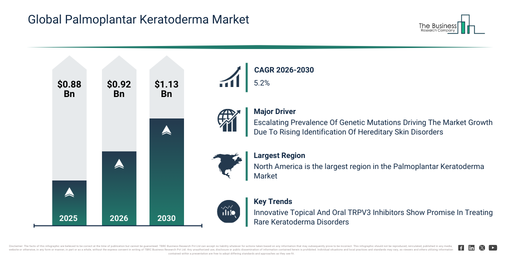
    The palmoplantar keratoderma market size has experienced consistent expansion in recent years. It is projected to increase from $0.88 billion in 2025 to $0.92 billion in 2026, demonstrating a compound annual growth rate (CAGR) of 4.9%. The market’s historical development can be linked to an increase in the diagnosis of rare dermatological disorders, the proliferation of dermatology specialty clinics, the broader availability of retinoid therapies, growing patient awareness regarding genetic skin diseases, and enhancements in dermatopathology testing.

    The palmoplantar keratoderma market is projected to experience robust expansion over the coming years. Its size is predicted to grow to $1.13 billion in 2030 at a compound annual growth rate (CAGR) of 5.2%. This anticipated growth during the forecast period is primarily driven by an increase in targeted dermatology drugs, wider availability of genetic screening access, greater adoption of biologic therapies, a growing number of specialty dermatology pipelines, and broader orphan disease support programs. Key trends expected within this period encompass targeted biologic skin therapies, advanced genetic diagnostic panels, long acting topical formulations, combination retinoid treatment protocols, and the increasing uptake of home-based phototherapy.

    Download the Free Sample Report to Explore Key Market Insights:

    https://www.thebusinessresearchcompany.com/sample.aspx?id=33255&type=smp

    What Major Growth Drivers Are Shaping The Outlook Of The Palmoplantar Keratoderma Market?

    The increasing occurrence of genetic mutations is projected to drive the expansion of the palmoplantar keratoderma market. These mutations represent alterations or variations in DNA sequences that can elevate an individual’s susceptibility to hereditary conditions and various dermatological disorders. The rising prevalence of genetic mutations is attributed to advancements in genomic sequencing and widespread genetic testing, which facilitate the detection and identification of a growing number of previously unrecognized DNA variations across populations. An increase in genetic mutations contributes to palmoplantar keratoderma by expanding the population with inherited skin-gene alterations, which in turn results in earlier diagnosis and a greater need for specific treatments. For instance, in January 2023, a report published by the National Center for Biotechnology Information (NCBI), a division of the US-based National Library of Medicine (NLM), noted that with approximately 140 million babies born each year, roughly 9.8 billion new human mutations are introduced into the gene pool annually. Therefore, the growing frequency of genetic mutations is fueling the palmoplantar keratoderma market’s expansion.

    What Segment Types Make Up The Palmoplantar Keratoderma Market?

    The palmoplantar keratoderma market covered in this report is segmented –

    1) By Treatment Type: Topical Treatments; Systemic Treatments; Phototherapy; Surgical Interventions

    2) By Type: Non Lamellar Keratoderma; Lamellar Keratoderma; Epidermolytic Keratoderma; Palmoplantar Keratoderma With Systemic Involvement

    3) By Diagnosis Method: Clinical Examination; Histopathological Examination; Genetic Testing

    4) By Patient Type: Pediatric; Adult

    5) By Distribution Channel: Hospital Pharmacies; Retail Pharmacies; Online Pharmacies

    Subsegments:

    1) By Topical Treatments: Salicylic Acid Preparations; Urea Creams; Emollients; Retinoid Creams; Corticosteroid Creams

    2) By Systemic Treatments: Oral Retinoids; Oral Vitamin D Analogues; Oral Corticosteroids; Oral Immunosuppressants

    3) By Phototherapy: Ultraviolet A Therapy; Ultraviolet B Therapy; Psoralen Plus Ultraviolet A Therapy

    4) By Surgical Interventions: Excision Surgery; Laser Therapy; Dermabrasion; Skin Grafting

    Which Market Trends Are Creating New Opportunities In The Palmoplantar Keratoderma Market?

    Major companies operating in the palmoplantar keratoderma market are focusing on conducting clinical trials to develop innovative drugs, such as TRPV3 inhibitors, to provide targeted, disease-modifying treatments that extend beyond symptomatic relief. TRPV3 inhibitors are medications designed to block the TRPV3 ion channel, which helps normalize skin cell growth, strengthen the skin barrier, and reduce the pain and thickening associated with palmoplantar keratoderma. For instance, in June 2024, Kamari Pharma Ltd., a clinical-stage biotechnology company, introduced KM-001, a topical TRPV3 inhibitor, following promising Phase 1b clinical results. KM-001 is formulated as a cream applied twice daily and has demonstrated high safety with no severe adverse events, alongside an overall responder rate of 87% in patients with pachyonychia congenita and punctate palmoplantar keratoderma type 1. Its unique mechanism aids in normalizing skin cell proliferation, enhancing epidermal barrier formation, and alleviating pain in affected patients, offering a disease-modifying alternative to conventional treatments. Kamari Pharma plans to advance KM-001 into Phase 2 trials while also developing KM-023, an oral TRPV3 inhibitor, for broader keratoderma indications.

    Which Major Firms Influence Developments In The Palmoplantar Keratoderma Market?

    Major companies operating in the palmoplantar keratoderma market are LEO Pharma, Krystal Biotech Inc., and Kamari Pharma.

    Read the full palmoplantar keratoderma market report here:

    https://www.thebusinessresearchcompany.com/report/palmoplantar-keratoderma-market-report

    Which Global Regions Are Shaping The Competitive Landscape Of The Palmoplantar Keratoderma Market?

    North America was the largest region in the palmoplantar keratoderma market in 2025. Asia – Pacific is expected to be the fastest-growing region in the forecast period. The regions covered in the palmoplantar keratoderma market report are Asia-Pacific, South East Asia, Western Europe, Eastern Europe, North America, South America, Middle East, Africa.

    Request A Tailored Palmoplantar Keratoderma Market Research Report For Competitive Advantage:

    https://www.thebusinessresearchcompany.com/customise?id=33255&type=smp

    Browse Through More Reports Similar to the Global Palmoplantar Keratoderma Market 2026, By The Business Research Company

    Actinic Keratosis Treatment Market Report 2026

    https://www.thebusinessresearchcompany.com/report/actinic-keratosis-treatment-global-market-report

    Palm Kernel Fatty Acids Market Report 2026

    https://www.thebusinessresearchcompany.com/report/palm-kernel-fatty-acids-global-market-report

    Neurotrophic Keratitis Treatment Market Report 2026

    https://www.thebusinessresearchcompany.com/report/neurotrophic-keratitis-treatment-global-market-report

    Get in touch with us:

    The Business Research Company: https://www.thebusinessresearchcompany.com/

    Americas +1 310-496-7795

    Asia +44 7882 955267 & +91 8897263534

    Europe +44 7882 955267

    Email us at info@tbrc.info

    Follow us on:

    LinkedIn: https://in.linkedin.com/company/the-business-research-company

    YouTube: https://www.youtube.com/channel/UC24_fI0rV8cR5DxlCpgmyFQ

    Global Market Model: https://www.thebusinessresearchcompany.com/global-market-model
  • Neuroendocrine Prostate Cancer Market Showing Steady Growth Toward 2030

    Neuroendocrine Prostate Cancer Market Showing Steady Growth Toward 2030

    The Business Research Company’s 2026 market reports include new capabilities such as market attractiveness scoring and analysis, total addressable market analysis, company scoring matrix, interactive excel data dashboard, improved supply chain analysis, upcoming startups in the market, and overview of key products, aimed at improving the depth, usability, and strategic value of the insights delivered.

    What Market Valuation Is Forecasted For The Neuroendocrine Prostate Cancer Market By 2030 Starting From Its 2026 Size?

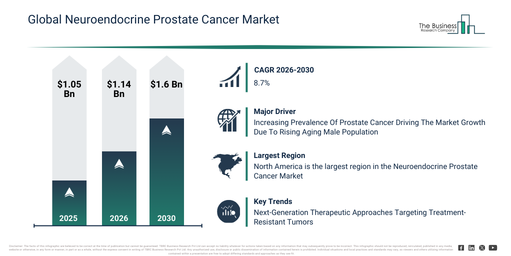
    The neuroendocrine prostate cancer market size has experienced significant expansion over recent years. It is projected to increase from $1.05 billion in 2025 to $1.14 billion in 2026, achieving a compound annual growth rate (CAGR) of 8.5%. The historical growth in this market can be attributed to a rise in prostate cancer diagnoses, the emergence of long-term hormone therapy resistance, the expansion of oncology drug pipelines, advancements in molecular pathology testing, and heightened cancer center specialization.

    The neuroendocrine prostate cancer market is projected to experience substantial growth over the next few years. It is set to reach $1.6 billion in 2030, achieving a compound annual growth rate (CAGR) of 8.7%. This expansion during the forecast period can be attributed to the increasing adoption of precision oncology, the rise of biomarker-based treatments, the broadening of targeted therapies, enhanced funding for rare cancer research, and wider utilization of genomic testing. Prominent trends expected in this period include biomarker-driven patient stratification, the implementation of combination oncology therapy protocols, advanced molecular diagnostic testing, the expansion of rare cancer clinical trials, and innovative targeted radiopharmaceutical approaches.

    Download the Free Sample Report to Explore Key Market Insights:

    https://www.thebusinessresearchcompany.com/sample.aspx?id=33242&type=smp

    Which Market Drivers Are Supporting The Expansion Of The Neuroendocrine Prostate Cancer Market?

    The expanding occurrence of prostate cancer is anticipated to drive the neuroendocrine prostate cancer market’s expansion in the future. This condition is defined as a malignant tumor that develops in the prostate gland, primarily affecting men over the age of 50. Its increasing frequency is primarily attributed to the growing aging male population, given that advancing age constitutes a significant risk factor for developing the illness. The widespread presence of prostate cancer contributes to the growth of neuroendocrine prostate cancer through several mechanisms: enlarging the overall patient pool, increasing long-term exposure to androgen-deprivation therapies, and consequently elevating the probability of developing treatment-induced neuroendocrine differentiation in advanced and castration-resistant disease stages. As an illustration, in January 2025, the Centers for Disease Control and Prevention (CDC), a U.S. federal public health agency, disclosed that during 2023, 255,395 new cases of prostate cancer were diagnosed in the United States, and 33,881 men died from the disease. Consequently, the rising incidence of prostate cancer is a key factor propelling the expansion of the neuroendocrine prostate cancer market.

    Which Segment Categories Define The Neuroendocrine Prostate Cancer Market?

    The neuroendocrine prostate cancer market covered in this report is segmented –

    1) By Treatment: Chemotherapy; Hormonal Therapy

    2) By Therapeutics: Immunotherapy; Targeted Therapy

    3) By Disease Stage: Localized Disease; Advanced Disease; Metastatic Disease

    4) By End Users: Hospitals; Oncology Specialty Clinics; Cancer Research Institutes

    Subsegments:

    1) By Chemotherapy: Platinum Based Chemotherapy; Taxane Based Chemotherapy; Combination Chemotherapy; Second Line Chemotherapy

    2) By Hormonal Therapy: Androgen Deprivation Therapy; Androgen Receptor Inhibition; Hormone Synthesis Inhibition; Combined Hormonal Therapy

    What Major Market Trends Are Driving Changes In The Neuroendocrine Prostate Cancer Market?

    Leading companies in the neuroendocrine prostate cancer market are concentrating on developing innovative medications, such as immune-modulating small-molecule therapies, to improve immune response and enhance patient outcomes. Immune-modulating small-molecule therapies are orally administered compounds that stimulate the body’s innate immune system to identify and attack cancer cells, thereby helping to overcome resistance to traditional treatments like hormone therapy or chemotherapy by boosting the anti-tumor immune response. For example, in February 2024, BioXcel Therapeutics, a US-based clinical-stage biopharmaceutical company, received Fast Track Designation from the U.S. Food and Drug Administration for BXCL701, an immune-modulating small-molecule therapy for neuroendocrine prostate cancer. BXCL701 is designed to activate the NLRP3 inflammasome, increase cytokine release, and prepare the immune system to target tumor cells, offering a novel strategy that complements immune checkpoint inhibitors. The Fast Track Designation is anticipated to accelerate the clinical development and regulatory review of BXCL701, highlighting its potential to address significant unmet medical needs in aggressive and treatment-resistant prostate cancer.

    Which Major Players Dominate The Neuroendocrine Prostate Cancer Market?

    Major companies operating in the neuroendocrine prostate cancer market are Novartis AG, Amgen Inc., Phanes Therapeutics Inc., and BioXcel Therapeutics Inc.

    Read the full neuroendocrine prostate cancer market report here:

    https://www.thebusinessresearchcompany.com/report/neuroendocrine-prostate-cancer-market-report

    Which Region Currently Holds The Largest Share Of The Neuroendocrine Prostate Cancer Market?

    North America was the largest region in the neuroendocrine prostate cancer market in 2025. Asia-Pacific is expected to be the fastest-growing region in the forecast period. The regions covered in the neuroendocrine prostate cancer market report are Asia-Pacific, South East Asia, Western Europe, Eastern Europe, North America, South America, Middle East, Africa.

    Request A Tailored Neuroendocrine Prostate Cancer Market Research Report For Competitive Advantage:

    https://www.thebusinessresearchcompany.com/customise?id=33242&type=smp

    Browse Through More Reports Similar to the Global Neuroendocrine Prostate Cancer Market 2026, By The Business Research Company

    Neuroendocrine Tumor Treatment Market Report 2026

    https://www.thebusinessresearchcompany.com/report/neuroendocrine-tumor-treatment-global-market-report

    Prostate Cancer Drugs Market Report 2026

    https://www.thebusinessresearchcompany.com/report/prostate-cancer-drugs-global-market-report

    Prostate Cancer Nuclear Medicine Diagnostics Market Report 2026

    https://www.thebusinessresearchcompany.com/report/prostate-cancer-nuclear-medicine-diagnostics-global-market-report

    Get in touch with us:

    The Business Research Company: https://www.thebusinessresearchcompany.com/

    Americas +1 310-496-7795

    Asia +44 7882 955267 & +91 8897263534

    Europe +44 7882 955267

    Email us at info@tbrc.info

    Follow us on:

    LinkedIn: https://in.linkedin.com/company/the-business-research-company

    YouTube: https://www.youtube.com/channel/UC24_fI0rV8cR5DxlCpgmyFQ

    Global Market Model: https://www.thebusinessresearchcompany.com/global-market-model
  • Nervous System APIs Market Forecast to Reach $334.11 Billion by 2030

    Nervous System APIs Market Forecast to Reach $334.11 Billion by 2030

    The Business Research Company’s 2026 market reports include new capabilities such as market attractiveness scoring and analysis, total addressable market analysis, company scoring matrix, interactive excel data dashboard, improved supply chain analysis, upcoming startups in the market, and overview of key products, aimed at improving the depth, usability, and strategic value of the insights delivered.

    What Is The Market Size Of The Nervous System Active Pharmaceutical Ingredients Market In 2026 And What Value Is Projected For 2030?

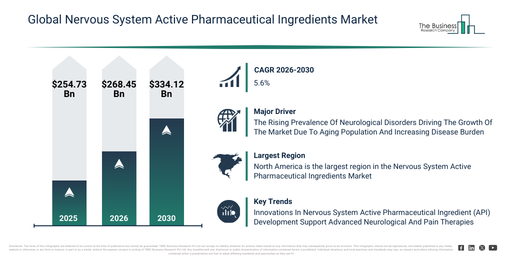
    The nervous system active pharmaceutical ingredients market has demonstrated robust expansion recently. Projections indicate it will increase from **$254.73 billion in 2025 to $268.45 billion in 2026, with a compound annual growth rate (CAGR) of 5.4%.** Historically, this expansion was driven by factors such as the increasing prevalence of neurological disorders, broader psychiatric drug utilization, the rise of generic API manufacturing, more CNS drug approvals, and an increase in contract API production.

    The nervous system active pharmaceutical ingredients market is projected to experience substantial expansion over the upcoming years. This market is set to reach $334.12 billion by 2030, exhibiting a compound annual growth rate (CAGR) of 5.6%. This anticipated growth throughout the forecast period stems from factors such as an escalating burden of neurodegenerative diseases, the broadening availability of specialized CNS therapies, an increasing need for high purity APIs, a rise in outsourced API manufacturing, and the development of biologic neuro drugs. Significant trends anticipated in the forecast period encompass advancements in high potency neurology API development, the synthesis of complex CNS molecules, the emergence of peptide-based neuro APIs, innovations in controlled release neuro API formats, and the formation of specialized neuro API CDMO partnerships.

    Download the Free Sample Report to Explore Key Market Insights:

    https://www.thebusinessresearchcompany.com/sample.aspx?id=33240&type=smp

    Which Growth Drivers Are Contributing To The Progress Of The Nervous System Active Pharmaceutical Ingredients Market?

    The increasing incidence of neurological conditions is anticipated to fuel the expansion of the nervous system active pharmaceutical ingredients market going forward. Neurological disorders refer to a diverse range of medical conditions that impair the normal operation of the central and peripheral nervous system, frequently leading to symptoms such as seizures, paralysis, memory loss, or coordination issues. These disorders are becoming more prevalent primarily due to the aging global population, as older individuals face a higher risk of developing neurodegenerative conditions like Alzheimer’s and Parkinson’s disease because nerve cells naturally deteriorate and become more susceptible to damage over time. Nervous system active pharmaceutical ingredients aid in neurological disorders by modulating neural signaling and protecting nerve cells, thereby slowing disease progression and enhancing symptom control in conditions such as epilepsy, multiple sclerosis, and neurodegenerative diseases. For instance, in December 2025, according to the Australian Institute of Health and Welfare, an Australia-based government agency, in 2024, roughly 425,000 Australians were living with dementia. This figure is projected to increase 2.5 times, reaching over 1.1 million by 2065, including approximately 662,000 women and 390,000 men. Therefore, the rising prevalence of neurological disorders is a significant driver for the growth of the nervous system active pharmaceutical ingredients market.

    What Are The Key Segments Of The Nervous System Active Pharmaceutical Ingredients Market?

    The nervous system active pharmaceutical ingredients market covered in this report is segmented –

    1) By Product: Cytokines; Vaccines; Fusion Proteins; Therapeutic Enzymes

    2) By Expression System: Mammalian; Microbial Yeast

    3) By Application: Diabetes; Cardiovascular Diseases; Oncology; Neurological Disorder

    4) By End User: Pharmaceutical Companies; Biopharmaceutical Companies; Contract Development And Manufacturing Organizations; Research And Development Laboratories; Generic Drug Manufacturers

    Subsegments:

    1) By Cytokines: Interleukin Cytokines; Interferon Cytokines; Tumor Necrosis Factor Cytokines; Growth Factor Cytokines; Chemokine Cytokines

    2) By Vaccines: Inactivated Vaccines; Live Attenuated Vaccines; Subunit Vaccines; Recombinant Vaccines; Conjugate Vaccines

    3) By Fusion Proteins: Antibody Fusion Proteins; Receptor Fusion Proteins; Enzyme Fusion Proteins; Ligand Fusion Proteins; Multifunctional Fusion Proteins

    4) By Therapeutic Enzymes: Replacement Enzymes; Digestive Enzymes; Metabolic Enzymes; Detoxifying Enzymes; Neuroprotective Enzymes

    What Key Trends Are Influencing The Development Of The Nervous System Active Pharmaceutical Ingredients Market?

    Trend 1. Major companies operating in the nervous system active pharmaceutical ingredients market are concentrating on developing novel solutions, such as cannabinoid-based active pharmaceutical ingredients, to improve the efficacy, safety, and targeted delivery of treatments for neurological disorders. Cannabinoid-based active pharmaceutical ingredients (APIs) are highly refined natural or synthetic compounds that provide therapeutic effects by interacting with the body’s endocannabinoid system, managing conditions like pain, epilepsy, nausea, and various neurological ailments. For instance, in March 2024, Brains Bioceutical Corp., a Canada-based pharmaceutical company, introduced solid D9 Tetrahydrocannabinol (THC), a cannabinoid-based active pharmaceutical ingredient created to advance pharmaceutical research and drug development in neurological and pain management applications. This solid D9-THC API features a crystalline structure that boosts storage stability and dosing accuracy compared to traditional cannabinoid extracts, thereby facilitating its use in research and formulation across therapeutic areas where CNS-active agents are crucial. The product’s development emphasizes a transition towards more sophisticated API formats capable of supporting precise, scalable pharmaceutical manufacturing.

    Which Companies Are Expanding Their Footprint In The Nervous System Active Pharmaceutical Ingredients Market?

    Major companies operating in the nervous system active pharmaceutical ingredients market are F. Hoffmann-La Roche Ltd., Pfizer Inc., Novartis AG., Thermo Fisher Scientific Inc., GSK plc, Eli Lilly and Company, Boehringer Ingelheim International GmbH, Teva Pharmaceutical Industries Ltd., Cipla Limited, Zydus Lifesciences Limited, Biocon Ltd., Siegfried Holding AG., Alkem Laboratories Ltd., Almac Group, Torrent Pharmaceuticals Ltd., Granules India Ltd., Wockhardt Ltd., Neuland Laboratories Ltd., Hetero Labs Ltd., MSN Laboratories Pvt. Ltd., and Piramal Pharma.

    Read the full nervous system active pharmaceutical ingredients market report here:

    https://www.thebusinessresearchcompany.com/report/nervous-system-active-pharmaceutical-ingredients-market-report

    Which Region Is Anticipated To See The Fastest Growth In The Nervous System Active Pharmaceutical Ingredients Market?

    North America was the largest region in the nervous system active pharmaceutical ingredients market in 2025. Asia-Pacific is expected to be the fastest-growing region in the forecast period The regions covered in the nervous system active pharmaceutical ingredients market report are Asia-Pacific, South East Asia, Western Europe, Eastern Europe, North America, South America, Middle East, Africa.

    Request A Tailored Nervous System Active Pharmaceutical Ingredients Market Research Report For Competitive Advantage:

    https://www.thebusinessresearchcompany.com/customise?id=33240&type=smp

    Browse Through More Reports Similar to the Global Nervous System Active Pharmaceutical Ingredients Market 2026, By The Business Research Company

    Active Pharmaceutical Ingredients Market Report 2026

    https://www.thebusinessresearchcompany.com/report/active-pharmaceutical-ingredients-global-market-report

    Central Nervous System Drug Market Report 2026

    https://www.thebusinessresearchcompany.com/report/central-nervous-system-drug-global-market-report

    Generic Central Nervous System Drugs Market Report 2026

    https://www.thebusinessresearchcompany.com/report/generic-central-nervous-system-drugs-global-market-report

    Get in touch with us:

    The Business Research Company: https://www.thebusinessresearchcompany.com/

    Americas +1 310-496-7795

    Asia +44 7882 955267 & +91 8897263534

    Europe +44 7882 955267

    Email us at info@tbrc.info

    Follow us on:

    LinkedIn: https://in.linkedin.com/company/the-business-research-company

    YouTube: https://www.youtube.com/channel/UC24_fI0rV8cR5DxlCpgmyFQ

    Global Market Model: https://www.thebusinessresearchcompany.com/global-market-model
  • Monogenetic Disease Therapy Market Expanding Across Multiple Healthcare Segments

    Monogenetic Disease Therapy Market Expanding Across Multiple Healthcare Segments

    The Business Research Company’s 2026 market reports include new capabilities such as market attractiveness scoring and analysis, total addressable market analysis, company scoring matrix, interactive excel data dashboard, improved supply chain analysis, upcoming startups in the market, and overview of key products, aimed at improving the depth, usability, and strategic value of the insights delivered.

    How Will The Market Size Of The Monogenetic Disease Therapy Market Evolve From 2026 To 2030?

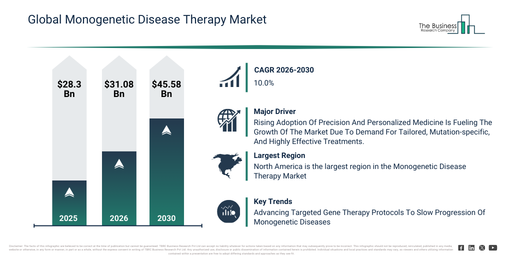
    The monogenetic disease therapy market size has experienced significant growth in recent times. It is anticipated to expand from $28.3 billion in 2025 to $31.08 billion in 2026, achieving a compound annual growth rate (CAGR) of 9.8%. The historical expansion of this market can be linked to progress in human genome research, the commencement of initial gene therapy trials, an uptick in rare disease diagnoses, the availability of orphan drug incentives, and improvements in viral vectors.

    The monogenetic disease therapy market is anticipated to exhibit substantial growth over the next few years. It is projected to achieve a value of $45.58 billion in 2030, advancing at a compound annual growth rate (CAGR) of 10.0%. This expansion during the forecast period can be attributed to several factors, including the advancement of gene editing platforms, a greater number of rare disease pipelines, increased rates of genetic screening, enhanced funding for personalized therapies, and more widespread regulatory approvals. Key trends shaping the market in this period encompass single gene targeted therapies, the implementation of gene replacement treatment programs, RNA-based genetic treatments, gene correction strategies for rare diseases, and the development of precision genetic drugs.

    Download the Free Sample Report to Explore Key Market Insights:

    https://www.thebusinessresearchcompany.com/sample.aspx?id=33229&type=smp

    What Key Drivers Are Influencing The Growth Of The Monogenetic Disease Therapy Market?

    The increasing acceptance of precision and personalized medicine is projected to stimulate the expansion of the monogenetic disease therapy market in the future. This medical approach customizes disease prevention, diagnosis, and treatment to an individual’s distinct genetic, molecular, or lifestyle characteristics to optimize therapeutic efficacy and reduce adverse effects. The surge in precision and personalized medicine is attributed to healthcare providers and patients seeking tailored treatments that maximize therapeutic effectiveness, minimize negative reactions, and address specific genetic, molecular, or lifestyle traits. Monogenetic disease therapy supports precision and personalized medicine by targeting a patient’s specific genetic mutation, thereby enabling highly customized and effective treatments. For instance, in February 2024, the Personalized Medicine Coalition, a US-based hospital and health care organization, reported that in 2023, the FDA approved 16 new personalized treatments for rare disease patients, an increase from six in 2022. Thus, the growing adoption of precision and personalized medicine is a key driver for the growth of the monogenetic disease therapy market.

    Which Segment Areas Are Covered In The Monogenetic Disease Therapy Market Analysis?

    The monogenetic disease therapy market covered in this report is segmented –

    1) By Therapy Type: Pharmacological; Surgical; Blood Transfusion; Gene Therapies; Other Therapy Types

    2) By Inheritance Pattern: Autosomal; Chromosomal

    3) By Application: Cystic Fibrosis; Sickle Cell Anemia; Phenylketonuria; Other Applications

    4) By Distribution Channel: Hospital Pharmacy; Retail Pharmacy; Online Pharmacy

    5) By End-Users: Clinics; Hospitals; Diagnostic Centres; Home Healthcare; Other End-Users

    Subsegments:

    1) By Pharmacological: Small Molecule Drugs; Enzyme Replacement Therapies; Protein Replacement Therapies; Immunomodulatory Drugs; Targeted Molecular Therapies

    2) By Surgical: Organ Transplant Procedures; Tissue Repair Surgeries; Gene Editing Assisted Surgeries; Minimally Invasive Surgeries; Corrective Surgical Interventions

    3) By Blood Transfusion: Red Blood Cell Transfusions; Platelet Transfusions; Plasma Transfusions; Stem Cell Infusions; Autologous Blood Transfusions

    4) By Gene Therapies: Ex Vivo Gene Therapy; In Vivo Gene Therapy; Viral Vector Based Gene Therapy; Non Viral Vector Gene Therapy; Genome Editing Based Therapy

    5) By Other Therapy Types: Cell Based Therapies; RNA Based Therapies; Protein Based Therapies; Combination Therapies; Experimental Therapies

    What Key Developments And Trends Are Impacting The Monogenetic Disease Therapy Market?

    Entities operating within the monogenetic disease therapy market are concentrating on developing advanced gene therapies, such as Duchenne muscular dystrophy (DMD)–targeted protocols, with the aim of decelerating disease progression and improving patient outcomes in the long term. These Duchenne muscular dystrophy–targeted protocols are structured clinical or therapeutic guidelines specifically designed for the diagnosis, monitoring, and management of individuals with Duchenne muscular dystrophy, focusing on slowing disease advancement, enhancing muscle function, and addressing related complications. For instance, in January 2026, Sarepta Therapeutics Inc, a US-based biopharmaceutical company, launched Elevidys for ambulatory patients aged four and older with DMD. The product demonstrated up to a 73% reduction in the rate of functional decline over three years when compared with an external control group, thereby emphasizing the significance of early intervention to alter the disease course and improve quality of life.

    Which Leading Firms Are Contributing To The Growth Of The Monogenetic Disease Therapy Market?

    Major companies operating in the monogenetic disease therapy market are Pfizer Inc., Sanofi S.A., Astellas Pharma Inc., Vertex Pharmaceuticals Incorporated, Sarepta Therapeutics Inc., Ptc therapeutics inc., Crispr therapeutics ag, CRISPR Therapeutics, Voyager Therapeutics Inc., Oxford Biomedica plc, REGENXBIO INC., Arcturus therapeutics holdings inc., Editas medicine Inc., American Gene Technologies, UniQure NV., MeiraGTx Limited, Prime medicine, Abeona therapeutics Inc., Blue Cross Blue Shield Association, Rocket pharmaceuticals Inc.

    Read the full monogenetic disease therapy market report here:

    https://www.thebusinessresearchcompany.com/report/monogenetic-disease-therapy-market-report

    Which Regions Are Poised For Strategic Growth In The Monogenetic Disease Therapy Market?

    North America was the largest region in the monogenetic disease therapy market in 2025. Asia-Pacific is expected to be the fastest-growing region in the forecast period. The regions covered in the monogenetic disease therapy market report are Asia-Pacific, South East Asia, Western Europe, Eastern Europe, North America, South America, Middle East, Africa.

    Request A Tailored Monogenetic Disease Therapy Market Research Report For Competitive Advantage:

    https://www.thebusinessresearchcompany.com/customise?id=33229&type=smp

    Browse Through More Reports Similar to the Global Monogenetic Disease Therapy Market 2026, By The Business Research Company

    Cell And Gene Therapy Clinical Trial Services Market Report 2026

    https://www.thebusinessresearchcompany.com/report/cell-and-gene-therapy-clinical-trial-services-global-market-report

    Genes Therapy Market Report 2026

    https://www.thebusinessresearchcompany.com/report/genes-therapy-global-market-report

    Cell And Gene Therapy Supply Chain Or Logistics Market Report 2026

    https://www.thebusinessresearchcompany.com/report/cell-and-gene-therapy-supply-chain-or-logistics-global-market-report

    Get in touch with us:

    The Business Research Company: https://www.thebusinessresearchcompany.com/

    Americas +1 310-496-7795

    Asia +44 7882 955267 & +91 8897263534

    Europe +44 7882 955267

    Email us at info@tbrc.info

    Follow us on:

    LinkedIn: https://in.linkedin.com/company/the-business-research-company

    YouTube: https://www.youtube.com/channel/UC24_fI0rV8cR5DxlCpgmyFQ

    Global Market Model: https://www.thebusinessresearchcompany.com/global-market-model
  • MAPK Inhibitors Market Developments and Emerging Opportunities Through 2030

    MAPK Inhibitors Market Developments and Emerging Opportunities Through 2030

    The Business Research Company’s 2026 market reports include new capabilities such as market attractiveness scoring and analysis, total addressable market analysis, company scoring matrix, interactive excel data dashboard, improved supply chain analysis, upcoming startups in the market, and overview of key products, aimed at improving the depth, usability, and strategic value of the insights delivered.

    How Much Is The Mitogen-Activated Protein Kinase Inhibitors Market Expected To Grow In Terms Of Market Value Between 2026 And 2030?

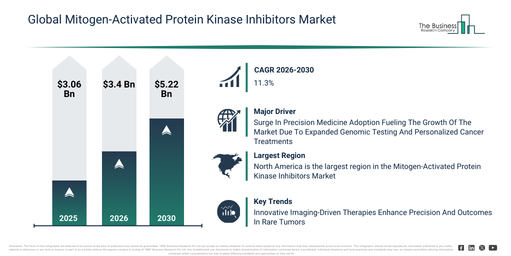
    The mitogen-activated protein kinase inhibitors market size has experienced significant expansion in recent years. It will grow from $3.06 billion in 2025 to $3.4 billion in 2026 at a compound annual growth rate (CAGR) of 11.1%. Historically, this expansion was driven by the emergence of targeted cancer treatments, the identification of MAPK pathway mutations, pioneering research into BRAF and RAS, advancements in precision oncology, and initial approvals for MEK inhibitors.

    The mitogen-activated protein kinase inhibitors market size is anticipated to undergo rapid expansion in the upcoming years. It is projected to reach $5.22 billion in 2030, exhibiting a compound annual growth rate (CAGR) of 11.3%. This expansion over the forecast period can be attributed to various factors such as the proliferation of combination oncology trials, higher rates of biomarker testing, the growth of personalized cancer care, broader approvals for indications, and an increase in oncology drug pipelines. Significant trends expected during this period include selective mek-targeted therapies, combination targeted oncology regimens, biomarker-guided mek treatment, oral targeted cancer inhibitors, and next-generation mek molecules.

    Download the Free Sample Report to Explore Key Market Insights:

    https://www.thebusinessresearchcompany.com/sample.aspx?id=33222&type=smp

    What Primary Drivers Are Shaping The Development Of The Mitogen-Activated Protein Kinase Inhibitors Market?

    The forward trajectory of the mitogen-activated protein kinase kinase (MEK) inhibitors market is anticipated to be boosted by the increasing integration of precision medicine. This healthcare methodology involves tailoring disease prevention, diagnosis, and treatment to an individual’s unique genetic profile, lifestyle choices, and environmental exposures. Enhanced treatment efficacy fuels the adoption of precision medicine, as it customizes therapies according to a patient’s genetic and molecular characteristics, resulting in superior clinical results and minimizing guesswork in medical interventions. Within precision medicine, MEK inhibitors play a crucial role by specifically targeting distinct genetic mutations within the MAPK/ERK pathway, thereby facilitating individualized cancer therapies that enhance effectiveness while safeguarding healthy cells from harm. As an illustration, the National Health Service, a government body in the UK, reported in February 2025 that its NHS Genomic Medicine Service conducted more than 810,000 genomic tests throughout England in 2024, representing an 8% increase over the figure from 2023. These examinations are instrumental in promoting early diagnosis, patient stratification, and personalized treatment, which are fundamental elements of precision medicine. Consequently, the expanding use of precision medicine is propelling the expansion of the mitogen-activated protein kinase kinase (MEK) inhibitors market.

    What Major Segment Divisions Exist Within The Mitogen-Activated Protein Kinase Inhibitors Market?

    The mitogen-activated protein kinase inhibitors market covered in this report is segmented –

    1) By Product Type: Allosteric Mitogen Activated Protein Kinase Kinase Inhibitors; Adenosine Triphosphate Competitive Mitogen Activated Protein Kinase Kinase Inhibitors

    2) By Target: Mitogen Activated Protein Kinase Kinase 1; Mitogen Activated Protein Kinase Kinase 2

    3) By Route Of Administration: Oral; Injectable

    4) By Application: Non Small Cell Lung Cancer; Metastatic Melanoma; Kirsten Rat Sarcoma Viral Oncogene Homolog And Neuroblastoma RAS Viral Oncogene Homolog Mutated Tumors; Thyroid Carcinoma; Lung Carcinoma; Other Applications

    5) By Distribution Channel: Hospital Pharmacy; Retail Pharmacy; Online Pharmacy

    Subsegments:

    1) By Allosteric Mitogen Activated Protein Kinase Kinase Inhibitors: First Generation Allosteric Inhibitors; Second Generation Allosteric Inhibitors; Highly Selective Allosteric Inhibitors; Dual Pathway Allosteric Inhibitors; Orally Active Allosteric Inhibitors

    2) By Adenosine Triphosphate Competitive Mitogen Activated Protein Kinase Kinase Inhibitors: First Generation Competitive Inhibitors; Second Generation Competitive Inhibitors; Highly Potent Competitive Inhibitors; Broad Spectrum Competitive Inhibitors; Targeted Competitive Inhibitors

    How Are Trends Shaping The Direction Of The Mitogen-Activated Protein Kinase Inhibitors Market?

    Leading companies within the mitogen-activated protein kinase kinase (MEK) inhibitors market are increasingly focusing on establishing efficacy through volumetric MRI with central review, aiming to refine treatment precision, optimize patient outcomes, and expedite regulatory approvals, particularly for rare and hard-to-treat tumors. Efficacy based on volumetric MRI with central review signifies the evaluation of tumor response using accurate 3D MRI-derived tumor volumes, with these assessments being independently confirmed by a centralized panel of experts to ensure both accuracy and consistency. For example, in February 2025, SpringWorks Therapeutics Inc., a US-based biopharmaceutical company, launched Gomekli (mirdametinib), an orally administered MEK inhibitor that secured approval from the U.S. Food and Drug Administration (FDA) for treating adult and pediatric patients aged 2 years and older diagnosed with neurofibromatosis type 1 (NF1)-associated symptomatic plexiform neurofibromas (PN). Gomekli functions by selectively inhibiting MEK enzymes that participate in the MAPK signaling cascade, which results in reduced tumor growth and symptomatic relief for a rare genetic disorder where surgical options are frequently constrained, while also improving treatment accessibility through its availability in both capsule and dispersible tablet formulations to address patients with swallowing challenges.

    Who Are The Key Players Driving Competition In The Mitogen-Activated Protein Kinase Inhibitors Market?

    Major companies operating in the mitogen-activated protein kinase inhibitors market are ShanghAI Fosun Pharmaceutical (Group) Co. Ltd., F. Hoffmann-La Roche AG, Pfizer Inc., Bayer AG, Novartis AG, AstraZeneca PLC, GlaxoSmithKline plc, Takeda Pharmaceutical Company Limited, Merck KGaA, Boehringer Ingelheim International GmbH, Ono Pharmaceutical Co. Ltd., Exelixis Inc., Laboratoires Pierre Fabre S.A., Day One Biopharmaceuticals Inc., CStone Pharmaceuticals Co. Ltd., Chia TAI Tianqing Pharmaceutical Group Co. Ltd., Immuneering Corporation, Atriva Therapeutics GmbH, ShanghAI Kechow Pharmaceutical Co. Ltd., NFlection Therapeutics Inc., and Verastem Inc.

    Read the full mitogen-activated protein kinase inhibitors market report here:

    https://www.thebusinessresearchcompany.com/report/mitogen-activated-protein-kinase-inhibitors-market-report

    Which Geographic Areas Are Emerging As Strong Markets For The Mitogen-Activated Protein Kinase Inhibitors Market?

    North America was the largest region in the mitogen-activated protein kinase kinase (MEK) inhibitors market in 2025. Asia-Pacific is expected to be the fastest-growing region in the forecast period. The regions covered in the mitogen-activated protein kinase inhibitors market report are Asia-Pacific, South East Asia, Western Europe, Eastern Europe, North America, South America, Middle East, Africa.

    Request A Tailored Mitogen-Activated Protein Kinase Inhibitors Market Research Report For Competitive Advantage:

    https://www.thebusinessresearchcompany.com/customise?id=33222&type=smp

    Browse Through More Reports Similar to the Global Mitogen-Activated Protein Kinase Inhibitors Market 2026, By The Business Research Company

    Kinase Inhibitors Market Report 2026

    https://www.thebusinessresearchcompany.com/report/kinase-inhibitors-global-market-report

    Tyrosine Kinase Inhibitors Market Report 2026

    https://www.thebusinessresearchcompany.com/report/tyrosine-kinase-inhibitors-global-market-report

    Janus Kinase Jak Inhibitors Market Report 2026

    https://www.thebusinessresearchcompany.com/report/janus-kinase-jak-inhibitors-global-market-report

    Get in touch with us:

    The Business Research Company: https://www.thebusinessresearchcompany.com/

    Americas +1 310-496-7795

    Asia +44 7882 955267 & +91 8897263534

    Europe +44 7882 955267

    Email us at info@tbrc.info

    Follow us on:

    LinkedIn: https://in.linkedin.com/company/the-business-research-company

    YouTube: https://www.youtube.com/channel/UC24_fI0rV8cR5DxlCpgmyFQ

    Global Market Model: https://www.thebusinessresearchcompany.com/global-market-model

  • mRNA Manufacturing Services Market Set for Long-Term Expansion Through 2035

    mRNA Manufacturing Services Market Set for Long-Term Expansion Through 2035

    The Business Research Company’s 2026 market reports include new capabilities such as market attractiveness scoring and analysis, total addressable market analysis, company scoring matrix, interactive excel data dashboard, improved supply chain analysis, upcoming startups in the market, and overview of key products, aimed at improving the depth, usability, and strategic value of the insights delivered.

    What Market Size Expansion Is Predicted For The Messenger Ribonucleic Acid (MRNA) Manufacturing Service Market Between 2026 And 2030?

    The market size for messenger ribonucleic acid (mRNA) manufacturing services has experienced rapid growth in recent years. It is anticipated to increase from $6.14 billion in 2025 to $7.12 billion in 2026, achieving a compound annual growth rate (CAGR) of 15.9%. The historical expansion of this market can be attributed to factors such as the rise in mRNA therapeutics research, demand for emergency vaccine manufacturing, limited in-house mRNA capacity, an increase in CDMO partnerships, and the expansion of biotechnology pipelines.

    The messenger ribonucleic acid (mRNA) manufacturing service market is poised for significant growth in the coming years. This market is forecast to reach a value of $12.97 billion in 2030, exhibiting a compound annual growth rate (CAGR) of 16.2%. This expansion during the forecast timeframe is primarily driven by factors such as an uptick in mRNA therapy trials, increasing demand for contract manufacturing, advancements in personalized medicine, higher outsourcing by biotechnology companies, and the scaling up of commercial mRNA products. Key trends anticipated within this period encompass integrated mRNA process development services, large scale in vitro transcription production, end to end LNP encapsulation services, rapid technology transfer programs, and GMP-grade mRNA batch manufacturing.

    Download the Free Sample Report to Explore Key Market Insights:

    https://www.thebusinessresearchcompany.com/sample.aspx?id=33216&type=smp

    What Major Growth Drivers Are Shaping The Outlook Of The Messenger Ribonucleic Acid (MRNA) Manufacturing Service Market?

    Increased clinical trial engagement is projected to boost the expansion of the messenger ribonucleic acid (mRNA) manufacturing service market moving ahead. Clinical trial activity encompasses all stages involved in executing and overseeing clinical investigations aimed at assessing medical treatments in human subjects. This activity is on the rise, driven by the growing embrace of digital and decentralized trial methodologies that facilitate quicker patient enrollment, distant oversight, and more streamlined data gathering across wider demographics. Messenger ribonucleic acid (mRNA) manufacturing services support clinical trial efforts by providing swift and adaptable production of mRNA-based treatments, ensuring prompt delivery for various trial phases and speeding up drug development. For example, in December 2024, data from the Association of the British Pharmaceutical Industry (ABPI), a UK-based trade body, indicated that industry-sponsored clinical trials started in the UK rose to 426 in 2023, up from 411 in 2022. Consequently, the heightened clinical trial activity is fueling the expansion of the messenger ribonucleic acid (mRNA) manufacturing service market.

    Which Market Segments Are Examined In The Messenger Ribonucleic Acid (MRNA) Manufacturing Service Market Study?

    The messenger ribonucleic acid (mrna) manufacturing service market covered in this report is segmented –

    1) By Service Type: Process Development; Analytical Testing; Manufacturing; Fill-Finish; Other Service Types

    2) By Scale of Operation: Research And Preclinical Scale; Clinical Scale; Commercial Scale

    3) By Application: Vaccines; Therapeutics; Research; Other Applications

    4) By End-User: Pharmaceutical And Biotechnology Companies; Academic And Research Institutes; Other End-Users

    Subsegments:

    1) By Process Development: Template Design And Optimization; In Vitro Transcription Process Design; Formulation Development; Process Scale-Up And Technology Transfer; Process Validation Support

    2) By Analytical Testing: Identity And Purity Testing; Potency And Functional Assays; Impurity And Contaminant Analysis; Stability And Shelf Life Studies; Quality Control Release Testing

    3) By Manufacturing: Plasmid Deoxyribonucleic Acid Production; In Vitro Transcription Manufacturing; Enzymatic Capping And Tailoring; Purification And Concentration; Large-Scale Batch Production

    4) By Fill-Finish: Aseptic Filling Services; Vial And Syringe Filling; Lyophilization Services; Labeling And Packaging; Cold Chain Handling And Storage

    5) By Other Service Types: Regulatory Support Services; Quality Assurance And Documentation; Supply Chain And Logistics Support; Technology Consulting Services; Custom Manufacturing Solutions

    Which Trends Are Influencing The Messenger Ribonucleic Acid (MRNA) Manufacturing Service Market?

    Leading companies within the messenger ribonucleic acid (mRNA) manufacturing service market are concentrating on developing advanced solutions, such as in vitro transcription (IVT), aimed at accelerating the production of premium, clinical-grade mRNA essential for vaccines and individualized treatments. In vitro transcription (IVT) is a lab procedure where messenger RNA (mRNA) is synthesized from a DNA template using RNA polymerase enzymes, allowing mRNA production externally from living cells for various applications including research, therapeutics, or vaccines. As an illustration, in May 2025, GenScript Biotech Corporation, a Chinese biotechnology firm, introduced a GMP-like mRNA manufacturing service designed to facilitate preclinical investigations and research enabling Investigational New Drug (IND) applications. This service delivers high-purity, scalable in vitro transcription (IVT) processes, maintaining strict oversight of crucial quality parameters like capping efficiency, poly(A) tail length, and impurity profiles. It further aids swift progression from preclinical to clinical phases by ensuring consistent batch production, offering adaptable customization for diverse mRNA constructs, and shortening overall development timelines. Moreover, the GMP-like framework guarantees readiness for regulatory submissions through improved traceability, standardized operational procedures, and thorough quality documentation, thereby assisting developers in mitigating risks associated with later-stage manufacturing and expediting clinical advancement.

    Which Companies Hold Significant Positions In The Messenger Ribonucleic Acid (MRNA) Manufacturing Service Market?

    Major companies operating in the messenger ribonucleic acid (mrna) manufacturing service market are Thermo Fisher Scientific Inc., Merck KGaA, FUJIFILM Biotechnologies, Evonik Industries AG, Lonza Group AG, Charles River Laboratories International Inc., Samsung Biologics Co. Ltd., WuXi Biologics Inc., Recipharm AB, Curia Global Inc., Emergent BioSolutions Inc., AGC Biologics Inc., Corden Pharma International GmbH, Rentschler Biopharma SE, GenScript ProBio, ST Pharm Co. Ltd., etherna Immunotherapies NV, BIOMAY AG., Porton Advanced Solutions Ltd., Wacker Biotech GmbH.

    Read the full messenger ribonucleic acid (mrna) manufacturing service market report here:

    https://www.thebusinessresearchcompany.com/report/messenger-ribonucleic-acid-mrna-manufacturing-service-market-report

    How Does The Messenger Ribonucleic Acid (MRNA) Manufacturing Service Market Perform Across Major Global Regions?

    North America was the largest region in the mRNA manufacturing service market in 2025. Asia-Pacific is expected to be the fastest-growing region in the forecast period. The regions covered in the messenger ribonucleic acid (mrna) manufacturing service market report are Asia-Pacific, South East Asia, Western Europe, Eastern Europe, North America, South America, Middle East, Africa.

    Request A Tailored Messenger Ribonucleic Acid (MRNA) Manufacturing Service Market Research Report For Competitive Advantage:

    https://www.thebusinessresearchcompany.com/customise?id=33216&type=smp

    Browse Through More Reports Similar to the Global Messenger Ribonucleic Acid (MRNA) Manufacturing Service Market 2026, By The Business Research Company

    Messenger Ribonucleic Acid Mrna Synthesis Raw Materials Market Report 2026

    https://www.thebusinessresearchcompany.com/report/messenger-ribonucleic-acid-mrna-synthesis-raw-materials-global-market-report

    Ribonucleic Acid Rna Sequencing Market Report 2026

    https://www.thebusinessresearchcompany.com/report/ribonucleic-acid-rna-sequencing-global-market-report

    Nucleic Acid Therapeutics Market Report 2026

    https://www.thebusinessresearchcompany.com/report/nucleic-acid-therapeutics-global-market-report

    Get in touch with us:

    The Business Research Company: https://www.thebusinessresearchcompany.com/

    Americas +1 310-496-7795

    Asia +44 7882 955267 & +91 8897263534

    Europe +44 7882 955267

    Email us at info@tbrc.info

    Follow us on:

    LinkedIn: https://in.linkedin.com/company/the-business-research-company

    YouTube: https://www.youtube.com/channel/UC24_fI0rV8cR5DxlCpgmyFQ

    Global Market Model: https://www.thebusinessresearchcompany.com/global-market-model

  • Next-Generation mRNA Vaccine Platforms Driving Innovation in Global Markets

    Next-Generation mRNA Vaccine Platforms Driving Innovation in Global Markets

    The Business Research Company’s 2026 market reports include new capabilities such as market attractiveness scoring and analysis, total addressable market analysis, company scoring matrix, interactive excel data dashboard, improved supply chain analysis, upcoming startups in the market, and overview of key products, aimed at improving the depth, usability, and strategic value of the insights delivered.

    How Large Is The Messenger Ribonucleic Acid (mRNA) And Next-Generation Vaccine Platforms Market Projected To Become By 2030 Based On Its 2026 Valuation?

    The messenger ribonucleic acid (mrna) and next-generation vaccine platforms market size has experienced swift expansion recently. It will grow from $39.69 billion in 2025 to $45.88 billion in 2026 at a compound annual growth rate (CAGR) of 15.6%. Historically, this expansion is attributable to covid 19 vaccine breakthroughs, prior viral vector research, global pandemic preparedness programs, advances in genomic sequencing, and early nucleic acid vaccine trials.

    The messenger ribonucleic acid (mrna) and next-generation vaccine platforms market is projected to experience substantial expansion over the upcoming years. Its valuation is anticipated to reach $82.61 billion in 2030, exhibiting a compound annual growth rate (CAGR) of 15.8%. This anticipated growth during the forecast period stems from factors such as the rise of personalized cancer vaccines, the expansion of infectious disease development pipelines, swifter platform-based approval processes, increased funding in biotechnology, and the more extensive application of therapeutic vaccines. Key developments expected during this period involve self-amplifying mRNA platforms, enhanced lipid nanoparticle delivery, the implementation of modular vaccine platform designs, swift adaptation to pathogen targets, and the development of next-generation adjuvant systems.

    Download the Free Sample Report to Explore Key Market Insights:

    https://www.thebusinessresearchcompany.com/sample.aspx?id=33215&type=smp

    What Drivers Are Expected To Influence The Messenger Ribonucleic Acid (mRNA) And Next-Generation Vaccine Platforms Market During The Forecast Period?

    The burgeoning need for personalized medicine is anticipated to fuel the expansion of the messenger ribonucleic acid (mRNA) and next-generation vaccine platforms market moving ahead. Personalized medicine represents a healthcare strategy where methods for preventing and treating diseases are customized according to an individual’s genetic makeup, molecular traits, and particular health circumstances. The escalating requirement for personalized medicine stems from the increasing occurrence of intricate and long-term illnesses, given that these conditions necessitate precise and individual-focused therapeutic approaches to enhance the effectiveness and safety of treatments. Messenger ribonucleic acid (mRNA) and next-generation vaccine platforms facilitate personalized medicine by allowing for the quick, adaptable, and highly specialized creation of vaccines and therapies, which can be adapted to specific genetic and disease profiles, thereby aiding in the provision of precision healthcare. As an illustration, in February 2024, the Personalized Medicine Coalition, a US-based hospital and health care organization, reported that in 2023, the FDA sanctioned 16 new personalized treatments for rare disease patients, an increase from six in 2022. Consequently, the growing need for personalized medicine is propelling the expansion of the messenger ribonucleic acid (mRNA) and next-generation vaccine platforms market.

    What Segment Groups Are Identified Within The Messenger Ribonucleic Acid (mRNA) And Next-Generation Vaccine Platforms Market?

    The messenger ribonucleic acid (mrna) and next-generation vaccine platforms market covered in this report is segmented –

    1) By Vaccine Type: Messenger Ribonucleic Acid Vaccines; Deoxyribonucleic Acid (DNA) Vaccines; Viral Vector Vaccines; Protein Subunit Vaccines; Peptide Vaccines; Other Vaccine Types

    2) By Technology or Platform: Lipid Nanoparticle (LNP) Delivery; Self-Amplifying Messenger Ribonucleic Acid; Circular Messenger Ribonucleic Acid; Replicon or Non-replicating Platforms; Viral Vector Technologies

    3) By Disease Indication: Infectious Diseases; Oncology; Rare Diseases; Other Disease Indications

    4) By End User: Pharmaceutical and Biotechnology Companies; Contract Research Organizations (CROs); Academic and Research Institutes; Hospitals and Clinics

    Subsegments:

    1) By Messenger Ribonucleic Acid Vaccines: Conventional Messenger Ribonucleic Acid Vaccines; Self Amplifying Messenger Ribonucleic Acid Vaccines; Modified Messenger Ribonucleic Acid Vaccines; Circular Messenger Ribonucleic Acid Vaccines

    2) By Deoxyribonucleic Acid Vaccines: Plasmid Deoxyribonucleic Acid Vaccines; Viral Assisted Deoxyribonucleic Acid Vaccines; Synthetic Deoxyribonucleic Acid Vaccines; Gene Based Deoxyribonucleic Acid Vaccines

    3) By Viral Vector Vaccines: Adenovirus Based Viral Vector Vaccines; Lentivirus Based Viral Vector Vaccines; Poxvirus Based Viral Vector Vaccines; Measles Virus Based Viral Vector Vaccines

    4) By Protein Subunit Vaccines: Recombinant Protein Vaccines; Virus Like Particle Vaccines; Toxoid Based Protein Vaccines; Polysaccharide Conjugate Vaccines

    5) By Peptide Vaccines: Synthetic Peptide Vaccines; Personalized Peptide Vaccines; Multi Epitope Peptide Vaccines; Long Peptide Vaccines

    6) By Other Vaccine Types: Protein Subunit Vaccines, Virus-Like Particle Vaccines, Inactivated Vaccines, Live Attenuated Vaccines, Recombinant Vector Vaccines

    What Trends Are Advancing Progress In The Messenger Ribonucleic Acid (mRNA) And Next-Generation Vaccine Platforms Market?

    Leading companies within the mRNA and next-generation vaccine platforms market are concentrating on developing advanced mRNA-based COVID-19 vaccines. This focus aims to boost immune endurance, widen coverage against variants, and elevate overall vaccine efficacy. These next-generation mRNA-based COVID-19 vaccines utilize enhanced mRNA engineering and delivery methods, offering more extensive and lasting defense against current and emerging SARS-CoV-2 variants, while also improving safety, stability, and ease of storage, alongside facilitating rapid adaptation to viral evolution. As an illustration, in June 2025, Moderna Inc., a US-based biotechnology company, unveiled mNEXSPIKE, its next-generation COVID-19 vaccine, engineered to bolster defense against prevalent and new SARS-CoV-2 variants. This vaccine features an updated spike protein antigen that better corresponds to recent variants, seeking to provide superior immune durability and effectiveness, thereby aiding continuous COVID-19 prevention initiatives and subsequent booster approaches.

    Who Are The Prominent Organizations Shaping The Messenger Ribonucleic Acid (mRNA) And Next-Generation Vaccine Platforms Market?

    Major companies operating in the messenger ribonucleic acid (mrna) and next-generation vaccine platforms market are Pfizer Inc., Sanofi S.A., AstraZeneca PLC, Thermo Fisher Scientific Inc., GSK plc, Takeda Pharmaceutical Company Limited, Daiichi Sankyo Company Limited, Moderna Inc., BioNTech SE, Novavax Inc., Walvax Biotechnology Co Ltd, Arcturus Therapeutics Inc, Gennova Biopharmaceuticals Ltd, Vaxxas Pty Ltd, Vaxart Inc, Ethris GmbH, The Biologicals and Vaccines Institute of Southern Africa Proprietary Limited, eTheRNA Immunotherapies NV, Stemirna Therapeutics Co Ltd, Primrose Bio Inc, Acuitas Therapeutics Inc, and Incepta Vaccine Ltd.

    Read the full messenger ribonucleic acid (mrna) and next-generation vaccine platforms market report here:

    https://www.thebusinessresearchcompany.com/report/messenger-ribonucleic-acid-mrna-and-next-generation-vaccine-platforms-market-report

    Which Region Is Anticipated To See The Fastest Growth In The Messenger Ribonucleic Acid (mRNA) And Next-Generation Vaccine Platforms Market?

    North America was the largest region in the messenger ribonucleic acid (mRNA) and next-generation vaccine platforms market in 2025. Asia-Pacific is expected to be the fastest-growing region in the forecast period. The regions covered in the messenger ribonucleic acid (mrna) and next-generation vaccine platforms market report are Asia-Pacific, South East Asia, Western Europe, Eastern Europe, North America, South America, Middle East, Africa.

    Request A Tailored Messenger Ribonucleic Acid (mRNA) And Next-Generation Vaccine Platforms Market Research Report For Competitive Advantage:

    https://www.thebusinessresearchcompany.com/customise?id=33215&type=smp

    Browse Through More Reports Similar to the Global Messenger Ribonucleic Acid (mRNA) And Next-Generation Vaccine Platforms Market 2026, By The Business Research Company

    Mrna Cancer Vaccines And Therapeutics Market Report 2026

    https://www.thebusinessresearchcompany.com/report/mrna-cancer-vaccines-and-therapeutics-global-market-report

    Therapeutic Bcg Vaccines Market Report 2026

    https://www.thebusinessresearchcompany.com/report/therapeutic-bcg-vaccines-global-market-report

    Vaccines Market Report 2026

    https://www.thebusinessresearchcompany.com/report/vaccines-global-market-report

    Get in touch with us:

    The Business Research Company: https://www.thebusinessresearchcompany.com/

    Americas +1 310-496-7795

    Asia +44 7882 955267 & +91 8897263534

    Europe +44 7882 955267

    Email us at info@tbrc.info

    Follow us on:

    LinkedIn: https://in.linkedin.com/company/the-business-research-company

    YouTube: https://www.youtube.com/channel/UC24_fI0rV8cR5DxlCpgmyFQ

    Global Market Model: https://www.thebusinessresearchcompany.com/global-market-model

  • mRNA Vaccine CDMO Market Insights and Growth Patterns Through 2035

    mRNA Vaccine CDMO Market Insights and Growth Patterns Through 2035

    The Business Research Company’s 2026 market reports include new capabilities such as market attractiveness scoring and analysis, total addressable market analysis, company scoring matrix, interactive excel data dashboard, improved supply chain analysis, upcoming startups in the market, and overview of key products, aimed at improving the depth, usability, and strategic value of the insights delivered.

    What Market Value Is Anticipated For The Messenger Ribo Nucleic Acid (mRNA) Vaccine Contract Development And Manufacturing Organization (CDMO) Market Over The Period 2026–2030?

    The messenger ribo nucleic acid (mrna) vaccine contract development and manufacturing organization (cdmo) market size has experienced rapid expansion in recent years. Its value is projected to rise from $8.41 billion in 2025 to $9.68 billion in 2026, exhibiting a compound annual growth rate (CAGR) of 15.1%. The increase observed in the historic period can be ascribed to elements like covid 19 vaccine programs, the expansion of biotech startups, insufficient in house manufacturing capacity, an increase in contract manufacturing, and swift mrna platform validation.

    The messenger ribo nucleic acid (mrna) vaccine contract development and manufacturing organization (cdmo) market size is anticipated to experience substantial growth in the upcoming years. This market is projected to reach $17.1 billion by 2030, exhibiting a compound annual growth rate (CAGR) of 15.3%. Such expansion during the forecast period is attributable to several factors, including the proliferation of mrna cancer vaccines, the rise of personalized vaccines, an increase in cdmo collaborations, the need for expedited manufacturing capabilities, and a growing pipeline of mrna therapies. Key trends anticipated in this period encompass lipid nanoparticle formulation services, accelerated mrna process scaling, comprehensive fill-finish outsourcing solutions, adaptable modular vaccine manufacturing suites, and complete end-to-end mrna development services.

    Download the Free Sample Report to Explore Key Market Insights:

    https://www.thebusinessresearchcompany.com/sample.aspx?id=33214&type=smp

    What Drivers Are Influencing The Messenger Ribo Nucleic Acid (mRNA) Vaccine Contract Development And Manufacturing Organization (CDMO) Market?

    The increasing occurrence of infectious and novel diseases is anticipated to boost the expansion of the mRNA vaccine CDMO market in the future. These diseases are conditions resulting from disease-causing microorganisms that either spread quickly or appear for the first time, influenced by elements like environmental shifts, urban development, and enhanced global connections. Increased global travel, higher population concentrations, and intertwined supply networks have accelerated the spread of pathogens, leading to more frequent, widespread, and challenging-to-control disease outbreaks. mRNA vaccine CDMOs are crucial in tackling these issues, facilitating the swift creation, expandable production, and adaptable manufacturing of vaccines essential for countering evolving infectious dangers. Given that mRNA technologies demand specific manufacturing facilities and specialized technical know-how, vaccine developers often partner with contract development and manufacturing organizations to speed up development schedules and guarantee production capability during outbreaks. For example, in May 2024, data from the World Health Organization (WHO), the Switzerland-based United Nations’ specialized agency focusing on global health, indicated that by 30 April 2024, the WHO had received reports of over 7.6 million dengue cases worldwide, comprising 3.4 million confirmed cases, more than 16,000 severe cases, and over 3,000 fatalities. This surge was especially noticeable in the Region of the Americas, where the number of cases surpassed seven million by April 2024, exceeding the entire 2023 annual total of 4.6 million cases. Consequently, the growing incidence of infectious and emerging diseases is fueling the expansion of the mRNA vaccine CDMO market.

    How Is The Messenger Ribo Nucleic Acid (mRNA) Vaccine Contract Development And Manufacturing Organization (CDMO) Market Divided Into Its Major Segments?

    The messenger ribo nucleic acid (mrna) vaccine contract development and manufacturing organization (cdmo) market covered in this report is segmented –

    1) By Service Type: Process Development; Manufacturing; Analytical And Quality Control; Fill Finish; Packaging; Other Service Types

    2) By Vaccine Type: COVID-19 Vaccines; Cancer Vaccines; Infectious Disease Vaccines; Other Vaccine Types

    3) By Scale of Operation: Preclinical; Clinical; Commercial

    4) By End-User: Pharmaceutical Companies; Biotechnology Companies; Research Institutes; Other End-Users

    Subsegments:

    1) By Process Development: Formulation Optimization; Cell Line Development; Upstream Process Development; Process Scale-Up

    2) By Manufacturing: Lipid Nanoparticle Production; Enzymatic Capping; Purification Process

    3) By Analytical And Quality Control: Potency Testing; Purity Analysis; Stability Testing; Identity Testing; Microbial Testing

    4) By Fill Finish: Aseptic Filling; Vial Filling; Syringe Filling; Lyophilization

    5) By Packaging: Primary Packaging; Secondary Packaging; Labeling Operations; Cold Chain Packaging; Unit Dose Packaging

    6) By Other Service Types: Regulatory Support Services; Technology Transfer Services; Contract Development Services; Consulting Services; Supply Chain Management

    How Are Trends Transforming The Messenger Ribo Nucleic Acid (mRNA) Vaccine Contract Development And Manufacturing Organization (CDMO) Market Landscape?

    Major companies in the mRNA vaccine CDMO market are increasingly concentrating on advanced innovations, such as phase-appropriate GMP mRNA contract development and manufacturing services. These initiatives are designed to accelerate preclinical and IND-enabling development, all while maintaining regulatory-aligned quality standards and achieving shorter timelines. Phase-appropriate GMP-like mRNA manufacturing refers to a production method that delivers high-quality, regulatory-aware mRNA material suitable for preclinical and early development stages, without the expenses and operational complexities associated with comprehensive GMP manufacturing. For example, in May 2025, GenScript Biotech Corporation, a China-based global biotechnology reagents and services provider, launched a GMP-like mRNA manufacturing service specifically to support preclinical and IND-enabling development. This service provides high-quality, regulatory-aware mRNA with reduced lead times and lower costs compared to traditional full GMP manufacturing, thereby reflecting the growing demand for adaptable, phase-appropriate CDMO solutions in the mRNA vaccine market.

    Which Key Industry Participants Are Active In The Messenger Ribo Nucleic Acid (mRNA) Vaccine Contract Development And Manufacturing Organization (CDMO) Market?

    Major companies operating in the messenger ribo nucleic acid (mrna) vaccine contract development and manufacturing organization (cdmo) market are Sanofi S.A., Thermo Fisher Scientific Inc., FUJIFILM Diosynth Biotechnologies U.S.A. Inc., Danaher Corporation, Boehringer Ingelheim BioXcellence GmbH & Co. KG, AGC Biologics A/S, Eurofins Scientific SE, Lonza Group AG, BioNTech SE, Samsung Biologics Co. Ltd., WuXi Biologics (Cayman) Inc., Siegfried Holding AG, Recipharm AB, Vetter Pharma International GmbH, CordenPharma GmbH & Co. KG, Ajinomoto Bio-Pharma Services Inc., Novasep Holding S.A.S., Rentschler Biopharma SE, IDT Biologika GmbH, Wacker Biotech GmbH

    Read the full messenger ribo nucleic acid (mrna) vaccine contract development and manufacturing organization (cdmo) market report here:

    https://www.thebusinessresearchcompany.com/report/messenger-ribo-nucleic-acid-mrna-vaccine-contract-development-and-manufacturing-organization-cdmo-market-report

    Which Region Is Anticipated To See The Fastest Growth In The Messenger Ribo Nucleic Acid (mRNA) Vaccine Contract Development And Manufacturing Organization (CDMO) Market?

    North America was the largest region in the mRNA vaccine contract development and manufacturing organization (CDMO) market in 2025. Asia-Pacific is expected to be the fastest-growing region in the forecast period. The regions covered in the messenger ribo nucleic acid (mrna) vaccine contract development and manufacturing organization (cdmo) market report are Asia-Pacific, South East Asia, Western Europe, Eastern Europe, North America, South America, Middle East, Africa.

    Request A Tailored Messenger Ribo Nucleic Acid (mRNA) Vaccine Contract Development And Manufacturing Organization (CDMO) Market Research Report For Competitive Advantage:

    https://www.thebusinessresearchcompany.com/customise?id=33214&type=smp

    Browse Through More Reports Similar to the Global Messenger Ribo Nucleic Acid (mRNA) Vaccine Contract Development And Manufacturing Organization (CDMO) Market 2026, By The Business Research Company

    Vaccine Contract Manufacturing Market Report 2026

    https://www.thebusinessresearchcompany.com/report/vaccine-contract-manufacturing-global-market-report

    Mrna Cancer Vaccines And Therapeutics Market Report 2026

    https://www.thebusinessresearchcompany.com/report/mrna-cancer-vaccines-and-therapeutics-global-market-report

    Therapeutic Bcg Vaccines Market Report 2026

    https://www.thebusinessresearchcompany.com/report/therapeutic-bcg-vaccines-global-market-report

    Get in touch with us:

    The Business Research Company: https://www.thebusinessresearchcompany.com/

    Americas +1 310-496-7795

    Asia +44 7882 955267 & +91 8897263534

    Europe +44 7882 955267

    Email us at info@tbrc.info

    Follow us on:

    LinkedIn: https://in.linkedin.com/company/the-business-research-company

    YouTube: https://www.youtube.com/channel/UC24_fI0rV8cR5DxlCpgmyFQ

    Global Market Model: https://www.thebusinessresearchcompany.com/global-market-model
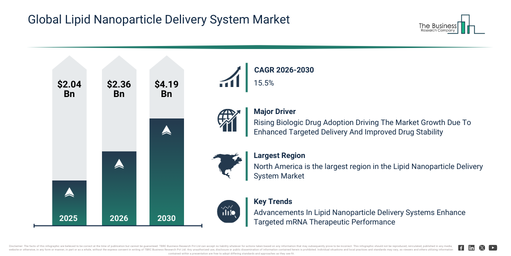
  • Biologic Drug Adoption Accelerates Growth of Lipid Nanoparticle Delivery Systems Market

    Biologic Drug Adoption Accelerates Growth of Lipid Nanoparticle Delivery Systems Market

    The Business Research Company’s 2026 market reports include new capabilities such as market attractiveness scoring and analysis, total addressable market analysis, company scoring matrix, interactive excel data dashboard, improved supply chain analysis, upcoming startups in the market, and overview of key products, aimed at improving the depth, usability, and strategic value of the insights delivered.

    What Market Size Growth Is Projected For The Lipid Nanoparticle Delivery System Market During The Forecast Period 2026–2030?

    The lipid nanoparticle delivery system market size has experienced rapid expansion in recent years. It is anticipated to grow from $2.04 billion in 2025 to $2.36 billion in 2026, achieving a compound annual growth rate (CAGR) of 15.3%. This historical growth can be ascribed to advancements in lipid chemistry research, the increasing prevalence of nucleic acid therapeutics, the expansion of vaccine development programs, a surge in funding for gene therapy research, and the establishment of nanoparticle manufacturing capabilities.

    The lipid nanoparticle delivery system market is projected to experience substantial growth over the coming years. This market is predicted to reach $4.19 billion by 2030, exhibiting a compound annual growth rate (CAGR) of 15.5%. Several factors contribute to this anticipated growth, including a burgeoning pipeline of RNA-based drugs, increased investments in precision medicine, the expansion of personalized therapeutics, a rising need for scalable delivery platforms, and an increase in regulatory approvals for gene therapies. Key trends during this projection period encompass the wider adoption of mRNA-based therapeutic delivery, an escalating demand for ionizable lipid formulations, a heightened focus on targeted drug delivery systems, the expansion of scalable nanoparticle manufacturing processes, and a stronger emphasis on both delivery efficiency and stability.

    Download the Free Sample Report to Explore Key Market Insights:

    https://www.thebusinessresearchcompany.com/sample.aspx?id=33202&type=smp

    Which Growth Drivers Are Contributing To The Progress Of The Lipid Nanoparticle Delivery System Market?

    The increasing use of biologic medicines is anticipated to boost the lipid nanoparticle delivery system market’s expansion in the future. These drugs are therapeutic substances derived from living organisms, including proteins, antibodies, or cells, employed to manage illnesses resistant to conventional chemical treatments. The growing incidence of chronic and intricate diseases necessitating targeted therapies is contributing to the heightened utilization of biologic drugs. Lipid nanoparticle delivery systems enhance the effectiveness of biologic drugs by encasing them to prevent breakdown, aiding cellular absorption, and allowing for accurate delivery to specific tissues. For example, data from Cardinal Health Inc., a healthcare firm located in the US, indicated that in January 2023, there were 33 biosimilar products approved by the FDA in the US as of January 2022, with 21 already on the market. By the year 2023, the number of FDA-approved biosimilars had risen to 40, with 25 commercially accessible. Consequently, the wider adoption of biologic drugs is propelling the growth of the lipid nanoparticle delivery system market.

    What Market Segments Are Evaluated Within The Lipid Nanoparticle Delivery System Market?

    The lipid nanoparticle delivery system market covered in this report is segmented –

    1) By Product Type: Solid Lipid Nanoparticles; Nanostructured Lipid Carriers; Liposomes; Other Product Types

    2) By Route Of Administration: Oral; Injectable; Topical; Other Route Of Administrations

    3) By Application: Drug Delivery; Gene Therapy; Vaccines; Cosmetics; Other Applications

    4) By End-User: Pharmaceutical And Biotechnology Companies; Research Institutes; Hospitals And Clinics; Other End Users

    Subsegments:

    1) By Solid Lipid Nanoparticles: Glyceryl Monostearate Based; Glyceryl Behenate Based; Stearic Acid Based; Compritol Based

    2) By Nanostructured Lipid Carriers: Type I Nanostructured Lipid Carriers; Type II Nanostructured Lipid Carriers; Type III Nanostructured Lipid Carriers

    3) By Liposomes: Multilamellar Vesicles; Small Unilamellar Vesicles; Large Unilamellar Vesicles; Giant Unilamellar Vesicles

    4) By Other Product Types: Polymeric Lipid Nanoparticles; Lipid Polymer Hybrids; Micelles

    What Industry Trends Are Redefining The Lipid Nanoparticle Delivery System Market?

    Leading companies active in the lipid nanoparticle delivery system market are concentrating on developing sophisticated solutions, such as targeted mRNA delivery systems, with the goal of improving the precision, effectiveness, and safety of gene therapies and vaccines. A targeted mRNA delivery system is defined as a technology that utilizes lipid nanoparticles or other carriers to transport messenger RNA (mRNA) specifically to desired cells or tissues, thereby ensuring efficient protein expression while minimizing off-target effects and immune reactions. For example, in November 2025, Acuitas Therapeutics Inc., a Canada-based biotechnology company, introduced Next-Generation Lipid Nanoparticle Advancements to enhance the targeted delivery and effectiveness of mRNA therapeutics. This development features up to fourfold potency gains for gene editing and vaccines, optimized lipids designed to minimize liver exposure while maintaining efficacy in mouse models, and DARPin-conjugated LNPs for targeted T-lymphocyte delivery. These advancements enhance ALC-315, a component used in Pfizer-BioNTech’s COMIRNATY vaccine, by enabling superior intramuscular mRNA delivery for cancer vaccines at lower doses. This also leads to broader applications in CAR T-cell therapies, epigenetic treatments, multivalent vaccines for malaria or HIV or TB, and personalized oncology, thereby accelerating the development of safer, more effective mRNA therapies that can target areas beyond the liver.

    Which Companies Hold Significant Positions In The Lipid Nanoparticle Delivery System Market?

    Major companies operating in the lipid nanoparticle delivery system market are Johnson and Johnson, Pfizer Inc, AstraZeneca plc, Avanti Polar Lipids Inc, Evonik Industries AG, Moderna Inc, Sanofi SA, BioNTech SE, Alnylam Pharmaceuticals Inc, Ascendia Pharmaceuticals Inc, Arcturus Therapeutics Holdings Inc, Lipoid GmbH, Creative Biolabs Inc, Acuitas Therapeutics Inc, Genevant Sciences GmbH, Polymun Scientific Immunbiologische Forschung GmbH, Carcell Biopharma Inc, Integrated Nanotherapeutics Inc, Sinopeg Biotech Co Ltd, CureVac NV, ReCode Therapeutics Inc, and Intellia Therapeutics Inc.

    Read the full lipid nanoparticle delivery system market report here:

    https://www.thebusinessresearchcompany.com/report/lipid-nanoparticle-delivery-system-market-report

    Which Region Is Projected To Lead The Lipid Nanoparticle Delivery System Market During The Forecast Period?

    North America was the largest region in the lipid nanoparticle delivery system market in 2025. Asia-Pacific is expected to be the fastest-growing region in the forecast period. The regions covered in the lipid nanoparticle delivery system market report are Asia-Pacific, South East Asia, Western Europe, Eastern Europe, North America, South America, Middle East, Africa.

    Request A Tailored Lipid Nanoparticle Delivery System Market Research Report For Competitive Advantage:

    https://www.thebusinessresearchcompany.com/customise?id=33202&type=smp

    Browse Through More Reports Similar to the Global Lipid Nanoparticle Delivery System Market 2026, By The Business Research Company

    Lipid Nanoparticles Market Report 2026

    https://www.thebusinessresearchcompany.com/report/lipid-nanoparticles-global-market-report

    Liposomal Drug Delivery Devices Market Report 2026

    https://www.thebusinessresearchcompany.com/report/liposomal-drug-delivery-devices-global-market-report

    Advanced Drug Delivery Systems Market Report 2026

    https://www.thebusinessresearchcompany.com/report/advanced-drug-delivery-systems-global-market-report

    Get in touch with us:

    The Business Research Company: https://www.thebusinessresearchcompany.com/

    Americas +1 310-496-7795

    Asia +44 7882 955267 & +91 8897263534

    Europe +44 7882 955267

    Email us at info@tbrc.info

    Follow us on:

    LinkedIn: https://in.linkedin.com/company/the-business-research-company

    YouTube: https://www.youtube.com/channel/UC24_fI0rV8cR5DxlCpgmyFQ

    Global Market Model: https://www.thebusinessresearchcompany.com/global-market-model