Category: Pharmaceuticals

  • Regenerative Aesthetics Market 2026–2035 growing with rising demand for minimally invasive procedures

    Regenerative Aesthetics Market 2026–2035 growing with rising demand for minimally invasive procedures

    The Business Research Company’s 2026 market reports include new capabilities such as market attractiveness scoring and analysis, total addressable market analysis, company scoring matrix, interactive excel data dashboard, improved supply chain analysis, upcoming startups in the market, and overview of key products, aimed at improving the depth, usability, and strategic value of the insights delivered.

    What Is The Estimated Market Size Of The Regenerative Aesthetics Market During 2026–2030?

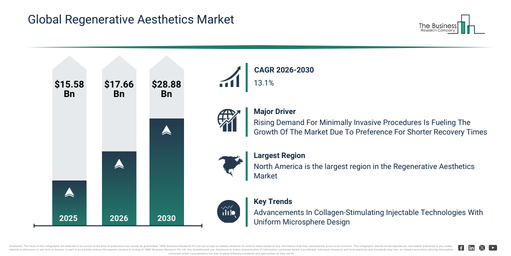
    The market size for regenerative aesthetics has experienced rapid growth in recent years. This sector is forecast to increase from $15.58 billion in 2025 to $17.66 billion in 2026, exhibiting a compound annual growth rate (CAGR) of 13.4%. Historically, this expansion has been influenced by factors such as the limited availability of regenerative aesthetic products, a dependence on traditional cosmetic procedures, increasing awareness regarding aesthetic treatments, a growing number of dermatology and aesthetic clinics, and the early adoption of stem cell-based therapies.

    The regenerative aesthetics market is projected to experience substantial expansion in the coming years, reaching a valuation of $28.88 billion by 2030, driven by a robust compound annual growth rate (CAGR) of 13.1%. This anticipated growth during the forecast period is fueled by several factors, including the advancement of exosome and peptide-based therapeutic solutions, the broadening availability of regenerative products for at-home use, increased capital allocation towards growth factor enriched formulations, the incorporation of digital monitoring and tele-aesthetics, and a growing consumer demand for outcomes that are both natural and enduring. Key trends expected over the forecast period encompass a growing uptake of exosome-based treatments for rejuvenating skin and hair, a surge in the application of platelet-rich plasma (PRP) and autologous conditioned serum, heightened requirements for treatments addressing scar reduction and wound healing, the diversification of anti-inflammatory and combined regenerative therapies, and an increasing inclination towards aesthetic procedures that are minimally invasive and offer a natural appearance.

    Download the Free Sample Report to Explore Key Market Insights:

    https://www.thebusinessresearchcompany.com/sample.aspx?id=27405&type=smp

    Which Economic Or Industry Drivers Are Impacting The Regenerative Aesthetics Market?

    An increasing demand for minimally invasive procedures is anticipated to fuel the expansion of the regenerative aesthetics market in the future. These procedures involve medical or surgical methods conducted via small incisions or natural bodily orifices, instead of requiring extensive cuts. The surge in minimally invasive procedures stems from a growing inclination towards quicker recovery periods, enabling individuals to swiftly return to their regular routines. Regenerative aesthetics complements minimally invasive procedures by harnessing the body’s inherent healing capabilities to achieve enduring enhancements with reduced recovery time. For example, data from June 2024 by the American Society of Plastic Surgeons, a US-based non-profit organization, revealed that hyaluronic acid filler minimally invasive procedures totaled 5.29 million in 2023, marking an 8% rise compared to 2022. Consequently, the escalating requirement for minimally invasive procedures is propelling growth within the regenerative aesthetics market.

    How Are The Various Segments Of The Regenerative Aesthetics Market Categorized?

    The regenerative aesthetics market covered in this report is segmented –

    1) By Product Type: Exosome-Based Therapies, Other Product Types

    2) By Application: Skin Rejuvenation, Hair Restoration, Scar Reduction And Wound Healing, Anti-Inflammatory Treatments, Combination Therapies

    3) By End-User: Aesthetic Clinics, Dermatology Clinics, Home Use

    Subsegments:

    1) By Exosome-Based Therapies: Stem Cell Derived Exosomes, Platelet Derived Exosomes, Plant Derived Exosomes

    2) By Other Product Types: Platelet Rich Plasma, Autologous Conditioned Serum, Peptide Based Products, Growth Factor Enriched Formulations

    What Trends Are Affecting The Expansion Of The Regenerative Aesthetics Market?

    Leading companies in the regenerative aesthetics market are concentrating on developing innovative technologies, such as uniform microsphere technology, to deliver advanced collagen-stimulating injectables that ensure smoother application, precise treatment, and consistent results. Uniform microsphere technology represents a formulation design that produces evenly sized and shaped microspheres, facilitating smooth injection, accurate placement, and consistent therapeutic performance. For instance, in July 2025, Koru Pharma Co. Ltd., a South Korea-based biopharmaceutical company, launched Reversal Neo, a next-generation collagen-stimulating injectable made of high-purity Poly-L-Lactic Acid (PLLA) engineered to provide smoother injection, enhanced precision, and long-lasting, natural-looking aesthetic results. Reversal Neo introduces a new-generation collagen biostimulator containing 200 mg of high-purity Poly-L-Lactic Acid (PLLA) and a uniform microsphere structure for silkier, more precise injections. Its advanced formulation guarantees sustained collagen regeneration, yielding natural and long-lasting outcomes, while also offering excellent biocompatibility, minimal inflammation, and increased patient comfort.

    Which Major Firms Influence Developments In The Regenerative Aesthetics Market?

    Major companies operating in the regenerative aesthetics market are ABG Lab LLC, Koru Pharma Co. Ltd., Global Stem Cells Group, Cytori Therapeutics Inc., Aesthetic Regenerative Therapies Inc., EmCyte Corp., Geneo, Plasmolifting World GmbH, ReGen Lab, RepliCel Life Sciences Inc.,

    Read the full regenerative aesthetics market report here:

    https://www.thebusinessresearchcompany.com/report/regenerative-aesthetics-global-market-report

    What Are The Top-Performing Regions Within The Regenerative Aesthetics Market?

    North America was the largest region in the regenerative aesthetics market in 2025. Asia-Pacific is expected to be the fastest-growing region in the forecast period. The regions covered in the regenerative aesthetics market report are Asia-Pacific, South East Asia, Western Europe, Eastern Europe, North America, South America, Middle East, Africa.

    Request A Tailored Regenerative Aesthetics Market Research Report For Competitive Advantage:

    https://www.thebusinessresearchcompany.com/customise?id=27405&type=smp

    Browse Through More Reports Similar to the Global Regenerative Aesthetics Market 2026, By The Business Research Company

    Tokenization Market Report 2026

    https://www.thebusinessresearchcompany.com/report/tokenization-global-market-report

    Non Fungible Token Market Report 2026

    https://www.thebusinessresearchcompany.com/report/non-fungible-token-global-market-report

    Asset Backed Securities Market Report 2026

    https://www.thebusinessresearchcompany.com/report/asset-backed-securities-global-market-report

    Get in touch with us:

    The Business Research Company: https://www.thebusinessresearchcompany.com/

    Americas +1 310-496-7795

    Asia +44 7882 955267 & +91 8897263534

    Europe +44 7882 955267

    Email us at info@tbrc.info

    Follow us on:

    LinkedIn: https://in.linkedin.com/company/the-business-research-company

    YouTube: https://www.youtube.com/channel/UC24_fI0rV8cR5DxlCpgmyFQ

    Global Market Model: https://www.thebusinessresearchcompany.com/global-market-model

  • Raynaud’s Disease Treatment Market Outlook 2026–2030 driven by improved vascular therapies

    Raynaud’s Disease Treatment Market Outlook 2026–2030 driven by improved vascular therapies

    The Business Research Company’s 2026 market reports include new capabilities such as market attractiveness scoring and analysis, total addressable market analysis, company scoring matrix, interactive excel data dashboard, improved supply chain analysis, upcoming startups in the market, and overview of key products, aimed at improving the depth, usability, and strategic value of the insights delivered.

    What Market Size Expansion Is Predicted For The Raynauds Disease Treatment Market Between 2026 And 2030?

    The raynauds disease treatment market has experienced robust expansion in recent years. Its value is projected to increase from $1.49 billion in 2025 to $1.6 billion in 2026, achieving a compound annual growth rate (CAGR) of 7.6%. Historically, this market growth has stemmed from elements such as limited awareness of raynauds disease, a reliance on conventional medication, the development of hospital and specialty clinic infrastructure, a scarcity of homecare options, and variations in seasonal demand.

    The market for Raynaud’s disease treatment is projected to experience substantial expansion over the upcoming years. This market is anticipated to reach a value of $2.13 billion by 2030, demonstrating a compound annual growth rate (CAGR) of 7.3%. Factors contributing to this growth during the forecast period include the introduction of innovative pharmacological treatments, the uptake of wearable thermal therapy devices, heightened understanding of preventive healthcare and lifestyle adjustments, the expansion of homecare and telehealth services, and the incorporation of digital health monitoring and biofeedback technologies. Key trends expected within this period involve the increasing adoption of calcium channel blockers and vasodilators, broader utilization of thermal therapy devices and biofeedback systems, a developing preference for minimally invasive surgical techniques, the broadening of homecare and specialized clinic environments, and a greater focus on lifestyle and stress management initiatives.

    Download the Free Sample Report to Explore Key Market Insights:

    https://www.thebusinessresearchcompany.com/sample.aspx?id=24680&type=smp

    What Major Drivers Are Influencing Demand In The Raynauds Disease Treatment Market?

    The growing occurrence of autoimmune conditions is anticipated to fuel expansion within the raynauds disease treatment market. These illnesses involve the immune system erroneously targeting healthy bodily tissues, leading to inflammation and harm. This increase stems from individuals residing in increasingly urban and hygienic settings, which results in reduced immune system development, coupled with contemporary lifestyle elements like unhealthy diets, stress, and environmental contaminants. Treatment for Raynaud’s disease aids autoimmune conditions by facilitating improved symptom control, minimizing tissue harm, and averting issues caused by inadequate blood circulation. For example, as reported by Clinical Trials Arena, a UK-based platform for clinical trials and pharmaceutical developments, in February 2024, future projections suggest a significant surge in rheumatoid arthritis (RA) cases globally, with its prevalence expected to increase by 80.2% and impact almost 1% of the global population by 2050. Consequently, the rising incidence of autoimmune diseases is a key factor propelling the expansion of the raynauds disease treatment market.

    Which Market Segments Are Examined In The Raynauds Disease Treatment Market Study?

    The raynauds disease treatment market covered in this report is segmented –

    1) By Treatment Type: Medication, Thermal Therapies, Surgical Procedures, Alteative Therapies

    2) By Drug Class: Calcium Channel Blockers, Vasodilators, Antiplatelet Agents

    3) By Route of Administration: Oral, Topical, Injectable, Intravenous

    4) By End-User: Hospitals, Specialty Clinics, Homecare Settings, Pharmacies

    Subsegments:

    1) By Medication: Calcium Channel Blockers, Alpha Blockers, Vasodilators, Topical Nitrates, Selective Serotonin Reuptake Inhibitors (SSRIs), Phosphodiesterase Inhibitors, Angiotensin Receptor Blockers (ARBs)

    2) By Thermal Therapies: Hand Warmers, Thermal Gloves, Heated Pads, Biofeedback-Controlled Thermal Devices

    3) By Surgical Procedures: Sympathectomy, Nerve Decompression Surgery, Vascular Surgery

    4) By Alternative Therapies: Acupuncture, Biofeedback Therapy, Herbal Remedies, Nutritional Supplements, Stress Management Techniques

    Which Trends Are Influencing The Raynauds Disease Treatment Market?

    Leading companies within the raynauds disease treatment market are dedicating efforts to devising innovative solutions for managing Raynaud’s disease, such as oral calcium channel blockers. These treatments aim to enhance blood flow by relaxing and widening blood vessels, consequently diminishing the frequency and intensity of vasospastic attacks. An oral calcium channel blocker is a medication taken by mouth that aids in relaxing and expanding blood vessels by preventing calcium from entering the muscle cells of the heart and blood vessel walls. As an illustration, in June 2023, Aisa Pharma Inc., a US-based clinical-stage biopharmaceutical company, commenced the second segment of its Phase 2b RECONNOITER trial. This trial evaluates Profervia (cilnidipine), an oral calcium channel blocker, for treating Raynaud’s phenomenon in patients with systemic sclerosis (SSc). This initiative follows encouraging data from the first phase, where Profervia exhibited a greater reduction in both Raynaud’s attack frequency and SSc disease severity compared to other calcium channel blockers, in addition to showcasing a favorable safety profile and strong tolerability. The trial, proceeding with a 20 mg dose, endeavors to address the critical requirement for effective therapies for Raynaud’s in SSc, a condition for which approved treatments are currently unavailable.

    Who Are The Primary Competitors In The Raynauds Disease Treatment Market?

    Major companies operating in the raynauds disease treatment market are Pfizer Inc., Johnson & Johnson, Bayer AG, Novartis AG, Sanofi SA, AstraZeneca PLC, GlaxoSmithKline plc, Takeda Pharmaceutical Company Limited, Merck & Co. Inc., Teva Pharmaceutical Industries Ltd., CSL Vifor, Orion Corporation, Apricus Biosciences Inc., Vicore Pharma Holding AB, MediQuest Therapeutics Inc., Gesynta Pharma AB, Aisa Pharma Inc., Abbott Laboratories, Boehringer Ingelheim International GmbH, Viatris Inc., Lupin Limited, Sun Pharmaceutical Industries Ltd., Dr. Reddy’s Laboratories Ltd., Cipla Limited, Torrent Pharmaceuticals Ltd., Zydus Lifesciences Ltd., Aurobindo Pharma Ltd., Glenmark Pharmaceuticals Ltd., Intas Pharmaceuticals Ltd., Hikma Pharmaceuticals PLC, Alkem Laboratories Ltd.

    Read the full raynauds disease treatment market report here:

    https://www.thebusinessresearchcompany.com/report/raynauds-disease-treatment-global-market-report

    Which Region Shows The Strongest Potential For Future Growth In The Raynauds Disease Treatment Market?

    North America was the largest region in the raynauds disease treatment market in 2025. Asia-Pacific is expected to be the fastest-growing region in the forecast period. The regions covered in the raynauds disease treatment market report are Asia-Pacific, South East Asia, Western Europe, Eastern Europe, North America, South America, Middle East, Africa.

    Request A Tailored Raynauds Disease Treatment Market Research Report For Competitive Advantage:

    https://www.thebusinessresearchcompany.com/customise?id=24680&type=smp

    Browse Through More Reports Similar to the Global Raynauds Disease Treatment Market 2026, By The Business Research Company

    Alzheimer Disease Treatment Market Report 2026

    https://www.thebusinessresearchcompany.com/report/alzheimer-disease-treatment-global-market-report

    Inflammatory Bowel Disease Treatment Market Report 2026

    https://www.thebusinessresearchcompany.com/report/inflammatory-bowel-disease-treatment-global-market-report

    Lysosomal Disease Treatment Market Report 2026

    https://www.thebusinessresearchcompany.com/report/lysosomal-disease-treatment-global-market-report

    Get in touch with us:

    The Business Research Company: https://www.thebusinessresearchcompany.com/

    Americas +1 310-496-7795

    Asia +44 7882 955267 & +91 8897263534

    Europe +44 7882 955267

    Email us at info@tbrc.info

    Follow us on:

    LinkedIn: https://in.linkedin.com/company/the-business-research-company

    YouTube: https://www.youtube.com/channel/UC24_fI0rV8cR5DxlCpgmyFQ

    Global Market Model: https://www.thebusinessresearchcompany.com/global-market-model

  • Government support is fueling expansion in the Rare Kidney Diseases Market 2026

    Government support is fueling expansion in the Rare Kidney Diseases Market 2026

    The Business Research Company’s 2026 market reports include new capabilities such as market attractiveness scoring and analysis, total addressable market analysis, company scoring matrix, interactive excel data dashboard, improved supply chain analysis, upcoming startups in the market, and overview of key products, aimed at improving the depth, usability, and strategic value of the insights delivered.

    How Large Is The Rare Kidney Diseases Market Projected To Become By 2030 Based On Its 2026 Valuation?

    The rare kidney diseases market size has experienced robust growth in recent years. It is anticipated to expand from $3.03 billion in 2025 to $3.32 billion in 2026, achieving a compound annual growth rate (CAGR) of 9.5%. This historical growth can be attributed to factors such as restricted treatment options for rare renal disorders, increasing awareness of genetic kidney diseases, a rising prevalence of autoimmune-related nephropathies, the expansion of nephrology specialty care centers, and the early adoption of immunosuppressive therapies.

    The rare kidney diseases market size is projected for substantial expansion over the next few years. It is forecast to grow to $4.88 billion by 2030, exhibiting a compound annual growth rate (CAGR) of 10.2%. This growth during the forecast period is attributable to advancements in genomics-based drug discovery, a rise in orphan drug approvals, increasing investment in rare disease research, the growing adoption of personalized medicine approaches, and an expanding pipeline of complement and immune-targeted therapies. Major trends expected in this period include a rising focus on targeted therapies for rare renal disorders, increasing clinical trial activity for orphan kidney drugs, a growing adoption of biologics in immune-mediated kidney diseases, the expansion of companion diagnostics for early disease detection, and increasing regulatory incentives for rare disease drug development.

    Download the Free Sample Report to Explore Key Market Insights:

    https://www.thebusinessresearchcompany.com/sample.aspx?id=11908&type=smp

    Which Market Drivers Are Supporting The Expansion Of The Rare Kidney Diseases Market?

    The growing occurrence of chronic kidney disease (CKD) significantly contributes to the rare kidney disease market. Chronic kidney disease is a condition where the kidneys are damaged and cannot properly filter blood. The higher prevalence of chronic kidney diseases will increase the chances of patients developing rare kidney diseases, which will in turn raise the demand for therapeutics needed for these conditions. For instance, in August 2025, according to the National Kidney Foundation, Inc., a US-based voluntary nonprofit health organization, the Senate approved an increase of $5 million in the FY 2026 Labor, Health and Human Services, and Education appropriations bill to support kidney transplant reform and early detection initiatives. This funding boost elevates the total for the Organ Procurement and Transplantation Network (OPTN) Modernization Initiative to $59 million. Therefore, the increasing prevalence of chronic kidney disease (CKD) will drive the rare kidney disease market.

    What Segment Groups Are Identified Within The Rare Kidney Diseases Market?

    The rare kidney diseases market covered in this report is segmented –

    1) By Target Indication: IgA Nephropathy, Lupus Nephritis, Focal Segmental Glomerular Sclerosis, Membranous Nephropathy, C3 Glomerulopathy, Other Target Indications

    2) By Type Of Molecule: Small Molecules, Biologics

    3) By Route Of administration: Oral, Intravenous, Subcutaneous, Other Routes Of Administration

    Subsegments:

    1) By IgA Nephropathy: Immunosuppressive Therapy, Supportive Care And Symptomatic Management

    2) By Lupus Nephritis: Corticosteroids, Antimalarial Agents, Biologics

    3) By Focal Segmental Glomerular Sclerosis (FSGS): Corticosteroids, Angiotensin Receptor Blockers (ARBs), Other Immunosuppressive Agents

    4) By Membranous Nephropathy: Corticosteroids, Immunosuppressive Therapy, Monoclonal Antibodies

    5) By C3 Glomerulopathy: Complement Inhibitors, Supportive Care, Immunosuppressive Therapies

    6) By Other Target Indications: Alport Syndrome, Thin Basement Membrane Nephropathy, Other Rare Kidney Disorders

    What Trends Are Advancing Progress In The Rare Kidney Diseases Market?

    Leading companies in the rare kidney diseases market are increasingly concentrating on the development of non-immunosuppressive therapies for these conditions. This innovative treatment approach offers a unique capability to address progressive kidney diseases, a feat not achievable with conventional therapies currently used for rare kidney disorders. For example, in February 2023, Travere Therapeutics, a biopharmaceutical company based in the US, introduced sparsentan, commercially known as Filspari. This medication stands as the first non-immunosuppressive therapy to receive approval for primary immunoglobulin A nephropathy (IgAN). Operating through a distinct mechanism, Filspari works by blocking angiotensin and endothelin receptors. This particular characteristic distinguishes Filspari from angiotensin-targeting ACE inhibitors and ARBs; these are well-established drugs primarily prescribed for hypertension but have been repurposed for IgAN treatment due to their ability to reduce kidney blood pressure.

    Which Companies Hold Significant Positions In The Rare Kidney Diseases Market?

    Major companies operating in the rare kidney diseases market are Merck & Co. Inc., Novartis AG, Sanofi S.A, AstraZeneca plc, Otsuka Pharmaceutical Co Ltd., Alexion Pharmaceuticals Inc., Horizon Therapeutics plc., Recordati S.p.A., Amicus Therapeutics Inc., Akebia Therapeutics Inc., Travere Therapeutics, FibroGen Inc., Aurinia Pharmaceuticals Inc., Calliditas Therapeutics AB, Apellis Pharmaceuticals Inc., Protalix Biotherapeutics Inc., ChemoCentryx Inc., Omeros Corporation, Celtaxsys Inc., Corbus Pharmaceuticals Holdings Inc., Chinook Therapeutics Inc., OxThera AB, Advicenne Pharma SA, Reata Pharmaceuticals Inc.

    Read the full rare kidney diseases market report here:

    https://www.thebusinessresearchcompany.com/report/rare-kidney-diseases-global-market-report

    How Is The Rare Kidney Diseases Market Distributed Across Key Geographic Regions?

    North America was the leading region in the rare kidney disease market in 2025. The regions covered in the rare kidney diseases market report are Asia-Pacific, South East Asia, Western Europe, Eastern Europe, North America, South America, Middle East, Africa.

    Request A Tailored Rare Kidney Diseases Market Research Report For Competitive Advantage:

    https://www.thebusinessresearchcompany.com/customise?id=11908&type=smp

    Browse Through More Reports Similar to the Global Rare Kidney Diseases Market 2026, By The Business Research Company

    Rare Kidney Diseases Market Report 2026

    https://www.thebusinessresearchcompany.com/report/rare-kidney-diseases-global-market-report

    Kidney Disease Market Report 2026

    https://www.thebusinessresearchcompany.com/report/kidney-disease-global-market-report

    Chronic Kidney Disease Market Report 2026

    https://www.thebusinessresearchcompany.com/report/chronic-kidney-disease-global-market-report

    Get in touch with us:

    The Business Research Company: https://www.thebusinessresearchcompany.com/

    Americas +1 310-496-7795

    Asia +44 7882 955267 & +91 8897263534

    Europe +44 7882 955267

    Email us at info@tbrc.info

    Follow us on:

    LinkedIn: https://in.linkedin.com/company/the-business-research-company

    YouTube: https://www.youtube.com/channel/UC24_fI0rV8cR5DxlCpgmyFQ

    Global Market Model: https://www.thebusinessresearchcompany.com/global-market-model

  • Targeted antibody therapies are advancing the Rare Gastrointestinal Diseases Treatment Market 2026

    Targeted antibody therapies are advancing the Rare Gastrointestinal Diseases Treatment Market 2026

    The Business Research Company’s 2026 market reports include new capabilities such as market attractiveness scoring and analysis, total addressable market analysis, company scoring matrix, interactive excel data dashboard, improved supply chain analysis, upcoming startups in the market, and overview of key products, aimed at improving the depth, usability, and strategic value of the insights delivered.

    What Market Value Is Anticipated For The Rare Gastrointestinal Diseases Treatment Market Over The Period 2026–2030?

    The rare gastrointestinal diseases treatment market size has shown substantial growth in recent years. It is anticipated to expand from $1.45 billion in 2025 to $1.53 billion in 2026, achieving a compound annual growth rate (CAGR) of 5.9%. The expansion witnessed in the historical period can be ascribed to several factors, including heightened recognition of rare GI disorders, the proliferation of specialty gastroenterology centers, the accessibility of immunosuppressive and anti-inflammatory drugs, increasing clinical research activity, and improved diagnostic accuracy.

    The market size for rare gastrointestinal diseases treatment is expected to experience significant expansion in the coming years. It is forecast to grow to $1.91 billion by 2030, driven by a compound annual growth rate (CAGR) of 5.6%. This growth during the forecast period is attributable to the increasing development of orphan drugs, rising investments in rare disease research, growing adoption of biologic therapies, the expansion of precision medicine approaches, and increasing patient access to advanced treatments. Furthermore, major trends anticipated in the forecast period include the increasing adoption of targeted biologic therapies, a rising focus on personalized treatment protocols, the growing use of advanced diagnostic devices, the expansion of enzyme replacement therapies, and enhanced integration of digital patient monitoring.

    Download the Free Sample Report to Explore Key Market Insights:

    https://www.thebusinessresearchcompany.com/sample.aspx?id=28317&type=smp

    What Underlying Factors Are Accelerating The Growth Of The Rare Gastrointestinal Diseases Treatment Market?

    The expansion of diagnostic testing is anticipated to boost the rare gastrointestinal diseases treatment market in the future. These medical tests are crucial for identifying, diagnosing, or overseeing diseases, conditions, or infections in individuals. The growing need for diagnostic tests stems mainly from increased understanding of the importance of detecting illnesses early, which facilitates prompt treatments and better patient results. For rare gastrointestinal diseases, diagnostic testing is instrumental in treatment by allowing for early and precise identification of underlying issues. It assists in pinpointing specific disease mechanisms, enabling customized treatment strategies, and enhancing patient outcomes through rapid intervention. As an illustration, data from December 2024 by the National Health Service, a UK government body, indicated that the volume of diagnostic tests performed reached 2,544,809 in 2024, representing an increase from 2,312,030 in 2023. Consequently, the uptick in diagnostic testing is fueling the expansion of the rare gastrointestinal diseases treatment market.

    How Is The Rare Gastrointestinal Diseases Treatment Market Divided Into Its Major Segments?

    The rare gastrointestinal diseases treatment market covered in this report is segmented –

    1) By Type: Drugs, Device

    2) By Route Of Administration: Oral, Intravenous (IV) Or Injectable, Subcutaneous, Other Routes Of Administration

    3) By Application: Eosinophilic Gastroenteritis, Hercksprung’s Disease, Chronic Intestinal Pseudo-Obstruction

    4) By End User: Hospitals, Research Institutes, Other End Users

    Subsegments:

    1) By Drugs: Anti-Inflammatory Drugs, Immunosuppressive Agents, Biologic Therapies, Antibiotics, Proton Pump Inhibitors, Corticosteroids, Enzyme Replacement Therapies

    2) By Devices: Endoscopic Devices, Diagnostic Imaging Systems, Surgical Instruments, Feeding Tubes, Stent Devices, Biopsy Devices

    How Are Trends Transforming The Rare Gastrointestinal Diseases Treatment Market Landscape?

    Companies operating within the rare gastrointestinal diseases treatment market are concentrating on creating innovative therapies, such as fully human monoclonal antibodies, to target disease pathways and enhance patient outcomes. Fully human monoclonal antibodies are laboratory-engineered antibodies made entirely from human proteins, designed to specifically target disease-causing molecules. This approach helps to precisely block or modulate these molecules, improving treatment effectiveness while minimizing side effects. For example, in August 2023, Regeneron Pharmaceuticals Inc., a US-based biotechnology company, obtained U.S. Food and Drug Administration (FDA) approval for Veopoz (pozelimab-bbfg) for CHAPLE disease, an uncommon and life-threatening hereditary gastrointestinal disorder. Veopoz is a fully human monoclonal antibody formulated to target complement factor C5, assisting in the regulation of the overactive complement system that leads to protein loss and gastrointestinal damage in individuals with CHAPLE. This targeted mechanism of action addresses the underlying cause of the disease, thereby preventing debilitating symptoms and potentially fatal complications.

    Who Are The Prominent Organizations Shaping The Rare Gastrointestinal Diseases Treatment Market?

    Major companies operating in the rare gastrointestinal diseases treatment market are Johnson & Johnson, Merck & Co. Inc., Pfizer Inc., Bayer AG, Sanofi S.A., Zealand Pharma A/S, Novartis AG, AstraZeneca plc, GlaxoSmithKline plc, Eli Lilly and Company, Takeda Pharmaceutical Company Limited, Teva Pharmaceutical Industries Ltd., Regeneron Pharmaceuticals Inc., Ipsen S.A., PTC Therapeutics Inc., Ironwood Pharmaceuticals Inc., Mirum Pharmaceuticals Inc., Albireo Pharma Inc., Orphalan S.A., Ellodi Pharmaceuticals Inc.

    Read the full rare gastrointestinal diseases treatment market report here:

    https://www.thebusinessresearchcompany.com/report/rare-gastrointestinal-diseases-treatment-global-market-report

    Which Region Is Projected To Dominate The Rare Gastrointestinal Diseases Treatment Market During The Forecast Period?

    North America was the largest region in the rare gastrointestinal diseases treatment market in 2025. The regions covered in the rare gastrointestinal diseases treatment market report are Asia-Pacific, South East Asia, Western Europe, Eastern Europe, North America, South America, Middle East, Africa.

    Request A Tailored Rare Gastrointestinal Diseases Treatment Market Research Report For Competitive Advantage:

    https://www.thebusinessresearchcompany.com/customise?id=28317&type=smp

    Browse Through More Reports Similar to the Global Rare Gastrointestinal Diseases Treatment Market 2026, By The Business Research Company

    Rare Diseases Treatment Market Report 2026

    https://www.thebusinessresearchcompany.com/report/rare-diseases-treatment-global-market-report

    Rare Inflammatory Disease Treatment Market Report 2026

    https://www.thebusinessresearchcompany.com/report/rare-inflammatory-disease-treatment-global-market-report

    Gastrointestinal Drug Market Report 2026

    https://www.thebusinessresearchcompany.com/report/gastrointestinal-drug-global-market-report

    Get in touch with us:

    The Business Research Company: https://www.thebusinessresearchcompany.com/

    Americas +1 310-496-7795

    Asia +44 7882 955267 & +91 8897263534

    Europe +44 7882 955267

    Email us at info@tbrc.info

    Follow us on:

    LinkedIn: https://in.linkedin.com/company/the-business-research-company

    YouTube: https://www.youtube.com/channel/UC24_fI0rV8cR5DxlCpgmyFQ

    Global Market Model: https://www.thebusinessresearchcompany.com/global-market-model

  • Collaborative innovation is strengthening the Rare Epilepsy Syndromes Therapeutics Market 2026

    Collaborative innovation is strengthening the Rare Epilepsy Syndromes Therapeutics Market 2026

    The Business Research Company’s 2026 market reports include new capabilities such as market attractiveness scoring and analysis, total addressable market analysis, company scoring matrix, interactive excel data dashboard, improved supply chain analysis, upcoming startups in the market, and overview of key products, aimed at improving the depth, usability, and strategic value of the insights delivered.

    What Is The Expected Market Size Of The Rare Epilepsy Syndromes Therapeutics Market From 2026 To 2030?

    The market for therapeutics addressing rare epilepsy syndromes has demonstrated substantial expansion in recent years. This market is projected to grow from $2.25 billion in 2025 to $2.45 billion in 2026, at a compound annual growth rate (CAGR) of 8.6%. Historically, this growth has been attributed to several factors, including improved diagnosis of rare epilepsy syndromes, increasing availability of specialized neurology centers, the expansion of orphan drug approvals, growing clinical research in epilepsy, and rising awareness among healthcare providers.

    The rare epilepsy syndromes therapeutics market size is anticipated to demonstrate strong expansion in the coming years. It is forecast to achieve a valuation of $3.38 billion by 2030, growing at a compound annual growth rate (CAGR) of 8.4%. This projected growth over the forecast period is driven by the escalating development of gene and cell therapies, a rising need for individualized epilepsy treatment, the expansion of sophisticated neurostimulation options, increased investment in rare neurology research, and a greater emphasis on long-term disease management. Significant trends during this period are expected to encompass the increasing creation of targeted antiepileptic therapies, a growing adoption of cannabinoid-based treatments, a heightened focus on genetic-based epilepsy solutions, the broadening of precision neurology approaches, and an enhanced integration of multimodal treatment strategies.

    Download the Free Sample Report to Explore Key Market Insights:

    https://www.thebusinessresearchcompany.com/sample.aspx?id=28316&type=smp

    Which Growth Drivers Are Contributing To The Progress Of The Rare Epilepsy Syndromes Therapeutics Market?

    The rising occurrence of rare diseases is anticipated to boost the rare epilepsy syndromes therapeutics market. Rare diseases are defined as medical conditions impacting a small segment of the population, frequently being chronic, serious, and challenging to diagnose or manage. The spread of rare diseases is growing due to broader newborn and genomic screening, which expands the number of diagnosed patients. This, in turn, fuels the need for orphan drug services encompassing patient identification, clinical trials, and access programs. Treatments for rare epilepsy syndromes aid rare diseases by providing focused therapies to manage seizures, improve patient results, and address crucial unmet needs where current treatment options are scarce. For example, as reported by the US Food and Drug Administration, a federal agency, in November 2024, over 7,000 rare diseases affect more than 30 million individuals in the United States. Consequently, the rising occurrence of rare diseases is a primary factor behind the expansion of the rare epilepsy syndromes therapeutics market.

    Which Segments Are Included In The Analysis Of The Rare Epilepsy Syndromes Therapeutics Market?

    The rare epilepsy syndromes therapeutics market covered in this report is segmented –

    1) By Drug Type: Antiepileptic Drugs, Steroids, Cannabinoids, Ketogenic Diet, Other Drug Types

    2) By Syndrome Type: Dravet Syndrome, Lennox-Gastaut Syndrome, Sturge-Weber Syndrome, Rasmussen’s Encephalitis, Other Syndrome Types

    3) By Route Of Administration: Oral, Intravenous, Other Route Of Administrations

    4) By Distribution Channel: Hospital Pharmacies, Retail Pharmacies, Online Pharmacies, Other Distribution Channels

    Subsegments:

    1) By Antiepileptic Drugs: Sodium Channel Blockers, Gamma-Aminobutyric Acid Modulators, Calcium Channel Blockers, Glutamate Inhibitors, Mixed Mechanism Agents

    2) By Steroids: Corticosteroids, Adrenocorticotropic Hormone, Immunosuppressive Steroids

    3) By Cannabinoids: Cannabidiol-Based Therapies, Tetrahydrocannabinol-Based Therapies, Synthetic Cannabinoid Formulations

    4) By Ketogenic Diet: Classic Ketogenic Diet, Modified Atkins Diet, Low Glycemic Index Treatment, Medium Chain Triglyceride Diet

    5) By Other Drug Types: Gene Therapies, Enzyme Replacement Therapies, Neurostimulation Therapies, Investigational Orphan Drugs

    Which Trends Are Impacting The Growth Of The Rare Epilepsy Syndromes Therapeutics Market?

    Leading companies in the therapeutics for rare epilepsy syndromes are prioritizing the development of innovative treatment approaches through strategic collaborations, aiming to enhance their research capabilities and expand their therapeutic portfolios. These strategic collaborations represent partnerships among pharmaceutical companies, biotech firms, and research institutions, which combine resources and expertise to accelerate drug development and broaden treatment options for rare epilepsy syndromes. For instance, in February 2025, Biogen Inc., a US-based biotechnology company, and Stoke Therapeutics, a US-based clinical-stage biotechnology company, initiated a collaboration to develop and commercialize zorevunersen, an investigational antisense oligonucleotide designed to address Dravet syndrome, a severe genetic epilepsy characterized by refractory seizures and neurodevelopmental impairments. This partnership integrates Stoke’s RNA technology with Biogen’s neurology expertise to fulfill a critical unmet need for a disease-modifying therapy for Dravet syndrome patients globally. Zorevunersen seeks to increase NaV1.1 protein production by targeting the SCN1A gene mutation underlying Dravet syndrome and has demonstrated promising reductions in seizures and cognitive improvements in initial studies.

    Which Key Industry Participants Are Active In The Rare Epilepsy Syndromes Therapeutics Market?

    Major companies operating in the rare epilepsy syndromes therapeutics market are Roche Holding AG, Pfizer Inc., Medtronic plc, Takeda Pharmaceutical Company Limited, Biogen Inc., UCB Pharma Limited, Eisai Co. Ltd., Jazz Pharmaceuticals plc, Lundbeck A/S, SK Biopharmaceuticals Co. Ltd., LivaNova plc, PTC Therapeutics, Supernus Pharmaceuticals Inc., Regenxbio Inc., NeuroPace Inc., Encoded Therapeutics Inc., Neurelis Inc., Capsida Biotherapeutics, Stoke Therapeutics Inc., Xenon Pharmaceuticals Inc., Praxis Precision Medicines, Ovid Therapeutics Inc.

    Read the full rare epilepsy syndromes therapeutics market report here:

    https://www.thebusinessresearchcompany.com/report/rare-epilepsy-syndromes-therapeutics-global-market-report

    What Are The Leading Geographic Regions In The Rare Epilepsy Syndromes Therapeutics Market?

    North America was the largest region in the rare epilepsy syndromes therapeutics market in 2025. The regions covered in the rare epilepsy syndromes therapeutics market report are Asia-Pacific, South East Asia, Western Europe, Eastern Europe, North America, South America, Middle East, Africa.

    Request A Tailored Rare Epilepsy Syndromes Therapeutics Market Research Report For Competitive Advantage:

    https://www.thebusinessresearchcompany.com/customise?id=28316&type=smp

    Browse Through More Reports Similar to the Global Rare Epilepsy Syndromes Therapeutics Market 2026, By The Business Research Company

    Epilepsy Drugs Market Report 2026

    https://www.thebusinessresearchcompany.com/report/epilepsy-drugs-global-market-report

    Epileptic Seizures Treatment Market Report 2026

    https://www.thebusinessresearchcompany.com/report/epileptic-seizures-treatment-global-market-report

    Rare Neurological Disease Treatment Market Report 2026

    https://www.thebusinessresearchcompany.com/report/rare-neurological-disease-treatment-global-market-report

    Get in touch with us:

    The Business Research Company: https://www.thebusinessresearchcompany.com/

    Americas +1 310-496-7795

    Asia +44 7882 955267 & +91 8897263534

    Europe +44 7882 955267

    Email us at info@tbrc.info

    Follow us on:

    LinkedIn: https://in.linkedin.com/company/the-business-research-company

    YouTube: https://www.youtube.com/channel/UC24_fI0rV8cR5DxlCpgmyFQ

    Global Market Model: https://www.thebusinessresearchcompany.com/global-market-model
  • Strategic initiatives are reshaping the Rare Diseases Treatment Market 2026

    Strategic initiatives are reshaping the Rare Diseases Treatment Market 2026

    The Business Research Company’s 2026 market reports include new capabilities such as market attractiveness scoring and analysis, total addressable market analysis, company scoring matrix, interactive excel data dashboard, improved supply chain analysis, upcoming startups in the market, and overview of key products, aimed at improving the depth, usability, and strategic value of the insights delivered.

    What Market Valuation Is Forecasted For The Rare Diseases Treatment Market By 2030 Starting From Its 2026 Size?

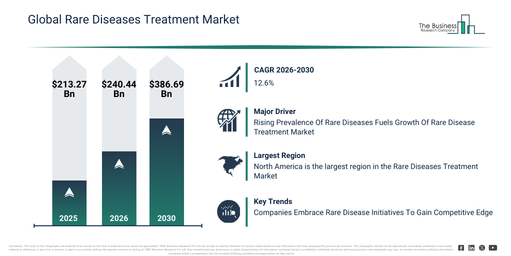
    The rare diseases treatment market size has seen rapid growth in recent years. It is forecast to increase from $213.27 billion in 2025 to $240.44 billion in 2026, achieving a compound annual growth rate (CAGR) of 12.7%. The historical expansion of this market can be attributed to factors such as increasing awareness of rare diseases, advancements in biologics and gene therapies, the growing prevalence of rare diseases, government incentives for orphan drugs, and the development of specialized healthcare infrastructure.

    The rare diseases treatment market is anticipated to experience significant expansion over the next few years. This market is projected to reach $386.69 billion by 2030, demonstrating a compound annual growth rate (CAGR) of 12.6%. The growth during the forecast period is attributed to the increasing adoption of personalized medicine, an expanding pipeline of orphan drugs, technological advancements in drug delivery, rising collaborations between pharmaceutical and biotechnology companies, and the enlargement of global rare disease patient registries. Major trends expected in the forecast period include customized treatment approaches, an increase in orphan drug development, sophisticated drug delivery systems, regulatory harmonization for rare diseases, and patient-centric care models.

    Download the Free Sample Report to Explore Key Market Insights:

    https://www.thebusinessresearchcompany.com/sample.aspx?id=8248&type=smp

    What Primary Drivers Are Shaping The Development Of The Rare Diseases Treatment Market?

    The rare disease treatment market is being propelled by the rising prevalence and challenges associated with rare diseases. These are conditions characterized by their impact on a significantly smaller segment of the population compared to common illnesses. The rising occurrences and associated mortalities from rare diseases are generating a strong need for efficacious rare disease treatments. Such treatments are vital for managing conditions where conventional therapeutic options are frequently absent, leading to better patient outcomes, alleviating disease burden, and improving the quality of life for those affected. Illustratively, data from August 2024 released by the International Federation of Medical Students’ Associations (IFMSA), a Denmark-based federation, indicated that approximately 300 million people globally (with estimates varying between 263 and 446 million) are living with a rare disease, accounting for 3.5% to 5.9% of the world’s population. Consequently, the expanding presence of rare diseases significantly boosts the rare disease treatment market.

    Which Segment Categories Define The Rare Diseases Treatment Market?

    The rare diseases treatment market covered in this report is segmented –

    1) By Drug Type: Originator Drugs (Patented Molecules), Generic Drugs

    2) By Drug Class: Biologics, Organic Compounds

    3) By Mode Of Administration: Injectable, Oral, Other Modes Of Administration

    4) By Therapeutic Area: Cancer, Neurological Conditions, Cardiovascular Conditions, Musculoskeletal Conditions, Hematologic Disorders, Infectious Diseases, Metabolic Disorders, Endocrine Disorders, Other Therapeutic Areas

    5) By Distribution Channel: Hospital Pharmacies, Specialty Pharmacies, Retail Pharmacies

    Subsegments:

    1) By Originator Drugs: Monoclonal Antibodies, Enzyme Replacement Therapies, Gene Therapies, Small Molecule Drugs

    2) By Generic Drugs: Generic Monoclonal Antibodies, Generic Enzyme Replacement Therapies, Generic Small Molecule Drugs, Biosimilars

    What Major Market Trends Are Driving Changes In The Rare Diseases Treatment Market?

    Leading companies in the rare disease treatment market are increasingly focusing on implementing rare disease initiatives to gain a competitive advantage. Rare disease initiatives are defined as organized efforts, programs, or activities conducted by various parties, including governments, research institutions, and pharmaceutical companies, to address the distinct challenges associated with rare diseases. For example, in October 2023, the Oxford-Harrington Rare Disease Centre, a UK-based research institution, introduced the Therapeutics Accelerator, which is dedicated to advancing innovative treatments for rare diseases. This unique transatlantic initiative aims to discover, fund, and advance significant academic findings to introduce 40 potentially life-changing therapies into clinical trials over the next decade. Operating under a non-profit/for-profit model, the Accelerator plans to allocate up to £200 million in funding to support new projects, targeting regulatory approvals in major markets such as the United States, the United Kingdom, and Europe.

    Who Are The Top Companies Competing In The Rare Diseases Treatment Market?

    Major companies operating in the rare diseases treatment market are AbbVie Inc., Actelion Pharmaceuticals Ltd, Alexion Pharmaceuticals Inc., Celgene Corporation, Johnson & Johnson, Novartis AG, Pfizer Inc, Sanofi S.A., Merck & Co. Inc., Vertex Pharmaceuticals, Takeda Pharmaceutical Company, Abeona Therapeutics Inc., Akcea Therapeutics Inc., Alnylam Pharmaceuticals Inc., Amicus Therapeutics Inc., BioMarin Pharmaceutical Inc., bluebird bio Inc., Catalyst Pharmaceuticals Inc., Cerecor Inc., CSL Behring Ltd., Dicerna Pharmaceuticals Inc., Genzyme Corporation, Horizon Therapeutics plc, Intercept Pharmaceuticals Inc., Ionis Pharmaceuticals Inc.

    Read the full rare diseases treatment market report here:

    https://www.thebusinessresearchcompany.com/report/rare-diseases-treatment-global-market-report

    How Does The Rare Diseases Treatment Market Perform Across Major Global Regions?

    North America was the largest region in the rare disease treatment market in 2025. The regions covered in the rare diseases treatment market report are Asia-Pacific, South East Asia, Western Europe, Eastern Europe, North America, South America, Middle East, Africa.

    Request A Tailored Rare Diseases Treatment Market Research Report For Competitive Advantage:

    https://www.thebusinessresearchcompany.com/customise?id=8248&type=smp

    Browse Through More Reports Similar to the Global Rare Diseases Treatment Market 2026, By The Business Research Company

    Rare Diseases Treatment Market Report 2026

    https://www.thebusinessresearchcompany.com/report/rare-diseases-treatment-global-market-report

    Rare Inflammatory Disease Treatment Market Report 2026

    https://www.thebusinessresearchcompany.com/report/rare-inflammatory-disease-treatment-global-market-report

    Rare Neurological Disease Treatment Market Report 2026

    https://www.thebusinessresearchcompany.com/report/rare-neurological-disease-treatment-global-market-report

    Get in touch with us:

    The Business Research Company: https://www.thebusinessresearchcompany.com/

    Americas +1 310-496-7795

    Asia +44 7882 955267 & +91 8897263534

    Europe +44 7882 955267

    Email us at info@tbrc.info

    Follow us on:

    LinkedIn: https://in.linkedin.com/company/the-business-research-company

    YouTube: https://www.youtube.com/channel/UC24_fI0rV8cR5DxlCpgmyFQ

    Global Market Model: https://www.thebusinessresearchcompany.com/global-market-model

  • Personalized medicine adoption is accelerating the Rare Disease Pharmaceutical Services Market 2026

    Personalized medicine adoption is accelerating the Rare Disease Pharmaceutical Services Market 2026

    The Business Research Company’s 2026 market reports include new capabilities such as market attractiveness scoring and analysis, total addressable market analysis, company scoring matrix, interactive excel data dashboard, improved supply chain analysis, upcoming startups in the market, and overview of key products, aimed at improving the depth, usability, and strategic value of the insights delivered.

    How Is The Market Size Of The Rare Disease Pharmaceutical Service Market Expected To Change Between 2026 And 2030?

    The market for pharmaceutical services related to rare diseases has experienced swift expansion recently. This market is projected to expand from $133.4 billion in 2025 to $150.96 billion in 2026, demonstrating a compound annual growth rate (CAGR) of 13.2%. Factors contributing to its historical growth include an increase in orphan drug development initiatives, higher diagnosis rates for rare diseases, improved clinical research infrastructure, augmented regulatory incentives for rare disease treatments, and the expanding participation of specialized service providers.

    The rare disease pharmaceutical service market is projected to experience substantial expansion over the coming years. By 2030, its valuation is anticipated to reach $245.14 billion, demonstrating a compound annual growth rate (CAGR) of 12.9%. This anticipated growth throughout the forecast period stems from factors such as the heightened outsourcing of rare disease development tasks, the increasing use of digital platforms for clinical trials, the enlargement of worldwide rare disease drug pipelines, an intensified emphasis on generating real-world evidence, and the rising need for expert regulatory knowledge. Key developments expected during this timeframe encompass a greater call for comprehensive rare disease services, a heightened concentration on complete drug development assistance, an increasing importance placed on patient-focused care approaches, the broadening of regulatory and market entry services, and improved application of data-driven methods in clinical management.

    Download the Free Sample Report to Explore Key Market Insights:

    https://www.thebusinessresearchcompany.com/sample.aspx?id=28314&type=smp

    Which Major Factors Are Driving The Expansion Of The Rare Disease Pharmaceutical Service Market?

    The increasing prominence of personalized medicine is anticipated to fuel expansion within the rare disease pharmaceutical service market moving forward. Personalized medicine involves medical interventions specifically customized to a person’s unique genetic makeup, enhancing their effectiveness and minimizing adverse reactions. This surge in personalized medicine is propelled by breakthroughs in genomics, biomarker studies, and data analytics, which enable treatments to be precisely matched to an individual’s genetic profile, thereby boosting effectiveness, mitigating side effects, and more accurately addressing patient needs compared to conventional standardized therapies. Pharmaceutical Service plays a supportive role for personalized medicine by developing targeted therapies, leveraging genetic and biomarker information, and delivering customized treatment approaches to cater to the specific requirements of individual patients. For example, in February 2024, the Personalized Medicine Coalition, a US-based non-profit organization, indicated that the FDA gave approval to 16 novel personalized treatments for rare disease patients in 2023, a significant increase from 6 approvals recorded in 2022. Consequently, the burgeoning field of personalized medicine is a key catalyst for the growth experienced in the rare disease pharmaceutical service market.

    How Is The Rare Disease Pharmaceutical Service Market Structured Across Different Segments?

    The rare disease pharmaceutical service market covered in this report is segmented –

    1) By Types: Drug Discovery, Clinical Trials, Other Types

    2) By Application: Congenital And Genetic Diseases, Tumors And Cancer, Endocrine Diseases

    3) By End User: Pharmaceutical Companies, Biotechnology Companies, Academic And Research Institutions, Hospitals And Specialty Clinics, Contract Research Organizations (CROs) And Contract Development And Manufacturing Organizations (CDMOs), Diagnostic Laboratories And Genetic Testing Centers

    Subsegments:

    1) By Drug Discovery: Target Identification And Validation, Preclinical Research And Toxicology Studies, Biomarker Discovery And Validation, Genomic And Proteomic Analysis, Computational Drug Design And Modeling, High-Throughput Screening (HTS), Lead Optimization And Candidate Selection

    2) By Clinical Trials: Clinical Trial Design And Protocol Development, Patient Recruitment And Retention, Site Management And Monitoring, Regulatory Affairs And Compliance Support, Data Management And Biostatistics, Pharmacovigilance And Safety Monitoring, Real-World Evidence (RWE) And Post-Marketing Studies

    3) By Other Types: Market Access And Pricing Strategy, Health Economics And Outcomes Research (HEOR), Regulatory Affairs And Compliance Services, Manufacturing And CMC (Chemistry, Manufacturing, and Controls) Support, Medical Affairs And Scientific Communication, Post-Marketing Surveillance, Consulting And Strategic Advisory

    Which Trends Are Shaping The Future Of The Rare Disease Pharmaceutical Service Market?

    Leading companies in the rare disease pharmaceutical service market are increasingly focused on developing innovative treatment approaches, such as acetylleucine, to improve treatment effectiveness, enhance patient outcomes, and address unmet needs in rare neurological and metabolic disorders. Acetylleucine, a modified amino acid (N-acetyl-L-leucine), serves as a therapeutic agent to support motor function, balance, and neurological health in affected patients. For instance, in September 2024, IntraBio, a US-based biopharmaceutical firm, obtained FDA approval for AQNEURSA, the first stand-alone therapy for Niemann-Pick Disease Type C, a rare, life-threatening neurodegenerative disorder. This milestone is noteworthy, as the treatment demonstrated rapid and significant improvements in neurological symptoms, offering a groundbreaking therapeutic option for both pediatric and adult patients living with this rare disease.

    Which Major Players Dominate The Rare Disease Pharmaceutical Service Market?

    Major companies operating in the rare disease pharmaceutical service market are Johnson & Johnson, Merck & Co. Inc., Pfizer Inc., AbbVie Inc., Sanofi S.A., Novartis AG, AstraZeneca PLC, GlaxoSmithKline PLC (GSK), Takeda Pharmaceutical Company Limited, Amgen Inc., Biogen Inc., Chiesi Farmaceutici S.p.A., Recordati Industria Chimica e Farmaceutica S.p.A., BioMarin Pharmaceutical Inc., Sarepta Therapeutics Inc., Ultragenyx Pharmaceutical Inc., Amicus Therapeutics Inc., Travere Therapeutics Inc., Sciensus Healthcare Ltd., SOM Innovation Biotech S.L.

    Read the full rare disease pharmaceutical service market report here:

    https://www.thebusinessresearchcompany.com/report/rare-disease-pharmaceutical-service-global-market-report

    Which Region Currently Holds The Largest Share Of The Rare Disease Pharmaceutical Service Market?

    North America was the largest region in the rare disease pharmaceutical service market in 2025. The regions covered in the rare disease pharmaceutical service market report are Asia-Pacific, South East Asia, Western Europe, Eastern Europe, North America, South America, Middle East, Africa.

    Request A Tailored Rare Disease Pharmaceutical Service Market Research Report For Competitive Advantage:

    https://www.thebusinessresearchcompany.com/customise?id=28314&type=smp

    Browse Through More Reports Similar to the Global Rare Disease Pharmaceutical Service Market 2026, By The Business Research Company

    Rare Diseases Treatment Market Report 2026

    https://www.thebusinessresearchcompany.com/report/rare-diseases-treatment-global-market-report

    Drug Discovery Services Market Report 2026

    https://www.thebusinessresearchcompany.com/report/drug-discovery-services-global-market-report

    Rare Disease Diagnostics Market Report 2026

    https://www.thebusinessresearchcompany.com/report/rare-disease-diagnostics-global-market-report

    Get in touch with us:

    The Business Research Company: https://www.thebusinessresearchcompany.com/

    Americas +1 310-496-7795

    Asia +44 7882 955267 & +91 8897263534

    Europe +44 7882 955267

    Email us at info@tbrc.info

    Follow us on:

    LinkedIn: https://in.linkedin.com/company/the-business-research-company

    YouTube: https://www.youtube.com/channel/UC24_fI0rV8cR5DxlCpgmyFQ

    Global Market Model: https://www.thebusinessresearchcompany.com/global-market-model

  • Growing focus on precision medicine, supported by advances in genomic sequencing and biomarker identification, is a key growth driver for the Rare Disease Genome Editing Market 2026

    Growing focus on precision medicine, supported by advances in genomic sequencing and biomarker identification, is a key growth driver for the Rare Disease Genome Editing Market 2026

    The Business Research Company’s 2026 market reports include new capabilities such as market attractiveness scoring and analysis, total addressable market analysis, company scoring matrix, interactive excel data dashboard, improved supply chain analysis, upcoming startups in the market, and overview of key products, aimed at improving the depth, usability, and strategic value of the insights delivered.

    What Is The Market Size Of The Rare Disease Genome Editing Market In 2026 And What Value Is Projected For 2030?

    The rare disease genome editing market has seen significant expansion in recent years. Its valuation is anticipated to climb from $1.29 billion in 2025 to $1.51 billion in 2026, showing a compound annual growth rate (CAGR) of 17.8%. The observed growth over the past period is primarily due to advancements in gene editing technologies, a greater understanding of rare genetic mutations, increased funding for genomic research, promising early results from gene therapy trials, and a proliferation of academic research initiatives.

    The rare disease genome editing market is projected to experience significant expansion over the upcoming years. This market is anticipated to reach $2.88 billion by 2030, exhibiting a compound annual growth rate (CAGR) of 17.5%. This projected growth throughout the forecast period stems from several factors, including heightened investment in curative treatments for rare diseases, a growing embrace of precision medicine strategies, the expansion of clinical trials for genome editing, increasing regulatory backing for orphan drugs, and enhanced partnerships between biotechnology firms and healthcare providers. Key trends anticipated during this period involve the increasing uptake of CRISPR-based therapies, a heightened focus on gene editing specifically for monogenic disorders, the wider application of personalized genome editing methods, the expansion of sophisticated editing platforms, and improved integration of genomic data analytics.

    Download the Free Sample Report to Explore Key Market Insights:

    https://www.thebusinessresearchcompany.com/sample.aspx?id=28313&type=smp

    What Key Drivers Are Influencing The Growth Of The Rare Disease Genome Editing Market?

    The future expansion of the rare disease genome editing market is anticipated to be driven by the escalating emphasis on precision medicine. This tailored healthcare methodology, known as precision medicine, leverages an individual’s genetic makeup, environmental factors, and lifestyle choices to deliver more precise and impactful treatments. The heightened attention on precision medicine stems from advancements in genomic sequencing and the identification of biomarkers, which facilitate accurate diagnosis and the development of targeted therapies. The rare disease genome editing market plays a crucial role in advancing precision medicine through its capacity for precise correction of genetic mutations, thereby ensuring more personalized and efficacious treatments. This technology contributes to healthcare progress by tackling the fundamental causes of rare conditions, leading to enhanced patient results and a decreased dependence on managing symptoms alone. As an illustration, in March 2024, Novotech, an Australian biotechnology firm, reported that in 2023, 43% of the 217 oncology therapies sanctioned by the FDA were precision oncology treatments, with 78 of these integrating DNA or NGS-detectable biomarkers. Consequently, the expanding emphasis on precision medicine is a key factor propelling the growth of the rare disease genome editing market.

    What Are The Key Segments Of The Rare Disease Genome Editing Market?

    The rare disease genome editing market covered in this report is segmented –

    1) By Technology: Clustered Regularly Interspaced Short Palindromic Repeats (CRISPR) Or CRISPR-Associated Protein 9, Transcription Activator-Like Effector Nucleases (TALEN), Zinc Finger Nucleases (ZFN), Other Technologies

    2) By Disease Type: Monogenic Disorders, Multifactorial Disorders, Chromosomal Disorders

    3) By Application: Therapeutics, Research

    4) By End User: Biotechnology And Pharmaceutical Companies, Academic And Government Research Institutes, Hospitals

    Subsegments:

    1) By Clustered Regularly Interspaced Short Palindromic Repeats (CRISPR) Or CRISPR-Associated Protein 9: Clustered Regularly Interspaced Short Palindromic Repeats (CRISPR)-Associated Protein 9, Clustered Regularly Interspaced Short Palindromic Repeats (CRISPR)-Associated Protein 12, Clustered Regularly Interspaced Short Palindromic Repeats (CRISPR)-Associated Protein 13, Base Editing, Prime Editing

    2) By Transcription Activator-Like Effector Nucleases (TALEN): Standard Transcription Activator-Like Effector Nucleases (TALEN), Designer Transcription Activator-Like Effector Nucleases (dTALEN), Transcription Activator-Like Effector Nucleases (TALEN) Paired Nucleases

    3) By Zinc Finger Nucleases (ZFN): Standard Zinc Finger Nucleases (ZFN), Engineered Zinc Finger Nucleases (ZFN), Modular Zinc Finger Nucleases (ZFN)

    4) By Other Technologies: Meganucleases, Ribonucleic Acid (RNA)-Guided Nucleases, Clustered Regularly Interspaced Short Palindromic Repeats (CRISPR)-Associated Transposases

    What Key Trends Are Influencing The Development Of The Rare Disease Genome Editing Market?

    Leading firms in the rare disease genome editing market are concentrating on creating sophisticated therapeutic platforms, such as CRISPR-based gene editing technologies, aimed at elevating treatment accuracy, bettering patient results, and tackling genetic ailments that were previously untreatable. These CRISPR-based systems represent novel technologies that facilitate exact alterations to the genome, enabling the correction of genetic flaws or the insertion of therapeutic genes into cellular structures. As an illustration, in December 2023, Vertex Pharmaceuticals Inc., a US-based biopharmaceutical entity, collaborated with CRISPR Therapeutics Inc., a US-based biotechnology research firm, and obtained conditional marketing approval from the United Kingdom (U.K.) Medicines and Healthcare products Regulatory Agency (MHRA) for CASGEVY (exagamglogene autotemcel, exa-cel). This treatment is prescribed for individuals aged 12 and above suffering from sickle cell disease (SCD) with recurrent vaso-occlusive crises, or transfusion-dependent beta thalassemia (TDT). Casgevy functions by modifying a patient’s hematopoietic stem cells to re-initiate fetal hemoglobin synthesis, thereby diminishing or eradicating disease manifestations and providing a potential functional remedy for these ailments.

    Who Are The Leading Companies Operating In The Rare Disease Genome Editing Market?

    Major companies operating in the rare disease genome editing market are Regeneron Pharmaceuticals Inc., Sarepta Therapeutics Inc., Ultragenyx Pharmaceutical Inc., Beam Therapeutics Inc., CRISPR Therapeutics AG, Rocket Pharmaceuticals Inc., Sangamo Therapeutics Inc., Arcturus Therapeutics Holdings Inc., Editas Medicine Inc., Krystal Biotech Inc., Caribou Biosciences Inc, Bluebird Bio Inc., SpliceBio S.L., Cellectis SA, Generation Bio Co., iECURE Inc., Affinia Therapeutics Inc., Precision Biosciences Inc., Intellia Therapeutics Inc., MeiraGTx Holdings plc

    Read the full rare disease genome editing market report here:

    https://www.thebusinessresearchcompany.com/report/rare-disease-genome-editing-global-market-report

    Which Region Is Expected To Register The Fastest Growth In The Rare Disease Genome Editing Market?

    North America was the largest region in the rare disease genome editing market in 2025. Asia-Pacific is expected to be the fastest-growing region in the forecast period. The regions covered in the rare disease genome editing market report are Asia-Pacific, South East Asia, Western Europe, Eastern Europe, North America, South America, Middle East, Africa.

    Request A Tailored Rare Disease Genome Editing Market Research Report For Competitive Advantage:

    https://www.thebusinessresearchcompany.com/customise?id=28313&type=smp

    Browse Through More Reports Similar to the Global Rare Disease Genome Editing Market 2026, By The Business Research Company

    Genome Editing Or Genome Engineering Market Report 2026

    https://www.thebusinessresearchcompany.com/report/genome-editing-or-genome-engineering-global-market-report

    Crispr Gene Editing Market Report 2026

    https://www.thebusinessresearchcompany.com/report/crispr-gene-editing-global-market-report

    Gene Editing Market Report 2026

    https://www.thebusinessresearchcompany.com/report/gene-editing-global-market-report

    Get in touch with us:

    The Business Research Company: https://www.thebusinessresearchcompany.com/

    Americas +1 310-496-7795

    Asia +44 7882 955267 & +91 8897263534

    Europe +44 7882 955267

    Email us at info@tbrc.info

    Follow us on:

    LinkedIn: https://in.linkedin.com/company/the-business-research-company

    YouTube: https://www.youtube.com/channel/UC24_fI0rV8cR5DxlCpgmyFQ

    Global Market Model: https://www.thebusinessresearchcompany.com/global-market-model
  • Global Ranibizumab Market 2026 evolving with advancements in ophthalmic therapies

    Global Ranibizumab Market 2026 evolving with advancements in ophthalmic therapies

    The Business Research Company’s 2026 market reports include new capabilities such as market attractiveness scoring and analysis, total addressable market analysis, company scoring matrix, interactive excel data dashboard, improved supply chain analysis, upcoming startups in the market, and overview of key products, aimed at improving the depth, usability, and strategic value of the insights delivered.

    What Will Be The Estimated Market Valuation Of The Ranibizumab Market By The End Of 2030?

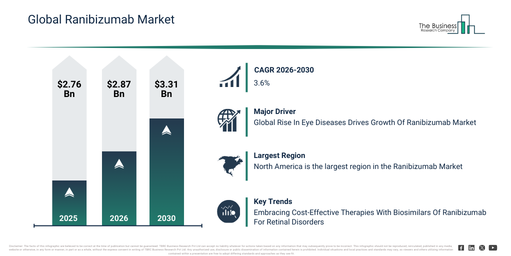
    The ranibizumab market has experienced consistent expansion in recent years. It is projected to increase from $2.76 billion in 2025 to $2.87 billion in 2026, demonstrating a compound annual growth rate (CAGR) of 4.0%. The growth observed in the historical period can be attributed to several factors, including the rising prevalence of age-related macular degeneration, clinical validation of anti-VEGF therapy’s effectiveness, an increasing incidence of diabetic retinopathy, enhancements in diagnostic imaging for retinal disorders, and prompt regulatory approvals for ranibizumab.

    The ranibizumab market size is projected to experience consistent expansion over the coming years, reaching $3.31 billion by 2030, with a compound annual growth rate (CAGR) of 3.6%. This anticipated growth during the forecast period is largely driven by an expanding global aging population, increasing diabetes prevalence worldwide, broader access to advanced ophthalmic care, a rise in the adoption of intravitreal injections, and continuous improvements in retinal disease screening programs. Key developments anticipated during this period involve the increasing adoption of anti-vegf therapies for retinal diseases, a growing preference for prefilled syringe formulations, escalating treatment demand for diabetic eye disorders, the expansion of ophthalmology specialty care centers, and a greater reliance on long-term maintenance therapy in chronic retinal conditions.

    Download the Free Sample Report to Explore Key Market Insights:

    https://www.thebusinessresearchcompany.com/sample.aspx?id=16172&type=smp

    What Major Growth Drivers Are Shaping The Outlook Of The Ranibizumab Market?

    The rising occurrence of ocular conditions is projected to propel the expansion of the ranibizumab market in the future. Ocular conditions cover a spectrum of ailments affecting the eyes, potentially compromising vision and eye health. The growing incidence of eye diseases is attributed to elements like aging populations and lifestyle shifts, alongside an increase in chronic illnesses such as diabetes. Ranibizumab is utilized for treating conditions like age-related macular degeneration and diabetic retinopathy, thereby assisting in mitigating vision impairment within the context of the increasing prevalence of eye diseases. For instance, in August 2023, according to the World Health Organization (WHO), a Switzerland-based intergovernmental organization, approximately 2.2 billion people worldwide experience either near or distance vision impairment. Therefore, the expanding prevalence of eye diseases will stimulate the growth of the ranibizumab market.

    Which Segment Classifications Shape The Ranibizumab Market?

    The ranibizumab market covered in this report is segmented –

    1) By Product: Single Use Prefilled Syringe, Single Use Glass Vial

    2) By Application: Wet Age Related Macular Degeneration (AMD), Diabetic Retinopathy (DR), Diabetic Macular Edema (DME), Myopic Choroidal Neovascularization (MCNV), Retinal Vein Occlusion (RVO)

    3) By Distribution Channel: Hospital Pharmacies, Online Pharmacies, Other Distribution Channels

    Subsegments:

    1) By Single Use Prefilled Syringe: 0.3 Ml Syringe, 0.5 Ml Syringe, 1 Ml Syringe, Other Volume Variants

    2) By Single Use Glass Vial: 0.5 Mg Or 0.05 Ml Vial, 1.0 Mg Or 0.1 Ml Vial, 2.0 Mg Or 0.2 Ml Vial, Other Volume Variants

    How Are Trends Impacting The Ranibizumab Market?

    Companies active in the ranibizumab market are prioritizing economical therapeutic options, such as ranibizumab biosimilars, to address and prevent vision impairment in individuals with retinal conditions. A ranibizumab biosimilar is a biological medicine closely resembling the reference ranibizumab product, yet sold under an alternative brand, presenting a more budget-friendly choice while delivering comparable efficacy and safety profiles. For example, in April 2024, Formycon AG, a German biotechnology firm, and Bioeq AG, a Swiss biopharmaceutical entity, announced the commercial introduction of FYB201, a biosimilar to Lucentis (Ranibizumab), across Canada and Switzerland. This launch occurred subsequent to marketing approvals granted by Health Canada, utilizing the brand name Ranopto, and Swissmedic, under the brand name Ranivisio. FYB201 offers a novel, superior quality, potent, and reasonably priced treatment pathway for patients afflicted with severe retinal ailments. Its significance as a cost-effective treatment alternative for patients in the USA and various European regions has already been demonstrated.

    Which Companies Are Expanding Their Footprint In The Ranibizumab Market?

    Major companies operating in the ranibizumab market are F. Hoffmann-La Roche AG, Genentech Inc., Bayer AG, Novartis AG, Biocon Limited, Samsung Biologics Co Ltd, Celltrion Healthcare Co Ltd, Formycon AG, Coherus BioSciences Inc, Xbrane Biopharma AB, Alvotech, Stada Arzneimittel AG, Sun Pharmaceutical Industries Ltd, Dr. Reddy’s Laboratories Ltd, Cipla Limited, Lupin Limited, Glenmark Pharmaceuticals Limited, Intas Pharmaceuticals Ltd, Enzene Biosciences Ltd, Amman Pharmaceutical Industries

    Read the full ranibizumab market report here:

    https://www.thebusinessresearchcompany.com/report/ranibizumab-global-market-report

    Which Regions Are Projected To Dominate The Ranibizumab Market In The Coming Years?

    North America was the largest region in the ranibizumab market in 2025. The regions covered in the ranibizumab market report are Asia-Pacific, South East Asia, Western Europe, Eastern Europe, North America, South America, Middle East, Africa.

    Request A Tailored Ranibizumab Market Research Report For Competitive Advantage:

    https://www.thebusinessresearchcompany.com/customise?id=16172&type=smp

    Browse Through More Reports Similar to the Global Ranibizumab Market 2026, By The Business Research Company

    Ranibizumab Market Report 2026

    https://www.thebusinessresearchcompany.com/report/ranibizumab-global-market-report

    Ibrutinib Market Report 2026

    https://www.thebusinessresearchcompany.com/report/ibrutinib-global-market-report

    Takaful Market Report 2026

    https://www.thebusinessresearchcompany.com/report/takaful-global-market-report

    Get in touch with us:

    The Business Research Company: https://www.thebusinessresearchcompany.com/

    Americas +1 310-496-7795

    Asia +44 7882 955267 & +91 8897263534

    Europe +44 7882 955267

    Email us at info@tbrc.info

    Follow us on:

    LinkedIn: https://in.linkedin.com/company/the-business-research-company

    YouTube: https://www.youtube.com/channel/UC24_fI0rV8cR5DxlCpgmyFQ

    Global Market Model: https://www.thebusinessresearchcompany.com/global-market-model
  • Radiopharmaceuticals Market 2026 expanding with increasing nuclear medicine applications

    Radiopharmaceuticals Market 2026 expanding with increasing nuclear medicine applications

    The Business Research Company’s 2026 market reports include new capabilities such as market attractiveness scoring and analysis, total addressable market analysis, company scoring matrix, interactive excel data dashboard, improved supply chain analysis, upcoming startups in the market, and overview of key products, aimed at improving the depth, usability, and strategic value of the insights delivered.

    What Market Size Growth Is Projected For The Radiopharmaceuticals Market During The Forecast Period 2026–2030?

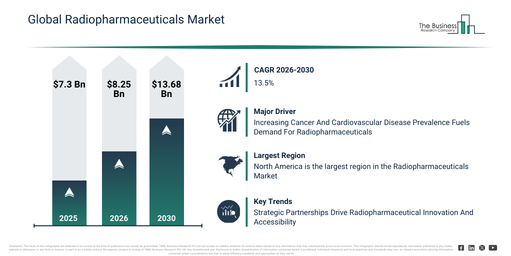
    The radiopharmaceuticals market has experienced significant growth in recent years. It is forecast to rise from $7.3 billion in 2025 to $8.25 billion in 2026, achieving a compound annual growth rate (CAGR) of 13.0%. This expansion during the historic period is linked to factors such as the adoption of nuclear imaging technologies, an increase in cancer diagnosis rates, the availability of radioisotopes, the growth of hospital-based nuclear medicine, and regulatory approvals for diagnostic agents.

    The radiopharmaceuticals market is projected to experience substantial expansion over the upcoming years. By 2030, this market is anticipated to reach a value of $13.68 billion, advancing with a compound annual growth rate (CAGR) of 13.5%. This projected increase is largely due to several factors, including the advancement of precision oncology, a heightened demand for targeted radiotherapies, the proliferation of diagnostic imaging centers, significant investments in cyclotron infrastructure, and continuous technological progress in isotope production. Key developments influencing this period encompass the growing application of radiopharmaceuticals in oncology, the expansion of theranostics applications, broader use of PET and SPECT imaging, intensified development of targeted radiotherapies, and enhancements to nuclear medicine infrastructure.

    Download the Free Sample Report to Explore Key Market Insights:

    https://www.thebusinessresearchcompany.com/sample.aspx?id=3471&type=smp

    What Drivers Are Expected To Influence The Radiopharmaceuticals Market During The Forecast Period?

    The growing incidence of cancer and cardiovascular diseases is anticipated to fuel the demand for the radiopharmaceuticals market. Radiopharmaceuticals are emerging as a secure and potent therapeutic alternative to conventional medicines. Thanks to benefits such as targeted therapy, radiopharmaceuticals offer radiologists a distinct advantage in treating cancer and cardiovascular diseases. Globally, cancer is recognized as the second leading cause of mortality, contributing to around 1 in 6 deaths worldwide. As an illustration, in April 2024, the International Agency for Research on Cancer (IARC), a specialized agency based in France, reported that in 2022, approximately 20 million new cancer cases and 9.7 million cancer-related deaths occurred globally. By 2040, these numbers are projected to increase to 29.9 million new cases and 15.3 million deaths annually. Consequently, the escalating number of cancer and cardiovascular disease cases is expected to boost the demand for radiopharmaceuticals in their treatment.

    What Market Segments Are Evaluated Within The Radiopharmaceuticals Market?

    The radiopharmaceuticals market covered in this report is segmented –

    1) By Type: Diagnostic, Therapeutic

    2) By Application: Oncology, Cardiology, Gastroenterology, Neuroendocrinology, Musculoskeletal, Respiratory, Nephrology, Other Applications

    3) By End User: Hospitals And Ambulatory Surgical Centers, Diagnostic Centers, Cancer Research Institutes

    Subsegments:

    1) By Diagnostic: Positron Emission Tomography (PET) Radiopharmaceuticals, Single Photon Emission Computed Tomography (SPECT) Radiopharmaceuticals

    2) By Therapeutic: Alpha Emitters, Beta Emitters, Brachytherapy

    What Industry Trends Are Redefining The Radiopharmaceuticals Market?

    Leading organizations within the radiopharmaceuticals market are increasingly forging strategic alliances to drive innovation and broaden the availability of advanced diagnostic and therapeutic solutions. These joint efforts concentrate on enhancing radiopharmaceutical development, strengthening regional manufacturing capabilities, and meeting the growing demand for precision imaging and targeted therapies. For example, in June 2023, the University of Pittsburgh Medical Center (UPMC), a US-based hospital system, partnered with PharmaLogic Holdings Corporation to collaboratively develop and produce new radiopharmaceuticals at a Pittsburgh facility. This collaboration seeks to expand access for patients and clinicians to cutting-edge diagnostic and therapeutic agents not currently offered in nearby areas. Through their non-exclusive agreement, UPMC and PharmaLogic will transform experimental radiopharmaceuticals into practical clinical medications, thereby supporting wider commercialization and accelerating the adoption of novel nuclear medicine treatments.

    Who Are The Top Market Participants Influencing The Radiopharmaceuticals Market?

    Major companies operating in the radiopharmaceuticals market are Cardinal Health, Curium Pharma, Siemens Healthineers AG, Novartis AG, General Electric Company (GE), IBA Group, Bayer AG, Lantheus Medical Imaging Inc., Bracco Imaging S.p.A., Eckert & Ziegler, Nihon Medi-Physics Co. Ltd., Fujifilm Corporation, ANSTO, Yantai Dongcheng Pharmaceutical Group Co. Ltd., Bracco Imaging SpA., Canon Inc., China Isotope & Radiation Corporation (CIRC), Alliance Medical, Advanced Accelerator Applications, JSC Isotope, Pharm-Sintez, Synektik SA, Polatom, RadioMedic sro, ÚJV Řež, Actinium Pharmaceuticals Inc., Alseres Pharmaceuticals Inc., Avid Radiopharmaceuticals, Fusion Pharmaceuticals, Peregrine Pharmaceuticals Inc., PETNET Solutions Inc., Positron Corporation, Triad Isotopes Inc., Telix Pharmaceuticals, Rosatom, Alliance Medical Group, Hologic Inc., Segami Corporation, Eczacýbaþý-Monrol Nuclear Products, NTP Radioisotopes.

    Read the full radiopharmaceuticals market report here:

    https://www.thebusinessresearchcompany.com/report/radiopharmaceutical-global-market-report

    Which Region Is Forecast To Lead The Radiopharmaceuticals Market In Terms Of Market Size?

    North America was the largest region in the global radiopharmaceuticals market in 2025. The Middle East is expected to be the fastest growing region in the forecast period. The regions covered in the radiopharmaceuticals market report are Asia-Pacific, South East Asia, Western Europe, Eastern Europe, North America, South America, Middle East, Africa.

    Request A Tailored Radiopharmaceuticals Market Research Report For Competitive Advantage:

    https://www.thebusinessresearchcompany.com/customise?id=3471&type=smp

    Browse Through More Reports Similar to the Global Radiopharmaceuticals Market 2026, By The Business Research Company

    Radiotherapy Devices Market Report 2026

    https://www.thebusinessresearchcompany.com/report/radiotherapy-devices-global-market-report

    Cancer Diagnostics Market Report 2026

    https://www.thebusinessresearchcompany.com/report/cancer-diagnostics-global-market-report

    Diagnostic Equipment Market Report 2026

    https://www.thebusinessresearchcompany.com/report/diagnostic-equipment-global-market-report

    Get in touch with us:

    The Business Research Company: https://www.thebusinessresearchcompany.com/

    Americas +1 310-496-7795

    Asia +44 7882 955267 & +91 8897263534

    Europe +44 7882 955267

    Email us at info@tbrc.info

    Follow us on:

    LinkedIn: https://in.linkedin.com/company/the-business-research-company

    YouTube: https://www.youtube.com/channel/UC24_fI0rV8cR5DxlCpgmyFQ

    Global Market Model: https://www.thebusinessresearchcompany.com/global-market-model