Category: Veterinary Healthcare

  • Veterinary Reference Laboratory Market Growth Analysis Till 2033 By The Business Research Company

    Veterinary Reference Laboratory Market Growth Analysis Till 2033 By The Business Research Company

    The Business Research Company’s market reports offer an in-depth analysis on the market’s growth potential, major drivers, key trends and more.

    The veterinary reference laboratory market has witnessed a remarkable surge in recent years, reflecting a dynamic landscape of innovation and expanding demand. The market, valued at $3.9 billion in 2023, is poised to reach $4.37 billion in 2024, with a compelling Compound Annual Growth Rate (CAGR) of 12.2%. A deeper dive into the historic period reveals that increasing pet ownership, advancements in veterinary medicine, rising awareness of animal health, and government initiatives have been pivotal factors in this growth.

    Key Points:

    • Market Size in 2023: $3.9 billion
    • Projected Size in 2024: $4.37 billion
    • CAGR (2023-2024): 12.2%
    • Drivers: Pet ownership surge, veterinary medicine advancements, awareness of animal health, government initiatives

    Anticipating Rapid Growth

    The veterinary reference laboratory market is set for continued rapid expansion, with a projected valuation of $6.85 billion in 2028 and a robust CAGR of 11.9%. The driving forces behind this growth include the increasing globalization of the pet trade, a rising demand for specialized testing services, and a growing emphasis on preventive healthcare.

    Key Projections:

    • Projected Size in 2028: $6.85 billion
    • CAGR (2024-2028): 11.9%
    • Growth Catalysts: Globalization of pet trade, demand for specialized testing, focus on preventive healthcare

    Zoonotic Diseases: A Catalyst for Market Growth
    The surge in zoonotic diseases has emerged as a key driver for the veterinary reference laboratories market. Zoonotic diseases, transmitted between animals and humans, pose significant threats to public health. Veterinary reference laboratories play a pivotal role in preventing these diseases, ensuring animal health, safe food production, and safeguarding public health.

    Insights on Zoonotic Diseases:

    • Prevalence: Increasing globally
    • Role of Veterinary Labs: Crucial for prevention, animal health, safe food production, public health
    • Source: Centers for Disease Control and Prevention (CDC)

    Industry Leaders Shaping the Market

    Major companies are at the forefront of driving growth and innovation in the veterinary reference laboratory market. Key players include IDEXX Laboratories Inc., VCA Animal Hospitals, Zoetis Inc., Neogen Corporation, Heska Corporation, and more. Their contributions are pivotal in advancing the capabilities of veterinary reference laboratories.

    Prominent Companies:

    • IDEXX Laboratories Inc.
    • VCA Animal Hospitals
    • Zoetis Inc.
    • Neogen Corporation
    • Heska Corporation
    • Thermo Fisher Scientific Inc.
    • And many more…

    Technological Innovations: Transforming Veterinary Diagnostics

    Technological advancements are a hallmark of the veterinary reference laboratory market. Companies are actively investing in innovative technologies to enhance their positions. IDEXX Laboratories Inc., for instance, launched VetConnect PLUS, a digital cytology service connecting veterinarians to a network of clinical pathologists, enabling faster interpretation and collaboration.

    Read More On The Veterinary Reference Laboratory Market Report 2024 – https://www.thebusinessresearchcompany.com/report/veterinary-reference-laboratory-global-market-report

    Technological Advancements:

    • Digital Cytology: IDEXX’s VetConnect PLUS
    • Benefits: Rapid interpretation, 24/7 availability, case collaboration
    • Impact: Shorter turnaround times, expanded access to pathologists

    Strategic Acquisitions Boost Market Presence

    Strategic acquisitions play a crucial role in expanding the product portfolio of companies in the veterinary reference laboratory market. In 2021, Heska Corporation acquired Biotech Laboratories U. S. A. LLC, aiming to broaden its diagnostic product offerings globally.

    Strategic Acquisition:

    • Acquirer: Heska Corporation
    • Acquired: Biotech Laboratories U. S. A. LLC
    • Objective: Expand product portfolio, offer vital tests globally

    Market Segmentation Insights
    The veterinary reference laboratory market encompasses various segments, including services, animal type, application, and end-user. Clinical chemistry, hematology, immunodiagnostics, urinalysis, molecular diagnostics, and other services constitute the service segment. The animal type segment includes companion animals and livestock animals. Applications cover clinical pathology, bacteriology, parasitology, virology, productivity testing, pregnancy testing, and toxicology testing. End-users comprise veterinary hospitals and veterinary clinics.

    Market Segmentation:

    1. Services:
      • Clinical Chemistry
      • Hematology
      • Immunodiagnostics
      • Urinalysis
      • Molecular Diagnostics
      • Other Services
    2. Animal Type:
      • Companion Animals
      • Livestock Animals
    3. Application:
      • Clinical Pathology
      • Bacteriology
      • Parasitology
      • Virology
      • Productivity Testing
      • Pregnancy Testing
      • Toxicology Testing
    4. End User:
      • Veterinary Hospitals
      • Veterinary Clinics

    Regional Dominance
    In 2023, North America emerged as the largest region in the veterinary reference laboratory market. As the market continues to evolve, regional dynamics will play a crucial role in shaping its trajectory.

    Regional Insights:

    • Dominant Region: North America (2023)
    • Future Dynamics: Region-specific factors to influence market growth

    Conclusion
    The veterinary reference laboratory market is undergoing a transformative phase, fueled by technological innovations, strategic acquisitions, and an increased focus on preventive healthcare. As the market propels towards a projected value of $6.85 billion by 2028, stakeholders should stay attuned to emerging trends and opportunities for sustainable growth in this dynamic sector.

    Request for A Sample Of The Global Veterinary Reference Laboratory Market Report:
    https://www.thebusinessresearchcompany.com/sample_request?id=7804&type=smp

  • Veterinary Pain Management Market Forecast 2024: Forecast Market Size, Drivers And Key Segments

    Veterinary Pain Management Market Forecast 2024: Forecast Market Size, Drivers And Key Segments

    The Business Research Company’s global market reports are now updated with the latest market sizing information for the year 2024 and forecasted to 2033

    The veterinary pain management market has experienced rapid growth in recent years, evolving from a $1.92 billion industry in 2023 to a projected $2.13 billion in 2024, showcasing a robust Compound Annual Growth Rate (CAGR) of 10.9%. This surge can be attributed to the increasing pet ownership trend, advancements in veterinary medicine, the humanization of pets, and crucial regulatory support. Looking ahead, the market is poised for continued expansion, with an estimated growth to $3.2 billion in 2028 at a CAGR of 10.7%.

    Driving Forces for Market Growth

    – Increasing Pet Ownership

    The growing number of pet owners has played a pivotal role in propelling the veterinary pain management market. As pets become integral members of families, there’s a heightened awareness and concern for their well-being, driving the demand for advanced pain management solutions.

    – Advancements in Veterinary Medicine

    Continuous advancements in veterinary medicine have opened new avenues for effective pain management. The development of innovative drugs and devices tailored for animals reflects the commitment of the industry to enhance the quality of care for our furry companions.

    – Humanization of Pets

    The trend of humanizing pets has significantly impacted the demand for veterinary pain management. Pet owners increasingly view their animals as family members, leading to a higher expectation of quality healthcare, including advanced pain management protocols.

    – Regulatory Support

    Supportive regulatory frameworks have created a conducive environment for the growth of the veterinary pain management market. Regulations that ensure the safety and efficacy of veterinary pain management products have boosted confidence among pet owners and practitioners.

    Anticipated Growth Factors

    – Rising Geriatric Pet Population

    The projected growth in the geriatric pet population is expected to drive the veterinary pain management market further. Older pets often face age-related ailments, necessitating advanced pain management solutions to enhance their quality of life.

    – Globalization of Veterinary Care

    The globalization of veterinary care is opening new markets and opportunities for the veterinary pain management industry. Increased awareness and accessibility to veterinary services on a global scale contribute to market expansion.

    – Focus on Preventive Healthcare

    A shift towards preventive healthcare in the pet industry is influencing the veterinary pain management market. Proactive measures to address pain and discomfort in pets are gaining importance, leading to increased adoption of preventive pain management strategies.

    – Consumer Education and Advocacy

    Growing awareness and education among pet owners regarding pain management options are crucial factors driving market growth. Informed consumers advocate for the well-being of their pets, influencing the demand for advanced pain management solutions.

    View More On The Veterinary Pain Management Market Report 2024 – https://www.thebusinessresearchcompany.com/report/veterinary-pain-management-global-market-report

    Emerging Trends in the Forecast Period

    – Technological Integration

    Technological advancements are a major trend in the veterinary pain management market. Innovative technologies, such as electronic ear tag technology, are enhancing the detection and management of pain in animals.

    – Collaborations and Partnerships

    Strategic collaborations and partnerships within the industry are becoming increasingly prevalent. Companies are joining forces to combine expertise and resources, fostering innovation and expanding their market presence.

    – Customized Pain Management Plans

    A shift towards personalized medicine is evident in the veterinary pain management market. Tailored pain management plans for individual animals are gaining popularity, ensuring precise and effective treatment.

    – Advancements in Pain Assessment Tools

    Continuous improvements in pain assessment tools are enhancing diagnostic capabilities. These tools enable veterinarians to identify and address pain more accurately, leading to better outcomes for animals.

    – Collaboration Between Veterinarians and Behaviorists

    Collaboration between veterinarians and behaviorists is becoming essential in addressing pain-related behavioral issues in animals. This interdisciplinary approach ensures a comprehensive and holistic approach to pain management.

    – Nutraceuticals and Functional Foods

    The use of nutraceuticals and functional foods in veterinary pain management is a growing trend. These products offer natural and nutritional solutions to manage pain and promote overall well-being in animals.

    Market Segmentation

    – Understanding the Landscape

    The veterinary pain management market is segmented based on product, animal type, distribution channel, and application:

    1. Product:
      • Drugs
      • Devices
    2. Animal Type:
      • Companion Animals
      • Livestock
    3. Distribution Channel:
      • Hospitals and Clinics
      • Pharmacy
    4. Application:
      • Joint Pain
      • Postoperative Pain
      • Cancer
      • Other Applications

    Regional Dynamics

    – Market Leaders and Growth Prospects

    North America held the largest share in the veterinary pain management market in 2023, with Asia-Pacific expected to emerge as the fastest-growing region in the forecast period, indicating promising opportunities for market expansion.

    Conclusion
    As the veterinary pain management market continues on its growth trajectory, driven by factors such as increasing pet ownership and technological advancements, the industry is poised for transformative changes. Collaborations, personalized treatment plans, and a focus on preventive healthcare are reshaping the landscape, ensuring that our beloved animal companions receive the best possible pain management care. With a global outlook and a commitment to innovation, the veterinary pain management market is set to evolve and meet the evolving needs of both pets and their caring owners.

    Request A Sample Of The Global Veterinary Pain Management Market Report 2024:
    https://www.thebusinessresearchcompany.com/sample_request?id=7803&type=smp

  • Global Veterinary Infectious Disease Diagnostics Market Key Insights 2024-2033

    Global Veterinary Infectious Disease Diagnostics Market Key Insights 2024-2033

    The Business Research Company’s global market reports are now updated with the latest market sizing information for the year 2024 and forecasted to 2033

    According to The Business Research Company’s Veterinary Infectious Disease Diagnostics Global Market Report 2024, the veterinary infectious disease diagnostics market is expected to show promising growth in the forecast period.

    The veterinary infectious disease diagnostics market has witnessed robust growth in recent years, with the market size reaching $1.77 billion in 2023. The momentum is set to continue, projecting an increase to $1.95 billion in 2024, showcasing a noteworthy compound annual growth rate (CAGR) of 9.9%. This growth in the historic period can be attributed to the surge in pet ownership, rising awareness, and supportive government initiatives.

    Upward Trajectory in the Forecast

    The future outlook for the veterinary infectious disease diagnostics market is equally promising, with strong growth anticipated. By 2028, the market is projected to soar to $2.82 billion, demonstrating a robust CAGR of 9.7%. This growth in the forecast period can be linked to factors such as emerging diseases, intensified research and development efforts, globalization of veterinary practices, and the expanding livestock population.

    Trends Shaping the Landscape

    – Technological Innovations

    Technological advancements are a key trend shaping the veterinary infectious disease diagnostics market. Innovations in diagnostic tools and techniques contribute to enhanced accuracy and efficiency in disease detection.

    – Rapid Adoption of Point-of-Care Testing

    The veterinary sector is witnessing a rapid adoption of point-of-care testing, facilitating quick and efficient diagnostics at the point of need, enhancing overall veterinary healthcare.

    – Integration of Molecular Diagnostics

    The integration of molecular diagnostics is transforming disease diagnosis, providing insights at the molecular level for more precise and targeted treatment strategies.

    – Digitalization in Veterinary Healthcare

    The digitalization of veterinary healthcare is on the rise, streamlining data management, improving communication, and enhancing overall efficiency in diagnostic processes.

    – Expansion of Product Portfolios

    Market players are actively expanding their product portfolios to meet the diverse and evolving needs of the veterinary community, offering a comprehensive range of diagnostic solutions.

    – Collaborations and Partnerships

    The industry is witnessing increased collaborations and partnerships, fostering synergies among key players and driving innovation in the development of diagnostics for various animal species.

    – Customized Diagnostics for Different Animal Species

    The demand for customized diagnostics tailored to specific animal species is gaining prominence. Market players are focusing on developing solutions that cater to the unique diagnostic requirements of different animals.

    View More On The Veterinary Infectious Disease Diagnostics Market Report 2024 – https://www.thebusinessresearchcompany.com/report/veterinary-infectious-disease-diagnostics-global-market-report

    Addressing Rising Challenges

    – Incidence of Transboundary and Zoonotic Diseases

    The veterinary infectious disease diagnostics market is grappling with the escalating incidence of transboundary and zoonotic diseases. Notably, diseases like rabies, transferring between humans and animals, necessitate effective diagnostics for prevention and control.

    – Development of Drugs for Multiple Diseases

    To stay competitive, major companies are intensifying their focus on developing drugs for multiple diseases in animals. The introduction of drugs like Increxxa for livestock respiratory disease exemplifies this strategic approach.

    – Industry Players’ Strategic Moves

    Major players in the market, including Zoetis Inc., IDEXX Laboratories Inc., and Thermo Fisher Scientific Inc., are strategically positioning themselves to lead the market through acquisitions, product launches, and portfolio expansions.

    Notable Industry Developments

    – Zoetis Inc.’s Strategic Acquisition

    In September 2022, Zoetis Inc. acquired NewMetrica, a UK-based company specializing in pain management instruments for animals. This strategic move enhances Zoetis’s pain management portfolio and extends its diagnostic product reach to Europe.

    Market Segmentation for Precision

    – Infection Type

    The veterinary infectious disease diagnostics market is segmented based on infection type, including viral infections, bacterial infections, parasitic infections, and other infections, providing a nuanced understanding of the market dynamics.

    – Animal Type

    Understanding the varied diagnostic needs across animal categories, the market is categorized by animal type, encompassing companion animals and food-producing animals.

    – Technology

    The diverse diagnostic landscape is reflected in the segmentation by technology, covering immunodiagnostics, molecular diagnostics, and other technologies, catering to different diagnostic requirements.

    – End User

    The market caters to various end users, including reference laboratories, veterinary hospitals and clinics, point of care, and research institutes and universities, ensuring a comprehensive reach in the veterinary healthcare ecosystem.

    Regional Dynamics

    – North America’s Dominance

    In 2023, North America emerged as the largest region in the veterinary infectious disease diagnostics market, showcasing the region’s early adoption of advanced diagnostics.

    – Asia-Pacific’s Growth Potential

    Asia-Pacific is poised to be the fastest-growing region in the forecast period, signaling the global expansion of the veterinary infectious disease diagnostics market.

    In conclusion, the veterinary infectious disease diagnostics market is on a trajectory of sustained growth, driven by technological advancements, strategic industry moves, and a heightened focus on customized solutions. As the industry tackles emerging challenges and embraces innovation, it presents exciting opportunities for stakeholders to contribute to the advancement of veterinary healthcare globally.

    Request A Sample Of The Global Veterinary Infectious Disease Diagnostics Market Report 2024:
    https://www.thebusinessresearchcompany.com/sample_request?id=6574&type=smp

  • Comprehensive Analysis On Size, Share, And Drivers Of The Veterinary Anti-infectives Market

    Comprehensive Analysis On Size, Share, And Drivers Of The Veterinary Anti-infectives Market

    The Business Research Company’s global market reports provide comprehensive analysis on the various markets in 27 industries across 60 geographies.

     The veterinary anti-infectives market has experienced a robust surge in recent years, showcasing a resilient growth pattern. The market is set to escalate from $5.09 billion in 2023 to $5.58 billion in 2024, boasting a Compound Annual Growth Rate (CAGR) of 9.6%. This expansion is fueled by various factors, including the increasing trend of pet ownership, the prevalence of infectious diseases, advancements in veterinary medicine, rising awareness, and supportive government initiatives.

    Historic Growth Drivers: Foundations of Prosperity

    • Increasing pet ownership
    • Prevalence of infectious diseases
    • Advancements in veterinary medicine
    • Rising awareness
    • Government initiatives

    Anticipated Growth: A Promising Future

    The veterinary anti-infectives market is poised for strong growth in the upcoming years, with a forecasted valuation of $8.05 billion in 2028, maintaining a CAGR of 9.6%. Key factors driving this growth include continued pet population expansion, emerging zoonotic diseases, globalization of the pet trade, and an increase in veterinary healthcare expenditure. Notable trends in the forecast period encompass technological advancements, increasing adoption of biologicals, integration of telehealth in veterinary services, focus on natural and herbal alternatives, expansion of e-commerce in veterinary pharmaceuticals, and collaborations and partnerships.

    Livestock Production: A Catalyst for Market Expansion

    • Veterinary anti-infectives crucial for livestock health
    • Preventing and controlling diseases in animal population
    • Significant livestock statistics in the US
    • Driving force behind the market’s growth

    Key Market Players: Pillars of Success

    Major companies contributing to the success of the veterinary anti-infectives market include Bayer AG, C. H. Boehringer Sohn AG & Co. KG, Ceva Santé Animale, Elanco Animal Health Incorporated, Zoetis Inc., and many more. Their commitment to providing effective solutions aligns with the market’s demand for quality veterinary anti-infectives.

    View More On The Veterinary Anti-infectives Market Report 2024 – https://www.thebusinessresearchcompany.com/report/veterinary-anti-infectives-global-market-report

    Technological Advancements: A Revolutionary Trend

    • Companies using advanced technologies
    • Elanco Animal Health’s innovative drug, Increxxa
    • Swift action and lengthy half-life benefits
    • Focused on tackling bovine respiratory disease

    Strategic Acquisition: Expanding Horizons

    In June 2022, Ceva Santé Animale strategically acquired Artemis Technologies, Inc., a Canada-based oral rabies vaccine manufacturer. This acquisition enhances Ceva’s rabies portfolio and strengthens its market presence in North America. Such strategic moves showcase the industry’s adaptability and commitment to addressing evolving challenges.

    Market Segmentation: Understanding Diversity

    The veterinary anti-infectives market is segmented based on drug class, species type, mode of administration, and distribution channel. This segmentation offers a comprehensive view of the industry landscape, allowing stakeholders to navigate the market effectively.

    Regional Dynamics: North America Leading, Asia-Pacific Surging

    In 2023, North America emerged as the largest region in the veterinary anti-infectives market, with Asia-Pacific expected to be the fastest-growing region in the forecast period. These regional dynamics highlight the global significance of addressing animal health and the increasing demand for veterinary anti-infectives.

    Conclusion: Paving the Way for Animal Well-being

    As the veterinary anti-infectives market continues its upward trajectory, driven by technological innovations, strategic acquisitions, and a focus on diverse market segments, the industry is poised for transformative growth. Safeguarding the health of both companion and livestock animals remains at the forefront, making the veterinary anti-infectives market a critical player in the broader landscape of animal welfare and global health.

    Request A Sample Of The Global Veterinary Anti-infectives Market Report 2024:
    https://www.thebusinessresearchcompany.com/sample_request?id=7802&type=smp

  • Understand How The Swine Feed Minerals Market Is Poised To Grow Through 2024-2033

    Understand How The Swine Feed Minerals Market Is Poised To Grow Through 2024-2033

    The Business Research Company’s global market reports are now updated with the latest market sizing information for the year 2024 and forecasted to 2033

    As per The Business Research Company’s Swine Feed Minerals Global Market Report 2024, the swine feed minerals market is expected to show significant growth in the forecast period.

    The swine feed minerals market has undergone rapid expansion, driven by various factors such as increasing meat consumption, focus on sustainable farming, and technological advancements. The market is poised for significant growth, with projections indicating a robust compound annual growth rate (CAGR) both in the short and long term.

    Market Growth and Projections

    • Historical Growth: The swine feed minerals market witnessed remarkable growth, increasing from $136.23 billion in 2023 to $150.64 billion in 2024, reflecting a noteworthy CAGR of 10.6%.
    • Future Projections: The market is expected to maintain its upward trajectory, with an anticipated value of $221.3 billion in 2028, projecting a CAGR of 10.1%. Key drivers include population growth, emphasis on sustainable farming, regulatory changes, and global economic trends.

    Driving Force: Increase In Meat Consumption

    • Meat Industry Dynamics: The surge in meat consumption, especially in the pork sector, is a pivotal factor propelling the swine feed minerals market’s growth. Pork, being a widely consumed meat globally, has led to an expansion in the swine industry to meet the rising demand.
    • Market Influence: As the demand for meat products escalates, the need for specialized swine feed, including feed minerals, becomes imperative. In 2022, the U.S. witnessed a significant increase in meat consumption, reaching 10,191.61 thousand metric tons, emphasizing the growing market demand.

    Market Players and Industry Dynamics

    • Major Companies: Key players in the swine feed minerals market include Alltech, Archer Daniels Midland Company, Cargill Inc., Nutreco N.V., and others, contributing to the market’s growth.
    • Market Segmentation: The market is segmented by product (Starter Feed or Grower Feed, Sow Feed, Pig Grower Feed, Other Products), ingredients (Cereal, Oilseed Meal, Oil, Molasses, Other Ingredients), and additives (Antibiotics, Vitamins, Antioxidants, Amino Acids, Feed Enzymes, Feed Acidifiers, Other Additives).

    View More On The Swine Feed Minerals Market Report 2024 – https://www.thebusinessresearchcompany.com/report/swine%c2%a0feed-minerals-global-market-report

    Trend Spotlight: Product Innovation

    • Innovative Solutions: Product innovation is a prominent trend in the swine feed minerals market, with companies striving to introduce novel solutions. For example, ADM launched two products under its SUCRAM range in November 2022, focusing on in-feed sweetening solutions for livestock species.
    • Enhancing Palatability: These innovations, such as sweeteners designed to improve the palatability of feed for young animals, contribute to improved feed intake, enhanced efficiencies for producers, and overall support for animal health and well-being.

    Strategic Acquisitions in the Market

    • Nutreco’s Acquisition: In December 2021, Nutreco, a Dutch animal nutrition producer, acquired Nutrimin, a Dutch-based company operating in swine feed minerals. This strategic move enhances Nutreco’s access to Danish and Danish-owned farms in Eastern Europe and Russia, emphasizing the global nature of the swine feed minerals market.

    Market Trends for the Future

    • Digitalization in Farming: The adoption of digital technologies in farming is a noteworthy trend in the swine feed minerals market. This includes the use of digital tools for monitoring, data analysis, and precision farming practices.
    • Innovations in Mineral Delivery Systems: Ongoing innovations in mineral delivery systems are shaping the market, ensuring more efficient and targeted delivery of essential minerals to swine for optimal health and growth.
    • Market Consolidation: The market is witnessing consolidation trends, with major players strategically aligning to enhance their market presence and offerings.

    Conclusion: Sustaining Growth in Swine Feed Minerals Market
    In conclusion, the swine feed minerals market stands at the cusp of significant growth, fueled by factors such as increased meat consumption, technological advancements, and strategic acquisitions. As the industry continues to evolve, the focus on sustainable farming, product innovations, and the integration of digital technologies will play pivotal roles in shaping its trajectory. With major players driving advancements and the market embracing new trends, the swine feed minerals market is poised to play a crucial role in supporting the global demand for high-quality meat production.

    Request A Sample Of The Global Swine Feed Minerals Market Report 2024:
    https://www.thebusinessresearchcompany.com/sample_request?id=7655&type=smp

  • How Is The Poultry Healthcare Market Expected To Grow Through 2024-2033

    How Is The Poultry Healthcare Market Expected To Grow Through 2024-2033

    The Business Research Company’s global market reports are now updated with the latest market sizing information for the year 2024 and forecasted to 2033

    According to The Business Research Company’s Poultry Healthcare Global Market Report 2024, the poultry healthcare market is expected to show promising growth in the forecast period.

    The poultry healthcare market, witnessing rapid growth, is poised to reach new heights with an anticipated compound annual growth rate (CAGR) of 11.0% from $7.67 billion in 2023 to $8.51 billion in 2024. The surge in the historic period is attributed to disease outbreaks, escalating poultry production, globalization of poultry trade, and regulatory compliance.

    Rising Poultry Disease Outbreaks Fuel Growth

    The increasing prevalence of disease outbreaks in poultry animals is a key driver for the robust growth of the poultry healthcare market. A notable example is the high pathogenicity avian influenza (HPAI) reported in more than 40 countries, leading to a surge in cases. The rising incidents, with 16,000 cases reported in October alone, underscore the urgent need for effective healthcare solutions in the poultry industry.

    • Global Disease Outbreaks:Over 40 countries reported various subtypes of HPAI, indicating a widespread challenge.
    • Market Drivers:Disease outbreaks contribute significantly to the growth of the poultry healthcare market.
    • Key Players:Major companies contributing to the market include Ceva Polchem Pvt. Ltd., Zoetis Inc., Venky’s Ltd., and more.

    Innovative Healthcare Products Drive Competitive Advantage

    Major market players are actively engaged in developing innovative healthcare products to secure a competitive edge. Advanced animal wound care products, such as Axio Solutions’ SureKlot, offer groundbreaking solutions for faster healing in poultry and other animals. This trend signifies a shift towards advanced, effective, and humane healthcare practices.

    • Innovative Solutions:Companies focus on developing advanced wound care products to enhance healing in animals.
    • Market Advantage:Innovations contribute to strengthening market positions for major players.
    • Case Study:Axio Solutions’ SureKlot – an advanced range of wound care products launched in March 2021.

    Wilbur-Ellis Nutrition Acquires F. L. Emmert

    In a strategic move, Wilbur-Ellis Nutrition, a prominent US-based company in animal nutrition and feed industries, acquired F. L. Emmert in July 2022. This acquisition aligns with Wilbur-Ellis Nutrition’s core business objectives and fortifies its position in pet, livestock, and aquaculture solutions. F. L. Emmert’s specialization in high-performance ingredients for pet and livestock feeds adds value to Wilbur-Ellis Nutrition’s portfolio.

    • Strategic Acquisition:Wilbur-Ellis Nutrition’s acquisition of F. L. Emmert aligns with its core business priorities.
    • Business Enhancement:The acquisition enhances Wilbur-Ellis Nutrition’s capabilities in pet, livestock, and aquaculture solutions.
    • Market Segmentation:The poultry healthcare market is segmented by product, test, and application.

    View More On The Poultry Healthcare Market Report 2024 – https://www.thebusinessresearchcompany.com/report/poultry-healthcare-global-market-report

    Forecast and Future Trends

    Looking ahead, the poultry healthcare market is poised for rapid expansion, with a projected CAGR of 10.2%, reaching $12.55 billion in 2028. The forecasted growth is attributed to factors like rising global poultry consumption, a focus on preventive healthcare, environmental concerns, integration of digital technologies, increasing consumer awareness, and demand. Key trends in the forecast period include technological integration, biosecurity measures, customized nutrition programs, global collaboration for disease surveillance, digital health records, and market consolidation.

    • Forecasted Growth:The market is expected to reach $12.55 billion in 2028 with a CAGR of 10.2%.
    • Driving Factors:Rising global poultry consumption, preventive healthcare, environmental concerns, and technological integration.
    • Major Trends:Biosecurity measures, customized nutrition programs, global collaboration, digital health records, and market consolidation.

    Regional Dynamics

    In 2023, North America dominated the poultry healthcare market, with Asia-Pacific projected to be the fastest-growing region in the forecast period. These regional dynamics indicate a global market shift, with Asia-Pacific emerging as a significant player in the poultry healthcare landscape.

    • North America’s Dominance:In 2023, North America held the largest share in the poultry healthcare market.
    • Asia-Pacific Growth:Asia-Pacific is expected to experience the highest growth rate in the forecast period.

    In conclusion, the poultry healthcare market’s remarkable growth is fueled by various factors, including disease outbreaks, innovative healthcare solutions, strategic acquisitions, and global market dynamics. As the industry continues to evolve, stakeholders must adapt to emerging trends and technological advancements to secure a sustainable future in this dynamic market.

    Request A Sample Of The Global Poultry Healthcare Market Report 2024:
    https://www.thebusinessresearchcompany.com/sample_request?id=5734&type=smp

  • 5 Takeaways From The Companion Animal Pharmaceuticals Market Overview 2024

    5 Takeaways From The Companion Animal Pharmaceuticals Market Overview 2024

    The Business Research Company’s global market reports are now updated with the latest market sizing information for the year 2024 and forecasted to 2033

    According to The Business Research Company’s Companion Animal Pharmaceuticals Global Market Report 2024, the companion animal pharmaceuticals market is expected to show promising growth in the forecast period.

    The companion animal pharmaceuticals market has witnessed robust growth in recent years, with a promising outlook for the future. This growth is driven by various factors, including the humanization of pets, preventive healthcare measures, and the rise in pet insurance. Let’s delve into the key trends and factors shaping this thriving market.

    Market Overview

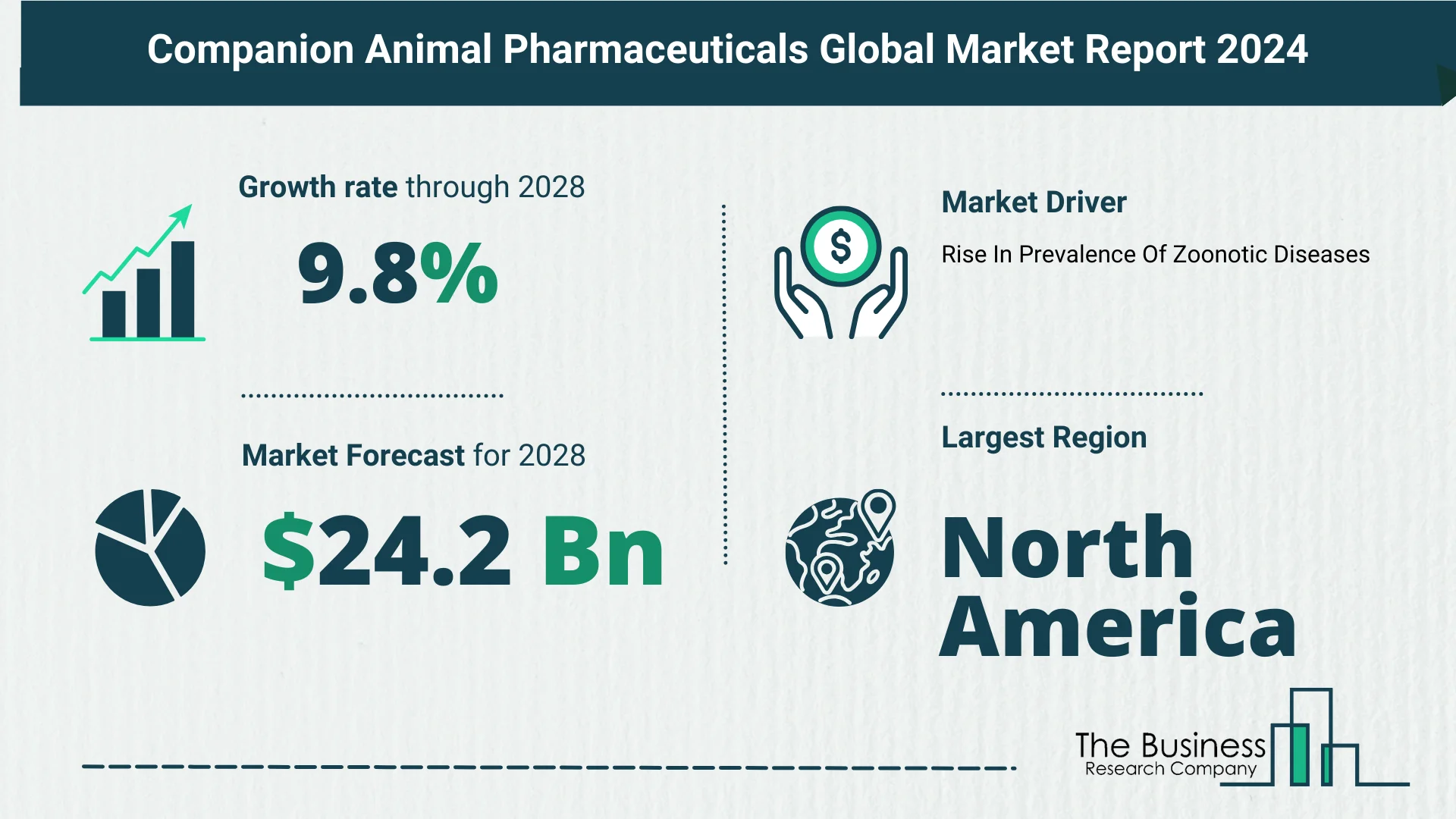
    • Current Market Size: The market size is projected to increase from $15.23 billion in 2023 to $16.63 billion in 2024, exhibiting a Compound Annual Growth Rate (CAGR) of 9.2%.
    • Future Growth: Anticipated growth to $24.2 billion in 2028, with a CAGR of 9.8%.

    Factors Fueling Growth

    1. Humanization of Pets
    • The increasing trend of treating pets as family members has driven the demand for advanced pharmaceuticals.
    1. Preventive Healthcare Measures
    • Pet owners are increasingly adopting preventive healthcare measures, contributing to the growth of the market.
    1. Rise in Pet Insurance
    • The surge in pet insurance adoption has facilitated easier access to veterinary healthcare, promoting pharmaceutical consumption.
    1. Changing Lifestyle and Urbanization
    • Urbanization and changing lifestyles have led to a higher demand for companion animals and subsequently, pharmaceuticals.
    1. Zoonotic Disease Concerns
    • Growing concerns about zoonotic diseases are pushing pet owners to invest in pharmaceuticals for their animals’ health.
    1. Veterinary Healthcare Accessibility
    • Improved accessibility to veterinary healthcare services is a key factor driving the market.

    Future Trends and Projections

    1. Personalized Medicine for Pets
    • The focus on personalized medicine tailored for individual pets is expected to drive market growth.
    1. Telehealth and Remote Veterinary Services
    • The integration of telehealth and remote veterinary services will contribute to the expansion of the market.
    1. Nutrition and Nutraceuticals
    • Increasing awareness of pet nutrition and the importance of nutraceuticals will influence market dynamics.
    1. One Health Initiatives
    • Collaborative efforts through one health initiatives will play a significant role in shaping the future of the market.
    1. Advancements in Veterinary Medicine
    • Ongoing advancements in veterinary medicine will pave the way for innovative pharmaceutical products.
    1. Regulatory Compliance and Safety Standards
    • Emphasis on regulatory compliance and safety standards will ensure the credibility of companion animal pharmaceuticals.
    1. Collaborations and Partnerships
    • Collaborations and partnerships among key industry players will foster innovation and market expansion.

    Zoonotic Diseases Drive Market Growth
    The prevalence of zoonotic diseases has become a major catalyst for the companion animal pharmaceuticals market’s growth. Zoonotic illnesses, capable of transmission between animals and humans, are a rising concern globally. Notably, Campylobacteriosis and Salmonella have reported high cases, emphasizing the need for effective pharmaceutical interventions. Key companies driving this market include Elanco Animal Health, Boehringer Ingelheim, Ceva Santé Animale, and many others.

    View More On The Companion Animal Pharmaceuticals Market Report 2024 – https://www.thebusinessresearchcompany.com/report/companion-animal-pharmaceuticals-global-market-report

    Innovation in Product Launches
    Major market players are responding to increased demand by introducing innovative products. For instance, Elanco Animal Health launched Credelio Cat, an oral flea and tick product with rapid and long-lasting efficacy. Such advancements are crucial in meeting customer expectations and expanding market reach.

    Strategic Acquisitions Boost Market Presence
    Strategic acquisitions also play a pivotal role in market dynamics. In July 2022, Dechra Pharmaceuticals acquired Piedmont Animal Health, enhancing its product portfolio and strengthening its position in the European and North American markets.

    Market Segmentation
    The companion animal pharmaceuticals market is segmented based on animal type, indication, and distribution channels. Dogs, cats, horses, and other companion animals constitute the animal type segmentation. Indications cover infectious diseases, dermatologic diseases, pain, orthopedic diseases, behavioral diseases, and others. Distribution channels include veterinary hospitals, veterinary clinics, and retail pharmacies.

    Regional Insights
    North America dominated the market in 2023, while the Asia-Pacific region is expected to witness the fastest growth during the forecast period.

    In conclusion, the companion animal pharmaceuticals market’s impressive growth trajectory is propelled by a combination of factors such as evolving consumer attitudes, technological advancements, and increasing awareness about pet health. As the market continues to innovate and adapt, stakeholders should stay attuned to emerging trends and opportunities to thrive in this dynamic landscape.

    Request A Sample Of The Global Companion Animal Pharmaceuticals Market Report 2024:
    https://www.thebusinessresearchcompany.com/sample_request?id=7983&type=smp

  • Growth Trajectory Of The Animal Antibiotics and Antimicrobials Market 2024-2033

    Growth Trajectory Of The Animal Antibiotics and Antimicrobials Market 2024-2033

    The Business Research Company’s global market reports are now updated with the latest market sizing information for the year 2024 and forecasted to 2033

    1. Introduction

    The animal antibiotics and antimicrobials market have demonstrated robust growth in recent years, witnessing an increase from $4.97 billion in 2023 to an estimated $5.34 billion in 2024, reflecting a noteworthy compound annual growth rate (CAGR) of 7.5%. Let’s explore the factors contributing to this growth and the anticipated trends shaping the market’s future.

    1. Future Growth Projections

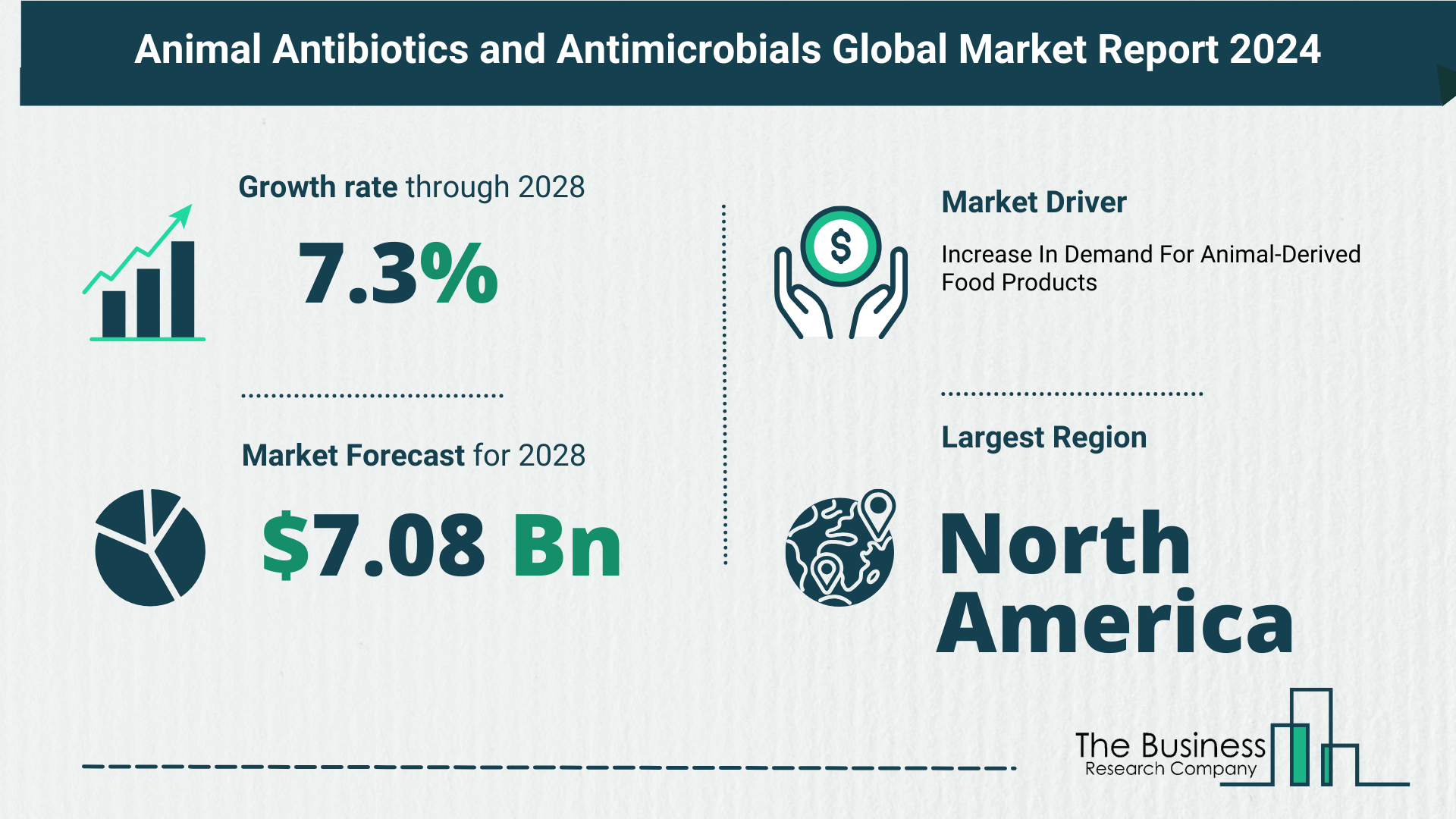
    The animal antibiotics and antimicrobials market are poised for continued expansion, with a projected growth to $7.08 billion in 2028 at a CAGR of 7.3%. The forecast period’s growth is attributed to emerging diseases, global population growth, regulatory changes, and growing public health concerns.

    • Future growth projections for animal antibiotics and antimicrobials market
    • Factors driving growth: Emerging diseases, global population growth, regulatory changes
    1. Rising Demand for Animal-Derived Products

    The surge in demand for animal-derived food products, such as meat, eggs, and milk, is a key driver of market growth. Companies and institutions involved in animal food production are utilizing antibiotics and antimicrobials as preventive measures to ensure a healthy and disease-free herd. The Global Meat & Poultry trends report predicts global meat and poultry consumption to reach 313 million metric tons in 2023, further boosting the demand for animal antibiotics and antimicrobials.

    • Increased demand for animal-derived food products
    • Utilization of antibiotics for maintaining a healthy herd
    1. Market Players and Key Companies

    Major players in the animal antibiotics and antimicrobials market include C. H. Boehringer Sohn AG & Co. KG, Zoetis Inc., Elanco Animal Health Inc., and others. The competitive landscape showcases the strategic positioning and contributions of these industry leaders.

    • Key players: Boehringer, Zoetis, Elanco, and more
    • Competitive landscape in the animal antibiotics and antimicrobials market

    View More On The Animal Antibiotics and Antimicrobials Market Report 2024 – https://www.thebusinessresearchcompany.com/report/animal-antibiotics-and-antimicrobials-global-market-report

    1. Innovations in Early Detection Tests

    Companies are focusing on introducing early detection tests for animals, enhancing veterinarians’ capabilities in disease management. These tests, such as PetDx’s OncoK9, utilize next-generation sequencing technology and proprietary algorithms to detect cancer-associated genomic alterations in canine DNA, enabling early diagnosis through a simple blood draw.

    • Innovations in early detection tests for animals
    • Example: OncoK9 by PetDx
    1. Strategic Acquisitions Shaping the Market

    Strategic acquisitions contribute to market dynamics, exemplified by Dechra Pharmaceuticals’ acquisition of Piedmont Animal Health for $210 million in cash. This strategic move aims to bolster Dechra’s companion animal pharmaceutical product pipeline and expand its team of specialized researchers.

    • Dechra Pharmaceuticals’ acquisition of Piedmont Animal Health
    • Strategic moves in the animal antibiotics and antimicrobials market
    1. Market Segmentation

    Understanding the animal antibiotics and antimicrobials market involves exploring its segmentation based on the type of product, mode of delivery, and animal type. This nuanced segmentation provides insights into the diverse facets of the market.

    • Segmentation of the animal antibiotics and antimicrobials market
    • Product types: Tetracyclines, Penicillins, Sulfonamides, and more
    • Modes of delivery: Premixes, Oral Powder, Injection, and others
    • Animal types: Food-Producing Animals, Companion Animals
    1. Regional Dynamics

    In 2023, North America claimed the largest share in the animal antibiotics and antimicrobials market, with Asia-Pacific projected as the fastest-growing region in the forecast period. Regional dynamics play a pivotal role in shaping market trends and opportunities.

    • North America leads the animal antibiotics and antimicrobials market
    • Asia-Pacific as the fastest-growing region

    In conclusion, the animal antibiotics and antimicrobials market’s growth is driven by factors such as rising demand for animal-derived products, innovations in early detection tests, strategic acquisitions, and a comprehensive market segmentation strategy. As the market evolves, emphasis on alternative solutions, collaborative initiatives, and increased investments in research positions it for sustained growth and advancements in animal health.

    Request A Sample Of The Global Animal Antibiotics and Antimicrobials Market Report 2024:
    https://www.thebusinessresearchcompany.com/sample_request?id=6712&type=smp

  • How Is The Animal Based Protein Supplements Market Expected To Grow Through 2024-2033

    How Is The Animal Based Protein Supplements Market Expected To Grow Through 2024-2033

    The Business Research Company’s global market reports are now updated with the latest market sizing information for the year 2024 and forecasted to 2033

    According to The Business Research Company’s Animal Based Protein Supplements Global Market Report 2024, the animal based protein supplements market is expected to show promising growth in the forecast period.

    The animal-based protein supplements market has experienced rapid growth, escalating from $28.21 billion in 2023 to an anticipated $31.04 billion in 2024, marking a Compound Annual Growth Rate (CAGR) of 10.0%. This surge is attributed to heightened health consciousness, evolving dietary preferences, and the thriving sports and fitness trends.

    1. Continued Momentum: Projected Rapid Growth Ahead:

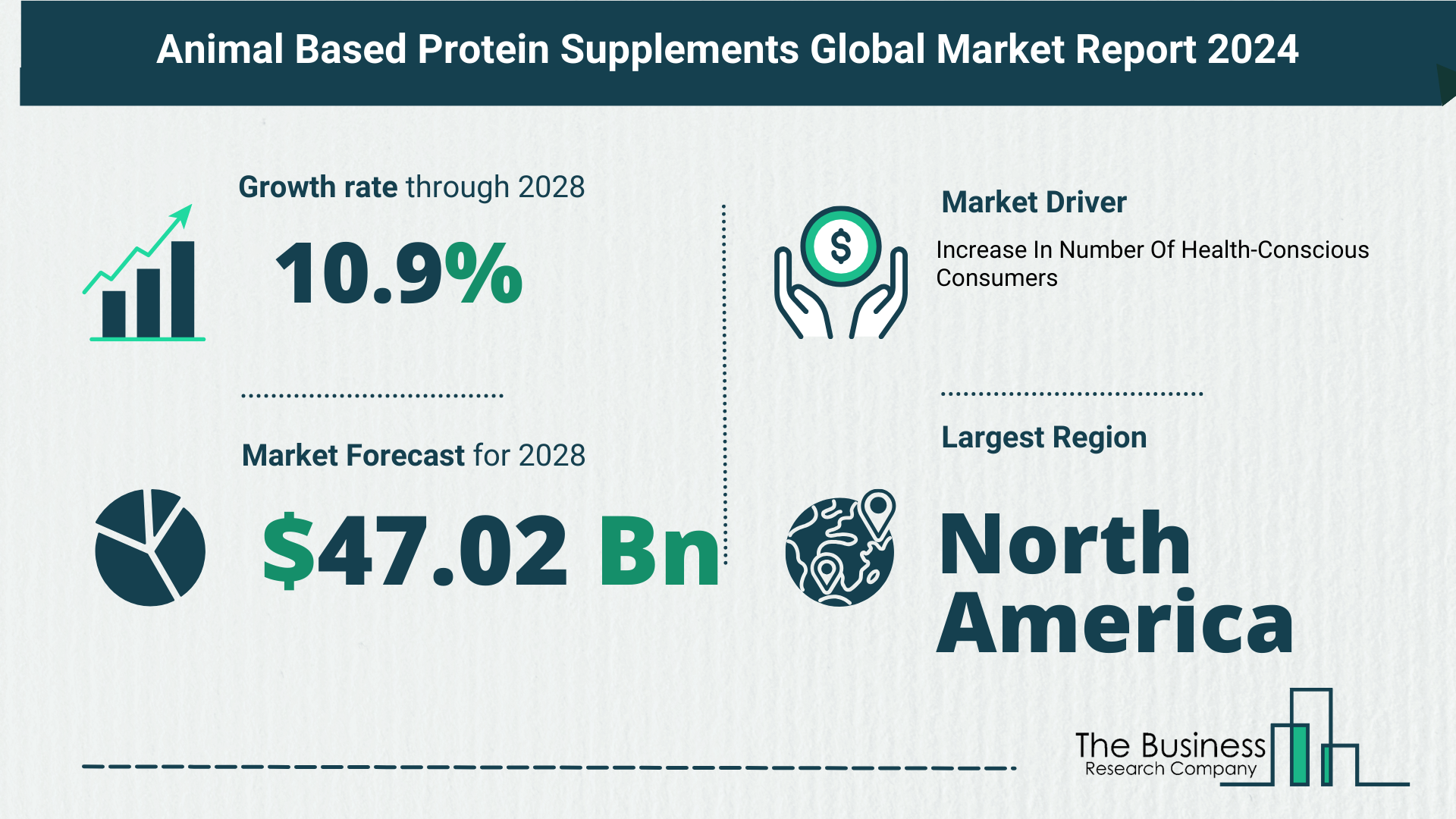
    The trajectory of the animal-based protein supplements market remains robust, with an anticipated growth to $47.02 billion in 2028 at a CAGR of 10.9%. This forward momentum can be attributed to factors such as a growing global population, increasing income levels, shifts in the retail landscape, environmental and sustainability concerns, and regulatory support and standards.

    • Projected Size for 2028:Anticipated market growth.
    • Drivers of Growth:Population growth, income levels, retail landscape evolution.
    • Key Trends:Product innovation, plant-based synergy, technological advancements, clean label movement, personalization and customization, digitalization of marketing, functional and fortified formulations, packaging innovation.
    1. Health-Conscious Wave: Driving Demand for Animal-Based Proteins:

    The surge in health-conscious consumers is a pivotal factor propelling the demand for animal-based protein supplements. Globally, an increasing number of individuals are prioritizing their health and nutrition, recognizing the importance of meeting daily protein requirements. This shift in dietary habits, driven by heightened awareness, is steering consumers towards animal-based protein supplements.

    • Global Health Consciousness:Rise in individuals focusing on health.
    • Protein Requirement Awareness:Understanding the importance of daily protein intake.
    • Post-Pandemic Trends:70% of Indians prioritizing dietary changes for better health.

    View More On The Animal Based Protein Supplements Market Report 2024 – https://www.thebusinessresearchcompany.com/report/animal-based-protein-supplements-global-market-report

    1. Industry Innovations: Transformative Products for Diverse Needs:

    Product innovation stands out as a prominent trend in the animal-based protein supplements market. Leading companies are investing in developing cutting-edge solutions to strengthen their market positions. Notably, GoodSport Nutrition introduced the GoodSport sports drink, a natural sports drink made from 97% dairy, offering superior hydration compared to conventional sports drinks.

    • Key Trend:Product innovation in animal-based protein supplements.
    • Case Study:GoodSport Nutrition’s natural sports drink.
    • Research-Based Formulation:Emphasizing effective hydration with dairy components.
    1. Strategic Acquisitions: Strengthening Market Positions:

    In a strategic move, Nestlé Health Science acquired Vital Proteins in February 2022. This acquisition adds another dimension to Nestlé’s wellness portfolio, enhancing its presence in the vitamin, mineral, supplement, and wellness market. Vital Proteins, a US-based producer of animal collagen-based protein supplements, brings unique offerings to Nestlé’s repertoire.

    • Strategic Acquisition:Nestlé Health Science acquiring Vital Proteins.
    • Portfolio Enhancement:Addition of animal collagen-based protein supplements.
    • Market Position Strengthening:Augmenting Nestlé’s presence in the wellness sector.
    1. Comprehensive Market Segmentation: Understanding Diversity:

    The animal-based protein supplements market is intricately segmented based on product types (Protein Powder, Protein Bars, Ready-To-Drink, Other Products), raw materials (Whey, Casein, Egg, Fish, Other Raw Materials), applications (Pharmaceuticals and Nutraceuticals, Food and Beverages, Infant Formulations, Cosmetics and Personal Care, Animal Feed, Dietary Supplements), and distribution channels (Supermarkets and Hypermarkets, Online Stores, Chemists or Drugstores, Specialty Stores, Other Distribution Channels).

    • Product Types:Diverse offerings including powder, bars, ready-to-drink, and more.
    • Raw Materials:Varied sources such as whey, casein, egg, fish, and others.
    • Applications:Spanning pharmaceuticals, food, cosmetics, and more.
    • Distribution Channels:Ranging from supermarkets to online stores and specialty outlets.
    1. Regional Dynamics: North America Leads, Asia-Pacific Surges:

    North America emerged as the largest region in the animal-based protein supplements market in 2023. However, the Asia-Pacific region is expected to witness the fastest growth in the forecast period. Regional dynamics play a significant role in shaping market trends and the pace of expansion.

    • Regional Leadership:North America leading in 2023.
    • Growth Hub:Asia-Pacific anticipated to be the fastest-growing region.
    • Market Dynamics Influence:Regional factors shaping market trends.

    Conclusion: The animal-based protein supplements market, driven by health consciousness, innovations, and strategic acquisitions, is on an upward trajectory. As it continues to evolve, offering diverse and technologically advanced products, it stands at the forefront of meeting the nutritional needs of an increasingly health-aware global population.

    Request A Sample Of The Global Animal Based Protein Supplements Market Report 2024:
    https://www.thebusinessresearchcompany.com/sample_request?id=7315&type=smp

  • Global Flea, Tick, And Heartworm Products Market Overview 2024: Size, Drivers, And Trends

    Global Flea, Tick, And Heartworm Products Market Overview 2024: Size, Drivers, And Trends

    The Business Research Company’s global market reports provide comprehensive analysis on the various markets in 27 industries across 60 geographies.

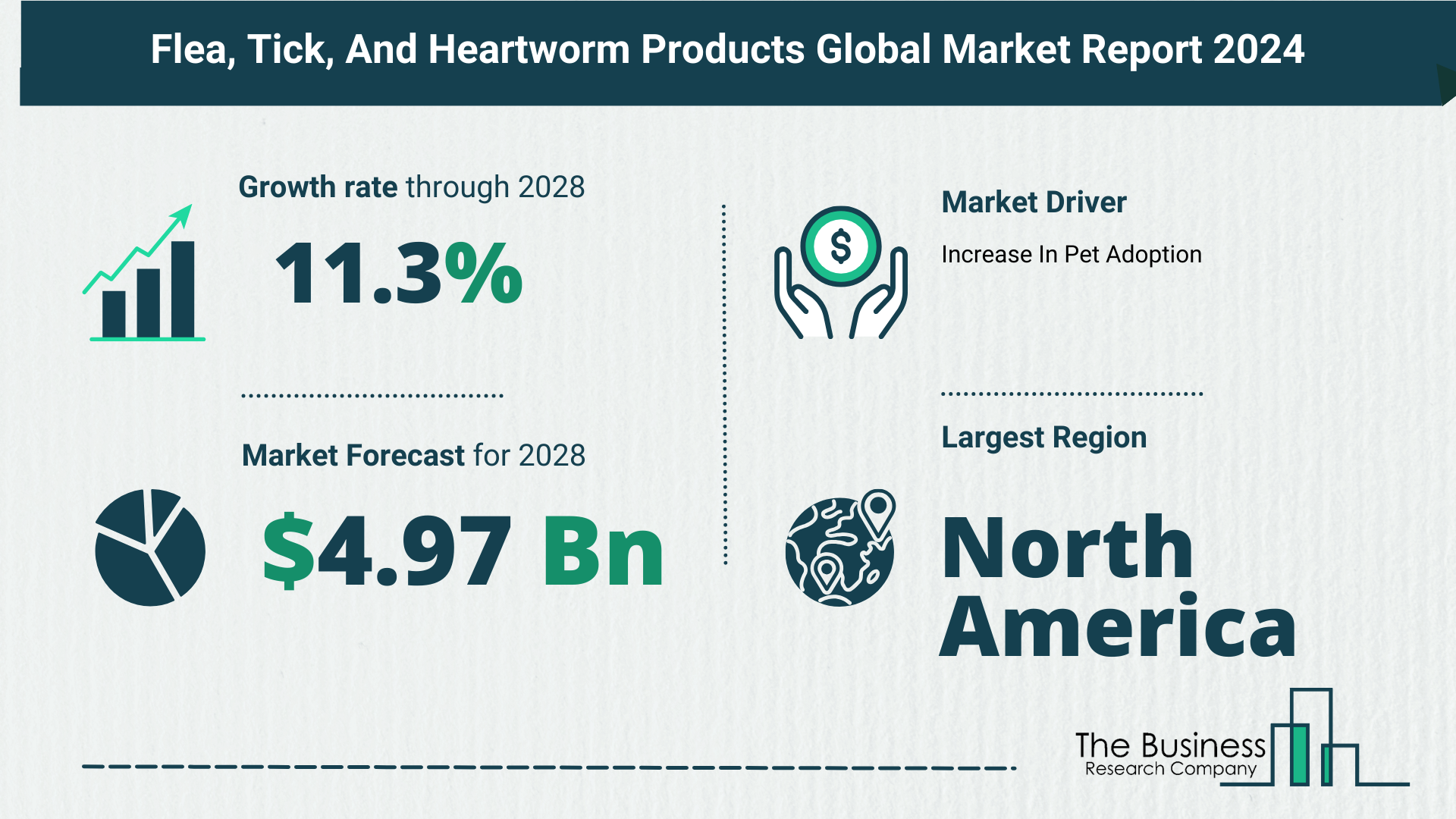
     The market for flea, tick, and heartworm products has witnessed rapid growth in recent years, with a projected increase from $2.9 billion in 2023 to $3.24 billion in 2024 at a Compound Annual Growth Rate (CAGR) of 11.5%. Looking ahead, the market is poised for continued expansion, expected to reach $4.97 billion in 2028 at a CAGR of 11.3%. This growth is fueled by factors such as rising pet adoption, increasing veterinary expenditure, and the impact of climate change.

    Factors Driving Growth

    Rising Pet Adoption Expected To Drive Flea, Tick, And Heartworm Products Market Growth

    • Changing Perceptions: Pets are increasingly viewed as integral family members, leading to a surge in pet adoption.
    • Pet Adoption Statistics: According to Petskeen, an online pet guide platform, around 4.1 million animals in shelters are adopted every year, emphasizing the growing trend of embracing pets.
    • Healthcare Needs: As pet adoption rises, the demand for clinical care and medications, including flea, tick, and heartworm products, is expected to increase significantly.
    • Market Players: Major companies driving growth include Chewy Inc., Elanco LLC, Zoetis Inc., Merck & Co. Inc., and others, reflecting the industry’s commitment to catering to the evolving needs of pet owners.

    View More On The Flea, Tick, And Heartworm Products Market Report 2024 – https://www.thebusinessresearchcompany.com/report/flea-tick-and-heartworm-products-global-market-report

    Development Of Innovative Flea, Tick, And Heartworm Products

    Product Innovation Leading the Way

    • Focus on Innovation: Major companies in the market are investing in research and development to bring innovative flea, tick, and heartworm products to the market.
    • Virbac’s IVERHART MAX: In August 2022, Virbac introduced IVERHART MAX, a chewable product containing ivermectin, pyrantel pamoate, and praziquantel, with a high acceptance rate among dogs. This innovation addresses heartworm prevention and controls roundworms, hookworms, and tapeworms.
    • Strategic Acquisitions: The acquisition of Acceleron Pharma Inc. by Merck & Co. in November 2021 exemplifies the industry’s commitment to expanding portfolios and pipelines, strengthening their position in the market.

    Market Segmentation and Trends

    The Flea, Tick, and Heartworm Products Market – Segmentation and Noteworthy Trends

    1. By Product: Spray, Oral Pills or Chewable, Powder, Spot On, Shampoo, Other Products
    2. By Animal Type: Canine, Feline, Other Animal Types
    3. By Distribution Channel: Veterinary Clinics, Retail, E-commerce
    • Regional Dominance: North America claimed the largest share in the flea, tick, and heartworm products market in 2023, highlighting the region’s focus on pet health.
    • Forecasted Trends: Anticipated trends include product innovations, collaborations and partnerships, customization and personalization, e-commerce dominance, and technological integration, shaping the future of the market.

    Conclusion
    As pet ownership continues to rise and pets become integral members of our families, the demand for advanced flea, tick, and heartworm products is escalating. The market’s robust growth, fueled by factors like increasing veterinary expenditure and the global growth of the pet population, reflects the commitment of industry players to meet the evolving needs of pet owners. Innovation, strategic acquisitions, and a focus on customization and e-commerce are shaping the future landscape of flea, tick, and heartworm products. As we journey into the next decade, this market plays a vital role not only in pet healthcare but also in strengthening the bond between humans and their beloved animal companions.

    Request A Sample Of The Global Flea, Tick, And Heartworm Products Market Report 2024:
    https://www.thebusinessresearchcompany.com/sample_request?id=7798&type=smp