Category: Veterinary Healthcare

  • Pet Care E-commerce Market Forecast Assessing Growth Potential And Industry Direction

    Pet Care E-commerce Market Forecast Assessing Growth Potential And Industry Direction

    The Business Research Company’s 2026 market reports feature advanced enhancements such as market attractiveness analysis, total addressable market evaluation, company benchmarking matrices, interactive Excel dashboards, expanded supply chain intelligence, emerging startup coverage, and detailed product insights, delivering more actionable and strategically valuable research.

    By 2030, How Much Growth In Market Size Is Expected For The Pet Care E-commerce Market?

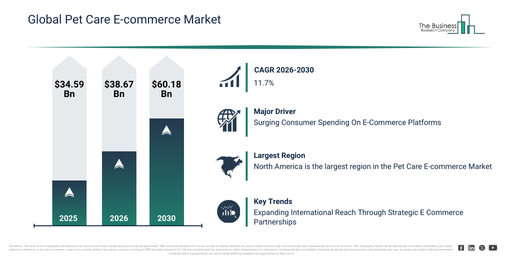
    The pet care e-commerce market size has experienced rapid expansion in recent years. It is forecast to grow from $34.59 billion in 2025 to $38.67 billion in 2026, achieving a compound annual growth rate (CAGR) of 11.8%. The growth observed in the historic period can be ascribed to factors like increasing pet ownership, enhanced internet penetration, a heightened awareness regarding pet health and hygiene, the proliferation of e-commerce platforms, and the online accessibility of various pet care products.

    The pet care e-commerce market size is anticipated to experience substantial growth over the coming years. It is projected to expand to $60.18 billion by 2030, demonstrating a compound annual growth rate (CAGR) of 11.7%. This forecasted growth can be linked to the rise of direct-to-consumer (D2C) pet care brands, the incorporation of artificial intelligence and data analytics for tailored pet care, increasing consumer interest in premium and organic pet products, the integration of mobile applications and subscription services, and greater investment in pet e-commerce logistics and delivery networks. Significant trends projected for this period include the growing appeal of D2C pet care frameworks, a rise in online purchases of pet food and grooming items, the expansion of e-commerce channels for pet health and medications, the diversification of specialty pet products such as toys, bedding, and travel accessories, and the strategic use of social media platforms for pet care education and commercial purposes.

    Download A Free Sample Report For Comprehensive Market Insights:

    https://www.thebusinessresearchcompany.com/sample.aspx?id=8015&type=smp

    Which Significant Factors Are Encouraging Growth In The Pet Care E-commerce Market?

    The rising consumer spending on e-commerce platforms is expected to propel the growth of the pet care e-commerce market going forward. E-commerce platforms are software solutions that enable the commercial process of buying and selling over the internet, offering features such as search, cart, and payment processing. The rising consumer spending on e-commerce platforms is increasing due to the convenience of online shopping, as consumers can easily compare products, access a wider selection, and shop from anywhere at any time. The pet care e-commerce market supports the rising consumer spending on e-commerce platforms, as pet owners increasingly purchase food, accessories, and healthcare products online for greater convenience and product variety. For instance, in August 2025, according to Digital Commerce 360, a US-based research and media company, more than $500 billion of 2024’s U.S. ecommerce sales came from the two largest online retailers in North America. Therefore, the rising consumer spending on e-commerce platforms is driving the growth of the pet care e-commerce market.

    How Does Segment Analysis Break Down The Pet Care E-commerce Market Structure?

    The pet care e-commerce market covered in this report is segmented –

    1) By Product: Pet Grooming Products, Pet Food, Medications (OTC Or Supplies), Other Products

    2) By Animal Type: Canine, Feline, Crawler, Other Animals

    3) By Application: Fungal Infections, Digestive Problems, Other Applications

    Subsegments:

    1) By Pet Grooming Products: Shampoos And Conditioners, Brushes And Combs, Nail Clippers And Grinders, Grooming Kits

    2) By Pet Food: Dry Dog Food, Wet Dog Food, Dry Cat Food, Wet Cat Food, Treats And Snacks

    3) By Medications (OTC Or Supplies): Flea And Tick Treatments, Worming Treatments, Vitamins And Supplements, Prescription Medications

    4) By Other Products: Pet Toys, Bedding And Furniture, Leashes And Collars, Travel Accessories

    What Trends Are Influencing The Pet Care E-commerce Market Outlook?

    Major companies operating in the pet e commerce market are adopting strategic marketplace expansions to enhance the availability of premium pet health products. Strategic marketplace expansions help the pet e commerce market by leveraging established online platforms, increasing consumer accessibility, broadening international reach, and accelerating cross-border growth. These initiatives drive brand visibility, support market penetration, and promote the wider adoption of high-quality pet wellness solutions. For instance, in May 2025, Vital Pet Life Inc., a US based provider of premium pet wellness products, expanded its e commerce presence into Canada by launching its product line on the Canadian version of the Chewy marketplace. This expansion enables Canadian pet parents to purchase Vital Pet Life’s best selling ORIVO verified and MSC certified sustainable salmon and pollock oil blends, probiotics, and hip and joint supplements through Chewy’s established online platform. The initiative strengthens the brand’s international distribution, replicates its U.S. e commerce success in new markets, and supports pet health and wellness demands across North America.

    Who Are The Key Market Participants In The Pet Care E-commerce Market?

    North America was the largest region in the pet care e-commerce market in 2025. The regions covered in the pet care e-commerce market report are Asia-Pacific, South East Asia, Western Europe, Eastern Europe, North America, South America, Middle East, Africa.

    Access The Complete Pet Care E-commerce Market Report:

    https://www.thebusinessresearchcompany.com/report/pet-care-e-commerce-global-market-report

    Which Region Is The Dominant Market In The Pet Care E-commerce Market?

    North America was the largest region in the pet care e-commerce market in 2025. The regions covered in the pet care e-commerce market report are Asia-Pacific, South East Asia, Western Europe, Eastern Europe, North America, South America, Middle East, Africa.

    Access a Customized Pet Care E-commerce Market Report for Deeper Competitive Insights

    https://www.thebusinessresearchcompany.com/sample.aspx?id=8015&type=smp

    Get in touch with us:

    The Business Research Company: https://www.thebusinessresearchcompany.com/

    Americas: +1 310-496-7795

    Asia: +44 7882 955267 & +91 8897263534

    Europe: +44 7882 955267

    Email us at: marketing@tbrc.info

    Follow us on:

    LinkedIn: https://in.linkedin.com/company/the-business-research-company

    YouTube: https://www.youtube.com/channel/UC24_fI0rV8cR5DxlCpgmyFQ

    Global Market Model: https://www.thebusinessresearchcompany.com/global-market-model
  • Pet Cancer Therapeutics Market Expected To Witness Revenue Growth Toward $0.7 Billion By 2030

    Pet Cancer Therapeutics Market Expected To Witness Revenue Growth Toward $0.7 Billion By 2030

    The Business Research Company’s 2026 market reports feature advanced enhancements such as market attractiveness analysis, total addressable market evaluation, company benchmarking matrices, interactive Excel dashboards, expanded supply chain intelligence, emerging startup coverage, and detailed product insights, delivering more actionable and strategically valuable research.

    What Market Value Trend Is Expected For The Pet Cancer Therapeutics Market From 2026 To 2030?

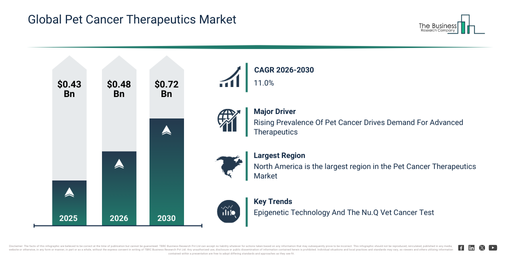
    The pet cancer therapeutics market has witnessed rapid growth in its size over recent years. Its value is projected to climb from $0.43 billion in 2025 to $0.48 billion in 2026, achieving a compound annual growth rate (CAGR) of 10.3%. Historically, this expansion can be attributed to various factors, including the rising incidence of cancer in companion animals, the development of conventional chemotherapy protocols, an increase in veterinary hospital infrastructure, advancements in diagnostic imaging for pets, and the growth of the companion animal population.

    The pet cancer therapeutics market size is anticipated to experience substantial expansion in the coming years, with projections indicating growth to $0.72 billion by 2030 at a compound annual growth rate (CAGR) of 11.0%. This projected growth throughout the forecast period can be attributed to advancements in immunotherapy and targeted therapy, the integration of artificial intelligence into diagnosis and treatment, the expansion of online and retail pharmacy channels, increasing awareness regarding early cancer detection, and rising investment in veterinary oncology research. Major trends expected during this period include the rising adoption of targeted therapies for pet cancer, an increasing use of immunotherapy in companion animals, the expansion of multi-modal cancer treatment protocols, a growing focus on early cancer detection in pets, and the integration of palliative care in pet oncology.

    Download A Free Sample Report For Comprehensive Market Insights:

    https://www.thebusinessresearchcompany.com/sample.aspx?id=9984&type=smp

    What Core Drivers Are Transforming The Pet Cancer Therapeutics Market?

    The increasing prevalence of pet cancer is expected to propel the growth of the pet cancer therapeutics market going forward. Pet cancer refers to the development of abnormal and uncontrolled cell growth in the body of a domesticated animal, such as a dog or cat, leading to the formation of a tumor. The increased prevalence of pet cancer is mostly driven by exposure to environmental toxins and pollutants, whereas genetic and lifestyle factors, as a result demand for more advanced and effective cancer therapeutics for pets is expected to increase. Pet cancer therapeutics help pet cancer by targeting and destroying cancer cells or slowing tumor growth, which improves survival outcomes and reduces pain and discomfort in affected animals. For instance, in 2025, according to the American Veterinary Medical Association (AVMA), a US-based Veterinary Health Authority, approximately 1 in 4 dogs will develop cancer in their lifetime, and this risk grows to 1 in 2 for dogs aged over 10. Therefore, an increasing prevalence of pet cancer will fuel the pet cancer therapeutics market growth.

    What Segment Types Are Included In The Pet Cancer Therapeutics Market Analysis?

    The pet cancer therapeutics market covered in this report is segmented –

    1) By Cancer Type: Melanoma, Mast Cell Cancer, Lymphoma, Mammary And Squamous Cell Cancer

    2) By Species: Dogs, Cats, Other Species

    3) By Therapy: Chemotherapy, Radiation Therapy, Immunotherapy, Tomotherapy, Other Therapies

    4) By End User: Veterinary Hospitals, Clinical Pharmacies, Retail Pharmacies, Online Pharmacies, Other End Users

    Subsegments:

    1) By Melanoma: Surgical Interventions, Chemotherapy, Immunotherapy, Targeted Therapy

    2) By Mast Cell Cancer: Surgery, Chemotherapy, Tyrosine Kinase Inhibitors, Radiation Therapy

    3) By Lymphoma: Chemotherapy Protocols, Steroid Therapy, Radiation Therapy, Immunotherapy

    4) By Mammary And Squamous Cell Cancer: Surgical Treatment, Chemotherapy, Radiation Therapy, Palliative Care Options

    Which Trends Are Expected To Shape The Pet Cancer Therapeutics Market?

    Major companies operating in the pet cancer therapeutics market are developing technologies such as epigenetic technology to enhance treatment efficacy and precision in targeting cancer cells, ultimately improving outcomes for pets affected by cancer. Epigenetic technology refers to methods that modify gene expression without changing the underlying DNA sequence, often influencing cellular behavior and potential therapeutic outcomes. For instance, in April 2024, VolitionRx Limited, a US-based multi-national epigenetics company, launched the Nu.Q Vet Cancer Test. The Nu.Q Vet Cancer Test operates on the Element i+ Analyzer, allowing for quick results, typically within about 6 minutes. It utilizes an enzyme-linked immunosorbent assay to detect circulating nucleosomes in the blood, which can indicate the presence of cancer.

    Which Organizations Are Operating Within The Pet Cancer Therapeutics Market?

    North America was the largest region in the pet cancer therapeutics market in 2025. The regions covered in the pet cancer therapeutics market report are Asia-Pacific, South East Asia, Western Europe, Eastern Europe, North America, South America, Middle East, Africa.

    Access The Complete Pet Cancer Therapeutics Market Report:

    https://www.thebusinessresearchcompany.com/report/pet-cancer-therapeutics-global-market-report

    Which Area Represents The Largest Portion Of The Pet Cancer Therapeutics Market?

    North America was the largest region in the pet cancer therapeutics market in 2025. The regions covered in the pet cancer therapeutics market report are Asia-Pacific, South East Asia, Western Europe, Eastern Europe, North America, South America, Middle East, Africa.

    Access a Customized Pet Cancer Therapeutics Market Report for Deeper Competitive Insights

    https://www.thebusinessresearchcompany.com/sample.aspx?id=9984&type=smp

    Get in touch with us:

    The Business Research Company: https://www.thebusinessresearchcompany.com/

    Americas: +1 310-496-7795

    Asia: +44 7882 955267 & +91 8897263534

    Europe: +44 7882 955267

    Email us at: marketing@tbrc.info

    Follow us on:

    LinkedIn: https://in.linkedin.com/company/the-business-research-company

    YouTube: https://www.youtube.com/channel/UC24_fI0rV8cR5DxlCpgmyFQ

    Global Market Model: https://www.thebusinessresearchcompany.com/global-market-model
  • Ovine And Caprine Artificial Insemination Market Industry Outlook 2026–2030 Highlighting Growth Momentum And Market Trends

    Ovine And Caprine Artificial Insemination Market Industry Outlook 2026–2030 Highlighting Growth Momentum And Market Trends

    The Business Research Company’s 2026 market reports feature advanced enhancements such as market attractiveness analysis, total addressable market evaluation, company benchmarking matrices, interactive Excel dashboards, expanded supply chain intelligence, emerging startup coverage, and detailed product insights, delivering more actionable and strategically valuable research.

    How Does The Forecasted Market Size Of The Ovine And Caprine Artificial Insemination Market Compare Between 2026 And 2030?

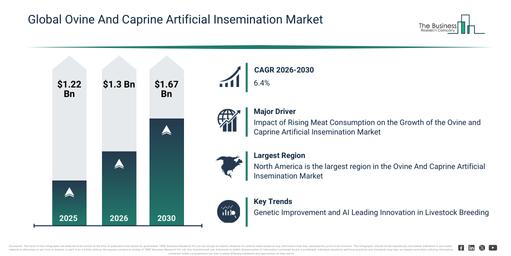
    The ovine and caprine artificial insemination market size has demonstrated robust growth in recent years. It is projected to expand from $1.22 billion in 2025 to reach $1.3 billion by 2026, at a compound annual growth rate (CAGR) of 6.7%. Historically, this expansion has been attributed to the low genetic quality of livestock, prevalent traditional breeding methods, limited access to AI equipment, a rising demand for higher wool and milk yield, and an increasing livestock population.

    The ovine and caprine artificial insemination market size is expected to experience robust expansion over the coming years, with projections indicating a rise to $1.67 billion by 2030, demonstrating a compound annual growth rate (CAGR) of 6.4%. This anticipated growth is primarily fueled by advancements in AI techniques and equipment, a heightened awareness of genetic improvement benefits, increasing demand for high-quality semen, the expansion of veterinary reproductive services, and the adoption of precision livestock breeding technologies. Significant trends shaping the forecast period include the growing adoption of frozen and sexed semen for breeding, the broadening of reproductive health monitoring services, increased usage of automated insemination equipment, a rising demand for hormonal reagents and ovulation induction kits, and the integration of breeding consultancy services aimed at livestock improvement.

    Download A Free Sample Report For Comprehensive Market Insights:

    https://www.thebusinessresearchcompany.com/sample.aspx?id=20586&type=smp

    Which Growth Factors Are Strengthening The Ovine And Caprine Artificial Insemination Market Landscape?

    The rise in meat consumption is expected to propel the growth of the ovine and caprine artificial insemination market going forward. The growing awareness of the importance of protein in a balanced diet and changing preferences towards high-protein diets (such as ketogenic and paleo diets) has led to increased demand for meat as a primary protein source. Ovine and caprine artificial insemination improves sheep and goats’ genetic quality and productivity, leading to higher meat yields, better disease resistance, and more efficient meat production to meet the increasing global demand for meat. For instance, in August 2024, according to an updated report on red meat and poultry production published by the United States Department of Agriculture, a US-based federal agency, between January-July 2023, red meat and poultry production was 31419.8 (million pounds), which rose to 31775.4 (million pounds) in January-July 2024. Therefore, the rise in meat consumption is driving the growth of the ovine and caprine artificial insemination market.

    Which Segment Divisions Form The Structure Of The Ovine And Caprine Artificial Insemination Market?

    The ovine and caprine artificial insemination market covered in this report is segmented –

    1) By Species: Ovine, Caprine

    2) By Technique Or Method: Vaginal AI, Transcervical AI, Laparoscopic AI, Intravaginal Or Advanced AI

    3) By Application: Genetic Improvement, Commercial Meat Production, Dairy Production, Research And Breeding Programs

    4) By End-User: Farms And Livestock Producers, Veterinary Clinics, AI Service Providers Or Cooperatives, Research Institutions

    Subsegments:

    1) By Ovine: Sheep Breeding AI, Sheep Genetic Improvement Programs, Sheep Dairy AI, Sheep Meat Production AI

    2) By Caprine: Goat Breeding AI, Goat Genetic Improvement Programs, Goat Dairy AI, Goat Meat Production AI

    What Trends Are Affecting The Ovine And Caprine Artificial Insemination Market Dynamics?

    Major companies in the ovine and caprine artificial insemination (AI) market are focusing on advanced technologies such as genetic improvement technology and artificial insemination (AI) to enhance food security. Genetic improvement technology involves selectively breeding animals with desirable traits, such as high fertility, milk yield, or growth rate, to improve the genetic quality of future generations. Artificial insemination (AI) is a reproductive technology where semen from a selected male goat is manually inserted into a female to enhance genetic quality. For instance, in June 2024, the International Center for Agricultural Research in the Dry Areas (ICARDA), a Lebanon-based research organization, launched Mali’s first-ever Community-Based Breeding Program (CBBP) for goats. The program aims to improve the genetic potential of small ruminants in Mali, focusing on both meat and milk productivity, and enhancing the livelihoods of small-scale livestock keepers. This program includes the development of low-cost artificial insemination technologies to boost reproductive efficiency in goats.

    Who Are The Businesses Driving Activity In The Ovine And Caprine Artificial Insemination Market?

    North America was the largest region in the ovine and caprine artificial insemination market in 2025. The regions covered in the ovine and caprine artificial insemination market report are Asia-Pacific, South East Asia, Western Europe, Eastern Europe, North America, South America, Middle East, Africa.

    Access The Complete Ovine And Caprine Artificial Insemination Market Report:

    https://www.thebusinessresearchcompany.com/report/ovine-and-caprine-artificial-insemination-global-market-report

    Which Region Commands The Largest Share Of The Ovine And Caprine Artificial Insemination Market?

    North America was the largest region in the ovine and caprine artificial insemination market in 2025. The regions covered in the ovine and caprine artificial insemination market report are Asia-Pacific, South East Asia, Western Europe, Eastern Europe, North America, South America, Middle East, Africa.

    Access a Customized Ovine And Caprine Artificial Insemination Market Report for Deeper Competitive Insights

    https://www.thebusinessresearchcompany.com/sample.aspx?id=20586&type=smp

    Get in touch with us:

    The Business Research Company: https://www.thebusinessresearchcompany.com/

    Americas: +1 310-496-7795

    Asia: +44 7882 955267 & +91 8897263534

    Europe: +44 7882 955267

    Email us at: marketing@tbrc.info

    Follow us on:

    LinkedIn: https://in.linkedin.com/company/the-business-research-company

    YouTube: https://www.youtube.com/channel/UC24_fI0rV8cR5DxlCpgmyFQ

    Global Market Model: https://www.thebusinessresearchcompany.com/global-market-model
  • Nutritional Feed Additives Market Growth Forecast With Analysis Of Industry Progress Through 2030

    Nutritional Feed Additives Market Growth Forecast With Analysis Of Industry Progress Through 2030

    The Business Research Company’s 2026 market reports feature advanced enhancements such as market attractiveness analysis, total addressable market evaluation, company benchmarking matrices, interactive Excel dashboards, expanded supply chain intelligence, emerging startup coverage, and detailed product insights, delivering more actionable and strategically valuable research.

    What Increase In Market Value Is Predicted For The Nutritional Feed Additives Market During The 2026–2030 Period?

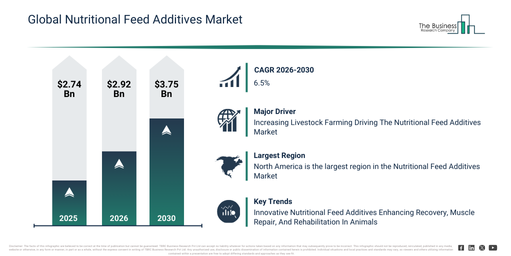
    The nutritional feed additives market has experienced strong growth in recent years. It is projected to expand from $2.74 billion in 2025 to $2.92 billion in 2026, demonstrating a compound annual growth rate (CAGR) of 6.4%. The historical expansion can be attributed to the increase in commercial livestock farming, a greater emphasis on animal productivity, a rising occurrence of nutritional deficiencies in feed, the extensive adoption of compound feeds, and the development of the poultry and swine industries.

    The nutritional feed additives market is projected to experience significant expansion in the coming years. It is anticipated to reach $3.75 billion by 2030, showing a compound annual growth rate (CAGR) of 6.5%. This growth throughout the forecast period stems from regulatory pressures aimed at reducing antibiotic use, an increasing need for high-quality animal protein, greater awareness concerning animal health and nutrition, the expansion of aquaculture production, and advancements in feed formulation technologies. Prominent trends for the forecast period include a developing preference for non-antibiotic nutritional additives, an increased incorporation of vitamins and minerals for comprehensive nutrition, a rising adoption of probiotics and prebiotics in feed, a higher demand for enzymes to enhance feed efficiency, and the broader use of mycotoxin detoxifiers to ensure feed safety.

    Download A Free Sample Report For Comprehensive Market Insights:

    https://www.thebusinessresearchcompany.com/sample.aspx?id=2604&type=smp

    What Important Drivers Are Powering The Nutritional Feed Additives Market Growth?

    Increasing livestock farming is expected to drive the growth of the nutritional feed additives market going forward. The increase in livestock farming is primarily driven by rising global population and growing demand for animal-based products. Nutritional feed additives in livestock farming are dietary supplements that enhance animal health, growth, and productivity by providing essential nutrients, vitamins, and minerals in animal diets. For instance, in May 2024, according to the United States Department of Agriculture, a US-based government agency, the forecast In the 2023 period, livestock production is expected to total 103.66 million metric tons, representing a 2% increase from the 102.09 million metric tons produced in 2022. Therefore, increasing livestock farming will continue to drive the nutritional feed additives market in the forecast period.

    How Are Different Segment Groups Identified Within The Nutritional Feed Additives Market?

    The nutritional feed additives market covered in this report is segmented –

    1) By Form: Dry, Liquid, Other Forms

    2) By Additive Type: Antibiotics, Vitamins, Antioxidants, Amino Acids, Enzymes, Mycotoxin Detoxifiers, Prebiotics, Probiotics, Flavors And Sweeteners, Pigments, Binders, Minerals

    3) By Livestock: Ruminants, Poultry, Swine, Aquatic

    4) By Distribution Channel: Direct, Indirect, Hypermarket Or Supermarket, Specialty Stores, Online Retail

    Subsegments:

    1) By Dry: Powdered, Granules, Pellets

    2) By Liquid: Solution, Suspension

    3) By Other Forms: Paste, Gel

    What Trends Are Influencing The Future Of The Nutritional Feed Additives Market?

    Major companies operating in the nutritional feed additives market are focusing on developing innovative solutions, such as advanced nutritional support products and functional feed supplements, to meet the rising demand for faster recovery, muscle repair, mobility improvement, and overall post-injury and post-surgical rehabilitation in companion and production animals. Advanced nutritional support products are designed to complement physical rehabilitation therapies by supplying targeted amino acids and nutrients that aid muscle regeneration, tissue repair, and metabolic recovery, offering a more specialized approach compared with traditional standard diets that primarily meet basic nutritional needs. For instance, in June 2023, Evonik Industries AG, a Germany-based specialty chemicals and life sciences company, launched the updated Biolys product for animal feeds, an innovative nutritional solution formulated with high-quality L-lysine sulfate that supports protein synthesis, muscle development, and efficient nutrient utilization. The updated Biolys features an optimized composition derived from natural fermentation processes, improved sustainability credentials, and enhanced bioavailability, making it suitable for supporting animals during recovery phases where muscle strength and tissue repair are critical. This product can be integrated into veterinary rehabilitation programs as a dietary intervention to enhance recovery outcomes, improve physical resilience, and support long-term animal health alongside conventional rehabilitation services.

    Which Firms Are Competing In The Nutritional Feed Additives Market?

    North America was the largest region in the nutritional feed additives market in 2025. Asia-Pacific was the second-largest region in the nutritional feed additives market report. The regions covered in the nutritional feed additives market report are Asia-Pacific, South East Asia, Western Europe, Eastern Europe, North America, South America, Middle East, Africa.

    Access The Complete Nutritional Feed Additives Market Report:

    https://www.thebusinessresearchcompany.com/report/nutritional-feed-additives-global-market-report

    Which Region Accounts For The Highest Share Of The Nutritional Feed Additives Market?

    North America was the largest region in the nutritional feed additives market in 2025. Asia-Pacific was the second-largest region in the nutritional feed additives market report. The regions covered in the nutritional feed additives market report are Asia-Pacific, South East Asia, Western Europe, Eastern Europe, North America, South America, Middle East, Africa.

    Access a Customized Nutritional Feed Additives Market Report for Deeper Competitive Insights

    https://www.thebusinessresearchcompany.com/sample.aspx?id=2604&type=smp

    Get in touch with us:

    The Business Research Company: https://www.thebusinessresearchcompany.com/

    Americas: +1 310-496-7795

    Asia: +44 7882 955267 & +91 8897263534

    Europe: +44 7882 955267

    Email us at: marketing@tbrc.info

    Follow us on:

    LinkedIn: https://in.linkedin.com/company/the-business-research-company

    YouTube: https://www.youtube.com/channel/UC24_fI0rV8cR5DxlCpgmyFQ

    Global Market Model: https://www.thebusinessresearchcompany.com/global-market-model
  • Global Mycotoxin Feed Testing Market Forecast Highlighting Expansion And Competitive Dynamics

    Global Mycotoxin Feed Testing Market Forecast Highlighting Expansion And Competitive Dynamics

    The Business Research Company’s 2026 market reports feature advanced enhancements such as market attractiveness analysis, total addressable market evaluation, company benchmarking matrices, interactive Excel dashboards, expanded supply chain intelligence, emerging startup coverage, and detailed product insights, delivering more actionable and strategically valuable research.

    How Will The Market Size Of The Mycotoxin Feed Testing Market Progress Through 2030?

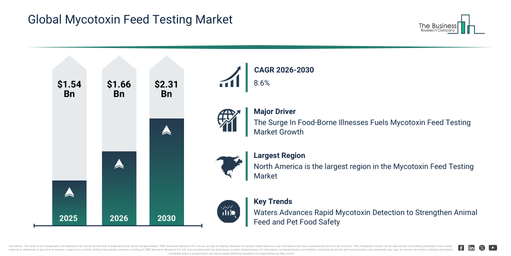
    The mycotoxin feed testing market has experienced significant expansion in recent years, with its valuation expected to rise from $1.54 billion in 2025 to $1.66 billion in 2026, exhibiting a compound annual growth rate (CAGR) of 7.7%. This past growth is largely attributable to factors such as the increasing prevalence of mycotoxin contamination in animal feed, a heightened understanding of feed safety among livestock producers, the necessity to address the limited availability of advanced testing technologies, strict food and feed safety regulations enforced in europe and north america, and the growing output of livestock coupled with a stronger demand for safe feed.

    The mycotoxin feed testing market size is anticipated to undergo significant growth in the coming years, with expectations to reach $2.31 billion by 2030, demonstrating a compound annual growth rate (CAGR) of 8.6%. This expansion during the forecast period is primarily driven by advancements in high-throughput mycotoxin detection technologies, the integration of AI and machine learning into feed testing processes, the broadening of testing services in Asia-Pacific, the increasing uptake of point-of-care testing devices, and growing collaborations between feed producers and testing service providers. Furthermore, key trends for this period include the swift development of high-sensitivity detection kits, a heightened focus on animal health and safety standards, the adoption of portable and on-site testing solutions, the incorporation of automated feed quality monitoring systems, and improved regulatory compliance and reporting.

    Download A Free Sample Report For Comprehensive Market Insights:

    https://www.thebusinessresearchcompany.com/sample.aspx?id=10453&type=smp

    Which Major Factors Are Contributing To The Development Of The Mycotoxin Feed Testing Market?

    The increase in incidences of food-borne illness is expected to propel the growth of mycotoxin feed testing going forward. Food-borne illness refers to a disease or sickness that is caused by the consumption of foods or beverages that are contaminated with pathogens or microorganisms. Food-borne illnesses are increasing due to the increasing use of commercial food services, new methods of producing and distributing food, new or re-emerging infectious foodborne agents, changes in diet, and others. Mycotoxin feed testing will reduce the chances of ingesting contaminated food and hence, reduce food-borne illnesses. For instance, in October 2024, according to the report published by the World Health Organization (WHO), a Switzerland-based government agency responsible for international public health, an estimated 600 million, or almost 1 in 10 people in the world fall ill after eating contaminated food and 420 000 die every year. Therefore, the increase in incidences of food born illness is driving the growth of the mycotoxins feed testing market.

    What Segment Categories Are Evaluated In The Mycotoxin Feed Testing Market Study?

    The mycotoxin feed testing market covered in this report is segmented –

    1) By Type: Aflatoxins, Alternaria, Cyclopiazonic Acid, Citrinin, Fusarium Toxins, Ergot Alkaloids

    2) By Sample: Cereals, Seeds And Seed Products, Forage And Silage, Other Samples

    3) By Technology: Chromatography Based, Immunoassay-Based, Lateral Flow Assay Based, Spectroscopy Based, Other Technologies

    4) By End-User: Food And Beverages, Animal Feed, Pharmaceuticals

    Subsegments:

    1) By Aflatoxins: Aflatoxin B1, Aflatoxin B2, Aflatoxin G1, Aflatoxin G2

    2) By Alternaria: Alternaria Toxins

    3) By Cyclopiazonic Acid: Testing For Cyclopiazonic Acid in Feed

    4) By Citrinin: Citrinin Testing In Feed Products

    5) By Fusarium Toxins: Deoxynivalenol (DON), Zearalenone, Fumonisins, T-2 Toxin

    6) By Ergot Alkaloids: Testing For Ergotamine And Ergocristine

    Which Trends Are Contributing To Changes In The Mycotoxin Feed Testing Market?

    Major companies operating in the mycotoxin feed testing market are focusing on developing innovative products, such as rapid quantitative lateral flow mycotoxin testing strips, to enable faster, on-site detection of harmful mycotoxins and improve food safety decision-making across feed and pet food value chains. A lateral flow mycotoxin testing strip is a portable immunoassay-based diagnostic tool designed to quickly quantify toxic fungal metabolites in feed and food without complex laboratory infrastructure. For instance, in May 2024, Waters Corporation, a US-based provider of analytical instruments, software, and food safety testing solutions, launched the VICAM Fumo-V ONE Strip Test, which delivers quantitative results for key mycotoxins including aflatoxin, fumonisin, and DON directly at production sites in under 10 minutes using simple water extraction. The product enables feed and pet food manufacturers to move quality control upstream, reduce dependence on external laboratories, accelerate release decisions, and lower the risk of contamination-related losses, thereby enhancing overall safety, efficiency, and regulatory compliance in animal nutrition supply chains.

    Who Are The Major Companies Operating In The Mycotoxin Feed Testing Market?

    North America was the largest region in the mycotoxin feed testing market in 2025. Asia-Pacific is expected to be the fastest-growing region in the global mycotoxin feed testing market during the forecast period. The regions covered in the mycotoxin feed testing market report are Asia-Pacific, South East Asia, Western Europe, Eastern Europe, North America, South America, Middle East, Africa.

    Access The Complete Mycotoxin Feed Testing Market Report:

    https://www.thebusinessresearchcompany.com/report/mycotoxin-feed-testing-global-market-report

    Which Region Is The Primary Market For The Mycotoxin Feed Testing Market?

    North America was the largest region in the mycotoxin feed testing market in 2025. Asia-Pacific is expected to be the fastest-growing region in the global mycotoxin feed testing market during the forecast period. The regions covered in the mycotoxin feed testing market report are Asia-Pacific, South East Asia, Western Europe, Eastern Europe, North America, South America, Middle East, Africa.

    Access a Customized Mycotoxin Feed Testing Market Report for Deeper Competitive Insights

    https://www.thebusinessresearchcompany.com/sample.aspx?id=10453&type=smp

    Get in touch with us:

    The Business Research Company: https://www.thebusinessresearchcompany.com/

    Americas: +1 310-496-7795

    Asia: +44 7882 955267 & +91 8897263534

    Europe: +44 7882 955267

    Email us at: marketing@tbrc.info

    Follow us on:

    LinkedIn: https://in.linkedin.com/company/the-business-research-company

    YouTube: https://www.youtube.com/channel/UC24_fI0rV8cR5DxlCpgmyFQ

    Global Market Model: https://www.thebusinessresearchcompany.com/global-market-model
  • Monoclonal Antibodies In Veterinary Health Market Analysis Through 2030 Focusing On Demand Trends And Growth Drivers

    Monoclonal Antibodies In Veterinary Health Market Analysis Through 2030 Focusing On Demand Trends And Growth Drivers

    The Business Research Company’s 2026 market reports feature advanced enhancements such as market attractiveness analysis, total addressable market evaluation, company benchmarking matrices, interactive Excel dashboards, expanded supply chain intelligence, emerging startup coverage, and detailed product insights, delivering more actionable and strategically valuable research.

    What Is The Expected Market Size Of The Monoclonal Antibodies In Veterinary Health Market In 2026 And How Much Will It Reach By 2030?

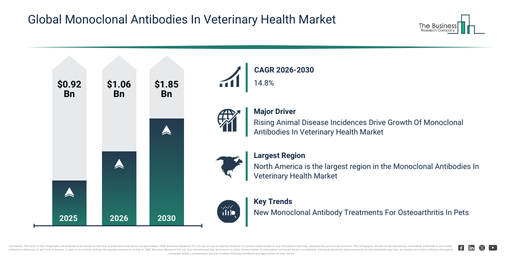
    The monoclonal antibodies in veterinary health market has experienced substantial growth in recent years. It is forecast to rise from $0.92 billion in 2025 to $1.06 billion in 2026, achieving a compound annual growth rate (CAGR) of 15.2%. The expansion observed historically can be ascribed to the rising prevalence of canine cancers, an increasing incidence of autoimmune disorders in pets, the limited availability of targeted therapies, the growth of veterinary hospitals, and a greater awareness of advanced veterinary treatments.

    The monoclonal antibodies in veterinary health market is projected for significant expansion in the coming years, anticipated to reach $1.85 billion by 2030, exhibiting a compound annual growth rate (CAGR) of 14.8%. Several factors will drive this growth during the forecast period, including advancements in mAb engineering technology, a greater uptake of species-specific treatments, increased investment in veterinary oncology and dermatology fields, the evolution of personalized veterinary medicine, and the expansion of the global veterinary healthcare infrastructure. Key trends foreseen for the forecast period encompass an increase in monoclonal antibody-based treatments for canine cancer, a surge in the application of mAbs for autoimmune conditions in dogs, broader use of veterinary dermatology applications, enhanced adoption of targeted pain management solutions, and the creation of species-specific antibody therapies tailored for cats, horses, and livestock.

    Download A Free Sample Report For Comprehensive Market Insights:

    https://www.thebusinessresearchcompany.com/sample.aspx?id=20575&type=smp

    What Key Growth Drivers Are Influencing The Monoclonal Antibodies In Veterinary Health Market?

    The rising animal disease incidences are expected to propel the growth of the monoclonal antibodies in veterinary health market going forward. The rising incidence of animal diseases is driven by intensified farming practices, which increase the risk of infectious disease spread, and climate change, which expands the range of disease vectors such as ticks and mosquitoes. Monoclonal antibodies are highly useful for treating animal diseases as they target specific pathogens or proteins involved in disease processes, offering precise and effective treatments. For instance, in June 2024, according to a report published by the GOV.UK, a UK-based government website, between April 2023 and March 2024, the number of animals slaughtered due to TB incidents rose by 5% in England to 21,298, and by 17% in Wales to 11,197. The rising animal disease incidences are driving the growth of monoclonal antibodies in veterinary health market.

    How Is The Monoclonal Antibodies In Veterinary Health Market Examined Through Segment Analysis?

    The monoclonal antibodies in veterinary health market covered in this report is segmented –

    1) By Product: Monoclonal Antibodies (mAbs), Glucocorticoids, Antihistamines, Immunosuppressants, Other Products

    2) By Animal Type: Dogs, Cats, Horses, Livestock, Other Animals

    3) By Indication: Allergic Skin Disease, Autoimmune Disorders, Infectious Diseases, Cancer Or Tumor Therapy, Other Indications

    4) By Route Of Administration: Injectable, Oral, Topical

    5) By Distribution Channel: Veterinary Clinics, Specialized Animal Hospitals, Retail Pharmacies, Online Pharmacies, Other Distribution Channels

    Subsegments:

    1) By Monoclonal Antibodies: Lokivetmab, Felvetmab, Investigational Monoclonal Antibodies, Equine-specific mAbs

    2) By Glucocorticoids: Prednisone, Prednisolone, Dexamethasone, Methylprednisolone, Hydrocortisone, Triamcinolone

    3) By Antihistamines: Diphenhydramine, Hydroxyzine, Cetirizine, Loratadine, Chlorpheniramine

    4) By Immunosuppressants: Cyclosporine, Tacrolimus, Azathioprine, Mycophenolate Mofetil

    5) By Other Products: Essential Fatty Acid Supplements, Medicated Shampoos And Sprays, Allergen-Specific Immunotherapy (ASIT), Skin Barrier Repair Creams, Nutraceuticals And Probiotics

    What Trends Are Shaping The Monoclonal Antibodies In Veterinary Health Market Structure?

    Major companies operating in the monoclonal antibodies in veterinary health market are focusing on developing innovative veterinary therapeutic solutions, such as anti-NGF monoclonal antibody treatment to address conditions such as chronic pain and inflammation in animals. Anti-NGF monoclonal antibody treatment refers to a therapeutic approach that targets and inhibits nerve growth factor (NGF) to reduce pain and inflammation in animals suffering from chronic pain conditions. For instance, in May 2023, Zoetis, a US-based animal health company, received FDA approvals for Librela (bedinvetmab injection), the first monoclonal antibody treatment for controlling pain associated with osteoarthritis (OA) in dogs, which is administered as a once-monthly injection, and Apoquel Chewable, the first chewable medication specifically for managing allergic itch and inflammation in dogs aged one year or older. Librela is a monoclonal antibody that targets and inhibits nerve growth factor (NGF). By blocking NGF, Librela helps to prevent these pain signals from reaching the brain, thereby reducing the sensation of pain in dogs with osteoarthritis. Librela represents a significant advancement in veterinary pain management, providing a novel approach to treating chronic pain in dogs.

    Which Companies Are Influencing The Monoclonal Antibodies In Veterinary Health Market?

    North America was the largest region in the monoclonal antibodies in veterinary health market in 2025. The regions covered in the monoclonal antibodies in veterinary health market report are Asia-Pacific, South East Asia, Western Europe, Eastern Europe, North America, South America, Middle East, Africa.

    Access The Complete Monoclonal Antibodies In Veterinary Health Market Report:

    https://www.thebusinessresearchcompany.com/report/monoclonal-antibodies-in-veterinary-health-global-market-report

    Which Geographic Region Represents The Largest Monoclonal Antibodies In Veterinary Health Market Share?

    North America was the largest region in the monoclonal antibodies in veterinary health market in 2025. The regions covered in the monoclonal antibodies in veterinary health market report are Asia-Pacific, South East Asia, Western Europe, Eastern Europe, North America, South America, Middle East, Africa.

    Access a Customized Monoclonal Antibodies In Veterinary Health Market Report for Deeper Competitive Insights

    https://www.thebusinessresearchcompany.com/sample.aspx?id=20575&type=smp

    Get in touch with us:

    The Business Research Company: https://www.thebusinessresearchcompany.com/

    Americas: +1 310-496-7795

    Asia: +44 7882 955267 & +91 8897263534

    Europe: +44 7882 955267

    Email us at: marketing@tbrc.info

    Follow us on:

    LinkedIn: https://in.linkedin.com/company/the-business-research-company

    YouTube: https://www.youtube.com/channel/UC24_fI0rV8cR5DxlCpgmyFQ

    Global Market Model: https://www.thebusinessresearchcompany.com/global-market-model

  • Microorganism Feed Carbohydrase Market Projected To Surpass $2.8 Billion By 2030 At 9.3% CAGR

    Microorganism Feed Carbohydrase Market Projected To Surpass $2.8 Billion By 2030 At 9.3% CAGR

    The Business Research Company’s 2026 market reports feature advanced enhancements such as market attractiveness analysis, total addressable market evaluation, company benchmarking matrices, interactive Excel dashboards, expanded supply chain intelligence, emerging startup coverage, and detailed product insights, delivering more actionable and strategically valuable research.

    What Market Size Is Forecasted For The Microorganism Feed Carbohydrase Market By 2030 Based On Its 2026 Value?

    The microorganism feed carbohydrase market size has experienced significant expansion in recent years. This market is anticipated to expand from $1.81 billion in 2025 to $1.97 billion in 2026, at a compound annual growth rate (CAGR) of 8.6%. Historically, this growth has been propelled by several factors, including the increase in compound feed production, a growing livestock population, the demand for improved feed conversion ratios, the availability of microbial fermentation technologies, and rising feed raw material costs.

    The microorganism feed carbohydrase market size is projected to experience substantial growth in the coming years. It is forecast to reach $2.81 billion by 2030, demonstrating a compound annual growth rate (CAGR) of 9.3%. This anticipated growth during the forecast period can be attributed to factors such as a shift toward sustainable feed additives, an increased focus on gut health optimization, the expansion of aquaculture feed demand, wider adoption of enzyme-based nutrition solutions, and regulatory pushes to reduce antibiotic use. Major trends for the forecast period include the rising integration of microbial enzymes in feed formulations, a growing demand for improved feed digestibility, the increasing use of multi-enzyme carbohydrase blends, the expansion of enzyme applications across various livestock species, and a preference for cost-effective feed efficiency enhancers.

    Download A Free Sample Report For Comprehensive Market Insights:

    https://www.thebusinessresearchcompany.com/sample.aspx?id=10452&type=smp

    Which Core Factors Are Supporting The Expansion Of The Microorganism Feed Carbohydrase Market?

    Rising demand for animal protein such as meat is expected to propel the growth of the microorganisms feed carbohydrase market going forward. Meat refers to the flesh of animals that are used for consumption to offer a good source of protein, vitamins, and minerals in a diet. Animal protein such as meat is rising due to population growth, as a larger global population increases overall demand for protein-rich foods to meet basic nutritional needs. Microorganisms feed carbohydrase enzymes are commonly employed in animal feeds to reduce the negative impacts of antinutritional elements in the structure of feed raw materials and improve performance, which helps to supply more meat per animal at a reduced cost while enhancing overall long-term well-being. For instance, in July 2025, according to the Department for Environment, Food and Rural Affairs (Defra), a UK-based government department, total UK meat production in 2024 was 4,166 thousand tonnes, up from 4,059 thousand tonnes in 2023. Therefore, rising demand for animal protein such as meat drives the microorganisms feed carbohydrase market.

    Which Segment Groups Define The Microorganism Feed Carbohydrase Market Landscape?

    The microorganism feed carbohydrase market covered in this report is segmented –

    1) By Type: Amylases, Cellulases, Pectinases, Lactase, Other Types

    2) By Form: Dry, Liquid

    3) By Livestock: Poultry, Swine, Ruminants, Aquatic Animals, Other Livestocks

    4) By Application: Food And Beverage, Animal Feed, Pharmaceuticals, Other Applications

    Subsegments:

    1) By Amylases: Alpha-Amylase, Beta-Amylase, Glucoamylase

    2) By Cellulases: Endocellulase, Exocellulase, Beta-Glucosidase

    3) By Pectinases: Polygalacturonase, Pectin Lyase, Pectinesterase

    4) By Lactase: Beta-Galactosidase

    5) By Other Types: Xylanases, Mannanases, Glucosidases

    What Trends Are Influencing The Microorganism Feed Carbohydrase Market?

    Major companies operating in the microorganism feed carbohydrase market are focusing on developing innovative products such as xylanase to improve the digestibility of fiber-rich feed, thereby enhancing the nutrient absorption and overall performance of livestock. These xylanase products break down non-starch polysaccharides, such as xylans, found in plant cell walls, making nutrients more accessible to animals. For instance, in March 2024, EW Nutrition, a Germany-based animal feed manufacturer, launched its xylanase product, Axxess XY. This new enzyme technology marks a significant advancement in feed efficiency and animal nutrition. The introduction of Axxess XY is expected to transform the enzyme market within the animal nutrition sector, offering feed producers innovative solutions that enhance efficiency and reduce costs. Additionally, the company plans to expand its offerings globally, demonstrating a strong commitment to advancing enzyme technology for animal health and nutrition.

    Who Are The Companies Shaping The Microorganism Feed Carbohydrase Market Landscape?

    North America was the largest region in the microorganism feed carbohydrase market in 2025. The regions covered in the microorganism feed carbohydrase market report are Asia-Pacific, South East Asia, Western Europe, Eastern Europe, North America, South America, Middle East, Africa.

    Access The Complete Microorganism Feed Carbohydrase Market Report:

    https://www.thebusinessresearchcompany.com/report/microorganism-feed-carbohydrase-global-market-report

    Which Region Leads The Microorganism Feed Carbohydrase Market By Size?

    North America was the largest region in the microorganism feed carbohydrase market in 2025. The regions covered in the microorganism feed carbohydrase market report are Asia-Pacific, South East Asia, Western Europe, Eastern Europe, North America, South America, Middle East, Africa.

    Access a Customized Microorganism Feed Carbohydrase Market Report for Deeper Competitive Insights

    https://www.thebusinessresearchcompany.com/sample.aspx?id=10452&type=smp

    Get in touch with us:

    The Business Research Company: https://www.thebusinessresearchcompany.com/

    Americas: +1 310-496-7795

    Asia: +44 7882 955267 & +91 8897263534

    Europe: +44 7882 955267

    Email us at: marketing@tbrc.info

    Follow us on:

    LinkedIn: https://in.linkedin.com/company/the-business-research-company

    YouTube: https://www.youtube.com/channel/UC24_fI0rV8cR5DxlCpgmyFQ

    Global Market Model: https://www.thebusinessresearchcompany.com/global-market-model
  • Foot And Mouth Disease Diagnostics Market Forecast 2026–2030 Featuring Industry Trends And Market Developments

    Foot And Mouth Disease Diagnostics Market Forecast 2026–2030 Featuring Industry Trends And Market Developments

    The Business Research Company’s 2026 market reports feature enhanced tools like market attractiveness analysis, TAM assessment, and company scoring matrices, along with interactive dashboards, deeper supply chain insights, and startup coverage strengthening the depth, usability, and strategic value of insights.

    How Is The Market Size Of The Foot And Mouth Disease Diagnostics Market Expected To Change From 2026 To 2030?

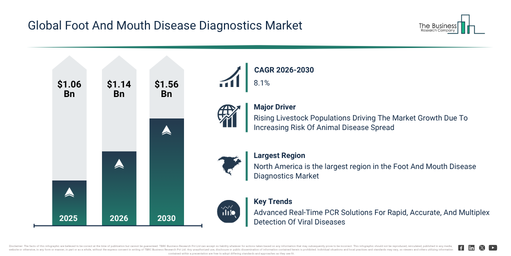
    The foot and mouth disease diagnostics market size has demonstrated robust growth in recent years. It is projected to expand from $1.06 billion in 2025 to $1.14 billion in 2026, at a compound annual growth rate (CAGR) of 7.9%. This past growth can be attributed to recurring outbreaks of foot and mouth disease, the increasing global livestock population, the expansion of veterinary diagnostic laboratories, government-led disease surveillance programs, and a rising awareness regarding animal health management.

    The foot and mouth disease diagnostics market size is projected for robust expansion in the coming years, expected to reach $1.56 billion by 2030, demonstrating a compound annual growth rate (CAGR) of 8.1%. This anticipated growth during the forecast period is primarily driven by factors such as the increasing need for early and rapid disease detection, enhanced investment in veterinary healthcare infrastructure, the expansion of molecular diagnostic technologies, intensified monitoring of rising cross-border livestock trade, and the ongoing development of portable diagnostic instruments. Furthermore, key trends anticipated for this period include a greater adoption of real-time PCR diagnostic kits, a surging demand for rapid point-of-care testing, the broader development of multiplex assays, an increased application of lateral flow immunoassays in field settings, and the innovation of high-sensitivity ELISA kits.

    Access Your Free Sample Report For In-Depth Market Analysis:

    https://www.thebusinessresearchcompany.com/sample_request?id=61257622&type=smp&name=Foot%20And%20Mouth%20Disease%20Diagnostics%20Market%20Report%202026

    What Key Factors Are Shaping The Foot And Mouth Disease Diagnostics Market Landscape?

    An anticipated increase in livestock populations is poised to drive the expansion of the foot and mouth disease diagnostics market. These populations comprise the complete count of domesticated animals like cattle, pigs, and sheep, bred for purposes such as food, dairy, or other commercial gains. The expansion of these populations stems from the growing global demand for meat and dairy, which encourages farmers to manage more extensive herds. Greater concentrations of animals heighten the potential for swift disease spread, thereby intensifying the requirement for prompt detection and ongoing disease monitoring to avert widespread outbreaks and financial setbacks. For instance, as per the Australian Bureau of Statistics, an Australian government administration, it was noted in June 2025 that there were 30.4 million cattle on farms as of 30 June 2024, representing a 1.6% increase from June 2023. Consequently, the expanding livestock populations are a key driver for the growth of the foot and mouth disease diagnostics market.

    How Are Segments Identified Within The Foot And Mouth Disease Diagnostics Market Segment Framework?

    The foot and mouth disease diagnostics market covered in this report is segmented –

    1) By Technique: Enzyme-Linked Immunosorbent Assay Kits, Polymerase Chain Reaction Kits, Immunoassays, Chromatography, Other Techniques

    2) By Product Type: Kits And Reagents, Instruments, Software, Other Product Types

    3) By Animal Type: Cattle, Swine, Sheep And Goats, Other Animal Types

    4) By End-User: Veterinary Hospitals And Clinics, Diagnostic Laboratories, Research Institutes, Other End Users

    Subsegments:

    1) By Enzyme-Linked Immunosorbent Assay Kits: Indirect Enzyme-Linked Immunosorbent Assay Kits, Sandwich Enzyme-Linked Immunosorbent Assay Kits, Competitive Enzyme-Linked Immunosorbent Assay Kits, Capture Enzyme-Linked Immunosorbent Assay Kits

    2) By Polymerase Chain Reaction Kits: Conventional Polymerase Chain Reaction Kits, Real-Time Polymerase Chain Reaction Kits, Multiplex Polymerase Chain Reaction Kits, Reverse Transcription Polymerase Chain Reaction Kits

    3) By Immunoassays: Lateral Flow Immunoassays, Radioimmunoassays, Fluorescent Immunoassays, Chemiluminescent Immunoassays

    4) By Chromatography: Thin Layer Chromatography, High Performance Liquid Chromatography, Gas Chromatography, Ion Exchange Chromatography

    5) By Other Techniques: Western Blotting, Hemagglutination Assays, Agar Gel Immunodiffusion, Flow Cytometry

    What Market Trends Are Affecting The Foot And Mouth Disease Diagnostics Market?

    Leading firms in the foot and mouth disease diagnostics market are prioritizing the creation of advanced techniques, including real-time polymerase chain reaction (PCR) assays, to achieve quicker and more precise identification of FMD outbreaks. These real-time PCR assays function as molecular tests capable of detecting and quantifying viral genetic material instantaneously, thereby facilitating the rapid and accurate identification of foot and mouth disease for efficient outbreak management. As an illustration, BioStone Animal Health LLC, a US-based biotechnology firm, introduced AsurDx Real-Time PCR kits for FMD detection in May 2025. This sophisticated molecular diagnostic solution is engineered for fast, sensitive, and multiplex detection of several FMD virus types (A, O, Asia1). The PCR kits incorporate pre-validated reaction mixes, primers, probes, enzymes, along with all essential reagents and controls, streamlining the setup process for speed and reliability. Furthermore, they are compatible with numerous thermal cyclers and allow for the quantitative identification of viral genes, ensuring high accuracy and reproducibility. These PCR kits deliver results that are both quicker and more precise than conventional ELISA tests, thereby supporting routine diagnostics, monitoring of outbreaks, and global surveillance initiatives, ultimately reinforcing FMD control efforts across the globe.

    Who Are The Companies Competing Within The Foot And Mouth Disease Diagnostics Market?

    Major companies operating in the foot mouth disease diagnostics market are Thermo Fisher Scientific Inc., Zoetis Inc., IDEXX Laboratories Inc., Bio-Rad Laboratories Inc., QIAGEN N.V., Neogen Corporation, IDvet Inc., Creative Diagnostics Inc., Krishgen Biosystems Pvt. Ltd., AdvaCare Pharma Inc., Biovet Inc., Acro Biotech Inc., Ring Biotechnology Co. Ltd., BioNote Inc., BIO X Diagnostics Inc., GlobalVet Solutions LLC, Median Diagnostics Inc., BioVenic Inc., Avicena LLC, Svanova Biotech AB.

    Get The Full Foot And Mouth Disease Diagnostics Market Report:

    https://www.thebusinessresearchcompany.com/report/foot-and-mouth-disease-diagnostics-market-report

    Which Region Dominates The Foot And Mouth Disease Diagnostics Market By Market Share?

    North America was the largest region in the foot and mouth disease diagnostics market in 2025. Asia-Pacific is expected to be the fastest-growing region in the forecast period. The regions covered in the foot and mouth disease diagnostics market report are Asia-Pacific, South East Asia, Western Europe, Eastern Europe, North America, South America, Middle East, Africa.

    Request A Customized Foot And Mouth Disease Diagnostics Market Report For Competitive Insights:

    https://www.thebusinessresearchcompany.com/Customise?id=61257622&name=Foot%20And%20Mouth%20Disease%20Diagnostics%20Market%20Report%202026&type=smp

    Browse Through More Reports Similar to the Global Foot And Mouth Disease Diagnostics Market 2026, By The Business Research Company

    pet dna testing market report 2026

    https://www.thebusinessresearchcompany.com/report/pet-dna-testing-global-market-report

    animal drug compounding market report 2026

    https://www.thebusinessresearchcompany.com/report/animal-drug-compounding-global-market-report

    duchenne muscular dystrophy drugs market report 2026

    https://www.thebusinessresearchcompany.com/report/duchenne-muscular-dystrophy-drugs-global-market-report

    Get in touch with us:

    The Business Research Company: https://www.thebusinessresearchcompany.com/

    Americas +1 310-496-7795

    Asia +44 7882 955267 & +91 8897263534

    Europe +44 7882 955267

    Email us at marketing@tbrc.info

    Follow us on:

    LinkedIn: https://in.linkedin.com/company/the-business-research-company

    YouTube: https://www.youtube.com/channel/UC24_fI0rV8cR5DxlCpgmyFQ

    Global Market Model: https://www.thebusinessresearchcompany.com/global-market-model

  • Global Animal-Based Protein Supplements Market Projections 2026–2035 with Long-Term Growth Perspective

    The Business Research Company’s 2026 market reports include new capabilities such as market attractiveness scoring and analysis, total addressable market analysis, company scoring matrix, interactive excel data dashboard, improved supply chain analysis, upcoming startups in the market, and overview of key products, aimed at improving the depth, usability, and strategic value of the insights delivered.

    What Market Valuation Is Forecasted For The Abemaciclib Market By 2030 Starting From Its 2026 Size?

    The animal based protein supplements market size has experienced significant expansion in recent years. This market is anticipated to rise from $33.56 billion in 2025 to $37.35 billion in 2026, exhibiting a compound annual growth rate (CAGR) of 11.3%. The historical increase in this market can be attributed to the rise of bodybuilding and fitness activities, growing recognition of protein deficiency, enhanced consumption of dairy-based supplements, the proliferation of retail nutrition stores, and the development of the sports nutrition industry.

    The animal based protein supplements market size is anticipated to experience substantial growth in the coming years. It is predicted to expand to $58.07 billion in 2030, exhibiting a compound annual growth rate (CAGR) of 11.7%. This projected growth can be attributed to an escalating demand for high-quality complete proteins, an increase in the aging population requiring protein supplementation, broader adoption of online supplement sales, advancements in hydrolyzed and fast-absorption protein products, and rising demand from functional food manufacturers. Prominent trends expected during this period include a heightened preference for complete protein sources, the expansion of sports nutrition and fitness culture, the proliferation of ready-to-drink protein formats, increased integration of animal proteins into functional foods, and a focus on premiumization and clean-label positioning.

    Download the Free Sample Report to Explore Key Market Insights:

    https://www.thebusinessresearchcompany.com/sample.aspx?id=7315&type=smp

    What Primary Drivers Are Shaping The Development Of The Abemaciclib Market?

    The significant expansion within the nutraceuticals and dietary supplement industry is projected to accelerate the animal-based protein supplements market going forward. This substantial growth in the nutraceuticals and dietary supplement market reflects a rapid surge in demand, sales, and overall market reach, primarily driven by a heightened consumer emphasis on health, wellness, and preventive healthcare, as individuals become more conscious of maintaining their health and mitigating future medical risks through daily nutritional choices. Animal-based protein supplements play a crucial role in fostering this growth within the nutraceuticals and dietary supplement market by catering to the escalating requirement for complete, readily absorbed proteins that effectively support muscle health, recovery, and holistic nutrition. An illustration of this trend is seen in the data from The Australian Bureau of Statistics (ABS), an Australia-Based official national statistical agency, which in September 2025 reported that in 2023, approximately one out of every three people (33.6%) utilized a dietary supplement. Thus, the escalating development in the nutraceuticals & dietary supplement industry will undoubtedly propel the growth of the animal-based protein supplements powder market throughout the forecast period.

    Which Segment Categories Define The Abemaciclib Market?

    The animal based protein supplements market covered in this report is segmented –

    1) By Product: Protein Powder, Protein Bars, Ready-To-Drink, Other Products

    2) By Raw Materials: Whey, Casein, Egg, Fish, Other Raw Materials

    3) By Application: Pharmaceuticals And Nutraceuticals, Food And Beverages, Infant Formulations, Cosmetics And Personal Care, Animal Feed, And Dietary Supplements

    4) By Distribution Channel: Supermarkets And Hypermarkets, Online Stores, Chemists Or Drugstores, Specialty Stores, Other Distribution Channels

    Subsegments:

    1) By Protein Powder: Whey Protein Powder, Casein Protein Powder, Egg Protein Powder, Hydrolyzed Protein Powder

    2) By Protein Bars: Whey Protein Bars, Meal Replacement Bars, Low-Sugar Protein Bars, High-Protein Snack Bars

    3) By Ready-To-Drink: Protein Shakes, Protein Smoothies, Nutritional Drinks

    4) By Other Products: Protein Snacks, Protein-Enriched Foods, Functional Beverages

    What Major Market Trends Are Driving Changes In The Animal Based Protein Supplements Market?

    A significant trend among major companies in the animal-based protein supplements market is an escalating emphasis on strategic partnerships and collaborations. This focus is driven by objectives to enhance their financial stability, reinforce their product range, and extend their geographical footprint. Strategic partnerships and collaborations are formal agreements where companies pool resources, share expertise, or provide market access to collectively achieve business growth targets. As an illustration, in July 2023, Unico Nutrition, a US-based enterprise focused on creating and delivering secure and effective exercise supplements, joined forces with Perfect Day, Inc., a US-based food technology firm. Their collaboration led to the introduction of APOLLO II, which marks the first-ever hybrid protein powder. This groundbreaking product incorporates sustainable whey produced via precision fermentation alongside grass-fed, animal-based protein, thereby creating a more ethical and environmentally conscious formula that elevates performance.

    Who Are The Top Companies Competing In The Abemaciclib Market?

    Major companies operating in the animal based protein supplements market are Glanbia plc, Abbott Laboratories, CytoSport Inc., MusclePharm Corporation, Iovate Health Sciences International Inc., AMCO Proteins, Quest Nutrition, NOW Foods, Transparent Labs, The Bountiful Company, Dymatize Enterprises LLC, BPI Sports LLC, Jym Supplement Science, RSP Nutrition, Optimum Nutrition, MuscleTech, BSN, Gaspari Nutrition, Universal Nutrition, Maximum Human Performance, Beverly International Nutrition, Nutrabolics, Inner Armour, ProMera Sports LLC, NutraBio

    Read the full animal based protein supplements market report here:

    https://www.thebusinessresearchcompany.com/report/animal-based-protein-supplements-global-market-report

    How Does The Abemaciclib Market Perform Across Major Global Regions?

    North America was the largest region in the animal-based protein supplements market in 2025.Asia-Pacific is expected to be the fastest-growing region in the forecast period. The regions covered in the animal based protein supplements market report are Asia-Pacific, South East Asia, Western Europe, Eastern Europe, North America, South America, Middle East, Africa.

    Request A Tailored Abemaciclib Market Research Report For Competitive Advantage:

    https://www.thebusinessresearchcompany.com/customise?id=7315&type=smp

    Browse Through More Reports Similar to the Global Animal Based Protein Supplements Market 2026, By The Business Research Company

    Protein Supplements Global Market Report 2026

    https://www.thebusinessresearchcompany.com/report/protein-supplements-global-market-report

    Veterinary Dietary Supplements Global Market Report 2026

    https://www.thebusinessresearchcompany.com/report/veterinary-dietary-supplements-global-market-report

    Animal Feed Protein Global Market Report 2026

    https://www.thebusinessresearchcompany.com/report/animal-feed-protein-global-market-report

    Get in touch with us:

    The Business Research Company: https://www.thebusinessresearchcompany.com/

    Americas +1 310-496-7795

    Asia +44 7882 955267 & +91 8897263534

    Europe +44 7882 955267

    Email us at info@tbrc.info

    Follow us on:

    LinkedIn: https://in.linkedin.com/company/the-business-research-company

    YouTube: https://www.youtube.com/channel/UC24_fI0rV8cR5DxlCpgmyFQ

    Global Market Model: https://www.thebusinessresearchcompany.com/global-market-model

  • Animal Antibiotics and Antimicrobials Market Insights 2026–2030 Highlighting Emerging Business Potential

    The Business Research Company’s 2026 market reports include new capabilities such as market attractiveness scoring and analysis, total addressable market analysis, company scoring matrix, interactive excel data dashboard, improved supply chain analysis, upcoming startups in the market, and overview of key products, aimed at improving the depth, usability, and strategic value of the insights delivered.

    How Is The Market Size Of The 3D Bioprinted Human Tissue Market Expected To Change Between 2026 And 2030?

    The animal antibiotics and antimicrobials market has experienced robust growth in recent years. It is forecast to expand from $5.64 billion in 2025 to $6.05 billion in 2026, achieving a compound annual growth rate (CAGR) of 7.3%. Historically, this growth has been driven by a rising livestock population, the increasing prevalence of animal infectious diseases, the growth of commercial animal farming, expanding veterinary healthcare infrastructure, and the historical use of antibiotics for growth promotion.

    The market for animal antibiotics and antimicrobials is projected to experience substantial growth over the coming years. This market is anticipated to reach a value of $8.03 billion by 2030, exhibiting a compound annual growth rate (CAGR) of 7.3%. Factors contributing to this growth during the projected period include more stringent regulations concerning antimicrobial resistance, a heightened demand for food products sourced from animals that are safe, an increase in companion animal ownership, greater investment in veterinary drug research and development, and the expansion of preventive healthcare approaches for animals. Key trends expected within this forecast timeframe encompass the integration of precision veterinary medicine, practices for sustainable livestock health management, digital tracking of antimicrobial usage, AI-driven drug discovery for veterinary antibiotics, and intelligent manufacturing processes for veterinary pharmaceuticals.

    Download the Free Sample Report to Explore Key Market Insights:

    https://www.thebusinessresearchcompany.com/sample.aspx?id=6712&type=smp

    Which Major Factors Are Driving The Expansion Of The 3D Bioprinted Human Tissue Market?

    The expanding requirement for products sourced from animals is propelling the growth of the animal antibiotics and antimicrobials market. These food items, including milk, eggs, meat, and various others, serve as crucial nutritional sources and are significant components of human diets. Entities engaged in producing animal-derived foods are concentrating on fostering robust or pathogen-free herds by preventively employing animal antibiotics and antimicrobials. A notable example is a report issued by the Food and Agriculture Organization (FAO), an Italy-based specialized agency of the United Nations, in June 2023, which forecasts a modest rise in global meat production by 0.8 percent in 2023, achieving 365 million tonnes (carcass weight equivalent) in comparison to 2022. Consequently, the increasing demand for animal-derived food products is anticipated to significantly elevate the requirement for animal antibiotics and antimicrobials throughout the forecast period.

    How Is The 3D Bioprinted Human Tissue Market Structured Across Different Segments?

    The animal antibiotics and antimicrobials market covered in this report is segmented –

    1) By Type Of Product: Tetracyclines, Penicillin, Sulfonamides, Macrolides, Aminoglycosides, Lincosamides, Fluoroquinolones, Cephalosporins, Other Type Of Products

    2) By Mode Of Delivery: Premixes, Oral Powder, Oral Solution, Injection, Other Modes Of Delivery

    3) By Animal Type: Food-Producing Animals, Companion Animals

    Subsegments:

    1) By Tetracyclines: Oxytetracycline, Chlortetracycline, Doxycycline

    2) By Penicillin: Penicillin G, Ampicillin, Amoxicillin

    3) By Sulfonamides: Sulfadimidine, Sulfadiazine, Sulfamethoxazole

    4) By Macrolides: Erythromycin, Tylosin, Tulathromycin

    5) By Aminoglycosides: Gentamicin, Neomycin, Streptomycin

    6) By Lincosamides: Lincomycin, Clindamycin

    7) By Fluoroquinolones: Enrofloxacin, Marbofloxacin, Ciprofloxacin

    8) By Cephalosporins: Cefquinome, Cephalexin, Cefoperazone

    9) By Other Type Of Products: Nitrofurans, Phenicols

    Which Trends Are Shaping The Future Of The Animal Antibiotics and Antimicrobials Market?

    Leading companies within the animal antibiotics and antimicrobials market are prioritizing the development of innovative remedies, such as pioneering injectable multi-species treatments. Their aim is to boost therapeutic effectiveness, simplify administration across various livestock, and meet the increasing need for efficient disease management solutions amidst rising concerns about animal health, productivity, and antimicrobial resistance. A pioneering injectable multi-species treatment refers to a recently developed (innovative) injectable medicine designed for safe and effective use across multiple animal types, including cattle, swine, sheep, or goats, rather than being restricted to a single species. For example, in February 2025, Elanco Animal Health Incorporated, a US-based animal health enterprise, introduced Pradalex (pradofloxacin injection). This innovative antibiotic is specifically approved for treating bovine respiratory disease (BRD) and swine respiratory disease (SRD), representing the first new molecule and injectable antibiotic for these conditions cleared by the U.S. FDA in approximately two decades. Pradalex’s unique mechanism of action provides extensive protection against key BRD and SRD bacteria, quickly achieves high therapeutic levels after injection, and boasts an industry-best withdrawal period, thereby improving both effectiveness and ease for producers, while seamlessly integrating into farm-based disease management strategies. This introduction highlights how participants in the market are advancing antimicrobial treatments to tackle significant livestock health issues, enhance animal welfare, and promote sustainable production practices.

    Which Major Players Dominate The 3D Bioprinted Human Tissue Market?

    Major companies operating in the animal antibiotics and antimicrobials market are C. H. Boehringer Sohn AG & Co. KG, Zoetis Inc., Elanco Animal Health Inc., Merck & Co. Inc., Phibro Animal Health Corp., Ashish Life Science Pvt. Limited, Ayurvet Limited, Dechra Pharmaceuticals Plc, Huvepharma Inc., Inovet (V. M. D. nv/sa), Kyoritsu Seiyaku Corporation, Lutim Pharma Private Limited, Neogen Corporation, Tianjin Ringpu Bio-Technology Co. Ltd., UCBVET Animal Health, Vetoquinol, Virbac, Zydus Animal Health Limited, China Animal Husbandry Co. Ltd., Norbrook Laboratories Limited, Biovet AD – Peshtera, Bio Agri Mix LP, Bioiberica S. A. U., Ceva Santé Animale

    Read the full animal antibiotics and antimicrobials market report here:

    https://www.thebusinessresearchcompany.com/report/animal-antibiotics-and-antimicrobials-global-market-report

    Which Region Currently Holds The Largest Share Of The 3D Bioprinted Human Tissue Market?

    North America was the largest region in the animal antibiotics and antimicrobials market in 2025.Asia-Pacific is expected to be the fastest-growing region in the forecast period. The regions covered in the animal antibiotics and antimicrobials market report are Asia-Pacific, South East Asia, Western Europe, Eastern Europe, North America, South America, Middle East, Africa.

    Request A Tailored 3D Bioprinted Human Tissue Market Research Report For Competitive Advantage:

    https://www.thebusinessresearchcompany.com/customise?id=6712&type=smp

    Browse Through More Reports Similar to the Global Animal Antibiotics and Antimicrobials Market 2026, By The Business Research Company

    Veterinary Antibiotics Global Market Report 2026

    https://www.thebusinessresearchcompany.com/report/veterinary-antibiotics-global-market-report

    Antibiotics Global Market Report 2026

    https://www.thebusinessresearchcompany.com/report/antibiotics-global-market-report

    Antibiotic Free Meat Global Market Report 2026

    https://www.thebusinessresearchcompany.com/report/antibiotic-free-meat-global-market-report

    Get in touch with us:

    The Business Research Company: https://www.thebusinessresearchcompany.com/

    Americas +1 310-496-7795

    Asia +44 7882 955267 & +91 8897263534

    Europe +44 7882 955267

    Email us at info@tbrc.info

    Follow us on:

    LinkedIn: https://in.linkedin.com/company/the-business-research-company

    YouTube: https://www.youtube.com/channel/UC24_fI0rV8cR5DxlCpgmyFQ

    Global Market Model: https://www.thebusinessresearchcompany.com/global-market-model