Category: Veterinary Healthcare

  • In Vitro Embryo Production For Cattle Market Size In 2026 And Beyond: Understanding Future Growth Potential

    In Vitro Embryo Production For Cattle Market Size In 2026 And Beyond: Understanding Future Growth Potential

    Built to provide research that’s more actionable and strategically valuable, The Business Research Company’s 2026 market reports include market attractiveness analysis, total addressable market sizing, company benchmarking matrices, interactive Excel dashboards, broader supply chain intelligence, emerging startup tracking, and in-depth product insights.

    In Vitro Embryo Production For Cattle Market CAGR Outlook And Future Development

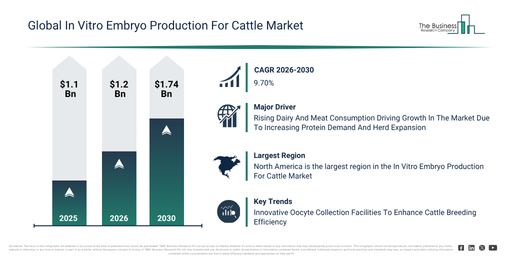
    The market size for in vitro embryo production for cattle has witnessed substantial growth in recent years. It is projected to expand from $1.1 billion in 2025 to $1.2 billion in 2026, demonstrating a compound annual growth rate (CAGR) of 9.5%. This growth in the past can be linked to factors such as the increasing need for high-productivity dairy and beef cattle breeds, a greater adoption of assisted reproductive technologies in livestock farming, rising awareness concerning genetic improvement in cattle breeding programs, the expansion of veterinary reproductive services infrastructure, and increased government support for initiatives aimed at enhancing livestock productivity.

    The market for in vitro embryo production in cattle is expected to show robust growth in the coming years. It is forecast to grow to $1.74 billion by 2030 at a compound annual growth rate (CAGR) of 9.7%. The expansion over the forecast period can be attributed to several factors, including a rising demand for cattle with high genetic merit in the dairy and meat sectors, increased adoption of precision breeding and reproductive biotechnology, the growing integration of AI and data analytics in managing livestock reproduction, the global expansion of commercial embryo transfer services, and an increased focus on food security and sustainable livestock production systems. Key trends in the forecast period involve the rising adoption of advanced embryo culture media and reagents for better in vitro fertilization results, an increasing use of automated oocyte collection and embryo handling systems within cattle breeding programs, the growing implementation of genetic screening and embryo selection technologies for high-yield livestock, the expansion of cryopreservation techniques for long-term embryo storage and transport, and a growing demand for precision breeding services to enhance the productivity of dairy and beef cattle.

    Get A Free Sample Report With In-Depth Market Insights:

    https://thebusinessresearchcompany.com/sample_request?id=64681004&type=smp&name=In%20Vitro%20Embryo%20Production%20For%20Cattle%20Market%20Report%202026&utm_source=Blogs&utm_medium=Paid&utm_campaign=Oct_PR

    In Vitro Embryo Production For Cattle Market Development Factors: What’s Supporting Demand?

    The in vitro embryo production for cattle market is anticipated to grow as a result of increasing dairy and meat consumption. This surge in dairy and meat intake stems from rising income levels, which enable households to afford more protein-rich and animal-based foods, often considered essential for both nutrition and social status. In vitro embryo production (IVP) for cattle facilitates this growth by enhancing cattle reproduction efficiency, allowing farmers to produce a greater number of high-quality calves more quickly. This ultimately leads to larger herds, increased milk yields, and a more abundant meat supply. For instance, in 2026, the World Population Review, a US-based independent organization, indicated that global meat consumption has consistently risen, reaching an estimated 453 million tons in 2025, representing a 1.5% increase from 2024. Therefore, the escalating consumption of dairy and meat is a primary driver for the in vitro embryo production for cattle market.

    In Vitro Embryo Production For Cattle Market Segmentation And Category Overview

    The in vitro embryo production for cattle market covered in this report is segmented –

    1) By Product Type: Media And Reagents, Equipment, Consumables, Services

    2) By Technique: In Vitro Fertilization, Somatic Cell Nuclear Transfer, Other Techniques

    3) By Cattle Type: Dairy Cattle, Beef Cattle

    4) By Application: Research, Breeding, Genetic Improvement, Other Application

    5) By End User: Research Institutes, Veterinary Hospitals And Clinics, Livestock Farms, Other End Users

    Subsegments:

    1) By Media And Reagents: Oocyte Collection Media, Oocyte Maturation Media, Fertilization Media, Embryo Culture Media, Embryo Holding And Transfer Media, Washing And Handling Solutions, Cryopreservation Media, Hormonal Stimulation Reagents, Enzymes And Supplements

    2) By Equipment: Oocyte Aspiration Systems, Ultrasound Guided Collection Devices, Laboratory Incubators, Microscopes And Imaging Systems, Embryo Handling Workstations, Temperature Controlled Transport Units, Centrifugation Equipment, Cryopreservation And Freezing Systems, Liquid Nitrogen Storage Tanks

    3) By Consumables: Culture Media, Hormones And Growth Factors, Cryopreservation Solutions, Laboratory Consumables

    4) By Services: Donor Animal Preparation Services, Oocyte Collection Services, In Vitro Fertilization Services, Embryo Culture Services, Embryo Grading And Selection Services, Embryo Freezing And Storage Services, Embryo Transfer Services, Genetic Evaluation And Screening Services, Breeding Program Management Services

    In Vitro Embryo Production For Cattle Market Transformation Trends: What Innovations Are Driving Change?

    Leading companies engaged in in vitro embryo production for the cattle market are focused on developing innovative solutions, such as ovum pick-up (OPU) centers, to boost oocyte collection efficiency, improve embryo yield, and accelerate genetic advancement in cattle. An ovum pick-up (OPU) center refers to a specialized facility where oocytes are gathered from donor cows using minimally invasive techniques, which are then used for in vitro fertilization and embryo creation to enhance cattle breeding effectiveness. For instance, in September 2025, Farmwest, an Australia-based leading provider of genetics and reproductive services for beef and dairy cattle, opened an advanced Vytelle ADVANCE IVF satellite facility just outside Bunbury. This new ovum pick-up (OPU) center is designed to quicken genetic improvement by allowing producers to multiply embryos from their highest performing animals without removing them from the herd. It utilizes hormone-free IVF, meaning producers can collect oocytes from pregnant cows and young animals without additional hormonal treatments, thereby reducing stress and workload.

    In Vitro Embryo Production For Cattle Market Competitive Landscape: Which Companies Lead The Industry?

    Major companies operating in the in vitro embryo production for cattle market are J. R. Simplot Company, Genus plc, Minitube of America Inc., Stroebech Media GmbH, BAIF Development Research Foundation, Semex Alliance, Select Sires Inc., Trans Ova Genetics, URUS Group, Vytelle LLC, IMV Technologies, VikingGenetics A/S, Art Lab Solutions Pvt. Ltd., IVF Bioscience Ltd., Tyndale Vets, Vet Repro Innovations Pvt. Ltd., Embryo Plus, Flying Cow Genetics, Accuvance India Pvt. Ltd., InvitroSul, GenOvations

    View The Full In Vitro Embryo Production For Cattle Market Report:

    https://thebusinessresearchcompany.com/report/in-vitro-embryo-production-for-cattle-market-report?utm_source=Blogs&utm_medium=Paid&utm_campaign=Oct_PR

    In Vitro Embryo Production For Cattle Market Regional Breakdown: Where Is Demand Concentrated?

    North America was the largest region in the in vitro embryo production for cattle market in 2025. Asia-Pacific is expected to be the fastest-growing region in the forecast period. The regions covered in the in vitro embryo production for cattle market report are Asia-Pacific, South East Asia, Western Europe, Eastern Europe, North America, South America, Middle East and Africa.

    Reach Out To Our Team:

    The Business Research Company: https://www.thebusinessresearchcompany.com/

    Americas: +1 310-496-7795

    Asia: +44 7882 955267 & +91 8897263534

    Europe: +44 7882 955267

    Email us at: marketing@tbrc.info

    Follow us on:

    LinkedIn: https://in.linkedin.com/company/the-business-research-company

    YouTube: https://www.youtube.com/channel/UC24_fI0rV8cR5DxlCpgmyFQ

    Global Market Model: https://www.thebusinessresearchcompany.com/global-market-model
  • Encapsulated Essential Oils For Feed Market 2026: Market Size, Growth Drivers And Emerging Opportunities

    Encapsulated Essential Oils For Feed Market 2026: Market Size, Growth Drivers And Emerging Opportunities

    Backed by market attractiveness analysis, total addressable market sizing, company benchmarking matrices, interactive Excel dashboards, wider supply chain intelligence, emerging startup coverage, and detailed product-level insights, The Business Research Company’s 2026 market reports are designed to offer research that is more actionable and strategically valuable than ever.

    Encapsulated Essential Oils For Feed Market Revenue Growth On Track For A 9.1% CAGR Through 2030

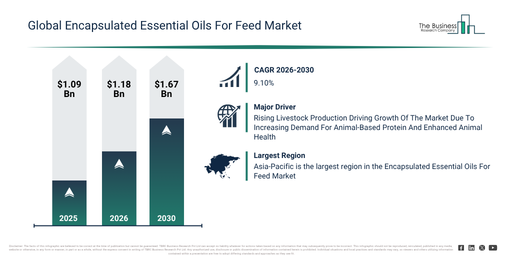
    The encapsulated essential oils for feed market size has experienced strong growth in recent years. It is projected to increase from $1. 09 billion in 2025 to $1. 18 billion in 2026, achieving a compound annual growth rate (CAGR) of 8. 8%. The expansion observed in previous periods can be attributed to several factors, including an increasing livestock population, a growing demand for animal protein, the rise in commercial feed production, the broadening of poultry and swine farming, and the early adoption of phytogenic feed additives.

    The encapsulated essential oils for feed market is expected to experience substantial expansion in the forthcoming years. It is projected to reach $1.67 billion by 2030, demonstrating a compound annual growth rate (CAGR) of 9.1%. This anticipated growth can be attributed to a heightened emphasis on antibiotic alternatives, increasing global meat consumption, advancements in microencapsulation technology, the expanding aquaculture industry, and more stringent regulations concerning antibiotic use in feed. Prominent trends throughout the forecast period include a growing transition towards antibiotic-free livestock production, the rising adoption of natural feed additives for improving gut health, the expansion of functional feed solutions specifically designed for aquaculture, an increasing demand for controlled-release encapsulation technologies within animal nutrition, and a stronger focus on optimizing feed efficiency and implementing cost reduction strategies.

    Get A Free Sample Report With In-Depth Market Insights:

    https://thebusinessresearchcompany.com/sample_request?id=92049031&type=smp&name=Encapsulated%20Essential%20Oils%20For%20Feed%20Market%20Report%202026&utm_source=Blogs&utm_medium=Paid&utm_campaign=Oct_PR

    Encapsulated Essential Oils For Feed Market Demand Drivers Opening New Revenue Streams

    An anticipated increase in livestock farming is projected to fuel the expansion of the market for encapsulated essential oils in animal feed. Livestock production involves the practice of raising and caring for animals to supply food, fiber, and other products for human use. This sector is growing due to the escalating demand for animal-based protein, as increasing global populations and higher incomes drive greater consumption of meat, milk, and eggs. Encapsulated essential oils for feed support livestock production by reducing disease risks and promoting gut health, which leads to improved growth rates and higher-quality animal products. As an illustration, Meat & Livestock Australia, an Australia-based meat industry company, reported in February 2024 that Australia achieved a new record in lamb production in 2023, reaching 246,003 tonnes, an increase of 12.05% compared to 2022. Consequently, the rise in livestock production is driving the growth of the encapsulated essential oils for feed market.

    Encapsulated Essential Oils For Feed Market Segment Landscape: Which Areas Lead Development?

    The encapsulated essential oils for feed market covered in this report is segmented –

    1) By Product Type: Microencapsulated, Nanoencapsulated, Macroencapsulated

    2) By Animal Type: Poultry, Swine, Ruminants, Aquaculture, Other Animal Types

    3) By Source: Herbal, Citrus, Spices, Other Sources

    4) By Distribution Channel: Direct, Indirect

    5) By Application: Growth Promotion, Gut Health, Immunity Enhancement, Other Applications

    Subsegments:

    1) By Microencapsulated: Spray Dried Microcapsules, Coacervated Microcapsules, Lipid Coated Microcapsules, Polymer Coated Microcapsules

    2) By Nanoencapsulated: Nanoemulsions, Nanoliposomes, Solid Lipid Nanoparticles, Polymeric Nanoparticles

    3) By Macroencapsulated: Extruded Capsules, Beadlet Capsules, Gel Based Capsules, Matrix Encapsulated Particles

    Encapsulated Essential Oils For Feed Market Competitive Overview And Top Companies

    Major companies operating in the encapsulated essential oils for feed market are Cargill Incorporated, Archer-Daniels-Midland Company, DSM-Firmenich AG, International Flavors & Fragrances Inc., Symrise AG, Trouw Nutrition International B. V., Alltech Inc., Kemin Industries Inc., Balchem Corporation, Synthite Industries Limited, Novus International Inc., Silvateam S. p. A., Vetagro S. p. A., Phytosynthese SAS, Phytobiotics Futterzusatzstoffe GmbH, Dostofarm GmbH, Nor-Feed SAS, Inovia Hutzinger GmbH, Reed Pacific Pty Ltd, Bialtec GmbH

    View The Full Encapsulated Essential Oils For Feed Market Report:

    https://thebusinessresearchcompany.com/report/encapsulated-essential-oils-for-feed-market-report?utm_source=Blogs&utm_medium=Paid&utm_campaign=Oct_PR

    Encapsulated Essential Oils For Feed Market Leading Geography: Which Region Contributes The Most Revenue?

    Asia-Pacific was the largest region in the encapsulated essential oils for feed market in 2025. Asia-Pacific is expected to be the fastest-growing region in the forecast period. The regions covered in the encapsulated essential oils for feed market report are Asia-Pacific, South East Asia, Western Europe, Eastern Europe, North America, South America, Middle East and Africa.

    Reach Out To Our Team:

    The Business Research Company: https://www.thebusinessresearchcompany.com/

    Americas: +1 310-496-7795

    Asia: +44 7882 955267 & +91 8897263534

    Europe: +44 7882 955267

    Email us at: marketing@tbrc.info

    Follow us on:

    LinkedIn: https://in.linkedin.com/company/the-business-research-company

    YouTube: https://www.youtube.com/channel/UC24_fI0rV8cR5DxlCpgmyFQ

    Global Market Model: https://www.thebusinessresearchcompany.com/global-market-model
  • Companion Animal Vaccines Market Reaches $7.41 Billion In 2026: Forecast And Growth Opportunities

    Companion Animal Vaccines Market Reaches $7.41 Billion In 2026: Forecast And Growth Opportunities

    Featuring market attractiveness scoring, total addressable market sizing, company benchmarking matrices, interactive Excel dashboards, deeper supply chain intelligence, emerging startup tracking, and granular product-level insights, The Business Research Company’s 2026 market reports are built to deliver research that is both more actionable and more strategically valuable.

    Companion Animal Vaccines Market Expansion Outlook: What Revenue Opportunities Are Ahead?

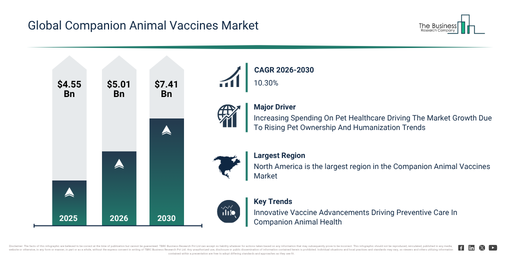
    The companion animal vaccines market has experienced rapid expansion in recent years. It will grow from $4. 55 billion in 2025 to $5. 01 billion in 2026 at a compound annual growth rate (CAGR) of 10. 0%. This historical increase can be attributed to the rising occurrence of infectious diseases in companion animals, an increase in pet ownership worldwide, the expansion of veterinary clinic networks, heightened awareness of preventive pet healthcare, and the introduction of core vaccination programs for pets.

    The companion animal vaccines market is anticipated to experience substantial growth in the coming years, with its size projected to reach $7.41 billion by 2030, demonstrating a compound annual growth rate (CAGR) of 10.3%. This expansion during the forecast period is attributed to factors such as an increasing demand for personalized pet healthcare solutions, a rise in pet insurance coverage stimulating vaccination uptake, growing investment in advanced recombinant and mRNA vaccine platforms, the expansion of veterinary infrastructure in emerging markets, and an escalating focus on zoonotic disease prevention and global health security. Major trends expected in this period include heightened pet humanization leading to increased vaccination compliance and preventive healthcare adoption, a rising awareness of zoonotic disease transmission promoting routine immunization in companion animals, the broadening of veterinary healthcare infrastructure and clinic networks enhancing vaccine accessibility, greater use of combination and multivalent vaccines to reduce multiple injections and improve compliance, and the strengthening of regulatory mandates and pet travel requirements enforcing vaccination standards.

    Get A Free Sample Report With In-Depth Market Insights:

    https://thebusinessresearchcompany.com/sample_request?id=53169842&type=smp&name=Companion%20Animal%20Vaccines%20Market%20Report%202026&utm_source=Blogs&utm_medium=Paid&utm_campaign=Oct_PR

    Companion Animal Vaccines Market Opportunity Drivers: What’s Unlocking New Revenue Potential?

    Elevated expenditures on pet healthcare are projected to boost the expansion of the companion animal vaccines market in the future. This spending encompasses the overall financial investment made by pet owners in veterinary services, preventative measures, pharmaceutical products, and other health-related items for their pets. The surge in pet healthcare spending, driven by the increasing trend of pet humanization where pets are regarded as family members, is fueling market growth by fostering greater investment in both preventive and routine veterinary care, such as vaccinations, crucial for ensuring the long-term health of animals. This escalating expenditure on pet healthcare directly stimulates the demand for companion animal vaccines, as pet owners increasingly opt for prophylactic measures to shield their animals from contagious and fatal illnesses. For example, data from March 2024 by the American Pet Products Association (APPA), a US-based pet industry trade group, indicated that sales of veterinary care and products in the United States grew from $35.9 billion in 2022 to $38.3 billion in 2023, marking an increase of $2.4 billion. Consequently, the growing spending on pet healthcare is a key factor propelling the expansion of the companion animal vaccines market.

    Companion Animal Vaccines Market Segment Landscape: Which Areas Lead Development?

    The companion animal vaccines market covered in this report is segmented –

    1) By Product: Inactivated, Live Attenuated, Other Products

    2) By Animal Type: Feline, Canine, Avian, Other Animal Types

    3) By Route Of Administration: Oral, Parenteral, Other Routes Of Administration

    4) By Material Type: Killed Or Inactivated Vaccines, Modified-Live Vaccines (MLV), Recombinant Vaccines, Subunit And mRNA-Based Vaccines

    5) By Distribution Channel: Veterinary Hospitals, Veterinary Clinics, Pharmacies And Drug Stores, Other Distribution Channels

    Subsegments:

    1) By Inactivated: Killed Viral Vaccine, Killed Bacterial Vaccine, Toxoid Vaccine, Subunit Vaccine

    2) By Live Attenuated: Modified Live Viral Vaccine, Modified Live Bacterial Vaccine, Chimeric Vaccine, Attenuated Parasite Vaccine

    3) By Other Products: Combination Vaccine, Adjuvanted Vaccine, Autogenous Vaccine, Novel Platform Vaccine

    Companion Animal Vaccines Market Innovation Trends Shaping Future Development

    Leading companies in the companion animal vaccines market are concentrating on developing novel products, including injectable recombinant vaccines, to improve immunization effectiveness and enhance flexibility in administration. An injectable recombinant vaccine represents a biologically engineered immunization utilizing recombinant antigens to provoke a specific immune response in animals. For example, in November 2025, Zoetis Services LLC, a US-based animal health company, introduced Vanguard Recombishield. This is a non-adjuvanted, recombinant injectable vaccine that incorporates the pertactin protein, facilitating more accurate immune system targeting and lessening adverse reactions during application. It also provides a more comfortable and adaptable vaccination strategy, fostering better compliance and efficient prevention of respiratory infections in dogs.

    Companion Animal Vaccines Market Leading Companies And Competitive Benchmarking

    Major companies operating in the companion animal vaccines market are Boehringer Ingelheim International GmbH, Zoetis Inc., Ceva Santé Animale S. A., Virbac S. A., Phibro Animal Health Corporation, Neogen Corporation, Vetoquinol S. A., Norbrook Laboratories Limited, HIPRA S. A., Indian Immunologicals Limited, Vaxxinova International B. V., Bimeda Animal Health Limited, Laboratorios Calier S. A., Hester Biosciences Limited, ChoongAng Vaccine Laboratories Co. Ltd., Elanco Animal Health Incorporated, Bioveta a. s., CZ Veterinaria S. A., Intervet Inc. (Merck Animal Health), Brilliant Bio Pharma Private Limited, Durvet Inc., Kyoritsu Seiyaku Corporation

    View The Full Companion Animal Vaccines Market Report:

    https://thebusinessresearchcompany.com/report/companion-animal-vaccines-market-report?utm_source=Blogs&utm_medium=Paid&utm_campaign=Oct_PR

    Companion Animal Vaccines Market Largest Region By Revenue And Market Share

    North America was the largest region in the companion animal vaccines market in 2025. Asia-Pacific is expected to be the fastest-growing region in the forecast period. The regions covered in the companion animal vaccines market report are Asia-Pacific, South East Asia, Western Europe, Eastern Europe, North America, South America, Middle East and Africa.

    Reach Out To Our Team:

    The Business Research Company: https://www.thebusinessresearchcompany.com/

    Americas: +1 310-496-7795

    Asia: +44 7882 955267 & +91 8897263534

    Europe: +44 7882 955267

    Email us at: marketing@tbrc.info

    Follow us on:

    LinkedIn: https://in.linkedin.com/company/the-business-research-company

    YouTube: https://www.youtube.com/channel/UC24_fI0rV8cR5DxlCpgmyFQ

    Global Market Model: https://www.thebusinessresearchcompany.com/global-market-model

  • Cattle Ear Tag Sensor Market Outlook Through 2030: Understanding The Growth Opportunity

    Cattle Ear Tag Sensor Market Outlook Through 2030: Understanding The Growth Opportunity

    Featuring market attractiveness scoring, total addressable market sizing, company benchmarking matrices, interactive Excel dashboards, deeper supply chain intelligence, emerging startup tracking, and granular product-level insights, The Business Research Company’s 2026 market reports are built to deliver research that is both more actionable and more strategically valuable.

    Cattle Ear Tag Sensor Market Revenue Outlook: What CAGR Lies Ahead Through 2030?

    The cattle ear tag sensor market size has observed swift growth in recent years. It is projected to expand from $0.96 billion in 2025 to $1.09 billion in 2026, achieving a compound annual growth rate (CAGR) of 13.8%. This historical expansion is attributable to factors such as conventional manual livestock monitoring methods, the increasing implementation of basic radio frequency identification tagging systems, heightened awareness concerning livestock disease outbreaks, the initial integration of farm digitization and record-keeping systems, and government assistance for programs aimed at improving livestock productivity.

    The cattle ear tag sensor market is anticipated to experience substantial expansion in the coming years. Its valuation is projected to reach $1.85 billion by 2030, demonstrating a compound annual growth rate (CAGR) of 14.0%. This projected growth is driven by several factors, including the wider adoption of AI-powered predictive animal health analytics, greater integration of IoT-enabled smart farming solutions, a growing need to reduce antibiotic usage via early disease detection, the emergence of fully automated precision livestock farming ecosystems, and increased spending on rural connectivity and edge computing infrastructure. Key developments expected during this period involve real-time cattle health surveillance through wearable ear tag sensors, the incorporation of AI-driven disease prediction models for livestock, the proliferation of cloud-based herd management platforms for precision farming, a rise in the uptake of automated reproductive and behavioral tracking systems, and the expanding application of low power wide area network connectivity for monitoring livestock in rural areas.

    Get A Free Sample Report With In-Depth Market Insights:

    https://thebusinessresearchcompany.com/sample_request?id=40178644&type=smp&name=Cattle%20Ear%20Tag%20Sensor%20Market%20Report%202026&utm_source=Blogs&utm_medium=Paid&utm_campaign=Oct_PR

    Cattle Ear Tag Sensor Market Demand Drivers Opening New Revenue Streams

    The expanding use of precision livestock farming is projected to fuel the expansion of the cattle ear tag sensor market. This approach involves applying technology and data analytics for real-time observation and improvement of animal health, welfare, and productivity. Its growing prevalence stems from its real-time monitoring and data-informed management capabilities, which enhance animal health and output while minimizing losses. Within precision livestock farming, cattle ear tag sensors play a crucial role by providing real-time tracking of individual animal health, activity, location, and behavior, thus facilitating prompt disease identification, efficient feeding strategies, and superior herd oversight. As an illustration, in January 2024, the Government Accountability Office, a US-based nonpartisan government agency, reported that approximately 27% of U. S. farms and ranches utilized precision agriculture methods, including livestock monitoring, in 2023. Consequently, the increased uptake of precision livestock farming is a significant catalyst for the growth of the cattle ear tag sensor market.

    Cattle Ear Tag Sensor Market Segment Landscape And Growth Outlook

    The cattle ear tag sensor market covered in this report is segmented –

    1) By Component: Hardware, Software, Services

    2) By Connectivity And Power: Passive Radio-Frequency Identification or Visual Tags, Battery-Powered Active Tags, Solar-Powered or Rechargeable Tags, Connectivity

    3) By Distribution Channel: Online, Offline

    4) By Application: Health Monitoring, Tracking And Identification, Reproductive Management, Other Applications

    5) By End-User: Dairy Farms, Beef Farms, Research Institutes, Other End-Users

    Subsegments:

    1) By Hardware: Sensor Chips, Communication Modules, Power Sources, Tag Casings, Antenna Components

    2) By Software: Data Management Software, Analytics And Reporting Software, Cloud-Based Monitoring Platforms, Mobile Application Software, Integration And Middleware Software

    3) By Services: Installation And Deployment Services, Maintenance And Support Services, Consulting Services, Data Analysis Services, Training And Education Services

    Cattle Ear Tag Sensor Market Trends Powering Strategic Industry Growth

    Major companies in the cattle ear tag sensor market are concentrating on developing technological advancements, such as calf health monitoring systems, with the goal of improving livestock health management, boosting productivity, and facilitating real-time data-driven decision-making. A calf health monitoring system represents a technology that employs sensors to track calves’ health, activity, and behavior continuously, aiming for early detection of illnesses and an overall improvement in welfare and productivity. For example, in December 2024, CowManager B. V., an agriculture technology company based in the Netherlands, introduced its Youngstock Monitor, which is a calf health monitoring system that incorporates lightweight ear sensors and AI-driven alerts. This particular solution monitors calf behavior from birth through adulthood using a single lifetime sensor per animal, furnishing real-time notifications for prompt disease identification, indicating states such as suspicious, sick, or very sick. Its AI algorithms adjust to individual farms and the specific development stages of calves, thereby enabling targeted interventions that lead to a reduction in antibiotic use, treatment costs, and mortality, while simultaneously enhancing future milk production.

    Cattle Ear Tag Sensor Market Competitive Analysis Of Leading Industry Participants

    Major companies operating in the cattle ear tag sensor market are Avery Dennison Corporation, Datamars SA, Nedap N. V., Gallagher Group Limited, The Schippers Group B. V., CowManager B. V., Y Tex Corporation, Afimilk Ltd., Shearwell Animal Health Ltd., ID Solutions India Pvt. Ltd., Ceres Tag Ltd., Farmdeck Ltd., HerdDogg LLC, Quantified Ag LLC, Ardes Group S. r. l., Caisley International GmbH, EID Solutions Ltd., Kupsan Tag Company Ltd., Moocall Ltd., Smartbow GmbH

    View The Full Cattle Ear Tag Sensor Market Report:

    https://thebusinessresearchcompany.com/report/cattle-ear-tag-sensor-market-report?utm_source=Blogs&utm_medium=Paid&utm_campaign=Oct_PR

    Cattle Ear Tag Sensor Market Geographic Distribution And Regional Opportunities

    North America was the largest region in the cattle ear tag sensor market in 2025. Asia-Pacific is expected to be the fastest-growing region in the forecast period. The regions covered in the cattle ear tag sensor market report are Asia-Pacific, South East Asia, Western Europe, Eastern Europe, North America, South America, Middle East and Africa.

    Reach Out To Our Team:

    The Business Research Company: https://www.thebusinessresearchcompany.com/

    Americas: +1 310-496-7795

    Asia: +44 7882 955267 & +91 8897263534

    Europe: +44 7882 955267

    Email us at: marketing@tbrc.info

    Follow us on:

    LinkedIn: https://in.linkedin.com/company/the-business-research-company

    YouTube: https://www.youtube.com/channel/UC24_fI0rV8cR5DxlCpgmyFQ

    Global Market Model: https://www.thebusinessresearchcompany.com/global-market-model
  • Animal Transport Carriers Market Size And Growth In 2026: Key Factors Shaping Future Demand

    Animal Transport Carriers Market Size And Growth In 2026: Key Factors Shaping Future Demand

    Built to provide research that’s more actionable and strategically valuable, The Business Research Company’s 2026 market reports include market attractiveness analysis, total addressable market sizing, company benchmarking matrices, interactive Excel dashboards, broader supply chain intelligence, emerging startup tracking, and in-depth product insights.

    Animal Transport Carriers Market Revenue Growth On Track For A 11% CAGR Through 2030

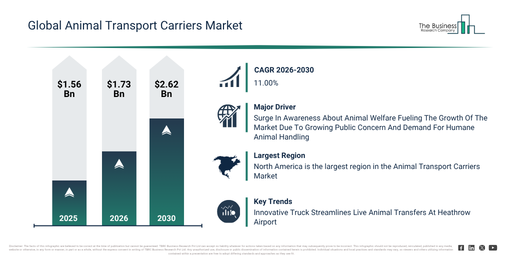
    The animal transport carriers market size has experienced rapid expansion over recent years. This market is projected to expand from $1. 56 billion in 2025 to $1. 73 billion in 2026, exhibiting a compound annual growth rate (CAGR) of 10. 7%. Historically, this expansion has been driven by factors such as increasing pet ownership worldwide, the rise in veterinary and animal healthcare services, heightened consciousness of animal safety during transit, the proliferation of commercial animal transportation offerings, and an increased preference for resilient and re-usable transport carriers.

    The animal transport carriers market is projected to experience substantial expansion over the upcoming years, with an anticipated rise to $2.62 billion by 2030, exhibiting a compound annual growth rate (CAGR) of 11.0%. This projected growth during the period can be attributed to several factors, including a heightened demand for high-end and personalized pet travel solutions, the expanding influence of e-commerce platforms for pet supplies, a reinforced emphasis on eco-friendly and decomposable carrier materials, tighter regulations concerning animal well-being and transit safety, and the increasing uptake of intelligent and networked animal carrier systems. Key trends anticipated within this timeframe encompass the wider acceptance of smart GPS-equipped animal transport carriers, an escalating desire for environmentally friendly and reusable carrier substances, the greater incorporation of temperature and health surveillance mechanisms within carriers, the increased utilization of light and foldable transport carriers, and the growing deployment of automated and user-friendly animal handling approaches.

    Get A Free Sample Report With In-Depth Market Insights:

    https://thebusinessresearchcompany.com/sample_request?id=94947861&type=smp&name=Animal%20Transport%20Carriers%20Market%20Report%202026&utm_source=Blogs&utm_medium=Paid&utm_campaign=Oct_PR

    Animal Transport Carriers Market Development Factors: What’s Supporting Demand?

    The growing consciousness regarding animal welfare is anticipated to drive the expansion of the animal transport carriers market in the future. Animal welfare encompasses the well-being of animals, ensuring their health, safety, and freedom from suffering, along with the satisfaction of their physical and psychological requirements. This increased awareness is fueled by mounting public concern, as individuals are becoming more attentive to animals’ well-being and advocating for their humane treatment. Animal transport carriers play a role in fostering animal welfare awareness by guaranteeing the safe and humane movement of animals, thereby highlighting the importance of appropriate care, comfort, and stress-free handling during transit. For instance, in June 2025, as reported by the Royal Society for the Prevention of Cruelty to Animals, a UK-based charity dedicated to animal welfare, safeguarding wildlife became the paramount animal welfare priority for the UK public, rising to 61% from 56% in 2024, which indicates a growing focus on wildlife conservation. Thus, the escalating awareness about animal welfare is propelling the growth of the animal transport carriers market.

    Animal Transport Carriers Market Segmentation And Category Overview

    The animal transport carriers market covered in this report is segmented –

    1) By Product Type: Crates, Cages, Kennels, Carriers, Other Product Types

    2) By Material: Plastic, Metal, Fabric, Other Materials

    3) By Distribution Channel: Specialty Stores, Online Stores, Supermarkets Or Hypermarkets, Other Distribution Channels

    4) By Application: Commercial, Household, Veterinary, Other Applications

    5) By End User: Pet Owners, Veterinary Clinics, Animal Shelters, Zoos And Wildlife Organizations, Research Institutions

    Subsegments:

    1) By Crates: Plastic Crates, Wooden Crates, Metal Crates, Collapsible Crates

    2) By Cages: Wire Cages, Plastic Cages, Metal Cages, Stackable Cages

    3) By Kennels: Indoor Kennels, Outdoor Kennels, Portable Kennels, Insulated Kennels

    4) By Carriers: Handheld Carriers, Backpack Carriers, Wheeled Carriers, Soft-Sided Carriers

    5) By Other Product Types: Travel Bags, Pet Strollers, Animal Trolleys, Specialized Transport Boxes

    Animal Transport Carriers Market Transformation Trends: What Innovations Are Driving Change?

    Leading companies in the animal transport carriers market are concentrating on developing advanced transportation solutions, including specialized live animal freight vehicles, to improve animal welfare, decrease stress during transit, and boost operational efficiency. Dedicated live animal transport refers to custom-built vehicles and systems designed for the safe movement of animals between locations, aiming to minimize handling, noise exposure, and potential dangers, thereby ensuring a smoother and more secure journey. As an illustration, in March 2025, Animal Aircare, a UK-based animal transport and welfare enterprise, unveiled Heathrow’s initial dedicated freight truck specifically for live animal transfers. This truck facilitates direct transfers from aircraft to the reception facility, eliminating manual handling on the busy ramp, reducing stress and the risk of escape, accelerating processing times, and providing a calm, regulated environment for animals in transit, thereby setting a new benchmark for live animal transport at airports.

    Animal Transport Carriers Market Company Landscape And Competitive Strategy

    Major companies operating in the animal transport carriers market are Ferplast S. p. A, IRIS Ohyama Inc., Savic N. V., TRIXIE Heimtierbedarf GmbH And Co. KG, Petfond Co. Ltd., Snoozer Pet Products, MidWest Homes for Pets Inc., K&H Pet Products, Paws And Pals Inc., Diggs Inc., Pet Life LLC, MPS S. r. l, Sleeko, Hunter International Ltd., Pet Gear Inc., Sleepypod Inc., EliteField LLC, Prefer Pets Travel Gear, Karlie Flamingo, Stefanplast S. p. A

    View The Full Animal Transport Carriers Market Report:

    https://thebusinessresearchcompany.com/report/animal-transport-carriers-market-report?utm_source=Blogs&utm_medium=Paid&utm_campaign=Oct_PR

    Animal Transport Carriers Market Largest Region: Which Geography Holds The Highest Market Share?

    North America was the largest region in the animal transport carriers market in 2025. Asia-Pacific is expected to be the fastest-growing region in the forecast period. The regions covered in the animal transport carriers market report are Asia-Pacific, South East Asia, Western Europe, Eastern Europe, North America, South America, Middle East and Africa.

    Reach Out To Our Team:

    The Business Research Company: https://www.thebusinessresearchcompany.com/

    Americas: +1 310-496-7795

    Asia: +44 7882 955267 & +91 8897263534

    Europe: +44 7882 955267

    Email us at: marketing@tbrc.info

    Follow us on:

    LinkedIn: https://in.linkedin.com/company/the-business-research-company

    YouTube: https://www.youtube.com/channel/UC24_fI0rV8cR5DxlCpgmyFQ

    Global Market Model: https://www.thebusinessresearchcompany.com/global-market-model
  • Animal Disease Outbreak Monitoring Market Forecast 2026–2030: Market Size, Trends And Growth Opportunities

    Animal Disease Outbreak Monitoring Market Forecast 2026–2030: Market Size, Trends And Growth Opportunities

    Backed by market attractiveness analysis, total addressable market sizing, company benchmarking matrices, interactive Excel dashboards, wider supply chain intelligence, emerging startup coverage, and detailed product-level insights, The Business Research Company’s 2026 market reports are designed to offer research that is more actionable and strategically valuable than ever.

    Animal Disease Outbreak Monitoring Market Value Growth And Long-Term Outlook

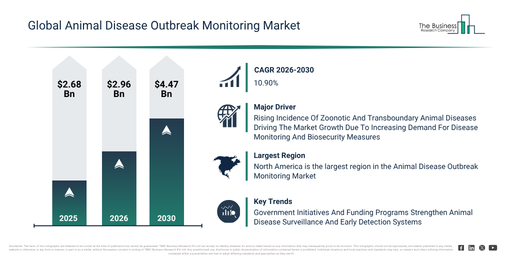
    The animal disease outbreak monitoring market size has experienced substantial growth in recent years. This market is projected to expand from $2.68 billion in 2025 to $2.96 billion in 2026, reflecting a compound annual growth rate (CAGR) of 10.6%. Driving this historical growth are factors such as the increasing prevalence of zoonotic and livestock illnesses, a greater emphasis by governments on animal health surveillance, the rising adoption of molecular diagnostic tools, the expansion of livestock farming and animal commerce, and increased investment in veterinary healthcare infrastructure.

    The animal disease outbreak monitoring market is projected to experience substantial expansion in the coming years, with its size anticipated to reach $4.47 billion by 2030, demonstrating a compound annual growth rate (CAGR) of 10.9%. This growth in the forecast period is primarily attributed to the increasing integration of AI-based disease prediction systems, a rising demand for cloud-based outbreak monitoring platforms, the growing adoption of next-generation sequencing technologies in veterinary diagnostics, the expanding use of connected sensors and smart monitoring devices, and an increased focus on antimicrobial resistance monitoring and biosecurity management. Major trends influencing this period include the escalating adoption of real-time animal disease surveillance systems, a growing demand for predictive outbreak monitoring platforms, the rising utilization of epidemiological data integration tools, an increasing emphasis on biosecurity and the prevention of zoonotic diseases, and the expanding implementation of rapid diagnostic and reporting technologies.

    Get A Free Sample Report With In-Depth Market Insights:

    https://thebusinessresearchcompany.com/sample_request?id=66028873&type=smp&name=Animal%20Disease%20Outbreak%20Monitoring%20Market%20Report%202026&utm_source=Blogs&utm_medium=Paid&utm_campaign=Oct_PR

    Animal Disease Outbreak Monitoring Market Industry Drivers: What’s Behind The Revenue Growth?

    An increasing prevalence of zoonotic and transboundary animal diseases is anticipated to propel the future growth of the animal disease outbreak monitoring market. These diseases are illnesses caused by pathogens that can be transmitted between animals and humans or spread rapidly across borders, simultaneously threatening animal health, human health, and food security. The expanding occurrence of these diseases is primarily driven by heightened interaction between wildlife and domestic livestock, as agricultural expansion and habitat encroachment intensify cross-species contact and accelerate the spillover of new pathogens from wild animal reservoirs into farmed populations. This rising incidence of zoonotic and transboundary animal diseases consequently boosts demand for outbreak monitoring systems, since early detection and real-time surveillance are crucial for containing cross-species transmission, preventing widespread dissemination, and enabling swift, coordinated responses. For instance, in January 2025, a report published by the Government of Canada, a Canada-based federal authority, stated that 158 rabies samples were submitted in December 2024, an increase from 147 rabies samples submitted in November 2022. Therefore, the growing incidence of zoonotic and transboundary animal diseases is driving the expansion of the animal disease outbreak monitoring market.

    Animal Disease Outbreak Monitoring Market Segment Outlook: Which Categories Are Growing Fastest?

    The animal disease outbreak monitoring market covered in this report is segmented –

    1) By Component: Software, Hardware, Services

    2) By Pathogen Type: Bacterial, Viral, Parasitic, Fungal, Other Pathogen Types

    3) By Technology: Polymerase Chain Reaction (PCR), Enzyme-Linked Immunosorbent Assay (ELISA), Next-Generation Sequencing (NGS), Immunoassays, Other Technologies

    4) By Deployment Mode: Cloud-Based, On-Premises

    5) By Application: Disease Surveillance, Outbreak Investigation, Antimicrobial Resistance Monitoring, Vaccine Development

    Subsegments:

    1) By Software: Data Collection Software, Data Analysis Software, Visualization Software, Reporting Software, Predictive Modeling Software

    2) By Hardware: Diagnostic Instruments, Sensors, Laboratory Equipment, Servers, Data Storage Devices

    3) By Services: Consultation Services, Training Services, Maintenance Services, Analytical Services, Support Services

    #Animal Disease Outbreak Monitoring Market Growth Trends: What’s Shaping The Future Outlook?

    Governments and public health entities active in the animal disease outbreak monitoring market are prioritizing the enhancement of animal disease surveillance infrastructure. This is being achieved through specialized funding programs and integrated monitoring systems aimed at improving early detection, swift response, and the prevention of zoonotic and livestock diseases. Such initiatives bolster data collection, diagnostic capacity, and coordinated response mechanisms across various regions. For instance, in November 2024, the Government of India, an India-based government department, unveiled its Animal Health Security Strengthening initiative as part of its wider livestock health strategy, with support from the World Bank. The program’s goals are to upgrade disease surveillance networks, strengthen laboratory diagnostic capabilities, and implement real-time monitoring systems to identify and address emerging animal disease outbreaks, thereby safeguarding livestock productivity and public health.

    Animal Disease Outbreak Monitoring Market Key Players Shaping Industry Direction

    Major companies operating in the animal disease outbreak monitoring market are Merck & Co Inc., Thermo Fisher Scientific Inc., Boehringer Ingelheim International GmbH, Zoetis Inc., GEA Group Aktiengesellschaft, Elanco Animal Health Incorporated, bioMérieux SA, IDEXX Laboratories Inc., Bio Rad Laboratories Inc., QIAGEN NV, Ceva Santé Animale SA, Virbac SA, DeLaval Holding AB, Randox Laboratories Ltd, Nedap NV, Bioneer Corporation, Afimilk Ltd, Agrolabo SpA, Innovative Diagnostics SAS, Royal GD

    View The Full Animal Disease Outbreak Monitoring Market Report:

    https://thebusinessresearchcompany.com/report/animal-disease-outbreak-monitoring-market-report?utm_source=Blogs&utm_medium=Paid&utm_campaign=Oct_PR

    Animal Disease Outbreak Monitoring Market Regional Analysis: Which Region Leads By Revenue?

    North America was the largest region in the animal disease outbreak monitoring market in 2025. Asia-Pacific is expected to be the fastest-growing region in the forecast period. The regions covered in the animal disease outbreak monitoring market report are Asia-Pacific, South East Asia, Western Europe, Eastern Europe, North America, South America, Middle East and Africa.

    Reach Out To Our Team:

    The Business Research Company: https://www.thebusinessresearchcompany.com/

    Americas: +1 310-496-7795

    Asia: +44 7882 955267 & +91 8897263534

    Europe: +44 7882 955267

    Email us at: marketing@tbrc.info

    Follow us on:

    LinkedIn: https://in.linkedin.com/company/the-business-research-company

    YouTube: https://www.youtube.com/channel/UC24_fI0rV8cR5DxlCpgmyFQ

    Global Market Model: https://www.thebusinessresearchcompany.com/global-market-model
  • Animal Antibiotics Antimicrobials Market Size Reaches $4.59 Billion In 2026: What Is Driving Growth?

    Animal Antibiotics Antimicrobials Market Size Reaches $4.59 Billion In 2026: What Is Driving Growth?

    Featuring market attractiveness scoring, total addressable market sizing, company benchmarking matrices, interactive Excel dashboards, deeper supply chain intelligence, emerging startup tracking, and granular product-level insights, The Business Research Company’s 2026 market reports are built to deliver research that is both more actionable and more strategically valuable.

    Animal Antibiotics Antimicrobials Market Poised To Hit $5.73 Billion By 2030 With A 5.7% CAGR

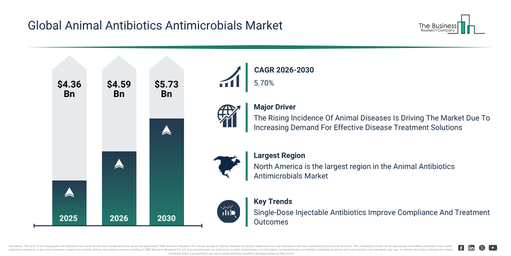
    The animal antibiotics antimicrobials market size has exhibited robust expansion over recent years. It is anticipated to grow from $4.36 billion in 2025 to $4.59 billion in 2026, advancing at a compound annual growth rate (CAGR) of 5.4%. The historical growth in this market can be ascribed to rising livestock disease outbreaks, increasing demand for animal protein production, widespread use of antibiotics in animal farming, limited veterinary healthcare infrastructure in developing regions, and the growth in intensive farming practices.

    The animal antibiotics antimicrobials market is projected to experience substantial expansion in the coming years. This market is anticipated to reach $5.73 billion by 2030, exhibiting a compound annual growth rate (CAGR) of 5.7%. This projected growth during the forecast period is primarily driven by stricter worldwide regulations concerning antimicrobial resistance, a growing move towards sustainable livestock practices, increased implementation of veterinary preventive healthcare initiatives, the proliferation of precision animal health technologies, and heightened recognition of food safety alongside zoonotic disease management. Key trends anticipated within this period encompass the greater uptake of precision veterinary antimicrobial treatments, an escalating emphasis on reducing antimicrobial resistance in animal health, the broadening of preventive livestock disease management strategies, an increase in antibiotic stewardship rules within veterinary practice, and a heightened call for alternative non-antibiotic growth promoters in animal farming.

    Get A Free Sample Report With In-Depth Market Insights:

    https://thebusinessresearchcompany.com/sample_request?id=41529816&type=smp&name=Animal%20Antibiotics%20Antimicrobials%20Market%20Report%202026&utm_source=Blogs&utm_medium=Paid&utm_campaign=Oct_PR

    Animal Antibiotics Antimicrobials Market Growth Factors: What’s Supporting Expansion?

    The increasing occurrence of animal diseases is projected to drive the expansion of the animal antibiotics antimicrobials market in the foreseeable future. Animal diseases are health conditions and infections caused by bacteria, viruses, parasites, or fungi, affecting livestock and companion animals, thereby reducing their productivity and well-being. This surge in animal disease incidence results from the geographical spread of infectious diseases into new regions and species. Animal antibiotics antimicrobials are instrumental in alleviating the burden of these diseases by allowing effective infection treatment, enhancing recovery rates, and minimizing disease transmission among animal populations. For example, in May 2025, the World Organization for Animal Health, a France-based animal health organization, noted a significant rise in avian influenza outbreaks in mammals, from 459 outbreaks in 2023 to 1,022 outbreaks in 2024 across 55 countries, indicating a rapid increase in disease spread. Hence, the rising incidence of animal diseases is propelling the growth of the animal antibiotics antimicrobials market.

    Animal Antibiotics Antimicrobials Market Segment Landscape: Which Areas Lead Development?

    The animal antibiotics antimicrobials market covered in this report is segmented –

    1) By Product: Tetracycline, Penicillin, Sulfonamide, Macrolide, Cephalosporin, Fluoroquinolone, Lincosamides

    2) By Mode Of Delivery: Premixes, Oral Powder, Injection, Other Mode Of Deliveries

    3) By Animal Type: Cattle, Pork, Poultry, Aquaculture, Other Livestock

    4) By Application: Therapeutic Use, Preventive Use, Growth Promotion

    5) By End User: Veterinary Hospitals And Clinics, Veterinary Research Institutes, Farms Or Commercial Producers, Home Care

    Subsegments:

    1) By Tetracycline: Chlortetracycline, Oxytetracycline, Tetracycline, Doxycycline, Minocycline

    2) By Penicillin: Natural Penicillins, Aminopenicillins, Antistaphylococcal Penicillins, Extended Spectrum Penicillins

    3) By Sulfonamide: Sulfadiazine, Sulfamethoxazole, Sulfisoxazole, Sulfadimethoxine, Sulfamethazine

    4) By Macrolide: Erythromycin, Azithromycin, Clarithromycin, Tylosin, Tilmicosin

    5) By Cephalosporin: First Generation, Second Generation, Third Generation, Fourth Generation, Fifth Generation

    6) By Fluoroquinolone: Enrofloxacin, Ciprofloxacin, Danofloxacin, Marbofloxacin, Orbifloxacin

    7) By Lincosamides: Lincomycin, Clindamycin, Pirlimycin

    Animal Antibiotics Antimicrobials Market Industry Trends: What’s Reshaping Demand?

    Leading companies in the animal antibiotics antimicrobials market are concentrating on developing innovative products, such as long-acting injectable antibiotics, to improve treatment adherence and therapeutic efficacy. A long-acting injectable antibiotic is a sustained-release antimicrobial formulation given by injection that sustains therapeutic drug levels over an extended duration, thus lessening the requirement for frequent dosing. For instance, in November 2025, Dechra Pharmaceuticals, a UK-based veterinary pharmaceuticals company, introduced Solovecin. This product provides a complete course of antibiotic therapy with a single in-clinic injection, addressing common compliance issues associated with oral administration in pets. It enhances the reliability of treatment and supports antimicrobial stewardship by minimizing missed doses and incomplete therapy.

    Animal Antibiotics Antimicrobials Market Competitive Analysis Of Leading Industry Participants

    Major companies operating in the animal antibiotics antimicrobials market are Merck & Co. Inc., Boehringer Ingelheim GmbH, Zoetis Inc., Zydus Lifesciences Limited, Ceva Santé Animale, Virbac S. A., Phibro Animal Health Corporation, Dechra Pharmaceuticals PLC, Neogen Corporation, China Animal Husbandry Industry Co. Ltd., HIPRA S. A., Vetoquinol S. A., Norbrook Laboratories Limited, Indian Immunologicals Limited, American Regent Inc., ECO Animal Health Group plc, Elanco Animal Health Incorporated, Bioveta a. s., Huvepharma EOOD, Inovet BV, Ashish Life Science Pvt. Ltd., Kyoritsu Seiyaku Corporation, UCBVET Saúde Animal Ltda, Lutim Pharma Private Limited

    View The Full Animal Antibiotics Antimicrobials Market Report:

    https://thebusinessresearchcompany.com/report/animal-antibiotics-antimicrobials-market-report?utm_source=Blogs&utm_medium=Paid&utm_campaign=Oct_PR

    Animal Antibiotics Antimicrobials Market Geographic Distribution And Regional Opportunities

    North America was the largest region in the animal antibiotics antimicrobials market in 2025. Asia-Pacific is expected to be the fastest-growing region in the forecast period. The regions covered in the animal antibiotics antimicrobials market report are Asia-Pacific, South East Asia, Western Europe, Eastern Europe, North America, South America, Middle East and Africa.

    Reach Out To Our Team:

    The Business Research Company: https://www.thebusinessresearchcompany.com/

    Americas: +1 310-496-7795

    Asia: +44 7882 955267 & +91 8897263534

    Europe: +44 7882 955267

    Email us at: marketing@tbrc.info

    Follow us on:

    LinkedIn: https://in.linkedin.com/company/the-business-research-company

    YouTube: https://www.youtube.com/channel/UC24_fI0rV8cR5DxlCpgmyFQ

    Global Market Model: https://www.thebusinessresearchcompany.com/global-market-model
  • Veterinary Supplements Market Outlook 2026–2030: Growth Trends, Market Dynamics And Emerging Opportunities

    Veterinary Supplements Market Outlook 2026–2030: Growth Trends, Market Dynamics And Emerging Opportunities

    Backed by market attractiveness analysis, total addressable market sizing, company benchmarking matrices, interactive Excel dashboards, wider supply chain intelligence, emerging startup coverage, and detailed product-level insights, The Business Research Company’s 2026 market reports are designed to offer research that is more actionable and strategically valuable than ever.

    Veterinary Supplements Market Revenue Growth On Track For A 6.1% CAGR Through 2030

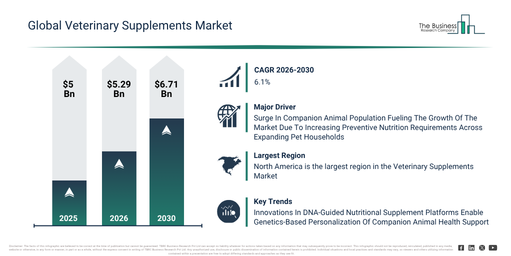
    The veterinary supplements market has demonstrated robust expansion over recent years. It is forecast to grow from $5 billion in 2025 to $5.29 billion in 2026, achieving a compound annual growth rate (CAGR) of 5.9%. This historical growth can be ascribed to elements such as an uptick in pet ownership, heightened understanding of animal nutrition, expansion in livestock production activities, an increase in animal health issues, and greater expenditure on companion animal care.

    The veterinary supplements market is anticipated to undergo significant expansion in the next few years. Its value is projected to reach $6.71 billion by 2030, growing at a compound annual growth rate (CAGR) of 6.1%. This expected increase is due to various factors such as a rising demand for customized animal nutrition solutions, an increase in the adoption of premium pet wellness products, a greater emphasis on preventive veterinary healthcare, the expansion of aquaculture and livestock farming, and a growing interest in natural and organic supplement formulations. Noteworthy trends during this forecast period encompass an increasing demand for preventive animal healthcare supplements, a greater uptake of natural and herbal veterinary supplements, the growing appeal of digestive and gut health formulations, an expansion of functional nutrition products for companion animals, and an increased focus on immune support and stress relief supplements.

    Get A Free Sample Report With In-Depth Market Insights:

    https://thebusinessresearchcompany.com/sample_request?id=22571524&type=smp&name=Veterinary%20Supplements%20Market%20Report%202026&utm_source=Blogs&utm_medium=Paid&utm_campaign=Oct_PR

    Veterinary Supplements Market Industry Drivers: What’s Behind The Revenue Growth?

    The anticipated expansion in the companion animal population is set to drive the future growth of the veterinary supplements market. A companion animal population constitutes the overall count of domestic animals, like dogs and cats, maintained by households mainly for companionship, not for productive uses. This increase in the companion animal population stems from growing household involvement in pet ownership within developed regions, thereby boosting the need for regular preventive nutritional support items. Veterinary supplements assist the companion animal population through offerings such as vitamin formulations, probiotic supplements, mineral blends, and metabolic support products, which help sustain immunity, digestion, mobility, and overall long-term physiological wellness among expanding companion animal households. For instance, data from March 2024, provided by the UK Pet Food, a UK-based non-profit trade association, indicates that approximately 17.2 million UK households, which is 60%, possess at least one of the nation’s 36 million non-aquatic pets. This total population comprises roughly 13.5 million dogs and 12.5 million cats, with both types experiencing an increase of about 1.5 million. Furthermore, 38% of households, or 10.9 million homes, have acquired a new pet during the past four years. Consequently, the expanding companion animal population is a key factor propelling the growth of the veterinary supplements market.

    Veterinary Supplements Market Segment Landscape: Which Areas Lead Development?

    The veterinary supplements market covered in this report is segmented –

    1) By Product Type: Vitamins And Minerals Supplements, Amino Acid Supplements, Probiotics And Prebiotics, Fatty Acids And Omega Supplements, Herbal And Botanical Supplements

    2) By Animal Type: Companion Animals, Livestock Animals, Poultry, Aquatic Animals, Equine Animals

    3) By Form: Tablets And Capsules, Powders, Liquids And Gels, Chewable Treats, Feed Additives

    4) By Distribution Channel: Veterinary Clinics And Hospitals, Pet Specialty Stores, Online Retail Platforms, Pharmacies And Drug Stores, Feed Stores And Agricultural Supply Outlets

    5) By Application: Preventive Health And Wellness, Joint And Mobility Support, Digestive And Gut Health, Skin And Coat Health, Immune System Support, Cardiovascular Health, Cognitive And Brain Health, Stress And Anxiety Relief, Pregnancy And Lactation Support, Performance And Endurance Enhancement

    Subsegments:

    1) By Vitamins And Minerals Supplements: Multivitamin Supplement Products, Calcium Supplement Products, Vitamin D Supplement Products, Vitamin B Complex Supplement Products, Trace Mineral Supplement Products, Electrolyte Supplement Products

    2) By Amino Acid Supplements: Essential Amino Acid Supplement Products, Non Essential Amino Acid Supplement Products, Branched Chain Amino Acid Supplement Products, Single Amino Acid Supplement Products, Performance Enhancement Amino Acid Products, Recovery Support Amino Acid Products

    3) By Probiotics And Prebiotics: Single Strain Probiotic Products, Multi Strain Probiotic Products, Prebiotic Fiber Supplement Products, Synbiotic Supplement Products, Digestive Health Probiotic Products, Gut Flora Balance Supplement Products

    4) By Fatty Acids And Omega Supplements: Omega Three Fatty Acid Products, Omega Six Fatty Acid Products, Omega Nine Fatty Acid Products, Fish Oil Supplement Products, Flaxseed Oil Supplement Products, Skin And Coat Support Fatty Acid Products

    5) By Herbal And Botanical Supplements: Plant Extract Supplement Products, Herbal Blend Supplement Products, Ayurvedic Herbal Supplement Products, Traditional Medicine Botanical Products, Immune Support Herbal Products, Calming And Stress Relief Herbal Products

    #Veterinary Supplements Market Growth Trends: What’s Shaping The Future Outlook?

    Leading companies within the veterinary supplements market are concentrating on developing innovative solutions, such as DNA-guided supplement recommendation platforms, to enhance the accuracy of supplement selection and offer condition-specific preventive care aligned with dogs’ genetic risk profiles. These DNA-guided platforms represent precision veterinary nutrition systems, which combine insights from canine genetic testing with specific supplement formulations to match nutrient delivery with inherited predispositions for conditions like joint health, allergies, and metabolic performance. For example, in September 2024, Embark Veterinary Inc., a US-based company specializing in canine genetics and animal health, introduced its Embark Dog Supplement Line. This veterinarian- and geneticist-backed portfolio is designed to provide personalized nutritional support based on each dog’s DNA results and health risk indicators. The supplement portfolio includes Embark Multi for overall wellness, Embark Allergy for managing skin and coat health, and Embark Joint for supporting mobility. The system incorporates genetic testing insights from a database of over 2 million dogs to guide the targeted selection of supplements tailored to individual canine needs.

    Veterinary Supplements Market Leading Players And Competitive Positioning

    Major companies operating in the veterinary supplements market are Alltech Inc., Kemin Industries Inc., Nutramax Laboratories Inc., Manna Pro Products LLC, Biogénesis Bagó S.A., FoodScience Corporation, Protexin Veterinary Supplements Ltd., VetPlus Ltd., Jefo Nutrition Inc., VetriScience Laboratories, NaturVet LLC, Wholistic Pet Organics LLC, Pet Honesty Inc., Bimini Pet Health LLC, Huvepharma AD, SSS Pharmachem Pvt. Ltd., Vetnation Pharma Pvt. Ltd., Heilsaa Nutraceuticals Pvt. Ltd., Animal Essentials Inc., Ark Naturals Inc., Vetraise Remedies Pvt. Ltd.

    View The Full Veterinary Supplements Market Report:

    https://thebusinessresearchcompany.com/report/veterinary-supplements-market-report?utm_source=Blogs&utm_medium=Paid&utm_campaign=Oct_PR

    Veterinary Supplements Market Regional Distribution: Which Areas Power Market Growth?

    North America was the largest region in the veterinary supplements market in 2025. Asia-Pacific is expected to be the fastest-growing region in the forecast period. The regions covered in the veterinary supplements market report are Asia-Pacific, South East Asia, Western Europe, Eastern Europe, North America, South America, Middle East, Africa.

    Reach Out To Our Team:

    The Business Research Company: https://www.thebusinessresearchcompany.com/

    Americas: +1 310-496-7795

    Asia: +44 7882 955267 & +91 8897263534

    Europe: +44 7882 955267

    Email us at: marketing@tbrc.info

    Follow us on:

    LinkedIn: https://in.linkedin.com/company/the-business-research-company

    YouTube: https://www.youtube.com/channel/UC24_fI0rV8cR5DxlCpgmyFQ

    Global Market Model: https://www.thebusinessresearchcompany.com/global-market-model
  • Veterinary Clinics Market Growth Outlook From $41.7 Billion In 2026 To $54.32 Billion By 2030

    Veterinary Clinics Market Growth Outlook From $41.7 Billion In 2026 To $54.32 Billion By 2030

    Featuring market attractiveness scoring, total addressable market sizing, company benchmarking matrices, interactive Excel dashboards, deeper supply chain intelligence, emerging startup tracking, and granular product-level insights, The Business Research Company’s 2026 market reports are built to deliver research that is both more actionable and more strategically valuable.

    Veterinary Clinics Market Value Growth And Long-Term Outlook

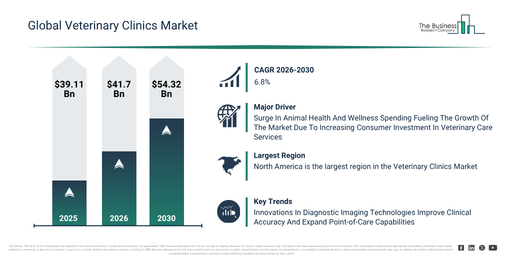
    The veterinary clinics market has seen substantial growth in recent years. Its value is expected to rise from $39.11 billion in 2025 to $41.7 billion in 2026, demonstrating a compound annual growth rate (CAGR) of 6.6%. This historical expansion can be attributed to several factors including an increase in pet ownership rates, enhanced awareness regarding animal health management, intensified livestock disease prevention measures, the development of veterinary diagnostic capabilities, and greater expenditure on companion animal care.

    The veterinary clinics market is projected to experience substantial expansion over the upcoming years. Its value is anticipated to reach $54.32 billion by 2030, exhibiting a compound annual growth rate (CAGR) of 6.8%. This expansion during the forecast period is primarily driven by factors such as the increasing need for sophisticated animal diagnostic testing, the wider acceptance of tailored veterinary treatments, a heightened emphasis on animal preventive healthcare initiatives, the proliferation of specialized veterinary hospitals, and increased financial commitment to veterinary healthcare infrastructure. Key developments expected in this period include a greater uptake of preventive animal healthcare services, a surge in demand for mobile veterinary clinics, an intensified focus on specialized veterinary surgical procedures, the broadening of emergency and critical care veterinary services, and a growing desire for companion animal wellness programs.

    Get A Free Sample Report With In-Depth Market Insights:

    https://thebusinessresearchcompany.com/sample_request?id=50767627&type=smp&name=Veterinary%20Clinics%20Market%20Report%202026&utm_source=Blogs&utm_medium=Paid&utm_campaign=Oct_PR

    Veterinary Clinics Market Growth Factors: What’s Supporting Expansion?

    Rising spending on animal health and wellness services is anticipated to fuel the expansion of the veterinary clinics market in the future. These services encompass professional care designed to sustain and enhance an animal’s general well-being. The increase in animal health and wellness services is primarily attributed to the growing phenomenon of pet humanization, where pet owners regard their companions as family members. Veterinary clinics are crucial in facilitating animal health and wellness services, offering vital care like regular examinations, immunizations, diagnostic tests, and therapeutic interventions. For example, data from March 2024, provided by the American Pet Products Association, a US-based non-profit trade association, indicates that the total U.S. pet industry expenditure reached $147 billion in 2023, with expectations for consistent year-over-year growth until 2030. Consequently, the expanding financial outlay on animal health and wellness services is propelling the development of the veterinary clinics market.

    Veterinary Clinics Market Segments: Where Is Growth Concentrated?

    The veterinary clinics market covered in this report is segmented –

    1) By Service Type: Preventive Care Services, Diagnostic Services, Surgical Services, Emergency Care Services, Pharmacy And Medication Services

    2) By Animal Type: Companion Animals, Livestock Animals, Equine Animals, Exotic Animals, Poultry

    3) By Facility Type: Independent Private Clinics, Corporate-Owned Multi-Location Clinics, Non-Profit And Charitable Clinics, Mobile Veterinary Clinics, Specialty And Referral Hospitals

    4) By End-User: Pet Owners, Livestock Farmers And Ranchers, Animal Shelters And Rescue Organizations, Breeders And Kennels, Equestrian And Stable Operators, Zoological And Wildlife Institutions

    Subsegments:

    1) By Preventive Care Services: Vaccination Services, Routine Health Checkup Services, Parasite Prevention Services, Dental Care Services, Nutritional Counseling Services, Wellness Program Services

    2) By Diagnostic Services: Laboratory Testing Services, Imaging Services, Pathology Services, Allergy Testing Services, Genetic Testing Services, Endoscopy Services

    3) By Surgical Services: Soft Tissue Surgery Services, Orthopedic Surgery Services, Dental Surgery Services, Spay And Neuter Surgery Services, Oncological Surgery Services, Ophthalmic Surgery Services

    4) By Emergency Care Services: Trauma Care Services, Critical Care Monitoring Services, Poison Treatment Services, Emergency Surgery Services, Intensive Care Services, After Hours Care Services

    5) By Pharmacy And Medication Services: Prescription Medication Services, Over The Counter Medication Services, Compounding Medication Services, Vaccination Dispensing Services, Nutritional Supplement Services, Pain Management Medication Services

    Veterinary Clinics Market Industry Trends: What’s Reshaping Demand?

    Leading companies within the veterinary clinics market are concentrating on creating inventive solutions, including handheld semiconductor-based veterinary ultrasound systems, to advance real-time clinical decision-making and extend access to imaging services directly at the point of care. Handheld semiconductor-based veterinary ultrasound systems represent compact imaging devices that integrate chip-based ultrasound architecture with mobile connectivity, enabling them to deliver high-resolution imaging across diverse animal species in both clinical and field environments. For example, in October 2025, Butterfly Network Inc., a US-based digital health company, unveiled the Butterfly iQ3 Vet Solution, intending to broaden access to portable, AI-enabled ultrasound imaging in veterinary care. This solution is designed to empower veterinarians to conduct real-time diagnostics with enhanced accuracy and efficiency at the point of care. It also endeavors to reduce costs and improve clinical decision-making across a wide spectrum of animal health settings.

    Veterinary Clinics Market Competitive Overview And Top Companies

    Major companies operating in the veterinary clinics market are CVS Group plc, The Animal Medical Center, Small Door Veterinary Inc., Dick White Referrals Limited, Dr. Paws Pet Clinic Private Limited, Westlake Animal Hospital Inc., Veterinary Specialists of Sydney Pty Ltd., Animal Urgent Care LLC, Apollo Animal Hospital, Belcher Animal Hospital LLC, Brandywine Valley Veterinary Hospital LLC, Cherokee Animal Clinic, Duxbury Animal Hospital Inc., Magic Vets Pvt Ltd., Neabore Veterinary Clinic LLC, Newtown Square Veterinary Hospital Inc., Vets4Pets India Private Limited, Buffalo Veterinary Clinic, Heritage Animal Hospital, Aztec Animal Clinic.

    View The Full Veterinary Clinics Market Report:

    https://thebusinessresearchcompany.com/report/veterinary-clinics-market-report?utm_source=Blogs&utm_medium=Paid&utm_campaign=Oct_PR

    Veterinary Clinics Market Leading Geography: Which Region Contributes The Most Revenue?

    North America was the largest region in the veterinary clinics market in 2025. Asia-Pacific is expected to be the fastest-growing region in the forecast period. The regions covered in the veterinary clinics market report are Asia-Pacific, South East Asia, Western Europe, Eastern Europe, North America, South America, Middle East, Africa.

    Reach Out To Our Team:

    The Business Research Company: https://www.thebusinessresearchcompany.com/

    Americas: +1 310-496-7795

    Asia: +44 7882 955267 & +91 8897263534

    Europe: +44 7882 955267

    Email us at: marketing@tbrc.info

    Follow us on:

    LinkedIn: https://in.linkedin.com/company/the-business-research-company

    YouTube: https://www.youtube.com/channel/UC24_fI0rV8cR5DxlCpgmyFQ

    Global Market Model: https://www.thebusinessresearchcompany.com/global-market-model

  • Swine Healthcare Market Outlook Through 2030: Understanding The Growth Opportunity

    Featuring market attractiveness scoring, total addressable market sizing, company benchmarking matrices, interactive Excel dashboards, deeper supply chain intelligence, emerging startup tracking, and granular product-level insights, The Business Research Company’s 2026 market reports are built to deliver research that is both more actionable and more strategically valuable.

    Swine Healthcare Market Set To Climb From $3.27 Billion In 2026 To $4.43 Billion By 2030

    The swine healthcare market has experienced robust expansion in recent years. Its projected growth trajectory indicates an increase from $3.04 billion in 2025 to $3.27 billion in 2026, achieving a compound annual growth rate (CAGR) of 7.6%. Historically, this expansion has been driven by factors such as a rise in livestock disease outbreaks, an increase in pork consumption demand, the expansion of commercial pig farming, government initiatives for animal health, and improved availability of veterinary services.

    The swine healthcare market is projected to expand significantly over the coming years. This market is set to reach $4.43 billion in 2030, exhibiting a compound annual growth rate (CAGR) of 7.9%. Factors contributing to this growth during the forecast period include an increasing emphasis on preventing zoonotic diseases, greater investment in precision livestock farming, the growing uptake of advanced vaccines, the expansion of data-driven herd management systems, and the demand for sustainable animal production methods. Key trends anticipated within this period involve the broadening of preventive vaccination initiatives, an increase in herd health management services, a surge in demand for disease diagnostic testing, heightened attention to biosecurity and parasite control, and the integration of nutritional advisory and welfare monitoring services.

    Get A Free Sample Report With In-Depth Market Insights:

    https://thebusinessresearchcompany.com/sample_request?id=32415&type=smp&name=Swine%20Healthcare%20Market%20Report%202026&utm_source=Blogs&utm_medium=Paid&utm_campaign=Oct_PR

    Swine Healthcare Market Demand Drivers Opening New Revenue Streams

    The swine healthcare market is anticipated to expand, driven by the increasing consumption of pork. This consumption signifies the quantity of pork meat consumed by individuals or populations, typically quantified as per person intake over a specific timeframe. An uptick in disposable incomes is contributing to the rise in pork consumption, as it allows consumers to allocate more funds towards diets abundant in animal protein. Inadequate biosecurity is among the elements contributing to an increase in swine diseases. Swine healthcare supports pork consumption by enhancing the well-being and productivity of animals, alongside improving meat quality, thereby guaranteeing a consistent availability of secure and premium pork items to satisfy increasing consumer requirements. As an illustration, in January 2025, Canada Pork International, a promotional body based in Canada, reported that in 2023, Canada’s per capita pork intake grew by 2.10 kg, an increase of 14.40%, reaching 16.72 kg (boneless weight). Consequently, the escalating consumption of pork is fueling the expansion of the swine healthcare market.

    Swine Healthcare Market Segment Performance And Emerging Opportunities

    The swine healthcare market covered in this report is segmented –

    1) By Product Type: Therapeutics, Diagnostics, Nutritional Health, Services

    2) By Diseases: Exudative Dermatitis, Coccidiosis, Respiratory Diseases, Swine Dysentery, Porcine Parvovirus, Other Diseases

    3) By Route of Administration: Injectable, Oral, Intranasal Or Mucosal

    4) By Distribution Channel: Direct Sales Or Veterinary Channel, Distributors And Wholesalers, Retail And Online Pharmacies, Service-Integrated Models

    5) By End User: Commercial Farms, Smallholder Farms, Research Institutes

    Subsegments:

    1) By Therapeutics: Vaccines, Antibiotics, Parasiticides

    2) By Diagnostics: Polymerase Chain Reaction, Enzyme Linked Immunosorbent Assay, Serology

    3) By Nutritional Health: Functional Feed Additives, Probiotics

    4) By Services: Herd Health Management, Veterinary Consulting, Reproductive Health

    Swine Healthcare Market Trends Powering Strategic Industry Growth

    Leading companies in the swine healthcare market are concentrating on developing innovative solutions, such as dual-antigen PCV2 vaccine technology, to provide broader and longer-lasting protection against evolving porcine circovirus strains. These dual-antigen PCV2 vaccines are formulations that incorporate antigens from multiple PCV2 genotypes to strengthen immune coverage and enhance herd health outcomes. For instance, in September 2025, Boehringer Ingelheim, a Germany-based provider of animal health vaccines and therapeutics, launched INGELVAC CIRCOFLEX AD, a next-generation swine vaccine designed to protect pigs against predominant PCV2 strains. The vaccine delivers a fast onset of immunity within about two weeks and provides protection for at least six months, aiding in the reduction of disease impact and the improvement of overall herd performance. It includes a trusted adjuvant to support a robust immune response with a single intramuscular administration, offering producers a convenient and effective tool for porcine circovirus control.

    Swine Healthcare Market Competitive Landscape: Who Leads The Industry?

    Major companies operating in the swine healthcare market are Boehringer Ingelheim International GmbH, Evonik Operations GmbH, Nutreco N.V., Novonesis A/S, Elanco Animal Health Incorporated, IDEXX Laboratories Inc., Alltech Inc., Adisseo S.A., Ceva Santé Animale S.A., Kemin Industries Inc., Neogen Corporation, Genus plc, HIPRA S.A., Dechra Pharmaceuticals plc, Vetoquinol S.A., Indian Immunologicals Limited, Bimeda Inc., Pulike Biological Engineering Inc., Merck Animal Health (MSD), Hester Biosciences Limited, Provimi B.V., Huvepharma NV, IDvet Innovative Diagnostics, Indical Bioscience GmbH, Zoetis Inc.

    View The Full Swine Healthcare Market Report:

    https://thebusinessresearchcompany.com/report/swine-healthcare-market-report?utm_source=Blogs&utm_medium=Paid&utm_campaign=Oct_PR

    Swine Healthcare Market Geographic Landscape: Which Region Leads Industry Growth?

    North America was the largest region in the swine healthcare market in 2025. Asia-Pacific is expected to be the fastest-growing region in the forecast period. The regions covered in the swine healthcare market report are Asia-Pacific, South East Asia, Western Europe, Eastern Europe, North America, South America, Middle East, Africa.

    Reach Out To Our Team:

    The Business Research Company: https://www.thebusinessresearchcompany.com/

    Americas: +1 310-496-7795

    Asia: +44 7882 955267 & +91 8897263534

    Europe: +44 7882 955267

    Email us at: marketing@tbrc.info

    Follow us on:

    LinkedIn: https://in.linkedin.com/company/the-business-research-company

    YouTube: https://www.youtube.com/channel/UC24_fI0rV8cR5DxlCpgmyFQ

    Global Market Model: https://www.thebusinessresearchcompany.com/global-market-model