Blog

  • Ligases Enzyme Market Size Growth: From $3.99 Billion In 2026 To $6.34 Billion By 2030

    Ligases Enzyme Market Size Growth: From $3.99 Billion In 2026 To $6.34 Billion By 2030

    Backed by market attractiveness analysis, total addressable market sizing, company benchmarking matrices, interactive Excel dashboards, wider supply chain intelligence, emerging startup coverage, and detailed product-level insights, The Business Research Company’s 2026 market reports are designed to offer research that is more actionable and strategically valuable than ever.

    Ligases Enzyme Market Growth Analysis: How Will Revenue Trend Over The Forecast Period?

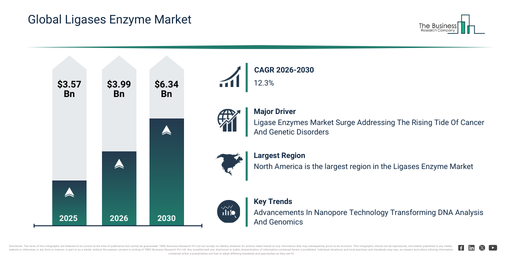
    The ligases enzyme market has experienced significant expansion in recent years. It is forecast to grow from $3.57 billion in 2025 to $3.99 billion in 2026, achieving a compound annual growth rate (CAGR) of 11.7%. The market’s past growth can be attributed to factors such as the rise in molecular biology research, the early use of ligase enzymes in cloning processes, the increasing number of academic research laboratories, heightened pharmaceutical R&D activities, and the expanding application of enzymatic tools in diagnostics.

    The ligases enzyme market size is projected to experience substantial growth in the coming years, reaching $6.34 billion by 2030, demonstrating a compound annual growth rate (CAGR) of 12.3%. This expansion over the forecast period is propelled by the increasing demand for advanced genetic testing, the broadening scope of next-generation sequencing applications, escalating investments in biotechnology research, a heightened focus on personalized medicine, and the rising adoption of ligase-based diagnostic techniques. Prominent trends for the forecast period include the growing demand for enzymes in molecular cloning, the expanded use of ligases in genetic research, their increasing integration into diagnostic assays, the wider application of ligase technologies in drug discovery, and a developing preference for high-efficiency and specialty ligases.

    Get A Free Sample Report With In-Depth Market Insights:

    https://thebusinessresearchcompany.com/sample_request?id=78342975&type=smp&name=Ligases%20Enzyme%20Market%20Report%202026&utm_source=Blogs&utm_medium=Paid&utm_campaign=Oct_PR

    Ligases Enzyme Market Industry Drivers: What’s Behind The Revenue Growth?

    The rising prevalence of cancer and genetic disorders is anticipated to propel the growth of the ligase’s enzyme market. Cancer denotes a collection of diseases marked by the unchecked growth and dissemination of abnormal cells, while genetic disorders refer to a broad spectrum of medical conditions caused by irregularities or mutations in an individual’s genetic makeup, specifically their DNA. Ligase enzymes are crucial for DNA replication, repair, and recombination. In cancer, ligases can contribute to the uncontrolled multiplication of cells by repairing compromised DNA, and they can also be employed to identify and destroy cells affected by genetic disorders. For example, in July 2024, the Australian Institute of Health and Welfare, an Australia-based government agency, reported that the number of cancer cases diagnosed in Australia increased from 160,570 in 2022 to 164,694 in 2023, showcasing a notable rise during that period. This upward trend highlights the expanding prevalence of cancer within the nation, with 403 new cancer cases and 144 cancer-related deaths reported for every 100,000 people. Moreover, in February 2023, according to Gene People UK, a UK-based registered charity group, around 1 in 25 children in the UK are affected by a genetic condition, resulting in more than 2.4 million children and adults in the UK living with a genetic disorder, and 30,000 babies and children receiving new diagnoses annually. Therefore, the increasing prevalence of cancer and genetic disorders is a significant factor driving the growth of the ligase’s enzyme market.

    Ligases Enzyme Market Segmentation And Category Overview

    The ligases enzyme market covered in this report is segmented –

    1) By Type: E. coli DNA Ligases, T4 DNA Ligase, Mammalian Ligases, Thermostable Ligases

    2) By Source: Microorganisms, Animal

    3) By Application: Ligase Chain Reaction (LCR), Ligase Detection Reaction (LDR), Next-Generation Sequencing (NGS), Rolling Circle Amplification (RCA), Proximity Ligation Assay (PLA), Molecular Cloning, Ligation Mediated PCR, Mutation Detection

    4) By End-User: Research Laboratories And Institutions, Pharmaceutical And Biopharmaceutical Companies, Diagnostic Laboratories

    Subsegments:

    1) By E. coli DNA Ligase: Ligase I, Ligase II

    2) By T4 DNA Ligase: Wild-Type T4 Ligase, Modified T4 Ligase

    3) By Mammalian Ligases: Ligase IV, Ligase I

    4) By Thermostable Ligases: Taq DNA Ligase, Pyrococcus Furiosus Ligase

    #Ligases Enzyme Market Growth Trends: What’s Shaping The Future Outlook?

    Companies operating within the ligases enzyme market are actively advancing technologies, notably nanopore technologies, to enhance the accuracy and efficiency of DNA sequencing and manipulation, which in turn significantly improves applications across genomics, synthetic biology, and personalized medicine. Nanopore technologies operate by utilizing tiny pores to detect and analyze various molecules, such as DNA or proteins, by monitoring changes in the ionic current as they traverse the pore. As an illustration, in February 2023, Eurofins Genomics, a US-based biotechnology company, introduced its Express Oxford Nanopore Sequencing service. This service leverages Oxford Nanopore technology, facilitating the sequencing of long DNA fragments. This proves particularly beneficial for applications demanding extensive genomic analysis, including metagenomics and the identification of structural variants.

    Ligases Enzyme Market Competitive Analysis Of Leading Industry Participants

    Major companies operating in the ligases enzyme market are New England Biolabs Inc., Promega Corporation, Takara Bio Inc., Thermo Fisher Scientific Inc., Merck KGaA, GenScript, Creative Enzymes, ArcticZymes Technologies ASA, BLIRT S.A., Jena Bioscience, Enzo Life Sciences, BioVision Inc., Bioneer Corporation, Sino Biological Inc., Genetix Biotech Asia Pvt. Ltd., Omega Bio-tek Inc., Canvax Biotech, NZYGene, Vivantis Technologies, Toyobo Co. Ltd.

    View The Full Ligases Enzyme Market Report:

    https://thebusinessresearchcompany.com/report/ligases-enzyme-global-market-report?utm_source=Blogs&utm_medium=Paid&utm_campaign=Oct_PR

    Ligases Enzyme Market Largest Region: Which Geography Holds The Biggest Share?

    North America was the largest region in the ligases enzyme market in 2025. Asia-Pacific is expected to be the fastest-growing region in the ligases enzyme market report during the forecast period. The regions covered in the ligases enzyme market report are Asia-Pacific, South East Asia, Western Europe, Eastern Europe, North America, South America, Middle East, Africa.

    Reach Out To Our Team:

    The Business Research Company: https://www.thebusinessresearchcompany.com/

    Americas: +1 310-496-7795

    Asia: +44 7882 955267 & +91 8897263534

    Europe: +44 7882 955267

    Email us at: marketing@tbrc.info

    Follow us on:

    LinkedIn: https://in.linkedin.com/company/the-business-research-company

    YouTube: https://www.youtube.com/channel/UC24_fI0rV8cR5DxlCpgmyFQ

    Global Market Model: https://www.thebusinessresearchcompany.com/global-market-model
  • Lifestyle Diseases Apps Market Analysis 2026: Market Size, Growth Trends And Industry Outlook

    Lifestyle Diseases Apps Market Analysis 2026: Market Size, Growth Trends And Industry Outlook

    Featuring market attractiveness scoring, total addressable market sizing, company benchmarking matrices, interactive Excel dashboards, deeper supply chain intelligence, emerging startup tracking, and granular product-level insights, The Business Research Company’s 2026 market reports are built to deliver research that is both more actionable and more strategically valuable.

    Lifestyle Diseases Apps Market Forecast: What Value Will The Market Reach By 2030?

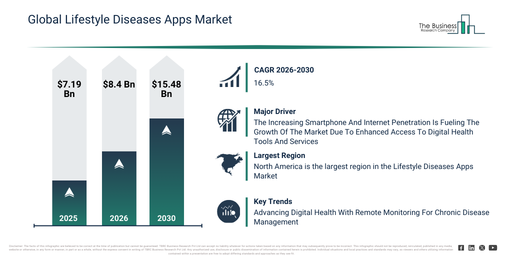
    The lifestyle diseases apps market has observed rapid expansion in recent years. This market is projected to grow from $7.19 billion in 2025 to $8.4 billion in 2026, demonstrating a compound annual growth rate (CAGR) of 16.8%. Historically, this growth has been driven by factors such as increased smartphone adoption, a heightened understanding of chronic illnesses linked to lifestyle, the development of digital health platforms, greater acceptance of remote health monitoring solutions, and a growing consumer emphasis on preventive healthcare.

    The lifestyle diseases apps market is anticipated to experience significant expansion in the upcoming years. By 2030, this market is projected to reach $15.48 billion, exhibiting a compound annual growth rate (CAGR) of 16.5%. This growth during the forecast period is propelled by several factors, such as a heightened need for tailored digital therapeutics, greater incorporation of AI-powered health analytics, the broadening of corporate wellness programs, increasing utilization of remote patient monitoring, and enhanced regulatory backing for digital health solutions. Key developments expected over the forecast period encompass a rising embrace of personalized health coaching functionalities, more extensive integration of data from wearable devices, an increased deployment of AI-based tools for symptom tracking, the proliferation of apps focused on preventive health monitoring, and a heightened emphasis on maintaining user engagement over extended periods.

    Get A Free Sample Report With In-Depth Market Insights:

    https://thebusinessresearchcompany.com/sample_request?id=76042584&type=smp&name=Lifestyle%20Diseases%20Apps%20Market%20Report%202026&utm_source=Blogs&utm_medium=Paid&utm_campaign=Oct_PR

    Lifestyle Diseases Apps Market Growth Factors: What’s Supporting Expansion?

    The growing prevalence of smartphones and internet access is projected to drive the expansion of the lifestyle disease apps market. This penetration refers to the increasing number of individuals using internet-enabled mobile devices to access digital services and information. The rise in smartphone and internet usage is attributed to the increasing affordability of mobile data plans, as telecom providers vie to deliver economical, high-speed connectivity. Extensive access to mobile internet enables more users to interact with digital health tools, thereby encouraging the adoption of lifestyle disease apps. For instance, in May 2025, the Federal Communications Commission, a US-based government agency, reported that total connections surged by approximately 2.5% between June 2023 and June 2024, reaching 549 million. Specifically, mobile connections advanced by 2.5% year over year to 416 million as of June 2024, while fixed connections rose by about 2.3% to 133 million within the same timeframe. Thus, the escalating smartphone and internet penetration is propelling the growth of the lifestyle disease apps market.

    Lifestyle Diseases Apps Market Segment Outlook: Which Categories Are Growing Fastest?

    The lifestyle diseases apps market covered in this report is segmented –

    1) By Type: Prevention Apps, Management Apps, Monitoring Apps, Diagnostic Apps, Wellness Apps

    2) By Platform: iPhone Operating System (iOS), Android, Other Platforms

    3) By Device: Smartphones, Tablets, Wearable Health Trackers, Smartwatches

    4) By Applications: Diabetes Management, Cardiovascular Health, Hypertension Monitoring, Chronic Respiratory Diseases

    5) By End-User: Healthcare Providers, Individual Consumers, Corporate Wellness Programs, Insurance Companies

    Subsegments:

    1) By Prevention Apps: Health Risk Assessment Tools, Vaccination Reminder Apps, Diet And Nutrition Advisory Apps, Smoking Cessation Apps, Alcohol Reduction Apps

    2) By Management Apps: Chronic Disease Management Apps, Medication Management Apps, Mental Health Management Apps, Blood Pressure Control Apps, Diabetes Control Apps

    3) By Monitoring Apps: Physical Activity Tracking Apps, Heart Rate Monitoring Apps, Sleep Monitoring Apps, Glucose Monitoring Apps, Calorie Tracking Apps

    4) By Diagnostic Apps: Symptom Checker Apps, Artificial Intelligence (AI)-Based Diagnosis Apps, Skin Lesion Analysis Apps, Teleconsultation Diagnostic Apps, Lab Report Interpretation Apps

    5) By Wellness Apps: Mindfulness And Meditation Apps, Fitness And Exercise Coaching Apps, Stress Management Apps, Healthy Lifestyle Coaching Apps, Yoga And Breathing Apps

    Lifestyle Diseases Apps Market Industry Trends: What’s Reshaping Demand?

    Leading companies within the lifestyle disease apps market are concentrating on creating sophisticated solutions, including mobile platforms for remote patient monitoring, to better manage chronic conditions and strengthen communication between patients and healthcare providers. These remote patient monitoring (RPM) mobile platforms serve as digital instruments, continuously monitoring patients’ vital signs and health information through smartphones or tablets. Their utility lies in facilitating the prompt identification of health problems, optimizing the management of chronic diseases, and lessening the necessity for numerous clinical appointments. A case in point is the November 2024 introduction of the We Care Diabetes App, a mobile platform designed for diabetes management, by Mega Lifesciences Nigeria Ltd., a pharmaceutical and healthcare services company based in Nigeria. This application provides real-time tracking of blood glucose, expert health coaching, and secure medical record storage, enabling patients, particularly in regions with limited access to care, to proactively manage their diabetes using insights derived from their data. The We Care Diabetes App signifies a strategic move to enhance the accessibility and local applicability of digital chronic care for communities residing in low- and middle-income areas.

    Lifestyle Diseases Apps Market Leading Companies And Competitive Benchmarking

    Major companies operating in the lifestyle diseases apps market are Apple Inc., Samsung Electronics Co. Ltd., Abbott Laboratories, Garmin Ltd., Dexcom Inc., Whoop Inc., Withings S.A.S., BetterMe Limited, Ada Health GmbH, MyFitnessPal Inc., Omada Health Inc., Qardio Inc., Lark Technologies Inc., 8fit GmbH, Glooko Inc., Visible Health Inc., HealthifyMe Wellness Private Limited, Fabulous, Sweat International Pty Ltd, Nudge Coach Inc.

    View The Full Lifestyle Diseases Apps Market Report:

    https://thebusinessresearchcompany.com/report/lifestyle-diseases-apps-global-market-report?utm_source=Blogs&utm_medium=Paid&utm_campaign=Oct_PR

    Lifestyle Diseases Apps Market Regional Analysis: Which Geography Leads On Revenue?

    North America was the largest region in the lifestyle diseases apps market in 2025. Asia-Pacific is expected to be the fastest-growing region in the forecast period. The regions covered in the lifestyle diseases apps market report are Asia-Pacific, South East Asia, Western Europe, Eastern Europe, North America, South America, Middle East, Africa.

    Reach Out To Our Team:

    The Business Research Company: https://www.thebusinessresearchcompany.com/

    Americas: +1 310-496-7795

    Asia: +44 7882 955267 & +91 8897263534

    Europe: +44 7882 955267

    Email us at: marketing@tbrc.info

    Follow us on:

    LinkedIn: https://in.linkedin.com/company/the-business-research-company

    YouTube: https://www.youtube.com/channel/UC24_fI0rV8cR5DxlCpgmyFQ

    Global Market Model: https://www.thebusinessresearchcompany.com/global-market-model
  • LifeScience Data Mining And Visualization Market Growth To $7.72 Billion Creates New Opportunities Across The Industry

    LifeScience Data Mining And Visualization Market Growth To $7.72 Billion Creates New Opportunities Across The Industry

    Built to provide research that’s more actionable and strategically valuable, The Business Research Company’s 2026 market reports include market attractiveness analysis, total addressable market sizing, company benchmarking matrices, interactive Excel dashboards, broader supply chain intelligence, emerging startup tracking, and in-depth product insights.

    LifeScience Data Mining And Visualization Market Size Outlook: How Quickly Will Revenue Expand Through 2030?

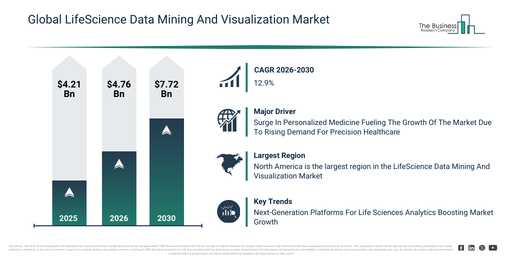
    The lifescience data mining and visualization market size has seen rapid expansion in recent years. It is projected to increase from $4.21 billion in 2025 to $4.76 billion in 2026, achieving a compound annual growth rate (CAGR) of 13.2%. The growth observed in prior periods can be attributed to the growing volume of biological and clinical datasets, increased adoption of bioinformatics tools, the expansion of pharmaceutical R&D activities, the rising complexity of disease research, and the availability of high-performance computing infrastructure.

    The lifescience data mining and visualization market size is anticipated to undergo significant expansion over the next few years. It is forecast to grow to $7.72 billion in 2030, with a compound annual growth rate (CAGR) of 12.9%. This projected growth can be attributed to increased investments in precision medicine research, the rising adoption of AI-driven analytics platforms, an expanding demand for real-time clinical decision support, the proliferation of cloud-native life science software, and a heightened focus on personalized healthcare insights. Notable trends expected during this period include the wider deployment of advanced data visualization platforms, an increasing utilization of predictive analytics in life sciences, the growing integration of multi-omics data sources, the expansion of cloud-based data mining solutions, and an enhanced emphasis on real-time clinical data insights.

    Get A Free Sample Report With In-Depth Market Insights:

    https://thebusinessresearchcompany.com/sample_request?id=77301815&type=smp&name=LifeScience%20Data%20Mining%20And%20Visualization%20Market%20Report%202026&utm_source=Blogs&utm_medium=Paid&utm_campaign=Oct_PR

    LifeScience Data Mining And Visualization Market Demand Drivers: What’s Powering Industry Growth?

    The increasing need for individualized healthcare is anticipated to drive expansion in the life science data mining and visualization market in the future. Personalized medicine involves adapting medical interventions to a person’s unique genetic profile, way of life, and surroundings to achieve more accurate and beneficial treatment. The appeal of personalized medicine is rising because it facilitates specific treatments customized for individuals, leading to better results and fewer adverse reactions. Life science data mining and visualization supports personalized medicine by converting intricate patient information into valuable insights, which in turn facilitate customized and accurate therapies. As an illustration, the Personalized Medicine Coalition, a US-based non-profit body, stated in February 2024, that the US Food and Drug Administration (FDA) approved 16 novel personalized therapies for patients with rare diseases in 2023. This represented a notable rise compared to the 6 approvals recorded in 2022. Consequently, the expanding need for personalized medicine is fueling the development of the life science data mining and visualization market.

    LifeScience Data Mining And Visualization Market Segment Landscape: Which Areas Lead Development?

    The lifescience data mining and visualization market covered in this report is segmented –

    1) By Component: Software, Services

    2) By Technology: Machine Learning Algorithms, Artificial Intelligence Tools, Natural Language Processing, Data Visualization Tools, Statistical Analysis Software

    3) By Deployment Mode: On-Premises Solutions, Cloud-Based Solutions, Hybrid Deployment Models, Software As A Service (SaaS), Platform As A Service (PaaS)

    4) By Application: Drug Discovery, Genomics And Genetic Research, Clinical Data Analysis, Patient Health Monitoring, Epidemiology Studies

    5) By End-User: Pharmaceutical Companies, Biotechnology Firms, Clinical Research Organizations (CROs), Healthcare Providers, Research Institutions And Academic Entities

    Subsegments:

    1) By Software: Data Integration Software, Data Analysis And Statistical Software, Data Visualization Tools, Predictive Analytics Software, Machine Learning And Artificial Intelligence (AI) Platforms

    2) By Services: Data Management Services, Consulting And Advisory Services, Implementation And Integration Services, Training And Support Services

    LifeScience Data Mining And Visualization Market Innovation Trends: What Developments Are Reshaping The Industry?

    Leading companies in the life science data mining and visualization market are concentrating on developing innovative products such as Platform-as-a-Service (PaaS) to integrate various real-world data sources, enable advanced analytics, and provide interactive visualization tools, thereby supporting faster, data-driven decision-making across clinical, research, and commercial operations. Platform-as-a-Service (PaaS) is defined as a cloud-based environment that furnishes developers and organizations with the necessary tools, infrastructure, and services to build, deploy, and manage applications without the complexities of overseeing underlying hardware or software. For instance, in February 2025, CitiusTech, a US-based health information technology company, unveiled CitiusTech HealthSPARX, an integrated real-world data (RWD) platform specifically designed for life sciences organizations to streamline data management and accelerate insights utilizing advanced, AI-driven analytics. HealthSPARX facilitates the seamless integration of diverse datasets, which supports regulatory-grade analytics and fosters rapid, collaborative decision-making across clinical, research, and commercial operations.

    LifeScience Data Mining And Visualization Market Industry Leaders And Competitive Landscape

    Major companies operating in the lifescience data mining and visualization market are Microsoft Corporation, F. Hoffmann-La Roche Ltd., Oracle Corporation, Thermo Fisher Scientific Inc., GlaxoSmithKline plc, SAP SE, Amgen Inc., GE Healthcare, IQVIA Holdings Inc., ICON plc, Agilent Technologies Inc., Dassault Systèmes SE, OpenText Corporation, Illumina Inc., Veeva Systems Inc., Palantir Technologies Inc., QIAGEN N.V., Flatiron Health Inc., LabWare Inc., Medable Inc.

    View The Full LifeScience Data Mining And Visualization Market Report:

    https://thebusinessresearchcompany.com/report/lifescience-data-mining-and-visualization-global-market-report?utm_source=Blogs&utm_medium=Paid&utm_campaign=Oct_PR

    LifeScience Data Mining And Visualization Market Geographic Spread And Regional Opportunities

    North America was the largest region in the lifescience data mining and visualization market in 2025. Asia-Pacific is expected to be the fastest-growing region in the forecast period. The regions covered in the lifescience data mining and visualization market report are Asia-Pacific, South East Asia, Western Europe, Eastern Europe, North America, South America, Middle East, Africa.

    Reach Out To Our Team:

    The Business Research Company: https://www.thebusinessresearchcompany.com/

    Americas: +1 310-496-7795

    Asia: +44 7882 955267 & +91 8897263534

    Europe: +44 7882 955267

    Email us at: marketing@tbrc.info

    Follow us on:

    LinkedIn: https://in.linkedin.com/company/the-business-research-company

    YouTube: https://www.youtube.com/channel/UC24_fI0rV8cR5DxlCpgmyFQ

    Global Market Model: https://www.thebusinessresearchcompany.com/global-market-model
  • Life Sciences Information Technology (IT) Market Forecast: Breaking Down The Numbers Behind Future Expansion

    Life Sciences Information Technology (IT) Market Forecast: Breaking Down The Numbers Behind Future Expansion

    Backed by market attractiveness analysis, total addressable market sizing, company benchmarking matrices, interactive Excel dashboards, wider supply chain intelligence, emerging startup coverage, and detailed product-level insights, The Business Research Company’s 2026 market reports are designed to offer research that is more actionable and strategically valuable than ever.

    Life Sciences Information Technology (IT) Market Size, Value And Growth Trajectory Through 2030

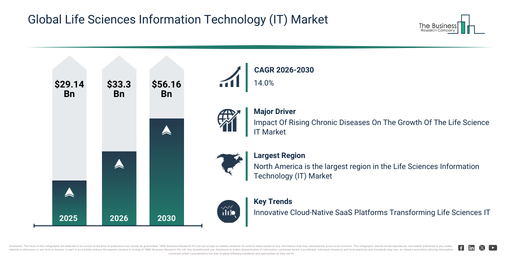
    The life sciences information technology (IT) market has seen substantial expansion in recent years. Its valuation is predicted to climb from $29.14 billion in 2025 to $33.3 billion in 2026, exhibiting a compound annual growth rate (CAGR) of 14.3%. This historical growth can be attributed to several factors, including the increasing generation of digital data in life sciences, the growing complexity of clinical trial management, the wider adoption of electronic laboratory systems, the development of bioinformatics research, and the escalating demands for regulatory data.

    The life sciences information technology (IT) market is projected to experience substantial growth over the next few years. This market is anticipated to expand to $56.16 billion by 2030, demonstrating a compound annual growth rate (CAGR) of 14.0%. The expected increase during this period stems from factors such as escalating investments in cloud-native life science IT, the rising embrace of AI-driven bioinformatics, the broadening of interoperable healthcare data platforms, an increasing need for real-time research collaboration tools, and a heightened emphasis on cybersecurity within life sciences. Additionally, key trends for the forecast period include a greater adoption of integrated life science IT platforms, an uptick in the utilization of cloud-based laboratory systems, the increasing implementation of bioinformatics solutions, the wider application of digital clinical trial management tools, and a sharpened focus on data security and compliance.

    Get A Free Sample Report With In-Depth Market Insights:

    https://thebusinessresearchcompany.com/sample_request?id=19547&type=smp&name=Life%20Sciences%20Information%20Technology%20%28IT%29%20Market%20Report%202026&utm_source=Blogs&utm_medium=Paid&utm_campaign=Oct_PR

    Life Sciences Information Technology (IT) Market Growth Drivers: What’s Behind The Acceleration?

    The growing occurrence of chronic illnesses is anticipated to boost the expansion of the life science information technology (IT) market in the future. These are enduring health conditions lasting for prolonged durations, frequently throughout an individual’s life, and progressing gradually; examples include diabetes, cardiovascular diseases, and chronic respiratory ailments. The widespread nature of chronic diseases stems from factors like an aging demographic, inactive routines, inadequate nutrition, a rise in obesity, and environmental influences. Life science IT plays a crucial role in managing chronic diseases by enabling thorough data handling, supporting customized treatment approaches, and enhancing patient oversight and results via sophisticated analytics and unified health information systems. For example, in January 2023, the National Center for Biotechnology Information (NCBI), identified as a US-based medicine library, projected that the population aged 50 and above afflicted with one or multiple chronic illnesses will see a 99.5% surge by 2050, climbing from 71.52 million in 2020 to 142.66 million. Consequently, the increasing prevalence of chronic diseases is a key factor propelling the expansion of the life science information technology (IT) market.

    Life Sciences Information Technology (IT) Market Segments: Where Is Growth Concentrated?

    The life sciences information technology (it) market covered in this report is segmented –

    1) By Type: Software, Service

    2) By Solution: Drug Discovery Informatics, Clinical Trial Management, Bioinformatics, Laboratory Information Management, Other Solutions

    3) By End User: Pharmaceutical And Biotechnology Companies, Contract Research And Development Organizations, Other End Users

    Subsegments:

    1) By Software: Laboratory Information Management Systems (LIMS), Electronic Lab Notebooks (ELN), Clinical Trial Management Systems (CTMS), Regulatory Compliance Software, Bioinformatics Software, Data Analytics And Visualization Tools, Pharmaceutical Manufacturing Software

    2) By Service: Implementation And Integration Services, Consulting Services, Training And Education Services, Managed IT Services, Support And Maintenance Services, Data Management Services, Outsourcing Services, Validation Services, Cloud Computing Services

    Life Sciences Information Technology (IT) Market Trends: What’s Defining The Industry’s Next Phase?

    Leading companies active in the life sciences information technology (IT) market are prioritizing the development of sophisticated solutions, such as cloud-native SaaS platforms, to provide scalable, cost-efficient, and compliant options that enhance collaboration, data integration, and the pace of innovation. A cloud-native SaaS platform is defined as software-as-a-service applications specifically engineered to run within cloud environments, leveraging cloud infrastructure for improved scalability, flexibility, and reliability. For instance, in June 2023, Revvity Inc., a biotechnology company based in the US, unveiled the Signals Research Suite. This cloud-native SaaS platform is crafted to improve scientific collaboration in both drug discovery and the development of specialty chemicals. The suite integrates applications like Signals Notebook, VitroVivo, and Inventa, delivering comprehensive support throughout the entire drug development journey, from early-stage research to in vitro testing and safety evaluations. The Signals Research Suite is distinguished by its scientifically intelligent, integrated software applications that fully endorse the Make-Test-Decide lifecycle. Key attributes include advanced analytics and visualizations driven by TIBCO Spotfire, seamless integration with the industry-standard ChemDraw, and a modern, streamlined interface that permits complete customization of workflows across various techniques, modalities, and datatypes. With secure single-sign-on access, consolidated data resources, helpful tutorials, and ongoing software updates, users can effectively focus on their experiments without the inconvenience of navigating disparate solutions.

    Life Sciences Information Technology (IT) Market Key Participants And Competitive Landscape

    Major companies operating in the life sciences information technology (it) market are Veeva Systems Inc., Medidata Solutions Inc., Oracle Corporation, SAP SE, International Business Machines Corporation, Microsoft Corporation, Accenture plc, Cognizant Technology Solutions Corporation, Dassault Systèmes SE, SAS Institute Inc., PTC Inc., Infor Inc., LabWare Inc., Thermo Fisher Scientific Inc., PerkinElmer Inc., Certara Inc., IQVIA Holdings Inc., ArisGlobal LLC, Dotmatics Limited, Benchling Inc.

    View The Full Life Sciences Information Technology (IT) Market Report:

    https://thebusinessresearchcompany.com/report/life-sciences-information-technology-it-global-market-report?utm_source=Blogs&utm_medium=Paid&utm_campaign=Oct_PR

    Life Sciences Information Technology (IT) Market Top Region By Revenue And Market Share

    North America was the largest region in the life sciences information technology (IT) market in 2025. Asia-Pacific is expected to be the fastest-growing region in the forecast period. The regions covered in the life sciences information technology (it) market report are Asia-Pacific, South East Asia, Western Europe, Eastern Europe, North America, South America, Middle East, Africa.

    Reach Out To Our Team:

    The Business Research Company: https://www.thebusinessresearchcompany.com/

    Americas: +1 310-496-7795

    Asia: +44 7882 955267 & +91 8897263534

    Europe: +44 7882 955267

    Email us at: marketing@tbrc.info

    Follow us on:

    LinkedIn: https://in.linkedin.com/company/the-business-research-company

    YouTube: https://www.youtube.com/channel/UC24_fI0rV8cR5DxlCpgmyFQ

    Global Market Model: https://www.thebusinessresearchcompany.com/global-market-model
  • Life Sciences BPO Market Expected To Grow At 10.5% CAGR Through 2030: What Businesses Need To Know

    Life Sciences BPO Market Expected To Grow At 10.5% CAGR Through 2030: What Businesses Need To Know

    Featuring market attractiveness scoring, total addressable market sizing, company benchmarking matrices, interactive Excel dashboards, deeper supply chain intelligence, emerging startup tracking, and granular product-level insights, The Business Research Company’s 2026 market reports are built to deliver research that is both more actionable and more strategically valuable.

    Life Sciences BPO Market CAGR Outlook And Future Development

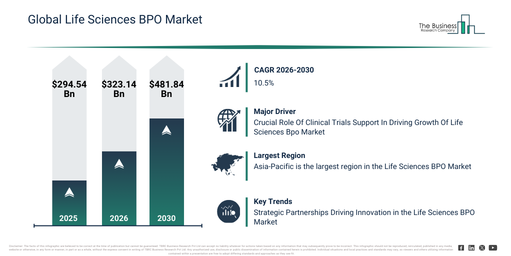
    The life sciences bpo market size has seen significant expansion in recent years. Its projected growth indicates an increase from $294.54 billion in 2025 to $323.14 billion in 2026, achieving a compound annual growth rate (CAGR) of 9.7%. This historic growth can be attributed to factors such as rising operational costs in life sciences companies, the increasing complexity of regulatory requirements, the early adoption of outsourcing for clinical trials, growth in the pharmaceutical and medical device industries, and the need for specialized expertise.

    The life sciences bpo market is projected for significant expansion in the coming years, reaching $481.84 billion by 2030, driven by a robust compound annual growth rate (CAGR) of 10.5%. This anticipated growth is primarily driven by several factors, including an intensified focus on achieving cost efficiency, the expansion of global clinical trial volumes, an escalating need for adaptable support services, the broadening presence of life sciences companies in developing regions, and a greater imperative for accelerating product commercialization. Key trends shaping the market during this forecast period involve an increased tendency to outsource non-core life sciences functions, a heightened demand for services related to regulatory affairs and compliance, a wider embrace of comprehensive end-to-end bpo solutions, the development of pharmacovigilance and data management offerings, and a growing inclination towards cost-effective global delivery models.

    Get A Free Sample Report With In-Depth Market Insights:

    https://thebusinessresearchcompany.com/sample_request?id=55632024&type=smp&name=Life%20Sciences%20BPO%20Market%20Report%202026&utm_source=Blogs&utm_medium=Paid&utm_campaign=Oct_PR

    Life Sciences BPO Market Growth Factors Behind Sustained Expansion

    Clinical trials assistance is anticipated to drive the expansion of the life sciences BPO market in the future. This support encompasses services and actions aimed at facilitating and overseeing clinical trials, which are research endeavors involving human subjects to assess the safety and efficacy of novel medical treatments, pharmaceuticals, therapies, medical devices, or other interventions. Professionals in clinical trials support play a crucial role in upholding the quality and integrity of clinical trial data, guaranteeing adherence to regulatory standards. Such dedication to data quality is vital for BPO providers dealing with clinical trial data, a service frequently central to their offerings for life sciences organizations. For example, in December 2024, the Association of the British Pharmaceutical Industry (ABPI), an organization based in the UK, reported a consecutive annual increase in pharmaceutical industry trials initiated in the UK, climbing from 411 in 2022 to 426 in 2023. Consequently, clinical trials support is a key factor propelling the expansion of the life sciences BPO market.

    Life Sciences BPO Market Segment Analysis: What Are The Core Market Categories?

    The life sciences bpo market covered in this report is segmented –

    1) By Services: Pharmaceutical Outsourcing, Medical Devices Outsourcing, Contract Sales And Marketing Outsourcing, Other Services

    2) By Application Area: Clinical Operations, Regulatory And Compliance Operations, Commercial And Market Access Operations, Safety And Pharmacovigilance Operations, Data And Digital Operations

    3) By End User: Pharmaceutical Companies, Biotechnology Companies, Medical Device Companies, Contract Research Organizations (CROs), Contract Development And Manufacturing Organizations (CDMOs)

    Subsegments:

    1) By Pharmaceutical Outsourcing: Drug Development Services, Clinical Trials Management, Regulatory Affairs Services, Pharmacovigilance

    2) By Medical Devices Outsourcing: Product Development Services, Regulatory Compliance, Quality Assurance And Testing, Supply Chain Management

    3) By Contract Sales And Marketing Outsourcing: Sales Force Outsourcing, Marketing Strategy Development, Market Access And Pricing Strategies, Promotional Activities

    4) By Other Services: Data Management And Analytics, IT Services, Training And Education, Consulting Services

    Life Sciences BPO Market Industry Trends Fueling Future Revenue Growth

    Leading companies operating within the life sciences bpo market are adopting a strategic partnerships approach to develop innovative solutions. These alliances benefit life sciences bpo companies by combining resources and expertise, enhancing research and development capabilities, expanding market reach, and accelerating commercialization, which ultimately drives innovation and growth in the life sciences bpo industry. For instance, in March 2024, Cognizant Technology Solutions Corp, a US-based company, partnered with NVIDIA, a US-based software company. Through this partnership, Cognizant and NVIDIA aim to accelerate drug discovery by utilizing NVIDIA’s BioNeMo generative AI platform, enabling faster and more efficient analysis of complex datasets. This collaboration seeks to enhance research capabilities and expedite the development of life-saving treatments.

    Life Sciences BPO Market Top Companies Driving Competitive Growth

    Major companies operating in the life sciences bpo market are Accenture plc, Atos SE, Covance Inc., Genpact Ltd., ICON plc, Infosys Ltd., PAREXEL International Corp., IQVIA Holdings Inc., International Business Machines Corp., Cognizant Technology Solutions, Syneos Health Inc., Charles River Laboratories International Inc., WuXi AppTec Co. Ltd., Medpace Holdings Inc., Pharmaceutical Product Development LLC, Medidata Solutions, Health Decisions Inc., Bioclinica Inc., Navitas Life Sciences Private Limited, SGS SA, PRA Health Sciences Inc., Clinipace Worldwide, ClinTec International Ltd., Cromsource Ltd.

    View The Full Life Sciences BPO Market Report:

    https://thebusinessresearchcompany.com/report/life-sciences-bpo-global-market-report?utm_source=Blogs&utm_medium=Paid&utm_campaign=Oct_PR

    Life Sciences BPO Market Regional Analysis And Top Geography

    Asia-Pacific was the largest region in the life sciences BPO market in 2025. The regions covered in the life sciences bpo market report are Asia-Pacific, South East Asia, Western Europe, Eastern Europe, North America, South America, Middle East, Africa.

    Reach Out To Our Team:

    The Business Research Company: https://www.thebusinessresearchcompany.com/

    Americas: +1 310-496-7795

    Asia: +44 7882 955267 & +91 8897263534

    Europe: +44 7882 955267

    Email us at: marketing@tbrc.info

    Follow us on:

    LinkedIn: https://in.linkedin.com/company/the-business-research-company

    YouTube: https://www.youtube.com/channel/UC24_fI0rV8cR5DxlCpgmyFQ

    Global Market Model: https://www.thebusinessresearchcompany.com/global-market-model
  • Life Science Software Market Forecast To Reach $34.45 Billion By 2030: Key Trends Explained

    Life Science Software Market Forecast To Reach $34.45 Billion By 2030: Key Trends Explained

    Built to provide research that’s more actionable and strategically valuable, The Business Research Company’s 2026 market reports include market attractiveness analysis, total addressable market sizing, company benchmarking matrices, interactive Excel dashboards, broader supply chain intelligence, emerging startup tracking, and in-depth product insights.

    Life Science Software Market Set To Climb From $22.29 Billion In 2026 To $34.45 Billion By 2030

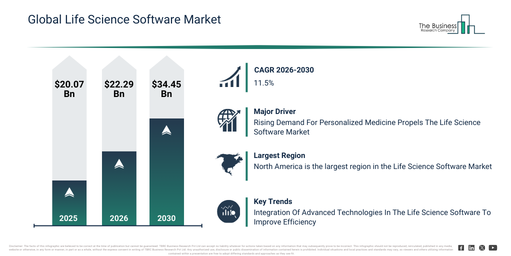
    The overall size of the life science software market has expanded considerably in recent years. This market is projected to increase from $20.07 billion in 2025 to $22.29 billion in 2026, achieving a compound annual growth rate (CAGR) of 11.1%. Historically, this expansion is attributable to various elements, including a rise in life science research activities, the increasing complexity of clinical trials, greater adoption of digital record keeping, the ongoing expansion of pharmaceutical and biotech industries, and the initial deployment of enterprise software solutions.

    The life science software market size is expected to experience rapid growth in the upcoming years. It is forecast to grow to $34.45 billion in 2030, achieving a compound annual growth rate (CAGR) of 11.5%. This expansion over the forecast period is largely driven by factors such as the increasing demand for scalable software solutions, a greater emphasis on operational efficiency, a rise in global clinical trial volumes, the broadening application of software in pharmacovigilance, and increased investments in life science digital infrastructure. Significant trends anticipated during this period include the wider adoption of integrated life science platforms, a rising call for workflow automation in research processes, an intensified focus on regulatory and compliance software, the extension of software usage across both clinical and preclinical activities, and a growing requirement for data standardization and interoperability.

    Get A Free Sample Report With In-Depth Market Insights:

    https://thebusinessresearchcompany.com/sample_request?id=12181858&type=smp&name=Life%20Science%20Software%20Market%20Report%202026&utm_source=Blogs&utm_medium=Paid&utm_campaign=Oct_PR

    Life Science Software Market Demand Drivers Opening New Revenue Streams

    The increasing need for personalized medicine is anticipated to fuel the expansion of life science software in the future. Personalized medicine refers to a healthcare strategy that customizes medical choices and therapies according to unique individual traits, including genetic makeup, way of life, and environmental influences. Sophisticated software solutions are essential for personalized medicine to standardize and combine data from diverse origins, such as wearables, genetic tests, and electronic health records. Life science software is crucial for assisting in the analysis and interpretation of intricate biological data, empowering researchers and medical practitioners to customize treatment strategies according to distinct patient profiles. As an illustration, in February 2024, data from the Personalized Medicine Coalition, a US-based non-profit organization, indicated that the US Food and Drug Administration (FDA) approved 16 new personalized treatments for rare diseases in 2023, which is an increase from 6 approvals in the year 2022. Consequently, the increasing demand for personalized medicine is propelling the expansion of the life science software market.

    Life Science Software Market Segment Breakdown: Which Categories Lead On Revenue?

    The life science software market covered in this report is segmented –

    1) By Type: Predictive, Descriptive, Prescriptive

    2) By Deployment: On-Premise, Hosted

    3) By Application: Compliance, R&D, Pharmacovigilance

    4) By End User: Healthcare Institutes, Biopharmaceutical Industry, Medical Devices Industry, Medical Research Centers

    Subsegments:

    1) By Predictive: Predictive Analytics Tools, Risk Assessment Software, Patient Outcome Prediction

    2) By Descriptive: Data Visualization Tools, Reporting Software, Statistical Analysis Software

    3) By Prescriptive: Decision Support Systems, Optimization Tools

    Life Science Software Market Trends Powering Strategic Industry Growth

    Leading companies in the life science software market are incorporating advanced technologies, including generative AI, machine learning (ML), and computer-aided drug-design (CADD), to optimize the drug discovery process, boost efficiency, and accelerate scientific advancements. Generative AI is employed for designing novel molecular structures, while ML algorithms analyze vast datasets to identify potential drug candidates and forecast their efficacy. Integrated with CADD tools, these technologies enable researchers to computationally simulate and optimize drug interactions, significantly streamlining the identification and development of promising compounds. For instance, in December 2023, Merck, a Germany-based science and technology company, introduced AIDDISSON, a new drug discovery software. AIDDISSON aims to accelerate the identification of novel medications and enhance the efficiency of the drug development process. The platform is built on artificial intelligence (AI) and machine learning (ML) technologies, allowing it to evaluate massive volumes of data and locate prospective medication candidates more rapidly and effectively than traditional approaches.

    Life Science Software Market Leading Players And Competitive Positioning

    Major companies operating in the life science software market are International Business Machines Corp, Oracle, SAP, Dassault Systèmes, SAS Institute Inc, Veeva Systems Inc, Medidata Solutions Inc, ArisGlobal LLC, Perceptive Informatics Inc, Cegedim SA, Model N Inc, TIBCO Software Inc, Epic Systems Corporation, MEDITECH, Allscripts Healthcare LLC, CPSI, Thermo Fisher Scientific Inc, PAREXEL International Corporation, Optum Inc, Cognizant, DXC Technology Co, HCL Technologies Ltd

    View The Full Life Science Software Market Report:

    https://thebusinessresearchcompany.com/report/life-science-software-global-market-report?utm_source=Blogs&utm_medium=Paid&utm_campaign=Oct_PR

    Life Science Software Market Geographic Analysis: Where Is Demand Rising Fastest?

    North America was the largest region in the life science software market in 2025. Asia-Pacific is expected to be the fastest-growing region in the forecast period. The regions covered in the life science software market report are Asia-Pacific, South East Asia, Western Europe, Eastern Europe, North America, South America, Middle East, Africa.

    Reach Out To Our Team:

    The Business Research Company: https://www.thebusinessresearchcompany.com/

    Americas: +1 310-496-7795

    Asia: +44 7882 955267 & +91 8897263534

    Europe: +44 7882 955267

    Email us at: marketing@tbrc.info

    Follow us on:

    LinkedIn: https://in.linkedin.com/company/the-business-research-company

    YouTube: https://www.youtube.com/channel/UC24_fI0rV8cR5DxlCpgmyFQ

    Global Market Model: https://www.thebusinessresearchcompany.com/global-market-model
  • Life Science Reagents Market Size Forecast From 2026 To 2030: Key Industry Trends

    Life Science Reagents Market Size Forecast From 2026 To 2030: Key Industry Trends

    Backed by market attractiveness analysis, total addressable market sizing, company benchmarking matrices, interactive Excel dashboards, wider supply chain intelligence, emerging startup coverage, and detailed product-level insights, The Business Research Company’s 2026 market reports are designed to offer research that is more actionable and strategically valuable than ever.

    Life Science Reagents Market Forecast: Value Set To Climb From $60.26 Billion To $78.93 Billion

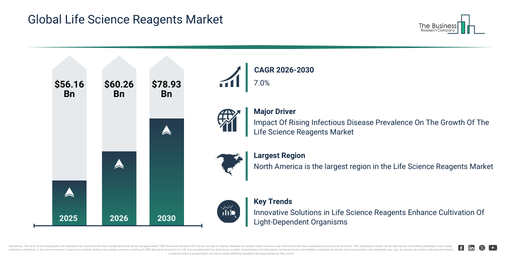
    The market size for life science reagents has seen robust growth in recent years. It is anticipated to increase from $56.16 billion in 2025 to $60.26 billion in 2026, driven by a compound annual growth rate (CAGR) of 7.3%. Historically, this expansion has been influenced by factors such as the broadening of academic and clinical research activities, an uptick in pharmaceutical drug discovery initiatives, the rising integration of molecular diagnostics, an increase in clinical testing volumes, and the provision of standardized reagent formulations.

    The life science reagents market size is anticipated to undergo significant expansion over the coming years, with projections indicating a growth to $78.93 billion by 2030, demonstrating a compound annual growth rate (CAGR) of 7.0%. This forecasted growth is largely driven by an escalating demand for reagents within genomics and proteomics, an increasing uptake of next-generation sequencing reagents, the broadening application of personalized medicine, rising investments in diagnostic testing infrastructure, and a heightened emphasis on sustainable reagent manufacturing. Prominent trends expected during this period include a greater need for high-purity research reagents, the expanding adoption of specialized molecular biology reagents, a growing preference for ready-to-use reagent kits, the development of reagents for advanced diagnostics, and an intensified focus on ensuring quality and reproducibility.

    Get A Free Sample Report With In-Depth Market Insights:

    https://thebusinessresearchcompany.com/sample_request?id=59996359&type=smp&name=Life%20Science%20Reagents%20Market%20Report%202026&utm_source=Blogs&utm_medium=Paid&utm_campaign=Oct_PR

    Life Science Reagents Market Growth Backed By Core Demand Fundamentals

    The increasing occurrence of infectious diseases is anticipated to boost the expansion of the life science reagents market in the future. These diseases are ailments resulting from pathogens like bacteria, viruses, fungi, or parasites, capable of transmission between individuals or via environmental channels. The growing incidence of infectious diseases frequently stems from elements such as heightened global travel, urban expansion, climate shifts, and the development of antibiotic resistance. Life science reagents find application in the context of infectious diseases for diagnostic purposes, research endeavors, and the creation of therapies, facilitating the identification and examination of pathogens. As an illustration, data from November 2024, provided by the Centers for Disease Control and Prevention, a US-based government agency, indicated that reported tuberculosis (TB) cases in the United States reached 9,633 in 2023, marking a 15.6% rise compared to 2022. Consequently, the escalating occurrence of infectious diseases is fueling the expansion of the life science reagents market.

    Life Science Reagents Market Segmentation: How Does The Market Break Down By Category?

    The life science reagents market covered in this report is segmented –

    1) By Product: Chromatography Reagents, Molecular Diagnostic Reagents, Clinical Chemistry Reagents, Flow Cytometry Reagents, Cell And Tissue Culture Reagents, Hematology And Hemostasis Reagents, Microbiology Reagents, Other Products

    2) By Application: Protein Synthesis And Purification, Gene Expression, Deoxyribonucleic Acid (DNA) And Ribonucleic Acid (RNA) Analysis, Drug Testing, Other Applications

    3) By End Use: Hospitals And Diagnostics Laboratories, Commercial And Contract Research Manufacturers, Academic And Research Institutes, Manufacturers, Other End Uses

    Subsegments:

    1) By Chromatography Reagents: Mobile Phases, Stationary Phases, Buffer Solutions, Detection Reagents, Column Reagents

    2) By Molecular Diagnostic Reagents: PCR Reagents, Enzymes And Primers, Hybridization Probes, Reagents For Next-Generation Sequencing (NGS), CRISPR/Cas9 Reagents

    3) By Clinical Chemistry Reagents: Blood Glucose Reagents, Electrolyte Testing Reagents, Liver Function Reagents, Kidney Function Reagents, Enzyme And Hormone Reagents

    4) By Flow Cytometry Reagents: Fluorescent Antibodies, Flow Cytometry Buffers, Cytokine Detection Reagents, DNA Stains, Viability Stains

    5) By Cell And Tissue Culture Reagents: Growth Media, Serum Supplements, Cell Culture Reagents, Growth Factors, Trypsin and Enzymes

    6) By Hematology and Hemostasis Reagents: Blood Coagulation Reagents, Hemoglobin Test Reagents, Complete Blood Count (CBC) Reagents, Platelet Count Reagents, Clotting Factor Reagents

    7) By Microbiology Reagents: Culture Media and Agar Plates, Staining Reagents, Microbial Identification Reagents, Antibiotic Sensitivity Testing Reagents, Biochemical Test Reagents, Microbial Growth Supplements

    8) By Other Products: Buffers and Salts, Assay Reagents and Kits, Labeling and Detection Reagents, Protein and Peptide Reagents, Enzyme Substrates and Cofactors, Sample Preparation Reagents, Specialty and Custom Research Reagents

    Life Science Reagents Market Growth Trends Reshaping The Competitive Landscape

    Major companies in the life science reagents market are focused on creating innovative solutions, such as customizable light settings, to optimize experimental conditions, enhance accuracy in research, and improve the study of light-dependent organisms. Customizable light settings allow for adjusting light intensity, color, and duration to meet specific experimental or environmental needs. For instance, in June 2023, Beckman Coulter Life Sciences, Inc., a US-based manufacturing company specializing in life sciences and laboratory equipment, launched the microbioreactor light array module to support the cultivation of photosynthetically active microalgae and microorganisms. The Light Array Module (LAM) for the BioLector XT Microbioreactor is specifically designed for light-dependent organisms, providing customizable light settings within the 400-700 nm spectrum. Controlled by 16 different LED types, it delivers high irradiance of up to 3500 µmol/m2/s. The BioLector XT also facilitates the growth of microbial, fungal, and algal species, featuring real-time monitoring of biomass, pH, dissolved oxygen, and fluorescence.

    Life Science Reagents Market Competitive Overview And Top Companies

    Major companies operating in the life science reagents market are Thermo Fisher Scientific Inc., Danaher Corporation, Merck Group, Becton Dickinson and Company, Agilent Technologies Inc., PerkinElmer Health Sciences Inc, Bio-Rad Laboratories Inc., Bio-Techne Corp, Promega Corporation, Genscript Biotech Corporation, Sino Biological Inc., New England Biolabs Inc., Kaneka Corporation, OriGene Technologies Inc., SeraCare Life Sciences Inc., Cayman Chemical Company, Takara Bio USA Inc., Cell Signaling Technology, Rockland Immunochemicals Inc., Santa Cruz Biotechnology Inc., Creative Diagnostics, HyTest Ltd, Geno Technology Inc., MyBiosource Inc., Fritz Hoffmann-La Roche, Enzo Life Sciences Inc.

    View The Full Life Science Reagents Market Report:

    https://thebusinessresearchcompany.com/report/life-science-reagents-global-market-report?utm_source=Blogs&utm_medium=Paid&utm_campaign=Oct_PR

    Life Science Reagents Market Global Footprint: Which Region Leads The Market?

    North America was the largest region in the life science reagents market in 2025. Asia-Pacific is expected to be the fastest-growing region in the forecast period. The regions covered in the life science reagents market report are Asia-Pacific, South East Asia, Western Europe, Eastern Europe, North America, South America, Middle East, Africa.

    Reach Out To Our Team:

    The Business Research Company: https://www.thebusinessresearchcompany.com/

    Americas: +1 310-496-7795

    Asia: +44 7882 955267 & +91 8897263534

    Europe: +44 7882 955267

    Email us at: marketing@tbrc.info

    Follow us on:

    LinkedIn: https://in.linkedin.com/company/the-business-research-company

    YouTube: https://www.youtube.com/channel/UC24_fI0rV8cR5DxlCpgmyFQ

    Global Market Model: https://www.thebusinessresearchcompany.com/global-market-model
  • Life Science Instrumentation Market 2026: Market Size, Growth Drivers And Emerging Opportunities

    Life Science Instrumentation Market 2026: Market Size, Growth Drivers And Emerging Opportunities

    Featuring market attractiveness scoring, total addressable market sizing, company benchmarking matrices, interactive Excel dashboards, deeper supply chain intelligence, emerging startup tracking, and granular product-level insights, The Business Research Company’s 2026 market reports are built to deliver research that is both more actionable and more strategically valuable.

    Life Science Instrumentation Market Revenue Growth On Track For A 6.6% CAGR Through 2030

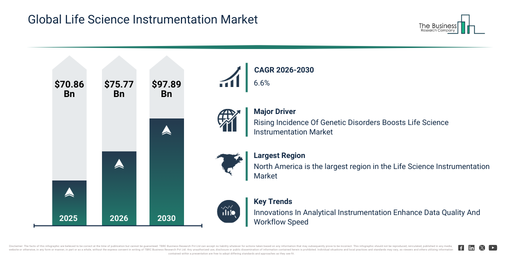
    The life science instrumentation market has experienced significant expansion in its size over recent years. Projections indicate that it is set to increase from $70.86 billion in 2025 to $75.77 billion in 2026, exhibiting a compound annual growth rate (CAGR) of 6.9%. This historical growth can be linked to several factors, including the widening scope of pharmaceutical and biotechnology research, a rise in investments directed towards laboratory infrastructure, the advancement of genomics and proteomics research, the integration of sophisticated diagnostic instruments, and an escalating need for precise analytical outcomes.

    The life science instrumentation market size is anticipated to experience substantial expansion in the upcoming years, with projections indicating it will grow to $97.89 billion by 2030, achieving a compound annual growth rate (CAGR) of 6.6%. This growth within the forecast period is largely attributable to the increasing deployment of automated and connected instruments, a rising demand for personalized medicine research tools, the expansion of clinical diagnostics testing, the growing adoption of AI-enabled instrumentation, and escalating investments in next-generation laboratory technologies. Prominent trends for the forecast period include the increasing uptake of high-throughput analytical instruments, the rising integration of automation in laboratory workflows, a growing requirement for precision measurement technologies, the expansion of multi-omics research instrumentation, and an enhanced focus on data-integrated lab systems.

    Get A Free Sample Report With In-Depth Market Insights:

    https://thebusinessresearchcompany.com/sample_request?id=72033193&type=smp&name=Life%20Science%20Instrumentation%20Market%20Report%202026&utm_source=Blogs&utm_medium=Paid&utm_campaign=Oct_PR

    Life Science Instrumentation Market Growth Catalysts And Demand Drivers

    The rising occurrence of genetic disorders is projected to fuel the expansion of the life science instrumentation market in the coming years. Genetic disorders are defined as conditions or illnesses stemming from anomalies in an individual’s DNA or chromosomes. The increasing incidence of these disorders is attributed to advancements in diagnostic technologies, heightened awareness, and alterations in reproductive patterns. Life science instruments are employed by patients with genetic disorders for diagnosing, monitoring, and developing targeted therapies by examining genetic material and biomarkers. For instance, in May 2023, according to the Alzheimer Society, a UK-based dementia care and research charity, approximately 982,000 people are living with dementia in the UK, and this number is expected to increase to 1.4 million by 2040. Therefore, the growing incidence of genetic disorders is stimulating the growth of the life science instrumentation market.

    Life Science Instrumentation Market Segment Trends And Revenue Contributors

    The life science instrumentation market covered in this report is segmented –

    1) By Technology: Spectroscopy, Chromatography, Polymerase Chain Reaction, Liquid Handling

    2) By Application: Research Applications, Clinical And Diagnostic Applications, Other Applications

    3) By End User: Hospitals And Diagnostic Laboratories, Pharmaceutical And Biotechnology Companies, Academic And Research Institutes, Agriculture And Food Industries, Environmental Testing Labs, Clinical Research Organizations, Other End-Users

    Subsegments:

    1) By Spectroscopy: UV-Vis Spectroscopy, Infrared Spectroscopy (IR), Mass Spectrometry, Nuclear Magnetic Resonance (NMR) Spectroscopy, Raman Spectroscopy

    2) By Chromatography: Gas Chromatography (GC), High-Performance Liquid Chromatography (HPLC), Thin Layer Chromatography (TLC), Ion Chromatography (IC), Supercritical Fluid Chromatography (SFC)

    3) By Polymerase Chain Reaction (PCR): Quantitative PCR (qPCR), Reverse Transcription PCR (RT-PCR), Digital PCR, Multiplex PCR

    4) By Liquid Handling: Automated Liquid Handling Systems, Manual Pipetting Systems, Liquid Handling Robotics

    Life Science Instrumentation Market Trends Shaping Long-Term Demand

    Leading companies in the life science instrumentation market are concentrating on developing innovative solutions, such as high-performance mass spectrometers with ultrahigh sensitivity, to advance proteomics, metabolomics, translational research, and precision medicine workflows. These sophisticated analytical instruments identify and quantify molecules like proteins, metabolites, and lipids by ionizing them and measuring their mass-to-charge ratio. Compared to traditional instruments, these modern systems offer enhanced sensitivity, quicker analysis, and higher throughput, enabling more accurate and complex biological and clinical studies. As an illustration, in June 2023, Thermo Fisher Scientific Inc., a US-based life-science instrumentation company, unveiled the Thermo Scientific Orbitrap Astral mass spectrometer. This advanced system provides deep proteome coverage, high resolution, and accelerated throughput, benefiting biomarker discovery and proteomics research. The Astral mass spectrometer facilitates the detection of low-abundance proteins, rapid processing of large sample batches, and improved support for both translational and basic research, marking a notable performance improvement over conventional MS platforms concerning sensitivity, efficiency, and data quality.

    Life Science Instrumentation Market Competitive Landscape: Which Companies Lead The Industry?

    Major companies operating in the life science instrumentation market are Thermo Fisher Scientific Inc, Agilent Technologies Inc, Danaher Corporation, Bruker Corporation, Shimadzu Corporation, Waters Corporation, PerkinElmer Inc, Bio-Rad Laboratories Inc, JEOL Ltd, Horiba Ltd, Eppendorf AG, Tecan Group AG, Leica Microsystems AG, Sartorius AG, Illumina Inc, Oxford Instruments plc, Becton Dickinson and Company, Beckman Coulter Inc, Carl Zeiss AG, Nikon Corporation, Hitachi High Technologies Corporation

    View The Full Life Science Instrumentation Market Report:

    https://thebusinessresearchcompany.com/report/life-science-instrumentation-global-market-report?utm_source=Blogs&utm_medium=Paid&utm_campaign=Oct_PR

    Life Science Instrumentation Market Regional Split: Which Areas Are Fueling Growth?

    North America was the largest region in the life science instrumentation market in 2025. The regions covered in the life science instrumentation market report are Asia-Pacific, South East Asia, Western Europe, Eastern Europe, North America, South America, Middle East, Africa.

    Reach Out To Our Team:

    The Business Research Company: https://www.thebusinessresearchcompany.com/

    Americas: +1 310-496-7795

    Asia: +44 7882 955267 & +91 8897263534

    Europe: +44 7882 955267

    Email us at: marketing@tbrc.info

    Follow us on:

    LinkedIn: https://in.linkedin.com/company/the-business-research-company

    YouTube: https://www.youtube.com/channel/UC24_fI0rV8cR5DxlCpgmyFQ

    Global Market Model: https://www.thebusinessresearchcompany.com/global-market-model
  • Life Science Analytics Software Market Set To Expand From $23 Billion In 2026: Growth Outlook Through 2030

    Life Science Analytics Software Market Set To Expand From $23 Billion In 2026: Growth Outlook Through 2030

    Built to provide research that’s more actionable and strategically valuable, The Business Research Company’s 2026 market reports include market attractiveness analysis, total addressable market sizing, company benchmarking matrices, interactive Excel dashboards, broader supply chain intelligence, emerging startup tracking, and in-depth product insights.

    Life Science Analytics Software Market Value Growth And Long-Term Outlook

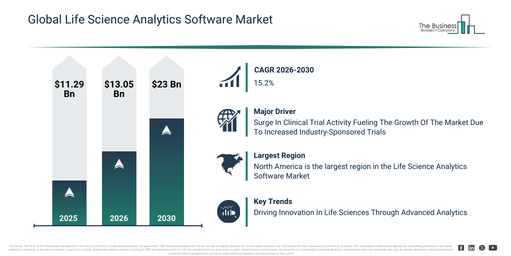
    The life science analytics software market has experienced rapid expansion in recent years. It is anticipated to increase from $11.29 billion in 2025 to $13.05 billion in 2026, demonstrating a compound annual growth rate (CAGR) of 15.6%. Historical growth can be attributed to several factors, including the expansion of clinical trial data volumes, the increasing reliance on data-driven decision-making within the pharmaceutical industry, the proliferation of digital healthcare records, the escalating complexity of regulatory reporting, and the broader adoption of analytics in sales and marketing functions.

    The life science analytics software market is poised for significant expansion in the coming years. It is projected to reach $23 billion by 2030, demonstrating a compound annual growth rate (CAGR) of 15.2%. This growth during the forecast period can be attributed to the increasing deployment of AI and machine learning analytics, a rising demand for personalized medicine insights, the expansion of cloud-native analytics platforms, the growing integration of genomics and clinical datasets, and increasing investments in life science digital transformation. Major trends anticipated during this period include a greater adoption of advanced predictive analytics tools, the rising integration of real-world evidence analytics, the growing use of cloud-based life science platforms, the expansion of AI-driven clinical trial analytics, and an enhanced focus on regulatory-compliant data insights.

    Get A Free Sample Report With In-Depth Market Insights:

    https://thebusinessresearchcompany.com/sample_request?id=93574301&type=smp&name=Life%20Science%20Analytics%20Software%20Market%20Report%202026&utm_source=Blogs&utm_medium=Paid&utm_campaign=Oct_PR

    Life Science Analytics Software Market Opportunity Drivers: What’s Unlocking New Revenue Potential?

    The rising volume of clinical trials is anticipated to propel the expansion of the life science analytics software market moving forward. These trials are research studies conducted in humans to assess the safety and efficacy of medical interventions such as drugs, treatments, devices, or preventive measures. The number of clinical trials is increasing to satisfy the growing demand for innovative therapies and to address an escalating global disease burden. Life Science Analytics Software is deployed in clinical trials to analyze and interpret trial data, optimize operational processes, and ensure regulatory compliance, facilitating improved decision-making and patient outcomes. For instance, in December 2024, data from the Association of the British Pharmaceutical Industry (ABPI), a UK based trade association, showed that the total number of industry-sponsored clinical trials initiated in the UK grew from 411 in 2022 to 426 in 2023. Thus, the escalating count of clinical trials is a key driver for the life science analytics software market.

    Life Science Analytics Software Market Segment Analysis Spotlighting Growth Areas

    The life science analytics software market covered in this report is segmented –

    1) By Product: Prescriptive Analytics, Descriptive Analytics, Predictive Analytics

    2) By Delivery Model: On-Premise, Cloud

    3) By Application: Research And Development, Sales And Marketing Support, Regulatory Compliance, Supply Chain Analytics, Pharmacovigilance

    4) By End User: Pharmaceutical And Biotechnology Companies, Medical Device Companies, Research Centers, Third Party Administrators

    Subsegments:

    1) By Prescriptive Analytics: Decision Optimization Software, Simulation and Scenario Modeling Tools, Workflow Automation Solutions

    2) By Descriptive Analytics: Data Visualization Tools, Reporting and Dashboard Solutions, Real-Time Monitoring Tools

    3) By Predictive Analytics: Predictive Modeling Software, Machine Learning and AI Tools, Risk Assessment and Forecasting Solutions

    Life Science Analytics Software Market Innovation Trends Shaping Future Development

    Major companies in the life science analytics software market are increasingly focusing on technological breakthroughs, such as artificial intelligence (AI)-powered analytics platforms, to secure a competitive advantage. These AI-driven analytics platforms are sophisticated software systems that utilize artificial intelligence and machine learning algorithms to analyze extensive datasets, identify patterns, and generate meaningful insights. For instance, in February 2024, Trinity Life Sciences, a US-based life sciences consulting firm, unveiled Brand Insights AI, an advanced chat-based AI interface designed to enhance the analysis and application of biopharmaceutical brand research. This innovative tool empowers insights and analytics teams by allowing them to quickly access and synthesize large volumes of archived data from diverse sources. By uncovering concealed patterns and expediting decision-making, Brand Insights AI serves as a transformative asset for life sciences executives aiming to optimize research processes and improve strategic outcomes.

    Life Science Analytics Software Market Leading Companies: Who Holds The Strongest Market Presence?

    Major companies operating in the life science analytics software market are McKesson Corporation, Accenture Plc, International Business Machines Corporation (IBM), Oracle Corporation, Cognizant Technology Solutions Corporation, Koninklijke Philips N.V., IQVIA, Wipro Limited, Genpact, EPIC Systems Corporation, PerkinElmer Inc., SAS Institute Inc., Veeva Systems Inc, M3 (EU) Ltd, ExlService Holdings Inc., eClinicalWorks, TIBCO Software Inc., Allscripts Healthcare LLC, Computer Programs and Systems Inc., Elinext, Analytics8, MaxisIT Incorporated, Neuroimaging And Monitoring Equipment

    View The Full Life Science Analytics Software Market Report:

    https://thebusinessresearchcompany.com/report/life-science-analytics-software-global-market-report?utm_source=Blogs&utm_medium=Paid&utm_campaign=Oct_PR

    Life Science Analytics Software Market Top Region: Where Does Most Revenue Come From?

    North America was the largest region in the life science analytics software market in 2025. The regions covered in the life science analytics software market report are Asia-Pacific, South East Asia, Western Europe, Eastern Europe, North America, South America, Middle East, Africa.

    Reach Out To Our Team:

    The Business Research Company: https://www.thebusinessresearchcompany.com/

    Americas: +1 310-496-7795

    Asia: +44 7882 955267 & +91 8897263534

    Europe: +44 7882 955267

    Email us at: marketing@tbrc.info

    Follow us on:

    LinkedIn: https://in.linkedin.com/company/the-business-research-company

    YouTube: https://www.youtube.com/channel/UC24_fI0rV8cR5DxlCpgmyFQ

    Global Market Model: https://www.thebusinessresearchcompany.com/global-market-model
  • Life Science Analytics Market Size And Growth In 2026: Key Factors Shaping Future Demand

    Life Science Analytics Market Size And Growth In 2026: Key Factors Shaping Future Demand

    Backed by market attractiveness analysis, total addressable market sizing, company benchmarking matrices, interactive Excel dashboards, wider supply chain intelligence, emerging startup coverage, and detailed product-level insights, The Business Research Company’s 2026 market reports are designed to offer research that is more actionable and strategically valuable than ever.

    Life Science Analytics Market Poised To Hit $64.51 Billion By 2030 With A 15.6% CAGR

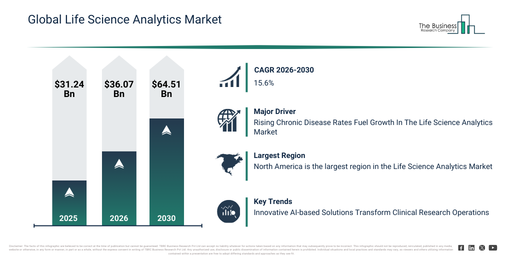
    The life science analytics market size has demonstrated rapid expansion in recent years. This market is expected to grow from $31.24 billion in 2025 to $36.07 billion in 2026, achieving a compound annual growth rate (CAGR) of 15.5%. The historical growth can be attributed to factors such as growing clinical trial complexity, increasing healthcare data volumes, rising demand for evidence-based medicine, expansion of pharmaceutical R&D activities, and the early adoption of analytics in life sciences.

    The life science analytics market size is anticipated to undergo rapid growth in the coming years. It is projected to expand to $64.51 billion by 2030, achieving a compound annual growth rate (CAGR) of 15.6%. This expected growth throughout the forecast period stems from several factors, including an escalating need for predictive patient outcomes, rising investments in digital healthcare, an increasing emphasis on regulatory compliance analytics, the expansion of precision medicine initiatives, and a greater demand for operational efficiency within the life sciences sector. Key trends during this period are expected to encompass the growing adoption of data-driven clinical decision making, the expanding application of analytics in drug development pipelines, a heightened focus on real-world evidence generation, the broader implementation of analytics across clinical trials management, and a surging demand for integrated data platforms.

    Get A Free Sample Report With In-Depth Market Insights:

    https://thebusinessresearchcompany.com/sample_request?id=70943802&type=smp&name=Life%20Science%20Analytics%20Market%20Report%202026&utm_source=Blogs&utm_medium=Paid&utm_campaign=Oct_PR

    Life Science Analytics Market Growth Momentum: What Factors Are Shaping Demand?

    The growing incidence of chronic diseases is projected to fuel the expansion of the life science analytics market moving forward. Chronic diseases are defined as conditions that persist over an extended period. Life science analytics, which encompasses predictive analytics, serves as a crucial tool for preventing chronic diseases by empowering providers to identify early indicators of illness and intervene promptly. For example, in June 2024, the National Health Service, a government department in the UK, indicated that 3,615,330 individuals registered with a GP were diagnosed with non-diabetic hyperglycemia, or pre-diabetes, in 2023, reflecting an 18% increase from 3,065,825 cases in 2022. Therefore, the heightened prevalence of chronic diseases is a primary driver for the growth of the life science analytics market.

    Life Science Analytics Market Segment Performance And Emerging Opportunities

    The life science analytics market covered in this report is segmented –

    1) By Type: Descriptive Analytics, Predictive Analytics, Prescriptive Analytics

    2) By Component: Software, Services

    3) By Deployment: On-Demand, On-Premises

    4) By Application: Research and Development, Preclinical Trials, Clinical Trials, Sales and Marketing, Regulatory Compliance, Supply Chain Optimization, Pharmacovigilance

    5) By End User: Medical Device, Pharmaceutical, Biotechnology, Other End Users

    Subsegments:

    1) By Descriptive Analytics: Data Visualization, Reporting Tools, Statistical Analysis

    2) By Predictive Analytics: Risk Assessment Models, Forecasting Tools, Machine Learning Algorithms

    3) By Prescriptive Analytics: Optimization Tools, Simulation Models, Decision Support Systems

    Life Science Analytics Market Trends Redefining Industry Growth

    Leading companies operating in the life science analytics market are concentrating on developing innovations using advanced analytics technologies like artificial intelligence to secure a competitive edge. AI in life sciences analytics is employed to enhance data analysis, improve drug discovery processes, optimize clinical trials, and facilitate personalized medicine by uncovering valuable insights from complex biological data. For example, in September 2023, SAS Health, an India-based healthcare technology company, introduced a transformative healthcare platform designed to simplify health data management, boost data governance, and accelerate insights into patients. This complete enterprise solution for analytics and data automation will furnish health providers, insurers, and public health agencies with the flexibility needed to drive innovations that enhance patient experiences and outcomes. Driven by a common health data model with mappings to industry standards, SAS Health will enable the proactive identification of clinical staffing gaps and the visualization of screening centers relative to patient populations. Leveraging the SAS Viya AI platform, it provides swift access to actionable insights while ensuring compliance with regulations.

    Life Science Analytics Market Key Players: Which Companies Lead Industry Competition?

    Major companies operating in the life science analytics market are Oracle Corporation, Accenture plc, SAS Institute Inc., International Business Machines Corporation, IQVIA Holdings Inc., Wipro Limited, Cognizant Technology Solutions Corporation, SCIOInspire Corp., Cerner Corporation, Optum Inc., Microsoft Corporation, MaxisIT Inc., Cotiviti Holdings Inc., Allscripts Healthcare Solutions Inc., ExlService Holdings Inc., Inovalon Holdings Inc., CitiusTech Inc., Saama Technologies LLC., Axtria Inc., Clarivate Plc, ThoughtSphere Ltd., ThoughtSpot Inc., Alteryx Inc., TAKE Solutions Ltd., BioSymetrics Inc., PerkinElmer Inc., Medidata Solutions Inc., PAREXEL International Corporation

    View The Full Life Science Analytics Market Report:

    https://thebusinessresearchcompany.com/report/life-science-analytics-global-market-report?utm_source=Blogs&utm_medium=Paid&utm_campaign=Oct_PR

    Life Science Analytics Market Regional Breakdown: Where Is Demand Concentrated?

    North America was the largest region in the life science analytics market in 2025. Asia-Pacific is expected to be the fastest-growing region in the forecast period. The regions covered in the life science analytics market report are Asia-Pacific, South East Asia, Western Europe, Eastern Europe, North America, South America, Middle East, Africa.

    Reach Out To Our Team:

    The Business Research Company: https://www.thebusinessresearchcompany.com/

    Americas: +1 310-496-7795

    Asia: +44 7882 955267 & +91 8897263534

    Europe: +44 7882 955267

    Email us at: marketing@tbrc.info

    Follow us on:

    LinkedIn: https://in.linkedin.com/company/the-business-research-company

    YouTube: https://www.youtube.com/channel/UC24_fI0rV8cR5DxlCpgmyFQ

    Global Market Model: https://www.thebusinessresearchcompany.com/global-market-model