Blog

  • Laboratory Information System Market Analysis Through 2030: Market Size, Growth Trends And Industry Outlook

    Laboratory Information System Market Analysis Through 2030: Market Size, Growth Trends And Industry Outlook

    Backed by market attractiveness analysis, total addressable market sizing, company benchmarking matrices, interactive Excel dashboards, wider supply chain intelligence, emerging startup coverage, and detailed product-level insights, The Business Research Company’s 2026 market reports are designed to offer research that is more actionable and strategically valuable than ever.

    Laboratory Information System Market Growth Potential: How Will Market Size Shift Through 2030?

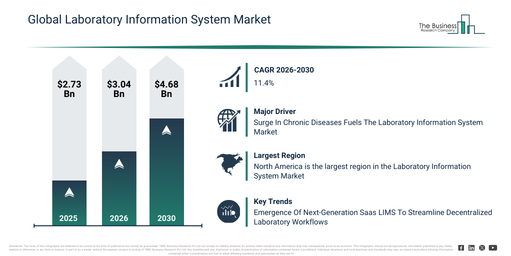
    The laboratory information system market has experienced substantial expansion in recent years. It is projected to increase from $2.73 billion in 2025 to $3.04 billion in 2026, achieving a compound annual growth rate (CAGR) of 11.4%. This historical growth can be attributed to the rising volume of diagnostic testing, the necessity for efficient laboratory data management, the increasing adoption of electronic health records, the expansion of hospital laboratory infrastructure, and growing regulatory documentation requirements.

    The laboratory information system market is projected for significant expansion over the coming years. Its valuation is anticipated to reach $4.68 billion by 2030, exhibiting a compound annual growth rate (CAGR) of 11.4%. This anticipated growth during the forecast period stems from several factors, including the acceleration of digital transformation within healthcare laboratories, a rising need for interoperability across various healthcare systems, increasing capital expenditure in healthcare IT solutions, the proliferation of independent diagnostic laboratories, and a heightened emphasis on diagnostic services centered around the patient. Key trends characterizing this period involve the increasing uptake of integrated LIS-HIS and LIS-EHR platforms, a noticeable migration towards cloud-based LIS implementations, a strengthening focus on immediate laboratory data availability, broader application of LIS in decentralized and physician office laboratories, and a growing insistence on streamlining workflows and minimizing errors.

    Get A Free Sample Report With In-Depth Market Insights:

    https://thebusinessresearchcompany.com/sample_request?id=54494145&type=smp&name=Laboratory%20Information%20System%20Market%20Report%202026&utm_source=Blogs&utm_medium=Paid&utm_campaign=Oct_PR

    Laboratory Information System Market Growth Backed By Core Demand Fundamentals

    The anticipated expansion of the laboratory information system market in the future is projected to be fueled by the increasing prevalence of chronic diseases. These enduring health conditions, often referred to as non-communicable diseases (NCDs), are characterized by their prolonged duration. Laboratory information systems play a crucial role in the management of chronic diseases through enhancing the precision and effectiveness of diagnostic evaluations, streamlining data consolidation, and aiding in critical decision-making. An illustration of this impact comes from September 2023, when the World Health Organization, a specialized agency of the United Nations situated in Switzerland, reported that 41 million deaths worldwide annually, representing 74% of total fatalities, were attributable to non-communicable diseases (NCDs) or chronic conditions. Specifically, 17.9 million deaths resulted from cardiovascular diseases, 9.3 million deaths from cancer, 4.1 million deaths from chronic respiratory diseases, and 2.0 million deaths from diabetes. Consequently, the growing incidence of chronic diseases acts as a catalyst for the laboratory information system market.

    Laboratory Information System Market Segment Analysis: What Are The Core Market Categories?

    The laboratory information system market covered in this report is segmented –

    1) By Product: Standalone LIS, Integrated LIS

    2) By Component: Software, Services

    3) By End User: Hospital Laboratories, Independent Laboratories, Physician Office Laboratories, Other End Users

    Subsegments:

    1) By Standalone LIS: On-premise Standalone LIS, Cloud-based Standalone LIS

    2) By Integrated LIS: Laboratory And Hospital Information System (LIS-HIS) Integration, Laboratory And Electronic Health Records (LIS-EHR) Integration

    Laboratory Information System Market Growth Trends Reshaping The Competitive Landscape

    Leading companies active in the laboratory information system market are concentrating on creating innovative solutions, like cloud-native platforms, to meet the growing demand for scalable options. A cloud-native platform is a contemporary software environment built on principles of containers, microservices, DevOps automation, and elastic cloud infrastructure, which enables organizations to develop, deploy, manage, and scale applications more swiftly, dependably, and economically. For instance, in March 2025, LabWare, a US-based LIMS leader, launched LabWare ASSURE, a specialized Software-as-a-Service LIMS specifically engineered for laboratories focused on food-safety, microbiology, and quality testing. The platform delivers validated, ready-to-use workflows, real-time dashboards, comprehensive lot and sample management, integrated instrument connectivity, and environmental monitoring functionalities. Accessible completely via a browser, it supports regulatory compliance such as 21 CFR Part 11, permits quick deployment in under 30 days, and allows laboratories to scale operations without infrastructure investment. By eliminating server dependencies and reducing the burden of validation, LabWare ASSURE empowers labs to boost productivity, standardize processes, and accelerate testing throughput.

    Laboratory Information System Market Top Companies Driving Competitive Growth

    Major companies operating in the laboratory information system market are Cerner Corporation, McKesson Corporation, Epic Corporation Inc., Medical Information Technology Inc., SCC Soft Computer Inc., Sunquest Information Systems Inc., CompuGroup Medical AG, Computer Programs and Systems Inc., Orchard Software Corporation, LabWare Inc., LigoLab LLC, Clinisys Group Ltd., LabVantage Solutions Inc., Labgen LIS, Polytech LIS, NovoPath Inc., LABTRACK LIMS, Dendi Inc., Technidata AG, Psyche Systems Corporation, Data Innovations LLC, Merge Healthcare Inc., Abbott Laboratories, Thermo Fisher Scientific Inc., Agilent Technologies Inc., QA Studio

    View The Full Laboratory Information System Market Report:

    https://thebusinessresearchcompany.com/report/Laboratory-Information-System-Global-Market-Report?utm_source=Blogs&utm_medium=Paid&utm_campaign=Oct_PR

    Laboratory Information System Market Top Region: Where Does Most Revenue Come From?

    North America was the largest region in the healthcare services market in 2025. Western Europe was the second largest region in the healthcare services market. The regions covered in the laboratory information system market report are Asia-Pacific, South East Asia, Western Europe, Eastern Europe, North America, South America, Middle East, Africa.

    Reach Out To Our Team:

    The Business Research Company: https://www.thebusinessresearchcompany.com/

    Americas: +1 310-496-7795

    Asia: +44 7882 955267 & +91 8897263534

    Europe: +44 7882 955267

    Email us at: marketing@tbrc.info

    Follow us on:

    LinkedIn: https://in.linkedin.com/company/the-business-research-company

    YouTube: https://www.youtube.com/channel/UC24_fI0rV8cR5DxlCpgmyFQ

    Global Market Model: https://www.thebusinessresearchcompany.com/global-market-model
  • Laboratory Information Management System Market Outlook From 2026 To 2030: Key Growth Factors And Future Opportunities

    Laboratory Information Management System Market Outlook From 2026 To 2030: Key Growth Factors And Future Opportunities

    Featuring market attractiveness scoring, total addressable market sizing, company benchmarking matrices, interactive Excel dashboards, deeper supply chain intelligence, emerging startup tracking, and granular product-level insights, The Business Research Company’s 2026 market reports are built to deliver research that is both more actionable and more strategically valuable.

    Laboratory Information Management System Market Value Analysis: What Growth Lies Ahead Over The Forecast Period?

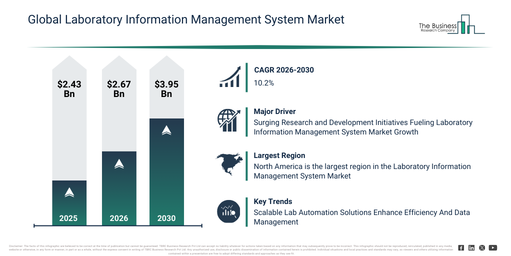
    The laboratory information management system market has seen a rapid expansion in recent years. Its valuation is anticipated to climb from $2.43 billion in 2025 to $2.67 billion by 2026, advancing at a compound annual growth rate (CAGR) of 10.2%. This historical growth can be attributed to several factors including an increase in laboratory data volumes, the necessity to minimize manual documentation errors, stricter regulatory compliance requirements, the expansion of life sciences research laboratories, and a growing demand for laboratory standardization.

    The laboratory information management system market is anticipated to undergo significant expansion in the coming years, with its valuation expected to reach $3.95 billion by 2030, exhibiting a compound annual growth rate (CAGR) of 10.2%. This projected growth during the forecast period stems from factors such as the increasing incorporation of cloud computing in laboratories, a heightened emphasis on digital transformation within lab operations, a rising demand for accessible real-time data, the ongoing expansion of contract research organizations, and increased investments in software for laboratory automation. Major trends foreseen for this period encompass the growing adoption of cloud-based LIMS platforms, enhanced integration of LIMS with laboratory instruments, an escalating need for data management that adheres to regulations, the broadening application of LIMS beyond life sciences laboratories, and an increased focus on automating workflows and ensuring sample traceability.

    Get A Free Sample Report With In-Depth Market Insights:

    https://thebusinessresearchcompany.com/sample_request?id=11965449&type=smp&name=Laboratory%20Information%20Management%20System%20Market%20Report%202026&utm_source=Blogs&utm_medium=Paid&utm_campaign=Oct_PR

    Laboratory Information Management System Market Growth Catalysts And Demand Drivers

    The anticipated expansion of the laboratory information management system market going forward is linked to a rise in research and development endeavors. These activities encompass a range of processes and undertakings by organizations aimed at generating novel knowledge, offerings, or methods, or improving current ones. Laboratory information management systems (LIMS) facilitate seamless operations within laboratories engaged in research and development. These systems assist with diverse research tasks including structuring research and development activity data into projects and studies, overseeing resources and assigning work, lowering IT maintenance expenses, and boosting productivity, among other benefits. A case in point is the data from July 2024, where the National Centre for Science and Engineering Statistics, a U.S.-based federal government agency, noted that Federally Funded Research & Development Centers (FFRDCs) escalated their R&D spending to US$ 31.7 billion in FY 2024. This represented an increase of US$ 2.4 billion from FY 2023, following US$ 29.3 billion reported by 42 FFRDCs in FY 2023, which was a 12.7% rise from FY 2022. Consequently, the surge in research and development initiatives is a key impetus for the expansion of the laboratory information management system market.

    Laboratory Information Management System Market Segment Breakdown: Which Categories Lead On Revenue?

    The laboratory information management system market covered in this report is segmented –

    1) By Component: Software, Services

    2) By Deployment Model: On-Premise Laboratory Information Management System (LIMS), Cloud Laboratory Information Management System (LIMS), Remotely Hosted Laboratory Information Management System (LIMS)

    3) By Distribution Channel: Direct Tenders, Retail Sales

    4) By End-Use: Life Sciences, Contract Research Organizations (CROs), Petrochemical Refineries And Oil And Gas Industry, Chemical Industry, Food And Beverage And Agriculture Industries, Environmental Testing Laboratories, Other End-Uses

    Subsegments:

    1) By Software: On-Premise LIMS, Cloud-Based LIMS, Web-Based LIMS

    2) By Services: Implementation Services, Support And Maintenance Services, Consulting Services

    Laboratory Information Management System Market Trends Shaping Long-Term Demand

    Leading companies in the laboratory information management system market are concentrating on developing technologically advanced products, such as scalable lab automation solutions, to equip laboratories with adaptable, flexible, and automated tools for streamlining operations and enhancing data management. Scalable lab automation solutions refer to modular and flexible systems that enable laboratories to automate and optimize workflows, allowing for easy expansion and adaptation as operational needs evolve. For instance, in July 2023, Clinisys, a US-based informatics software company, launched Clinisys Laboratory Solutions. This product integrates discipline-specific laboratory information management systems (LIMS) built on a unified SaaS platform, thereby boosting automation, scalability, and data management. It empowers laboratories to simplify operations, gain deeper analytics, and improve workflow flexibility, simultaneously reducing costs and enhancing security. This innovation assists laboratories in driving scientific progress by improving the management and analysis of data across diverse sectors, including environmental, water quality, and public health laboratories.

    Laboratory Information Management System Market Leading Players And Competitive Positioning

    Major companies operating in the laboratory information management system market are McKesson Corporation, Siemens AG, Thermo Fisher Scientific Inc., Abbott Laboratories, STARLIMS Corporation, Novatek International Pty Ltd., Agilent Technologies Inc., Dassault Systemes SA, PerkinElmer Inc., Illumina Inc., Ovation.io Inc., Waters Corporation, CompuGroup Medical, CliniSys Group Limited, LabWare Inc., LabLynx Inc., LabVantage Solutions Inc., INFORS GmbH, Agaram Technologies Pvt Ltd., Benchling Inc., CloudLIMS Lab Solutions (India) Pvt. Ltd., Quartzy Inc., Caliber Technologies Inc., Accelerated Technology Laboratories Inc., Autoscribe Limited, Labworks International Inc., Computing Solutions Inc., CrelioHealth Inc., AssayNet Inc., Eusoft Ltd.

    View The Full Laboratory Information Management System Market Report:

    https://thebusinessresearchcompany.com/report/laboratory-information-management-system-global-market-report?utm_source=Blogs&utm_medium=Paid&utm_campaign=Oct_PR

    Laboratory Information Management System Market Regional Breakdown: Where Is Demand Concentrated?

    North America was the largest region in the laboratory information management system market in 2025. Asia-Pacific is expected to be the fastest-growing region in the forecast period. The regions covered in the laboratory information management system market report are Asia-Pacific, South East Asia, Western Europe, Eastern Europe, North America, South America, Middle East, Africa.

    Reach Out To Our Team:

    The Business Research Company: https://www.thebusinessresearchcompany.com/

    Americas: +1 310-496-7795

    Asia: +44 7882 955267 & +91 8897263534

    Europe: +44 7882 955267

    Email us at: marketing@tbrc.info

    Follow us on:

    LinkedIn: https://in.linkedin.com/company/the-business-research-company

    YouTube: https://www.youtube.com/channel/UC24_fI0rV8cR5DxlCpgmyFQ

    Global Market Model: https://www.thebusinessresearchcompany.com/global-market-model

  • Laboratory Balances And Scales Market Growth Forecast: Market Size, Key Trends And Emerging Opportunities Through 2030

    Laboratory Balances And Scales Market Growth Forecast: Market Size, Key Trends And Emerging Opportunities Through 2030

    Built to provide research that’s more actionable and strategically valuable, The Business Research Company’s 2026 market reports include market attractiveness analysis, total addressable market sizing, company benchmarking matrices, interactive Excel dashboards, broader supply chain intelligence, emerging startup tracking, and in-depth product insights.

    Laboratory Balances And Scales Market Size Forecast: How Big Could The Market Get By 2030?

    The laboratory balances and scales market size has experienced robust expansion in recent years. It is projected to increase from $1.94 billion in 2025 to $2.06 billion in 2026, reflecting a compound annual growth rate (CAGR) of 5.8%. Historically, this growth was driven by factors such as a heightened demand for accurate laboratory measurements, the expansion of pharmaceutical and chemical laboratories, the well-established use of analytical and precision balances, evolving quality control requirements, and improved laboratory standardization.

    The laboratory balances and scales market size is projected to experience strong growth in the coming years, with its value set to reach $2.55 billion in 2030 at a compound annual growth rate (CAGR) of 5.5%. This expansion is attributed to factors such as the growth in biotechnology and life sciences research, increasing automation in laboratory environments, the rising adoption of smart and connected lab equipment, expanding food and beverage testing activities, and a growing regulatory focus on measurement accuracy. Key trends influencing the market include the growing adoption of high-precision electronic balances, increasing demand for automated and self-calibrating balances, the rising use of compact and portable laboratory scales, the expansion of moisture balances in quality control applications, and an increasing focus on compliance and measurement accuracy.

    Get A Free Sample Report With In-Depth Market Insights:

    https://thebusinessresearchcompany.com/sample_request?id=61539166&type=smp&name=Laboratory%20Balances%20And%20Scales%20Market%20Report%202026&utm_source=Blogs&utm_medium=Paid&utm_campaign=Oct_PR

    Laboratory Balances And Scales Market Opportunity Drivers: What’s Unlocking New Revenue Potential?

    The escalating demand within the pharmaceutical and biotechnology sectors is anticipated to propel the future growth of the laboratory balances and scales market. These sectors refer to industries dedicated to the development, production, and commercialization of drugs and therapies, where pharmaceuticals emphasize chemical-based medications and biotechnology leverages biological processes and organisms for medical and scientific advancements. The increasing demand in the pharmaceutical and biotechnology sectors is primarily driven by the rising prevalence of chronic diseases, as these conditions necessitate long-term treatment, advanced therapies, and continuous drug development to enhance patient outcomes and manage healthcare burdens. Laboratory balances and scales provide essential support to the pharmaceutical and biotechnology sectors by ensuring precise measurement of compounds, which is critical for accurate formulation, quality control, and compliance with regulatory standards. For instance, in January 2025, according to the BioIndustry Association (BIA), a UK-based trade association, the UK biotech sector experienced substantial growth in 2024, securing £3.5 billion (approximately $4.4 billion) in investment, representing an impressive 94% increase from the previous year. Furthermore, in June 2023, the European Federation of Pharmaceutical Industries and Associations, a Belgium-based trade association, reported that in 2022, North America accounted for 52.3% of global pharmaceutical sales, whereas Europe contributed 22.4%. Therefore, the growing demand in the pharmaceutical and biotechnology sectors is a significant driver for the growth of the laboratory balances and scales market.

    Laboratory Balances And Scales Market Segmentation: How Does The Market Break Down By Category?

    The laboratory balances and scales market covered in this report is segmented –

    1) By Product Type: Micro Balance, Analytical Balances, Compact Scale, Precision Balances, Moisture Balances

    2) By Technology: Mechanical Balances, Electronic Balances

    3) By End User: Pharmaceutical, Cosmeceutical, Biotechnology Product Testing Laboratories, Chemical And Material Testing Laboratories, Food And Beverage Testing Laboratories, Other End Users

    Subsegments:

    1) By Micro Balance: Single Pan Micro Balance, Dual Pan Micro Balance

    2) By Analytical Balances: Internal Calibration Analytical Balances, External Calibration Analytical Balances

    3) By Compact Scale: Portable Compact Scale, Bench Compact Scale

    4) By Precision Balances: High-Capacity Precision Balances, Standard Precision Balances

    5) By Moisture Balances: Halogen Moisture Balances, Infrared Moisture Balances

    Laboratory Balances And Scales Market Innovation Trends Shaping Future Development

    Leading companies within the laboratory balances and scales market are concentrating on creating novel products that incorporate intelligent functionalities, such as advanced routine testing features, to elevate precision, operational effectiveness, and adherence to regulatory standards. These sophisticated routine testing capabilities in laboratory balances and scales automatically conduct accuracy verifications, internal calibrations, and system diagnostics, thereby guaranteeing exact measurements, minimizing human errors, and upholding compliance with quality protocols. For instance, in February 2024, Mettler-Toledo LLC, an analytical laboratory instrument manufacturing company based in the US, introduced a fresh series of laboratory balances, which includes the MX, MR, MA, and LA lines. This broad collection offers readability from 1 g down to 0.01 mg and capacities ranging from 220 g to 32 kg, featuring both expansive platforms and compact portable designs. Engineered for enhanced user interaction and environmental responsibility, these balances come equipped with intuitive interfaces, sturdy construction, and smart features such as Ergo Doors, Smart Pan, Status Light, Level Control, and advanced routine testing functions. Developed to address diverse weighing requirements across various industries, the new balances aim to deliver accurate, dependable, and efficient weighing solutions for laboratories globally.

    Laboratory Balances And Scales Market Competitive Overview And Top Companies

    Major companies operating in the laboratory balances and scales market are Sartorius AG, Mettler Toledo International Inc, Shimadzu Corporation, Bizerba SE & Co KG, Seca GmbH & Co KG, Radwag Balances and Scales, LABindia Instruments Pvt Ltd, Tanita Corporation, Bonso Electronics International Inc., A&D Holon Holdings Co Ltd, Citizen Scales Pvt Ltd, PCE Holding GmbH, Adam Equipment Co. Ltd., Gram Precision, Phoenix Instrument GmbH, Contech Instruments Ltd, Intelligent Weighing Technology Inc, CAS Corporation, Torbal Scales, Tree Scales

    View The Full Laboratory Balances And Scales Market Report:

    https://thebusinessresearchcompany.com/report/laboratory-balances-and-scales-global-market-report?utm_source=Blogs&utm_medium=Paid&utm_campaign=Oct_PR

    Laboratory Balances And Scales Market Geographic Landscape: Which Region Leads Industry Growth?

    North America was the largest region in the laboratory balances and scales market in 2025. Asia-Pacific is expected to be the fastest-growing region in the forecast period. The regions covered in the laboratory balances and scales market report are Asia-Pacific, South East Asia, Western Europe, Eastern Europe, North America, South America, Middle East, Africa.

    Reach Out To Our Team:

    The Business Research Company: https://www.thebusinessresearchcompany.com/

    Americas: +1 310-496-7795

    Asia: +44 7882 955267 & +91 8897263534

    Europe: +44 7882 955267

    Email us at: marketing@tbrc.info

    Follow us on:

    LinkedIn: https://in.linkedin.com/company/the-business-research-company

    YouTube: https://www.youtube.com/channel/UC24_fI0rV8cR5DxlCpgmyFQ

    Global Market Model: https://www.thebusinessresearchcompany.com/global-market-model
  • Lab Inventory Management Software Market CAGR Forecast Through 2030: Key Trends Shaping Industry Expansion

    Lab Inventory Management Software Market CAGR Forecast Through 2030: Key Trends Shaping Industry Expansion

    Backed by market attractiveness analysis, total addressable market sizing, company benchmarking matrices, interactive Excel dashboards, wider supply chain intelligence, emerging startup coverage, and detailed product-level insights, The Business Research Company’s 2026 market reports are designed to offer research that is more actionable and strategically valuable than ever.

    Lab Inventory Management Software Market Revenue Outlook: What CAGR Lies Ahead Through 2030?

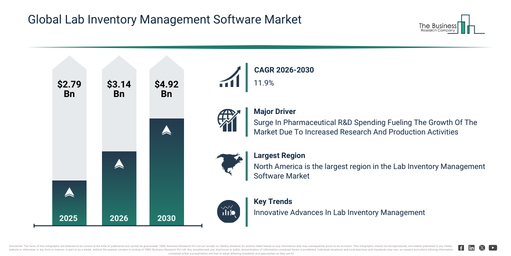
    The lab inventory management software market has experienced rapid growth in its size during recent years. It is projected to expand from $2.79 billion in 2025 to $3.14 billion in 2026, demonstrating a compound annual growth rate (CAGR) of 12.2%. This historical expansion can be attributed to factors such as the increasing adoption of laboratory automation, the enlargement of pharmaceutical and biotech research labs, the rising complexity of laboratory inventories, escalating compliance documentation requirements, and the accessibility of digital inventory tools.

    The lab inventory management software market is projected to experience substantial expansion in the coming years. This market is forecast to reach $4.92 billion by 2030, demonstrating a compound annual growth rate (CAGR) of 11.9%. This expansion over the forecast period is driven by factors such as greater investments in intelligent laboratory infrastructure, the growing uptake of AI-powered inventory analytics, the proliferation of remote lab management options, an intensified emphasis on minimizing waste, and a heightened need for flexible inventory software. Key trends anticipated during this period encompass the wider adoption of cloud-based inventory platforms, an escalating requirement for real-time inventory tracking capabilities, deeper integration with laboratory information systems, the broader implementation of automated reorder and alert features, and a stronger commitment to regulatory adherence.

    Get A Free Sample Report With In-Depth Market Insights:

    https://thebusinessresearchcompany.com/sample_request?id=97941770&type=smp&name=Lab%20Inventory%20Management%20Software%20Market%20Report%202026&utm_source=Blogs&utm_medium=Paid&utm_campaign=Oct_PR

    Lab Inventory Management Software Market Growth Momentum: What Factors Are Shaping Demand?

    The escalation of research and production efforts in pharmaceutical enterprises is projected to fuel the expansion of the lab inventory management software market. Research and production involve exploring and developing knowledge or products to create goods or services based on scientific investigation. Key drivers for research and development within the pharmaceutical industry include innovations in drugs and therapies, advancements in biotechnology, increased investment in R&D, and the imperative to address unmet medical needs. Lab inventory management software is indispensable for these research and production activities in the pharmaceutical sector. It ensures meticulous tracking of essential supplies, reagents, and equipment, supports regulatory compliance with detailed audit trails, monitors expiration dates, and aids in managing complex inventories to uphold productivity. For example, in December 2024, a report issued by the Office for National Statistics, a UK-based government department, stated that expenditure on research and development (R&D) performed by UK businesses amounted to $64.0 billion USD (£50.0 billion) in 2023, reflecting an increase of $1.79 billion USD (£1.4 billion) from 2022, which represents a 2.9% year-over-year growth. Thus, the growing research and production activities within pharmaceutical companies are stimulating the growth of the lab inventory management software market.

    Lab Inventory Management Software Market Segment Trends And Revenue Contributors

    The lab inventory management software market covered in this report is segmented –

    1) By Type: Cloud-Based, Web-Based, On-Premise

    2) By Pricing Model: Subscription, One-Time

    3) By Application: Biotech, Drug, Testing, Research

    4) By Industry: Pharmaceutical, Biotechnology, Chemicals, Manufacturing, Academia And Research, Other Industries

    Subsegments:

    1) By Cloud-Based: SaaS (Software as a Service) Solutions, Cloud-Based Data Storage, Remote Access Features

    2) By Web-Based: Browser-Based Access, Real-Time Inventory Tracking, Online Data Integration

    3) By On-Premise: Locally Installed Software, Customizable On-Premise Solutions, Offline Access Features

    Lab Inventory Management Software Market Trends Redefining Industry Growth

    Leading companies in the lab inventory management software market are introducing innovative technologies, such as digital lab platforms, to enhance operational effectiveness and streamline workflows. A digital lab platform represents a comprehensive software solution that consolidates various laboratory functions, including data management, workflow automation, and analysis, into a single digital environment to achieve greater efficiency and accuracy. For example, in April 2024, eLabNext, a lab digitization company based in the Netherlands, launched the eLabNext Developer. This pioneering platform is designed to broaden access to digital lab tool development, thereby transforming the landscape of life sciences research and development. It offers remarkable flexibility and future-proof capabilities, featuring the integration of artificial intelligence (AI) and machine learning (ML) to elevate the eLabNext experience. As the initial comprehensive and open developer environment within the Life Science R&D sector, it empowers users to customize and extend eLabNext functionality according to their specific requirements. Moreover, it enables life sciences companies to integrate their products and services with digital labs through the creation and commercialization of add-ons available via the eLabNext Marketplace.

    Lab Inventory Management Software Market Competitive Landscape: Which Companies Lead The Industry?

    Major companies operating in the lab inventory management software market are Thermo Fisher Scientific Inc., Agilent Technologies Inc., Dassault Systèmes SE, Odoo SA, Benchling Inc., LabWare Inc., LabVantage Solutions Inc., Eppendorf SE, Dotmatics Ltd., Lablynx Inc., Titian Software Ltd., Quartzy Inc., Clustermarket Ltd., Labguru Healthcare Private Limited, LabCollector, CloudLIMS Lab Solutions Pvt. Ltd., SciNote Electronic Lab Notebook, Arxspan, LIMSABC, LabSuit Project Ltd., CrelioHealth Pvt. Ltd., eLabNext, Genemod

    View The Full Lab Inventory Management Software Market Report:

    https://thebusinessresearchcompany.com/report/lab-inventory-management-software-global-market-report?utm_source=Blogs&utm_medium=Paid&utm_campaign=Oct_PR

    Lab Inventory Management Software Market Largest Region: Which Geography Holds The Biggest Share?

    North America was the largest region in the lab inventory management software market in 2025. Asia-Pacific is expected to be the fastest-growing region in the forecast period. The regions covered in the lab inventory management software market report are Asia-Pacific, South East Asia, Western Europe, Eastern Europe, North America, South America, Middle East, Africa.

    Reach Out To Our Team:

    The Business Research Company: https://www.thebusinessresearchcompany.com/

    Americas: +1 310-496-7795

    Asia: +44 7882 955267 & +91 8897263534

    Europe: +44 7882 955267

    Email us at: marketing@tbrc.info

    Follow us on:

    LinkedIn: https://in.linkedin.com/company/the-business-research-company

    YouTube: https://www.youtube.com/channel/UC24_fI0rV8cR5DxlCpgmyFQ

    Global Market Model: https://www.thebusinessresearchcompany.com/global-market-model
  • Lab Automation In Genomics Market To Witness 13% CAGR Growth Through 2030: Key Industry Drivers

    Lab Automation In Genomics Market To Witness 13% CAGR Growth Through 2030: Key Industry Drivers

    Featuring market attractiveness scoring, total addressable market sizing, company benchmarking matrices, interactive Excel dashboards, deeper supply chain intelligence, emerging startup tracking, and granular product-level insights, The Business Research Company’s 2026 market reports are built to deliver research that is both more actionable and more strategically valuable.

    Lab Automation In Genomics Market Growth Analysis: How Will Revenue Trend Over The Forecast Period?

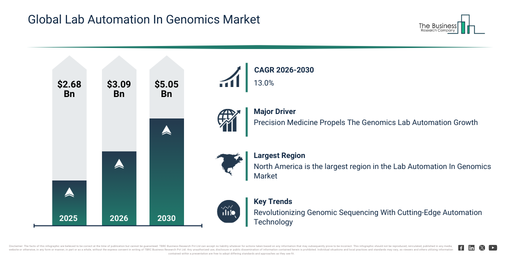
    The lab automation in genomics market size has shown substantial growth in recent years. This market is anticipated to expand from $2.68 billion in 2025 to $3.09 billion in 2026, achieving a compound annual growth rate (CAGR) of 15.5%. Historically, its growth can be attributed to the growing volume of genomic research activities, the increasing complexity of genomic workflows, the need to reduce manual laboratory errors, the rising adoption of next-generation sequencing, and the expansion of biotech and pharmaceutical research.

    The lab automation in genomics market size is poised for significant expansion over the next few years. It is projected to achieve a value of $5.05 billion by 2030, exhibiting a compound annual growth rate (CAGR) of 13.0%. This anticipated growth during the forecast period is driven by factors such as the increasing demand for precision medicine, rising investments in genomics infrastructure, the growing adoption of AI-enabled lab automation, the expansion of genomics-based clinical diagnostics, and an increasing focus on laboratory efficiency and cost reduction. Prominent trends expected in this period include the increasing adoption of fully automated genomic workflows, a rising demand for high-throughput sample processing, the growing integration of robotics in genomics laboratories, the expansion of modular and scalable automation systems, and improved reproducibility and standardization in genomic testing.

    Get A Free Sample Report With In-Depth Market Insights:

    https://thebusinessresearchcompany.com/sample_request?id=58400677&type=smp&name=Lab%20Automation%20In%20Genomics%20Market%20Report%202026&utm_source=Blogs&utm_medium=Paid&utm_campaign=Oct_PR

    Lab Automation In Genomics Market Expansion Drivers: What’s Shaping Future Growth?

    The increasing integration of precision medicine is projected to boost the expansion of lab automation within the genomics market in the future. This approach to healthcare is tailored to individuals, factoring in unique variations in genetics, surroundings, and habits to provide customized medical treatments. The need for precision medicine is escalating, driven by multiple elements including progress in genomics, specific therapies, healthcare focused on patients, and pharmaceutical advancements. It necessitates numerous genetic examinations to identify genes associated with diseases, compelling laboratories to rapidly and precisely process a high volume of samples, which in turn prompts the adoption of automated systems. An example of this trend is that in February 2024, the Personalized Medicine Coalition, a US-based non-profit organization, reported that the FDA granted approval for 16 novel personalized therapies for patients with rare diseases in 2023, a significant increase from six in 2022. Consequently, the expanding use of precision medicine is stimulating the advancement of lab automation in the genomics market.

    Lab Automation In Genomics Market Segment Analysis Spotlighting Growth Areas

    The lab automation in genomics market covered in this report is segmented –

    1) By Type: Automated Liquid Handlers, Automated Plate Handlers, Robotic Arms, Automated Storage And Retrieval Systems, Other Types

    2) By Process: Continuous Automation System, Modular Automation System

    3) By Application: Hospitals And Private Labs, Biotech And Pharma, Academics And Research Institutes, Other Applications

    Subsegments:

    1) By Automated Liquid Handlers: Liquid Transfer Systems, Pipetting Robots

    2) By Automated Plate Handlers: Plate Stacker Systems, Microplate Transport Systems

    3) By Robotic Arms: Single-Axis Robotic Arms, Multi-Axis Robotic Arms

    4) By Automated Storage And Retrieval Systems: Sample Storage Systems, Automated Retrieval Systems

    5) By Other Types: Nucleic Acid Extraction Systems, Custom Automation Solutions

    Lab Automation In Genomics Market Strategic Trends: What Defines The Next Growth Phase?

    Major companies operating in lab automation in the genomics market are focused on developing advanced solutions such as automated whole genome sequencing (WGS), to significantly advance genomics research, clinical diagnostics, and personalized medicine. Automated whole genome sequencing (WGS) involves determining an individual’s genome through the use of high-throughput, automated sequencing technologies. For instance, in May 2023, Clear Labs, Inc., a US-based genomics testing company, introduced Clear Dx. This new solution provides fully automated sample processing, guaranteeing precise and consistent library preparation and management for genomics. Clear Dx automation reduces human variability and ensures consistency throughout sequencing, resulting in consistent and reproducible outcomes. It streamlines genome sequencing, cutting hands-on time to just 30 minutes with a single touch point, enabling easy whole genome sequencing even without training.

    Lab Automation In Genomics Market Leading Companies: Who Holds The Strongest Market Presence?

    Major companies operating in the lab automation in genomics market are Thermo Fisher Scientific Inc., Tecan Group Ltd., Hamilton Company, Agilent Technologies Inc., PerkinElmer Inc., Danaher Corporation, Becton Dickinson and Company, Bio-Rad Laboratories Inc., QIAGEN N.V., Illumina Inc., Gilson Incorporated, Fluidigm Corporation, Beckman Coulter Life Sciences, Analytik Jena AG, LGC Biosearch Technologies, Eppendorf AG, Roche Diagnostics, Hudson Robotics, Andrew Alliance, Automata Technologies

    View The Full Lab Automation In Genomics Market Report:

    https://thebusinessresearchcompany.com/report/lab-automation-in-genomics-global-market-report?utm_source=Blogs&utm_medium=Paid&utm_campaign=Oct_PR

    Lab Automation In Genomics Market Regional Analysis: Which Geography Leads On Revenue?

    North America was the largest region in the lab automation in genomics market in 2025. Asia-Pacific is expected to be the fastest-growing region in the forecast period. The regions covered in the lab automation in genomics market report are Asia-Pacific, South East Asia, Western Europe, Eastern Europe, North America, South America, Middle East, Africa.

    Reach Out To Our Team:

    The Business Research Company: https://www.thebusinessresearchcompany.com/

    Americas: +1 310-496-7795

    Asia: +44 7882 955267 & +91 8897263534

    Europe: +44 7882 955267

    Email us at: marketing@tbrc.info

    Follow us on:

    LinkedIn: https://in.linkedin.com/company/the-business-research-company

    YouTube: https://www.youtube.com/channel/UC24_fI0rV8cR5DxlCpgmyFQ

    Global Market Model: https://www.thebusinessresearchcompany.com/global-market-model
  • Kyphoscoliosis Treatment Market Projected For Strong Expansion Through 2030: Key Trends And Future Outlook

    Kyphoscoliosis Treatment Market Projected For Strong Expansion Through 2030: Key Trends And Future Outlook

    Built to provide research that’s more actionable and strategically valuable, The Business Research Company’s 2026 market reports include market attractiveness analysis, total addressable market sizing, company benchmarking matrices, interactive Excel dashboards, broader supply chain intelligence, emerging startup tracking, and in-depth product insights.

    Kyphoscoliosis Treatment Market Forecast: What Value Will The Market Reach By 2030?

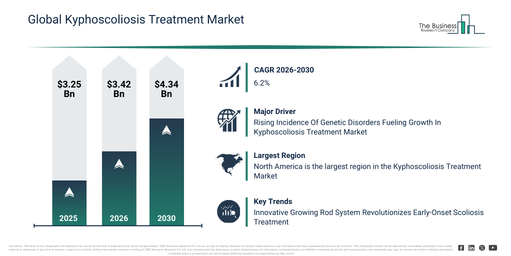
    The kyphoscoliosis treatment market size has experienced significant growth in recent years. Projections indicate it will expand from $3.25 billion in 2025 to $3.42 billion in 2026, demonstrating a compound annual growth rate (CAGR) of 5.2%. The growth observed in the past can be attributed to several factors, including the increasing prevalence of spinal deformities, the established use of bracing in adolescent patients, an expansion in orthopedic and spinal surgery centers, rising awareness of posture-related disorders, and the availability of corrective spinal surgeries.

    The kyphoscoliosis treatment market is anticipated to experience robust expansion over the forthcoming years. It is projected to reach $4.34 billion by 2030, demonstrating a compound annual growth rate (CAGR) of 6.2%. The observed growth within this period is largely attributable to an aging populace with degenerative spinal conditions, the increasing implementation of early screening programs, continuous advancements in spinal implant and brace design, a rising demand for effective pain management solutions, and the spread of specialized spine care facilities. Significant developments expected during the forecast timeframe include the growing acceptance of non-surgical kyphoscoliosis management, increased utilization of advanced spinal bracing techniques, a stronger preference for early diagnosis and intervention, the broader availability of minimally invasive spinal surgery options, and enhanced multidisciplinary care leading to better postural and respiratory outcomes.

    Get A Free Sample Report With In-Depth Market Insights:

    https://thebusinessresearchcompany.com/sample_request?id=72432615&type=smp&name=Kyphoscoliosis%20Treatment%20Market%20Report%202026&utm_source=Blogs&utm_medium=Paid&utm_campaign=Oct_PR

    Kyphoscoliosis Treatment Market Development Factors: What’s Supporting Demand?

    A rise in genetic disorders is anticipated to fuel the expansion of the kyphoscoliosis treatment market in the future. These disorders encompass various medical conditions stemming from anomalies or alterations within an individual’s genetic makeup (DNA). Managing genetic disorders that involve spinal curvature abnormalities often makes kyphoscoliosis treatment crucial, utilizing a comprehensive, multidisciplinary approach for individuals with such conditions. This approach integrates beta-blocker therapy, physical therapy, bracing, blood pressure regulation, and oversight from an orthopedic surgeon. As an illustration, in June 2023, Gene People, a registered charity in the UK, reported that the prevalence of genetic conditions in children is estimated at 1 in 25. This means over 2.4 million children and adults in the UK are affected by a genetic disorder, with an additional 30,000 newborns and children receiving new diagnoses annually. Consequently, the increasing prevalence of genetic disorders is stimulating the growth of the kyphoscoliosis treatment market.

    Kyphoscoliosis Treatment Market Segment Performance And Emerging Opportunities

    The kyphoscoliosis treatment market covered in this report is segmented –

    1) By Type: Postural Kyphosis, Scheuermann’s Kyphosis, Congenital Kyphosis

    2) By Treatment: Medications, Surgery And Bracing

    3) By End-User: Hospital, Clinics, Ambulatory Surgical Centers

    Subsegments:

    1) By Postural Kyphosis: Adolescent Postural Kyphosis, Adult Postural Kyphosis

    2) By Scheuermann’s Kyphosis: Adolescent Scheuermann’s Kyphosis, Adult Scheuermann’s Kyphosis

    3) By Congenital Kyphosis: Type I Congenital Kyphosis, Type II Congenital Kyphosis, Other Congenital Forms

    Kyphoscoliosis Treatment Market Transformation Trends: What Innovations Are Driving Change?

    Leading companies in the kyphoscoliosis treatment market are developing advanced products, such as the MARVEL growing rod system, tailored for early-onset scoliosis. The MARVEL Growing Rod System is a posterior stabilizing rod designed for surgical implantation, which can be periodically elongated using hand-operated mechanical actuation. For instance, in July 2023, Globus Medical Inc., a US-based medical device company, launched the MARVEL Growing Rod System. Its aim is to help patients under 10 with early-onset scoliosis achieve and maintain correction, while enabling ongoing development through minimally invasive distraction. It offers substantial distraction, immediate tactile feedback, and automated locking, ensuring dependable growth. This Growing Rod System is among the cutting-edge items expected to support the future expansion of the business.

    Kyphoscoliosis Treatment Market Key Players: Which Companies Lead Industry Competition?

    Major companies operating in the kyphoscoliosis treatment market are Johnson & Johnson Services Inc, Aspen Medical Products LLC, Medtronic plc, Stryker Corporation, Milwaukee Brace Company, Zimmer Biomet Holdings Inc, Perrigo Company plc, Teva Pharmaceuticals Inc, B Braun Melsungen Aktiengesellschaft, Aurobindo Pharma Limited, Integra LifeSciences Ltd, NuVasive Inc, DJO Global Inc, Globus Medical Inc, Boston Orthotics & Prosthetics, Ossur hf, DeRoyal Industries Inc, MicroPort Scientific Corp, Alphatec Holdings Inc, Trulife Ltd, Ottobock SE & Co KGaA, Orthofix Holdings Inc, OrthoPediatrics Corp, Proteor S A, Orthomerica Products Inc, Breg Inc, Spinal Elements Inc

    View The Full Kyphoscoliosis Treatment Market Report:

    https://thebusinessresearchcompany.com/report/kyphoscoliosis-treatment-global-market-report?utm_source=Blogs&utm_medium=Paid&utm_campaign=Oct_PR

    Kyphoscoliosis Treatment Market Geographic Spread And Regional Opportunities

    North America was the largest region in the kyphoscoliosis treatment market in 2025. Asia-Pacific is expected to be the fastest-growing region in the forecast period. The regions covered in the kyphoscoliosis treatment market report are Asia-Pacific, South East Asia, Western Europe, Eastern Europe, North America, South America, Middle East, Africa.

    Reach Out To Our Team:

    The Business Research Company: https://www.thebusinessresearchcompany.com/

    Americas: +1 310-496-7795

    Asia: +44 7882 955267 & +91 8897263534

    Europe: +44 7882 955267

    Email us at: marketing@tbrc.info

    Follow us on:

    LinkedIn: https://in.linkedin.com/company/the-business-research-company

    YouTube: https://www.youtube.com/channel/UC24_fI0rV8cR5DxlCpgmyFQ

    Global Market Model: https://www.thebusinessresearchcompany.com/global-market-model
  • Krabbe Disease Treatment Market Outlook 2026–2030: Growth Trends, Market Dynamics And Emerging Opportunities

    Krabbe Disease Treatment Market Outlook 2026–2030: Growth Trends, Market Dynamics And Emerging Opportunities

    Backed by market attractiveness analysis, total addressable market sizing, company benchmarking matrices, interactive Excel dashboards, wider supply chain intelligence, emerging startup coverage, and detailed product-level insights, The Business Research Company’s 2026 market reports are designed to offer research that is more actionable and strategically valuable than ever.

    Krabbe Disease Treatment Market Size Outlook: How Quickly Will Revenue Expand Through 2030?

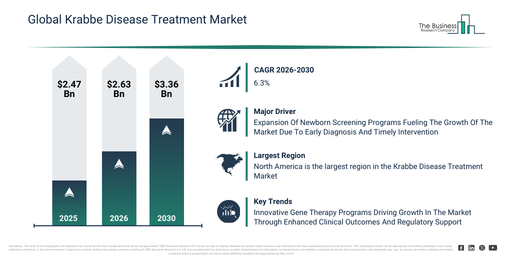
    The krabbe disease treatment market has experienced robust expansion in recent years. This market is set to increase from $2.47 billion in 2025 to $2.63 billion in 2026, demonstrating a compound annual growth rate (CAGR) of 6.6%. In the past, this growth was attributable to factors such as enhanced awareness of rare neurodegenerative disorders, the broadening of newborn screening initiatives, the early clinical application of hsct therapies, a rise in rare disease research funding, and the presence of supportive care treatments.

    The krabbe disease treatment market is projected to experience robust expansion over the coming years. This market is anticipated to reach $3.36 billion by 2030, exhibiting a compound annual growth rate (CAGR) of 6.3%. This projected increase during the forecast period stems from factors such as a rise in gene therapy clinical trials, greater investments in precision medicine for rare conditions, the proliferation of early diagnostic technologies, a heightened emphasis on disease-modifying therapies, and enhanced regulatory backing for orphan drugs. Key trends anticipated during this period encompass the growing integration of gene therapy methods, an uptick in early newborn screening initiatives, a sharpened focus on timely HSCT intervention, the broadening of supportive and symptomatic care frameworks, and intensified research into enzyme replacement options.

    Get A Free Sample Report With In-Depth Market Insights:

    https://thebusinessresearchcompany.com/sample_request?id=37408667&type=smp&name=Krabbe%20Disease%20Treatment%20Market%20Report%202026&utm_source=Blogs&utm_medium=Paid&utm_campaign=Oct_PR

    Krabbe Disease Treatment Market Industry Drivers: What’s Behind The Revenue Growth?

    The expanding presence of newborn screening programs is anticipated to fuel the growth of the krabbe disease treatment market in the foreseeable future. These health initiatives involve testing infants shortly after birth for potentially serious but treatable genetic, metabolic, and developmental conditions. Progress in medical technology is accelerating the development of newborn screening by enabling earlier, precise detection and timely prevention of severe health issues. Through these programs, krabbe disease can be detected early, facilitating prompt interventions before symptoms manifest. This early diagnosis supports treatments such as stem cell transplantation, thereby improving patient outcomes and slowing the disease’s progression. For instance, in November 2023, data from the Michigan Department of Health and Human Services, a US-based state agency, indicated that as of 2022, more than 7.7 million infants had been screened, with over 8,000 diagnosed with conditions identified by the NBS blood spot panel. Comparatively, among the 100,176 infants screened in 2022, a majority were Michigan residents, and 322 (0.3%) were diagnosed with a disease. Thus, the rising implementation of newborn screening programs is a key driver for the krabbe disease treatment market’s expansion.

    Krabbe Disease Treatment Market Segment Landscape And Growth Outlook

    The krabbe disease treatment market covered in this report is segmented –

    1) By Treatment Type: Medication, Enzyme Replacement Therapy, Gene Therapy, Stem Cell Therapy

    2) By Diagnostic Type: Newborn Screening, Genetic Testing

    3) By Distribution Channel: Retail Pharmacies, E-Commerce, Hospital Pharmacies

    4) By End-User: Hospitals And Clinics, Research Centers, Laboratories, Other End-Users

    Subsegments:

    1) By Medication: Anticonvulsants, Muscle Relaxants, Anti-Inflammatory Drugs, Pain Management Medications, Psychotropic Agents

    2) By Enzyme Replacement Therapy (ERT): Intravenous Enzyme Infusion, Intrathecal Enzyme Administration, PEGylated Enzyme Formulations, Recombinant Galactocerebrosidase (GALC)

    3) By Gene Therapy: Adeno-Associated Virus (AAV)-Based Gene Therapy, Lentiviral Vector-Based Gene Therapy, In Vivo Gene Therapy, Ex Vivo Gene-Modified Stem Cell Therapy

    4) By Stem Cell Therapy: Hematopoietic Stem Cell Transplantation (HSCT), Umbilical Cord Blood Stem Cell Therapy, Bone Marrow Transplant, Allogeneic Stem Cell Therapy

    #Krabbe Disease Treatment Market Growth Trends: What’s Shaping The Future Outlook?

    Leading companies within the Krabbe disease treatment market are concentrating on developing sophisticated gene therapy programs to boost treatment efficacy and broaden global accessibility. These programs involve modifying or replacing genes within a person’s cells to address or prevent diseases. Such therapies aim to rectify genetic mutations, offering potential cures for genetic disorders by introducing, removing, or altering specific genes. For instance, in March 2024, Forge Biologics, a US-based gene therapy company, introduced FBX-101, an innovative adeno-associated viral (AAV) gene therapy. This therapy secured the Innovation Passport designation from the UK’s Medicines and Healthcare Products Regulatory Agency (MHRA), enabling its entry into the Innovative Licensing and Access Pathway (ILAP). This pathway is designed to expedite regulatory and market access processes for treatments targeting serious or life-threatening conditions. FBX-101 has demonstrated encouraging safety and efficacy results in early clinical trials and functions by delivering a functional GALC gene to patients. It is intended to improve clinical outcomes for children affected by this rare and fatal neurodegenerative disease.

    Krabbe Disease Treatment Market Competitive Landscape: Who Leads The Industry?

    Major companies operating in the krabbe disease treatment market are Ajinomoto Co Inc, Passage Bio Inc, Magenta Therapeutics Inc, Gain Therapeutics Inc, M6P Therapeutics, Neurogene Inc, Greenwood Genetic Center, PreventionGenetics, MediciNova Inc, Polaryx Therapeutics Inc, Orchard Therapeutics Ltd, AVROBIO Inc, Bluebird Bio Inc, Regenxbio Inc, Homology Medicines Inc, Sangamo Therapeutics Inc, Editas Medicine Inc, CRISPR Therapeutics AG, Pfizer Inc, Sanofi SA, Takeda Pharmaceutical Company Limited, Amgen Inc, Biogen Inc, JCR Pharmaceuticals Co Ltd, Ultragenyx Pharmaceutical Inc

    View The Full Krabbe Disease Treatment Market Report:

    https://thebusinessresearchcompany.com/report/krabbe-disease-treatment-global-market-report?utm_source=Blogs&utm_medium=Paid&utm_campaign=Oct_PR

    Krabbe Disease Treatment Market Top Region By Revenue And Market Share

    North America was the largest region in the krabbe disease treatment market in 2025. Asia-Pacific is expected to be the fastest-growing region in the forecast period. The regions covered in the krabbe disease treatment market report are Asia-Pacific, South East Asia, Western Europe, Eastern Europe, North America, South America, Middle East, Africa.

    Reach Out To Our Team:

    The Business Research Company: https://www.thebusinessresearchcompany.com/

    Americas: +1 310-496-7795

    Asia: +44 7882 955267 & +91 8897263534

    Europe: +44 7882 955267

    Email us at: marketing@tbrc.info

    Follow us on:

    LinkedIn: https://in.linkedin.com/company/the-business-research-company

    YouTube: https://www.youtube.com/channel/UC24_fI0rV8cR5DxlCpgmyFQ

    Global Market Model: https://www.thebusinessresearchcompany.com/global-market-model

  • Knee Cartilage Repair Market Growth Outlook From $3.31 Billion In 2026 To $4.16 Billion By 2030

    Knee Cartilage Repair Market Growth Outlook From $3.31 Billion In 2026 To $4.16 Billion By 2030

    Featuring market attractiveness scoring, total addressable market sizing, company benchmarking matrices, interactive Excel dashboards, deeper supply chain intelligence, emerging startup tracking, and granular product-level insights, The Business Research Company’s 2026 market reports are built to deliver research that is both more actionable and more strategically valuable.

    Knee Cartilage Repair Market Size, Value And Growth Trajectory Through 2030

    The market for knee cartilage repair has experienced robust growth over recent years. This market is projected to expand from $3.1 billion in 2025 to $3.31 billion by 2026, demonstrating a compound annual growth rate (CAGR) of 6.7%. Historically, this expansion has been driven by factors such as the increasing prevalence of osteoarthritis, a greater occurrence of knee injuries among athletes, the established application of arthroscopic procedures, an escalating demand for techniques focused on joint preservation, and the broadening of orthopedic surgical infrastructure.

    The knee cartilage repair market is projected to experience substantial expansion in the coming years. Its valuation is anticipated to reach $4.16 billion by 2030, demonstrating a compound annual growth rate (CAGR) of 5.9%. This projected growth is driven by several factors, including an aging demographic experiencing cartilage degeneration, the growing acceptance of regenerative medicine, a heightened need for treatments that preserve knee motion, ongoing developments in biomaterials and implants, and increasing understanding of the importance of early intervention for cartilage issues. Key trends anticipated during this period encompass the wider application of minimally invasive cartilage repair techniques, the expanding utilization of cell-based and regenerative therapies, a growing inclination towards arthroscopic knee cartilage interventions, an increase in surgeries for sports injury-related cartilage repair, and enhanced patient results due to advanced implant materials.

    Get A Free Sample Report With In-Depth Market Insights:

    https://thebusinessresearchcompany.com/sample_request?id=82253418&type=smp&name=Knee%20Cartilage%20Repair%20Market%20Report%202026&utm_source=Blogs&utm_medium=Paid&utm_campaign=Oct_PR

    Knee Cartilage Repair Market Growth Factors: What’s Supporting Expansion?

    The increasing occurrence of sports-related injuries is projected to stimulate the growth of the knee cartilage repair market in the future. These injuries, defined as physical harm sustained during athletic or recreational pursuits, often arise from repetitive stress, overuse, or trauma, leading to symptoms such as joint pain, cartilage damage, and restricted mobility. The rise in such injuries is attributed to higher participation rates in sports, more rigorous training programs, and insufficient preventative measures. Knee cartilage repair facilitates recovery from these injuries by restoring damaged cartilage, alleviating pain, allowing for a quicker return to physical activity, and reducing the risk of long-term joint degeneration. For example, in July 2025, data from the Australian Institute of Health and Welfare, an Australia-based national government health statistics agency, indicated that more than 62,100 hospital admissions related to sports injuries were recorded in Australia during 2023–24, with males accounting for approximately 70% of cases (about 43,800) and females representing nearly 30% (around 18,300). Consequently, the escalating incidence of sports-related injuries is propelling the expansion of the knee cartilage repair market.

    Knee Cartilage Repair Market Breakdown By Product Type And Application

    The knee cartilage repair market covered in this report is segmented –

    1) By Device Type: Implants, Osteotomy, Bone Grafts, Arthroscopy, Resurfacing, Arthrodesis, Other Devices

    2) By Application: Arthroscopic Chondroplasty, Autologous Chondrocyte Implantation, Cell-Based Cartilage Resurfacing, Osteochondral Grafts Transplantation, Other Applications

    3) By End User: Hospitals, Ambulatory Surgical Centers, Orthopedic Clinics

    Subsegments:

    1) By Implants: Metallic Implants, Polymeric Implants, Ceramic Implants

    2) By Osteotomy: High Tibial Osteotomy, Distal Femoral Osteotomy

    3) By Bone Grafts: Autografts, Allografts, Synthetic Bone Grafts

    4) By Arthroscopy: Diagnostic Arthroscopy, Surgical Arthroscopy

    5) By Resurfacing: Partial Knee Resurfacing, Total Knee Resurfacing

    6) By Arthrodesis: Patella Arthrodesis, Femoral Arthrodesis, Tibial Arthrodesis

    7) By Other Devices: Cartilage Scaffolds, Growth Factors, Stem Cell-Based Devices

    Knee Cartilage Repair Market Industry Trends: What’s Reshaping Demand?

    Key companies operating in the knee cartilage repair market are focusing on developing innovative products, such as knee cartilage repair implants, to gain a competitive advantage. Knee cartilage repair implants are medical devices utilized in orthopedic surgery to facilitate the mending and regeneration of damaged knee cartilage. For instance, in March 2024, UC Davis Health, a US-based medical center, introduced the MISHA Knee System, a knee cartilage repair implant designed to assist in knee cartilage repair. The MISHA Knee System is a resorbable device that helps regenerate cartilage in the knee. The implant stimulates the body’s inherent healing process, allowing new cartilage and bone tissue to grow and integrate with the implant over time.

    Knee Cartilage Repair Market Company Landscape And Competitive Strategy

    Major companies operating in the knee cartilage repair market are Stryker Corporation, B. Braun Melsungen AG, DePuy Synthes, Zimmer Biomet Holdings Inc., Smith & Nephew plc, Arthrex Inc., Integra LifeSciences, Bioventus LLC, MTF Biologics, MiMedx Group Inc., Moximed Inc., Vericel Corporation, Anika Therapeutics Inc., SeaSpine Holdings Corporation, LifeNet Health, ConforMIS Inc., Geistlich Pharma AG, BioPoly LLC, Regen Lab SA, Octane Medical Group Inc., Orthocell Limited, Episurf Medical AB

    View The Full Knee Cartilage Repair Market Report:

    https://thebusinessresearchcompany.com/report/knee-cartilage-repair-global-market-report?utm_source=Blogs&utm_medium=Paid&utm_campaign=Oct_PR

    Knee Cartilage Repair Market Regional Analysis And Top Geography

    North America was the largest region in the knee cartilage repair market in 2025. Asia-Pacific is expected to be the fastest-growing region in the forecast period. The regions covered in the knee cartilage repair market report are Asia-Pacific, South East Asia, Western Europe, Eastern Europe, North America, South America, Middle East, Africa.

    Reach Out To Our Team:

    The Business Research Company: https://www.thebusinessresearchcompany.com/

    Americas: +1 310-496-7795

    Asia: +44 7882 955267 & +91 8897263534

    Europe: +44 7882 955267

    Email us at: marketing@tbrc.info

    Follow us on:

    LinkedIn: https://in.linkedin.com/company/the-business-research-company

    YouTube: https://www.youtube.com/channel/UC24_fI0rV8cR5DxlCpgmyFQ

    Global Market Model: https://www.thebusinessresearchcompany.com/global-market-model
  • Knee Bursitis Market Forecast To Reach $3.92 Billion By 2030: Key Growth Drivers And Industry Trends

    Knee Bursitis Market Forecast To Reach $3.92 Billion By 2030: Key Growth Drivers And Industry Trends

    Built to provide research that’s more actionable and strategically valuable, The Business Research Company’s 2026 market reports include market attractiveness analysis, total addressable market sizing, company benchmarking matrices, interactive Excel dashboards, broader supply chain intelligence, emerging startup tracking, and in-depth product insights.

    Knee Bursitis Market CAGR Outlook And Future Development

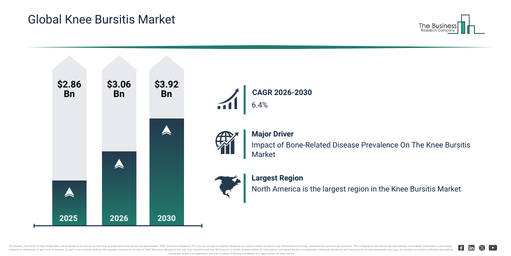
    The knee bursitis market has experienced significant expansion in recent years. This market is set to expand from $2.86 billion in 2025 to $3.06 billion in 2026, exhibiting a compound annual growth rate (CAGR) of 7.3%. The factors contributing to its past growth include the rising prevalence of knee injuries and repetitive stress conditions, increased involvement in sports and physical activities, the well-established application of imaging in musculoskeletal diagnostics, a burgeoning elderly population with joint disorders, and the ready availability of anti-inflammatory drugs.

    The knee bursitis market is anticipated to experience substantial expansion over the upcoming years. This market is projected to reach $3.92 billion by 2030, demonstrating a compound annual growth rate (CAGR) of 6.4%. Factors contributing to this growth during the forecast period include the increasing demand for minimally invasive treatment options, a heightened emphasis on early diagnosis and preventive measures, the growing acceptance of physiotherapy services, the development of orthopedic care facilities, and enhanced availability of diagnostic imaging in developing regions. Key trends anticipated within this period involve a rising preference for non-surgical approaches to knee bursitis management, greater utilization of imaging techniques for precise diagnosis, an uptick in the adoption of physical therapy and rehabilitation, the broadening of outpatient and conservative treatment methods, and enhanced patient understanding of early knee injury care.

    Get A Free Sample Report With In-Depth Market Insights:

    https://thebusinessresearchcompany.com/sample_request?id=28515128&type=smp&name=Knee%20Bursitis%20Market%20Report%202026&utm_source=Blogs&utm_medium=Paid&utm_campaign=Oct_PR

    Knee Bursitis Market Demand Drivers: What’s Powering Industry Growth?

    The growing occurrence of bone-related conditions is anticipated to fuel the expansion of the knee bursitis market moving forward. Bone disorders encompass ailments such as osteoporosis, arthritis, and bone cancer, impacting the skeletal system’s structure, strength, and function. The increased prevalence of these conditions is attributed to factors like an aging population, inactive lifestyles, inadequate nutrition, and environmental shifts. Bone-related diseases, including osteoarthritis and rheumatoid arthritis, can contribute to knee bursitis by causing inflammation and excessive pressure on the knee bursa. This inflammation leads to pain, swelling, and diminished joint movement. For example, in October 2024, Healthy Bones Australia, a national nonprofit organization based in Australia dedicated to osteoporosis prevention and bone health awareness, reported that an estimated 6.2 million Australians aged 50 and above, representing about 67% of this age group, were living with poor bone health. This figure is projected to climb significantly, reaching approximately 7.7 million individuals with osteopenia or osteoporosis by 2033. Consequently, the rising prevalence of bone-related diseases is driving the growth of the knee bursitis market.

    Knee Bursitis Market Segment Analysis And Revenue Potential

    The knee bursitis market covered in this report is segmented –

    1) By Diagnosis: Clinical Evaluation, Imaging Techniques, Laboratory And Procedural Tests, Differential Diagnosis Support

    2) By Treatment: Medication, Therapy, Surgery, Other Treatments

    3) By End User: Hospitals And Clinics, Diagnostic Centers, Research Centers, Academic Institutes, Other End Users

    Subsegments:

    1) By Clinical Evaluation: Medical History Assessment, Physical Examination

    2) By Imaging Techniques: X-Ray, Ultrasound, Magnetic Resonance Imaging

    3) By Laboratory And Procedural Tests: Bursa Fluid Aspiration, Blood Tests

    4) By Differential Diagnosis Support: Infection Exclusion Tests, Inflammatory Marker Assessment, Trauma-Related Assessment

    Knee Bursitis Market Key Players Shaping Industry Direction

    Major companies operating in the knee bursitis market are Pfizer Inc., Merck & Co. Inc., Bayer AG, Novartis AG, Eli Lilly and Company, AbbVie Inc., Johnson & Johnson, Sanofi SA, GlaxoSmithKline plc, Takeda Pharmaceutical Company Limited, Stryker Corporation, Zimmer Biomet Holdings Inc., Arthrex Inc., Smith & Nephew plc, Medtronic plc, Exactech Inc., Conformis Inc., Bioventus LLC, Horizon Therapeutics plc, Amneal Pharmaceuticals Inc.

    View The Full Knee Bursitis Market Report:

    https://thebusinessresearchcompany.com/report/knee-bursitis-global-market-report?utm_source=Blogs&utm_medium=Paid&utm_campaign=Oct_PR

    Knee Bursitis Market Geographic Analysis: Where Is Demand Rising Fastest?

    North America was the largest region in the knee bursitis market in 2025. Asia-Pacific is expected to be the fastest-growing region in the forecast period. The regions covered in the knee bursitis market report are Asia-Pacific, South East Asia, Western Europe, Eastern Europe, North America, South America, Middle East, Africa.

    Reach Out To Our Team:

    The Business Research Company: https://www.thebusinessresearchcompany.com/

    Americas: +1 310-496-7795

    Asia: +44 7882 955267 & +91 8897263534

    Europe: +44 7882 955267

    Email us at: marketing@tbrc.info

    Follow us on:

    LinkedIn: https://in.linkedin.com/company/the-business-research-company

    YouTube: https://www.youtube.com/channel/UC24_fI0rV8cR5DxlCpgmyFQ

    Global Market Model: https://www.thebusinessresearchcompany.com/global-market-model
  • Knee Braces Market Research 2026: Market Size, Trends, Segments And Growth Forecast

    Knee Braces Market Research 2026: Market Size, Trends, Segments And Growth Forecast

    Backed by market attractiveness analysis, total addressable market sizing, company benchmarking matrices, interactive Excel dashboards, wider supply chain intelligence, emerging startup coverage, and detailed product-level insights, The Business Research Company’s 2026 market reports are designed to offer research that is more actionable and strategically valuable than ever.

    Knee Braces Market Set To Climb From $1.97 Billion In 2026 To $2.42 Billion By 2030

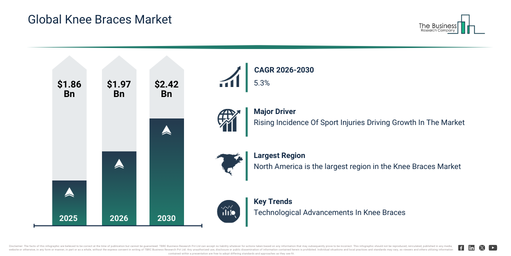
    The knee braces market size has demonstrated strong growth in recent years. It is anticipated to expand from $1.86 billion in 2025 to $1.97 billion in 2026, at a compound annual growth rate (CAGR) of 5.5%. The market’s past growth can be attributed to an increasing occurrence of knee injuries and ligament tears, rising engagement in sports and fitness activities, the established application of knee braces in orthopedic care, a growing number of knee surgeries, and the expanding accessibility of over-the-counter orthopedic supports.

    The knee braces market is projected to experience substantial expansion in the upcoming years. This market is anticipated to reach $2.42 billion by 2030, achieving a compound annual growth rate (CAGR) of 5.3%. Factors contributing to this growth during the forecast period include an aging demographic more susceptible to joint issues, heightened consciousness regarding preventive orthopedic solutions, the proliferation of sports medicine clinics, an increasing need for rehabilitation products used at home, and the broader reach of e-commerce distribution networks. Key trends observed within the forecast timeframe involve a greater inclination towards sports injury prevention items, the expanding application of knee braces in post-operative recovery, a developing partiality for designs that are light and comfortable, increased accessibility of over-the-counter knee braces, and the growing embrace of custom-fit and adjustable options.

    Get A Free Sample Report With In-Depth Market Insights:

    https://thebusinessresearchcompany.com/sample_request?id=85432014&type=smp&name=Knee%20Braces%20Market%20Report%202026&utm_source=Blogs&utm_medium=Paid&utm_campaign=Oct_PR

    Knee Braces Market Growth Drivers: What’s Behind The Acceleration?

    The increasing occurrence of sports injuries is set to boost the expansion of the knee braces market. Sports injuries encompass various physical traumas sustained during involvement in athletic pursuits or sports, impacting areas such as muscles, bones, tendons, ligaments, and joints. The surge in these injuries stems from the rising engagement in sports and fitness activities, leading more participants into strenuous training and heightened physical demands. Knee braces are frequently utilized for sports injuries to offer reinforcement, steadiness, and safeguarding to the knee joint. They contribute to lessening the likelihood of harm, such as ligament tears or strains, by restricting excessive motion and applying compression. For instance, in September 2024, according to the data published by the National Safety Council, a US-based public health and safety organization, the number of reported sports and recreational injuries in the US increased by 2% in 2023, with a total of 3.7 million individuals receiving medical treatment in emergency departments for injuries related to sports and recreational equipment. Consequently, the rising incidence of sports injuries is fueling the growth of the knee braces market.

    Knee Braces Market Segmentation And Category Overview

    The knee braces market covered in this report is segmented –

    1) By Type: Prophylactic Knee Braces, Rehabilitative Knee Braces, Patellofemoral Knee Braces, Functional Knee Braces

    2) By Application: Medical Use, Sports Use

    3) By End Use: Orthopedic Clinics, Over-the-Counter (OTC), Hospital, Durable Medical Equipment (DME) Dealers, Other End Users

    Subsegments:

    1) By Prophylactic Knee Braces: Hinged Prophylactic Braces, Sleeve-Style Prophylactic Braces, Wraparound Prophylactic Braces

    2) By Rehabilitative Knee Braces: Post-Operative Braces, Recovery Knee Braces, Adjustable Braces For Rehabilitation

    3) By Patellofemoral Knee Braces: Patella Stabilizing Braces, Patella Tracking Braces, Open Patella Braces

    4) By Functional Knee Braces: Ligament Knee Braces, ACL Support Braces, Hinged Knee Braces For Support, Custom-Made Functional Knee Braces

    Knee Braces Market Trends: What’s Defining The Industry’s Next Phase?

    Leading companies within the knee brace market are concentrating on advancing technologies, such as unloader braces, to elevate comfort, optimize offloading mechanisms, embed wearable technology, and deliver more potent, individualized care for knee osteoarthritis. An unloader brace is a specialized knee brace crafted to diminish pain and bolster function by reallocating pressure away from the knee’s affected compartment, typically utilized by individuals experiencing unicompartmental knee osteoarthritis. For example, in January 2024, Enovis Corporation, a US-based medical technology enterprise, unveiled the DonJoy ROAM OA Knee Brace, which facilitates dynamic knee unloading to mitigate pain and boost mobility for those with unicompartmental osteoarthritis. Its intuitive design, adaptable fit, and light weight establish it as an efficacious tool for conservative treatment and support during routine activities.

    Knee Braces Market Competitive Analysis Of Leading Industry Participants

    Major companies operating in the knee braces market are Össur hf., Breg Inc., Bauerfeind AG, Otto Bock Healthcare GmbH, Enovis Corporation, McDavid Inc., Mueller Sports Medicine Inc., Tynor Orthotics Pvt. Ltd., Aspen Medical Products Inc., Medi GmbH & Co. KG, BioSkin LLC., Rehband AB., Weber Orthopedic Inc., Thuasne Group, DonJoy Performance, DJO Global, Alcare Co. Ltd., United Ortho, Push Sports, Neo G

    View The Full Knee Braces Market Report:

    https://thebusinessresearchcompany.com/report/knee-braces-global-market-report?utm_source=Blogs&utm_medium=Paid&utm_campaign=Oct_PR

    Knee Braces Market Global Footprint: Which Region Leads The Market?

    North America was the largest region in the knee braces market in 2025. Asia-Pacific is expected to be the fastest-growing region in the forecast period. The regions covered in the knee braces market report are Asia-Pacific, South East Asia, Western Europe, Eastern Europe, North America, South America, Middle East, Africa.

    Reach Out To Our Team:

    The Business Research Company: https://www.thebusinessresearchcompany.com/

    Americas: +1 310-496-7795

    Asia: +44 7882 955267 & +91 8897263534

    Europe: +44 7882 955267

    Email us at: marketing@tbrc.info

    Follow us on:

    LinkedIn: https://in.linkedin.com/company/the-business-research-company

    YouTube: https://www.youtube.com/channel/UC24_fI0rV8cR5DxlCpgmyFQ

    Global Market Model: https://www.thebusinessresearchcompany.com/global-market-model