Blog

  • Assistive Technologies For Visually Impaired Market Expected To Reach $12.7 Billion By 2030 As Growth Accelerates At 13.1% CAGR

    Assistive Technologies For Visually Impaired Market Expected To Reach $12.7 Billion By 2030 As Growth Accelerates At 13.1% CAGR

    Delivering more actionable and strategically valuable research, The Business Research Company’s 2026 market reports feature market attractiveness analysis, total addressable market evaluation, company benchmarking matrices, interactive Excel dashboards, expanded supply chain intelligence, emerging startup coverage, and detailed product insights.

    Assistive Technologies For Visually Impaired Market Size, Value And Growth Trends Through 2030

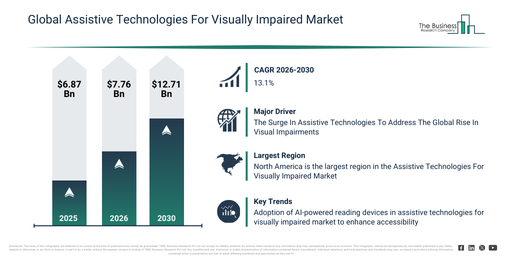
    Assistive technologies designed for individuals with visual impairments have experienced significant expansion lately, with projections indicating a rise from $6.87 billion in 2025 to $7.76 billion in 2026, reflecting a compound annual growth rate of 12.9%. This growth trend, observed throughout the historical period, stems from a confluence of factors including heightened consciousness regarding the accessibility requirements of those with vision loss, the proliferation of specialized educational initiatives, broadened access to adaptive devices, increasing institutional encouragement for the inclusion of individuals with disabilities, and the more extensive adoption of screen reader software.

    The market for assistive technologies designed for individuals with visual impairments is poised for substantial expansion, projecting a valuation of $12.71 billion by the year 2030, driven by a compound annual growth rate (CAGR) of 13.1%. This projected surge is fueled by several key factors, including the growing incorporation of artificial intelligence and computer vision capabilities, increased financial backing for the creation of inclusive technologies, the broadening scope of smart city initiatives aimed at enhancing accessibility, a heightened demand for customized assistive solutions, and the expanding utilization of wearable assistive gadgets. For the upcoming forecast period, significant market trends are anticipated to emerge, such as the greater adoption of AI-driven assistive software, a rise in the deployment of intelligent and wearable navigation devices, escalating consumer interest in accessible digital learning resources, the proliferation of interconnected mobility aids, and a more pronounced emphasis on designing assistive products with the end-user at the forefront.

    Download A Free Sample Report For Comprehensive Market Insights:

    https://www.thebusinessresearchcompany.com/sample.aspx?id=13598&type=smp

    Assistive Technologies For Visually Impaired Market Development Factors: Which Trends Are Supporting Demand?

    The increasing prevalence of conditions leading to diminished or complete loss of sight is anticipated to be a significant catalyst for the expansion of the market for assistive technologies designed for individuals with visual impairments. These technologies play a crucial role in enhancing accessibility, offering vital tools and support systems, like Braille displays, which facilitate better navigation, access to information, and communication for those affected by vision loss. Evidence from the World Health Organization, a UN agency headquartered in Switzerland focused on global health, indicates that as of August 2023, an alarming 2.2 billion people globally experience vision impairment, with a substantial portion, 1 billion cases, being either preventable or lacking adequate treatment. Further data reveals that refractive errors contribute to this figure in 36% of cases, while cataracts are responsible for impairment in 17%. Consequently, the escalating rates of visual impairment and blindness are directly fueling the advancement and demand within the assistive technologies for the visually impaired sector.

    Assistive Technologies For Visually Impaired Market Segmentation Trends And Revenue Drivers

    The assistive technologies for visually impaired market covered in this report is segmented –

    1) By Type: Educational Devices And Software, Mobility Devices, Low Vision Devices

    2) By Distribution Channel: Hospital Pharmacies, Retail Pharmacies, Optical Stores, Online Pharmacies

    3) By End User: Blind Schools, Enterprises And Social Organizations, Personal Use, Hospitals, Other End Users

    Subsegments:

    1) By Educational Devices And Software: Braille Notetakers, Screen Readers, Accessible Learning Software

    2) By Mobility Devices: Canes (Traditional And Smart Canes), GPS Navigation Devices, Wearable Technology For Navigation

    3) By Low Vision Devices: Magnifiers (Handheld And Electronic), Telescopic Lenses, Digital Magnification Devices

    Assistive Technologies For Visually Impaired Market Transformation Trends: Which Innovations Are Driving Change?

    Within the assistive technology sector for individuals with visual impairments, leading corporations are actively pursuing innovation, particularly in artificial intelligence-driven portable reading gadgets designed for immediate text identification and environmental comprehension. These advancements aim to empower users with greater reading autonomy, increase the practicality of their tools, and lessen their need for assistance from sighted individuals. Such AI-enhanced portable readers employ a sophisticated integration of computer vision and optical character recognition (OCR) technologies to swiftly transform text, whether printed, handwritten, or digital, into auditory output, effectively functioning as a personal narrator. This capability facilitates more fluid and expedited access to information, broadens language compatibility, and diminishes the necessity for supplementary assistive equipment. To illustrate, in November of 2023, OrCam Technologies, a firm specializing in assistive solutions based in Israel, introduced the OrCam Read 3, a noteworthy example of an AI-powered handheld reading device. This innovative product is capable of vocalizing text from a variety of sources including books, menus, digital displays, and any physical print, provides support for seventeen distinct languages, offers intuitive point-and-click directions for text selection, and delivers instant audio feedback through either its integrated speaker or connected headphones. Consequently, visually impaired individuals can engage with written content independently, at an accelerated pace, and with enhanced precision, while simultaneously reducing their reliance on other assistive aids.

    #Assistive Technologies For Visually Impaired Market Industry Leaders: Which Organizations Are Driving Competition?

    Major companies operating in the assistive technologies for visually impaired market are OrCam Technologies Ltd., Vispero, Freedom Scientific Inc., Humanware Pty. Ltd., Amedia Corporation, Aira Tech Corp., LVI Low Vision International AB, Maxi-Aids, Dolphin Computer Access Ltd., Eschenbach Optik GmbH, eSight Corporation, Zoomax Inc., Ash Technologies, ViewPlus Technologies Inc., Envision AI, Ai Squared Inc., Eyedaptic Inc., ABiSee Inc., American Thermoform Corporation, Boundless Assistive Technology, Torchit

    Access The Complete Assistive Technologies For Visually Impaired Market Report:

    https://www.thebusinessresearchcompany.com/report/assistive-technologies-for-visually-impaired-global-market-report

    Assistive Technologies For Visually Impaired Market Regional Analysis: Which Region Leads By Revenue?

    North Americawas the largest region in the assistive technologies for visually impaired market in 2025. Asia-Pacificis expected to be the fastest-growing region in the forecast period. The regions covered in the assistive technologies for visually impaired market report are Asia-Pacific, South East Asia, Western Europe, Eastern Europe, North America, South America, Middle East, Africa.

    Get in touch with us:

    The Business Research Company: https://www.thebusinessresearchcompany.com/

    Americas: +1 310-496-7795

    Asia: +44 7882 955267 & +91 8897263534

    Europe: +44 7882 955267

    Email us at: marketing@tbrc.info

    Follow us on:

    LinkedIn: https://in.linkedin.com/company/the-business-research-company

    YouTube: https://www.youtube.com/channel/UC24_fI0rV8cR5DxlCpgmyFQ

    Global Market Model: https://www.thebusinessresearchcompany.com/global-market-model
  • Assisted Reproductive Technology Market Set To Grow From $40.46 Billion In 2026 To $56.95 Billion By 2030 At A CAGR Of 8.9%

    Assisted Reproductive Technology Market Set To Grow From $40.46 Billion In 2026 To $56.95 Billion By 2030 At A CAGR Of 8.9%

    Enhanced with market attractiveness analysis, total addressable market evaluation, company benchmarking matrices, interactive Excel dashboards, expanded supply chain intelligence, emerging startup coverage, and detailed product insights, The Business Research Company’s 2026 market reports deliver more actionable and strategically valuable research.

    Assisted Reproductive Technology Market CAGR Analysis And Future Market Development

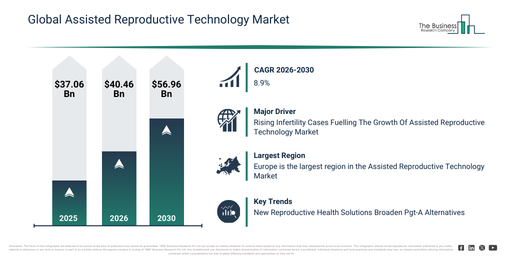
    Assisted reproductive technology attained substantial market expansion recently, projecting an increase from $37.06 billion in 2025 to $40.46 billion in 2026, reflecting a compound annual growth rate of 9.2%. During the past, this growth trajectory was driven by escalating infertility rates, a trend towards later childbearing, the proliferation of fertility treatment centers, a greater availability of assisted reproductive interventions, and a societal shift towards greater acceptance of ART procedures.

    The field of assisted reproductive technology is projected to experience a significant expansion in the coming years, reaching an estimated market value of $56.96 billion by 2030, driven by a compound annual growth rate of 8.9%. This anticipated growth trajectory is fueled by several key factors, including the heightened use of sophisticated fertility diagnostic tools, increased capital investment directed towards fertility treatment facilities, the broadening scope of genetic testing, a greater preference for less invasive procedures, and augmented healthcare expenditures specifically allocated to reproductive well-being. Over the projected timeframe, notable market developments are expected to include the wider implementation of cutting-edge embryo assessment methodologies, a more prevalent utilization of frozen embryo and egg preservation services, a growing consumer desire for tailored fertility interventions, the integration of genetic testing more extensively within ART processes, and a pronounced emphasis on optimizing the success rates of fertility treatments.

    Download A Free Sample Report For Comprehensive Market Insights:

    https://www.thebusinessresearchcompany.com/sample.aspx?id=5489&type=smp

    Assisted Reproductive Technology Market Industry Drivers: What Is Driving Revenue Growth?

    The increasing prevalence of infertility is anticipated to stimulate the assisted reproductive technology market in the foreseeable future. Infertility, characterized by the inability to achieve pregnancy following a year of regular, unprotected intercourse, impacts both genders and is commonly identified by a failure to conceive. Assisted reproductive technology (ART) serves as a treatment for infertility, encompassing fertility procedures that utilize both male and female gametes. For example, as reported by the World Health Organization (WHO) in April 2023, a significant number of individuals of reproductive age globally face infertility challenges, which consequently affect their families and communities. It is estimated that approximately 1 in 6 adults worldwide, translating to about 17.5% of the global adult population, experience infertility. Consequently, the escalating incidence of infertility directly propels the expansion of the assisted reproductive technology market.

    Assisted Reproductive Technology Market Segment Analysis Highlighting Growth Areas

    The assisted reproductive technology market covered in this report is segmented –

    1) By Diagnosis: Hysterosalpingography, Ovarian Reserve Testing, Genetic Testing

    2) By Procedure Type: Fresh Non-Donor, Fresh Donor, Frozen Donor, Frozen Non-Donor, Embryo Or Egg Banking

    3) By End-User: Hospitals, Fertility Clinics, Other End-Users

    Subsegments:

    1) By Hysterosalpingography (HSG): X-ray HSG, Sonohysterography (SHG)

    2) By Ovarian Reserve Testing: Follicle Stimulating Hormone (FSH) Testing, Anti-Müllerian Hormone (AMH) Testing, Antral Follicle Count (AFC) via Ultrasound

    3) By Genetic Testing: Preimplantation Genetic Testing (PGT), Carrier Screening Tests, Genetic Compatibility Testing

    #Assisted Reproductive Technology Market Growth Trends: What Is Influencing The Future Outlook?

    Leading entities within the assisted reproductive technology sector are prioritizing the creation of cutting-edge diagnostic tools, namely next-generation sequencing (NGS) based testing kits, with the aim of refining chromosomal evaluations, optimizing embryo selection, and elevating the success probabilities associated with fertility interventions. This approach, often termed NGS-based preimplantation genetic testing, encompasses research-grade technologies designed for thorough evaluation of embryonic chromosomal irregularities, thus aiding critical choices made during In Vitro Fertilization (IVF) and Intracytoplasmic Sperm Injection (ICSI). A notable development occurred in July of 2023 when Thermo Fisher Scientific Inc., a prominent American biotechnology firm, introduced two NGS-powered products, the Ion ReproSeq PGT-A Kit and the Ion AmpliSeq Polyploidy Kit, specifically to facilitate preimplantation genetic testing for aneuploidy (PGT-A). These assays, developed for laboratories involved in reproductive health, represent novel research use products and are designed to integrate seamlessly with the Ion Torrent Genexus Integrated Sequencer, thereby streamlining the entire process from sample handling to aneuploidy assessment. The primary objective of PGT-A testing is to detect chromosomal abnormalities in embryonic specimens, and these newly released solutions are intended to further scientific knowledge, improve implantation and pregnancy success rates, and foster healthier beginnings for upcoming generations. The Genexus platform’s inherent capabilities simplify the research lifecycle by consolidating templating, sequencing, and data analysis, while the Ion AmpliSeq Polyploidy Panel kit furnishes advanced quality assurance mechanisms to guard against sample contamination, prevent inadvertent mix-ups, and accurately identify triploidy in embryos, collectively signifying substantial technological advancement in the assisted reproductive technology market.

    Assisted Reproductive Technology Market Leading Companies: Who Holds Significant Market Presence?

    Major companies operating in the assisted reproductive technology market are Cooper Surgical Inc., Ferring Pharmaceuticals Ltd., Hamilton Thorne Ltd., Merck KGaA, Genea Limited, California Cryobank, European Sperm Bank, OvaScience Inc., Bloom IVF Centre, Vitrolife AB, FUJIFILM Irvine Scientific Inc., Nidacon International AB, Monash IVF Group Ltd., Cook Medical, INVO Bioscience Inc., Thermo Fisher Scientific Inc., Anecova Sa, Carolinas Fertility Institute, Microm Ltd., Inception Sciences Inc., Progyny Inc., Oxford Gene Technology IP Ltd., IVI-RMA Global, Boston IVF, CARE Fertility Group, Virtus Health, Reproductive Medicine Associates of New York, Shady Grove Fertility, CCRM Fertility, New Hope Fertility Center, Houston Fertility Institute, Pacific Fertility Center, RMA of New Jersey, Sher Fertility Institute, IVF Florida, ORM Fertility, HRC Fertility, Arizona Center for Reproductive Endocrinology & Infertility, San Diego Fertility Center, Fertility Centers of Illinois

    Access The Complete Assisted Reproductive Technology Market Report:

    https://www.thebusinessresearchcompany.com/report/assisted-reproductive-technology-global-market-report

    Assisted Reproductive Technology Market Geographic Distribution And Regional Opportunities

    Europe was the largest region in the assisted reproductive technology market in 2025. North America was the second-largest region in assisted reproductive technology market. The regions covered in the assisted reproductive technology market report are Asia-Pacific, South East Asia, Western Europe, Eastern Europe, North America, South America, Middle East, Africa.

    Get in touch with us:

    The Business Research Company: https://www.thebusinessresearchcompany.com/

    Americas: +1 310-496-7795

    Asia: +44 7882 955267 & +91 8897263534

    Europe: +44 7882 955267

    Email us at: marketing@tbrc.info

    Follow us on:

    LinkedIn: https://in.linkedin.com/company/the-business-research-company

    YouTube: https://www.youtube.com/channel/UC24_fI0rV8cR5DxlCpgmyFQ

    Global Market Model: https://www.thebusinessresearchcompany.com/global-market-model
  • Assisted Living Technologies Market Opportunities Are Emerging Beyond Traditional Growth Areas

    Assisted Living Technologies Market Opportunities Are Emerging Beyond Traditional Growth Areas

    Through market attractiveness analysis, total addressable market evaluation, company benchmarking matrices, interactive Excel dashboards, expanded supply chain intelligence, emerging startup coverage, and detailed product insights, The Business Research Company’s 2026 market reports provide more actionable and strategically valuable research.

    Assisted Living Technologies Market Expansion From $10.59 Billion In 2026 To $17.75 Billion In 2030

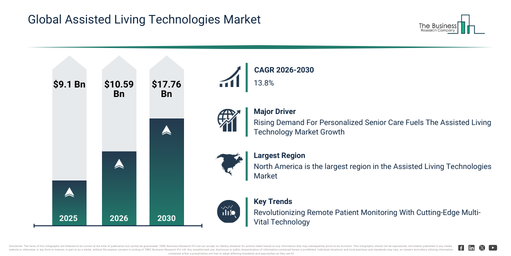
    The market for assisted living technologies has experienced significant expansion recently, projected to increase from $9.1 billion in 2025 to $10.59 billion in 2026, reflecting a compound annual growth rate of 16.4%. This growth surge during the historical period is largely attributable to demographic shifts, including a growing elderly population, a higher incidence of long-term health issues, the broadening scope of home-based healthcare, a heightened desire among seniors to maintain their autonomy, and the accessibility of fundamental supportive equipment.

    The assisted living technologies sector is poised for significant expansion, projecting a market valuation of $17.76 billion by the year 2030, driven by a compound annual growth rate of 13.8%. This anticipated surge is fueled by several key factors, including amplified investments in smart assisted living infrastructure, a greater embrace of telehealth and remote patient monitoring, the proliferation of AI-powered care solutions, a heightened emphasis on preventive healthcare strategies, and an increasing comfort level among consumers with digital health tools. Within this growth trajectory, prominent trends are expected to include a wider uptake of smart home safety systems, increased utilization of wearable health monitoring devices, deeper integration of remote care platforms, the development of data-driven assisted living solutions, and a stronger dedication to supporting independent living arrangements.

    Download A Free Sample Report For Comprehensive Market Insights:

    https://www.thebusinessresearchcompany.com/sample.aspx?id=15515&type=smp

    #Assisted Living Technologies Market Growth Factors: Which Forces Are Supporting Market Expansion?

    The expanding need for tailored elder care solutions is poised to be a significant catalyst for the advancement of the assisted living technology sector. Personalized elder care encompasses a broad spectrum of support systems crafted to assist older adults in their daily lives. This surge in demand stems from a growing senior population, their distinct requirements, and a desire for high-quality care. Technologies within assisted living facilitate the remote tracking of seniors’ health indicators, including vital signs, physical activity, medication compliance, and the detection of falls. Such innovations are instrumental in helping seniors manage their medication schedules, mitigate potential mistakes, and ultimately enhance their general well-being. As an illustration, data from October 2025, released by the Australian Institute of Health and Welfare, a governmental body in Australia, indicated that during the 2023–24 period, approximately 275,600 individuals aged 65 and above were admitted into either home care or residential aged care facilities. This figure comprised roughly 102,000 (37%) entries into home care and 173,600 (63%) into residential care, with about 75,600 (44%) of the latter designated for permanent residency and approximately 98,000 (56%) for respite services. Consequently, the increasing preference for customized senior care is directly fueling the growth trajectory of the assisted living technology market.

    Assisted Living Technologies Market Segment Performance And Strategic Opportunities

    The assisted living technologies market covered in this report is segmented –

    1) By Component: Hardware, Software And Apps, Services

    2) By Facility Type: Adult Family Home, Community-Based Residential Facility, Residential Care Apartment Complex

    3) By End-User: Assisted Living Facilities, Nursing Homes, Rehabilitation Centers, Home Care Settings, Hospices, Other End-Users

    Subsegments:

    1) By Hardware: Wearable Devices (Smartwatches, Health Trackers), Sensors (Motion, Pressure, Temperature), Home Automation Systems (Smart Lights, Smart Thermostats), Monitoring Devices (Fall Detection Systems, Emergency Alert Systems)

    2) By Software And Apps: Health Monitoring Apps, Remote Patient Monitoring Software, Medication Management Software, Communication And Coordination Software, Emergency Response Apps

    3) By Services: Remote Monitoring Services, Personal Care Assistance, Telehealth Services, Maintenance And Support Services, Data Analytics And Reporting Services

    Assisted Living Technologies Market Industry Trends: What Changes Are Reshaping Demand?

    Leading entities within the assisted living technologies sector are actively producing integrated remote patient monitoring systems, designed to facilitate unobtrusive, ongoing oversight of key health indicators and thereby enhance the quality of care. These comprehensive monitoring solutions empower medical professionals with deeper insights into patient well-being, paving the way for tailored treatment plans, ultimately leading to superior health results and more effective management of ongoing ailments. As an illustration, earlier this year, specifically in January 2024, Blue Spark Technologies, a health tech firm hailing from the United States, introduced VitalTraq, a sophisticated multi-sensor platform for remote health surveillance. This cutting-edge system employs remote photoplethysmography (rPPG), a non-contact method capable of assessing parameters such as heart rate, its variability, blood pressure, and respiratory rate through a brief facial scan lasting between 30 and 60 seconds. VitalTraq seamlessly incorporates Blue Spark’s existing FDA-approved TempTraq, a Bluetooth-enabled wearable device that continuously tracks body temperature and alerts users to any significant increases in real time. The synergy between contactless facial scanning and a wearable temperature monitoring device establishes a holistic approach to remote patient care.

    Assisted Living Technologies Market Key Players: Which Companies Shape Industry Competition?

    Major companies operating in the assisted living technologies market are Samsung Electronics Co. Ltd., Siemens AG, General Electric Company, Panasonic Corporation, Honeywell International Inc., Medtronic plc, ABB Ltd., Koninklijke Philips N.V., Legrand SA, Resideo Technologies Inc., ADT Inc., Tunstall Group Holdings Limited, WellSky, Lively, Essence Group, Possum Limited, GrandCare Systems, Vitaphone GmbH, Tynetec Limited, 2PCS Solutions GmbH, Assisted Living Technologies Inc., Bay Alarm Medical, Gnomon Informatics S.A., Independa Inc., Alcove

    Access The Complete Assisted Living Technologies Market Report:

    https://www.thebusinessresearchcompany.com/report/assisted-living-technologies-global-market-report

    Assisted Living Technologies Market Largest Region By Revenue And Market Share

    North Americawas the largest region in the assisted living technologies market in 2025. The regions covered in the assisted living technologies market report are Asia-Pacific, South East Asia, Western Europe, Eastern Europe, North America, South America, Middle East, Africa.

    Get in touch with us:

    The Business Research Company: https://www.thebusinessresearchcompany.com/

    Americas: +1 310-496-7795

    Asia: +44 7882 955267 & +91 8897263534

    Europe: +44 7882 955267

    Email us at: marketing@tbrc.info

    Follow us on:

    LinkedIn: https://in.linkedin.com/company/the-business-research-company

    YouTube: https://www.youtube.com/channel/UC24_fI0rV8cR5DxlCpgmyFQ

    Global Market Model: https://www.thebusinessresearchcompany.com/global-market-model
  • Assisted Living Facility And Neurorehabilitation Market Expansion Is Opening New Pathways For Strategic Investment

    Assisted Living Facility And Neurorehabilitation Market Expansion Is Opening New Pathways For Strategic Investment

    Delivering more actionable and strategically valuable research, The Business Research Company’s 2026 market reports feature market attractiveness analysis, total addressable market evaluation, company benchmarking matrices, interactive Excel dashboards, expanded supply chain intelligence, emerging startup coverage, and detailed product insights.

    Assisted Living Facility And Neurorehabilitation Market Forecast Highlighting Growth From $55.47 Billion To $72.43 Billion

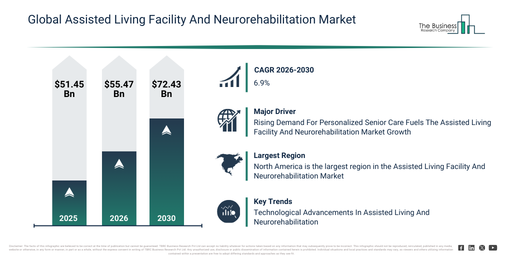
    A robust expansion has characterized the assisted living facility and neurorehabilitation market, which is projected to climb from $51.45 billion in 2025 to $55.47 billion by 2026, reflecting a compound annual growth rate of 7.8%. Factors contributing to this historical upward trajectory include an increasing elderly demographic, a heightened incidence of neurological conditions, the proliferation of assisted living options, escalating demand for sustained care solutions, and a greater supply of rehabilitation specialists.

    The market for assisted living and neurorehabilitation is projected for substantial expansion over the coming years, achieving a value of $72.43 billion by 2030, reflecting a compound annual growth rate of 6.9%. This anticipated growth stems from several key factors: amplified investments directed towards neurorehabilitation infrastructure, a heightened demand for care models that seamlessly integrate various services, the proliferation of therapy solutions leveraging technological advancements, a stronger emphasis on care plans tailored to individual patient needs, and escalating healthcare expenditures dedicated to geriatric care. During the forecast period, notable trends are expected to shape the market, including the greater incorporation of neurorehabilitation services within assisted living settings, a wider embrace of customized care programs, increased utilization of remote monitoring technologies for patient oversight, the broader implementation of rehabilitation models involving diverse professional teams, and a more concentrated effort on restoring cognitive function and mobility.

    Download A Free Sample Report For Comprehensive Market Insights:

    https://www.thebusinessresearchcompany.com/sample.aspx?id=15726&type=smp

    Assisted Living Facility And Neurorehabilitation Market Demand Drivers: What Is Fueling Industry Growth?

    The surge in customized elder care solutions is anticipated to be a primary catalyst for the expansion of the assisted living and neurorehabilitation sectors. These tailored elder care options encompass a broad spectrum of support systems aimed at enhancing the quality of life for older adults. A key driver behind the escalating need for such personalized services is the demographic shift towards an aging population, coupled with the specific requirements of this group and a desire for high-standard care. When assisted living residences and neurorehabilitation programs are incorporated into these personalized elder care frameworks, they offer holistic assistance, seamlessly blending everyday life support with specialized therapeutic treatments adapted to an individual’s neurological conditions. Illustrating this trend, in the fiscal year 2021–22, Australian government expenditure on aged care reached a significant $24.8 billion, a figure projected to climb from 1.1% of GDP in that period to 2.5% by 2062–63, primarily due to the nation’s aging demographic, as reported by the Australian Institute of Health and Welfare in March 2023. Consequently, the increasing requirement for personalized elder care is fueling the advancement of the assisted living facility and neurorehabilitation market.

    #Assisted Living Facility And Neurorehabilitation Market Segment Landscape And Growth Potential

    The assisted living facility and neurorehabilitation market covered in this report is segmented –

    1) By Type: Women, Men

    2) By Age: Less Than 65, 65-74, 75-84, More Than 85

    3) By Application: Hospitals, Clinics, Personal Care, Other Applications

    Subsegments:

    1) By Women: Elderly Women, Women With Cognitive Disorders, Women With Physical Disabilities

    2) By Men: Elderly Men, Men With Cognitive Disorders, Men With Physical Disabilities

    Assisted Living Facility And Neurorehabilitation Market Innovation Trends: Which Developments Are Transforming The Industry?

    Companies prominent in the assisted living and neurorehabilitation sectors are prioritizing innovation through technologies like smart peripheral devices to enhance their market standing. These smart peripheral devices function as highly sensitive controllers capable of registering the precise grip forces and wrist motions essential for everyday tasks, detecting even minute finger and hand forces below the newton level, thereby facilitating treatment for individuals with severe impairments. As an illustration, MindMaze, a digital therapeutics firm based in Switzerland, introduced Izar in February 2023, a pioneering FDA-listed and CE-marked smart peripheral device specifically created for individuals experiencing diminished hand motor function, addressing a crucial need in neurological care and striving to offer the most impactful therapy for boosting hand dexterity and strength across various conditions such as stroke, Parkinson’s disease, Alzheimer’s disease, and traumatic brain injury.

    Assisted Living Facility And Neurorehabilitation Market Competitive Landscape: Who Are The Leading Companies?

    Major companies operating in the assisted living facility and neurorehabilitation market are Community Health Systems Inc., Sevita Health, Encompass Health Corporation, Kindred Healthcare LLC, Brookdale Senior Living, Atria Senior Living Inc., SCA Health, Belmont VillAge L.P., Aegis Living, Craig Hospital, NeuroRestorative, Centre For Neuro Skills, Bioness Inc., Texas NeuroRehab Center, Catholic Eldercare, Moody Neurorehabilitation Institute, ResCare Inc., Sukino Healthcare Solutions Pvt. Ltd., TeamHealth, Mary Lee Foundation, Sanctus Rehabilitation Care Foundation

    Access The Complete Assisted Living Facility And Neurorehabilitation Market Report:

    https://www.thebusinessresearchcompany.com/report/assisted-living-facility-and-neurorehabilitation-global-market-report

    Assisted Living Facility And Neurorehabilitation Market Regional Analysis And Leading Geography

    North Americawas the largest region in the assisted living facility and neurorehabilitation market in 2025. Asia-Pacificis expected to be the fastest growing region in the market. The regions covered in the assisted living facility and neurorehabilitation market report are Asia-Pacific, South East Asia, Western Europe, Eastern Europe, North America, South America, Middle East, Africa.

    Get in touch with us:

    The Business Research Company: https://www.thebusinessresearchcompany.com/

    Americas: +1 310-496-7795

    Asia: +44 7882 955267 & +91 8897263534

    Europe: +44 7882 955267

    Email us at: marketing@tbrc.info

    Follow us on:

    LinkedIn: https://in.linkedin.com/company/the-business-research-company

    YouTube: https://www.youtube.com/channel/UC24_fI0rV8cR5DxlCpgmyFQ

    Global Market Model: https://www.thebusinessresearchcompany.com/global-market-model
  • Aspergillosis Treatment Market Trends Are Creating New Opportunities For Industry Leaders

    Aspergillosis Treatment Market Trends Are Creating New Opportunities For Industry Leaders

    Enhanced with market attractiveness analysis, total addressable market evaluation, company benchmarking matrices, interactive Excel dashboards, expanded supply chain intelligence, emerging startup coverage, and detailed product insights, The Business Research Company’s 2026 market reports deliver more actionable and strategically valuable research.

    Aspergillosis Treatment Market Revenue Growth Supported By A CAGR Of 4.57% Through 2030

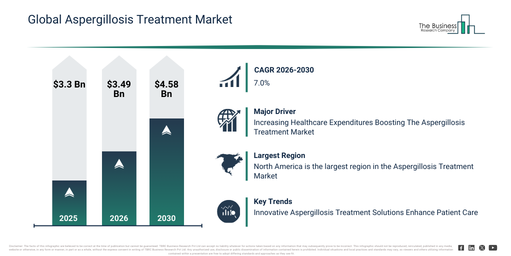
    The market for aspergillosis treatments has experienced robust expansion recently, with projections indicating continued growth from $3.3 billion in 2025 to $3.49 billion in 2026, representing a compound annual growth rate of 5.8%. This upward trajectory in the preceding years can be linked to a rise in individuals with suppressed immune systems, an increase in hospital-acquired fungal infections, the accessibility of existing antifungal medications, heightened clinical recognition of aspergillosis, and enhanced hospital treatment capacities.

    The market for aspergillosis treatments is projected to experience robust expansion in the coming years, reaching an estimated value of $4.58 billion by 2030, driven by a compound annual growth rate (CAGR) of 7.0%. This anticipated growth trajectory is bolstered by several key factors, including intensified research efforts focused on combating resistant fungal strains, a heightened demand for individualized treatment strategies, the continuous development of new antifungal medications, a broader implementation of early diagnostic methods, and increased healthcare spending allocated to infectious disease management. Throughout this forecast period, prominent trends are expected to shape the market landscape, such as the advancement of innovative antifungal treatments, a greater embrace of precise diagnostic tools for timely identification, an elevated emphasis on specialized treatment plans, the proliferation of combination antifungal therapies, and more sophisticated methods for evaluating treatment effectiveness.

    Download A Free Sample Report For Comprehensive Market Insights:

    https://www.thebusinessresearchcompany.com/sample.aspx?id=12987&type=smp

    Aspergillosis Treatment Market Growth Drivers: What Factors Are Accelerating Expansion?

    Increased investment in healthcare is anticipated to be a primary driver for the expansion of the aspergillosis treatment sector. Healthcare spending encompasses the entirety of expenses related to health services, reproductive health planning, nutritional initiatives, and urgent health-focused aid. Aupward trend in these expenditures naturally leads to the creation of advanced treatments and medical innovations for aspergillosis. For illustration, data from the UK’s Office for National Statistics in May 2023 indicated that the United Kingdom’s healthcare spending reached roughly $362.08 billion (£292 billion) in 2023, marking a nominal increase of 5.6%. Consequently, this escalation in healthcare spending is fueling the development and growth within the aspergillosis treatment market.

    Aspergillosis Treatment Market Categorization By Product Type And Application

    The aspergillosis treatment market covered in this report is segmented –

    1) By Type: Allergic Aspergillosis, Chronic Aspergillosis, Invasive Aspergillosis

    2) By Drug Class: Corticosteroids, Antifungal drugs, Other Drug Classes

    3) By Route of Administration: Oral, Injectable, Other Routes Of Administration

    4) By Distribution Channel: Hospital pharmacies, Retail pharmacies, Other Distribution Channels

    Subsegments:

    1) By Allergic Aspergillosis: Allergic Fungal Sinusitis, Allergic Bronchopulmonary Aspergillosis (ABPA)

    2) By Chronic Aspergillosis: Chronic Pulmonary Aspergillosis, Chronic Cavitary Aspergillosis

    3) By Invasive Aspergillosis: Pulmonary Invasive Aspergillosis, Disseminated Invasive Aspergillosis

    Aspergillosis Treatment Market Trends: What Is Shaping Future Industry Growth?

    Companies dominating the aspergillosis therapeutics sector are prioritizing the development of novel medications and interventions to solidify their market standing. Through the advancement of drug development, an expanded array of treatment choices for aspergillosis becomes available, exemplified by the posaconazole oral suspension, which offers patients more precise and potent therapeutic avenues. To illustrate, Hikma Pharmaceuticals PLC, a pharmaceutical enterprise headquartered in the United Kingdom, introduced its posaconazole oral suspension in the United States during April 2023, specifically for the management of aspergillosis. These pharmaceutical advancements are particularly beneficial for individuals susceptible to invasive Aspergillus and Candida infections due to severely weakened immune systems, including those undergoing hematopoietic stem cell transplantation (HSCT) who are also managing graft-versus-host disease (GVHD). Furthermore, the posaconazole oral suspension is advised for addressing oropharyngeal candidiasis (OPC), particularly cases that prove resistant to itraconazole and fluconazole.

    Aspergillosis Treatment Market Company Landscape And Strategic Competition

    Major companies operating in the aspergillosis treatment market are Basilea Pharmaceutica Ltd., Pfizer Inc., Johnson and Johnson, AbbVie Inc., Bayer AG, Novartis AG, Merck and Co. Inc., Sanofi S.A., Bristol Myers Squibb Company, AstraZeneca plc, GSK plc, Takeda Pharmaceutical Company, Eli Lilly and Company, Gilead Sciences Inc., Boehringer Ingelheim International GmbH, Teva Pharmaceutical Industries, Astellas Pharma Inc., Regeneron Pharmaceuticals, Mylan N.V. , Sun Pharmaceutical Industries, Jazz Pharmaceuticals, Dr. Reddy’s Laboratories, Cipla Ltd., Hikma Pharmaceuticals PLC

    Access The Complete Aspergillosis Treatment Market Report:

    https://www.thebusinessresearchcompany.com/report/aspergillosis-treatment-global-market-report

    Aspergillosis Treatment Market Geographic Analysis: Where Is Demand Growing The Fastest?

    North Americawas the largest region in the aspergillosis treatment market in 2025. The regions covered in the aspergillosis treatment market report are Asia-Pacific, South East Asia, Western Europe, Eastern Europe, North America, South America, Middle East, Africa.

    Get in touch with us:

    The Business Research Company: https://www.thebusinessresearchcompany.com/

    Americas: +1 310-496-7795

    Asia: +44 7882 955267 & +91 8897263534

    Europe: +44 7882 955267

    Email us at: marketing@tbrc.info

    Follow us on:

    LinkedIn: https://in.linkedin.com/company/the-business-research-company

    YouTube: https://www.youtube.com/channel/UC24_fI0rV8cR5DxlCpgmyFQ

    Global Market Model: https://www.thebusinessresearchcompany.com/global-market-model
  • Asperger Syndrome Market Growth Is Reshaping Competitive Advantage Across The Industry

    Asperger Syndrome Market Growth Is Reshaping Competitive Advantage Across The Industry

    Through market attractiveness analysis, total addressable market evaluation, company benchmarking matrices, interactive Excel dashboards, expanded supply chain intelligence, emerging startup coverage, and detailed product insights, The Business Research Company’s 2026 market reports provide more actionable and strategically valuable research.

    Asperger Syndrome Market Value Expansion And Long-Term Growth Outlook

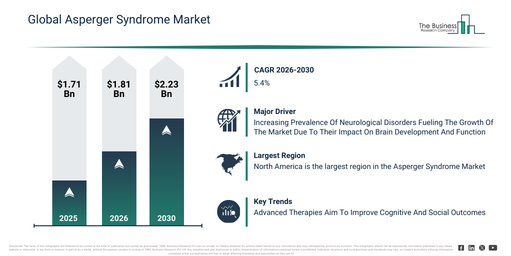
    The market for Asperger syndrome has experienced robust expansion recently, projecting a rise from its $1.71 billion valuation in 2025 to $1.81 billion by 2026, reflecting a compound annual growth rate of 5.7%. Factors contributing to this historical growth trajectory include heightened public awareness concerning autism spectrum disorders, the broadening of diagnostic criteria, increased uptake of behavioral therapies, the emergence of dedicated clinical support, and a surge in diagnosed cases among the pediatric population.

    The market for Asperger’s syndrome is poised for significant expansion, projected to reach $2.23 billion by 2030, exhibiting a compound annual growth rate of 5.4%. This anticipated growth stems from several key drivers, including escalating investments in digital mental health technologies, a heightened emphasis on support services for adults with autism, the broader adoption of telehealth for behavioral therapy, the increasing incorporation of artificial intelligence in diagnostic tools, and a growing need for individualized intervention strategies. Furthermore, prevailing trends expected to shape this market over the forecast period involve a greater uptake of early detection screening instruments, the expanded utilization of digital platforms for behavioral evaluations, the development of more tailored therapeutic programs, the enhanced integration of assistive technologies designed to improve social skills, and a more concentrated effort on managing the condition throughout an individual’s life.

    Download A Free Sample Report For Comprehensive Market Insights:

    https://www.thebusinessresearchcompany.com/sample.aspx?id=24471&type=smp

    Asperger Syndrome Market Growth Factors Supporting Long-Term Expansion

    The growth trajectory of the Asperger syndrome market is anticipated to be significantly influenced by the escalating incidence of neurological disorders. These conditions, which impact the brain, spinal cord, and nervous system, manifest in diverse symptoms encompassing deficits in cognition, movement, and sensation. A key factor contributing to the rise in neurological disorders is the aging demographic worldwide; with advancing age comes a natural decline in neuronal efficiency, diminished brain adaptability, and heightened oxidative stress, all of which facilitate the onset and advancement of these ailments. Neurological disorders play a role in Asperger syndrome by disrupting typical brain development and function, especially within the neural networks governing social engagement and communication. Such disruptions can alter behavioral tendencies, resulting in difficulties in interpreting social signals, exhibiting repetitive behaviors, and developing intense, narrow interests – hallmarks of the syndrome. A case in point, data from the National Health Service, a UK governmental body, indicated that as of June 30, 2024, a total of 487,432 individuals had received a diagnosis of dementia, a condition characterized by a gradual decline in memory, thought processes, and daily functioning, marking an upward trend of 3,155 diagnoses from May 31, 2024. Consequently, the expanding prevalence of neurological conditions is a primary catalyst for the expansion of the Asperger syndrome market.

    Asperger Syndrome Market Segment Analysis And Revenue Opportunities

    The asperger syndrome market covered in this report is segmented –

    1) By Type: Asperger Syndrome, Pervasive Developmental Disorder, Autistic Disorder, Disintegrative Disorder

    2) By Treatment: Drug Therapies, Antipsychotic Drugs, Selective Serotonin Reuptake Inhibitors (SSRIs), Stimulants, Sleep Medication

    3) By Diagnosis: Diagnostic And Statistical Manual Of Mental Disorders (DSM)-IV, Differential Diagnosis, Childhood Asperger Syndrome Test, Gilliam Asperger’s Disorder Scale (Gads), Krug Asperger’s Disorder Index (Kadi), Other Diagnosis

    4) By Age Group: Children, Adolescents, Adults

    5) By End-User: Hospitals, Clinics, Diagnostic Centres, Drug Stores, Pharmacies, Other End-Users

    Subsegments:

    1) By Asperger Syndrome: Mild Asperger Syndrome, Moderate Asperger Syndrome, Severe Asperger Syndrome

    2) By Pervasive Developmental Disorder: Pervasive Developmental Disorder-Not Otherwise Specified (PDD-NOS), Rett Syndrome, Childhood Disintegrative Disorder

    3) By Autistic Disorder: High-functioning Autism, Low-functioning Autism, Classic Autism

    4) By Disintegrative Disorder: Late-Onset Autism, Regressive Autism, Behavioral Disintegration Subtypes

    Asperger Syndrome Market Industry Trends Shaping Future Revenue Growth

    Within the Asperger syndrome market, prominent entities are actively pursuing the creation of sophisticated treatments, including gene therapies, with the aim of addressing the root genetic factors, improving cognitive and social functioning, and facilitating tailored treatment plans. Gene therapy constitutes a medical intervention that involves modifying an individual’s genes to address or avert illness. For example, Jaguar Gene Therapy, a biotechnology firm situated in the United States, secured approval from the U.S. Food and Drug Administration (FDA) in January 2024 for its investigational new drug (IND) application. This clearance permits the evaluation of JAG201, an innovative gene therapy targeted at a genetic manifestation of autism spectrum disorder (ASD) and Phelan-McDermid syndrome (PMS). The authorization signifies a crucial step towards initiating clinical studies to assess JAG201’s potential to rectify SHANK3 deficiency, a primary genetic contributor to these disorders, and highlights Jaguar’s dedication to advancing groundbreaking therapies for severe neurodevelopmental conditions that currently have limited treatment avenues.

    Asperger Syndrome Market Leading Players Shaping Industry Direction

    Major companies operating in the asperger syndrome market are Pfizer Inc., Johnson & Johnson, F Hoffmann-La Roche Ltd., Bristol-Myers Squibb Company, Novartis AG, Eli Lilly and Company, Otsuka Pharmaceutical Co Ltd, Neurocrine Biosciences Inc, Acadia Pharmaceuticals Inc, PsychoGenics Inc, Sage Therapeutics Inc, Curemark LLC, Jazz Pharmaceuticals, Axial Therapeutics Inc, Q BioMed Inc, STALICLA, Lundbeck A/S, Merck & Co Inc, AstraZeneca, Zynerba Pharmaceuticals Inc, Teva Pharmaceutical Industries Ltd, MapLight Therapeutics Inc.

    Access The Complete Asperger Syndrome Market Report:

    https://www.thebusinessresearchcompany.com/report/asperger-syndrome-global-market-report

    Asperger Syndrome Market Global Footprint: Which Region Holds Market Leadership?

    North Americawas the largest region in the asperger syndrome market in 2025. The regions covered in the asperger syndrome market report are Asia-Pacific, South East Asia, Western Europe, Eastern Europe, North America, South America, Middle East, Africa.

    Get in touch with us:

    The Business Research Company: https://www.thebusinessresearchcompany.com/

    Americas: +1 310-496-7795

    Asia: +44 7882 955267 & +91 8897263534

    Europe: +44 7882 955267

    Email us at: marketing@tbrc.info

    Follow us on:

    LinkedIn: https://in.linkedin.com/company/the-business-research-company

    YouTube: https://www.youtube.com/channel/UC24_fI0rV8cR5DxlCpgmyFQ

    Global Market Model: https://www.thebusinessresearchcompany.com/global-market-model
  • Aseptic Sampling Market Forecast Signals New Revenue Opportunities Through 2030

    Aseptic Sampling Market Forecast Signals New Revenue Opportunities Through 2030

    Delivering more actionable and strategically valuable research, The Business Research Company’s 2026 market reports feature market attractiveness analysis, total addressable market evaluation, company benchmarking matrices, interactive Excel dashboards, expanded supply chain intelligence, emerging startup coverage, and detailed product insights.

    Aseptic Sampling Market Expected To Reach $1.58 Billion By 2030 At 10% CAGR

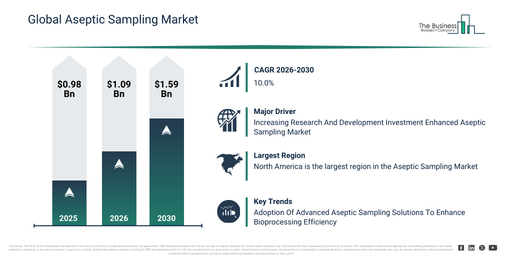
    The market for aseptic sampling solutions has experienced a significant surge in recent times. Projections indicate a climb from $0.98 billion in 2025 to $1.09 billion in 2026, demonstrating a compound annual growth rate of 11.3%. This upward trajectory over the historical period is largely attributable to the burgeoning biopharmaceutical manufacturing sector, a heightened emphasis on ensuring product quality, intensified regulatory oversight within the life sciences industry, the proliferation of sterile processing environments, and the continued reliance on manual aseptic methodologies.

    The aseptic sampling market is poised for significant expansion, projected to reach $1.59 billion by 2030, registering a compound annual growth rate (CAGR) of 10.0% throughout the forecast period. This upward trajectory is fueled by several key factors, including escalating investments in automated bioprocessing, a growing embrace of continuous manufacturing methodologies, heightened demand for sampling processes that eliminate contamination, the expansion of biologics production capabilities, and the increasing utilization of intelligent sampling systems. Furthermore, prominent developments shaping this market over the coming years encompass the wider adoption of automated aseptic sampling solutions, a surge in demand for sterile single-use sampling options, the growing incorporation of robotic sampling technology, advancements in in-line and on-line sampling approaches, and a more pronounced emphasis on mitigating contamination risks.

    Download A Free Sample Report For Comprehensive Market Insights:

    https://www.thebusinessresearchcompany.com/sample.aspx?id=15725&type=smp

    #Aseptic Sampling Market Demand Drivers Creating New Revenue Opportunities

    The expansion of the aseptic sampling market is anticipated to be fueled by escalating financial commitments to research and development initiatives. These R&D investments, representing capital dedicated to scientific inquiry and advancement, are designed to refine existing products, processes, and technologies. Factors contributing to this surge in R&D spending include heightened market competition, rapid technological evolution, adherence to stringent regulatory frameworks, and corporate strategies focused on innovation-led expansion. Consequently, enhanced investments in research and development contribute to the development of more precise, sterile, and compliant aseptic sampling methodologies, particularly within pharmaceutical production. As an illustration, the European Federation of Pharmaceutical Industries and Associations (EFPIA), headquartered in Belgium, noted a substantial rise in R&D expenditures, climbing from $60,365 million (€52,373 million) in 2023 to $63,415 million (€55,000 million) in 2024, underscoring the significant impact of increased R&D funding on the aseptic sampling market’s trajectory.

    Aseptic Sampling Market Segmentation And Category Breakdown

    The aseptic sampling market covered in this report is segmented –

    1) By Type: Manual Aseptic Sampling, Automated Aseptic Sampling

    2) By Technique: Off-Line Sampling Technique, On-Line Sampling Technique, In-Line Sampling Technique

    3) By Application: Downstream Processing, Upstream Processing

    4) By End-User: Biotechnology And Pharmaceutical Manufacturers, Research And Development Departments, Contract Research And Manufacturing Organizations, Other End Users

    Subsegments:

    1) By Manual Aseptic Sampling: Single-Use Manual Sampling, Reusable Manual Sampling

    2) By Automated Aseptic Sampling: Robotic Sampling Systems, Automated Sample Collection Systems

    Aseptic Sampling Market Trends Driving Strategic Industry Expansion

    The aseptic sampling market sees significant players concentrating on innovations like pre-established PUPSIT assemblies and fully contained sampling setups aimed at bolstering sterility, mitigating contamination hazards, and optimizing sample-taking procedures within biopharmaceutical production. A PUPSIT-integrated aseptic sampling solution incorporates pre-sterilized, disposable fluid conduits alongside inherent integrity verification, facilitating safe, automated sample retrieval without compromising the closed system’s integrity. This stands in contrast to older methods involving manual stainless-steel or static pathways, which carry elevated contamination risks and necessitate separate validation efforts. As an illustration, Avantor, a U.S. entity in the life sciences sector, introduced its Next-Generation Sterile Sampling Platform in October 2025, specifically tailored for biopharma applications. This platform encompasses the Exact Volume Sampling System (EVSS), Needle-Based Sampling System (NBSS), Needle-Free Sampling System (NFSS), and OmniTop assemblies, all designed to provide accurate micro-volume sampling, reduce product waste, and maintain completely closed, pre-sterilized pathways that simplify process oversight and uphold sterility throughout the manufacturing of advanced therapy medicinal products (ATMPs).

    Aseptic Sampling Market Competitive Analysis Of Major Industry Participants

    Major companies operating in the aseptic sampling market are Merck & Co. Inc., Saint-Gobain Performance Plastics, Thermo Fisher Scientific Inc., 3M Company, Danaher Corporation, Parker-Hannifin Corporation, Corning Incorporated, Avantor Inc., Lonza Group AG, GEA Group AG, W. L. Gore & Associates Inc., Sartorius AG, Charles River Laboratories International Inc., QualiTest Group, Eppendorf AG, Repligen Corporation, Gemü Group, Watson-Marlow Fluid Technology Group, Cole-Parmer Instrument Company LLC, LabVantage Solutions Inc., Advanced Microdevices Pvt. Ltd., TRACE Analytics GmbH, QualiTru Sampling Systems, KEOFITT A/S, Bbi-biotech GmbH

    Access The Complete Aseptic Sampling Market Report:

    https://www.thebusinessresearchcompany.com/report/aseptic-sampling-global-market-report

    Aseptic Sampling Market Regional Distribution: Which Areas Drive Market Expansion?

    North Americawas the largest region in the aseptic sampling market in 2025. Asia-Pacificis expected to be the fastest-growing region in the forecast period. The regions covered in the aseptic sampling market report are Asia-Pacific, South East Asia, Western Europe, Eastern Europe, North America, South America, Middle East, Africa.

    Get in touch with us:

    The Business Research Company: https://www.thebusinessresearchcompany.com/

    Americas: +1 310-496-7795

    Asia: +44 7882 955267 & +91 8897263534

    Europe: +44 7882 955267

    Email us at: marketing@tbrc.info

    Follow us on:

    LinkedIn: https://in.linkedin.com/company/the-business-research-company

    YouTube: https://www.youtube.com/channel/UC24_fI0rV8cR5DxlCpgmyFQ

    Global Market Model: https://www.thebusinessresearchcompany.com/global-market-model
  • Artificial Saliva Market Growth Is Accelerating As Industry Transformation Continues

    Artificial Saliva Market Growth Is Accelerating As Industry Transformation Continues

    Enhanced with market attractiveness analysis, total addressable market evaluation, company benchmarking matrices, interactive Excel dashboards, expanded supply chain intelligence, emerging startup coverage, and detailed product insights, The Business Research Company’s 2026 market reports deliver more actionable and strategically valuable research.

    #Artificial Saliva Market Size And Revenue Forecast Through 2030

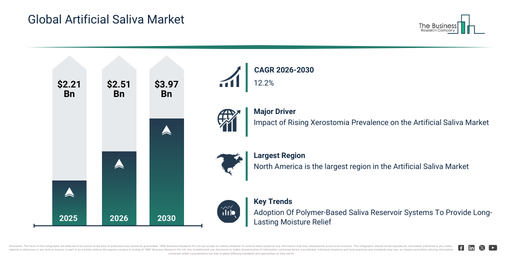
    The artificial saliva sector experienced substantial expansion lately, projecting an increase from $2.21 billion in 2025 to $2.51 billion in 2026, driven by a compound annual growth rate (CAGR) of 13.6%. This historical growth trajectory is fueled by a surge in dry mouth afflictions, a broader prescription of medications inducing xerostomia, the increased application of radiation therapies for cancer treatment, heightened public consciousness regarding oral hygiene practices, and the accessibility of readily available saliva replacement products.

    The artificial saliva market is poised for substantial expansion in the forthcoming years, projected to reach $3.97 billion by 2030, exhibiting a compound annual growth rate (CAGR) of 12.2%. This anticipated surge is largely fueled by escalating demand from the aging demographic, a heightened emphasis on treatments aimed at enhancing life quality, the introduction of formulations tailored for pediatric use, advancements in biomimetic saliva product development, and broadened availability via both healthcare and retail avenues. Key developments shaping the market include a greater need for xerostomia management solutions, the ongoing creation of alcohol-free oral products, increased attention to dosage forms that are convenient for patients, the proliferation of ready-to-use artificial saliva options, and a stronger focus on maintaining oral comfort and adequate hydration.

    Download A Free Sample Report For Comprehensive Market Insights:

    https://www.thebusinessresearchcompany.com/sample.aspx?id=16592&type=smp

    Artificial Saliva Market Expansion Supported By Key Demand Factors

    Increased incidence of dry mouth, medically termed xerostomia, is a key factor anticipated to boost the expansion of the artificial saliva market. This condition, marked by a persistent sensation of oral dryness, is becoming more common, influenced by demographic shifts towards an older populace and the extensive consumption of pharmaceuticals and readily available remedies known to induce xerostomia. Artificial saliva serves to hydrate oral tissues, thereby alleviating the uncomfortable dryness and stickiness characteristic of xerostomia. Illustratively, data from 2025, as cited by PubMed and the US National Institutes of Health, indicated a collective xerostomia prevalence of 38%, with a confidence interval of 22-57%. Consequently, the escalating frequency of dry mouth is directly fueling the artificial saliva market’s growth.

    Artificial Saliva Market Segment Outlook: Which Categories Are Expanding The Fastest?

    The artificial saliva market covered in this report is segmented –

    1) By Product: Oral Spray, Oral Solution, Oral Liquid, Dissolving Tablets, Gel, Powder

    2) By Distribution Channel: Supermarkets, Hypermarkets, Other Distribution Channels

    3) By End-User: Adult, Pediatric

    Subsegments:

    1) By Oral Spray: Non-Alcoholic Oral Spray, Alcohol-Based Oral Spray

    2) By Oral Solution: Ready-To-Use Oral Solution, Concentrated Oral Solution

    3) By Oral Liquid: Viscous Oral Liquid, Non-Viscous Oral Liquid

    4) By Dissolving Tablets: Fast-Dissolving Tablets, Slow-Dissolving Tablets

    5) By Gel: High-Viscosity Gel, Low-Viscosity Gel

    6) By Powder: Ready-To-Use Powder, Powder Requiring Mixing

    Artificial Saliva Market Growth Trends Influencing Competitive Dynamics

    Leading players in the artificial saliva market are actively engaged in creating novel approaches, exemplified by poly(hydroxyethyl methacrylate) (pHEMA)–based hydrogels designed for intraoral application, which offer prolonged hydration for those experiencing xerostomia. This pHEMA hydrogel functions as a tissue-friendly polymer network capable of absorbing artificial saliva, undergoing substantial expansion, and releasing moisture over an extended period, contrasting with conventional artificial saliva sprays that offer transient lubrication necessitating frequent reapplication. A notable development occurred in August 2025 when a research group from the United States, under the guidance of Debnath, Malandraki, and Boudouris, engineered a pHEMA artificial-saliva reservoir hydrogel specifically intended for internal oral placement. This hydrogel exhibits the capacity to swell up to fourfold its initial dry size, effectively holds saliva substitute fluids, dispenses moisture gradually over several hours, and sustains its functional effectiveness through repeated swelling and release cycles. Furthermore, its excellent biocompatibility and superior lubrication consistency position it as a compelling advanced option for addressing persistent dry mouth conditions.

    Artificial Saliva Market Key Companies And Competitive Benchmarking

    Major companies operating in the artificial saliva market are Pfizer Inc., Viatris Inc., Bausch Health Companies Inc., Perrigo Company plc, Cipla Ltd., Aurobindo Pharma Ltd., Hikma Pharmaceuticals plc, Recordati S.p.A., Mission Pharmacal Company, DENTAID S.L., Forward Science Holdings LLC, Saliwell Ltd., Sun Pharmaceutical Industries Ltd., GlaxoSmithKline plc, Johnson & Johnson, Colgate-Palmolive Company, Church & Dwight Co. Inc., Prestige Consumer Healthcare Inc., Thornton & Ross Ltd., Roquette Frères

    Access The Complete Artificial Saliva Market Report:

    https://www.thebusinessresearchcompany.com/report/artificial-saliva-global-market-report

    Artificial Saliva Market Leading Geography: Which Region Generates The Most Revenue?

    North Americawas the largest region in the artificial saliva market in 2025. Asia-Pacificis expected to be the fastest-growing region in the forecast period. The regions covered in the artificial saliva market report are Asia-Pacific, South East Asia, Western Europe, Eastern Europe, North America, South America, Middle East, Africa.

    Get in touch with us:

    The Business Research Company: https://www.thebusinessresearchcompany.com/

    Americas: +1 310-496-7795

    Asia: +44 7882 955267 & +91 8897263534

    Europe: +44 7882 955267

    Email us at: marketing@tbrc.info

    Follow us on:

    LinkedIn: https://in.linkedin.com/company/the-business-research-company

    YouTube: https://www.youtube.com/channel/UC24_fI0rV8cR5DxlCpgmyFQ

    Global Market Model: https://www.thebusinessresearchcompany.com/global-market-model
  • Artificial Pancreas Device System Market Outlook Highlights The Next Major Growth Opportunities

    Artificial Pancreas Device System Market Outlook Highlights The Next Major Growth Opportunities

    Through market attractiveness analysis, total addressable market evaluation, company benchmarking matrices, interactive Excel dashboards, expanded supply chain intelligence, emerging startup coverage, and detailed product insights, The Business Research Company’s 2026 market reports provide more actionable and strategically valuable research.

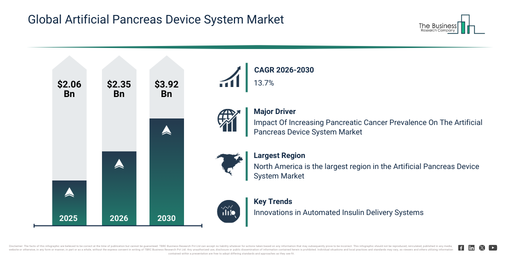
    Artificial Pancreas Device System Market Growth From $2.34 Billion In 2026 To $3.92 Billion By 2030 At A CAGR Of 13.7%

    The market for artificial pancreas device systems has experienced significant expansion recently, with projections indicating continued robust growth. This sector is expected to expand from $2.06 billion in 2025 to $2.35 billion by 2026, reflecting a compound annual growth rate of 13.9%. Factors contributing to this upward trend during the past period include the rising incidence of diabetes, the early integration of insulin pump innovations, broader utilization of continuous glucose monitoring, enhanced precision in medical sensors, and increasing awareness surrounding automated diabetes care solutions.

    In the upcoming years, a significant expansion is anticipated for the artificial pancreas device system market, projecting a valuation of $3.92 billion by 2030, driven by a compound annual growth rate of 13.7%. This upward trajectory is largely fueled by a burgeoning need for fully automated glucose regulation, augmented investments in sophisticated digital diabetes care solutions, the expanding capabilities of remote patient monitoring technologies, a heightened emphasis on tailored insulin therapy approaches, and escalating regulatory endorsement for cutting-edge diabetes management devices. Key developments anticipated during this forecast period encompass a greater uptake of closed-loop glucose control systems, a more seamless integration between continuous glucose monitoring (CGM) devices and insulin pumps, an increased utilization of predictive algorithms to inform insulin delivery, the proliferation of wearable devices for diabetes management, and a more pronounced dedication to patient-focused automation in treatment strategies.

    Download A Free Sample Report For Comprehensive Market Insights:

    https://www.thebusinessresearchcompany.com/sample.aspx?id=18229&type=smp

    #Artificial Pancreas Device System Market Growth Drivers And Industry Catalysts

    The rising incidence of pancreatic cancer is anticipated to be a significant catalyst for the expansion of the artificial pancreas device system market. Pancreatic cancer, a serious malignancy originating in the pancreas — an organ situated behind the stomach — is understood to be influenced by a confluence of factors including lifestyle choices, genetic predispositions, existing medical conditions, and environmental exposures. Furthermore, specific genetic mutations can lead to hereditary pancreatitis, a condition characterized by chronic pancreatic inflammation. An artificial pancreas device system (APDS) serves a crucial role for individuals with diabetes, facilitating the automatic monitoring of glucose levels and the precise delivery of insulin to maintain optimal blood sugar control. Illustratively, Cancer Australia reported in March 2024 an estimation of 4,506 new pancreatic cancer diagnoses in 2023, marking a rise compared to the 3,751 cases observed over the preceding five years. Consequently, this escalating rate of pancreatic cancer is directly contributing to the growth trajectory of the artificial pancreas device system market.

    Artificial Pancreas Device System Market Segment Landscape: Which Areas Lead Market Development?

    The artificial pancreas device system market covered in this report is segmented –

    1) By Device Type: Threshold Suspend Device Systems, Control-To-Range Systems, Control-To-Target Systems

    2) By Treatment Type: Bi-Hormonal, Insulin Only, Hybrid

    3) By End-User: Hospitals, Medical Centers, Other End-Users

    Subsegments:

    1) By Threshold Suspend Device Systems: Insulin Pump with Threshold Suspend, Continuous Glucose Monitoring (CGM) Integrated Systems

    2) By Control-To-Range Systems: Hybrid Closed-Loop Systems, Insulin Delivery Systems with Range Control, Real-Time Glucose Adjustment Systems

    3) By Control-To-Target Systems: Fully Closed-Loop Artificial Pancreas Systems, Insulin Pumps with Targeted Glucose Control, Automated Glucose Regulation Systems

    #Artificial Pancreas Device System Market Trends Influencing Long-Term Demand

    Within the competitive landscape of the artificial pancreas device system market, leading corporations are actively creating automated insulin delivery solutions, the primary goal of which is to improve diabetes care through the automatic tracking of blood glucose and the subsequent dispensing of precise insulin dosages. These advanced systems are engineered to mimic the physiological operations of a healthy pancreas, thereby alleviating the continuous pressure of glucose level surveillance and manual insulin injections for those managing diabetes. A significant development occurred in May 2023 when Beta Bionics, a manufacturer based in the United States, secured FDA 510(k) authorization for its iLet Insulin-Only Bionic Pancreas System, a prime example of an automated insulin delivery apparatus. This sophisticated artificial pancreas is constructed to self-regulate and administer insulin in quantities necessary for maintaining optimal blood glucose concentration. Operating as a closed-loop mechanism, it dynamically modifies insulin administration based on real-time glucose readings obtained from an integrated continuous glucose monitor (CGM), with the system requiring only user input regarding body weight and an approximation of meal carbohydrate content to autonomously fine-tune insulin delivery.

    Artificial Pancreas Device System Market Industry Leaders And Market Competition

    Major companies operating in the artificial pancreas device system market are Medtronic plc, Abbott Laboratories, DexCom Inc., Insulet Corporation, Tandem Diabetes Care Inc., Roche Diabetes Care, Ypsomed, SOOIL Development, Beta Bionics Inc., Bigfoot Biomedical Inc., Diabeloop SA, Inreda Diabetic B.V., Defymed SAS, DreaMed Diabetes Ltd., Medtrum Technologies Inc., EOFlow Co. Ltd., Cellnovo, Pancreum Inc., Admetsys Corporation, GlucoModicum, MicroTech Medical

    Access The Complete Artificial Pancreas Device System Market Report:

    https://www.thebusinessresearchcompany.com/report/artificial-pancreas-device-system-global-market-report

    Artificial Pancreas Device System Market Regional Outlook: Where Are The Largest Opportunities Located?

    North Americawas the largest region in the artificial pancreas device system market in 2025. Asia-Pacificis expected to be the fastest-growing region in the forecast period. The regions covered in the artificial pancreas device system market report are Asia-Pacific, South East Asia, Western Europe, Eastern Europe, North America, South America, Middle East, Africa.

    Get in touch with us:

    The Business Research Company: https://www.thebusinessresearchcompany.com/

    Americas: +1 310-496-7795

    Asia: +44 7882 955267 & +91 8897263534

    Europe: +44 7882 955267

    Email us at: marketing@tbrc.info

    Follow us on:

    LinkedIn: https://in.linkedin.com/company/the-business-research-company

    YouTube: https://www.youtube.com/channel/UC24_fI0rV8cR5DxlCpgmyFQ

    Global Market Model: https://www.thebusinessresearchcompany.com/global-market-model
  • Artificial Neural Network Market Trends And Growth Drivers Point To Strong Future Potential

    Artificial Neural Network Market Trends And Growth Drivers Point To Strong Future Potential

    Delivering more actionable and strategically valuable research, The Business Research Company’s 2026 market reports feature market attractiveness analysis, total addressable market evaluation, company benchmarking matrices, interactive Excel dashboards, expanded supply chain intelligence, emerging startup coverage, and detailed product insights.

    Artificial Neural Network Market Expansion Outlook: What Revenue Opportunities Lie Ahead?

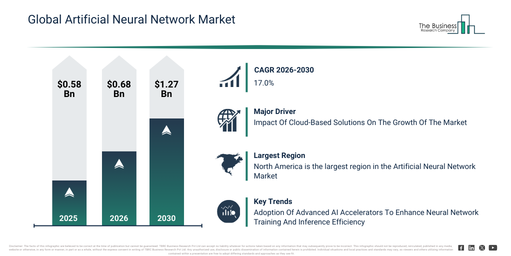
    The field of artificial neural networks has experienced significant expansion lately, with projections indicating continued robust growth. Anticipated to climb from a valuation of $0.58 billion in 2025 to $0.68 billion in 2026, this sector is set to demonstrate a compound annual growth rate of 17.4%. Key factors fueling this expansion during the preceding period include the escalating accessibility of extensive datasets, advancements in computational power, the proliferation of open-source neural network platforms, the initial embrace of machine learning by businesses, and a heightened need for technologies capable of identifying patterns.

    The artificial neural network market is poised for substantial expansion, projecting a surge to $1.27 billion by 2030, fueled by a compound annual growth rate of 17.0%. This upward trajectory in the projected period is largely driven by a growing need for instantaneous AI functionalities, augmented investments in AI accessible via cloud infrastructure, a broader implementation of AI at the “edge” of networks, increased integration of neural networks into automated processes, and their more frequent incorporation within business operational frameworks. Key developments anticipated during this forecast timeframe encompass a greater embrace of deep learning frameworks, heightened utilization of neural networks for visual and signal analysis, a more widespread deployment of cloud-based artificial neural network systems, the proliferation of ANN applications across diverse sectors, and a heightened emphasis on refining model efficiency and ensuring their scalability.

    Download A Free Sample Report For Comprehensive Market Insights:

    https://www.thebusinessresearchcompany.com/sample.aspx?id=20716&type=smp

    Artificial Neural Network Market Opportunity Drivers: What Is Creating New Revenue Potential?

    The burgeoning need for cloud-based services is poised to significantly boost the artificial neural network market in the coming years. Cloud-based solutions, defined as applications or services functioning on distant servers accessible through the internet as opposed to local installations, are seeing greater adoption due to their inherent advantages. These benefits include the capacity to scale resources as needed, cost-effectiveness, improved access to data from any location, and facilitation of teamwork across distances, all of which align with the contemporary demands of businesses. Artificial neural networks are instrumental in augmenting these cloud solutions by providing sophisticated data analysis, forward-looking predictive capabilities, and intelligent decision-making functions, thereby optimizing both operational efficiency and scalability. A relevant statistic from December 2023, as reported by Eurostat, indicates that a substantial 45.2% of businesses within the European Union had procured cloud computing services in the year 2023, underscoring the growing reliance on cloud infrastructure and, consequently, fueling the expansion of the artificial neural network market.

    Artificial Neural Network Market Segments: Where Are The Largest Growth Opportunities?

    The artificial neural network market covered in this report is segmented –

    1) By Component: Solutions, Platform Or Application Programming Interface (API), Services

    2) By Deployment Mode: On-Premises, Cloud

    3) By Enterprise: Large Enterprises, Small And Medium Enterprises

    4) By Application: Image Recognition, Signal Recognition, Data Mining

    5) By End-User: Banking, Financial Services, and Insurance (BFSI), Retail And E-Commerce, IT And Telecom, Manufacturing, Healthcare, Automotive

    Subsegments:

    1) By Solutions: Software Solutions, Hardware Solutions, Deployment Solutions, Data Management Solutions

    2) By Platform Or Application Programming Interface (API): Cloud-Based Platforms, On-Premise Platforms, Open-Source APIs, Proprietary APIs

    3) By Services: Consulting Services, Integration And Deployment Services, Support And Maintenance Services, Managed Services

    Artificial Neural Network Market Innovation Trends Driving Future Development

    Leading entities within the artificial neural network sector are actively engaged in pioneering advancements, particularly in creating cutting-edge AI training and inference GPUs that cater to the escalating needs of generative AI, extensive language models, and demanding deep learning tasks. These specialized AI GPUs leverage extensive parallel processing, embrace mixed-precision calculations, and utilize advanced memory technologies to perform neural network computations with a considerably higher degree of efficiency compared to standard CPUs. A prime example of this innovation occurred in November 2023 when NVIDIA Corporation, a prominent American enterprise focused on semiconductors and AI computing, unveiled its NVIDIA H200 Tensor Core GPU, engineered specifically for the next phase of AI training and inference. This new release boasts 141 GB of HBM3e memory, offering a substantial boost in bandwidth crucial for handling expansive neural network models, and incorporates the Transformer Engine to expedite transformer-based architectures. Consequently, the H200 facilitates enhanced throughput, diminished inference delays, and greater energy efficiency for large-scale AI deployments, empowering data centers to train and implement sophisticated AI models with unmatched performance capabilities.

    Artificial Neural Network Market Major Participants And Competitive Dynamics

    Major companies operating in the artificial neural network market are Medtronic plc, Abbott Laboratories, DexCom Inc., Insulet Corporation, Tandem Diabetes Care Inc., Roche Diabetes Care, Ypsomed, SOOIL Development, Beta Bionics Inc., Bigfoot Biomedical Inc., Diabeloop SA, Inreda Diabetic B.V., Defymed SAS, DreaMed Diabetes Ltd., Medtrum Technologies Inc., EOFlow Co. Ltd., Cellnovo, Pancreum Inc., Admetsys Corporation, GlucoModicum, MicroTech Medical

    Access The Complete Artificial Neural Network Market Report:

    https://www.thebusinessresearchcompany.com/report/artificial-neural-network-global-market-report

    Artificial Neural Network Market Geographic Landscape: Which Region Dominates Industry Growth?

    North Americawas the largest region in the artificial neural network market in 2025. Asia-Pacificis expected to be the fastest-growing region in the forecast period. The regions covered in the artificial neural network market report are Asia-Pacific, South East Asia, Western Europe, Eastern Europe, North America, South America, Middle East, Africa.

    Get in touch with us:

    The Business Research Company: https://www.thebusinessresearchcompany.com/

    Americas: +1 310-496-7795

    Asia: +44 7882 955267 & +91 8897263534

    Europe: +44 7882 955267

    Email us at: marketing@tbrc.info

    Follow us on:

    LinkedIn: https://in.linkedin.com/company/the-business-research-company

    YouTube: https://www.youtube.com/channel/UC24_fI0rV8cR5DxlCpgmyFQ

    Global Market Model: https://www.thebusinessresearchcompany.com/global-market-model