
Blog

  • Microplate Systems Market Expected To Reach $2.35 Billion By 2030 As Growth Accelerates At 10.6% CAGR

    Microplate Systems Market Expected To Reach $2.35 Billion By 2030 As Growth Accelerates At 10.6% CAGR

    Delivering more actionable and strategically valuable research, The Business Research Company’s 2026 market reports feature market attractiveness analysis, total addressable market evaluation, company benchmarking matrices, interactive Excel dashboards, expanded supply chain intelligence, emerging startup coverage, and detailed product insights.

    The microplate systems market has been experiencing strong growth in recent years, driven by advancements in research and technology across pharmaceutical and biotechnology sectors. As scientific exploration and personalized medicine continue to evolve, this market is set to expand further, offering significant opportunities for innovation and development. Let’s explore the current market size, key growth factors, major players, and emerging trends shaping this dynamic industry.

    Current Size and Expected Growth Trajectory of the Microplate Systems Market

    The market for microplate systems has seen rapid expansion, growing from $1.42 billion in 2025 to an anticipated $1.57 billion in 2026, reflecting a compound annual growth rate (CAGR) of 10.9%. This historical growth is primarily fueled by increased investments in pharmaceutical research and development, a surge in biotechnology activities, and the widespread use of microplates in drug screening processes. Additional factors include the rising prevalence of chronic diseases and the expansion of academic life science research. Looking ahead, the market is projected to reach $2.36 billion by 2030, maintaining a CAGR of 10.6%. This future expansion is expected to be driven by innovations in assay technologies, a growing demand for personalized medicine, the rise of contract research organizations, broader adoption of laboratory automation, and the growth of genomics and proteomics research. Key trends during this forecast period include the expansion of high-throughput screening in drug discovery, the increasing use of multi-mode microplate readers, greater demand for automation in laboratory workflows, the adoption of microplate systems in clinical diagnostics, and advancements in miniaturized and higher density microplate formats.

    Download A Free Sample Report For Comprehensive Market Insights:

    https://www.thebusinessresearchcompany.com/sample.aspx?id=19591&type=smp

    Research and Development Activities as a Catalyst for Market Growth

    One of the primary forces propelling the microplate systems market is the surge in research and development (R&D) activities. These efforts, undertaken by corporations, research institutes, and governments, aim to innovate and develop new products and processes through systematic scientific exploration. The boost in R&D stems from growing consumer needs, stricter regulatory demands, and increased government funding and support.

    Microplate systems play a crucial role in accelerating R&D by enabling high-throughput screening, which allows testing thousands of compounds simultaneously. This not only reduces time and costs in drug discovery but also improves reproducibility through automated liquid handling and data analysis. For instance, in January 2024, IQVIA, a leading US healthcare intelligence company, reported a 14% rise in global medicine usage over the past five years, with projections for another 12% increase by 2028, reaching 3.8 trillion defined daily doses annually. This surge in pharmaceutical consumption underlines the importance of R&D activities and boosts demand within the microplate systems market.

    Breakdown of the Microplate Systems Market by Segment and Application

    The microplate systems market is divided into several key segments based on product type, application, and end-user.

    By product type, the market includes Multi-Mode Microplate Readers, Single-Mode Microplate Readers, Microplate Washers, Microplate Handlers, and other types such as Microplate Sealing Systems, Shakers, Incubators, and Staining Systems.

    Applications cover Drug Discovery, Clinical Diagnostics, Genomics and Proteomics Research, and other uses.

    End-users encompass Pharmaceutical and Biotechnology companies, Hospitals and Diagnostic Laboratories, Academic and Research Institutes, Contract Research Organizations (CROs), and other sectors.

    Further subcategories specify detailed product variants such as Absorbance, Fluorescence, Luminescence readers under Multi-Mode and Single-Mode types; automated and manual washers; robotic plate handlers and transport systems, among others.

    Access The Complete Microplate Systems Market Report:

    https://www.thebusinessresearchcompany.com/report/microplate-systems-global-market-report

    Innovative Technologies and Product Launches Driving Market Transformation

    The microplate systems market is witnessing significant innovation aimed at improving research outcomes, particularly in cell cultivation and drug screening. For example, in June 2025, Mitsui Chemicals from Japan introduced InnoCell, a new series of highly oxygen-permeable cell culture microplates designed to enhance cell viability in 3D cultures like spheroids and organoids. These microplates use proprietary materials, including TPX, which provide oxygen levels approximately 200 times higher than conventional plastics, supporting healthier and longer-lasting cell cultures with less cell death.

    The InnoCell product range includes N-type plates for non-adherent cells and organoids and collagen-coated C-type plates for hepatocytes and other drug screening cells. These plates address key oxygenation challenges, enabling more precise in vitro assays essential for drug discovery, personalized medicine, and regenerative therapies. Their low drug adsorption and excellent imaging capabilities also make them ideal for high-content screening and phenotypic assays. Notably, their ability to promote organoid growth from pancreatic cancer cells highlights their potential in personalized treatment development and advanced cell culture research.

    Leading Companies Influencing the Microplate Systems Market

    Several key players dominate the microplate systems market, including Thermo Fisher Scientific Inc., Danaher Corporation, Corning Incorporated, Agilent Technologies Inc., PerkinElmer, Bio-Rad Laboratories Inc., Eppendorf SE, Tecan Group Ltd., Hamilton Company, Greiner Bio-One International GmbH, Berthold Technologies GmbH & Co. KG, BMG Labtech, Biochrom Ltd., Accuris Instruments, Hudson Robotics Inc., Kbiosystems Ltd., Hidex Oy, Dynex Technologies Inc., Awareness Technology, Rayto Life and Analytical Sciences, Autobio Diagnostics, and Kaiao Technology Development Ltd. These companies are at the forefront of developing innovative products and expanding market reach globally.

    Regional Outlook and Market Leadership

    In 2025, North America held the largest share of the microplate systems market, supported by strong pharmaceutical and biotechnology industries and substantial R&D investments. However, the Asia-Pacific region is expected to emerge as the fastest-growing market during the forecast period. This growth is driven by increasing research activities, expanding healthcare infrastructure, and rising demand for advanced laboratory technologies. The market report covers regions including Asia-Pacific, South East Asia, Western Europe, Eastern Europe, North America, South America, the Middle East, and Africa, providing a comprehensive view of global market trends and opportunities.

    Get in touch with us:

    The Business Research Company: https://www.thebusinessresearchcompany.com/

    Americas: +1 310-496-7795

    Asia: +44 7882 955267 & +91 8897263534

    Europe: +44 7882 955267

    Email us at: marketing@tbrc.info

    Follow us on:

    LinkedIn: https://in.linkedin.com/company/the-business-research-company

    YouTube: https://www.youtube.com/channel/UC24_fI0rV8cR5DxlCpgmyFQ

    Global Market Model: https://www.thebusinessresearchcompany.com/global-market-model
  • Mechanical Thrombectomy Devices Market Growth Is Accelerating As Industry Transformation Continues

    Mechanical Thrombectomy Devices Market Growth Is Accelerating As Industry Transformation Continues

    Enhanced with market attractiveness analysis, total addressable market evaluation, company benchmarking matrices, interactive Excel dashboards, expanded supply chain intelligence, emerging startup coverage, and detailed product insights, The Business Research Company’s 2026 market reports deliver more actionable and strategically valuable research.

    The market for mechanical thrombectomy devices has witnessed significant expansion recently, driven by advancements in technology and increasing medical needs. As stroke and cardiovascular diseases continue to pose major health challenges worldwide, this sector is poised for substantial growth. Let’s explore the current market size, growth drivers, major players, and emerging trends shaping the future of mechanical thrombectomy devices.

    Mechanical Thrombectomy Devices Market Size and Growth Outlook

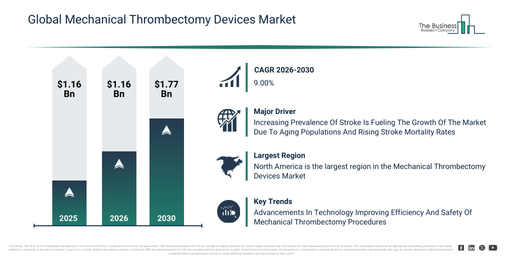
    The mechanical thrombectomy devices market has experienced robust growth, valued at $1.52 billion in 2025 and expected to rise to $1.67 billion in 2026, reflecting a strong compound annual growth rate (CAGR) of 9.9%. This growth over recent years is largely due to the limited availability of these devices in the past, reliance on manual stroke treatments, heightened awareness of stroke and cardiovascular risks, enhancements in hospital infrastructure for interventional procedures, and the increasing adoption of catheter-based interventions. Looking ahead, the market is projected to reach $2.36 billion by 2030, growing at a CAGR of 9.0%. Future expansion is anticipated to be fueled by innovations such as automated and electromechanical thrombectomy devices, a rising number of ischemic stroke and coronary thrombosis cases, AI-assisted navigation in devices, and the growth of ambulatory surgical and specialized invasive care centers. Key trends include a surge in minimally invasive procedures, wider use of combined thrombectomy devices, growth in electromechanical and hybrid device categories, more ischemic stroke treatment procedures, and a heightened emphasis on device safety and regulatory standards.

    Download A Free Sample Report For Comprehensive Market Insights:

    https://www.thebusinessresearchcompany.com/sample.aspx?id=27335&type=smp

    Stroke Prevalence as a Primary Growth Driver for Mechanical Thrombectomy Devices

    One of the most significant factors propelling the expansion of the mechanical thrombectomy devices market is the increasing incidence of stroke. A stroke occurs when blood flow to parts of the brain is disrupted, leading to brain cell death due to oxygen deprivation. The rise in stroke cases relates closely to aging populations worldwide, as advancing age is a key risk factor caused by natural vascular and health changes. These devices play a critical role in stroke management by quickly extracting blood clots from brain arteries, restoring circulation, reducing brain damage, and improving recovery outcomes for patients.

    The Impact of Rising Stroke Deaths on Market Demand

    Supporting this growth, data from October 2023 by the World Economic Forum, a Switzerland-based non-profit, predicts a 50% increase in stroke-related deaths by 2050. This alarming forecast underscores the urgent need for effective stroke treatment solutions and directly contributes to rising demand for mechanical thrombectomy devices globally.

    Access The Complete Mechanical Thrombectomy Devices Market Report:

    https://www.thebusinessresearchcompany.com/report/mechanical-thrombectomy-devices-global-market-report

    Segment Breakdown and Strategic Market Opportunities in Mechanical Thrombectomy Devices

    The market report segments mechanical thrombectomy devices into distinct categories:

    1) Product Type: Stent Retrievers, Catheter-Based Thrombectomy Devices, Mechanical Aspiration Devices, Combined Devices

    2) Technology: Manual, Automated, Electromechanical, and Hybrid Mechanical Thrombectomy Devices

    3) Application: Ischemic Stroke, Peripheral Artery Disease (PAD), Coronary Thrombosis, Post-Surgical Thrombosis

    4) Distribution Channel: Direct Sales, Distributors and Wholesalers, Online Sales, Retail Pharmacies

    5) End User: Hospitals, Ambulatory Surgical Centers, Specialized Invasive Care Centers, Research and Academic Institutions

    Further subcategories include closed-cell, open-cell, and hybrid stent retrievers; aspiration, guide, and micro catheters; manual and powered aspiration devices; and combined devices integrating aspiration with stent retrievers or other mechanical devices.

    Innovations and Competitive Dynamics Driving Mechanical Thrombectomy Market Growth

    Leading players in the mechanical thrombectomy devices market are increasingly focusing on cutting-edge technologies to improve clot removal efficiency and patient safety. One notable innovation is the development of dual clot detection algorithms, which utilize both pressure and flow data to precisely distinguish blood clots during procedures. For example, in January 2023, US-based Penumbra Inc. launched the Lightning Flash system, an advanced mechanical thrombectomy device that combines powerful aspiration with a sophisticated catheter design. This product efficiently removes large clots, including venous thrombi and pulmonary emboli, enabling faster procedures with reduced complications and better patient outcomes.

    Key Companies Shaping the Mechanical Thrombectomy Devices Market

    The competitive landscape in this space features prominent companies such as Stryker Corporation, Medtronic plc, Penumbra Inc., Terumo Corporation, Boston Scientific Corporation, Johnson & Johnson, Edwards Lifesciences Corporation, AngioDynamics Inc., Acandis GmbH & Co. KG, Rapid Medical, Vesalio, Control Medical Technology LLC, Perflow Medical, Sino Medical Sciences Technology Inc., Natec Medical Ltd., Straub Medical AG, Vascular Medcure Inc., Imperative Care Inc., NeuroVasc Technologies Inc., Inquis Medical Inc., Balt Extrusion S.A.S., Anaconda Biomed SL, SILK Road Medical Inc., Argon Medical Devices Inc., and Minnetronix Inc. These companies continue to innovate and compete aggressively to capture market share and advance thrombectomy technology.

    Geographical Market Leadership and Regional Growth Patterns

    In 2025, North America was the leading region in terms of revenue and market share for mechanical thrombectomy devices. However, the Asia-Pacific region is expected to demonstrate the fastest growth during the forecast period due to increasing healthcare infrastructure investments and rising awareness of stroke treatment options. Other key regions covered in the market analysis include South East Asia, Western Europe, Eastern Europe, South America, the Middle East, and Africa, providing a comprehensive global perspective on market trends and opportunities.

    Get in touch with us:

    The Business Research Company: https://www.thebusinessresearchcompany.com/

    Americas: +1 310-496-7795

    Asia: +44 7882 955267 & +91 8897263534

    Europe: +44 7882 955267

    Email us at: marketing@tbrc.info

    Follow us on:

    LinkedIn: https://in.linkedin.com/company/the-business-research-company

    YouTube: https://www.youtube.com/channel/UC24_fI0rV8cR5DxlCpgmyFQ

    Global Market Model: https://www.thebusinessresearchcompany.com/global-market-model

  • Microplate Instrumentation And Supplies Market Set To Grow From $7.95 Billion In 2026 To $10.42 Billion By 2030 At A CAGR Of 7%

    Microplate Instrumentation And Supplies Market Set To Grow From $7.95 Billion In 2026 To $10.42 Billion By 2030 At A CAGR Of 7%

    Enhanced with market attractiveness analysis, total addressable market evaluation, company benchmarking matrices, interactive Excel dashboards, expanded supply chain intelligence, emerging startup coverage, and detailed product insights, The Business Research Company’s 2026 market reports deliver more actionable and strategically valuable research.

    The microplate instrumentation and supplies market has been demonstrating impressive growth and shows promising potential for the coming years. Driven by advancements in pharmaceutical research and increasing demand for efficient analytical tools, this sector is evolving rapidly. Here, we explore the market’s current size, growth factors, key players, and pivotal trends shaping its future.

    Steady Expansion in the Microplate Instrumentation and Supplies Market

    The market for microplate instrumentation and supplies has experienced significant growth recently, with its value forecasted to rise from $7.43 billion in 2025 to $7.95 billion in 2026. This represents a compound annual growth rate (CAGR) of 7.1%. The historical growth has been largely supported by expanding pharmaceutical research activities, the wider adoption of microplate-based assays, the growth of diagnostic laboratories, and an increasing need for more efficient sample analysis in both academic and life science research sectors.

    Download A Free Sample Report For Comprehensive Market Insights:

    https://www.thebusinessresearchcompany.com/sample.aspx?id=18672&type=smp

    Future Growth Outlook for the Microplate Instrumentation and Supplies Market

    Looking ahead, the microplate instrumentation and supplies market is projected to maintain strong momentum, reaching $10.43 billion by 2030 with a CAGR of 7.0%. This optimistic forecast is driven by factors such as the growth in drug discovery pipelines, greater emphasis on high-throughput diagnostics, rising investments in laboratory automation technologies, expansion of biotechnology startups, and the growing demand for reproducible and scalable testing solutions. Key trends expected during this period include the increased adoption of high-throughput screening platforms, growing popularity of multimode microplate readers, enhanced automation in laboratory workflows, expansion of diagnostic and research laboratory infrastructure, and higher consumption of disposable microplates and related accessories.

    Personalized Medicine as a Key Growth Driver in the Microplate Instrumentation and Supplies Market

    One of the primary forces propelling the microplate instrumentation and supplies market is the rising demand for personalized medicine. This approach to healthcare customizes treatment strategies based on an individual’s unique genetic makeup, environment, and lifestyle. The surge in personalized medicine usage is a response to the increasing prevalence of chronic diseases, heightened consumer awareness, and considerations of cost-effectiveness. Microplate instrumentation plays an essential role in this field by enabling precise, high-throughput testing of biological samples, which is crucial for tailoring therapies to individual patient profiles.

    Access The Complete Microplate Instrumentation And Supplies Market Report:

    https://www.thebusinessresearchcompany.com/report/microplate-instrumentation-and-supplies-global-market-report

    The impact of personalized medicine on market growth is evident in developments such as the approval of new treatments. For example, in February 2024, the Personalized Medicine Coalition, a US-based nonprofit, reported that the FDA approved 16 new personalized therapies for rare diseases in 2023, compared to just six in the previous year. These approvals also include seven cancer treatments and three for other conditions, illustrating how this demand is positively influencing the microplate instrumentation and supplies market.

    Breaking Down the Microplate Instrumentation and Supplies Market Segments

    This market is segmented by product type, sales channel, and end-user industry for comprehensive analysis. Product categories include Microplate Readers, Microplate Washers, Microplate Dispensers, Microplate Accessories, and other related items. Sales channels are divided into direct and indirect sales. End-user industries cover Pharmaceuticals, Food and Beverages, Chemicals and Polymer, and several other sectors.

    Further subcategories within product types include:

    – Microplate Readers: Absorbance Readers, Fluorescence Readers, Luminescence Readers, Multimode Readers

    – Microplate Washers: Manual and Automated versions

    – Microplate Dispensers: Manual and Automated types

    – Microplate Accessories: Sealing Films, Plate Holders, Plate Stands

    – Other Accessories: Microplates (also known as Well Plates), Microplate Racks, and Calibration Kits for Microplate Readers

    Innovation and Technology Advancements Shaping the Microplate Instrumentation and Supplies Market

    Leading companies in this market are focusing on the development of cutting-edge technologies to enhance assay precision, increase throughput, and optimize laboratory processes. One such innovation is the Extended Dynamic Range (EDR) technology used in microplate readers, which improves sensitivity and detection range — features particularly valuable in personalized medicine and research.

    For instance, in February 2023, Byonoy GmbH, a biotech instrument company based in Germany, launched the Absorbance 96 Automate. This compact microplate reader (measuring just 15.5 by 9.5 cm) integrates seamlessly with automated liquid-handling systems and features six LEDs with 96 detection units, enabling rapid read times of just five seconds.

    Key Market Players Driving Competition in the Microplate Instrumentation and Supplies Sector

    Prominent companies active in this market include Thermo Fisher Scientific Inc., Danaher Corporation, The Merck Group, Corning Incorporated, Agilent Technologies Inc., Lonza Group AG, Beckman Coulter Inc., PerkinElmer Inc., Bio-Rad Laboratories Inc., Eppendorf AG, Promega Corporation, Hamilton Company, Molecular Devices LLC, Analytik Jena AG, Biochrom Ltd., Berthold Technologies GmbH & Co. KG, BMG LABTECH GmbH, BrandTech Scientific Inc., Hudson Robotics Inc., and Labnet International Inc. These industry leaders continuously strive to advance technologies and expand their product portfolios.

    Geographical Overview of the Microplate Instrumentation and Supplies Market

    In 2025, North America held the largest share of the microplate instrumentation and supplies market. The market report also covers other important regions such as Asia-Pacific, South East Asia, Western Europe, Eastern Europe, South America, the Middle East, and Africa, providing a global perspective on market trends and growth opportunities.

    Get in touch with us:

    The Business Research Company: https://www.thebusinessresearchcompany.com/

    Americas: +1 310-496-7795

    Asia: +44 7882 955267 & +91 8897263534

    Europe: +44 7882 955267

    Email us at: marketing@tbrc.info

    Follow us on:

    LinkedIn: https://in.linkedin.com/company/the-business-research-company

    YouTube: https://www.youtube.com/channel/UC24_fI0rV8cR5DxlCpgmyFQ

    Global Market Model: https://www.thebusinessresearchcompany.com/global-market-model
  • Mechanical Circulatory Support Devices Market Outlook Highlights The Next Major Growth Opportunities

    Mechanical Circulatory Support Devices Market Outlook Highlights The Next Major Growth Opportunities

    Through market attractiveness analysis, total addressable market evaluation, company benchmarking matrices, interactive Excel dashboards, expanded supply chain intelligence, emerging startup coverage, and detailed product insights, The Business Research Company’s 2026 market reports provide more actionable and strategically valuable research.

    The market for mechanical circulatory support devices has witnessed remarkable growth in recent years, driven by advances in technology and increasing cardiac health challenges worldwide. As heart-related conditions become more prevalent, the demand for innovative solutions to assist heart function is expanding rapidly. This overview explores the market’s current size, the main factors fueling its growth, key players shaping the industry, emerging trends, and the segmentation driving future opportunities.

    Mechanical Circulatory Support Devices Market Size and Expected Growth Trajectory

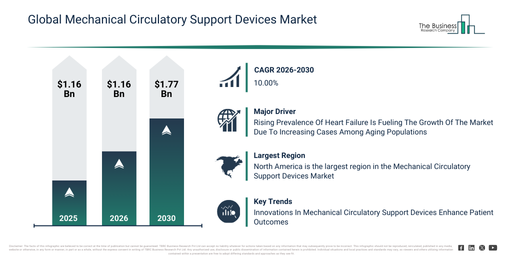
    The mechanical circulatory support devices market has shown strong momentum, growing from $3.47 billion in 2025 to an estimated $3.82 billion in 2026, with a compound annual growth rate (CAGR) of 10.1%. This positive trend in the historical period is largely due to the limited availability of advanced devices, the continued use of traditional intra-aortic balloon pumps, the rising incidence of heart failure, an increase in cardiac surgeries, and a shortage of standardized training for device implantation. Looking ahead, the market is anticipated to reach $5.59 billion by 2030, maintaining a CAGR of 10.0%. Technological innovations in both pulsatile and non-pulsatile flow devices, the expansion of minimally invasive cardiac procedures, widespread adoption of left and biventricular assist devices, growth in specialty cardiac hospitals, and increased investment in cardiac research are key contributors to this forecast. Notable trends include the rising use of ventricular assist devices and total artificial hearts, more cardiac surgeries and heart failure treatments, growing deployment of extracorporeal membrane oxygenation (ECMO) systems, and a focus on minimally invasive and percutaneous device use, alongside stricter regulatory compliance and safety standards.

    Download A Free Sample Report For Comprehensive Market Insights:

    https://www.thebusinessresearchcompany.com/sample.aspx?id=27334&type=smp

    Rising Heart Failure Cases Boost Market Demand for Mechanical Circulatory Support Devices

    An important driver behind the market’s growth is the increasing prevalence of heart failure, a chronic condition where the heart’s ability to pump blood is compromised. The aging global population, which is more susceptible to cardiovascular diseases and complications, is a major factor behind this rise. Mechanical circulatory support devices play a critical role by assisting the heart in pumping blood, easing its workload, and improving circulation. For instance, in September 2024, the Heart Failure Society of America (HFSA) reported that 6.7 million Americans over the age of 20 currently suffer from heart failure. Projections indicate that this figure will increase to 8.7 million by 2030, 10.3 million by 2040, and reach 11.4 million by 2050. This growing patient population is driving demand for advanced circulatory support devices.

    Technological Breakthroughs and Increased Adoption Accelerate Growth Prospects

    Advancements in device technology, particularly the development of magnetically levitated rotor (MAGLEV) technology, are significantly enhancing mechanical circulatory support devices. MAGLEV technology minimizes friction by suspending rotors magnetically, which extends device lifespan and reliability. For example, in July 2024, BiVACOR Inc., a clinical-stage medical device company in the U.S., successfully performed the first human implantation of its Total Artificial Heart (TAH). Designed to replace both heart ventricles in patients with severe heart failure who are not candidates for conventional devices, this innovation offers a promising bridge to transplant, improving survival rates and quality of life for patients facing limited treatment options due to donor heart shortages.

    Access The Complete Mechanical Circulatory Support Devices Market Report:

    https://www.thebusinessresearchcompany.com/report/mechanical-circulatory-support-devices-global-market-report

    Mechanical Circulatory Support Devices Market Segmentation Highlights and Growth Opportunities

    This market is segmented based on type, technology, application, and end user to better understand its scope and potential:

    1) By Type: Intra-Aortic Balloon Pump, Ventricular Assist Device, Total Artificial Heart, Extracorporeal Membrane Oxygenation

    2) By Technology: Pulsatile Flow Devices, Non-Pulsatile Flow Devices

    3) By Application: Cardiac Surgery, Heart Failure Management, Myocardial Infarction, Cardiogenic Shock

    4) By End User: Hospitals, Ambulatory Surgical Centers, Specialty Clinics, Other End Users

    Subsegments include:

    – Intra-Aortic Balloon Pump: Percutaneous and Surgical variants

    – Ventricular Assist Device: Left, Right, and Biventricular Assist Devices

    – Total Artificial Heart: Pneumatic and Electric types

    – Extracorporeal Membrane Oxygenation: Venoarterial and Venovenous systems

    This detailed segmentation helps identify targeted growth areas and tailor solutions for specific clinical needs.

    Leading Companies Driving Innovation in Mechanical Circulatory Support Devices

    The competitive landscape of this market features numerous key players committed to advancing device technology and expanding access to mechanical circulatory support. Prominent companies include Abbott Laboratories, Medtronic Plc, Getinge AB, LivaNova PLC, Magenta Medical Ltd., CorWave SA, Jarvik Heart Inc., Carmat SAS, Procyrion Inc., BiVACOR Inc., Evaheart Inc., ReliantHeart Inc., SynCardia Systems LLC, Berlin Heart GmbH, NovaPump GmbH, CardiacAssist Inc., Circulite Medical Inc., Windmill Cardiovascular Systems Inc., NuPulseCV Inc., and FineHeart SAS. These organizations focus heavily on research, innovative product development, and regulatory compliance to meet evolving patient needs.

    Regional Market Overview and Growth Forecast

    In 2025, North America held the largest market share for mechanical circulatory support devices, reflecting the region’s advanced healthcare infrastructure and high demand. However, the Asia-Pacific region is expected to experience the most rapid growth during the forecast period. The comprehensive market analysis spans multiple regions including Asia-Pacific, South East Asia, Western Europe, Eastern Europe, North America, South America, the Middle East, and Africa, providing a global perspective on emerging trends and investment opportunities.

    Get in touch with us:

    The Business Research Company: https://www.thebusinessresearchcompany.com/

    Americas: +1 310-496-7795

    Asia: +44 7882 955267 & +91 8897263534

    Europe: +44 7882 955267

    Email us at: marketing@tbrc.info

    Follow us on:

    LinkedIn: https://in.linkedin.com/company/the-business-research-company

    YouTube: https://www.youtube.com/channel/UC24_fI0rV8cR5DxlCpgmyFQ

    Global Market Model: https://www.thebusinessresearchcompany.com/global-market-model
  • Maternal Infant Care Equipment Market Trends And Growth Drivers Point To Strong Future Potential

    Maternal Infant Care Equipment Market Trends And Growth Drivers Point To Strong Future Potential

    Delivering more actionable and strategically valuable research, The Business Research Company’s 2026 market reports feature market attractiveness analysis, total addressable market evaluation, company benchmarking matrices, interactive Excel dashboards, expanded supply chain intelligence, emerging startup coverage, and detailed product insights.

    The maternal infant care equipment sector is experiencing notable growth as advancements in technology and rising healthcare needs drive demand globally. This market plays a crucial role in supporting neonatal and maternal health, with increasing investments and innovations shaping its trajectory. Below, we explore the market’s size, growth factors, key players, emerging trends, product segments, and regional outlook.

    Strong Growth Trajectory of the Maternal Infant Care Equipment Market

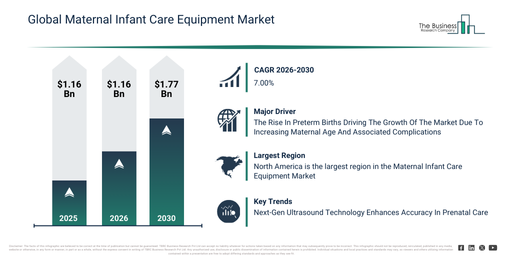
    The maternal infant care equipment market has witnessed steady expansion in recent years. It is projected to grow from $6.28 billion in 2025 to $6.73 billion in 2026, marking a compound annual growth rate (CAGR) of 7.3%. This growth during the historical period is attributed to a shortage of advanced maternal-infant care devices, widespread dependence on traditional infant incubators and warmers, a rising number of neonatal patients, expanding hospital and clinic infrastructure, and heightened awareness of maternal and newborn care.

    Download A Free Sample Report For Comprehensive Market Insights:

    https://www.thebusinessresearchcompany.com/sample.aspx?id=27333&type=smp

    Promising Outlook and Future Expansion of the Maternal Infant Care Equipment Market

    Looking ahead, the market is expected to maintain its robust growth momentum, reaching $8.82 billion by 2030 with a CAGR of 7.0%. This forecasted increase is driven by innovations in phototherapy and suction technologies, broader use of electric and hospital-grade breast pumps, growth in home healthcare services, higher healthcare spending in emerging markets, and the integration of smart monitoring and IoT-enabled maternal-infant care systems. Key trends during this period include greater adoption of advanced neonatal monitoring, demand for portable and home-care devices, emphasis on energy-efficient and environmentally friendly equipment, expansion of maternal and neonatal services in developing regions, and improved training programs for healthcare professionals.

    Rising Preterm Births Fueling Demand in the Maternal Infant Care Equipment Market

    An important factor propelling market growth is the increasing incidence of preterm births, where babies are delivered before completing 37 weeks of gestation. This rise is largely linked to older maternal age, which carries a higher risk for pregnancy complications leading to early delivery. Maternal infant care devices support these preterm infants by offering advanced monitoring, respiratory support, and thermal regulation to enhance survival and health outcomes. For instance, data from the Centers for Disease Control and Prevention (CDC) indicates that singleton preterm births in the US rose slightly from 8.67% in 2022 to 8.71% in 2023, underscoring the growing need for such equipment.

    Access The Complete Maternal Infant Care Equipment Market Report:

    https://www.thebusinessresearchcompany.com/report/maternal-infant-care-equipment-global-market-report

    The Role of Increasing Healthcare Expenditure in Boosting Market Growth

    Healthcare spending plays a significant role in expanding the maternal-infant care equipment market. This expenditure encompasses all costs related to healthcare services and products consumed by individuals, governments, and organizations. As the global population ages, demand for complex and frequent medical care rises, prompting increased investment in advanced maternal and neonatal care technologies. For example, the Centers for Medicare and Medicaid Services reported a 10.4% surge in hospital expenditures in 2023, reaching $1,519.7 billion, a sharp rise from 3.2% growth in 2022. This trend supports the market’s growth by enabling better funding for high-quality maternal and infant care devices.

    Detailed Segmentation of the Maternal Infant Care Equipment Market

    This market is divided into several key categories:

    1) Product Type: Infant Incubators, Infant Warmers, Phototherapy Equipment, Suction Devices, Breast Pumps

    2) Material Type: Plastic, Wood, Fabric, Metal, Organic Materials

    3) Application: Neonatal Care, Maternal Care, Pediatric Care

    4) Distribution Channel: Online Stores, Offline Stores

    5) End-User: Hospitals, Clinics, Home Care, Ambulatory Surgical Centers

    Subdivisions within product types include: Closed, Open, and Transport Incubators; Radiant, Conductive, and Combination Warmers; Conventional, Fiber-Optic, and Compact Phototherapy Devices; Portable, Wall-Mounted, and Battery-Operated Suction Devices; as well as Manual, Electric, and Hospital-Grade Breast Pumps.

    Innovations Shaping the Future of the Maternal Infant Care Equipment Market

    Leaders in this industry are prioritizing technological advancements to enhance diagnostic capabilities and clinical workflows. One significant area is the development of artificial intelligence (AI)-enabled ultrasound systems that improve image clarity, automate tasks, and support healthcare providers in making faster and more accurate decisions. For example, in April 2024, GE Healthcare Technologies introduced the Voluson Signature 20 and 18 ultrasound systems, which incorporate AI-powered tools such as sonolyst and sonobiometry. These devices feature ergonomic designs, customizable settings, advanced reporting, and enhanced connectivity, all aimed at improving maternal and fetal health monitoring, especially in high-risk pregnancies.

    Key Players Influencing the Maternal Infant Care Equipment Industry

    The market is dominated by several prominent companies, including Cardinal Health Inc., Koninklijke Philips N.V., GE Healthcare Technologies Inc., Drägerwerk AG and Co KGaA, Masimo Corporation, Natus Medical Incorporated, Atom Medical Corporation, Edan Instruments Inc., OxygenCare Private Limited, Janitri Innovations Private Limited, Maternova Inc., Spectra Baby USA LLC, Fisher & Paykel Healthcare Corporation Limited, Shenzhen Mindray Bio-Medical Electronics Co Ltd., Nihon Kohden Corporation, OSI Systems Inc., Contec Medical Systems Co Ltd., Bistos Co Ltd., Fanem Ltd., Phoenix Medical Systems, nice Neotech Medical Systems Pvt Ltd., IndoSurgicals Private Limited, and Hosmed-Inc.

    Regional Dynamics and Growth Outlook for the Maternal Infant Care Equipment Market

    In 2025, North America represented the largest regional market for maternal infant care equipment. However, the Asia-Pacific region is anticipated to experience the fastest growth over the forecast period. The comprehensive regional analysis encompasses Asia-Pacific, South East Asia, Western Europe, Eastern Europe, North America, South America, the Middle East, and Africa, highlighting global demand trends and investment opportunities.

    Get in touch with us:

    The Business Research Company: https://www.thebusinessresearchcompany.com/

    Americas: +1 310-496-7795

    Asia: +44 7882 955267 & +91 8897263534

    Europe: +44 7882 955267

    Email us at: marketing@tbrc.info

    Follow us on:

    LinkedIn: https://in.linkedin.com/company/the-business-research-company

    YouTube: https://www.youtube.com/channel/UC24_fI0rV8cR5DxlCpgmyFQ

    Global Market Model: https://www.thebusinessresearchcompany.com/global-market-model

  • Micro-Perforated Films Market Opportunities Are Emerging Beyond Traditional Growth Areas

    Micro-Perforated Films Market Opportunities Are Emerging Beyond Traditional Growth Areas

    Through market attractiveness analysis, total addressable market evaluation, company benchmarking matrices, interactive Excel dashboards, expanded supply chain intelligence, emerging startup coverage, and detailed product insights, The Business Research Company’s 2026 market reports provide more actionable and strategically valuable research.

    The micro-perforated films market has demonstrated remarkable growth in recent years, driven by evolving packaging needs and technological advancements. As demand for innovative and sustainable packaging solutions intensifies, this market is set to undergo further significant expansion. Below is an overview of the current market status, key growth drivers, leading companies, and emerging trends shaping the industry’s future.

    Steady Market Expansion and Future Projections for Micro-Perforated Films

    The micro-perforated films market has seen robust development, with its value increasing from $1.78 billion in 2025 to $1.93 billion in 2026, reflecting a compound annual growth rate (CAGR) of 8.5%. This upward trend during the historical period has been largely driven by rising packaged food consumption, stronger demand for fresh produce packaging, the growth of cold chain logistics, expanding agricultural exports, and the cost advantages of plastic films. Looking ahead, the market is forecasted to reach $2.65 billion by 2030, maintaining a strong CAGR of 8.3%. Anticipated factors behind this growth include a shift toward sustainable packaging options, increasing demand for recyclable films, adoption of precision perforation technologies, initiatives aimed at reducing food waste, and rising pharmaceutical packaging needs. Key trends expected to influence the market in the coming years include controlled atmosphere packaging, solutions for extending shelf life, moisture regulation films, customization of hole sizes, and the use of lightweight flexible packaging materials.

    Download A Free Sample Report For Comprehensive Market Insights:

    https://www.thebusinessresearchcompany.com/sample.aspx?id=20881&type=smp

    Sustainability as a Major Growth Factor in the Micro-Perforated Films Market

    One of the strongest forces propelling the micro-perforated films market forward is the growing emphasis on sustainable packaging. These eco-conscious solutions prioritize the use of materials and manufacturing processes that minimize environmental impact throughout the product lifecycle, focusing on recyclability, biodegradability, and conservation of resources. Heightened consumer environmental awareness, stricter regulatory requirements, corporate social responsibility, and efforts to reduce plastic waste and carbon emissions are driving demand for sustainable alternatives. Micro-perforated films contribute to these goals by enhancing breathability and shelf life while enabling the use of eco-friendly materials and reducing waste.

    Consumer Preferences Further Boost Sustainable Packaging Demand

    For example, in April 2023, the 2023 Buying Green Report from Trivium Packaging, based in the Netherlands, revealed that 82% of consumers are willing to pay more for sustainable packaging, marking a 4-point increase from 2022. Notably, younger consumers aged 18 to 24 led the way at a 90% willingness to pay a premium, highlighting ongoing environmental concerns even amid economic challenges. This trend clearly supports continued expansion in the micro-perforated films market driven by sustainability priorities.

    Access The Complete Micro-Perforated Films Market Report:

    https://www.thebusinessresearchcompany.com/report/micro-perforated-films-global-market-report

    Micro-Perforated Films Market Segmentation and Revenue Opportunities

    This market is categorized into several segments for a detailed analysis:

    By material, the film types include Polypropylene (PP), Polyethylene (PE), Polyvinyl Chloride (PVC), and Polyethylene Terephthalate (PET).

    Hole size segments are classified as less than 0.1 mm, 0.1-0.5 mm, 0.5-1.0 mm, and more than 1.0 mm.

    By application, the primary sectors include packaging, agriculture, automotive, electronics, and construction.

    Subcategories provide further granularity, such as:

    – Polypropylene divided into BOPP (Biaxially Oriented Polypropylene) and CPP (Cast Polypropylene)

    – Polyethylene split into LDPE (Low-Density Polyethylene), HDPE (High-Density Polyethylene), and LLDPE (Linear Low-Density Polyethylene)

    – Polyvinyl Chloride separated into rigid and flexible PVC

    – Polyethylene Terephthalate categorized into APET (Amorphous PET), RPET (Recycled PET), and PETG (Glycol-Modified PET)

    Innovations Reshaping Demand in the Micro-Perforated Films Market

    Leading players in the micro-perforated films industry are embracing cutting-edge technologies to enhance product offerings and reduce environmental impact. One notable advancement is linerless label technology, which eliminates the backing paper traditionally used in pressure-sensitive labels. By printing and applying labels directly without liners, this innovation significantly cuts down waste and boosts operational efficiency.

    To illustrate, in September 2023, Avery Dennison, a US-based labeling and packaging company, introduced its AD LinrSave technology. This new decorative linerless labeling system features micro-perforations that enable easy application without generating liner waste, alongside a versatile adhesive and release system compatible with current converting equipment. This innovation supports sustainability goals by reducing liner waste and carbon footprints while helping brands improve efficiency and lower labeling costs.

    Top Companies Steering the Micro-Perforated Films Market

    Key industry participants driving the micro-perforated films market include:

    The 3M Company, Mitsubishi Chemical Corporation, Bolloré SE, Amcor Plc, Avery Dennison Corporation, ProAmpac, Coveris, Jindal Films, RKW Group, Printpack, TCL Packaging, Hexis Graphics, Amerplast, Speciality Polyfilms, Now Plastics Inc., FlexPak Services, Jiangyin Bairuijia Plastics Science & Technology Co. Ltd., Penguin Plastics, Folene Packaging, A-Roo Company, Golden Eagle Extrusions Inc., Aristo Flexi Pack, Aera Sa, and Hipex Group.

    Regional Market Leadership and Growth Outlook

    In 2025, Asia-Pacific held the largest share of the micro-perforated films market. However, North America is expected to emerge as the fastest-growing region during the forecast period. Other key regions covered in the market analysis include South East Asia, Western Europe, Eastern Europe, South America, the Middle East, and Africa, offering a comprehensive perspective on global market dynamics.

    Get in touch with us:

    The Business Research Company: https://www.thebusinessresearchcompany.com/

    Americas: +1 310-496-7795

    Asia: +44 7882 955267 & +91 8897263534

    Europe: +44 7882 955267

    Email us at: marketing@tbrc.info

    Follow us on:

    LinkedIn: https://in.linkedin.com/company/the-business-research-company

    YouTube: https://www.youtube.com/channel/UC24_fI0rV8cR5DxlCpgmyFQ

    Global Market Model: https://www.thebusinessresearchcompany.com/global-market-model
  • Maternal And Baby Grade Wipes Market Expansion Is Reshaping Competitive Dynamics Across The Industry

    Maternal And Baby Grade Wipes Market Expansion Is Reshaping Competitive Dynamics Across The Industry

    Enhanced with market attractiveness analysis, total addressable market evaluation, company benchmarking matrices, interactive Excel dashboards, expanded supply chain intelligence, emerging startup coverage, and detailed product insights, The Business Research Company’s 2026 market reports deliver more actionable and strategically valuable research.

    The maternal and baby-grade wipes sector has witnessed remarkable expansion recently, driven by evolving consumer awareness and demand for gentle hygiene products. As concerns about infant care and sustainable solutions grow, the market is set to experience robust development in the coming years. Let’s explore the current market size, the factors propelling its growth, key players, emerging trends, and the regional outlook shaping this industry.

    Market Size and Growth Outlook for Maternal and Baby Grade Wipes

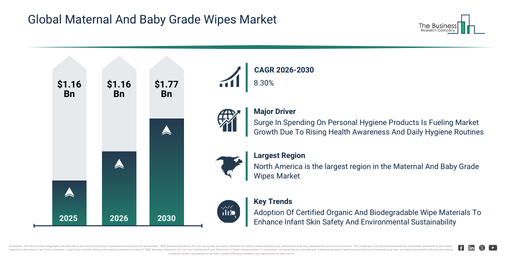
    The maternal and baby-grade wipes market has shown strong growth, with its value rising from $6.37 billion in 2025 to $6.91 billion in 2026, reflecting a compound annual growth rate (CAGR) of 8.6%. This increase during the past years is largely due to higher birth rates in developing countries, improved awareness about infant hygiene, broader use of maternal care products, increased availability of disposable hygiene items, and greater retail penetration of baby care goods. Looking ahead, the market is projected to continue this positive trend, reaching $9.53 billion by 2030 with a CAGR of 8.3%. This projected growth is supported by rising consumer interest in sustainable personal care products, a shift towards eco-friendly packaging, the expansion of premium hygiene segments for babies, increasing online retail adoption, and enhanced regulatory oversight regarding chemical ingredients. Key trends forecasted include heightened demand for biodegradable wipes, greater preference for hypoallergenic formulations, growth in organic and chemical-free product lines, innovations in skin-safe materials, and more dermatologically tested wipes.

    Download A Free Sample Report For Comprehensive Market Insights:

    https://www.thebusinessresearchcompany.com/sample.aspx?id=24290&type=smp

    Main Factors Contributing to Demand in the Maternal and Baby Grade Wipes Market

    The growing expenditure on personal hygiene products is playing a pivotal role in expanding the maternal and baby-grade wipes market. Personal hygiene items are essential for maintaining cleanliness and reducing infection risks, which has led to heightened consumer spending driven by increased awareness about health and sanitation.

    Maternal and baby wipes offer gentle, safe cleansing options tailored for sensitive skin, supporting daily hygiene routines by minimizing irritation and infection risks. These qualities make them an integral part of personal care for mothers and infants alike. For example, in September 2024, the US Bureau of Labor Statistics reported a 9.7% increase in spending on personal care products and services from 2022 to 2023, while their proportion of total annual spending held steady at 1.2%. This increasing investment in hygiene products directly supports the rising demand within the maternal and baby-grade wipes market.

    Detailed Breakdown of Maternal and Baby Grade Wipes Market Segments

    This market is segmented into several categories to better understand revenue opportunities and consumer preferences:

    1) Product Type: Moist Wipes, Dry Wipes, Biodegradable Wipes, Organic Wipes, Antibacterial Wipes

    2) Material Type: Non-Woven Fabric, Cotton, Bamboo, Polyester, Wood Pulp

    3) Functionality: Cleansing, Moisturizing, Cooling, Anti-Inflammatory, Hypoallergenic

    4) Distribution Channels: Online Retail, Supermarkets or Hypermarkets, Pharmacies or Drugstores, Specialty Stores, Department Stores

    5) End Users: Mothers, Babies (including infants and toddlers), Healthcare Providers, Childcare Facilities, Skin Care Enthusiasts

    Access The Complete Maternal And Baby Grade Wipes Market Report:

    https://www.thebusinessresearchcompany.com/report/maternal-and-baby-grade-wipes-global-market-report

    Each category includes specialized subsegments. For example, moist wipes cover fragrance-free, aloe vera-infused, vitamin E-enriched, and alcohol-free variants. Dry wipes include cotton, bamboo fiber, spunlace non-woven, and reusable options. Biodegradable wipes feature plant-based fiber, compostable wet wipes, flushable wipes, and plastic-free varieties. Organic wipes may be certified by the USDA, made from organic cotton, based on natural extracts, or hypoallergenic. Antibacterial wipes include benzalkonium chloride, herbal antibacterial, alcohol-based sanitizing, and hypoallergenic versions.

    Innovations and Trends Steering Growth in the Maternal and Baby Grade Wipes Market

    Key players in the maternal and baby-grade wipes market are focusing on creating certified organic and biodegradable wipes, meeting the rising consumer demand for safer, toxin-free, and environmentally responsible baby care products. These wipes typically use plant-based fibers like FSC-certified bamboo combined with high-purity water formulas, providing a natural and chemical-free alternative to traditional synthetic wipes made with plastic-based materials and harsher preservatives.

    For instance, in November 2023, New Zealand’s eco-conscious personal care brand TERRA launched its Premium Certified Organic Biodegradable Baby Wipes line in India. Their product range includes variants such as Manuka Honey Baby Wipes, Kiwifruit Baby Wipes, and Pure Water Wipes, all featuring natural extracts, over 99% pure water content, and certifications from SGS, Dermatest, Intertek, and FernMark. These wipes biodegrade up to 10 times faster than conventional wipes while offering gentle, hypoallergenic, fragrance-free, and chemical-free cleansing for babies and mothers.

    Leading Companies Driving the Maternal and Baby Grade Wipes Industry Forward

    The maternal and baby-grade wipes market features several prominent companies shaping its direction. These include Johnson & Johnson Services Inc., Kimberly-Clark Corporation, Oji Holdings Corporation, Georgia-Pacific LLC, Unicharm Corporation, Hengan International Group Company Limited, Pigeon Corporation, The Honest Company Inc., WaterWipes UC, Nuby, TerraCare Ltd., Farlin Industrial Co. Ltd., Mustela, Natracare, Millie Moon, Doctor Butler’s Rx Formulations LLC, Kanga Care LLC, Bambo Nature, Kressa, and KAS Direct LLC. These organizations are investing in research, product innovation, and sustainable practices to meet evolving consumer needs.

    Geographical Insights and Regional Market Leadership in Maternal and Baby Grade Wipes

    In 2025, North America held the largest share of the maternal and baby-grade wipes market. However, the Asia-Pacific region is poised to emerge as the fastest-growing market over the forecast period. The comprehensive market report also includes detailed analyses of regions such as South East Asia, Western Europe, Eastern Europe, South America, the Middle East, and Africa, providing a global perspective on the market’s evolving landscape.

    Get in touch with us:

    The Business Research Company: https://www.thebusinessresearchcompany.com/

    Americas: +1 310-496-7795

    Asia: +44 7882 955267 & +91 8897263534

    Europe: +44 7882 955267

    Email us at: marketing@tbrc.info

    Follow us on:

    LinkedIn: https://in.linkedin.com/company/the-business-research-company

    YouTube: https://www.youtube.com/channel/UC24_fI0rV8cR5DxlCpgmyFQ

    Global Market Model: https://www.thebusinessresearchcompany.com/global-market-model

  • Microneedle Flu Vaccine Market Expansion Is Opening New Pathways For Strategic Investment

    Microneedle Flu Vaccine Market Expansion Is Opening New Pathways For Strategic Investment

    Delivering more actionable and strategically valuable research, The Business Research Company’s 2026 market reports feature market attractiveness analysis, total addressable market evaluation, company benchmarking matrices, interactive Excel dashboards, expanded supply chain intelligence, emerging startup coverage, and detailed product insights.

    The market for microneedle flu vaccines is rapidly evolving, driven by advancements in vaccine technology and changing healthcare needs. As the demand for less invasive and more patient-friendly vaccination options increases, this sector is experiencing significant growth. Let’s explore the current market size, key growth drivers, emerging trends, leading players, and regional dynamics shaping the future of this innovative vaccine delivery system.

    Current Market Size and Growth Trajectory of the Microneedle Flu Vaccine Market

    The microneedle flu vaccine market has demonstrated strong expansion recently, with its size growing from $1.66 billion in 2025 to $1.82 billion in 2026, reflecting a compound annual growth rate (CAGR) of 10.0%. This rise can be linked to enhanced global influenza vaccination initiatives, progress in transdermal drug delivery research, broader public immunization campaigns, initial clinical trials of microneedle technology, and increasing preference for minimally invasive vaccines. Looking ahead, the market is forecasted to continue this momentum, reaching $2.67 billion by 2030 at the same robust CAGR of 10.0%. Factors expected to drive future growth include greater investment in next-generation vaccines, heightened attention to pandemic preparedness, wider adoption of decentralized vaccination programs, increased uptake among pediatric and elderly groups, and more regulatory approvals for microneedle platforms. Key trends projected for this period include the evolution of painless delivery methods, rising use of self-administration, development of vaccines that do not require cold storage, expansion of mass immunization efforts, and stronger focus on ensuring patient adherence.

    Download A Free Sample Report For Comprehensive Market Insights:

    https://www.thebusinessresearchcompany.com/sample.aspx?id=24322&type=smp

    Growing Impact of Needle Phobia on Market Demand

    One of the significant factors propelling the microneedle flu vaccine market is the increasing prevalence of needle phobia—an intense fear or anxiety related to needles that often leads people to avoid important medical procedures. This condition is typically caused by psychological sensitivity and negative prior experiences, resulting in long-lasting aversion. Microneedle flu vaccines provide a minimally invasive and almost pain-free alternative that helps reduce these psychological barriers, thereby encouraging greater vaccination compliance. For example, in February 2025, the American Society for Clinical Pathology (ASCP) reported that approximately 50% to 60% of children in the U.S. experience needle phobia, especially between ages 4 and 6. The widespread nature of this fear is a key factor driving demand within this market.

    Advancements in Vaccine Technology and Immunization Programs Supporting Growth

    The expansion of influenza vaccination programs worldwide is also a major driver behind the microneedle flu vaccine market. These initiatives aim to increase vaccine accessibility and coverage, particularly in vulnerable populations. Additionally, ongoing research into transdermal drug delivery methods has improved the effectiveness and patient experience of microneedle vaccines. Early clinical trials of microneedle platforms are advancing the technology toward broader adoption, while public health efforts increasingly endorse minimally invasive vaccination options as safer and more acceptable alternatives to traditional injections.

    Access The Complete Microneedle Flu Vaccine Market Report:

    https://www.thebusinessresearchcompany.com/report/microneedle-flu-vaccine-global-market-report

    Microneedle Flu Vaccine Market Segmentation Explained

    This market is segmented based on several categories to capture the diversity of products and applications:

    1) Product Type: Hollow Microneedle, Solid Microneedle, Coated Microneedle, Dissolving Microneedle

    2) Route of Administration: Transdermal, Intradermal

    3) Distribution Channel: Hospital Pharmacies, Retail Pharmacies, Online Pharmacies

    4) Application: Flu Vaccination, Seasonal Flu Prevention, Pediatric Vaccines, Elderly Vaccines

    Further subdivisions include:

    – Hollow Microneedles such as Single-Use, Pre-Filled Disposable, Polymer-Based, and Silicon-Based variants

    – Solid Microneedles including Metal, Silicon, and Polymer types

    – Coated Microneedles categorized into Antigen-Coated, Vaccine-Coated, Biodegradable, and Nano-Coated types

    – Dissolving Microneedles comprising Fast-Dissolving, Slow-Release, Hydrogel-Based, and Sugar-Based forms

    Innovations Shaping the Future of the Microneedle Flu Vaccine Market

    Leading companies are heavily investing in the development of patch-based RNA vaccines that utilize microneedle technology. These efforts support early-stage research and foster collaboration within the vaccine and delivery system sectors. A notable example occurred in March 2024 when the U.S.-based Biomedical Advanced Research and Development Authority (BARDA) committed $50 million via the Patch Forward Prize initiative to accelerate the development of microneedle patch vaccines targeting influenza and COVID-19. This funding aims to overcome technical and regulatory challenges, promote innovation, and enhance vaccine availability. The program also supports advancing products into Phase I clinical trials, ultimately strengthening preparedness against infectious diseases.

    Key Industry Players Driving Innovation and Market Growth

    The microneedle flu vaccine market features a number of prominent companies contributing to its expansion and technological advances. These include Merck & Co. Inc., Sanofi SA, GlaxoSmithKline plc, Seqirus, Vaxxas, Micron Biomedical Inc., Vaxess Technologies, Debiotech S.A., NanoPass Technologies Limited, Microdermics Inc., Micropoint Technologies Pte Ltd., CosMED Pharmaceutical Co. Ltd., TSRL Inc., Corium International, Becton Dickinson and Company (BD), AptarGroup, FluGen Inc., 3M Drug Delivery Systems, Nitto Denko Corporation, Zosano Pharma Corporation, Camurus AB, and Raphas Co. Ltd.

    Regional Market Overview and Growth Potential

    In 2025, North America held the largest share of the microneedle flu vaccine market, reflecting strong adoption and innovation in this region. However, the Asia-Pacific area is projected to experience the fastest growth during the forecast period. The market analysis covers key territories including Asia-Pacific, South East Asia, Western Europe, Eastern Europe, North America, South America, the Middle East, and Africa, providing a detailed perspective on global opportunities and trends.

    Get in touch with us:

    The Business Research Company: https://www.thebusinessresearchcompany.com/

    Americas: +1 310-496-7795

    Asia: +44 7882 955267 & +91 8897263534

    Europe: +44 7882 955267

    Email us at: marketing@tbrc.info

    Follow us on:

    LinkedIn: https://in.linkedin.com/company/the-business-research-company

    YouTube: https://www.youtube.com/channel/UC24_fI0rV8cR5DxlCpgmyFQ

    Global Market Model: https://www.thebusinessresearchcompany.com/global-market-model
  • Mastectomy Reconstruction Implants Market Forecast Reveals Where Future Industry Value Will Be Created

    Mastectomy Reconstruction Implants Market Forecast Reveals Where Future Industry Value Will Be Created

    Through market attractiveness analysis, total addressable market evaluation, company benchmarking matrices, interactive Excel dashboards, expanded supply chain intelligence, emerging startup coverage, and detailed product insights, The Business Research Company’s 2026 market reports provide more actionable and strategically valuable research.

    The mastectomy reconstruction implants market has witnessed substantial growth recently, reflecting increased demand for advanced reconstructive options following breast cancer surgeries. With improvements in implant technology and expanding healthcare infrastructure, this sector is set for continued expansion in the coming years. Let’s explore the current market size, growth drivers, segmentation, key trends, competitive landscape, and regional distribution shaping this market’s future.

    Current Market Size and Growth Projections for the Mastectomy Reconstruction Implants Market

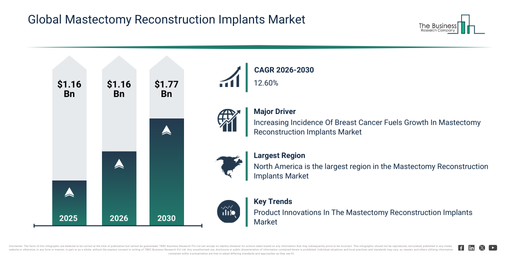
    The market for mastectomy reconstruction implants has experienced rapid growth, moving from $1.97 billion in 2025 to an anticipated $2.23 billion in 2026. This represents a strong compound annual growth rate (CAGR) of 12.9%. Historically, this rise has been driven by factors such as the increasing incidence of breast cancer, limited reconstruction choices in the past, heightened awareness regarding post-mastectomy aesthetic options, widespread adoption of silicone and saline implants, and a heavy reliance on hospital-based reconstructive surgeries. Looking ahead, the market is expected to maintain its upward trajectory, reaching $3.58 billion by 2030 with a CAGR of 12.6%. This forecasted growth is fueled by advancements in implant materials and customization, a rise in outpatient and ambulatory surgery centers, the integration of tissue expanders with direct-to-implant techniques, growing use of anatomical and teardrop-shaped implants, and a stronger emphasis on improving patient outcomes through minimally invasive procedures. Key trends anticipated include increasing demand for aesthetic breast reconstruction, expansion in two-stage and direct-to-implant surgeries, wider use of customizable and anatomical implants, growth in ambulatory surgery centers, and enhanced focus on post-surgical recovery and patient satisfaction.

    Download A Free Sample Report For Comprehensive Market Insights:

    https://www.thebusinessresearchcompany.com/sample.aspx?id=20571&type=smp

    Factors Contributing to Growth in the Mastectomy Reconstruction Implants Market

    One of the primary forces propelling the mastectomy reconstruction implants market is the rising incidence of breast cancer globally. Breast cancer, which originates in breast cells, has been increasing due to factors such as an aging population, lifestyle choices, hormonal changes, genetics, and dietary habits. Women who undergo mastectomy often rely on reconstruction implants to restore the breast’s shape and appearance, which helps improve both physical appearance and psychological well-being. For instance, in January 2024, the American Cancer Society reported approximately 297,790 new invasive breast cancer cases diagnosed in women throughout 2023 in the United States alone, with an annual increase rate of 0.6%. This growing patient population directly supports the expanding demand for reconstruction implants.

    Additional Drivers Stimulating Market Expansion

    Beyond the rise in breast cancer cases, increasing awareness about post-mastectomy aesthetic solutions is also encouraging more patients to opt for reconstruction implants. The adoption of advanced silicone and saline implants, which offer more natural appearance and feel, has improved patient acceptance. Moreover, the preference for reconstructive procedures conducted in outpatient and ambulatory surgery centers is growing, due to lower costs and reduced recovery times compared to traditional hospital settings. Together, these factors contribute significantly to the ongoing expansion of the mastectomy reconstruction implant market.

    Access The Complete Mastectomy Reconstruction Implants Market Report:

    https://www.thebusinessresearchcompany.com/report/mastectomy-reconstruction-implants-global-market-report

    Detailed Segmentation of the Mastectomy Reconstruction Implants Market

    This market is categorized broadly into product types, shapes, and application areas. By product, it is divided into Two-Stage Implant Reconstruction and Direct-To-Implant Reconstruction. Shapes include Round and Anatomical implants. In terms of application, the market encompasses Hospitals, Beauty Clinics, Ambulatory Surgery Centers (ASCs), and other settings. Further breakdowns under Two-Stage Implant Reconstruction include tissue expander-based procedures, expander to implant conversions, silicone and saline two-stage implants, and customizable options. Meanwhile, Direct-To-Implant Reconstruction covers silicone and saline direct implants, pre-formed implants, hybrid implants involving tissue grafting, anatomical or teardrop-shaped implants, and round direct implants.

    Innovations Defining the Next Growth Phase in the Mastectomy Reconstruction Implants Market

    Leading companies in this market are investing heavily in technological innovations to enhance breast reconstruction outcomes. A notable example is the FixNip NRI (Nipple Reconstruction Implant), designed to improve reconstruction of the nipple-areola complex (NAC), which is vital for a natural breast appearance and patient satisfaction. In March 2024, GC Aesthetics France SAS introduced the FixNip NRI, a novel nipple implant made from biocompatible smooth silicone and featuring a floral-shaped nitinol frame. This design enables a minimally invasive insertion procedure, which takes approximately 15 minutes and results in minimal scarring and downtime for patients. Such advancements are expected to set higher standards for reconstructive surgery and help drive market growth.

    Competitive Landscape of the Mastectomy Reconstruction Implants Market

    The market features several prominent players who are shaping industry dynamics through innovation and strategic initiatives. Leading companies include Johnson & Johnson, Integra LifeSciences Corporation, CollPlant Biotechnologies Ltd., RTI Surgical Holdings Inc., Sientra Inc., Aesthetic Medical International Holdings Group Ltd., GC Aesthetics Inc., Hans Biomed Co. Ltd., Establishment Labs S.A., PMT Corporation, POLYTECH Health & Aesthetics GmbH, Symatese SAS, Groupe Sebbin SAS, Ideal Implant Inc., Nagor Ltd., BellaSeno GmbH, Guangzhou Wanhe Plastic Materials Co. Ltd., Koken Co Ltd., Laboratoires Arion, CEREPLAS, Silimed S.A., AART Inc., Shanghai Kangning Medical Devices Co Ltd., Beijing Yimei Medical Technology Co Ltd., and Sebbin Innovation Group. These companies continue to focus on product development and expanding their market reach.

    Regional Market Distribution and Growth Hotspots

    In 2025, North America held the largest share of the mastectomy reconstruction implants market. However, the market report also highlights other important regions including Asia-Pacific, South East Asia, Western Europe, Eastern Europe, South America, the Middle East, and Africa. These regions are anticipated to contribute significantly to the market’s expansion due to increasing healthcare investments, rising breast cancer awareness, and improvements in surgical infrastructure.

    Get in touch with us:

    The Business Research Company: https://www.thebusinessresearchcompany.com/

    Americas: +1 310-496-7795

    Asia: +44 7882 955267 & +91 8897263534

    Europe: +44 7882 955267

    Email us at: marketing@tbrc.info

    Follow us on:

    LinkedIn: https://in.linkedin.com/company/the-business-research-company

    YouTube: https://www.youtube.com/channel/UC24_fI0rV8cR5DxlCpgmyFQ

    Global Market Model: https://www.thebusinessresearchcompany.com/global-market-model
  • Massage Chair Market Growth Through 2030 Creates New Strategic Opportunities

    Massage Chair Market Growth Through 2030 Creates New Strategic Opportunities

    Delivering more actionable and strategically valuable research, The Business Research Company’s 2026 market reports feature market attractiveness analysis, total addressable market evaluation, company benchmarking matrices, interactive Excel dashboards, expanded supply chain intelligence, emerging startup coverage, and detailed product insights.

    The massage chair industry has experienced notable growth in recent years, driven by increasing consumer interest in wellness and relaxation solutions. As people seek effective ways to manage stress and improve their health from home, this market is positioned for significant expansion. Let’s explore the current market size, growth drivers, key segments, innovations, and leading players shaping the future of massage chairs.

    Massage Chair Market Size and Growth Forecast Through 2030

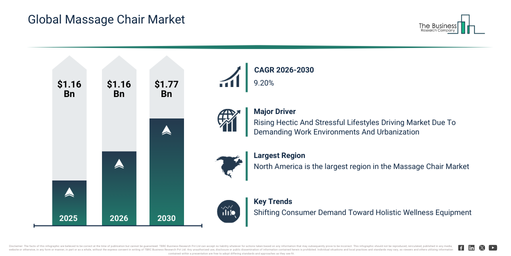
    The massage chair market has seen a strong upward trajectory, with its value rising from $4.82 billion in 2025 to $5.27 billion in 2026, representing a 9.4% compound annual growth rate (CAGR). Looking ahead, the market is expected to expand further, reaching an estimated $7.51 billion by 2030 at a CAGR of 9.2%. This robust growth is fueled by an increasing demand for smart wellness products tailored for home use, growing investments in connected health furniture, and a broader availability of premium massage chair models. Additionally, corporate wellness programs are incorporating massage chairs as part of their employee health initiatives, contributing to the market’s positive outlook.

    Download A Free Sample Report For Comprehensive Market Insights:

    https://www.thebusinessresearchcompany.com/sample.aspx?id=24289&type=smp

    Key Drivers Boosting Demand in the Massage Chair Industry

    One major factor propelling the massage chair market is the rising stress and hectic lifestyles that many people face today. Long work hours, high-pressure environments, and limited leisure time have made relaxation and stress relief more important than ever. Massage chairs provide a convenient and cost-effective way to unwind at home, making them highly appealing for those with busy schedules.

    Furthermore, wellness centers and spas are expanding rapidly worldwide, increasing awareness about stress management and the benefits of massage therapy. As disposable incomes rise, more consumers are inclined to invest in advanced massage technologies, contributing to the growing adoption of massage chairs in residential settings.

    Trends Supporting Market Growth in Smart and Personalized Massage Chairs

    Technological advancements are playing a crucial role in shaping the massage chair market. There is a growing trend toward AI-enabled massage chairs that offer customized massage programs based on user preferences and health data. This integration of smart sensors and adaptive technology enhances the overall relaxation experience and meets the evolving demands of consumers.

    Another popular feature gaining traction is zero gravity massage, which mimics the sensation of weightlessness and promotes deeper muscle relaxation. The inclusion of ergonomic designs and health monitoring sensors is also becoming standard in premium models, supporting a holistic approach to user comfort and wellness.

    Access The Complete Massage Chair Market Report:

    https://www.thebusinessresearchcompany.com/report/massage-chair-global-market-report

    Massage Chair Market Segmentation and Expanding Categories

    This market encompasses several key segments:

    1) By Type: Air Bag Massage Chair, Zero Gravity Massage Chair, Full Body Massage Chair, Heated Massage Chair, 2D, 3D, and 4D Massage Chair, and Other Types

    2) By Nature: Conventional and Robotics

    3) By Application: Residential, Commercial, and Clubs

    4) By Distribution Channels: Specialty Stores, Online Retailers, Supermarkets and Hypermarkets, and Other Distribution Channels

    5) By Use: Professional and Consumer

    The subcategories within these include specific types of air bag massage (e.g., upper body, lower body, adjustable intensity), zero gravity chairs with manual or automatic recline adjustments, full-body massage options targeting neck, back, arms, and legs, heated massage chairs with adjustable temperature zones, and massage chairs featuring 2D to 4D roller technologies with AI-driven adaptive motions. Other types include recliner, portable, office, and coin-operated massage chairs.

    Innovations Driving Transformations in the Massage Chair Market

    Leading companies in this sector are leveraging advanced technologies such as duosync technology, which synchronizes vertical and horizontal massage movements for a more precise and effective experience. For example, in October 2024, Human Touch LLC released the Super Novo X, a state-of-the-art massage chair that combines DuoSync dual massage motors, an HT Flex S- and L-Track system, and voice-controlled virtual therapist features. This model employs AI automation and ergonomic design to deliver tailored full-body massages, reflecting a shift toward holistic wellness devices suitable for both home and commercial use.

    Key Industry Players Competing in the Massage Chair Market

    The massage chair market features numerous prominent companies, including Panasonic Corporation, Brookstone Company Inc., Bodyfriend Inc., Fujiiryoki Co. Ltd., Family Inada Co. Ltd., Ogawa World Bhd, Infinity Massage Chairs, Sharper Image, Cozzia, Osaki Massage Chair, Human Touch LLC, Hutech Co. Ltd., OHCO, Luraco Technologies Inc., OSIM International Ltd., Kahuna Massage Chair, Zarifa, iRest Health Science and Technology Co. Ltd., Daiwa Massage Chairs, Fujita Massage Chair, OTA World LLC, and Synca Wellness.

    Regional Overview of Massage Chair Market Revenue Generation

    In 2025, North America led the global massage chair market in terms of revenue generation. The industry report also examines other key regions including Asia-Pacific, South East Asia, Western Europe, Eastern Europe, South America, the Middle East, and Africa, providing a broad perspective on regional market trends and growth potential.

    Get in touch with us:

    The Business Research Company: https://www.thebusinessresearchcompany.com/

    Americas: +1 310-496-7795

    Asia: +44 7882 955267 & +91 8897263534

    Europe: +44 7882 955267

    Email us at: marketing@tbrc.info

    Follow us on:

    LinkedIn: https://in.linkedin.com/company/the-business-research-company

    YouTube: https://www.youtube.com/channel/UC24_fI0rV8cR5DxlCpgmyFQ

    Global Market Model: https://www.thebusinessresearchcompany.com/global-market-model