Blog

  • Insomnia Market Insights Exploring Expansion Opportunities Through 2030

    Insomnia Market Insights Exploring Expansion Opportunities Through 2030

    The Business Research Company’s 2026 market reports feature enhanced tools like market attractiveness analysis, TAM assessment, and company scoring matrices, along with interactive dashboards, deeper supply chain insights, and startup coverage strengthening the depth, usability, and strategic value of insights.

    What Is The Estimated Growth In Market Size Of The Insomnia Market During 2026–2030?

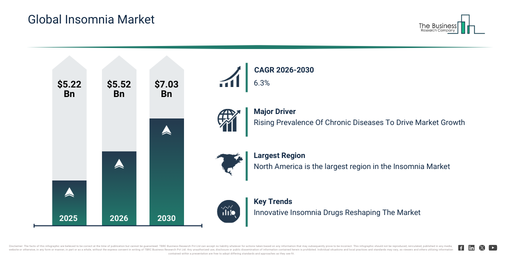
    The insomnia market has demonstrated strong growth in recent years. It is anticipated to expand from $5.22 billion in 2025 to $5.52 billion in 2026, at a compound annual growth rate (CAGR) of 5.7%. This historic growth is attributable to an increasing prevalence of sleep disorders, heightened stress and evolving lifestyle patterns, the widespread application of benzodiazepines and sedatives, rising insomnia diagnosis rates, and the expansion of sleep clinics and specialists.

    The market for insomnia treatments is projected to experience robust expansion over the coming years. This market is set to reach a valuation of $7.03 billion by 2030, exhibiting a compound annual growth rate (CAGR) of 6.3%. This anticipated growth stems from several factors, including the increased embrace of digital therapeutics, a rising demand for safer and long-term insomnia solutions, the expanding geriatric population, heightened awareness of mental health issues, and wider availability of online and retail pharmacy services. Significant trends expected during this period involve a greater uptake of non-pharmacological insomnia treatments, an increase in the application of cognitive behavioral therapy for insomnia, a developing preference for individualized sleep management, the broader implementation of combination therapy methods, and an enhanced recognition of chronic insomnia as a serious medical condition.

    Download A Free Sample Report For Comprehensive Market Insights:

    https://www.thebusinessresearchcompany.com/sample.aspx?id=12120&type=smp

    Which Growth Drivers Are Expected To Support The Insomnia Market Forward?

    The rising occurrence of chronic illnesses is anticipated to fuel the expansion of the insomnia market in the future. A chronic disease is defined as an ailment persisting for at least three months, with the potential to worsen over time. Individuals afflicted by long-term health problems like cardiovascular disorders, diabetes, and chronic pain conditions frequently encounter insomnia or other sleep disturbances as a co-occurring condition. This growing incidence generates a need for effective treatments and management approaches for insomnia, thereby stimulating the market for offerings aimed at sleep disorders. For example, data from April 2025 by the Centers for Disease Control and Prevention, a US-based federal public health agency, indicated that in 2023, 76.4% of US adults, approximately 194 million individuals, reported suffering from at least one chronic condition. The prevalence was observed to be 59.5% among young adults, 78.4% among midlife adults, and 93.0% among older adults. Consequently, the increasing prevalence of chronic diseases is a key factor propelling the growth of the insomnia market.

    How Is The Insomnia Market Examined Through Segment Analysis?

    The insomnia market covered in this report is segmented –

    1) By Therapy Type: Non-Pharmacological Therapy, Pharmacological Therapy

    2) By Drug Class: Anti-Depressants, Melatonin Antagonist, Benzodiazepines, Nonbenzodiazepines, Orexin Antagonist, Other Drug Classes

    3) By Route Of Administration: Oral, Parenteral, Other Route Of Administration

    4) By Distribution Channel: Hospital Pharmacies, Retail Pharmacies, Online Pharmacies

    Subsegments:

    1) By Non-Pharmacological Therapy: Cognitive Behavioral Therapy For Insomnia (CBT-I), Sleep Hygiene Education, Relaxation Techniques, Stimulus Control Therapy, Sleep Restriction Therapy

    2) By Pharmacological Therapy: Prescription Medications, Over-The-Counter, Herbal Supplements

    Which Trends Are Expected To Shape The Insomnia Market?

    Major companies operating in the insomnia market are actively developing novel products, such as zaleplon-based insomnia drugs, to secure a competitive advantage. Zaleplon is a non-benzodiazepine sedative-hypnotic medication specifically used for the short-term management of insomnia. For instance, in April 2023, Bukwang Pharm Co Ltd., a South Korea-based pharmaceutical company, introduced Zaledeep Cap., making it the first insomnia treatment in South Korea to utilize zaleplon as its primary ingredient. Zaleplon, a non-benzodiazepine drug with FDA approval for treating insomnia, is notable for its rapid onset of action, short half-life, and minimal interference with daily activities. With the rising incidence of insomnia in modern society, the launch of Zaledeep Cap. is expected to offer a new and effective therapeutic option, aiming to improve sleep quality and overall well-being for individuals suffering from insomnia.

    Which Organizations Are Involved In The Insomnia Market?

    Major companies operating in the insomnia market are Pfizer Inc., Merck & Co Inc., Sanofi S.A., GlaxoSmithKline plc., Takeda Pharmaceutical Company Limited, Koninklijke Philips N.V., Viatris Inc., Astellas Pharma Inc., Sun Pharmaceutical Industries Limited, Eisai Co.Ltd., UCLA Health Insomnia Clinic, Jazz Pharmaceuticals PLC, Aurobindo Pharma Limited, Purdue Pharma LP, Cipla Inc., Dr. Reddy’s Laboratories Ltd., Zydus Lifesciences Limited, Lupin Limited, Mallinckrodt Pharmaceuticals Plc., Fisher & Paykel Healthcare Corporation Limited, ResMed Inc., Sunovion Pharmaceuticals Inc., Casper Sleep Inc., Biocodex Inc., Vanda Pharmaceuticals Inc., Pernix Therapeutics Holdings Inc., SleepScore Labs, Alpha-Stim, Neurim Pharmaceuticals Ltd., NightWare Inc.

    Access The Complete Insomnia Market Report:

    https://www.thebusinessresearchcompany.com/report/insomnia-global-market-report

    Which Region Accounts For The Highest Share Of The Insomnia Market?

    North America was the largest region in the insomnia market in 2025. The regions covered in the insomnia market report are Asia-Pacific, South East Asia, Western Europe, Eastern Europe, North America, South America, Middle East, Africa.

    Access Insomnia Market Report for Deeper Competitive Insights

    https://www.thebusinessresearchcompany.com/customise?id=12120&type=smp

    Browse Through More Reports Similar to the Global Insomnia Market 2026, By The Business Research Company

    Hospitals And Outpatient Care Centers Global Market Report 2026

    https://www.thebusinessresearchcompany.com/report/hospitals-and-outpatient-care-centers-global-market-report

    Healthcare Services Market 2026

    https://www.thebusinessresearchcompany.com/report/healthcare-services-market

    Hospitals And Outpatient Care Centers Global Market Report 2026

    https://www.thebusinessresearchcompany.com/report/hospitals-and-outpatient-care-centers-global-market-report

    Get in touch with us:

    The Business Research Company: https://www.thebusinessresearchcompany.com/

    Americas: +1 310-496-7795

    Asia: +44 7882 955267 & +91 8897263534

    Europe: +44 7882 955267

    Email us at: marketing@tbrc.info

    Follow us on:

    LinkedIn: https://in.linkedin.com/company/the-business-research-company

    YouTube: https://www.youtube.com/channel/UC24_fI0rV8cR5DxlCpgmyFQ

    Global Market Model: https://www.thebusinessresearchcompany.com/global-market-model
  • In-Situ Hybridization Market Developments Influencing Industry Expansion Through 2030

    In-Situ Hybridization Market Developments Influencing Industry Expansion Through 2030

    The Business Research Company’s 2026 market reports feature enhanced tools like market attractiveness analysis, TAM assessment, and company scoring matrices, along with interactive dashboards, deeper supply chain insights, and startup coverage strengthening the depth, usability, and strategic value of insights.

    What Market Value Expansion Is Expected For The In-Situ Hybridization Market Over The Forecast Period?

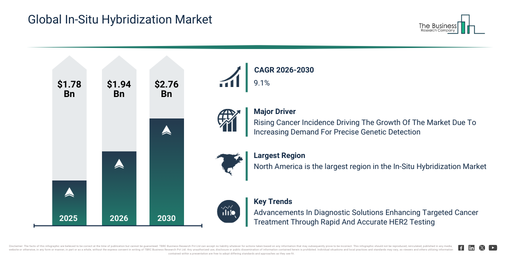
    The in-situ hybridization market has demonstrated strong expansion in recent years. It is anticipated to grow from $1.78 billion in 2025 to $1.94 billion in 2026, reflecting a compound annual growth rate (CAGR) of 9.5%. The market’s historical growth can be ascribed to the broadening of molecular pathology applications, increased testing for cancer biomarkers, a wider adoption of fluorescence microscopy, the advancement of academic genomics research, and the increasing use of ish in infectious disease investigations.

    The in-situ hybridization market is projected to experience substantial expansion over the upcoming years. This market is anticipated to reach $2.76 billion by 2030, exhibiting a compound annual growth rate (CAGR) of 9.1%. Key factors driving this growth during the projected period include the escalating demand for precision oncology diagnostics, the increasing adoption of AI-driven image analysis, the widening scope of personalized medicine research, greater investments in molecular diagnostics infrastructure, and advancements in probe technologies. Notable trends expected during the forecast period encompass the increasing uptake of multiplex ISH techniques, the growing deployment of automated slide scanning systems, an escalating need for high-resolution spatial gene expression analysis, the broadening integration of digital pathology, and a heightened emphasis on companion diagnostics.

    Download A Free Sample Report For Comprehensive Market Insights:

    https://www.thebusinessresearchcompany.com/sample.aspx?id=24571&type=smp

    What Influential Factors Are Boosting The In-Situ Hybridization Market Demand?

    The escalating occurrence of cancer is expected to drive the expansion of the in-situ hybridization market in the upcoming period. Cancer is characterized by the uncontrolled proliferation of anomalous cells that can infiltrate or metastasize to other body regions. The surge in cancer diagnoses is linked to extended lifespans, as greater age provides more opportunities for genetic changes to accumulate and for exposure to cancer-causing factors. In-situ hybridization (ISH) is crucial in managing cancer, facilitating the identification of particular genetic irregularities within cancerous cells. It aids in precise diagnosis, predicting outcomes, and informing targeted treatment choices. For example, the World Health Organization, an intergovernmental body based in Switzerland, reported in February 2024 that new cancer cases are forecast to surpass 35 million by 2050, representing a 77% rise from the projected 20 million cases in 2022. Consequently, the increasing prevalence of cancer will propel the growth of the in-situ hybridization market.

    Which Segment Groups Define The In-Situ Hybridization Market Landscape?

    The in-situ hybridization market covered in this report is segmented –

    1) By Product: Analytical Instruments, Kits And Reagents, Software And Services, Other Products

    2) By Technology: Fluorescence In Situ Hybridization, Chromogenic In Situ Hybridization, Dual-Color In Situ Hybridization

    3) By Application: Cancer Diagnosis, Cytogenetics, Developmental Biology, Infectious Diseases, Immunology, Other Applications

    4) By End User: Hospitals And Diagnostic Laboratories, Academic And Research Institutes, Contract Research Organizations, Pharmaceutical And Biotechnology Companies

    Subsegments:

    1) By Analytical Instruments: Fluorescence Microscopes, Brightfield Microscopes, Automated Slide Scanners, Hybridization Systems

    2) By Kits And Reagents: DNA Probes, RNA Probes, Labeling Kits, Detection Reagents, Pretreatment Reagents

    3) By Software And Services: Image Analysis Software, Data Management Software, Custom Probe Design Services, Sample Preparation Services

    4) By Other Products: Slides And Coverslips, Storage Reagents, Hybridization Buffers, Control Probes

    What Trends Are Affecting The In-Situ Hybridization Market Dynamics?

    Leading companies within the in-situ hybridization market are concentrating on developing advanced solutions, such as HER2 testing solutions, to assist in forecasting how patients will react to specific therapies. These HER2 testing solutions serve as diagnostic instruments for detecting the presence and concentration of the HER2 protein in cancer cells, thereby aiding in personalized treatment choices. As an illustration, in December 2023, Cytelabs, a cancer diagnostic services provider located in India, introduced dual in situ hybridization (DISH) testing specifically for breast cancer patients. The DISH technology, having received approval from the US FDA, signifies a notable progression in precise HER2 testing, which is crucial for targeted breast cancer treatment. This technology significantly reduces the waiting period by delivering HER2 status results within 24 to 48 hours, which helps alleviate the anxiety faced by patients and their families. By delivering reliable results rapidly, DISH facilitates quick treatment planning and commencement. Given that HER2 status is paramount in establishing prognosis and therapeutic approaches, accurate and efficient testing is indispensable for the thorough assessment of all invasive breast cancers.

    Who Are The Firms Contributing To The In-Situ Hybridization Market Ecosystem?

    Major companies operating in the in-situ hybridization market are F. Hoffmann-La Roche Ltd., Thermo Fisher Scientific Inc., Abbott Laboratories Inc., Danaher Corporation, Merck KGaA, Agilent Technologies Inc., PerkinElmer Inc., Bio-Rad Laboratories Inc., Qiagen NV, Bio-Techne Corporation, Leica Biosystems Nussloch GmbH, Biocare Medical LLC, BioGenex Srl, Oxford Gene Technology Inc., Creative Biolabs, Empire Genomics LLC, Abnova Corporation, BioView Ltd., Advanced Cell Diagnostics Inc., BioCat GmbH, Bio SB Inc., Genemed Biotechnologies Inc.

    Access The Complete In-Situ Hybridization Market Report:

    https://www.thebusinessresearchcompany.com/report/in-situ-hybridization-global-market-report

    Which Region Is The Primary Market For The In-Situ Hybridization Market?

    North America was the largest region in the in-situ hybridization market in 2025. Asia-Pacific is expected to be the fastest-growing region in the forecast period. The regions covered in the in-situ hybridization market report are Asia-Pacific, South East Asia, Western Europe, Eastern Europe, North America, South America, Middle East, Africa.

    Access In-Situ Hybridization Market Report for Deeper Competitive Insights

    https://www.thebusinessresearchcompany.com/customise?id=24571&type=smp

    Browse Through More Reports Similar to the Global In-Situ Hybridization Market 2026, By The Business Research Company

    Fraud Detection And Prevention Global Market Report 2026

    https://www.thebusinessresearchcompany.com/report/fraud-detection-and-prevention-global-market-report

    Ecommerce Fraud Detection And Prevention Global Market Report 2026

    https://www.thebusinessresearchcompany.com/report/ecommerce-fraud-detection-and-prevention-global-market-report

    Preoperative Infection Prevention And Wound Cleansing Devices Global Market Report 2026

    https://www.thebusinessresearchcompany.com/report/preoperative-infection-prevention-and-wound-cleansing-devices-global-market-report

    Get in touch with us:

    The Business Research Company: https://www.thebusinessresearchcompany.com/

    Americas: +1 310-496-7795

    Asia: +44 7882 955267 & +91 8897263534

    Europe: +44 7882 955267

    Email us at: marketing@tbrc.info

    Follow us on:

    LinkedIn: https://in.linkedin.com/company/the-business-research-company

    YouTube: https://www.youtube.com/channel/UC24_fI0rV8cR5DxlCpgmyFQ

    Global Market Model: https://www.thebusinessresearchcompany.com/global-market-model
  • Insect Cell Culture Market Size Forecast To Achieve $3.24 Billion By 2030 With 10.4% CAGR

    Insect Cell Culture Market Size Forecast To Achieve $3.24 Billion By 2030 With 10.4% CAGR

    The Business Research Company’s 2026 market reports feature enhanced tools like market attractiveness analysis, TAM assessment, and company scoring matrices, along with interactive dashboards, deeper supply chain insights, and startup coverage strengthening the depth, usability, and strategic value of insights.

    How Will The Market Value Of The Insect Cell Culture Market Change Between 2026 And 2030?

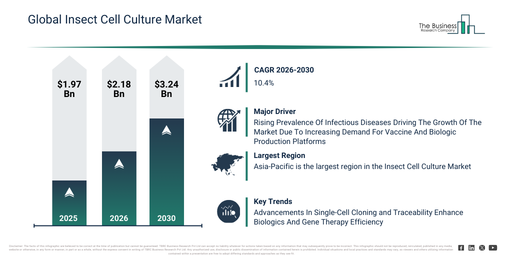
    The insect cell culture market size has experienced rapid expansion in recent years. This market is projected to expand from $1.97 billion in 2025 to $2.18 billion in 2026, exhibiting a compound annual growth rate (CAGR) of 10.7%. The surge during the historical period is attributable to the rise in recombinant protein research, the increased utilization of baculovirus expression systems, the proliferation of academic life science research, a growing embrace of insect cells in virology studies, and the accessibility of sophisticated culture reagents.

    The insect cell culture market is projected to experience substantial expansion in the coming years, anticipated to reach $3.24 billion by 2030, exhibiting a compound annual growth rate (CAGR) of 10.4%. This growth during the forecast period is driven by several factors, including the surging demand for viral vector production, the expansion of gene therapy pipelines, increased investments in biopharmaceutical manufacturing, a growing emphasis on scalable cell culture systems, and the rising adoption of automated culture platforms. Key trends anticipated over this period encompass the wider adoption of serum-free insect cell culture media, an increase in the application of insect cells for vaccine production, the escalating demand for high-yield recombinant protein expression, the proliferation of scalable bioreactor-based insect cell systems, and a heightened focus on process optimization and consistency.

    Download A Free Sample Report For Comprehensive Market Insights:

    https://www.thebusinessresearchcompany.com/sample.aspx?id=30306&type=smp

    Which Drivers Are Advancing The Insect Cell Culture Market Growth?

    The escalating prevalence of infectious diseases is poised to fuel the expansion of the insect cell culture market in the foreseeable future. These disorders originate from microorganisms like bacteria, viruses, fungi, or parasites, capable of spreading either directly or indirectly from person to person, from animals to humans, or via tainted food, water, or environmental channels. The increment in infectious diseases is primarily driven by heightened global travel, which accelerates the transmission of pathogens across diverse regions and populations. Insect cell culture plays a crucial role in tackling infectious diseases by facilitating the effective production of vaccines, viral vectors, and recombinant proteins, thereby offering a reliable and scalable framework for developing both preventive and therapeutic interventions. A case in point is the report from March 2025 by the UK Health Security Agency (UKHSA), a UK-based government entity focused on public health and infectious disease preparedness, which indicated that reported tuberculosis (TB) cases in England rose by 13% to 5,480 in 2024, an increase from 4,850 cases in 2023, showcasing a significant year-over-year rise in incidence. Thus, the growing prevalence of infectious diseases is a significant impetus for the growth of the insect cell culture market.

    What Key Segment Areas Are Included In The Insect Cell Culture Market Assessment?

    The insect cell culture market covered in this report is segmented –

    1) By Product Type: Media, Reagents, Sera, Equipment

    2) By Cell Type: S19 (Spodoptera Frugiperda), High Five (Trichoplusia Ni), Sf21 (Spodoptera Frugiperda), Drosophila Schneider 2 (s2)

    3) By Application: Biopharmaceutical Manufacturing, Gene Therapy, Tissue Culture And Engineering, Cytogenetics

    4) By End-User: Pharmaceutical And Biotechnology Companies, Academic And Research Institutes, Contract Research Organizations

    Subsegments:

    1) By Media: Growth Media, Serum-Free Media, Protein-Free Media, Chemically Defined Media, Specialty Media, Custom Media Formulations

    2) By Reagents: Attachment Factors, Dissociation Reagents, Buffers And Salts, Cryoprotectants, Antibiotics And Antimycotics, Transfection Reagents, Supplements

    3) By Sera: Fetal Bovine Serum (FBS), Insect-Derived Serum, Hybridoma Serum, Serum Substitutes, Heat-Inactivated Serum

    4) By Equipment: Bioreactors, Cell Culture Flasks And Plates, Shakers And Incubators, Centrifuges, Microscopes And Imaging Systems, Filtration Systems, Automated Cell Counters, Cryogenic Storage Systems

    Which Trends Are Influencing The Expansion Of The Insect Cell Culture Market?

    Leading companies within the insect cell culture sector are prioritizing advancements in insect cell culture technology, specifically focusing on single-cell cloning and traceability. These efforts aim to enhance product uniformity, boost bioprocessing effectiveness, and ensure adherence to regulations for advanced biologics and gene therapy uses. Single-cell cloning and traceability defines a cell culture methodology where individual cells are isolated to produce genetically homogeneous cell lines, alongside maintaining comprehensive records of their origin, handling, and developmental history to guarantee consistency, quality control, and regulatory compliance. As an illustration, in June 2023, Expression Systems, a US-based firm specializing in cell culture media, introduced the sf9 rv-free insect cell line, made available for research use through early-access. This rhabdovirus-free cell line, cultivated in suspension, is tailored for the ESF advanced chemically defined insect cell culture medium, achieving swift proliferation, over 95% viability, and substantial cell densities within a five-day period. It is well-suited for the generation of recombinant proteins, adeno-associated viruses (AAV), and virus-like particles (VLPs), thereby supporting applications in gene therapy and viral vaccines. The cells are cloned utilizing single-cell printing and come complete with detailed protocols, full traceability, and necessary regulatory documentation.

    Which Key Players Are Active In The Insect Cell Culture Market?

    Major companies operating in the insect cell culture market are Thermo Fisher Scientific Inc., Danaher Corporation, Merck KGaA, GE Healthcare, Becton, Dickinson and Company, Corning Incorporated, Lonza Group Ltd., Charles River Laboratories, Sartorius AG, Wuxi Biologics, QIAGEN N.V., Eppendorf AG, Novavax Inc., Takara Bio Inc., GenScript Biotech Corporation, Promega Corporation, HiMedia Laboratories Pvt. Ltd., Cell Culture Company, Trenzyme, Proteogenix.

    Access The Complete Insect Cell Culture Market Report:

    https://www.thebusinessresearchcompany.com/report/global-insect-cell-culture-market-report

    Which Geographic Region Represents The Largest Insect Cell Culture Market Share?

    Asia-Pacific was the largest region in the insect cell culture market in 2025, and it is expected to be the fastest-growing region in the forecast period. The regions covered in the insect cell culture market report are Asia-Pacific, South East Asia, Western Europe, Eastern Europe, North America, South America, Middle East, Africa.

    Access Insect Cell Culture Market Report for Deeper Competitive Insights

    https://www.thebusinessresearchcompany.com/customise?id=30306&type=smp

    Browse Through More Reports Similar to the Global Insect Cell Culture Market 2026, By The Business Research Company

    Retinal Biologics Global Market Report 2026

    https://www.thebusinessresearchcompany.com/report/retinal-biologics-global-market-report

    Age Related Macular Degeneration Global Market Report 2026

    https://www.thebusinessresearchcompany.com/report/age-related-macular-degeneration-global-market-report

    Anemia And Other Blood Disorder Drugs Global Market Report 2026

    https://www.thebusinessresearchcompany.com/report/anemia-and-other-blood-disorder-drugs-global-market-report

    Get in touch with us:

    The Business Research Company: https://www.thebusinessresearchcompany.com/

    Americas: +1 310-496-7795

    Asia: +44 7882 955267 & +91 8897263534

    Europe: +44 7882 955267

    Email us at: marketing@tbrc.info

    Follow us on:

    LinkedIn: https://in.linkedin.com/company/the-business-research-company

    YouTube: https://www.youtube.com/channel/UC24_fI0rV8cR5DxlCpgmyFQ

    Global Market Model: https://www.thebusinessresearchcompany.com/global-market-model
  • Inpatient Services Market Forecast Covering Industry Demand And Market Evolution

    Inpatient Services Market Forecast Covering Industry Demand And Market Evolution

    The Business Research Company’s 2026 market reports feature enhanced tools like market attractiveness analysis, TAM assessment, and company scoring matrices, along with interactive dashboards, deeper supply chain insights, and startup coverage strengthening the depth, usability, and strategic value of insights.

    What Is The Forecasted Rise In Market Size Of The Inpatient Services Market During The Forecast Period?

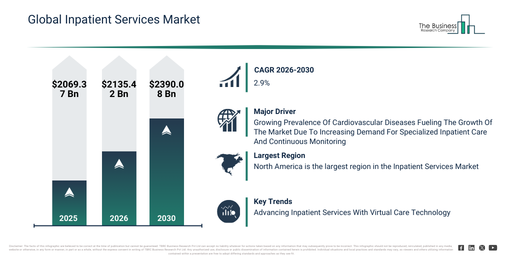
    The inpatient services market size has demonstrated consistent expansion in recent years. This market is projected to grow from $2069.37 billion in 2025 to $2135.42 billion in 2026, exhibiting a compound annual growth rate (CAGR) of 3.2%. The growth observed in the historic period can be attributed to factors like an aging population’s increase, the rising prevalence of chronic diseases, the expansion of hospital infrastructure, increased utilization of inpatient surgical services, and the availability of skilled healthcare professionals.

    The inpatient services market is projected to experience consistent growth in the coming years, reaching $2390.08 billion by 2030, with a compound annual growth rate (CAGR) of 2.9%. This expansion during the forecast period is attributable to several factors, including heightened investments in smart hospitals, a growing demand for customized inpatient care, the proliferation of value-based care models, the increasing adoption of remote patient monitoring, and rising healthcare expenditures. Key trends expected during this period involve the greater integration of advanced inpatient monitoring technologies, an uptick in demand for specialized acute care, the expanding integration of digital health systems, the broadening of multidisciplinary care approaches, and a stronger emphasis on patient-centric care delivery.

    Download A Free Sample Report For Comprehensive Market Insights:

    https://www.thebusinessresearchcompany.com/sample.aspx?id=25797&type=smp

    What Primary Factors Are Fueling The Expansion Of The Inpatient Services Market?

    The increasing prevalence of cardiovascular diseases is projected to propel the expansion of the inpatient services market. These conditions involve a range of disorders affecting the heart and blood vessels, including ailments such as coronary artery disease, heart failure, arrhythmias, and stroke. The rise in cardiovascular diseases is largely attributed to sedentary lifestyles, which contribute to obesity, compromised heart health, and an elevated risk of hypertension and diabetes. Patients with cardiovascular disease fuel the necessity for inpatient services by requiring hospital admissions for procedures, continuous monitoring, and urgent medical intervention, thus increasing the demand for beds, specialized healthcare professionals, and advanced treatment equipment. For instance, according to the Centers for Disease Control and Prevention (CDC), a US-based federal agency, in October 2024, it was reported that in 2023, cardiovascular disease accounted for 919,032 deaths, making up approximately one in every three deaths. Therefore, the expanding occurrence of cardiovascular diseases is a significant driver for the growth of the inpatient services market.

    How Is Segment Classification Applied In The Inpatient Services Market?

    The inpatient services market covered in this report is segmented –

    1) By Service: Acute Care Services, Chronic Disease Management, Rehabilitation Services, Psychiatric Services, Palliative Care

    2) By Treatment: Cardiovascular Disorders, Cancer, Musculoskeletal Diseases, Emergency And Trauma, Respiratory Disorder, Gastroenterology, Central Nervous System Disorders, Pregnancy And Postpartum Care, Urology And Nephrology Disorders, Other Treatments

    3) By Specialty: Cardiology, Oncology, Orthopedic, Neurology, General Medicine

    4) By Ownership: Publicly Or Government-Owned, Not-For-Profit Privately Owned, For-Profit Privately Owned

    5) By End User: Patients, Healthcare Providers, Other End Users

    Subsegments:

    1) By Acute Care Services: Emergency Care, Intensive Care Unit (ICU) Services, Surgical Care, Trauma Care, Post-Operative Care

    2) By Chronic Disease Management: Diabetes Management, Cardiovascular Disease Management, Chronic Respiratory Disease Care, Renal Disease Management, Cancer Care Management

    3) By Rehabilitation Services: Physical Therapy, Occupational Therapy, Speech And Language Therapy, Neurological Rehabilitation, Orthopedic Rehabilitation

    4) By Psychiatric Services: Inpatient Psychiatric Hospitals, Substance Abuse And Detoxification Services, Geriatric Psychiatric Services, Adolescent And Child Psychiatry, Dual Diagnosis Treatment

    5) By Palliative Care: Hospice Care, Pain And Symptom Management, End-Of-Life Care, Bereavement Support, Hospital-Integrated Palliative Care Programs

    Which Trends Are Expected To Shape The Inpatient Services Market?

    Companies operating within the inpatient services market are increasingly focusing on sophisticated technologies like inpatient television integration to deliver virtual care, which aids in remote clinical tasks and reduces staff workload. This integration allows hospitals to transform their in-room televisions into versatile care tools, facilitating remote observation, patient interviews, educational content delivery, and discharge coordination, thereby enhancing operational flexibility for care teams. For instance, in November 2023, Oneview Healthcare, an Ireland-based health-tech company, launched the latest version of its Care Experience Platform (CXP), which includes the new Virtual Care API. This API enables hospitals to utilize Oneview’s patient television system for inpatient virtual care, covering aspects such as virtual observation and remote nursing support. This upgrade also ensures smooth integration with third-party virtual care solutions, allowing clinicians to initiate telehealth sessions directly from the electronic medical record (EMR). The platform supports both scheduled and on-demand video consultations, thereby improving accessibility and the efficiency of care delivery.

    Who Are The Leading Firms Participating In The Inpatient Services Market?

    Major companies operating in the inpatient services market are Kaiser Permanente, HCA Healthcare, Ascension Health, Fresenius Medical Care, Tenet Healthcare Corporation, Sutter Health, Mayo Clinic, Cleverland Clinic, Universal Health Services Inc., Community Health Systems (CHS), Advent Health, NewYork-Presbyterian Hospital, Ramsay Healthcare, Massachusetts General Hospital, UCLA Medical Centers, Cedars-Sinai, Mediclinic International, The Hospitals Contribution Fund of Australia Limited, The Johns Hopkins Hospital, Bangkok Dusit Medical Services, Singapore Health Services, Life Healthcare Group, Keio University (Medical Services), Burjeel Holdings, THE ROYAL MELBOURNE HOSPITAL, Fortis Healthcare, Apollo Hospitals Enterprise Ltd., West Suffolk NHS Foundation Trust, Royal Papworth Hospital NHS Foundation Trust, Max Healthcare.

    Access The Complete Inpatient Services Market Report:

    https://www.thebusinessresearchcompany.com/report/inpatient-services-global-market-report

    Which Region Leads The Inpatient Services Market By Size?

    North America was the largest region in the inpatient services market in 2025. Asia-Pacific is expected to be the fastest-growing region in the forecast period. The regions covered in the inpatient services market report are Asia-Pacific, South East Asia, Western Europe, Eastern Europe, North America, South America, Middle East, Africa.

    Access Inpatient Services Market Report for Deeper Competitive Insights

    https://www.thebusinessresearchcompany.com/customise?id=25797&type=smp

    Browse Through More Reports Similar to the Global Inpatient Services Market 2026, By The Business Research Company

    Molecular Spectroscopy Global Market Report 2026

    https://www.thebusinessresearchcompany.com/report/molecular-spectroscopy-global-market-report

    Ultravioletvisible Spectroscopy Global Market Report 2026

    https://www.thebusinessresearchcompany.com/report/ultravioletvisible-spectroscopy-global-market-report

    Infrared Thermometers Global Market Report 2026

    https://www.thebusinessresearchcompany.com/report/infrared-thermometers-global-market-report

    Get in touch with us:

    The Business Research Company: https://www.thebusinessresearchcompany.com/

    Americas: +1 310-496-7795

    Asia: +44 7882 955267 & +91 8897263534

    Europe: +44 7882 955267

    Email us at: marketing@tbrc.info

    Follow us on:

    LinkedIn: https://in.linkedin.com/company/the-business-research-company

    YouTube: https://www.youtube.com/channel/UC24_fI0rV8cR5DxlCpgmyFQ

    Global Market Model: https://www.thebusinessresearchcompany.com/global-market-model
  • Injury Prevention Service Market Trends And Growth Outlook Across The 2026–2030 Forecast Period

    Injury Prevention Service Market Trends And Growth Outlook Across The 2026–2030 Forecast Period

    The Business Research Company’s 2026 market reports feature enhanced tools like market attractiveness analysis, TAM assessment, and company scoring matrices, along with interactive dashboards, deeper supply chain insights, and startup coverage strengthening the depth, usability, and strategic value of insights.

    How Is The Injury Prevention Service Market’s Market Value Anticipated To Evolve From 2026 To 2030?

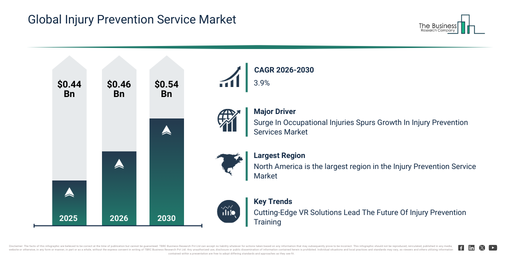
    The injury prevention service market size has consistently expanded in recent years. It is forecast to grow from $0.44 billion in 2025 to $0.46 billion in 2026, exhibiting a compound annual growth rate (CAGR) of 4.3%. This historical growth can be attributed to several factors, including heightened workplace safety awareness, the expansion of occupational health services, increasing regulatory safety requirements, the wider adoption of ergonomic standards, and a stronger employer focus on injury reduction.

    The injury prevention service market is projected to experience consistent expansion in the coming years. It is anticipated to reach $0.54 billion by 2030, exhibiting a compound annual growth rate (CAGR) of 3.9%. This anticipated growth stems from several factors, including heightened investments in preventive healthcare, a surge in the adoption of digital safety monitoring tools, the broadening scope of corporate wellness programs, an increasing need for tailored injury prevention solutions, and a stronger emphasis on long-term workforce well-being. Key developments foreseen for this period encompass the wider implementation of data-driven injury risk evaluations, an escalating need for workplace safety training, the greater incorporation of ergonomic consulting services, the proliferation of preventive health and wellness initiatives, and an intensified focus on adherence monitoring.

    Download A Free Sample Report For Comprehensive Market Insights:

    https://www.thebusinessresearchcompany.com/sample.aspx?id=19529&type=smp

    Which Strategic Drivers Are Supporting The Injury Prevention Service Market Development?

    The increasing prevalence of occupational injuries is projected to fuel the expansion of the injury prevention service market in the foreseeable future. Occupational injuries are defined as any physical harm or health issues that arise from activities or conditions in the workplace. This upward trend in occupational injuries is frequently attributed to inadequate safety provisions, insufficient training, and the accelerated pace or heightened demands of work environments. Injury prevention services are essential for addressing this rise in workplace incidents by implementing proactive safety strategies, delivering training, and identifying as well as mitigating potential hazards. For example, in November 2024, the US Bureau of Labor Statistics, a US-based government agency, indicated that in 2023, private industry employers recorded 2.6 million nonfatal workplace injuries and illnesses, underscoring a significant and continuous necessity for workplace safety interventions. Thus, the escalating number of occupational injuries is set to propel the growth of the injury prevention services market.

    What Are The Core Segment Classifications In The Injury Prevention Service Market?

    The injury prevention service market covered in this report is segmented –

    1) By Service Type: Safety Training, Risk Assessments, Ergonomic Consultations, Preventive Measures Implementation

    2) By Application: Schools, Fire Departments, Community Groups, Other Applications

    3) By End User: Hospitals, Occupational Therapists, Physiotherapy Centers, Rehabilitation Centers, Sports Centers

    Subsegments:

    1) By Safety Training: Workplace Safety Training Programs, First Aid And CPR Training, Hazard Recognition Training

    2) By Risk Assessments: Workplace Safety Audits, Job Hazard Analyses, Environmental Risk Assessments

    3) By Ergonomic Consultations: Ergonomic Workplace Evaluations, Ergonomic Equipment Recommendations, Custom Ergonomic Solutions

    4) By Preventive Measures Implementation: Safety Policy Development, Incident Reporting Systems, Health and Wellness Programs

    Which Trends Are Affecting The Injury Prevention Service Market Framework?

    Major companies operating within the injury prevention service market are concentrating on developing sophisticated solutions, such as immersive simulation training, to elevate safety instruction by duplicating realistic hazardous scenarios in a controlled environment. Immersive simulation training leverages virtual reality (VR) to establish highly realistic, interactive settings where trainees can refine skills and navigate situations that closely resemble real-life conditions. For example, in January 2024, Technological University (TU) Dublin, an Ireland-based higher education institution providing a range of academic programs, and BioPharmaChem Skillnet, an Ireland-based network dedicated to offering upskilling and development solutions, unveiled a new Virtual Reality (VR) program for workplace health and safety training. This VR program significantly enhances workplace health and safety training by delivering immersive, true-to-life simulations, allowing employees to practice and grasp safety protocols in a secure environment. This cutting-edge approach seeks to boost knowledge retention, shorten training periods, and address complex safety challenges across diverse industries.

    Which Companies Are Engaged In The Injury Prevention Service Market Environment?

    Major companies operating in the injury prevention service market are Cintas Corporation, Concentra Inc., IPAR Rehabilitation Pty Ltd, Total Safety U.S. Inc., Medcor Inc., Briotix Health LP, Fit For Work LLC, Work-Fit LLC, Safety Management Group Inc., Axiom Medical Consulting LLC, KINNECT Pty Ltd, Safety Services Company, ATI Worksite Solutions LLC, The Back School of Atlanta LLC, EHS Support LLC, BIOKINETIX LLC, WorkWell Prevention & Care Inc., Atlas Injury Prevention Solutions LLC, SafeStart International Inc., ErgoPlus Inc., Champion Sports Medicine LLC, HealthWorks Inc., ErgoScience Inc., Preventure Inc., DORN Companies LLC

    Access The Complete Injury Prevention Service Market Report:

    https://www.thebusinessresearchcompany.com/report/injury-prevention-service-global-market-report

    Which Region Has The Strongest Presence In The Injury Prevention Service Market?

    North America was the largest region in the injury prevention service market in 2025. The regions covered in the injury prevention service market report are Asia-Pacific, South East Asia, Western Europe, Eastern Europe, North America, South America, Middle East, Africa.

    Access Injury Prevention Service Market Report for Deeper Competitive Insights

    https://www.thebusinessresearchcompany.com/customise?id=19529&type=smp

    Browse Through More Reports Similar to the Global Injury Prevention Service Market 2026, By The Business Research Company

    Healthcare It Integration Global Market Report 2026

    https://www.thebusinessresearchcompany.com/report/healthcare-it-integration-global-market-report

    Healthcare Technology Global Market Report 2026

    https://www.thebusinessresearchcompany.com/report/healthcare-technology-global-market-report

    Defense It Spending Global Market Report 2026

    https://www.thebusinessresearchcompany.com/report/defense-it-spending-global-market-report

    Get in touch with us:

    The Business Research Company: https://www.thebusinessresearchcompany.com/

    Americas: +1 310-496-7795

    Asia: +44 7882 955267 & +91 8897263534

    Europe: +44 7882 955267

    Email us at: marketing@tbrc.info

    Follow us on:

    LinkedIn: https://in.linkedin.com/company/the-business-research-company

    YouTube: https://www.youtube.com/channel/UC24_fI0rV8cR5DxlCpgmyFQ

    Global Market Model: https://www.thebusinessresearchcompany.com/global-market-model
  • Inherited Retinal Disease Market Expansion Outlook Through 2030 With Revenue Growth Insights

    Inherited Retinal Disease Market Expansion Outlook Through 2030 With Revenue Growth Insights

    The Business Research Company’s 2026 market reports feature enhanced tools like market attractiveness analysis, TAM assessment, and company scoring matrices, along with interactive dashboards, deeper supply chain insights, and startup coverage strengthening the depth, usability, and strategic value of insights.

    By 2030, How Much Growth In Market Size Is Expected For The Inherited Retinal Disease Market?

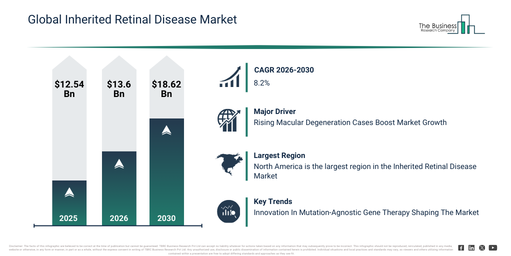
    The inherited retinal disease market size has witnessed substantial expansion in recent years. This market is set to increase from $12.54 billion in 2025 to $13.6 billion in 2026, exhibiting a compound annual growth rate (CAGR) of 8.4%. The expansion observed in the historic period can be ascribed to several factors, including the identification of disease-causing retinal genes, continuous advancements in retinal imaging technologies, a heightened awareness of inherited eye disorders, the establishment and growth of specialized ophthalmology clinics, and the availability of public and private funding for rare disease research.

    The inherited retinal disease market is anticipated to experience robust expansion in the coming years, projected to reach $18.62 billion in 2030, demonstrating a compound annual growth rate (CAGR) of 8.2%. This growth over the forecast period is largely driven by advancements in gene therapy platforms, a rise in approvals for novel retinal therapies, the increasing availability of genetic screening programs, the expansion of precision medicine initiatives, and growing investment in rare ophthalmic disease pipelines. Prominent trends expected during this forecast period include the increasing adoption of genetic testing for early diagnosis, a heightened focus on gene and cell-based therapies, the broadening of personalized treatment approaches, an increase in clinical trials for rare retinal disorders, and improved patient access to advanced retinal imaging.

    Download A Free Sample Report For Comprehensive Market Insights:

    https://www.thebusinessresearchcompany.com/sample.aspx?id=20850&type=smp

    What Major Growth Factors Are Impacting The Inherited Retinal Disease Market?

    The rising occurrence of macular degeneration is anticipated to drive the expansion of the inherited retinal disease market moving forward. Macular degeneration is an age-related ophthalmic condition that damages the macula, leading to central vision impairment and difficulties with activities like reading or recognizing faces. The increasing incidence of macular degeneration is propelled by aging populations, longer life expectancies, and lifestyle factors such as smoking and poor nutrition, which escalate the risk. Treatment for inherited retinal disease benefits macular degeneration patients by targeting the fundamental genetic causes of retinal degeneration, offering therapies that can slow disease progression, restore lost vision, or even prevent additional damage to the retina, ultimately improving visual results and quality of life for individuals impacted by age-related or inherited types of macular degeneration. For instance, in February 2024, the Canadian Ophthalmological Society, a Canada-based nonprofit organization, reported that 2.5 million people in Canada aged over 55 lose their vision due to age-related macular degeneration (AMD). Consequently, the increasing prevalence of macular degeneration is fueling the growth of the inherited retinal disease market.

    How Is The Inherited Retinal Disease Market Structured Across Different Market Segments?

    The inherited retinal disease market covered in this report is segmented –

    1) By Type: Diagnosis, Therapy

    2) By Disease Type: Retinitis Pigmentosa, Choroideremia, Stargardt Disease, Cone-rod Dystrophy, Leber Congenital Amaurosis, Other Diseases

    3) By Distribution Channel: Retail Sales, Direct Tender

    4) By End User: Hospitals, Speciality Clinics, Ambulatory Surgical Centres, Home Healthcare, Other End Users

    Subsegments:

    1) By Diagnosis: Genetic Testing, Retinal Imaging, Electrophysiological Testing (Electroretinography), Visual Field Testing, Fundus Autofluorescence Imaging

    2) By Therapy: Gene Therapy, Stem Cell Therapy, Retinal Prosthesis (Artificial Retina), Pharmacological Therapy, Photoreceptor Rescue Therapy

    What Trends Are Influencing The Inherited Retinal Disease Market?

    Leading companies in the inherited retinal diseases market are concentrating on developing innovative treatments, such as mutation-agnostic gene therapy, to offer inclusive treatment options and address a wider array of genetic variations linked to these conditions. Mutation-agnostic gene therapy represents a treatment approach that targets broader genetic mechanisms or pathways, rather than specific mutations, making it applicable across diverse genetic disorders. For instance, in March 2024, Nanoscope Therapeutics Inc, a US-based biotechnology company, reported favorable results from a clinical trial of its flagship program, MCO-010, demonstrating vision improvements for patients experiencing permanent and severe vision loss due to advanced retinitis pigmentosa. MCO-010 achieved both its primary and key secondary endpoints with statistical significance and no serious adverse events.

    Who Are The Prominent Players Across The Inherited Retinal Disease Market?

    Major companies operating in the inherited retinal disease market are Johnson & Johnson, Novartis AG, Astellas Pharma Inc., Biogen Inc., Ionis Pharmaceuticals Inc., Invitae Corporation, Spark Therapeutics, Aldeyra Therapeutics, Regenxbio Inc., IVERIC bio, MeiraGTx Limited, Ocugen Inc., Coave Therapeutics, Bionic Vision Technologies, GenSight Biologics SA, LKC Technologies Inc., Sparing Vision, ProQR Therapeutics NV, Endogena Therapeutics

    Access The Complete Inherited Retinal Disease Market Report:

    https://www.thebusinessresearchcompany.com/report/inherited-retinal-disease-global-market-report

    Which Region Stands As The Largest Contributor To The Inherited Retinal Disease Market?

    North America was the largest region in the inherited retinal disease market in 2025. Asia-Pacific is expected to be the fastest-growing region in the forecast period. The regions covered in the inherited retinal disease market report are Asia-Pacific, South East Asia, Western Europe, Eastern Europe, North America, South America, Middle East, Africa.

    Access Inherited Retinal Disease Market Report for Deeper Competitive Insights

    https://www.thebusinessresearchcompany.com/customise?id=20850&type=smp

    Browse Through More Reports Similar to the Global Inherited Retinal Disease Market 2026, By The Business Research Company

    Influenza Vaccines Global Market Report 2026

    https://www.thebusinessresearchcompany.com/report/influenza-vaccines-global-market-report

    Influenza Treatment Global Market Report 2026

    https://www.thebusinessresearchcompany.com/report/influenza-treatment-global-market-report

    Infectious Disease Diagnostics Testing Global Market Report 2026

    https://www.thebusinessresearchcompany.com/report/infectious-disease-diagnostics-testing-global-market-report

    Get in touch with us:

    The Business Research Company: https://www.thebusinessresearchcompany.com/

    Americas: +1 310-496-7795

    Asia: +44 7882 955267 & +91 8897263534

    Europe: +44 7882 955267

    Email us at: marketing@tbrc.info

    Follow us on:

    LinkedIn: https://in.linkedin.com/company/the-business-research-company

    YouTube: https://www.youtube.com/channel/UC24_fI0rV8cR5DxlCpgmyFQ

    Global Market Model: https://www.thebusinessresearchcompany.com/global-market-model
  • Infrared And Terahertz Spectroscopy Market Industry Analysis Covering Trends, Drivers, And Future Outlook

    Infrared And Terahertz Spectroscopy Market Industry Analysis Covering Trends, Drivers, And Future Outlook

    The Business Research Company’s 2026 market reports feature enhanced tools like market attractiveness analysis, TAM assessment, and company scoring matrices, along with interactive dashboards, deeper supply chain insights, and startup coverage strengthening the depth, usability, and strategic value of insights.

    What Market Value Trend Is Expected For The Infrared And Terahertz Spectroscopy Market From 2026 To 2030?

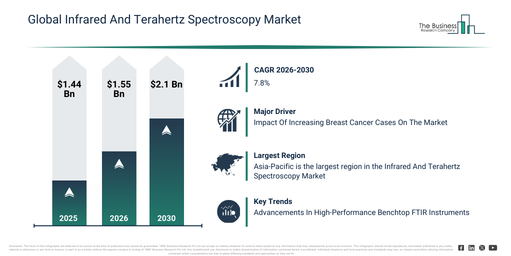
    The infrared and terahertz spectroscopy market has demonstrated robust expansion over recent years. Its value is projected to increase from $1.44 billion in 2025 to $1.55 billion by 2026, reflecting a compound annual growth rate (CAGR) of 8.1%. Historically, this market’s growth can be attributed to the rise in analytical chemistry applications, the greater adoption of spectroscopy in academic research, the expansion of semiconductor manufacturing, an escalating demand for material quality assurance, and ongoing advancements in infrared detector technologies.

    The infrared and terahertz spectroscopy market is anticipated to experience substantial expansion over the coming years. This market is predicted to reach a valuation of $2.1 billion by 2030, exhibiting a compound annual growth rate (CAGR) of 7.8%. Factors contributing to this growth during the projection period include the increasing use of terahertz spectroscopy for security screening, a heightened demand for inline industrial inspection methods, the broadening scope of biomedical spectroscopy applications, growing investments in sophisticated research tools, and an enhanced emphasis on non-contact testing solutions. Key trends anticipated within the forecast timeframe encompass the expanding integration of non-destructive testing methodologies, a surging requirement for material characterization and quality assurance, the widening application of spectroscopy in semiconductor analysis, the increasing deployment of portable and handheld spectroscopy devices, and breakthroughs in high-resolution molecular identification.

    Download A Free Sample Report For Comprehensive Market Insights:

    https://www.thebusinessresearchcompany.com/sample.aspx?id=20848&type=smp

    What Market Drivers Are Helping Shape The Infrared And Terahertz Spectroscopy Market Expansion?

    The rising incidence of breast cancer is anticipated to fuel the expansion of the infrared and terahertz spectroscopy market in the future. Breast cancer refers to a malignancy that originates in the cells of the breast. This growing prevalence is linked to various factors such as an aging population, genetic predisposition, hormonal influences, unhealthy lifestyles, environmental exposures, and more effective detection methods. Infrared and terahertz spectroscopy prove valuable for breast cancer management as they facilitate early detection and monitoring of tumors through the analysis of tissue properties. For example, in February 2025, the International Agency for Research on Cancer (IARC), a France-based intergovernmental agency, indicated that 1 in 20 women worldwide will be diagnosed with breast cancer in their lifetime, and if current rates continue, the annual number of new breast-cancer cases worldwide is projected to reach 3.2 million by 2050. Hence, the increasing prevalence of breast cancer significantly propels the infrared and terahertz spectroscopy market.

    Which Segment-Based Categories Are Covered In The Infrared And Terahertz Spectroscopy Market?

    The infrared and terahertz spectroscopy market covered in this report is segmented –

    1) By Type: Near-Infrared Radiation, Mid-Infrared Radiation, Far-Infrared Radiation

    2) By Technology: Benchtop, Microscopy, Portable And Handheld, Hyphenated

    3) By Application: Semiconductors, Homeland Security, Non-Destructive Testing, Research And Development

    4) By End User: Pharmaceuticals And Biotechnology, Industrial Chemistry, Food And Beverage Testing, Environmental Testing, Other End-Users

    Subsegments:

    1) By Near-Infrared Radiation: Fourier Transform Near-Infrared (FT-NIR) Spectroscopy, Dispersive Near-Infrared (DNIR) Spectroscopy

    2) By Mid-Infrared Radiation: Fourier Transform Mid-Infrared (FT-MIR) Spectroscopy, Tunable Diode Laser (TDL) Spectroscopy

    3) By Far-Infrared Radiation: Terahertz Spectroscopy, Time-Domain Terahertz Spectroscopy, Frequency-Domain Terahertz Spectroscopy

    Which Trends Are Guiding The Development Of The Infrared And Terahertz Spectroscopy Market?

    Major companies operating in the infrared and terahertz spectroscopy market are focusing on developing innovative, high-performance benchtop FTIR instruments to satisfy the increasing demand for precise, reliable, and cost-effective analytical solutions across various industries, including pharmaceuticals, environmental monitoring, materials science, and food quality control. High-performance benchtop FTIR (Fourier Transform Infrared) instruments are advanced, compact spectrometers utilized for analyzing the infrared spectrum of materials. For instance, in March 2023, Edinburgh Instruments, a Scotland-based company manufacturing molecular spectroscopy products, launched the IR5 FTIR Spectrometer. The instrument is designed for user-friendliness across all skill levels, from beginners to advanced researchers. It incorporates moisture control technology that does not require maintenance. The IR5 is equipped with modern software, Miracle, specifically designed for its operation, which streamlines every aspect of the experimental process, from setup to data analysis and reporting.

    Which Companies Form The Competitive Landscape Of The Infrared And Terahertz Spectroscopy Market?

    Major companies operating in the infrared and terahertz spectroscopy market are Hamamatsu Photonics K.K., Thermo Fisher Scientific Inc., Boston Electronics Corporation, Agilent Technologies Inc., Advantest Corporation, PerkinElmer Holdings Inc., Shimadzu Corporation, Bruker Corporation, Horiba Ltd., HÜBNER GmbH & Co. KG, Novanta Inc., TOPTICA Photonics AG, JASCO Corporation, Menlo Systems GmbH, TeraView Limited, Spectra Quest Lab Inc., TERASENSE GROUP INC., QMC Instruments Ltd., Zomega Terahertz Corporation.

    Access The Complete Infrared And Terahertz Spectroscopy Market Report:

    https://www.thebusinessresearchcompany.com/report/infrared-and-terahertz-spectroscopy-global-market-report

    What Is The Largest Regional Market In The Infrared And Terahertz Spectroscopy Market?

    Asia-Pacific was the largest region in the infrared and terahertz spectroscopy market in 2025. The regions covered in the infrared and terahertz spectroscopy market report are Asia-Pacific, South East Asia, Western Europe, Eastern Europe, North America, South America, Middle East, Africa.

    Access Infrared And Terahertz Spectroscopy Market Report for Deeper Competitive Insights

    https://www.thebusinessresearchcompany.com/customise?id=20848&type=smp

    Browse Through More Reports Similar to the Global Infrared And Terahertz Spectroscopy Market 2026, By The Business Research Company

    Fertility Drugs Global Market Report 2026

    https://www.thebusinessresearchcompany.com/report/fertility-drugs-global-market-report

    Fertility Treatments Global Market Report 2026

    https://www.thebusinessresearchcompany.com/report/fertility-treatments-global-market-report

    Assisted Reproductive Technology Global Market Report 2026

    https://www.thebusinessresearchcompany.com/report/assisted-reproductive-technology-global-market-report

    Get in touch with us:

    The Business Research Company: https://www.thebusinessresearchcompany.com/

    Americas: +1 310-496-7795

    Asia: +44 7882 955267 & +91 8897263534

    Europe: +44 7882 955267

    Email us at: marketing@tbrc.info

    Follow us on:

    LinkedIn: https://in.linkedin.com/company/the-business-research-company

    YouTube: https://www.youtube.com/channel/UC24_fI0rV8cR5DxlCpgmyFQ

    Global Market Model: https://www.thebusinessresearchcompany.com/global-market-model
  • Information Technology (IT) Spending In Healthcare Market Forecast Assessing Growth Potential And Industry Direction

    Information Technology (IT) Spending In Healthcare Market Forecast Assessing Growth Potential And Industry Direction

    The Business Research Company’s 2026 market reports feature enhanced tools like market attractiveness analysis, TAM assessment, and company scoring matrices, along with interactive dashboards, deeper supply chain insights, and startup coverage strengthening the depth, usability, and strategic value of insights.

    How Does The Forecasted Market Size Of The Information Technology (IT) Spending In Healthcare Market Compare Between 2026 And 2030?

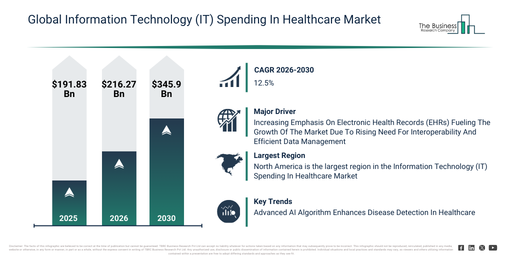
    The information technology (it) spending in healthcare market size has experienced swift expansion recently. This market is projected to expand from $191.83 billion in 2025 to $216.27 billion by 2026, demonstrating a compound annual growth rate (CAGR) of 12.7%. During the historic period, this growth can be attributed to rising digitization of healthcare records, increasing adoption of electronic health records, expansion of hospital information systems, growing demand for administrative automation, and rising regulatory requirements for data security.

    The information technology (IT) spending in healthcare market is set to experience rapid expansion over the next few years. It is forecast to grow to $345.9 billion by 2030, demonstrating a compound annual growth rate (CAGR) of 12.5%. The projected growth during this period can be attributed to a rising need for data-driven clinical decision-making, the expansion of telemedicine infrastructure, increasing investments in AI-enabled healthcare systems, a heightened focus on interoperable health data platforms, and a growing demand for advanced cybersecurity frameworks. Significant trends for the forecast period include the increasing adoption of cloud-based healthcare platforms, rising investment in healthcare cybersecurity solutions, the expanding use of advanced healthcare analytics tools, the proliferation of interoperable digital health systems, and an enhanced focus on IT-enabled operational efficiency.

    Download A Free Sample Report For Comprehensive Market Insights:

    https://www.thebusinessresearchcompany.com/sample.aspx?id=30304&type=smp

    Which Significant Factors Are Encouraging Growth In The Information Technology (IT) Spending In Healthcare Market?

    A growing focus on electronic health records (EHRs) is anticipated to fuel expansion in the information technology (IT) spending in healthcare market. These records represent digital renditions of patient medical backgrounds, continuously managed and revised by healthcare providers. This heightened attention to electronic health records stems from the necessity for enhanced interoperability, facilitating smooth data interchange and improved synchronization across healthcare infrastructures. Investment in information technology (IT) within healthcare assists electronic health records by ensuring secure and streamlined data handling, thereby boosting patient data access throughout various systems. It also diminishes administrative burdens via digital documentation, improves the alignment of care, and supports superior clinical choices and patient results. For example, in June 2022, as per the Department of Health and Social Care, a UK-based government department, 90% of National Health Service (NHS) trusts had implemented electronic health records by December 2023, with full adoption (100%) expected by March 2025. Consequently, the increased emphasis on electronic health records (EHRs) is stimulating the expansion of the information technology (IT) spending in healthcare market.

    What Are The Major Segment Categories Within The Information Technology (IT) Spending In Healthcare Market?

    The information technology (it) spending in healthcare market covered in this report is segmented –

    1) By Component: Hardware, Software, Services

    2) By Deployment Mode: On-Premise, Cloud-Based, Hybrid

    3) By Organization Size: Large Enterprises, Small And Medium-sized Enterprises (SMEs)

    4) By Application: Electronic Health Records, Telemedicine, Healthcare Analytics, Cybersecurity, Other Applications

    5) By End User: Hospitals, Clinics, Diagnostic Centers, Ambulatory Surgical Centers

    Subsegments:

    1) By Hardware: Medical Imaging Devices, Networking Equipment, Data Storage Systems, Servers And Workstations, Patient Monitoring Devices, Input And Output Devices

    2) By Software: Electronic Health Record Software, Practice Management Software, Healthcare Analytics Software, Telehealth Software, Revenue Cycle Management Software, Clinical Decision Support Software

    3) By Services: Implementation Services, System Integration Services, Support And Maintenance Services, Training And Education Services, Consulting Services, Managed Services

    What Trends Are Influencing The Future Of The Information Technology (IT) Spending In Healthcare Market?

    Major companies engaged in the information technology (IT) spending in the healthcare market are concentrating on developing advanced algorithms, such as automated disease detection algorithms, to enhance diagnostic speed, improve patient outcomes, and reduce the burden on clinical workflows. Automated disease detection algorithms refer to sophisticated software that employs artificial intelligence to analyze medical data and identify signs of specific conditions, often flagging them for urgent clinical review. For instance, in August 2023, Viz.ai, a US-based medical software company, launched Viz HCM after receiving FDA De Novo classification. The system analyzes 12-lead ECG recordings, detects signs associated with hypertrophic cardiomyopathy, and provides clinician-facing analysis and notification capabilities integrated with existing ECG workflows.

    Who Are The Key Market Participants In The Information Technology (IT) Spending In Healthcare Market?

    Major companies operating in the information technology (it) spending in healthcare market are Huawei Technologies Co. Ltd., Dell Technologies Inc., Siemens AG, Hitachi Ltd., Accenture plc, International Business Machines Corporation, Cisco Systems Inc., Oracle Corporation, SAP S.E., Tata Consultancy Services Limited, Capgemini S.E., Koninklijke Philips N.V., Cognizant Technology Solutions Corporation, GE HealthCare Technologies Inc., Infosys Limited, DXC Technology Company, ALTEN SA., InterSystems Corporation, Veradigm Inc., CareCloud Inc.

    Access The Complete Information Technology (IT) Spending In Healthcare Market Report:

    https://www.thebusinessresearchcompany.com/report/global-information-technology-it-spending-in-healthcare-market-report

    Which Region Contributes The Most To The Information Technology (IT) Spending In Healthcare Market?

    North America was the largest region in the information technology (IT) spending in healthcare market in 2025. Asia-Pacific is expected to be the fastest-growing region in the forecast period. The regions covered in the information technology (it) spending in healthcare market report are Asia-Pacific, South East Asia, Western Europe, Eastern Europe, North America, South America, Middle East, Africa.

    Access Information Technology (IT) Spending In Healthcare Market Report for Deeper Competitive Insights

    https://www.thebusinessresearchcompany.com/customise?id=30304&type=smp

    Browse Through More Reports Similar to the Global Information Technology (IT) Spending In Healthcare Market 2026, By The Business Research Company

    Anti Infective Drugs Global Market Report 2026

    https://www.thebusinessresearchcompany.com/report/anti-infective-drugs-global-market-report

    Therapeutic Bcg Vaccines Global Market Report 2026

    https://www.thebusinessresearchcompany.com/report/therapeutic-bcg-vaccines-global-market-report

    Anti Infective Drugs Market 2026

    https://www.thebusinessresearchcompany.com/report/anti-infective-drugs-market

    Get in touch with us:

    The Business Research Company: https://www.thebusinessresearchcompany.com/

    Americas: +1 310-496-7795

    Asia: +44 7882 955267 & +91 8897263534

    Europe: +44 7882 955267

    Email us at: marketing@tbrc.info

    Follow us on:

    LinkedIn: https://in.linkedin.com/company/the-business-research-company

    YouTube: https://www.youtube.com/channel/UC24_fI0rV8cR5DxlCpgmyFQ

    Global Market Model: https://www.thebusinessresearchcompany.com/global-market-model
  • Influenza Diagnostic Market Expected To Witness Revenue Growth Toward $4.18 Billion By 2030

    Influenza Diagnostic Market Expected To Witness Revenue Growth Toward $4.18 Billion By 2030

    The Business Research Company’s 2026 market reports feature enhanced tools like market attractiveness analysis, TAM assessment, and company scoring matrices, along with interactive dashboards, deeper supply chain insights, and startup coverage strengthening the depth, usability, and strategic value of insights.

    What Increase In Market Value Is Predicted For The Influenza Diagnostic Market During The 2026–2030 Period?

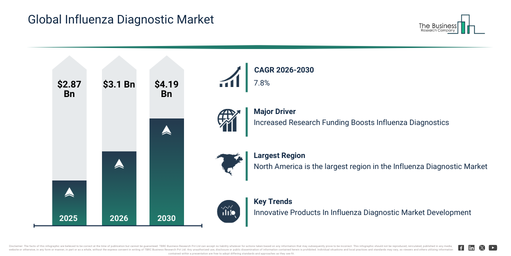
    The influenza diagnostic market has recently experienced significant expansion. This market is projected to expand from $2.87 billion in 2025 to $3.1 billion in 2026, exhibiting a compound annual growth rate (CAGR) of 8.3%. The historical expansion of this market stems from several factors, including seasonal influenza outbreaks, the broad adoption of rapid antigen tests, the development of hospital laboratory infrastructure, governmental influenza surveillance programs, and a heightened understanding of the importance of early flu diagnosis.

    The influenza diagnostic market is anticipated to experience substantial expansion in the coming years. This market is projected to reach $4.19 billion by 2030, exhibiting a compound annual growth rate (CAGR) of 7.8%. This projected growth during the forecast period can be attributed to several factors, including the increasing occurrence of influenza epidemics, a heightened need for precise molecular diagnostics, the proliferation of point-of-care testing facilities, enhanced public health readiness initiatives, and innovations in rapid diagnostic assays. Key trends anticipated during the forecast period encompass an escalating demand for swift influenza testing, a greater embrace of molecular diagnostic techniques, an increasing inclination towards point-of-care flu diagnostics, the broadening of seasonal and pandemic surveillance testing, and ongoing enhancements in test sensitivity and specificity.

    Download A Free Sample Report For Comprehensive Market Insights:

    https://www.thebusinessresearchcompany.com/sample.aspx?id=3237&type=smp

    What Core Drivers Are Transforming The Influenza Diagnostic Market?

    The influenza diagnostic market is anticipated to expand due to the rising financial investment in influenza diagnostics research. This funding represents financial contributions from government bodies, institutions, and various organizations to back scientific studies focused on creating, enhancing, and validating techniques and technologies for identifying influenza viruses. This increased investment in influenza research stems from insights gained during the COVID-19 pandemic and worries about potential future respiratory outbreaks, given that health authorities understand the crucial role of quick and precise diagnostic tools in preventing broad transmission and facilitating prompt public health responses. Elevated research funding aids the creation and market introduction of sophisticated testing technologies, molecular assays, point-of-care instruments, and refined laboratory protocols, all of which allow for quicker and more accurate identification of influenza strains in medical environments. As an illustration, in October 2024, the Department of Health and Aged Care, an Australia-based governmental entity overseeing health research, funding, promotion, and regulation, reported that the Australian Government is dedicating $95 million to address avian influenza, thereby safeguarding agriculture, wildlife, and the economy. Consequently, the enhanced funding for influenza diagnostics research is propelling the expansion of the influenza diagnostic market.

    How Is The Influenza Diagnostic Market Distributed Across Key Segments?

    The influenza diagnostic market covered in this report is segmented –

    1) By Traditional Diagnostic Tests: Rapid Influenza Diagnostic Tests (RIDT), Viral Culture, DFA, Serological Assays, Other Traditional Diagnostic Tests

    2) By Molecular Diagnostic Tests: Reverse Transcription Polymerase Chain Reaction (RT-PCR), Isothermal Nucleic Acid Amplification Tests (INAAT), Loop Mediated Isothermal Based Amplification Assays, Transcription Mediated Isothermal Based Amplification Assays, Other Isothermal Nucleic Acid Amplification Tests, Other Molecular Diagnostic Tests

    3) By End User: Hospitals And Clinical Laboratories, Diagnostic Reference Laboratories, Academic/Research Institutes, Other End Users

    Subsegments:

    1) By Rapid Influenza Diagnostic Tests (RIDT): Immunoassay-based Tests, Lateral Flow Assays, Enzyme Immunoassays (EIA)

    2) By Viral Culture: Cell Culture, Egg-based Culture

    3) By Serological Assays: Hemagglutination Inhibition (HI) Assay, Enzyme-Linked Immunosorbent Assay (ELISA), Western Blotting Assay

    4) By Other Traditional Diagnostic Tests: Polymerase Chain Reaction (PCR), Immunofluorescence Assays

    Which Trends Are Contributing To Changes In The Influenza Diagnostic Market?

    Major companies operating within the influenza diagnostic market are engaged in the development of innovative products, such as the Lucira COVID-19 & Flu Home Test, intended for simultaneous rapid qualitative detection. The Lucira COVID-19 and Flu Home Test functions as a single-use at-home testing kit, delivering results from self-collected nasal swab samples in approximately 30 minutes. For example, in February 2023, Pfizer Inc., a US-based pharmaceutical company, obtained approval for the Lucira COVID-19 & Flu Home Test. This test is capable of detecting both influenza A and B, commonly known as the flu, and SARS-CoV-2, the virus causing COVID-19.

    Which Organizations Are Operating Within The Influenza Diagnostic Market?

    Major companies operating in the influenza diagnostic market are F. Hoffmann-La Roche Ltd., Quidel Corporation, Thermo Fisher Scientific Inc., Abbott Laboratories, Hologic Inc., Becton Dickinson and Company, DiaSorin SpA, Luminex Corporation, Meridian Bioscience Inc., GenMark Diagnostics Inc., SA Scientific Ltd., Sekisui Diagnostics LLC, bioMérieux Inc., Danaher Corporation, Siemens Healthineers AG, Coris Bioconcept Sprl, Mast Group, Elitech Technology lnc., Analytik Jena AG, altona Diagnostics GmbH, Tecan Trading AG, Genome Diagnostics Pvt Ltd., Germaine Laboratories Inc., Response Biomedical Corporation, TAUNS Laboratories Inc., TRUPCR Europe Ltd., Quest Diagnostics Inc., Labcorp Employer Services Inc.

    Access The Complete Influenza Diagnostic Market Report:

    https://www.thebusinessresearchcompany.com/report/influenza-diagnostic-global-market-report

    Which Regional Market Leads The Influenza Diagnostic Market?

    North America was the largest region in the influenza diagnostics market in 2025. Western Europe was the second largest region in the influenza diagnostics market. The regions covered in the influenza diagnostic market report are Asia-Pacific, South East Asia, Western Europe, Eastern Europe, North America, South America, Middle East, Africa.

    Access Influenza Diagnostic Market Report for Deeper Competitive Insights

    https://www.thebusinessresearchcompany.com/customise?id=3237&type=smp

    Browse Through More Reports Similar to the Global Influenza Diagnostic Market 2026, By The Business Research Company

    Virtual Clinical Trials Global Market Report 2026

    https://www.thebusinessresearchcompany.com/report/virtual-clinical-trials-global-market-report

    Clinical Trial Supplies Global Market Report 2026

    https://www.thebusinessresearchcompany.com/report/clinical-trial-supplies-global-market-report

    Clinical Trial Management Systems Global Market Report 2026

    https://www.thebusinessresearchcompany.com/report/clinical-trial-management-systems-global-market-report

    Get in touch with us:

    The Business Research Company: https://www.thebusinessresearchcompany.com/

    Americas: +1 310-496-7795

    Asia: +44 7882 955267 & +91 8897263534

    Europe: +44 7882 955267

    Email us at: marketing@tbrc.info

    Follow us on:

    LinkedIn: https://in.linkedin.com/company/the-business-research-company

    YouTube: https://www.youtube.com/channel/UC24_fI0rV8cR5DxlCpgmyFQ

    Global Market Model: https://www.thebusinessresearchcompany.com/global-market-model
  • Infertility Treatment Market Industry Outlook 2026–2030 Highlighting Growth Momentum And Market Trends

    Infertility Treatment Market Industry Outlook 2026–2030 Highlighting Growth Momentum And Market Trends

    The Business Research Company’s 2026 market reports feature enhanced tools like market attractiveness analysis, TAM assessment, and company scoring matrices, along with interactive dashboards, deeper supply chain insights, and startup coverage strengthening the depth, usability, and strategic value of insights.

    How Will The Market Size Of The Infertility Treatment Market Progress Through 2030?

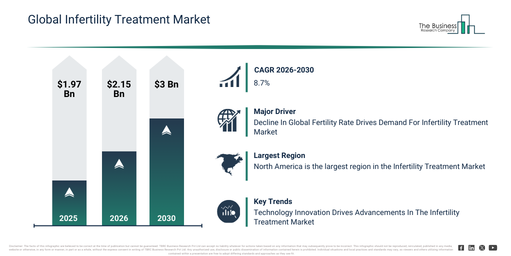
    The infertility treatment market has experienced robust expansion over recent years. Projections indicate its size will increase from $1.97 billion in 2025 to $2.15 billion in 2026, achieving a compound annual growth rate (CAGR) of 9.2%. This historical growth can be attributed to several factors, including delayed parenthood trends, the increasing prevalence of lifestyle-related infertility, growing awareness of fertility treatments, the expansion of IVF clinics, and advancements in reproductive medicine.

    The infertility treatment market size is projected to experience substantial expansion over the coming years. This market is anticipated to reach $3 billion by 2030, demonstrating a compound annual growth rate (CAGR) of 8.7%. Factors driving this growth during the forecast period include a global increase in infertility rates, improved success rates of assisted reproductive technology, an escalating need for fertility preservation, increased healthcare expenditure on reproductive health, and broader access to fertility treatments in developing regions. Key trends anticipated over the forecast period encompass an elevated demand for assisted reproductive technologies, wider acceptance of infertility treatments, an uptick in both female and male fertility preservation, the proliferation of fertility clinics and specialized centers, and continuous advancements in hormonal and drug-based therapies.

    Download A Free Sample Report For Comprehensive Market Insights:

    https://www.thebusinessresearchcompany.com/sample.aspx?id=7868&type=smp

    Which Growth Factors Are Strengthening The Infertility Treatment Market Landscape?

    A significant factor driving the growth of the infertility treatment market is the reduction in the global fertility rate. The fertility rate at a particular age is defined as the number of live births to women of that age during the year, expressed as a percentage of the average annual female population of that age. The worldwide fertility rate is consistently falling due to various reasons, including the increasing trend of late marriages and a rise in age-related infertility. This decline has led to a notable increase in the demand for infertility treatment products that help determine the fertility window for both males and females. For instance, in 2024, according to the United Nations Department of Economic and Social Affairs (UN DESA), a US–based international organization, the global total fertility rate was estimated at 2.25 births per woman, and this is projected to fall to approximately 2.07 births per woman by 2054. Therefore, the decreasing global fertility rate is fueling the demand in the infertility treatment market.

    How Does Segment Analysis Break Down The Infertility Treatment Market Structure?

    The infertility treatment market covered in this report is segmented –

    1) By Product: Equipment, Media And Consumables, Accessories

    2) By Procedure: Assisted Reproductive Technology, Artificial Insemination, Fertility Surgeries, Other Infertility Treatment Procedures

    3) By Drugs: Clomiphene Citrate, Letrozole, Serophene, Hormone Treatment, Other Drugs

    4) By Patient Type: Female Infertility Treatment, Male Infertility Treatment

    5) By End User: Hospitals And Surgical Clinics, Research Institutes

    Subsegments:

    1) By Equipment: In Vitro Fertilization (IVF) Equipment, Cryopreservation Equipment, Sperm And Embryo Storage Systems, Ultrasound Machines

    2) By Media And Consumables: Culture Media, Sperm Processing Media, Embryo Transfer Media, Oocyte Preservation Media

    3) By Accessories: Catheters, Needles And Syringes, Petri Dishes, Incubators

    What Trends Are Shaping The Infertility Treatment Market Structure?

    Major companies within the infertility treatment market are incorporating technological innovations, such as advanced motorized microscopy systems, to improve workflow efficiency and procedural precision in assisted reproductive treatments. Advanced motorized microscopy systems, which are automated optical microscopes with motor-driven controls, enhance precision and efficiency, thereby assisting infertility treatments by allowing for clearer imaging, accurate sperm selection, and smoother execution of delicate procedures with minimal manual intervention. For example, in July 2024, Nikon Corporation, a Tokyo-based company, launched the ECLIPSE Ti2-I Motorized Inverted Microscope, specifically engineered for micro-insemination procedures like ICSI (Intracytoplasmic Sperm Injection) and IMSI (Intracytoplasmic Morphologically-Selected Sperm Injection). This innovative microscope streamlines the workflow of reproductive medicine, particularly in infertility treatment, making it simpler for specialists to conduct intricate procedures.

    Who Are The Businesses Driving Activity In The Infertility Treatment Market?

    Major companies operating in the infertility treatment market are The Cooper Companies Inc., Cook Group Incorporated, Vitrolife AB, Thermo Fisher Scientific Inc., Esco Micro Pte. Ltd., Genea Limited, IVFtech ApS, FUJIFILM Irvine Scientific Inc., The Baker Company Inc., Kitazato Corporation, Rocket Medical PLC, IHMedical A/S, Hamilton Thorne Ltd., Carl Zeiss AG, MedGyn Products Inc., DxNow Inc., Nidacon International AB, Gynotec B.V., SAR Healthline Pvt. Ltd., InVitroCare Inc., Boston IVF, Shady Grove Fertility LLC, CCRM Fertility Co. LLC, IVI-RMA Global, Fertility Centers of Illinois, New Hope Fertility Center, Pacific Fertility Center, Houston Fertility Institute, Sher Fertility Institute, Columbia Asia Fertility Centre, Bourn Hall Fertility Clinic, Manipal Fertility, Morpheus IVF, Nova IVF Fertility, Indira IVF, Bloom Fertility Centre, Cloudnine Fertility, Oasis Fertility, Apollo Fertility, Milann Fertility Center, Fakih IVF, Procrea Fertility, The Montreal Fertility Center, The Center for Reproductive Medicine, The Reproductive Medicine Group, The Fertility Institute

    Access The Complete Infertility Treatment Market Report:

    https://www.thebusinessresearchcompany.com/report/infertility-treatment-global-market-report

    Which Region Holds The Largest Share In The Infertility Treatment Market?

    North America was the largest region in the infertility treatment market in 2025. Asia-Pacific is expected to be the fastest growing region in the forecast period. The regions covered in the infertility treatment market report are Asia-Pacific, South East Asia, Western Europe, Eastern Europe, North America, South America, Middle East, Africa.

    Access Infertility Treatment Market Report for Deeper Competitive Insights

    https://www.thebusinessresearchcompany.com/customise?id=7868&type=smp

    Browse Through More Reports Similar to the Global Infertility Treatment Market 2026, By The Business Research Company

    Infection Control Global Market Report 2026

    https://www.thebusinessresearchcompany.com/report/infection-control-global-market-report

    Hospital Acquired Infection Control Global Market Report 2026

    https://www.thebusinessresearchcompany.com/report/hospital-acquired-infection-control-global-market-report

    Infection Control Supplies Global Market Report 2026

    https://www.thebusinessresearchcompany.com/report/infection-control-supplies-global-market-report

    Get in touch with us:

    The Business Research Company: https://www.thebusinessresearchcompany.com/

    Americas: +1 310-496-7795

    Asia: +44 7882 955267 & +91 8897263534

    Europe: +44 7882 955267

    Email us at: marketing@tbrc.info

    Follow us on:

    LinkedIn: https://in.linkedin.com/company/the-business-research-company

    YouTube: https://www.youtube.com/channel/UC24_fI0rV8cR5DxlCpgmyFQ

    Global Market Model: https://www.thebusinessresearchcompany.com/global-market-model