Blog

  • Fibroblast Growth Factors (FGFs) Market Forecast Analysis Through 2030 With Insights On Industry Expansion

    Fibroblast Growth Factors (FGFs) Market Forecast Analysis Through 2030 With Insights On Industry Expansion

    The Business Research Company’s 2026 market reports feature enhanced tools like market attractiveness analysis, TAM assessment, and company scoring matrices, along with interactive dashboards, deeper supply chain insights, and startup coverage strengthening the depth, usability, and strategic value of insights.

    How Is The Market Value Of The Fibroblast Growth Factors (FGFs) Market Projected To Expand During 2026–2030?

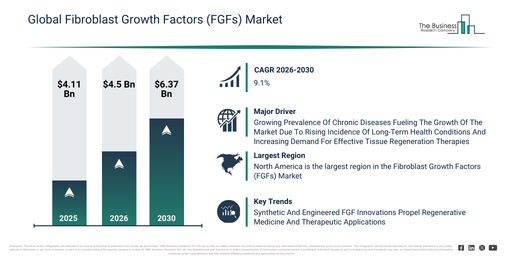
    The market size for fibroblast growth factors (fgfs) has seen significant expansion over recent years. It is anticipated to increase from $4.11 billion in 2025 to $4.5 billion in 2026, registering a compound annual growth rate (CAGR) of 9.4%. The historical rise in this market can be linked to factors such as the broadening of growth factor research initiatives, an uptick in clinical trials involving fgfs, a greater need for sophisticated biologics, progress in oncology drug creation, and enhanced methods for producing recombinant proteins.

    The fibroblast growth factors (fgfs) market is set to experience significant growth in the coming years. It is projected to expand to $6.37 billion by 2030, demonstrating a compound annual growth rate (CAGR) of 9.1%. This expansion during the forecast period is attributed to the increasing adoption of fgf-targeted therapies, rising investments in biologics manufacturing, the broadening of regenerative medicine pipelines, the growing use of precision oncology drugs, and an increase in regulatory approvals for fgf-based products. Major trends expected in the forecast period include the increasing development of recombinant fgfs, the rising use of fgfs in oncology therapies, their growing application in wound healing treatments, the expansion of fgf-based regenerative medicine, and an enhanced focus on targeted fgf inhibitors.

    Download A Free Sample Report For Comprehensive Market Insights:

    https://www.thebusinessresearchcompany.com/sample.aspx?id=24538&type=smp

    Which Growth Factors Are Strengthening The Fibroblast Growth Factors (FGFs) Market Landscape?

    The increasing incidence of chronic illnesses is anticipated to boost the expansion of the fibroblast growth factors (FGFs) market in the future. These are long-term health issues that progress gradually and endure for prolonged durations, frequently necessitating ongoing medical attention. The rising occurrence of chronic conditions is partly attributable to sedentary habits, given that extended periods of sitting and insufficient physical exercise elevate the likelihood of developing cardiovascular problems and diabetes. Fibroblast growth factors (FGFs) aid in managing chronic diseases by encouraging tissue restoration and regrowth, thereby proving beneficial in addressing persistent ailments. They improve healing mechanisms and slow the advancement of diseases, leading to better patient results and an enhanced quality of life. As an example, in June 2024, data from the National Health Service, a UK government department, revealed that 3,615,330 people registered with a general practitioner (GP) were diagnosed with non-diabetic hyperglycemia or pre-diabetes (a condition characterized by elevated blood sugar levels, insufficient for a diabetes diagnosis) in 2023. This represented an 18% surge from the 3,065,825 cases reported in 2022. Consequently, the increasing incidence of chronic illnesses is propelling the expansion of the fibroblast growth factors (FGFs) market.

    How Is The Fibroblast Growth Factors (FGFs) Market Distributed Across Key Segments?

    The fibroblast growth factors (fgfs) market covered in this report is segmented –

    1) By Product Type: Recombinant Fibroblast Growth Factor, Purified Fibroblast Growth Factor, Endogenous Fibroblast Growth Factor, Other Product Types

    2) By Drug Type: Palifermin, Erdafitnib, Infigratinib, Futibatinib, Other Drug Types

    3) By Application: Oncology, Hematology, Wound Healing, Dermatology, Cardiovascular Disease, Bone Disorders, Musculoskeletal Disorders, Tissue Regeneration, Other Applications

    4) By End User: Pharmaceutical Companies, Research Institutes, Biotechnology Companies, Other End Users

    Subsegments:

    1) By Recombinant Fibroblast Growth Factor: Recombinant Fibroblast Growth Factor (FGF)-1, Recombinant Fibroblast Growth Factor (FGF)-2, Recombinant Fibroblast Growth Factor (FGF)-7, Recombinant Fibroblast Growth Factor (FGF)-10

    2) By Purified Fibroblast Growth Factor: Purified Fibroblast Growth Factor (FGF)-1, Purified Fibroblast Growth Factor (FGF)-2, Purified Fibroblast Growth Factor (FGF)-7, Purified Fibroblast Growth Factor (FGF)-21

    3) By Endogenous Fibroblast Growth Factor: Endogenous Fibroblast Growth Factor (FGF)-1, Endogenous Fibroblast Growth Factor (FGF)-2, Endogenous Fibroblast Growth Factor (FGF)-8, Endogenous Fibroblast Growth Factor (FGF)-23

    4) By Other Product Types: Synthetic Fibroblast Growth Factors, Modified Fibroblast Growth Factors, Fusion Protein Fibroblast Growth Factors (FGFs), Fibroblast Growth Factors (FGFs) Derived From Stem Cells

    Which Trends Are Contributing To Changes In The Fibroblast Growth Factors (FGFs) Market?

    Leading companies in the fibroblast growth factors (FGFs) market are increasingly concentrating on creating novel solutions, particularly synthetic peptide-based alternatives to natural growth factors, with the aim of reducing expenses, improving uniformity, and boosting effectiveness in cell culture and regenerative medicine. These synthetic peptides are amino acid sequences manufactured chemically, engineered to mimic the biological action of natural FGFs by binding to identical receptors and initiating crucial cellular signaling pathways. This methodology supports dependable long-term cell proliferation, enhances stability, and facilitates precise receptor-specific activation. For example, in October 2024, the Japanese biotechnology firm PeptiGrowth Inc. unveiled PG-011, a synthetic FGFR1c agonist peptide specifically formulated to substitute natural FGF2 in the cultivation of stem cells and other rapidly proliferating cell types. PG-011 boasts a chemically defined, animal-component-free composition, offers superior stability compared to recombinant proteins, and effectively activates receptors even at reduced concentrations. These advantages collectively aid in improving cost management, ensuring consistent quality, and enhancing scalability for both research and emerging cell-based applications.

    Who Are The Businesses Driving Activity In The Fibroblast Growth Factors (FGFs) Market?

    Major companies operating in the fibroblast growth factors (fgfs) market are Merck & Co. Inc., Thermo Fisher Scientific Inc., FUJIFILM Wako Pure Chemical Corporation, Lonza Group AG, Miltenyi Biotec B.V. & Co. KG, GenScript Biotech Corporation, 89bio Inc., R&D Systems Inc., ACROBiosystems Co. Ltd., Elabscience Biotechnology Inc., Cell Signaling Technology Inc., Proteintech Group Inc., Akero Therapeutics Inc., MedChemExpress LLC, Defined Bioscience Inc., Gold Biotechnology Inc. (GoldBio), Nucleus Biologics LLC, ZellBio GmbH, Affinity Biosciences Ltd.

    Access The Complete Fibroblast Growth Factors (FGFs) Market Report:

    https://www.thebusinessresearchcompany.com/report/fibroblast-growth-factors-fgfs-global-market-report

    Which Region Stands As The Largest Contributor To The Fibroblast Growth Factors (FGFs) Market?

    North America was the largest region in the fibroblast growth factors (FGFs) market in 2025. Asia-Pacific is expected to be the fastest-growing region in the forecast period. The regions covered in the fibroblast growth factors (fgfs) market report are Asia-Pacific, South East Asia, Western Europe, Eastern Europe, North America, South America, Middle East, Africa.

    Access Fibroblast Growth Factors (FGFs) Market Report for Deeper Competitive Insights

    https://www.thebusinessresearchcompany.com/customise?id=24538&type=smp

    Browse Through More Reports Similar to the Global Fibroblast Growth Factors (FGFs) Market 2026, By The Business Research Company

    Follicle Stimulating Hormone Global Market Report 2026

    https://www.thebusinessresearchcompany.com/report/follicle-stimulating-hormone-global-market-report

    Hair Growth Serum Global Market Report 2026

    https://www.thebusinessresearchcompany.com/report/hair-growth-serum-global-market-report

    Uterine Fibroids Treatment Global Market Report 2026

    https://www.thebusinessresearchcompany.com/report/uterine-fibroids-treatment-global-market-report

    Get in touch with us:

    The Business Research Company: https://www.thebusinessresearchcompany.com/

    Americas: +1 310-496-7795

    Asia: +44 7882 955267 & +91 8897263534

    Europe: +44 7882 955267

    Email us at: marketing@tbrc.info

    Follow us on:

    LinkedIn: https://in.linkedin.com/company/the-business-research-company

    YouTube: https://www.youtube.com/channel/UC24_fI0rV8cR5DxlCpgmyFQ

    Global Market Model: https://www.thebusinessresearchcompany.com/global-market-model
  • Fibroblast Cells Market Growth Outlook Indicating Expansion To $1.18 Billion By 2030

    Fibroblast Cells Market Growth Outlook Indicating Expansion To $1.18 Billion By 2030

    The Business Research Company’s 2026 market reports feature enhanced tools like market attractiveness analysis, TAM assessment, and company scoring matrices, along with interactive dashboards, deeper supply chain insights, and startup coverage strengthening the depth, usability, and strategic value of insights.

    What Are The Forecasted Market Size Figures For The Fibroblast Cells Market In 2026 And 2030?

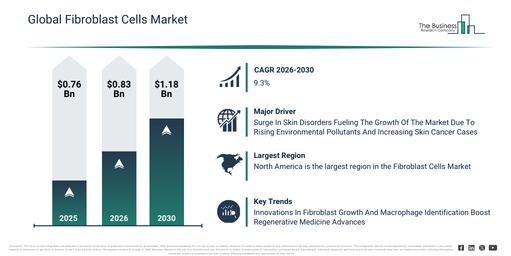
    The fibroblast cells market size has experienced significant expansion in recent years. Projections indicate it will advance from $0.76 billion in 2025 to $0.83 billion in 2026, exhibiting a compound annual growth rate (CAGR) of 9.7%. This past growth can be attributed to several factors, including the increasing incidence of chronic wounds, the expansion of regenerative medicine research, the growing use of cell-based assays, the rising demand for tissue engineering solutions, and the improved availability of primary cell culture techniques.

    The fibroblast cells market is projected to experience robust expansion over the coming years. By 2030, its valuation is anticipated to reach $1.18 billion, exhibiting a compound annual growth rate (CAGR) of 9.3%. This anticipated growth during the forecast period stems from factors such as heightened investments in cell therapy development, an increasing emphasis on personalized medicine strategies, broadened application of fibroblasts in drug screening, the increasing embrace of xeno-free media, and the rising clinical implementation of regenerative therapies. Key trends expected within this period involve the increasing uptake of regenerative therapies utilizing fibroblasts, a growing need for disease-specific fibroblast models, wider use of serum-free culture media, an expansion of fibroblast applications in wound healing, and a greater emphasis on standardized protocols for cell expansion.

    Download A Free Sample Report For Comprehensive Market Insights:

    https://www.thebusinessresearchcompany.com/sample.aspx?id=24537&type=smp

    What Important Drivers Are Powering The Fibroblast Cells Market Growth?

    The rising incidence of diverse skin conditions is anticipated to drive the expansion of the fibroblast cells market in the coming years. These conditions or diseases impact the skin, manifesting symptoms such as rashes, itchiness, inflammation, redness, dryness, or lesions. The increase in skin disorders stems from heightened exposure to environmental pollutants, which compromise the skin barrier, resulting in inflammation and increased susceptibility to dermal problems. Fibroblast cells aid in addressing skin disorders by fostering tissue repair and regeneration through the production of collagen and other extracellular matrix components, thereby restoring the skin’s strength and elasticity. For instance, in February 2025, Cancer Australia, an Australia-based government agency, reported 18,257 new cases of melanoma of the skin diagnosed in 2023. Consequently, the growing occurrence of various skin disorders stimulates the growth of the fibroblast cells market.

    How Does Segment Analysis Break Down The Fibroblast Cells Market Structure?

    The fibroblast cells market covered in this report is segmented –

    1) By Type: Tissue-Specific Fibroblasts, Disease-Specific Fibroblasts, Serum-Free Fibroblast Culture Medium

    2) By Application: Adults, Neonatal

    3) By End-Users: Hospitals, Clinics, Research And Academic Institutes, Other End-Users

    Subsegments:

    1) By Tissue-Specific Fibroblasts: Dermal Fibroblasts, Lung Fibroblasts, Cardiac Fibroblasts, Gingival Fibroblasts, Corneal Fibroblasts, Mammary Fibroblasts, Intestinal Fibroblasts, Foreskin Fibroblasts

    2) By Disease-Specific Fibroblasts: Cancer-Associated Fibroblasts (CAFs), Idiopathic Pulmonary Fibrosis Fibroblasts, Scleroderma Fibroblasts, Diabetic Wound Fibroblasts, Rheumatoid Arthritis Fibroblasts, Keloid Fibroblasts, Psoriatic Fibroblasts

    3) By Serum-Free Fibroblast Culture Medium: Dermal Fibroblast Medium, Lung Fibroblast Medium, Cardiac Fibroblast Medium, Cancer-Associated Fibroblast Medium, Human Gingival Fibroblast Medium, Fibroblast Growth Medium (Xeno-Free), Custom Or Defined Media For Fibroblast Expansion

    What Trends Are Shaping The Fibroblast Cells Market Structure?

    Key companies in the fibroblast cells market are concentrating on developing advanced solutions, including macrophage phenotype identification, to further understand cell interactions and improve the efficacy of fibroblast-based therapies. Macrophage phenotype identification describes the process of distinguishing between various types of macrophages, predominantly M1 and M2, based on their functional roles and molecular markers. For example, in December 2024, Creative Biolabs, a US-based biotech company, introduced Fibroblast Growth Factor 2. This product is available in two versions, Fibroblast Growth Factor 2 and Fibroblast Growth Factor 2 STAB, both designed to promote the growth and proliferation of human mesenchymal stem cells (MSCs) and normal human dermal fibroblasts (NHDFs), thereby supporting advancements in stem cell and regenerative medicine research.

    Which Firms Are Competing In The Fibroblast Cells Market?

    Major companies operating in the fibroblast cells market are Thermo Fisher Scientific Inc., Lonza Group AG, Sigma-Aldrich Corporation, Bio-Techne Corporation, STEMCELL Technologies Inc., American Type Culture Collection, Creative Bioarray, PromoCell GmbH, Coriell Institute for Medical Research, REPROCELL Inc., Axol Bioscience Ltd., ScienCell Research Laboratories Inc., Cell Applications Inc., ZenBio Inc., Cell Biologics Inc., Lifeline Cell Technology, Celprogen Inc., AMS Biotechnology (Europe) Ltd., Neuromics Inc., Evercyte GmbH, FUJIFILM Irvine Scientific Inc.

    Access The Complete Fibroblast Cells Market Report:

    https://www.thebusinessresearchcompany.com/report/fibroblast-cells-global-market-report

    What Is The Largest Regional Market In The Fibroblast Cells Market?

    North America was the largest region in the fibroblast cells market in 2025. The regions covered in the fibroblast cells market report are Asia-Pacific, South East Asia, Western Europe, Eastern Europe, North America, South America, Middle East, Africa.

    Access Fibroblast Cells Market Report for Deeper Competitive Insights

    https://www.thebusinessresearchcompany.com/customise?id=24537&type=smp

    Browse Through More Reports Similar to the Global Fibroblast Cells Market 2026, By The Business Research Company

    Cell Cultures Global Market Report 2026

    https://www.thebusinessresearchcompany.com/report/cell-cultures-global-market-report

    Cells Therapy Global Market Report 2026

    https://www.thebusinessresearchcompany.com/report/cells-therapy-global-market-report

    Cell Regeneration Medicine Global Market Report 2026

    https://www.thebusinessresearchcompany.com/report/cell-regeneration-medicine-global-market-report

    Get in touch with us:

    The Business Research Company: https://www.thebusinessresearchcompany.com/

    Americas: +1 310-496-7795

    Asia: +44 7882 955267 & +91 8897263534

    Europe: +44 7882 955267

    Email us at: marketing@tbrc.info

    Follow us on:

    LinkedIn: https://in.linkedin.com/company/the-business-research-company

    YouTube: https://www.youtube.com/channel/UC24_fI0rV8cR5DxlCpgmyFQ

    Global Market Model: https://www.thebusinessresearchcompany.com/global-market-model
  • Global Fertility Treatments Market Anticipated To Grow To $29.69 Billion By 2030 At 8.7% CAGR

    Global Fertility Treatments Market Anticipated To Grow To $29.69 Billion By 2030 At 8.7% CAGR

    The Business Research Company’s 2026 market reports feature enhanced tools like market attractiveness analysis, TAM assessment, and company scoring matrices, along with interactive dashboards, deeper supply chain insights, and startup coverage strengthening the depth, usability, and strategic value of insights.

    How Much Larger Will The Fertility Treatments Market Become By 2030 Compared To 2026?

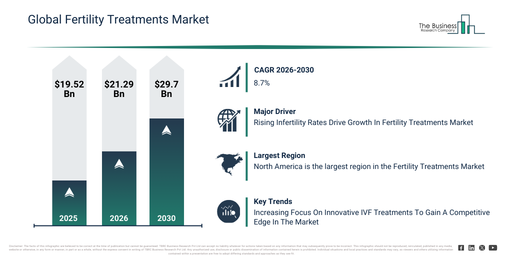
    The fertility treatments market has witnessed strong growth in recent years. It is anticipated to grow from $19.52 billion in 2025 to $21.29 billion in 2026, demonstrating a compound annual growth rate (CAGR) of 9.1%. This historical expansion can be attributed to factors such as rising infertility rates, the availability of fertility drugs, the ongoing expansion of IVF infrastructure, advancements in reproductive diagnostics, and increasing healthcare access.

    The fertility treatments market is projected to experience substantial expansion in the coming years. This market is forecast to reach $29.7 billion by 2030, exhibiting a compound annual growth rate (CAGR) of 8.7%. Key factors contributing to this anticipated growth include advancements in fertility drug development, the broader adoption of personalized treatment protocols, increasing demand for minimally invasive fertility procedures, a heightened understanding of fertility issues, and the expansion of fertility tourism. Significant trends identified for this period involve a greater embrace of advanced fertility treatment techniques, an increased use of hormonal and ovulation induction drugs, the proliferation of assisted reproductive technology centers, a surging need for both male and female infertility treatments, and the integration of artificial intelligence into treatment planning.

    Download A Free Sample Report For Comprehensive Market Insights:

    https://www.thebusinessresearchcompany.com/sample.aspx?id=2811&type=smp

    Which Major Factors Are Contributing To The Development Of The Fertility Treatments Market?

    The fertility treatments market is expected to grow as a result of a decline in fertility rates. A decrease in fertility refers to the diminished ability of individuals or couples to conceive and have biological children, often stemming from various elements such as age, underlying medical conditions, lifestyle choices, or environmental factors. Fertility treatments address these infertility issues through medical interventions, including IUI (intrauterine insemination) and IVF (in vitro fertilization), thereby enhancing the likelihood of conception for those experiencing a decline in fertility. For instance, in April 2023, the World Health Organization (WHO), a Switzerland-based United Nations specialized agency responsible for global public health, indicated that approximately 17.5% of the global adult population, which is about one in six individuals, is affected by infertility. Thus, escalating infertility rates are a key driver for the fertility treatments market.

    What Segment Types Are Included In The Fertility Treatments Market Analysis?

    The fertility treatments market covered in this report is segmented –

    1) By Product: Reagents, Equipment

    2) By Patient Type: Female, Male

    3) By End-User: Fertility Clinics, Hospitals, Surgical Centers, Clinical Research Institutes

    Subsegments:

    1) By Reagents: Ovulation Stimulation Reagents, Hormonal Reagents, Sperm Separation Reagents, Cryopreservation Reagents, Insemination Reagents

    2) By Equipment: In Vitro Fertilization (IVF) Equipment, Fertility Monitors, Sperm Analysis Equipment, Embryo Culture Media Equipment, Cryopreservation Equipment, Ultrasound Equipment For Fertility, Artificial Insemination (AI) Equipment

    Which Trends Are Supporting The Evolution Of The Fertility Treatments Market?

    Leading companies within the fertility treatments market are concentrating on advancing innovative IVF treatments, like iPSC-derived ovarian support cell (OSC)-based in vitro maturation (IVM), to secure a competitive advantage. This technology involves using lab-engineered support cells, sourced from induced pluripotent stem cells, to replicate the natural ovarian environment and mature eggs outside the body. For example, in December 2024, Gameto, a US-based biotechnology company, announced the world’s first live birth achieved through Fertilo, their OSC-IVM product. Fertilo replaces about 80% of hormonal injections, reduces the treatment cycle from 10–14 days to around three days, and lessens risks such as ovarian hyperstimulation syndrome. Despite this approach promising a faster, safer, and more accessible fertility solution, regulatory hurdles and long-term safety continue to be primary challenges.

    Who Are The Major Companies Operating In The Fertility Treatments Market?

    Major companies operating in the fertility treatments market are Apollo Hospitals Enterprise Ltd., Care Fertility Group Limited, Genea Limited, Johns Hopkins Health System Corp., Medicover AB, Monash IVF Group, Progyny Inc., Vitrolife AB, Carolinas Fertility Institute PLLC, OvaScience Inc., Xytex Cryo International Ltd., Merck Group, Cook Group Incorporated, CooperSurgical Inc., Instituto Bernabeu, INVO Bioscience Inc., Cooper Companies Inc., Virtus Health Ltd., CryoChoice LLC, FUJIFILM Irvine Scientific Inc., LABOTECT GMBH, Fertility Focus Limited, Olympus Corporation, Irvine Scientific sales Company Inc., Ferring Pharmaceuticals Inc., Prelude Fertility Inc., Boston IVF, RMA Fertility Clinics, Shady Grove Fertility, CCRM Management Company LLC, IVIRMA Global, CARE Fertility

    Access The Complete Fertility Treatments Market Report:

    https://www.thebusinessresearchcompany.com/report/fertility-treatments-global-market-report

    Which Region Contributes The Most To The Fertility Treatments Market?

    North America was the largest region in the fertility treatment market in 2025. Western Europe was the second largest region in the fertility treatment market. The regions covered in the fertility treatments market report are Asia-Pacific, South East Asia, Western Europe, Eastern Europe, North America, South America, Middle East, Africa.

    Access Fertility Treatments Market Report for Deeper Competitive Insights

    https://www.thebusinessresearchcompany.com/customise?id=2811&type=smp

    Browse Through More Reports Similar to the Global Fertility Treatments Market 2026, By The Business Research Company

    Infertility Treatment Global Market Report 2026

    https://www.thebusinessresearchcompany.com/report/infertility-treatment-global-market-report

    Fertility Services Global Market Report 2026

    https://www.thebusinessresearchcompany.com/report/fertility-services-global-market-report

    Fertility Drugs Global Market Report 2026

    https://www.thebusinessresearchcompany.com/report/fertility-drugs-global-market-report

    Get in touch with us:

    The Business Research Company: https://www.thebusinessresearchcompany.com/

    Americas: +1 310-496-7795

    Asia: +44 7882 955267 & +91 8897263534

    Europe: +44 7882 955267

    Email us at: marketing@tbrc.info

    Follow us on:

    LinkedIn: https://in.linkedin.com/company/the-business-research-company

    YouTube: https://www.youtube.com/channel/UC24_fI0rV8cR5DxlCpgmyFQ

    Global Market Model: https://www.thebusinessresearchcompany.com/global-market-model
  • Fertility Supplement Market Future Analysis Covering Industry Shifts And Growth Potential

    Fertility Supplement Market Future Analysis Covering Industry Shifts And Growth Potential

    The Business Research Company’s 2026 market reports feature enhanced tools like market attractiveness analysis, TAM assessment, and company scoring matrices, along with interactive dashboards, deeper supply chain insights, and startup coverage strengthening the depth, usability, and strategic value of insights.

    What Growth In Market Value Is Anticipated For The Fertility Supplement Market Between 2026 And 2030?

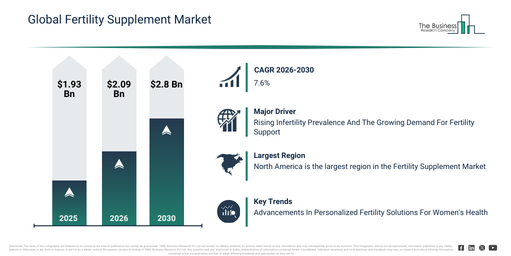
    The fertility supplement market has experienced robust growth over recent years. Projections indicate a rise in market size from $1.93 billion in 2025 to $2.09 billion in 2026, demonstrating a compound annual growth rate (CAGR) of 7.9%. This historical expansion is largely due to factors such as greater awareness of reproductive nutrition, an increase in dietary supplement consumption, the proliferation of health retail stores, growing concerns regarding infertility, and the accessibility of over-the-counter fertility supplements.

    The fertility supplement market size is projected to experience substantial expansion in the coming years. By 2030, this market is anticipated to reach a valuation of $2.8 billion, demonstrating a compound annual growth rate (CAGR) of 7.6%. Factors contributing to this growth during the forecast timeframe include advancements in fertility-specific product compositions, an increase in proactive reproductive health practices, a greater adoption of customized supplement options, the widening reach of digital health platforms, and enhanced consumer confidence in nutraceutical products. Key trends identified for the upcoming period encompass a growing reliance on nutritional supplements to aid fertility, an increasing inclination towards ingredients that are natural and herbal, heightened consumption by both male and female users, the availability of more over-the-counter fertility solutions, and the proliferation of online distribution channels for supplements.

    Download A Free Sample Report For Comprehensive Market Insights:

    https://www.thebusinessresearchcompany.com/sample.aspx?id=20789&type=smp

    What Key Growth Drivers Are Influencing The Fertility Supplement Market?

    The rising occurrence of infertility is projected to boost the expansion of the fertility supplement market moving ahead. Infertility is characterized as the inability to achieve conception after a year of consistent, unprotected sexual activity, or the inability to sustain a pregnancy to full term. The growing rates of infertility stem from factors such as postponing childbearing, shifts in lifestyle, exposure to environmental toxins, escalating obesity rates, and heightened stress levels. Fertility supplements are necessary for addressing infertility because they supply crucial vitamins, minerals, and nutrients that aid reproductive health, hormonal equilibrium, and overall fertility function. For example, in April 2023, data from the World Health Organization (WHO), a Switzerland-based specialized agency of the United Nations dedicated to global public health, revealed that around 17.5% of the worldwide adult population, which is roughly one in every six persons, experiences infertility. Consequently, the expanding prevalence of infertility fuels the growth of the fertility supplement market.

    Which Segment Divisions Form The Structure Of The Fertility Supplement Market?

    The fertility supplement market covered in this report is segmented –

    1) By Product: Tablets, Capsules, Powders, Liquids, Soft Gels, Other Products

    2) By Ingredient Type: Natural, Synthetic Or Blend Of Natural And Synthetic

    3) By Distribution Channel: Over-The-Counter, Prescribed, Other Distribution Channels

    4) By End Use: Men, Women

    Subsegments:

    1) By Tablets: Standard Tablets, Effervescent Tablets

    2) By Capsules: Gelatin Capsules, Vegetarian Capsules

    3) By Powders: Drink Mix Powders, Nutritional Powders

    4) By Liquids: Oral Liquid Supplements, Liquid Drops

    5) By Soft Gels: Standard Soft Gels, High-Absorption Soft Gels

    6) By Other Products: Chewable Supplements, Gummy Supplements

    What Trends Are Affecting The Growth Of The Fertility Supplement Market?

    Major companies in the fertility supplement industry are focusing on developing tailored products, such as natural fertility supplements, to offer a comprehensive strategy for enhancing reproductive health through plant-based components and essential nutrients, featuring fewer synthetic chemicals and potential adverse effects than traditional treatments. Natural fertility supplements are dietary items crafted from plant-derived ingredients, vitamins, and minerals, intended to improve reproductive health and fertility by aiding hormonal balance, egg quality, and overall reproductive function. For instance, in November 2024, Nestlé, a Switzerland-based health and wellness company, introduced its Materna Pre and Materna Nausea solutions. The Materna range has been extended with two new products designed to support women’s fertility and alleviate typical pregnancy-related symptoms, including nausea and vomiting. By incorporating natural ginger and vitamin B6, the new Materna Nausea product is scientifically shown to reduce the severity of nausea and vomiting during pregnancy. This expansion underscores Materna’s commitment to providing women with customized, science-backed nutritional solutions that support them before conception, throughout pregnancy, and post-childbirth, ultimately aiming to enhance health outcomes for both mothers and their babies.

    Which Companies Are Influencing The Fertility Supplement Market?

    Major companies operating in the fertility supplement market are GNC Holdings LLC, Orthomol Holding, Vitabiotics Ltd., Lenus Pharma GesmbH, Innovamed Ltd., AdvaCare Pharma, Theralogix LLC, Fairhaven Health LLC, Coast Science LLC, Bionova Inc., Extreme V Inc., Crown Fertility, Xena Bio Herbals Pvt. Ltd., Zenith Nutrition Co, Amitamin, Eu Natural Inc., Proxeed, Babystart Ltd., Needed Inc., Ritual, Premama Wellness Company, Pink Stork

    Access The Complete Fertility Supplement Market Report:

    https://www.thebusinessresearchcompany.com/report/fertility-supplement-global-market-report

    Which Regional Market Leads The Fertility Supplement Market?

    North America was the largest region in the fertility supplement market in 2025. Asia-Pacific is expected to be the fastest-growing region in the forecast period. The regions covered in the fertility supplement market report are Asia-Pacific, South East Asia, Western Europe, Eastern Europe, North America, South America, Middle East, Africa.

    Access Fertility Supplement Market Report for Deeper Competitive Insights

    https://www.thebusinessresearchcompany.com/customise?id=20789&type=smp

    Browse Through More Reports Similar to the Global Fertility Supplement Market 2026, By The Business Research Company

    Fertility Drugs Global Market Report 2026

    https://www.thebusinessresearchcompany.com/report/fertility-drugs-global-market-report

    Sexual Health Supplement Global Market Report 2026

    https://www.thebusinessresearchcompany.com/report/sexual-health-supplement-global-market-report

    Postnatal Health Supplement Global Market Report 2026

    https://www.thebusinessresearchcompany.com/report/postnatal-health-supplement-global-market-report

    Get in touch with us:

    The Business Research Company: https://www.thebusinessresearchcompany.com/

    Americas: +1 310-496-7795

    Asia: +44 7882 955267 & +91 8897263534

    Europe: +44 7882 955267

    Email us at: marketing@tbrc.info

    Follow us on:

    LinkedIn: https://in.linkedin.com/company/the-business-research-company

    YouTube: https://www.youtube.com/channel/UC24_fI0rV8cR5DxlCpgmyFQ

    Global Market Model: https://www.thebusinessresearchcompany.com/global-market-model
  • Fertility Services Market Analysis Reflecting Expansion Trends And Industry Performance

    Fertility Services Market Analysis Reflecting Expansion Trends And Industry Performance

    The Business Research Company’s 2026 market reports feature enhanced tools like market attractiveness analysis, TAM assessment, and company scoring matrices, along with interactive dashboards, deeper supply chain insights, and startup coverage strengthening the depth, usability, and strategic value of insights.

    What Is The Expected Market Value Outlook For The Fertility Services Market Through 2030?

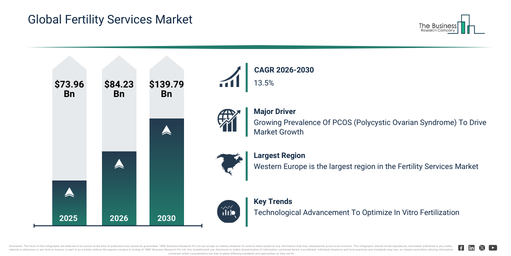
    The fertility services market has seen considerable expansion in its size during recent years. It is anticipated to grow from $73.96 billion in 2025 to $84.23 billion in 2026, at a compound annual growth rate (CAGR) of 13.9%. The growth observed in the historic period can be attributed to factors such as delayed parenthood trends, an increase in infertility prevalence, the expansion of IVF clinics, advancements in reproductive diagnostics, and the rising social acceptance of fertility treatments.

    The fertility services market is anticipated to undergo rapid expansion in the coming years, with its size expected to reach $139.79 billion by 2030, reflecting a compound annual growth rate (CAGR) of 13.5%. This growth throughout the forecast period can be attributed to advancements in assisted reproduction technologies, an increase in fertility tourism, the rising application of AI in fertility planning, the expansion of fertility preservation services, and growing investment in reproductive healthcare. Major trends identified for this period include an escalating demand for assisted reproductive technologies, the proliferation of fertility clinics and centers, the increasing adoption of personalized fertility treatment plans, a surge in cross-border fertility tourism, and the integration of digital tools into fertility counseling.

    Download A Free Sample Report For Comprehensive Market Insights:

    https://www.thebusinessresearchcompany.com/sample.aspx?id=3371&type=smp

    Which Core Factors Are Supporting The Expansion Of The Fertility Services Market?

    The increasing occurrence of Polycystic Ovarian Syndrome (PCOS) is anticipated to drive the expansion of the fertility services market in the future. PCOS, a frequent hormonal condition, impacts individuals with ovaries, usually during their reproductive stage. With PCOS becoming more widespread, the need for fertility solutions, including in vitro fertilization (IVF) and other assisted reproductive methods, could rise, consequently bolstering the fertility services market. For example, data from June 2023 by the World Health Organization, an intergovernmental body based in Switzerland, indicates that an estimated 8-13% of women in their reproductive years suffer from polycystic ovary syndrome (PCOS), and a substantial number, up to 70%, of these cases worldwide remain undiagnosed. Consequently, the growing incidence of PCOS is fueling the development of the fertility services market.

    How Are Different Segment Groups Identified Within The Fertility Services Market?

    The fertility services market covered in this report is segmented –

    1) By Procedure: Assisted Reproductive Technology (Art), In-Vitro Fertilization, Artificial Insemination

    2) By Service: Fresh Non-Donor, Frozen Non-Donor, Egg And Embryo Banking, Fresh Donor, Frozen Donor

    3) By Application: Male, Female

    Subsegments:

    1) By Assisted Reproductive Technology (ART): Intracytoplasmic Sperm Injection (ICSI), Frozen Embryo Transfer (FET), Donor Egg And Sperm Programs

    2) By In-Vitro Fertilization (IVF): Conventional IVF, Mini IVF (Mild Stimulation IVF), Natural Cycle IVF

    3) By Artificial Insemination: Intrauterine Insemination (IUI), Intracervical Insemination (ICI), Intratubal Insemination (ITI)

    Which Trends Are Influencing The Direction Of The Fertility Services Market?

    Leading companies active in the fertility services market are prioritizing the creation of novel technologies, including AI-driven embryo selection algorithms, to achieve a competitive advantage. AI-enabled embryo selection employs advanced machine learning on time-lapse imaging and morphological data to forecast embryo implantation success, thereby enhancing IVF outcomes. For example, in August 2025, Nova IVF Fertility, a UK-based fertility services company, unveiled Vita Embryo, an AI-powered embryo assessment tool. This innovation delivers precise viability ranking, shortens the duration of IVF cycles, and improves treatment clarity. It is engineered to elevate pregnancy rates, diminish multiple pregnancies, and boost clinical efficiency. While significantly advancing precision and patient care, the adoption of AI also requires tackling issues such as elevated costs, regulatory scrutiny, and algorithmic transparency. These technologies are expected to reshape the fertility services market by increasing the success of fertility treatments and bettering patient experiences worldwide.

    Who Are The Companies Shaping The Fertility Services Market Landscape?

    Major companies operating in the fertility services market are Vitrolife, Merck KGaA, Progyny Inc., Virtus Health, Medicover Group, Apollo Hospitals Enterprise Ltd., Integramed America, Inc., The Johns Hopkins Health System Corp, Care Fertility, Australian Concept Infertility Medical Center (ACIMC), Bahosi Fertility Centre, Bloom Fertility Center, Center for Advanced Reproductive Medicine and Infertility, Chennai Fertility Center, Cloudnine Fertility, Damai Service Hospital, Flinders Reproductive Medicine Pty Ltd, Genea Oxford Fertility Limited, IHH Healthcare Berhad, IVF NAMBA Clinic, IVF Sri Lanka Life Plus (Pvt) Ltd, KL Fertility & Gynecology Centre, LIFE – Lahore Institute of Fertility & Endocrinology, Maria Fertility Hospital, Morula IVF, Nepal International Fertility Centre, Repromed, SAFE Fertility Center, Southend Fertility and IVF, Thomson Medical Pte Ltd, TMC Fertility Centre, Victory A.R.T. Laboratory Phils. Inc, CHA Fertility Center, United Family Hospital, The New Hope Fertility Center, NOVA IVF Fertility, Baby Joy Fertility and IVF, Fortis La Femme, ART Fertility Clinics, Ferticity Fertility Clinic, Milann Fertility Centre, Fertility First, City Fertility Sydney, Westmead Fertility Centre, Demeter Fertility, Adora Fertility, Rainbow Fertility, Monash IVF Group Limited, Mitra Keluarga Karyasehat Tbk PT, Sarang-i IVF Center, Beyond IVF, Bumrungrad International Hospital, Superior A.R.T, King’s Fertility, Manchester Fertility, St Roch IVF Center, Clinique De La Muette, Institut Marques, Hopital Cochin, iTrust Fertility, Apricity, Agora Clinic, TFP Fertility, Apryl, CCRM Fertility Clinic, ORIGIO, Maven Clinic, Bayonne Centre, Biomedival, Grand Paris Fertility Centre, Ava-Peter Clinic, IVF Russia (The International Centre Of The Reproductive Medicines), Next Generation Clinic, Scandinavia AVA-Peter, Nova Vita Clinic, INVICTA Fertility Clinics, Gyncentrum Fertility Clinic, Md Medical Group, Invo Bioscience, Carolinas Fertility Institute, Newlife Fertility Centre, Dallas Fort Worth Fertility Associates, Overlake Reproductive Health, Fertility Center Of Las Vegas, Weill Cornell Medicine – Center For Reproductive Medicine, UCSF Center For Reproductive Health, Brigham And Women’s Hospital Center For Infertility And Reproductive Surgery, Columbia University Fertility Center, Duke Fertility Center, Advanced Fertility Center Of Texas, Cleveland Clinic Fertility Center, NYU Langone Fertility Center, Mayo Clinic Assisted Reproductive Technologies Rochester, Massachusetts General Hospital Fertility Center, IVF Canada, Bio Fertility Center, The Mexican Institute For Higher Reproductive Technology (Inmater), Select IVF, Fertility Patagonia, In Vitro Buenos Aires, Halitus Instituto Medico, Pregna Medicina Reproductiva, IVF Panama Centro De Reproduccion Punta Pacifica, Colombian Center For Fertility, Sterility, Carrot Fertility, Oya Care, Kitazato, Dubai Fertility Center, Fakih IVF Fertility Center, Orchid Fertility, Bourn Hall Fertility Clinic, Alboshra IVF Center, George’s Memorial Medical Centre, Nordica Fertility Centre, The Olive Branch Clinic, St. Ives Specialist Hospital, Bridge Clinic Fertility Centre, Cairo Fertility Centre, Queens Fertility Centre, BPE Partners, Cleopatra Hospitals Group

    Access The Complete Fertility Services Market Report:

    https://www.thebusinessresearchcompany.com/report/fertility-services-global-market-report

    Which Region Holds The Largest Share In The Fertility Services Market?

    Western Europe was the largest region in the fertility services market in 2025. North America was the second largest region in global fertility services market share. The regions covered in the fertility services market report are Asia-Pacific, South East Asia, Western Europe, Eastern Europe, North America, South America, Middle East, Africa.

    Access Fertility Services Market Report for Deeper Competitive Insights

    https://www.thebusinessresearchcompany.com/customise?id=3371&type=smp

    Browse Through More Reports Similar to the Global Fertility Services Market 2026, By The Business Research Company

    Fertility Treatments Global Market Report 2026

    https://www.thebusinessresearchcompany.com/report/fertility-treatments-global-market-report

    Assisted Reproductive Technology Global Market Report 2026

    https://www.thebusinessresearchcompany.com/report/assisted-reproductive-technology-global-market-report

    Male Fertility Global Market Report 2026

    https://www.thebusinessresearchcompany.com/report/male-fertility-global-market-report

    Get in touch with us:

    The Business Research Company: https://www.thebusinessresearchcompany.com/

    Americas: +1 310-496-7795

    Asia: +44 7882 955267 & +91 8897263534

    Europe: +44 7882 955267

    Email us at: marketing@tbrc.info

    Follow us on:

    LinkedIn: https://in.linkedin.com/company/the-business-research-company

    YouTube: https://www.youtube.com/channel/UC24_fI0rV8cR5DxlCpgmyFQ

    Global Market Model: https://www.thebusinessresearchcompany.com/global-market-model
  • Global Feminine Intimate Care Market Revenue Expected To Reach $6.17 Billion By 2030

    Global Feminine Intimate Care Market Revenue Expected To Reach $6.17 Billion By 2030

    The Business Research Company’s 2026 market reports feature enhanced tools like market attractiveness analysis, TAM assessment, and company scoring matrices, along with interactive dashboards, deeper supply chain insights, and startup coverage strengthening the depth, usability, and strategic value of insights.

    How Will The Market Value Of The Feminine Intimate Care Market Increase Between 2026 And 2030?

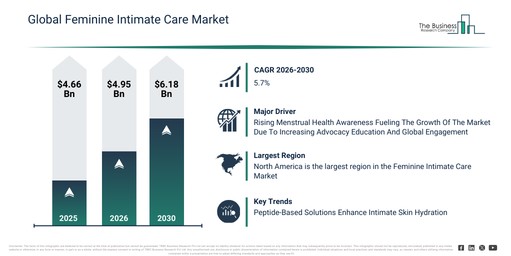
    The market size for feminine intimate care has seen strong growth in recent years. It is anticipated to increase from $4.66 billion in 2025 to $4.95 billion in 2026, showing a compound annual growth rate (CAGR) of 6.0%. The expansion observed in the past can be credited to greater awareness of intimate hygiene, the spread of female wellness education, the development of personal care retail channels, a rise in disposable income for women, and increasing urbanization.

    The feminine intimate care market size is expected to see strong growth in the next few years. It will grow to $6.18 billion in 2030 at a compound annual growth rate (CAGR) of 5.7%. The growth in the forecast period can be attributed to increasing demand for sustainable feminine care products, expansion of online retail platforms, growing focus on personalized intimate care, rising adoption across diverse age groups, increasing innovation in gentle formulations. Major trends in the forecast period include increasing demand for ph-balanced intimate products, rising preference for natural and organic formulations, growing adoption of fragrance-free solutions, expansion of menopause and postpartum care products, enhanced focus on skin-safe ingredients.

    Download A Free Sample Report For Comprehensive Market Insights:

    https://www.thebusinessresearchcompany.com/sample.aspx?id=24535&type=smp

    What Are The Main Drivers Accelerating The Growth Of The Feminine Intimate Care Market?

    Increased awareness of menstrual health is anticipated to fuel the expansion of the feminine intimate care market in the future. Menstrual health awareness involves comprehending and openly discussing the physiological and emotional dimensions of menstruation, with the goal of fostering improved care and dismantling societal limitations. This surge in menstrual health awareness primarily stems from heightened advocacy and educational efforts, enabling individuals to pursue superior hygiene options and confront entrenched cultural obstacles. By fostering body literacy and diminishing stigma, menstrual health awareness improves feminine intimate care, prompting educated self-care practices and more wholesome product selections. It equips women to manage hygiene securely, thereby preventing infections and enhancing their comprehensive intimate wellness. As an illustration, in May 2024, data from WASH United GmbH, a non-profit organization headquartered in Germany, showed that Menstrual Hygiene (MH) Day produced 23,400 media coverage items and 293,000 social media posts, collectively engaging 966 million individuals globally. Furthermore, South America experienced a notable boost in participation, with social media contributions escalating by 191%, from 2,799 to 8,143, and media coverage increasing by 801%, from 184 to 1,664 articles. Consequently, the expanding awareness of menstrual health is propelling the expansion of the feminine intimate care market.

    What Segment Categories Are Evaluated In The Feminine Intimate Care Market Study?

    The feminine intimate care market covered in this report is segmented –

    1) By Product: Intimate Wipes, Intimate Lubricants, Cleansing Liquid, Intimate Wash Gel, Moisturizer, Oils, Other Products

    2) By Age Group: Teenagers, Adults, Seniors

    3) By Distribution Channel: Online Stores, Supermarkets Or Hypermarkets, Pharmacies, Specialty Stores

    Subsegments:

    1) By Intimate Wipes: PH-Balanced Wipes, Antibacterial Wipes, Fragrance-Free Wipes, Travel-Size Wipes, Biodegradable Wipes

    2) By Intimate Lubricants: Water-Based Lubricants, Silicone-Based Lubricants, Oil-Based Lubricants, Organic Or Natural Lubricants, Flavored Lubricants

    3) By Cleansing Liquid: Daily Cleansing Solutions, Medicated Cleansing Liquids, Fragrance-Free Cleansers, Herbal Or Plant-Based Cleansers, Sensitive Skin Formulas

    4) By Intimate Wash Gel: Soothing Wash Gels, Anti-Itch Wash Gels, Hydrating Wash Gels, Antibacterial Wash Gels, PH-Balanced Wash Gels

    5) By Moisturizer: Daily-Use Moisturizers, Hormone-Free Moisturizers, Natural Or Organic Moisturizers, Postpartum Moisturizers, Menopausal Care Moisturizers

    6) By Oils: Nourishing Oils, Anti-Inflammatory Oils, Antibacterial Oils, Stretch Mark Prevention Oils, Post-Shave Calming Oils

    7) By Other Products: Intimate Deodorants, Soothing Sprays, Skin Repair Balms, Ingrown Hair Treatments, Intimate Masks

    What Trends Are Driving Changes In The Feminine Intimate Care Market?

    Key companies in the feminine intimate care market are prioritizing the creation of sophisticated delivery systems, such as those based on peptides, to improve product effectiveness, facilitate deeper penetration, and deliver prolonged moisture along with specific therapeutic advantages. Peptide-based delivery systems represent advanced formulation techniques that employ short chains of amino acids (peptides) to convey active ingredients into the deeper dermal or tissue strata. For example, in September 2024, Curive Healthcare, a US-based pharmaceutical firm, introduced Plum Serum, an external vulva moisturizer crafted leveraging PCCA’s formulation proficiency and incorporating an exclusive V-bond delivery system. Plum serum aims to offer sustained moisturization and alleviation of vulvar dryness, by employing biomimetic peptides that imitate the inherent moisture barrier of the body. The sophisticated V bond delivery system guarantees more profound absorption and heightened effectiveness, rendering it perfectly suited for delicate intimate skin.

    Which Industry Players Are Present In The Feminine Intimate Care Market?

    Major companies operating in the feminine intimate care market are The Procter & Gamble Company, Johnson & Johnson, Unilever PLC, Kimberly-Clark Corporation, Reckitt Benckiser Group plc, Essity AB, Kao Corporation, Unicharm Corporation, Ontex BV, Glenmark Pharmaceuticals Limited, Nölken Hygiene Products GmbH, Elif Kozmetik Sanayi ve Ticaret A.Ş., Wet and Dry Personal Care Private Limited, Rael, Lil-Lets Limited, INLIFE Healthcare, Natracare, Aelicure Pharma Private Limited, Glowel Cosmetics, Himalaya Wellness Company, Truworth Healthcare Private Limited, Corman S.p.A

    Access The Complete Feminine Intimate Care Market Report:

    https://www.thebusinessresearchcompany.com/report/feminine-intimate-care-global-market-report

    Which Region Is The Dominant Market In The Feminine Intimate Care Market?

    North America was the largest region in the feminine intimate care market in 2025. Asia-Pacific is expected to be the fastest-growing region in the forecast period. The regions covered in the feminine intimate care market report are Asia-Pacific, South East Asia, Western Europe, Eastern Europe, North America, South America, Middle East, Africa.

    Access Feminine Intimate Care Market Report for Deeper Competitive Insights

    https://www.thebusinessresearchcompany.com/customise?id=24535&type=smp

    Browse Through More Reports Similar to the Global Feminine Intimate Care Market 2026, By The Business Research Company

    Feminine Wipes Global Market Report 2026

    https://www.thebusinessresearchcompany.com/report/feminine-wipes-global-market-report

    Women Intimate Care Wipes Global Market Report 2026

    https://www.thebusinessresearchcompany.com/report/women-intimate-care-wipes-global-market-report

    Sexual Health Supplement Global Market Report 2026

    https://www.thebusinessresearchcompany.com/report/sexual-health-supplement-global-market-report

    Get in touch with us:

    The Business Research Company: https://www.thebusinessresearchcompany.com/

    Americas: +1 310-496-7795

    Asia: +44 7882 955267 & +91 8897263534

    Europe: +44 7882 955267

    Email us at: marketing@tbrc.info

    Follow us on:

    LinkedIn: https://in.linkedin.com/company/the-business-research-company

    YouTube: https://www.youtube.com/channel/UC24_fI0rV8cR5DxlCpgmyFQ

    Global Market Model: https://www.thebusinessresearchcompany.com/global-market-model
  • Feminine Hygiene Products Market Insights Exploring Expansion Opportunities Through 2030

    Feminine Hygiene Products Market Insights Exploring Expansion Opportunities Through 2030

    The Business Research Company’s 2026 market reports feature enhanced tools like market attractiveness analysis, TAM assessment, and company scoring matrices, along with interactive dashboards, deeper supply chain insights, and startup coverage strengthening the depth, usability, and strategic value of insights.

    What Will Be The Estimated Market Size Of The Feminine Hygiene Products Market By 2030?

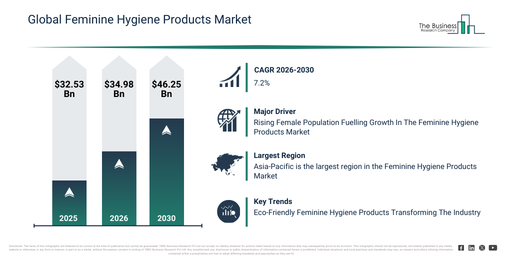
    The feminine hygiene products market has experienced robust expansion in recent years. It is projected to increase from $32.53 billion in 2025 to $34.98 billion in 2026, demonstrating a compound annual growth rate (CAGR) of 7.5%. The historical growth of this market can be attributed to several factors, including heightened menstrual hygiene awareness campaigns, broader retail distribution channels, increasing female workforce participation, enhanced product affordability, and government-led sanitation initiatives.

    The feminine hygiene products market is projected to experience substantial expansion over the coming years. By 2030, its size is forecast to reach $46.25 billion, demonstrating a compound annual growth rate (CAGR) of 7.2%. This anticipated growth is influenced by the rise in sustainable menstrual product adoption, a growing preference for reusable choices, the broadening reach of e-commerce platforms, advancements in biodegradable materials, and an increasing awareness of health among women. Key developments expected during this period include a greater embrace of reusable and environmentally friendly items, heightened understanding of menstrual health and hygiene, a surge in demand for organic and chemical-free solutions, an increase in online and direct-to-consumer sales channels, and product enhancements in menstrual cups and pads.

    Download A Free Sample Report For Comprehensive Market Insights:

    https://www.thebusinessresearchcompany.com/sample.aspx?id=6529&type=smp

    Which Growth Drivers Are Expected To Support The Feminine Hygiene Products Market Forward?

    The feminine hygiene products market is anticipated to expand, driven by an increasing female population. This term refers to the total number of women and girls within a population. The female population is experiencing growth primarily due to the overall increase in global life expectancy, which also extends to women. As this demographic expands, more individuals will require feminine hygiene products to address their menstrual and reproductive health needs, thereby stimulating demand. For instance, in July 2023, the UN Division for Inclusive Social Development reported that women and girls accounted for approximately 49.7 percent of the global population. Consequently, an expanding female population is projected to propel the growth of the feminine hygiene products market.

    How Is The Feminine Hygiene Products Market Examined Through Segment Analysis?

    The feminine hygiene products market covered in this report is segmented –

    1) By Type: Sanitary Napkins/Pads, Tampons, Panty Liners, Menstrual Cups

    2) By Nature: Disposable, Reusable

    3) By Distribution Channel: Online Stores, Retail Outlets, Specialty Stores

    Subsegments:

    1) By Sanitary Napkins Or Pads: Disposable Sanitary Pads, Reusable Sanitary Pads

    2) By Tampons: Regular Absorbency Tampons, Super Absorbency Tampons, Organic Tampons

    3) By Panty Liners: Daily Panty Liners, Organic Panty Liners

    4) By Menstrual Cups: Silicone Menstrual Cups, Rubber Menstrual Cups

    Which Trends Are Shaping The Feminine Hygiene Products Market Landscape?

    Companies operating in the feminine hygiene market are concentrating on developing innovative solutions, such as eco-friendly feminine hygiene products, to satisfy the rising demand for sustainable, chemical-free, and environmentally responsible menstrual care options. Eco-friendly feminine hygiene products are crafted from natural fibers like organic cotton, bamboo, or hemp, providing reusable or biodegradable alternatives to conventional plastic-based pads, which generate substantial waste and contain synthetic materials. For instance, in May 2023, KNH, a Taiwan-based manufacturing company, introduced eco-friendly menstrual pads, sustainable alternatives to traditional disposable pads, designed to minimize environmental impact while ensuring effective menstrual hygiene. Made from biodegradable materials such as organic cotton, bamboo, or hemp, these pads are free from harmful chemicals, plastics, and synthetic materials. They offer comfort and breathability while being gentle on the skin. Many eco-friendly menstrual pads are reusable, allowing users to wash and utilize them multiple times, significantly reducing waste compared to single-use products. By choosing eco-friendly options, individuals can support sustainable practices and contribute to reducing landfill waste, promoting a healthier planet.

    Which Organizations Are Involved In The Feminine Hygiene Products Market?

    Major companies operating in the feminine hygiene products market are Johnson & Johnson Pvt. Ltd., Procter & Gamble, Kimberly-Clark Corporation, Essity Aktiebolag (publ), Kao Corporation, Unicharm Corporation, Ontex Group NV, Hengan International Group Company Ltd., Maxim Hygiene Products, Edgewell Personal Care Company, Svenska Cellulosa Aktiebolaget SCA, First Quality Enterprises Inc., Corman S.p.A., Lil-lets UK Limited, Natracare LLC, The Honest Company Inc., Seventh Generation Inc., Diva International Inc., TZMO S.A., Daio Paper Corporation, Drylock Technologies NV, Premier FMCG LLC, Moxie Holdings Inc., Bodywise (UK) Ltd., Fippi S.A.

    Access The Complete Feminine Hygiene Products Market Report:

    https://www.thebusinessresearchcompany.com/report/feminine-hygiene-products-global-market-report

    Which Area Represents The Largest Portion Of The Feminine Hygiene Products Market?

    Asia-Pacific was the largest region in the feminine hygiene products market in 2025. Asia-Pacific is expected to be the fastest-growing region in the forecast period. The regions covered in the feminine hygiene products market report are Asia-Pacific, South East Asia, Western Europe, Eastern Europe, North America, South America, Middle East, Africa.

    Access Feminine Hygiene Products Market Report for Deeper Competitive Insights

    https://www.thebusinessresearchcompany.com/customise?id=6529&type=smp

    Browse Through More Reports Similar to the Global Feminine Hygiene Products Market 2026, By The Business Research Company

    Feminine Wipes Global Market Report 2026

    https://www.thebusinessresearchcompany.com/report/feminine-wipes-global-market-report

    Bathroom Products Global Market Report 2026

    https://www.thebusinessresearchcompany.com/report/bathroom-products-global-market-report

    Personal Hygiene Global Market Report 2026

    https://www.thebusinessresearchcompany.com/report/personal-hygiene-global-market-report

    Get in touch with us:

    The Business Research Company: https://www.thebusinessresearchcompany.com/

    Americas: +1 310-496-7795

    Asia: +44 7882 955267 & +91 8897263534

    Europe: +44 7882 955267

    Email us at: marketing@tbrc.info

    Follow us on:

    LinkedIn: https://in.linkedin.com/company/the-business-research-company

    YouTube: https://www.youtube.com/channel/UC24_fI0rV8cR5DxlCpgmyFQ

    Global Market Model: https://www.thebusinessresearchcompany.com/global-market-model
  • Female Infertility Market Developments Influencing Industry Expansion Through 2030

    Female Infertility Market Developments Influencing Industry Expansion Through 2030

    The Business Research Company’s 2026 market reports feature enhanced tools like market attractiveness analysis, TAM assessment, and company scoring matrices, along with interactive dashboards, deeper supply chain insights, and startup coverage strengthening the depth, usability, and strategic value of insights.

    What Is The Estimated Growth In Market Size Of The Female Infertility Market During 2026–2030?

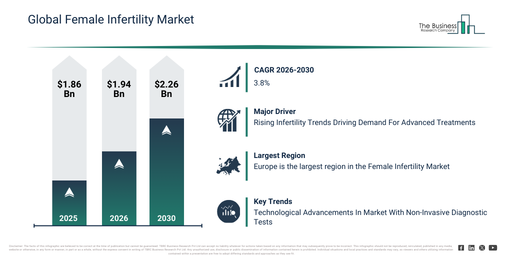
    The female infertility market has experienced consistent expansion in recent years. It is projected to grow from $1.86 billion in 2025 to $1.94 billion in 2026, achieving a compound annual growth rate (CAGR) of 4.1%. This historical growth can be attributed to factors like delayed childbearing trends, increased awareness surrounding infertility, the availability of fertility medications, the expansion of reproductive health clinics, and enhanced diagnostic imaging capabilities.

    The female infertility market is projected to experience consistent expansion over the upcoming period. This market is anticipated to reach a valuation of $2.26 billion by 2030, driven by a compound annual growth rate (CAGR) of 3.8%. Factors contributing to this growth during the projected timeframe include innovations in fertility drug compounds, the rise of tailored fertility solutions, greater uptake of AI-driven fertility monitoring, the spread of fertility tourism, and increased capital allocation towards reproductive health. Key trends foreseen for the forecast period encompass a surge in demand for assisted reproductive technologies, heightened attention on therapies targeting hormones and ovulation, broader deployment of sophisticated diagnostic methods, an increase in fertility clinics and their offerings, and the incorporation of digital platforms into fertility management.

    Download A Free Sample Report For Comprehensive Market Insights:

    https://www.thebusinessresearchcompany.com/sample.aspx?id=20787&type=smp

    What Influential Factors Are Boosting The Female Infertility Market Demand?

    The rising incidence of infertility is projected to boost the expansion of the female infertility market in the future. It is defined as the inability to achieve conception following 12 months of consistent, unprotected sexual activity. The surge in infertility stems from various factors, including postponing childbirth, shifts in lifestyle, exposure to environmental toxins, growing rates of obesity, and elevated stress levels. Treatment for female infertility becomes necessary to manage and resolve fundamental medical, hormonal, or structural problems that hinder fertility, consequently improving the likelihood of conception and averting irreversible infertility. For example, data from April 2023 by the World Health Organization, an intergovernmental body situated in Switzerland, reveals that around 17.5% of adults worldwide, equating to roughly 1 in 6 people, experience infertility. Consequently, the growing occurrence of infertility propels the development of the female infertility market.

    Which Segment Groups Define The Female Infertility Market Landscape?

    The female infertility market covered in this report is segmented –

    1) By Treatment: Clomiphene Citrate, Gonadotropins, Metformin, Letrozole, Bromocriptine

    2) By Route Of Administration: Oral, Parenteral, Other Route Of Administrations

    3) By End-User: Hospital Pharmacy, Retail Pharmacy, Online Pharmacy

    Subsegments:

    1) By Clomiphene Citrate: Oral Clomiphene Citrate, Injectable Clomiphene Citrate

    2) By Gonadotropins: Recombinant Gonadotropins, Urinary Gonadotropins, Human Chorionic Gonadotropin (hCG)

    3) By Metformin: Immediate-Release Metformin, Extended-Release Metformin

    4) By Letrozole: Oral Letrozole Tablets, Injectable Letrozole

    5) By Bromocriptine: Oral Bromocriptine Tablets, Intranasal Bromocriptine

    What Trends Are Influencing The Female Infertility Market Outlook?

    Leading corporations active within the female infertility market are directing their efforts towards creating advanced solutions, including non-invasive diagnostic tests, to secure a competitive advantage in the sector. A non-invasive diagnostic test is defined as a medical examination capable of identifying ailments or illnesses without necessitating surgical intervention or bodily incision. As an illustration, in August 2024, Heranova Lifesciences, a US-based biotechnology company, initiated an early access program for HerResolve, which is a non-invasive diagnostic tool for endometriosis. Endometriosis impacts approximately 200 million women globally, manifesting symptoms such as infertility, discomfort, and hemorrhage. For numerous women, achieving a precise diagnosis typically requires an average of 7-10 years from the initial appearance of symptoms. This extended period is primarily attributed to the diverse ways symptoms present and the invasive characteristic of exploratory laparoscopic surgery, which stands as the most dependable diagnostic approach currently available. HerResolve offers the potential to decrease this diagnostic waiting period from years to merely months, consequently fostering superior outcomes for both patients and healthcare providers, as it is specifically designed to substantially accelerate this timeline, enhancing overall patient care and results.

    Who Are The Firms Contributing To The Female Infertility Market Ecosystem?

    Major companies operating in the female infertility market are Pfizer Inc, Merck And Co Inc, Mayo Clinic, Teva Pharmaceutical Industries Ltd, Organon Theramex, Juniper Reproductive Health Ltd, Ferring Pharmaceuticals, Mankind Pharma, ARMC IVF, Zydus Cadila Healthcare, IBSA Institut Biochimique, Oxolife, Ava AG, Merck KGaA, Gedeon Richter Plc, Novartis AG, AbbVie Inc, Ipsen, Theramex, Vitrolife AB, Conceivable Life Sciences, AIVF

    Access The Complete Female Infertility Market Report:

    https://www.thebusinessresearchcompany.com/report/female-infertility-global-market-report

    Which Region Commands The Largest Share Of The Female Infertility Market?

    Europe was the largest region in the female infertility market in 2025. Asia-Pacific is expected to be the fastest-growing region in the forecast period. The regions covered in the female infertility market report are Asia-Pacific, South East Asia, Western Europe, Eastern Europe, North America, South America, Middle East, Africa.

    Access Female Infertility Market Report for Deeper Competitive Insights

    https://www.thebusinessresearchcompany.com/customise?id=20787&type=smp

    Browse Through More Reports Similar to the Global Female Infertility Market 2026, By The Business Research Company

    Male Fertility Global Market Report 2026

    https://www.thebusinessresearchcompany.com/report/male-fertility-global-market-report

    Fertility Drugs Global Market Report 2026

    https://www.thebusinessresearchcompany.com/report/fertility-drugs-global-market-report

    Fertility Treatments Global Market Report 2026

    https://www.thebusinessresearchcompany.com/report/fertility-treatments-global-market-report

    Get in touch with us:

    The Business Research Company: https://www.thebusinessresearchcompany.com/

    Americas: +1 310-496-7795

    Asia: +44 7882 955267 & +91 8897263534

    Europe: +44 7882 955267

    Email us at: marketing@tbrc.info

    Follow us on:

    LinkedIn: https://in.linkedin.com/company/the-business-research-company

    YouTube: https://www.youtube.com/channel/UC24_fI0rV8cR5DxlCpgmyFQ

    Global Market Model: https://www.thebusinessresearchcompany.com/global-market-model
  • Les fonctionnalités spécifiques d’Only Spins Casino

    Le only spins casino se positionne comme une plateforme innovante dans le monde des jeux en ligne, séduisant les joueurs par ses fonctionnalités uniques et une expérience utilisateur optimisée. Ce casino en ligne se distingue par un large éventail de jeux, une interface conviviale et une approche sécurisée du jeu, attirant ainsi une variété de joueurs.

    Un large choix de jeux et fournisseurs

    Le catalogue de jeux d’Only Spins Casino est vaste et diversifié, offrant une expérience de jeu riche. Les joueurs peuvent y trouver des machines à sous modernes, des jeux de table et des options de casino en direct. Ce qui se démarque, c’est la coopération avec plusieurs fournisseurs de renom tels que NetEnt, Microgaming et Playtech, garantissant ainsi une qualité de jeu optimale.

    En outre, le casino met également à jour régulièrement son offre de jeux, introduisant des nouveautés qui répondent aux préférences des joueurs. Les jeux sont classés par catégories, facilitant ainsi la navigation. Voici un aperçu de ce que propose la plateforme :

    • Machines à sous : des classiques aux nouvelles tendances.
    • Jeux de table : poker, blackjack, roulette, etc.
    • Casino en direct : jouez avec des croupiers en temps réel.

    Une expérience mobile fluide

    Only Spins Casino a particulièrement investi dans l’expérience mobile. Le site est entièrement responsive, permettant aux joueurs d’accéder à leurs jeux préférés depuis leurs smartphones ou tablettes sans compromettre la qualité. Une application dédiée est également disponible pour une utilisation encore plus fluide, réduisant ainsi les temps de chargement et améliorant l’interface utilisateur.

    Les joueurs peuvent ainsi profiter de leurs sessions de jeu où qu’ils soient, rendant l’expérience plus accessible et agréable. Que l’on préfère jouer en déplacement ou à la maison, l’interface s’adapte parfaitement.

    Sécurité et fiabilité

    La sécurité des joueurs est une priorité absolue pour Only Spins Casino. La plateforme est licenciée et réglementée par des autorités de jeu reconnues, assurant ainsi un environnement de jeu sûr et équitable. De plus, des protocoles de cryptage avancés protègent les informations personnelles et financières des utilisateurs.

    Le casino insiste également sur le jeu responsable, proposant des outils de gestion de bankroll et des limites de jeu pour promouvoir une expérience de jeu saine. Ces pratiques renforcent la confiance des joueurs et montrent que la plateforme respecte les normes de l’industrie.

    Caractéristique Détails Note
    Variété de jeux Plus de 1000 jeux disponibles ★★★★★
    Sécurité Cryptage SSL et licences valides ★★★★★
    Support client Disponible 24/7 en plusieurs langues ★★★★☆

    FAQ

    Quels types de jeux sont disponibles sur Only Spins Casino ? Le casino propose une large gamme de jeux, y compris des machines à sous, des jeux de table et des jeux de casino en direct.

    Est-ce que Only Spins Casino est sécurisé ? Oui, la plateforme est licenciée et utilise un cryptage SSL pour protéger vos données personnelles.

    Puis-je jouer sur mobile ? Absolument, le site est optimisé pour une utilisation mobile et une application est également disponible.

  • Global Baby Changing Units And Tables Market Forecast Highlighting Expansion And Competitive Dynamics

    Global Baby Changing Units And Tables Market Forecast Highlighting Expansion And Competitive Dynamics

    The Business Research Company’s 2026 market reports feature enhanced tools like market attractiveness analysis, TAM assessment, and company scoring matrices, along with interactive dashboards, deeper supply chain insights, and startup coverage strengthening the depth, usability, and strategic value of insights.

    What Are The Forecasted Market Size Figures For The Baby Changing Units And Tables Market In 2026 And 2030?

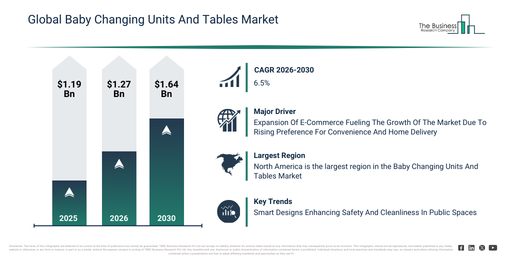
    The market for baby changing units and tables has witnessed substantial growth in recent years. It is anticipated to increase from $1.19 billion in 2025 to $1.27 billion in 2026, reflecting a compound annual growth rate (CAGR) of 6.6%. This historical growth can be linked to factors such as the rise in urban household formation, higher birth rates in developing regions, the expansion of organized baby care retail, greater adoption of childcare furniture, and the proliferation of public childcare facilities.

    The baby changing units and tables market size is projected to experience robust expansion over the coming years. By 2030, this market is anticipated to reach a valuation of $1.64 billion, growing at a compound annual growth rate (CAGR) of 6.5%. This projected growth is driven by several factors, including a heightened demand for high-end baby care items, an intensified focus on public hygiene infrastructure, the expansion of daycare and healthcare establishments, a growing inclination towards ergonomic baby furniture, and the increasing uptake of portable baby care options. Key trends expected during the forecast period encompass an increasing need for compact baby furniture, a surge in the adoption of wall-mounted changing units, a heightened emphasis on safety and cleanliness protocols, the proliferation of multi-functional changing tables, and a greater utilization of long-lasting and simple-to-clean materials.

    Download A Free Sample Report For Comprehensive Market Insights:

    https://www.thebusinessresearchcompany.com/sample.aspx?id=24165&type=smp

    Which Major Factors Are Contributing To The Development Of The Baby Changing Units And Tables Market?

    The increasing prevalence of e-commerce is anticipated to fuel the growth of the baby-changing units and tables market moving forward. E-commerce involves the online exchange of goods or services, utilizing the internet for transactions and data transfer. This expansion is largely attributed to a growing demand for convenience and direct home delivery, which is especially advantageous for new and expectant parents as it enables them to effortlessly purchase baby products and have them delivered to their homes. E-commerce enhances the availability of baby-changing units and tables by presenting a broad selection from diverse brands, all accessible online. It allows parents and businesses to readily compare features, prices, and customer reviews, simplifying informed purchasing decisions. For instance, the United States Census Bureau, a US-based government agency, reported in February 2025 that total e-commerce sales for 2024 reached $1,192.6 billion, indicating an 8.1% increase compared to 2023. Therefore, the expanding reach of e-commerce is a key driver for the growth in the baby-changing units and tables market.

    Which Segment Groups Define The Baby Changing Units And Tables Market Landscape?

    The baby changing units and tables market covered in this report is segmented –

    1) By Product Type: Wall-Mounted Changing Units, Foldable Changing Tables, Stationary Changing Tables, Changing Stations For Public Restrooms, Portable Changing Pads

    2) By Material: Plastic, Wood, Metal, Composite Materials, Fabric, Other Materials

    3) By Age Group: Newborn (0-3 Months), Infants (3-12 Months), Toddlers (1-3 Years), Special Needs Children

    4) By Distribution Channel: Online Stores, Supermarkets Or Hypermarkets, Specialty Stores, Other Distribution Channels

    5) By End-User: Residential Use, Commercial Use, Healthcare Facilities, Public Amenities, Daycare Centers, Other End-Users

    Subsegments:

    1) By Wall-Mounted Changing Units: Horizontal Wall-Mounted Units, Vertical Wall-Mounted Units, Compact Wall-Mounted Designs, Commercial Grade Wall Units

    2) By Foldable Changing Tables: Wooden Foldable Tables, Metal Frame Foldable Tables, Travel-Friendly Foldables, Foldable Tables with Storage

    3) By Stationary Changing Tables: Standard Stationary Tables, Stationary Tables with Drawers, Multi-Tiered Stationary Tables, Convertible Crib-Changing Table Combos

    4) By Changing Stations For Public Restrooms: Americans With Disabilities Act Compliant Changing Stations, Antibacterial Surface Stations, Heavy-Duty Commercial Stations, High-Traffic Area Changing Units

    5) By Portable Changing Pads: Waterproof Changing Pads, Padded Travel Changing Mats, Disposable Changing Pads, Roll-Up Portable Changing Pads

    What Trends Are Influencing The Baby Changing Units And Tables Market?

    Major companies within the baby changing units and tables market are actively concentrating on developing innovative products, such as self-sanitizing diaper changing tables, to improve hygiene, enhance user convenience, and meet the growing consumer demand for safer, more advanced childcare solutions across public and private spaces. A self-sanitizing diaper changing table is a modern, hygiene-focused unit designed to cleanse and disinfect its surface after each use, employing built-in technology like UV-C light, antimicrobial surfaces, or automated cleaning sprays to eliminate germs and bacteria. For instance, in March 2023, Pluie Inc., a US-based baby product manufacturing company, launched a self-sanitizing diaper changing table that utilizes a UV-C light system. This system cleans the surface after each use, effectively eliminating 99.9% of harmful bacteria and viruses and providing reassurance to parents and caregivers. This smart hygiene innovation feature helps maintain a hygienic, germ-free environment for babies, significantly reducing the risk of contamination in public settings.

    Who Are The Major Companies Operating In The Baby Changing Units And Tables Market?

    Major companies operating in the baby changing units and tables market are Inter IKEA Systems B.V., Newell Brands, Carter’s Inc., Graco Children’s Products Inc., Dorel Industries, Goodbaby International Holdings Limited, Baby Bunting, Meubles South Shore Inc., Million Dollar Baby Co., Costway, Dream On Me Inc., Baby Dan A/S, Orchids International, Schüschke GmbH + Co. KG, Badger Basket, Obaby Ltd, Dolphy India Pvt. Ltd., TBS Studio, Infantastic, Gymax

    Access The Complete Baby Changing Units And Tables Market Report:

    https://www.thebusinessresearchcompany.com/report/baby-changing-units-and-tables-global-market-report

    Which Region Has The Strongest Presence In The Baby Changing Units And Tables Market?

    North America was the largest region in the baby changing units and tables market in 2025. Asia-Pacific is expected to be the fastest-growing region in the forecast period. The regions covered in the baby changing units and tables market report are Asia-Pacific, South East Asia, Western Europe, Eastern Europe, North America, South America, Middle East, Africa.

    Access Baby Changing Units And Tables Market Report for Deeper Competitive Insights

    https://www.thebusinessresearchcompany.com/customise?id=24165&type=smp

    Browse Through More Reports Similar to the Global Baby Changing Units And Tables Market 2026, By The Business Research Company

    Next Generation Antibody Therapeutics Global Market Report 2026

    https://www.thebusinessresearchcompany.com/report/next-generation-antibody-therapeutics-global-market-report

    Diffuse Large B Cell Lymphoma Therapeutics Global Market Report 2026

    https://www.thebusinessresearchcompany.com/report/diffuse-large-b-cell-lymphoma-therapeutics-global-market-report

    Preventive Vaccines Global Market Report 2026

    https://www.thebusinessresearchcompany.com/report/preventive-vaccines-global-market-report

    Get in touch with us:

    The Business Research Company: https://www.thebusinessresearchcompany.com/

    Americas: +1 310-496-7795

    Asia: +44 7882 955267 & +91 8897263534

    Europe: +44 7882 955267

    Email us at: marketing@tbrc.info

    Follow us on:

    LinkedIn: https://in.linkedin.com/company/the-business-research-company

    YouTube: https://www.youtube.com/channel/UC24_fI0rV8cR5DxlCpgmyFQ

    Global Market Model: https://www.thebusinessresearchcompany.com/global-market-model