Blog

  • Healthcare Third-Party Logistics Market Analysis Through 2030: Market Size, Growth Trends And Industry Outlook

    Healthcare Third-Party Logistics Market Analysis Through 2030: Market Size, Growth Trends And Industry Outlook

    Built to provide research that’s more actionable and strategically valuable, The Business Research Company’s 2026 market reports include market attractiveness analysis, total addressable market sizing, company benchmarking matrices, interactive Excel dashboards, broader supply chain intelligence, emerging startup tracking, and in-depth product insights.

    Healthcare Third-Party Logistics Market Expansion Outlook: What Revenue Opportunities Are Ahead?

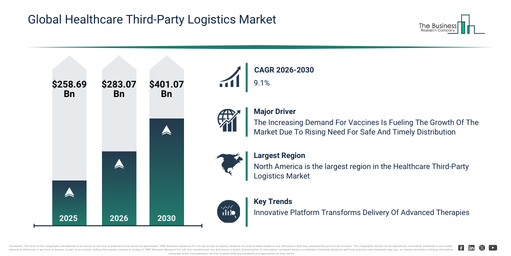
    The healthcare third-party logistics market size has experienced strong growth in recent years. It is projected to increase from $258.69 billion in 2025 to $283.07 billion in 2026, achieving a compound annual growth rate (CAGR) of 9.4%. The expansion observed historically can be attributed to the broadening of pharmaceutical distribution networks, a rise in the transportation of biologics and vaccines, the increasing outsourcing of healthcare logistics, the proliferation of global clinical trials, and enhanced regulatory scrutiny on drug distribution.

    The healthcare third-party logistics market is projected to experience robust expansion over the coming years. This market is forecast to reach $401.07 billion by 2030, exhibiting a compound annual growth rate (CAGR) of 9.1%. This anticipated growth during the forecast timeframe is attributable to several factors, including heightened investments in intelligent healthcare logistics platforms, an increasing need for cryogenic and ultra-cold storage, the broadening of AI-enabled logistics optimization, the wider acceptance of sustainable transport solutions, and a stronger emphasis on resilient healthcare supply chains. Key trends anticipated in this period encompass the increased integration of cold chain monitoring technologies, a surging demand for complete end-to-end supply chain visibility, the expanded implementation of real-time tracking solutions, the growth of automated healthcare warehousing, and a heightened commitment to regulatory-compliant logistics practices.

    Get A Free Sample Report With In-Depth Market Insights:

    https://thebusinessresearchcompany.com/sample_request?id=49003340&type=smp&name=Healthcare%20Third-Party%20Logistics%20Market%20Report%202026&utm_source=Blogs&utm_medium=Paid&utm_campaign=Nov_PR

    Healthcare Third-Party Logistics Market Opportunity Drivers: What’s Unlocking New Revenue Potential?

    The increasing demand for vaccines is projected to drive the growth of the healthcare third-party logistics market in the future. Vaccines are biological preparations engineered to stimulate the body’s immune system to identify and fight specific diseases by mimicking an infection without causing the illness. This rising demand for vaccines is attributed to the growing prevalence of infectious diseases, as more people require protection against widespread health threats. Healthcare third-party logistics supports vaccines by ensuring their safe, timely, and temperature-controlled transportation and storage throughout the supply chain. For instance, in July 2024, the World Health Organization, a Switzerland-based intergovernmental organization, reported that global coverage with the first dose of the HPV vaccine among girls increased from 20% in 2022 to 27% in 2023, with a target of reaching 90% by 2030. Therefore, the increasing demand for vaccines is fueling the expansion of the healthcare third-party logistics market.

    Healthcare Third-Party Logistics Market Segment Landscape And Growth Outlook

    The healthcare third-party logistics market covered in this report is segmented –

    1) By Type: Cold Chain Logistics, Non-Cold Chain Logistics

    2) By Mode Of Transport: Ground Transportation, Air Cargo, Ocean Freight

    3) By Technology: Automated Storage And Retrieval Systems, Warehouse Management Systems, Transportation Management Systems, Blockchain, Internet Of Things, Artificial Intelligence And Machine Learning, Robotics

    4) By Temperature Control: Ambient, Controlled, Refrigerated, Frozen, Cryogenic

    5) By End User: Pharmaceutical And Biopharmaceutical Companies, Hospitals And Clinics, Medical Device Manufacturers, Research Laboratories, Healthcare Providers, Other End Users

    Subsegments:

    1) By Cold Chain Logistics: Refrigerated Storage, Refrigerated Transportation, Packaging Solutions For Temperature-Sensitive Products, Cold Chain Monitoring Systems, Specialized Cold Chain Warehousing

    2) By Non-Cold Chain Logistics: Warehousing And Storage, Transportation Management, Inventory Management, Order Fulfillment Services, Packaging And Labeling

    Healthcare Third-Party Logistics Market Innovation Trends: What Developments Are Reshaping The Industry?

    Leading companies operating within the healthcare third-party logistics market are prioritizing the creation of innovative solutions, including specialized cell and gene therapy logistics platforms, to ensure the secure, time-sensitive, and temperature-regulated delivery of advanced therapeutic treatments. These specialized cell and gene therapy logistics platforms are sophisticated systems engineered to manage the precise, time-critical, and temperature-controlled transportation and storage of delicate biological therapies utilized in personalized medicine. For example, in October 2024, McKesson Corporation, a US-based healthcare entity, unveiled Inspirogene, a dedicated business unit established to support the commercialization of cell and gene therapies through advanced third-party logistics and specialized distribution services. This innovative offering integrates sophisticated supply chain oversight, temperature-controlled storage, and real-time tracking to guarantee product integrity, punctual delivery, and efficient distribution of essential vaccines and therapies. Inspirogene delivers an adaptable platform tailored to meet the distinct logistical challenges of cell and gene therapies, thereby streamlining their delivery and facilitating their market entry with accuracy and dependability.

    Healthcare Third-Party Logistics Market Competitive Landscape: Who Leads The Industry?

    Major companies operating in the healthcare third-party logistics market are McKesson Corporation, Cencora Inc, Cardinal Health Inc, Federal Express Corporation, AP Moller Maersk AS, Kuhne And Nagel International AG, Schenker AG, CEVA Logistics India Private Limited, GEODIS SA, Rhenus SE And Co KG, XPO Inc, Agility Logistics Private Limited, Allcargo Logistics Limited, Noatum Logistics India Private Limited, Barrett Distribution Centers Inc, UPS Supply Chain Solutions Inc, Buske Logistics Inc, DHL Supply Chain India Private Limited, Coldman Logistics Private Limited, AmerisourceBergen Logistics Services, DB Schenker Healthcare, Nippon Express Co Ltd

    View The Full Healthcare Third-Party Logistics Market Report:

    https://thebusinessresearchcompany.com/report/healthcare-third-party-logistics-global-market-report?utm_source=Blogs&utm_medium=Paid&utm_campaign=Nov_PR

    Healthcare Third-Party Logistics Market Geographic Spread And Regional Opportunities

    North America was the largest region in the healthcare third-party logistics market in 2025. Asia-Pacific is expected to be the fastest-growing region in the forecast period. The regions covered in the healthcare third-party logistics market report are Asia-Pacific, South East Asia, Western Europe, Eastern Europe, North America, South America, Middle East, Africa.

    Reach Out To Our Team:

    The Business Research Company: https://www.thebusinessresearchcompany.com/

    Americas: +1 310-496-7795

    Asia: +44 7882 955267 & +91 8897263534

    Europe: +44 7882 955267

    Email us at: marketing@tbrc.info

    Follow us on:

    LinkedIn: https://in.linkedin.com/company/the-business-research-company

    YouTube: https://www.youtube.com/channel/UC24_fI0rV8cR5DxlCpgmyFQ

    Global Market Model: https://www.thebusinessresearchcompany.com/global-market-model
  • Healthcare Technology Management Market Outlook From 2026 To 2030: Key Growth Factors And Future Opportunities

    Healthcare Technology Management Market Outlook From 2026 To 2030: Key Growth Factors And Future Opportunities

    Backed by market attractiveness analysis, total addressable market sizing, company benchmarking matrices, interactive Excel dashboards, wider supply chain intelligence, emerging startup coverage, and detailed product-level insights, The Business Research Company’s 2026 market reports are designed to offer research that is more actionable and strategically valuable than ever.

    Healthcare Technology Management Market Growth Potential: How Will Market Size Shift Through 2030?

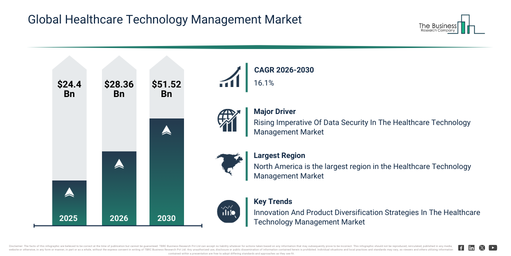
    The healthcare technology management market size has experienced rapid growth in recent years. It is forecast to increase from $24.4 billion in 2025 to $28.36 billion in 2026, achieving a compound annual growth rate (CAGR) of 16.2%. The historical expansion of this market can be attributed to the rising deployment of medical equipment in hospitals, the increasing complexity of healthcare technology maintenance, the growth of acute care facilities, the growing imperative for cost control in technology management, and the implementation of scheduled maintenance practices.

    The healthcare technology management market is projected to experience significant expansion in the upcoming years. This market is forecast to reach $51.52 billion by 2030, exhibiting a compound annual growth rate (CAGR) of 16.1%. Factors contributing to this growth over the projected period include greater investments in digital hospital setups, a growing need for compatible healthcare systems, enhanced attention to device cybersecurity, the expansion of maintenance strategies based on data, and increased regulatory oversight of healthcare technology. Key trends anticipated during this period encompass the wider adoption of integrated HTM software platforms, an escalating demand for proactive equipment maintenance, an intensified focus on cybersecurity for medical devices, the broadening of asset lifecycle management solutions, and a heightened emphasis on adherence to regulations.

    Get A Free Sample Report With In-Depth Market Insights:

    https://thebusinessresearchcompany.com/sample_request?id=11970228&type=smp&name=Healthcare%20Technology%20Management%20Market%20Report%202026&utm_source=Blogs&utm_medium=Paid&utm_campaign=Nov_PR

    Healthcare Technology Management Market Growth Momentum: What Factors Are Shaping Demand?

    The growing demand for data security is anticipated to drive the healthcare technology management market in the future. This involves safeguarding information against illicit access and corruption. The necessity for robust data security measures is escalating because of increased hacker activities aimed at stealing patient information for fraudulent purposes. Healthcare technology management aids in shielding data from cyberattacks by utilizing production and operations management methodologies, enabling the detection of phishing emails and direct reporting to users. For example, in July 2024, International Business Machines Corporation, a US technology firm, reported that the global average cost of a data breach in 2024 reached USD 4.88 million. This figure marked a 10% increase from the prior year and was the highest total ever documented. Consequently, the imperative for data security is fostering expansion within the healthcare technology market.

    Healthcare Technology Management Market Breakdown By Product Type And Application

    The healthcare technology management market covered in this report is segmented –

    1) By Type Of Service: Maintenance and Repair, Capital Planning, Integrated Software Platform, Labor Management, Supply Chain (Procurement), Cyber Security, Quality and Regulatory Compliance

    2) By Component: Software, Hardware, Services

    3) By Facility Type: Acute Care Facility, Post Acute Care Facility, Non Acute Care Facility

    Subsegments:

    1) By Maintenance and Repair: Preventive Maintenance, Corrective Maintenance, Equipment Calibration and Testing, Asset Lifecycle Management

    2) By Capital Planning: Technology Assessment and Planning, Equipment Replacement Planning, Budgeting and Cost Optimization, Technology Standardization

    3) By Integrated Software Platform: Computerized Maintenance Management Systems (CMMS), Clinical Asset Management Software, Equipment Tracking and Analytics Platforms, Interoperability and Integration Tools

    4) By Labor Management: Biomedical Engineering Workforce Management, Staff Scheduling and Utilization, Training and Competency Management, Outsourced Technical Services

    5) By Supply Chain (Procurement): Medical Equipment Procurement, Spare Parts and Inventory Management, Vendor and Contract Management, Logistics and Distribution Management

    6) By Cyber Security: Medical Device Cybersecurity, Network and Endpoint Security, Data Protection and Encryption, Threat Monitoring and Risk Assessment

    7) By Quality and Regulatory Compliance: Regulatory Compliance Management, Quality Assurance and Audits, Documentation and Reporting Systems, Accreditation and Certification Support

    Healthcare Technology Management Market Trends: What’s Defining The Industry’s Next Phase?

    Leading enterprises within the healthcare technology management sector are innovating novel offerings, specifically automated management solutions, with the aim of attracting broader clienteles, boosting sales volumes, and generating greater income. Such a solution typically encompasses a system, software, or technological framework designed to streamline and enhance diverse administrative or operational workflows within an entity, thereby minimizing the necessity for human input. For example, during May 2023, TeleVox Software Inc., a patient engagement technology provider based in the US, introduced an automated reputation management solution. This innovation empowers hospitals, health systems, and physician practices to effectively oversee and improve their online presence and standing. This recent TeleVox technology facilitates healthcare teams in configuring automatic patient alerts through text and email, soliciting feedback concerning their healthcare encounters. The automated mechanism can either direct patients in providing their input or notify healthcare providers of responses requiring prompt action. Additionally, the technology leverages natural language processing (NLP) to decipher gathered comments and conduct sentiment analysis.

    Healthcare Technology Management Market Company Landscape And Competitive Strategy

    Major companies operating in the healthcare technology management market are ABM Industries Inc., Agility Inc., Allscripts Healthcare Solutions Inc., Athenahealth Inc., InterMed Group, Januarynx Medical Systems Inc., Koninklijke Philips NV, Renovo Solutions Ltd., Siemens Healthcare GmbH, TRIMEDX Holdings LLC, Welldoc Inc., Advanced Ultrasound Electronics Ltd., Althea Group, Aramark Healthcare Technologies LLC, Asimily India Pvt. Ltd., Atlantic Biomedical Co., Clinical Technology Management, Comprehensive Technical Group, Conquest Imaging, DirectMed Parts Services LLC, GE Healthcare, Innovatus Imaging Corp., MasterPlan Healthcare, MedWrench LLC, Metis Medical Services, IQVIA Holdings LLC, Tech Knowledge Associates LLC, Healthcare Technology Management Company

    View The Full Healthcare Technology Management Market Report:

    https://thebusinessresearchcompany.com/report/healthcare-technology-management-global-market-report?utm_source=Blogs&utm_medium=Paid&utm_campaign=Nov_PR

    Healthcare Technology Management Market Top Region By Revenue And Market Share

    North America was the largest region in the healthcare technology management market in 2025. The regions covered in the healthcare technology management market report are Asia-Pacific, South East Asia, Western Europe, Eastern Europe, North America, South America, Middle East, Africa.

    Reach Out To Our Team:

    The Business Research Company: https://www.thebusinessresearchcompany.com/

    Americas: +1 310-496-7795

    Asia: +44 7882 955267 & +91 8897263534

    Europe: +44 7882 955267

    Email us at: marketing@tbrc.info

    Follow us on:

    LinkedIn: https://in.linkedin.com/company/the-business-research-company

    YouTube: https://www.youtube.com/channel/UC24_fI0rV8cR5DxlCpgmyFQ

    Global Market Model: https://www.thebusinessresearchcompany.com/global-market-model
  • Healthcare Supply Chain Management Market Growth Forecast: Market Size, Key Trends And Emerging Opportunities Through 2030

    Healthcare Supply Chain Management Market Growth Forecast: Market Size, Key Trends And Emerging Opportunities Through 2030

    Featuring market attractiveness scoring, total addressable market sizing, company benchmarking matrices, interactive Excel dashboards, deeper supply chain intelligence, emerging startup tracking, and granular product-level insights, The Business Research Company’s 2026 market reports are built to deliver research that is both more actionable and more strategically valuable.

    Healthcare Supply Chain Management Market Value Analysis: What Growth Lies Ahead Over The Forecast Period?

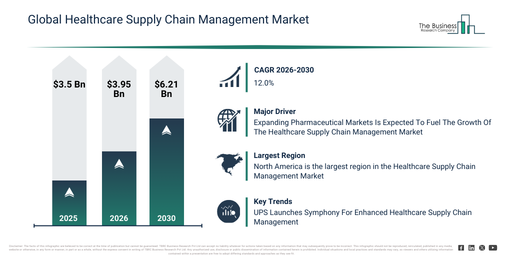
    The healthcare supply chain management market has seen rapid expansion in recent years. It is projected to increase from $3.5 billion in 2025 to $3.95 billion in 2026, exhibiting a compound annual growth rate (CAGR) of 12.8%. The historical growth can be ascribed to several factors, including the increasing complexity of healthcare logistics, a rising demand for cost containment in hospitals, the expansion of pharmaceutical distribution networks, the growing use of inventory digitization tools, and the adoption of basic supply chain software.

    The healthcare supply chain management market is projected for significant expansion over the coming years. This market is anticipated to reach $6.21 billion by 2030, demonstrating a compound annual growth rate (CAGR) of 12.0%. This projected growth is driven by several factors, including a heightened emphasis on predictive demand planning, increased investments in digital health infrastructure, the burgeoning demand for robust medical supply chains, the spread of analytics-driven procurement methods, and the greater uptake of end-to-end visibility solutions. Key trends during this period are expected to encompass wider adoption of cloud-based inventory platforms, more extensive use of real-time supply chain analytics, greater incorporation of RFID and barcode tracking, the development of centralized procurement models, and an intensified focus on bolstering supply chain resilience.

    Get A Free Sample Report With In-Depth Market Insights:

    https://thebusinessresearchcompany.com/sample_request?id=66345097&type=smp&name=Healthcare%20Supply%20Chain%20Management%20Market%20Report%202026&utm_source=Blogs&utm_medium=Paid&utm_campaign=Nov_PR

    Healthcare Supply Chain Management Market Expansion Drivers: What’s Shaping Future Growth?

    The burgeoning pharmaceutical industry is anticipated to propel the expansion of the healthcare supply chain management market going forward. This industry segment is defined by its role in researching, developing, producing, and distributing pharmaceutical drugs and medications. An expanding pharmaceutical industry results in a greater quantity of medications being produced and distributed. Consequently, more effective supply chain management becomes crucial for guaranteeing that pharmaceutical products reach healthcare providers and patients promptly and precisely. As an illustration, in January 2023, a report from IQVIA Inc., a US-based pharmaceutical company, indicated that over the next five years, worldwide expenditure on and demand for medicines are predicted to climb, totaling approximately $1.9 trillion by 2027. Enhanced availability of medications has contributed to a 36% rise in medicine consumption, quantified in defined daily doses, over the past decade. By 2027, specialty medicines are expected to constitute roughly 43% of global spending and hold a dominant share of 56% within developed markets. Worldwide spending on cancer medications is foreseen to hit $370 billion by 2027, primarily propelled by the launch and application of novel drugs, with only a limited impact from new biosimilars.

    Healthcare Supply Chain Management Market Segment Analysis And Revenue Potential

    The healthcare supply chain management market covered in this report is segmented –

    1) By Component: Software Application, Hardware Type

    2) By Delivery Mode: On-Premise, Cloud-Based

    3) By End-User: Healthcare Providers, Healthcare Manufacturers, Other End-Users

    Subsegments:

    1) By Software Application: Inventory Management Software, Procurement Management Software, Supply Chain Analytics Software, Order Management Software

    2) By Hardware Type: Barcode Scanners, RFID Systems, Mobile Computing Devices

    Healthcare Supply Chain Management Market Industry Trends Fueling Future Revenue Growth

    Major companies operating in the healthcare supply chain management market are developing advanced products, such as cloud-based platforms, to improve operational efficiency, enhance real-time data visibility, and streamline procurement, inventory, and logistics processes within healthcare organizations. Cloud-based platforms are digital infrastructures that operate on remote servers accessed via the internet, rather than being hosted on local or on-premise servers. For instance, in March 2024, United Parcel Service (UPS) Inc., a US-based shipping & receiving and supply chain management company launched UPS Supply Chain Symphony for UPS Healthcare. UPS Supply Chain Symphony is a cloud-based platform designed to enhance healthcare supply chain management by integrating various logistics components into a single system. This tool allows users to manage and visualize their warehouse and transportation data efficiently, providing insights that can optimize supply chain operations. Users can monitor shipment details from origin to destination, along with on-demand reports that detail UPS shipments, warehouse status, and inventory levels.

    Healthcare Supply Chain Management Market Key Players Shaping Industry Direction

    Major companies operating in the healthcare supply chain management market are SAP AG Group, Oracle Corporation, McKesson Corporation, TECSYS Inc., Global Healthcare Exchange LLC, Cardinal Health Inc., Epicor, Llamasoft Ltd., Manhattan Associates, Blue Yonder Group Inc., Cerner Corporation, Jump Technologies Inc., LogiTag Systems, Premier Ltd., Accurate InfoSoft Pvt. Ltd., Hybrent Inc., Arvato Systems, Jabil Inc., AmerisourceBergen Corporation, Infor Global Solutions, Henry Schein Inc., Becton Dickinson and Company, Owens & Minor Inc., Medtronic plc, Novo Nordisk AS, Stryker Corporation, F. Hoffmann-La Roche AG, Boston Scientific Corp., Biogen Inc., Johnson & Johnson Services Inc.

    View The Full Healthcare Supply Chain Management Market Report:

    https://thebusinessresearchcompany.com/report/healthcare-supply-chain-management-global-market-report?utm_source=Blogs&utm_medium=Paid&utm_campaign=Nov_PR

    Healthcare Supply Chain Management Market Regional Analysis And Top Geography

    North America will be the largest region in the healthcare supply chain management market in 2025. Asia-Pacific is expected to be the fastest-growing region in the forecast period. The regions covered in the healthcare supply chain management market report are Asia-Pacific, South East Asia, Western Europe, Eastern Europe, North America, South America, Middle East, Africa.

    Reach Out To Our Team:

    The Business Research Company: https://www.thebusinessresearchcompany.com/

    Americas: +1 310-496-7795

    Asia: +44 7882 955267 & +91 8897263534

    Europe: +44 7882 955267

    Email us at: marketing@tbrc.info

    Follow us on:

    LinkedIn: https://in.linkedin.com/company/the-business-research-company

    YouTube: https://www.youtube.com/channel/UC24_fI0rV8cR5DxlCpgmyFQ

    Global Market Model: https://www.thebusinessresearchcompany.com/global-market-model
  • Healthcare Staffing Market CAGR Forecast Through 2030: Key Trends Shaping Industry Expansion

    Healthcare Staffing Market CAGR Forecast Through 2030: Key Trends Shaping Industry Expansion

    Built to provide research that’s more actionable and strategically valuable, The Business Research Company’s 2026 market reports include market attractiveness analysis, total addressable market sizing, company benchmarking matrices, interactive Excel dashboards, broader supply chain intelligence, emerging startup tracking, and in-depth product insights.

    Healthcare Staffing Market Size Forecast: How Big Could The Market Get By 2030?

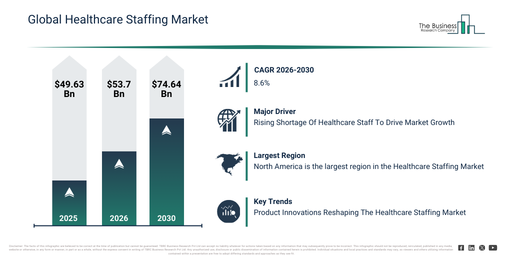
    The healthcare staffing market size has experienced significant growth in recent years. It is projected to increase from $49.63 billion in 2025 to $53.7 billion in 2026, reflecting a compound annual growth rate (CAGR) of 8.2%. The expansion observed in the historic period can be attributed to factors such as increasing healthcare workforce shortages, rising patient volumes, the expansion of hospital networks, a growing reliance on temporary staffing, and increased regulatory staffing requirements.

    The healthcare staffing market is projected to experience robust expansion over the coming years. This market is anticipated to reach a valuation of $74.64 billion by 2030, demonstrating an 8.6% compound annual growth rate (CAGR). Several factors contribute to this growth during the projected period, including the greater uptake of AI-driven workforce planning, a heightened need for remote and telehealth personnel, the broadening scope of cross-border healthcare staffing, an increased emphasis on strategies to mitigate burnout, and the expanded application of predictive staffing analytics. Key trends emerging in this timeframe encompass the wider integration of digital staffing platforms, an escalating requirement for travel and temporary healthcare professionals, the increased deployment of workforce analytics tools, the proliferation of adaptable and gig-economy staffing approaches, and a stronger emphasis on workforce adherence and credential verification.

    Get A Free Sample Report With In-Depth Market Insights:

    https://thebusinessresearchcompany.com/sample_request?id=49482498&type=smp&name=Healthcare%20Staffing%20Market%20Report%202026&utm_source=Blogs&utm_medium=Paid&utm_campaign=Nov_PR

    Healthcare Staffing Market Development Factors: What’s Supporting Demand?

    The expanding deficit of healthcare personnel is anticipated to fuel the expansion of the healthcare staffing industry in the future. Healthcare staff encompasses individuals engaged in healthcare or social care environments, such as medical students undergoing clinical rotations, direct care providers, and other healthcare specialists not having direct patient contact. Their responsibilities include disease and disability prevention, as well as evaluating conditions, diagnosing, and providing treatment. Globally, numerous hospitals have experienced a reduction in healthcare personnel over recent years. For example, reports from the Oracle Corporation, a US-based technology firm, indicated in January 2023 that a study forecasts more than 6.5 million healthcare professionals will permanently leave their positions by 2026 if current U.S. workforce patterns continue, with only 1.9 million new entrants, leading to a national deficit exceeding 4 million healthcare workers. Consequently, the increasing scarcity of healthcare personnel is fostering the growth of the healthcare staffing market moving ahead.

    Healthcare Staffing Market Segmentation And Category Overview

    The healthcare staffing market covered in this report is segmented –

    1) By Service: Travel Nurse Staffing, Per Diem Nurse Staffing, Locum Tenens Staffing, Allied Healthcare Staffing

    2) By Function: Patient Care Staff, Administrative Staff, Support Staff, Technicians, Allied Health Professionals

    3) By End User: Hospitals, Government Agencies

    Subsegments:

    1) By Travel Nurse Staffing: Registered Nurses (RNs), Licensed Practical Nurses (LPNs), Specialty Nurses

    2) By Per Diem Nurse Staffing: Temporary RNs, LPNs For Short-Term Needs, CNAs (Certified Nursing Assistants)

    3) By Locum Tenens Staffing: Physicians, Nurse practitioners (NPs), Physician Assistants (PAs)

    4) By Allied Healthcare Staffing: Physical Therapists (PTs), Radiologic Technologists, Medical Lab Technicians (MLTs)

    Healthcare Staffing Market Trends Powering Strategic Industry Growth

    Leading companies within the healthcare staffing market are creating new tools for adaptable staffing pools to maintain their market presence. Flexible staffing pools define an agile and responsive workforce approach where an organization, such as a healthcare system, maintains a group of employees available to work on a flexible basis. For example, in August 2023, CareRev, a US-based healthcare staffing company, introduced a new workforce management tool designed to tackle ongoing healthcare workforce challenges. This tool empowers health systems to establish flexible staffing pools by utilizing their existing internal workforce. While initially focused on connecting healthcare facilities with vetted local professionals on demand, CareRev’s expanded platform now enables part-time or full-time W2 employees within a healthcare system to take on extra shifts when staffing requirements exceed the core full-time workforce. The technology, developed during the COVID-19 pandemic, aims to provide health systems with efficient, real-time oversight of their flexible staffing resources, offering a solution to nurse shortages, retention difficulties, and clinician burnout. CareRev’s innovative strategy incorporates features such as AI-based shift pricing and in-app communications, affording health systems visibility, control, and smooth interaction for effective workforce administration.

    Healthcare Staffing Market Competitive Analysis Of Leading Industry Participants

    Major companies operating in the healthcare staffing market are Envision Healthcare Corporation, AMN Healthcare Holdings Inc., CHG Healthcare Services Inc., Maxim Healthcare Group Inc., Cross Country Healthcare Inc., Aya Healthcare Inc., Trustaff Inc., TeamHealth Holdings Inc., LocumTenens.com LLC, Jackson Healthcare LLC, Favorite Healthcare Staffing Inc., Medical Solutions LLC, Aureus Medical Group LLC, CompHealth LLC, CoreMedical Group LLC, CrossMed Healthcare Staffing Solutions LLC, Emerald Health Services LLC, Health Carousel LLC, HealthTrust Workforce Solutions LLC, KPG Healthcare LLC, MAS Medical Staffing LLC, MedPro Healthcare Staffing LLC, MedStaff Healthcare Solutions LLC, Next Travel Nursing LLC, NurseFly LLC, Onward Healthcare LLC, ProLink Healthcare LLC, Provenir Healthcare LLC, RNnetwork LLC, Soliant Health LLC, Supplemental Health Care LLC

    View The Full Healthcare Staffing Market Report:

    https://thebusinessresearchcompany.com/report/healthcare-staffing-global-market-report?utm_source=Blogs&utm_medium=Paid&utm_campaign=Nov_PR

    Healthcare Staffing Market Geographic Analysis: Where Is Demand Rising Fastest?

    North America was the largest region in the healthcare staffing market in 2025. Asia-Pacific is expected to be the fastest-growing region in the global healthcare staffing market during the forecast period. The regions covered in the healthcare staffing market report are Asia-Pacific, South East Asia, Western Europe, Eastern Europe, North America, South America, Middle East, Africa.

    Reach Out To Our Team:

    The Business Research Company: https://www.thebusinessresearchcompany.com/

    Americas: +1 310-496-7795

    Asia: +44 7882 955267 & +91 8897263534

    Europe: +44 7882 955267

    Email us at: marketing@tbrc.info

    Follow us on:

    LinkedIn: https://in.linkedin.com/company/the-business-research-company

    YouTube: https://www.youtube.com/channel/UC24_fI0rV8cR5DxlCpgmyFQ

    Global Market Model: https://www.thebusinessresearchcompany.com/global-market-model
  • Healthcare Services Market To Witness 4.9% CAGR Growth Through 2030: Key Industry Drivers

    Healthcare Services Market To Witness 4.9% CAGR Growth Through 2030: Key Industry Drivers

    Backed by market attractiveness analysis, total addressable market sizing, company benchmarking matrices, interactive Excel dashboards, wider supply chain intelligence, emerging startup coverage, and detailed product-level insights, The Business Research Company’s 2026 market reports are designed to offer research that is more actionable and strategically valuable than ever.

    Healthcare Services Market Revenue Outlook: What CAGR Lies Ahead Through 2030?

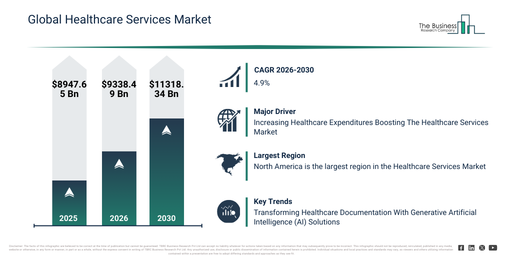
    The healthcare services market has experienced consistent growth in recent years. It is projected to increase from $8947.65 billion in 2025 to $9338.49 billion in 2026, reflecting a compound annual growth rate (CAGR) of 4.4%. This historical expansion can be attributed to rising healthcare demand from aging populations, the expansion of hospital and outpatient networks, increased public healthcare expenditure, the growth of private healthcare services, and a greater focus on clinical specialization.

    The healthcare services market is anticipated to experience sustained expansion over the coming years. By 2030, its valuation is projected to reach $11318.34 billion, growing at a compound annual growth rate (CAGR) of 4.9%. This projected growth throughout the forecast period stems from factors such as the increasing adoption of digital health services, greater integration of AI in clinical workflows, an expanding demand for home-based care services, the broadening implementation of population health management, and increased investments in healthcare infrastructure. Key developments expected during this period involve the wider uptake of telehealth and virtual care services, heightened utilization of data-driven clinical decision support, an increased emphasis on preventive and value-based care, the spread of integrated care delivery models, and a greater priority given to patient-centric service design.

    Get A Free Sample Report With In-Depth Market Insights:

    https://thebusinessresearchcompany.com/sample_request?id=60766555&type=smp&name=Healthcare%20Services%20Market%20Report%202026&utm_source=Blogs&utm_medium=Paid&utm_campaign=Nov_PR

    Healthcare Services Market Industry Drivers: What’s Behind The Revenue Growth?

    Increased spending on healthcare is projected to drive the expansion of the healthcare services market in the future. Healthcare expenditures refer to all costs associated with providing health services, family planning activities, nutrition programs, and emergency help with a focus on health. Greater investment in healthcare enhances access to services, diminishes obstacles to care, and has the potential to positively impact a wider segment of the populace. For example, a report from the Office for National Statistics, a UK-based government department, published in April 2025, revealed that total healthcare expenditure nominally increased by 6.5% between 2023 and 2024, which surpassed the 6.3% growth recorded in 2023. Therefore, the rise in healthcare expenditures is driving the growth of the healthcare services market.

    Healthcare Services Market Segment Outlook: Which Categories Are Growing Fastest?

    The healthcare services market covered in this report is segmented –

    1) By Type: Medical And Diagnostic Laboratory Services, Dental Services, Home Health Care And Residential Nursing Care Services, Residential Substance Abuse And Mental Health Facilities, Hospitals And Outpatient Care Centers, Physicians And Other Health Practitioners, Ambulance Services

    2) By Type of Expenditure: Public, Private

    3) By End User Gender: Male, Female

    Subsegments:

    1) By Medical and Diagnostic Laboratory Services: Clinical Laboratories, Diagnostic Imaging Services

    2) By Dental Services: General Dentistry, Specialized Dental Services

    3) By Home Health Care and Residential Nursing Care Services: Home Health Care, Nursing Care Facilities

    4) By Residential Substance Abuse and Mental Health Facilities: Residential Mental Health Facilities, Substance Abuse Rehabilitation Centers

    5) By Hospitals and Outpatient Care Centers: General Medical and Surgical Hospitals, Specialty Hospitals, Outpatient Care Centers

    6) By Physicians and Other Health Practitioners: General Practitioners, Specialist Physicians, Chiropractors and Other Health Practitioners

    7) By Ambulance Services: Ground Ambulance Services, Air Ambulance Services

    Healthcare Services Market Growth Trends Reshaping The Competitive Landscape

    Leading firms within the healthcare services market are intensifying their efforts to create sophisticated offerings, including generative artificial intelligence (AI) solutions, aimed at boosting market profitability. Generative AI solutions describe artificial intelligence systems and algorithms built to produce various forms of content, like text, pictures, sound, or video, often characterized by creativity, coherence, and contextual appropriateness. As an illustration, in July 2023, Amazon Web Services, an IT service management firm based in the US, introduced AWS HealthScribe, a new service tailored for healthcare. This service utilizes generative AI to automatically generate clinical documentation. AWS HealthScribe leverages speech recognition and generative AI to examine discussions between patients and clinicians, producing clinical notes that can speed up the documentation process and enhance clinical efficiency. Furthermore, the service complies with the Health Insurance Portability and Accountability Act (HIPAA) and is suitable for both telehealth and in-clinic consultations.

    Healthcare Services Market Leading Companies And Competitive Benchmarking

    Major companies operating in the healthcare services market are Kaiser Permanente, HCA Healthcare, Tenet Healthcare, Mayo Clinic, Cleveland Clinic, Community Health Systems, Fresenius Medical Care, DaVita Inc., Quest Diagnostics, Laboratory Corporation of America, Ascension, CommonSpirit Health, Trinity Health, Universal Health Services, Encompass Health, Select Medical, LifePoint Health, Brookdale Senior Living, Amedisys, LHC Group

    View The Full Healthcare Services Market Report:

    https://thebusinessresearchcompany.com/report/Healthcare-Service-Global-Market-Report?utm_source=Blogs&utm_medium=Paid&utm_campaign=Nov_PR

    Healthcare Services Market Global Footprint: Which Region Leads The Market?

    North America was the largest region in the healthcare services market in 2025. Western Europe was the second largest region in the healthcare services market. The regions covered in the healthcare services market report are Asia-Pacific, South East Asia, Western Europe, Eastern Europe, North America, South America, Middle East, Africa.

    Reach Out To Our Team:

    The Business Research Company: https://www.thebusinessresearchcompany.com/

    Americas: +1 310-496-7795

    Asia: +44 7882 955267 & +91 8897263534

    Europe: +44 7882 955267

    Email us at: marketing@tbrc.info

    Follow us on:

    LinkedIn: https://in.linkedin.com/company/the-business-research-company

    YouTube: https://www.youtube.com/channel/UC24_fI0rV8cR5DxlCpgmyFQ

    Global Market Model: https://www.thebusinessresearchcompany.com/global-market-model
  • Healthcare Satellite Connectivity Market Projected For Strong Expansion Through 2030: Key Trends And Future Outlook

    Healthcare Satellite Connectivity Market Projected For Strong Expansion Through 2030: Key Trends And Future Outlook

    Featuring market attractiveness scoring, total addressable market sizing, company benchmarking matrices, interactive Excel dashboards, deeper supply chain intelligence, emerging startup tracking, and granular product-level insights, The Business Research Company’s 2026 market reports are built to deliver research that is both more actionable and more strategically valuable.

    Healthcare Satellite Connectivity Market Growth Analysis: How Will Revenue Trend Over The Forecast Period?

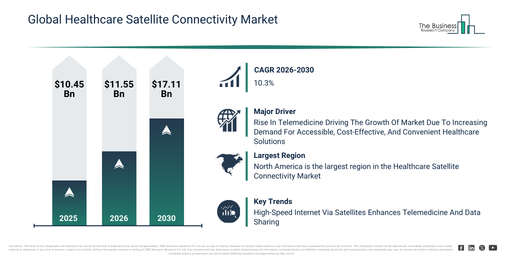
    The healthcare satellite connectivity market size has expanded significantly in recent years. This market is set to expand from $10.45 billion in 2025 to $11.55 billion in 2026, achieving a compound annual growth rate (CAGR) of 10.6%. The primary drivers for this growth in the past include the limited availability of terrestrial networks in isolated regions, the proliferation of telehealth services, the initial incorporation of satellite communication in emergency medical situations, an increasing need for continuous medical data transmission, and the development of remote healthcare programs.

    The healthcare satellite connectivity market is anticipated to experience substantial expansion in the forthcoming years, with projections indicating a rise to $17.11 billion by 2030, reflecting a compound annual growth rate (CAGR) of 10.3%. This expected increase throughout the forecast period stems from escalating investments in satellite broadband infrastructure, the growing adoption of connected healthcare devices, the broader implementation of disaster-resilient healthcare communication systems, an increasing demand for real-time remote diagnostics, and the integration of satellite connectivity with digital health ecosystems. Prominent trends for the forecast period encompass the expanding deployment of satellite-enabled telemedicine services, the rising utilization of remote patient monitoring via satellite, the growing integration of wearable health devices with satellite networks, the expansion of emergency medical connectivity solutions, and a sharpened focus on enhancing healthcare access in remote regions.

    Get A Free Sample Report With In-Depth Market Insights:

    https://thebusinessresearchcompany.com/sample_request?id=48258723&type=smp&name=Healthcare%20Satellite%20Connectivity%20Market%20Report%202026&utm_source=Blogs&utm_medium=Paid&utm_campaign=Nov_PR

    Healthcare Satellite Connectivity Market Growth Factors: What’s Supporting Expansion?

    The expanding use of telemedicine services is anticipated to drive the growth of the healthcare satellite connectivity market moving forward. Telemedicine services involve delivering medical care and consultations remotely via digital communication tools such as video calls, mobile apps, and online platforms. The uptake of telemedicine services is growing due to a rising need for accessible, economical, and convenient healthcare options, as it cuts down on travel and waiting periods while ensuring prompt medical attention. Healthcare satellite connectivity facilitates telemedicine services by offering dependable high-speed communication and data transfer, particularly in remote and underserved regions lacking adequate terrestrial networks. A notable illustration of this trend is observed in April 2023, when FAIR Health Inc., a US non-profit organization, reported that national telehealth usage saw a 7.3% rise, moving from 5.5% of medical claim lines in December 2022 to 5.9% in January 2023. Consequently, the growing acceptance of telemedicine services is fueling the expansion of the healthcare satellite connectivity market.

    Healthcare Satellite Connectivity Market Segment Landscape: Which Areas Lead Development?

    The healthcare satellite connectivity market covered in this report is segmented –

    1) By Connectivity: Mobile Satellite Services (Mss), Fixed Satellite Services (Fss), Specialty Markers

    2) By Component: Medical Devices, System And Software, Services

    3) By Frequency Band: Ku-Band, Ka-Band, C-Band, X-Band

    4) By Application: Telemedicine, Remote Patient Monitoring, Disaster Response And Emergency Communication, Asset Tracking And Supply Chain Management, Tele-Education

    Subsegments:

    1) By Mobile Satellite Services: Voice Services, Data Services, Broadband Services, Tracking And Monitoring Services

    2) By Fixed Satellite Services: Television Services, Data Transmission Services, Broadband Internet Services, Backhaul Connectivity Services

    3) By Specialty Markers: Remote Patient Monitoring, Telemedicine Services, Emergency Response Connectivity, Wearable Health Device Integration

    Healthcare Satellite Connectivity Market Trends Shaping Long-Term Demand

    Leading companies in the healthcare satellite connectivity sector are prioritizing enhancements in satellite technology, particularly satellite broadband, to boost high-speed internet availability in remote regions, enable immediate data sharing, and elevate telemedicine and digital health services. Satellite broadband provides high-speed internet access through satellites, making it possible to connect areas that are distant or underserved. For example, in May 2024, SpaceX, a US-based space exploration firm, rolled out its Starlink satellite internet service on Indonesia’s Bali island to deliver high-speed connectivity to its remote and unserved areas. The introduction featured real-time speed tests involving health workers in isolated locations, demonstrating its potential to improve healthcare, education, and business opportunities. This initiative also encompassed agreements to expand digital access within the health and education domains, thereby supporting Indonesia’s wider digital transformation aims.

    Healthcare Satellite Connectivity Market Industry Leaders And Competitive Landscape

    Major companies operating in the healthcare satellite connectivity market are Thales Group, Space Exploration Technologies Corp., ST Engineering Ltd., Société Européenne des Satellites, Viasat Incorporated, Eutelsat Communications S.A., European Space Agency, Telesat, Comtech Telecommunications Corp., Speedcast International Limited, Globalstar Inc., Avanti Communications Group plc, Astrome Technologies Pvt. Ltd., IEC Telecom Group, Kacific Broadband Satellites Group, Skylo Technologies Inc., X2nSat Inc., Expedition Communications Inc., Connecta Satellite Networks, Monogoto Inc.

    View The Full Healthcare Satellite Connectivity Market Report:

    https://thebusinessresearchcompany.com/report/healthcare-satellite-connectivity-global-market-report?utm_source=Blogs&utm_medium=Paid&utm_campaign=Nov_PR

    Healthcare Satellite Connectivity Market Regional Split: Which Areas Are Fueling Growth?

    North America was the largest region in the healthcare satellite connectivity market in 2025. Asia-Pacific is expected to be the fastest-growing region in the forecast period. The regions covered in the healthcare satellite connectivity market report are Asia-Pacific, South East Asia, Western Europe, Eastern Europe, North America, South America, Middle East, Africa.

    Reach Out To Our Team:

    The Business Research Company: https://www.thebusinessresearchcompany.com/

    Americas: +1 310-496-7795

    Asia: +44 7882 955267 & +91 8897263534

    Europe: +44 7882 955267

    Email us at: marketing@tbrc.info

    Follow us on:

    LinkedIn: https://in.linkedin.com/company/the-business-research-company

    YouTube: https://www.youtube.com/channel/UC24_fI0rV8cR5DxlCpgmyFQ

    Global Market Model: https://www.thebusinessresearchcompany.com/global-market-model
  • Healthcare Robotics Market Outlook 2026–2030: Growth Trends, Market Dynamics And Emerging Opportunities

    Healthcare Robotics Market Outlook 2026–2030: Growth Trends, Market Dynamics And Emerging Opportunities

    Built to provide research that’s more actionable and strategically valuable, The Business Research Company’s 2026 market reports include market attractiveness analysis, total addressable market sizing, company benchmarking matrices, interactive Excel dashboards, broader supply chain intelligence, emerging startup tracking, and in-depth product insights.

    Healthcare Robotics Market Forecast: What Value Will The Market Reach By 2030?

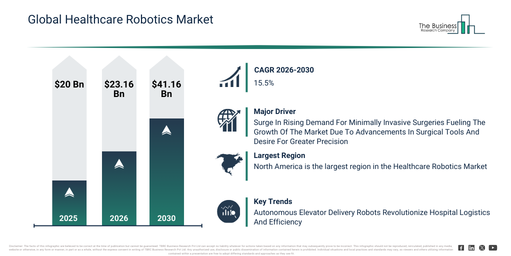
    The healthcare robotics market has experienced substantial expansion in recent years. Its valuation is projected to increase from $20 billion in 2025 to $23.16 billion by 2026, demonstrating a compound annual growth rate (CAGR) of 15.8%. This historical growth is primarily due to a heightened demand for minimally invasive surgical techniques, an increase in the occurrence of chronic illnesses, a scarcity of qualified healthcare personnel, continuous improvements in robotic hardware, and greater investment by hospitals in automated systems.

    The healthcare robotics market is projected to experience substantial expansion in the coming years. It is anticipated to reach $41.16 billion by 2030, exhibiting a compound annual growth rate (CAGR) of 15.5%. This projected growth during the forecast period stems from factors such as the increasing incorporation of AI into robotic platforms, a surge in the use of remote and teleoperated robots, a heightened emphasis on personalized robotic-assisted therapies, the broader application of robotics in outpatient environments, and a rise in regulatory endorsements for robotic systems. Key trends expected during this period involve the expanded implementation of surgical robotic systems, a growing embrace of rehabilitation and assistive robots, the increasing utilization of robotics in hospital logistics, the proliferation of AI-powered clinical decision support robots, and a greater emphasis on precise and minimally invasive medical procedures.

    Get A Free Sample Report With In-Depth Market Insights:

    https://thebusinessresearchcompany.com/sample_request?id=14568679&type=smp&name=Healthcare%20Robotics%20Market%20Report%202026&utm_source=Blogs&utm_medium=Paid&utm_campaign=Nov_PR

    Healthcare Robotics Market Demand Drivers: What’s Powering Industry Growth?

    The increasing need for minimally invasive surgeries is anticipated to propel the future expansion of the healthcare robotics market. These procedures are characterized by operations performed through small incisions using specialized instruments, which leads to less pain and a quicker recovery for patients. The surge in minimally invasive surgeries is largely due to their benefit of faster recovery, as they inflict less bodily trauma and enable individuals to return to their daily activities more quickly. Healthcare robotics enhances these surgeries by offering greater precision, improved control, and smaller incisions, subsequently contributing to accelerated recovery times, reduced risks, and better patient outcomes. For instance, in April 2025, data from the British Association of Aesthetic Plastic Surgeons, a UK-based surgical organization, revealed that Women made up 93.5% of all cosmetic surgeries in 2024, totaling 25,663 procedures performed, which was a +6% increase from 2023. Thus, the escalating demand for minimally invasive surgeries is a key driver for the growth of the healthcare robotics market.

    Healthcare Robotics Market Segments: Where Is Growth Concentrated?

    The healthcare robotics market covered in this report is segmented –

    1) By Type: Non-Invasive Radiosurgery Robots, Emergency Response Robotic Systems, Hospital And Pharmacy Robots, Rehabilitation Robots, Neurosurgical Robotic Systems, Surgical Robots, Laparoscopy Robotic Systems, Other Types

    2) By Portability: Mobile, Fixed

    3) By Application: Neurosurgery, Orthopedic Surgery, Cardiology, Laparoscopy, Pharmacy Applications, Other Applications

    4) By End-Use Industry: Rehabilation Centers, Hospitals, Speciality Centers, Clinics, Other End-Use Industries

    Subsegments:

    1) By Non-Invasive Radiosurgery Robots: Stereotactic Radiosurgery (SRS) Systems, Proton Beam Radiosurgery Systems

    2) By Emergency Response Robotic Systems: Disaster Response Robots, Search and Rescue Robots, Patient Transport Robots

    3) By Hospital And Pharmacy Robots: Medication Dispensing Robots, Hospital Delivery Robots, Autonomous Cleaning Robots, Robotic Surgical Assistant Robots

    4) By Rehabilitation Robots: Exoskeleton Robots, Robotic Physical Therapy Devices, Stroke Rehabilitation Robots

    5) By Neurosurgical Robotic Systems: Robotic Brain Surgery Systems, Spinal Neurosurgery Robots, Cranial Neurosurgery Robots

    6) By Surgical Robots: Minimally Invasive Surgery Robots, Robotic-Assisted Surgery Systems, Robotic Endoscopic Surgery Systems

    7) By Laparoscopy Robotic Systems: Laparoscopic Surgical Robots, Robotic-Assisted Laparoscopy Devices

    8) By Other Types: Telepresence Robots, Diagnostic Robots, Caregiving Robots, Prosthetic And Orthotic Robots

    Healthcare Robotics Market Innovation Trends Shaping Future Development

    Major companies in the healthcare robotics market are concentrating on developing advanced technologies, such as elevator delivery robots, to boost operational effectiveness and streamline hospital logistics. An elevator delivery robot is an autonomous machine built to transport items between different building floors, utilizing elevator systems for vertical movement. For instance, in May 2024, Richtech Robotics Inc., a US-based provider of AI-driven service robots, unveiled the Medbo, an elevator-enabled delivery robot. It is designed to optimize 24/7 medication delivery across healthcare settings. This robot provides secure and precise transport, reducing operational costs while improving patient care. It assists in alleviating routine duties for healthcare staff, thereby increasing overall efficiency. The Medbot helps enhance hospital performance and contributes to the seamless operation of healthcare facilities.

    Healthcare Robotics Market Key Participants And Competitive Landscape

    Major companies operating in the healthcare robotics market are Intuitive Surgical Inc., Medtronic plc, Stryker Corporation, Zimmer Biomet Holdings Inc., Smith & Nephew plc, Johnson & Johnson, Accuray Incorporated, Brainlab AG, CMR Surgical Ltd., Vicarious Surgical Inc., Stereotaxis Inc., Globus Medical Inc., Titan Medical Inc., Medicaroid Corporation, Meerecompany Co. Ltd., Cyberdyne Inc., Hocoma AG, ReWalk Robotics Ltd., Ekso Bionics Holdings Inc., Aethon Inc., PROCEPT BioRobotics Corporation

    View The Full Healthcare Robotics Market Report:

    https://thebusinessresearchcompany.com/report/healthcare-robotics-global-market-report?utm_source=Blogs&utm_medium=Paid&utm_campaign=Nov_PR

    Healthcare Robotics Market Top Region: Where Does Most Revenue Come From?

    North America was the largest region in the healthcare robotics market in 2025. Asia-Pacific is expected to be the fastest-growing region in the forecast period. The regions covered in the healthcare robotics market report are Asia-Pacific, South East Asia, Western Europe, Eastern Europe, North America, South America, Middle East, Africa.

    Reach Out To Our Team:

    The Business Research Company: https://www.thebusinessresearchcompany.com/

    Americas: +1 310-496-7795

    Asia: +44 7882 955267 & +91 8897263534

    Europe: +44 7882 955267

    Email us at: marketing@tbrc.info

    Follow us on:

    LinkedIn: https://in.linkedin.com/company/the-business-research-company

    YouTube: https://www.youtube.com/channel/UC24_fI0rV8cR5DxlCpgmyFQ

    Global Market Model: https://www.thebusinessresearchcompany.com/global-market-model
  • Healthcare Revenue Cycle Management Market Growth Outlook From $92.91 Billion In 2026 To $152.96 Billion By 2030

    Healthcare Revenue Cycle Management Market Growth Outlook From $92.91 Billion In 2026 To $152.96 Billion By 2030

    Backed by market attractiveness analysis, total addressable market sizing, company benchmarking matrices, interactive Excel dashboards, wider supply chain intelligence, emerging startup coverage, and detailed product-level insights, The Business Research Company’s 2026 market reports are designed to offer research that is more actionable and strategically valuable than ever.

    Healthcare Revenue Cycle Management Market Size Outlook: How Quickly Will Revenue Expand Through 2030?

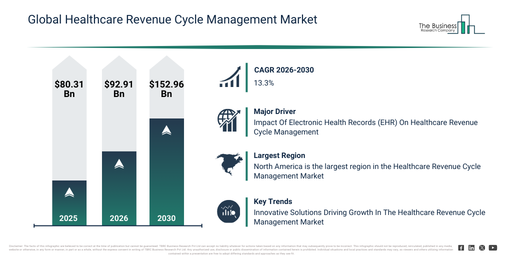
    The healthcare revenue cycle management market has experienced significant expansion recently. Forecasts indicate it will expand from $80.31 billion in 2025 to $92.91 billion by 2026, exhibiting a compound annual growth rate (CAGR) of 15.7%. Historically, this growth has been driven by several factors, such as the increasing complexity of healthcare billing regulations, higher claim denial rates, expanded healthcare service volumes, broader adoption of electronic health records, and increased strain on provider margins.

    The healthcare revenue cycle management market is projected to experience substantial expansion over the upcoming years. This market is set to reach $152.96 billion by 2030, exhibiting a compound annual growth rate (CAGR) of 13.3%. Factors driving this growth during the projected timeframe include the heightened automation of revenue workflows, the increasing integration of predictive analytics within RCM, the escalating need for system interoperability, the broadening scope of value-based reimbursement integration, and expanded investments in digital healthcare finance. Key trends anticipated for this period encompass the greater embrace of cloud-based RCM platforms, the surge in using AI-powered coding and billing instruments, the heightened desire for comprehensive revenue transparency, the expansion of outsourced RCM offerings, and a sharpened emphasis on adherence to regulations and audit preparedness.

    Get A Free Sample Report With In-Depth Market Insights:

    https://thebusinessresearchcompany.com/sample_request?id=45174559&type=smp&name=Healthcare%20Revenue%20Cycle%20Management%20Market%20Report%202026&utm_source=Blogs&utm_medium=Paid&utm_campaign=Nov_PR

    Healthcare Revenue Cycle Management Market Growth Drivers: What’s Behind The Acceleration?

    An increase in the implementation of electronic health records (EHR) is anticipated to drive expansion in the healthcare revenue cycle management market. These systems represent digitized medical files for patients, encompassing thorough health data available to approved healthcare professionals. The rising uptake of Electronic Health Records (EHR) can be attributed to multiple elements, such as the need for enhanced patient care accessibility, their effectiveness and efficiency in providing healthcare, and their capacity for smooth information exchange. EHR systems optimize healthcare revenue cycle management through enabling precise documentation, quick processing of claims, and prompt payments for healthcare services provided. For example, in April 2024, data from Queen Margaret University, a public university located in the UK, indicated that by November 2023, 189 NHS trusts had incorporated new electronic patient record systems, achieving a 90% adoption rate among all trusts. Consequently, the increasing use of electronic health records is stimulating the expansion of the healthcare revenue cycle management market.

    Healthcare Revenue Cycle Management Market Segment Analysis: What Are The Core Market Categories?

    The healthcare revenue cycle management market covered in this report is segmented –

    1) By Component: Software, Service

    2) By Deployment Mode: On-Premises, Cloud Or Web Based

    3) By Function: Claims And Denial Management, Medical Coding And Billing Eligibility Verification, Payment Remittance, Other Functions

    4) By End-Use: Hospitals, Laboratories, Physicians, Other End-Users

    Subsegments:

    1) By Software: Billing And Coding Software, Patient Scheduling Software, Payment Processing Software, Claims Management Software, Revenue Cycle Analytics Software, Healthcare ERP (Enterprise Resource Planning) Software

    2) By Service: Consulting Services, Outsourcing Services, Managed Services, Training And Support Services, Revenue Cycle Optimization Services

    Healthcare Revenue Cycle Management Market Trends Redefining Industry Growth

    Major companies operating within the healthcare revenue cycle management market are primarily focused on creating innovative solutions, including AI-driven automated claim scrubbing and real-time analytics, to decrease billing inaccuracies, expedite reimbursements, and ensure providers have full financial visibility. AI-driven automated claim scrubbing specifically refers to the application of machine learning to validate and rectify claims before they are submitted, which helps to minimize denials and delays in payment. As an example, in August 2025, RCM Matter, a U.S.-based healthcare management services company, introduced its cutting-edge RCM and billing software tailored for modern practices. This software boasts several key features, such as automated claim scrubbing designed to identify and correct coding or data problems pre-submission; real-time analytics dashboards that monitor claims, denials, and payer performance; smooth integration with leading EHR and practice-management systems for an efficient data flow; and a secure, cloud-based infrastructure guaranteeing HIPAA-compliance while allowing billing teams to work from any location. With this product launch, RCM Matter intends to help healthcare providers simplify their administrative tasks, reduce claim denials, and improve overall financial outcomes, thus enabling them to dedicate more time to patient care.

    Healthcare Revenue Cycle Management Market Top Companies Driving Competitive Growth

    Major companies operating in the healthcare revenue cycle management market are McKesson Corporation, 3M Health Information Systems, GE Healthcare, Experian Health, Cerner Corporation, Epic Systems Corporation, Change Healthcare, R1 RCM Inc., Nuance Communications, Conifer Health Solutions, Allscripts Healthcare Solutions, Health Catalyst, Craneware, MEDHOST Inc., NextGen Healthcare, Greenway Health, MedeAnalytics, Source Medical, Patientco, Athenahealth Inc., eClinicalWorks, Optum, nThrive, Waystar, IBM Watson Health, Trizetto Provider Solutions, Quadax, Experity

    View The Full Healthcare Revenue Cycle Management Market Report:

    https://thebusinessresearchcompany.com/report/healthcare-revenue-cycle-management-global-market-report?utm_source=Blogs&utm_medium=Paid&utm_campaign=Nov_PR

    Healthcare Revenue Cycle Management Market Regional Breakdown: Where Is Demand Concentrated?

    North America was the largest region in the healthcare revenue cycle management market in 2025. Asia-Pacific is expected to be the fastest-growing region in the forecast period. The regions covered in the healthcare revenue cycle management market report are Asia-Pacific, South East Asia, Western Europe, Eastern Europe, North America, South America, Middle East, Africa.

    Reach Out To Our Team:

    The Business Research Company: https://www.thebusinessresearchcompany.com/

    Americas: +1 310-496-7795

    Asia: +44 7882 955267 & +91 8897263534

    Europe: +44 7882 955267

    Email us at: marketing@tbrc.info

    Follow us on:

    LinkedIn: https://in.linkedin.com/company/the-business-research-company

    YouTube: https://www.youtube.com/channel/UC24_fI0rV8cR5DxlCpgmyFQ

    Global Market Model: https://www.thebusinessresearchcompany.com/global-market-model
  • Healthcare Reimbursement Market Forecast To Reach $29.71 Billion By 2030: Key Growth Drivers And Industry Trends

    Healthcare Reimbursement Market Forecast To Reach $29.71 Billion By 2030: Key Growth Drivers And Industry Trends

    Featuring market attractiveness scoring, total addressable market sizing, company benchmarking matrices, interactive Excel dashboards, deeper supply chain intelligence, emerging startup tracking, and granular product-level insights, The Business Research Company’s 2026 market reports are built to deliver research that is both more actionable and more strategically valuable.

    Healthcare Reimbursement Market Size, Value And Growth Trajectory Through 2030

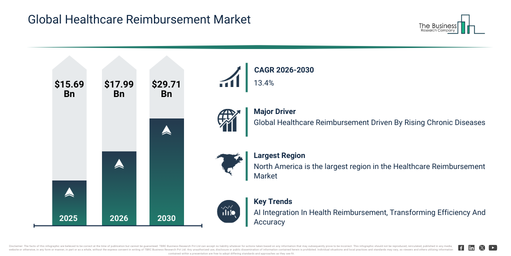
    The healthcare reimbursement market size has seen rapid expansion in recent years. It is anticipated to increase from $15.69 billion in 2025 to $17.99 billion in 2026, achieving a compound annual growth rate (CAGR) of 14.6%. The historical growth trajectory can be attributed to the broader reach of health insurance coverage, increased utilization of healthcare services, the proliferation of public healthcare programs, the growing administrative intricacy in claims processing, and a heightened emphasis on cost containment.

    The healthcare reimbursement market is projected to experience substantial expansion in the coming years. By 2030, its valuation is anticipated to reach $29.71 billion, demonstrating a compound annual growth rate (CAGR) of 13.4%. This anticipated growth during the forecast period is fueled by several factors, including a greater move towards value-based care, increased implementation of AI-powered reimbursement solutions, intensified regulatory oversight concerning billing precision, the spread of digital health payment systems, and a heightened need for immediate reimbursement transparency. Key developments during this period encompass a rise in automated claims processing, a stronger emphasis on refining denial management, increased utilization of data-driven insights for reimbursement, the broadening of value-based reimbursement frameworks, and a more pronounced focus on adherence to regulations.

    Get A Free Sample Report With In-Depth Market Insights:

    https://thebusinessresearchcompany.com/sample_request?id=47274217&type=smp&name=Healthcare%20Reimbursement%20Market%20Report%202026&utm_source=Blogs&utm_medium=Paid&utm_campaign=Nov_PR

    Healthcare Reimbursement Market Growth Factors Behind Sustained Expansion

    The increasing prevalence of chronic diseases is set to drive the healthcare reimbursement market going forward. Chronic diseases are long-term health conditions that often require ongoing medical attention and treatment, including conditions like diabetes, heart disease, cancer, respiratory disorders, and various others. These frequently necessitate continuous medical care, encompassing doctor visits, hospitalizations, medications, and medical procedures. As the number of individuals with chronic conditions rises, there is a corresponding increase in overall healthcare expenditure. For instance, in May 2024, according to the Statens Serum Institut, a Denmark-based governmental research institution, invasive pneumococcal disease cases reported 553 in 2022, which increased to 622 in 2023, signaling a rise in incidence. In August 2024, data from the Australian Bureau of Statistics, an Australia-based government agency, showed that in 2022, there were 426 reported cases of influenza, which rose to 598 cases in 2023, along with an increase in influenza-associated deaths during the same period. Consequently, the escalating cases of chronic diseases across the globe are expected to stimulate demand for the healthcare reimbursement market.

    Healthcare Reimbursement Market Segment Breakdown: Which Categories Lead On Revenue?

    The healthcare reimbursement market covered in this report is segmented –

    1) By Claims: Underpaid Claims, Full Paid Claims

    2) By Payers: Private Payers, Public Payers

    3) By Service Provider: Physician Office, Hospitals, Diagnostic Laboratories, Other Service Providers

    Subsegments:

    1) By Underpaid Claims: Denied Claims, Partial Payment Claims, Delayed Claims

    2) By Full Paid Claims: Timely Paid Claims, Properly Paid Claims

    Healthcare Reimbursement Market Strategic Trends: What Defines The Next Growth Phase?

    Major companies in the health reimbursement market are integrating AI into their operations to drive market revenues. AI enhances health reimbursement by enabling predictive fraud detection through data analysis and automating claims processing, ensuring both accuracy and efficiency. For example, in August 2023, Codoxo, a US-based company specializing in AI, launched ClaimPilot. This generative AI product aims to make healthcare cost containment and payment integrity programs considerably more efficient while easing constraints on the healthcare workforce. Initially, the AI will focus on automating audits for in-patient and facility claims. ClaimPilot seeks to achieve a significant increase in audit turnaround times and clinician audits per day, simultaneously eliminating financial thresholds that limit claims analysis to only higher dollar ranges.

    Healthcare Reimbursement Market Leading Players And Competitive Positioning

    Major companies operating in the healthcare reimbursement market are UnitedHealth Group Incorporated, Aviva plc, Allianz SE, CVS Health Corporation, BNP Paribas Group, Aetna Inc., Nippon Life Insurance Company, WellCare Health Plans Inc., AgileHealthInsurance, Blue Cross Blue Shield Association, Kaiser Foundation Health Plan Inc., Anthem Inc., Centene Corporation, Humana Inc., Health Care Service Corporation, Cigna Corporation, Molina Healthcare Inc., Independence Health Group Inc., Health Net LLC, Universal American Corporation, Blue Shield of California, Tufts Health Plan Inc., Fallon Community Health Plan Inc., CareSource, Health Alliance Plan (HAP), Geisinger Health Plan, SelectHealth

    View The Full Healthcare Reimbursement Market Report:

    https://thebusinessresearchcompany.com/report/Healthcare-Reimbursement-Global-Market-Report?utm_source=Blogs&utm_medium=Paid&utm_campaign=Nov_PR

    Healthcare Reimbursement Market Geographic Landscape: Which Region Leads Industry Growth?

    North America was the largest region in the healthcare reimbursement market in 2025. Western Europe was the second largest region in the healthcare reimbursement market. The regions covered in the healthcare reimbursement market report are Asia-Pacific, South East Asia, Western Europe, Eastern Europe, North America, South America, Middle East, Africa.

    Reach Out To Our Team:

    The Business Research Company: https://www.thebusinessresearchcompany.com/

    Americas: +1 310-496-7795

    Asia: +44 7882 955267 & +91 8897263534

    Europe: +44 7882 955267

    Email us at: marketing@tbrc.info

    Follow us on:

    LinkedIn: https://in.linkedin.com/company/the-business-research-company

    YouTube: https://www.youtube.com/channel/UC24_fI0rV8cR5DxlCpgmyFQ

    Global Market Model: https://www.thebusinessresearchcompany.com/global-market-model
  • Healthcare RCM Outsourcing Market Research 2026: Market Size, Trends, Segments And Growth Forecast

    Healthcare RCM Outsourcing Market Research 2026: Market Size, Trends, Segments And Growth Forecast

    Built to provide research that’s more actionable and strategically valuable, The Business Research Company’s 2026 market reports include market attractiveness analysis, total addressable market sizing, company benchmarking matrices, interactive Excel dashboards, broader supply chain intelligence, emerging startup tracking, and in-depth product insights.

    Healthcare RCM Outsourcing Market CAGR Outlook And Future Development

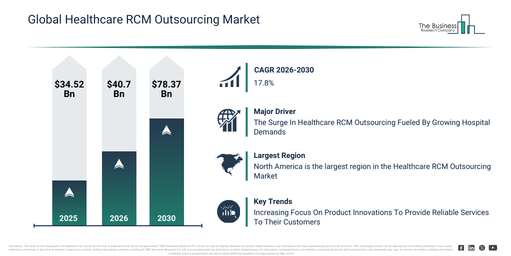
    The healthcare rcm outsourcing market size has seen swift development in recent years. It is anticipated to expand from $34.52 billion in 2025 to $40.7 billion in 2026, achieving a compound annual growth rate (CAGR) of 17.9%. The market’s historical growth can be linked to the increasing intricacy of healthcare billing regulations, the escalating administrative burden on providers, the growth of private healthcare facilities, the rising volumes of claims processing, and the integration of digital billing systems.

    The healthcare rcm outsourcing market size is expected to witness substantial expansion in the coming years. It is projected to reach $78.37 billion by 2030, demonstrating a compound annual growth rate (CAGR) of 17.8%. This anticipated growth during the forecast period is fueled by an increasing shift towards value-based reimbursement, a rising demand for cost-efficient revenue management, the expansion of AI-driven coding solutions, the growing adoption of cloud-based RCM platforms, and a heightened focus on financial transparency. Key trends for the forecast period include the increasing outsourcing of end-to-end RCM processes, the rising adoption of automation in medical coding, a growing emphasis on denial management optimization, the expansion of analytics-driven revenue insights, and enhanced integration with EHR and billing systems.

    Get A Free Sample Report With In-Depth Market Insights:

    https://thebusinessresearchcompany.com/sample_request?id=8589&type=smp&name=Healthcare%20RCM%20Outsourcing%20Market%20Report%202026&utm_source=Blogs&utm_medium=Paid&utm_campaign=Nov_PR

    Healthcare RCM Outsourcing Market Demand Drivers Opening New Revenue Streams

    The rising need for hospitals is anticipated to drive the expansion of the healthcare RCM outsourcing market. Hospitals are specialized facilities where medical professionals offer diagnostic, therapeutic, and preventive healthcare to sick or injured individuals. Outsourcing healthcare RCM offers advantages such as financial savings, operational efficiencies, enhanced patient satisfaction, scalability, and flexibility, enabling hospitals to concentrate on providing excellent healthcare services. For example, in August 2023, Interweave Textiles Limited reported 1148 hospitals in the UK for 2023, comprising 930 National Health Service hospitals and 218 private hospitals. Consequently, the growing demand for hospitals is a key factor propelling the healthcare RCM outsourcing market.

    Healthcare RCM Outsourcing Market Segmentation: How Does The Market Break Down By Category?

    The healthcare rcm outsourcing market covered in this report is segmented –

    1) By Type: Pre-Intervention, Intervention, Post-Intervention

    2) By Service: Back-End, Middle, Front-End

    3) By End User: Clinics, Hospitals, Ambulatory Surgery Centers, Other End Users

    Subsegments:

    1) By Pre-Intervention: Patient Registration, Insurance Verification, Eligibility Verification, Pre-Authorization Services

    2) By Intervention: Charge Capture, Medical Coding, Billing And Collections, Claims Management

    3) By Post-Intervention: Accounts Receivable Management, Denial Management, Payment Posting, Reporting And Analytics

    Healthcare RCM Outsourcing Market Transformation Trends: What Innovations Are Driving Change?

    Leading companies in the healthcare RCM outsourcing market are emphasizing innovative products, such as digital platforms, to drive revenues within their sector. A digital platform serves as a software-based online infrastructure facilitating user interactions and transactions. For example, in October 2023, Omega Healthcare Management Services, a US-based healthcare outsourcing company, launched its Omega Digital Platform (ODP). The ODP utilizes bespoke technology and the industry’s leading claims management system to assist enterprises in managing the entire revenue cycle, integrating additional features into current operations, preventing denials, improving cash flow, and enhancing coding quality and compliance. The ODP aims to support healthcare organizations in reducing administrative costs and boosting their financial performance by offering state-of-the-art technological solutions to address the most critical issues facing the industry.

    Healthcare RCM Outsourcing Market Competitive Overview And Top Companies

    Major companies operating in the healthcare rcm outsourcing market are Conifer Health Solutions Inc., R1 Revenue Cycle Management Inc., McKesson Corporation, Parallon Business Solutions LLC, The SSI Group Inc., Cerner Corporation, Cognizant Technology Solutions Corporation, Optum360 Inc., Greenway Health LLC, Medvertex Inc., International Business Machines Corporation (IBM), MediRevv Inc., Drchrono Inc., Pulse Systems Inc., edgeMED Healthcare GmbH, Connvertex Technologies Inc., Meridian Management Group Inc., Bolder Healthcare Solutions LLC, Pyramid Healthcare Solutions Inc., Navigant Healthcare LLC, Cymetrix Corporation, BancTe Inc., Etransmedia Technology Inc., CCS Revenue Cycle Management LLC, MediGain Inc., CareCloud Inc., Change Healthcare Inc.

    View The Full Healthcare RCM Outsourcing Market Report:

    https://thebusinessresearchcompany.com/report/healthcare-rcm-outsourcing-global-market-report?utm_source=Blogs&utm_medium=Paid&utm_campaign=Nov_PR

    Healthcare RCM Outsourcing Market Largest Region: Which Geography Holds The Biggest Share?

    North America was the largest region in the healthcare RCM outsourcing market share in 2025. The regions covered in the healthcare rcm outsourcing market report are Asia-Pacific, South East Asia, Western Europe, Eastern Europe, North America, South America, Middle East, Africa.

    Reach Out To Our Team:

    The Business Research Company: https://www.thebusinessresearchcompany.com/

    Americas: +1 310-496-7795

    Asia: +44 7882 955267 & +91 8897263534

    Europe: +44 7882 955267

    Email us at: marketing@tbrc.info

    Follow us on:

    LinkedIn: https://in.linkedin.com/company/the-business-research-company

    YouTube: https://www.youtube.com/channel/UC24_fI0rV8cR5DxlCpgmyFQ

    Global Market Model: https://www.thebusinessresearchcompany.com/global-market-model