Blog

  • Automated Microscopy Market To Witness 7% CAGR Growth Through 2030: Key Industry Drivers

    Automated Microscopy Market To Witness 7% CAGR Growth Through 2030: Key Industry Drivers

    Built to provide research that’s more actionable and strategically valuable, The Business Research Company’s 2026 market reports include market attractiveness analysis, total addressable market sizing, company benchmarking matrices, interactive Excel dashboards, broader supply chain intelligence, emerging startup tracking, and in-depth product insights.

    Automated Microscopy Market Size, Value And Growth Trajectory Through 2030

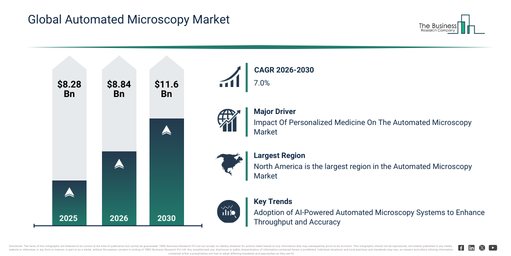
    The automated microscopy market size has experienced robust expansion in recent years. Its value is projected to increase from $8.28 billion in 2025 to $8.84 billion in 2026, achieving a compound annual growth rate (CAGR) of 6.8%. This historical growth can be attributed to several factors, including the increasing use of microscopy in life sciences research, the expansion of clinical diagnostics imaging, advancements in optical and electron microscopy, growth in materials science research, and a rising demand for reproducible imaging results.

    The market for automated microscopy is anticipated to experience robust expansion over the coming years. This market is projected to reach a valuation of $11.6 billion by 2030, demonstrating a compound annual growth rate (CAGR) of 7.0%. This projected increase can be attributed to several factors, including the rising acceptance of AI-assisted diagnostic methods, the broadening scope of semiconductor inspection uses, increased capital allocation towards automated research facilities, a surging need for adaptable imaging systems, and the enhanced integration of cloud-based microscopy solutions. Key developments during this period are expected to encompass the wider implementation of AI-driven image analysis, greater uptake of high-throughput imaging technologies, an increased incorporation of automated sample handling processes, the expansion of remote and digital microscopy capabilities, and a heightened emphasis on achieving accurate high-resolution imaging.

    Get A Free Sample Report With In-Depth Market Insights:

    https://thebusinessresearchcompany.com/sample_request?id=91171033&type=smp&name=Automated%20Microscopy%20Market%20Report%202026&utm_source=Blogs&utm_medium=Paid&utm_campaign=Oct_PR

    Automated Microscopy Market Demand Drivers: What’s Powering Industry Growth?

    The increasing need for personalized medicine is anticipated to drive expansion in the automated microscopy market going forward. Personalized medicine is a healthcare approach that accounts for individual differences in genes, environment, and lifestyle for each person. The adoption of personalized medicine is on the rise due to various factors, including heightened awareness of genetic variability, advancements in genomics, and the increasing prevalence of chronic diseases. Automated microscopy provides researchers and clinicians with essential tools and technologies to advance personalized medicine by elucidating disease mechanisms, identifying predictive biomarkers, and optimizing treatment strategies. For instance, in February 2024, the Personalized Medicine Coalition, a US-based advocacy group for tailored medical treatments, stated that the FDA approved 16 new personalized treatments for rare disease patients in 2023, a significant rise from six in 2022. Therefore, the expanding demand for personalized medicine is a key driver for the growth of the automated microscopy market.

    Automated Microscopy Market Segment Performance And Emerging Opportunities

    The automated microscopy market covered in this report is segmented –

    1) By Product Type: Optical Microscopes, Electron Microscopes, Scanning Probe Microscopes

    2) By Application: Medical Diagnostics, Nanotechnology, Material Science, Life Sciences, Semiconductors

    3) By End User: Hospitals, Research Facilities, Diagnostic Clinics

    Subsegments:

    1) By Optical Microscopes: Automated Light Microscopes, Confocal Microscopes, Fluorescence Microscopes

    2) By Electron Microscopes: Scanning Electron Microscopes (SEM), Transmission Electron Microscopes (TEM), Scanning Transmission Electron Microscopes (STEM)

    3) By Scanning Probe Microscopes: Atomic Force Microscopes (AFM), Scanning Tunneling Microscopes (STM)

    Automated Microscopy Market Innovation Trends: What Developments Are Reshaping The Industry?

    Key players in the automated microscopy sector are concentrating on innovative technological advancements, notably AI-driven automated fluorescence microscopes, in an effort to enhance throughput, refine image precision, and minimize human intervention in cell analysis and drug discovery procedures. An AI-enabled automated microscope typically incorporates motorized stages, autofocus functionality, multi-channel imaging, and sophisticated image analysis software, thereby facilitating automatic cell counting, confluency evaluation, and time-lapse imaging with significantly reduced human input. As an illustration, in August 2024, Leica Microsystems, a scientific instrumentation company from Germany, introduced the Mateo FL, which is an AI-powered digital fluorescence microscope created for automated cell-culture analysis. This product combines transmitted-light imaging for label-free observation with multi-channel fluorescence imaging, leverages AI algorithms for automatic confluency verification and cell counting, and delivers superior reproducibility coupled with expedited experimental workflows when juxtaposed with conventional manual microscopes.

    Automated Microscopy Market Key Players: Which Companies Lead Industry Competition?

    Major companies operating in the automated microscopy market are Thermo Fisher Scientific Inc., Zeiss Group, Agilent Technologies Inc., Keyence Corporation, Hitachi High-Tech Corporation, PerkinElmer Inc., Nikon Corporation, Bruker Corporation, Hamamatsu Photonics K.K., Jenoptik AG, HORIBA Scientific, Molecular Devices LLC, JEOL Ltd., Olympus Corporation, Prior Scientific Instruments Ltd., Phase Holographic Imaging PHI AB, Andor Technology Ltd., Crest Optics S.p.A, Delmic B.V., Nanolive SA, Nanosurf AG, Photometrics

    View The Full Automated Microscopy Market Report:

    https://thebusinessresearchcompany.com/report/automated-microscopy-global-market-report?utm_source=Blogs&utm_medium=Paid&utm_campaign=Oct_PR

    Automated Microscopy Market Global Footprint: Which Region Leads The Market?

    North America was the largest region in the automated microscopy market in 2025. Asia-Pacific is expected to be the fastest-growing region in the forecast period. The regions covered in the automated microscopy market report are Asia-Pacific, South East Asia, Western Europe, Eastern Europe, North America, South America, Middle East, Africa.

    Reach Out To Our Team:

    The Business Research Company: https://www.thebusinessresearchcompany.com/

    Americas: +1 310-496-7795

    Asia: +44 7882 955267 & +91 8897263534

    Europe: +44 7882 955267

    Email us at: marketing@tbrc.info

    Follow us on:

    LinkedIn: https://in.linkedin.com/company/the-business-research-company

    YouTube: https://www.youtube.com/channel/UC24_fI0rV8cR5DxlCpgmyFQ

    Global Market Model: https://www.thebusinessresearchcompany.com/global-market-model
  • Automated Microbiology Market Projected For Strong Expansion Through 2030: Key Trends And Future Outlook

    Automated Microbiology Market Projected For Strong Expansion Through 2030: Key Trends And Future Outlook

    Backed by market attractiveness analysis, total addressable market sizing, company benchmarking matrices, interactive Excel dashboards, wider supply chain intelligence, emerging startup coverage, and detailed product-level insights, The Business Research Company’s 2026 market reports are designed to offer research that is more actionable and strategically valuable than ever.

    Automated Microbiology Market CAGR Outlook And Future Development

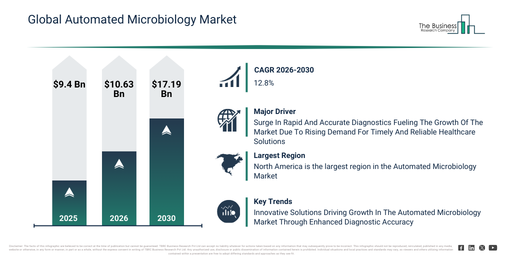
    The market size for automated microbiology has seen rapid expansion in recent years. This market is expected to increase from $9.4 billion in 2025 to $10.63 billion in 2026, reflecting a compound annual growth rate (CAGR) of 13.0%. Key drivers for this growth in the past include higher volumes of clinical testing, an escalating need for swifter diagnostic results, the enlargement of hospital laboratory facilities, a lack of proficient lab personnel, and the uptake of consistent diagnostic methods.

    The automated microbiology market is projected to experience substantial expansion over the upcoming years, with its size forecast to reach $17.19 billion by 2030, exhibiting a compound annual growth rate (CAGR) of 12.8%. This anticipated growth during the forecast period is primarily fueled by factors such as enhanced investments in smart laboratory infrastructure, a rising need for swift infectious disease diagnostics, the broadening scope of molecular microbiology applications, the increasing integration of data-driven laboratory systems, and a sharpened emphasis on diagnostic precision. Key trends expected within this period encompass the growing embrace of fully automated microbiology solutions, the escalating utilization of AI for pathogen identification, greater incorporation of lims platforms, the scaling up of high-throughput diagnostic tests, and a heightened emphasis on automating laboratory workflows.

    Get A Free Sample Report With In-Depth Market Insights:

    https://thebusinessresearchcompany.com/sample_request?id=37184026&type=smp&name=Automated%20Microbiology%20Market%20Report%202026&utm_source=Blogs&utm_medium=Paid&utm_campaign=Oct_PR

    Automated Microbiology Market Growth Drivers: What’s Behind The Acceleration?

    The expansion of the automated microbiology market is anticipated to be spurred by the increasing call for swift and precise diagnostic methods. Such diagnostics encompass medical testing approaches that swiftly and accurately identify illnesses or infections, facilitating prompt and effective treatment. This heightened demand stems from the growing necessity for early disease detection to avert complications and enhance patient health results, alongside reducing wait times for test outcomes. Automated microbiology supports this need by enabling high-volume, consistent, and less error-prone testing, leading to quicker results and improved patient care. A case in point is the data from 2024, where the World Health Organization, a Switzerland-based national agency, indicated that initial diagnostic testing was conducted for 54% (4.5 million) of the 8.3 million individuals newly diagnosed with TB in 2024. This marks an increase from 48% (out of a total of 8.2 million) in 2023. Consequently, the escalating requirement for rapid and accurate diagnostics is a significant factor propelling the growth of the automated microbiology market.

    Automated Microbiology Market Segment Landscape And Growth Outlook

    The automated microbiology market covered in this report is segmented –

    1) By Product: Instruments, Reagents And Kits, Software

    2) By Automation Type: Fully Automated, Semi-Automated

    3) By Diagnostic Technology: DNA And RNA Probe Technology, Detection Techniques

    4) By Application: Biopharmaceutical Production, Clinical Diagnostics, Environmental And Water Testing, Food And Beverage Testing, Other Applications

    5) By End Use: Pharmaceutical And Biotechnology Companies, Hospitals And Diagnostic Laboratories, Academic And Research Institutes, Other End Uses

    Subsegments:

    1) By Instruments: Automated Gram Stainers, Microbial Detection Systems, Automated ID/AST Systems, Blood Culture Systems, Sample Preparation Systems

    2) By Reagents And Kits: Culture Media, Identification Kits, Susceptibility Testing Kits, Staining Reagents, Molecular Diagnostic Reagents

    3) By Software: Data Analysis And Interpretation Tools, Laboratory Workflow Management Software, Integration And Connectivity Solutions, Quality Control And Compliance Software

    Automated Microbiology Market Trends: What’s Defining The Industry’s Next Phase?

    Prominent companies in the automated microbiology market are concentrating on creating advanced solutions, including matrix-assisted laser desorption or ionization (MALDI) biotyper systems, to improve the speed and precision of microbial identification. This technique employs mass spectrometry to identify microorganisms, such as bacteria and fungi, by examining their distinct protein profiles. For example, in April 2024, Bruker Corporation, a US-based maker of scientific instruments for molecular and materials research, introduced the MBT Pathfinder IVD robot for automated MALDI Biotyper target preparation. This innovation automates the target preparation for MALDI biotyper analysis, thereby increasing efficiency in clinical workflows. It streamlines sample loading, matrix application, and plate preparation, allowing for swifter and more accurate identification of microorganisms.

    Automated Microbiology Market Competitive Landscape: Who Leads The Industry?

    Major companies operating in the automated microbiology market are Thermo Fisher Scientific Inc, Danaher Corporation, Becton Dickinson and Company, bioMérieux SA, Abbott Laboratories, Merck KGaA, Agilent Technologies Inc, Sysmex Corporation, Bio-Rad Laboratories Inc, PerkinElmer Inc, HORIBA Ltd, DiaSorin SpA, Neogen Corporation, Rapid Micro Biosystems Inc, Bruker Corporation, Tecan Group AG, Roche Diagnostics International AG, QIAGEN NV, Illumina Inc, Luminex Corporation

    View The Full Automated Microbiology Market Report:

    https://thebusinessresearchcompany.com/report/automated-microbiology-global-market-report?utm_source=Blogs&utm_medium=Paid&utm_campaign=Oct_PR

    Automated Microbiology Market Regional Split: Which Areas Are Fueling Growth?

    North America was the largest region in the automated microbiology market in 2025. The regions covered in the automated microbiology market report are Asia-Pacific, South East Asia, Western Europe, Eastern Europe, North America, South America, Middle East, Africa.

    Reach Out To Our Team:

    The Business Research Company: https://www.thebusinessresearchcompany.com/

    Americas: +1 310-496-7795

    Asia: +44 7882 955267 & +91 8897263534

    Europe: +44 7882 955267

    Email us at: marketing@tbrc.info

    Follow us on:

    LinkedIn: https://in.linkedin.com/company/the-business-research-company

    YouTube: https://www.youtube.com/channel/UC24_fI0rV8cR5DxlCpgmyFQ

    Global Market Model: https://www.thebusinessresearchcompany.com/global-market-model

  • Automated Cell Cultures Market Outlook 2026–2030: Growth Trends, Market Dynamics And Emerging Opportunities

    Automated Cell Cultures Market Outlook 2026–2030: Growth Trends, Market Dynamics And Emerging Opportunities

    Featuring market attractiveness scoring, total addressable market sizing, company benchmarking matrices, interactive Excel dashboards, deeper supply chain intelligence, emerging startup tracking, and granular product-level insights, The Business Research Company’s 2026 market reports are built to deliver research that is both more actionable and more strategically valuable.

    Automated Cell Cultures Market Set To Climb From $7.78 Billion In 2026 To $11.58 Billion By 2030

    The automated cell cultures market size has expanded quickly in recent years. It is forecast to grow from $7.02 billion in 2025 to $7.78 billion in 2026, demonstrating a compound annual growth rate (CAGR) of 10.8%. The historical increase can be attributed to heightened biopharmaceutical research activities, a greater need for standardized cell culture processes, the expansion of drug discovery initiatives, the availability of modular automation solutions, and a rise in academic life science research.

    The automated cell cultures market is anticipated to experience rapid expansion over the next few years. It is predicted to grow to $11.58 billion in 2030, exhibiting a compound annual growth rate (CAGR) of 10.5%. This projected growth during the forecast period is primarily driven by escalating investments in cell and gene therapy manufacturing, a rising demand for high-throughput screening, the broadening scope of personalized medicine research, increasing adoption of automation within laboratories, and a heightened focus on scalable biologics production. Major developments expected in this timeframe include the greater deployment of fully automated cell culture platforms, a rising uptake of robotic liquid handling systems, an expanding use of scalable cell culture automation, the proliferation of closed-system cell processing, and an enhanced emphasis on reproducibility and sterility control.

    Get A Free Sample Report With In-Depth Market Insights:

    https://thebusinessresearchcompany.com/sample_request?id=28982308&type=smp&name=Automated%20Cell%20Cultures%20Market%20Report%202026&utm_source=Blogs&utm_medium=Paid&utm_campaign=Oct_PR

    Automated Cell Cultures Market Growth Factors Behind Sustained Expansion

    The expanding production of biopharmaceuticals is anticipated to drive the advancement of the automated cell cultures market in the future. Biopharmaceuticals are pharmaceutical products created through biotechnology approaches, such as recombinant DNA technology and cell culture methods. The rising need for biopharmaceuticals stems from their capacity to provide precise, potent treatments with reduced adverse effects when contrasted with conventional therapies. Automated cell culture improves both the efficiency and uniformity of biopharmaceutical manufacturing by optimizing processes like cell cultivation, oversight, and collection. For example, in July 2025, Sartorius, an international life science technology firm based in Germany, reported that worldwide sales of biopharmaceutical medicines increased by approximately 9% to hit USD 458 billion in 2024, an increase from the prior year, making up 41% of the total pharmaceutical market, up from 40% in 2023. Consequently, the heightened production of biopharmaceuticals is fueling the expansion of the automated cell cultures market.

    Automated Cell Cultures Market Breakdown By Product Type And Application

    The automated cell cultures market covered in this report is segmented –

    1) By Type: Modular Automation, Whole Label Automation

    2) By Equipment Type: Automated Liquid Handling Systems, Microplate Readers, Robotic Systems, Automated Storage And Retrieval Systems, Other Equipment Types

    3) By Application: Biopharmaceuticals Production, Diagnostics, Gene Therapy, Drug Screening And Development, Toxicity Testing, Stem Cell Research, Tissue Engineering And Regenerative Medicine, Personalized Medicine, Other Applications

    4) By End User: Pharmaceuticals And Biotechnology Companies, Hospital And Diagnostic Laboratories, Research Institutes, Cell Banks

    Subsegments:

    1) By Modular Automation: Automated Cell Culture Systems, Robotic Workstations, Modular Bioreactors

    2) By Whole Label Automation: Fully Automated Cell Culture Systems, Integrated Cell Culture Platforms, Automated Cell Handling Solutions

    Automated Cell Cultures Market Industry Trends Fueling Future Revenue Growth

    Major companies in the automated cell cultures market are concentrating on technological advancements, such as integrated artificial intelligence (AI)-powered software, to secure a competitive advantage. This integrated AI software within automated cell culture setups optimizes experimental conditions and boosts efficiency by analyzing real-time data to enhance cell growth and productivity. For instance, in October 2023, Molecular Devices LLC, a US-based biotechnology company, introduced the CellXpress.ai Automated Cell Culture System, a breakthrough innovation intended to improve drug discovery processes through advanced automation and artificial intelligence. This system is engineered to streamline complex cell culture workflows, freeing researchers to focus on more critical tasks while simultaneously increasing efficiency and reliability.

    Automated Cell Cultures Market Company Landscape And Competitive Strategy

    Major companies operating in the automated cell cultures market are Hitachi Ltd., Panasonic Holdings Corporation, Thermo Fisher Scientific Inc., Danaher Corporation, Corning Incorporated, Lonza Group AG, Nikon healthcare, Sartorius AG, Beckman Coulter Inc., Celltrio Inc., Eppendorf AG, Tecan Trading AG, Shibuya Corp, Hamilton Company, Molecular Devices LLC, FORMULATRIX, Highres Biosolutions, Biotron Healthcare, Agilent Technologies, Miltenyi Biotec

    View The Full Automated Cell Cultures Market Report:

    https://thebusinessresearchcompany.com/report/automated-cell-cultures-global-market-report?utm_source=Blogs&utm_medium=Paid&utm_campaign=Oct_PR

    Automated Cell Cultures Market Top Region: Where Does Most Revenue Come From?

    North America was the largest region in the automated cell cultures market in 2025. Asia-Pacific is expected to be the fastest-growing region in the forecast period. The regions covered in the automated cell cultures market report are Asia-Pacific, South East Asia, Western Europe, Eastern Europe, North America, South America, Middle East, Africa.

    Reach Out To Our Team:

    The Business Research Company: https://www.thebusinessresearchcompany.com/

    Americas: +1 310-496-7795

    Asia: +44 7882 955267 & +91 8897263534

    Europe: +44 7882 955267

    Email us at: marketing@tbrc.info

    Follow us on:

    LinkedIn: https://in.linkedin.com/company/the-business-research-company

    YouTube: https://www.youtube.com/channel/UC24_fI0rV8cR5DxlCpgmyFQ

    Global Market Model: https://www.thebusinessresearchcompany.com/global-market-model
  • Automated Cell Culture Equipment Market Growth Outlook From $2.6 Billion In 2026 To $4.03 Billion By 2030

    Automated Cell Culture Equipment Market Growth Outlook From $2.6 Billion In 2026 To $4.03 Billion By 2030

    Built to provide research that’s more actionable and strategically valuable, The Business Research Company’s 2026 market reports include market attractiveness analysis, total addressable market sizing, company benchmarking matrices, interactive Excel dashboards, broader supply chain intelligence, emerging startup tracking, and in-depth product insights.

    Automated Cell Culture Equipment Market Forecast: Value Set To Climb From $2.6 Billion To $4.03 Billion

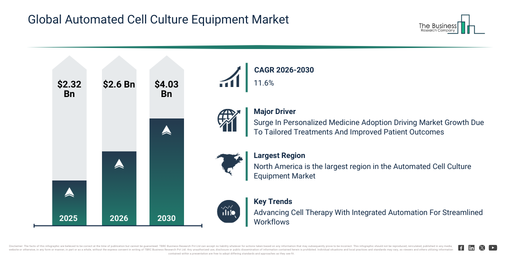
    The automated cell culture equipment market size has experienced swift expansion over the last few years. This market is projected to expand from $2.32 billion in 2025 to reach $2.6 billion in 2026, demonstrating a compound annual growth rate (CAGR) of 11.9%. Historically, this expansion has been linked to several factors, including an increase in pharmaceutical and biologics research, a greater need for uniform cell culture results, the broadening of drug discovery pipelines, the growing intricacy of cell-based assays, and the initial integration of laboratory automation.

    The automated cell culture equipment market size is projected to experience substantial growth in the coming years, reaching $4.03 billion by 2030, exhibiting a compound annual growth rate (CAGR) of 11.6%. This anticipated expansion during the forecast period is driven by factors such as increased investments in regenerative medicine, the broadening of cell and gene therapy pipelines, a rising need for scalable cell culture solutions, a greater emphasis on minimizing laboratory variability, and the expanding integration of AI-driven lab automation. Key developments expected during this period involve the wider implementation of fully automated cell culture platforms, a surge in the adoption of high-throughput cell processing systems, the increased incorporation of robotics and imaging technologies, the proliferation of closed-system and contamination-controlled workflows, and an intensified focus on reproducibility and process standardization.

    Get A Free Sample Report With In-Depth Market Insights:

    https://thebusinessresearchcompany.com/sample_request?id=62879707&type=smp&name=Automated%20Cell%20Culture%20Equipment%20Market%20Report%202026&utm_source=Blogs&utm_medium=Paid&utm_campaign=Oct_PR

    Automated Cell Culture Equipment Market Demand Drivers Opening New Revenue Streams

    The increasing embrace of personalized medicine is anticipated to fuel the expansion of the automated cell culture equipment market in the coming years. Personalized medicine involves customizing medical treatments based on an individual’s genetic, lifestyle, and environmental factors, leading to more precise and effective care. This growing adoption is driven by the development of more efficacious treatments, as therapies are specifically designed for a person’s genetic and biological profile, thereby improving patient outcomes. Automated cell culture equipment supports personalized medicine by delivering accurate, high-throughput, and consistent cell culture processes. These processes are essential for creating therapies tailored to individual patients and for conducting customized drug testing. For example, in February 2024, the Personalized Medicine Coalition, a US-based non-profit organization, announced that in 2023, the FDA authorized 16 new personalized treatments for patients suffering from rare diseases, which was a considerable jump from the six approved in 2022. Thus, the escalating adoption of personalized medicine is a key factor propelling the automated cell culture equipment market’s growth.

    Automated Cell Culture Equipment Market Segment Analysis And Revenue Potential

    The automated cell culture equipment market covered in this report is segmented –

    1) By Product Type: Instruments, Consumables, Software

    2) By Automation Level: Fully Automated Systems, Semi-Automated Systems, Manual Systems With Automation Features

    3) By Application: Drug Discovery And Development, Regenerative Medicine, Toxicology Testing, Vaccine Development, Stem Cell Research

    4) By End-User: Pharmaceutical Companies, Biotechnology Companies, Academic And Research Institutions, Contract Research Organizations (CROs), Diagnostics And Testing Laboratories

    Subsegments:

    1) By Instruments: Automated Cell Culture Systems, Bioreactors, Incubators, Centrifuges, Cell Counters And Analyzers, Liquid Handling Systems, Cell Imaging Systems, Robotic Arms And Manipulators, Cell Harvesting Systems, Filtration And Separation Devices

    2) By Consumables: Culture Media, Reagents And Supplements, Microplates And Culture Dishes, Flasks And Bottles, Single-Use Bags And Tubing, Filters And Membranes, Pipette Tips And Cartridges, Cell Culture Inserts, Sterile Connectors And Clamps

    3) By Software: Data Management Software, Process Control And Monitoring Software, Laboratory Information Management Systems (LIMS), Image Analysis Software, Workflow Automation Software, Quality Control And Compliance Software, Remote Monitoring And Cloud Integration Tools

    Automated Cell Culture Equipment Market Trends Powering Strategic Industry Growth

    Leading companies in the automated cell culture equipment market are prioritizing innovations in integrating workflows seamlessly, such as using closed single-use consumable systems. This focus aims to improve process standardization, reduce contamination risks, minimize manual handling, and facilitate efficient scaling from research to clinical production. A closed single-use consumable system is defined as a sterile, disposable setup that consolidates multiple cell culture processes into a single unit, thereby mitigating contamination and enabling reproducible, scalable workflows. For example, in March 2025, Limula SA, a Switzerland-based biotechnology firm specializing in automated solutions for cell therapy manufacturing, unveiled LimONE. This integrated system combines hardware, software, and single-use consumables to streamline and standardize cell culture and processing operations. The introduction of LimONE represents a commercial offering designed for both research and GMP-compliant manufacturing environments. LimONE aids in quicker technology transfer, reduces expenses related to labor and infrastructure, and facilitates the scalable production of advanced cell therapies, including CAR-T and gene-edited stem cells. The system also boosts workflow efficiency and guarantees consistent results across various cell therapy processes. Ultimately, this product launch solidifies Limula’s position in the automated cell culture equipment market and supports adherence to regulations.

    Automated Cell Culture Equipment Market Key Players Shaping Industry Direction

    Major companies operating in the automated cell culture equipment market are F. Hoffmann-La Roche Ltd, Hitachi Ltd., Merck KGaA, Panasonic Holdings Corporation, Thermo Fisher Scientific Inc., Danaher Corporation, Becton Dickinson and Company, Corning Incorporated, Lonza Group AG, Olympus Corporation, Sartorius AG, Eppendorf SE, Tecan Group Ltd., STEMCELL Technologies Inc., Miltenyi Biotec B.V. & Co. KG, Hamilton Company, Greiner Bio-One International GmbH, Solida Biotech GmbH, Biostream International B.V., HiMedia Laboratories Pvt. Ltd., Kuhner Shaker AG, Cellexus International Ltd.

    View The Full Automated Cell Culture Equipment Market Report:

    https://thebusinessresearchcompany.com/report/global-automated-cell-culture-equipment-market-report?utm_source=Blogs&utm_medium=Paid&utm_campaign=Oct_PR

    Automated Cell Culture Equipment Market Regional Breakdown: Where Is Demand Concentrated?

    North America was the largest region in the automated cell culture equipment market in 2025. Asia-Pacific is expected to be the fastest-growing region in the forecast period. The regions covered in the automated cell culture equipment market report are Asia-Pacific, South East Asia, Western Europe, Eastern Europe, North America, South America, Middle East, Africa.

    Reach Out To Our Team:

    The Business Research Company: https://www.thebusinessresearchcompany.com/

    Americas: +1 310-496-7795

    Asia: +44 7882 955267 & +91 8897263534

    Europe: +44 7882 955267

    Email us at: marketing@tbrc.info

    Follow us on:

    LinkedIn: https://in.linkedin.com/company/the-business-research-company

    YouTube: https://www.youtube.com/channel/UC24_fI0rV8cR5DxlCpgmyFQ

    Global Market Model: https://www.thebusinessresearchcompany.com/global-market-model
  • Atorvastatin Market Analysis 2026: Market Size, Growth Trends And Industry Outlook

    Atorvastatin Market Analysis 2026: Market Size, Growth Trends And Industry Outlook

    Featuring market attractiveness scoring, total addressable market sizing, company benchmarking matrices, interactive Excel dashboards, deeper supply chain intelligence, emerging startup tracking, and granular product-level insights, The Business Research Company’s 2026 market reports are built to deliver research that is both more actionable and more strategically valuable.

    Atorvastatin Market Size, Value And Growth Trajectory Through 2030

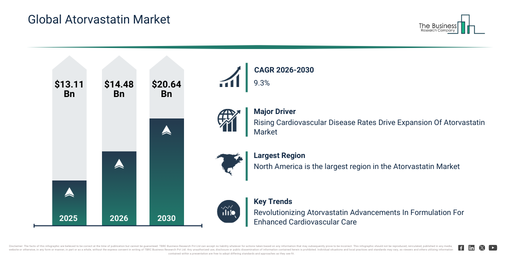
    The atorvastatin market size has experienced rapid expansion in recent years. Its value is projected to increase from $13.11 billion in 2025 to $14.48 billion in 2026, achieving a compound annual growth rate (CAGR) of 10.5%. The historic growth in this market can be primarily ascribed to the rising global prevalence of cardiovascular diseases, the widespread clinical acceptance of statin therapy, an expansion in lipid disorder diagnosis rates, the availability of mature chemical synthesis pathways, and the strong penetration of generic atorvastatin products.

    The atorvastatin market size is projected to experience substantial expansion in the coming years. This market is projected to reach $20.64 billion by 2030, exhibiting a compound annual growth rate (CAGR) of 9.3%. This anticipated expansion over the forecast period is driven by several factors, including a rising elderly population prone to cardiovascular issues, a heightened focus on preventive cardiology, the increasing use of combined lipid-lowering treatments, the growth of pharmaceutical manufacturing in developing markets, and a greater emphasis on sustainable chemistry methods in drug production. Key developments expected during this period involve the greater integration of biocatalytic production techniques, an escalating need for generic statin products, an intensified focus on high-purity active pharmaceutical ingredients, an increase in large-scale commercial manufacturing capabilities, and a stronger push for cost-efficient drug production.

    Get A Free Sample Report With In-Depth Market Insights:

    https://thebusinessresearchcompany.com/sample_request?id=38992616&type=smp&name=Atorvastatin%20Market%20Report%202026&utm_source=Blogs&utm_medium=Paid&utm_campaign=Oct_PR

    Atorvastatin Market Growth Catalysts And Demand Drivers

    The increasing occurrence of cardiovascular diseases is anticipated to drive the expansion of the atorvastatin market. Cardiovascular diseases (CVDs) are various conditions affecting the heart and blood vessels, with their rising prevalence linked to lifestyle changes, demographic shifts, and environmental factors. Atorvastatin is critical in significantly lowering the risk of major cardiovascular events like heart attacks and strokes, with its broad application among patients with high cholesterol and other CVD risk factors being key to reducing the overall impact of these diseases. For instance, in January 2024, the American Heart Association noted a slight rise in cardiovascular sector deaths, reaching 931,578, a marginal increase of 3,000 fatalities from the previous year’s 928,741. Consequently, the escalating prevalence of cardiovascular diseases is propelling the growth of the atorvastatin market.

    Atorvastatin Market Segmentation And Category Overview

    The atorvastatin market covered in this report is segmented –

    1) By Type: Chemical Synthesis, Biocatalysis

    2) By Therapeutic Indication: Hypercholesterolemia, Dyslipidemia, Cardiovascular Disease Prevention, Other Therapeutic Indications

    3) By Application: Hospital Pharmacy, Retail Pharmacy, Online Pharmacy

    Subsegments:

    1) By Chemical Synthesis: Traditional Chemical Synthesis Of Atorvastatin, Semi-Synthetic Atorvastatin Production, Large-Scale Chemical Synthesis For Commercial Production

    2) By Biocatalysis: Enzyme-Catalyzed Synthesis Of Atorvastatin, Biocatalytic Pathways For Efficient Production, Green Chemistry Approaches In Atorvastatin Manufacturing, Biocatalysis For Higher Yield And Purity

    Atorvastatin Market Trends Shaping Long-Term Demand

    Major companies in the atorvastatin market are focused on creating innovative products, such as ready-made liquid oral suspensions, to enhance the treatment of high cholesterol and specific risk factors for heart disease or stroke. This type of liquid oral suspension provides a practical and effective pharmaceutical formulation, simplifying medication administration, particularly for patients who struggle with solid dosage forms. For instance, in June 2023, CMP Pharma, Inc., a US-based pharmaceutical company, launched Atorvaliq (atorvastatin calcium) Oral Suspension, 20 mg/5 mL, which was approved by the Food and Drug Administration, a US-based government agency. Atorvaliq is specifically designed for a particular group of patients who require atorvastatin but experience dysphagia or difficulty swallowing tablets. Its introduction offers healthcare providers and suitable patients a convenient, safe, and FDA-approved liquid formulation option.

    Atorvastatin Market Competitive Analysis Of Leading Industry Participants

    Major companies operating in the atorvastatin market are Zydus Lifesciences, Pfizer Inc., Viatris Inc., Teva Pharmaceutical Industries Ltd., Hetero Ltd., Sun Pharmaceutical Industries Ltd., Dr. Reddy’s Laboratories Ltd., Cadila Pharmaceuticals Ltd., Apotex Pharmachem Inc., Glenmark Pharmaceuticals Ltd., Alembic Pharmaceuticals Ltd., Centrient Pharmaceuticals, Accord Healthcare Ltd., Wockhardt Ltd., Zhejiang Hisun Pharmaceutical Co. Ltd., Unichem Laboratories Ltd., Morepen, Ind-Swift Labs Ltd., Smilax Laboratories Limited, Saneca Pharmaceuticals AS, Srini Pharmaceuticals Pvt. Ltd., Suvan Lifesciences Ltd., Zenfold Sustainable Technologies

    View The Full Atorvastatin Market Report:

    https://thebusinessresearchcompany.com/report/atorvastatin-global-market-report?utm_source=Blogs&utm_medium=Paid&utm_campaign=Oct_PR

    Atorvastatin Market Regional Analysis: Which Geography Leads On Revenue?

    North America was the largest region in the atorvastatin market in 2025. Asia-Pacific is expected to be the fastest-growing region in the forecast period. The regions covered in the atorvastatin market report are Asia-Pacific, South East Asia, Western Europe, Eastern Europe, North America, South America, Middle East, Africa.

    Reach Out To Our Team:

    The Business Research Company: https://www.thebusinessresearchcompany.com/

    Americas: +1 310-496-7795

    Asia: +44 7882 955267 & +91 8897263534

    Europe: +44 7882 955267

    Email us at: marketing@tbrc.info

    Follow us on:

    LinkedIn: https://in.linkedin.com/company/the-business-research-company

    YouTube: https://www.youtube.com/channel/UC24_fI0rV8cR5DxlCpgmyFQ

    Global Market Model: https://www.thebusinessresearchcompany.com/global-market-model

  • Amondys 45 Market Forecast To Reach $ Billion By 2030: Key Growth Drivers And Industry Trends

    Amondys 45 Market Forecast To Reach $ Billion By 2030: Key Growth Drivers And Industry Trends

    Backed by market attractiveness analysis, total addressable market sizing, company benchmarking matrices, interactive Excel dashboards, wider supply chain intelligence, emerging startup coverage, and detailed product-level insights, The Business Research Company’s 2026 market reports are designed to offer research that is more actionable and strategically valuable than ever.

    Amondys 45 Market Size And Revenue Outlook Through 2030

    Historical expansion was driven by a scarcity of Duchenne muscular dystrophy treatment options, incentives for orphan drug development, the broadening scope of genetic testing, initial research into antisense technology, and the dedication of patient advocacy groups.

    The expansion observed in the upcoming period is attributable to progress in gene-based treatments, more extensive newborn screening, the increased availability of exon-specific medications, consistent expedited regulatory processes, and a boost in clinical trial funding.

    Significant patterns for the projected timeframe involve the rise of exon skipping treatments, the spread of precision genetic medicine, a greater emphasis on infrequent neuromuscular conditions, targeted interventions prompted by early detection, and growing regulatory assistance for orphan drugs.

    Get A Free Sample Report With In-Depth Market Insights:

    https://thebusinessresearchcompany.com/sample_request?id=65600492&type=smp&name=Amondys%2045%20Market%20Report%202026&utm_source=Blogs&utm_medium=Paid&utm_campaign=Oct_PR

    Amondys 45 Market Industry Drivers: What’s Behind The Revenue Growth?

    The expanding occurrence of genetic conditions is anticipated to fuel the amondys 45 market in the future. A genetic condition is defined as a health issue stemming from irregularities in an individual’s DNA, potentially caused by single or multiple gene mutations, chromosomal alterations, or a combination of genetic and environmental elements. The upward trend in genetic disease prevalence is attributed to enhanced public understanding and breakthroughs in diagnostic tools, which facilitate earlier and more precise identification of previously undetected ailments. amondys 45 assists in addressing genetic disorders by focusing on particular dystrophin gene mutations, making it effective for Duchenne muscular dystrophy patients who require exon 45 skipping. It promotes better muscle performance by enabling the creation of a functional, albeit shorter, dystrophin protein, thereby aiding in decelerating disease progression and improving clinical results. For example, in July 2025, the National Blood Authority, an Australian blood management agency, noted 2,788 patients with hereditary haemophilia A (HMA) in 2023–2024, an increase from 2,681 patients in 2022–2023. Consequently, the increasing accessibility of genetic testing is propelling the growth of the amondys 45 market.

    Amondys 45 Market Segments: Where Is Growth Concentrated?

    The amondys 45 market covered in this report is segmented –

    1) By Indication: Duchenne Muscular Dystrophy (DMD) – Exon 45 Mutation, Other Genetic Mutations

    2) By End-User: Adult, Geriatric, Pediatric

    3) By Distribution Channel: Hospital Pharmacies, Retail Pharmacies, Online Pharmacies

    Amondys 45 Market Key Participants And Competitive Landscape

    Major companies operating in the amondys 45 market are Sarepta Therapeutics Inc.

    View The Full Amondys 45 Market Report:

    https://thebusinessresearchcompany.com/report/amondys-45-global-market-report?utm_source=Blogs&utm_medium=Paid&utm_campaign=Oct_PR

    Amondys 45 Market Geographic Analysis: Where Is Demand Accelerating Fastest?

    North America was the largest region in the amondys 45 market in 2025. Europe is expected to be the fastest-growing region in the forecast period. The regions covered in the amondys 45 market report are Asia-Pacific, Western Europe, Eastern Europe, North America, South America, Middle East, Africa.

    Reach Out To Our Team:

    The Business Research Company: https://www.thebusinessresearchcompany.com/

    Americas: +1 310-496-7795

    Asia: +44 7882 955267 & +91 8897263534

    Europe: +44 7882 955267

    Email us at: marketing@tbrc.info

    Follow us on:

    LinkedIn: https://in.linkedin.com/company/the-business-research-company

    YouTube: https://www.youtube.com/channel/UC24_fI0rV8cR5DxlCpgmyFQ

    Global Market Model: https://www.thebusinessresearchcompany.com/global-market-model

  • Ambirix Market Research 2026: Market Size, Trends, Segments And Growth Forecast

    Ambirix Market Research 2026: Market Size, Trends, Segments And Growth Forecast

    Featuring market attractiveness scoring, total addressable market sizing, company benchmarking matrices, interactive Excel dashboards, deeper supply chain intelligence, emerging startup tracking, and granular product-level insights, The Business Research Company’s 2026 market reports are built to deliver research that is both more actionable and more strategically valuable.

    Ambirix Market Expansion Outlook: What Revenue Opportunities Are Ahead?

    The increase observed historically stemmed from the worldwide burden of hepatitis, routine childhood immunization timelines, governmental public health vaccination policies, the initial approval of combination vaccines, and school-run immunization initiatives.

    Future growth is projected to stem from wider pediatric vaccine coverage, enhanced availability of vaccines in developing economies, the lasting immunity benefits of vaccinations, increased public health funding, and global initiatives aimed at eradicating hepatitis. Key developments anticipated during this period involve an increase in combination vaccine usage, the expansion of childhood immunization programs, a heightened focus on preventing hepatitis, improved vaccine adherence resulting from fewer required doses, and government-backed vaccination drives.

    Get A Free Sample Report With In-Depth Market Insights:

    https://thebusinessresearchcompany.com/sample_request?id=38720424&type=smp&name=Ambirix%20Market%20Report%202026&utm_source=Blogs&utm_medium=Paid&utm_campaign=Oct_PR

    Ambirix Market Growth Factors: What’s Supporting Expansion?

    The expanding understanding of the importance of childhood immunization is projected to propel the ambirix market’s expansion. Pediatric vaccination involves inoculating children to shield them from contagious diseases, a vital step in alleviating the worldwide impact of preventable conditions. This heightened awareness stems from various public health initiatives, immunization programs in schools, and concerted efforts by governmental bodies and healthcare providers to highlight the advantages of vaccination. Products like Ambirix, which target hepatitis A and B, are crucial for protecting children’s well-being and enhancing vaccination rates, particularly in areas with traditionally low immunization levels. For example, as reported by the World Health Organization, a health authority based in Switzerland, in July 2024, the worldwide uptake of the first HPV vaccine dose among girls notably climbed to 27% in 2023, a significant increase from 20% in 2022, spurred by new vaccine rollouts in several nations and the adoption of a single-dose regimen. Consequently, the increasing recognition of pediatric vaccination’s value will fuel the ambirix market.

    Ambirix Market Segment Analysis: What Are The Core Market Categories?

    The ambirix market covered in this report is segmented –

    1) By Indication: Hepatitis A, Hepatitis B

    2) By Distribution Channel: Hospitals, Pharmacies, Public Health Programs

    3) By End User: Pediatric, Geriatric

    Ambirix Market Top Companies Driving Competitive Growth

    Major companies operating in the ambirix market are GSK plc

    View The Full Ambirix Market Report:

    https://thebusinessresearchcompany.com/report/ambirix-global-market-report?utm_source=Blogs&utm_medium=Paid&utm_campaign=Oct_PR

    Ambirix Market Global Footprint: Which Region Leads The Industry?

    North America was the largest region in the ambirix market in 2025. Asia-Pacific is expected to be the fastest-growing region in the forecast period. The regions covered in the ambirix market report are Asia-Pacific, Western Europe, Eastern Europe, North America, South America, Middle East, Africa.

    Reach Out To Our Team:

    The Business Research Company: https://www.thebusinessresearchcompany.com/

    Americas: +1 310-496-7795

    Asia: +44 7882 955267 & +91 8897263534

    Europe: +44 7882 955267

    Email us at: marketing@tbrc.info

    Follow us on:

    LinkedIn: https://in.linkedin.com/company/the-business-research-company

    YouTube: https://www.youtube.com/channel/UC24_fI0rV8cR5DxlCpgmyFQ

    Global Market Model: https://www.thebusinessresearchcompany.com/global-market-model

  • Alyglo Market Forecast 2026: Market Size, Competitive Landscape And Growth Drivers

    Alyglo Market Forecast 2026: Market Size, Competitive Landscape And Growth Drivers

    Built to provide research that’s more actionable and strategically valuable, The Business Research Company’s 2026 market reports include market attractiveness analysis, total addressable market sizing, company benchmarking matrices, interactive Excel dashboards, broader supply chain intelligence, emerging startup tracking, and in-depth product insights.

    Alyglo Market Growth Potential: How Will Market Size Shift Through 2030?

    The expansion observed during the historical period stems from the initial widespread utilization of intravenous immunoglobulin (IVIG) for immunodeficiency, coupled with advancements in plasma fractionation techniques, a heightened understanding among medical professionals, the development of hospital infrastructure for infusions, and improved strategies for managing chronic immune system disorders.

    Anticipated growth during the projection period stems from factors such as an increasing incidence of immune-related conditions, enhanced diagnostic capabilities, the influence of an aging demographic, the proliferation of in-home infusion options, and more robust plasma procurement systems. Key developments expected throughout the forecast horizon encompass an expanding need for IVIG treatments, a greater rate of primary immunodeficiency detection, the enlargement of hospital-based infusion offerings, an emphasis on the safety of plasma-derived therapeutics, and the increasing application of long-term immunoglobulin treatments.

    Get A Free Sample Report With In-Depth Market Insights:

    https://thebusinessresearchcompany.com/sample_request?id=10427104&type=smp&name=Alyglo%20Market%20Report%202026&utm_source=Blogs&utm_medium=Paid&utm_campaign=Oct_PR

    Alyglo Market Demand Drivers: What’s Powering Industry Growth?

    The increasing occurrence of immunodeficiency diseases is projected to fuel the expansion of the alyglo market. These conditions involve a weakened or impaired immune system, increasing vulnerability to infections. Their growth is attributed to factors like heightened environmental pollutants, genetic predispositions, enhanced diagnostic abilities, and the application of immunosuppressive treatments. Alyglo provides intravenous immunoglobulin (IVIG) therapy, strengthening the immune system of individuals with primary humoral immunodeficiency (PI) by restoring inadequate antibodies. This therapy helps to lessen the frequency and severity of infections, thereby enhancing patients’ overall quality of life. For example, in May 2024, the Minnesota Department of Health, a US-based state health agency, reported 324 new HIV diagnoses in 2023, representing a 24% rise from 2022. Consequently, the growing prevalence of immunodeficiency diseases is propelling the growth of the alyglo market.

    Alyglo Market Segment Breakdown: Which Categories Lead On Revenue?

    The alyglo market covered in this report is segmented –

    1) By Clinical Indication: Primary Humoral Immunodeficiency (PI), Secondary Immunodeficiency, Autoimmune Disorders, Bone Marrow Failure Syndromes

    2) By Distribution Channel: Hospital Pharmacies, Specialty Pharmacies

    3) By End-User: Adult, Geriatric, Pediatric

    Alyglo Market Innovation Trends: What Developments Are Reshaping The Industry?

    Companies operating within the alyglo market are concentrating on expanding their array of treatments with advanced therapies, such as intravenous immunoglobulins (IGIV), to manage complex immune deficiencies, improve patient care, and offer more convenient dosing. Intravenous immunoglobulins are antibody-based treatments derived from human plasma, utilized for various immune system disorders by supplying functional antibodies to help combat infections. For instance, in November 2024, GC Biopharma USA Inc., a US-based biopharmaceutical company, introduced ALYGLO. This is a 10% intravenous immunoglobulin therapy specifically formulated for adult patients aged 17 years and older with primary humoral immunodeficiency (PI). Its unique manufacturing process, involving cation exchange chromatography (CEX), eliminates coagulation factor XIa (FXIa) to undetectable quantities, thereby enhancing patient safety. The product is FDA-approved and presents a novel therapeutic option to improve patient access through a limited distribution network of national specialty pharmacy providers.

    Alyglo Market Leading Players And Competitive Positioning

    Major companies operating in the alyglo market are GC Biopharma Corp.

    View The Full Alyglo Market Report:

    https://thebusinessresearchcompany.com/report/alyglo-global-market-report?utm_source=Blogs&utm_medium=Paid&utm_campaign=Oct_PR

    Alyglo Market Regional Distribution: Which Areas Power Market Growth?

    North America was the largest region in the alyglo market in 2025. Asia-Pacific is expected to be the fastest-growing region in the forecast period. The regions covered in the alyglo market report are Asia-Pacific, Western Europe, Eastern Europe, North America, South America, Middle East, Africa.

    Reach Out To Our Team:

    The Business Research Company: https://www.thebusinessresearchcompany.com/

    Americas: +1 310-496-7795

    Asia: +44 7882 955267 & +91 8897263534

    Europe: +44 7882 955267

    Email us at: marketing@tbrc.info

    Follow us on:

    LinkedIn: https://in.linkedin.com/company/the-business-research-company

    YouTube: https://www.youtube.com/channel/UC24_fI0rV8cR5DxlCpgmyFQ

    Global Market Model: https://www.thebusinessresearchcompany.com/global-market-model

  • Altuviiio Market Size In 2026: Regional Growth, Key Segments And Future Outlook

    Altuviiio Market Size In 2026: Regional Growth, Key Segments And Future Outlook

    Backed by market attractiveness analysis, total addressable market sizing, company benchmarking matrices, interactive Excel dashboards, wider supply chain intelligence, emerging startup coverage, and detailed product-level insights, The Business Research Company’s 2026 market reports are designed to offer research that is more actionable and strategically valuable than ever.

    Altuviiio Market Value Analysis: What Growth Lies Ahead Over The Forecast Period?

    The growth observed in the historic period can be ascribed to a combination of factors, including the reliance on standard Factor VIII therapies, a considerable burden from bleeding episodes, the necessity for frequent infusions, the early adoption of recombinant factors, and the expansion of hemophilia treatment centers.

    The projected growth in the forecast period is influenced by several factors, including the increasing demand for long-acting treatments, the broadening of prophylaxis guidelines, higher uptake of pediatric therapies, advancements in clotting factor engineering, and improved reimbursement support.

    Key developments anticipated in the forecast period involve a transition towards extended half-life factor therapies, a reduction in the required frequency of injections for hemophilia patients leading to enhanced adherence and overall quality of life, an expansion in the adoption of prophylactic treatment strategies, and an increasing favorability for advanced recombinant factors.

    Get A Free Sample Report With In-Depth Market Insights:

    https://thebusinessresearchcompany.com/sample_request?id=48199118&type=smp&name=Altuviiio%20Market%20Report%202026&utm_source=Blogs&utm_medium=Paid&utm_campaign=Oct_PR

    Altuviiio Market Growth Drivers: What’s Behind The Acceleration?

    The increasing incidence of hemophilia is projected to drive the growth of the altuviiio market moving forward. Hemophilia is a rare genetic bleeding disorder characterized by the blood’s inability to clot properly due to the absence or deficiency of clotting factors. The expanding prevalence of hemophilia is fueled by advancements in diagnosis and treatment, which improve detection and extend life expectancy. Altuviiio is utilized in hemophilia A to replace the missing factor VIII, effectively controlling bleeding episodes with its extended half-life, allowing for less frequent dosing. For instance, in July 2025, the National Blood Authority, an Australia-based blood management agency, reported that the patient count for hereditary haemophilia A (HMA) rose from 2,681 in 2022–2023 to 2,788 in 2023–2024. Therefore, the rising prevalence of hemophilia is a key factor driving the expansion of the altuviiio market.

    Altuviiio Market Segmentation: How Does The Market Break Down By Category?

    The altuviiio market covered in this report is segmented –

    1) By Indication: Hemophilia A, Prophylaxis Treatment, On-Demand Treatment

    2) By Distribution Channel: Hospital Pharmacies, Specialty Pharmacies

    3) By End Use: Adult, Geriatric, Pediatric

    Altuviiio Market Trends: What’s Defining The Industry’s Next Phase?

    Leading companies in the altuviiio market are concentrating on developing advanced therapies, such as extended half-life factor replacements, to enhance protection, improve patient quality of life, and lessen treatment burden. Extended half-life factor replacements are engineered clotting factors designed to remain active in the bloodstream considerably longer than standard factors, allowing for fewer infusions to prevent bleeding episodes. For instance, in February 2023, Sanofi SA, a pharmaceutical company based in France, received FDA approval for ALTUVIIIO, a pioneering once-weekly therapy for hemophilia A, which marks a significant advancement in treatment options for patients. This new class of factor VIII therapy significantly boosts bleed protection by maintaining normal to near-normal factor activity levels with a single weekly dose. Utilizing innovative Fc fusion technology, ALTUVIIIO offers a longer half-life compared to traditional therapies, resulting in a substantial reduction in bleeding episodes, as evidenced by clinical trials showing a mean annualized bleeding rate of 0.70. This approval, following several designations including Breakthrough Therapy and Fast Track, represents a major advancement in hemophilia management, promising improved quality of life for patients.

    Altuviiio Market Competitive Overview And Top Companies

    Major companies operating in the altuviiio market are Swedish Orphan Biovitrum

    View The Full Altuviiio Market Report:

    https://thebusinessresearchcompany.com/report/altuviiio-global-market-report?utm_source=Blogs&utm_medium=Paid&utm_campaign=Oct_PR

    Altuviiio Market Leading Geography: Which Region Contributes The Most Revenue?

    North America was the largest region in the altuviiio market in 2025. Europe is expected to be the fastest-growing region in the forecast period. The regions covered in the altuviiio market report are Asia-Pacific, Western Europe, Eastern Europe, North America, South America, Middle East, Africa.

    Reach Out To Our Team:

    The Business Research Company: https://www.thebusinessresearchcompany.com/

    Americas: +1 310-496-7795

    Asia: +44 7882 955267 & +91 8897263534

    Europe: +44 7882 955267

    Email us at: marketing@tbrc.info

    Follow us on:

    LinkedIn: https://in.linkedin.com/company/the-business-research-company

    YouTube: https://www.youtube.com/channel/UC24_fI0rV8cR5DxlCpgmyFQ

    Global Market Model: https://www.thebusinessresearchcompany.com/global-market-model

  • Alprolix Market Growth Forecast Through 2030: Market Size And Trends In 2026

    Alprolix Market Growth Forecast Through 2030: Market Size And Trends In 2026

    Featuring market attractiveness scoring, total addressable market sizing, company benchmarking matrices, interactive Excel dashboards, deeper supply chain intelligence, emerging startup tracking, and granular product-level insights, The Business Research Company’s 2026 market reports are built to deliver research that is both more actionable and more strategically valuable.

    Alprolix Market Expansion Outlook: What Revenue Opportunities Are Ahead?

    The alprolix market size has experienced significant expansion in recent years. Its value is anticipated to increase from $1.32 million in 2025 to $1.45 million in 2026, exhibiting a compound annual growth rate (CAGR) of 9.9%. This historical growth can be attributed to several factors, including a substantial unmet need in hemophilia B management, the limitations associated with plasma-derived therapies, the proven efficacy of recombinant factor IX, an uptick in the diagnosis of inherited bleeding disorders, and the early adoption of prophylactic treatment protocols.

    The alprolix market is projected to experience robust expansion over the coming years, with its size anticipated to reach **$2.09 million in 2030, exhibiting a compound annual growth rate (CAGR) of 9.6%**. This growth during the projected period stems from factors such as an expanding hemophilia B patient demographic, a heightened need for long-acting clotting agents, enhanced availability of specialized hemophilia treatment, the proliferation of home-based infusion initiatives, and ongoing advancements in factor fusion technologies. Key trends observed within the forecast timeframe encompass the increasing integration of extended half-life Factor IX treatments, a noticeable pivot towards prophylactic management of hemophilia, a burgeoning demand for therapies with less frequent infusions, the broadened application of recombinant coagulation factors, and strengthened patient compliance achieved via long-acting treatments.

    Get A Free Sample Report With In-Depth Market Insights:

    https://thebusinessresearchcompany.com/sample_request?id=59504388&type=smp&name=Alprolix%20Market%20Report%202026&utm_source=Blogs&utm_medium=Paid&utm_campaign=Oct_PR

    Alprolix Market Growth Factors Behind Sustained Expansion

    The rising occurrence of hemophilia B is projected to boost the expansion of the alprolix market moving forward. Hemophilia B, also known as Christmas disease, is an uncommon, inherited bleeding condition stemming from a deficit or complete absence of clotting factor IX. The increasing frequency of hemophilia is a result of improved diagnostic approaches, enhanced awareness and reporting of the ailment, advancements in healthcare infrastructure enabling earlier detection, and the extended lifespan of individuals with hemophilia due to improved treatment alternatives. Alprolix, which is a long-acting recombinant clotting factor IX, proves beneficial for hemophilia B by lessening the frequency of bleeding incidents and the necessity for infusions, offering extended protection through its prolonged half-life, thereby enhancing the quality of life for patients. For example, in October 2025, a report issued by the Canada-based non-profit organization, World Federation of Hemophilia (WFH), stated that as of 2024, there were 271,918 identified patients globally with hemophilia, consisting of 224,353 with Hemophilia A and 45,600 with Hemophilia B. This increasing prevalence of hemophilia B thus propels the alprolix market.

    Alprolix Market Segment Trends And Revenue Contributors

    The alprolix market covered in this report is segmented –

    1) By Product: Recombinant Coagulation Factor IX, Plasma-Derived Coagulation Factor IX

    2) By Formulation: Injectable Solution, Powder For Reconstitution

    3) By Application: Hemophilia B Treatment, Prophylaxis, Surgery

    4) By Distribution: Hospitals, Specialty Clinics, Online Pharmacies

    Alprolix Market Industry Trends Fueling Future Revenue Growth

    Recent years have brought notable progress to the alprolix market, driven by an increasing emphasis on innovative treatments designed to meet unresolved medical requirements for hemophilia B. Factor IX gene therapies introduce a functional copy of the FIX gene using adeno-associated virus (AAV) vectors, facilitating long-term clotting factor production, reducing bleeding episodes, and potentially offering a single-dose treatment for hemophilia B. For instance, in April 2024, Pfizer Inc., a US-based pharmaceutical manufacturing company, received U.S. FDA approval for Beqveztm (fidanacogene elaparvovec), a gene therapy specifically developed for hemophilia B, a rare blood-clotting disorder. This approval signifies a major milestone in hemophilia treatment, presenting a potential one-time therapy that could significantly reduce or even eliminate the need for routine clotting factor infusions. It delivers a functional version of the recombinant clotting factor IX gene to patients, which can provide sustained levels of factor IX, thereby helping to prevent bleeding episodes. This approval followed robust clinical trials demonstrating the treatment’s durable efficacy alongside a favorable safety profile for patients with severe or moderately severe hemophilia B.

    Alprolix Market Competitive Landscape: Which Companies Lead The Industry?

    Major companies operating in the alprolix market are Sanofi

    View The Full Alprolix Market Report:

    https://thebusinessresearchcompany.com/report/alprolix-global-market-report?utm_source=Blogs&utm_medium=Paid&utm_campaign=Oct_PR

    Alprolix Market Regional Outlook: Where Is Opportunity Concentrated?

    North America was the largest region in the alprolix market in 2025. The regions covered in the alprolix market report are Asia-Pacific, Western Europe, Eastern Europe, North America, South America, Middle East, Africa.

    Reach Out To Our Team:

    The Business Research Company: https://www.thebusinessresearchcompany.com/

    Americas: +1 310-496-7795

    Asia: +44 7882 955267 & +91 8897263534

    Europe: +44 7882 955267

    Email us at: marketing@tbrc.info

    Follow us on:

    LinkedIn: https://in.linkedin.com/company/the-business-research-company

    YouTube: https://www.youtube.com/channel/UC24_fI0rV8cR5DxlCpgmyFQ

    Global Market Model: https://www.thebusinessresearchcompany.com/global-market-model