Blog

  • Grid Planning Software Market Growth In 2026: Market Size, Key Drivers And Future Outlook

    Grid Planning Software Market Growth In 2026: Market Size, Key Drivers And Future Outlook

    Built to provide research that’s more actionable and strategically valuable, The Business Research Company’s 2026 market reports include market attractiveness analysis, total addressable market sizing, company benchmarking matrices, interactive Excel dashboards, broader supply chain intelligence, emerging startup tracking, and in-depth product insights.

    Grid Planning Software Market Value Analysis: What Growth Lies Ahead Over The Forecast Period?

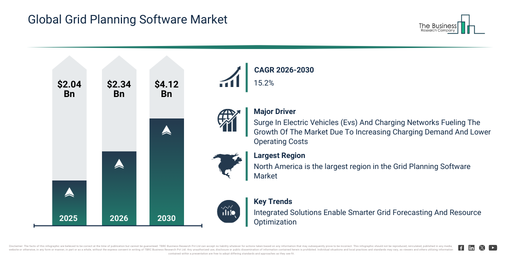
    The grid planning software market size has seen rapid expansion recently. The market is forecast to expand from $2.04 billion in 2025 to $2.34 billion in 2026, achieving a compound annual growth rate (CAGR) of 14.9%. Historically, this growth is linked to factors such as rising grid complexity, the enlargement of transmission and distribution networks, the use of computer-based power system modeling, advancements in load forecasting methods, and the early incorporation of tools for renewable energy planning.

    The grid planning software market is projected to experience substantial expansion over the upcoming years. This market is anticipated to reach a value of $4.12 billion by 2030, demonstrating a compound annual growth rate (CAGR) of 15.2%. Factors driving this growth during the forecast period include a rising demand for electrification, increased penetration of renewable energy sources, growing investments dedicated to modernizing grids, the expansion of distributed energy resources, and a heightened requirement for resilient grid expansion strategies. Key trends foreseen in this period encompass the wider adoption of cloud-based platforms for grid planning, a surge in the utilization of digital twin and simulation tools, the increasing integration of renewable forecasting models, the expansion of data-driven approaches to transmission and distribution planning, and a stronger emphasis on scenario-based analysis for grid investments.

    Get A Free Sample Report With In-Depth Market Insights:

    https://thebusinessresearchcompany.com/sample_request?id=33137&type=smp&name=Grid%20Planning%20Software%20Market%20Report%202026&utm_source=Blogs&utm_medium=Paid&utm_campaign=Oct_PR

    Grid Planning Software Market Growth Catalysts And Demand Drivers

    The increasing integration of electric vehicles (EVs) and their associated charging networks is anticipated to stimulate the expansion of the grid planning software market in the future. EVs are defined as vehicles powered by batteries, while charging networks encompass the infrastructure of stations and systems providing electricity for their recharging. This growing uptake of electric vehicles and charging networks is fueled by reduced operational expenditures, given that EVs cut down on fuel and maintenance costs, concurrently, an extensive charging infrastructure enhances user convenience and access. Grid planning software plays a crucial role in supporting this trend by allowing utilities and energy planners to simulate and refine grid capacity and distribution to manage the increased loads from EV charging requirements. An illustrative example is seen in March 2024, when the US Department of Energy reported a 6.3% rise in EV charging ports within its Station Locator, attributed to a 6.5% increase in public ports and a 4.4% increase in private ports. Consequently, the expanding use of electric vehicles and charging networks is indeed propelling the growth of the grid planning software market.

    Grid Planning Software Market Segment Breakdown: Which Categories Lead On Revenue?

    The grid planning software market covered in this report is segmented –

    1) By Component: Software; Services

    2) By Deployment Mode: On-Premises; Cloud-Based; Hybrid

    3) By Enterprise Size: Large Utilities; Medium Utilities; Small Utilities and Cooperatives

    4) By Application: Transmission Planning; Distribution Planning; Renewable Integration; Load Forecasting (Software); Asset Management (Services); Other Applications

    5) By End User: Utilities; Independent Power Producers; Government and Municipalities; Industrial; Other End Users

    Subsegments:

    1) By Software: Robot Operating Systems and Firmware; Simulation and Digital-Twin Software; Motion Planning and Path Optimization; Artificial Intelligence and Machine Learning Software; Vision and Perception Software; Cell and Fleet Management Software; Manufacturing Execution System (MES) or Enterprise Resource Planning (ERP) Integration Software; Predictive Maintenance and Analytics; Cybersecurity Software; Low-Code or No-Code Programming Tools

    2) By Services: System Design and Engineering; Integration and Commissioning; Maintenance and Field Support; Training and Skill Development; Retrofit and Modernization Services; Custom Application Development; Robotics-as-a-Service (RaaS); Validation and Testing Services; Consulting and ROI Analysis; R&D and Co-Innovation Services

    Grid Planning Software Market Trends Shaping Long-Term Demand

    Leading companies in the grid planning software market are concentrating on developing advanced solutions, such as unified planning platforms, to enhance grid reliability, optimize operations, and support strategic decision-making. Unified grid planning software refers to an integrated platform that consolidates transmission, distribution, and generation planning data to provide comprehensive insights, scenario analysis, and predictive modeling for utilities. For instance, in January 2025, GE Vernova, a US-based energy technology company, launched PLANOS, its unified grid planning software designed to streamline planning processes, improve forecasting accuracy, and enable data-driven investment decisions. The solution integrates multiple data sources and analytics tools, allowing utilities to model complex grid scenarios, optimize resource allocation, and enhance overall operational efficiency.

    Grid Planning Software Market Competitive Landscape: Which Companies Lead The Industry?

    Major companies operating in the grid planning software market are Siemens AG, Hitachi Energy Ltd., General Electric Company, Oracle Corporation, Schneider Electric SE, ABB Ltd, PowerWorld Corporation, Eaton Corporation plc, Nexant Inc., Autodesk Inc., Trimble Inc., DNV GL, Schweitzer Engineering Laboratories Inc. (SEL), Open Systems International Inc. (OSI), PSI Software AG, Energy Exemplar, ETAP, Opal-RT Technologies, Neplan AG, DIgSILENT GmbH, and RTDS Technologies Inc.

    View The Full Grid Planning Software Market Report:

    https://thebusinessresearchcompany.com/report/grid-planning-software-market-report?utm_source=Blogs&utm_medium=Paid&utm_campaign=Oct_PR

    Grid Planning Software Market Regional Breakdown: Where Is Demand Concentrated?

    North America was the largest region in the grid planning software market in 2025. Asia-Pacific is expected to be the fastest-growing region in the forecast period. The regions covered in the grid planning software market report are Asia-Pacific, South East Asia, Western Europe, Eastern Europe, North America, South America, Middle East, Africa.

    Reach Out To Our Team:

    The Business Research Company: https://www.thebusinessresearchcompany.com/

    Americas: +1 310-496-7795

    Asia: +44 7882 955267 & +91 8897263534

    Europe: +44 7882 955267

    Email us at: marketing@tbrc.info

    Follow us on:

    LinkedIn: https://in.linkedin.com/company/the-business-research-company

    YouTube: https://www.youtube.com/channel/UC24_fI0rV8cR5DxlCpgmyFQ

    Global Market Model: https://www.thebusinessresearchcompany.com/global-market-model
  • Grid Frequency Control Market Size And Forecast 2026–2030: Trends Driving Industry Expansion

    Grid Frequency Control Market Size And Forecast 2026–2030: Trends Driving Industry Expansion

    Backed by market attractiveness analysis, total addressable market sizing, company benchmarking matrices, interactive Excel dashboards, wider supply chain intelligence, emerging startup coverage, and detailed product-level insights, The Business Research Company’s 2026 market reports are designed to offer research that is more actionable and strategically valuable than ever.

    Grid Frequency Control Market Size Forecast: How Big Could The Market Get By 2030?

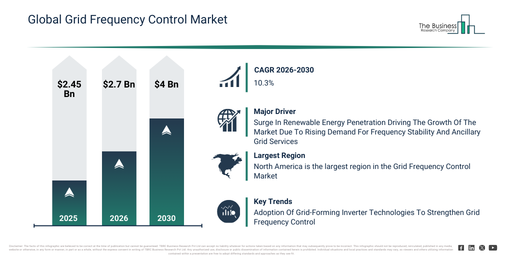
    The grid frequency control market has seen substantial growth in recent years. It is forecast to grow from $2.45 billion in 2025 to $2.7 billion in 2026, achieving a compound annual growth rate (CAGR) of 10.1%. This historical expansion can be attributed to several factors including the increased integration of variable renewable energy, the enlargement of interconnected power grids, a reliance on conventional frequency regulation assets, the early deployment of grid-scale storage, and the evolution of ancillary service markets.

    The grid frequency control market is anticipated to experience swift expansion over the coming years. It is projected to reach $4 billion by 2030, expanding at a compound annual growth rate (CAGR) of 10.3%. This growth during the forecast period is largely driven by factors such as increasing renewable energy integration, the rising electrification of transport, growing investments in grid-scale storage, the broadening of real-time grid control solutions, and a heightened focus on grid stability standards. Noteworthy trends identified for the forecast period include a greater utilization of battery energy storage for frequency regulation, the increasing deployment of automated generation control systems, the rising adoption of fast-response power electronics, an expansion of demand response participation, and an enhanced focus on real-time grid balancing.

    Get A Free Sample Report With In-Depth Market Insights:

    https://thebusinessresearchcompany.com/sample_request?id=33136&type=smp&name=Grid%20Frequency%20Control%20Market%20Report%202026&utm_source=Blogs&utm_medium=Paid&utm_campaign=Oct_PR

    Grid Frequency Control Market Opportunity Drivers: What’s Unlocking New Revenue Potential?

    The increasing integration of renewable energy is projected to drive the expansion of the Grid Frequency Control market in the future. Renewable energy penetration refers to the proportion or share of total electricity generation in a power system that is supplied by renewable energy sources such as solar, wind, hydro, and biomass. This growth in renewable energy penetration is occurring due to record new installations, fueled by decreasing costs and policy support for decarbonization. Grid frequency control facilitates this rising renewable energy penetration by providing essential ancillary services like primary, secondary, and tertiary control, which are necessary to counteract intermittency and low inertia effects for overall grid stability. For example, in December 2025, data from the European Union, a Belgium-based organization, showed a continued rise in renewable energy penetration within the EU, with renewables making up 25.2% of gross final energy consumption in 2024, an increase from 24.6% in 2023. Additionally, the share of renewable energy utilized in transport grew to 11.2% from 10.9% over the same period. Thus, the growing penetration of renewable energy is a significant catalyst for the Grid Frequency Control market’s growth.

    Grid Frequency Control Market Segmentation: How Does The Market Break Down By Category?

    The grid frequency control market covered in this report is segmented –

    1) By Component: Hardware; Software; Services

    2) By Solution: Primary Frequency Control; Secondary Frequency Control; Tertiary Frequency Control; Other Solutions

    3) By Technology: Battery Energy Storage Systems; Flywheels; Supercapacitors; Demand Response; Other Technologies

    4) By Application: Power Generation; Transmission; Distribution; Industrial

    5) By End-User: Utilities; Independent Power Producers; Industrial; Commercial

    Subsegments:

    1) By Hardware: Governors And Turbine Control Systems; Automatic Generation Control Units; Power Electronic Converters; Frequency Sensors And Relays; Energy Storage Systems

    2) By Software: Frequency Monitoring Software; Grid Control And Optimization Software; Load Forecasting And Scheduling Software; Real-Time Analytics And Visualization Software; Simulation And Modeling Software

    3) By Services: Frequency Regulation Services; Grid Balancing And Ancillary Services; System Integration And Deployment Services; Operation And Maintenance Services; Consulting And Optimization Services

    Grid Frequency Control Market Innovation Trends Shaping Future Development

    Leading companies in the grid frequency control market are prioritizing technological advancements, such as power conditioners, to improve frequency stability, compensate for lost system inertia from retiring thermal plants, and enhance supply-side responsiveness amidst high renewable energy penetration. Grid-forming inverters are power-electronic systems that actively establish and regulate voltage and frequency at their point of interconnection, facilitating stable operation for grids and microgrids during disturbances and low-inertia conditions. For example, in April 2025, Hitachi Industrial Equipment Systems Co., Ltd., a Japan-based technology firm, unveiled a next-generation grid-forming inverter system, packaged as a power conditioner, at its Narashino Works facility. This system is engineered to stabilize the plant’s electricity supply through simulating generator inertia, supporting precise frequency control despite renewable energy variability, and integrating solar power, energy storage, and advanced inverter controls to enable autonomous operation during grid disruptions and to strengthen local frequency management.

    Grid Frequency Control Market Competitive Landscape: Who Leads The Industry?

    Major companies operating in the grid frequency control market are BYD Co. Ltd., Siemens AG, Hitachi Energy, Schneider Electric, Mitsubishi Electric Corporation, Honeywell International, GE Vernova, ABB Ltd., Toshiba Corporation, Eaton Corporation, Emerson Electric Co., Sungrow Power Supply, Rockwell Automation, Wärtsilä Corporation, Yokogawa Electric Corporation, Woodward Inc., Fluence Energy, Itron Inc., Schweitzer Engineering Laboratories (SEL), Landis+Gyr, S&C Electric Company, DEIF A/S, ComAp a.s., NARI Technology Co. Ltd., NR Electric Co. Ltd., Nuvve Holding Corp.

    View The Full Grid Frequency Control Market Report:

    https://thebusinessresearchcompany.com/report/grid-frequency-control-market-report?utm_source=Blogs&utm_medium=Paid&utm_campaign=Oct_PR

    Grid Frequency Control Market Geographic Landscape: Which Region Dominates Industry Growth?

    North America was the largest region in the grid frequency control market in 2025. Asia-Pacific is expected to be the fastest-growing region in the forecast period. The regions covered in the grid frequency control market report are Asia-Pacific, South East Asia, Western Europe, Eastern Europe, North America, South America, Middle East, Africa.

    Reach Out To Our Team:

    The Business Research Company: https://www.thebusinessresearchcompany.com/

    Americas: +1 310-496-7795

    Asia: +44 7882 955267 & +91 8897263534

    Europe: +44 7882 955267

    Email us at: marketing@tbrc.info

    Follow us on:

    LinkedIn: https://in.linkedin.com/company/the-business-research-company

    YouTube: https://www.youtube.com/channel/UC24_fI0rV8cR5DxlCpgmyFQ

    Global Market Model: https://www.thebusinessresearchcompany.com/global-market-model
  • Grid Edge Cellular Router Market 2026 Outlook: Market Size, CAGR And Key Growth Opportunities

    Grid Edge Cellular Router Market 2026 Outlook: Market Size, CAGR And Key Growth Opportunities

    Featuring market attractiveness scoring, total addressable market sizing, company benchmarking matrices, interactive Excel dashboards, deeper supply chain intelligence, emerging startup tracking, and granular product-level insights, The Business Research Company’s 2026 market reports are built to deliver research that is both more actionable and more strategically valuable.

    Grid Edge Cellular Router Market Revenue Outlook: What CAGR Lies Ahead Through 2030?

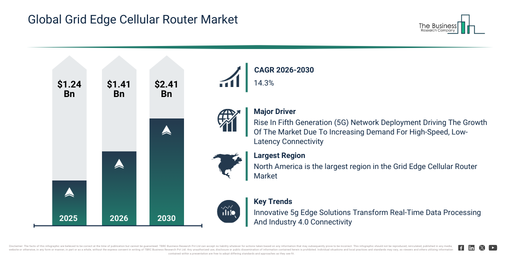
    The market for grid edge cellular routers has seen rapid expansion in recent years. It will grow from $1.24 billion in 2025 to $1.41 billion in 2026 at a compound annual growth rate (CAGR) of 14.1%. This historical growth can be attributed to the expansion of smart grid infrastructure, the increasing installation of smart meters and grid sensors, a heightened reliance on remote grid monitoring, the proliferation of distributed energy resources, and the early adoption of industrial cellular networking.

    The grid edge cellular router market size is anticipated to experience substantial expansion over the next few years. This market is projected to reach $2.41 billion in 2030, demonstrating a compound annual growth rate (CAGR) of 14.3%. This projected growth can be attributed to several factors during the forecast period, including increased investments in grid digitalization, the rising deployment of 5G-enabled grid communication systems, a growing focus on grid cybersecurity, the expansion of renewable energy integration, and an increasing demand for real-time grid visibility. Furthermore, major trends anticipated in this period involve the increasing deployment of ruggedized industrial cellular routers, the rising adoption of dual SIM and failover connectivity solutions, the growing integration of edge computing capabilities, the expansion of secure remote grid monitoring systems, and an enhanced focus on cybersecure grid communications.

    Get A Free Sample Report With In-Depth Market Insights:

    https://thebusinessresearchcompany.com/sample_request?id=33135&type=smp&name=Grid%20Edge%20Cellular%20Router%20Market%20Report%202026&utm_source=Blogs&utm_medium=Paid&utm_campaign=Oct_PR

    Grid Edge Cellular Router Market Growth Momentum: What Factors Are Shaping Demand?

    The expansion of fifth generation (5G) networks is anticipated to stimulate the advancement of the grid edge cellular router market in the future. These fifth generation (5G) networks represent the most current mobile communication standard, delivering high-speed, low-latency, and exceptionally reliable connectivity essential for real-time data transfer in crucial applications. The increasing deployment of such networks stems from a growing need for rapid mobile data, facilitating quicker downloads, uninterrupted streaming, and improved connectivity for today’s digital uses. Grid edge cellular routers augment fifth generation (5G) networks by ensuring dependable, high-speed, and low-latency connections, thereby enabling smooth data exchange and instantaneous communication among dispersed devices. For example, 5G Americas, a US-based trade organization, reported in July 2024 that global 5G connections neared 2 billion in the first quarter of 2024, seeing an addition of 185 million new subscriptions, and are predicted to hit roughly 7.7 billion by 2028. Consequently, the expanding deployment of fifth generation (5G) networks is a key factor propelling the growth of the grid edge cellular router market.

    Grid Edge Cellular Router Market Segment Trends And Revenue Contributors

    The grid edge cellular router market covered in this report is segmented –

    1) By Type: Fourth Generation Long Term Evolution (LTE) Routers; Fifth Generation (5G) Routers; Dual Subscriber Identity Module (SIM) Routers; Industrial Routers; Other Types

    2) By Connectivity: Wired; Wireless

    3) By Application: Smart Grid; Renewable Energy Integration; Remote Monitoring; Substation Automation; Other Applications

    4) By End User: Utilities; Industrial Facilities; Commercial Entities; Residential Consumers; Other End Users

    Subsegments:

    1) By Fourth Generation (4G) Long Term Evolution (LTE) Routers: Standalone Fourth Generation Long Term Evolution Routers; Integrated Firewall Fourth Generation Long Term Evolution Routers; Managed Service Fourth Generation Long Term Evolution Routers; Industrial Grade Fourth Generation Long Term Evolution Routers

    2) By Fifth Generation (5G) Routers: Standalone Fifth Generation Routers; Integrated Security Fifth Generation Routers; Enterprise Grade Fifth Generation Routers; Industrial Grade Fifth Generation Routers

    3) By Dual Subscriber Identity Module (SIM) Routers: Load Balancing Dual Subscriber Identity Module Routers; Failover Dual Subscriber Identity Module Routers; Industrial Dual Subscriber Identity Module Routers; Enterprise Dual Subscriber Identity Module Routers

    4) By Industrial Routers: Rugged Industrial Routers; Remote Monitoring Industrial Routers; Energy Sector Industrial Routers; Transportation Sector Industrial Routers

    5) By Other Types: Virtual Private Network Routers; Edge Computing Routers; Smart Network Management Routers; Hybrid Connectivity Routers

    Grid Edge Cellular Router Market Trends Redefining Industry Growth

    Major companies operating in the grid edge cellular router market are focused on developing innovative solutions, such as 5G edge computing industrial cellular router solutions, to enhance real-time data processing, enable seamless connectivity, and support advanced Industry 4.0 applications. A 5G edge computing industrial cellular router integrates traditional cellular routing functions with on-device computing resources, facilitating data processing at the network edge close to where data is generated. This reduces the need to send all data to centralized cloud servers, thereby lowering latency, improving resilience, and enabling real-time analytics compared to traditional routers that rely solely on remote processing. For instance, in February 2024, Digi International Inc., a US-based industrial IoT solutions provider, launched the Digi IX40 5G Edge Computing Industrial IoT Solution, an innovative 5G edge cellular router designed for Industry 4.0 and grid edge use cases. These solutions support global 5G and LTE connectivity, integrated edge computing capabilities, rugged industrial design, and advanced security features, enabling real-time data analysis and remote management via Digi Remote Manager. It is purpose-built to support applications such as predictive maintenance, asset monitoring, industrial automation, smart utility networks, and distributed energy resource management, offering enhanced speed, reliability, and edge intelligence over traditional cellular routers.

    Grid Edge Cellular Router Market Company Landscape And Competitive Strategy

    Major companies operating in the grid edge cellular router market are Dell Technologies Inc., Siemens AG, Cisco Systems Inc., Schneider Electric S.E., Nokia Corporation, Inseego Corp., Phoenix Contact GmbH & Co. KG, Juniper Networks Inc., Advantech Co. Ltd., Elastel Inc., Netgear Inc., Digi International Inc., HMS Networks AB, Moxa Inc., CalAmp Corp., Lanner Electronics Inc., Teltonika Networks UAB, Robustel Technologies Co. Ltd., Four-Faith Smart Power Technology Co. Ltd., Westermo Network Technologies AB, InHand Networks Inc., Peplink International Ltd., Come-Star Co. Ltd., LinkWorx Co. Ltd.

    View The Full Grid Edge Cellular Router Market Report:

    https://thebusinessresearchcompany.com/report/grid-edge-cellular-router-market-report?utm_source=Blogs&utm_medium=Paid&utm_campaign=Oct_PR

    Grid Edge Cellular Router Market Largest Region: Which Geography Holds The Highest Market Share?

    North America was the largest region in the grid edge cellular router market in 2025. Asia-Pacific is expected to be the fastest-growing region in the forecast period. The regions covered in the grid edge cellular router market report are Asia-Pacific, South East Asia, Western Europe, Eastern Europe, North America, South America, Middle East, Africa.

    Reach Out To Our Team:

    The Business Research Company: https://www.thebusinessresearchcompany.com/

    Americas: +1 310-496-7795

    Asia: +44 7882 955267 & +91 8897263534

    Europe: +44 7882 955267

    Email us at: marketing@tbrc.info

    Follow us on:

    LinkedIn: https://in.linkedin.com/company/the-business-research-company

    YouTube: https://www.youtube.com/channel/UC24_fI0rV8cR5DxlCpgmyFQ

    Global Market Model: https://www.thebusinessresearchcompany.com/global-market-model
  • Grid Cybersecurity Market Size Growth: From $10.43 Billion In 2026 To $18.02 Billion By 2030

    Grid Cybersecurity Market Size Growth: From $10.43 Billion In 2026 To $18.02 Billion By 2030

    Built to provide research that’s more actionable and strategically valuable, The Business Research Company’s 2026 market reports include market attractiveness analysis, total addressable market sizing, company benchmarking matrices, interactive Excel dashboards, broader supply chain intelligence, emerging startup tracking, and in-depth product insights.

    Grid Cybersecurity Market Growth Analysis: How Will Revenue Trend Over The Forecast Period?

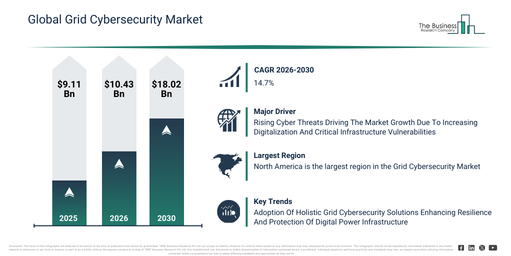
    The grid cybersecurity market has observed rapid expansion in recent years. This market is forecast to increase from $9.11 billion in 2025 to $10.43 billion in 2026, achieving a compound annual growth rate (CAGR) of 14.4%. Throughout the past, this growth has been driven by the increasing digitization of power grids, the early adoption of smart grid technologies, a rise in cyberattack incidents on critical infrastructure, the expansion of network-connected grid assets, and the development of cybersecurity standards.

    The grid cybersecurity market is anticipated to experience substantial expansion over the coming years. Its valuation is projected to reach $18.02 billion by 2030, demonstrating a compound annual growth rate (CAGR) of 14.7%. This growth during the forecast period is attributable to several factors, including escalating investments in grid resilience, the increasing adoption of cloud-based grid operational strategies, heightened regulatory demands concerning infrastructure security, the expanding number of connected energy assets, and a greater emphasis on zero-trust security frameworks. Key trends anticipated within this period involve the heightened deployment of sophisticated grid threat detection systems, a surge in the adoption of AI-driven cybersecurity analytics, the expanding integration of real-time grid security monitoring, the proliferation of cloud-based security platforms, and an intensified focus on both regulatory adherence and overall resilience.

    Get A Free Sample Report With In-Depth Market Insights:

    https://thebusinessresearchcompany.com/sample_request?id=33134&type=smp&name=Grid%20Cybersecurity%20Market%20Report%202026&utm_source=Blogs&utm_medium=Paid&utm_campaign=Oct_PR

    Grid Cybersecurity Market Expansion Drivers: What’s Shaping Future Growth?

    The expanding occurrence of cyber threats is projected to stimulate the future growth of the grid cybersecurity market. Cyber threats are defined as risks stemming from attacks or exploits that jeopardize the security, integrity, or accessibility of digital systems and information. These threats are escalating due to the rapid proliferation of digital technologies and online connectivity, which, in turn, create more potential attack surfaces for malicious actors. Grid cybersecurity is instrumental in mitigating cyber threats by shielding power grids from unauthorized access, detecting malicious activities in real time, and ensuring the integrity, availability, and resilience of crucial energy infrastructure. A pertinent illustration of this trend is observed in October 2025, when, as per the Australian Signals Directorate, an Australia-based government agency, its Australian Cyber Security Centre (ACSC) received over 42,500 calls to the Australian Cyber Security Hotline in FY2024–25, representing a 16% rise from the previous year. Therefore, the rise in cyber threats is a key factor propelling the expansion of the grid cybersecurity market.

    Grid Cybersecurity Market Segment Analysis Spotlighting Growth Areas

    The grid cybersecurity market covered in this report is segmented –

    1) By Component: Solutions; Services

    2) By Security Type: Network Security; Endpoint Security; Application Security; Cloud Security; Other Security Types

    3) By Deployment Mode: On-Premises; Cloud

    4) By Application: Smart Grid; Power Generation; Transmission; Distribution; Other Applications

    5) By End User: Utilities; Energy And Power; Industrial; Commercial; Other End Users

    Subsegments:

    1) By Solutions: Network Security Solutions; Endpoint Security Solutions; Application Security Solutions; Data Protection And Encryption Solutions; Identity And Access Management Solutions

    2) By Services: Consulting And Risk Assessment Services; System Integration And Deployment Services; Managed Security Services; Monitoring And Incident Response Services; Support And Maintenance Services

    Grid Cybersecurity Market Strategic Trends: What Defines The Next Growth Phase?

    Leading companies operating within the grid cybersecurity market are concentrating on developing advanced solutions, such as comprehensive cybersecurity approaches, to protect digital grids, prevent cyberattacks, and ensure continuous, reliable energy delivery. A comprehensive cybersecurity solution is an all-encompassing strategy that safeguards the power grid’s IT, OT, and communication networks from cyberattacks while ensuring continuous, resilient operations. For instance, in October 2024, Parsons Corporation, a US-based technology company, introduced a cyberzcape tracker, specifically designed for critical infrastructure like power grids. This agentless operation avoids disrupting always-on grid systems, employs modular cloud-based SaaS architecture to reduce tool sprawl, and possesses proactive features including automated patching, vulnerability scoring, and compliance support for OT/BES assets. Utilities gain enhanced resilience against sophisticated attacks, streamlined security processes, cost savings, and seamless integration with modernization tools such as DERMS and NMS, contributing to reliable energy delivery and national security alignment.

    Grid Cybersecurity Market Key Players Shaping Industry Direction

    Major companies operating in the grid cybersecurity market are Siemens AG, Hitachi Ltd., Lockheed Martin Corporation, Accenture plc, IBM Corporation, Cisco Systems Inc., Intel Corporation, General Electric, Schneider Electric SE, Mitsubishi Electric Corporation, Honeywell International Inc., ABB Ltd., toshiba corporation, Eaton Corporation, Leidos Holdings Inc., Palo Alto Networks, Fortinet Inc., Landis+Gyr Group AG, Schweitzer Engineering Laboratories Inc., Darktrace plc, Dragos Inc., AlertEnterprise Inc.

    View The Full Grid Cybersecurity Market Report:

    https://thebusinessresearchcompany.com/report/grid-cybersecurity-market-report?utm_source=Blogs&utm_medium=Paid&utm_campaign=Oct_PR

    Grid Cybersecurity Market Regional Analysis: Which Region Leads By Revenue?

    North America was the largest region in the grid cybersecurity market in 2025. Asia-Pacific is expected to be the fastest-growing region in the forecast period. The regions covered in the grid cybersecurity market report are Asia-Pacific, South East Asia, Western Europe, Eastern Europe, North America, South America, Middle East, Africa.

    Reach Out To Our Team:

    The Business Research Company: https://www.thebusinessresearchcompany.com/

    Americas: +1 310-496-7795

    Asia: +44 7882 955267 & +91 8897263534

    Europe: +44 7882 955267

    Email us at: marketing@tbrc.info

    Follow us on:

    LinkedIn: https://in.linkedin.com/company/the-business-research-company

    YouTube: https://www.youtube.com/channel/UC24_fI0rV8cR5DxlCpgmyFQ

    Global Market Model: https://www.thebusinessresearchcompany.com/global-market-model
  • Grid Connected Photovoltaic (PV) Systems Market Analysis 2026: Market Size, Growth Trends And Industry Outlook

    Grid Connected Photovoltaic (PV) Systems Market Analysis 2026: Market Size, Growth Trends And Industry Outlook

    Backed by market attractiveness analysis, total addressable market sizing, company benchmarking matrices, interactive Excel dashboards, wider supply chain intelligence, emerging startup coverage, and detailed product-level insights, The Business Research Company’s 2026 market reports are designed to offer research that is more actionable and strategically valuable than ever.

    Grid Connected Photovoltaic (PV) Systems Market Forecast: What Value Will The Market Reach By 2030?

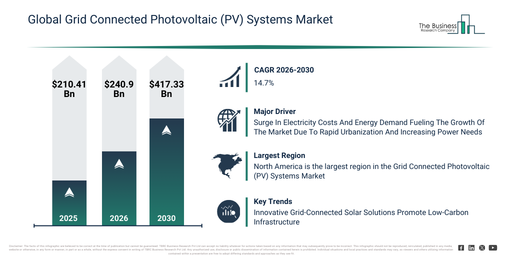
    The grid connected photovoltaic (pv) systems market size has experienced rapid growth in recent years. It is projected to expand from $210.41 billion in 2025 to $240.9 billion in 2026, achieving a compound annual growth rate (CAGR) of 14.5%. This historical growth can be linked to the expansion of renewable energy policies, a decline in solar panel costs, increasing electricity demand, the proliferation of distributed generation models, and the early adoption of net metering frameworks.

    The grid connected photovoltaic (pv) systems market is projected to experience substantial growth in the coming years. It is forecasted to expand to $417.33 billion in 2030, with a compound annual growth rate (CAGR) of 14.7%. This anticipated growth is attributable to escalating investments in renewable energy infrastructure, the increasing electrification of end-use sectors, broader integration of smart grids, a growing commitment to decarbonization targets, and the rising deployment of energy storage solutions alongside PV systems. Significant trends expected during this forecast period include the expanding deployment of large-scale grid-connected solar systems, an increase in rooftop PV installations, enhanced integration of smart inverters and monitoring systems, the development of more utility-scale solar projects, and a heightened emphasis on grid stability and power quality.

    Get A Free Sample Report With In-Depth Market Insights:

    https://thebusinessresearchcompany.com/sample_request?id=66975094&type=smp&name=Grid%20Connected%20Photovoltaic%20%28PV%29%20Systems%20Market%20Report%202026&utm_source=Blogs&utm_medium=Paid&utm_campaign=Oct_PR

    Grid Connected Photovoltaic (PV) Systems Market Development Factors: What’s Supporting Demand?

    The grid connected photovoltaic systems market is anticipated to expand due to increasing electricity expenses and energy requirements. Electricity costs represent the price paid for using electrical energy, while energy demand signifies the total amount of electricity consumers need over a certain period. This rise in electricity costs and energy demand is primarily driven by rapid urbanization, as expanding cities and industries require more power to support their infrastructure and daily energy consumption. Grid connected PV systems help maintain energy affordability and supply stability by allowing on-site electricity generation, thereby reducing reliance on grid power and enabling excess energy to be exported back to the grid. For example, in July 2024, the International Energy Agency (IEA), a France-based intergovernmental energy authority, reported a 4.3% rise in global electricity consumption from 2023. Thus, the escalating electricity costs and energy demand are propelling the growth of the grid connected photovoltaic systems market.

    Grid Connected Photovoltaic (PV) Systems Market Segment Performance And Emerging Opportunities

    The grid connected photovoltaic (pv) systems market covered in this report is segmented –

    1) By Components: Power Conditioning Unit; Grid Connection Equipment; Inverters; Other Components

    2) By Technology: Thin Film; Crystalline Silicon; Other Technologies

    3) By Installation Type: Rooftop Systems; Ground Mounted Systems

    4) By Distribution Channel: Direct Sales; Distributors Or Wholesalers; Retailers; Online Sales Platforms

    5) By End User: Utilities And Independent Power Producers (Ipps); Industrial Enterprises; Commercial Organizations; Residential Consumers; Public And Community Projects

    Subsegments:

    1) By Power Conditioning Unit: Central Power Conditioning Unit; String Power Conditioning Unit; Micro Power Conditioning Unit

    2) By Grid Connection Equipment: Circuit Breaker; Metering Device; Junction Box; Protective Switch

    3) By Inverters: Central Inverter; String Inverter; Micro Inverter

    4) By Others Components: Mounting Structure; Wiring; Sensor

    Grid Connected Photovoltaic (PV) Systems Market Transformation Trends: What Innovations Are Driving Change?

    Leading firms operating within the grid connected photovoltaic systems market are concentrating on developing sophisticated renewable energy solutions, such as substantial large scale solar photovoltaic systems, to bolster energy dependability, decrease carbon output, and foster sustainable electricity production. The integration of large scale solar photovoltaic systems involves setups that connect high-capacity solar facilities directly into national or regional power networks, facilitating the consistent provision of clean energy and improved grid performance. For instance, in September 2023, the Asian Development Bank (ADB), a Philippines-based multilateral development bank, in collaboration with the Government of Mongolia, inaugurated a 10 MW grid connected solar photovoltaic power plant in AltAI City, Govi AltAI province. This initiative aims to supply renewable electricity and contribute to a cleaner energy mix. This installation is projected to generate approximately 20 GWh of solar power annually, thereby lessening reliance on fossil fuels and curbing emissions, while also enhancing the availability of dependable electricity in rural regions. By deploying these grid connected solar solutions, the initiative consequently boosts energy security, aids environmental sustainability objectives, and propels the shift towards a power infrastructure with reduced carbon emissions.

    Grid Connected Photovoltaic (PV) Systems Market Competitive Analysis Of Leading Industry Participants

    Major companies operating in the grid connected photovoltaic (pv) systems market are Huawei Digital Power Technologies Co. Ltd., Asea Brown Boveri Ltd., LONGi Green Energy Technology Company Limited, Trina Solar Company Limited, JinkoSolar Holding Company Limited, JA Solar Technology Company Limited, Sungrow Power Supply Company Limited, Hanwha Q CELLS Co. Ltd., Canadian Solar Incorporated, Risen Energy Company Limited, First Solar Incorporated, SolarEdge Technologies Incorporated, SMA Solar Technology AG, Toshiba Mitsubishi-Electric Industrial Systems Corporation, Array Technologies Incorporated, GoodWe Technologies Company Limited, Ginlong Technologies Co. Ltd., Renewable Energy Corporation Group, Mounting Systems Gesellschaft mit beschränkter Haftung, and FIMER Società per Azioni.

    View The Full Grid Connected Photovoltaic (PV) Systems Market Report:

    https://thebusinessresearchcompany.com/report/grid-connected-photovoltaic-pv-systems-market-report?utm_source=Blogs&utm_medium=Paid&utm_campaign=Oct_PR

    Grid Connected Photovoltaic (PV) Systems Market Geographic Distribution And Regional Opportunities

    North America was the largest region in the grid connected photovoltaic systems market in 2025. Asia-Pacific is expected to be the fastest-growing region in the forecast period. The regions covered in the grid connected photovoltaic (pv) systems market report are Asia-Pacific, South East Asia, Western Europe, Eastern Europe, North America, South America, Middle East, Africa.

    Reach Out To Our Team:

    The Business Research Company: https://www.thebusinessresearchcompany.com/

    Americas: +1 310-496-7795

    Asia: +44 7882 955267 & +91 8897263534

    Europe: +44 7882 955267

    Email us at: marketing@tbrc.info

    Follow us on:

    LinkedIn: https://in.linkedin.com/company/the-business-research-company

    YouTube: https://www.youtube.com/channel/UC24_fI0rV8cR5DxlCpgmyFQ

    Global Market Model: https://www.thebusinessresearchcompany.com/global-market-model
  • Grid Capacity Map Platform Market Size In 2026 And Beyond: Understanding Future Growth Potential

    Grid Capacity Map Platform Market Size In 2026 And Beyond: Understanding Future Growth Potential

    Built to provide research that’s more actionable and strategically valuable, The Business Research Company’s 2026 market reports include market attractiveness analysis, total addressable market sizing, company benchmarking matrices, interactive Excel dashboards, broader supply chain intelligence, emerging startup tracking, and in-depth product insights.

    Grid Capacity Map Platform Market Size, Value And Growth Trajectory Through 2030

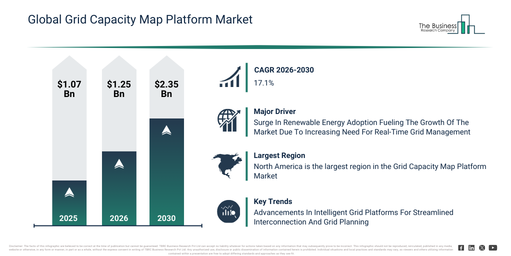
    Recent years have seen substantial growth in the grid capacity map platform market size. It will grow from $1.07 billion in 2025 to $1.25 billion in 2026 at a compound annual growth rate (CAGR) of 16.9%. Several factors contributed to this historical growth, including the expansion of transmission and distribution networks, intensifying grid congestion challenges, the early adoption of digital tools for grid planning, the rise of renewable energy connections, and an increasing need for grid transparency.

    The grid capacity map platform market is projected for significant expansion in the coming years. It is anticipated to reach $2.35 billion by 2030, exhibiting a compound annual growth rate (CAGR) of 17.1%. This growth during the forecast period is fueled by factors such as enhanced renewable energy integration, expanded deployment of electric vehicle charging infrastructure, increased investments in grid modernization, the proliferation of data-driven infrastructure planning, and the escalating demand for expedited connection approvals. Key trends anticipated for this period encompass the wider adoption of real-time grid capacity visualization, greater utilization of data-driven grid planning instruments, the increasing incorporation of load forecasting features, the broadening of cloud-based capacity mapping solutions, and a heightened emphasis on identifying network bottlenecks.

    Get A Free Sample Report With In-Depth Market Insights:

    https://thebusinessresearchcompany.com/sample_request?id=33131&type=smp&name=Grid%20Capacity%20Map%20Platform%20Market%20Report%202026&utm_source=Blogs&utm_medium=Paid&utm_campaign=Oct_PR

    Grid Capacity Map Platform Market Growth Factors: What’s Supporting Expansion?

    The expanding use of renewable energy sources is anticipated to fuel the expansion of the grid capacity map platform market in the future. These sources, such as sunlight, wind, water, and biomass, are natural energy supplies that are continuously replenished. Their increase is driven by worldwide initiatives to lower carbon emissions, as governments and corporations invest in clean power to address climate change and transition away from fossil fuels. This growth in renewables necessitates a grid capacity map platform because handling fluctuating inputs such as solar and wind power demands precise, real-time understanding of the grid’s ability to distribute electricity effectively and prevent overloads. As an illustration, in October 2024, the International Energy Agency, an intergovernmental body based in France, reported that globally, more than 5,500 gigawatts (GW) of new renewable energy capacity are projected to be installed between 2024 and 2030, with China expected to account for almost 60% of these worldwide installations during this timeframe. Consequently, the greater adoption of renewable energy sources is propelling the growth of the grid capacity map platform market. The increasing prevalence of electric vehicles is projected to boost the expansion of the grid capacity map platform market in the coming years. These automobiles operate, either fully or in part, on electric motors drawing power from rechargeable batteries, rather than solely on conventional internal combustion engines. The increase in electric vehicles stems from heightened environmental concerns, leading both consumers and governments to favor cleaner transport options to lower greenhouse gas emissions and air pollution. The growing number of electric vehicles escalates the demand for grid capacity map platforms, given that the substantial and variable electricity requirements for EV charging necessitate real-time oversight to guarantee effective power distribution and prevent grid overloads. For instance, in May 2025, the International Energy Agency, a France-based intergovernmental organization, reported that global electric car sales surpassed 17 million in 2024, representing a growth of over 25% and an increase of 3.5 million vehicles sold compared to 2023. Thus, the growing adoption of electric vehicles is propelling the expansion of the grid capacity map platform market.

    Grid Capacity Map Platform Market Breakdown By Product Type And Application

    The grid capacity map platform market covered in this report is segmented –

    1) By Component: Software; Services

    2) By Deployment Mode: Cloud Based; On Premises

    3) By Application: Utility Management; Renewable Integration; Grid Planning; Real-Time Monitoring; Other Applications

    4) By End User: Utilities; Government Agencies; Independent Power Producers; Industrial; Commercial; Other End Users

    Subsegments:

    1) By Software: Mapping Platforms; Data Analytics Tools; Visualization Software; Reporting Software

    2) By Services: Consulting Services; Implementation Services; Maintenance Services; Training Services

    Grid Capacity Map Platform Market Industry Trends: What’s Reshaping Demand?

    Leading entities within the grid capacity map platform market are concentrating on creating advanced solutions, such as intelligent grid platforms, aimed at simplifying interconnection procedures and decreasing expenses for both utilities and project developers. An intelligent grid platform constitutes a digital framework designed to consolidate real-time data, analytical tools, and automation capabilities, thereby enhancing the effective and dependable planning, operation, and administration of electrical grids. As an illustration, envelio, a grid management software provider based in Germany, introduced its Grid Connection Navigator (GCN) application to the North American market in December 2025. This application streamlines the preliminary phase of the interconnection process, enabling users to independently evaluate existing grid capacity, identify appropriate locations, and calculate connection expenditures. Fundamentally, the tool incorporates an interactive grid-capacity map, which utilities can integrate directly onto their websites for immediate, self-service public access. In contrast to conventional hosting capacity maps, GCN offers continuous data updates, encompassing power-flow-based assessments, which delivers nearly real-time and exceptionally precise understanding of grid conditions. Furthermore, it integrates seasonal and time-series hosting capacities, providing essential detailed clarity for ventures such as battery storage and flexible interconnections, where the precise timing and variability are significant factors.

    Grid Capacity Map Platform Market Industry Leaders And Competitive Landscape

    Major companies operating in the grid capacity map platform market are Siemens AG, Oracle Corporation, Schneider Electric SE, GE Vernova Inc., ABB Ltd., Eaton Corporation plc, Hitachi Energy Ltd., Autodesk Inc., Itron Inc., Esri Ltd., Bentley Systems Inc., GridBeyond Limited, Smarter Grid Solutions Inc., Spatineo Inc., Envelio GmbH, Kiwi Power Ltd., DNV GL, ETAP, Flexitricity Ltd., and PowerWorld Corporation.

    View The Full Grid Capacity Map Platform Market Report:

    https://thebusinessresearchcompany.com/report/grid-capacity-map-platform-market-report?utm_source=Blogs&utm_medium=Paid&utm_campaign=Oct_PR

    Grid Capacity Map Platform Market Regional Analysis And Leading Geography

    North America was the largest region in the grid capacity map platform market in 2025. Asia-Pacific is expected to be the fastest-growing region in the forecast period. The regions covered in the grid capacity map platform market report are Asia-Pacific, South East Asia, Western Europe, Eastern Europe, North America, South America, Middle East, Africa.

    Reach Out To Our Team:

    The Business Research Company: https://www.thebusinessresearchcompany.com/

    Americas: +1 310-496-7795

    Asia: +44 7882 955267 & +91 8897263534

    Europe: +44 7882 955267

    Email us at: marketing@tbrc.info

    Follow us on:

    LinkedIn: https://in.linkedin.com/company/the-business-research-company

    YouTube: https://www.youtube.com/channel/UC24_fI0rV8cR5DxlCpgmyFQ

    Global Market Model: https://www.thebusinessresearchcompany.com/global-market-model
  • Grid Analytics Software Market Reaches $8.68 Billion In 2026: Key Developments Shaping Expansion

    Grid Analytics Software Market Reaches $8.68 Billion In 2026: Key Developments Shaping Expansion

    Backed by market attractiveness analysis, total addressable market sizing, company benchmarking matrices, interactive Excel dashboards, wider supply chain intelligence, emerging startup coverage, and detailed product-level insights, The Business Research Company’s 2026 market reports are designed to offer research that is more actionable and strategically valuable than ever.

    Grid Analytics Software Market CAGR Outlook And Future Development

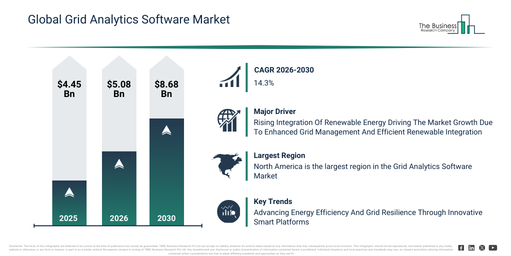
    The grid analytics software market has experienced rapid growth recently. It is set to expand from $4.45 billion in 2025 to $5.08 billion in 2026, achieving a compound annual growth rate (CAGR) of 14.1%. In the historical period, this growth was driven by factors such as the expansion of smart grid infrastructure, increasing deployment of smart meters, the rising complexity of power distribution networks, the growth of renewable energy integration, and the early adoption of grid monitoring software.

    The grid analytics software market is anticipated to experience substantial expansion over the next few years. This market is projected to reach $8.68 billion by 2030, demonstrating a compound annual growth rate (CAGR) of 14.3%. The growth anticipated during this forecast period stems from factors such as the increasing electrification of transportation, rising investments in grid digitalization, the growing need for real-time grid intelligence, the expansion of distributed energy resources, and an increased focus on predictive maintenance. Significant trends for the forecast period encompass a greater adoption of real-time grid monitoring platforms, the rising utilization of predictive analytics for grid reliability, the expanding integration of demand response analytics, the proliferation of cloud-based grid analytics solutions, and an enhanced emphasis on grid resilience and reliability.

    Get A Free Sample Report With In-Depth Market Insights:

    https://thebusinessresearchcompany.com/sample_request?id=33130&type=smp&name=Grid%20Analytics%20Software%20Market%20Report%202026&utm_source=Blogs&utm_medium=Paid&utm_campaign=Oct_PR

    Grid Analytics Software Market Demand Drivers: What’s Powering Industry Growth?

    The expanding integration of renewable energy sources is projected to drive the growth of the grid analytics software market moving ahead. These sources encompass energies derived from natural processes that are continuously replenished, including solar, wind, hydro, geothermal, and biomass. The adoption of renewable energy sources is escalating to lessen dependence on fossil fuels and decrease greenhouse gas emissions, thereby contributing to climate change mitigation. Grid analytics software supports renewable energy by offering real-time insights into grid performance, optimizing energy flow, and facilitating the efficient integration of variable renewable sources. For example, in January 2024, the International Energy Agency, a France-based intergovernmental organization, reported that in 2023, worldwide renewable energy capacity additions significantly increased by 50%, reaching almost 510 gigawatts (GW), with solar PV making up approximately three-quarters of all new installations globally. Consequently, the expanding integration of renewable energy sources is fueling the growth of the grid analytics software market.

    Grid Analytics Software Market Segment Analysis And Revenue Potential

    The grid analytics software market covered in this report is segmented –

    1) By Component: Software; Services

    2) By Deployment Mode: Cloud-Based; On-Premises; Hybrid

    3) By Application: Asset Management; Demand Response; Energy Forecasting; Grid Optimization; Load Research; Other Applications

    4) By End User: Utilities; Energy Providers; Industrial; Commercial; Other End Users

    Subsegments:

    1) By Software: Advanced Distribution Management System; Outage Management System; Predictive Analytics Platform; Energy Management System; Asset Performance Management System

    2) By Services: System Integration; Consulting; Support And Maintenance; Implementation And Deployment; Training And Education

    Grid Analytics Software Market Innovation Trends: What Developments Are Reshaping The Industry?

    Leading companies within the grid analytics software market are concentrating on developing advanced solutions, such as the smart grid management platform, to enhance energy distribution, boost grid reliability, enable continuous monitoring, and support proactive maintenance for more effective and robust power systems. A smart grid management platform refers to a digital tool that empowers utilities to oversee and analyze electricity flow across the network, identify issues, predict usage, and integrate renewable energy sources for improved operational effectiveness and grid stability. For instance, in March 2025, Schneider Electric SE, a France-based energy technology firm, introduced a One Digital Grid Platform to consolidate grid operations, facilitate real-time monitoring, and elevate energy efficiency. This is a unified, AI-powered solution built on Microsoft Azure that modernizes utility grids by combining planning, operations, asset management, and customer engagement to address increasing electricity demand from AI data centers, EVs, renewables, and extreme weather difficulties. Its primary goal is to provide real-time insights, predictive analytics, and automation, leading to reductions in outages by up to 40%, DER interconnection times by 25%, and application deployment by 60%, while enabling effortless scalability without requiring extensive overhauls of existing systems. Utilities achieve a verified ROI, a 184% return, $62M in benefits, and a 16-month payback, with advantages including 65% operator time savings, 35% faster field resolutions, and increased resilience for decarbonization, directly corresponding with grid innovation needs in your energy tech expertise.

    Grid Analytics Software Market Key Participants And Competitive Landscape

    Major companies operating in the grid analytics software market are Siemens AG, Hitachi Ltd., Lockheed Martin Corporation, Accenture plc, IBM Corporation, Cisco Systems Inc., General Electric Company, Oracle Corporation, Schneider Electric SE, SAP SE, ABB Ltd., Eaton Corporation, Leidos Holdings Inc., Wipro Limited, Landis+Gyr Group AG., itron inc., Holley Technology Ltd., Willdan Group, C3 AI Inc., AutoGrid Systems Inc., Amperon Holdings Inc., Grid4C Ltd.

    View The Full Grid Analytics Software Market Report:

    https://thebusinessresearchcompany.com/report/grid-analytics-software-market-report?utm_source=Blogs&utm_medium=Paid&utm_campaign=Oct_PR

    Grid Analytics Software Market Geographic Analysis: Where Is Demand Accelerating Fastest?

    North America was the largest region in the grid analytics software market in 2025. Asia-Pacific is expected to be the fastest-growing region in the forecast period. The regions covered in the grid analytics software market report are Asia-Pacific, South East Asia, Western Europe, Eastern Europe, North America, South America, Middle East, Africa.

    Reach Out To Our Team:

    The Business Research Company: https://www.thebusinessresearchcompany.com/

    Americas: +1 310-496-7795

    Asia: +44 7882 955267 & +91 8897263534

    Europe: +44 7882 955267

    Email us at: marketing@tbrc.info

    Follow us on:

    LinkedIn: https://in.linkedin.com/company/the-business-research-company

    YouTube: https://www.youtube.com/channel/UC24_fI0rV8cR5DxlCpgmyFQ

    Global Market Model: https://www.thebusinessresearchcompany.com/global-market-model
  • Green Laser Market Growth Outlook For 2026: Drivers, Trends And Future Opportunities

    Green Laser Market Growth Outlook For 2026: Drivers, Trends And Future Opportunities

    Featuring market attractiveness scoring, total addressable market sizing, company benchmarking matrices, interactive Excel dashboards, deeper supply chain intelligence, emerging startup tracking, and granular product-level insights, The Business Research Company’s 2026 market reports are built to deliver research that is both more actionable and more strategically valuable.

    Green Laser Market Set To Climb From $1.2 Billion In 2026 To $2 Billion By 2030

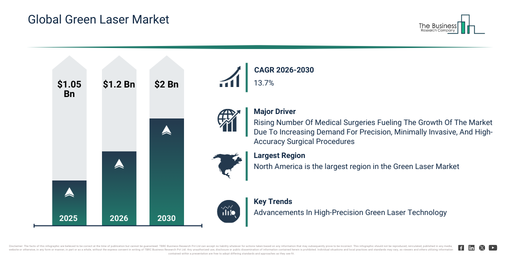
    The green laser market size has seen rapid expansion in recent years. Its valuation is anticipated to increase from $1.05 billion in 2025 to $1.2 billion in 2026, registering a compound annual growth rate (CAGR) of 13.5%. This growth observed in the past can be attributed to several factors including an uptick in industrial automation, the expanding utilization of laser-based measurement tools, a rise in military and defense applications, increasing uptake of optical communication systems, and the accessibility of solid-state laser technologies.

    The green laser market is projected for significant expansion in the coming years. It is anticipated to reach a valuation of $2 billion by 2030, demonstrating a compound annual growth rate (CAGR) of 13.7%. This growth during the forecast period is fueled by factors such as the increasing need for precision manufacturing, higher investments in laser-based medical devices, the broadening of autonomous navigation systems, the expanding application of lasers in smart infrastructure, and ongoing advancements in semiconductor laser technologies. Key trends observed in the forecast period comprise the increasing acceptance of high-precision laser devices, a rising need for compact and portable laser systems, the widening application of green lasers in industrial processing, the development of laser-based measurement and alignment tools, and a stronger emphasis on energy-efficient laser technologies.

    Get A Free Sample Report With In-Depth Market Insights:

    https://thebusinessresearchcompany.com/sample_request?id=72457262&type=smp&name=Green%20Laser%20Market%20Report%202026&utm_source=Blogs&utm_medium=Paid&utm_campaign=Oct_PR

    Green Laser Market Growth Drivers: What’s Behind The Acceleration?

    An anticipated rise in medical surgical procedures is projected to fuel the expansion of the green laser market in the coming years. These encompass surgical procedures executed across various healthcare settings, such as elective, diagnostic, and minimally invasive interventions demanding high precision. The surge in medical surgeries can be attributed to an aging global populace and the rising incidence of chronic ailments necessitating surgical treatments. Green lasers facilitate the increase in medical surgeries through precise tissue interaction, minimized blood loss, and enhanced surgical accuracy across various fields like ophthalmology, urology, dermatology, and general surgery applications. As an illustration, data from May 2025, provided by the Australian Institute of Health and Welfare, an Australia-based government agency, revealed that interventions grew by 3.5% from 26.8 million to 27.7 million between 2022–23 and 2023–24. This expansion was particularly noticeable in public hospitals, where interventions climbed by 3.7%, increasing from 14.0 million in 2022–23 to 14.5 million in 2023–24. Consequently, the escalation in medical surgeries has stimulated the expansion of the green laser market.

    Green Laser Market Segmentation And Category Overview

    The green laser market covered in this report is segmented –

    1) By Product Type: Portable Green Lasers; Industrial Green Lasers; Laboratory Green Lasers; Other Product Types

    2) By Technology: Solid-State Lasers; Gas Lasers; Fiber Lasers; Semiconductor Lasers

    3) By Power Output: Low Power; Medium Power; High Power

    4) By Application: Medical; Industrial; Military; Research; Other Applications

    5) By End User: Healthcare; Manufacturing; Defense; Research Institutions; Other End Users

    Subsegments:

    1) By Portable Green Lasers: Handheld Green Lasers; Pen-Style Green Lasers; Pocket Green Lasers

    2) By Industrial Green Lasers: Cutting Green Lasers; Engraving Green Lasers; Marking Green Lasers; Welding Green Lasers

    3) By Laboratory Green Lasers: Research Green Lasers; Spectroscopy Green Lasers; Optical Experiment Green Lasers

    4) By Other Product Types: Custom Green Lasers; Specialty Green Lasers; Educational Green Lasers

    Green Laser Market Trends: What’s Defining The Industry’s Next Phase?

    Companies operating in the green laser market are concentrating on technological advancements to facilitate precision micromachining of reflective metals. These enhancements, such as high-speed modulation capability, aim to achieve greater processing accuracy, minimize thermal damage, and improve energy control. High-speed modulation capability, in the context of green lasers, denotes the laser’s capacity to quickly activate/deactivate its output or adjust its intensity at very high frequencies. As an example, in January 2024, Luminus Devices Inc., a company based in Belgium, launched a new green laser featuring a 515 nm single-mode diode solution, specifically designed for high precision and diverse applications. This laser offers both continuous-wave and pulsed operation, complemented by high-speed modulation capability that allows for precise material interaction and rapid response in micromachining, measurement, and projection tasks. Furthermore, the laser boasts impressive wall-plug efficiency, rendering it suitable for battery-powered and portable systems. Its compact TO-56 package, which includes an integrated photodiode, streamlines its integration into industrial, medical, and consumer devices.

    Green Laser Market Top Companies Driving Competitive Growth

    Major companies operating in the green laser market are Coherent Inc., IPG Photonics Corporation, Hamamatsu Photonics K.K., Nichia Corporation, Osram Opto Semiconductors GmbH, Thorlabs Inc., Edmund Optics Inc., TOPTICA Photonics SE, Quarton Incorporated, The Optoelectronics Co. Ltd., Photonic Products Ltd., Changchun New Industries Optoelectronics Tech. Co. Ltd. (CNI), Z-LASER GmbH, Laser Components Germany GmbH, WSTech, ProPhotonix Limited, Global Laser Ltd., Egismos Technology Corporation, Laserex Technologies Pty Ltd, Lumics GmbH, QSI (Q-Photonics), ShanghAI Laser & Optics Century Co. Ltd. (SLOC), Frankfurt Laser Company, and AimLaser Technology Co. Ltd.

    View The Full Green Laser Market Report:

    https://thebusinessresearchcompany.com/report/green-laser-market-report?utm_source=Blogs&utm_medium=Paid&utm_campaign=Oct_PR

    Green Laser Market Global Footprint: Which Region Leads The Industry?

    North America was the largest region in the green laser market in 2025. Asia-Pacific is expected to be the fastest-growing region in the forecast period. The regions covered in the green laser market report are Asia-Pacific, South East Asia, Western Europe, Eastern Europe, North America, South America, Middle East, Africa.

    Reach Out To Our Team:

    The Business Research Company: https://www.thebusinessresearchcompany.com/

    Americas: +1 310-496-7795

    Asia: +44 7882 955267 & +91 8897263534

    Europe: +44 7882 955267

    Email us at: marketing@tbrc.info

    Follow us on:

    LinkedIn: https://in.linkedin.com/company/the-business-research-company

    YouTube: https://www.youtube.com/channel/UC24_fI0rV8cR5DxlCpgmyFQ

    Global Market Model: https://www.thebusinessresearchcompany.com/global-market-model
  • Green Ammonia Peaker Front End Engineering Design (FEED) Market Size Forecast From 2026 To 2030: Key Industry Trends

    Green Ammonia Peaker Front End Engineering Design (FEED) Market Size Forecast From 2026 To 2030: Key Industry Trends

    Built to provide research that’s more actionable and strategically valuable, The Business Research Company’s 2026 market reports include market attractiveness analysis, total addressable market sizing, company benchmarking matrices, interactive Excel dashboards, broader supply chain intelligence, emerging startup tracking, and in-depth product insights.

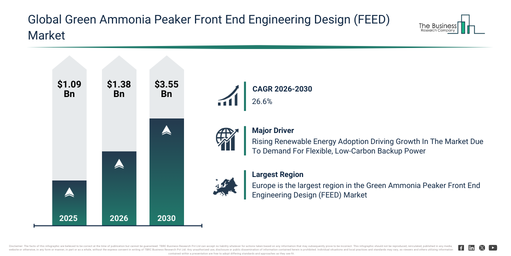
    Green Ammonia Peaker Front End Engineering Design (FEED) Market Forecast: Value Set To Climb From $1.38 Billion To $3.55 Billion

    The market size for green ammonia peaker front end engineering design (feed) has experienced substantial growth in recent years. This market is projected to expand from $1.09 billion in 2025 to $1.38 billion in 2026, achieving a compound annual growth rate (CAGR) of 26.3%. Historically, this expansion has been driven by factors such as increasing renewable energy penetration, grid stability issues arising from intermittent power sources, the early adoption of ammonia-based fuels, the expansion of power infrastructure planning, and the availability of specialized engineering expertise.

    The green ammonia peaker front end engineering design (feed) market is projected to experience rapid expansion in the coming years. Its size is forecast to reach $3.55 billion by 2030, with a compound annual growth rate (CAGR) of 26.6%. This growth during the projection period is attributed to escalating investments in green hydrogen and ammonia initiatives, a heightened need for carbon-neutral peaking power facilities, the proliferation of adaptable power generation resources, increasing governmental backing for low-carbon energy sources, and improvements in ammonia combustion techniques. Key trends anticipated over the forecast timeframe encompass the intensified creation of low-carbon peaking power designs, an escalating requirement for deployable green energy options, a concentrated effort on modular power plant engineering, the broadening of power infrastructure integrated with renewables, and a greater emphasis on safety and ecological evaluations.

    Get A Free Sample Report With In-Depth Market Insights:

    https://thebusinessresearchcompany.com/sample_request?id=33128&type=smp&name=Green%20Ammonia%20Peaker%20Front%20End%20Engineering%20Design%20%28FEED%29%20Market%20Report%202026&utm_source=Blogs&utm_medium=Paid&utm_campaign=Oct_PR

    Green Ammonia Peaker Front End Engineering Design (FEED) Market Growth Factors Behind Sustained Expansion

    The expanding adoption of renewable energy sources is anticipated to drive the advancement of the green ammonia peaker front-end engineering design market in the coming years. Renewable energy, derived from naturally replenishing resources like solar, wind, and hydropower, is seeing increased usage. This surge is primarily driven by the imperative to lower carbon emissions, as these sources generate minimal greenhouse gases compared to fossil fuels, thus aiding in the fight against climate change. Green ammonia peaker FEED supports renewable energy by offering an adaptable, low-carbon backup power supply capable of rapidly delivering electricity when renewable inputs such as solar or wind are insufficient, thereby ensuring grid stability and facilitating greater renewable integration. For instance, Eurostat, a Luxembourg-based government agency, reported in December 2024 that renewable energy constituted 24.5% of the total energy consumed in the EU in 2023, an increase from 23.0% in 2022. Consequently, the growth in renewable energy is a significant factor boosting the green ammonia peaker front-end engineering design market. The escalating investment in research and development initiatives is anticipated to stimulate the expansion of the green ammonia peaker front-end engineering design market in the coming years. This funding represents financial support allocated to R&D efforts focused on developing or enhancing products, technologies, or processes. An upswing in R&D funding is observed due to robust investments from both governmental and private sectors, geared towards fostering innovation and technological progress. Such funding aids green ammonia peaker front-end engineering design by facilitating technical validation, optimizing processes, and mitigating risks, all crucial steps for advancing ammonia-based peaking power projects toward commercial viability. For example, the Office for National Statistics, a UK-based government agency, reported that in 2023, the UK government’s net expenditure on research and development (R&D) rose to £17.4 billion ($22.1 billion), an increase from £16.1 billion ($20.45 billion) in 2022, signifying an 8.2% surge. Thus, the growing funding for research and development projects is a key factor driving the green ammonia peaker front-end engineering design market.

    Green Ammonia Peaker Front End Engineering Design (FEED) Market Segment Outlook: Which Categories Are Growing Fastest?

    The green ammonia peaker front end engineering design (feed) market covered in this report is segmented –

    1) By Service Type: Engineering Services; Front-End Design Services; Consulting Services; Feasibility Analysis Services

    2) By Technology: Electrolysis; Haber-Bosch Process; Other Technologies

    3) By Plant Capacity: Small-Scale Or Modular; Mid-Scale; Large-Scale

    4) By Application: Power Generation; Energy Storage; Grid Stabilization; Other Applications

    5) By End User: Utilities; Independent Power Producers; Industrial; Other End Users

    Subsegments:

    1) By Engineering Services: Process Engineering; Mechanical Engineering; Electrical Engineering; Instrumentation And Control Engineering; Plant Layout And Infrastructure Engineering

    2) By Front-End Design Services: Conceptual Plant Design; Process Flow Diagram Development; Equipment Specification Design; Capital Cost Estimation; Project Scope Definition

    3) By Consulting Services: Technology Selection Advisory; Regulatory And Compliance Advisory; Project Management Consulting; Sustainability And Environmental Advisory; Risk Assessment Consulting

    4) By Feasibility Analysis Services: Technical Feasibility Assessment; Economic Feasibility Evaluation; Operational Feasibility Study; Environmental Impact Assessment; Market And Demand Feasibility Analysis

    Green Ammonia Peaker Front End Engineering Design (FEED) Market Leading Players And Competitive Positioning

    Major companies operating in the green ammonia peaker front end engineering design (feed) market are ENGIE S.A., Sumitomo Corporation, Siemens Energy AG, Linde plc., Mitsubishi Heavy Industries Ltd., HyundAI Engineering Co. Ltd., Air Products and Chemicals Inc., Worley Limited, KBR Inc., Technip Energies N.V., Maire Tecnimont S.p.A., Técnicas Reunidas S.A., Haldor Topsoe A/S, Nel ASA, Pan Gulf Technologies Pvt. Ltd., Proton Ventures, Casale S.A., ACME Group, Nuberg Green Energy, Thyssenkrupp Uhde GmbH

    View The Full Green Ammonia Peaker Front End Engineering Design (FEED) Market Report:

    https://thebusinessresearchcompany.com/report/green-ammonia-peaker-front-end-engineering-design-feed-market-report?utm_source=Blogs&utm_medium=Paid&utm_campaign=Oct_PR

    Green Ammonia Peaker Front End Engineering Design (FEED) Market Regional Distribution: Which Areas Power Market Growth?

    Europe was the largest region in the green ammonia peaker front-end engineering design market in 2025. Asia-Pacific is expected to be the fastest-growing region in the forecast period. The regions covered in the green ammonia peaker front end engineering design (feed) market report are Asia-Pacific, South East Asia, Western Europe, Eastern Europe, North America, South America, Middle East, Africa.

    Reach Out To Our Team:

    The Business Research Company: https://www.thebusinessresearchcompany.com/

    Americas: +1 310-496-7795

    Asia: +44 7882 955267 & +91 8897263534

    Europe: +44 7882 955267

    Email us at: marketing@tbrc.info

    Follow us on:

    LinkedIn: https://in.linkedin.com/company/the-business-research-company

    YouTube: https://www.youtube.com/channel/UC24_fI0rV8cR5DxlCpgmyFQ

    Global Market Model: https://www.thebusinessresearchcompany.com/global-market-model
  • Grease Hood Heat Recovery Market 2026: Market Size, Growth Drivers And Emerging Opportunities

    Grease Hood Heat Recovery Market 2026: Market Size, Growth Drivers And Emerging Opportunities

    Backed by market attractiveness analysis, total addressable market sizing, company benchmarking matrices, interactive Excel dashboards, wider supply chain intelligence, emerging startup coverage, and detailed product-level insights, The Business Research Company’s 2026 market reports are designed to offer research that is more actionable and strategically valuable than ever.

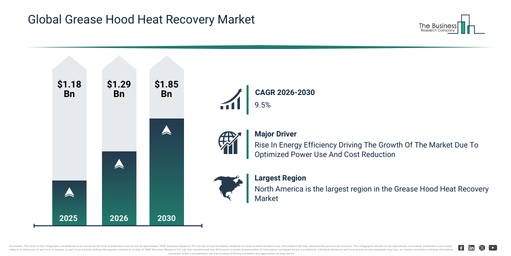
    Grease Hood Heat Recovery Market Revenue Growth On Track For A 9.5% CAGR Through 2030

    The grease hood heat recovery market has shown strong expansion in recent years. This market is projected to expand from $1.18 billion in 2025 to $1.29 billion by 2026, demonstrating a compound annual growth rate (CAGR) of 9.3%. Historically, this growth has stemmed from factors such as increasing energy consumption in commercial kitchens, the expansion of foodservice establishments, the integration of advanced ventilation systems, a heightened emphasis on reducing operational costs, and the availability of commercial heat exchange technologies.

    The grease hood heat recovery market is projected to experience robust expansion over the coming years. Its valuation is anticipated to reach $1.85 billion in 2030, demonstrating a compound annual growth rate (CAGR) of 9.5%. This growth during the projected period stems from a heightened focus on sustainable building practices, escalating energy cost concerns, the proliferation of green building certifications, the expanding integration of smart kitchen systems, and a sharpened regulatory emphasis on energy efficiency. Key trends observed within the forecast timeframe encompass the wider adoption of energy recovery ventilation solutions, an escalating need for kitchen energy-saving options, the increasing incorporation of intelligent temperature and airflow management systems, the spread of retrofit heat recovery setups, and an improved emphasis on fire-safe heat exchanger designs.

    Get A Free Sample Report With In-Depth Market Insights:

    https://thebusinessresearchcompany.com/sample_request?id=37682364&type=smp&name=Grease%20Hood%20Heat%20Recovery%20Market%20Report%202026&utm_source=Blogs&utm_medium=Paid&utm_campaign=Oct_PR

    Grease Hood Heat Recovery Market Demand Drivers Opening New Revenue Streams

    The growth of the grease hood heat recovery market is projected to accelerate due to increasing energy efficiency. Energy efficiency involves the optimal utilization of power and thermal resources to minimize waste, typically through the recovery of high-grade heat from cooking exhaust that would otherwise be lost. This increase in energy efficiency primarily stems from the broader adoption of smart grids and IoT-enabled devices, which facilitate real-time monitoring, optimized energy consumption, and automated system control. Grease hood heat recovery systems improve energy efficiency by capturing and reusing heat from kitchen exhaust, leading to reduced overall energy consumption and lower heating expenses. For instance, in March 2024, data from the Department for Energy Security and Net Zero, a UK-based government department, showed that in 2023, ECO continued to be the foremost energy efficiency initiative, with its measures accounting for 83% of all installations, as 265,000 measures were implemented, marking a 61% increase compared to 2022. Consequently, the rising emphasis on energy efficiency is a key driver for the grease hood heat recovery market. The increasing demand for sustainable and green building solutions is anticipated to drive the expansion of the grease hood heat recovery market moving forward. Green building solutions encompass design, construction, and operation practices that employ energy-efficient, resource-conserving, and environmentally responsible methods to lessen a building’s environmental footprint while enhancing occupant well-being and performance. The push for sustainable and green building solutions is fueled by growing environmental concerns, as both businesses and consumers strive to lower carbon footprints, conserve resources, and adhere to stricter environmental regulations. Grease hood heat recovery contributes to sustainable and green building solutions by capturing and repurposing waste heat from kitchen exhaust, thereby reducing total energy consumption, lowering carbon emissions, and supporting energy-efficient, eco-friendly building operations. For instance, in July 2024, according to the U.S. Green Building Council, a US-based non-profit organization, by 2024, they were involved in over 46,000 residential projects certified under the LEED green building rating system, while 2023 saw nearly a 5% increase in new LEED residential project registrations. Therefore, the growing need for sustainable and green building solutions is stimulating the growth of the grease hood heat recovery market.

    Grease Hood Heat Recovery Market Segment Landscape: Which Areas Lead Development?

    The grease hood heat recovery market covered in this report is segmented –

    1) By Product Type: Integrated Heat Recovery Systems; Retrofit Heat Recovery Units; Modular Heat Recovery Solutions

    2) By Application: Commercial Kitchens; Industrial Kitchens; Institutional Kitchens; Other Applications

    3) By Distribution Channel: Direct Sales; Distributors Or Dealers; Online Sales; Other Distribution Channels

    4) By End User: Restaurants; Hotels; Hospitals; Food Processing Facilities; Other End Users

    Subsegments:

    1) By Integrated Heat Recovery Systems: Kitchen Exhaust Heat Recovery Systems; Energy Efficient Heat Exchange Units; Combined Ventilation And Heat Recovery Systems; Custom Integrated Heat Recovery Solutions

    2) By Retrofit Heat Recovery Units: Aftermarket Kitchen Exhaust Heat Recovery Units; Compact Retrofit Heat Exchange Systems; Modular Retrofit Energy Recovery Units; Commercial Kitchen Retrofit Solutions

    3) By Modular Heat Recovery Solutions: Modular Heat Recovery Units For Restaurants; Scalable Heat Recovery Modules For Industrial Kitchens; Plug And Play Heat Recovery Systems; Flexible Modular Energy Recovery Solutions

    Grease Hood Heat Recovery Market Competitive Overview And Top Companies

    Major companies operating in the grease hood heat recovery market are Britannia Kitchen Ventilation Limited, Greenheck Fan Corporation, Systemair AB, Thermax Limited, FläktGroup Holding GmbH, CaptiveAire Systems Inc., Halton Group Oy, Nuaire Limited, Loren Cook Company, Accurex LLC, AirClean Systems Inc., Komfovent UAB, Vent-Axia Group Limited, CK Direct Limited, Exodraft A/S, Östberg Group AB, Entropic Limited, Oxytec Ltd., Soler & Palau Ventilation Group S.L., Vianen Kitchen Ventilation B.V.

    View The Full Grease Hood Heat Recovery Market Report:

    https://thebusinessresearchcompany.com/report/grease-hood-heat-recovery-market-report?utm_source=Blogs&utm_medium=Paid&utm_campaign=Oct_PR

    Grease Hood Heat Recovery Market Leading Geography: Which Region Contributes The Most Revenue?

    North America was the largest region in the grease hood heat recovery market in 2025. Asia-Pacific is expected to be the fastest-growing region in the forecast period. The regions covered in the grease hood heat recovery market report are Asia-Pacific, South East Asia, Western Europe, Eastern Europe, North America, South America, Middle East, Africa.

    Reach Out To Our Team:

    The Business Research Company: https://www.thebusinessresearchcompany.com/

    Americas: +1 310-496-7795

    Asia: +44 7882 955267 & +91 8897263534

    Europe: +44 7882 955267

    Email us at: marketing@tbrc.info

    Follow us on:

    LinkedIn: https://in.linkedin.com/company/the-business-research-company

    YouTube: https://www.youtube.com/channel/UC24_fI0rV8cR5DxlCpgmyFQ

    Global Market Model: https://www.thebusinessresearchcompany.com/global-market-model