Blog

  • Xolair Market Size In 2026: Growth Outlook And Forecast Through 2030

    Xolair Market Size In 2026: Growth Outlook And Forecast Through 2030

    Built to provide research that’s more actionable and strategically valuable, The Business Research Company’s 2026 market reports include market attractiveness analysis, total addressable market sizing, company benchmarking matrices, interactive Excel dashboards, broader supply chain intelligence, emerging startup tracking, and in-depth product insights.

    Xolair Market Expansion Outlook: What Revenue Opportunities Are Ahead?

    Historical period growth is attributable to the increasing occurrence of asthma and allergic conditions, the broadening of biologic drug approvals, higher diagnosis rates for chronic urticaria, the establishment of specialty allergy clinics, and enhanced physician understanding of monoclonal antibodies.

    Anticipated growth during the projection period stems from a heightened need for tailored allergy solutions, the broader application of biologics for more inflammatory conditions, increasing capital dedicated to immunology studies, the expanding use of extended-release injectable treatments, and enhanced availability of specialized biologic medications.

    Key developments projected for the forecast period encompass the growing uptake of specific monoclonal antibody interventions, heightened need for biologic interventions for persistent allergic ailments, the broadening of strategies for sustained disease control, an escalating emphasis on exact immunology therapies, and greater prioritization of patient-focused biologic healthcare.

    Get A Free Sample Report With In-Depth Market Insights:

    https://thebusinessresearchcompany.com/sample_request?id=53275028&type=smp&name=Xolair%20Market%20Report%202026&utm_source=Blogs&utm_medium=Paid&utm_campaign=Oct_PR

    Xolair Market Demand Drivers Opening New Revenue Streams

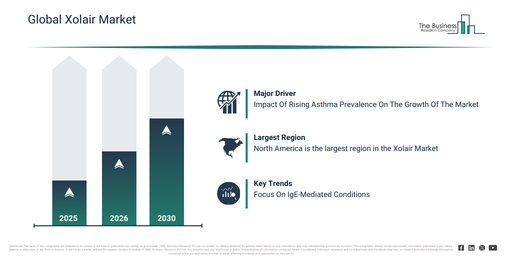
    The rising incidence of asthma is anticipated to drive the future expansion of the xolair market. Asthma is a chronic medical condition where the airways become inflamed and constricted, resulting in breathing difficulties, wheezing, and coughing. The increasing occurrence of asthma and allergic conditions can be attributed to factors such as elevated exposure to pollutants, rising temperatures, evolving weather patterns, and higher population density. Xolair provides an effective treatment for asthma by targeting IgE antibodies, which reduces airway inflammation and prevents asthma attacks in patients with moderate to severe allergic asthma. For example, data released in December 2024 by the National Center for Health Statistics (NCHS), a U.S.-based health statistics agency, indicated that the prevalence of current asthma among adults aged 18 and over in the United States saw an increase from 3.7% in 2022 to 3.8% in 2023. This upward trend in asthma prevalence is therefore a key driver for the growth of the xolair market.

    Xolair Market Segment Performance And Emerging Opportunities

    The xolair market covered in this report is segmented –

    1) By Indication: Asthma, Chronic Spontaneous Urticaria (CSU), Nasal Polyposis

    2) By Distribution Channel: Hospital Pharmacies, Retail Pharmacies, Online Pharmacies

    3) By End User: Adults, Geriatric, Pediatric

    Xolair Market Trends Powering Strategic Industry Growth

    The primary trend in the xolair market centers on expanding approved indications for existing drugs, particularly in allergy and immunology treatments like Omalizumab, to widen market reach and address unmet medical needs in niche and high-demand areas. IgE-mediated food allergies are immune responses triggered by immunoglobulin E (IgE) antibodies, causing rapid allergic reactions upon exposure to specific food allergens. For instance, in February 2024, F. Hoffmann-La Roche Ltd., a Switzerland-based healthcare company, secured FDA approval for Xolair (omalizumab) to reduce allergic reactions, including anaphylaxis, in patients aged 1 and older with IgE-mediated food allergies. Xolair is recognized as the first FDA-approved treatment for mitigating allergic reactions to multiple food allergens, though it is not designed for emergency use, and patients are advised to continue avoiding allergens. This treatment is now accessible for eligible patients in the U.S.

    Xolair Market Key Players: Which Companies Lead Industry Competition?

    Major companies operating in the xolair market are F. Hoffmann-La Roche AG, Novartis AG

    View The Full Xolair Market Report:

    https://thebusinessresearchcompany.com/report/xolair-global-market-report?utm_source=Blogs&utm_medium=Paid&utm_campaign=Oct_PR

    Xolair Market Top Region By Revenue And Market Share

    North America was the largest region in the xolair market in 2025. Asia-Pacific is expected to be the fastest-growing region in the forecast period. The regions covered in the xolair market report are Asia-Pacific, Western Europe, Eastern Europe, North America, South America, Middle East, Africa.

    Reach Out To Our Team:

    The Business Research Company: https://www.thebusinessresearchcompany.com/

    Americas: +1 310-496-7795

    Asia: +44 7882 955267 & +91 8897263534

    Europe: +44 7882 955267

    Email us at: marketing@tbrc.info

    Follow us on:

    LinkedIn: https://in.linkedin.com/company/the-business-research-company

    YouTube: https://www.youtube.com/channel/UC24_fI0rV8cR5DxlCpgmyFQ

    Global Market Model: https://www.thebusinessresearchcompany.com/global-market-model

  • Rescue Airway Devices Market Size In 2026: Regional Growth, Key Segments And Future Outlook

    Rescue Airway Devices Market Size In 2026: Regional Growth, Key Segments And Future Outlook

    Built to provide research that’s more actionable and strategically valuable, The Business Research Company’s 2026 market reports include market attractiveness analysis, total addressable market sizing, company benchmarking matrices, interactive Excel dashboards, broader supply chain intelligence, emerging startup tracking, and in-depth product insights.

    Rescue Airway Devices Market Size And Revenue Outlook Through 2030

    The rescue airway devices market size has experienced rapid growth in recent years. It is projected to increase from $2.76 billion in 2025 to $3.05 billion in 2026, at a compound annual growth rate (CAGR) of 10.4%. The expansion observed in the historic period is attributable to increasing mobile connectivity, rising sensor integration, expanding IoT adoption, growing data analytics usage, and increasing indoor positioning demand.

    The rescue airway devices market is expected to experience swift expansion over the next few years. It is projected to grow to $4.49 billion by 2030, demonstrating a compound annual growth rate (CAGR) of 10.2%. This anticipated growth during the forecast period is primarily driven by factors such as the rise of context-aware automation, increasing demands for real-time localization, the expansion of smart infrastructure, the broader adoption of AI-enabled processing, and the growing prevalence of multi-modal sensing. Key trends anticipated in the upcoming period encompass progress in adaptive sensing, novelties in ambient automation, significant developments in multimodal fusion, ongoing research in predictive intelligence, and technological enhancements in spatial computing.

    Get A Free Sample Report With In-Depth Market Insights:

    https://thebusinessresearchcompany.com/sample_request?id=37435659&type=smp&name=Rescue%20Airway%20Devices%20Market%20Report%202026&utm_source=Blogs&utm_medium=Paid&utm_campaign=Oct_PR

    Rescue Airway Devices Market Growth Momentum: What Factors Are Shaping Demand?

    The increasing prevalence of emergency cases is anticipated to propel the expansion of the rescue airway devices market moving forward. Emergency situations refer to critical medical events such as traffic accidents, cardiac arrests, respiratory failure, and severe injuries that necessitate immediate life-saving interventions. The rise in emergency cases is attributed to a growing number of road traffic accidents and violence-related injuries among increasingly urbanized and motorized populations, which leads people to seek urgent hospital care. Rescue airway devices are crucial in managing these emergency situations by facilitating quick, reliable, and effective airway management in both pre-hospital and hospital settings, thereby ensuring adequate oxygenation and reducing the risk of complications during emergency care. For instance, in October 2025, according to the NHS England, a UK-based government health agency, there were around 401,800 admissions to hospital in an emergency via all accident and emergency departments in September 2025, averaging 13,400 people per day. Furthermore, 133,800 emergency admissions did not originate via accident and emergency, averaging 4,500 per day. Consequently, the growing number of emergency cases is driving the growth of the rescue airway devices market.

    Rescue Airway Devices Market Segments: Where Is Growth Concentrated?

    The rescue airway devices market covered in this report is segmented –

    1) By Product Type: Supraglottic Airway Devices (SGA), Laryngeal Mask Airways (LMA), Intubating Laryngeal Mask Airways (ILMA), Laryngeal Tubes, I-Gel Airway Devices, Other Product Types

    2) By Material: Silicone, Polyvinyl Chloride (PVC), Thermoplastic Elastomers (TPE), Other Materials

    3) By Anatomical Placement: Simple Adjuncts (Upper Airway), Supraglottic Or Extraglottic Airway Devices (SADs Or EGDs), Infraglottic Or Tracheal Devices (Definitive Airway), Airway Access Or Visualization Tools, Ventilation Or Resuscitation Devices

    4) By End User: Hospitals, Ambulatory Surgery Centers (ASC), Clinics, Emergency Medical Services (EMS) Providers, Military And Government Medical Units, Other End Users

    Subsegments:

    1) By Supraglottic Airway Devices (SGA): First Generation Supraglottic Devices, Second Generation Supraglottic Devices, Reusable Supraglottic Devices, Disposable Supraglottic Devices

    2) By Laryngeal Mask Airways (LMA): Reusable Laryngeal Mask Airways, Disposable Laryngeal Mask Airways, First Generation Laryngeal Mask Airways, Second Generation Laryngeal Mask Airways

    3) By Intubating Laryngeal Mask Airways (ILMA): Reusable Intubating Laryngeal Mask Airways, Disposable Intubating Laryngeal Mask Airways, Silicone Intubating Mask Airways, Polyvinyl Chloride Intubating Mask Airways

    4) By Laryngeal Tubes: Single Lumen Laryngeal Tubes, Dual Lumen Laryngeal Tubes, Reusable Laryngeal Tubes, Disposable Laryngeal Tubes

    5) By I-Gel Airway Devices: Standard I-Gel Airway Devices, Pediatric I-Gel Airway Devices, Adult I-Gel Airway Devices, Disposable I-Gel Airway Devices

    6) By Other Product Types: Pharyngeal Airway Devices, Oropharyngeal Airway Devices, Nasopharyngeal Airway Devices, Cuffed Pharyngeal Airway Devices

    Rescue Airway Devices Market Trends Redefining Industry Growth

    Companies operating in the rescue airway devices market are increasingly concentrating on developing sophisticated visual technologies, such as integrated video laryngoscopy solutions, to enhance clinician visibility, procedural accuracy, and patient safety during airway management in both routine and complex clinical situations. These integrated video laryngoscopy solutions are devices that combine high-resolution video imaging with ergonomic controls and software connectivity, enabling medical professionals to visually guide intubation in real time and share imaging data seamlessly with hospital information systems. For example, in January 2025, Ambu A/S, a Denmark-based medical technology company, introduced the Ambu SureSight Connect video laryngoscopy solution, specifically designed to facilitate efficient endotracheal intubation in operating rooms and intensive care units. This solution integrates with Ambu’s digital platforms, including Ambu aView 2 Advance and Ambu aBox 2, aiming to simplify workflows, reduce task complexity, and provide clinicians with comprehensive airway visualization tools. It is distinctive as the sole airway visualization offering that features a one-lung ventilation solution and encompasses all devices recommended for airway assessment and intubation, thereby expanding its utility across diverse clinical settings.

    Rescue Airway Devices Market Competitive Analysis Of Leading Industry Participants

    Major companies operating in the rescue airway devices market are Medtronic plc, Medline Industries LP, GE HealthCare Technologies Inc., Becton, Dickinson and Company, Olympus Corporation, Smiths Group plc, Drägerwerk AG & Co. KGaA, Teleflex Incorporated, Cook Medical LLC, Nihon Kohden Corporation, Fisher & Paykel Healthcare Corporation Limited, Ambu A/S, Armstrong Medical Ltd., Vyaire Medical Inc., Vygon S.A., Intersurgical Ltd., Mercury Enterprises LLC, SunMed LLC, Verathon Inc., SourceMark LLC

    View The Full Rescue Airway Devices Market Report:

    https://thebusinessresearchcompany.com/report/rescue-airway-devices-market-report?utm_source=Blogs&utm_medium=Paid&utm_campaign=Oct_PR

    Rescue Airway Devices Market Geographic Distribution And Regional Opportunities

    North America was the largest region in the rescue airway devices market in 2025. Asia-Pacific is expected to be the fastest-growing region in the forecast period. The regions covered in the rescue airway devices market report are Asia-Pacific, South East Asia, Western Europe, Eastern Europe, North America, South America, Middle East, Africa.

    Reach Out To Our Team:

    The Business Research Company: https://www.thebusinessresearchcompany.com/

    Americas: +1 310-496-7795

    Asia: +44 7882 955267 & +91 8897263534

    Europe: +44 7882 955267

    Email us at: marketing@tbrc.info

    Follow us on:

    LinkedIn: https://in.linkedin.com/company/the-business-research-company

    YouTube: https://www.youtube.com/channel/UC24_fI0rV8cR5DxlCpgmyFQ

    Global Market Model: https://www.thebusinessresearchcompany.com/global-market-model
  • Xiaflex Market Trends Supporting % CAGR Growth Through 2030

    Xiaflex Market Trends Supporting % CAGR Growth Through 2030

    Backed by market attractiveness analysis, total addressable market sizing, company benchmarking matrices, interactive Excel dashboards, wider supply chain intelligence, emerging startup coverage, and detailed product-level insights, The Business Research Company’s 2026 market reports are designed to offer research that is more actionable and strategically valuable than ever.

    Xiaflex Market Growth Potential: How Will Market Size Shift Through 2030?

    Historical growth has been driven by a rise in the occurrence of Dupuytren’s contracture, enhanced recognition of non-surgical treatment options, the wider uptake of specialty biologics, the presence of skilled healthcare providers, and increasing receptiveness to injectable treatments.

    Anticipated growth during the forecast period stems from a rising need for biologic therapies administered outside hospital settings, a heightened emphasis on decreasing the reliance on surgical procedures, the broadening application of individualized medical strategies, an expanding elderly demographic, and ongoing advancements in treatments specifically targeting collagen.

    Key developments projected for the forecast period encompass a greater uptake of enzyme-based non-surgical treatments, an escalating preference for treatment methods that are less invasive, an intensifying concentration on biologic injectables designed for specific targets, the broadening availability of specialized therapies managed by physicians, and a strengthened focus on crafting treatment plans tailored to individual patients.

    Get A Free Sample Report With In-Depth Market Insights:

    https://thebusinessresearchcompany.com/sample_request?id=58969260&type=smp&name=Xiaflex%20Market%20Report%202026&utm_source=Blogs&utm_medium=Paid&utm_campaign=Oct_PR

    Xiaflex Market Growth Backed By Core Demand Fundamentals

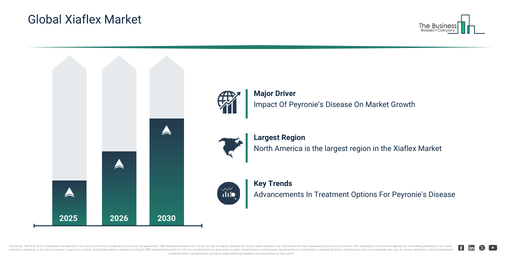
    The increasing occurrence of Peyronie’s disease is projected to boost the expansion of the xiaflex market in the future. Peyronie’s disease is a condition affecting connective tissue, marked by the formation of fibrous plaques within the penis, leading to curvature and pain. Its increase is influenced by elements like aging, genetic predispositions, and damage to tissues resulting from injury. XIAFLEX serves to dissolve these fibrous plaques in Peyronie’s disease, thereby enhancing penile curvature and functionality. As an illustration, data released in February 2023 by The Urology Care Foundation, the US-based organization of the American Urological Association focused on improving urological care through research, education, and community efforts, indicated that roughly 4 out of 100 men aged 40 to 70 suffer from Peyronie’s disease. Further findings suggest that approximately 0.5% of adult American men receive a diagnosis of Peyronie’s disease. Consequently, the growing occurrence of Peyronie’s disease is anticipated to stimulate the expansion of the xiaflex market.

    Xiaflex Market Segment Landscape And Growth Outlook

    The xiaflex market covered in this report is segmented –

    1) By Indication: Dupuytren’s Contracture, Peyronie’s Disease, Other Indications

    2) By Distribution Channel: Hospital Pharmacies, Retail Pharmacies, Online Pharmacies

    3) By End User: Adult, Geriatric

    Xiaflex Market Growth Trends Reshaping The Competitive Landscape

    The main trend in the xiaflex market centers on investigating alternative treatment methods for resistant conditions, such as focused research into xiaflex’s role in surgery and expanding its therapeutic applications to address unmet needs in hand and connective tissue disorders. Xiaflex is being examined for its potential benefits in surgical contexts, especially for reducing the necessity of invasive procedures and improving patient recuperation. For example, in May 2024, Endo International Plc, a US-based pharmaceutical company, revealed the presentation of new data concerning Peyronie’s disease and XIAFLEX at the American Urological Association’s (AUA) annual meeting. These studies, supported by Endo’s investigator-initiated research grants, concentrated on evaluating XIAFLEX against surgery and exploring new treatment protocols for patients who had not responded to previous therapies. The company’s ongoing dedication to advancing XIAFLEX’s clinical outcomes reflects its commitment to enhancing patient care and broadening its potential therapeutic applications.

    Xiaflex Market Competitive Landscape: Who Leads The Industry?

    Major companies operating in the xiaflex market are Endo Inc.

    View The Full Xiaflex Market Report:

    https://thebusinessresearchcompany.com/report/xiaflex-global-market-report?utm_source=Blogs&utm_medium=Paid&utm_campaign=Oct_PR

    Xiaflex Market Regional Analysis And Top Geography

    North America was the largest region in the xiaflex market in 2025. Asia-Pacific is expected to be the fastest-growing region in the forecast period. The regions covered in the xiaflex market report are Asia-Pacific, Western Europe, Eastern Europe, North America, South America, Middle East, Africa.

    Reach Out To Our Team:

    The Business Research Company: https://www.thebusinessresearchcompany.com/

    Americas: +1 310-496-7795

    Asia: +44 7882 955267 & +91 8897263534

    Europe: +44 7882 955267

    Email us at: marketing@tbrc.info

    Follow us on:

    LinkedIn: https://in.linkedin.com/company/the-business-research-company

    YouTube: https://www.youtube.com/channel/UC24_fI0rV8cR5DxlCpgmyFQ

    Global Market Model: https://www.thebusinessresearchcompany.com/global-market-model

  • Remote Visualization Workstations Market Growth Forecast Through 2030: Market Size And Trends In 2026

    Remote Visualization Workstations Market Growth Forecast Through 2030: Market Size And Trends In 2026

    Backed by market attractiveness analysis, total addressable market sizing, company benchmarking matrices, interactive Excel dashboards, wider supply chain intelligence, emerging startup coverage, and detailed product-level insights, The Business Research Company’s 2026 market reports are designed to offer research that is more actionable and strategically valuable than ever.

    Remote Visualization Workstations Market Growth From $5.44 Billion In 2026 To $9.53 Billion By 2030 At A CAGR Of 15%

    The remote visualization workstations market has seen rapid growth in recent years. It is projected to expand from $4.72 billion in 2025 to $5.44 billion in 2026, achieving a compound annual growth rate (CAGR) of 15.3%. This historical growth can be attributed to the increasing embrace of remote work models, a rising demand for high-performance remote computing solutions, the ongoing digital transformation across various industries, the expansion of virtualization and remote desktop infrastructure usage, and a growing need for secure remote access and collaboration.

    The remote visualization workstations market is projected to experience substantial expansion over the upcoming years. This market is set to reach $9.53 billion in 2030, demonstrating a compound annual growth rate (CAGR) of 15.0%. This anticipated growth during the forecast timeframe stems from several factors, including an increasing need for hybrid and remote work arrangements, the broadening availability of cloud-based remote visualization platforms, the greater acceptance of AI and machine learning-driven visualization tools, increased reach into developing economies and industries currently not well-served, and a surging requirement for integrated hardware, software, and services in remote visualization solutions. Key trends anticipated over the forecast period encompass technological progress in graphics processing unit (GPU) and processor performance as well as graphic capabilities, breakthroughs in artificial intelligence (AI) and machine learning (ML) alongside advanced analytics integration, the emergence of immersive visualization through augmented reality (AR) and virtual reality (VR) coupled with sophisticated remote collaboration tools, an expansion of cloud-based and hybrid deployment methods for visualization workstations, and intensified research and development funding resulting in remote visualization environments that are more scalable, effective, and secure.

    Get A Free Sample Report With In-Depth Market Insights:

    https://thebusinessresearchcompany.com/sample_request?id=95936908&type=smp&name=Remote%20Visualization%20Workstations%20Market%20Report%202026&utm_source=Blogs&utm_medium=Paid&utm_campaign=Oct_PR

    Remote Visualization Workstations Market Expansion Drivers: What’s Shaping Future Growth?

    The expansion of digital transformation is anticipated to boost the remote visualization workstations market in the future. Digital transformation involves embedding digital technologies throughout business operations to refine processes, improve value delivery, and foster innovation through agile, data-driven methods. This shift is gaining momentum as businesses increasingly strive to provide quicker, more tailored, and smooth customer interactions to maintain competitiveness. Remote visualization workstations significantly contribute to digital transformation by allowing secure, remote access to high-performance computing and graphics processing. They facilitate collaborative projects, lessen reliance on physical infrastructure, and expedite decision-making in sectors like engineering, healthcare, and media, by enhancing adaptability, expandability, and operational effectiveness. For example, the Office for National Statistics, a UK-based government agency, reported in July 2024 that a digital infrastructure initiative secured a $535 million (£434 million) investment by 2022, with an additional $907 million (£736 million) designated for 2023 to 2025. Consequently, the increasing prevalence of digital transformation is fueling the expansion of the remote visualization workstations market.

    Remote Visualization Workstations Market Segment Analysis: What Are The Core Market Categories?

    The remote visualization workstations market covered in this report is segmented –

    1) By Component: Hardware, Software, Services

    2) By Deployment Mode: On-Premises, Cloud-Based, Hybrid

    3) By Application: Engineering And Design, Medical Imaging, Scientific Research, Media And Entertainment, Oil And Gas, Other Applications

    4) By End-User: Healthcare, Education, Manufacturing, Energy, Media And Entertainment, Research Institutes, Other End-Users

    Subsegments:

    1) By Hardware: Central Processing Unit, Graphics Processing Unit, Memory, Storage, Input Devices, Output Devices

    2) By Software: Virtualization Software, Rendering Software, Simulation Software, Monitoring Software, Collaboration Software

    3) By Services: Installation Services, Maintenance Services, Consulting Services, Training Services, Technical Support Services

    Remote Visualization Workstations Market Strategic Trends: What Defines The Next Growth Phase?

    Leading companies in the remote visualization workstations market are concentrating on developing advanced hardware and software capabilities, such as Multi-Instance GPU (MIG) technology, to facilitate high-density virtualized graphics, accelerated AI workloads, and responsive remote compute experiences. Multi-Instance GPU (MIG) itself defines a GPU architecture that partitions a single physical GPU into multiple isolated instances, enabling the simultaneous execution of various tasks or user sessions with guaranteed performance and resource allocation, which is ideal for distributed visualization, simulation, and AI inference within virtual environments. For example, in March 2025, NVIDIA Corporation, a US-based provider of accelerated computing, unveiled its Blackwell RTX platform for professional workstations and servers, notably featuring support for Multi-Instance GPU (MIG) configurations. This innovation allows enterprises to run multiple remote visualization sessions and agentic AI workflows concurrently from a single GPU, thereby enhancing utilization efficiency and delivering consistent performance for designers, engineers, and content creators engaged with complex 3D visuals or large datasets. By incorporating Multi-Instance GPU technology into its RTX-powered workstations and servers, NVIDIA empowers organizations to effectively virtualize high-end graphics and AI workloads, reduce infrastructure costs, and support flexible distributed work environments across sectors like media and entertainment, engineering, and scientific research.

    Remote Visualization Workstations Market Leading Companies And Competitive Benchmarking

    Major companies operating in the remote visualization workstations market are Amazon Web Services Inc., Google LLC, Microsoft Corporation, Dell Technologies Inc., Lenovo Group Limited, Intel Corporation, HP Inc., NVIDIA Corporation, Fujitsu Limited, Atos SE, Super Micro Computer Inc., CoreWeave Inc., Red Hat Inc., Penguin Solutions Inc., Recently Published, Scale Computing Inc., Cirrascale Cloud Services LLC, Puget Systems Inc., BOXX Technologies Inc., NoMachine S.à r.l.

    View The Full Remote Visualization Workstations Market Report:

    https://thebusinessresearchcompany.com/report/remote-visualization-workstations-market-report?utm_source=Blogs&utm_medium=Paid&utm_campaign=Oct_PR

    Remote Visualization Workstations Market Largest Region By Revenue And Market Share

    North America was the largest region in the remote visualization workstations market in 2025. Asia-Pacific is expected to be the fastest-growing region in the forecast period. The regions covered in the remote visualization workstations market report are Asia-Pacific, South East Asia, Western Europe, Eastern Europe, North America, South America, Middle East, Africa.

    Reach Out To Our Team:

    The Business Research Company: https://www.thebusinessresearchcompany.com/

    Americas: +1 310-496-7795

    Asia: +44 7882 955267 & +91 8897263534

    Europe: +44 7882 955267

    Email us at: marketing@tbrc.info

    Follow us on:

    LinkedIn: https://in.linkedin.com/company/the-business-research-company

    YouTube: https://www.youtube.com/channel/UC24_fI0rV8cR5DxlCpgmyFQ

    Global Market Model: https://www.thebusinessresearchcompany.com/global-market-model
  • Xgeva Market Forecast Highlights A $ Billion Opportunity For Industry Participants

    Xgeva Market Forecast Highlights A $ Billion Opportunity For Industry Participants

    Featuring market attractiveness scoring, total addressable market sizing, company benchmarking matrices, interactive Excel dashboards, deeper supply chain intelligence, emerging startup tracking, and granular product-level insights, The Business Research Company’s 2026 market reports are built to deliver research that is both more actionable and more strategically valuable.

    Xgeva Market Value Analysis: What Growth Lies Ahead Over The Forecast Period?

    Historical growth was propelled by a deeper comprehension of bone metastasis management, advancements in RANK ligand inhibition research, higher cancer survival rates, the broadening of oncology treatment protocols, and the accessibility of injectable biologics.

    Anticipated growth over the forecast period stems from a higher incidence of metastatic cancers, a growing need for osteoporosis and bone health management, the broadening of oncology supportive care provisions, increased uptake of biologic injectable medications, and ongoing advancements in bone-targeted therapeutic approaches.

    Key trends observed during the forecast period encompass the expanding application of bone-targeted monoclonal antibodies, a heightened emphasis on preventing skeletal-related events, the broadening scope of oncology supportive care treatments, increased acceptance of injectable biologic remedies, and a stronger focus on sustained bone health administration.

    Get A Free Sample Report With In-Depth Market Insights:

    https://thebusinessresearchcompany.com/sample_request?id=64803835&type=smp&name=Xgeva%20Market%20Report%202026&utm_source=Blogs&utm_medium=Paid&utm_campaign=Oct_PR

    Xgeva Market Growth Catalysts And Demand Drivers

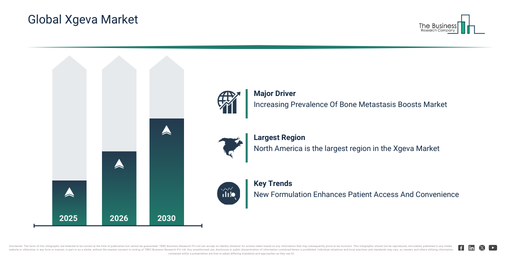
    The rising incidence of bone metastasis is propelling the expansion of the xgeva market. Bone metastasis signifies the spread of cancer cells from their initial site to the bones, often resulting in pain, fractures, and various other complications. This increase in the prevalence of bone metastasis is attributed to the growing global occurrence of cancers, particularly breast, prostate, and lung cancers, which have a higher likelihood of metastasizing to the bones. As the prevalence of bone metastasis grows, so does the demand for effective treatments to manage bone-related complications, positioning xgeva as a crucial therapeutic option for preventing fractures and improving patient outcomes in individuals affected by metastatic bone disease. For instance, according to Cancer Research UK, a UK-based cancer charity, projections for 2038 to 2040 suggest that approximately 510 new cases of bone sarcoma may be diagnosed annually in the UK. Therefore, the increasing prevalence of bone metastasis is expected to drive the growth of the xgeva market.

    Xgeva Market Breakdown By Product Type And Application

    The xgeva market covered in this report is segmented –

    1) By Formulation: 60 Mg Injection, 120 Mg Injection

    2) By Indication: Bone Metastases, Giant Cell Tumor of Bone (GCTB), Hypercalcemia of Malignancy

    3) By End User: Hospitals, Homecare, Specialty Clinics, Ambulatory Surgical Centers

    4) By Distribution Channel: Hospital Pharmacies, Retail Pharmacies, Online Pharmacies

    Xgeva Market Trends Shaping Long-Term Demand

    A primary direction in the xgeva market involves expanding product ranges, improving formulations like prefilled syringes, and making treatment more accessible for patients. A prefilled syringe is a single-use, pre-filled syringe containing medication, intended to simplify administration, ensure accurate dosing, and boost patient convenience. For example, in March 2024, the UK’s Medicines and Healthcare Products Regulatory Agency, which regulates medicines, approved a new, concentrated 120 mg Amgen’s Xgeva (denosumab) solution for injection in a prefilled syringe. This approval, given via the new International Recognition Procedure (IRP), offers UK patients a more convenient and efficient treatment choice. Moreover, this development improves patient experience by streamlining administration, decreasing the injected liquid volume, and minimizing the potential for dosing inaccuracies.

    Xgeva Market Company Landscape And Competitive Strategy

    Major companies operating in the xgeva market are Amgen Inc.

    View The Full Xgeva Market Report:

    https://thebusinessresearchcompany.com/report/xgeva-global-market-report?utm_source=Blogs&utm_medium=Paid&utm_campaign=Oct_PR

    Xgeva Market Geographic Analysis: Where Is Demand Rising Fastest?

    North America was the largest region in the xgeva market in 2025. Asia-Pacific is expected to be the fastest-growing region in the forecast period. The regions covered in the xgeva market report are Asia-Pacific, Western Europe, Eastern Europe, North America, South America, Middle East, Africa.

    Reach Out To Our Team:

    The Business Research Company: https://www.thebusinessresearchcompany.com/

    Americas: +1 310-496-7795

    Asia: +44 7882 955267 & +91 8897263534

    Europe: +44 7882 955267

    Email us at: marketing@tbrc.info

    Follow us on:

    LinkedIn: https://in.linkedin.com/company/the-business-research-company

    YouTube: https://www.youtube.com/channel/UC24_fI0rV8cR5DxlCpgmyFQ

    Global Market Model: https://www.thebusinessresearchcompany.com/global-market-model

  • Remote Patient Monitoring Market Analysis: $63.75 Billion Market Size In 2026 And Future Growth Prospects

    Remote Patient Monitoring Market Analysis: $63.75 Billion Market Size In 2026 And Future Growth Prospects

    Featuring market attractiveness scoring, total addressable market sizing, company benchmarking matrices, interactive Excel dashboards, deeper supply chain intelligence, emerging startup tracking, and granular product-level insights, The Business Research Company’s 2026 market reports are built to deliver research that is both more actionable and more strategically valuable.

    Remote Patient Monitoring Market Expansion Outlook: What Revenue Opportunities Are Ahead?

    The remote patient monitoring market has witnessed significant growth in recent years. This market is projected to expand from $55.24 billion in 2025 to $63.75 billion in 2026, demonstrating a compound annual growth rate (CAGR) of 15.4%. Historically, this expansion is attributed to an increasing prevalence of chronic conditions, a steadily aging global populace, a heightened demand for healthcare services delivered at home, the broader integration of telehealth solutions, and an intensified emphasis on decreasing hospital readmission rates.

    The remote patient monitoring market is projected to experience substantial expansion over the upcoming years. Its valuation is set to reach $111.93 billion by 2030, exhibiting a compound annual growth rate (CAGR) of 15.1%. This anticipated growth stems from several factors, including the increasing occurrence of chronic and lifestyle-related conditions, a rising need for in-home healthcare services, greater patient understanding of the advantages of remote monitoring, a global increase in healthcare spending, and an intensified focus on care that is value-based and outcome-oriented. Significant developments during this period are expected to encompass breakthroughs in wearable sensor technologies, novelties in remote monitoring platforms and software, enhancements in integrating remote patient data with electronic health records, progress in predictive analytics for patient monitoring, and advancements in artificial intelligence-powered clinical decision support.

    Get A Free Sample Report With In-Depth Market Insights:

    https://thebusinessresearchcompany.com/sample_request?id=11955371&type=smp&name=Remote%20Patient%20Monitoring%20Market%20Report%202026&utm_source=Blogs&utm_medium=Paid&utm_campaign=Oct_PR

    Remote Patient Monitoring Market Development Factors: What’s Supporting Demand?

    The increasing incidence of chronic diseases is anticipated to drive the growth of the remote patient monitoring market in the future. Chronic diseases are long-term health conditions, including hypertension, diabetes, and cardiovascular disorders, that necessitate continuous monitoring and ongoing management. The rise in their prevalence stems from aging populations combined with widespread unhealthy lifestyle patterns like physical inactivity, poor nutrition, tobacco use, and excessive alcohol consumption, which collectively lead to long-term risks such as obesity, hypertension, and diabetes. Remote patient monitoring supports chronic disease management by continuously tracking patients’ vital signs, symptoms, and treatment adherence from home. It improves patient outcomes by allowing for early detection of complications, timely interventions, and personalized care adjustments. For instance, in June 2024, data from the National Health Service, a UK-based government department, revealed that 3,615,330 individuals registered with a general practitioner (GP) were diagnosed with non-diabetic hyperglycemia or pre-diabetes (a condition characterized by elevated blood sugar levels, not severe enough to be classified as diabetes) in 2023, marking an 18% increase from 3,065,825 cases in 2022. Therefore, the expanding prevalence of chronic diseases is propelling the growth of the remote patient monitoring market.

    Remote Patient Monitoring Market Segment Breakdown: Which Categories Lead On Revenue?

    The remote patient monitoring market covered in this report is segmented –

    1) By Component: Devices, Services, Software

    2) By Application: Chronic Disease Management, Post-Acute Care Monitoring, Preventive Care And Wellness, Home Health Monitoring, Rehabilitation Monitoring

    3) By End User: Hospitals, Clinics, Home Healthcare Providers, Ambulatory Care Centers, Long-Term Care Facilities

    Subsegments:

    1) By Devices: Remote Monitoring Sensors, Wearable Health Trackers, Blood Pressure Monitors, Blood Glucose Monitors, Pulse Oximetry Devices, Electrocardiogram Devices, Temperature Monitoring Devices, Smart Scales, Multi-Parameter Monitoring Devices

    2) By Services: Installation Services, Maintenance Services, Training Services, Technical Support Services, Remote Monitoring Services, Data Management Services, Consultation Services

    3) By Software: Patient Data Management Software, Clinical Decision Support Software, Remote Monitoring Platforms, Mobile Health Applications, Cloud-Based Analytics Software, Alert And Notification Software, Electronic Health Record Integration Software

    Remote Patient Monitoring Market Transformation Trends: What Innovations Are Driving Change?

    Major companies in the remote patient monitoring market are dedicating efforts to developing advanced remote monitoring products, aiming to enhance patient care, improve clinical decision-making, and expand accessibility to medical-grade data. Remote vital signs monitoring systems refer to wearable devices that offer continuous and accurate tracking of crucial physiological parameters for use in clinical, emergency, and home settings. For instance, in May 2024, Sempulse Corporation, a US-based medical device manufacturer, launched the FDA 510(k)-cleared Halo Vital Signs Monitoring System. This miniature wearable device integrates with the LiveCharts mobile app and the Command Cloud platform to allow for centralized data visualization and management. The solution’s capabilities include a reusable design suitable for both home and clinical environments, cloud-based data analytics for prioritizing patient care, and the ability to continuously monitor vital signs even during patient activity.

    Remote Patient Monitoring Market Industry Leaders And Competitive Landscape

    Major companies operating in the remote patient monitoring market are Siemens AG, Abbott Laboratories, Medtronic plc, Koninklijke Philips N.V., GE HealthCare Technologies Inc., Boston Scientific Corporation, Baxter International Inc., Roche Diagnostics, Omron Corporation, Shenzhen Mindray Bio-Medical Electronics Co. Ltd., ResMed Inc., Dräger Medical, Dexcom Inc., Teladoc Health Inc., Nihon Kohden Corporation, OSI Systems Inc, Biofourmis Inc., Masimo Corp., VitalConnect Inc., Guangdong Transtek Medical Electronics Co. Ltd.

    View The Full Remote Patient Monitoring Market Report:

    https://thebusinessresearchcompany.com/report/remote-patient-monitoring-market-report?utm_source=Blogs&utm_medium=Paid&utm_campaign=Oct_PR

    Remote Patient Monitoring Market Regional Analysis And Leading Geography

    North America was the largest region in the remote patient monitoring market in 2025. Asia-Pacific is expected to be the fastest-growing region in the forecast period. The regions covered in the remote patient monitoring market report are Asia-Pacific, South East Asia, Western Europe, Eastern Europe, North America, South America, Middle East, Africa.

    Reach Out To Our Team:

    The Business Research Company: https://www.thebusinessresearchcompany.com/

    Americas: +1 310-496-7795

    Asia: +44 7882 955267 & +91 8897263534

    Europe: +44 7882 955267

    Email us at: marketing@tbrc.info

    Follow us on:

    LinkedIn: https://in.linkedin.com/company/the-business-research-company

    YouTube: https://www.youtube.com/channel/UC24_fI0rV8cR5DxlCpgmyFQ

    Global Market Model: https://www.thebusinessresearchcompany.com/global-market-model
  • Xeomin Market Analysis: How The Industry Is Evolving Toward A $ Billion Future

    Xeomin Market Analysis: How The Industry Is Evolving Toward A $ Billion Future

    Built to provide research that’s more actionable and strategically valuable, The Business Research Company’s 2026 market reports include market attractiveness analysis, total addressable market sizing, company benchmarking matrices, interactive Excel dashboards, broader supply chain intelligence, emerging startup tracking, and in-depth product insights.

    Xeomin Market Expansion Outlook: What Revenue Opportunities Are Ahead?

    Historical growth was driven by the established clinical application of botulinum toxin treatments, an expansion in aesthetic medicine practices, the increasing prevalence of neurological movement disorders, the broadening of outpatient care settings, and strong physician familiarity with neurotoxin products.

    The expansion into new therapeutic applications, increased adoption in managing migraine and spasticity, growing demand for non-surgical aesthetic interventions, advancements in toxin formulation technologies, and rising global aesthetic treatment volumes are all factors contributing to the projected growth in the upcoming period.

    Forecasting major trends reveals an expansion of botulinum toxins into various medical and aesthetic uses, a rising demand for minimally invasive procedures, an increasing preference for purified neurotoxin formulations, greater utilization in neurological disorder management, and an enhanced focus on the precision and safety of treatments.

    Get A Free Sample Report With In-Depth Market Insights:

    https://thebusinessresearchcompany.com/sample_request?id=66533065&type=smp&name=Xeomin%20Market%20Report%202026&utm_source=Blogs&utm_medium=Paid&utm_campaign=Oct_PR

    Xeomin Market Opportunity Drivers: What’s Unlocking New Revenue Potential?

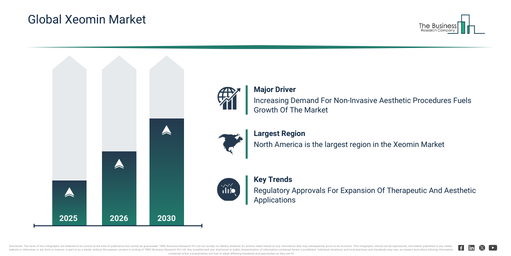
    The xeomin market is anticipated to expand due to the escalating demand for non-invasive aesthetic procedures. These procedures are defined as cosmetic treatments that bypass surgery, frequently entailing quick recovery and lower risks. The surge in popularity for non-invasive aesthetic procedures stems from multiple reasons, such as a greater inclination for brief recovery periods, innovations in aesthetic technology, and an increasing wish for outcomes that appear natural. Xeomin works by relaxing facial muscles to smooth out wrinkles such as frown lines and glabellar lines, providing a non-surgical option with zero downtime. Its refined composition delivers effective, natural-looking results while reducing the chance of developing resistance. As an illustration, in January 2023, the International Society of Aesthetic Plastic Surgery, a US-based professional body focused on promoting aesthetic plastic surgery, disclosed that more than 12.8 million surgical procedures and 17.5 million non-surgical procedures were performed worldwide, indicating a 19.3% increase in overall procedures compared to the preceding reporting period. Moreover, plastic surgeons are projected to have carried out more than 14.9 million surgical and 18.8 million non-surgical operations worldwide in 2022, reflecting an 11.2% increase in total procedures performed. Consequently, the growing demand for non-invasive aesthetic procedures is set to propel the expansion of the xeomin market.

    Xeomin Market Segment Analysis And Revenue Potential

    The xeomin market covered in this report is segmented –

    1) By Indication: Chronic Migraine, Cervical Dystonia, Blepharospasm, Upper Limb Spasticity, Glabellar Lines

    2) By Distribution Channel: Hospital Pharmacies, Retail Pharmacies, Online Pharmacies, Direct Sales, Specialty Pharmacies

    3) By End-User: Adult, Geriatric

    Xeomin Market Innovation Trends Shaping Future Development

    A significant trend within the xeomin market involves obtaining drug approval from authorities to expand its therapeutic and aesthetic applications, thereby increasing its adoption across various patient demographics. Drug approval is the process by which regulatory bodies evaluate and authorize a new medication for commercial sale and use, verifying its safety, efficacy, and quality based on findings from clinical trials. For instance, in July 2024, Merz Aesthetics, a US-based medical aesthetics company, announced that the U.S. Food and Drug Administration (FDA) had approved XEOMIN (incobotulinumtoxinA). This makes it the first and only neurotoxin indicated for the simultaneous treatment of upper facial lines, including forehead lines, frown lines, and crow’s feet. This recent approval builds upon XEOMIN’s initial 2011 indication for treating glabellar lines (frown lines). The product’s innovative formulation, designed to exclude unnecessary ingredients, highlights its potential to minimize adverse immune responses commonly associated with other neurotoxin therapies.

    Xeomin Market Key Players Shaping Industry Direction

    Major companies operating in the xeomin market are Merz Pharmaceuticals GmbH

    View The Full Xeomin Market Report:

    https://thebusinessresearchcompany.com/report/xeomin-global-market-report?utm_source=Blogs&utm_medium=Paid&utm_campaign=Oct_PR

    Xeomin Market Global Footprint: Which Region Leads The Market?

    North America was the largest region in the xeomin market in 2025. The regions covered in the xeomin market report are Asia-Pacific, Western Europe, Eastern Europe, North America, South America, Middle East, Africa.

    Reach Out To Our Team:

    The Business Research Company: https://www.thebusinessresearchcompany.com/

    Americas: +1 310-496-7795

    Asia: +44 7882 955267 & +91 8897263534

    Europe: +44 7882 955267

    Email us at: marketing@tbrc.info

    Follow us on:

    LinkedIn: https://in.linkedin.com/company/the-business-research-company

    YouTube: https://www.youtube.com/channel/UC24_fI0rV8cR5DxlCpgmyFQ

    Global Market Model: https://www.thebusinessresearchcompany.com/global-market-model
  • Remote Cardiac Rehab Platforms Market 2026 Market Size And Growth Forecast: Key Trends To Watch

    Remote Cardiac Rehab Platforms Market 2026 Market Size And Growth Forecast: Key Trends To Watch

    Built to provide research that’s more actionable and strategically valuable, The Business Research Company’s 2026 market reports include market attractiveness analysis, total addressable market sizing, company benchmarking matrices, interactive Excel dashboards, broader supply chain intelligence, emerging startup tracking, and in-depth product insights.

    Remote Cardiac Rehab Platforms Market Growth Potential: How Will Market Size Shift Through 2030?

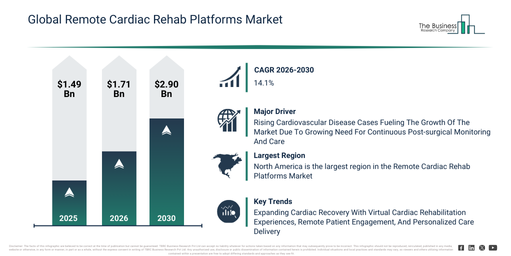
    The market for remote cardiac rehab platforms has shown rapid expansion in recent years. It is expected to increase from $1.49 billion in 2025 to $1.71 billion in 2026, achieving a compound annual growth rate (CAGR) of 14.4%. Historically, this growth can be attributed to the rising occurrence of cardiovascular diseases, an expanding elderly demographic, greater awareness of cardiac health, improvements in telehealth infrastructure, and higher hospital readmission rates.

    The remote cardiac rehab platforms market size is poised for rapid expansion in the coming years. It is projected to grow to $2.90 billion in 2030, at a compound annual growth rate (CAGR) of 14.1%. This growth during the forecast period is attributable to several factors, including the increasing adoption of remote monitoring platforms, a rising patient preference for home-based rehabilitation, greater healthcare expenditure on digital solutions, the expansion of insurance coverage for remote therapy, and the increasing integration of wearable devices with rehab programs. Key trends expected in this period encompass technological advancements in wearable sensors, innovations in digital rehabilitation software, developments in artificial intelligence-driven patient monitoring, ongoing research and development in telecardiology, and the integration of mobile applications with remote rehab platforms.

    Get A Free Sample Report With In-Depth Market Insights:

    https://thebusinessresearchcompany.com/sample_request?id=18707280&type=smp&name=Remote%20Cardiac%20Rehab%20Platforms%20Market%20Report%202026&utm_source=Blogs&utm_medium=Paid&utm_campaign=Oct_PR

    Remote Cardiac Rehab Platforms Market Industry Drivers: What’s Behind The Revenue Growth?

    The increasing incidence of cardiovascular disease is projected to stimulate the expansion of the remote cardiac rehabilitation platforms market moving forward. These rising cases indicate a greater frequency of heart-related conditions, such as coronary artery disease and heart failure, which demand surgical intervention and ongoing management. Advances in surgical techniques coupled with an aging demographic are propelling these increased cardiovascular disease cases, thereby generating a heightened demand for easily accessible post-operative recovery solutions. Remote cardiac rehabilitation platforms are instrumental in establishing holistic recovery programs by enabling real-time oversight of patient vitals and providing guided exercise therapy within home environments. For example, in May 2025, the Japanese Association for Thoracic Surgery, a professional organization based in Japan, stated that Japan carried out 63,427 cardiovascular surgeries in 2023, marking a 3.0% increase from the 61,606 surgeries performed in 2022. Thus, the escalating cardiovascular disease cases are significantly contributing to the growth of the remote cardiac rehabilitation platforms market.

    Remote Cardiac Rehab Platforms Market Segmentation: How Does The Market Break Down By Category?

    The remote cardiac rehab platforms market covered in this report is segmented –

    1) By Component: Software, Hardware, Services

    2) By Delivery Mode: Web-based, Cloud-based, On-premises

    3) By Application: Chronic Heart Failure, Post-Myocardial Infarction, Hypertension, Arrhythmia, Other Applications

    4) By End User: Hospitals and Clinics, Home Care Settings, Cardiac Rehabilitation Centers, Other End Users

    Subsegments:

    1) By Software: Platform, Patient Application, Clinician Dashboard, Administrative And Billing Module

    2) By Hardware: Wearable Devices, Electrocardiogram(ECG) Monitors, Blood Pressure Monitors, Heart Rate Monitors

    3) By Services: Remote Monitoring, Virtual Consultation, Patient Education, Technical Support

    #Remote Cardiac Rehab Platforms Market Growth Trends: What’s Shaping The Future Outlook?

    Companies active in the remote cardiac rehabilitation platforms market are concentrating on creating sophisticated telehealth solutions, including virtual cardiac rehabilitation experiences, to broaden access to crucial rehab programs, boost patient involvement, and facilitate tailored cardiovascular recovery beyond conventional clinical environments. This virtual experience denotes a structured digital care pathway that offers exercise direction, education, symptom tracking, and professional feedback via remote platforms, allowing patients to engage in extensive cardiac rehabilitation from their homes or communities under clinical supervision. As an example, in October 2025, WakeMed Health & Hospitals, a US-based healthcare provider, introduced a virtual cardiac rehabilitation program for individuals recuperating from heart operations or managing long-term heart ailments. This initiative utilizes connected devices, remote observation, and telehealth guidance to assist patients through customized rehabilitation plans, monitor their advancement, and offer immediate clinician assistance, thereby overcoming obstacles like travel, scheduling difficulties, and restricted access to facilities. The introduction of this program highlights the increasing emphasis on integrating virtual experiences into cardiac rehabilitation to improve convenience, patient compliance, and overall health results. By incorporating a virtual cardiac rehabilitation experience into their remote care services, WakeMed and Recora facilitate wider engagement in evidence-based rehabilitation, enhance the continuous nature of care, and support sustained cardiovascular health for a wide range of patients.

    Remote Cardiac Rehab Platforms Market Key Participants And Competitive Landscape

    Major companies operating in the remote cardiac rehab platforms market are Philips Healthcare, Teladoc Health Inc., Sword Health Inc., BioFourmis Inc., Dozee Health, Wellframe Inc., Health Recovery Solutions, Biotricity Inc., Vivalink Inc., Lyfe, Carda Health Inc., Chanl Health Inc., Fourth Frontier, Heartbeat Health Inc., Life365 Inc., Liva Healthcare, Movn Health, Prevounce, Recora LLC, Veta Health Co.

    View The Full Remote Cardiac Rehab Platforms Market Report:

    https://thebusinessresearchcompany.com/report/remote-cardiac-rehab-platforms-market-report?utm_source=Blogs&utm_medium=Paid&utm_campaign=Oct_PR

    Remote Cardiac Rehab Platforms Market Geographic Analysis: Where Is Demand Accelerating Fastest?

    North America was the largest region in the remote cardiac rehab platforms market in 2025. Asia-Pacific is expected to be the fastest-growing region in the forecast period. The regions covered in the remote cardiac rehab platforms market report are Asia-Pacific, South East Asia, Western Europe, Eastern Europe, North America, South America, Middle East, Africa.

    Reach Out To Our Team:

    The Business Research Company: https://www.thebusinessresearchcompany.com/

    Americas: +1 310-496-7795

    Asia: +44 7882 955267 & +91 8897263534

    Europe: +44 7882 955267

    Email us at: marketing@tbrc.info

    Follow us on:

    LinkedIn: https://in.linkedin.com/company/the-business-research-company

    YouTube: https://www.youtube.com/channel/UC24_fI0rV8cR5DxlCpgmyFQ

    Global Market Model: https://www.thebusinessresearchcompany.com/global-market-model
  • Xenpozyme Market Outlook Through 2030: Understanding The Growth Opportunity

    Xenpozyme Market Outlook Through 2030: Understanding The Growth Opportunity

    Backed by market attractiveness analysis, total addressable market sizing, company benchmarking matrices, interactive Excel dashboards, wider supply chain intelligence, emerging startup coverage, and detailed product-level insights, The Business Research Company’s 2026 market reports are designed to offer research that is more actionable and strategically valuable than ever.

    Xenpozyme Market Growth Potential: How Will Market Size Shift Through 2030?

    The growth observed historically is attributable to enhanced awareness of Niemann-Pick disease, progress in the production of recombinant proteins, the broadening of initiatives for developing orphan drugs, increased engagement in clinical trials for rare diseases, and improved access to diagnostic testing.

    The expansion projected for the forecast period is driven by increased investments in rare disease research and development, the broader implementation of personalized medicine strategies, the growing scope of newborn screening initiatives, improved global access to specialized biological products, and continuous advancements in enzyme stabilization technologies.

    Key trends observed in the forecast period involve the rising acceptance of enzyme replacement therapies, an intensified focus on developing treatments for rare diseases, the enlargement of manufacturing capacities for recombinant enzymes, a stronger emphasis on the early detection of lysosomal disorders, and enhanced clinical management of ASMD.

    Get A Free Sample Report With In-Depth Market Insights:

    https://thebusinessresearchcompany.com/sample_request?id=64096926&type=smp&name=Xenpozyme%20Market%20Report%202026&utm_source=Blogs&utm_medium=Paid&utm_campaign=Oct_PR

    Xenpozyme Market Growth Momentum: What Factors Are Shaping Demand?

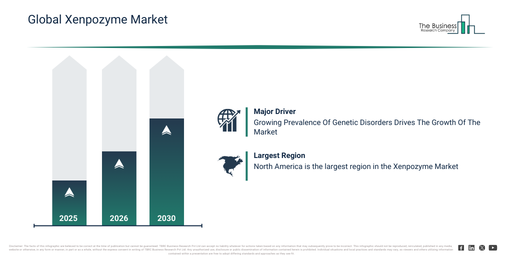
    The increasing occurrence of genetic disorders is projected to fuel the expansion of the xenpozyme market in the future. Genetic disorders are conditions stemming from irregularities in an individual’s DNA, leading to various health complications. The rise in these disorders is attributed to advancements in genetic testing, heightened awareness and diagnosis of rare diseases, and improvements in healthcare systems. Xenpozyme is designed to treat acid sphingomyelinase deficiency (ASMD), which is a genetic disorder, by delivering the necessary acid sphingomyelinase enzyme that breaks down accumulated sphingomyelin. This treatment helps reduce harmful lipid accumulation in cells, alleviates symptoms, and slows the progression of ASMD in patients. As an illustration, in October 2024, data from the Cystic Fibrosis Trust, a UK-based charity focused on cystic fibrosis, indicated that in 2022, approximately 11,148 cystic fibrosis (a genetic disorder) patients were registered, a figure that increased to 11,318 in 2023, showing a 1.5% rise in patient registrations year over year. Consequently, the growing prevalence of genetic disorders is anticipated to drive growth within the xenpozyme market. The escalating demand for personalized medicine is expected to boost the xenpozyme market’s growth moving forward. Personalized medicine is defined as a healthcare approach that tailors treatments based on an individual’s genetic profile, lifestyle, and specific health requirements to achieve more effective results. The surge in personalized medicine demand is driven by progress in genetic research, enhanced understanding of unique health profiles, better diagnostic tools, and the potential for more precise, targeted therapies. Xenpozyme aids in delivering the absent enzyme required to break down accumulated substances, thereby offering a targeted treatment for MPS I that considers the patient’s genetic condition. This therapy is specifically developed to address the enzyme deficiency caused by mutations in each patient, offering a personalized form of care. For example, in February 2024, according to the Personalized Medicine Coalition, a US-based hospital and health care organization, 16 new personalized treatments for rare disease patients received approval from the Food and Drug Administration (FDA) in 2023, a significant increase from six approvals in 2022. Thus, the increasing demand for personalized medicine is poised to propel the growth of the xenpozyme market.

    Xenpozyme Market Segmentation And Category Overview

    The xenpozyme market covered in this report is segmented –

    1) By Indication: Acid Sphingomyelinase Deficiency (ASMD) With Niemann-Pick Disease Type A, Acid Sphingomyelinase Deficiency (ASMD) With Niemann-Pick Disease Type B

    2) By Distribution Channel: Hospital Pharmacies, Retail Pharmacies, Online Pharmacies

    3) By End-User: Adult, Geriatric, Pediatric

    Xenpozyme Market Competitive Analysis Of Leading Industry Participants

    Major companies operating in the xenpozyme market are Sanofi S.A.

    View The Full Xenpozyme Market Report:

    https://thebusinessresearchcompany.com/report/xenpozyme-global-market-report?utm_source=Blogs&utm_medium=Paid&utm_campaign=Oct_PR

    Xenpozyme Market Regional Split: Which Areas Are Fueling Growth?

    North America was the largest region in the xenpozyme market in 2025. The regions covered in the xenpozyme market report are Asia-Pacific, Western Europe, Eastern Europe, North America, South America, Middle East, Africa.

    Reach Out To Our Team:

    The Business Research Company: https://www.thebusinessresearchcompany.com/

    Americas: +1 310-496-7795

    Asia: +44 7882 955267 & +91 8897263534

    Europe: +44 7882 955267

    Email us at: marketing@tbrc.info

    Follow us on:

    LinkedIn: https://in.linkedin.com/company/the-business-research-company

    YouTube: https://www.youtube.com/channel/UC24_fI0rV8cR5DxlCpgmyFQ

    Global Market Model: https://www.thebusinessresearchcompany.com/global-market-model

  • Regenerative Wound Care Market Size Forecast: How The Industry Is Expected To Grow From 2026 To 2030

    Regenerative Wound Care Market Size Forecast: How The Industry Is Expected To Grow From 2026 To 2030

    Backed by market attractiveness analysis, total addressable market sizing, company benchmarking matrices, interactive Excel dashboards, wider supply chain intelligence, emerging startup coverage, and detailed product-level insights, The Business Research Company’s 2026 market reports are designed to offer research that is more actionable and strategically valuable than ever.

    Regenerative Wound Care Market Value Analysis: What Growth Lies Ahead Over The Forecast Period?

    The regenerative wound care market has demonstrated substantial growth in recent years. It is anticipated to expand from $10.46 billion in 2025 to $11.26 billion in 2026, achieving a compound annual growth rate (CAGR) of 7.6%. This past growth can be ascribed to an escalating prevalence of chronic wounds, an expanding geriatric population, a rising incidence of diabetes and obesity, the development of healthcare infrastructure, and increasing awareness regarding advanced wound care therapies.

    The regenerative wound care market is projected to experience substantial expansion over the upcoming years. This market is predicted to reach a value of $14.96 billion by 2030, exhibiting a compound annual growth rate (CAGR) of 7.4%. This anticipated expansion throughout the forecast period stems from factors such as the increasing acceptance of regenerative wound care products, a surge in investments directed towards biotechnology startups, the growing incorporation of artificial intelligence into wound management practices, the broadening scope of home healthcare services, and the escalating need for customized wound care options. Key trends anticipated during this period encompass technological progress in bioengineered skin substitutes, breakthroughs in stem cell therapies, advancements in treatments utilizing growth factors, ongoing research and development efforts in scaffold-based wound healing, and enhancements in wound monitoring technologies.

    Get A Free Sample Report With In-Depth Market Insights:

    https://thebusinessresearchcompany.com/sample_request?id=53452522&type=smp&name=Regenerative%20Wound%20Care%20Market%20Report%202026&utm_source=Blogs&utm_medium=Paid&utm_campaign=Oct_PR

    Regenerative Wound Care Market Growth Factors: What’s Supporting Expansion?

    The expanding number of individuals with diabetes is anticipated to propel the future growth of the regenerative wound care market. This rise in the diabetic patient population signifies an increasing global incidence of diabetes mellitus, a chronic condition often linked with complications such as poor circulation and neuropathy, which can result in wounds that are challenging to heal. Advancements in diabetes management and increased awareness contribute to the identification of this growing patient group, highlighting the critical need for advanced therapies to prevent complications like foot ulcers. Regenerative wound care aids in establishing effective healing environments by using bioactive materials and cellular therapies to stimulate tissue repair and closure in complex diabetic wounds. For instance, in July 2025, according to the International Diabetes Federation, a Belgium-based umbrella organization of national diabetes associations, diabetes affected 11.10% of the global population in 2024, accounting for 589 million adults, and is projected to reach 12.95% and 853 million by 2050. Therefore, the expanding diabetic patient population is a key driver for the growth of the regenerative wound care market.

    Regenerative Wound Care Market Segment Trends And Revenue Contributors

    The regenerative wound care market covered in this report is segmented –

    1) By Product Type: Autologous Stem Cells, Biological Skin Substitutes, Tissue Or Multiple Tissue Platforms, Fetal Skin, Regenerative Wound Care Devices, Other Product Types

    2) By Wound Type: Chronic Wounds, Diabetic Foot Ulcers (DFUs), Venous Leg Ulcers (VLUs), Pressure Ulcers (Injuries), Acute Wounds, Surgical And Traumatic Wounds, Burn Wounds

    3) By Technology: Active Therapies, Scaffold-Based Therapies, Combination Products

    4) By End Users: Hospitals, Ambulatory Surgical Centers, Burn Care Centers And Wound Clinics, Other End Users

    Subsegments:

    1) By Autologous Stem Cells: Bone Marrow Derived Stem Cells, Adipose Derived Stem Cells, Peripheral Blood Stem Cells

    2) By Biological Skin Substitutes: Allogeneic Skin, Xenogeneic Skin, Composite Skin Substitutes

    3) By Tissue Or Multiple Tissue Platforms: Extracellular Matrix, Amniotic Membrane, Collagen Matrix

    4) By Fetal Skin: Amniotic Epithelial Cells, Dermal Fibroblasts

    5) By Regenerative Wound Care Devices: Negative Pressure Wound Therapy Devices, Bioengineered Tissue Scaffolds, Wound Dressings

    6) By Other Product Types: Growth Factors, Platelet Rich Plasma, Cellular Therapy Products

    Regenerative Wound Care Market Industry Trends: What’s Reshaping Demand?

    Major companies within the regenerative wound care market are increasingly concentrating on technological advancements, exemplified by the introduction of specialized fish-skin graft products engineered to retain their inherent structure and omega-3 fatty acids. These sophisticated grafts are specifically developed to treat complex burn wounds, providing a bioactive scaffold that actively promotes cellular proliferation and tissue regeneration. They are also meticulously tailored for specific anatomical areas, such as the hands, to enhance application efficiency and support functional recovery. For instance, in January 2023, Kerecis Limited, an Iceland-based medical device company, announced the launch of two new products for the burn market: GraftGuide Mano and GraftGuide Micro. These products are made from full-thickness fish dermis, processed using Kerecis’ proprietary EnviroIntact method, which effectively preserves the skin’s original 3D structure and fatty acids. GraftGuide Mano is specifically configured to cover the complex 3D structure of the hand, thereby facilitating the management of second-degree burns.

    Regenerative Wound Care Market Top Companies Driving Competitive Growth

    Major companies operating in the regenerative wound care market are Stryker Corporation, Smith & Nephew plc, Convatec Group plc, Molnlycke Health Care AB, Integra LifeSciences Holdings Corporation, Angelini Pharma SpA, Organogenesis Holdings Inc.., MiMedx Group Inc., Fidia Farmaceutici SpA, Vericel Corporation, BioHorizons IPH Inc., Anika Therapeutics Inc., Kerecis Ltd., AVITA Medical Inc., Aroa Biosurgery Limited, Skye Biologics Inc., Tissue Regenix Group plc, PolarityTE Inc., Regenio, Acelity L.P. Inc.

    View The Full Regenerative Wound Care Market Report:

    https://thebusinessresearchcompany.com/report/regenerative-wound-care-market-report?utm_source=Blogs&utm_medium=Paid&utm_campaign=Oct_PR

    Regenerative Wound Care Market Global Footprint: Which Region Leads The Industry?

    North America was the largest region in the regenerative wound care market in 2025. Asia-Pacific is expected to be the fastest-growing region in the forecast period. The regions covered in the regenerative wound care market report are Asia-Pacific, South East Asia, Western Europe, Eastern Europe, North America, South America, Middle East, Africa.

    Reach Out To Our Team:

    The Business Research Company: https://www.thebusinessresearchcompany.com/

    Americas: +1 310-496-7795

    Asia: +44 7882 955267 & +91 8897263534

    Europe: +44 7882 955267

    Email us at: marketing@tbrc.info

    Follow us on:

    LinkedIn: https://in.linkedin.com/company/the-business-research-company

    YouTube: https://www.youtube.com/channel/UC24_fI0rV8cR5DxlCpgmyFQ

    Global Market Model: https://www.thebusinessresearchcompany.com/global-market-model