Blog

  • What Key Growth Drivers Are Shaping The Digital Therapeutics Sarcopenia Market Forecast Toward $2.77 Billion?

    What Key Growth Drivers Are Shaping The Digital Therapeutics Sarcopenia Market Forecast Toward $2.77 Billion?

    Uncover key drivers, emerging technologies, and competitive movements shaping the digital therapeutics sarcopenia market from 2025–2034 with trusted insights from The Business Research Company

    How Big Is The Digital Therapeutics Sarcopenia Market Today And What Is Its Future Size?

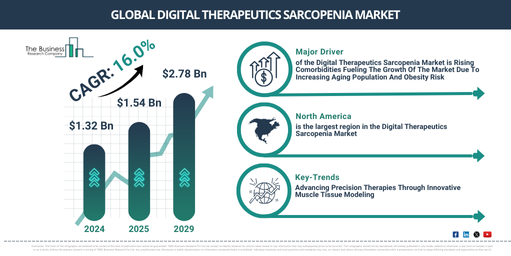
    The digital therapeutics sarcopenia market size has expanded rapidly over recent years. It is anticipated to grow from $1.32 billion in 2024 to $1.54 billion in 2025, achieving a compound annual growth rate (CAGR) of 16.3%. This historical expansion can be attributed to a rising aging population, the increasing prevalence of age-related muscle loss, enhanced awareness of sarcopenia, greater adoption of telehealth, a growing demand for home-based rehabilitation, and supportive government initiatives aimed at digital healthcare.

    The digital therapeutics sarcopenia market size is anticipated to experience significant expansion in the coming years. This market is projected to reach $2.78 billion by 2029, demonstrating a compound annual growth rate (CAGR) of 16.0%. This projected growth stems from several factors, including an increasing elderly demographic, a heightened emphasis on maintaining muscle health proactively, greater incorporation of Artificial intelligence into digital therapeutics, broader reimbursement frameworks for DTx, the creation of tailored exercise regimens, increased collaborations between technology companies and healthcare service providers, and a surging need for remote rehabilitation options. Key trends anticipated during this period encompass progress in AI-powered customized exercise solutions, seamless integration with wearable health monitoring devices, the proliferation of tele-rehabilitation platforms, their increasing use within elderly care settings, improved capabilities for remote patient monitoring, and innovations across various digital health solutions.

    Get A Free Sample Of The Report:

    https://www.thebusinessresearchcompany.com/sample.aspx?id=27278&type=smp

    Which Demand Drivers Are Strengthening The Digital Therapeutics Sarcopenia Market?

    The increasing occurrence of comorbidities is anticipated to propel the expansion of the digital therapeutics sarcopenia market. Comorbidities describe the simultaneous presence of two or more health conditions in the same individual. The rise in comorbidities is attributed to an aging population, as advancing age heightens the probability of developing multiple chronic conditions due to declining physiological function and long-term exposure to health risks. Digital therapeutics for sarcopenia prove advantageous in preventing comorbidities, especially obesity, by promoting consistent physical activity and muscle strengthening, which helps enhance metabolism and reduce fat accumulation. For instance, in March 2024, the World Obesity Federation, a UK-based membership organization, reported that nearly 79% of adults affected by overweight and obesity are expected to be living in low- and middle-income nations by 2035, with the total number of adults with obesity projected to reach 1.53 billion. Therefore, the growing prevalence of comorbidities is driving the growth of the digital therapeutics sarcopenia market.

    Which Segment Accounts For The Largest Share In The Digital Therapeutics Sarcopenia Market?

    The digital therapeutics sarcopenia market covered in this report is segmented

    1) By Product: Software, Devices, Services

    2) By Distribution Channel: Online Platforms, Pharmacies, Other Distribution Channels

    3) By Application: Muscle Strengthening, Physical Activity Monitoring, Nutrition Management, Other Applications

    4) By End User: Hospitals And Clinics, Homecare Settings, Rehabilitation Centers, Other End Users

    Subsegments:

    1) By Software: Mobile Applications, Web-Based Platforms, AI-Powered Monitoring Tools, Exercise And Rehabilitation Programs, Nutritional Guidance Software

    2) By Devices: Wearable Fitness Trackers, Smart Scales, Connected Resistance Bands, Electromyography (EMG) Devices, Muscle Strength Assessment Tools

    3) By Services: Remote Patient Monitoring Services, Virtual Physiotherapy Sessions, Teleconsultation Services, Personalized Coaching Services, Data Analytics And Reporting Services

    Which Long-Term Trends Will Play A Crucial Role In The Digital Therapeutics Sarcopenia Market?

    Companies actively engaged in the digital therapeutics sarcopenia market are focusing on developing advanced solutions, such as drug discovery platforms, with the goal of creating more targeted treatments, enhancing the effectiveness of therapies, and accelerating the delivery of personalized care for age-related muscle loss. A drug discovery platform aids in the faster and more efficient identification and creation of new drugs by utilizing advanced tools and methodologies. For instance, in April 2025, ProFuse Technology, an Israel-based biotechnology company, unveiled a new drug discovery platform specifically designed to prevent muscle loss caused by GLP-1 weight-loss drugs, aging (sarcopenia), and cancer cachexia. By using lab-grown, highly mature muscle tissues that accurately mimic natural muscle, the company can test and screen drug candidates more precisely, quickly, and efficiently. This advanced platform reduces dependence on animal testing and lowers research costs. As the demand for muscle-preserving therapies grows, ProFuse is expanding its focus from cultivated meat into biopharma, offering a groundbreaking method to address increasing muscle health challenges.

    Which Companies Hold A Competitive Edge In The 83 Market?

    Major companies operating in the digital therapeutics sarcopenia market are Noom Inc., Sword Health Inc., Biofourmis Inc., Hinge Health Inc., Omada Health Inc., Virta Health Corp., Evolv Rehabilitation Technologies Ltd., Click Therapeutics Inc., DarioHealth Corp., WellDoc Inc., Propeller Health, Lark Technologies Inc., mySugr GmbH, SilverCloud Health Limited (a part of Amwell), Kaia Health Software GmbH, Liva Healthcare A/S, Zibrio Inc., Gait Up SA, Noraxon Inc., Mira Rehab Limited, and Cometa Srl.

    Access The Complete Report Here:

    https://www.thebusinessresearchcompany.com/report/digital-therapeutics-sarcopenia-global-market-report

    Which Region Is Forecasted To Lead The Digital Therapeutics Sarcopenia Market In The Coming Years?

    North America was the largest region in the digital therapeutics sarcopenia market in 2024. Asia-Pacific is expected to be the fastest-growing region in the forecast period. The regions covered in the digital therapeutics sarcopenia market report are Asia-Pacific, Western Europe, Eastern Europe, North America, South America, Middle East, Africa.

    Customize Your Report Here:

    https://www.thebusinessresearchcompany.com/customise?id=27278&type=smp

    Browse Through More Reports Similar to the Global Digital Therapeutics Sarcopenia Market 2025, By The Business Research Company

    Lithium Ion Battery Binders Global Market Report 2025

    https://www.thebusinessresearchcompany.com/report/lithium-ion-battery-binders-global-market-report

    Battery Manufacturing Equipment Global Market Report 2025

    https://www.thebusinessresearchcompany.com/report/battery-manufacturing-equipment-global-market-report

    Battery Separators Global Market Report 2025

    https://www.thebusinessresearchcompany.com/report/battery-separators-global-market-report

    About The Business Research Company:

    With over 15000+ reports from 27 industries covering 60+ geographies, The Business Research Company has built a reputation for offering comprehensive, data-rich research and insights. Armed with 1,500,000 datasets, the optimistic contribution of in-depth secondary research, and unique insights from industry leaders, you can get the information you need to stay ahead in the game.

    Get in touch with us:

    The Business Research Company: https://www.thebusinessresearchcompany.com/

    Americas +1 310-496-7795

    Asia +44 7882 955267 & +91 8897263534

    Europe +44 7882 955267

    Email us at info@tbrc.info

    Follow us on:

    LinkedIn: https://in.linkedin.com/company/the-business-research-company

    YouTube: https://www.youtube.com/channel/UC24_fI0rV8cR5DxlCpgmyFQ

    Global Market Model: https://www.thebusinessresearchcompany.com/global-market-model
  • How Will The Digital Laparoscopy Market Expand At A CAGR Of 8.4% Through 2029?

    How Will The Digital Laparoscopy Market Expand At A CAGR Of 8.4% Through 2029?

    Uncover key drivers, emerging technologies, and competitive movements shaping the digital laparoscopy market from 2025–2034 with trusted insights from The Business Research Company

    How Will The Digital Laparoscopy Market Valuation Change Between Now And 2029?

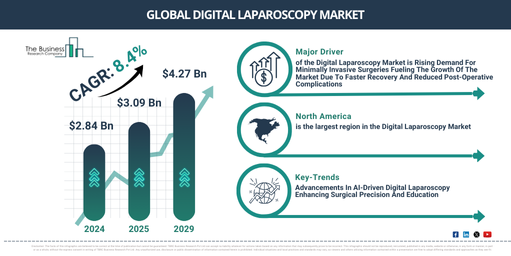
    The digital laparoscopy market size has demonstrated robust growth in recent years. It is projected to increase from $2.84 billion in 2024 to $3.09 billion in 2025, at a compound annual growth rate (CAGR) of 8.7%. The expansion observed in the preceding period can be linked to rising investment in surgical procedures, greater awareness regarding the advantages of quicker recovery, the expanding application of laparoscopy in bariatric procedures, the proliferation of tele laparoscopy platforms, and the enhancing hospital infrastructure in emerging markets.

    The digital laparoscopy market is anticipated to experience substantial expansion over the coming years. This market is projected to reach $4.27 billion by 2029, exhibiting a compound annual growth rate (CAGR) of 8.4%. Key factors contributing to this growth during the forecast period include the expanding adoption of artificial intelligence-driven surgical platforms, a growing demand for outpatient surgical procedures, an increase in global minimally invasive surgery training initiatives, enhanced integration within surgical devices, and increased investments in surgical robotics research and development. Significant trends expected during this period encompass advancements in AI-powered surgical robotics, the evolution of 3D/4K/8K imaging systems, innovations in miniaturized laparoscopic instruments, the integration of AI into surgical platforms, and the incorporation of augmented reality in surgical navigation.

    Get A Free Sample Of The Report:

    https://www.thebusinessresearchcompany.com/sample.aspx?id=27277&type=smp

    What Growth-Enabling Forces Are Impacting The Digital Laparoscopy Market?

    The escalating demand for minimally invasive surgeries is projected to drive the growth of the digital laparoscopy market moving forward. These procedures, performed through small incisions with specialized tools, aim to reduce pain, recovery time, and scarring compared to traditional open surgery. Minimally invasive procedures are gaining popularity due to causing less tissue injury, which leads to faster recovery, decreased pain, and shorter hospital stays. Digital laparoscopy enhances minimally invasive surgeries by offering precise, real-time visualization and AI-driven surgical guidance, resulting in greater accuracy, fewer complications, and quicker patient recovery. For instance, in June 2024, data from the American Society of Plastic Surgeons (ASPS), a US-based professional organization, revealed that among nearly 1.6 million cosmetic surgical procedures performed in 2023, liposuction accounted for 347,782 procedures, indicating a 7 percent increase from 2022. Consequently, the increasing demand for minimally invasive procedures is propelling the expansion of the digital laparoscopy market.

    What Are The Main Segment Classifications In The Digital Laparoscopy Market?

    The digital laparoscopy market covered in this report is segmented

    1) By Product: Digital Laparoscopy Cameras, Digital Laparoscopy Instruments, Visualization Systems, Light Sources, Insufflators, Other Products

    2) By Procedure Type: Diagnostic Laparoscopy, Therapeutic Laparoscopy, Minimally Invasive Laparoscopic Surgery

    3) By Technology: Robotic Laparoscopy, Advanced Imaging Systems, Miniaturized Endoscopic Equipment, Augmented Reality (AR) And Virtual Reality (VR) Systems

    4) By Application: Gynecological Surgery, Gastrointestinal Surgery, Urological Surgery, Bariatric Surgery, Oncological Surgery, Orthopedic Surgery

    5) By End-User: Hospitals, Ambulatory Surgical Centers, Specialty Clinics, Research Institutions, Medical Device Manufacturers

    Subsegments:

    1) By Digital Laparoscopy Cameras: High-Definition Cameras, Three-Dimensional Cameras, Single-Use Cameras, Wireless Cameras

    2) By Digital Laparoscopy Instruments: Graspers, Scissors, Dissectors, Electrocautery Instruments, Suturing Devices

    3) By Visualization Systems: Monitors, Recording Systems, Image Processing Units, Display Units

    4) By Light Sources: Xenon Light Sources, Led Light Sources, Halogen Light Sources

    5) By Insufflators: Carbon Dioxide Insufflators, Gas Insufflators

    6) By Other Products: Camera Holders, Suction Irrigation Devices, Trocars, Cable Connectors

    How Are Industry Trends Steering The Expansion Of The Digital Laparoscopy Market?

    Leading companies in the digital laparoscopy market are concentrating on creating advanced solutions, such as AI-powered laparoscopic and robotic-assisted surgeries, to improve surgical accuracy and patient results. These AI-powered laparoscopic and robotic-assisted surgeries are minimally invasive procedures where artificial intelligence directs robotic instruments to enhance precision, control, and real-time decision-making. For example, in April 2024, Medtronic plc, an Ireland-based healthcare technology company, unveiled two significant advancements with Touch Surgery Live Stream, which securely transmits laparoscopic and robotic-assisted surgeries in real-time to over 20 countries, facilitating remote surgical training and collaboration. Additionally, the updated Touch Surgery Performance Insights platform utilizes 14 AI-driven algorithms to analyze surgical videos post-procedure, yielding valuable insights on workflow, instrument use, and anatomy identification.

    Which Firms Are Driving Innovation Within The Digital Laparoscopy Market?

    Major companies operating in the digital laparoscopy market are Medtronic plc, Fujifilm Holdings Corporation, Stryker Corporation, Boston Scientific Corporation, Olympus Corporation, Intuitive Surgical Operations Inc., Arthrex Inc., Teleflex Incorporated, KARL STORZ SE & Co. KG, Cook Medical, Smith & Nephew plc, CONMED Corporation, Richard Wolf GmbH, Ethicon Inc., B. Braun SE, Netzer Precision Position Sensors A.C.S. Ltd., Distalmotion SA, Erbe Elektromedizin GmbH, Momentis Surgical Ltd., Moon Surgical SAS.

    Access The Complete Report Here:

    https://www.thebusinessresearchcompany.com/report/digital-laparoscopy-global-market-report

    What Are The Emerging Regional Trends Driving The Digital Laparoscopy Market?

    North America was the largest region in the digital laparoscopy market in 2024. Asia-Pacific is expected to be the fastest-growing region in the forecast period. The regions covered in the digital laparoscopy market report are Asia-Pacific, Western Europe, Eastern Europe, North America, South America, Middle East, Africa.

    Customize Your Report Here:

    https://www.thebusinessresearchcompany.com/customise?id=27277&type=smp

    Browse Through More Reports Similar to the Global Digital Laparoscopy Market 2025, By The Business Research Company

    Liquid Roofing Global Market Report 2025

    https://www.thebusinessresearchcompany.com/report/liquid-roofing-global-market-report

    Roof Insulation Global Market Report 2025

    https://www.thebusinessresearchcompany.com/report/roof-insulation-global-market-report

    Roofing Underlayment Global Market Report 2025

    https://www.thebusinessresearchcompany.com/report/roofing-underlayment-global-market-report

    About The Business Research Company:

    With over 15000+ reports from 27 industries covering 60+ geographies, The Business Research Company has built a reputation for offering comprehensive, data-rich research and insights. Armed with 1,500,000 datasets, the optimistic contribution of in-depth secondary research, and unique insights from industry leaders, you can get the information you need to stay ahead in the game.

    Get in touch with us:

    The Business Research Company: https://www.thebusinessresearchcompany.com/

    Americas +1 310-496-7795

    Asia +44 7882 955267 & +91 8897263534

    Europe +44 7882 955267

    Email us at info@tbrc.info

    Follow us on:

    LinkedIn: https://in.linkedin.com/company/the-business-research-company

    YouTube: https://www.youtube.com/channel/UC24_fI0rV8cR5DxlCpgmyFQ

    Global Market Model: https://www.thebusinessresearchcompany.com/global-market-model
  • Global Ischemia Reperfusion Injury Market Insights 2029: Drivers, Challenges, and Revenue Forecast

    Global Ischemia Reperfusion Injury Market Insights 2029: Drivers, Challenges, and Revenue Forecast

    Claim your 20% discount on Global Market Reports with code ONLINE20. Limited time only.

    What CAGR And Valuation Are Anticipated For The Ischemia Reperfusion Injury Market?

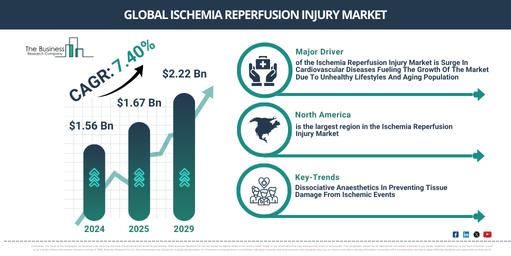
    In the past few years, the market size of ischemia reperfusion injury has seen substantial growth. It is projected to expand from $1.56 billion in 2024 to $1.67 billion in 2025, with a compound annual growth rate (CAGR) of 6.8%. This growth in the historical period can be credited to factors such as the increasing occurrence of cardiovascular ailments, a rise in surgical operations, a surge in demand for organ transplants, increased ageing population, and a hike in stroke incidences.

    The market size for ischemia reperfusion injury is predicted to experience substantial growth in the coming years, expanding to a $2.22 billion market in 2029 with a compound annual growth rate (CAGR) of 7.4%. The market expansion during the forecasted period can be attributed to several factors including larger demand for diagnostic processes using biomarkers, escalating awareness about methods preserving organs, an increase in the number of myocardial infarction cases, advancing pharmaceutical research and development initiatives, as well as the increasing demand for stem cell therapy. Dominant trends expected during this forecast period comprise of advancements in imaging technology, the emergence of innovative pharmacological agents, incorporation of AI and machine learning in treatment procedures, the usage of 3D printing for modeling organs, and a trend towards embracing telemedicine.

    Get A Free Sample Of The Report:

    https://www.thebusinessresearchcompany.com/sample.aspx?id=22025&type=smp

    What Market Forces Are Contributing To The Growth Of The Ischemia Reperfusion Injury Market?

    The escalating incidences of cardiovascular disorders are projected to stimulate the expansion of the ischemia-reperfusion injury market in the future. Cardiovascular disorders encompass a variety of ailments that impact the heart and blood vessels, such as coronary artery disease, heart failure, and stroke. The rise in cardiovascular diseases can be attributed to unhealthy lifestyle habits and an increasing elderly population. Diets rich in saturated fats, sugar, and salt, coupled with insufficient physical exercise, have led to heightened instances of obesity, hypertension, and diabetes, all key risk elements for cardiovascular ailments. Ischemia-reperfusion injury exacerbates the deterioration of cardiovascular diseases by intensifying tissue injury through oxidative stress, inflammation, and cell apoptosis, thus impairing cardiac functionality and escalating the possibility of heart failure and other complications. For example, the Australian Institute of Health and Welfare, a government agency based in Australia, reported that in December 2023, deaths due to coronary heart disease (CHD) increased from 14,100 in 2021 to 14,900 in 2022. Hence, the escalating incidences of cardiovascular disorders are propelling the growth of the ischemia-reperfusion injury market.

    Which Segmentation Factors Are Critical In The Ischemia Reperfusion Injury Market Analysis?

    The ischemia reperfusion injurymarket covered in this report is segmented –

    1) By Treatment Type: Pharmacological Therapy; Non-pharmacological Therapy

    2) By Application: Cardiovascular Diseases; Stroke; Organ Transplantation; Heart Attack; Diabetes

    3) By End Users: Hospitals; Clinics; Ambulatory Services; Nursing Home

    Subsegments:

    1) By Pharmacological Therapy: Antioxidants; Anti-inflammatory Agents; Calcium Channel Blockers; Free Radical Scavengers; Nitric Oxide Donors; Mitochondrial Protective Agents.

    2) By Non-Pharmacological Therapy: Ischemic Preconditioning (IPC); Ischemic Postconditioning (IPO); Remote Ischemic Conditioning (RIC); Hypothermia Therapy; Mechanical Interventions; Gene and Stem Cell Therapy.

    How Are Global Trends Impacting The Development Of The Ischemia Reperfusion Injury Market?

    In the ischemia-reperfusion injury market, major companies are focusing on developing innovative treatments, such as ketamine-based treatments, to reduce tissue damage and inflammation associated with ischemia-reperfusion injury. Ketamine-based treatments refer to medical therapies that use ketamine, a dissociative anesthetic, for various health conditions. These treatments are used mainly for mental health disorders such as depression, anxiety, and post-traumatic stress disorder (PTSD), as well as for pain management. For instance, in December 2022, PharmaTher Holdings Ltd., a Canada-based pharmaceutical company, received an orphan drug designation from the U.S. Food and Drug Administration (FDA) for ketamine to prevent ischemia-reperfusion injury from organ transplantation. This drug lessens the injury from ischemia-reperfusion by inhibiting NF-κB, thereby suppressing the production of proinflammatory cytokines such as IL-6 and TNF-α. It also exhibits anti-inflammatory effects by inhibiting leukocyte reactivity, which helps reduce immune-mediated damage to transplanted organs.

    Which Organizations Are At The Forefront Of The Ischemia Reperfusion Injury Market?

    Major companies operating in the ischemia reperfusion injury market are Pfizer Inc., Prolong Pharmaceuticals LLC, BMG LABTECH GmbH, Domainex Ltd, CFM Pharma Holding BV, Simcere Innovation Inc., Larix Bioscience LLC, Faron Pharmaceuticals Oy, LUCA Science Inc., Faraday Pharmaceuticals Inc., Athersys Inc., Alloksys Life Sciences B.V., Ischemix Inc., New Horizons Pharma Inc., Oxitope Pharma BV, PharmaTher Holdings Ltd, Revive Therapeutics Ltd, Corline Biomedical AB, Angion Biomedica Corp., Radikal Therapeutics Inc.

    Access The Complete Report Here:

    https://www.thebusinessresearchcompany.com/report/ischemia-reperfusion-injury-global-market-report

    Which Region Is Leading Innovation In The Ischemia Reperfusion Injury Market?

    North America was the largest region in the ischemia reperfusion injury market in 2024. Asia-Pacific is expected to be the fastest-growing region in the forecast period. The regions covered in the ischemia reperfusion injury market report are Asia-Pacific, Western Europe, Eastern Europe, North America, South America, Middle East, Africa.

    Customize Your Report Here:

    https://www.thebusinessresearchcompany.com/customise?id=22025&type=smp

    Browse Through More Reports Similar to the Global Ischemia Reperfusion Injury Market 2025, By The Business Research Company

    Acute Spinal Cord Injury Global Market Report 2025

    https://www.thebusinessresearchcompany.com/report/acute-spinal-cord-injury-global-market-report

    Traumatic Brain Injury Global Market Report 2025

    https://www.thebusinessresearchcompany.com/report/traumatic-brain-injury-global-market-report

    Repetitive Strain Injury Rsi Treatment Global Market Report 2025

    https://www.thebusinessresearchcompany.com/report/repetitive-strain-injury-rsi-treatment-global-market-report

    About The Business Research Company:

    With over 15000+ reports from 27 industries covering 60+ geographies, The Business Research Company has built a reputation for offering comprehensive, data-rich research and insights. Armed with 1,500,000 datasets, the optimistic contribution of in-depth secondary research, and unique insights from industry leaders, you can get the information you need to stay ahead in the game.

    Get in touch with us:

    The Business Research Company: https://www.thebusinessresearchcompany.com/

    Americas +1 310-496-7795

    Asia +44 7882 955267 & +91 8897263534

    Europe +44 7882 955267

    Email us at info@tbrc.info

    Follow us on:

    LinkedIn: https://in.linkedin.com/company/the-business-research-company

    YouTube: https://www.youtube.com/channel/UC24_fI0rV8cR5DxlCpgmyFQ

    Global Market Model: https://www.thebusinessresearchcompany.com/global-market-model

  • What Is The Forecast Valuation Of The Global Digital Cell Morphology System AD13Market Projected To Reach $3.16 Billion By 2029?

    What Is The Forecast Valuation Of The Global Digital Cell Morphology System AD13Market Projected To Reach $3.16 Billion By 2029?

    Uncover key drivers, emerging technologies, and competitive movements shaping the digital cell morphology system market from 2025–2034 with trusted insights from The Business Research Company

    What Are The Future Growth Projections For The Digital Cell Morphology System Market Size?

    The digital cell morphology system market has observed rapid growth in its size over recent years. It is projected to expand from $1.89 billion in 2024 to $2.10 billion in 2025, achieving a compound annual growth rate (CAGR) of 11.1%. This historical growth can be attributed to the increasing adoption of hematology analyzers, the growing need for efficient workflow in laboratories, heightened awareness regarding early disease detection, the rising prevalence of infectious and chronic diseases, and the demand for standardized diagnostic procedures.

    The digital cell morphology system market size is projected to experience swift expansion in the next few years. It is anticipated to grow to $3.16 billion by 2029, demonstrating a compound annual growth rate (CAGR) of 10.7%. This expansion during the forecast period can be attributed to the increasing prevalence of hematological disorders, a rising demand for laboratory automation, the necessity for remote and digital pathology solutions, an expanding geriatric population, and the continuous development of healthcare infrastructure. Significant trends expected in the forecast period include the integration of artificial intelligence for automated cell classification, the development of high-speed image processing algorithms, integration with laboratory information systems, the utilization of machine learning for predictive diagnostics, the miniaturization of imaging hardware, and the creation of multi-modal imaging platforms.

    Get A Free Sample Of The Report:

    https://www.thebusinessresearchcompany.com/sample.aspx?id=27276&type=smp

    Which Factors Are Steering Growth In The Digital Cell Morphology System Market?

    The growing occurrence of hematological disorders is projected to accelerate the expansion of the digital cell morphology system market moving forward. Hematological disorders encompass medical conditions that affect the blood, bone marrow, and lymphatic system, including conditions like anemia, leukemia, and various clotting issues. The incidence of these disorders is climbing due to the rising prevalence of chronic diseases, which directly compromise blood health and demand continuous monitoring. Digital cell morphology systems play a crucial role in diagnosing hematological disorders by performing precise, automated analysis of blood cell images, facilitating accurate classification. These systems also enhance laboratory efficiency through reduced manual reviews, improved consistency, and faster clinical decision-making. For example, in April 2024, the Perth Blood Institute, a non-profit organization based in Australia, reported that the number of individuals identified with hemophilia (a genetic blood disorder characterized by a lack of proper clotting factors, causing prolonged bleeding) reached 257,146 in 2022, up from 233,577 in 2021. Thus, the increasing prevalence of hematological disorders is a significant factor driving the growth of the digital cell morphology system market.

    How Is The Digital Cell Morphology System Market Organized By Different Segments?

    The digital cell morphology system market covered in this report is segmented

    1) By Product Type: Cell Imaging Systems, Cell Analysis Systems, Accessories And Consumables

    2) By Technology: Microscopy, Flow Cytometry, Image Processing Software

    3) By Distribution Channel: Direct Sales, Distributors, Online Sales

    4) By Application: Hematology, Oncology, Infectious Diseases, Other Applications

    5) By End-User: Academic And Research Institutes, Hospitals And Clinical Laboratories, Biotechnology And Pharmaceutical Companies

    Subsegments:

    1) By Cell Imaging Systems: Digital Microscopes, Fluorescence Microscopes, Full-Field Digital Imaging Systems, Automated Slide Scanners, High-Content Screening Systems

    2) By Cell Analysis Systems: Flow Cytometers, Hematology Analyzers, Morphology Analyzers, Spectrophotometers, Cell Counters

    3) By Accessories And Consumables: Reagents and Stains, Sample Preparation Kits, Slides and Cover Slips, Imaging Plates, Cell Fixatives

    What Current And Upcoming Trends Are Shaping The Digital Cell Morphology System Market?

    Leading companies within the digital cell morphology system market are prioritizing the creation of technologically advanced offerings, such as AI-powered image analyzers, aiming to boost diagnostic rapidity and precision. These AI-driven image analyzers function as instruments that utilize artificial intelligence to automatically interpret and glean insights from digital images, thereby enhancing the speed, accuracy, and uniformity of analysis. For example, in July 2025, Scopio Labs Ltd., an Israel-based medical equipment manufacturing firm, unveiled the complete blood morphology (CBM) analyzer, an automated AI-driven image analyzer designed for the review of peripheral blood smears. The CBM analyzer utilizes full-field imaging technology to autonomously process and evaluate up to 10 times more cells than traditional techniques. It also offers the possibility for advancing new morphology-based biomarkers and diagnostic panels, facilitating earlier disease identification and real-time patient oversight. This development addresses critical challenges including the global lack of trained laboratory technologists, inconsistencies in manual interpretations, and the escalating demand for diagnostic services.

    Who Are The Most Influential Companies In The Digital Cell Morphology System Market?

    Major companies operating in the digital cell morphology system market are F. Hoffmann-La Roche AG, Thermo Fisher Scientific Inc., Abbott Laboratories, Danaher Corporation, Merck KGaA, Siemens Healthineers AG, Becton Dickinson and Company, Agilent Technologies Inc., Mindray Medical International Limited, Nikon Corporation, IDEXX Laboratories Inc., Sysmex Corporation, Bio-Rad Laboratories Inc., Horiba ABX SAS, Leica Microsystems GmbH, Medica Corporation, Scopio Labs Ltd., MetaSystems Hard & Software GmbH, West Medica Produktions- und Handels-GmbH, ZhiWei Information & Technology Co. Ltd.

    Access The Complete Report Here:

    https://www.thebusinessresearchcompany.com/report/digital-cell-morphology-system-global-market-report

    Which Region Dominates The Digital Cell Morphology System Market Today?

    North America was the largest region in the digital cell morphology system market in 2024. Asia-Pacific is expected to be the fastest-growing region in the forecast period. The regions covered in the digital cell morphology system market report are Asia-Pacific, Western Europe, Eastern Europe, North America, South America, Middle East, Africa.

    Customize Your Report Here:

    https://www.thebusinessresearchcompany.com/customise?id=27276&type=smp

    Browse Through More Reports Similar to the Global Digital Cell Morphology System Market 2025, By The Business Research Company

    Naphthalene Sulfonate Global Market Report 2025

    https://www.thebusinessresearchcompany.com/report/naphthalene-sulfonate-global-market-report

    Fatty Methyl Ester Sulfonate Global Market Report 2025

    https://www.thebusinessresearchcompany.com/report/fatty-methyl-ester-sulfonate-global-market-report

    Cyclohexylbenzene Global Market Report 2025

    https://www.thebusinessresearchcompany.com/report/cyclohexylbenzene-global-market-report

    About The Business Research Company:

    With over 15000+ reports from 27 industries covering 60+ geographies, The Business Research Company has built a reputation for offering comprehensive, data-rich research and insights. Armed with 1,500,000 datasets, the optimistic contribution of in-depth secondary research, and unique insights from industry leaders, you can get the information you need to stay ahead in the game.

    Get in touch with us:

    The Business Research Company: https://www.thebusinessresearchcompany.com/

    Americas +1 310-496-7795

    Asia +44 7882 955267 & +91 8897263534

    Europe +44 7882 955267

    Email us at info@tbrc.info

    Follow us on:

    LinkedIn: https://in.linkedin.com/company/the-business-research-company

    YouTube: https://www.youtube.com/channel/UC24_fI0rV8cR5DxlCpgmyFQ

    Global Market Model: https://www.thebusinessresearchcompany.com/global-market-model
  • Global Intermittent Claudication Market Trends and Future Outlook to 2029

    Global Intermittent Claudication Market Trends and Future Outlook to 2029

    Claim your 20% discount on Global Market Reports with code ONLINE20. Limited time only.

    What Are The Market Size Estimates For The Intermittent Claudication Market?

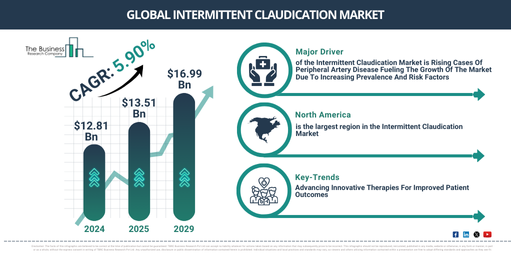
    The market size of intermittent claudication has seen robust growth in the past few years. It is projected to expand from $12.81 billion in 2024 to $13.51 billion in 2025, with a compound annual growth rate (CAGR) of 5.5%. The significant growth during the historical period can be linked to the increase in peripheral artery disease, heightened awareness about vascular diseases, rise in the elderly population, improved diagnosis rates, and increased spending on healthcare.

    The market size for intermittent claudication is predicted to experience considerable growth in the coming years. By 2029, it will expand to $16.99 billion, with a Compound Annual Growth Rate (CAGR) of 5.9%. This growth during the projected period can be attributed to factors such as the rise in diabetes cases, increasing obesity rates, growing occurrences of cardiovascular diseases, increased consumption of alcohol and tobacco, and heightened expenditure in healthcare. The forecast period will also see major trends such as the advancement in peripheral arterial disease diagnostics, integration of wearable tech devices, personalized medicine advancements, a shift towards the use of drug-eluting stents, and progress in stem cell therapy.

    Get A Free Sample Of The Report:

    https://www.thebusinessresearchcompany.com/sample.aspx?id=22021&type=smp

    What Drivers Are Accelerating Expansion Of The Intermittent Claudication Market?

    The rise in peripheral artery disease (PAD) cases is anticipated to stimulate the expansion of the intermittent claudication market moving forward. PAD is a circulatory problem in which the constriction of the arteries reduces blood circulation to the limbs, resulting in pain, numbness, and potential complications. The surge in PAD cases can be attributed to an aging population, diabetes, smoking, hypertension, obesity, and sedentary behavior. PAD leads to intermittent claudication by limiting blood flow to the leg muscles while working out, which results in pain and cramping due to a lack of oxygen. For instance, in June 2023, the American Heart Association Journals, a peer-reviewed open-access scientific journal based in the U.S, reported that PAD affects 7-12 million people in the U.S and 200 million worldwide. Hence, the surge in PAD cases is propelling the growth of the intermittent claudication market.

    What Are The Key Segment Trends Observed In The Intermittent Claudication Market?

    The intermittent claudicationmarket covered in this report is segmented –

    1) By Type: Medication Therapies; Revascularization

    2) By Route Of Administration: Parenteral Route; Oral Route; Other Routes Of Administration

    3) By Application: Hospitals; Clinics; Home Healthcare; Other Applications

    4) By Distribution Channel: Hospital Pharmacies; Retail Pharmacies; Online Pharmacies

    Subsegments:

    1) By Medication Therapies: Antiplatelet Agents; Vasodilators; Phosphodiesterase Inhibitors; Cilostazol; Pentoxifylline

    2) By Revascularization: Angioplasty; Stenting; Bypass Surgery; Endarterectomy

    What Strategic Shifts And Innovations Are Influencing The Intermittent Claudication Market?

    In the intermittent claudication market, major companies are focusing on advanced medication therapies, such as RIPK1 inhibitors, to enhance treatment outcomes for patients suffering from peripheral artery disease (PAD) with intermittent claudication, aiming to improve blood flow, reduce inflammation, and prevent disease progression. RIPK1 inhibitors refer to targeted drugs that block RIPK1 kinase activity, reducing inflammation and cell death. For instance, in August 2022, GenFleet, a China-based biotechnology company, received U.S. Food and Drug Administration (FDA) approval for a Phase II clinical trial of GFH312, an innovative therapy for peripheral artery disease (PAD) with intermittent claudication (IC). This randomized, double-blinded, placebo-controlled study will be conducted at 15 research centers. GFH312 is a RIPK1 inhibitor that has shown promise in preclinical studies by curbing the inflammatory response in animal models.

    Who Are The Major Stakeholders Operating In The Intermittent Claudication Market?

    Major companies operating in the intermittent claudication market are Pfizer Inc., Bristol Myers Squibb Company, AstraZeneca PLC, Novartis AG, GSK plc, Eli Lilly and Company, Merck KGaA, Teva Pharmaceutical, Otsuka Pharmaceutical Co. Ltd., Sanofi S.A., Bayer AG, Hikma Pharmaceuticals PLC, Dr. Reddy’s Laboratories, Pipelinepharma, Pharmaoffer, Alkem Laboratories, LGM Pharma, Aastrid Life Sciences Pvt. Ltd., Manus Aktteva Biopharma LLP, Enomark Pharma, Pharmacompass.

    Access The Complete Report Here:

    https://www.thebusinessresearchcompany.com/report/intermittent-claudication-global-market-report

    What Regional Factors Are Accelerating Growth In The Intermittent Claudication Market?

    North America was the largest region in the intermittent claudication market in 2024. Asia-Pacific is expected to be the fastest-growing region in the forecast period. The regions covered in the intermittent claudication market report are Asia-Pacific, Western Europe, Eastern Europe, North America, South America, Middle East, Africa.

    Customize Your Report Here:

    https://www.thebusinessresearchcompany.com/customise?id=22021&type=smp

    Browse Through More Reports Similar to the Global Intermittent Claudication Market 2025, By The Business Research Company

    Intermittent Catheters Global Market Report 2025

    https://www.thebusinessresearchcompany.com/report/intermittent-catheters-global-market-report

    Intermittent Pneumatic Compression Ipc Devices Global Market Report 2025

    https://www.thebusinessresearchcompany.com/report/intermittent-pneumatic-compression-ipc-devices-global-market-report

    Coronary Artery Disease Global Market Report 2025

    https://www.thebusinessresearchcompany.com/report/coronary-artery-disease-global-market-report

    About The Business Research Company:

    With over 15000+ reports from 27 industries covering 60+ geographies, The Business Research Company has built a reputation for offering comprehensive, data-rich research and insights. Armed with 1,500,000 datasets, the optimistic contribution of in-depth secondary research, and unique insights from industry leaders, you can get the information you need to stay ahead in the game.

    Get in touch with us:

    The Business Research Company: https://www.thebusinessresearchcompany.com/

    Americas +1 310-496-7795

    Asia +44 7882 955267 & +91 8897263534

    Europe +44 7882 955267

    Email us at info@tbrc.info

    Follow us on:

    LinkedIn: https://in.linkedin.com/company/the-business-research-company

    YouTube: https://www.youtube.com/channel/UC24_fI0rV8cR5DxlCpgmyFQ

    Global Market Model: https://www.thebusinessresearchcompany.com/global-market-model
  • Global Digestible Sensor Market Revenue and CAGR Forecast Analysis 2025–2029

    Global Digestible Sensor Market Revenue and CAGR Forecast Analysis 2025–2029

    Uncover key drivers, emerging technologies, and competitive movements shaping the digestible sensor market from 2025–2034 with trusted insights from The Business Research Company

    What Is The Current Size And Growth Outlook For The Digestible Sensor Market?

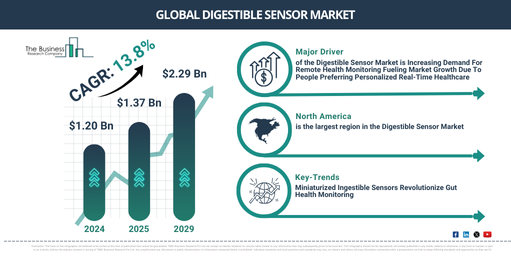
    The digestible sensor market size has expanded quickly in recent years. It is expected to grow from $1.20 billion in 2024 to $1.37 billion in 2025, registering a compound annual growth rate (CAGR) of 14.2%. The increase observed in previous periods can be linked to the rising prevalence of chronic diseases, an increasing demand for non-invasive monitoring, broader smartphone adoption, a growing aging population, and the escalating need for personalized medicine.

    The digestible sensor market size is anticipated to undergo significant growth in the coming years. It is projected to climb to $2.29 billion by 2029, demonstrating a compound annual growth rate (CAGR) of 13.8%. This expansion during the forecast period is driven by various factors, including a growing consumer desire for health tracking, the proliferation of wearable devices, the broadening scope of healthcare data analytics, the emergence of personalized healthcare, a heightened demand for real-time health monitoring, and the increasing adoption of telemedicine. Major trends for this period encompass advancements in sensor technology, technological enhancements in biosensors, the integration of artificial intelligence into health data analysis, the miniaturization of sensors, progress in wearable health technology, and innovations in digital therapeutics.

    Get A Free Sample Of The Report:

    https://www.thebusinessresearchcompany.com/sample.aspx?id=27275&type=smp

    What Core Drivers Are Expected To Influence The Digestible Sensor Market?

    The escalating requirement for remote health monitoring is projected to drive the expansion of the digestible sensor market in the future. This involves employing technology to oversee and manage a patient’s well-being beyond conventional healthcare environments, usually from a remote location. Its growth stems from individuals favoring tailored, immediate medical care within their own homes, along with more economical choices compared to standard clinic visits. Digestible sensors support remote health monitoring by facilitating continuous tracking of internal health indicators, including gastrointestinal function. They supply medical professionals with vital information about a patient’s digestive system, making it possible to identify problems like infections or illnesses early on, without needing invasive methods. For example, in June 2022, according to The Health Innovation Network, a US-based publication specializing in medical technology news and analysis, in 2021/22, over 286,000 people received support at home through technology-enabled remote monitoring, rapidly implemented and expanded with leadership from the National Innovation Collaborative for digital health. Consequently, the rising need for remote health monitoring is propelling the expansion of the digestible sensor market.

    Which Segmentation Categories Are Highlighted In The Digestible Sensor Market Analysis?

    The digestible sensor market covered in this report is segmented

    1) By Type: Capsule Sensors, Wearable Sensors, Ingestible Sensors, Implantable Sensors

    2) By Distribution Channel: Online Retail, Pharmacies, Hospitals And Clinics, Direct Sales

    3) By Technology: Microelectromechanical Systems (MEMS), Wireless Communication Technologies, Optical Sensors, Bioelectronic Interfaces

    4) By Application: Medical Diagnostics, Drug Delivery, Patient Monitoring, Sports And Fitness, Other Applications

    5) By End-User: Healthcare Providers, Research Institutions, Pharmaceutical Companies, Individual Consumers

    Subsegments:

    1) By Capsule Sensors: pH Monitoring Capsules, Temperature Monitoring Capsules, Pressure Sensing Capsules, Smart Capsule Endoscopy, Drug Delivery Capsules With Sensors

    2) By Wearable Sensors: Patch-Based External Receivers, Gastrointestinal Motility Trackers, Bio-Signal Monitoring Wearables, Wearable Adherence Trackers

    3) By Ingestible Sensors: Vital Sign Monitoring Sensors, Drug Adherence Monitoring Sensors, Imaging Sensors, Gas Sensing Sensors, Electrochemical Sensors

    4) By Implantable Sensors: GI Electrophysiology Sensors, pH And Enzyme Sensors, Neuromodulation Devices, Metabolic Sensors

    Which Market Trends Are Expected To Define The Future Of The Digestible Sensor Market?

    Leading companies within the digestible sensor market are directing their efforts towards sophisticated solutions like multi-parameter sensors, aiming to boost diagnostic precision, broaden their application reach, and elevate real-time health monitoring capabilities. These multi-parameter sensors are defined as devices engineered to concurrently gauge several physical or chemical parameters from their surroundings or a subject, integrating diverse sensing technologies into a single, compact unit. As an illustration, in May 2025, the Interuniversity Microelectronics Centre, a Belgium-based non-profit research organization, introduced a highly miniaturized ingestible sensor specifically for monitoring gut health. This exceptionally compact ingestible sensor measures a mere 2.1 cm in length and 0.75 cm in diameter. The capsule’s size is approximately three times smaller than conventional endoscopic capsules, thus facilitating easier ingestion and enhancing patient comfort. It incorporates several sensors, encompassing oxidation-reduction potential (ORP), pH, and temperature, to deliver real-time biochemical data directly from the gastrointestinal tract. Powered by low-energy electronics and a compact battery, the capsule diligently records readings every 20 seconds across the entire digestive journey. Equipped with wireless data transmission and a biocompatible casing, this device facilitates continuous, noninvasive analysis of internal gut conditions, presenting considerable potential for the early diagnosis of inflammation, oxidative stress, and microbiome imbalances.

    Who Are The Dominant Players In The Digestible Sensor Market Today?

    Major companies operating in the digestible sensor market are Medtronic plc, Koninklijke Philips N.V., Otsuka Pharmaceutical Co Ltd., Olympus Corporation, Sencure B.V., Millar Inc., Check Cap Ltd, Proteus Digital Health Inc., CapsoVision Inc., Atmo Biosciences, IntroMedic Co Ltd., RF Co. Ltd, BodyCAP S.A.S, Capsule Technologies Inc., etectRx Inc., Motus GI Inc., SmartPill Corporation, JINSHAN Science & Technology (Group) Co Ltd., MC10, and HQ Inc.

    Access The Complete Report Here:

    https://www.thebusinessresearchcompany.com/report/digestible-sensor-global-market-report

    Which Regional Markets Are Emerging As Key Hubs For The Digestible Sensor Market?

    North America was the largest region in the digestible sensor market in 2024. Asia-Pacific is expected to be the fastest-growing region in the forecast period. The regions covered in the digestible sensor market report are Asia-Pacific, Western Europe, Eastern Europe, North America, South America, Middle East, Africa.

    Customize Your Report Here:

    https://www.thebusinessresearchcompany.com/customise?id=27275&type=smp

    Browse Through More Reports Similar to the Global Digestible Sensor Market 2025, By The Business Research Company

    Building Panels Global Market Report 2025

    https://www.thebusinessresearchcompany.com/report/building-panels-global-market-report

    Wood Based Panel Global Market Report 2025

    https://www.thebusinessresearchcompany.com/report/wood-based-panel-global-market-report

    Precast Concrete Global Market Report 2025

    https://www.thebusinessresearchcompany.com/report/precast-concrete-market

    About The Business Research Company:

    With over 15000+ reports from 27 industries covering 60+ geographies, The Business Research Company has built a reputation for offering comprehensive, data-rich research and insights. Armed with 1,500,000 datasets, the optimistic contribution of in-depth secondary research, and unique insights from industry leaders, you can get the information you need to stay ahead in the game.

    Get in touch with us:

    The Business Research Company: https://www.thebusinessresearchcompany.com/

    Americas +1 310-496-7795

    Asia +44 7882 955267 & +91 8897263534

    Europe +44 7882 955267

    Email us at info@tbrc.info

    Follow us on:

    LinkedIn: https://in.linkedin.com/company/the-business-research-company

    YouTube: https://www.youtube.com/channel/UC24_fI0rV8cR5DxlCpgmyFQ

    Global Market Model: https://www.thebusinessresearchcompany.com/global-market-model
  • Global Deoxyribonucleic Acid (DNA) Read, Write And Edit Market Insights 2029: Drivers, Challenges, and Revenue Forecast

    Global Deoxyribonucleic Acid (DNA) Read, Write And Edit Market Insights 2029: Drivers, Challenges, and Revenue Forecast

    Uncover key drivers, emerging technologies, and competitive movements shaping the deoxyribonucleic acid (dna) read, write and edit market from 2025–2034 with trusted insights from The Business Research Company

    What Is The Predicted Market Size Of The Deoxyribonucleic Acid (DNA) Read, Write And Edit Industry By 2029?

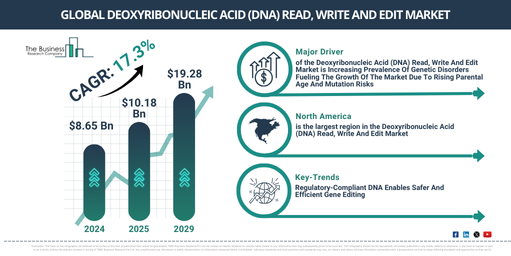
    The deoxyribonucleic acid (DNA) read, write, and edit market has seen substantial growth in recent years. It is forecast to grow from $8.65 billion in 2024 to $10.18 billion in 2025, at a compound annual growth rate (CAGR) of 17.7%. The expansion observed in the past can be ascribed to a rising prevalence of genetic disorders, increasing demand for personalized medicine, a surge in academic and industrial genomics research, greater adoption of next-generation sequencing, and enhanced government and private investments in sequencing infrastructure.

    The deoxyribonucleic acid (DNA) read, write, and edit market size is projected to experience substantial growth over the next few years. This market is set to expand to $19.28 billion by 2029, achieving a compound annual growth rate (CAGR) of 17.3%. The anticipated growth during this period is fueled by factors like the increasing demand for precision medicine, rising investment in deoxyribonucleic acid-based data storage, the growing adoption of synthetic biology, the expansion of deoxyribonucleic acid sequencing services, and increased awareness regarding early disease detection. Significant trends expected in the forecast period include technological advancements in genome editing, continuous innovation in deoxyribonucleic acid synthesis techniques, developments in portable sequencing devices, advancements in research and development, and enhancements in bioinformatics tools.

    Get A Free Sample Of The Report:

    https://www.thebusinessresearchcompany.com/sample.aspx?id=27274&type=smp

    Which Industry Forces Are Driving The Deoxyribonucleic Acid (DNA) Read, Write And Edit Market Forward?

    The rising occurrence of genetic disorders is anticipated to fuel the expansion of the deoxyribonucleic acid (DNA) read, write and edit market in the future. These medical conditions stem from abnormalities in an individual’s deoxyribonucleic acid, which can be inherited from either parent or emerge from novel mutations. The prevalence of genetic disorders is escalating primarily due to an increase in parental age, as older parents face a greater likelihood of transmitting genetic mutations to their offspring. Deoxyribonucleic acid (DNA) reading, writing, and editing technologies play a crucial role in managing genetic disorders by allowing for the accurate identification, rectification, and alteration of genes responsible for diseases. These technologies enhance healthcare results through facilitating targeted treatments, minimizing the danger of inherited ailments, and advancing personalized medical approaches for those affected. As an illustration, in May 2024, the National Health Service, a government body based in the UK, reported that 17,000 individuals are living with sickle cell disease, an inherited genetic blood disorder, with approximately 250 new diagnoses annually. Consequently, the growing incidence of genetic disorders is propelling the development of the deoxyribonucleic acid (DNA) read, write and edit market.

    What Is The Segment Breakdown Of The Deoxyribonucleic Acid (DNA) Read, Write And Edit Market?

    The deoxyribonucleic acid (DNA) read, write and edit market covered in this report is segmented

    1) By Types: Kits And Reagents, Cell Line Engineering, Animal Models, Services

    2) By Technology: Clustered Regularly Interspaced Short Palindromic Repeats (CRISPR), Transcription Activator-Like Effector Nucleases (Talen), Zinc Finger Nucleases, Other Technologies

    3) By Delivery Mode: Viral Vectors, Non-Viral Vectors, Electroporation, Microinjection

    4) By Application: Gene Therapy, Diagnostics, Biotechnology, Agricultural, Synthetic Biology

    5) By End Users: Pharmaceutical And Biotechnology Companies, Academic And Research Institutes, Clinical Research Organizations

    Subsegments:

    1) By Kits And Reagents: Deoxyribonucleic Acid Kits (DNA Kits), Ribonucleic Acid Kits (RNA Kits), Protein Assay Kits (PA Kits), Gene Editing Reagents (GER), Polymerase Chain Reaction Reagents (PCR Reagents)

    2) By Cell Line Engineering: Stable Cell Lines (SCL), Transient Cell Lines (TCL), Hybridoma Cell Lines (HCL), Reporter Cell Lines (RCL), Primary Cell Lines (PCL)

    3) By Animal Models: Transgenic Animals (TA), Knockout Animals (KA), Humanized Animals (HA), Xenograft Models (XM), Inbred Strains (IS)

    4) By Services: Custom Gene Editing (CGE), Cell Line Development (CLD), Animal Model Development (AMD), Analytical Testing Services (ATS), Consulting Services (CS)

    How Are Global Trends Impacting The Development Of The Deoxyribonucleic Acid (DNA) Read, Write And Edit Market?

    Leading firms within the deoxyribonucleic acid (DNA) read, write, and edit market are concentrating on creating sophisticated offerings, including premium, regulation-compliant synthetic DNA, with the aim of expediting research, guaranteeing safety, and facilitating the market entry of advanced therapeutic solutions. This specific type of synthetic DNA refers to DNA engineered artificially, characterized by its precision, lack of contaminants, and adherence to established safety and legal protocols, making it appropriate for use in research, diagnostic tools, and various therapeutic contexts. As an illustration, in May 2022, GenScript Inc., a US-based biotechnology firm, introduced its GenExact (GMP single-stranded DNA) and GenWand (GMP closed-end linear double-stranded DNA) services. These new services are designed to expedite the journey from initial research and development phases through to investigational new drug (IND) submissions and clinical trials. They achieve this by providing superior, non-viral homology-directed repair (HDR) templates, thereby facilitating safer and more effective CRISPR non-viral gene insertion in advanced cell and gene therapies. The DNA products are produced in specialized cGMP facilities, accompanied by comprehensive documentation and regulatory assistance. They undergo stringent testing to confirm adherence to specifications for identity, purity, potency, and safety, establishing a dependable and scalable supply of genetic material for therapeutic uses.

    Which Companies Are Contributing Significantly To The Deoxyribonucleic Acid (DNA) Read, Write And Edit Market Growth?

    Major companies operating in the deoxyribonucleic acid (DNA) read, write and edit market are Roche Holding AG, Bayer AG, Thermo Fisher Scientific Inc., Danaher Corporation, Agilent Technologies Inc., MGI Tech, Bio-Rad Laboratories Inc., BGI Group, Ginkgo Bioworks, Oxford Nanopore Technologies, Twist Bioscience Corporation, New England Biolabs, GenScript Biotech Corporation, Pacific Biosciences, Beam Therapeutics Inc., Prime Medicine, Editas Medicine Inc., Cellectis S.A., 3Billion Inc., and CRISPR Therapeutics AG.

    Access The Complete Report Here:

    https://www.thebusinessresearchcompany.com/report/deoxyribonucleic-acid-dna-read-write-and-edit-global-market-report

    Which Region Is Leading Innovation In The Deoxyribonucleic Acid (DNA) Read, Write And Edit Market?

    North America was the largest region in the deoxyribonucleic acid (DNA) read, write and edit market in 2024. Asia-Pacific is expected to be the fastest-growing region in the forecast period. The regions covered in the deoxyribonucleic acid (DNA) read, write and edit market report are Asia-Pacific, Western Europe, Eastern Europe, North America, South America, Middle East, Africa.

    Customize Your Report Here:

    https://www.thebusinessresearchcompany.com/customise?id=27274&type=smp

    Browse Through More Reports Similar to the Global Deoxyribonucleic Acid (DNA) Read, Write And Edit Market 2025, By The Business Research Company

    Architectural Lighting Global Market Report 2025

    https://www.thebusinessresearchcompany.com/report/architectural-lighting-global-market-report

    Interior Lighting Global Market Report 2025

    https://www.thebusinessresearchcompany.com/report/interior-lighting-global-market-report

    Hospital Lighting Global Market Report 2025

    https://www.thebusinessresearchcompany.com/report/hospital-lighting-global-market-report

    About The Business Research Company:

    With over 15000+ reports from 27 industries covering 60+ geographies, The Business Research Company has built a reputation for offering comprehensive, data-rich research and insights. Armed with 1,500,000 datasets, the optimistic contribution of in-depth secondary research, and unique insights from industry leaders, you can get the information you need to stay ahead in the game.

    Get in touch with us:

    The Business Research Company: https://www.thebusinessresearchcompany.com/

    Americas +1 310-496-7795

    Asia +44 7882 955267 & +91 8897263534

    Europe +44 7882 955267

    Email us at info@tbrc.info

    Follow us on:

    LinkedIn: https://in.linkedin.com/company/the-business-research-company

    YouTube: https://www.youtube.com/channel/UC24_fI0rV8cR5DxlCpgmyFQ

    Global Market Model: https://www.thebusinessresearchcompany.com/global-market-model
  • Global Immune Thrombocytopenia Market Growth Prospects and Strategic Opportunities Through 2029

    Global Immune Thrombocytopenia Market Growth Prospects and Strategic Opportunities Through 2029

    Claim your 20% discount on Global Market Reports with code ONLINE20. Limited time only.

    How Is The Immune Thrombocytopenia Market Expected To Grow In Terms Of Size?

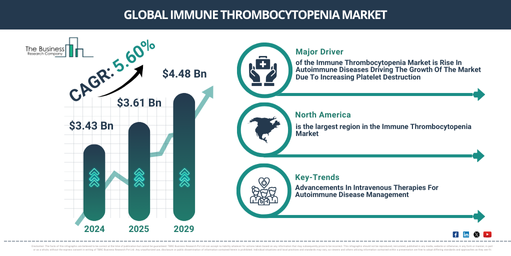
    In the past few years, the immune thrombocytopenia market has seen robust growth. The market size, which is poised to increase from $3.43 billion in 2024, is projected to reach $3.61 billion in 2025, yielding a compound annual growth rate (CAGR) of 5.1%. This growth observed in the historical period is a result of a rise in autoimmune disorders, an increase in chronic liver disease cases, enhanced penetration of healthcare services, expansion of healthcare infrastructure, and growing government support.

    In the coming years, the immune thrombocytopenia market is forecasted to witness robust growth. Its size is predicted to reach $4.48 billion by 2029, with a compound annual growth rate (CAGR) of 5.6%. This growth during the forecast period is anticipated due to factors such as increasing instances of thrombocytopenia, higher spending on healthcare, advancements in therapies, escalating instances of blood diseases, and the expanding elderly population. The forecast period is expected to see significant trends including advances in diagnostic technology, incorporation of digital health solutions, a shift towards combination therapies, the acceptance of telemedicine, and the utilization of artificial intelligence in diagnostics.

    Get A Free Sample Of The Report:

    https://www.thebusinessresearchcompany.com/sample.aspx?id=22012&type=smp

    Which Key Factors Are Fueling Growth In The Immune Thrombocytopenia Market?

    The rising incidence of autoimmune diseases is projected to drive the expansion of the immune thrombocytopenia market in the future. Autoimmune disorders are those where the immune system wrongfully targets the body’s healthy cells and tissues, treating them as foreign invaders. This abnormal response causes inflammation and damage to various organs and systems. The growth in autoimmune diseases is associated with genetic predispositions, environmental elements, lifestyle alterations, and enhanced awareness leading to improved diagnosis. Autoimmune diseases contribute to immune thrombocytopenia by causing the immune system to attack and destroy the body’s platelets or hinder their production in the bone marrow. For example, data from the German organization, Versorgungsatlas.de, showed that in 2022, out of 73,241,305 insured individuals, 6,304,340 were identified with at least one autoimmune disease, leading to a raw prevalence rate of 8.61%. Hence, the escalating incidence of autoimmune diseases is fueling the expansion of the immune thrombocytopenia market.

    How Is The Immune Thrombocytopenia Market Categorized Across Applications And Types?

    The immune thrombocytopeniamarket covered in this report is segmented –

    1) By Type: Primary Immune Thrombocytopenia; Secondary Immune Thrombocytopenia; Acquired Immune Thrombocytopenia

    2) By Treatment Type: Intravenous Immunoglobulin; Thrombopoietin Receptor Agonists; Immunosuppressive Therapy

    3) By Distribution Channel: Hospital Pharmacies; Retail Pharmacies; Online Pharmacies

    Subsegments:

    1) By Primary Immune Thrombocytopenia: Acute Primary ITP; Chronic Primary ITP; Persistent Primary ITP

    2) By Secondary Immune Thrombocytopenia: Drug-Induced ITP; Infection-Associated ITP; Autoimmune Disorder-Related ITP

    3) By Acquired Immune Thrombocytopenia: Immune-Mediated Acquired ITP; Non-Immune Acquired ITP

    Which Emerging Trends Are Reshaping The Immune Thrombocytopenia Market Landscape?

    In the immune thrombocytopenia market, major companies are prioritizing therapeutic advancements, particularly in intravenous therapy, to enhance treatment effectiveness, accelerate response times, improve patient adherence, and address unmet medical needs in thrombocytopenia management. Intravenous (IV) therapy is a medical treatment that involves delivering fluids, medications, or nutrients directly into a patient’s vein through an IV line. For instance, in March 2024, Argenx SE, a Netherlands-based biotechnology company, announced that the Japan Ministry of Health, Labor, and Welfare (MHLW) had approved VYVGART for intravenous administration in adults with primary immune thrombocytopenia (ITP). This approval represents a major advancement in treatment options, offering a targeted approach with rapid effectiveness and sustained platelet response, addressing critical unmet needs in autoimmune disease management.

    Which Firms Are Making The Biggest Impact In The Immune Thrombocytopenia Market?

    Major companies operating in the immune thrombocytopenia market are Pfizer Inc., Merck & Co. Inc., Sanofi S.A., Novartis AG, Amgen Inc., Takeda Pharmaceutical Company Limited, Eli Lilly and Company, Intas Pharmaceuticals Ltd., CSL Behring, Griffols, UCB Pharma, Kyowa Kirin, Sobi (Swedish Orphan Biovitrum), 3SBio Inc., Biotest AG, Shionogi & Co. Ltd., Ligand Pharmaceuticals, Rigel Pharmaceuticals, Symphogen, Hansa Biopharma, Argenx.

    Access The Complete Report Here:

    https://www.thebusinessresearchcompany.com/report/immune-thrombocytopenia-global-market-report

    Which Region Holds The Greatest Opportunity For Immune Thrombocytopenia Market Expansion?

    North America was the largest region in the immune thrombocytopenia market in 2024. Asia-Pacific is expected to be the fastest-growing region in the forecast period. The regions covered in the immune thrombocytopenia market report are Asia-Pacific, Western Europe, Eastern Europe, North America, South America, Middle East, Africa.

    Customize Your Report Here:

    https://www.thebusinessresearchcompany.com/customise?id=22012&type=smp

    Browse Through More Reports Similar to the Global Immune Thrombocytopenia Market 2025, By The Business Research Company

    Autoimmune Disease Diagnosis Global Market Report 2025

    https://www.thebusinessresearchcompany.com/report/autoimmune-disease-diagnosis-global-market-report

    Granulocyte Colony Stimulating Factors Market 2025

    https://www.thebusinessresearchcompany.com/report/granulocyte-colony-stimulating-factors-market

    Drug Delivery Devices Market 2025

    https://www.thebusinessresearchcompany.com/report/drug-delivery-devices-market

    About The Business Research Company:

    With over 15000+ reports from 27 industries covering 60+ geographies, The Business Research Company has built a reputation for offering comprehensive, data-rich research and insights. Armed with 1,500,000 datasets, the optimistic contribution of in-depth secondary research, and unique insights from industry leaders, you can get the information you need to stay ahead in the game.

    Get in touch with us:

    The Business Research Company: https://www.thebusinessresearchcompany.com/

    Americas +1 310-496-7795

    Asia +44 7882 955267 & +91 8897263534

    Europe +44 7882 955267

    Email us at info@tbrc.info

    Follow us on:

    LinkedIn: https://in.linkedin.com/company/the-business-research-company

    YouTube: https://www.youtube.com/channel/UC24_fI0rV8cR5DxlCpgmyFQ

    Global Market Model: https://www.thebusinessresearchcompany.com/global-market-model
  • Global Deoxyribonucleic Acid (DNA) Nanotechnology Market Trends and Future Outlook to 2029

    Global Deoxyribonucleic Acid (DNA) Nanotechnology Market Trends and Future Outlook to 2029

    Uncover key drivers, emerging technologies, and competitive movements shaping the deoxyribonucleic acid (dna) nanotechnology market from 2025–2034 with trusted insights from The Business Research Company

    What CAGR And Valuation Are Anticipated For The Deoxyribonucleic Acid (DNA) Nanotechnology Market?

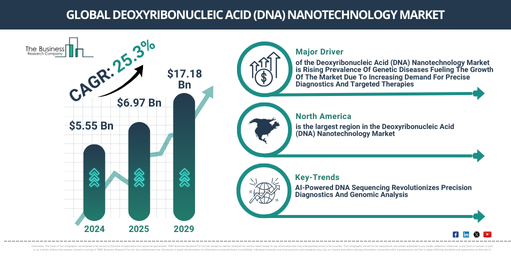
    The deoxyribonucleic acid (DNA) nanotechnology market size has seen substantial growth in recent years. It is expected to expand from $5.55 billion in 2024 to $6.97 billion in 2025, at a compound annual growth rate (CAGR) of 25.7%. The market’s past growth can be attributed to several factors, including increased investment in deoxyribonucleic acid research, the rising acceptance of deoxyribonucleic acid computing technologies, initial breakthroughs in deoxyribonucleic acid origami structures, enhanced cooperation between academic institutions and industry, and early achievements in molecular-level diagnostics.

    The deoxyribonucleic acid (DNA) nanotechnology market is projected to experience substantial expansion in the coming years. This market is forecast to reach a valuation of $17.18 billion by 2029, showing a compound annual growth rate (CAGR) of 25.3%. This anticipated growth is driven by several factors, including the expanding use of deoxyribonucleic acid nanostructures in personalized medicine, a rising need for targeted drug delivery solutions, the emergence of deoxyribonucleic acid-based nanoscale robotic systems, an increasing emphasis on environmentally friendly and sustainable nanomaterials, and a heightened demand for accurate diagnostic tools leveraging deoxyribonucleic acid platforms. Key trends anticipated during this period encompass progress in deoxyribonucleic acid self-assembly methods, ongoing breakthroughs in deoxyribonucleic acid-based biosensors, the creation of deoxyribonucleic acid nanorobots for medical uses, increased investment in research and development for structural deoxyribonucleic acid nanotechnology, and the incorporation of deoxyribonucleic acid systems into quantum computing.

    Get A Free Sample Of The Report:

    https://www.thebusinessresearchcompany.com/sample.aspx?id=27273&type=smp

    What Are The Primary Factors Supporting The Deoxyribonucleic Acid (DNA) Nanotechnology Market Expansion?

    The increasing occurrence of genetic diseases is anticipated to drive the expansion of the deoxyribonucleic acid (DNA) nanotechnology market in the future. Genetic diseases are conditions arising from changes or mutations in DNA, which can be inherited or develop spontaneously, impacting an individual’s health, development, or bodily functions. This rising prevalence of genetic diseases is attributed to greater awareness and advancements in diagnostic technologies, enabling earlier and more precise detection of previously undiagnosed conditions. Deoxyribonucleic acid (DNA) nanotechnology plays a role in addressing genetic diseases by facilitating the precise targeting of defective genes, thereby allowing for accurate diagnosis and tailored treatment. It further enhances therapeutic results through controlled drug delivery and gene editing, ultimately improving patient care and disease management. For instance, in September 2023, the Cystic Fibrosis Trust, a UK-based national charity, reported 11,148 patients diagnosed with cystic fibrosis (CF), a genetic disorder, in 2022, an increase from 10,908 in 2021. Thus, the growing prevalence of genetic diseases is propelling the growth of the deoxyribonucleic acid (DNA) nanotechnology market.

    Which Segments Define The Structure Of The Deoxyribonucleic Acid (DNA) Nanotechnology Market?

    The deoxyribonucleic acid (DNA) nanotechnology market covered in this report is segmented

    1) By Type: Dynamic Deoxyribonucleic Acid (DNA) Nanotechnology, Structural Deoxyribonucleic Acid (DNA) Nanotechnology

    2) By Formulation Type: Water-Soluble Formulations, Oil-Soluble Formulations, Hybrid Formulations

    3) By Distribution Channel: Online Sales, Direct Sales, Retail Sales, Distributors Or Wholesalers

    4) By Application: Smart Pills, Nanolithography, Targeted Drug Delivery, Other Applications

    5) By End-User: Academic And Research Institutions, Biotechnology And Pharmaceuticals, Other End-Users

    Subsegments:

    1) By Dynamic Deoxyribonucleic Acid Nanotechnology: Strand Displacement Circuits, Conformational Switching Devices, Deoxyribonucleic Acid Walkers, Logic Gate Systems, Nanomachines-Based On Deoxyribonucleic Acid

    2) By Structural Deoxyribonucleic Acid Nanotechnology: Tile-Based Structures, Deoxyribonucleic Acid Origami, Wireframe Nanostructures, Lattice-Based Designs, Hybrid Nanostructures

    What Strategic Shifts And Innovations Are Influencing The Deoxyribonucleic Acid (DNA) Nanotechnology Market?

    Key companies operating within the DNA nanotechnology market are concentrating on developing advanced solutions, such as artificial-intelligence-based DNA sequencing, to enhance accuracy and facilitate more precise molecular diagnostics and nanodevice design. Artificial intelligence-based DNA sequencing employs AI for rapid analysis and interpretation of DNA data, leading to improvements in accuracy, speed, and personalized disease detection. For example, in May 2025, the Indian Institute of Technology, an India-based technical institute, introduced quantum AI nanotechnology capable of rapid, highly accurate, and cost-effective early detection of genetic mutations, including those linked to cancer. This technology merges explainable artificial intelligence with quantum transport mechanisms to decode raw electrical signals from DNA sequencing with exceptional precision. The quantum-AI approach utilizes solid-state nanopore or nanogap devices to capture unique electronic signatures of nucleotides, enabling comprehensive detection of natural, epigenetic, and artificial DNA mutations. This innovation holds the promise of significant impacts in genomics, personalized medicine, and cancer diagnostics by enabling early mutation detection and personalized treatment strategies.

    Who Are The Primary Market Leaders In The Deoxyribonucleic Acid (DNA) Nanotechnology Market?

    Major companies operating in the deoxyribonucleic acid (dna) nanotechnology market are Twist Bioscience Corporation, SomaLogic Inc., Alamar Biosciences Inc., Nanion Technologies GmbH, Eligo Bioscience SA, DNA Nanobots LLC, Nanovery Limited, Parabon NanoLabs Inc., tilibit nanosystems GmbH, Luna Nanotech Inc., Code Biotherapeutics Inc., Sona Nanotech Inc., Cello Therapeutics Inc., Esya Labs Inc., NuProbe Global Inc., Ansa Biotechnologies Inc., GATTAquant GmbH, ARIZ Precision Medicine Inc., NanoApps Medical Inc., Aura Biosciences Inc

    Access The Complete Report Here:

    https://www.thebusinessresearchcompany.com/report/deoxyribonucleic-acid-dna-nanotechnology-global-market-report

    What Regional Factors Are Accelerating Growth In The Deoxyribonucleic Acid (DNA) Nanotechnology Market?

    North America was the largest region in the deoxyribonucleic acid (DNA) nanotechnology market in 2024. Asia-Pacific is expected to be the fastest-growing region in the forecast period. The regions covered in the deoxyribonucleic acid (DNA) nanotechnology market report are Asia-Pacific, Western Europe, Eastern Europe, North America, South America, Middle East, Africa.

    Customize Your Report Here:

    https://www.thebusinessresearchcompany.com/customise?id=27273&type=smp

    Browse Through More Reports Similar to the Global Deoxyribonucleic Acid (DNA) Nanotechnology Market 2025, By The Business Research Company

    Cumene Global Market Report 2025

    https://www.thebusinessresearchcompany.com/report/cumene-global-market-report

    Green Cement Global Market Report 2025

    https://www.thebusinessresearchcompany.com/report/green-cement-global-market-report

    Dental Cement Global Market Report 2025

    https://www.thebusinessresearchcompany.com/report/dental-cement-global-market-report

    About The Business Research Company:

    With over 15000+ reports from 27 industries covering 60+ geographies, The Business Research Company has built a reputation for offering comprehensive, data-rich research and insights. Armed with 1,500,000 datasets, the optimistic contribution of in-depth secondary research, and unique insights from industry leaders, you can get the information you need to stay ahead in the game.

    Get in touch with us:

    The Business Research Company: https://www.thebusinessresearchcompany.com/

    Americas +1 310-496-7795

    Asia +44 7882 955267 & +91 8897263534

    Europe +44 7882 955267

    Email us at info@tbrc.info

    Follow us on:

    LinkedIn: https://in.linkedin.com/company/the-business-research-company

    YouTube: https://www.youtube.com/channel/UC24_fI0rV8cR5DxlCpgmyFQ

    Global Market Model: https://www.thebusinessresearchcompany.com/global-market-model
  • Global Huntington’s Disease Market Forecast 2029: Size, Share, and Competitive Landscape

    Global Huntington’s Disease Market Forecast 2029: Size, Share, and Competitive Landscape

    Claim your 20% discount on Global Market Reports with code ONLINE20. Limited time only.

    What Is The Projected Valuation Of The Huntington’s Disease Market In The Coming Years?

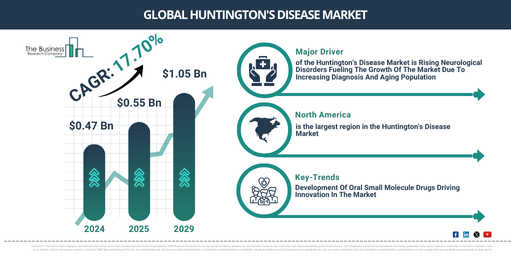
    Over the past few years, the market size of Huntington’s disease has seen swift expansion. It is projected to escalate from $0.47 billion in 2024 to $0.55 billion in 2025, with a compound annual growth rate (CAGR) of 16.0%. The significant growth during the historic period can be ascribed to the heightened awareness of chronic illnesses, escalation in government awareness campaigns, surge in governmental efforts to enhance understanding of Huntington’s disease, an aging population, and increased research on genetic diseases.

    Expectations suggest a swift expansion of the Huntington’s disease market size in the coming years, with projections showing growth to $1.05 billion by 2029, at a compound annual growth rate (CAGR) of 17.7%. Factors contributing to this estimated growth during the forecast period include increased occurrence of neurological disorders, heightened public consciousness, growing healthcare spending, rising investments in research and development, and expanded clinical research activities. The forecast period is also anticipated to witness noteworthy trends like the acceptance of innovative drugs, proliferation of drug development, introduction of new technologies, enhancement of current technology, and a growing demand for advanced products.

    Get A Free Sample Of The Report:

    https://www.thebusinessresearchcompany.com/sample.aspx?id=22008&type=smp

    Which Market Dynamics Are Playing A Critical Role In The Growth Of The Huntington’s Disease Market?

    The escalating occurrence of neurological conditions is anticipated to drive the huntington’s disease market’s expansion in the future. These disorders, which could impact the brain, spinal cord, and nerves, result in symptoms like coordination, movement, sensory, or cognitive complications. The surge in neurological ailments can be traced back to elements such as environmental toxins, aging populations, lifestyle shifts, enhanced diagnosis abilities, and hereditary tendencies, collectively contributing to the identification of more cases. Huntington’s disease, a neurodegenerative condition, stems from a genetic mutation and gradually intensifies motor malfunction, cognitive deteriorations, and psychological symptoms over time. As per the Alzheimer’s Association, a voluntary health organization based in the US, in March 2023, about 6.7 million Americans aged 65 and over are currently suffering from Alzheimer’s dementia. If there are no medical advancements to prevent, slow, or cure the disease, this statistic could skyrocket to 13.8 million by 2060. Consequently, the escalating occurrence of neurological ailments is fueling the growth of the huntington’s disease market.

    Which Sub-Segments Are Driving Growth Within The Huntington’s Disease Market?

    The huntington’s diseasemarket covered in this report is segmented –

    1) By Treatment Type: Symptomatic Therapy; Disease-Modifying Therapy; Other Treatment Types

    2) By Diagnosis: Magnetic Resonance Imaging (MRI); Computed Tomography (CT) Scan; Genetic Testing; Other Diagnosis

    3) By Route of Administration: Oral; Parenteral; Other Routes Of Administration

    4) By Distribution Channel: Hospital Pharmacy; Online Pharmacy; Retail Pharmacy

    5) By End User: Hospitals; Homecare; Specialty Clinics; Other End Users

    Subsegments:

    1) By Symptomatic Therapy: Antipsychotics; Antidepressants; Mood Stabilizers; Muscle Relaxants

    2) By Disease-Modifying Therapy: Gene Silencing Therapies; Stem Cell Therapy; Neuroprotective Agents

    3) By Other Treatment Types: Physical Therapy; Occupational Therapy; Speech Therapy

    What Key Trends Are Driving Growth In The Huntington’s Disease Market?

    In the Huntington’s disease market, major companies are focusing on developing innovative solutions, such as oral small molecule drugs to treat symptoms and slow disease progression. An oral small molecule drug is a low-molecular-weight compound that can be administered orally and is designed to interact with biological targets, such as proteins or enzymes, to treat diseases. For instance, in September 2024, PTC Therapeutics Inc., a U.S.-based pharmaceutical company, received Fast Track designation from the U.S. Food and Drug Administration (FDA) for its PTC518 program aimed at treating Huntington’s disease. This designation is intended for therapies that address significant unmet medical needs, highlighting the potential of PTC518 as a disease-modifying treatment for patients suffering from this genetic disorder.

    Which Players Are Shaping The Competitive Landscape Of The Huntington’s Disease Market?

    Major companies operating in the huntington’s disease market are Novartis AG, Eli Lilly and Company, Teva Pharmaceutical Industries Ltd, Bausch Health Companies Inc., Sun Pharmaceutical Industries Ltd., Apotex Inc, Ipsen S.A., Vertex Pharmaceuticals Incorporated, H. Lundbeck A/S, Dr. Reddy’s Laboratories Ltd., Hikma Pharmaceuticals PLC, Lupin Limited., Neurocrine Biosciences Inc., Alnylam Pharmaceuticals Inc, PTC Therapeutics Inc., Annexon Inc., Voyager Therapeutics Inc., Stealth BioTherapeutics Corp., Vaccinex Inc., SOM Biotech S.L., Alterity Therapeutics Limited, Medesis pharma SA.

    Access The Complete Report Here:

    https://www.thebusinessresearchcompany.com/report/huntingtons-disease-global-market-report

    How Do Regional Dynamics Influence The Huntington’s Disease Market Performance?

    North America was the largest region in the huntington’s disease market in 2024. Asia-Pacific is expected to be the fastest-growing region in the forecast period. The regions covered in the huntington’s disease market report are Asia-Pacific, Western Europe, Eastern Europe, North America, South America, Middle East, Africa.

    Customize Your Report Here:

    https://www.thebusinessresearchcompany.com/customise?id=22008&type=smp

    Browse Through More Reports Similar to the Global Huntington’s Disease Market 2025, By The Business Research Company

    Brain Tumor Drugs Global Market Report 2025

    https://www.thebusinessresearchcompany.com/report/brain-tumor-drugs-global-market-report

    Brain And Neuroimaging Devices Global Market Report 2025

    https://www.thebusinessresearchcompany.com/report/brain-and-neuroimaging-devices-global-market-report

    Brain Tumor Drugs Global Market 2025

    https://www.thebusinessresearchcompany.com/report/brain-tumor-drugs-global-market

    About The Business Research Company:

    With over 15000+ reports from 27 industries covering 60+ geographies, The Business Research Company has built a reputation for offering comprehensive, data-rich research and insights. Armed with 1,500,000 datasets, the optimistic contribution of in-depth secondary research, and unique insights from industry leaders, you can get the information you need to stay ahead in the game.

    Get in touch with us:

    The Business Research Company: https://www.thebusinessresearchcompany.com/

    Americas +1 310-496-7795

    Asia +44 7882 955267 & +91 8897263534

    Europe +44 7882 955267

    Email us at info@tbrc.info

    Follow us on:

    LinkedIn: https://in.linkedin.com/company/the-business-research-company

    YouTube: https://www.youtube.com/channel/UC24_fI0rV8cR5DxlCpgmyFQ

    Global Market Model: https://www.thebusinessresearchcompany.com/global-market-model