Blog

  • Topical Antifungals Market Size Reaches $6.42 Billion In 2026: What Is Driving Growth?

    Topical Antifungals Market Size Reaches $6.42 Billion In 2026: What Is Driving Growth?

    Backed by market attractiveness analysis, total addressable market sizing, company benchmarking matrices, interactive Excel dashboards, wider supply chain intelligence, emerging startup coverage, and detailed product-level insights, The Business Research Company’s 2026 market reports are designed to offer research that is more actionable and strategically valuable than ever.

    Topical Antifungals Market Size Forecast: How Big Could The Market Get By 2030?

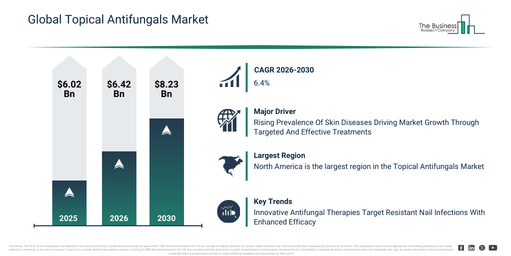
    The topical antifungals market has demonstrated significant growth in recent years. Its valuation is set to increase from $6.02 billion in 2025 to $6.42 billion in 2026, achieving a compound annual growth rate (CAGR) of 6.7%. This historical expansion can be linked to factors such as a limited array of topical antifungal solutions, a high occurrence of dermatophyte infections, a reliance on hospital pharmacies, inadequate consumer awareness regarding fungal infections, and a preference for established formulations.

    The topical antifungals market is projected to experience substantial expansion over the upcoming years. Its valuation is set to reach $8.23 billion by 2030, driven by a compound annual growth rate (CAGR) of 6.4%. This expansion during the projected timeframe stems from several factors, including advancements in azoles and allylamines, the growing acceptance of home healthcare services, the proliferation of online pharmacy platforms, an escalating need for user-friendly formulations such as creams and sprays, and increased pharmaceutical company investments within the dermatology sector. Key trends anticipated during this period encompass the increasing occurrence of skin fungal infections, a rising inclination towards topical rather than systemic therapies, the creation of innovative formulations and drug delivery methods, heightened understanding of home healthcare and self-treatment options, and the broadening reach of online pharmacies and e-commerce distribution networks.

    Get A Free Sample Report With In-Depth Market Insights:

    https://thebusinessresearchcompany.com/sample_request?id=77976665&type=smp&name=Topical%20Antifungals%20Market%20Report%202026&utm_source=Blogs&utm_medium=Paid&utm_campaign=Oct_PR

    Topical Antifungals Market Growth Drivers: What’s Behind The Acceleration?

    The growing incidence of skin ailments is projected to boost the expansion of the topical antifungals market in the future. These conditions encompass issues that impact the well-being, look, or functionality of the skin, including irritation, inflammation, or various infections. The surge in skin conditions can be attributed primarily to greater exposure to environmental contaminants and ultraviolet radiation, both of which can harm the skin and provoke diverse ailments. Topical antifungals serve as a treatment for skin diseases because they offer focused action against fungal pathogens, minimize exposure throughout the body, lessen adverse reactions, and facilitate quicker recovery of compromised areas. As an illustration, in March 2023, the World Health Organization, a health body based in Switzerland, reported that an estimated 1.8 billion individuals globally are affected by skin conditions at any given moment. Consequently, the growing frequency of skin diseases is set to propel the topical antifungals market.

    Topical Antifungals Market Segment Performance And Emerging Opportunities

    The topical antifungals market covered in this report is segmented –

    1) By Product Type: Azoles, Allylamines, Echinocandins, Polyenes

    2) By Formulation Type: Creams, Ointments, Lotions, Sprays, Powders

    3) By Indication: Dermatophyte Infections, Candidiasis, Tinea Infections, Onychomycosis

    4) By Distribution Channel: Pharmacies, Online Pharmacies, Hospital Pharmacies, Drug Stores

    5) By End-User: Hospitals, Clinics, Home Healthcare

    Subsegments:

    1) By Azoles: Clotrimazole, Miconazole, Ketoconazole, Fluconazole

    2) By Allylamines: Terbinafine, Naftifine, Butenafine

    3) By Echinocandins: Caspofungin, Micafungin, Anidulafungin

    4) By Polyenes: Nystatin, Amphotericin B

    Topical Antifungals Market Trends: What’s Defining The Industry’s Next Phase?

    Key businesses within the topical antifungals market are concentrating on creating novel formulations, notably histone deacetylase (HDAC) inhibitors. These are aimed at boosting therapeutic effectiveness, combating antifungal resistance, and improving how well treatments penetrate the nail bed for onychomycosis. HDAC inhibitors function as compounds that obstruct histone deacetylase enzymes, which are responsible for detaching acetyl groups from histone proteins. As an illustration, in January 2024, Vanda Pharmaceuticals Inc., a US-based biotech firm, secured U.S. Food and Drug Administration (FDA) approval for its Investigational New Drug (IND) application. This approval allows for the investigation of VTR-297’s potential as a treatment for onychomycosis, a prevalent fungal infection affecting nails. VTR-297 is characterized as a small molecule histone deacetylase (HDAC) inhibitor possessing antifungal properties. Its initial isolation occurred from the bacterial species Streptomyces hygroscopicus, and it was initially identified as an antifungal antibiotic.

    Topical Antifungals Market Key Players: Which Companies Lead Industry Competition?

    Major companies operating in the topical antifungals market are Pfizer Inc., Bayer AG, Novartis AG, GSK plc, Macleods Pharmaceuticals Ltd., Sun Pharmaceutical Industries Ltd., Galderma S.A., Aurobindo Pharma Limited, Dr. Reddy’s Laboratories, Cipla Limited, Lupin Limited, Zydus Lifesciences Ltd., Glenmark Pharmaceuticals Ltd., Alkem Laboratories Ltd., Ipca Laboratories Ltd., Taro Pharmaceutical Industries Ltd., Natco Pharma Ltd., Glamris Dermacare, Perrigo Company plc, Teva Pharmaceutical Industries Ltd., Viatris Inc., Amneal Pharmaceuticals LLC, Torrent Pharmaceuticals Ltd., Abbott Laboratories, Johnson & Johnson (Janssen Consumer Health), Reckitt Benckiser Group plc, Himalaya Wellness Company, Aristo Pharmaceuticals Pvt. Ltd., Emcure Pharmaceuticals Ltd., Ajanta Pharma Ltd., Alembic Pharmaceuticals Ltd.

    View The Full Topical Antifungals Market Report:

    https://thebusinessresearchcompany.com/report/topical-antifungals-global-market-report?utm_source=Blogs&utm_medium=Paid&utm_campaign=Oct_PR

    Topical Antifungals Market Regional Split: Which Areas Are Fueling Growth?

    North America was the largest region in the topical antifungals market in 2025. Asia-Pacific is expected to be the fastest-growing region in the forecast period. The regions covered in the topical antifungals market report are Asia-Pacific, South East Asia, Western Europe, Eastern Europe, North America, South America, Middle East, Africa.

    Reach Out To Our Team:

    The Business Research Company: https://www.thebusinessresearchcompany.com/

    Americas: +1 310-496-7795

    Asia: +44 7882 955267 & +91 8897263534

    Europe: +44 7882 955267

    Email us at: marketing@tbrc.info

    Follow us on:

    LinkedIn: https://in.linkedin.com/company/the-business-research-company

    YouTube: https://www.youtube.com/channel/UC24_fI0rV8cR5DxlCpgmyFQ

    Global Market Model: https://www.thebusinessresearchcompany.com/global-market-model
  • Tacrolimus Market Growth Forecast Through 2030: Market Size And Trends In 2026

    Tacrolimus Market Growth Forecast Through 2030: Market Size And Trends In 2026

    Featuring market attractiveness scoring, total addressable market sizing, company benchmarking matrices, interactive Excel dashboards, deeper supply chain intelligence, emerging startup tracking, and granular product-level insights, The Business Research Company’s 2026 market reports are built to deliver research that is both more actionable and more strategically valuable.

    Tacrolimus Market Expansion Outlook: What Revenue Opportunities Are Ahead?

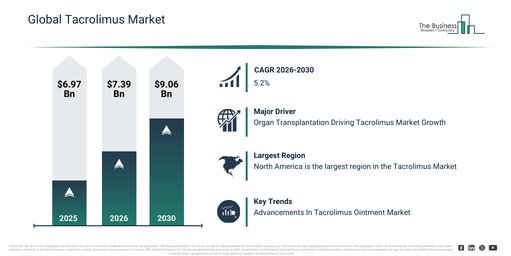
    The tacrolimus market has experienced substantial growth in recent years. Its size is anticipated to expand from $6.97 billion in 2025 to $7.39 billion in 2026, achieving a compound annual growth rate (CAGR) of 6.0%. This historical growth can be attributed to an increase in organ transplantation procedures, the proven clinical effectiveness of tacrolimus, a rising prevalence of autoimmune and inflammatory conditions, improved success rates in transplants, and the development of healthcare infrastructure for transplant care.

    The tacrolimus market is projected to experience substantial expansion over the upcoming years. Its value is anticipated to reach $9.06 billion by 2030, demonstrating a compound annual growth rate (CAGR) of 5.2%. This projected growth during the forecast timeframe is primarily driven by factors such as the increasing volume of kidney and liver transplantation procedures, a surging need for affordable generic medications, the expanding application of the drug for off-label dermatological conditions, progress in monitoring immunosuppressive drugs, and the expansion of transplant initiatives within developing nations. Key trends observed throughout this period are expected to encompass a heightened demand for post-transplant immunosuppressive treatments, an increased utilization of tacrolimus in dermatological settings, a growing inclination towards generic immunosuppressant medications, improved long-term survival rates for organ transplant recipients, and a greater uptake of topical tacrolimus preparations.

    Get A Free Sample Report With In-Depth Market Insights:

    https://thebusinessresearchcompany.com/sample_request?id=37500855&type=smp&name=Tacrolimus%20Market%20Report%202026&utm_source=Blogs&utm_medium=Paid&utm_campaign=Oct_PR

    Tacrolimus Market Expansion Drivers: What’s Shaping Future Growth?

    The tacrolimus market is projected to expand due to the increasing volume of organ transplant procedures. Organ transplantation involves surgically replacing a dysfunctional organ or tissue from a donor with one in a recipient. The demand for organ transplants is rising, driven by advancements in medical technology, improved surgical techniques, greater awareness of organ donation, and superior post-transplant care. Tacrolimus aids in organ transplantation by preventing the immune system from rejecting the new organ through the inhibition of T-cell activation and reduction of cytokine production. For example, the US-based non-profit Organ Procurement and Transplantation Network reported in January 2025 that kidney transplants saw a slight increase, reaching 27,759 in 2024, a 1.6 percent rise from 2023. Conversely, heart transplants remained largely consistent, with 4,572 procedures in 2024 compared to 4,545 in 2023. Consequently, the growing number of organ transplant procedures is fueling the tacrolimus market.

    Tacrolimus Market Driver: The Rise In The Geriatric Population Driving The Growth Of The Market Due To Increased Need For Immune Modulation And Organ Rejection Management In Older Adults

    The rising number of older adults is anticipated to stimulate the growth of the tacrolimus market. The geriatric population comprises individuals generally aged 65 and above, who often have distinct healthcare, social, and physiological requirements linked to aging. This increase is largely attributed to a higher life expectancy, allowing more people to live longer thanks to advancements in healthcare, better disease management, and improved living standards. Tacrolimus assists the geriatric population by modulating immune responses to prevent organ rejection and handle autoimmune conditions, thereby addressing their heightened vulnerability to immune-related issues. For instance, the UK Parliament’s House of Commons Library, a UK-based government administration, reported in July 2024 that 12.7 million people in the UK were aged 65 or over in 2022, making up 19% of the total population. This figure is predicted to climb to 22.1 million by 2072, constituting 27% of the population. Thus, the expanding geriatric population is propelling the growth of the tacrolimus market.

    Tacrolimus Market Segment Outlook: Which Categories Are Growing Fastest?

    The tacrolimus market covered in this report is segmented –

    1) By Product Type: Tacrolimus Capsules And Tablets, Tacrolimus Injection, Tacrolimus Granules

    2) By Application: Immunosuppression, Other Applications

    3) By End User: Organ Transplant Centers, Hospitals, Clinics, Other End Users

    Subsegments:

    1) By Tacrolimus Capsules And Tablets: Oral Capsules, Oral Tablets

    2) By Tacrolimus Injection: Injectable Solution, Injectable Powder

    3) By Tacrolimus Granules: Oral Granules (For Suspension)

    Tacrolimus Market Strategic Trends: What Defines The Next Growth Phase?

    Key companies operating in the tacrolimus market are actively developing sophisticated medications, such as tacrolimus ointments, to fulfill the rising demand for innovative treatments for dermatological conditions and enhance patient care. Tacrolimus ointment serves as a topical treatment containing tacrolimus, an immunosuppressive agent primarily utilized for managing inflammatory skin conditions. For instance, in August 2023, Glenmark, an India-based pharmaceutical company, secured approval from the United States Food and Drug Administration (US FDA) for Tacrolimus Ointment 0.03%, which is the generic equivalent of Protopic Ointment 0.03%. Glenmark Pharmaceuticals will be responsible for distributing Tacrolimus Ointment, 0.03%, within the United States. This medication is prescribed for addressing moderate-to-severe atopic dermatitis, a skin condition marked by inflammation, redness, and itching.

    Tacrolimus Market Leading Companies And Competitive Benchmarking

    Major companies operating in the tacrolimus market are Astellas Pharma Inc, Novartis AG, Abbott Laboratories, Viatris Inc., Teva Pharmaceutical Industries Limited, Sandoz Inc, Sun Pharmaceutical Industries Limited, Dr. Reddy’s Laboratories Ltd., Cipla Limited, Lupin Limited, Hikma Pharmaceuticals, Biocon Ltd., Zydus Lifesciences Limited, Torrent Pharmaceuticals Limited, Alembic Pharmaceuticals Limited, Wockhardt Limited, Zhejiang Hisun Pharmaceutical Co. Ltd., Huadong Medicine Co Ltd, Glenmark Pharmaceuticals Ltd., Panacea Biotec

    View The Full Tacrolimus Market Report:

    https://thebusinessresearchcompany.com/report/tacrolimus-global-market-report?utm_source=Blogs&utm_medium=Paid&utm_campaign=Oct_PR

    Tacrolimus Market Geographic Analysis: Where Is Demand Accelerating Fastest?

    North America was the largest region in the tacrolimus market in 2025. The regions covered in the tacrolimus market report are Asia-Pacific, South East Asia, Western Europe, Eastern Europe, North America, South America, Middle East, Africa.

    Reach Out To Our Team:

    The Business Research Company: https://www.thebusinessresearchcompany.com/

    Americas: +1 310-496-7795

    Asia: +44 7882 955267 & +91 8897263534

    Europe: +44 7882 955267

    Email us at: marketing@tbrc.info

    Follow us on:

    LinkedIn: https://in.linkedin.com/company/the-business-research-company

    YouTube: https://www.youtube.com/channel/UC24_fI0rV8cR5DxlCpgmyFQ

    Global Market Model: https://www.thebusinessresearchcompany.com/global-market-model
  • Tofacitinib Market Valued At $6.52 Billion In 2026: Key Trends And Growth Drivers

    Tofacitinib Market Valued At $6.52 Billion In 2026: Key Trends And Growth Drivers

    Featuring market attractiveness scoring, total addressable market sizing, company benchmarking matrices, interactive Excel dashboards, deeper supply chain intelligence, emerging startup tracking, and granular product-level insights, The Business Research Company’s 2026 market reports are built to deliver research that is both more actionable and more strategically valuable.

    Tofacitinib Market Revenue Outlook: What CAGR Lies Ahead Through 2030?

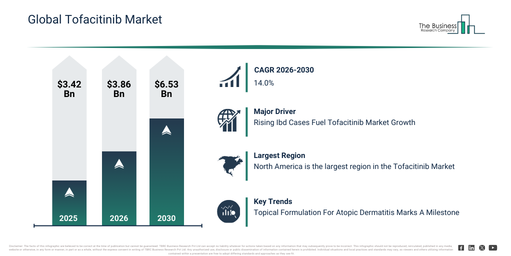
    The tofacitinib market has experienced substantial growth in recent years. It is anticipated to expand from $3.42 billion in 2025 to $3.86 billion in 2026, achieving a compound annual growth rate (CAGR) of 12.9%. The market’s historic growth can be attributed to factors such as the increasing prevalence of rheumatoid arthritis, rising awareness of ulcerative colitis, the expansion of the biologics market, the approval of janus kinase inhibitors, and the development of hospital pharmacy networks.

    The tofacitinib market size is anticipated to experience substantial growth in the upcoming years. It is projected to reach $6.53 billion by 2030, showing a compound annual growth rate (CAGR) of 14.0%. This expansion during the forecast period is primarily attributed to the creation of novel tofacitinib formulations, an increasing emphasis on precision medicine, growing investment in biosimilars, the expansion of online pharmacy channels, and a rising demand for immunosuppressants. Additionally, major trends expected in the forecast period include the increasing adoption of targeted therapies, a rising prevalence of ulcerative colitis and rheumatic diseases, a shift towards personalized medicine, increasing biopharmaceutical research and development investments, and the expansion of specialty pharmacies.

    Get A Free Sample Report With In-Depth Market Insights:

    https://thebusinessresearchcompany.com/sample_request?id=32304061&type=smp&name=Tofacitinib%20Market%20Report%202026&utm_source=Blogs&utm_medium=Paid&utm_campaign=Oct_PR

    Tofacitinib Market Growth Factors Behind Sustained Expansion

    The increasing prevalence of inflammatory bowel disease patients is projected to fuel the expansion of the tofacitinib market. Inflammatory Bowel Disease (IBD) encompasses a range of persistent inflammatory conditions affecting the gastrointestinal tract, notably Crohn’s disease and ulcerative colitis. Tofacitinib serves a crucial function in managing inflammatory bowel disease (IBD) patients by inhibiting Janus kinase (JAK) enzymes, thereby alleviating discomfort and fostering mucosal recovery. For example, data from June 2023, provided by Crohn’s and Colitis Canada, a Canadian non-profit, estimated that over 322,600 Canadians were afflicted with inflammatory bowel diseases (IBD) in 2023, representing approximately 0.82% of the population. With the ongoing rise in IBD cases, forecasts suggest that around 470,000 Canadians will suffer from IBD by 2035, constituting roughly 1.1% of the population, or 1 in every 91 people in the country. Consequently, the rising count of individuals with inflammatory bowel disease is propelling the growth of the tofacitinib market.

    Tofacitinib Market Segment Landscape And Growth Outlook

    The tofacitinib market covered in this report is segmented –

    1) By Drug Class: Antirheumatic, Janus Kinase Inhibitor, Immunosuppressant

    2) By Strength: 5mg, 10mg, 11mg, 22mg

    3) By Route Of Administration: Oral, Other Routes Of Administration

    4) By Distribution Channel: Hospital Pharmacy, Retail Pharmacy, Online Pharmacy

    5) By Application: Ulcerative Colitis, Rheumatoid Arthritis, Psoriasis, Other Applications

    Subsegments:

    1) By Antirheumatic: Conventional Synthetic Antirheumatics, Targeted Synthetic Antirheumatics

    2) By Janus Kinase Inhibitor: JAK1 Inhibitors, JAK2 Inhibitors, JAK3 Inhibitors

    3) By Immunosuppressant: Corticosteroids, Non-Steroidal Immunosuppressants

    Tofacitinib Market Industry Trends Fueling Future Revenue Growth

    Major companies in the tofacitinib market are intensifying their efforts to introduce topical tofacitinib medications to secure a competitive edge. Topical tofacitinib refers to a specific formulation of the medication designed for direct application to the skin. An example of this trend occurred in June 2023, when Intas Pharmaceuticals, a pharmaceutical company based in India, launched Tofacitinib Topical (JAKi) for managing mild to moderate atopic dermatitis (AD) in India. This product is notable as the first JAK inhibitor approved for AD within India. A Phase III clinical study conducted in India on atopic dermatitis patients, evaluating TOFATAS (Tofacitinib Ointment 2% w/w), demonstrated impressive safety and efficacy. The introduction of TOFATAS is intended to provide renewed hope for individuals with AD, considering the prior absence of approved topical JAK inhibitors in India.

    Tofacitinib Market Competitive Landscape: Who Leads The Industry?

    Major companies operating in the tofacitinib market are Pfizer Inc, Beacon Pharmaceuticals Limited, Glenmark Pharmaceuticals LTD, Sun Pharmaceutical Industries Ltd, Zydus Lifesciences Ltd, Unichem Laboratories, Sandoz International GmbH, Mylan N.V., Hetero Drugs Limited, Torrent Pharmaceuticals Ltd, Lupin Limited, Aurobindo Pharma Limited, Cipla Inc, Dr. Reddys Laboratories Ltd, Strides Pharma Science Limited, Alkem Laboratories Limited, Cadila Healthcare Limited, Wockhardt Limited, Alembic Pharmaceuticals Limited, Intas Pharmaceuticals Limited

    View The Full Tofacitinib Market Report:

    https://thebusinessresearchcompany.com/report/tofacitinib-global-market-report?utm_source=Blogs&utm_medium=Paid&utm_campaign=Oct_PR

    Tofacitinib Market Top Region: Where Does Most Revenue Come From?

    North America was the largest region in the tofacitinib market in 2025. Asia-Pacific is expected to be the fastest-growing region in the forecast period. The regions covered in the tofacitinib market report are Asia-Pacific, South East Asia, Western Europe, Eastern Europe, North America, South America, Middle East, Africa.

    Reach Out To Our Team:

    The Business Research Company: https://www.thebusinessresearchcompany.com/

    Americas: +1 310-496-7795

    Asia: +44 7882 955267 & +91 8897263534

    Europe: +44 7882 955267

    Email us at: marketing@tbrc.info

    Follow us on:

    LinkedIn: https://in.linkedin.com/company/the-business-research-company

    YouTube: https://www.youtube.com/channel/UC24_fI0rV8cR5DxlCpgmyFQ

    Global Market Model: https://www.thebusinessresearchcompany.com/global-market-model
  • T Cell Surface Glycoprotein CD3 Epsilon Chain Market Analysis: $1.35 Billion Market Size In 2026 And Future Growth Prospects

    T Cell Surface Glycoprotein CD3 Epsilon Chain Market Analysis: $1.35 Billion Market Size In 2026 And Future Growth Prospects

    Built to provide research that’s more actionable and strategically valuable, The Business Research Company’s 2026 market reports include market attractiveness analysis, total addressable market sizing, company benchmarking matrices, interactive Excel dashboards, broader supply chain intelligence, emerging startup tracking, and in-depth product insights.

    T Cell Surface Glycoprotein CD3 Epsilon Chain Market Growth Potential: How Will Market Size Shift Through 2030?

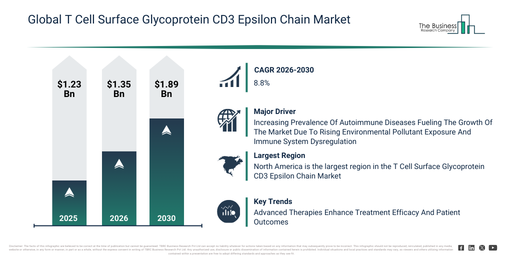
    The t cell surface glycoprotein cd3 epsilon chain market has experienced robust growth in recent years. It is projected to expand from $1.23 billion in 2025 to $1.35 billion in 2026, demonstrating a compound annual growth rate (CAGR) of 9.8%. Historically, this expansion can be ascribed to factors such as the identification of the cd3 epsilon chain in t-cell signaling, the advancement of fundamental immunology research methodologies, the emergence of early monoclonal antibody technologies, a rise in academic investigations into t-cell functions, and the increasing application of flow cytometry in laboratory settings.

    The t cell surface glycoprotein cd3 epsilon chain market is projected to experience robust expansion over the coming years. This market is set to reach $1.89 billion in 2030, exhibiting a compound annual growth rate (CAGR) of 8.8%. Factors driving this growth during the projection period include progress in translational and clinical research, the broadening of cancer immunotherapy uses, the creation of recombinant antibodies and related kits, increased pharmaceutical and biotech R&D spending, and the incorporation of the cd3 epsilon chain into sophisticated disease modeling. Key trends anticipated in the forecast timeframe encompass a surge in cancer immunotherapy research employing the cd3 epsilon chain, increased use of monoclonal and recombinant antibodies in scientific investigations, the broadening scope of flow cytometry and cell culture applications, a heightened emphasis on translational and clinical research, and the inclusion of the cd3 epsilon chain in studies related to autoimmune and infectious diseases.

    Get A Free Sample Report With In-Depth Market Insights:

    https://thebusinessresearchcompany.com/sample_request?id=31955052&type=smp&name=T%20Cell%20Surface%20Glycoprotein%20CD3%20Epsilon%20Chain%20Market%20Report%202026&utm_source=Blogs&utm_medium=Paid&utm_campaign=Oct_PR

    T Cell Surface Glycoprotein CD3 Epsilon Chain Market Development Factors: What’s Supporting Demand?

    The market for T cell surface glycoprotein CD3 epsilon chain is projected to expand due to the rising occurrence of autoimmune conditions. Autoimmune disorders are characterized by the immune system erroneously targeting the body’s healthy cells and tissues. This surge in autoimmune disease prevalence is largely attributable to greater exposure to environmental contaminants, which can impair immune function and provoke immune responses against the body’s own tissues. T cell surface glycoprotein CD3 epsilon chain improves the management of autoimmune diseases by modulating T cell activity, positioning it as a crucial therapeutic target. It aids in controlling excessive immune reactions, thereby minimizing tissue damage and enhancing patient results. For example, in February 2024, Arthritis Australia, an Australia-based non-profit organization, reported that around 562,378 Australians are anticipated to have RA in 2025, constituting 14% of all arthritis cases during that period. By 2040, this figure is predicted to increase by 33% to 748,721 individuals. This signifies an additional 186,343 Australians living with RA in 2040 relative to 2025. Consequently, the rising incidence of autoimmune diseases is fueling the expansion of the T cell surface glycoprotein CD3 epsilon chain market.

    T Cell Surface Glycoprotein CD3 Epsilon Chain Market Segment Landscape: Which Areas Lead Development?

    The t cell surface glycoprotein cd3 epsilon chain market covered in this report is segmented –

    1) By Product Type: Antibodies, Reagents, Kits, Cell Lines

    2) By Technology: Monoclonal Antibodies Technology, Recombinant Deoxyribonucleic Acid Technology, Cell Culture Technology, Flow Cytometry Technology

    3) By Research Purpose: Basic Research, Translational Research, Clinical Research, Pharmacological Research

    4) By Application: Cancer Immunotherapy, Autoimmune Disease Treatment, Transplant Rejection, Infectious Disease Treatment, Research And Development

    5) By End-User: Pharmaceutical Companies, Biotechnology Firms, Research Institutes, Academic Institutions, Hospitals And Clinics

    Subsegments:

    1) By Antibodies: Monoclonal Antibodies, Polyclonal Antibodies, Recombinant Antibodies

    2) By Reagents: Blocking Reagents, Labeling Reagents, Detection Reagents, Isotype Controls

    3) By Kits: Enzyme Linked Immunosorbent Assay Kits, Flow Cytometry Kits, Western Blot Kits, Immunoprecipitation Kits

    4) By Cell Lines: Human Cell Lines, Mouse Cell Lines, Rat Cell Lines, Hybridoma Cell Lines

    T Cell Surface Glycoprotein CD3 Epsilon Chain Market Transformation Trends: What Innovations Are Driving Change?

    Leading companies active in the T cell surface glycoprotein CD3 epsilon chain market are concentrating on developing advanced therapies, such as bispecific antibodies, to enhance treatment effectiveness, improve patient outcomes, and target hard-to-treat cancers. Bispecific antibodies are engineered molecules designed to concurrently bind to two distinct antigens, for instance, CD3 on T cells and a tumor-specific antigen, thereby redirecting immune cells toward cancer cells. An example of this is in August 2023, when Janssen Pharmaceutical Companies of Johnson & Johnson, a US-based pharmaceutical company, secured US Food and Drug Administration (FDA) accelerated approval for TALVEY (talquetamab-tgvs). This represents a first-in-class bispecific T-cell engaging antibody for the management of adult patients with relapsed or refractory multiple myeloma who have undergone at least four prior lines of therapy. TALVEY is given weekly or biweekly through subcutaneous injection after a step-up dosing phase, offering flexibility in treatment regimens. It works by targeting both the CD3 epsilon chain on T cells and GPRC5D on myeloma cells, activating the immune system to attack cancer cells.

    T Cell Surface Glycoprotein CD3 Epsilon Chain Market Industry Leaders And Competitive Landscape

    Major companies operating in the t cell surface glycoprotein cd3 epsilon chain market are Merck & Co. Inc., Becton Dickinson and Company, Bio-Techne Corporation, Abcam plc, Sino Biological Inc., MacroGenics Inc., ACROBiosystems Inc., ABclonal Technology Co Ltd., GeneTex Inc., Santa Cruz Biotechnology Inc., Novus Biologicals LLC, Bioss Antibodies Inc., MedChemExpress MCE LLC, Biorbyt Ltd., Boster Biological Technology Co Ltd., Abbexa Limited, Novatein Biosciences LLC, AssayPro LLC, ProteoGenix, Cloud‑Clone Corp.

    View The Full T Cell Surface Glycoprotein CD3 Epsilon Chain Market Report:

    https://thebusinessresearchcompany.com/report/t-cell-surface-glycoprotein-cd3-epsilon-chain-global-market-report?utm_source=Blogs&utm_medium=Paid&utm_campaign=Oct_PR

    T Cell Surface Glycoprotein CD3 Epsilon Chain Market Global Footprint: Which Region Leads The Industry?

    North America was the largest region in the T cell surface glycoprotein CD3 epsilon chain market in 2025. Asia-Pacific is expected to be the fastest-growing region in the forecast period. The regions covered in the t cell surface glycoprotein cd3 epsilon chain market report are Asia-Pacific, South East Asia, Western Europe, Eastern Europe, North America, South America, Middle East, Africa.

    Reach Out To Our Team:

    The Business Research Company: https://www.thebusinessresearchcompany.com/

    Americas: +1 310-496-7795

    Asia: +44 7882 955267 & +91 8897263534

    Europe: +44 7882 955267

    Email us at: marketing@tbrc.info

    Follow us on:

    LinkedIn: https://in.linkedin.com/company/the-business-research-company

    YouTube: https://www.youtube.com/channel/UC24_fI0rV8cR5DxlCpgmyFQ

    Global Market Model: https://www.thebusinessresearchcompany.com/global-market-model
  • TNF Alpha Inhibitors Market Size In 2026: Growth Outlook And Forecast Through 2030

    TNF Alpha Inhibitors Market Size In 2026: Growth Outlook And Forecast Through 2030

    Built to provide research that’s more actionable and strategically valuable, The Business Research Company’s 2026 market reports include market attractiveness analysis, total addressable market sizing, company benchmarking matrices, interactive Excel dashboards, broader supply chain intelligence, emerging startup tracking, and in-depth product insights.

    TNF Alpha Inhibitors Market Growth Analysis: How Will Revenue Trend Over The Forecast Period?

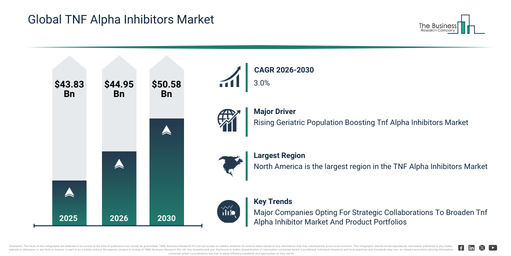
    The tnf alpha inhibitors market size has shown consistent growth in recent years. It is projected to expand from $43.83 billion in 2025 to $44.95 billion in 2026, demonstrating a compound annual growth rate (CAGR) of 2.6%. The market’s growth in previous periods can be attributed to the high prevalence of rheumatoid arthritis, the proven effectiveness of TNF blockers, robust clinical guideline support, the adoption of biologics in hospital settings, and the general expansion of immunology treatments.

    The tnf alpha inhibitors market is projected to experience consistent expansion over the coming years. This market is anticipated to reach a valuation of $50.58 billion by 2030, progressing at a compound annual growth rate (CAGR) of 3.0%. This projected growth is driven by factors such as an increase in inflammatory bowel disease incidents, enhanced biosimilar market penetration, broader patient access initiatives, the creation of improved and safer formulations, and escalating healthcare expenditures. Key developments expected within this period encompass the increasing acceptance of biologic anti-inflammatories, their expanded application in managing autoimmune diseases, a move towards biosimilar TNF inhibitors, the wider availability of subcutaneous administration methods, and greater use of long-term therapies.

    Get A Free Sample Report With In-Depth Market Insights:

    https://thebusinessresearchcompany.com/sample_request?id=17735278&type=smp&name=TNF%20Alpha%20Inhibitors%20Market%20Report%202026&utm_source=Blogs&utm_medium=Paid&utm_campaign=Oct_PR

    TNF Alpha Inhibitors Market Demand Drivers Opening New Revenue Streams

    The Tnf alpha inhibitors market is expected to experience growth driven by an expanding geriatric population, which encompasses individuals who are 65 years old or older. The aging process often leads to increased susceptibility to autoimmune disorders and heightened inflammatory activity in the bloodstream. Tnf alpha inhibitors have been shown to effectively mitigate inflammation and atherosclerosis within the geriatric population. For instance, the Population Reference Bureau, a US-based non-profit organization, reported in January 2024 that the number of Americans aged 65 and older is projected to increase from 58 million in 2022 to 82 million by 2050, representing a 47% rise. This demographic’s share of the total U.S. population is consequently anticipated to expand from 17% to 23% over the same period. Therefore, the growing geriatric population is a key factor propelling the expansion of the Tnf alpha inhibitors market.

    TNF Alpha Inhibitors Market Breakdown By Product Type And Application

    The tnf alpha inhibitors market covered in this report is segmented –

    1) By Drug: Remicade (Infliximab), Enbrel (Etanercept), Humira (Adalimumab), Cimzia (Certolizumab Pegol), Simponi (Golimumab)

    2) By Route Of Administration: Subcutaneous, Intravenous, Other Route Of Administration

    3) By Disease Type: Inflammatory Bowel Disease, Psoriatic Arthritis, Ulcerative Colitis (UC), Rheumatoid Arthritis, Ankylosing Spondylitis, Other Disease Types

    TNF Alpha Inhibitors Market Trends Powering Strategic Industry Growth

    Major companies in the TNF alpha inhibitor market are uniting their efforts through strategic collaborations to broaden their product ranges and ensure TNF-blockers are available to patients. Product distribution, in this specific situation, refers to the method of making products, like TNF-alpha inhibitors, accessible for purchase by distributing them across the market. As an example, in June 2023, Mark Cuban Cost Plus Drug Company, a US-based pharmaceutical firm, collaborated with Coherus BioSciences Inc., a US-based biopharmaceutical company, to provide YUSIMRY (adalimumab-aqvh), a biosimilar of HUMIRA (adalimumab injection), to customers of Mark Cuban Cost Plus Drug Company. YUSIMRY is a tumor necrosis factor (TNF) blocker approved for treating Crohn’s disease, ulcerative colitis, plaque psoriasis, and hidradenitis suppurativa, along with alleviating the signs and symptoms of rheumatoid arthritis, juvenile idiopathic arthritis, psoriatic arthritis, and ankylosing spondylitis. This agreement is a component of Coherus’ biosimilar strategy, which aims to leverage its superior manufacturing and supply chain management capabilities to deliver safe and efficient biosimilars with a guaranteed, dependable supply.

    TNF Alpha Inhibitors Market Company Landscape And Competitive Strategy

    Major companies operating in the tnf alpha inhibitors market are Pfizer Inc., Johnson & Johnson, Janssen Biotech Inc., AbbVie Inc., Amgen Inc., Sandoz International GmbH, Cadila Healthcare Limited, Intas Pharmaceuticals Ltd., Samsung Bioepis Co. Ltd., Celltrion Healthcare Co. Ltd., AryoGen Pharmed Co. Ltd., EPIRUS Biopharmaceuticals Inc., Mylan N.V., Teva Pharmaceutical Industries Ltd., Apotex Inc.

    View The Full TNF Alpha Inhibitors Market Report:

    https://thebusinessresearchcompany.com/report/Tnf-Alpha-Inhibitor-global-market-report?utm_source=Blogs&utm_medium=Paid&utm_campaign=Oct_PR

    TNF Alpha Inhibitors Market Regional Breakdown: Where Is Demand Concentrated?

    North America was the largest region in the TNF alpha inhibitors market in 2025. The regions covered in the tnf alpha inhibitors market report are Asia-Pacific, South East Asia, Western Europe, Eastern Europe, North America, South America, Middle East, Africa.

    Reach Out To Our Team:

    The Business Research Company: https://www.thebusinessresearchcompany.com/

    Americas: +1 310-496-7795

    Asia: +44 7882 955267 & +91 8897263534

    Europe: +44 7882 955267

    Email us at: marketing@tbrc.info

    Follow us on:

    LinkedIn: https://in.linkedin.com/company/the-business-research-company

    YouTube: https://www.youtube.com/channel/UC24_fI0rV8cR5DxlCpgmyFQ

    Global Market Model: https://www.thebusinessresearchcompany.com/global-market-model
  • Tissue Regeneration Scaffold Market Trends Supporting 16.3% CAGR Growth Through 2030

    Tissue Regeneration Scaffold Market Trends Supporting 16.3% CAGR Growth Through 2030

    Backed by market attractiveness analysis, total addressable market sizing, company benchmarking matrices, interactive Excel dashboards, wider supply chain intelligence, emerging startup coverage, and detailed product-level insights, The Business Research Company’s 2026 market reports are designed to offer research that is more actionable and strategically valuable than ever.

    Tissue Regeneration Scaffold Market Forecast: What Value Will The Market Reach By 2030?

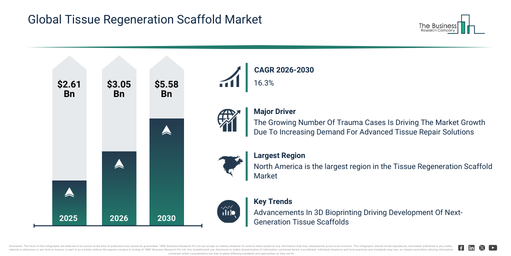
    The market for tissue regeneration scaffolds has experienced substantial growth in recent years. Its valuation is predicted to increase from $2.61 billion in 2025 to $3.05 billion in 2026, exhibiting a compound annual growth rate (CAGR) of 16.9%. This expansion in the past can be ascribed to factors like the limited availability of advanced scaffolds, a reliance on conventional grafts, a rising frequency of orthopedic and dental injuries, intensified research in tissue engineering, and the enhancement of hospital and clinical infrastructure.

    The tissue regeneration scaffold market is set to experience rapid expansion over the next few years, with its size expected to reach $5.58 billion in 2030, exhibiting a compound annual growth rate (CAGR) of 16.3%. This anticipated growth can be attributed to several factors, including the development of composite and nanocomposite scaffolds, advancements in bioactive and hydroxyapatite-based materials, the integration of 3D bioprinting into scaffold production, increasing investment in regenerative medicine, and a rise in collaborations between academic institutions and hospitals. Major trends during this forecast period include the increasing adoption of natural and synthetic tissue scaffolds, expansion across orthopedic, dental, and wound care applications, the integration of 3D bioprinting and advanced fabrication techniques, a heightened focus on biocompatibility and scaffold functionalization, and the proliferation of research and academic institutes specializing in regenerative medicine.

    Get A Free Sample Report With In-Depth Market Insights:

    https://thebusinessresearchcompany.com/sample_request?id=43287709&type=smp&name=Tissue%20Regeneration%20Scaffold%20Market%20Report%202026&utm_source=Blogs&utm_medium=Paid&utm_campaign=Oct_PR

    Tissue Regeneration Scaffold Market Growth Backed By Core Demand Fundamentals

    The expanding occurrence of trauma incidents is anticipated to boost the tissue regeneration scaffold market. Trauma incidents encompass injuries stemming from accidents, falls, or violence, leading to tissue damage that necessitates medical intervention. The uptick in trauma cases is primarily due to a rise in road traffic accidents, alongside industrial and workplace mishaps, which in turn elevates the demand for effective solutions for tissue repair and regeneration. Tissue regeneration scaffolds offer crucial support in trauma situations by providing a structured matrix that encourages the repair and growth of damaged tissues, thereby speeding up healing, minimizing complications like infections or scarring, and more effectively restoring the affected area’s normal function. For example, in October 2024, data from the Department of Health Alaska, a US-based government entity, indicated that in 2023, approximately 3,373 individuals in Alaska suffered traumatic brain injuries (TBI), covering both fatal outcomes and non-fatal injuries managed and discharged from hospitals or emergency departments (ED). Consequently, the increasing volume of trauma cases is propelling the growth of the tissue regeneration scaffold market.

    Tissue Regeneration Scaffold Market Segment Analysis And Revenue Potential

    The tissue regeneration scaffold market covered in this report is segmented –

    1) By Type: Natural, Synthetic, Composite

    2) By Application: Orthopedic, Dental, Wound Care

    3) By End-User: Hospitals And Clinics, Research And Academic Institutes

    Subsegments:

    1) By Natural: Collagen Scaffolds, Chitosan Scaffolds, Alginate Scaffolds, Hyaluronic Acid Scaffolds, Gelatin Scaffolds

    2) By Synthetic: Polylactic Acid (PLA) Scaffolds, Polyglycolic Acid (PGA) Scaffolds, Polycaprolactone (PCL) Scaffolds, Polyethylene Glycol (PEG) Scaffolds, Polylactic-Co-Glycolic Acid (PLGA) Scaffolds

    3) By Composite: Natural-Synthetic Polymer Composites, Ceramic-Polymer Composites, Nanocomposite Scaffolds, Hydroxyapatite-Based Composites, Bioactive Glass Composites

    Tissue Regeneration Scaffold Market Growth Trends Reshaping The Competitive Landscape

    Leading firms within the tissue regeneration scaffold market are concentrating on innovating sophisticated technologies, including three-dimensional (3D) bioprinting, to create scaffolds that are highly tailored and biologically pertinent. This 3D bioprinting technique employs bioinks, which consist of live cells and biological materials, to construct functional, three-dimensional tissue structures applicable in regenerative medicine and scientific research. As an illustration, in June 2023, 3D BioFibR Inc., a company from Canada specializing in biopolymer fiber manufacturing, introduced two new collagen fiber products: micro-collafibr and collafibr 3D scaffold. These products incorporate a unique dry-spinning technology to generate resilient, biologically appropriate scaffolds that enhance both the mechanical strength and performance of 3D bioprinted tissues and 3D cell cultures. Specifically, the Collafibr 3D scaffold, crafted from GMP-grade type 1 collagen fibers, closely mirrors the natural extracellular matrix’s structure and biomechanical characteristics. It offers a three-dimensional setting conducive to realistic cell proliferation and communication, while also being compatible with standard well plate formats, facilitating high-throughput drug screening and advanced microscopy, thereby furthering advancements in tissue modeling and regenerative medicine research.

    Tissue Regeneration Scaffold Market Key Players Shaping Industry Direction

    Major companies operating in the tissue regeneration scaffold market are Evonik Industries AG, DSM-Firmenich AG, Ashland Inc., Integra LifeSciences Corporation, Organogenesis Inc., MiMedx Group Inc., LifeNet Health Inc., BioTissue Inc., Aroa Biosurgery Limited, Poly-Med Inc., CollPlant Biotechnologies Ltd.

    View The Full Tissue Regeneration Scaffold Market Report:

    https://thebusinessresearchcompany.com/report/tissue-regeneration-scaffold-global-market-report?utm_source=Blogs&utm_medium=Paid&utm_campaign=Oct_PR

    Tissue Regeneration Scaffold Market Geographic Landscape: Which Region Dominates Industry Growth?

    North America was the largest region in the tissue regeneration scaffold market in 2025. Asia-Pacific is expected to be the fastest-growing region in the forecast period. The regions covered in the tissue regeneration scaffold market report are Asia-Pacific, South East Asia, Western Europe, Eastern Europe, North America, South America, Middle East, Africa.

    Reach Out To Our Team:

    The Business Research Company: https://www.thebusinessresearchcompany.com/

    Americas: +1 310-496-7795

    Asia: +44 7882 955267 & +91 8897263534

    Europe: +44 7882 955267

    Email us at: marketing@tbrc.info

    Follow us on:

    LinkedIn: https://in.linkedin.com/company/the-business-research-company

    YouTube: https://www.youtube.com/channel/UC24_fI0rV8cR5DxlCpgmyFQ

    Global Market Model: https://www.thebusinessresearchcompany.com/global-market-model
  • Tissue Plasminogen Activator Market Forecast Highlights A $5.65 Billion Opportunity For Industry Participants

    Tissue Plasminogen Activator Market Forecast Highlights A $5.65 Billion Opportunity For Industry Participants

    Featuring market attractiveness scoring, total addressable market sizing, company benchmarking matrices, interactive Excel dashboards, deeper supply chain intelligence, emerging startup tracking, and granular product-level insights, The Business Research Company’s 2026 market reports are built to deliver research that is both more actionable and more strategically valuable.

    Tissue Plasminogen Activator Market Size Outlook: How Quickly Will Revenue Expand Through 2030?

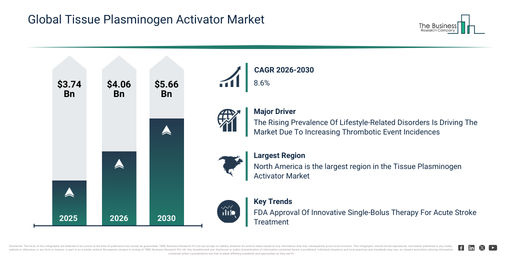
    The tissue plasminogen activator market has experienced significant growth in recent years. It is anticipated to increase from $3.74 billion in 2025 to $4.06 billion in 2026, demonstrating a compound annual growth rate (CAGR) of 8.7%. The market’s expansion in the past can be attributed to factors such as stroke prevalence, emergency care protocols, the adoption of hospital thrombolysis, the burden of cardiovascular disease, and support from clinical guidelines.

    The tissue plasminogen activator market size is expected to show significant expansion over the next few years. It is predicted to reach $5.66 billion in 2030, demonstrating a compound annual growth rate (CAGR) of 8.6%. The anticipated growth during this period is driven by an aging population, improved public awareness of stroke, the expansion of biosimilar options, increased investment in emergency healthcare, and faster diagnostic capabilities. Key trends for the forecast period include the rising application in acute ischemic stroke treatment, the broader availability of emergency thrombolytic therapy, the integration of biosimilar tPA products, the development of rapid response care models, and a concentrated effort on time-sensitive drug delivery.

    Get A Free Sample Report With In-Depth Market Insights:

    https://thebusinessresearchcompany.com/sample_request?id=40830128&type=smp&name=Tissue%20Plasminogen%20Activator%20Market%20Report%202026&utm_source=Blogs&utm_medium=Paid&utm_campaign=Oct_PR

    Tissue Plasminogen Activator Market Growth Catalysts And Demand Drivers

    The expanding occurrence of lifestyle-related health issues is anticipated to propel the future growth of the tissue plasminogen activator market. These disorders are defined as a category of non-communicable diseases primarily stemming from unhealthy habits such as poor nutrition, insufficient physical activity, smoking, and excessive alcohol consumption, which can lead to conditions like cardiovascular disease, diabetes mellitus, and hypertension. The increasing frequency of these conditions is fueled by factors including evolving dietary habits and reduced physical activity, with the widespread adoption of sedentary lifestyles being a key contributor as it negatively impacts metabolic health and encourages the development of thrombotic events. Tissue plasminogen activator (tPA) addresses the clinical ramifications of lifestyle-related disorders by effectively dissolving life-threatening blood clots linked to ischemic strokes and myocardial infarctions, thereby decreasing mortality and improving patient outcomes. As an illustration, in May 2025, the Office for Health Improvement and Disparities, a UK-based government entity, reported that from 2023 to 2024, an estimated 64.5% of adults aged 18 and over in England were overweight or living with obesity, an increase from 64.0% in 2022 to 2023. Consequently, the rising prevalence of lifestyle-related disorders is driving the tissue plasminogen activator market.

    Tissue Plasminogen Activator Market Segmentation And Category Overview

    The tissue plasminogen activator market covered in this report is segmented –

    1) By Product Type: Alteplase, Tenecteplase, Reteplase, Other Product Types

    2) By Dosage Form: Powder For Injection, Solution For Injection

    3) By Distribution Channel: Direct Sales, Distributors, Online Pharmacies, Retail Pharmacies

    4) By Application: Ischemic Stroke, Myocardial Infarction, Pulmonary Embolism, Thrombolysis, Other Applications

    5) By End-User: Hospitals, Specialized Cardiac Clinics, Emergency Medical Services (EMS)

    Subsegments:

    1) By Alteplase: Recombinant Alteplase, Biosimilar Alteplase, Lyophilized Alteplase

    2) By Tenecteplase: Recombinant Tenecteplase: Genetically Engineered Tenecteplase, Long-Acting Tenecteplase

    3) By Reteplase: Recombinant Reteplase, Double-Chain Reteplase, Single-Bolus Reteplase

    4) By Other Product Types: Monteplase, Lanoteplase, Desmoteplase, Combination Agents With tPA Analogs

    Tissue Plasminogen Activator Market Trends Shaping Long-Term Demand

    Leading companies within the tissue plasminogen activator market are prioritizing the creation of innovative formulations, such as single-bolus thrombolytic agents, to enhance acute stroke treatment through improved thrombolytic therapy. These single-bolus thrombolytic agents are rapid-acting medications administered in a single intravenous dose to swiftly dissolve blood clots and reinstate normal blood flow in conditions like myocardial infarction, stroke, or pulmonary embolism. For instance, in March 2025, Genentech Inc., a US-based biotechnology company, announced the U.S. Food and Drug Administration (FDA) approval of TNKase (tenecteplase) for treating acute ischemic stroke (AIS) in adults. This marks the company’s second approval for stroke management, with TNKase providing a more efficient and simplified treatment option via a single five-second intravenous bolus, contrasting with the standard 60-minute infusion required for Activase (alteplase). The approval is substantiated by robust clinical evidence from the AcT trial, which indicated that TNKase is comparable to Activase in both safety and efficacy among AIS patients. This advancement is projected to significantly improve treatment timeliness and ease, which is crucial for patients experiencing acute ischemic strokes, as rapid intervention is critical for diminishing long-term disability and mortality rates.

    Tissue Plasminogen Activator Market Competitive Analysis Of Leading Industry Participants

    Major companies operating in the tissue plasminogen activator market are F. Hoffmann-La Roche Ltd., Genentech Inc., Boehringer Ingelheim International GmbH, Mitsubishi Tanabe Pharma Corporation, Eisai Co. Ltd., Kyowa Kirin Co. Ltd., Chugai Pharmaceutical Co. Ltd., Hisun Pharmaceutical Co. Ltd., Livzon Pharmaceutical Group Inc., Shanghai Shyndec Pharmaceutical Co. Ltd., CSPC Pharmaceutical Group Limited, China Grand Pharmaceutical and Healthcare Holdings Limited, Tasly Pharmaceutical Group Co. Ltd., Beijing Sihuan Pharmaceutical Co. Ltd., Shenzhen Salubris Pharmaceuticals Co. Ltd., Guangzhou Baiyunshan Pharmaceutical Holdings Co. Ltd., Zhejiang Hisun Pharmaceutical Co. Ltd., North China Pharmaceutical Group Corporation, Jiangsu Hengrui Pharmaceuticals Co. Ltd., Simcere Pharmaceutical Group Ltd., Qilu Pharmaceutical Co. Ltd., Harbin Pharmaceutical Group Co. Ltd., Gennova Biopharmaceuticals Ltd., Reliance Life Sciences, Angde Biological Pharmaceutical Co. Ltd.

    View The Full Tissue Plasminogen Activator Market Report:

    https://thebusinessresearchcompany.com/report/tissue-plasminogen-activator-global-market-report?utm_source=Blogs&utm_medium=Paid&utm_campaign=Oct_PR

    Tissue Plasminogen Activator Market Largest Region: Which Geography Holds The Highest Market Share?

    North America was the largest region in the tissue plasminogen activator market in 2025. Asia-Pacific is expected to be the fastest-growing region in the forecast period. The regions covered in the tissue plasminogen activator market report are Asia-Pacific, South East Asia, Western Europe, Eastern Europe, North America, South America, Middle East, Africa.

    Reach Out To Our Team:

    The Business Research Company: https://www.thebusinessresearchcompany.com/

    Americas: +1 310-496-7795

    Asia: +44 7882 955267 & +91 8897263534

    Europe: +44 7882 955267

    Email us at: marketing@tbrc.info

    Follow us on:

    LinkedIn: https://in.linkedin.com/company/the-business-research-company

    YouTube: https://www.youtube.com/channel/UC24_fI0rV8cR5DxlCpgmyFQ

    Global Market Model: https://www.thebusinessresearchcompany.com/global-market-model
  • Tissue Engineering For Wound Care Market Analysis: How The Industry Is Evolving Toward A $13.6 Billion Future

    Tissue Engineering For Wound Care Market Analysis: How The Industry Is Evolving Toward A $13.6 Billion Future

    Built to provide research that’s more actionable and strategically valuable, The Business Research Company’s 2026 market reports include market attractiveness analysis, total addressable market sizing, company benchmarking matrices, interactive Excel dashboards, broader supply chain intelligence, emerging startup tracking, and in-depth product insights.

    Tissue Engineering For Wound Care Market Size, Value And Growth Trajectory Through 2030

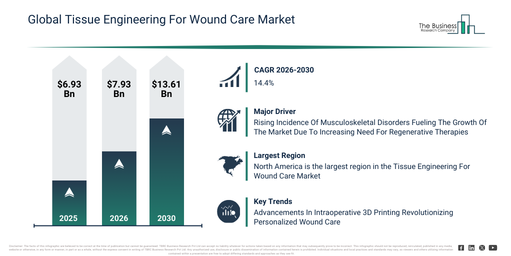
    The tissue engineering for wound care market has experienced substantial expansion in recent years. Its valuation is set to increase from $6.93 billion in 2025 to $7.93 billion in 2026, with a compound annual growth rate (CAGR) of 14.5%. The historical growth of this market can be linked to an aging population, the prevalence of diabetes, burn injuries, established hospital wound care programs, and advancements in biomaterials.

    The tissue engineering for wound care market is expected to demonstrate significant growth in the coming years. This market is forecasted to reach $13.61 billion by 2030, achieving a compound annual growth rate (CAGR) of 14.4%. The expansion projected for this period is driven by factors such as an increase in chronic wound cases, the adoption of regenerative medicine, the growth of outpatient wound care, innovations in biomaterials, and rising healthcare expenditure. Notable trends during the forecast period include the increasing use of bioengineered skin substitutes, the development of chronic wound management solutions, the integration of stem cell-based therapies, the broadened availability of advanced wound care products, and a stronger focus on achieving faster tissue regeneration.

    Get A Free Sample Report With In-Depth Market Insights:

    https://thebusinessresearchcompany.com/sample_request?id=94422404&type=smp&name=Tissue%20Engineering%20For%20Wound%20Care%20Market%20Report%202026&utm_source=Blogs&utm_medium=Paid&utm_campaign=Oct_PR

    Tissue Engineering For Wound Care Market Opportunity Drivers: What’s Unlocking New Revenue Potential?

    A growing number of musculoskeletal disorders is projected to drive expansion in the tissue engineering for wound care market over the next few years. These disorders involve conditions impacting muscles, bones, joints, tendons, or ligaments, leading to symptoms such as pain, rigidity, or restricted mobility. The increase in musculoskeletal disorders stems from more sedentary habits, where prolonged sitting and less physical activity cause muscles to weaken and joints to experience stress, resulting in persistent problems. Tissue engineering for wound care becomes essential for musculoskeletal disorders due to its capacity to aid in the regeneration of compromised tissues, thereby assisting in the recovery of function and structure in regions where natural recovery is inadequate. For example, in January 2024, data from the Office for Health Improvement and Disparities, a UK-based government public health agency, revealed that the percentage of individuals aged 16 and over reporting a long-term musculoskeletal (MSK) condition was 18.4% in 2023, an increase from 17.6% in 2022. Consequently, the rising occurrence of musculoskeletal disorders is set to stimulate the expansion of the tissue engineering for wound care market.

    Tissue Engineering For Wound Care Market Segment Outlook: Which Categories Are Growing Fastest?

    The tissue engineering for wound care market covered in this report is segmented –

    1) By Product Material: Scaffold, Tissue Grafts, Other Products

    2) By Type Of Wound: Chronic Wounds, Acute Wounds

    3) By Application: Skin Regeneration, Soft Tissue Repair

    4) By End-User: Hospitals, Specialty Centers And Clinics, Ambulatory Surgical Centers

    Subsegments:

    1) By Scaffold: Natural Scaffolds, Synthetic Scaffolds, Composite Scaffolds, Hydrogels, Nanofiber-Based Scaffolds

    2) By Tissue Grafts: Autografts, Allografts, Xenografts, Bioengineered Skin Substitutes, Amniotic Tissue Grafts

    3) By Other Products: Cell-Based Products, Growth Factors, Acellular Dermal Matrices, Collagen-Based Dressings, Stem Cell-Derived Biomaterials

    Tissue Engineering For Wound Care Market Innovation Trends Shaping Future Development

    Leading companies active in the tissue engineering for wound care market are concentrating on developing technologically advanced solutions, such as intraoperative 3D printers, to facilitate the rapid creation of complex structures. These advanced intraoperative 3D printers are tools utilized during surgical procedures to generate customized implants, models, or instruments in real-time, thereby improving precision and patient-specific treatment. For example, in September 2024, Tides Medical, a US-based biotechnology company, launched APLICOR 3D, an intraoperative 3D printer for personalized wound care. This innovation transforms wound care by employing the patient’s own tissue, artificial intelligence, and 3D printing technology to form personalized skin grafts directly at the treatment location. This singular procedure caters to the distinct needs of each patient while simplifying supply chain logistics, inventory management, and decreasing the workload for physicians. After the exact size, depth, and tissue volume required are determined by scanning the wound with a specialized tablet, the provider transmits the 3D file to the printer. Subsequently, after harvesting and processing fat into bio-ink, the 3D printer constructs the graft, allowing for effective wound closure in under one hour.

    Tissue Engineering For Wound Care Market Leading Companies And Competitive Benchmarking

    Major companies operating in the tissue engineering for wound care market are Smith & Nephew plc, ConvaTec Group Plc, MTF Biologics, MiMedx Group Inc., LifeNet Health Inc., Kerecis LLC, Aroa Biosurgery Ltd., Tissue Regenix Group PLC, BioStem Technologies Inc., Organogenesis Holdings Inc., Integra LifeSciences Holdings Corporation, Osiris Therapeutics (Smith & Nephew), Stryker Corporation, Medline Industries LP, Mölnlycke Health Care AB, 3M Health Care, Cardinal Health Inc., Derma Sciences Inc., Acell Inc., Wright Medical Group N.V., Anika Therapeutics Inc., Regen Lab SA, Skye Biologics Inc., Human Regenerative Technologies LLC, StimLabs LLC

    View The Full Tissue Engineering For Wound Care Market Report:

    https://thebusinessresearchcompany.com/report/tissue-engineering-for-wound-care-global-market-report?utm_source=Blogs&utm_medium=Paid&utm_campaign=Oct_PR

    Tissue Engineering For Wound Care Market Regional Analysis: Which Region Leads By Revenue?

    North America was the largest region in the tissue engineering for wound care market in 2025. The regions covered in the tissue engineering for wound care market report are Asia-Pacific, South East Asia, Western Europe, Eastern Europe, North America, South America, Middle East, Africa.

    Reach Out To Our Team:

    The Business Research Company: https://www.thebusinessresearchcompany.com/

    Americas: +1 310-496-7795

    Asia: +44 7882 955267 & +91 8897263534

    Europe: +44 7882 955267

    Email us at: marketing@tbrc.info

    Follow us on:

    LinkedIn: https://in.linkedin.com/company/the-business-research-company

    YouTube: https://www.youtube.com/channel/UC24_fI0rV8cR5DxlCpgmyFQ

    Global Market Model: https://www.thebusinessresearchcompany.com/global-market-model
  • Ticagrelor Market Outlook Through 2030: Understanding The Growth Opportunity

    Ticagrelor Market Outlook Through 2030: Understanding The Growth Opportunity

    Backed by market attractiveness analysis, total addressable market sizing, company benchmarking matrices, interactive Excel dashboards, wider supply chain intelligence, emerging startup coverage, and detailed product-level insights, The Business Research Company’s 2026 market reports are designed to offer research that is more actionable and strategically valuable than ever.

    Ticagrelor Market CAGR Outlook And Future Development

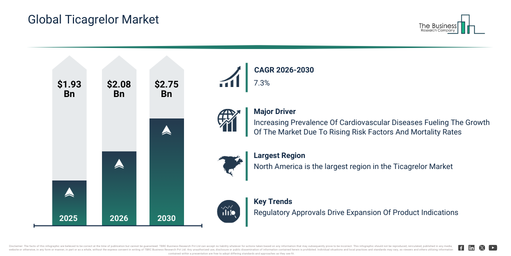
    The ticagrelor market size has shown substantial growth in recent years. It is projected to expand from $1.93 billion in 2025 to $2.08 billion in 2026, achieving a compound annual growth rate (CAGR) of 7.6%. The expansion observed in the historical period stems from various factors, including the restricted availability of antiplatelet therapies, an increasing prevalence of cardiovascular disease, the broadening of hospital pharmacy networks, a rise in clinical trials for cardiovascular drugs, and enhanced awareness regarding heart attack and stroke risks.

    The ticagrelor market is projected to experience robust expansion over the coming years, with its valuation anticipated to reach $2.75 billion by 2030, demonstrating a compound annual growth rate (CAGR) of 7.3%. This growth during the forecast period is attributable to several factors, including the introduction of extended-release ticagrelor tablets, the broadening of retail and online pharmacy distribution channels, the growing embrace of personalized cardiovascular treatment, escalating government efforts for cardiovascular disease prevention, and the incorporation of digital health monitoring systems. Key trends shaping the forecast period encompass the increasing application of ticagrelor in managing acute coronary syndrome, a rising inclination towards oral antiplatelet therapy instead of injectable alternatives, the expansion of hospital-based and ambulatory cardiology services, heightened awareness regarding stroke and myocardial infarction prevention, and the continued development of extended-release ticagrelor formulations.

    Get A Free Sample Report With In-Depth Market Insights:

    https://thebusinessresearchcompany.com/sample_request?id=33442923&type=smp&name=Ticagrelor%20Market%20Report%202026&utm_source=Blogs&utm_medium=Paid&utm_campaign=Oct_PR

    Ticagrelor Market Growth Momentum: What Factors Are Shaping Demand?

    The escalating incidence of cardiovascular diseases is anticipated to drive the expansion of the ticagrelor market moving forward. These conditions refer to a range of disorders impacting the heart and blood vessels, including coronary heart disease, heart failure, stroke, and hypertension. The increasing occurrence of cardiovascular diseases is mainly linked to unhealthy dietary choices, as consuming excessive amounts of saturated fats, trans fats, added sugars, and sodium contributes to high blood pressure, obesity, and elevated cholesterol, all major risk factors for heart-related ailments. Ticagrelor assists in treating cardiovascular diseases by preventing platelet aggregation, thereby lowering the risk of blood clots. This mechanism enhances patient outcomes by reducing the chances of heart attacks and strokes, especially in high-risk individuals. For instance, according to the American Heart Association, a US-based non-profit organization, the age-adjusted death rate from cardiovascular disease increased to 233.3 per 100,000 in 2024, up 4.0% from 224.4 per 100,000 in 2023, as reported in January 2024. Therefore, the rising prevalence of cardiovascular diseases is propelling the growth of the ticagrelor market.

    Ticagrelor Market Segment Landscape: Which Areas Lead Development?

    The ticagrelor market covered in this report is segmented –

    1) By Type: 90 mg Tablet, 60 mg Tablet

    2) By Drug Class: Antiplatelet Agents, Antithrombotic Agents

    3) By Distribution Channel: Hospital Pharmacies, Retail Pharmacies, Online Pharmacies

    4) By Application: Acute Coronary Syndrome, Myocardial Infarction, Stroke Prevention, Other Applications

    5) By End User: Hospitals And Clinics, Ambulatory Centers, Other End Users

    Ticagrelor Market Trends Redefining Industry Growth

    Leading firms in the ticagrelor market are actively seeking regulatory approvals to broaden product applications, enhance market access, and strengthen their competitive position. Such regulatory approvals denote the official permission granted by governmental bodies for the marketing and sale of a product, ensuring adherence to safety, efficacy, and quality standards. For instance, in May 2025, Alembic Pharmaceuticals Ltd., an India-based pharmaceutical company, secured an abbreviated new drug application (ANDA) from the US Food & Drug Administration (USFDA) for its generic ticagrelor tablets 90 mg and received tentative approval for the 60 mg strength. These tablets are prescribed to lower the risk of cardiovascular events and operate by inhibiting platelet aggregation, thereby preventing the formation of blood clots.

    Ticagrelor Market Industry Leaders And Competitive Landscape

    Major companies operating in the ticagrelor market are AstraZeneca PLC, Merck KGaA, Boehringer Ingelheim International GmbH, Sun Pharmaceutical Industries Limited, Dr. Reddy’s Laboratories Limited, Cadila Pharmaceuticals Limited, Alkem Laboratories, Alembic Pharmaceuticals Limited, CCL Pharmaceuticals, Neuland Laboratories, Jiangxi Synergy Pharmaceutical Co. Ltd., Leeford Healthcare Limited, Scimplify, JAMP Pharma Corporation, Actoverco Pharmaceutical Company, CTX Lifesciences Private Limited, DM Pharma, Hema Pharmaceuticals Pvt. Ltd., Chia-Tai Tianqing Pharmaceutical Group Co. Ltd., Biophar Lifesciences Pvt. Ltd., PhaseBio Pharmaceuticals Inc.

    View The Full Ticagrelor Market Report:

    https://thebusinessresearchcompany.com/report/ticagrelor-global-market-report?utm_source=Blogs&utm_medium=Paid&utm_campaign=Oct_PR

    Ticagrelor Market Geographic Distribution And Regional Opportunities

    North America was the largest region in the ticagrelor market in 2025. Asia-Pacific is expected to be the fastest-growing region in the forecast period. The regions covered in the ticagrelor market report are Asia-Pacific, South East Asia, Western Europe, Eastern Europe, North America, South America, Middle East, Africa.

    Reach Out To Our Team:

    The Business Research Company: https://www.thebusinessresearchcompany.com/

    Americas: +1 310-496-7795

    Asia: +44 7882 955267 & +91 8897263534

    Europe: +44 7882 955267

    Email us at: marketing@tbrc.info

    Follow us on:

    LinkedIn: https://in.linkedin.com/company/the-business-research-company

    YouTube: https://www.youtube.com/channel/UC24_fI0rV8cR5DxlCpgmyFQ

    Global Market Model: https://www.thebusinessresearchcompany.com/global-market-model
  • Tibsovo Market Growth Potential: What The Latest Forecast Reveals

    Tibsovo Market Growth Potential: What The Latest Forecast Reveals

    Featuring market attractiveness scoring, total addressable market sizing, company benchmarking matrices, interactive Excel dashboards, deeper supply chain intelligence, emerging startup tracking, and granular product-level insights, The Business Research Company’s 2026 market reports are built to deliver research that is both more actionable and more strategically valuable.

    Tibsovo Market Set To Climb From $1.18 Billion In 2026 To $1.69 Billion By 2030

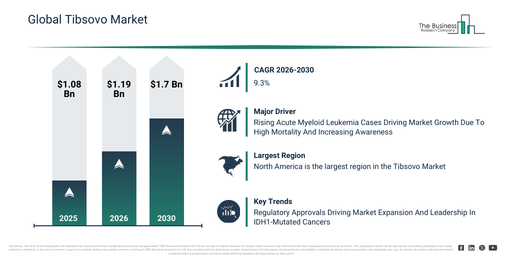
    The tibsovo market has witnessed significant expansion over recent years. It is projected to grow from $1.08 billion in 2025 to $1.19 billion in 2026, demonstrating a compound annual growth rate (CAGR) of 9.6%. Historically, this market expansion was primarily driven by factors such as the restricted availability of IDH1-targeted drugs, the increasing prevalence of AML and cholangiocarcinoma, a reliance on conventional chemotherapy, limited awareness regarding genetic mutation testing, and constrained access to specialized oncology clinics.

    The tibsovo market is projected to experience robust expansion in the coming years. It is anticipated to reach $1.7 billion by 2030, exhibiting a compound annual growth rate (CAGR) of 9.3%. This expansion during the forecast period is fueled by factors such as the creation of innovative oral targeted treatments, the increased embrace of genetic testing and tailored medicine, the broadening of combination therapy protocols, escalating investment in cancer research, and the proliferation of hospital and specialized clinic networks. Key trends anticipated over the same period encompass the heightened acceptance of targeted therapies for AML and cholangiocarcinoma, a shift towards oral targeted medications instead of intravenous delivery, the broadening of combined therapeutic strategies, increasing recognition of IDH1 mutation testing, and a stronger emphasis on individualized cancer care.

    Get A Free Sample Report With In-Depth Market Insights:

    https://thebusinessresearchcompany.com/sample_request?id=32672777&type=smp&name=Tibsovo%20Market%20Report%202026&utm_source=Blogs&utm_medium=Paid&utm_campaign=Oct_PR

    Tibsovo Market Expansion Drivers: What’s Shaping Future Growth?

    The rising incidence of acute myeloid leukemia is anticipated to boost the expansion of the tibsovo market in the foreseeable future. Acute myeloid leukemia (AML) is characterized as a rapidly advancing cancer affecting the blood and bone marrow, which directly compromises blood cell generation, immune system functionality, and general well-being. The growing occurrence of acute myeloid leukemia can be largely attributed to the worldwide increase in the elderly population, given that the illness predominantly impacts older individuals, and extended lifespans result in a greater number of people reaching the age group most prone to acquiring this type of leukemia. Tibsovo assists in managing acute myeloid leukemia by specifically targeting IDH1-mutated cancer cells, thereby curbing irregular cell proliferation, slowing down disease advancement, improving therapeutic efficacy, and boosting survival prospects through the restoration of regular blood cell formation. As an illustration, a report released in February 2023 by the Leukemia Foundation, an Australian non-profit entity, projected that from 2022 to 2035, more than 7,000 children, 6,000 young adults, and 108,000 adults (25–65) are anticipated to receive diagnoses for blood cancers, predominantly encompassing ALL, AML, and non-Hodgkin lymphoma. Consequently, the expanding prevalence of acute myeloid leukemia is propelling the development of the tibsovo market.

    Tibsovo Market Segments: Where Is Growth Concentrated?

    The tibsovo market covered in this report is segmented –

    1) By Product: Tablets, Combination Therapy

    2) By Drug Administration: Oral Administration, Intravenous Administration

    3) By Distribution Channel: Hospital Pharmacies, Retail Pharmacies, Online Pharmacies

    4) By Application: Cancer Treatment, Acute Myeloid Leukemia, Targeted Therapy

    5) By End User: Hospitals, Specialty Clinics, Research Institutions, Homecare Settings

    Subsegments:

    1) By Tablets: Oral Tablets, Extended-Release Tablets

    2) By Combination Therapy: Tibsovo + Chemotherapy Agents, Tibsovo + Targeted Therapy Agents

    Tibsovo Market Strategic Trends: What Defines The Next Growth Phase?

    Leading firms in the tibsovo market are prioritizing the acquisition of regulatory authorizations to expand the drug’s availability and sustain its dominant position in treating IDH1-mutated cancers. These approvals represent official clearances from health bodies, permitting a medication to be lawfully distributed and utilized for particular health issues once its safety and efficacy are confirmed. An illustrative example is Servier Laboratoires, a pharmaceutical firm based in France, which in October 2023 secured approval from the European Commission for tibsovo (ivosidenib tablets), establishing it as the inaugural and sole IDH1-targeted treatment sanctioned in Europe for two difficult-to-treat forms of cancer. Its authorization covers its use alongside azacitidine for individuals newly diagnosed with acute myeloid leukemia (AML) presenting an IDH1 R132 mutation who cannot undergo conventional induction chemotherapy, and as a standalone therapy for adults suffering from locally advanced or metastatic cholangiocarcinoma with the identical mutation, following at least one previous systemic treatment. This particular approval, benefiting from an orphan drug designation, addresses significant unfulfilled medical requirements and offers renewed promise for enhanced patient outcomes and improved quality of life.

    Tibsovo Market Key Participants And Competitive Landscape

    Major companies operating in the tibsovo market are Servier Laboratoires, Agios Pharmaceuticals

    View The Full Tibsovo Market Report:

    https://thebusinessresearchcompany.com/report/tibsovo-global-market-report?utm_source=Blogs&utm_medium=Paid&utm_campaign=Oct_PR

    Tibsovo Market Largest Region By Revenue And Market Share

    North America was the largest region in the tibsovo market in 2025. Asia-Pacific is expected to be the fastest-growing region in the forecast period. The regions covered in the tibsovo market report are Asia-Pacific, South East Asia, Western Europe, Eastern Europe, North America, South America, Middle East, Africa.

    Reach Out To Our Team:

    The Business Research Company: https://www.thebusinessresearchcompany.com/

    Americas: +1 310-496-7795

    Asia: +44 7882 955267 & +91 8897263534

    Europe: +44 7882 955267

    Email us at: marketing@tbrc.info

    Follow us on:

    LinkedIn: https://in.linkedin.com/company/the-business-research-company

    YouTube: https://www.youtube.com/channel/UC24_fI0rV8cR5DxlCpgmyFQ

    Global Market Model: https://www.thebusinessresearchcompany.com/global-market-model