Blog

  • Spinal Muscular Atrophy Market Size Forecast: Revenue and CAGR by 2029

    Spinal Muscular Atrophy Market Size Forecast: Revenue and CAGR by 2029

    Unlock Global Insights – Save 20% on Market Reports with Code ONLINE20

    What Is The Global Market Value Of The Spinal Muscular Atrophy Industry In 2025?

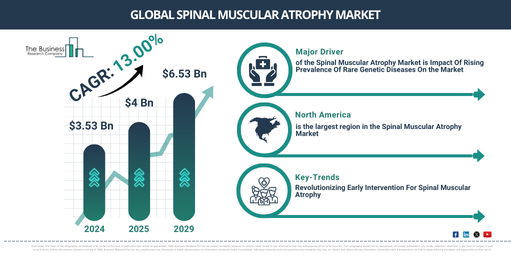
    The spinal muscular atrophy market size has seen swift expansion in recent years. It is anticipated to increase from $3.53 billion in 2024 to $4 billion in 2025, exhibiting a compound annual growth rate (CAGR) of 13.3%. This historical growth can be linked to several factors including increased diagnosis and early detection, the rising prevalence of rare genetic disease, advancements in healthcare infrastructure, support from government and regulatory bodies, and a growth in unmet healthcare needs.

    The spinal muscular atrophy market is anticipated to experience substantial growth over the upcoming years, with projections indicating it will reach $6.53 billion by 2029, achieving a compound annual growth rate (CAGR) of 13.0%. This expansion during the forecast period is primarily driven by heightened awareness and improved diagnosis, increased access to treatments, greater healthcare investments targeting rare diseases, a supportive regulatory landscape, and rising healthcare expenditure. Notable trends emerging in this period involve progress in oral therapies, the increasing adoption of gene therapy, technological improvements in drug delivery systems, the integration of artificial intelligence into SMA treatment development, and advancements in gene editing technologies.

    Unlock Your Free Sample Report for Exclusive Market Data:

    https://www.thebusinessresearchcompany.com/sample.aspx?id=20965&type=smp

    Which Drivers Are Supporting Growth Of The Spinal Muscular Atrophy Market?

    The increasing occurrence of rare genetic diseases is anticipated to boost the expansion of the spinal muscular atrophy market moving forward. These conditions are disorders caused by genetic mutations, affecting a small segment of the population and often leading to severe, chronic health problems. The growing prevalence of rare genetic diseases can be attributed to advancements in diagnostic technologies, heightened awareness, and improved access to genetic testing, which results in more cases being identified and reported. Spinal muscular atrophy (SMA) is a rare genetic disorder that exemplifies both the difficulties and opportunities involved in understanding inherited diseases. It underscores the importance of advancing research into genetic conditions. For instance, in July 2023, as per a report published by the Office for National Statistics, a UK-based government department, genetic testing of SMN1 has enabled precise epidemiological studies, revealing that SMA occurs in 1 of 10,000 to 20,000 live births and that more than 95% of affected patients are homozygous for SMN1 deletion. Therefore, the rising prevalence of rare genetic diseases will stimulate the growth of the spinal muscular atrophy market.

    What Are The Key Segments In The Spinal Muscular Atrophy Market?

    The spinal muscular atrophymarket covered in this report is segmented –

    1) By Type: Type 1 (Severe); Type 2 (Intermediate); Type 3 (Mild); Type 4 (Adult)

    2) By Age: Pediatric; Adults

    3) By Treatment: Drug Therapy; Gene Therapy

    4) By End User: Hospital pharmacy; Online pharmacy; Retail pharmacy

    Subsegments:

    1) By Type 1 (Severe): Infantile-Onset SMA; Severe Progressive SMA

    2) By Type 2 (Intermediate): Early-Onset SMA; Non-progressive SMA

    3) By Type 3 (Mild): Juvenile-Onset SMA; Mild Progressive SMA

    4) By Type 4 (Adult): Adult-Onset SMA; Late-Onset SMA

    How Are Trends Influencing The Spinal Muscular Atrophy Market?

    Major companies operating in the spinal muscular atrophy market are creating innovative products, such as dry syrup, to enhance medication adherence and ease of administration for pediatric and other patient groups who experience swallowing difficulties. Dry syrup is a powdered medication that requires reconstitution with water before use, frequently prescribed for children and individuals who struggle with swallowing tablets or capsules. For example, in September 2024, Chugai Pharmaceutical Co., Ltd., a pharmaceutical company based in Japan, announced that Japan’s Ministry of Health, Labour and Welfare had granted regulatory approval for an expanded indication of its drug Evrysdi (risdiplam). This approval permits its use in pre-symptomatic spinal muscular atrophy (SMA) and extends dosing to infants younger than two months old. This achievement is vital as it allows treatment to begin before symptoms emerge, potentially improving therapeutic outcomes for affected infants. The decision was supported by findings from the RAINBOWFISH study, which assessed Evrysdi’s safety and efficacy in infants diagnosed with SMA but not yet displaying symptoms. Results showed that treated infants reached developmental milestones, such as unsupported sitting and enhanced motor skills, by 12 months, emphasizing the drug’s potential to alter the disease’s progression when administered early.

    Who Are The Core Companies Influencing The Spinal Muscular Atrophy Market Landscape?

    Major companies operating in the spinal muscular atrophy market are Pfizer Inc., F. Hoffmann-La Roche Ltd, Bayer AG, Novartis AG, Biogen Inc., Chugai Pharmaceutical Co. Ltd., Genentech Inc., PTC Therapeutics Inc., Ionis Pharmaceuticals Inc., Biohaven Ltd., Catalyst Pharmaceuticals Inc., RegenXBio Inc., Cytokinetics Inc., AveXis Inc., Scholar Rock Inc., Genethon, CANbridge Pharmaceuticals Inc., NMD Pharma A/S, Hanugen Therapeutics Inc., Beijing Jinlan Gene Technology Co. Ltd.

    Download The Full Report For Exclusive Market Findings:

    https://www.thebusinessresearchcompany.com/report/spinal-muscular-atrophy-global-market-report

    Which Geographies Are Emerging As Strong Markets For The Spinal Muscular Atrophy Industry?

    North America was the largest region in the spinal muscular atrophy market in 2024. Asia-Pacific is expected to be the fastest-growing region in the forecast period. The regions covered in the spinal muscular atrophy market report are Asia-Pacific, Western Europe, Eastern Europe, North America, South America, Middle East, Africa.

    Request A Customized Version Of The Spinal Muscular Atrophy Market Report:

    https://www.thebusinessresearchcompany.com/customise?id=20965&type=smp

    Browse Through More Reports Similar to the Global Spinal Muscular Atrophy Market 2025, By The Business Research Company

    Optic Atrophy Management Global Market Report 2025

    https://www.thebusinessresearchcompany.com/report/optic-atrophy-management-global-market-report

    Spinal Surgery Devices And Equipment Global Market Report 2025

    https://www.thebusinessresearchcompany.com/report/spinal-surgery-devices-and-equipment-global-market-report

    Cerebrospinal Fluid Management Csf Devices And Equipment Global Market Report 2025

    https://www.thebusinessresearchcompany.com/report/cerebrospinal-fluid-management-csf-devices-and-equipment-global-market-report

    Get in touch with us:

    The Business Research Company: https://www.thebusinessresearchcompany.com/

    Americas +1 310-496-7795

    Asia +44 7882 955267 & +91 8897263534

    Europe +44 7882 955267

    Email us at info@tbrc.info

    Follow us on:

    LinkedIn: https://in.linkedin.com/company/the-business-research-company

    YouTube: https://www.youtube.com/channel/UC24_fI0rV8cR5DxlCpgmyFQ

    Global Market Model: https://www.thebusinessresearchcompany.com/global-market-model

  • Global Small Lymphocytic Lymphoma Market Trends and Growth Analysis 2025–2029

    Global Small Lymphocytic Lymphoma Market Trends and Growth Analysis 2025–2029

    Unlock Global Insights – Save 20% on Market Reports with Code ONLINE20

    By How Much Is The Small Lymphocytic Lymphoma Market Expected To Expand Between 2025 And 2029?

    The small lymphocytic lymphoma market size has demonstrated consistent growth in recent years. Forecasts show it will increase from $3.12 billion in 2024 to $3.23 billion in 2025, progressing at a compound annual growth rate (CAGR) of 3.5%. This growth observed in the historical period is attributable to enhanced awareness and early detection, successful regulatory approvals, the expansion of clinical trials, a general rise in awareness of SLL, and greater participation in clinical trials.

    The small lymphocytic lymphoma market is anticipated to show steady expansion in the upcoming years, with its valuation expected to reach $3.8 billion by 2029, growing at a compound annual growth rate (CAGR) of 4.1%. This projected growth can be attributed to an increased emphasis on immunotherapies, expanding research in targeted therapies, the broadening application of precision medicine, rising investments in cancer research, and an increasing number of clinical trials. Key trends for the forecast period include advancements in targeted therapies, innovations in immunotherapy, the development of combination therapies, the integration of digital health solutions, and progress in supportive care treatments.

    Unlock Your Free Sample Report for Exclusive Market Data:

    https://www.thebusinessresearchcompany.com/sample.aspx?id=20957&type=smp

    Which Drivers Are Shaping The Small Lymphocytic Lymphoma Industry’s Market Share?

    The small lymphocytic lymphoma market is anticipated to expand due to the increasing adoption of personalized medicine. This medical approach customizes treatments and healthcare choices by considering a person’s unique genetic makeup, environmental influences, and lifestyle habits. Progress in genomics, biotechnology, and data analytics fuels the expansion of personalized medicine, facilitating more accurate, potent, and tailored therapeutic interventions. Small lymphocytic lymphoma (SLL) supports the development of personalized medicine by offering valuable information on particular genetic mutations and biomarkers, which in turn enables the creation of targeted therapies and bespoke treatment plans. As an illustration, the Personalized Medicine Coalition, a US non-profit, reported in February 2024 that the FDA cleared 16 new personalized treatments for rare disease patients in 2023, representing a notable rise from the six approvals in 2022. Consequently, the expanding field of personalized medicine is set to stimulate the small lymphocytic lymphoma market’s growth.

    What Are The Leading Segments Analyzed In The Small Lymphocytic Lymphoma Market?

    The small lymphocytic lymphomamarket covered in this report is segmented –

    1) By Product: Capsules; Tablets; Injections; Other Products

    2) By Route of Administration: Oral; Parenteral; Other Route of Administrations

    3) By Treatment: Chemotherapy; Targeted Therapy; Stem Cell Transplant; Monoclonal antibody therapy; Other Treatments

    4) By Distribution Channel: Hospital Pharmacy; Retail Pharmacy; Online Pharmacy; Other Distribution Channels

    5) By End-Users: Hospitals; Specialty Clinics; Homecare; Other End Users

    Subsegments:

    1) By Capsules: Oral Chemotherapy Capsules; Targeted Therapy Capsules; Immunomodulatory Capsules

    2) By Tablets: Oral Chemotherapy Tablets; Targeted Therapy Tablets; Immunotherapy Tablets

    3) By Injections: Chemotherapy Injections; Monoclonal Antibody Injections; Immunotherapy Injections; Biologic Injections

    4) By Other Products: Topical Medications; Infusion Therapies; Biosimilars For SLL; Radiopharmaceuticals

    What Key Innovation Trends Are Fueling Advancements In The Small Lymphocytic Lymphoma Market?

    Leading companies in the small lymphocytic lymphoma market are actively developing innovative products, such as non-covalent BTK inhibitors, aiming to boost treatment effectiveness, overcome resistance to current therapies, and improve patient outcomes. Non-covalent BTK inhibitors are a category of medications that reversibly bind to the Bruton’s tyrosine kinase (BTK) enzyme, targeting B-cell malignancies while simultaneously reducing resistance and adverse reactions typically linked with covalent inhibitors. For example, in December 2023, Eli Lilly and Company, a US-based pharmaceutical entity, disclosed that the U.S. Food and Drug Administration (FDA) had approved Jaypirca (pirtobrutinib) for adults diagnosed with chronic lymphocytic leukemia or small lymphocytic lymphoma (CLL/SLL). This approval is especially notable for its specific focus on individuals who have already undergone at least two lines of therapy, including a Bruton’s Tyrosine Kinase (BTK) inhibitor and a BCL-2 inhibitor, thereby addressing a significant unmet need among heavily pre-treated patient groups. Its oral dosage form provides patient convenience while ensuring powerful, targeted therapeutic action.

    Which Major Industry Participants Are Leading The Small Lymphocytic Lymphoma Market Growth?

    Major companies operating in the small lymphocytic lymphoma market are Pfizer Inc., Johnson & Johnson, AbbVie Inc., Bayer AG, Sanofi S.A., Bristol-Myers Squibb Company, AstraZeneca PLC, Eli Lilly and Company, Gilead Sciences Inc., Amgen Inc., Regeneron Pharmaceuticals, Incyte Corporation, Exelixis Inc., Moffitt Cancer Center, Kite Pharma Inc., Spectrum Pharmaceuticals Inc., Aptose Biosciences Inc., Secura Bio Inc., Infinity Pharmaceuticals Inc., TG Therapeutics Inc.

    Download The Full Report For Exclusive Market Findings:

    https://www.thebusinessresearchcompany.com/report/small-lymphocytic-lymphoma-global-market-report

    Which Region Is Projected To Lead The Small Lymphocytic Lymphoma Market During The Forecast Period?

    North America was the largest region in the small lymphocytic lymphoma market in 2024. Asia-Pacific is expected to be the fastest-growing region in the forecast period. The regions covered in the small lymphocytic lymphoma market report are Asia-Pacific, Western Europe, Eastern Europe, North America, South America, Middle East, Africa.

    Request A Customized Version Of The Small Lymphocytic Lymphoma Market Report:

    https://www.thebusinessresearchcompany.com/customise?id=20957&type=smp

    Browse Through More Reports Similar to the Global Small Lymphocytic Lymphoma Market 2025, By The Business Research Company

    Non Hodgkin Lymphoma Nhl Global Market Report 2025

    https://www.thebusinessresearchcompany.com/report/non-hodgkin-lymphoma-nhl-global-market-report

    Follicular Lymphoma Treatment Global Market Report 2025

    https://www.thebusinessresearchcompany.com/report/follicular-lymphoma-treatment-global-market-report

    Diffuse Large B Cell Lymphoma Therapeutics Global Market Report 2025

    https://www.thebusinessresearchcompany.com/report/diffuse-large-b-cell-lymphoma-therapeutics-global-market-report

    Get in touch with us:

    The Business Research Company: https://www.thebusinessresearchcompany.com/

    Americas +1 310-496-7795

    Asia +44 7882 955267 & +91 8897263534

    Europe +44 7882 955267

    Email us at info@tbrc.info

    Follow us on:

    LinkedIn: https://in.linkedin.com/company/the-business-research-company

    YouTube: https://www.youtube.com/channel/UC24_fI0rV8cR5DxlCpgmyFQ

    Global Market Model: https://www.thebusinessresearchcompany.com/global-market-model

  • Sleep Apnea Diagnostic Systems Market Forecast: What to Expect by 2029

    Sleep Apnea Diagnostic Systems Market Forecast: What to Expect by 2029

    Unlock Global Insights – Save 20% on Market Reports with Code ONLINE20

    #What Is The Projected Market Size Of The Sleep Apnea Diagnostic Systems Market By 2029?

    The sleep apnea diagnostic systems market has experienced robust expansion in recent years. Projections indicate it will grow from $6.28 billion in 2024 to $6.78 billion in 2025, reflecting a compound annual growth rate (CAGR) of 8.0%. This growth observed in the historic period can be attributed to heightened awareness of sleep disorders, a rise in the prevalence of obesity and aging populations, increased adoption of home sleep testing devices, supportive healthcare policies, and the developing healthcare infrastructure in emerging economies.

    The sleep apnea diagnostic systems market is poised for significant expansion in the coming years. Its valuation is projected to reach $9.16 billion by 2029, exhibiting a compound annual growth rate (CAGR) of 7.8%. This anticipated growth during the forecast period stems from several factors, including the rising acceptance of home sleep testing devices, heightened public understanding of sleep disorders and their health consequences, supportive government and insurance frameworks, an increase in obesity and aging demographics, and the expanding reach of telemedicine services. Key developments expected over this period encompass the creation of portable diagnostic tools, the incorporation of cloud-based data management solutions, enhancements in polysomnography technology, the integration with smart home ecosystems, improvements in home sleep testing devices, and the application of AI to improve data analysis and diagnostic accuracy.

    Unlock Your Free Sample Report for Exclusive Market Data:

    https://www.thebusinessresearchcompany.com/sample.aspx?id=20956&type=smp

    What Are The Drivers Pushing New Developments In The Sleep Apnea Diagnostic Systems Market?

    The sleep apnea diagnostic systems market is expected to expand going forward, driven by the increasing prevalence of sedentary lifestyles. A sedentary lifestyle is defined as a way of living marked by minimal physical movement and prolonged periods spent sitting or lying down. This rise in inactive lifestyles stems from factors such as increased reliance on technology, urbanization, convenience-oriented living, and extended work hours. Sleep apnea diagnostic systems are crucial for addressing the health risks associated with sedentary habits by enabling early detection and monitoring of sleep disorders, thereby facilitating timely interventions to enhance sleep quality and mitigate related conditions like obesity, cardiovascular issues, and fatigue. For instance, in June 2024, according to the Australian Institute of Health and Welfare, an Australia-based government agency, in 2022, self-reported data from the ABS National Health Survey (NHS) indicated that 83% of young people aged 15–17 and nearly 4 in 10 (37%) adults aged 18–64 were not sufficiently physically active to meet recommended levels. Furthermore, in December 2022, according to the Office for National Statistics, a UK-based Statistics Authority, between April 2021 and March 2022, 15.8% of individuals aged 50 to 54, 24.1% of those aged 55 to 59, 43.4% of individuals aged 60 to 64, and 89.3% of those aged 65 and older were classified as inactive. Therefore, the increase in sedentary lifestyles is driving the sleep apnea diagnostic systems market.

    What Are The Segment Types Shaping The Sleep Apnea Diagnostic Systems Market?

    The sleep apnea diagnostic systemsmarket covered in this report is segmented –

    1) By Product: Polysomnography Devices; Nasal Flow Sensors; Peripheral Capillary Oxygen Saturation; Actigraphy Monitoring Devices

    2) By Technology: Non-Invasive Technology; Invasive Technology; Wearable Technology; Diagnostic Software

    3) By End Users: Home Care Settings; Hospitals; Sleep Centers And Clinics

    Subsegments:

    1) By Polysomnography Devices: Full-Polysomnography Systems; Portable Polysomnography Devices; Wireless Polysomnography Devices

    2) By Nasal Flow Sensors: Single-Channel Nasal Flow Sensors; Multi-Channel Nasal Flow Sensors; Wireless Nasal Flow Sensors

    3) By Peripheral Capillary Oxygen Saturation (SpO2) Monitors: Finger Pulse Oximeters; Wrist Pulse Oximeters; Fingertip Pulse Oximeters

    4) By Actigraphy Monitoring Devices: Wrist-Worn Actigraphs; Chest-Worn Actigraphs; Smartwatch-Based Actigraphy Systems

    Which Ongoing Trends Are Expected To Shape The Sleep Apnea Diagnostic Systems Market Outlook?

    Major companies in the sleep apnea diagnostic systems market are concentrating on creating advanced technologies, such as pneumatic sensors, to enhance the precision, effectiveness, and user comfort of sleep apnea detection and monitoring. This effort ultimately aims to improve patient care and expand their market presence. Pneumatic sensors function by observing alterations in airflow and pressure within the respiratory system, enabling the identification of irregular breathing patterns crucial for sleep apnea diagnosis. For instance, in September 2024, Withings Inc., a consumer electronics firm based in France, secured approval from the U.S. Food and Drug Administration for its Sleep Rx Mat. This innovative device is a contactless sleep apnea diagnostic tool designed to monitor sleep patterns, detect apnea occurrences, and offer practical information to improve sleep health. The Sleep Rx Mat incorporates a pneumatic sensor to continuously track respiratory rate, body movement, and heart rate. Designed as an inconspicuous mat, it requires a simple one-time installation and can be placed conveniently under any mattress, eliminating the need for uncomfortable masks or bulky equipment. Once operational, it provides detailed analyses of sleep patterns, respiration, and cardiovascular activity throughout the entire night.

    Who Are The Prominent Global Companies Shaping The Sleep Apnea Diagnostic Systems Market?

    Major companies operating in the sleep apnea diagnostic systems market are Koninklijke Philips N.V., GE Healthcare Technologies Inc., ResMed Inc., Teleflex Incorporated, Nihon Kohden Corporation, Fisher And Paykel Healthcare, DeVilbiss Healthcare LLC, Natus Medical Incorporated, Itamar Medical Ltd., BMC Medical Co. Ltd., Compumedics Ltd., Advanced Brain Monitoring Inc., Cleveland Medical Devices Inc., NeuroVirtual, FusionSleep, Lowenstein Medical, Braebon Medical Corporation, Acurable, SOMNOmedics GmbH, Nox Medical

    Download The Full Report For Exclusive Market Findings:

    https://www.thebusinessresearchcompany.com/report/sleep-apnea-diagnostic-systems-global-market-report

    What Are The Key Regional Factors Influencing The Sleep Apnea Diagnostic Systems Market Growth?

    North America was the largest region in the sleep apnea diagnostic systems market in 2024. Asia-Pacific is expected to be the fastest-growing region in the forecast period. The regions covered in the sleep apnea diagnostic systems market report are Asia-Pacific, Western Europe, Eastern Europe, North America, South America, Middle East, Africa.

    Request A Customized Version Of The Sleep Apnea Diagnostic Systems Market Report:

    https://www.thebusinessresearchcompany.com/customise?id=20956&type=smp

    Browse Through More Reports Similar to the Global Sleep Apnea Diagnostic Systems Market 2025, By The Business Research Company

    Sleeping Aids Global Market Report 2025

    https://www.thebusinessresearchcompany.com/report/sleeping-aids-global-market-report

    Sleep Apnea Devices Global Market Report 2025

    https://www.thebusinessresearchcompany.com/report/sleep-apnea-devices-global-market-report

    Sleep Tech Devices Global Market Report 2025

    https://www.thebusinessresearchcompany.com/report/sleep-tech-devices-global-market-report

    Get in touch with us:

    The Business Research Company: https://www.thebusinessresearchcompany.com/

    Americas +1 310-496-7795

    Asia +44 7882 955267 & +91 8897263534

    Europe +44 7882 955267

    Email us at info@tbrc.info

    Follow us on:

    LinkedIn: https://in.linkedin.com/company/the-business-research-company

    YouTube: https://www.youtube.com/channel/UC24_fI0rV8cR5DxlCpgmyFQ

    Global Market Model: https://www.thebusinessresearchcompany.com/global-market-model

  • Single Tooth Implants And Dental Bridges Industry Insights: Market Forecast to 2029

    Single Tooth Implants And Dental Bridges Industry Insights: Market Forecast to 2029

    Unlock Global Insights – Save 20% on Market Reports with Code ONLINE20

    How Much Was The Single Tooth Implants And Dental Bridges Market Worth In 2025, And What Is Its Anticipated Value By 2029?

    The market size for single tooth implants and dental bridges has shown substantial growth in recent years. Projections indicate it will increase from $6.22 billion in 2024 to $6.76 billion in 2025, reflecting a compound annual growth rate (CAGR) of 8.7%. This historic expansion can be attributed to several factors such as advancements in implant technology, an expanding geriatric population, improved dental insurance coverage, enhancements in material durability, and a heightened awareness of dental aesthetics.

    The single tooth implants and dental bridges market is projected to experience robust expansion over the coming years, anticipated to reach $9.44 billion by 2029, exhibiting a compound annual growth rate (CAGR) of 8.7%. Key drivers for this projected growth include progress in 3D printing technology, a surging demand for minimally invasive treatments, heightened awareness of oral health, an expanding elderly demographic, and an improving dental healthcare infrastructure. Significant trends observed involve the incorporation of artificial intelligence into treatment planning, an increase in personalized dental solutions, a rising preference for metal-free implants, continuous improvements in implant surface technology, and a move towards more accessible dental care alternatives.

    Unlock Your Free Sample Report for Exclusive Market Data:

    https://www.thebusinessresearchcompany.com/sample.aspx?id=20955&type=smp

    What Are The Emerging Market Drivers Creating New Opportunities In The Single Tooth Implants And Dental Bridges Industry?

    The rising occurrence of dental disorders is anticipated to propel the growth of the single tooth implants and dental bridges market going forward. Dental disorders encompass a variety of conditions affecting the teeth, gums, jaw, or oral cavity, thereby impairing oral health and function. These dental issues are on the rise due to factors such as increased consumption of sugary diets, poor oral hygiene, aging populations, and the growing prevalence of lifestyle-related diseases like diabetes. Single tooth implants and dental bridges offer effective solutions for patients with dental disorders by restoring missing or damaged teeth, improving oral functionality, enhancing aesthetic appeal, and boosting overall confidence, while also preventing complications like shifting teeth and jawbone deterioration. For instance, in May 2024, the National Board of Health and Welfare, a Sweden-based government agency, reported that approximately 3.9 million individuals aged 24 or older sought dental care in Sweden in 2023, marking an increase from 2022. Therefore, the increasing prevalence of dental disorders is driving the growth of the single tooth implants and dental bridges market.

    What Are The Different Segment Classifications Within The Single Tooth Implants And Dental Bridges Market?

    The single tooth implants and dental bridgesmarket covered in this report is segmented –

    1) By Type: 3-Unit Bridges; 4-Unit Bridges; Titanium Bridges; Silicone Bridges; Maryland Bridges; Cantilever Bridges; Partial Bridges

    2) By Material: Porcelain-Fused-To-Metal (PFM); All Ceramics; Metal Alloys

    3) By Application: Hospitals; Density; Ambulatory Surgical Centers; Organ Transplant Centers; Orthopedic And Traumas Centers

    Subsegments:

    1) By 3-Unit Bridges: Fixed 3-Unit Bridges; Resin-Bonded 3-Unit Bridges

    2) By 4-Unit Bridges: Fixed 4-Unit Bridges; Cantilever 4-Unit Bridges

    3) By Titanium Bridges: Titanium-Alloy Bridges; Titanium-Based Fixed Bridges

    4) By Silicone Bridges: Flexible Silicone Bridges; Temporary Silicone Bridges

    5) By Maryland Bridges: Resin-Bonded Maryland Bridges; Metallic Framework Maryland Bridges

    6) By Cantilever Bridges: Single Cantilever Bridges; Multiple Cantilever Bridges

    7) By Partial Bridges: Partial Fixed Bridges; Removable Partial Bridges

    Which Competitive Trends Are Defining The Single Tooth Implants And Dental Bridges Market Structure?

    Leading companies within the single tooth implants and dental bridges market are creating advanced products, including tapered implant technology, to optimize osseointegration, strengthen stability, and decrease patient recovery durations. This technology describes a dental implant design featuring a conical or tapering form, which replicates the natural configuration of a tooth root. It boosts initial stability by providing a firm integration into the jawbone, especially beneficial in regions where bone density or volume is restricted. As an illustration, ZimVie Inc., a US-based producer of dental implants, unveiled its T3 PRO Tapered Implant and Encode System in June 2022, incorporating this tapered implant approach. The tapered contour permits simpler placement in diverse bone structures and improves primary stability, particularly effective in softer bone. Furthermore, the implant features a unique surface treatment that encourages osseointegration, contributing to more rapid healing and better long-term results.

    Which Key Players Are Driving Competition In The Single Tooth Implants And Dental Bridges Market?

    Major companies operating in the single tooth implants and dental bridges market are 3M Company, Danaher Corporation, Henry Schein Inc., Zimmer Biomet Holdings Inc., Straumann Group, Envista Holdings Corporation, Nobel BioCare Services AG, Zim Vie Inc., Osstem Implant Co. Ltd., Bio Horizons IPH Inc., Keystone Dental Inc., Zest Dental Solutions, Neoss Limited, Thommen Medical AG, Southern Implants (Pty) Ltd., Meagan Implant Co. Ltd., AVINENT Implant System S.L., CAMLOG Biotechnologies AG, Dentsply Sirona, TBR Dental

    Download The Full Report For Exclusive Market Findings:

    https://www.thebusinessresearchcompany.com/report/single-tooth-implants-and-dental-bridges-global-market-report

    How Do Regional Market Performances Compare Within The Single Tooth Implants And Dental Bridges Industry?

    North America was the largest region in the single tooth implants and dental bridges market in 2024. Asia-Pacific is expected to be the fastest-growing region in the forecast period. The regions covered in the single tooth implants and dental bridges market report are Asia-Pacific, Western Europe, Eastern Europe, North America, South America, Middle East, Africa.

    Request A Customized Version Of The Single Tooth Implants And Dental Bridges Market Report:

    https://www.thebusinessresearchcompany.com/customise?id=20955&type=smp

    Browse Through More Reports Similar to the Global Single Tooth Implants And Dental Bridges Market 2025, By The Business Research Company

    Pediatric Dental Crown Global Market Report 2025

    https://www.thebusinessresearchcompany.com/report/pediatric-dental-crown-global-market-report

    Dental Consumables Global Market Report 2025

    https://www.thebusinessresearchcompany.com/report/dental-consumables-global-market-report

    Dental Flap Surgery Global Market Report 2025

    https://www.thebusinessresearchcompany.com/report/dental-flap-surgery-global-market-report

    Get in touch with us:

    The Business Research Company: https://www.thebusinessresearchcompany.com/

    Americas +1 310-496-7795

    Asia +44 7882 955267 & +91 8897263534

    Europe +44 7882 955267

    Email us at info@tbrc.info

    Follow us on:

    LinkedIn: https://in.linkedin.com/company/the-business-research-company

    YouTube: https://www.youtube.com/channel/UC24_fI0rV8cR5DxlCpgmyFQ

    Global Market Model: https://www.thebusinessresearchcompany.com/global-market-model
  • Robotic Radiotherapy Market Size and Growth Forecast for Businesses 2025–2029

    Robotic Radiotherapy Market Size and Growth Forecast for Businesses 2025–2029

    Unlock Global Insights – Save 20% on Market Reports with Code ONLINE20

    What Is The Future Market Size Estimation For The Robotic Radiotherapy Market Covering 2025–2034?

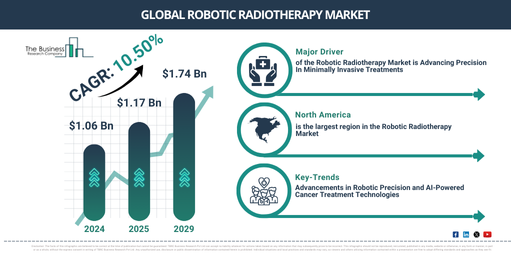
    The robotic radiotherapy market size has experienced rapid growth in recent years. It is projected to expand from $1.06 billion in 2024 to $1.17 billion in 2025, achieving a compound annual growth rate (CAGR) of 10.1%. The market’s historical growth can be attributed to the improvement in robotic system accuracy, integration of AI in treatment planning, increased healthcare accessibility, a rising focus on patient-specific treatments, and growth in private healthcare sector investments.

    The robotic radiotherapy market is projected to experience substantial growth over the next few years. It is anticipated to attain a size of $1.74 billion by 2029, growing at a compound annual growth rate (CAGR) of 10.5%. This expansion is primarily propelled by an increasing global aging population, advancements in machine learning for treatment planning, a growing preference for outpatient treatments, the broader adoption of robotic-assisted surgical systems, and enhanced collaborations between healthcare providers and technology companies. Key trends in this market include innovations in motion management systems, the emergence of cloud-based radiotherapy platforms, the integration of wearable technology for patient monitoring, the development of smaller and more efficient robotic systems, and a rise in the application of stereotactic radiosurgery techniques.

    Unlock Your Free Sample Report for Exclusive Market Data:

    https://www.thebusinessresearchcompany.com/sample.aspx?id=20946&type=smp

    Which Drivers Are Impacting The Robotic Radiotherapy Market?

    The increasing requirement for minimally invasive procedures is projected to fuel the expansion of the robotic radiotherapy market in the future. These procedures are propelled by progress in medical technology, a rising patient desire for quicker recovery and fewer complications, and wider acceptance among healthcare providers due to their cost-efficiency and better clinical results. Robotic radiotherapy further improves the accuracy and efficacy of minimally invasive interventions by precisely targeting radiation doses to tumors, thereby lessening harm to healthy surrounding tissues. This consequently lowers complications, shortens recovery periods, and aligns with the increasing need for advanced, patient-focused treatment choices. As an illustration, data from June 2024, provided by the American Society of Plastic Surgeons, a US-based medication company, indicated that minimally invasive procedures saw a 7% increase in 2023 relative to the preceding year. Consequently, the heightened demand for minimally invasive procedures is stimulating the growth of the robotic radiotherapy market.

    What Are The Primary Types Of Segments Analyzed In The Robotic Radiotherapy Market?

    The robotic radiotherapymarket covered in this report is segmented –

    1) By Product: Radiotherapy Systems; Softwares; 3D Cameras (Surface Guided)

    2) By Technology: Linear Accelerators; Conventional Linear Accelerators; Magnetic Resonance Imaging (MRI) – Linear Accelerators; Stereotactic Radiation Therapy Systems; Cyberknife; Gamma Knife; Particle Therapy; Proton Beam Therapy

    3) By Application: Prostate Cancer; Breast Cancer; Lung Cancer; Head & Neck Cancer; Colorectal Cancer

    4) By End User: Hospitals; Independent Radiotherapy Centers

    Subsegments:

    1) By Radiotherapy Systems: Robotic Linear Accelerators; Proton Therapy Systems; Stereotactic Radiosurgery Systems; Image-Guided Radiotherapy (IGRT) Systems; Intensity-Modulated Radiotherapy (IMRT) Systems

    2) By Softwares: Treatment Planning Software; Radiation Therapy Management Software; Robotic Radiotherapy Control Software; Integration Software For Robotic Systems

    3) By 3D Cameras (Surface Guided): 3D Optical Surface Imaging Systems; 3D Camera Systems For Patient Positioning; 3D Motion Tracking Cameras For Radiotherapy; Real-Time 3D Surface Imaging For Tumor Localization

    What Are The Latest Industry Trends Transforming The Robotic Radiotherapy Market?

    Leading companies within the robotic radiotherapy market are channeling their efforts into developing innovative products that leverage advanced technologies, such as artificial intelligence (AI) precision, to execute tasks with remarkable accuracy, steadfast consistency, and minimal errors. This robotic precision, achieved through the use of sensors, actuators, and algorithms, effectively enhances accuracy, diminishes human error, improves consistency, minimizes tissue damage, and accelerates patient recovery. For example, in January 2024, Tampa General Hospital, a US-based cancer institute, unveiled the CyberKnife S7, an AI-powered radiosurgery tool. This technology represents a notable advancement in cancer care, offering a non-invasive and precise treatment solution for patients with various conditions, including benign and malignant tumors, alongside neurological disorders. The CyberKnife S7 allows for targeted radiation delivery, which reduces damage to surrounding healthy tissues and presents a less invasive option than traditional surgical methods.

    Who Are The Top Performing Companies In The Robotic Radiotherapy Market In Recent Years?

    Major companies operating in the robotic radiotherapy market are Panasonic Healthcare, Siemens Healthineers AG, Fujifilm Medical Systems, GE Healthcare Technologies Inc., Varian Medical Systems, Kuka AG, Elekta AB, Accuray Incorporated, Brainlab AG, Mevion Medical Systems Inc., ViewRay Technologies Inc., RaySearch Laboratories AB, VisionRT Ltd., MIM Software Inc., CIVCO Radiotherapy, ProNova Solutions, IntraOp Medical Corporation, IBA Group, Xcision Medical Systems LLC, C-RAD AB

    Download The Full Report For Exclusive Market Findings:

    https://www.thebusinessresearchcompany.com/report/robotic-radiotherapy-global-market-report

    Which Region Currently Holds The Largest Share Of The Robotic Radiotherapy Market?

    North America was the largest region in the robotic radiotherapy market in 2024. Asia-Pacific is expected to be the fastest-growing region in the forecast period. The regions covered in the robotic radiotherapy market report are Asia-Pacific, Western Europe, Eastern Europe, North America, South America, Middle East, Africa.

    Request A Customized Version Of The Robotic Radiotherapy Market Report:

    https://www.thebusinessresearchcompany.com/customise?id=20946&type=smp

    Browse Through More Reports Similar to the Global Robotic Radiotherapy Market 2025, By The Business Research Company

    Radiotherapy Devices Global Market Report 2025

    https://www.thebusinessresearchcompany.com/report/radiotherapy-devices-global-market-report

    Radiosurgery And Radiotherapy Robotics Global Market Report 2025

    https://www.thebusinessresearchcompany.com/report/radiosurgery-and-radiotherapy-robotics-global-market-report

    Robotic Surgery Devices Global Market Report 2025

    https://www.thebusinessresearchcompany.com/report/robotic-surgery-devices-global-market-report

    Get in touch with us:

    The Business Research Company: https://www.thebusinessresearchcompany.com/

    Americas +1 310-496-7795

    Asia +44 7882 955267 & +91 8897263534

    Europe +44 7882 955267

    Email us at info@tbrc.info

    Follow us on:

    LinkedIn: https://in.linkedin.com/company/the-business-research-company

    YouTube: https://www.youtube.com/channel/UC24_fI0rV8cR5DxlCpgmyFQ

    Global Market Model: https://www.thebusinessresearchcompany.com/global-market-model
  • Global Robotic Dentistry Market Overview: Trends Shaping Growth to 2029

    Global Robotic Dentistry Market Overview: Trends Shaping Growth to 2029

    Unlock Global Insights – Save 20% on Market Reports with Code ONLINE20

    What Is The Expected Total Market Size Of The Robotic Dentistry Industry By The Forecast Year 2029?

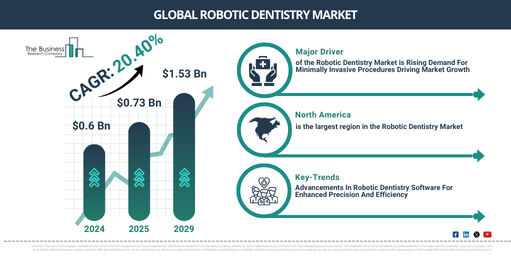
    The robotic dentistry market has experienced substantial expansion in its size over recent years. This market is projected to expand from $0.6 billion in 2024 to $0.73 billion in 2025, exhibiting a compound annual growth rate (CAGR) of 21.4%. Historically, this growth has been driven by the integration of robotics into pediatric dental care, enhanced capabilities for complex oral surgeries, a heightened emphasis on patient safety, the ongoing digitalization within dental practices, and a significant demand for time saving dental solutions.

    The robotic dentistry market size is projected to undergo significant expansion over the next few years. It is expected to ascend to $1.53 billion by 2029, achieving a compound annual growth rate (CAGR) of 20.4%. This anticipated growth during the forecast period is largely due to the expansion of the tele-industry, the increasing application of robots in orthodontics, the rise in dental tourism, greater funding for healthcare innovation, and the growing demand for patient-specific dental solutions. Prominent trends throughout this period involve the creation of portable equipment, the development of compact robotic dental devices, progress in haptic technology, the incorporation of augmented reality (AR) for training, and enhancements in gadgets for improved precision.

    Unlock Your Free Sample Report for Exclusive Market Data:

    https://www.thebusinessresearchcompany.com/sample.aspx?id=20945&type=smp

    Which Industry Drivers Are Expected To Accelerate The Robotic Dentistry Market From 2025 To 2029?

    The increasing demand for minimally invasive procedures is projected to drive growth in the robotic dentistry market. A minimally invasive procedure is a medical method utilizing tiny or no incisions, which results in reduced tissue trauma, faster recovery, and lower risks compared to traditional surgical techniques. This demand for minimally invasive procedures is fueled by factors such as quicker recovery times, diminished risk of complications, and enhanced patient comfort. Robotic dentistry systems elevate dental procedures by delivering improved precision, enabling smaller incisions, minimizing tissue damage, reducing overall risks, and leading to superior outcomes. For example, in March 2023, the British Association of Aesthetic Plastic Surgeons, a UK-based surgical organization, reported that 31,057 cosmetic surgeries were performed in 2022 in the UK, representing a notable 102% increase from 2022. Consequently, the rising preference for minimally invasive procedures is a significant force behind the expansion of the robotic dentistry market.

    Which Key Segments Fueling The Robotic Dentistry Market?

    The robotic dentistrymarket covered in this report is segmented –

    1) By Products And Services: Standalone Robots; Robot-Assisted System; Services

    2) By Applications: Implantology; Endodontics; Other Applications

    3) By End-Users: Dental Hospitals And Clinics; Dental Academics; Other End-Users

    Subsegments:

    1) By Standalone Robots: Robotic Surgery Systems; Robotic Tooth Restoration Systems; Robotic Implant Placement Systems; Robotic Orthodontic Systems

    2) By Robot-Assisted Systems: Image-Guided Robotic Systems; Dental Navigation Systems; Robotic-Assisted Drilling And Cutting Systems; Robotic-Assisted Endodontic Systems; Robotic-Assisted Tooth Extraction Systems

    3) By Services: Installation Services; Maintenance And Repair Services; Training And Support Services; Consulting Services For Robotic Integration; Software Upgrades And Customization Services

    What Trends Are Redefining The Robotic Dentistry Market Dynamics?

    Major companies operating in the robotic dentistry market are concentrating on creating advanced dental robotic software suites to deliver more personalized care to patients. Dental robotic software suites represent sophisticated platforms that refine robotic systems for dental procedures, providing features that enable precise, efficient, and minimally invasive treatments for better patient outcomes. For instance, in August 2023, Neocis, a US-based medical equipment manufacturer, launched its YomiPlan Go Workflow for commercial deployment. This advanced software suite empowers clinicians to execute implant surgeries without the requirement of preoperative scans, considerably enhancing procedural speed and precision. Leveraging the Yomi robotic system, surgeons can directly identify implant location and angulation during surgery, smoothly combining freehand techniques with robotic guidance to achieve greater accuracy.

    Which Leading Companies Dominate The Robotic Dentistry Market Share?

    Major companies operating in the robotic dentistry market are Planmeca Oy, Dental Monitoring, Neocis, Overjet, Videa Health, Smilo.ai, Dentulu, Diagnocat, X-Nav Technologies, Image Navigation Ltd., Perceptive. Io, Lupin Dental, Dentem, Denti.AI, Manchester Imaging, YakeBot (Beijing) Technology Co. Ltd., Pearl Dental AI, Dentroid, VELMENI, CoTreat, AI Dent

    Download The Full Report For Exclusive Market Findings:

    https://www.thebusinessresearchcompany.com/report/robotic-dentistry-global-market-report

    What Regional Growth Trends Are Shaping The Robotic Dentistry Market Outlook?

    North America was the largest region in the robotic dentistry market in 2024. Asia-Pacific is expected to be the fastest-growing region in the forecast period. The regions covered in the robotic dentistry market report are Asia-Pacific, Western Europe, Eastern Europe, North America, South America, Middle East, Africa.

    Request A Customized Version Of The Robotic Dentistry Market Report:

    https://www.thebusinessresearchcompany.com/customise?id=20945&type=smp

    Browse Through More Reports Similar to the Global Robotic Dentistry Market 2025, By The Business Research Company

    Dentistry Medical Lasers Global Market Report 2025

    https://www.thebusinessresearchcompany.com/report/dentistry-medical-lasers-global-market-report

    Teledentistry Global Market Report 2025

    https://www.thebusinessresearchcompany.com/report/teledentistry-global-market-report

    Restorative Dentistry Global Market Report 2025

    https://www.thebusinessresearchcompany.com/report/restorative-dentistry-global-market-report

    Get in touch with us:

    The Business Research Company: https://www.thebusinessresearchcompany.com/

    Americas +1 310-496-7795

    Asia +44 7882 955267 & +91 8897263534

    Europe +44 7882 955267

    Email us at info@tbrc.info

    Follow us on:

    LinkedIn: https://in.linkedin.com/company/the-business-research-company

    YouTube: https://www.youtube.com/channel/UC24_fI0rV8cR5DxlCpgmyFQ

    Global Market Model: https://www.thebusinessresearchcompany.com/global-market-model

  • Microbiology And Bacterial Culture For Industrial Testing Market Trends 2025–2029: Forecasts for Key Growth Segments

    Microbiology And Bacterial Culture For Industrial Testing Market Trends 2025–2029: Forecasts for Key Growth Segments

    Unlock Global Insights – Save 20% on Market Reports with Code ONLINE20

    How Does The Market Size Of The Microbiology And Bacterial Culture For Industrial Testing Industry Compare Between 2025 And 2029?

    The market for microbiology and bacterial culture in industrial testing has experienced swift growth in recent years. It is projected to expand from $6.68 billion in 2024 to $7.42 billion in 2025, demonstrating a compound annual growth rate (CAGR) of 11.2%. This historical growth can be linked to the demand for personalized medicine, global preparedness for pandemics, increasing recognition of healthcare-associated infections (HAIs), a higher occurrence of foodborne illnesses, and the rise of emerging markets and industrialization.

    The microbiology and bacterial culture for industrial testing market is projected to experience rapid growth in the coming years, reaching **$10.95 billion** by **2029** with a compound annual growth rate (**CAGR**) of **10.2%**. This anticipated expansion is primarily driven by factors such as an increasing incidence of foodborne illnesses, regulatory compliance requirements, the globalization of food supply chains, the continuous growth of the pharmaceutical industry, and the essential needs for environmental monitoring and water quality testing. Significant trends expected during this forecast period include ongoing technological advancements, increased investments in research and development (**R&D**), the adoption of advanced analytical techniques, the integration of automation and robotics, and the broader incorporation of data analytics.

    Unlock Your Free Sample Report for Exclusive Market Data:

    https://www.thebusinessresearchcompany.com/sample.aspx?id=15607&type=smp

    Which Drivers Are Shaping The Microbiology And Bacterial Culture For Industrial Testing Industry’s Market Share?

    Increased occurrences of foodborne illnesses are projected to drive the expansion of the microbiology and bacterial culture for industrial testing market in the future. These diseases stem from consuming food or drinks tainted with harmful microorganisms, toxins, or chemicals. Various elements contribute to the growth in foodborne cases, such as evolving food production, distribution, and consumption habits; globalized food supply chains; insufficient food safety protocols; antimicrobial resistance; the effects of climate change on food production; and a greater intake of high-risk foods. Microbiology and bacterial culture play a crucial role in industrial testing for foodborne illnesses, enabling pathogen detection and identification, guaranteeing food safety, and averting outbreaks via stringent quality control. For example, the UK Health Security Agency, a UK-based government body, reported in February 2024 that England and Wales experienced 167 cases of listeriosis (a severe infection resulting from consuming food contaminated with the bacterium Listeria monocytogenes) in 2022, an increase from 160 cases in 2021. Consequently, the increasing frequency of foodborne diseases fuels the expansion of the microbiology and bacterial culture for industrial testing market.

    What Are The Key Segments In The Microbiology And Bacterial Culture For Industrial Testing Market?

    The microbiology and bacterial culture for industrial testingmarket covered in this report is segmented –

    1) By Consumable: Media; Reagents; Sera

    2) By Application: Food And Water Testing; Bioenergy And Agricultural Research; Other Applications

    3) By End User: Industrial Laboratories; Research Laboratories; Food Testing Laboratories; Diagnostic Laboratories; Other End Users

    Subsegments:

    1) By Media: Agar Plates; Broth Media; Selective Media; Differential Media; Transport Media

    2) By Reagents: Staining Reagents (Gram Stain, Acid-Fast Stain); Biochemical Reagents; Pcr Reagents; Enzyme-Based Reagents; Chromogenic Reagents

    3) By Sera: Blood Serum; Animal Sera ( Bovine Serum); Human Sera; Culture Sera

    Which Competitive Trends Are Defining The Microbiology And Bacterial Culture For Industrial Testing Market Structure?

    Companies active in the microbiology and bacterial culture for industrial testing market are concentrating on developing innovative products such as dehydrated and prepared culture media to gain a market advantage. Dehydrated and prepared culture media are formulations used in microbiology for cultivating microorganisms; dehydrated types require water for reconstitution, while prepared media are ready-to-use and facilitate microbial growth. For instance, in June 2022, Gold Standard Diagnostics Industrial Solutions, a US-based provider of diagnostic test kits, lab consumables, and automation solutions, launched BACGro Culture Media, a line of culture media products designed for the identification of pathogenic microorganisms. The BACGro product line features various advanced dehydrated and liquid media offerings that adhere to international standards and cater to diverse reference methods.

    Which Leading Players Are Enhancing Their Microbiology And Bacterial Culture For Industrial Testing Market Presence Worldwide?

    Major companies operating in the microbiology and bacterial culture for industrial testing market are Thermo Fisher Scientific Inc., 3M Company, Danaher Corporation, Merck KGaA, Becton, Dickinson, and Company (BD), Avantor Inc., Agilent Technologies Inc., PerkinElmer Inc., bioMérieux SA, Shimadzu Corporation, IDEXX Laboratories Inc., Bio-Rad Laboratories Inc., Dohler GmbH, Bruker Microbiology & Diagnostics, Eiken Chemical Co. Ltd., BioLegend, Hain Lifescience GmbH, Neogen Corporation, BrightGene, Hardy Diagnostics, LaMotte Company, Himedia Laboratories Pvt. Ltd., Scharlab S.L., Titan Biotech Limited, Serosep Ltd.

    Download The Full Report For Exclusive Market Findings:

    https://www.thebusinessresearchcompany.com/report/microbiology-and-bacterial-culture-for-industrial-testing-global-market-report

    How Do Regional Market Performances Compare Within The Microbiology And Bacterial Culture For Industrial Testing Industry?

    North America was the largest region in the microbiology and bacterial culture for industrial testing market in 2024. The regions covered in the microbiology and bacterial culture for industrial testing market report are Asia-Pacific, Western Europe, Eastern Europe, North America, South America, Middle East, Africa.

    Request A Customized Version Of The Microbiology And Bacterial Culture For Industrial Testing Market Report:

    https://www.thebusinessresearchcompany.com/customise?id=15607&type=smp

    Browse Through More Reports Similar to the Global Microbiology And Bacterial Culture For Industrial Testing Market 2025, By The Business Research Company

    Viral Gastroenteritis Global Market Report 2025

    https://www.thebusinessresearchcompany.com/report/viral-gastroenteritis-global-market-report

    Single Cell Genome Sequencing Global Market Report 2025

    https://www.thebusinessresearchcompany.com/report/single-cell-genome-sequencing-global-market-report

    Hidradenitis Suppurativa Global Market Report 2025

    https://www.thebusinessresearchcompany.com/report/hidradenitis-suppurativa-global-market-report

    Get in touch with us:

    The Business Research Company: https://www.thebusinessresearchcompany.com/

    Americas +1 310-496-7795

    Asia +44 7882 955267 & +91 8897263534

    Europe +44 7882 955267

    Email us at info@tbrc.info

    Follow us on:

    LinkedIn: https://in.linkedin.com/company/the-business-research-company

    YouTube: https://www.youtube.com/channel/UC24_fI0rV8cR5DxlCpgmyFQ

    Global Market Model: https://www.thebusinessresearchcompany.com/global-market-model
  • Microbial Identification Methods Market Forecast 2025–2034: Where Businesses Should Invest Next

    Microbial Identification Methods Market Forecast 2025–2034: Where Businesses Should Invest Next

    Unlock Global Insights – Save 20% on Market Reports with Code ONLINE20

    What Is The Predicted Market Size Trajectory For The Microbial Identification Methods Market From 2025 To 2034?

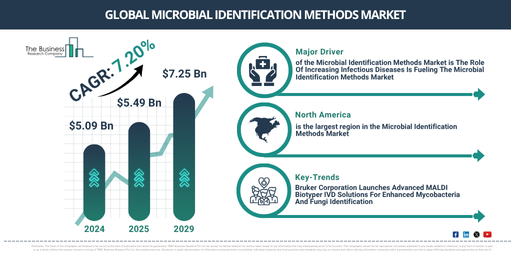
    The market for microbial identification methods has experienced robust expansion in recent years. Forecasts indicate it will expand from $5.09 billion in 2024 to $5.49 billion in 2025, demonstrating a compound annual growth rate (CAGR) of 7.7%. This historical growth is linked to several factors, including growth in the prevalence of infectious diseases, increased funding for research and development in diagnostics, increased focus on infection control measures in healthcare facilities, increased food safety concerns, and rising demand for microbial identification methods.

    The microbial identification methods market size is projected to experience robust expansion in the upcoming years. It is anticipated to grow to $7.25 billion in 2029, demonstrating a compound annual growth rate (CAGR) of 7.2%. This growth during the forecast period can be attributed to the escalating demand for rapid microbiology testing, ongoing developments in microbial studies, the increasing adoption of automated systems, rising disposable incomes, and heightened government initiatives concerning food safety. Significant trends for the forecast period include the introduction of new products, advancements in microbial identification techniques, the widespread adoption of automated bacterial identification systems, innovations in microfluidics, robotics, and nanotechnology, along with the formation of strategic partnerships.

    Unlock Your Free Sample Report for Exclusive Market Data:

    https://www.thebusinessresearchcompany.com/sample.aspx?id=16118&type=smp

    What Are The Drivers Pushing New Developments In The Microbial Identification Methods Market?

    The future expansion of the microbial identification methods market is anticipated to be driven by the rising incidence of infectious diseases. These diseases are conditions resulting from the invasion of the body by detrimental agents (pathogens), including viruses, bacteria, fungi, and parasites. Key examples of these include HIV/AIDS (human immunodeficiency virus/acquired immunodeficiency syndrome), tuberculosis, and malaria. The escalating occurrence of infectious diseases can be linked to factors such as antimicrobial resistance, climate change, and population expansion. Microbial identification methods are vital for the diagnosis, treatment, and prevention of infectious diseases, as they offer comprehensive data about the infection-causing pathogens, empowering healthcare providers to make well-informed choices for patient management. For instance, a report from the Government of Canada, a federal authority in Canada, indicated that in January 2023, 135 rabies samples were submitted in October 2022, and 159 rabies samples were submitted in November 2022. Additionally, data from the Centers for Disease Control and Prevention, a US-based government agency, revealed in March 2023 that tuberculosis (TB) cases in the US saw a 5.9% rise, from 7,874 cases in 2021 to 8,331 cases in 2022. Consequently, the rising prevalence of infectious diseases serves as a primary driver for the growth of the microbial identification methods market.

    What Are The Leading Segments Analyzed In The Microbial Identification Methods Market?

    The microbial identification methodsmarket covered in this report is segmented –

    1) By Method: Genotypic; Phenotypic; Proteotypic

    2) By Type: Bacterial Identification System; Microbial Enumeration System; Bacterial Resistance Identification Systems; Microbiology Analyzer; Other Type

    3) By End User: Pharmaceutical And Biotechnology Companies; Hospitals And Diagnostic Laboratories; Food Testing Laboratories; Other End-Users

    Subsegments:

    1) By Genotypic: Polymerase Chain Reaction (PCR); 16S rRNA Sequencing; DNA Microarrays; Next-Generation Sequencing (NGS); Whole Genome Sequencing (WGS); Ribotyping; Fluorescence In Situ Hybridization (FISH); Random Amplified Polymorphic DNA (RAPD) Analysis

    2) By Phenotypic: Culture-Based Methods; Biochemical Testing; Microscopic Examination; Gram Staining; Antibiotic Susceptibility Testing (AST); Growth Pattern Identification; Colony Morphology Characterization

    3) By Proteotypic: Mass Spectrometry (MALDI-TOF MS); Western Blotting; Protein Profiling; Immunoassays (ELISA); Two-Dimensional Gel Electrophoresis

    What Are The Latest Industry Trends Transforming The Microbial Identification Methods Market?

    Leading companies within the microbial identification methods market are concentrating on creating innovative offerings, such as mycobacteria and fungi IVD solutions, to solidify their presence. Mycobacteria and fungi in vitro diagnostic (IVD) solutions encompass a variety of products and technologies designed for the detection, identification, and characterization of mycobacterial and fungal pathogens within clinical samples. For instance, Bruker Corporation, a US-based manufacturer of scientific instruments, unveiled MALDI Biotyper IVD software, a novel mycobacteria and fungi IVD solution, in April 2023. This solution boasts superior accuracy and speed in microbial identification through the utilization of MALDI-TOF mass spectrometry technology. It facilitates quick identification of mycobacteria and fungi from cultured samples in mere minutes, considerably shortening the time compared to conventional techniques. Furthermore, these new solutions incorporate broadened databases and strong software algorithms, enhancing specificity and sensitivity to allow for the precise identification of a wider spectrum of mycobacterial and fungal species.

    Which Major Firms Are Strengthening Their Position In The Microbial Identification Methods Industry?

    Major companies operating in the microbial identification methods market are Merck KGaA, Sumitomo Corporation, Thermo Fisher Scientific Inc., Abbott Laboratories, Becton Dickinson and Company, GE Healthcare, Avantor Inc., Eurofins Scientific SE, Lonza Group AG, Sartorius AG, Charles River Laboratories International Inc., bioMerieux SA, Shimadzu Corporation, Waters Corporation, Bio-Rad Laboratories Inc., Bruker Corporation, Qiagen N.V., Beckman Coulter Inc., HiMedia Laboratories., Hardy Diagnostics., LuminUltra Technologies Ltd., Biolog Inc.

    Download The Full Report For Exclusive Market Findings:

    https://www.thebusinessresearchcompany.com/report/microbial-identification-methods-global-market-report

    Which Region Currently Holds The Largest Share Of The Microbial Identification Methods Market?

    North America was the largest region in the microbial identification methods market in 2024. The regions covered in the microbial identification methods market report are Asia-Pacific, Western Europe, Eastern Europe, North America, South America, Middle East, Africa.

    Request A Customized Version Of The Microbial Identification Methods Market Report:

    https://www.thebusinessresearchcompany.com/customise?id=16118&type=smp

    Browse Through More Reports Similar to the Global Microbial Identification Methods Market 2025, By The Business Research Company

    Antimicrobial Susceptibility Testing Global Market Report 2025

    https://www.thebusinessresearchcompany.com/report/antimicrobial-susceptibility-testing-global-market-report

    Antimicrobial Medical Device Coatings Global Market Report 2025

    https://www.thebusinessresearchcompany.com/report/antimicrobial-medical-device-coatings-global-market-report

    Antimicrobial Textile Global Market Report 2025

    https://www.thebusinessresearchcompany.com/report/antimicrobial-textile-global-market-report

    Get in touch with us:

    The Business Research Company: https://www.thebusinessresearchcompany.com/

    Americas +1 310-496-7795

    Asia +44 7882 955267 & +91 8897263534

    Europe +44 7882 955267

    Email us at info@tbrc.info

    Follow us on:

    LinkedIn: https://in.linkedin.com/company/the-business-research-company

    YouTube: https://www.youtube.com/channel/UC24_fI0rV8cR5DxlCpgmyFQ

    Global Market Model: https://www.thebusinessresearchcompany.com/global-market-model
  • Global Microbial Identification Market Analysis 2025–2029: Opportunities for Strategic Growth

    Global Microbial Identification Market Analysis 2025–2029: Opportunities for Strategic Growth

    Unlock Global Insights – Save 20% on Market Reports with Code ONLINE20

    How Much Larger Is The Microbial Identification Market Expected To Become By 2029 Compared With Its 2025 Level?

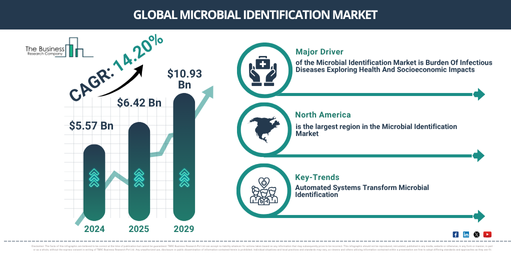
    The microbial identification market size has observed rapid expansion in recent years. It is forecast to grow from $5.57 billion in 2024 to $6.42 billion in 2025, at a compound annual growth rate (CAGR) of 15.4%. This historical growth can be attributed to government initiatives and funding aimed at promoting microbial identification, an increasing number of FDA approvals, and rising health awareness among the populace.

    The microbial identification market size is poised for substantial expansion in the coming years. This market is projected to reach $10.93 billion by 2029, exhibiting a compound annual growth rate (CAGR) of 14.2%. Factors contributing to this anticipated growth throughout the forecast period include increasing food safety concerns, a rise in infectious disease occurrences, and the growing frequency of pandemics. Key trends expected during this period encompass advancements in microbial identification technologies, ongoing progress in automation, molecular diagnostics, and genomics, as well as strategic partnerships.

    Unlock Your Free Sample Report for Exclusive Market Data:

    https://www.thebusinessresearchcompany.com/sample.aspx?id=15606&type=smp

    What Are The Emerging Market Drivers Creating New Opportunities In The Microbial Identification Industry?

    The increasing occurrence of infectious diseases is anticipated to fuel the expansion of the microbial identification market in the future. These diseases are defined as ailments resulting from pathogenic microorganisms such as bacteria, viruses, fungi, parasites, or prions. Factors contributing to their development include climate change, environmental disruption, antimicrobial resistance, weakened immune systems, and ecological disturbances. For effective management of infectious diseases, microbial identification is crucial for accurate diagnosis, targeted treatment, disease surveillance, outbreak control, and antimicrobial stewardship. As an illustration, in March 2024, according to the Centers for Disease Control and Prevention, a US-based government agency, the number of tuberculosis cases rose from 8,320 in 2022 to 9,615 in 2023, reflecting an increase of 1,295 cases. Consequently, the growing incidence of infectious diseases serves as a key driver for the microbial identification market.

    What Are The Segment Types Shaping The Microbial Identification Market?

    The microbial identificationmarket covered in this report is segmented –

    1) By Products And Services: Instruments; Consumables; Services

    2) By Methods: Phenotypic Methods; Proteotypic Methods; Genotypic Methods

    3) By Application: Diagnostic Application; Environmental Application; Food and Beverages Testing; Pharmaceutical Application; Other Applications

    4) By End User: Pharmaceutical And Biotechnology Industry; Food And Beverage Industry; Water And Environment Industry; Independent Research Laboratories; Diagnostic Laboratories; Hospitals; Other End Users

    Subsegments:

    1) By Instruments: Mass Spectrometers ( Maldi-Tof); Chromatography Systems; Pcr Systems; Microplate Readers; Automated Identification Systems

    2) By Consumables: Reagents And Kits ( Pcr Reagents, Biochemical Reagents); Culture Media; Sample Collection Tools ( Swabs, Vials); Test Strips

    3) By Services: Microbial Identification Services ( Laboratory Testing); Consulting And Training Services; Technical Support Services; Data Analysis Services

    What Trends Are Redefining The Microbial Identification Market Dynamics?

    Leading companies in the microbial identification market are developing innovative solutions, such as sample preparation platforms, to improve the speed and accuracy of microbial identification. These sample preparation platforms are automated systems utilized to process and prepare biological or clinical samples for analysis, thereby enhancing efficiency, accuracy, and speed in diagnostic procedures. For instance, in September 2024, Accelerate Diagnostics Inc, a US-based in vitro diagnostics company, received FDA clearance for the Accelerate Arc system. This is an advanced, automated solution designed to rapidly identify microbes directly from positive blood culture samples. By automating the sample preparation process for microbial identification through the Bruker MALDI Biotyper CA System, it significantly reduces the wait time for results, which is crucial in diagnosing and treating infections such as sepsis. This system allows for quicker microbial identification, assisting clinicians in starting the most effective antibiotic therapy sooner, improving patient outcomes, and minimizing the risk of antimicrobial resistance. Being FDA-cleared, the Accelerate Arc system is designed to boost operational efficiency in clinical laboratories.

    Who Are The Primary Competitors In The Global Microbial Identification Market?

    Major companies operating in the microbial identification market are Merck & Co. Inc., Sanofi S A, ThermoFisher Scientific Inc., Danaher Corporation, Siemens Healthineers, Becton, Dickinson and Company, Avantor Inc., Eurofins Scientific Corporation, Beckman Coulter Inc., VWR International LLC, Charles River Laboratories International Inc., PerkinElmer Inc., Wickham Micro Limited, Bruker Corporation, BioMerieux S.A., Biolog Inc., Liofilchem S.r.l, Shimadzu Corporation, Scenker Biological Technology Co. Ltd

    Download The Full Report For Exclusive Market Findings:

    https://www.thebusinessresearchcompany.com/report/microbial-identification-global-market-report

    What Regional Growth Trends Are Shaping The Microbial Identification Market Outlook?

    North America was the largest region in the microbial identification market in 2024. Asia-Pacific is expected to be the fastest-growing region in the forecast period. The regions covered in the microbial identification market report are Asia-Pacific, Western Europe, Eastern Europe, North America, South America, Middle East, Africa.

    Request A Customized Version Of The Microbial Identification Market Report:

    https://www.thebusinessresearchcompany.com/customise?id=15606&type=smp

    Browse Through More Reports Similar to the Global Microbial Identification Market 2025, By The Business Research Company

    Womens Health Global Market Report 2025

    https://www.thebusinessresearchcompany.com/report/womens-health-global-market-report

    Critical Limb Ischemia Global Market Report 2025

    https://www.thebusinessresearchcompany.com/report/critical-limb-ischemia-global-market-report

    Low Density Lipoprotein Test Global Market Report 2025

    https://www.thebusinessresearchcompany.com/report/low-density-lipoprotein-test-global-market-report

    Get in touch with us:

    The Business Research Company: https://www.thebusinessresearchcompany.com/

    Americas +1 310-496-7795

    Asia +44 7882 955267 & +91 8897263534

    Europe +44 7882 955267

    Email us at info@tbrc.info

    Follow us on:

    LinkedIn: https://in.linkedin.com/company/the-business-research-company

    YouTube: https://www.youtube.com/channel/UC24_fI0rV8cR5DxlCpgmyFQ

    Global Market Model: https://www.thebusinessresearchcompany.com/global-market-model
  • Metoprolol Tartrate Industry Overview 2025: Growth Projections and Market Trends

    Metoprolol Tartrate Industry Overview 2025: Growth Projections and Market Trends

    Unlock Global Insights – Save 20% on Market Reports with Code ONLINE20

    #What Are The Current (2025) And Forecast (2029) Sizes Of The Metoprolol Tartrate Market?

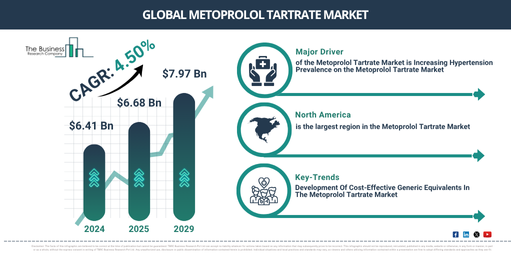
    The metoprolol tartrate market has experienced consistent expansion in its size over the past few years. Its value is projected to increase from $6.41 billion in 2024 to $6.68 billion by 2025, demonstrating a compound annual growth rate (CAGR) of 4.3%. Historically, this market’s expansion was driven by factors such as increased public understanding of hypertension, the broadening and enhancement of healthcare infrastructures, initial patent protections, and various health-related programs.

    The metoprolol tartrate market size is projected to undergo consistent expansion in the upcoming years, with an expected valuation of $7.97 billion by 2029, showcasing a compound annual growth rate (CAGR) of 4.5%. This anticipated growth is influenced by several factors, including personalized medicine, improved medical education and training for cardiovascular disease management, the development of robust drug distribution networks, patient education initiatives, and increased financial support for cardiovascular research. Significant trends during this forecast period are set to encompass consumer behavior analysis, supply chain optimization, the advancement of 3D printing technologies for tailored drug formulations, and the increasing creation and utilization of mobile health applications.

    Unlock Your Free Sample Report for Exclusive Market Data:

    https://www.thebusinessresearchcompany.com/sample.aspx?id=16477&type=smp

    Which Drivers Are Impacting The Metoprolol Tartrate Market?

    The rising occurrence of hypertension is projected to propel the expansion of the metoprolol tartrate market moving forward. Hypertension is a complex medical condition influenced by multiple contributing elements. It can gradually develop due to lifestyle and genetic factors, or it might be caused by other underlying health issues. The increasing prevalence of hypertension is a result of combined factors such as poor diet, insufficient physical activity, obesity, stress, and an aging population. Metoprolol tartrate assists in managing hypertension by reducing the heart rate and decreasing the force with which the heart pumps, leading to lower blood pressure. For instance, in December 2023, the Australian Bureau of Statistics reported that, in 2022, more than one in ten (11.6% or 3.0 million) individuals had hypertension. Therefore, the growing prevalence of hypertension is a significant driver for the metoprolol tartrate market.

    What Are The Different Segment Classifications Within The Metoprolol Tartrate Market?

    The metoprolol tartratemarket covered in this report is segmented –

    1) By Route of Administration: Oral; Injectable

    2) By Application: Hypertension; Cardiovascular; Other Applications

    3) By Distribution Channel: Hospital Pharmacies; Retail Pharmacies; Online Pharmacies

    Subsegments:

    1) By Oral: Tablets; Extended-Release Tablets

    2) By Injectable: Intravenous Solution

    How Are Emerging Market Trends Shaping The Metoprolol Tartrate Industry Landscape?

    Key companies operating in the metoprolol tartrate market are developing alternative products to provide more affordable options compared to their branded counterparts for treating hypertension and other cardiovascular conditions. These similar products are bioequivalent to the original branded medications, meaning they are absorbed into the bloodstream at a comparable rate and extent, thereby delivering the same therapeutic effect. For example, in August 2023, Lupin Pharmaceuticals, a pharmaceutical company based in India, received approval from the United States Food and Drug Administration for its Abbreviated New Drug Application for Metoprolol Succinate Extended-Release Tablets, allowing it to market a generic equivalent of Toprol-XL Tablets. These generic tablets are prescribed for the management of hypertension and angina pectoris and are available in various strengths to meet different patient needs. This approval further expands Lupin’s existing range of generic cardiovascular products in the U.S. market.

    Which Key Market Players Are Investing In Expansion And Innovation Of Metoprolol Tartrate Market?

    Major companies operating in the metoprolol tartrate market are Pfizer Inc., AstraZeneca plc, Novartis AG, Viatris Inc., Teva Pharmaceutical Industries Ltd., Macleods Pharmaceuticals Ltd., Sun Pharmaceutical Industries Ltd., Intas Pharmaceuticals Ltd., Aurobindo Pharma, Cipla Inc., Hikma Pharmaceuticals PLC, Amneal Pharmaceuticals, Glenmark Pharmaceuticals Ltd., Emcure Pharmaceuticals Ltd., Alembic Pharmaceuticals Inc., Accord Healthcare Inc., Beximco Pharmaceuticals Ltd., Micro Labs Ltd., Inventia Healthcare Pvt. Ltd., Watson Laboratories Inc., Aizant Drug Research Solutions Pvt. Ltd., Zydus Cadila, Validus Pharmaceuticals LLC, Strides Pharma Science Limited, APO-MEDIX Pty Ltd.

    Download The Full Report For Exclusive Market Findings:

    https://www.thebusinessresearchcompany.com/report/metoprolol-tartrate-global-market-report

    Which Regional Markets Are Contributing Most To The Metoprolol Tartrate Industry Expansion?

    North America was the largest region in the metoprolol tartrate market in 2024. Asia-Pacific is expected to be the fastest-growing region in the forecast period. The regions covered in the metoprolol tartrate market report are Asia-Pacific, Western Europe, Eastern Europe, North America, South America, Middle East, Africa.

    Request A Customized Version Of The Metoprolol Tartrate Market Report:

    https://www.thebusinessresearchcompany.com/customise?id=16477&type=smp

    Browse Through More Reports Similar to the Global Metoprolol Tartrate Market 2025, By The Business Research Company

    Cosmetovigilance Global Market Report 2025

    https://www.thebusinessresearchcompany.com/report/cosmetovigilance-global-market-report

    Sanitary Paper Product Global Market Report 2025

    https://www.thebusinessresearchcompany.com/report/sanitary-paper-product-global-market-report

    Military Robots Global Market Report 2025

    https://www.thebusinessresearchcompany.com/report/military-robots-global-market-report

    Get in touch with us:

    The Business Research Company: https://www.thebusinessresearchcompany.com/

    Americas +1 310-496-7795

    Asia +44 7882 955267 & +91 8897263534

    Europe +44 7882 955267

    Email us at info@tbrc.info

    Follow us on:

    LinkedIn: https://in.linkedin.com/company/the-business-research-company

    YouTube: https://www.youtube.com/channel/UC24_fI0rV8cR5DxlCpgmyFQ

    Global Market Model: https://www.thebusinessresearchcompany.com/global-market-model