Blog

  • Global Cortical Haptic Virtual Reality Glove Market Analysis 2025–2029: Opportunities for Strategic Growth

    Global Cortical Haptic Virtual Reality Glove Market Analysis 2025–2029: Opportunities for Strategic Growth

    Unlock Global Insights – Save 20% on Market Reports with Code ONLINE20

    How Much Larger Is The Cortical Haptic Virtual Reality Glove Market Expected To Become By 2029 Compared With Its 2025 Level?

    The market for cortical haptic virtual reality gloves has seen an exponential expansion in its size during recent years. Its valuation is set to climb from $1.51 billion in 2024 to $1.84 billion by 2025, exhibiting a compound annual growth rate (CAGR) of 21.5%. The expansion observed historically stems from several factors, including the increasing integration of virtual reality in gaming, a heightened understanding of the benefits of haptic feedback, a rising consumer appetite for immersive entertainment, expanded application in industrial training programs, and the growing incorporation of virtual reality in education.

    The cortical haptic virtual reality glove market is anticipated to undergo substantial expansion in the upcoming years. It is projected to reach $3.96 billion by 2029, growing at a compound annual growth rate (CAGR) of 21.1%. This projected growth can be attributed to several factors during the forecast period, including the increasing integration of haptic gloves in industrial applications, a surge in demand for multiplayer and social virtual reality experiences, the rising adoption of cloud-based virtual reality solutions, continuous improvements in miniaturization and lightweight designs, and an increase in consumer spending on premium virtual reality devices. Significant trends during this period are expected to include advancements in brain-computer interface integration, the development of lightweight and ergonomic glove designs, innovations in multisensory feedback systems, improvements in cross-platform virtual reality compatibility, and the ongoing development of real-time neural signal processing.

    Unlock Your Free Sample Report for Exclusive Market Data:

    https://www.thebusinessresearchcompany.com/sample.aspx?id=28185&type=smp

    Which Drivers Are Supporting Growth Of The Cortical Haptic Virtual Reality Glove Market?

    The increasing number of wearable devices is anticipated to boost the expansion of the cortical haptic virtual reality glove market in the future. Wearable devices are electronic gadgets worn on the body, frequently designed for monitoring health, fitness, or offering intelligent functionalities. The rising preference for wearable devices stems from heightened consumer awareness regarding health, as individuals increasingly aim to track and enhance their fitness, monitor vital signs, and manage overall well-being. Wearable devices augment cortical haptic virtual reality (VR) gloves by delivering accurate, immediate feedback, rendering them suitable for captivating virtual experiences and training scenarios. They elevate interaction precision through simulating authentic touch, pressure, and texture sensations, thereby boosting user involvement and the efficacy of VR settings. For example, in April 2025, the Parliamentary Office of Science and Technology, a UK-based parliamentary research and advisory body, reported that from 2023 to 2024, the National Institute for Health and Care Research (NIHR) and UK Research and Innovation (UKRI) allocated £11.5 million ($15.52 million) to 10 research initiatives aimed at creating wearable technologies to foster greater independence for individuals with frailty or long-term physical disabilities. Consequently, the widespread adoption of wearable devices is propelling the growth of the cortical haptic virtual reality glove market.

    What Are The Segment Types Shaping The Cortical Haptic Virtual Reality Glove Market?

    The cortical haptic virtual reality glove market covered in this report is segmented as

    1) By Product Type: Wired Haptic Virtual Reality Gloves, Wireless Haptic Virtual Reality Gloves

    2) By Technology: Force Feedback, Vibrotactile Feedback, Electroactive Polymer, Other Technologies

    3) By Application: Gaming And Entertainment, Healthcare And Rehabilitation, Education And Training, Industrial And Engineering, Other Applications

    4) By Distribution Channel: Online, Offline

    5) By End-User: Consumer, Commercial, Enterprise, Other End-Users

    Subsegments:

    1) By Wired Haptic Virtual Reality Gloves: Exoskeleton Gloves, Cable Driven Gloves, Rigid Frame Gloves

    2) By Wireless Haptic Virtual Reality Gloves: Soft Robotic Gloves, Finger Tracking Gloves, Wearable Sensor Gloves

    Which Leading Players Are Enhancing Their Cortical Haptic Virtual Reality Glove Market Presence Worldwide?

    Major companies operating in the cortical haptic virtual reality glove market are Plexus Immersive Corporation, Noitom Ltd., Hackaday.io, HaptX Inc., SenseGlove, NeuroDigital Technologies Inc., AjnaLens, Brain eXchange LLC, CaptoGlove, Knoxlabs Inc., Manus VR, bHaptics Inc., Teslasuit, Udexreal, BeBop Sensors Inc., Contact CI, Diver-X Co Ltd., Sensor Holdings Limited, and WEART Haptic Gloves

    Download The Full Report For Exclusive Market Findings:

    https://www.thebusinessresearchcompany.com/report/cortical-haptic-virtual-reality-glove-global-market-report

    Which Region Shows The Highest Potential For Future Expansion In The Cortical Haptic Virtual Reality Glove Market?

    North America was the largest region in the cortical haptic virtual reality glove market in 2024. Asia-Pacific is expected to be the fastest-growing region in the forecast period. The regions covered in cortical haptic virtual reality glove report are Asia-Pacific, Western Europe, Eastern Europe, North America, South America, Middle East and Africa.

    Request A Customized Version Of The Cortical Haptic Virtual Reality Glove Market Report:

    https://www.thebusinessresearchcompany.com/customise?id=28185&type=smp

    Browse Through More Reports Similar to the Global Cortical Haptic Virtual Reality Glove Market 2025, By The Business Research Company

    Haptic Technology Global Market Report 2025

    https://www.thebusinessresearchcompany.com/report/haptic-technology-global-market-report

    Virtual Reality Devices Global Market Report 2025

    https://www.thebusinessresearchcompany.com/report/virtual-reality-devices-global-market-report

    Surface Haptics Technology Global Market Report 2025

    https://www.thebusinessresearchcompany.com/report/surface-haptics-technology-global-market-report

    Get in touch with us:

    The Business Research Company: https://www.thebusinessresearchcompany.com/

    Americas +1 310-496-7795

    Asia +44 7882 955267 & +91 8897263534

    Europe +44 7882 955267

    Email us at info@tbrc.info

    Follow us on:

    LinkedIn: https://in.linkedin.com/company/the-business-research-company

    YouTube: https://www.youtube.com/channel/UC24_fI0rV8cR5DxlCpgmyFQ

    Global Market Model: https://www.thebusinessresearchcompany.com/global-market-model

  • Contrast Injection Lines Industry Overview 2025: Growth Projections and Market Trends

    Contrast Injection Lines Industry Overview 2025: Growth Projections and Market Trends

    Unlock Global Insights – Save 20% on Market Reports with Code ONLINE20

    #What Are The Current (2025) And Forecast (2029) Sizes Of The Contrast Injection Lines Market?

    The contrast injection lines market size has experienced robust expansion over recent years. It is anticipated to increase from $3.66 billion in 2024 to $3.93 billion in 2025, achieving a compound annual growth rate (CAGR) of 7.2%. This historical growth can be attributed to a rising preference for minimally invasive procedures, enhanced awareness concerning early disease detection and screening, an escalating requirement for accurate and real-time imaging in surgical planning, increasing demand for contrast media in neurological and cardiovascular imaging, and greater government support and reimbursement for diagnostic procedures.

    The contrast injection lines market size is expected to show robust growth in the upcoming years. It is projected to reach $5.12 billion in 2029, growing at a compound annual growth rate (CAGR) of 6.8%. This anticipated expansion over the forecast period is primarily driven by factors such as the increasing prevalence of chronic diseases leading to greater demand, rising investments in healthcare infrastructure, an increasing number of radiology centers and diagnostic clinics, and the growing geriatric population. Key trends identified for the forecast period include technological advancements in high-pressure contrast injection systems, continuous advancements in injector technology, better integration with imaging systems, the development of high-pressure lines, and the emergence of smart contrast delivery systems.

    Unlock Your Free Sample Report for Exclusive Market Data:

    https://www.thebusinessresearchcompany.com/sample.aspx?id=28184&type=smp

    Which Drivers Are Shaping The Contrast Injection Lines Industry’s Market Share?

    The increasing volume of imaging procedures is anticipated to drive the future expansion of the contrast injection lines market. Imaging procedures are medical techniques employed to generate visual representations from within the body, aiding in the diagnosis, tracking, or treatment of various health conditions. These procedures are growing in frequency due to the rising prevalence of chronic diseases, which demand accurate and continuous internal monitoring for effective diagnosis and therapeutic intervention. Contrast injection lines assist in imaging by ensuring precise and controlled delivery of contrast agents, thereby improving the clarity of tissues, blood vessels, and abnormalities. They contribute to greater diagnostic accuracy and streamlined workflow, reducing the need for manual handling and ensuring a safer, sterile administration during scans. For instance, in May 2023, according to the National Health Service, a UK-based government department, the number of brain magnetic resonance imaging (MRI) activities referred by general practitioners increased from 8,695 in January 2022 to 8,745 in January 2023. Thus, the increasing number of imaging procedures is a key factor boosting the growth of the contrast injection lines market.

    What Are The Different Segment Classifications Within The Contrast Injection Lines Market?

    The contrast injection lines market covered in this report is segmented as

    1) By Type: High Pressure Contrast Injection Line, Low Pressure Contrast Injection Line

    2) By Product Type: Non-Ionic Contrast Media, Ionic Contrast Media, Barium-Based Contrast Agents, Gadolinium-Based Contrast Agents

    3) By Route Of Administration: Intravenous Injection, Intra-Arterial Injection, Oral Administration, Intrathecal Injection

    4) By Application: Magnetic Resonance Imaging Examination, X-Ray Examination, Computed Tomography (CT) Examination, Angiography, Other Applications

    5) By End-User: Hospitals, Diagnostic Imaging Centers, Specialty Clinics, Research Institutions

    Subsegments:

    1) By High Pressure Contrast Injection: Angiographic High Pressure Lines, Disposable High Pressure Lines, Dual Chamber High Pressure Lines

    2) By Low Pressure Contrast Injection Line: Manual Injection Lines, Reusable Low Pressure Lines, Syringe Based Low Pressure Lines

    What Trends Are Redefining The Contrast Injection Lines Market Dynamics?

    Leading firms in the contrast injection lines market are prioritizing the creation of advanced technological products, like magnetic resonance imaging contrast media injectors, aiming to boost imaging precision and optimize workflow effectiveness in diagnostic processes. Specifically, a magnetic resonance imaging contrast media injector is a dedicated medical instrument crafted to accurately and automatically introduce contrast agents into a patient’s circulatory system during magnetic resonance imaging (MRI) procedures, thereby improving the clarity of tissues, blood vessels, and irregularities in the images obtained. An example of this trend is Bracco Diagnostics Inc., a US-based radiology company, which introduced its Max 3 syringeless injector system in May 2025 to improve both the efficiency and safety of contrast media administration during imaging processes. This system notably enhances magnetic resonance imaging procedures by allowing direct injection from contrast media vials, eliminating the need for syringes, accelerating patient turnover, and minimizing waste. Functioning wirelessly within the magnetic resonance imaging (MRI) room up to 50 mT magnetic fields, it provides adaptable positioning and ensures more secure, contamination-protected connections through its Easy-Click Cassette and SafeConnect technology. Furthermore, this innovation contributes to better workflow efficiency, enhanced patient safety, and increased environmental sustainability in MRI contrast administration.

    Which Major Firms Are Strengthening Their Position In The Contrast Injection Lines Industry?

    Major companies operating in the contrast injection lines market are Bayer AG, GE Healthcare Technologies Inc., Bracco Imaging S.p.A., Merit Medical Systems Inc., Guerbet Group, B. Braun SE, ACIST Medical Systems Inc., ulrich medical, Sino Medical-Device Technology Co. Ltd., VIVID Imaging Pvt. Ltd., Medex, Hemant Surgical Industries Limited, Medtron AG, Argon Medical Devices Inc., Apollo RT, George Philips Medical Engineering Pvt. Ltd., Nemoto Kyorindo Co. Ltd., Sequoia Healthcare Limited, Shenzhen Anke High-Tech Co. Ltd., Shenzhen Kenid Medical Devices Co. Ltd., Shenzhen Basda Medical Apparatus Co. Ltd.

    Download The Full Report For Exclusive Market Findings:

    https://www.thebusinessresearchcompany.com/report/contrast-injection-lines-global-market-report

    How Is Contrast Injection Lines Market Demand Varying Across Different Regions?

    North America was the largest region in the contrast injection lines market in 2024. Asia-Pacific is expected to be the fastest-growing region in the forecast period. The regions covered in contrast injection lines report are Asia-Pacific, Western Europe, Eastern Europe, North America, South America, Middle East and Africa.

    Request A Customized Version Of The Contrast Injection Lines Market Report:

    https://www.thebusinessresearchcompany.com/customise?id=28184&type=smp

    Browse Through More Reports Similar to the Global Contrast Injection Lines Market 2025, By The Business Research Company

    Contrast Media Injectors Global Market Report 2025

    https://www.thebusinessresearchcompany.com/report/contrast-media-injectors-global-market-report

    Contrast Media Global Market Report 2025

    https://www.thebusinessresearchcompany.com/report/contrast-media-global-market-report

    Contrast Enhanced Ultrasound Global Market Report 2025

    https://www.thebusinessresearchcompany.com/report/contrast-enhanced-ultrasound-global-market-report

    Get in touch with us:

    The Business Research Company: https://www.thebusinessresearchcompany.com/

    Americas +1 310-496-7795

    Asia +44 7882 955267 & +91 8897263534

    Europe +44 7882 955267

    Email us at info@tbrc.info

    Follow us on:

    LinkedIn: https://in.linkedin.com/company/the-business-research-company

    YouTube: https://www.youtube.com/channel/UC24_fI0rV8cR5DxlCpgmyFQ

    Global Market Model: https://www.thebusinessresearchcompany.com/global-market-model
  • Complex Injectable Market Size Forecast: Revenue and CAGR by 2029

    Complex Injectable Market Size Forecast: Revenue and CAGR by 2029

    Unlock Global Insights – Save 20% on Market Reports with Code ONLINE20

    What Market Value Is The Complex Injectable Industry Expected To Reach By 2029, Starting From 2025 Levels?

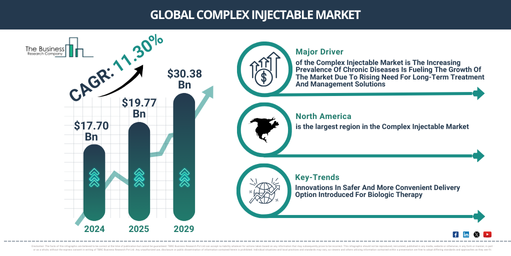
    The complex injectable market size has experienced rapid expansion in recent years. It is anticipated to increase from $17.70 billion in 2024 to $19.77 billion in 2025, reflecting a compound annual growth rate (CAGR) of 11.7%. The growth observed in the past can be credited to the rising prevalence of chronic diseases, a growing demand for targeted biologic therapies, the increased adoption of self-administration devices, expanding applications within oncology, and a rise in regulatory approvals for biosimilars.

    The complex injectable market is poised for significant expansion in the coming years. Its size is projected to reach $30.38 billion by 2029, demonstrating a robust compound annual growth rate (CAGR) of 11.3%. This anticipated growth during the forecast period stems from a heightened emphasis on personalized medicine, a rise in healthcare spending, broadening applications for autoimmune disorders, an increasing inclination among patients for minimally invasive treatments, and a growing need for self-administration devices. Key developments expected within this period involve progress in biologic therapies, technological improvements in drug delivery mechanisms, advancements in nanotechnology for precise delivery, enhancements in cold chain logistics, and the evolution of injectable peptide and protein therapeutics.

    Unlock Your Free Sample Report for Exclusive Market Data:

    https://www.thebusinessresearchcompany.com/sample.aspx?id=28183&type=smp

    What Are The Drivers Pushing New Developments In The Complex Injectable Market?

    The complex injectable market is expected to grow due to the increasing spread of chronic diseases. These are defined as long-term medical conditions that typically progress slowly and require ongoing management. The rising occurrence of chronic diseases is largely attributable to aging populations, as older individuals are more susceptible to long-term conditions such as diabetes, heart disease, and arthritis. Complex injectables assist in managing chronic diseases by delivering targeted medications that help control symptoms and slow down disease progression. For example, according to the Office for Health Improvement & Disparities (OHID), a UK-based public health agency, the global prevalence of diabetes is projected to increase from 537 million adults in 2021 to 643 million by 2030. Therefore, the expanding prevalence of chronic diseases is a significant driver for growth in the complex injectable market.

    What Are The Primary Types Of Segments Analyzed In The Complex Injectable Market?

    The complex injectable market covered in this report is segmented as

    1) By Product Type: Monoclonal Antibodies, Gene Therapies, Vaccines Proteins and Peptides, Antibody-Drug Conjugates (ADCs)

    2) By Therapeutic Area: Oncology, Diabetes, Autoimmune Disorders, Neurological Disorders, Cardiovascular Diseases, Infectious Diseases

    3) By Route of Administration: Intravenous (IV), Subcutaneous (SC), Intramuscular (IM), Epidural, Intradermal

    4) By Distribution Channel: Direct Sale, Pharmacies, eCommerce, Distributors, Wholesalers

    5) By End User: Hospitals, Ambulatory Surgical Centers, Specialty Clinics, Home Healthcare, Research Institutions

    Subsegment:

    1) By Monoclonal Antibodies: Chimeric Monoclonal Antibodies, Humanized Monoclonal Antibodies, Fully Human Monoclonal Antibodies, Bispecific Monoclonal Antibodies

    2) By Gene Therapies: Somatic Gene Therapy, Germline Gene Therapy, Ex Vivo Gene Therapy, In Vivo Gene Therapy

    3) By Vaccines, Proteins And Peptides: Recombinant Proteins, Synthetic Peptides, mRNA Vaccines, Viral Vector Vaccines

    4) By Antibody Drug Conjugates: Cleavable Linker Antibody Drug Conjugates, Non-cleavable Linker Antibody Drug Conjugates, Cytotoxic Payload Antibody Drug Conjugates, Target-specific Antibody Drug Conjugates

    How Are Emerging Market Trends Shaping The Complex Injectable Industry Landscape?

    Leading companies within the drug delivery systems market are prioritizing enhancements in drug delivery technologies, particularly autoinjector dosage forms, to improve patient experience, boost treatment compliance, ensure accurate and secure drug administration, and facilitate the successful delivery of intricate biologic therapies. Autoinjector dosage forms are essentially pre-filled, self-injection devices designed to administer a precise medication dose safely and easily, commonly employed for biologics and other sophisticated treatments. An illustrative example is Taisho Pharmaceutical Co. Ltd., a Japan-based generic drug manufacturer, which introduced Nanozora 30 mg for subcutaneous injection in January 2024, presenting a user-friendly device engineered for straightforward self-administration. This product guarantees safety with a needle-covering mechanism to avert accidental needle sticks and enables rheumatoid arthritis patients to conveniently receive treatment once every four weeks. This launch consequently broadens Taisho’s available treatment choices, supplementing its existing syringe formulation.

    Who Are The Primary Competitors In The Global Complex Injectable Market?

    Major companies operating in the complex injectable market are Johnson & Johnson Pharmaceutical, Merck & Co. Inc., Pfizer Inc., Bayer AG, Novartis AG, Bristol-Myers Squibb Company, Novo Nordisk, Takeda Pharmaceutical Company Limited, Amgen Inc., Boehringer Ingelheim GmbH, Baxter Healthcare Corporation, Fresenius Kabi, Sun Pharmaceutical Industries Ltd., Hikma Pharmaceuticals, Indivior PLC, Amphastar Pharmaceuticals Inc., Braun Melsungen AG, Ferring Pharmaceuticals, Oakwood Labs, ForDoz Pharma.

    Download The Full Report For Exclusive Market Findings:

    https://www.thebusinessresearchcompany.com/report/complex-injectable-global-market-report

    Which Geographies Are Emerging As Strong Markets For The Complex Injectable Industry?

    North America was the largest region in the complex injectable market in 2024. Asia-Pacific is expected to be the fastest-growing region in the forecast period. The regions covered in complex injectable report are Asia-Pacific, Western Europe, Eastern Europe, North America, South America, Middle East and Africa.

    Request A Customized Version Of The Complex Injectable Market Report:

    https://www.thebusinessresearchcompany.com/customise?id=28183&type=smp

    Browse Through More Reports Similar to the Global Complex Injectable Market 2025, By The Business Research Company

    Generic Injectables Global Market Report 2025

    https://www.thebusinessresearchcompany.com/report/generic-injectables-global-market-report

    Facial Injectable Global Market Report 2025

    https://www.thebusinessresearchcompany.com/report/facial-injectable-global-market-report

    Patient Controlled Injectors Global Market Report 2025

    https://www.thebusinessresearchcompany.com/report/patient-controlled-injectors-global-market-report

    Get in touch with us:

    The Business Research Company: https://www.thebusinessresearchcompany.com/

    Americas +1 310-496-7795

    Asia +44 7882 955267 & +91 8897263534

    Europe +44 7882 955267

    Email us at info@tbrc.info

    Follow us on:

    LinkedIn: https://in.linkedin.com/company/the-business-research-company

    YouTube: https://www.youtube.com/channel/UC24_fI0rV8cR5DxlCpgmyFQ

    Global Market Model: https://www.thebusinessresearchcompany.com/global-market-model
  • Collagen Thread Embedding Kit Market Forecast: What to Expect by 2029

    Collagen Thread Embedding Kit Market Forecast: What to Expect by 2029

    Unlock Global Insights – Save 20% on Market Reports with Code ONLINE20

    What Are The Forecasted Market Size Estimates For The Collagen Thread Embedding Kit Market Between 2025 And 2029?

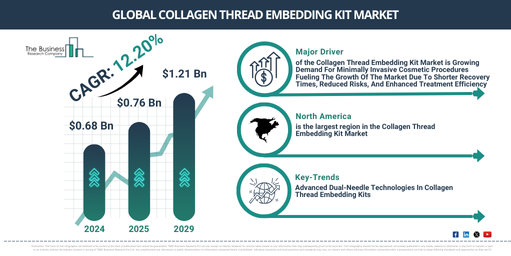
    The collagen thread embedding kit market has seen considerable growth in recent years. Its value is projected to increase from $0.68 billion in 2024 to $0.76 billion in 2025, demonstrating a compound annual growth rate (CAGR) of 12.5%. This past expansion is mainly due to the growing appeal of thread lifting as a substitute for surgical facelifts, along with the rising acceptance of collagen-based treatments among younger demographics. Furthermore, the increasing impact of social media and celebrity endorsements on aesthetic trends, the enhanced availability of advanced training programs for practitioners, and a stronger focus on cosmetic solutions providing quick recovery and minimal downtime have all played a role.

    The market for collagen thread embedding kits is projected to experience substantial expansion over the upcoming years. By 2029, its valuation is anticipated to reach $1.21 billion, exhibiting a compound annual growth rate (CAGR) of 12.2%. This anticipated market expansion during the forecast period is fueled by several factors. These include a rising demand for combination therapies that integrate collagen threads and fillers, the increasing use of advanced, biocompatible, and more durable thread materials, a greater uptake of aesthetic treatments within developing economies, a growing need for cosmetic procedures that are minimally invasive, and a stronger inclination towards personalized and custom-tailored cosmetic solutions.

    Unlock Your Free Sample Report for Exclusive Market Data:

    https://www.thebusinessresearchcompany.com/sample.aspx?id=28181&type=smp

    Which Drivers Are Impacting The Collagen Thread Embedding Kit Market?

    The increasing need for minimally invasive cosmetic procedures is anticipated to drive the expansion of the collagen thread-embedding kit market in the future. These procedures involve treatments designed to enhance aesthetic appeal through the use of minor instruments or injections, resulting in minimal discomfort, absence of significant incisions, and rapid recuperation. The rising preference for minimally invasive cosmetic procedures stems from their benefits, such as quicker healing periods, lower chances of adverse effects, diminished pain, and less noticeable scarring, which makes them highly attractive to individuals looking for faster and safer treatment alternatives. Collagen thread embedding kits augment minimally invasive cosmetic procedures by ensuring accurate and regulated placement of collagen-stimulating threads, rendering them perfectly suited for skin tightening and revitalization therapies. These kits simplify the procedural process by supplying pre-prepared tools and threads, thereby enhancing the effectiveness of treatment and patient results. As an illustration, in November 2024, data from the American Society of Plastic Surgeons, a US-based non-profit organization, indicated that the overall volume of cosmetic minimally invasive procedures hit 25,442,640 in 2023, representing a 7% rise from 23,672,269 recorded in 2022. Consequently, the increasing inclination towards minimally invasive cosmetic procedures is fueling the expansion of the collagen thread embedding kit market.

    How Is The Collagen Thread Embedding Kit Market Classified Into Different Segments?

    The collagen thread embedding kit market covered in this report is segmented as

    1) By Product Type: Polydioxanone (PDO) Threads, Poly-L-Lactic Acid (PLLA) Threads, Polycaprolactone (PCL) Threads, Other Product Types

    2) By Distribution Channel: Direct Sales, Online Retailers, Specialty Stores, Other Distribution Channels

    3) By Application: Facial Rejuvenation, Body Contouring, Anti-Aging, Other Applications

    4) By End User: Hospitals, Dermatology Clinics, Aesthetic Clinics, Other End Users

    Subsegments:

    1) By Polydioxanone (PDO) Threads: Monofilament Polydioxanone (PDO) Threads, Barbed Polydioxanone (PDO) Threads, Screw Polydioxanone (PDO) Threads, Cog Polydioxanone (PDO) Threads

    2) By Poly-L-Lactic Acid (PLLA) Threads: Smooth Poly-L-Lactic Acid (PLLA) Threads, Barbed Poly-L-Lactic Acid (PLLA) Threads

    3) By Polycaprolactone (PCL) Threads: Smooth Polycaprolactone (PCL) Threads, Barbed Polycaprolactone (PCL) Threads, Cog Polycaprolactone (PCL) Threads, Mesh Polycaprolactone (PCL) Threads, Screw Polycaprolactone (PCL) Threads

    4) By Other Product Types: Poly-L-Lactic Acid (PLLA) And Polycaprolactone (PCL), Poly-L-Lactic Acid (PLLA) And Polydioxanone (PDO) Hybrid Threads, Polycaprolactone (PCL) And Polydioxanone (PDO) Hybrid Threads

    What Are The Major Trends Driving The Growth Of The Collagen Thread Embedding Kit Market?

    Leading companies in the collagen thread embedding kit market are prioritizing the development of sophisticated technologies, such as dual needle design technologies, to boost accuracy and control, thereby making procedures safer and more efficacious. Dual needle design technology functions as a mechanism utilizing two needles collaboratively to enhance accuracy, control, and effectiveness in a procedure or application. For example, in May 2023, PDO MAX Inc., a US-based woman-owned aesthetics medical device company, unveiled the PDO MAX DUO PDO Threads. These double-needle PDO threads are crafted for deep plane thread lifts on the temporal fascia, offering practitioners greater precision and lifting power. The barbed threads, situated between two needles, allow for accurate tissue repositioning and stable anchoring, particularly in mid-facial zones like sagging cheeks and deep nasolabial folds. Fabricated from FDA-approved biodegradable polydioxanone (PDO), these threads naturally dissipate within 6–12 months, simultaneously stimulating collagen production to improve skin firmness and elasticity. PDO MAX, Inc. ensures effective utilization of these advanced threads by providing licensed medical professionals with extensive training via on-demand videos and in-person sessions.

    Who Are The Core Companies Influencing The Collagen Thread Embedding Kit Market Landscape?

    Major companies operating in the collagen thread embedding kit market are Croma-Pharma GmbH, Koru Pharmaceuticals Co. Ltd., Aptos LLC, HansBiomed Corporation, Wontech Co. Ltd., DermaSculpt LLC, Grand Aespio Inc., Regen Biotech Inc., N-Finders Co. Ltd., Intraline Medical Aesthetics Inc., Healux Corporation, NovaThreads LLC, Dermaqual LLC, Sinclair Pharma Limited, Hugel Inc., Hyundae Meditech Co. Ltd., Bossgoo.com Limited, T-Lab Professional, Hyundae Meditech Co. Ltd., and Metro Korea Co. Ltd.

    Download The Full Report For Exclusive Market Findings:

    https://www.thebusinessresearchcompany.com/report/collagen-thread-embedding-kit-global-market-report

    What Are The Key Regional Factors Influencing The Collagen Thread Embedding Kit Market Growth?

    North America was the largest region in the collagen thread embedding kit market in 2024. Asia-Pacific is expected to be the fastest-growing region in the forecast period. The regions covered in collagen thread embedding kit report are Asia-Pacific, Western Europe, Eastern Europe, North America, South America, Middle East and Africa.

    Request A Customized Version Of The Collagen Thread Embedding Kit Market Report:

    https://www.thebusinessresearchcompany.com/customise?id=28181&type=smp

    Browse Through More Reports Similar to the Global Collagen Thread Embedding Kit Market 2025, By The Business Research Company

    Collagen Global Market Report 2025

    https://www.thebusinessresearchcompany.com/report/collagen-global-market-report

    Collagen Sausage Casings Global Market Report 2025

    https://www.thebusinessresearchcompany.com/report/collagen-sausage-casings-global-market-report

    Yarn Fiber And Thread Manufacturing Global Market Report 2025

    https://www.thebusinessresearchcompany.com/report/yarn-fiber-and-thread-manufacturing-global-market-report

    Get in touch with us:

    The Business Research Company: https://www.thebusinessresearchcompany.com/

    Americas +1 310-496-7795

    Asia +44 7882 955267 & +91 8897263534

    Europe +44 7882 955267

    Email us at info@tbrc.info

    Follow us on:

    LinkedIn: https://in.linkedin.com/company/the-business-research-company

    YouTube: https://www.youtube.com/channel/UC24_fI0rV8cR5DxlCpgmyFQ

    Global Market Model: https://www.thebusinessresearchcompany.com/global-market-model
  • Collagen Booster Microneedle Device Industry Insights: Market Forecast to 2029

    Collagen Booster Microneedle Device Industry Insights: Market Forecast to 2029

    Unlock Global Insights – Save 20% on Market Reports with Code ONLINE20

    How Is The Collagen Booster Microneedle Device Market Size Likely To Evolve From 2025 Through 2034?

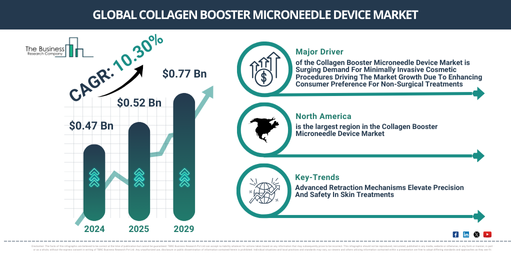
    The collagen booster microneedle device market has seen substantial expansion in recent years. Its value is projected to rise from $0.47 billion in 2024 to $0.52 billion in 2025, at a compound annual growth rate (CAGR) of 10.7%. Historically, this growth can be attributed to several factors including increasing demand for non-invasive aesthetic treatments, a growing awareness of skin rejuvenation benefits, rising disposable income that enables cosmetic procedures, an increasing preference for at-home skincare solutions, and the growing influence of social media and beauty influencers.

    The collagen booster microneedle device market size is anticipated to undergo significant expansion in the coming years. It is expected to reach $0.77 billion by 2029, demonstrating a compound annual growth rate (CAGR) of 10.3%. The drivers for this growth during the projected period include increasing aesthetic consciousness, an aging population, the availability of at-home devices, a rising geriatric population, and heightened concerns regarding skin aging. Prominent trends for the forecast period involve the integration of radiofrequency technology, a surge in homecare microneedling devices, a focus on skin rejuvenation, a preference for automated microneedling pens, and an increase in hair restoration applications.

    Unlock Your Free Sample Report for Exclusive Market Data:

    https://www.thebusinessresearchcompany.com/sample.aspx?id=28180&type=smp

    Which Industry Drivers Are Expected To Accelerate The Collagen Booster Microneedle Device Market From 2025 To 2029?

    The escalating demand for minimally invasive cosmetic procedures is anticipated to fuel the expansion of the collagen booster microneedle device market moving forward. These procedures represent non-surgical treatments that improve appearance with less recovery time and reduced risks compared to traditional surgical methods. The rising need for such procedures is attributed to consumer preference for safer alternatives offering minimal downtime, as modern lifestyles increasingly prioritize quick recovery and natural-looking outcomes without the complications associated with invasive surgery. Collagen booster microneedle devices facilitate minimally invasive cosmetic procedures by creating controlled micro-injuries in the skin, which activates the body’s natural wound-healing processes, resulting in increased collagen production and skin rejuvenation without the necessity of surgical intervention. For instance, in June 2024, according to the American Society of Plastic Surgeons, a US-based non-profit organization, 2023 saw 347,782 liposuction procedures, indicating a 7% increase from 2022. Additionally, plastic surgeries rose by 5% year-over-year, while minimally invasive procedures experienced a 7% increase. Therefore, the significant demand for minimally invasive cosmetic procedures is propelling the growth of the collagen booster microneedle device market.

    What Are The Major Segments Identified In The Collagen Booster Microneedle Device Market?

    The collagen booster microneedle device market covered in this report is segmented as

    1) By Product Type: Manual Microneedle Devices, Automated Microneedle Devices

    2) By Distribution Channel: Online Retail, Pharmacies, Specialty Stores, Other Distribution Channels

    3) By Application: Anti-Aging, Scar Treatment, Skin Rejuvenation, Hyperpigmentation, Other Applications

    4) By End-User: Dermatology Clinics, Hospitals, Homecare Settings, Other End Users

    Subsegments:

    1) By Manual Microneedle Devices: Derma Rollers, Stamp Microneedles, Pen Type Microneedles, Adjustable Depth Microneedles

    2) By Automated Microneedle Devices: Motorized Microneedle Pens, Electronic Derma Rollers, Pneumatic Microneedle Devices, Smart Microneedle Systems

    What Are The Major Trends Driving The Growth Of The Collagen Booster Microneedle Device Market?

    Key companies in the collagen booster microneedle device market are concentrating on employing groundbreaking technologies, such as advanced retraction technology, to elevate treatment accuracy, improve patient safety, and deliver more consistent aesthetic results. This advanced retraction technology is a microneedling innovation that automatically and smoothly withdraws the needles after each insertion, contributing to reduced tissue trauma, enhanced patient comfort, and ensuring safer, more precise treatments. For example, in September 2024, Crown Aesthetics Inc., a US-based medical aesthetics firm, received U.S. Food and Drug Administration (FDA) clearance for its new SkinPen Precision Elite, which features ActiSine technology with active retraction, an RFID-enabled cartridge system, and improved safety elements. The device operates by creating controlled micro-injuries in the skin, which stimulates the body’s natural wound-healing process, thereby triggering collagen and elastin production to enhance the appearance of acne scars, wrinkles, and overall skin texture. This innovation aims to better both the provider experience and patient outcomes by offering increased precision, reliability, and comfort during microneedling procedures, simultaneously establishing a new standard in the collagen booster microneedle device market by integrating advanced safety mechanisms, ease of use, and clinically validated skin rejuvenation benefits.

    Which Major Industry Participants Are Leading The Collagen Booster Microneedle Device Market Growth?

    Major companies operating in the collagen booster microneedle device market are Shiseido Company Limited, Cynosure Inc., Cutera Inc., Sincoheren Co. Ltd., Crown Aesthetics Inc., Amiea Med GmbH, Beijing Sanhe Beauty Science & Technology Co. Ltd., EndyMed Medical Ltd., Eclipse MedCorp LLC, Bomtech Electronics Co. Ltd., DermaQuip Inc., Aesthetics Biomedical Inc., RegenOMedix Inc., Emage Medical Inc., Medicube Co. Ltd., FotroMed Co. Ltd., Korabeauticals Inc., Accio Biotech Inc., Astiland Co. Ltd., Shenzhen GSD Technology Co. Ltd.

    Download The Full Report For Exclusive Market Findings:

    https://www.thebusinessresearchcompany.com/report/collagen-booster-microneedle-device-global-market-report

    How Do Regional Market Performances Compare Within The Collagen Booster Microneedle Device Industry?

    North America was the largest region in the collagen booster microneedle device market in 2024. Asia-Pacific is expected to be the fastest-growing region in the forecast period. The regions covered in collagen booster microneedle device report are Asia-Pacific, Western Europe, Eastern Europe, North America, South America, Middle East and Africa.

    Request A Customized Version Of The Collagen Booster Microneedle Device Market Report:

    https://www.thebusinessresearchcompany.com/customise?id=28180&type=smp

    Browse Through More Reports Similar to the Global Collagen Booster Microneedle Device Market 2025, By The Business Research Company

    Microneedle Drug Delivery Systems Global Market Report 2025

    https://www.thebusinessresearchcompany.com/report/microneedle-drug-delivery-systems-global-market-report

    Collagen Global Market Report 2025

    https://www.thebusinessresearchcompany.com/report/collagen-global-market-report

    Vaccine Delivery Devices Global Market Report 2025

    https://www.thebusinessresearchcompany.com/report/vaccine-delivery-devices-global-market-report

    Get in touch with us:

    The Business Research Company: https://www.thebusinessresearchcompany.com/

    Americas +1 310-496-7795

    Asia +44 7882 955267 & +91 8897263534

    Europe +44 7882 955267

    Email us at info@tbrc.info

    Follow us on:

    LinkedIn: https://in.linkedin.com/company/the-business-research-company

    YouTube: https://www.youtube.com/channel/UC24_fI0rV8cR5DxlCpgmyFQ

    Global Market Model: https://www.thebusinessresearchcompany.com/global-market-model

  • Cold Mist Humidifier Mask Market Size and Growth Forecast for Businesses 2025–2029

    Cold Mist Humidifier Mask Market Size and Growth Forecast for Businesses 2025–2029

    Unlock Global Insights – Save 20% on Market Reports with Code ONLINE20

    What Are The Growth Projections For The Cold Mist Humidifier Mask Market Size During 2025–2029?

    The cold mist humidifier mask market has seen rapid expansion in recent years. Its value is expected to ascend from $1.32 billion in 2024 to $1.52 billion in 2025, achieving a compound annual growth rate (CAGR) of 14.8%. Historically, this market’s growth can be linked to a heightened emphasis on preventive healthcare options, increased consumer spending on wellness and lifestyle goods, the rise in urbanization leading to greater pollution exposure, the expanding application of humidifiers in pediatric and elderly care, and a growing inclination towards home-based healthcare equipment.

    The cold mist humidifier mask market size is expected to experience considerable growth in the coming years, projected to reach $2.60 billion by 2029, demonstrating a compound annual growth rate (CAGR) of 14.5%. This growth during the forecast period is attributed to several factors, including an increasing demand for smart and connected healthcare devices, a growing preference for eco-friendly and sustainable humidifiers, an elevated focus on personalized respiratory care solutions, the increasing adoption of e-commerce distribution channels, and a rising awareness regarding the benefits of continuous air hydration. Moreover, major trends anticipated in this period include advancements in portable and wearable humidifier technology, the development of hybrid masks with multi-functional features, innovations in eco-friendly and sustainable product materials, enhanced integration of IoT and smart sensors, and the creation of customizable designs for personalized comfort.

    Unlock Your Free Sample Report for Exclusive Market Data:

    https://www.thebusinessresearchcompany.com/sample.aspx?id=28179&type=smp

    What Are The Top Growth Drivers Impacting The Cold Mist Humidifier Mask Market Outlook?

    The increase in respiratory ailments is anticipated to boost the growth of the cold mist humidifier mask market in the future. These respiratory issues are escalating due to heightened air pollution, exposing individuals to harmful particulate matter and irritants, which in turn leads to a greater incidence of conditions such as asthma, bronchitis, and other breathing difficulties. Cold mist humidifier masks address these problems by supplying cool, humidified air that calms irritated airways, reduces dryness, and improves overall breathing comfort. For instance, in December 2024, the Centers for Disease Control and Prevention, a US-based government agency, reported an estimated 17,000 to 34,000 hospitalizations in the United States from October 1 to November 30, 2024, attributed to the respiratory syncytial virus (RSV). Consequently, the rise in respiratory disorders is propelling the growth of the cold mist humidifier mask market. The expanding adoption of home healthcare is projected to fuel the growth of the cold mist humidifier mask market over the coming years. Home healthcare encompasses various medical and supportive services provided in a patient’s residence to promote, maintain, or restore health and independence. This increase in home healthcare adoption stems from a rising elderly population, as more seniors opt for receiving medical care at home for its convenience and comfort, thereby reducing the necessity for frequent hospital visits. A cold mist humidifier mask assists in home healthcare by directly providing cool, moist air to the nose and mouth, alleviating dryness, congestion, and breathing discomfort. It offers comfort and respiratory relief for individuals experiencing colds, allergies, asthma, or those in dry indoor settings. As an illustration, according to the Medicare Payment Advisory Commission (MedPAC), a US-based independent, nonpartisan legislative agency, approximately 2.7 million Medicare fee-for-service (FFS) beneficiaries received home health care in 2023, with total program expenditures reaching $15.7 billion. Therefore, the growing acceptance of home healthcare is a key driver for the cold mist humidifier mask market.

    What Are The Emerging Segments Gaining Attention In The Cold Mist Humidifier Mask Market?

    The cold mist humidifier mask market covered in this report is segmented as

    1) By Product Type: Disposable, Reusable

    2) By Application: Medical, Personal Care, Industrial, Other Applications

    3) By Distribution Channel: Online Stores, Pharmacies, Specialty Stores, Supermarkets Or Hypermarkets, Other Channels

    4) By End-User: Hospitals And Clinics, Homecare, Industrial, Other End-Users

    Subsegments:

    1) By Disposable, By Type: Single Use Nozzle, Disposable Humidifier Pad, Pre-Filled Water Capsule, One-Time Cartridge

    2) By Reusable, By Type: Washable Water Tank, Replaceable Filter, Durable Mask, Adjustable Humidifier Base

    Who Are The Prominent Global Companies Shaping The Cold Mist Humidifier Mask Market?

    Major companies operating in the cold mist humidifier mask market are Xiaomi Corporation, Koninklijke Philips N.V., ResMed Inc., Conair Corporation, Fisher & Paykel Healthcare Corporation Limited, Vyaire Medical Inc., Drive DeVilbiss Healthcare LLC, PARI GmbH, Dyson Ltd., Blueair AB, BMC Medical Co. Ltd., Crane USA, InnoGear LLC, Babymoov S.A., Levoit Inc., Teleflex Incorporated, Armbrust American, HumidiFlyer Technologies Pvt. Ltd., Apex Medical Corp., Sunrise Medical Inc.

    Download The Full Report For Exclusive Market Findings:

    https://www.thebusinessresearchcompany.com/report/cold-mist-humidifier-mask-global-market-report

    Which Region Currently Holds The Largest Share Of The Cold Mist Humidifier Mask Market?

    North America was the largest region in the cold mist humidifier mask market in 2024. Asia-Pacific is expected to be the fastest-growing region in the forecast period. The regions covered in cold mist humidifier mask report are Asia-Pacific, Western Europe, Eastern Europe, North America, South America, Middle East and Africa.

    Request A Customized Version Of The Cold Mist Humidifier Mask Market Report:

    https://www.thebusinessresearchcompany.com/customise?id=28179&type=smp

    Browse Through More Reports Similar to the Global Cold Mist Humidifier Mask Market 2025, By The Business Research Company

    Air Humidifiers Global Market Report 2025

    https://www.thebusinessresearchcompany.com/report/air-humidifiers-global-market-report

    Humidifying Equipment Global Market Report 2025

    https://www.thebusinessresearchcompany.com/report/humidifying-equipment-global-market-report

    Respiratory Disposables Global Market Report 2025

    https://www.thebusinessresearchcompany.com/report/respiratory-disposables-global-market-report

    Get in touch with us:

    The Business Research Company: https://www.thebusinessresearchcompany.com/

    Americas +1 310-496-7795

    Asia +44 7882 955267 & +91 8897263534

    Europe +44 7882 955267

    Email us at info@tbrc.info

    Follow us on:

    LinkedIn: https://in.linkedin.com/company/the-business-research-company

    YouTube: https://www.youtube.com/channel/UC24_fI0rV8cR5DxlCpgmyFQ

    Global Market Model: https://www.thebusinessresearchcompany.com/global-market-model

  • Global Closed-Loop Neuromodulation Processor Industry Trends: Where the Market Is Headed by 2029

    Global Closed-Loop Neuromodulation Processor Industry Trends: Where the Market Is Headed by 2029

    Unlock Global Insights – Save 20% on Market Reports with Code ONLINE20

    How Much Was The Closed-Loop Neuromodulation Processor Market Worth In 2025, And What Is Its Anticipated Value By 2029?

    The closed-loop neuromodulation processor market has witnessed rapid expansion in recent years. It is anticipated to increase from $2.22 billion in 2024 to $2.52 billion in 2025, exhibiting a compound annual growth rate (CAGR) of 13.3%. This historical growth can be ascribed to an escalating prevalence of neurological disorders, a growing need for pain management therapies, increased awareness of neuromodulation techniques, wider adoption in epilepsy treatment, and expanded application in managing Parkinson’s disease.

    The market for closed-loop neuromodulation processors is projected to experience swift expansion over the coming years. This market is anticipated to reach a valuation of $4.11 billion by 2029, demonstrating a compound annual growth rate (CAGR) of 13.0%. The predicted expansion during this period stems from factors such as heightened investments in research and development, an increasing inclination towards personalized therapeutic approaches, a surge in the need for non-invasive treatments, expanded application in mental health conditions, and enhanced backing from reimbursement frameworks. Significant developments expected in the forecast timeframe encompass the incorporation of AI into feedback mechanisms, the creation of compact implantable devices, advancements in wireless communication technologies, and the deployment of cloud-based solutions for patient monitoring.

    Unlock Your Free Sample Report for Exclusive Market Data:

    https://www.thebusinessresearchcompany.com/sample.aspx?id=28175&type=smp

    What Are The Key Drivers Of Growth In The Closed-Loop Neuromodulation Processor Market?

    Rising neurological conditions are anticipated to fuel the expansion of the closed-loop neuromodulation processor market in the future. Such disorders represent conditions that compromise the nervous system, impacting the functionality of the brain, spinal cord, or nerves, potentially resulting in difficulties with movement, cognition, or sensory perception. The prevalence of neurological disorders is escalating primarily due to an aging worldwide demographic, which contributes to a higher incidence of diseases like Alzheimer’s and Parkinson’s. These closed-loop neuromodulation processors assist in addressing these conditions through continuous surveillance of brain activity and the provision of precise, real-time electrical stimulation to normalize irregular neural signals. As an illustration, data from the US-based research organization, the Institute for Health Metrics and Evaluation, shows that neurological conditions affected 43% of the global population in 2022, with forecasts suggesting this figure could double by 2050. Consequently, the expanding occurrence of neurological disorders is propelling the growth of the closed-loop neuromodulation processor market.

    What Are The Key Segments In The Closed-Loop Neuromodulation Processor Market?

    The closed-loop neuromodulation processor market covered in this report is segmented as

    1) By Product Type: Implantable Processors, External Processors

    2) By Technology: Deep Brain Stimulation, Spinal Cord Stimulation, Vagus Nerve Stimulation, Other Technologies

    3) By Application: Chronic Pain Management, Epilepsy, Parkinson’s Disease, Depression, Other Applications

    4) By End-User: Hospitals, Specialty Clinics, Research Institutes, Other End Users

    Subsegments:

    1) By Implantable Processors: Deep Brain Stimulation (DBS) Processors, Spinal Cord Stimulation (SCS) Processors, Vagus Nerve Stimulation (VNS) Processors, Sacral Nerve Stimulation (SNS) Processors, Peripheral Nerve Stimulation (PNS) Processors

    2) By External Processors: Wearable Neuromodulation Controllers, Handheld Programming Devices, External Pulse Generators, Charging Systems And Power Management Units, Wireless Communication Interfaces

    How Are Trends Influencing The Closed-Loop Neuromodulation Processor Market?

    Major companies operating in the closed-loop neuromodulation processor market are primarily focused on integrating brain-computer interface (BCI) technology to boost treatment precision, improve symptom management, and personalize patient care for neurological disorders. A brain-computer interface (BCI) functions as a technology that facilitates direct communication between the brain and an external device by detecting, interpreting, and converting neural signals into commands that can operate computers, prosthetics, or therapeutic systems. These interfaces are often embedded within neuromodulation or rehabilitation devices, enabling continuous monitoring and adaptive therapy based on a patient’s brain activity. For example, in February 2025, Medtronic plc, a US-based medical technology company, secured United States Food and Drug Administration (FDA) approval for its BrainSense Adaptive Deep Brain Stimulation (aDBS) and BrainSense Electrode Identifier (EI). This event represented the largest commercial launch of brain-computer interface technology, with the closed-loop neuromodulation system continuously monitoring a patient’s brain activity and automatically adjusting stimulation in real time, thereby personalizing therapy for Parkinson’s disease. Clinical trials demonstrated enhanced symptom control, reduced motor fluctuations, and improved patient outcomes compared to traditional continuous DBS.

    Who Are The Major Companies Operating In The Closed-Loop Neuromodulation Processor Market?

    Major companies operating in the closed-loop neuromodulation processor market are Abbott Laboratories, Medtronic PLC, Boston Scientific Corporation, Integer Holdings, Beijing PINS Medical, CorTec, NeuroPace, Saluda Medical, NeuSpera Medical, Inbrain Neuroelectronics, Blackrock Neurotech, Soterix Medical (some adaptive neuromodulate devices), Great Lakes NeuroTechnologies, SensArs Neuroprosthetics, Biotronik SE & Co. KG, BioControl Medical, Precision Neuroscience, Motif Neurotech, Synergia Medical, BrainQ Technologies.

    Download The Full Report For Exclusive Market Findings:

    https://www.thebusinessresearchcompany.com/report/closed-loop-neuromodulation-processor-global-market-report

    Which Region Is Expected To Witness The Fastest Growth In The Closed-Loop Neuromodulation Processor Market?

    North America was the largest region in the closed-loop neuromodulation processor market in 2024. Asia-Pacific is expected to be the fastest-growing region in the forecast period. The regions covered in closed-loop neuromodulation processor report are Asia-Pacific, Western Europe, Eastern Europe, North America, South America, Middle East and Africa.

    Request A Customized Version Of The Closed-Loop Neuromodulation Processor Market Report:

    https://www.thebusinessresearchcompany.com/customise?id=28175&type=smp

    Browse Through More Reports Similar to the Global Closed-Loop Neuromodulation Processor Market 2025, By The Business Research Company

    Neuromodulation Global Market Report 2025

    https://www.thebusinessresearchcompany.com/report/neuromodulation-global-market-report

    Internal Neuromodulation Devices Global Market Report 2025

    https://www.thebusinessresearchcompany.com/report/internal-neuromodulation-devices-global-market-report

    Neurostimulation Devices Global Market Report 2025

    https://www.thebusinessresearchcompany.com/report/neurostimulation-devices-global-market-report

    Get in touch with us:

    The Business Research Company: https://www.thebusinessresearchcompany.com/

    Americas +1 310-496-7795

    Asia +44 7882 955267 & +91 8897263534

    Europe +44 7882 955267

    Email us at info@tbrc.info

    Follow us on:

    LinkedIn: https://in.linkedin.com/company/the-business-research-company

    YouTube: https://www.youtube.com/channel/UC24_fI0rV8cR5DxlCpgmyFQ

    Global Market Model: https://www.thebusinessresearchcompany.com/global-market-model

  • Clinical-Stage Biotechnology Market Growth Opportunities: Insights from 2025–2029

    Clinical-Stage Biotechnology Market Growth Opportunities: Insights from 2025–2029

    Unlock Global Insights – Save 20% on Market Reports with Code ONLINE20

    By How Much Is The Clinical-Stage Biotechnology Market Expected To Expand Between 2025 And 2029?

    The clinical-stage biotechnology market has seen rapid expansion in recent years. It is anticipated to increase in value from $40.65 billion in 2024 to $47.14 billion in 2025, exhibiting a compound annual growth rate (CAGR) of 16.0%. This historical growth can be attributed to several factors, including the increasing prevalence of chronic diseases, a rising demand for targeted therapies, increased investment in biotechnology research, the growing adoption of precision medicine, and an enhanced emphasis on personalized medicine.

    The clinical-stage biotechnology market is anticipated to experience substantial growth in the upcoming years. Its size is projected to reach $84.17 billion by 2029, demonstrating a compound annual growth rate (CAGR) of 15.6%. This expansion during the forecast period can be attributed to increased clinical trial activities, a rise in regulatory approvals, growing government funding for biotechnology, enhanced patient awareness regarding novel therapies, and the expanding adoption of innovative treatments. Major trends for this period include advancements in gene editing technologies, the development of personalized therapeutics, innovation in RNA-based treatments, further progress in cell and gene therapies, and strengthening collaborations between academia and industry.

    Unlock Your Free Sample Report for Exclusive Market Data:

    https://www.thebusinessresearchcompany.com/sample.aspx?id=28173&type=smp

    What Are The Emerging Market Drivers Creating New Opportunities In The Clinical-Stage Biotechnology Industry?

    The clinical-stage biotechnology market is anticipated to experience growth due to the increasing emphasis on personalized medicine. Personalized medicine involves tailoring medical treatment to the specific characteristics of each patient, primarily utilizing genetic, biomarker, and molecular information. This focus on personalized medicine is expanding as it allows doctors to customize cancer treatments to a patient’s genetic profile, leading to improved effectiveness and a reduction in unnecessary side effects. Clinical-stage biotechnology supports personalized medicine by developing targeted therapies that align with an individual’s genetic profile to enhance treatment effectiveness and safety. For instance, in February 2024, data from the Personalized Medicine Coalition, a US-based non-profit organization, indicated that in 2023, the FDA approved 16 new personalized therapies for patients with rare diseases, which was a substantial increase from just six approvals in 2022. Therefore, the growing emphasis on personalized medicine is expected to propel the expansion of the clinical-stage biotechnology market.

    What Are The Major Segment Categories Driving The Clinical-Stage Biotechnology Market Growth?

    The clinical-stage biotechnology market covered in this report is segmented as

    1) By Product Type: Therapeutics, Diagnostics, Vaccines, Other Product Types

    2) By Phase: Phase I, Phase II, Phase III

    3) By Application: Oncology, Infectious Diseases, Cardiovascular Diseases, Neurology, Other Applications

    4) By End-User: Hospitals, Research Institutes, Diagnostic Centers, Other End-Users

    Subsegments:

    1) By Therapeutics: Monoclonal Antibodies, Cell Therapy, Gene Therapy, Recombinant Proteins, Peptide Therapeutics, Small Molecule Therapeutics

    2) By Diagnostics: Molecular Diagnostics, Immunoassays, Genetic Testing, Biomarker Testing, Point Of Care Diagnostics

    3) By Vaccines: Live Attenuated Vaccines, Inactivated Vaccines, Subunit Vaccines, mRNA Vaccines, Viral Vector Vaccines

    4) By Other Product Types: Regenerative Medicine Products, Research Reagents, Companion Diagnostics, Medical Devices

    Which Ongoing Trends Are Expected To Shape The Clinical-Stage Biotechnology Market Outlook?

    Major companies operating in the clinical-stage biotechnology market are concentrating on developing innovative solutions, such as clinical trial services, to accelerate drug development, improve patient recruitment and retention, and enhance regulatory compliance. Clinical trial services refer to the professional assistance and strategies that help design, manage, and conduct clinical studies to evaluate the safety and effectiveness of new drugs or therapies. For instance, in November 2023, Ichor Life Sciences, Inc., a US-based biotechnology company, launched a new division called Ichor Clinical Trial Services. This service expands their contract research organization (CRO) offerings to support biotechnology and pharmaceutical clients throughout the entire drug development process, from early preclinical studies to late-stage clinical trials and FDA approval. Ichor Clinical provides customized solutions, including protocol design, site identification and qualification, recruitment and retention strategies, and full CRO support. The unit aims to address unique client challenges and complexities, such as assisting ongoing trials with enrollment or operational issues, using a personalized and agile approach.

    Who Are The Core Companies Influencing The Clinical-Stage Biotechnology Market Landscape?

    Major companies operating in the clinical-stage biotechnology market are Sarepta Therapeutics Inc., BioAge Labs Inc., PTC Therapeutics Inc., Evotec SE, Ultragenyx Pharmaceutical Inc., Rocket Pharmaceuticals Inc., Ventyx Biosciences Inc., Sangamo Therapeutics Inc., REGENXBIO Inc., Galapagos NV, Arvinas Inc., Editas Medicine Inc., Zymeworks Inc., CureVac N.V., Precision BioSciences Inc., 4D Molecular Therapeutics Inc., Domain Therapeutics S.A., ProQR Therapeutics N.V., Tonix Pharmaceuticals Holding Corp., Gilgamesh Pharmaceuticals Inc., T-Cure Bioscience Inc., Opna Bio Inc., EXUMA Biotech Inc., and Prime Medicine Inc.

    Download The Full Report For Exclusive Market Findings:

    https://www.thebusinessresearchcompany.com/report/clinical-stage-biotechnology-global-market-report

    Which Region Shows The Highest Potential For Future Expansion In The Clinical-Stage Biotechnology Market?

    North America was the largest region in the clinical-stage biotechnology market in 2024. The regions covered in clinical-stage biotechnology report are Asia-Pacific, Western Europe, Eastern Europe, North America, South America, Middle East and Africa.

    Request A Customized Version Of The Clinical-Stage Biotechnology Market Report:

    https://www.thebusinessresearchcompany.com/customise?id=28173&type=smp

    Browse Through More Reports Similar to the Global Clinical-Stage Biotechnology Market 2025, By The Business Research Company

    Biotechnology Services Global Market Report 2025

    https://www.thebusinessresearchcompany.com/report/biotechnology-services-global-market-report

    Animal Biotechnology Global Market Report 2025

    https://www.thebusinessresearchcompany.com/report/animal-biotechnology-global-market-report

    Synthetic Biology Global Market Report 2025

    https://www.thebusinessresearchcompany.com/report/synthetic-biology-global-market-report

    Get in touch with us:

    The Business Research Company: https://www.thebusinessresearchcompany.com/

    Americas +1 310-496-7795

    Asia +44 7882 955267 & +91 8897263534

    Europe +44 7882 955267

    Email us at info@tbrc.info

    Follow us on:

    LinkedIn: https://in.linkedin.com/company/the-business-research-company

    YouTube: https://www.youtube.com/channel/UC24_fI0rV8cR5DxlCpgmyFQ

    Global Market Model: https://www.thebusinessresearchcompany.com/global-market-model

  • Clinical Wearable Virtual Reality Market Expansion Outlook: $3.49 Billion by 2029 Forecast

    Clinical Wearable Virtual Reality Market Expansion Outlook: $3.49 Billion by 2029 Forecast

    Unlock Global Insights – Save 20% on Market Reports with Code ONLINE20

    #What Is The Projected Market Size Of The Clinical Wearable Virtual Reality Market By 2029?

    The market for clinical wearable virtual reality has experienced significant expansion recently. This market is projected to expand from $1.46 billion in 2024 to reach $1.74 billion by 2025, demonstrating a compound annual growth rate (CAGR) of 19.3%. Its historical growth can be attributed to several factors, including the greater integration of virtual reality in medical rehabilitation, an escalating need for pain management options, a developing interest in mental health therapy applications, increased financial backing for immersive healthcare innovations, and the expanded application of wearable technology for patient observation.

    The market for clinical wearable virtual reality is projected to experience substantial expansion over the upcoming years. This market is set to reach a valuation of $3.49 billion by 2029, exhibiting a compound annual growth rate (CAGR) of 19.0%. Factors contributing to this anticipated growth include the increasing integration of AI with VR for tailored therapeutic approaches, the rising acceptance of remote patient monitoring solutions, a heightened emphasis on preventive healthcare through immersive VR experiences, an uptick in partnerships between VR developers and healthcare providers, and a growing need for VR applications for at-home therapeutic use. Key trends anticipated during this period encompass enhancements in haptic feedback and sensory technologies, the incorporation of cloud-based VR platforms within healthcare settings, novel developments in gamified rehabilitation programs, the creation of portable and lightweight VR wearables, and progress in real-time data analytics for assessing patient outcomes.

    Unlock Your Free Sample Report for Exclusive Market Data:

    https://www.thebusinessresearchcompany.com/sample.aspx?id=28172&type=smp

    Which Drivers Are Impacting The Clinical Wearable Virtual Reality Market?

    The expansion of medical tourism is projected to stimulate the growth of the clinical wearable virtual reality market in the coming period. Medical tourism involves individuals journeying to different nations for medical, surgical, or dental care, frequently integrating health services with travel and tourism activities. This trend is escalating because foreign countries offer high-quality healthcare options at more affordable prices. Within medical tourism, clinical wearable virtual reality delivers patients immersive experiences both before and after treatment, encompassing virtual consultations, therapeutic sessions, and pain management. For example, in January 2025, the National Institutes of Health (NIH), a US-based government medical research agency, documented that approximately 348,000 UK residents engaged in medical tourism abroad in 2022, a figure that climbed to 431,000 in 2023. Consequently, the increasing medical tourism is anticipated to propel the growth of the clinical wearable virtual reality market.

    How Is The Clinical Wearable Virtual Reality Market Segmented?

    The clinical wearable virtual reality market covered in this report is segmented as

    1) By Product Type: Head-Mounted Displays, Smart Glasses, Handheld Devices, Other Product Type

    2) By Application: Pain Management, Rehabilitation, Surgical Training, Patient Care Management, Other Applications

    3) By End-User: Hospitals, Clinics, Rehabilitation Centers, Other End-Users

    Subsegment:

    1) By Head-Mounted Displays: Tethered Head-Mounted Displays, Standalone Or Untethered Head-Mounted Displays

    2) By Smart Glasses: Optical See-Through Smart Glasses, Video See-Through Smart Glasses

    3) By Handheld Devices: Virtual Reality-Enabled Tablets, Virtual Reality-Enabled Smartphones With Headset Kits

    4) By Other Product Type: Haptic Feedback Gloves, Virtual Reality Treadmills And Motion Platforms, Full-Body Haptic Suits

    Which Competitive Trends Are Defining The Clinical Wearable Virtual Reality Market Structure?

    Leading companies in the **clinical wearable virtual reality market** are prioritizing the development of advanced solutions, such as **AI-driven remote ophthalmic diagnostics**, to equip healthcare professionals with efficient, real-time eye examinations and enhanced capabilities for patient monitoring. **AI-driven remote ophthalmic diagnostics** is a system where wearable virtual reality devices leverage artificial intelligence algorithms to autonomously assess, analyze, and interpret visual and ocular data, empowering clinicians to conduct comprehensive eye tests remotely. For instance, in **March 2022**, **Xenon Ophthalmics Inc.**, a **US-based** medical device company, unveiled the **Xenon-1**, a medical-grade mobile virtual reality headset intended for ophthalmic diagnostics. This device integrates AI algorithms to perform visual field tests, autorefraction, and subjective refraction, features AI-driven real-time data analysis for immediate outcomes, provides remote data access for clinicians, and includes a modular design to support additional testing modules, thereby improving the accessibility, efficiency, and overall quality of eye care delivery.

    Which Major Industry Participants Are Leading The Clinical Wearable Virtual Reality Market Growth?

    Major companies operating in the clinical wearable virtual reality market are Fresenius Medical Care AG & Co. KGaA, Magic Leap, Heru Inc., Vection Technologies, MindMaze SA, XRHealth Inc., Ocutrx Vision Technologies Inc., Vuzix Corporation, Health Scholars Inc., AppliedVR, Limbix Inc., Debut Infotech Ltd., SimX Inc., MyndVR Inc., SentiAR Inc., NuEyes Technologies Inc., CUREosity GmbH, Fusion VR, Mieron VR, and SyncThink Inc.

    Download The Full Report For Exclusive Market Findings:

    https://www.thebusinessresearchcompany.com/report/clinical-wearable-virtual-reality-global-market-report

    How Is Clinical Wearable Virtual Reality Market Demand Varying Across Different Regions?

    North America was the largest region in the clinical wearable virtual reality market in 2024. Asia-Pacific is expected to be the fastest-growing region in the forecast period. The regions covered in clinical wearable virtual reality report are Asia-Pacific, Western Europe, Eastern Europe, North America, South America, Middle East and Africa.

    Request A Customized Version Of The Clinical Wearable Virtual Reality Market Report:

    https://www.thebusinessresearchcompany.com/customise?id=28172&type=smp

    Browse Through More Reports Similar to the Global Clinical Wearable Virtual Reality Market 2025, By The Business Research Company

    Virtual Reality In Healthcare Global Market Report 2025

    https://www.thebusinessresearchcompany.com/report/virtual-reality-in-healthcare-global-market-report

    Virtual Reality Vr In Medical Simulation Global Market Report 2025

    https://www.thebusinessresearchcompany.com/report/virtual-reality-vr-in-medical-simulation-global-market-report

    Wearable Medical Devices Market 2025

    https://www.thebusinessresearchcompany.com/report/wearable-medical-devices-market

    Get in touch with us:

    The Business Research Company: https://www.thebusinessresearchcompany.com/

    Americas +1 310-496-7795

    Asia +44 7882 955267 & +91 8897263534

    Europe +44 7882 955267

    Email us at info@tbrc.info

    Follow us on:

    LinkedIn: https://in.linkedin.com/company/the-business-research-company

    YouTube: https://www.youtube.com/channel/UC24_fI0rV8cR5DxlCpgmyFQ

    Global Market Model: https://www.thebusinessresearchcompany.com/global-market-model

  • Global Clinical Trial Platform Industry Trends: Where the Market Is Headed by 2029

    Global Clinical Trial Platform Industry Trends: Where the Market Is Headed by 2029

    Unlock Global Insights – Save 20% on Market Reports with Code ONLINE20

    How Much Was The Clinical Trial Platform Market Worth In 2025, And What Is Its Anticipated Value By 2029?

    The clinical trial platform market has observed swift expansion in recent years. It is anticipated to expand from $2.36 billion in 2024 to $2.69 billion in 2025, achieving a compound annual growth rate (CAGR) of 14.1%. This historical growth can be attributed to several factors, including the increasing implementation of electronic data capture systems, a heightened need for centralized clinical trial management, evolving regulatory compliance standards, the increasing practice of outsourcing in clinical research, and the initial integration of wearable health monitoring devices.

    The clinical trial platform market is projected to experience substantial expansion over the coming years. Its valuation is anticipated to reach $4.50 billion by 2029, exhibiting a compound annual growth rate (CAGR) of 13.7%. This expansion during the forecast period is primarily fueled by the accelerating adoption of decentralized clinical trials, the incorporation of artificial intelligence and machine learning into clinical platforms, a surge in remote patient monitoring, a heightened need for patient-centric trial approaches, and the proliferation of cloud-based solutions for clinical trials. Key trends anticipated during this period encompass the convergence of decentralized clinical trials (DCT) with remote patient monitoring, the implementation of AI and machine learning for trial development and data scrutiny, the deployment of wearable technologies and biosensors for continuous patient data acquisition, and the heightened application of blockchain for ensuring data integrity and clarity in trials.

    Unlock Your Free Sample Report for Exclusive Market Data:

    https://www.thebusinessresearchcompany.com/sample.aspx?id=28171&type=smp

    Which Industry Drivers Are Expected To Accelerate The Clinical Trial Platform Market From 2025 To 2029?

    Increased funding directed towards research and development is anticipated to boost the expansion of the clinical trial platform market in the coming years. Investment in research and development represents the comprehensive spending by various entities, including companies and organizations, on innovative endeavors focused on creating novel technologies, offerings, and remedies. This uptick in research and development investment is primarily fueled by heightened worldwide competition and swift technological progress, as organizations understand that continuous innovation is crucial for preserving their competitive edge within an evolving market landscape. The escalating expenditure on research and development stimulates a need for robust clinical trial platforms capable of effectively overseeing intricate research procedures, data accumulation, and adherence to regulatory standards across diverse studies and treatment domains. As an illustration, data from December 2023, provided by Eurostat, a Luxembourg-based statistical office of the European Union, indicated that in 2022, the EU’s spending on research and development (R&D) climbed to €352 billion ($384.42 billion), representing a 6.34% increase from €331 billion ($361.48) recorded in the preceding year. Consequently, the expanding investment in research and development is a key factor propelling the growth of the clinical trial platform market.

    What Are The Key Segments In The Clinical Trial Platform Market?

    The clinical trial platform market covered in this report is segmented as

    1) By Product Type: Software Solutions, Services, Hardware

    2) By Deployment Mode: Cloud-Based, On-Premises

    3) By Phase: Phase I, Phase II, Phase III, Phase IV

    4) By Application: Oncology, Cardiovascular Diseases, Neurology, Infectious Diseases, Rare Diseases

    5) By End-User: Pharmaceutical And Biotechnology Companies, Contract Research Organizations, Medical Device Companies, Hospitals And Clinics, Other End-Users

    Subsegments:

    1) By Software Solutions: Electronic Data Capture (EDC) Systems, Clinical Trial Management System (CTMS), Randomization And Trial Supply Management (RTSM) Software, eConsent Software, Safety And Pharmacovigilance Software, Data Analytics And Reporting Tools, Patient Recruitment And Retention Software, Remote Monitoring And Decentralized Trial Software

    2) By Services: Clinical Trial Design And Consulting Services, Site Management Organization (SMO) Services, Contract Research Organization (CRO) Services, Patient Recruitment And Retention Services, Data Management Services, Regulatory And Compliance Services, Training And Support Services

    3) By Hardware: Wearable Health Monitoring Devices, Infusion Pumps And Devices, Biometric Sensors, Mobile Health Devices, Imaging And Diagnostic Devices, Laboratory Equipment And Instruments

    What Are The Latest Industry Trends Transforming The Clinical Trial Platform Market?

    Major companies operating within the clinical trial platform market are concentrating on developing advanced solutions, such as machine learning-based clinical trial platforms, to enable predictive analytics for improved decision-making throughout the clinical trial process. A machine learning-based clinical trial platform employs artificial intelligence to analyze clinical data and predict patient eligibility, recruitment patterns, and trial results, while simultaneously optimizing study design and accelerating participant enrollment for enhanced efficiency and informed decision-making. For instance, in July 2025, PhaseV, a US-based provider of AI/ML-driven clinical development solutions, launched the ClinOps AI platform. This next-generation solution is designed to transform clinical trial operations by facilitating precision-guided site selection and dynamic real-time performance monitoring. It leverages causal machine learning and real-world patient-level data to enable trial teams to make quicker, more informed decisions by providing deeper insights into site performance and patient variability, thereby enhancing recruitment outcomes, participant diversity, and overall operational efficiency across the trial lifecycle.

    Who Are The Prominent Global Companies Shaping The Clinical Trial Platform Market?

    Major companies operating in the clinical trial platform market are Oracle Corporation, Tata Consultancy Services Limited, IQVIA Holdings Inc., Labcorp Holdings Inc., ICON Public Limited Company, Veeva Systems Inc., Medpace Holdings Inc., Clario Inc., Medidata Solutions Inc., Medable Inc., South Australian Health and Medical Research Institute, Medrio Inc., Ciwit B.V., Obvio Health USA Inc., Curebase Inc., DATATRAK International Inc., OpenClinica LLC, Infiuss Health Inc., PhaseV Inc., Everest Global Inc.

    Download The Full Report For Exclusive Market Findings:

    https://www.thebusinessresearchcompany.com/report/clinical-trial-platform-global-market-report

    Which Geographies Are Emerging As Strong Markets For The Clinical Trial Platform Industry?

    North America was the largest region in the clinical trial platform market in 2024. Asia-Pacific is expected to be the fastest-growing region in the forecast period. The regions covered in clinical trial platform report are Asia-Pacific, Western Europe, Eastern Europe, North America, South America, Middle East and Africa.

    Request A Customized Version Of The Clinical Trial Platform Market Report:

    https://www.thebusinessresearchcompany.com/customise?id=28171&type=smp

    Browse Through More Reports Similar to the Global Clinical Trial Platform Market 2025, By The Business Research Company

    Clinical Trial Management Systems Global Market Report 2025

    https://www.thebusinessresearchcompany.com/report/clinical-trial-management-systems-global-market-report

    Clinical Trial Management System Global Market Report 2025

    https://www.thebusinessresearchcompany.com/report/clinical-trial-management-system-global-market-report

    Virtual Clinical Trials Global Market Report 2025

    https://www.thebusinessresearchcompany.com/report/virtual-clinical-trials-global-market-report

    Get in touch with us:

    The Business Research Company: https://www.thebusinessresearchcompany.com/

    Americas +1 310-496-7795

    Asia +44 7882 955267 & +91 8897263534

    Europe +44 7882 955267

    Email us at info@tbrc.info

    Follow us on:

    LinkedIn: https://in.linkedin.com/company/the-business-research-company

    YouTube: https://www.youtube.com/channel/UC24_fI0rV8cR5DxlCpgmyFQ

    Global Market Model: https://www.thebusinessresearchcompany.com/global-market-model