Blog

  • Global Central Venous Catheters Market Size Projected to Reach $6.1 Billion During the Forecast Period

    Global Central Venous Catheters Market Size Projected to Reach $6.1 Billion During the Forecast Period

    Unlock Global Insights – Save 20% on Market Reports with Code ONLINE20

    What Is The Anticipated Size Of The Central Venous Catheters Market Over The Five-Year Period 2025–2029?

    The central venous catheters market has experienced strong growth in recent years. It is projected to expand from $3.94 billion in 2024 to $4.3 billion in 2025, achieving a compound annual growth rate (CAGR) of 9.2%. The historical increase can be attributed to a rise in chronic diseases, improved infection control, higher demand for intravenous therapy, increased usage in medical emergencies, and greater application in trauma care.

    The central venous catheters market size is projected to experience substantial expansion over the coming years. This market is set to reach $6.1 billion by 2029, growing at a compound annual growth rate (CAGR) of 9.1%. This anticipated growth during the forecast period is driven by factors such as the increasing prevalence of chronic diseases, a growing need for minimally invasive procedures, a heightened emphasis on preventing infections, an expanding healthcare infrastructure, and a rising population of cardiovascular patients. Key developments expected during this period include the uptake of antimicrobial-coated catheters, continuous technological progress, improvements in bioresorbable materials, the integration of power-injectable CVCs, and refined catheter tip designs.

    Unlock Your Free Sample Report for Exclusive Market Data:

    https://www.thebusinessresearchcompany.com/sample.aspx?id=18291&type=smp

    What Are The Drivers Pushing New Developments In The Central Venous Catheters Market?

    An escalating number of kidney disease cases is projected to propel the expansion of the central venous catheter market moving forward. The increasing occurrence of kidney diseases is influenced by factors such as the growing rates of chronic conditions like diabetes and hypertension, which require interventions such as central venous catheters for vital treatments including dialysis. Central venous catheters are instrumental in managing kidney ailments by offering essential access for hemodialysis, medication delivery, nutritional assistance, and routine blood draws. For instance, in June 2023, according to Kidney Research UK, a UK-based charity, the prevalence of kidney disease in the UK is estimated to affect 7.19 million people in 2023, exceeding 10% of the population. This number is expected to reach 7.61 million by 2033, with the proportion of patients in later stages of the disease increasing from 45% to 51%. Therefore, the increasing instances of kidney diseases will be a key driver for the central venous catheter market.

    How Is The Central Venous Catheters Market Segmented?

    The central venous cathetersmarket covered in this report is segmented –

    1) By Type: Single-lumen; Double-lumen; Triple-lumen; Other Types

    2) By Property: Antimicrobial Coated; Non-Antimicrobial Coated

    3) By Application: Jugular Vein; Subclavian Vein; Femoral Vein; Other Applications

    4) By End User: Hospitals; Ambulatory Surgical Centers; Other End Users

    Subsegments:

    1) By Single-Lumen: Non-Tunneled Single-Lumen Catheters; Tunneled Single-Lumen Catheters

    2) By Double-Lumen: Non-Tunneled Double-Lumen Catheters; Tunneled Double-Lumen Catheters

    3) By Triple-Lumen: Non-Tunneled Triple-Lumen Catheters; Tunneled Triple-Lumen Catheters

    4) By Other Types: Quad-Lumen Catheters; Peripherally Inserted Central Catheters (PICC)

    Which Ongoing Trends Are Expected To Shape The Central Venous Catheters Market Outlook?

    Leading companies in the central venous catheter market are engaged in the development of sophisticated ultrasound systems, intending to elevate both precision and safety during catheter insertion processes. These advanced ultrasound systems optimize central venous catheter placement by offering real-time visual guidance, thereby increasing accuracy, minimizing complications, and enhancing patient comfort along with procedural effectiveness. For example, in November 2023, Becton, Dickinson, and Company (BD), a US-based medical technology firm, unveiled SiteRite 9, an advanced vascular access ultrasound system designed to boost clinician efficiency when inserting peripherally inserted central catheters (PICCs), central venous catheters, IV lines, and other vascular access devices. The SiteRite 9 ultrasound system is characterized by a user-friendly 15.6-inch touchscreen that delivers superior image quality. It further incorporates the Cue needle tracking system for real-time needle tracking and the Sherlock 3CG+ tip confirmation system for accurate catheter navigation. BD’s cutting-edge ultrasound technology seeks to streamline vascular access procedures, assisting clinician efficiency through intelligent, connected functionalities such as vessel assessment and automated data capture.

    Which Major Firms Are Strengthening Their Position In The Central Venous Catheters Industry?

    Major companies operating in the central venous catheters market are Medtronic plc, Becton, Dickinson and Company (BD), Boston Scientific Corporation, B. Braun Holding GmbH & Co. KG, Terumo Corporation, Edwards Lifesciences Corporation, Teleflex Incorporated, Cook Group Incorporated, ICU Medical Inc., Lepu Medical Technology (Beijing) Co. Ltd, Merit Medical Systems Inc, Vygon SAS, AngioDynamics Inc., Argon Medical Devices Inc., Poly Medicure Limited, Vogt Medical Vertrieb GmbH, MedCath Corporation, GaltNeedleTech Inc., Romsons International, Newtech Medical Devices Private Limited, NIPRO Medical Corporation, DemeTECH Corporation, Scitech Medical Products SA, Prodimed, P. K. Scientific & Chemicals

    Download The Full Report For Exclusive Market Findings:

    https://www.thebusinessresearchcompany.com/report/central-venous-catheters-global-market-report

    What Are The Key Regional Factors Influencing The Central Venous Catheters Market Growth?

    North America was the largest region in the central venous catheters market in 2024. The regions covered in the central venous catheters market report are Asia-Pacific, Western Europe, Eastern Europe, North America, South America, Middle East, Africa.

    Request A Customized Version Of The Central Venous Catheters Market Report:

    https://www.thebusinessresearchcompany.com/customise?id=18291&type=smp

    Browse Through More Reports Similar to the Global Central Venous Catheters Market 2025, By The Business Research Company

    Central Nervous System Drug Global Market Report 2025

    https://www.thebusinessresearchcompany.com/report/central-nervous-system-drug-global-market-report

    Pharmaceutical Drugs And Biologics Logistics Market 2025

    https://www.thebusinessresearchcompany.com/report/pharmaceutical-drugs-and-biologics-logistics-market

    Central Nervous System Drugs Global Market 2025

    https://www.thebusinessresearchcompany.com/report/central-nervous-system-drugs-global-market

    Get in touch with us:

    The Business Research Company: https://www.thebusinessresearchcompany.com/

    Americas +1 310-496-7795

    Asia +44 7882 955267 & +91 8897263534

    Europe +44 7882 955267

    Email us at info@tbrc.info

    Follow us on:

    LinkedIn: https://in.linkedin.com/company/the-business-research-company

    YouTube: https://www.youtube.com/channel/UC24_fI0rV8cR5DxlCpgmyFQ

    Global Market Model: https://www.thebusinessresearchcompany.com/global-market-model
  • Central Fill Pharmacy Automation Industry Anticipated to Expand at 10.6% CAGR During the Forecast Period

    Central Fill Pharmacy Automation Industry Anticipated to Expand at 10.6% CAGR During the Forecast Period

    Unlock Global Insights – Save 20% on Market Reports with Code ONLINE20

    What Are The Forecasted Market Size Estimates For The Central Fill Pharmacy Automation Market Between 2025 And 2029?

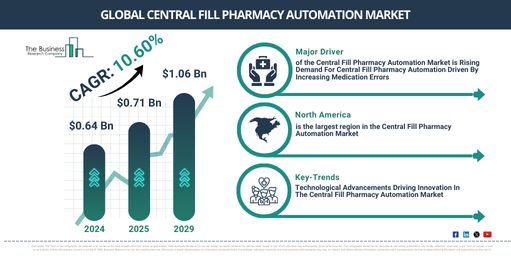
    The central fill pharmacy automation market has experienced rapid expansion in recent years. This market is projected to expand from $0.64 billion in 2024 to $0.71 billion in 2025, demonstrating a compound annual growth rate (CAGR) of 11.6%. Historically, this growth has been driven by factors such as a rise in prescription volume, scarcities in labor, the need for enhanced medication safety and accuracy, escalating healthcare expenditures, and the broadening scope of pharmacy services.

    The central fill pharmacy automation market is projected to experience substantial expansion in the coming years, with its size anticipated to reach $1.06 billion by 2029, growing at a compound annual growth rate (CAGR) of 10.6%. This forecasted growth is primarily fueled by factors such as rising prescription demand, a heightened emphasis on patient safety and quality, evolving regulatory compliance requirements, and the proliferation of E-commerce and tele pharmacy. Furthermore, prominent trends expected in this period include integration with telehealth and remote care, enhanced interoperability and health information exchange, stringent regulatory compliance and quality assurance, and a focus on green initiatives and sustainability.

    Unlock Your Free Sample Report for Exclusive Market Data:

    https://www.thebusinessresearchcompany.com/sample.aspx?id=15538&type=smp

    What Are The Emerging Market Drivers Creating New Opportunities In The Central Fill Pharmacy Automation Industry?

    The increasing imperative to reduce medication errors is anticipated to boost the expansion of the central fill pharmacy automation market in the future. Medication errors are avoidable occurrences that can result in incorrect drug administration or harm to patients. These errors are on the rise, driven by more intricate healthcare systems, greater numbers of patients, and the rapid introduction of new pharmaceutical products. Central fill pharmacy automation mitigates medication errors through optimizing the drug dispensing process, thereby guaranteeing precise and uniform prescription preparation. This technology diminishes human mistakes and improves effectiveness in managing substantial prescription quantities. For example, in September 2022, the World Health Organization, an intergovernmental body located in Switzerland, reported that medication errors accounted for a cost of $2.16 billion, which constituted 3% of the overall national healthcare spending. Furthermore, 237 million medication errors are documented annually, with 66 million potentially holding clinical significance. The yearly estimated financial burden on governments from preventable adverse drug reactions stands at $106.24 million. Consequently, the increasing imperative to reduce medication errors is fueling the expansion of the central fill pharmacy automation market.

    What Are The Key Segments In The Central Fill Pharmacy Automation Market?

    The central fill pharmacy automationmarket covered in this report is segmented –

    1) By Product: Equipment; Software; Services

    2) By Vendor: Equipment Vendor; Consulting Vendor

    3) By Application: Inpatient Pharmacy; Outpatient Pharmacy; Retail Pharmacy; Other Applications

    Subsegments:

    1) By Equipment: Robotic Dispensing Systems; Automated Medication Storage Systems; Barcode Scanning Systems; Medication Counting Machines; Automated Labeling Systems; Packaging Systems; Other Pharmacy Automation Equipment

    2) By Software: Prescription Management Software; Inventory Management Software; Workflow Management Software; Data Analytics And Reporting Software; Medication Verification Software; Integration And Interoperability Software; Cloud-Based Software Solutions

    3) By Services: Installation And Configuration Services; Maintenance And Support Services; Consulting Services; Training Services; Managed Services; System Upgrades And Customization Services

    Which Competitive Trends Are Defining The Central Fill Pharmacy Automation Market Structure?

    Major companies operating in the central fill pharmacy automation market are concentrating on developing advanced technological solutions, such as cloud-based pharmacy automation, to secure a competitive advantage in the industry. Cloud-based pharmacy automation involves employing cloud computing technology to streamline and manage pharmacy operations. For instance, in February 2024, Innovation Associates Inc., a US-based firm that develops high-volume pharmacy automation technology and software solutions, launched Shared Central Fulfillment. This new cloud-based solution enables pharmacy fulfillment owners to offer centralized fulfillment services to multiple pharmacy partners from a single fulfillment center. The design of this solution aims to establish a more sustainable work environment for pharmacy providers, ultimately progressing the pharmacist’s role in healthcare. It allows both large and small pharmacy operations to benefit from central fill operations, broadening prescription fulfillment solutions to numerous pharmacy partners from a unified location.

    Who Are The Primary Competitors In The Global Central Fill Pharmacy Automation Market?

    Major companies operating in the central fill pharmacy automation market are McKesson Corporation, Cencora Inc., Cardinal Health Inc., Becton Dickinson and Company, Grifols SA, Kuka AG, J M Smith Corporation, Omnicell Inc., Swisslog Healthcare, Parata Systems LLC, ScriptPro LLC, PBA Health, Capsa Healthcare, Cornerstone Automation Systems LLC, ARxIUM Inc., Talyst LLC, Kirby Lester, Quality Manufacturing Systems Inc., R/X Automation Solutions, RxSafe LLC, Innovation Associates Inc.

    Download The Full Report For Exclusive Market Findings:

    https://www.thebusinessresearchcompany.com/report/central-fill-pharmacy-automation-global-market-report

    How Do Regional Market Performances Compare Within The Central Fill Pharmacy Automation Industry?

    North America was the largest region in the central fill pharmacy automation market in 2024. Asia-Pacific is expected to be the fastest-growing region in the forecast period. The regions covered in the central fill pharmacy automation market report are Asia-Pacific, Western Europe, Eastern Europe, North America, South America, Middle East, Africa.

    Request A Customized Version Of The Central Fill Pharmacy Automation Market Report:

    https://www.thebusinessresearchcompany.com/customise?id=15538&type=smp

    Browse Through More Reports Similar to the Global Central Fill Pharmacy Automation Market 2025, By The Business Research Company

    Pharmacy Automation Systems Global Market Report 2025

    https://www.thebusinessresearchcompany.com/report/pharmacy-automation-systems-global-market-report

    Pharmacy Automation Solution Global Market Report 2025

    https://www.thebusinessresearchcompany.com/report/pharmacy-automation-solution-global-market-report

    Laboratory Automation Systems Global Market Report 2025

    https://www.thebusinessresearchcompany.com/report/laboratory-automation-systems-global-market-report

    Get in touch with us:

    The Business Research Company: https://www.thebusinessresearchcompany.com/

    Americas +1 310-496-7795

    Asia +44 7882 955267 & +91 8897263534

    Europe +44 7882 955267

    Email us at info@tbrc.info

    Follow us on:

    LinkedIn: https://in.linkedin.com/company/the-business-research-company

    YouTube: https://www.youtube.com/channel/UC24_fI0rV8cR5DxlCpgmyFQ

    Global Market Model: https://www.thebusinessresearchcompany.com/global-market-model

  • Global Cell-Free DNA Isolation And Extraction Market Projected to Expand at 6.2% CAGR by 2029

    Global Cell-Free DNA Isolation And Extraction Market Projected to Expand at 6.2% CAGR by 2029

    Unlock Global Insights – Save 20% on Market Reports with Code ONLINE20

    How Is The Cell-Free DNA Isolation And Extraction Market Size Likely To Evolve From 2025 Through 2034?

    The cell-free dna isolation and extraction market has demonstrated robust expansion in recent years. Its value is expected to climb from $1.93 billion in 2024 to $2.05 billion in 2025, reflecting a compound annual growth rate (CAGR) of 6.6%. This historical increase can be ascribed to several contributing factors, including a greater prevalence of cancer, advancements in microbial sequencing, substantial investments made by healthcare companies, heightened capital allocation in genomics and biotechnology, and increased funding for research and development initiatives.

    The cell-free DNA isolation and extraction market is anticipated to experience substantial growth over the upcoming years. This market is projected to reach $2.61 billion by 2029, expanding at a compound annual growth rate (CAGR) of 6.2%. The growth during the forecast period can be attributed to the increasing adoption of cell-free deoxyribonucleic acid (DNA) isolation and extraction kits and tubes, alongside rising investments in genomics and biotechnology. Furthermore, advancements in molecular diagnostics, the increasing demand for personalized medicine, and the rising prevalence of chronic and infectious diseases are also significant drivers. Key trends shaping the market during this period encompass the development of novel products, the formation of strategic partnerships and collaborations, mergers and acquisitions, continuous technological advancement, and the introduction of new products.

    Unlock Your Free Sample Report for Exclusive Market Data:

    https://www.thebusinessresearchcompany.com/sample.aspx?id=16371&type=smp

    Which Drivers Are Impacting The Cell-Free DNA Isolation And Extraction Market?

    The increasing incidence of cancer is anticipated to boost the expansion of the cell-free DNA isolation and extraction market in the future. Cancer is defined as a complicated set of illnesses marked by the unregulated proliferation and dissemination of abnormal cells, frequently forming tumors, which can invade other bodily regions, impair normal functions, and, if not treated, lead to severe sickness or fatality. The rise in cancer diagnoses stems from factors such as the obesity epidemic, genetic predispositions, hepatitis B and C viruses, the Epstein-Barr virus (EBV), and human papillomavirus (HPV). Cell-free DNA (cfDNA) extraction and isolation methods allow for thorough genomic examination of cancer, providing crucial understanding of tumor characteristics, response to treatment, and disease advancement. These methodologies have the potential to transform cancer management through facilitating early diagnosis, customized therapeutic strategies, and enhanced patient results. For example, as reported in May 2024 by the American Society of Clinical Oncology, a professional organization based in the US, around 20 million new cancer cases were identified in 2022, a number projected to climb to 35 million by 2050, contributing to an estimated 9.7 million deaths from the condition. Consequently, the growing prevalence of cancer is propelling the demand within the cell-free DNA isolation and extraction market.

    What Are The Leading Segments Analyzed In The Cell-Free DNA Isolation And Extraction Market?

    The cell-free dna isolation and extractionmarket covered in this report is segmented –

    1) By Product Type: Kits; Reagents; Instruments

    2) By Technology: Column-Based Isolation And Extraction; Magnetic Beads; Silica Membranes

    3) By Application: Non-Invasive Prenatal Testing (NIPT); Oncology; Transplant Rejection; Other Applications

    4) By End-User: Hospitals; Diagnostic Laboratories; Research Institutes; Biotech And Pharma Companies

    Subsegments:

    1) By Kits: Dna Extraction Kits; Cfdna Isolation Kits; Cfdna Purification Kits; Cfdna Extraction And Purification Kits

    2) By Reagents: Cfdna Extraction Reagents; Buffer Solutions For Cfdna Extraction; Enzymes For Cfdna Isolation; Chemical Reagents For Dna Stabilization

    3) By Instruments: Automated Cfdna Extraction Instruments; Manual Cfdna Extraction Devices; Magnetic Bead Separation Instruments; Centrifugation-Based Cfdna Isolation Instruments

    What Are The Latest Industry Trends Transforming The Cell-Free DNA Isolation And Extraction Market?

    Leading companies in the cell-free DNA isolation and extraction market are concentrating on developing innovative products, such as automated DNA extraction instruments, to gain a competitive edge. Automated DNA extraction instruments are sophisticated laboratory devices crafted to streamline and automate the process of isolating DNA from various biological samples. For instance, in September 2023, Yourgene Health plc, a UK-based molecular diagnostics company, launched the MagBench Automated DNA Extraction Instrument and Kit to optimize its Sage 32 NIPT workflow in Asia-Pacific and the Middle East. This innovative solution offers several unique features designed to streamline and enhance the DNA extraction process for prenatal screening. The MagBench instrument combines automation with precision, utilizing magnetic bead-based technology to efficiently isolate high-quality DNA from maternal blood samples.

    Which Key Market Players Are Investing In Expansion And Innovation Of Cell-Free DNA Isolation And Extraction Market?

    Major companies operating in the cell-free DNA isolation and extraction market are F. Hoffmann-La Roche AG, Merck KGaA, Novartis AG, Thermo Fisher Scientific Inc., Agilent Technologies Inc., Illumina Inc., QIAGEN N.V., Natera Inc., Promega Corporation, STRATEC Biomedical AG, STRECK Inc., Omega Bio-tek Inc., SeraCare Life Sciences Inc., Yourgene Health plc, System Biosciences LLC, PreAnalytiX GmbH, Bioo Scientific Corporation, BioCAT GmbH, Norgen Biotek Corp., Epigentek Group Inc., NVIGEN Inc.

    Download The Full Report For Exclusive Market Findings:

    https://www.thebusinessresearchcompany.com/report/cell-free-dna-isolation-and-extraction-global-market-report

    Which Region Currently Holds The Largest Share Of The Cell-Free DNA Isolation And Extraction Market?

    North America was the largest region in the cell-free DNA isolation and extraction market in 2024. The regions covered in the cell-free DNA isolation and extraction market report are Asia-Pacific, Western Europe, Eastern Europe, North America, South America, Middle East, Africa.

    Request A Customized Version Of The Cell-Free DNA Isolation And Extraction Market Report:

    https://www.thebusinessresearchcompany.com/customise?id=16371&type=smp

    Browse Through More Reports Similar to the Global Cell-Free DNA Isolation And Extraction Market 2025, By The Business Research Company

    Viral Vectors And Plasmid Dna Global Market Report 2025

    https://www.thebusinessresearchcompany.com/report/viral-vectors-and-plasmid-dna-global-market-report

    Dna Based Skin Care Products Global Market Report 2025

    https://www.thebusinessresearchcompany.com/report/dna-based-skin-care-products-global-market-report

    Dna And Gene Chip Global Market Report 2025

    https://www.thebusinessresearchcompany.com/report/dna-and-gene-chip-global-market-report

    Get in touch with us:

    The Business Research Company: https://www.thebusinessresearchcompany.com/

    Americas +1 310-496-7795

    Asia +44 7882 955267 & +91 8897263534

    Europe +44 7882 955267

    Email us at info@tbrc.info

    Follow us on:

    LinkedIn: https://in.linkedin.com/company/the-business-research-company

    YouTube: https://www.youtube.com/channel/UC24_fI0rV8cR5DxlCpgmyFQ

    Global Market Model: https://www.thebusinessresearchcompany.com/global-market-model

  • Cell Viability Assays Market to Grow at a CAGR of 9.9% from 2025 to 2029

    Cell Viability Assays Market to Grow at a CAGR of 9.9% from 2025 to 2029

    Unlock Global Insights – Save 20% on Market Reports with Code ONLINE20

    What Are The Growth Projections For The Cell Viability Assays Market Size During 2025–2029?

    The cell viability assays market has experienced substantial growth recently. It is forecast to grow from $1.56 billion in 2024 to $1.73 billion in 2025, demonstrating a compound annual growth rate (CAGR) of 10.5%. The expansion observed in past periods can be attributed to increased investment in cancer research, rising pharmaceutical R&D expenditure, the burgeoning biotechnology sector, advanced cell culture techniques, a surge in demand for stem cell research, an escalated need for toxicity testing, broader utilization of real-time cell analysis systems, and an increase in contract research organizations (CROs).

    The cell viability assays market is projected for significant expansion over the coming years, reaching “$2.52 billion in 2029, with a compound annual growth rate (CAGR) of 9.9%. This anticipated growth is driven by several factors, including the rising need for personalized and precision medicine, increased government investment in cell-based research, the expansion of stem cell research and its applications, a greater availability of automated cell viability analyzers, an uptick in infectious disease cases, a heightened emphasis on enhancing assay accuracy and sensitivity, broader understanding of the advantages of these assays, the emergence of organ-on-a-chip technologies, and the growing demand for regenerative medicine. Key trends during this period are expected to involve improvements in high-throughput screening techniques, the integration of AI and machine learning, the creation of real-time monitoring solutions, the widespread use of automated liquid handling systems, the creation of multiplex assays for concurrent cell viability measurement, the shift towards more sustainable and environmentally friendly reagents, the design of user-friendly assay kits, progress in electrochemical assays, the deployment of scalable cell viability assays, and the development of assays suitable for primary cells and stem cells.

    Unlock Your Free Sample Report for Exclusive Market Data:

    https://www.thebusinessresearchcompany.com/sample.aspx?id=16014&type=smp

    Which Industry Drivers Are Expected To Accelerate The Cell Viability Assays Market From 2025 To 2029?

    The projected expansion of cell-based therapeutics is anticipated to drive the advancement of the cell viability assay market in the future. These therapeutics involve medical interventions utilizing living cells to mend or substitute impaired tissue, combat illnesses, or re-establish typical bodily functions. The development of cell-based therapeutics is propelled by progress in biotechnology, rising investments in regenerative medicine, broader acceptance and implementation of cell therapies, and enhancements in cell engineering and production methods. Cell viability assays are crucial for cell-based therapeutics as they guarantee the vitality, operational capability, and secure nature of therapeutic cells, thus improving the effectiveness of treatments and maintaining quality control. An example provided by the American Society of Gene & Cell Therapy, a non-profit medical and scientific body based in the US, indicates that 38 trials for non-genetically modified cell therapies commenced in Q1 2023, representing an increase of 7 trials compared to the preceding quarter, Q4 2022. Consequently, the expansion of cell-based therapeutics is fueling the growth within the cell viability assay market.

    What Are The Segment Types Shaping The Cell Viability Assays Market?

    The cell viability assaysmarket covered in this report is segmented –

    1) By Product: Consumables; Instruments

    2) By Application: Basic Research; Stem Cell Research; Drug Discovery And Development; Clinical And Diagnostic Applications; Other Applications

    3) By End-User: Academic And Research Institutes; Pharmaceutical And Biotechnology Companies; Hospital And Diagnostic Laboratories; Other End-Users

    Subsegments:

    1) By Consumables: Reagents; Kits; Assay Plates (96-Well plates); Microplates

    2) By Instruments: Spectrophotometers; Fluorometers; Microplate Readers; Flow Cytometers; Imaging Systems

    What Trends Are Redefining The Cell Viability Assays Market Dynamics?

    Leading companies engaged in the cell viability assays market are developing innovative cell screening technologies to enhance accuracy and expedite drug discovery. Cell screening technologies boost cell viability assays by enabling high-throughput, precise, and rapid assessments of cell health and responses, thereby optimizing experimental conditions and advancing the creation of therapeutic strategies. For instance, in May 2024, Arralyze, a technology company based in Germany, launched CellShepherd, a cutting-edge platform designed for single-cell analysis. This system utilizes proprietary nanowell glass arrays to miniaturize cell-based assays for real-time observation. The autonomous setup provides accurate cell dispensing, sterile co-culturing, and imaging through brightfield and fluorescent channels. Its AI-driven analysis guarantees precise cell counting and tracking. This user-friendly platform addresses the growing requirement for accurate single-cell research in biomedical and life science applications.

    Who Are The Core Companies Influencing The Cell Viability Assays Market Landscape?

    Major companies operating in the cell viability assays market are Thermo Fisher Scientific Inc., Danaher Corporation, Merck KGaA, Becton, Dickinson, and Company, Agilent Technologies Inc., Lonza Group Ltd., PerkinElmer Inc., Sartorius AG, Charles River Laboratories, Bio-Rad Laboratories Inc., Bio-Techne Corporation, Beckman Coulter Inc., Promega Corporation, Abcam Limited, MP Biomedicals, Cayman Chemical Company, Cell Signaling Technology Inc., Enzo Biochem Inc., Creative Bioarray, Abnova Corporation, Biotium, Canvax, Nexcelom Bioscience LLC, G-Biosciences, AAT Bioquest Inc.

    Download The Full Report For Exclusive Market Findings:

    https://www.thebusinessresearchcompany.com/report/cell-viability-assays-global-market-report

    What Regional Growth Trends Are Shaping The Cell Viability Assays Market Outlook?

    North America was the largest region in the cell viability assays market in 2024. Asia-Pacific is expected to be the fastest-growing region in the forecast period. The regions covered in the cell viability assays market report are Asia-Pacific, Western Europe, Eastern Europe, North America, South America, Middle East, Africa.

    Request A Customized Version Of The Cell Viability Assays Market Report:

    https://www.thebusinessresearchcompany.com/customise?id=16014&type=smp

    Browse Through More Reports Similar to the Global Cell Viability Assays Market 2025, By The Business Research Company

    Cells Therapy Global Market Report 2025

    https://www.thebusinessresearchcompany.com/report/cells-therapy-global-market-report

    Stem Cells Therapy Global Market Report 2025

    https://www.thebusinessresearchcompany.com/report/stem-cells-therapy-global-market-report

    Cellulars Immunotherapy Global Market Report 2025

    https://www.thebusinessresearchcompany.com/report/cellulars-immunotherapy-global-market-report

    Get in touch with us:

    The Business Research Company: https://www.thebusinessresearchcompany.com/

    Americas +1 310-496-7795

    Asia +44 7882 955267 & +91 8897263534

    Europe +44 7882 955267

    Email us at info@tbrc.info

    Follow us on:

    LinkedIn: https://in.linkedin.com/company/the-business-research-company

    YouTube: https://www.youtube.com/channel/UC24_fI0rV8cR5DxlCpgmyFQ

    Global Market Model: https://www.thebusinessresearchcompany.com/global-market-model
  • Global Cell Signaling Market 2025–2029: Competitive Insights and Opportunities

    Global Cell Signaling Market 2025–2029: Competitive Insights and Opportunities

    Unlock Global Insights – Save 20% on Market Reports with Code ONLINE20

    What Is The Global Market Value Of The Cell Signaling Industry In 2025?

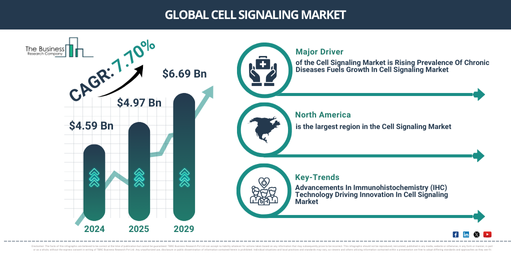
    The cell signaling market has experienced substantial expansion in recent years. Projections indicate it will increase from $4.59 billion in 2024 to reach $4.97 billion by 2025, demonstrating a compound annual growth rate (CAGR) of 8.2%. Historically, this growth is primarily due to the expansion of the pharmaceutical and biotechnology sectors, the advancement of regenerative medicine, an aging demographic, efforts in personalized medicine, and the increasing prevalence of chronic ailments.

    The cell signaling market is projected to witness significant growth over the next few years, expanding to $6.69 billion by 2029 at a compound annual growth rate (CAGR) of 7.7%. This anticipated growth during the forecast period is a result of several factors, including the increasing adoption of precision medicine, governmental support, a rise in research funding, its critical role in development and maintaining homeostasis, and an increase in endocrine-related conditions. Key trends expected in the forecast period involve technological advancements, the integration of machine learning and artificial intelligence for signal analysis, the deployment of bioprinting technology, next-generation sequencing, and single-cell analysis techniques.

    Unlock Your Free Sample Report for Exclusive Market Data:

    https://www.thebusinessresearchcompany.com/sample.aspx?id=15758&type=smp

    What Are The Top Growth Drivers Impacting The Cell Signaling Market Outlook?

    The escalating occurrence of chronic diseases is anticipated to boost the expansion of the cell signaling market in the foreseeable future. These enduring medical conditions progress gradually and persist over extended periods, frequently for many years or even a lifetime, necessitating continuous management and treatment to manage symptoms, avert complications, and maintain life quality. The widespread nature of chronic illness stems from an aging populace, detrimental lifestyles, and the availability and infrastructure of healthcare. Cell signaling investigations provide crucial insights and tools for comprehending, identifying, addressing, and averting chronic diseases, offering potential for enhanced patient outcomes and well-being. For example, in January 2023, the National Library of Medicine, a US-based biomedical library, reported that the count of individuals aged 50 and above suffering from at least one chronic ailment is projected to climb from 71.522 million in 2020 to 142.66 million in 2050, representing a 99.5% increase. Consequently, the rising incidence of chronic diseases is propelling the growth of the cell signaling market.

    What Are The Different Segment Classifications Within The Cell Signaling Market?

    The cell signalingmarket covered in this report is segmented –

    1) By Product: Consumables; Instruments

    2) By Signaling Type: Endocrine Signaling; Paracrine Signaling; Autocrine Signaling; Synaptic Signaling Source; Other Signaling Types

    3) By Pathway: Akt Signaling Pathway; AMPK Signaling Pathway; ErbB/HER Signaling Pathway; Other Signaling Pathways

    4) By Technology: Microscopy; Western Blotting; Flow Cytometry; Immunohistochemistry (IHC); Enzyme-Linked Immunosorbent Assay (ELISA); Mass Spectrometry; Other Technologies

    5) By Application: Research Applications; Medical Applications

    Subsegments:

    1) By Consumables: Reagents; Antibodies; Kits (ELISA, Western Blotting, etc.); Chemicals and Enzymes

    2) By Instruments: Flow Cytometers; Microplate Readers; Cell Counters; Western Blotting Systems; Real-Time PCR Systems

    How Are Emerging Market Trends Shaping The Cell Signaling Industry Landscape?

    Leading companies active in the cell signaling market are concentrating on developing advanced technologies, such as immunohistochemistry (IHC) assays, to bolster their market presence. Immunohistochemistry (IHC) assays are laboratory methods used for detecting and visualizing specific proteins or antigens within tissue samples. For example, in September 2023, Cell Signaling Technology (CST), a US-based life sciences discovery technology company, announced the introduction of SignalStar Multiplex IHC technology, an innovative tool designed for spatial biology research utilizing mid-plex, high-throughput immunohistochemistry (IHC) assays. This novel technology enables researchers to identify multiple targets concurrently in formalin-fixed, paraffin-embedded (FFPE) tissues with notable sensitivity and specificity. It integrates antibodies, oligonucleotides, and fluorophores to amplify the antibody signal, allowing for the detection of targets, even those with minimal expression, for up to eight proteins in a single tissue.

    Which Major Industry Participants Are Leading The Cell Signaling Market Growth?

    Major companies operating in the cell signaling market are Johnson & Johnson, F. Hoffmann-La Roche Ltd., Pfizer Inc., Bayer AG, Bristol-Myers Squibb Company, Thermo Fisher Scientific Inc., Novartis AG, GlaxoSmithKline plc, Eli Lilly and Company, Gilead Sciences Inc., Danaher Corporation, Merck KGaA, Becton Dickinson and Company, Agilent Technologies Inc., PerkinElmer Inc., Beckman Coulter Inc., Bio-Rad Laboratories Inc., Qiagen N.V., Bio-Techne Corporation, Miltenyi Biotec, Promega Corporation, Janssen Pharmaceuticals Inc., Abcam plc, Horizon Discovery Ltd., Cell Signaling Technology Inc., Cisbio Bioassays, Rockland Immunochemicals Inc.

    Download The Full Report For Exclusive Market Findings:

    https://www.thebusinessresearchcompany.com/report/cell-signaling-global-market-report

    Which Regional Markets Are Contributing Most To The Cell Signaling Industry Expansion?

    North America was the largest region in the cell signaling market in 2024. Asia-Pacific is expected to be the fastest-growing region in the forecast period. The regions covered in the cell signaling market report are Asia-Pacific, Western Europe, Eastern Europe, North America, South America, Middle East and Africa.

    Request A Customized Version Of The Cell Signaling Market Report:

    https://www.thebusinessresearchcompany.com/customise?id=15758&type=smp

    Browse Through More Reports Similar to the Global Cell Signaling Market 2025, By The Business Research Company

    Unresectable Hepatocellular Carcinoma Global Market Report 2025

    https://www.thebusinessresearchcompany.com/report/unresectable-hepatocellular-carcinoma-global-market-report

    Wind Turbine Nacelle Global Market Report 2025

    https://www.thebusinessresearchcompany.com/report/wind-turbine-nacelle-global-market-report

    Single Cell Omics Global Market Report 2025

    https://www.thebusinessresearchcompany.com/report/single-cell-omics-global-market-report

    Get in touch with us:

    The Business Research Company: https://www.thebusinessresearchcompany.com/

    Americas +1 310-496-7795

    Asia +44 7882 955267 & +91 8897263534

    Europe +44 7882 955267

    Email us at info@tbrc.info

    Follow us on:

    LinkedIn: https://in.linkedin.com/company/the-business-research-company

    YouTube: https://www.youtube.com/channel/UC24_fI0rV8cR5DxlCpgmyFQ

    Global Market Model: https://www.thebusinessresearchcompany.com/global-market-model

  • Cell Separation Technologies Market Trends 2025–2029: Forecasts for Key Growth Segments

    Cell Separation Technologies Market Trends 2025–2029: Forecasts for Key Growth Segments

    Unlock Global Insights – Save 20% on Market Reports with Code ONLINE20

    By How Much Is The Cell Separation Technologies Market Expected To Expand Between 2025 And 2029?

    The market size for cell separation technologies has experienced substantial growth in recent years. It is anticipated to expand from $10.07 billion in 2024 to $11.73 billion in 2025, demonstrating a compound annual growth rate (CAGR) of 16.5%. This historical growth can be linked to an escalating demand for personalized medicine, a significant prevalence of chronic diseases, increased investment in life sciences research, an expanding biotechnology industry, advancements in technology, and widespread applications in regenerative medicine.

    The cell separation technologies market is anticipated to experience substantial growth in the upcoming years. This market is projected to reach $21.03 billion by 2029, exhibiting a compound annual growth rate (CAGR) of 15.7%. Several factors will drive this expansion during the forecast period, including increased investments in regenerative medicine research, broader applications in cancer diagnostics and treatment, the rising occurrence of chronic diseases boosting demand for cell-based therapies, the introduction of innovative cell separation techniques, and favorable regulatory frameworks supporting cell therapy development and commercialization. Key trends anticipated during the forecast period encompass the incorporation of artificial intelligence and machine learning, the proliferation of microfluidic platforms, the creation of point-of-care cell separation devices, a greater emphasis on label-free separation techniques, the uptake of single-cell isolation technologies, broader applications in regenerative medicine and stem cell research, and the advent of new cell sorting methodologies.

    Unlock Your Free Sample Report for Exclusive Market Data:

    https://www.thebusinessresearchcompany.com/sample.aspx?id=16013&type=smp

    Which Major Market Drivers Are Shaping The Future Of The Cell Separation Technologies Market?

    The increasing occurrence of chronic illnesses is anticipated to propel the expansion of the cell separation technology market. These are health conditions persisting for a year or longer, frequently necessitating ongoing medical care or limiting daily activities, or both. Common examples include cancer, heart disease, stroke, diabetes, and arthritis. The widespread prevalence of chronic diseases is attributed to factors like changeable lifestyle choices, social inequities, infections, genetic predispositions, autoimmunity, and mental health issues. Cell-separation technologies are vital for advancing treatments for these conditions by offering solutions for isolating specific cell types such as cancer cells and immune cells. For instance, in January 2023, the National Center for Biotechnology Information (NCBI), a US-based National Library of Medicine, projected that by 2050, the count of individuals aged 50 years and older experiencing at least one chronic illness will rise significantly by 99.5%, increasing from 71.522 million in 2020 to 142.66 million. Therefore, the surge in the prevalence of chronic diseases is a primary driver for the growth of the cell separation technology market.

    What Are The Primary Types Of Segments Analyzed In The Cell Separation Technologies Market?

    The cell separation technologiesmarket covered in this report is segmented –

    1) By Product: Instruments; Consumables And Reagents

    2) By Technology: Gradient Centrifugation; Surface Markers Separation; Fluorescence Activated Cell Sorting; Magnetic Cell Sorting; Filtration Based Separation

    3) By Application: Stem Cell Research; Immunology; Neuroscience; Cancer Research; Other Applications

    4) By End-User: Biotechnology And Pharmaceutical Companies; Hospitals And Diagnostic Laboratories; Academic And Research Institutes; Other End-Users

    Subsegments:

    1) By Instruments: Centrifuges; Magnetic Cell Sorters; Flow Cytometers; Laser Capture Microdissection Systems; Cell Sorters

    2) By Consumables And Reagents: Separation Columns; Cell Separation Kits; Filters; Microbeads; Other Consumables; Antibodies; Fluorescent Dyes; Enzymes; Buffers; Other Reagents

    Which Key Trends Are Expected To Influence The Cell Separation Technologies Market In The Coming Years?

    Leading companies operating in the cell separation technologies market are concentrating on developing sophisticated technologies, such as automated cell isolation technology, to enhance precision, increase efficiency, and streamline processes for cell sorting and therapy development. Automated cell isolation technology involves employing automated equipment to separate particular cells from a mixed cell population. For instance, in October 2022, Thermo Fisher Scientific, a US-based company providing medical equipment, analytical instruments, reagents, and consumables, introduced the Gibco CTS DynaCellect Magnetic Separation System. This automated, closed system facilitates precise cell isolation, activation, depletion, and the removal of Dynabeads magnetic beads. It is designed to assist cell therapy developers in transitioning smoothly from clinical development to commercial production, offering scalability, flexibility, and a comprehensive end-to-end solution.

    Who Are The Prominent Global Companies Shaping The Cell Separation Technologies Market?

    Major companies operating in the cell separation technologies market are Sony Corporation, Merck KGaA, Thermo Fisher Scientific Inc., Danaher Corporation, Becton Dickinson and Company, GE HealthCare Technologies, Corning Incorporated, Lonza Group, Sartorius AG, Bio-Rad Laboratories Inc., Pall Corporation, Eppendorf AG, Miltenyi Biotec B.V. & Co. KG, Stemcell Technologies Inc., 10X Genomics Inc., Cytena GmbH, Pluriselect GmbH, Akadeum Life Sciences Inc., Cellenion, NanoCellect Biomedical Inc.

    Download The Full Report For Exclusive Market Findings:

    https://www.thebusinessresearchcompany.com/report/cell-separation-technologies-global-market-report

    How Does The Cell Separation Technologies Market Perform Across Key Geographic Regions?

    North America was the largest region in the cell separation technologies market in 2024. Asia-Pacific is expected to be the fastest-growing region in the forecast period. The regions covered in the cell separation technologies market report are Asia-Pacific, Western Europe, Eastern Europe, North America, South America, Middle East, Africa.

    Request A Customized Version Of The Cell Separation Technologies Market Report:

    https://www.thebusinessresearchcompany.com/customise?id=16013&type=smp

    Browse Through More Reports Similar to the Global Cell Separation Technologies Market 2025, By The Business Research Company

    3D Cell Culture Technologies Global Market Report 2025

    https://www.thebusinessresearchcompany.com/report/3d-cell-culture-technologies-global-market-report

    Cell Culture Consumables And Equipment Global Market Report 2025

    https://www.thebusinessresearchcompany.com/report/cell-culture-consumables-and-equipment-global-market-report

    Stem Cell Cord Blood Banking Global Market Report 2025

    https://www.thebusinessresearchcompany.com/report/stem-cell-cord-blood-banking-global-market-report

    Get in touch with us:

    The Business Research Company: https://www.thebusinessresearchcompany.com/

    Americas +1 310-496-7795

    Asia +44 7882 955267 & +91 8897263534

    Europe +44 7882 955267

    Email us at info@tbrc.info

    Follow us on:

    LinkedIn: https://in.linkedin.com/company/the-business-research-company

    YouTube: https://www.youtube.com/channel/UC24_fI0rV8cR5DxlCpgmyFQ

    Global Market Model: https://www.thebusinessresearchcompany.com/global-market-model
  • Cell Penetrating Peptide Market Forecast 2025–2034: Where Businesses Should Invest Next

    Cell Penetrating Peptide Market Forecast 2025–2034: Where Businesses Should Invest Next

    Unlock Global Insights – Save 20% on Market Reports with Code ONLINE20

    #What Is The Projected Market Size Of The Cell Penetrating Peptide Market By 2029?

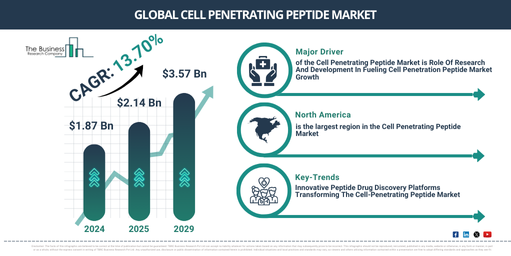
    The market for cell-penetrating peptides has experienced substantial growth recently. This market is projected to expand from $1.87 billion in 2024 to $2.14 billion by 2025, demonstrating a compound annual growth rate (CAGR) of 14.1%. Historically, this expansion has been driven by factors such as an enhanced comprehension of cellular uptake mechanisms, a growing need for targeted drug delivery systems, the increasing incidence of chronic diseases, the advent of personalized medicine strategies, and broadened pharmaceutical research and development activities.

    The cell penetrating peptide market is poised for significant expansion in the coming years. Projections indicate its value will reach $3.57 billion by 2029, exhibiting a compound annual growth rate (CAGR) of 13.7%. This anticipated growth is driven by several factors, including the creation of new peptide-based treatments for rare conditions, increased funding for healthcare infrastructure in developing economies, the escalating need for peptide-based vaccines and immunotherapies, governmental actions aimed at simplifying approval procedures for peptide medications, and a move towards eco-friendly and biodegradable peptide delivery methods. Key trends anticipated during this period encompass tailoring cell penetration peptides for particular therapeutic uses, investigating their utility as instruments for intracellular drug delivery, incorporating artificial intelligence and machine learning into peptide design, further integration of cell-penetrating peptides themselves, and the adoption of innovative delivery pathways.

    Unlock Your Free Sample Report for Exclusive Market Data:

    https://www.thebusinessresearchcompany.com/sample.aspx?id=15537&type=smp

    What Are The Main Drivers Boosting The Cell Penetrating Peptide Industry’s Expansion?

    The escalating financial commitment to health research and development is anticipated to stimulate the expansion of the cell penetration peptide market in the coming years. Health research and development (R&D) involves systematic inquiry and experimentation aimed at advancing scientific understanding and creating innovative solutions to improve healthcare outcomes. The rise in health R&D is driven by healthcare needs, technological progress, global health priorities, investment incentives, and economic opportunities. Cell penetration peptides offer versatile and efficient strategies for delivering biomolecules and therapeutics into cells, thereby contributing to various health research and development areas, such as drug delivery, gene therapy, vaccine development, molecular imaging, and cellular research. For instance, in December 2023, the National Center for Science and Engineering Statistics, a US-based federal statistical agency, reported that state government agencies allocated $1.10 billion towards health research and experimental development (R&D) in the fiscal year 2022, indicating a 2.2% increase compared to the $1.07 billion expended in fiscal year 2021. Consequently, this increase in research and development is a key factor propelling the growth of the cell penetration peptide market.

    Which Key Segments Fueling The Cell Penetrating Peptide Market?

    The cell penetrating peptidemarket covered in this report is segmented –

    1) By Type: Synthetic Cell Penetrating Peptides; Protein-Derived Cell Penetrating Peptides; Chimeric Cell Penetrating Peptides

    2) By Application: Drug Delivery; Gene Delivery; Diagnostics; Molecular Imaging; Other Applications

    3) By End Use: Pharmaceutical And Biotechnology Companies; Contract Research Organization (CROs); Hospitals And Clinics; Others End Users

    Subsegments:

    1) By Synthetic Cell Penetrating Peptides: Linear Synthetic CPPs; Branched Synthetic CPPs; Peptide Conjugates; Lipid-Modified Synthetic CPPs

    2) By Protein-Derived Cell Penetrating Peptides: Tat Peptides (From HIV-1 TAT); Antennapedia Peptides; Homeodomain Peptides; Other Naturally Derived CPPs

    3) By Chimeric Cell Penetrating Peptides: Fusion Peptides; Hybrid Peptides

    What Are The Major Trends Driving The Growth Of The Cell Penetrating Peptide Market?

    Leading companies in the cell-penetrating peptide market are prioritizing the development of innovative platforms, such as those for peptide drug discovery, to secure a competitive edge. A peptide drug discovery platform serves as an extensive system or toolkit, designed to facilitate the identification, design, optimization, and evaluation of CPP-based therapeutics. As an illustration, in May 2023, Fujitsu Limited, a Japan-based information and communications technology equipment and services corporation, launched the Biodrug Design Accelerator, a platform intended to manage research processes for peptide drug discovery. This Accelerator assists peptide drug discovery scientists within pharmaceutical firms by accelerating and improving the efficiency of peptide drug development, particularly through the ‘design, make, test, analyze’ (DMTA) cycles. Additionally, it enables streamlined communication among scientists regarding synthesis and testing while maintaining compatibility with HELM, a method for describing complex biomolecules.

    Which Key Players Are Driving Competition In The Cell Penetrating Peptide Market?

    Major companies operating in the cell penetrating peptide market are Thermo Fisher Scientific Inc., Novo Nordisk A/S, Merck KGaA, Corden Pharma GmbH, Sarepta Therapeutics Inc., GenScript Biotech Corporation, Bachem Holding AG, R&D Systems Inc., PolyPeptide Laboratories AB, PeptiDream Inc., Revance Therapeutics Inc., CPC Scientific Inc., Tocris Bioscience, Bio-Synthesis Inc., AnaSpec Inc., Avidity Biosciences Inc., Iris Biotech GmbH, PEPperPRINT GmbH, Chemos GmbH & Co. KG, Creative Peptides GmbH, ProImmune Ltd., Pepscan Inc., The Cupid Peptide Company, AltaBioscience Ltd., Peptomyc

    Download The Full Report For Exclusive Market Findings:

    https://www.thebusinessresearchcompany.com/report/cell-penetrating-peptide-global-market-report

    Which Region Is Expected To Witness The Fastest Growth In The Cell Penetrating Peptide Market?

    North America was the largest region in the cell penetrating peptide market in 2024. Asia-Pacific is expected to be the fastest-growing region in the forecast period. The regions covered in the cell penetrating peptide market report are Asia-Pacific, Western Europe, Eastern Europe, North America, South America, Middle East, Africa.

    Request A Customized Version Of The Cell Penetrating Peptide Market Report:

    https://www.thebusinessresearchcompany.com/customise?id=15537&type=smp

    Browse Through More Reports Similar to the Global Cell Penetrating Peptide Market 2025, By The Business Research Company

    Cell And Gene Therapy Supply Chain Or Logistics Global Market Report 2025

    https://www.thebusinessresearchcompany.com/report/cell-and-gene-therapy-supply-chain-or-logistics-global-market-report

    Cell And Genes Therapy Global Market Report 2025

    https://www.thebusinessresearchcompany.com/report/cell-and-genes-therapy-global-market-report

    Cell And Gene Therapy Manufacturing Services Global Market Report 2025

    https://www.thebusinessresearchcompany.com/report/cell-and-gene-therapy-manufacturing-services-global-market-report

    Get in touch with us:

    The Business Research Company: https://www.thebusinessresearchcompany.com/

    Americas +1 310-496-7795

    Asia +44 7882 955267 & +91 8897263534

    Europe +44 7882 955267

    Email us at info@tbrc.info

    Follow us on:

    LinkedIn: https://in.linkedin.com/company/the-business-research-company

    YouTube: https://www.youtube.com/channel/UC24_fI0rV8cR5DxlCpgmyFQ

    Global Market Model: https://www.thebusinessresearchcompany.com/global-market-model

  • Global Cell Free DNA (cfDNA) Testing Market Analysis 2025–2029: Opportunities for Strategic Growth

    Global Cell Free DNA (cfDNA) Testing Market Analysis 2025–2029: Opportunities for Strategic Growth

    Unlock Global Insights – Save 20% on Market Reports with Code ONLINE20

    How Much Was The Cell Free DNA (cfDNA) Testing Market Worth In 2025, And What Is Its Anticipated Value By 2029?

    The cell free dna (cfdna) testing market size has witnessed substantial growth in recent years. It is anticipated to increase from $8.74 billion in 2024 to $10.84 billion in 2025, achieving a compound annual growth rate (CAGR) of 24.0%. This historical expansion can be attributed to several factors, including an increased uptake of cfDNA testing in prenatal care, the expanding application of cfDNA analysis, a heightened focus on cfDNA research across various medical domains, and a rise in securing regulatory body approvals.

    The cell free dna (cfdna) testing market size is projected to experience substantial expansion in the coming years. By 2029, this market is anticipated to reach $24.34 billion, exhibiting a compound annual growth rate (CAGR) of 22.4%. This growth during the forecast period is driven by several factors, including a move towards personalized medicine, improvements in healthcare infrastructure, an aging population alongside a rise in cancer cases, the growing embrace of precision medicine, heightened awareness and acceptance of liquid biopsy methods, and increased investment and funding for cfDNA research. Key trends expected in the forecast timeframe encompass the integration of liquid biopsy technologies, continuous progress in Next-Generation Sequencing (NGS) technology, the incorporation of AI and machine learning into cfDNA testing, the creation of point-of-care cfDNA diagnostics, and the deployment of cloud-based systems for data management and analysis.

    Unlock Your Free Sample Report for Exclusive Market Data:

    https://www.thebusinessresearchcompany.com/sample.aspx?id=15757&type=smp

    Which Factors And Drivers Are Influencing The Cell Free DNA (cfDNA) Testing Market In 2025?

    The increasing incidence of cancer is anticipated to fuel the expansion of the cell-free DNA (cfDNA) testing market in the future. Cancer refers to a multifaceted array of illnesses defined by the unchecked proliferation and dissemination of atypical cells within the body. Such cells have the capacity to infiltrate and devastate healthy tissue, potentially causing considerable damage to the body if left untreated. The widespread occurrence of cancer stems from factors like an aging demographic, evolving lifestyle choices, environmental impacts, and improvements in methods for detection and diagnosis. Cell-free DNA testing identifies genetic alterations linked to cancer during its nascent stages, frequently prior to the manifestation of symptoms. This capability facilitates prompt therapeutic intervention, thereby enhancing patient prognoses and survival percentages by pinpointing cancer when it is still in its earliest phases. As an illustration, in February 2024, the World Health Organization (WHO), an intergovernmental body headquartered in Switzerland, projected that new cancer cases would surpass 35 million by 2050, representing a 77% surge compared to the estimated 20 million cases in 2022. Consequently, the escalating incidence of cancer is propelling the expansion of the cell-free DNA (cfDNA) testing market.

    How Is The Cell Free DNA (cfDNA) Testing Market Classified Into Different Segments?

    The cell free dna (cfdna) testingmarket covered in this report is segmented –

    1) By Product: Donor-Derived Cell-Free DNA; Circulating Cell-Free Tumor DNA; Cell-Free Fetal DNA

    2) By Platforms: Next Generation Sequencing (NGS); rPCR And Multiplexed PCR; qPCR And dPCR; Other platforms

    3) By Application: Oncology; Non-Invasive Prenatal Test (NIPT); Gynecology; Transplantation; Other Applications

    Subsegments:

    1) By Donor-Derived Cell-Free DNA: Organ Transplant Monitoring; Graft Rejection Detection

    2) By Circulating Cell-Free Tumor DNA: Cancer Detection; Minimal Residual Disease Monitoring; Liquid Biopsy

    3) By Cell-Free Fetal DNA: Non-Invasive Prenatal Testing (NIPT); Fetal Genetic Disorder Screening

    What Trends Are Expected To Drive The Cell Free DNA (cfDNA) Testing Market?

    Leading companies within the cell-free DNA (cfDNA) testing market are concentrating on developing innovative technologies, particularly liquid biopsy tests, which provide superior sensitivity, specificity, and efficiency in detecting mutations and genetic alterations linked to cancer. Liquid biopsy tests serve as diagnostic procedures that enable oncologists to examine circulating cell-free DNA originating from tumor cells, thus assisting in the creation of personalized and targeted therapy plans. As an illustration, in May 2023, Laboratory Corporation of America Holdings (Labcorp), a US-based life sciences company, unveiled Labcorp Plasma Focus, a new liquid biopsy test intended for patients diagnosed with advanced or metastatic solid tumors. This test assesses circulating cell-free DNA (cfDNA) released by tumor cells through a standard blood draw, offering a minimally invasive approach and yielding quick results. It contributes to better access to precision oncology by identifying clinically actionable biomarkers in various common cancers, such as non-small cell lung, colorectal, breast, esophageal, gastroesophageal junction, gastric cancers, and melanoma.

    Who Are The Top Performing Companies In The Cell Free DNA (cfDNA) Testing Market In Recent Years?

    Major companies operating in the cell free DNA (cfDNA) testing market are F. Hoffmann-La Roche Ltd., Thermo Fisher Scientific Inc., Laboratory Corporation of America Holdings, Quest Diagnostics Incorporated, Agilent Technologies Inc., Illumina Inc., Qiagen N.V., Exact Sciences Corporation, Bio-Techne Corporation, Natera Inc., Myriad Genetics Inc., NeoGenomics Laboratories Inc., Invitae Corporation, Foundation Medicine Inc., Guardant Health Inc., Integrated DNA Technologies Inc., Caris Life Sciences Inc., Twist Bioscience Corporation, Adaptive Biotechnologies Corporation, Biodesix Inc., Biocept Inc., Personal Genome Diagnostics Inc., Agena Bioscience Inc., Menarini Silicon Biosystems Inc., Circulogene Theranostics LLC

    Download The Full Report For Exclusive Market Findings:

    https://www.thebusinessresearchcompany.com/report/cell-free-dna-cfdna-testing-global-market-report

    Which Global Regions Are Influencing The Competitive Landscape Of The Cell Free DNA (cfDNA) Testing Market?

    North America was the largest region in the cell-free DNA (cfDNA) testing market in 2024. Asia-Pacific is expected to be the fastest-growing region in the forecast period. The regions covered in the cell free DNA (cfDNA) testing market report are Asia-Pacific, Western Europe, Eastern Europe, North America, South America, Middle East and Africa.

    Request A Customized Version Of The Cell Free DNA (cfDNA) Testing Market Report:

    https://www.thebusinessresearchcompany.com/customise?id=15757&type=smp

    Browse Through More Reports Similar to the Global Cell Free DNA (cfDNA) Testing Market 2025, By The Business Research Company

    Cellular Health Screening Global Market Report 2025

    https://www.thebusinessresearchcompany.com/report/cellular-health-screening-global-market-report

    Carboxymethylcellulose Cmc Global Market Report 2025

    https://www.thebusinessresearchcompany.com/report/carboxymethylcellulose-cmc-global-market-report

    Autologous Cell Therapy Global Market Report 2025

    https://www.thebusinessresearchcompany.com/report/autologous-cell-therapy-global-market-report

    Get in touch with us:

    The Business Research Company: https://www.thebusinessresearchcompany.com/

    Americas +1 310-496-7795

    Asia +44 7882 955267 & +91 8897263534

    Europe +44 7882 955267

    Email us at info@tbrc.info

    Follow us on:

    LinkedIn: https://in.linkedin.com/company/the-business-research-company

    YouTube: https://www.youtube.com/channel/UC24_fI0rV8cR5DxlCpgmyFQ

    Global Market Model: https://www.thebusinessresearchcompany.com/global-market-model

  • Cell Culture Protein Surface Coating Industry Overview 2025: Growth Projections and Market Trends

    Cell Culture Protein Surface Coating Industry Overview 2025: Growth Projections and Market Trends

    Unlock Global Insights – Save 20% on Market Reports with Code ONLINE20

    What Is The Future Market Size Estimation For The Cell Culture Protein Surface Coating Market Covering 2025–2034?

    The market for cell culture protein surface coatings has experienced rapid expansion in recent years. It is forecast to rise from $1.03 billion in 2024 to $1.18 billion in 2025, achieving a compound annual growth rate (CAGR) of 15.5%. This growth in past periods can be linked to a greater emphasis on stem cell research endeavors, the increasing prevalence of chronic ailments, and a heightened focus on cell-based studies.

    The cell culture protein surface coating market is expected to undergo rapid expansion in the coming years, projected to reach $2.04 billion by 2029 at a compound annual growth rate (CAGR) of 14.6%. This growth during the forecast period is largely due to the increasing adoption and use of 3D cell culture, rising demand for protein therapeutics, increased spending in healthcare, and a surge in R&D investments. Key trends anticipated in this period include the emergence of high-throughput screening techniques, advancements in technology, significant innovations, and the launch of new products and services.

    Unlock Your Free Sample Report for Exclusive Market Data:

    https://www.thebusinessresearchcompany.com/sample.aspx?id=16369&type=smp

    What Are The Key Drivers Of Growth In The Cell Culture Protein Surface Coating Market?

    The growing requirement for biopharmaceutical products is projected to advance the cell culture protein surface coating market moving forward. Biopharmaceutical products are medicinal items obtained from living organisms or manufactured utilizing biotechnological methods, such as recombinant DNA technology, cell cultures, and monoclonal antibodies. The surge in demand for biopharmaceutical products is due to cell culture technologies, an uptick in chronic diseases, the prevalence of age-related conditions, advancements in bioprocessing, and progress in genomics. The cell culture protein surface coating optimizes cell growth, functionality, and production efficiency in biopharmaceutical manufacturing, thereby aiding in the creation of safe, effective, and high-quality biopharmaceutical products. For instance, in August 2023, as per a report from the Alliance for Regenerative Medicine, a US-based non-profit organization, there were 2,760 cell, gene, and tissue-engineering therapeutic developers worldwide in the first quarter of 2023, signifying a 101% increase from 1,369 in the first quarter 2022. Therefore, the escalating demand for biopharmaceutical products is driving the expansion of the cell culture protein surface coating market.

    What Are The Major Segments Identified In The Cell Culture Protein Surface Coating Market?

    The cell culture protein surface coatingmarket covered in this report is segmented –

    1) By Coating Type: Pre-Coating; Multiwall Or Microwell Plates; Flasks; Petri Dishes; Slides; Cover Slips; Self-Coating

    2) By Protein Source: Animal-Derived Protein; Human-Derived Protein; Synthetic Protein; Plant-Derived Protein

    3) By Application: Scientific Research; Industrial Production

    Subsegments:

    1) By Pre-coating: Ready-To-Use Pre-Coated Plates; Pre-Coated Flasks; Pre-Coated Petri Dishes

    2) By Multiwall Or Microwell Plates: 96-Well Plates; 384-Well Plates; 1536-Well Plates

    3) By Flasks: Tissue Culture Flasks; Serum-Free Flasks; Spinner Flasks

    4) By Petri Dishes: Standard Petri Dishes; Disposable Petri Dishes; Specialized Coated Petri Dishes

    5) By Slides: Microscope Slides; Glass Slides With Coating; Poly-l-lysine Coated Slides

    6) By Cover Slips: Standard Glass Cover Slips; Hydrophilic Cover Slips; Specially Coated Cover Slips

    7) By Self-coating: Self-Coating Plates; Self-Coating Flasks; Self-Coating Dishes

    Which Leading Companies Dominate The Cell Culture Protein Surface Coating Market Share?

    Major companies operating in the cell culture protein surface coating market are Thermo Fisher Scientific Inc., Merck KGaA, Corning Incorporated, Avantor Inc., Agilent Technologies Inc., Lonza Group AG, Sartorius AG, Greiner AG, Eppendorf SE, Bio-Techne Corporation, Promega Corporation, ReproCELL Inc., MoBiTec GmbH, Advanced Biomatrix Inc., AMS Biotechnology (Europe) Limited, Cell Guidance Systems, Kollodis BioSciences Inc., NeuVitro Corporation, ZenBio Inc., SPL Life Sciences Co. Ltd.

    Download The Full Report For Exclusive Market Findings:

    https://www.thebusinessresearchcompany.com/report/cell-culture-protein-surface-coating-global-market-report

    What Are The Regional Market Dynamics Impacting The Cell Culture Protein Surface Coating Industry?

    North America was the largest region in the cell culture protein surface coating market in 2024. Asia-Pacific is expected to be the fastest-growing region in the forecast period. The regions covered in the cell culture protein surface coating market report are Asia-Pacific, Western Europe, Eastern Europe, North America, South America, Middle East, Africa.

    Request A Customized Version Of The Cell Culture Protein Surface Coating Market Report:

    https://www.thebusinessresearchcompany.com/customise?id=16369&type=smp

    Browse Through More Reports Similar to the Global Cell Culture Protein Surface Coating Market 2025, By The Business Research Company

    3D Cell Culture Technologies Global Market Report 2025

    https://www.thebusinessresearchcompany.com/report/3d-cell-culture-technologies-global-market-report

    Cell Culture Consumables And Equipment Global Market Report 2025

    https://www.thebusinessresearchcompany.com/report/cell-culture-consumables-and-equipment-global-market-report

    Cell Cultures Global Market Report 2025

    https://www.thebusinessresearchcompany.com/report/cell-cultures-global-market-report

    Get in touch with us:

    The Business Research Company: https://www.thebusinessresearchcompany.com/

    Americas +1 310-496-7795

    Asia +44 7882 955267 & +91 8897263534

    Europe +44 7882 955267

    Email us at info@tbrc.info

    Follow us on:

    LinkedIn: https://in.linkedin.com/company/the-business-research-company

    YouTube: https://www.youtube.com/channel/UC24_fI0rV8cR5DxlCpgmyFQ

    Global Market Model: https://www.thebusinessresearchcompany.com/global-market-model
  • Cell Cryopreservation Market Size Forecast: Revenue and CAGR by 2029

    Cell Cryopreservation Market Size Forecast: Revenue and CAGR by 2029

    Unlock Global Insights – Save 20% on Market Reports with Code ONLINE20

    What Is The Expected Total Market Size Of The Cell Cryopreservation Industry By The Forecast Year 2029?

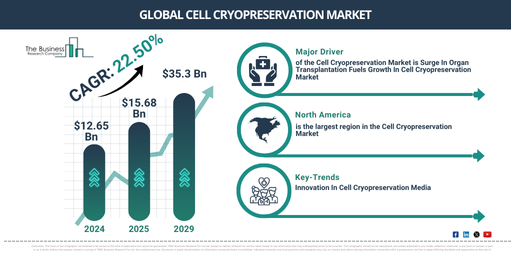
    The cell cryopreservation market has experienced substantial growth in recent years. Its value is projected to increase from $12.65 billion in 2024 to $15.68 billion in 2025, advancing at a compound annual growth rate (CAGR) of 24.0%. Historically, this expansion has been driven by the rising demand for cell-based therapies, an increase in biomedical research, the expanding necessity for organ transplantation, a surge in R&D activities focused on cell-based therapies, and the wider adoption of cryopreserved cell.

    The cell cryopreservation market is poised for substantial growth over the next few years, with projections indicating it will reach $35.3 billion by 2029, expanding at a compound annual growth rate (CAGR) of 22.5%. This growth during the forecast period is primarily driven by factors such as the increasing demand for in vitro fertilization (IVF) procedures, ongoing advancements in organ transplantation, the expansion of biobanking activities, a rising incidence of chronic diseases, and supportive government initiatives and funding. Significant trends expected during this period include continuous developments in cryopreservation techniques, improvements in MRNA vaccine storage and transportation, breakthroughs in cryoprotectants and freezing methods, the growing adoption of personalized medicine, and progress in stem cell research.

    Unlock Your Free Sample Report for Exclusive Market Data:

    https://www.thebusinessresearchcompany.com/sample.aspx?id=15755&type=smp

    Which Drivers Are Supporting Growth Of The Cell Cryopreservation Market?

    The rising volume of organ transplantation operations is anticipated to drive the expansion of the cell cryopreservation market in the future. This medical intervention involves replacing an impaired or non-functioning organ with a healthy one obtained from a donor. The surge in organ transplant procedures stems from organ failure resulting from hereditary abnormalities, infections, traumas, and chronic diseases. In the context of organ transplantation, cell cryopreservation entails freezing and storing cells derived from organs to maintain their vitality for subsequent application, thereby improving graft success and minimizing immune rejection. For example, as reported by the US-based federal agency, the Health Resources and Services Administration, in January 2024, a total of 46,632 organ transplants were conducted in 2023, utilizing both living and deceased donors. This represented an 8.7% rise compared to 2022 and a 12.7% increase from 2021, the initial year to exceed 40,000 organ transplants. Consequently, the expanding scope of organ transplantation procedures is fueling the advancement of the cell cryopreservation market.

    What Are The Emerging Segments Gaining Attention In The Cell Cryopreservation Market?

    The cell cryopreservationmarket covered in this report is segmented –

    1) By Product: Cell Freezing Media; Equipment; Consumables

    2) By Application: Hepatocytes; Stem Cells; Oocytes And Embryotic cells; Sperm Cells; Other Applications

    3) By End-Use Channel: Biopharmaceutical And Pharmaceutical Companies; Research Institutes; Biobanks; In Vitro Fertilization (IVF) Clinics; Other End-Use Channels

    Subsegments:

    1) By Cell Freezing Media: Serum-Based Freezing Media; Serum-Free Freezing Media

    2) By Cryoprotectants: Cryoprotectants

    3) By Equipment: Cryopreservation Freezers; Cryo Storage Tanks; Controlled-Rate Freezers

    4) By Consumables: Cryovials; Cryo Storage Bags; Cryo Tubes

    What Long-Term Trends Will Shape The Future Growth Of The Cell Cryopreservation Industry?

    Companies operating in the cell cryopreservation market are concentrating on advancing cryopreservation medium solutions to better serve customers with sophisticated capabilities. A cryopreservation medium solution refers to specific formulations crafted to preserve cells or tissues by freezing them at exceptionally low temperatures, thereby allowing for long-term storage and transportation while maintaining their viability and functionality. For instance, in April 2024, Pluristyx Inc., a US-based provider of tools, technologies, and services for cellular therapies, launched PluriFreeze, a distinct cryopreservation medium solution designed to accelerate stem cell therapy development. This solution was created to support the growth of induced pluripotent stem cells (iPSCs) and offers an innovative method to improve the efficiency and quality of iPSC therapy development. Pluristyx’s PluriFreeze Cryopreservation Media, intended for Research Use Only (RUO), aims to streamline the development of stem cell therapy and aid in commercializing cell therapies.

    Who Are The Major Companies Operating In The Cell Cryopreservation Market?

    Major companies operating in the cell cryopreservation market are Thermo Fisher Scientific Inc., Danaher Corporation, Merck KGaA, Corning Inc., STEMCELL Technologies, Cryoport Inc., BioLife Solutions Inc., Nkarta Inc., Tn-Sanso Corporation, Coya Therapeutics, FUJIFILM Irvine Scientific, Artiva Biotherapeutics, Acorn Biolabs Inc., ThermoGenesis Holdings Inc., Evia Bio Inc., Wideblue Limited, Akron Biotech, Captivate Bio LLC, Pluristyx Inc., CryoCrate LLC, PanTHERA CryoSolutions, ParaTechs Corporation, Plus Therapeutics, X-Therma Inc., Protein Technologies Limited

    Download The Full Report For Exclusive Market Findings:

    https://www.thebusinessresearchcompany.com/report/cell-cryopreservation-global-market-report

    Which Region Shows The Highest Potential For Future Expansion In The Cell Cryopreservation Market?

    North America was the largest region in the cell cryopreservation market in 2024. Asia-Pacific is expected to be the fastest-growing region in the forecast period. The regions covered in the cell cryopreservation market report are Asia-Pacific, Western Europe, Eastern Europe, North America, South America, Middle East and Africa.

    Request A Customized Version Of The Cell Cryopreservation Market Report:

    https://www.thebusinessresearchcompany.com/customise?id=15755&type=smp

    Browse Through More Reports Similar to the Global Cell Cryopreservation Market 2025, By The Business Research Company

    Femtocell Global Market Report 2025

    https://www.thebusinessresearchcompany.com/report/femtocell-global-market-report

    Regenerated Cellulose Global Market Report 2025

    https://www.thebusinessresearchcompany.com/report/regenerated-cellulose-global-market-report

    Solid Oxide Fuel Cell Global Market Report 2025

    https://www.thebusinessresearchcompany.com/report/solid-oxide-fuel-cell-global-market-report

    Get in touch with us:

    The Business Research Company: https://www.thebusinessresearchcompany.com/

    Americas +1 310-496-7795

    Asia +44 7882 955267 & +91 8897263534

    Europe +44 7882 955267

    Email us at info@tbrc.info

    Follow us on:

    LinkedIn: https://in.linkedin.com/company/the-business-research-company

    YouTube: https://www.youtube.com/channel/UC24_fI0rV8cR5DxlCpgmyFQ

    Global Market Model: https://www.thebusinessresearchcompany.com/global-market-model