Blog

  • Global Amblyopia Market Size Projected to Reach $5.76 Billion During the Forecast Period

    Global Amblyopia Market Size Projected to Reach $5.76 Billion During the Forecast Period

    Unlock Global Insights – Save 20% on Market Reports with Code ONLINE20

    What Is The Anticipated Size Of The Amblyopia Market Over The Five-Year Period 2025–2029?

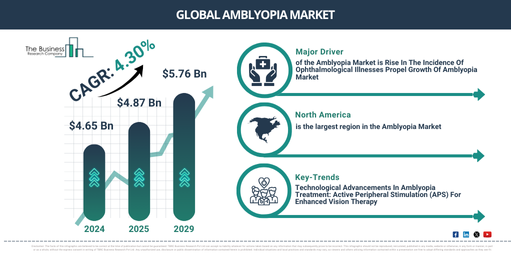
    The amblyopia market size has shown consistent expansion in recent years. It is anticipated to increase from $4.65 billion in 2024 to $4.87 billion in 2025, achieving a compound annual growth rate (CAGR) of 4.7%. Historically, this growth has been influenced by factors such as an increase in ophthalmological illness incidence, greater consumer demand for economical glasses, the widespread occurrence of hyperopia and myopia, a growing elderly demographic, and expanded use of telemedicine.

    The amblyopia market is anticipated to experience consistent expansion over the upcoming years. It will grow to $5.76 billion in 2029 at a compound annual growth rate (CAGR) of 4.3%. This anticipated growth during the forecast period is fueled by several factors, including the emergence of digital health platforms, enhanced access to parental resources and support, a heightened focus on children’s preventive healthcare, greater public understanding of amblyopia, and the expansion of specialized eye care facilities and clinics. Key trends anticipated in this period encompass technological progress in diagnostic tools, the creation of novel treatment approaches, improved insights into visual development, breakthroughs in neuroplasticity, and the introduction and authorization of new pharmaceutical products.

    Unlock Your Free Sample Report for Exclusive Market Data:

    https://www.thebusinessresearchcompany.com/sample.aspx?id=16334&type=smp

    Which Major Market Drivers Are Shaping The Future Of The Amblyopia Market?

    The increasing occurrence of eye-related diseases is projected to drive expansion in the amblyopia market. These illnesses are conditions impacting the eyes, encompassing common problems like cataracts and glaucoma, as well as less frequent ailments such as retinitis pigmentosa and ocular tumors. This rise in eye disorders stems from factors including more screen time, an aging global population, and environmental elements like pollution. Untreated amblyopia can result in severe vision conditions, falling under the umbrella of ophthalmological illnesses, as it causes the brain to disregard input from the weaker eye, potentially leading to lasting vision impairment and depth perception difficulties. For example, data from January 2024 by the Centers for Disease Control and Prevention, a US-based science and data-driven public health organization, indicated that more than 3.4 million Americans aged 40 years and older experienced blindness or visual impairment, a figure projected to double by 2030. Consequently, the increasing prevalence of ophthalmological illnesses fuels the expansion of the amblyopia market.

    How Is The Amblyopia Market Segmented?

    The amblyopiamarket covered in this report is segmented –

    1) By Disease Type: Strabismus Amblyopia; Refractive Amblyopia; Deprivation Amblyopia; Reverse Amblyopia

    2) By Diagnosis: Visual Acuity Tests; Photo Screening; Bruckner Test; Other Diagnosis

    3) By Treatment: Eye Patches; Atropine Drops; Glasses; Video Games; Other Treatments

    4) By End User: Hospital Pharmacy; Retail Pharmacy; Online Pharmacy

    Subsegments:

    1) By Strabismus Amblyopia: Congenital Strabismus Amblyopia; Acquired Strabismus Amblyopia; Non-Paralytic Strabismus Amblyopia; Paralytic Strabismus Amblyopia; Treatment For Misaligned Eyes (Eye Patches, Vision Therapy)

    2) By Refractive Amblyopia: Myopic Refractive Amblyopia; Hypermetropic Refractive Amblyopia; Astigmatic Refractive Amblyopia; Treatment Through Corrective Lenses (Glasses, Contact Lenses)

    3) By Deprivation Amblyopia: Amblyopia Due To Cataracts; Amblyopia Caused By Ptosis (Drooping Eyelid); Amblyopia From Corneal Opacities; Treatment Through Surgical Interventions Or Patching

    4) By Reverse Amblyopia: Amblyopia Due To Optic Nerve Dysfunction; Amblyopia Associated With Anisometropia (Unequal Refractive Errors); Treatment Through Vision Training Or Optical Correction

    Which Trends Are Impacting The Amblyopia Market?

    Major companies in the amblyopia market are prioritizing technological innovations, such as active peripheral stimulation (APS), to enhance peripheral vision therapy. APS is a therapeutic method involving the stimulation of peripheral nerves or tissues to activate sensory pathways, offering potential advantages for pain relief, rehabilitation, and neurological conditions. For example, in October 2024, AmblyoPlay, a US-based startup specializing in digital vision therapy, introduced APS to improve treatment for peripheral vision deficiencies. This innovative technique addresses conditions including amblyopia (lazy eye), strabismus, and convergence insufficiency, which impact spatial awareness and overall visual function. By actively stimulating peripheral vision, APS tackles a public health challenge affecting up to 5% of the global population. AmblyoPlay has integrated APS into a gamified platform, making vision therapy more engaging and enjoyable, especially for children, and supporting improved adherence to treatment.

    Which Major Industry Participants Are Leading The Amblyopia Market Growth?

    Major companies operating in the amblyopia market are Novartis AG, Takeda Pharmaceutical Company Limited, Biocon Limited, Astellas Pharma Inc., Alcon Vision LLC, Bausch Health Companies Inc., HOYA Corp., UnityPoint Health, Integra LifeSciences, Wockhardt Ltd., Welch Allyn, Heidelberg Engineering Inc., Orbis International, Oculus Optikgeräte GmbH, Ocutrx Vision Technologies LLC, AccuVision, Vivid Vision Inc., Fresnel Prism and Lens Co., RevitalVision, WOW Vision Therapy, Lancastle International Ltd., Novasight, Eyenovia Inc., Adaptica Srl, AmblyoPlay

    Download The Full Report For Exclusive Market Findings:

    https://www.thebusinessresearchcompany.com/report/amblyopia-global-market-report

    What Are The Regional Market Dynamics Impacting The Amblyopia Industry?

    North America was the largest region in the amblyopia market in 2024. Asia-Pacific is expected to be the fastest-growing region in the forecast period. The regions covered in the amblyopia market report are Asia-Pacific, Western Europe, Eastern Europe, North America, South America, Middle East, Africa.

    Request A Customized Version Of The Amblyopia Market Report:

    https://www.thebusinessresearchcompany.com/customise?id=16334&type=smp

    Browse Through More Reports Similar to the Global Amblyopia Market 2025, By The Business Research Company

    Adme Toxicology Testing Global Market Report 2025

    https://www.thebusinessresearchcompany.com/report/adme-toxicology-testing-global-market-report

    Chronic Myeloid Leukemia Cml Treatment Global Market Report 2025

    https://www.thebusinessresearchcompany.com/report/chronic-myeloid-leukemia-cml-treatment-global-market-report

    Chronic Pain Global Market Report 2025

    https://www.thebusinessresearchcompany.com/report/chronic-pain-global-market-report

    Get in touch with us:

    The Business Research Company: https://www.thebusinessresearchcompany.com/

    Americas +1 310-496-7795

    Asia +44 7882 955267 & +91 8897263534

    Europe +44 7882 955267

    Email us at info@tbrc.info

    Follow us on:

    LinkedIn: https://in.linkedin.com/company/the-business-research-company

    YouTube: https://www.youtube.com/channel/UC24_fI0rV8cR5DxlCpgmyFQ

    Global Market Model: https://www.thebusinessresearchcompany.com/global-market-model

  • Alpers Disease Treatment Industry Anticipated to Expand at 5.3% CAGR During the Forecast Period

    Alpers Disease Treatment Industry Anticipated to Expand at 5.3% CAGR During the Forecast Period

    Unlock Global Insights – Save 20% on Market Reports with Code ONLINE20

    What Are The Forecasted Market Size Estimates For The Alpers Disease Treatment Market Between 2025 And 2029?

    The alpers disease treatment market size has demonstrated significant growth over recent years. It is projected to expand from $1.36 billion in 2024 to $1.43 billion in 2025, reflecting a compound annual growth rate (CAGR) of 5.7%. This expansion during the preceding period is attributable to factors such as a rise in awareness and diagnosis rates, increased funding for rare disease research, strengthening patient support networks, growing regulatory incentives for orphan drug development, and higher healthcare expenditure.

    The alpers disease treatment market is projected to experience substantial expansion over the upcoming years. This market is predicted to reach $1.77 billion by 2029, exhibiting a compound annual growth rate (CAGR) of 5.3%. Several factors are contributing to this anticipated growth, including a surge in research funding, the increasing occurrence of mitochondrial disorders, enhanced awareness and education among medical professionals, the expansion of drug therapy options, improvements in healthcare infrastructure and access, and a rise in patient advocacy efforts. Key developments shaping the market during this period involve breakthroughs in gene therapy, improved diagnostic techniques, innovations in healthcare technology, progress in genetic engineering, and ongoing clinical research.

    Unlock Your Free Sample Report for Exclusive Market Data:

    https://www.thebusinessresearchcompany.com/sample.aspx?id=16585&type=smp

    What Are The Main Drivers Boosting The Alpers Disease Treatment Industry’s Expansion?

    The anticipated increase in the prevalence of mitochondrial disorders is set to propel the expansion of the Alpers disease treatment market moving forward. Mitochondrial disorders are health conditions stemming from dysfunctions within mitochondria, known as the cell’s powerhouses. This rise in prevalence is driven by an expanding demand for targeted therapies, notable advancements in genetic research, enhanced diagnostic capabilities, and a greater awareness among both healthcare professionals and patients. Screening for mitochondrial disorders can aid in identifying Alpers disease by verifying the existence of mutations in genes associated with mitochondrial function. For example, in April 2024, data from the National Center for Biotechnology Information, a US-based government organization, indicated that in 2022, the estimated prevalence of mtDNA-related mitochondrial disease in adults was 9.2 per 100,000 people, with a 95% confidence interval ranging from 6.5 to 12.7. Therefore, the escalating prevalence of mitochondrial disorders will be a key driver for the Alpers disease treatment market.

    What Are The Key Segments In The Alpers Disease Treatment Market?

    The alpers disease treatmentmarket covered in this report is segmented –

    1) By Treatment: Anticonvulsant Drugs; Speech Therapy; Physical Therapy; Occupational Therapy; Other Treatments

    2) By Diagnosis: Laboratory Tests; Molecular Genetic Testing; Electroencephalography (EEG); Other Diagnoses

    3) By Dosage: Tablet; Injection; Other Dosages

    4) By Symptom: Headache; Dementia; Seizures; Spasticity; Liver Dysfunction; Blindness; Cerebral Degeneration; Other Symptoms

    5) By End-User: Clinic; Hospital; Other End-Users

    Subsegments:

    1) By Anticonvulsant Drugs: Valproic Acid; Levetiracetam; Lamotrigine; Topiramate; Clonazepam; Phenobarbital; Others

    2) By Speech Therapy: Articulation Therapy; Language Development Therapy; Swallowing Therapy; Cognitive Communication Therapy

    3) By Physical Therapy: Motor Skill Therapy; Balance And Coordination Training; Stretching And Strengthening Exercises; Gait Training

    4) By Occupational Therapy: Fine Motor Skill Training; Sensory Integration Therapy; Adaptive Techniques For Daily Living; Cognitive Rehabilitation

    5) By Other Treatments: Nutritional Support (Specialized Diets); Genetic Counseling; Psychological Support And Counseling; Antioxidant Therapy; Mitochondrial Support Therapies

    What Long-Term Trends Will Shape The Future Growth Of The Alpers Disease Treatment Industry?

    Leading companies in the Alpers disease treatment market are developing innovative solutions like Injectable anti-seizure drugs (ASDs) to achieve a quicker and more reliable onset of action than oral medications. These Injectable anti-seizure drugs (ASDs) are advantageous for individuals with Alpers disease by providing rapid and dependable seizure control, circumventing potential absorption issues in the gastrointestinal tract, ensuring stable and effective dosing, and offering a more precise treatment option for managing this challenging neurological condition. For example, in April 2024, Eisai Co. Ltd., a Japan-based pharmaceutical company, launched FYCOMPA, an injection formulation designed for treating epilepsy. This medication functions as a selective, noncompetitive AMPA receptor antagonist, believed to reduce neuronal hyper-excitation linked to seizures by targeting glutamate activity at AMPA receptors on postsynaptic membranes. However, its use in patients with Alpers disease demands careful consideration due to the specific challenges and sensitivities associated with the condition.

    Who Are The Prominent Global Companies Shaping The Alpers Disease Treatment Market?

    Major companies operating in the alpers disease treatment market are Pfizer Inc., Merck & Co. Inc., Sanofi S.A., Abbott Laboratories, Novartis AG, GSK plc, Takeda Pharmaceutical Company Limited, Bausch Health Companies Inc., UCB S.A., Jazz Pharmaceuticals, Aurobindo Pharma, Dr. Reddy’s Laboratories, Hikma Pharmaceuticals plc, Lupin Limited, Biocon Limited, Glenmark Pharmaceuticals Limited, Alkem Laboratories Ltd., Torrent Pharmaceuticals Ltd., Accord Healthcare, Ultragenyx Pharmaceutical Inc., Sunovion Pharmaceuticals Inc., Zydus Cadila

    Download The Full Report For Exclusive Market Findings:

    https://www.thebusinessresearchcompany.com/report/alpers-disease-treatment-global-market-report

    Which Region Shows The Highest Potential For Future Expansion In The Alpers Disease Treatment Market?

    North America was the largest region in the alpers disease treatment market in 2024. The regions covered in the alpers disease treatment market report are Asia-Pacific, Western Europe, Eastern Europe, North America, South America, Middle East, Africa.

    Request A Customized Version Of The Alpers Disease Treatment Market Report:

    https://www.thebusinessresearchcompany.com/customise?id=16585&type=smp

    Browse Through More Reports Similar to the Global Alpers Disease Treatment Market 2025, By The Business Research Company

    Veterinary Infectious Disease Diagnostics Global Market Report 2025

    https://www.thebusinessresearchcompany.com/report/veterinary-infectious-disease-diagnostics-global-market-report

    Inflammatory Bowel Disease Treatment Global Market Report 2025

    https://www.thebusinessresearchcompany.com/report/inflammatory-bowel-disease-treatment-global-market-report

    Chronic Disease Management Global Market Report 2025

    https://www.thebusinessresearchcompany.com/report/chronic-disease-management-global-market-report

    Get in touch with us:

    The Business Research Company: https://www.thebusinessresearchcompany.com/

    Americas +1 310-496-7795

    Asia +44 7882 955267 & +91 8897263534

    Europe +44 7882 955267

    Email us at info@tbrc.info

    Follow us on:

    LinkedIn: https://in.linkedin.com/company/the-business-research-company

    YouTube: https://www.youtube.com/channel/UC24_fI0rV8cR5DxlCpgmyFQ

    Global Market Model: https://www.thebusinessresearchcompany.com/global-market-model

  • Global Allogeneic Cell Therapy Market Projected to Expand at 10.8% CAGR by 2029

    Global Allogeneic Cell Therapy Market Projected to Expand at 10.8% CAGR by 2029

    Unlock Global Insights – Save 20% on Market Reports with Code ONLINE20

    How Is The Allogeneic Cell Therapy Market Size Likely To Evolve From 2025 Through 2034?

    The allogeneic cell therapy market has experienced substantial expansion in recent years. Projections indicate it will grow from $1.08 billion in 2024 to $1.2 billion in 2025, achieving a compound annual growth rate (CAGR) of 11.5%. This growth observed in the past can be attributed to a heightened focus on tailoring donor cell selection and genetic modifications, an increasing global population, a rise in the worldwide burden of chronic diseases, enhanced awareness, and an increase in collaborations for biosimilar development.

    The allogeneic cell therapy market is poised for significant expansion in the coming years. It is projected to reach $1.81 billion by 2029, demonstrating a compound annual growth rate (CAGR) of 10.8%. This anticipated growth throughout the forecast period stems from the increasing requirement for advanced medical treatments, a rising demand for novel allogeneic cell therapies, an escalating number of clinical trials, contributions from an expanding patient population, and rising income levels. Prominent trends for the forecast period include technological advancements, strategic partnerships, collaborations between large companies, mergers and acquisitions, and the introduction of new products.

    Unlock Your Free Sample Report for Exclusive Market Data:

    https://www.thebusinessresearchcompany.com/sample.aspx?id=15976&type=smp

    Which Factors And Drivers Are Influencing The Allogeneic Cell Therapy Market In 2025?

    The rising incidence of chronic ailments is anticipated to fuel expansion in the allogeneic cell therapy market. A chronic condition is a persistent health issue that usually demands continuous medical care and can impair daily functioning or overall well-being. The widespread occurrence of chronic diseases stems from lifestyle changes, genetic factors, and environmental exposure to chemicals, toxins, and airborne pollutants. Allogeneic cell therapy offers considerable promise for managing numerous chronic conditions by employing healthy donor cells to mend, substitute, or regulate impaired cells or tissues within the patient. As an illustration, in January 2023, the National Center for Biotechnology Information (NCBI), a US-based medicine library, projected that the population aged 50 and above suffering from at least one chronic illness would surge by 99.5% by 2050, escalating from 71.52 million in 2020 to 142.66 million. Consequently, the heightened incidence of chronic illnesses is a key driver for the expansion of the allogeneic cell therapy market.

    What Are The Leading Segments Analyzed In The Allogeneic Cell Therapy Market?

    The allogeneic cell therapymarket covered in this report is segmented –

    1) By Type: Stem Cell Therapies; Non-Stem Cell Therapies

    2) By Therapeutic Area: Hematological Disorders; Dermatological Disorders; Other Therapeutic Area

    3) By End User: Hospitals; Specialty Clinics; Research Organizations

    Subsegments:

    1) By Stem Cell Therapies: Hematopoietic Stem Cell Therapy (Hematopoietic Stem Cells); Mesenchymal Stem Cell Therapy (MSC-Based Therapies); Induced Pluripotent Stem Cells (iPSC-Based Therapies); Neural Stem Cell Therapy; Other Stem Cell Therapies

    2) By Non-Stem Cell Therapies: T-cell Therapies; Natural Killer (NK) Cell Therapies; Dendritic Cell Therapies; Other Non-Stem Cell Therapies

    Which Market Trends Are Creating New Opportunities In The Allogeneic Cell Therapy Industry?

    Major companies in the allogeneic cell therapy market are dedicating efforts to developing innovative solutions, such as cell processing platforms, to enhance their market position. Cell processing platforms encompass systems and technologies employed for the preparation and manipulation of cells for therapeutic applications, covering processes like isolation, purification, expansion, modification, and stringent quality control, all aimed at guaranteeing their suitability for clinical use. For instance, in March 2024, Getinge, a Sweden-based healthcare company, partnered with CellRev, a UK-based biotechnology company, to introduce Livit ACE, a platform for continuous cell processing (Adherent Cell Expansion). This innovative platform incorporates advanced automation and bioprocessing technologies, significantly improving the efficiency and scalability of cell production. Its unique attributes include state-of-the-art cell isolation and purification systems that ensure high cell purity and viability, robust expansion capabilities to produce large quantities of therapeutic cells, sophisticated genetic modification tools for precise cell engineering, and rigorous quality control measures to guarantee the safety and efficacy of the cell products.

    Which Key Players Are Driving Competition In The Allogeneic Cell Therapy Market?

    Major companies operating in the allogeneic cell therapy market are Novartis AG, Bristol Myers Squibb Company, Takeda Pharmaceutical Company Limited, Bluebird Bio Inc., Poseida Therapeutics Inc., Fate Therapeutics Inc., Fortress Biotech Inc., Sorrento Therapeutics Inc., Eureka Therapeutics Inc., Juno Therapeutics Inc., Adaptimmune Therapeutics plc, Cellectis SA, TrakCel Ltd., Promab Biotechnologies Inc., Ziopharm Oncology Inc., Allogene Therapeutics Inc., Century Therapeutics Inc., Autolus Therapeutics plc, Bellicum Pharmaceuticals Inc., Minerva Biotechnologies Corporation, Celyad SA, TILT Biotherapeutics Ltd., CRISPR Therapeutics AG

    Download The Full Report For Exclusive Market Findings:

    https://www.thebusinessresearchcompany.com/report/allogeneic-cell-therapy-global-market-report

    How Is Allogeneic Cell Therapy Market Demand Varying Across Different Regions?

    North America was the largest region in the allogeneic cell therapy market in 2024. Asia-Pacific is expected to be the fastest-growing region in the forecast period. The regions covered in the allogeneic cell therapy market report are Asia-Pacific, Western Europe, Eastern Europe, North America, South America, Middle East, Africa.

    Request A Customized Version Of The Allogeneic Cell Therapy Market Report:

    https://www.thebusinessresearchcompany.com/customise?id=15976&type=smp

    Browse Through More Reports Similar to the Global Allogeneic Cell Therapy Market 2025, By The Business Research Company

    Cells Therapy Global Market Report 2025

    https://www.thebusinessresearchcompany.com/report/cells-therapy-global-market-report

    Stem Cells Therapy Global Market Report 2025

    https://www.thebusinessresearchcompany.com/report/stem-cells-therapy-global-market-report

    Cell Therapy Technologies Global Market Report 2025

    https://www.thebusinessresearchcompany.com/report/cell-therapy-technologies-global-market-report

    Get in touch with us:

    The Business Research Company: https://www.thebusinessresearchcompany.com/

    Americas +1 310-496-7795

    Asia +44 7882 955267 & +91 8897263534

    Europe +44 7882 955267

    Email us at info@tbrc.info

    Follow us on:

    LinkedIn: https://in.linkedin.com/company/the-business-research-company

    YouTube: https://www.youtube.com/channel/UC24_fI0rV8cR5DxlCpgmyFQ

    Global Market Model: https://www.thebusinessresearchcompany.com/global-market-model
  • Albumin Market to Grow at a CAGR of 8.5% from 2025 to 2029

    Albumin Market to Grow at a CAGR of 8.5% from 2025 to 2029

    Unlock Global Insights – Save 20% on Market Reports with Code ONLINE20

    What Are The Growth Projections For The Albumin Market Size During 2025–2029?

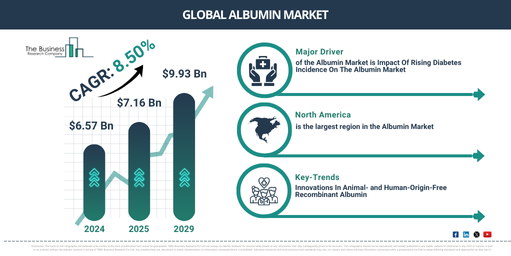
    The albumin market has demonstrated substantial growth in recent years. It is forecast to expand from $6.57 billion in 2024 to $7.16 billion in 2025, reflecting a compound annual growth rate (CAGR) of 9.0%. This historical market expansion can be linked to advancements in biotechnology, a rising need for plasma-derived therapies, broadening pharmaceutical applications, a high occurrence of liver diseases, regulatory approvals granted for albumin-based products, and the globalization of healthcare services enabling wider market access.

    The albumin market is anticipated to experience substantial expansion over the upcoming years. By 2029, it is projected to reach ” $9.93 billion, growing at a compound annual growth rate (CAGR) of 8.5%. This projected growth during the forecast period is driven by factors such as the increasing prevalence of liver diseases, the expanding applications in regenerative medicine, a rising geriatric population, evolving diagnostic techniques, a shift in healthcare infrastructure towards outpatient care, and increased awareness regarding the importance of maintaining optimal protein levels. Key trends anticipated in the forecast period encompass expanding therapeutic applications, the rising adoption in drug delivery systems, an increasing demand within cell culture media, developments in personalized medicine, advancements in recombinant technology, a heightened awareness for hypoalbuminemia treatment, and substantial investment in research and development for innovative albumin-based products.

    Unlock Your Free Sample Report for Exclusive Market Data:

    https://www.thebusinessresearchcompany.com/sample.aspx?id=16333&type=smp

    What Are The Key Drivers Of Growth In The Albumin Market?

    The expanding prevalence of diabetes is anticipated to fuel the future expansion of the albumin market. Diabetes, a metabolic disorder, involves persistently elevated blood glucose levels, with an increase in cases attributed to factors such as inadequate nutrition, insufficient physical activity, hormonal imbalances, and obesity. In diabetes, albumin serves as a significant biomarker, instrumental in guiding insulin treatment, tracking glycemic management, assisting with diagnosis, and forecasting potential complications like diabetic ketoacidosis (DKA). Maintaining healthy albumin concentrations is vital for comprehensive diabetes management. For example, in January 2022, data from the National Library of Medicine, a US-based government library, indicated that in 2021, the global prevalence of diabetes stood at an estimated 10.5%, impacting around 536.6 million people between 20 and 79 years old. By the year 2045, this figure is forecast to climb to 12.2%, affecting approximately 783.2 million individuals. Consequently, the increasing occurrence of diabetes is projected to boost the growth of the albumin market in the coming years.

    What Are The Segment Types Shaping The Albumin Market?

    The albuminmarket covered in this report is segmented –

    1) By Type: Human Serum Albumin; Bovine Serum Albumin; Recombinant Albumin

    2) By Application: Therapeutics; Drug Formulation And Vaccines; Component Of Media; Other Applications

    3) By Sales Channel: Business-To-Consumer (B2C); Business-To-Business (B2B)

    4) By End-User: Hospitals And Clinics; Pharmaceutical And Biotechnology Companies; Research Institutes

    Subsegments:

    1) By Human Serum Albumin: Plasma-Derived Human Serum Albumin; Recombinant Human Serum Albumin; Human Serum Albumin For Therapeutic Use (In Liver Disease, Burns); Human Serum Albumin For Drug Delivery And Research Applications

    2) By Bovine Serum Albumin: Bovine Serum Albumin For Laboratory Use (In Cell Culture); Bovine Serum Albumin For Diagnostic Kits; Bovine Serum Albumin As A Stabilizer In Vaccines And Biopharmaceuticals

    3) By Recombinant Albumin: Recombinant Human Albumin For Therapeutic Applications; Recombinant Albumin For Biopharmaceutical Formulation; Recombinant Albumin For Cosmetic And Personal Care Applications; Recombinant Albumin For Research And Diagnostic Applications

    How Are Trends Influencing The Albumin Market?

    Major companies in the albumin market are actively creating innovative products, including recombinant albumin free from animal and human origins, to better serve customers with advanced functionalities. An animal- and human-origin-free recombinant albumin is defined as an albumin type produced using a non-mammalian expression system, such as yeast, and containing no components sourced from animals or humans. For instance, in March 2023, Albumedix, a UK-based manufacturer of recombinant human albumin (rHA), collaborated with Heartseed Inc., a Japan-based clinical-stage biotech company, to introduce Recombin. This critical excipient will be utilized in the production of Heartseed’s investigational cell therapy, HS-001, as its initial first-in-human clinical trial commences. This partnership marks a significant milestone in the progress of HS-001, which is poised to revolutionize the treatment of various diseases. The incorporation of recombination into the manufacturing process ensures the optimal performance and stability of the cell therapy, further strengthening its potential for therapeutic success.

    Who Are The Top Performing Companies In The Albumin Market In Recent Years?

    Major companies operating in the albumin market are Bristol-Myers Squibb Company, Thermo Fisher Scientific Inc., Takeda Pharmaceutical Company Limited, Merck KGaA, Baxter International Inc., CSL Limited, Grifols SA, Mitsubishi Tanabe Pharma Corporation, Octapharma AG, Kedrion S.p.A., Biotest AG, Jiangxi Boya Bio-Pharmaceutical Co. Ltd., BPL (Bio Products Laboratory), Kamada Ltd., Proliant Biologicals, SeraCare Life Sciences Inc., HiMedia Laboratories, Albumedix Ltd., Medxbio Pte Ltd., Ventria Bioscience Inc., China Biologic Products Holdings Inc.

    Download The Full Report For Exclusive Market Findings:

    https://www.thebusinessresearchcompany.com/report/albumin-global-market-report

    Which Geographies Are Emerging As Strong Markets For The Albumin Industry?

    North America was the largest region in the albumin market in 2024. Asia-Pacific is expected to be the fastest-growing region in the forecast period. The regions covered in the albumin market report are Asia-Pacific, Western Europe, Eastern Europe, North America, South America, Middle East, Africa.

    Request A Customized Version Of The Albumin Market Report:

    https://www.thebusinessresearchcompany.com/customise?id=16333&type=smp

    Browse Through More Reports Similar to the Global Albumin Market 2025, By The Business Research Company

    Stem Cell Assay Global Market Report 2025

    https://www.thebusinessresearchcompany.com/report/stem-cell-assay-global-market-report

    Glycomics Or Glycobiology Global Market Report 2025

    https://www.thebusinessresearchcompany.com/report/glycomics-or-glycobiology-global-market-report

    Hospital Capacity Management Solutions Global Market Report 2025

    https://www.thebusinessresearchcompany.com/report/hospital-capacity-management-solutions-global-market-report

    Get in touch with us:

    The Business Research Company: https://www.thebusinessresearchcompany.com/

    Americas +1 310-496-7795

    Asia +44 7882 955267 & +91 8897263534

    Europe +44 7882 955267

    Email us at info@tbrc.info

    Follow us on:

    LinkedIn: https://in.linkedin.com/company/the-business-research-company

    YouTube: https://www.youtube.com/channel/UC24_fI0rV8cR5DxlCpgmyFQ

    Global Market Model: https://www.thebusinessresearchcompany.com/global-market-model

  • Global AI-Enabled X-Ray Imaging Solutions Market 2025–2029: Competitive Insights and Opportunities

    Global AI-Enabled X-Ray Imaging Solutions Market 2025–2029: Competitive Insights and Opportunities

    Unlock Global Insights – Save 20% on Market Reports with Code ONLINE20

    What Is The Global Market Value Of The AI-Enabled X-Ray Imaging Solutions Industry In 2025?

    The ai-enabled x-ray imaging solutions market has experienced significant growth in recent years. It is forecast to expand from $2.17 billion in 2024 to $2.44 billion in 2025, achieving a compound annual growth rate (CAGR) of 12.4%. The market’s historical growth can be attributed to several factors, including regulatory approvals, an escalation in healthcare costs, a greater need for diagnostic accuracy, an increasing shortage of radiologists, and an aging population.

    The ai-enabled x-ray imaging solutions market is projected for substantial expansion, with its size expected to reach $3.8 billion in 2029, exhibiting a compound annual growth rate (CAGR) of 11.8%. This anticipated growth during the forecast period is influenced by factors such as integration with electronic health records, the increasing adoption of value-based care models, the widening applications in telemedicine, the emergence of AI-enabled triage systems, and the growing demand for personalized medicine. Major developments anticipated in the forecast period include continued enhancements in AI-enabled diagnostic accuracy and efficiency, the integration of AI with other imaging modalities beyond X-ray, the advancement of AI-driven predictive analytics, and a focus on regulatory standards and ethical considerations in AI implementation.

    Unlock Your Free Sample Report for Exclusive Market Data:

    https://www.thebusinessresearchcompany.com/sample.aspx?id=15303&type=smp

    Which Drivers Are Supporting Growth Of The AI-Enabled X-Ray Imaging Solutions Market?

    The increasing need for individualized healthcare is anticipated to drive the expansion of the AI-enabled X-ray imaging solutions market. Personalized medicine, also referred to as precision medicine, constitutes a type of medical intervention and treatment approach uniquely customized for each patient’s distinct traits. This heightened demand for personalized medicine stems from progress in genomic studies, a better comprehension of disease variability, and new technological developments. By tailoring healthcare actions, treatment plans, and imaging procedures to the specific attributes and requirements of every patient, personalized medicine amplifies the significance of AI-enabled X-ray imaging solutions. As an illustration, in October 2022, the Personalized Medicine Coalition (PMC), a US-based organization dedicated to fostering the awareness and uptake of personalized medicine, reported over 75,000 genetic testing products and 300 personalized medicines. Additionally, in 2023, the FDA (the United States Food and Drug Administration), a federal agency based in the US, granted approval to new medications, with 38% of these being personalized medicines. Consequently, the escalating need for personalized medicine is fueling the expansion of the AI-enabled X-ray imaging solutions market.

    What Are The Different Segment Classifications Within The AI-Enabled X-Ray Imaging Solutions Market?

    The ai-enabled x-ray imaging solutionsmarket covered in this report is segmented –

    1) By Product: Software; Hardware

    2) By Mode Of Deployment: Cloud-Based And Web-Based; On-Premises

    3) By Workflow: Detection; Image Acquisition; Image Analysis; Diagnosis And Treatment Decision Support; Triage; Predictive Analysis and Risk Assessment; Reporting And Communication

    4) By Application: General Radiology; Specialty Radiology

    What Key Innovation Trends Are Fueling Advancements In The AI-Enabled X-Ray Imaging Solutions Market?

    Major companies within the AI-enabled X-ray imaging solutions market are developing sophisticated products, such as fixed AI-enabled X-ray systems, aimed at boosting efficiency in in-room procedures, alleviating patient positioning stress, and ensuring superior image clarity. This type of X-ray imaging solution integrates artificial intelligence (AI) technology into existing X-ray systems, thereby improving the examination, interpretation, and application of X-ray images for medical diagnoses and treatment plans. For instance, in August 2022, the US-based medical technology entity GE HealthCare Technologies Inc. introduced the Definium 656 HD, a novel fixed AI-enabled X-ray system equipped with advanced, AI-powered image processing to streamline radiology workflows and decrease the time spent on patient positioning. The Definium 656 HD system incorporates multiple functionalities designed to guarantee precise image capture and mitigate the physical challenges associated with patient posture. According to GE HealthCare, these features include 3-dimensional camera technology, part of the system’s Intelligent Workflow Suite, which contributes to more uniform image quality and diminishes the necessity for unnecessary repeated X-rays, alongside a 12-inch touchscreen on the tube head console that facilitates automated adjustments for in-room operations.

    Which Leading Companies Dominate The AI-Enabled X-Ray Imaging Solutions Market Share?

    Major companies operating in the AI-enabled X-ray imaging solutions market are Samsung Electronics Co. Ltd., General Electric Company, International Business Machines Corporation, Siemens Healthineers AG, Koninklijke Philips N.V., Agfa-Gevaert NV, Carestream Health Inc., Fujifilm Healthcare Americas Corporation, Canon Medical Systems Corporation, Lunit Inc., Infervision Medical Technology Co. Ltd., Behold AI Technologies Limited, DeepTek.ai Inc., Quibim S.L., Enlitic Inc., Thirona BV, Arterys Inc., AI Technologies Limited, Konica Minolta Inc., Vuno Co. Ltd., Zebra Medical Vision Inc., Radiobotics APS, Digitec Innovation Srl, Imagen Technologies Inc.

    Download The Full Report For Exclusive Market Findings:

    https://www.thebusinessresearchcompany.com/report/ai-enabled-x-ray-imaging-solutions-global-market-report

    Which Region Is Projected To Lead The AI-Enabled X-Ray Imaging Solutions Market During The Forecast Period?

    North America was the largest region in the AI-enabled X-ray imaging solutions market in 2024. It is expected to be the fastest-growing region in the forecast period. The regions covered in the AI-enabled X-ray imaging solutions market report are Asia-Pacific, Western Europe, Eastern Europe, North America, South America, Middle East, Africa.

    Request A Customized Version Of The AI-Enabled X-Ray Imaging Solutions Market Report:

    https://www.thebusinessresearchcompany.com/customise?id=15303&type=smp

    Browse Through More Reports Similar to the Global AI-Enabled X-Ray Imaging Solutions Market 2025, By The Business Research Company

    Ai Enabled Medical Imaging Solutions Global Market Report 2025

    https://www.thebusinessresearchcompany.com/report/ai-enabled-medical-imaging-solutions-global-market-report

    Dental X Ray Equipment Global Market Report 2025

    https://www.thebusinessresearchcompany.com/report/dental-x-ray-equipment-global-market-report

    X Ray Systems Devices And Equipment Global Market Report 2025

    https://www.thebusinessresearchcompany.com/report/x-ray-systems-devices-and-equipment-global-market-report

    Get in touch with us:

    The Business Research Company: https://www.thebusinessresearchcompany.com/

    Americas +1 310-496-7795

    Asia +44 7882 955267 & +91 8897263534

    Europe +44 7882 955267

    Email us at info@tbrc.info

    Follow us on:

    LinkedIn: https://in.linkedin.com/company/the-business-research-company

    YouTube: https://www.youtube.com/channel/UC24_fI0rV8cR5DxlCpgmyFQ

    Global Market Model: https://www.thebusinessresearchcompany.com/global-market-model

  • Histone Deacetylase (HDAC) Inhibitors Market to Reach $1.76 Billion by 2029, Growing at a CAGR of 7.4%

    Histone Deacetylase (HDAC) Inhibitors Market to Reach $1.76 Billion by 2029, Growing at a CAGR of 7.4%

    Unlock Global Insights – Save 20% on Market Reports with Code ONLINE20

    What Is The Global Market Value Of The Histone Deacetylase (HDAC) Inhibitors Industry In 2025?

    The histone deacetylase (hdac) inhibitors market size has demonstrated significant growth in recent years. This market is projected to expand from $1.23 billion in 2024 to $1.32 billion in 2025, achieving a compound annual growth rate (CAGR) of 7.6%. The expansion observed in the historical period is attributable to several factors, including an increase in funding for epigenetic research, the rising prevalence of drug-resistant cancers, an uptick in healthcare expenditure, the increasing application of HDAC inhibitors in veterinary medicine, and heightened investment in bioinformatics.

    The histone deacetylase (hdac) inhibitors market size is projected to experience robust expansion in the coming years. By 2029, it is anticipated to reach $1.76 billion, exhibiting a compound annual growth rate (CAGR) of 7.4%. This anticipated growth during the forecast period stems from factors such as the increasing prevalence of neurodegenerative conditions, heightened awareness regarding cancer, augmented investment in drug development, an expanding volume of clinical trials, and the wider embrace of personalized medicine. Key developments expected during this period encompass technological innovations, individualized treatment approaches, collaborative efforts with cancer immunotherapy, the incorporation of digital health solutions, and advancements in bioinformatics.

    Unlock Your Free Sample Report for Exclusive Market Data:

    https://www.thebusinessresearchcompany.com/sample.aspx?id=18386&type=smp

    Which Drivers Are Supporting Growth Of The Histone Deacetylase (HDAC) Inhibitors Market?

    The increasing occurrence of neurodegenerative conditions is anticipated to drive expansion in the histone deacetylase (HDAC) inhibitors market in the future. These disorders, involving the gradual deterioration and demise of neurons within the brain and spinal cord, result in impaired cognitive and motor functions. Examples include Alzheimer’s disease, identifiable by memory loss and a decline in cognitive abilities, attributed to amyloid plaques and tau tangles. The growing prevalence of neurodegenerative diseases stems from various elements, including age, increased lifespan, genetic predispositions, and environmental influences. Histone deacetylase (HDAC) inhibitors are currently under investigation as potential therapeutic options for neurodegenerative conditions, given their capacity to modify gene expression and offer neuroprotective benefits. As an illustration, in August 2024, data from the Centers for Disease Control and Prevention, a US-based federal agency, indicated that approximately 6.7 million elderly individuals in the United States currently suffer from Alzheimer’s disease, with projections showing this figure could climb to almost 14 million by 2060. Consequently, the increasing occurrence of neurodegenerative disorders is fueling the expansion of the histone deacetylase (HDAC) inhibitors market.

    How Is The Histone Deacetylase (HDAC) Inhibitors Market Classified Into Different Segments?

    The histone deacetylase (hdac) inhibitorsmarket covered in this report is segmented –

    1) By Class: Class I HDACs; Class II HDACs; Class III HDACs; Class IV HDACs

    2) By Route Of Administration: Oral HDAC Inhibitors; Parenteral HDAC Inhibitors

    3) By Application: Oncology; Neurology; Other Applications

    4) By End User: Hospitals; Academic And Research Institutes; Pharmaceutical Companies; Other End Users

    Subsegments:

    1) By Class I HDACs: HDAC1; HDAC2; HDAC3; HDAC8

    2) By Class II HDACs: HDAC4; HDAC5; HDAC6; HDAC7; HDAC9; HDAC10

    3) By Class III HDACs (Sirtuins): SIRT1; SIRT2; SIRT3; SIRT4; SIRT5; SIRT6; SIRT7

    4) By Class IV HDACs: HDAC11

    What Trends Are Redefining The Histone Deacetylase (HDAC) Inhibitors Market Dynamics?

    Companies heavily involved in the histone deacetylase (HDAC) inhibitors market are dedicated to creating advanced solutions, particularly HDAC inhibitors for cancer treatment, to boost effectiveness and lessen adverse reactions. Histone deacetylase (HDAC) inhibitors constitute a category of pharmaceutical compounds employed in cancer therapy. They function by blocking the activity of HDAC enzymes, which typically remove acetyl groups from histone proteins. This inhibition leads to an increase in histone acetylation, consequently modifying chromatin structure and influencing gene expression. For example, in September 2023, Shuttle Pharmaceuticals Holdings Inc., a US-based company that develops first-in-class therapies for cancer, was granted New HDAC Inhibitor Patents for Cancer Treatment by the U.S. Patent and Trademark Office. These innovative inhibitors are designed to target specific HDAC enzymes linked to cancer progression, aiming to disrupt irregular gene expression patterns that contribute to tumor growth and metastasis. The patented compounds exhibit improved potency and selectivity, thereby minimizing off-target effects and enhancing safety profiles for patients undergoing treatment.

    Which Industry Leaders Are Driving Innovation Across The Histone Deacetylase (HDAC) Inhibitors Market?

    Major companies operating in the histone deacetylase (HDAC) inhibitors market are Bristol-Myers Squibb Company, Novartis AG, Merck KGaA, Abcam plc, Pharmacyclics LLC, R&D Systems Inc., Tenaya Therapeutics Inc., Syndax Pharmaceuticals Inc., Italfarmaco SpA, InvivoGen Corporation, TCI Chemicals (India) Pvt. Ltd., 4SC AG, Medivir AB, Mirati Therapeutics Inc., Spectrum Pharmaceuticals Inc., Curis Inc., Acetylon Pharmaceuticals Inc., Oryzon Genomics SA, Xynomic Pharmaceuticals Inc., Celleron Therapeutics Ltd., Midatech Pharma PLC, Karus Therapeutics Ltd., Shenzhen Chipscreen Biosciences Co. Ltd.

    Download The Full Report For Exclusive Market Findings:

    https://www.thebusinessresearchcompany.com/report/histone-deacetylase-hdac-inhibitors-global-market-report

    What Regional Growth Trends Are Shaping The Histone Deacetylase (HDAC) Inhibitors Market Outlook?

    North America was the largest region in the histone deacetylase (HDAC) inhibitors market in 2024. Asia-Pacific is expected to be the fastest-growing region in the forecast period. The regions covered in the histone deacetylase (HDAC) inhibitors market report are Asia-Pacific, Western Europe, Eastern Europe, North America, South America, Middle East, Africa.

    Request A Customized Version Of The Histone Deacetylase (HDAC) Inhibitors Market Report:

    https://www.thebusinessresearchcompany.com/customise?id=18386&type=smp

    Browse Through More Reports Similar to the Global Histone Deacetylase (HDAC) Inhibitors Market 2025, By The Business Research Company

    Her2 Inhibitor Global Market Report 2025

    https://www.thebusinessresearchcompany.com/report/her2-inhibitor-global-market-report

    Checkpoint Inhibitor Global Market Report 2025

    https://www.thebusinessresearchcompany.com/report/checkpoint-inhibitor-global-market-report

    Protein Inhibitor Global Market Report 2025

    https://www.thebusinessresearchcompany.com/report/protein-inhibitor-global-market-report

    Get in touch with us:

    The Business Research Company: https://www.thebusinessresearchcompany.com/

    Americas +1 310-496-7795

    Asia +44 7882 955267 & +91 8897263534

    Europe +44 7882 955267

    Email us at info@tbrc.info

    Follow us on:

    LinkedIn: https://in.linkedin.com/company/the-business-research-company

    YouTube: https://www.youtube.com/channel/UC24_fI0rV8cR5DxlCpgmyFQ

    Global Market Model: https://www.thebusinessresearchcompany.com/global-market-model
  • Global Histology And Cytology Market Size Projected to Reach $29.63 Billion During the Forecast Period

    Global Histology And Cytology Market Size Projected to Reach $29.63 Billion During the Forecast Period

    Unlock Global Insights – Save 20% on Market Reports with Code ONLINE20

    By How Much Is The Histology And Cytology Market Expected To Expand Between 2025 And 2029?

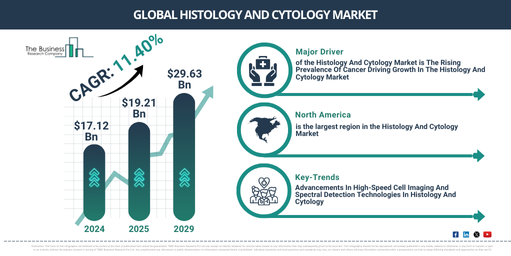
    The histology and cytology market has witnessed swift expansion in recent years. It is projected to increase from $17.12 billion in 2024 to $19.21 billion in 2025, achieving a compound annual growth rate (CAGR) of 12.2%. This growth over the historic period is attributable to the high prevalence of chronic diseases, increasing healthcare expenditure, technological innovations in imaging, expansion of research activities, and the aging global population.

    The histology and cytology market is projected to experience substantial expansion in the coming years, with its valuation anticipated to reach $29.63 billion by 2029, exhibiting a compound annual growth rate (CAGR) of 11.4%. This growth trajectory is driven by factors such as the increasing incidence of cancer, the rising need for personalized medicine, the development of healthcare infrastructure in burgeoning markets, advancements in imaging technologies, an expanding older adult demographic, and intensified research and development endeavors in life sciences. Key trends expected during this period involve the greater integration of automation, a growing preference for digital pathology, further development in personalized medicine, innovations in tissue staining technologies, expanded oncology research, an emphasis on improving workflow efficiency, and increased capital expenditure in laboratory facilities.

    Unlock Your Free Sample Report for Exclusive Market Data:

    https://www.thebusinessresearchcompany.com/sample.aspx?id=16704&type=smp

    Which Drivers Are Shaping The Histology And Cytology Industry’s Market Share?

    The rising incidence of cancer is anticipated to drive expansion in the histology and cytology market in the future. Cancer encompasses a wide range of illnesses marked by the unrestrained proliferation and dissemination of atypical cells within the body. Such cells possess the capacity to infiltrate and damage healthy tissue, and they are capable of spreading to distant bodily regions through metastasis. Various elements contribute to cancer’s widespread occurrence, including an older demographic, inadequate nutrition, insufficient exercise, heavy alcohol intake, environmental contaminants, and inherited genetic alterations. Histology and cytology play a vital role across the entire spectrum of cancer care, from the initial identification of the disease and subsequent treatment strategy formulation to tracking how patients respond, thereby significantly influencing patient results in oncology. As an illustration, the National Library of Medicine, a US medical reference source, forecasts that global cancer cases will climb to 28.4 million in 2040, accompanied by a higher mortality rate. Consequently, the growing incidence of cancer fuels the histology and cytology market.

    What Are The Major Segments Identified In The Histology And Cytology Market?

    The histology and cytologymarket covered in this report is segmented –

    1) By Product: Instruments And Analysis Software System; Consumable And Reagents

    2) By Test Type: Microscopy Methods; Flow Cytometry; Molecular Genetic Methods

    3) By Application: Drug Discovery And Designing; Clinical Diagnostics; Academic Research

    4) By End User: Pharma And Biotech Companies; Contract Development And Manufacturing Organizations (CDMO); Diagnostic Laboratories; Other End Users

    Subsegments:

    1) By Instruments And Analysis Software System: Microtomes; Tissue Processors; Stainers; Coverslippers; Cytology Slide Preparation Instruments; Digital Imaging Systems; Histology And Cytology Analysis Software

    2) By Consumables And Reagents: Staining Reagents; Fixatives; Embedding Media; Antibodies; Cytology Collection Kits; Histology Slides

    How Are Emerging Market Trends Shaping The Histology And Cytology Industry Landscape?

    Leading companies in the histology and cytology market are concentrating on developing advanced technologies, such as high-speed cell imaging, to maintain their market position. High-speed cell imaging effectively captures rapid cellular processes with high temporal resolution, which is vital for studying dynamic events like cell division, intracellular transport, signaling dynamics, and cell-environment interactions. For example, in June 2022, Becton, Dickinson, and Company, a US-based medical device company, launched a new cell sorting device featuring two innovative technologies. These advancements allow scientists to discover more specific cell data that was previously unobservable in conventional flow cytometry tests. This innovative device integrates spectral detection with high-speed imaging, enabling real-time analysis of multiple cell characteristics. It improves precision by discerning subtle differences in cellular properties, including fluorescence intensity and emission spectra, which are crucial for accurately sorting heterogeneous cell populations. This breakthrough holds the promise of accelerating biomedical discoveries, advancing cell-based therapies, and facilitating personalized medicine by offering unparalleled insights into complex cellular behaviors and interactions with unprecedented detail.

    Who Are The Key Multinational Companies Dominating The Histology And Cytology Market?

    Major companies operating in the histology and cytology market are Thermo Fisher Scientific Inc., Roche Diagnostics International Ltd., Agilent Technologies Inc., Hologic Inc., Leica Microsystems Nussloch GmbH, Cole-Parmer Instrument Company LLC, Sakura Finetechnical Company Ltd., Biogenex Laboratories Inc., StatLab Medical Products Inc., Biocare Medical LLC, Andwin Scientific, A. Menarini Diagnostics S.r.l, Milestone Medical Inc., Diapath S.p.A., PolyScience Inc., CellPath USA, Medite Medical GmbH, Histo-Line Laboratories s.r.l., Hacker Instruments & Industries Inc., Amos Scientific Pty. Ltd., TissueGnostics GmbH, Konfoong Bioinformation Tech Co. Ltd., Labstac USA, Intelsint Srl

    Download The Full Report For Exclusive Market Findings:

    https://www.thebusinessresearchcompany.com/report/histology-and-cytology-global-market-report

    Which Regional Markets Are Contributing Most To The Histology And Cytology Industry Expansion?

    North America was the largest region in the histology and cytology market in 2024. Asia-Pacific is expected to be the fastest-growing region in the forecast period. The regions covered in the histology and cytology market report are Asia-Pacific, Western Europe, Eastern Europe, North America, South America, Middle East, Africa.

    Request A Customized Version Of The Histology And Cytology Market Report:

    https://www.thebusinessresearchcompany.com/customise?id=16704&type=smp

    Browse Through More Reports Similar to the Global Histology And Cytology Market 2025, By The Business Research Company

    Nephrology And Urology Devices Global Market Report 2025

    https://www.thebusinessresearchcompany.com/report/nephrology-and-urology-devices-global-market-report

    Neurology Devices Global Market Report 2025

    https://www.thebusinessresearchcompany.com/report/neurology-devices-global-market-report

    Dermatology Drugs Global Market Report 2025

    https://www.thebusinessresearchcompany.com/report/dermatology-drugs-global-market-report

    Get in touch with us:

    The Business Research Company: https://www.thebusinessresearchcompany.com/

    Americas +1 310-496-7795

    Asia +44 7882 955267 & +91 8897263534

    Europe +44 7882 955267

    Email us at info@tbrc.info

    Follow us on:

    LinkedIn: https://in.linkedin.com/company/the-business-research-company

    YouTube: https://www.youtube.com/channel/UC24_fI0rV8cR5DxlCpgmyFQ

    Global Market Model: https://www.thebusinessresearchcompany.com/global-market-model
  • Hemoglobinopathies Treatment Industry Anticipated to Expand at 8.9% CAGR During the Forecast Period

    Hemoglobinopathies Treatment Industry Anticipated to Expand at 8.9% CAGR During the Forecast Period

    Unlock Global Insights – Save 20% on Market Reports with Code ONLINE20

    #What Is The Projected Market Size Of The Hemoglobinopathies Treatment Market By 2029?

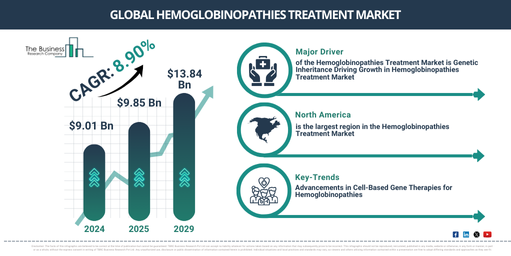
    The hemoglobinopathies treatment market has witnessed substantial growth over recent years. It is projected to increase from $9.01 billion in 2024 to $9.85 billion in 2025, achieving a compound annual growth rate (CAGR) of 9.3%. This expansion during past periods can be credited to factors like scientific breakthroughs, medical innovations, patient advocacy, heightened public health awareness, alongside international collaboration and research consortia.

    The hemoglobinopathies treatment market is projected to experience substantial expansion over the upcoming years, with its size anticipated to reach $13.84 billion by 2029, reflecting a compound annual growth rate (CAGR) of 8.9%. This growth throughout the forecast period is attributed to an increasing emphasis on personalized medicine, enhanced regulatory support for rare diseases, the widespread implementation of prenatal screening programs, the ability of genetic counselling services to enable early detection of hemoglobinopathies during pregnancy, and the broader adoption of disease-modifying therapies. Major trends expected to characterize the market during this period include the introduction of novel drug therapies, cellular therapies, advancements in precision therapeutics, and improved diagnostic tools.

    Unlock Your Free Sample Report for Exclusive Market Data:

    https://www.thebusinessresearchcompany.com/sample.aspx?id=15583&type=smp

    What Are The Drivers Pushing New Developments In The Hemoglobinopathies Treatment Market?

    The increasing influence of genetic inheritance is projected to fuel expansion in the hemoglobinopathies treatment market moving ahead. This process involves the transmission of traits from parents to their descendants via DNA during both sexual and asexual reproductive processes. Its significance has risen due to advancements in genetic research and technology, leading to a better comprehension of how genetic elements contribute to various illnesses, such as hemoglobinopathies. Genetic inheritance plays a role in advancing hemoglobinopathies treatment through enhanced targeted therapies, personalized medicine approaches, drug development, and diagnostic methods. For example, in March 2023, Gene People, a UK-based registered charity, reported that the occurrence of genetic conditions in children is estimated with 1 in every 25 children having a genetic issue, and 30,000 babies and children receiving a new diagnosis annually. Consequently, the expanding role of genetic inheritance is a key factor boosting the growth of the hemoglobinopathies treatment market.

    What Are The Emerging Segments Gaining Attention In The Hemoglobinopathies Treatment Market?

    The hemoglobinopathies treatmentmarket covered in this report is segmented –

    1) By Treatment: Stem Cell Therapy; Blood Transfusion

    2) By Application: Thalassemia; Sick Cell Anemia

    3) By Distribution Channel: Hospital Pharmacy; Online Providers; Drug Stores And Retail Pharmacy

    Subsegments:

    1) By Stem Cell Therapy: Hematopoietic Stem Cell Transplantation (Hsct); Gene Therapy For Hemoglobinopathies; Autologous Stem Cell Therapy; Allogeneic Stem Cell Transplantation; Gene Editing Techniques ( Crispr-cas9); Umbilical Cord Blood Stem Cell Therapy; Bone Marrow Transplantation

    2) By Blood Transfusion: Regular Blood Transfusion (For Anemia); Exchange Blood Transfusion; Iron Chelation Therapy Post-Transfusion; Red Blood Cell Transfusions; Haploidentical Blood Transfusions; Leukoreduced Blood Transfusion; Emergency Blood Transfusion In Severe Cases

    Which Key Trends Are Expected To Influence The Hemoglobinopathies Treatment Market In The Coming Years?

    Leading companies within the hemoglobinopathies treatment market are actively developing cell-based gene therapies with the goal of providing potentially curative interventions for patients suffering from these genetic disorders. These cell-based gene therapies for hemoglobinopathies hold considerable promise for correcting the underlying genetic defects, potentially leading to long-term or complete remission, reducing both symptoms and complications, and generally advancing the treatment landscape for affected individuals. For example, in December 2023, Vertex Pharmaceuticals Incorporated, a US-based biotech company, launched Casgevy for managing sickle cell disease (SCD) and transfusion-dependent beta thalassemia. Casgevy functions as a cell-based gene therapy that utilizes CRISPR/Cas9 technology to edit patients’ hematopoietic stem cells, which in turn increases the production of fetal hemoglobin to prevent the sickling of red blood cells. The therapy is a singular treatment involving the collection, editing, and reinfusion of the patient’s stem cells.

    Which Leading Players Are Enhancing Their Hemoglobinopathies Treatment Market Presence Worldwide?

    Major companies operating in the hemoglobinopathies treatment market are Pfizer Inc., Sanofi S.A., Novartis AG, Bristol Myers Squibb, Gilead Sciences Inc., Vertex Pharmaceuticals Incorporated, Pharmacosmos A/S, Alnylam Pharmaceuticals, Global Blood Therapeutics Inc., Acceleron Pharma Inc., Sangamo Therapeutics Inc., Gamida Cell Ltd., Beam Therapeutics, Intellia Therapeutics, Adaptimmune Therapeutics, Orchard Therapeutics plc, Fresenius SE & Co. KGaA, Editas Medicine, Agios Pharmaceuticals Inc., Emmaus Life Sciences Inc., Bluebird Bio Inc., CRISPR Therapeutics AG, Bioverativ Inc., Celgene Corporation, EMI Holding Inc.

    Download The Full Report For Exclusive Market Findings:

    https://www.thebusinessresearchcompany.com/report/hemoglobinopathies-treatment-global-market-report

    How Does The Hemoglobinopathies Treatment Market Perform Across Key Geographic Regions?

    North America was the largest region in the hemoglobinopathies treatment market in 2024. Asia-Pacific is expected to be the fastest-growing region in the forecast period. The regions covered in the hemoglobinopathies treatment market report are Asia-Pacific, Western Europe, Eastern Europe, North America, South America, Middle East, Africa.

    Request A Customized Version Of The Hemoglobinopathies Treatment Market Report:

    https://www.thebusinessresearchcompany.com/customise?id=15583&type=smp

    Browse Through More Reports Similar to the Global Hemoglobinopathies Treatment Market 2025, By The Business Research Company

    Hemoglobin A1C Testing Devices Global Market Report 2025

    https://www.thebusinessresearchcompany.com/report/hemoglobin-a1c-testing-devices-global-market-report

    Hemoglobin Testing Global Market Report 2025

    https://www.thebusinessresearchcompany.com/report/hemoglobin-testing-global-market-report

    Paroxysmal Nocturnal Hemoglobinuria Pnh Global Market Report 2025

    https://www.thebusinessresearchcompany.com/report/paroxysmal-nocturnal-hemoglobinuria-pnh-global-market-report

    Get in touch with us:

    The Business Research Company: https://www.thebusinessresearchcompany.com/

    Americas +1 310-496-7795

    Asia +44 7882 955267 & +91 8897263534

    Europe +44 7882 955267

    Email us at info@tbrc.info

    Follow us on:

    LinkedIn: https://in.linkedin.com/company/the-business-research-company

    YouTube: https://www.youtube.com/channel/UC24_fI0rV8cR5DxlCpgmyFQ

    Global Market Model: https://www.thebusinessresearchcompany.com/global-market-model

  • Global Hemoglobin A1c (HbA1c) Testing Market Projected to Expand at 10.4% CAGR by 2029

    Global Hemoglobin A1c (HbA1c) Testing Market Projected to Expand at 10.4% CAGR by 2029

    Unlock Global Insights – Save 20% on Market Reports with Code ONLINE20

    How Much Was The Hemoglobin A1c (HbA1c) Testing Market Worth In 2025, And What Is Its Anticipated Value By 2029?

    The hemoglobin a1c (hba1c) testing market has experienced significant expansion in recent years. It is anticipated to grow from $1.83 billion in 2024 to $2.02 billion in 2025, at a compound annual growth rate (CAGR) of 10.4%. The factors contributing to this historic period’s growth include the rising prevalence of diabetes, expanding awareness and screening programs, developing government initiatives and healthcare policies, enhancements in healthcare infrastructure development, an increasing aging population, improved diagnostic accuracy, and the heightened adoption of point-of-care testing.

    The hemoglobin a1c (hba1c) testing market size is projected for substantial expansion in the coming years. It is anticipated to reach $3.01 billion by 2029, exhibiting a compound annual growth rate (CAGR) of 10.4%. This anticipated growth during the forecast period is attributable to factors such as the increasing incidence of lifestyle diseases, a heightened emphasis on preventive healthcare, market expansion in developing regions, the rise of personalized medicine and patient-focused care, supportive regulatory frameworks and reimbursement policies, and the expansion of telemedicine and remote monitoring services. Key trends during the forecast timeframe encompass technological innovations, integration with digital health platforms, breakthroughs in non-invasive testing methodologies, and a broadened scope for telehealth and remote patient monitoring.

    Unlock Your Free Sample Report for Exclusive Market Data:

    https://www.thebusinessresearchcompany.com/sample.aspx?id=18632&type=smp

    What Are The Emerging Market Drivers Creating New Opportunities In The Hemoglobin A1c (HbA1c) Testing Industry?

    The rising occurrence of diabetes is anticipated to drive expansion in the hemoglobin A1c (HbA1c) testing market in the future. Diabetes, a persistent health issue, is characterized by the body’s inability to adequately control blood glucose levels, stemming from either inadequate insulin production or resistance to insulin. The surge in diabetes cases can be attributed to unhealthy dietary habits, particularly the significant intake of processed items and sweetened beverages, alongside inactive lifestyles marked by limited physical movement. Furthermore, an aging demographic and a genetic predisposition through family history contribute to a higher likelihood of developing diabetes. HbA1c testing serves to track prolonged blood glucose management in diabetic patients by determining the average blood sugar concentration over the preceding 2–3 months. For example, in June 2023, figures released by The Lancet, a UK-based publisher of books and periodic data, indicated that worldwide diabetes instances are forecast to climb from 529 million in 2021 to 1.3 billion by 2050. Consequently, the expanding prevalence of diabetes will stimulate the development of the hemoglobin A1c (HbA1c) testing market.

    What Are The Major Segment Types Covered In The Hemoglobin A1c (HbA1c) Testing Market?

    The hemoglobin a1c (hba1c) testingmarket covered in this report is segmented –

    1) By Type: Laboratory Based Testing; Point Of Care (PoC) Testing

    2) By Product Type: Instruments; Reagents; Kits

    3) By Technology: Immunoassays; Chromatography; Enzymatic Assays; Boronate Affinity Chromatography; High Performance Liquid Chromatography; Other Technologies

    4) By End User: Hospitals And Clinics; Diagnostic Laboratories; Homecare Settings; Other End Users

    Subsegments:

    1) By Laboratory-Based Testing: High-Performance Liquid Chromatography (HPLC) Testing; Ion-Exchange Chromatography; Capillary Electrophoresis; Enzyme-Linked Immunosorbent Assay (ELISA); Mass Spectrometry

    2) By Point Of Care (PoC) Testing: Fingerstick Testing Devices; Portable Hba1c Analyzers; Handheld Hba1c Test Kits; Home Use Hba1c Monitoring Devices; Wireless Hba1c Testing Solutions

    What Are The Major Trends Driving The Growth Of The Hemoglobin A1c (HbA1c) Testing Market?

    Major companies operating in the hemoglobin A1c (HbA1c) testing market are prioritizing technological advancements in diagnostic testing, including HbA1c home tests, to provide more convenient, accurate, and accessible solutions for the early detection and management of diabetes. HbA1c home tests refer to at-home diagnostic kits that allow individuals to measure their average blood sugar levels over the past 2-3 months, aiding in the monitoring and management of diabetes. For instance, in February 2023, Hurdle Health, a US-based company focused on delivering innovative healthcare solutions, including diagnostic tools for chronic disease management, launched the Hemoglobin A1c (HbA1c) Test. This new at-home blood sample test empowers adults to screen and monitor diabetes, advancing Chronomics’ mission to enhance accessibility to diagnostic testing and improve health outcomes through direct-to-consumer solutions.

    Which Major Firms Are Strengthening Their Position In The Hemoglobin A1c (HbA1c) Testing Industry?

    Major companies operating in the hemoglobin A1c (HbA1c) testing market are Roche Holding AG, Thermo Fisher Scientific Inc., Abbott Laboratories, Danaher Corporation, Siemens Healthineers, Tosoh Corporation, Hitachi High-Technologies Corporation, Beckman Coulter Inc, Sysmex Corporation, Bio Rad Laboratories Inc, ARKRAY Inc, Randox Laboratories Ltd, Ortho Clinical Diagnostics, Agappe Diagnostics Ltd, SEKISUI Diagnostics LLC, Helena Laboratories, Transasia Bio Medicals Ltd, EKF Diagnostics, Trinity Biotech plc, HemoCue AB, CPC Diagnostics Pvt Ltd, PTS Diagnostics, Menarini Diagnostics srl, Diazyme Laboratories Inc, Osang HealthCare Co Ltd, Eurolyser Diagnostica GmbH, DiaSys Diagnostic Systems GmbH

    Download The Full Report For Exclusive Market Findings:

    https://www.thebusinessresearchcompany.com/report/hemoglobin-a1c-hba1c-testing-global-market-report

    Which Region Is Expected To Witness The Fastest Growth In The Hemoglobin A1c (HbA1c) Testing Market?

    North America was the largest region in the hemoglobin A1c (HbA1c) testing market in 2024. Asia-Pacific is expected to be the fastest-growing region in the forecast period. The regions covered in the hemoglobin A1c (HbA1c) testing market report are Asia-Pacific, Western Europe, Eastern Europe, North America, South America, Middle East, Africa.

    Request A Customized Version Of The Hemoglobin A1c (HbA1c) Testing Market Report:

    https://www.thebusinessresearchcompany.com/customise?id=18632&type=smp

    Browse Through More Reports Similar to the Global Hemoglobin A1c (HbA1c) Testing Market 2025, By The Business Research Company

    Gmo Testing Global Market Report 2025

    https://www.thebusinessresearchcompany.com/report/gmo-testing-global-market-report

    Dairy Testing Global Market Report 2025

    https://www.thebusinessresearchcompany.com/report/dairy-testing-global-market-report

    Enteric Disease Testing Global Market Report 2025

    https://www.thebusinessresearchcompany.com/report/enteric-disease-testing-global-market-report

    Get in touch with us:

    The Business Research Company: https://www.thebusinessresearchcompany.com/

    Americas +1 310-496-7795

    Asia +44 7882 955267 & +91 8897263534

    Europe +44 7882 955267

    Email us at info@tbrc.info

    Follow us on:

    LinkedIn: https://in.linkedin.com/company/the-business-research-company

    YouTube: https://www.youtube.com/channel/UC24_fI0rV8cR5DxlCpgmyFQ

    Global Market Model: https://www.thebusinessresearchcompany.com/global-market-model

  • Healthcare Learning Management System Market to Grow at a CAGR of 22% from 2025 to 2029

    Healthcare Learning Management System Market to Grow at a CAGR of 22% from 2025 to 2029

    Unlock Global Insights – Save 20% on Market Reports with Code ONLINE20

    What Is The Future Market Size Estimation For The Healthcare Learning Management System Market Covering 2025–2034?

    The healthcare learning management system market has seen significant expansion in recent years. Its valuation is anticipated to rise from $1.54 billion in 2024 to $1.91 billion in 2025, achieving a compound annual growth rate (CAGR) of 24.0%. This past growth can be ascribed to several factors, including regulatory compliance requirements, a scarcity of a skilled healthcare workforce, an increased emphasis on patient-centered care, and the globalization of healthcare.

    The healthcare learning management system market size is projected to experience substantial expansion over the upcoming years. This sector is anticipated to reach “$4.22 billion by 2029, demonstrating a compound annual growth rate (CAGR) of 22.0%. This projected growth during the forecast period is largely driven by factors such as enhanced cost-efficiency, seamless integration with electronic health records, the provision of personalized learning paths, and a strong focus on ongoing professional development. Key trends identified for the forecast period encompass the application of blockchain for credentialing, the development of immersive learning experiences, the use of personalized learning analytics, and the promotion of social and collaborative learning.

    Unlock Your Free Sample Report for Exclusive Market Data:

    https://www.thebusinessresearchcompany.com/sample.aspx?id=15387&type=smp

    Which Drivers Are Impacting The Healthcare Learning Management System Market?

    Anticipated to fuel the expansion of the healthcare learning management system market is the rising expenditure in the healthcare sector. Healthcare involves maintaining and improving both physical and mental well-being through the provision of medical services, preventative measures, treatment, and rehabilitation. This surge in healthcare spending is attributed to demographic changes, technological advancements, escalating healthcare costs, and shifts in policy. Healthcare organizations channel funds into training and education initiatives to boost the capabilities and knowledge of their staff. Healthcare learning management systems facilitate the efficient distribution of training content, allowing organizations to maximize their investment impact by reaching a wider audience, cutting down on training expenses associated with traditional methods, and enhancing learning outcomes. For instance, a report from the US-based government department, Centers for Medicare and Medicaid Services, published in October 2024, revealed that in 2022, hospital expenditures saw a 2.2% rise to $1,355.0 billion, while spending on physician and clinical services climbed by 2.7% to $884.9 billion, with both rates being more moderate than in 2021. Additionally, National Health Expenditure (NHE) was projected to increase by 7.5% in 2023, exceeding the GDP growth rate of 6.1%. Thus, the growth of the healthcare learning management system is fundamentally driven by the increasing financial outlay in healthcare.

    What Are The Major Segment Categories Driving The Healthcare Learning Management System Market Growth?

    The healthcare learning management systemmarket covered in this report is segmented –

    1) By Component: Solution Or Platform; Services

    2) By Deployment: On-Premise; Cloud

    3) By Delivery Mode: Distance Learning; Instructor-Led Training; Blended Learning

    4) By Application: Care Course Training; Compliance; Culture Sensitivity Courses; Pharmaceutical Product Education; Other Applications

    5) By End Use Industry: Educational Institutes; Healthcare Facilities; Corporate Training Facilities; Pharmaceutical Facilities

    Subsegments:

    1) By Solution Or Platform: Cloud-based LMS Solutions; On-premise LMS Solutions; Mobile Learning Platforms; Blended Learning Solutions; Compliance Management Solutions; Content Management Solutions; Assessment And Evaluation Solutions; Other LMS Platforms

    2) By Services: Consulting Services; System Integration Services; Content Development And Customization Services; Training And Support Services; Managed Services; Maintenance And Upgrades Services; Other Services

    What Trends Are Expected To Drive The Healthcare Learning Management System Market?

    Leading companies in the healthcare learning management system market are concentrating on creating innovative solutions, such as app-based learning and assessment platforms, to enhance educational experiences and outcomes. These app-based learning and assessment platforms are software solutions designed to deliver educational content and evaluations via mobile applications. As an illustration, in September 2023, Manipal Education and Medical Group, an India-based provider of multi-specialty healthcare services, launched the MedAce app. This extensive learning and assessment platform is tailored for undergraduate medical students getting ready for postgraduate courses. The MedAce app offers components like “Learn” for Bachelor of Medicine and Bachelor of Surgery (MBBS) students, integrating micro-learning, live tutoring, labs, and gamified assessments. It also provides “Prep” for medical postgraduates, delivering personalized test preparation, study plans, and curated content, aiming to transform medical education through the strategic use of Manipal Group’s expertise.

    Who Are The Primary Competitors In The Global Healthcare Learning Management System Market?

    Major companies operating in the healthcare learning management system market are Oracle Corporation, SAP SE, GE Healthcare, Adobe Systems Inc., ADP Inc., Cerner Corporation, Infor Inc., Skillsoft, Instructure Inc., HealthStream Inc., Articulate Global Inc., PeopleFluent, Docebo, Absorb LMS Software Inc., Kallidus Ltd., InfoPro Learning Inc., Thought Industries, Paradiso Solutions, iSpring Solutions Inc., Tovuti LLC., Escalla Ltd., EthosCE, Gyrus Systems, SkyPrep Inc., Trivantis Corporation

    Download The Full Report For Exclusive Market Findings:

    https://www.thebusinessresearchcompany.com/report/healthcare-learning-management-system-global-market-report

    Which Global Regions Are Influencing The Competitive Landscape Of The Healthcare Learning Management System Market?

    North America was the largest region in the healthcare learning management system market in 2024. Asia-Pacific is expected to be the fastest-growing region in the forecast period. The regions covered in the healthcare learning management system market report are Asia-Pacific, Western Europe, Eastern Europe, North America, South America, Middle East, Africa.

    Request A Customized Version Of The Healthcare Learning Management System Market Report:

    https://www.thebusinessresearchcompany.com/customise?id=15387&type=smp

    Browse Through More Reports Similar to the Global Healthcare Learning Management System Market 2025, By The Business Research Company

    Digital Map Global Market Report 2025

    https://www.thebusinessresearchcompany.com/report/digital-map-global-market-report

    Ischemic Heart Disease Ihd Drugs Global Market Report 2025

    https://www.thebusinessresearchcompany.com/report/ischemic-heart-disease-ihd-drugs-global-market-report

    Customer Journey Mapping Software Global Market Report 2025

    https://www.thebusinessresearchcompany.com/report/customer-journey-mapping-software-global-market-report

    Get in touch with us:

    The Business Research Company: https://www.thebusinessresearchcompany.com/

    Americas +1 310-496-7795

    Asia +44 7882 955267 & +91 8897263534

    Europe +44 7882 955267

    Email us at info@tbrc.info

    Follow us on:

    LinkedIn: https://in.linkedin.com/company/the-business-research-company

    YouTube: https://www.youtube.com/channel/UC24_fI0rV8cR5DxlCpgmyFQ

    Global Market Model: https://www.thebusinessresearchcompany.com/global-market-model